EP2682479A1 - METHOD FOR DNA AMPLIFICATION BASED ON THE ORIGINS OF REPLICATION OF THE BACTERIOPHAGE phi29 AND ASSOCIATED NUCLEOTIDE SEQUENCES - Google Patents
METHOD FOR DNA AMPLIFICATION BASED ON THE ORIGINS OF REPLICATION OF THE BACTERIOPHAGE phi29 AND ASSOCIATED NUCLEOTIDE SEQUENCES Download PDFInfo
- Publication number
- EP2682479A1 EP2682479A1 EP12753027.7A EP12753027A EP2682479A1 EP 2682479 A1 EP2682479 A1 EP 2682479A1 EP 12753027 A EP12753027 A EP 12753027A EP 2682479 A1 EP2682479 A1 EP 2682479A1
- Authority
- EP
- European Patent Office
- Prior art keywords
- dna
- bacteriophage
- extremity
- nucleotide sequence
- amplification
- Prior art date
- Legal status (The legal status is an assumption and is not a legal conclusion. Google has not performed a legal analysis and makes no representation as to the accuracy of the status listed.)
- Withdrawn
Links
- 238000000034 method Methods 0.000 title claims abstract description 39
- 230000004544 DNA amplification Effects 0.000 title claims abstract description 13
- 241000701844 Bacillus virus phi29 Species 0.000 title claims description 111
- 108091028043 Nucleic acid sequence Proteins 0.000 title claims description 22
- 230000010076 replication Effects 0.000 title abstract description 41
- 108091034117 Oligonucleotide Proteins 0.000 claims abstract description 47
- 239000013598 vector Substances 0.000 claims abstract description 19
- 108020004414 DNA Proteins 0.000 claims description 187
- 230000003321 amplification Effects 0.000 claims description 116
- 238000003199 nucleic acid amplification method Methods 0.000 claims description 116
- 239000002773 nucleotide Substances 0.000 claims description 114
- 125000003729 nucleotide group Chemical group 0.000 claims description 112
- 101710192606 Latent membrane protein 2 Proteins 0.000 claims description 61
- 101710109576 Terminal protein Proteins 0.000 claims description 61
- 108020005091 Replication Origin Proteins 0.000 claims description 47
- 102000016928 DNA-directed DNA polymerase Human genes 0.000 claims description 26
- 108010014303 DNA-directed DNA polymerase Proteins 0.000 claims description 26
- 108090000623 proteins and genes Proteins 0.000 claims description 25
- 102000004169 proteins and genes Human genes 0.000 claims description 21
- 238000003776 cleavage reaction Methods 0.000 claims description 17
- 230000007017 scission Effects 0.000 claims description 17
- 101710082933 Single-strand DNA-binding protein Proteins 0.000 claims description 15
- 108091008146 restriction endonucleases Proteins 0.000 claims description 15
- 239000000872 buffer Substances 0.000 claims description 14
- 102000052510 DNA-Binding Proteins Human genes 0.000 claims description 12
- 101710096438 DNA-binding protein Proteins 0.000 claims description 12
- 238000010367 cloning Methods 0.000 claims description 12
- PEDCQBHIVMGVHV-UHFFFAOYSA-N Glycerine Chemical compound OCC(O)CO PEDCQBHIVMGVHV-UHFFFAOYSA-N 0.000 claims description 9
- 239000003550 marker Substances 0.000 claims description 9
- 108091003079 Bovine Serum Albumin Proteins 0.000 claims description 7
- 102000053602 DNA Human genes 0.000 claims description 7
- 229940098773 bovine serum albumin Drugs 0.000 claims description 7
- FWMNVWWHGCHHJJ-SKKKGAJSSA-N 4-amino-1-[(2r)-6-amino-2-[[(2r)-2-[[(2r)-2-[[(2r)-2-amino-3-phenylpropanoyl]amino]-3-phenylpropanoyl]amino]-4-methylpentanoyl]amino]hexanoyl]piperidine-4-carboxylic acid Chemical compound C([C@H](C(=O)N[C@H](CC(C)C)C(=O)N[C@H](CCCCN)C(=O)N1CCC(N)(CC1)C(O)=O)NC(=O)[C@H](N)CC=1C=CC=CC=1)C1=CC=CC=C1 FWMNVWWHGCHHJJ-SKKKGAJSSA-N 0.000 claims description 6
- TWRXJAOTZQYOKJ-UHFFFAOYSA-L Magnesium chloride Chemical compound [Mg+2].[Cl-].[Cl-] TWRXJAOTZQYOKJ-UHFFFAOYSA-L 0.000 claims description 6
- 230000003115 biocidal effect Effects 0.000 claims description 5
- VHJLVAABSRFDPM-QWWZWVQMSA-N dithiothreitol Chemical compound SC[C@@H](O)[C@H](O)CS VHJLVAABSRFDPM-QWWZWVQMSA-N 0.000 claims description 5
- QKNYBSVHEMOAJP-UHFFFAOYSA-N 2-amino-2-(hydroxymethyl)propane-1,3-diol;hydron;chloride Chemical compound Cl.OCC(N)(CO)CO QKNYBSVHEMOAJP-UHFFFAOYSA-N 0.000 claims description 3
- BFNBIHQBYMNNAN-UHFFFAOYSA-N ammonium sulfate Chemical compound N.N.OS(O)(=O)=O BFNBIHQBYMNNAN-UHFFFAOYSA-N 0.000 claims description 3
- 229910052921 ammonium sulfate Inorganic materials 0.000 claims description 3
- 229930027917 kanamycin Natural products 0.000 claims description 3
- 229960000318 kanamycin Drugs 0.000 claims description 3
- SBUJHOSQTJFQJX-NOAMYHISSA-N kanamycin Chemical compound O[C@@H]1[C@@H](O)[C@H](O)[C@@H](CN)O[C@@H]1O[C@H]1[C@H](O)[C@@H](O[C@@H]2[C@@H]([C@@H](N)[C@H](O)[C@@H](CO)O2)O)[C@H](N)C[C@@H]1N SBUJHOSQTJFQJX-NOAMYHISSA-N 0.000 claims description 3
- 229930182823 kanamycin A Natural products 0.000 claims description 3
- 229910001629 magnesium chloride Inorganic materials 0.000 claims description 3
- 230000026731 phosphorylation Effects 0.000 claims description 3
- 238000006366 phosphorylation reaction Methods 0.000 claims description 3
- 239000001226 triphosphate Substances 0.000 claims description 3
- 235000011178 triphosphate Nutrition 0.000 claims description 3
- 125000002264 triphosphate group Chemical class [H]OP(=O)(O[H])OP(=O)(O[H])OP(=O)(O[H])O* 0.000 claims description 3
- 229960000723 ampicillin Drugs 0.000 claims description 2
- AVKUERGKIZMTKX-NJBDSQKTSA-N ampicillin Chemical compound C1([C@@H](N)C(=O)N[C@H]2[C@H]3SC([C@@H](N3C2=O)C(O)=O)(C)C)=CC=CC=C1 AVKUERGKIZMTKX-NJBDSQKTSA-N 0.000 claims description 2
- 239000003242 anti bacterial agent Substances 0.000 claims 1
- JLCPHMBAVCMARE-UHFFFAOYSA-N [3-[[3-[[3-[[3-[[3-[[3-[[3-[[3-[[3-[[3-[[3-[[5-(2-amino-6-oxo-1H-purin-9-yl)-3-[[3-[[3-[[3-[[3-[[3-[[5-(2-amino-6-oxo-1H-purin-9-yl)-3-[[5-(2-amino-6-oxo-1H-purin-9-yl)-3-hydroxyoxolan-2-yl]methoxy-hydroxyphosphoryl]oxyoxolan-2-yl]methoxy-hydroxyphosphoryl]oxy-5-(5-methyl-2,4-dioxopyrimidin-1-yl)oxolan-2-yl]methoxy-hydroxyphosphoryl]oxy-5-(6-aminopurin-9-yl)oxolan-2-yl]methoxy-hydroxyphosphoryl]oxy-5-(6-aminopurin-9-yl)oxolan-2-yl]methoxy-hydroxyphosphoryl]oxy-5-(6-aminopurin-9-yl)oxolan-2-yl]methoxy-hydroxyphosphoryl]oxy-5-(6-aminopurin-9-yl)oxolan-2-yl]methoxy-hydroxyphosphoryl]oxyoxolan-2-yl]methoxy-hydroxyphosphoryl]oxy-5-(5-methyl-2,4-dioxopyrimidin-1-yl)oxolan-2-yl]methoxy-hydroxyphosphoryl]oxy-5-(4-amino-2-oxopyrimidin-1-yl)oxolan-2-yl]methoxy-hydroxyphosphoryl]oxy-5-(5-methyl-2,4-dioxopyrimidin-1-yl)oxolan-2-yl]methoxy-hydroxyphosphoryl]oxy-5-(5-methyl-2,4-dioxopyrimidin-1-yl)oxolan-2-yl]methoxy-hydroxyphosphoryl]oxy-5-(6-aminopurin-9-yl)oxolan-2-yl]methoxy-hydroxyphosphoryl]oxy-5-(6-aminopurin-9-yl)oxolan-2-yl]methoxy-hydroxyphosphoryl]oxy-5-(4-amino-2-oxopyrimidin-1-yl)oxolan-2-yl]methoxy-hydroxyphosphoryl]oxy-5-(4-amino-2-oxopyrimidin-1-yl)oxolan-2-yl]methoxy-hydroxyphosphoryl]oxy-5-(4-amino-2-oxopyrimidin-1-yl)oxolan-2-yl]methoxy-hydroxyphosphoryl]oxy-5-(6-aminopurin-9-yl)oxolan-2-yl]methoxy-hydroxyphosphoryl]oxy-5-(4-amino-2-oxopyrimidin-1-yl)oxolan-2-yl]methyl [5-(6-aminopurin-9-yl)-2-(hydroxymethyl)oxolan-3-yl] hydrogen phosphate Polymers Cc1cn(C2CC(OP(O)(=O)OCC3OC(CC3OP(O)(=O)OCC3OC(CC3O)n3cnc4c3nc(N)[nH]c4=O)n3cnc4c3nc(N)[nH]c4=O)C(COP(O)(=O)OC3CC(OC3COP(O)(=O)OC3CC(OC3COP(O)(=O)OC3CC(OC3COP(O)(=O)OC3CC(OC3COP(O)(=O)OC3CC(OC3COP(O)(=O)OC3CC(OC3COP(O)(=O)OC3CC(OC3COP(O)(=O)OC3CC(OC3COP(O)(=O)OC3CC(OC3COP(O)(=O)OC3CC(OC3COP(O)(=O)OC3CC(OC3COP(O)(=O)OC3CC(OC3COP(O)(=O)OC3CC(OC3COP(O)(=O)OC3CC(OC3COP(O)(=O)OC3CC(OC3COP(O)(=O)OC3CC(OC3COP(O)(=O)OC3CC(OC3CO)n3cnc4c(N)ncnc34)n3ccc(N)nc3=O)n3cnc4c(N)ncnc34)n3ccc(N)nc3=O)n3ccc(N)nc3=O)n3ccc(N)nc3=O)n3cnc4c(N)ncnc34)n3cnc4c(N)ncnc34)n3cc(C)c(=O)[nH]c3=O)n3cc(C)c(=O)[nH]c3=O)n3ccc(N)nc3=O)n3cc(C)c(=O)[nH]c3=O)n3cnc4c3nc(N)[nH]c4=O)n3cnc4c(N)ncnc34)n3cnc4c(N)ncnc34)n3cnc4c(N)ncnc34)n3cnc4c(N)ncnc34)O2)c(=O)[nH]c1=O JLCPHMBAVCMARE-UHFFFAOYSA-N 0.000 abstract description 31
- 241001515965 unidentified phage Species 0.000 abstract description 3
- 238000006243 chemical reaction Methods 0.000 description 44
- 239000012634 fragment Substances 0.000 description 43
- 239000013612 plasmid Substances 0.000 description 43
- 238000013459 approach Methods 0.000 description 29
- 102000004190 Enzymes Human genes 0.000 description 23
- 108090000790 Enzymes Proteins 0.000 description 23
- 238000000338 in vitro Methods 0.000 description 11
- 238000002474 experimental method Methods 0.000 description 10
- ZKHQWZAMYRWXGA-KQYNXXCUSA-J ATP(4-) Chemical compound C1=NC=2C(N)=NC=NC=2N1[C@@H]1O[C@H](COP([O-])(=O)OP([O-])(=O)OP([O-])([O-])=O)[C@@H](O)[C@H]1O ZKHQWZAMYRWXGA-KQYNXXCUSA-J 0.000 description 9
- ZKHQWZAMYRWXGA-UHFFFAOYSA-N Adenosine triphosphate Natural products C1=NC=2C(N)=NC=NC=2N1C1OC(COP(O)(=O)OP(O)(=O)OP(O)(O)=O)C(O)C1O ZKHQWZAMYRWXGA-UHFFFAOYSA-N 0.000 description 9
- 230000004543 DNA replication Effects 0.000 description 8
- 229910019142 PO4 Inorganic materials 0.000 description 7
- 102000004160 Phosphoric Monoester Hydrolases Human genes 0.000 description 7
- 108090000608 Phosphoric Monoester Hydrolases Proteins 0.000 description 7
- 108010021757 Polynucleotide 5'-Hydroxyl-Kinase Proteins 0.000 description 7
- 102000008422 Polynucleotide 5'-hydroxyl-kinase Human genes 0.000 description 7
- NBIIXXVUZAFLBC-UHFFFAOYSA-K phosphate Chemical compound [O-]P([O-])([O-])=O NBIIXXVUZAFLBC-UHFFFAOYSA-K 0.000 description 7
- 239000010452 phosphate Substances 0.000 description 7
- 125000002467 phosphate group Chemical group [H]OP(=O)(O[H])O[*] 0.000 description 7
- 230000008569 process Effects 0.000 description 7
- HEMHJVSKTPXQMS-UHFFFAOYSA-M Sodium hydroxide Chemical compound [OH-].[Na+] HEMHJVSKTPXQMS-UHFFFAOYSA-M 0.000 description 6
- 210000004027 cell Anatomy 0.000 description 6
- 230000029087 digestion Effects 0.000 description 6
- 230000000694 effects Effects 0.000 description 6
- 238000011534 incubation Methods 0.000 description 6
- 230000000977 initiatory effect Effects 0.000 description 6
- 238000011282 treatment Methods 0.000 description 6
- 238000009396 hybridization Methods 0.000 description 5
- 230000008775 paternal effect Effects 0.000 description 5
- 125000001436 propyl group Chemical group [H]C([*])([H])C([H])([H])C([H])([H])[H] 0.000 description 5
- 102000003960 Ligases Human genes 0.000 description 4
- 108090000364 Ligases Proteins 0.000 description 4
- 239000003999 initiator Substances 0.000 description 4
- 238000000746 purification Methods 0.000 description 4
- LFQSCWFLJHTTHZ-UHFFFAOYSA-N Ethanol Chemical compound CCO LFQSCWFLJHTTHZ-UHFFFAOYSA-N 0.000 description 3
- 101000702488 Rattus norvegicus High affinity cationic amino acid transporter 1 Proteins 0.000 description 3
- 239000011543 agarose gel Substances 0.000 description 3
- 238000003556 assay Methods 0.000 description 3
- 230000008901 benefit Effects 0.000 description 3
- 230000027455 binding Effects 0.000 description 3
- 239000000499 gel Substances 0.000 description 3
- 230000004048 modification Effects 0.000 description 3
- 238000012986 modification Methods 0.000 description 3
- 239000013642 negative control Substances 0.000 description 3
- 102000039446 nucleic acids Human genes 0.000 description 3
- 108020004707 nucleic acids Proteins 0.000 description 3
- 150000007523 nucleic acids Chemical class 0.000 description 3
- 238000003752 polymerase chain reaction Methods 0.000 description 3
- 238000011002 quantification Methods 0.000 description 3
- 230000006820 DNA synthesis Effects 0.000 description 2
- 230000004568 DNA-binding Effects 0.000 description 2
- KCXVZYZYPLLWCC-UHFFFAOYSA-N EDTA Chemical compound OC(=O)CN(CC(O)=O)CCN(CC(O)=O)CC(O)=O KCXVZYZYPLLWCC-UHFFFAOYSA-N 0.000 description 2
- 108091000080 Phosphotransferase Proteins 0.000 description 2
- 241000187747 Streptomyces Species 0.000 description 2
- 241000700605 Viruses Species 0.000 description 2
- 238000000246 agarose gel electrophoresis Methods 0.000 description 2
- 230000001580 bacterial effect Effects 0.000 description 2
- 230000004071 biological effect Effects 0.000 description 2
- 230000000295 complement effect Effects 0.000 description 2
- SUYVUBYJARFZHO-RRKCRQDMSA-N dATP Chemical compound C1=NC=2C(N)=NC=NC=2N1[C@H]1C[C@H](O)[C@@H](COP(O)(=O)OP(O)(=O)OP(O)(O)=O)O1 SUYVUBYJARFZHO-RRKCRQDMSA-N 0.000 description 2
- SUYVUBYJARFZHO-UHFFFAOYSA-N dATP Natural products C1=NC=2C(N)=NC=NC=2N1C1CC(O)C(COP(O)(=O)OP(O)(=O)OP(O)(O)=O)O1 SUYVUBYJARFZHO-UHFFFAOYSA-N 0.000 description 2
- 230000007423 decrease Effects 0.000 description 2
- 230000030609 dephosphorylation Effects 0.000 description 2
- 238000006209 dephosphorylation reaction Methods 0.000 description 2
- 238000013461 design Methods 0.000 description 2
- 238000006073 displacement reaction Methods 0.000 description 2
- 239000000833 heterodimer Substances 0.000 description 2
- 125000002887 hydroxy group Chemical group [H]O* 0.000 description 2
- 238000001727 in vivo Methods 0.000 description 2
- 102000020233 phosphotransferase Human genes 0.000 description 2
- 239000013641 positive control Substances 0.000 description 2
- 238000011160 research Methods 0.000 description 2
- 239000000126 substance Substances 0.000 description 2
- 241000701161 unidentified adenovirus Species 0.000 description 2
- MTCFGRXMJLQNBG-REOHCLBHSA-N (2S)-2-Amino-3-hydroxypropansäure Chemical compound OC[C@H](N)C(O)=O MTCFGRXMJLQNBG-REOHCLBHSA-N 0.000 description 1
- 108091032973 (ribonucleotides)n+m Proteins 0.000 description 1
- 208000035657 Abasia Diseases 0.000 description 1
- 241000894006 Bacteria Species 0.000 description 1
- 108010078791 Carrier Proteins Proteins 0.000 description 1
- HMFHBZSHGGEWLO-SOOFDHNKSA-N D-ribofuranose Chemical compound OC[C@H]1OC(O)[C@H](O)[C@@H]1O HMFHBZSHGGEWLO-SOOFDHNKSA-N 0.000 description 1
- 108010042407 Endonucleases Proteins 0.000 description 1
- 102000004533 Endonucleases Human genes 0.000 description 1
- 108091029865 Exogenous DNA Proteins 0.000 description 1
- 108060002716 Exonuclease Proteins 0.000 description 1
- 229920002527 Glycogen Polymers 0.000 description 1
- 101710135007 Histone-like protein p6 Proteins 0.000 description 1
- AYFVYJQAPQTCCC-GBXIJSLDSA-N L-threonine Chemical compound C[C@@H](O)[C@H](N)C(O)=O AYFVYJQAPQTCCC-GBXIJSLDSA-N 0.000 description 1
- 108020005196 Mitochondrial DNA Proteins 0.000 description 1
- 101710116850 Molybdenum cofactor sulfurase 2 Proteins 0.000 description 1
- 101150054516 PRD1 gene Proteins 0.000 description 1
- 108091028664 Ribonucleotide Proteins 0.000 description 1
- PYMYPHUHKUWMLA-LMVFSUKVSA-N Ribose Natural products OC[C@@H](O)[C@@H](O)[C@@H](O)C=O PYMYPHUHKUWMLA-LMVFSUKVSA-N 0.000 description 1
- MEFKEPWMEQBLKI-AIRLBKTGSA-N S-adenosyl-L-methioninate Chemical compound O[C@@H]1[C@H](O)[C@@H](C[S+](CC[C@H](N)C([O-])=O)C)O[C@H]1N1C2=NC=NC(N)=C2N=C1 MEFKEPWMEQBLKI-AIRLBKTGSA-N 0.000 description 1
- 240000004808 Saccharomyces cerevisiae Species 0.000 description 1
- 101100459905 Saccharomyces cerevisiae (strain ATCC 204508 / S288c) NCP1 gene Proteins 0.000 description 1
- 101100545229 Saccharomyces cerevisiae (strain ATCC 204508 / S288c) ZDS2 gene Proteins 0.000 description 1
- MTCFGRXMJLQNBG-UHFFFAOYSA-N Serine Natural products OCC(N)C(O)=O MTCFGRXMJLQNBG-UHFFFAOYSA-N 0.000 description 1
- 101710126859 Single-stranded DNA-binding protein Proteins 0.000 description 1
- AYFVYJQAPQTCCC-UHFFFAOYSA-N Threonine Natural products CC(O)C(N)C(O)=O AYFVYJQAPQTCCC-UHFFFAOYSA-N 0.000 description 1
- 239000004473 Threonine Substances 0.000 description 1
- 108091023040 Transcription factor Proteins 0.000 description 1
- 102000040945 Transcription factor Human genes 0.000 description 1
- 101100167209 Ustilago maydis (strain 521 / FGSC 9021) CHS8 gene Proteins 0.000 description 1
- 230000009471 action Effects 0.000 description 1
- 239000000654 additive Substances 0.000 description 1
- 229960001570 ademetionine Drugs 0.000 description 1
- HMFHBZSHGGEWLO-UHFFFAOYSA-N alpha-D-Furanose-Ribose Natural products OCC1OC(O)C(O)C1O HMFHBZSHGGEWLO-UHFFFAOYSA-N 0.000 description 1
- 238000004458 analytical method Methods 0.000 description 1
- 210000003578 bacterial chromosome Anatomy 0.000 description 1
- 230000010310 bacterial transformation Effects 0.000 description 1
- 230000010307 cell transformation Effects 0.000 description 1
- 238000010276 construction Methods 0.000 description 1
- RGWHQCVHVJXOKC-SHYZEUOFSA-J dCTP(4-) Chemical compound O=C1N=C(N)C=CN1[C@@H]1O[C@H](COP([O-])(=O)OP([O-])(=O)OP([O-])([O-])=O)[C@@H](O)C1 RGWHQCVHVJXOKC-SHYZEUOFSA-J 0.000 description 1
- HAAZLUGHYHWQIW-KVQBGUIXSA-N dGTP Chemical compound C1=NC=2C(=O)NC(N)=NC=2N1[C@H]1C[C@H](O)[C@@H](COP(O)(=O)OP(O)(=O)OP(O)(O)=O)O1 HAAZLUGHYHWQIW-KVQBGUIXSA-N 0.000 description 1
- NHVNXKFIZYSCEB-XLPZGREQSA-N dTTP Chemical compound O=C1NC(=O)C(C)=CN1[C@@H]1O[C@H](COP(O)(=O)OP(O)(=O)OP(O)(O)=O)[C@@H](O)C1 NHVNXKFIZYSCEB-XLPZGREQSA-N 0.000 description 1
- 230000007547 defect Effects 0.000 description 1
- 239000005549 deoxyribonucleoside Substances 0.000 description 1
- 239000003623 enhancer Substances 0.000 description 1
- 230000006862 enzymatic digestion Effects 0.000 description 1
- 102000013165 exonuclease Human genes 0.000 description 1
- 102000034287 fluorescent proteins Human genes 0.000 description 1
- 108091006047 fluorescent proteins Proteins 0.000 description 1
- 238000001415 gene therapy Methods 0.000 description 1
- 238000003205 genotyping method Methods 0.000 description 1
- 229940096919 glycogen Drugs 0.000 description 1
- 238000010438 heat treatment Methods 0.000 description 1
- 230000000415 inactivating effect Effects 0.000 description 1
- 230000002779 inactivation Effects 0.000 description 1
- 238000003780 insertion Methods 0.000 description 1
- 230000037431 insertion Effects 0.000 description 1
- 238000012423 maintenance Methods 0.000 description 1
- 239000000463 material Substances 0.000 description 1
- 230000001404 mediated effect Effects 0.000 description 1
- 239000000203 mixture Substances 0.000 description 1
- 238000002703 mutagenesis Methods 0.000 description 1
- 231100000350 mutagenesis Toxicity 0.000 description 1
- 230000006911 nucleation Effects 0.000 description 1
- 238000010899 nucleation Methods 0.000 description 1
- 238000006116 polymerization reaction Methods 0.000 description 1
- 230000001376 precipitating effect Effects 0.000 description 1
- 238000001556 precipitation Methods 0.000 description 1
- 108090000765 processed proteins & peptides Proteins 0.000 description 1
- 238000012545 processing Methods 0.000 description 1
- 238000003259 recombinant expression Methods 0.000 description 1
- 238000005215 recombination Methods 0.000 description 1
- 230000006798 recombination Effects 0.000 description 1
- 230000001172 regenerating effect Effects 0.000 description 1
- 230000022532 regulation of transcription, DNA-dependent Effects 0.000 description 1
- 230000008439 repair process Effects 0.000 description 1
- 239000002336 ribonucleotide Substances 0.000 description 1
- 125000002652 ribonucleotide group Chemical group 0.000 description 1
- 238000000926 separation method Methods 0.000 description 1
- 238000012163 sequencing technique Methods 0.000 description 1
- 125000003607 serino group Chemical group [H]N([H])[C@]([H])(C(=O)[*])C(O[H])([H])[H] 0.000 description 1
- 150000003384 small molecules Chemical class 0.000 description 1
- 230000004936 stimulating effect Effects 0.000 description 1
- 230000000638 stimulation Effects 0.000 description 1
- 238000012546 transfer Methods 0.000 description 1
- 230000009466 transformation Effects 0.000 description 1
- 238000013519 translation Methods 0.000 description 1
- 125000001493 tyrosinyl group Chemical group [H]OC1=C([H])C([H])=C(C([H])=C1[H])C([H])([H])C([H])(N([H])[H])C(*)=O 0.000 description 1
Images


Classifications
-
- C—CHEMISTRY; METALLURGY
- C12—BIOCHEMISTRY; BEER; SPIRITS; WINE; VINEGAR; MICROBIOLOGY; ENZYMOLOGY; MUTATION OR GENETIC ENGINEERING
- C12P—FERMENTATION OR ENZYME-USING PROCESSES TO SYNTHESISE A DESIRED CHEMICAL COMPOUND OR COMPOSITION OR TO SEPARATE OPTICAL ISOMERS FROM A RACEMIC MIXTURE
- C12P19/00—Preparation of compounds containing saccharide radicals
- C12P19/26—Preparation of nitrogen-containing carbohydrates
- C12P19/28—N-glycosides
- C12P19/30—Nucleotides
- C12P19/34—Polynucleotides, e.g. nucleic acids, oligoribonucleotides
-
- C—CHEMISTRY; METALLURGY
- C12—BIOCHEMISTRY; BEER; SPIRITS; WINE; VINEGAR; MICROBIOLOGY; ENZYMOLOGY; MUTATION OR GENETIC ENGINEERING
- C12Q—MEASURING OR TESTING PROCESSES INVOLVING ENZYMES, NUCLEIC ACIDS OR MICROORGANISMS; COMPOSITIONS OR TEST PAPERS THEREFOR; PROCESSES OF PREPARING SUCH COMPOSITIONS; CONDITION-RESPONSIVE CONTROL IN MICROBIOLOGICAL OR ENZYMOLOGICAL PROCESSES
- C12Q1/00—Measuring or testing processes involving enzymes, nucleic acids or microorganisms; Compositions therefor; Processes of preparing such compositions
- C12Q1/68—Measuring or testing processes involving enzymes, nucleic acids or microorganisms; Compositions therefor; Processes of preparing such compositions involving nucleic acids
- C12Q1/6844—Nucleic acid amplification reactions
- C12Q1/686—Polymerase chain reaction [PCR]
-
- C—CHEMISTRY; METALLURGY
- C12—BIOCHEMISTRY; BEER; SPIRITS; WINE; VINEGAR; MICROBIOLOGY; ENZYMOLOGY; MUTATION OR GENETIC ENGINEERING
- C12N—MICROORGANISMS OR ENZYMES; COMPOSITIONS THEREOF; PROPAGATING, PRESERVING, OR MAINTAINING MICROORGANISMS; MUTATION OR GENETIC ENGINEERING; CULTURE MEDIA
- C12N15/00—Mutation or genetic engineering; DNA or RNA concerning genetic engineering, vectors, e.g. plasmids, or their isolation, preparation or purification; Use of hosts therefor
- C12N15/09—Recombinant DNA-technology
- C12N15/63—Introduction of foreign genetic material using vectors; Vectors; Use of hosts therefor; Regulation of expression
- C12N15/64—General methods for preparing the vector, for introducing it into the cell or for selecting the vector-containing host
-
- C—CHEMISTRY; METALLURGY
- C12—BIOCHEMISTRY; BEER; SPIRITS; WINE; VINEGAR; MICROBIOLOGY; ENZYMOLOGY; MUTATION OR GENETIC ENGINEERING
- C12N—MICROORGANISMS OR ENZYMES; COMPOSITIONS THEREOF; PROPAGATING, PRESERVING, OR MAINTAINING MICROORGANISMS; MUTATION OR GENETIC ENGINEERING; CULTURE MEDIA
- C12N15/00—Mutation or genetic engineering; DNA or RNA concerning genetic engineering, vectors, e.g. plasmids, or their isolation, preparation or purification; Use of hosts therefor
- C12N15/09—Recombinant DNA-technology
- C12N15/63—Introduction of foreign genetic material using vectors; Vectors; Use of hosts therefor; Regulation of expression
- C12N15/67—General methods for enhancing the expression
- C12N15/69—Increasing the copy number of the vector
-
- C—CHEMISTRY; METALLURGY
- C12—BIOCHEMISTRY; BEER; SPIRITS; WINE; VINEGAR; MICROBIOLOGY; ENZYMOLOGY; MUTATION OR GENETIC ENGINEERING
- C12Q—MEASURING OR TESTING PROCESSES INVOLVING ENZYMES, NUCLEIC ACIDS OR MICROORGANISMS; COMPOSITIONS OR TEST PAPERS THEREFOR; PROCESSES OF PREPARING SUCH COMPOSITIONS; CONDITION-RESPONSIVE CONTROL IN MICROBIOLOGICAL OR ENZYMOLOGICAL PROCESSES
- C12Q1/00—Measuring or testing processes involving enzymes, nucleic acids or microorganisms; Compositions therefor; Processes of preparing such compositions
- C12Q1/68—Measuring or testing processes involving enzymes, nucleic acids or microorganisms; Compositions therefor; Processes of preparing such compositions involving nucleic acids
- C12Q1/6844—Nucleic acid amplification reactions
- C12Q1/6853—Nucleic acid amplification reactions using modified primers or templates
Definitions
- the present invention corresponds to the field of molecular biology and refers to a DNA amplification method based on the replication origins of bacteriophage ⁇ 29, and to the genic constructs, vectors and oligonucleotides that can be used in the method for amplifying an exogenous sequence of interest.
- PCR polymerase chain reaction
- MDA multiple displacement amplification
- DNA synthesis can also be started using a protein as primer.
- the systems of this latter kind start DNA synthesis using the OH group of a specific serine, threonine or tyrosine residue present in a given protein, instead of the 3' OH group of a ribose.
- This protein is generally referred to as the terminal protein (TP), since it is covalently bound to the 5'-extremity of the DNA molecule.
- TP DNA replication systems involving initiation with TP, such as certain bacteriophages ( ⁇ 29, Nf, GA-1, PRD1 or Cp-1), linear plasmids from bacteria (pSCL and pSLA2), mitochondrial DNA, DNA from yeasts and plants, bacterial chromosomes (Streptomyces spp.), and DNA from mammalian viruses (adenovirus) ( Salas, M. 1991. Annu. Rev. Biochem. 60, 39-71 ).
- certain bacteriophages ⁇ 29, Nf, GA-1, PRD1 or Cp-1
- pSCL and pSLA2 linear plasmids from bacteria
- mitochondrial DNA DNA from yeasts and plants
- DNA from yeasts and plants DNA from yeasts and plants
- bacterial chromosomes Streptomyces spp.
- DNA from mammalian viruses adenovirus
- TP-DNA The obtainment of TP-DNA implies execution of the adequate cloning steps for the plasmid to generate the signals needed for replication based on the TP. DNA construction then must undergo a cloning and selection process in an adequate host, and finally the DNA must be extracted from the host, followed by purification for the intended application purposes. All these steps can limit the size and restrict the type of sequences that can be cloned, maintained and obtained in a stable manner. To date, none of these systems have been employed to produce substantial amounts of TP-DNA for different uses in molecular biology.
- W09010064 describes a method for amplifying a DNA sequence of up to several hundred kb flanked by the replication origins of ⁇ 29 - specifically, the 12 nucleotides of the left extremity of the DNA of ⁇ 29 on one side and the 12 nucleotides of the right extremity of the DNA of ⁇ 29 on the other, in the presence of the DNA polymerase of bacteriophage ⁇ 29 and the TP of ⁇ 29.
- W09010064 describes oligonucleotides comprising the 12 nucleotides of the left extremity of the DNA of ⁇ 29.
- the method described in W09010064 is based on the results of Gutiérrez et al.
- Blanco et al. (1994) reported that efficient in vitro amplification of the DNA of ⁇ 29 requires the presence not only of the DNA polymerase of bacteriophage ⁇ 29 and the TP of ⁇ 29, but also of large amounts of proteins p5 and p6 of ⁇ 29.
- TP is covalently bound to the genome of ⁇ 29 destined for amplification means that the amplification reaction will be much more efficient. It is not yet clear whether covalent bonding of TP to the extremities of the DNA of ⁇ 29 is essential for amplification of this DNA, or whether the same system could be used to amplify heterologous DNA lacking TP bound to its extremities.
- the start of replication based on templates with extremities of the DNA of ⁇ 29 lacking TP, is much less effective than the start of replication based on the ⁇ 29 genome as template, since the genome, along with the adequate extremities, contains TP covalently bound to the 5' phosphate of the extremities of both DNA strands.
- the present invention describes something that has not been previously done and experimentally demonstrates in vitro DNA amplification, comparing that of the ⁇ 29 genome with TP covalently bound to its extremities (TP-DNA) versus other templates with terminal regions of the DNA of ⁇ 29, but without TP, using the minimum ⁇ 29 amplification machinery.
- the minimal origins of ⁇ 29 DNA replication described in this study do not require TP covalently bound to the 5' extremities in order to be functional in amplification, and can bind to the DNA destined for amplification using different common methods in molecular biology, such as ligation, recombination or cloning.
- the present study describes a method for the isothermal and defined amplification of large DNA fragments based on their insertion between two DNA sequences containing the minimum replication origins of the DNA of bacteriophage ⁇ 29. This method generates products possessing TP covalently bound to the 5' extremities of the amplified DNA, since TP is used as a "universal initiator" for all the amplifications made with this system.
- TP-DNA replicons can be used directly in applications in which the presence of TP is either of benefit or necessary, such as for example cell transformation, DNA transference or gene therapy in vivo, the in vitro evolution of proteins by DNA-display, bacterial transformation, sequencing, genotyping, etc.
- TP can be eliminated using different reactions known to experts in the field.
- paternal TP it has been shown not to be absolutely essential for amplification.
- Paternal TP is the protein bound to the extremity of the parental DNA destined for replication or amplification. In order for replication or amplification to start, a new TP called the initiator TP must be incorporated ( Figure 1 ).
- a first aspect of the present invention refers to a genic construct adapted for the introduction of an exogenous nucleotide sequence, and which consists of at least a nucleotide sequence with the following three elements in the stated order:
- genic construct refers to a DNA molecule that has been artificially assembled.
- the genic construct is adapted for the introduction of an exogenous nucleotide sequence, which may be any nucleotide sequence of interest.
- the DNA of bacteriophage ⁇ 29 is linear and double stranded, and a replication origin is found at each of its extremities, referred to as left and right.
- the DNA replication origin of bacteriophage ⁇ 29 is the nucleotide sequence of one of the extremities of the genome of bacteriophage ⁇ 29, where replication of the mentioned genome starts.
- the terminal extremity of a replication origin is that where the TP binds.
- a cleavage site is a region in the nucleotide sequence which as a result of its sequence is amenable to cleaving.
- nucleotide sequences of the three elements are juxtaposed or overlapped. It is more preferable for the nucleotide sequences of the three elements to be juxtaposed.
- (b) is at least a nucleotide sequence comprising the cleavage target sequence of a restriction enzyme.
- the restriction enzyme gives rise to blunt extremities or to protruding 3' extremities. More preferably, it gives rise to blunt extremities.
- a cleavage site of a nucleotide sequence can have different presentations.
- a nucleotide sequence can be cleaved with repair enzymes, or by generating an abasic site followed by treatment of the nucleotide sequence with an apurinic / apyrimidinic (AP) endonucleases.
- the nucleotide sequence can also be cleaved by introducing a ribonucleotide and then eliminating it with alkaline treatment.
- Another cleaving or cutting option is to introduce two cleavage sites in the nucleotide sequence, one in each strand, for action upon of enzymes that produce single-strand incisions.
- the ⁇ 29 amplification system based on the vector pETORPHIBae (SEQ ID NO: 3), presented in the examples of the present report can effectively generate amplification products from templates with simple band extensions of 5 nucleotides at the 3' extremity.
- the genic construct is a circular vector.
- the size of the genic construct is preferably between 4800 and 10,000 base pairs (bp).
- a vector is a nucleic acid molecule used to transfer genetic material of interest to a cell. Apart from such genetic material, a vector can also contain different functional elements, including transcription control elements such as promoters or operators, transcription factor binding enhancers or regions, and control elements for starting and ending translation. Vectors include, but are not limited to the following:
- the replication origins of the DNA of bacteriophage ⁇ 29 corresponding to the nucleotide sequences of (a) and (b) are of the same extremity of the DNA of bacteriophage ⁇ 29.
- the DNA extremity of bacteriophage ⁇ 29 is preferably the left extremity.
- the DNA extremity of bacteriophage ⁇ 29 is preferably the right extremity.
- the replication origin of the DNA of bacteriophage ⁇ 29 corresponding to the nucleotide sequence (a) and the replication origin of the DNA of bacteriophage ⁇ 29 corresponding to the nucleotide sequence (c) are of different extremities of the DNA of bacteriophage ⁇ 29.
- one replication origin of the DNA of bacteriophage ⁇ 29 is the left extremity, while the other replication origin of the DNA of bacteriophage ⁇ 29 is the right extremity.
- the nucleotide sequence comprising the left replication origin of the DNA of bacteriophage ⁇ 29 contains between 65 and 200 nucleotides of the left extremity of the DNA of bacteriophage ⁇ 29. It preferably contains between 65 and 72 nucleotides of the left extremity of the DNA of bacteriophage ⁇ 29.
- the nucleotide sequence comprising the right replication origin of the DNA of bacteriophage ⁇ 29 contains between 125 and 250 nucleotides of the right extremity of the DNA of bacteriophage ⁇ 29. It preferably contains between 150 and 200 nucleotides of the right extremity of the DNA of bacteriophage ⁇ 29.
- the genic construct moreover includes at least one multiple cloning site (MCS).
- MCS multiple cloning site
- MCS multiple cloning site
- the genic construct moreover includes at least one marker.
- the marker preferably is a gene encoding for antibiotic resistance.
- the antibiotic in question is preferably ampicillin or kanamycin.
- marker refers to a nucleotide sequence that encodes for a marker peptide or marker protein, allowing us to confirm that the vector has been transfected or transduced correctly, and that its sequences are correctly expressed.
- the marker may be a nucleotide sequence encoding for a fluorescent protein or a gene encoding for antibiotic resistance, used to select the cells that carry the vector.
- the cleavage site is the cleavage target nucleotide sequence of the restriction enzyme Dra I or Bae I.
- the genic construct comprises SEQ ID NO: 1, SEQ ID NO: 2, SEQ ID NO: 3 or a biologically equivalent variant.
- a biologically equivalent variant of a nucleotide sequence is a nucleotide sequence possessing the same biological activity, i.e., comprising the same elements or equivalent elements with the same function.
- a second aspect of this invention refers to utilization of the genic construct of the first aspect or approach to the invention for amplifying an exogenous nucleotide sequence.
- the last 12 bp of the extremities of the DNA of ⁇ 29 are needed to start replication, and for prolongation.
- This 12 bp DNA sequence is active as replication origin in the presence of TP and DNA polymerase, without the presence of any other protein; thus, mostly if not entirely, recognition of the origin must take place by means of the heterodimer TP-DNA polymerase. Although this complex is able to initiate replication with low efficiency, replication is greatly stimulated by the presence of p6.
- the minimum 68 bp origin of ⁇ 29 contains a high-affinity p6 binding site between nucleotides 35 and 68 with respect to the extremity. This nucleation site is necessary and sufficient for securing amplification stimulation mediated by this protein.
- Another essential protein for DNA amplification is SSB, which shows affinity for single strand DNA, without sequence specificity.
- this invention refers to a oligonucleotide comprising a nucleotide sequence of between 65 and 130 nucleotides from the left extremity of the DNA of bacteriophage ⁇ 29. It preferably contains between 67 and 72 nucleotides of the left extremity of the DNA of bacteriophage ⁇ 29.
- the 5' extremity of the oligonucleotide of this third aspect of the invention is preferably phosphorylated.
- the oligonucleotide comprises the target nucleotide sequence of a restriction enzyme or the nucleotide sequence resulting from cleavage with a restriction enzyme in position 3' with respect to the nucleotide sequence including between 65 and 130 nucleotides or between 67 and 72 nucleotides of the left extremity of the DNA of bacteriophage ⁇ 29.
- a fourth aspect of the present invention refers to utilization of the oligonucleotide of the third aspect of the invention for constructing a recombinant linear nucleotide sequence in which an exogenous nucleotide sequence destined for amplification is flanked by nucleotide sequences comprising the sequence including between 65 and 130 nucleotides or between 67 and 72 nucleotides of the left extremity of the DNA of bacteriophage ⁇ 29.
- the phosphate group at the 5' extremities of the replication origins is also essential for DNA amplification, especially for the elongation process.
- the addition of a small molecule, such as a propyl group, to the 5' phosphate impedes use of the origin for amplification.
- a fifth aspect of the present invention refers to a DNA amplification method comprising at least the following steps:
- a DNA polymerase a terminal protein (TP), a single strand DNA binding protein (SSB) and a double strand DNA binding protein (DBP) in the amplification of step (b).
- the proteins DNA polymerase, TP, p5 and p6 of bacteriophage ⁇ 29, or any bioequivalent variant of these proteins, are preferably used.
- a bioequivalent variant of a protein or a biologically equivalent variant of a protein is a protein possessing the same biological activity, i.e., with the same function.
- this may be DNA polymerase activity, primer activity in the case of TP, double strand DNA binding in the case of p6, or single strand DNA binding in the case of protein p5.
- the DNA sequence destined for amplification is between 500 and 100,000 bp in size.
- the linear DNA sequence obtained in step (a) presents phosphorylation of both 5' extremities.
- the sequence of the left replication origin of the DNA of bacteriophage ⁇ 29 contains between 65 and 200 nucleotides of the left extremity of the DNA of bacteriophage ⁇ 29. It preferably contains between 67 and 72 nucleotides of the left extremity of the DNA of bacteriophage ⁇ 29.
- the sequence of the right replication origin of the DNA of bacteriophage ⁇ 29 contains between 125 and 250 nucleotides of the right extremity of the DNA of bacteriophage ⁇ 29. It preferably contains between 150 and 200 nucleotides of the right extremity of the DNA of bacteriophage ⁇ 29.
- the sequence of the left replication origin of the DNA of bacteriophage ⁇ 29 contains between 65 and 200 nucleotides or between 67 and 72 nucleotides of the left extremity of the DNA of bacteriophage ⁇ 29
- the sequence of the right replication origin of the DNA of bacteriophage ⁇ 29 contains between 125 and 250 nucleotides or between 150 and 200 nucleotides of the right extremity of the DNA of bacteriophage ⁇ 29.
- step (b) is carried out at a temperature of under 30°C, preferably under 27°C, and even more preferably at a temperature of between 20-25°C.
- step (a) makes use of the genic construct of the first aspect of the invention.
- step (a) makes use of the oligonucleotide of the third aspect of the invention.
- a sixth aspect of the present invention refers to a kit for the amplification of an exogenous nucleotide sequence, consisting of at least a genic construct according to the first aspect of the invention, at least an oligonucleotide according to the third aspect of the invention, or both.
- the genic construct comprises SEQ ID NO: 1, SEQ ID NO: 2 or SEQ ID NO: 3.
- the kit moreover includes a DNA polymerase, a terminal protein (TP), a single strand DNA binding protein (SSB) and/or a double strand DNA binding protein (DBP).
- the DNA polymerase, the TP, the single strand DNA binding protein (SSB) and/or the double strand DNA binding protein (DBP) are preferably the DNA polymerase, TP, p5 and/or p6 of bacteriophage ⁇ 29, or a bioequivalent variant of these proteins.
- the kit moreover comprises at least one of the elements of the following list: deoxynucleotide triphosphates (dNTPs), (NH 4 ) 2 SO 4 , MgCl 2 , dithiothreitol (DTT), glycerol, bovine serum albumin (BSA) and Tris-HCl buffer with a pH of between 6.5 and 8.
- dNTPs deoxynucleotide triphosphates
- DTT dithiothreitol
- BSA bovine serum albumin
- Tris-HCl buffer with a pH of between 6.5 and 8.
- a seventh aspect of this invention refers to utilization of the kit of the sixth aspect of the invention for amplifying an exogenous nucleotide sequence.
- the invention is illustrated below by means of a series of assays made by the inventors, demonstrating the efficacy of the amplification method of the invention, as well as of the nucleotide sequences used to develop the technique.
- EXAMPLE 1 Design of a plasmid generating the functional extremities of the DNA of bacteriophage ⁇ 29 when linearized.
- pETORPHI The pETORPHI plasmid was constructed by cloning between sites Sac I and Hind III of pET28b (SEQ ID NO: 11) a DNA fragment synthesized by Genescript, containing fused fragments of 194 base pairs (bp) and 191 bp from the left and right extremities of the genome of bacteriophage ⁇ 29, respectively. The extremities were inverted with an "extremity-to-extremity" orientation, generating a single Dra I restriction site at the joining point, as shown in Figure 2B .
- the pETORPHI possesses a backbone that contains no Dra I restriction site, a multiple cloning site (MCS), a pUC type replication origin (Ori), a resistance marker consisting of a kanamycin resistance gene, and the right and left extremity sequences of the DNA of the genome of bacteriophage ⁇ 29, reaching base pairs (bp) 191 and 194 from the extremity, respectively (SEQ ID NO: 12 and SEQ ID NO. 13, respectively).
- the two extremities of the linearized plasmid are identical to the two extremities of the DNA of ⁇ 29 up to the aforementioned positions ( Figure 2C ).
- EXAMPLE 2 Amplification using the linearized pETORPHI plasmid as template.
- pETORPHI pETORPHI plasmid cleaved with Dra I (henceforth referred to as pETORPHI) to act as a template in amplification started with terminal protein (TP) by means of the proteins DNA polymerase, p5 and p6 of bacteriophage ⁇ 29.
- TP terminal protein
- Figure 3 at left, on incubating the amplification reaction at 30°C during two hours and using the genome of ⁇ 29 with TP bound to its 5' extremities, we obtain an amplified product in the expected position. Lesser amounts of the correct product (5.8 kb) are obtained on using pETORPHI as template, and a larger amount of material of lesser molecular weight is produced.
- the non-cleaved pETORPHI plasmid produces no signal. Likewise, it was checked that the different templates had active origins referred to the start of replication, to ensure that the amplification defects are only due to separation of the two origins into two molecules.
- EXAMPLE 3 Amplification kinetics.
- FIG. 5A shows that both templates yield a very similar profile, with small amounts of products generated up to 30 minutes (min), followed by a gradual increase to a maximum reached after 60 min with the genome of ⁇ 29, or one-half of the maximum with pETORPHI. Having reached this point, pETORPHI continues to generate products for another 60 min. Quantification using the Fosforimager system showed the amount of synthesized TP-DNA to increase up to 60 min, where the TP-DNA amplification saturation point is reached ( Figure 5B ).
- EXAMPLE 4 Minimum amount of template required for amplification.
- FIG. 6 shows that on using the genome of ⁇ 29 as template, the minimum amount allowing amplification is 5 ng, and the amount of product obtained is very similar when using 10 to 25 ng of template. This indicates that amplification is close to the saturation point in that template concentration interval. No amplification is obtained with 1 ng.
- the results obtained on using pETORPHI as template are similar. In this case 3.3 times more template molecules were used than with the genome of ⁇ 29. It is important to point out that on starting the reaction, pETORPHI does not have the paternal TP, while the genome of ⁇ 29 does have the paternal TP, and the latter increases the affinity of the extremities with respect to the replication machinery.
- the minimum length of DNA of bacteriophage ⁇ 29 allowing replication activity stimulated with p6 corresponds to the last 68 bp of the left extremity of the genome of ⁇ 29. This includes the inverted repetition of 6 bp (5' AAAGTA 3') and the sequences of 35 to 68 bp of the left extremity that constitute high affinity sites for the binding of p6.
- the 68 bp fragment was cloned with an inverted orientation, regenerating the Dra I restriction site as in pETORPHI, in order to obtain the DNA extremities of ⁇ 29 when pETORPHI68L is linearized with Dra I.
- Figure 7B shows that the capacity of pETORPHI68L to act as an amplification template is the same as that of the original pETORPHI.
- EXAMPLE 6 Amplification after ligation with oligonucleotides that include the minimum origins of the DNA of ⁇ 29.
- oligonucleotides which following hybridization generate the 68 bp fragment as double strand DNA to which we can add the sequence of interest, such as for example single strand DNA extensions to ligate them to extremities of exogenous DNA obtained after digestion with restriction enzymes.
- sequence of interest such as for example single strand DNA extensions to ligate them to extremities of exogenous DNA obtained after digestion with restriction enzymes.
- each pair of oligonucleotides can ligate to the complementary restriction extremity of the plasmid, but not to the other extremity, or to the other pair of oligonucleotides, and likewise cannot undergo auto-ligation.
- this restriction based approach makes it unnecessary to carry out gel purification of the DNA fragments or ligation products.
- the ligase was inactivated and the sample was treated with adenosine triphosphate (ATP) and T4 polynucleotide kinase.
- the other fragment ( Fig. 8A , fragment 2) does not ligate to the oligonucleotides, and is therefore not amplified.
- Figure 8B only ligation comprising all the adequate components generates an amplified band of the appropriate length, while the control reactions performed with ligation mixture in the absence of oligonucleotides (68L-DNA), or containing only the two oligonucleotides (68L and 68L', without plasmid fragment), did not produce the correct amplified product.
- the amplified band obtained with the ligation product corresponded to 50% of the molecules present in the pETORPHI band.
- the results confirm that it is possible to ligate minimum origins of DNA of bacteriophage ⁇ 29 to heterologous DNA to obtain TP-DNA of adequate length by means of the replication system of ⁇ 29, without the need for gel purification or cloning.
- EXAMPLE 7 The phosphate group at the 5' extremities of the DNA is necessary for amplification.
- EXAMPLE 8 Linearization of pETORPHI with enzyme Bae I.
- pETORPHIBae SEQ ID NO: 3
- a Bae I restriction site was inserted precisely at the junction of the extremities of the DNA of bacteriophage ⁇ 29, thereby eliminating the Dra I site.
- Bae I cleaves double strand DNA at two different points separated by 33 bp; presents its recognition site approximately half way between them; and cleaves DNA independently of the sequence located at the corresponding digestion points.
- Cleavage with Bae I leaves 5-nucleotide single band extensions at the two resulting 3' extremities ( Figure 10A ).
- the fragment was designed with the extremities of the DNA of ⁇ 29 fused in an opposite orientation and forming a Dra I restriction site.
- the fragment was obtained cloned in the pUC57 plasmid (pUC57ORPHI) (SEQ ID NO: 4).
- the pETORPHI plasmid (SEQ ID NO: 1) was constructed by cloning a DNA fragment extracted from pUC57ORPHI, using the same restriction enzymes, between sites Sac I and Hind III of pET28b (SEQ ID NO: 11). In this way we obtained a single Dra I site in pETORPHI, and this site was located precisely at the junction between the replication origins of ⁇ 29.
- pETORPHI68L (SEQ ID NO: 2)
- oligonucleotides which after hybridization conformed the last 68 bp of the left extremity of the DNA of bacteriophage ⁇ 29, in addition to an AATT extension to allow ligation to EcoR I sites (SEQ ID NO: 6).
- pETORPHI was digested with Dra I and EcoR I in order to eliminate the 191 bp fragment corresponding to the right extremity of the DNA of ⁇ 29 from the vector, and the 68 bp fragment of the left extremity of the genome was cloned to replace the eliminated fragment.
- pETORPHIBae (SEQ ID NO: 3) was created by cleaving pETORPHI with Dra I and inserting a double strand phosphorylated oligonucleotide possessing a recognition site for Bae I (SEQ ID NO: 9 as direct strand and SEQ ID NO: 10 as reverse strand).
- EXAMPLE 10 Enzymatic digestions, ligation reactions and dephosphorylation.
- Digestion of the vectors with the enzyme Dra I was carried out normally during four hours, using buffer 4 of New England Biolabs, except in the cases requiring multiple digestions with the enzymes Dra I, Mlu I and/or Pvu I; in these cases we used buffer 3 of New England Biolabs and 0.1 mg/ml of BSA.
- the pEYFP-N1 plasmid was cleaved using BsmB I and EcoO109 I with buffer 3 of New England Biolabs during 8 hours, followed by purification using Qiagen columns and ligation in 1:4 proportion together with the hybridized oligonucleotides, in order to generate double strand DNA. After inactivating the ligase by heating to 65°C during 20 min, the samples were used as amplification reaction templates with no further treatment, except were indicated otherwise.
- Dephosphorylation was carried out with Antarctic phosphatase from New England Biolabs, adding its corresponding buffer and incubating at 37°C for 15 min, followed by inactivation through incubation at 65°C during 20 min. Following this treatment, the samples were precipitated with ethanol in the presence of 20 ⁇ g of glycogen as transporter, to eliminate the phosphatase buffer. After precipitation of the samples, the latter were resuspended in ligase buffer and used directly in the amplification experiments.
- samples were treated with ATP and T4 polynucleotide kinase from New England Biolabs, in T4 ligase buffer at 37°C during 30 min, and this enzyme was likewise inactivated through incubation at 65°C during 20 min.
- the amplification reactions were carried out in a volume of 25 ⁇ l, in A 1X buffer (50 mM Tris-HCl, pH 7.5, 10 mM MgCl 2 , 5% glycerol, 1 mM DTT, 0.1 mg/ml BSA) supplemented with (NH4) 2 SO 4 to 20 mM and with an end concentration of 100 ⁇ M corresponding to each of the nucleotides: dCTP, dGTP, dTTP and dATP, [ ⁇ -32P]dATP (1 ⁇ Ci), 15 ⁇ g ⁇ 29 SSB (40 ⁇ M), 10 ⁇ g p6 (27 ⁇ M), 20 ng of DNA polymerase of bacteriophage ⁇ 29 (13 nM) and 20 ng of ⁇ 29 TP (26 nM), except where indicated otherwise, and the indicated amounts of vector or TP-DNA as template.
- a 1X buffer 50 mM Tris-HCl, pH 7.5, 10 mM
- the reactions were started by adding the rest of the components to the template and TP (previously mixed), and were allowed to run for two hours at 22°C. The reactions were subsequently stopped by adding EDTA 10 mM and 0.1% SDS, as end concentrations. The samples were dried, resuspended in 50 ⁇ l of NaOH 0.5 M, and analyzed by 0.7% agarose gel electrophoresis in the presence of NaOH. We show the typical results of at least three independent experiments.
Landscapes
- Life Sciences & Earth Sciences (AREA)
- Chemical & Material Sciences (AREA)
- Health & Medical Sciences (AREA)
- Organic Chemistry (AREA)
- Engineering & Computer Science (AREA)
- Genetics & Genomics (AREA)
- Zoology (AREA)
- Wood Science & Technology (AREA)
- Bioinformatics & Cheminformatics (AREA)
- Biotechnology (AREA)
- General Engineering & Computer Science (AREA)
- Molecular Biology (AREA)
- General Health & Medical Sciences (AREA)
- Microbiology (AREA)
- Biochemistry (AREA)
- Biomedical Technology (AREA)
- Physics & Mathematics (AREA)
- Biophysics (AREA)
- Proteomics, Peptides & Aminoacids (AREA)
- Chemical Kinetics & Catalysis (AREA)
- Plant Pathology (AREA)
- Analytical Chemistry (AREA)
- Immunology (AREA)
- Cell Biology (AREA)
- General Chemical & Material Sciences (AREA)
- Micro-Organisms Or Cultivation Processes Thereof (AREA)
- Measuring Or Testing Involving Enzymes Or Micro-Organisms (AREA)
Abstract
The present invention refers to a DNA amplification method based on the origins of replication of bacteriophage Õ29, and to the genic constructs, vectors and oligonucleotides that can be used in the method for amplifying an exogenous sequence of interest.
Description
- The present invention corresponds to the field of molecular biology and refers to a DNA amplification method based on the replication origins of bacteriophage ϕ29, and to the genic constructs, vectors and oligonucleotides that can be used in the method for amplifying an exogenous sequence of interest.
- Deoxyribonucleic acid amplification methods are of great importance in molecular biology. The most widely used techniques are polymerase chain reaction (PCR) and multiple displacement amplification (MDA). Although PCR has the advantage of being very effective and generates defined DNA segments, it is not able to amplify sequences of more than 20 kilobases (kb) in length.
- While the most common methods for starting DNA replication use a DNA or RNA molecule as primer, DNA synthesis can also be started using a protein as primer. As receptor of the first phosphodiester bond, the systems of this latter kind start DNA synthesis using the OH group of a specific serine, threonine or tyrosine residue present in a given protein, instead of the 3' OH group of a ribose. This protein is generally referred to as the terminal protein (TP), since it is covalently bound to the 5'-extremity of the DNA molecule. Studies have been made of a broad series of DNA replication systems involving initiation with TP, such as certain bacteriophages (ϕ29, Nf, GA-1, PRD1 or Cp-1), linear plasmids from bacteria (pSCL and pSLA2), mitochondrial DNA, DNA from yeasts and plants, bacterial chromosomes (Streptomyces spp.), and DNA from mammalian viruses (adenovirus) (Salas, M. 1991. Annu. Rev. Biochem. 60, 39-71).
- There have also been descriptions of in vivo methods for generating linear DNA chains with TP bound to the 5' extremities for plasmids of Streptomyces (Shiffman, D. and Cohen, S.N. 1992. Proc Natl Acad Sci USA 89, 6129-33) and for adenovirus (Crouzet, J. et al., 1997 Proc Natl Acad Sci USA 94, 1414-9). These methods are based on the observation that following transformation and selection in the appropriate host, DNA containing the adequate sequences but lacking bound TP can acquire the TP needed for replication and stable maintenance within the cell. The obtainment of TP-DNA implies execution of the adequate cloning steps for the plasmid to generate the signals needed for replication based on the TP. DNA construction then must undergo a cloning and selection process in an adequate host, and finally the DNA must be extracted from the host, followed by purification for the intended application purposes. All these steps can limit the size and restrict the type of sequences that can be cloned, maintained and obtained in a stable manner. To date, none of these systems have been employed to produce substantial amounts of TP-DNA for different uses in molecular biology.
- Regarding the in vitro approach, the most effective system is based on DNA replication of bacteriophage ϕ29. Gutiérrez et al. (Nucleic Acids Research 1988. 16 (13); 5895-5914) described the analysis of the minimal origins of in vitro initiation and replication in the left and right extremities of the DNA of bacteriophage ϕ29, and found these minimal origins to comprise the 12 terminal nucleotides. Within these 12 nucleotides, the three terminal nucleotides cannot be mutated without reducing the efficiency of initiation and replication, while the sequence in less terminal positions does not have to be so exact. Descriptions have also been made of the in vitro initiation and replication of DNA based on the replication origins of ϕ29 in the presence of the DNA polymerase of bacteriophage ϕ29 and the TP of ϕ29, though not referred to the amplification of DNA.
-
W09010064 W09010064 W09010064 W09010064 - Blanco et al. (1994) reported that efficient in vitro amplification of the DNA of ϕ29 requires the presence not only of the DNA polymerase of bacteriophage ϕ29 and the TP of ϕ29, but also of large amounts of proteins p5 and p6 of ϕ29.
- The fact that TP is covalently bound to the genome of ϕ29 destined for amplification means that the amplification reaction will be much more efficient. It is not yet clear whether covalent bonding of TP to the extremities of the DNA of ϕ29 is essential for amplification of this DNA, or whether the same system could be used to amplify heterologous DNA lacking TP bound to its extremities.
- The start of replication, based on templates with extremities of the DNA of ϕ29 lacking TP, is much less effective than the start of replication based on the ϕ29 genome as template, since the genome, along with the adequate extremities, contains TP covalently bound to the 5' phosphate of the extremities of both DNA strands.
- The present invention describes something that has not been previously done and experimentally demonstrates in vitro DNA amplification, comparing that of the ϕ29 genome with TP covalently bound to its extremities (TP-DNA) versus other templates with terminal regions of the DNA of ϕ29, but without TP, using the minimum ϕ29 amplification machinery.
- The authors of the present invention have found that in order for linear DNA to be amplified with the ϕ29 system, it must possess totally functional extremities of the DNA of ϕ29, distributed with the correct orientation and joined in a single DNA fragment.
- The minimal origins of ϕ29 DNA replication described in this study do not require TP covalently bound to the 5' extremities in order to be functional in amplification, and can bind to the DNA destined for amplification using different common methods in molecular biology, such as ligation, recombination or cloning.
- The in vitro DNA replication and amplification process has been studied for decades, and it has been necessary to experimentally perform each reaction to firmly establish the minimum requirements in order to ensure that such replication and amplification is functional.
- The present study describes a method for the isothermal and defined amplification of large DNA fragments based on their insertion between two DNA sequences containing the minimum replication origins of the DNA of bacteriophage ϕ29. This method generates products possessing TP covalently bound to the 5' extremities of the amplified DNA, since TP is used as a "universal initiator" for all the amplifications made with this system.
- The extremely high intrinsic processivity and capacity to couple polymerization to the band displacement of the DNA polymerase of ϕ29 make it possible to perform DNA amplifications of great length.
- The resulting TP-DNA replicons can be used directly in applications in which the presence of TP is either of benefit or necessary, such as for example cell transformation, DNA transference or gene therapy in vivo, the in vitro evolution of proteins by DNA-display, bacterial transformation, sequencing, genotyping, etc. Alternatively, TP can be eliminated using different reactions known to experts in the field. Regarding paternal TP, it has been shown not to be absolutely essential for amplification. Paternal TP is the protein bound to the extremity of the parental DNA destined for replication or amplification. In order for replication or amplification to start, a new TP called the initiator TP must be incorporated (
Figure 1 ). - Therefore, a first aspect of the present invention refers to a genic construct adapted for the introduction of an exogenous nucleotide sequence, and which consists of at least a nucleotide sequence with the following three elements in the stated order:
- a) at least a nucleotide sequence comprising a replication origin of the DNA of bacteriophage ϕ29, with a terminal extremity followed by:
- b) at least one cleavage site of the nucleotide sequence,
- c) at least a nucleotide sequence comprising a replication origin of the DNA of bacteriophage ϕ29 with an orientation opposite that of the nucleotide sequence in (a).
- The term "genic construct", as used in this study, refers to a DNA molecule that has been artificially assembled. The genic construct is adapted for the introduction of an exogenous nucleotide sequence, which may be any nucleotide sequence of interest.
- The DNA of bacteriophage ϕ29 is linear and double stranded, and a replication origin is found at each of its extremities, referred to as left and right. The DNA replication origin of bacteriophage ϕ29 is the nucleotide sequence of one of the extremities of the genome of bacteriophage ϕ29, where replication of the mentioned genome starts. The terminal extremity of a replication origin is that where the TP binds.
- A cleavage site is a region in the nucleotide sequence which as a result of its sequence is amenable to cleaving.
- In a preferred approach to the first aspect of the invention, the nucleotide sequences of the three elements are juxtaposed or overlapped. It is more preferable for the nucleotide sequences of the three elements to be juxtaposed.
- In a preferred approach to the first aspect of the invention, (b) is at least a nucleotide sequence comprising the cleavage target sequence of a restriction enzyme. Preferably, the restriction enzyme gives rise to blunt extremities or to protruding 3' extremities. More preferably, it gives rise to blunt extremities.
- A cleavage site of a nucleotide sequence can have different presentations. In addition to cleavage with restriction enzymes, a nucleotide sequence can be cleaved with repair enzymes, or by generating an abasic site followed by treatment of the nucleotide sequence with an apurinic / apyrimidinic (AP) endonucleases. The nucleotide sequence can also be cleaved by introducing a ribonucleotide and then eliminating it with alkaline treatment. Another cleaving or cutting option is to introduce two cleavage sites in the nucleotide sequence, one in each strand, for action upon of enzymes that produce single-strand incisions.
- The ϕ29 amplification system based on the vector pETORPHIBae (SEQ ID NO: 3), presented in the examples of the present report can effectively generate amplification products from templates with simple band extensions of 5 nucleotides at the 3' extremity.
- In a preferred approach to the first aspect of the invention, the genic construct is a circular vector. The size of the genic construct is preferably between 4800 and 10,000 base pairs (bp).
- A vector is a nucleic acid molecule used to transfer genetic material of interest to a cell. Apart from such genetic material, a vector can also contain different functional elements, including transcription control elements such as promoters or operators, transcription factor binding enhancers or regions, and control elements for starting and ending translation. Vectors include, but are not limited to the following:
- plasmids, cosmids, viruses, phages, recombinant expression cassettes and transposons. Some vectors are able to replicate or divide autonomously once introduced in the host cell, such as bacterial vectors with a bacterial replication origin, or mammalian episomal vectors. Other vectors can become integrated within the host cell genome and thus replicate along with the cell genome.
- In a preferred approach to the first aspect of the invention, the replication origins of the DNA of bacteriophage ϕ29 corresponding to the nucleotide sequences of (a) and (b) are of the same extremity of the DNA of bacteriophage ϕ29. The DNA extremity of bacteriophage ϕ29 is preferably the left extremity. The DNA extremity of bacteriophage ϕ29 is preferably the right extremity.
- In a preferred approach to the first aspect of the invention, the replication origin of the DNA of bacteriophage ϕ29 corresponding to the nucleotide sequence (a) and the replication origin of the DNA of bacteriophage ϕ29 corresponding to the nucleotide sequence (c) are of different extremities of the DNA of bacteriophage ϕ29. Preferably, one replication origin of the DNA of bacteriophage ϕ29 is the left extremity, while the other replication origin of the DNA of bacteriophage ϕ29 is the right extremity.
- In a preferred approach to the first aspect of the invention, the nucleotide sequence comprising the left replication origin of the DNA of bacteriophage ϕ29 contains between 65 and 200 nucleotides of the left extremity of the DNA of bacteriophage ϕ29. It preferably contains between 65 and 72 nucleotides of the left extremity of the DNA of bacteriophage ϕ29.
- In a preferred approach to the first aspect of the invention, the nucleotide sequence comprising the right replication origin of the DNA of bacteriophage ϕ29 contains between 125 and 250 nucleotides of the right extremity of the DNA of bacteriophage ϕ29. It preferably contains between 150 and 200 nucleotides of the right extremity of the DNA of bacteriophage ϕ29.
- In a preferred approach to the first aspect of the invention, the genic construct moreover includes at least one multiple cloning site (MCS).
- The term multiple cloning site (MCS) refers to a small nucleotide sequence containing the target sequences of numerous restriction enzymes.
- In a preferred approach to the first aspect of the invention, the genic construct moreover includes at least one marker. The marker preferably is a gene encoding for antibiotic resistance. The antibiotic in question is preferably ampicillin or kanamycin.
- The term "marker", as it is used in this study, refers to a nucleotide sequence that encodes for a marker peptide or marker protein, allowing us to confirm that the vector has been transfected or transduced correctly, and that its sequences are correctly expressed. The marker may be a nucleotide sequence encoding for a fluorescent protein or a gene encoding for antibiotic resistance, used to select the cells that carry the vector.
- In a preferred approach to the first aspect of the invention, the cleavage site is the cleavage target nucleotide sequence of the restriction enzyme Dra I or Bae I.
- In a preferred approach to the first aspect of the invention, the genic construct comprises SEQ ID NO: 1, SEQ ID NO: 2, SEQ ID NO: 3 or a biologically equivalent variant.
- A biologically equivalent variant of a nucleotide sequence is a nucleotide sequence possessing the same biological activity, i.e., comprising the same elements or equivalent elements with the same function.
- A second aspect of this invention refers to utilization of the genic construct of the first aspect or approach to the invention for amplifying an exogenous nucleotide sequence.
- It is important to distinguish between the replication of a nucleotide sequence and the amplification of a nucleotide sequence. In effect, while replication is a linear process, amplification is an exponential process; consequently, the number of DNA molecules obtained with an amplification reaction is far greater than that obtained with a replication reaction.
- The authors of the present invention have demonstrated that it is possible to achieve efficient in vitro amplification by means of the DNA replication machinery of bacteriophage ϕ29, using as template a linear DNA with minimum replication origins of the DNA of ϕ29, but without TP covalently bound to the extremities. The DNA inserted between the origins of the DNA of ϕ29 can be heterologous. The minimum requirements of the in vitro system, as regards protein and DNA sequences, corresponding to the minimum origin of 68 bp of the left extremity of ϕ29, are shown in
Fig. 11 . As described by Gutiérrez et al. (Nucleic Acids Research 1988. Vol. 16 (13); 5895-5914), the last 12 bp of the extremities of the DNA of ϕ29 are needed to start replication, and for prolongation. This 12 bp DNA sequence is active as replication origin in the presence of TP and DNA polymerase, without the presence of any other protein; thus, mostly if not entirely, recognition of the origin must take place by means of the heterodimer TP-DNA polymerase. Although this complex is able to initiate replication with low efficiency, replication is greatly stimulated by the presence of p6. The minimum 68 bp origin of ϕ29 contains a high-affinity p6 binding site betweennucleotides - In a third aspect, this invention refers to a oligonucleotide comprising a nucleotide sequence of between 65 and 130 nucleotides from the left extremity of the DNA of bacteriophage ϕ29. It preferably contains between 67 and 72 nucleotides of the left extremity of the DNA of bacteriophage ϕ29. The 5' extremity of the oligonucleotide of this third aspect of the invention is preferably phosphorylated.
- In a preferred approach to the third aspect of the invention, the oligonucleotide comprises the target nucleotide sequence of a restriction enzyme or the nucleotide sequence resulting from cleavage with a restriction enzyme in position 3' with respect to the nucleotide sequence including between 65 and 130 nucleotides or between 67 and 72 nucleotides of the left extremity of the DNA of bacteriophage ϕ29.
- A fourth aspect of the present invention refers to utilization of the oligonucleotide of the third aspect of the invention for constructing a recombinant linear nucleotide sequence in which an exogenous nucleotide sequence destined for amplification is flanked by nucleotide sequences comprising the sequence including between 65 and 130 nucleotides or between 67 and 72 nucleotides of the left extremity of the DNA of bacteriophage ϕ29.
- The authors of this invention have seen that the phosphate group at the 5' extremities of the replication origins is also essential for DNA amplification, especially for the elongation process. The addition of a small molecule, such as a propyl group, to the 5' phosphate impedes use of the origin for amplification.
- A fifth aspect of the present invention refers to a DNA amplification method comprising at least the following steps:
- a) obtainment of a linear DNA molecule comprising the DNA sequence destined for amplification and flanked on both extremities by:
- i) the sequence of the left replication origin of the DNA of bacteriophage ϕ29, the terminal extremity of this origin being located in the linear DNA extremity; or by
- ii) the sequence of the right replication origin of the DNA of bacteriophage ϕ29, the terminal extremity of this origin being located in the linear DNA extremity; or by
- iii) the sequence of the right replication origin of the DNA of bacteriophage ϕ29 on one side and of the left replication origin on the other - the terminal extremity of these origins being located in the two extremities of the linear DNA;
- b) amplification of the linear DNA sequence obtained in step (a).
- In a preferred approach to the fifth aspect of the invention, use is made of a DNA polymerase, a terminal protein (TP), a single strand DNA binding protein (SSB) and a double strand DNA binding protein (DBP) in the amplification of step (b). The proteins DNA polymerase, TP, p5 and p6 of bacteriophage ϕ29, or any bioequivalent variant of these proteins, are preferably used.
- A bioequivalent variant of a protein or a biologically equivalent variant of a protein is a protein possessing the same biological activity, i.e., with the same function. In the present example, this may be DNA polymerase activity, primer activity in the case of TP, double strand DNA binding in the case of p6, or single strand DNA binding in the case of protein p5.
- In a preferred approach to the fifth aspect of the invention, the DNA sequence destined for amplification is between 500 and 100,000 bp in size.
- In a preferred approach to the fifth aspect of the invention, the linear DNA sequence obtained in step (a) presents phosphorylation of both 5' extremities.
- In a preferred approach to the fifth aspect of the invention, the sequence of the left replication origin of the DNA of bacteriophage ϕ29 contains between 65 and 200 nucleotides of the left extremity of the DNA of bacteriophage ϕ29. It preferably contains between 67 and 72 nucleotides of the left extremity of the DNA of bacteriophage ϕ29.
- In a preferred approach to the fifth aspect of the invention, the sequence of the right replication origin of the DNA of bacteriophage ϕ29 contains between 125 and 250 nucleotides of the right extremity of the DNA of bacteriophage ϕ29. It preferably contains between 150 and 200 nucleotides of the right extremity of the DNA of bacteriophage ϕ29.
- In a preferred approach to the fifth aspect of the invention, the sequence of the left replication origin of the DNA of bacteriophage ϕ29 contains between 65 and 200 nucleotides or between 67 and 72 nucleotides of the left extremity of the DNA of bacteriophage ϕ29, and the sequence of the right replication origin of the DNA of bacteriophage ϕ29 contains between 125 and 250 nucleotides or between 150 and 200 nucleotides of the right extremity of the DNA of bacteriophage ϕ29.
- In a preferred approach to the fifth aspect of the invention, step (b) is carried out at a temperature of under 30°C, preferably under 27°C, and even more preferably at a temperature of between 20-25°C.
- In a preferred approach to the fifth aspect of the invention, step (a) makes use of the genic construct of the first aspect of the invention. In a preferred approach to the fifth aspect of the invention, step (a) makes use of the oligonucleotide of the third aspect of the invention.
- A sixth aspect of the present invention refers to a kit for the amplification of an exogenous nucleotide sequence, consisting of at least a genic construct according to the first aspect of the invention, at least an oligonucleotide according to the third aspect of the invention, or both.
- In a preferred approach to the sixth aspect of the invention, the genic construct comprises SEQ ID NO: 1, SEQ ID NO: 2 or SEQ ID NO: 3.
- In a preferred approach to the sixth aspect of the invention, the kit moreover includes a DNA polymerase, a terminal protein (TP), a single strand DNA binding protein (SSB) and/or a double strand DNA binding protein (DBP). The DNA polymerase, the TP, the single strand DNA binding protein (SSB) and/or the double strand DNA binding protein (DBP) are preferably the DNA polymerase, TP, p5 and/or p6 of bacteriophage ϕ29, or a bioequivalent variant of these proteins.
- In a preferred approach to the sixth aspect of the invention, the kit moreover comprises at least one of the elements of the following list: deoxynucleotide triphosphates (dNTPs), (NH4)2SO4, MgCl2, dithiothreitol (DTT), glycerol, bovine serum albumin (BSA) and Tris-HCl buffer with a pH of between 6.5 and 8.
- A seventh aspect of this invention refers to utilization of the kit of the sixth aspect of the invention for amplifying an exogenous nucleotide sequence.
- Throughout the description and the claims, the term "comprises" and its variants do not aim to exclude other technical characteristics, additives, components or steps. For the experts in the field, other objects, advantages and characteristics of the invention will be drawn in part from the description, and in part from implementation of the invention. The following examples are provided for illustrative purposes, and do not aim to impose limitations upon the present invention.
-
-
Figure 1 . Schematic representation of the terminal protein (TP) - primed replication of the DNA of bacteriophage ϕ29. The initiator and paternal TP are shown in black and gray, respectively. The different replication phases are indicated to the right of the figure. -
Figure 2 . Genic construct presenting the replication origins of the DNA of bacteriophage ϕ29. A. The pETORPHI plasmid was constructed by cloning a DNA fragment synthesized by Genescript, containing fused fragments of 194 base pairs (bp) and 191 bp from the left and right extremities of the genome of bacteriophage ϕ29, respectively, between sites Sac I and Hind III of pET28b. B. The extremities were inverted with an "extremity-to-extremity" orientation, generating a Dra I site at the joining point, as shown in the figure. "Ori L" and "Ori R" indicate the left and right origins of the DNA of ϕ29, respectively. C. The DNA fragment produced by plasmid linearization with Dra I, which presents the extremities of the DNA of ϕ29 correctly oriented. MCS1 andMCS 2 indicate themultiple cloning sites -
Figure 3 . The amplification of pETORPHI is more effective at 22°C. The DNA bands in agarose gel obtained in the amplification assays are shown. The amounts in nanograms (ng) of pETORPHI plasmid or TP-DNA templates of bacteriophage ϕ29 used in the amplification assays are shown. Both the incubation temperatures and the absence or presence of p6 are indicated. The reactions incubated at 30°C contained p6 in all cases. Use was made of 37.5 ng of TP and 25 ng of DNA polymerase. The size of the amplified bands is indicated: 19 kilobases (kb) for ϕ29 TP-DNA and 5.8 kb for pETORPHI cleaved with Dra I. The amplification factors calculated at 22°C were 80-fold for TP-DNA and 24-fold for pETORPHI. -
Figure 4 . Amplification requires two extremities of ϕ29 DNA in the same molecule. The pETORPHI plasmid was cleaved with the enzymes shown in the figure. A. Fragments resulting from the digestion of pETORPHI with the enzymes Dra I and Mlu I or Pvu I. B. DNA bands in agarose gel resulting from the amplification reaction using ϕ29 TP-DNA or the different plasmid fragments as template. The amounts (in ng) of ϕ29 TP-DNA or of fragments of the pETORPHI plasmid are shown. The bands corresponding to the plasmid cleaved with Mlu I or Pvu I, in addition to Dra I, are 4.6 and 4.4 kb in size, respectively. The amplification factors 109-fold for TP-DNA and 40-fold for pETORPHI. I. -
Figure 5 . The amplification kinetics of pETORPHI are similar to those of the genome of bacteriophage ϕ29. A. Products of the amplification reactions in agarose gel. These reactions contained 25 ng of ϕ29 TP-DNA or pETORPHI cleaved with Dra I; incubation was carried out at 22°C during the specified periods of time, and the reactions were stopped by adding 0.1% SDS andEDTA 10 mM. The amounts of TP and DNA polymerase were 37.5 and 25 ng, respectively. B. The gel bands of the experiments described in A were quantified using the Fosforimager system, and the values obtained were represented as a function of time. The absolute values are shown in section B. C. Representation of the values quantified in B, standardized with respect to the value at one hour (h). The amplification factors were 32-fold for TP-DNA and 14-fold for pETORPHI. -
Figure 6 . The minimum amount of template needed for amplification is seen to be 5 ng. The amplification reactions were established with the indicated amounts (in ng) of ϕ29 TP-DNA or pETORPHI plasmid cleaved with Dra I, and incubated at 22°C during two hours. The amplification factors for 5 ng were 309-fold for TP-DNA and 141-fold for pETORPHI. -
Figure 7 . A 68 bp fragment from the left extremity of the DNA of bacteriophage ϕ29 is seen to be an efficient amplification origin. A. The pETORPHI68L plasmid was constructed by cleaving pETORPHI with Dra I and EcoR I to eliminate the 191 bp fragment, corresponding to the right extremity of the genome of ϕ29, with replacement by a 68 bp fragment from the left extremity of the genome of ϕ29 (shown at left). B. For the amplification reaction, pETORPHI68L was cleaved with Dra I, and the reaction was incubated at 22°C with 25 ng of the corresponding template.Numbers -
Figure 8 . Ligation of a 68 bp DNA fragment from the left extremity of the genome of bacteriophage ϕ29 to the two extremities of a heterologous DNA fragment allows amplification of the latter. A. DNA fragments corresponding to the 68 bp origin of the left extremity of the genome of ϕ29 were assembled, using single strand oligonucleotides that generated cohesive extremities for enzymes BsmB I (indicated as 68L) and EcoO109 I (indicated as 68L'). The pEYFP-N1Bsm plasmid was cleaved with BsmB I and EcoO109 I, and the fragments of this plasmid were included in a ligation reaction with the describedoligonucleotides nucleotides oligonucleotides fragment 1 of the pEYFP-N1Bsm plasmid (lanes lanes fragment 1 and with the two types of nucleotides, as control (lanes -
Figure 9 . The phosphate group in position '5 is necessary for amplification. A. The DNA bands obtained in the amplification reactions of aliquots of pETORPHI treated with Antarctic phosphatase (+Pase), with adenosine triphosphate (ATP) and T4 polynucleotide kinase, after phosphatase (+Pase +PNK), or subjected to the same processing as the treated samples, but without adding enzymes (pETORPHI*). In all cases, the amount of pETORPHI present in the reactions was 25 ng. A reaction in the absence of DNA template was used as negative control. B. The same ligations as those described inFigure 8B were performed. In addition, the oligonucleotides were designed to present no modification at their 5' extremities 5' (-), phosphorylation at 5' (P), or propyl group bound to the phosphate at 5' (Prop), or unmodified oligonucleotides were treated with ATP and T4 polynucleotide kinase after ligation (+PNK).Lanes 1 indicate that only oligonucleotide 68L was used in ligation, andlanes 2 indicate that both oligonucleotides (68L and 68L') were used. C. Schematic representation of the chemical structures located at extremity 5' of the oligonucleotides: unmodified (-), modified with a phosphate group (P), modified with a propyl group bound to the phosphate (Prop), and bound to the serine group of TP, through the phosphate group. -
Figure 10 . A pETORPHI derivative called pETORPHIBae, linearized with Bae I is seen to be effective as a template for amplification. A. Schematic representation of the recognition site of Bae I (underlined) and of the cleaving points (arrows) and positions of the origins of ϕ29 (capital letters) in pETORPHIBae. B. The DNA bands resulting from the amplification reactions using TP-DNA and pETORPHI as positive controls, the absence of DNA as negative control (-), and the pETORPHIBae plasmid linearized with Bae I without modifications, and with different treatments indicated as "Pretrat" and "Klenow". "Pretrat" indicates that pETORPHIBae linearized with Bae I was pretreated for 5 minutes (min) with the DNA polymerase of ϕ29, after which the rest of the components of the reaction were added, except TP, which was added 5 min later. "Klenow" indicates that pETORPHIBae linearized with Bae I was treated for 10 min with the Klenow enzyme in the presence of deoxyribonucleoside triphosphates (dNTPs); the mentioned enzyme was then deactivated, and the rest of the components of the reaction were added. Aliquots of 25 ng of pETORPHIBae linearized with Bae I were used in the three amplification reactions. -
Figure 11 . The requirements of the origins of the DNA of bacteriophage ϕ29 for in vitro amplification. The origin of the 68 bp left extremity of ϕ29 DNA is shown. The 12 bp located on the same extremity (rectangle) are necessary for the initiation and elongation reactions performed by the DNA polymerase of ϕ29, forming a heterodimer composed of DNA polymerase (represented as an oval) bound to TP as initiator (Init. represented in the form of a rectangle). The phosphate group, located at extremity 5' (P), was seen to be essential for in vitro amplification. Protein p6 (hexagon) and the high affinity sequences (rectangle betweenpositions 35 bp and 68 bp) are necessary for stimulating initiation by this protein. Amplification requires SSB (rhombus) to bind to the displaced DNA strand, represented as a broken line. - The invention is illustrated below by means of a series of assays made by the inventors, demonstrating the efficacy of the amplification method of the invention, as well as of the nucleotide sequences used to develop the technique.
- We designed the plasmid described in
Figure 2A , called pETORPHI (SEQ ID NO: 1). The pETORPHI plasmid was constructed by cloning between sites Sac I and Hind III of pET28b (SEQ ID NO: 11) a DNA fragment synthesized by Genescript, containing fused fragments of 194 base pairs (bp) and 191 bp from the left and right extremities of the genome of bacteriophage ϕ29, respectively. The extremities were inverted with an "extremity-to-extremity" orientation, generating a single Dra I restriction site at the joining point, as shown inFigure 2B . The pETORPHI possesses a backbone that contains no Dra I restriction site, a multiple cloning site (MCS), a pUC type replication origin (Ori), a resistance marker consisting of a kanamycin resistance gene, and the right and left extremity sequences of the DNA of the genome of bacteriophage ϕ29, reaching base pairs (bp) 191 and 194 from the extremity, respectively (SEQ ID NO: 12 and SEQ ID NO. 13, respectively). After cleaving the plasmid with Dra I, the two extremities of the linearized plasmid are identical to the two extremities of the DNA of ϕ29 up to the aforementioned positions (Figure 2C ). - We checked the capacity of the pETORPHI plasmid cleaved with Dra I (henceforth referred to as pETORPHI) to act as a template in amplification started with terminal protein (TP) by means of the proteins DNA polymerase, p5 and p6 of bacteriophage ϕ29. As can be seen in
Figure 3 , at left, on incubating the amplification reaction at 30°C during two hours and using the genome of ϕ29 with TP bound to its 5' extremities, we obtain an amplified product in the expected position. Lesser amounts of the correct product (5.8 kb) are obtained on using pETORPHI as template, and a larger amount of material of lesser molecular weight is produced. Surprisingly, when the amplification reaction is carried out at 22°C, the presence of these products of lesser molecular weight was found to decrease. In the absence of p6 there is a certain amount of correct amplified products, though the reaction does not reach maximum performance - not even starting with 100 ng of genome of bacteriophage ϕ29 or plasmid as template. In the presence of p6, the reaction reaches a plateau with 25 ng of ϕ29 genome or with the same amount of pETORPHI, and most of the amplified DNA is moreover in the correct position, with almost no lesser molecular weight products. All the subsequent experiments were made at 22°C. DNA band quantification was carried out with the Fosforimager system. The calculated amplification factors are 80-fold for the bacteriophage genome and 24-fold for the pETORPHI plasmid. - In order to determine whether the products were amplification products or linear replication products, the origins of the DNA of ϕ29 of the pETORPHI plasmid were separated into two molecules, so that both DNA fragments would not be susceptible to exponential amplification, since each DNA molecule would only contain one of the ϕ29 replication origins - thereby giving rise to linear replication. We chose two enzymes, Mlu I and Pvu I, which each cleave pETORPHI once, giving rise to a series of fragments of about 4.7 and 1.2 Kb, and 1.4 and 4.5 Kb in size, respectively, on using these enzymes with Dra I, as can be seen in
Figure 4A . Aliquots of the linearized pETORPHI plasmid were treated using Dra I, with either Mlu I or Pvu I, or with restriction buffer as control, using them as templates in the amplification reaction.Figure 4B shows that in all cases in which we separate the two extremities of the pETORPHI plasmid, the amount of amplified DNA decreases drastically (about 30-fold) when compared with the signal obtained using pETORPHI. Even when the fragments are cleaved with the two enzymes independently and are mixed in the amplification reaction to check whether they hybridize or complement each other (Figure 4A , lanes Dra Mlu +Pvu), the results are almost identical to those obtained with fragments cleaved with only one enzyme. The non-cleaved pETORPHI plasmid produces no signal. Likewise, it was checked that the different templates had active origins referred to the start of replication, to ensure that the amplification defects are only due to separation of the two origins into two molecules. - The results indicate that the pETORPHI plasmid gives rise to true amplification, using the origins located at both extremities of the molecule.
- Amplification experiments were carried out, detecting the products over time and comparing the results obtained using the genome of bacteriophage ϕ29 or pETORPHI as template.
Figure 5A shows that both templates yield a very similar profile, with small amounts of products generated up to 30 minutes (min), followed by a gradual increase to a maximum reached after 60 min with the genome of ϕ29, or one-half of the maximum with pETORPHI. Having reached this point, pETORPHI continues to generate products for another 60 min. Quantification using the Fosforimager system showed the amount of synthesized TP-DNA to increase up to 60 min, where the TP-DNA amplification saturation point is reached (Figure 5B ). In the case of the pETORPHI vector, amplification continues until saturation is reached after 120 min. The values obtained up to 60 min, standardized by taking the value at 60 min as equal to 1, are practically identical for the genome of ϕ29 and pETORPHI (Figure 5C ). This indicates that up until 60 min, the amplification reaction proceeds in a very similar manner for both TP-DNA of ϕ29 and pETORPHI, with the difference that saturation has already been reached after 60 min with TP-DNA, while pETORPHI continues to generate amplification product for an additional hour. Longer incubation times of up to 5 hours (h) did not imply an increase in total product generated with either TP-DNA of ϕ29 or pETORPHI. - We determined the minimum amount of template required for amplification.
Figure 6 shows that on using the genome of ϕ29 as template, the minimum amount allowing amplification is 5 ng, and the amount of product obtained is very similar when using 10 to 25 ng of template. This indicates that amplification is close to the saturation point in that template concentration interval. No amplification is obtained with 1 ng. The results obtained on using pETORPHI as template are similar. In this case 3.3 times more template molecules were used than with the genome of ϕ29. It is important to point out that on starting the reaction, pETORPHI does not have the paternal TP, while the genome of ϕ29 does have the paternal TP, and the latter increases the affinity of the extremities with respect to the replication machinery. - The minimum length of DNA of bacteriophage ϕ29 allowing replication activity stimulated with p6 corresponds to the last 68 bp of the left extremity of the genome of ϕ29. This includes the inverted repetition of 6 bp (5' AAAGTA 3') and the sequences of 35 to 68 bp of the left extremity that constitute high affinity sites for the binding of p6.
- The 194 bp segment corresponding to the right extremity of the genome of ϕ29 of pETORPHI was replaced by the 68 bp minimum replication origin of the left extremity, described above, to obtain the so-called pETORPHI68L (SEQ ID NO: 2) (
Figure 7A ). - The 68 bp fragment was cloned with an inverted orientation, regenerating the Dra I restriction site as in pETORPHI, in order to obtain the DNA extremities of ϕ29 when pETORPHI68L is linearized with Dra I.
Figure 7B shows that the capacity of pETORPHI68L to act as an amplification template is the same as that of the original pETORPHI. - After confirming that a 68 bp fragment of the left extremity of the DNA of bacteriophage ϕ29 is an effective amplification origin, we can design oligonucleotides which following hybridization generate the 68 bp fragment as double strand DNA to which we can add the sequence of interest, such as for example single strand DNA extensions to ligate them to extremities of exogenous DNA obtained after digestion with restriction enzymes. By means of this process we can generate oligonucleotides of ϕ29 DNA with which the minimum replication origin of ϕ29 can bind to any linear DNA chosen for amplification.
- Using guided mutagenesis, we introduced the sequence of the target of restriction enzyme BsmB I in the pEYFP-N1 plasmid (SEQ ID NO: 14) (Clontech) in position 4702 to generate the pEYFP-N1Bsm plasmid (SEQ ID NO: 15). Posteriorly, pEYFP-N1Bsm was cleaved with the enzymes BsmB I and EcoO109 I, which recognize single sequences in that vector. Likewise, we used two pairs of synthetic oligonucleotides (SEQ ID NO: 7 and SEQ ID NO: 8), whereby after hybridization, each pair would form the 68 bp double strand DNA corresponding to the minimum origin of ϕ29, in addition to short single strand extensions allowing ligation to one or other of the extremities obtained on cleaving the pEYFP-N1 Bsm plasmid with enzyme BsmBI or EcoO109I, respectively (
Figure 8A ). We chose these enzymes because they generate asymmetrical extremities, thereby avoiding the auto-ligation of oligonucleotides that contain the same cohesive extremity, as well as cross-ligation between sites BsmB I and EcoO109 I. In this way, following hybridization, each pair of oligonucleotides can ligate to the complementary restriction extremity of the plasmid, but not to the other extremity, or to the other pair of oligonucleotides, and likewise cannot undergo auto-ligation. On the other hand, this restriction based approach makes it unnecessary to carry out gel purification of the DNA fragments or ligation products. Following the ligation reaction, the ligase was inactivated and the sample was treated with adenosine triphosphate (ATP) and T4 polynucleotide kinase. - Utilization of the DNA resulting from the ligation reactions as templates only allows real amplification of one of the ligation products, namely the 3885 bp fragment of the pEYFP-N1Bsm plasmid (
Figure 8A , fragment 1), ligated to the two oligonucleotides with sequences that comprise the 68 bp of the left extremity of the DNA of bacteriophage ϕ29. This product generates a single 4021 bp band corresponding to the scheme: ϕ29 68L- BsmBI-pEYFP-N1 Fragment 1-EcoO109I-ϕ29 68L. - The other fragment (
Fig. 8A , fragment 2) does not ligate to the oligonucleotides, and is therefore not amplified. As can be seen inFigure 8B , only ligation comprising all the adequate components generates an amplified band of the appropriate length, while the control reactions performed with ligation mixture in the absence of oligonucleotides (68L-DNA), or containing only the two oligonucleotides (68L and 68L', without plasmid fragment), did not produce the correct amplified product. After quantification with the Fosforimager system, we calculated that the amplified band obtained with the ligation product corresponded to 50% of the molecules present in the pETORPHI band. The results confirm that it is possible to ligate minimum origins of DNA of bacteriophage ϕ29 to heterologous DNA to obtain TP-DNA of adequate length by means of the replication system of ϕ29, without the need for gel purification or cloning. - As described above, during the experiments carried out with oligonucleotides containing the minimum origins of ϕ29, we found that the extremities of the DNA of bacteriophage ϕ29 containing non-phosphorylated oligonucleotides at the 5' extremity could not be used as amplification template. Therefore, we treated the ligation products with ATP and T4 polynucleotide kinase, after which amplification of the templates obtained by ligation of the abovementioned oligonucleotides was effectively observed. In the above section, in order to avoid ligation of the extremities of the DNA of ϕ29 with themselves through their blunt extremities, the oligonucleotides which we used were previously dephosphorylated and, after ligation, were treated with ATP and T4 polynucleotide kinase. In order to confirm the importance of the 5' phosphate group in the amplification process, we carried out the experiment shown in
Figure 9A . An aliquot portion of pETORPHI was cleaved with Dra I and treated with Antarctic phosphatase (New England Biolabs). Then, one half of the sample was treated with ATP and T4 polynucleotide kinase, while the other half was treated only with the kinase buffer, as control. After precipitating the samples and subjecting them to the amplification protocol, we found that the sample treated only with phosphatase yielded no amplification product. In contrast, both pETORPHI control and pETORPHI treated with kinase after phosphatase yielded the typical amount of amplified product after using pETORPHI as template (Figure 9 ). - In order to explore the selectivity of the replication machinery for the 5' extremities of the replication origins of ϕ29, we synthesized three oligonucleotides with the sequence of the 68 bp left origin of ϕ29 (SEQ ID NO: 5) and different modifications of the 5' extremity. Of the three oligonucleotides, one was not phosphorylated, another was phosphorylated at the 5' extremity, and the third received a propyl group added through the 5' phosphate. This latter oligonucleotide was designed to imitate the chemical structure bound to the 5' phosphate when TP is covalently bound to the DNA (
Figure 9C ). Following hybridization to form the 68 bp left replication origin, these oligonucleotides were ligated toFragment 1 of the pEYFP-N1 plasmid (Figure 8A ), and we checked the capacity of the resulting products to act as amplification template. The results shown inFigure 9B again demonstrate that the DNA generated after ligation of the dephosphorylated oligonucleotide is not a good template for amplification (lane -); in contrast, the DNA ligated to the phosphorylated oligonucleotide (lane P) or DNA phosphorylated after ligation (lane + PNK) constitute functional templates. On the other hand, the oligonucleotide synthesized with a propyl group bound to the 5' phosphate (lane Prop) did not give rise to amplification. These results show that we can use oligonucleotides with phosphorylated replication origins of ϕ29 for ligation to heterologous DNA, thereby yielding amplification of the global construct. In this context, an important requirement for amplification is to ensure that the 5' extremities of the origins are phosphorylated. - We prepared a pETORPHI derivative called pETORPHIBae (SEQ ID NO: 3), in which a Bae I restriction site was inserted precisely at the junction of the extremities of the DNA of bacteriophage ϕ29, thereby eliminating the Dra I site. Bae I cleaves double strand DNA at two different points separated by 33 bp; presents its recognition site approximately half way between them; and cleaves DNA independently of the sequence located at the corresponding digestion points. Cleavage with Bae I leaves 5-nucleotide single band extensions at the two resulting 3' extremities (
Figure 10A ). In order to assess the effect of the extensions at the 3' extremities of the replication origins of ϕ29 upon amplification efficiency, we performed amplification using three different approaches: (i) amplification reaction under standard conditions after treatment with Bae I (lane pETORPHIBae); (ii) pretreatment of Bae I-cleaved pETORPHIBae with the DNA polymerase of ϕ29 in the presence of dNTPs, in order to eliminate the 3' extensions, followed by the addition of TP and the rest of the reaction components; and (iii) pretreatment with Klenow DNA polymerase and nucleotides during 10 min, likewise to produce blunt extremities, followed by addition of the components for carrying out a standard amplification reaction. As can be seen inFigure 10B , approaches (i) and (iii) give rise to amplification very similar to that obtained with pETORPHI, while pretreatment with the DNA polymerase of ϕ29 yields poorer results - possibly due to the great activity of the exonuclease of this enzyme. - Genescript synthesized a DNA fragment corresponding to the extremities of the DNA of bacteriophage ϕ29 up to
positions - In order to construct pETORPHI68L (SEQ ID NO: 2), we designed oligonucleotides which after hybridization conformed the last 68 bp of the left extremity of the DNA of bacteriophage ϕ29, in addition to an AATT extension to allow ligation to EcoR I sites (SEQ ID NO: 6).
- pETORPHI was digested with Dra I and EcoR I in order to eliminate the 191 bp fragment corresponding to the right extremity of the DNA of ϕ29 from the vector, and the 68 bp fragment of the left extremity of the genome was cloned to replace the eliminated fragment. pETORPHIBae (SEQ ID NO: 3) was created by cleaving pETORPHI with Dra I and inserting a double strand phosphorylated oligonucleotide possessing a recognition site for Bae I (SEQ ID NO: 9 as direct strand and SEQ ID NO: 10 as reverse strand). In this way the cleavage site for that enzyme is located in a position immediately adjacent to the terminal extremities of the origins of ϕ29 in the 5' strand, while a 5-nucleotide extremity is left in the 3' strand (
Figure 10A ). - Digestion of the vectors with the enzyme Dra I was carried out normally during four hours, using buffer 4 of New England Biolabs, except in the cases requiring multiple digestions with the enzymes Dra I, Mlu I and/or Pvu I; in these cases we used buffer 3 of New England Biolabs and 0.1 mg/ml of BSA.
- Digestion with Bae I was carried out with buffer 4 of New England Biolabs, to which 0.1 mg/ml of BSA and 20 µM end concentration of S-adenosylmethionine were added.
- All the enzymes were inactivated after the reactions by incubation at 65°C or 80°C, depending on the enzyme. In all cases the restriction cleavages were analyzed by agarose gel electrophoresis. We included control points without DNA but with the corresponding restriction buffers in all the amplification experiments.
- In the experiments in which ligation proved necessary, the pEYFP-N1 plasmid was cleaved using BsmB I and EcoO109 I with buffer 3 of New England Biolabs during 8 hours, followed by purification using Qiagen columns and ligation in 1:4 proportion together with the hybridized oligonucleotides, in order to generate double strand DNA. After inactivating the ligase by heating to 65°C during 20 min, the samples were used as amplification reaction templates with no further treatment, except were indicated otherwise.
- Dephosphorylation was carried out with Antarctic phosphatase from New England Biolabs, adding its corresponding buffer and incubating at 37°C for 15 min, followed by inactivation through incubation at 65°C during 20 min. Following this treatment, the samples were precipitated with ethanol in the presence of 20 µg of glycogen as transporter, to eliminate the phosphatase buffer. After precipitation of the samples, the latter were resuspended in ligase buffer and used directly in the amplification experiments. Where indicated, the samples were treated with ATP and T4 polynucleotide kinase from New England Biolabs, in T4 ligase buffer at 37°C during 30 min, and this enzyme was likewise inactivated through incubation at 65°C during 20 min.
- The amplification reactions were carried out in a volume of 25 µl, in A 1X buffer (50 mM Tris-HCl, pH 7.5, 10 mM MgCl2, 5% glycerol, 1 mM DTT, 0.1 mg/ml BSA) supplemented with (NH4)2SO4 to 20 mM and with an end concentration of 100 µM corresponding to each of the nucleotides: dCTP, dGTP, dTTP and dATP, [α-32P]dATP (1 µCi), 15 µg ϕ29 SSB (40 µM), 10 µg p6 (27 µM), 20 ng of DNA polymerase of bacteriophage Φ29 (13 nM) and 20 ng of Φ29 TP (26 nM), except where indicated otherwise, and the indicated amounts of vector or TP-DNA as template.
- The reactions were started by adding the rest of the components to the template and TP (previously mixed), and were allowed to run for two hours at 22°C. The reactions were subsequently stopped by adding
EDTA 10 mM and 0.1% SDS, as end concentrations. The samples were dried, resuspended in 50 µl of NaOH 0.5 M, and analyzed by 0.7% agarose gel electrophoresis in the presence of NaOH. We show the typical results of at least three independent experiments.


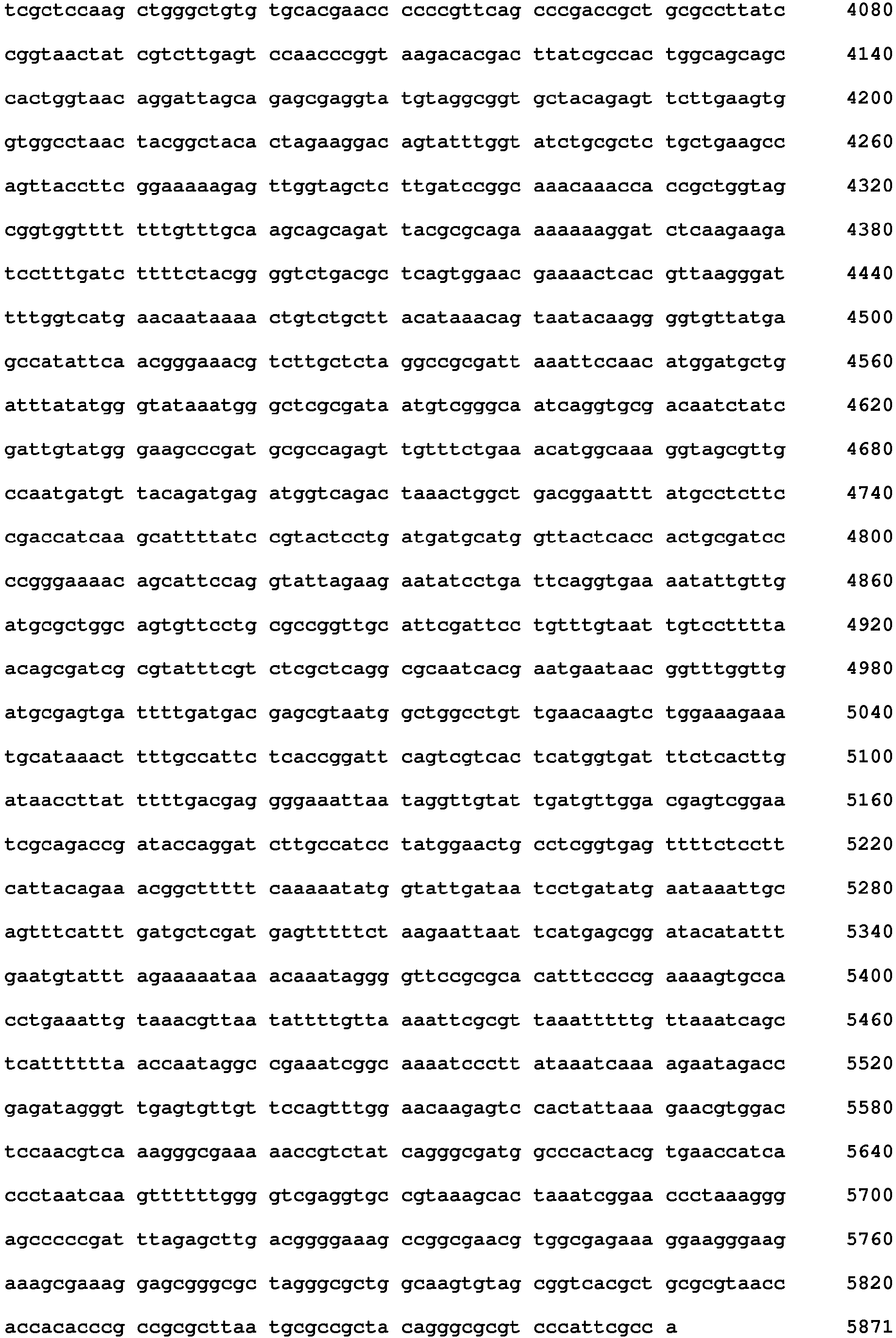


Claims (47)
- A genic construct adapted for the introduction of an exogenous nucleotide sequence, and which consists of at least a nucleotide sequence with the following three elements in the stated order:a) at least a nucleotide sequence comprising a replication origin of the DNA of bacteriophage ϕ29, with a terminal extremity followed by:b) at least one cleavage point of the nucleotide sequence,c) at least a nucleotide sequence comprising a replication origin of the DNA of bacteriophage ϕ29 with an orientation opposite that of the nucleotide sequence in (a).
- The genic construct according to the above claim, where the nucleotide sequences of the three elements are juxtaposed or overlapped.
- The genic construct according to any of the above claims, where the nucleotide sequences of the three elements are juxtaposed.
- The genic construct according to any of the above claims, where (b) is at least a nucleotide sequence comprising the cleavage target sequence of a restriction enzyme.
- The genic construct according to the above claim, where the restriction enzyme gives rise to blunt extremities or to protruding 3' extremities.
- The genic construct according to any of the above claims, where the genic construct is a circular vector.
- The genic construct according to any of the above claims, where the size is between 4800 and 10,000 base pairs (bp).
- The genic construct according to any of the above claims, where the replication origin of the DNA of bacteriophage ϕ29 corresponding to the nucleotide sequences of (a) and (b) are of the same extremity of the DNA of bacteriophage ϕ29.
- The genic construct according to the above claim, where the DNA extremity of bacteriophage ϕ29 is the left extremity.
- The genic construct according to claim 6, where the DNA extremity of bacteriophage ϕ29 is the right extremity.
- The genic construct according to any of the claims 1 to 7, where the replication origin of the DNA of bacteriophage ϕ29 corresponding to the nucleotide sequence (a) and the replication origin of the DNA of bacteriophage ϕ29 corresponding to the nucleotide sequence (c) are of different extremities of the DNA of bacteriophage ϕ29.
- The genic construct according to the above claim, where one replication origin of the DNA of bacteriophage ϕ29 is the left extremity, while the other replication origin of the DNA of bacteriophage ϕ29 is the right extremity.
- The genic construct according to any of the above claims 1 to 9, 11 or 12, where the nucleotide sequence comprising the left replication origin of the DNA of bacteriophage ϕ29 contains between 65 and 200 nucleotides of the left extremity of the DNA of bacteriophage ϕ29.
- The genic construct according to any of the above claim, where the nucleotide sequence comprising the left replication origin of the DNA of bacteriophage ϕ29 contains between 65 and 72 nucleotides of the left extremity of the DNA of bacteriophage ϕ29.
- The genic construct according to any of the above claims 1 to 8 or 10 to 12, where the nucleotide sequence comprising the right replication origin of the DNA of bacteriophage ϕ29 contains between 125 and 250 nucleotides of the right extremity of the DNA of bacteriophage ϕ29.
- The genic construct according to the above claim, where the nucleotide sequence comprising the right replication origin of the DNA of bacteriophage ϕ29 contains between 150 and 200 nucleotides of the right extremity of the DNA of bacteriophage ϕ29.
- The genic construct according to any of the above claims, which moreover comprises at least one multiple cloning site (MCS).
- The genic construct according to any of the above claims, which moreover comprises at least one marker.
- The genic construct according to the above claim, where the marker is an antibiotic resistance gene.
- The genic construct according to the above claim, where the antibiotic is ampicillin or kanamycin.
- The genic construct according to any of the above claims, where the cleavage site is the cleavage target nucleotide sequence of the restriction enzyme Dra I or Bae I.
- The genic construct according to any of the above claims, comprising SEQ ID NO: 1, SEQ ID NO: 2, SEQ ID NO: 3 or a biologically equivalent variant.
- Use of the genic construct according to any of the above claims 1 to 20, for the amplification of an exogenous nucleotide sequence.
- An oligonucleotide comprising the nucleotide sequence that contains between 65 and 130 nucleotides of the left extremity of the DNA of bacteriophage ϕ29.
- The oligonucleotide according to the above claim, comprising the nucleotide sequence that contains between 67 and 72 nucleotides of the left extremity of the DNA of bacteriophage ϕ29.
- The nucleotide according to any of the above claims, where the 5' extremity is phosphorylated.
- The oligonucleotide according to any of the above three claims, comprising the target nucleotide sequence of a restriction enzyme or the nucleotide sequence resulting from cleavage with a restriction enzyme in position 3' with respect to the nucleotide sequence including between 65 and 130 nucleotides or between 67 and 72 nucleotides of the left extremity of the DNA of bacteriophage ϕ29.
- Use of the oligonucleotide according to any of the claims 22 to 25, for constructing a recombinant linear nucleotide sequence in which an exogenous nucleotide sequence destined for amplification is flanked by nucleotide sequences comprising the sequence including between 65 and 130 nucleotides or between 67 and 72 nucleotides of the left extremity of the DNA of bacteriophage ϕ29.
- A DNA amplification method comprising at least the following steps:a) obtainment of a linear DNA molecule comprising the DNA sequence destined for amplification and flanked on both extremities by:i) the sequence of the left replication origin of the DNA of bacteriophage ϕ29, the terminal extremity of this origin being located in the linear DNA extremity; or byii) the sequence of the right replication origin of the DNA of bacteriophage ϕ29, the terminal extremity of this origin being located in the linear DNA extremity; or byiii) the sequence of the right replication origin of the DNA of bacteriophage ϕ29 on one side and of the left replication origin on the other - the terminal extremity of these origins being located in the two extremities of the linear DNA;b) amplification of the linear DNA sequence obtained in step (a).
- The method according to the above claim, where use is made of a DNA polymerase, a terminal protein (TP), a single strand DNA binding protein (SSB) and a double strand DNA binding protein (DBP) in the amplification of step (b).
- The method according to either of the above two claims, where use is made of the proteins DNA polymerase, TP, p5 and p6 of bacteriophage ϕ29, or any bioequivalent variant of these proteins, in the amplification of step (b).
- The method according to any of the above three claims, where the DNA sequence destined for amplification is between 500 and 100,000 bp in size.
- The method according to any of the above four claims, where the linear DNA sequence obtained in step (a) presents phosphorylation of both 5' extremities.
- The method according to any of the above 5 claims, where the sequence of the left replication origin of the DNA of bacteriophage ϕ29 contains between 65 and 200 nucleotides of the left extremity of the DNA of bacteriophage ϕ29.
- The method according to the above claim, where the sequence of the left replication origin of the DNA of bacteriophage ϕ29 contains between 67 and 72 nucleotides of the left extremity of the DNA of bacteriophage ϕ29.
- The method according to any of the above claims 29 to 33, where the sequence of the right replication origin of the DNA of bacteriophage ϕ29 contains between 125 and 250 nucleotides of the right extremity of the DNA of bacteriophage ϕ29.
- The method according to the above claim, where the sequence of the right replication origin of the DNA of bacteriophage ϕ29 contains between 150 and 200 nucleotides of the right extremity of the DNA of bacteriophage ϕ29.
- The method according to any of the above claims 29 to 33, where the sequence of the left replication origin of the DNA of bacteriophage ϕ29 contains between 65 and 200 nucleotides or between 67 and 72 nucleotides of the left extremity of the DNA of bacteriophage ϕ29, and the sequence of the right replication origin of the DNA of bacteriophage ϕ29 contains between 125 and 250 nucleotides or between 150 and 200 nucleotides of the right extremity of the DNA of bacteriophage ϕ29.
- The method according to any of the above 10 claims, where step (b) is carried out at a temperature of under 30°C, preferably under 27°C, and even more preferably at a temperature of between 20-25°C.
- The method according to any of the above 11 claims, where step (a) makes use of the genic construct according to any of the claims 1 to 22.
- The method according to of the above claims 29 to 39, where step (a) makes use of the oligonucleotide according to any of the claims 24 to 27.
- A kit for the amplification of an exogenous nucleotide sequence, consisting of at least a genic construct according to any of the above claims 1 to 22, at least an oligonucleotide according to any of the claims 24 to 27, or both.
- The kit according to the above claim, where the genic construct comprises SEQ ID NO: 1, SEQ ID NO: 2 or SEQ ID NO: 3.
- The kit according to either of the above two claims which moreover includes a DNA polymerase, a terminal protein (TP), a single strand DNA binding protein (SSB) and/or a double strand DNA binding protein (DBP).
- The kit according to the above claim, where the DNA polymerase, the TP, the single strand DNA binding protein (SSB) and/or the double strand DNA binding protein (DBP) are the DNA polymerase, TP, p5 and/or p6 of bacteriophage ϕ29, or a bioequivalent variant of these proteins.
- The kit according to any of the above four claims which moreover comprises at least one of the elements of the following list: deoxynucleotide triphosphates (dNTPs), (NH4)2SO4, MgCl2, dithiothreitol (DTT), glycerol, bovine serum albumin (BSA) and Tris-HCl buffer with a pH of between 6.5 and 8.
- Use of the kit according to any of the above claims 42 to 46, for the amplification of an exogenous nucleotide sequence.
Applications Claiming Priority (2)
| Application Number | Priority Date | Filing Date | Title |
|---|---|---|---|
| ES201130288A ES2387295B1 (en) | 2011-03-03 | 2011-03-03 | METHOD OF AMPLIFICATION OF DNA BASED ON THE ORIGINS OF REPLICATION OF BACTERIOPHAGO Phi29 AND ASSOCIATED NUCLEOTYDIC SEQUENCES. |
| PCT/ES2012/070121 WO2012117141A1 (en) | 2011-03-03 | 2012-02-28 | METHOD FOR DNA AMPLIFICATION BASED ON THE ORIGINS OF REPLICATION OF THE BACTERIOPHAGE φ29 AND ASSOCIATED NUCLEOTIDE SEQUENCES |
Publications (2)
| Publication Number | Publication Date |
|---|---|
| EP2682479A1 true EP2682479A1 (en) | 2014-01-08 |
| EP2682479A4 EP2682479A4 (en) | 2014-09-24 |
Family
ID=46755179
Family Applications (1)
| Application Number | Title | Priority Date | Filing Date |
|---|---|---|---|
| EP12753027.7A Withdrawn EP2682479A4 (en) | 2011-03-03 | 2012-02-28 | DNA AMPLIFICATION METHOD BASED ON THE ORIGINS OF PHI29 BACTERIOPHAGE REPLICATION AND ASSOCIATED NUCLEOTIDE SEQUENCES |
Country Status (4)
| Country | Link |
|---|---|
| US (1) | US20140178939A1 (en) |
| EP (1) | EP2682479A4 (en) |
| ES (1) | ES2387295B1 (en) |
| WO (1) | WO2012117141A1 (en) |
Families Citing this family (1)
| Publication number | Priority date | Publication date | Assignee | Title |
|---|---|---|---|---|
| EP4242299A1 (en) * | 2022-03-07 | 2023-09-13 | Technische Universität München | Synthetic virus and provision thereof |
Family Cites Families (2)
| Publication number | Priority date | Publication date | Assignee | Title |
|---|---|---|---|---|
| ATE298795T1 (en) * | 1989-03-03 | 2005-07-15 | Genentech Inc | GENOMIC CLONING AND CARTOGRAPHY |
| DE3929030A1 (en) * | 1989-09-01 | 1991-03-07 | Boehringer Mannheim Gmbh | METHOD FOR PROPELLING NUCLEIC ACIDS |
-
2011
- 2011-03-03 ES ES201130288A patent/ES2387295B1/en not_active Expired - Fee Related
-
2012
- 2012-02-28 WO PCT/ES2012/070121 patent/WO2012117141A1/en not_active Ceased
- 2012-02-28 US US14/002,644 patent/US20140178939A1/en not_active Abandoned
- 2012-02-28 EP EP12753027.7A patent/EP2682479A4/en not_active Withdrawn
Also Published As
| Publication number | Publication date |
|---|---|
| ES2387295B1 (en) | 2013-07-31 |
| ES2387295A1 (en) | 2012-09-19 |
| EP2682479A4 (en) | 2014-09-24 |
| WO2012117141A1 (en) | 2012-09-07 |
| US20140178939A1 (en) | 2014-06-26 |
Similar Documents
| Publication | Publication Date | Title |
|---|---|---|
| CN114410625B (en) | RNA-guided DNA cleavage by Cas9-crRNA complex | |
| US6140086A (en) | Methods and compositions for cloning nucleic acid molecules | |
| CA3068615C (en) | Dna production method and dna fragment-joining kit | |
| EP3612630B1 (en) | Site-specific dna modification using a donor dna repair template having tandem repeat sequences | |
| AU2019315179B2 (en) | Method for editing dna in cell-free system | |
| CA3054881A1 (en) | Method of replicating or amplifying circular dna | |
| US12509719B2 (en) | Cell-free method of producing synthetic circular nucleic acid | |
| US20140178939A1 (en) | Method for dna amplification based on the origins of replication of the bacteriophage p29 and associated nucleotide sequences | |
| EP4741499A1 (en) | Protected dna and methods for the production thereof | |
| JP7863897B2 (en) | Systems and methods for rearranging cargo nucleotide sequences | |
| WO2026099450A1 (en) | Protected dna and methods for the production thereof | |
| US20230399684A1 (en) | New polymerase and use thereof | |
| WO2023191034A1 (en) | Method for producing double-stranded dna molecules having reduced sequence errors | |
| WO2025175112A1 (en) | Method for generating circular dna using heteroduplex thermostable ligation assembly of precursors produced by rolling circle amplification |
Legal Events
| Date | Code | Title | Description |
|---|---|---|---|
| PUAI | Public reference made under article 153(3) epc to a published international application that has entered the european phase |
Free format text: ORIGINAL CODE: 0009012 |
|
| 17P | Request for examination filed |
Effective date: 20131002 |
|
| AK | Designated contracting states |
Kind code of ref document: A1 Designated state(s): AL AT BE BG CH CY CZ DE DK EE ES FI FR GB GR HR HU IE IS IT LI LT LU LV MC MK MT NL NO PL PT RO RS SE SI SK SM TR |
|
| DAX | Request for extension of the european patent (deleted) | ||
| A4 | Supplementary search report drawn up and despatched |
Effective date: 20140827 |
|
| RIC1 | Information provided on ipc code assigned before grant |
Ipc: C12Q 1/68 20060101AFI20140818BHEP |
|
| STAA | Information on the status of an ep patent application or granted ep patent |
Free format text: STATUS: THE APPLICATION IS DEEMED TO BE WITHDRAWN |
|
| 18D | Application deemed to be withdrawn |
Effective date: 20150324 |