EP2682085A1 - Fluidizable bed with occupancy status detection and method of occupancy status detection for a fluidizable bed - Google Patents
Fluidizable bed with occupancy status detection and method of occupancy status detection for a fluidizable bed Download PDFInfo
- Publication number
- EP2682085A1 EP2682085A1 EP13172790.1A EP13172790A EP2682085A1 EP 2682085 A1 EP2682085 A1 EP 2682085A1 EP 13172790 A EP13172790 A EP 13172790A EP 2682085 A1 EP2682085 A1 EP 2682085A1
- Authority
- EP
- European Patent Office
- Prior art keywords
- plenum
- pressure value
- unloaded
- value
- bed
- Prior art date
- Legal status (The legal status is an assumption and is not a legal conclusion. Google has not performed a legal analysis and makes no representation as to the accuracy of the status listed.)
- Withdrawn
Links
- 238000000034 method Methods 0.000 title claims abstract description 35
- 238000001514 detection method Methods 0.000 title description 7
- 238000012544 monitoring process Methods 0.000 claims abstract description 6
- 239000012530 fluid Substances 0.000 claims description 2
- 230000000007 visual effect Effects 0.000 claims description 2
- 238000010586 diagram Methods 0.000 description 5
- 230000000284 resting effect Effects 0.000 description 3
- 239000003570 air Substances 0.000 description 2
- 239000012080 ambient air Substances 0.000 description 2
- 239000011148 porous material Substances 0.000 description 2
- 208000017520 skin disease Diseases 0.000 description 2
- 208000004210 Pressure Ulcer Diseases 0.000 description 1
- 230000007774 longterm Effects 0.000 description 1
- 239000012798 spherical particle Substances 0.000 description 1
- 238000011144 upstream manufacturing Methods 0.000 description 1
- XLYOFNOQVPJJNP-UHFFFAOYSA-N water Substances O XLYOFNOQVPJJNP-UHFFFAOYSA-N 0.000 description 1
Images


Classifications
-
- A—HUMAN NECESSITIES
- A61—MEDICAL OR VETERINARY SCIENCE; HYGIENE
- A61B—DIAGNOSIS; SURGERY; IDENTIFICATION
- A61B5/00—Measuring for diagnostic purposes; Identification of persons
- A61B5/103—Measuring devices for testing the shape, pattern, colour, size or movement of the body or parts thereof, for diagnostic purposes
- A61B5/11—Measuring movement of the entire body or parts thereof, e.g. head or hand tremor or mobility of a limb
- A61B5/1113—Local tracking of patients, e.g. in a hospital or private home
- A61B5/1115—Monitoring leaving of a patient support, e.g. a bed or a wheelchair
-
- A—HUMAN NECESSITIES
- A61—MEDICAL OR VETERINARY SCIENCE; HYGIENE
- A61B—DIAGNOSIS; SURGERY; IDENTIFICATION
- A61B5/00—Measuring for diagnostic purposes; Identification of persons
- A61B5/68—Arrangements of detecting, measuring or recording means, e.g. sensors, in relation to patient
- A61B5/6887—Arrangements of detecting, measuring or recording means, e.g. sensors, in relation to patient mounted on external non-worn devices, e.g. non-medical devices
- A61B5/6891—Furniture
-
- A—HUMAN NECESSITIES
- A61—MEDICAL OR VETERINARY SCIENCE; HYGIENE
- A61G—TRANSPORT, PERSONAL CONVEYANCES, OR ACCOMMODATION SPECIALLY ADAPTED FOR PATIENTS OR DISABLED PERSONS; OPERATING TABLES OR CHAIRS; CHAIRS FOR DENTISTRY; FUNERAL DEVICES
- A61G7/00—Beds specially adapted for nursing; Devices for lifting patients or disabled persons
- A61G7/05—Parts, details or accessories of beds
- A61G7/057—Arrangements for preventing bed-sores or for supporting patients with burns, e.g. mattresses specially adapted therefor
- A61G7/05738—Arrangements for preventing bed-sores or for supporting patients with burns, e.g. mattresses specially adapted therefor with fluid-like particles, e.g. sand, mud, seeds, gel, beads
- A61G7/05746—Arrangements for preventing bed-sores or for supporting patients with burns, e.g. mattresses specially adapted therefor with fluid-like particles, e.g. sand, mud, seeds, gel, beads fluidised by air flow
-
- A—HUMAN NECESSITIES
- A61—MEDICAL OR VETERINARY SCIENCE; HYGIENE
- A61G—TRANSPORT, PERSONAL CONVEYANCES, OR ACCOMMODATION SPECIALLY ADAPTED FOR PATIENTS OR DISABLED PERSONS; OPERATING TABLES OR CHAIRS; CHAIRS FOR DENTISTRY; FUNERAL DEVICES
- A61G7/00—Beds specially adapted for nursing; Devices for lifting patients or disabled persons
- A61G7/05—Parts, details or accessories of beds
- A61G7/065—Rests specially adapted therefor
- A61G7/07—Rests specially adapted therefor for the head or torso, e.g. special back-rests
-
- A—HUMAN NECESSITIES
- A61—MEDICAL OR VETERINARY SCIENCE; HYGIENE
- A61B—DIAGNOSIS; SURGERY; IDENTIFICATION
- A61B2562/00—Details of sensors; Constructional details of sensor housings or probes; Accessories for sensors
- A61B2562/02—Details of sensors specially adapted for in-vivo measurements
- A61B2562/0247—Pressure sensors
-
- A—HUMAN NECESSITIES
- A61—MEDICAL OR VETERINARY SCIENCE; HYGIENE
- A61B—DIAGNOSIS; SURGERY; IDENTIFICATION
- A61B2562/00—Details of sensors; Constructional details of sensor housings or probes; Accessories for sensors
- A61B2562/16—Details of sensor housings or probes; Details of structural supports for sensors
- A61B2562/168—Fluid filled sensor housings
-
- A—HUMAN NECESSITIES
- A61—MEDICAL OR VETERINARY SCIENCE; HYGIENE
- A61G—TRANSPORT, PERSONAL CONVEYANCES, OR ACCOMMODATION SPECIALLY ADAPTED FOR PATIENTS OR DISABLED PERSONS; OPERATING TABLES OR CHAIRS; CHAIRS FOR DENTISTRY; FUNERAL DEVICES
- A61G2203/00—General characteristics of devices
- A61G2203/30—General characteristics of devices characterised by sensor means
- A61G2203/34—General characteristics of devices characterised by sensor means for pressure
Definitions
- the subject matter described herein relates to fluidizable beds and particularly to a fluidizable bed having the capability to detect occupancy status and changes thereof and to an associated method of occupany status detection.
- the capability and method are employed to detect if a person expected to be occupying the bed has exited the bed.
- a typical fluidizable bed includes a receptacle and a porous diffuser board that divides the receptacle into a plenum and a fluidizable medium container above the plenum.
- a fluidizable medium such as tiny spherical particles, occupies the fluidizable medium container.
- a filter sheet overlies the fluidizable medium.
- a fluidizing medium such as ambient air is pressurized and introduced into the plenum. The air flows through the diffuser board, through the fluidizable medium, and exhausts through the filter sheet. The flow of air through the fluidizable medium imparts fluid-like properties to the fluidizable medium so that the medium acts as a quasi-fluid.
- Fluidizable beds are used for burn victims or other patients who have skin disorders such as pressure ulcers or who are at high risk of developing skin disorders as a result of long term confinement in bed.
- Some fluidizable beds include a more conventional, non-fluidizable upper body or torso section corresponding approximately to the torso of a bed occupant.
- Occupancy status capability is typically used to alert a caregive of the unauthorized departure of the bed occupant from the bed.
- a fluidizable bed comprises a receptacle, a diffuser board dividing the receptacle into a fluidizable medium container and a distribution plenum beneath the fluidizable medium container, the fluidizable medium container adapted to receive a quantity of a fluidizable medium and the plenum adapted to receive a stream of a fluidizing medium such that the fluidizable medium is fluidized as a result of admission of the fluidizing medium to the plenum.
- the bed also includes a pressure sensor for monitoring a pressure value representative of pressure in the plenum and a controller for issuing a signal responsive to a relationship between the monitored value and a reference value.
- a related method of detecting a change in occupancy status of a fluidizable bed includes determining an unloaded plenum pressure value corresponding to the absence of a load on the bed, determining a loaded plenum pressure value corresponding to the presence of an occupant on the bed, and establishing a reference as a function of at least one of the unloaded plenum pressure value and the loaded plenum pressure value.
- a signal is issued in response to a relationship between the reference and a value representative of actual pressure in the plenum.
- a fluidizable bed 10 extends longitudinally from a head end H to a foot end F and laterally from a left side L to a right side R.
- An upper body or torso section 12 of the bed corresponds approximately to the torso of a bed occupant.
- the upper body section is a nonfluidizable section and includes a deck section 14 and a mattress 16 resting on the deck section.
- the deck can be pivoted to an orientation angle ⁇ between about 0° (horizontal) shown with solid lines) and about 65°-70° shown with dashed lines.
- a fluidizable section of the bed comprises a receptacle 22 and a porous, gas permeable diffuser board 24 dividing the receptacle into a distribution plenum 26 and a fluidizable medium container 28.
- a fluidizable medium 30 resides in the container.
- a porous filter sheet 32 overlies the fluidizable medium.
- a blower 40 is connected to plenum 26 by a conduit 42.
- a controller 50 controls operation of the blower to control admission of a fluidizing medium, typically ambient air pressurized by the blower, to plenum 26.
- a user interface 52 receives instructions for the controller from a user such as an occupant or caregiver.
- the illustration suggests the use of physical communication paths 54 between the blower, controller and user interface, however wireless communication could be used instead.
- the fluidizing medium When the blower operates, the fluidizing medium is admitted to plenum 26, flows upwardly through pores in diffuser board 24, through the fluidizable medium 30, and is then exhausted to the environment through pores in filter sheet 32.
- the flow of fluidizing medium through the fluidizable medium imparts fluid-like properties to the fluidizable medium. An occupant of the bed is therefore supported by his or her buoyancy in the fluidized medium.
- a pressure sensor 60 is installed in plenum 26.
- the sensor could be installed in some other location such as in conduit 42 so that it senses or monitors a pressure representative of the pressure of the fluidizing medium in the plenum. Examples of representative pressures include pressure in the plenum itself and pressure in conduit 42. Pressures sensed at other locations upstream of diffuser board 24 are also representative pressures.
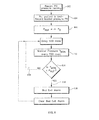
- FIG. 4 is a block diagram illustrating a method of detecting occupancy status of a fluidizable bed.
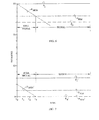
- FIG. 6 is a simple graphical illustration of the method of FIG. 4 with pressure expressed in inches of water shown on the vertical axis and time on the horizontal axis. The numerical pressure values along the vertical axis are approximate and illustrative only.
- the method determines an unloaded plenum pressure value P 0 , for example by using the pressure reading from sensor 60.
- the unloaded plenum pressure value corresponds to the absence of a load, such as an occupant, on the bed with the fluidizable medium in its fluidized state.
- the method determines a loaded plenum pressure value, for example by using the pressure reading from sensor 60.
- the loaded plenum pressure value is determined after an occupant is resting on the bed with the fluidizable medium in its fluidized state and is greater than the unloaded value.
- the loaded plenum pressure value may be determined with torso section 12 ( FIG. 1 ) at any orientation, however applicants believe that best results will be obtained if the torso section, and therefore the torso of the occupant is at an orientation angle ⁇ of about 0°.
- the method establishes a reference P REF as a function of at least one of the unloaded plenum pressure value and the loaded plenum pressure value.
- the illustrated reference equals the unloaded plenum pressure value P 0 plus a fraction f of the difference between the loaded plenum pressure value P 1 and the unloaded plenum pressure value P 0 .
- the method begins monitoring the representative pressure.
- the illustrated monitoring frequency is once every 500 milliseconds.
- the method issues a signal in response to a relationship between the reference P REF and the value P MON representative of actual pressure in the plenum. Specifically the method compares the monitored representative pressure P MON to the reference P REF . If P MON is less than P REF the issued signal 116 is conveyed to one or more destinations 118. Examples of such destinations include an aural alarm unit, a visual alarm unit, a nurse station, and an electronic medical record.
- the method does not issue signal 116, which can be considered to be the issuance of a NULL signal 120, in which case the method continues to carry out the steps at blocks 110, 114. It will be appreciated that the "less than” operator at block 114 can be replaced with a "less than or equal to” operator.
- FIGS. 5 and 7 are a block diagram and graph, similar to FIGS. 4 and 6 , illustrating a variant of the method.
- the method determines an unloaded plenum pressure value P0' which is a "zeroed" equivalent of the actual monitored pressure P 0 from sensor 60.
- Other pressure readings will be similarly offset by P 0 as signified by the use of the prime superscript in FIGS. 5 and 7 .
- the unloaded plenum pressure value P 0 ' corresponds to the absence of a load, such as an occupant, on the bed with the fluidizable medium in its fluidized state. 7.
- the method determines a loaded plenum pressure value P 1 ', for example by using the pressure reading from sensor 60 offset by P 0 .
- the loaded plenum pressure value is determined after an occupant is resting on the bed with the fluidizable medium in its fluidized state.
- the loaded plenum pressure value may be determined with torso section 12 at any orientation, however applicants believe that best results will be obtained if the torso section, and therefore the torso of the occupant is at an orientation angle ⁇ of about 60°.
- the method establishes a reference P REF as a function of at least one of the unloaded plenum pressure value and the loaded plenum pressure value.
- the illustrated reference equals the unloaded plenum pressure value P 0 ' plus a fraction (e.g. one third) of the difference between the loaded plenum pressure value P 1 ' and the unloaded plenum pressure value P 0 '.
- the method issues a signal in response to a relationship between the reference P REF ' and the value P MON ' representative of actual pressure in the plenum. Specifically the method compares the monitored representative pressure P MON ' to the reference P REF ', If P MON ' is less than P REF ' the issued signal 116 is conveyed to one or more destinations as already described. If P MON ' is not less than P REF ', the method does not issue signal 116, which, as previously noted, can be considered to be the issuance of a NULL signal 120, in which case the method continues to carry out the steps at blocks 110, 112, 114. It will be appreciated that the "less than" operator at block 114 can be replaced with a "less than or equal to" operator.
- the issuing step at block 114 comprises issuing signal 116 in response to the representative value being less than the reference or less than or equal to the reference or otherwise issuing a NULL signal 120.
Landscapes
- Health & Medical Sciences (AREA)
- Life Sciences & Earth Sciences (AREA)
- Veterinary Medicine (AREA)
- Animal Behavior & Ethology (AREA)
- General Health & Medical Sciences (AREA)
- Public Health (AREA)
- Engineering & Computer Science (AREA)
- Medical Informatics (AREA)
- Biophysics (AREA)
- Pathology (AREA)
- Nursing (AREA)
- Biomedical Technology (AREA)
- Heart & Thoracic Surgery (AREA)
- Physics & Mathematics (AREA)
- Molecular Biology (AREA)
- Surgery (AREA)
- Physiology (AREA)
- Dentistry (AREA)
- Oral & Maxillofacial Surgery (AREA)
- Invalid Beds And Related Equipment (AREA)
Abstract
A method of detecting a change in occupancy status of a fluidizable bed (10) includes determining (102) an unloaded plenum pressure value corresponding to the absence of a load on the bed, determining (104) a loaded plenum pressure value corresponding to the presence of an occupant on the bed, and establishing a reference (PREF) as a function of at least one of the unloaded plenum pressure value and the loaded plenum pressure value. A signal (116, 120) is issued in response to a relationship between the reference and a value (PMON) representative of actual pressure in the plenum. The bed also includes a pressure sensor (60) for monitoring a pressure value representative of pressure in the plenum and a controller (50) for issuing a signal (116, 120) responsive to a relationship between the monitored value and a reference value.
Description
- The subject matter described herein relates to fluidizable beds and particularly to a fluidizable bed having the capability to detect occupancy status and changes thereof and to an associated method of occupany status detection. In an example application the capability and method are employed to detect if a person expected to be occupying the bed has exited the bed.
- A typical fluidizable bed includes a receptacle and a porous diffuser board that divides the receptacle into a plenum and a fluidizable medium container above the plenum. A fluidizable medium, such as tiny spherical particles, occupies the fluidizable medium container. A filter sheet overlies the fluidizable medium. In operation a fluidizing medium such as ambient air is pressurized and introduced into the plenum. The air flows through the diffuser board, through the fluidizable medium, and exhausts through the filter sheet. The flow of air through the fluidizable medium imparts fluid-like properties to the fluidizable medium so that the medium acts as a quasi-fluid. Fluidizable beds are used for burn victims or other patients who have skin disorders such as pressure ulcers or who are at high risk of developing skin disorders as a result of long term confinement in bed. Some fluidizable beds include a more conventional, non-fluidizable upper body or torso section corresponding approximately to the torso of a bed occupant.
- Despite the advantages of fluidizable beds they do not offer certain capabilities which are not uncommon in more conventional beds. One such capability is an occupancy status detection capability which can detect the presence or absence of an occupant and changes in that status. Occupancy status capability is typically used to alert a caregive of the unauthorized departure of the bed occupant from the bed.
- In one embodiment, a fluidizable bed comprises a receptacle, a diffuser board dividing the receptacle into a fluidizable medium container and a distribution plenum beneath the fluidizable medium container, the fluidizable medium container adapted to receive a quantity of a fluidizable medium and the plenum adapted to receive a stream of a fluidizing medium such that the fluidizable medium is fluidized as a result of admission of the fluidizing medium to the plenum. The bed also includes a pressure sensor for monitoring a pressure value representative of pressure in the plenum and a controller for issuing a signal responsive to a relationship between the monitored value and a reference value.
- A related method of detecting a change in occupancy status of a fluidizable bed includes determining an unloaded plenum pressure value corresponding to the absence of a load on the bed, determining a loaded plenum pressure value corresponding to the presence of an occupant on the bed, and establishing a reference as a function of at least one of the unloaded plenum pressure value and the loaded plenum pressure value. A signal is issued in response to a relationship between the reference and a value representative of actual pressure in the plenum.
- The invention will now be further described by way of example with reference to the accompanying drawings, in which:
-
FIG. 1 is a schematic plan view of a fluidizable bed with a filter sheet component of the bed partly broken away to reveal a fluidizable medium beneath the filter sheet. -
FIG. 2 is a side elevation view taken in thedirection 2--2 ofFIG. 1 . -
FIG. 3 is a foot end elevation view taken in thedirection 3--3 ofFIG. 2 . -
FIGS. 4-5 are block diagrams of variants of an occupancy status detection method disclosed herein in which the method is based on a pressure difference between the occupied state and the unoccupied state. -
FIGS. 6-7 are graphs illustrating operation of the occupancy status detection method ofFIGS. 4-5 . -
FIG. 8 is a block diagram of another variant of the occupancy status detection method disclosed herein in which the method is based on a fraction of a loaded pressure or a fraction of an unloaded pressure. - Referring to
FIGS. 1-3 afluidizable bed 10 extends longitudinally from a head end H to a foot end F and laterally from a left side L to a right side R. An upper body ortorso section 12 of the bed corresponds approximately to the torso of a bed occupant. The upper body section is a nonfluidizable section and includes adeck section 14 and amattress 16 resting on the deck section. The deck can be pivoted to an orientation angle α between about 0° (horizontal) shown with solid lines) and about 65°-70° shown with dashed lines. A fluidizable section of the bed comprises areceptacle 22 and a porous, gaspermeable diffuser board 24 dividing the receptacle into adistribution plenum 26 and afluidizable medium container 28. Afluidizable medium 30 resides in the container. Aporous filter sheet 32 overlies the fluidizable medium. Ablower 40 is connected toplenum 26 by aconduit 42. Acontroller 50 controls operation of the blower to control admission of a fluidizing medium, typically ambient air pressurized by the blower, to plenum 26. Auser interface 52 receives instructions for the controller from a user such as an occupant or caregiver. The illustration suggests the use ofphysical communication paths 54 between the blower, controller and user interface, however wireless communication could be used instead. - When the blower operates, the fluidizing medium is admitted to
plenum 26, flows upwardly through pores indiffuser board 24, through thefluidizable medium 30, and is then exhausted to the environment through pores infilter sheet 32. The flow of fluidizing medium through the fluidizable medium imparts fluid-like properties to the fluidizable medium. An occupant of the bed is therefore supported by his or her buoyancy in the fluidized medium. - A
pressure sensor 60 is installed inplenum 26. Alternatively the sensor could be installed in some other location such as inconduit 42 so that it senses or monitors a pressure representative of the pressure of the fluidizing medium in the plenum. Examples of representative pressures include pressure in the plenum itself and pressure inconduit 42. Pressures sensed at other locations upstream ofdiffuser board 24 are also representative pressures. -
FIG. 4 is a block diagram illustrating a method of detecting occupancy status of a fluidizable bed.FIG. 6 is a simple graphical illustration of the method ofFIG. 4 with pressure expressed in inches of water shown on the vertical axis and time on the horizontal axis. The numerical pressure values along the vertical axis are approximate and illustrative only. Atblock 102 the method determines an unloaded plenum pressure value P0, for example by using the pressure reading fromsensor 60. The unloaded plenum pressure value corresponds to the absence of a load, such as an occupant, on the bed with the fluidizable medium in its fluidized state. - At
block 104 the method determines a loaded plenum pressure value, for example by using the pressure reading fromsensor 60. The loaded plenum pressure value is determined after an occupant is resting on the bed with the fluidizable medium in its fluidized state and is greater than the unloaded value. The loaded plenum pressure value may be determined with torso section 12 (FIG. 1 ) at any orientation, however applicants believe that best results will be obtained if the torso section, and therefore the torso of the occupant is at an orientation angle α of about 0°. - At
block 106 the method establishes a reference PREF as a function of at least one of the unloaded plenum pressure value and the loaded plenum pressure value. The illustrated reference equals the unloaded plenum pressure value P0 plus a fraction f of the difference between the loaded plenum pressure value P1 and the unloaded plenum pressure value P0. In the method as illustrated in the block diagram the fraction is one third. Expressed algebraically:
- At
block 110 the method begins monitoring the representative pressure. The illustrated monitoring frequency is once every 500 milliseconds. Atblock 114 the method issues a signal in response to a relationship between the reference PREF and the value PMON representative of actual pressure in the plenum. Specifically the method compares the monitored representative pressure PMON to the reference PREF. If PMON is less than PREF the issuedsignal 116 is conveyed to one ormore destinations 118. Examples of such destinations include an aural alarm unit, a visual alarm unit, a nurse station, and an electronic medical record. If PMON is not less than PREF, the method does not issuesignal 116, which can be considered to be the issuance of aNULL signal 120, in which case the method continues to carry out the steps atblocks block 114 can be replaced with a "less than or equal to" operator. -
FIGS. 5 and7 are a block diagram and graph, similar toFIGS. 4 and6 , illustrating a variant of the method. Atblock 102 the method determines an unloaded plenum pressure value P0' which is a "zeroed" equivalent of the actual monitored pressure P0 fromsensor 60. In other words P0' is an offset value:
Other pressure readings will be similarly offset by P0 as signified by the use of the prime superscript inFIGS. 5 and7 . The unloaded plenum pressure value P0' corresponds to the absence of a load, such as an occupant, on the bed with the fluidizable medium in its fluidized state. 7. - At
block 104 the method determines a loaded plenum pressure value P1', for example by using the pressure reading fromsensor 60 offset by P0. As with the previously described variant, the loaded plenum pressure value is determined after an occupant is resting on the bed with the fluidizable medium in its fluidized state. The loaded plenum pressure value may be determined withtorso section 12 at any orientation, however applicants believe that best results will be obtained if the torso section, and therefore the torso of the occupant is at an orientation angle α of about 60°. - At
block 106 the method establishes a reference PREF as a function of at least one of the unloaded plenum pressure value and the loaded plenum pressure value. The illustrated reference equals the unloaded plenum pressure value P0' plus a fraction (e.g. one third) of the difference between the loaded plenum pressure value P1' and the unloaded plenum pressure value P0'.
- At
block 110 the method begins monitoring the representative pressure once every 500 milliseconds. Because of the "zeroing" of the pressure readings atblocks block 114 is PREF':
- At
block 114 the method issues a signal in response to a relationship between the reference PREF' and the value PMON' representative of actual pressure in the plenum. Specifically the method compares the monitored representative pressure PMON' to the reference PREF', If PMON' is less than PREF' the issuedsignal 116 is conveyed to one or more destinations as already described. If PMON' is not less than PREF', the method does not issuesignal 116, which, as previously noted, can be considered to be the issuance of aNULL signal 120, in which case the method continues to carry out the steps atblocks block 114 can be replaced with a "less than or equal to" operator. -
FIG. 8 shows another variant in which the step of establishing a reference (block 106) involves determining a multiple m (which may be a nonintegral multiple) of the unloaded plenum pressure value P0 (as shown) or a fraction f1 of the loaded plenum pressure value P1, for example:

where m and f1 are the chosen multiple and fraction. As in the other examples the issuing step atblock 114 comprises issuingsignal 116 in response to the representative value being less than the reference or less than or equal to the reference or otherwise issuing aNULL signal 120. - Although this disclosure refers to specific embodiments, it will be understood by those skilled in the art that various changes in form and detail may be made.
Claims (15)
- A method of detecting a change in occupancy status of a fluidizable bed having a distribution plenum comprising:determining an unloaded plenum pressure value corresponding to the absence of a load on the bed;determining a loaded plenum pressure value corresponding to the presence of an occupant on the bed;establishing a reference as a function of at least one of the unloaded plenum pressure value and the loaded plenum pressure value;issuing a signal in response to a relationship between the reference and a value representative of actual pressure in the plenum.
- The method of claim 1 wherein the establishing step comprises establishing a reference equal to the unloaded plenum pressure value plus a fraction of the difference between the loaded plenum pressure value and the unloaded plenum pressure value.
- The method of claim 2 wherein the issuing step comprises issuing the signal in response to the representative value being less than the reference or less than or equal to the reference.
- The method of claim 1 wherein the step of establishing a reference involves determining a fraction of at least one of the loaded plenum pressure value and the unloaded plenum pressure value, and the issuing step comprises issuing the signal in response to the representative value being less than the reference or less than or equal to the reference.
- The method of claim 1 wherein the unloaded plenum pressure value and the loaded plenum pressure value are offset such that the unloaded plenum pressure value is approximately zero.
- The method of claim 5 wherein the unloaded plenum pressure value and the loaded plenum pressure value are offset such that the unloaded plenum pressure value is approximately zero and wherein the reference equals the unloaded pressure value and wherein the signal is issued in response to the monitored pressure value reduced by a fraction of the difference between the loaded plenum pressure value and the unloaded plenum pressure value being less than the reference or less than or equal to the reference.
- The method of any one of claims 2 to 4 and 6 wherein the fraction is approximately one third.
- The method of any preceding claim comprising conveying the signal to at least one of an aural alarm unit, a visual alarm unit, a nurse station and an electronic medical record.
- A fluidizable bed comprising:a receptacle;a diffuser board dividing the receptacle into a fluidizable medium container and a distribution plenum beneath the fluidizable medium container, the fluidizable medium container adapted to receive a quantity of a fluidizable medium and the plenum adapted to receive a stream of a fluidizing medium such that the fluidizable medium is fluidized as a result of admission of the fluidizing medium to the plenum;a pressure sensor for monitoring a value representative of pressure in the plenum; anda controller for issuing a signal responsive to a relationship between the monitored value and a reference value.
- The bed of claim 9 wherein the reference value is a function of at least one of an unloaded plenum pressure value corresponding to pressure in the plenum when the fluidizable medium is in a fluidized state and a load is not being supported by the fluidized medium, and a loaded plenum pressure value corresponding to fluid pressure in the plenum when the fluidizable medium is in a fluidized state and an occupant is supported by the fluidized medium.
- The bed of claim 10 wherein the reference value equals the unloaded plenum pressure value plus a fraction of the difference between the loaded plenum pressure value and the unloaded plenum pressure value.
- The bed of claim 11 wherein the controller issues the signal in response to the monitored value being less than the reference value or less than or equal to the reference value.
- The bed of claim 10 wherein the step of establishing a reference involves determining a fraction of at least one of the loaded plenum pressure value and the unloaded plenum pressure value, and the issuing step comprises issuing the signal in response to the representative value being less than the reference or less than or equal to the reference.
- The bed of any one of claims 11 to 13 wherein the fraction is approximately one third.
- The bed of claim 9 wherein the unloaded plenum pressure value and the loaded plenum pressure value are offset values.
Applications Claiming Priority (3)
| Application Number | Priority Date | Filing Date | Title |
|---|---|---|---|
| US201261668534P | 2012-07-06 | 2012-07-06 | |
| US201261670309P | 2012-07-11 | 2012-07-11 | |
| US13/651,639 US9700239B2 (en) | 2012-07-06 | 2012-10-15 | Fluidizable bed with occupancy status detection and method of occupancy status detection for a fluidizable bed |
Publications (1)
| Publication Number | Publication Date |
|---|---|
| EP2682085A1 true EP2682085A1 (en) | 2014-01-08 |
Family
ID=48747907
Family Applications (1)
| Application Number | Title | Priority Date | Filing Date |
|---|---|---|---|
| EP13172790.1A Withdrawn EP2682085A1 (en) | 2012-07-06 | 2013-06-19 | Fluidizable bed with occupancy status detection and method of occupancy status detection for a fluidizable bed |
Country Status (2)
| Country | Link |
|---|---|
| US (1) | US9700239B2 (en) |
| EP (1) | EP2682085A1 (en) |
Cited By (1)
| Publication number | Priority date | Publication date | Assignee | Title |
|---|---|---|---|---|
| US10238560B2 (en) | 2013-03-13 | 2019-03-26 | Hill-Rom Services, Inc. | Air fluidized therapy bed having pulmonary therapy |
Families Citing this family (2)
| Publication number | Priority date | Publication date | Assignee | Title |
|---|---|---|---|---|
| WO2016112023A1 (en) | 2015-01-05 | 2016-07-14 | Select Comfort Corporation | Bed with user occupancy tracking |
| EP3482734B1 (en) * | 2015-06-15 | 2020-12-09 | Allen Medical Systems, Inc. | Spine table positioner pad with pressure sensing and cooling features |
Citations (5)
| Publication number | Priority date | Publication date | Assignee | Title |
|---|---|---|---|---|
| FR2550442A1 (en) * | 1983-05-27 | 1985-02-15 | Fuji Electric Co Ltd | Device for control of a fluidised bed for medical applications |
| WO2000057830A1 (en) * | 1999-03-29 | 2000-10-05 | Kinetic Concepts, Inc. | Fluidized bead bed with inflatable bead diffuser |
| US6721979B1 (en) * | 1995-04-25 | 2004-04-20 | Kci Licensing, Inc. | Air bed with fluidized bead surface and related methods |
| US20100088825A1 (en) * | 2008-10-09 | 2010-04-15 | Howell Charles A | Fluidizable Bed with Supportive Filter Sheet |
| US20110302720A1 (en) * | 2010-06-12 | 2011-12-15 | American Home Health Care, Inc. | Patient weighing and bed exit monitoring |
Family Cites Families (9)
| Publication number | Priority date | Publication date | Assignee | Title |
|---|---|---|---|---|
| US4483029A (en) | 1981-08-10 | 1984-11-20 | Support Systems International, Inc. | Fluidized supporting apparatus |
| US5623736A (en) * | 1994-12-09 | 1997-04-29 | Suport Systems, International | Modular inflatable/air fluidized bed |
| JP4733897B2 (en) * | 2000-02-25 | 2011-07-27 | ヒル−ロム サービシーズ,インコーポレイティド | Air fluid bag for bed |
| US20030191382A1 (en) * | 2002-04-05 | 2003-10-09 | Luce David A. | Non-contact tonometer |
| GB2427513B (en) * | 2005-06-21 | 2007-08-01 | Peter Robertson | An improved sensing socket assembly |
| US8864205B2 (en) * | 2006-06-28 | 2014-10-21 | Stryker Corporation | Patient support with wireless data and/or energy transfer |
| US20090192364A1 (en) * | 2008-01-29 | 2009-07-30 | Voto Andrew M | Infant monitoring system |
| US10231891B2 (en) * | 2009-03-13 | 2019-03-19 | Hill-Rom Services, Inc. | Modular fluidizable occupant support and compact fluidizable modules |
| US7975337B2 (en) * | 2009-08-19 | 2011-07-12 | Hill-Rom Services, Inc. | Fluidized bed |
-
2012
- 2012-10-15 US US13/651,639 patent/US9700239B2/en not_active Expired - Fee Related
-
2013
- 2013-06-19 EP EP13172790.1A patent/EP2682085A1/en not_active Withdrawn
Patent Citations (5)
| Publication number | Priority date | Publication date | Assignee | Title |
|---|---|---|---|---|
| FR2550442A1 (en) * | 1983-05-27 | 1985-02-15 | Fuji Electric Co Ltd | Device for control of a fluidised bed for medical applications |
| US6721979B1 (en) * | 1995-04-25 | 2004-04-20 | Kci Licensing, Inc. | Air bed with fluidized bead surface and related methods |
| WO2000057830A1 (en) * | 1999-03-29 | 2000-10-05 | Kinetic Concepts, Inc. | Fluidized bead bed with inflatable bead diffuser |
| US20100088825A1 (en) * | 2008-10-09 | 2010-04-15 | Howell Charles A | Fluidizable Bed with Supportive Filter Sheet |
| US20110302720A1 (en) * | 2010-06-12 | 2011-12-15 | American Home Health Care, Inc. | Patient weighing and bed exit monitoring |
Cited By (1)
| Publication number | Priority date | Publication date | Assignee | Title |
|---|---|---|---|---|
| US10238560B2 (en) | 2013-03-13 | 2019-03-26 | Hill-Rom Services, Inc. | Air fluidized therapy bed having pulmonary therapy |
Also Published As
| Publication number | Publication date |
|---|---|
| US9700239B2 (en) | 2017-07-11 |
| US20140009293A1 (en) | 2014-01-09 |
Similar Documents
| Publication | Publication Date | Title |
|---|---|---|
| EP2995242B1 (en) | Patient support apparatus | |
| US10583058B2 (en) | Person support apparatus having physiological sensor | |
| EP1947987B1 (en) | Pneumatic valve assembly for a patient support | |
| JP5537806B2 (en) | Hospital bed pressure control | |
| DE602004008045T2 (en) | ADJUSTABLE MATTRESS AND CUSHION SYSTEM | |
| CN103998003B (en) | Bed apparatus, and patient detection method | |
| US7557718B2 (en) | Lack of patient movement monitor and method | |
| JP6238367B2 (en) | Pressure measuring system and method with water vapor control | |
| US20080005843A1 (en) | Body Support Apparatus Having Automatic Pressure Control and Related Methods | |
| US9700239B2 (en) | Fluidizable bed with occupancy status detection and method of occupancy status detection for a fluidizable bed | |
| US20150013073A1 (en) | Therapy control for patient support system | |
| JP2003000553A (en) | Patient detector | |
| KR20200009491A (en) | Cushion for preventing bedsore that can be alternately lifted | |
| JP5019908B2 (en) | Rolling up promotion device | |
| US10314753B2 (en) | Systems, methods, and devices for fluidizing a fluidizable medium | |
| US8419660B1 (en) | Patient monitoring system | |
| EP2177194B1 (en) | Fluidizable bed with supportive filter sheet | |
| US9060908B2 (en) | Varying depth fluidized bed | |
| WO2004073577A1 (en) | Pad | |
| GB2578537A8 (en) | Seat pad system | |
| WO2025048698A1 (en) | An inflatable pressure controlled mattress and a method to monitor a patient activity with an inflatable pressure controlled mattress | |
| KR20120090106A (en) | Air cleaner having human detection function |
Legal Events
| Date | Code | Title | Description |
|---|---|---|---|
| PUAI | Public reference made under article 153(3) epc to a published international application that has entered the european phase |
Free format text: ORIGINAL CODE: 0009012 |
|
| AK | Designated contracting states |
Kind code of ref document: A1 Designated state(s): AL AT BE BG CH CY CZ DE DK EE ES FI FR GB GR HR HU IE IS IT LI LT LU LV MC MK MT NL NO PL PT RO RS SE SI SK SM TR |
|
| AX | Request for extension of the european patent |
Extension state: BA ME |
|
| STAA | Information on the status of an ep patent application or granted ep patent |
Free format text: STATUS: THE APPLICATION IS DEEMED TO BE WITHDRAWN |
|
| 18D | Application deemed to be withdrawn |
Effective date: 20140709 |