EP2680712B1 - Method for providing spray-dried compositions capable of retaining volatile compounds - Google Patents
Method for providing spray-dried compositions capable of retaining volatile compounds Download PDFInfo
- Publication number
- EP2680712B1 EP2680712B1 EP12754631.5A EP12754631A EP2680712B1 EP 2680712 B1 EP2680712 B1 EP 2680712B1 EP 12754631 A EP12754631 A EP 12754631A EP 2680712 B1 EP2680712 B1 EP 2680712B1
- Authority
- EP
- European Patent Office
- Prior art keywords
- flavor
- spray
- volatile compounds
- dried
- drying
- Prior art date
- Legal status (The legal status is an assumption and is not a legal conclusion. Google has not performed a legal analysis and makes no representation as to the accuracy of the status listed.)
- Active
Links
- 0 CC****C1(C**C*)*(C)(**C)*CC1 Chemical compound CC****C1(C**C*)*(C)(**C)*CC1 0.000 description 1
Images

Classifications
-
- A—HUMAN NECESSITIES
- A23—FOODS OR FOODSTUFFS; TREATMENT THEREOF, NOT COVERED BY OTHER CLASSES
- A23L—FOODS, FOODSTUFFS OR NON-ALCOHOLIC BEVERAGES, NOT OTHERWISE PROVIDED FOR; PREPARATION OR TREATMENT THEREOF
- A23L27/00—Spices; Flavouring agents or condiments; Artificial sweetening agents; Table salts; Dietetic salt substitutes; Preparation or treatment thereof
- A23L27/20—Synthetic spices, flavouring agents or condiments
-
- A—HUMAN NECESSITIES
- A23—FOODS OR FOODSTUFFS; TREATMENT THEREOF, NOT COVERED BY OTHER CLASSES
- A23G—COCOA; COCOA PRODUCTS, e.g. CHOCOLATE; SUBSTITUTES FOR COCOA OR COCOA PRODUCTS; CONFECTIONERY; CHEWING GUM; ICE-CREAM; PREPARATION THEREOF
- A23G4/00—Chewing gum
- A23G4/06—Chewing gum characterised by the composition containing organic or inorganic compounds
-
- A—HUMAN NECESSITIES
- A23—FOODS OR FOODSTUFFS; TREATMENT THEREOF, NOT COVERED BY OTHER CLASSES
- A23L—FOODS, FOODSTUFFS OR NON-ALCOHOLIC BEVERAGES, NOT OTHERWISE PROVIDED FOR; PREPARATION OR TREATMENT THEREOF
- A23L2/00—Non-alcoholic beverages; Dry compositions or concentrates therefor; Preparation or treatment thereof
- A23L2/52—Adding ingredients
- A23L2/56—Flavouring or bittering agents
-
- A—HUMAN NECESSITIES
- A23—FOODS OR FOODSTUFFS; TREATMENT THEREOF, NOT COVERED BY OTHER CLASSES
- A23L—FOODS, FOODSTUFFS OR NON-ALCOHOLIC BEVERAGES, NOT OTHERWISE PROVIDED FOR; PREPARATION OR TREATMENT THEREOF
- A23L27/00—Spices; Flavouring agents or condiments; Artificial sweetening agents; Table salts; Dietetic salt substitutes; Preparation or treatment thereof
- A23L27/10—Natural spices, flavouring agents or condiments; Extracts thereof
- A23L27/12—Natural spices, flavouring agents or condiments; Extracts thereof from fruit, e.g. essential oils
-
- A—HUMAN NECESSITIES
- A23—FOODS OR FOODSTUFFS; TREATMENT THEREOF, NOT COVERED BY OTHER CLASSES
- A23L—FOODS, FOODSTUFFS OR NON-ALCOHOLIC BEVERAGES, NOT OTHERWISE PROVIDED FOR; PREPARATION OR TREATMENT THEREOF
- A23L27/00—Spices; Flavouring agents or condiments; Artificial sweetening agents; Table salts; Dietetic salt substitutes; Preparation or treatment thereof
- A23L27/20—Synthetic spices, flavouring agents or condiments
- A23L27/202—Aliphatic compounds
-
- A—HUMAN NECESSITIES
- A23—FOODS OR FOODSTUFFS; TREATMENT THEREOF, NOT COVERED BY OTHER CLASSES
- A23L—FOODS, FOODSTUFFS OR NON-ALCOHOLIC BEVERAGES, NOT OTHERWISE PROVIDED FOR; PREPARATION OR TREATMENT THEREOF
- A23L27/00—Spices; Flavouring agents or condiments; Artificial sweetening agents; Table salts; Dietetic salt substitutes; Preparation or treatment thereof
- A23L27/20—Synthetic spices, flavouring agents or condiments
- A23L27/202—Aliphatic compounds
- A23L27/2022—Aliphatic compounds containing sulfur
-
- A—HUMAN NECESSITIES
- A23—FOODS OR FOODSTUFFS; TREATMENT THEREOF, NOT COVERED BY OTHER CLASSES
- A23L—FOODS, FOODSTUFFS OR NON-ALCOHOLIC BEVERAGES, NOT OTHERWISE PROVIDED FOR; PREPARATION OR TREATMENT THEREOF
- A23L27/00—Spices; Flavouring agents or condiments; Artificial sweetening agents; Table salts; Dietetic salt substitutes; Preparation or treatment thereof
- A23L27/70—Fixation, conservation, or encapsulation of flavouring agents
-
- A—HUMAN NECESSITIES
- A23—FOODS OR FOODSTUFFS; TREATMENT THEREOF, NOT COVERED BY OTHER CLASSES
- A23L—FOODS, FOODSTUFFS OR NON-ALCOHOLIC BEVERAGES, NOT OTHERWISE PROVIDED FOR; PREPARATION OR TREATMENT THEREOF
- A23L5/00—Preparation or treatment of foods or foodstuffs, in general; Food or foodstuffs obtained thereby; Materials therefor
- A23L5/51—Concentration
-
- A—HUMAN NECESSITIES
- A23—FOODS OR FOODSTUFFS; TREATMENT THEREOF, NOT COVERED BY OTHER CLASSES
- A23V—INDEXING SCHEME RELATING TO FOODS, FOODSTUFFS OR NON-ALCOHOLIC BEVERAGES AND LACTIC OR PROPIONIC ACID BACTERIA USED IN FOODSTUFFS OR FOOD PREPARATION
- A23V2002/00—Food compositions, function of food ingredients or processes for food or foodstuffs
Definitions
- Spray drying is a common industrial method for drying liquid solutions or slurries by spraying into a stream of hot gas. It is a rapid, one-step process for converting the feed liquid into a powder. Usually the drying gas is air, but nitrogen can also be used for special products needing oxygen-free conditions.
- the most common feed materials are aqueous-based solutions, emulsions and suspensions, where water is evaporated in the dryer.
- the liquid feed is fed to an atomizer, which is a device that breaks up the liquid stream into tiny droplets. This atomization takes place within the drying chamber so that the droplets are immediately exposed to hot air that initiates rapid moisture evaporation. The droplets become small particles of powder as the moisture is evaporated and they fall to the bottom of the drying chamber.
- Pressure nozzles, rotary disks, two-fluid nozzles, and the like are used as the atomizing unit.
- the mean particle size (diameter) of the resulting dry powder is about 20 ⁇ m to 500 ⁇ m, and the drying time is as short as 5 to 30 seconds (see, Handbook of Chemistry and Engineering (1999) revised sixth edition, Maruzen Corporation, p. 770, p. 780 ).
- a four-fluid nozzle has also been developed, which has enabled mass-scale spray drying with a liquid droplet having a mean particle size of several micrometers.
- the spray drying method is used in many cases of mass scale production.
- a solution or slurry is fed at a fast feed rate into a spray dryer, while the inlet temperature of the spray dryer and the outlet temperature thereof are elevated as high as possible, to dry the slurry at a high speed.
- milk is dried at an inlet temperature of the spray dryer of 150 to 250°C and yeast is dried at the inlet temperature of 300 to 350°C. Drying at such high temperatures may negatively impact the flavor of the raw material itself and produce a dry powder with a burned odor.
- spray drying at a low temperature to avoid these disadvantages can increase process times and costs. See US 2005/0031769 and US Patent No. 6,482,433 .
- Spray-dried encapsulated flavors are created during the drying process when the aqueous carrier slurry forms a shell around the normally oil-based flavor core.
- a thin film of carrier material rapidly forms around the atomized droplet and selectively allows water to evaporate while retaining the flavor oil ( Thijssen & Rulkens (1968) De Ingenieur 80:45-56 ).
- the shell protects the core against deterioration and volatile evaporation, but also allows the core to be released under desired conditions, for example, dissolution in water.
- EP 1 477 073 A1 discloses a method for producing a dry powder containing a savory and flavorful component, the method including spray-drying a hydrous liquid material containing a savory and flavorful component at a microfine liquid droplet state in gas atmosphere at the outlet temperature of a spray dryer at 20 to 90°C and the outlet relative humidity of 1% RH to 40% RH to prepare a dry powder of a mean particle size of 0.1 ⁇ m to 15 ⁇ m.
- US 5,124,162 discloses an antioxidant-free, stable, fixed flavor prepared from a mixture of flavour, maltose, malto-dextrin and a carbohydrate film former by spray-drying the mixture to form a dense product of at least 0.5 g/cc bulk-free flow density and less than 20% voids, which is stable against oxidation for one year at 70°F.
- EP 0 155 848 A2 provides a method for producing a moisture-stable fixed volatile flavorant product, which comprises the steps of: (a) forming an aqueous solution containing on a solids basis from 65 to 90% mannitol and from 10 to 35% of a carbohydrate, said carbohydrate comprising at least 95% by weight saccharides equal to or greater than a disaccharide; (b) admixing volatile flavorant with said mannitol-carbohydrate solution; and (c) spray-drying said solution.
- a spray-dried flavor composition containing a spray-dried flavor that has volatile compounds, wherein the volatile compounds are present in an amount that is at least 20% of the volatile compounds originally contained in the flavor.
- a spray-dried flavor composition produced by spray drying a flavor that contains volatile compounds in a spray dryer having an inlet temperature of less than 100°C and an air inlet dew point -10°C to 5°C, wherein the volatile compounds are present in the spray-dried flavor composition in an amount that is at least 20% of the volatile compounds originally contained in the flavor.
- a stable spray-dried flavor composition produced by spray drying a flavor that that contains volatile compounds in a spray dryer having an inlet temperature of less than 100°C and an air inlet dew point -10°C to 5°C, wherein the volatile compounds are present in the spray-dried flavor composition in an amount that is at least 20% of the volatile compounds originally contained in the flavor.
- the invention provides a method for producing a spray-dried composition capable of retaining volatile compounds.
- a flavor containing volatile compounds is spray dried in a spray dryer of an atomizer type and comprising a rotary disc or nozzle, the spray dryer having an inlet temperature of less than 100°C and an inlet air humidity of 0 - 4 g H 2 O/kg dry air and having an outlet temperature between 35 °C and 55 °C and an outlet air humidity of 10 - 20 g H 2 O/kg dry air to obtain a spray-dried flavor composition, wherein the volatile compounds are present in the spray-dried flavor composition in an amount that is at least 20% of the volatile compounds originally contained in the flavor.
- the spray-dried composition may be subjected to an additional drying step in a fluid-bed chamber attached at the spray dryer outlet, wherein the temperature of the air of the fluid-bed unit is at or below the outlet temperature of the spray dryer.
- the volatile compounds are acetaldehydes, dimethyl sulfides, ethyl acetates, ethyl propionates, methyl butyrates, or ethyl butyrates.
- the volatile compounds have a boiling point of less than 200°C, less than 100°C, or less than 60°C.
- the composition fed to the dryer may further include a carrier material and/or a solvent, such as a volatile solvent, wherein the flavor and carrier comprise 40% and 70% as dry solid material of the total composition.
- a dry solid material is defined as a combination of carrier and flavor materials.
- the flavor is prepared as an emulsion and the volatile compounds are present in the emulsion in an amount that is at least 80% of the volatile compounds originally contained in the flavor.
- Still further embodiments include the use of nitrogen or carbon dioxide in the spray dryer.
- the air inlet temperature is in the range of 40°C to 99°C.
- a stable spray-dried flavor composition produced by spray drying a flavor that that contains volatile compounds in a spray dryer having an inlet temperature of less than 100°C and an air inlet dew point -10°C to 5°C, wherein the volatile compounds are present in the spray-dried flavor composition in an amount that is at least 20% of the volatile compounds originally contained in the flavor.
- stability is defined as a flavor quality and intensity that remains acceptable for use in end use applications.
- a stable spray-dried flavor composition has a shelf-life of up to three years depending on storage conditions. Consumer data, as demonstrated in the examples herein, showed statistically significant preference for the flavors composition disclosed herein.
- the consumer preferred quality of the flavor composition is further supported by the attributes selected by consumers to describe the flavor quality of the prototypes.
- a spray-dried flavor composition containing one or more volatile compounds is produced by spray drying a flavor in a spray dryer of an atomizer type and comprising a rotary disc or nozzle, the spray dryer with an inlet temperature of less than 100°C and an inlet air humidity of 0 - 4 g H 2 O/kg dry air and having an outlet temperature between 35 °C and 55 °C and an outlet air humidity of 10 - 20 g H 2 O/kg dry air so that a dry powder is obtained.
- the resulting spray-dried composition is further dried in a fluidized bed.
- the spray-dried flavor composition retains at least 20% of the volatile compounds originally contained in the flavor.
- a flavor of the disclosure is a flavor that contains one or more volatile compounds.
- flavors can be used in accordance with the present invention.
- Flavor may be chosen from synthetic flavor and flavoring aromatics, and/or oils, oleo resins and oil extracts derived from plants, leaves, flowers, fruits, and combinations thereof.
- Representative flavor oils include, but are not limited to, spearmint oil, cinnamon oil, peppermint oil, clove oil, bay oil, thyme oil, cedar leaf oil, oil of nutmeg, oil of sage, and oil of bitter almonds.
- artificial, natural or synthetic fruit flavors such as vanilla, chocolate, coffee, cocoa and citrus oil, including lemon, orange, grape, lime and grapefruit, and fruit essences including apple, pear, peach, strawberry, raspberry, cherry, plum, pineapple, apricot and so forth. These flavors can be used individually or in admixture.
- the volatile compounds of the instant flavor may include, but are not limited to, acetaldehyde, dimethyl sulfide, ethyl acetate, ethyl propionate, methyl butyrate, and ethyl butyrate.
- Flavors containing volatile aldehydes or esters include, e.g., cinnamyl acetate, cinnamaldehyde, citral, diethylacetal, dihydrocarvyl acetate, eugenyl formate, and p-methylanisole.
- volatile compounds that may be present in the instant flavor oils include acetaldehyde (apple); benzaldehyde (cherry, almond); cinnamic aldehyde (cinnamon); citral, i.e., alpha citral (lemon, lime); neral, i.e., beta citral (lemon, lime); decanal (orange, lemon); ethyl vanillin (vanilla, cream); heliotropine, i.e., piperonal (vanilla, cream); vanillin (vanilla, cream); alpha-amyl cinnamaldehyde (spicy fruity flavors); butyraldehyde (butter, cheese); valeraldehyde (butter, cheese); citronellal (modifies, many types); decanal (citrus fruits); aldehyde C-8 (citrus fruits); aldehyde C-9 (citrus fruits); aldehyde C-12 (ctan
- the instant invention is particularly useful in processing flavors with volatile compounds having a boiling point of less than 200°C, less than 150°C, less than 120°C, less than 100°C, less than 80°C, less than 60°C, less than 40°C, less than 20°C, or less than 0°C.
- flavors with volatile compounds having a boiling point of less than 200°C, less than 150°C, less than 120°C, less than 100°C, less than 80°C, less than 60°C, less than 40°C, less than 20°C, or less than 0°C.
- the invention further includes the use of a carrier material to enhance processing productivity and flavor intensity.
- a carrier material can include any sugar, sugar derivatives, modified starch, proteins, celluloses, salts, dextrins, gums, sugar alcohols, polyols, peptides, acids, carbohydrates or hydrocolloids.
- suitable materials include sugars such as sucrose, glucose, lactose, levulose, trehalose, fructose, maltose, ribose, dextrose, isomalt, sorbitol, mannitol, xylitol, lactitol, maltitol, pentatol, arabinose, pentose, xylose, galactose; hydrogenated starch hydrolysates; maltodextrins or dextrins (soluble fiber); hydrocolloids such as agar or carrageenan; gums; polydextrose; proteins such as soy and whey protein isolates and hydrolyzates, and sodium caseinates; and derivatives and mixtures thereof.
- the carrier can be selected based upon, amongst other factors, the desired flavor, authentic taste and intensity to be achieved.
- the flavor and optional carrier material are dissolved or emulsified in a solvent and subsequently spray-dried.
- the solvent is water. In other embodiments, the solvent is not water.
- the solvent is a volatile solvent. In still other embodiments, the solvent is a mixture of water and a volatile solvent.
- a volatile solvent is a nonaqueous liquid with solvent properties with the characteristic of evaporating readily at room temperature and atmospheric pressure. Volatile solvents of particular use in accordance with the present invention include, but are not limited to, ethanol, ethyl acetate, acetone.
- Flavor emulsions can be prepared according to standard preparation procedures. Briefly, the practice involves dispersing and dissolving the dry carrier materials in solvent until free of lumps. When using water as the solvent, it may be desirable to warm the water (e.g ., to approximately 50°C) prior to adding the carrier material. The flavor is then added under constant agitation until a homogeneous mixture is obtained. The emulsion may be further subjected to high shear or homogenized to reduce oil droplet size prior to spray drying.
- the emulsion contains between 40% and 70% dry solid material (including the flavor), or more preferably between 55% and 65% dry solid material (including the flavor).
- the amount of dry solid material can be adjusted by using more or less water depending on the solubility of the carrier material and various factors related to efficient operation of the spray dryer. For example, the type and amount of carrier, amount of water, and/or amount of flavor can be adjusted so that the resulting emulsion has a viscosity suitable for feeding into a spray dryer to provide liquid droplets having a mean particle size (mean volume diameter) of between 10 ⁇ m and 200 ⁇ m.
- the viscosity of the feed slurry is preferably 500 cps or less, preferably 200 cps or less, and more preferably 80 cps or less.
- the viscosity is preferably 70,000 cps or less.
- the feed slurry i.e. , emulsion
- certain flavors especially those that are more water-soluble, act as plasticizers thereby making processing more difficult due to stickiness.
- the ratios of carrier materials can be modified. Therefore, various factors can be appropriately selected or modified for use in combination with different spray dry apparatuses.
- an emulsifier or surfactant can also be used in the production of the spray-dried flavor composition disclosed herein.
- suitable emulsifiers or surfactants include, but are not limited to, lecithins, sucrose esters, proteins, gums, soap-bark extract, saponins, and the like.
- solvents can be used in the spray-dried flavor composition disclosed herein. Such solvents include, volatiles and nonvolatiles but are not limited to alcohol (e.g., ethanol), ethyl acetate, acetone, triglycerides, vegetable oils, animal fats, and triacetin.
- a spray dryer with a vertical parallel flow function can be used.
- the spray dryer should be a system with a dehumidifying and drying function.
- a spray dryer capable of blowing a high volume of desiccated air with a dew point of less than 5°C is particularly preferable.
- the spray dryer is inevitably arranged with a dry dehumidifier, e.g., a honeycomb-type rotary dehumidifier (e.g., Nichias Corporation or Sweden PROFLUTE Corporation).
- Suitable spray dryers include the micromist spray dryer and the hybrid granulator series manufactured by Fujisaki Electric Co., Ltd.; the fluidized spray dryer FSD with internal fluid bed as manufactured by Niro Corporation; the fluid granulation spray dryer and L-8 type spray dryer manufactured by Ogawara (Japan); the DL-21 type and GB-21 type spray dryers manufactured by Yamato Scientific Co., Ltd., and Anhydro Spray Bed Dryer manufactured by SPX Corporation.
- the spray dryer is capable of generating liquid droplets (particles) having a mean particle size (mean volume diameter) of between about 10 ⁇ m to about 200 ⁇ m.
- a spray dryer with a spray nozzle capable of generating a large volume of liquid droplets having a mean particle size of between about 10 ⁇ m to about 200 ⁇ m, preferably about 20 ⁇ m to about 150 ⁇ m, and more preferably about 30 ⁇ m to about 100 ⁇ m.
- a dry powder having a mean particle size (mean volume diameter) of about 10 ⁇ m to about 100 ⁇ m is preferred for retention of the flavor oil.
- the outlet temperature of the spray drying apparatus is between 35°C and 55°C.
- the outlet temperature of the spray dryer means the product temperature of the dry powder in the vicinity of the powder collection part of the spray dryer.
- the outlet temperature means the temperature (exhaust gas temperature) at the exhaust part thereof.
- the average inlet air temperature of the spray drying apparatus is less than 100°C. In certain embodiments, the average inlet air temperature of the spray drying apparatus is in the range of 40°C to 99°C, more preferably 60°C to 99°C and most preferably 80°C to 99°C.
- the average inlet air temperature is a sum total of all inlet air streams, e.g., main chamber inlet air and the inlet air to the fluid bed(s).
- the air inlet dew point of the spray drying apparatus is 5°C or less, preferably 0°C or less, more preferably is -5°C or less, and most preferably -7.5°C or less.
- dew point temperature is a function of air temperature and %RH and can be determined using a psychrometric chart or calculator. Dew point temperature is important as it corresponds directly to the actual amount of water in the air on a mass basis.
- the resulting powder can be used in the production of food product, pharmaceuticals, consumer products and the like.
- particular embodiments feature the additional step of further drying the spray-dried flavor composition in a fluid-bed chamber attached at the outlet of the spray dryer.
- certain embodiments feature the use of an integrated fluid-bed spray dryer to produce the instant spray-dried flavor composition. This secondary drying can, e.g., further remove entrapped solvent, residual moisture, and/or water of molecular hydration, to provide a composition of powder particles with significantly lower moisture content that is stable in storage, e.g., for extended periods at ambient temperatures.
- the temperature of the air supplying the fluid-bed unit is maintained at or below the outlet temperature of the spray dryer in order to maintain the benefit of volatile flavor retention.
- the inlet temperature of the fluid-bed unit is between 40°C and 99°C, preferably 50 to 95°C, and more preferably 60 to 90°C; and the inlet dew point is in the range of -10 to 5°C.
- the fluid-bed has a single zone. In other embodiments, the fluid-bed unit has one, two, three or more zones, wherein each zone has a different temperature and air flow rate. In certain embodiments, the fluid-bed unit has three zones, each varying in temperature by at least 10°C. In particular embodiments, the fluid-bed unit has three zones, each varying in temperature by 10°C to 20°C.
- dry powder from a spray dryer with an outlet temperature of 60°C could have a first fluid-bed zone at 60°C, a second bed zone of 45°C and a third zone of 25°C.
- Secondary drying can continue, e.g., for about 5 minutes to about 5 hours, or about 10 minutes to about 1 hour, and most preferably about 20 to 40 minutes until residual moisture is reduced to a desired level. In particular embodiments, secondary drying continues until the residual moisture of the powder particles is below 5 percent.
- dry encompass those compositions with from about 0% to about 15% water.
- the instant composition will have a water activity of 0.1 to 0.6, or more desirably 0.2 to 0.5, and most preferably from 0.2 to 0.4 wherein said levels of dryness can be achieved with or without secondary drying.
- Drying can also occur in the total or partial absence of ambient air.
- drying can occur in the presence of CO 2 or other drying gases (e.g., nitrogen).
- the air of the spray dryer is partially or wholly composed of carbon dioxide or nitrogen.
- partial carbon dioxide or nitrogen is intended to mean a level in the range of 80-99% carbon dioxide and/or nitrogen.
- the spray-dried flavor composition can be used in a variety of consumer, food, or pharmaceutical products.
- the instant spray-dried flavor composition finds application in gums, confections, oral care products, beverages, snacks, dairy products, soups, sauces, condiments, detergents, fabric softeners and other fabric care products, antiperspirants, deodorants, talc, kitty litter, hair care and styling products, personal care products, air fresheners, cereals, baked goods and cleaners.
- the instant spray-dried flavor composition is used in flavoring chewing gum and beverages.
- the spray-dried powder may be further processed by extrusion, coating, agglomeration, blending, compaction to impart additional functionality or benefits. While the instant invention is described in terms of the spray drying technique, the instant invention can employ other drying technologies or processes wherein the use of low humidity and temperature conditions result in improved product quality through volatile retention.
- L is understood to be liter
- kg is understood to be kilogram
- g to be gram.
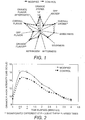
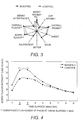
- Example 1 the volatile profile of the Berry Flavor formulations in Example 1 was determined. This analysis indicated that the retention of specific volatile materials for the Modified powder compared to the level in the emulsion were approximately 24%, 35%, and 87% for dimethyl sulfide, ethyl acetate, and ethyl butyrate, respectively. Table 5 indicated the ratio of volatiles retained in the modified powder in comparison to the Control powder. Sensory tests showed benefit of the Modified powder over the Control powder in a beverage tasting solution (significantly greater berry aroma and flavor, among others; Figure 3 ) and in chewing gum (significantly greater berry flavor intensity at the 30 and 60 second intervals; Figure 4 ). TABLE 5 Berry Flavor Dimethyl Sulfide Ethyl Acetate Ethyl Butyrate Modified 12.7 13.4 4.5 Control 1.0 1.0 1.0 1.0 1.0
- Flavor compositions were spray-dried in accordance with the instant method, incorporated into chewing gum, and the stability of the flavor was evaluated by an expert panel after storage at 32°C for 2 or 12 weeks or 21°C for 12 weeks.
- the results of prototype apple-flavored gum, as compared to a control, are presented in Table 7 and Figure 6.
- the control samples were spray dried flavors processed using conventional drying conditions.
- Table 7 The analysis presented in Table 7 indicates that the apple flavor produced by the instant method was as stable as a conventional spray-dried composition at 21°C (12 weeks) or 32°C (12 weeks). However, the impact of the apple flavor produced by the instant method was stronger after storage at 32°C for 12 weeks than that of the conventional spray-dried composition stored at 21°C for 12 weeks.
- Spray-dried flavor compositions prepared in accordance with the instant method, were incorporated into savory broths and attributes of the broths were assessed by a panel of consumers.
Landscapes
- Chemical & Material Sciences (AREA)
- Polymers & Plastics (AREA)
- Life Sciences & Earth Sciences (AREA)
- Engineering & Computer Science (AREA)
- Food Science & Technology (AREA)
- Nutrition Science (AREA)
- Health & Medical Sciences (AREA)
- Oil, Petroleum & Natural Gas (AREA)
- Inorganic Chemistry (AREA)
- Fats And Perfumes (AREA)
- Seasonings (AREA)
- Cosmetics (AREA)
- Detergent Compositions (AREA)
- Vaporization, Distillation, Condensation, Sublimation, And Cold Traps (AREA)
Description
- This patent application claims the benefit of priority from
U.S. Provisional Application Serial Number 61/449,440, filed March 4, 2011 - In the food industry, spray drying, freeze-drying, vacuum continuous belt drying, and reduced pressure-low temperature drying with a vacuum dryer have been used to produce dry powders of flavor ingredients such as, for example, dry extracts of animals and plants.
- Spray drying is a common industrial method for drying liquid solutions or slurries by spraying into a stream of hot gas. It is a rapid, one-step process for converting the feed liquid into a powder. Usually the drying gas is air, but nitrogen can also be used for special products needing oxygen-free conditions. The most common feed materials are aqueous-based solutions, emulsions and suspensions, where water is evaporated in the dryer. The liquid feed is fed to an atomizer, which is a device that breaks up the liquid stream into tiny droplets. This atomization takes place within the drying chamber so that the droplets are immediately exposed to hot air that initiates rapid moisture evaporation. The droplets become small particles of powder as the moisture is evaporated and they fall to the bottom of the drying chamber. Pressure nozzles, rotary disks, two-fluid nozzles, and the like are used as the atomizing unit. In many cases, the mean particle size (diameter) of the resulting dry powder is about 20 µm to 500 µm, and the drying time is as short as 5 to 30 seconds (see, Handbook of Chemistry and Engineering (1999) revised sixth edition, Maruzen Corporation, p. 770, p. 780). A four-fluid nozzle has also been developed, which has enabled mass-scale spray drying with a liquid droplet having a mean particle size of several micrometers.
- The spray drying method is used in many cases of mass scale production. In general, to produce a large volume of powder in a short period of time, a solution or slurry is fed at a fast feed rate into a spray dryer, while the inlet temperature of the spray dryer and the outlet temperature thereof are elevated as high as possible, to dry the slurry at a high speed. For example, milk is dried at an inlet temperature of the spray dryer of 150 to 250°C and yeast is dried at the inlet temperature of 300 to 350°C. Drying at such high temperatures may negatively impact the flavor of the raw material itself and produce a dry powder with a burned odor. However, spray drying at a low temperature to avoid these disadvantages can increase process times and costs. See
US 2005/0031769 andUS Patent No. 6,482,433 . - Spray-dried encapsulated flavors are created during the drying process when the aqueous carrier slurry forms a shell around the normally oil-based flavor core. During the drying process, a thin film of carrier material rapidly forms around the atomized droplet and selectively allows water to evaporate while retaining the flavor oil (Thijssen & Rulkens (1968) De Ingenieur 80:45-56). The shell protects the core against deterioration and volatile evaporation, but also allows the core to be released under desired conditions, for example, dissolution in water.
-
EP 1 477 073 A1 -
US 5,124,162 discloses an antioxidant-free, stable, fixed flavor prepared from a mixture of flavour, maltose, malto-dextrin and a carbohydrate film former by spray-drying the mixture to form a dense product of at least 0.5 g/cc bulk-free flow density and less than 20% voids, which is stable against oxidation for one year at 70°F. -
EP 0 155 848 A2 - Sunatree Vara-Ubol et al., "Effect of Maltodextrin and Inlet Air Temperatures on Quality of Spray Dried Pandan Extract", internet citation, (2003-07-17), URL: http://iufost.confex.com/iufost/2003/techprogram/paper_1417.htm, discloses spray-drying of pandan extract using an air inlet temperature of 130, 150 or 170°C in order to reduce potential losses of aroma and flavor, wherein addition of 10% maltodextrin and an inlet air temperature of 150°C were the optimum conditions.
- There has been a long felt need to spray dry natural and synthetic materials to provide intense fresh, authentic consumer preferred flavors in foodstuffs and other flavor-containing products. Likewise, there is a similar need to spray dry natural and synthetic materials to provide intense, fresh, authentic consumer preferred fragrances in consumer products.
- Disclosed herein is a spray-dried flavor composition containing a spray-dried flavor that has volatile compounds, wherein the volatile compounds are present in an amount that is at least 20% of the volatile compounds originally contained in the flavor.
- Also disclosed is a spray-dried flavor composition produced by spray drying a flavor that contains volatile compounds in a spray dryer having an inlet temperature of less than 100°C and an air inlet dew point -10°C to 5°C, wherein the volatile compounds are present in the spray-dried flavor composition in an amount that is at least 20% of the volatile compounds originally contained in the flavor.
- Also disclosed is a stable spray-dried flavor composition produced by spray drying a flavor that that contains volatile compounds in a spray dryer having an inlet temperature of less than 100°C and an air inlet dew point -10°C to 5°C, wherein the volatile compounds are present in the spray-dried flavor composition in an amount that is at least 20% of the volatile compounds originally contained in the flavor.
- The invention provides a method for producing a spray-dried composition capable of retaining volatile compounds. In accordance with this method, a flavor containing volatile compounds is spray dried in a spray dryer of an atomizer type and comprising a rotary disc or nozzle, the spray dryer having an inlet temperature of less than 100°C and an inlet air humidity of 0 - 4 g H2O/kg dry air and having an outlet temperature between 35 °C and 55 °C and an outlet air humidity of 10 - 20 g H2O/kg dry air to obtain a spray-dried flavor composition, wherein the volatile compounds are present in the spray-dried flavor composition in an amount that is at least 20% of the volatile compounds originally contained in the flavor.
- In accordance with certain embodiments of the methods of this invention, the spray-dried composition may be subjected to an additional drying step in a fluid-bed chamber attached at the spray dryer outlet, wherein the temperature of the air of the fluid-bed unit is at or below the outlet temperature of the spray dryer. In other embodiments, the volatile compounds are acetaldehydes, dimethyl sulfides, ethyl acetates, ethyl propionates, methyl butyrates, or ethyl butyrates. In yet other embodiments, the volatile compounds have a boiling point of less than 200°C, less than 100°C, or less than 60°C.
- In further embodiments, the composition fed to the dryer may further include a carrier material and/or a solvent, such as a volatile solvent, wherein the flavor and carrier comprise 40% and 70% as dry solid material of the total composition. For the purpose of the invention, a dry solid material is defined as a combination of carrier and flavor materials. In yet other embodiments, the flavor is prepared as an emulsion and the volatile compounds are present in the emulsion in an amount that is at least 80% of the volatile compounds originally contained in the flavor. Still further embodiments include the use of nitrogen or carbon dioxide in the spray dryer. In certain embodiments, the air inlet temperature is in the range of 40°C to 99°C. Methods of the invention are provided wherein the spray-dried flavor compositions with a water activity in the range of 0.1 to 0.6. High intensity flavor compositions and their use in, e.g., a chewing gum or beverage are also disclosed.
-
-
Figure 1 shows a comparison of sensory profiles of Orange Flavor between samples produced under different RH/Temperature conditions in a beverage tasting solution. *Directionally different, **Significantly different at p=0.05 -
Figure 2 shows a comparison of time intensity profiles of Orange Flavor between samples produced under different humidity/temperature conditions in sugar-free chewing gum. **Significantly different at p=0.05 at these elapsed times. -
Figure 3 shows a comparison of sensory profiles of Berry Flavor between samples produced under different humidity/temperature conditions in a beverage tasting solution. ** Significantly different at p = 0.05. -
Figure 4 shows a comparison of time intensity profiles of Berry Flavor between samples produced under different humidity/temperature conditions in sugar-free chewing gum. **Significantly different at p=0.05 at these elapsed times. -
Figure 5 is a diagram of dryer airflow used in the production of the instant composition. - It has been found that commercially available spray dryer nozzles, geometries, and circulation patterns can be used in methods of producing powders with high volatile retention and high flavor intensity, even when drying for an extended amount of time. In particular, when a conventional spray dryer is used with an inlet temperature of less than 100°C and a dew point -10°C to 5°C, higher levels of volatile compounds can be retained. Because of the increased efficiency of the method described herein, drying of flavor compositions containing volatile compounds can be achieved at relatively low temperatures compared to conventionally used methods. The resulting spray-dried flavor composition has high intensity flavor and has a high flavor/fragrance quality that is authentic to the natural source. Surprisingly, these flavor compositions maintain high flavor intensity and flavor/fragrance quality in various end-use applications after long-term storage.
- Disclosed herein is a stable spray-dried flavor composition produced by spray drying a flavor that that contains volatile compounds in a spray dryer having an inlet temperature of less than 100°C and an air inlet dew point -10°C to 5°C, wherein the volatile compounds are present in the spray-dried flavor composition in an amount that is at least 20% of the volatile compounds originally contained in the flavor. For the purpose of this invention stability is defined as a flavor quality and intensity that remains acceptable for use in end use applications. Preferably, a stable spray-dried flavor composition has a shelf-life of up to three years depending on storage conditions. Consumer data, as demonstrated in the examples herein, showed statistically significant preference for the flavors composition disclosed herein. The consumer preferred quality of the flavor composition is further supported by the attributes selected by consumers to describe the flavor quality of the prototypes.
- Disclosed herein is a spray-dried flavor composition and a method for producing such a composition. In accordance with the present invention, a spray-dried flavor composition containing one or more volatile compounds is produced by spray drying a flavor in a spray dryer of an atomizer type and comprising a rotary disc or nozzle, the spray dryer with an inlet temperature of less than 100°C and an inlet air humidity of 0 - 4 g H2O/kg dry air and having an outlet temperature between 35 °C and 55 °C and an outlet air humidity of 10 - 20 g H2O/kg dry air so that a dry powder is obtained. In certain embodiments, the resulting spray-dried composition is further dried in a fluidized bed. As a result of the instant method, the spray-dried flavor composition retains at least 20% of the volatile compounds originally contained in the flavor.
- Unless otherwise specified, a flavor of the disclosure is a flavor that contains one or more volatile compounds. A variety of flavors can be used in accordance with the present invention. Flavor may be chosen from synthetic flavor and flavoring aromatics, and/or oils, oleo resins and oil extracts derived from plants, leaves, flowers, fruits, and combinations thereof. Representative flavor oils include, but are not limited to, spearmint oil, cinnamon oil, peppermint oil, clove oil, bay oil, thyme oil, cedar leaf oil, oil of nutmeg, oil of sage, and oil of bitter almonds. Also useful are artificial, natural or synthetic fruit flavors such as vanilla, chocolate, coffee, cocoa and citrus oil, including lemon, orange, grape, lime and grapefruit, and fruit essences including apple, pear, peach, strawberry, raspberry, cherry, plum, pineapple, apricot and so forth. These flavors can be used individually or in admixture.
- The volatile compounds of the instant flavor may include, but are not limited to, acetaldehyde, dimethyl sulfide, ethyl acetate, ethyl propionate, methyl butyrate, and ethyl butyrate. Flavors containing volatile aldehydes or esters include, e.g., cinnamyl acetate, cinnamaldehyde, citral, diethylacetal, dihydrocarvyl acetate, eugenyl formate, and p-methylanisole. Further examples of volatile compounds that may be present in the instant flavor oils include acetaldehyde (apple); benzaldehyde (cherry, almond); cinnamic aldehyde (cinnamon); citral, i.e., alpha citral (lemon, lime); neral, i.e., beta citral (lemon, lime); decanal (orange, lemon); ethyl vanillin (vanilla, cream); heliotropine, i.e., piperonal (vanilla, cream); vanillin (vanilla, cream); alpha-amyl cinnamaldehyde (spicy fruity flavors); butyraldehyde (butter, cheese); valeraldehyde (butter, cheese); citronellal (modifies, many types); decanal (citrus fruits); aldehyde C-8 (citrus fruits); aldehyde C-9 (citrus fruits); aldehyde C-12 (citrus fruits); 2-ethyl butyraldehyde (berry fruits); hexenal, i.e., trans-2 (berry fruits); tolyl aldehyde (cherry, almond); veratraldehyde (vanilla); 2,6-dimethyl-5-heptenal, i.e., melonal (melon); 2-6-dimethyloctanal (green fruit); and 2-dodecenal (citrus, mandarin); cherry; or grape and mixtures thereof. The composition may also contain taste modulators and artificial sweeteners.
- The physical, chemical, and odor properties of selected volatile compounds are presented in Table 1.
TABLE 1 Compound MW (g/mol) Boiling Point (°C) Water Solubility (g/L, approx.) Odor* Descriptors acetaldehyde 44.05 21 soluble pungent; ethereal dimethyl sulfide 62.02 36 insoluble cabbage ethyl acetate 88.11 77 90 ethereal; fruity ethyl propionate 102.13 99 14 sweet; fruity; ethereal methyl butyrate 102.13 102 15 fruity; pineapple ethyl butyrate 116.16 121 6 fruity; pineapple * The Good Scents Company and Merck Index, 12th Ed. - The instant invention is particularly useful in processing flavors with volatile compounds having a boiling point of less than 200°C, less than 150°C, less than 120°C, less than 100°C, less than 80°C, less than 60°C, less than 40°C, less than 20°C, or less than 0°C. Using such flavors, higher levels of volatile compounds are retained, which results in a sensory perceivable difference over conventional drying processes.
- In certain embodiments, the invention further includes the use of a carrier material to enhance processing productivity and flavor intensity. Such carriers can include any sugar, sugar derivatives, modified starch, proteins, celluloses, salts, dextrins, gums, sugar alcohols, polyols, peptides, acids, carbohydrates or hydrocolloids. Particular examples of suitable materials include sugars such as sucrose, glucose, lactose, levulose, trehalose, fructose, maltose, ribose, dextrose, isomalt, sorbitol, mannitol, xylitol, lactitol, maltitol, pentatol, arabinose, pentose, xylose, galactose; hydrogenated starch hydrolysates; maltodextrins or dextrins (soluble fiber); hydrocolloids such as agar or carrageenan; gums; polydextrose; proteins such as soy and whey protein isolates and hydrolyzates, and sodium caseinates; and derivatives and mixtures thereof. The carrier can be selected based upon, amongst other factors, the desired flavor, authentic taste and intensity to be achieved.
- In some embodiments, the flavor and optional carrier material are dissolved or emulsified in a solvent and subsequently spray-dried. In some embodiments, the solvent is water. In other embodiments, the solvent is not water. In yet further embodiments, the solvent is a volatile solvent. In still other embodiments, the solvent is a mixture of water and a volatile solvent. As is known in the art, a volatile solvent is a nonaqueous liquid with solvent properties with the characteristic of evaporating readily at room temperature and atmospheric pressure. Volatile solvents of particular use in accordance with the present invention include, but are not limited to, ethanol, ethyl acetate, acetone.
- Flavor emulsions can be prepared according to standard preparation procedures. Briefly, the practice involves dispersing and dissolving the dry carrier materials in solvent until free of lumps. When using water as the solvent, it may be desirable to warm the water (e.g., to approximately 50°C) prior to adding the carrier material. The flavor is then added under constant agitation until a homogeneous mixture is obtained. The emulsion may be further subjected to high shear or homogenized to reduce oil droplet size prior to spray drying.
- In certain embodiments, the emulsion contains between 40% and 70% dry solid material (including the flavor), or more preferably between 55% and 65% dry solid material (including the flavor). The amount of dry solid material can be adjusted by using more or less water depending on the solubility of the carrier material and various factors related to efficient operation of the spray dryer. For example, the type and amount of carrier, amount of water, and/or amount of flavor can be adjusted so that the resulting emulsion has a viscosity suitable for feeding into a spray dryer to provide liquid droplets having a mean particle size (mean volume diameter) of between 10 µm and 200 µm. For example, when using spray nozzles, such as a three-fluid nozzle and a four-fluid nozzle, the viscosity of the feed slurry is preferably 500 cps or less, preferably 200 cps or less, and more preferably 80 cps or less. For a rotary atomizer (rotary disk), the viscosity is preferably 70,000 cps or less. Moreover, the feed slurry (i.e., emulsion) can be heated (e.g., to near the inlet temperature) or cooled (e.g., to 15°C) immediately before adding it to the spray dryer to modify fluidity. In addition, certain flavors, especially those that are more water-soluble, act as plasticizers thereby making processing more difficult due to stickiness. In this respect, the ratios of carrier materials can be modified. Therefore, various factors can be appropriately selected or modified for use in combination with different spray dry apparatuses.
- In addition to the flavor and carrier material, an emulsifier or surfactant can also be used in the production of the spray-dried flavor composition disclosed herein. Examples of suitable emulsifiers or surfactants include, but are not limited to, lecithins, sucrose esters, proteins, gums, soap-bark extract, saponins, and the like. Moreover, a variety of solvents can be used in the spray-dried flavor composition disclosed herein. Such solvents include, volatiles and nonvolatiles but are not limited to alcohol (e.g., ethanol), ethyl acetate, acetone, triglycerides, vegetable oils, animal fats, and triacetin.
- Commercially available spray dryers can be used as in the practice of the present invention. For example, a spray dryer with a vertical parallel flow function can be used. The spray dryer should be a system with a dehumidifying and drying function. For example, a spray dryer capable of blowing a high volume of desiccated air with a dew point of less than 5°C is particularly preferable. For a spray dryer with no dehumidifying and drying function, the spray dryer is inevitably arranged with a dry dehumidifier, e.g., a honeycomb-type rotary dehumidifier (e.g., Nichias Corporation or Sweden PROFLUTE Corporation). Suitable spray dryers include the micromist spray dryer and the hybrid granulator series manufactured by Fujisaki Electric Co., Ltd.; the fluidized spray dryer FSD with internal fluid bed as manufactured by Niro Corporation; the fluid granulation spray dryer and L-8 type spray dryer manufactured by Ogawara (Japan); the DL-21 type and GB-21 type spray dryers manufactured by Yamato Scientific Co., Ltd., and Anhydro Spray Bed Dryer manufactured by SPX Corporation.
- In particular embodiments, the spray dryer is capable of generating liquid droplets (particles) having a mean particle size (mean volume diameter) of between about 10 µm to about 200 µm. Specifically, it is preferred to carry out spray drying with a spray dryer with a spray nozzle capable of generating a large volume of liquid droplets having a mean particle size of between about 10 µm to about 200 µm, preferably about 20 µm to about 150 µm, and more preferably about 30 µm to about 100 µm. When the liquid droplets are dried, a dry powder having a mean particle size (mean volume diameter) of about 10 µm to about 100 µm is preferred for retention of the flavor oil.
- Among the operation conditions of the spray drying apparatus, in certain embodiments the outlet temperature of the spray drying apparatus is between 35°C and 55°C. For the purposes of this invention, the outlet temperature of the spray dryer means the product temperature of the dry powder in the vicinity of the powder collection part of the spray dryer. For the spray dryer of the vertical parallel flow type, the outlet temperature means the temperature (exhaust gas temperature) at the exhaust part thereof.
- In other embodiments of this invention, the average inlet air temperature of the spray drying apparatus is less than 100°C. In certain embodiments, the average inlet air temperature of the spray drying apparatus is in the range of 40°C to 99°C, more preferably 60°C to 99°C and most preferably 80°C to 99°C. For the purposes herein, the average inlet air temperature is a sum total of all inlet air streams, e.g., main chamber inlet air and the inlet air to the fluid bed(s).
- As a particular feature of the instant invention, it is desirable that production parameters including temperature, pressure and humidity, are controlled to achieve an inlet air humidity of 0 - 4 g H2O/kg dry air. In particular disclosures, the air inlet dew point of the spray drying apparatus is 5°C or less, preferably 0°C or less, more preferably is -5°C or less, and most preferably -7.5°C or less. As is known in the art, dew point temperature is a function of air temperature and %RH and can be determined using a psychrometric chart or calculator. Dew point temperature is important as it corresponds directly to the actual amount of water in the air on a mass basis.
- Once the spray-dried flavor composition is dried or partially dried in the spray drier, the resulting powder can be used in the production of food product, pharmaceuticals, consumer products and the like. Alternatively, particular embodiments feature the additional step of further drying the spray-dried flavor composition in a fluid-bed chamber attached at the outlet of the spray dryer. Accordingly, certain embodiments feature the use of an integrated fluid-bed spray dryer to produce the instant spray-dried flavor composition. This secondary drying can, e.g., further remove entrapped solvent, residual moisture, and/or water of molecular hydration, to provide a composition of powder particles with significantly lower moisture content that is stable in storage, e.g., for extended periods at ambient temperatures.
- In accordance with this embodiment, the temperature of the air supplying the fluid-bed unit is maintained at or below the outlet temperature of the spray dryer in order to maintain the benefit of volatile flavor retention. Thus, the inlet temperature of the fluid-bed unit is between 40°C and 99°C, preferably 50 to 95°C, and more preferably 60 to 90°C; and the inlet dew point is in the range of -10 to 5°C.
- In some embodiments, the fluid-bed has a single zone. In other embodiments, the fluid-bed unit has one, two, three or more zones, wherein each zone has a different temperature and air flow rate. In certain embodiments, the fluid-bed unit has three zones, each varying in temperature by at least 10°C. In particular embodiments, the fluid-bed unit has three zones, each varying in temperature by 10°C to 20°C. By way of illustration, dry powder from a spray dryer with an outlet temperature of 60°C could have a first fluid-bed zone at 60°C, a second bed zone of 45°C and a third zone of 25°C.
- Secondary drying can continue, e.g., for about 5 minutes to about 5 hours, or about 10 minutes to about 1 hour, and most preferably about 20 to 40 minutes until residual moisture is reduced to a desired level. In particular embodiments, secondary drying continues until the residual moisture of the powder particles is below 5 percent.
- As used herein, "dry," "dried," and "substantially dried" encompass those compositions with from about 0% to about 15% water. Preferably, the instant composition will have a water activity of 0.1 to 0.6, or more desirably 0.2 to 0.5, and most preferably from 0.2 to 0.4 wherein said levels of dryness can be achieved with or without secondary drying.
- Drying can also occur in the total or partial absence of ambient air. In this respect, drying can occur in the presence of CO2 or other drying gases (e.g., nitrogen). Accordingly, in particular embodiments, the air of the spray dryer is partially or wholly composed of carbon dioxide or nitrogen. In accordance with this embodiment, partial carbon dioxide or nitrogen is intended to mean a level in the range of 80-99% carbon dioxide and/or nitrogen.
- Once the spray-dried flavor composition reaches the desired level of dryness, it can be used in a variety of consumer, food, or pharmaceutical products. In particular, the instant spray-dried flavor composition finds application in gums, confections, oral care products, beverages, snacks, dairy products, soups, sauces, condiments, detergents, fabric softeners and other fabric care products, antiperspirants, deodorants, talc, kitty litter, hair care and styling products, personal care products, air fresheners, cereals, baked goods and cleaners. In specific embodiments, the instant spray-dried flavor composition is used in flavoring chewing gum and beverages. Additionally, the spray-dried powder may be further processed by extrusion, coating, agglomeration, blending, compaction to impart additional functionality or benefits. While the instant invention is described in terms of the spray drying technique, the instant invention can employ other drying technologies or processes wherein the use of low humidity and temperature conditions result in improved product quality through volatile retention.
- As used herein, all percentages are weight percent unless otherwise noted, L is understood to be liter, kg is understood to be kilogram, and g to be gram.
- The following examples are provided.
- A comparison between modified formulas and conventional control formulas was conducted. Exemplary Control and Modified formulas of dry flavor powders are listed in Table 2.
TABLE 2 Component Control Modified Control Modified Orange Flavor 20% 16% Berry Flavor 11% 16% Modified starch 10% 8% 72% 8% Carbohydrates (e.g., sugar, corn syrup, maltodextrin) 70% 76% 17% 76% - Control powders were produced by a conventional process conditions and Modified powders were produced by the instant modified process (
Figure 5 ), according to the conditions listed in Table 3. In both cases, a conventional spray dryer without an integrated fluid-bed was used.TABLE 3 Spray Dryer Operating Parameter Standard Modified Inlet air temperature (°C) 170 - 210 < 100 Inlet air humidity (g H2O/kg dry air) 2 - 18 0 - 4 Outlet air temperature (°C) 80 - 100 35 - 55 Outlet air humidity (g H2O/kg dry air) 45 - 55 10 - 20 Atomizer type Rotary Disc Rotary Disc or Nozzle - All formulations ran well with minimal hold-up, sticking, or other issues in the conventional spray dryer.
- Using GC-FID (gas chromatography-flame ionization detector) analysis, the volatile profile of the Orange Flavor formulations in Example 1 was determined. This analysis indicated that the retention of specific volatile materials for the Modified powder compared to the level in the emulsion were approximately 72%, 75%, and 52% for ethyl propionate, ethyl butyrate, and acetaldehyde, respectively. Table 4 indicated the ratio of volatiles retained in the Modified powder in comparison to the Control powder. Sensory tests showed benefit of the Modified powder over the Control powder in a beverage tasting solution (significantly greater overall aroma and orange flavor;
Figure 1 ) and in chewing gum (significantly greater orange flavor intensity at the 30 and 60 second intervals;Figure 2 ) .TABLE 4 Orange Flavor Ethyl Propionate Ethyl Butyrate Acetaldehyde Modified 2.3 1.6 1.8 Control 1.0 1.0 1.0 - Using GC-FID analysis, the volatile profile of the Berry Flavor formulations in Example 1 was determined. This analysis indicated that the retention of specific volatile materials for the Modified powder compared to the level in the emulsion were approximately 24%, 35%, and 87% for dimethyl sulfide, ethyl acetate, and ethyl butyrate, respectively. Table 5 indicated the ratio of volatiles retained in the modified powder in comparison to the Control powder. Sensory tests showed benefit of the Modified powder over the Control powder in a beverage tasting solution (significantly greater berry aroma and flavor, among others;
Figure 3 ) and in chewing gum (significantly greater berry flavor intensity at the 30 and 60 second intervals;Figure 4 ).TABLE 5 Berry Flavor Dimethyl Sulfide Ethyl Acetate Ethyl Butyrate Modified 12.7 13.4 4.5 Control 1.0 1.0 1.0 - To determine the effect of dryer process temperatures on the physical properties and flavor quality of a citrus flavor, different spray dryer air inlet and outlet temperatures were utilized. The resulting volatile compound content, and flavor strength and aroma as determined by an expert panel are presented in Table 6.
TABLE 6 Inlet/Outlet Temperature (°C) Water activity Acetaldehyde Content (% of Nominal) Flavor Strength Ranking Aroma Strength Ranking 190/90 0.16 37 1 1 93/45 0.27 42 2* 2* *2 = higher. - In addition to the above results, both spray-dried compositions exhibited free-flowing properties after 7 weeks at 40°C in a closed container. These results indicate that an air inlet temperature below 100°C reduces loss of volatile flavor compounds, provides improved sensory intensity, while maintaining water activity of the product at a level that prevents caking when exposed to above ambient temperatures.
- The stability of apple and mint flavors in chewing gum were evaluated. Flavor compositions were spray-dried in accordance with the instant method, incorporated into chewing gum, and the stability of the flavor was evaluated by an expert panel after storage at 32°C for 2 or 12 weeks or 21°C for 12 weeks. The results of prototype apple-flavored gum, as compared to a control, are presented in Table 7 and Figure 6. The control samples were spray dried flavors processed using conventional drying conditions.
TABLE 7 Apple Flavored Gum Prototype Flavor Stability Control Flavor Stability 32°C 21°C 32°C 21° C 2 weeks 12 weeks 12 weeks 2 weeks 12 weeks 12 weeks Candy Banana 4.5 4.5 4 4 2 3 Green Apple 5.5 4 4.5 3 2 3 Ripe Estery 6 5 5.5 4 3 4 Sweet n.d. 6 6 n.d. 5 5 Sour n.d. 4 4 n.d. 3 3.5 Salivating n.d. 4 5 n.d. 3 4 Astringent n.d. 3 3 n.d. 2.5 3 Scale: 10-point scale (10=highest). Expert panel of four testers. n.d.= not determined. - The analysis presented in Table 7 indicates that the apple flavor produced by the instant method was as stable as a conventional spray-dried composition at 21°C (12 weeks) or 32°C (12 weeks). However, the impact of the apple flavor produced by the instant method was stronger after storage at 32°C for 12 weeks than that of the conventional spray-dried composition stored at 21°C for 12 weeks.
- The results of prototype mint-flavored gum, as compared to a control, are presented in Table 8.
TABLE 8 Mint Flavored Gum Prototype Flavor Stability Control Flavor Stability 32°C 21°C 32°C 21° C 2 weeks 12 weeks 12 weeks 2 weeks 12 weeks 12 weeks Peppermint 6 4.5 5.5 4.5 3 3.5 Menthol 5.5 4.5 5.5 5.5 3 3.5 Sweet Creamy 5 4 4.5 4.5 3.5 3.5 Sweet n.d. 6.5 7 n.d. 6 7 Bitter n.d. 1 1 n.d. 1 1 Astringent n.d. 1 1 n.d. 1 1 Off-note (plastic) n.d. 0 0 n.d. 1 3 Scale: 10-point scale (10=highest). Four testers. n.d.= not determined. - The analysis presented in Table 8 indicates that the mint flavor produced by the instant method was as stable as a conventional spray-dried composition at 21°C (12 weeks) or 32°C (12 weeks). However, the impact of the mint flavor produced by the instant method was stronger after storage at 32°C for 12 weeks than that of the conventional spray-dried composition stored at 21°C for 12 weeks.
Overall, the results of this analysis indicated that the desirable sensory attributes of apple and mint flavors were better maintained in chewing gum using the prototype flavor over 12 weeks at 32°C. - The stability of raspberry flavor in powdered soft drink mix was evaluated. A raspberry flavor composition was spray-dried in accordance with the instant method, incorporated into a powdered soft drink mix, and the stability of the flavor was evaluated by an expert panel after storage for 8 weeks at 38°C. The results of the prototype soft drink mix containing the instant spray-dried flavor composition, as compared to a control, are presented in Table 9. The control sample was a spray dry flavor processed using conventional drying conditions.
TABLE 9 Sample Degree of Difference* Description Prototype 9 No off-notes present. Flavor attributes similar to refrigerated reference. Control 7 Lacking fullness, sweetness, loss of impact and juiciness compared to refrigerated reference. *Scale: 1-3: very large difference, off-notes present; 10: not different from refrigerated reference. - This analysis indicated that after 8 weeks of accelerated storage, the raspberry prototype maintained flavor quality.
- Spray-dried flavor compositions, prepared in accordance with the instant method, were incorporated into savory broths and attributes of the broths were assessed by a panel of consumers. The attributes of the prototype broths, as compared to a control, are presented in Table 10. The control broths were prepared from spray dry flavors processed using conventional drying conditions.
TABLE 10 Flavor Type % Preference for Prototype* Attributes** Prototype vs. Control Chicken 77 (N=65, p=0.0001) More white meat flavor, fresher, more balanced, rounder flavor, more overall aroma Beef 59 (N=63, p=0.17) More overall aroma, more roasted flavor, bolder flavor, more memorable *Paired comparison forced choice preference test among category users.
**Significantly different at greater than or equal to 90% confidence interval. - Consumer data showed statistically significant preference for the prototype flavors. This is further supported by the attributes selected by consumers to describe the flavor quality of the prototypes.
- The stability of various flavor prototypes in high barrier packaging (FRESHTEK) was assessed after storage for 6, 12, or 18 weeks at 40°C. The attributes of the prototype powders are presented in Table 11.
TABLE 11 Prototype Description* 6 weeks 12 weeks 18 weeks Peach 11-71 Acceptable Acceptable Acceptable Apple 11-58 Acceptable Acceptable Slight off-notes Borderline Slight off-notes, noticeably weaker than reference Orange Valencia 11-299 Acceptable Acceptable No oxidized notes Acceptable No oxidized notes Lime 11-331 Acceptable Acceptable No oxidized notes, slightly weaker than reference Borderline No oxidized notes, noticeably weaker than reference Lemon Brazilian 11-315 Acceptable Acceptable No oxidized notes Acceptable No oxidized notes *Expert panel evaluation, reference sample was kept frozen during storage study.
Claims (11)
- A method for producing a spray-dried flavor composition capable of retaining volatile compounds comprising
spray drying a flavor containing volatile compounds in a spray dryer of an atomizer type and comprising a rotary disc or nozzle, the spray dryer having an inlet temperature of less than 100°C and an inlet air humidity of 0 - 4 g H2O/kg dry air and having an outlet temperature between 35°C and 55°C and an outlet air humidity of 10 - 20 g H2O/kg dry air to obtain a spray-dried flavor composition, wherein the volatile compounds are present in the spray-dried flavor composition in an amount that is at least 20% of the volatile compounds originally contained in the flavor. - The method of claim 1, further comprising drying the spray-dried flavor composition in a fluid-bed chamber attached at the spray dryer outlet, wherein the temperature of the air of the fluid-bed unit is at or below the outlet temperature of the spray dryer.
- The method of claim 1 or 2, wherein the volatile compounds are acetaldehydes, dimethyl sulfides, ethyl acetates, ethyl propionates, methyl butyrates, or ethyl butyrates.
- The method of any one of claims 1 to 3, wherein the volatile compounds have a boiling point of less than 200°C, less than 100°C, or less than 60°C.
- The method of any one of claims 1 to 4, wherein the flavor further comprises a carrier material.
- The method of any one of claims 1 to 5, wherein the flavor further comprises a solvent.
- The method of claim 6, wherein the solvent is a volatile solvent.
- The method of claim 6, wherein the flavor and optional carrier material comprise 40% and 70% as dry solid material of the total composition.
- The method of claim 6, further comprising preparing the flavor as an emulsion, wherein the volatile compounds are present in the emulsion in an amount that is at least 80% of the volatile compounds originally contained in the flavor.
- The method of any one of claims 1 to 9, wherein the air inlet temperature is in the range of 40°C to 99°C.
- The method of any one of claims 1 to 10, wherein the water activity of the spray-dried flavor composition is in the range of 0.1 to 0.6.
Priority Applications (1)
| Application Number | Priority Date | Filing Date | Title |
|---|---|---|---|
| SI201231559T SI2680712T1 (en) | 2011-03-04 | 2012-03-02 | Method for providing spray-dried compositions capable of retaining volatile compounds |
Applications Claiming Priority (2)
| Application Number | Priority Date | Filing Date | Title |
|---|---|---|---|
| US201161449440P | 2011-03-04 | 2011-03-04 | |
| PCT/US2012/027435 WO2012122010A2 (en) | 2011-03-04 | 2012-03-02 | Spray-dried compositions capable of retaining volatile compounds and methods of producing the same |
Publications (3)
| Publication Number | Publication Date |
|---|---|
| EP2680712A2 EP2680712A2 (en) | 2014-01-08 |
| EP2680712A4 EP2680712A4 (en) | 2015-09-30 |
| EP2680712B1 true EP2680712B1 (en) | 2018-12-26 |
Family
ID=46798713
Family Applications (1)
| Application Number | Title | Priority Date | Filing Date |
|---|---|---|---|
| EP12754631.5A Active EP2680712B1 (en) | 2011-03-04 | 2012-03-02 | Method for providing spray-dried compositions capable of retaining volatile compounds |
Country Status (8)
| Country | Link |
|---|---|
| US (3) | US20140205713A1 (en) |
| EP (1) | EP2680712B1 (en) |
| JP (1) | JP2014515597A (en) |
| AU (1) | AU2012225734A1 (en) |
| CA (1) | CA2829036A1 (en) |
| ES (1) | ES2716052T3 (en) |
| SI (1) | SI2680712T1 (en) |
| WO (1) | WO2012122010A2 (en) |
Families Citing this family (21)
| Publication number | Priority date | Publication date | Assignee | Title |
|---|---|---|---|---|
| US8939388B1 (en) | 2010-09-27 | 2015-01-27 | ZoomEssence, Inc. | Methods and apparatus for low heat spray drying |
| US9332776B1 (en) | 2010-09-27 | 2016-05-10 | ZoomEssence, Inc. | Methods and apparatus for low heat spray drying |
| US20130022728A1 (en) * | 2011-03-04 | 2013-01-24 | International Flavor & Fragrances Inc. | Spray-Dried Compositions Capable of Retaining Volatile Compounds and Methods of Producing the Same |
| EP2680712B1 (en) | 2011-03-04 | 2018-12-26 | International Flavors & Fragrances Inc. | Method for providing spray-dried compositions capable of retaining volatile compounds |
| BR102015005693A2 (en) * | 2014-03-13 | 2015-12-15 | Int Flavors & Fragrances Inc | spray-dried flavor composition and liquid beverage or liquid beverage concentrate |
| US10226544B2 (en) | 2015-06-05 | 2019-03-12 | International Flavors & Fragrances Inc. | Malodor counteracting compositions |
| MX2018009013A (en) | 2016-02-02 | 2018-09-28 | Firmenich & Cie | DRYING PROCESS FOR SUSPENSION IN ENVIRONMENTAL TEMPERATURE. |
| SG11202000588TA (en) | 2017-07-27 | 2020-02-27 | Firmenich & Cie | Process for drying a suspension of hydrogel microcapsules |
| AU2018312095B2 (en) | 2017-08-04 | 2021-10-28 | ZoomEssence, Inc. | Ultrahigh efficiency spray drying apparatus and process |
| US10486173B2 (en) | 2017-08-04 | 2019-11-26 | ZoomEssence, Inc. | Ultrahigh efficiency spray drying apparatus and process |
| US10155234B1 (en) | 2017-08-04 | 2018-12-18 | ZoomEssence, Inc. | Ultrahigh efficiency spray drying apparatus and process |
| US9861945B1 (en) | 2017-08-04 | 2018-01-09 | ZoomEssence, Inc. | Ultrahigh efficiency spray drying apparatus and process |
| US9993787B1 (en) | 2017-08-04 | 2018-06-12 | ZoomEssence, Inc. | Ultrahigh efficiency spray drying apparatus and process |
| US10569244B2 (en) | 2018-04-28 | 2020-02-25 | ZoomEssence, Inc. | Low temperature spray drying of carrier-free compositions |
| EP3787904A4 (en) | 2018-05-01 | 2021-12-29 | International Flavors & Fragrances Inc. | System and method for printing and drying flavors and fragrances |
| JP2021106571A (en) * | 2019-12-27 | 2021-07-29 | 三井製糖株式会社 | Method for producing granule, and granule |
| EP4110065A1 (en) | 2020-02-26 | 2023-01-04 | Firmenich SA | Process for preparing a flavored composition |
| BR112022026920A2 (en) | 2020-07-17 | 2023-01-24 | Sterilex LLC | DISINFECTANT / SANITIZING SOLUTIONS |
| JP7197743B1 (en) * | 2022-07-15 | 2022-12-27 | Dm三井製糖株式会社 | Method for producing granules and granules |
| CN120152625A (en) * | 2022-11-09 | 2025-06-13 | 西姆莱斯有限公司 | Flavour composition for carbonated beverages |
| CN120027579B (en) * | 2025-04-22 | 2025-07-29 | 安徽金国源中药股份有限公司 | Stoving regulation and control system of chinese-medicinal material |
Citations (1)
| Publication number | Priority date | Publication date | Assignee | Title |
|---|---|---|---|---|
| DE1667205B1 (en) * | 1967-06-09 | 1970-07-09 | Nii Udobreniam I Insektofungts | Process and device for the production of granules from solutions and suspensions |
Family Cites Families (30)
| Publication number | Priority date | Publication date | Assignee | Title |
|---|---|---|---|---|
| US3520066A (en) | 1966-05-26 | 1970-07-14 | Pillsbury Co | Spray drying method |
| US3554768A (en) | 1967-08-01 | 1971-01-12 | Gen Foods Corp | Carbohydrate fixed acetaldehyde |
| US3679416A (en) * | 1970-12-02 | 1972-07-25 | Chock Full O Nuts Corp | Agglomeration of powdered coffee |
| US3655397A (en) | 1971-03-30 | 1972-04-11 | Gen Foods Corp | Flavor compositions and processes |
| US3886297A (en) | 1971-03-30 | 1975-05-27 | Gen Foods Corp | Flavor compositions and processes |
| US3962321A (en) | 1972-04-11 | 1976-06-08 | General Foods Corporation | Enhancement of coffee flavor |
| US4093750A (en) | 1974-08-12 | 1978-06-06 | Stokely-Van Camp Inc. | Beverages containing polyglycerol ester cloud |
| US4276312A (en) | 1978-05-25 | 1981-06-30 | Merritt Carleton G | Encapsulation of materials |
| JPS57191674A (en) | 1981-05-22 | 1982-11-25 | Hitachi Ltd | Liquid crystal display element |
| US4448789A (en) * | 1982-08-27 | 1984-05-15 | Warner-Lambert Company | Enhanced flavor-releasing agent |
| US4532145A (en) | 1983-12-19 | 1985-07-30 | General Foods Corporation | Fixing volatiles in an amorphous substrate and products therefrom |
| US4582716A (en) * | 1984-03-19 | 1986-04-15 | General Foods Corporation | Method for fixing acetaldehyde |
| US5124162A (en) * | 1991-11-26 | 1992-06-23 | Kraft General Foods, Inc. | Spray-dried fixed flavorants in a carbohydrate substrate and process |
| US5273965A (en) | 1992-07-02 | 1993-12-28 | Cambridge Biotech Corporation | Methods for enhancing drug delivery with modified saponins |
| US5851578A (en) | 1997-02-21 | 1998-12-22 | Soma Technologies | Clear or translucent liquid beverage with souluble fiber and nutrients |
| BR9906621A (en) * | 1998-07-17 | 2000-08-01 | Givaudan Roure Internatonal Sa | Dicarboalkoxy dioxolans |
| ZA200003120B (en) | 1999-06-30 | 2001-01-02 | Givaudan Roure Int | Encapsulation of active ingredients. |
| JP3553521B2 (en) | 2001-04-26 | 2004-08-11 | 高砂香料工業株式会社 | Coating agent and coating powder |
| EP1477073A4 (en) * | 2002-02-18 | 2006-03-08 | Ajinomoto Kk | DRY POWDER CONTAINING TASTE AND AROMA COMPONENTS AND PROCESS FOR PRODUCING THE POWDER |
| US7402327B2 (en) | 2002-09-10 | 2008-07-22 | Pepsico, Inc. | Use of surfactants to solubilize water-insoluble solids in beverages |
| WO2005004635A1 (en) | 2003-07-10 | 2005-01-20 | Takasago International Corporation | Flavor enhancer, food or beverage containing the flavor enhancer, and method of flavor enhancement |
| US20080063747A1 (en) * | 2004-08-25 | 2008-03-13 | Cadbury Adams Usa Llc | Dusting compositions for chewing gum products |
| EP2109371B1 (en) | 2006-09-25 | 2012-10-17 | COMSTOCK, Bob | Process for solubilization of flavor oils |
| JP2009183809A (en) | 2008-02-01 | 2009-08-20 | Fujifilm Corp | Method for producing emulsion or dispersion, and foods, skin external preparations and pharmaceuticals containing the same |
| EP2282645B1 (en) | 2008-05-26 | 2015-04-15 | Fertin Pharma A/S | Flavor impregnation of a chewing gum core |
| US20110059205A1 (en) | 2009-09-04 | 2011-03-10 | Sylvia Gaysinsky | Botanical extracts and flavor systems and methods of making and using the same |
| JP2013523117A (en) | 2010-03-31 | 2013-06-17 | フイルメニツヒ ソシエテ アノニム | Production of solid capsules comprising flavor |
| EP2680712B1 (en) | 2011-03-04 | 2018-12-26 | International Flavors & Fragrances Inc. | Method for providing spray-dried compositions capable of retaining volatile compounds |
| US20130022728A1 (en) | 2011-03-04 | 2013-01-24 | International Flavor & Fragrances Inc. | Spray-Dried Compositions Capable of Retaining Volatile Compounds and Methods of Producing the Same |
| US20140193562A1 (en) | 2011-03-04 | 2014-07-10 | International Flavors & Fragrances Inc. | Propylene glycol-free spray-dried compositions and methods of producing the same |
-
2012
- 2012-03-02 EP EP12754631.5A patent/EP2680712B1/en active Active
- 2012-03-02 WO PCT/US2012/027435 patent/WO2012122010A2/en not_active Ceased
- 2012-03-02 CA CA2829036A patent/CA2829036A1/en not_active Abandoned
- 2012-03-02 JP JP2013556886A patent/JP2014515597A/en active Pending
- 2012-03-02 AU AU2012225734A patent/AU2012225734A1/en not_active Abandoned
- 2012-03-02 US US14/002,257 patent/US20140205713A1/en not_active Abandoned
- 2012-03-02 ES ES12754631T patent/ES2716052T3/en active Active
- 2012-03-02 SI SI201231559T patent/SI2680712T1/en unknown
-
2015
- 2015-08-25 US US14/834,726 patent/US20150374017A1/en not_active Abandoned
-
2017
- 2017-10-02 US US15/722,465 patent/US11412765B2/en active Active
Patent Citations (1)
| Publication number | Priority date | Publication date | Assignee | Title |
|---|---|---|---|---|
| DE1667205B1 (en) * | 1967-06-09 | 1970-07-09 | Nii Udobreniam I Insektofungts | Process and device for the production of granules from solutions and suspensions |
Non-Patent Citations (1)
| Title |
|---|
| MADE R E: "Novel dual dryer", FOOD ENGINEERING,, vol. 43, no. 7, 1 July 1971 (1971-07-01), pages 88 - 89, XP009190951 * |
Also Published As
| Publication number | Publication date |
|---|---|
| US20150374017A1 (en) | 2015-12-31 |
| JP2014515597A (en) | 2014-07-03 |
| US20180027855A1 (en) | 2018-02-01 |
| US11412765B2 (en) | 2022-08-16 |
| ES2716052T3 (en) | 2019-06-07 |
| WO2012122010A2 (en) | 2012-09-13 |
| CA2829036A1 (en) | 2012-09-13 |
| SI2680712T1 (en) | 2019-08-30 |
| WO2012122010A3 (en) | 2014-03-13 |
| AU2012225734A1 (en) | 2013-09-26 |
| US20140205713A1 (en) | 2014-07-24 |
| EP2680712A2 (en) | 2014-01-08 |
| EP2680712A4 (en) | 2015-09-30 |
Similar Documents
| Publication | Publication Date | Title |
|---|---|---|
| EP2897465B1 (en) | Method of producing a stable spray-dried composition | |
| US11412765B2 (en) | Spray-dried compositions capable of retaining volatile compounds and methods of producing the same | |
| US20140193562A1 (en) | Propylene glycol-free spray-dried compositions and methods of producing the same | |
| CN100448373C (en) | Dry powder with retained flavor and aroma and preparation method thereof | |
| JP5590744B2 (en) | Stable spray-dried composition in a carbohydrate support and method for obtaining said composition | |
| JP3583380B2 (en) | Coating agents and coating powders | |
| US6723359B2 (en) | Spray-dried compositions and method for their preparation | |
| EP1567021B1 (en) | Granulated flavor and method for producing the same | |
| CN106455641B (en) | The method of dry reaction spice mixture | |
| KR20050019101A (en) | Non-crystalline perfume or flavour delivery system | |
| EP2918175B1 (en) | Propylene glycol-free spray-dried flavour compositions and methods of producing the same | |
| CN1897827B (en) | Edible products containing flavored microcapsules | |
| CN115996647A (en) | extruded particles | |
| JP2001152179A (en) | Preparation method of sustained flavor type powder flavor | |
| JP2012046477A (en) | Agent and composition for mental exaltation | |
| CN117202986A (en) | Hydrogel encapsulation and method for producing same | |
| JP2005263801A (en) | Improved method of drying neoteme with auxiliary | |
| JP2004067962A (en) | New powdered spice containing highly branched cyclodextrin, its production method and food and drink applying the same | |
| JP2001149019A (en) | Chewing gum composition using flavor-sustaining powdery flavor and method for preparing the same | |
| CN115087367A (en) | Flavored particle delivery system | |
| CN117715534A (en) | Flavored particle delivery system |
Legal Events
| Date | Code | Title | Description |
|---|---|---|---|
| PUAI | Public reference made under article 153(3) epc to a published international application that has entered the european phase |
Free format text: ORIGINAL CODE: 0009012 |
|
| 17P | Request for examination filed |
Effective date: 20131004 |
|
| AK | Designated contracting states |
Kind code of ref document: A2 Designated state(s): AL AT BE BG CH CY CZ DE DK EE ES FI FR GB GR HR HU IE IS IT LI LT LU LV MC MK MT NL NO PL PT RO RS SE SI SK SM TR |
|
| R17D | Deferred search report published (corrected) |
Effective date: 20140313 |
|
| RIC1 | Information provided on ipc code assigned before grant |
Ipc: A23L 1/22 20060101ALI20141117BHEP Ipc: A23L 1/00 20060101AFI20141117BHEP Ipc: A23L 1/18 20060101ALI20141117BHEP |
|
| DAX | Request for extension of the european patent (deleted) | ||
| A4 | Supplementary search report drawn up and despatched |
Effective date: 20150827 |
|
| RIC1 | Information provided on ipc code assigned before grant |
Ipc: A23L 1/00 20060101AFI20150821BHEP Ipc: A23L 1/22 20060101ALI20150821BHEP Ipc: A23L 1/18 20060101ALI20150821BHEP |
|
| 17Q | First examination report despatched |
Effective date: 20160721 |
|
| STAA | Information on the status of an ep patent application or granted ep patent |
Free format text: STATUS: EXAMINATION IS IN PROGRESS |
|
| REG | Reference to a national code |
Ref country code: DE Ref legal event code: R079 Ref document number: 602012055140 Country of ref document: DE Free format text: PREVIOUS MAIN CLASS: A23L0001226000 Ipc: A23L0007161000 |
|
| GRAP | Despatch of communication of intention to grant a patent |
Free format text: ORIGINAL CODE: EPIDOSNIGR1 |
|
| STAA | Information on the status of an ep patent application or granted ep patent |
Free format text: STATUS: GRANT OF PATENT IS INTENDED |
|
| RIC1 | Information provided on ipc code assigned before grant |
Ipc: A23L 7/161 20160101AFI20180704BHEP Ipc: A23L 27/00 20160101ALI20180704BHEP |
|
| INTG | Intention to grant announced |
Effective date: 20180724 |
|
| GRAS | Grant fee paid |
Free format text: ORIGINAL CODE: EPIDOSNIGR3 |
|
| GRAA | (expected) grant |
Free format text: ORIGINAL CODE: 0009210 |
|
| STAA | Information on the status of an ep patent application or granted ep patent |
Free format text: STATUS: THE PATENT HAS BEEN GRANTED |
|
| AK | Designated contracting states |
Kind code of ref document: B1 Designated state(s): AL AT BE BG CH CY CZ DE DK EE ES FI FR GB GR HR HU IE IS IT LI LT LU LV MC MK MT NL NO PL PT RO RS SE SI SK SM TR |
|
| REG | Reference to a national code |
Ref country code: GB Ref legal event code: FG4D |
|
| REG | Reference to a national code |
Ref country code: CH Ref legal event code: EP |
|
| REG | Reference to a national code |
Ref country code: AT Ref legal event code: REF Ref document number: 1080180 Country of ref document: AT Kind code of ref document: T Effective date: 20190115 |
|
| REG | Reference to a national code |
Ref country code: DE Ref legal event code: R096 Ref document number: 602012055140 Country of ref document: DE |
|
| REG | Reference to a national code |
Ref country code: IE Ref legal event code: FG4D |
|
| REG | Reference to a national code |
Ref country code: NL Ref legal event code: FP |
|
| PG25 | Lapsed in a contracting state [announced via postgrant information from national office to epo] |
Ref country code: HR Free format text: LAPSE BECAUSE OF FAILURE TO SUBMIT A TRANSLATION OF THE DESCRIPTION OR TO PAY THE FEE WITHIN THE PRESCRIBED TIME-LIMIT Effective date: 20181226 Ref country code: LV Free format text: LAPSE BECAUSE OF FAILURE TO SUBMIT A TRANSLATION OF THE DESCRIPTION OR TO PAY THE FEE WITHIN THE PRESCRIBED TIME-LIMIT Effective date: 20181226 Ref country code: BG Free format text: LAPSE BECAUSE OF FAILURE TO SUBMIT A TRANSLATION OF THE DESCRIPTION OR TO PAY THE FEE WITHIN THE PRESCRIBED TIME-LIMIT Effective date: 20190326 Ref country code: FI Free format text: LAPSE BECAUSE OF FAILURE TO SUBMIT A TRANSLATION OF THE DESCRIPTION OR TO PAY THE FEE WITHIN THE PRESCRIBED TIME-LIMIT Effective date: 20181226 Ref country code: LT Free format text: LAPSE BECAUSE OF FAILURE TO SUBMIT A TRANSLATION OF THE DESCRIPTION OR TO PAY THE FEE WITHIN THE PRESCRIBED TIME-LIMIT Effective date: 20181226 Ref country code: NO Free format text: LAPSE BECAUSE OF FAILURE TO SUBMIT A TRANSLATION OF THE DESCRIPTION OR TO PAY THE FEE WITHIN THE PRESCRIBED TIME-LIMIT Effective date: 20190326 |
|
| REG | Reference to a national code |
Ref country code: LT Ref legal event code: MG4D |
|
| PG25 | Lapsed in a contracting state [announced via postgrant information from national office to epo] |
Ref country code: SE Free format text: LAPSE BECAUSE OF FAILURE TO SUBMIT A TRANSLATION OF THE DESCRIPTION OR TO PAY THE FEE WITHIN THE PRESCRIBED TIME-LIMIT Effective date: 20181226 Ref country code: RS Free format text: LAPSE BECAUSE OF FAILURE TO SUBMIT A TRANSLATION OF THE DESCRIPTION OR TO PAY THE FEE WITHIN THE PRESCRIBED TIME-LIMIT Effective date: 20181226 Ref country code: GR Free format text: LAPSE BECAUSE OF FAILURE TO SUBMIT A TRANSLATION OF THE DESCRIPTION OR TO PAY THE FEE WITHIN THE PRESCRIBED TIME-LIMIT Effective date: 20190327 Ref country code: AL Free format text: LAPSE BECAUSE OF FAILURE TO SUBMIT A TRANSLATION OF THE DESCRIPTION OR TO PAY THE FEE WITHIN THE PRESCRIBED TIME-LIMIT Effective date: 20181226 |
|
| REG | Reference to a national code |
Ref country code: ES Ref legal event code: FG2A Ref document number: 2716052 Country of ref document: ES Kind code of ref document: T3 Effective date: 20190607 |
|
| REG | Reference to a national code |
Ref country code: AT Ref legal event code: MK05 Ref document number: 1080180 Country of ref document: AT Kind code of ref document: T Effective date: 20181226 |
|
| PG25 | Lapsed in a contracting state [announced via postgrant information from national office to epo] |
Ref country code: IT Free format text: LAPSE BECAUSE OF FAILURE TO SUBMIT A TRANSLATION OF THE DESCRIPTION OR TO PAY THE FEE WITHIN THE PRESCRIBED TIME-LIMIT Effective date: 20181226 Ref country code: CZ Free format text: LAPSE BECAUSE OF FAILURE TO SUBMIT A TRANSLATION OF THE DESCRIPTION OR TO PAY THE FEE WITHIN THE PRESCRIBED TIME-LIMIT Effective date: 20181226 Ref country code: PT Free format text: LAPSE BECAUSE OF FAILURE TO SUBMIT A TRANSLATION OF THE DESCRIPTION OR TO PAY THE FEE WITHIN THE PRESCRIBED TIME-LIMIT Effective date: 20190426 Ref country code: PL Free format text: LAPSE BECAUSE OF FAILURE TO SUBMIT A TRANSLATION OF THE DESCRIPTION OR TO PAY THE FEE WITHIN THE PRESCRIBED TIME-LIMIT Effective date: 20181226 |
|
| PG25 | Lapsed in a contracting state [announced via postgrant information from national office to epo] |
Ref country code: IS Free format text: LAPSE BECAUSE OF FAILURE TO SUBMIT A TRANSLATION OF THE DESCRIPTION OR TO PAY THE FEE WITHIN THE PRESCRIBED TIME-LIMIT Effective date: 20190426 Ref country code: SM Free format text: LAPSE BECAUSE OF FAILURE TO SUBMIT A TRANSLATION OF THE DESCRIPTION OR TO PAY THE FEE WITHIN THE PRESCRIBED TIME-LIMIT Effective date: 20181226 Ref country code: SK Free format text: LAPSE BECAUSE OF FAILURE TO SUBMIT A TRANSLATION OF THE DESCRIPTION OR TO PAY THE FEE WITHIN THE PRESCRIBED TIME-LIMIT Effective date: 20181226 Ref country code: EE Free format text: LAPSE BECAUSE OF FAILURE TO SUBMIT A TRANSLATION OF THE DESCRIPTION OR TO PAY THE FEE WITHIN THE PRESCRIBED TIME-LIMIT Effective date: 20181226 Ref country code: RO Free format text: LAPSE BECAUSE OF FAILURE TO SUBMIT A TRANSLATION OF THE DESCRIPTION OR TO PAY THE FEE WITHIN THE PRESCRIBED TIME-LIMIT Effective date: 20181226 |
|
| REG | Reference to a national code |
Ref country code: DE Ref legal event code: R097 Ref document number: 602012055140 Country of ref document: DE |
|
| PG25 | Lapsed in a contracting state [announced via postgrant information from national office to epo] |
Ref country code: AT Free format text: LAPSE BECAUSE OF FAILURE TO SUBMIT A TRANSLATION OF THE DESCRIPTION OR TO PAY THE FEE WITHIN THE PRESCRIBED TIME-LIMIT Effective date: 20181226 Ref country code: MC Free format text: LAPSE BECAUSE OF FAILURE TO SUBMIT A TRANSLATION OF THE DESCRIPTION OR TO PAY THE FEE WITHIN THE PRESCRIBED TIME-LIMIT Effective date: 20181226 Ref country code: DK Free format text: LAPSE BECAUSE OF FAILURE TO SUBMIT A TRANSLATION OF THE DESCRIPTION OR TO PAY THE FEE WITHIN THE PRESCRIBED TIME-LIMIT Effective date: 20181226 |
|
| PLBE | No opposition filed within time limit |
Free format text: ORIGINAL CODE: 0009261 |
|
| STAA | Information on the status of an ep patent application or granted ep patent |
Free format text: STATUS: NO OPPOSITION FILED WITHIN TIME LIMIT |
|
| PG25 | Lapsed in a contracting state [announced via postgrant information from national office to epo] |
Ref country code: LU Free format text: LAPSE BECAUSE OF NON-PAYMENT OF DUE FEES Effective date: 20190302 |
|
| 26N | No opposition filed |
Effective date: 20190927 |
|
| REG | Reference to a national code |
Ref country code: BE Ref legal event code: MM Effective date: 20190331 |
|
| PG25 | Lapsed in a contracting state [announced via postgrant information from national office to epo] |
Ref country code: IE Free format text: LAPSE BECAUSE OF NON-PAYMENT OF DUE FEES Effective date: 20190302 |
|
| PG25 | Lapsed in a contracting state [announced via postgrant information from national office to epo] |
Ref country code: BE Free format text: LAPSE BECAUSE OF NON-PAYMENT OF DUE FEES Effective date: 20190331 |
|
| PG25 | Lapsed in a contracting state [announced via postgrant information from national office to epo] |
Ref country code: TR Free format text: LAPSE BECAUSE OF FAILURE TO SUBMIT A TRANSLATION OF THE DESCRIPTION OR TO PAY THE FEE WITHIN THE PRESCRIBED TIME-LIMIT Effective date: 20181226 |
|
| PG25 | Lapsed in a contracting state [announced via postgrant information from national office to epo] |
Ref country code: MT Free format text: LAPSE BECAUSE OF NON-PAYMENT OF DUE FEES Effective date: 20190302 |
|
| PG25 | Lapsed in a contracting state [announced via postgrant information from national office to epo] |
Ref country code: CY Free format text: LAPSE BECAUSE OF FAILURE TO SUBMIT A TRANSLATION OF THE DESCRIPTION OR TO PAY THE FEE WITHIN THE PRESCRIBED TIME-LIMIT Effective date: 20181226 |
|
| PGFP | Annual fee paid to national office [announced via postgrant information from national office to epo] |
Ref country code: SI Payment date: 20210219 Year of fee payment: 10 |
|
| PG25 | Lapsed in a contracting state [announced via postgrant information from national office to epo] |
Ref country code: HU Free format text: LAPSE BECAUSE OF FAILURE TO SUBMIT A TRANSLATION OF THE DESCRIPTION OR TO PAY THE FEE WITHIN THE PRESCRIBED TIME-LIMIT; INVALID AB INITIO Effective date: 20120302 |
|
| PG25 | Lapsed in a contracting state [announced via postgrant information from national office to epo] |
Ref country code: MK Free format text: LAPSE BECAUSE OF FAILURE TO SUBMIT A TRANSLATION OF THE DESCRIPTION OR TO PAY THE FEE WITHIN THE PRESCRIBED TIME-LIMIT Effective date: 20181226 |
|
| REG | Reference to a national code |
Ref country code: SI Ref legal event code: KO00 Effective date: 20221123 |
|
| PG25 | Lapsed in a contracting state [announced via postgrant information from national office to epo] |
Ref country code: SI Free format text: LAPSE BECAUSE OF NON-PAYMENT OF DUE FEES Effective date: 20220303 |
|
| P01 | Opt-out of the competence of the unified patent court (upc) registered |
Effective date: 20230530 |
|
| PGFP | Annual fee paid to national office [announced via postgrant information from national office to epo] |
Ref country code: ES Payment date: 20250411 Year of fee payment: 14 |
|
| PGFP | Annual fee paid to national office [announced via postgrant information from national office to epo] |
Ref country code: CH Payment date: 20250401 Year of fee payment: 14 |
|
| PGFP | Annual fee paid to national office [announced via postgrant information from national office to epo] |
Ref country code: NL Payment date: 20260213 Year of fee payment: 15 |
|
| REG | Reference to a national code |
Ref country code: CH Ref legal event code: U11 Free format text: ST27 STATUS EVENT CODE: U-0-0-U10-U11 (AS PROVIDED BY THE NATIONAL OFFICE) Effective date: 20260401 |
|
| PGFP | Annual fee paid to national office [announced via postgrant information from national office to epo] |
Ref country code: GB Payment date: 20260202 Year of fee payment: 15 |
|
| PGFP | Annual fee paid to national office [announced via postgrant information from national office to epo] |
Ref country code: DE Payment date: 20260204 Year of fee payment: 15 |
|
| PGFP | Annual fee paid to national office [announced via postgrant information from national office to epo] |
Ref country code: FR Payment date: 20260209 Year of fee payment: 15 |