EP2680477A1 - Method of handling collisions among channel state information reports and related communication device - Google Patents
Method of handling collisions among channel state information reports and related communication device Download PDFInfo
- Publication number
- EP2680477A1 EP2680477A1 EP13173941.9A EP13173941A EP2680477A1 EP 2680477 A1 EP2680477 A1 EP 2680477A1 EP 13173941 A EP13173941 A EP 13173941A EP 2680477 A1 EP2680477 A1 EP 2680477A1
- Authority
- EP
- European Patent Office
- Prior art keywords
- csi
- report
- priorities
- determining
- reports
- Prior art date
- Legal status (The legal status is an assumption and is not a legal conclusion. Google has not performed a legal analysis and makes no representation as to the accuracy of the status listed.)
- Granted
Links
Images


Classifications
-
- H—ELECTRICITY
- H04—ELECTRIC COMMUNICATION TECHNIQUE
- H04W—WIRELESS COMMUNICATION NETWORKS
- H04W24/00—Supervisory, monitoring or testing arrangements
- H04W24/02—Arrangements for optimising operational condition
-
- H—ELECTRICITY
- H04—ELECTRIC COMMUNICATION TECHNIQUE
- H04L—TRANSMISSION OF DIGITAL INFORMATION, e.g. TELEGRAPHIC COMMUNICATION
- H04L1/00—Arrangements for detecting or preventing errors in the information received
- H04L1/0001—Systems modifying transmission characteristics according to link quality, e.g. power backoff
- H04L1/0023—Systems modifying transmission characteristics according to link quality, e.g. power backoff characterised by the signalling
- H04L1/0026—Transmission of channel quality indication
-
- H—ELECTRICITY
- H04—ELECTRIC COMMUNICATION TECHNIQUE
- H04L—TRANSMISSION OF DIGITAL INFORMATION, e.g. TELEGRAPHIC COMMUNICATION
- H04L1/00—Arrangements for detecting or preventing errors in the information received
- H04L1/0001—Systems modifying transmission characteristics according to link quality, e.g. power backoff
- H04L1/0023—Systems modifying transmission characteristics according to link quality, e.g. power backoff characterised by the signalling
- H04L1/0027—Scheduling of signalling, e.g. occurrence thereof
Definitions
- the present invention relates to a method used in a wireless communication system and related communication device, and more particularly, to a method of handling collisions among channel state information (CSI) reports in a wireless communication system and related communication device.
- CSI channel state information
- LTE long-term evolution
- 3GPP third generation partnership project
- a radio access network known as an evolved universal terrestrial radio access network (E-UTRAN) includes a plurality of evolved Node-Bs (eNBs) for communicating with a plurality of user equipments (UEs) and communicates with a core network including a mobility management entity (MME), serving gateway, etc for NAS (Non Access Stratum) control.
- eNBs evolved Node-Bs
- MME mobility management entity
- NAS Non Access Stratum
- LTE-advanced (LTE-A) system is an evolution of the LTE system.
- the LTE-A system targets faster switching between power states, improves performance at the coverage edge of an eNB, and includes advanced techniques, such as carrier aggregation (CA), coordinated multipoint (CoMP) transmission/reception, uplink (UL) multiple-input multiple-output (MIMO), etc.
- CA carrier aggregation
- CoMP coordinated multipoint
- UL multiple-input multiple-output
- MIMO multiple-input multiple-output
- channel state information is needed at transmission points (TPs) for realizing adaptive transmissions.
- the UE is required to measure channel conditions and transmit corresponding CSI reports to the TPs on a physical uplink control channel (PUCCH). Collision of CSI reports may occur when multiple CSI reports have to be reported at a reporting instance.
- PUCCH physical uplink control channel
- the UE transmits a CSI report of only one serving cell in any given subframe. For a given subframe, if a CSI report with PUCCH reporting type 3, 5, 6, or 2a of one serving cell collides with a CSI report with PUCCH reporting type 1, 1a, 2, 2b, 2c, or 4 of another serving cell, the latter CSI with PUCCH reporting type 1, 1a, 2, 2b, 2c, or 4 has lower priority and may be dropped.
- a CSI report with PUCCH reporting type 2, 2b, 2c, or 4 of one serving cell collides with a CSI report with PUCCH reporting type 1 or 1a of another serving cell, the latter CSI report with PUCCH reporting type 1, or 1a has lower priority and may be dropped.
- CSI reports with PUCCH reporting type 3, 5, 6, or 2a have higher priority than CSI reports with PUCCH reporting type 2, 2b, 2c, or 4, and CSI reports with PUCCH reporting type 2, 2b, 2c, or 4 have higher priority than CSI reports with PUCCH reporting type 1, or 1a. If CSI reports of different cells have the same priority, the CSI report for the serving cell having the lowest serving cell index is selected. In short, only PUCCH reporting type and serving cell index are considered for prioritizing CSI reports in the collision handling method of the prior art.
- a cell may correspond to multiple TPs.
- the priorities of the CSI reports may be the same according to the prior art. Since the benefit of the CoMP technology originates from coordination among TPs, it is inappropriate to follow the conventional method to set priorities of CSI reports in the CoMP technology. Thus, solving collisions among CSI reports while maintaining the benefit of the CoMP technology is a topic to be addressed and discussed.
- the present invention therefore provides a method and related communication device for handling collisions among channel state information (CSI) reports while taking into account of coordination among transmission points (TPs).
- CSI channel state information
- TPs transmission points
- the present invention discloses a method of handling collisions among CSI reports for a user equipment in a wireless communication system supporting a technology of coordinated multipoint (CoMP) transmission/reception.
- the method includes separating a plurality of CSI reports into report sets according to channel state information reference signal (CSI-RS) resources; determining priorities of the report sets; and transmitting a CSI report having a superior priority among the plurality of CSI reports to a network of the wireless communication system according to the priorities when the plurality of CSI reports have to be reported at a reporting instance.
- CSI-RS channel state information reference signal
- the present invention further discloses a method of handling collisions among CSI reports for a user equipment in a wireless communication system supporting a technology of CoMP transmission/reception.
- the method includes separating a plurality of CSI reports into report groups according to non-zero power (NZP) CSI-RS resources; determining first priorities of the report groups; separating a plurality of CSI reports in each of the report groups into report sets according to CSI-RS resources for interference measurement; determining second priorities of the report sets in each of the report groups; and transmitting a CSI report among the plurality of CSI reports to a network of the wireless communication system according to the first priorities and the second priorities when the plurality of CSI reports have to be reported at a reporting instance.
- NZP non-zero power
- the present invention further discloses a communication apparatus for handling collisions among CSI reports in a wireless communication system supporting a technology of CoMP transmission/reception.
- the communication apparatus includes a processing means, a storage unit, and a program code.
- the program code is stored in the storage unit to instruct the processing means to execute the following steps: separating a plurality of CSI reports into report sets according to CSI-RS resources; determining priorities of the report sets; and transmitting a CSI report having a superior priority among the plurality of CSI reports to a network of the wireless communication system according to the priorities when the plurality of CSI reports have to be reported at a reporting instance.
- FIG. 1 is a schematic diagram of a wireless communication system according to an example of the present invention.
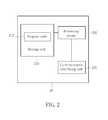
- FIG. 2 is a schematic diagram of a communication device according to an example of the present invention.
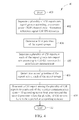
- FIG. 3 is a flowchart of a process according to an example of the present invention.
- FIG. 4 is a flowchart of a process according to an example of the present invention.
- FIG. 1 is a schematic diagram of a wireless communication system 10 according to an example of the present invention.
- the wireless communication system 10 is briefly composed of two cells (i.e. base stations) CEL1-CEL2 and a user equipment UE1.
- the cell CEL1 corresponds to transmission points TP1-TP3, and the cell CEL2 corresponds to transmission points TP4-TP5, wherein each of the transmission points TP1-TP5 can perform data transmissions and receptions with the user equipment UE1.
- the wireless communication system 10 may be a wideband code division multiple access (WCDMA) system such as a universal mobile telecommunications system (UMTS).
- WCDMA wideband code division multiple access
- UMTS universal mobile telecommunications system
- the wireless communication system 10 may be an orthogonal frequency division multiplexing (OFDM) system and/or an orthogonal frequency division multiple access (OFDMA) system, such as a long term evolution (LTE) system, an LTE-Advanced (LTE-A) system or a successor of the LTE-A system.
- OFDM orthogonal frequency division multiplexing
- OFDMA orthogonal frequency division multiple access
- the user equipment UE1, cells CEL1-CEL2 and the transmission points TP1-TP5 associated with the cells CEL1-CEL2 are simply utilized for illustrating a structure of the wireless communication system 10.
- the transmission points TP1-TP5 can be referred as NodeBs (NBs) in a universal terrestrial radio access network (UTRAN) of the UMTS.
- the transmission points TP1-TP5 can be evolved NodeBs (eNBs), relay nodes and/or remote radio heads (RRHs) in an evolved UTRAN (E-UTRAN) of the LTE system or the LTE-A system, and are not limited herein.
- the user equipment UE1 can be mobile devices such as mobile phones, laptops, tablet computers, electronic books, and portable computer systems.
- a transmission point and the user equipment UE1 can be seen as a transmitter or a receiver according to transmission direction, e.g., for an uplink (UL), the user equipment UE1 is the transmitter and the transmission point is the receiver, and for a downlink (DL), the transmission point is the transmitter and the user equipment UE1 is the receiver.
- UL uplink
- DL downlink
- the wireless communication system 10 can be seen as a multi-point cooperative network composed of multiple transmission points. That is, the UE may transmit a signal (e.g., a packet) to a first set of the transmission points TP1-TP5, and the UE may receive signals transmitted by a second set of the transmission points TP1-TP5, wherein the first set and the second set may be the same or different. As a result, signal quality of the signals is improved.
- the wireless communication system 10 is referred to the LTE-A system, it means that the wireless communication system 10 supports coordinated multi-point (CoMP) transmission/reception.
- CoMP coordinated multi-point
- the CoMP can be configured as Joint Processing (JP) (e.g., joint transmission (JT) or dynamic point selection) or Coordinated Scheduling/Beamforming (CS/CB), and is not limited.
- JP Joint Processing
- JT joint transmission
- CS/CB Coordinated Scheduling/Beamforming
- the transmission point TP1 can be seen as a serving TP for the user equipment UE1, wherein link quality between the transmission point TP1 and the user equipment UE1 is better than link qualities between other transmission points and the user equipment UE1.
- FIG. 2 is a schematic diagram of a communication device 20 according to an example of the present invention.
- the communication device 20 can be the user equipment UE1 shown in FIG. 1 , but is not limited herein.
- the communication device 20 may include a processing means 200 such as a microprocessor or Application Specific Integrated Circuit (ASIC), a storage unit 210 and a communication interfacing unit 220.
- the storage unit 210 may be any data storage device that can store a program code 212, accessed and executed by the processing means 200. Examples of the storage unit 210 include but are not limited to a subscriber identity module (SIM), read-only memory (ROM), flash memory, random-access memory (RAM), CD-ROM/DVD-ROM, magnetic tape, hard disk and optical data storage device.
- SIM subscriber identity module
- ROM read-only memory
- flash memory random-access memory
- CD-ROM/DVD-ROM magnetic tape
- hard disk and optical data storage device optical data storage device.
- the communication interfacing unit 220 is preferably a trans
- FIG. 3 is a flowchart of a process 30 according to an example of the present invention.
- the process 30 can be utilized in the user equipment UE1 shown in FIG. 1 , for handling collisions among channel state information (CSI) reports in the wireless communication system 10 supporting a technology of coordinated multipoint (CoMP) transmission/reception.
- the process 30 may be compiled into the program code 212 and includes the following steps:
- Step 300 Start.
- Step 302 Separate a plurality of CSI reports into report sets according to channel state information reference signal (CSI-RS) resources.
- CSI-RS channel state information reference signal
- Step 304 Determine priorities of the report sets.
- Step 306 Transmit a CSI report having a superior priority among the plurality of CSI reports to a network of the wireless communication system 10 according to the priorities when the plurality of CSI reports have to be reported at a reporting instance.
- Step 308 End.
- the user equipment UE1 may first separate a plurality of CSI reports into report sets according to CSI-RS resources. Then, the user equipment UE1 may prioritize the report sets so as to transmit a CSI report having a superior priority among the plurality of CSI reports to the network when the plurality of CSI reports have to be reported at a reporting instance (i.e., in the same subframe).
- each CSI report is associated with a non-zero power (NZP) CSI-RS resource which is assigned to a transmission point.
- NZP non-zero power
- each CSI report is derived under one interference hypothesis corresponding to CSI-RS resources for interference measurement. Therefore, CSI reports with the same NZP CSI-RS and the same interference hypothesis may be grouped as a report set.
- priorities for transmitting these CSI reports may be given by determining the priorities of the report sets.
- transmitting CSI reports according to the priorities of report sets may solve collisions among CSI reports while considering conditions of the transmission point and interference from other transmission points, and thereby taking coordination among transmission points TP1-TP5 into account.
- the process 30 is an example of the present invention. Those skilled in the art should readily make combinations, modifications and/or alterations accordingly.
- the priorities of the report sets may be determined based on channel qualities among transmission points TP1-TP5. For example, report sets corresponding to a transmission point with higher channel quality may be given higher priorities.
- the channel qualities of the transmission points TP1-TP5 may be indicated by channel quality indicators (CQIs), reference signal received power (RSRP), or reference signal received quality (RSRQ).
- the priorities of the report sets may be determined by a transmission scheme.
- a report set is associated with an NZP CSI-RS resource and an interference hypothesis. That is, each report set is corresponded to a transmission scheme. Therefore, the user equipment UE1 may adjust the priorities of the report sets by upgrading a priority for a report set corresponding to a current transmission scheme. For example, the priority of the report set corresponding to the current transmission scheme may be adjusted to a higher priority. In such a condition, the priorities of report sets corresponding to other transmission schemes may remain unadjusted or may be adjusted according to the channel qualities.
- the priorities of the report sets may be determined according to indexes of the report sets.
- the report sets may be indexed by the NZP CSI-RS resource and CSI-RS resources used to measure interference. More specifically, each CSI-RS resource is designated with a configuration index, and an index of a report set may be derived by an arithmetic combination of the configuration index of the NZP CSI-RS resource with configuration indexes of the CSI-RS resources used for interference measurement. In such a situation, report sets with larger index may be given, for example, higher priority.
- the CSI reports are transmitted according to the priorities of the report sets, and the report sets are determined by considering NZP CSI-RS resources and CSI-RS resources for interference measurement simultaneously.
- the CSI reports may be transmitted by considering NZP CSI-RS resources first and then CSI-RS resources for interference measurement.
- FIG. 4 is a flowchart of a process 40 according to an example of the present invention.
- the process 40 can be utilized in the user equipment UE1 shown in FIG. 1 , for handling collisions among channel state information (CSI) reports in the wireless communication system 10 supporting a technology of coordinated multipoint (CoMP) transmission/reception.
- the process 40 may be compiled into the program code 212 and indudes the following steps:
- Step 400 Start.
- Step 402 Separate a plurality of CSI reports into report groups according to non-zero power (NZP) channel state information reference signal (CSI-RS) resources.
- NZP non-zero power
- CSI-RS channel state information reference signal
- Step 404 Determine first priorities of the report groups.
- Step 406 Separate a plurality of CSI reports in each of the report groups into report sets according to CSI-RS resources for interference measurement.
- Step 408 Determine second priorities of the report sets in each of the report groups.
- Step 410 Transmit a CSI report among the plurality of CSI reports to a network of the wireless communication system 10 according to the first priorities and the second priorities when the plurality of CSI reports have to be reported at a reporting instance.
- Step 412 End.
- the user equipment UE1 may separate a plurality of CSI reports into report groups according to NZP CSI-RS resources (i.e. transmission points), and determine priorities of the report groups. Then, the user equipment UE1 may further separate the CSI reports in each of the report groups into report sets according to CSI-RS resources for interference measurement (i.e. interference hypotheses), and determine priorities of the report sets.
- the user equipment UE1 may consider the priorities of the report groups first and then consider the priorities of the report sets, so as to transmit a CSI report to the network.
- the priorities of the report groups may be determined according to fairness among transmission points TP1-TP5.
- the priorities of the report groups may be determined according to a historical record of the user equipment UE1.
- the historical record may list an amount of CSI report transmissions for each of the report groups (i.e. for each of the transmission points TP1-TP5). Therefore, the report group which has been reported more times in the historical record has lower priority.
- the priorities of the report groups with CSI reports having better channel quality are given higher priority.
- the channel quality may be determined through channel measurement indexes such as CQI, RSRP or RSRQ.
- a report group of a serving TP may be given higher priority.
- the user equipment UE1 may adjust the priorities of the report groups by upgrading a priority for a report group corresponding to a serving transmission point.
- the priorities for other report groups may remain unadjusted.
- the priorities for other report groups may be given the same priority or adjusted according to the channel qualities or the fairness among transmission point as abovementioned embodiments.
- the report sets in the same report group may be prioritized according to the channel qualities and/or the transmission scheme. Namely, the report set with higher channel quality is given higher priority, which may be determined through channel measurement indexes such as CQI, RSRP or RSRQ. Alternatively, the report set corresponds to the current transmission scheme is given higher priority.
- the CSI report may include one or more fields which include a Channel Quality Indicator (CQI), a Precoding Matrix Index (PMI), a Rank Indicator (RI) and/or a Precoder Type Indicator (PTI).
- CQI Channel Quality Indicator
- PMI Precoding Matrix Index
- RI Rank Indicator
- PTI Precoder Type Indicator
- the collision may be solved by further considering the PUCCH reporting type of the CSI reports. For example, a CSI report with PUCCH reporting type 3, 5, or 6 in a report set is given higher priority than a CSI report with PUCCH reporting type 1, 1a, 2, 2a, 2b, 2c, or 4 in the same report set.
- the user equipment UE1 may select the CSI report with the highest priority to transmit to the network. If multiplexing multiple CSI reports is supported in the wireless communication system 10, the user equipment UE1 may multiplex and then transmit the CSI reports according to the corresponding priorities.
- the abovementioned steps of the processes 30, 40 including suggested steps may be realized by means of a hardware, a firmware known as a combination of a hardware device and computer instructions and data that reside as read-only software on the hardware device, or an electronic system.
- hardware may include analog, digital and mixed circuits known as microcircuit, microchip, or silicon chip.
- the electronic system can include a system on chip (SOC), system in package (SiP), a computer on module (COM), and the communication device 20.
- SOC system on chip
- SiP system in package
- COM computer on module
- the present invention provides a method for handling collisions among CSI reports.
- the method may consider fairness, channel qualities, transmission schemes, and the serving transmission point among transmission points in a wireless communication system.
- collisions among CSI reports may be solved and coordination among transmission points may be taken into account as well, which is especially suitable for a wireless communication system supporting a technology of CoMP transmission/reception.
Landscapes
- Engineering & Computer Science (AREA)
- Quality & Reliability (AREA)
- Computer Networks & Wireless Communication (AREA)
- Signal Processing (AREA)
- Mobile Radio Communication Systems (AREA)
Abstract
Description
- The present invention relates to a method used in a wireless communication system and related communication device, and more particularly, to a method of handling collisions among channel state information (CSI) reports in a wireless communication system and related communication device.
- A long-term evolution (LTE) system, initiated by the third generation partnership project (3GPP), is now being regarded as a new radio interface and radio network architecture that provides a high data rate, low latency, packet optimization, and improved system capacity and coverage. In the LTE system, a radio access network known as an evolved universal terrestrial radio access network (E-UTRAN) includes a plurality of evolved Node-Bs (eNBs) for communicating with a plurality of user equipments (UEs) and communicates with a core network including a mobility management entity (MME), serving gateway, etc for NAS (Non Access Stratum) control.
- An LTE-advanced (LTE-A) system, as its name implies, is an evolution of the LTE system. The LTE-A system targets faster switching between power states, improves performance at the coverage edge of an eNB, and includes advanced techniques, such as carrier aggregation (CA), coordinated multipoint (CoMP) transmission/reception, uplink (UL) multiple-input multiple-output (MIMO), etc. For a UE and an eNB to communicate with each other in the LTE-A system, the UE and the eNB must support standards developed for the LTE-A system, such as the 3GPP Rel-10 standard or later versions.
- In the LTE system, channel state information (CSI) is needed at transmission points (TPs) for realizing adaptive transmissions. The UE is required to measure channel conditions and transmit corresponding CSI reports to the TPs on a physical uplink control channel (PUCCH). Collision of CSI reports may occur when multiple CSI reports have to be reported at a reporting instance.
- In the prior art, if a CSI report with PUCCH reporting type 3, 5, or 6 of one serving cell collides with a CSI report with PUCCH reporting type 1, 1a, 2, 2a, 2b, 2c, or 4 of the same serving cell, the latter CSI report with PUCCH reporting type 1, 1a, 2, 2a, 2b, 2c, or 4 has lower priority and may be dropped.
- If the UE is configured with more than one serving cell (e.g., the UE and the eNB support CA), the UE transmits a CSI report of only one serving cell in any given subframe. For a given subframe, if a CSI report with PUCCH reporting type 3, 5, 6, or 2a of one serving cell collides with a CSI report with PUCCH reporting type 1, 1a, 2, 2b, 2c, or 4 of another serving cell, the latter CSI with PUCCH reporting type 1, 1a, 2, 2b, 2c, or 4 has lower priority and may be dropped. For a given subframe, if a CSI report with PUCCH reporting type 2, 2b, 2c, or 4 of one serving cell collides with a CSI report with PUCCH reporting type 1 or 1a of another serving cell, the latter CSI report with PUCCH reporting type 1, or 1a has lower priority and may be dropped.
- For a given subframe, if collision among CSI reports of different serving cells with PUCCH reporting type of the same priority occurs, the CSI of the serving cell with lowest serving cell index is reported, and CSI of all other serving cells are dropped.
- In other words, when collision of CSI reports occurs, CSI reports with PUCCH reporting type 3, 5, 6, or 2a have higher priority than CSI reports with PUCCH reporting type 2, 2b, 2c, or 4, and CSI reports with PUCCH reporting type 2, 2b, 2c, or 4 have higher priority than CSI reports with PUCCH reporting type 1, or 1a. If CSI reports of different cells have the same priority, the CSI report for the serving cell having the lowest serving cell index is selected. In short, only PUCCH reporting type and serving cell index are considered for prioritizing CSI reports in the collision handling method of the prior art.
- For a wireless communication system supporting CoMP transmission/reception, a cell may correspond to multiple TPs. In case of collision among CSI reports of different TPs corresponding to the same serving cells with PUCCH reporting type of the same priority, the priorities of the CSI reports may be the same according to the prior art. Since the benefit of the CoMP technology originates from coordination among TPs, it is inappropriate to follow the conventional method to set priorities of CSI reports in the CoMP technology. Thus, solving collisions among CSI reports while maintaining the benefit of the CoMP technology is a topic to be addressed and discussed.
- The present invention therefore provides a method and related communication device for handling collisions among channel state information (CSI) reports while taking into account of coordination among transmission points (TPs).
- The present invention discloses a method of handling collisions among CSI reports for a user equipment in a wireless communication system supporting a technology of coordinated multipoint (CoMP) transmission/reception. The method includes separating a plurality of CSI reports into report sets according to channel state information reference signal (CSI-RS) resources; determining priorities of the report sets; and transmitting a CSI report having a superior priority among the plurality of CSI reports to a network of the wireless communication system according to the priorities when the plurality of CSI reports have to be reported at a reporting instance.
- The present invention further discloses a method of handling collisions among CSI reports for a user equipment in a wireless communication system supporting a technology of CoMP transmission/reception. The method includes separating a plurality of CSI reports into report groups according to non-zero power (NZP) CSI-RS resources; determining first priorities of the report groups; separating a plurality of CSI reports in each of the report groups into report sets according to CSI-RS resources for interference measurement; determining second priorities of the report sets in each of the report groups; and transmitting a CSI report among the plurality of CSI reports to a network of the wireless communication system according to the first priorities and the second priorities when the plurality of CSI reports have to be reported at a reporting instance.
- The present invention further discloses a communication apparatus for handling collisions among CSI reports in a wireless communication system supporting a technology of CoMP transmission/reception. The communication apparatus includes a processing means, a storage unit, and a program code. The program code is stored in the storage unit to instruct the processing means to execute the following steps: separating a plurality of CSI reports into report sets according to CSI-RS resources; determining priorities of the report sets; and transmitting a CSI report having a superior priority among the plurality of CSI reports to a network of the wireless communication system according to the priorities when the plurality of CSI reports have to be reported at a reporting instance.
- These and other objectives of the present invention will no doubt become obvious to those of ordinary skill in the art after reading the following detailed description of the preferred embodiment that is illustrated in the various figures and drawings.
-
FIG. 1 is a schematic diagram of a wireless communication system according to an example of the present invention. -
FIG. 2 is a schematic diagram of a communication device according to an example of the present invention. -
FIG. 3 is a flowchart of a process according to an example of the present invention. -
FIG. 4 is a flowchart of a process according to an example of the present invention. - Please refer to
FIG. 1 , which is a schematic diagram of awireless communication system 10 according to an example of the present invention. Thewireless communication system 10 is briefly composed of two cells (i.e. base stations) CEL1-CEL2 and a user equipment UE1. The cell CEL1 corresponds to transmission points TP1-TP3, and the cell CEL2 corresponds to transmission points TP4-TP5, wherein each of the transmission points TP1-TP5 can perform data transmissions and receptions with the user equipment UE1. Thewireless communication system 10 may be a wideband code division multiple access (WCDMA) system such as a universal mobile telecommunications system (UMTS). Alternatively, thewireless communication system 10 may be an orthogonal frequency division multiplexing (OFDM) system and/or an orthogonal frequency division multiple access (OFDMA) system, such as a long term evolution (LTE) system, an LTE-Advanced (LTE-A) system or a successor of the LTE-A system. - The user equipment UE1, cells CEL1-CEL2 and the transmission points TP1-TP5 associated with the cells CEL1-CEL2 are simply utilized for illustrating a structure of the
wireless communication system 10. Practically, the transmission points TP1-TP5 can be referred as NodeBs (NBs) in a universal terrestrial radio access network (UTRAN) of the UMTS. Alternatively, the transmission points TP1-TP5 can be evolved NodeBs (eNBs), relay nodes and/or remote radio heads (RRHs) in an evolved UTRAN (E-UTRAN) of the LTE system or the LTE-A system, and are not limited herein. The user equipment UE1 can be mobile devices such as mobile phones, laptops, tablet computers, electronic books, and portable computer systems. In addition, a transmission point and the user equipment UE1 can be seen as a transmitter or a receiver according to transmission direction, e.g., for an uplink (UL), the user equipment UE1 is the transmitter and the transmission point is the receiver, and for a downlink (DL), the transmission point is the transmitter and the user equipment UE1 is the receiver. - Moreover, the
wireless communication system 10 can be seen as a multi-point cooperative network composed of multiple transmission points. That is, the UE may transmit a signal (e.g., a packet) to a first set of the transmission points TP1-TP5, and the UE may receive signals transmitted by a second set of the transmission points TP1-TP5, wherein the first set and the second set may be the same or different. As a result, signal quality of the signals is improved. For example, when thewireless communication system 10 is referred to the LTE-A system, it means that thewireless communication system 10 supports coordinated multi-point (CoMP) transmission/reception. The CoMP can be configured as Joint Processing (JP) (e.g., joint transmission (JT) or dynamic point selection) or Coordinated Scheduling/Beamforming (CS/CB), and is not limited. Further, without loss of generality, the transmission point TP1 can be seen as a serving TP for the user equipment UE1, wherein link quality between the transmission point TP1 and the user equipment UE1 is better than link qualities between other transmission points and the user equipment UE1. - Please refer to
FIG. 2 , which is a schematic diagram of acommunication device 20 according to an example of the present invention. Thecommunication device 20 can be the user equipment UE1 shown inFIG. 1 , but is not limited herein. Thecommunication device 20 may include a processing means 200 such as a microprocessor or Application Specific Integrated Circuit (ASIC), astorage unit 210 and acommunication interfacing unit 220. Thestorage unit 210 may be any data storage device that can store aprogram code 212, accessed and executed by the processing means 200. Examples of thestorage unit 210 include but are not limited to a subscriber identity module (SIM), read-only memory (ROM), flash memory, random-access memory (RAM), CD-ROM/DVD-ROM, magnetic tape, hard disk and optical data storage device. Thecommunication interfacing unit 220 is preferably a transceiver and is used to transmit and receive signals (e.g., messages or packets) according to processing results of the processing means 200. - Please refer to
FIG. 3 , which is a flowchart of aprocess 30 according to an example of the present invention. Theprocess 30 can be utilized in the user equipment UE1 shown inFIG. 1 , for handling collisions among channel state information (CSI) reports in thewireless communication system 10 supporting a technology of coordinated multipoint (CoMP) transmission/reception. Theprocess 30 may be compiled into theprogram code 212 and includes the following steps: - Step 300: Start.
- Step 302: Separate a plurality of CSI reports into report sets according to channel state information reference signal (CSI-RS) resources.
- Step 304: Determine priorities of the report sets.
- Step 306: Transmit a CSI report having a superior priority among the plurality of CSI reports to a network of the
wireless communication system 10 according to the priorities when the plurality of CSI reports have to be reported at a reporting instance. - Step 308: End.
- According to the
process 30, the user equipment UE1 may first separate a plurality of CSI reports into report sets according to CSI-RS resources. Then, the user equipment UE1 may prioritize the report sets so as to transmit a CSI report having a superior priority among the plurality of CSI reports to the network when the plurality of CSI reports have to be reported at a reporting instance (i.e., in the same subframe). - In detail, each CSI report is associated with a non-zero power (NZP) CSI-RS resource which is assigned to a transmission point. In addition, each CSI report is derived under one interference hypothesis corresponding to CSI-RS resources for interference measurement. Therefore, CSI reports with the same NZP CSI-RS and the same interference hypothesis may be grouped as a report set. When CSI reports belonging to different report sets have to be reported in the same reporting instance, priorities for transmitting these CSI reports may be given by determining the priorities of the report sets. Thus, transmitting CSI reports according to the priorities of report sets may solve collisions among CSI reports while considering conditions of the transmission point and interference from other transmission points, and thereby taking coordination among transmission points TP1-TP5 into account.
- Note that, the
process 30 is an example of the present invention. Those skilled in the art should readily make combinations, modifications and/or alterations accordingly. In an embodiment, the priorities of the report sets may be determined based on channel qualities among transmission points TP1-TP5. For example, report sets corresponding to a transmission point with higher channel quality may be given higher priorities. The channel qualities of the transmission points TP1-TP5 may be indicated by channel quality indicators (CQIs), reference signal received power (RSRP), or reference signal received quality (RSRQ). - In another embodiment, the priorities of the report sets may be determined by a transmission scheme. As mentioned previously, a report set is associated with an NZP CSI-RS resource and an interference hypothesis. That is, each report set is corresponded to a transmission scheme. Therefore, the user equipment UE1 may adjust the priorities of the report sets by upgrading a priority for a report set corresponding to a current transmission scheme. For example, the priority of the report set corresponding to the current transmission scheme may be adjusted to a higher priority. In such a condition, the priorities of report sets corresponding to other transmission schemes may remain unadjusted or may be adjusted according to the channel qualities.
- In addition, the priorities of the report sets may be determined according to indexes of the report sets. The report sets may be indexed by the NZP CSI-RS resource and CSI-RS resources used to measure interference. More specifically, each CSI-RS resource is designated with a configuration index, and an index of a report set may be derived by an arithmetic combination of the configuration index of the NZP CSI-RS resource with configuration indexes of the CSI-RS resources used for interference measurement. In such a situation, report sets with larger index may be given, for example, higher priority.
- In the above embodiments, the CSI reports are transmitted according to the priorities of the report sets, and the report sets are determined by considering NZP CSI-RS resources and CSI-RS resources for interference measurement simultaneously. In other embodiments, the CSI reports may be transmitted by considering NZP CSI-RS resources first and then CSI-RS resources for interference measurement. For example, please refer to
FIG. 4 , which is a flowchart of aprocess 40 according to an example of the present invention. Theprocess 40 can be utilized in the user equipment UE1 shown inFIG. 1 , for handling collisions among channel state information (CSI) reports in thewireless communication system 10 supporting a technology of coordinated multipoint (CoMP) transmission/reception. Theprocess 40 may be compiled into theprogram code 212 and indudes the following steps: - Step 400: Start.
- Step 402: Separate a plurality of CSI reports into report groups according to non-zero power (NZP) channel state information reference signal (CSI-RS) resources.
- Step 404: Determine first priorities of the report groups.
- Step 406: Separate a plurality of CSI reports in each of the report groups into report sets according to CSI-RS resources for interference measurement.
- Step 408: Determine second priorities of the report sets in each of the report groups.
- Step 410: Transmit a CSI report among the plurality of CSI reports to a network of the
wireless communication system 10 according to the first priorities and the second priorities when the plurality of CSI reports have to be reported at a reporting instance. - Step 412: End.
- According to the
process 40, the user equipment UE1 may separate a plurality of CSI reports into report groups according to NZP CSI-RS resources (i.e. transmission points), and determine priorities of the report groups. Then, the user equipment UE1 may further separate the CSI reports in each of the report groups into report sets according to CSI-RS resources for interference measurement (i.e. interference hypotheses), and determine priorities of the report sets. As a result, when the plurality of CSI reports have to be reported at a reporting instance (i.e. in the same subframe), the user equipment UE1 may consider the priorities of the report groups first and then consider the priorities of the report sets, so as to transmit a CSI report to the network. - Implementation of the
process 40 is not limited. For example, in an embodiment, the priorities of the report groups may be determined according to fairness among transmission points TP1-TP5. For example, the priorities of the report groups may be determined according to a historical record of the user equipment UE1. The historical record may list an amount of CSI report transmissions for each of the report groups (i.e. for each of the transmission points TP1-TP5). Therefore, the report group which has been reported more times in the historical record has lower priority. - In another embodiment, the priorities of the report groups with CSI reports having better channel quality are given higher priority. The channel quality may be determined through channel measurement indexes such as CQI, RSRP or RSRQ.
- Furthermore, a report group of a serving TP may be given higher priority. For example, the user equipment UE1 may adjust the priorities of the report groups by upgrading a priority for a report group corresponding to a serving transmission point. The priorities for other report groups may remain unadjusted. Alternatively, the priorities for other report groups may be given the same priority or adjusted according to the channel qualities or the fairness among transmission point as abovementioned embodiments.
- After determining the priorities of the report groups, the report sets in the same report group may be prioritized according to the channel qualities and/or the transmission scheme. Namely, the report set with higher channel quality is given higher priority, which may be determined through channel measurement indexes such as CQI, RSRP or RSRQ. Alternatively, the report set corresponds to the current transmission scheme is given higher priority.
- Note that, detail of a CSI report mentioned above is not limited. For example, the CSI report may include one or more fields which include a Channel Quality Indicator (CQI), a Precoding Matrix Index (PMI), a Rank Indicator (RI) and/or a Precoder Type Indicator (PTI).
- In addition, when CSI reports in the same report set have to be reported in the same instance (i.e. in the same subframe), the collision may be solved by further considering the PUCCH reporting type of the CSI reports. For example, a CSI report with PUCCH reporting type 3, 5, or 6 in a report set is given higher priority than a CSI report with PUCCH reporting type 1, 1a, 2, 2a, 2b, 2c, or 4 in the same report set.
- In addition, if multiplexing multiple CSI reports in one reporting instance is not allowed in the
wireless communication system 10, the user equipment UE1 may select the CSI report with the highest priority to transmit to the network. If multiplexing multiple CSI reports is supported in thewireless communication system 10, the user equipment UE1 may multiplex and then transmit the CSI reports according to the corresponding priorities. - Those skilled in the art should readily make combinations, modifications and/or alterations on the abovementioned description and examples. The abovementioned steps of the
processes communication device 20. - To sum up, the present invention provides a method for handling collisions among CSI reports. The method may consider fairness, channel qualities, transmission schemes, and the serving transmission point among transmission points in a wireless communication system. Thus, collisions among CSI reports may be solved and coordination among transmission points may be taken into account as well, which is especially suitable for a wireless communication system supporting a technology of CoMP transmission/reception.
- Those skilled in the art will readily observe that numerous modifications and alterations of the device and method may be made while retaining the teachings of the invention. Accordingly, the above disclosure should be construed as limited only by the metes and bounds of the appended claims.
Claims (15)
- A method of handling collisions among channel state information (CSI) reports for a user equipment in a wireless communication system supporting a technology of coordinated multipoint (CoMP) transmission/reception, the method comprising:separating a plurality of CSI reports into report sets according to channel state information reference signal (CSI-RS) resources;determining priorities of the report sets; andtransmitting a CSI report having a superior priority among the plurality of CSI reports to a network of the wireless communication system according to the priorities when the plurality of CSI reports have to be reported at a reporting instance.
- The method of claim 1, wherein the step of determining the priorities of the report sets comprises:determining the priorities of the report sets according to channel qualities.
- The method of claim 1, further comprising:adjusting the priorities by upgrading a priority for a report set corresponding to a current transmission scheme.
- The method of claim 1, wherein the step of determining the priorities of the report sets comprises:determining an index for each of the report sets according to a non-zero power (NZP) CSI-RS resource and CSI-RS resources for interference measurement; anddetermining the priorities of the report sets according to the index.
- The method of claim 4, wherein the step of determining the index for each of the report sets according to the NZP CSI-RS resource and the CSI-RS resources for interference measurement comprises:deriving the index by an arithmetic combination of a configuration index of the NZP CSI-RS resource with configuration indexes of the CSI-RS resources for interference measurement.
- A method of handling collisions among channel state information (CSI) reports for a user equipment in a wireless communication system supporting a technology of coordinated multipoint (CoMP) transmission/reception, the method comprising:separating a plurality of CSI reports into report groups according to non-zero power (NZP) channel state information reference signal (CSI-RS) resources;determining first priorities of the report groups;separating a plurality of CSI reports in each of the report groups into report sets according to CSI-RS resources for interference measurement;determining second priorities of the report sets in each of the report groups; andtransmitting a CSI report among the plurality of CSI reports to a network of the wireless communication system according to the first priorities and the second priorities when the plurality of CSI reports have to be reported at a reporting instance.
- The method of claim 6, wherein the step of determining the first priorities of the report groups comprises:determining the first priorities of the report groups according to a historical record of the user equipment or channel qualities, wherein the historical record comprises an amount of CSI report transmissions for each of the report groups.
- The method of claim 6, further comprising:adjusting the first priorities by upgrading a priority for a report group corresponding to a serving transmission point.
- A communication apparatus for handling collisions among channel state information (CSI) reports in a wireless communication system supporting a technology of coordinated multipoint (CoMP) transmission/reception, the communication apparatus comprising:a processing means;a storage unit; anda program code, stored in the storage unit, wherein the program code instructs the processing means to execute the following steps:separating a plurality of CSI reports into report sets according to channel state information reference signal (CSI-RS) resources;determining priorities of the report sets; andtransmitting a CSI report having a superior priority among the plurality of CSI reports to a network of the wireless communication system according to the priorities when the plurality of CSI reports have to be reported at a reporting instance.
- The communication apparatus of claim 9, wherein the step of determining the priorities of the report sets comprises:determining the priorities of the report sets according to channel qualities.
- The communication apparatus of claim 9, wherein the program code further instructs the processing means to execute the following step:adjusting the priorities by upgrading a priority for a report set corresponding to a current transmission scheme.
- The communication apparatus of claim 9, wherein the step of determining the priorities of the report sets comprises:determining an index for each of the report sets according to a non-zero power (NZP) CSI-RS resource and CSI-RS resources for interference measurement; anddetermining the priorities of the report sets according to the index.
- A communication apparatus for handling collisions among channel state information (CSI) reports in a wireless communication system supporting a technology of coordinated multipoint (CoMP) transmission/reception, the communication apparatus comprising:a processing means;a storage unit; anda program code, stored in the storage unit, wherein the program code instructs the processing means to execute the following steps:separating a plurality of CSI reports into report groups according to non-zero power (NZP) channel state information reference signal (CSI-RS) resources;determining first priorities of the report groups;separating a plurality of CSI reports in each of the report groups into report sets according to CSI-RS resources for interference measurement;determining second priorities of the report sets in each of the report groups; andtransmitting a CSI report among the plurality of CSI reports to a network of the wireless communication system according to the first priorities and the second priorities when the plurality of CSI reports have to be reported at a reporting instance.
- The communication apparatus of claim 13, wherein the step of determining the first priorities of the report groups comprises:determining the first priorities of the report groups according to a historical record of the communication apparatus or channel qualities, wherein the historical record comprises an amount of CSI report transmissions for each of the report groups.
- The communication apparatus of claim 13, wherein the program code further instructs the processing means to execute the following step:adjusting the first priorities by upgrading a priority for a report group corresponding to a serving transmission point.
Applications Claiming Priority (2)
| Application Number | Priority Date | Filing Date | Title |
|---|---|---|---|
| US201261665320P | 2012-06-28 | 2012-06-28 | |
| US13/924,632 US20140003345A1 (en) | 2012-06-28 | 2013-06-24 | Method of Handling Collisions among Channel State Information Reports and Related Communication Device |
Publications (2)
| Publication Number | Publication Date |
|---|---|
| EP2680477A1 true EP2680477A1 (en) | 2014-01-01 |
| EP2680477B1 EP2680477B1 (en) | 2015-07-29 |
Family
ID=48700366
Family Applications (1)
| Application Number | Title | Priority Date | Filing Date |
|---|---|---|---|
| EP13173941.9A Active EP2680477B1 (en) | 2012-06-28 | 2013-06-27 | Method and apparatus of handling collisions among channel state information reports |
Country Status (2)
| Country | Link |
|---|---|
| US (1) | US20140003345A1 (en) |
| EP (1) | EP2680477B1 (en) |
Cited By (3)
| Publication number | Priority date | Publication date | Assignee | Title |
|---|---|---|---|---|
| US9369922B2 (en) | 2012-08-03 | 2016-06-14 | Intel Corporation | Periodic channel state information reporting for coordinated multipoint (CoMP) systems |
| US12113597B2 (en) | 2020-02-13 | 2024-10-08 | Lg Electronics Inc. | Method and apparatus for transmitting and receiving channel state information in wireless communication system |
| WO2026035085A1 (en) * | 2024-08-09 | 2026-02-12 | 엘지전자 주식회사 | Method for performing ltm in wireless communication system, and device using method |
Families Citing this family (11)
| Publication number | Priority date | Publication date | Assignee | Title |
|---|---|---|---|---|
| CN105409273A (en) * | 2013-10-31 | 2016-03-16 | 华为技术有限公司 | Wireless communication method and device |
| JP6105672B2 (en) * | 2015-05-14 | 2017-03-29 | 株式会社Nttドコモ | User terminal and wireless communication method |
| CN114531218B (en) * | 2015-08-06 | 2025-04-29 | 夏普株式会社 | Terminal device, base station device, and communication method |
| WO2017204737A1 (en) * | 2016-05-23 | 2017-11-30 | Telefonaktiebolaget Lm Ericsson (Publ) | Methods and user equipment for handling communication |
| WO2017216036A1 (en) * | 2016-06-15 | 2017-12-21 | Nokia Solutions And Networks Oy | Methods and apparatuses for performing uplink coordinated multi-point communication |
| CN108810932B (en) * | 2017-05-05 | 2026-05-12 | 华为技术有限公司 | Channel state information processing method and device |
| US20190059013A1 (en) | 2017-08-21 | 2019-02-21 | Samsung Electronics Co., Ltd. | Method and apparatus for multiplexing higher-resolution channel state information (csi) |
| WO2019039843A1 (en) * | 2017-08-21 | 2019-02-28 | Samsung Electronics Co., Ltd. | Method and apparatus for multiplexing higher-resolution channel state information (csi) |
| CN110536315B (en) * | 2018-05-25 | 2022-08-16 | 中兴通讯股份有限公司 | Method, device, communication equipment and storage medium for determining CSI report processing time |
| EP3836600B1 (en) * | 2018-08-10 | 2024-01-03 | Ntt Docomo, Inc. | User equipment and wireless communication method |
| EP4082137A4 (en) * | 2020-02-14 | 2023-01-04 | ZTE Corporation | Channel state information feedback information transmission and configuration |
Citations (3)
| Publication number | Priority date | Publication date | Assignee | Title |
|---|---|---|---|---|
| EP1841276A2 (en) * | 2006-03-30 | 2007-10-03 | Kabushiki Kaisha Toshiba | Base station, radio terminal and radio communication method |
| US20120076028A1 (en) * | 2010-09-29 | 2012-03-29 | Hyunsoo Ko | Method and apparatus for performing effective feedback in wireless communication system supporting multiple antennas |
| US20120140708A1 (en) * | 2010-12-07 | 2012-06-07 | Sharp Laboratories Of America, Inc. | Prioritizing multiple channel state information (csi) reporting with carrier aggregation |
Family Cites Families (30)
| Publication number | Priority date | Publication date | Assignee | Title |
|---|---|---|---|---|
| EP2144462A1 (en) * | 2008-07-09 | 2010-01-13 | Nokia Siemens Networks OY | Reduced resource allocation parameter signalling |
| EP2264655A1 (en) * | 2009-05-18 | 2010-12-22 | Amadeus S.A.S. | Method and system for determining an optimal low fare for a trip |
| US20110017196A1 (en) * | 2009-07-24 | 2011-01-27 | Bell Independent Power Corporation | Thermal energy storage vessel, systems, and methods |
| US8520491B2 (en) * | 2010-04-01 | 2013-08-27 | Nokia Siemens Networks Oy | Periodic channel state information signaling with carrier aggregation |
| JP5574172B2 (en) * | 2010-07-14 | 2014-08-20 | 株式会社ジェイテクト | Control device |
| US20120220286A1 (en) * | 2010-08-17 | 2012-08-30 | Texas Instruments Incorporated | Periodic Channel Quality Indicator on Physical Uplink Control Channel for Carrier Aggregation |
| US8599711B2 (en) * | 2011-04-08 | 2013-12-03 | Nokia Siemens Networks Oy | Reference signal port discovery involving transmission points |
| US20130003919A1 (en) * | 2011-06-30 | 2013-01-03 | Hsiao Chih-Kun | CT Scan Device and Auxiliary Module Thereof |
| EP2727256A4 (en) * | 2011-08-08 | 2014-07-02 | Huawei Tech Co Ltd | Method and apparatus for channel measurements for coordinated multipoint transmission |
| US8861430B2 (en) * | 2011-08-11 | 2014-10-14 | Mediatek Inc. | Methods of point association for cooperative multiple point transmission |
| US9246558B2 (en) * | 2011-09-26 | 2016-01-26 | Samsung Electronics Co., Ltd. | CoMP measurement system and method |
| KR102024596B1 (en) * | 2011-10-27 | 2019-11-14 | 엘지전자 주식회사 | Method for reporting channel state information on a coordinated multi-point transmission and reception aggregation, and apparatus therefor |
| KR101583170B1 (en) * | 2011-10-31 | 2016-01-07 | 엘지전자 주식회사 | Method and apparatus for measuring interference in wireless communication system |
| WO2013066416A1 (en) * | 2011-11-04 | 2013-05-10 | Intel Corporation | Signaling for configuration of downlink coordinated multipoint communications |
| US9591492B2 (en) * | 2011-11-08 | 2017-03-07 | Qualcomm Incorporated | User equipment, base stations, and methods allowing for handling of colliding channel state information reports |
| CN107276642B (en) * | 2011-11-09 | 2021-05-18 | 瑞典爱立信有限公司 | CSI reporting for a set of CSI-RS resources |
| US8953478B2 (en) * | 2012-01-27 | 2015-02-10 | Intel Corporation | Evolved node B and method for coherent coordinated multipoint transmission with per CSI-RS feedback |
| EP2807763B1 (en) * | 2012-01-27 | 2019-05-08 | Samsung Electronics Co., Ltd. | Method and apparatus for providing data service using broadcasting signal |
| WO2013133597A1 (en) * | 2012-03-08 | 2013-09-12 | 엘지전자 주식회사 | Method and apparatus for transmitting information for reporting in wireless communication system |
| US9602183B2 (en) * | 2012-03-14 | 2017-03-21 | Lg Electronics Inc. | Method and apparatus for reporting channel state information in wireless communication system |
| US9198071B2 (en) * | 2012-03-19 | 2015-11-24 | Qualcomm Incorporated | Channel state information reference signal configuring and reporting for a coordinated multi-point transmission scheme |
| US8767581B2 (en) * | 2012-03-28 | 2014-07-01 | Sharp Laboratories Of America, Inc. | Coordinated multipoint (CoMP) radio resource management (RRM) measurement |
| US20130258954A1 (en) * | 2012-03-30 | 2013-10-03 | Sharp Laboratories Of America, Inc. | Devices for selecting a channel state information report |
| US9124330B2 (en) * | 2012-04-06 | 2015-09-01 | Samsung Electronics Co., Ltd. | Channel state information transmission/reception method and apparatus of downlink coordinated multi-point communication system |
| KR20150009980A (en) * | 2012-04-27 | 2015-01-27 | 마벨 월드 트레이드 리미티드 | Coordinated multipoint (comp) communication between base-stations and mobile communication terminals |
| WO2013166676A1 (en) * | 2012-05-09 | 2013-11-14 | 华为技术有限公司 | Method and device for data transmission |
| US9083479B2 (en) * | 2012-05-11 | 2015-07-14 | Intel Corporation | Signaling for downlink coordinated multipoint in a wireless communication system |
| JP6407144B2 (en) * | 2012-06-04 | 2018-10-17 | インターデイジタル パテント ホールディングス インコーポレイテッド | Communication of channel state information (CSI) of multiple transmission points |
| AU2013278127B2 (en) * | 2012-06-18 | 2017-01-19 | Samsung Electronics Co., Ltd. | Aperiodic and periodic CSI feedback modes for coordinated multi-point transmission |
| US9755706B2 (en) * | 2012-06-22 | 2017-09-05 | Qualcomm Incorporated | Techniques for joint support of coordinated multipoint (CoMP) operations and carrier aggregation (CA) |
-
2013
- 2013-06-24 US US13/924,632 patent/US20140003345A1/en not_active Abandoned
- 2013-06-27 EP EP13173941.9A patent/EP2680477B1/en active Active
Patent Citations (3)
| Publication number | Priority date | Publication date | Assignee | Title |
|---|---|---|---|---|
| EP1841276A2 (en) * | 2006-03-30 | 2007-10-03 | Kabushiki Kaisha Toshiba | Base station, radio terminal and radio communication method |
| US20120076028A1 (en) * | 2010-09-29 | 2012-03-29 | Hyunsoo Ko | Method and apparatus for performing effective feedback in wireless communication system supporting multiple antennas |
| US20120140708A1 (en) * | 2010-12-07 | 2012-06-07 | Sharp Laboratories Of America, Inc. | Prioritizing multiple channel state information (csi) reporting with carrier aggregation |
Cited By (6)
| Publication number | Priority date | Publication date | Assignee | Title |
|---|---|---|---|---|
| US9369922B2 (en) | 2012-08-03 | 2016-06-14 | Intel Corporation | Periodic channel state information reporting for coordinated multipoint (CoMP) systems |
| US9544801B2 (en) | 2012-08-03 | 2017-01-10 | Intel Corporation | Periodic channel state information reporting for coordinated multipoint (coMP) systems |
| US9554297B2 (en) | 2012-08-03 | 2017-01-24 | Intel Corporation | Periodic channel state information (CSI) reporting using a physical uplink control channel (PUCCH) |
| US10470067B2 (en) | 2012-08-03 | 2019-11-05 | Intel Corporation | Periodic channel state information (CSI) reporting using a physical uplink control channel (PUCCH) |
| US12113597B2 (en) | 2020-02-13 | 2024-10-08 | Lg Electronics Inc. | Method and apparatus for transmitting and receiving channel state information in wireless communication system |
| WO2026035085A1 (en) * | 2024-08-09 | 2026-02-12 | 엘지전자 주식회사 | Method for performing ltm in wireless communication system, and device using method |
Also Published As
| Publication number | Publication date |
|---|---|
| US20140003345A1 (en) | 2014-01-02 |
| EP2680477B1 (en) | 2015-07-29 |
Similar Documents
| Publication | Publication Date | Title |
|---|---|---|
| EP2680477B1 (en) | Method and apparatus of handling collisions among channel state information reports | |
| US9161153B2 (en) | Method of handling CSI report and related communication device | |
| US8817647B2 (en) | Priority rules of periodic CSI reporting in carrier aggregation | |
| EP3437224B1 (en) | Low complexity multi-configuration csi reporting | |
| EP2528401B1 (en) | Method, system and device for determining priority of component carrier | |
| US8565688B2 (en) | Method of reducing feedback load and feedback overhead in a multi-cell cooperative network and related communication device | |
| US9276646B2 (en) | Method of managing cooperating set for coordinated multiple point transmission and reception and related communication device | |
| US20130286964A1 (en) | Method of Configuring CSI-RS for Coordinated Multiple Point Interference Measurement and Related Communication Device | |
| US10383142B2 (en) | Device and method of handling channel status information reports for transmission time intervals | |
| TW201308957A (en) | Method of uplink control information transmission | |
| WO2012134334A1 (en) | Methods, apparatuses, and systems for flexible rank adaptation in a wireless communication network | |
| EP3094011A2 (en) | Device and method of reporting channel information according to beamforming | |
| WO2013066412A1 (en) | Timing synchronization for downlink (dl) transmissions in coordinated multipoint (comp) systems | |
| US20130329704A1 (en) | Method of Handling HARQ Resource in TDD System and Related Communication Device | |
| US9706547B2 (en) | Method of handling communication operations and related communication device | |
| US9602261B2 (en) | Method of indicating physical uplink control channel resource in enhanced multiple-input multiple-output technology and related communication device | |
| US11159290B2 (en) | Device and method for handling a sounding reference signal transmission | |
| US10735172B2 (en) | Device and method of handling channel status information for unlicensed serving cell | |
| US10142002B2 (en) | Method of handling multiuser CQI for MU-MIMO and related communication device | |
| CN117560745A (en) | A communication transmission processing method, device and communication equipment |
Legal Events
| Date | Code | Title | Description |
|---|---|---|---|
| PUAI | Public reference made under article 153(3) epc to a published international application that has entered the european phase |
Free format text: ORIGINAL CODE: 0009012 |
|
| 17P | Request for examination filed |
Effective date: 20130627 |
|
| AK | Designated contracting states |
Kind code of ref document: A1 Designated state(s): AL AT BE BG CH CY CZ DE DK EE ES FI FR GB GR HR HU IE IS IT LI LT LU LV MC MK MT NL NO PL PT RO RS SE SI SK SM TR |
|
| AX | Request for extension of the european patent |
Extension state: BA ME |
|
| RBV | Designated contracting states (corrected) |
Designated state(s): AL AT BE BG CH CY CZ DE DK EE ES FI FR GB GR HR HU IE IS IT LI LT LU LV MC MK MT NL NO PL PT RO RS SE SI SK SM TR |
|
| RAP1 | Party data changed (applicant data changed or rights of an application transferred) |
Owner name: HTC CORPORATION |
|
| GRAP | Despatch of communication of intention to grant a patent |
Free format text: ORIGINAL CODE: EPIDOSNIGR1 |
|
| INTG | Intention to grant announced |
Effective date: 20150318 |
|
| GRAS | Grant fee paid |
Free format text: ORIGINAL CODE: EPIDOSNIGR3 |
|
| GRAA | (expected) grant |
Free format text: ORIGINAL CODE: 0009210 |
|
| AK | Designated contracting states |
Kind code of ref document: B1 Designated state(s): AL AT BE BG CH CY CZ DE DK EE ES FI FR GB GR HR HU IE IS IT LI LT LU LV MC MK MT NL NO PL PT RO RS SE SI SK SM TR |
|
| REG | Reference to a national code |
Ref country code: GB Ref legal event code: FG4D |
|
| REG | Reference to a national code |
Ref country code: CH Ref legal event code: EP |
|
| REG | Reference to a national code |
Ref country code: AT Ref legal event code: REF Ref document number: 739997 Country of ref document: AT Kind code of ref document: T Effective date: 20150815 |
|
| REG | Reference to a national code |
Ref country code: IE Ref legal event code: FG4D |
|
| REG | Reference to a national code |
Ref country code: DE Ref legal event code: R096 Ref document number: 602013002424 Country of ref document: DE |
|
| REG | Reference to a national code |
Ref country code: NL Ref legal event code: FP |
|
| REG | Reference to a national code |
Ref country code: AT Ref legal event code: MK05 Ref document number: 739997 Country of ref document: AT Kind code of ref document: T Effective date: 20150729 |
|
| REG | Reference to a national code |
Ref country code: LT Ref legal event code: MG4D |
|
| PG25 | Lapsed in a contracting state [announced via postgrant information from national office to epo] |
Ref country code: GR Free format text: LAPSE BECAUSE OF FAILURE TO SUBMIT A TRANSLATION OF THE DESCRIPTION OR TO PAY THE FEE WITHIN THE PRESCRIBED TIME-LIMIT Effective date: 20151030 Ref country code: LT Free format text: LAPSE BECAUSE OF FAILURE TO SUBMIT A TRANSLATION OF THE DESCRIPTION OR TO PAY THE FEE WITHIN THE PRESCRIBED TIME-LIMIT Effective date: 20150729 Ref country code: LV Free format text: LAPSE BECAUSE OF FAILURE TO SUBMIT A TRANSLATION OF THE DESCRIPTION OR TO PAY THE FEE WITHIN THE PRESCRIBED TIME-LIMIT Effective date: 20150729 Ref country code: NO Free format text: LAPSE BECAUSE OF FAILURE TO SUBMIT A TRANSLATION OF THE DESCRIPTION OR TO PAY THE FEE WITHIN THE PRESCRIBED TIME-LIMIT Effective date: 20151029 Ref country code: FI Free format text: LAPSE BECAUSE OF FAILURE TO SUBMIT A TRANSLATION OF THE DESCRIPTION OR TO PAY THE FEE WITHIN THE PRESCRIBED TIME-LIMIT Effective date: 20150729 |
|
| PG25 | Lapsed in a contracting state [announced via postgrant information from national office to epo] |
Ref country code: AT Free format text: LAPSE BECAUSE OF FAILURE TO SUBMIT A TRANSLATION OF THE DESCRIPTION OR TO PAY THE FEE WITHIN THE PRESCRIBED TIME-LIMIT Effective date: 20150729 Ref country code: HR Free format text: LAPSE BECAUSE OF FAILURE TO SUBMIT A TRANSLATION OF THE DESCRIPTION OR TO PAY THE FEE WITHIN THE PRESCRIBED TIME-LIMIT Effective date: 20150729 Ref country code: PT Free format text: LAPSE BECAUSE OF FAILURE TO SUBMIT A TRANSLATION OF THE DESCRIPTION OR TO PAY THE FEE WITHIN THE PRESCRIBED TIME-LIMIT Effective date: 20151130 Ref country code: PL Free format text: LAPSE BECAUSE OF FAILURE TO SUBMIT A TRANSLATION OF THE DESCRIPTION OR TO PAY THE FEE WITHIN THE PRESCRIBED TIME-LIMIT Effective date: 20150729 Ref country code: ES Free format text: LAPSE BECAUSE OF FAILURE TO SUBMIT A TRANSLATION OF THE DESCRIPTION OR TO PAY THE FEE WITHIN THE PRESCRIBED TIME-LIMIT Effective date: 20150729 Ref country code: SE Free format text: LAPSE BECAUSE OF FAILURE TO SUBMIT A TRANSLATION OF THE DESCRIPTION OR TO PAY THE FEE WITHIN THE PRESCRIBED TIME-LIMIT Effective date: 20150729 Ref country code: IS Free format text: LAPSE BECAUSE OF FAILURE TO SUBMIT A TRANSLATION OF THE DESCRIPTION OR TO PAY THE FEE WITHIN THE PRESCRIBED TIME-LIMIT Effective date: 20151129 Ref country code: RS Free format text: LAPSE BECAUSE OF FAILURE TO SUBMIT A TRANSLATION OF THE DESCRIPTION OR TO PAY THE FEE WITHIN THE PRESCRIBED TIME-LIMIT Effective date: 20150729 |
|
| PG25 | Lapsed in a contracting state [announced via postgrant information from national office to epo] |
Ref country code: DK Free format text: LAPSE BECAUSE OF FAILURE TO SUBMIT A TRANSLATION OF THE DESCRIPTION OR TO PAY THE FEE WITHIN THE PRESCRIBED TIME-LIMIT Effective date: 20150729 Ref country code: IT Free format text: LAPSE BECAUSE OF FAILURE TO SUBMIT A TRANSLATION OF THE DESCRIPTION OR TO PAY THE FEE WITHIN THE PRESCRIBED TIME-LIMIT Effective date: 20150729 Ref country code: SK Free format text: LAPSE BECAUSE OF FAILURE TO SUBMIT A TRANSLATION OF THE DESCRIPTION OR TO PAY THE FEE WITHIN THE PRESCRIBED TIME-LIMIT Effective date: 20150729 Ref country code: CZ Free format text: LAPSE BECAUSE OF FAILURE TO SUBMIT A TRANSLATION OF THE DESCRIPTION OR TO PAY THE FEE WITHIN THE PRESCRIBED TIME-LIMIT Effective date: 20150729 Ref country code: EE Free format text: LAPSE BECAUSE OF FAILURE TO SUBMIT A TRANSLATION OF THE DESCRIPTION OR TO PAY THE FEE WITHIN THE PRESCRIBED TIME-LIMIT Effective date: 20150729 |
|
| REG | Reference to a national code |
Ref country code: DE Ref legal event code: R097 Ref document number: 602013002424 Country of ref document: DE |
|
| PG25 | Lapsed in a contracting state [announced via postgrant information from national office to epo] |
Ref country code: RO Free format text: LAPSE BECAUSE OF FAILURE TO SUBMIT A TRANSLATION OF THE DESCRIPTION OR TO PAY THE FEE WITHIN THE PRESCRIBED TIME-LIMIT Effective date: 20150729 |
|
| PLBE | No opposition filed within time limit |
Free format text: ORIGINAL CODE: 0009261 |
|
| STAA | Information on the status of an ep patent application or granted ep patent |
Free format text: STATUS: NO OPPOSITION FILED WITHIN TIME LIMIT |
|
| REG | Reference to a national code |
Ref country code: FR Ref legal event code: PLFP Year of fee payment: 4 |
|
| 26N | No opposition filed |
Effective date: 20160502 |
|
| PG25 | Lapsed in a contracting state [announced via postgrant information from national office to epo] |
Ref country code: SI Free format text: LAPSE BECAUSE OF FAILURE TO SUBMIT A TRANSLATION OF THE DESCRIPTION OR TO PAY THE FEE WITHIN THE PRESCRIBED TIME-LIMIT Effective date: 20150729 |
|
| PG25 | Lapsed in a contracting state [announced via postgrant information from national office to epo] |
Ref country code: BE Free format text: LAPSE BECAUSE OF FAILURE TO SUBMIT A TRANSLATION OF THE DESCRIPTION OR TO PAY THE FEE WITHIN THE PRESCRIBED TIME-LIMIT Effective date: 20150729 |
|
| PG25 | Lapsed in a contracting state [announced via postgrant information from national office to epo] |
Ref country code: MC Free format text: LAPSE BECAUSE OF FAILURE TO SUBMIT A TRANSLATION OF THE DESCRIPTION OR TO PAY THE FEE WITHIN THE PRESCRIBED TIME-LIMIT Effective date: 20150729 |
|
| REG | Reference to a national code |
Ref country code: CH Ref legal event code: PL |
|
| REG | Reference to a national code |
Ref country code: IE Ref legal event code: MM4A |
|
| PG25 | Lapsed in a contracting state [announced via postgrant information from national office to epo] |
Ref country code: LI Free format text: LAPSE BECAUSE OF NON-PAYMENT OF DUE FEES Effective date: 20160630 Ref country code: CH Free format text: LAPSE BECAUSE OF NON-PAYMENT OF DUE FEES Effective date: 20160630 |
|
| REG | Reference to a national code |
Ref country code: FR Ref legal event code: PLFP Year of fee payment: 5 |
|
| PG25 | Lapsed in a contracting state [announced via postgrant information from national office to epo] |
Ref country code: IE Free format text: LAPSE BECAUSE OF NON-PAYMENT OF DUE FEES Effective date: 20160627 |
|
| REG | Reference to a national code |
Ref country code: FR Ref legal event code: PLFP Year of fee payment: 6 |
|
| PG25 | Lapsed in a contracting state [announced via postgrant information from national office to epo] |
Ref country code: CY Free format text: LAPSE BECAUSE OF FAILURE TO SUBMIT A TRANSLATION OF THE DESCRIPTION OR TO PAY THE FEE WITHIN THE PRESCRIBED TIME-LIMIT Effective date: 20150729 Ref country code: HU Free format text: LAPSE BECAUSE OF FAILURE TO SUBMIT A TRANSLATION OF THE DESCRIPTION OR TO PAY THE FEE WITHIN THE PRESCRIBED TIME-LIMIT; INVALID AB INITIO Effective date: 20130627 Ref country code: SM Free format text: LAPSE BECAUSE OF FAILURE TO SUBMIT A TRANSLATION OF THE DESCRIPTION OR TO PAY THE FEE WITHIN THE PRESCRIBED TIME-LIMIT Effective date: 20150729 |
|
| PG25 | Lapsed in a contracting state [announced via postgrant information from national office to epo] |
Ref country code: LU Free format text: LAPSE BECAUSE OF NON-PAYMENT OF DUE FEES Effective date: 20160627 Ref country code: TR Free format text: LAPSE BECAUSE OF FAILURE TO SUBMIT A TRANSLATION OF THE DESCRIPTION OR TO PAY THE FEE WITHIN THE PRESCRIBED TIME-LIMIT Effective date: 20150729 Ref country code: MT Free format text: LAPSE BECAUSE OF NON-PAYMENT OF DUE FEES Effective date: 20160630 Ref country code: MK Free format text: LAPSE BECAUSE OF FAILURE TO SUBMIT A TRANSLATION OF THE DESCRIPTION OR TO PAY THE FEE WITHIN THE PRESCRIBED TIME-LIMIT Effective date: 20150729 |
|
| PG25 | Lapsed in a contracting state [announced via postgrant information from national office to epo] |
Ref country code: BG Free format text: LAPSE BECAUSE OF FAILURE TO SUBMIT A TRANSLATION OF THE DESCRIPTION OR TO PAY THE FEE WITHIN THE PRESCRIBED TIME-LIMIT Effective date: 20150729 |
|
| PG25 | Lapsed in a contracting state [announced via postgrant information from national office to epo] |
Ref country code: AL Free format text: LAPSE BECAUSE OF FAILURE TO SUBMIT A TRANSLATION OF THE DESCRIPTION OR TO PAY THE FEE WITHIN THE PRESCRIBED TIME-LIMIT Effective date: 20150729 |
|
| REG | Reference to a national code |
Ref country code: DE Ref legal event code: R082 Ref document number: 602013002424 Country of ref document: DE Representative=s name: WAGNER & GEYER PARTNERSCHAFT MBB PATENT- UND R, DE |
|
| P01 | Opt-out of the competence of the unified patent court (upc) registered |
Effective date: 20230602 |
|
| PGFP | Annual fee paid to national office [announced via postgrant information from national office to epo] |
Ref country code: NL Payment date: 20250409 Year of fee payment: 13 |
|
| PGFP | Annual fee paid to national office [announced via postgrant information from national office to epo] |
Ref country code: DE Payment date: 20250402 Year of fee payment: 13 |
|
| PGFP | Annual fee paid to national office [announced via postgrant information from national office to epo] |
Ref country code: GB Payment date: 20250401 Year of fee payment: 13 |
|
| PGFP | Annual fee paid to national office [announced via postgrant information from national office to epo] |
Ref country code: FR Payment date: 20250508 Year of fee payment: 13 |