EP2680393A1 - Power tool battery pack wireless charger - Google Patents
Power tool battery pack wireless charger Download PDFInfo
- Publication number
- EP2680393A1 EP2680393A1 EP20130172520 EP13172520A EP2680393A1 EP 2680393 A1 EP2680393 A1 EP 2680393A1 EP 20130172520 EP20130172520 EP 20130172520 EP 13172520 A EP13172520 A EP 13172520A EP 2680393 A1 EP2680393 A1 EP 2680393A1
- Authority
- EP
- European Patent Office
- Prior art keywords
- power tool
- battery pack
- circuit
- power
- wireless charger
- Prior art date
- Legal status (The legal status is an assumption and is not a legal conclusion. Google has not performed a legal analysis and makes no representation as to the accuracy of the status listed.)
- Ceased
Links
Images


Classifications
-
- H—ELECTRICITY
- H02—GENERATION; CONVERSION OR DISTRIBUTION OF ELECTRIC POWER
- H02J—ELECTRIC POWER NETWORKS; CIRCUIT ARRANGEMENTS OR SYSTEMS FOR SUPPLYING OR DISTRIBUTING ELECTRIC POWER; SYSTEMS FOR STORING ELECTRIC ENERGY
- H02J7/00—Circuit arrangements for charging or discharging batteries or for supplying loads from batteries
- H02J7/70—Circuit arrangements for charging or discharging batteries or for supplying loads from batteries characterised by the mechanical construction
-
- H—ELECTRICITY
- H02—GENERATION; CONVERSION OR DISTRIBUTION OF ELECTRIC POWER
- H02J—ELECTRIC POWER NETWORKS; CIRCUIT ARRANGEMENTS OR SYSTEMS FOR SUPPLYING OR DISTRIBUTING ELECTRIC POWER; SYSTEMS FOR STORING ELECTRIC ENERGY
- H02J50/00—Circuit arrangements or systems for wireless supply or distribution of electric power
- H02J50/10—Circuit arrangements or systems for wireless supply or distribution of electric power using inductive coupling
- H02J50/12—Circuit arrangements or systems for wireless supply or distribution of electric power using inductive coupling of the resonant type
-
- H—ELECTRICITY
- H02—GENERATION; CONVERSION OR DISTRIBUTION OF ELECTRIC POWER
- H02J—ELECTRIC POWER NETWORKS; CIRCUIT ARRANGEMENTS OR SYSTEMS FOR SUPPLYING OR DISTRIBUTING ELECTRIC POWER; SYSTEMS FOR STORING ELECTRIC ENERGY
- H02J50/00—Circuit arrangements or systems for wireless supply or distribution of electric power
- H02J50/80—Circuit arrangements or systems for wireless supply or distribution of electric power involving the exchange of data, concerning supply or distribution of electric power, between transmitting devices and receiving devices
-
- H—ELECTRICITY
- H02—GENERATION; CONVERSION OR DISTRIBUTION OF ELECTRIC POWER
- H02J—ELECTRIC POWER NETWORKS; CIRCUIT ARRANGEMENTS OR SYSTEMS FOR SUPPLYING OR DISTRIBUTING ELECTRIC POWER; SYSTEMS FOR STORING ELECTRIC ENERGY
- H02J7/00—Circuit arrangements for charging or discharging batteries or for supplying loads from batteries
- H02J7/40—Circuit arrangements for charging or discharging batteries or for supplying loads from batteries characterised by the exchange of charge or discharge related data
- H02J7/42—Circuit arrangements for charging or discharging batteries or for supplying loads from batteries characterised by the exchange of charge or discharge related data with electronic devices having internal batteries, e.g. mobile phones
Definitions
- the present invention relates to a charger for power tool battery packs and particularly a wireless charger for power tool battery packs.
- the charger must accommodate batteries having different levels of charge.
- the charger must be capable of handling dynamic situations as users randomly remove or insert battery packs, without disrupting individual charging cycles.
- users desire to charge multiple types of batteries efficiently, such as battery packs having different voltages.
- FIGS. 1-2 show a wireless charger 100 for charging multiple power tool battery packs 200.
- battery pack and “power tool battery pack” as used herein shall mean a set of rechargeable battery cells 201 disposed in a housing 202 that for use with a tool that is powered by an electrical motor, such as a drill 300, circular saw, reciprocating saw, jigsaw, etc.
- power tool battery pack 200 may be the power tool battery packs disclosed in US Patent Nos. 7,405,536 , 7,618,741 , 7,602,146 and/or 8,044,640 , which are hereby incorporated in full by reference, modified so as to be chargeable by a wireless charger.
- the wireless charger 100 has a housing 101 with a deck 101D where a user can place multiple battery packs 200. Battery packs 200 are preferably sandwiched between deck 101D and wall 102. Deck 101D has several wireless charging circuits 120, which are described in more detail below. Power for the wireless charging circuits 120 may be received from a power cord 115.
- the user can slide in battery pack 200 via opening 101I. If deck 101D is disposed on an angle relative to the ground, the battery pack 200 may slide all the way to the bottom wall 104 of wireless charger 100. The user can continue sliding in battery packs 200.
- Deck 101D preferably has indicator lights 106 right underneath battery packs 200 showing the charging status of the battery pack 200 thereabove. Once the bottom battery pack 200 is fully charged, the user can remove the pack 200 via the gap 103 between the bottom wall 104 and wall 102.
- the different wireless charging circuits 120 can be controlled so that (a) only one battery pack 200 is charged at a time (once the battery pack 200 is charged, the next battery pack 200 can be charged), (b) each battery pack 200 is charged concurrently, and/or (c) the user can choose the order in which the battery packs 200 are charged (or the user can choose to charge all battery packs 200 at the same time).
- Housing 101 may also have wheels 105 for facilitating transportation of wireless charger 100.
- wheels 105 for facilitating transportation of wireless charger 100.
- Housing 101 with protrusions 107 with holes therethrough, which can be used for securing wireless charger 100 on a surface, such as a wall.
- Wall 102 may also have a wireless charger circuit 120 thereon so as to allow users to charge other devices, such as cell phones 310, power tool battery packs (including those manufactured/sold by other manufacturers), etc. It may be advantageous to provide such charger circuit with anti-slip strips 120S. Persons skilled in the art will recognize that such devices may also be charged if placed on deck 101D.
- a wireless charger circuit 120 thereon so as to allow users to charge other devices, such as cell phones 310, power tool battery packs (including those manufactured/sold by other manufacturers), etc. It may be advantageous to provide such charger circuit with anti-slip strips 120S. Persons skilled in the art will recognize that such devices may also be charged if placed on deck 101D.
- Wireless charger 100 may also have a non-wireless charger circuit 270 to which a battery pack 200 may be electrically connected thereon.
- battery pack 200 will have terminals 205 to electrically connected to the terminals of charger circuit 270.
- Charger circuit 270 may be powered by AC received from power cord 115.
- battery pack 200 may be connected so as to power one or more of the wireless charging circuits 120.
- charger circuit 270 may be the charger circuits disclosed in US Patent Nos. 7,405,536 , 7,618,741 , 7,602,146 and/or 8,044,640 , which are hereby incorporated in full by reference.
- Wireless charger 100 may have a lamp or light 130, which may be powered by AC received from power cord 115 or from a battery pack 200 connected to the charger circuit 270.
- lamp 130 will output at least 1000 lumens.
- wireless charger 100 may have a radio 140, which may be powered by AC received from power cord 115 or from a battery pack 200 connected to the charger circuit 270.
- the wireless charger circuit 120 preferably has at least one transmitter coil LT, while the battery pack 200 has at least one receiver coil LR.
- An alternating current in the transmitter coil LT generates a magnetic field which induces a voltage in the receiver coil LR. This voltage is used to charge battery pack 200.
- the wireless charger circuit 120 could have multiple transmitter coils LT. Alternatively it could have a moving transmitter coil LT so that, when the battery pack 200 is placed on wireless charger circuit 120, transmitter coil LT moves towards battery pack 200.
- battery pack 200 may have a magnet (not shown) that is used by wireless charger circuit 120 to locate the location of battery pack 200, and move transmitter coil LT via servo motors (not shown) towards battery pack 200.
- the battery pack 200 has a control circuit 202, which controls the amount of power sent to the cells 201.
- Control circuit 202 interacts with microcontroller 202C to ensure that cells 201are not overcharged.
- Battery pack 200 may also have a communication circuit 203 that provides control information to the wireless charger circuit 120.
- Communication circuit 203 may send the control information by modulating a reflected load signal 203S. This information would be received by a communication circuit 122 on the wireless charger circuit 120, which demodulates the information from the reflected load signal 203S.
- the wireless charger circuit 120 preferably has a control circuit 124 that controls the amount of power to be converted and transmitted to the battery pack 200.
- Control circuit 124 can take into account the information sent by control circuit 202 via the communication circuits 203, 122, and adjust the amount of power transmitted to battery pack 200.
- the wireless charger circuit 120 has a power conversion circuit 126 with a transmitter coil LT and a resonance capacitor CT in series with the transmitter coil LT. Power may be converted by a half bridge inverter 125 connected to the inductor/capacitor series circuit. Persons skilled in the art shall know that it may be preferable to provide an impedance matching system by adding a multiplexer 127 and multiple additional transmitter coils LT to the wireless charger circuit 120 as shown in Fig. 4 .
- the battery pack 200 may have a receiver coil(s) LR (LR1, LR2) with a resonance capacitor CR in series with receiver coil(s) LR (LR1, LR2) for efficient power transfer.
- a capacitor CP in parallel with receiver coil LR (and resonance capacitor CR) can be used for detection purposes.
- a full-bridge rectifier RR is preferably connected to the receiver coil LR and capacitors.
- Rectifier RR may be a diode rectifier or switched rectifier. Persons skilled in the art will recognize that it is preferable to provide rectifier RR with a capacitor CRR to smooth the DC voltage output.
- a switch SR may be provided on the output of rectifier RR for connecting and disconnecting the battery cells 201.
- Switch SR may be controlled by control circuit 202 and/or microcontroller 202C.
- battery pack 200 can modulate the reflected load signal 203S by switching capacitor CC, which is preferably controlled by communication circuit 203.
- This reflected load signal 203S can be demodulated by sensing the current and/or voltage going through transmitter coil LT.
- the modulation will be in a digital format with a transmission speed of 2Kbit/second.
- Bit encoding is preferably bi-phase.
- the byte format may be as follows: start-bit, 8bit data (b0-b7), parity-bit, stop bit.
- the wireless charger circuit 120 can provide a signal and sense for the presence of a potential receiver.
- the battery pack 200 receives the signal from wireless charger circuit 120 and indicates its presence by communicating the received signal strength.
- the battery pack 200 can then communicate its identifier and power requirements.
- the wireless charger circuit 120 can use that information to configure itself for transferring power to the battery pack 200.
- control circuit 202 and/or microcontroller 202C can calculate the difference between a desired power level being sent to the battery pack 200 and the actual power level being sent to the battery pack 200.
- the communication circuit 203 can then send a message to the wireless charger circuit 120 effectively telling the wireless charger circuit 120 to increase or decrease the amount of power being sent to the battery pack 200.
- the wireless charger circuit 120 can decode the message and configure itself accordingly.
- battery pack 200 may have multiple receiver coils LR1 and LR2 on different planes, e.g. against the bottom wall and/or against a side wall. This allows the user to place the battery pack 200 on the bottom wall or on the side wall to charge the battery pack 200.
Landscapes
- Engineering & Computer Science (AREA)
- Power Engineering (AREA)
- Computer Networks & Wireless Communication (AREA)
- Charge And Discharge Circuits For Batteries Or The Like (AREA)
Abstract
Description
- The present invention relates to a charger for power tool battery packs and particularly a wireless charger for power tool battery packs.
- It is desirable to rapidly and efficiently charge power tool battery packs due to the increased demands placed by users on their power tools. As more users use different cordless power tools on the jobsite, the demand for charged batteries throughout the day has increased.
- However, certain difficulties arise when charging multiple batteries from a single power source. Firstly, the charger must accommodate batteries having different levels of charge. Secondly, the charger must be capable of handling dynamic situations as users randomly remove or insert battery packs, without disrupting individual charging cycles. In addition, users desire to charge multiple types of batteries efficiently, such as battery packs having different voltages. Lastly, it is desirable for the battery charger to be able to address these concerns while maintaining its ability to rapidly and efficiently charge the multiple batteries.
-
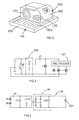
Fig. 1 is a partial schematic of the wireless charger. -
Fig. 2 shows the wireless charger, whereFigs. 2A-2B are front and side views, respectively. -
Fig. 3 shows a power tool battery pack on a wireless charger. -
Fig. 4 is a circuit schematic of some of the components of the wireless charger. -
Fig. 5 is a circuit schematic of some of the components of the battery pack. -
FIGS. 1-2 show awireless charger 100 for charging multiple powertool battery packs 200. Persons skilled in the art shall understand that "battery pack" and "power tool battery pack" as used herein shall mean a set ofrechargeable battery cells 201 disposed in ahousing 202 that for use with a tool that is powered by an electrical motor, such as adrill 300, circular saw, reciprocating saw, jigsaw, etc. Persons skilled in the art shall recognize that powertool battery pack 200 may be the power tool battery packs disclosed inUS Patent Nos. 7,405,536 ,7,618,741 ,7,602,146 and/or8,044,640 , which are hereby incorporated in full by reference, modified so as to be chargeable by a wireless charger. - The
wireless charger 100 has ahousing 101 with adeck 101D where a user can placemultiple battery packs 200.Battery packs 200 are preferably sandwiched betweendeck 101D andwall 102. Deck 101D has severalwireless charging circuits 120, which are described in more detail below. Power for thewireless charging circuits 120 may be received from apower cord 115. - With such construction, the user can slide in
battery pack 200 via opening 101I. Ifdeck 101D is disposed on an angle relative to the ground, thebattery pack 200 may slide all the way to thebottom wall 104 ofwireless charger 100. The user can continue sliding inbattery packs 200. - Deck 101D preferably has
indicator lights 106 right underneathbattery packs 200 showing the charging status of thebattery pack 200 thereabove. Once thebottom battery pack 200 is fully charged, the user can remove thepack 200 via thegap 103 between thebottom wall 104 andwall 102. - Persons skilled in the art will recognize that the different
wireless charging circuits 120 can be controlled so that (a) only onebattery pack 200 is charged at a time (once thebattery pack 200 is charged, thenext battery pack 200 can be charged), (b) eachbattery pack 200 is charged concurrently, and/or (c) the user can choose the order in which thebattery packs 200 are charged (or the user can choose to charge allbattery packs 200 at the same time). -
Housing 101 may also havewheels 105 for facilitating transportation ofwireless charger 100. Persons skilled in the art will also recognize that it is preferable to providehousing 101 withprotrusions 107 with holes therethrough, which can be used for securingwireless charger 100 on a surface, such as a wall. -
Wall 102 may also have awireless charger circuit 120 thereon so as to allow users to charge other devices, such ascell phones 310, power tool battery packs (including those manufactured/sold by other manufacturers), etc. It may be advantageous to provide such charger circuit withanti-slip strips 120S. Persons skilled in the art will recognize that such devices may also be charged if placed ondeck 101D. -
Wireless charger 100 may also have anon-wireless charger circuit 270 to which abattery pack 200 may be electrically connected thereon. Persons skilled in the art will recognize thatbattery pack 200 will have terminals 205 to electrically connected to the terminals ofcharger circuit 270.Charger circuit 270 may be powered by AC received frompower cord 115. Persons skilled in the art will recognize thatbattery pack 200 may be connected so as to power one or more of thewireless charging circuits 120. Persons skilled in the art shall recognize thatcharger circuit 270 may be the charger circuits disclosed inUS Patent Nos. 7,405,536 ,7,618,741 ,7,602,146 and/or8,044,640 , which are hereby incorporated in full by reference. -
Wireless charger 100 may have a lamp orlight 130, which may be powered by AC received frompower cord 115 or from abattery pack 200 connected to thecharger circuit 270. Preferablysuch lamp 130 will output at least 1000 lumens. - Similarly,
wireless charger 100 may have aradio 140, which may be powered by AC received frompower cord 115 or from abattery pack 200 connected to thecharger circuit 270. - Referring to
FIGS. 1 and4-5 , thewireless charger circuit 120 preferably has at least one transmitter coil LT, while thebattery pack 200 has at least one receiver coil LR. An alternating current in the transmitter coil LT generates a magnetic field which induces a voltage in the receiver coil LR. This voltage is used to chargebattery pack 200. - Persons skilled in the art will recognize that the
wireless charger circuit 120 could have multiple transmitter coils LT. Alternatively it could have a moving transmitter coil LT so that, when thebattery pack 200 is placed onwireless charger circuit 120, transmitter coil LT moves towardsbattery pack 200. Persons skilled in the art will recognize thatbattery pack 200 may have a magnet (not shown) that is used bywireless charger circuit 120 to locate the location ofbattery pack 200, and move transmitter coil LT via servo motors (not shown) towardsbattery pack 200. - Preferably the
battery pack 200 has acontrol circuit 202, which controls the amount of power sent to thecells 201.Control circuit 202 interacts withmicrocontroller 202C to ensure that cells 201are not overcharged. -
Battery pack 200 may also have acommunication circuit 203 that provides control information to thewireless charger circuit 120.Communication circuit 203 may send the control information by modulating areflected load signal 203S. This information would be received by acommunication circuit 122 on thewireless charger circuit 120, which demodulates the information from thereflected load signal 203S. - The
wireless charger circuit 120 preferably has acontrol circuit 124 that controls the amount of power to be converted and transmitted to thebattery pack 200.Control circuit 124 can take into account the information sent bycontrol circuit 202 via thecommunication circuits battery pack 200. - The
wireless charger circuit 120 has apower conversion circuit 126 with a transmitter coil LT and a resonance capacitor CT in series with the transmitter coil LT. Power may be converted by ahalf bridge inverter 125 connected to the inductor/capacitor series circuit. Persons skilled in the art shall know that it may be preferable to provide an impedance matching system by adding amultiplexer 127 and multiple additional transmitter coils LT to thewireless charger circuit 120 as shown inFig. 4 . - The
battery pack 200 may have a receiver coil(s) LR (LR1, LR2) with a resonance capacitor CR in series with receiver coil(s) LR (LR1, LR2) for efficient power transfer. In addition, a capacitor CP in parallel with receiver coil LR (and resonance capacitor CR) can be used for detection purposes. - A full-bridge rectifier RR is preferably connected to the receiver coil LR and capacitors. Rectifier RR may be a diode rectifier or switched rectifier. Persons skilled in the art will recognize that it is preferable to provide rectifier RR with a capacitor CRR to smooth the DC voltage output.
- A switch SR may be provided on the output of rectifier RR for connecting and disconnecting the
battery cells 201. Switch SR may be controlled bycontrol circuit 202 and/ormicrocontroller 202C. - Persons skilled in the art will recognize that
battery pack 200 can modulate thereflected load signal 203S by switching capacitor CC, which is preferably controlled bycommunication circuit 203. Thisreflected load signal 203S can be demodulated by sensing the current and/or voltage going through transmitter coil LT. Preferably the modulation will be in a digital format with a transmission speed of 2Kbit/second. Bit encoding is preferably bi-phase. The byte format may be as follows: start-bit, 8bit data (b0-b7), parity-bit, stop bit. The packet structure may be as follows: preamble (>=11bit), header (1 byte indicating packet type and message length), message (up to 27 bytes), and checksum (1 byte). - With such arrangement, the
wireless charger circuit 120 can provide a signal and sense for the presence of a potential receiver. Thebattery pack 200 receives the signal fromwireless charger circuit 120 and indicates its presence by communicating the received signal strength. Thebattery pack 200 can then communicate its identifier and power requirements. Thewireless charger circuit 120 can use that information to configure itself for transferring power to thebattery pack 200. - Once power is being transferred to
battery pack 200, thecontrol circuit 202 and/ormicrocontroller 202C can calculate the difference between a desired power level being sent to thebattery pack 200 and the actual power level being sent to thebattery pack 200. Thecommunication circuit 203 can then send a message to thewireless charger circuit 120 effectively telling thewireless charger circuit 120 to increase or decrease the amount of power being sent to thebattery pack 200. Thewireless charger circuit 120 can decode the message and configure itself accordingly. - Referring to
Figs. 3 and 5 , persons skilled in the art will recognize thatbattery pack 200 may have multiple receiver coils LR1 and LR2 on different planes, e.g. against the bottom wall and/or against a side wall. This allows the user to place thebattery pack 200 on the bottom wall or on the side wall to charge thebattery pack 200. - The description of the invention is merely exemplary in nature and, thus, variations that do not depart from the gist of the invention are intended to be within the scope of the invention. Such variations are not to be regarded as a departure from the scope of the invention.
Claims (14)
- A wireless charger for charging multiple power tool battery packs, comprising:a housing with a deck for supporting a first power tool battery pack, and a wall for directing movement of the first power tool battery pack relative to the deck;a first wireless charging circuit disposed within the housing, the first wireless charging circuit having a first transmitter coil disposed below the deck, a first control circuit for controlling the amount of power that is provided to the first transmitter coil, and a first communication circuit connected to the first control circuit, the first communication circuit that receives information from the first power tool battery pack; anda second wireless charging circuit disposed within the housing, the second wireless charging circuit having a second transmitter coil disposed below the deck, a second control circuit for controlling the amount of power that is provided to the second transmitter coil, and a second communication circuit connected to the second control circuit, the second communication circuit that receives information from a second power tool battery pack disposed on the deck.
- The wireless charger of Claim 1, wherein the first power tool can be moved along the deck to couple with the second wireless charging circuit for charging thereof.
- The wireless charger of Claim 1, further comprising a non-wireless charger circuit electrically connectable to a power tool battery pack.
- The wireless charger of Claim 1, further comprising at least one indicator light disposed on the deck for indicating the charging status of at least one of the first and second power tool battery packs.
- A power tool battery pack comprising:a housing having first and second walls;at least one rechargeable battery cell disposed within the housing;a first receiver coil disposed within the housing for receiving a magnetic field generated by a wireless charger, a voltage induced in the first receiver coil being used to charge the at least one rechargeable battery cell;a second receiver coil disposed within the housing for receiving a magnetic field generated by the wireless charger, a voltage induced in the second receiver coil being used to charge the at least one rechargeable battery cell;a control circuit connected to the first receiver coil for controlling the amount of power that is provided to the at least one rechargeable battery cell; anda communication circuit connected to the control circuit for providing control information to the wireless charger;wherein the first and second receiver coils are disposed adjacent to first and second walls, respectively.
- The power tool battery pack of Claim 5, wherein the communication circuit modulates a reflected load signal.
- The power tool battery pack of Claim 5, wherein a rectifying circuit is connected to the first receiver coil.
- The power tool battery pack of Claim 5, wherein the second receiver coil receives a magnetic field generated by the wireless charger, a voltage induced in the second receiver coil being used to charge the at least one rechargeable battery cell.
- The power tool of Claim 5, wherein the control circuit is connected to the second receiver coil.
- A power tool system comprising:a power tool having a housing and electrical terminals disposed within the power tool;a first power tool battery pack separable from and attachable to the power tool housing, the first power tool battery pack being electrically connectable to the power tool electrical terminals when attached to the power tool, the first power tool battery pack comprising at least one battery cell, a receiver coil, and a control circuit for controlling the amount of power that is provided to the at least one battery cell; anda battery pack charger comprising at least one transmitter coil for generating a magnetic field which induces a voltage in the receiver coil, a control circuit for controlling the amount of power that is provided to the transmitter coil.
- The power tool system of Claim 10, wherein the power tool is at least one of the group consisting of a drill, a circular saw, a reciprocating saw and a jigsaw.
- The power tool system of Claim 10, wherein the battery pack has a communication circuit providing control information to the battery pack charger control circuit.
- The power tool system of Claim 12, wherein the battery pack charger has a communication circuit that receives information from the battery pack communication circuit.
- The power tool system of Claim 13, wherein the battery pack charger communication circuit demodulates control information from a modulated load signal.
Applications Claiming Priority (1)
| Application Number | Priority Date | Filing Date | Title |
|---|---|---|---|
| US201261660938P | 2012-06-18 | 2012-06-18 |
Publications (1)
| Publication Number | Publication Date |
|---|---|
| EP2680393A1 true EP2680393A1 (en) | 2014-01-01 |
Family
ID=48669787
Family Applications (1)
| Application Number | Title | Priority Date | Filing Date |
|---|---|---|---|
| EP20130172520 Ceased EP2680393A1 (en) | 2012-06-18 | 2013-06-18 | Power tool battery pack wireless charger |
Country Status (2)
| Country | Link |
|---|---|
| US (3) | US9136729B2 (en) |
| EP (1) | EP2680393A1 (en) |
Cited By (3)
| Publication number | Priority date | Publication date | Assignee | Title |
|---|---|---|---|---|
| WO2017109799A1 (en) * | 2015-12-23 | 2017-06-29 | Datalogic Ip Tech S.R.L. | Coexistence of wireless charging and near field communication in a portable data terminal |
| EP3843241A1 (en) * | 2019-12-24 | 2021-06-30 | Guangdong Oppo Mobile Telecommunications Corp., Ltd. | Electronic device |
| WO2023073255A1 (en) * | 2021-10-28 | 2023-05-04 | Smart Home Solutions, S.L. | Wireless power transfer system |
Families Citing this family (36)
| Publication number | Priority date | Publication date | Assignee | Title |
|---|---|---|---|---|
| DE102012213415A1 (en) * | 2011-11-22 | 2013-05-23 | Robert Bosch Gmbh | Hand tool case holding device |
| US9525293B2 (en) | 2011-12-30 | 2016-12-20 | Makita Corporation | Battery charger having angled wall in battery receiving opening, and battery pack charging system and cordless power tool system including same |
| US20130226656A1 (en) * | 2012-02-16 | 2013-08-29 | Bazaarvoice, Inc. | Determining influence of a person based on user generated content |
| US9136729B2 (en) * | 2012-06-18 | 2015-09-15 | Black & Decker Inc. | Power tool battery pack wireless charger |
| US9781496B2 (en) * | 2012-10-25 | 2017-10-03 | Milwaukee Electric Tool Corporation | Worksite audio device with wireless interface |
| US9716401B2 (en) | 2014-01-06 | 2017-07-25 | Otter Products, Llc | Recharegable battery pack |
| US9620985B2 (en) * | 2014-04-01 | 2017-04-11 | Intel Corporation | Multi-coil wireless charging |
| US10381856B2 (en) * | 2014-10-03 | 2019-08-13 | Robert Bosch Tool Corporation | Inductive charging holster for power tool |
| DE102014222847A1 (en) * | 2014-11-10 | 2016-05-12 | Robert Bosch Gmbh | Machine tools stand device |
| KR102332621B1 (en) * | 2014-11-21 | 2021-12-01 | 삼성전자주식회사 | Signal Receiving and Transmitting circuit and electronic device including the same |
| US10098278B2 (en) * | 2015-02-20 | 2018-10-16 | Black & Decker Inc. | Mower |
| US10283817B2 (en) | 2015-02-23 | 2019-05-07 | Black & Decker, Inc. | Battery charger and method of charging a battery |
| US20170256990A1 (en) * | 2016-03-03 | 2017-09-07 | Sanjaya Maniktala | Receiver Coil Arrangements for Inductive Wireless Power Transfer for Portable Devices |
| SE540597C2 (en) | 2016-11-17 | 2018-10-02 | Husqvarna Ab | Battery charging system and method |
| WO2018119256A1 (en) * | 2016-12-23 | 2018-06-28 | Black & Decker Inc. | Cordless power tool system |
| US10404093B2 (en) * | 2017-04-26 | 2019-09-03 | Biosense Webster (Israel) Ltd. | Using location transmission signals for charging a wireless medical tool of an electromagnetic navigation system |
| WO2019067539A1 (en) | 2017-09-26 | 2019-04-04 | Stryker Corporation | System and method for wirelessly charging a medical device battery |
| EP4712306A3 (en) | 2019-03-27 | 2026-04-15 | Stryker Corporation | Autoclavable container for sterilizing a wirelessly chargeable battery |
| CN113544929B (en) * | 2019-05-06 | 2024-09-06 | Oppo广东移动通信有限公司 | Charging method and charging device |
| US11289974B2 (en) | 2019-06-07 | 2022-03-29 | Anthony Macaluso | Power generation from vehicle wheel rotation |
| US11615923B2 (en) | 2019-06-07 | 2023-03-28 | Anthony Macaluso | Methods, systems and apparatus for powering a vehicle |
| US11641572B2 (en) | 2019-06-07 | 2023-05-02 | Anthony Macaluso | Systems and methods for managing a vehicle's energy via a wireless network |
| US11222750B1 (en) | 2021-03-22 | 2022-01-11 | Anthony Macaluso | Hypercapacitor apparatus for storing and providing energy |
| US11685276B2 (en) | 2019-06-07 | 2023-06-27 | Anthony Macaluso | Methods and apparatus for powering a vehicle |
| FR3102384B1 (en) * | 2019-10-24 | 2021-10-15 | Renault Georges Ets | Industrial device for recharging an electromechanical tool when it is attached to a support |
| US11831033B2 (en) | 2020-01-09 | 2023-11-28 | Otter Products, Llc | Hot-swappable battery pack system |
| WO2022066708A1 (en) | 2020-09-22 | 2022-03-31 | Milwaukee Electric Tool Corporation | Wireless charging pad for power tool battery packs |
| DE102020216263A1 (en) * | 2020-12-18 | 2022-06-23 | Robert Bosch Gesellschaft mit beschränkter Haftung | Adapter for a removable battery pack |
| US11577606B1 (en) | 2022-03-09 | 2023-02-14 | Anthony Macaluso | Flexible arm generator |
| US11472306B1 (en) | 2022-03-09 | 2022-10-18 | Anthony Macaluso | Electric vehicle charging station |
| US12119664B2 (en) | 2022-05-20 | 2024-10-15 | Snap-On Incorporated | Systems, tool storage units, and methods for providing electrical power |
| US12160132B2 (en) | 2023-01-30 | 2024-12-03 | Anthony Macaluso | Matable energy storage devices |
| US12407219B2 (en) | 2023-02-28 | 2025-09-02 | Anthony Macaluso | Vehicle energy generation system |
| US11955875B1 (en) | 2023-02-28 | 2024-04-09 | Anthony Macaluso | Vehicle energy generation system |
| US12463472B2 (en) * | 2023-08-29 | 2025-11-04 | Panasonic Automotive Systems Co., Ltd. | Charging device and charging method |
| US12412430B2 (en) | 2023-12-22 | 2025-09-09 | Anthony Macaluso | Systems and methods for managing a vehicle's energy via a wireless network |
Citations (10)
| Publication number | Priority date | Publication date | Assignee | Title |
|---|---|---|---|---|
| EP1684396A2 (en) * | 2004-12-17 | 2006-07-26 | DePuy Products, Inc. | System for recharging medical instruments |
| US20070279002A1 (en) * | 2006-06-01 | 2007-12-06 | Afshin Partovi | Power source, charging system, and inductive receiver for mobile devices |
| EP1868275A2 (en) * | 2006-06-14 | 2007-12-19 | Biosense Webster, Inc. | Inductive charging of tools on surgical tray |
| US7405536B2 (en) | 2003-10-08 | 2008-07-29 | Black & Decker Inc. | Battery pack-detecting charger |
| US20090106567A1 (en) * | 2007-10-17 | 2009-04-23 | Access Business Group International Llc | Laptop and portable electronic device wireless power supply systems |
| US7602146B2 (en) | 2003-10-14 | 2009-10-13 | Black & Decker Inc. | Protection methods, protection circuits and protection devices for secondary batteries, a power tool, charger and battery pack adapted to provide protection against fault conditions in the battery pack |
| US7618741B2 (en) | 2005-10-31 | 2009-11-17 | Black & Decker Inc. | Battery pack, charger and terminal block arrangements for cordless power tool system |
| WO2010131723A1 (en) * | 2009-05-13 | 2010-11-18 | Canon Kabushiki Kaisha | Power-supplying device, control method for the same, and power-supplying system |
| US8044640B2 (en) | 2008-10-07 | 2011-10-25 | Black & Decker Inc. | Method for stepping current output by a battery charger |
| US20110260681A1 (en) * | 2010-04-27 | 2011-10-27 | Guccione Darren S | Portable Wireless Charging Device |
Family Cites Families (9)
| Publication number | Priority date | Publication date | Assignee | Title |
|---|---|---|---|---|
| EP1891741A4 (en) * | 2005-06-08 | 2011-08-24 | Powercast Corp | ELECTRIC POWER SUPPLY OF A RADIO FREQUENCY ENERGY COLLECTION DEVICE |
| US20120091949A1 (en) * | 2008-09-27 | 2012-04-19 | Campanella Andrew J | Wireless energy transfer for energizing power tools |
| US9257865B2 (en) * | 2009-01-22 | 2016-02-09 | Techtronic Power Tools Technology Limited | Wireless power distribution system and method |
| WO2010085637A1 (en) * | 2009-01-22 | 2010-07-29 | Techtronic Power Tools Technology Limited | Wireless power distribution system and method for power tools |
| US10115520B2 (en) * | 2011-01-18 | 2018-10-30 | Mojo Mobility, Inc. | Systems and method for wireless power transfer |
| US9356659B2 (en) * | 2011-01-18 | 2016-05-31 | Mojo Mobility, Inc. | Chargers and methods for wireless power transfer |
| US9178369B2 (en) * | 2011-01-18 | 2015-11-03 | Mojo Mobility, Inc. | Systems and methods for providing positioning freedom, and support of different voltages, protocols, and power levels in a wireless power system |
| EP2735077B1 (en) * | 2011-07-24 | 2017-06-21 | Makita Corporation | Portable battery pack charging system and method for recharging a battery pack |
| US9136729B2 (en) * | 2012-06-18 | 2015-09-15 | Black & Decker Inc. | Power tool battery pack wireless charger |
-
2013
- 2013-02-18 US US13/769,637 patent/US9136729B2/en active Active
- 2013-06-18 EP EP20130172520 patent/EP2680393A1/en not_active Ceased
-
2015
- 2015-08-04 US US14/817,576 patent/US9948128B2/en active Active
-
2017
- 2017-07-21 US US15/656,321 patent/US10199856B2/en active Active
Patent Citations (10)
| Publication number | Priority date | Publication date | Assignee | Title |
|---|---|---|---|---|
| US7405536B2 (en) | 2003-10-08 | 2008-07-29 | Black & Decker Inc. | Battery pack-detecting charger |
| US7602146B2 (en) | 2003-10-14 | 2009-10-13 | Black & Decker Inc. | Protection methods, protection circuits and protection devices for secondary batteries, a power tool, charger and battery pack adapted to provide protection against fault conditions in the battery pack |
| EP1684396A2 (en) * | 2004-12-17 | 2006-07-26 | DePuy Products, Inc. | System for recharging medical instruments |
| US7618741B2 (en) | 2005-10-31 | 2009-11-17 | Black & Decker Inc. | Battery pack, charger and terminal block arrangements for cordless power tool system |
| US20070279002A1 (en) * | 2006-06-01 | 2007-12-06 | Afshin Partovi | Power source, charging system, and inductive receiver for mobile devices |
| EP1868275A2 (en) * | 2006-06-14 | 2007-12-19 | Biosense Webster, Inc. | Inductive charging of tools on surgical tray |
| US20090106567A1 (en) * | 2007-10-17 | 2009-04-23 | Access Business Group International Llc | Laptop and portable electronic device wireless power supply systems |
| US8044640B2 (en) | 2008-10-07 | 2011-10-25 | Black & Decker Inc. | Method for stepping current output by a battery charger |
| WO2010131723A1 (en) * | 2009-05-13 | 2010-11-18 | Canon Kabushiki Kaisha | Power-supplying device, control method for the same, and power-supplying system |
| US20110260681A1 (en) * | 2010-04-27 | 2011-10-27 | Guccione Darren S | Portable Wireless Charging Device |
Cited By (6)
| Publication number | Priority date | Publication date | Assignee | Title |
|---|---|---|---|---|
| WO2017109799A1 (en) * | 2015-12-23 | 2017-06-29 | Datalogic Ip Tech S.R.L. | Coexistence of wireless charging and near field communication in a portable data terminal |
| CN108702003A (en) * | 2015-12-23 | 2018-10-23 | 得利捷Ip科技有限公司 | Coexistence of Wireless Charging and Near Field Communication in Portable Data Terminals |
| US10491271B2 (en) | 2015-12-23 | 2019-11-26 | Datalogic Ip Tech S.R.L. | Coexistence of wireless charging and near field communication in a portable data terminal |
| EP3843241A1 (en) * | 2019-12-24 | 2021-06-30 | Guangdong Oppo Mobile Telecommunications Corp., Ltd. | Electronic device |
| US11616400B2 (en) | 2019-12-24 | 2023-03-28 | Guangdong Oppo Mobile Telecommunications Corp., Ltd. | Electronic device |
| WO2023073255A1 (en) * | 2021-10-28 | 2023-05-04 | Smart Home Solutions, S.L. | Wireless power transfer system |
Also Published As
| Publication number | Publication date |
|---|---|
| US10199856B2 (en) | 2019-02-05 |
| US9136729B2 (en) | 2015-09-15 |
| US20130335014A1 (en) | 2013-12-19 |
| US9948128B2 (en) | 2018-04-17 |
| US20180115183A1 (en) | 2018-04-26 |
| US20160079800A1 (en) | 2016-03-17 |
Similar Documents
| Publication | Publication Date | Title |
|---|---|---|
| US10199856B2 (en) | Power tool battery pack wireless charger | |
| US20180241240A1 (en) | Power tool battery pack wireless charger | |
| US8629651B2 (en) | Portable wireless charging device | |
| US10224761B2 (en) | Method for controlling power in a wireless power transmission apparatus and a wireless power transmission apparatus | |
| KR102438626B1 (en) | Wireless power transfer method, apparatus and system | |
| US9423439B2 (en) | Apparatus and method for detecting foreign object in wireless power transmitting system | |
| US9496083B2 (en) | Wireless power transmitter, wireless power receiver, and methods of controlling the same | |
| CN102971934B (en) | Power pack with inductive charging | |
| US10135498B2 (en) | Wireless power transfer method, apparatus and system | |
| JP6196861B2 (en) | Mobile battery | |
| EP3557775B1 (en) | Wirelesspower transmitter for excluding cross-connected wireless power receiver and method for controlling the same | |
| CN102893495B (en) | Power receiver for wireless charging, and portable electronic device having same | |
| KR101750345B1 (en) | Wireless power transfer method, apparatus and system | |
| WO2013014878A1 (en) | Battery pack system and method for recharging a battery pack | |
| KR20150047479A (en) | Apparatus and method for providing compatibility in wireless power transmission system | |
| CN102820685A (en) | Wireless battery charging apparatus, and method and system thereof | |
| CN103166279A (en) | Mobile power supply | |
| EP3972119B1 (en) | Electric motor driving system and vehicle | |
| JP2014200118A (en) | Battery-driven apparatus and battery pack | |
| KR20140109390A (en) | Device and method for wirelessly transmitting power | |
| EP2953271B1 (en) | Wireless power transfer method, apparatus and system | |
| US20180175653A1 (en) | Wireless charger | |
| KR20190134566A (en) | Apparatus and method for detecting foreign object in wireless power transmitting system | |
| JPWO2013015205A1 (en) | Battery drive equipment and battery pack | |
| KR20180001783A (en) | A Wireless power transmitter control method and apparatus including a plurality of coils |
Legal Events
| Date | Code | Title | Description |
|---|---|---|---|
| PUAI | Public reference made under article 153(3) epc to a published international application that has entered the european phase |
Free format text: ORIGINAL CODE: 0009012 |
|
| AK | Designated contracting states |
Kind code of ref document: A1 Designated state(s): AL AT BE BG CH CY CZ DE DK EE ES FI FR GB GR HR HU IE IS IT LI LT LU LV MC MK MT NL NO PL PT RO RS SE SI SK SM TR |
|
| AX | Request for extension of the european patent |
Extension state: BA ME |
|
| 17P | Request for examination filed |
Effective date: 20140624 |
|
| RBV | Designated contracting states (corrected) |
Designated state(s): AL AT BE BG CH CY CZ DE DK EE ES FI FR GB GR HR HU IE IS IT LI LT LU LV MC MK MT NL NO PL PT RO RS SE SI SK SM TR |
|
| 17Q | First examination report despatched |
Effective date: 20160729 |
|
| STAA | Information on the status of an ep patent application or granted ep patent |
Free format text: STATUS: EXAMINATION IS IN PROGRESS |
|
| STAA | Information on the status of an ep patent application or granted ep patent |
Free format text: STATUS: THE APPLICATION HAS BEEN REFUSED |
|
| 18R | Application refused |
Effective date: 20180519 |