EP2679459A2 - Railway vehicle traction system - Google Patents
Railway vehicle traction system Download PDFInfo
- Publication number
- EP2679459A2 EP2679459A2 EP13173584.7A EP13173584A EP2679459A2 EP 2679459 A2 EP2679459 A2 EP 2679459A2 EP 13173584 A EP13173584 A EP 13173584A EP 2679459 A2 EP2679459 A2 EP 2679459A2
- Authority
- EP
- European Patent Office
- Prior art keywords
- power
- smoothing capacitor
- current
- storage battery
- traction system
- Prior art date
- Legal status (The legal status is an assumption and is not a legal conclusion. Google has not performed a legal analysis and makes no representation as to the accuracy of the status listed.)
- Granted
Links
Images


Classifications
-
- H—ELECTRICITY
- H02—GENERATION; CONVERSION OR DISTRIBUTION OF ELECTRIC POWER
- H02P—CONTROL OR REGULATION OF ELECTRIC MOTORS, ELECTRIC GENERATORS OR DYNAMO-ELECTRIC CONVERTERS; CONTROLLING TRANSFORMERS, REACTORS OR CHOKE COILS
- H02P1/00—Arrangements for starting electric motors or dynamo-electric converters
- H02P1/16—Arrangements for starting electric motors or dynamo-electric converters for starting dynamo-electric motors or dynamo-electric converters
- H02P1/26—Arrangements for starting electric motors or dynamo-electric converters for starting dynamo-electric motors or dynamo-electric converters for starting an individual polyphase induction motor
-
- B—PERFORMING OPERATIONS; TRANSPORTING
- B60—VEHICLES IN GENERAL
- B60L—PROPULSION OF ELECTRICALLY-PROPELLED VEHICLES; SUPPLYING ELECTRIC POWER FOR AUXILIARY EQUIPMENT OF ELECTRICALLY-PROPELLED VEHICLES; ELECTRODYNAMIC BRAKE SYSTEMS FOR VEHICLES IN GENERAL; MAGNETIC SUSPENSION OR LEVITATION FOR VEHICLES; MONITORING OPERATING VARIABLES OF ELECTRICALLY-PROPELLED VEHICLES; ELECTRIC SAFETY DEVICES FOR ELECTRICALLY-PROPELLED VEHICLES
- B60L50/00—Electric propulsion with power supplied within the vehicle
- B60L50/10—Electric propulsion with power supplied within the vehicle using propulsion power supplied by engine-driven generators, e.g. generators driven by combustion engines
- B60L50/13—Electric propulsion with power supplied within the vehicle using propulsion power supplied by engine-driven generators, e.g. generators driven by combustion engines using AC generators and AC motors
-
- B—PERFORMING OPERATIONS; TRANSPORTING
- B60—VEHICLES IN GENERAL
- B60L—PROPULSION OF ELECTRICALLY-PROPELLED VEHICLES; SUPPLYING ELECTRIC POWER FOR AUXILIARY EQUIPMENT OF ELECTRICALLY-PROPELLED VEHICLES; ELECTRODYNAMIC BRAKE SYSTEMS FOR VEHICLES IN GENERAL; MAGNETIC SUSPENSION OR LEVITATION FOR VEHICLES; MONITORING OPERATING VARIABLES OF ELECTRICALLY-PROPELLED VEHICLES; ELECTRIC SAFETY DEVICES FOR ELECTRICALLY-PROPELLED VEHICLES
- B60L50/00—Electric propulsion with power supplied within the vehicle
- B60L50/50—Electric propulsion with power supplied within the vehicle using propulsion power supplied by batteries or fuel cells
- B60L50/60—Electric propulsion with power supplied within the vehicle using propulsion power supplied by batteries or fuel cells using power supplied by batteries
-
- H—ELECTRICITY
- H02—GENERATION; CONVERSION OR DISTRIBUTION OF ELECTRIC POWER
- H02J—ELECTRIC POWER NETWORKS; CIRCUIT ARRANGEMENTS OR SYSTEMS FOR SUPPLYING OR DISTRIBUTING ELECTRIC POWER; SYSTEMS FOR STORING ELECTRIC ENERGY
- H02J7/00—Circuit arrangements for charging or discharging batteries or for supplying loads from batteries
- H02J7/14—Circuit arrangements for charging or discharging batteries or for supplying loads from batteries for charging batteries from dynamo-electric generators driven at varying speed, e.g. on vehicle
- H02J7/1415—Circuit arrangements for charging or discharging batteries or for supplying loads from batteries for charging batteries from dynamo-electric generators driven at varying speed, e.g. on vehicle with a generator driven by a prime mover other than the motor of a vehicle
-
- B—PERFORMING OPERATIONS; TRANSPORTING
- B60—VEHICLES IN GENERAL
- B60L—PROPULSION OF ELECTRICALLY-PROPELLED VEHICLES; SUPPLYING ELECTRIC POWER FOR AUXILIARY EQUIPMENT OF ELECTRICALLY-PROPELLED VEHICLES; ELECTRODYNAMIC BRAKE SYSTEMS FOR VEHICLES IN GENERAL; MAGNETIC SUSPENSION OR LEVITATION FOR VEHICLES; MONITORING OPERATING VARIABLES OF ELECTRICALLY-PROPELLED VEHICLES; ELECTRIC SAFETY DEVICES FOR ELECTRICALLY-PROPELLED VEHICLES
- B60L2200/00—Type of vehicles
- B60L2200/26—Rail vehicles
-
- B—PERFORMING OPERATIONS; TRANSPORTING
- B60—VEHICLES IN GENERAL
- B60L—PROPULSION OF ELECTRICALLY-PROPELLED VEHICLES; SUPPLYING ELECTRIC POWER FOR AUXILIARY EQUIPMENT OF ELECTRICALLY-PROPELLED VEHICLES; ELECTRODYNAMIC BRAKE SYSTEMS FOR VEHICLES IN GENERAL; MAGNETIC SUSPENSION OR LEVITATION FOR VEHICLES; MONITORING OPERATING VARIABLES OF ELECTRICALLY-PROPELLED VEHICLES; ELECTRIC SAFETY DEVICES FOR ELECTRICALLY-PROPELLED VEHICLES
- B60L2220/00—Electrical machine types; Structures or applications thereof
- B60L2220/10—Electrical machine types
- B60L2220/12—Induction machines
-
- H—ELECTRICITY
- H02—GENERATION; CONVERSION OR DISTRIBUTION OF ELECTRIC POWER
- H02J—ELECTRIC POWER NETWORKS; CIRCUIT ARRANGEMENTS OR SYSTEMS FOR SUPPLYING OR DISTRIBUTING ELECTRIC POWER; SYSTEMS FOR STORING ELECTRIC ENERGY
- H02J2105/00—Networks for supplying or distributing electric power characterised by their spatial reach or by the load
- H02J2105/30—Networks for supplying or distributing electric power characterised by their spatial reach or by the load the load networks being external to vehicles, i.e. exchanging power with vehicles
-
- Y—GENERAL TAGGING OF NEW TECHNOLOGICAL DEVELOPMENTS; GENERAL TAGGING OF CROSS-SECTIONAL TECHNOLOGIES SPANNING OVER SEVERAL SECTIONS OF THE IPC; TECHNICAL SUBJECTS COVERED BY FORMER USPC CROSS-REFERENCE ART COLLECTIONS [XRACs] AND DIGESTS
- Y02—TECHNOLOGIES OR APPLICATIONS FOR MITIGATION OR ADAPTATION AGAINST CLIMATE CHANGE
- Y02T—CLIMATE CHANGE MITIGATION TECHNOLOGIES RELATED TO TRANSPORTATION
- Y02T10/00—Road transport of goods or passengers
- Y02T10/60—Other road transportation technologies with climate change mitigation effect
- Y02T10/70—Energy storage systems for electromobility, e.g. batteries
Definitions
- the present invention relates to a railway vehicle traction system that uses, as a power source, an induction generator that is driven by an engine.
- a railway vehicle traction system For a railway vehicle that travels on non-electrified lines, a railway vehicle traction system is generally used which generates alternating-current power by causing an internal-combustion engine such as a diesel engine to drive a power generator, causes a rectifier or a power converter to convert the alternating-current power into direct-current power, and causes a power inverter to drive an alternating-current motor.
- an internal-combustion engine such as a diesel engine
- a rectifier or a power converter causes a rectifier or a power converter to convert the alternating-current power into direct-current power
- causes a power inverter to drive an alternating-current motor.
- a separately-excited alternator synchronous generator
- the separately-excited alternator can generate voltage by rotating.
- the permanent magnet generator is advantageous since the associated electric motor is reduced in size and weight and achieves higher efficiency.
- JP-2008-49811-A discloses a hybrid traction system that has an engine, an induction generator, a power converter for converting an alternating current output from the induction generator into a direct current, a power inverter for converting the direct current into an alternating current to be used to drive a railway vehicle, and a storage battery device connected to a direct-current power unit of a main circuit and can effectively use regenerative electric power for braking.
- JP-2008-49811-A discloses that the engine is started by driving the induction generator as an electric motor using power stored in the storage battery device connected to the direct-current power unit of the main circuit.
- the induction generator is smaller and more inexpensive than synchronous motors and has a simpler structure than synchronous motors.
- the induction generator does not need a contactor such as a slip ring, and thus has an advantage that its reliability is higher.
- a typical traction system does not have a storage battery device for a direct-current power unit of a main circuit; therefore such a traction system cannot acquire exciting energy necessary upon activation of an induction generator, unlike the hybrid traction system described in JP-2008-49811-A .
- the typical traction system must use a synchronous generator.
- the typical traction system cannot use a small, inexpensive, and highly reliable induction generator as a power generator.
- An object of the invention is to allow even a traction system, which does not have a storage battery device for a direct-current power unit of the traction system, to use an induction generator as a power generator.
- a railway vehicle traction system includes an engine; an induction generator that is driven by the engine; a first power converter that converts alternating-current power output from the induction generator into direct-current power; a smoothing capacitor that smoothes the direct-current power output from the first power converter; a second power converter that converts the direct-current power output from the smoothing capacitor serving as a direct-current voltage source into alternating-current power and drives an electric motor; storage battery means for supplying power to an on-vehicle control device; and a contactor that is connected between the storage battery means and the smoothing capacitor.
- the contactor is closed, the smoothing capacitor is charged by the storage battery means, and a current is supplied to the induction generator in order to start an operation of generating power using power charged in the smoothing capacitor.
- the induction generator In the traction system that uses, as a power source, the induction generator mechanically coupled with the engine but does not include a large-capacity storage battery device that is used for a hybrid traction system or the like, the induction generator can be used as a power generator.
- the traction system that is small, inexpensive and highly reliable can be provided.
- a railway vehicle has a low-voltage storage battery for supplying power to on-vehicle control devices.
- a voltage of 24V, 72V, 100V, or 110V is often used for such on-vehicle control devices.
- An amount of voltage is stored in a direct-current power unit of a main circuit by supplying the power from the storage battery to the direct-current power unit, and an induction generator is activated by the voltage.
- the power sufficient to drive the induction generator in consideration of a loss of a power converter is supplied to the direct-current power unit of the main circuit.
- the storage battery is separated from the direct-current power unit of the main circuit by opening a contactor.
- the induction generator starts generating power
- insulation is ensured between the main circuit whose direct-current power unit is subject to voltages as high as several thousand volts and a power supply circuit provided with the storage battery for supplying a relatively low voltage of several ten volts to one hundred volts to the on-vehicle control devices.
- the power supplied from the induction generator enables the voltage of the direct-current power unit of the main circuit to be maintained and enables power to be supplied to an electric motor for driving the railway vehicle through a power inverter.
- a railway vehicle traction system including the induction generator that is small, inexpensive, and highly reliable and used as a power generator can be provided in a manner that is simple in circuit configuration.
- Fig. 1 is a diagram illustrating a railway vehicle traction system according to the first embodiment of the invention.
- the railway vehicle traction system illustrated in Fig. 1 includes an engine 1, an induction generator (IG) 2, a power converter 3, a power inverter 4, a smoothing capacitor (FC) 5, and an electric motor 15.
- the induction generator 2 is driven by the engine 1.
- the power converter 3 converts alternating-current power output from the induction generator 2 into direct-current power.
- the smoothing capacitor 5 smoothes the direct-current power output from the power converter 3.
- the power inverter 4 converts, into alternating-current power, the direct-current power output from the smoothing capacitor 5 serving as a direct-current voltage supply source.
- the electric motor 15 is driven by the power inverter 4.
- a direct-current power unit of a main circuit is arranged between the power converter 3 and the power inverter 4 and connected through a contactor 7 and a current reducing element 16 to a low-voltage storage voltage 6 (of 110 V in this example) for supplying power to an on-vehicle control device, and power can be supplied from the low-voltage storage battery 6 to the smoothing capacitor 5.
- the current-reducing element 16 is a resistor or the like.
- the on-vehicle control device includes at least any of a control circuit for the power converter 3 and power inverter 4, an on-vehicle signal device such as an on-vehicle automatic train control (ATC) device, a driver's board, a central control unit for communicating with devices within the traction system, and a brake control device.
- ATC on-vehicle automatic train control
- Fig. 2 the abscissa indicates time and the operations are illustrated with respect to the number of revolutions of the engine per unit time, a voltage of the filter capacitor (FC), an exciting current of the induction generator, a torque current of the induction generator, and an activation state of the power inverter.
- FC filter capacitor
- Fig. 2 explains (1) the start of the engine and (2) the start of charging of the smoothing capacitor 5 by the storage battery 6, in that sequence, that is (1) to (2).
- the starts (1) and (2) can be simultaneous or reverse, that is (2) to (1). In any of these cases, power generation can be started with no problem.
- the rise of the torque current Iq and (4) the rise of the exciting current Id can be simultaneous.
- the rise of the torque current Iq can be at the time when the exciting current Id starts to flow after (4) the rise of the exciting current Id, or at the time when the exciting current Id rises to a value C[A] and is stabilized at the value C[A].
- the activation of the power inverter 4 can be performed between the rises (5) and (6) with no problem.
- a power-supply voltage of approximately 100V is used for the on-vehicle control device, whereas the voltage of the main circuit is higher than the power-supply voltage of the on-vehicle control device.
- the control device may be adversely affected.
- the railway vehicle traction system including the induction generator that is small, inexpensive, and highly reliable can be provided with a simple circuit configuration.
- Fig. 3 is a diagram illustrating a railway vehicle traction system according to the second embodiment of the invention.
- the railway vehicle traction system according to the second embodiment includes a second power inverter 9, a transformer 10, and a rectifier 8.
- the second power inverter 9 is arranged between the direct-current power unit of the main circuit and the contactor 7 and converts a direct-current voltage of the storage battery 6 into an alternating current.
- the transformer 10 transforms an alternating-current voltage output from the second power inverter 9.
- the rectifier 8 converts a secondary voltage of the transformer 10 into a direct current.
- the smoothing capacitor 5 is charged by the storage battery 6 through the second power inverter 9, the transformer 10, and the rectifier 8.
- Other parts are the same as the traction system illustrated in Fig.
- the smoothing capacitor 5 is charged by the storage battery 6 through the transformer 10, the storage battery 6 can be insulated from the main circuit during the charging of the smoothing capacitor 5. Specifically, there is an advantage that even if the contactor 7 fails due to a short circuit, it is possible to prevent a high voltage of the main circuit from being applied to the control power source and therefore prevent the control device from being adversely affected.
- the smoothing capacitor 5 can be charged to a higher voltage than the voltage of the storage battery 6.
- the induction generator 2 can be stably activated. Since energy stored in the smoothing capacitor 5 is C ⁇ V 2 /2 (C is capacitance of the smoothing capacitor 5, and V is the charged voltage), the charged voltage V is equal to or lower than the voltage of the storage battery 6.
- the capacitance C of the smoothing capacitor 5 be sufficiently large in the first embodiment illustrated in Fig. 1 .
- the charged voltage V of the smoothing capacitor 5 can be freely set.
- the capacitance C of the smoothing capacitor 5 is small, energy that is sufficient to activate the induction generator 2 can be stored in the smoothing capacitor 5.
- the smoothing capacitor 5 When the smoothing capacitor 5 is charged so that the energy stored in the smoothing capacitor 5 is equal to or higher than the sum of energy necessary to activate the engine 1 and energy necessary to activate the induction generator 2, the induction generator 2 can be driven by the smoothing capacitor 5 during stop of the engine 1, and the engine can be activated. As a result, a starter motor for activating the engine 1 is not required.
- the system can be simplified, and the traction system that is reliable can be provided.
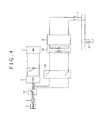
- Fig. 4 is a diagram illustrating a railway vehicle traction system according to the third embodiment of the invention.
- an output of the transformer 10 is connected to an alternating-current input end of the power converter 3.
- the power converter 3 has a rectifying function that rectifies the output of the transformer 10 and achieves the charging of the smoothing capacitor 5.
- the rectifier 8 that is required in the second embodiment illustrated in Fig. 3 can be omitted.
- a contactor 17 is open and a contactor 18 is closed.
- the contactor 17 is closed and the contactor 18 is open.
- the sequence of the charging is the same as the second embodiment illustrated in Fig. 3 except for the operations of the contactors 17 and 18.
- the rectifier 8 can be omitted, the traction system can be provided, which is smaller, lighter, and more reliable than the second embodiment illustrated in Fig. 2 .
Landscapes
- Engineering & Computer Science (AREA)
- Power Engineering (AREA)
- Transportation (AREA)
- Mechanical Engineering (AREA)
- Life Sciences & Earth Sciences (AREA)
- Sustainable Development (AREA)
- Sustainable Energy (AREA)
- Electric Propulsion And Braking For Vehicles (AREA)
Abstract
generating power using power charged in the smoothing capacitor.
Description
- The present invention relates to a railway vehicle traction system that uses, as a power source, an induction generator that is driven by an engine.
- For a railway vehicle that travels on non-electrified lines, a railway vehicle traction system is generally used which generates alternating-current power by causing an internal-combustion engine such as a diesel engine to drive a power generator, causes a rectifier or a power converter to convert the alternating-current power into direct-current power, and causes a power inverter to drive an alternating-current motor. As power generators, a separately-excited alternator (synchronous generator) is widely used while recently a permanent magnet generator is used in many cases. The separately-excited alternator can generate voltage by rotating. The permanent magnet generator is advantageous since the associated electric motor is reduced in size and weight and achieves higher efficiency.
- For example,
JP-2008-49811-A JP-2008-49811-A - In addition, the induction generator is smaller and more inexpensive than synchronous motors and has a simpler structure than synchronous motors. The induction generator does not need a contactor such as a slip ring, and thus has an advantage that its reliability is higher.
- A typical traction system does not have a storage battery device for a direct-current power unit of a main circuit; therefore such a traction system cannot acquire exciting energy necessary upon activation of an induction generator, unlike the hybrid traction system described in
JP-2008-49811-A - An object of the invention is to allow even a traction system, which does not have a storage battery device for a direct-current power unit of the traction system, to use an induction generator as a power generator.
- In order to address the aforementioned problems, according to the invention, a railway vehicle traction system includes an engine; an induction generator that is driven by the engine; a first power converter that converts alternating-current power output from the induction generator into direct-current power; a smoothing capacitor that smoothes the direct-current power output from the first power converter; a second power converter that converts the direct-current power output from the smoothing capacitor serving as a direct-current voltage source into alternating-current power and drives an electric motor; storage battery means for supplying power to an on-vehicle control device; and a contactor that is connected between the storage battery means and the smoothing capacitor. In the railway vehicle traction system, the contactor is closed, the smoothing capacitor is charged by the storage battery means, and a current is supplied to the induction generator in order to start an operation of generating power using power charged in the smoothing capacitor.
- In the traction system that uses, as a power source, the induction generator mechanically coupled with the engine but does not include a large-capacity storage battery device that is used for a hybrid traction system or the like, the induction generator can be used as a power generator. Thus, the traction system that is small, inexpensive and highly reliable can be provided.
- Other objects and advantages of the invention will become apparent from the following description of embodiments with reference to the accompanying drawings in which:
-
Fig. 1 is a diagram illustrating a configuration according to a first embodiment of the invention; -
Fig. 2 is a diagram illustrating operations according to the first embodiment of the invention; -
Fig. 3 is a diagram illustrating a configuration according to a second embodiment of the invention; and -
Fig. 4 is a diagram illustrating a configuration according to a third embodiment of the invention. - A railway vehicle has a low-voltage storage battery for supplying power to on-vehicle control devices. For example, a voltage of 24V, 72V, 100V, or 110V is often used for such on-vehicle control devices. An amount of voltage is stored in a direct-current power unit of a main circuit by supplying the power from the storage battery to the direct-current power unit, and an induction generator is activated by the voltage. In this case, the power sufficient to drive the induction generator in consideration of a loss of a power converter is supplied to the direct-current power unit of the main circuit. After completion of the supply of the power to the direct-current power unit of the main circuit, the storage battery is separated from the direct-current power unit of the main circuit by opening a contactor. Thus, after the induction generator starts generating power, insulation is ensured between the main circuit whose direct-current power unit is subject to voltages as high as several thousand volts and a power supply circuit provided with the storage battery for supplying a relatively low voltage of several ten volts to one hundred volts to the on-vehicle control devices.
- After the activation of the induction generator, the power supplied from the induction generator enables the voltage of the direct-current power unit of the main circuit to be maintained and enables power to be supplied to an electric motor for driving the railway vehicle through a power inverter.
- Therefore, a railway vehicle traction system including the induction generator that is small, inexpensive, and highly reliable and used as a power generator can be provided in a manner that is simple in circuit configuration.
- Hereinafter, embodiments of the invention are described with reference to the accompanying drawings.
-
Fig. 1 is a diagram illustrating a railway vehicle traction system according to the first embodiment of the invention. - The railway vehicle traction system illustrated in
Fig. 1 includes anengine 1, an induction generator (IG) 2, apower converter 3, apower inverter 4, a smoothing capacitor (FC) 5, and anelectric motor 15. Theinduction generator 2 is driven by theengine 1. Thepower converter 3 converts alternating-current power output from theinduction generator 2 into direct-current power. The smoothing capacitor 5 (FC) smoothes the direct-current power output from thepower converter 3. Thepower inverter 4 converts, into alternating-current power, the direct-current power output from thesmoothing capacitor 5 serving as a direct-current voltage supply source. Theelectric motor 15 is driven by thepower inverter 4. In the railway vehicle traction system, a direct-current power unit of a main circuit is arranged between thepower converter 3 and thepower inverter 4 and connected through acontactor 7 and a current reducingelement 16 to a low-voltage storage voltage 6 (of 110 V in this example) for supplying power to an on-vehicle control device, and power can be supplied from the low-voltage storage battery 6 to thesmoothing capacitor 5. The current-reducingelement 16 is a resistor or the like. The on-vehicle control device includes at least any of a control circuit for thepower converter 3 andpower inverter 4, an on-vehicle signal device such as an on-vehicle automatic train control (ATC) device, a driver's board, a central control unit for communicating with devices within the traction system, and a brake control device. - Next, operations of the railway vehicle traction system illustrated in
Fig. 1 are described with reference toFig. 2 . InFig. 2 , the abscissa indicates time and the operations are illustrated with respect to the number of revolutions of the engine per unit time, a voltage of the filter capacitor (FC), an exciting current of the induction generator, a torque current of the induction generator, and an activation state of the power inverter. - (1) The
engine 1 starts, and the number of revolutions of theengine 1 per unit time is gradually stabilized. - (2) When the number of revolutions of the
engine 1 per unit time is stabilized, thecontactor 7 is closed and thesmoothing capacitor 5 is charged by thestorage battery 6 through the current-reducingelement 16. - (3) When the voltage of the
smoothing capacitor 5 reaches or becomes higher than a voltage sufficient to excite the induction generator, or when energy stored in thesmoothing capacitor 5 reaches or becomes higher than power necessary to generate an exciting current Id and a torque current Iq that are necessary for theinduction generator 2 to start to generate power through thepower converter 3, thecontactor 7 is opened and insulation between the main circuit and a control power source is ensured. - (4) The
power converter 3 converts the voltage of thesmoothing capacitor 5 into an alternating current and causes the exciting current Id to flow in theinduction generator 2. - (5) The
power converter 3 causes the torque current Iq to rise and starts constant voltage control. As a result, theinduction generator 2 starts an operation of generating power. After that, the voltage of thesmoothing capacitor 5 is increased to a predetermined voltage (B[V]) by the power generated by theinduction generator 2. - (6) When the voltage of the
smoothing capacitor 5 is increased to the predetermined voltage (B[V]), the torque current Iq is maintained at a certain level by the constant voltage control of thepower converter 3, and the voltage of thesmoothing capacitor 5 is maintained at the voltage (B[V]). - (7) The
power inverter 4 is activated. -
Fig. 2 explains (1) the start of the engine and (2) the start of charging of thesmoothing capacitor 5 by thestorage battery 6, in that sequence, that is (1) to (2). However, the starts (1) and (2) can be simultaneous or reverse, that is (2) to (1). In any of these cases, power generation can be started with no problem. - In addition, (5) the rise of the torque current Iq and (4) the rise of the exciting current Id can be simultaneous. Also, (5) the rise of the torque current Iq can be at the time when the exciting current Id starts to flow after (4) the rise of the exciting current Id, or at the time when the exciting current Id rises to a value C[A] and is stabilized at the value C[A]. Further, (7) the activation of the
power inverter 4 can be performed between the rises (5) and (6) with no problem. - A power-supply voltage of approximately 100V is used for the on-vehicle control device, whereas the voltage of the main circuit is higher than the power-supply voltage of the on-vehicle control device. When a high voltage is applied to a power supply of the control device, the control device may be adversely affected. Thus, it is preferable that (3) the opening of the
contactor 7 be performed at least before (5) theinduction generator 2 starts the operation of generating power. - According to the first embodiment, the railway vehicle traction system including the induction generator that is small, inexpensive, and highly reliable can be provided with a simple circuit configuration.
-
Fig. 3 is a diagram illustrating a railway vehicle traction system according to the second embodiment of the invention. The railway vehicle traction system according to the second embodiment includes asecond power inverter 9, atransformer 10, and arectifier 8. Thesecond power inverter 9 is arranged between the direct-current power unit of the main circuit and thecontactor 7 and converts a direct-current voltage of thestorage battery 6 into an alternating current. Thetransformer 10 transforms an alternating-current voltage output from thesecond power inverter 9. Therectifier 8 converts a secondary voltage of thetransformer 10 into a direct current. The smoothingcapacitor 5 is charged by thestorage battery 6 through thesecond power inverter 9, thetransformer 10, and therectifier 8. Other parts are the same as the traction system illustrated inFig. 1 and constituent elements that have the same functions as those of the traction system illustrated inFig. 1 are indicated by the same reference numerals and symbols. Regarding the operations to be executed for the start of theinduction generator 2, the operation of charging the smoothingcapacitor 5 by thestorage battery 6 through the current-reducingelement 16 is replaced with an operating of charging the smoothingcapacitor 5 by thestorage battery 6 through thesecond power inverter 9, thetransformer 10, and therectifier 8. Other operations and configurations are the same as the first embodiment. - In the second embodiment illustrated in
Fig. 3 , since the smoothingcapacitor 5 is charged by thestorage battery 6 through thetransformer 10, thestorage battery 6 can be insulated from the main circuit during the charging of the smoothingcapacitor 5. Specifically, there is an advantage that even if thecontactor 7 fails due to a short circuit, it is possible to prevent a high voltage of the main circuit from being applied to the control power source and therefore prevent the control device from being adversely affected. - In addition, by setting the ratio of the number of turns of a coil on a secondary side (side of the main circuit) to the number of turns of a coil on a primary side (side of the storage battery 6) in the
transformer 10 to 1 or larger, the smoothingcapacitor 5 can be charged to a higher voltage than the voltage of thestorage battery 6. Thus, theinduction generator 2 can be stably activated. Since energy stored in the smoothingcapacitor 5 is C × V2/2 (C is capacitance of the smoothingcapacitor 5, and V is the charged voltage), the charged voltage V is equal to or lower than the voltage of thestorage battery 6. In order to activate theinduction generator 2, it is necessary that the capacitance C of the smoothingcapacitor 5 be sufficiently large in the first embodiment illustrated inFig. 1 . In the second embodiment illustrated inFig. 3 , on the other hand, the charged voltage V of the smoothingcapacitor 5 can be freely set. Thus, even if the capacitance C of the smoothingcapacitor 5 is small, energy that is sufficient to activate theinduction generator 2 can be stored in the smoothingcapacitor 5. - In the circuit of the second embodiment illustrated in
Fig. 2 , the higher the ratio of the numbers of turns of the coils in thetransformer 10, the higher energy can be stored in the smoothingcapacitor 5. When the smoothingcapacitor 5 is charged so that the energy stored in the smoothingcapacitor 5 is equal to or higher than the sum of energy necessary to activate theengine 1 and energy necessary to activate theinduction generator 2, theinduction generator 2 can be driven by the smoothingcapacitor 5 during stop of theengine 1, and the engine can be activated. As a result, a starter motor for activating theengine 1 is not required. Thus, the system can be simplified, and the traction system that is reliable can be provided. -
Fig. 4 is a diagram illustrating a railway vehicle traction system according to the third embodiment of the invention. - In the traction system illustrated in
Fig. 4 , an output of thetransformer 10 is connected to an alternating-current input end of thepower converter 3. Thepower converter 3 has a rectifying function that rectifies the output of thetransformer 10 and achieves the charging of the smoothingcapacitor 5. Thus, therectifier 8 that is required in the second embodiment illustrated inFig. 3 can be omitted. - During the charging of the smoothing
capacitor 5 by thestorage battery 6, acontactor 17 is open and acontactor 18 is closed. During a time period other than the charging, thecontactor 17 is closed and thecontactor 18 is open. The sequence of the charging is the same as the second embodiment illustrated inFig. 3 except for the operations of thecontactors rectifier 8 can be omitted, the traction system can be provided, which is smaller, lighter, and more reliable than the second embodiment illustrated inFig. 2 .
Claims (8)
- A railway vehicle traction system comprising:an engine;an induction generator that is driven by the engine;a first power converter that converts alternating-current power output from the induction generator into direct-current power;a smoothing capacitor that smoothes the direct-current power output from the first power converter;a second power converter that converts the direct-current power output from the smoothing capacitor serving as a direct-current voltage source into alternating-current power and drives an electric motor;storage battery means for supplying power to an on-vehicle control device; anda contactor that is connected between the storage battery means and the smoothing capacitor,wherein the contactor is closed, the smoothing capacitor is charged by the storage battery means, and a current is supplied to the induction generator in order to start an operation of generating power using power charged in the smoothing capacitor.
- The railway vehicle traction system according to claim 1, further comprising:a third power converter that is connected between the smoothing capacitor and the storage battery means, the converter converting a voltage of the storage battery means into an alternating-current voltage;a transformer that receives the alternating-current voltage from the third power converter on a primary side; anda rectifier that rectifies an alternating-current voltage of the transformer on a secondary side and supplies the alternating-current voltage to the smoothing capacitor,wherein the smoothing capacitor is charged by the storage battery means through the third power converter, the transformer, and the rectifier.
- The railway vehicle traction system according to claim 2,
wherein the number of turns of a coil on the secondary side is larger than that on the primary side in the transformer. - The railway vehicle traction system according to claim 2 or 3,
wherein the engine is activated by causing the first power converter to drive the induction generator using the power charged in the smoothing capacitor. - The railway vehicle traction system according to claim 1, further comprising:a third power converter that converts a voltage of the storage battery means into an alternating-current voltage; anda transformer that receives the alternating-current voltage output from the third power converter on a primary side,wherein a secondary-side output of the transformer is connected to an alternating-current input end of the first converter, an alternating-current voltage output from the transformer is rectified by the first power converter, and the smoothing capacitor is charged by the storage battery means.
- The railway vehicle traction system according to claim 5,
wherein the number of turns of a coil on the secondary side is larger than that on the primary side in the transformer. - The railway vehicle traction system according to claim 5 or 6,
wherein the engine is activated by causing the first power converter to drive the induction generator using the power charged in the smoothing capacitor. - A railway vehicle having the traction system according to any one of the previous claims.
Applications Claiming Priority (1)
| Application Number | Priority Date | Filing Date | Title |
|---|---|---|---|
| JP2012144910A JP5830443B2 (en) | 2012-06-28 | 2012-06-28 | Railway vehicle drive system |
Publications (3)
| Publication Number | Publication Date |
|---|---|
| EP2679459A2 true EP2679459A2 (en) | 2014-01-01 |
| EP2679459A3 EP2679459A3 (en) | 2016-04-27 |
| EP2679459B1 EP2679459B1 (en) | 2018-10-03 |
Family
ID=48747925
Family Applications (1)
| Application Number | Title | Priority Date | Filing Date |
|---|---|---|---|
| EP13173584.7A Active EP2679459B1 (en) | 2012-06-28 | 2013-06-25 | Railway vehicle traction system |
Country Status (2)
| Country | Link |
|---|---|
| EP (1) | EP2679459B1 (en) |
| JP (1) | JP5830443B2 (en) |
Cited By (10)
| Publication number | Priority date | Publication date | Assignee | Title |
|---|---|---|---|---|
| EP3184349A1 (en) * | 2015-12-22 | 2017-06-28 | Siemens Aktiengesellschaft | Energy supply system for vehicle and vehicle with electric traction system |
| CN107294102A (en) * | 2017-07-05 | 2017-10-24 | 西南交通大学 | A kind of electric railway energy-storage power supplying apparatus and its control method |
| CN107499190A (en) * | 2017-09-25 | 2017-12-22 | 吉林大学 | The energy of EMU power traction and regenerative braking stores electric system |
| US10193433B2 (en) | 2015-06-25 | 2019-01-29 | Mitsubishi Electric Corporation | Railway vehicle control apparatus |
| EP3335923A4 (en) * | 2015-08-10 | 2019-03-27 | Mitsubishi Electric Corporation | DEVICE FOR CONTROLLING RAILWAY VEHICLE |
| CN111193315A (en) * | 2020-01-08 | 2020-05-22 | 中车株洲电力机车有限公司 | Power supply system for railway vehicle |
| CN112468042A (en) * | 2020-10-26 | 2021-03-09 | 北京精密机电控制设备研究所 | Power take-off vehicle-mounted power supply system realized by direct-current voltage sampling circuit |
| US11021066B2 (en) | 2015-09-28 | 2021-06-01 | Carrier Corporation | Vehicle comprising a wheel driven generator for charging a battery |
| CN113263920A (en) * | 2021-04-27 | 2021-08-17 | 西南交通大学 | Vehicle-mounted hybrid energy storage system of electrified railway and energy management method thereof |
| CN115339324A (en) * | 2022-08-15 | 2022-11-15 | 米塔盒子科技有限公司 | Main circuit system and power supply method of rail vehicle |
Families Citing this family (3)
| Publication number | Priority date | Publication date | Assignee | Title |
|---|---|---|---|---|
| JP6980559B2 (en) * | 2018-02-20 | 2021-12-15 | 東洋電機製造株式会社 | Electric diesel railcar system and its control method |
| JP2022040461A (en) * | 2020-08-31 | 2022-03-11 | 愛知電機株式会社 | Power generation system |
| CN112644521A (en) * | 2020-12-14 | 2021-04-13 | 中车唐山机车车辆有限公司 | Uninterrupted power supply system of vehicle and vehicle system |
Citations (1)
| Publication number | Priority date | Publication date | Assignee | Title |
|---|---|---|---|---|
| JP2008049811A (en) | 2006-08-24 | 2008-03-06 | Hitachi Ltd | Hybrid railway vehicle |
Family Cites Families (11)
| Publication number | Priority date | Publication date | Assignee | Title |
|---|---|---|---|---|
| JPH06151081A (en) * | 1992-11-09 | 1994-05-31 | Ritsuku:Kk | Voltage step-up method for stroboscopic power source and stroboscopic power source circuit |
| DE19832874C2 (en) * | 1998-07-22 | 2000-10-26 | Daimler Chrysler Ag | Energy supply device for an electromagnetic valve control of an internal combustion engine |
| ES2279746T5 (en) * | 1999-12-21 | 2019-10-22 | Siemens Mobility GmbH | Drive unit |
| JP4063199B2 (en) * | 2003-11-14 | 2008-03-19 | 日産自動車株式会社 | Control device for motor-driven 4WD vehicle |
| JP4929689B2 (en) * | 2005-11-18 | 2012-05-09 | 株式会社日立製作所 | Control method of hybrid vehicle and prime mover |
| JP5182310B2 (en) * | 2010-03-23 | 2013-04-17 | 株式会社日立製作所 | Driving system for railway trains |
| US8421266B2 (en) * | 2010-05-06 | 2013-04-16 | General Electric Company | Power distribution systems for powered rail vehicles |
| WO2012014324A1 (en) * | 2010-07-30 | 2012-02-02 | 三菱電機株式会社 | Electric vehicle propulsion control device, and railway vehicle system |
| WO2012026026A1 (en) * | 2010-08-26 | 2012-03-01 | 三菱電機株式会社 | Vehicle control device and diesel/hybrid vehicle system |
| JP5383614B2 (en) * | 2010-09-15 | 2014-01-08 | 株式会社東芝 | Vehicle drive system |
| JP5563425B2 (en) * | 2010-10-21 | 2014-07-30 | 富士通テレコムネットワークス株式会社 | Power supply |
-
2012
- 2012-06-28 JP JP2012144910A patent/JP5830443B2/en active Active
-
2013
- 2013-06-25 EP EP13173584.7A patent/EP2679459B1/en active Active
Patent Citations (1)
| Publication number | Priority date | Publication date | Assignee | Title |
|---|---|---|---|---|
| JP2008049811A (en) | 2006-08-24 | 2008-03-06 | Hitachi Ltd | Hybrid railway vehicle |
Cited By (13)
| Publication number | Priority date | Publication date | Assignee | Title |
|---|---|---|---|---|
| US10193433B2 (en) | 2015-06-25 | 2019-01-29 | Mitsubishi Electric Corporation | Railway vehicle control apparatus |
| US10913365B2 (en) | 2015-08-10 | 2021-02-09 | Mitsubishi Electric Corporation | Railroad vehicle control device |
| EP3335923A4 (en) * | 2015-08-10 | 2019-03-27 | Mitsubishi Electric Corporation | DEVICE FOR CONTROLLING RAILWAY VEHICLE |
| US11021066B2 (en) | 2015-09-28 | 2021-06-01 | Carrier Corporation | Vehicle comprising a wheel driven generator for charging a battery |
| EP3184349A1 (en) * | 2015-12-22 | 2017-06-28 | Siemens Aktiengesellschaft | Energy supply system for vehicle and vehicle with electric traction system |
| CN107294102A (en) * | 2017-07-05 | 2017-10-24 | 西南交通大学 | A kind of electric railway energy-storage power supplying apparatus and its control method |
| CN107499190A (en) * | 2017-09-25 | 2017-12-22 | 吉林大学 | The energy of EMU power traction and regenerative braking stores electric system |
| CN107499190B (en) * | 2017-09-25 | 2023-09-22 | 吉林大学 | Energy storage and discharge system for power traction and regenerative braking of high-speed EMUs |
| CN111193315A (en) * | 2020-01-08 | 2020-05-22 | 中车株洲电力机车有限公司 | Power supply system for railway vehicle |
| CN111193315B (en) * | 2020-01-08 | 2023-06-09 | 中车株洲电力机车有限公司 | Rail vehicle power supply system |
| CN112468042A (en) * | 2020-10-26 | 2021-03-09 | 北京精密机电控制设备研究所 | Power take-off vehicle-mounted power supply system realized by direct-current voltage sampling circuit |
| CN113263920A (en) * | 2021-04-27 | 2021-08-17 | 西南交通大学 | Vehicle-mounted hybrid energy storage system of electrified railway and energy management method thereof |
| CN115339324A (en) * | 2022-08-15 | 2022-11-15 | 米塔盒子科技有限公司 | Main circuit system and power supply method of rail vehicle |
Also Published As
| Publication number | Publication date |
|---|---|
| JP5830443B2 (en) | 2015-12-09 |
| EP2679459A3 (en) | 2016-04-27 |
| EP2679459B1 (en) | 2018-10-03 |
| JP2014011828A (en) | 2014-01-20 |
Similar Documents
| Publication | Publication Date | Title |
|---|---|---|
| EP2679459B1 (en) | Railway vehicle traction system | |
| CN107585158B (en) | Vehicle and control method thereof | |
| EP1976721B1 (en) | Vehicle propulsion system | |
| US8143824B2 (en) | Regenerating braking system including synchronous motor with field excitation and control method thereof | |
| KR102326065B1 (en) | Apparatus for converting power of electric vehicle | |
| CN103427680B (en) | Transformer tapping translation circuit and preparation method thereof | |
| US9637007B2 (en) | Supplying electric traction motors of a rail vehicle with electrical energy using a plurality of internal combustion engines | |
| KR20140105025A (en) | Propulsion control device of electric vehicle and control method thereof | |
| US8710808B2 (en) | Power supply system for motor vehicle | |
| JP6324631B2 (en) | Railway vehicle control system | |
| US20170207738A1 (en) | Electric machine for the power supply of a motor vehicle electrical system | |
| US20120306268A1 (en) | Battery System for Micro-Hybrid Vehicles comprising High-Efficiency Consumers | |
| US20050117423A1 (en) | Control device for motor-driven 4WD vehicle and related control method | |
| US11794592B2 (en) | Drive control device and drive device for railroad cars | |
| JP6305364B2 (en) | Rotating electrical machine system | |
| US9758043B2 (en) | Method for operating an energy supply unit for a motor vehicle electrical system | |
| US11440426B2 (en) | Electric vehicle and electric vehicle control method automatically selecting power supplied to outside from engine or battery of electric vehicle | |
| KR101507863B1 (en) | Driving apparatus for electric vehicle | |
| JP5901383B2 (en) | In-vehicle charging system | |
| JP2000358305A (en) | Power supply for hybrid electric vehicle | |
| KR101854017B1 (en) | Power supplying device of motor-generator for mild hybrid vehicle and controlling method thferof | |
| JP6242544B2 (en) | Railway vehicle control system | |
| US12522256B2 (en) | Drive control device and drive device for railway vehicle | |
| JP4449575B2 (en) | Battery charger |
Legal Events
| Date | Code | Title | Description |
|---|---|---|---|
| PUAI | Public reference made under article 153(3) epc to a published international application that has entered the european phase |
Free format text: ORIGINAL CODE: 0009012 |
|
| 17P | Request for examination filed |
Effective date: 20130711 |
|
| AK | Designated contracting states |
Kind code of ref document: A2 Designated state(s): AL AT BE BG CH CY CZ DE DK EE ES FI FR GB GR HR HU IE IS IT LI LT LU LV MC MK MT NL NO PL PT RO RS SE SI SK SM TR |
|
| AX | Request for extension of the european patent |
Extension state: BA ME |
|
| PUAL | Search report despatched |
Free format text: ORIGINAL CODE: 0009013 |
|
| AK | Designated contracting states |
Kind code of ref document: A3 Designated state(s): AL AT BE BG CH CY CZ DE DK EE ES FI FR GB GR HR HU IE IS IT LI LT LU LV MC MK MT NL NO PL PT RO RS SE SI SK SM TR |
|
| AX | Request for extension of the european patent |
Extension state: BA ME |
|
| RIC1 | Information provided on ipc code assigned before grant |
Ipc: H02J 7/14 20060101ALI20160322BHEP Ipc: H02P 1/26 20060101ALI20160322BHEP Ipc: H02P 9/00 20060101ALI20160322BHEP Ipc: B60W 10/00 20060101AFI20160322BHEP Ipc: B60L 11/18 20060101ALI20160322BHEP Ipc: B60L 11/08 20060101ALI20160322BHEP |
|
| STAA | Information on the status of an ep patent application or granted ep patent |
Free format text: STATUS: EXAMINATION IS IN PROGRESS |
|
| 17Q | First examination report despatched |
Effective date: 20170724 |
|
| GRAP | Despatch of communication of intention to grant a patent |
Free format text: ORIGINAL CODE: EPIDOSNIGR1 |
|
| STAA | Information on the status of an ep patent application or granted ep patent |
Free format text: STATUS: GRANT OF PATENT IS INTENDED |
|
| INTG | Intention to grant announced |
Effective date: 20180516 |
|
| RAP1 | Party data changed (applicant data changed or rights of an application transferred) |
Owner name: HITACHI, LTD. |
|
| GRAS | Grant fee paid |
Free format text: ORIGINAL CODE: EPIDOSNIGR3 |
|
| GRAA | (expected) grant |
Free format text: ORIGINAL CODE: 0009210 |
|
| STAA | Information on the status of an ep patent application or granted ep patent |
Free format text: STATUS: THE PATENT HAS BEEN GRANTED |
|
| AK | Designated contracting states |
Kind code of ref document: B1 Designated state(s): AL AT BE BG CH CY CZ DE DK EE ES FI FR GB GR HR HU IE IS IT LI LT LU LV MC MK MT NL NO PL PT RO RS SE SI SK SM TR |
|
| REG | Reference to a national code |
Ref country code: GB Ref legal event code: FG4D |
|
| REG | Reference to a national code |
Ref country code: CH Ref legal event code: EP Ref country code: AT Ref legal event code: REF Ref document number: 1048262 Country of ref document: AT Kind code of ref document: T Effective date: 20181015 |
|
| REG | Reference to a national code |
Ref country code: IE Ref legal event code: FG4D Ref country code: DE Ref legal event code: R096 Ref document number: 602013044389 Country of ref document: DE |
|
| REG | Reference to a national code |
Ref country code: NL Ref legal event code: MP Effective date: 20181003 |
|
| REG | Reference to a national code |
Ref country code: LT Ref legal event code: MG4D |
|
| REG | Reference to a national code |
Ref country code: AT Ref legal event code: MK05 Ref document number: 1048262 Country of ref document: AT Kind code of ref document: T Effective date: 20181003 |
|
| PG25 | Lapsed in a contracting state [announced via postgrant information from national office to epo] |
Ref country code: NL Free format text: LAPSE BECAUSE OF FAILURE TO SUBMIT A TRANSLATION OF THE DESCRIPTION OR TO PAY THE FEE WITHIN THE PRESCRIBED TIME-LIMIT Effective date: 20181003 |
|
| PG25 | Lapsed in a contracting state [announced via postgrant information from national office to epo] |
Ref country code: ES Free format text: LAPSE BECAUSE OF FAILURE TO SUBMIT A TRANSLATION OF THE DESCRIPTION OR TO PAY THE FEE WITHIN THE PRESCRIBED TIME-LIMIT Effective date: 20181003 Ref country code: AT Free format text: LAPSE BECAUSE OF FAILURE TO SUBMIT A TRANSLATION OF THE DESCRIPTION OR TO PAY THE FEE WITHIN THE PRESCRIBED TIME-LIMIT Effective date: 20181003 Ref country code: PL Free format text: LAPSE BECAUSE OF FAILURE TO SUBMIT A TRANSLATION OF THE DESCRIPTION OR TO PAY THE FEE WITHIN THE PRESCRIBED TIME-LIMIT Effective date: 20181003 Ref country code: HR Free format text: LAPSE BECAUSE OF FAILURE TO SUBMIT A TRANSLATION OF THE DESCRIPTION OR TO PAY THE FEE WITHIN THE PRESCRIBED TIME-LIMIT Effective date: 20181003 Ref country code: LV Free format text: LAPSE BECAUSE OF FAILURE TO SUBMIT A TRANSLATION OF THE DESCRIPTION OR TO PAY THE FEE WITHIN THE PRESCRIBED TIME-LIMIT Effective date: 20181003 Ref country code: FI Free format text: LAPSE BECAUSE OF FAILURE TO SUBMIT A TRANSLATION OF THE DESCRIPTION OR TO PAY THE FEE WITHIN THE PRESCRIBED TIME-LIMIT Effective date: 20181003 Ref country code: BG Free format text: LAPSE BECAUSE OF FAILURE TO SUBMIT A TRANSLATION OF THE DESCRIPTION OR TO PAY THE FEE WITHIN THE PRESCRIBED TIME-LIMIT Effective date: 20190103 Ref country code: LT Free format text: LAPSE BECAUSE OF FAILURE TO SUBMIT A TRANSLATION OF THE DESCRIPTION OR TO PAY THE FEE WITHIN THE PRESCRIBED TIME-LIMIT Effective date: 20181003 Ref country code: CZ Free format text: LAPSE BECAUSE OF FAILURE TO SUBMIT A TRANSLATION OF THE DESCRIPTION OR TO PAY THE FEE WITHIN THE PRESCRIBED TIME-LIMIT Effective date: 20181003 Ref country code: IS Free format text: LAPSE BECAUSE OF FAILURE TO SUBMIT A TRANSLATION OF THE DESCRIPTION OR TO PAY THE FEE WITHIN THE PRESCRIBED TIME-LIMIT Effective date: 20190203 Ref country code: NO Free format text: LAPSE BECAUSE OF FAILURE TO SUBMIT A TRANSLATION OF THE DESCRIPTION OR TO PAY THE FEE WITHIN THE PRESCRIBED TIME-LIMIT Effective date: 20190103 |
|
| PG25 | Lapsed in a contracting state [announced via postgrant information from national office to epo] |
Ref country code: GR Free format text: LAPSE BECAUSE OF FAILURE TO SUBMIT A TRANSLATION OF THE DESCRIPTION OR TO PAY THE FEE WITHIN THE PRESCRIBED TIME-LIMIT Effective date: 20190104 Ref country code: RS Free format text: LAPSE BECAUSE OF FAILURE TO SUBMIT A TRANSLATION OF THE DESCRIPTION OR TO PAY THE FEE WITHIN THE PRESCRIBED TIME-LIMIT Effective date: 20181003 Ref country code: PT Free format text: LAPSE BECAUSE OF FAILURE TO SUBMIT A TRANSLATION OF THE DESCRIPTION OR TO PAY THE FEE WITHIN THE PRESCRIBED TIME-LIMIT Effective date: 20190203 Ref country code: AL Free format text: LAPSE BECAUSE OF FAILURE TO SUBMIT A TRANSLATION OF THE DESCRIPTION OR TO PAY THE FEE WITHIN THE PRESCRIBED TIME-LIMIT Effective date: 20181003 Ref country code: SE Free format text: LAPSE BECAUSE OF FAILURE TO SUBMIT A TRANSLATION OF THE DESCRIPTION OR TO PAY THE FEE WITHIN THE PRESCRIBED TIME-LIMIT Effective date: 20181003 |
|
| REG | Reference to a national code |
Ref country code: DE Ref legal event code: R097 Ref document number: 602013044389 Country of ref document: DE |
|
| PG25 | Lapsed in a contracting state [announced via postgrant information from national office to epo] |
Ref country code: DK Free format text: LAPSE BECAUSE OF FAILURE TO SUBMIT A TRANSLATION OF THE DESCRIPTION OR TO PAY THE FEE WITHIN THE PRESCRIBED TIME-LIMIT Effective date: 20181003 |
|
| PLBE | No opposition filed within time limit |
Free format text: ORIGINAL CODE: 0009261 |
|
| STAA | Information on the status of an ep patent application or granted ep patent |
Free format text: STATUS: NO OPPOSITION FILED WITHIN TIME LIMIT |
|
| PG25 | Lapsed in a contracting state [announced via postgrant information from national office to epo] |
Ref country code: SK Free format text: LAPSE BECAUSE OF FAILURE TO SUBMIT A TRANSLATION OF THE DESCRIPTION OR TO PAY THE FEE WITHIN THE PRESCRIBED TIME-LIMIT Effective date: 20181003 Ref country code: EE Free format text: LAPSE BECAUSE OF FAILURE TO SUBMIT A TRANSLATION OF THE DESCRIPTION OR TO PAY THE FEE WITHIN THE PRESCRIBED TIME-LIMIT Effective date: 20181003 Ref country code: SM Free format text: LAPSE BECAUSE OF FAILURE TO SUBMIT A TRANSLATION OF THE DESCRIPTION OR TO PAY THE FEE WITHIN THE PRESCRIBED TIME-LIMIT Effective date: 20181003 Ref country code: RO Free format text: LAPSE BECAUSE OF FAILURE TO SUBMIT A TRANSLATION OF THE DESCRIPTION OR TO PAY THE FEE WITHIN THE PRESCRIBED TIME-LIMIT Effective date: 20181003 |
|
| 26N | No opposition filed |
Effective date: 20190704 |
|
| PG25 | Lapsed in a contracting state [announced via postgrant information from national office to epo] |
Ref country code: SI Free format text: LAPSE BECAUSE OF FAILURE TO SUBMIT A TRANSLATION OF THE DESCRIPTION OR TO PAY THE FEE WITHIN THE PRESCRIBED TIME-LIMIT Effective date: 20181003 |
|
| PG25 | Lapsed in a contracting state [announced via postgrant information from national office to epo] |
Ref country code: MC Free format text: LAPSE BECAUSE OF FAILURE TO SUBMIT A TRANSLATION OF THE DESCRIPTION OR TO PAY THE FEE WITHIN THE PRESCRIBED TIME-LIMIT Effective date: 20181003 |
|
| REG | Reference to a national code |
Ref country code: CH Ref legal event code: PL |
|
| REG | Reference to a national code |
Ref country code: BE Ref legal event code: MM Effective date: 20190630 |
|
| PG25 | Lapsed in a contracting state [announced via postgrant information from national office to epo] |
Ref country code: TR Free format text: LAPSE BECAUSE OF FAILURE TO SUBMIT A TRANSLATION OF THE DESCRIPTION OR TO PAY THE FEE WITHIN THE PRESCRIBED TIME-LIMIT Effective date: 20181003 |
|
| PG25 | Lapsed in a contracting state [announced via postgrant information from national office to epo] |
Ref country code: IT Free format text: LAPSE BECAUSE OF NON-PAYMENT OF DUE FEES Effective date: 20190625 Ref country code: IE Free format text: LAPSE BECAUSE OF NON-PAYMENT OF DUE FEES Effective date: 20190625 |
|
| PG25 | Lapsed in a contracting state [announced via postgrant information from national office to epo] |
Ref country code: BE Free format text: LAPSE BECAUSE OF NON-PAYMENT OF DUE FEES Effective date: 20190630 Ref country code: CH Free format text: LAPSE BECAUSE OF NON-PAYMENT OF DUE FEES Effective date: 20190630 Ref country code: LI Free format text: LAPSE BECAUSE OF NON-PAYMENT OF DUE FEES Effective date: 20190630 Ref country code: LU Free format text: LAPSE BECAUSE OF NON-PAYMENT OF DUE FEES Effective date: 20190625 |
|
| PG25 | Lapsed in a contracting state [announced via postgrant information from national office to epo] |
Ref country code: FR Free format text: LAPSE BECAUSE OF NON-PAYMENT OF DUE FEES Effective date: 20190630 |
|
| PG25 | Lapsed in a contracting state [announced via postgrant information from national office to epo] |
Ref country code: CY Free format text: LAPSE BECAUSE OF FAILURE TO SUBMIT A TRANSLATION OF THE DESCRIPTION OR TO PAY THE FEE WITHIN THE PRESCRIBED TIME-LIMIT Effective date: 20181003 |
|
| PG25 | Lapsed in a contracting state [announced via postgrant information from national office to epo] |
Ref country code: HU Free format text: LAPSE BECAUSE OF FAILURE TO SUBMIT A TRANSLATION OF THE DESCRIPTION OR TO PAY THE FEE WITHIN THE PRESCRIBED TIME-LIMIT; INVALID AB INITIO Effective date: 20130625 Ref country code: MT Free format text: LAPSE BECAUSE OF FAILURE TO SUBMIT A TRANSLATION OF THE DESCRIPTION OR TO PAY THE FEE WITHIN THE PRESCRIBED TIME-LIMIT Effective date: 20181003 |
|
| PG25 | Lapsed in a contracting state [announced via postgrant information from national office to epo] |
Ref country code: MK Free format text: LAPSE BECAUSE OF FAILURE TO SUBMIT A TRANSLATION OF THE DESCRIPTION OR TO PAY THE FEE WITHIN THE PRESCRIBED TIME-LIMIT Effective date: 20181003 |
|
| PGFP | Annual fee paid to national office [announced via postgrant information from national office to epo] |
Ref country code: DE Payment date: 20250429 Year of fee payment: 13 |
|
| PGFP | Annual fee paid to national office [announced via postgrant information from national office to epo] |
Ref country code: GB Payment date: 20250501 Year of fee payment: 13 |