EP2677837A1 - Multi-Profile Application Framework - Google Patents
Multi-Profile Application Framework Download PDFInfo
- Publication number
- EP2677837A1 EP2677837A1 EP12008620.2A EP12008620A EP2677837A1 EP 2677837 A1 EP2677837 A1 EP 2677837A1 EP 12008620 A EP12008620 A EP 12008620A EP 2677837 A1 EP2677837 A1 EP 2677837A1
- Authority
- EP
- European Patent Office
- Prior art keywords
- controller
- bluetooth
- transport
- host
- wireless
- Prior art date
- Legal status (The legal status is an assumption and is not a legal conclusion. Google has not performed a legal analysis and makes no representation as to the accuracy of the status listed.)
- Withdrawn
Links
- 238000004891 communication Methods 0.000 claims abstract description 26
- 238000000034 method Methods 0.000 claims abstract description 22
- 230000002093 peripheral effect Effects 0.000 claims description 10
- 230000006978 adaptation Effects 0.000 claims description 4
- 230000032258 transport Effects 0.000 description 83
- 238000010586 diagram Methods 0.000 description 10
- 230000008569 process Effects 0.000 description 10
- 230000005540 biological transmission Effects 0.000 description 6
- 230000006870 function Effects 0.000 description 5
- 230000007246 mechanism Effects 0.000 description 4
- 238000012546 transfer Methods 0.000 description 4
- 238000012986 modification Methods 0.000 description 3
- 230000004048 modification Effects 0.000 description 3
- 230000004075 alteration Effects 0.000 description 2
- 230000007723 transport mechanism Effects 0.000 description 2
- 238000006243 chemical reaction Methods 0.000 description 1
- 238000013461 design Methods 0.000 description 1
- 238000005516 engineering process Methods 0.000 description 1
- 239000011521 glass Substances 0.000 description 1
- 230000004044 response Effects 0.000 description 1
- 230000011218 segmentation Effects 0.000 description 1
Images



Classifications
-
- H—ELECTRICITY
- H04—ELECTRIC COMMUNICATION TECHNIQUE
- H04W—WIRELESS COMMUNICATION NETWORKS
- H04W88/00—Devices specially adapted for wireless communication networks, e.g. terminals, base stations or access point devices
- H04W88/18—Service support devices; Network management devices
- H04W88/182—Network node acting on behalf of an other network entity, e.g. proxy
-
- H—ELECTRICITY
- H04—ELECTRIC COMMUNICATION TECHNIQUE
- H04W—WIRELESS COMMUNICATION NETWORKS
- H04W12/00—Security arrangements; Authentication; Protecting privacy or anonymity
- H04W12/50—Secure pairing of devices
-
- H—ELECTRICITY
- H04—ELECTRIC COMMUNICATION TECHNIQUE
- H04W—WIRELESS COMMUNICATION NETWORKS
- H04W12/00—Security arrangements; Authentication; Protecting privacy or anonymity
- H04W12/06—Authentication
-
- H—ELECTRICITY
- H04—ELECTRIC COMMUNICATION TECHNIQUE
- H04W—WIRELESS COMMUNICATION NETWORKS
- H04W80/00—Wireless network protocols or protocol adaptations to wireless operation
- H04W80/02—Data link layer protocols
-
- H—ELECTRICITY
- H04—ELECTRIC COMMUNICATION TECHNIQUE
- H04W—WIRELESS COMMUNICATION NETWORKS
- H04W84/00—Network topologies
- H04W84/02—Hierarchically pre-organised networks, e.g. paging networks, cellular networks, WLAN [Wireless Local Area Network] or WLL [Wireless Local Loop]
- H04W84/10—Small scale networks; Flat hierarchical networks
- H04W84/12—WLAN [Wireless Local Area Networks]
Definitions
- a data communication system comprises:
- the host transport is a Universal Serial Bus (USB) transport.
- USB Universal Serial Bus
- the host transport is a Universal Asynchronous Receiver/Transmitter (UART) transport.
- UART Universal Asynchronous Receiver/Transmitter
- the host transport is a Serial Peripheral Interface (SPI) transport.
- SPI Serial Peripheral Interface
- system further comprises:
- system further comprises:
- a controller comprises:
- controller transport comprises:
- the Bluetooth® stack employs:
- the controller transport is a Universal Serial Bus (USB) transport.
- USB Universal Serial Bus
- the controller transport is a Universal Asynchronous Receiver/Transmitter (UART) transport.
- UART Universal Asynchronous Receiver/Transmitter
- the controller transport is a Serial Peripheral Interface (SPI) transport.
- SPI Serial Peripheral Interface
- controller application comprises:
- the Bluetooth® stack employs RFCOMM protocols.
- the Bluetooth® stack employs Audio/Video Data Transport (AVDT) protocols.
- AVDT Audio/Video Data Transport
- the Bluetooth® stack employs Logical Link Control and Adaptation Protocol (L2CAP).
- L2CAP Logical Link Control and Adaptation Protocol
- a communication method comprises:
- the step of receiving data comprises:
- the method further comprises:
- the step of executing the controller application comprises a step selected from the group consisting of:
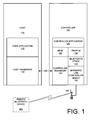
- FIG. 1 is a block diagram of an example system that allows communication between a Bluetooth®-wireless-protocol unaware host device and a Bluetooth®-wireless-protocol enabled remote device.
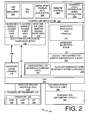
- FIG.2 is a block diagram showing, in greater detail, examples of components of the controller of FIG. 1 .
- FIGS. 3A and 3B are diagrams showing example data formats for use by the controller of FIG. 2 .
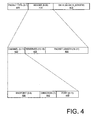
- FIG. 4 is a diagram showing an example data header format for use by the controller of FIG. 2 .
- FIGS. 5A through 5C are data flow diagrams showing communication between a Bluetooth®-wireless-protocol unaware host, a controller, and a Bluetooth®-wireless-protocol enabled remote device.
- USB Universal Serial Bus
- HID Human Interface Device
- UHE Human Interface Device Emulation
- Legacy-UHE provided a single application that interfaced with a host using a standard USB-HID device, while emulating a remote HID device (e.g. , mouse, keyboard, other peripheral device, etc .).
- the Legacy-UHE targeted only HID-profile-based applications, and implementation of the Legacy-UHE was tied to USB ports. Furthermore, the Legacy-UHE did not support coexistence of multiple profile-based applications.
- the various embodiments described herein include a controller that enables communication between a Bluetooth®-wireless-protocol unaware host and a Bluetooth®-wireless-protocol enabled remote device.
- a controller which comprises a transport (e.g. , USB transport, Universal Asynchronous Receiver/Transmitter (UART) transport, etc .) to enable communication of data with a Bluetooth®-wireless-protocol unaware host device.
- the controller further comprises a controller application and a controller Bluetooth® stack that enables communication of the data using Bluetooth® wireless protocol.
- the controller receives data from a Bluetooth®-wireless-protocol unaware host, converts the received data to be compatible with Bluetooth® wireless protocol, and then transmits the converted data to a Bluetooth®-wireless-protocol enabled remote device.
- a Bluetooth®-wireless-protocol unaware host converts the received data to be compatible with Bluetooth® wireless protocol
- a Bluetooth®-wireless-protocol enabled remote device By providing a bridge between a Bluetooth®-wireless-protocol unaware host and a Bluetooth®-wireless-protocol enabled remote device, the controller provides a seamless, transport-agnostic mechanism that enlarges compatibility between various data communication devices.
- hosts may be Bluetooth®-wireless-protocol aware but function in modes (or execute applications) in which the hosts are Bluetooth®-wireless-protocol unaware.
- a host that is functioning in a mode that is unaware of the Bluetooth®-wireless-protocol is considered to be a Bluetooth®-wireless-protocol unaware host.
- FIG. 1 is a block diagram of a system that allows communication between a Bluetooth®-wireless-protocol unaware host device 105 and a Bluetooth®-wireless-protocol enabled remote device 504.
- the embodiment of FIG. 1 comprises a host 105 (e.g. , television, heart-rate monitor, etc .) and a controller 120, which are communicatively coupled by a transport 160 ( e.g. , Universal Serial Bus (USB), Universal Asynchronous Receiver/Transmitter (UART), etc .).
- the host 105 is a Bluetooth®-wireless-protocol unaware host, meaning that the host 105 is a device that is normally not capable of transmitting or receiving data using a Bluetooth® wireless protocol.
- the host 105 comprises a host application 110 and a host transport 115.
- the host application 110 is an executable file (e.g. , video game, audio player, etc .), a data file (e.g. , spreadsheet, documents, etc .), or any other type of electronically-storable file.
- the host 105 employs the host transport 115 for data exchange. Consequently, the host transport 115 is a Universal Serial Bus (USB) transport, a Universal Asynchronous Receiver/Transmitter (UART) transport, a Serial Peripheral Interface (SPI) transport, or any other type of wired transport mechanism.
- USB Universal Serial Bus
- UART Universal Asynchronous Receiver/Transmitter
- SPI Serial Peripheral Interface
- the controller 120 comprises a controller application 125, a multi-profile application framework (MPAF) 130, a profile 135, a Bluetooth® stack 145, a baseband (BB) link controller (LC), a controller transport 140, and an antenna 155.
- the controller 120 serves as a bridge between the Bluetooth®-wireless-protocol unaware host 105 and a Bluetooth®-wireless-protocol enabled remote device 504.
- the controller 120 employs the MPAF 130, which represents an embedded application framework to bridge the embedded controller application 125 to the host 105 through the controller transport 140.
- the controller transport 140 matches the wired data-exchange mechanism of the host transport 115.
- the controller transport 140 matches the host transport 115, thereby allowing data exchange between the host 105 (more specifically, the host application 110) and the controller 120 (more specifically, the controller application 125).
- the MPAF 130 is either an embedded software, which converts data from the Bluetooth®-wireless-protocol unaware host 105 to a Bluetooth® wireless protocol, thereby allowing the data to be transmitted to a Bluetooth®-wireless-protocol enabled remote device 504. Conversely, the MPAF 130 converts data that is received from the Bluetooth®-wireless-protocol enabled remote device 504 to a data format that is used by the host 105. As a result, the MPAF 130 enables a host-controller interface (HCI) controller to be targeted to services for Bluetooth®-wireless-protocol unaware hosts. Additionally, the MPAF 130 provides a minimal time-to-market by reducing application overhead.
- HCI host-controller interface
- the MPAF 130 does this by providing a transport-agnostic interface to applications, thereby allowing seamless operation across many different transports, such as USB, UART, SPI, etc . Because the MPAF 130 defines multiple custom transport protocols, the MPAF 130 allows the controller 120 to concurrently support multiple, co-existing applications, which the Legacy-UHE is incapable of doing.
- the profile 135 primarily provides implementation constraints, while the Bluetooth® stack 145 provides a mechanism for messaging, discovery, description, and eventing for the controller 120.
- the Bluetooth® stack 145 allows the controller 120 to be discoverable when pairing with Bluetooth®-wireless-protocol enabled devices.
- the controller 120 serves to bridge the embedded Bluetooth® controller application 125 and the Bluetooth®-wireless-protocol unaware host application 110, the controller also comprises a BB/LC 150, and an antenna 155.
- the controller Upon conversion of the data to Bluetooth® wireless protocol, the controller transmits the converted data to a Bluetooth®-wireless-protocol enabled remote device 504 via the antenna 155.
- FIG. 2 is a block diagram showing, in greater detail, components of the controller 120 of FIG. 1 .
- the controller application 125 is configured to handle multiple applications, such as a USB Human Interface Device (HID) Emulation (UHE) application 202, a 3D-Glass (3DG) application 204, a Serial Port Profile (SPP) application 206, a Remote Control (RC) application 208, an Advanced Audio Distribution Profile (A2DP) application 210, etc .
- These various controller applications 125 allow for various uses, such as, for example, HID forwarding, gaming console, 3DG, remote control, USB plug-and-play (PnP), television (TV) wakeup, cable replacement applications, etc .
- the controller application 125 is coupled to the MPAF 130 (through a transport service access point (SAP) 212, a platform SAP 214, and an over-the-air (OTA) SAP 216) as well as to the Bluetooth® stack 145.
- the transport SAP 212 provides an interface for sending and receiving data over a selected transport.
- the platform SAP 214 provides an interface for accessing platform-specific functionalities, such as, for example, timers, thread services, inputs/outputs, etc .
- the OTA SAP 216 provides an interface for accessing the Bluetooth® stack 145 services related to connection management.
- the Bluetooth® stack 145 comprises various Bluetooth® protocols and profiles 220 (e.g. , Human Interface Device Host (HIDH), Serial Port Profile (SPP), Human Interface Device (HID), RFCOMM, Audio-Video DatTransport (AVDT)/A2DP, and other components (not shown)) that form Bluetooth®'s layered protocol architecture.
- HIDH Human Interface Device Host
- SPP Serial Port Profile
- HID Human Interface Device
- RFCOMM Real-Video DatTransport
- AVDT Audio-Video DatTransport
- Bluetooth®'s layered protocol architecture e.g., Bluetooth® protocols and profiles 220
- e.g., Bluetooth® protocols and profiles 220 e.g. , Human Interface Device Host (HIDH), Serial Port Profile (SPP), Human Interface Device (HID), RFCOMM, Audio-Video DatTransport (AVDT)/A2DP, and other components (not shown)
- the Bluetooth® stack 145 also includes a Logical Link Control and Adaptation Protocol (L2CAP) 232, which is used to multiplex multiple logical connections between devices using different higher level protocols.
- L2CAP Logical Link Control and Adaptation Protocol
- the L2CAP 232 further provides segmentation and reassembly of on-air packets.
- Both the MPAF 130 and the Bluetooth® stack 145 are coupled to a Bluetooth® module (BTM) basic transmission unit (BTU) 234, which permits over-the-air (OTA) transmission using the Bluetooth® wireless protocol.
- BTM Bluetooth® module
- BTU basic transmission unit
- the data transmission components can be divided into two distinct segments.
- the Bluetooth® components which include the Link Management Protocol (LMP) 245 and the BB/LC 150.
- the controller transport 140 and its related components which include a transport 240 and a Host Controller Interface (HCI) 238.
- the transport 240 includes a USB transport 242, a UART transport 244, an SPI transport 246, and/or any other transport 240 that matches the host transport 115.
- These data transmission components are operatively coupled, respectively, to the MPAF 130 and the Bluetooth® stack 145, thereby allowing the controller 120 to be a bridge between a Bluetooth®-wireless-protocol unaware host 105 ( FIG.
- each of the independent components such as the HIDH 222, HID 228, RFCOMM 230, SPP 224, A2DP/AVDT 226, the L2CAP 232, BTM/BTU 234, HCIC 236, HCI 238, LMP 245, and the BB/LC 150 are separately known to those having skill in the art, only a truncated discussion of those components is provided herein.
- FIGS. 3A and 3B are diagrams showing example data formats for use by the controller 120 of FIG. 2 .
- the header structure is designed to be overlaid on a standard Host Controller Interface (HCI) Asynchronous Connection Less (ACL) data format.
- HCI Host Controller Interface
- ACL Asynchronous Connection Less
- the standard HCI-ACL format comprises a connection handle 305, followed by flags 310, a data length 315, and then data 320.
- the custom data format of FIG. 3B comprises channel bits 325, followed by flags 310, the data length 310, and then data 320.
- FIG. 4 is a diagram showing a specific non-limiting example of a data header format for use by the controller 120 of FIG. 2 .
- the data format begins with a packet type 405, followed by a header 410, and then followed by data 415.
- the packet type 405 is 8-bits wide (bits 0-7), with a default value of 10(0x0A).
- the packet type 405 identifies the MPAF mode and is configurable to avoid any future conflicts.
- the header 410 is 32-bits wide (bits 8-39), and comprises a channel 420 (12-bits wide; bits 0-11), reserved bits 425 (4-bits wide; bits 12-15); and a packet length 430 (16-bits wide; bits 16-31).
- the channel 420 can further be divided into an endpoint 435 (7-bits wide; bits 0-6), a direction bit 440 (1-bit wide; bit 7), and a port 445 (4-bits wide; bits 8-11).
- a zero (0) value for the endpoint 435 represents a control channel on a given port.
- the default control channel is used for any custom transport-specific configuration that is based on host requirements.
- a zero (0) value in the direction bit 440 indicates outbound data (from the host 105 to the controller 120), while a one (1) value in the direction bit 440 indicates inbound data (from the controller 120 to the host 105).
- the four (4) bit port can be configured with the following associations: zero (0) for a virtual Bluetooth® port; one (1) for a virtual keyboard port; two (2) for a virtual mouse port; and three (3) for an auxiliary port.
- a control request packet sent from the host 105 to the controller 120 can be configured so that an 8-bit control class code is defined immediately after the control packet length 430.
- the 8-bit class code represents the control class type, with: zero (0) being an MPAF control class; one (1) being a USB control class, where the packets are formed in USB control request format; and 2-255 can be used for future class types.
- FIGS. 5A through 5C are data flow diagrams showing communication between the Bluetooth®-wireless-protocol unaware host 105, the controller 120, and the Bluetooth®-wireless-protocol enabled remote device 504. Specifically FIG. 5A shows a power-up process 518; FIG. 5B shows a Bluetooth® pairing and connection process 542; and FIG. 5C shows a data transfer process 560.
- the host application 110 and a host MPAF 502 i.e., the host transport components that are MPAF adapted
- the controller MPAF 130, controller application 125, and the controller Bluetooth® stack 145 are shown for the controller 120.
- a remote Bluetooth® stack 506 and a remote application 508 are shown for the Bluetooth®-wireless-protocol enabled remote device 504.
- the power-up process 518 begins when the host application starts 520 and initializes 522 to the host MPAF 502.
- the controller 120 then powers up and installs its applications 524.
- the controller 120 then registers 526 the controller MPAF 130, which comprises registering 528 the controller application 125 with the controller MPAF 130, and then opening 530 a control channel between the controller application 125 and the MPAF 130.
- the host 105 and the controller 120 optionally engage in control exchanges 532.
- the host MPAF 502 transmits 534 control data to the controller MPAF 130.
- the controller MPAF 130 then sends 536 a custom control request to the controller application 125.
- the controller application 125 subsequently conveys 538 a custom control response to the host MPAF 502.
- the controller application 125 opens 540 data channels to the controller MPAF 130.
- the host 105 and the controller 120 are now able to exchange data over their respective transports 115, 140, 160 ( FIG. 1 ).
- FIG. 5B shows a Bluetooth® pairing and connection process 542 between the controller 120 and the Bluetooth®-wireless-protocol enabled remote device 504.
- the Bluetooth®-wireless-protocol enabled remote device 504 powers up and becomes discoverable 544.
- the remote Bluetooth® stack 506 and the controller Bluetooth® stack 145 engage in Secure Simple Pairing (SSP) procedure 546.
- SSP Secure Simple Pairing
- the controller Bluetooth® stack 145 and the remote Bluetooth® stack 506 then engage in profile-specific L2CAP exchanges 550, which results in the establishment 552 of Bluetooth® profile-level connection between the controller 120 and the Bluetooth®-wireless-protocol enabled remote device 504.
- the controller 120 is now paired with the Bluetooth®-wireless-protocol enabled remote device 504, and the controller 120 is also capable of data exchange with the Bluetooth®-wireless-protocol unaware host 105.
- a bridge is established between the Bluetooth®-wireless-protocol unaware host 105 is now ready to transfer 560 data to and from the Bluetooth®-wireless-protocol enabled remote device 504.
- the data transfer process 560 begins with the host application 110 transmitting 562 data to the host MPAF 502.
- the host MPAF 502 writes 562 to a channel using an MPAF protocol.
- the host MPAF 502 then transports 566 the data to the controller MPAF 130.
- the controller application 125 then receives 568 the data from the controller MPAF 130 on the controller's OUT channel. Thereafter, the controller application 125 transmits 570 the data to the controller Bluetooth® stack 145 using the Bluetooth® wireless protocol.
- the controller Bluetooth® stack 145 transmits 572 the data to the remote Bluetooth® stack 506 using L2CAP. That data is then received 574 at the remote application 508.
- a reverse-path between the Bluetooth®-wireless-protocol enabled remote device 504 and the Bluetooth®-wireless-protocol unaware host 105 is also shown in FIG. 5C .
- the remote application 508 transmits 576 data to the remote Bluetooth® stack 506.
- the remote Bluetooth® stack 506 conveys 578 that data to the controller Bluetooth® stack 145 using L2CAP. That data is then received 580 by the controller application 125 using the Bluetooth® wireless protocol.
- the controller application 125 transmits 582 the data to the controller MPAF 130 on the IN channel of the controller 120.
- the controller MPAF 130 then writes 584 the data to the controller transport 140 ( FIG. 1 ), which now enables the controller 120 to convey that data to the Bluetooth®-wireless-protocol unaware host 105.
- the controller MPAF 130 transports 586 the data to the host MPAF 502.
- the host application 110 receives 588 the data from the host MPAF 502, thereby completing the reverse-path data transmission.
- the controller provides a seamless, transport-agnostic mechanism that enlarges compatibility between various data communication devices.
- the MPAF 130 provides greater interoperability than the Legacy-UHE and allows for concurrent support of multiple, co-existing applications, which is not implementable by the Legacy-UHE.
- the UHE application 202, 3DG application 204, SPP application 206, RC application 208, the A2DP application 210, and the other components in the controller 120 may be implemented in hardware, software, firmware, or a combination thereof.
- the UHE application 202, 3DG application 204, SPP application 206, RC application 208, the A2DP application 210, and the other components of the controller 120 are implemented in hardware using any or a combination of the following technologies, which are all well known in the art: a discrete logic circuit(s) having logic gates for implementing logic functions upon data signals, an application specific integrated circuit (ASIC) having appropriate combinational logic gates, a programmable gate array(s) (PGA), a field programmable gate array (FPGA), etc .
- ASIC application specific integrated circuit
- the UHE application 202, 3DG application 204, SPP application 206, RC application 208, the A2DP application 210, and the other components of the controller 120 are implemented in software or firmware that is stored in a memory and that is executed by a suitable instruction execution system.
- FIGS. 5A through 5C show the host 105 as having a host MPAF 502, it should be appreciated that the host MPAF 502 is a shorthand notation for the transport components that are adapted to transmit and receive data with the controller MPAF 130.
Landscapes
- Engineering & Computer Science (AREA)
- Computer Networks & Wireless Communication (AREA)
- Signal Processing (AREA)
- Computer Security & Cryptography (AREA)
- Mobile Radio Communication Systems (AREA)
- Small-Scale Networks (AREA)
Abstract
Systems and methods are disclosed in which a controller enables communication between a Bluetooth®-wireless-protocol unaware host and a Bluetooth®-wireless-protocol enabled remote device. As such, one embodiment of the invention is a controller, which comprises a controller transport to enable communication of data with a Bluetooth®-wireless-protocol unaware host device. The controller further comprises a controller application and a controller Bluetooth® stack to enable communication of the data using Bluetooth® wireless protocol. One embodiment can be seen as a method comprising the steps of receiving data from a Bluetooth®-wireless-protocol unaware host, converting the received data to a Bluetooth® wireless protocol, and transmitting the converted data to a Bluetooth®-wireless-protocol enabled remote device.
Description
- Data communication networks are becoming ubiquitous. As a result, many devices now come equipped with data-communication ports that allow those devices to transmit data to and receive data from other devices. Consequently, users are now seeking seamless data exchange between multiple devices.
- According to an aspect, a data communication system comprises:
- a Bluetooth®-wireless-protocol unaware host, comprising:
- a host application; and
- a host transport to communicate data, the host data being communicated in a non-Bluetooth® wireless protocol; and
- a host controller interface (HCI) controller (HCIC), the HCIC comprising:
- a controller transport communicatively coupled to the host transport, the controller transport matching the host transport;
- a controller application to communicate with the host application through the controller transport;
- a multi-profile application framework (MPAF) to enable exchange of the data using Bluetooth® wireless protocol; and
- a Bluetooth® stack to enable communication of the data using the Bluetooth® wireless protocol.
- Advantageously, the host transport is a Universal Serial Bus (USB) transport.
- Advantageously, the host transport is a Universal Asynchronous Receiver/Transmitter (UART) transport.
- Advantageously, the host transport is a Serial Peripheral Interface (SPI) transport.
- Advantageously, the system further comprises:
- a Bluetooth®-wireless-protocol enabled remote device, comprising:
- a remote Bluetooth® stack to enable data communication with the HCIC using the Bluetooth® wireless protocol; and
- a remote application.
- Advantageously, the system further comprises:
- a Bluetooth®-wireless-protocol enabled remote device, comprising:
- means for enabling data communication using the Bluetooth® wireless protocol; and
- a remote application.
- According to an aspect, a controller comprises:
- a controller application;
- a controller transport to exchange data between the controller application and a Bluetooth®-wireless-protocol unaware host device;
- a multi-profile application framework (MPAF) to convert the data to Bluetooth® wireless protocol; and
- a controller Bluetooth® stack to exchange data between the controller and a Bluetooth®-wireless-protocol enabled remote device.
- Advantageously, the controller transport comprises:
- a Universal Serial Bus (USB) transport;
- a Universal Asynchronous Receiver/Transmitter (UART) transport; and
- a Serial Peripheral Interface (SPI) transport.
- Advantageously, the Bluetooth® stack employs:
- RFCOMM protocols;
- Audio/Video Data Transport (AVDT) protocols; and
- Logical Link Control and Adaptation Protocol (L2CAP).
- Advantageously, the controller transport is a Universal Serial Bus (USB) transport.
- Advantageously, the controller transport is a Universal Asynchronous Receiver/Transmitter (UART) transport.
- Advantageously, the controller transport is a Serial Peripheral Interface (SPI) transport.
- Advantageously, the controller application comprises:
- a Universal Serial Bus (USB) Human Interface Device (HID) Emulation (UHE) application;
- a 3DG application;
- a Serial Port Profile (SPP) application;
- a Remote Control (RC) application; and
- an Advanced Audio Distribution (A2DP) application.
- Advantageously, the Bluetooth® stack employs RFCOMM protocols.
- Advantageously, the Bluetooth® stack employs Audio/Video Data Transport (AVDT) protocols.
- Advantageously, the Bluetooth® stack employs Logical Link Control and Adaptation Protocol (L2CAP).
- According to an aspect, a communication method comprises:
- receiving data from a Bluetooth®-wireless-protocol unaware host;
- converting the received data to a Bluetooth® wireless protocol; and
- transmitting the converted data to a Bluetooth®-wireless-protocol enabled remote device.
- Advantageously, the step of receiving data comprises:
- receiving data over a host transport, the host transport being one selected from the group consisting of:
- a Universal Serial Bus (USB) transport;
- a Universal Asynchronous Receiver/Transmitter (UART) transport; and
- a Serial Peripheral Interface (SPI) transport.
- Advantageously, the method further comprises:
- executing a controller application.
- Advantageously, the step of executing the controller application comprises a step selected from the group consisting of:
- executing a Universal Serial Bus (USB) Human Interface Device (HID) Emulation (UHE) application;
- executing a 3DG application;
- executing a Serial Port Profile (SPP) application;
- executing a Remote Control (RC) application; and
- executing an Advanced Audio Distribution (A2DP) application.
- Many aspects of the disclosure can be better understood with reference to the following drawings. The components in the drawings are not necessarily to scale, emphasis instead being placed upon clearly illustrating the principles of the present disclosure. Moreover, in the drawings, like reference numerals designate corresponding parts throughout the several views.
-
FIG. 1 is a block diagram of an example system that allows communication between a Bluetooth®-wireless-protocol unaware host device and a Bluetooth®-wireless-protocol enabled remote device. -
FIG.2 is a block diagram showing, in greater detail, examples of components of the controller ofFIG. 1 . -
FIGS. 3A and 3B are diagrams showing example data formats for use by the controller ofFIG. 2 . -
FIG. 4 is a diagram showing an example data header format for use by the controller ofFIG. 2 . -
FIGS. 5A through 5C are data flow diagrams showing communication between a Bluetooth®-wireless-protocol unaware host, a controller, and a Bluetooth®-wireless-protocol enabled remote device. - As data communication networks become prevalent, many devices are coming equipped with data-communication ports that allow these devices to communicate with other devices. Consequently, users are now seeking seamless data exchange between multiple devices. Unfortunately, not all of the currently-existing devices are compatible with other currently-existing devices, and sometimes it becomes difficult to transmit data from one device to another due to such an incompatibility. Additionally, in order to ameliorate clutter that results from the connection of multiple wired peripherals, users are more-frequently seeking wireless data solutions for data transmission, such as the Bluetooth® wireless protocol.
- In the past, one way in which this problem has been addressed was by using Universal Serial Bus (USB) Human Interface Device (HID) Emulation (UHE) (also referred to as "Legacy-UHE"). Legacy-UHE provided a single application that interfaced with a host using a standard USB-HID device, while emulating a remote HID device (e.g., mouse, keyboard, other peripheral device, etc.). The Legacy-UHE targeted only HID-profile-based applications, and implementation of the Legacy-UHE was tied to USB ports. Furthermore, the Legacy-UHE did not support coexistence of multiple profile-based applications.
- In order to ameliorate this limitation, the various embodiments described herein include a controller that enables communication between a Bluetooth®-wireless-protocol unaware host and a Bluetooth®-wireless-protocol enabled remote device. As such, one embodiment of the invention is a controller, which comprises a transport (e.g., USB transport, Universal Asynchronous Receiver/Transmitter (UART) transport, etc.) to enable communication of data with a Bluetooth®-wireless-protocol unaware host device. The controller further comprises a controller application and a controller Bluetooth® stack that enables communication of the data using Bluetooth® wireless protocol. In some embodiments, the controller receives data from a Bluetooth®-wireless-protocol unaware host, converts the received data to be compatible with Bluetooth® wireless protocol, and then transmits the converted data to a Bluetooth®-wireless-protocol enabled remote device. By providing a bridge between a Bluetooth®-wireless-protocol unaware host and a Bluetooth®-wireless-protocol enabled remote device, the controller provides a seamless, transport-agnostic mechanism that enlarges compatibility between various data communication devices. It should be noted at the outset that there are particular hosts that may be Bluetooth®-wireless-protocol aware but function in modes (or execute applications) in which the hosts are Bluetooth®-wireless-protocol unaware. For purposes of this disclosure, a host that is functioning in a mode that is unaware of the Bluetooth®-wireless-protocol is considered to be a Bluetooth®-wireless-protocol unaware host.
- With this in mind, reference is now made in detail to the description of the embodiments as illustrated in the drawings. While several embodiments are described in connection with these drawings, there is no intent to limit the disclosure to the embodiment or embodiments disclosed herein. On the contrary, the intent is to cover all alternatives, modifications, and equivalents.
-
FIG. 1 is a block diagram of a system that allows communication between a Bluetooth®-wireless-protocolunaware host device 105 and a Bluetooth®-wireless-protocol enabledremote device 504. The embodiment ofFIG. 1 comprises a host 105 (e.g., television, heart-rate monitor, etc.) and acontroller 120, which are communicatively coupled by a transport 160 (e.g., Universal Serial Bus (USB), Universal Asynchronous Receiver/Transmitter (UART), etc.). Thehost 105 is a Bluetooth®-wireless-protocol unaware host, meaning that thehost 105 is a device that is normally not capable of transmitting or receiving data using a Bluetooth® wireless protocol. - The
host 105 comprises ahost application 110 and ahost transport 115. Thehost application 110 is an executable file (e.g., video game, audio player, etc.), a data file (e.g., spreadsheet, documents, etc.), or any other type of electronically-storable file. To the extent that thehost 105 is Bluetooth®-wireless-protocol unaware, thehost 105 employs thehost transport 115 for data exchange. Consequently, thehost transport 115 is a Universal Serial Bus (USB) transport, a Universal Asynchronous Receiver/Transmitter (UART) transport, a Serial Peripheral Interface (SPI) transport, or any other type of wired transport mechanism. - The
controller 120 comprises acontroller application 125, a multi-profile application framework (MPAF) 130, aprofile 135, aBluetooth® stack 145, a baseband (BB) link controller (LC), acontroller transport 140, and anantenna 155. Thecontroller 120 serves as a bridge between the Bluetooth®-wireless-protocolunaware host 105 and a Bluetooth®-wireless-protocol enabledremote device 504. - In order to accomplish the bridging function, the
controller 120 employs theMPAF 130, which represents an embedded application framework to bridge the embeddedcontroller application 125 to thehost 105 through thecontroller transport 140. To the extent that thecontroller transport 140 establishes the connection with thehost 105 through thehost transport 115, thecontroller transport 140 matches the wired data-exchange mechanism of thehost transport 115. Thus, if thehost transport 115 is a USB transport, then thecontroller transport 140 is a USB transport; if thehost transport 115 is a UART transport, then thecontroller transport 140 is a UART transport; and if thehost transport 115 is a SPI transport, then thecontroller transport 140 is an SPI transport. In other words, thecontroller transport 140 matches thehost transport 115, thereby allowing data exchange between the host 105 (more specifically, the host application 110) and the controller 120 (more specifically, the controller application 125). - The
MPAF 130 is either an embedded software, which converts data from the Bluetooth®-wireless-protocolunaware host 105 to a Bluetooth® wireless protocol, thereby allowing the data to be transmitted to a Bluetooth®-wireless-protocol enabledremote device 504. Conversely, theMPAF 130 converts data that is received from the Bluetooth®-wireless-protocol enabledremote device 504 to a data format that is used by thehost 105. As a result, theMPAF 130 enables a host-controller interface (HCI) controller to be targeted to services for Bluetooth®-wireless-protocol unaware hosts. Additionally, theMPAF 130 provides a minimal time-to-market by reducing application overhead. TheMPAF 130 does this by providing a transport-agnostic interface to applications, thereby allowing seamless operation across many different transports, such as USB, UART, SPI, etc. Because theMPAF 130 defines multiple custom transport protocols, theMPAF 130 allows thecontroller 120 to concurrently support multiple, co-existing applications, which the Legacy-UHE is incapable of doing. - The
profile 135 primarily provides implementation constraints, while theBluetooth® stack 145 provides a mechanism for messaging, discovery, description, and eventing for thecontroller 120. As such, theBluetooth® stack 145 allows thecontroller 120 to be discoverable when pairing with Bluetooth®-wireless-protocol enabled devices. Insofar as thecontroller 120 serves to bridge the embedded Bluetooth® controller application 125 and the Bluetooth®-wireless-protocolunaware host application 110, the controller also comprises a BB/LC 150, and anantenna 155. Upon conversion of the data to Bluetooth® wireless protocol, the controller transmits the converted data to a Bluetooth®-wireless-protocol enabledremote device 504 via theantenna 155. -
FIG. 2 is a block diagram showing, in greater detail, components of thecontroller 120 ofFIG. 1 . As shown inFIG. 2 , thecontroller application 125 is configured to handle multiple applications, such as a USB Human Interface Device (HID) Emulation (UHE)application 202, a 3D-Glass (3DG)application 204, a Serial Port Profile (SPP)application 206, a Remote Control (RC)application 208, an Advanced Audio Distribution Profile (A2DP)application 210, etc. Thesevarious controller applications 125 allow for various uses, such as, for example, HID forwarding, gaming console, 3DG, remote control, USB plug-and-play (PnP), television (TV) wakeup, cable replacement applications, etc. - The
controller application 125 is coupled to the MPAF 130 (through a transport service access point (SAP) 212, aplatform SAP 214, and an over-the-air (OTA) SAP 216) as well as to theBluetooth® stack 145. Thetransport SAP 212 provides an interface for sending and receiving data over a selected transport. Theplatform SAP 214 provides an interface for accessing platform-specific functionalities, such as, for example, timers, thread services, inputs/outputs, etc. TheOTA SAP 216 provides an interface for accessing theBluetooth® stack 145 services related to connection management. - The
Bluetooth® stack 145 comprises various Bluetooth® protocols and profiles 220 (e.g., Human Interface Device Host (HIDH), Serial Port Profile (SPP), Human Interface Device (HID), RFCOMM, Audio-Video DatTransport (AVDT)/A2DP, and other components (not shown)) that form Bluetooth®'s layered protocol architecture. To the extent that these core protocols, cable replacement protocols, telephony control protocols, and adopted protocols are known to those having skill in the art, only a truncated discussion of theBluetooth® stack 145 is provided herein. - The
Bluetooth® stack 145 also includes a Logical Link Control and Adaptation Protocol (L2CAP) 232, which is used to multiplex multiple logical connections between devices using different higher level protocols. TheL2CAP 232 further provides segmentation and reassembly of on-air packets. - Both the
MPAF 130 and theBluetooth® stack 145 are coupled to a Bluetooth® module (BTM) basic transmission unit (BTU) 234, which permits over-the-air (OTA) transmission using the Bluetooth® wireless protocol. - The data transmission components can be divided into two distinct segments. First, the Bluetooth® components, which include the Link Management Protocol (LMP) 245 and the BB/
LC 150. Second, thecontroller transport 140 and its related components, which include atransport 240 and a Host Controller Interface (HCI) 238. To the extent that thecontroller 120 communicates with the host 105 (FIG. 1 ), thetransport 240 includes aUSB transport 242, aUART transport 244, anSPI transport 246, and/or anyother transport 240 that matches thehost transport 115. These data transmission components are operatively coupled, respectively, to theMPAF 130 and theBluetooth® stack 145, thereby allowing thecontroller 120 to be a bridge between a Bluetooth®-wireless-protocol unaware host 105 (FIG. 1 ) and a Bluetooth®-wireless-protocol enabled remote device (not shown). To the extent that each of the independent components, such as the HIDH 222, HID 228, RFCOMM 230, SPP 224, A2DP/AVDT 226, theL2CAP 232, BTM/BTU 234,HCIC 236,HCI 238,LMP 245, and the BB/LC 150 are separately known to those having skill in the art, only a truncated discussion of those components is provided herein. -
FIGS. 3A and 3B are diagrams showing example data formats for use by thecontroller 120 ofFIG. 2 . As shown inFIGS. 3A and 3B , the header structure is designed to be overlaid on a standard Host Controller Interface (HCI) Asynchronous Connection Less (ACL) data format. Thus, the framework design ofFIG. 3B supports changes in the format by way of installing transport adapters. To compare, the HCI-ACL format is shown inFIG. 3A , while a custom transport format for interfacing with the host 105 (FIG. 1 ) is shown inFIG. 3B . - As shown in
FIG. 3A , the standard HCI-ACL format comprises aconnection handle 305, followed byflags 310, adata length 315, and thendata 320. Comparatively, the custom data format ofFIG. 3B compriseschannel bits 325, followed byflags 310, thedata length 310, and thendata 320. -
FIG. 4 is a diagram showing a specific non-limiting example of a data header format for use by thecontroller 120 ofFIG. 2 . As shown inFIG. 4 , the data format begins with apacket type 405, followed by aheader 410, and then followed bydata 415. In the embodiment ofFIG. 4 , thepacket type 405 is 8-bits wide (bits 0-7), with a default value of 10(0x0A). Thepacket type 405 identifies the MPAF mode and is configurable to avoid any future conflicts. - The
header 410 is 32-bits wide (bits 8-39), and comprises a channel 420 (12-bits wide; bits 0-11), reserved bits 425 (4-bits wide; bits 12-15); and a packet length 430 (16-bits wide; bits 16-31). Thechannel 420 can further be divided into an endpoint 435 (7-bits wide; bits 0-6), a direction bit 440 (1-bit wide; bit 7), and a port 445 (4-bits wide; bits 8-11). In some embodiments, a zero (0) value for theendpoint 435 represents a control channel on a given port. Preferably, the default control channel is used for any custom transport-specific configuration that is based on host requirements. - In some embodiments, a zero (0) value in the
direction bit 440 indicates outbound data (from thehost 105 to the controller 120), while a one (1) value in thedirection bit 440 indicates inbound data (from thecontroller 120 to the host 105). The four (4) bit port can be configured with the following associations: zero (0) for a virtual Bluetooth® port; one (1) for a virtual keyboard port; two (2) for a virtual mouse port; and three (3) for an auxiliary port. - By way of example, a control request packet sent from the
host 105 to thecontroller 120 can be configured so that an 8-bit control class code is defined immediately after thecontrol packet length 430. In that class code, the 8-bit class code represents the control class type, with: zero (0) being an MPAF control class; one (1) being a USB control class, where the packets are formed in USB control request format; and 2-255 can be used for future class types. - Given the examples shown in
FIGS. 3A, 3B , and4 , those having skill in the art will be able to readily modify the data formats to accommodate varying transport mechanisms. Thus, further examples of data formats are omitted. -
FIGS. 5A through 5C are data flow diagrams showing communication between the Bluetooth®-wireless-protocolunaware host 105, thecontroller 120, and the Bluetooth®-wireless-protocol enabledremote device 504. SpecificallyFIG. 5A shows a power-up process 518;FIG. 5B shows a Bluetooth® pairing andconnection process 542; andFIG. 5C shows adata transfer process 560. - For simplicity, only the
host application 110 and a host MPAF 502 (i.e., the host transport components that are MPAF adapted) are shown for the Bluetooth®-wireless-protocolunaware host 105. Similarly, only thecontroller MPAF 130,controller application 125, and the controllerBluetooth® stack 145 are shown for thecontroller 120. Likewise, only a remoteBluetooth® stack 506 and aremote application 508 are shown for the Bluetooth®-wireless-protocol enabledremote device 504. - As shown in
FIG. 5A , the power-up process 518 begins when the host application starts 520 and initializes 522 to thehost MPAF 502. Thecontroller 120 then powers up and installs itsapplications 524. Thecontroller 120 then registers 526 thecontroller MPAF 130, which comprises registering 528 thecontroller application 125 with thecontroller MPAF 130, and then opening 530 a control channel between thecontroller application 125 and theMPAF 130. - Thereafter, the
host 105 and thecontroller 120 optionally engage incontrol exchanges 532. In thesecontrol exchanges 532, thehost MPAF 502 transmits 534 control data to thecontroller MPAF 130. Thecontroller MPAF 130 then sends 536 a custom control request to thecontroller application 125. Thecontroller application 125 subsequently conveys 538 a custom control response to thehost MPAF 502. - Once the
optional control exchanges 532 are completed, thecontroller application 125 opens 540 data channels to thecontroller MPAF 130. Thus, when the process ofFIG. 5A is completed, thehost 105 and thecontroller 120 are now able to exchange data over theirrespective transports FIG. 1 ). -
FIG. 5B shows a Bluetooth® pairing andconnection process 542 between thecontroller 120 and the Bluetooth®-wireless-protocol enabledremote device 504. As shown inFIG. 5B , the Bluetooth®-wireless-protocol enabledremote device 504 powers up and becomes discoverable 544. The remoteBluetooth® stack 506 and the controllerBluetooth® stack 145 engage in Secure Simple Pairing (SSP)procedure 546. Insofar as those having skill in the art are familiar with theSSP procedure 546, further discussion of theSSP procedure 546 is omitted here. Once theSSP procedure 546 is completed, thecontroller 120 is now paired 548 with the Bluetooth®-wireless-protocol enabledremote device 504. - The controller
Bluetooth® stack 145 and the remoteBluetooth® stack 506 then engage in profile-specific L2CAP exchanges 550, which results in theestablishment 552 of Bluetooth® profile-level connection between thecontroller 120 and the Bluetooth®-wireless-protocol enabledremote device 504. At this point, thecontroller 120 is now paired with the Bluetooth®-wireless-protocol enabledremote device 504, and thecontroller 120 is also capable of data exchange with the Bluetooth®-wireless-protocolunaware host 105. Thus, a bridge is established between the Bluetooth®-wireless-protocolunaware host 105 is now ready to transfer 560 data to and from the Bluetooth®-wireless-protocol enabledremote device 504. - Proceeding to
FIG. 5C , the process now begins with the Bluetooth®-wireless-protocolunaware host 105 being ready to transfer 560 data to and from the Bluetooth®-wireless-protocol enabledremote device 504 via thecontroller 120. Thedata transfer process 560 begins with thehost application 110 transmitting 562 data to thehost MPAF 502. Thehost MPAF 502 writes 562 to a channel using an MPAF protocol. Thehost MPAF 502 then transports 566 the data to thecontroller MPAF 130. Thecontroller application 125 then receives 568 the data from thecontroller MPAF 130 on the controller's OUT channel. Thereafter, thecontroller application 125 transmits 570 the data to the controllerBluetooth® stack 145 using the Bluetooth® wireless protocol. The controllerBluetooth® stack 145 transmits 572 the data to the remoteBluetooth® stack 506 using L2CAP. That data is then received 574 at theremote application 508. - A reverse-path between the Bluetooth®-wireless-protocol enabled
remote device 504 and the Bluetooth®-wireless-protocolunaware host 105 is also shown inFIG. 5C . In the reverse path, theremote application 508 transmits 576 data to the remoteBluetooth® stack 506. The remoteBluetooth® stack 506 then conveys 578 that data to the controllerBluetooth® stack 145 using L2CAP. That data is then received 580 by thecontroller application 125 using the Bluetooth® wireless protocol. And, thecontroller application 125 transmits 582 the data to thecontroller MPAF 130 on the IN channel of thecontroller 120. Thecontroller MPAF 130 then writes 584 the data to the controller transport 140 (FIG. 1 ), which now enables thecontroller 120 to convey that data to the Bluetooth®-wireless-protocolunaware host 105. Once the data is written 584 to the controller transport, thecontroller MPAF 130 transports 586 the data to thehost MPAF 502. Finally, thehost application 110 receives 588 the data from thehost MPAF 502, thereby completing the reverse-path data transmission. - As one can see, by providing a bridge between a Bluetooth®-wireless-protocol unaware host and a Bluetooth®-wireless-protocol enabled remote device, the controller provides a seamless, transport-agnostic mechanism that enlarges compatibility between various data communication devices. Thus, the
MPAF 130 provides greater interoperability than the Legacy-UHE and allows for concurrent support of multiple, co-existing applications, which is not implementable by the Legacy-UHE. - The
UHE application 202,3DG application 204,SPP application 206,RC application 208, theA2DP application 210, and the other components in thecontroller 120 may be implemented in hardware, software, firmware, or a combination thereof. In the preferred embodiment(s), theUHE application 202,3DG application 204,SPP application 206,RC application 208, theA2DP application 210, and the other components of thecontroller 120 are implemented in hardware using any or a combination of the following technologies, which are all well known in the art: a discrete logic circuit(s) having logic gates for implementing logic functions upon data signals, an application specific integrated circuit (ASIC) having appropriate combinational logic gates, a programmable gate array(s) (PGA), a field programmable gate array (FPGA), etc. In an alternative embodiment, theUHE application 202,3DG application 204,SPP application 206,RC application 208, theA2DP application 210, and the other components of thecontroller 120 are implemented in software or firmware that is stored in a memory and that is executed by a suitable instruction execution system. - Any process descriptions or blocks in flow charts should be understood as representing modules, segments, or portions of code which include one or more executable instructions for implementing specific logical functions or steps in the process, and alternate implementations are included within the scope of the preferred embodiment of the present disclosure in which functions may be executed out of order from that shown or discussed, including substantially concurrently or in reverse order, depending on the functionality involved, as would be understood by those reasonably skilled in the art of the present disclosure.
- Although exemplary embodiments have been shown and described, it will be clear to those of ordinary skill in the art that a number of changes, modifications, or alterations to the disclosure as described may be made. For example, while specific host applications are described herein, it will be apparent to those having skill in the art that the controller can be configured with other applications to enable greater compatibility between Bluetooth®-wireless-protocol unaware hosts and Bluetooth®-wireless-protocol enabled remote devices. Furthermore, while
FIGS. 5A through 5C show thehost 105 as having ahost MPAF 502, it should be appreciated that thehost MPAF 502 is a shorthand notation for the transport components that are adapted to transmit and receive data with thecontroller MPAF 130. Moreover, while specific data formats are provided, and specific bit-values are shown, with reference toFIG. 4 , it should be appreciated by those having skill in the art that these numbers and values are illustrative only, and not intended to be limiting to the invention. Furthermore, while an SSP procedure is shown for pairing of Bluetooth®-enabled device, it should be appreciated that other pairing procedures for Bluetooth®-enabled devices can readily be substituted for the SSP procedure without departing from the scope of the disclosure. Thus, these and other such changes, modifications, and alterations should therefore be seen as within the scope of the disclosure.
Claims (15)
- A data communication system, comprising:a Bluetooth®-wireless-protocol unaware host, comprising:a host application; anda host transport to communicate data, the host data being communicated in a non-Bluetooth® wireless protocol; anda host controller interface (HCI) controller (HCIC), the HCIC comprising:a controller transport communicatively coupled to the host transport, the controller transport matching the host transport;a controller application to communicate with the host application through the controller transport;a multi-profile application framework (MPAF) to enable exchange of the data using Bluetooth® wireless protocol; anda Bluetooth® stack to enable communication of the data using the Bluetooth® wireless protocol.
- The system of claim 1, wherein the host transport is a Universal Serial Bus (USB) transport.
- The system of claim 1, wherein the host transport is a Universal Asynchronous Receiver/Transmitter (UART) transport.
- The system of claim 1, wherein the host transport is a Serial Peripheral Interface (SPI) transport.
- The system of claim 1, further comprising:a Bluetooth®-wireless-protocol enabled remote device, comprising:a remote Bluetooth® stack to enable data communication with the HCIC using the Bluetooth® wireless protocol; anda remote application.
- The system of claim 1, further comprising:a Bluetooth®-wireless-protocol enabled remote device, comprising:means for enabling data communication using the Bluetooth® wireless protocol; anda remote application.
- A controller, comprising:a controller application;a controller transport to exchange data between the controller application and a Bluetooth®-wireless-protocol unaware host device;a multi-profile application framework (MPAF) to convert the data to Bluetooth® wireless protocol; anda controller Bluetooth® stack to exchange data between the controller and a Bluetooth®-wireless-protocol enabled remote device.
- The controller of claim 7, wherein the controller transport comprises:a Universal Serial Bus (USB) transport;a Universal Asynchronous Receiver/Transmitter (UART) transport; anda Serial Peripheral Interface (SPI) transport.
- The controller of claim 7, wherein the Bluetooth® stack employs:RFCOMM protocols;Audio/Video Data Transport (AVDT) protocols; andLogical Link Control and Adaptation Protocol (L2CAP).
- The controller of claim 7, wherein the controller transport is a Universal Serial Bus (USB) transport.
- The controller of claim 7, wherein the controller transport is a Universal Asynchronous Receiver/Transmitter (UART) transport.
- The controller of claim 7, wherein the controller transport is a Serial Peripheral Interface (SPI) transport.
- The controller of claim 7, wherein the controller application comprises:a Universal Serial Bus (USB) Human Interface Device (HID) Emulation (UHE) application;a 3DG application;a Serial Port Profile (SPP) application;a Remote Control (RC) application; andan Advanced Audio Distribution (A2DP) application.
- The controller of claim 7, wherein the Bluetooth® stack employs RFCOMM protocols.
- A communication method, comprising:receiving data from a Bluetooth®-wireless-protocol unaware host;converting the received data to a Bluetooth® wireless protocol; andtransmitting the converted data to a Bluetooth®-wireless-protocol enabled remote device.
Applications Claiming Priority (1)
| Application Number | Priority Date | Filing Date | Title |
|---|---|---|---|
| US13/530,287 US20130344809A1 (en) | 2012-06-22 | 2012-06-22 | Multi-profile application framework |
Publications (1)
| Publication Number | Publication Date |
|---|---|
| EP2677837A1 true EP2677837A1 (en) | 2013-12-25 |
Family
ID=47602759
Family Applications (1)
| Application Number | Title | Priority Date | Filing Date |
|---|---|---|---|
| EP12008620.2A Withdrawn EP2677837A1 (en) | 2012-06-22 | 2012-12-27 | Multi-Profile Application Framework |
Country Status (4)
| Country | Link |
|---|---|
| US (1) | US20130344809A1 (en) |
| EP (1) | EP2677837A1 (en) |
| CN (1) | CN103516381A (en) |
| TW (1) | TW201401916A (en) |
Families Citing this family (2)
| Publication number | Priority date | Publication date | Assignee | Title |
|---|---|---|---|---|
| US9306872B2 (en) * | 2013-03-15 | 2016-04-05 | Aliphcom | Bluetooth virtualisation |
| US10546112B2 (en) * | 2015-08-17 | 2020-01-28 | Ricoh Company, Ltd. | Apparatus, authentication process method, and computer program product |
Citations (2)
| Publication number | Priority date | Publication date | Assignee | Title |
|---|---|---|---|---|
| US20020159419A1 (en) * | 2001-04-27 | 2002-10-31 | Martin Morris | System and method for connecting bluetooth-enabled devices to a personal computer |
| WO2008042597A2 (en) * | 2006-09-28 | 2008-04-10 | Sandisk Corporation | Flash drive that configures generic bluetooth controller of the drive to be compatible with multiple bluetooth peripheral devices |
Family Cites Families (4)
| Publication number | Priority date | Publication date | Assignee | Title |
|---|---|---|---|---|
| US8401588B2 (en) * | 2004-10-28 | 2013-03-19 | Broadcom Corporation | Dual mode human interface device |
| CA2531896C (en) * | 2005-12-30 | 2010-03-23 | Psion Teklogix Inc. | Bluetooth communication through a single virtual port |
| US7774027B2 (en) * | 2006-09-28 | 2010-08-10 | Sandisk Corporation | Flash drive that configures generic bluetooth controller of the drive to be compatible with multiple bluetooth peripheral devices |
| US9483429B2 (en) * | 2008-07-14 | 2016-11-01 | Texas Instruments Incorporated | Unified input/output controller for integrated wireless devices |
-
2012
- 2012-06-22 US US13/530,287 patent/US20130344809A1/en not_active Abandoned
- 2012-12-17 TW TW101147824A patent/TW201401916A/en unknown
- 2012-12-27 EP EP12008620.2A patent/EP2677837A1/en not_active Withdrawn
- 2012-12-31 CN CN201210594041.9A patent/CN103516381A/en active Pending
Patent Citations (2)
| Publication number | Priority date | Publication date | Assignee | Title |
|---|---|---|---|---|
| US20020159419A1 (en) * | 2001-04-27 | 2002-10-31 | Martin Morris | System and method for connecting bluetooth-enabled devices to a personal computer |
| WO2008042597A2 (en) * | 2006-09-28 | 2008-04-10 | Sandisk Corporation | Flash drive that configures generic bluetooth controller of the drive to be compatible with multiple bluetooth peripheral devices |
Also Published As
| Publication number | Publication date |
|---|---|
| US20130344809A1 (en) | 2013-12-26 |
| TW201401916A (en) | 2014-01-01 |
| CN103516381A (en) | 2014-01-15 |
Similar Documents
| Publication | Publication Date | Title |
|---|---|---|
| JP6110858B2 (en) | Wireless LAN connection handover by docking system and general network device driver | |
| US10979990B2 (en) | Seamless link transfers between primary and secondary devices | |
| US11115885B2 (en) | Audio synchronization during handover | |
| US20150078363A1 (en) | Wireless communicator for laptop computers | |
| KR100953647B1 (en) | How to control the connection in a wireless network | |
| WO2023027407A1 (en) | A system and method for managing audio quality in a low energy audio broadcast scenario | |
| US20150350815A1 (en) | Method, device and system for sharing network | |
| CN101828156A (en) | Maintaining multiple, simultaneous wireless network connections using a single radio | |
| JP2014529255A (en) | Multiple MAC address resolution virtual process | |
| US20120182984A1 (en) | Network allocation | |
| CN110545265A (en) | data communication system and method for carrying out adaptation depending on ATT and indication | |
| US8600307B2 (en) | Control device or hybrid device | |
| US20130344809A1 (en) | Multi-profile application framework | |
| CN108780433B (en) | Method, apparatus and medium for enhanced quality of service for MA USB protocol | |
| US9380634B2 (en) | Apparatus, system and method of tearing down a protocol adaptation layer (PAL) session | |
| KR20190021121A (en) | Apparatus and method for providing short-range wireless communication | |
| KR101397744B1 (en) | Bluetooth interface apparatus and method | |
| KR101329311B1 (en) | Method for transmitting data packet in wireless network using unicasting | |
| CN118120297A (en) | Methods to reduce power to earbuds in BTOIP (Wi-Fi) topology | |
| HK40027726A (en) | Proprietary link manager feature discovery and exchange | |
| HK40027726B (en) | Proprietary link manager feature discovery and exchange | |
| WO2006008999A1 (en) | Information communication device, information communication method, and program |
Legal Events
| Date | Code | Title | Description |
|---|---|---|---|
| PUAI | Public reference made under article 153(3) epc to a published international application that has entered the european phase |
Free format text: ORIGINAL CODE: 0009012 |
|
| 17P | Request for examination filed |
Effective date: 20130102 |
|
| AK | Designated contracting states |
Kind code of ref document: A1 Designated state(s): AL AT BE BG CH CY CZ DE DK EE ES FI FR GB GR HR HU IE IS IT LI LT LU LV MC MK MT NL NO PL PT RO RS SE SI SK SM TR |
|
| AX | Request for extension of the european patent |
Extension state: BA ME |
|
| STAA | Information on the status of an ep patent application or granted ep patent |
Free format text: STATUS: THE APPLICATION IS DEEMED TO BE WITHDRAWN |
|
| 18D | Application deemed to be withdrawn |
Effective date: 20140626 |