EP2674878A1 - Data lineage tracking - Google Patents
Data lineage tracking Download PDFInfo
- Publication number
- EP2674878A1 EP2674878A1 EP13002901.0A EP13002901A EP2674878A1 EP 2674878 A1 EP2674878 A1 EP 2674878A1 EP 13002901 A EP13002901 A EP 13002901A EP 2674878 A1 EP2674878 A1 EP 2674878A1
- Authority
- EP
- European Patent Office
- Prior art keywords
- data
- command
- trace log
- lineage
- log entries
- Prior art date
- Legal status (The legal status is an assumption and is not a legal conclusion. Google has not performed a legal analysis and makes no representation as to the accuracy of the status listed.)
- Withdrawn
Links
Images






Classifications
-
- G—PHYSICS
- G06—COMPUTING OR CALCULATING; COUNTING
- G06F—ELECTRIC DIGITAL DATA PROCESSING
- G06F16/00—Information retrieval; Database structures therefor; File system structures therefor
- G06F16/20—Information retrieval; Database structures therefor; File system structures therefor of structured data, e.g. relational data
- G06F16/21—Design, administration or maintenance of databases
- G06F16/219—Managing data history or versioning
-
- G—PHYSICS
- G06—COMPUTING OR CALCULATING; COUNTING
- G06F—ELECTRIC DIGITAL DATA PROCESSING
- G06F16/00—Information retrieval; Database structures therefor; File system structures therefor
- G06F16/20—Information retrieval; Database structures therefor; File system structures therefor of structured data, e.g. relational data
- G06F16/23—Updating
- G06F16/2358—Change logging, detection, and notification
-
- G—PHYSICS
- G06—COMPUTING OR CALCULATING; COUNTING
- G06F—ELECTRIC DIGITAL DATA PROCESSING
- G06F16/00—Information retrieval; Database structures therefor; File system structures therefor
- G06F16/30—Information retrieval; Database structures therefor; File system structures therefor of unstructured textual data
- G06F16/35—Clustering; Classification
Definitions
- Data lineage may include, for example, information related to the historical value of data, or information related to any system or application that has encountered the data or manipulated intermediate results related to the data before arriving at a final data value. Tracking data lineage, for example, in computing environments that may include heterogeneous computing systems can be challenging.
- Figure 1 illustrates an architecture of a data lineage tracking system, according to an example of the present disclosure
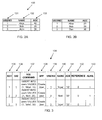
- Figure 2A illustrates a simplified example of an aggregate view of data in a database, according to an example of the present disclosure
- Figure 2B illustrates a simplified example of an aggregate view of the data of Figure 2A after a series of operations, according to an example of the present disclosure
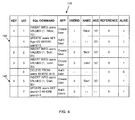
- Figure 3 illustrates a backlog trace for the data of Figure 2A , according to an example of the present disclosure
- Figure 4 illustrates a backlog trace for the data of Figure 2B , according to an example of the present disclosure
- Figure 5 illustrates trace log entries for databases, according to an example of the present disclosure
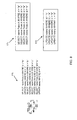
- Figure 6 illustrates examples of commands by applications on different databases, according to an example of the present disclosure
- Figure 7 illustrates a group of trace log commands for an application, according to an example of the present disclosure
- Figure 8 illustrates clustering of trace log commands, according to an example of the present disclosure
- Figure 9 illustrates measurement of variability of temporal differences between trace log entries in cluster pairs, according to an example of the present disclosure
- Figure 10 illustrates construction of cluster chains, according to an example of the present disclosure
- Figure 11 illustrates a user interface layout for registration of assets, resources, and applications, according to an example of the present disclosure
- Figure 12 illustrates a display of aggregated data value lineage information for the user interface layout, according to an example of the present disclosure
- Figure 13 illustrates a display of aggregated data value lineage information using an application, according to an example of the present disclosure
- Figure 14 illustrates a display of data lineage flow information for the user interface layout, according to an example of the present disclosure
- Figure 15 illustrates a graphical display of data lineage flow information, according to an example of the present disclosure
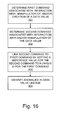
- Figure 16 illustrates a method for data lineage tracking, according to an example of the present disclosure
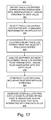
- Figure 17 illustrates further details of the method for data lineage tracking, according to an example of the present disclosure.
- Figure 18 illustrates a computer system, according to an example of the present disclosure.
- the terms “a” and “an” are intended to denote at least one of a particular element.
- the term “includes” means includes but not limited to, the term “including” means including but not limited to.
- the term “based on” means based at least in part on.
- Data lineage information may generally include meta-data that captures information related to the history and provenance of data.
- data may pass through various systems and subsystems.
- systems and subsystems may include applications that consume and export data, or applications that may or may not modify the data.
- data may be aggregated or otherwise manipulated, and may also reside, for example, in databases, documents, spreadsheets, or emails.
- data lineage information may become obscured, may contain gaps, or may even become lost.
- Data lineage may be used in a variety of environments, for example, for understanding aspects related to the origin of and changes to data, and for making decisions based on the understanding.
- the degree of knowledge related to the historical value of data, or which systems or applications have encountered data or manipulated intermediate results can affect the confidence of such decisions.
- business users generally have limited time and limited resources to ascertain the origins and lifecycle of data. Such limitations in time and resources can affect the confidence of decisions based on available data.
- data lineage tracking can be challenging, for example, due to the heterogeneity of systems encountered by the data.
- data may encounter structured query language (SQL) or NoSQL database systems.
- SQL structured query language
- Data may also flow from one data source to another, or via an application that may or may not change the data along its path. Tracking and producing data flows for such heterogeneous systems, and tracking data changes as the data encounters various systems and applications can present difficulties in determining the veracity and authenticity of data.
- a data lineage tracking system and method are described herein and generally capture data lineage information, manage meta-data, track and produce data flows, infer reasoning for changes, perform anomaly detection, and report data lineage information across heterogeneous platforms and applications.
- the system and method may use trace logs from data sources to track data lineage, and to determine data flows of information as data moves from one data source to another through the execution of applications.
- the utilization of the captured information may be used, for example, for enterprise activities such as, for example, producing shorter decision-making cycles, facilitating more efficient and cost-effective compliance and audit cycles, enhancing data loss prevention, for example, for data aggregation situations, facilitating access control, and enrichment of data analytics.
- a data lineage tracking system may include a memory storing a module comprising machine readable instructions to obtain trace log entries representing an interaction with, a manipulation of, and/or a creation of a data value.
- the data lineage tracking system may further include machine readable instructions to select the trace log entries that are associated with commands performed by an application, cluster similar trace log entries from the selected trace log entries, and analyze mappings between the clustered trace log entries to determine data lineage flow associated with the data value.
- the mappings may generally represent any type of relationship between clustered trace log entries.
- the data lineage flow may represent flow of information related to the historical value of data, or flow of information related to any system or application that has encountered the data or manipulated intermediate results related to the data before arriving at a final data value.
- data lineage may include, for example, information related to the historical value of data, or information related to any system or application that has encountered the data or manipulated intermediate results related to the data before arriving at a final data value.
- the data lineage tracking system may further include machine readable instructions to determine data value lineage by determining a first command associated with an interaction with, a manipulation of, and/or a creation of the data value, determining a second command associated with an interaction with and/or a manipulation of the data value, and linking the second command to the first command by setting a reference value for the second command to a unique identification (ID) for the first command.
- ID unique identification
- a method for data lineage tracking may include obtaining trace log entries representing an interaction with, a manipulation of, and/or a creation of a data value, and selecting the trace log entries that are associated with commands performed by an application. The method may further include clustering similar trace log entries from the selected trace log entries, and analyzing mappings between the clustered trace log entries to determine data lineage flow associated with the data value.
- a non-transitory computer readable medium having stored thereon machine readable instructions for data lineage tracking is also described.
- the machine readable instructions that when executed may cause a computer system to obtain trace log entries representing an interaction with, a manipulation of, and/or a creation of a data value, and select the trace log entries that are associated with commands performed by an application.
- the machine readable instructions may further cause a computer system to cluster similar trace log entries from the selected trace log entries, and analyze mappings between the clustered trace log entries to determine data lineage flow associated with the data value.
- the system and method described herein provide a technical solution to the technical problem of data lineage tracking.
- manual data lineage tracking is not a viable solution given the heterogeneity and complexity of systems and subsystems, and variability involved in manual data lineage tracking, which can lead to inconsistent results.
- the system and method described herein provide the technical solution of objectively discovering data lineage information based on, for example, automatic capture of data lineage information, management of meta-data, tracking and producing of data flows, performance of anomaly detection, and reporting of data lineage information across heterogeneous platforms and applications.
- FIG. 1 illustrates an architecture of a data lineage tracking system 100, according to an example of the present disclosure.
- the data lineage tracking system 100 may generally include a mediation layer 101, a monitor layer 102, a driver layer 103 and an external access layer 104.
- the mediation and monitor layers 101 and 102 may generally include modules to track lineage data for newly developed and existing assets, respectively.
- Assets may include, for example, a database, server or computer on which a data source of interest may reside.
- the driver layer 103 may generally include modules to register and track assets, resources, and applications, determine data value lineage, determine data lineage flow existing within tracked data lineage, determine reasonings for actions, and interpret SQL traces.
- a resource may include an actual data source of interest.
- a resource may reside on an asset, and include, for example, a data source name, login, password, SQL dialect, and type of lineage modality (i.e., mediation or monitor) to utilize for tracking.
- applications may refer, for example, to programs that perform manipulations and retrieval of data from the data sources.
- the external access layer 104 may generally provide access and services to integrate external tools and applications, for example, by a data lineage browser 105.
- the data lineage browser 105 may also function as a user interface, for example, to register assets, resources, and applications, and to visualize data value lineage and data lineage flow.
- a repository module 106 may store data traces transformed into a data lineage format by the data lineage tracking system 100.
- the modules and other elements of the system 100 may comprise machine readable instructions stored on a non-transitory computer readable medium.
- the modules and other elements of the system 100 may comprise hardware or a combination of machine readable instructions and hardware.
- the mediation layer 101 may include a mediation module 107 to track lineage data, for example, for newly developed assets. Calls to an asset may be transferred by the mediation module 107 to the driver layer 103 for further processing. The calls may be transferred, for example, through a web service.
- the calls may include, for example, SQL queries 108 or NoSQL inserts/updates 109, which may be stored in databases 110, 111, respectively, or in a single database.
- the calls may be used to ascertain additional statistics related to data, such as, for example, alias information, invocation information, name of an asset, etc.
- the mediation module 107 may also provide for enrichment of meta-data information for association with an action, and context of the data.
- the mediation module 107 may also function as a listening post within an application such that when an application interacts with a database, the mediation module 107 may intercept the interaction and log the interaction within the database.
- the monitor layer 102 may include a monitor module 112 to track lineage data for existing assets. Compared to the mediation module 107, the monitor module 112 may provide integration of the data lineage tracking system 100, for example, in an enterprise environment, without modification of existing assets.
- the monitor module 112 may poll a data source, retrieve information related to queries executing on a resource, processes captured trace log entries, and store the trace log entries for retrieval by the modules of the driver layer 103.
- the information may include, for example, SQL queries 113 or NoSQL inserts/updates 114, which may be stored in databases 115, 116, respectively, or in a single database.
- a user may also provide the location of the trace log files as well as the frequency of polling. If the available assets are unknown, the system 100 may automatically discover assets.
- the driver layer 103 may include a configuration module 117 to register assets, resources, and applications, an asset module 118 to track assets and resources, a data value lineage determination module 119 to determine data value lineage, a data lineage flow determination module 120 to determine data flows existing within tracked data lineage, an inference module 121 to determine reasonings for actions, and a parser module 122 to interpret SQL traces.
- the configuration module 117 in conjunction with the data lineage browser 105 may register assets, resources, and applications specified at the browser 105. Further, the configuration module 117 may function as a bridge for settings between other modules and layers of the data lineage tracking system 100. For example, a user, via the browser 105 and configuration module 117, may modify user-specific settings of the system 100. Examples of user-specific settings may include settings related to the types of assets, resources, and applications registered, output or display settings related to data value lineage or data lineage flow, thresholds for data lineage anomaly detection, and thresholds for consistency determination, as described below.
- the asset module 118 may track assets and resources.
- the module 118 may maintain the connections of all assets with resources that reside on the assets.
- Data lineage information on the repository module 106 may also be maintained and formatted by the module 118.
- the module 118 may further track registered assets and resources, and track data lineage using the repository module 106.
- the data value lineage determination module 119 may determine data value lineage. As described below, the determination of data value lineage may be performed by analysis of data trace log entries to determine a backlog trace, which transforms the data trace log entries into a data lineage format stored in the repository module 106.
- the data lineage flow determination module 120 may determine data flows existing within tracked data lineage. The determination of data flows may be performed by clustering and discovering of patterns in SQL traces, as described below.
- the inference module 121 may determine reasonings for actions. For example, the module 121 may determine why and how an action has occurred (e.g., why a "SELECT" action occurred). The module 121 may determine any manipulations that may have occurred to data as the data passes through databases and applications. For example, as applications gather information from multiple sources they may modify information before it is sent to the destination. The module 121 may determine why and how an action has occurred based, for example, on information from a combination of assets, resources, and applications that is entered during configuration. From such information, the module 121 may perform look-ups to determine, for example, why an action has occurred. The determination may also be based on previous knowledge that has been provided to the module 121 and on the discovered asset-resource-application combination in a data trace entry.
- the module 121 may also determine what actions were performed on data by an application, for example, in the time between when data is retrieved from a source and stored at a destination. The determination of actions performed by an application may be based on an analysis of information from the backlog trace and data lineage flow.
- the parser module 122 may integrate grammar sets to interpret SQL traces. For example, each resource type may have its own dialect and language. The module 122 may automatically determine which grammar to use to divide SQL traces into actionable objects that have gone through interpretation. The interpretations may be associated with related actions of previous SOL traces within the asset module 118. After linking the actionable SQL traces to each other, the results may be transferred to the repository module 106 for storage and retrieval in data value linage and data lineage flow discovery requests.
- the external access layer 104 may include a services module 123 to provide access and services to integrate external tools and applications, for example, by the data lineage browser 105.
- tools may include external user tools that may use a web service interface, such as, for example, MICROSOFT WORD or MICROSOFT EXCEL.
- the external access layer 104 may also provide for integration with external tools such as, for example, MICROSOFT OFFICE SUITE, which may also allow users to track data and embed data persistent lineage information within documents.
- the services module 123 may provide administration configuration functionality for adding assets, resources, and applications.
- the services module 123 may also control functionality of the data lineage browser 105 to ascertain user inputs and output information, such as, for example, data value lineage and data lineage flow.
- the repository module 106 may store data traces transformed into a data lineage format by the data lineage tracking system 100.
- the transformed data traces may be stored in a database 124.
- the repository module 106 may be compatible with different storage formats, such as, for example, SQL and NoSQL storage formats.
- the data traces captured by the mediation or monitor modules 107, 112 may be initially received by the modules of the driver layer 103.
- the data traces may be analyzed to determine a backlog trace, which transforms the data traces into the data lineage format stored in the database 124 of the repository module 106.
- the backlog trace may be based on tracking differences between different data traces, grouping of touples that reference each other, time-stamping based on lineage creation and time-stamping based on SQL trace command.
- the backlog trace may also be based on and include additional information, such as, for example, unique identifiers for each data trace, a liveliness indicator, and the analysis of actual SQL commands.
- the data 130 may include a user identification (ID) at 131, and data values, such as a name at 132 and age at 133.
- ID user identification
- data values such as a name at 132 and age at 133.
- a data value may be encompass any type of data, such as, for example, a numerical, character based, symbolic or other value.
- Figure 2B illustrates an aggregate view of the data 130 after the series of operations. Comparing the data of Figures 2B and 2A , it can be seen that the age for the user "Alice" has been changed from 10 to 25, and the name for the user "John” has been changed to "Dan”.
- the backlog trace may use original data executes and inserts information to link subsequent manipulations on records within a database.
- the initial data may be entered as a series of inserts.
- the backlog trace 134 of Figure 3 may include a key at 135, unique identifier (UID) at 136, SQL command at 137, an application type at 138, a user ID at 139, name at 140, age at 141, reference at 142 and liveliness indicator at 143.
- UID unique identifier
- the backlog trace may be transformed as shown at 146.
- the data value lineage determination module 119 may perform an insertion of any command that manipulates any existing data (i.e., the data 130) and link the inserted command to the last command that performed any manipulation.
- the data value lineage determination module 119 may perform a query on the backlog trace to locate all records affected by the UPDATE command and link the records.
- the new command may be inserted and its reference column (i.e., column 142 of Figure 3 ) may be set to the unique ID (i.e., column 136 of Figure 3 ) value of a previous command.
- the data value lineage determination module 119 may insert a new entry in the backlog trace.
- Figure 4 further illustrates the effect of DELETE and UPDATE commands.
- the sequence of commands of Figure 4 may produce the result of Figure 2B .
- the sequence of commands of Figure 4 demonstrates the sequence of events that may lead to the resulting data of Figure 2B .
- the resulting backlog trace may be stored in the database 124 of the repository module 106.
- the data lineage flow determination module 120 may use trace log entries for each database that is registered. Generally, the module 120 may link trace log entries from multiple databases to determine data lineage flow for a set of SQL commands that contribute to instances of existing values across multiple backlog trace entries. For example, referring to Figure 5 , the module 120 may link trace log entries 150, 151 and 152, respectively, for databases A, B and C, to determine data lineage flow. The module 120 may also account for various properties of trace log entries that may impact data lineage flow determination. For example, the trace log entries for a database may be limited to SQL commands, related timestamps, and an application issuing a particular command.
- the trace log entries may also be noisy or disjointed, for example, due to missing trace log entries or inadvertent modification from runtime issues.
- a database may include a large number of trace log entries.
- the module 120 may account for the foregoing properties related to trace log entries by using a statistics based data mining approach that may discover the sequence of commands that an application may perform.
- the sequence of commands may include, for example, select, insert, update and delete. Other commands may be discovered based on user-specific requirements.
- the module 120 may identify the mappings of traces between the two command clusters. If a command-timestamp pair, (s 1 , t 1 ), is mapped to another command-timestamp pair, (s 2 , t 2 ), (where s 1 and s 2 are trace entry commands from c 1 and c 2 , and t 1 and t 2 are timestamps for the corresponding trace entries) then the mappings should satisfy the following two conditions.
- the module 120 may calculate the entropy of the temporal differences (i.e., t 1 -t 2 ) to measure the consistency of the temporal differences. If the temporal differences vary significantly, the entropy score may be high and the module 120 may discard the mapping.
- a predetermined threshold which may be user-defined
- the data lineage flow determination module 120 may link trace log entries 150, 151 and 152, respectively, for databases A, B and C, to determine data lineage flow.
- the module 120 may discover a data lineage flow of the SQL commands that are used to create a value.
- the trace log files from multiple databases may include commands performed by multiple applications. For example, as shown in Figure 6 , application A at 160 may perform a SELECT command on database B at 161 followed by an UPDATE command on database A at 162. Further, application B at 163 may perform a SELECT command on the database C at 164 followed by an UPDATE command on database B at 161. In order to account for different applications that may perform different commands on different databases, the module 120 may identify temporal differences between SQL commands.
- the module 120 may use a statistics based data mining approach that may discover the sequence of commands that an application may perform.
- the statistics based approach may be based on a first principle that a sequence of commands is executed repeatedly. For example, as shown in Figure 6 , the application A at 160 performs a SELECT command followed by an UPDATE command. Thus, the module 120 may mine a SELECT followed by an UPDATE, and further such command pairs, for application A. Secondly, the time intervals (i.e., temporal duration) between consecutive commands (e.g., SELECT and UPDATE) are generally consistent. Based on the foregoing principles, high-level command patterns may be captured to associate individual commands by the module 120.
- the foregoing principles impart robustness and scalability to the data lineage tracking system 100.
- the foregoing principles impart robustness to the system 100 to noise in trace log entries, for example, due to missing trace log entries or inadvertent modification from runtime issues.
- the foregoing principles also impart scalability to the system 100, in that operation of the system 100 is linear to the total number of SQL records (i.e., n), and the average number of the types of SQL commands per application (i.e., k), where the time efficiency may be determined as O(n * k), where the notation O may be used to characterize the upper bound of time complexity for a process.
- the groupings may also be based on the principle that an application generally executes a sequence of commands repeatedly with consistent time intervals (e.g., 3 seconds as shown at 173 in Figure 9 ) between the commands.
- the module 120 may measure the variability of the temporal difference between trace log entries in the two clusters. Given the command clusters, 171 and 172, the module 120 may identify the mappings of traces between the two command clusters.
- a command-timestamp pair, (s 1 , t 1 ), may be mapped to another command-timestamp pair, (s 2 , t 2 ), by satisfying the conditions discussed above (i.e., there does not exist a s 1 ' in c 1 such that
- the command s 2 for the command-timestamp pair (s 2 , t 2 ) may also represent the command that occurs right after the command s 1 for the command-timestamp pair (s 1 , t 1 ).
- the data lineage flow determination module 120 may calculate the entropy of the temporal differences (i.e., t 1 -t 2 ) to measure the consistency of the temporal differences.
- the entropy may provide a measure of the uncertainty associated between the temporal differences.
- a high entropy equates to a significant variance in a list of temporal differences, as opposed to a low entropy. For example, if the temporal differences are [1, 5, 10, 100, 3, 0], the entropy would be higher than temporal differences of [3.1, 3.0, 2.9, 3.1, 3.0].
- the module 120 may select the pairs of the command clusters whose entropy score is lower than a given threshold, which may be user-defined.
- the cluster chains may represent the data lineage flow graph across different databases. Based on the cluster chains, instance-level flows as described below may be derived.
- the module 120 may determine data lineage flow for a set of SQL commands that contribute to instances of existing values across multiple backlog trace entries. For example, as shown in Figure 10 , for value "a", the module 120 may determine that the data lineage flow includes a SELECT command at 174 from an application 175 to a database A at 176.
- the module 120 may further determine that the data lineage flow includes an UPDATE command at 177 from the application 175 to a database A at 178, and so forth for other commands. For example, the module 120 may use the mappings established between the clusters 171 and 172 to choose the UPDATE SQL. In this manner, the module 120 may generate a data lineage flow for an application (e.g., application 175), what commands are performed by the application (e.g., commands 174 and/or 177), and what databases are involved (e.g., database A at 178 and/or database B at 178). For each application involved, the module 120 may similarly determine associated commands and what databases are involved to generate data lineage flows as illustrated in Figures 14 and 15 , and described in further detail below.
- an application e.g., application 175
- commands e.g., commands 174 and/or 177
- databases e.g., database A at 178 and/or database B at 178.
- the module 120 may similarly determine associated commands and what databases are
- the configuration module 117 in conjunction with the data lineage browser 105 may register assets, resources, and applications specified at the browser 105.
- the data lineage browser 105 may include options 180, 181 and 182 to respectively register assets, resources, and applications. Alternatively, resources may be automatically discovered by using option 183.
- a user may specify the resource specifics at 184, the type of modality (e.g., monitor or mediation) at 185, and monitor rate at 186.
- the data lineage browser 105 may display aggregated data value lineage information, for example, in a table format as shown at 190.
- a user may select a value (e.g., the value 2250 at 191) and obtain its data value lineage information at 192.
- the lineage information may include, for example, the attribute name at 193, value at 194, type of operation at 195, application at 196, reason for why the data value was inserted or updated at 197, who made a change at 198 and the time of the change at 199.
- the reason for why the data value was inserted or updated may be determined by the inference module 121.
- the aggregated data value lineage information may be displayed in another application (e.g., MICROSOFT EXCEL) at 200.
- any anomalies detected by the data value lineage determination module 119 may be highlighted and displayed at 201. For example, if a data value differs from an initial value by greater than a predetermined percentage, or if a data value is changed, any such change or deviation may be displayed at 201.
- the data lineage browser 105 may display data lineage flow information, for example, as shown at 202.
- a user may select the data value 2250 at 203 to display its data lineage flow information of all applications and tables (i.e., from databases) that were used to create the value.
- the data lineage flow information may also be displayed in a graphical format as shown at 204.
- the graphically displayed data lineage flow information may include resource and asset information at 205, and application information at 206, 207 and 208.
- the type of operation performed by applications may be displayed at 209-213.
- other resource and asset information may be provided at 214, 215 and 216, and application information at 217.
- the type of operation performed by applications may be displayed at 218 and 219.
- a user may be presented with a graphical view of the different resources, assets and applications, and the type of commands that impacted a data value lineage.
- FIGs 16 and 17 illustrate flowcharts of methods 300 and 400 for data lineage tracking, according to examples.
- the methods 300 and 400 may be implemented on the data lineage tracking system described above with reference to Figures 1-15 by way of example and not limitation.
- the methods 300 and 400 may be practiced in other systems.
- a first command associated with an interaction with, a manipulation of, and/or a creation of the data value may be determined.
- the data traces captured by the mediation or monitor modules 107, 112 may be initially received by the modules of the driver layer 103.
- the data traces may be analyzed to determine the backlog trace, which transforms the data traces into the data lineage format stored in the database 124 of the repository module 106.
- the initial data may be entered as a series of inserts.
- a second command associated with an interaction with and/or a manipulation of the data value may be determined.
- the backlog trace may be transformed as shown at 146.
- the second command may be linked to the first command by setting a reference value for the second command to a unique ID for the first command.
- the data value lineage determination module 119 may perform an insertion of any command that manipulates any existing data (i.e., the data 130) and link the inserted command to the last command that performed any manipulation.
- an anomaly in data value lineage may be identified by calculating a change in the data value. For example, referring to Figures 1 and 13 , any anomalies detected by the data value lineage determination module 119 may be highlighted and displayed at 201.
- trace log entries representing an interaction with, a manipulation of, and/or a creation of a data value may be obtained.
- the data lineage flow determination module 120 may link trace log entries 150, 151 and 152, respectively, for databases A, B and C, to determine data lineage flow.
- the trace log entries that are associated with commands performed by an application may be selected. For example, referring to Figure 1 , in order to determine sequences for applications, since an application generally executes a sequence of commands repeatedly with consistent time intervals between the commands, for each application, the data lineage flow determination module 120 may group the trace log commands issued by an application.
- similar trace log entries from the selected trace log entries may be clustered.
- the similar trace log entries may be clustered based, for example, on a command type, a table name, and/or an attribute name.
- the data lineage flow determination module 120 may cluster similar trace log entries.
- mappings between the clustered trace log entries may be analyzed to determine data lineage flow associated with the data value.
- the data lineage flow determination module 120 may map a command-timestamp pair, (s 1 , t 1 ), for a cluster c 1 to another command-timestamp pair, (s 2 , t 2 ), for a cluster c 2 , if there does not exist a s 1 ' in cluster c 1 such that
- Variability of temporal differences between the trace log entries in cluster pairs may be measured by calculating entropy of the temporal differences to determine a consistency of the temporal differences.
- a cluster chain including clusters with low entropies may be constructed.
- a graph illustrating the data lineage flow identifying an asset, a resource and/or the application that have interacted with the data value may be generated.
- the data lineage browser 105 may display data lineage flow information, for example, as shown at 202 in Figure 14 , or in a graphical format as shown at 204 in Figure 15 .
- FIG 18 shows a computer system 500 that may be used with the examples described herein.
- the computer system 500 represents a generic platform that includes components that may be in a server or another computer system.
- the computer system 500 may be used as a platform for the system 100.
- the computer system 500 may execute, by a processor or other hardware processing circuit, the methods, functions and other processes described herein. These methods, functions and other processes may be embodied as machine readable instructions stored on computer readable medium, which may be non-transitory, such as hardware storage devices (e.g., RAM (random access memory), ROM (read only memory), EPROM (erasable, programmable ROM), EEPROM (electrically erasable, programmable ROM), hard drives, and flash memory).
- RAM random access memory
- ROM read only memory
- EPROM erasable, programmable ROM
- EEPROM electrically erasable, programmable ROM
- hard drives and flash memory
- the computer system 500 includes a processor 502 that may implement or execute machine readable instructions performing some or all of the methods, functions and other processes described herein. Commands and data from the processor 502 are communicated over a communication bus 504.
- the computer system 500 also includes a main memory 506, such as a random access memory (RAM), where the machine readable instructions and data for the processor 502 may reside during runtime, and a secondary data storage 508, which may be nonvolatile and stores machine readable instructions and data.
- the memory and data storage are examples of computer readable mediums.
- the memory 506 may include modules 520 including machine readable instructions residing in the memory 506 during runtime and executed by the processor 502.
- the modules 520 may include the modules of the system 100 described with reference to Figures 1-15 .
- the computer system 500 may include an I/O device 510, such as a keyboard, a mouse, a display, etc.
- the computer system 500 may include a network interface 512 for connecting to a network.
- Other known electronic components may be added or substituted in the computer system 500.
Landscapes
- Engineering & Computer Science (AREA)
- Theoretical Computer Science (AREA)
- Databases & Information Systems (AREA)
- Data Mining & Analysis (AREA)
- Physics & Mathematics (AREA)
- General Engineering & Computer Science (AREA)
- General Physics & Mathematics (AREA)
- Debugging And Monitoring (AREA)
Abstract
Description
- Data lineage may include, for example, information related to the historical value of data, or information related to any system or application that has encountered the data or manipulated intermediate results related to the data before arriving at a final data value. Tracking data lineage, for example, in computing environments that may include heterogeneous computing systems can be challenging.
- Features of the present disclosure are illustrated by way of examples shown in the following figures. In the following figures, like numerals indicate like elements, in which:
-
Figure 1 illustrates an architecture of a data lineage tracking system, according to an example of the present disclosure; -
Figure 2A illustrates a simplified example of an aggregate view of data in a database, according to an example of the present disclosure; -
Figure 2B illustrates a simplified example of an aggregate view of the data ofFigure 2A after a series of operations, according to an example of the present disclosure; -
Figure 3 illustrates a backlog trace for the data ofFigure 2A , according to an example of the present disclosure; -
Figure 4 illustrates a backlog trace for the data ofFigure 2B , according to an example of the present disclosure; -
Figure 5 illustrates trace log entries for databases, according to an example of the present disclosure; -
Figure 6 illustrates examples of commands by applications on different databases, according to an example of the present disclosure; -
Figure 7 illustrates a group of trace log commands for an application, according to an example of the present disclosure; -
Figure 8 illustrates clustering of trace log commands, according to an example of the present disclosure; -
Figure 9 illustrates measurement of variability of temporal differences between trace log entries in cluster pairs, according to an example of the present disclosure; -
Figure 10 illustrates construction of cluster chains, according to an example of the present disclosure; -
Figure 11 illustrates a user interface layout for registration of assets, resources, and applications, according to an example of the present disclosure; -
Figure 12 illustrates a display of aggregated data value lineage information for the user interface layout, according to an example of the present disclosure; -
Figure 13 illustrates a display of aggregated data value lineage information using an application, according to an example of the present disclosure; -
Figure 14 illustrates a display of data lineage flow information for the user interface layout, according to an example of the present disclosure; -
Figure 15 illustrates a graphical display of data lineage flow information, according to an example of the present disclosure; -
Figure 16 illustrates a method for data lineage tracking, according to an example of the present disclosure; -
Figure 17 illustrates further details of the method for data lineage tracking, according to an example of the present disclosure; and -
Figure 18 illustrates a computer system, according to an example of the present disclosure. - For simplicity and illustrative purposes, the present disclosure is described by referring mainly to examples. In the following description, numerous specific details are set forth in order to provide a thorough understanding of the present disclosure. It will be readily apparent however, that the present disclosure may be practiced without limitation to these specific details. In other instances, some methods and structures have not been described in detail so as not to unnecessarily obscure the present disclosure.
- Throughout the present disclosure, the terms "a" and "an" are intended to denote at least one of a particular element. As used herein, the term "includes" means includes but not limited to, the term "including" means including but not limited to. The term "based on" means based at least in part on.
- Data lineage information may generally include meta-data that captures information related to the history and provenance of data. In environments such as, for example, enterprise environments, data may pass through various systems and subsystems. Such systems and subsystems may include applications that consume and export data, or applications that may or may not modify the data. For example, data may be aggregated or otherwise manipulated, and may also reside, for example, in databases, documents, spreadsheets, or emails. In such environments, data lineage information may become obscured, may contain gaps, or may even become lost.
- Data lineage may be used in a variety of environments, for example, for understanding aspects related to the origin of and changes to data, and for making decisions based on the understanding. The degree of knowledge related to the historical value of data, or which systems or applications have encountered data or manipulated intermediate results can affect the confidence of such decisions. For example, business users generally have limited time and limited resources to ascertain the origins and lifecycle of data. Such limitations in time and resources can affect the confidence of decisions based on available data.
- In enterprise environments, data lineage tracking can be challenging, for example, due to the heterogeneity of systems encountered by the data. For example, data may encounter structured query language (SQL) or NoSQL database systems. Data may also flow from one data source to another, or via an application that may or may not change the data along its path. Tracking and producing data flows for such heterogeneous systems, and tracking data changes as the data encounters various systems and applications can present difficulties in determining the veracity and authenticity of data.
- A data lineage tracking system and method are described herein and generally capture data lineage information, manage meta-data, track and produce data flows, infer reasoning for changes, perform anomaly detection, and report data lineage information across heterogeneous platforms and applications. In one example, the system and method may use trace logs from data sources to track data lineage, and to determine data flows of information as data moves from one data source to another through the execution of applications. The utilization of the captured information may be used, for example, for enterprise activities such as, for example, producing shorter decision-making cycles, facilitating more efficient and cost-effective compliance and audit cycles, enhancing data loss prevention, for example, for data aggregation situations, facilitating access control, and enrichment of data analytics.
- In an example, a data lineage tracking system may include a memory storing a module comprising machine readable instructions to obtain trace log entries representing an interaction with, a manipulation of, and/or a creation of a data value. The data lineage tracking system may further include machine readable instructions to select the trace log entries that are associated with commands performed by an application, cluster similar trace log entries from the selected trace log entries, and analyze mappings between the clustered trace log entries to determine data lineage flow associated with the data value. The mappings may generally represent any type of relationship between clustered trace log entries. The data lineage flow may represent flow of information related to the historical value of data, or flow of information related to any system or application that has encountered the data or manipulated intermediate results related to the data before arriving at a final data value. In a similar context, data lineage may include, for example, information related to the historical value of data, or information related to any system or application that has encountered the data or manipulated intermediate results related to the data before arriving at a final data value.
- The data lineage tracking system may further include machine readable instructions to determine data value lineage by determining a first command associated with an interaction with, a manipulation of, and/or a creation of the data value, determining a second command associated with an interaction with and/or a manipulation of the data value, and linking the second command to the first command by setting a reference value for the second command to a unique identification (ID) for the first command.
- In an example, a method for data lineage tracking may include obtaining trace log entries representing an interaction with, a manipulation of, and/or a creation of a data value, and selecting the trace log entries that are associated with commands performed by an application. The method may further include clustering similar trace log entries from the selected trace log entries, and analyzing mappings between the clustered trace log entries to determine data lineage flow associated with the data value.
- In an example, a non-transitory computer readable medium having stored thereon machine readable instructions for data lineage tracking is also described. The machine readable instructions that when executed may cause a computer system to obtain trace log entries representing an interaction with, a manipulation of, and/or a creation of a data value, and select the trace log entries that are associated with commands performed by an application. The machine readable instructions may further cause a computer system to cluster similar trace log entries from the selected trace log entries, and analyze mappings between the clustered trace log entries to determine data lineage flow associated with the data value.
- The system and method described herein provide a technical solution to the technical problem of data lineage tracking. In many instances, manual data lineage tracking is not a viable solution given the heterogeneity and complexity of systems and subsystems, and variability involved in manual data lineage tracking, which can lead to inconsistent results. The system and method described herein provide the technical solution of objectively discovering data lineage information based on, for example, automatic capture of data lineage information, management of meta-data, tracking and producing of data flows, performance of anomaly detection, and reporting of data lineage information across heterogeneous platforms and applications.
-
Figure 1 illustrates an architecture of a datalineage tracking system 100, according to an example of the present disclosure. The datalineage tracking system 100 may generally include amediation layer 101, amonitor layer 102, adriver layer 103 and anexternal access layer 104. As described in further detail below, the mediation and monitorlayers driver layer 103 may generally include modules to register and track assets, resources, and applications, determine data value lineage, determine data lineage flow existing within tracked data lineage, determine reasonings for actions, and interpret SQL traces. A resource may include an actual data source of interest. A resource may reside on an asset, and include, for example, a data source name, login, password, SQL dialect, and type of lineage modality (i.e., mediation or monitor) to utilize for tracking. Further, applications may refer, for example, to programs that perform manipulations and retrieval of data from the data sources. Theexternal access layer 104 may generally provide access and services to integrate external tools and applications, for example, by adata lineage browser 105. Thedata lineage browser 105 may also function as a user interface, for example, to register assets, resources, and applications, and to visualize data value lineage and data lineage flow. Arepository module 106 may store data traces transformed into a data lineage format by the datalineage tracking system 100. - As described herein, the modules and other elements of the
system 100 may comprise machine readable instructions stored on a non-transitory computer readable medium. In addition, or alternatively, the modules and other elements of thesystem 100 may comprise hardware or a combination of machine readable instructions and hardware. - Referring to
Figure 1 , themediation layer 101 may include amediation module 107 to track lineage data, for example, for newly developed assets. Calls to an asset may be transferred by themediation module 107 to thedriver layer 103 for further processing. The calls may be transferred, for example, through a web service. The calls may include, for example, SQL queries 108 or NoSQL inserts/updates 109, which may be stored indatabases mediation module 107 may also provide for enrichment of meta-data information for association with an action, and context of the data. Themediation module 107 may also function as a listening post within an application such that when an application interacts with a database, themediation module 107 may intercept the interaction and log the interaction within the database. - The
monitor layer 102 may include amonitor module 112 to track lineage data for existing assets. Compared to themediation module 107, themonitor module 112 may provide integration of the datalineage tracking system 100, for example, in an enterprise environment, without modification of existing assets. Themonitor module 112 may poll a data source, retrieve information related to queries executing on a resource, processes captured trace log entries, and store the trace log entries for retrieval by the modules of thedriver layer 103. The information may include, for example, SQL queries 113 or NoSQL inserts/updates 114, which may be stored indatabases system 100 may automatically discover assets. - The
driver layer 103 may include aconfiguration module 117 to register assets, resources, and applications, anasset module 118 to track assets and resources, a data valuelineage determination module 119 to determine data value lineage, a data lineageflow determination module 120 to determine data flows existing within tracked data lineage, aninference module 121 to determine reasonings for actions, and aparser module 122 to interpret SQL traces. - Referring to
Figures 1 and11 , theconfiguration module 117 in conjunction with thedata lineage browser 105 may register assets, resources, and applications specified at thebrowser 105. Further, theconfiguration module 117 may function as a bridge for settings between other modules and layers of the datalineage tracking system 100. For example, a user, via thebrowser 105 andconfiguration module 117, may modify user-specific settings of thesystem 100. Examples of user-specific settings may include settings related to the types of assets, resources, and applications registered, output or display settings related to data value lineage or data lineage flow, thresholds for data lineage anomaly detection, and thresholds for consistency determination, as described below. - The
asset module 118 may track assets and resources. Themodule 118 may maintain the connections of all assets with resources that reside on the assets. Data lineage information on therepository module 106 may also be maintained and formatted by themodule 118. Themodule 118 may further track registered assets and resources, and track data lineage using therepository module 106. - The data value
lineage determination module 119 may determine data value lineage. As described below, the determination of data value lineage may be performed by analysis of data trace log entries to determine a backlog trace, which transforms the data trace log entries into a data lineage format stored in therepository module 106. - The data lineage
flow determination module 120 may determine data flows existing within tracked data lineage. The determination of data flows may be performed by clustering and discovering of patterns in SQL traces, as described below. - The
inference module 121 may determine reasonings for actions. For example, themodule 121 may determine why and how an action has occurred (e.g., why a "SELECT" action occurred). Themodule 121 may determine any manipulations that may have occurred to data as the data passes through databases and applications. For example, as applications gather information from multiple sources they may modify information before it is sent to the destination. Themodule 121 may determine why and how an action has occurred based, for example, on information from a combination of assets, resources, and applications that is entered during configuration. From such information, themodule 121 may perform look-ups to determine, for example, why an action has occurred. The determination may also be based on previous knowledge that has been provided to themodule 121 and on the discovered asset-resource-application combination in a data trace entry. Themodule 121 may also determine what actions were performed on data by an application, for example, in the time between when data is retrieved from a source and stored at a destination. The determination of actions performed by an application may be based on an analysis of information from the backlog trace and data lineage flow. - The
parser module 122 may integrate grammar sets to interpret SQL traces. For example, each resource type may have its own dialect and language. Themodule 122 may automatically determine which grammar to use to divide SQL traces into actionable objects that have gone through interpretation. The interpretations may be associated with related actions of previous SOL traces within theasset module 118. After linking the actionable SQL traces to each other, the results may be transferred to therepository module 106 for storage and retrieval in data value linage and data lineage flow discovery requests. - The
external access layer 104 may include aservices module 123 to provide access and services to integrate external tools and applications, for example, by thedata lineage browser 105. Examples of tools may include external user tools that may use a web service interface, such as, for example, MICROSOFT WORD or MICROSOFT EXCEL. Theexternal access layer 104 may also provide for integration with external tools such as, for example, MICROSOFT OFFICE SUITE, which may also allow users to track data and embed data persistent lineage information within documents. Theservices module 123 may provide administration configuration functionality for adding assets, resources, and applications. Theservices module 123 may also control functionality of thedata lineage browser 105 to ascertain user inputs and output information, such as, for example, data value lineage and data lineage flow. - The
repository module 106 may store data traces transformed into a data lineage format by the datalineage tracking system 100. The transformed data traces may be stored in adatabase 124. Therepository module 106 may be compatible with different storage formats, such as, for example, SQL and NoSQL storage formats. - Operation of the data
lineage tracking system 100 is described. - In order to store data traces transformed into a data lineage format in the
repository module 106, the data traces captured by the mediation or monitormodules driver layer 103. Generally, the data traces may be analyzed to determine a backlog trace, which transforms the data traces into the data lineage format stored in thedatabase 124 of therepository module 106. The backlog trace may be based on tracking differences between different data traces, grouping of touples that reference each other, time-stamping based on lineage creation and time-stamping based on SQL trace command. The backlog trace may also be based on and include additional information, such as, for example, unique identifiers for each data trace, a liveliness indicator, and the analysis of actual SQL commands. - For example, referring to
Figures 2A-4 , an example of determination of a backlog trace and further details of data value lineage determination are presented. - Referring to
Figure 2A , a simplified example of an aggregate view ofdata 130 in a database is illustrated. Thedata 130 may include a user identification (ID) at 131, and data values, such as a name at 132 and age at 133. Thus a data value may be encompass any type of data, such as, for example, a numerical, character based, symbolic or other value. After a series of operations on thedata 130 ofFigure 2A, Figure 2B illustrates an aggregate view of thedata 130 after the series of operations. Comparing the data ofFigures 2B and 2A , it can be seen that the age for the user "Alice" has been changed from 10 to 25, and the name for the user "John" has been changed to "Dan". An analysis of the change in the data ofFigures 2A and 2B however does not indicate, for example, how the modifications were made, the command order, what type of commands were issued, if an update was executed on the effected records, or were other operations issued to arrive at the results ofFigure 2B . - The backlog trace may use original data executes and inserts information to link subsequent manipulations on records within a database. For example, referring to
Figure 3 , for thedata 130 ofFigure 2A , the initial data may be entered as a series of inserts. Thebacklog trace 134 ofFigure 3 may include a key at 135, unique identifier (UID) at 136, SQL command at 137, an application type at 138, a user ID at 139, name at 140, age at 141, reference at 142 and liveliness indicator at 143. - Referring to
Figure 4 , following, for example, update and insert commands at 144, 145, respectively (i.e., "UPDATE users SET Age=25 WHERE userid=1" and "INSERT INTO users VALUES (1,'Dan', 30)"), the backlog trace may be transformed as shown at 146. The data valuelineage determination module 119 may perform an insertion of any command that manipulates any existing data (i.e., the data 130) and link the inserted command to the last command that performed any manipulation. For the UPDATE command in the foregoing example, the data valuelineage determination module 119 may perform a query on the backlog trace to locate all records affected by the UPDATE command and link the records. Once all related commands are located, the new command may be inserted and its reference column (i.e.,column 142 ofFigure 3 ) may be set to the unique ID (i.e.,column 136 ofFigure 3 ) value of a previous command. For the INSERT command in the foregoing example, the data valuelineage determination module 119 may insert a new entry in the backlog trace.Figure 4 further illustrates the effect of DELETE and UPDATE commands. On a replay of events, the sequence of commands ofFigure 4 may produce the result ofFigure 2B . The sequence of commands ofFigure 4 demonstrates the sequence of events that may lead to the resulting data ofFigure 2B . The resulting backlog trace may be stored in thedatabase 124 of therepository module 106. - In order to determine data flows existing within tracked data value lineage, the data lineage
flow determination module 120 may use trace log entries for each database that is registered. Generally, themodule 120 may link trace log entries from multiple databases to determine data lineage flow for a set of SQL commands that contribute to instances of existing values across multiple backlog trace entries. For example, referring toFigure 5 , themodule 120 may linktrace log entries module 120 may also account for various properties of trace log entries that may impact data lineage flow determination. For example, the trace log entries for a database may be limited to SQL commands, related timestamps, and an application issuing a particular command. The trace log entries may also be noisy or disjointed, for example, due to missing trace log entries or inadvertent modification from runtime issues. Further, a database may include a large number of trace log entries. Themodule 120 may account for the foregoing properties related to trace log entries by using a statistics based data mining approach that may discover the sequence of commands that an application may perform. The sequence of commands may include, for example, select, insert, update and delete. Other commands may be discovered based on user-specific requirements. - In order to determine sequences for applications, the data lineage
flow determination module 120 may group the trace log commands issued by an application, based on the behavior that an application generally executes a sequence of commands repeatedly with consistent time intervals between the commands. For each application, themodule 120 may cluster similar trace log entries that relate, for example, according to the tables that are affected and attributes involved. For example, the statements "SELECT name FROM employee WHERE id=3" and "SELECT name FROM employee WHERE id=5" may be clustered together because the command type, table name, and attribute name are identical. For every pair of command type clusters, themodule 120 may measure the variability of the temporal difference between trace log entries in the two paired clusters. Given two command clusters, c1 and c2, themodule 120 may identify the mappings of traces between the two command clusters. If a command-timestamp pair, (s1, t1), is mapped to another command-timestamp pair, (s2, t2), (where s1 and s2 are trace entry commands from c1 and c2, and t1 and t2 are timestamps for the corresponding trace entries) then the mappings should satisfy the following two conditions. First, there does not exist a s1' in c1 such that |t1'- t2| < | t1- t2|, and second, there does not exist a s2' in c2 such that | t1'- t2| < | t1- t2|. Once the mappings are identified, themodule 120 may calculate the entropy of the temporal differences (i.e., t1-t2) to measure the consistency of the temporal differences. If the temporal differences vary significantly, the entropy score may be high and themodule 120 may discard the mapping. Themodule 120 may construct a cluster chain C = {c1, c2, ..., cn} of low entropies (i.e., entropies that fall below a predetermined threshold, which may be user-defined), which correspond to a sequence of trace log entries that an application performs, and the data lineage flow. - Referring to
Figures 5-10 , an example and further details of data lineage flow determination are presented. - Referring to
Figure 5 , the data lineageflow determination module 120 may linktrace log entries module 120 may discover a data lineage flow of the SQL commands that are used to create a value. The trace log files from multiple databases may include commands performed by multiple applications. For example, as shown inFigure 6 , application A at 160 may perform a SELECT command on database B at 161 followed by an UPDATE command on database A at 162. Further, application B at 163 may perform a SELECT command on the database C at 164 followed by an UPDATE command on database B at 161. In order to account for different applications that may perform different commands on different databases, themodule 120 may identify temporal differences between SQL commands. In order to obtain relevant SQL commands, themodule 120 may use a statistics based data mining approach that may discover the sequence of commands that an application may perform. The statistics based approach may be based on a first principle that a sequence of commands is executed repeatedly. For example, as shown inFigure 6 , the application A at 160 performs a SELECT command followed by an UPDATE command. Thus, themodule 120 may mine a SELECT followed by an UPDATE, and further such command pairs, for application A. Secondly, the time intervals (i.e., temporal duration) between consecutive commands (e.g., SELECT and UPDATE) are generally consistent. Based on the foregoing principles, high-level command patterns may be captured to associate individual commands by themodule 120. These principles also impart robustness and scalability to the datalineage tracking system 100. Specifically, the foregoing principles impart robustness to thesystem 100 to noise in trace log entries, for example, due to missing trace log entries or inadvertent modification from runtime issues. The foregoing principles also impart scalability to thesystem 100, in that operation of thesystem 100 is linear to the total number of SQL records (i.e., n), and the average number of the types of SQL commands per application (i.e., k), where the time efficiency may be determined as O(n * k), where the notation O may be used to characterize the upper bound of time complexity for a process. - With the sequence of commands performed by an application obtained per the foregoing statistics based data mining approach, for each application, the data lineage
flow determination module 120 may group the trace log commands issued. For example, referring toFigure 7 , an example is shown of agroup 170 of trace log commands issued for an application. Referring toFigure 8 , the grouped trace log commands may be clustered intoclusters cluster 171 may be clustered together because the command type, table name, and attribute name are identical. The groupings may also be based on the principle that an application generally executes a sequence of commands repeatedly with consistent time intervals (e.g., 3 seconds as shown at 173 inFigure 9 ) between the commands. For every pair of command type clusters, themodule 120 may measure the variability of the temporal difference between trace log entries in the two clusters. Given the command clusters, 171 and 172, themodule 120 may identify the mappings of traces between the two command clusters. A command-timestamp pair, (s1, t1), may be mapped to another command-timestamp pair, (s2, t2), by satisfying the conditions discussed above (i.e., there does not exist a s1' in c1 such that | t1'- t2| < | t1- t2|, and there does not exist a s2' in c2 such that | t1'- t2| < | t1-t2|). For example, command-timestamp pair (s1, t1) (e.g., "SELECT name From A WHERE id = "a"" which occurs at timestamp t1 for cluster 171), may be mapped to command-timestamp pair (s2, t2) (e.g., "UPDATE salary WHERE id = "c"" which occurs at timestamp t2 for cluster 172) if the foregoing conditions are satisfied. The command s2 for the command-timestamp pair (s2, t2) may also represent the command that occurs right after the command s1 for the command-timestamp pair (s1, t1). - Referring to
Figure 10 , for theclusters flow determination module 120 may calculate the entropy of the temporal differences (i.e., t1-t2) to measure the consistency of the temporal differences. The entropy may provide a measure of the uncertainty associated between the temporal differences. A high entropy equates to a significant variance in a list of temporal differences, as opposed to a low entropy. For example, if the temporal differences are [1, 5, 10, 100, 3, 0], the entropy would be higher than temporal differences of [3.1, 3.0, 2.9, 3.1, 3.0]. This is because the values of the former list are much different than one another as opposed to the values of the second list which are concentrated around 3.0. The entropy may be calculated from the following equation:


module 120 may select the pairs of the command clusters whose entropy score is lower than a given threshold, which may be user-defined. Themodule 120 may construct a cluster chain C = {c1, c2, ..., cn} (e.g., theclusters Figure 10 ) of low entropies which corresponds to a sequence of trace entries that an application performs. The cluster chains may represent the data lineage flow graph across different databases. Based on the cluster chains, instance-level flows as described below may be derived. Based on the cluster chain, themodule 120 may determine data lineage flow for a set of SQL commands that contribute to instances of existing values across multiple backlog trace entries. For example, as shown inFigure 10 , for value "a", themodule 120 may determine that the data lineage flow includes a SELECT command at 174 from anapplication 175 to a database A at 176. Themodule 120 may further determine that the data lineage flow includes an UPDATE command at 177 from theapplication 175 to a database A at 178, and so forth for other commands. For example, themodule 120 may use the mappings established between theclusters module 120 may generate a data lineage flow for an application (e.g., application 175), what commands are performed by the application (e.g., commands 174 and/or 177), and what databases are involved (e.g., database A at 178 and/or database B at 178). For each application involved, themodule 120 may similarly determine associated commands and what databases are involved to generate data lineage flows as illustrated inFigures 14 and15 , and described in further detail below. - Referring to
Figures 1 and11 , as discussed above, theconfiguration module 117 in conjunction with thedata lineage browser 105 may register assets, resources, and applications specified at thebrowser 105. Thedata lineage browser 105 may includeoptions option 183. A user may specify the resource specifics at 184, the type of modality (e.g., monitor or mediation) at 185, and monitor rate at 186. - Referring to
Figures 1 and12 , thedata lineage browser 105 may display aggregated data value lineage information, for example, in a table format as shown at 190. A user may select a value (e.g., thevalue 2250 at 191) and obtain its data value lineage information at 192. The lineage information may include, for example, the attribute name at 193, value at 194, type of operation at 195, application at 196, reason for why the data value was inserted or updated at 197, who made a change at 198 and the time of the change at 199. As discussed above, the reason for why the data value was inserted or updated may be determined by theinference module 121. - Referring to
Figures 1 and13 , the aggregated data value lineage information may be displayed in another application (e.g., MICROSOFT EXCEL) at 200. For the data value lineage information, any anomalies detected by the data valuelineage determination module 119 may be highlighted and displayed at 201. For example, if a data value differs from an initial value by greater than a predetermined percentage, or if a data value is changed, any such change or deviation may be displayed at 201. - Referring to
Figures 1 and14 , thedata lineage browser 105 may display data lineage flow information, for example, as shown at 202. For example, a user may select thedata value 2250 at 203 to display its data lineage flow information of all applications and tables (i.e., from databases) that were used to create the value. - Referring to
Figures 1 ,10 and15 , the data lineage flow information may also be displayed in a graphical format as shown at 204. For example, the graphically displayed data lineage flow information may include resource and asset information at 205, and application information at 206, 207 and 208. The type of operation performed by applications may be displayed at 209-213. Further, other resource and asset information may be provided at 214, 215 and 216, and application information at 217. The type of operation performed by applications may be displayed at 218 and 219. In this manner, as also discussed above with reference toFigure 10 , a user may be presented with a graphical view of the different resources, assets and applications, and the type of commands that impacted a data value lineage. -
Figures 16 and17 illustrate flowcharts ofmethods 300 and 400 for data lineage tracking, according to examples. Themethods 300 and 400 may be implemented on the data lineage tracking system described above with reference toFigures 1-15 by way of example and not limitation. Themethods 300 and 400 may be practiced in other systems. - Referring to
Figure 16 , atblock 301, a first command associated with an interaction with, a manipulation of, and/or a creation of the data value, may be determined. For example, referring toFigure 1 , the data traces captured by the mediation or monitormodules driver layer 103. The data traces may be analyzed to determine the backlog trace, which transforms the data traces into the data lineage format stored in thedatabase 124 of therepository module 106. For the example ofFigure 3 , for thedata 130 ofFigure 2A , the initial data may be entered as a series of inserts. - At
block 302, a second command associated with an interaction with and/or a manipulation of the data value, may be determined. For the example ofFigure 4 , following, for example, update and insert commands at 144, 145, respectively (i.e., "UPDATE users SET Age=25 WHERE userid=1" and "INSERT INTO users VALUES (1,'Dan', 30)"), the backlog trace may be transformed as shown at 146. - At
block 303, the second command may be linked to the first command by setting a reference value for the second command to a unique ID for the first command. For example, as discussed above with reference toFigures 2A-4 , the data valuelineage determination module 119 may perform an insertion of any command that manipulates any existing data (i.e., the data 130) and link the inserted command to the last command that performed any manipulation. - At
block 304, an anomaly in data value lineage may be identified by calculating a change in the data value. For example, referring toFigures 1 and13 , any anomalies detected by the data valuelineage determination module 119 may be highlighted and displayed at 201. - For the
method 400, referring toFigure 17 , atblock 401, trace log entries representing an interaction with, a manipulation of, and/or a creation of a data value may be obtained. For example, referring toFigures 1 and5 , the data lineageflow determination module 120 may linktrace log entries - At
block 402, the trace log entries that are associated with commands performed by an application may be selected. For example, referring toFigure 1 , in order to determine sequences for applications, since an application generally executes a sequence of commands repeatedly with consistent time intervals between the commands, for each application, the data lineageflow determination module 120 may group the trace log commands issued by an application. - At block 403, similar trace log entries from the selected trace log entries may be clustered. The similar trace log entries may be clustered based, for example, on a command type, a table name, and/or an attribute name. For example, referring to
Figures 1 and8 , for each application, the data lineageflow determination module 120 may cluster similar trace log entries. - At block 404, mappings between the clustered trace log entries may be analyzed to determine data lineage flow associated with the data value. For example, the data lineage
flow determination module 120 may map a command-timestamp pair, (s1, t1), for a cluster c1 to another command-timestamp pair, (s2, t2), for a cluster c2, if there does not exist a s1' in cluster c1 such that | t1'- t2| < | t1- t2|, and there does not exist a s2' in cluster c2 such that | t1'- t2| < | t1- t2|. Variability of temporal differences between the trace log entries in cluster pairs may be measured by calculating entropy of the temporal differences to determine a consistency of the temporal differences. - At
block 405, a cluster chain including clusters with low entropies may be constructed. For example, referring toFigures 1 and10 , the data lineageflow determination module 120 may construct a cluster chain C = {c1, c2, ..., cn} of low entropies (i.e., entropies that fall below a predetermined threshold, which may be user-defined), which correspond to a sequence of trace log entries that an application performs, and the data lineage flow. - At block 406, a graph illustrating the data lineage flow identifying an asset, a resource and/or the application that have interacted with the data value, may be generated. For example, referring to
Figures 1 ,14 and15 , thedata lineage browser 105 may display data lineage flow information, for example, as shown at 202 inFigure 14 , or in a graphical format as shown at 204 inFigure 15 . -
Figure 18 shows acomputer system 500 that may be used with the examples described herein. Thecomputer system 500 represents a generic platform that includes components that may be in a server or another computer system. Thecomputer system 500 may be used as a platform for thesystem 100. Thecomputer system 500 may execute, by a processor or other hardware processing circuit, the methods, functions and other processes described herein. These methods, functions and other processes may be embodied as machine readable instructions stored on computer readable medium, which may be non-transitory, such as hardware storage devices (e.g., RAM (random access memory), ROM (read only memory), EPROM (erasable, programmable ROM), EEPROM (electrically erasable, programmable ROM), hard drives, and flash memory). - The
computer system 500 includes aprocessor 502 that may implement or execute machine readable instructions performing some or all of the methods, functions and other processes described herein. Commands and data from theprocessor 502 are communicated over acommunication bus 504. Thecomputer system 500 also includes amain memory 506, such as a random access memory (RAM), where the machine readable instructions and data for theprocessor 502 may reside during runtime, and asecondary data storage 508, which may be nonvolatile and stores machine readable instructions and data. The memory and data storage are examples of computer readable mediums. Thememory 506 may includemodules 520 including machine readable instructions residing in thememory 506 during runtime and executed by theprocessor 502. Themodules 520 may include the modules of thesystem 100 described with reference toFigures 1-15 . - The
computer system 500 may include an I/O device 510, such as a keyboard, a mouse, a display, etc. Thecomputer system 500 may include anetwork interface 512 for connecting to a network. Other known electronic components may be added or substituted in thecomputer system 500. - What has been described and illustrated herein are examples along with some of their variations. The terms, descriptions and figures used herein are set forth by way of illustration only and are not meant as limitations. Many variations are possible within the spirit and scope of the subject matter, which is intended to be defined by the following claims and their equivalents in which all terms are meant in their broadest reasonable sense unless otherwise indicated.
Claims (15)
- A data lineage tracking system comprising:a memory storing a module comprising machine readable instructions to:obtain trace log entries representing at least one of an interaction with, a manipulation of, and a creation of a data value;select the trace log entries that are associated with commands performed by an application;cluster similar trace log entries from the selected trace log entries;
andanalyze mappings between the clustered trace log entries to determine data lineage flow associated with the data value; anda processor to implement the module. - The data lineage tracking system of claim 1, wherein the similar trace log entries are clustered based on at least one of a command type, a table name, and an attribute name.
- The data lineage tracking system of claim 1 or 2, further comprising machine readable instructions to:map a command-timestamp pair, (s1, t1), for a cluster c1 to another command-timestamp pair, (s2, t2), for a cluster c2, if there does not exist a s1' in cluster c1 such that | t1'- t2| < | t1- t2|, and there does not exist a s2' in cluster c2 such that | t1'- t2| < | t1- t2|, wherein the s1 is a trace log entry command from the cluster c1 and the t1 is a timestamp for the trace log entry command s1, and the s2 is a trace log entry command from the cluster c2 and the t2 is a timestamp for the trace log entry command s2.
- The data lineage tracking system of any one of the preceding claims, further comprising machine readable instructions to:measure variability of temporal differences between the trace log entries in cluster pairs.
- The data lineage tracking system of claim 4, further comprising machine readable instructions to:measure the variability by calculating entropy of the temporal differences to determine a consistency of the temporal differences,wherein the data lineage tracking system may further comprise machine readable instructions to:construct a cluster chain including clusters with low entropies to generate the data lineage flow.
- The data lineage tracking system of any one of the preceding claims, further comprising machine readable instructions to:determine data value lineage by:determining a first command associated with at least one of an interaction with, a manipulation of, and a creation of the data value;determining a second command associated with at least one of an interaction with and a manipulation of the data value; andlinking the second command to the first command by setting a reference value for the second command to a unique identification (ID) for the first command.
- The data lineage tracking system of any one of the preceding claims, further comprising machine readable instructions to:determine a reason for a command based on an analysis of at least one of an asset, a resource and the application registered with the data lineage tracking system,wherein the reason for the command may be based on a historical analysis of interactions with at least one of the asset, the resource and the application.
- The data lineage tracking system of claim 6, further comprising machine readable instructions to:identify an anomaly in data value lineage by calculating a change in the data value.
- The data lineage tracking system of any one of the preceding claims, further comprising machine readable instructions to:generate a graph illustrating the data lineage flow identifying at least one of an asset, a resource and the application that have interacted with the data value.
- The data lineage tracking system of any one of the preceding claims, further comprising machine readable instructions to:receive calls from data sources, wherein the calls include structured query language (SQL) queries and NoSQL inserts and updates, and/orfurther comprising machine readable instructions to:poll data sources for structured query language (SQL) queries and NoSQL inserts and updates.
- A data lineage tracking system comprising:a memory storing a module comprising machine readable instructions to:determine a first command associated with at least one of an interaction with, a manipulation of, and a creation of a data value;determine a second command associated with at least one of an interaction with and a manipulation of the data value; anddetermine data value lineage by linking the second command to the first command by setting a reference value for the second command to a unique identification (ID) for the first command; anda processor to implement the module.
- A method for data lineage tracking, the method comprising:obtaining trace log entries representing at least one of an interaction with, a manipulation of, and a creation of a data value;selecting the trace log entries that are associated with commands performed by an application;clustering similar trace log entries from the selected trace log entries; andanalyzing, by a processor, mappings between the clustered trace log entries to determine data lineage flow associated with the data value.
- The method of claim 12, further comprising:mapping a command-timestamp pair, (s1, t1), for a cluster c1 to another command-timestamp pair, (s2, t2), for a cluster c2, if there does not exist a s1' in cluster c1 such that | t1'- t2| < | t1- t2|, and there does not exist a s2' in cluster c2 such that | t1'- t2| < | t1- t2|, wherein the s1 is a trace log entry command from the cluster c1 and the t1 is a timestamp for the trace log entry command s1, and the s2 is a trace log entry command from the cluster c2 and the t2 is a timestamp for the trace log entry command s2, and/orthe method further comprising:measuring variability of temporal differences between the trace log entries in cluster pairs by calculating entropy of the temporal differences to determine a consistency of the temporal differences.
- The method of claim 12 or 13, further comprising:determining data value lineage by:determining a first command associated with at least one of an interaction with, a manipulation of, and a creation of the data value;determining a second command associated with at least one of an interaction with and a manipulation of the data value; andlinking the second command to the first command by setting a reference value for the second command to a unique identification (ID) for the first command,wherein the method may further comprise:identifying an anomaly in data value lineage by calculating a change in the data value.
- A non-transitory computer readable medium having stored thereon machine readable instructions for data lineage tracking, the machine readable instructions when executed cause a computer system to:obtain trace log entries representing at least one of an interaction with, a manipulation of, and a creation of a data value;select the trace log entries that are associated with commands performed by an application;cluster similar trace log entries from the selected trace log entries; andanalyze, by a processor, mappings between the clustered trace log entries to determine data lineage flow associated with the data value.
Applications Claiming Priority (1)
| Application Number | Priority Date | Filing Date | Title |
|---|---|---|---|
| US13/494,449 US9659042B2 (en) | 2012-06-12 | 2012-06-12 | Data lineage tracking |
Publications (1)
| Publication Number | Publication Date |
|---|---|
| EP2674878A1 true EP2674878A1 (en) | 2013-12-18 |
Family
ID=48670318
Family Applications (1)
| Application Number | Title | Priority Date | Filing Date |
|---|---|---|---|
| EP13002901.0A Withdrawn EP2674878A1 (en) | 2012-06-12 | 2013-06-05 | Data lineage tracking |
Country Status (2)
| Country | Link |
|---|---|
| US (1) | US9659042B2 (en) |
| EP (1) | EP2674878A1 (en) |
Cited By (2)
| Publication number | Priority date | Publication date | Assignee | Title |
|---|---|---|---|---|
| WO2023070417A1 (en) * | 2021-10-28 | 2023-05-04 | Microsoft Technology Licensing, Llc | Efficient extraction of provenance information from database query execution logs |
| US20250272213A1 (en) * | 2024-02-22 | 2025-08-28 | Jpmorgan Chase Bank, N.A. | System and method for tracing data streamed across different platforms and identifying data manipulations performed across different platforms |
Families Citing this family (79)
| Publication number | Priority date | Publication date | Assignee | Title |
|---|---|---|---|---|
| US9767100B2 (en) | 2008-12-02 | 2017-09-19 | Ab Initio Technology Llc | Visualizing relationships between data elements |
| US11126720B2 (en) | 2012-09-26 | 2021-09-21 | Bluvector, Inc. | System and method for automated machine-learning, zero-day malware detection |
| US9852153B2 (en) | 2012-09-28 | 2017-12-26 | Ab Initio Technology Llc | Graphically representing programming attributes |
| US9075860B2 (en) | 2012-10-18 | 2015-07-07 | Oracle International Corporation | Data lineage system |
| EP2972770A4 (en) * | 2013-03-15 | 2016-11-16 | Ab Initio Technology Llc | METADATA MANAGEMENT SYSTEM |
| US9928283B2 (en) * | 2013-04-15 | 2018-03-27 | Validus Solutions, Inc. | Tracing data through a transformation process using tracer codes |
| US9811573B1 (en) * | 2013-09-27 | 2017-11-07 | EMC IP Holding Company LLC | Lineage information management in data analytics |
| US9811669B1 (en) * | 2013-12-31 | 2017-11-07 | EMC IP Holding Company LLC | Method and apparatus for privacy audit support via provenance-aware systems |
| WO2016011442A1 (en) * | 2014-07-18 | 2016-01-21 | Ab Initio Technology Llc | Managing lineage information |
| EP3191963B1 (en) * | 2014-09-08 | 2023-11-22 | AB Initio Technology LLC | Data-driven testing framework |
| WO2016049797A1 (en) * | 2014-09-29 | 2016-04-07 | Microsoft Technology Licensing, Llc | Telemetry for data |
| US9798626B2 (en) | 2014-11-11 | 2017-10-24 | International Business Machines Corporation | Implementing change data capture by interpreting published events as a database recovery log |
| CN104915390A (en) * | 2015-05-25 | 2015-09-16 | 广州精点计算机科技有限公司 | ETL data lineage query system and query method |
| US11243919B2 (en) | 2015-10-16 | 2022-02-08 | International Business Machines Corporation | Preparing high-quality data repositories sets utilizing heuristic data analysis |
| US11847040B2 (en) | 2016-03-16 | 2023-12-19 | Asg Technologies Group, Inc. | Systems and methods for detecting data alteration from source to target |
| US12499120B2 (en) | 2016-03-16 | 2025-12-16 | Rocket Software Technologies, Inc. | Methods and systems for tracking data lineage from source to target |
| US11086751B2 (en) * | 2016-03-16 | 2021-08-10 | Asg Technologies Group, Inc. | Intelligent metadata management and data lineage tracing |
| US10776740B2 (en) * | 2016-06-07 | 2020-09-15 | International Business Machines Corporation | Detecting potential root causes of data quality issues using data lineage graphs |
| US11055623B2 (en) * | 2016-06-20 | 2021-07-06 | International Business Machines Corporation | System, method, and recording medium for distributed probabilistic eidetic querying, rollback, and replay |
| US10452625B2 (en) * | 2016-06-30 | 2019-10-22 | Global Ids, Inc. | Data lineage analysis |
| EP3475885B1 (en) | 2016-08-22 | 2023-10-11 | Oracle International Corporation | System and method for dynamic, incremental recommendations within real-time visual simulation |
| US20180096081A1 (en) * | 2016-09-30 | 2018-04-05 | Hewlett Packard Enterprise Development Lp | Relocation of an analytical process based on lineage metadata |
| US10599666B2 (en) * | 2016-09-30 | 2020-03-24 | Hewlett Packard Enterprise Development Lp | Data provisioning for an analytical process based on lineage metadata |
| US10540402B2 (en) | 2016-09-30 | 2020-01-21 | Hewlett Packard Enterprise Development Lp | Re-execution of an analytical process based on lineage metadata |
| KR102432104B1 (en) | 2016-11-09 | 2022-08-11 | 아브 이니티오 테크놀로지 엘엘시 | Systems and methods for determining relationships between data elements |
| US11379537B2 (en) | 2016-11-18 | 2022-07-05 | Accenture Global Solutions Limited | Closed-loop unified metadata architecture with universal metadata repository |
| DE112017006106T5 (en) | 2016-12-01 | 2019-09-19 | Ab Initio Technology Llc | Create, access, and view lineage metadata |
| US10740361B2 (en) * | 2017-02-21 | 2020-08-11 | Microsoft Technology Licensing, Llc | Clustering and analysis of commands in user interfaces |
| US10431002B2 (en) * | 2017-02-23 | 2019-10-01 | International Business Machines Corporation | Displaying data lineage using three dimensional virtual reality model |
| US10223086B2 (en) * | 2017-06-30 | 2019-03-05 | Capital One Services, Llc | Systems and methods for code parsing and lineage detection |
| US10210240B2 (en) * | 2017-06-30 | 2019-02-19 | Capital One Services, Llc | Systems and methods for code parsing and lineage detection |
| US11057500B2 (en) | 2017-11-20 | 2021-07-06 | Asg Technologies Group, Inc. | Publication of applications using server-side virtual screen change capture |
| US10803128B2 (en) * | 2017-12-15 | 2020-10-13 | The Boeing Company | Lineal data storage and retrieval system |
| US10769165B2 (en) * | 2017-12-20 | 2020-09-08 | Sap Se | Computing data lineage across a network of heterogeneous systems |
| US10331660B1 (en) * | 2017-12-22 | 2019-06-25 | Capital One Services, Llc | Generating a data lineage record to facilitate source system and destination system mapping |
| US11611633B2 (en) | 2017-12-29 | 2023-03-21 | Asg Technologies Group, Inc. | Systems and methods for platform-independent application publishing to a front-end interface |
| US10877740B2 (en) | 2017-12-29 | 2020-12-29 | Asg Technologies Group, Inc. | Dynamically deploying a component in an application |
| US10812611B2 (en) | 2017-12-29 | 2020-10-20 | Asg Technologies Group, Inc. | Platform-independent application publishing to a personalized front-end interface by encapsulating published content into a container |
| US10628389B2 (en) * | 2018-01-25 | 2020-04-21 | Merck Sharp & Dohme Corp. | Verification of data provenance for existing computer systems |
| US11042911B1 (en) * | 2018-02-28 | 2021-06-22 | EMC IP Holding Company LLC | Creation of high value data assets from undervalued data |
| US11314779B1 (en) | 2018-05-31 | 2022-04-26 | Amazon Technologies, Inc. | Managing timestamps in a sequential update stream recording changes to a database partition |
| US10929356B2 (en) | 2018-06-04 | 2021-02-23 | International Business Machines Corporation | Detection of hidden data co-occurrence relationships |
| US10601712B1 (en) | 2018-10-10 | 2020-03-24 | Bank Of America Corporation | System for performing a variation control in a data network |
| US10803051B2 (en) | 2018-10-10 | 2020-10-13 | Bank Of America Corporation | System for performing a lineage control in a data network |
| US10812357B2 (en) | 2018-10-10 | 2020-10-20 | Bank Of America Corporation | System for performing a timeless control in a data network |
| US10623298B1 (en) * | 2018-10-10 | 2020-04-14 | Bank Of America Corporation | System for performing an integrated data quality control in a data network |
| US10621033B1 (en) | 2018-10-10 | 2020-04-14 | Bank Of America Corporation | System for generating dataflow lineage information in a data network |
| US11256701B2 (en) | 2019-01-02 | 2022-02-22 | Bank Of America Corporation | Interactive lineage mapping system |
| CN110008231B (en) * | 2019-03-19 | 2021-04-27 | 福建省天奕网络科技有限公司 | MySQL data backtracking method and storage medium |
| US10481961B1 (en) | 2019-04-02 | 2019-11-19 | Capital One Services, Llc | API and streaming solution for documenting data lineage |
| US10503905B1 (en) * | 2019-06-26 | 2019-12-10 | Capital One Services, Llc | Data lineage management |
| US11762634B2 (en) | 2019-06-28 | 2023-09-19 | Asg Technologies Group, Inc. | Systems and methods for seamlessly integrating multiple products by using a common visual modeler |
| CN110309030A (en) * | 2019-07-05 | 2019-10-08 | 亿玛创新网络(天津)有限公司 | Log analysis monitoring system and method based on ELK and Zabbix |
| US11755760B2 (en) | 2019-10-18 | 2023-09-12 | Asg Technologies Group, Inc. | Systems and methods for secure policies-based information governance |
| US11886397B2 (en) | 2019-10-18 | 2024-01-30 | Asg Technologies Group, Inc. | Multi-faceted trust system |
| US11941137B2 (en) | 2019-10-18 | 2024-03-26 | Asg Technologies Group, Inc. | Use of multi-faceted trust scores for decision making, action triggering, and data analysis and interpretation |
| US11055067B2 (en) | 2019-10-18 | 2021-07-06 | Asg Technologies Group, Inc. | Unified digital automation platform |
| US11269660B2 (en) | 2019-10-18 | 2022-03-08 | Asg Technologies Group, Inc. | Methods and systems for integrated development environment editor support with a single code base |
| US11029948B1 (en) | 2019-12-05 | 2021-06-08 | Bank Of America Corporation | System for normalizing data dependency effects across an electronic network environment |
| US11755536B1 (en) * | 2020-01-10 | 2023-09-12 | Amazon Technologies, Inc. | System-independent data lineage system |
| US11334268B2 (en) | 2020-01-10 | 2022-05-17 | International Business Machines Corporation | Data lineage and data provenance enhancement |
| US11182359B2 (en) | 2020-01-10 | 2021-11-23 | International Business Machines Corporation | Data deduplication in data platforms |
| US11301444B2 (en) | 2020-04-30 | 2022-04-12 | International Business Machines Corporation | Methods and systems for data traceability and provenance |
| US20210406254A1 (en) | 2020-06-26 | 2021-12-30 | Smart Information Flow Technologies, LLC | Provenance analysis systems and methods |
| CN112100201B (en) * | 2020-09-30 | 2024-02-06 | 东莞盟大集团有限公司 | Data monitoring method, device, equipment and storage medium based on big data technology |
| EP4229513A4 (en) | 2020-10-13 | 2024-11-06 | ASG Technologies Group, Inc. DBA ASG Technologies | SECURE SHARING OF DOCUMENTS CREATED THROUGH A CONTENT MANAGEMENT REPOSITORY |
| US11849330B2 (en) | 2020-10-13 | 2023-12-19 | Asg Technologies Group, Inc. | Geolocation-based policy rules |
| US11520801B2 (en) | 2020-11-10 | 2022-12-06 | Bank Of America Corporation | System and method for automatically obtaining data lineage in real time |
| WO2022160335A1 (en) * | 2021-02-01 | 2022-08-04 | Paypal, Inc. | Graphical user interface to depict data lineage information in levels |
| US12326852B2 (en) | 2021-04-26 | 2025-06-10 | International Business Machines Corporation | Identifying anomalous transformations using lineage data |
| US11983178B2 (en) * | 2021-04-27 | 2024-05-14 | Capital One Services, Llc | Techniques for building data lineages for queries |
| US11640388B2 (en) | 2021-04-30 | 2023-05-02 | International Business Machines Corporation | Cognitive data outlier pre-check based on data lineage |
| US12380071B2 (en) | 2021-06-23 | 2025-08-05 | Microsoft Technology Licensing, Llc | Tracking data lineage and applying data removal to enforce data removal policies |
| CN113469280B (en) * | 2021-07-22 | 2023-06-16 | 烽火通信科技股份有限公司 | Data blood-edge discovery method, system and device based on graph neural network |
| US11853304B2 (en) | 2021-08-27 | 2023-12-26 | Striveworks Inc. | System and method for automated data and workflow lineage gathering |
| US12619907B2 (en) | 2022-03-11 | 2026-05-05 | International Business Machines Corporation | Automated model lineage inference |
| US12468584B2 (en) | 2022-10-21 | 2025-11-11 | Bank Of America Corporation | Determining and managing interactions between application sub-systems using machine learning |
| US12399954B2 (en) * | 2023-11-27 | 2025-08-26 | Capital One Services, Llc | Data lineage metric based data processing |
| US12493505B2 (en) | 2023-12-06 | 2025-12-09 | Capital One Services, Llc | Systems and methods for data lineage-based system anomaly detection |
Citations (1)
| Publication number | Priority date | Publication date | Assignee | Title |
|---|---|---|---|---|
| US20050165865A1 (en) * | 2004-01-08 | 2005-07-28 | Microsoft Corporation | Metadata journal for information technology systems |
Family Cites Families (20)
| Publication number | Priority date | Publication date | Assignee | Title |
|---|---|---|---|---|
| US5471631A (en) * | 1992-10-19 | 1995-11-28 | International Business Machines Corporation | Using time stamps to correlate data processing event times in connected data processing units |
| US6434558B1 (en) * | 1998-12-16 | 2002-08-13 | Microsoft Corporation | Data lineage data type |
| US6343295B1 (en) * | 1998-12-16 | 2002-01-29 | Microsoft Corporation | Data lineage |
| US20060064666A1 (en) * | 2001-05-25 | 2006-03-23 | Amaru Ruth M | Business rules for configurable metamodels and enterprise impact analysis |
| US6813587B2 (en) * | 2001-06-22 | 2004-11-02 | Invensys Systems, Inc. | Remotely monitoring/diagnosing distributed components of a supervisory process control and manufacturing information application from a central location |
| JP4415610B2 (en) * | 2003-08-26 | 2010-02-17 | 株式会社日立製作所 | System switching method, replica creation method, and disk device |
| US20070018953A1 (en) * | 2004-03-03 | 2007-01-25 | The Boeing Company | System, method, and computer program product for anticipatory hypothesis-driven text retrieval and argumentation tools for strategic decision support |
| US7493570B2 (en) | 2005-09-12 | 2009-02-17 | International Business Machines Corporation | User interface options of a data lineage tool |
| US7882119B2 (en) * | 2005-12-22 | 2011-02-01 | Xerox Corporation | Document alignment systems for legacy document conversions |
| US20070150293A1 (en) * | 2005-12-22 | 2007-06-28 | Aldo Dagnino | Method and system for cmmi diagnosis and analysis |
| JP4859456B2 (en) * | 2005-12-27 | 2012-01-25 | 株式会社日立製作所 | Data schema mapping program and computer system |
| US8731994B2 (en) * | 2006-10-06 | 2014-05-20 | Accenture Global Services Limited | Technology event detection, analysis, and reporting system |
| JP4295326B2 (en) * | 2007-01-10 | 2009-07-15 | 株式会社日立製作所 | Computer system |
| US8676749B2 (en) * | 2008-07-31 | 2014-03-18 | Sybase, Inc. | Statement logging in databases |
| US9767100B2 (en) * | 2008-12-02 | 2017-09-19 | Ab Initio Technology Llc | Visualizing relationships between data elements |
| WO2011035039A1 (en) * | 2009-09-16 | 2011-03-24 | Ab Initio Technology Llc | Mapping dataset elements |
| US8453123B2 (en) * | 2010-07-16 | 2013-05-28 | International Business Machines Corporation | Time-based trace facility |
| US8504062B2 (en) * | 2010-11-01 | 2013-08-06 | Wavemarket, Inc. | System and method for aggregating and associating mobile device location data |
| US9218035B2 (en) * | 2012-02-10 | 2015-12-22 | University Of Florida Research Foundation, Inc. | Renewable energy control systems and methods |
| US9075860B2 (en) * | 2012-10-18 | 2015-07-07 | Oracle International Corporation | Data lineage system |
-
2012
- 2012-06-12 US US13/494,449 patent/US9659042B2/en active Active
-
2013
- 2013-06-05 EP EP13002901.0A patent/EP2674878A1/en not_active Withdrawn
Patent Citations (1)
| Publication number | Priority date | Publication date | Assignee | Title |
|---|---|---|---|---|
| US20050165865A1 (en) * | 2004-01-08 | 2005-07-28 | Microsoft Corporation | Metadata journal for information technology systems |
Non-Patent Citations (7)
| Title |
|---|
| ANONYMOUS: "Amazon.com: Data Warehousing and Knowledge Discovery: 14th International Conference, DaWaK 2012, Vienna, Austria, September 3-6, 2012, Proceedings (Lecture Notes in Computer Science) (9783642325830): Alfredo Cuzzocrea, Umeshwar Dayal: Books", AMAZON.COM, 20 July 2012 (2012-07-20), XP055347342, Retrieved from the Internet <URL:https://www.amazon.com/Data-Warehousing-Knowledge-Discovery-International/dp/3642325831/ref=sr_1_1?ie=UTF8&qid=1487343831&sr=8-1&keywords=Data+Warehousing+and+Knowledge+Discovery+DaWaK+2012> [retrieved on 20170217] * |
| ANONYMOUS: "Call for Papers - DaWaK '12 | DEXA 2012", DEXA.ORG, 16 November 2012 (2012-11-16), XP055347282, Retrieved from the Internet <URL:http://web.archive.org/web/20121116073542/http://www.dexa.org/previous/dexa2012/dawak2012.html> [retrieved on 20170217] * |
| COLIN PURI ET AL: "Implementing a Data Lineage Tracker", 3 September 2012, DATA WAREHOUSING AND KNOWLEDGE DISCOVERY : 14TH INTERNATIONAL CONFERENCE, DAWAK 2012, VIENNA, AUSTRIA, SEPTEMBER 3 - 6, 2012 : PROCEEDINGS; [LECTURE NOTES IN COMPUTER SCIENCE , ISSN 0302-9743 ; 7448], SPRINGER, BERLIN, HEIDELBERG, PAGE(S) 390 - 403, ISBN: 978-3-642-32583-0, XP047015650 * |
| MWEBAZE ET AL.: "Tracing and using data lineage for pipeline processingin Astro-WISE", 13 December 2011 (2011-12-13), Springerlink.com, XP002714071, Retrieved from the Internet <URL:http://www.rug.nl/science-and-society/target/projects-and-rd/publications/tracing_data_lineage.pdf> [retrieved on 20131001] * |
| PURI ET AL.: "Implementing a Data Lineage Tracker", 2011, Spinger-Verlag Berlin Heidelberg, XP002714069, Retrieved from the Internet <URL:http://planetpuri.com/colinpuri/Papers/Dexa_2012_DataLineageTracker.pdf> [retrieved on 20131001] * |
| RITA L SALLAM ET AL: "Magic Quadrant for Business Intelligence Platforms Analyst(s)", AI.ARIZONA.EDU, 27 January 2011 (2011-01-27), XP055347394, Retrieved from the Internet <URL:https://ai.arizona.edu/sites/ai/files/MIS510/magic_quadrant_for_business_210036.pdf> [retrieved on 20170217] * |
| SIMMHAN ET AL.: "A Survey of Data Provenance Techniques", 18 October 2005 (2005-10-18), Computer Science Department, Indiana University, XP002714070, Retrieved from the Internet <URL:http://web.archive.org/web/20051018081213/http://www.cs.indiana.edu/pub/techreports/TR618.pdf> [retrieved on 20131001] * |
Cited By (4)
| Publication number | Priority date | Publication date | Assignee | Title |
|---|---|---|---|---|
| WO2023070417A1 (en) * | 2021-10-28 | 2023-05-04 | Microsoft Technology Licensing, Llc | Efficient extraction of provenance information from database query execution logs |
| US12541529B2 (en) | 2021-10-28 | 2026-02-03 | Microsoft Technology Licensing, Llc | Efficient extraction of provenance information from database query execution logs |
| US20250272213A1 (en) * | 2024-02-22 | 2025-08-28 | Jpmorgan Chase Bank, N.A. | System and method for tracing data streamed across different platforms and identifying data manipulations performed across different platforms |
| US12443507B2 (en) * | 2024-02-22 | 2025-10-14 | Jpmorgan Chase Bank, N.A. | System and method for tracing data streamed across different platforms and identifying data manipulations performed across different platforms |
Also Published As
| Publication number | Publication date |
|---|---|
| US20130332423A1 (en) | 2013-12-12 |
| US9659042B2 (en) | 2017-05-23 |
Similar Documents
| Publication | Publication Date | Title |
|---|---|---|
| US9659042B2 (en) | Data lineage tracking | |
| US10452625B2 (en) | Data lineage analysis | |
| US10484413B2 (en) | System and a method for detecting anomalous activities in a blockchain network | |
| AU2014240239B2 (en) | Contextual graph matching based anomaly detection | |
| US20210035026A1 (en) | Diagnosing & triaging performance issues in large-scale services | |
| CN111488261A (en) | User behavior analysis system, method, storage medium and computing device | |
| US10909109B1 (en) | Quality control test transactions for shared databases of a collaboration tool | |
| CN117971606B (en) | Log management system and method based on elastic search | |
| US10592327B2 (en) | Apparatus, system, and method for analyzing logs | |
| CN103744994B (en) | A communication network-oriented user behavior pattern mining method and system | |
| CN106656536A (en) | Method and device for processing service invocation information | |
| CN113987086B (en) | Data processing method, data processing device, electronic device and storage medium | |
| CN114139209B (en) | A method and system for preventing information theft applied to big data of business users | |
| US11055631B2 (en) | Automated meta parameter search for invariant based anomaly detectors in log analytics | |
| Sapegin et al. | Towards a system for complex analysis of security events in large-scale networks | |
| US20160092333A1 (en) | Telemetry for Data | |
| Hammad et al. | Provenance as a service: A data-centric approach for real-time monitoring | |
| US20190121973A1 (en) | System and method for detecting security risks in a computer system | |
| US20260003840A1 (en) | Systems and methods for dynamic evaluation of metadata consistency and data reliability | |
| Bertino et al. | Assuring data trustworthiness-concepts and research challenges | |
| CN117951341A (en) | Business processing methods, devices, equipment, media and products based on blockchain | |
| CN121169298A (en) | Knowledge-graph-based business data index full life cycle treatment method and system | |
| Lee et al. | Detecting anomaly teletraffic using stochastic self-similarity based on Hadoop | |
| CN115437953A (en) | Test data generation method and device | |
| Puri et al. | Implementing a data lineage tracker |
Legal Events
| Date | Code | Title | Description |
|---|---|---|---|
| PUAI | Public reference made under article 153(3) epc to a published international application that has entered the european phase |
Free format text: ORIGINAL CODE: 0009012 |
|
| AK | Designated contracting states |
Kind code of ref document: A1 Designated state(s): AL AT BE BG CH CY CZ DE DK EE ES FI FR GB GR HR HU IE IS IT LI LT LU LV MC MK MT NL NO PL PT RO RS SE SI SK SM TR |
|
| AX | Request for extension of the european patent |
Extension state: BA ME |
|
| 17P | Request for examination filed |
Effective date: 20140618 |
|
| RBV | Designated contracting states (corrected) |
Designated state(s): AL AT BE BG CH CY CZ DE DK EE ES FI FR GB GR HR HU IE IS IT LI LT LU LV MC MK MT NL NO PL PT RO RS SE SI SK SM TR |
|
| 17Q | First examination report despatched |
Effective date: 20170227 |
|
| STAA | Information on the status of an ep patent application or granted ep patent |
Free format text: STATUS: THE APPLICATION IS DEEMED TO BE WITHDRAWN |
|
| 18D | Application deemed to be withdrawn |
Effective date: 20170912 |