EP2674400A1 - Methods for using ozone to enhance anaerobic digestion - Google Patents
Methods for using ozone to enhance anaerobic digestion Download PDFInfo
- Publication number
- EP2674400A1 EP2674400A1 EP20130171875 EP13171875A EP2674400A1 EP 2674400 A1 EP2674400 A1 EP 2674400A1 EP 20130171875 EP20130171875 EP 20130171875 EP 13171875 A EP13171875 A EP 13171875A EP 2674400 A1 EP2674400 A1 EP 2674400A1
- Authority
- EP
- European Patent Office
- Prior art keywords
- gas stream
- ozone
- gas
- oxygen
- stream
- Prior art date
- Legal status (The legal status is an assumption and is not a legal conclusion. Google has not performed a legal analysis and makes no representation as to the accuracy of the status listed.)
- Withdrawn
Links
- CBENFWSGALASAD-UHFFFAOYSA-N Ozone Chemical compound [O-][O+]=O CBENFWSGALASAD-UHFFFAOYSA-N 0.000 title claims abstract description 97
- 238000000034 method Methods 0.000 title claims abstract description 60
- 230000029087 digestion Effects 0.000 title claims abstract description 30
- 239000007789 gas Substances 0.000 claims abstract description 158
- QVGXLLKOCUKJST-UHFFFAOYSA-N atomic oxygen Chemical compound [O] QVGXLLKOCUKJST-UHFFFAOYSA-N 0.000 claims abstract description 76
- 239000001301 oxygen Substances 0.000 claims abstract description 76
- 229910052760 oxygen Inorganic materials 0.000 claims abstract description 76
- 239000002351 wastewater Substances 0.000 claims abstract description 34
- IJGRMHOSHXDMSA-UHFFFAOYSA-N Atomic nitrogen Chemical compound N#N IJGRMHOSHXDMSA-UHFFFAOYSA-N 0.000 claims description 60
- CURLTUGMZLYLDI-UHFFFAOYSA-N Carbon dioxide Chemical compound O=C=O CURLTUGMZLYLDI-UHFFFAOYSA-N 0.000 claims description 36
- 229910052757 nitrogen Inorganic materials 0.000 claims description 29
- VNWKTOKETHGBQD-UHFFFAOYSA-N methane Chemical compound C VNWKTOKETHGBQD-UHFFFAOYSA-N 0.000 claims description 25
- 238000001179 sorption measurement Methods 0.000 claims description 21
- 229910002092 carbon dioxide Inorganic materials 0.000 claims description 19
- 239000001569 carbon dioxide Substances 0.000 claims description 17
- 238000004891 communication Methods 0.000 claims description 14
- 239000012530 fluid Substances 0.000 claims description 14
- 239000007788 liquid Substances 0.000 claims description 10
- 239000000203 mixture Substances 0.000 claims description 6
- 238000011144 upstream manufacturing Methods 0.000 claims description 5
- 238000001816 cooling Methods 0.000 claims description 3
- 238000012546 transfer Methods 0.000 claims description 3
- 241000894006 Bacteria Species 0.000 description 8
- 150000001875 compounds Chemical class 0.000 description 8
- 239000012071 phase Substances 0.000 description 7
- 238000000926 separation method Methods 0.000 description 7
- 238000004519 manufacturing process Methods 0.000 description 5
- QGZKDVFQNNGYKY-UHFFFAOYSA-N Ammonia Chemical compound N QGZKDVFQNNGYKY-UHFFFAOYSA-N 0.000 description 4
- 239000002699 waste material Substances 0.000 description 4
- QTBSBXVTEAMEQO-UHFFFAOYSA-N Acetic acid Chemical compound CC(O)=O QTBSBXVTEAMEQO-UHFFFAOYSA-N 0.000 description 3
- 238000010586 diagram Methods 0.000 description 3
- 239000010815 organic waste Substances 0.000 description 3
- 231100000331 toxic Toxicity 0.000 description 3
- 230000002588 toxic effect Effects 0.000 description 3
- MYMOFIZGZYHOMD-UHFFFAOYSA-N Dioxygen Chemical group O=O MYMOFIZGZYHOMD-UHFFFAOYSA-N 0.000 description 2
- 229910021529 ammonia Inorganic materials 0.000 description 2
- 239000012159 carrier gas Substances 0.000 description 2
- 238000006243 chemical reaction Methods 0.000 description 2
- 239000000356 contaminant Substances 0.000 description 2
- 229910001873 dinitrogen Inorganic materials 0.000 description 2
- 239000003651 drinking water Substances 0.000 description 2
- 239000000598 endocrine disruptor Substances 0.000 description 2
- 239000000446 fuel Substances 0.000 description 2
- 239000001257 hydrogen Substances 0.000 description 2
- 229910052739 hydrogen Inorganic materials 0.000 description 2
- 239000000463 material Substances 0.000 description 2
- 150000007524 organic acids Chemical class 0.000 description 2
- 235000005985 organic acids Nutrition 0.000 description 2
- 150000008442 polyphenolic compounds Chemical class 0.000 description 2
- 235000013824 polyphenols Nutrition 0.000 description 2
- 239000000047 product Substances 0.000 description 2
- 230000001737 promoting effect Effects 0.000 description 2
- 239000010802 sludge Substances 0.000 description 2
- XLYOFNOQVPJJNP-UHFFFAOYSA-N water Substances O XLYOFNOQVPJJNP-UHFFFAOYSA-N 0.000 description 2
- OKTJSMMVPCPJKN-UHFFFAOYSA-N Carbon Chemical compound [C] OKTJSMMVPCPJKN-UHFFFAOYSA-N 0.000 description 1
- UFHFLCQGNIYNRP-UHFFFAOYSA-N Hydrogen Chemical compound [H][H] UFHFLCQGNIYNRP-UHFFFAOYSA-N 0.000 description 1
- OGIIWTRTOXDWEH-UHFFFAOYSA-N [O].[O-][O+]=O Chemical compound [O].[O-][O+]=O OGIIWTRTOXDWEH-UHFFFAOYSA-N 0.000 description 1
- 238000009825 accumulation Methods 0.000 description 1
- 230000000789 acetogenic effect Effects 0.000 description 1
- 230000002053 acidogenic effect Effects 0.000 description 1
- 230000004075 alteration Effects 0.000 description 1
- 150000001413 amino acids Chemical class 0.000 description 1
- 230000001580 bacterial effect Effects 0.000 description 1
- 235000013361 beverage Nutrition 0.000 description 1
- 235000012206 bottled water Nutrition 0.000 description 1
- 239000006227 byproduct Substances 0.000 description 1
- 235000014633 carbohydrates Nutrition 0.000 description 1
- 150000001720 carbohydrates Chemical class 0.000 description 1
- 229910052799 carbon Inorganic materials 0.000 description 1
- 210000000170 cell membrane Anatomy 0.000 description 1
- 238000010411 cooking Methods 0.000 description 1
- 210000000805 cytoplasm Anatomy 0.000 description 1
- 239000000645 desinfectant Substances 0.000 description 1
- 229910001882 dioxygen Inorganic materials 0.000 description 1
- 235000020188 drinking water Nutrition 0.000 description 1
- 210000003608 fece Anatomy 0.000 description 1
- 238000000855 fermentation Methods 0.000 description 1
- 230000004151 fermentation Effects 0.000 description 1
- 239000002921 fermentation waste Substances 0.000 description 1
- 239000003337 fertilizer Substances 0.000 description 1
- 235000013305 food Nutrition 0.000 description 1
- 239000002803 fossil fuel Substances 0.000 description 1
- 150000002431 hydrogen Chemical class 0.000 description 1
- 230000007062 hydrolysis Effects 0.000 description 1
- 238000006460 hydrolysis reaction Methods 0.000 description 1
- 239000011261 inert gas Substances 0.000 description 1
- 239000007791 liquid phase Substances 0.000 description 1
- 239000010871 livestock manure Substances 0.000 description 1
- 239000012528 membrane Substances 0.000 description 1
- 244000005700 microbiome Species 0.000 description 1
- 238000012986 modification Methods 0.000 description 1
- 230000004048 modification Effects 0.000 description 1
- 231100000252 nontoxic Toxicity 0.000 description 1
- 230000003000 nontoxic effect Effects 0.000 description 1
- 235000015097 nutrients Nutrition 0.000 description 1
- 239000011368 organic material Substances 0.000 description 1
- 229920000620 organic polymer Polymers 0.000 description 1
- 150000002989 phenols Chemical class 0.000 description 1
- 238000002203 pretreatment Methods 0.000 description 1
- 238000012545 processing Methods 0.000 description 1
- 239000004460 silage Substances 0.000 description 1
- 235000000346 sugar Nutrition 0.000 description 1
- 150000008163 sugars Chemical class 0.000 description 1
- 231100000167 toxic agent Toxicity 0.000 description 1
- 241001148471 unidentified anaerobic bacterium Species 0.000 description 1
Images


Classifications
-
- C—CHEMISTRY; METALLURGY
- C02—TREATMENT OF WATER, WASTE WATER, SEWAGE, OR SLUDGE
- C02F—TREATMENT OF WATER, WASTE WATER, SEWAGE, OR SLUDGE
- C02F1/00—Treatment of water, waste water, or sewage
- C02F1/72—Treatment of water, waste water, or sewage by oxidation
- C02F1/78—Treatment of water, waste water, or sewage by oxidation with ozone
-
- C—CHEMISTRY; METALLURGY
- C02—TREATMENT OF WATER, WASTE WATER, SEWAGE, OR SLUDGE
- C02F—TREATMENT OF WATER, WASTE WATER, SEWAGE, OR SLUDGE
- C02F3/00—Biological treatment of water, waste water, or sewage
- C02F3/28—Anaerobic digestion processes
-
- Y—GENERAL TAGGING OF NEW TECHNOLOGICAL DEVELOPMENTS; GENERAL TAGGING OF CROSS-SECTIONAL TECHNOLOGIES SPANNING OVER SEVERAL SECTIONS OF THE IPC; TECHNICAL SUBJECTS COVERED BY FORMER USPC CROSS-REFERENCE ART COLLECTIONS [XRACs] AND DIGESTS
- Y02—TECHNOLOGIES OR APPLICATIONS FOR MITIGATION OR ADAPTATION AGAINST CLIMATE CHANGE
- Y02E—REDUCTION OF GREENHOUSE GAS [GHG] EMISSIONS, RELATED TO ENERGY GENERATION, TRANSMISSION OR DISTRIBUTION
- Y02E50/00—Technologies for the production of fuel of non-fossil origin
- Y02E50/30—Fuel from waste, e.g. synthetic alcohol or diesel
Definitions
- Ozone is a powerful disinfectant with many industrial and commercial applications. For example, ozone is used to oxidize organic contaminants from drinking water, including the naturally occurring taste- and odor-causing compounds. Ozone is also used in the effluent from the secondary treatment of wastewater to remove trace organic contaminants and endocrine disrupting compounds (EDCs) from the water before reuse as indirect potable water or discharge to a water body.
- EDCs endocrine disrupting compounds
- Ozone gas (O 3 ) is commonly produced in a corona discharge-based generator from air or high-purity oxygen (O 2 ).
- oxygen is generally the less expensive option for a source gas.
- the conversion of oxygen into ozone in commercial corona discharge generators is typically between 3 and 14%, and in certain applications the resulting oxygen-ozone mixture is provided as a product directly to the downstream user without further treatment.
- ozone may also be used to enhance anaerobic digestion by converting difficult to biodegrade compounds into more easily biodegradable compounds.
- Ozone may be used in this way to enhance biogas production from anaerobic digestion.
- the ozone lyses the cell membranes, thereby exposing the more easily biodegradable cytoplasm of the bacteria.
- Fermentation waste often called vinasse, can contain compounds such as phenols that are toxic to the anaerobic bacteria and other larger carbon-based compounds that are recalcitrant.
- Pretreating this feed with ozone will reduce or eliminate the toxic compounds and make the larger compounds more biodegradable, thereby reducing the required residence time in the digester.
- it is undesirable to have excess oxygen present because the oxygen reduces the methane (CH 4 ) yield by promoting aerobic digestion.
- the invention is a method comprising: (a) generating a first gas stream comprising at least 4% ozone by weight and at least 50% oxygen by weight; (b) separating at least a portion of the ozone from the first gas stream; (c) forming a second gas stream comprising at least a portion of the ozone that was separated from the first gas stream in step (b), the second gas stream having no more than 18% oxygen by weight; (d) treating wastewater using an anaerobic digestion process; and (e) contacting the second gas stream with at least a portion of the wastewater either before the wastewater is treated using the anaerobic digestion process or while the wastewater is treated using the anaerobic digestion process.
- the invention is a method for treating wastewater with ozone, the method comprising: (a) generating a first gas stream comprising at least 4% ozone by weight and at least 50% oxygen by weight; (b) transferring at least a portion of the ozone from the first gas stream to a second gas stream using a pressure swing adsorption cycle, the second gas stream comprising no more than 18% oxygen by weight; and (c) bringing the second gas stream in contact with the wastewater either upstream from an anaerobic digester or within the anaerobic digester.
- the invention is a system for treating wastewater with ozone, the system comprising: an ozone generator that is operationally configured to generate a first gas stream from a source of oxygen, the first gas stream comprising at least 4% ozone by weight and at least 50% oxygen by weight; a pressure swing adsorption system that is operationally configured to (1) receive the first gas stream and to transfer at least a portion of the ozone from the first gas stream to a second gas stream, (2) discharge the second gas stream, and (3) discharge a third gas stream, the second gas stream comprising no more than 18% oxygen by weight, the third gas stream comprising gas remaining from the first gas stream after the at least a portion of the ozone is transferred to the second gas stream, the third gas stream comprising at least 50% oxygen by weight; and a first interface that is operationally configured to bring the second gas stream in contact with wastewater either within an anaerobic digester or within a first vessel that is in fluid flow communication with the anaerobic digester.
- a method comprising:
- Aspect 2 The method of any of Aspects 1 and 3-9, wherein steps (b) and (c) comprise steps of a pressure swing adsorption cycle.
- step (c) comprises forming a second gas stream comprising a sweep gas and at least a portion of the ozone that was separated from the first gas stream in step (b), the second gas stream having no more than 18% oxygen by weight and the sweep gas comprising at least 90% nitrogen by volume.
- step (c) comprises forming a second gas stream comprising a sweep gas and at least a portion of the ozone that was separated from the first gas stream in step (b), the second gas stream having no more than 18% oxygen by weight and the sweep gas consisting essentially of a mixture of carbon dioxide and nitrogen.
- Aspect 5 The method of any of Aspects 1-4 and 6-9, further comprising:
- Aspect 6 The method of any of Aspects 1-5 and 7-9, further comprising:
- Aspect 7 The method of any of Aspects 1-6, 8, and 9, wherein the performance of step (e) begins in a digester pretreatment chamber located upstream from and in fluid flow communication with an anaerobic digester in which step (d) is performed.
- Aspect 8 The method of any of Aspects 1-7 and 9, further comprising:
- Aspect 9 The method of any of Aspects 3-8, further comprising:
- a method for treating wastewater with ozone comprising:
- Aspect 11 The method of any of Aspects 10, 12, and 13, wherein step (c) at least partially occurs in a digester pretreatment chamber that is in fluid flow communication with the anaerobic digester and the pressure swing adsorption cycle, the digester pretreatment chamber being downstream from the pressure swing adsorption cycle.
- Aspect 12 The method of any of Aspects 10, 11, and 13, further comprising:
- Aspect 13 The method of any of Aspects 10-12, further comprising:
- a system for treating wastewater with ozone comprising:
- Aspect 15 The system of any of Aspects 14 and 16-20, wherein the pressure swing adsorption system comprises a sieve, the pressure swing adsorption system being operationally configured to adsorb the at least a portion of the ozone onto the sieve, then to desorb at least a portion of the adsorbed ozone using a sweep gas, the second gas stream comprising the desorbed ozone and the sweep gas.
- Aspect 16 The system of any of Aspects 14, 15, and 17-20, wherein the sweep gas comprises at least 90% nitrogen by volume.
- Aspect 17 The system of any of Aspects 14-16 and 18-20, further comprising an aerobic digester and a second interface that is operationally configured to bring the third gas stream in contact with the wastewater either within the aerobic digester or within a second vessel that is in fluid flow communication with the aerobic digester.
- Aspect 18 The system of any of Aspects 14-17, 19, and 20, further comprising an output line in fluid flow communication with the pressure swing adsorption system and the ozone generator, the output line being operationally configured to return the third gas stream to the ozone generator.
- Aspect 19 The system of any of Aspects 14-18 and 20, further comprising a biogas separator in fluid flow communication with the anaerobic digester, the biogas separator being operationally configured to separate the biogas into a first component stream comprising carbon dioxide and a second component stream comprising methane, and wherein the sweep gas comprises the first component stream.
- Aspect 20 The system of any of Aspects 14-19, further comprising a heat exchanger that is operationally configured to cool the second component stream using liquid nitrogen and a third vessel that is operationally configured to receive nitrogen vapor from the heat exchanger, wherein the sweep gas comprises the nitrogen vapor.
- Figure 1 is a schematic diagram of a first exemplary embodiment of the present invention
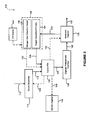
- Figure 2 is a schematic diagram of a second exemplary embodiment of the present invention.
- Figure 3 is a chart showing a suitable exemplary PSA cycle for use with the ozone PSA system.
- directional terms may be used in the specification and claims to describe portions of the present invention (e.g., upper, lower, left, right, etc.). These directional terms are merely intended to assist in describing and claiming the invention and are not intended to limit the invention in any way.
- the methods according to the present invention provide an efficient manner in which to recover unreacted oxygen from an ozone-generation process so that the effluent may be efficiently delivered to an anaerobic digestion process, while maintaining high efficiency in the ozone-generation system.
- Anaerobic digestion involves a series of processes in which microorganisms break down biodegradable material in the relative absence of oxygen.
- the digestion process begins with bacterial hydrolysis of the feed material in order to break down insoluble organic polymers such as carbohydrates and make them available for reaction with other bacteria.
- Acidogenic bacteria then convert the sugars and amino acids into carbon dioxide, hydrogen, ammonia, and organic acids.
- Acetogenic bacteria then convert the resulting organic acids into acetic acid, along with additional ammonia, hydrogen, and carbon dioxide.
- methanogens convert these products into methane and carbon dioxide (the primary components of biogas).
- the produced digestate can be further separated into a nutrient-rich fertilizer and a wastewater stream.
- the wastewater stream is further treated, typically via aerobic digestion, before being discharged or possibly reused.
- Biogas which as noted above primarily comprises methane and carbon dioxide. This biogas can be used directly as cooking fuel, in combined heat and power gas engines, or upgraded to natural gas-quality biomethane.
- the utilization of biogas as a fuel source helps reduce reliance on fossil fuels.
- organic materials can be processed via anaerobic digestion.
- some organic waste is recalcitrant in nature and is difficult for the bacteria in the anaerobic digester to digest.
- polyphenols are an organic byproduct of the fermentation process, but are not biodegradable. Left untreated by the anaerobic digestion, this type of waste is typically removed with the digestate and therefore never converted into biogas.
- Other types of organic waste may be toxic to the bacteria located in the anaerobic digester and therefore, if not pretreated, this waste would make the digester process difficult to control.
- Preozonation of these feed stocks has been shown to break up the polyphenols and other recalcitrant molecules into smaller organic molecules that are more easily biodegradable.
- ozone can react with compounds that are toxic to the digestion bacteria in order to render these compounds non-toxic to the bacteria.
- Ozone gas is commonly produced in a corona discharge-based generator from air or high-purity oxygen.
- the typical concentration of ozone in gas phase that is produced ranges from 3-14%, depending on the generator power and the concentration of oxygen that is used in the gas feed for ozone generation.
- the total cost of producing ozone is generally calculated as the sum of the power costs to operate the corona discharge generator and the cost of oxygen (or compressed air) that is used for the gas feed. For a given ozone production rate, the power required to operate an air-fed system is much greater than the power required to operate a high-purity oxygen-fed system. Typically, for larger systems that require high ozone generation, oxygen is the more economical choice for the feed gas.
- excess oxygen not be introduced because the oxygen will lower the quality of the generated biogas by promoting aerobic digestion and CO 2 production.
- excess oxygen accumulation in the biogas can be a potential safety hazard if a gas mixture that contains methane, inert gases, and oxygen falls between the lower and upper flammibility limits.
- FIG. 1 shows a schematic diagram of an exemplary system 10. Initially, a high-purity oxygen stream 12 enters an ozone generator 14, where a portion (typically 3-14% by weight) of the oxygen is converted into ozone.
- the high-purity oxygen stream may, for example, be comprised of at least 95% oxygen by weight if it is a liquid oxygen source or at least 90% oxygen by weight if it is a vacuum swing adsorption source.
- the effluent stream 16, which comprises ozone and the unreacted oxygen then exits the ozone generator 14 and is delivered to a pressure swing adsorption ("PSA") system 20.
- PSA pressure swing adsorption
- the effluent stream 16 comprises at least 4% ozone by weight and at least 50% oxygen by weight.
- the PSA system 20 is used to recover the unreacted oxygen from the effluent stream 16 and, as described below, to provide a carrier gas with a sufficiently low percentage of oxygen to transport ozone to an anaerobic digester 28.
- the generated ozone may be separated from the oxygen stream through the use of a system having an ozone-permeable membrane.
- the ozone is selectively adsorbed from the ozone generator outlet stream (e.g., effluent stream 16) onto a sieve in an adsorption bed, and then desorbed from the sieve using a sweep gas after the unreacted oxygen gas has been collected and removed from the PSA cycle.
- the ozone generator outlet stream e.g., effluent stream 16
- a portion of the ozone-depleted oxygen that is collected from the PSA cycle may be routed directly to an aerobic digester, and the remainder of the oxygen may be compressed and delivered back to the ozone generator.
- the gas stream that includes the unreacted oxygen comprises at least 50%, and more preferably at least 80%, oxygen by weight. Referring back to the embodiment of Figure 1 , once the unreacted oxygen has been removed from the PSA system 20, the ozone that has been adsorbed in the adsorption bed is then desorbed by a sweep gas 18. Because it is desirable to limit the amount of oxygen that is delivered to the anaerobic digester, the sweep gas 18 should have less than a predetermined percentage of oxygen.
- the sweep gas 18 may comprise, for example, air, nitrogen, CO 2 , or a mixture thereof.
- the oxygen content in air may be too high to be suitable for use as a sweep gas that enters directly into an anaerobic digester.
- the predetermined percentage of oxygen in the sweep gas 18 may be no more than 18%.
- the combined sweep gas 18 and desorbed ozone then exit the PSA system 20 via effluent stream 22.
- PSA cycles and systems are well known in the relevant art.
- One example of a suitable PSA cycle and system is taught in U.S. Patent Application Publication No. US2010/0189635A1 , entitled Pressure Swing Adsorption Cycle for Ozone Production, the entire contents of which are incorporated herein by reference as if fully set forth.
- Figure 3 also shows a suitable exemplary PSA cycle for use with the PSA ozone systems and methods according to the present invention.
- the effluent stream 22 before the effluent stream 22 is delivered downstream from the PSA system 20, it may be desirable to vent off an initial portion of the effluent stream 22 because oxygen that has not been removed from the PSA system 20 may be present in a concentration that is higher than the desired concentration in the initial portion of the effluent stream 22.
- the effluent stream 22 containing the ozone and sweep gas may be directed into a digester pretreatment chamber 24 that is in fluid flow communication with and located downstream from the PSA system 20.
- the ozone is used to pretreat (preozonate) the feed stock (wastewater) provided in stream 25 that is to be treated.
- the ozone in the effluent stream 22 is allowed to contact the wastewater in the digester pretreatment chamber 24.
- the digester pretreatment chamber 24 is in fluid flow communication with the anaerobic digester 28.
- An effluent stream 26 that exits the digester pretreatment chamber 24 enters the anaerobic digester 28, where it continues to be placed in contact and react with the feed stock. Due to the limited presence of oxygen in the effluent stream 22 that enters the digester pretreatment chamber 24, the dissolved oxygen content of the effluent stream 26 that exits from the digester pretreatment chamber 24 is lower than it would be in a feed stream pretreated with a mixed oxygen/ozone stream. In some embodiments, the percentage of oxygen in the effluent stream 26 should be no more than 18%. In alternate embodiments, it may be preferable that the percentage of oxygen in the effluent stream 26 is substantially less than 18%.
- the liquid-phase portion of the treated stock may then exit the system 10 via liquid effluent stream 30, and the gas-phase portion of the treated stock may exit the system 10 via gas effluent stream 32.
- the anaerobic digestion process could be used with feed stocks such as animal manure, waste sludge, or food and beverage processing waste such as stillage and vinasse.
- the anaerobic digester could be fed with specially-grown energy crops such as silage for dedicated biogas production.
- a second embodiment of an exemplary system 110 is shown schematically in Figure 2 .
- elements of the system 110 that are the same as elements in the first embodiment of the system 10 are given a reference numeral increased by 100.
- the ozone generator 14 of the first embodiment of the system 10 is the same as the ozone generator 114 of the second embodiment of the system 110.
- some features of this embodiment that are shared with the first embodiment are numbered in Figure 2 , but are not repeated in the specification.
- the gas effluent stream 132 that exits the anaerobic digester 128 is routed to an apparatus for performing a biogas separation process 134.
- This process separates the biogas from the other gaseous components of the gas effluent stream 132.
- the effluent stream 118 exiting from the biogas separation process 134 is used as the sweep gas that enters the PSA system 120 in order to desorb the ozone from the adsorption bed in the PSA system 120.
- nitrogen may preferably be used as the sweep gas because it is relatively unreactive and may assist to control the pH of the biogas.
- the sweep gas is comprised of at least 90% nitrogen by volume.
- the sweep gas may consist essentially of a mixture of carbon dioxide and nitrogen.
- the nitrogen that is used to sweep the ozone gas from the PSA system 120 into the anaerobic digester 128 may be routed to the biogas separation process 134, and then delivered as the effluent stream 118 exiting the biogas separation process 134 to be reused again as a sweep gas in the PSA system 120.
- the biogas in the biogas separation process 134 is separated into a first component stream comprising carbon dioxide and a second component stream comprising methane, and the carbon dioxide of the first component stream is used as the effluent stream 118 that exits the biogas separation process 134 to be used again as the sweep gas in the PSA system 120.
- a source of liquid nitrogen (“LIN”) 144 may be delivered via line 146 and used indirectly (via a heat-exchanger 148) to cool and condense the methane in the biogas during the biogas separation process 134.
- This methane may comprise the methane of the second component stream mentioned above. This heat-exhange process will tend to cause some or all of the LIN to vaporize into a gas phase.
- this converted nitrogen gas (vapor) may be collected in a vessel 150. The collected nitrogen gas may then be delivered from the vessel 150 via output line 152 to the PSA system 120, where it is used as at least a portion of the sweep gas that desorbs the the ozone from the PSA system 120 in accordance with the herein disclosed systems and methods.
Landscapes
- Life Sciences & Earth Sciences (AREA)
- Organic Chemistry (AREA)
- Engineering & Computer Science (AREA)
- Environmental & Geological Engineering (AREA)
- Water Supply & Treatment (AREA)
- Chemical & Material Sciences (AREA)
- Hydrology & Water Resources (AREA)
- Microbiology (AREA)
- Biodiversity & Conservation Biology (AREA)
- Treatment Of Water By Oxidation Or Reduction (AREA)
- Oxygen, Ozone, And Oxides In General (AREA)
- Water Treatment By Sorption (AREA)
- Treatment Of Sludge (AREA)
Abstract
(a) generating a first gas stream comprising at least 4% ozone by weight and at least 50% oxygen by weight;
(b) separating at least a portion of the ozone from the first gas stream;
(c) forming a second gas stream comprising at least a portion of the ozone that was separated from the first gas stream in step (b), the second gas stream having no more than 18% oxygen by weight;
(d) treating wastewater using an anaerobic digestion process; and
(e) contacting the second gas stream with at least a portion of the wastewater either before the wastewater is treated using anaerobic digestion process and/or while the wastewater is treated using the anaerobic digestion process.
Description
- Ozone (O3) is a powerful disinfectant with many industrial and commercial applications. For example, ozone is used to oxidize organic contaminants from drinking water, including the naturally occurring taste- and odor-causing compounds. Ozone is also used in the effluent from the secondary treatment of wastewater to remove trace organic contaminants and endocrine disrupting compounds (EDCs) from the water before reuse as indirect potable water or discharge to a water body.
- Ozone gas (O3) is commonly produced in a corona discharge-based generator from air or high-purity oxygen (O2). For larger ozone needs, oxygen is generally the less expensive option for a source gas. The conversion of oxygen into ozone in commercial corona discharge generators is typically between 3 and 14%, and in certain applications the resulting oxygen-ozone mixture is provided as a product directly to the downstream user without further treatment.
- It has been found that ozone may also be used to enhance anaerobic digestion by converting difficult to biodegrade compounds into more easily biodegradable compounds. Ozone may be used in this way to enhance biogas production from anaerobic digestion. For anaerobic digestion of sludge, it is theorized that the ozone lyses the cell membranes, thereby exposing the more easily biodegradable cytoplasm of the bacteria. Fermentation waste, often called vinasse, can contain compounds such as phenols that are toxic to the anaerobic bacteria and other larger carbon-based compounds that are recalcitrant. Pretreating this feed with ozone will reduce or eliminate the toxic compounds and make the larger compounds more biodegradable, thereby reducing the required residence time in the digester. In an anaerobic digestion process, it is undesirable to have excess oxygen present because the oxygen reduces the methane (CH4) yield by promoting aerobic digestion.
- Accordingly, there is a need for an improved method of recovering unreacted oxygen from an ozone-generation process so that the effluent may be efficiently used for an anaerobic digestion process, while maintaining high efficiency in the ozone-generation system.
- In one respect, the invention is a method comprising: (a) generating a first gas stream comprising at least 4% ozone by weight and at least 50% oxygen by weight; (b) separating at least a portion of the ozone from the first gas stream; (c) forming a second gas stream comprising at least a portion of the ozone that was separated from the first gas stream in step (b), the second gas stream having no more than 18% oxygen by weight; (d) treating wastewater using an anaerobic digestion process; and (e) contacting the second gas stream with at least a portion of the wastewater either before the wastewater is treated using the anaerobic digestion process or while the wastewater is treated using the anaerobic digestion process.
- In another respect, the invention is a method for treating wastewater with ozone, the method comprising: (a) generating a first gas stream comprising at least 4% ozone by weight and at least 50% oxygen by weight; (b) transferring at least a portion of the ozone from the first gas stream to a second gas stream using a pressure swing adsorption cycle, the second gas stream comprising no more than 18% oxygen by weight; and (c) bringing the second gas stream in contact with the wastewater either upstream from an anaerobic digester or within the anaerobic digester.
- In yet another respect, the invention is a system for treating wastewater with ozone, the system comprising: an ozone generator that is operationally configured to generate a first gas stream from a source of oxygen, the first gas stream comprising at least 4% ozone by weight and at least 50% oxygen by weight; a pressure swing adsorption system that is operationally configured to (1) receive the first gas stream and to transfer at least a portion of the ozone from the first gas stream to a second gas stream, (2) discharge the second gas stream, and (3) discharge a third gas stream, the second gas stream comprising no more than 18% oxygen by weight, the third gas stream comprising gas remaining from the first gas stream after the at least a portion of the ozone is transferred to the second gas stream, the third gas stream comprising at least 50% oxygen by weight; and a first interface that is operationally configured to bring the second gas stream in contact with wastewater either within an anaerobic digester or within a first vessel that is in fluid flow communication with the anaerobic digester.
- The following represent further aspects of the invention.
-
Aspect 1. A method comprising: - (a) generating a first gas stream comprising at least 4% ozone by weight and at least 50% oxygen by weight;
- (b) separating at least a portion of the ozone from the first gas stream;
- (c) forming a second gas stream comprising at least a portion of the ozone that was separated from the first gas stream in step (b), the second gas stream having no more than 18% oxygen by weight;
- (d) treating wastewater using an anaerobic digestion process; and
- (e) contacting the second gas stream with at least a portion of the wastewater either before the wastewater is treated using the anaerobic digestion process or while the wastewater is treated using the anaerobic digestion process.
-
Aspect 2. The method of any ofAspects 1 and 3-9, wherein steps (b) and (c) comprise steps of a pressure swing adsorption cycle. -
Aspect 3. The method of any ofAspects -
Aspect 4. The method of any of Aspects 1-3 and 5-9, wherein step (c) comprises forming a second gas stream comprising a sweep gas and at least a portion of the ozone that was separated from the first gas stream in step (b), the second gas stream having no more than 18% oxygen by weight and the sweep gas consisting essentially of a mixture of carbon dioxide and nitrogen. -
Aspect 5. The method of any of Aspects 1-4 and 6-9, further comprising: - (f) separating a third gas stream from the first gas stream, the third gas stream comprising at least 80% oxygen; and
- (g) delivering the third gas stream to an aerobic digester.
-
Aspect 6. The method of any of Aspects 1-5 and 7-9, further comprising: - (f) separating a third gas stream from the first gas stream, the third gas stream comprising at least 80% oxygen; and
- (g) using the third gas stream as at least a portion of a supply gas stream for an ozone generator used to perform step (a).
-
Aspect 7. The method of any of Aspects 1-6, 8, and 9, wherein the performance of step (e) begins in a digester pretreatment chamber located upstream from and in fluid flow communication with an anaerobic digester in which step (d) is performed. -
Aspect 8. The method of any of Aspects 1-7 and 9, further comprising: - (f) enabling a gas-phase effluent to flow from an anaerobic digester to a biogas separator;
- (g) separating carbon dioxide contained in the gas-phase effluent from biogas; and
- (h) reusing in step (c) the carbon dioxide separated during step (g).
-
Aspect 9. The method of any of Aspects 3-8, further comprising: - (f) cooling at least a portion of biogas from an anaerobic digester using liquid nitrogen, which results in at least some of the liquid nitrogen becoming nitrogen vapor; and
- (g) using the nitrogen vapor as at least a portion of the sweep gas.
-
Aspect 10. A method for treating wastewater with ozone, the method comprising: - (a) generating a first gas stream comprising at least 4% ozone by weight and at least 50% oxygen by weight;
- (b) transferring at least a portion of the ozone from the first gas stream to a second gas stream using a pressure swing adsorption cycle, the second gas stream comprising no more than 18% oxygen by weight; and
- (c) bringing the second gas stream into contact with wastewater either upstream from an anaerobic digester or within an anaerobic digester.
- Aspect 11. The method of any of
Aspects -
Aspect 12. The method of any ofAspects 10, 11, and 13, further comprising: - (d) enabling a gas-phase effluent stream to flow from the anaerobic digester to a biogas separator;
- (e) separating the biogas into a first component stream comprising carbon dioxide and a second component stream comprising methane; and
- (f) reusing the first component stream as the second gas stream of step (b).
- Aspect 13. The method of any of Aspects 10-12, further comprising:
- (d) enabling a gas-phase effluent stream to flow from the anaerobic digester to a biogas separator;
- (e) separating the biogas into a first component stream comprising carbon dioxide and a second component stream comprising methane;
- (f) cooling the second component stream using liquid nitrogen, which results in at least some of the liquid nitrogen becoming nitrogen vapor; and
- (g) using at least one of the first component stream and the nitrogen vapor as the second gas stream of step (b).
-
Aspect 14. A system for treating wastewater with ozone, the system comprising: - an ozone generator that is operationally configured to generate a first gas stream from a source of oxygen, the first gas stream comprising at least 4% ozone by weight and at least 50% oxygen by weight;
- a pressure swing adsorption system that is operationally configured to receive the first gas stream and to transfer at least a portion of the ozone from the first gas stream to a second gas stream, to discharge the second gas stream, and to discharge a third gas stream, the second gas stream comprising no more than 18% oxygen by weight, the third gas stream comprising gas remaining from the first gas stream after the at least a portion of the ozone is transferred to the second gas stream, the third gas stream comprising at least 50% oxygen by weight; and
- a first interface that is operationally configured to bring the second gas stream into contact with wastewater either within an anaerobic digester or within a first vessel that is in fluid flow communication with an anaerobic digester.
- Aspect 15. The system of any of
Aspects 14 and 16-20, wherein the pressure swing adsorption system comprises a sieve, the pressure swing adsorption system being operationally configured to adsorb the at least a portion of the ozone onto the sieve, then to desorb at least a portion of the adsorbed ozone using a sweep gas, the second gas stream comprising the desorbed ozone and the sweep gas. -
Aspect 16. The system of any ofAspects 14, 15, and 17-20, wherein the sweep gas comprises at least 90% nitrogen by volume. - Aspect 17. The system of any of Aspects 14-16 and 18-20, further comprising an aerobic digester and a second interface that is operationally configured to bring the third gas stream in contact with the wastewater either within the aerobic digester or within a second vessel that is in fluid flow communication with the aerobic digester.
-
Aspect 18. The system of any of Aspects 14-17, 19, and 20, further comprising an output line in fluid flow communication with the pressure swing adsorption system and the ozone generator, the output line being operationally configured to return the third gas stream to the ozone generator. - Aspect 19. The system of any of Aspects 14-18 and 20, further comprising a biogas separator in fluid flow communication with the anaerobic digester, the biogas separator being operationally configured to separate the biogas into a first component stream comprising carbon dioxide and a second component stream comprising methane, and wherein the sweep gas comprises the first component stream.
-
Aspect 20. The system of any of Aspects 14-19, further comprising a heat exchanger that is operationally configured to cool the second component stream using liquid nitrogen and a third vessel that is operationally configured to receive nitrogen vapor from the heat exchanger, wherein the sweep gas comprises the nitrogen vapor. -
Figure 1 is a schematic diagram of a first exemplary embodiment of the present invention; -
Figure 2 is a schematic diagram of a second exemplary embodiment of the present invention; and -
Figure 3 is a chart showing a suitable exemplary PSA cycle for use with the ozone PSA system. - Unless otherwise stated herein, any and all percentages identified in the specification, drawings and claims should be understood to be on a weight percentage basis.
- To aid in describing the invention, directional terms may be used in the specification and claims to describe portions of the present invention (e.g., upper, lower, left, right, etc.). These directional terms are merely intended to assist in describing and claiming the invention and are not intended to limit the invention in any way.
- In the claims, letters are used to identify claimed steps (e.g., (a), (b), and (c)). These letters are used to aid in referring to the method steps and are not intended to indicate the order in which claimed steps are performed, unless and only to the extent that such order is specifically recited in the claims.
- The methods according to the present invention provide an efficient manner in which to recover unreacted oxygen from an ozone-generation process so that the effluent may be efficiently delivered to an anaerobic digestion process, while maintaining high efficiency in the ozone-generation system.
- Anaerobic digestion involves a series of processes in which microorganisms break down biodegradable material in the relative absence of oxygen. The digestion process begins with bacterial hydrolysis of the feed material in order to break down insoluble organic polymers such as carbohydrates and make them available for reaction with other bacteria. Acidogenic bacteria then convert the sugars and amino acids into carbon dioxide, hydrogen, ammonia, and organic acids. Acetogenic bacteria then convert the resulting organic acids into acetic acid, along with additional ammonia, hydrogen, and carbon dioxide. Finally, methanogens convert these products into methane and carbon dioxide (the primary components of biogas). The produced digestate can be further separated into a nutrient-rich fertilizer and a wastewater stream. The wastewater stream is further treated, typically via aerobic digestion, before being discharged or possibly reused.
- Anaerobic digestion is widely used as a source of renewable energy. The process produces biogas, which as noted above primarily comprises methane and carbon dioxide. This biogas can be used directly as cooking fuel, in combined heat and power gas engines, or upgraded to natural gas-quality biomethane. The utilization of biogas as a fuel source helps reduce reliance on fossil fuels.
- Many organic materials can be processed via anaerobic digestion. However, some organic waste is recalcitrant in nature and is difficult for the bacteria in the anaerobic digester to digest. For example, polyphenols are an organic byproduct of the fermentation process, but are not biodegradable. Left untreated by the anaerobic digestion, this type of waste is typically removed with the digestate and therefore never converted into biogas. Other types of organic waste may be toxic to the bacteria located in the anaerobic digester and therefore, if not pretreated, this waste would make the digester process difficult to control. Preozonation of these feed stocks has been shown to break up the polyphenols and other recalcitrant molecules into smaller organic molecules that are more easily biodegradable. In addition, ozone can react with compounds that are toxic to the digestion bacteria in order to render these compounds non-toxic to the bacteria.
- Ozone gas is commonly produced in a corona discharge-based generator from air or high-purity oxygen. The typical concentration of ozone in gas phase that is produced ranges from 3-14%, depending on the generator power and the concentration of oxygen that is used in the gas feed for ozone generation. The total cost of producing ozone is generally calculated as the sum of the power costs to operate the corona discharge generator and the cost of oxygen (or compressed air) that is used for the gas feed. For a given ozone production rate, the power required to operate an air-fed system is much greater than the power required to operate a high-purity oxygen-fed system. Typically, for larger systems that require high ozone generation, oxygen is the more economical choice for the feed gas.
- On the other hand, for feed stock that is entering an anaerobic digester or ozone pretreatment chamber, it is desirable that excess oxygen not be introduced because the oxygen will lower the quality of the generated biogas by promoting aerobic digestion and CO2 production. In addition, excess oxygen accumulation in the biogas can be a potential safety hazard if a gas mixture that contains methane, inert gases, and oxygen falls between the lower and upper flammibility limits.
- The inventions described herein are systems and methods for producing a gas stream containing ozone and a "carrier" gas that has a limited oxygen content for treatment of organic waste feed stocks. In some embodiments, the maximum oxygen content in the carrier gas may be, for example, 18% by weight. With reference to
Figure 1 , a first exemplary embodiment of the present invention will now be described.Figure 1 shows a schematic diagram of anexemplary system 10. Initially, a high-purity oxygen stream 12 enters anozone generator 14, where a portion (typically 3-14% by weight) of the oxygen is converted into ozone. The high-purity oxygen stream may, for example, be comprised of at least 95% oxygen by weight if it is a liquid oxygen source or at least 90% oxygen by weight if it is a vacuum swing adsorption source. Theeffluent stream 16, which comprises ozone and the unreacted oxygen, then exits theozone generator 14 and is delivered to a pressure swing adsorption ("PSA")system 20. In some embodiments, theeffluent stream 16 comprises at least 4% ozone by weight and at least 50% oxygen by weight. ThePSA system 20 is used to recover the unreacted oxygen from theeffluent stream 16 and, as described below, to provide a carrier gas with a sufficiently low percentage of oxygen to transport ozone to ananaerobic digester 28. In alternate embodiments, the generated ozone may be separated from the oxygen stream through the use of a system having an ozone-permeable membrane. - In a typical PSA cycle, the ozone is selectively adsorbed from the ozone generator outlet stream (e.g., effluent stream 16) onto a sieve in an adsorption bed, and then desorbed from the sieve using a sweep gas after the unreacted oxygen gas has been collected and removed from the PSA cycle. Within the scope of the present invention, it is possible to either compress and deliver the recovered ozone-depleted oxygen back to the
ozone generator 14 viarecycle stream 36, or instead to deliver the recovered ozone-depleted oxygen to an aerobic digester 40-which is located on the same site-viaoutput stream 38. In alternate embodiments, a portion of the ozone-depleted oxygen that is collected from the PSA cycle may be routed directly to an aerobic digester, and the remainder of the oxygen may be compressed and delivered back to the ozone generator. In some embodiments, the gas stream that includes the unreacted oxygen comprises at least 50%, and more preferably at least 80%, oxygen by weight. Referring back to the embodiment ofFigure 1 , once the unreacted oxygen has been removed from thePSA system 20, the ozone that has been adsorbed in the adsorption bed is then desorbed by asweep gas 18. Because it is desirable to limit the amount of oxygen that is delivered to the anaerobic digester, thesweep gas 18 should have less than a predetermined percentage of oxygen. Thesweep gas 18 may comprise, for example, air, nitrogen, CO2, or a mixture thereof. In some alternate embodiments, the oxygen content in air may be too high to be suitable for use as a sweep gas that enters directly into an anaerobic digester. In these embodiments, the predetermined percentage of oxygen in thesweep gas 18 may be no more than 18%. - Referring back to the embodiment of
Figure 1 , the combinedsweep gas 18 and desorbed ozone then exit thePSA system 20 viaeffluent stream 22. PSA cycles and systems are well known in the relevant art. One example of a suitable PSA cycle and system is taught in U.S. Patent Application Publication No.US2010/0189635A1 , entitled Pressure Swing Adsorption Cycle for Ozone Production, the entire contents of which are incorporated herein by reference as if fully set forth. One having ordinary skill in the art will appreciate that the systems and methods for operating a PSA cycle that are taught in the above-noted reference are fully applicable, mutatis mutandis, to the embodiments of the present application.Figure 3 also shows a suitable exemplary PSA cycle for use with the PSA ozone systems and methods according to the present invention. - In some embodiments, before the
effluent stream 22 is delivered downstream from thePSA system 20, it may be desirable to vent off an initial portion of theeffluent stream 22 because oxygen that has not been removed from thePSA system 20 may be present in a concentration that is higher than the desired concentration in the initial portion of theeffluent stream 22. - Referring still to the embodiment of
Figure 1 , in some configurations theeffluent stream 22 containing the ozone and sweep gas may be directed into adigester pretreatment chamber 24 that is in fluid flow communication with and located downstream from thePSA system 20. In thedigester pretreatment chamber 24, the ozone is used to pretreat (preozonate) the feed stock (wastewater) provided instream 25 that is to be treated. In other words, the ozone in theeffluent stream 22 is allowed to contact the wastewater in thedigester pretreatment chamber 24. Thedigester pretreatment chamber 24 is in fluid flow communication with theanaerobic digester 28. Aneffluent stream 26 that exits thedigester pretreatment chamber 24 enters theanaerobic digester 28, where it continues to be placed in contact and react with the feed stock. Due to the limited presence of oxygen in theeffluent stream 22 that enters thedigester pretreatment chamber 24, the dissolved oxygen content of theeffluent stream 26 that exits from thedigester pretreatment chamber 24 is lower than it would be in a feed stream pretreated with a mixed oxygen/ozone stream. In some embodiments, the percentage of oxygen in theeffluent stream 26 should be no more than 18%. In alternate embodiments, it may be preferable that the percentage of oxygen in theeffluent stream 26 is substantially less than 18%. - In alternate embodiments, where a separate vessel for ozone pre-treatment may be unnecessary, it may be possible to omit a digester pretreatment chamber entirely from the system. By way of example only, direct routing of the effluent from the
PSA system 20 to theanaerobic digester 28 is shown schematically inFigure 1 aseffluent stream 42. It should be understood that theeffluent stream 22 is contacted with thewastewater 25 upstream from and/or in the anaerobic digester. - After the anaerobic digestion process has been completed in the
anaerobic digester 28, the liquid-phase portion of the treated stock may then exit thesystem 10 vialiquid effluent stream 30, and the gas-phase portion of the treated stock may exit thesystem 10 viagas effluent stream 32. The anaerobic digestion process could be used with feed stocks such as animal manure, waste sludge, or food and beverage processing waste such as stillage and vinasse. The anaerobic digester could be fed with specially-grown energy crops such as silage for dedicated biogas production. - A second embodiment of an
exemplary system 110 is shown schematically inFigure 2 . In this embodiment, elements of thesystem 110 that are the same as elements in the first embodiment of thesystem 10 are given a reference numeral increased by 100. For example, theozone generator 14 of the first embodiment of thesystem 10 is the same as theozone generator 114 of the second embodiment of thesystem 110. In the interest of clarity, some features of this embodiment that are shared with the first embodiment are numbered inFigure 2 , but are not repeated in the specification. - In the embodiment shown in
Figure 2 , thegas effluent stream 132 that exits theanaerobic digester 128 is routed to an apparatus for performing abiogas separation process 134. This process separates the biogas from the other gaseous components of thegas effluent stream 132. In this embodiment, theeffluent stream 118 exiting from thebiogas separation process 134 is used as the sweep gas that enters thePSA system 120 in order to desorb the ozone from the adsorption bed in thePSA system 120. In some embodiments, nitrogen may preferably be used as the sweep gas because it is relatively unreactive and may assist to control the pH of the biogas. In some embodiments, the sweep gas is comprised of at least 90% nitrogen by volume. In alternate embodiments, the sweep gas may consist essentially of a mixture of carbon dioxide and nitrogen. As described above, the nitrogen that is used to sweep the ozone gas from thePSA system 120 into theanaerobic digester 128 may be routed to thebiogas separation process 134, and then delivered as theeffluent stream 118 exiting thebiogas separation process 134 to be reused again as a sweep gas in thePSA system 120. In some embodiments, the biogas in thebiogas separation process 134 is separated into a first component stream comprising carbon dioxide and a second component stream comprising methane, and the carbon dioxide of the first component stream is used as theeffluent stream 118 that exits thebiogas separation process 134 to be used again as the sweep gas in thePSA system 120. - In alternate embodiments, a source of liquid nitrogen ("LIN") 144 may be delivered via line 146 and used indirectly (via a heat-exchanger 148) to cool and condense the methane in the biogas during the
biogas separation process 134. This methane may comprise the methane of the second component stream mentioned above. This heat-exhange process will tend to cause some or all of the LIN to vaporize into a gas phase. In some embodiments, this converted nitrogen gas (vapor) may be collected in avessel 150. The collected nitrogen gas may then be delivered from thevessel 150 viaoutput line 152 to thePSA system 120, where it is used as at least a portion of the sweep gas that desorbs the the ozone from thePSA system 120 in accordance with the herein disclosed systems and methods. - As such, an invention has been disclosed in terms of preferred embodiments and alternate embodiments thereof. Of course, various changes, modifications, and alterations from the teachings of the present invention may be contemplated by those skilled in the art without departing from the intended spirit and scope thereof. It is intended that the present invention only be limited by the terms of the appended claims.
Claims (15)
- A method comprising:(a) generating a first gas stream comprising at least 4% ozone by weight and at least 50% oxygen by weight;(b) separating at least a portion of the ozone from the first gas stream;(c) forming a second gas stream comprising at least a portion of the ozone that was separated from the first gas stream in step (b), the second gas stream having no more than 18% oxygen by weight;(d) treating wastewater using an anaerobic digestion process; and(e) contacting the second gas stream with at least a portion of the wastewater either before the wastewater is treated using the anaerobic digestion process and/or while the wastewater is treated using the anaerobic digestion process.
- The method of claim 1, wherein steps (b) and (c) comprise steps of a pressure swing adsorption cycle.
- The method of claim 1 or 2, wherein step (c) comprises forming a second gas stream comprising a sweep gas and at least a portion of the ozone that was separated from the first gas stream in step (b), the second gas stream having no more than 18% oxygen by weight.
- The method of claim 3, wherein the sweep gas comprises at least 90% nitrogen by volume and/or consists essentially of a mixture of carbon dioxide and nitrogen.
- The method of claim 3 or 4, further comprising the steps of:enabling a gas-phase effluent to flow from an anaerobic digester to a biogas separator;separating carbon dioxide contained in the gas-phase effluent from biogas; andreusing the carbon dioxide as at least a portion of the sweep gas.
- The method of any one of claims 3 to 5, further comprising the steps of:cooling at least a portion of biogas from an anaerobic digester using liquid nitrogen, which results in at least some of the liquid nitrogen becoming nitrogen vapor; andusing the nitrogen vapor as at least a portion of the sweep gas.
- The method of any preceding claim, further comprising the step of:separating a third gas stream from the first gas stream, the third gas stream comprising at least 80% oxygen.
- The method of claim 7, further comprising the step or steps of:delivering the third gas stream or a portion thereof to an aerobic digester; and/orusing the third gas stream or a portion thereof as at least a portion of a supply gas stream for an ozone generator used to perform step (a).
- The method of any preceding claim, wherein the performance of step (e) begins in a digester pretreatment chamber located upstream from and in fluid flow communication with an anaerobic digester in which step (d) is performed.
- A system for treating wastewater with ozone, the system comprising:an ozone generator that is operationally configured to generate a first gas stream from a source of oxygen, the first gas stream comprising at least 4% ozone by weight and at least 50% oxygen by weight;a pressure swing adsorption system that is operationally configured to receive the first gas stream and to transfer at least a portion of the ozone from the first gas stream to a second gas stream, to discharge the second gas stream, and to discharge a third gas stream, the second gas stream comprising no more than 18% oxygen by weight, the third gas stream comprising gas remaining from the first gas stream after the at least a portion of the ozone is transferred to the second gas stream, the third gas stream comprising at least 50% oxygen by weight; anda first interface that is operationally configured to bring the second gas stream into contact with wastewater either within an anaerobic digester and/or within a first vessel that is in fluid flow communication with an anaerobic digester.
- The system of claim 10, wherein the pressure swing adsorption system comprises a sieve, the pressure swing adsorption system being operationally configured to adsorb the at least a portion of the ozone onto the sieve, then to desorb at least a portion of the adsorbed ozone using a sweep gas, the second gas stream comprising the desorbed ozone and the sweep gas.
- The system of claim 11, further comprising a biogas separator in fluid flow communication with the anaerobic digester, the biogas separator being operationally configured to separate a biogas from the anaerobic digester into a first component stream comprising carbon dioxide and a second component stream comprising methane, and wherein the sweep gas comprises the first component stream.
- The system of claim 12, further comprising a heat exchanger that is operationally configured to cool the second component stream using liquid nitrogen and a third vessel that is operationally configured to receive nitrogen vapor from the heat exchanger, wherein the sweep gas comprises the nitrogen vapor.
- The system of any one of claims 10 to 13, further comprising an aerobic digester and a second interface that is operationally configured to bring the third gas stream or a portion thereof into contact with the wastewater either within the aerobic digester or within a second vessel that is in fluid flow communication with the aerobic digester.
- The system of any one of claims 10 to 14, further comprising an output line in fluid flow communication with the pressure swing adsorption system and the ozone generator, the output line being operationally configured to return the third gas stream or a portion thereof to the ozone generator.
Applications Claiming Priority (1)
| Application Number | Priority Date | Filing Date | Title |
|---|---|---|---|
| US13/523,083 US9126855B2 (en) | 2012-06-14 | 2012-06-14 | Methods for using ozone to enhance anaerobic digestion |
Publications (1)
| Publication Number | Publication Date |
|---|---|
| EP2674400A1 true EP2674400A1 (en) | 2013-12-18 |
Family
ID=48607144
Family Applications (1)
| Application Number | Title | Priority Date | Filing Date |
|---|---|---|---|
| EP20130171875 Withdrawn EP2674400A1 (en) | 2012-06-14 | 2013-06-13 | Methods for using ozone to enhance anaerobic digestion |
Country Status (8)
| Country | Link |
|---|---|
| US (1) | US9126855B2 (en) |
| EP (1) | EP2674400A1 (en) |
| KR (1) | KR20130140584A (en) |
| CN (1) | CN103508560B (en) |
| BR (1) | BR102013014783A2 (en) |
| CA (1) | CA2818365C (en) |
| CL (1) | CL2013001593A1 (en) |
| TW (1) | TWI522321B (en) |
Families Citing this family (5)
| Publication number | Priority date | Publication date | Assignee | Title |
|---|---|---|---|---|
| CA2856196C (en) | 2011-12-06 | 2020-09-01 | Masco Corporation Of Indiana | Ozone distribution in a faucet |
| WO2016004247A1 (en) * | 2014-07-03 | 2016-01-07 | Renature, Inc. | System and method of treating organic material |
| WO2017112795A1 (en) | 2015-12-21 | 2017-06-29 | Delta Faucet Company | Fluid delivery system including a disinfectant device |
| CN105836974B (en) * | 2016-05-24 | 2019-07-16 | 华南理工大学 | A kind of garbage leachate treatment device and method |
| DE102024112561A1 (en) * | 2024-05-03 | 2025-11-06 | Vorn Bioenergy GmbH | Biomethane production through anaerobic fermentation |
Citations (5)
| Publication number | Priority date | Publication date | Assignee | Title |
|---|---|---|---|---|
| JPH06269797A (en) * | 1993-03-23 | 1994-09-27 | Kurita Water Ind Ltd | Treatment of waste water incorporating telephthalic acid |
| US5846298A (en) * | 1997-05-09 | 1998-12-08 | Air Products And Chemicals, Inc. | Ozone recovery by zeolite adsorbents |
| US20060243660A1 (en) * | 2003-03-31 | 2006-11-02 | Kazumasa Kamachi | Method and system for the methane fermentation treatment of wastewater containing sulfur compound |
| US20100189635A1 (en) | 2009-01-23 | 2010-07-29 | Air Products And Chemicals, Inc. | Pressure Swing Adsorption Cycle for Ozone Production |
| US20120080374A1 (en) * | 2010-10-04 | 2012-04-05 | Pacific Advanced Civil Engineering, Inc. | Ozone and anaerobic biological pretreatment for a desalination process |
Family Cites Families (14)
| Publication number | Priority date | Publication date | Assignee | Title |
|---|---|---|---|---|
| US5810910A (en) | 1995-10-06 | 1998-09-22 | Air Products And Chemicals, Inc. | Adsorbents for ozone recovery from gas mixtures |
| GB9712165D0 (en) | 1997-06-11 | 1997-08-13 | Air Prod & Chem | Processes and apparatus for producing a gaseous product |
| US6500340B1 (en) | 1998-07-20 | 2002-12-31 | Western Environmental Engineering Company | Pasteurizing sludge to exceptional quality |
| JP4200601B2 (en) | 1999-07-14 | 2008-12-24 | 栗田工業株式会社 | Anaerobic digestion treatment method of organic sludge |
| JP2001104971A (en) | 1999-10-07 | 2001-04-17 | Nec Corp | Method and equipment for treating waste water |
| US6365048B1 (en) * | 2000-07-19 | 2002-04-02 | Board Of Trustees Of Michigan State University | Method for treatment of organic matter contaminated drinking water |
| TWI346090B (en) | 2002-06-07 | 2011-08-01 | Ebara Engineering Service Co Ltd | Method and apparatus for treating organic wastewater |
| US7819947B2 (en) | 2008-02-12 | 2010-10-26 | Air Products And Chemical, Inc. | Ozone production by pressure swing adsorption using a protective adsorbed component |
| US8337674B2 (en) | 2009-01-23 | 2012-12-25 | Air Products And Chemicals, Inc. | Ozone production by pressure swing adsorption using a noble gas additive |
| TR200908245A2 (en) | 2009-11-04 | 2011-05-23 | Ferd� G�K�Ay Celal | Aerobic waste sludge digestion process with sequential, batch ozone dosing |
| WO2011065805A2 (en) * | 2009-11-30 | 2011-06-03 | (주)에이알케이 | Exhaust oxygen recycling apparatus for ozone treatment equipment, and ozone-using system having same |
| CN102725050A (en) | 2009-11-30 | 2012-10-10 | 株式会社Ark | Exhaust oxygen recycling apparatus for ozone treatment equipment, and ozone-using system having same |
| KR101027809B1 (en) | 2010-02-12 | 2011-04-07 | 한솔이엠이(주) | Liquefied biomethane production equipment |
| KR101309422B1 (en) | 2010-11-29 | 2013-09-24 | 에스워터(주) | Pre-treatment apparatus for anaerobic digestion of livestock excretions |
-
2012
- 2012-06-14 US US13/523,083 patent/US9126855B2/en not_active Expired - Fee Related
-
2013
- 2013-06-04 CL CL2013001593A patent/CL2013001593A1/en unknown
- 2013-06-11 CA CA2818365A patent/CA2818365C/en not_active Expired - Fee Related
- 2013-06-13 TW TW102120976A patent/TWI522321B/en not_active IP Right Cessation
- 2013-06-13 EP EP20130171875 patent/EP2674400A1/en not_active Withdrawn
- 2013-06-13 BR BRBR102013014783-4A patent/BR102013014783A2/en not_active IP Right Cessation
- 2013-06-14 KR KR1020130068219A patent/KR20130140584A/en not_active Ceased
- 2013-06-14 CN CN201310235317.9A patent/CN103508560B/en not_active Expired - Fee Related
Patent Citations (5)
| Publication number | Priority date | Publication date | Assignee | Title |
|---|---|---|---|---|
| JPH06269797A (en) * | 1993-03-23 | 1994-09-27 | Kurita Water Ind Ltd | Treatment of waste water incorporating telephthalic acid |
| US5846298A (en) * | 1997-05-09 | 1998-12-08 | Air Products And Chemicals, Inc. | Ozone recovery by zeolite adsorbents |
| US20060243660A1 (en) * | 2003-03-31 | 2006-11-02 | Kazumasa Kamachi | Method and system for the methane fermentation treatment of wastewater containing sulfur compound |
| US20100189635A1 (en) | 2009-01-23 | 2010-07-29 | Air Products And Chemicals, Inc. | Pressure Swing Adsorption Cycle for Ozone Production |
| US20120080374A1 (en) * | 2010-10-04 | 2012-04-05 | Pacific Advanced Civil Engineering, Inc. | Ozone and anaerobic biological pretreatment for a desalination process |
Non-Patent Citations (1)
| Title |
|---|
| WEEMAES M ET AL: "Anaerobic digestion of ozonized biosolids", WATER RESEARCH, ELSEVIER, AMSTERDAM, NL, vol. 34, no. 8, 1 June 2000 (2000-06-01), pages 2330 - 2336, XP004193850, ISSN: 0043-1354, DOI: 10.1016/S0043-1354(99)00373-5 * |
Also Published As
| Publication number | Publication date |
|---|---|
| KR20130140584A (en) | 2013-12-24 |
| TW201350443A (en) | 2013-12-16 |
| CN103508560A (en) | 2014-01-15 |
| TWI522321B (en) | 2016-02-21 |
| BR102013014783A2 (en) | 2015-08-11 |
| CN103508560B (en) | 2015-05-20 |
| CA2818365C (en) | 2016-01-19 |
| US9126855B2 (en) | 2015-09-08 |
| US20130334133A1 (en) | 2013-12-19 |
| CA2818365A1 (en) | 2013-12-14 |
| CL2013001593A1 (en) | 2014-07-25 |
Similar Documents
| Publication | Publication Date | Title |
|---|---|---|
| Lytras et al. | Food waste valorization based on anaerobic digestion | |
| Zappi et al. | A review of hydrogen production from anaerobic digestion | |
| CA2818365C (en) | Methods for using ozone to enhance anaerobic digestion | |
| US10927008B2 (en) | Method and device for upgrading of biogas and hydrogen production from anaerobic fermentation of biological material | |
| CA2660181C (en) | Method and apparatus using hydrogen peroxide and microwave system for slurries treatment | |
| US8158378B2 (en) | Utilizing waste tail gas from a separation unit biogas upgrade systems as beneficial fuel | |
| US20110020862A1 (en) | Biological solids processing system and method | |
| KR20170050087A (en) | Integrated process system of biogas pre-treatment for high temperature fuel cell | |
| CN111094532A (en) | Device and method for converting refractory organic matters into biogas | |
| US8679314B1 (en) | Methane production using resin-wafer electrodeionization | |
| CN104768880B (en) | A method for in situ thermal alkaline treatment of organic waste to enhance solid anaerobic degradation and biogas generation | |
| Lapa et al. | Production of biogas and BioH2: biochemical methods | |
| KR101362118B1 (en) | Generating device of organic acid and biogass using organic waste | |
| Haan et al. | Zero waste technologies for sustainable development in palm oil mills | |
| KR101814492B1 (en) | simultaneous producting system and method of various bio fuel using biomass | |
| KR20220010930A (en) | Plant and method for treatment of organic waste | |
| KR102347499B1 (en) | Biofuel production system using organic waste and biofuel production method using same | |
| Anand et al. | Recent developments in energy recovery from sewage treatment plant sludge via anaerobic digestion | |
| KR101499741B1 (en) | Highly enriched refining apparatus of biomethane from bio gas | |
| KR101906356B1 (en) | Anaerobic digestion apparatus and method for treating organic waste by gas recirculation | |
| Song et al. | Ammonia inhibition alleviation and nitrogen recovery in anaerobic digestion of rich-nitrogen substrate via ammonia stripping: a review | |
| NL2037845B1 (en) | In-situ upgrading of biogas produced with anaerobic digestion in-situ opwaarderen van biogas geproduceerd met anaerobe vergisting | |
| JP2025118442A (en) | Methane generation device, methane generation method, and power generation system | |
| JP2024086396A (en) | METHOD FOR PRODUCING METHANE AND APPARATUS FOR PRODUCING METHANE | |
| US20210238520A1 (en) | Plant and process for the production of desulfurized biogas |
Legal Events
| Date | Code | Title | Description |
|---|---|---|---|
| PUAI | Public reference made under article 153(3) epc to a published international application that has entered the european phase |
Free format text: ORIGINAL CODE: 0009012 |
|
| AK | Designated contracting states |
Kind code of ref document: A1 Designated state(s): AL AT BE BG CH CY CZ DE DK EE ES FI FR GB GR HR HU IE IS IT LI LT LU LV MC MK MT NL NO PL PT RO RS SE SI SK SM TR |
|
| AX | Request for extension of the european patent |
Extension state: BA ME |
|
| 17P | Request for examination filed |
Effective date: 20140617 |
|
| RBV | Designated contracting states (corrected) |
Designated state(s): AL AT BE BG CH CY CZ DE DK EE ES FI FR GB GR HR HU IE IS IT LI LT LU LV MC MK MT NL NO PL PT RO RS SE SI SK SM TR |
|
| 17Q | First examination report despatched |
Effective date: 20170901 |
|
| STAA | Information on the status of an ep patent application or granted ep patent |
Free format text: STATUS: THE APPLICATION IS DEEMED TO BE WITHDRAWN |
|
| 18D | Application deemed to be withdrawn |
Effective date: 20180112 |