EP2673704B1 - Method and apparatus for moving a software object - Google Patents
Method and apparatus for moving a software object Download PDFInfo
- Publication number
- EP2673704B1 EP2673704B1 EP11863212.4A EP11863212A EP2673704B1 EP 2673704 B1 EP2673704 B1 EP 2673704B1 EP 11863212 A EP11863212 A EP 11863212A EP 2673704 B1 EP2673704 B1 EP 2673704B1
- Authority
- EP
- European Patent Office
- Prior art keywords
- software
- destination
- moved
- constraint
- deployed
- Prior art date
- Legal status (The legal status is an assumption and is not a legal conclusion. Google has not performed a legal analysis and makes no representation as to the accuracy of the status listed.)
- Active
Links
Images


Classifications
-
- G—PHYSICS
- G06—COMPUTING OR CALCULATING; COUNTING
- G06F—ELECTRIC DIGITAL DATA PROCESSING
- G06F9/00—Arrangements for program control, e.g. control units
- G06F9/06—Arrangements for program control, e.g. control units using stored programs, i.e. using an internal store of processing equipment to receive or retain programs
- G06F9/46—Multiprogramming arrangements
- G06F9/48—Program initiating; Program switching, e.g. by interrupt
- G06F9/4806—Task transfer initiation or dispatching
- G06F9/4843—Task transfer initiation or dispatching by program, e.g. task dispatcher, supervisor, operating system
- G06F9/485—Task life-cycle, e.g. stopping, restarting, resuming execution
- G06F9/4856—Task life-cycle, e.g. stopping, restarting, resuming execution resumption being on a different machine, e.g. task migration, virtual machine migration
-
- G—PHYSICS
- G06—COMPUTING OR CALCULATING; COUNTING
- G06F—ELECTRIC DIGITAL DATA PROCESSING
- G06F9/00—Arrangements for program control, e.g. control units
- G06F9/06—Arrangements for program control, e.g. control units using stored programs, i.e. using an internal store of processing equipment to receive or retain programs
- G06F9/44—Arrangements for executing specific programs
- G06F9/455—Emulation; Interpretation; Software simulation, e.g. virtualisation or emulation of application or operating system execution engines
- G06F9/45533—Hypervisors; Virtual machine monitors
-
- Y—GENERAL TAGGING OF NEW TECHNOLOGICAL DEVELOPMENTS; GENERAL TAGGING OF CROSS-SECTIONAL TECHNOLOGIES SPANNING OVER SEVERAL SECTIONS OF THE IPC; TECHNICAL SUBJECTS COVERED BY FORMER USPC CROSS-REFERENCE ART COLLECTIONS [XRACs] AND DIGESTS
- Y02—TECHNOLOGIES OR APPLICATIONS FOR MITIGATION OR ADAPTATION AGAINST CLIMATE CHANGE
- Y02D—CLIMATE CHANGE MITIGATION TECHNOLOGIES IN INFORMATION AND COMMUNICATION TECHNOLOGIES [ICT], I.E. INFORMATION AND COMMUNICATION TECHNOLOGIES AIMING AT THE REDUCTION OF THEIR OWN ENERGY USE
- Y02D10/00—Energy efficient computing, e.g. low power processors, power management or thermal management
Definitions
- the redeployment of software applications and virtual machines to different physical machines in a data center may be based on various characteristics of the physical machines. For instance, a virtualization tool may decide to move a virtual machine to a different physical machine based on characteristics of the physical machine such as available memory, memory utilization, processing power, processor utilization, processor temperature, and so on. Accordingly, a physical machine with low processor utilization may, for example be shut down, thereby saving energy, and any virtual machines deployed thereon moved to another physical machine. Conversely, a physical machine with high processor utilization may be relieved of an application or virtual machine deployed thereon, by moving some of the virtual machines to another physical machine within the virtualized environment. For example, US patent no.
- US 7,506,037 describes a migration advisor module configured to receive information regarding a request to migrate a virtual environment from a first host to a second host.
- the migration advisor module can determine whether the virtual environment is compatible with the second host by comparing available physical system resources of the second host with physical system requirements of the virtual environment.
- US 2008/046960 A1 describes that, when a determination is made that a component in a data processing system has failed to meet processing requirements and a candidate host to where the component may be migrated based on performance considerations is identified, a first security policy associated with the component is compared to a second security policy associated with the candidate host to determine if the first security policy is equivalent to or stronger than the second security policy.
- examples of the present invention aim to provide increased control over how software applications and virtual machines are redeployed or moved in a virtualized environment.
- the operation of certain types of software application or the processing of certain types of data may be subject to business constraints, regulatory constraints, legal constraints, security constraints, or the like.
- constraints may, for example, prohibit one software application from being deployed on the same virtual machine, or on the same physical machine, as another software application or type of software application, or on a virtual or physical machine having certain other characteristics.
- a software application that processes personal medical data may be constrained from running on a virtual or physical machine that is connected to a public network, such as the Internet, in order to avoid potential security risks.
- a software application processing personally identifiable information (PII) may be constrained to being deployed on the same physical machine as a database server on which the Pll data is stored.
- PII-DSS payment card industry data security standards
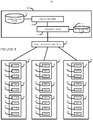
- FIG. 1 there is shown a block diagram illustrating a virtualization management system 100 according to an example of the present invention. The operation of elements of Figure 1 is described in further detail with additional reference to Figure 2 .
- the system 100 comprises a number of software objects 106, such as software applications and computer programs, each of which is deployed on a virtual destination 104 such as a virtual machine or other software object execution environment.
- a virtual destination 104 such as a virtual machine or other software object execution environment.
- Each virtual destination 104 is in turn deployed on a hardware destination 102, such as a physical computing device, computer server or other processing device.
- a virtual destination 104 may be deployed on a further virtual destination 104, which is in turn deployed on a hardware destination 102.
- both software applications 106 and virtual destinations 104 are both kinds of software objects
- the term software object may be used herein to cover both software applications 106 and virtual destinations 104.
- the identification of which deployed software objects (104 and 106) are to be moved is performed by an object deployment controller 108.
- the object deployment controller 108 may be a virtualization controller, such as a HP Matrix Operating Environment (OE) for HP-UX systems, provided by Hewlett-Packard Company.
- OE HP Matrix Operating Environment
- the object deployment controller 108 generates notifications, alerts, messages, or the like, that indicate to an assessment engine or module 110 the identified object to be moved.
- the assessment engine 110 then, as described further below, determines where the identified object is to be moved.
- the object deployment controller 108 monitors characteristics of the object destinations.
- the obtained monitored characteristics may be stored in a suitable memory or data store (not shown).
- the object deployment controller 108 monitors (202) characteristics of a hardware destination 102 on which a software object is deployed. In a further example, the object deployment controller 108 monitors (202) characteristics of a virtual destination 104 on which a software object is deployed. In a yet further example, the object deployment controller 108 monitors (202) characteristics of both a hardware and a virtual destination on which a software object is deployed.
- the monitored characteristics may include, for example, technical characteristics of the hardware destination 102 such as the available memory, memory utilization level, available processing power, processor utilization level, available storage capacity, storage utilization level, and the like.
- the characteristics may include available virtual memory, virtual memory utilization, virtual processing power available, virtual processor utilization level, and the like.
- details of the monitored characteristics may be obtained directly from the destinations, for example, using a suitable interface.
- details of the monitored characteristics may be obtained from a centralized data repository (not shown), such as a configuration management database (CMDB).
- CMDB configuration management database
- the object deployment controller 108 determines (204) whether any of the monitored characteristics exceeds or falls below a predetermined threshold level. For example, if the processor utilization of a hardware destination exceeds an average of 70% over a period of 10 minutes, the object deployment controller 108 may determine to move one or more software objects to a different virtual or hardware destination. In other examples other thresholds and characteristics may be used.
- the object deployment controller 108 identifies one or more software objects that are to be moved to a new destination. In one example, the object deployment controller 108 identifies one or several software objects deployed in a virtual destination 104 that are to be moved to a different virtual destination 104 on the same or a different hardware destination 102. In another example, the object deployment controller 108 identifies one or several virtual destinations 104 (and all of the software objects deployed thereon) to be moved to a different hardware destination 102.
- the assessment engine 110 is used, once the object deployment controller 108 determines that a software object is to be moved, to determine a new destination for that software object. Operation of the assessment engine 110 according to an example of the present invention will now be described with additional reference to Figure 3 .
- the assessment engine 110 identifies a new candidate, or new potential, destination for the identified software object to be moved.
- the identification of a new candidate destination is determined by finding a destination in which the obtained monitored characteristics indicate that the software object may be moved to the new destination without causing any adverse consequences in the virtualized environment.
- an adverse consequence may be, for example, causing a characteristic of a virtual or physical destination to exceed or drop below a predetermined level.
- a candidate destination having at least 4Gb of available memory may be chosen.
- Other requirements of the software object such as storage requirements, processing requirements, network requirements, and the like, may also be considered if appropriate.
- the assessment engine identifies a candidate destination by interrogating the object deployment controller via a suitable interface, such as an application programming interface.
- the assessment engine 110 identifies constraint data that identifies one or more constraints associated with the identified software object to be moved.
- the constraint data is stored in an object compliance data store or memory 112.
- the constraint data may, for example, be defined by the IT system operator, be defined by a customer on behalf of whom an object is deployed, or be obtained in any other appropriate manner.
- the constraint data may define business constraints, regulatory constraints, legal constraints, security constraints, or the like.
- the constraint data may define technical and/or non-technical constraints.
- the assessment engine 110 identifies any software objects at the candidate destination, and at 308 identifies, using the object compliance data store 112, constraints associated with each of the software objects identified at the candidate destination.
- the assessment engine 110 identifies characteristics of the candidate destination.
- the characteristics identified may, for example, be based on constraints associated with the software object to be moved. For example, if a constraint associated with the software object to be moved is that no public network access be provided on the destination, the assessment engine 110 may identify whether the candidate destination has public network access.
- the destination characteristics are obtained from the aforementioned data store or memory. In a further embodiment the destination characteristics may be obtained directly from a destination, for example through an appropriate interface or software application.
- the assessment engine 110 determines whether the obtained object constraints and destination characteristics are compatible with one another.
- the assessment engine 110 determines that the constraints and destination characteristics are not compatible the assessment engine 110 identifies (316) an alternative candidate destination.
- the assessment engine 110 determines that the constraints and destination characteristics are compatible the assessment engine 110 authorizes the object to be moved to the candidate destination.
- the authorization to move the object to the candidate destination is sent, or is made available to, the object deployment controller 108 which appropriately moves the object.
- the assessment engine 110 performs the move of the object to the candidate destination in an appropriate manner.
- the assessment engine 110 receives (402) confirmation that the object to be moved was moved, and additionally receives details of the object destination to which it was moved. At 404 the assessment engine 110 stores these details in a compliance log (not shown).
- the compliance log may, for example, be stored in any suitable memory or data store.
- the assessment engine 110 obtains details of other objects at the new destination. In one example, this may include details of other objects in at least one of a virtual destination and a hardware destination. The obtained details may, for example, include details of the type of each object.
- the assessment engine 110 obtains characteristics of the new destination. The obtained characteristics may, for example, include a destination identifier enabling the destination, such as a hardware destination, to be uniquely identified. In other examples, the obtained characteristics may include, for example, details of the network access available to the device, details of security settings, and so on.
- the assessment engine 110 stores the obtained details in the compliance log.
- the virtualization management system 504 includes a compliance engine 506, an assessment engine 508, a compliance data store 510, and a destination data store 512.
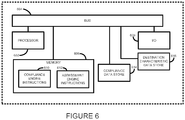
- At least part of the system 504 may be implemented using a microprocessor 602 coupled, via a communication bus 604, to a memory 606, an input/output module 608, and storage 614 and 616.
- the memory 606 stores compliance engine instructions 610 and assessment engine instructions 612.
- the instructions 610 and 612 are processor understandable instructions that when executed by the processor 602 provide functionality of a virtualization management system comprising a compliance engine and an assessment engine as described herein.
- the virtualization management system 504 identifies that a software object (106 or 104) is to be moved to a new destination.
- the virtualization management system 504 identifies that an object is to be moved by receiving a notification or alert from an object deployment controller 502.
- the virtualization management system 504 identifies that an object is to be moved by interrogating the object deployment controller 502, for example, through a suitable interface, for example using a suitable application programming interface (API) (not shown).
- API application programming interface
- the virtualization management system 504 identifies that an object is to be moved by intercepting messages sent by the object deployment controller 502.
- the object deployment controller 502 is an integrated part of the virtualization management system 504.
- the virtualization management system 504 identifies a candidate destination to which the object could be moved to.
- the assessment engine 508 identifies a candidate destination by receiving, or obtaining, a candidate destination from the object deployment controller 502.
- the assessment engine 508 identifies a candidate destination by identifying the technical requirements of the object to be moved, and identifying a destination that meets those technical requirements.
- the technical characteristics of each available destination in the system 500 may be available from a destination characteristic data store 512.
- the data store 512 may be a configuration management database.
- the technical requirements of the object to be moved may, for example, be obtained by accessing CMDBs, application programming interfaces (APIs), or the like.
- Table 1 below shows example characteristics of a hardware destination which may include, for example, hardware type, a destination identifier, and other technical characteristics.
- Table 1 Example Physical Machine Characteristics HARDWARE DESTINATION CHARACTERISTICS CHARACTERISTIC VALUE Hardware Type: HP-UX Server Destination Identifier: Server01 Total Memory Available: 10Gb Current available memory: 2Gb Processing Power 5 CPUs allocated Public Network Access? No ... ...
- Table 2 shows example characteristics of a virtual destination which may include, for example, a virtual destination identifier and other virtual destination technical requirements.
- Table 2 Example Virtual Machine Characteristics VIRTUAL MACHINE CHARACTERISTICS CHARACTERISTIC VALUE Destination Type: Virtual Machine Destination Identifier: VirtualMachine01 Total Virtual Memory Allocated: 5Gb Available Virtual memory: 2Gb Public Network Access? No ... ...
- Table 3 shows example application or object requirements which may include, for example, object type (e.g. application, virtual machine, etc.), object purpose, and object technical requirements.
- Table 3 Example Software Application Requirements OBJECT REQUIREMENTS CHARACTERISTIC VALVE Object Identifier: Application1 Object Type: Application Object Purpose Financial transaction processor Minimum memory requirements: 4Gb Minimum storage requirements 20Gb Object Footprint 30Gb Public Network Access Required? No ... ...
- the assessment engine 508 identifies any objects at the identified candidate destination.
- the objects identified may include both applications and virtual machines.
- the objects may be identified through interrogation of the data store 512.
- the compliance engine 506 identifies constraints associated with the object to be moved and, at 710, identifies constraints associated with the objects at the candidate destination.
- Example object constraint data is shown below in Table 4.
- the object constraint data may include, for example, details of the object purpose, data types processed, data types with which the object is deemed incompatible, etc.
- the constraint data may, for example, be obtained from the compliance data store 510. In a further example the constraint data may be obtained directly from the objects concerned, for example through use of an appropriate interface or messaging mechanism.
- the compliance engine 506 determines whether the constraints of the object to be moved and any objects on the candidate destination are compatible with one another. To assist in this, the compliance engine 506 additionally obtains, from the compliance data store 510 details of data type constraints for each data type associated with each of the objects.
- An example of data type constraint data is shown below in Table 5.
- Table 5 Example Data Type Constraints DATA TYPE CONSTRAINTS CHARACTERISTICS COMMENTS Data Type: PCI-DSS Incompatible data types: Corporate Financial data Deployment possible on destination with public network access? No Exceptions permitted: None ... ...
- the data type constraint data defines, for each data type, details of other data types the processing of which is incompatible therewith.
- the data type constraints may also, if appropriate, positively identify other data types which are deemed compatible data types.
- the data type constraint data may also define, for example, additional constraints that apply to a particular data type, for example, as to whether the data can be processed on a destination having public Internet access, whether any exceptions or derogations to the constraints are permissible (and under what conditions), etc.
- the compliance engine 506 determines that the constraints are compatible with each other it authorizes (714) the object to be moved to the candidate destination, otherwise (716) the compliance engine 506 instructs the assessment engine 508 to determine an alternative candidate destination.
- an authorization or a request to move the object to the candidate destination may be sent to the object deployment controller 502.
- the compliance engine 506 or assessment engine 508 may directly instruct the object deployment controller 502 to move the object to the candidate destination.
- Details of any successful and unsuccessful object moves may, in one example, be stored in a log (not shown) for subsequent auditing purposes.
- any such software may be stored in the form of volatile or non-volatile storage such as, for example, a storage device like a ROM, whether erasable or rewritable or not, or in the form of memory such as, for example, RAM, memory chips, device or integrated circuits or on an optically or magnetically readable medium such as, for example, a CD, DVD, magnetic disk or magnetic tape.
- volatile or non-volatile storage such as, for example, a storage device like a ROM, whether erasable or rewritable or not
- memory such as, for example, RAM, memory chips, device or integrated circuits or on an optically or magnetically readable medium such as, for example, a CD, DVD, magnetic disk or magnetic tape.
- the storage devices and storage media are examples of machine-readable storage that are suitable for storing a program or programs that, when executed, implement examples of the present invention. Examples of the present invention may be conveyed electronically via any medium such as a communication signal carried over a wired or wireless
Landscapes
- Engineering & Computer Science (AREA)
- Software Systems (AREA)
- Theoretical Computer Science (AREA)
- Physics & Mathematics (AREA)
- General Engineering & Computer Science (AREA)
- General Physics & Mathematics (AREA)
- Debugging And Monitoring (AREA)
- Stored Programmes (AREA)
Description
- Many organizations and enterprises are making ever increasing use of data centers and server virtualization technology to run their information technology (IT) applications in so-called virtualized environments. To help manage the IT applications within a data center there exist numerous virtualization tools, such as Hewlett-Packard's Matrix Operating Environment (Matrix OE), that automatically manage application deployment and redeployment within virtualized environments. Such virtualization tools enable the efficient management of data centers by enabling IT applications and virtual machines (VM) on which the IT applications run to be dynamically moved to different physical machines (PM) in the data center, whilst the applications and virtual machines are running.
- The redeployment of software applications and virtual machines to different physical machines in a data center may be based on various characteristics of the physical machines. For instance, a virtualization tool may decide to move a virtual machine to a different physical machine based on characteristics of the physical machine such as available memory, memory utilization, processing power, processor utilization, processor temperature, and so on. Accordingly, a physical machine with low processor utilization may, for example be shut down, thereby saving energy, and any virtual machines deployed thereon moved to another physical machine. Conversely, a physical machine with high processor utilization may be relieved of an application or virtual machine deployed thereon, by moving some of the virtual machines to another physical machine within the virtualized environment. For example,
US patent no. US 7,506,037 describes a migration advisor module configured to receive information regarding a request to migrate a virtual environment from a first host to a second host. The migration advisor module can determine whether the virtual environment is compatible with the second host by comparing available physical system resources of the second host with physical system requirements of the virtual environment.US 2008/046960 A1 describes that, when a determination is made that a component in a data processing system has failed to meet processing requirements and a candidate host to where the component may be migrated based on performance considerations is identified, a first security policy associated with the component is compared to a second security policy associated with the candidate host to determine if the first security policy is equivalent to or stronger than the second security policy. - Examples and embodiments of the invention will now be described, by way of non-limiting example only, with reference to the accompanying drawings, in which:
-
Figure 1 is a simplified block diagram illustrating a system according to an example of the present invention; -
Figure 2 is a simplified flow diagram outlining an example method of operating elements of the system ofFigure 1 ; -
Figure 3 is a simplified flow diagram outlining an example method of operating elements of the system ofFigure 1 ; -
Figure 4 is a simplified flow diagram outlining an example method of operating elements of the system ofFigure 1 ; -
Figure 5 is a simplified block diagram illustrating a virtualization management system according to an example of the present invention; -
Figure 6 is a simplified block diagram illustrating an implementation of a virtualization management system according to an example of the present invention; and -
Figure 7 is a simplified flow diagram outlining an example method of operating a virtualization management system according to an example of the present invention. - Current virtualization management tools deploy and redeploy software applications and virtual machines based solely on characteristics of the virtual or physical machines on which the applications are deployed.
- However, examples of the present invention aim to provide increased control over how software applications and virtual machines are redeployed or moved in a virtualized environment.
- For example, the operation of certain types of software application or the processing of certain types of data may be subject to business constraints, regulatory constraints, legal constraints, security constraints, or the like. Such constraints may, for example, prohibit one software application from being deployed on the same virtual machine, or on the same physical machine, as another software application or type of software application, or on a virtual or physical machine having certain other characteristics.
- For example, a software application that processes personal medical data may be constrained from running on a virtual or physical machine that is connected to a public network, such as the Internet, in order to avoid potential security risks. Similarly, a software application processing personally identifiable information (PII) may be constrained to being deployed on the same physical machine as a database server on which the Pll data is stored. Likewise, a software application that complies with the payment card industry data security standards (PCI-DSS) data may have to comply with specific industry regulations.
- Referring now to
Figure 1 there is shown a block diagram illustrating avirtualization management system 100 according to an example of the present invention. The operation of elements ofFigure 1 is described in further detail with additional reference toFigure 2 . - The
system 100 comprises a number ofsoftware objects 106, such as software applications and computer programs, each of which is deployed on avirtual destination 104 such as a virtual machine or other software object execution environment. Eachvirtual destination 104 is in turn deployed on ahardware destination 102, such as a physical computing device, computer server or other processing device. - In one example, a
virtual destination 104 may be deployed on a furthervirtual destination 104, which is in turn deployed on ahardware destination 102. - Since both
software applications 106 andvirtual destinations 104 are both kinds of software objects, the term software object may be used herein to cover bothsoftware applications 106 andvirtual destinations 104. - The identification of which deployed software objects (104 and 106) are to be moved is performed by an
object deployment controller 108. In one example theobject deployment controller 108 may be a virtualization controller, such as a HP Matrix Operating Environment (OE) for HP-UX systems, provided by Hewlett-Packard Company. Theobject deployment controller 108 generates notifications, alerts, messages, or the like, that indicate to an assessment engine ormodule 110 the identified object to be moved. Theassessment engine 110 then, as described further below, determines where the identified object is to be moved. - Referring now to
Figure 2 , operation of theobject deployment controller 108 according to an example of the present invention is described. At 202 theobject deployment controller 108 monitors characteristics of the object destinations. The obtained monitored characteristics may be stored in a suitable memory or data store (not shown). - In one example, the
object deployment controller 108 monitors (202) characteristics of ahardware destination 102 on which a software object is deployed. In a further example, theobject deployment controller 108 monitors (202) characteristics of avirtual destination 104 on which a software object is deployed. In a yet further example, theobject deployment controller 108 monitors (202) characteristics of both a hardware and a virtual destination on which a software object is deployed. - For a
hardware destination 102 the monitored characteristics may include, for example, technical characteristics of thehardware destination 102 such as the available memory, memory utilization level, available processing power, processor utilization level, available storage capacity, storage utilization level, and the like. For avirtual destination 104 the characteristics may include available virtual memory, virtual memory utilization, virtual processing power available, virtual processor utilization level, and the like. - In one example details of the monitored characteristics may be obtained directly from the destinations, for example, using a suitable interface. In a further example, details of the monitored characteristics may be obtained from a centralized data repository (not shown), such as a configuration management database (CMDB).
- Using the monitored characteristics the
object deployment controller 108 determines (204) whether any of the monitored characteristics exceeds or falls below a predetermined threshold level. For example, if the processor utilization of a hardware destination exceeds an average of 70% over a period of 10 minutes, theobject deployment controller 108 may determine to move one or more software objects to a different virtual or hardware destination. In other examples other thresholds and characteristics may be used. - At 206 the
object deployment controller 108 identifies one or more software objects that are to be moved to a new destination. In one example, theobject deployment controller 108 identifies one or several software objects deployed in avirtual destination 104 that are to be moved to a differentvirtual destination 104 on the same or adifferent hardware destination 102. In another example, theobject deployment controller 108 identifies one or several virtual destinations 104 (and all of the software objects deployed thereon) to be moved to adifferent hardware destination 102. - The
assessment engine 110 is used, once theobject deployment controller 108 determines that a software object is to be moved, to determine a new destination for that software object. Operation of theassessment engine 110 according to an example of the present invention will now be described with additional reference toFigure 3 . - At 302 the
assessment engine 110 identifies a new candidate, or new potential, destination for the identified software object to be moved. In one example the identification of a new candidate destination is determined by finding a destination in which the obtained monitored characteristics indicate that the software object may be moved to the new destination without causing any adverse consequences in the virtualized environment. For example, an adverse consequence may be, for example, causing a characteristic of a virtual or physical destination to exceed or drop below a predetermined level. For example, if the identified software object is known to require at least 4Gb of memory, then a candidate destination having at least 4Gb of available memory may be chosen. Other requirements of the software object, such as storage requirements, processing requirements, network requirements, and the like, may also be considered if appropriate. - In one example, the assessment engine identifies a candidate destination by interrogating the object deployment controller via a suitable interface, such as an application programming interface.
- At 304 the
assessment engine 110 identifies constraint data that identifies one or more constraints associated with the identified software object to be moved. The constraint data is stored in an object compliance data store ormemory 112. The constraint data may, for example, be defined by the IT system operator, be defined by a customer on behalf of whom an object is deployed, or be obtained in any other appropriate manner. As previously described, the constraint data may define business constraints, regulatory constraints, legal constraints, security constraints, or the like. The constraint data may define technical and/or non-technical constraints. - At 306 the
assessment engine 110 identifies any software objects at the candidate destination, and at 308 identifies, using the objectcompliance data store 112, constraints associated with each of the software objects identified at the candidate destination. - At 310 the
assessment engine 110 identifies characteristics of the candidate destination. The characteristics identified may, for example, be based on constraints associated with the software object to be moved. For example, if a constraint associated with the software object to be moved is that no public network access be provided on the destination, theassessment engine 110 may identify whether the candidate destination has public network access. In one example the destination characteristics are obtained from the aforementioned data store or memory. In a further embodiment the destination characteristics may be obtained directly from a destination, for example through an appropriate interface or software application. - At 312 the
assessment engine 110 determines whether the obtained object constraints and destination characteristics are compatible with one another. - If the
assessment engine 110 determines that the constraints and destination characteristics are not compatible theassessment engine 110 identifies (316) an alternative candidate destination. - If, on the other hand, the
assessment engine 110 determines that the constraints and destination characteristics are compatible theassessment engine 110 authorizes the object to be moved to the candidate destination. - In one example the authorization to move the object to the candidate destination, although with details of the candidate destination, is sent, or is made available to, the
object deployment controller 108 which appropriately moves the object. - In a further example, the
assessment engine 110 performs the move of the object to the candidate destination in an appropriate manner. - In a further example, described with additional reference to
Figure 4 , theassessment engine 110 receives (402) confirmation that the object to be moved was moved, and additionally receives details of the object destination to which it was moved. At 404 theassessment engine 110 stores these details in a compliance log (not shown). The compliance log may, for example, be stored in any suitable memory or data store. - At 406 the
assessment engine 110 obtains details of other objects at the new destination. In one example, this may include details of other objects in at least one of a virtual destination and a hardware destination. The obtained details may, for example, include details of the type of each object. At 408 theassessment engine 110 obtains characteristics of the new destination. The obtained characteristics may, for example, include a destination identifier enabling the destination, such as a hardware destination, to be uniquely identified. In other examples, the obtained characteristics may include, for example, details of the network access available to the device, details of security settings, and so on. - At 408 the
assessment engine 110 stores the obtained details in the compliance log. - Storing such details in the compliance log enables an effective audit of the destinations of individual software objects to be carried out. If subsequently required the data stored in the log can be used to show which software objects were deployed on which destinations and with which other software objects at any given time.
- It is important to note, however, that typical object deployment management systems do not maintain such a log since, where compliance with object constraints is not required, there is no reason to maintain such a log.
- An example of a
virtualization management system 504 according to an example of the present invention will now be described, in greater detail, with reference toFigure 5 . Thevirtualization management system 504 includes acompliance engine 506, anassessment engine 508, acompliance data store 510, and adestination data store 512. - In a further example, as illustrated in
Figure 6 , at least part of thesystem 504, may be implemented using amicroprocessor 602 coupled, via acommunication bus 604, to amemory 606, an input/output module 608, andstorage memory 606 storescompliance engine instructions 610 andassessment engine instructions 612. Theinstructions processor 602 provide functionality of a virtualization management system comprising a compliance engine and an assessment engine as described herein. - Operation of the
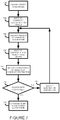
virtualization management system 504 will be further described with additional reference to theFigure 7 . - At 702 the
virtualization management system 504 identifies that a software object (106 or 104) is to be moved to a new destination. - In one example, the
virtualization management system 504 identifies that an object is to be moved by receiving a notification or alert from anobject deployment controller 502. - In a further example, the
virtualization management system 504 identifies that an object is to be moved by interrogating theobject deployment controller 502, for example, through a suitable interface, for example using a suitable application programming interface (API) (not shown). - In a further example, the
virtualization management system 504 identifies that an object is to be moved by intercepting messages sent by theobject deployment controller 502. - In a yet further example, the
object deployment controller 502 is an integrated part of thevirtualization management system 504. - At 704 the
virtualization management system 504 identifies a candidate destination to which the object could be moved to. - In one example, the
assessment engine 508 identifies a candidate destination by receiving, or obtaining, a candidate destination from theobject deployment controller 502. - In a further example, the
assessment engine 508 identifies a candidate destination by identifying the technical requirements of the object to be moved, and identifying a destination that meets those technical requirements. For example, the technical characteristics of each available destination in thesystem 500 may be available from a destinationcharacteristic data store 512. In one example thedata store 512 may be a configuration management database. The technical requirements of the object to be moved may, for example, be obtained by accessing CMDBs, application programming interfaces (APIs), or the like. - Table 1 below shows example characteristics of a hardware destination which may include, for example, hardware type, a destination identifier, and other technical characteristics.
Table 1 - Example Physical Machine Characteristics HARDWARE DESTINATION CHARACTERISTICS CHARACTERISTIC VALUE Hardware Type: HP-UX Server Destination Identifier: Server01 Total Memory Available: 10Gb Current available memory: 2Gb Processing Power 5 CPUs allocated Public Network Access? No ... ... - Table 2 below shows example characteristics of a virtual destination which may include, for example, a virtual destination identifier and other virtual destination technical requirements.
Table 2 - Example Virtual Machine Characteristics VIRTUAL MACHINE CHARACTERISTICS CHARACTERISTIC VALUE Destination Type: Virtual Machine Destination Identifier: VirtualMachine01 Total Virtual Memory Allocated: 5Gb Available Virtual memory: 2Gb Public Network Access? No ... ... - Table 3 below shows example application or object requirements which may include, for example, object type (e.g. application, virtual machine, etc.), object purpose, and object technical requirements.
Table 3 - Example Software Application Requirements OBJECT REQUIREMENTS CHARACTERISTIC VALVE Object Identifier: Application1 Object Type: Application Object Purpose Financial transaction processor Minimum memory requirements: 4Gb Minimum storage requirements 20Gb Object Footprint 30Gb Public Network Access Required? No ... ... - At 706 the
assessment engine 508 identifies any objects at the identified candidate destination. The objects identified may include both applications and virtual machines. In one example the objects may be identified through interrogation of thedata store 512. - At 708 the
compliance engine 506 identifies constraints associated with the object to be moved and, at 710, identifies constraints associated with the objects at the candidate destination. Example object constraint data is shown below in Table 4. The object constraint data may include, for example, details of the object purpose, data types processed, data types with which the object is deemed incompatible, etc. The constraint data may, for example, be obtained from thecompliance data store 510. In a further example the constraint data may be obtained directly from the objects concerned, for example through use of an appropriate interface or messaging mechanism.Table 4 - Example Object Constraint Data OBJECT CONSTRAINT DATA CHARACTERISTIC VALUE Object Identifier: Application 1 Object Type: Application Object Purpose Financial transaction processor Data types processed: PCI-DSS Personally Identifiable Data (PII) ... ... - At 712 the
compliance engine 506 determines whether the constraints of the object to be moved and any objects on the candidate destination are compatible with one another. To assist in this, thecompliance engine 506 additionally obtains, from thecompliance data store 510 details of data type constraints for each data type associated with each of the objects. An example of data type constraint data is shown below in Table 5.Table 5 - Example Data Type Constraints DATA TYPE CONSTRAINTS CHARACTERISTICS COMMENTS Data Type: PCI-DSS Incompatible data types: Corporate Financial data Deployment possible on destination with public network access? No Exceptions permitted: None ... ... - The data type constraint data defines, for each data type, details of other data types the processing of which is incompatible therewith. The data type constraints may also, if appropriate, positively identify other data types which are deemed compatible data types. The data type constraint data may also define, for example, additional constraints that apply to a particular data type, for example, as to whether the data can be processed on a destination having public Internet access, whether any exceptions or derogations to the constraints are permissible (and under what conditions), etc.
- If the
compliance engine 506 determines that the constraints are compatible with each other it authorizes (714) the object to be moved to the candidate destination, otherwise (716) thecompliance engine 506 instructs theassessment engine 508 to determine an alternative candidate destination. - In the example where the
object deployment controller 502 is external to thevirtualization management system 504 an authorization or a request to move the object to the candidate destination may be sent to theobject deployment controller 502. In the example where theobject deployment controller 502 is integral to thevirtualization management system 504 thecompliance engine 506 orassessment engine 508 may directly instruct theobject deployment controller 502 to move the object to the candidate destination. - Details of any successful and unsuccessful object moves may, in one example, be stored in a log (not shown) for subsequent auditing purposes.
- As described above, it will be appreciated that examples and embodiments of the present invention can be realized in the form of hardware, software or a combination of hardware and software. As described above, any such software may be stored in the form of volatile or non-volatile storage such as, for example, a storage device like a ROM, whether erasable or rewritable or not, or in the form of memory such as, for example, RAM, memory chips, device or integrated circuits or on an optically or magnetically readable medium such as, for example, a CD, DVD, magnetic disk or magnetic tape. It will be appreciated that the storage devices and storage media are examples of machine-readable storage that are suitable for storing a program or programs that, when executed, implement examples of the present invention. Examples of the present invention may be conveyed electronically via any medium such as a communication signal carried over a wired or wireless connection and examples suitably encompass the same.
- All of the features disclosed in this specification (including any accompanying claims, abstract and drawings), and/or all of the steps of any method or process so disclosed, may be combined in any combination, except combinations where at least some of such features and/or steps are mutually exclusive.
- Each feature disclosed in this specification (including any accompanying claims, abstract and drawings), may be replaced by alternative features serving the same, equivalent or similar purpose, unless expressly stated otherwise. Thus, unless expressly stated otherwise, each feature disclosed is one example only of a generic series of equivalent or similar features.
Claims (15)
- A method of moving one of a plurality of software objects deployed among a plurality of object destinations in a computing system,
the method comprising:identifying a deployed software object to be moved to a new object destination;identifying a candidate object destination;identifying other software objects deployed on the candidate object destination;identifying a constraint associated with the software object to be moved, the identifying the constraint associated with the software object to be moved including identifying a data type constraint for the software object;identifying a constraint associated with the other software objects deployed on the candidate object destination, the identifying the constraint associated with the other software objects deployed on the candidate object destination including identifying a respective data type constraint for each of the other software objects deployed on the candidate object destination;determining whether the constraint associated with the software object to be moved is compatible with the constraint associated with the other software objects deployed on the candidate object destination, the determining including determining whether the data type constraint for the software object is compatible with the respective data type constraint for each of the other software objects deployed on the candidate object destination; andauthorizing the move of the software object to be moved where it is determined that the constraint associated with the software object to be moved is compatible with the constraint associated with the other software objects deployed on the candidate object destination. - The method of claim 1, wherein at least one of the software object to be moved or the other software objects deployed on the candidate object destination is one of a software application and a virtual machine.
- The method of claim 1, wherein the computing system comprises a plurality of physical computing devices, and further wherein an object destination of the plurality of object destinations is one of a virtual machine and a physical computing device of the plurality of physical computing devices.
- The method of claim 3, wherein where the software object to be moved is a virtual machine, the step of authorizing the move further comprises authorizing the move of the virtual machine and all objects deployed thereon to the candidate object destination.
- The method of claim 1, wherein the step of identifying the candidate object destination is based on characteristics of the software object to be moved and object destination characteristics.
- The method of claim 1, further comprising moving the software object to be moved to the candidate object destination.
- The method of claim 6, further comprising, recording details of the software object to be moved, recording details of the new object destination to which the software object to be moved was moved, and recording details of other software objects on the new object destination, in a log.
- Apparatus for moving one of a plurality of software objects deployed among a plurality of object destinations in a computing system, the apparatus comprising:a processor; anda memory, wherein the memory comprises:assessment engine instructions configured to, when processed by the processor, implement an assessment engine, the assessment engine configured to:obtain an indication that a software object deployed on an object destination of the plurality of object destinations is to be moved to a different object destination of the plurality of object destinations; andidentify a potential object destination for the software object to be moved to; andcompliance engine instructions configured to, when processed by the processor, implement a compliance engine, the compliance engine configured to:obtain, from a compliance data store, constraint data associated with the software object, the constraint data including data type constraint data;obtain, from the compliance data store, constraint data associated with other software objects deployed on the potential object destination, the constraint data including data type constraint data;determine whether the constraint data associated with the software object is compatible with the constraint data associated with the other software objects, including determining whether the data type constraint data associated with the software object is compatible with the data type constraint data associated with the other software objects; andwhere so determined, authorize the software object to be moved.
- The apparatus of claim 8, wherein the software objects include at least one of a software application and a virtual machine, and wherein the potential object destination is one of a virtual machine and a physical computing device.
- The apparatus of claim 9, wherein the assessment engine is configured to identify the potential object destination based in part on characteristics of the software object to be moved and characteristics of object destinations of the plurality of object destinations, the characteristics being obtained from a configuration management database, CMDB.
- The apparatus of claim 9, further comprising an object deployment controller, and wherein the assessment engine is configured to identify the potential object destination directly from the object deployment controller.
- The apparatus of claim 9, further comprising obtaining the constraint data from a constraint data store.
- The apparatus of claim 9, further comprising a data log, the assessment engine being configured to store in the data log details of the new object destination to which the software object to be moved was moved and details of other software objects on the new object destination.
- A tangible, machine-readable medium that stores machine-readable instructions executable by a processor to provide a method of moving one of a plurality of software objects deployed among a plurality of object destinations in a computing system, the tangible machine-readable medium comprising:machine readable instructions that, when executed by the processor, identify a software object deployed on an object destination to be moved to a new object destination;machine readable instructions that, when executed by the processor, identify a candidate object destination to which the software object to be moved may be moved;machine readable instructions that, when executed by the processor, identify software objects currently deployed on the candidate object destination;machine readable instructions that, when executed by the processor, identify constraint data associated with the software object to be moved, the constraint data including data type constraint data;machine readable instructions that, when executed by the processor, identify constraint data associated with software objects deployed on the candidate object destination, the constraint data including data type constraint data;machine readable instructions that, when executed by the processor, determine whether the constraint data associated with the software object to be moved is compatible with the constraint data associated with the software objects deployed on the candidate object destination, including determining whether the data type constraint data associated with the software object to be moved is compatible with the data type constraint data associated with the software objects deployed on the candidate object destination; andmachine readable instructions that, when executed by the processor, authorize the move of the software object to be moved to the candidate object destination where it is determined that the constraint data associated with the software object to be moved is compatible with the constraint data associated with the software objects deployed on the candidate object destination.
- The tangible, machine-readable medium of claim 14, comprising machine readable instructions that, when executed by the processor, identify the candidate object destination based on characteristics of the software object to be moved and object destination characteristics.
Applications Claiming Priority (1)
| Application Number | Priority Date | Filing Date | Title |
|---|---|---|---|
| PCT/US2011/031523 WO2012138339A1 (en) | 2011-04-07 | 2011-04-07 | Method and apparatus for moving a software object |
Publications (3)
| Publication Number | Publication Date |
|---|---|
| EP2673704A1 EP2673704A1 (en) | 2013-12-18 |
| EP2673704A4 EP2673704A4 (en) | 2016-03-16 |
| EP2673704B1 true EP2673704B1 (en) | 2019-10-23 |
Family
ID=46969478
Family Applications (1)
| Application Number | Title | Priority Date | Filing Date |
|---|---|---|---|
| EP11863212.4A Active EP2673704B1 (en) | 2011-04-07 | 2011-04-07 | Method and apparatus for moving a software object |
Country Status (5)
| Country | Link |
|---|---|
| US (1) | US20140223430A1 (en) |
| EP (1) | EP2673704B1 (en) |
| JP (1) | JP5766346B2 (en) |
| CN (1) | CN103443762B (en) |
| WO (1) | WO2012138339A1 (en) |
Families Citing this family (5)
| Publication number | Priority date | Publication date | Assignee | Title |
|---|---|---|---|---|
| WO2013072978A1 (en) * | 2011-11-18 | 2013-05-23 | 株式会社日立製作所 | Computer, virtual machine deployment method, and program |
| US9716666B2 (en) | 2013-11-27 | 2017-07-25 | International Business Machines Corporation | Process cage providing attraction to distributed storage |
| US10599666B2 (en) | 2016-09-30 | 2020-03-24 | Hewlett Packard Enterprise Development Lp | Data provisioning for an analytical process based on lineage metadata |
| US10540402B2 (en) | 2016-09-30 | 2020-01-21 | Hewlett Packard Enterprise Development Lp | Re-execution of an analytical process based on lineage metadata |
| WO2020136427A1 (en) * | 2018-12-28 | 2020-07-02 | Atos International Germany Gmbh | Cloud assessment tool |
Citations (1)
| Publication number | Priority date | Publication date | Assignee | Title |
|---|---|---|---|---|
| US20080046960A1 (en) * | 2006-08-16 | 2008-02-21 | Bade Steven A | Computer workload management with security policy enforcement |
Family Cites Families (50)
| Publication number | Priority date | Publication date | Assignee | Title |
|---|---|---|---|---|
| US7257815B2 (en) * | 2001-09-05 | 2007-08-14 | Microsoft Corporation | Methods and system of managing concurrent access to multiple resources |
| US7587492B2 (en) * | 2005-07-29 | 2009-09-08 | Hewlett-Packard Development Company, L.P. | Dynamic performance management for virtual servers |
| US8387048B1 (en) * | 2006-04-25 | 2013-02-26 | Parallels IP Holdings GmbH | Seamless integration, migration and installation of non-native application into native operating system |
| US8667500B1 (en) * | 2006-10-17 | 2014-03-04 | Vmware, Inc. | Use of dynamic entitlement and adaptive threshold for cluster process balancing |
| US9038062B2 (en) * | 2006-10-17 | 2015-05-19 | Manageiq, Inc. | Registering and accessing virtual systems for use in a managed system |
| US8234641B2 (en) * | 2006-10-17 | 2012-07-31 | Managelq, Inc. | Compliance-based adaptations in managed virtual systems |
| US7673052B2 (en) * | 2007-03-21 | 2010-03-02 | International Business Machines Corporation | Policy algorithm for selection of compatible systems for virtual server mobility |
| US8782322B2 (en) * | 2007-06-21 | 2014-07-15 | International Business Machines Corporation | Ranking of target server partitions for virtual server mobility operations |
| US7886028B2 (en) * | 2007-07-05 | 2011-02-08 | International Business Machines Corporation | Method and system for system migration |
| EP2193484A4 (en) * | 2007-08-31 | 2011-12-21 | Cirba Inc | Method and system for evaluating virtualized environments |
| US8127296B2 (en) * | 2007-09-06 | 2012-02-28 | Dell Products L.P. | Virtual machine migration between processors having VM migration registers controlled by firmware to modify the reporting of common processor feature sets to support the migration |
| JP5104588B2 (en) * | 2007-10-18 | 2012-12-19 | 富士通株式会社 | Migration program and virtual machine management device |
| US8468230B2 (en) * | 2007-10-18 | 2013-06-18 | Fujitsu Limited | Method, apparatus and recording medium for migrating a virtual machine |
| US7962587B2 (en) * | 2007-12-10 | 2011-06-14 | Oracle America, Inc. | Method and system for enforcing resource constraints for virtual machines across migration |
| US8386610B2 (en) * | 2007-12-31 | 2013-02-26 | Netapp, Inc. | System and method for automatic storage load balancing in virtual server environments |
| US8175863B1 (en) * | 2008-02-13 | 2012-05-08 | Quest Software, Inc. | Systems and methods for analyzing performance of virtual environments |
| US8230069B2 (en) * | 2008-03-04 | 2012-07-24 | International Business Machines Corporation | Server and storage-aware method for selecting virtual machine migration targets |
| US7506037B1 (en) | 2008-05-13 | 2009-03-17 | International Business Machines Corporation | Method determining whether to seek operator assistance for incompatible virtual environment migration |
| US8102781B2 (en) * | 2008-07-31 | 2012-01-24 | Cisco Technology, Inc. | Dynamic distribution of virtual machines in a communication network |
| US8046468B2 (en) * | 2009-01-26 | 2011-10-25 | Vmware, Inc. | Process demand prediction for distributed power and resource management |
| US8595737B2 (en) * | 2009-03-17 | 2013-11-26 | Hitachi, Ltd. | Method for migrating a virtual server to physical server according to a variation ratio, a reference execution time, a predetermined occupied resource amount and a occupancy amount |
| US8321862B2 (en) * | 2009-03-20 | 2012-11-27 | Oracle America, Inc. | System for migrating a virtual machine and resource usage data to a chosen target host based on a migration policy |
| US7904540B2 (en) * | 2009-03-24 | 2011-03-08 | International Business Machines Corporation | System and method for deploying virtual machines in a computing environment |
| US8789043B2 (en) * | 2009-03-24 | 2014-07-22 | International Business Machines Corporation | Optimized placement planning for virtual machines in a network by breaking relocation graph into one or more cores to apply different solutions |
| US8117613B2 (en) * | 2009-04-08 | 2012-02-14 | Microsoft Corporation | Optimized virtual machine migration mechanism |
| US8086808B2 (en) * | 2009-04-23 | 2011-12-27 | Hitachi, Ltd. | Method and system for migration between physical and virtual systems |
| US8261266B2 (en) * | 2009-04-30 | 2012-09-04 | Microsoft Corporation | Deploying a virtual machine having a virtual hardware configuration matching an improved hardware profile with respect to execution of an application |
| JP4951034B2 (en) * | 2009-06-25 | 2012-06-13 | 株式会社日立製作所 | Computer system and its operation information management method |
| US9069730B2 (en) * | 2009-06-29 | 2015-06-30 | Hewlett-Packard Development Company, L. P. | Coordinated reliability management of virtual machines in a virtualized system |
| US8489744B2 (en) * | 2009-06-29 | 2013-07-16 | Red Hat Israel, Ltd. | Selecting a host from a host cluster for live migration of a virtual machine |
| CN101937357B (en) * | 2009-07-01 | 2013-11-06 | 华为技术有限公司 | Virtual machine migration decision-making method, device and system |
| US20110126197A1 (en) * | 2009-11-25 | 2011-05-26 | Novell, Inc. | System and method for controlling cloud and virtualized data centers in an intelligent workload management system |
| US8832683B2 (en) * | 2009-11-30 | 2014-09-09 | Red Hat Israel, Ltd. | Using memory-related metrics of host machine for triggering load balancing that migrate virtual machine |
| WO2011077490A1 (en) * | 2009-12-24 | 2011-06-30 | 株式会社日立製作所 | Storage system for providing virtual volume |
| US20110202640A1 (en) * | 2010-02-12 | 2011-08-18 | Computer Associates Think, Inc. | Identification of a destination server for virtual machine migration |
| US9027017B2 (en) * | 2010-02-22 | 2015-05-05 | Virtustream, Inc. | Methods and apparatus for movement of virtual resources within a data center environment |
| US8478878B2 (en) * | 2010-03-11 | 2013-07-02 | International Business Machines Corporation | Placement of virtual machines based on server cost and network cost |
| US9626206B2 (en) * | 2010-03-18 | 2017-04-18 | Microsoft Technology Licensing, Llc | Virtual machine homogenization to enable migration across heterogeneous computers |
| US9207993B2 (en) * | 2010-05-13 | 2015-12-08 | Microsoft Technology Licensing, Llc | Dynamic application placement based on cost and availability of energy in datacenters |
| US8484353B1 (en) * | 2010-09-28 | 2013-07-09 | Amazon Technologies, Inc. | Resource placement templates for virtual networks |
| JP5577412B2 (en) * | 2010-11-16 | 2014-08-20 | 株式会社日立製作所 | Computer system, migration method and management server |
| US9612855B2 (en) * | 2011-01-10 | 2017-04-04 | International Business Machines Corporation | Virtual machine migration based on the consent by the second virtual machine running of the target host |
| WO2012117453A1 (en) * | 2011-03-03 | 2012-09-07 | 株式会社日立製作所 | Computer system and optimal deployment method for virtual computers in computer system |
| WO2012130289A1 (en) * | 2011-03-29 | 2012-10-04 | Brainlab Ag | Processing of digital data, in particular medical data by a virtual machine |
| US8806484B2 (en) * | 2011-04-18 | 2014-08-12 | Vmware, Inc. | Host selection for virtual machine placement |
| US8713577B2 (en) * | 2011-06-03 | 2014-04-29 | Hitachi, Ltd. | Storage apparatus and storage apparatus management method performing data I/O processing using a plurality of microprocessors |
| US8825964B1 (en) * | 2011-09-26 | 2014-09-02 | Emc Corporation | Adaptive integration of cloud data services with a data storage system |
| US8683548B1 (en) * | 2011-09-30 | 2014-03-25 | Emc Corporation | Computing with policy engine for multiple virtual machines |
| JP6044131B2 (en) * | 2012-06-25 | 2016-12-14 | 富士通株式会社 | Program, management server, and virtual machine migration control method |
| US10318342B2 (en) * | 2013-02-06 | 2019-06-11 | International Business Machines Corporation | Managing virtual clustering environments according to requirements |
-
2011
- 2011-04-07 US US14/009,306 patent/US20140223430A1/en not_active Abandoned
- 2011-04-07 JP JP2014503640A patent/JP5766346B2/en active Active
- 2011-04-07 WO PCT/US2011/031523 patent/WO2012138339A1/en not_active Ceased
- 2011-04-07 CN CN201180069795.6A patent/CN103443762B/en active Active
- 2011-04-07 EP EP11863212.4A patent/EP2673704B1/en active Active
Patent Citations (1)
| Publication number | Priority date | Publication date | Assignee | Title |
|---|---|---|---|---|
| US20080046960A1 (en) * | 2006-08-16 | 2008-02-21 | Bade Steven A | Computer workload management with security policy enforcement |
Also Published As
| Publication number | Publication date |
|---|---|
| WO2012138339A1 (en) | 2012-10-11 |
| EP2673704A4 (en) | 2016-03-16 |
| JP5766346B2 (en) | 2015-08-19 |
| JP2014513344A (en) | 2014-05-29 |
| US20140223430A1 (en) | 2014-08-07 |
| CN103443762A (en) | 2013-12-11 |
| EP2673704A1 (en) | 2013-12-18 |
| CN103443762B (en) | 2019-02-05 |
Similar Documents
| Publication | Publication Date | Title |
|---|---|---|
| US11310286B2 (en) | Mechanism for providing external access to a secured networked virtualization environment | |
| US9413683B2 (en) | Managing resources in a distributed system using dynamic clusters | |
| US9128765B2 (en) | Assigning restored virtual machine based on past application usage of requesting user | |
| US11528236B2 (en) | User-based data tiering | |
| US10642507B2 (en) | Pulsed leader consensus management | |
| US20120096320A1 (en) | Soft failure detection | |
| US9916215B2 (en) | System and method for selectively utilizing memory available in a redundant host in a cluster for virtual machines | |
| US20150199343A1 (en) | Optimized file processing for linked clone virtual machines | |
| US10992746B2 (en) | Automatic system response to external field-replaceable unit (FRU) process | |
| US12468797B2 (en) | Trusted cloud device lifecycle management | |
| US20140223430A1 (en) | Method and apparatus for moving a software object | |
| US12519824B2 (en) | Infection detection in a storage array | |
| US12443707B2 (en) | Trust-based workspace instantiation | |
| US20170168867A1 (en) | Information processing system and control method | |
| US20240419790A1 (en) | Auto Security Breach Identification and Correction | |
| US20150370816A1 (en) | Load-balancing techniques for auditing file accesses in a storage system | |
| US20230089331A1 (en) | Pattern-Based Identification of Sensitive Data in a Storage System | |
| US11681525B2 (en) | Moving files between storage devices based on analysis of file operations | |
| US12086111B2 (en) | File transfer prioritization during replication | |
| US12298864B2 (en) | Predicting replication health with background replication | |
| US12093542B2 (en) | Scaled zero-touch operating system provisioning on targeted storage | |
| US12235730B1 (en) | Prioritizing important files while restoring protection | |
| US11972245B2 (en) | Proactive prevention of data unavailability and data loss | |
| US20250315331A1 (en) | Self-Tagging | |
| US11675735B1 (en) | File transfer prioritization during replication |
Legal Events
| Date | Code | Title | Description |
|---|---|---|---|
| PUAI | Public reference made under article 153(3) epc to a published international application that has entered the european phase |
Free format text: ORIGINAL CODE: 0009012 |
|
| 17P | Request for examination filed |
Effective date: 20130912 |
|
| AK | Designated contracting states |
Kind code of ref document: A1 Designated state(s): AL AT BE BG CH CY CZ DE DK EE ES FI FR GB GR HR HU IE IS IT LI LT LU LV MC MK MT NL NO PL PT RO RS SE SI SK SM TR |
|
| DAX | Request for extension of the european patent (deleted) | ||
| RA4 | Supplementary search report drawn up and despatched (corrected) |
Effective date: 20160216 |
|
| RIC1 | Information provided on ipc code assigned before grant |
Ipc: G06F 9/48 20060101AFI20160210BHEP |
|
| RAP1 | Party data changed (applicant data changed or rights of an application transferred) |
Owner name: HEWLETT PACKARD ENTERPRISE DEVELOPMENT L.P. |
|
| STAA | Information on the status of an ep patent application or granted ep patent |
Free format text: STATUS: EXAMINATION IS IN PROGRESS |
|
| 17Q | First examination report despatched |
Effective date: 20161130 |
|
| RAP1 | Party data changed (applicant data changed or rights of an application transferred) |
Owner name: ENT. SERVICES DEVELOPMENT CORPORATION LP |
|
| REG | Reference to a national code |
Ref country code: DE Ref legal event code: R079 Ref document number: 602011062990 Country of ref document: DE Free format text: PREVIOUS MAIN CLASS: G06F0009440000 Ipc: G06F0009455000 |
|
| RIC1 | Information provided on ipc code assigned before grant |
Ipc: G06F 9/455 20180101AFI20190322BHEP Ipc: G06F 9/48 20060101ALI20190322BHEP |
|
| GRAP | Despatch of communication of intention to grant a patent |
Free format text: ORIGINAL CODE: EPIDOSNIGR1 |
|
| STAA | Information on the status of an ep patent application or granted ep patent |
Free format text: STATUS: GRANT OF PATENT IS INTENDED |
|
| INTG | Intention to grant announced |
Effective date: 20190508 |
|
| GRAS | Grant fee paid |
Free format text: ORIGINAL CODE: EPIDOSNIGR3 |
|
| GRAA | (expected) grant |
Free format text: ORIGINAL CODE: 0009210 |
|
| STAA | Information on the status of an ep patent application or granted ep patent |
Free format text: STATUS: THE PATENT HAS BEEN GRANTED |
|
| AK | Designated contracting states |
Kind code of ref document: B1 Designated state(s): AL AT BE BG CH CY CZ DE DK EE ES FI FR GB GR HR HU IE IS IT LI LT LU LV MC MK MT NL NO PL PT RO RS SE SI SK SM TR |
|
| REG | Reference to a national code |
Ref country code: GB Ref legal event code: FG4D |
|
| REG | Reference to a national code |
Ref country code: CH Ref legal event code: EP |
|
| REG | Reference to a national code |
Ref country code: IE Ref legal event code: FG4D |
|
| REG | Reference to a national code |
Ref country code: DE Ref legal event code: R096 Ref document number: 602011062990 Country of ref document: DE |
|
| REG | Reference to a national code |
Ref country code: AT Ref legal event code: REF Ref document number: 1194435 Country of ref document: AT Kind code of ref document: T Effective date: 20191115 |
|
| REG | Reference to a national code |
Ref country code: NL Ref legal event code: MP Effective date: 20191023 |
|
| REG | Reference to a national code |
Ref country code: LT Ref legal event code: MG4D |
|
| PG25 | Lapsed in a contracting state [announced via postgrant information from national office to epo] |
Ref country code: LV Free format text: LAPSE BECAUSE OF FAILURE TO SUBMIT A TRANSLATION OF THE DESCRIPTION OR TO PAY THE FEE WITHIN THE PRESCRIBED TIME-LIMIT Effective date: 20191023 Ref country code: SE Free format text: LAPSE BECAUSE OF FAILURE TO SUBMIT A TRANSLATION OF THE DESCRIPTION OR TO PAY THE FEE WITHIN THE PRESCRIBED TIME-LIMIT Effective date: 20191023 Ref country code: FI Free format text: LAPSE BECAUSE OF FAILURE TO SUBMIT A TRANSLATION OF THE DESCRIPTION OR TO PAY THE FEE WITHIN THE PRESCRIBED TIME-LIMIT Effective date: 20191023 Ref country code: PT Free format text: LAPSE BECAUSE OF FAILURE TO SUBMIT A TRANSLATION OF THE DESCRIPTION OR TO PAY THE FEE WITHIN THE PRESCRIBED TIME-LIMIT Effective date: 20200224 Ref country code: NO Free format text: LAPSE BECAUSE OF FAILURE TO SUBMIT A TRANSLATION OF THE DESCRIPTION OR TO PAY THE FEE WITHIN THE PRESCRIBED TIME-LIMIT Effective date: 20200123 Ref country code: BG Free format text: LAPSE BECAUSE OF FAILURE TO SUBMIT A TRANSLATION OF THE DESCRIPTION OR TO PAY THE FEE WITHIN THE PRESCRIBED TIME-LIMIT Effective date: 20200123 Ref country code: GR Free format text: LAPSE BECAUSE OF FAILURE TO SUBMIT A TRANSLATION OF THE DESCRIPTION OR TO PAY THE FEE WITHIN THE PRESCRIBED TIME-LIMIT Effective date: 20200124 Ref country code: NL Free format text: LAPSE BECAUSE OF FAILURE TO SUBMIT A TRANSLATION OF THE DESCRIPTION OR TO PAY THE FEE WITHIN THE PRESCRIBED TIME-LIMIT Effective date: 20191023 Ref country code: PL Free format text: LAPSE BECAUSE OF FAILURE TO SUBMIT A TRANSLATION OF THE DESCRIPTION OR TO PAY THE FEE WITHIN THE PRESCRIBED TIME-LIMIT Effective date: 20191023 Ref country code: LT Free format text: LAPSE BECAUSE OF FAILURE TO SUBMIT A TRANSLATION OF THE DESCRIPTION OR TO PAY THE FEE WITHIN THE PRESCRIBED TIME-LIMIT Effective date: 20191023 Ref country code: ES Free format text: LAPSE BECAUSE OF FAILURE TO SUBMIT A TRANSLATION OF THE DESCRIPTION OR TO PAY THE FEE WITHIN THE PRESCRIBED TIME-LIMIT Effective date: 20191023 |
|
| PG25 | Lapsed in a contracting state [announced via postgrant information from national office to epo] |
Ref country code: HR Free format text: LAPSE BECAUSE OF FAILURE TO SUBMIT A TRANSLATION OF THE DESCRIPTION OR TO PAY THE FEE WITHIN THE PRESCRIBED TIME-LIMIT Effective date: 20191023 Ref country code: IS Free format text: LAPSE BECAUSE OF FAILURE TO SUBMIT A TRANSLATION OF THE DESCRIPTION OR TO PAY THE FEE WITHIN THE PRESCRIBED TIME-LIMIT Effective date: 20200224 Ref country code: RS Free format text: LAPSE BECAUSE OF FAILURE TO SUBMIT A TRANSLATION OF THE DESCRIPTION OR TO PAY THE FEE WITHIN THE PRESCRIBED TIME-LIMIT Effective date: 20191023 |
|
| PG25 | Lapsed in a contracting state [announced via postgrant information from national office to epo] |
Ref country code: AL Free format text: LAPSE BECAUSE OF FAILURE TO SUBMIT A TRANSLATION OF THE DESCRIPTION OR TO PAY THE FEE WITHIN THE PRESCRIBED TIME-LIMIT Effective date: 20191023 |
|
| REG | Reference to a national code |
Ref country code: DE Ref legal event code: R097 Ref document number: 602011062990 Country of ref document: DE |
|
| PG2D | Information on lapse in contracting state deleted |
Ref country code: IS |
|
| PG25 | Lapsed in a contracting state [announced via postgrant information from national office to epo] |
Ref country code: EE Free format text: LAPSE BECAUSE OF FAILURE TO SUBMIT A TRANSLATION OF THE DESCRIPTION OR TO PAY THE FEE WITHIN THE PRESCRIBED TIME-LIMIT Effective date: 20191023 Ref country code: RO Free format text: LAPSE BECAUSE OF FAILURE TO SUBMIT A TRANSLATION OF THE DESCRIPTION OR TO PAY THE FEE WITHIN THE PRESCRIBED TIME-LIMIT Effective date: 20191023 Ref country code: CZ Free format text: LAPSE BECAUSE OF FAILURE TO SUBMIT A TRANSLATION OF THE DESCRIPTION OR TO PAY THE FEE WITHIN THE PRESCRIBED TIME-LIMIT Effective date: 20191023 Ref country code: DK Free format text: LAPSE BECAUSE OF FAILURE TO SUBMIT A TRANSLATION OF THE DESCRIPTION OR TO PAY THE FEE WITHIN THE PRESCRIBED TIME-LIMIT Effective date: 20191023 Ref country code: IS Free format text: LAPSE BECAUSE OF FAILURE TO SUBMIT A TRANSLATION OF THE DESCRIPTION OR TO PAY THE FEE WITHIN THE PRESCRIBED TIME-LIMIT Effective date: 20200223 |
|
| REG | Reference to a national code |
Ref country code: AT Ref legal event code: MK05 Ref document number: 1194435 Country of ref document: AT Kind code of ref document: T Effective date: 20191023 |
|
| PLBE | No opposition filed within time limit |
Free format text: ORIGINAL CODE: 0009261 |
|
| STAA | Information on the status of an ep patent application or granted ep patent |
Free format text: STATUS: NO OPPOSITION FILED WITHIN TIME LIMIT |
|
| PG25 | Lapsed in a contracting state [announced via postgrant information from national office to epo] |
Ref country code: SM Free format text: LAPSE BECAUSE OF FAILURE TO SUBMIT A TRANSLATION OF THE DESCRIPTION OR TO PAY THE FEE WITHIN THE PRESCRIBED TIME-LIMIT Effective date: 20191023 Ref country code: IT Free format text: LAPSE BECAUSE OF FAILURE TO SUBMIT A TRANSLATION OF THE DESCRIPTION OR TO PAY THE FEE WITHIN THE PRESCRIBED TIME-LIMIT Effective date: 20191023 Ref country code: SK Free format text: LAPSE BECAUSE OF FAILURE TO SUBMIT A TRANSLATION OF THE DESCRIPTION OR TO PAY THE FEE WITHIN THE PRESCRIBED TIME-LIMIT Effective date: 20191023 |
|
| 26N | No opposition filed |
Effective date: 20200724 |
|
| PG25 | Lapsed in a contracting state [announced via postgrant information from national office to epo] |
Ref country code: SI Free format text: LAPSE BECAUSE OF FAILURE TO SUBMIT A TRANSLATION OF THE DESCRIPTION OR TO PAY THE FEE WITHIN THE PRESCRIBED TIME-LIMIT Effective date: 20191023 Ref country code: AT Free format text: LAPSE BECAUSE OF FAILURE TO SUBMIT A TRANSLATION OF THE DESCRIPTION OR TO PAY THE FEE WITHIN THE PRESCRIBED TIME-LIMIT Effective date: 20191023 Ref country code: MC Free format text: LAPSE BECAUSE OF FAILURE TO SUBMIT A TRANSLATION OF THE DESCRIPTION OR TO PAY THE FEE WITHIN THE PRESCRIBED TIME-LIMIT Effective date: 20191023 |
|
| REG | Reference to a national code |
Ref country code: CH Ref legal event code: PL |
|
| PG25 | Lapsed in a contracting state [announced via postgrant information from national office to epo] |
Ref country code: LI Free format text: LAPSE BECAUSE OF NON-PAYMENT OF DUE FEES Effective date: 20200430 Ref country code: CH Free format text: LAPSE BECAUSE OF NON-PAYMENT OF DUE FEES Effective date: 20200430 Ref country code: LU Free format text: LAPSE BECAUSE OF NON-PAYMENT OF DUE FEES Effective date: 20200407 |
|
| REG | Reference to a national code |
Ref country code: BE Ref legal event code: MM Effective date: 20200430 |
|
| PG25 | Lapsed in a contracting state [announced via postgrant information from national office to epo] |
Ref country code: BE Free format text: LAPSE BECAUSE OF NON-PAYMENT OF DUE FEES Effective date: 20200430 |
|
| PG25 | Lapsed in a contracting state [announced via postgrant information from national office to epo] |
Ref country code: IE Free format text: LAPSE BECAUSE OF NON-PAYMENT OF DUE FEES Effective date: 20200407 |
|
| PG25 | Lapsed in a contracting state [announced via postgrant information from national office to epo] |
Ref country code: TR Free format text: LAPSE BECAUSE OF FAILURE TO SUBMIT A TRANSLATION OF THE DESCRIPTION OR TO PAY THE FEE WITHIN THE PRESCRIBED TIME-LIMIT Effective date: 20191023 Ref country code: MT Free format text: LAPSE BECAUSE OF FAILURE TO SUBMIT A TRANSLATION OF THE DESCRIPTION OR TO PAY THE FEE WITHIN THE PRESCRIBED TIME-LIMIT Effective date: 20191023 Ref country code: CY Free format text: LAPSE BECAUSE OF FAILURE TO SUBMIT A TRANSLATION OF THE DESCRIPTION OR TO PAY THE FEE WITHIN THE PRESCRIBED TIME-LIMIT Effective date: 20191023 |
|
| PG25 | Lapsed in a contracting state [announced via postgrant information from national office to epo] |
Ref country code: MK Free format text: LAPSE BECAUSE OF FAILURE TO SUBMIT A TRANSLATION OF THE DESCRIPTION OR TO PAY THE FEE WITHIN THE PRESCRIBED TIME-LIMIT Effective date: 20191023 |
|
| PGFP | Annual fee paid to national office [announced via postgrant information from national office to epo] |
Ref country code: DE Payment date: 20250429 Year of fee payment: 15 |
|
| PGFP | Annual fee paid to national office [announced via postgrant information from national office to epo] |
Ref country code: GB Payment date: 20250428 Year of fee payment: 15 |
|
| PGFP | Annual fee paid to national office [announced via postgrant information from national office to epo] |
Ref country code: FR Payment date: 20250425 Year of fee payment: 15 |