EP2672615A2 - Nitrogen-cooled dynamoelectric machine system and related method - Google Patents
Nitrogen-cooled dynamoelectric machine system and related method Download PDFInfo
- Publication number
- EP2672615A2 EP2672615A2 EP13170088.2A EP13170088A EP2672615A2 EP 2672615 A2 EP2672615 A2 EP 2672615A2 EP 13170088 A EP13170088 A EP 13170088A EP 2672615 A2 EP2672615 A2 EP 2672615A2
- Authority
- EP
- European Patent Office
- Prior art keywords
- nitrogen
- dynamoelectric machine
- extracted
- expander
- cooling
- Prior art date
- Legal status (The legal status is an assumption and is not a legal conclusion. Google has not performed a legal analysis and makes no representation as to the accuracy of the status listed.)
- Withdrawn
Links
Images

Classifications
-
- H—ELECTRICITY
- H02—GENERATION; CONVERSION OR DISTRIBUTION OF ELECTRIC POWER
- H02K—DYNAMO-ELECTRIC MACHINES
- H02K9/00—Arrangements for cooling or ventilating
-
- H—ELECTRICITY
- H02—GENERATION; CONVERSION OR DISTRIBUTION OF ELECTRIC POWER
- H02K—DYNAMO-ELECTRIC MACHINES
- H02K9/00—Arrangements for cooling or ventilating
- H02K9/10—Arrangements for cooling or ventilating by gaseous cooling medium flowing in closed circuit, a part of which is external to the machine casing
-
- F—MECHANICAL ENGINEERING; LIGHTING; HEATING; WEAPONS; BLASTING
- F02—COMBUSTION ENGINES; HOT-GAS OR COMBUSTION-PRODUCT ENGINE PLANTS
- F02C—GAS-TURBINE PLANTS; AIR INTAKES FOR JET-PROPULSION PLANTS; CONTROLLING FUEL SUPPLY IN AIR-BREATHING JET-PROPULSION PLANTS
- F02C7/00—Features, components parts, details or accessories, not provided for in, or of interest apart form groups F02C1/00 - F02C6/00; Air intakes for jet-propulsion plants
- F02C7/12—Cooling of plants
- F02C7/16—Cooling of plants characterised by cooling medium
- F02C7/18—Cooling of plants characterised by cooling medium the medium being gaseous, e.g. air
Definitions
- the subject matter disclosed herein relates to dynamoelectric machines. More particularly, aspects of the invention relate to cooling a dynamoelectric machine.
- Dynamoelectric machines such as electric generators and motors are conventionally cooled using a mixture of air and/or hydrogen.
- the air -based coolants can be inefficient in cooling some dynamoelectric machines during operation.
- hydrogen-based coolants can be undesirably expensive due to safety concerns when they are utilized in a high-pressure environment such as a dynamoelectric machine casing.
- a system including: at least one of a nitrogen separation unit (NSU) or an air separation unit (ASU) for extracting nitrogen from an inlet air source; a nitrogen expander fluidly connected with the at least one of the NSU or the ASU, the nitrogen expander for expanding the extracted nitrogen; and a dynamoelectric machine fluidly connected with the nitrogen expander, the dynamoelectric machine configured to receive the expanded nitrogen for cooling the dynamoelectric machine.
- NSU nitrogen separation unit
- ASU air separation unit
- a first aspect of the invention includes a system having: at least one of a nitrogen separation unit (NSU) or an air separation unit (ASU) for extracting nitrogen from an inlet air source; a nitrogen expander fluidly connected with the at least one of the NSU or the ASU, the nitrogen expander for expanding the extracted nitrogen; and a dynamoelectric machine fluidly connected with the nitrogen expander, the dynamoelectric machine configured to receive the expanded nitrogen for cooling the dynamoelectric machine.
- NSU nitrogen separation unit
- ASU air separation unit
- a second aspect of the invention includes a method including: extracting nitrogen from an inlet air source; expanding the extracted nitrogen; and cooling a dynamoelectric machine using the expanded, extracted nitrogen.
- a third aspect of the invention includes a system having: at least one of a nitrogen separation unit (NSU) or an air separation unit (ASU) for extracting nitrogen from inlet air; a nitrogen expander fluidly connected with the at least one of the NSU or the ASU, the nitrogen expander for expanding the extracted nitrogen; a dynamoelectric machine fluidly connected with the nitrogen expander, the dynamoelectric machine configured to receive the expanded nitrogen for cooling the dynamoelectric machine; and a control system operably connected to the NSU, the nitrogen expander and the dynamoelectric machine, the control system configured to perform the following: monitor a temperature indicator of the dynamoelectric machine; and modify an amount of nitrogen extracted from the inlet air source in response to determining the temperature indicator deviates from a predetermined threshold.
- NSU nitrogen separation unit
- ASU air separation unit
- the subject matter disclosed herein relates to dynamoelectric machines. More particularly, aspects of the invention relate to cooling a dynamoelectric machine.
- aspects of the invention utilize a system which effectively isolates nitrogen from an inlet air source (e.g., ambient air, isolated using an air separation unit (ASU); or an exhaust flue gas from a conventional boiler, isolated using a nitrogen separation unit (NSU)), and provides that isolated (or, extracted) nitrogen as a coolant for a dynamoelectric machine.
- an inlet air source e.g., ambient air, isolated using an air separation unit (ASU); or an exhaust flue gas from a conventional boiler, isolated using a nitrogen separation unit (NSU)
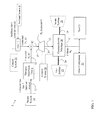
- FIG. 1 a schematic depiction of a system 2 is shown according to various embodiments of the invention. It is understood that the system 2 shown and described includes components (and associated connections) which may aid in understanding of the invention disclosed herein. The system 2 may omit particular components which are not necessary in the understanding of the invention disclosed herein.
- the system 2 can include: at least one of an air separation unit (ASU) 3 or a nitrogen separation unit (NSU) 4 for extracting nitrogen from an inlet air source (e.g., ambient air 6 or an exhaust flue gas 7 from a burner system 14) to produce an extracted nitrogen 16; a nitrogen (N 2 ) expander 8 fluidly connected with the NSU 4, the nitrogen expander 8 for expanding the extracted nitrogen; and a dynamoelectric machine 10 fluidly connected with the nitrogen expander 8, the dynamoelectric machine 10 configured to receive the expanded nitrogen for cooling the dynamoelectric machine 10.
- ASU air separation unit
- NSU nitrogen separation unit
- the inlet air source e.g., ambient air 3 or exhaust flue gas 7
- the inlet air source can be obtained (e.g., transported via a conduit 12) from one of an ambient source 9 or a burner system 14, respectively.
- the ambient source 9 can include air external to the components shown and described herein.
- the burner system 14 can include any conventional burner configured to burn a combustion product, e.g., for transferring heat to a working fluid.
- the ASU 3 can include conventional nitrogen separation components for separating nitrogen from ambient air, in particular, air being composed primarily of oxygen (O 2 ) and nitrogen (N 2 ).
- the ASU 3 includes conventional components fro separating the nitrogen from the oxygen.
- the NSU 4 can include any conventional nitrogen separation components for separating nitrogen (N 2 ) from the exhaust flue gas 6.
- the exhaust flue gas 6 can include nitrogen (N 2 ) and carbon dioxide (CO 2 ), and in these cases, the NSU 4 is designed to separate nitrogen from the carbon dioxide.
- the extracted nitrogen 16 is provided to the nitrogen expander 8 to allow that nitrogen 16 to cool via physical expansion. That is, the extracted nitrogen 16 enters the nitrogen expander 8 at a first end 19 having a first width, and exits at a second end 21 having a second width (greater than the first width). Through physical expansion, the extracted nitrogen 6 loses pressure, and thus, heat, thereby reducing its temperature.
- the extracted, now expanded, nitrogen is then provided to the dynamoelectric machine 10 for cooling components within the dynamoelectric machine 10 (e.g., coils, rotor and stator body, cavities, etc.).
- components within the dynamoelectric machine 10 e.g., coils, rotor and stator body, cavities, etc.
- the nitrogen is exhausted from the dynamoelectric machine 18 and provided to one of several locations.
- the exhausted nitrogen is provided to a vent 21, which can lead to the surrounding atmosphere.
- the exhausted nitrogen is provided to another component 23 within a power generation system, which can include, for example, a purge unit for at least one of a gas turbine or dynamoelectric machine, a cooling system for gas turbine components, a nitrous oxide (NOx) abatement system, a compartment ventilation system, a storage system, etc.
- a purge unit for at least one of a gas turbine or dynamoelectric machine a cooling system for gas turbine components, a nitrous oxide (NOx) abatement system, a compartment ventilation system, a storage system, etc.
- NOx nitrous oxide
- the dynamoelectric machine 18 is operably connected (e.g., physically coupled) to at least one steam turbine 20 and/or at least one gas turbine 22 via one or more common or distinct shaft(s) 24.
- the steam turbine 20 and gas turbine 22 can include any conventional turbine (or compressor) device known in the art.
- the system 2 can also include a control system 26 (which may include a centralized or distributed control system) which is operably connected (e.g., electrically and/or mechanically connected) to the NSU4, the nitrogen expander 8 and the dynamoelectric machine 18.
- the control system 26 can include any electrical, mechanical and/or electro-mechanical control mechanism for actuating any of the ASU 3, NSU 4, the nitrogen expander 8 or the dynamoelectric machine 18.
- the control system 26 can include any form of programmable computer system, which may include any conventional hardware and/or software for performing the actions described herein.
- control system 26 is configured to perform the following: monitor a temperature indicator of the dynamoelectric machine (e.g., a temperature of a section of the dynamoelectric machine, either inside or outside of the casing); and modify an amount of nitrogen extracted from the inlet air source (either ambient air 6 or exhaust flue gas 7) in response to determining the temperature indicator deviates from a predetermined threshold.
- the predetermined threshold can be based upon one or more operating parameters of the dynamoelectric machine 18, such as a desirable operating temperature of the dynamoelectric machine 18.
- FIG. 2 a flow diagram is shown illustrating processes according to various embodiments of the invention.
- a method can include the following processes:
Landscapes
- Engineering & Computer Science (AREA)
- Power Engineering (AREA)
- Chemical & Material Sciences (AREA)
- Combustion & Propulsion (AREA)
- Mechanical Engineering (AREA)
- General Engineering & Computer Science (AREA)
- Motor Or Generator Cooling System (AREA)
- Engine Equipment That Uses Special Cycles (AREA)
- Separation By Low-Temperature Treatments (AREA)
Abstract
Various embodiments of the invention include systems and methods for cooling a dynamoelectric machine 18. In some embodiments, a system is disclosed including: at least one of a nitrogen separation unit (NSU) 4 or an air separation unit (ASU) 3 for extracting nitrogen from an inlet air source; a nitrogen expander 8 fluidly connected with the at least one of the NSU or the ASU, the nitrogen expander for expanding the extracted nitrogen; and a dynamoelectric machine 18 fluidly connected with the nitrogen expander 8, the dynamoelectric machine 18 configured to receive the expanded nitrogen for cooling the dynamoelectric machine 18.
Description
- The subject matter disclosed herein relates to dynamoelectric machines. More particularly, aspects of the invention relate to cooling a dynamoelectric machine.
- Dynamoelectric machines such as electric generators and motors are conventionally cooled using a mixture of air and/or hydrogen. The air -based coolants can be inefficient in cooling some dynamoelectric machines during operation. Additionally, hydrogen-based coolants can be undesirably expensive due to safety concerns when they are utilized in a high-pressure environment such as a dynamoelectric machine casing.
- Various embodiments of the invention include systems and methods for cooling a dynamoelectric machine. In some embodiments, a system is disclosed including: at least one of a nitrogen separation unit (NSU) or an air separation unit (ASU) for extracting nitrogen from an inlet air source; a nitrogen expander fluidly connected with the at least one of the NSU or the ASU, the nitrogen expander for expanding the extracted nitrogen; and a dynamoelectric machine fluidly connected with the nitrogen expander, the dynamoelectric machine configured to receive the expanded nitrogen for cooling the dynamoelectric machine.
- A first aspect of the invention includes a system having: at least one of a nitrogen separation unit (NSU) or an air separation unit (ASU) for extracting nitrogen from an inlet air source; a nitrogen expander fluidly connected with the at least one of the NSU or the ASU, the nitrogen expander for expanding the extracted nitrogen; and a dynamoelectric machine fluidly connected with the nitrogen expander, the dynamoelectric machine configured to receive the expanded nitrogen for cooling the dynamoelectric machine.
- A second aspect of the invention includes a method including: extracting nitrogen from an inlet air source; expanding the extracted nitrogen; and cooling a dynamoelectric machine using the expanded, extracted nitrogen.
- A third aspect of the invention includes a system having: at least one of a nitrogen separation unit (NSU) or an air separation unit (ASU) for extracting nitrogen from inlet air; a nitrogen expander fluidly connected with the at least one of the NSU or the ASU, the nitrogen expander for expanding the extracted nitrogen; a dynamoelectric machine fluidly connected with the nitrogen expander, the dynamoelectric machine configured to receive the expanded nitrogen for cooling the dynamoelectric machine; and a control system operably connected to the NSU, the nitrogen expander and the dynamoelectric machine, the control system configured to perform the following: monitor a temperature indicator of the dynamoelectric machine; and modify an amount of nitrogen extracted from the inlet air source in response to determining the temperature indicator deviates from a predetermined threshold.
- These and other features of this invention will be more readily understood from the following detailed description of the various aspects of the invention taken in conjunction with the accompanying drawings that depict various embodiments of the invention, in which:
-
FIG. 1 shows a schematic diagram of a system according to various embodiments of the invention. -
FIG. 2 shows a flow diagram illustrating processes according to various embodiments of the invention. - It is noted that the drawings of the invention are not necessarily to scale. The drawings are intended to depict only typical aspects of the invention, and therefore should not be considered as limiting the scope of the invention. In the drawings, like numbering represents like elements between the drawings.
- As noted, the subject matter disclosed herein relates to dynamoelectric machines. More particularly, aspects of the invention relate to cooling a dynamoelectric machine.
- Conventional approaches for cooling dynamoelectric machines (e.g., electric generators or motors) can be inefficient in cooling these machines, and in some cases, can be undesirably costly. Aspects of the invention utilize a system which effectively isolates nitrogen from an inlet air source (e.g., ambient air, isolated using an air separation unit (ASU); or an exhaust flue gas from a conventional boiler, isolated using a nitrogen separation unit (NSU)), and provides that isolated (or, extracted) nitrogen as a coolant for a dynamoelectric machine.
- Turning to
FIG. 1 , a schematic depiction of asystem 2 is shown according to various embodiments of the invention. It is understood that thesystem 2 shown and described includes components (and associated connections) which may aid in understanding of the invention disclosed herein. Thesystem 2 may omit particular components which are not necessary in the understanding of the invention disclosed herein. In some cases, thesystem 2 can include: at least one of an air separation unit (ASU) 3 or a nitrogen separation unit (NSU) 4 for extracting nitrogen from an inlet air source (e.g.,ambient air 6 or anexhaust flue gas 7 from a burner system 14) to produce an extracted nitrogen 16; a nitrogen (N2) expander 8 fluidly connected with theNSU 4, the nitrogen expander 8 for expanding the extracted nitrogen; and a dynamoelectric machine 10 fluidly connected with the nitrogen expander 8, the dynamoelectric machine 10 configured to receive the expanded nitrogen for cooling the dynamoelectric machine 10. As shown herein, the inlet air source (e.g.,ambient air 3 or exhaust flue gas 7) can be obtained (e.g., transported via a conduit 12) from one of anambient source 9 or aburner system 14, respectively. Theambient source 9 can include air external to the components shown and described herein. Theburner system 14 can include any conventional burner configured to burn a combustion product, e.g., for transferring heat to a working fluid. - The ASU 3 can include conventional nitrogen separation components for separating nitrogen from ambient air, in particular, air being composed primarily of oxygen (O2) and nitrogen (N2). The ASU 3 includes conventional components fro separating the nitrogen from the oxygen.
- The NSU 4 can include any conventional nitrogen separation components for separating nitrogen (N2) from the
exhaust flue gas 6. In some cases, theexhaust flue gas 6 can include nitrogen (N2) and carbon dioxide (CO2), and in these cases, theNSU 4 is designed to separate nitrogen from the carbon dioxide. - After extracting the nitrogen from either the oxygen (in the case of ambient air 6) or the CO2 (in the case of the exhaust flue gas 7), the extracted nitrogen 16 is provided to the nitrogen expander 8 to allow that nitrogen 16 to cool via physical expansion. That is, the extracted nitrogen 16 enters the nitrogen expander 8 at a
first end 19 having a first width, and exits at asecond end 21 having a second width (greater than the first width). Through physical expansion, the extractednitrogen 6 loses pressure, and thus, heat, thereby reducing its temperature. - The extracted, now expanded, nitrogen is then provided to the dynamoelectric machine 10 for cooling components within the dynamoelectric machine 10 (e.g., coils, rotor and stator body, cavities, etc.).
- Following use as a coolant, the nitrogen is exhausted from the
dynamoelectric machine 18 and provided to one of several locations. In one embodiment, the exhausted nitrogen is provided to avent 21, which can lead to the surrounding atmosphere. In another embodiment, the exhausted nitrogen is provided to anothercomponent 23 within a power generation system, which can include, for example, a purge unit for at least one of a gas turbine or dynamoelectric machine, a cooling system for gas turbine components, a nitrous oxide (NOx) abatement system, a compartment ventilation system, a storage system, etc. - In various aspects of the invention, the
dynamoelectric machine 18 is operably connected (e.g., physically coupled) to at least onesteam turbine 20 and/or at least onegas turbine 22 via one or more common or distinct shaft(s) 24. Thesteam turbine 20 andgas turbine 22 can include any conventional turbine (or compressor) device known in the art. - As shown, the
system 2 can also include a control system 26 (which may include a centralized or distributed control system) which is operably connected (e.g., electrically and/or mechanically connected) to the NSU4, the nitrogen expander 8 and thedynamoelectric machine 18. Thecontrol system 26 can include any electrical, mechanical and/or electro-mechanical control mechanism for actuating any of theASU 3,NSU 4, the nitrogen expander 8 or thedynamoelectric machine 18. Thecontrol system 26 can include any form of programmable computer system, which may include any conventional hardware and/or software for performing the actions described herein. - In various embodiments, the
control system 26 is configured to perform the following: monitor a temperature indicator of the dynamoelectric machine (e.g., a temperature of a section of the dynamoelectric machine, either inside or outside of the casing); and modify an amount of nitrogen extracted from the inlet air source (eitherambient air 6 or exhaust flue gas 7) in response to determining the temperature indicator deviates from a predetermined threshold. The predetermined threshold can be based upon one or more operating parameters of thedynamoelectric machine 18, such as a desirable operating temperature of thedynamoelectric machine 18. - Turning to
FIG. 2 , a flow diagram is shown illustrating processes according to various embodiments of the invention. In this example, a method can include the following processes: - Process P1: Extracting nitrogen from the inlet air source, e.g.,
ambient air 6 via the ASU 3 orexhaust flue gas 7 via the NSU 4; - Process P2: Expanding the extracted nitrogen (e.g., extracted nitrogen 16), e.g., via a nitrogen expander 8;
- Process P3: Cooling a dynamoelectric machine (e.g., dynamoelectric machine 18) using the expanded, extracted nitrogen; and
- Process P4: Providing the expanded, extracted nitrogen to an outlet (e.g., an outlet of the dynamoelectric machine 18 (e.g., an outlet to ambient or to another component in the power generation system).
- The terminology used herein is for the purpose of describing particular embodiments only and is not intended to be limiting of the disclosure. As used herein, the singular forms "a", "an" and "the" are intended to include the plural forms as well, unless the context clearly indicates otherwise. It will be further understood that the terms "comprises" and/or "comprising," when used in this specification, specify the presence of stated features, integers, steps, operations, elements, and/or components, but do not preclude the presence or addition of one or more other features, integers, steps, operations, elements, components, and/or groups thereof. It is further understood that the terms "front" and "back" are not intended to be limiting and are intended to be interchangeable where appropriate.
- This written description uses examples to disclose the invention, including the best mode, and also to enable any person skilled in the art to practice the invention, including making and using any devices or systems and performing any incorporated methods. The patentable scope of the invention is defined by the claims, and may include other examples that occur to those skilled in the art. Such other examples are intended to be within the scope of the claims if they have structural elements that do not differ from the literal language of the claims, or if they include equivalent structural elements with insubstantial differences from the literal languages of the claims.
- Various aspects and embodiments of the present invention are defined by the following numbered clauses:
- 1. A system comprising:
- at least one of a nitrogen separation unit (NSU) or an air separation unit (ASU) for extracting nitrogen from an inlet air source;
- a nitrogen expander fluidly connected with the at least one of the NSU or the ASU, the nitrogen expander for expanding the extracted nitrogen; and
- a dynamoelectric machine fluidly connected with the nitrogen expander, the dynamoelectric machine configured to receive the expanded nitrogen for cooling the dynamoelectric machine.
- 2. The system of clause 1, further comprising at least one steam turbine operably connected to the dynamoelectric machine.
- 3. The system of clause 1 or
clause 2, further comprising at least one gas turbine operably connected to the dynamoelectric machine. - 4. The system of any preceding clause, wherein the dynamoelectric machine further includes a nitrogen outlet for exhausting the expanded nitrogen after the cooling of the dynamoelectric machine.
- 5. The system of any preceding clause, wherein the nitrogen expander is configured to cool the extracted nitrogen before providing the expanded nitrogen to the dynamoelectric machine.
- 6. The system of any preceding clause, wherein the inlet air source includes an exhaust flue gas having nitrogen and carbon dioxide.
- 7. The system of any preceding clause, wherein the inlet air source includes ambient air.
- 8. A method comprising:
- extracting nitrogen from an inlet air source;
- expanding the extracted nitrogen; and
- cooling a dynamoelectric machine using the expanded, extracted nitrogen.
- 9. The method of any preceding clause, further comprising providing the expanded, extracted nitrogen to an exhaust vent after the cooling of the dynamoelectric machine.
- 10. The method of any preceding clause, further comprising providing the expanded, extracted nitrogen to another component distinct from the dynamoelectric machine after the cooling of the dynamoelectric machine.
- 11. The method of any preceding clause, wherein extracting includes separating the nitrogen from one of ambient air or an exhaust flue gas.
- 12. The method of any preceding clause, wherein the expanding of the extracted nitrogen includes cooling the extracted nitrogen in a nitrogen expander.
- 13. The method of any preceding clause, wherein extracting includes separating the nitrogen from carbon dioxide in the inlet air source.
- 14. A system comprising:
- at least one of a nitrogen separation unit (NSU) or an air separation unit (ASU) for extracting nitrogen from an inlet air source;
- a nitrogen expander fluidly connected with the at least one of the NSU or the ASU, the nitrogen expander for expanding the extracted nitrogen;
- a dynamoelectric machine fluidly connected with the nitrogen expander, the dynamoelectric machine configured to receive the expanded nitrogen for cooling the dynamoelectric machine; and
- a control system operably connected to the at least one of the NSU or the ASU, the nitrogen expander and the dynamoelectric machine, the control system configured to perform the following:
- monitor a temperature indicator of the dynamoelectric machine; and
- modify an amount of nitrogen extracted from the inlet air source in response to determining the temperature indicator deviates from a predetermined threshold.
- 15. The system of any preceding clause, further comprising at least one steam turbine operably connected to the dynamoelectric machine.
- 16. The system of any preceding clause, further comprising at least one gas turbine operably connected to the dynamoelectric machine.
- 17. The system of any preceding clause, wherein the dynamoelectric machine further includes a nitrogen outlet for exhausting the expanded nitrogen after the cooling of the dynamoelectric machine.
- 18. The system of any preceding clause, wherein the nitrogen expander is configured to cool the extracted nitrogen from the inlet air source before providing the expanded nitrogen to the dynamoelectric machine.
- 19. The system of any preceding clause, wherein the inlet air source includes an exhaust flue gas having nitrogen and carbon dioxide and the NSU extracts the nitrogen from the exhaust flue gas.
- 20. The system of any preceding clause, wherein the inlet air source includes ambient air and the ASU extracts the nitrogen from the ambient air.
Claims (14)
- A system comprising:at least one of a nitrogen separation unit (NSU) (4) or an air separation unit (ASU) (3) for extracting nitrogen from an inlet air source (6);a nitrogen expander (8) fluidly connected with the at least one of the NSU (4) or the ASU (3), the nitrogen expander for expanding the extracted nitrogen; anda dynamoelectric machine (18) fluidly connected with the nitrogen expander (8), the dynamoelectric machine configured to receive the expanded nitrogen for cooling the dynamoelectric machine.
- The system of claim 1, further comprising at least one steam turbine operably connected to the dynamoelectric machine.
- The system of claim 1 or claim 2, further comprising at least one gas turbine operably connected to the dynamoelectric machine.
- The system of any preceding claim, wherein the dynamoelectric machine further includes a nitrogen outlet for exhausting the expanded nitrogen after the cooling of the dynamoelectric machine.
- The system of any preceding claim, wherein the nitrogen expander is configured to cool the extracted nitrogen before providing the expanded nitrogen to the dynamoelectric machine.
- The system of any preceding claim, wherein the inlet air source includes an exhaust flue gas having nitrogen and carbon dioxide.
- The system of any preceding claim, wherein the inlet air source includes ambient air.
- A system comprising:a system according to any preceding claim and;a control system operably connected to the at least one of the NSU or the ASU, the nitrogen expander and the dynamoelectric machine, the control system configured to perform the following:monitor a temperature indicator of the dynamoelectric machine; andmodify an amount of nitrogen extracted from the inlet air source in response to determining the temperature indicator deviates from a predetermined threshold.
- A method comprising:extracting nitrogen from an inlet air source;expanding the extracted nitrogen; andcooling a dynamoelectric machine using the expanded, extracted nitrogen.
- The method of claim 9, further comprising providing the expanded, extracted nitrogen to an exhaust vent after the cooling of the dynamoelectric machine.
- The method of claim 9 or claim 10, further comprising providing the expanded, extracted nitrogen to another component distinct from the dynamoelectric machine after the cooling of the dynamoelectric machine.
- The method of any of claims 9 to 11, wherein extracting includes separating the nitrogen from one of ambient air or an exhaust flue gas.
- The method of any of claims 9 to 12, wherein the expanding of the extracted nitrogen includes cooling the extracted nitrogen in a nitrogen expander.
- The method of any of claims 9 to 13, wherein extracting includes separating the nitrogen from carbon dioxide in the inlet air source.
Applications Claiming Priority (1)
| Application Number | Priority Date | Filing Date | Title |
|---|---|---|---|
| US13/488,023 US20130319041A1 (en) | 2012-06-04 | 2012-06-04 | Nitrogen-cooled dynamoelectric machine system and related method |
Publications (1)
| Publication Number | Publication Date |
|---|---|
| EP2672615A2 true EP2672615A2 (en) | 2013-12-11 |
Family
ID=48536729
Family Applications (1)
| Application Number | Title | Priority Date | Filing Date |
|---|---|---|---|
| EP13170088.2A Withdrawn EP2672615A2 (en) | 2012-06-04 | 2013-05-31 | Nitrogen-cooled dynamoelectric machine system and related method |
Country Status (4)
| Country | Link |
|---|---|
| US (1) | US20130319041A1 (en) |
| EP (1) | EP2672615A2 (en) |
| KR (1) | KR20130136402A (en) |
| RU (1) | RU2013125532A (en) |
Families Citing this family (1)
| Publication number | Priority date | Publication date | Assignee | Title |
|---|---|---|---|---|
| US20140020426A1 (en) * | 2012-07-17 | 2014-01-23 | General Electric Company | System and method for using a chilled fluid to cool an electromechanical machine |
Family Cites Families (2)
| Publication number | Priority date | Publication date | Assignee | Title |
|---|---|---|---|---|
| US4977745A (en) * | 1983-07-06 | 1990-12-18 | Heichberger Albert N | Method for the recovery of low purity carbon dioxide |
| US5886433A (en) * | 1995-09-13 | 1999-03-23 | Hitachi, Ltd. | Dynamoelectric machine |
-
2012
- 2012-06-04 US US13/488,023 patent/US20130319041A1/en not_active Abandoned
-
2013
- 2013-05-31 EP EP13170088.2A patent/EP2672615A2/en not_active Withdrawn
- 2013-06-03 KR KR1020130063656A patent/KR20130136402A/en not_active Withdrawn
- 2013-06-03 RU RU2013125532/06A patent/RU2013125532A/en not_active Application Discontinuation
Non-Patent Citations (1)
| Title |
|---|
| None |
Also Published As
| Publication number | Publication date |
|---|---|
| KR20130136402A (en) | 2013-12-12 |
| US20130319041A1 (en) | 2013-12-05 |
| RU2013125532A (en) | 2014-12-10 |
Similar Documents
| Publication | Publication Date | Title |
|---|---|---|
| CN103573410B (en) | Turbo machine | |
| JP6239123B2 (en) | Supercritical fluid cooling gas turbine equipment | |
| US20100068035A1 (en) | Apparatus and method for cooling a turbine | |
| CA2703550A1 (en) | Turbine detuner for recovering kinetic energy from gas turbine engine exhaust gases | |
| EP3070295A1 (en) | Power generation system having compressor creating excess air flow | |
| EP2711298A2 (en) | Self-Cooled Motor Driven Compressor | |
| KR20190134498A (en) | Device for the air supply of a fuel cell, preferentially of a fuel cell operated with hydrogen | |
| EP3070294A1 (en) | Power generation system having compressor creating excess air flow and turbo-expander for supplemental generator | |
| KR20150038412A (en) | Dual-end drive gas turbine | |
| US20150152884A1 (en) | High pressure ratio compressors with multiple intercooling and related methods | |
| JP2014510872A (en) | Sealing system for turbo expander used in organic Rankine cycle | |
| US20140026993A1 (en) | Cabin air compressor heat housing | |
| EP3845742A1 (en) | Systems and methods for operating a turbocharged gas turbine engine | |
| KR20190134497A (en) | Device for the air supply of a fuel cell | |
| US20150082767A1 (en) | Passive Cooling System for Control Valve Actuators | |
| EP2672615A2 (en) | Nitrogen-cooled dynamoelectric machine system and related method | |
| JP6877884B2 (en) | Power generation system with compressor to generate excess gas flow for auxiliary gas turbine system | |
| WO2015052474A3 (en) | Turbo compressor | |
| US10036321B2 (en) | Systems and methods for utilizing gas turbine compartment ventilation discharge air | |
| CN105386876A (en) | Combined cycle power plant | |
| EP3070298A1 (en) | Power generation system having compressor creating excess air flow and eductor for process air demand | |
| EP3070291A1 (en) | Power generation system having compressor creating excess air flow and turbo-expander using same | |
| JP2010174888A (en) | Gas turbine with introduction of nitrogen | |
| US20120294707A1 (en) | Steam seal system | |
| US11598327B2 (en) | Compressor system with heat recovery |
Legal Events
| Date | Code | Title | Description |
|---|---|---|---|
| PUAI | Public reference made under article 153(3) epc to a published international application that has entered the european phase |
Free format text: ORIGINAL CODE: 0009012 |
|
| AK | Designated contracting states |
Kind code of ref document: A2 Designated state(s): AL AT BE BG CH CY CZ DE DK EE ES FI FR GB GR HR HU IE IS IT LI LT LU LV MC MK MT NL NO PL PT RO RS SE SI SK SM TR |
|
| AX | Request for extension of the european patent |
Extension state: BA ME |
|
| 18D | Application deemed to be withdrawn |
Effective date: 20161201 |
|
| STAA | Information on the status of an ep patent application or granted ep patent |
Free format text: STATUS: THE APPLICATION IS DEEMED TO BE WITHDRAWN |