EP2671872A1 - Fluorinated pyridylacetylene derivatives as tracers - Google Patents
Fluorinated pyridylacetylene derivatives as tracers Download PDFInfo
- Publication number
- EP2671872A1 EP2671872A1 EP12170914.1A EP12170914A EP2671872A1 EP 2671872 A1 EP2671872 A1 EP 2671872A1 EP 12170914 A EP12170914 A EP 12170914A EP 2671872 A1 EP2671872 A1 EP 2671872A1
- Authority
- EP
- European Patent Office
- Prior art keywords
- pss232
- mglur5
- tissues
- brain
- compound
- Prior art date
- Legal status (The legal status is an assumption and is not a legal conclusion. Google has not performed a legal analysis and makes no representation as to the accuracy of the status listed.)
- Withdrawn
Links
- 150000001875 compounds Chemical class 0.000 claims abstract description 22
- 238000001727 in vivo Methods 0.000 claims abstract description 11
- 101001032845 Homo sapiens Metabotropic glutamate receptor 5 Proteins 0.000 claims abstract description 9
- 102100038357 Metabotropic glutamate receptor 5 Human genes 0.000 claims abstract description 9
- 238000000338 in vitro Methods 0.000 claims abstract description 7
- 210000000133 brain stem Anatomy 0.000 claims abstract description 6
- 239000003550 marker Substances 0.000 claims abstract description 6
- 210000001428 peripheral nervous system Anatomy 0.000 claims abstract description 6
- 239000002253 acid Substances 0.000 claims abstract description 4
- 150000003839 salts Chemical group 0.000 claims abstract description 4
- 239000012458 free base Substances 0.000 claims abstract description 3
- 238000002372 labelling Methods 0.000 claims description 8
- 239000000203 mixture Substances 0.000 claims description 5
- 210000000227 basophil cell of anterior lobe of hypophysis Anatomy 0.000 claims description 4
- 238000000034 method Methods 0.000 claims description 4
- 230000002285 radioactive effect Effects 0.000 abstract description 6
- 108010065028 Metabotropic Glutamate 5 Receptor Proteins 0.000 description 25
- 102000012777 Metabotropic Glutamate 5 Receptor Human genes 0.000 description 25
- 210000004556 brain Anatomy 0.000 description 15
- 238000002600 positron emission tomography Methods 0.000 description 13
- 239000003795 chemical substances by application Substances 0.000 description 12
- 241000700159 Rattus Species 0.000 description 11
- 238000002347 injection Methods 0.000 description 9
- 239000007924 injection Substances 0.000 description 9
- 239000002243 precursor Substances 0.000 description 8
- BWGVEMBFNIKUJU-UHFFFAOYSA-N 2-[2-(3-methoxyphenyl)ethynyl]-6-methylpyridine;hydrochloride Chemical compound Cl.COC1=CC=CC(C#CC=2N=C(C)C=CC=2)=C1 BWGVEMBFNIKUJU-UHFFFAOYSA-N 0.000 description 7
- 239000000700 radioactive tracer Substances 0.000 description 7
- WEVYAHXRMPXWCK-UHFFFAOYSA-N Acetonitrile Chemical compound CC#N WEVYAHXRMPXWCK-UHFFFAOYSA-N 0.000 description 6
- 239000003446 ligand Substances 0.000 description 6
- 238000002360 preparation method Methods 0.000 description 6
- CNNZLFXCUQLKOB-QLLCUVANSA-N (e)-n-methoxy-3-[2-(6-methylpyridin-2-yl)ethynyl]cyclohex-2-en-1-imine Chemical compound CC1=CC=CC(C#CC=2CCCC(/C=2)=N\O[11CH3])=N1 CNNZLFXCUQLKOB-QLLCUVANSA-N 0.000 description 5
- 230000027455 binding Effects 0.000 description 5
- 238000006073 displacement reaction Methods 0.000 description 5
- 238000003384 imaging method Methods 0.000 description 5
- 230000015572 biosynthetic process Effects 0.000 description 4
- 238000006115 defluorination reaction Methods 0.000 description 4
- 210000001577 neostriatum Anatomy 0.000 description 4
- 102000005962 receptors Human genes 0.000 description 4
- 108020003175 receptors Proteins 0.000 description 4
- 238000003786 synthesis reaction Methods 0.000 description 4
- 210000003462 vein Anatomy 0.000 description 4
- IKBQPNVYXHKVJS-IYFNJICDSA-N (e)-n-[2-(2-fluoranylethoxy)ethoxy]-3-(2-pyridin-2-ylethynyl)cyclohex-2-en-1-imine Chemical compound [18F]CCOCCO\N=C1/CCCC(C#CC=2N=CC=CC=2)=C1 IKBQPNVYXHKVJS-IYFNJICDSA-N 0.000 description 3
- IAZDPXIOMUYVGZ-UHFFFAOYSA-N Dimethylsulphoxide Chemical compound CS(C)=O IAZDPXIOMUYVGZ-UHFFFAOYSA-N 0.000 description 3
- LYCAIKOWRPUZTN-UHFFFAOYSA-N Ethylene glycol Chemical compound OCCO LYCAIKOWRPUZTN-UHFFFAOYSA-N 0.000 description 3
- ZMXDDKWLCZADIW-UHFFFAOYSA-N N,N-Dimethylformamide Chemical compound CN(C)C=O ZMXDDKWLCZADIW-UHFFFAOYSA-N 0.000 description 3
- 238000012879 PET imaging Methods 0.000 description 3
- 101001032838 Rattus norvegicus Metabotropic glutamate receptor 5 Proteins 0.000 description 3
- KRHYYFGTRYWZRS-BJUDXGSMSA-N ac1l2y5h Chemical compound [18FH] KRHYYFGTRYWZRS-BJUDXGSMSA-N 0.000 description 3
- 238000009825 accumulation Methods 0.000 description 3
- 210000001638 cerebellum Anatomy 0.000 description 3
- 238000001514 detection method Methods 0.000 description 3
- 208000037265 diseases, disorders, signs and symptoms Diseases 0.000 description 3
- 238000012544 monitoring process Methods 0.000 description 3
- NRBNGHCYDWUVLC-UHFFFAOYSA-N mtep Chemical compound S1C(C)=NC(C#CC=2C=NC=CC=2)=C1 NRBNGHCYDWUVLC-UHFFFAOYSA-N 0.000 description 3
- 230000005855 radiation Effects 0.000 description 3
- 230000009870 specific binding Effects 0.000 description 3
- CNNZLFXCUQLKOB-BMRADRMJSA-N (e)-n-methoxy-3-[2-(6-methylpyridin-2-yl)ethynyl]cyclohex-2-en-1-imine Chemical compound CO\N=C1/CCCC(C#CC=2N=C(C)C=CC=2)=C1 CNNZLFXCUQLKOB-BMRADRMJSA-N 0.000 description 2
- WTLBLIGPXACYET-UMSOTBISSA-N 3-[2-[2-(fluoranylmethyl)-1,3-thiazol-4-yl]ethynyl]-5-fluorobenzonitrile Chemical compound FC1=CC(C#N)=CC(C#CC=2N=C(C[18F])SC=2)=C1 WTLBLIGPXACYET-UMSOTBISSA-N 0.000 description 2
- 241000282412 Homo Species 0.000 description 2
- 102100036834 Metabotropic glutamate receptor 1 Human genes 0.000 description 2
- 241000700157 Rattus norvegicus Species 0.000 description 2
- 239000005557 antagonist Substances 0.000 description 2
- JFDZBHWFFUWGJE-UHFFFAOYSA-N benzenecarbonitrile Natural products N#CC1=CC=CC=C1 JFDZBHWFFUWGJE-UHFFFAOYSA-N 0.000 description 2
- 238000003745 diagnosis Methods 0.000 description 2
- 239000010432 diamond Substances 0.000 description 2
- 201000010099 disease Diseases 0.000 description 2
- 230000000694 effects Effects 0.000 description 2
- 108010014719 metabotropic glutamate receptor type 1 Proteins 0.000 description 2
- BWHMMNNQKKPAPP-UHFFFAOYSA-L potassium carbonate Chemical compound [K+].[K+].[O-]C([O-])=O BWHMMNNQKKPAPP-UHFFFAOYSA-L 0.000 description 2
- VIMMECPCYZXUCI-MIMFYIINSA-N (4s,6r)-6-[(1e)-4,4-bis(4-fluorophenyl)-3-(1-methyltetrazol-5-yl)buta-1,3-dienyl]-4-hydroxyoxan-2-one Chemical compound CN1N=NN=C1C(\C=C\[C@@H]1OC(=O)C[C@@H](O)C1)=C(C=1C=CC(F)=CC=1)C1=CC=C(F)C=C1 VIMMECPCYZXUCI-MIMFYIINSA-N 0.000 description 1
- PTUVTYFBBKVLPM-DYTRJAOYSA-N (e)-n-[3-(2-fluoroethoxy)propoxy]-3-(2-pyridin-2-ylethynyl)cyclohex-2-en-1-imine Chemical compound FCCOCCCO\N=C1/CCCC(C#CC=2N=CC=CC=2)=C1 PTUVTYFBBKVLPM-DYTRJAOYSA-N 0.000 description 1
- QOTAQTRFJWLFCR-UHFFFAOYSA-N 3,4-dihydro-2H-pyrano[2,3-b]quinolin-7-yl-(4-methoxycyclohexyl)methanone Chemical compound C1CC(OC)CCC1C(=O)C1=CC=C(N=C2C(CCCO2)=C2)C2=C1 QOTAQTRFJWLFCR-UHFFFAOYSA-N 0.000 description 1
- UWTWQUVXHUNEIF-UHFFFAOYSA-N 3-(2-pyridin-2-ylethynyl)cyclohex-2-en-1-one Chemical compound O=C1CCCC(C#CC=2N=CC=CC=2)=C1 UWTWQUVXHUNEIF-UHFFFAOYSA-N 0.000 description 1
- JWCFJPLIRVYENQ-UHFFFAOYSA-N 3-ethoxycyclohex-2-en-1-one Chemical compound CCOC1=CC(=O)CCC1 JWCFJPLIRVYENQ-UHFFFAOYSA-N 0.000 description 1
- MEZOEZSKPXUIJA-HUYCHCPVSA-N 3-fluoranyl-5-(2-pyridin-2-ylethynyl)benzonitrile Chemical compound [18F]C1=CC(C#N)=CC(C#CC=2N=CC=CC=2)=C1 MEZOEZSKPXUIJA-HUYCHCPVSA-N 0.000 description 1
- 208000024827 Alzheimer disease Diseases 0.000 description 1
- 208000019901 Anxiety disease Diseases 0.000 description 1
- 241000282693 Cercopithecidae Species 0.000 description 1
- 102000003688 G-Protein-Coupled Receptors Human genes 0.000 description 1
- 108090000045 G-Protein-Coupled Receptors Proteins 0.000 description 1
- 102000016193 Metabotropic glutamate receptors Human genes 0.000 description 1
- 108010010914 Metabotropic glutamate receptors Proteins 0.000 description 1
- 206010028980 Neoplasm Diseases 0.000 description 1
- 208000018737 Parkinson disease Diseases 0.000 description 1
- 208000004605 Persistent Truncus Arteriosus Diseases 0.000 description 1
- 241000283984 Rodentia Species 0.000 description 1
- 241000656145 Thyrsites atun Species 0.000 description 1
- 208000037258 Truncus arteriosus Diseases 0.000 description 1
- 150000001413 amino acids Chemical group 0.000 description 1
- 230000036506 anxiety Effects 0.000 description 1
- 238000003556 assay Methods 0.000 description 1
- 238000000376 autoradiography Methods 0.000 description 1
- 239000002585 base Substances 0.000 description 1
- 239000000090 biomarker Substances 0.000 description 1
- 210000005013 brain tissue Anatomy 0.000 description 1
- OKTJSMMVPCPJKN-BJUDXGSMSA-N carbon-11 Chemical compound [11C] OKTJSMMVPCPJKN-BJUDXGSMSA-N 0.000 description 1
- 210000004027 cell Anatomy 0.000 description 1
- 210000003169 central nervous system Anatomy 0.000 description 1
- 238000012512 characterization method Methods 0.000 description 1
- 238000006243 chemical reaction Methods 0.000 description 1
- 230000000052 comparative effect Effects 0.000 description 1
- 230000009137 competitive binding Effects 0.000 description 1
- 229940125898 compound 5 Drugs 0.000 description 1
- 230000001419 dependent effect Effects 0.000 description 1
- 238000011161 development Methods 0.000 description 1
- 206010012601 diabetes mellitus Diseases 0.000 description 1
- 208000035475 disorder Diseases 0.000 description 1
- 238000009826 distribution Methods 0.000 description 1
- 231100000673 dose–response relationship Toxicity 0.000 description 1
- 239000003814 drug Substances 0.000 description 1
- 229940079593 drug Drugs 0.000 description 1
- 239000003596 drug target Substances 0.000 description 1
- 230000004064 dysfunction Effects 0.000 description 1
- 125000001495 ethyl group Chemical group [H]C([H])([H])C([H])([H])* 0.000 description 1
- -1 ethyl oxime Chemical class 0.000 description 1
- 238000002474 experimental method Methods 0.000 description 1
- 230000002349 favourable effect Effects 0.000 description 1
- 125000004216 fluoromethyl group Chemical group [H]C([H])(F)* 0.000 description 1
- 238000004128 high performance liquid chromatography Methods 0.000 description 1
- 239000012216 imaging agent Substances 0.000 description 1
- 230000002401 inhibitory effect Effects 0.000 description 1
- 210000004185 liver Anatomy 0.000 description 1
- 210000001853 liver microsome Anatomy 0.000 description 1
- 239000012528 membrane Substances 0.000 description 1
- 230000009871 nonspecific binding Effects 0.000 description 1
- 210000000056 organ Anatomy 0.000 description 1
- 150000002923 oximes Chemical class 0.000 description 1
- 230000002093 peripheral effect Effects 0.000 description 1
- 238000001050 pharmacotherapy Methods 0.000 description 1
- 229910000027 potassium carbonate Inorganic materials 0.000 description 1
- 210000002637 putamen Anatomy 0.000 description 1
- RWWYLEGWBNMMLJ-YSOARWBDSA-N remdesivir Chemical compound NC1=NC=NN2C1=CC=C2[C@]1([C@@H]([C@@H]([C@H](O1)CO[P@](=O)(OC1=CC=CC=C1)N[C@H](C(=O)OCC(CC)CC)C)O)O)C#N RWWYLEGWBNMMLJ-YSOARWBDSA-N 0.000 description 1
- 201000000980 schizophrenia Diseases 0.000 description 1
- 238000002603 single-photon emission computed tomography Methods 0.000 description 1
- 239000000126 substance Substances 0.000 description 1
- 210000000225 synapse Anatomy 0.000 description 1
- 238000012360 testing method Methods 0.000 description 1
- 238000002560 therapeutic procedure Methods 0.000 description 1
- 230000036962 time dependent Effects 0.000 description 1
Images




Classifications
-
- C—CHEMISTRY; METALLURGY
- C07—ORGANIC CHEMISTRY
- C07D—HETEROCYCLIC COMPOUNDS
- C07D213/00—Heterocyclic compounds containing six-membered rings, not condensed with other rings, with one nitrogen atom as the only ring hetero atom and three or more double bonds between ring members or between ring members and non-ring members
- C07D213/02—Heterocyclic compounds containing six-membered rings, not condensed with other rings, with one nitrogen atom as the only ring hetero atom and three or more double bonds between ring members or between ring members and non-ring members having three double bonds between ring members or between ring members and non-ring members
- C07D213/04—Heterocyclic compounds containing six-membered rings, not condensed with other rings, with one nitrogen atom as the only ring hetero atom and three or more double bonds between ring members or between ring members and non-ring members having three double bonds between ring members or between ring members and non-ring members having no bond between the ring nitrogen atom and a non-ring member or having only hydrogen or carbon atoms directly attached to the ring nitrogen atom
- C07D213/24—Heterocyclic compounds containing six-membered rings, not condensed with other rings, with one nitrogen atom as the only ring hetero atom and three or more double bonds between ring members or between ring members and non-ring members having three double bonds between ring members or between ring members and non-ring members having no bond between the ring nitrogen atom and a non-ring member or having only hydrogen or carbon atoms directly attached to the ring nitrogen atom with substituted hydrocarbon radicals attached to ring carbon atoms
- C07D213/44—Radicals substituted by doubly-bound oxygen, sulfur, or nitrogen atoms, or by two such atoms singly-bound to the same carbon atom
- C07D213/53—Nitrogen atoms
-
- A—HUMAN NECESSITIES
- A61—MEDICAL OR VETERINARY SCIENCE; HYGIENE
- A61P—SPECIFIC THERAPEUTIC ACTIVITY OF CHEMICAL COMPOUNDS OR MEDICINAL PREPARATIONS
- A61P25/00—Drugs for disorders of the nervous system
Definitions
- the present invention relates to novel fluorinated pyridylacetylene derivatives, their preparation, their use as radiotracers/markers and compositions containing them.
- Metabotropic glutamate receptor subtype 5 is a seven transmembrane domain, G-protein coupled receptor belonging to group I of the metabotropic glutamate receptors which plays a role in several disorders of the central nervous system such as schizophrenia, depression, anxiety, Alzheimer and Parkinson's disease. It is considered an important future drug target, and much attention has been given to the development of an optimal positron emission tomography (PET) tracer for imaging of mGluR5 ( S Milicevic Sephton et al., Am J Nucl Med Mol Imaging 2 (2012) 14-28 , and references cited therein).
- PET positron emission tomography
- a compound of formula (I) wherein F is 19 F or 18 F This compound is named (E)-3-(pyridin-2-ylethynyl)-cyclohex-2-enone O-(3-(2-fluoroethoxy)propyl) oxime (henceforth abbreviated as: PSS232).
- PSS232 pyridin-2-ylethynyl-cyclohex-2-enone O-(3-(2-fluoroethoxy)propyl) oxime.
- PSS232 pyridin-2-ylethynyl)-cyclohex-2-enone O-(3-(2-fluoroethoxy)propyl) oxime
- the compound has high specificity for mGluR5. Moreover, it does not show significant defluorination in vivo in rats and is not significantly defluorinated by human and rat liver microsomes, respectively, and human S9 fraction of liver homogenate. This suggests negligible defluorination in human subjects.
- Acid addition salts may be produced from the free bases in known manner, and vice-versa.
- non-radioactive compound wherein F is 19 F cannot be used as a PET tracer. Nevertheless, the non-radioactive compound is useful in the general context of PET imaging of mGluR5, e.g. for comparative studies or competitive binding experiments where other mGluR5 ligands need to be displaced from the target.
- the compound is provided as radiolabelled compound wherein F is 18 F.
- the radiolabelled compound henceforth denoted as "radiolabelled agent of the invention” is generally useful as a PET tracer or for any method or device allowing detection of radioactive radiation, particularly beta + and gamma radiation. It exhibits valuable properties as histopathological labeling agent, imaging agent and/or biomarker for the selective labeling of the metabotropic glutamate receptor subtype 5 (mGlu5 receptor).
- the radiolabelled agent of the invention can be obtained in a single radiochemical step in reproducibly high (36%) radiochemical decay corrected yield.
- the total labeling time is less than 60 min after the end of bombardment and the radiolabelled agent is obtained in high specific activity and HPLC purity.
- the radiochemical step conveniently starts from a non-radioactive precursor that requires only six chemical preparation steps and can be prepared in reasonable quantities and stored at -20°C.
- radiolabelled agent of the invention is useful as marker for labeling the central and peripheral mGlu5 receptors in vitro or in vivo.
- the radiolabelled agent of the invention is therefore useful, for instance for, but not limited to, determining the levels of receptor occupancy of a drug acting at the mGlu5 receptor, diagnostic and monitoring purposes for diseases resulting from or in an imbalance or dysfunction of mGlu5 receptors, and monitoring the effectiveness of pharmacotherapies of such diseases.
- the radiolabelled agent of the invention is provided for use as a marker for radioimaging (claim 3).
- the present invention provides a composition for labeling tissues containing mGlu5 receptors in vivo and in vitro comprising the radiolabelled agent of the invention (claim 6).
- the agent is used for radioimaging of brain and peripheral nervous system structures (claims 4 and 7).
- the agent is used for radioimaging of structures containing beta cells (claim 5 and 8). Based on certain evidence indicating a higher expression of mGluR5 in beta cells than in surrounding cells, this embodiment could become of interest in diabetes diagnosis.
- the present invention provides a method for labeling brain and peripheral nervous system tissues or any other tissues containing mGlu5 receptors in vitro or in vivo, which comprises contacting brain tissue with the radiolabelled agent of the invention (claim 9).
- the present invention is generally useful for the imaging, detection, characterization of mGluR5 in any organ or tissue, including diagnosis, monitoring, and therapy assessment of tumor tissue.
- the method of the invention may comprise a further step aimed at determining whether the radiolabelled agent of the invention labeled the target structure.
- Said further step may be effected by observing the target structure using positron emission tomography (PET) or single photon emission computed tomography (SPECT), or any device allowing detection of radioactive radiations.
- PET positron emission tomography
- SPECT single photon emission computed tomography
- preparation of the PSS232 precursor starts with ethylene glycol 1, which in four steps is converted to precursor 8.
- compound 5, which is added to compound 4a or 4b in the fifth reaction step can be prepared in a known and established two-step synthesis from 3-ethoxy-2-cyclohexen-1-one (compound 9, see lower part of Fig. 1 ).
- the precursor 8 can be stored at -20°C.
- Fig. 2 The actual synthesis of radiolabelled or unlabeled PSS232 starting from precursor 8 is shown in Fig. 2 .
- Preparation of unlabeled PSS232 is carried out by reacting the precursor 8 with KF/kryptofix 2.2.2 complex in hot acetonitrile (80°C, 65 min), providing a yield of 62%.
- preparation of radiolabelled [ 18 F]-PSS232 is conducted by reacting the precursor 8 with K 2 CO 3 /kryptofix 2.2.2/ 18 F complex in hot dimethylformamide (95°C, 10 min), providing a radiochemical yield of 36%. Similar radiochemical yields are obtained using DMSO or acetonitrile.
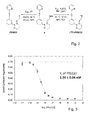
- Fig. 3 shows one out of three independent determinations of the half maximal inhibitory concentration (IC50), including the averages and standard deviations from three samples each.
- IC50 half maximal inhibitory concentration
- Fig. 4 two rat brain slices (20 ⁇ m) each were incubated with about 1 nM [ 18 F]PSS232 in the absence of any unlabeled compound (top) or with 100 nM of the specific mGluR5 ligand ABP688 (middle) or of mGluR1 ligand JNJ16259685 (bottom).
- a high, mGluR5-selective accumulation of [ 18 F]PSS232 in mGluR5-rich domains was found. It should be noted that mGluR1 is the receptor with most similar amino acid sequence to mGluR5.
- FIG. 5 shows a PET image averaged 2-90 min post injection. Only brain is shown. SUV denotes standardized uptake value.
- Fig. 6 shows time-radioactivity curves of the PET scan with [ 18 F]PSS232 shown in Fig. 5 in various brain regions.
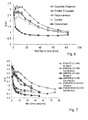
- PET scans analogous to those of Example 3 were recorded after administration of [ 18 F]PSS232 ( Fig. 7 , red curves, circles and diamonds), [ 11 C]ABP688 ( Fig. 7 , black curves, squares and triangles) and [ 18 F]FDEGPECO ( Fig. 7 , blue curves, crosses and crossed bars).
- Fig. 7 shows time-dependent SUVs of striatum (circles, squares, crosses, high mGluR5 expression) and cerebellum (diamonds, triangles, crossed bars, reference tissue, low mGluR5).
- Fig. 8 shows SUV in various brain regions taken from a PET scan with [ 18 F]PSS232. From 40 to 41 min following tracer injection and scan start a dose of MMPEP (1 mg/kg) was injected into a tail vein. This resulted in displacement of specific PSS232 binding, as evidenced by the sudden drop of SUVs.
- Fig. 9 illustrates the favorable kinetic behavior of PSS232.
- the ratio of specifically bound PSS232 in caudate putamen (striatum) to free ligand PSS232 (radioactivity in cerebellum is considered to originate from free ligand) becomes constant at about 40 min after injection, thus allowing the estimation of the binding potential (BP). This is an advantage over [ 11 C]ABP688 where the equilibrium is not reached within 60 min and the short physical half-life of 11 C (20 min) limits the scan duration.
- MTEP a specific mGluR5 antagonist
- vehicle baseline, see blue, left, bars in Fig. 10
- the rats were sacrificed, brain regions removed and their radioactivity was measured in a gamma counter. Note that after MTEP pre-injection all brain regions have similar radioactivity as in cerebellum (corresponding to free ligand and possibly non-specific binding). Without MTEP blockade, a high specific binding was found in certain brain regions; the average specific binding in striatum was found to be 86.6 %.
- Rats were pre-injected (tail vein) either with MMPEP (a specific mGluR5 antagonist) at various doses, or with vehicle before [ 18 F]PSS232 injection.
- MMPEP a specific mGluR5 antagonist
- rats were sacrificed, brain regions removed and their radioactivity was measured in a gamma counter, see data in Fig. 11 .
- Receptor occupancy by [ 18 F]PSS232 was dependent on the MMPEP dose and followed a typical saturation function (red fit line). This indicates that [ 18 F]PSS232 is useful for receptor occupancy studies in vivo. From the fit to the data, the maximal specific binding of [ 18 F]PSS232 in striatum was estimated as 78.5 % under these experimental conditions.
Landscapes
- Chemical & Material Sciences (AREA)
- Organic Chemistry (AREA)
- Health & Medical Sciences (AREA)
- General Chemical & Material Sciences (AREA)
- Nuclear Medicine, Radiotherapy & Molecular Imaging (AREA)
- Neurosurgery (AREA)
- Biomedical Technology (AREA)
- Chemical Kinetics & Catalysis (AREA)
- Bioinformatics & Cheminformatics (AREA)
- Medicinal Chemistry (AREA)
- Neurology (AREA)
- Engineering & Computer Science (AREA)
- Pharmacology & Pharmacy (AREA)
- Life Sciences & Earth Sciences (AREA)
- Animal Behavior & Ethology (AREA)
- General Health & Medical Sciences (AREA)
- Public Health (AREA)
- Veterinary Medicine (AREA)
- Medicines Containing Antibodies Or Antigens For Use As Internal Diagnostic Agents (AREA)
Abstract
The invention relates to a novel compound of formula (I)

wherein F is 19F or 18F, in free base or acid addition salt form. In its radioactive form with 18F, the compound is useuful as a marker for radioimaging of brain and peripheral nervous system tissues or other tissues containing mGlu5 receptors in vitro or in vivo.
Description
- The present invention relates to novel fluorinated pyridylacetylene derivatives, their preparation, their use as radiotracers/markers and compositions containing them.
- Metabotropic glutamate receptor subtype 5 (mGluR5) is a seven transmembrane domain, G-protein coupled receptor belonging to group I of the metabotropic glutamate receptors which plays a role in several disorders of the central nervous system such as schizophrenia, depression, anxiety, Alzheimer and Parkinson's disease. It is considered an important future drug target, and much attention has been given to the development of an optimal positron emission tomography (PET) tracer for imaging of mGluR5 (S Milicevic Sephton et al., Am J Nucl Med Mol Imaging 2 (2012) 14-28, and references cited therein).
- To date, several PET tracers for imaging mGluR5 have been developed, of which (E)-3-((6-methylpyridin-2-yl)ethynyl)cyclohex-e-enone-O-11C-methyl oxime (abbreviated: [11C]-ABP688) is the most successful clinically applied tracer. However, due to the short physical half-life (about 20 min) of carbon-11, the application of [11C]-ABP688 is limited to facilities with on-site cyclotron.
- Accordingly, several attempts were made to develop fluorine-18 labeled radiotracers for PET imaging of mGluR5, which benefits from the longer physical half-life of fluorine-18 which is around 110 min. To date, the two most successful 18F-labeled radiotracers for PET imaging of mGluR5 in humans are 3-fluoro-5-(2-(2-[18F](fluoromethyl)-thiazol-4-yl)-ethynyl benzonitrile (abbreviated: [18F]-SP203), developed by Pike and coworkers (FG Simeon et al., J Med Chem 50 (2007) 3256-3266), and 3-[18F]fluoro-5-(2-pyridinylethynyl)benzonitrile (abbreviated: [18F]-FPEB), developed by Merck but applied by Hamill and coworkers (TG Hamill et al., Synapse 56 (2005) 205-216). However, [18F]-SP203 undergoes significant defluorination in rodents and monkeys and, to a lesser extent, in humans, whereas [18F]-FPEB is typically obtained in low radiochemical yields.
- (E)-3-(Pyridin-2-ylethynyl)-cyclohex-2-enone-O-2-(2-18F-fluoroethoxy)ethyl oxime (abbreviated [18F]FDEGPECO), developed by Ametamey and co-workers, was the first 18F-labeled pyridylacetylene derivative with acceptable imaging quality in preclinical tests with rats (Wanger-Baumann et al., Neuroimage 56 (2011) 984-991). The tracer was not further promoted as its mean residence time at the target site was relatively short.
- More recently, Ametamey and coworkers have reported about (E)-3-(pyridin-2-ylethynyl)cyclohex-2-enone O-(2-(3-18F-fluoropropoxy)ethyl) oxime (abbreviated [18F]PSS223), which can be prepared conveniently by a one-step radiosynthesis (S Milicevic Sephton et al., loc. cit.). However the compound has not been applied in human subjects due to rapid defluorination in vivo in rats.
- Accordingly, a need exists for new fluorinated compounds having high specificity for mGluR5, optimal in vivo kinetics, and being amenable to preparation of a fluorine-18 labeled form suitable as PET tracer.
- According to one aspect of the invention, there is provided a compound of formula (I)

- The compound has high specificity for mGluR5. Moreover, it does not show significant defluorination in vivo in rats and is not significantly defluorinated by human and rat liver microsomes, respectively, and human S9 fraction of liver homogenate. This suggests negligible defluorination in human subjects.
- Acid addition salts may be produced from the free bases in known manner, and vice-versa.
- It will be understood that the non-radioactive compound wherein F is 19F cannot be used as a PET tracer. Nevertheless, the non-radioactive compound is useful in the general context of PET imaging of mGluR5, e.g. for comparative studies or competitive binding experiments where other mGluR5 ligands need to be displaced from the target.
- In a particularly advantageous embodiment (claim 2) the compound is provided as radiolabelled compound wherein F is 18F. The radiolabelled compound, henceforth denoted as "radiolabelled agent of the invention" is generally useful as a PET tracer or for any method or device allowing detection of radioactive radiation, particularly beta+ and gamma radiation. It exhibits valuable properties as histopathological labeling agent, imaging agent and/or biomarker for the selective labeling of the metabotropic glutamate receptor subtype 5 (mGlu5 receptor).
- The radiolabelled agent of the invention can be obtained in a single radiochemical step in reproducibly high (36%) radiochemical decay corrected yield. The total labeling time is less than 60 min after the end of bombardment and the radiolabelled agent is obtained in high specific activity and HPLC purity. The radiochemical step conveniently starts from a non-radioactive precursor that requires only six chemical preparation steps and can be prepared in reasonable quantities and stored at -20°C.
- More particularly the radiolabelled agent of the invention is useful as marker for labeling the central and peripheral mGlu5 receptors in vitro or in vivo.
- The radiolabelled agent of the invention is therefore useful, for instance for, but not limited to, determining the levels of receptor occupancy of a drug acting at the mGlu5 receptor, diagnostic and monitoring purposes for diseases resulting from or in an imbalance or dysfunction of mGlu5 receptors, and monitoring the effectiveness of pharmacotherapies of such diseases.
- In accordance with the above, according to another aspect, the radiolabelled agent of the invention is provided for use as a marker for radioimaging (claim 3).
- In a further aspect, the present invention provides a composition for labeling tissues containing mGlu5 receptors in vivo and in vitro comprising the radiolabelled agent of the invention (claim 6).
- According to one embodiment, the agent is used for radioimaging of brain and peripheral nervous system structures (
claims 4 and 7). According to another embodiment, the agent is used for radioimaging of structures containing beta cells (claim 5 and 8). Based on certain evidence indicating a higher expression of mGluR5 in beta cells than in surrounding cells, this embodiment could become of interest in diabetes diagnosis. - In still a further aspect, the present invention provides a method for labeling brain and peripheral nervous system tissues or any other tissues containing mGlu5 receptors in vitro or in vivo, which comprises contacting brain tissue with the radiolabelled agent of the invention (claim 9).
- The present invention is generally useful for the imaging, detection, characterization of mGluR5 in any organ or tissue, including diagnosis, monitoring, and therapy assessment of tumor tissue.
- The method of the invention may comprise a further step aimed at determining whether the radiolabelled agent of the invention labeled the target structure. Said further step may be effected by observing the target structure using positron emission tomography (PET) or single photon emission computed tomography (SPECT), or any device allowing detection of radioactive radiations.
- The above mentioned and other features and objects of this invention and the manner of achieving them will become more apparent and this invention itself will be better understood by reference to the following description of various embodiments of this invention taken in conjunction with the accompanying drawings, wherein:
- Fig. 1
- shows the synthesis of the precursor of PSS232;
- Fig. 2
- shows the synthesis of 18F-labeled PSS232 and of unlabeled PSS232;
- Fig. 3
- shows the binding affinity of PSS232 to rat mGluR5;
- Fig. 4
- shows in vitro autoradiographies of rat brain slices, demonstrating that [18F]PSS232 selectively binds to rat mGluR5;
- Fig. 5
- shows a PET scan of a Wistar rat brain, demonstrating that [18F]PSS232 accumulates in mGluR5-rich brain regions;
- Fig. 6
- shows time activity curves (TAC) of [18F]PSS232 in the PET scans of
Fig. 5 ; - Fig. 7
- shows TACs of [18F]PSS232 in comparison with [11C]ABP688 and [18F]FDEGPECO;
- Fig. 8
- shows [18F]PSS232 displacement in vivo, indicating that the accumulation of [18F]PSS232 in brain is mGluR5-specific;
- Fig. 9
- shows the kinetic behavior of various mGluR5 radiotracers;
- Fig. 10
- shows ex vivo brain distributions of [18F]PSS232, demonstrating a high specific accumulation of [18F]PSS232 in mGluR5-rich brain regions; and
- Fig. 11
- shows PSS232 displacement by MMPEP as a function of MMPEP dose, indicating that PSS232 displacement by MMPEP is dose dependent.
- As shown in
Fig. 1 , preparation of the PSS232 precursor starts withethylene glycol 1, which in four steps is converted toprecursor 8. It should be noted thatcompound 5, which is added to compound 4a or 4b in the fifth reaction step, can be prepared in a known and established two-step synthesis from 3-ethoxy-2-cyclohexen-1-one (compound 9, see lower part ofFig. 1 ). Theprecursor 8 can be stored at -20°C. - The actual synthesis of radiolabelled or unlabeled PSS232 starting from
precursor 8 is shown inFig. 2 . Preparation of unlabeled PSS232 is carried out by reacting theprecursor 8 with KF/kryptofix 2.2.2 complex in hot acetonitrile (80°C, 65 min), providing a yield of 62%. In contrast, preparation of radiolabelled [18F]-PSS232 is conducted by reacting theprecursor 8 with K2CO3/kryptofix 2.2.2/18F complex in hot dimethylformamide (95°C, 10 min), providing a radiochemical yield of 36%. Similar radiochemical yields are obtained using DMSO or acetonitrile. - The following examples illustrate the invention.
- The binding affinity of PSS232 to rat mGluR5 was studied in a displacement assay with rat brain membranes and 1.6 nM [3H]ABP688 (KD 1.7 nM).
Fig. 3 shows one out of three independent determinations of the half maximal inhibitory concentration (IC50), including the averages and standard deviations from three samples each. The sigmoidal red line is a fit to the data; the magenta upper horizontal line corresponds to the situation with no PSS232 added whereas the green lower horizontal line corresponds to unspecific binding at 100 µM MMPEP. - In
Fig. 4 two rat brain slices (20 µm) each were incubated with about 1 nM [18F]PSS232 in the absence of any unlabeled compound (top) or with 100 nM of the specific mGluR5 ligand ABP688 (middle) or of mGluR1 ligand JNJ16259685 (bottom). A high, mGluR5-selective accumulation of [18F]PSS232 in mGluR5-rich domains was found. It should be noted that mGluR1 is the receptor with most similar amino acid sequence to mGluR5. - A male Wistar rat (423 g) was injected 23.1 MBq [18F]PSS232 into a tail vein and PET was acquired from 0 to 90 min post injection.
Fig. 5 shows a PET image averaged 2-90 min post injection. Only brain is shown. SUV denotes standardized uptake value.Fig. 6 shows time-radioactivity curves of the PET scan with [18F]PSS232 shown inFig. 5 in various brain regions. - PET scans analogous to those of Example 3 were recorded after administration of [18F]PSS232 (
Fig. 7 , red curves, circles and diamonds), [11C]ABP688 (Fig. 7 , black curves, squares and triangles) and [18F]FDEGPECO (Fig. 7 , blue curves, crosses and crossed bars).Fig. 7 shows time-dependent SUVs of striatum (circles, squares, crosses, high mGluR5 expression) and cerebellum (diamonds, triangles, crossed bars, reference tissue, low mGluR5). -
Fig. 8 shows SUV in various brain regions taken from a PET scan with [18F]PSS232. From 40 to 41 min following tracer injection and scan start a dose of MMPEP (1 mg/kg) was injected into a tail vein. This resulted in displacement of specific PSS232 binding, as evidenced by the sudden drop of SUVs. -
Fig. 9 illustrates the favorable kinetic behavior of PSS232. The ratio of specifically bound PSS232 in caudate putamen (striatum) to free ligand PSS232 (radioactivity in cerebellum is considered to originate from free ligand) becomes constant at about 40 min after injection, thus allowing the estimation of the binding potential (BP). This is an advantage over [11C]ABP688 where the equilibrium is not reached within 60 min and the short physical half-life of 11C (20 min) limits the scan duration. - Rats were pre-injected (tail vein) with 10 mg/kg MTEP (a specific mGluR5 antagonist) before [18F]PSS232 injection (= blockade, see green, right bars in
Fig. 10 ) or they were pre-injected with vehicle (= baseline, see blue, left, bars inFig. 10 ). At 45 min after injection, the rats were sacrificed, brain regions removed and their radioactivity was measured in a gamma counter. Note that after MTEP pre-injection all brain regions have similar radioactivity as in cerebellum (corresponding to free ligand and possibly non-specific binding). Without MTEP blockade, a high specific binding was found in certain brain regions; the average specific binding in striatum was found to be 86.6 %. - Rats were pre-injected (tail vein) either with MMPEP (a specific mGluR5 antagonist) at various doses, or with vehicle before [18F]PSS232 injection. At 45 min after injections, rats were sacrificed, brain regions removed and their radioactivity was measured in a gamma counter, see data in
Fig. 11 . Receptor occupancy by [18F]PSS232 was dependent on the MMPEP dose and followed a typical saturation function (red fit line). This indicates that [18F]PSS232 is useful for receptor occupancy studies in vivo. From the fit to the data, the maximal specific binding of [18F]PSS232 in striatum was estimated as 78.5 % under these experimental conditions.
Claims (9)
- A compound of formula (I)

- The compound according to claim 1, wherein F is 18F.
- The compound according to claim 2, for use as a marker for radioimaging.
- The compound according to claim 2, for use as a marker for radioimaging of brain and peripheral nervous system structures.
- The compound according to claim 2, for use as a marker for radioimaging of structures containing beta cells.
- A composition for labeling tissues containing mGlu5 receptors in vivo and in vitro, comprising the compound according to claim 2.
- The composition according to claim 6, wherein said tissues are from brain or peripheral nervous system structures.
- The composition according to claim 6, wherein said tissues are from structures containing beta cells.
- A method for labeling brain and peripheral nervous system tissues or other tissues containing mGlu5 receptors in vitro or in vivo, which comprises contacting said tissues with the compound according to claim 2.
Priority Applications (2)
| Application Number | Priority Date | Filing Date | Title |
|---|---|---|---|
| EP12170914.1A EP2671872A1 (en) | 2012-06-05 | 2012-06-05 | Fluorinated pyridylacetylene derivatives as tracers |
| PCT/EP2013/060322 WO2013182411A1 (en) | 2012-06-05 | 2013-05-18 | Fluorinated pyridylacetylene derivatives as tracers |
Applications Claiming Priority (1)
| Application Number | Priority Date | Filing Date | Title |
|---|---|---|---|
| EP12170914.1A EP2671872A1 (en) | 2012-06-05 | 2012-06-05 | Fluorinated pyridylacetylene derivatives as tracers |
Publications (1)
| Publication Number | Publication Date |
|---|---|
| EP2671872A1 true EP2671872A1 (en) | 2013-12-11 |
Family
ID=48577688
Family Applications (1)
| Application Number | Title | Priority Date | Filing Date |
|---|---|---|---|
| EP12170914.1A Withdrawn EP2671872A1 (en) | 2012-06-05 | 2012-06-05 | Fluorinated pyridylacetylene derivatives as tracers |
Country Status (2)
| Country | Link |
|---|---|
| EP (1) | EP2671872A1 (en) |
| WO (1) | WO2013182411A1 (en) |
-
2012
- 2012-06-05 EP EP12170914.1A patent/EP2671872A1/en not_active Withdrawn
-
2013
- 2013-05-18 WO PCT/EP2013/060322 patent/WO2013182411A1/en not_active Ceased
Non-Patent Citations (7)
| Title |
|---|
| CINDY A WANGER-BAUMANN ET AL: "In vitro and in vivo evaluation of [F]-FDEGPECO as a PET tracer for imaging the metabotropic glutamate receptor subtype 5 (mGluR5)", NEUROIMAGE, ACADEMIC PRESS, ORLANDO, FL, US, vol. 56, no. 3, 8 March 2011 (2011-03-08), pages 984 - 991, XP028198158, ISSN: 1053-8119, [retrieved on 20110313], DOI: 10.1016/J.NEUROIMAGE.2011.03.024 * |
| CINDY A. BAUMANN ET AL: "Structure-Activity Relationships of Fluorinated ( E )-3-((6-Methylpyridin-2-yl)ethynyl)cyclohex-2-enone- O -methyloxime (ABP688) Derivatives and the Discovery of a High Affinity Analogue as a Potential Candidate for Imaging Metabotropic Glutamate Recepors Subtype 5 (mGluR5) with Positron Emission To", JOURNAL OF MEDICINAL CHEMISTRY, vol. 53, no. 10, 27 May 2010 (2010-05-27), pages 4009 - 4017, XP055040458, ISSN: 0022-2623, DOI: 10.1021/jm901850k * |
| FG SIMEON ET AL., J MED CHEM, vol. 50, 2007, pages 3256 - 3266 |
| S MILICEVIC SEPHTON ET AL., AM J NUCL MED MOL IMAGING, vol. 2, 2012, pages 14 - 28 |
| SELENA M.SEPHTON ET AL: "Development of [18F]-PSS223 as a PET Tracer for Imaging of Metabotropic Glutamate Receptor Subtype 5 (mGluR5)", CHIMIA, vol. 66, no. 4, 1 April 2012 (2012-04-01), pages 201 - 204, XP002684998 * |
| TG HA MILL ET AL., SYNAPSE, vol. 56, 2005, pages 205 - 216 |
| WANGER-BAUMANN ET AL., NEUROIMAGE, vol. 56, 2011, pages 984 - 991 |
Also Published As
| Publication number | Publication date |
|---|---|
| WO2013182411A1 (en) | 2013-12-12 |
Similar Documents
| Publication | Publication Date | Title |
|---|---|---|
| AU2012304359B2 (en) | Compositions, methods, and systems for the synthesis and use of imaging agents | |
| EP2381967B1 (en) | Synthesis of 18f-radiolabeled styrylpyridines from tosylate precursors and stable pharmaceutical compositions thereof | |
| RU2494096C2 (en) | Psma-binding agents and using them | |
| Musachio et al. | Synthesis of an I-123 analog of A-85380 and preliminary SPECT imaging of nicotinic receptors in baboon | |
| KR20140140134A (en) | Ligands for imaging cardiac innervation | |
| US20180022719A1 (en) | Compounds for use in imaging, diagnosing and/or treatment of diseases of the central nervous system or of tumors | |
| WO2005009479A1 (en) | Radiolabeled cannabinoid-1 receptor modulators | |
| USRE43688E1 (en) | Compositions and methods related to serotonin 5-HT1A receptors | |
| Mu et al. | Radioligands for the PET imaging of metabotropic glutamate receptor subtype 5 (mGluR5) | |
| Nag et al. | Synthesis and biological evaluation of [18F] fluorovinpocetine, a potential PET radioligand for TSPO imaging | |
| WO2013182411A1 (en) | Fluorinated pyridylacetylene derivatives as tracers | |
| US7354935B2 (en) | Radiolabeled neurokinin-1 receptor antagonists | |
| Mu | Development of PET Radioligands for Imaging Endocannabinoid and Glutamatergic system in the Central Nervous System | |
| US20100278751A1 (en) | Radiolabeled 2-amino-4-alkyl-6-(haloalkyl)pyridine compounds and their use in diagnostic imaging | |
| HK40016928A (en) | Compositions, methods, and systems for the synthesis and use of imaging agents | |
| US20060083680A1 (en) | Diphenyl ether derivatives and their use for imaging serotonin transporters | |
| PET | W. Vaalburg and F. Brady PET Centrum, University Hospital Groningen, PO Box 30.001 RB Groningen | |
| HK1200030B (en) | Compositions, methods, and systems for the synthesis and use of imaging agents | |
| Batis et al. | P081. In vivo assessment of [123I] MNI420, an adenosine 2a SPECT radioligand, in nonhuman primates | |
| HK1161248B (en) | Psma-binding agents and uses thereof | |
| HK1203941B (en) | Compositions, methods, and systems for the synthesis and use of imaging agents |
Legal Events
| Date | Code | Title | Description |
|---|---|---|---|
| PUAI | Public reference made under article 153(3) epc to a published international application that has entered the european phase |
Free format text: ORIGINAL CODE: 0009012 |
|
| AK | Designated contracting states |
Kind code of ref document: A1 Designated state(s): AL AT BE BG CH CY CZ DE DK EE ES FI FR GB GR HR HU IE IS IT LI LT LU LV MC MK MT NL NO PL PT RO RS SE SI SK SM TR |
|
| AX | Request for extension of the european patent |
Extension state: BA ME |
|
| STAA | Information on the status of an ep patent application or granted ep patent |
Free format text: STATUS: THE APPLICATION IS DEEMED TO BE WITHDRAWN |
|
| 18D | Application deemed to be withdrawn |
Effective date: 20140612 |