EP2670751B1 - Methods of making hiv attachment inhibitor prodrug compound and intermediates - Google Patents
Methods of making hiv attachment inhibitor prodrug compound and intermediates Download PDFInfo
- Publication number
- EP2670751B1 EP2670751B1 EP20120704960 EP12704960A EP2670751B1 EP 2670751 B1 EP2670751 B1 EP 2670751B1 EP 20120704960 EP20120704960 EP 20120704960 EP 12704960 A EP12704960 A EP 12704960A EP 2670751 B1 EP2670751 B1 EP 2670751B1
- Authority
- EP
- European Patent Office
- Prior art keywords
- compound
- converting
- yield
- produce
- reacting
- Prior art date
- Legal status (The legal status is an assumption and is not a legal conclusion. Google has not performed a legal analysis and makes no representation as to the accuracy of the status listed.)
- Active
Links
- 0 CCC1C(**)CCC1 Chemical compound CCC1C(**)CCC1 0.000 description 3
- RIVVCANQQBMTCD-UHFFFAOYSA-N Cc(nc1)n[n]1-c(c1c2c(C(C(N(CC3)CCN3C(c3ccccc3)=O)=O)=O)c[n]1CCl)ncc2OC Chemical compound Cc(nc1)n[n]1-c(c1c2c(C(C(N(CC3)CCN3C(c3ccccc3)=O)=O)=O)c[n]1CCl)ncc2OC RIVVCANQQBMTCD-UHFFFAOYSA-N 0.000 description 3
- BNKMXMCVPWPRMR-SNAWJCMRSA-N CN(C)/C=C/c(c(Br)cnc1OC)c1[N+]([O-])=O Chemical compound CN(C)/C=C/c(c(Br)cnc1OC)c1[N+]([O-])=O BNKMXMCVPWPRMR-SNAWJCMRSA-N 0.000 description 1
- MVQWYBHMBLAGHI-UHFFFAOYSA-N COc(c1c2NC#CC1)cnc2OC Chemical compound COc(c1c2NC#CC1)cnc2OC MVQWYBHMBLAGHI-UHFFFAOYSA-N 0.000 description 1
- XQAVWTMXLIRALT-UHFFFAOYSA-N COc(c1c2[nH]cc1)cnc2OC Chemical compound COc(c1c2[nH]cc1)cnc2OC XQAVWTMXLIRALT-UHFFFAOYSA-N 0.000 description 1
- BGDKJBCVNNWITN-UHFFFAOYSA-N Cc(c(Br)cnc1OC)c1[N+]([O-])=O Chemical compound Cc(c(Br)cnc1OC)c1[N+]([O-])=O BGDKJBCVNNWITN-UHFFFAOYSA-N 0.000 description 1
- TYXANDXLKOYDQV-UHFFFAOYSA-N Cc(nc1)n[n]1-c(c1c2c(C(C(OC)=O)=O)c[nH]1)ncc2OC Chemical compound Cc(nc1)n[n]1-c(c1c2c(C(C(OC)=O)=O)c[nH]1)ncc2OC TYXANDXLKOYDQV-UHFFFAOYSA-N 0.000 description 1
- WFAVFCAHSIXGOS-UHFFFAOYSA-N Cc(nc1)n[n]1-c(nc1)c2[n](CSc(cc3)ccc3[Cl-])cc(C(C(N(CC3)CCN3C(c3ccccc3)=O)=O)=O)c2c1OC Chemical compound Cc(nc1)n[n]1-c(nc1)c2[n](CSc(cc3)ccc3[Cl-])cc(C(C(N(CC3)CCN3C(c3ccccc3)=O)=O)=O)c2c1OC WFAVFCAHSIXGOS-UHFFFAOYSA-N 0.000 description 1
- XPJUCMIJGVAEGF-UHFFFAOYSA-N ClCSc(cc1)ccc1Cl Chemical compound ClCSc(cc1)ccc1Cl XPJUCMIJGVAEGF-UHFFFAOYSA-N 0.000 description 1
- VUNXBQRNMNVUMV-UHFFFAOYSA-N O=C(c1ccccc1)N1CCNCC1 Chemical compound O=C(c1ccccc1)N1CCNCC1 VUNXBQRNMNVUMV-UHFFFAOYSA-N 0.000 description 1
Classifications
-
- C—CHEMISTRY; METALLURGY
- C07—ORGANIC CHEMISTRY
- C07D—HETEROCYCLIC COMPOUNDS
- C07D471/00—Heterocyclic compounds containing nitrogen atoms as the only ring hetero atoms in the condensed system, at least one ring being a six-membered ring with one nitrogen atom, not provided for by groups C07D451/00 - C07D463/00
- C07D471/02—Heterocyclic compounds containing nitrogen atoms as the only ring hetero atoms in the condensed system, at least one ring being a six-membered ring with one nitrogen atom, not provided for by groups C07D451/00 - C07D463/00 in which the condensed system contains two hetero rings
- C07D471/04—Ortho-condensed systems
-
- A—HUMAN NECESSITIES
- A61—MEDICAL OR VETERINARY SCIENCE; HYGIENE
- A61K—PREPARATIONS FOR MEDICAL, DENTAL OR TOILETRY PURPOSES
- A61K31/00—Medicinal preparations containing organic active ingredients
- A61K31/33—Heterocyclic compounds
- A61K31/395—Heterocyclic compounds having nitrogen as a ring hetero atom, e.g. guanethidine or rifamycins
- A61K31/435—Heterocyclic compounds having nitrogen as a ring hetero atom, e.g. guanethidine or rifamycins having six-membered rings with one nitrogen as the only ring hetero atom
- A61K31/4353—Heterocyclic compounds having nitrogen as a ring hetero atom, e.g. guanethidine or rifamycins having six-membered rings with one nitrogen as the only ring hetero atom ortho- or peri-condensed with heterocyclic ring systems
- A61K31/437—Heterocyclic compounds having nitrogen as a ring hetero atom, e.g. guanethidine or rifamycins having six-membered rings with one nitrogen as the only ring hetero atom ortho- or peri-condensed with heterocyclic ring systems the heterocyclic ring system containing a five-membered ring having nitrogen as a ring hetero atom, e.g. indolizine, beta-carboline
-
- A—HUMAN NECESSITIES
- A61—MEDICAL OR VETERINARY SCIENCE; HYGIENE
- A61P—SPECIFIC THERAPEUTIC ACTIVITY OF CHEMICAL COMPOUNDS OR MEDICINAL PREPARATIONS
- A61P31/00—Antiinfectives, i.e. antibiotics, antiseptics, chemotherapeutics
- A61P31/12—Antivirals
- A61P31/14—Antivirals for RNA viruses
- A61P31/18—Antivirals for RNA viruses for HIV
-
- A—HUMAN NECESSITIES
- A61—MEDICAL OR VETERINARY SCIENCE; HYGIENE
- A61P—SPECIFIC THERAPEUTIC ACTIVITY OF CHEMICAL COMPOUNDS OR MEDICINAL PREPARATIONS
- A61P43/00—Drugs for specific purposes, not provided for in groups A61P1/00-A61P41/00
-
- C—CHEMISTRY; METALLURGY
- C07—ORGANIC CHEMISTRY
- C07F—ACYCLIC, CARBOCYCLIC OR HETEROCYCLIC COMPOUNDS CONTAINING ELEMENTS OTHER THAN CARBON, HYDROGEN, HALOGEN, OXYGEN, NITROGEN, SULFUR, SELENIUM OR TELLURIUM
- C07F9/00—Compounds containing elements of Groups 5 or 15 of the Periodic Table
- C07F9/02—Phosphorus compounds
- C07F9/547—Heterocyclic compounds, e.g. containing phosphorus as a ring hetero atom
- C07F9/6561—Heterocyclic compounds, e.g. containing phosphorus as a ring hetero atom containing systems of two or more relevant hetero rings condensed among themselves or condensed with a common carbocyclic ring or ring system, with or without other non-condensed hetero rings
Definitions
- the HIV attachment inhibitor prodrug compound identified as 1-benzoyl-4-[2-[4-methoxy-7-(3-methyl-1 H -1,2,4-triazol-1-yl)-1-[(phosphonooxy)methyl]-1 H -pyrrolo[2,3-c]pyridin-3-yl]-1,2-dioxoethyl]-piperazine, and having the structural formula: has been set forth and described in U.S. Patent No. 7,745,625 , which is incorporated herein in its entirety.
- This compound is the phosphate prodrug of the basic compound having the structural formula: which is set forth and described in U.S. Patent No. 7,354,924 , also incorporated herein in its entirety. Both this compound and the prodrug identified above have so far demonstrated excellent prowess against HIV.
- the invention is directed to these and other important ends, hereinafter described.
Landscapes
- Chemical & Material Sciences (AREA)
- Organic Chemistry (AREA)
- Health & Medical Sciences (AREA)
- Life Sciences & Earth Sciences (AREA)
- General Health & Medical Sciences (AREA)
- Animal Behavior & Ethology (AREA)
- Molecular Biology (AREA)
- Veterinary Medicine (AREA)
- Public Health (AREA)
- Medicinal Chemistry (AREA)
- Pharmacology & Pharmacy (AREA)
- Nuclear Medicine, Radiotherapy & Molecular Imaging (AREA)
- Virology (AREA)
- General Chemical & Material Sciences (AREA)
- Chemical Kinetics & Catalysis (AREA)
- Biochemistry (AREA)
- Oncology (AREA)
- Bioinformatics & Cheminformatics (AREA)
- Tropical Medicine & Parasitology (AREA)
- Communicable Diseases (AREA)
- Engineering & Computer Science (AREA)
- AIDS & HIV (AREA)
- Epidemiology (AREA)
- Pharmaceuticals Containing Other Organic And Inorganic Compounds (AREA)
- Nitrogen Condensed Heterocyclic Rings (AREA)
- Medicines That Contain Protein Lipid Enzymes And Other Medicines (AREA)
- Organic Low-Molecular-Weight Compounds And Preparation Thereof (AREA)
- Nitrogen And Oxygen Or Sulfur-Condensed Heterocyclic Ring Systems (AREA)
Description
- The invention relates to methods of making prodrug compounds useful against HIV, and in particular, to methods of making the prodrug 1-benzoyl-4-[2-[4-methoxy-7-(3-methyl-1H-1,2,4-triazol-1-yl)-1-[(phosphonooxy)methyl]-1H-pyrrolo[2,3-c]pyridin-3-yl]-1,2-dioxoethyl]-piperazine, as well certain intermediates thereof, using novel alkylation, amidation, chlorination, and phosphate installation strategies. The invention also relates to the compounds obtained by the processes herein set forth.
- The HIV attachment inhibitor prodrug compound identified as 1-benzoyl-4-[2-[4-methoxy-7-(3-methyl-1H-1,2,4-triazol-1-yl)-1-[(phosphonooxy)methyl]-1H-pyrrolo[2,3-c]pyridin-3-yl]-1,2-dioxoethyl]-piperazine, and having the structural formula:
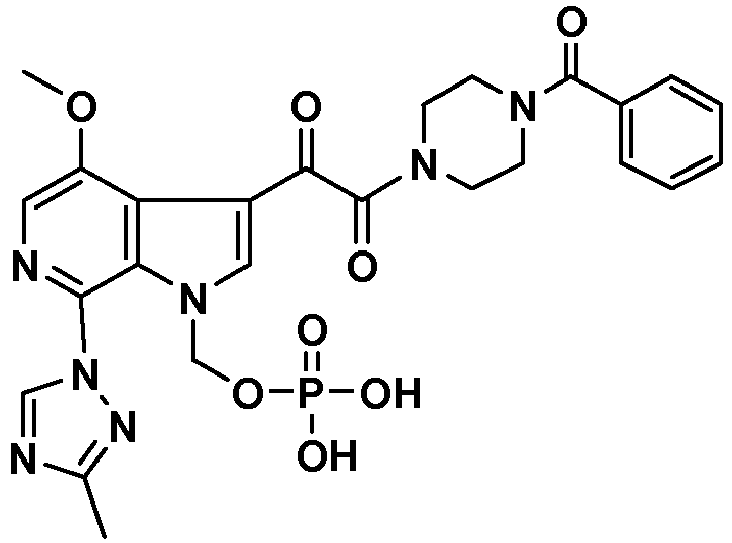
U.S. Patent No. 7,745,625 , which is incorporated herein in its entirety. This compound is the phosphate prodrug of the basic compound having the structural formula:
U.S. Patent No. 7,354,924 , also incorporated herein in its entirety. Both this compound and the prodrug identified above have so far demonstrated excellent prowess against HIV. - During scale-up procedures for the production of the phosphate prodrug compound, two compounds were utilized in an alkylation process between phosphonic acid, P-(chloromethyl)-, bis(1,1-dimethylethyl) ester and 1-(4-benzoylpiperazin-1-yl)-2-(4-methoxy-7-(3-methyl-1H-1,2,4-triazol-1-yl)-1H-pyrrolo-[2,3-c]pyridin-3-yl)ethane-1,2-dione. However, these compounds have proved to be difficult to process, or unstable and difficult to procure on scale. Furthermore, the yields of the alkylation reaction using these compounds has diminished as the reaction was scaled up.
- What is now needed in the art are new processes for making the HIV prodrug compound 1-benzoyl-4-[2-[4-methoxy-7-(3-methyl-1H-1,2,4-triazol-1-yl)-1-[(phosphonooxy)methyl]-1H-pyrrolo[2,3-c]pyridin-3-yl]-1,2-dioxoethyl]-piperazine, as well as intermediate compounds. These new processes should utilize distinct alkylation, amidation, chlorination and phosphate installation procedures. Also needed are new compounds and intermediates which are generated as a result of the novel processes.
- In a first embodiment, the invention provides a method for making the compound of Formula I:

- (a) brominating the compound


- (b) nitrating compound 2 to yield the compound

- (c) converting the amine group on compound 3 to a methoxy group to yield compound

- (d) then converting compound 4 to the compound

- (e) converting compound 5 to the compound

- (f) forming a bicyclic structure from compound 6 to yield

- (g) then chlorinating compound 7 to produce

- (h) thereafter adding a triazolyl moiety to the compound 8 to yield

- (i) converting compound 9 to the structure

- (j) modifying compound 10 to yield the compound

- (k) reacting compound 11 to produce the compound

- (l) then converting the compound 12 to the compound

- (m) then reacting the compound 13 to produce the compound

- (n) then reacting the compound 14 to produce the compound

- (o) then converting the compound 15 to the compound of Formula I.
- In a further embodiment of the invention, there is provided a method of making the compound of Formula I:

- (i) reacting the compound


- (ii) reacting compound 11 with


- (iii) then converting the compound 12 to the compound

- (iv) and then reacting compound 13 to produce

- (v) then reacting the compound 14 to produce the compound

then converting the compound 15 to the compound of Formula I. - Also provided herein is a method for making the compound of formula (14):

- (i) reacting the compound


- (ii) reacting compound 11 to produce the compound

- (iii) then converting the compound 12 to the compound

- (iv)
and then converting compound (13) to the compound
- The invention is also directed to the more general chemical transformation of converting a thio ether to the corresponding chloride using a chlorinating agent.

- The invention is also directed to the novel compounds


- The invention is directed to these and other important ends, hereinafter described.
- The invention provides methods for the production of the compound of Formula I:


- Thus, in a first embodiment the compound


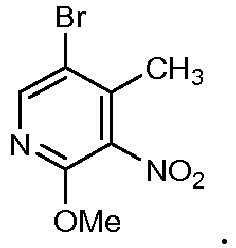


- Finally, there is a further reaction with acetone in water, and then tromethamine to produce the prodrug

- In a further embodiment of the invention, the compound of Formula I above is produced utilizing

U.S. 20060293304, 28 Dec 2006 , which is incorporated herein by reference in its entirety. - In this embodiment,


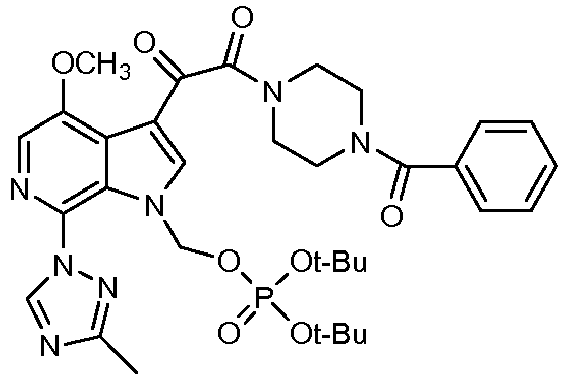

- In a further embodiment of the invention, the compound of formula (14) is made using the compound of formula (10) as starting material. This process involves reacting the compound


- Compounds 11, 12, 13 and 14 thus constitute further embodiments of the invention.
- The following Example sets forth a preferred method of the invention, but should not be construed as limiting the scope thereof:
- In this Example, the compound

U.S. 20060293304, 28 Dec 2006 for producing Compound 10). Below is the summary of the procedure for converting compound 10 to compound 11:
- A 20L and a 10L reaction vessel were purged with inert gas. All steps were performed under inert gas protection.
- To the 20L reactor was charged 1.80L of ethyl acetate at room temperature. To this was added 0.48 kg of the compound

- The reaction mixture was heated to 65°C internal temperature and agitated at this temperature for 3 hours.
- A sample of the reaction mixture was analyzed by 1H NMR to determine conversion of


- Upon completion, the solution of

- To a 10L vessel is added 1.58L of N-Methylpyrrolidinone (NMP) followed 0.18 kg of N,N,N',N'-tetramethylguanidine (TMG). To this solution was charged 0.45kg of the compound 10. Finally all of the glassware used for the additions was rinsed with 0.50L of NMP.
- The mixture was agitated at room temperature for 2 hours.
- The NMP solution in the 10L reactor was then transferred to the EtOAc solution of


- The resulting mixture was agitated at room temperature for 1 hour.
- A sample of the reaction mixture was taken for high pressure liquid chromatography (HPLC) monitoring.
- To the reaction was added a total of 0.099 kg of TMG in 10 equal portions over 2 hours and the resulting mixture was agitated at room temperature for 14 hours.
- A sample of the reaction mixture was taken HPLC monitoring.
- To the reaction was charged 6.75L of EtOAc followed by 4.50L of 0.5 N aqueous hydrochloric acid solution (HCl). The mixture was vigorously agitated for 30 minutes and then the phases were allowed to settle and the bottom phase was discarded.
- To the remaining upper phase was added 2.50L of EtOAc, followed by the slow addition of 4.50L of 0.5N HCl. The biphasic mixture was agitated vigorously for 15 minutes and then the phases were allowed to settle and the bottom phase was discarded.
- To the remaining upper phase was added 0.50L of EtOAc, followed by the slow addition of 4.50L of 0.5N HCl. The biphasic mixture was agitated vigorously for 15 minutes and then the phases were allowed to settle and the bottom phase was discarded.
- To the remaining upper phase was added 1.10L of EtOAc followed by 4.50L of distilled water. The biphasic mixture was agitated vigorously for 15 minutes and then the phases were allowed to settle and the bottom phase was discarded.
- To the remaining upper phase was added 0.5L of EtOAc followed by 4.50L of distilled water. The biphasic mixture was agitated vigorously for 15 minutes and then the phases were allowed to settle and the bottom phase was discarded.
- The final organic stream was gradually transferred to a 10L reactor in 4.00L increments with a 1.00 L EtOAc wash of the 20L reactor and between each charge the volume of the stream was reduced to 3.60L by distillation of the solvent.
- The solvent composition was then changed from primarily EtOAc to primarily isopropyl alcohol (IPA) using a put and take distillation with a total of 9.00L of IPA and never allowing the total reaction volume to fall below 3.60L. The final solution was allowed to age for 8 hours.
- The resulting slurry was filtered in order to isolate the product. The product was then washed twice with 1.12L of IPA. The isolated product was dried at a maximum temperature of 50°C until reaching a constant weight. The yield was 0.43 kg (63.23%) of compound 11 as beige crystals.
- Analytical data: m.p. 127.0 - 128.8°C. 1H-NMR (Acetic Acid, d4 ) (δ, ppm): 9.01 (s, 1H), 8.06 (s, 1H), 7.93 (s, 1H), 7.25 (d, J = 8.5 Hz, 2H), 7.07 (d, J = 8.5 Hz, 2H), 5.60 (s, 2H), 4.10 (s, 3H), 3.95 (s, 3H), 2.58 (s, 3H). 13C-NMR (Acetic Acid, d4 ) (δ, ppm): 181.4, 165.1, 162.0, 152.1, 147.4, 142.7, 136.3 (3C), 130.6, 130.4 (2C), 129.9, 127.9, 126.8, 122.8, 114.3, 57.3, 56.7, 53.3, 13.3. HRMS: Calcd for C21H19O4N5ClS [M+1]+ 472.0841 found 472.0841. Elemental Analysis: C: 53.44, H: 3.84, N: 14.84, S: 6.79, Cl: 7.51; found: C: 53.53, H: 3.55, N: 14.63, S: 6.98, Cl: 7.73.
- The process was then continued as follows, with a summary of the conversion of compound 11 to compound 12 set forth below:

- A reaction vessel was purged with inert gas. All steps were performed under inert gas protection.
- The vessel was then charged with 8.0 L of MeTHF at 20-25 °C. Next, charged 800 g of compound

- Agitation was removed after 1 hour and the layers were allowed to settle. The bottom aqueous layer was removed. The remaining organic layer was heated to reflux and approximately 3 L of MeTHF was distilled. At this point the distillation was performed under constant volume conditions
- When a KF of < 500 ppm was obtained the mixture was allowed to cool to room temperature. The organic layer was filtered and the concentration of benzoyl piperazine was measured.
- A separate vessel was purged with inert gas.
- To the vessel was charged 5.2 L of the above solution of the compound

- The mixture was heated to reflux. After 3 hours the mixture was seeded with 2 g of the compound of formula 11. The reaction was allowed to continue to reflux.
- Upon completion, the slurry was cooled to 10 °C and allowed to agitate for 2 hours. The product was filtered, washed with 2 L of MeTHF then 3.15 L of EtOH. The product was dried at 50 °C in a vacuum oven until reaching a constant weight. The yield was 1.07 kg (80.4%) of off white crystals of compound of formula 12.
- Analytical Data: m.p. 162 °C. 1H-NMR (CDCl3) (δ, ppm): 2.54 (s, 3H), 3.52 (bs, 4H), 3.74 (bs, 4H), 4.08 (s, 3H), 5.52 (s, 2H), 6.96 (d, J = 8.2 Hz, 2H), 7.2 (d, J = 8.8 Hz, 2H), 7.44 (bs, 5H), 7.62 (s, 1H), 7.91 (s, 1H), 8.62 (s, 1H): 13C-NMR (CDCl3) (δ, ppm): 13.91, 41.6, 45.9, 56.5, 56.8, 114.3, 122.3, 125.1, 126.7, 127.0, 128.64, 129.5, 129.6, 129.8, 130.2, 134.9, 135.2, 135.7, 140.8, 145.5, 150.6, 161.9, 165.9, 170.6, 184.4; HRMS; cacld for C31H29ClN7O4S [M+1]+: 630.1685; found: 630.1688. Elemental Analysis: C: 59.09, H: 4.47, N: 15.56, S: 5.08, Cl: 5.62; found: C: 59.05, H: 4.28, N: 15.57, S: 5.07, Cl: 5.66.
- The process was then continued as follows, with a summary of the process for the conversion of compound 12 to compound 14 set forth below:

- A reaction vessel was purged with inert gas. All steps were performed under inert gas protection.
- The vessel was then charged with 5 L of dichloromethane at 20-25 °C. Next, 1.00 kg of the compound of formula 12 was added to the vessel to produce a colorless solution. The solution was then cooled to 0 °C (-3 to 3 °C), followed by the subsurface addition of 113 g chlorine. An orange solution was formed and the reaction was noted to be exothermic. The temperature was kept near 0 °C (-3 to 3 °C).
- A sample was taken for high pressure liquid chromatography (HPLC) monitoring, and additional chlorine charges were added as necessary.
- Upon reaction completion, solution was warmed to 15 °C.
- A solution of isopropanol (1.0 eq.) and 10 L of acetone were prepared. 5 vol % of this solution was added to the vessel over about 30 minutes to produce a thin yellow suspension. After a 30 min age, the remaining 95 vol% of the isopropanol/acetone solution was added over 2 h to produce a white suspension. This addition was slightly exothermic and some cooling was necessary (Tmax = 25 °C). Slurry was aged at 20 °C and HPLC was utilized to monitor the crystallization progress.
- Product 13 was then filtered, and washed with 5 L of 2:1 (v:v) acetone:dichloromethane, followed by 2.5 L of acetone.
- Product 13 could then either be dried at a maximum temperature of 50 °C until reaching constant weight or the wet cake taken forward to product 3.
- For the isolation of 13, yield was 0.78 kg (88%) as white crystals.
- For the isolation of 14, a second reaction vessel was purged with inert gas.
- The vessel was then charged with 5 L of dichloromethane at 20-25 °C. Next, about 1.10 kg of the wet cake compound of formula 13a was added to the vessel to produce a white suspension, followed by the addition of 5 L water. A biphasic solution formed and the temperature was kept near 22 °C (20 to 25 °C).
- A phase-split was conducted, and the lower, product-rich organic layer was then charged with 1.5 L ethyl acetate under constant-volume distillation conditions (pressure = 400 mbar). The resulting solution was then seeded with 13b, and aged for 30 min. 9-12 L of additional ethyl acetate were then added under constant-volume distillation conditions (pressure down to < 100 mbar).
- Slurry was aged at 20 °C and HPLC was utilized to monitor the crystallization progress.
- Product 14 was then filtered, and washed with 4 L of ethyl acetate.
- Product 14 was then dried at a maximum temperature of 50 °C until reaching constant weight.
- For the isolation of 14, yield was 0.70 kg (85%) as white crystals.
- Analytical data for 13: m.p. 121 °C. 1H-NMR (d7-DMF) (δ, ppm): 11.17 (br s, 1H), 9.18 (s, 1H), 8.88 (s, 1H), 8.19 (s, 1H), 7.52-7.54 (m, 5H), 6.44 (s, 2H), 4.19 (s, 3H), 3.67-3.84 (m, 8H), 2.55 (s, 3H); 13C-NMR (d7-DMF) (δ, ppm): 185.4, 169.9, 166.2, 161.3, 151.1, 146.6, 142.3, 136.1, 129.9, 129.5, 128.6, 127.3, 127.2, 124.7, 123.4, 116.1, 57.7, 56.9, 45.9, 41.7, 13.1; HRMS calcd for C25H25ClH7O4 [M-Cl]+: 522.1578 found 522.1648. Elemental analysis: C: 53.77, H: 4.51, N: 17.55, Cl: 12.69, found: C: 53.05, H: 4.68, N: 17.20, Cl: 12.56.
- Analytical data for 14: m.p. 211 °C. 1H-NMR (CDCl3) (δ, ppm): 8.59 (s, 1H), 8.14 (s, 1H), 7.91 (s, 1H), 7.41 (s, 5H), 6.09 (s, 2H), 4.04 (s, 3H), 3.40-4.00 (m, 8H), 2.51 (s, 3H); 13C-NMR (CDCl3) (δ, ppm): 184.4, 170.6, 165.7, 162.1, 150.6, 145.6, 140.8, 134.8, 130.1, 129.6, 128.6, 127.0, 126.7, 125.1, 122.9, 116.1, 57.1, 56.8, 45.9, 41.7, 13.9; HRMS: calcd for C25H25ClH7O4 [M+H]+:522.1578, found 522.1653. Elemental analysis: C: 57.52, H: 4.64, N: 18.78, Cl: 6.79, found C: 57.26, H: 4.60, N: 18.44, Cl 7.14.
- The process was then continued as follows, with a summary of the process for the conversion of compound 14 to compound 15 set forth below:

- A reaction vessel was purged with inert gas. All steps were performed under inert gas protection.
- The vessel was then charged with 3 L of dichloromethane at 20-25 °C. Next, 1.00 kg of the compound of formula 14, 0.20 kg of tetraethylammonium bromide (0.50 eq.) and 0.5 L dichloromethane were added to the vessel to produce a colorless solution. The solution was then warmed to 35 °C (33 to 37 °C), and charged with 0.57 kg of di-tert-butyl potassium phosphate (1.2 eq.) in 4 x 0.3 eq. portions over 1 h, followed by 0.5 L dichloromethane. A yellow suspension formed and the reaction was warmed to 40 °C (38 to 42 °C).
- A sample was taken for high pressure liquid chromatography (HPLC) monitoring, and additional di-tert-butyl potassium phosphate was added if necessary.
- Upon reaction completion, suspension was cooled to 20 °C.
- The vessel was then charged with 5 L water and the resulting biphasic solution was kept near 20 °C (18 to 22 °C).
- A phase-split was conducted, and the lower, product-rich organic layer was then charged with 5 L of 20:1 (v:v) tert-butylmethyl ether : isopropanol. The solution was then seeded with compound 15, and aged for 30 min. 11 L of additional 20:1 (v:v) tert-butylmethyl ether : isopropanol was then added over 3 h.
- Slurry was aged at 20 °C and HPLC was utilized to monitor the crystallization progress.
- Compound 15 was then filtered, and washed with 5 L of 4:1 (v:v) [20:1 (v:v) tert-butylmethyl ether : isopropanol] : dichloromethane, followed by 5 L of tert-butylmethyl ether.
- Compound 15 was then dried at a maximum temperature of 50 °C until reaching constant weight.
- For the isolation of compound 15, yield was 1.13 kg (85%) as white crystals.
- Analytical data for 2: m.p. 198 °C. 1H-NMR (CDCl3) (δ, ppm): 8.51 (s, 3H), 8.17 (s, 3H), 7.88 (s, 3H), 7.39 (m, 5H), 5.92 (d, J= 14 Hz, 2H), 4.03 (s, 3H), 3.30-3.80 (m, 8H), 2.47 (s, 3H), 1.25 (s, 18H); 13C-NMR (CDCl3) (δ, ppm): 184.6, 170.5, 166.8, 161.4, 150.7, 145.3, 141.8, 134.9, 130.1, 129.5, 128.5, 127.5, 127.0, 124.6, 122.6, 115.1, 83.7 (d, J= 7.4 Hz), 73.55 (d, J= 6.6 Hz), 56.8, 45.9, 41.6, 29.5 (d, J= 4.4 Hz), 13.8; 31P-NMR (CDCl3) (δ, ppm): -10.0; HRMS: calcd for C33H43N7O8P [M+H]+: 696.2832 found 696.2885. Elemental analysis: C: 56.97, H: 6.08, N: 14.09, found C: 57.00, H: 6.04, N: 14.13.
- The above process may then be continued as herein set forth in the description to yield the compound of Formula I.
- The compound of Formula I, once synthesized, may be utilized in compositions to treat HIV infection as set forth and described in
U.S. Patent Nos. 7,745,625 ,7,354,924 and7,776,863 , by way of non-limiting examples.
Claims (18)
- A method for making the compound of Formula I:
 (a) brominating the compound
 (b) nitrating compound 2 to yield the compound
 (c) converting the amine group on compound 3 to a methoxy group to yield compound
 (d) then converting compound 4 to the compound
 (e) converting compound 5 to the compound
 (f) forming a bicyclic structure from compound 6 to yield
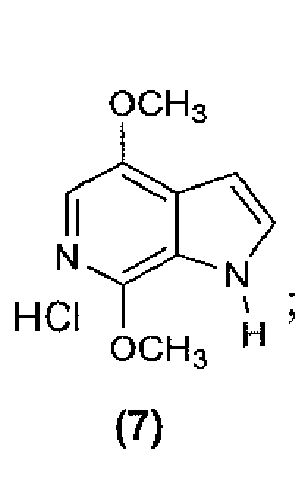 (g) then chlorinating compound 7 to produce
 (h) thereafter adding a triazolyl moiety to the compound 8 to yield
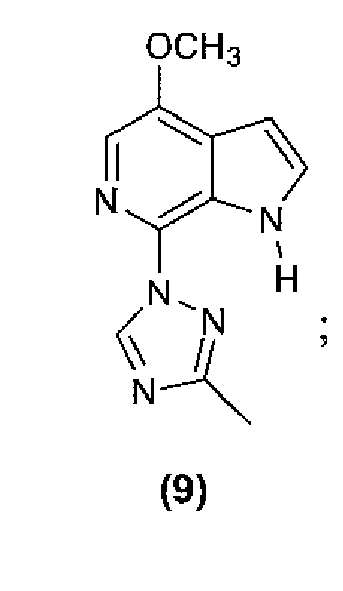 (i) converting compound 9 to the structure
 (j) modifying compound 10 to yield the compound
 (k) reacting compound 11 to produce the compound
 (l) then converting the compound 12 to the compound
 (m) then converting compound 13 to the compound
 (n) then reacting the compound 14 to produce the compound
 (o) then converting the compound 15 to the compound of Formula I.
 - A method for making the compound of Formula I:
 (i) reacting the compound

 (ii) reacting compound 11 with
 (iii) then converting the compound 12 to the compound
 (iv) then converting the compound 13 to the compound
 (v) then reacting the compound 14 to produce the compound
 (vi) then converting the compound 15 to the compound of Formula I.
 - The method of claim 1, wherein step (a) is performed using Ac2O.
- The method of claim 1, wherein step (b) is performed under acidic conditions.
- The method of claim 4, wherein step (b) is performed using nitric acid.
- The method of claim 5, wherein step (b) is performed using nitric acid and sulfuric acid.
- The method of claim 1, wherein step (c) is performed using NaNO2 and TMS-Cl in alcohol.
- The method of claim 7, wherein said alcohol is methanol.
- The method of claim 1, wherein step (d) is performed using

- The method of claim 1, wherein step (h) is performed using

- The method of claim 1, wherein step (i) is performed using

- The method of claim 1, wherein step (j) is performed using

- The method of claim 2, wherein step (ii) is performed using

- The method of claim 2, wherein step (iv) is performed using dichloromethane.
- The method of claim 2, wherein step (v) is performed using

- The method of claim 2, wherein step (vi) is performed using acetone in water and tromethamine.
- A method for making the compound of formula (14):
 (i) reacting the compound

 (ii) reacting compound 11 with
 (iii) then converting the compound 12 to the compound
 (iv) then producing the compound 14 using dichloromethane.
- The compound having the following formula:


Priority Applications (4)
| Application Number | Priority Date | Filing Date | Title |
|---|---|---|---|
| SI201230225T SI2670751T1 (en) | 2011-01-31 | 2012-01-27 | Methods of making hiv attachment inhibitor prodrug compound and intermediates |
| HRP20150616TT HRP20150616T1 (en) | 2011-01-31 | 2012-01-27 | PROCEDURES FOR THE PREPARATION OF HIV COMPOUND INHIBITOR COMPOUNDS AND INTERMEDIATES |
| PL12704960T PL2670751T3 (en) | 2011-01-31 | 2012-01-27 | Methods of making hiv attachment inhibitor prodrug compound and intermediates |
| CY20151100631T CY1116505T1 (en) | 2011-01-31 | 2015-07-17 | METHODS FOR CREATING UNITS AND INTERMEDIATE PRODUCTS SUSPENDED TOY HIV PRODUCTS |
Applications Claiming Priority (2)
| Application Number | Priority Date | Filing Date | Title |
|---|---|---|---|
| US201161437821P | 2011-01-31 | 2011-01-31 | |
| PCT/US2012/022851 WO2012106189A1 (en) | 2011-01-31 | 2012-01-27 | Methods of making hiv attachment inhibitor prodrug compound and intermediates |
Publications (2)
| Publication Number | Publication Date |
|---|---|
| EP2670751A1 EP2670751A1 (en) | 2013-12-11 |
| EP2670751B1 true EP2670751B1 (en) | 2015-04-22 |
Family
ID=45688987
Family Applications (1)
| Application Number | Title | Priority Date | Filing Date |
|---|---|---|---|
| EP20120704960 Active EP2670751B1 (en) | 2011-01-31 | 2012-01-27 | Methods of making hiv attachment inhibitor prodrug compound and intermediates |
Country Status (25)
| Country | Link |
|---|---|
| US (1) | US8436168B2 (en) |
| EP (1) | EP2670751B1 (en) |
| JP (1) | JP6006236B2 (en) |
| KR (1) | KR101848533B1 (en) |
| CN (1) | CN103339130B (en) |
| AR (1) | AR085052A1 (en) |
| AU (1) | AU2012212508B2 (en) |
| BR (1) | BR112013018159A2 (en) |
| CA (1) | CA2826260C (en) |
| CY (1) | CY1116505T1 (en) |
| DK (1) | DK2670751T3 (en) |
| EA (1) | EA021726B1 (en) |
| ES (1) | ES2539908T3 (en) |
| HR (1) | HRP20150616T1 (en) |
| HU (1) | HUE026880T2 (en) |
| IL (1) | IL227302A (en) |
| MX (1) | MX2013008371A (en) |
| PL (1) | PL2670751T3 (en) |
| PT (1) | PT2670751E (en) |
| RS (1) | RS54055B1 (en) |
| SG (1) | SG191841A1 (en) |
| SI (1) | SI2670751T1 (en) |
| SM (1) | SMT201500169B (en) |
| TW (1) | TW201309692A (en) |
| WO (1) | WO2012106189A1 (en) |
Families Citing this family (9)
| Publication number | Priority date | Publication date | Assignee | Title |
|---|---|---|---|---|
| US7745625B2 (en) | 2004-03-15 | 2010-06-29 | Bristol-Myers Squibb Company | Prodrugs of piperazine and substituted piperidine antiviral agents |
| WO2010085456A1 (en) | 2009-01-20 | 2010-07-29 | Guided Delivery Systems Inc. | Anchor deployment devices and related methods |
| MX352320B (en) * | 2012-02-08 | 2017-11-21 | Viiv Healthcare Uk No 4 Ltd | Methods for the preparation of hiv attachment inhibitor piperazine prodrug compound. |
| JP6693891B2 (en) * | 2014-06-23 | 2020-05-13 | フリー フォーム ファイバーズ リミテッド ライアビリティ カンパニー | Nuclear fuel structure and method of making nuclear fuel structure |
| JP6554542B2 (en) | 2014-12-18 | 2019-07-31 | ヴィーブ ヘルスケア ユーケー(ナンバー4)リミテッド | Method for preparing halogenated azaindole compounds using boroxine |
| CA2971096A1 (en) | 2014-12-18 | 2016-06-23 | ViiV Healthcare UK (No.4) Limited | A process for preparing halogenated azaindole compounds using pybrop |
| WO2016141358A1 (en) * | 2015-03-05 | 2016-09-09 | Guided Delivery Systems Inc. | Devices and methods of visualizing and determining depth of penetration in cardiac tissue |
| JP6692542B2 (en) * | 2016-05-13 | 2020-05-13 | 学校法人早稲田大学 | Simple, quick and highly accurate method for measuring skin pH |
| EP3911651B1 (en) | 2019-01-17 | 2024-01-10 | ViiV Healthcare UK (No.4) Limited | Process for preparing fostemsavir |
Family Cites Families (5)
| Publication number | Priority date | Publication date | Assignee | Title |
|---|---|---|---|---|
| US20040110785A1 (en) | 2001-02-02 | 2004-06-10 | Tao Wang | Composition and antiviral activity of substituted azaindoleoxoacetic piperazine derivatives |
| US7745625B2 (en) | 2004-03-15 | 2010-06-29 | Bristol-Myers Squibb Company | Prodrugs of piperazine and substituted piperidine antiviral agents |
| US7776863B2 (en) | 2004-03-24 | 2010-08-17 | Bristol-Myers Squibb Company | Methods of treating HIV infection |
| US7601715B2 (en) | 2005-06-22 | 2009-10-13 | Bristol-Myers Squibb Company | Process for preparing triazole substituted azaindoleoxoacetic piperazine derivatives and novel salt forms produced therein |
| US7851476B2 (en) * | 2005-12-14 | 2010-12-14 | Bristol-Myers Squibb Company | Crystalline forms of 1-benzoyl-4-[2-[4-methoxy-7-(3-methyl-1H-1,2,4-triazol-1-YL)-1-[(phosphonooxy)methyl]-1H-pyrrolo[2,3-C]pyridin-3-YL]-1,2-dioxoethyl]-piperazine |
-
2012
- 2012-01-27 CN CN201280007153.8A patent/CN103339130B/en not_active Expired - Fee Related
- 2012-01-27 ES ES12704960.9T patent/ES2539908T3/en active Active
- 2012-01-27 DK DK12704960.9T patent/DK2670751T3/en active
- 2012-01-27 EP EP20120704960 patent/EP2670751B1/en active Active
- 2012-01-27 RS RS20150388A patent/RS54055B1/en unknown
- 2012-01-27 CA CA2826260A patent/CA2826260C/en not_active Expired - Fee Related
- 2012-01-27 AU AU2012212508A patent/AU2012212508B2/en not_active Ceased
- 2012-01-27 WO PCT/US2012/022851 patent/WO2012106189A1/en not_active Ceased
- 2012-01-27 EA EA201391123A patent/EA021726B1/en not_active IP Right Cessation
- 2012-01-27 MX MX2013008371A patent/MX2013008371A/en active IP Right Grant
- 2012-01-27 PL PL12704960T patent/PL2670751T3/en unknown
- 2012-01-27 KR KR1020137022709A patent/KR101848533B1/en not_active Expired - Fee Related
- 2012-01-27 HR HRP20150616TT patent/HRP20150616T1/en unknown
- 2012-01-27 HU HUE12704960A patent/HUE026880T2/en unknown
- 2012-01-27 US US13/359,708 patent/US8436168B2/en active Active
- 2012-01-27 JP JP2013551361A patent/JP6006236B2/en active Active
- 2012-01-27 SI SI201230225T patent/SI2670751T1/en unknown
- 2012-01-27 SG SG2013051560A patent/SG191841A1/en unknown
- 2012-01-27 BR BR112013018159A patent/BR112013018159A2/en not_active Application Discontinuation
- 2012-01-27 PT PT127049609T patent/PT2670751E/en unknown
- 2012-01-31 AR ARP120100313A patent/AR085052A1/en not_active Application Discontinuation
- 2012-01-31 TW TW101103123A patent/TW201309692A/en unknown
-
2013
- 2013-07-02 IL IL227302A patent/IL227302A/en active IP Right Grant
-
2015
- 2015-07-14 SM SM201500169T patent/SMT201500169B/en unknown
- 2015-07-17 CY CY20151100631T patent/CY1116505T1/en unknown
Also Published As
| Publication number | Publication date |
|---|---|
| SG191841A1 (en) | 2013-08-30 |
| EA021726B1 (en) | 2015-08-31 |
| JP6006236B2 (en) | 2016-10-12 |
| TW201309692A (en) | 2013-03-01 |
| CA2826260C (en) | 2018-09-04 |
| IL227302A0 (en) | 2013-09-30 |
| CN103339130A (en) | 2013-10-02 |
| KR20140014154A (en) | 2014-02-05 |
| CN103339130B (en) | 2015-05-06 |
| BR112013018159A2 (en) | 2018-09-11 |
| MX2013008371A (en) | 2013-08-12 |
| AU2012212508B2 (en) | 2016-01-14 |
| AU2012212508A1 (en) | 2013-09-19 |
| AR085052A1 (en) | 2013-08-07 |
| US20130030178A1 (en) | 2013-01-31 |
| US8436168B2 (en) | 2013-05-07 |
| EP2670751A1 (en) | 2013-12-11 |
| ES2539908T3 (en) | 2015-07-07 |
| CA2826260A1 (en) | 2012-08-09 |
| IL227302A (en) | 2016-10-31 |
| HUE026880T2 (en) | 2016-08-29 |
| PL2670751T3 (en) | 2015-09-30 |
| KR101848533B1 (en) | 2018-04-12 |
| SMT201500169B (en) | 2015-09-07 |
| PT2670751E (en) | 2015-07-29 |
| SI2670751T1 (en) | 2015-07-31 |
| JP2014503594A (en) | 2014-02-13 |
| DK2670751T3 (en) | 2015-07-20 |
| EA201391123A1 (en) | 2013-12-30 |
| CY1116505T1 (en) | 2017-03-15 |
| RS54055B1 (en) | 2015-10-30 |
| HRP20150616T1 (en) | 2015-07-03 |
| WO2012106189A1 (en) | 2012-08-09 |
Similar Documents
| Publication | Publication Date | Title |
|---|---|---|
| DK2670751T3 (en) | PROCEDURES FOR MANUFACTURING HIV BINDING INHIBITOR PRODUCT CONNECTION AND INTERMEDIATES | |
| KR20150018524A (en) | Process for the preparation of 2-deoxy-2-fluoro-2-methyl-d-ribofuranosyl nucleoside compounds | |
| WO2013135165A1 (en) | Synthetic intermediate of entecavir and method for preparing same | |
| WO2013108024A1 (en) | Aromatic compounds and methods of making the same | |
| WO2005063780A1 (en) | Process for the preparation of pyridine derivatives | |
| JP2019189528A (en) | Process for producing (9e,11z)-9,11-hexadecadienal | |
| US9695124B2 (en) | Method of producing 2-aminonicotinic acid benzyl ester derivatives | |
| KR20120067398A (en) | Manufacturing process of high-purity tris(trialkylsilyl)phosphite | |
| US12122798B2 (en) | Perchlorinated disilenes and germasilenes and also neopentatetrelanes, a method for the preparation thereof and use thereof | |
| KR101195631B1 (en) | Improved preparation of VIII- [2- (phosphonomethoxy) ethyl] adene | |
| NO20025652L (en) | Process for the preparation of trifluoroethoxy-substituted benzoic acids | |
| JP4201268B2 (en) | Method for producing imidazole derivatives and salts thereof | |
| US8674119B2 (en) | Chemical processes for the manufacture of substituted benzofurans | |
| JP7420550B2 (en) | Method for producing 2-hydroxy-2-(perfluoroalkyl) malonic acid ester derivative, and 2-(trimethylsilyloxy)-2-(perfluoroalkyl) malonic acid ester derivative and 5-hydroxy-5-(perfluoroalkyl) Pyrimidine-2,4,6(1H,3H,5H)-trione and their production method | |
| KR20110097058A (en) | Novel Process for Preparing Pitavastatin Hemicalcium Using New Intermediates | |
| JP2015522574A (en) | Method for preparing 2,2-difluoroethylamine derivatives by alkylating 2,2-difluoroethylamine | |
| JP5751569B2 (en) | Hypervalent bromine and method for producing silyl aromatic sulfonate compound | |
| JP2023167001A (en) | Method for producing 2-methyl-2-phenyl propanoic acid derivative | |
| KR20050062940A (en) | New process for preparing diisopropyl ((1-((2-amino-6-halo-9h-purin-9-yl)methyl)cyclopropyl)oxy)-methylphosphonate | |
| JP2011500759A (en) | Process for the preparation of 6-substituted-imidazo [2,1-b] thiazole-5-sulfonyl halides | |
| KR20050062944A (en) | New process for preparing diisopropyl ((1-((2-amino-6-chloro-9h-purin-9-yl)methyl)cyclopropyl)oxy)-methylphosphonate | |
| JPH0567630B2 (en) | ||
| WO2006068102A1 (en) | 2-(pyrazol-1-yl)pyridine derivative | |
| KR20100049435A (en) | The new intermidiate of adefovire dipivoxil(ad), the preparation thereof and the preparation of ad using the same | |
| KR20050036412A (en) | A process for preparing carbazolone derivatives |
Legal Events
| Date | Code | Title | Description |
|---|---|---|---|
| PUAI | Public reference made under article 153(3) epc to a published international application that has entered the european phase |
Free format text: ORIGINAL CODE: 0009012 |
|
| 17P | Request for examination filed |
Effective date: 20130820 |
|
| AK | Designated contracting states |
Kind code of ref document: A1 Designated state(s): AL AT BE BG CH CY CZ DE DK EE ES FI FR GB GR HR HU IE IS IT LI LT LU LV MC MK MT NL NO PL PT RO RS SE SI SK SM TR |
|
| DAX | Request for extension of the european patent (deleted) | ||
| GRAP | Despatch of communication of intention to grant a patent |
Free format text: ORIGINAL CODE: EPIDOSNIGR1 |
|
| INTG | Intention to grant announced |
Effective date: 20141105 |
|
| GRAS | Grant fee paid |
Free format text: ORIGINAL CODE: EPIDOSNIGR3 |
|
| GRAA | (expected) grant |
Free format text: ORIGINAL CODE: 0009210 |
|
| AK | Designated contracting states |
Kind code of ref document: B1 Designated state(s): AL AT BE BG CH CY CZ DE DK EE ES FI FR GB GR HR HU IE IS IT LI LT LU LV MC MK MT NL NO PL PT RO RS SE SI SK SM TR |
|
| REG | Reference to a national code |
Ref country code: GB Ref legal event code: FG4D |
|
| REG | Reference to a national code |
Ref country code: CH Ref legal event code: EP |
|
| REG | Reference to a national code |
Ref country code: AT Ref legal event code: REF Ref document number: 723157 Country of ref document: AT Kind code of ref document: T Effective date: 20150515 |
|
| REG | Reference to a national code |
Ref country code: IE Ref legal event code: FG4D |
|
| REG | Reference to a national code |
Ref country code: DE Ref legal event code: R096 Ref document number: 602012006861 Country of ref document: DE Effective date: 20150603 |
|
| REG | Reference to a national code |
Ref country code: HR Ref legal event code: TUEP Ref document number: P20150616 Country of ref document: HR |
|
| REG | Reference to a national code |
Ref country code: CH Ref legal event code: NV Representative=s name: MARKS AND CLERK (LUXEMBOURG) LLP, CH |
|
| REG | Reference to a national code |
Ref country code: HR Ref legal event code: T1PR Ref document number: P20150616 Country of ref document: HR |
|
| REG | Reference to a national code |
Ref country code: ES Ref legal event code: FG2A Ref document number: 2539908 Country of ref document: ES Kind code of ref document: T3 Effective date: 20150707 |
|
| REG | Reference to a national code |
Ref country code: RO Ref legal event code: EPE |
|
| REG | Reference to a national code |
Ref country code: DK Ref legal event code: T3 Effective date: 20150714 |
|
| REG | Reference to a national code |
Ref country code: PT Ref legal event code: SC4A Free format text: AVAILABILITY OF NATIONAL TRANSLATION Effective date: 20150618 |
|
| REG | Reference to a national code |
Ref country code: SE Ref legal event code: TRGR |
|
| REG | Reference to a national code |
Ref country code: EE Ref legal event code: FG4A Ref document number: E010777 Country of ref document: EE Effective date: 20150709 |
|
| REG | Reference to a national code |
Ref country code: NO Ref legal event code: T2 Effective date: 20150422 |
|
| REG | Reference to a national code |
Ref country code: PL Ref legal event code: T3 |
|
| REG | Reference to a national code |
Ref country code: SK Ref legal event code: T3 Ref document number: E 19095 Country of ref document: SK |
|
| REG | Reference to a national code |
Ref country code: GR Ref legal event code: EP Ref document number: 20150401503 Country of ref document: GR Effective date: 20150901 |
|
| REG | Reference to a national code |
Ref country code: FR Ref legal event code: PLFP Year of fee payment: 5 |
|
| REG | Reference to a national code |
Ref country code: DE Ref legal event code: R097 Ref document number: 602012006861 Country of ref document: DE |
|
| PLBE | No opposition filed within time limit |
Free format text: ORIGINAL CODE: 0009261 |
|
| STAA | Information on the status of an ep patent application or granted ep patent |
Free format text: STATUS: NO OPPOSITION FILED WITHIN TIME LIMIT |
|
| 26N | No opposition filed |
Effective date: 20160125 |
|
| REG | Reference to a national code |
Ref country code: HU Ref legal event code: AG4A Ref document number: E026880 Country of ref document: HU |
|
| REG | Reference to a national code |
Ref country code: AT Ref legal event code: UEP Ref document number: 723157 Country of ref document: AT Kind code of ref document: T Effective date: 20150422 |
|
| REG | Reference to a national code |
Ref country code: NO Ref legal event code: CHAD Owner name: VIIV HEALTHCARE UK (NO. 5) LIMITED, GB |
|
| REG | Reference to a national code |
Ref country code: FR Ref legal event code: PLFP Year of fee payment: 6 |
|
| REG | Reference to a national code |
Ref country code: DE Ref legal event code: R082 Ref document number: 602012006861 Country of ref document: DE Representative=s name: VOSSIUS & PARTNER PATENTANWAELTE RECHTSANWAELT, DE Ref country code: DE Ref legal event code: R081 Ref document number: 602012006861 Country of ref document: DE Owner name: VIIV HEALTHCARE UK (NO. 4) LIMITED, BRENTFORD, GB Free format text: FORMER OWNER: BRISTOL-MYERS SQUIBB CO., PRINCETON, N.J., US |
|
| REG | Reference to a national code |
Ref country code: EE Ref legal event code: GB1A Ref document number: E010777 Country of ref document: EE Ref country code: CH Ref legal event code: NV Representative=s name: ISLER AND PEDRAZZINI AG, CH Ref country code: CH Ref legal event code: PUE Owner name: VIIV HEALTHCARE UK(NO.4) LIMITED, GB Free format text: FORMER OWNER: BRISTOL-MYERS SQUIBB COMPANY, US |
|
| REG | Reference to a national code |
Ref country code: NL Ref legal event code: PD Owner name: VIIV HEALTHCARE UK (NO. 4) LIMITED; GB Free format text: DETAILS ASSIGNMENT: CHANGE OF OWNER(S), ASSIGNMENT; FORMER OWNER NAME: BRISTOL-MYERS SQUIBB COMPANY Effective date: 20170502 |
|
| REG | Reference to a national code |
Ref country code: SI Ref legal event code: SP73 Owner name: VIIV HEALTHCARE UK (NO.4) LIMITED; GB Effective date: 20170803 |
|
| REG | Reference to a national code |
Ref country code: SK Ref legal event code: PC4A Ref document number: E 19095 Country of ref document: SK Owner name: VIIV HEALTHCARE UK (NO.4) LIMITED, BRENTFORD, , GB Free format text: FORMER OWNER: BRISTOL-MYERS SQUIBB COMPANY, PRINCETON, NJ, US Effective date: 20170508 |
|
| REG | Reference to a national code |
Ref country code: FR Ref legal event code: PLFP Year of fee payment: 7 |
|
| REG | Reference to a national code |
Ref country code: HR Ref legal event code: PPPP Ref document number: P20150616 Country of ref document: HR Owner name: VIIV HEALTHCARE UK (NO. 4) LIMITED, GB |
|
| REG | Reference to a national code |
Ref country code: HU Ref legal event code: GB9C Owner name: VIIV HEALTHCARE UK (NO.4) LIMITED, GB Free format text: FORMER OWNER(S): BRISTOL-MYERS SQUIBB COMPANY, US |
|
| REG | Reference to a national code |
Ref country code: AT Ref legal event code: PC Ref document number: 723157 Country of ref document: AT Kind code of ref document: T Owner name: VIIV HEALTHCARE UK (NO. 4) LIMITED, GB Effective date: 20180426 |
|
| REG | Reference to a national code |
Ref country code: GB Ref legal event code: 732E Free format text: REGISTERED BETWEEN 20180531 AND 20180606 |
|
| REG | Reference to a national code |
Ref country code: ES Ref legal event code: PC2A Owner name: VIIV HEALTHCARE UK (NO.4) LIMITED Effective date: 20180704 Ref country code: ES Ref legal event code: PC2A Effective date: 20180704 |
|
| PGFP | Annual fee paid to national office [announced via postgrant information from national office to epo] |
Ref country code: CY Payment date: 20171219 Year of fee payment: 7 |
|
| PGFP | Annual fee paid to national office [announced via postgrant information from national office to epo] |
Ref country code: MT Payment date: 20171211 Year of fee payment: 7 |
|
| REG | Reference to a national code |
Ref country code: FR Ref legal event code: TP Owner name: VIIV HEALTHCARE UK (NO. 4) LIMITED, GB Effective date: 20180830 |
|
| REG | Reference to a national code |
Ref country code: HR Ref legal event code: ODRP Ref document number: P20150616 Country of ref document: HR Payment date: 20181224 Year of fee payment: 8 |
|
| PGFP | Annual fee paid to national office [announced via postgrant information from national office to epo] |
Ref country code: MC Payment date: 20181228 Year of fee payment: 8 Ref country code: FI Payment date: 20181227 Year of fee payment: 8 Ref country code: RO Payment date: 20181220 Year of fee payment: 8 Ref country code: SK Payment date: 20181227 Year of fee payment: 8 Ref country code: PL Payment date: 20181227 Year of fee payment: 8 Ref country code: IS Payment date: 20181213 Year of fee payment: 8 Ref country code: GR Payment date: 20181227 Year of fee payment: 8 Ref country code: IE Payment date: 20181228 Year of fee payment: 8 Ref country code: CZ Payment date: 20181228 Year of fee payment: 8 Ref country code: DK Payment date: 20181227 Year of fee payment: 8 |
|
| PGFP | Annual fee paid to national office [announced via postgrant information from national office to epo] |
Ref country code: LU Payment date: 20190109 Year of fee payment: 8 |
|
| PGFP | Annual fee paid to national office [announced via postgrant information from national office to epo] |
Ref country code: NO Payment date: 20181227 Year of fee payment: 8 Ref country code: LT Payment date: 20190117 Year of fee payment: 8 |
|
| PGFP | Annual fee paid to national office [announced via postgrant information from national office to epo] |
Ref country code: LV Payment date: 20190125 Year of fee payment: 8 Ref country code: TR Payment date: 20190108 Year of fee payment: 8 Ref country code: HR Payment date: 20190127 Year of fee payment: 8 Ref country code: HU Payment date: 20181227 Year of fee payment: 8 Ref country code: SE Payment date: 20190109 Year of fee payment: 8 Ref country code: SI Payment date: 20190108 Year of fee payment: 8 Ref country code: AL Payment date: 20190107 Year of fee payment: 8 Ref country code: EE Payment date: 20190107 Year of fee payment: 8 Ref country code: AT Payment date: 20181227 Year of fee payment: 8 |
|
| PGFP | Annual fee paid to national office [announced via postgrant information from national office to epo] |
Ref country code: MK Payment date: 20181225 Year of fee payment: 8 |
|
| PG25 | Lapsed in a contracting state [announced via postgrant information from national office to epo] |
Ref country code: CY Free format text: LAPSE BECAUSE OF NON-PAYMENT OF DUE FEES Effective date: 20190127 |
|
| REG | Reference to a national code |
Ref country code: FI Ref legal event code: MAE |
|
| REG | Reference to a national code |
Ref country code: HR Ref legal event code: PBON Ref document number: P20150616 Country of ref document: HR Effective date: 20200127 |
|
| REG | Reference to a national code |
Ref country code: NO Ref legal event code: MMEP |
|
| PG25 | Lapsed in a contracting state [announced via postgrant information from national office to epo] |
Ref country code: MC Free format text: LAPSE BECAUSE OF NON-PAYMENT OF DUE FEES Effective date: 20200131 |
|
| REG | Reference to a national code |
Ref country code: DK Ref legal event code: EBP Effective date: 20200131 |
|
| REG | Reference to a national code |
Ref country code: SE Ref legal event code: EUG |
|
| REG | Reference to a national code |
Ref country code: AT Ref legal event code: MM01 Ref document number: 723157 Country of ref document: AT Kind code of ref document: T Effective date: 20200127 Ref country code: EE Ref legal event code: MM4A Ref document number: E010777 Country of ref document: EE Effective date: 20200131 |
|
| REG | Reference to a national code |
Ref country code: SE Ref legal event code: EUG |
|
| REG | Reference to a national code |
Ref country code: SK Ref legal event code: MM4A Ref document number: E 19095 Country of ref document: SK Effective date: 20200127 |
|
| PG25 | Lapsed in a contracting state [announced via postgrant information from national office to epo] |
Ref country code: SE Free format text: LAPSE BECAUSE OF NON-PAYMENT OF DUE FEES Effective date: 20200128 Ref country code: NO Free format text: LAPSE BECAUSE OF NON-PAYMENT OF DUE FEES Effective date: 20200131 Ref country code: CZ Free format text: LAPSE BECAUSE OF NON-PAYMENT OF DUE FEES Effective date: 20200127 Ref country code: EE Free format text: LAPSE BECAUSE OF NON-PAYMENT OF DUE FEES Effective date: 20200131 Ref country code: GR Free format text: LAPSE BECAUSE OF NON-PAYMENT OF DUE FEES Effective date: 20200806 Ref country code: SK Free format text: LAPSE BECAUSE OF NON-PAYMENT OF DUE FEES Effective date: 20200127 Ref country code: SM Free format text: LAPSE BECAUSE OF NON-PAYMENT OF DUE FEES Effective date: 20200806 Ref country code: LU Free format text: LAPSE BECAUSE OF NON-PAYMENT OF DUE FEES Effective date: 20200127 Ref country code: RO Free format text: LAPSE BECAUSE OF NON-PAYMENT OF DUE FEES Effective date: 20200127 Ref country code: FI Free format text: LAPSE BECAUSE OF NON-PAYMENT OF DUE FEES Effective date: 20200127 |
|
| REG | Reference to a national code |
Ref country code: LT Ref legal event code: MM4D Effective date: 20200127 |
|
| PG25 | Lapsed in a contracting state [announced via postgrant information from national office to epo] |
Ref country code: AT Free format text: LAPSE BECAUSE OF NON-PAYMENT OF DUE FEES Effective date: 20200127 Ref country code: BG Free format text: LAPSE BECAUSE OF NON-PAYMENT OF DUE FEES Effective date: 20200731 Ref country code: RS Free format text: LAPSE BECAUSE OF NON-PAYMENT OF DUE FEES Effective date: 20200127 Ref country code: HU Free format text: LAPSE BECAUSE OF NON-PAYMENT OF DUE FEES Effective date: 20200128 Ref country code: HR Free format text: LAPSE BECAUSE OF NON-PAYMENT OF DUE FEES Effective date: 20200127 Ref country code: LV Free format text: LAPSE BECAUSE OF NON-PAYMENT OF DUE FEES Effective date: 20200127 Ref country code: SI Free format text: LAPSE BECAUSE OF NON-PAYMENT OF DUE FEES Effective date: 20200128 |
|
| REG | Reference to a national code |
Ref country code: SI Ref legal event code: KO00 Effective date: 20201030 |
|
| PG25 | Lapsed in a contracting state [announced via postgrant information from national office to epo] |
Ref country code: IE Free format text: LAPSE BECAUSE OF NON-PAYMENT OF DUE FEES Effective date: 20200127 Ref country code: DK Free format text: LAPSE BECAUSE OF NON-PAYMENT OF DUE FEES Effective date: 20200131 Ref country code: LT Free format text: LAPSE BECAUSE OF NON-PAYMENT OF DUE FEES Effective date: 20200127 |
|
| PG25 | Lapsed in a contracting state [announced via postgrant information from national office to epo] |
Ref country code: MT Free format text: LAPSE BECAUSE OF FAILURE TO SUBMIT A TRANSLATION OF THE DESCRIPTION OR TO PAY THE FEE WITHIN THE PRESCRIBED TIME-LIMIT Effective date: 20190127 |
|
| PG25 | Lapsed in a contracting state [announced via postgrant information from national office to epo] |
Ref country code: PL Free format text: LAPSE BECAUSE OF NON-PAYMENT OF DUE FEES Effective date: 20200127 |
|
| PG25 | Lapsed in a contracting state [announced via postgrant information from national office to epo] |
Ref country code: TR Free format text: LAPSE BECAUSE OF NON-PAYMENT OF DUE FEES Effective date: 20200127 |
|
| P01 | Opt-out of the competence of the unified patent court (upc) registered |
Effective date: 20230331 |
|
| PG25 | Lapsed in a contracting state [announced via postgrant information from national office to epo] |
Ref country code: AL Free format text: LAPSE BECAUSE OF NON-PAYMENT OF DUE FEES Effective date: 20200127 |
|
| REG | Reference to a national code |
Ref country code: BE Ref legal event code: PD Owner name: VIIV HEALTHCARE UK (NO.4) LIMITED; GB Free format text: DETAILS ASSIGNMENT: CHANGE OF OWNER(S), OTHER; FORMER OWNER NAME: POLVERARI LUCA Effective date: 20240924 |
|
| PG25 | Lapsed in a contracting state [announced via postgrant information from national office to epo] |
Ref country code: IS Free format text: LAPSE BECAUSE OF NON-PAYMENT OF DUE FEES Effective date: 20200806 |
|
| PGFP | Annual fee paid to national office [announced via postgrant information from national office to epo] |
Ref country code: GB Payment date: 20251220 Year of fee payment: 15 |
|
| PGFP | Annual fee paid to national office [announced via postgrant information from national office to epo] |
Ref country code: PT Payment date: 20251218 Year of fee payment: 15 |
|
| PGFP | Annual fee paid to national office [announced via postgrant information from national office to epo] |
Ref country code: NL Payment date: 20251217 Year of fee payment: 15 Ref country code: FR Payment date: 20251217 Year of fee payment: 15 |
|
| PGFP | Annual fee paid to national office [announced via postgrant information from national office to epo] |
Ref country code: BE Payment date: 20251217 Year of fee payment: 15 |
|
| REG | Reference to a national code |
Ref country code: CH Ref legal event code: U11 Free format text: ST27 STATUS EVENT CODE: U-0-0-U10-U11 (AS PROVIDED BY THE NATIONAL OFFICE) Effective date: 20260201 |
|
| PGFP | Annual fee paid to national office [announced via postgrant information from national office to epo] |
Ref country code: ES Payment date: 20260202 Year of fee payment: 15 |
|
| PGFP | Annual fee paid to national office [announced via postgrant information from national office to epo] |
Ref country code: DE Payment date: 20251217 Year of fee payment: 15 |
|
| PGFP | Annual fee paid to national office [announced via postgrant information from national office to epo] |
Ref country code: IT Payment date: 20260107 Year of fee payment: 15 |
|
| PGFP | Annual fee paid to national office [announced via postgrant information from national office to epo] |
Ref country code: CH Payment date: 20260201 Year of fee payment: 15 |