EP2669821A2 - Control system asset management - Google Patents
Control system asset management Download PDFInfo
- Publication number
- EP2669821A2 EP2669821A2 EP13167085.3A EP13167085A EP2669821A2 EP 2669821 A2 EP2669821 A2 EP 2669821A2 EP 13167085 A EP13167085 A EP 13167085A EP 2669821 A2 EP2669821 A2 EP 2669821A2
- Authority
- EP
- European Patent Office
- Prior art keywords
- control system
- system asset
- data structure
- asset
- database
- Prior art date
- Legal status (The legal status is an assumption and is not a legal conclusion. Google has not performed a legal analysis and makes no representation as to the accuracy of the status listed.)
- Withdrawn
Links
Images


Classifications
-
- G—PHYSICS
- G06—COMPUTING OR CALCULATING; COUNTING
- G06Q—INFORMATION AND COMMUNICATION TECHNOLOGY [ICT] SPECIALLY ADAPTED FOR ADMINISTRATIVE, COMMERCIAL, FINANCIAL, MANAGERIAL OR SUPERVISORY PURPOSES; SYSTEMS OR METHODS SPECIALLY ADAPTED FOR ADMINISTRATIVE, COMMERCIAL, FINANCIAL, MANAGERIAL OR SUPERVISORY PURPOSES, NOT OTHERWISE PROVIDED FOR
- G06Q50/00—Information and communication technology [ICT] specially adapted for implementation of business processes of specific business sectors, e.g. utilities or tourism
- G06Q50/06—Energy or water supply
-
- G—PHYSICS
- G06—COMPUTING OR CALCULATING; COUNTING
- G06F—ELECTRIC DIGITAL DATA PROCESSING
- G06F16/00—Information retrieval; Database structures therefor; File system structures therefor
- G06F16/20—Information retrieval; Database structures therefor; File system structures therefor of structured data, e.g. relational data
- G06F16/25—Integrating or interfacing systems involving database management systems
- G06F16/258—Data format conversion from or to a database
-
- G—PHYSICS
- G06—COMPUTING OR CALCULATING; COUNTING
- G06Q—INFORMATION AND COMMUNICATION TECHNOLOGY [ICT] SPECIALLY ADAPTED FOR ADMINISTRATIVE, COMMERCIAL, FINANCIAL, MANAGERIAL OR SUPERVISORY PURPOSES; SYSTEMS OR METHODS SPECIALLY ADAPTED FOR ADMINISTRATIVE, COMMERCIAL, FINANCIAL, MANAGERIAL OR SUPERVISORY PURPOSES, NOT OTHERWISE PROVIDED FOR
- G06Q10/00—Administration; Management
- G06Q10/06—Resources, workflows, human or project management; Enterprise or organisation planning; Enterprise or organisation modelling
Definitions
- web-service formulates the unique data structure (similar to that of persist service) and adds that to a list that is maintained internally by the web service to communicate with the client. After all iterations, the web-service sends the entire list of parent objects to the client 105. Through this the client receives all the parent child relationships that existed within the database 125.
Landscapes
- Engineering & Computer Science (AREA)
- Business, Economics & Management (AREA)
- Economics (AREA)
- Theoretical Computer Science (AREA)
- Strategic Management (AREA)
- Databases & Information Systems (AREA)
- General Physics & Mathematics (AREA)
- Human Resources & Organizations (AREA)
- Physics & Mathematics (AREA)
- Entrepreneurship & Innovation (AREA)
- Health & Medical Sciences (AREA)
- Tourism & Hospitality (AREA)
- Marketing (AREA)
- General Business, Economics & Management (AREA)
- General Health & Medical Sciences (AREA)
- Water Supply & Treatment (AREA)
- Development Economics (AREA)
- Educational Administration (AREA)
- Public Health (AREA)
- Game Theory and Decision Science (AREA)
- Operations Research (AREA)
- Quality & Reliability (AREA)
- Primary Health Care (AREA)
- Data Mining & Analysis (AREA)
- General Engineering & Computer Science (AREA)
- Management, Administration, Business Operations System, And Electronic Commerce (AREA)
Abstract
Description
- The subject matter disclosed herein relates to control system assets, and more particularly to systems and methods to persist, read and save edited power plant assets to a federated database using web services.
- A power plant comprises of different types of systems and equipment (components). An end user, such as a plant engineer identifies and each component and represents them as an asset in a database. The end user then identifies the logical relationship that exists between the various components in a plant. These relationships are logically configured to represent overall power plant and are stored in the database. Currently, power plants and assets are described and stored in a database known as the Federated Model (FM). The structure stored in the FM and representing the power plant and its assets is known as the Plant Informational Model (PIM). Currently, there is no straight forward way to save or read the configured power plant asset information to or from the federated data source such as the FM. If there are any changes to the PIM or any particular asset, a user must configure the entire PIM as well as the information related to each and every asset about the plant. In addition, the logical relationship between assets must be established each time there is a change.
- According to one aspect of the invention, a control system asset management method is described. The method includes calling a web service for at least one of persisting, reading, and saving an edited control system asset, receiving a data structure associated with the control system asset and control system asset information, in response to receiving the data structure, generating a message verifying receipt of the data structure and making a call to a database for at least one of persisting, reading and saving an edited control system asset, wherein the database is configured to store the data structure and relationships of the data structure to a plurality of data structures in the control system.
- According to another aspect of the invention, a computer program product for managing control system assets is described. The computer program product includes a non-transitory computer readable medium storing instructions for causing a computer to implement a method. The method includes calling a web service for at least one of persisting, reading, and saving an edited control system asset, receiving a data structure associated with the control system asset and control system asset information, in response to receiving the data structure, generating a message verifying receipt of the data structure and making a call to a database for at least one of persisting, reading and saving an edited control system asset, wherein the database is configured to store the data structure and relationships of the data structure to a plurality of data structures in the control system.
- According to yet another aspect of the invention, a control system asset management server is described. The server includes a processor coupled to a database and configured to call a web service for at least one of persisting, reading, and saving an edited control system asset, receive a data structure associated with the control system asset and control system asset information, in response to receiving the data structure, generate a message verifying receipt of the data structure and make a call to the database for at least one of persisting, reading and saving an edited control system asset, wherein the database is configured to store the data structure and relationships of the data structure to a plurality of data structures in the control system.
- These and other advantages and features will become more apparent from the following description taken in conjunction with the drawings.
- The subject matter, which is regarded as the invention, is particularly pointed out and distinctly claimed in the claims at the conclusion of the specification. The foregoing and other features, and advantages of the invention are apparent from the following detailed description taken in conjunction with the accompanying drawings in which:
-
FIG. 1 illustrates an exemplary system for persisting, reading and saving edited control system assets; -
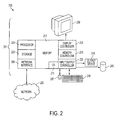
FIG. 2 illustrates an exemplary embodiment of a computing system; -
FIG. 3 illustrates a flowchart for a method of persisting (saving) power plant assets in accordance with exemplary embodiments; -
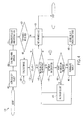
FIG. 4 illustrates a flowchart for a method of reading power plant asset information in accordance with exemplary embodiments; and -
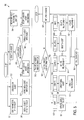
FIG. 5 illustrates a flowchart for a method for saving edited power plant information in accordance with exemplary embodiments. - The detailed description explains embodiments of the invention, together with advantages and features, by way of example with reference to the drawings.
-
FIG. 1 illustrates anexemplary system 100 for persisting, reading and saving edited control system assets. For illustrative purposes a power plant is described herein. It will be appreciated that the systems and methods described herein can be applied to any type of control system. In exemplary embodiments, thesystem 100 includes aclient computer 105 communicatively coupled to aserver 115 via a secure transport layer (communications channel) 106. In exemplary embodiments, each of theclient 105 andserver 115 respectively include aprocess processes processes layer 106. In exemplary embodiments, thesystem 100 further includes a database 125 (e.g., the FM) that is communicatively coupled to theserver 115. As described herein, thedatabase 125 stores asset information as a data structure (e.g., the PIM) related to apower plant 130. The PIM is a software object representation of the all the possible power plant or control system assets) and a structure that gives the end user the choice to configure the various components in the power plant in a hierarchical order. As such, any asset can be referred to as a PIM object (object). The software object is a unique common structure that is defined in theprocess 110 to store the entire asset information and share across thesystem 100. - In exemplary embodiments, the
system 100 implements theprocesses processes database 125 implementing a web service. Theprocesses database 125 implementing a web service. Theprocesses database 125 implementing a web service. For example, the user can access theprocess 110 as an interface in order to make changes to current assets, read assets, edit and save any current or retrieved assets. In addition, theprocess 120 can be implemented to enable to user to retrieve the assets stored in thedatabase 125, and save and newly configured or edited assets back to thedatabase 125 for future retrieval. As such, theprocesses database 125. - In exemplary embodiments, any suitable computing device can be implemented for the
client 105 and theserver 115 as now described.FIG. 2 illustrates an exemplary embodiment of acomputing system 200 that can be implemented as a computing device for the power plant asset management methods described herein. The methods described herein can be implemented in software (e.g., firmware), hardware, or a combination thereof. In exemplary embodiments, the methods described herein are implemented in software, as an executable program, and is executed by a special or general-purpose digital computer, such as a personal computer, workstation, minicomputer, or mainframe computer. Thesystem 200 therefore includes general-purpose computer 201. - In exemplary embodiments, in terms of hardware architecture, as shown in
FIG. 2 , thecomputer 201 includes aprocessor 205,memory 210 coupled to amemory controller 215, and one or more input and/or output (I/O)devices 240, 245 (or peripherals) that are communicatively coupled via a local input/output controller 235. The input/output controller 235 can be, but is not limited to, one or more buses or other wired or wireless connections, as is known in the art. The input/output controller 235 may have additional elements, which are omitted for simplicity, such as controllers, buffers (caches), drivers, repeaters, and receivers, to enable communications. Further, the local interface may include address, control, and/or data connections to enable appropriate communications among the aforementioned components. - The
processor 205 is a hardware device for executing software, particularly that stored inmemory 210. Theprocessor 205 can be any custom made or commercially available processor, a central processing unit (CPU), an auxiliary processor among several processors associated with thecomputer 201, a semiconductor based microprocessor (in the form of a microchip or chip set), a macroprocessor, or generally any device for executing software instructions. - The
memory 210 can include any one or combination of volatile memory elements (e.g., random access memory (RAM, such as DRAM, SRAM, SDRAM, etc.)) and nonvolatile memory elements (e.g., ROM, erasable programmable read only memory (EPROM), electronically erasable programmable read only memory (EEPROM), programmable read only memory (PROM), tape, compact disc read only memory (CD-ROM), disk, diskette, cartridge, cassette or the like, etc.). Moreover, thememory 210 may incorporate electronic, magnetic, optical, and/or other types of storage media. Note that thememory 210 can have a distributed architecture, where various components are situated remote from one another, but can be accessed by theprocessor 205. - The software in
memory 210 may include one or more separate programs, each of which comprises an ordered listing of executable instructions for implementing logical functions. In the example ofFIG. 2 , the software in thememory 210 includes the power plant asset management methods described herein in accordance with exemplary embodiments and a suitable operating system (OS) 211. The OS 211 essentially controls the execution of other computer programs, such the power plant asset management systems and methods as described herein, and provides scheduling, input-output control, file and data management, memory management, and communication control and related services. - The power plant asset management methods described herein may be in the form of a source program, executable program (object code), script, or any other entity comprising a set of instructions to be performed. When a source program, then the program needs to be translated via a compiler, assembler, interpreter, or the like, which may or may not be included within the
memory 210, so as to operate properly in connection with the OS 211. Furthermore, the power plant asset management methods can be written as an object oriented programming language, which has classes of data and methods, or a procedure programming language, which has routines, subroutines, and/or functions. - In exemplary embodiments, a
conventional keyboard 250 andmouse 255 can be coupled to the input/output controller 235. Other output devices such as the I/O devices O devices system 200 can further include adisplay controller 225 coupled to adisplay 230. In exemplary embodiments, thesystem 200 can further include anetwork interface 260 for coupling to anetwork 265. Thenetwork 265 can be an IP-based network for communication between thecomputer 201 and any external server, client and the like via a broadband connection. Thenetwork 265 transmits and receives data between thecomputer 201 and external systems. In exemplary embodiments,network 265 can be a managed IP network administered by a service provider. Thenetwork 265 may be implemented in a wireless fashion, e.g., using wireless protocols and technologies, such as WiFi, WiMax, etc. Thenetwork 265 can also be a packet-switched network such as a local area network, wide area network, metropolitan area network, Internet network, or other similar type of network environment. Thenetwork 265 may be a fixed wireless network, a wireless local area network (LAN), a wireless wide area network (WAN) a personal area network (PAN), a virtual private network (VPN), intranet or other suitable network system and includes equipment for receiving and transmitting signals. - If the
computer 201 is a PC, workstation, intelligent device or the like, the software in thememory 210 may further include a basic input output system (BIOS) (omitted for simplicity). The BIOS is a set of essential software routines that initialize and test hardware at startup, start theOS 211, and support the transfer of data among the hardware devices. The BIOS is stored in ROM so that the BIOS can be executed when thecomputer 201 is activated. - When the
computer 201 is in operation, theprocessor 205 is configured to execute software stored within thememory 210, to communicate data to and from thememory 210, and to generally control operations of thecomputer 201 pursuant to the software. The power plant asset management methods described herein and theOS 211, in whole or in part, but typically the latter, are read by theprocessor 205, perhaps buffered within theprocessor 205, and then executed. - When the systems and methods described herein are implemented in software, as is shown in
FIG. 2 , the methods can be stored on any computer readable medium, such asstorage 220, for use by or in connection with any computer related system or method. - As will be appreciated by one skilled in the art, aspects of the present invention may be embodied as a system, method or computer program product. Accordingly, aspects of the present invention may take the form of an entirely hardware embodiment, an entirely software embodiment (including firmware, resident software, micro-code, etc.) or an embodiment combining software and hardware aspects that may all generally be referred to herein as a "circuit," "module" or "system." Furthermore, aspects of the present invention may take the form of a computer program product embodied in one or more computer readable medium(s) having computer readable program code embodied thereon.
- Any combination of one or more computer readable medium(s) may be utilized. The computer readable medium may be a computer readable signal medium or a computer readable storage medium. A computer readable storage medium may be, for example, but not limited to, an electronic, magnetic, optical, electromagnetic, infrared, or semiconductor system, apparatus, or device, or any suitable combination of the foregoing. More specific examples (a non-exhaustive list) of the computer readable storage medium would include the following: an electrical connection having one or more wires, a portable computer diskette, a hard disk, a random access memory (RAM), a read-only memory (ROM), an erasable programmable read-only memory (EPROM or Flash memory), an optical fiber, a portable compact disc read-only memory (CD-ROM), an optical storage device, a magnetic storage device, or any suitable combination of the foregoing. In the context of this document, a computer readable storage medium may be any tangible medium that can contain, or store a program for use by or in connection with an instruction execution system, apparatus, or device.
- A computer readable signal medium may include a propagated data signal with computer readable program code embodied therein, for example, in baseband or as part of a carrier wave. Such a propagated signal may take any of a variety of forms, including, but not limited to, electro-magnetic, optical, or any suitable combination thereof. A computer readable signal medium may be any computer readable medium that is not a computer readable storage medium and that can communicate, propagate, or transport a program for use by or in connection with an instruction execution system, apparatus, or device.
- Program code embodied on a computer readable medium may be transmitted using any appropriate medium, including but not limited to wireless, wireline, optical fiber cable, RF, etc., or any suitable combination of the foregoing.
- Computer program code for carrying out operations for aspects of the present invention may be written in any combination of one or more programming languages, including an object oriented programming language such as Java, Smalltalk, C++ or the like and conventional procedural programming languages, such as the "C" programming language or similar programming languages. The program code may execute entirely on the user's computer, partly on the user's computer, as a stand-alone software package, partly on the user's computer and partly on a remote computer or entirely on the remote computer or server. In the latter scenario, the remote computer may be connected to the user's computer through any type of network, including a local area network (LAN) or a wide area network (WAN), or the connection may be made to an external computer (for example, through the Internet using an Internet Service Provider).
- Aspects of the present invention are described below with reference to flowchart illustrations and/or block diagrams of methods, apparatus (systems) and computer program products according to embodiments of the invention. It will be understood that each block of the flowchart illustrations and/or block diagrams, and combinations of blocks in the flowchart illustrations and/or block diagrams, can be implemented by computer program instructions. These computer program instructions may be provided to a processor of a general purpose computer, special purpose computer, or other programmable data processing apparatus to produce a machine, such that the instructions, which execute via the processor of the computer or other programmable data processing apparatus, create means for implementing the functions/acts specified in the flowchart and/or block diagram block or blocks.
- These computer program instructions may also be stored in a computer readable medium that can direct a computer, other programmable data processing apparatus, or other devices to function in a particular manner, such that the instructions stored in the computer readable medium produce an article of manufacture including instructions which implement the function/act specified in the flowchart and/or block diagram block or blocks.
- The computer program instructions may also be loaded onto a computer, other programmable data processing apparatus, or other devices to cause a series of operational steps to be performed on the computer, other programmable apparatus or other devices to produce a computer implemented process such that the instructions which execute on the computer or other programmable apparatus provide processes for implementing the functions/acts specified in the flowchart and/or block diagram block or blocks.
- The flowchart and block diagrams in the Figures illustrate the architecture, functionality, and operation of possible implementations of systems, methods and computer program products according to various embodiments of the present invention. In this regard, each block in the flowchart or block diagrams may represent a module, segment, or portion of code, which comprises one or more executable instructions for implementing the specified logical function(s). It should also be noted that, in some alternative implementations, the functions noted in the block may occur out of the order noted in the figures. For example, two blocks shown in succession may, in fact, be executed substantially concurrently, or the blocks may sometimes be executed in the reverse order, depending upon the functionality involved. It will also be noted that each block of the block diagrams and/or flowchart illustration, and combinations of blocks in the block diagrams and/or flowchart illustration, can be implemented by special purpose hardware-based systems that perform the specified functions or acts, or combinations of special purpose hardware and computer instructions.
- In exemplary embodiments, where the power plant asset management methods are implemented in hardware, the power plant asset management methods described herein can implemented with any or a combination of the following technologies, which are each well known in the art: a discrete logic circuit(s) having logic gates for implementing logic functions upon data signals, an application specific integrated circuit (ASIC) having appropriate combinational logic gates, a programmable gate array(s) (PGA), a field programmable gate array (FPGA), etc.
-
FIG. 3 illustrates a flowchart for amethod 300 of persisting (saving) the power plant assets to thedatabase 125 in accordance with exemplary embodiments. Themethod 300 starts with the user on theclient 105 requesting the Web service persist operation from the APAL to save the asset configuration of thepower plant 130. Atblock 305, the APAL determines if the assets are configured. If the assets are not configured atblock 305, then the APAL configures the assets atblock 310. In exemplary embodiments, the APAL takes the complete configured asset information and formulates a data structure (the software object) that includes all the information about the configured assets. If the assets are configured atblock 305, then the APAL converts the configured asset information into a software object as described herein. Atblock 320, the APAL calls the persist web service. Atblock 325, the APAL transports the asset information and software object to theserver 115 via thelayer 106. Atblock 330, the APAL determines if the object and asset information has been received in theserver 115. If the object and asset information are not received atblock 330, then the APAL generates a message to the user atblock 335 indicating that the object and asset information are not received. The user can then repeat the steps if necessary. For illustrative purposes, thepower plant 130 includes a combined cycle block with one gas turbine and one steam turbine. It will be appreciated that this example is for illustrative purposes only and that several other assets are contemplated. If the object and asset information are received atblock 330, then the APAL determines if a parent asset is persisted in thedatabase 125 atblock 340. In this way, the APAL checks whether a parent node (e.g., power plant object), which is considered as an asset is saved to thedatabase 125 or not. If the parent asset is not persisted (saved) atblock 340, then atblock 365, the parent asset is saved to thedatabase 125 atblock 365. Atblock 385, the APAL makes specific calls to the database relating to persisting the parent asset. If the parent asset is persisted (saved) atblock 340, then atblock 345, the APAL determines if a child asset exists. In this way, the APAL checks whether the parent node (e.g., the power plant asset) has any other child objects (i.e., the Combined Cycle Block in the example). If there is no child asset atblock 345, a message is sent to the user atblock 335. The user can then take any necessary action to find the child node. If there is a child asset atblock 345, then atblock 350, the APAL determines if the child asset is persisted in thedatabase 125. If the child asset is not persisted (saved) atblock 350, then atblock 365, the child asset is saved to thedatabase 125 atblock 365. Atblock 385, the APAL makes specific calls to the database relating to persisting the child asset. In this way the child node, in this case the combined cycle block is saved in thedatabase 125. If the child asset is persisted (saved) atblock 350, then atblock 355, the APAL determines if there is a relationship. As such, once parent and child assets are saved into thedatabase 125, the APAL can establish a link (relationship) that exists between the parent and child node. At a future time, when the parent node is to be retrieved fromdatabase 125, the child node (can also be retrieved along with the parent node, thereby maintaining integrity of the configuration that the user has created and saved into thedatabase 125. If there is no relationship between the parent and child nodes atblock 355, then a message can be generated to the user atblock 335. The user can then take action if necessary. If a relationship between the parent and child node does exist atblock 355, then atblock 360, the APAL can determine if the relationship is uni-directional or bi-directional. The uni-directional and bi-directional relationships determine if any changes to a particular asset affects the nodes in one direction or both directions. Regardless of the relationship, the APAL sets up the uni-directional relationship at block 370 and the bi-directional relationship atblock 375. The APAL makes calls to thedatabase 125 atblock 385 to store the relationship in thedatabase 125. Atblock 380, the APAL determines if a grandchild asset exists. A grandchild asset becomes the logical parent for a next iteration of asset management (starting again at block 340). If there is no grandchild asset atblock 380, then a message is sent to the user who can take necessary action. If there is a grandchild asset atblock 380, then themethod 300 repeats atblock 340. The iterative loop betweenblocks database 125. In exemplary embodiments, the process of parent creation and child creation, as well as the establishment of relationships between the nodes can be automated and can be complete in a single call o thedatabase 125, for example, atblock 385. - As described herein, the
system 100 can also be implemented to read persisted power plant asset information from thedatabase 125.FIG. 4 illustrates a flowchart for amethod 400 of reading power plant asset information from thedatabase 125 in accordance with exemplary embodiments. Themethod 400 starts with the user on theclient 105 requesting the Web service read operation from the APAL. Atblock 405, the APAL retrieves the top available object, which is typically the power plant object. Atblock 410, the APAL calls the read web service by sending the top object. Atblock 415, the APAL transports the asset and the information to theserver 115 via thetransport layer 106. Atblock 420, the APAL determines if the top object (including the asset and information) has been received in theserver 115. If the top object is not received in theserver 115 atblock 420, then the APAL sends a message to the end user atblock 425. The end user can then take action such as resending the top object. If the top object is received in theserver 115 atblock 420, then the APAL calls thedatabase 125 atblock 430. As such, the APAL accesses thedatabase 125 to obtain a chain of objects associated with the top object. Atblock 435, the APAL checks to see if a top objects count is greater than one. If the object count is not greater than one atblock 435, then the APAL sends a message to the user that there are no additional objects to read. If the object count is greater than one atblock 435, then atblock 440, the APAL determines if there are more top objects to retrieve. If there are no more top objects to receive atblock 435, then atblock 425, the APAL sends a message to the user that there are no more top objects to retrieve. If there are more top objects to receive atblock 435, then atblock 445, the APAL uses the top object to retrieve all information related to the top object and the chain of objects from thedatabase 125. Atblock 430, the APAL calls thedatabase 125 to retrieve the information. Atblock 450, the APAL determines if all the information has been retrieved. If all the information has not been retrieved atblock 450, then the APAL increases the count atblock 455 and repeats themethod 400 atblock 440. If all the information has been retrieved atblock 450, then the APAL formulates the object atblock 460. The APAL further returns the top object count to check whether there are any further objects to retrieve atblock 440. In addition, atblock 465, the APAL stores the object data structures in a list. The APAL then returns a message to the user atblock 425. As such, themethod 300 iterates though all available parent objects to obtain a complete parent child relation from thedatabase 125. In the illustrative example, the objects include the combined cycle block, the gas turbine and the steam turbine. Once the APAL receives the complete information about the one parent object, then web-service formulates the unique data structure (similar to that of persist service) and adds that to a list that is maintained internally by the web service to communicate with the client. After all iterations, the web-service sends the entire list of parent objects to theclient 105. Through this the client receives all the parent child relationships that existed within thedatabase 125. - As described herein, the
system 100 can be further implemented to enable a user to perform various edit operations on the existing the asset configuration that was earlier retrieved from thedatabase 125. The APAL performs corresponding operations based on type of edit that have been performed on the configuration. In exemplary embodiments, once the user decides to persist any of the changes to thedatabase 125, the APAL verifies if any edit requests have been made through a service oriented architecture platform (SOAP). If one or more edit request have been received from SOAP, the web service internally formulates any or all of the following service calls: an update call if any of the asset parameters have been updated; a delete call in case an existing asset have been deleted; a create call and a create Relationship call in case a new asset have been created; and a combination of delete and create relationship if an asset has been moved from one parent to other The service then sends the response back to theclient 105 when the update operation completes with success or failure.FIG. 5 illustrates a flowchart for amethod 500 for saving edited power plant information to thedatabase 125 in accordance with exemplary embodiments. Themethod 500 starts with the user requesting the save operation after editing. In exemplary embodiments, the user can perform any or all of the edit operations described herein on the configuration that has been retrieved from thedatabase 125 or available in thedatabase 125. In exemplary embodiments, the user can edit the parameters of a an asset atblock 501, create a new asset within the configuration atblock 502, delete an existing asset atblock 503, and move a child asset from one parent node to another atblock 504. If the user edits the parameter of an asset atblock 501, then atblock 506, the APAL retrieves the object of the edited asset. If the user creates a new asset, then atblock 507, the APAL notes the parent under which the new asset us created along with the new asset information. If the user deletes an asset atblock 503, then atblock 505, the APAL determines if the deletion is a composition or an aggregation of objects. If the deletion is an aggregation atblock 505, then atblock 508, the APAL keeps note of the deleted asset relationship with the parent. If the deletion is a composition atblock 505, then atblock 509, the APAL formulates the asset into the object. If the user moves one asset from one object to another atblock 504, then atblock 510, the APAL notes the moved assets old parent and the assets new parent. Regardless of the type of edit the users performs, atblock 515, the APAL transports the edited asset and information to theserver 115 via thetransport layer 106. Atblock 520, the APAL determines if the object and information about the asset is received in theserver 115. If the object and information is not received in the server atblock 520, then atblock 525, the APAL sends a message to the user that the object and information has not been received. The user can then take corrective action. If the object and information is received in the server atblock 520, then the APAL takes various actions depending on the type of change. If the change was the edit of a parameter atblock 530, then atblock 531, the APAL updates the edited asset object. If the change was the creation of a new asset atblock 535, then atblock 536 the APAL creates the new asset. In addition the APAL creates the relationship atblock 536. If the change was an aggregated deletion atblock 540, then atblock 541, the APAL deletes the relationship. If the change was a composition deletion atblock 545, then atblock 546 the APAL deletes the asset. If the change was moving an asset atblock 550, then atblock 551, the APAL deletes the old relationship and then creates a new relationship. Regardless of the type of change, the APAL then calls thedatabase 125 atblock 560 to store the changes. Then atblock 525, a message is sent to the user that the changes have been made. - It will be appreciated that in other exemplary embodiments, the
system 100 can implement simple or complex query mechanisms to perform operations to and from thedatabase 125. Thesystem 100 can implement any of the operations to and from the database 124 with any generic web service. In addition, thesystem 100 could also implement direct application program interface (API) or function calls from theclient 105 to perform similar operations to and from thedatabase 125. Thesystem 100 could also support a web application that allows the user to interact with thedatabase 125 and perform the necessary operations. - Technical effects include but are not limited to the ability of any plant engineer to develop tools to create /save / update power plant assets by using the web-service infrastructure. Any web service client can access this asset information from the APAL
high availability server 115 to analyze the assets and its status. Assets can be monitored for its health and can be disconnected (e.g., in the case of malfunction) at any time by theclient 105 that connects to the web service that maintains the assets. Thesystem 100 allows the database and PIM to interact with each other seamlessly. The power plant operator can view the latest status of the plant assets at any point of time. Thesystem 100 provides a single unique platform for configuring any power plant with all the possible assets. Any different or new kinds of assets can be accessed or monitored by using the service. Any third party application can be developed anywhere in the world against the web service to manage their power plant assets. Thesystem 100 provides a generic web service that caters to any web applications or desktop client tools to manage the assets related to the power plant. In addition, thesystem 100 provides a web service to check the health of the asset and disconnect the asset in case the asset is malfunctioning. The complete plant asset configuration can be saved in the way it is configured using the APAL for the future retrieval purpose. The configuration can be retrieved with the same parent child relationship as it was persisted using the APIs provided. The edited plant configuration can also be saved or updated to the same database. The database structure is generic enough that it can be accessed from anywhere by connecting through web client. All the database contents are available through high performance webserver so that the configuration can be access by any web device. Sites spread across various geographical location can share the plant configuration that have been persisted into the database. - While the invention has been described in detail in connection with only a limited number of embodiments, it should be readily understood that the invention is not limited to such disclosed embodiments. Rather, the invention can be modified to incorporate any number of variations, alterations, substitutions or equivalent arrangements not heretofore described, but which are commensurate with the spirit and scope of the invention. Additionally, while various embodiments of the invention have been described, it is to be understood that aspects of the invention may include only some of the described embodiments. Accordingly, the invention is not to be seen as limited by the foregoing description, but is only limited by the scope of the appended claims.
Claims (13)
- A control system asset management method, comprising:calling, by a processor (205), a web service for at least one of persisting, reading, and saving an edited control system asset;receiving, by the processor (205), a data structure associated with a control system asset and control system asset information;in response to receiving the data structure, generating, by the processor (205), a message verifying receipt of the data structure; andmaking, by the processor (205), a call to a database (125) for at least one of persisting, reading and saving an edited control system asset,wherein the database (125) is configured to store the data structure and relationships of the data structure to a plurality of data structures.
- The method as claimed in Claim 1 wherein persisting the control system asset comprises:converting the control system asset to the data structure; andpersisting the control system asset in the database (125) as the data structure.
- The method as claimed in Claim 2 further comprising:determining a parent child relationship between the data structure and the plurality of data structures.
- The method as claimed in Claim 3 wherein the parent child relationship is at least one of bi-directional and uni-directional.
- The method as claimed in any preceding Claim wherein reading the control system asset comprises:identifying a top data structure in a chain of data structures from the database (125);retrieving the top data structure and the chain of data structures from the database;storing the top data structure and the chain of data structures in a list; andsending a message that the top data structure and the chain of data structures have been retrieved.
- The method as claimed in any preceding Claim wherein saving the edited control system asset comprises:identifying that the edited control system asset has been edited by at least one of editing parameters of the control system asset, creating a new control system asset, deleting the control system asset, and moving the control system asset to another control system asset.
- The method as claimed in Claim 6 further comprising:in response to editing the parameters of the control system asset, retrieving the data structure associated with the control system asset;in response to creating a new control system asset, identifying a parent child relationship with a new data structure associated with the new control system asset and the plurality of data structures;in response to deleting the control system asset, determining at least one of an aggregation deletion and a composition deletion; andin response to moving the control system asset to another control system asset, identifying a parent child relationship of the control system asset and the another control system asset with the plurality of data structures.
- The method as claimed in Claim 7 further comprising:in response to receiving the data structure associated with the control system asset and the control system asset information and prior to making the call to the database, determining a state of the edited control system asset.
- A computer program product for managing control system assets, the computer program product including a non-transitory computer readable medium storing instructions for causing a computer to implement the method as claimed in any preceding Claim.
- A control system asset management server (115), comprising:a processor (205) coupled to a database (125) and configured to:call a web service for at least one of persisting, reading, and saving an edited control system asset;receive a data structure associated with the control system asset and control system asset information;in response to receiving the data structure, generate a message verifying receipt of the data structure; andmake a call to the database (125) for at least one of persisting, reading and saving an edited control system asset,wherein the database (125) is configured to store the data structure and relationships of the data structure to a plurality of data structures.
- The server as claimed in Claim 10 wherein the processor (205) is further configured to:convert the control system asset to the data structure;persist the control system asset in the database as the data structure; anddetermine a parent child relationship between the data structure and the plurality of data structures,wherein the parent child relationship is at least one of bi-directional and uni-directional.
- The server as claimed in Claim 10 or Claim 11 wherein the processor (205) is further configured to:identify a top data structure in a chain of data structures from the database (125);retrieve the top data structure and the chain of data structures from the database;store the top data structure and the chain of data structures in a list; andsend a message that the top data structure and the chain of data structures have been retrieved.
- The server as claimed in Claim 10, 11 or 12 wherein the processor (205) is further configured to:identify that the edited control system asset has been edited by at least one of editing parameters of the control system asset, creating a new control system asset, deleting the control system asset, and moving the control system asset to another control system asset;in response to editing the parameters of the control system asset, retrieve the data structure associated with the control system asset;in response to creating a new control system asset, identify a parent child relationship with a new data structure associated with the new control system asset and the plurality of data structures;in response to deleting the control system asset, determine at least one of an aggregation deletion and a composition deletion;in response to moving the control system asset to another control system asset, identify a parent child relationship of the control system asset and the another control system asset with the plurality of data structures; andin response to receiving the data structure associated with the control system asset and the control system asset information and prior to making the call to the database, determine a state of the edited control system asset.
Applications Claiming Priority (1)
| Application Number | Priority Date | Filing Date | Title |
|---|---|---|---|
| US13/466,651 US20130304717A1 (en) | 2012-05-08 | 2012-05-08 | Control system asset management |
Publications (2)
| Publication Number | Publication Date |
|---|---|
| EP2669821A2 true EP2669821A2 (en) | 2013-12-04 |
| EP2669821A3 EP2669821A3 (en) | 2014-11-12 |
Family
ID=48325471
Family Applications (1)
| Application Number | Title | Priority Date | Filing Date |
|---|---|---|---|
| EP13167085.3A Withdrawn EP2669821A3 (en) | 2012-05-08 | 2013-05-08 | Control system asset management |
Country Status (4)
| Country | Link |
|---|---|
| US (1) | US20130304717A1 (en) |
| EP (1) | EP2669821A3 (en) |
| JP (1) | JP2013235584A (en) |
| CN (1) | CN103390208A (en) |
Families Citing this family (7)
| Publication number | Priority date | Publication date | Assignee | Title |
|---|---|---|---|---|
| US9569445B2 (en) | 2014-06-30 | 2017-02-14 | International Business Machines Corporation | Dynamic asset assembly using a rule based methodology |
| US20180121252A1 (en) * | 2015-06-02 | 2018-05-03 | Societal Innovations Ipco Limited | System And Method For Providing Persistence In A Configurable Platform Instance |
| US20180150595A1 (en) * | 2016-11-29 | 2018-05-31 | Computational Systems, Inc. | Asset Configuration System |
| GB201715915D0 (en) * | 2017-09-29 | 2017-11-15 | Clear Horizon Is Ltd | Data processing arrangement and method |
| US11573879B2 (en) * | 2018-10-22 | 2023-02-07 | General Electric Company | Active asset monitoring |
| CN111445199A (en) * | 2019-01-16 | 2020-07-24 | 上海千康信息科技有限公司 | Asset management platform |
| CN111325474B (en) * | 2020-03-04 | 2023-06-09 | 深圳乐信软件技术有限公司 | Asset management system and storage medium |
Family Cites Families (3)
| Publication number | Priority date | Publication date | Assignee | Title |
|---|---|---|---|---|
| US8266124B2 (en) * | 2001-12-18 | 2012-09-11 | Caldvor Acquisitions Ltd., Llc | Integrated asset management |
| US20070179871A1 (en) * | 2003-07-29 | 2007-08-02 | Minor Earlena F | System and Method for providing and utilizing cascading express asset capitalization integration rules |
| US20080005194A1 (en) * | 2006-05-05 | 2008-01-03 | Lockheed Martin Corporation | System and method for immutably cataloging and storing electronic assets in a large scale computer system |
-
2012
- 2012-05-08 US US13/466,651 patent/US20130304717A1/en not_active Abandoned
-
2013
- 2013-05-02 JP JP2013096688A patent/JP2013235584A/en active Pending
- 2013-05-08 CN CN2013101666439A patent/CN103390208A/en active Pending
- 2013-05-08 EP EP13167085.3A patent/EP2669821A3/en not_active Withdrawn
Non-Patent Citations (1)
| Title |
|---|
| None |
Also Published As
| Publication number | Publication date |
|---|---|
| CN103390208A (en) | 2013-11-13 |
| JP2013235584A (en) | 2013-11-21 |
| EP2669821A3 (en) | 2014-11-12 |
| US20130304717A1 (en) | 2013-11-14 |
Similar Documents
| Publication | Publication Date | Title |
|---|---|---|
| US12301433B2 (en) | Automated service-oriented performance management | |
| CN105740048B (en) | An image management method, device and system | |
| EP2669821A2 (en) | Control system asset management | |
| US8788760B2 (en) | Adaptive caching of data | |
| Sellami et al. | PaaS-independent provisioning and management of applications in the cloud | |
| US9047358B2 (en) | Synchronization of data between systems | |
| US20190087252A1 (en) | Real-Time Monitoring Alert Chaining, Root Cause Analysis, and Optimization | |
| CN109245908B (en) | Method and device for switching master cluster and slave cluster | |
| US20160149827A1 (en) | Bulk uploading of multiple self-referencing objects | |
| CN110019158A (en) | A kind of method and apparatus of monitoring data quality | |
| CN112825525A (en) | Method and apparatus for processing transactions | |
| CN112596854A (en) | Method and device for continuously integrating running of assembly line | |
| US20130007377A1 (en) | Message oriented middleware with integrated rules engine | |
| CN110795135B (en) | A method and device for implementing annotation configuration | |
| CN114637599A (en) | Cloud resource management method and device, electronic equipment and readable storage medium | |
| US12130789B1 (en) | Data lineage tracking service | |
| CN108536447B (en) | Operation and maintenance management method | |
| CN112463251B (en) | A method and device for hot publishing of uliweb framework configuration | |
| CN105592130A (en) | Service deployment method and device, and service management method | |
| JP6169485B2 (en) | Distributed processing system | |
| US12339761B2 (en) | Ingesting data to a processing platform | |
| CN114417070B (en) | Data authority convergence method, device, equipment and storage medium | |
| CN114047943B (en) | Information processing methods, apparatus, equipment, storage media and computer program products | |
| CN115658424A (en) | Monitoring method, apparatus, device, medium and program product based on knowledge graph | |
| CN114911573A (en) | Operation and maintenance processing method, system and device, storage medium and electronic equipment |
Legal Events
| Date | Code | Title | Description |
|---|---|---|---|
| PUAI | Public reference made under article 153(3) epc to a published international application that has entered the european phase |
Free format text: ORIGINAL CODE: 0009012 |
|
| AK | Designated contracting states |
Kind code of ref document: A2 Designated state(s): AL AT BE BG CH CY CZ DE DK EE ES FI FR GB GR HR HU IE IS IT LI LT LU LV MC MK MT NL NO PL PT RO RS SE SI SK SM TR |
|
| AX | Request for extension of the european patent |
Extension state: BA ME |
|
| PUAL | Search report despatched |
Free format text: ORIGINAL CODE: 0009013 |
|
| AK | Designated contracting states |
Kind code of ref document: A3 Designated state(s): AL AT BE BG CH CY CZ DE DK EE ES FI FR GB GR HR HU IE IS IT LI LT LU LV MC MK MT NL NO PL PT RO RS SE SI SK SM TR |
|
| AX | Request for extension of the european patent |
Extension state: BA ME |
|
| RIC1 | Information provided on ipc code assigned before grant |
Ipc: G06F 17/30 20060101AFI20141008BHEP |
|
| STAA | Information on the status of an ep patent application or granted ep patent |
Free format text: STATUS: THE APPLICATION IS DEEMED TO BE WITHDRAWN |
|
| 18D | Application deemed to be withdrawn |
Effective date: 20150513 |