EP2669794A1 - Information processing apparatus, control method for information processing apparatus, and program - Google Patents
Information processing apparatus, control method for information processing apparatus, and program Download PDFInfo
- Publication number
- EP2669794A1 EP2669794A1 EP13168983.8A EP13168983A EP2669794A1 EP 2669794 A1 EP2669794 A1 EP 2669794A1 EP 13168983 A EP13168983 A EP 13168983A EP 2669794 A1 EP2669794 A1 EP 2669794A1
- Authority
- EP
- European Patent Office
- Prior art keywords
- information processing
- processing apparatus
- power state
- application
- power
- Prior art date
- Legal status (The legal status is an assumption and is not a legal conclusion. Google has not performed a legal analysis and makes no representation as to the accuracy of the status listed.)
- Withdrawn
Links
Images




Classifications
-
- H—ELECTRICITY
- H04—ELECTRIC COMMUNICATION TECHNIQUE
- H04N—PICTORIAL COMMUNICATION, e.g. TELEVISION
- H04N1/00—Scanning, transmission or reproduction of documents or the like, e.g. facsimile transmission; Details thereof
- H04N1/00885—Power supply means, e.g. arrangements for the control of power supply to the apparatus or components thereof
- H04N1/00888—Control thereof
-
- G—PHYSICS
- G06—COMPUTING OR CALCULATING; COUNTING
- G06F—ELECTRIC DIGITAL DATA PROCESSING
- G06F9/00—Arrangements for program control, e.g. control units
- G06F9/06—Arrangements for program control, e.g. control units using stored programs, i.e. using an internal store of processing equipment to receive or retain programs
- G06F9/44—Arrangements for executing specific programs
- G06F9/4401—Bootstrapping
- G06F9/4418—Suspend and resume; Hibernate and awake
-
- H—ELECTRICITY
- H04—ELECTRIC COMMUNICATION TECHNIQUE
- H04N—PICTORIAL COMMUNICATION, e.g. TELEVISION
- H04N1/00—Scanning, transmission or reproduction of documents or the like, e.g. facsimile transmission; Details thereof
- H04N1/00885—Power supply means, e.g. arrangements for the control of power supply to the apparatus or components thereof
- H04N1/00888—Control thereof
- H04N1/00896—Control thereof using a low-power mode, e.g. standby
-
- H—ELECTRICITY
- H04—ELECTRIC COMMUNICATION TECHNIQUE
- H04N—PICTORIAL COMMUNICATION, e.g. TELEVISION
- H04N1/00—Scanning, transmission or reproduction of documents or the like, e.g. facsimile transmission; Details thereof
- H04N1/00912—Arrangements for controlling a still picture apparatus or components thereof not otherwise provided for
- H04N1/00925—Inhibiting an operation
-
- H—ELECTRICITY
- H04—ELECTRIC COMMUNICATION TECHNIQUE
- H04N—PICTORIAL COMMUNICATION, e.g. TELEVISION
- H04N1/00—Scanning, transmission or reproduction of documents or the like, e.g. facsimile transmission; Details thereof
- H04N1/42—Systems for two-way working, e.g. conference systems
-
- H—ELECTRICITY
- H04—ELECTRIC COMMUNICATION TECHNIQUE
- H04N—PICTORIAL COMMUNICATION, e.g. TELEVISION
- H04N2201/00—Indexing scheme relating to scanning, transmission or reproduction of documents or the like, and to details thereof
- H04N2201/0077—Types of the still picture apparatus
- H04N2201/0081—Image reader
-
- H—ELECTRICITY
- H04—ELECTRIC COMMUNICATION TECHNIQUE
- H04N—PICTORIAL COMMUNICATION, e.g. TELEVISION
- H04N2201/00—Indexing scheme relating to scanning, transmission or reproduction of documents or the like, and to details thereof
- H04N2201/0077—Types of the still picture apparatus
- H04N2201/0082—Image hardcopy reproducer
-
- H—ELECTRICITY
- H04—ELECTRIC COMMUNICATION TECHNIQUE
- H04N—PICTORIAL COMMUNICATION, e.g. TELEVISION
- H04N2201/00—Indexing scheme relating to scanning, transmission or reproduction of documents or the like, and to details thereof
- H04N2201/0077—Types of the still picture apparatus
- H04N2201/0093—Facsimile machine
-
- H—ELECTRICITY
- H04—ELECTRIC COMMUNICATION TECHNIQUE
- H04N—PICTORIAL COMMUNICATION, e.g. TELEVISION
- H04N2201/00—Indexing scheme relating to scanning, transmission or reproduction of documents or the like, and to details thereof
- H04N2201/0077—Types of the still picture apparatus
- H04N2201/0094—Multifunctional device, i.e. a device capable of all of reading, reproducing, copying, facsimile transception, file transception
-
- Y—GENERAL TAGGING OF NEW TECHNOLOGICAL DEVELOPMENTS; GENERAL TAGGING OF CROSS-SECTIONAL TECHNOLOGIES SPANNING OVER SEVERAL SECTIONS OF THE IPC; TECHNICAL SUBJECTS COVERED BY FORMER USPC CROSS-REFERENCE ART COLLECTIONS [XRACs] AND DIGESTS
- Y02—TECHNOLOGIES OR APPLICATIONS FOR MITIGATION OR ADAPTATION AGAINST CLIMATE CHANGE
- Y02D—CLIMATE CHANGE MITIGATION TECHNOLOGIES IN INFORMATION AND COMMUNICATION TECHNOLOGIES [ICT], I.E. INFORMATION AND COMMUNICATION TECHNOLOGIES AIMING AT THE REDUCTION OF THEIR OWN ENERGY USE
- Y02D10/00—Energy efficient computing, e.g. low power processors, power management or thermal management
Definitions
- the present invention relates to an information processing apparatus, a control method for the information processing apparatus, and a program.
- the suspending function is a technique for increasing the speed of booting at the time of recovery from a power-saving mode by continuing the supply of power to a memory during the power-saving mode to maintain data (i.e., a suspended state) (Japanese Patent Application Laid-Open No. 2005-284491 ).
- malfunction may occur at the time of resuming.
- the application is for execution of user authentication
- user authentication may not be executed at the time of resuming.
- communication may not be executed at the time of resuming or may be executed but at a low communication speed.
- the application is for displaying an image on an image display apparatus
- no image may be displayed on the image apparatus at the time of resuming.
- the present invention is directed to a technique for preventing malfunction at the time of resuming an information processing apparatus in a case where an instruction to shift to a suspended state is given to the information processing apparatus in which an application that does not support the suspending function is running.
- an information processing apparatus as specified in claims 1 to 10.
- a method as specified in claim 11.
- a program as specified in claim 12.
- a carrier medium as specified in claim 13.
- Fig. 1 is a block diagram illustrating a configuration of an image forming apparatus.
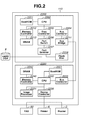
- Fig. 2 is a block diagram illustrating a configuration of a controller unit.
- Fig. 3 is a state transition diagram illustrating power states of the image forming apparatus.
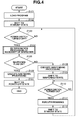
- Fig. 4 is a flow chart illustrating operations performed in the image forming apparatus.
- Fig. 5 is a flow chart illustrating determination processing of the necessity of a shutdown according to a first exemplary embodiment.
- Fig. 6 is a flow chart illustrating determination processing of the necessity of a shutdown according to a second exemplary embodiment.
- the present invention is not limited to this configuration.
- the present invention is applicable to an apparatus having at least one or more of a scanner function, a printer function, and a FAX function.
- the present invention is also applicable to a general information processing apparatus such as a personal computer (PC) that does not have any of a scanner function, a printer function, and a FAX function.
- PC personal computer
- Fig. 1 is a block diagram illustrating a configuration of an image forming apparatus according to a first exemplary embodiment.
- An image forming apparatus 1 is connected to PCs 3 and 4 via a local area network (LAN) 400.
- LAN local area network
- the image forming apparatus 1 includes a reader unit 2, a printer unit 6, an operation unit 7, a hard disk 8, a FAX unit 90, and a controller unit 110.
- the reader unit 2 reads a document to input image data.
- the reader unit 2 includes a document feeding unit 10 and a scanner unit 11.
- the document feeding unit 10 conveys a document.
- the scanner unit 11 optically reads the conveyed document to convert the document into image data in the form of electric signals.
- the printer unit 6 executes printing on a recording sheet based on the image data.
- the printer unit 6 includes a sheet feeding unit 12, a marking unit 13, and a sheet discharging unit 14.
- the sheet feeding unit 12 includes a plurality of sheet cassettes for storing recording sheets.
- the marking unit 13 transfers and fixes the image data onto the recording sheet.
- the sheet discharging unit 14 executes sorting processing and stapling processing with respect to the printed recording sheet and then discharges the printed recording sheet to the outside.
- the operation unit 7 receives various user instructions via keys.
- the operation unit 7 also notifies a user of various types of information via a panel.
- the hard disk 8 stores control programs and image data pieces.
- the FAX unit 90 executes facsimile input/output processing.
- the controller unit 110 is connected to components such as the reader unit 2, the printer unit 6, the operation unit 7, the hard disk 8, and the FAX unit 90 to control the components.
- Fig. 2 is a block diagram illustrating a configuration of the controller unit 110
- the controller unit 110 mainly includes a main board 2200 and a sub-board 2220.
- the main board 2200 handles general information processing.
- the sub-board 2220 handles image formation processing.
- the main board 2200 and the sub-board 2220 may be formed as a single board.
- the main board 2200 includes a boot read only memory (ROM) 2201, a central processing unit (CPU) 2202, a bus controller 2204, a disk controller 2205, a port switch 2206, a port selector 2207, and a flash disk 2208.
- the main board 2200 also includes a memory controller 2212, a dynamic random access memory (DRAM) 2213, and a bus bridge 2214.
- the boot ROM 2201 is a nonvolatile storage medium and stores boot programs and the like.
- the CPU 2202 executes a boot program, an operating system (OS), an application program, and so on.
- OS operating system
- application program application program
- the bus controller 2204 controls transmission and reception of data between the main board 2200 and the sub-board 2220.
- the disk controller 2205 controls the hard disk 8 via the port switch 2206 and the port selector 2207.
- the port switch 2206 receives a command from the CPU 2202 to switch ON/OFF of access via the port selector 2207.
- the port selector 2207 connects the flash disk 2208 and the hard disk 8 together and selects which one of the flash disk 2208 and the hard disk 8 is to be accessed.
- the flash disk 2208 is a nonvolatile storage medium and stores an OS, an application program, and so on.
- the memory controller 2212 controls the DRAM 2213.
- the DRAM 2213 is a volatile storage medium and temporarily stores a program, image data, and the like which are used by the CPU 2202.
- the bus bridge 2214 relays data between the bus controller 2204 and a bus controller 2225.
- the sub-board 2220 includes a boot ROM 2221, a CPU 2222, a DRAM 2242, and a memory controller 2240.
- the boot ROM 2221 is a nonvolatile storage medium and stores a boot program and so on.
- the CPU 2222 executes a boot program, an OS, an application program, and so on.
- the memory controller 2240 controls the DRAM 2242.
- the DRAM 2242 is a volatile storage medium and temporarily stores a program, image data, and the like which are used by the CPU 2222.
- An image processor 2224 executes various types of image processing with respect to image data.
- the bus controller 2225 controls transmission and reception of data between the main board 2200 and the sub-board 2220.
- a device controller 2226 controls the reader unit 2, the printer unit 6, and the FAX unit 90.
- the operation unit 7 is connected to the CPU 2202 via a bus, which is not illustrated.
- the controller unit 110 includes a network interface controller (NIC), which is not illustrated, in the main board 2200 or in the sub-board 2220 to be communicable with the PC3 and the PC4 via the LAN 400.
- NIC network interface controller
- Fig. 3 is a state transition diagram illustrating transitions of power states of the image forming apparatus 1.
- the image forming apparatus 1 is operable in any of these power states.
- the power states of the image forming apparatus 1 include a power-off state 301, a standby state 302, a job execution state 303, a sleep state 304, and a suspended state 305.
- the power states in descending order of power consumption are as follows: the job execution state 303 > the standby state 302 > the sleep state 304 > the suspended state 305 > the power-off state 301.
- the power-off state 301 refers to a state in which a power source of the image forming apparatus 1 is turned OFF. Thus, in the power-off state 301, the supply of power to every component of the image forming apparatus 1 is stopped. When a user turns on a power switch in the power-off state 301, the image forming apparatus 1 is shifted to the standby state 302.
- the standby state 302 (an example of a first power state) refers to a state in which the image forming apparatus 1 is waiting for job execution. In the standby state 302, power is supplied to every component of the image forming apparatus 1. In the standby state 302, however, it is not necessary to supply power to every component of the image forming apparatus 1. Power may be supplied only to essential components but not to the rest of the components (e.g., operation unit 7).
- the image forming apparatus 1 in the standby state 302 receives a job from the PC 3, the image forming apparatus 1 is shifted to the job execution state 303.
- the image forming apparatus 1 in the standby state 302 receives an instruction to sleep, the image forming apparatus 1 is shifted to the sleep state 304.
- the instruction to sleep corresponds to pressing of a shift-to-sleep-state button by a user or passing of a predetermined period of time in the standby state 302.
- the necessity of a shutdown is determined in step 310. If a shutdown is necessary, then shutdown processing is executed to shift the image forming apparatus 1 to the power-off state 301. If a shutdown is not necessary, then suspending processing is executed to shift the image forming apparatus 1 to the suspended state 305.
- the shutdown processing refers to processing in which the OS and the application are terminated to terminate (shutdown) the image forming apparatus 1.
- the suspending processing refers to processing in which the state of the image forming apparatus 1 is stored in the DRAM 2213 and then the image forming apparatus 1 is paused.
- the suspended state 305 refers to a state in which the image forming apparatus 1 is paused and the supply of power to the DRAM 2213 is continued to maintain the state of the image forming apparatus 1 stored in the DRAM 2213.
- hibernation processing may be employed.
- the hibernation processing refers to processing in which the state of the image forming apparatus 1 is stored in the hard disk 8 and then the image forming apparatus 1 is paused.
- the hibernation state refers to a state in which the image forming apparatus 1 is paused and the supply of power to the hard disk 8 is stopped. In the hibernation state, although the supply of power to the hard disk 8 is stopped, since the hard disk 8 is a nonvolatile storage medium, the state of the image forming apparatus 1 stored in the hard disk 8 can be maintained. Determination of the necessity of a shutdown will be described below.
- the DRAM 2243 may be included in targets of suspension (or hibernation).
- the DRAM 2213 may be included in the target of suspension (or hibernation), and data stored in the DRAM 2242 may be stored in the DRAM 2213 at the time of suspension (or hibernation) .
- the job execution state 303 refers to a state in which the image forming apparatus 1 is executing a job and power is supplied to every component of the image forming apparatus 1. In the job execution state 303, however, it is not necessary to supply power to every component of the image forming apparatus 1. Power may be supplied only to essential components but not to the rest of the components (e.g., operation unit 7) .
- the image forming apparatus 1 in the job execution state 303 completes the job, the image forming apparatus 1 is shifted to the standby state 302.
- the sleep state 304 refers to a state in which the image forming apparatus 1 is standing by under a power saving condition.
- the sleep state 304 while power is supplied to the controller unit 110 among the components of the image forming apparatus 1, the supply of power to the reader unit 2, the printer unit 6, the operation unit 7, and the like is stopped.
- the image forming apparatus 1 in the sleep state 304 receives a recovery-from-sleep-state factor, the image forming apparatus 1 is shifted to the standby state 302.
- the recovery-from-sleep-state factor corresponds to pressing of a recovery-from-sleep-state button by a user or job reception from the PC 3.
- a deep sleep state which is not illustrated, may also be included in the power states of the image forming apparatus 1.
- the deep sleep state refers to a state in which predetermined conditions are satisfied in the sleep state 304.
- the deep sleep state is different from the sleep state 304 in components of the controller unit 110 to which power is supplied. For example, the supply of power to the sub-board 2220 is stopped in the deep sleep state.
- the suspended state 305 (an example of a second power state) refers to a state in which the image forming apparatus 1 is standing by to be bootable at high speed.
- power is supplied to the DRAM 2213 among the components of the image forming apparatus 1, and the supply of power to the rest of the components is stopped.
- resuming processing is executed to shift the image forming apparatus 1 to the standby state 302.
- the resuming processing refers to processing in which the state of the image forming apparatus 1 is returned to the state before the suspended state using information stored in the DRAM 2213 at the time of the suspending processing.
- the CPU 2202 determines whether the image forming apparatus 1 is started up from the power-off state 301 or from the suspended state 305. If the image forming apparatus 1 is started up from the power-off state 301, then the CPU 2202 executes normal boot processing. If the image forming apparatus 1 is started up from the suspended state 305, then the CPU 2202 executes the resuming processing.
- Fig. 4 is a flow chart illustrating operations performed in the image forming apparatus 1.
- the CPU 2202 reads a program stored in the hard disk 8 or in the flash disk 2208 into the DRAM 2213 to execute the program, whereby the operation is realized.
- the processing illustrated in Fig. 4 is started when a user turns on the power switch in the power-off state 301.
- step S101 the CPU 2202 loads various programs such as the OS from the hard disk 8 into the DRAM 2213.
- step S102 the CPU 2202 shifts the image forming apparatus 1 to the standby state 302.
- the image forming apparatus 1 in the standby state 302 executes various jobs.
- step S103 the CPU 2202 determines whether the user has turned off the power switch. In a case where the user has turned off the power switch, an instruction to shift to the suspended state 305 is considered to have been received. If the user has turned off the power switch (YES in step S103), then the processing proceeds to step S104. Whereas if not, (NO in step S103), then the image forming apparatus 1 stands by until the CPU 2202 determines that the user has turned off the power switch (i.e., YES in step S103).
- step S104 the CPU 2202 executes determination processing of the necessity of a shutdown.
- the determination processing of the necessity of a shutdown will be described below.
- information indicating that a shutdown flag is ON/OFF is stored in the DRAM 2213 as a result of the determination processing.
- step S105 the CPU 2202 checks the shutdown flag in the DRAM 2213 to determine whether the shutdown flag is ON. If the shutdown flag is ON (YES in step S103), then the processing proceeds to step S106. Whereas if not (NO in step S103), then the processing proceeds to step S108.
- step S106 the CPU 2202 executes shutdown processing of the image forming apparatus 1.
- step S107 the CPU 2202 shifts the image forming apparatus 1 to the power-off state 301.
- step S108 the CPU 2202 executes suspending processing of the image forming apparatus 1.
- step S109 the CPU 2202 shifts the image forming apparatus 1 to the suspended state 305.
- step S110 the CPU 2202 determines whether the user has turned on the power switch. More specifically, when the user turns on the power switch during the suspended state 305, the CPU 2202 receives an interrupt signal indicating that the power switch is turned on. Based on the interrupt signal, the CPU 2202 detects that the power switch is turned on. If the power switch is turned on (YES in step S110), then the processing proceeds to step S111. Whereas if not (NO in step S110), then the image forming apparatus 1 stands by until the CPU 2202 determines that the power switch is turned on (i.e., YES in step S110).
- step S111 the CPU 2202 executes resuming processing of the image forming apparatus 1.
- step S112 the CPU 2202 shifts the image forming apparatus 1 to the standby state 302.
- the CPU 2202 may reboot the image forming apparatus 1 and shift the image forming apparatus 1 to the standby state 302 or to the suspended state 305.
- Fig. 5 is a flow chart illustrating the determination processing of the necessity of a shutdown according to the first exemplary embodiment.
- the CPU 2202 reads a program stored in the hard disk 8 or in the flash disk 2208 into the DRAM 2213 to execute the program, whereby the determination processing is realized.
- step S201 the CPU 2202 accesses the DRAM 2213 to check running applications.
- step S202 the CPU 2202 determines whether the running applications include any unregistered application.
- This processing is an example of determination of whether an application that does not support the suspending function is running. Examples of an application that does not support the suspending function include an application for execution of user authentication, an application for execution of communication, and an application for displaying an image on an image display apparatus.
- a list of applications that support the suspending function is registered in advance in the DRAM 2213 at the time of shipment from the factory and can be edited arbitrarily through updates of software and operations by a service engineer.
- the CPU 2202 determines that an application registered in the list is an application that supports the suspending function and that an application that is not registered in the list is an application that does not support the suspending function. If the CPU 2202 determined that the running applications include any unregistered application (YES in step S202), then the processing proceeds to step S203. Whereas if not (NO in step S202), then the processing proceeds to step S204.
- step S203 the CPU 2202 shifts the shutdown flag stored in the DRAM 2213 to ON.
- step S204 the CPU 2202 shifts the shutdown flag stored in the DRAM 2213 to OFF.
- malfunction can be prevented at the time of resuming an information processing apparatus when an instruction to shift to the suspended state is given while an unregistered application is running.
- the determination processing of the necessity of a shutdown is executed based on whether any unregistered application is running.
- the determination processing of the necessity of a shutdown is executed based on whether any application added by a user is running.
- the second exemplary embodiment is the same as the first exemplary embodiment. Thus, description of the same portions of the second exemplary embodiment as the first exemplary embodiment is omitted.
- Fig. 6 is a flow chart illustrating the determination processing of the necessity of a shutdown according to the second exemplary embodiment.
- the CPU 2202 reads a program stored in the hard disk 8 or in the flash disk 2208 into the DRAM 2213 to execute the program, whereby the determination processing is realized.
- step S301 the CPU 2202 accesses the DRAM 2213 to check running applications.
- step S302 the CPU 2202 determines whether the running applications include any application added by a user.
- This processing is an example of determination of whether an application that does not support the suspending function is running.
- a list of applications added by the user is registered in advance in the DRAM 2213, and information on the list is updated each time the user adds a new application.
- the CPU 2202 determines that an application that is registered in the list is an application that does not support the suspending function and that an application that is not registered in the list is an application that supports the suspending function. If the CPU 2202 determines that the running applications include any application added by the user (YES in step S302), then the processing proceeds to step S303. Whereas if not (NO in step S302), then the processing proceeds to step S304.
- step S303 the CPU 2202 shifts the shutdown flag stored in the DRAM 2213 to ON.
- step S304 the CPU 2202 shifts the shutdown flag stored in the DRAM 2213 to OFF.
- malfunction can be prevented at the time of resuming an information processing apparatus when an instruction to shift to the suspending state is given while an application added by a user is running.
- the determination processing of the necessity of a shutdown is executed based on whether any unregistered application is running.
- the determination processing of the necessity of a shutdown is executed based on whether any application that does not contain data indicating that the application supports the suspending function is running.
- the third exemplary embodiment is the same as the first exemplary embodiment. Thus, description of the same portions of the third exemplary embodiment as the first exemplary embodiment is omitted.
- step S202 The determination processing of the necessity of a shutdown is the same as that illustrated in Fig. 5 , except for the processing in step S202.
- the processing in step S202 is replaced as follows.
- step S202 the CPU 2202 determines whether the running applications include an application that does not contain data indicating that the application supports the suspending function.
- This processing is an example of determination of whether an application that does not support the suspending function is running.
- Data indicating that an application supports the suspending function is included in advance in a program at the time of creating the program for the application and can be edited arbitrarily through updates of software and operations by a service engineer.
- the CPU 2202 determines that an application that contains the data is an application that supports the suspending function and that an application that does not contain the data is an application that does not support the suspending function.
- step S202 determines that the running applications include an application that does not contain the data indicating that the application supports the suspending function. If the CPU determines that the running applications include an application that does not contain the data indicating that the application supports the suspending function (YES in step S202), then the processing proceeds to step S203. Whereas if not (NO in step S202), then the processing proceeds to step S204.
- malfunction can be prevented at the time of resuming an information processing apparatus when an instruction to shift to the suspending state is given while an application that does not contain the data indicating that the application supports the suspending function is running.
- the suspending (or hibernation) and the shutdown are selected as appropriate without making a user who has performed an operation to turn off the power supply aware of it, so that appropriate initialization, high-speed booting, and excellent usability of an image forming apparatus are realized.
- the user does not need to recognize a difference between pausing processing (suspending or hibernation) and shutdown processing, and when the user performs a normal operation to turn off the power supply, the system automatically determines and operates the pausing processing or the shutdown processing as appropriate. Accordingly, appropriate initialization, high-speed booting, and excellent usability of an image forming apparatus can be realized.
- the present invention is also applicable to, for example, a system, an apparatus, a method, a program, and a storage medium. More specifically, the present invention is applicable to a system including a plurality of devices or an apparatus including a single device.
- aspects of the present invention can also be realized by a computer of a system or apparatus (or devices such as a CPU or an MPU) that reads out and executes a program recorded on a memory device to perform the functions of the above-described embodiments, and by a method, the steps of which are performed by a computer of a system or apparatus by, for example, reading out and executing a program recorded on a memory device to perform the functions of the above-described embodiments.
- the program is provided to the computer for example via a network or from a recording medium of various types serving as the memory device (e.g., computer-readable medium).
- the program may be carried on a carrier medium such as a computer readable storage medium or a transmission medium (signal).
- the present invention also provides:
- the present invention also provides:
- the present invention also provides:
Landscapes
- Engineering & Computer Science (AREA)
- Multimedia (AREA)
- Signal Processing (AREA)
- Software Systems (AREA)
- Theoretical Computer Science (AREA)
- Computer Security & Cryptography (AREA)
- Physics & Mathematics (AREA)
- General Engineering & Computer Science (AREA)
- General Physics & Mathematics (AREA)
- Facsimiles In General (AREA)
- Accessory Devices And Overall Control Thereof (AREA)
- Power Sources (AREA)
Abstract
Description
- The present invention relates to an information processing apparatus, a control method for the information processing apparatus, and a program.
- In recent years, the starting time of an information processing apparatus has become longer and longer due to an increase in programs. Under such a circumstance, many information processing apparatuses employ a suspending function to shorten the starting time. The suspending function is a technique for increasing the speed of booting at the time of recovery from a power-saving mode by continuing the supply of power to a memory during the power-saving mode to maintain data (i.e., a suspended state) (Japanese Patent Application Laid-Open No.
2005-284491 - However, when suspending processing is executed by an information processing apparatus in which an application that does not support the suspending function is running, malfunction may occur at the time of resuming. For example, in a case where the application is for execution of user authentication, user authentication may not be executed at the time of resuming. In a case where the application is for execution of communication, communication may not be executed at the time of resuming or may be executed but at a low communication speed. In a case where the application is for displaying an image on an image display apparatus, no image may be displayed on the image apparatus at the time of resuming. These malfunctions occur because a registered state of hardware at the time of suspending cannot be recovered normally at the time of resuming.
- The present invention is directed to a technique for preventing malfunction at the time of resuming an information processing apparatus in a case where an instruction to shift to a suspended state is given to the information processing apparatus in which an application that does not support the suspending function is running.
- According to a first aspect of the present invention, there is provided an information processing apparatus as specified in claims 1 to 10. According to a second aspect of the present invention, there is provided a method as specified in
claim 11. According to a third aspect of the present invention, there is provided a program as specified inclaim 12. According to a fourth aspect of the present invention, there is provided a carrier medium as specified inclaim 13. - Further features of the present invention will become apparent from the following description of exemplary embodiments with reference to the attached drawings.
-
Fig. 1 is a block diagram illustrating a configuration of an image forming apparatus. -
Fig. 2 is a block diagram illustrating a configuration of a controller unit. -
Fig. 3 is a state transition diagram illustrating power states of the image forming apparatus. -
Fig. 4 is a flow chart illustrating operations performed in the image forming apparatus. -
Fig. 5 is a flow chart illustrating determination processing of the necessity of a shutdown according to a first exemplary embodiment. -
Fig. 6 is a flow chart illustrating determination processing of the necessity of a shutdown according to a second exemplary embodiment. - Although an apparatus that has a scanner function, a printer function, and a facsimile (FAX) function is described below as an image forming apparatus such as a printer according to an exemplary embodiment of the present invention, the present invention is not limited to this configuration. For example, the present invention is applicable to an apparatus having at least one or more of a scanner function, a printer function, and a FAX function. Further, the present invention is also applicable to a general information processing apparatus such as a personal computer (PC) that does not have any of a scanner function, a printer function, and a FAX function.
-
Fig. 1 is a block diagram illustrating a configuration of an image forming apparatus according to a first exemplary embodiment. - An image forming apparatus 1 is connected to
PCs - The image forming apparatus 1 includes a
reader unit 2, aprinter unit 6, anoperation unit 7, ahard disk 8, aFAX unit 90, and acontroller unit 110. - The
reader unit 2 reads a document to input image data. Thereader unit 2 includes adocument feeding unit 10 and ascanner unit 11. The document feedingunit 10 conveys a document. Thescanner unit 11 optically reads the conveyed document to convert the document into image data in the form of electric signals. - The
printer unit 6 executes printing on a recording sheet based on the image data. Theprinter unit 6 includes asheet feeding unit 12, amarking unit 13, and a sheet discharging unit 14. Thesheet feeding unit 12 includes a plurality of sheet cassettes for storing recording sheets. Themarking unit 13 transfers and fixes the image data onto the recording sheet. The sheet discharging unit 14 executes sorting processing and stapling processing with respect to the printed recording sheet and then discharges the printed recording sheet to the outside. - The
operation unit 7 receives various user instructions via keys. Theoperation unit 7 also notifies a user of various types of information via a panel. - The
hard disk 8 stores control programs and image data pieces. - The
FAX unit 90 executes facsimile input/output processing. - The
controller unit 110 is connected to components such as thereader unit 2, theprinter unit 6, theoperation unit 7, thehard disk 8, and theFAX unit 90 to control the components. -
Fig. 2 is a block diagram illustrating a configuration of thecontroller unit 110 - The
controller unit 110 mainly includes amain board 2200 and asub-board 2220. Themain board 2200 handles general information processing. Thesub-board 2220 handles image formation processing. Themain board 2200 and thesub-board 2220 may be formed as a single board. - The
main board 2200 includes a boot read only memory (ROM) 2201, a central processing unit (CPU) 2202, abus controller 2204, adisk controller 2205, aport switch 2206, aport selector 2207, and aflash disk 2208. Themain board 2200 also includes amemory controller 2212, a dynamic random access memory (DRAM) 2213, and abus bridge 2214. - The
boot ROM 2201 is a nonvolatile storage medium and stores boot programs and the like. - The
CPU 2202 executes a boot program, an operating system (OS), an application program, and so on. - The
bus controller 2204 controls transmission and reception of data between themain board 2200 and thesub-board 2220. - The
disk controller 2205 controls thehard disk 8 via theport switch 2206 and theport selector 2207. - The
port switch 2206 receives a command from theCPU 2202 to switch ON/OFF of access via theport selector 2207. - The
port selector 2207 connects theflash disk 2208 and thehard disk 8 together and selects which one of theflash disk 2208 and thehard disk 8 is to be accessed. - The
flash disk 2208 is a nonvolatile storage medium and stores an OS, an application program, and so on. - The
memory controller 2212 controls theDRAM 2213. - The
DRAM 2213 is a volatile storage medium and temporarily stores a program, image data, and the like which are used by theCPU 2202. - The
bus bridge 2214 relays data between thebus controller 2204 and abus controller 2225. - The
sub-board 2220 includes aboot ROM 2221, aCPU 2222, aDRAM 2242, and amemory controller 2240. - The
boot ROM 2221 is a nonvolatile storage medium and stores a boot program and so on. - The
CPU 2222 executes a boot program, an OS, an application program, and so on. - The
memory controller 2240 controls theDRAM 2242. - The
DRAM 2242 is a volatile storage medium and temporarily stores a program, image data, and the like which are used by theCPU 2222. - An
image processor 2224 executes various types of image processing with respect to image data. - The
bus controller 2225 controls transmission and reception of data between themain board 2200 and the sub-board 2220. - A
device controller 2226 controls thereader unit 2, theprinter unit 6, and theFAX unit 90. - The
operation unit 7 is connected to theCPU 2202 via a bus, which is not illustrated. - The
controller unit 110 includes a network interface controller (NIC), which is not illustrated, in themain board 2200 or in the sub-board 2220 to be communicable with the PC3 and the PC4 via theLAN 400. -
Fig. 3 is a state transition diagram illustrating transitions of power states of the image forming apparatus 1. - The image forming apparatus 1 is operable in any of these power states.
- The power states of the image forming apparatus 1 include a power-
off state 301, astandby state 302, ajob execution state 303, asleep state 304, and a suspendedstate 305. - The power states in descending order of power consumption are as follows: the
job execution state 303 > thestandby state 302 > thesleep state 304 > the suspendedstate 305 > the power-off state 301. - The power-
off state 301 refers to a state in which a power source of the image forming apparatus 1 is turned OFF. Thus, in the power-off state 301, the supply of power to every component of the image forming apparatus 1 is stopped. When a user turns on a power switch in the power-off state 301, the image forming apparatus 1 is shifted to thestandby state 302. - The standby state 302 (an example of a first power state) refers to a state in which the image forming apparatus 1 is waiting for job execution. In the
standby state 302, power is supplied to every component of the image forming apparatus 1. In thestandby state 302, however, it is not necessary to supply power to every component of the image forming apparatus 1. Power may be supplied only to essential components but not to the rest of the components (e.g., operation unit 7). When the image forming apparatus 1 in thestandby state 302 receives a job from thePC 3, the image forming apparatus 1 is shifted to thejob execution state 303. When the image forming apparatus 1 in thestandby state 302 receives an instruction to sleep, the image forming apparatus 1 is shifted to thesleep state 304. The instruction to sleep corresponds to pressing of a shift-to-sleep-state button by a user or passing of a predetermined period of time in thestandby state 302. - When a user turns off the power switch in the
standby state 302, the necessity of a shutdown is determined instep 310. If a shutdown is necessary, then shutdown processing is executed to shift the image forming apparatus 1 to the power-off state 301. If a shutdown is not necessary, then suspending processing is executed to shift the image forming apparatus 1 to the suspendedstate 305. The shutdown processing refers to processing in which the OS and the application are terminated to terminate (shutdown) the image forming apparatus 1. The suspending processing refers to processing in which the state of the image forming apparatus 1 is stored in theDRAM 2213 and then the image forming apparatus 1 is paused. The suspendedstate 305 refers to a state in which the image forming apparatus 1 is paused and the supply of power to theDRAM 2213 is continued to maintain the state of the image forming apparatus 1 stored in theDRAM 2213. - In place of the suspending processing, hibernation processing may be employed. The hibernation processing refers to processing in which the state of the image forming apparatus 1 is stored in the
hard disk 8 and then the image forming apparatus 1 is paused. The hibernation state refers to a state in which the image forming apparatus 1 is paused and the supply of power to thehard disk 8 is stopped. In the hibernation state, although the supply of power to thehard disk 8 is stopped, since thehard disk 8 is a nonvolatile storage medium, the state of the image forming apparatus 1 stored in thehard disk 8 can be maintained. Determination of the necessity of a shutdown will be described below. - Not only the
DRAM 2213 but also theDRAM 2242 may be included in targets of suspension (or hibernation). In addition, only theDRAM 2213 may be included in the target of suspension (or hibernation), and data stored in theDRAM 2242 may be stored in theDRAM 2213 at the time of suspension (or hibernation) . - The
job execution state 303 refers to a state in which the image forming apparatus 1 is executing a job and power is supplied to every component of the image forming apparatus 1. In thejob execution state 303, however, it is not necessary to supply power to every component of the image forming apparatus 1. Power may be supplied only to essential components but not to the rest of the components (e.g., operation unit 7) . When the image forming apparatus 1 in thejob execution state 303 completes the job, the image forming apparatus 1 is shifted to thestandby state 302. - The
sleep state 304 refers to a state in which the image forming apparatus 1 is standing by under a power saving condition. In thesleep state 304, while power is supplied to thecontroller unit 110 among the components of the image forming apparatus 1, the supply of power to thereader unit 2, theprinter unit 6, theoperation unit 7, and the like is stopped. When the image forming apparatus 1 in thesleep state 304 receives a recovery-from-sleep-state factor, the image forming apparatus 1 is shifted to thestandby state 302. The recovery-from-sleep-state factor corresponds to pressing of a recovery-from-sleep-state button by a user or job reception from thePC 3. A deep sleep state, which is not illustrated, may also be included in the power states of the image forming apparatus 1. The deep sleep state refers to a state in which predetermined conditions are satisfied in thesleep state 304. The deep sleep state is different from thesleep state 304 in components of thecontroller unit 110 to which power is supplied. For example, the supply of power to the sub-board 2220 is stopped in the deep sleep state. - The suspended state 305 (an example of a second power state) refers to a state in which the image forming apparatus 1 is standing by to be bootable at high speed. In the suspended
state 305, power is supplied to theDRAM 2213 among the components of the image forming apparatus 1, and the supply of power to the rest of the components is stopped. When a user turns on the power switch in the suspendedstate 305, resuming processing is executed to shift the image forming apparatus 1 to thestandby state 302. The resuming processing refers to processing in which the state of the image forming apparatus 1 is returned to the state before the suspended state using information stored in theDRAM 2213 at the time of the suspending processing. - When a user turns on the power switch, the
CPU 2202 determines whether the image forming apparatus 1 is started up from the power-off state 301 or from the suspendedstate 305. If the image forming apparatus 1 is started up from the power-off state 301, then theCPU 2202 executes normal boot processing. If the image forming apparatus 1 is started up from the suspendedstate 305, then theCPU 2202 executes the resuming processing. -
Fig. 4 is a flow chart illustrating operations performed in the image forming apparatus 1. TheCPU 2202 reads a program stored in thehard disk 8 or in theflash disk 2208 into theDRAM 2213 to execute the program, whereby the operation is realized. - The processing illustrated in
Fig. 4 is started when a user turns on the power switch in the power-off state 301. - In step S101, the
CPU 2202 loads various programs such as the OS from thehard disk 8 into theDRAM 2213. - In step S102, the
CPU 2202 shifts the image forming apparatus 1 to thestandby state 302. The image forming apparatus 1 in thestandby state 302 executes various jobs. - In step S103, the
CPU 2202 determines whether the user has turned off the power switch. In a case where the user has turned off the power switch, an instruction to shift to the suspendedstate 305 is considered to have been received. If the user has turned off the power switch (YES in step S103), then the processing proceeds to step S104. Whereas if not, (NO in step S103), then the image forming apparatus 1 stands by until theCPU 2202 determines that the user has turned off the power switch (i.e., YES in step S103). - In step S104, the
CPU 2202 executes determination processing of the necessity of a shutdown. The determination processing of the necessity of a shutdown will be described below. When theCPU 2202 executes determination processing of the necessity of a shutdown, information indicating that a shutdown flag is ON/OFF is stored in theDRAM 2213 as a result of the determination processing. - In step S105, the
CPU 2202 checks the shutdown flag in theDRAM 2213 to determine whether the shutdown flag is ON. If the shutdown flag is ON (YES in step S103), then the processing proceeds to step S106. Whereas if not (NO in step S103), then the processing proceeds to step S108. - In step S106, the
CPU 2202 executes shutdown processing of the image forming apparatus 1. - In step S107, the
CPU 2202 shifts the image forming apparatus 1 to the power-off state 301. - In step S108, the
CPU 2202 executes suspending processing of the image forming apparatus 1. - In step S109, the
CPU 2202 shifts the image forming apparatus 1 to the suspendedstate 305. - In step S110, the
CPU 2202 determines whether the user has turned on the power switch. More specifically, when the user turns on the power switch during the suspendedstate 305, theCPU 2202 receives an interrupt signal indicating that the power switch is turned on. Based on the interrupt signal, theCPU 2202 detects that the power switch is turned on. If the power switch is turned on (YES in step S110), then the processing proceeds to step S111. Whereas if not (NO in step S110), then the image forming apparatus 1 stands by until theCPU 2202 determines that the power switch is turned on (i.e., YES in step S110). - In step S111, the
CPU 2202 executes resuming processing of the image forming apparatus 1. - In step S112, the
CPU 2202 shifts the image forming apparatus 1 to thestandby state 302. - In place of the processing in step S107 illustrated in
Fig. 4 , theCPU 2202 may reboot the image forming apparatus 1 and shift the image forming apparatus 1 to thestandby state 302 or to the suspendedstate 305. -
Fig. 5 is a flow chart illustrating the determination processing of the necessity of a shutdown according to the first exemplary embodiment. TheCPU 2202 reads a program stored in thehard disk 8 or in theflash disk 2208 into theDRAM 2213 to execute the program, whereby the determination processing is realized. - In step S201, the
CPU 2202 accesses theDRAM 2213 to check running applications. - In step S202, the
CPU 2202 determines whether the running applications include any unregistered application. This processing is an example of determination of whether an application that does not support the suspending function is running. Examples of an application that does not support the suspending function include an application for execution of user authentication, an application for execution of communication, and an application for displaying an image on an image display apparatus. A list of applications that support the suspending function is registered in advance in theDRAM 2213 at the time of shipment from the factory and can be edited arbitrarily through updates of software and operations by a service engineer. TheCPU 2202 determines that an application registered in the list is an application that supports the suspending function and that an application that is not registered in the list is an application that does not support the suspending function. If theCPU 2202 determined that the running applications include any unregistered application (YES in step S202), then the processing proceeds to step S203. Whereas if not (NO in step S202), then the processing proceeds to step S204. - In step S203, the
CPU 2202 shifts the shutdown flag stored in theDRAM 2213 to ON. - In step S204, the
CPU 2202 shifts the shutdown flag stored in theDRAM 2213 to OFF. - According to the first exemplary embodiment, malfunction can be prevented at the time of resuming an information processing apparatus when an instruction to shift to the suspended state is given while an unregistered application is running.
- According to the first exemplary embodiment, the determination processing of the necessity of a shutdown is executed based on whether any unregistered application is running.
- According to a second exemplary embodiment, on the other hand, the determination processing of the necessity of a shutdown is executed based on whether any application added by a user is running.
- Except for the determination processing of the necessity of a shutdown, the second exemplary embodiment is the same as the first exemplary embodiment. Thus, description of the same portions of the second exemplary embodiment as the first exemplary embodiment is omitted.
-
Fig. 6 is a flow chart illustrating the determination processing of the necessity of a shutdown according to the second exemplary embodiment. TheCPU 2202 reads a program stored in thehard disk 8 or in theflash disk 2208 into theDRAM 2213 to execute the program, whereby the determination processing is realized. - In step S301, the
CPU 2202 accesses theDRAM 2213 to check running applications. - In step S302, the
CPU 2202 determines whether the running applications include any application added by a user. This processing is an example of determination of whether an application that does not support the suspending function is running. According to the second exemplary embodiment, a list of applications added by the user is registered in advance in theDRAM 2213, and information on the list is updated each time the user adds a new application. TheCPU 2202 determines that an application that is registered in the list is an application that does not support the suspending function and that an application that is not registered in the list is an application that supports the suspending function. If theCPU 2202 determines that the running applications include any application added by the user (YES in step S302), then the processing proceeds to step S303. Whereas if not (NO in step S302), then the processing proceeds to step S304. - In step S303, the
CPU 2202 shifts the shutdown flag stored in theDRAM 2213 to ON. - In step S304, the
CPU 2202 shifts the shutdown flag stored in theDRAM 2213 to OFF. - According to the second exemplary embodiment, malfunction can be prevented at the time of resuming an information processing apparatus when an instruction to shift to the suspending state is given while an application added by a user is running.
- According to the first exemplary embodiment, the determination processing of the necessity of a shutdown is executed based on whether any unregistered application is running.
- According to a third exemplary embodiment, on the other hand, the determination processing of the necessity of a shutdown is executed based on whether any application that does not contain data indicating that the application supports the suspending function is running.
- Except for the determination processing of the necessity of a shutdown, the third exemplary embodiment is the same as the first exemplary embodiment. Thus, description of the same portions of the third exemplary embodiment as the first exemplary embodiment is omitted.
- The determination processing of the necessity of a shutdown is the same as that illustrated in
Fig. 5 , except for the processing in step S202. The processing in step S202 is replaced as follows. - In step S202, the
CPU 2202 determines whether the running applications include an application that does not contain data indicating that the application supports the suspending function. This processing is an example of determination of whether an application that does not support the suspending function is running. Data indicating that an application supports the suspending function is included in advance in a program at the time of creating the program for the application and can be edited arbitrarily through updates of software and operations by a service engineer. TheCPU 2202 determines that an application that contains the data is an application that supports the suspending function and that an application that does not contain the data is an application that does not support the suspending function. If the CPU determines that the running applications include an application that does not contain the data indicating that the application supports the suspending function (YES in step S202), then the processing proceeds to step S203. Whereas if not (NO in step S202), then the processing proceeds to step S204. - According to the third exemplary embodiment, malfunction can be prevented at the time of resuming an information processing apparatus when an instruction to shift to the suspending state is given while an application that does not contain the data indicating that the application supports the suspending function is running.
- As described above, the suspending (or hibernation) and the shutdown are selected as appropriate without making a user who has performed an operation to turn off the power supply aware of it, so that appropriate initialization, high-speed booting, and excellent usability of an image forming apparatus are realized.
- More specifically, the user does not need to recognize a difference between pausing processing (suspending or hibernation) and shutdown processing, and when the user performs a normal operation to turn off the power supply, the system automatically determines and operates the pausing processing or the shutdown processing as appropriate. Accordingly, appropriate initialization, high-speed booting, and excellent usability of an image forming apparatus can be realized.
- The configurations and contents of various types of data pieces described above are not limited to those described above, and the various types of data pieces may have various configurations and contents according to the purpose of use.
- Although the foregoing describes the exemplary embodiments, the present invention is also applicable to, for example, a system, an apparatus, a method, a program, and a storage medium. More specifically, the present invention is applicable to a system including a plurality of devices or an apparatus including a single device.
- The scope of the present invention encompasses every combination of the above exemplary embodiments.
- Aspects of the present invention can also be realized by a computer of a system or apparatus (or devices such as a CPU or an MPU) that reads out and executes a program recorded on a memory device to perform the functions of the above-described embodiments, and by a method, the steps of which are performed by a computer of a system or apparatus by, for example, reading out and executing a program recorded on a memory device to perform the functions of the above-described embodiments. For this purpose, the program is provided to the computer for example via a network or from a recording medium of various types serving as the memory device (e.g., computer-readable medium). The program may be carried on a carrier medium such as a computer readable storage medium or a transmission medium (signal).
- The present invention also provides:
- an information processing apparatus operable in any of a plurality of power states including a first power state and a second power state in which power consumption is lower than power consumption in the first power state, the information processing apparatus comprising:
- reception means for receiving a shift instruction to shift to the second power state; and
- control means for shifting the information processing apparatus to the second power state in a case where the reception means receives the shift instruction while an application that does not support the second power state is not running, and shutting down the information processing apparatus in a case where the reception means receives the instruction while an application that does not support the second power state is running.
- The present invention also provides:
- a method for controlling an information processing apparatus operable in any of a plurality of power states including a first power state and a second power state in which power consumption is lower than power consumption in the first power state, the method comprising:
- receiving a shift instruction to shift to the second power state; and
- performing control to shift the information processing apparatus to the second power state in a case where the shift instruction is received while an application that does not support the second power state is not running, and to shut down the information processing apparatus in a case where the shift instruction is received while an application that does not support the second power state is running.
- The present invention also provides:
- a program for causing an information processing apparatus operable in any of a plurality of power states including a first power state and a second power state in which power consumption is lower than power consumption in the first power state to execute:
- receiving a shift instruction to shift to the second power state; and
- performing control to shift the information processing apparatus to the second power state in a case where the shift instruction is received while an application that does not support the second power state is not running, and to shut down the information processing apparatus in a case where the shift instruction is received while an application that does not support the second power state is running.
- While the present invention has been described with reference to exemplary embodiments, it is to be understood that the invention is not limited to the disclosed exemplary embodiments. The scope of the following claims is to be accorded the broadest interpretation so as to encompass all modifications, equivalent structures, and functions.
Claims (13)
- An information processing apparatus operable in any of a plurality of power states including a first power state and a second power state in which power consumption is lower than power consumption in the first power state, the information processing apparatus comprising:reception means (2202) for receiving a shift instruction to shift to the second power state; andcontrol means (2202) for shifting the information processing apparatus to the second power state in a case where the reception means receives the shift instruction while an application that does not support the second power state is not running, and not shifting the information processing apparatus to the second power state in a case where the reception means receives the instruction while an application that does not support the second power state is running.
- The information processing apparatus according to claim 1, further comprising:registration means (2213) for registering an application that supports the second power state,wherein the control means shifts the information processing apparatus to the second power state in a case where the reception means receives the shift instruction while an application that is not registered in the registration means is not running, and shuts down the information processing apparatus in a case where the reception means receives the shift instruction while an application that is not registered in the registration means is running.
- The information processing apparatus according to claim 1, further comprising:registration means (2213) for registering an application added by a user,wherein the control means shifts the information processing apparatus to the second power state in a case where the reception means receives the shift instruction while an application that is registered in the registration means is not running, and shuts down the information processing apparatus in a case where the reception means receives the shift instruction while an application that is registered in the registration means is running.
- The information processing apparatus according to claim 1, further comprising:determination means (2202) for determining whether an application contains data indicating that the application supports a suspending function,wherein the control means shifts the information processing apparatus to the second power state in a case where the reception means receives the shift instruction while an application that is determined by the determination means as not containing the data indicating that the application supports the suspending function is not running, and shuts down the information processing apparatus in a case where the reception means receives the shift instruction while an application that is determined by the determination means as not containing the data indicating that the application supports the suspending function is running.
- The information processing apparatus according to any one of claims 1 to 4, wherein the control means shuts down the information processing apparatus and then turns off a power source of the information processing apparatus.
- The information processing apparatus according to any one of claims 1 to 4, wherein the control means shuts down the information processing apparatus and then reboots the information processing apparatus.
- The information processing apparatus according to any one of claims 1 to 6, wherein the second power state is a suspended state.
- The information processing apparatus according to any one of claims 1 to 6, wherein the second power state is a hibernation state.
- The information processing apparatus according to any one of claims 1 to 8, further comprising image forming means for forming an image on a sheet.
- The information processing apparatus according to any one of claims 1 to 7, wherein the control means shuts down the information processing apparatus in a case where the reception means receives the instruction while an application that does not support the second power state is running.
- A method for controlling an information processing apparatus operable in any of a plurality of power states including a first power state and a second power state in which power consumption is lower than power consumption in the first power state, the method comprising:receiving a shift instruction to shift to the second power state; andperforming control to shift the information processing apparatus to the second power state in a case where the shift instruction is received while an application that does not support the second power state is not running, and not to shift the information processing apparatus to the second power state in a case where the shift instruction is received while an application that does not support the second power state is running.
- A program which on execution by an information processing apparatus, operable in any of a plurality of power states including a first power state and a second power state in which power consumption is lower than power consumption in the first power state, causes the information processing apparatus to implement the method of claim 10.
- A carrier medium carrying the program of claim 12.
Applications Claiming Priority (1)
| Application Number | Priority Date | Filing Date | Title |
|---|---|---|---|
| JP2012122906A JP5939890B2 (en) | 2012-05-30 | 2012-05-30 | Information processing apparatus, information processing apparatus control method, and program |
Publications (1)
| Publication Number | Publication Date |
|---|---|
| EP2669794A1 true EP2669794A1 (en) | 2013-12-04 |
Family
ID=48670346
Family Applications (1)
| Application Number | Title | Priority Date | Filing Date |
|---|---|---|---|
| EP13168983.8A Withdrawn EP2669794A1 (en) | 2012-05-30 | 2013-05-23 | Information processing apparatus, control method for information processing apparatus, and program |
Country Status (4)
| Country | Link |
|---|---|
| US (2) | US9137406B2 (en) |
| EP (1) | EP2669794A1 (en) |
| JP (1) | JP5939890B2 (en) |
| CN (1) | CN103458145B (en) |
Families Citing this family (10)
| Publication number | Priority date | Publication date | Assignee | Title |
|---|---|---|---|---|
| JP6020353B2 (en) * | 2013-05-29 | 2016-11-02 | コニカミノルタ株式会社 | Information processing apparatus, image forming apparatus, remote operation method, remote control method, remote operation program, and remote control program |
| US20160216756A1 (en) * | 2013-11-29 | 2016-07-28 | Wei Yang | Power management in computing devices |
| JP6280397B2 (en) * | 2014-03-04 | 2018-02-14 | キヤノン株式会社 | Image forming apparatus and image forming apparatus control method |
| US20170097673A1 (en) * | 2015-10-01 | 2017-04-06 | Lenovo Enterprise Solutions (Singapore) Pte. Ltd. | Computer system and method providing both main and auxiliary power over a single power bus |
| US9826485B2 (en) | 2015-11-20 | 2017-11-21 | Symbol Technologies, Llc | Power source hot swap mode |
| JP6590722B2 (en) * | 2016-02-10 | 2019-10-16 | キヤノン株式会社 | Electronic device, control method thereof, and program |
| JP7027027B2 (en) * | 2016-03-17 | 2022-03-01 | キヤノン株式会社 | Information processing equipment, control methods, and their programs |
| CN106502372A (en) * | 2016-11-28 | 2017-03-15 | 珠海市魅族科技有限公司 | A kind of method of application control and mobile terminal |
| US10469250B2 (en) * | 2017-12-22 | 2019-11-05 | Max Adel Rady | Physical item mapping to blockchain framework |
| JP7159002B2 (en) | 2018-10-26 | 2022-10-24 | キヤノン株式会社 | An information processing apparatus including a device that is in an operation stop state according to an operation stop signal and that can shift to a power saving mode on condition that at least an operation stop signal is not input. |
Citations (4)
| Publication number | Priority date | Publication date | Assignee | Title |
|---|---|---|---|---|
| US5978923A (en) * | 1997-08-07 | 1999-11-02 | Toshiba America Information Systems, Inc. | Method and apparatus for a computer power management function including selective sleep states |
| JP2005284491A (en) | 2004-03-29 | 2005-10-13 | Mitsubishi Electric Corp | Computer startup time reduction method |
| EP2059012A1 (en) * | 2006-08-11 | 2009-05-13 | NEC Corporation | Wireless communication terminal, processor thereof, and wireless communication terminal power management method |
| US20110194133A1 (en) * | 2009-12-22 | 2011-08-11 | Canon Kabushiki Kaisha | Image forming apparatus, control method for the same, and storage medium for program |
Family Cites Families (9)
| Publication number | Priority date | Publication date | Assignee | Title |
|---|---|---|---|---|
| JPH04155412A (en) * | 1990-10-19 | 1992-05-28 | Oki Electric Ind Co Ltd | Method for controlling resume |
| JPH06337728A (en) * | 1993-05-31 | 1994-12-06 | Matsushita Electric Ind Co Ltd | Electronic computer with suspend / resume function |
| JP4037529B2 (en) * | 1998-07-09 | 2008-01-23 | 株式会社東芝 | Computer system and power saving control method thereof |
| KR100820789B1 (en) * | 2001-04-06 | 2008-04-10 | 엘지전자 주식회사 | Real-time based system and its monitoring method |
| US7275169B2 (en) * | 2003-11-03 | 2007-09-25 | American Power Conversion Corporation | Graphical view of shutdown process |
| US7904739B2 (en) * | 2007-10-08 | 2011-03-08 | Hewlett-Packard Development Company, L.P. | Managing a power state for a peripheral |
| US20100149573A1 (en) * | 2008-12-17 | 2010-06-17 | Xerox Corporation | System and method of providing image forming machine power up status information |
| JP5397162B2 (en) * | 2009-10-29 | 2014-01-22 | セイコーエプソン株式会社 | Printer driver and POS printer control method |
| JP5045840B1 (en) * | 2011-09-06 | 2012-10-10 | 富士ゼロックス株式会社 | Power supply control device, image processing device, power supply control program |
-
2012
- 2012-05-30 JP JP2012122906A patent/JP5939890B2/en active Active
-
2013
- 2013-05-23 EP EP13168983.8A patent/EP2669794A1/en not_active Withdrawn
- 2013-05-28 CN CN201310210693.2A patent/CN103458145B/en active Active
- 2013-05-28 US US13/903,859 patent/US9137406B2/en not_active Expired - Fee Related
-
2015
- 2015-07-06 US US14/792,239 patent/US9456101B2/en active Active
Patent Citations (4)
| Publication number | Priority date | Publication date | Assignee | Title |
|---|---|---|---|---|
| US5978923A (en) * | 1997-08-07 | 1999-11-02 | Toshiba America Information Systems, Inc. | Method and apparatus for a computer power management function including selective sleep states |
| JP2005284491A (en) | 2004-03-29 | 2005-10-13 | Mitsubishi Electric Corp | Computer startup time reduction method |
| EP2059012A1 (en) * | 2006-08-11 | 2009-05-13 | NEC Corporation | Wireless communication terminal, processor thereof, and wireless communication terminal power management method |
| US20110194133A1 (en) * | 2009-12-22 | 2011-08-11 | Canon Kabushiki Kaisha | Image forming apparatus, control method for the same, and storage medium for program |
Non-Patent Citations (2)
| Title |
|---|
| ANTON BELOGLAZOV, RAJKUMAR BUYYA, YOUNG CHOON LEE, ALBERT Y. ZOMAYA: "A Taxonomy and Survey of Energy-Efficient Data Centers and Cloud Computing Systems", ADVANCES IN COMPUTERS, vol. 82, 2011, pages 1 - 49, XP002712537 * |
| BOEGEHOLZ H: "JACK-IN-THE-BOX. NEUES POWER MANAGEMENT IN WINDOWS 98", IEEE TRANSACTIONS ON GEOSCIENCE AND REMOTE SENSING, IEEE SERVICE CENTER, PISCATAWAY, NJ, US, vol. 37, no. 2, PART 01, 1 March 1999 (1999-03-01), pages 96 - 99, XP000834033, ISSN: 0196-2892 * |
Also Published As
| Publication number | Publication date |
|---|---|
| JP2013250610A (en) | 2013-12-12 |
| CN103458145B (en) | 2017-09-01 |
| JP5939890B2 (en) | 2016-06-22 |
| US9456101B2 (en) | 2016-09-27 |
| US9137406B2 (en) | 2015-09-15 |
| US20150312432A1 (en) | 2015-10-29 |
| CN103458145A (en) | 2013-12-18 |
| US20130321851A1 (en) | 2013-12-05 |
Similar Documents
| Publication | Publication Date | Title |
|---|---|---|
| US9137406B2 (en) | Information processing apparatus, method, and computer-readable medium storing a program, for shifting different power states | |
| US12124313B2 (en) | Information processing apparatus, control method therefor, and storage medium | |
| US11067932B2 (en) | Information processing apparatus capable of appropriately executing shutdown processing, method of controlling the information processing apparatus, and storage medium | |
| JP5625458B2 (en) | Image processing device | |
| US9513853B2 (en) | Data processing apparatus capable of controlling power supply, control method therefor, and storage medium | |
| JP5948855B2 (en) | Apparatus, program management method, program management program, and recording medium | |
| US20140146345A1 (en) | Information processing apparatus, information processing apparatus control method, and storage medium | |
| US20120229839A1 (en) | Image forming apparatus, method for controlling image forming apparatus, and program | |
| JP2017177573A (en) | Information processing device provided with pci (peripheral component interconnect) device with connecting to pci bus and method for controlling information processing device | |
| US20160062775A1 (en) | Information processing apparatus including main system and subsystem | |
| US20190289154A1 (en) | Information processing apparatus and information processing method | |
| US11036668B2 (en) | Electronic apparatus including device configured to be shifted to power saving state and connected to PCI device, and control method thereof | |
| US10534423B2 (en) | Information processing apparatus configured to select swap area based on power mode, method of controlling the same, and non-transitory computer-readable storage medium | |
| JP2012128705A (en) | Information processing device, control method of information processing device and program | |
| US20130191623A1 (en) | Information processing apparatus, control method therefor, and storage medium | |
| EP3712745B1 (en) | Image forming apparatus and power supply control method | |
| US11537192B2 (en) | Power control for a controlled device and communication relay unit of an image processing apparatus | |
| JP2010282504A (en) | Electronics | |
| US20150358501A1 (en) | Apparatus, method, and storage medium of program | |
| JP2010086428A (en) | Information processing apparatus, information processing program, and recording medium which records information processing program |
Legal Events
| Date | Code | Title | Description |
|---|---|---|---|
| PUAI | Public reference made under article 153(3) epc to a published international application that has entered the european phase |
Free format text: ORIGINAL CODE: 0009012 |
|
| AK | Designated contracting states |
Kind code of ref document: A1 Designated state(s): AL AT BE BG CH CY CZ DE DK EE ES FI FR GB GR HR HU IE IS IT LI LT LU LV MC MK MT NL NO PL PT RO RS SE SI SK SM TR |
|
| AX | Request for extension of the european patent |
Extension state: BA ME |
|
| 17P | Request for examination filed |
Effective date: 20140318 |
|
| RBV | Designated contracting states (corrected) |
Designated state(s): AL AT BE BG CH CY CZ DE DK EE ES FI FR GB GR HR HU IE IS IT LI LT LU LV MC MK MT NL NO PL PT RO RS SE SI SK SM TR |
|
| 17Q | First examination report despatched |
Effective date: 20170314 |
|
| STAA | Information on the status of an ep patent application or granted ep patent |
Free format text: STATUS: THE APPLICATION HAS BEEN WITHDRAWN |
|
| 18W | Application withdrawn |
Effective date: 20200713 |