EP2668166B1 - Process for the preparation of a pyrazole carboxylic acid amide - Google Patents
Process for the preparation of a pyrazole carboxylic acid amide Download PDFInfo
- Publication number
- EP2668166B1 EP2668166B1 EP12700859.7A EP12700859A EP2668166B1 EP 2668166 B1 EP2668166 B1 EP 2668166B1 EP 12700859 A EP12700859 A EP 12700859A EP 2668166 B1 EP2668166 B1 EP 2668166B1
- Authority
- EP
- European Patent Office
- Prior art keywords
- formula
- compound
- oxygen
- mol
- sulfur
- Prior art date
- Legal status (The legal status is an assumption and is not a legal conclusion. Google has not performed a legal analysis and makes no representation as to the accuracy of the status listed.)
- Active
Links
- 0 CC(C(C(CC(Cl)Cl)C(C=C1)=O)C1=O)C=* Chemical compound CC(C(C(CC(Cl)Cl)C(C=C1)=O)C1=O)C=* 0.000 description 3
- CCCGEKHKTPTUHJ-UHFFFAOYSA-N C[n]1nc(C(F)F)c(C(Nc2cccc(C3CC4)c2C4C3=C(Cl)Cl)=O)c1 Chemical compound C[n]1nc(C(F)F)c(C(Nc2cccc(C3CC4)c2C4C3=C(Cl)Cl)=O)c1 CCCGEKHKTPTUHJ-UHFFFAOYSA-N 0.000 description 2
- MZGPCLIDFPCPTI-UHFFFAOYSA-N C[n]1nc(C(F)F)c(C(Cl)=O)c1 Chemical compound C[n]1nc(C(F)F)c(C(Cl)=O)c1 MZGPCLIDFPCPTI-UHFFFAOYSA-N 0.000 description 1
- MSYUKIDLEBQGOU-UHFFFAOYSA-N NC(N)=C1C2C(C(CCC3)=O)=C3C1CC2 Chemical compound NC(N)=C1C2C(C(CCC3)=O)=C3C1CC2 MSYUKIDLEBQGOU-UHFFFAOYSA-N 0.000 description 1
Classifications
-
- A—HUMAN NECESSITIES
- A61—MEDICAL OR VETERINARY SCIENCE; HYGIENE
- A61P—SPECIFIC THERAPEUTIC ACTIVITY OF CHEMICAL COMPOUNDS OR MEDICINAL PREPARATIONS
- A61P31/00—Antiinfectives, i.e. antibiotics, antiseptics, chemotherapeutics
- A61P31/04—Antibacterial agents
-
- C—CHEMISTRY; METALLURGY
- C07—ORGANIC CHEMISTRY
- C07C—ACYCLIC OR CARBOCYCLIC COMPOUNDS
- C07C231/00—Preparation of carboxylic acid amides
- C07C231/14—Preparation of carboxylic acid amides by formation of carboxamide groups together with reactions not involving the carboxamide groups
-
- C—CHEMISTRY; METALLURGY
- C07—ORGANIC CHEMISTRY
- C07C—ACYCLIC OR CARBOCYCLIC COMPOUNDS
- C07C251/00—Compounds containing nitrogen atoms doubly-bound to a carbon skeleton
- C07C251/32—Oximes
- C07C251/50—Oximes having oxygen atoms of oxyimino groups bound to carbon atoms of substituted hydrocarbon radicals
- C07C251/56—Oximes having oxygen atoms of oxyimino groups bound to carbon atoms of substituted hydrocarbon radicals of hydrocarbon radicals substituted by doubly-bound oxygen atoms
-
- C—CHEMISTRY; METALLURGY
- C07—ORGANIC CHEMISTRY
- C07C—ACYCLIC OR CARBOCYCLIC COMPOUNDS
- C07C251/00—Compounds containing nitrogen atoms doubly-bound to a carbon skeleton
- C07C251/32—Oximes
- C07C251/62—Oximes having oxygen atoms of oxyimino groups esterified
- C07C251/64—Oximes having oxygen atoms of oxyimino groups esterified by carboxylic acids
-
- C—CHEMISTRY; METALLURGY
- C07—ORGANIC CHEMISTRY
- C07C—ACYCLIC OR CARBOCYCLIC COMPOUNDS
- C07C329/00—Thiocarbonic acids; Halides, esters or anhydrides thereof
- C07C329/02—Monothiocarbonic acids; Derivatives thereof
-
- C—CHEMISTRY; METALLURGY
- C07—ORGANIC CHEMISTRY
- C07C—ACYCLIC OR CARBOCYCLIC COMPOUNDS
- C07C329/00—Thiocarbonic acids; Halides, esters or anhydrides thereof
- C07C329/02—Monothiocarbonic acids; Derivatives thereof
- C07C329/04—Esters of monothiocarbonic acids
-
- C—CHEMISTRY; METALLURGY
- C07—ORGANIC CHEMISTRY
- C07D—HETEROCYCLIC COMPOUNDS
- C07D231/00—Heterocyclic compounds containing 1,2-diazole or hydrogenated 1,2-diazole rings
- C07D231/02—Heterocyclic compounds containing 1,2-diazole or hydrogenated 1,2-diazole rings not condensed with other rings
- C07D231/10—Heterocyclic compounds containing 1,2-diazole or hydrogenated 1,2-diazole rings not condensed with other rings having two or three double bonds between ring members or between ring members and non-ring members
- C07D231/14—Heterocyclic compounds containing 1,2-diazole or hydrogenated 1,2-diazole rings not condensed with other rings having two or three double bonds between ring members or between ring members and non-ring members with hetero atoms or with carbon atoms having three bonds to hetero atoms with at the most one bond to halogen, e.g. ester or nitrile radicals, directly attached to ring carbon atoms
-
- C—CHEMISTRY; METALLURGY
- C07—ORGANIC CHEMISTRY
- C07C—ACYCLIC OR CARBOCYCLIC COMPOUNDS
- C07C2603/00—Systems containing at least three condensed rings
- C07C2603/56—Ring systems containing bridged rings
- C07C2603/58—Ring systems containing bridged rings containing three rings
- C07C2603/60—Ring systems containing bridged rings containing three rings containing at least one ring with less than six members
- C07C2603/66—Ring systems containing bridged rings containing three rings containing at least one ring with less than six members containing five-membered rings
Definitions
- the present invention relates to a process for the preparation of 3-difluoromethyl-1-methyl-1 H-pyrazole-4-carboxylic acid (9-dichloromethylene-1,2,3,4-tetrahydro-1,4-methanonaphthalen-5-yl)-amide.
- 3-difluoromethyl-1-methyl-1 H-pyrazole-4-carboxylic acid (9-dichloromethylene-1,2,3,4-tetrahydro-1,4-methano-naphthalen-5-yl)-amide can be prepared by
- step f the yield of the acylation reaction (step f) can be significantly improved by the selection of a specific acylation reagent.
- alkoxy groups occurring in the definitions of the substituents can be straight-chain or branched and are, for example, methoxy, ethoxy, n -propoxy, n -butoxy, n -pentoxy, n- hexyloxy, iso -propoxy, n -butoxy, sec -butoxy, iso -butoxy or tert -butoxy.
- Preferred acylating agents of formula XI are those, wherein is methoxy, ethoxy, isopropoxy, phenoxy or isopropenyloxy and X is oxygen, more preferably R 1 is methoxy, ethoxy, isopropoxy or phenoxy and X is oxygen, in particular R 1 is ethoxy.
- Preferred compounds formula XII are those, wherein R 1 is methoxy, ethoxy, isopropoxy, phenoxy or isopropenyloxy and X is oxygen, more preferably R 1 is methoxy, ethoxy, isopropoxy or phenoxy and X is oxygen, in particular R 1 is ethoxy.
- the process according to the invention consists of two chemical transformations: reaction of the oxime oxygen with the acylating agent followed by in situ transformation of the acylated derivative to the compound of formula I by reaction with 1.0 to 1.3 equivalents preferably 1.05 equivalents of the compound of formula IX advantageously in the presence of an acid (preferably HCl, H 2 SO 4 or CH 3 SO 3 H, most preferred CH 3 SO 3 H).
- an acid preferably HCl, H 2 SO 4 or CH 3 SO 3 H, most preferred CH 3 SO 3 H.
- the acylation is advantageously performed in the presence of a base.
- the base is used in an amount of 1 to 1.5 equivalents with respect to the compound of formula VIII, in particular in an amount of 1.2 equivalents.
- Suitable bases for the acylation are pyridine or tertiary amines like triethylamine. Triethylamine is especially preferred as a base.
- Preferred reaction temperatures for the process are from 60 to 150°C, in particular 85-125 °C, most preferably 95 to 115 °C. In another preferred embodiment of the present invention the reaction is performed at a temperature from 130 to 135°C with an acylation agent of the formula XI wherein R 1 is ethoxy and X is oxygen.
- Suitable solvents are toluene, dioxane, tetrahydrofurane, xylene, chlorobenzene or acetonitrile. Most preferred solvent is xylene.
- the acylation agent is phosgen or thiophosgen
- the structure of the compound obtained from the reaction of the oxime of formula VIII with phosgen or thiophosgen depends on the order of addition of the reactants.
- the compounds of formula Xlla are novel, were especially developed for the process according to the invention and therefore constitute a further object of the invention.
- X is oxygen.
- the compound of formula IX is known and commercially available. The compound is disclosed, for example, in US-5,093,347 .
- the compound of formula VIII can be prepared according to WO 2011/015416 as follows:
- a glass reactor was loaded with a cold solution of 6,6-dichlorofulvene in toluene (858 g, 0.479 mol, 8.2%) and 1,4-benzoquinone (56.9 g, 0.526 mol).
- the reactor content was cooled to -9 °C while being stirred under inert atmosphere (nitrogen).
- Catalyst solution 40 g, contains 7.8 g AlCl 3
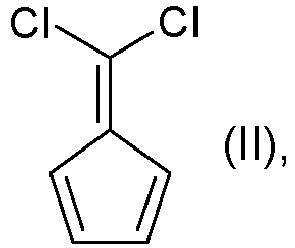
- 6,6-dichlorofulvene of formula II is known and disclosed e.g. in Chemical Communications, 20 , 1293 (1971).
- 6,6-dichlorofulvene of formula II can be, for example, prepared by reacting cyclopentadiene with CCl 4 in the presence of a metal catalyst selected from ruthenium, copper, iron, palladium and rhodium complexes to the compound of formula X and reacting the compound of formula X with a base in an appropriate solvent to 6,6-dichlorofulvene.
- 1,4-benzoquinone is known and commercially available.
- Finely powdered compound of formula VI (26.25 g, 0.1005 mol) was added within 10 min to an intensively stirred 96% sulphuric acid (80 ml) at ambient temperature (cooling with a water bath).
- the reaction mixture was stirred at the same temperature for 30 min and then poured slowly into a mixture of ice (200 g), ice-cold water (200 ml) and methyl-tert-butylether (250 ml) under vigorous stirring.
- the organic phase was separated and the water phase was extracted with methyl-tert-butylether (70 ml).
- the combined extract was washed with 3% solution of sodium bicarbonate (150 ml) and then with brine (100 ml).
- the reaction mixture was treated successively with a solution of the compound of formula IX (24.5 g, 0.126 mol) in xylene (mixture of isomers) (57 g) and with MeSO 3 H (1.15 g, 0.012 mol) at 25 °C in single portions.
- the reaction mixture was heated to 110 °C under a slight vacuum (300 - 400 mbar) within 75 min and stirred at 110 °C for additional 2 hours, in which ca. 75 g of a distillate were removed from the reaction mixture.
- the mixture was cooled down to 60 - 70 °C, treated successively with water (13 g) and 30% ( w / w ) aqueous NaOH solution (22 g) and stirred at 60 - 70 °C for 30 min. More xylene (mixture of isomers) (40 g) and water (5 g) were added to the mixture at 60 - 70 °C.
- the organic layer was separated at 75 - 80 °C and the aqueous layer was re-extracted with xylene (mixture of isomers) (15 g).
- the combined organic layers were heated to 90 °C at 230 mbar to remove ca. 68 g of a distillate.
- the mixture was treated with methycyclohexane (57 g) at 85 - 90 °C, inoculated and cooled down to 5 °C within 8 h.
- the resulting precipitate was filtered off, washed with methycyclohexane and dried in vacuum. Yield 42.2 g (87%, >98% purity as determined by quae 1 H NMR and LC analyses).
Landscapes
- Chemical & Material Sciences (AREA)
- Organic Chemistry (AREA)
- Health & Medical Sciences (AREA)
- Chemical Kinetics & Catalysis (AREA)
- Life Sciences & Earth Sciences (AREA)
- Public Health (AREA)
- General Chemical & Material Sciences (AREA)
- Medicinal Chemistry (AREA)
- Nuclear Medicine, Radiotherapy & Molecular Imaging (AREA)
- Pharmacology & Pharmacy (AREA)
- Communicable Diseases (AREA)
- Animal Behavior & Ethology (AREA)
- General Health & Medical Sciences (AREA)
- Oncology (AREA)
- Veterinary Medicine (AREA)
- Organic Low-Molecular-Weight Compounds And Preparation Thereof (AREA)
- Plural Heterocyclic Compounds (AREA)
- Low-Molecular Organic Synthesis Reactions Using Catalysts (AREA)
- Pharmaceuticals Containing Other Organic And Inorganic Compounds (AREA)
- Agricultural Chemicals And Associated Chemicals (AREA)
- Nitrogen And Oxygen Or Sulfur-Condensed Heterocyclic Ring Systems (AREA)
Description
- The present invention relates to a process for the preparation of 3-difluoromethyl-1-methyl-1 H-pyrazole-4-carboxylic acid (9-dichloromethylene-1,2,3,4-tetrahydro-1,4-methanonaphthalen-5-yl)-amide.
- The compound 3-difluoromethyl-1-methyl-1 H-pyrazole-4-carboxylic acid (9-dichloromethylene-1,2,3,4-tetrahydro-1,4-methano-naphthalen-5-yl)-amide and its microbicidal properties is described, for example, in
WO 2007/048556 . - According to
WO 2011/015416 , 3-difluoromethyl-1-methyl-1 H-pyrazole-4-carboxylic acid (9-dichloromethylene-1,2,3,4-tetrahydro-1,4-methano-naphthalen-5-yl)-amide can be prepared by - a) reacting the compound of formula II


- b) hydrogenating the compound of formula IV in the presence of a metal catalyst to the compound of formula V

- c) reducing the compound of formula V in the presence of a reducing agent to the compound of formula VI

- d) dehydrating the compound of formula VI in the presence of an acid to the compound of formula VII

- e) reacting the compound of formula VII with hydroxylamine to the compound of formula VIII

- f) acylating the oxime oxygen of the compound of formula VIII in the presence of a solvent and an acid chloride (for example acetyl chloride, pivaloyl chloride, benzoyl chloride or chloroacetyl chloride) or acyl anhydride like acetic anhydride or pivaloyl anhydride and finally reacting the so obtained product with the compound of formula IX

- Surprisingly, it has now been found that the yield of the acylation reaction (step f) can be significantly improved by the selection of a specific acylation reagent.
- Thus, according to the present invention, there is provided a process for the preparation of the compound of formula I


R1-C(X)-Cl (XI),
wherein X is oxygen or sulfur;
R1 is chloro if X is oxygen or sulfur; or
R1 is C1-C6alkoxy, CH3-C(=CH2)-O-, phenoxy or trichloromethoxy if X is oxygen; and - a) if R1 is chloro and the compound of formula XI was added to the compound of formula VIII; reacting the so obtained product of formula Xlla


- b) if R1 is chloro and the compound of formula VIII was added to the compound of formula XI; or is C1-C6alkoxy, CH3-C(=CH2)-O-, phenoxy or trichloromethoxy if X is oxygen;
reacting the so obtained product of formula XII
R1 is chloro if X is oxygen or sulfur; or
R1 is C1-C6alkoxy, CH3-C(=CH2)-O-, phenoxy or trichloromethoxy if X is oxygen; with the compound of formula IX
- The alkoxy groups occurring in the definitions of the substituents can be straight-chain or branched and are, for example, methoxy, ethoxy, n-propoxy, n-butoxy, n-pentoxy, n-hexyloxy, iso-propoxy, n-butoxy, sec-butoxy, iso-butoxy or tert-butoxy.
- A preferred embodiment of the process according to the invention comprises acylating the oxime oxygen of the compound of formula VIII

R1-C(X)-Cl (XI),
wherein X is oxygen; is C1-C6alkoxy, CH3-C(=CH2)-O-, phenoxy or trichloromethoxy; preferably C1-C6alkoxy, phenoxy or trichloromethoxy; and reacting the so obtained product of formula XII

- Preferred acylating agents of formula XI are those, wherein is methoxy, ethoxy, isopropoxy, phenoxy or isopropenyloxy and X is oxygen, more preferably R1 is methoxy, ethoxy, isopropoxy or phenoxy and X is oxygen, in particular R1 is ethoxy.
- The compounds of formula XII are novel, were especially developed for the process according to the invention and therefore constitute a further object of the invention. Preferred compounds formula XII are those, wherein R1 is methoxy, ethoxy, isopropoxy, phenoxy or isopropenyloxy and X is oxygen, more preferably R1 is methoxy, ethoxy, isopropoxy or phenoxy and X is oxygen, in particular R1 is ethoxy.
- The process according to the invention consists of two chemical transformations: reaction of the oxime oxygen with the acylating agent followed by in situ transformation of the acylated derivative to the compound of formula I by reaction with 1.0 to 1.3 equivalents preferably 1.05 equivalents of the compound of formula IX advantageously in the presence of an acid (preferably HCl, H2SO4 or CH3SO3H, most preferred CH3SO3H). The addition of the acid accelerates the formation of the compound of formula I and therefore significantly reduces the reaction time.
- The acylation is advantageously performed in the presence of a base. The base is used in an amount of 1 to 1.5 equivalents with respect to the compound of formula VIII, in particular in an amount of 1.2 equivalents. Suitable bases for the acylation are pyridine or tertiary amines like triethylamine. Triethylamine is especially preferred as a base. Preferred reaction temperatures for the process are from 60 to 150°C, in particular 85-125 °C, most preferably 95 to 115 °C. In another preferred embodiment of the present invention the reaction is performed at a temperature from 130 to 135°C with an acylation agent of the formula XI wherein R1 is ethoxy and X is oxygen.
- Suitable solvents are toluene, dioxane, tetrahydrofurane, xylene, chlorobenzene or acetonitrile. Most preferred solvent is xylene.
- If the acylation agent is phosgen or thiophosgen, the structure of the compound obtained from the reaction of the oxime of formula VIII with phosgen or thiophosgen depends on the order of addition of the reactants.
- If the compound of formula XI, wherein R1 is chloro and X is oxygen or sulfur is added to the compound of formula VIII; the compound of formula XIIa

- If the compound of formula VIII is added to the compound of formula XI wherein R1 is chloro and X is oxygen or sulfur; the compound of formula XII

- For compounds of formula XI, wherein is C1-C6alkoxy, CH3-C(=CH2)-O-, phenoxy or trichloromethoxy if X is oxygen; the compound of formula XII was obtained independently from the order of addition of the reactants.
- The compounds of formula Xlla are novel, were especially developed for the process according to the invention and therefore constitute a further object of the invention. In a preferred compound of formula XII, X is oxygen.
- It was also found that the addition of CH3SO3H accelerates the formation of the compound of formula I and therefore significantly reduces the reaction time.
- The compound of formula IX is known and commercially available. The compound is disclosed, for example, in
US-5,093,347 . - The compound of formula VIII can be prepared according to
WO 2011/015416 as follows: -

- To a stirred suspension of AlCl3 (60.0 g, 0.45 mol) in toluene (200 g) was added tetrahydrofurane (46.0 g, 0.64 mol) dropwise at 20-25 °C under inert atmosphere (nitrogen). The clear solution of catalyst was stored at ambient temperature.
- A glass reactor was loaded with a cold solution of 6,6-dichlorofulvene in toluene (858 g, 0.479 mol, 8.2%) and 1,4-benzoquinone (56.9 g, 0.526 mol). The reactor content was cooled to -9 °C while being stirred under inert atmosphere (nitrogen). Catalyst solution (40 g, contains 7.8 g AlCl3) was added into the reactor withing 30 min at -9 °C, then an additional amount of catalyst solution (10 g, contains 2.0 g AlCl3) was added withing 60 min. After stirring for 3.5 hours at -9 °C, the reaction mixture was quenched by dropwise addition of ethanol (70 ml) at -9 °C. The reaction mass was stirred at -9 °C for 30 min and filtered. The product was washed with cold ethano/toluene mixture (2:1, 360 ml) and dried in vacuum.
Yield 102 g (83%).
1H NMR (CDCl3, 400 MHz) δ 3.40 (m, 2H), 4.09 (m, 2H), 6.21 (t, J = 2.0 Hz, 2H), 6.66 (s, 2H). 13C NMR (CDCl3, 75 MHz) δ 47.5, 49.6, 103.4, 134.8, 142.6, 147.6, 196.6. - 6,6-dichlorofulvene of formula II is known and disclosed e.g. in Chemical Communications, 20, 1293 (1971). 6,6-dichlorofulvene of formula II can be, for example, prepared by reacting cyclopentadiene with CCl4 in the presence of a metal catalyst selected from ruthenium, copper, iron, palladium and rhodium complexes to the compound of formula X

- 1,4-benzoquinone is known and commercially available.
-

- 11 two-neck flask was charged with compound of formula IV (36.6 g, 0.143 mol) and 5%-Rh/C (3.0 g, 0.42 mol% Rh, water content 58.0%). The flask was evacuated and refilled with nitrogen two times followed by addition of tetrahydrofurane (600 ml). Then the reaction mixture was evacuated until tetrahydrofurane boils and refilled with hydrogen from a balloon two times. Consumption of hydrogen was monitored using a bubble counter. Intensive stirring of the reaction mixture is essential for fast hydrogenation. The conversion was monitored by 1H NMR and was complete after 7 hours. At this time consumption of hydrogen became very slow. The reaction mixture was filtered through a glass frit filter. The filter cake, which contained undissolved product, was washed with tetrahydrofurane few times to dissolve it. The combined filtrate was evaporated and the remaining crystalline residue was stirred with methanol (150 ml) for about 15 min at ambient temperature, then cooled in an ice bath, stirred for additional 15 min, filtered, washed with methanol and dried in air. Yield 32.7 g (88%).
1H NMR (CDCl3, 400 MHz) δ 1.47-1.53 (m, 2H), 1.72- 1.79 (m, 2H), 2.51 -2.60 (m, 2H), 2.82 - 2.92 (m, 2H), 3.20 (m, 2H), 3.37 (m, 2H). 13C NMR (CDCl3, 100 MHz) δ 23.7, 38.8, 43.9, 50.5, 106.9, 144.0, 207.8. -

- A mixture of the compound of formula V (47.3 g, 0.183 mol), methanol (300 ml) and tetrahydrofurane (300 ml) was cooled to 0-5 °C in an ice bath. Sodium borohydride (2.17 g, 0.0573 mol) was added in portions during 1.5 hours. The reaction mixture was allowed to warm to ambient temperature and the solvent was removed by rotary evaporation. The residue was partitioned between methyl-tert-butylether (1000 ml) and 0.5N HCl (300 ml). The organic phase was separated, filtered and evaporated. The residue was dried in vacuum. Yield 46.9 g (98%, 9:1 mixture of isomers at the hydroxyl).
1H NMR (CDCl3, 400 MHz) δ (major isomer) 1.58 - 1.72 (m, 3H), 1.84 (bs, 1H), 2.04 (m, 2H), 2.20 - 2.35 (m, 2H), 2.48 - 2.55 (m, 1 H), 2.74 (m, 2H), 3.12 (m, 1 H), 3.28 (m, 1 H), 4.41 (m, 1 H). -

- Finely powdered compound of formula VI (26.25 g, 0.1005 mol) was added within 10 min to an intensively stirred 96% sulphuric acid (80 ml) at ambient temperature (cooling with a water bath). The reaction mixture was stirred at the same temperature for 30 min and then poured slowly into a mixture of ice (200 g), ice-cold water (200 ml) and methyl-tert-butylether (250 ml) under vigorous stirring. The organic phase was separated and the water phase was extracted with methyl-tert-butylether (70 ml). The combined extract was washed with 3% solution of sodium bicarbonate (150 ml) and then with brine (100 ml). The organic phase was separated and the solvent was removed by rotary evaporation. The residue was extracted into boiling hexane (100 + 10 + 10 ml). The hot solution was filtered through a glass frit filter (slight evacuation) and left for crystallization at ambient temperature. After 1 hour the crystallization mixture was further cooled to 0 °C (ice bath) and kept at this temperature for 30 min. The large crystals formed were filtered, washed with hexane (30 ml) and dried in air. The mother liquor was concentrated to 15 ml volume and additional crop was collected. Yield 20.7 g (85%).
1H NMR (CDCl3, 400 MHz) δ (major isomer) 1.23 - 1.32 (m, 2H), 1.88 - 2.14 (m, 4H), 2.23 - 2.30 (m, 1 H), 2.35 - 2.57 (m, 3H), 3.49 (m, 1 H), 3.87 (m, 1 H). 13C NMR (CDCl3, 100 MHz) δ 23.3, 24.2, 25.0, 25.7, 37.4, 42.2, 49.6, 102.3, 140.7, 149.2, 167.1, 193.7. -

- A mixture of compound of formula VII (24.6 g, 0.101 mol), hydroxylamine hydrochloride (8.43 g, 0.121 mol), pyridine (12.0 g, 0.152 mol) and absolute ethanol was stirred at ambient temperature for 4 hours. The reaction mixture was partitioned between ethyl acetate (500 ml) and water (500 ml). The organic phase was separated, washed two times with water (500 ml) and evaporated. The remaining crystalline residue was dried in vacuum. Yield 25.6 g (99%). 1H NMR (DMSO-d6, 400 MHz) δ (major isomer) 1.17 (m, 1H), 1.32 (m, 1H), 1.67 (m, 2H), 1.77 - 1.92 (m, 2H), 2.14 - 2.31 (m, 3H), 2.50 (m, 1 H), 3.36 (d, J = 3.4 Hz, 1 H), 3.64 (d, J = 3.3 Hz, 1 H), 10.70 (s, 1 H).
-

- A mixture of the compound of formula VIII (104.2 g, 0.40 mol) and triethylamine (44.7 g, 0.44 mol) in toluene (400 g) was treated with a solution of ethyl chloroformate (53.2 g, 0.49 mol) in toluene (200 g) at 25 °C within 60 min and stirred at 25 °C for additional 50 min. The reaction mixture was treated with water (150 g). The organic layer was separated, washed with water (50 g) and brine (30 g) and evaporated to dryness. The remaining yellow oil was dissolved in hot ethanol (700 g) and slowly cooled down to 5 °C. The resulting precipitate was filtered off, washed with cold ethanol and dried in vacuum. Yield 90.1 g (68%, 99+% purity as determined by quantitative 1H NMR and LC analyses).
- The mother liquor was evaporated to obtain 43 g of the material which crystallized again from hot ethanol (150 g). The precipitate was filtered off, washed with cold ethanol and dried in vacuum to yield additional 25.7 g (19%, 99+% purity as determined by quantitative 1H NMR and LC analyses) of the desired product Xllb. M. p. 110 °C.
1H NMR (CDCl3, 400 MHz) δ (major isomer) 1.24 - 1.38 (m, 2H), 1.36 (t, J = 7.0 Hz, 3H), 1.77 - 1.85 (m, 2H), 1.87 - 2.01 (m, 2H), 2.24 (td, J = 6.8 and 18.4 Hz, 1 H), 2.35 - 2.51 (m, 2H), 2.75 (td, J = 5.8 and 17.2 Hz, 1 H), 3.41 (dd, J = 0.8 and 3.3 Hz, 1 H), 3.98 (d, J = 3.0 Hz, 1H), 4.31 (q, J = 7.1 Hz, 2H).
13C NMR (CDCl3, 100 MHz) δ (major isomer) 14.29, 21.01, 23.46, 23.67, 25.89, 26.08, 43.39, 49.29, 64.52, 101.49, 134.21, 149.42, 153.94, 156.89, 157.45. -

- A mixture of the compound of formula VIII (10.43 g, 0.040 mol) and triethylamine (4.47 g, 0.044 mol) in toluene (50 g) was treated with a solution of methyl chloroformate (4.20 g, 0.044 mol) in toluene (10 g) at 25 °C within 60 min and stirred at 25 °C for additional 90 min. The reaction mixture was treated with water (60 g). The organic layer was separated and the aqueous layer was extracted with toluene (30 g). The combined organic layers were washed with water (50 g) and evaporated. The remaining yellow solid was dried in vacuum. Yield 5.80 g (41%, ca. 90% purity as determined by LC analysis).
The crude material (5.50 g) was recrystallized from hot methanol (90 g) for analytical purposes. The precipitate was filtered off, washed twice with cold methanol and dried in vacuum. Yield 4.70 g (95%, 99+% purity as determined by quantitative 1H NMR and LC analyses). M. p. 159 °C.
1H NMR (CDCl3, 400 MHz) δ (major isomer) 1.23 - 1.37 (m, 2H), 1.77 - 1.85 (m, 2H), 1.86 - 2.01 (m, 2H), 2.24 (td, J = 6.8 and 18.4 Hz, 1 H), 2.37 - 2.50 (m, 2H), 2.75 (td, J = 5.8 and 17.2 Hz, 1H), 3.42 (dd, J = 1.3 and 3.3 Hz, 1H), 3.88 (s, 3H), 3.98 (d, J = 3.0 Hz, 1H).
13C NMR (CDCl3, 100 MHz) δ (major isomer) 21.01, 23.46, 23.64, 25.89, 26.10, 43.39, 49.31, 55.15, 101.56, 134.16, 149.40, 154.54, 157.08, 157.61. -

- A mixture of the compound of formula VIII (10.43 g, 0.040 mol) and triethylamine (4.47 g, 0.044 mol) in toluene (50 g) was treated with a 30% (w/w) solution of isopropyl chloroformate in toluene (18.0 g, 0.044 mol) at 25 °C within 60 min and stirred at 25 °C for additional 90 min. The reaction mixture was treated with water (40 g). The organic layer was separated and evaporated to dryness. The remaining yellow solid (13.8 g) was dissolved in hot isopropanol (150 g) and slowly cooled down to 5 °C. The resulting precipitate was filtered off, washed with cold isopropanol and dried in vacuum. Yield 11.3 g (82%, 99+% purity as determined by quantitative 1H NMR and LC analyses).
M. p. 135 °C.
1H NMR (CDCl3, 400 MHz) δ (major isomer) 1.25 - 1.41 (m, 2H), 1.37 (d, J = 7.3 Hz, 3H), 1.39 (d, J = 7.1 Hz, 3H), 1.78 - 1.87 (m, 2H), 1.89 - 2.03 (m, 2H), 2.25 (td, J = 6.8 Hz, 11.6 Hz, 1 H), 2.37 - 2.54 (m, 2H), 2.77 (td, J = 5.8 Hz, 17.2 Hz, 1 H), 3.41 (dd, J = 1.3 Hz, 3.0 Hz, 1 H), 3.99 (d, J = 3.0 Hz, 1 H), 5.00 (sept, J = 6.3 Hz, 1 H).
13C NMR (CDCl3, 100 MHz) δ (major isomer) 21.04, 21.77 (2C), 23.46, 23.73, 25.91, 26.09, 43.39, 49.29, 72.68, 101.48, 134.30, 149.45, 153.51, 156.71, 157.31. -

- A mixture of the compound of formula VIII (10.43 g, 0.040 mol) and triethylamine (4.47 g, 0.044 mol) in toluene (50 g) was treated with a solution of phenyl chloroformate (7.10 g, 0.45 mol) in toluene (10 g) at 25 °C within 60 min and stirred at 25 °C for additional 4 h. The reaction mixture was treated with water (30 g). The organic layer was separated and the aqueous layer was re-extracted with toluene (50 g). The combined organic layers were evaporated to dryness. The remaining yellow solid (15.5 g) was dissolved in hot isopropanol (105 g) and slowly cooled down to 5 °C. The resulting precipitate was filtered off, washed with cold isopropanol and dried in vacuum. Yield 12.9 g (85%, 99+% purity as determined by quantitative 1H NMR and LC analyses).
M. p. 143 °C.
1H NMR (CDCl3, 400 MHz) δ (major isomer) 1.27 - 1.41 (m, 2H), 1.82 - 1.89 (m, 2H), 1.92 - 2.04 (m, 2H), 2.28 (td, J = 6.8 and 18.4 Hz, 1 H), 2.44 (td, J = 5.3 and 18.4 Hz, 1 H), 2.56 (td, J = 7.3 and 17.2 Hz, 1H), 2.84 (td, J = 5.8 and 17.1 Hz, 1H), 3.46 (dd, J = 1.0 and 3.5 Hz, 1 H), 4.02 (d, J = 3.0 Hz, 1 H), 7.23 - 7.30 (m, 3H), 7.36 - 7.45 (m, 2H).
13C NMR (CDCl3, 100 MHz) δ (major isomer) 21.04, 23.50, 23.80, 25.90, 26.10, 43.42, 49.36, 101.68, 120.95 (2C), 126.11, 129.52 (2C), 134.05, 149.37, 151.05, 152.24, 157.65, 158.25. -

- A mixture of the compound of formula VIII (7.8 g, 0.030 mol) and triethylamine (3.4 g, 0.034 mol) in toluene (50 g) was treated with isopropenyl chloroformate (4.0 g, 0.033 mol) at 25 °C within 60 min and stirred at 25 °C for additional 100 min. The resulting precipitate was filtered off and washed with toluene (2 x 10 g). The combined washings were evaporated to dryness and the solid was dried in vacuum. Yield 10.3 g (99%, 98+% purity as determined by quantitative 1H NMR and LC analyses).
M. p. 155 °C.
1H NMR (CDCl3, 400 MHz) δ (major isomer) 1.24 - 1.38 (m, 2H), 1.78 - 1.86 (m, 2H), 1.88 - 2.04 (m, 2H), 2.02 (s, 3H), 2.25 (td, J = 6.6 and 18.5 Hz, 1 H), 2.35 - 2.54 (m, 2H), 2.78 (td, J = 5.8 and 17.2 Hz, 1H), 3.42 (dd, J = 0.8 and 3.3 Hz, 1H), 3.98 (d, J = 3.0 Hz, 1H), 4.75 (q, J = 0.8 Hz, 1 H), 4.87 (q, J = 1.5 Hz, 1 H).
13C NMR (CDCl3, 100 MHz) δ (major isomer) 19.12, 21.01, 23.46, 23.71, 25.88, 26.08, 43.37, 49.32, 101.58, 102.34, 134.05, 149.37, 151.54, 152.91, 157.40, 157.95. -

- A mixture of the compound of formula VIII (31.2 g, 0.120 mol) and triethylamine (13.4 g, 0.132 mol) in xylene (mixture of isomers) (120 g) was treated with ethyl chloroformate (15.9 g, 0.147 mol) at 25 °C within 30 min and stirred at 25 °C for additional 30 min. The reaction mixture was treated successively with a solution of the compound of formula IX (24.5 g, 0.126 mol) in xylene (mixture of isomers) (57 g) and with MeSO3H (1.15 g, 0.012 mol) at 25 °C in single portions. The reaction mixture was heated to 110 °C under a slight vacuum (300 - 400 mbar) within 75 min and stirred at 110 °C for additional 2 hours, in which ca. 75 g of a distillate were removed from the reaction mixture. The mixture was cooled down to 60 - 70 °C, treated successively with water (13 g) and 30% (w/w) aqueous NaOH solution (22 g) and stirred at 60 - 70 °C for 30 min. More xylene (mixture of isomers) (40 g) and water (5 g) were added to the mixture at 60 - 70 °C. The organic layer was separated at 75 - 80 °C and the aqueous layer was re-extracted with xylene (mixture of isomers) (15 g). The combined organic layers were heated to 90 °C at 230 mbar to remove ca. 68 g of a distillate. The mixture was treated with methycyclohexane (57 g) at 85 - 90 °C, inoculated and cooled down to 5 °C within 8 h. The resulting precipitate was filtered off, washed with methycyclohexane and dried in vacuum. Yield 42.2 g (87%, >98% purity as determined by quae 1H NMR and LC analyses).
1H NMR (CDCl3, 400 MHz) δ 1.37 (m, 1H), 1.49 (m, 1H), 2.09 (m, 2H), 3.90 (s, 3H), 3.94 (m, 1 H), 4.07 (m, 1 H), 6.91 (t, JH-F = 54.2 Hz, 1 H), 7.02 (d, J = 7.3 Hz, 1 H), 7.16 (t, J = 7.8 Hz, 1 H), 7.79 (d, J = 8.2 Hz, 1 H), 8.01 (s, 1 H), 8.15 (m, 1 H). The compound 3-difluoromethyl-1-methyl-1 H-pyrazole-4-carboxylic acid [2-dichloromethylene-1-hydroxy-3-(2-hydroxy-ethyl)-indan-4-yl]-amide was not found in the final product.
Claims (8)
- A process for the preparation of the compound of formula I

acylating the oxime oxygen of the compound of formula VIII
R1-C(X)-Cl (XI),
wherein X is oxygen or sulfur;
R1 is chloro if X is oxygen or sulfur; or
R1 is C1-C6alkoxy, CH3-C(=CH2)-O-, phenoxy or trichloromethoxy if X is oxygen;
anda) if R1 is chloro and the compound of formula XI was added to the compound of formula VIII; reacting the so obtained product of formula Xlla
with the compound of formula IX b) if R1 is chloro and the compound of formula VIII was added to the compound of formula XI; or R1 is C1-C6alkoxy, CH3-C(=CH2)-O-, phenoxy or trichloromethoxy if X is oxygen;
reacting the so obtained product of formula XII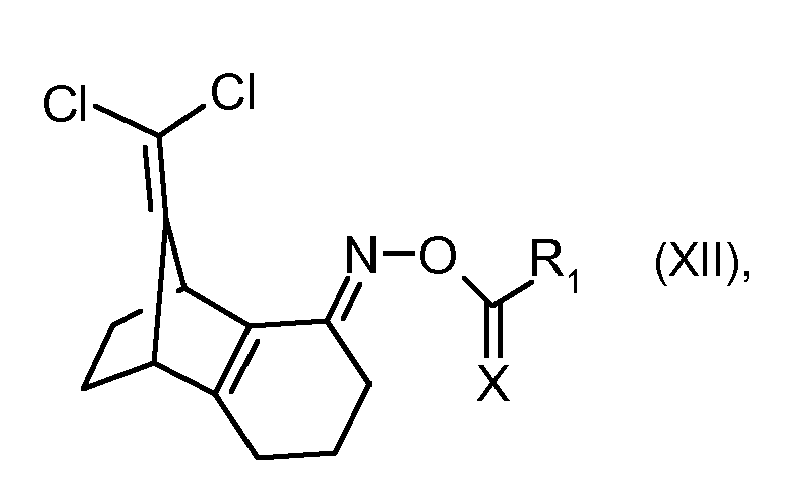
R1 is chloro if X is oxygen or sulfur; or
R1 is C1-C6alkoxy, CH3-C(=CH2)-O-, phenoxy or trichloromethoxy if X is oxygen; with the compound of formula IX
- A process according to claim 1, wherein the acylating agent is selected from a compound of formula XI, wherein R1 is methoxy, ethoxy, isopropoxy, isopropenyloxy or phenoxy and X is oxygen.
- A process according to claim 2, wherein the acylating agent is ethyl-chloroformate.
- A process according to claim 1, wherein the acylated agent is reacted with the compound of formula IX in the presence of an acid.
- A process according to claim 1, wherein the acylated agent is reacted with the compound of formula IX in the presence of CH3SO3H.
- A process according to claim 1, wherein the acylating agent is ethyl-chloroformate and the acylated derivative is reacted with the compound of formula IX in the presence of CH3SO3H.
- A compound of of formula XII

R1 is chloro if X is oxygen or sulfur; or
R1 is C1-C6alkoxy, CH3-C(=CH2)-O-, phenoxy or trichloromethoxy if X is oxygen. - A compound of formula Xlla

Priority Applications (3)
| Application Number | Priority Date | Filing Date | Title |
|---|---|---|---|
| PL12700859T PL2668166T3 (en) | 2011-01-25 | 2012-01-25 | Process for the preparation of a pyrazole carboxylic acid amide |
| EP12700859.7A EP2668166B1 (en) | 2011-01-25 | 2012-01-25 | Process for the preparation of a pyrazole carboxylic acid amide |
| HRP20150658TT HRP20150658T1 (en) | 2011-01-25 | 2012-01-25 | Process for the preparation of pyrazole carboxylic acid amide |
Applications Claiming Priority (3)
| Application Number | Priority Date | Filing Date | Title |
|---|---|---|---|
| EP11151965 | 2011-01-25 | ||
| EP12700859.7A EP2668166B1 (en) | 2011-01-25 | 2012-01-25 | Process for the preparation of a pyrazole carboxylic acid amide |
| PCT/EP2012/051075 WO2012101139A1 (en) | 2011-01-25 | 2012-01-25 | Process for the preparation of pyrazole carboxylic acid amide |
Publications (2)
| Publication Number | Publication Date |
|---|---|
| EP2668166A1 EP2668166A1 (en) | 2013-12-04 |
| EP2668166B1 true EP2668166B1 (en) | 2015-05-13 |
Family
ID=45524566
Family Applications (1)
| Application Number | Title | Priority Date | Filing Date |
|---|---|---|---|
| EP12700859.7A Active EP2668166B1 (en) | 2011-01-25 | 2012-01-25 | Process for the preparation of a pyrazole carboxylic acid amide |
Country Status (19)
| Country | Link |
|---|---|
| US (1) | US8895757B2 (en) |
| EP (1) | EP2668166B1 (en) |
| JP (2) | JP6133788B2 (en) |
| KR (1) | KR101851781B1 (en) |
| CN (1) | CN103339113B (en) |
| AR (1) | AR084915A1 (en) |
| AU (1) | AU2012210547B2 (en) |
| BR (1) | BR112013018533A2 (en) |
| CA (1) | CA2824730C (en) |
| CO (1) | CO6751253A2 (en) |
| ES (1) | ES2540211T3 (en) |
| HR (1) | HRP20150658T1 (en) |
| IL (1) | IL227317A (en) |
| MX (1) | MX352697B (en) |
| PL (1) | PL2668166T3 (en) |
| PT (1) | PT2668166E (en) |
| TW (1) | TWI534126B (en) |
| UY (1) | UY33879A (en) |
| WO (1) | WO2012101139A1 (en) |
Families Citing this family (4)
| Publication number | Priority date | Publication date | Assignee | Title |
|---|---|---|---|---|
| TWI534126B (en) * | 2011-01-25 | 2016-05-21 | 先正達合夥公司 | Process for the preparation of pyrazole carboxylic acid amides |
| TWI510472B (en) | 2012-02-15 | 2015-12-01 | Syngenta Participations Ag | Process for the stereoselective preparation of a pyrazole carboxamide |
| CN110446579B (en) | 2017-03-31 | 2022-03-29 | 日本精工株式会社 | Laser welding device and method, laser processing device and method, bearing, machine, and vehicle manufacturing method |
| AU2023309261A1 (en) | 2022-07-22 | 2024-12-12 | Syngenta Crop Protection Ag | Solid form of a heterocyclic amide derivative |
Family Cites Families (10)
| Publication number | Priority date | Publication date | Assignee | Title |
|---|---|---|---|---|
| JPS58194853A (en) * | 1982-05-11 | 1983-11-12 | Showa Denko Kk | Cyclohexane-acetyloxime derivative |
| US5093347A (en) | 1991-01-28 | 1992-03-03 | Monsanto Company | 3-difluoromethylpyrazolecarboxamide fungicides, compositions and use |
| ATE489372T1 (en) * | 2005-10-25 | 2010-12-15 | Syngenta Participations Ag | HETEROCYCLIC AMIDE DERIVATIVES SUITABLE AS MICROBIOCIDES |
| MX2010011790A (en) * | 2008-05-14 | 2010-11-25 | Syngenta Ltd | Process for the preparation of amides. |
| BRPI0923527A2 (en) * | 2008-12-24 | 2016-08-09 | Syngenta Ltd | fungicide preparation methods |
| EA019475B1 (en) | 2009-08-06 | 2014-03-31 | Зингента Партисипейшнс Аг | Process for the preparation of pyrazole carboxylic acid amides |
| CN102844306B (en) * | 2010-04-20 | 2015-01-14 | 先正达参股股份有限公司 | Process for preparation of pyrazole carboxylic acid amide |
| WO2011131545A1 (en) * | 2010-04-20 | 2011-10-27 | Syngenta Participations Ag | Process for the preparation of pyrazole carboxylic acid amides |
| BR112012026456B1 (en) * | 2010-04-20 | 2017-06-27 | Syngenta Participations Ag | PROCESS FOR THE PREPARATION OF CARBOXYLIC PYRAZOLE ACID AMIDES |
| TWI534126B (en) * | 2011-01-25 | 2016-05-21 | 先正達合夥公司 | Process for the preparation of pyrazole carboxylic acid amides |
-
2012
- 2012-01-20 TW TW101102374A patent/TWI534126B/en active
- 2012-01-23 AR ARP120100211A patent/AR084915A1/en active IP Right Grant
- 2012-01-25 HR HRP20150658TT patent/HRP20150658T1/en unknown
- 2012-01-25 JP JP2013549849A patent/JP6133788B2/en active Active
- 2012-01-25 PL PL12700859T patent/PL2668166T3/en unknown
- 2012-01-25 PT PT127008597T patent/PT2668166E/en unknown
- 2012-01-25 AU AU2012210547A patent/AU2012210547B2/en active Active
- 2012-01-25 KR KR1020137022399A patent/KR101851781B1/en active Active
- 2012-01-25 MX MX2013007914A patent/MX352697B/en active IP Right Grant
- 2012-01-25 ES ES12700859.7T patent/ES2540211T3/en active Active
- 2012-01-25 EP EP12700859.7A patent/EP2668166B1/en active Active
- 2012-01-25 CN CN201280006384.7A patent/CN103339113B/en active Active
- 2012-01-25 WO PCT/EP2012/051075 patent/WO2012101139A1/en not_active Ceased
- 2012-01-25 BR BR112013018533A patent/BR112013018533A2/en active IP Right Grant
- 2012-01-25 UY UY0001033879A patent/UY33879A/en active IP Right Grant
- 2012-01-25 US US13/981,913 patent/US8895757B2/en active Active
- 2012-01-25 CA CA2824730A patent/CA2824730C/en active Active
-
2013
- 2013-07-04 IL IL227317A patent/IL227317A/en active IP Right Grant
- 2013-07-23 CO CO13173578A patent/CO6751253A2/en unknown
-
2016
- 2016-11-07 JP JP2016217091A patent/JP6419131B2/en active Active
Also Published As
| Publication number | Publication date |
|---|---|
| TW201245114A (en) | 2012-11-16 |
| UY33879A (en) | 2012-08-31 |
| AU2012210547A1 (en) | 2013-08-01 |
| CA2824730C (en) | 2018-10-23 |
| MX352697B (en) | 2017-12-05 |
| IL227317A (en) | 2014-11-30 |
| HRP20150658T1 (en) | 2015-07-31 |
| JP2017071614A (en) | 2017-04-13 |
| TWI534126B (en) | 2016-05-21 |
| ES2540211T3 (en) | 2015-07-09 |
| PL2668166T3 (en) | 2015-09-30 |
| PT2668166E (en) | 2015-08-27 |
| MX2013007914A (en) | 2013-08-29 |
| CO6751253A2 (en) | 2013-09-16 |
| US20130310592A1 (en) | 2013-11-21 |
| IL227317A0 (en) | 2013-09-30 |
| AU2012210547B2 (en) | 2016-04-14 |
| US8895757B2 (en) | 2014-11-25 |
| EP2668166A1 (en) | 2013-12-04 |
| CN103339113A (en) | 2013-10-02 |
| KR20140019333A (en) | 2014-02-14 |
| CN103339113B (en) | 2015-07-22 |
| JP6133788B2 (en) | 2017-05-24 |
| WO2012101139A1 (en) | 2012-08-02 |
| CA2824730A1 (en) | 2012-08-02 |
| BR112013018533A2 (en) | 2016-07-12 |
| KR101851781B1 (en) | 2018-04-24 |
| JP6419131B2 (en) | 2018-11-07 |
| JP2014504596A (en) | 2014-02-24 |
| AR084915A1 (en) | 2013-07-10 |
Similar Documents
| Publication | Publication Date | Title |
|---|---|---|
| EP2819997B1 (en) | Process for the preparation of phenyl substituted 3 - difluoromethyl - 1 -methyl - 1h - pyrazole - 4 - carboxylic acid n-methoxy- [1 -methyl- 2 - phenylethyl]amides | |
| EP2462108B1 (en) | Process for the preparation of pyrazole carboxylic acid amides | |
| JP6419131B2 (en) | Method for producing pyrazole carboxylic acid amide | |
| EP2134673A1 (en) | Improved process for preparing o-chloromethylphenylglyoxylic esters, improved process for preparing (e)-2-(2-chloromethylphenyl)-2-alkoximinoacetic esters, and novel intermediates for their preparation | |
| US20200277244A1 (en) | New process for the production of beta-springene | |
| CN113429416B (en) | Synthesis method of dihydrofuropyrrolone derivative with spirotricyclic framework | |
| BR112013018533B1 (en) | PROCESS FOR PREPARATION OF CARBOXYLIC ACID PIRAZOL AMIDE | |
| FR2735470A1 (en) | New nitro- ketone and nitro- oxime cpds. | |
| PL197975B1 (en) | New derivative of di-substituted carbazole and method for its manufacture |
Legal Events
| Date | Code | Title | Description |
|---|---|---|---|
| PUAI | Public reference made under article 153(3) epc to a published international application that has entered the european phase |
Free format text: ORIGINAL CODE: 0009012 |
|
| 17P | Request for examination filed |
Effective date: 20130628 |
|
| AK | Designated contracting states |
Kind code of ref document: A1 Designated state(s): AL AT BE BG CH CY CZ DE DK EE ES FI FR GB GR HR HU IE IS IT LI LT LU LV MC MK MT NL NO PL PT RO RS SE SI SK SM TR |
|
| DAX | Request for extension of the european patent (deleted) | ||
| GRAP | Despatch of communication of intention to grant a patent |
Free format text: ORIGINAL CODE: EPIDOSNIGR1 |
|
| INTG | Intention to grant announced |
Effective date: 20140707 |
|
| RIN1 | Information on inventor provided before grant (corrected) |
Inventor name: TERINEK, MIROSLAV Inventor name: FABER, DOMINIK Inventor name: KOENIG, STEFAN |
|
| GRAS | Grant fee paid |
Free format text: ORIGINAL CODE: EPIDOSNIGR3 |
|
| GRAA | (expected) grant |
Free format text: ORIGINAL CODE: 0009210 |
|
| AK | Designated contracting states |
Kind code of ref document: B1 Designated state(s): AL AT BE BG CH CY CZ DE DK EE ES FI FR GB GR HR HU IE IS IT LI LT LU LV MC MK MT NL NO PL PT RO RS SE SI SK SM TR |
|
| REG | Reference to a national code |
Ref country code: GB Ref legal event code: FG4D |
|
| REG | Reference to a national code |
Ref country code: CH Ref legal event code: EP |
|
| REG | Reference to a national code |
Ref country code: IE Ref legal event code: FG4D |
|
| REG | Reference to a national code |
Ref country code: AT Ref legal event code: REF Ref document number: 726785 Country of ref document: AT Kind code of ref document: T Effective date: 20150615 |
|
| REG | Reference to a national code |
Ref country code: HR Ref legal event code: TUEP Ref document number: P20150658 Country of ref document: HR |
|
| REG | Reference to a national code |
Ref country code: DE Ref legal event code: R096 Ref document number: 602012007288 Country of ref document: DE Effective date: 20150625 |
|
| REG | Reference to a national code |
Ref country code: RO Ref legal event code: EPE |
|
| REG | Reference to a national code |
Ref country code: NL Ref legal event code: T3 |
|
| REG | Reference to a national code |
Ref country code: ES Ref legal event code: FG2A Ref document number: 2540211 Country of ref document: ES Kind code of ref document: T3 Effective date: 20150709 |
|
| REG | Reference to a national code |
Ref country code: HR Ref legal event code: T1PR Ref document number: P20150658 Country of ref document: HR |
|
| REG | Reference to a national code |
Ref country code: PT Ref legal event code: SC4A Free format text: AVAILABILITY OF NATIONAL TRANSLATION Effective date: 20150707 |
|
| REG | Reference to a national code |
Ref country code: GB Ref legal event code: 732E Free format text: REGISTERED BETWEEN 20150820 AND 20150826 |
|
| REG | Reference to a national code |
Ref country code: PL Ref legal event code: T3 |
|
| REG | Reference to a national code |
Ref country code: AT Ref legal event code: MK05 Ref document number: 726785 Country of ref document: AT Kind code of ref document: T Effective date: 20150513 |
|
| REG | Reference to a national code |
Ref country code: LT Ref legal event code: MG4D |
|
| PG25 | Lapsed in a contracting state [announced via postgrant information from national office to epo] |
Ref country code: NO Free format text: LAPSE BECAUSE OF FAILURE TO SUBMIT A TRANSLATION OF THE DESCRIPTION OR TO PAY THE FEE WITHIN THE PRESCRIBED TIME-LIMIT Effective date: 20150813 Ref country code: LT Free format text: LAPSE BECAUSE OF FAILURE TO SUBMIT A TRANSLATION OF THE DESCRIPTION OR TO PAY THE FEE WITHIN THE PRESCRIBED TIME-LIMIT Effective date: 20150513 Ref country code: FI Free format text: LAPSE BECAUSE OF FAILURE TO SUBMIT A TRANSLATION OF THE DESCRIPTION OR TO PAY THE FEE WITHIN THE PRESCRIBED TIME-LIMIT Effective date: 20150513 |
|
| REG | Reference to a national code |
Ref country code: GR Ref legal event code: EP Ref document number: 20150401430 Country of ref document: GR Effective date: 20150901 |
|
| PG25 | Lapsed in a contracting state [announced via postgrant information from national office to epo] |
Ref country code: IS Free format text: LAPSE BECAUSE OF FAILURE TO SUBMIT A TRANSLATION OF THE DESCRIPTION OR TO PAY THE FEE WITHIN THE PRESCRIBED TIME-LIMIT Effective date: 20150913 Ref country code: AT Free format text: LAPSE BECAUSE OF FAILURE TO SUBMIT A TRANSLATION OF THE DESCRIPTION OR TO PAY THE FEE WITHIN THE PRESCRIBED TIME-LIMIT Effective date: 20150513 Ref country code: LV Free format text: LAPSE BECAUSE OF FAILURE TO SUBMIT A TRANSLATION OF THE DESCRIPTION OR TO PAY THE FEE WITHIN THE PRESCRIBED TIME-LIMIT Effective date: 20150513 Ref country code: RS Free format text: LAPSE BECAUSE OF FAILURE TO SUBMIT A TRANSLATION OF THE DESCRIPTION OR TO PAY THE FEE WITHIN THE PRESCRIBED TIME-LIMIT Effective date: 20150513 |
|
| REG | Reference to a national code |
Ref country code: HU Ref legal event code: AG4A Ref document number: E024752 Country of ref document: HU |
|
| REG | Reference to a national code |
Ref country code: FR Ref legal event code: PLFP Year of fee payment: 5 |
|
| PG25 | Lapsed in a contracting state [announced via postgrant information from national office to epo] |
Ref country code: DK Free format text: LAPSE BECAUSE OF FAILURE TO SUBMIT A TRANSLATION OF THE DESCRIPTION OR TO PAY THE FEE WITHIN THE PRESCRIBED TIME-LIMIT Effective date: 20150513 Ref country code: EE Free format text: LAPSE BECAUSE OF FAILURE TO SUBMIT A TRANSLATION OF THE DESCRIPTION OR TO PAY THE FEE WITHIN THE PRESCRIBED TIME-LIMIT Effective date: 20150513 |
|
| REG | Reference to a national code |
Ref country code: DE Ref legal event code: R097 Ref document number: 602012007288 Country of ref document: DE |
|
| PG25 | Lapsed in a contracting state [announced via postgrant information from national office to epo] |
Ref country code: SK Free format text: LAPSE BECAUSE OF FAILURE TO SUBMIT A TRANSLATION OF THE DESCRIPTION OR TO PAY THE FEE WITHIN THE PRESCRIBED TIME-LIMIT Effective date: 20150513 |
|
| PLBE | No opposition filed within time limit |
Free format text: ORIGINAL CODE: 0009261 |
|
| STAA | Information on the status of an ep patent application or granted ep patent |
Free format text: STATUS: NO OPPOSITION FILED WITHIN TIME LIMIT |
|
| 26N | No opposition filed |
Effective date: 20160216 |
|
| PG25 | Lapsed in a contracting state [announced via postgrant information from national office to epo] |
Ref country code: SI Free format text: LAPSE BECAUSE OF FAILURE TO SUBMIT A TRANSLATION OF THE DESCRIPTION OR TO PAY THE FEE WITHIN THE PRESCRIBED TIME-LIMIT Effective date: 20150513 |
|
| PG25 | Lapsed in a contracting state [announced via postgrant information from national office to epo] |
Ref country code: LU Free format text: LAPSE BECAUSE OF FAILURE TO SUBMIT A TRANSLATION OF THE DESCRIPTION OR TO PAY THE FEE WITHIN THE PRESCRIBED TIME-LIMIT Effective date: 20160125 |
|
| REG | Reference to a national code |
Ref country code: CH Ref legal event code: PL |
|
| PG25 | Lapsed in a contracting state [announced via postgrant information from national office to epo] |
Ref country code: MC Free format text: LAPSE BECAUSE OF FAILURE TO SUBMIT A TRANSLATION OF THE DESCRIPTION OR TO PAY THE FEE WITHIN THE PRESCRIBED TIME-LIMIT Effective date: 20150513 |
|
| PG25 | Lapsed in a contracting state [announced via postgrant information from national office to epo] |
Ref country code: LI Free format text: LAPSE BECAUSE OF NON-PAYMENT OF DUE FEES Effective date: 20160131 Ref country code: CH Free format text: LAPSE BECAUSE OF NON-PAYMENT OF DUE FEES Effective date: 20160131 |
|
| REG | Reference to a national code |
Ref country code: IE Ref legal event code: MM4A |
|
| REG | Reference to a national code |
Ref country code: FR Ref legal event code: PLFP Year of fee payment: 6 |
|
| PG25 | Lapsed in a contracting state [announced via postgrant information from national office to epo] |
Ref country code: IE Free format text: LAPSE BECAUSE OF NON-PAYMENT OF DUE FEES Effective date: 20160125 |
|
| PG25 | Lapsed in a contracting state [announced via postgrant information from national office to epo] |
Ref country code: SE Free format text: LAPSE BECAUSE OF FAILURE TO SUBMIT A TRANSLATION OF THE DESCRIPTION OR TO PAY THE FEE WITHIN THE PRESCRIBED TIME-LIMIT Effective date: 20150513 |
|
| PG25 | Lapsed in a contracting state [announced via postgrant information from national office to epo] |
Ref country code: MT Free format text: LAPSE BECAUSE OF FAILURE TO SUBMIT A TRANSLATION OF THE DESCRIPTION OR TO PAY THE FEE WITHIN THE PRESCRIBED TIME-LIMIT Effective date: 20150513 |
|
| REG | Reference to a national code |
Ref country code: FR Ref legal event code: PLFP Year of fee payment: 7 |
|
| PG25 | Lapsed in a contracting state [announced via postgrant information from national office to epo] |
Ref country code: CY Free format text: LAPSE BECAUSE OF FAILURE TO SUBMIT A TRANSLATION OF THE DESCRIPTION OR TO PAY THE FEE WITHIN THE PRESCRIBED TIME-LIMIT Effective date: 20150513 Ref country code: SM Free format text: LAPSE BECAUSE OF FAILURE TO SUBMIT A TRANSLATION OF THE DESCRIPTION OR TO PAY THE FEE WITHIN THE PRESCRIBED TIME-LIMIT Effective date: 20150513 |
|
| PG25 | Lapsed in a contracting state [announced via postgrant information from national office to epo] |
Ref country code: MT Free format text: LAPSE BECAUSE OF FAILURE TO SUBMIT A TRANSLATION OF THE DESCRIPTION OR TO PAY THE FEE WITHIN THE PRESCRIBED TIME-LIMIT Effective date: 20160131 Ref country code: MK Free format text: LAPSE BECAUSE OF FAILURE TO SUBMIT A TRANSLATION OF THE DESCRIPTION OR TO PAY THE FEE WITHIN THE PRESCRIBED TIME-LIMIT Effective date: 20150513 |
|
| PG25 | Lapsed in a contracting state [announced via postgrant information from national office to epo] |
Ref country code: AL Free format text: LAPSE BECAUSE OF FAILURE TO SUBMIT A TRANSLATION OF THE DESCRIPTION OR TO PAY THE FEE WITHIN THE PRESCRIBED TIME-LIMIT Effective date: 20150513 |
|
| REG | Reference to a national code |
Ref country code: HR Ref legal event code: ODRP Ref document number: P20150658 Country of ref document: HR Payment date: 20181224 Year of fee payment: 8 |
|
| REG | Reference to a national code |
Ref country code: HR Ref legal event code: ODRP Ref document number: P20150658 Country of ref document: HR Payment date: 20200114 Year of fee payment: 9 |
|
| REG | Reference to a national code |
Ref country code: HR Ref legal event code: ODRP Ref document number: P20150658 Country of ref document: HR Payment date: 20210121 Year of fee payment: 10 |
|
| REG | Reference to a national code |
Ref country code: HR Ref legal event code: ODRP Ref document number: P20150658 Country of ref document: HR Payment date: 20211228 Year of fee payment: 11 |
|
| REG | Reference to a national code |
Ref country code: HR Ref legal event code: ODRP Ref document number: P20150658 Country of ref document: HR Payment date: 20230111 Year of fee payment: 12 |
|
| REG | Reference to a national code |
Ref country code: HR Ref legal event code: ODRP Ref document number: P20150658 Country of ref document: HR Payment date: 20231222 Year of fee payment: 13 |
|
| REG | Reference to a national code |
Ref country code: HR Ref legal event code: ODRP Ref document number: P20150658 Country of ref document: HR Payment date: 20250109 Year of fee payment: 14 |
|
| REG | Reference to a national code |
Ref country code: HR Ref legal event code: ODRP Ref document number: P20150658 Country of ref document: HR Payment date: 20260109 Year of fee payment: 15 |
|
| PGFP | Annual fee paid to national office [announced via postgrant information from national office to epo] |
Ref country code: NL Payment date: 20260122 Year of fee payment: 15 |
|
| PGFP | Annual fee paid to national office [announced via postgrant information from national office to epo] |
Ref country code: HU Payment date: 20260115 Year of fee payment: 15 |
|
| REG | Reference to a national code |
Ref country code: DE Ref legal event code: R081 Ref document number: 602012007288 Country of ref document: DE Owner name: SYNGENTA CROP PROTECTION AG, CH Free format text: FORMER OWNER: SYNGENTA PARTICIPATIONS AG, BASEL, CH |
|
| REG | Reference to a national code |
Ref country code: NL Ref legal event code: PD Owner name: SYNGENTA CROP PROTECTION AG; CH Free format text: DETAILS ASSIGNMENT: CHANGE OF OWNER(S), MERGE; FORMER OWNER NAME: SYNGENTA PARTICIPATIONS AG Effective date: 20260206 |
|
| REG | Reference to a national code |
Ref country code: HR Ref legal event code: PNAN Ref document number: P20150658 Country of ref document: HR Owner name: SYNGENTA PARTICIPATIONS AG, CH Ref country code: HR Ref legal event code: PPPP Ref document number: P20150658 Country of ref document: HR Owner name: SYNGENTA CROP PROTECTION AG, CH |
|
| PGFP | Annual fee paid to national office [announced via postgrant information from national office to epo] |
Ref country code: GB Payment date: 20260126 Year of fee payment: 15 |
|
| PGFP | Annual fee paid to national office [announced via postgrant information from national office to epo] |
Ref country code: ES Payment date: 20260210 Year of fee payment: 15 |
|
| PGFP | Annual fee paid to national office [announced via postgrant information from national office to epo] |
Ref country code: DE Payment date: 20260127 Year of fee payment: 15 |
|
| PGFP | Annual fee paid to national office [announced via postgrant information from national office to epo] |
Ref country code: HR Payment date: 20260109 Year of fee payment: 15 |
|
| PGFP | Annual fee paid to national office [announced via postgrant information from national office to epo] |
Ref country code: BE Payment date: 20260123 Year of fee payment: 15 Ref country code: RO Payment date: 20260119 Year of fee payment: 15 Ref country code: IT Payment date: 20260123 Year of fee payment: 15 |
|
| PGFP | Annual fee paid to national office [announced via postgrant information from national office to epo] |
Ref country code: FR Payment date: 20260126 Year of fee payment: 15 |
|
| PGFP | Annual fee paid to national office [announced via postgrant information from national office to epo] |
Ref country code: TR Payment date: 20260107 Year of fee payment: 15 |
|
| PGFP | Annual fee paid to national office [announced via postgrant information from national office to epo] |
Ref country code: PT Payment date: 20260106 Year of fee payment: 15 Ref country code: CZ Payment date: 20260114 Year of fee payment: 15 |
|
| PGFP | Annual fee paid to national office [announced via postgrant information from national office to epo] |
Ref country code: GR Payment date: 20260120 Year of fee payment: 15 Ref country code: PL Payment date: 20260105 Year of fee payment: 15 |
|
| REG | Reference to a national code |
Ref country code: HU Ref legal event code: FH1C Free format text: FORMER REPRESENTATIVE(S): DR. MOLNAR ISTVAN, DANUBIA SZABADALMI ES JOGI IRODA KFT., HU Representative=s name: DR. KOCSOMBA NELLI UEGYVEDI IRODA, HU Ref country code: HU Ref legal event code: GB9C Owner name: SYNGENTA CROP PROTECTION AG, CH Free format text: FORMER OWNER(S): SYNGENTA PARTICIPATIONS AG, CH |
|
| PGFP | Annual fee paid to national office [announced via postgrant information from national office to epo] |
Ref country code: BG Payment date: 20260123 Year of fee payment: 15 |