EP2666482A1 - Particle composition and pharmaceutical composition using particle composition - Google Patents
Particle composition and pharmaceutical composition using particle composition Download PDFInfo
- Publication number
- EP2666482A1 EP2666482A1 EP12733905.9A EP12733905A EP2666482A1 EP 2666482 A1 EP2666482 A1 EP 2666482A1 EP 12733905 A EP12733905 A EP 12733905A EP 2666482 A1 EP2666482 A1 EP 2666482A1
- Authority
- EP
- European Patent Office
- Prior art keywords
- group
- integer
- solution
- sirna
- block copolymer
- Prior art date
- Legal status (The legal status is an assumption and is not a legal conclusion. Google has not performed a legal analysis and makes no representation as to the accuracy of the status listed.)
- Withdrawn
Links
Images




Classifications
-
- A—HUMAN NECESSITIES
- A61—MEDICAL OR VETERINARY SCIENCE; HYGIENE
- A61K—PREPARATIONS FOR MEDICAL, DENTAL OR TOILETRY PURPOSES
- A61K9/00—Medicinal preparations characterised by special physical form
- A61K9/48—Preparations in capsules, e.g. of gelatin, of chocolate
- A61K9/50—Microcapsules having a gas, liquid or semi-solid filling; Solid microparticles or pellets surrounded by a distinct coating layer, e.g. coated microspheres, coated drug crystals
- A61K9/5005—Wall or coating material
- A61K9/5021—Organic macromolecular compounds
- A61K9/5031—Organic macromolecular compounds obtained otherwise than by reactions only involving carbon-to-carbon unsaturated bonds, e.g. polyethylene glycol, poly(lactide-co-glycolide)
-
- A—HUMAN NECESSITIES
- A61—MEDICAL OR VETERINARY SCIENCE; HYGIENE
- A61K—PREPARATIONS FOR MEDICAL, DENTAL OR TOILETRY PURPOSES
- A61K31/00—Medicinal preparations containing organic active ingredients
- A61K31/70—Carbohydrates; Sugars; Derivatives thereof
- A61K31/7088—Compounds having three or more nucleosides or nucleotides
- A61K31/711—Natural deoxyribonucleic acids, i.e. containing only 2'-deoxyriboses attached to adenine, guanine, cytosine or thymine and having 3'-5' phosphodiester links
-
- A—HUMAN NECESSITIES
- A61—MEDICAL OR VETERINARY SCIENCE; HYGIENE
- A61K—PREPARATIONS FOR MEDICAL, DENTAL OR TOILETRY PURPOSES
- A61K31/00—Medicinal preparations containing organic active ingredients
- A61K31/70—Carbohydrates; Sugars; Derivatives thereof
- A61K31/7088—Compounds having three or more nucleosides or nucleotides
- A61K31/713—Double-stranded nucleic acids or oligonucleotides
-
- A—HUMAN NECESSITIES
- A61—MEDICAL OR VETERINARY SCIENCE; HYGIENE
- A61K—PREPARATIONS FOR MEDICAL, DENTAL OR TOILETRY PURPOSES
- A61K38/00—Medicinal preparations containing peptides
- A61K38/16—Peptides having more than 20 amino acids; Gastrins; Somatostatins; Melanotropins; Derivatives thereof
- A61K38/17—Peptides having more than 20 amino acids; Gastrins; Somatostatins; Melanotropins; Derivatives thereof from animals; from humans
- A61K38/19—Cytokines; Lymphokines; Interferons
- A61K38/193—Colony stimulating factors [CSF]
-
- A—HUMAN NECESSITIES
- A61—MEDICAL OR VETERINARY SCIENCE; HYGIENE
- A61K—PREPARATIONS FOR MEDICAL, DENTAL OR TOILETRY PURPOSES
- A61K47/00—Medicinal preparations characterised by the non-active ingredients used, e.g. carriers or inert additives; Targeting or modifying agents chemically bound to the active ingredient
- A61K47/50—Medicinal preparations characterised by the non-active ingredients used, e.g. carriers or inert additives; Targeting or modifying agents chemically bound to the active ingredient the non-active ingredient being chemically bound to the active ingredient, e.g. polymer-drug conjugates
- A61K47/51—Medicinal preparations characterised by the non-active ingredients used, e.g. carriers or inert additives; Targeting or modifying agents chemically bound to the active ingredient the non-active ingredient being chemically bound to the active ingredient, e.g. polymer-drug conjugates the non-active ingredient being a modifying agent
- A61K47/56—Medicinal preparations characterised by the non-active ingredients used, e.g. carriers or inert additives; Targeting or modifying agents chemically bound to the active ingredient the non-active ingredient being chemically bound to the active ingredient, e.g. polymer-drug conjugates the non-active ingredient being a modifying agent the modifying agent being an organic macromolecular compound, e.g. an oligomeric, polymeric or dendrimeric molecule
- A61K47/59—Medicinal preparations characterised by the non-active ingredients used, e.g. carriers or inert additives; Targeting or modifying agents chemically bound to the active ingredient the non-active ingredient being chemically bound to the active ingredient, e.g. polymer-drug conjugates the non-active ingredient being a modifying agent the modifying agent being an organic macromolecular compound, e.g. an oligomeric, polymeric or dendrimeric molecule obtained otherwise than by reactions only involving carbon-to-carbon unsaturated bonds, e.g. polyureas or polyurethanes
- A61K47/60—Medicinal preparations characterised by the non-active ingredients used, e.g. carriers or inert additives; Targeting or modifying agents chemically bound to the active ingredient the non-active ingredient being chemically bound to the active ingredient, e.g. polymer-drug conjugates the non-active ingredient being a modifying agent the modifying agent being an organic macromolecular compound, e.g. an oligomeric, polymeric or dendrimeric molecule obtained otherwise than by reactions only involving carbon-to-carbon unsaturated bonds, e.g. polyureas or polyurethanes the organic macromolecular compound being a polyoxyalkylene oligomer, polymer or dendrimer, e.g. PEG, PPG, PEO or polyglycerol
-
- A—HUMAN NECESSITIES
- A61—MEDICAL OR VETERINARY SCIENCE; HYGIENE
- A61K—PREPARATIONS FOR MEDICAL, DENTAL OR TOILETRY PURPOSES
- A61K47/00—Medicinal preparations characterised by the non-active ingredients used, e.g. carriers or inert additives; Targeting or modifying agents chemically bound to the active ingredient
- A61K47/50—Medicinal preparations characterised by the non-active ingredients used, e.g. carriers or inert additives; Targeting or modifying agents chemically bound to the active ingredient the non-active ingredient being chemically bound to the active ingredient, e.g. polymer-drug conjugates
- A61K47/51—Medicinal preparations characterised by the non-active ingredients used, e.g. carriers or inert additives; Targeting or modifying agents chemically bound to the active ingredient the non-active ingredient being chemically bound to the active ingredient, e.g. polymer-drug conjugates the non-active ingredient being a modifying agent
- A61K47/62—Medicinal preparations characterised by the non-active ingredients used, e.g. carriers or inert additives; Targeting or modifying agents chemically bound to the active ingredient the non-active ingredient being chemically bound to the active ingredient, e.g. polymer-drug conjugates the non-active ingredient being a modifying agent the modifying agent being a protein, peptide or polyamino acid
- A61K47/64—Drug-peptide, drug-protein or drug-polyamino acid conjugates, i.e. the modifying agent being a peptide, protein or polyamino acid which is covalently bonded or complexed to a therapeutically active agent
- A61K47/645—Polycationic or polyanionic oligopeptides, polypeptides or polyamino acids, e.g. polylysine, polyarginine, polyglutamic acid or peptide TAT
- A61K47/6455—Polycationic oligopeptides, polypeptides or polyamino acids, e.g. for complexing nucleic acids
-
- A—HUMAN NECESSITIES
- A61—MEDICAL OR VETERINARY SCIENCE; HYGIENE
- A61K—PREPARATIONS FOR MEDICAL, DENTAL OR TOILETRY PURPOSES
- A61K9/00—Medicinal preparations characterised by special physical form
- A61K9/10—Dispersions; Emulsions
- A61K9/107—Emulsions ; Emulsion preconcentrates; Micelles
-
- A—HUMAN NECESSITIES
- A61—MEDICAL OR VETERINARY SCIENCE; HYGIENE
- A61P—SPECIFIC THERAPEUTIC ACTIVITY OF CHEMICAL COMPOUNDS OR MEDICINAL PREPARATIONS
- A61P35/00—Antineoplastic agents
Definitions
- the present invention relates to a particle composition and a pharmaceutical composition using the particle composition.
- siRNA can knock down target mRNA specifically and effectively.
- CNV age-related macular degeneration
- TLR-3 cell surface Toll-like receptor-3
- a variety of cationic polymers have been provided as carriers for forming a polyion complex (PIC) with DNA and introducing and expressing the nucleic acid in eukaryotic cells.
- PIC polyion complex
- a poly (L-lysine) derivative in which a hydrophilic group (e.g., polyethylene glycol) and a hydrophobic group (e.g., a palmitoyl group) have been introduced via an ⁇ -amino group of poly (L-lysine) forms a vesicle in the presence of cholesterol in an aqueous medium and the vesicle aggregates gene-containing plasmid DNA to form a stable complex (Patent Literature 1).
- a PIC formed of plasmid DNA with a copolymer derivative whose cation charge and disulfide cross-link density have been modulated by the thiolation of an ⁇ -amino group of poly(L-lysine) in a poly(L-lysine)-poly(ethylene glycol) copolymer is known to show high stability in an extracellular medium and effectively release the DNA in an intracellular compartment (Non Patent Literature 1).
- a carrier effective for a high molecular weight nucleic acid such as DNA has been developed, a carrier capable of forming a stable complex such as a PIC with a low molecular weight nucleic acid such as siRNA as well under a physiological condition and suitably releasing the low molecular weight nucleic acid in cells has not been provided yet.
- a main object of the present invention is to provide a drug carrier applicable as a carrier capable of forming a stable complex with a nucleic acid under a physiological condition and releasing the nucleic acid in cells.
- Aparticle composition of the present invention is formed of a block copolymer and includes, as the block copolymer, a drug carrier represented by the following formula (1) or the following formula (2): where:
- the carrier capable of forming a stable complex (pharmaceutical composition) with a nucleic acid and releasing the nucleic acid in cells.
- the carrier can be applied as a drug carrier for a biopolymer such as a nucleic acid or a protein.
- a particle composition formed of a block copolymer and a pharmaceutical composition formed of the particle composition and a drug (e.g., a biopolymer) encapsulated in the particle composition differ from each other in shape in some cases, but the compositions are both regarded as particles in this description.
- the particle composition of the present invention is formed of a block copolymer, and includes a drug carrier as the block copolymer.
- the drug carrier forming the particle composition of the present invention is a block copolymer including a hydrophilic polymer chain segment and a polyamino acid-derived segment, and is represented by the following formula (1) or (2): where: R 1 and R 2 each independently represent a hydrogen atom or a linear or branched alkyl group having 1 to 12 carbon atoms which may have a substituent; A represents a hydrophilic polymer chain; L 1 and L 3 each represent a linking group; B represents a cation-containing group; R 3 represents a side chain of any appropriate amino acid; z represents an integer of 5 to 500; x represents an integer of 40% or more of z; y represents an integer and may represent 0; z-x-y represents an integer and may represent 0; p represents an integer of 1 to 10; and q represents an integer of 1 to 10.
- A represents a hydrophilic polymer chain forming the hydrophilic polymer chain segment of the drug carrier.
- Any appropriate hydrophilic polymer may be employed as a hydrophilic polymer forming the hydrophilic polymer chain.
- the hydrophilic polymer include poly(ethylene glycol), polysaccharide, poly(vinylpyrrolidone), poly(vinyl alcohol), poly(acrylamide), poly (acrylic acid), poly(methacrylamide), poly (methacrylic acid), poly(methacrylic acid ester), poly(acrylic acid ester), polyamino acid, poly (malic acid), and derivatives thereof.
- Specific examples of the polysaccharide include starch, dextran, fructan, and galactan.
- poly(ethylene glycol) may be preferably used because terminal-reactive polyethylene glycols having a variety of functional groups at their terminals are sold on the market, and polyethylene glycols having a variety of molecular weights are sold on the market and are easily available.
- the number of repetitions of the hydrophilic polymer in the hydrophilic polymer chain is preferably an integer of 30 to 20,000, more preferably an integer of 40 to 2,000, still more preferably an integer of 50 to 1,000.
- a structure expressed in the brackets [] in each of the formulae (1) and (2) is a structure corresponding to the polyamino acid-derived segment (hereinafter referred to as polyamino acid segment).
- the polyamino acid segment includes an amino acid residue having a particular cyclic structure (hereinafter referred to as amino acid segment having a cyclic structure) and an amino acid residue having a cation-containing group (hereinafter referred to as amino acid segment having a cation-containing group).
- a stable complex can be formed by virtue of the incorporation of those structures.
- the polyamino acid segment may include an amino acid residue except the amino acid segment having a cyclic structure and the amino acid segment having a cation-containing group.
- the amino acid residues in the polyamino acid segment are bound to each other in any appropriate order, and the polyamino acid segment may have a random structure or a block structure.
- z represents the number of repetitions of the polyamino acid segment in the drug carrier. z represents an integer ranging from 5 to 500, the lower limit of the range may be 10, or further 20, and the upper limit of the range may be 200, or further 100.
- the polyamino acid segment is a polypeptide in which any appropriate amino acids are bonded to each other by peptide bonds.
- Any appropriate amino acids may be used as the amino acids forming the polypeptide, and specifically, lysine, ornithine, arginine, histidine, serine, aspartic acid, and glutamic acid are suitably used.
- serine, aspartic acid, or glutamic acid as the amino acid, a predetermined cyclic structure can be introduced more certainly.
- x represents the number of repetitions of the amino acid segment having a cyclic structure.
- the ratio of the amino acid segment having a cyclic structure (corresponding to a cyclic structure content in Examples to be described later) is 40% or more of the polyamino acid segment in the drug carrier. That is, x represents an integer of 40% or more of z.
- the ratio of the amino acid segment having a cyclic structure is preferably 50% or more of the polyamino acid segment, and is more preferably 60% or more, still more preferably 70% or more, particularly preferably 85% or more of the polyamino acid segment.
- the ratio of the amino acid segment having a cyclic structure may be 100%. However, the ratio is preferably less than 100% and may be, for example, 95% or less from the viewpoint of forming a complex with a drug (e.g., a biopolymer) in a relatively easy manner (e. g. , under a physiological condition) through utilization of the action of the amino acid segment having a cation-containing group to be described later.
- the amino acid segment having a cyclic structure has property of generating positive charge under a low-pH environment such as in the endosome (e.g., pH in the endosome is 5.5). It is also considered that the positive charge acts on an endosomal membrane, resulting in endosomal escape. The endosomal escape allows the complex to be completely taken up into an intracellular matrix to release an encapsulated drug to the nucleus.
- such amino acid segment having a cyclic structure has property of not generating positive charge under a physiological condition, i.e., in a neutral-pH environment, and hence can be present in blood in a non-toxic state.
- the drug carrier can form a complex (e.g., a PIC) with a biopolymer (e.g., siRNA) to be used as a drug under a physiological condition.
- a complex e.g., a PIC
- a biopolymer e.g., siRNA
- the amino acid segment having a cation-containing group may have a thiol group (-SH group) at the terminal of its side chain, that is, the terminal of the cation-containing group.
- the thiol groups can react with each other to form a cross-linking through a disulfide bond. This increases association property between block copolymers, resulting in a block copolymer capable of forming a micelle having high stability.
- the disulfide bond is a bond that is easily cleaved under a reductive environment.
- a stable micelle can be maintained under a non-reductive environment, i.e., outside of cells, and an encapsulated product can be efficiently released under a reductive environment, i.e., inside of cells.
- q represents an integer of 1 to 10, preferably an integer of 2 to 4.
- y represents the number of repetitions of the amino acid segment having a cation-containing group. y represents an integer and may represent 0. y may represent, for example, an integer of 1 or more, an integer of 2 or more, or further, an integer of 5 or more. Further, y may represent, for example, an integer of 200 or less, an integer of 100 or less, an integer of 80 or less, an integer of 40 or less, or further, an integer of 20 or less.
- the ratio of the amino acid segment having a cyclic structure and the amino acid segment having a cation-containing group in the polyamino acid segment is preferably 95% or more of the polyamino acid segment. That is, x+y preferably represents an integer of 95% or more of z. It should be noted that the polyamino acid segment in the block copolymer may be formed of only the amino acid segment having a cyclic structure and the amino acid segment having a cation-containing group.
- a ratio between the amino acid segment having a cyclic structure and the amino acid segment having a cation-containing group in the polyamino acid segment has only to be appropriately set depending on applications of a complex using the particle composition of the present invention and drugs to be encapsulated.
- the ratio between the amino acid segment having a cyclic structure and the amino acid segment having a cation-containing group may be adjusted, for example, by appropriate setting involving adjusting the pH of a solvent to be used in a synthesis process for a block copolymer and/or using any appropriate catalyst.
- the cyclic structure can be introduced more certainly by using a high-purity catalyst (e.g., diisopropylethylamine) under an argon atmosphere and/or setting a pH at the time of dialysis in a purification process to a relatively high one (e.g., pH 6).
- a high-purity catalyst e.g., diisopropylethylamine
- a relatively high one e.g., pH 6
- R 3 represents a side chain of any appropriate amino acid forming the polyamino acid segment.
- the polyamino acid segment may include amino acid-derived segments (hereinafter also referred to as other amino acid segments) forming the polyamino acid segment except the amino acid segment having a cyclic structure and the amino acid segment having a cation-containing group.
- R 3 may represent a side chain of at least one kind of amino acid selected from the group consisting of lysine, ornithine, arginine, histidine, serine, aspartic acid, and glutamic acid.
- the number of the other amino acid segments is not particularly limited, and the other amino acid segments are moieties except the amino acid segment having a cyclic structure and the amino acid segment having a cation-containing group.
- the other amino acid segments can function as cationic groups.
- the other amino acid segments may not be included.
- Examples of the linear or branched alkyl group having 1 to 12 carbon atoms, among the groups represented by R 1 and R 2 include a methyl group, an ethyl group, an n-propyl group, an isopropyl group, an n-butyl group, an sec-butyl group, a tert-butyl group, an n-pentyl group, an n-hexyl group, a decyl group, and an undecyl group.
- alkyl group for example, there are given an acetalformyl group, a cyano group, a formyl group, a carboxyl group, an amino group, an alkoxycarbonyl group having 1 to 6 carbon atoms, an acylamide group having 2 to 7 carbon atoms, a siloxy group, a silylamino group, and a trialkylsiloxy group (alkylsiloxy groups are independent of each other and each have 1 to 6 carbon atoms).
- the substituent in R 1 is a formyl group, a carboxyl group, or an amino group
- any appropriate ligand for example, an antibody or a fragment thereof, or another protein having functionality or targeting property via such substituent.
- L 1 and L 3 each represent a linking group, and represents a linking moiety between the hydrophilic polymer chain segment and the segment formed of polyamino acid in the drug carrier.
- the linking group represented by L 1 is a linking group selected from -NH-, -O-, -O-L 2 -NH-, -CO-, -CH 2 -, and -O-L 2 -S-L 2 -NH-(where L 2 's each independently represent a C 1 to C 6 alkylene group), and L 3 represents a linking group selected from -OCO-L 4 -CO- and -NHCO-L 4 -CO- (provided that L 4 represents a C 1 to C 6 alkylene group) .
- p and q each represent a repeating unit of a methylene group in a side chain moiety of the polyamino acid segment.
- p represents an integer of 1 to 10, preferably 3 or 4.
- q represents an integer of 1 to 10, preferably 3 or 4.
- the block copolymer may be prepared, for example, by: (i) sequentially polymerizing a hydrophilic polymer and a predetermined monomer, and as necessary, performing substitution or conversion so that the side chain includes the cyclic structure or cation-containing group; (ii) binding polyamino acid forming a polyamino acid segment moiety subjected to polymerization in advance to a hydrophilic polymer, and then as necessary, performing substitution or conversion so that the side chain of the polyamino acid includes the cyclic structure or cation-containing group; or (iii) preparing polyamino acid having the cyclic structure and cation-containing group in its side chain in advance, and binding the polyamino acid to a hydrophilic polymer.
- the particle composition of the present invention has a target binding site bound to the terminal of the drug carrier on the hydrophilic polymer chain side.
- the particle composition of the present invention includes, as the block copolymer forming the particle composition, a target binding carrier having a hydrophilic polymer chain, a hydrophobic polymer chain, and a target binding site bound to the hydrophilic polymer chain in addition to the drug carrier.
- the particle composition has a target binding site on its particle surface, and the drug carrier is bound to a drug (e.g., a biopolymer) to be encapsulated in the particle composition.
- a bond between the biopolymer and the drug carrier may be, for example, an ionic bond between the biopolymer and the cation-containing group, or a chemical bond such as a disulfide bond.
- the target binding site as used herein refers to a site having a biological recognition function, which is capable of specifically binding to a substance derived from each of a living organism and a virus to form a biological binding pair with the substance.
- the drug carrier having a target binding site has a target binding site bound to the terminal of the drug carrier on the hydrophilic polymer chain segment side via any appropriate linking group.
- the use of the drug carrier having a target binding site can improve drug delivery to a desired target site.
- the target binding site may be formed, for example, by binding a compound having a target binding site to the terminal of the drug carrier on the hydrophilic polymer chain side.
- the compound having a target binding site may be any appropriate compounds depending on target tissues and purposes, and examples thereof include a physiologically active substance such as an antibody or a fragment thereof, or another protein having functionality or targeting property, a peptide, an aptamer, a sugar such as lactose, and folic acid.
- the drug carrier having a target binding site is used as a polymer unit having a target binding site, the drug carrier may be bound to a drug.
- the drug carrier having a target binding site is represented, for example, by the following formula (3) or (4) : (in the formulae: A, R 2 , L 1 , and L 3 are the same as those in the formulae (1) and (2); Z represents any one of the polyamino acid segments of the formulae (1) and (2); 1 represents an integer of 1 to 5; and D represents a target binding site).
- the target binding site (D in the formulae (3) and (4)) of the drug carrier is preferably a peptide having a weight average molecular weight of 50 to 20, 000, more preferably a peptide having a weight average molecular weight of 100 to 10,000, still more preferably a peptide having a weight average molecular weight of 150 to 3,000.
- D represents preferably a peptide having 1 to 200 amino acid residues, more preferably a peptide having 1 to 100 amino acid residues, still more preferably a peptide having 1 to 30 amino acid residues.
- the peptide examples include a peptide capable of specifically binding to integrin involved in angiogenesis, intimal thickening, and malignant tumor growth, and specific examples thereof include an RGD peptide.
- the use of the RGD peptide as the target binding site provides a particle composition capable of specifically recognizing an affected part and a pharmaceutical composition using the particle composition.
- the RGD peptide as used herein refers to a peptide including an arginine-glycine-aspartic acid (RGD) sequence.
- the RGD peptide is preferably a cyclic RGD (cRGD) peptide.
- Specific examples of the cRGD peptide contained in each of the block copolymers represented by the formulae (3) and (4) include a peptide represented by the following formula.
- Any appropriate group may be used as a linking group between the target binding site and the hydrophilic polymer in the drug carrier, and examples thereof include any appropriate amino acid residue.
- Any appropriate method may be employed as a production method for the drug carrier having a target binding site.
- a method involving: preparing the drug carrier represented by the formula (1) or (2) in advance; acetalizing the terminal of the drug carrier on the hydrophilic polymer side; and mixing the resultant with a desired compound having a target binding site having a cysteine terminal in an acidic solution.
- a method involving: acetalizing the terminal of a block copolymer of polyamino acid having no particular cyclic structure and cation-containing group in its side chain and a hydrophilic polymer on the hydrophilic polymer side; mixing the resultant with a desired compound having a target binding site having a cysteine terminal in an acidic solution to bind the compound having the target binding site to the terminal of the hydrophilic polymer; and then introducing a particular cyclic structure and cation-containing group into the side chain of the polyamino acid by substitution or conversion.
- the target binding carrier is obtained, for example, by binding a compound having a target binding site to a hydrophilic polymer chain of a block copolymer having a hydrophilic polymer chain and a hydrophobic polymer chain.
- a particle composition further including a target binding carrier drug delivery to a desired target site can be improved.
- the drug carrier can be eliminated from the body through a metabolism by designing the drug carrier so as to have a molecular weight of several tens of thousands or less. Hence, unnecessary gene introduction into normal cells (non-target cells) and damage resulting therefrom can be avoided.
- block copolymer having a hydrophilic polymer chain and a hydrophobic polymer chain include a block copolymer represented by the following formula (I) or (II): in the general formula (I) and the general formula (II): R 4 and R 6 each independently represent a hydrogen atom or a group represented by R 11 (R 12 )CH(CH 2 ) k -(provided that R 11 and R 12 : (i) each independently represent a hydrogen atom, a C 1-6 alkoxy group, an aryloxy group, an aryl C 1-3 oxy group, a cyano group, a carboxyl group, an amino group, a C 1-6 alkoxycarbonyl group, a C 2-7 acylamide group, a tri-C 1-6 alkylsiloxy group, a siloxy group, or a silylamino group; (ii) are identical to each other and each form a C 1-3 alkyl group-substituted or un
- n represents preferably an integer of 110 or more, more preferably an integer of 180 or more. Further, n represents preferably an integer of 460 or less, more preferably an integer of 340 or less.
- h represents preferably an integer of 20 or more. Further, h represents preferably an integer of 100 or less, more preferably an integer of 60 or less.
- m represents preferably an integer of 100 or less, more preferably an integer of 60 or less.
- the compound having a target binding site may be a compound having any appropriate target binding site depending on target tissues and purposes, and examples thereof include compounds exemplified in the B-1 section.
- the hydrophilic polymer chain of the target binding carrier and the compound having a target binding site may be bound to each other directly or via any appropriate linking group.
- R 4 or R 6 in the block copolymer represented by the formula (I) or (II) represents a group represented by R 11 (R 12 )CH(CH 2 ) k -
- the hydrophilic polymer chain can bind to the compound having a target binding site via this group.
- a carrier having a target binding site which is a block copolymer having a weak binding force to a nucleic acid as compared to the drug carrier (e.g., a block copolymer having an electrically neutral or anionic hydrophobic segment moiety).
- the pharmaceutical composition of the present invention includes the particle composition and a drug encapsulated in the particle composition.
- the drug carrier included in the particle composition can form a complex (e.g., a PIC) with a biopolymer as a drug to be encapsulated.
- the pharmaceutical composition of the present invention includes the complex.
- the complex can be formed in a relatively easy manner through utilization of the action of the amino acid segment having a cation-containing group (e.g., under a physiological condition). On the other hand, even in the case of the drug carrier free of the amino acid segment having a cation-containing group (e. g.
- the complex can be formed without utilization of the action of the cation-containing group by setting its formation environment to under an acidic condition (e.g., pH 5 or less, or, for example, pH 4 or less).
- an acidic condition e.g., pH 5 or less, or, for example, pH 4 or less.
- the drug examples include an anionic compound having more negative charge than positive charge in an aqueous medium having a physiological pH (e.g., pH 7.4), and a cationic compound having more positive charge than negative charge in the aqueous medium.
- the drug is preferably a biopolymer from such a viewpoint that it can suitably form a complex with the drug carrier.
- the biopolymer as used herein refers to a polymer derived from a living organism and a polymer having a structure similar thereto, and specific examples thereof include a protein, a lipid, and a nucleic acid.
- the biopolymer is preferably at least one kind selected from the group consisting of a protein and a nucleic acid.
- the protein as used herein encompasses a peptide.
- the nucleic acid means a poly- or oligonucleotide including as basic units nucleotides each formed of a purine or pyrimidinebase, apentose, and phosphoric acid, and examples thereof may include oligo- or poly-double-stranded RNA, oligo- or poly-double-stranded DNA, oligo- or poly-single-stranded DNA, and oligo- or poly-single-stranded RNA. Further, an oligo- or poly-double-stranded nucleic acid and an oligo- or poly-single-stranded nucleic acid in each of which RNA and DNA exist in a mixed state in the same strand are also included.
- the nucleotide contained in the nucleic acid may be of natural type or of chemically modified non-natural type, or may have added thereto an amino group, a thiol group, a fluorescent compound, or any other molecule.
- the nucleic acid is not limited but may be formed of 4 to 20,000 bases, preferably 10 to 10,000 bases, more preferably 18 to 30 bases. Further, in consideration of functions or actions, there may be given plasmid DNA, siRNA, micro RNA, mRNA, shRNA, an antisense nucleic acid, a decoy nucleic acid, an aptamer, and a ribozyme.
- a mixing ratio between the particle composition and siRNA may be set to any appropriate ratio.
- a ratio (N/P ratio) between the total number (N) of cationic groups (substantially, primary to quaternary amino groups, an amidine group, an imidine group, and groups represented by the formulae (i) to (iv) contained in the polyamino acid segment) in the drug carrier forming the particle composition and the total number (P) of phosphate groups in the nucleic acid is preferably 0.5 to 100, more preferably 0.5 to 10, still more preferably 1 to 10.
- the cationic group (N) refers to a group capable of electrostatically interacting with a phosphate group in a nucleic acid to be encapsulated to form an ionic bond.
- the size of the complex may be set to any appropriate size depending on purposes.
- the complex has an average particle diameter of preferably 5 nm to 200 nm, more preferably 10 nm to 100 nm, which is measured by a dynamic light scattering measurement method (DLS).
- DLS dynamic light scattering measurement method
- a particle composition encapsulating a drug may be prepared, for example, by stirring a mixed solution of a drug carrier and a drug while applying energy by ultrasonic irradiation.
- the complex may be prepared, for example, by mixing siRNA and a particle composition in any appropriate buffer (e. g. , a Tris buffer).
- the mixing step is preferably performed under a sufficient reduction state so as to prevent only a block copolymer forming a particle composition from aggregating through formation of a disulfide bond before the formation of an ionic bond between the block copolymer and siRNA.
- the reduction condition may be adjusted, for example, by adding dithiothreitol (DTT).
- Measurement was performed with a nuclear magnetic resonance apparatus (manufactured by JEOL Ltd., JEOL AL300 (300 MHz)) under the conditions of: solvent: DMSO-d6; and measurement temperature: 25°C.
- the block copolymer solution (5 mg/mL) obtained in Example 1 was incubated to be reduced in a 10 mM HEPES buffer (containing 5 mM EDTA and 15 mM DTT) at room temperature for 30 minutes.
- the solution was centrifuged with a Nanosep separation column (molecular weight cut off: 3,000).
- a 10 mM HEPES solution containing 5 mM EDTA
- concentration/washing step was performed three times.
- the concentrated polymer solution was collected and diluted by adding a 10 mM HEPES solution (containing 5 mM EDTA).
- a flow-through fraction was also collected and subjected to the same treatment. Those fractions were placed on ice and kept at a solution temperature of 0 to 4°C until Ellman's reagent was added.
- Each of the polymer fraction and flow-through fraction after the treatment was measured for its absorbance at a wavelength of 412 nm by Ellman's method.
- a free thiol content was determined based on a calibration curve for glutathione and the final thiol content of the polymer fraction obtained by subtracting the thiol content of the flow-through fraction corrected with the remaining amount of DTT.
- the block copolymer solution (5 mg/mL) obtained in Example 1 was diluted with 0.1 M sodium bicarbonate (pH 8.2) to afford a polymer solution at 0.09 mM (PEG-PLL) or 0.9 mM (Example 1) in terms of lysine unit molar concentration.
- a 2,4,6-trinitrobenzenesulfonic acid (TNBSA) solution (5 wt/vol% solution in MeOH) was diluted with 0.1 M sodium bicarbonate (pH 8.2) to prepare a 0.34 mM TNBSA solution.
- the polymer solution and the TNBSA solution were mixed with each other at a volume ratio of 2:1 (polymer solution: TNBSA solution) and incubated at 37°C for 2 hours. After the incubation, the sample was left to stand still for 15 minutes so that the temperature returned to room temperature, and then measured for its absorbance at 354 nm with a spectrophotometer (NanoDrop ND-1000).
- the reaction solution was added dropwise to 600 mL of a mixed solvent of diethyl ether-methanol (15/1) to afford a white precipitate. Then, an operation involving dissolving the precipitate in methanol and adding the solution dropwise to diethyl ether was repeated twice.
- the resultant white precipitate was filtered and dried under vacuum to afford 2.22 g of acetal-PEG-PLL(TFA). 2.00 g of the resultant acetal-PEG-PLL(TFA) were dissolved in 200 mL of methanol.
- To the solution were added 20 mL of a 1 N sodium hydroxide solution, and the mixture was subj ected to a reaction at 35°C for 12 hours.
- the reaction solution was charged into a dialysis tube (manufactured by Funakoshi Corporation, Spectra/Por, molecular weight cut off: 6,000 to 8,000) and dialyzed four times against a solution of 150 mM NaCl in a 10 mM phosphate buffer (pH 7.4) as an external solution and subsequently three times against pure water as an external solution.
- the solution inside the dialysis membrane was collected and lyophilized to afford 1.63 g of acetal-PEG-PLL as a white solid.
- 1 H-NMR confirmed that the resultant compound was a product of interest.
- the polylysine segment of the resultant acetal-PEG-PLL had a polymerization degree of 45.
- the reaction was performed with stirring at 25°C for 4 days.
- the reaction solution was transferred to a dialysis tube (manufactured by Funakoshi Corporation, Spectra/Por, molecular weight cut off: 6 to 8 K) and dialyzed against a solution of 150 mM NaCl in a 10 mM phosphate buffer (pH 7.4) for 2 days and then against distilled water for 2 days.
- the dialysate was treated with a filter (Japan Millipore Corporation, SterivexTM GP 0.22 ⁇ m) and then lyophilized to afford cRGD-PEG-PLL as white powder (yield: 112 mg, 86%).
- the amount of the cRGD peptide bound to PEG-PLL was calculated based on an integration ratio between a peak of a phenyl CH proton of the cRGD peptide and a CH 2 main chain peak of PEG measured by 1 H-NMR.
- the resultant cRGD-PEG-PLL had a cRGD introduction ratio of 60%.
- reaction solution was precipitated in dry diethyl ether in an amount more than 10 times as large as that of the reaction solution to quench the reaction.
- the precipitate was washed several times with ether and dried under vacuum until the weight became constant to afford a crude product.
- the resultant crude product was dissolved in a solution of 150 mM NaCl in a 10 mM phosphate buffer (pH 6.0).
- the solution was transferred to a dialysis tube (manufactured by Funakoshi Corporation, Spectra/Por 7, molecular weight cut off: 10 kDa) and dialyzed against a solution of 150 mM NaCl in a 10 mM phosphate buffer (pH 6.0) for 1 day (the external solution was exchanged three times) and against distilled water for 1 day (the external solution was exchanged three times).
- the dialysate was treated with a filter (Japan Millipore Corporation, SterivexTM GP 0.22 ⁇ m) and then lyophilized to afford acetal-PEG-PLL(N2IM/IM) as white powder (yield: 99 mg, 85%).
- the resultant PEG-PLL(N2IM/IM) had an iminothiolane substitution ratio of 95%.
- Table 1 shows the iminothiolane substitution ratio and cyclic structure content of the resultant block copolymer.
- reaction solution was precipitated in dry diethyl ether in an amount more than 10 times as large as that of the reaction solution to quench the reaction.
- the precipitate was washed several times with ether and dried under vacuum until the weight became constant to afford a crude product.
- the resultant crude product was dissolved in a solution of 150 mM NaCl in a 10 mM phosphate buffer (pH 6.0).
- the solution was transferred to a dialysis tube (manufactured by Funakoshi Corporation, Spectra/Por 7, molecular weight cut off: 10 kDa) and dialyzed against a solution of 150 mM NaCl in a 10 mM phosphate buffer (pH 6.0) for 1 day (the external solution was exchanged three times) and against distilled water for 1 day (the external solution was exchanged three times).
- the dialysate was treated with a filter (Japan Millipore Corporation, SterivexTM GP 0.22 ⁇ m) and then lyophilized to afford cRGD-PEG-PLL(N2IM/IM) as white powder (yield: 61 mg, 85%).
- the resultant cRGD-PEG-PLL(N2IM/IM) had an iminothiolane substitution ratio of 95%.
- Table 1 shows the iminothiolane substitution ratio and cyclic structure content of the resultant block copolymer. It should be noted that the cyclic structure substitution ratio was calculated as a value obtained by multiplying the iminothiolane substitution ratio by 0. 9 based on the ratio (1: 9) between the thiol group content and the cyclic structure content in the block copolymer of Example 1.
- the iminothiolane substitution ratio of the resultant cRGD-PEG-PLL(N2IM/IM) was calculated in the same manner as in Example 2.
- the resultant cRGD-PEG-PLL(N2IM/IM) had an iminothiolane substitution ratio of 45%.
- Table 1 shows the iminothiolane substitution ratio and cyclic structure content of the resultant block copolymer.
- siRNAs each used for the preparation of a complex to be described later are as described below. Each of labels such as Cy5 was introduced into the 5'-terminal of a sense strand. Those siRNAs are available from Hokkaido System Science Co., Ltd.
- siRNA was dissolved in a 10 mM HEPES buffer (pH 7.4) to prepare a 15 uM siRNA solution.
- the siRNA solution was mixed with the PEG-PLL(N2IM/IM) solution, the cRGD-PEG-PLL(N2IM/IM) solution, the PEG-PLL(DTBP) solution, or the cRGD-PEG-PLL solution at a volume ratio of 2:1, and the mixture was left to stand still at 25°C for 24 hours.
- the resultant solution was transferred to a Slide-A-Lyzer cassette (molecular weight cut off: 3.5 kDa) and dialyzed against a 10 mM HEPES solution (pH 7.4) containing 5 v/v% DMSO for 2 days and against a 10 mM HEPES solution (pH 7.4) for 2 days to afford a micelle encapsulating siRNA as a complex of the block copolymer and siRNA.
- the "N/P ratio" as used herein means (the concentration of a polyamino acid unit in a block copolymer)/(the concentration of a phosphate group in a nucleic acid). Table 2 shows the produced micelles encapsulating siRNA.
- the histograms of the micelle encapsulating siRNA for a polydispersity index (PDI), a cumulant particle diameter, and a particle diameter distribution were measured by a dynamic light scattering method (DLS) using Zetasizer Nano ZS (manufactured by Malvern).
- the histogram of the particle diameter distribution was determined with theaccompanyingsoftware.
- FIG. 1 shows the histogram of the particle diameter distribution.
- the micelle 5 encapsulating siRNA and an NaCl solution having a concentration of interest (NaCl concentration: 150 mM, 300 mM, or 600 mM) were mixed with each other at a volume ratio of 1:1, and incubated at 37°C for 24 hours.
- the solution after the incubation was measured for its scattered light intensity with Zetasizer Nano ZS (manufactured by Malvern).
- the micelle C-2 encapsulating siRNA was also measured for its scattered light intensity.
- FIG. 2 shows the scattered light intensities at each NaCl concentration.
- a PIC micelle dissociates in association with an increase in ionic strength, and hence shows a reduction in scattered light intensity in association with an increase in ionic strength.
- the micelle 5 encapsulating siRNA showed a small reduction in scattered light intensity even under a high ionic strength (NaCl concentration: 600 mM), indicating that the micelle encapsulating siRNA had a stable structure.
- the micelle C-2 encapsulating siRNA using the block copolymer having no cyclic structure showed a reduction in scattered light intensity in association with an increase in ionic strength.
- HeLa cells were seeded in a 6 well dish at 50,000 cells/well and incubated for 24 hours in an incubator with a DMEM medium containing 10% fetal bovine serum. The medium was exchanged for a fresh DMEM medium containing 10% fetal bovine serum, and each of the micelles 1, 2 and C-1 encapsulating siRNA was added to the medium so that the concentration of Cy5-siRNA was 300 nM/well. After having been incubated in an incubator at 37 °C for 2 hours, the cells were washed three times with 1 mL of a PBS buffer, and the cells were detached from the dish with a trypsin-EDTA solution.
- the detached cells were subjected to histogram analysis using a flow cytometer (manufactured by BD, LSRII) in which a Cy5 filter was set. Thus, the amount of siRNA taken up into the cells was evaluated.
- FIG. 3 shows a graph showing the amount of siRNA taken up into the cells.
- the transfer of encapsulated siRNA into the cells was confirmed.
- the micelle encapsulating siRNA using the block copolymer having a cyclic structure content of 40% or more showed a remarkably high intensity and was particularly excellent in transfer into the cells.
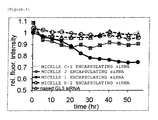
- Luciferase-expressing HeLa (HeLa-Luc) cells were seeded in a 35 mm plate at 50,000 cells/plate and incubated in an incubator with a DMEM medium containing 10% fetal bovine serum for 24 hours. The medium was exchanged for a fresh DMEM medium containing 10% fetal bovine serum, and each of the micelles 1, 2, C-1, and R-1 encapsulating siRNA (containing 10 ⁇ M siRNA) was added to the medium so that the concentration of siRNA was 200 nM, and then a luciferin substrate was added so that the concentration was 100 ⁇ M.
- FIG. 4 shows the results of the resultant luminescence amount expressed as a relative value when a luminescence amount in a plate in which none of the naked siRNA and micelle solution was administered was defined as 1. It should be noted that the micelle R-1 encapsulating siRNA is the same as the micelle 1 encapsulating siRNA except that encapsulated siRNA is siRNA for non-therapeutic use.
- Each of the micelles 1 and 2 encapsulating siRNA showed a high RNAi activity.
- the micelle encapsulating siRNA using the block copolymer having a cyclic structure content of 40% or more as described above showed a relatively high RNAi activity.
- Each of the micelles 1, 2, C-1, and C-3 encapsulating siRNA (10 ⁇ M siRNA) was administered to the tail vein of mice (Balb/c nude mice, female, 6-week-old) so that the dose was 20 ug of Cy5-siRNA.
- naked Cy5-GL3 siRNA was administered to the tail vein of mice (Balb/c nude mice, female, 6-week-old) so that the dose was 20 ⁇ g.
- the blood kinetics of the micelle in the blood vessels of the ear of the mice was observed with time through use of an in vivo confocal imaging system mounted with a high-speed resonant scanner (Nikon A1R, manufactured by Nikon Corporation).
- FIGS. 5 show photographs showing the blood kinetics of the micelle 1 minute, 3 minutes, and 10 minutes after the administration.
- siRNA was confirmed in all the mice 1 minute after the administration.
- the micelle 1 encapsulating siRNA using the block copolymer having a high cyclic structure content the micelle encapsulating siRNA was stably present in blood even 10 minutes after the administration.
- a schedule for the administration was as follows: the micelle 3 encapsulating siRNA was administered on the administration start date and 4 days and 8 days after the start of the administration; and the micelle 4 encapsulating siRNA was administered 1 day, 5 days, and 9 days after the start of the administration.
- FIGS. 6 show a graph showing a relative tumor volume to a tumor volume at the time of the start of the administration, and photographs taken for the state of a tumor after the lapse of 12 days from the start of the administration.
- FIGS. 6 show a graph showing a relative tumor volume to a tumor volume at the time of the start of the administration.
- FIGS. 6 show a graph showing a relative tumor volume to a tumor volume at the time of the start of the administration.
- FIGS. 6 show a graph showing a relative tumor volume to a tumor volume at the time of the start of the administration, and photographs taken for the state of a tumor after the lapse of 12 days from the start of the administration.
- mice of the treated group A clear anti-tumor effect was found in the mice of the treated group. No anti-tumor effect was found in the control group 1, in which the micelle R-1 encapsulating siRNA as a micelle encapsulating siRNA for non-therapeutic use was used, and the control group 2, in which the naked siRNA was administered.
- Each of the micelles 1 and 5 encapsulating siRNA (containing 10 ⁇ M siRNA) was administered to the tail vein of cancer-bearing mice (Balb/c nude mice, female, 8-week-old) subcutaneously transplanted with GFP-expressing HeLa (HeLa-GFP) so that the dose was 50 ⁇ g of Cy5-GL3 siRNA.
- the accumulation status of the micelle encapsulating siRNA in cancer tissues (perivascular regions and cancer cells) 24 hours after the administration were observed with an in vivo confocal imaging system (Nikon A1R, manufactured by Nikon Corporation) mounted with a high-speed resonant scanner.
- FIGS. 7 show in vivo confocal imaging system images
- FIGS. 8 show IVIS imaging system images.
- the micelle 1 encapsulating siRNA which had cRGD disposed on its surface, was accumulated in tumor vessels and cancer cells. Also in the observation of the extirpated cancer cells with the IVIS image system, the micelle encapsulating siRNA showed high accumulation property in the cancer cells. The results confirmed that the micelle encapsulating siRNA having a target binding site was more likely to be accumulated in tumor vessels and cancer cells than the micelle encapsulating siRNA having no target binding site.
- a block copolymer (polylysine segment polymerization degree: 45, iminothiolane substitution ratio: 91%, cyclic structure content: 98%) were weighed in a Spitz tube and dissolved at room temperature by adding purified water so as to achieve a polymer concentration of 5 mg/mL, to thereby afford a polymer solution.
- the polymer solution was subjected to ultrasonic irradiation (in an ice bath, Low, 1.5 seconds intermittently, 15 minutes) using a biodisruptor (manufactured by NISSEI Corporation, High Power Unit) and then treated with a 0.22 ⁇ m membrane filter.
- a biodisruptor manufactured by NISSEI Corporation, High Power Unit
- a sample buffer manufactured by Bio-Rad Laboratories, Inc., Native Sample Buffer (Cat#161-0738, Lot#310007990)
- the micelle encapsulating G-CSF were mixed with each other at 1:1 (v/v), and 10 ⁇ L of the mixture were gently applied to the bottom of wells of an electrophoresis gel (manufactured by Bio-Rad Laboratories, Inc., Mini-PROTEAN (trademark) TGXTM Precast Gels (4 to 20%, 12 well comb, Cat#456-1095)).
- the amount of a marker (manufactured by Bio-Rad Laboratories, Inc., Precision Plus Protein Standard (Cat#1610363, Lot#310008950)) applied was 5 ⁇ L.
- electrophoresis was performed under the following conditions, and while being gently shaken with a shaker, the gel was immersed in a staining solution (manufactured by Bio-Rad Laboratories, Inc., Coomassie Brilliant Blue R250 Staining Solution (Cat#161-0436, Lot#210007039)) for about 15 minutes, and then immersed in a destaining solution (10% acetic acid/40% methanol) for about 10 minutes.
- Electrophoresis apparatus Mini Trans-Blot (manufactured by Bio-Rad Laboratories, Inc.)
- the electrophoresis gel was transferred to and stored in water, and while being irradiated with white light, the electrophoresis gel was photographed (camera: TV ZOOMLENS 8.5-51 mm F 1.2, diaphragm: 15 to 20 (manufactured by VILBER LOURMAT), photographing machine: DP-001.FDC (manufactured by VILBER LOURMAT)).
- a concentration of G-CSF in a band on the gel was analyzed with image analysis software ImageJ (Ver. 1.42q) to determine a G-CSF encapsulation ratio from the following equation. The encapsulation ratio was 100%.
- the particle composition of the present invention is also applicable to a carrier for a protein.
- G-CSF encapsulation ratio (%) (1 - amount of G-CSF in detected band/total amount of G-CSF (theoretical amount of G-CSF applied to electrophoresis gel)) ⁇ 100
Landscapes
- Health & Medical Sciences (AREA)
- Life Sciences & Earth Sciences (AREA)
- Chemical & Material Sciences (AREA)
- Public Health (AREA)
- Veterinary Medicine (AREA)
- Medicinal Chemistry (AREA)
- Pharmacology & Pharmacy (AREA)
- Animal Behavior & Ethology (AREA)
- General Health & Medical Sciences (AREA)
- Epidemiology (AREA)
- Engineering & Computer Science (AREA)
- Bioinformatics & Cheminformatics (AREA)
- Molecular Biology (AREA)
- Biochemistry (AREA)
- Proteomics, Peptides & Aminoacids (AREA)
- Immunology (AREA)
- Gastroenterology & Hepatology (AREA)
- Zoology (AREA)
- Dispersion Chemistry (AREA)
- Organic Chemistry (AREA)
- Nuclear Medicine, Radiotherapy & Molecular Imaging (AREA)
- General Chemical & Material Sciences (AREA)
- Chemical Kinetics & Catalysis (AREA)
- Medicinal Preparation (AREA)
- Pharmaceuticals Containing Other Organic And Inorganic Compounds (AREA)
- Medicines That Contain Protein Lipid Enzymes And Other Medicines (AREA)
- Peptides Or Proteins (AREA)
Abstract


Description
- The present invention relates to a particle composition and a pharmaceutical composition using the particle composition.
- The application of siRNA to medical treatments is increasingly expected because the siRNA can knock down target mRNA specifically and effectively. However, the development of an effective delivery system is indispensable to apply the siRNA to medical treatments. In recent years, it has been clarified that a therapeutic effect of naked siRNA on age-related macular degeneration (CNV) through its intraocular administration under a clinical trial does not result from a sequence-specific gene knockdown effect induced by siRNA but results from a non-sequence-specific effect via recognition by cell surface Toll-like receptor-3 (TLR-3). It has been considered important to develop a carrier that is stable outside cells and is capable of accurately delivering siRNA into the cells in any of in vivo siRNA applications.
- Hitherto, a variety of cationic polymers have been provided as carriers for forming a polyion complex (PIC) with DNA and introducing and expressing the nucleic acid in eukaryotic cells. For example, it is known that a poly (L-lysine) derivative in which a hydrophilic group (e.g., polyethylene glycol) and a hydrophobic group (e.g., a palmitoyl group) have been introduced via an ε-amino group of poly (L-lysine) forms a vesicle in the presence of cholesterol in an aqueous medium and the vesicle aggregates gene-containing plasmid DNA to form a stable complex (Patent Literature 1). Further, a PIC formed of plasmid DNA with a copolymer derivative whose cation charge and disulfide cross-link density have been modulated by the thiolation of an ε-amino group of poly(L-lysine) in a poly(L-lysine)-poly(ethylene glycol) copolymer is known to show high stability in an extracellular medium and effectively release the DNA in an intracellular compartment (Non Patent Literature 1). Further, it has been confirmed that, when poly(N-[N-(2-aminoethyl)-2-aminoethyl]aspartamide (pAsp (DET))) having an ethylenediamine structure in a side chain and a block copolymer including the pAsp (DET) as one block component of the block copolymer are produced, such polymers show low cytotoxicity and introduce plasmid DNA into cells with high efficiency to express a gene incorporated into the DNA efficiently (see
Non Patent Literature 2,Patent Literature 2, and Patent Literature 3). - As described above, although a carrier effective for a high molecular weight nucleic acid such as DNA has been developed, a carrier capable of forming a stable complex such as a PIC with a low molecular weight nucleic acid such as siRNA as well under a physiological condition and suitably releasing the low molecular weight nucleic acid in cells has not been provided yet.
-
- [PTL 1]
WO 99/61512 A1 - [PTL 2]
WO 2006/085664 A1 - [PTL 3]
WO 2007/099660 A1 -
- [NPL 1] K. Miyata et al., J. Am. Chem. Soc. 2004, 126, 2355-2361
- [NPL 2] K. Miyata et al., J. Am. Chem. Soc. 2008, 130, 16287-16294
- A main object of the present invention is to provide a drug carrier applicable as a carrier capable of forming a stable complex with a nucleic acid under a physiological condition and releasing the nucleic acid in cells.
- Aparticle composition of the present invention is formed of a block copolymer and includes, as the block copolymer, a drug carrier represented by the following formula (1) or the following formula (2):

- R1 and R2 each independently represent a hydrogen atom or a linear or branched alkyl group having 1 to 12 carbon atoms which may have a substituent;
- A represents a hydrophilic polymer chain;
- L1 and L3 each represent a linking group;
- B represents a cation-containing group;
- R3 represents a side chain of any appropriate amino acid;
- z represents an integer of 5 to 500;
- x represents an integer of 40% or more of z;
- y represents an integer and may represent 0;
- z-x-y represents an integer and may represent 0;
- p represents an integer of 1 to 10; and
- q represents an integer of 1 to 10.
- According to the present invention, it is possible to provide the carrier capable of forming a stable complex (pharmaceutical composition) with a nucleic acid and releasing the nucleic acid in cells. The carrier can be applied as a drug carrier for a biopolymer such as a nucleic acid or a protein.
-
- [
FIG. 1 ] A histogram of a particle diameter distribution of a complex according to the present invention. - [
FIG. 2 ] A graph showing a scattered light intensity at each ion concentration of the complex according to the present invention. - [
FIG. 3 ] A graph showing an amount of siRNA taken up into cells incubated together with the complex according to the present invention. - [
FIG. 4 ] A graph showing an RNAi activity of the complex according to the present invention. - [
FIGS. 5 ] In vivo confocal imaging system images each showing blood kinetics of the complex according to the present invention. - [
FIGS. 6 ] A graph and photographs each showing an anti-tumor effect of the complex according to the present invention. - [
FIGS. 7 ] In vivo confocal imaging system images each showing tumor accumulation property of the complex according to the present invention. - [
FIGS. 8 ] IVIS imaging system images of tumors in mice to which the complex according to the present invention is administered. - Preferred embodiments of the present invention are described below. However, the present invention is not limited to these embodiments. It should be noted that a particle composition formed of a block copolymer and a pharmaceutical composition formed of the particle composition and a drug (e.g., a biopolymer) encapsulated in the particle composition differ from each other in shape in some cases, but the compositions are both regarded as particles in this description.
- The particle composition of the present invention is formed of a block copolymer, and includes a drug carrier as the block copolymer.
- The drug carrier forming the particle composition of the present invention is a block copolymer including a hydrophilic polymer chain segment and a polyamino acid-derived segment, and is represented by the following formula (1) or (2):


- A represents a hydrophilic polymer chain forming the hydrophilic polymer chain segment of the drug carrier. Any appropriate hydrophilic polymer may be employed as a hydrophilic polymer forming the hydrophilic polymer chain. Examples of the hydrophilic polymer include poly(ethylene glycol), polysaccharide, poly(vinylpyrrolidone), poly(vinyl alcohol), poly(acrylamide), poly (acrylic acid), poly(methacrylamide), poly (methacrylic acid), poly(methacrylic acid ester), poly(acrylic acid ester), polyamino acid, poly (malic acid), and derivatives thereof. Specific examples of the polysaccharide include starch, dextran, fructan, and galactan. Of those, poly(ethylene glycol) may be preferably used because terminal-reactive polyethylene glycols having a variety of functional groups at their terminals are sold on the market, and polyethylene glycols having a variety of molecular weights are sold on the market and are easily available.
- The number of repetitions of the hydrophilic polymer in the hydrophilic polymer chain is preferably an integer of 30 to 20,000, more preferably an integer of 40 to 2,000, still more preferably an integer of 50 to 1,000.
- A structure expressed in the brackets [] in each of the formulae (1) and (2) is a structure corresponding to the polyamino acid-derived segment (hereinafter referred to as polyamino acid segment). The polyamino acid segment includes an amino acid residue having a particular cyclic structure (hereinafter referred to as amino acid segment having a cyclic structure) and an amino acid residue having a cation-containing group (hereinafter referred to as amino acid segment having a cation-containing group). A stable complex can be formed by virtue of the incorporation of those structures. The polyamino acid segment may include an amino acid residue except the amino acid segment having a cyclic structure and the amino acid segment having a cation-containing group. The amino acid residues in the polyamino acid segment are bound to each other in any appropriate order, and the polyamino acid segment may have a random structure or a block structure.
- z represents the number of repetitions of the polyamino acid segment in the drug carrier. z represents an integer ranging from 5 to 500, the lower limit of the range may be 10, or further 20, and the upper limit of the range may be 200, or further 100.
- The polyamino acid segment is a polypeptide in which any appropriate amino acids are bonded to each other by peptide bonds. Any appropriate amino acids may be used as the amino acids forming the polypeptide, and specifically, lysine, ornithine, arginine, histidine, serine, aspartic acid, and glutamic acid are suitably used. For example, by using serine, aspartic acid, or glutamic acid as the amino acid, a predetermined cyclic structure can be introduced more certainly.
- x represents the number of repetitions of the amino acid segment having a cyclic structure. The ratio of the amino acid segment having a cyclic structure (corresponding to a cyclic structure content in Examples to be described later) is 40% or more of the polyamino acid segment in the drug carrier. That is, x represents an integer of 40% or more of z. When the ratio of the amino acid segment having a cyclic structure is controlled to 40% or more of the polyamino acid segment as described above, a micelle having high stability is easily obtained owing to increased hydrophobicity of the block copolymer, and as described later, intracellular endosomal escape easily occurs. The ratio of the amino acid segment having a cyclic structure is preferably 50% or more of the polyamino acid segment, and is more preferably 60% or more, still more preferably 70% or more, particularly preferably 85% or more of the polyamino acid segment. The ratio of the amino acid segment having a cyclic structure may be 100%. However, the ratio is preferably less than 100% and may be, for example, 95% or less from the viewpoint of forming a complex with a drug (e.g., a biopolymer) in a relatively easy manner (e. g. , under a physiological condition) through utilization of the action of the amino acid segment having a cation-containing group to be described later. It is considered that the amino acid segment having a cyclic structure has property of generating positive charge under a low-pH environment such as in the endosome (e.g., pH in the endosome is 5.5). It is also considered that the positive charge acts on an endosomal membrane, resulting in endosomal escape. The endosomal escape allows the complex to be completely taken up into an intracellular matrix to release an encapsulated drug to the nucleus. In addition, such amino acid segment having a cyclic structure has property of not generating positive charge under a physiological condition, i.e., in a neutral-pH environment, and hence can be present in blood in a non-toxic state.
- B represents a cation-containing group in the amino acid segment having a cation-containing group. The cation-containing group is any appropriate group containing a cation, and examples thereof include a group containing an ammonium cation. By virtue of the incorporation of the amino acid segment having a cation-containing group, the drug carrier can form a complex (e.g., a PIC) with a biopolymer (e.g., siRNA) to be used as a drug under a physiological condition. Specifically, there are given an amidine group and a group derived from diethylenetriamine and selected from the group consisting of groups represented by the following formulae (i) to (iv):
- -NH-(CH2)p3-[NH-(CH2)q3-]r1NH2 (i);
- -NH-(CH2)p4-N[-(CH2)q4-NH2]2 (ii);
- -NH- (CH2)p5-N{[-(CH2)q5-NH2] [-(CH2)q6-NH-]r2H} (iii); and
- -NH-(CH2)p6-N{-(CH2)q7-N[-(CH2)q8-NH2]2}2 (iv)
- The amino acid segment having a cation-containing group may have a thiol group (-SH group) at the terminal of its side chain, that is, the terminal of the cation-containing group. The thiol groups can react with each other to form a cross-linking through a disulfide bond. This increases association property between block copolymers, resulting in a block copolymer capable of forming a micelle having high stability. Further, the disulfide bond is a bond that is easily cleaved under a reductive environment. Thus, a stable micelle can be maintained under a non-reductive environment, i.e., outside of cells, and an encapsulated product can be efficiently released under a reductive environment, i.e., inside of cells.
- Thus, in one embodiment, B represents -NH+=C(=NH)-(CH2)q-SH, and q represents an integer of 1 to 10, preferably an integer of 2 to 4.
- y represents the number of repetitions of the amino acid segment having a cation-containing group. y represents an integer and may represent 0. y may represent, for example, an integer of 1 or more, an integer of 2 or more, or further, an integer of 5 or more. Further, y may represent, for example, an integer of 200 or less, an integer of 100 or less, an integer of 80 or less, an integer of 40 or less, or further, an integer of 20 or less.
- The ratio of the amino acid segment having a cyclic structure and the amino acid segment having a cation-containing group in the polyamino acid segment is preferably 95% or more of the polyamino acid segment. That is, x+y preferably represents an integer of 95% or more of z. It should be noted that the polyamino acid segment in the block copolymer may be formed of only the amino acid segment having a cyclic structure and the amino acid segment having a cation-containing group.
- A ratio between the amino acid segment having a cyclic structure and the amino acid segment having a cation-containing group in the polyamino acid segment has only to be appropriately set depending on applications of a complex using the particle composition of the present invention and drugs to be encapsulated. The ratio between the amino acid segment having a cyclic structure and the amino acid segment having a cation-containing group may be adjusted, for example, by appropriate setting involving adjusting the pH of a solvent to be used in a synthesis process for a block copolymer and/or using any appropriate catalyst. Specifically, the cyclic structure can be introduced more certainly by using a high-purity catalyst (e.g., diisopropylethylamine) under an argon atmosphere and/or setting a pH at the time of dialysis in a purification process to a relatively high one (e.g., pH 6).
- R3 represents a side chain of any appropriate amino acid forming the polyamino acid segment. Thus, the polyamino acid segment may include amino acid-derived segments (hereinafter also referred to as other amino acid segments) forming the polyamino acid segment except the amino acid segment having a cyclic structure and the amino acid segment having a cation-containing group. For example, R3 may represent a side chain of at least one kind of amino acid selected from the group consisting of lysine, ornithine, arginine, histidine, serine, aspartic acid, and glutamic acid. The number of the other amino acid segments is not particularly limited, and the other amino acid segments are moieties except the amino acid segment having a cyclic structure and the amino acid segment having a cation-containing group. For example, when the polyamino acid segment is formed of an amino acid having a basic side chain, the other amino acid segments can function as cationic groups. The other amino acid segments may not be included.
- Examples of the linear or branched alkyl group having 1 to 12 carbon atoms, among the groups represented by R1 and R2 include a methyl group, an ethyl group, an n-propyl group, an isopropyl group, an n-butyl group, an sec-butyl group, a tert-butyl group, an n-pentyl group, an n-hexyl group, a decyl group, and an undecyl group.
- As a substituent for the alkyl group, for example, there are given an acetalformyl group, a cyano group, a formyl group, a carboxyl group, an amino group, an alkoxycarbonyl group having 1 to 6 carbon atoms, an acylamide group having 2 to 7 carbon atoms, a siloxy group, a silylamino group, and a trialkylsiloxy group (alkylsiloxy groups are independent of each other and each have 1 to 6 carbon atoms). When the substituent, in particular, the substituent in R1 is a formyl group, a carboxyl group, or an amino group, it is possible to bind any appropriate ligand, for example, an antibody or a fragment thereof, or another protein having functionality or targeting property via such substituent.
- L1 and L3 each represent a linking group, and represents a linking moiety between the hydrophilic polymer chain segment and the segment formed of polyamino acid in the drug carrier. Specifically, the linking group represented by L1 is a linking group selected from -NH-, -O-, -O-L2-NH-, -CO-, -CH2-, and -O-L2-S-L2-NH-(where L2's each independently represent a C1 to C6 alkylene group), and L3 represents a linking group selected from -OCO-L4-CO- and -NHCO-L4-CO- (provided that L4 represents a C1 to C6 alkylene group) .
- p and q each represent a repeating unit of a methylene group in a side chain moiety of the polyamino acid segment. p represents an integer of 1 to 10, preferably 3 or 4. q represents an integer of 1 to 10, preferably 3 or 4.
- The block copolymer may be prepared, for example, by: (i) sequentially polymerizing a hydrophilic polymer and a predetermined monomer, and as necessary, performing substitution or conversion so that the side chain includes the cyclic structure or cation-containing group; (ii) binding polyamino acid forming a polyamino acid segment moiety subjected to polymerization in advance to a hydrophilic polymer, and then as necessary, performing substitution or conversion so that the side chain of the polyamino acid includes the cyclic structure or cation-containing group; or (iii) preparing polyamino acid having the cyclic structure and cation-containing group in its side chain in advance, and binding the polyamino acid to a hydrophilic polymer.
- B. Particle composition further including drug carrier having target binding site or target binding carrier having hydrophilic polymer chain, hydrophobic polymer chain, and target binding site bound to hydrophilic polymer chain
In one preferred embodiment, the particle composition of the present invention has a target binding site bound to the terminal of the drug carrier on the hydrophilic polymer chain side. Further, in another preferred embodiment, the particle composition of the present invention includes, as the block copolymer forming the particle composition, a target binding carrier having a hydrophilic polymer chain, a hydrophobic polymer chain, and a target binding site bound to the hydrophilic polymer chain in addition to the drug carrier. In these embodiments, the particle composition has a target binding site on its particle surface, and the drug carrier is bound to a drug (e.g., a biopolymer) to be encapsulated in the particle composition. A bond between the biopolymer and the drug carrier may be, for example, an ionic bond between the biopolymer and the cation-containing group, or a chemical bond such as a disulfide bond. The target binding site as used herein refers to a site having a biological recognition function, which is capable of specifically binding to a substance derived from each of a living organism and a virus to form a biological binding pair with the substance. - The drug carrier having a target binding site has a target binding site bound to the terminal of the drug carrier on the hydrophilic polymer chain segment side via any appropriate linking group. The use of the drug carrier having a target binding site can improve drug delivery to a desired target site. The target binding site may be formed, for example, by binding a compound having a target binding site to the terminal of the drug carrier on the hydrophilic polymer chain side. The compound having a target binding site may be any appropriate compounds depending on target tissues and purposes, and examples thereof include a physiologically active substance such as an antibody or a fragment thereof, or another protein having functionality or targeting property, a peptide, an aptamer, a sugar such as lactose, and folic acid. When the drug carrier having a target binding site is used as a polymer unit having a target binding site, the drug carrier may be bound to a drug.
- Specifically, the drug carrier having a target binding site is represented, for example, by the following formula (3) or (4) :

- The target binding site (D in the formulae (3) and (4)) of the drug carrier is preferably a peptide having a weight average molecular weight of 50 to 20, 000, more preferably a peptide having a weight average molecular weight of 100 to 10,000, still more preferably a peptide having a weight average molecular weight of 150 to 3,000.
- Further, D represents preferably a peptide having 1 to 200 amino acid residues, more preferably a peptide having 1 to 100 amino acid residues, still more preferably a peptide having 1 to 30 amino acid residues.
- Examples of the peptide include a peptide capable of specifically binding to integrin involved in angiogenesis, intimal thickening, and malignant tumor growth, and specific examples thereof include an RGD peptide. The use of the RGD peptide as the target binding site provides a particle composition capable of specifically recognizing an affected part and a pharmaceutical composition using the particle composition. The RGD peptide as used herein refers to a peptide including an arginine-glycine-aspartic acid (RGD) sequence. The RGD peptide is preferably a cyclic RGD (cRGD) peptide. Specific examples of the cRGD peptide contained in each of the block copolymers represented by the formulae (3) and (4) include a peptide represented by the following formula.


- Any appropriate group may be used as a linking group between the target binding site and the hydrophilic polymer in the drug carrier, and examples thereof include any appropriate amino acid residue.
- Any appropriate method may be employed as a production method for the drug carrier having a target binding site. For example, there may be employed a method involving: preparing the drug carrier represented by the formula (1) or (2) in advance; acetalizing the terminal of the drug carrier on the hydrophilic polymer side; and mixing the resultant with a desired compound having a target binding site having a cysteine terminal in an acidic solution. Alternatively, there may be employed a method involving: acetalizing the terminal of a block copolymer of polyamino acid having no particular cyclic structure and cation-containing group in its side chain and a hydrophilic polymer on the hydrophilic polymer side; mixing the resultant with a desired compound having a target binding site having a cysteine terminal in an acidic solution to bind the compound having the target binding site to the terminal of the hydrophilic polymer; and then introducing a particular cyclic structure and cation-containing group into the side chain of the polyamino acid by substitution or conversion.
- The target binding carrier is obtained, for example, by binding a compound having a target binding site to a hydrophilic polymer chain of a block copolymer having a hydrophilic polymer chain and a hydrophobic polymer chain. According to a particle composition further including a target binding carrier, drug delivery to a desired target site can be improved. In addition, when a particle collapses before its delivery to a target site, the drug carrier can be eliminated from the body through a metabolism by designing the drug carrier so as to have a molecular weight of several tens of thousands or less. Hence, unnecessary gene introduction into normal cells (non-target cells) and damage resulting therefrom can be avoided. Specific examples of the block copolymer having a hydrophilic polymer chain and a hydrophobic polymer chain include a block copolymer represented by the following formula (I) or (II):


R5 represents a hydrogen atom, a saturated or unsaturated C1 to C29 aliphatic carbonyl group, or an aryl carbonyl group;
R7 represents a hydroxyl group, a saturated or unsaturated C1 to C30 aliphatic oxy group or an aryl-lower alkyloxy group;
R8 represents -O- or -NH-;
R9 represents a hydrogen atom, a phenyl group, a benzyl group, a - (CH2)4-phenyl group, an unsubstituted or amino group- or carbonyl group-substituted C4 to C16 alkyl group, or a residue of a sterol derivative;
R10 represents a methylene group;
n represents an integer ranging from 55 to 4,600;
h represents an integer ranging from 10 to 200;
m represents an integer ranging from 0 to 200 (provided that: when m represents 1 or more, a (COCHNH) unit and a (COR10CHNH) unit are bound to each other in any appropriate binding order, and an (NHCHCO) unit and an (NHCHR10CO) unit are bound to each other in any appropriate binding order; and when m represents 2 or more, R9's are each independently selected in each amino acid unit in one block copolymer, and are present at random, but R9 which represents a hydrogen atom accounts for 75% or less of a total of R9's);
i represents 1 or 2;
L5 represents a linking group selected from -NH-, -O-, -O-M1-NH-, -CO-, -CH2-, and -O-M1-S-M1-NH- (where M1's each independently represent a C1 to C6 alkylene group); and
L6 represents a linking group selected from -OCO-M2-CO- and -NHCO-M2-CO- (provided that M2 represents a C1 to C6 alkylene group). - n represents preferably an integer of 110 or more, more preferably an integer of 180 or more. Further, n represents preferably an integer of 460 or less, more preferably an integer of 340 or less.
- h represents preferably an integer of 20 or more. Further, h represents preferably an integer of 100 or less, more preferably an integer of 60 or less.
- m represents preferably an integer of 100 or less, more preferably an integer of 60 or less.
- The compound having a target binding site may be a compound having any appropriate target binding site depending on target tissues and purposes, and examples thereof include compounds exemplified in the B-1 section. The hydrophilic polymer chain of the target binding carrier and the compound having a target binding site may be bound to each other directly or via any appropriate linking group. For example, when R4 or R6 in the block copolymer represented by the formula (I) or (II) represents a group represented by R11(R12)CH(CH2)k-, the hydrophilic polymer chain can bind to the compound having a target binding site via this group.
- From the viewpoint of avoiding unnecessary gene introduction into normal cells and damage resulting therefrom, it is preferred to select, as the target binding carrier, a carrier having a target binding site, which is a block copolymer having a weak binding force to a nucleic acid as compared to the drug carrier (e.g., a block copolymer having an electrically neutral or anionic hydrophobic segment moiety).
- The pharmaceutical composition of the present invention includes the particle composition and a drug encapsulated in the particle composition. The drug carrier included in the particle composition can form a complex (e.g., a PIC) with a biopolymer as a drug to be encapsulated. Thus, the pharmaceutical composition of the present invention includes the complex. The complex can be formed in a relatively easy manner through utilization of the action of the amino acid segment having a cation-containing group (e.g., under a physiological condition). On the other hand, even in the case of the drug carrier free of the amino acid segment having a cation-containing group (e. g. , an embodiment mode in which the ratio of the amino acid segment having a cyclic structure is 100%), the complex can be formed without utilization of the action of the cation-containing group by setting its formation environment to under an acidic condition (e.g.,
pH 5 or less, or, for example,pH 4 or less). - Examples of the drug include an anionic compound having more negative charge than positive charge in an aqueous medium having a physiological pH (e.g., pH 7.4), and a cationic compound having more positive charge than negative charge in the aqueous medium. The drug is preferably a biopolymer from such a viewpoint that it can suitably form a complex with the drug carrier. The biopolymer as used herein refers to a polymer derived from a living organism and a polymer having a structure similar thereto, and specific examples thereof include a protein, a lipid, and a nucleic acid. The biopolymer is preferably at least one kind selected from the group consisting of a protein and a nucleic acid. The protein as used herein encompasses a peptide.
- The nucleic acid means a poly- or oligonucleotide including as basic units nucleotides each formed of a purine or pyrimidinebase, apentose, and phosphoric acid, and examples thereof may include oligo- or poly-double-stranded RNA, oligo- or poly-double-stranded DNA, oligo- or poly-single-stranded DNA, and oligo- or poly-single-stranded RNA. Further, an oligo- or poly-double-stranded nucleic acid and an oligo- or poly-single-stranded nucleic acid in each of which RNA and DNA exist in a mixed state in the same strand are also included. Further, the nucleotide contained in the nucleic acid may be of natural type or of chemically modified non-natural type, or may have added thereto an amino group, a thiol group, a fluorescent compound, or any other molecule. The nucleic acid is not limited but may be formed of 4 to 20,000 bases, preferably 10 to 10,000 bases, more preferably 18 to 30 bases. Further, in consideration of functions or actions, there may be given plasmid DNA, siRNA, micro RNA, mRNA, shRNA, an antisense nucleic acid, a decoy nucleic acid, an aptamer, and a ribozyme.
- When the nucleic acid is siRNA, a mixing ratio between the particle composition and siRNA may be set to any appropriate ratio. For example, a ratio (N/P ratio) between the total number (N) of cationic groups (substantially, primary to quaternary amino groups, an amidine group, an imidine group, and groups represented by the formulae (i) to (iv) contained in the polyamino acid segment) in the drug carrier forming the particle composition and the total number (P) of phosphate groups in the nucleic acid is preferably 0.5 to 100, more preferably 0.5 to 10, still more preferably 1 to 10. When the N/P ratio falls within the range, a stable complex having a small amount of a free polymer is prepared, and siRNA can be stably present in vivo. It should be noted that the cationic group (N) refers to a group capable of electrostatically interacting with a phosphate group in a nucleic acid to be encapsulated to form an ionic bond.
- The size of the complex may be set to any appropriate size depending on purposes. For example, the complex has an average particle diameter of preferably 5 nm to 200 nm, more preferably 10 nm to 100 nm, which is measured by a dynamic light scattering measurement method (DLS).
- A particle composition encapsulating a drug may be prepared, for example, by stirring a mixed solution of a drug carrier and a drug while applying energy by ultrasonic irradiation. Further, the complex may be prepared, for example, by mixing siRNA and a particle composition in any appropriate buffer (e. g. , a Tris buffer). The mixing step is preferably performed under a sufficient reduction state so as to prevent only a block copolymer forming a particle composition from aggregating through formation of a disulfide bond before the formation of an ionic bond between the block copolymer and siRNA. The reduction condition may be adjusted, for example, by adding dithiothreitol (DTT).
- Hereinafter, the present invention is more specifically described by way of examples. However, the present invention is not limited by these examples. It should be noted that methods of analyzing the respective characteristics in the examples are as described below unless otherwise specified.
- Measurement was performed with a nuclear magnetic resonance apparatus (manufactured by JEOL Ltd., JEOL AL300 (300 MHz)) under the conditions of: solvent: DMSO-d6; and measurement temperature: 25°C.
- Calculation was performed based on a peak intensity ratio between β-, γ-, and δ-methylene protons ((CH2)3, δ=1.3 to 1.9 ppm) of lysine and a trimethylene unit (HS-(CH2)3, δ=2.1 to 2.8 ppm) of a mercaptopropyl group in the 1H-NMR spectrum.
- The block copolymer solution (5 mg/mL) obtained in Example 1 was incubated to be reduced in a 10 mM HEPES buffer (containing 5 mM EDTA and 15 mM DTT) at room temperature for 30 minutes. The solution was centrifuged with a Nanosep separation column (molecular weight cut off: 3,000). To the solution after the centrifugation was added a 10 mM HEPES solution (containing 5 mM EDTA), and the mixture was centrifuged again (concentration/washing step). The concentration/washing step was performed three times. After the final centrifugation, the concentrated polymer solution was collected and diluted by adding a 10 mM HEPES solution (containing 5 mM EDTA). A flow-through fraction was also collected and subjected to the same treatment. Those fractions were placed on ice and kept at a solution temperature of 0 to 4°C until Ellman's reagent was added.
- Each of the polymer fraction and flow-through fraction after the treatment was measured for its absorbance at a wavelength of 412 nm by Ellman's method. A free thiol content was determined based on a calibration curve for glutathione and the final thiol content of the polymer fraction obtained by subtracting the thiol content of the flow-through fraction corrected with the remaining amount of DTT.
- The block copolymer solution (5 mg/mL) obtained in Example 1 was diluted with 0.1 M sodium bicarbonate (pH 8.2) to afford a polymer solution at 0.09 mM (PEG-PLL) or 0.9 mM (Example 1) in terms of lysine unit molar concentration. A 2,4,6-trinitrobenzenesulfonic acid (TNBSA) solution (5 wt/vol% solution in MeOH) was diluted with 0.1 M sodium bicarbonate (pH 8.2) to prepare a 0.34 mM TNBSA solution. The polymer solution and the TNBSA solution were mixed with each other at a volume ratio of 2:1 (polymer solution: TNBSA solution) and incubated at 37°C for 2 hours. After the incubation, the sample was left to stand still for 15 minutes so that the temperature returned to room temperature, and then measured for its absorbance at 354 nm with a spectrophotometer (NanoDrop ND-1000).
- Calculation was performed by subtracting the thiol group content obtained in (3-1) and the primary amino group content obtained in (3-2) from the number of units in the resultant block copolymer.
- 1.20 g of acetal-PEG-NH2 having an average molecular weight of 12,000 and 2.90 g of thiourea were dissolved in 18 mL of N,N-dimethylformamide (DMF). Next, to the solution was added a solution obtained by dissolving 1.34 g of ε-trifluoroacetyl-L-lysine N-carboxylic anhydride (Lys(TFA)-NCA, 50 equivalents relative to acetal-PEG-NH2) in 20.1 mL of DMF, and the mixture was subjected to a reaction at 20°C for 2 days. The reaction solution was added dropwise to 600 mL of a mixed solvent of diethyl ether-methanol (15/1) to afford a white precipitate. Then, an operation involving dissolving the precipitate in methanol and adding the solution dropwise to diethyl ether was repeated twice. The resultant white precipitate was filtered and dried under vacuum to afford 2.22 g of acetal-PEG-PLL(TFA).
2.00 g of the resultant acetal-PEG-PLL(TFA) were dissolved in 200 mL of methanol. To the solution were added 20 mL of a 1 N sodium hydroxide solution, and the mixture was subj ected to a reaction at 35°C for 12 hours. The reaction solution was charged into a dialysis tube (manufactured by Funakoshi Corporation, Spectra/Por, molecular weight cut off: 6,000 to 8,000) and dialyzed four times against a solution of 150 mM NaCl in a 10 mM phosphate buffer (pH 7.4) as an external solution and subsequently three times against pure water as an external solution. The solution inside the dialysis membrane was collected and lyophilized to afford 1.63 g of acetal-PEG-PLL as a white solid. 1H-NMR confirmed that the resultant compound was a product of interest. The polylysine segment of the resultant acetal-PEG-PLL had a polymerization degree of 45. - 26.2 mg of a cRGD peptide (5-fold equivalents relative to the acetal-PEG-PLL) were dissolved in 1 mL of a 10 mM phosphate buffer (pH 7.4). Next, to the solution were added 5 mg (1 equivalent relative to the cRGD peptide) of dithiothreitol (DTT), and the mixture was stirred at 25°C for 30 minutes to reduce the cRGD peptide. In another vessel, 125 mg (1 equivalent) of the acetal-PEG-PLL obtained in Synthesis Example 1 were dissolved in a 0.2 M sodium acetate buffer (pH 4.0), and to the stirred solution was added dropwise the reduced cRGD peptide solution. The reaction was performed with stirring at 25°C for 4 days. The reaction solution was transferred to a dialysis tube (manufactured by Funakoshi Corporation, Spectra/Por, molecular weight cut off: 6 to 8 K) and dialyzed against a solution of 150 mM NaCl in a 10 mM phosphate buffer (pH 7.4) for 2 days and then against distilled water for 2 days. The dialysate was treated with a filter (Japan Millipore Corporation, Sterivex™ GP 0.22 µm) and then lyophilized to afford cRGD-PEG-PLL as white powder (yield: 112 mg, 86%). The amount of the cRGD peptide bound to PEG-PLL was calculated based on an integration ratio between a peak of a phenyl CH proton of the cRGD peptide and a CH2 main chain peak of PEG measured by 1H-NMR. The resultant cRGD-PEG-PLL had a cRGD introduction ratio of 60%.
- To a reaction vessel were added 89 mg of the acetal-PEG-PLL obtained in Synthesis Example 1 and 2 mL of N-methylpyrrolidone (NMP) containing 5 wt/vol% LiCl. The reaction vessel was filled with argon and capped with a septum. While the reaction vessel was heated, the mixture was stirred to completely dissolve the acetal-PEG-PLL. Next, 178 µL (5 equivalents relative to an amine in lysine of PLL) of N,N-diisopropylethylamine (DIPEA) were added to the solution through the septum under argon.
In the presence of argon, in another vessel, 172 mg of 2-iminothiolane chloride were dissolved in 5 mL of NMP containing 5 wt/vol% LiCl and 250 mM DIPEA (1 equivalent relative to 2-iminothiolane) to prepare a 250 mM 2-iminothiolane solution. In the presence of argon, to the stirred acetal-PEG-PLL solution were added dropwise 2.15 mL of the resultant 2-iminothiolane solution (2.6 equivalents relative to an amine in lysine of PLL), and the mixture was subjected to a reaction at 25°C for 18 hours. After the reaction, the reaction solution was precipitated in dry diethyl ether in an amount more than 10 times as large as that of the reaction solution to quench the reaction. The precipitate was washed several times with ether and dried under vacuum until the weight became constant to afford a crude product. The resultant crude product was dissolved in a solution of 150 mM NaCl in a 10 mM phosphate buffer (pH 6.0). After that, the solution was transferred to a dialysis tube (manufactured by Funakoshi Corporation, Spectra/Por 7, molecular weight cut off: 10 kDa) and dialyzed against a solution of 150 mM NaCl in a 10 mM phosphate buffer (pH 6.0) for 1 day (the external solution was exchanged three times) and against distilled water for 1 day (the external solution was exchanged three times). The dialysate was treated with a filter (Japan Millipore Corporation, Sterivex™ GP 0.22 µm) and then lyophilized to afford acetal-PEG-PLL(N2IM/IM) as white powder (yield: 99 mg, 85%). The resultant PEG-PLL(N2IM/IM) had an iminothiolane substitution ratio of 95%. Table 1 shows the iminothiolane substitution ratio and cyclic structure content of the resultant block copolymer. - To a reaction vessel were added 55 mg (1 equivalent) of the cRGD-PEG-PLL obtained in Synthesis Example 2 and 5 mL of NMP containing 5 wt/vol% LiCl. The reaction vessel was filled with argon and then capped with a septum. While the reaction vessel was heated, the mixture was stirred to completely dissolve the cRGD-PEG-PLL. Next, 252 µL of DIPEA (11.8 equivalents relative to an amine in lysine contained in PLL) were added to the solution through the septum under argon (solution 1). In the presence of argon, in another vessel, 106 mg of 2-iminothiolane chloride were dissolved in 7.86 mL of NMP containing 5 wt/vol% LiCl and 134 µL of DIPEA (1 equivalent relative to 2-iminothiolane) to prepare a 96 mM 2-iminothiolane solution (solution 2). In the presence of argon, to the stirred solution 1 (cRGD-PEG-PLL solution) were added dropwise 3 mL of the resultant solution 2 (2-iminothiolane solution, 2.35 equivalents relative to an amine in lysine of PLL), and the mixture was subj ected to a reaction at 25°C for 18 hours. After the reaction, the reaction solution was precipitated in dry diethyl ether in an amount more than 10 times as large as that of the reaction solution to quench the reaction. The precipitate was washed several times with ether and dried under vacuum until the weight became constant to afford a crude product. The resultant crude product was dissolved in a solution of 150 mM NaCl in a 10 mM phosphate buffer (pH 6.0). After that, the solution was transferred to a dialysis tube (manufactured by Funakoshi Corporation, Spectra/Por 7, molecular weight cut off: 10 kDa) and dialyzed against a solution of 150 mM NaCl in a 10 mM phosphate buffer (pH 6.0) for 1 day (the external solution was exchanged three times) and against distilled water for 1 day (the external solution was exchanged three times). The dialysate was treated with a filter (Japan Millipore Corporation, Sterivex™ GP 0.22 µm) and then lyophilized to afford cRGD-PEG-PLL(N2IM/IM) as white powder (yield: 61 mg, 85%). The resultant cRGD-PEG-PLL(N2IM/IM) had an iminothiolane substitution ratio of 95%. Table 1 shows the iminothiolane substitution ratio and cyclic structure content of the resultant block copolymer. It should be noted that the cyclic structure substitution ratio was calculated as a value obtained by multiplying the iminothiolane substitution ratio by 0. 9 based on the ratio (1: 9) between the thiol group content and the cyclic structure content in the block copolymer of Example 1.
- White powder was obtained (yield: 27.3 mg, >95%) in the same manner as in Example 2 except that: the cRGD-PEG-PLL (26.2mg) obtained in Synthesis Example 2 and DIPEA (58.0 µL, 5.7 equivalents relative to an amine in lysine contained in PLL) were dissolved in NMP (2.7 mL) containing 5 wt/vol% LiCl (solution 1); separately, 2-iminothiolane chloride (187.6mg) and DIPEA (238 µL) were dissolved in NMP (9.76 mL) containing 5 wt/vol% LiCl, and then part of the solution was diluted to 1/3 to prepare a 45.0 mM 2-iminothiolane solution (solution 2); and 1 mL (0.78 equivalent relative to an amine in lysine of PLL) of the
solution 2 was added dropwise to 2.7 mL of thesolution 1. The iminothiolane substitution ratio of the resultant cRGD-PEG-PLL(N2IM/IM) was calculated in the same manner as in Example 2. The resultant cRGD-PEG-PLL(N2IM/IM) had an iminothiolane substitution ratio of 45%. Table 1 shows the iminothiolane substitution ratio and cyclic structure content of the resultant block copolymer. - White powder was obtained (yield: 27.3 mg, >95%) in the same manner as in Example 2 except that: the cRGD-PEG-PLL (25.7mg) obtained in Synthesis Example 2 and DIPEA (49.8 uL, 5 equivalents relative to an amine in lysine contained in PLL) were dissolved in NMP (2.6 mL) containing 5 wt/vol% LiCl (solution 1); separately, 2-iminothiolane chloride (187. 6mg) and DIPEA (238 µL) were dissolved in NMP (9.76 mL) containing 5 wt/vol% LiCl, and then part of the solution was diluted to 1/10 to prepare a 13.6 mM 2-iminothiolane solution (solution 2); and 1 mL (0.24 equivalent relative to an amine in lysine of PLL) of the
solution 2 was added dropwise to 2.6 mL of thesolution 1. The iminothiolane substitution ratio of the resultant cRGD-PEG-PLL(N2IM/IM) was calculated in the same manner as in Example 2. The resultant cRGD-PEG-PLL(N2IM/IM) had an iminothiolane substitution ratio of 15%. Table 1 shows the iminothiolane substitution ratio and cyclic structure content of the resultant block copolymer. - To a reaction vessel were added 300 mg of the acetal-PEG-PLL obtained in Synthesis Example 1 and 60 mL of a 100 mM borate buffer (pH 9.0). 439mg (2 equivalents relative to a lysine unit) of
dimethyl 3,3'dithiobispropionimidate dihydrochloride (DTBP) were dissolved in the resultant polymer solution. After having been subjected to a reaction with stirring at room temperature for 45 minutes, the solution was transferred to a Slide-A-Lyzer cassette (molecular weight cut off: 3. 5 kDa) and subjected to dialysis treatment against a solution of 150 mM NaCl in a 10 mM phosphate buffer (pH 7.4) for 1.5 hours. After the dialysis, 300 mg of DTT were added. After having been subj ected to a reaction at room temperature for 30 minutes, the mixture was transferred to a Slide-A-Lyzer cassette (molecular weight cut off: 3.5 kDa) and subjected to dialysis treatment against a solution of 150 mM NaCl in a 10 mM phosphate buffer (pH 6.0) for 1.5 hours and against pure water for 1.5 hours. The dialysate was treated with a filter (Japan Millipore Corporation, Sterivex™ GP 0.22 µm) and then lyophilized to afford acetal-PEG-PLL(DTBP) as white powder (yield: 299 mg, 73%). The resultant PEG-PLL (DTBP) had a DTBP substitution ratio of 95%. Table 1 shows the iminothiolane substitution ratio and cyclic structure content of the resultant block copolymer. -
[Table 1] Block copolymer Kind Iminothiolane substitution ratio (%) Cyclic structure content (%) Example 1 PEG-PLL(N2IM/IM) 95 86 Example 2 cRGD-PEG-PLL(N2IM/IM) 95 86 Example 3 cRGD-PEG-PLL(N2IM/IM) 45 41 Comparative Example 1 cRGD-PEG-PLL(N2IM/IM) 15 14 Comparative Example 2 PEG-PLL(DTBP) 0 0 Comparative Example 3 cRGD-PEG-PLL* 0 0 * : block copolymer obtained in Synthesis Example 2 - siRNAs each used for the preparation of a complex to be described later are as described below. Each of labels such as Cy5 was introduced into the 5'-terminal of a sense strand. Those siRNAs are available from Hokkaido System Science Co., Ltd.
- (1) GL3-siRNA (siRNA against firefly luciferase):
- Sense strand: 5'-CUUACGCUGAGUACUUCGAdTdT-3' (SEQ ID NO: 1)
- Antisense strand: 5'-UCGAAGUACUCAGCGUAAGdTdT-3' (SEQ ID NO: 2)
- (2) scramble-siRNA (siRNA having sequence for non-therapeutic use):
- Sense strand: 5'-UUCUCCGAACGUGUCACGUdTdT-3' (SEQ ID NO: 3)
- Antisense strand: 5'-ACGUGACACGUUCGGAGAAdTdT-3' (SEQ ID NO: 4)
- (3) hVEGF-siRNA (siRNA against human vascular endothelial growth factor):
- Sense strand: 5'-GAUCUCAUCAGGGUACUCCdTdT-3' (SEQ ID NO: 5)
- Antisense strand: 5'-GGAGUACCCUGAUGAGAUCdTdT-3' (SEQ ID NO: 6)
- (4) mVEGFR2-siRNA(siRNA against mouse vascular endothelial growth factor):
- Sense strand: 5'-AUGCGGCGGUGGUGACAGUdTdT-3' (SEQ ID NO: 7)
- Antisense strand: 5'-ACUGUCACCACCGCCGCAUdTdT-3' (SEQ ID NO: 8)
- Each of the PEG-PLL (N2IM/IM) obtained in Example 1, the cRGD-PEG-PLL (N2IM/IM) obtained in Examples 2 and 3 and Comparative Example 1, the PEG-PLL(DTBP) obtained in Comparative Example 2, and the cRGD-PEG-PLL having an unmodified PLL side chain (prepared in Synthesis Example 2) as Comparative Example 3 was dissolved in a 10 mM HEPES buffer (pH 7.4) so as to have a concentration of 5 mg/mL. Next, the solution was mixed with a 10 mM HEPES buffer (pH 7.4) having a DTT concentration of 30.54 mg/mL to adjust the concentration so that the N/P ratio was 1 to 8, and the mixture was left to stand still at room temperature for 30 minutes. siRNA was dissolved in a 10 mM HEPES buffer (pH 7.4) to prepare a 15 uM siRNA solution. The siRNA solution was mixed with the PEG-PLL(N2IM/IM) solution, the cRGD-PEG-PLL(N2IM/IM) solution, the PEG-PLL(DTBP) solution, or the cRGD-PEG-PLL solution at a volume ratio of 2:1, and the mixture was left to stand still at 25°C for 24 hours. The resultant solution was transferred to a Slide-A-Lyzer cassette (molecular weight cut off: 3.5 kDa) and dialyzed against a 10 mM HEPES solution (pH 7.4) containing 5 v/v% DMSO for 2 days and against a 10 mM HEPES solution (pH 7.4) for 2 days to afford a micelle encapsulating siRNA as a complex of the block copolymer and siRNA. The "N/P ratio" as used herein means (the concentration of a polyamino acid unit in a block copolymer)/(the concentration of a phosphate group in a nucleic acid). Table 2 shows the produced micelles encapsulating siRNA.
-
[Table 2] Micelle encapsulating siRNA Block copolymer siRNA 1 Example 2 GL3- siRNA 2 Example 3 GL3- siRNA 3 Example 2 hVEGF- siRNA 4 Example 2 mVEGFR2- siRNA 5 Example 1 GL3-siRNA C-1 Comparative Example 1 GL3-siRNA C-2 Comparative Example 2 GL3-siRNA C-3 Comparative Example 3 GL3-siRNA R-1 Example 2 scramble siRNA - With regard to the
micelle 1 encapsulating siRNA, the histograms of the micelle encapsulating siRNA for a polydispersity index (PDI), a cumulant particle diameter, and a particle diameter distribution were measured by a dynamic light scattering method (DLS) using Zetasizer Nano ZS (manufactured by Malvern). The histogram of the particle diameter distribution was determined with theaccompanyingsoftware.FIG. 1 shows the histogram of the particle diameter distribution. - The results of DLS analysis of the
micelle 1 encapsulating siRNA revealed that the cumulant particle diameter was 41 nm, and the PDI was 0.09, indicating that narrowly dispersed particles were obtained. - The
micelle 5 encapsulating siRNA and an NaCl solution having a concentration of interest (NaCl concentration: 150 mM, 300 mM, or 600 mM) were mixed with each other at a volume ratio of 1:1, and incubated at 37°C for 24 hours. The solution after the incubation was measured for its scattered light intensity with Zetasizer Nano ZS (manufactured by Malvern). Similarly, the micelle C-2 encapsulating siRNA was also measured for its scattered light intensity.FIG. 2 shows the scattered light intensities at each NaCl concentration. - In general, a PIC micelle dissociates in association with an increase in ionic strength, and hence shows a reduction in scattered light intensity in association with an increase in ionic strength. The
micelle 5 encapsulating siRNA showed a small reduction in scattered light intensity even under a high ionic strength (NaCl concentration: 600 mM), indicating that the micelle encapsulating siRNA had a stable structure. On the other hand, the micelle C-2 encapsulating siRNA using the block copolymer having no cyclic structure showed a reduction in scattered light intensity in association with an increase in ionic strength. - HeLa cells were seeded in a 6 well dish at 50,000 cells/well and incubated for 24 hours in an incubator with a DMEM medium containing 10% fetal bovine serum. The medium was exchanged for a fresh DMEM medium containing 10% fetal bovine serum, and each of the
micelles FIG. 3 shows a graph showing the amount of siRNA taken up into the cells. - In each of the micelles encapsulating siRNA, the transfer of encapsulated siRNA into the cells was confirmed. In this case, the micelle encapsulating siRNA using the block copolymer having a cyclic structure content of 40% or more showed a remarkably high intensity and was particularly excellent in transfer into the cells.
- Luciferase-expressing HeLa (HeLa-Luc) cells were seeded in a 35 mm plate at 50,000 cells/plate and incubated in an incubator with a DMEM medium containing 10% fetal bovine serum for 24 hours. The medium was exchanged for a fresh DMEM medium containing 10% fetal bovine serum, and each of the
micelles FIG. 4 shows the results of the resultant luminescence amount expressed as a relative value when a luminescence amount in a plate in which none of the naked siRNA and micelle solution was administered was defined as 1. It should be noted that the micelle R-1 encapsulating siRNA is the same as themicelle 1 encapsulating siRNA except that encapsulated siRNA is siRNA for non-therapeutic use. - Each of the
micelles - Each of the
micelles FIGS. 5 show photographs showing the blood kinetics of themicelle 1 minute, 3 minutes, and 10 minutes after the administration. - siRNA was confirmed in all the
mice 1 minute after the administration. In themicelle 1 encapsulating siRNA using the block copolymer having a high cyclic structure content, the micelle encapsulating siRNA was stably present in blood even 10 minutes after the administration. - A micelle encapsulating siRNA was administered to the tail vein of cancer-bearing mice (Balb/c nude mice, female, 8-week-old, n=4) subcutaneously transplanted with GFP-expressing HeLa (HeLa-GFP) so that the single dose was 20 µg of siRNA. A schedule for the administration was as follows: the
micelle 3 encapsulating siRNA was administered on the administration start date and 4 days and 8 days after the start of the administration; and themicelle 4 encapsulating siRNA was administered 1 day, 5 days, and 9 days after the start of the administration. After the administration, a tumor volume (V=a×b2/2, a=long axis length, b=short axis length) was measured with time.FIGS. 6 show a graph showing a relative tumor volume to a tumor volume at the time of the start of the administration, and photographs taken for the state of a tumor after the lapse of 12 days from the start of the administration. - Administration to cancer-bearing mice (Balb/c nude mice, female, 8-week-old, n=4) subcutaneously transplanted with HeLa-GFP was performed in the same manner as in the treated group except that the micelle R-1 encapsulating siRNA was administered on the administration start date and 1 day, 4 days, 5 days, 8 days, and 9 days after the start of the administration.
FIGS. 6 show a graph showing a relative tumor volume to a tumor volume at the time of the start of the administration. - Administration to cancer-bearing mice (Balb/c nude mice, female, 8-week-old, n=4) subcutaneously transplanted with HeLa-GFP was performed in the same manner as in the treated group except that naked mVEGF-R2 siRNA was administered on the administration start date and 4 days and 8 days after the start of the administration, and naked hVEGF siRNA was administered 1 day, 5 days, and 9 days after the start of the administration, so that the single dose was 20 µg of siRNA.
FIGS. 6 show a graph showing a relative tumor volume to a tumor volume at the time of the start of the administration. - Administration to cancer-bearing mice (Balb/c nude mice, female, 8-week-old, n=4) subcutaneously transplanted with HeLa-GFP was performed in the same manner as in the treated group except that 200 µL of HEPES were administered on the administration start date and 1 day, 4 days, 5 days, 8 days, and 9 days after the start of the administration.
FIGS. 6 show a graph showing a relative tumor volume to a tumor volume at the time of the start of the administration, and photographs taken for the state of a tumor after the lapse of 12 days from the start of the administration. - A clear anti-tumor effect was found in the mice of the treated group. No anti-tumor effect was found in the
control group 1, in which the micelle R-1 encapsulating siRNA as a micelle encapsulating siRNA for non-therapeutic use was used, and thecontrol group 2, in which the naked siRNA was administered. - Each of the
micelles FIGS. 7 show in vivo confocal imaging system images, andFIGS. 8 show IVIS imaging system images. - As a result of the observation with the in vivo confocal imaging system, the
micelle 1 encapsulating siRNA, which had cRGD disposed on its surface, was accumulated in tumor vessels and cancer cells. Also in the observation of the extirpated cancer cells with the IVIS image system, the micelle encapsulating siRNA showed high accumulation property in the cancer cells. The results confirmed that the micelle encapsulating siRNA having a target binding site was more likely to be accumulated in tumor vessels and cancer cells than the micelle encapsulating siRNA having no target binding site. - About 10 mg of a block copolymer (polylysine segment polymerization degree: 45, iminothiolane substitution ratio: 91%, cyclic structure content: 98%) were weighed in a Spitz tube and dissolved at room temperature by adding purified water so as to achieve a polymer concentration of 5 mg/mL, to thereby afford a polymer solution. The polymer solution was subjected to ultrasonic irradiation (in an ice bath, Low, 1.5 seconds intermittently, 15 minutes) using a biodisruptor (manufactured by NISSEI Corporation, High Power Unit) and then treated with a 0.22 µm membrane filter. Thus, an empty micelle solution having a polymer concentration of 5 mg/mL was obtained. To the empty micelle solution (0.09 mL) was added a 0.3 mg/mL G-CSF solution (0.075 mL) so as to achieve a concentration of 5% (w/w) relative to the polymer. Then, a 200 mM sodium citrate buffer (pH 5) (0.03 mL), a 50% sucrose solution (0.03 mL), and purified water were added therein, and adjustment with 0.1NHCl (0.05mL) was performed so as to finally achieve a composition of a polymer concentration of 1.5 mg/mL, a G-CSF concentration of 0.075 mg/mL, and a 20 mM sodium citrate buffer (pH 5). The solution was stirred by inversion two or three times and then left to stand still at 4°C overnight. The micelle encapsulating G-CSF thus prepared was used and measured for its G-CSF encapsulation ratio by such electrophoresis as described below.
- A sample buffer (manufactured by Bio-Rad Laboratories, Inc., Native Sample Buffer (Cat#161-0738, Lot#310007990)) and the micelle encapsulating G-CSF were mixed with each other at 1:1 (v/v), and 10 µL of the mixture were gently applied to the bottom of wells of an electrophoresis gel (manufactured by Bio-Rad Laboratories, Inc., Mini-PROTEAN (trademark) TGX™ Precast Gels (4 to 20%, 12 well comb, Cat#456-1095)). It should be noted that the amount of a marker (manufactured by Bio-Rad Laboratories, Inc., Precision Plus Protein Standard (Cat#1610363, Lot#310008950)) applied was 5 µL. Next, electrophoresis was performed under the following conditions, and while being gently shaken with a shaker, the gel was immersed in a staining solution (manufactured by Bio-Rad Laboratories, Inc., Coomassie Brilliant Blue R250 Staining Solution (Cat#161-0436, Lot#210007039)) for about 15 minutes, and then immersed in a destaining solution (10% acetic acid/40% methanol) for about 10 minutes.
- Electrophoresis apparatus: Mini Trans-Blot (manufactured by Bio-Rad Laboratories, Inc.)
Electrophoresis buffer (Native): 10×Tris/Glycine Buffer (Cat#161-0734, manufactured by Bio-Rad Laboratories, Inc.), 1×composition: 25 mM Tris (pH 8.3), 192 mM Glycine
Voltage: 200 V, electrophoresis time: 30 minutes - Next, the electrophoresis gel was transferred to and stored in water, and while being irradiated with white light, the electrophoresis gel was photographed (camera: TV ZOOMLENS 8.5-51 mm F 1.2, diaphragm: 15 to 20 (manufactured by VILBER LOURMAT), photographing machine: DP-001.FDC (manufactured by VILBER LOURMAT)). A concentration of G-CSF in a band on the gel was analyzed with image analysis software ImageJ (Ver. 1.42q) to determine a G-CSF encapsulation ratio from the following equation. The encapsulation ratio was 100%. Thus, the particle composition of the present invention is also applicable to a carrier for a protein.
G-CSF encapsulation ratio (%)=(1 - amount of G-CSF in detected band/total amount of G-CSF (theoretical amount of G-CSF applied to electrophoresis gel))×100

Claims (6)
- A particle composition formed of a block copolymer, comprising, as the block copolymer, a drug carrier represented by the following formula (1) or the following formula (2):
 R1 and R2 each independently represent a hydrogen atom or a linear or branched alkyl group having 1 to 12 carbon atoms which may have a substituent;A represents a hydrophilic polymer chain;L1 and L3 each represent a linking group;B represents a cation-containing group;R3 represents a side chain of any appropriate amino acid;z represents an integer of 5 to 500;x represents an integer of 40% or more of z;y represents an integer and may represent 0;z-x-y represents an integer and may represent 0;p represents an integer of 1 to 10; andq represents an integer of 1 to 10.
 - A particle composition according to claim 1, wherein in the formula (1) and the formula (2), a total of the x and the y is an integer of 95% or more of the z.
- A particle composition according to claim 1 or 2, wherein:(i) a terminal of the drug carrier on a hydrophilic polymer chain side has a target binding site bound thereto; or(ii) the particle composition further comprises, as the block copolymer, a target binding carrier having a hydrophilic polymer chain, a hydrophobic polymer chain, and a target binding site bound to the hydrophilic polymer chain.
- A particle composition according to claim 3, wherein the target binding site comprises cyclic RGD.
- A pharmaceutical composition, comprising:the particle composition according to any one of claims 1 to 4; anda drug encapsulated in the particle composition.
- A pharmaceutical composition according to claim 5, wherein the drug comprises a biopolymer.
Applications Claiming Priority (2)
| Application Number | Priority Date | Filing Date | Title |
|---|---|---|---|
| JP2011006318 | 2011-01-14 | ||
| PCT/JP2012/050683 WO2012096399A1 (en) | 2011-01-14 | 2012-01-16 | Particle composition and pharmaceutical composition using particle composition |
Publications (2)
| Publication Number | Publication Date |
|---|---|
| EP2666482A1 true EP2666482A1 (en) | 2013-11-27 |
| EP2666482A4 EP2666482A4 (en) | 2015-01-07 |
Family
ID=46507281
Family Applications (1)
| Application Number | Title | Priority Date | Filing Date |
|---|---|---|---|
| EP12733905.9A Withdrawn EP2666482A4 (en) | 2011-01-14 | 2012-01-16 | PARTICLE COMPOSITION AND PHARMACEUTICAL COMPOSITION USING THE SAME |
Country Status (4)
| Country | Link |
|---|---|
| US (1) | US9278075B2 (en) |
| EP (1) | EP2666482A4 (en) |
| JP (1) | JP5822849B2 (en) |
| WO (1) | WO2012096399A1 (en) |
Families Citing this family (8)
| Publication number | Priority date | Publication date | Assignee | Title |
|---|---|---|---|---|
| JP6195171B2 (en) | 2012-04-27 | 2017-09-13 | 国立大学法人 東京大学 | Unit structure type pharmaceutical composition for nucleic acid delivery |
| US10993960B1 (en) | 2014-05-08 | 2021-05-04 | Kawasaki Institute Of Industrial Promotion | Pharmaceutical composition |
| DK3378482T5 (en) | 2015-11-19 | 2024-09-30 | Univ Nagoya City Public Univ Corp | FORMULATION FOR ADMINISTRATION OF ANTI-TUMOR DRUG |
| EP3395856B1 (en) * | 2015-12-25 | 2021-02-17 | Toray Industries, Inc. | End-modified polyamide resin and method for producing same |
| EP3677268A4 (en) | 2017-08-31 | 2021-04-21 | The University Of Tokyo | UNIT POLYIONIC COMPLEX FILLED WITH NUCLEIC ACID |
| CN121136065A (en) | 2018-04-27 | 2025-12-16 | 基因编辑有限公司 | Cationic polymers and their uses in biomolecule delivery |
| EP3856759A4 (en) | 2018-09-25 | 2022-10-12 | The University of Tokyo | AMPHIPHILE POLY(AMINO ACID), BLOCK COPOLYMER USING AMPHIPHILE POLY(AMINO ACID), COMPLEX COMPRISING AMPHIPHILE POLY(AMINO ACID) OR BLOCK COPOLYMER AND NUCLEIC ACID |
| WO2020116635A1 (en) | 2018-12-07 | 2020-06-11 | 国立大学法人 東京大学 | Delivery of cyclic compound by using carrier |
Family Cites Families (4)
| Publication number | Priority date | Publication date | Assignee | Title |
|---|---|---|---|---|
| GB9811059D0 (en) | 1998-05-23 | 1998-07-22 | Univ Strathclyde | Polyamino acid vesicles |
| WO2006085664A1 (en) | 2005-02-10 | 2006-08-17 | The University Of Tokyo | Polycation chargeable polymer and use as carrier of nucleic acid |
| JP5277439B2 (en) | 2006-03-01 | 2013-08-28 | 国立大学法人 東京大学 | Nucleic acid-containing polymer micelle complex |
| US8153110B2 (en) | 2006-11-22 | 2012-04-10 | The University Of Tokyo | Environment-responding siRNA carrier using disulfide-cross-linked polymeric micelle |
-
2012
- 2012-01-16 JP JP2012552778A patent/JP5822849B2/en not_active Expired - Fee Related
- 2012-01-16 US US13/979,546 patent/US9278075B2/en not_active Expired - Fee Related
- 2012-01-16 WO PCT/JP2012/050683 patent/WO2012096399A1/en not_active Ceased
- 2012-01-16 EP EP12733905.9A patent/EP2666482A4/en not_active Withdrawn
Non-Patent Citations (3)
| Title |
|---|
| R. JAMES CHRISTIE ET AL: "Effect of Polymer Structure on Micelles Formed between siRNA and Cationic Block Copolymer Comprising Thiols and Amidines", BIOMACROMOLECULES, vol. 12, no. 9, 24 August 2011 (2011-08-24), pages 3174-3185, XP055155502, ISSN: 1525-7797, DOI: 10.1021/bm2006714 * |
| SATORU MATSUMOTO ET AL: "Environment-Responsive Block Copolymer Micelles with a Disulfide Cross-Linked Core for Enhanced siRNA Delivery", BIOMACROMOLECULES, vol. 10, no. 1, 12 January 2009 (2009-01-12), pages 119-127, XP055135001, ISSN: 1525-7797, DOI: 10.1021/bm800985e * |
| See also references of WO2012096399A1 * |
Also Published As
| Publication number | Publication date |
|---|---|
| US20140017328A1 (en) | 2014-01-16 |
| US9278075B2 (en) | 2016-03-08 |
| JPWO2012096399A1 (en) | 2014-06-09 |
| JP5822849B2 (en) | 2015-11-25 |
| WO2012096399A1 (en) | 2012-07-19 |
| EP2666482A4 (en) | 2015-01-07 |
Similar Documents
| Publication | Publication Date | Title |
|---|---|---|
| US9278075B2 (en) | Particle composition and pharmaceutical composition using particle composition | |
| Muddineti et al. | Cholesterol-grafted chitosan micelles as a nanocarrier system for drug-siRNA co-delivery to the lung cancer cells | |
| Madkhali et al. | Modified gelatin nanoparticles for gene delivery | |
| US11020418B2 (en) | Unit structure-type pharmaceutical composition for nucleic acid delivery | |
| Yan et al. | Branched hydrophobic tails in lipid nanoparticles enhance mRNA delivery for cancer immunotherapy | |
| EP1859812B1 (en) | Polycation chargeable polymer and use as carrier of nucleic acid | |
| KR101564796B1 (en) | Copolymer including uncharged hydrophilic block and cationic polyamino acid block having lateral chain to which hydrophobic radical is partially introduced, and use of copolymer | |
| EP2087912B1 (en) | Sirna carrier using disulfide-bridged polymeric micelle | |
| KR101912978B1 (en) | Block copolymer having phenylboronic acid group introduced therein, and use thereof | |
| CN115151278A (en) | Tumor-targeted polypeptide nanoparticle delivery system for nucleic acid therapy | |
| Zhou et al. | Tuning the stability of the polyplex nanovesicles of oligonucleotides via a zinc (II)-coordinative strategy | |
| EP2907876B1 (en) | Reduction stimuli-responsive gene vector system and preparation and use thereof | |
| KR20250055841A (en) | Composite nanoparticle for delivering nucleic acid, method for preparing the same, and composition comprising the same | |
| KR101684265B1 (en) | 2-aminoethyl methacrylate-grafted chitosan copolymer for gene deslivery using radiation technology and method for preparing the same | |
| US20180153920A1 (en) | Unit structure-type pharmaceutical composition for nucleic acid delivery | |
| JP6868306B2 (en) | Cell introduction agent | |
| Heo et al. | Guanidinium-functionalized block copolyelectrolyte micelleplexes for safe and efficient siRNA delivery | |
| CN119978347B (en) | A pH-responsive PEG lipid compound based on benzimide bond and its application | |
| WO2025193457A1 (en) | Polyester polymers for biological agent delivery | |
| CN120037390A (en) | Polypeptide micelle inhibitor and preparation method and application thereof | |
| Wu | Polypeptide hybrid biomaterials developed from protein precursors-a novel strategy and biomedical applications |
Legal Events
| Date | Code | Title | Description |
|---|---|---|---|
| PUAI | Public reference made under article 153(3) epc to a published international application that has entered the european phase |
Free format text: ORIGINAL CODE: 0009012 |
|
| 17P | Request for examination filed |
Effective date: 20130718 |
|
| AK | Designated contracting states |
Kind code of ref document: A1 Designated state(s): AL AT BE BG CH CY CZ DE DK EE ES FI FR GB GR HR HU IE IS IT LI LT LU LV MC MK MT NL NO PL PT RO RS SE SI SK SM TR |
|
| DAX | Request for extension of the european patent (deleted) | ||
| RAP1 | Party data changed (applicant data changed or rights of an application transferred) |
Owner name: THE UNIVERSITY OF TOKYO Owner name: NANOCARRIER CO., LTD. |
|
| A4 | Supplementary search report drawn up and despatched |
Effective date: 20141208 |
|
| RIC1 | Information provided on ipc code assigned before grant |
Ipc: A61K 31/711 20060101ALI20141202BHEP Ipc: A61K 38/19 20060101ALI20141202BHEP Ipc: A61K 31/713 20060101ALI20141202BHEP Ipc: A61K 9/10 20060101AFI20141202BHEP Ipc: A61K 9/50 20060101ALI20141202BHEP Ipc: A61K 47/34 20060101ALI20141202BHEP Ipc: A61K 48/00 20060101ALI20141202BHEP |
|
| 17Q | First examination report despatched |
Effective date: 20161201 |
|
| GRAP | Despatch of communication of intention to grant a patent |
Free format text: ORIGINAL CODE: EPIDOSNIGR1 |
|
| INTG | Intention to grant announced |
Effective date: 20190221 |
|
| STAA | Information on the status of an ep patent application or granted ep patent |
Free format text: STATUS: THE APPLICATION IS DEEMED TO BE WITHDRAWN |
|
| 18D | Application deemed to be withdrawn |
Effective date: 20190704 |