EP2665757B1 - Method for the separation of ionic species using modified poly (styrene-co-maleic anhydride) - Google Patents
Method for the separation of ionic species using modified poly (styrene-co-maleic anhydride) Download PDFInfo
- Publication number
- EP2665757B1 EP2665757B1 EP12736781.1A EP12736781A EP2665757B1 EP 2665757 B1 EP2665757 B1 EP 2665757B1 EP 12736781 A EP12736781 A EP 12736781A EP 2665757 B1 EP2665757 B1 EP 2665757B1
- Authority
- EP
- European Patent Office
- Prior art keywords
- styrene
- poly
- aucl
- maleimide
- ionic species
- Prior art date
- Legal status (The legal status is an assumption and is not a legal conclusion. Google has not performed a legal analysis and makes no representation as to the accuracy of the status listed.)
- Not-in-force
Links
- 0 CCC(C(C(C)C(N1*N(*)*=C)=O)C1=O)c1ccccc1 Chemical compound CCC(C(C(C)C(N1*N(*)*=C)=O)C1=O)c1ccccc1 0.000 description 1
Images


Classifications
-
- B—PERFORMING OPERATIONS; TRANSPORTING
- B01—PHYSICAL OR CHEMICAL PROCESSES OR APPARATUS IN GENERAL
- B01J—CHEMICAL OR PHYSICAL PROCESSES, e.g. CATALYSIS OR COLLOID CHEMISTRY; THEIR RELEVANT APPARATUS
- B01J41/00—Anion exchange; Use of material as anion exchangers; Treatment of material for improving the anion exchange properties
- B01J41/08—Use of material as anion exchangers; Treatment of material for improving the anion exchange properties
- B01J41/12—Macromolecular compounds
- B01J41/14—Macromolecular compounds obtained by reactions only involving unsaturated carbon-to-carbon bonds
-
- C—CHEMISTRY; METALLURGY
- C08—ORGANIC MACROMOLECULAR COMPOUNDS; THEIR PREPARATION OR CHEMICAL WORKING-UP; COMPOSITIONS BASED THEREON
- C08F—MACROMOLECULAR COMPOUNDS OBTAINED BY REACTIONS ONLY INVOLVING CARBON-TO-CARBON UNSATURATED BONDS
- C08F212/00—Copolymers of compounds having one or more unsaturated aliphatic radicals, each having only one carbon-to-carbon double bond, and at least one being terminated by an aromatic carbocyclic ring
- C08F212/02—Monomers containing only one unsaturated aliphatic radical
- C08F212/04—Monomers containing only one unsaturated aliphatic radical containing one ring
- C08F212/06—Hydrocarbons
- C08F212/08—Styrene
-
- C—CHEMISTRY; METALLURGY
- C08—ORGANIC MACROMOLECULAR COMPOUNDS; THEIR PREPARATION OR CHEMICAL WORKING-UP; COMPOSITIONS BASED THEREON
- C08F—MACROMOLECULAR COMPOUNDS OBTAINED BY REACTIONS ONLY INVOLVING CARBON-TO-CARBON UNSATURATED BONDS
- C08F122/00—Homopolymers of compounds having one or more unsaturated aliphatic radicals each having only one carbon-to-carbon double bond, and at least one being terminated by a carboxyl radical and containing at least one other carboxyl radical in the molecule; Salts, anhydrides, esters, amides, imides or nitriles thereof
- C08F122/36—Amides or imides
- C08F122/40—Imides, e.g. cyclic imides
-
- C—CHEMISTRY; METALLURGY
- C08—ORGANIC MACROMOLECULAR COMPOUNDS; THEIR PREPARATION OR CHEMICAL WORKING-UP; COMPOSITIONS BASED THEREON
- C08F—MACROMOLECULAR COMPOUNDS OBTAINED BY REACTIONS ONLY INVOLVING CARBON-TO-CARBON UNSATURATED BONDS
- C08F8/00—Chemical modification by after-treatment
- C08F8/30—Introducing nitrogen atoms or nitrogen-containing groups
- C08F8/32—Introducing nitrogen atoms or nitrogen-containing groups by reaction with amines
-
- C—CHEMISTRY; METALLURGY
- C22—METALLURGY; FERROUS OR NON-FERROUS ALLOYS; TREATMENT OF ALLOYS OR NON-FERROUS METALS
- C22B—PRODUCTION AND REFINING OF METALS; PRETREATMENT OF RAW MATERIALS
- C22B11/00—Obtaining noble metals
- C22B11/04—Obtaining noble metals by wet processes
-
- C—CHEMISTRY; METALLURGY
- C22—METALLURGY; FERROUS OR NON-FERROUS ALLOYS; TREATMENT OF ALLOYS OR NON-FERROUS METALS
- C22B—PRODUCTION AND REFINING OF METALS; PRETREATMENT OF RAW MATERIALS
- C22B3/00—Extraction of metal compounds from ores or concentrates by wet processes
- C22B3/20—Treatment or purification of solutions, e.g. obtained by leaching
- C22B3/22—Treatment or purification of solutions, e.g. obtained by leaching by physical processes, e.g. by filtration, by magnetic means, or by thermal decomposition
- C22B3/24—Treatment or purification of solutions, e.g. obtained by leaching by physical processes, e.g. by filtration, by magnetic means, or by thermal decomposition by adsorption on solid substances, e.g. by extraction with solid resins
-
- C—CHEMISTRY; METALLURGY
- C22—METALLURGY; FERROUS OR NON-FERROUS ALLOYS; TREATMENT OF ALLOYS OR NON-FERROUS METALS
- C22B—PRODUCTION AND REFINING OF METALS; PRETREATMENT OF RAW MATERIALS
- C22B3/00—Extraction of metal compounds from ores or concentrates by wet processes
- C22B3/20—Treatment or purification of solutions, e.g. obtained by leaching
- C22B3/42—Treatment or purification of solutions, e.g. obtained by leaching by ion-exchange extraction
-
- Y—GENERAL TAGGING OF NEW TECHNOLOGICAL DEVELOPMENTS; GENERAL TAGGING OF CROSS-SECTIONAL TECHNOLOGIES SPANNING OVER SEVERAL SECTIONS OF THE IPC; TECHNICAL SUBJECTS COVERED BY FORMER USPC CROSS-REFERENCE ART COLLECTIONS [XRACs] AND DIGESTS
- Y02—TECHNOLOGIES OR APPLICATIONS FOR MITIGATION OR ADAPTATION AGAINST CLIMATE CHANGE
- Y02P—CLIMATE CHANGE MITIGATION TECHNOLOGIES IN THE PRODUCTION OR PROCESSING OF GOODS
- Y02P10/00—Technologies related to metal processing
- Y02P10/20—Recycling
Definitions
- This invention relates to a method for the separation of ionic species comprising contacting with modified forms of poly(styrene-co-maleic anhydride).
- Poly(styrene-co-maleic anhydride) is a commercially available polymer which can be found in various grades and with maleic anhydride contents between 6 and 50 % and molecular weights between 1000 and 300 000 g/mol.
- the high reactivity of the maleic anhydride groups in the copolymer toward nucleophilic reagents enables the manufacturing of new materials with a variety of functionalities depending on the desired application.
- Current uses of poly(styrene-co-maleic anhydride) derivatives include the treatment of paper, plastic, glass, nails, hair and other surfaces in order to improve the characteristics of these surfaces.
- the present invention aims to provide a method for the separation of ionic species comprising contacting with modified forms of poly(styrene-co-maleic anhydride).
- US 6,830,657 B1 concerns a method for obtaining an aqueous dispersion of hydrophobic polymers dispersed in the form of particles with mean diameter less than 100 nm stabilized solely with a macromolecular surfactant based on low molecular weight styrene/maleic anhydride imide copolymer.
- US 2004/0002562 A1 relates to compositions comprising acid salts of amine-functionalized styrene-maleic anhydride resins, which can act as a polymeric surfactant to disperse pigments of fillers, emulsifying agents, or hard resin additives in a variety of formulations.
- DE 43 42 157 A1 relates to aqueous preparations of salts of polyimide-amines on the basis of amine-modified maleic anhydride-styrene-copolymers for sizing paper surfaces.
- FR 2873121 A1 relates to cationic aqueous polymer dispersions comprising fine particles for sizing paper.
- US 2009/0277303 A1 is concerned with a method of separation and recovery of precious metals involving the use of conducting polymers.
- the specifically disclosed conducting polymers all possess an aromatic ring system and are homopolymers without carbonyl groups.
- a deposition process is believed to occur which leads to the formation of a metallic layer on the polymer.
- R be a C1 to C6 alkyl chain, most preferably a propyl chain; and for R' and R" to be selected from C1 to C4 alkyl chains, preferably methyl and ethyl groups; or alternatively, for R' and R" to be linked together to form a ring containing additional nitrogen atoms.
- the polymeric compound of general formula A are preferably provided in a particulate form, most preferably as nanoparticles.
- the particles may include a superparamagnetic material in which the polymeric compound preferably encapsulates the superparamagnetic material.
- the superparamagnetic material may be magnetite.
- a method for the separation of ionic species constituted by, or containing one or more metals, comprising contacting a suitable polymeric compound of the formula A with a solution containing the required ionic species in order to adsorb required species onto the polymeric compound; separating the polymeric material from the solution; and treating the polymeric material in order to recover the required metal.
- the polymeric material to be in particulate form, especially particles of nano size, and optionally containing particles of superparamagnetic material in order to assist in the separation of the loaded polymeric material from the solution by using a magnetic field, as may be required or appropriate; for the ionic species to be anionic metal complexes such as those of the precious metals, especially the chloride or cyanide complexes in an appropriate solution; and for the required metal to be recovered by stripping the polymeric material with a suitable stripping agent selected from nitric acid, hydrochloric acid, sulphuric acid, and acidified thiourea, and especially concentrated nitric acid having a concentration of from 5 to 10 Molar HNO 3 .
- a suitable stripping agent selected from nitric acid, hydrochloric acid, sulphuric acid, and acidified thiourea, and especially concentrated nitric acid having a concentration of from 5 to 10 Molar HNO 3 .
- a polymeric compound having the general formula A was produced in which R was propyl and R' and R" were methyl and ethyl groups.
- the compound was obtained by the thermal imidization of the poly(styrene-co-maleic anhydride) copolymer in a double walled oil heated autoclave equipped with a mechanical agitator to produce the corresponding poly(styrene-co-maleimide).
- the poly(styrene-co-maleimide) was synthesized by the chemical modification of polystyrene-co-maleic anhydride with dimethylamino-propylamine.
- the imidization reaction typically yielded white stable dispersions containing poly(styrene-co-maleimide) nanoparticles of 46 ⁇ 4.9 nm, with the particle size depending on the agitation rate employed. Typical reaction conditions were 150° - 180 °C at a pressure of 5 - 7 bars for 6 hours.
- the poly(styrene-co-maleimide) copolymer was isolated from the dispersion using freeze drying/vacuum oven drying techniques to yield a fine white powder material.
- the resultant matrix of styrene maleimide copolymer had tertiary amine functional groups. It had anionic form with H + and the powder that had a particle size of about 50nm had a total exchange capacity of 4.30 ⁇ 0.40 mmol/g.
- the BET specific surface area of the same powder was 60 ⁇ 2.20m 2 /g; the average pore diameter (BET) was 86.94 angstroms; and the BJH pore volume was 0.1299 cm 3 /g.
- the magnetite may be prepared by a known process from FeCl 2 and FeCl 3 in aqueous ammonia solution. Excess ammonia is then removed and the magnetite dispersion may be mixed with a solution of a copolymer of styrene and the amic-acid of maleic anhydride and an aliphatic amine. Heating may be used to lead to the formation of poly(styrene-co-maleimide). This is insoluble in water and spontaneously forms nanoparticles that entrap the magnetite.
- the nanoparticles so created have the advantage that they can be manipulated by a magnetic field.
- the poly(styrene-co-maleimide) can be removed from a suspension by simply applying a suitable magnetic field to the suspension. This can be useful where it is desired to separate the poly(styrene-co-maleimide) particles from a suspension after an adsorption activity.
- Two alternatives are envisaged for preparing particulate material including the polymeric compound and superparamagnetic material.
- One method is for poly(styrene-co-maleic anhydride) to first be reacted with the functionalised amine to form the poly(styrene-co-maleimide) copolymer that is then reacted with the magnetite dispersion after the removal of the ammonia.
- the other method is for the entire process to be done in ammonia to form an unsubstituted maleimide, which readily reacts with formaldehyde and then subsequently reacts with primary amines in a process resembling the formation of melamine-formaldehyde polymerisation.
- the solid phase, poly(styrene-co-maleimide) copolymer material was contacted with 10ml (a quantity that was used in all case unless otherwise stated) of an aqueous phase, standard gold chloride solution in 2 M HCl, using a batch sorption technique.
- the solid phase was then separated from the aqueous phase using, in this instance, centrifugation and subsequently decantation.
- the supernatant was collected and analyzed for metal content using inductively coupled plasma - optical emission spectroscopy and mass balancing. It should be noted that gold is extracted as the anionic species, [AuCl 4 ] - , as illustrated by the mechanism illustrated in Figure 4 .
- the poly(styrene-co-maleimide) copolymer before extraction had a white colour and after extraction, a deep yellow colour indicative of gold adsorption.
- All of the extraction processes include the steps of: contacting a metal ion-containing solution with the adsorbent material using a batch sorption technique; separating the loaded adsorbent from the solution; and recovering the adsorbed metal from the adsorbent material.
- the decrease in adsorption density can be attributed to the fact that more adsorption sites remain unsaturated upon raising the adsorbent dosages from 7.5 - 100 mg. It is evident that 50 mg of poly(styrene-co-maleimide) extract 99.2 % (0.992 mmol/g) of the [AuCl 4 ] - ions initially present in the synthetic feed solution. For dosages exceeding 50 mg, no significant increase in the extraction efficiency was observed. A maximum amount of 99.6 % of [AuCl 4 ] - was extracted from the solution using 100 mg poly(styrene-co-maleimide) adsorbent dosages. From this data it would seem that 50 mg of adsorbent would suffice for almost quantitative extraction of [AuCl 4 ] - from solution.
- Figure 6 shows no significant change in extraction efficiency with increasing contact time beyond 5 min, indicating that a short exposure time of only 15 min is sufficient for adsorption equilibrium. That time period was therefore used during the rest of the experimental work unless otherwise stated.
- the maximum adsorption capacity was found to be 343.9 mg/g or 1.746 mmol/g (amount of [AuCl 4 ] - adsorbed per gram of dry adsorbent). It should be noted that the equilibrium adsorption data point at 674 mg/l is an outlier and this discrepancy may be attributed to experimental error.
- Table 1 HNO 3 (mol/l) 1 st Cycle 2 nd cycle Efficiency Total Recovered 0.1 1.17 - - 1.17 1 6.87 - - 6.87 2 11.73 - - 11.73 3 14.49 - - 14.49 4 21.48 - - 21.48 5 29.63 24.17 81.55 46.64 6 38.58 29.19 75.68 56.51 7 43.91 35.07 79.87 63.59 8 56.57 49.64 87.75 78.13 9 66.68 50.79 76.17 83.61 10 76.53 70.92 92.66 93.18
- a mass balance was carried out using a mixture of 10 % HNO 3 /1% HCl and microwave digestion for 30 min at a temperature of 230 °C and pressure 41.37 bar (600 psi). Digestion of the [AuCl 4 ] - adsorbed poly(styrene-co-maleimide) material under similar conditions to those mentioned above followed by addition of deionized H 2 O, resulted in the precipitation of highly pure gold powder. The morphology of the gold precipitate was investigated with scanning electron microscopy and was found to be of a thin flake-like structure. The crystallinity and phase purity was verified by powder x-ray diffraction.
- the order of selectivity for the extraction was found to be [IrCl 6 ] 2- > [PtCl 6 ] 2- ⁇ [PdCl 4 ] 2- > [RhCl 6 ] 3- for the 10 and 50 mg poly(styrene-co-maleimide) dosages.
- the selectivity is more or less in the order [PdCl 4 ] 2- ⁇ [PtCl 6 ] 2- > [IrCl 6 ] 2- > [RhCl 6 ] 3 , respectively.
- the "extractability" of these metals can be related to the size and charge of the complex anions.
- polymeric compounds of formula A may be useful in extracting many other metals or metal compounds, including metal complexes, from solution, particularly those having an anionic form.
- the polymeric compounds may have many different forms, particularly as regards the identity of R, R' and R".
- these may include further amine groups or other metal ligands such as triazoles and imidazoles, and these could be tethered to the polymer via an aminoalkyl-linker.
- the high reactivity of the maleic anhydride groups in the co-polymer toward nucleophilic reagents enables the manufacturing of materials with a variety of functionalities depending on the desired application.
- the polymeric compounds disclosed herein are relatively simple to produce and offer very high efficiency in extracting gold and other metals from solution.
- the inclusion of superparamagnetic material in particles of the polymeric compound, preferably through encapsulation, can be used to enable these to be easily separated out of suspensions with a high degree of efficiency.
Landscapes
- Chemical & Material Sciences (AREA)
- Engineering & Computer Science (AREA)
- Organic Chemistry (AREA)
- Metallurgy (AREA)
- Chemical Kinetics & Catalysis (AREA)
- Manufacturing & Machinery (AREA)
- Materials Engineering (AREA)
- Mechanical Engineering (AREA)
- Geochemistry & Mineralogy (AREA)
- General Life Sciences & Earth Sciences (AREA)
- Life Sciences & Earth Sciences (AREA)
- Environmental & Geological Engineering (AREA)
- Geology (AREA)
- Health & Medical Sciences (AREA)
- Medicinal Chemistry (AREA)
- Polymers & Plastics (AREA)
- General Chemical & Material Sciences (AREA)
- Solid-Sorbent Or Filter-Aiding Compositions (AREA)
- Treatment Of Liquids With Adsorbents In General (AREA)
- Addition Polymer Or Copolymer, Post-Treatments, Or Chemical Modifications (AREA)
Description
- This invention relates to a method for the separation of ionic species comprising contacting with modified forms of poly(styrene-co-maleic anhydride).
- Poly(styrene-co-maleic anhydride) is a commercially available polymer which can be found in various grades and with maleic anhydride contents between 6 and 50 % and molecular weights between 1000 and 300 000 g/mol. The high reactivity of the maleic anhydride groups in the copolymer toward nucleophilic reagents enables the manufacturing of new materials with a variety of functionalities depending on the desired application. Current uses of poly(styrene-co-maleic anhydride) derivatives include the treatment of paper, plastic, glass, nails, hair and other surfaces in order to improve the characteristics of these surfaces.
- The present invention aims to provide a method for the separation of ionic species comprising contacting with modified forms of poly(styrene-co-maleic anhydride).
-
US 6,830,657 B1 concerns a method for obtaining an aqueous dispersion of hydrophobic polymers dispersed in the form of particles with mean diameter less than 100 nm stabilized solely with a macromolecular surfactant based on low molecular weight styrene/maleic anhydride imide copolymer. -
US 2004/0002562 A1 relates to compositions comprising acid salts of amine-functionalized styrene-maleic anhydride resins, which can act as a polymeric surfactant to disperse pigments of fillers, emulsifying agents, or hard resin additives in a variety of formulations. - Lee and Hwong (Journal of Applied Polymer Science, Vol. 59, pp. 599-608, 1996) describe synthesis of a cationic copolymer by imidizing styrene-maleic anhydride (SMA) copolymer.
-
DE 43 42 157 A1 relates to aqueous preparations of salts of polyimide-amines on the basis of amine-modified maleic anhydride-styrene-copolymers for sizing paper surfaces. -
FR 2873121 A1 -
US 2009/0277303 A1 is concerned with a method of separation and recovery of precious metals involving the use of conducting polymers. The specifically disclosed conducting polymers all possess an aromatic ring system and are homopolymers without carbonyl groups. For recovery of precious metals, a deposition process is believed to occur which leads to the formation of a metallic layer on the polymer. - Disclosed herein is a polymeric compound having the general formula A

- wherein R is an alkyl chain which may be either saturated or unsaturated and may have substituents attached to the chain, and
- R' and R", which may be the same or different from each other, are selected from alkyl groups, substituted or unsubstituted, or linked to form a saturated or unsaturated cyclic moiety incorporating the adjacent nitrogen atom, with or without additional heteroatoms in the ring.
- Further features provide for R to be a C1 to C6 alkyl chain, most preferably a propyl chain; and for R' and R" to be selected from C1 to C4 alkyl chains, preferably methyl and ethyl groups; or alternatively, for R' and R" to be linked together to form a ring containing additional nitrogen atoms.
- The polymeric compound of general formula A are preferably provided in a particulate form, most preferably as nanoparticles. In the event that separation techniques may be effected or enhanced by a magnetic field, the particles may include a superparamagnetic material in which the polymeric compound preferably encapsulates the superparamagnetic material. The superparamagnetic material may be magnetite.
- In accordance with an aspect of the invention there is provided a method for the separation of ionic species constituted by, or containing one or more metals, comprising contacting a suitable polymeric compound of the formula A with a solution containing the required ionic species in order to adsorb required species onto the polymeric compound; separating the polymeric material from the solution; and treating the polymeric material in order to recover the required metal.
- Further features of this aspect of the invention provide for the polymeric material to be in particulate form, especially particles of nano size, and optionally containing particles of superparamagnetic material in order to assist in the separation of the loaded polymeric material from the solution by using a magnetic field, as may be required or appropriate; for the ionic species to be anionic metal complexes such as those of the precious metals, especially the chloride or cyanide complexes in an appropriate solution; and for the required metal to be recovered by stripping the polymeric material with a suitable stripping agent selected from nitric acid, hydrochloric acid, sulphuric acid, and acidified thiourea, and especially concentrated nitric acid having a concentration of from 5 to 10 Molar HNO3.
- The invention will be further described below with reference to the accompanying drawings and with particular reference to an application to the separation of precious metals in which the invention has been tested to an appreciable extent.
- In the drawings:-
- Figure 1
- is a transmission electron microscopy (TEM) image of one embodiment of poly(styrene-co-maleimide) nanoparticles according to the invention;
- Figure 2
- is a plot showing poly(styrene-co-maleimide) nanoparticle size as a function of agitation rate in a reaction vessel in the form of a double walled oil heated autoclave equipped with a mechanical agitator;
- Figure 3
- is an FTIR (ATR) spectrum of the poly(styrene-co-maleimide) copolymer (solid line) and the parent poly(styrene-co-maleic anhydride) copolymer (broken line).
- Figure 4
- is a sketch depicting the extraction principle, illustrating electrostatic interaction / ion-pairing of gold chloride with the protonated amino sites of the amine-functionalized poly(styrene-co-maleimide) copolymer. M denotes complex [AuCl4]- anions located at the protonated sites on the polymer chains;
- Figure 5
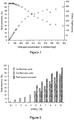
- shows gold [AuCl4]- extraction (batch sorption) from a 2 M HCl solution for a particular set of conditions set our hereinafter;
- Figure 6
- illustrates graphically the effect of contact time on the extraction of [AuCl4]- from 2 HCl at 100 rpm and 250 rpm with other experimental conditions as stated below;
- Figure 7
- illustrates graphically the relationship between the equilibrium [AuCl4]- concentration initially present in aqueous phases and the equilibrium loading capacity for the same system;
- Figure 8
- illustrates in bar graph format the efficacy of stripping the adsorbed gold from the polymer for different strengths of nitric acid as the stripping agent;
- Figure 9
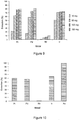
- illustrates in bar graph format the loading of selected platinum group metals onto the polymer being tested; and,
- Figure 10
- illustrates in bar graph format the loading of gold selectively from a mixture of precious metals.
- A polymeric compound having the general formula A

- The compound was obtained by the thermal imidization of the poly(styrene-co-maleic anhydride) copolymer in a double walled oil heated autoclave equipped with a mechanical agitator to produce the corresponding poly(styrene-co-maleimide). In particular, the poly(styrene-co-maleimide) was synthesized by the chemical modification of polystyrene-co-maleic anhydride with dimethylamino-propylamine. The imidization reaction typically yielded white stable dispersions containing poly(styrene-co-maleimide) nanoparticles of 46 ± 4.9 nm, with the particle size depending on the agitation rate employed. Typical reaction conditions were 150° - 180 °C at a pressure of 5 - 7 bars for 6 hours.
- The general reaction equation illustrating the amidation and cyclization during imidization is as follows:

- Imidization of poly(styrene-co-maleic anhydride) with 3-dimethylamino-propylamine (1:1) resulted in stable dispersions containing well disseminated, nano-sized poly(styrene-co-maleimide) particles of size ranging from about 150 nm at slow agitation rates of about 200 rpm to about 50 nm at higher agitation rates of about 1000rpm.
Figure 1 shows the transmission electron microscopy (TEM) image of a product that had a particle size of 77.4 ± 6.08 nm. The variation of sizes of the spherical particles that are dependent on the agitation rate is illustrated in the plot inFigure 2 . It will be noted that the poly(styrene-co-maleimide) nanoparticle sizes increased considerably with decreasing agitation rate during the synthesis. Nanoparticles are preferred as these provide a high surface area to mass ratio and hence greater extraction efficiency than larger particles. - The poly(styrene-co-maleimide) copolymer was isolated from the dispersion using freeze drying/vacuum oven drying techniques to yield a fine white powder material.
- The resultant matrix of styrene maleimide copolymer had tertiary amine functional groups. It had anionic form with H+ and the powder that had a particle size of about 50nm had a total exchange capacity of 4.30 ± 0.40 mmol/g. The BET specific surface area of the same powder was 60 ± 2.20m2/g; the average pore diameter (BET) was 86.94 angstroms; and the BJH pore volume was 0.1299 cm3/g.
- As shown in
Figure 3 , the characteristic vibrational doublet peaks of anhydride units of poly(styrene-co-maleic anhydride) appear at 1780 and 1850 cm-1. However, after reaction with 3-dimethylamino-propylamine a new intense, broad peak corresponding to the imide functionality appeared at 1690 and 1770 cm-1. No significant doublet peaks could any longer be observed at 1780 and 1850 cm-1 after amine modification, illustrating successful and complete conversion of poly(styrene-co-maleic anhydride) into the poly(styrene-co-maleimide) derivative. It should be noted that complete imidization was achieved in all cases. - Depending on reaction media and processes, it may be advantageous to make the particles of poly(styrene-co-maleimide) susceptible to a magnetic field and in that instance it is possible to envelop magnetite nanoparticles within the polymer. The magnetite may be prepared by a known process from FeCl2 and FeCl3 in aqueous ammonia solution. Excess ammonia is then removed and the magnetite dispersion may be mixed with a solution of a copolymer of styrene and the amic-acid of maleic anhydride and an aliphatic amine. Heating may be used to lead to the formation of poly(styrene-co-maleimide). This is insoluble in water and spontaneously forms nanoparticles that entrap the magnetite.
- The nanoparticles so created have the advantage that they can be manipulated by a magnetic field. For instance, the poly(styrene-co-maleimide) can be removed from a suspension by simply applying a suitable magnetic field to the suspension. This can be useful where it is desired to separate the poly(styrene-co-maleimide) particles from a suspension after an adsorption activity.
- Two alternatives are envisaged for preparing particulate material including the polymeric compound and superparamagnetic material. One method is for poly(styrene-co-maleic anhydride) to first be reacted with the functionalised amine to form the poly(styrene-co-maleimide) copolymer that is then reacted with the magnetite dispersion after the removal of the ammonia. The other method is for the entire process to be done in ammonia to form an unsubstituted maleimide, which readily reacts with formaldehyde and then subsequently reacts with primary amines in a process resembling the formation of melamine-formaldehyde polymerisation.
- Reverting now to the poly(styrene-co-maleimide) itself that was produced in the manner described above, it has been found that this polymer is particularly useful for the extraction of anionic gold chloride from an aqueous acidic solution. In hydrochloric acid solutions, the amine moieties in the backbone of the polymer are sufficiently protonated, which enables interaction with negatively charged species in solution. This process is illustrated in
Figure 4 and a simplified representation of the mechanism of extraction is also shown. - The solid phase, poly(styrene-co-maleimide) copolymer material, was contacted with 10ml (a quantity that was used in all case unless otherwise stated) of an aqueous phase, standard gold chloride solution in 2 M HCl, using a batch sorption technique. The solid phase was then separated from the aqueous phase using, in this instance, centrifugation and subsequently decantation. The supernatant was collected and analyzed for metal content using inductively coupled plasma - optical emission spectroscopy and mass balancing. It should be noted that gold is extracted as the anionic species, [AuCl4]-, as illustrated by the mechanism illustrated in
Figure 4 . The poly(styrene-co-maleimide) copolymer before extraction had a white colour and after extraction, a deep yellow colour indicative of gold adsorption. - It has also been found that the polymer described above is useful for absorbing other anionic precious metal complexes from solutions. All of the extraction processes include the steps of: contacting a metal ion-containing solution with the adsorbent material using a batch sorption technique; separating the loaded adsorbent from the solution; and recovering the adsorbed metal from the adsorbent material.
- A series of extraction/adsorption tests were conducted to obtain information with regard to the extraction efficiency, stripping and recovery of anionic precious metal complexes. Factors generally affecting extraction are particle size, surface area, pore structure, ligand concentration, acidity, and the nature of the metal species to be adsorbed. Usually, adsorption equilibria and rate of adsorption must be considered for effective applications in extraction.
- In order to determine the quantity of adsorbent needed for maximum loading capacity, the extraction of [AuCl4]- by the poly(styrene-co-maleimide) produced as described above was investigated as a function of poly(styrene-co-maleimide) dosage. A contact time of 24 h was used to ensure that equilibrium adsorption had been reached and a synthetic feed solution containing 450 mg/l [AuCl4]- was used. The results are shown in
Figure 5 and indicate, as expected, that the adsorption of [AuCl4]- is dependent on the mass of adsorbent. - As can be seen from
Figure 5 , the extraction of [AuCl4]- proliferate systematically with an increase in the adsorbent dosage. The adsorption density increases using poly(styrene-co-maleimide) dosages between 1 - 7.5 mg. Further increases in the adsorbent dosage, however, resulted in a decrease in adsorption density. This suggests that under the experimental conditions for the [AuCl4]- concentration used, 7.5 mg dosages are adequate for complete saturation of all the available amine sites on the adsorbent. This amounts to approximately 57.6 % extraction of the initial [AuCl4]- in the synthetic feed solution. The decrease in adsorption density can be attributed to the fact that more adsorption sites remain unsaturated upon raising the adsorbent dosages from 7.5 - 100 mg. It is evident that 50 mg of poly(styrene-co-maleimide) extract 99.2 % (0.992 mmol/g) of the [AuCl4]- ions initially present in the synthetic feed solution. For dosages exceeding 50 mg, no significant increase in the extraction efficiency was observed. A maximum amount of 99.6 % of [AuCl4]- was extracted from the solution using 100 mg poly(styrene-co-maleimide) adsorbent dosages. From this data it would seem that 50 mg of adsorbent would suffice for almost quantitative extraction of [AuCl4]- from solution. - The effect of contact time (at different agitation rates) on the extraction of [AuCl4]- from solution was investigated to determine the optimum time required for subsequent experiments. Agitation rates of 100 and 250 rpm were used during batch sorption with poly(styrene-co-maleimide) doages of 10 ± 0.1 and 50 ± 0.2 mg, respectively. Poly(styrene-co-maleimide) was contacted with a solution containing 450 mg/L [AuCl4]- for periods of between 0.5 and 15 min at a temperature of 23 ± 1.0 °C.
Figure 6 shows that the extraction kinetics is extremely fast and to some extent dependant on the rate of agitation. The data indicates that using an agitation rate of 100 rpm, an increase in the extraction efficiency from 88 - 99.8 % takes place over the time as from 0.5 minutes. In comparison, at an agitation rate of 250 rpm, the extraction of [AuCl4]- is slightly faster showing an enhanced extraction efficiency of 97.53 - 99.8 % for the same time period. - It is believed that the extremely fast kinetics of extraction can be attributed to:
- (i) the rate of collision between the adsorbent material and the metal species in the aqueous phase;
- (ii) the size of the adsorbent material - the smaller the particle size of the adsorbent material, the better the access to the surface area and the faster the rate of extraction kinetics;
- (iii) porosity - (based on electron microscopy (results not shown here), it was found that individual particles densely aggregate to form a film-like structured material to almost form flat surfaces. However the convoluted material displays clear evidence of elongated strands of mesoporosity (pore sizes of about 86 angstroms). These pores provide superb conditions for adsorption to occur, since adsorbate can interact with many surfaces simultaneously.);
- (iv) the nature of interaction between the adsorbent and the adsorbate - the exact nature of the interaction depends on the details of the species involved, but the adsorption process is expected to occur due to electrostatic attraction.
-
Figure 6 shows no significant change in extraction efficiency with increasing contact time beyond 5 min, indicating that a short exposure time of only 15 min is sufficient for adsorption equilibrium. That time period was therefore used during the rest of the experimental work unless otherwise stated. - The effect of initial metal ion concentration on the adsorption of [AuCl4]- by poly(styrene-co-maleimide) was investigated in order to establish the equilibrium loading capacity of the adsorbent. Studies were carried out using varying initial [AuCl4]- concentrations from 1 - 935 mg/L and poly(styrene-co-maleimide) dosages of 10 mg.
Figure 7 illustrates the relationship between the equilibrium [AuCl4]- concentration initially present in the aqueous phase and the equilibrium loading capacity. As can be seen, the results demonstrate that the amount of [AuCl4]- adsorbed increases with increasing initial [AuCl4]- concentration. The adsorption isotherms of [AuCl4]- by poly(styrene-co-maleimide) therefore resemble a Langmuir-type curve. From 1 mg/l to about 80 mg/l, quantitative extraction was observed. This indicates that in that concentration range, 10 mg dosages of poly(styrene-co-maleimide) would suffice for extraction of [AuCl4]- quantitatively from solution. It is noticeable from the experimental data that saturation has not been completely reached indicating that excess available amine sites are present. From the result, the maximum adsorption capacity was found to be 343.9 mg/g or 1.746 mmol/g (amount of [AuCl4]- adsorbed per gram of dry adsorbent). It should be noted that the equilibrium adsorption data point at 674 mg/l is an outlier and this discrepancy may be attributed to experimental error. - To elute the adsorbed [AuCl4]- retained on the poly(styrene-co-maleimide) material after extraction, HNO3 solutions of various concentrations were tested as eluants. It should be noted that for these experiments, samples containing practically quantitatively adsorbed [AuCl4]- of greater than 99 % were used. Represented in
Figure 8 are the [AuCl4]- recovery profiles as a function of HNO3 concentrations in the range 0.1 - 10 M. The recovery efficiency using less than 4 M HNO3 was almost inconsequential, as illustrated by the 1 st recovery cycle. For that reason, only one recovery cycle was done in the 0.1 - 4 M range whilst two successive recovery cycles were employed for 5 - 10 M HNO3 solutions. Also shown inFigure 8 is the total amount of [AuCl4]- recovered for the two successive recovery cycles for the 5 - 10 M HNO3. As can be seen, there is a steady increase in the recovery reaching a maximum of about 93 % using 10 M HNO3. - From
Figure 8 , it is apparent that with an increase in HNO3 concentration, the amount of [AuCl4]- recovered increases. At the lower limit of the profile between 0.1 M and 4 M HNO3, only about 1.2 to 21.5 % of the adsorbed [AuCl4]- could be recovered from the adsorbent in one strip cycle. The 5 to 10 M HNO3 solutions showed a considerable rise in the [AuCl4]- recovery reaching a maximum of 76.5 % for the first recovery cycle. Conducting a second stripping cycle (from 5 to 10 M HNO3), additional [AuCl4]- that remained adsorbed after the first strip cycle was recovered, although this amounts to less [AuCl4]- recovered than in the first stripping cycle. - The results are also summarized in Table 1 below.
Table 1 HNO3 (mol/l) 1st Cycle 2nd cycle Efficiency Total Recovered 0.1 1.17 - - 1.17 1 6.87 - - 6.87 2 11.73 - - 11.73 3 14.49 - - 14.49 4 21.48 - - 21.48 5 29.63 24.17 81.55 46.64 6 38.58 29.19 75.68 56.51 7 43.91 35.07 79.87 63.59 8 56.57 49.64 87.75 78.13 9 66.68 50.79 76.17 83.61 10 76.53 70.92 92.66 93.18 - A mass balance was carried out using a mixture of 10 % HNO3 /1% HCl and microwave digestion for 30 min at a temperature of 230 °C and pressure 41.37 bar (600 psi). Digestion of the [AuCl4]- adsorbed poly(styrene-co-maleimide) material under similar conditions to those mentioned above followed by addition of deionized H2O, resulted in the precipitation of highly pure gold powder. The morphology of the gold precipitate was investigated with scanning electron microscopy and was found to be of a thin flake-like structure. The crystallinity and phase purity was verified by powder x-ray diffraction.
- The extraction behavior of poly(styrene-co-maleimide) for precious metal complexes more generally, namely [AuCl4]-, [PdCl4]2-, [IrCl6]2-, [PtCl6]2- and [RhCl6]3- as a function of adsorbent dosage was also investigated and the results are shown in
Figure 9 . The results clearly indicate that the extraction is dependent on the poly(styrene-co-maleimide) dosage. The dosages used were 10, 50, 100, and 150 mg of poly(styrene-co-maleimide). - In general the order of selectivity for the extraction was found to be [IrCl6]2- > [PtCl6]2- ≈ [PdCl4]2- > [RhCl6]3- for the 10 and 50 mg poly(styrene-co-maleimide) dosages. In the case of the 100 and 150 mg dosages the selectivity is more or less in the order [PdCl4]2- ≈ [PtCl6]2- > [IrCl6]2- > [RhCl6]3, respectively. The "extractability" of these metals can be related to the size and charge of the complex anions.
- The excellent selectivity of [AuCl4]- above the other anionic PGM chloro-complexes is illustrated by the results shown in
Figure 10 . The extraction profiles shown of the precious metals were of tests in which 50 mg poly(styrene-co-maleimide) adsorbent dosages were employed. FromFigure 10 , it can be deduced that no significant decrease in the PGM extraction efficiency was observed in the presence or absence of [AuCl4]- in the multielement solution. However, [AuCl4]- was quantitatively extracted as was found previously, even in a competitive extraction environment. In this case the order of "extractability" was found to be [AuCl4]- > [IrCl6]2- > [PtCl6]2- > [PdCl4]2- > [RhCl6]3-. It would seem as if the poly(styrene-co-maleimide) adsorbent is very selective and has a high affinity for [AuCl4]- over PGMs and is also selective for [IrCl6]2-, [PtCl6]2- and [PdCl4]2- over [RhCl6]3-. It is believed that the reason for the latter observation can be attributed to the fact that [RhCl6]3- complexes hydrate extensively to form [RhCl6-n(H2O)n]3-n species (with n = 0, 1, 2 and 3), even under the acidic conditions used in extraction experiments. - It will be appreciated that the polymeric compounds of formula A may be useful in extracting many other metals or metal compounds, including metal complexes, from solution, particularly those having an anionic form. The polymeric compounds may have many different forms, particularly as regards the identity of R, R' and R". For example these may include further amine groups or other metal ligands such as triazoles and imidazoles, and these could be tethered to the polymer via an aminoalkyl-linker. The high reactivity of the maleic anhydride groups in the co-polymer toward nucleophilic reagents enables the manufacturing of materials with a variety of functionalities depending on the desired application.
- The polymeric compounds disclosed herein are relatively simple to produce and offer very high efficiency in extracting gold and other metals from solution. The inclusion of superparamagnetic material in particles of the polymeric compound, preferably through encapsulation, can be used to enable these to be easily separated out of suspensions with a high degree of efficiency.
Claims (6)
- A method for the separation of ionic species constituted by, or containing, one or more metals, comprising contacting a suitable polymeric compound of the formula A
 wherein R is an alkyl chain which may be either saturated or unsaturated and may have substituents attached to the chain, andR' and R", which may be the same or different from each other, are selected from alkyl groups, substituted or unsubstituted, or linked to form a saturated or unsaturated cyclic moiety incorporating the adjacent nitrogen atom, with or without additional heteroatoms in the ring,with a solution containing the required ionic species in order to adsorb required species onto the polymeric compound; separating the polymeric compound from the solution; and treating the polymeric material in order to recover the required metal.
 - A method as claimed in claim 1 in which the ionic species is anionic metal complexes.
- A method as claimed in claim 2 in which the ionic species are ionic metal complexes of one or more of the precious metals.
- A method as claimed in claim 3 in which the ionic metal complexes are chloride or cyanide complexes in an appropriate solution.
- A method as claimed in any one of claims 1 to 4 in which the required metal is recovered by stripping the polymeric material with a suitable stripping agent selected from nitric acid, hydrochloric acid, sulphuric acid, and acidified thiourea.
- A method as claimed in claim 5 in which stripping is effected using concentrated nitric acid having a concentration of from 5 to 10 Molar HNO3.
Applications Claiming Priority (2)
| Application Number | Priority Date | Filing Date | Title |
|---|---|---|---|
| ZA201100551 | 2011-01-21 | ||
| PCT/IB2012/000078 WO2012098459A1 (en) | 2011-01-21 | 2012-01-20 | Modified poly (styrene-co-maleic anhydride) and uses thereof |
Publications (3)
| Publication Number | Publication Date |
|---|---|
| EP2665757A1 EP2665757A1 (en) | 2013-11-27 |
| EP2665757A4 EP2665757A4 (en) | 2014-06-04 |
| EP2665757B1 true EP2665757B1 (en) | 2017-03-01 |
Family
ID=46515207
Family Applications (1)
| Application Number | Title | Priority Date | Filing Date |
|---|---|---|---|
| EP12736781.1A Not-in-force EP2665757B1 (en) | 2011-01-21 | 2012-01-20 | Method for the separation of ionic species using modified poly (styrene-co-maleic anhydride) |
Country Status (8)
| Country | Link |
|---|---|
| US (1) | US9700883B2 (en) |
| EP (1) | EP2665757B1 (en) |
| KR (1) | KR20140020856A (en) |
| CN (1) | CN103314021B (en) |
| AU (1) | AU2012208346B2 (en) |
| BR (1) | BR112013018084A2 (en) |
| WO (1) | WO2012098459A1 (en) |
| ZA (1) | ZA201304309B (en) |
Families Citing this family (9)
| Publication number | Priority date | Publication date | Assignee | Title |
|---|---|---|---|---|
| CN105462570B (en) * | 2014-09-09 | 2018-01-23 | 中国石油化工股份有限公司 | A kind of heat-resistance type clay stabilizer and its synthetic method |
| WO2016122648A1 (en) | 2015-01-30 | 2016-08-04 | Hewlett-Packard Development Company, L.P. | Ink composition including a modified polymer or copolymer additive |
| BR112018077036B1 (en) * | 2016-06-22 | 2023-03-07 | Performance Biofilaments Inc | METHOD OF PRODUCTION OF A MODIFIED SURFACE CELLULOSIC MATERIAL |
| CN108250372B (en) * | 2018-01-12 | 2020-09-11 | 南京大学 | A kind of hydrophilic magnetic styrene series strong base anion exchange microsphere resin and preparation method thereof |
| FR3120869B1 (en) * | 2021-03-22 | 2024-04-26 | Valochem | Emulsifying composition for bitumens |
| GB2608837A (en) * | 2021-07-13 | 2023-01-18 | Univ Stellenbosch | Zwitterionic polymers for forming nanodiscs |
| CN113856635B (en) * | 2021-10-25 | 2022-12-20 | 中国科学院长春应用化学研究所 | Macro-size continuous MOF (metal organic framework) membrane material as well as preparation method and application thereof |
| CN114854027B (en) * | 2022-04-27 | 2023-06-02 | 齐鲁工业大学 | A kind of modified polyphenolamine material and its preparation method and application |
| CN115197381B (en) * | 2022-09-16 | 2022-11-25 | 广州鹿山新材料股份有限公司 | Unsaturated SMA resin modified polypropylene and preparation method thereof |
Family Cites Families (12)
| Publication number | Priority date | Publication date | Assignee | Title |
|---|---|---|---|---|
| US3635697A (en) * | 1969-09-30 | 1972-01-18 | Us Interior | Recovery of gold |
| US3922231A (en) * | 1972-11-24 | 1975-11-25 | Ppg Industries Inc | Process for the recovery of fission products from waste solutions utilizing controlled cathodic potential electrolysis |
| US5411573A (en) | 1993-10-22 | 1995-05-02 | National University Of Singapore | Recovery of precious metals from acid solutions by N-containing electroactive polymers |
| DE4342157A1 (en) * | 1993-12-10 | 1995-06-14 | Leuna Werke Gmbh | Cationic paper-sizing agents |
| NL1008469C2 (en) | 1998-03-04 | 1999-09-07 | Dsm Nv | Aqueous dispersions of a polymer. |
| FR2795076B1 (en) | 1999-06-21 | 2001-08-10 | Atofina | HYDROPHOBIC CATIONIC DISPERSIONS STABILIZED BY MALEIMIDE COPOLYMERS OF LOW MOLECULAR MASS FOR PAPER SIZING |
| AUPR831101A0 (en) | 2001-10-16 | 2001-11-08 | University Of Wollongong, The | Separation and recovery of precious metals using polymer materials |
| US7078464B2 (en) | 2002-06-26 | 2006-07-18 | Sartomer Technology, Inc. | Acid salts of amine-functionalized SMA imide resins |
| EP1422248A1 (en) | 2002-10-04 | 2004-05-26 | Raisio Chemicals Ltd. | A plastic pigment comprising an aqueous dispersion of styrene maleimine acid anhydride particles |
| JP2006502302A (en) * | 2002-10-04 | 2006-01-19 | チバ スペシャルティ ケミカルズ ホールディング インコーポレーテッド | Aqueous polymer dispersion, its manufacture and its use |
| FR2873121B1 (en) * | 2004-07-15 | 2007-12-14 | Clariant France Soc Par Action | CATIONIC DISPERSIONS FOR BONDING PAPER |
| CA2657261C (en) * | 2006-07-31 | 2014-10-07 | Topchim N.V. | Particle in the shape of an encapsulated droplet and process for making such a particle |
-
2012
- 2012-01-20 KR KR1020137019734A patent/KR20140020856A/en not_active Ceased
- 2012-01-20 US US13/980,710 patent/US9700883B2/en not_active Expired - Fee Related
- 2012-01-20 WO PCT/IB2012/000078 patent/WO2012098459A1/en not_active Ceased
- 2012-01-20 CN CN201280005531.9A patent/CN103314021B/en not_active Expired - Fee Related
- 2012-01-20 EP EP12736781.1A patent/EP2665757B1/en not_active Not-in-force
- 2012-01-20 BR BR112013018084-6A patent/BR112013018084A2/en not_active Application Discontinuation
- 2012-01-20 AU AU2012208346A patent/AU2012208346B2/en not_active Ceased
-
2013
- 2013-06-12 ZA ZA2013/04309A patent/ZA201304309B/en unknown
Non-Patent Citations (1)
| Title |
|---|
| None * |
Also Published As
| Publication number | Publication date |
|---|---|
| NZ612480A (en) | 2015-02-27 |
| EP2665757A4 (en) | 2014-06-04 |
| WO2012098459A1 (en) | 2012-07-26 |
| CN103314021B (en) | 2017-05-17 |
| ZA201304309B (en) | 2014-02-26 |
| EP2665757A1 (en) | 2013-11-27 |
| AU2012208346A1 (en) | 2013-07-04 |
| CN103314021A (en) | 2013-09-18 |
| KR20140020856A (en) | 2014-02-19 |
| BR112013018084A2 (en) | 2020-10-27 |
| AU2012208346B2 (en) | 2015-04-09 |
| US9700883B2 (en) | 2017-07-11 |
| US20140023570A1 (en) | 2014-01-23 |
Similar Documents
| Publication | Publication Date | Title |
|---|---|---|
| US9700883B2 (en) | Modified poly (styrene-co-maleic anhydride) and uses thereof | |
| Betiha et al. | Polyvinylpyrrolidone-Aminopropyl-SBA-15 schiff Base hybrid for efficient removal of divalent heavy metal cations from wastewater | |
| Zhang et al. | Removal of heavy metal ions from aqueous solution using Fe3O4–SiO2-poly (1, 2-diaminobenzene) core–shell sub-micron particles | |
| Liao et al. | In-situ construction of novel silver nanoparticle decorated polymeric spheres as highly active and stable catalysts for reduction of methylene blue dye | |
| Ramesh et al. | Adsorption of gold (III), platinum (IV) and palladium (II) onto glycine modified crosslinked chitosan resin | |
| KR100861452B1 (en) | Method for preparing polyacrylate microspheres in surface-engraved core-shell form for selective separation of heavy metal ions | |
| Bai et al. | Synthesis of a novel silica-supported dithiocarbamate adsorbent and its properties for the removal of heavy metal ions | |
| US10343143B2 (en) | Metal chelating composites, methods of using composites, and methods of making composites | |
| Jainae et al. | Extraction and recovery of precious metal ions in wastewater by polystyrene-coated magnetic particles functionalized with 2-(3-(2-aminoethylthio) propylthio) ethanamine | |
| Zhou et al. | One-step synthesis of robust amine-and vinyl-capped magnetic iron oxide nanoparticles for polymer grafting, dye adsorption, and catalysis | |
| Moradi et al. | Chelating magnetic nanocomposite for the rapid removal of Pb (II) ions from aqueous solutions: characterization, kinetic, isotherm and thermodynamic studies | |
| Liu et al. | Adsorptive recovery of palladium (II) from aqueous solution onto cross-linked chitosan/montmorillonite membrane | |
| Shan et al. | Enhanced adsorption and separation of Re (VII) using organic-inorganic hybrid silica adsorbent | |
| WO2011151725A2 (en) | Organic templated nanometal oxyhydroxide | |
| Moorthy et al. | Step-up synthesis of amidoxime-functionalised periodic mesoporous organosilicas with an amphoteric ligand in the framework for drug delivery | |
| Dai et al. | Sustainable synthesis of hollow Cu-loaded poly (m-phenylenediamine) particles and their application for arsenic removal | |
| Tshwenya et al. | Ethylenediamine functionalized carbon nanoparticles: synthesis, characterization, and evaluation for cadmium removal from water | |
| Allen et al. | Sol–gel synthesis and characterization of silica polyamine composites: applications to metal ion capture | |
| An et al. | Functionalization of carbon nanobeads and their use as metal ion adsorbents | |
| Li et al. | Synthesis of Schiff base polymer/black talc nanocomposites based on m-phenylendiamine with enhanced separation performance for lead adsorption | |
| Stolyarchuk et al. | Direct synthesis of efficient silica-based adsorbents carrying EDTA groups for the separation of Cu (II) and Ni (II) ions | |
| Pourjavadi et al. | A new functionalized magnetic nanocomposite of poly (methylacrylate) for the efficient removal of anionic dyes from aqueous media | |
| Wang et al. | Understanding the adsorption behavior and mechanism of Pt (IV) and Pd (II) on super amino-modified monodispersed PGMA microspheres | |
| Tummachote et al. | Highly Robust Alginate-based Magnetic Nanosorbents of Pd Catalysts for the 4-Nitrophenol Reduction | |
| Tan et al. | The effect of additives on the size of Fe3O4 particles |
Legal Events
| Date | Code | Title | Description |
|---|---|---|---|
| PUAI | Public reference made under article 153(3) epc to a published international application that has entered the european phase |
Free format text: ORIGINAL CODE: 0009012 |
|
| 17P | Request for examination filed |
Effective date: 20130724 |
|
| AK | Designated contracting states |
Kind code of ref document: A1 Designated state(s): AL AT BE BG CH CY CZ DE DK EE ES FI FR GB GR HR HU IE IS IT LI LT LU LV MC MK MT NL NO PL PT RO RS SE SI SK SM TR |
|
| DAX | Request for extension of the european patent (deleted) | ||
| A4 | Supplementary search report drawn up and despatched |
Effective date: 20140506 |
|
| RIC1 | Information provided on ipc code assigned before grant |
Ipc: C08F 222/08 20060101ALN20140428BHEP Ipc: C22B 3/24 20060101ALI20140428BHEP Ipc: C08F 8/32 20060101AFI20140428BHEP Ipc: C08F 212/08 20060101ALN20140428BHEP |
|
| 17Q | First examination report despatched |
Effective date: 20141006 |
|
| REG | Reference to a national code |
Ref country code: DE Ref legal event code: R079 Ref document number: 602012029228 Country of ref document: DE Free format text: PREVIOUS MAIN CLASS: C08F0212080000 Ipc: C22B0003240000 |
|
| RIC1 | Information provided on ipc code assigned before grant |
Ipc: B01J 41/14 20060101ALI20160727BHEP Ipc: C08F 212/08 20060101ALN20160727BHEP Ipc: C22B 3/24 20060101AFI20160727BHEP Ipc: C08F 8/32 20060101ALI20160727BHEP Ipc: C08F 222/08 20060101ALN20160727BHEP |
|
| GRAP | Despatch of communication of intention to grant a patent |
Free format text: ORIGINAL CODE: EPIDOSNIGR1 |
|
| RIC1 | Information provided on ipc code assigned before grant |
Ipc: C08F 222/08 20060101ALN20160829BHEP Ipc: C08F 8/48 20060101ALI20160829BHEP Ipc: C08F 8/44 20060101ALI20160829BHEP Ipc: C22B 3/24 20060101AFI20160829BHEP Ipc: C08F 212/08 20060101ALN20160829BHEP Ipc: C08F 8/32 20060101ALI20160829BHEP Ipc: B01J 41/14 20060101ALI20160829BHEP |
|
| INTG | Intention to grant announced |
Effective date: 20160916 |
|
| GRAS | Grant fee paid |
Free format text: ORIGINAL CODE: EPIDOSNIGR3 |
|
| GRAA | (expected) grant |
Free format text: ORIGINAL CODE: 0009210 |
|
| AK | Designated contracting states |
Kind code of ref document: B1 Designated state(s): AL AT BE BG CH CY CZ DE DK EE ES FI FR GB GR HR HU IE IS IT LI LT LU LV MC MK MT NL NO PL PT RO RS SE SI SK SM TR |
|
| REG | Reference to a national code |
Ref country code: GB Ref legal event code: FG4D |
|
| REG | Reference to a national code |
Ref country code: CH Ref legal event code: EP Ref country code: AT Ref legal event code: REF Ref document number: 871430 Country of ref document: AT Kind code of ref document: T Effective date: 20170315 |
|
| REG | Reference to a national code |
Ref country code: IE Ref legal event code: FG4D |
|
| REG | Reference to a national code |
Ref country code: DE Ref legal event code: R096 Ref document number: 602012029228 Country of ref document: DE |
|
| REG | Reference to a national code |
Ref country code: NL Ref legal event code: FP |
|
| REG | Reference to a national code |
Ref country code: LT Ref legal event code: MG4D |
|
| REG | Reference to a national code |
Ref country code: AT Ref legal event code: MK05 Ref document number: 871430 Country of ref document: AT Kind code of ref document: T Effective date: 20170301 |
|
| PG25 | Lapsed in a contracting state [announced via postgrant information from national office to epo] |
Ref country code: HR Free format text: LAPSE BECAUSE OF FAILURE TO SUBMIT A TRANSLATION OF THE DESCRIPTION OR TO PAY THE FEE WITHIN THE PRESCRIBED TIME-LIMIT Effective date: 20170301 Ref country code: FI Free format text: LAPSE BECAUSE OF FAILURE TO SUBMIT A TRANSLATION OF THE DESCRIPTION OR TO PAY THE FEE WITHIN THE PRESCRIBED TIME-LIMIT Effective date: 20170301 Ref country code: GR Free format text: LAPSE BECAUSE OF FAILURE TO SUBMIT A TRANSLATION OF THE DESCRIPTION OR TO PAY THE FEE WITHIN THE PRESCRIBED TIME-LIMIT Effective date: 20170602 Ref country code: LT Free format text: LAPSE BECAUSE OF FAILURE TO SUBMIT A TRANSLATION OF THE DESCRIPTION OR TO PAY THE FEE WITHIN THE PRESCRIBED TIME-LIMIT Effective date: 20170301 Ref country code: NO Free format text: LAPSE BECAUSE OF FAILURE TO SUBMIT A TRANSLATION OF THE DESCRIPTION OR TO PAY THE FEE WITHIN THE PRESCRIBED TIME-LIMIT Effective date: 20170601 |
|
| PG25 | Lapsed in a contracting state [announced via postgrant information from national office to epo] |
Ref country code: LV Free format text: LAPSE BECAUSE OF FAILURE TO SUBMIT A TRANSLATION OF THE DESCRIPTION OR TO PAY THE FEE WITHIN THE PRESCRIBED TIME-LIMIT Effective date: 20170301 Ref country code: ES Free format text: LAPSE BECAUSE OF FAILURE TO SUBMIT A TRANSLATION OF THE DESCRIPTION OR TO PAY THE FEE WITHIN THE PRESCRIBED TIME-LIMIT Effective date: 20170301 Ref country code: RS Free format text: LAPSE BECAUSE OF FAILURE TO SUBMIT A TRANSLATION OF THE DESCRIPTION OR TO PAY THE FEE WITHIN THE PRESCRIBED TIME-LIMIT Effective date: 20170301 Ref country code: SE Free format text: LAPSE BECAUSE OF FAILURE TO SUBMIT A TRANSLATION OF THE DESCRIPTION OR TO PAY THE FEE WITHIN THE PRESCRIBED TIME-LIMIT Effective date: 20170301 Ref country code: BG Free format text: LAPSE BECAUSE OF FAILURE TO SUBMIT A TRANSLATION OF THE DESCRIPTION OR TO PAY THE FEE WITHIN THE PRESCRIBED TIME-LIMIT Effective date: 20170601 Ref country code: AT Free format text: LAPSE BECAUSE OF FAILURE TO SUBMIT A TRANSLATION OF THE DESCRIPTION OR TO PAY THE FEE WITHIN THE PRESCRIBED TIME-LIMIT Effective date: 20170301 |
|
| PG25 | Lapsed in a contracting state [announced via postgrant information from national office to epo] |
Ref country code: EE Free format text: LAPSE BECAUSE OF FAILURE TO SUBMIT A TRANSLATION OF THE DESCRIPTION OR TO PAY THE FEE WITHIN THE PRESCRIBED TIME-LIMIT Effective date: 20170301 Ref country code: RO Free format text: LAPSE BECAUSE OF FAILURE TO SUBMIT A TRANSLATION OF THE DESCRIPTION OR TO PAY THE FEE WITHIN THE PRESCRIBED TIME-LIMIT Effective date: 20170301 Ref country code: SK Free format text: LAPSE BECAUSE OF FAILURE TO SUBMIT A TRANSLATION OF THE DESCRIPTION OR TO PAY THE FEE WITHIN THE PRESCRIBED TIME-LIMIT Effective date: 20170301 Ref country code: CZ Free format text: LAPSE BECAUSE OF FAILURE TO SUBMIT A TRANSLATION OF THE DESCRIPTION OR TO PAY THE FEE WITHIN THE PRESCRIBED TIME-LIMIT Effective date: 20170301 |
|
| PG25 | Lapsed in a contracting state [announced via postgrant information from national office to epo] |
Ref country code: IS Free format text: LAPSE BECAUSE OF FAILURE TO SUBMIT A TRANSLATION OF THE DESCRIPTION OR TO PAY THE FEE WITHIN THE PRESCRIBED TIME-LIMIT Effective date: 20170701 Ref country code: SM Free format text: LAPSE BECAUSE OF FAILURE TO SUBMIT A TRANSLATION OF THE DESCRIPTION OR TO PAY THE FEE WITHIN THE PRESCRIBED TIME-LIMIT Effective date: 20170301 Ref country code: PT Free format text: LAPSE BECAUSE OF FAILURE TO SUBMIT A TRANSLATION OF THE DESCRIPTION OR TO PAY THE FEE WITHIN THE PRESCRIBED TIME-LIMIT Effective date: 20170703 Ref country code: PL Free format text: LAPSE BECAUSE OF FAILURE TO SUBMIT A TRANSLATION OF THE DESCRIPTION OR TO PAY THE FEE WITHIN THE PRESCRIBED TIME-LIMIT Effective date: 20170301 |
|
| REG | Reference to a national code |
Ref country code: DE Ref legal event code: R097 Ref document number: 602012029228 Country of ref document: DE |
|
| PLBE | No opposition filed within time limit |
Free format text: ORIGINAL CODE: 0009261 |
|
| STAA | Information on the status of an ep patent application or granted ep patent |
Free format text: STATUS: NO OPPOSITION FILED WITHIN TIME LIMIT |
|
| PG25 | Lapsed in a contracting state [announced via postgrant information from national office to epo] |
Ref country code: DK Free format text: LAPSE BECAUSE OF FAILURE TO SUBMIT A TRANSLATION OF THE DESCRIPTION OR TO PAY THE FEE WITHIN THE PRESCRIBED TIME-LIMIT Effective date: 20170301 |
|
| 26N | No opposition filed |
Effective date: 20171204 |
|
| PG25 | Lapsed in a contracting state [announced via postgrant information from national office to epo] |
Ref country code: IT Free format text: LAPSE BECAUSE OF FAILURE TO SUBMIT A TRANSLATION OF THE DESCRIPTION OR TO PAY THE FEE WITHIN THE PRESCRIBED TIME-LIMIT Effective date: 20170301 Ref country code: SI Free format text: LAPSE BECAUSE OF FAILURE TO SUBMIT A TRANSLATION OF THE DESCRIPTION OR TO PAY THE FEE WITHIN THE PRESCRIBED TIME-LIMIT Effective date: 20170301 |
|
| REG | Reference to a national code |
Ref country code: DE Ref legal event code: R119 Ref document number: 602012029228 Country of ref document: DE |
|
| REG | Reference to a national code |
Ref country code: CH Ref legal event code: PL |
|
| GBPC | Gb: european patent ceased through non-payment of renewal fee |
Effective date: 20180120 |
|
| PG25 | Lapsed in a contracting state [announced via postgrant information from national office to epo] |
Ref country code: DE Free format text: LAPSE BECAUSE OF NON-PAYMENT OF DUE FEES Effective date: 20180801 Ref country code: FR Free format text: LAPSE BECAUSE OF NON-PAYMENT OF DUE FEES Effective date: 20180131 Ref country code: LU Free format text: LAPSE BECAUSE OF NON-PAYMENT OF DUE FEES Effective date: 20180120 |
|
| REG | Reference to a national code |
Ref country code: IE Ref legal event code: MM4A |
|
| REG | Reference to a national code |
Ref country code: FR Ref legal event code: ST Effective date: 20180928 |
|
| REG | Reference to a national code |
Ref country code: BE Ref legal event code: MM Effective date: 20180131 |
|
| PG25 | Lapsed in a contracting state [announced via postgrant information from national office to epo] |
Ref country code: CH Free format text: LAPSE BECAUSE OF NON-PAYMENT OF DUE FEES Effective date: 20180131 Ref country code: LI Free format text: LAPSE BECAUSE OF NON-PAYMENT OF DUE FEES Effective date: 20180131 Ref country code: GB Free format text: LAPSE BECAUSE OF NON-PAYMENT OF DUE FEES Effective date: 20180120 Ref country code: BE Free format text: LAPSE BECAUSE OF NON-PAYMENT OF DUE FEES Effective date: 20180131 |
|
| PG25 | Lapsed in a contracting state [announced via postgrant information from national office to epo] |
Ref country code: IE Free format text: LAPSE BECAUSE OF NON-PAYMENT OF DUE FEES Effective date: 20180120 |
|
| PGFP | Annual fee paid to national office [announced via postgrant information from national office to epo] |
Ref country code: NL Payment date: 20190122 Year of fee payment: 8 |
|
| PG25 | Lapsed in a contracting state [announced via postgrant information from national office to epo] |
Ref country code: MC Free format text: LAPSE BECAUSE OF FAILURE TO SUBMIT A TRANSLATION OF THE DESCRIPTION OR TO PAY THE FEE WITHIN THE PRESCRIBED TIME-LIMIT Effective date: 20170301 |
|
| PG25 | Lapsed in a contracting state [announced via postgrant information from national office to epo] |
Ref country code: MT Free format text: LAPSE BECAUSE OF NON-PAYMENT OF DUE FEES Effective date: 20180120 |
|
| PG25 | Lapsed in a contracting state [announced via postgrant information from national office to epo] |
Ref country code: TR Free format text: LAPSE BECAUSE OF FAILURE TO SUBMIT A TRANSLATION OF THE DESCRIPTION OR TO PAY THE FEE WITHIN THE PRESCRIBED TIME-LIMIT Effective date: 20170301 |
|
| PG25 | Lapsed in a contracting state [announced via postgrant information from national office to epo] |
Ref country code: HU Free format text: LAPSE BECAUSE OF FAILURE TO SUBMIT A TRANSLATION OF THE DESCRIPTION OR TO PAY THE FEE WITHIN THE PRESCRIBED TIME-LIMIT; INVALID AB INITIO Effective date: 20120120 |
|
| PG25 | Lapsed in a contracting state [announced via postgrant information from national office to epo] |
Ref country code: CY Free format text: LAPSE BECAUSE OF FAILURE TO SUBMIT A TRANSLATION OF THE DESCRIPTION OR TO PAY THE FEE WITHIN THE PRESCRIBED TIME-LIMIT Effective date: 20170301 Ref country code: MK Free format text: LAPSE BECAUSE OF NON-PAYMENT OF DUE FEES Effective date: 20170301 |
|
| PG25 | Lapsed in a contracting state [announced via postgrant information from national office to epo] |
Ref country code: AL Free format text: LAPSE BECAUSE OF FAILURE TO SUBMIT A TRANSLATION OF THE DESCRIPTION OR TO PAY THE FEE WITHIN THE PRESCRIBED TIME-LIMIT Effective date: 20170301 |
|
| REG | Reference to a national code |
Ref country code: NL Ref legal event code: MM Effective date: 20200201 |
|
| PG25 | Lapsed in a contracting state [announced via postgrant information from national office to epo] |
Ref country code: NL Free format text: LAPSE BECAUSE OF NON-PAYMENT OF DUE FEES Effective date: 20200201 |