EP2664765A2 - System and method for heat recovery in a gas turbine engine - Google Patents
System and method for heat recovery in a gas turbine engine Download PDFInfo
- Publication number
- EP2664765A2 EP2664765A2 EP13167160.4A EP13167160A EP2664765A2 EP 2664765 A2 EP2664765 A2 EP 2664765A2 EP 13167160 A EP13167160 A EP 13167160A EP 2664765 A2 EP2664765 A2 EP 2664765A2
- Authority
- EP
- European Patent Office
- Prior art keywords
- gas turbine
- turbine engine
- heat exchanger
- temperature
- heat
- Prior art date
- Legal status (The legal status is an assumption and is not a legal conclusion. Google has not performed a legal analysis and makes no representation as to the accuracy of the status listed.)
- Granted
Links
Images




Classifications
-
- F—MECHANICAL ENGINEERING; LIGHTING; HEATING; WEAPONS; BLASTING
- F02—COMBUSTION ENGINES; HOT-GAS OR COMBUSTION-PRODUCT ENGINE PLANTS
- F02C—GAS-TURBINE PLANTS; AIR INTAKES FOR JET-PROPULSION PLANTS; CONTROLLING FUEL SUPPLY IN AIR-BREATHING JET-PROPULSION PLANTS
- F02C7/00—Features, components parts, details or accessories, not provided for in, or of interest apart form groups F02C1/00 - F02C6/00; Air intakes for jet-propulsion plants
- F02C7/04—Air intakes for gas-turbine plants or jet-propulsion plants
- F02C7/047—Heating to prevent icing
-
- F—MECHANICAL ENGINEERING; LIGHTING; HEATING; WEAPONS; BLASTING
- F01—MACHINES OR ENGINES IN GENERAL; ENGINE PLANTS IN GENERAL; STEAM ENGINES
- F01D—NON-POSITIVE DISPLACEMENT MACHINES OR ENGINES, e.g. STEAM TURBINES
- F01D25/00—Component parts, details, or accessories, not provided for in, or of interest apart from, other groups
- F01D25/02—De-icing means for engines having icing phenomena
-
- F—MECHANICAL ENGINEERING; LIGHTING; HEATING; WEAPONS; BLASTING
- F02—COMBUSTION ENGINES; HOT-GAS OR COMBUSTION-PRODUCT ENGINE PLANTS
- F02C—GAS-TURBINE PLANTS; AIR INTAKES FOR JET-PROPULSION PLANTS; CONTROLLING FUEL SUPPLY IN AIR-BREATHING JET-PROPULSION PLANTS
- F02C7/00—Features, components parts, details or accessories, not provided for in, or of interest apart form groups F02C1/00 - F02C6/00; Air intakes for jet-propulsion plants
- F02C7/04—Air intakes for gas-turbine plants or jet-propulsion plants
- F02C7/057—Control or regulation
-
- F—MECHANICAL ENGINEERING; LIGHTING; HEATING; WEAPONS; BLASTING
- F02—COMBUSTION ENGINES; HOT-GAS OR COMBUSTION-PRODUCT ENGINE PLANTS
- F02C—GAS-TURBINE PLANTS; AIR INTAKES FOR JET-PROPULSION PLANTS; CONTROLLING FUEL SUPPLY IN AIR-BREATHING JET-PROPULSION PLANTS
- F02C7/00—Features, components parts, details or accessories, not provided for in, or of interest apart form groups F02C1/00 - F02C6/00; Air intakes for jet-propulsion plants
- F02C7/08—Heating air supply before combustion, e.g. by exhaust gases
-
- F—MECHANICAL ENGINEERING; LIGHTING; HEATING; WEAPONS; BLASTING
- F05—INDEXING SCHEMES RELATING TO ENGINES OR PUMPS IN VARIOUS SUBCLASSES OF CLASSES F01-F04
- F05D—INDEXING SCHEME FOR ASPECTS RELATING TO NON-POSITIVE-DISPLACEMENT MACHINES OR ENGINES, GAS-TURBINES OR JET-PROPULSION PLANTS
- F05D2260/00—Function
- F05D2260/20—Heat transfer, e.g. cooling
- F05D2260/213—Heat transfer, e.g. cooling by the provision of a heat exchanger within the cooling circuit
-
- F—MECHANICAL ENGINEERING; LIGHTING; HEATING; WEAPONS; BLASTING
- F05—INDEXING SCHEMES RELATING TO ENGINES OR PUMPS IN VARIOUS SUBCLASSES OF CLASSES F01-F04
- F05D—INDEXING SCHEME FOR ASPECTS RELATING TO NON-POSITIVE-DISPLACEMENT MACHINES OR ENGINES, GAS-TURBINES OR JET-PROPULSION PLANTS
- F05D2260/00—Function
- F05D2260/95—Preventing corrosion
-
- F—MECHANICAL ENGINEERING; LIGHTING; HEATING; WEAPONS; BLASTING
- F05—INDEXING SCHEMES RELATING TO ENGINES OR PUMPS IN VARIOUS SUBCLASSES OF CLASSES F01-F04
- F05D—INDEXING SCHEME FOR ASPECTS RELATING TO NON-POSITIVE-DISPLACEMENT MACHINES OR ENGINES, GAS-TURBINES OR JET-PROPULSION PLANTS
- F05D2270/00—Control
- F05D2270/01—Purpose of the control system
- F05D2270/03—Purpose of the control system in variable speed operation
-
- F—MECHANICAL ENGINEERING; LIGHTING; HEATING; WEAPONS; BLASTING
- F05—INDEXING SCHEMES RELATING TO ENGINES OR PUMPS IN VARIOUS SUBCLASSES OF CLASSES F01-F04
- F05D—INDEXING SCHEME FOR ASPECTS RELATING TO NON-POSITIVE-DISPLACEMENT MACHINES OR ENGINES, GAS-TURBINES OR JET-PROPULSION PLANTS
- F05D2270/00—Control
- F05D2270/01—Purpose of the control system
- F05D2270/11—Purpose of the control system to prolong engine life
-
- F—MECHANICAL ENGINEERING; LIGHTING; HEATING; WEAPONS; BLASTING
- F05—INDEXING SCHEMES RELATING TO ENGINES OR PUMPS IN VARIOUS SUBCLASSES OF CLASSES F01-F04
- F05D—INDEXING SCHEME FOR ASPECTS RELATING TO NON-POSITIVE-DISPLACEMENT MACHINES OR ENGINES, GAS-TURBINES OR JET-PROPULSION PLANTS
- F05D2270/00—Control
- F05D2270/30—Control parameters, e.g. input parameters
- F05D2270/303—Temperature
-
- Y—GENERAL TAGGING OF NEW TECHNOLOGICAL DEVELOPMENTS; GENERAL TAGGING OF CROSS-SECTIONAL TECHNOLOGIES SPANNING OVER SEVERAL SECTIONS OF THE IPC; TECHNICAL SUBJECTS COVERED BY FORMER USPC CROSS-REFERENCE ART COLLECTIONS [XRACs] AND DIGESTS
- Y02—TECHNOLOGIES OR APPLICATIONS FOR MITIGATION OR ADAPTATION AGAINST CLIMATE CHANGE
- Y02T—CLIMATE CHANGE MITIGATION TECHNOLOGIES RELATED TO TRANSPORTATION
- Y02T50/00—Aeronautics or air transport
- Y02T50/60—Efficient propulsion technologies, e.g. for aircraft
Definitions
- a system in a second embodiment, includes an anti-icing heat recovery system, which includes a first heat exchanger, a second heat exchanger, and a variable speed fan.
- the first heat exchanger is configured to receive a working fluid from an exhaust section of a gas turbine engine and to transfer heat from the working fluid to a cooled intermediate heat transfer medium to generate a heated intermediate heat transfer medium.
- the second heat exchanger is configured to receive the heated intermediate heat transfer medium from the first heat exchanger and to transfer heat from the heated intermediate heat transfer medium to air entering the gas turbine engine.
- the variable speed fan is configured to urge the working fluid from the exhaust section of the gas turbine engine through the first heat exchanger.
- variable speed fan 56 is operated using a variable frequency drive, magnetic drive, or other adjustable speed drive, allowing for adjustments of fan speed to be made. Such adjustments may proportionally affect the amount of heat transferred from the exhaust section 24 to the incoming air 52.
- increasing the fan speed of the variable speed fan 56 increases a volumetric capacity of exhaust gases passing through the first heat exchanger 54.
- the increased volumetric capacity leads to a proportional increase in the amount of heat transferred to the intermediate heat transfer fluid flowing through the first heat exchanger 54, which in turn increases the amount of heat transferred to the incoming air 52 through the second heat exchanger 58.
- the temperature of the air 52 entering the gas turbine engine 12 may be controlled by adjusting the fan speed of the variable speed fan 56.
Landscapes
- Engineering & Computer Science (AREA)
- Chemical & Material Sciences (AREA)
- Combustion & Propulsion (AREA)
- Mechanical Engineering (AREA)
- General Engineering & Computer Science (AREA)
- Control Of Turbines (AREA)
- Engine Equipment That Uses Special Cycles (AREA)
Abstract
Description
- The subject matter disclosed herein relates generally to gas turbine engines, and more particularly, to systems and methods for heat recovery in a gas turbine engine.
- Gas turbine engines may include, in serial flow arrangement, a compressor for compressing air flowing through the engine, a combustor in which fuel is mixed with the compressed air and ignited to form a hot gas flow, and a turbine driven by the hot gas flow. The compressor, combustor, and turbine are sometimes collectively referred to as a core engine. Such gas turbine engines may also include a low-pressure turbine or power turbine for transmitting power generated by the core engine to a driven component, such as a generator, for example. Unfortunately, low temperature air entering the core engine may cause ice to form in, or upstream of, the compressor, leading to inefficient operation of the gas turbine engine.
- Certain embodiments commensurate in scope with the originally claimed invention are summarized below. These embodiments are not intended to limit the scope of the claimed invention, but rather these embodiments are intended only to provide a brief summary of possible forms of the invention. Indeed, the invention may encompass a variety of forms that may be similar to or different from the embodiments set forth below.
- In a first embodiment, a system includes a gas turbine engine and an anti-icing heat recovery system. The anti-icing heat recovery system includes a first heat exchanger, a second heat exchanger, and a variable speed fan. The first heat exchanger is configured to receive a working fluid from an exhaust section of the gas turbine engine and to transfer heat from the working fluid to a cooled intermediate heat transfer medium to generate a heated intermediate heat transfer medium. The second heat exchanger is configured to receive the heated intermediate heat transfer medium from the first heat exchanger and to transfer heat from the heated intermediate heat transfer medium to air entering a gas turbine engine. The variable speed fan is configured to urge the working fluid from the exhaust section of the gas turbine engine through the first heat exchanger.
- In a second embodiment, a system includes an anti-icing heat recovery system, which includes a first heat exchanger, a second heat exchanger, and a variable speed fan. The first heat exchanger is configured to receive a working fluid from an exhaust section of a gas turbine engine and to transfer heat from the working fluid to a cooled intermediate heat transfer medium to generate a heated intermediate heat transfer medium. The second heat exchanger is configured to receive the heated intermediate heat transfer medium from the first heat exchanger and to transfer heat from the heated intermediate heat transfer medium to air entering the gas turbine engine. The variable speed fan is configured to urge the working fluid from the exhaust section of the gas turbine engine through the first heat exchanger.
- In a third embodiment, a method includes adjusting a fan speed of a variable speed fan. The variable speed fan is configured to urge a working fluid from an exhaust section of a gas turbine engine through a first heat exchanger, which is configured to transfer heat from the working fluid to a cooled intermediate heat transfer medium to generate a heated intermediate heat transfer medium for heating air entering a compressor of the gas turbine engine.
- Various features, aspects, and advantages of the present invention will become better understood when the following detailed description is read with reference to the accompanying drawings in which like characters represent like parts throughout the drawings, wherein:
-
FIG. 1 is a schematic flow diagram of an embodiment of a gas turbine engine that may employ a heat recovery system; -
FIG. 2 is a cross-sectional side view of an embodiment of the gas turbine engine ofFIG. 1 taken along a longitudinal axis; -
FIG. 3 is a schematic representation of an embodiment of the gas turbine engine ofFIG. 1 having a heat recovery system; -
FIG. 4 is a schematic representation of an embodiment of certain components of the heat recovery system ofFIG. 3 ; -
FIG. 5 is a process flow diagram of an embodiment of a control scheme for controlling the heat recovery system ofFIG. 3 ; and -
FIG. 6 is a graph illustrating an embodiment of an input/output relationship of gas turbine inlet air temperature. - One or more specific embodiments of the present invention will be described below. In an effort to provide a concise description of these embodiments, all features of an actual implementation may not be described in the specification. It should be appreciated that in the development of any such actual implementation, as in any engineering or design project, numerous implementation-specific decisions must be made to achieve the developers' specific goals, such as compliance with system-related and business-related constraints, which may vary from one implementation to another. Moreover, it should be appreciated that such a development effort might be complex and time consuming, but would nevertheless be a routine undertaking of design, fabrication, and manufacture for those of ordinary skill having the benefit of this disclosure.
- When introducing elements of various embodiments of the present invention, the articles "a," "an," "the," and "said" are intended to mean that there are one or more of the elements. The terms "comprising," "including," and "having" are intended to be inclusive and mean that there may be additional elements other than the listed elements.
- The disclosed embodiments are directed to anti-icing heat recovery systems and methods for reducing ice formation in a gas turbine engine. In certain embodiments, the anti-icing heat recovery system includes a variable speed fan for urging exhaust gases from an exhaust section of the gas turbine engine through a first heat exchanger to heat an intermediate heat transfer medium. The heated intermediate heat transfer medium flows from the first heat exchanger to a second heat exchanger. The second heat exchanger is configured to transfer heat from the heated intermediate heat transfer medium to air entering the gas turbine engine. The higher temperature air may reduce the formation of ice within a compressor inlet of the gas turbine engine during icing conditions. The fan speed of the variable speed fan is proportional to the heat transferred from the exhaust gases, through the intermediate heat transfer medium, to the incoming air. A controller may adjust the fan speed of the variable speed fan based on sensor feedback from sensors located throughout the system. The controller may control the fan speed such that the temperature of the incoming air is increased, while maintaining the temperature of the exhaust gas above an acid dew point threshold value.
-
FIG. 1 is a block diagram of anexemplary system 10 including agas turbine engine 12 that may employ a heat recovery system as described in detail below. In certain embodiments, thesystem 10 may include an aircraft, a watercraft, a locomotive, a power generation system, or combinations thereof. The illustratedgas turbine engine 12 includes anair intake section 16, acompressor 18, acombustor section 20, aturbine 22, and anexhaust section 24. Theturbine 22 is coupled to thecompressor 18 via ashaft 26. - As indicated by the arrows, air may enter the
gas turbine engine 12 through theintake section 16 and flow into thecompressor 18, which compresses the air prior to entry into thecombustor section 20. The illustratedcombustor section 20 includes acombustor housing 28 disposed concentrically or annularly about theshaft 26 between thecompressor 18 and theturbine 22. The compressed air from thecompressor 18 enterscombustors 30, where the compressed air may mix and combust with fuel within thecombustors 30 to drive theturbine 22. - From the
combustor section 20, the hot combustion gases flow through theturbine 22, driving thecompressor 18 via theshaft 26. For example, the combustion gases may apply motive forces to turbine rotor blades within theturbine 22 to rotate theshaft 26. After flowing through theturbine 22, the hot combustion gases may exit thegas turbine engine 12 through theexhaust section 24. As discussed below, thegas turbine engine 12 may include a heat recovery system used to transfer heat from gases exiting theexhaust section 24 to heat air coming into theair intake section 16. By heating the incoming air, the heat recovery system may lessen a buildup of ice in thecompressor 18. Throughout the discussion presented herein, a set of axes will be referenced. These axes are based on a cylindrical coordinate system and point in anaxial direction 11, aradial direction 13, and acircumferential direction 15. -
FIG. 2 is a cross-sectional side view of an embodiment of thegas turbine engine 12 ofFIG. 1 taken along alongitudinal axis 32. In operation, air enters through theair intake section 16 and is compressed by thecompressor 18. The compressed air from thecompressor 18 is then directed into thecombustor section 20 where the compressed air is mixed with fuel. The mixture of compressed air and fuel is burned within thecombustor section 20 to generate high-temperature, high-pressure combustion gases, which are used to generate torque within theturbine 22. As depicted, theturbine 22 includes threeseparate stages 34; however, theturbine 22 may include any number ofstages 34. Eachstage 34 includes a set ofblades 36 coupled to arotor wheel 38 that may be rotatably attached to the shaft 26 (FIG. 1 ). Theblades 36 extend radially outward from therotor wheels 38 and are partially disposed within the path of the hot combustion gases through theturbine 22. Specifically, the combustion gases apply motive forces to theblades 36 to rotate therotor wheels 38 and, thus, theshaft 26. The rotation of theshaft 26 also causes thecompressor 18 to rotate, such that one or more blades within themulti-stage compressor 18 draw in and pressurize the air received by theair intake section 16. - Certain conditions may lead to ice formation within an
inlet 40 of thecompressor 18. That is, the temperature and relative humidity of the air entering thecompressor 18 through theair intake section 16 may be within ranges that promote the formation of ice in theinlet 40. For example, ice formation may occur in theinlet 40 of a givengas turbine engine 12 at temperatures of less than approximately 5 degrees Celsius and a relative humidity of at least approximately 65%. As blades within thecompressor 18 pull the air into thecompressor 18 for pressurization, ice that has formed in theinlet 40 may break free and be drawn into thecompressor 18. Once released into thegas turbine engine 12, the ice may lead to undesirable performance of thecompressor 18. To promote efficient operation of thegas turbine engine 12 during icing conditions, a heat recovery system may transfer heat from theexhaust section 24 to theair intake section 16 of thegas turbine engine 12. This may heat the incoming air, consequently reducing the formation of ice in theinlet 40 of thecompressor 18. Similar techniques may be applied to heat air moving through other sections of thegas turbine engine 12, such as thecombustor section 20 or theturbine 22. -
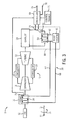
FIG. 3 is a schematic representation of an embodiment of thesystem 10, including thegas turbine engine 12 ofFIG. 1 having an anti-icingheat recovery system 50. The anti-icingheat recovery system 50 may be used to transfer heat from gases exiting theexhaust section 24 of thegas turbine engine 12 toair 52 entering thegas turbine engine 12. The anti-icingheat recovery system 50 includes, among other things, afirst heat exchanger 54, avariable speed fan 56, and asecond heat exchanger 58. Thefirst heat exchanger 54 is designed to transfer heat from a working fluid (e.g., exhaust gases released through the exhaust section 24) to an intermediate heat transfer medium (e.g., anti-icing solution), and the second heat exchanger is designed to transfer heat from the anti-icing solution to theair 52 entering thegas turbine engine 12. Thevariable speed fan 56 is configured to urge the exhaust gases from theexhaust section 24 through thefirst heat exchanger 54. That is, thevariable speed fan 56 may be designed to blow, draw, move, advance, or convey the exhaust gases from theexhaust section 24 through thefirst heat exchanger 54. - The
variable speed fan 56 is operated using a variable frequency drive, magnetic drive, or other adjustable speed drive, allowing for adjustments of fan speed to be made. Such adjustments may proportionally affect the amount of heat transferred from theexhaust section 24 to theincoming air 52. In particular, increasing the fan speed of thevariable speed fan 56 increases a volumetric capacity of exhaust gases passing through thefirst heat exchanger 54. The increased volumetric capacity leads to a proportional increase in the amount of heat transferred to the intermediate heat transfer fluid flowing through thefirst heat exchanger 54, which in turn increases the amount of heat transferred to theincoming air 52 through thesecond heat exchanger 58. Thus, the temperature of theair 52 entering thegas turbine engine 12 may be controlled by adjusting the fan speed of thevariable speed fan 56. - The anti-icing
heat recovery system 50 also may include apump system 60 for circulating the anti-icing solution between the first andsecond heat exchangers second heat exchangers pump system 60 may urge the anti-icing solution through apiping segment 62 toward thefirst heat exchanger 54. Relatively cooled anti-icing solution flows through tubes in thefirst heat exchanger 54, and thevariable speed fan 56 blows relatively high temperature exhaust gases over the tubes in thefirst heat exchanger 54. Thus, thefirst heat exchanger 54 receives the exhaust gases and transfers heat from the exhaust gases to the cooled anti-icing solution to generate a heated anti-icing solution. The heated anti-icing solution flows from thefirst heat exchanger 54 to thesecond heat exchanger 58 through apiping segment 64. Thesecond heat exchanger 58 receives the heated anti-icing solution and transfers heat from the heated anti-icing solution to theair 52 entering thegas turbine engine 12 through theair intake section 16. The anti-icing solution exits thesecond heat exchanger 58 at a relatively cooler temperature and returns to thepump system 60 through apiping segment 66. Thepump system 60 may circulate the anti-icing solution at a relatively constant flow rate, thereby increasing the predictability of heat transfer performance of theheat exchangers second heat exchanger 58 may be located in theair intake section 16, as illustrated, or at some other location along thegas turbine engine 12, e.g., between theair intake section 16 and thecompressor 18. - The illustrated anti-icing
heat recovery system 50 includes acontroller 68 for controlling the fan speed of thevariable speed fan 56 based oncontrol signals 70 and sensor feedback. The control signals 70 may include signals indicative of parameters input by an operator, such as a desired temperature for theair 52 entering thegas turbine engine 12, icing condition temperature ranges, pump flow rates, and the like. The sensor feedback may include data indicative of at least one of an inlet temperature of theair 52 entering thegas turbine engine 12, an exhaust temperature of the exhaust gases leaving theexhaust section 24, an ambient air temperature, or a relative humidity. Such sensor feedback may be obtained through sensors located about thesystem 10. For example, thecontroller 68 may receive the inlet temperature data from atemperature sensor 72 located in theair intake section 16 of thegas turbine engine 12. Likewise, thecontroller 68 may receive the exhaust temperature data from atemperature sensor 74 located downstream of thevariable speed fan 56. Data indicative of ambient air temperature and relative humidity may be communicated to thecontroller 68 throughsensors gas turbine engine 12. - The
controller 68 uses the control signals 70 and sensor feedback to adjust the fan speed of thevariable speed fan 56. More specifically, thecontroller 68 interprets the sensor feedback to determine whether icing conditions exist near theair intake section 16 of thegas turbine engine 12. If icing conditions exist, thecontroller 68 may determine a desired air temperature for theair 52 entering thegas turbine engine 12, and adjust the fan speed of thevariable speed fan 56 accordingly. As previously mentioned, a change in temperature of the anti-icing solution flowing through thesecond heat exchanger 58 may yield a predictable and proportional change in temperature of theair 52 passing through thesecond heat exchanger 58. Similarly, a change in fan speed of thevariable speed fan 56 results in a proportional change in the temperature of the anti-icing solution flowing through the tubes of thefirst heat exchanger 54. Thus, relatively simple adjustments to the fan speed of thevariable speed fan 56 may control an increase in temperature of theair 52 entering thegas turbine engine 12. - The
controller 68 also may use feedback from thesensor 74 to monitor the temperature of exhaust gases exiting thefirst heat exchanger 54. A portion of the exhaust gas is ducted away from theexhaust section 24 to thefirst heat exchanger 54. Thefirst heat exchanger 54 transfers heat from the exhaust gases to the anti-icing solution, and the exhaust gases exit thefirst heat exchanger 54 at a lower temperature. Therefore, increasing the fan speed of thevariable speed fan 56 may further decrease the temperature of the exhaust gases that pass through thefirst heat exchanger 54. It may be undesirable for the temperature of the exhaust gases to decrease below an acid dew point temperature. When the exhaust gases drop below the acid dew point temperature, the gases may condense into a liquid acid against inner walls of components of theheat recovery system 50. Such acid formation is undesirable, as it may lead to corrosion of metal in theheat recovery system 50 and theexhaust section 24 as well as decreased system performance. To avoid this, thecontroller 68 may use sensor feedback andcontrol signals 70 to control thevariable speed fan 56 to heat theair 52 entering thegas turbine engine 12 while simultaneously maintaining the exhaust gas temperature above an acid dew point threshold value. - Certain components of the anti-icing
heat recovery system 50 may be supported and integrated on askid 80, which may be located adjacent to thegas turbine engine 12. In the illustrated embodiment, theskid 80 supports at least thefirst heat exchanger 54, thevariable speed fan 56, and thepump system 60. Theskid 80 also may support thecontroller 68, portions of various piping segments (e.g., 62, 64, 66), and ductwork. Integrating several components on theskid 80 in this way may reduce the footprint of the anti-icingheat recovery system 50, enabling relatively efficient construction, transportation, and installation of the anti-icingheat recovery system 50. Although the illustratedskid 80 is aligned relatively perpendicular to thegas turbine engine 12, other arrangements and relative orientations of theskid 80 may be possible. In some embodiments, theskid 80 may be aligned relatively parallel to thegas turbine engine 12, or in any suitable orientation for efficiently and integrally supporting thefirst heat exchanger 54, thevariable speed fan 56, and thepump system 60, among other components. -
FIG. 4 is a schematic representation of an embodiment of certain components of the anti-icingheat recovery system 50 ofFIG. 3 , which may be located alongside theexhaust section 24 of thegas turbine engine 12. It should be noted thatFIG. 4 includes the components of the anti-icingheat recovery system 50, which may be supported by theskid 80 ofFIG. 3 . These components include, among other things, thefirst heat exchanger 54, thevariable speed fan 56, thepump system 60, and thecontroller 68. - The
variable speed fan 56 is designed to urge exhaust gases from theexhaust section 24 through aduct 92, across thefirst heat exchanger 54, and back to theexhaust section 24 through aduct 94. In the illustrated embodiment, thevariable speed fan 56 is located along theduct 94 downstream of thefirst heat exchanger 54 and draws the exhaust gases through thefirst heat exchanger 54. Other embodiments may include thevariable speed fan 56 positioned upstream of thefirst heat exchanger 54, blowing the exhaust gases across thefirst heat exchanger 54. The exhaust gases may pass through an expansion joint and a flange between theexhaust section 24 and theduct 92. Thevariable speed fan 56 urges the exhaust gases from theduct 92, across thefirst heat exchanger 54, and to theduct 94. From here, the exhaust gases may pass through another flange and an expansion joint before re-entering theexhaust section 24. Finally, theexhaust section 24 releases the exhaust gases from thegas turbine engine 12, possibly directing the gases toward another process of thesystem 10. - As previously mentioned, the
variable speed fan 56 may be operated by a variable frequency drive (VFD) 96, which is configured to turn thevariable speed fan 56 across a continuous range of different fan speeds in response to signals from thecontroller 68. The illustrated embodiment includes anotherfan 98 located along a duct 100 that intersects theduct 94 at a position downstream of thevariable speed fan 56. Thefan 98 may be a relatively small fan for delivering a low flow rate of air for purging theducts fan 98 may impede an undesirable flow of heated exhaust gases that otherwise may leak into theducts gas turbine engine 12, thefan 98 may supply purging airflow to inhibit exhaust gases from entering theducts motor 102 operates thefan 98, and themotor 102 may be any motor for driving thefan 98 to provide the purge supply of air. Thecontroller 68 may control themotor 102 based on the control signals 70 and sensor feedback. It should be noted that themotor 102 may be a VFD, similar to theVFD 96 that drives thevariable speed fan 56, or themotor 102 may operate thefan 98 at one particular speed. - As illustrated in
FIG. 4 , thepump system 60 may include one ormore pumps 104, ananti-icing solution tank 106, and adrain 108. Thepumps 104 are configured to urge the anti-icing solution from theanti-icing solution tank 106 through the first andsecond heat exchangers pumps 104 may pump cooled anti-icing solution from theanti-icing solution tank 106 through thefirst heat exchanger 54. As mentioned previously, thefirst heat exchanger 54 may be designed for the anti-icing solution to travel through the tube side of thefirst heat exchanger 54, yielding relatively predictable heat exchanger performance. Thefirst heat exchanger 54 may transfer heat from the exhaust gases to the anti-icing solution to generate a heated anti-icing solution. The heated anti-icing solution then travels toward thesecond heat exchanger 58 through thepiping segment 64. Thesecond heat exchanger 58 may transfer heat from the heated anti-icing solution to theair 52 entering thegas turbine engine 12. Finally, the anti-icing solution, now cooled, returns to theanti-icing solution tank 106 through thepiping segment 66. The anti-icing solution may initially enter thepump system 60 as separate flows of anti-icing and water received by theanti-icing solution tank 106. The anti-icing solution may exit thepump system 60 through thedrain 108. - The
pumps 104 may urge the anti-icing solution through the first andsecond heat exchangers variable speed fan 56 operates as a primary control for the heat transfer between the exhaust gases and theair 52 entering thegas turbine engine 12. In certain embodiments, thecontroller 68 may simply turn thepumps 104 on or off depending on the desired operation of the anti-icingheat recovery system 50. In other embodiments, thecontroller 68 may operate thepumps 104 at different flow rates based on the control signals 70 and sensor feedback. - As previously discussed, the
skid 80 ofFIG. 3 may support certain components of the anti-icingheat recovery system 50. These components, including thefirst heat exchanger 54, thevariable speed fan 56, thepump system 60, and thefan 98, may be positioned relatively close to each other on theskid 80. Theskid 80, with integrated components of the anti-icingheat recovery system 50, may be compatible with a wide variety ofgas turbine engines 12. However, other components such as thepiping segments second heat exchanger 58 may be designed for a specificgas turbine engine 12. In order for thesame pump system 60 to work with differentgas turbine engines 12, it may be desirable for thepump system 60 to include certain features that allow for adjustable flow rates, anti-icing solution concentrations, and/or anti-icing solution temperatures. For example, apiping segment 110 may route a portion of the heated anti-icing solution from thefirst heat exchanger 54 to theanti-icing solution tank 106, thereby altering the flow of the heated anti-icing solution flowing toward thesecond heat exchanger 58. Valves (e.g., check valves, ball valves, butterfly valves, etc.) located along thepiping segments pump system 60 may allow an operator to adjust default settings of thepump system 60. For example, thesame pump system 60 may be adjusted to operate efficiently with differentgas turbine engines 12 and/or under different ambient temperature settings. In addition, thesame pump system 60 may be adjusted to deliver anti-icing solution with a desired anti-icing concentration. - The
controller 68 may control operation of theVFD 96, themotor 102, thepumps 104, and other components of thepump system 60, such as valves. Thecontroller 68 may operate these components based on sensor feedback and/or the control signals 70, which may be input by operators or received from another system. As inFIG. 3 , thecontroller 68 may monitor parameters such as air intake temperature, exhaust temperature, ambient temperature, and relativehumidity using sensors heat recovery system 50. Certain embodiments may include additional sensors located within the anti-icingheat recovery system 50, such as temperature sensors located throughout thepiping segments pump system 60 or in theducts gas turbine engine 12. - The
controller 68 may execute hardware or software control algorithms to regulate operation of the anti-icingheat recovery system 50. According to exemplary embodiments, thecontroller 68 may include an analog to digital (A/D) converter, one or more microprocessors or general or special purpose computers, a non-volatile memory, memory circuits, and an interface board. For example, thecontroller 68 may include memory circuitry for storing programs and control routines and algorithms implemented for control of the various system components, such as theVFD 96 of thevariable speed fan 56. Thecontroller 68 also includes, or is associated with, input/output circuitry for receiving sensed signals from thesensors VFD 96, thefan motor 102, and thepumps 104. Memory circuitry may store set points, actual values, historic values, and so forth for any or all such parameters. Other devices may, of course, be included in the system, such as additional pressure and/or temperature transducers or switches that sense temperatures and pressures of the anti-icing solution, theheat exchangers compressor 18, theanti-icing solution tank 106, and so forth. Further, other values and/or set points based on a variety of factors, such as gas turbine engine operation, ambient temperature, relative humidity, and the like may be used to determine when and how to operate the anti-icingheat recovery system 50. Thecontroller 68 also may include components for operator interaction with the system, such as display panels and/or input/output devices for checking operating parameters, inputting the control signals 70 representative of set points and desired operating parameters, checking error logs and historical operations, and so forth. - The
controller 68 uses the available sensor feedback to control the anti-icingheat recovery system 50 by adjusting the fan speed of thevariable speed fan 56. Thecontroller 68 may increase the fan speed to increase or decrease the amount of heat transferred through theheat exchangers air 52 entering thegas turbine engine 12, thereby reducing the amount of ice formed within thecompressor 18. However, it may be undesirable for thecontroller 68 to increase the fan speed such that the exhaust temperature increases above an acid dew point threshold value. Therefore, thecontroller 68 may employ specific control schemes for reducing ice formation in thecompressor 18 without allowing acid to form in theduct 94. -
FIG. 5 is a process flow diagram of an embodiment of amethod 130 for controlling the anti-icingheat recovery system 50 in accordance with present techniques. It should be noted that themethod 130 may be implemented as a computer or software program (e.g., code or instructions) that may be executed by a processor to execute one or more of the steps of themethod 130. Additionally, the program (e.g., code or instructions) may be stored in any suitable article of manufacture that includes at least one tangible non-transitory, computer-readable medium that at least collectively stores these instructions or routines, such as a memory or storage component of thecontroller 68. - The
method 130 begins with determining (block 132) if thegas turbine engine 12 is running. Thecontroller 68 may receive data indicative of the current operational state of thegas turbine engine 12 from one or more sensors in thegas turbine engine 12, or via the control signals 70. If thegas turbine engine 12 is not running, thecontroller 68 may send a signal to theVFD 96 to turn off (block 134) thevariable speed fan 56. For anti-icingheat recovery systems 50 having thefan 98 for purging the system, theblock 134 may include turning on or maintaining operation of thefan 98. The operation of thefan 98 may inhibit the flow of exhaust gases into theducts method 130 may include turning off thevariable speed fan 56 and any other fans when thegas turbine engine 12 is not running. - If the
gas turbine engine 12 is running, thecontroller 68 determines (block 136) if the exhaust temperature of gases exiting thefirst heat exchanger 54 is above the acid dew point threshold value of the exhaust gases. When the temperature of the gases exiting thefirst heat exchanger 54 drops below the acid dew point, acid may begin to form, corroding the metal interior of components (e.g., the duct 94) of theanti-ice system 50 andexhaust section 24. The acid dew point threshold value used in the determination of theblock 136 may be slightly higher than the actual acid dew point temperature of the exhaust gases. The acid dew point threshold value may be approximately 180 degrees Celsius, depending on the consistency of the exhaust gas. If the exhaust temperature is less than or equal to the acid dew point threshold value, thecontroller 68 may reduce (block 138) the fan speed of thevariable speed fan 56 until the acid dew point temperature is reached. That is, thecontroller 68 will send a control signal to theVFD 96 of thevariable speed fan 56 to reduce the fan speed and, consequently, reduce the amount of heat transferred from the exhaust gases to theair 52 entering thegas turbine engine 12. When the temperature of the exhaust gases exiting thefirst heat exchanger 54 increases above the acid dew point threshold value, thecontroller 68 may stop reducing the fan speed of thevariable speed fan 56. - If the exhaust temperature is above the acid dew point threshold value, the
controller 68 may determine (block 140) if the temperature of theair 52 entering thegas turbine engine 12 is within an anti-ice temperature range. The anti-ice temperature range is a range of air temperatures that generally lead to ice formation in theinlet 40 of thegas turbine engine 12. The air temperature may be an ambient air temperature monitored by thetemperature sensor 76 located outside thegas turbine engine 12. In other embodiments, the air temperature may be monitored from sensors located within theair intake section 16 of thegas turbine engine 12. The anti-ice temperature range may be approximately -15 to 8 degrees Celsius, although this temperature range may vary across differentgas turbine engines 12, and the range may be affected by the relative humidity of theair 52. For example, the formation of ice in theinlet 40 may be unlikely when theair 52 has a relative humidity of less than approximately 65 percent, regardless of the air temperature. - If the air temperature is outside the anti-ice temperature range (e.g., less than -15 or greater than 8 degrees Celsius), the
controller 68 may turn off (block 142) thevariable speed fan 56, because no anti-icing heat recovery is desired outside of this range. At temperatures below the range, the humidity of theair 52 may be too low for ice to form in thecompressor 18, and at temperatures above the range, theair 52 may be too warm for ice to form in thecompressor 18. If the air temperature is within the anti-ice temperature range (e.g., between -15 and 8 degrees Celsius), thecontroller 68 increases (block 144) the fan speed of thevariable speed fan 56 based on anti-ice control logic. The anti-ice control logic may be an input/output relationship relating the ambient temperature of theair 52 entering thegas turbine engine 12 with the inlet temperature of the air after passing through thesecond heat exchanger 58. Thecontroller 68 may monitor the inlet temperature using thesensor 72 located downstream of thesecond heat exchanger 58. Once the desired inlet temperature, as determined by the anti-icing control logic, is reached, thecontroller 68 may maintain the fan speed of thevariable speed fan 56. - It should be noted that the
method 130 may be repeatedly executed by thecontroller 68 throughout operation of the anti-icingheat recovery system 50. Themethod 130 may provide desired anti-icing of theinlet 40 using the exhaust gases from thegas turbine engine 12, while maintaining an appropriate temperature of the exhaust gases exiting through theexhaust section 24. That is, themethod 130 may be applied to reduce both ice formation in theinlet 40 and acid formation in theheat recovery system 50. As illustrated, themethod 130 may first control for reducing acid formation and then control for reducing ice formation. However, other embodiments may enable thecontroller 68 to control for reducing ice formation before reducing acid formation. As themethod 130 is repeated, the fan speed of thevariable speed fan 56 may be increased multiple times if the exhaust temperature remains above the acid dew point threshold value and the air temperature remains within the anti-ice temperature range. -
FIG. 6 is agraph 150 modeling an embodiment of an input/output relationship of inlet air temperature, in accordance with the anti-icing control logic used by thecontroller 68. Thegraph 150 illustrates inlet temperature output (ordinate 152) against inlet temperature input (abscissa 154) within the anti-ice temperature range. More specifically, the inlet temperature input may be the temperature of theair 52 entering thegas turbine engine 12 before blowing across thesecond heat exchanger 58. Similarly, the inlet temperature output may be the temperature of theair 52 after blowing across thesecond heat exchanger 58, having received an increased amount of heat from the anti-icing solution flowing through tubes in thesecond heat exchanger 58. Atrace 156 indicates one possible input/output relationship for air temperatures within an anti-ice temperature range (-17.9 to 4.5 degrees Celsius), although other relationships may be possible. Thetrace 156 shows that when the temperature of theair 52 exiting thesecond heat exchanger 58 is between -17.9 and -1.1 degrees Celsius, thecontroller 68 may increase the fan speed such that thesecond heat exchanger 58 transfers an additional amount of approximately 5.6 degrees Celsius to theair 52. When the temperature of theair 52 exiting thesecond heat exchanger 58 is between - 1.1 and 4.5 Celsius, thecontroller 68 may increase the fan speed such that the temperature of theair 52 exiting thesecond heat exchanger 58 is approximately 4.5 degrees Celsius. Thecontroller 68 may determine the desired amount of heat to transfer from the exhaust gases to theair 52, according to the input/output relationship indicated by thetrace 156, and increase the fan speed of thevariable speed fan 56 accordingly. - The illustrated relationship includes a relatively gradual increase in temperature of the
air 52 entering thegas turbine engine 12 through thesecond heat exchanger 58. This gradual temperature increase may be useful for maintaining the exhaust temperature of the exhaust gases exiting thefirst heat exchanger 54 above the acid dew point threshold value. As discussed in reference toFIG. 5 , themethod 130 may be repeated, allowing the gradual temperature increase to be applied multiple times. As long as the exhaust temperature remains above the acid dew point threshold value and the inlet temperature input remains within the anti-ice temperature range, the input/output relationship may be applied again through additional increases in the fan speed of thevariable speed fan 56. As previously mentioned, an increase in the fan speed may cause a proportional increase in the heat transferred between the exhaust gases and the anti-icing solution in thefirst heat exchanger 54, as well as between the heated anti-icing solution and theair 52 in thesecond heat exchanger 58. In this way, the anti-icingheat recovery system 50 may facilitate efficient and predictable control of the amount of heat transferred to theincoming air 52 using thevariable speed fan 56. - Various technical effects of certain aspects and embodiments of the invention may include, among other things, reducing the amount of ice formed in the compressor inlet of the gas turbine engine during icing conditions. The anti-icing heat recovery system uses two heat exchangers, one to transfer heat from turbine exhaust gases to an anti-icing solution, and the other to transfer heat from the heated anti-icing solution to the air entering the gas turbine engine. The anti-icing solution may be pumped through the tube side of both heat exchangers at a relatively constant flow rate, allowing for relatively predictable heat exchanger performance. The controller may control the amount of heat transferred from the exhaust gases to the incoming air solely by adjusting the fan speed of the variable speed fan. Indeed, this may enable the controller to execute simpler and more efficient control schemes. The controller may operate the variable speed fan according to control schemes that maintain the exhaust gas temperature above an acid dew point threshold value, while transferring heat to the gas turbine inlet to reduce ice formation. The variable speed fan, first heat exchanger, and pump system may be arranged on a single skid, facilitating relatively easy transportation and installation (e.g., including retrofitting into existing gas turbine engines) of the anti-icing heat recovery system. In addition, certain piping segments, sensors, and valves throughout the pump system may be adjustable so that the same components arranged on the skid may be compatible with a variety of gas turbine engines.
- This written description uses examples to disclose the invention, including the preferred mode, and also to enable any person skilled in the art to practice the invention, including making and using any devices or systems and performing any incorporated methods. The patentable scope of the invention is defined by the claims, and may include other examples that occur to those skilled in the art. Such other examples are intended to be within the scope of the claims if they have structural elements that do not differ from the literal language of the claims, or if they include equivalent structural elements with insubstantial differences from the literal language of the claims.
- Various aspects and embodiments of the present invention are defined by the following numbered clauses:
- 1. A system, comprising:
- a gas turbine engine; and
- an anti-icing heat recovery system, comprising:
- a first heat exchanger configured to receive a working fluid from an exhaust section of the gas turbine engine and to transfer heat from the working fluid to a cooled intermediate heat transfer medium to generate a heated intermediate heat transfer medium;
- a second heat exchanger configured to receive the heated intermediate heat transfer medium from the first heat exchanger and to transfer heat from the heated intermediate heat transfer medium to air entering the gas turbine engine; and
- a variable speed fan configured to urge the working fluid from the exhaust section of the gas turbine engine through the first heat exchanger.
- 2. The system of clause 1, comprising a controller configured to control a fan speed of the variable speed fan based on sensor feedback.
- 3. The system of any preceding clause, wherein the sensor feedback comprises data indicative of at least one of an inlet temperature of the air entering the gas turbine engine, an exhaust temperature of the working fluid, an ambient air temperature, or a relative humidity.
- 4. The system of any preceding clause, wherein the controller is configured to reduce the fan speed of the variable speed fan when the exhaust temperature is less than or equal to a threshold acid dew point temperature.
- 5. The system of any preceding clause, wherein the controller is configured to increase the fan speed of the variable speed fan when the exhaust temperature is above a threshold acid dew point temperature and the inlet temperature is within an anti-ice temperature range.
- 6. The system of any preceding clause, wherein the second heat exchanger is disposed in an air intake section of the gas turbine engine, and the air intake section is configured to direct air from outside the gas turbine engine through the second heat exchanger and to a compressor of the gas turbine engine.
- 7. The system of any preceding clause, wherein the anti-icing heat recovery system comprises a pump system having one or more pumps configured to urge the intermediate heat transfer medium from an anti-icing solution tank through the first and second heat exchangers.
- 8. The system of any preceding clause, comprising a skid configured to support at least the first heat exchanger, the pump system, and the variable speed fan.
- 9. A system, comprising:
- an anti-icing heat recovery system, comprising:
- a first heat exchanger configured to receive a working fluid from an exhaust section of a gas turbine engine and to transfer heat from the working fluid to a cooled intermediate heat transfer medium to generate a heated intermediate heat transfer medium;
- a second heat exchanger configured to receive the heated intermediate heat transfer medium from the first heat exchanger and to transfer heat from the heated intermediate heat transfer medium to air entering the gas turbine engine; and
- a variable speed fan configured to urge the working fluid from the exhaust section of the gas turbine engine through the first heat exchanger.
- an anti-icing heat recovery system, comprising:
- 10. The system of any preceding clause, comprising a skid configured to support at least the first heat exchanger, a pump system, and the variable speed fan.
- 11. The system of any preceding clause, wherein the pump system comprises an anti-icing solution tank and a pump configured to urge the intermediate heat transfer medium from the anti-icing solution tank through the first and second heat exchangers.
- 12. The system of any preceding clause, wherein the second heat exchanger is disposed in an air intake section of the gas turbine engine, and the air intake section is configured to direct air from outside the gas turbine engine through the second heat exchanger and to a compressor of the gas turbine engine.
- 13. The system of any preceding clause, comprising a controller configured to control a fan speed of the variable speed fan based on sensor feedback.
- 14. The system of any preceding clause, wherein the controller is configured to reduce the fan speed of the variable speed fan when an exhaust temperature of the working fluid is less than or equal to a threshold acid dew point temperature.
- 15. The system of any preceding clause, wherein the controller is configured to increase the fan speed of the variable speed fan when an exhaust temperature of the working fluid is above a threshold acid dew point temperature and an inlet temperature of the air entering the gas turbine engine is within an anti-ice temperature range.
- 16. The system of any preceding clause, comprising the gas turbine engine having the anti-icing heat recovery system.
- 17. A method, comprising:
- adjusting a fan speed of a variable speed fan, the variable speed fan being configured to urge a working fluid from an exhaust section of a gas turbine engine through a first heat exchanger configured to transfer heat from the working fluid to a cooled intermediate heat transfer medium to generate a heated intermediate heat transfer medium for heating air entering the gas turbine engine.
- 18. The method of any preceding clause, comprising adjusting the fan speed based on data indicative of at least one of an inlet temperature of the air entering the gas turbine engine, an exhaust temperature of the working fluid, an ambient air temperature, or a relative humidity.
- 19. The method of any preceding clause, comprising reducing the fan speed when the exhaust temperature of the working fluid is less than or equal to a threshold acid dew point temperature.
- 20. The method of any preceding clause, comprising increasing the fan speed when the exhaust temperature of the working fluid is above a threshold acid dew point temperature and the inlet temperature is within an anti-ice temperature range.
Claims (15)
- A system (10), comprising:a gas turbine engine (12); andan anti-icing heat recovery system (50), comprising:a first heat exchanger (54) configured to receive a working fluid from an exhaust section (24) of the gas turbine engine (12) and to transfer heat from the working fluid to a cooled intermediate heat transfer medium to generate a heated intermediate heat transfer medium;a second heat exchanger (58) configured to receive the heated intermediate heat transfer medium from the first heat exchanger (54) and to transfer heat from the heated intermediate heat transfer medium to air entering the gas turbine engine (12); anda variable speed fan (56) configured to urge the working fluid from the exhaust section (24) of the gas turbine engine (12) through the first heat exchanger (54).
- The system (10) of claim 1, comprising a controller (68) configured to control a fan speed of the variable speed fan (56) based on sensor feedback.
- The system (10) of claim 2, wherein the sensor feedback comprises data indicative of at least one of an inlet temperature of the air entering the gas turbine engine (12), an exhaust temperature of the working fluid, an ambient air temperature, or a relative humidity.
- The system (10) of claim 2 or claim 3, wherein the controller (68) is configured to reduce the fan speed of the variable speed fan (56) when the exhaust temperature is less than or equal to a threshold acid dew point temperature.
- The system (10) of any of claims 2 to 4, wherein the controller (68) is configured to increase the fan speed of the variable speed fan (56) when the exhaust temperature is above a threshold acid dew point temperature and the inlet temperature is within an anti-ice temperature range.
- The system (10) of any preceding claim, wherein the second heat exchanger (58) is disposed in an air intake section of the gas turbine engine (12), and the air intake section is configured to direct air from outside the gas turbine engine through the second heat exchanger and to a compressor of the gas turbine engine.
- The system (10) of any preceding claim, wherein the anti-icing heat recovery system (50) comprises a pump system (60) having one or more pumps configured to urge the intermediate heat transfer medium from an anti-icing solution tank through the first and second heat exchangers.
- The system (10) of claim 7, comprising a skid (80) configured to support at least the first heat exchanger (54), the pump system (60), and the variable speed fan (56).
- A system (10), comprising:an anti-icing heat recovery system (50), comprising:a first heat exchanger (54) configured to receive a working fluid from an exhaust section of a gas turbine engine and to transfer heat from the working fluid to a cooled intermediate heat transfer medium to generate a heated intermediate heat transfer medium;a second heat exchanger (58) configured to receive the heated intermediate heat transfer medium from the first heat exchanger and to transfer heat from the heated intermediate heat transfer medium to air entering the gas turbine engine; anda variable speed fan (56) configured to urge the working fluid from the exhaust section of the gas turbine engine through the first heat exchanger.
- The system (10) of claim 9, comprising a skid (80) configured to support at least the first heat exchanger, a pump system (60), and the variable speed fan.
- The system (10) of claim 10, wherein the pump system (60) comprises an anti-icing solution tank and a pump configured to urge the intermediate heat transfer medium from the anti-icing solution tank through the first and second heat exchangers.
- A method, comprising:adjusting a fan speed of a variable speed fan (56), the variable speed fan (56) being configured to urge a working fluid from an exhaust section (24) of a gas turbine engine (12) through a first heat exchanger (54) configured to transfer heat from the working fluid to a cooled intermediate heat transfer medium to generate a heated intermediate heat transfer medium for heating air entering the gas turbine engine (12).
- The method of claim 12, comprising adjusting the fan speed based on data indicative of at least one of an inlet temperature of the air entering the gas turbine engine (12), an exhaust temperature of the working fluid, an ambient air temperature, or a relative humidity.
- The method of claim 12 or claim 13, comprising reducing the fan speed when the exhaust temperature of the working fluid is less than or equal to a threshold acid dew point temperature.
- The method of any of claims 12 to 14, comprising increasing the fan speed when the exhaust temperature of the working fluid is above a threshold acid dew point temperature and the inlet temperature is within an anti-ice temperature range.
Applications Claiming Priority (1)
| Application Number | Priority Date | Filing Date | Title |
|---|---|---|---|
| US13/471,926 US8899008B2 (en) | 2012-05-15 | 2012-05-15 | System and method for heat recovery in a gas turbine engine |
Publications (3)
| Publication Number | Publication Date |
|---|---|
| EP2664765A2 true EP2664765A2 (en) | 2013-11-20 |
| EP2664765A3 EP2664765A3 (en) | 2018-03-28 |
| EP2664765B1 EP2664765B1 (en) | 2021-02-17 |
Family
ID=48446078
Family Applications (1)
| Application Number | Title | Priority Date | Filing Date |
|---|---|---|---|
| EP13167160.4A Active EP2664765B1 (en) | 2012-05-15 | 2013-05-09 | System and method for heat recovery in a gas turbine engine |
Country Status (4)
| Country | Link |
|---|---|
| US (1) | US8899008B2 (en) |
| EP (1) | EP2664765B1 (en) |
| JP (1) | JP6280311B2 (en) |
| HU (1) | HUE053712T2 (en) |
Cited By (1)
| Publication number | Priority date | Publication date | Assignee | Title |
|---|---|---|---|---|
| CN103628984A (en) * | 2013-12-06 | 2014-03-12 | 中国电力工程顾问集团西南电力设计院 | Loop heating system for gas turbine anti-freezing device and working method of loop heating system |
Families Citing this family (12)
| Publication number | Priority date | Publication date | Assignee | Title |
|---|---|---|---|---|
| US8973650B2 (en) * | 2010-07-20 | 2015-03-10 | General Electric Company | Superconductive heat transfer system |
| US10118108B2 (en) | 2014-04-22 | 2018-11-06 | General Electric Company | System and method of distillation process and turbine engine intercooler |
| US10024195B2 (en) | 2015-02-19 | 2018-07-17 | General Electric Company | System and method for heating make-up working fluid of a steam system with engine fluid waste heat |
| US10487695B2 (en) | 2015-10-23 | 2019-11-26 | General Electric Company | System and method of interfacing intercooled gas turbine engine with distillation process |
| JP6670123B2 (en) * | 2016-02-19 | 2020-03-18 | 株式会社神戸製鋼所 | Exhaust heat recovery device and binary power generation device |
| US20170292424A1 (en) * | 2016-04-06 | 2017-10-12 | General Electric Company | Use of gas turbine heated fluid for reductant vaporization |
| US10941706B2 (en) | 2018-02-13 | 2021-03-09 | General Electric Company | Closed cycle heat engine for a gas turbine engine |
| US11143104B2 (en) | 2018-02-20 | 2021-10-12 | General Electric Company | Thermal management system |
| US11015534B2 (en) | 2018-11-28 | 2021-05-25 | General Electric Company | Thermal management system |
| US11384687B2 (en) * | 2019-04-04 | 2022-07-12 | Pratt & Whitney Canada Corp. | Anti-icing system for gas turbine engine |
| GB202016379D0 (en) * | 2020-10-15 | 2020-12-02 | Airbus Operations Ltd | Dual fuel aircraft |
| US12188410B2 (en) * | 2023-01-24 | 2025-01-07 | Pratt & Whitney Canada Corp. | Icing condition identification for gas turbine engine |
Family Cites Families (20)
| Publication number | Priority date | Publication date | Assignee | Title |
|---|---|---|---|---|
| US3353360A (en) * | 1966-02-18 | 1967-11-21 | Foster Wheeler Corp | Power plant with steam injection |
| CH573044A5 (en) | 1974-01-15 | 1976-02-27 | Sulzer Ag | |
| US3953966A (en) | 1974-08-08 | 1976-05-04 | Westinghouse Electric Corporation | Combined cycle electric power plant having a control system which enables dry steam generator operation during gas turbine operation |
| US3965675A (en) | 1974-08-08 | 1976-06-29 | Westinghouse Electric Corporation | Combined cycle electric power plant and a heat recovery steam generator having improved boiler feed pump flow control |
| US4160805A (en) | 1977-07-14 | 1979-07-10 | Hitachi Shipbuilding & Engineering Co. Ltd. | Boiler containing denitrator |
| US4261167A (en) | 1979-04-27 | 1981-04-14 | Texaco Inc. | Process for the generation of power from solid carbonaceous fuels |
| US4354347A (en) | 1980-06-02 | 1982-10-19 | General Electric Company | Combined cycle system for optimizing cycle efficiency having varying sulfur content fuels |
| US4353206A (en) | 1980-08-20 | 1982-10-12 | Westinghouse Electric Corp. | Apparatus for removing NOx and for providing better plant efficiency in combined cycle plants |
| JPS57108402A (en) | 1980-12-25 | 1982-07-06 | Mitsui Eng & Shipbuild Co Ltd | Equipment for recovering heat of exhaust gas of internal combustion engine |
| US4501233A (en) | 1982-04-24 | 1985-02-26 | Babcock-Hitachi Kabushiki Kaisha | Heat recovery steam generator |
| US4754607A (en) * | 1986-12-12 | 1988-07-05 | Allied-Signal Inc. | Power generating system |
| JPH08158814A (en) * | 1994-11-30 | 1996-06-18 | Toshiba Corp | Intake cooling system for combined cycle plant |
| DE19506727A1 (en) * | 1995-02-27 | 1996-08-29 | Abb Management Ag | Process for operating a power plant |
| JP2002174128A (en) * | 2000-12-05 | 2002-06-21 | Toshiba Corp | Apparatus and method for preventing icing of gas turbine air compressor |
| JP2003239760A (en) * | 2002-02-15 | 2003-08-27 | Mitsubishi Heavy Ind Ltd | Intake air temperature adjusting system for gas turbine and gas turbine with the same |
| US8015793B2 (en) * | 2008-07-18 | 2011-09-13 | Siemens Energy, Inc. | Fuel heating via exhaust gas extraction |
| US8186142B2 (en) * | 2008-08-05 | 2012-05-29 | General Electric Company | Systems and method for controlling stack temperature |
| US8429891B2 (en) * | 2009-12-16 | 2013-04-30 | General Electric Company | Anti-icing system using radiant infrared energy from turbine exhaust flues |
| EP2351915A1 (en) * | 2010-01-11 | 2011-08-03 | Alstom Technology Ltd | Combined cycle power plant and method of operating such power plant |
| US8261528B2 (en) * | 2010-04-09 | 2012-09-11 | General Electric Company | System for heating an airstream by recirculating waste heat of a turbomachine |
-
2012
- 2012-05-15 US US13/471,926 patent/US8899008B2/en active Active
-
2013
- 2013-05-09 HU HUE13167160A patent/HUE053712T2/en unknown
- 2013-05-09 EP EP13167160.4A patent/EP2664765B1/en active Active
- 2013-05-10 JP JP2013099824A patent/JP6280311B2/en active Active
Non-Patent Citations (1)
| Title |
|---|
| None |
Cited By (2)
| Publication number | Priority date | Publication date | Assignee | Title |
|---|---|---|---|---|
| CN103628984A (en) * | 2013-12-06 | 2014-03-12 | 中国电力工程顾问集团西南电力设计院 | Loop heating system for gas turbine anti-freezing device and working method of loop heating system |
| CN103628984B (en) * | 2013-12-06 | 2015-07-08 | 中国电力工程顾问集团西南电力设计院有限公司 | Loop heating system for gas turbine anti-freezing device and working method of loop heating system |
Also Published As
| Publication number | Publication date |
|---|---|
| HUE053712T2 (en) | 2021-07-28 |
| US20130305737A1 (en) | 2013-11-21 |
| JP2013238224A (en) | 2013-11-28 |
| EP2664765A3 (en) | 2018-03-28 |
| US8899008B2 (en) | 2014-12-02 |
| JP6280311B2 (en) | 2018-02-14 |
| EP2664765B1 (en) | 2021-02-17 |
Similar Documents
| Publication | Publication Date | Title |
|---|---|---|
| EP2664765B1 (en) | System and method for heat recovery in a gas turbine engine | |
| EP3318743B1 (en) | Intercooled cooled cooling integrated air cycle machine | |
| CN110284975B (en) | System and method for reducing engine temperature after shutdown | |
| US10794290B2 (en) | Intercooled cooled cooling integrated air cycle machine | |
| CN106471220B (en) | Jet engine cold air cooling system | |
| EP3318742B1 (en) | Intercooled cooling air heat exchanger arrangement | |
| US20170342838A1 (en) | Mixing ram and bleed air in a dual entry turbine system | |
| US10563581B2 (en) | System and method of compressor inlet temperature control with eductor | |
| US11739697B2 (en) | Bleed flow safety system | |
| CN103375256A (en) | Systems and apparatus relating to combustion turbine engines with exhaust gas recirculation | |
| CN103452667A (en) | Gas turbine compressor inlet pressurization having a torque converter system | |
| US20170305559A1 (en) | Environmental control system utilizing enhanced compressor | |
| US10619568B2 (en) | System and method of compressor inlet temperature control with mixing chamber | |
| US20170342900A1 (en) | System and method of compressor inlet temperature control with eductor | |
| US20170342902A1 (en) | System and method of compressor inlet temperature control | |
| CN116163838A (en) | Gas supply system | |
| CN102889135A (en) | Gas turbine engine speed control system and method during maximum fuel flow | |
| EP1691055B1 (en) | Intercooling in gas turbine engines | |
| US20110036098A1 (en) | Self-regulating cooling water system for intercooled gas turbine engines | |
| EP3483418B1 (en) | Intercooled cooled cooling integrated air cycle machine | |
| US20160146104A1 (en) | Angled Core Engine | |
| JP7429337B2 (en) | compressed air supply system | |
| US11268444B2 (en) | Turbine cooling arrangement | |
| US20240351693A1 (en) | Cabin air compressor bypass for surge avoidance | |
| KR20150041854A (en) | Method of flow rate control for air cycle system combined with gas turbine |
Legal Events
| Date | Code | Title | Description |
|---|---|---|---|
| PUAI | Public reference made under article 153(3) epc to a published international application that has entered the european phase |
Free format text: ORIGINAL CODE: 0009012 |
|
| AK | Designated contracting states |
Kind code of ref document: A2 Designated state(s): AL AT BE BG CH CY CZ DE DK EE ES FI FR GB GR HR HU IE IS IT LI LT LU LV MC MK MT NL NO PL PT RO RS SE SI SK SM TR |
|
| AX | Request for extension of the european patent |
Extension state: BA ME |
|
| PUAL | Search report despatched |
Free format text: ORIGINAL CODE: 0009013 |
|
| AK | Designated contracting states |
Kind code of ref document: A3 Designated state(s): AL AT BE BG CH CY CZ DE DK EE ES FI FR GB GR HR HU IE IS IT LI LT LU LV MC MK MT NL NO PL PT RO RS SE SI SK SM TR |
|
| AX | Request for extension of the european patent |
Extension state: BA ME |
|
| RIC1 | Information provided on ipc code assigned before grant |
Ipc: F02C 7/08 20060101ALI20180217BHEP Ipc: F01D 25/02 20060101ALI20180217BHEP Ipc: F02C 7/057 20060101ALI20180217BHEP Ipc: F02C 7/047 20060101AFI20180217BHEP |
|
| STAA | Information on the status of an ep patent application or granted ep patent |
Free format text: STATUS: REQUEST FOR EXAMINATION WAS MADE |
|
| 17P | Request for examination filed |
Effective date: 20180928 |
|
| RBV | Designated contracting states (corrected) |
Designated state(s): AL AT BE BG CH CY CZ DE DK EE ES FI FR GB GR HR HU IE IS IT LI LT LU LV MC MK MT NL NO PL PT RO RS SE SI SK SM TR |
|
| STAA | Information on the status of an ep patent application or granted ep patent |
Free format text: STATUS: EXAMINATION IS IN PROGRESS |
|
| 17Q | First examination report despatched |
Effective date: 20190211 |
|
| GRAP | Despatch of communication of intention to grant a patent |
Free format text: ORIGINAL CODE: EPIDOSNIGR1 |
|
| STAA | Information on the status of an ep patent application or granted ep patent |
Free format text: STATUS: GRANT OF PATENT IS INTENDED |
|
| INTG | Intention to grant announced |
Effective date: 20200922 |
|
| GRAS | Grant fee paid |
Free format text: ORIGINAL CODE: EPIDOSNIGR3 |
|
| GRAA | (expected) grant |
Free format text: ORIGINAL CODE: 0009210 |
|
| STAA | Information on the status of an ep patent application or granted ep patent |
Free format text: STATUS: THE PATENT HAS BEEN GRANTED |
|
| AK | Designated contracting states |
Kind code of ref document: B1 Designated state(s): AL AT BE BG CH CY CZ DE DK EE ES FI FR GB GR HR HU IE IS IT LI LT LU LV MC MK MT NL NO PL PT RO RS SE SI SK SM TR |
|
| REG | Reference to a national code |
Ref country code: GB Ref legal event code: FG4D |
|
| REG | Reference to a national code |
Ref country code: CH Ref legal event code: EP |
|
| REG | Reference to a national code |
Ref country code: DE Ref legal event code: R096 Ref document number: 602013075616 Country of ref document: DE |
|
| REG | Reference to a national code |
Ref country code: AT Ref legal event code: REF Ref document number: 1361780 Country of ref document: AT Kind code of ref document: T Effective date: 20210315 |
|
| REG | Reference to a national code |
Ref country code: IE Ref legal event code: FG4D |
|
| REG | Reference to a national code |
Ref country code: LT Ref legal event code: MG9D |
|
| REG | Reference to a national code |
Ref country code: NL Ref legal event code: MP Effective date: 20210217 |
|
| REG | Reference to a national code |
Ref country code: HU Ref legal event code: AG4A Ref document number: E053712 Country of ref document: HU |
|
| PG25 | Lapsed in a contracting state [announced via postgrant information from national office to epo] |
Ref country code: GR Free format text: LAPSE BECAUSE OF FAILURE TO SUBMIT A TRANSLATION OF THE DESCRIPTION OR TO PAY THE FEE WITHIN THE PRESCRIBED TIME-LIMIT Effective date: 20210518 Ref country code: FI Free format text: LAPSE BECAUSE OF FAILURE TO SUBMIT A TRANSLATION OF THE DESCRIPTION OR TO PAY THE FEE WITHIN THE PRESCRIBED TIME-LIMIT Effective date: 20210217 Ref country code: HR Free format text: LAPSE BECAUSE OF FAILURE TO SUBMIT A TRANSLATION OF THE DESCRIPTION OR TO PAY THE FEE WITHIN THE PRESCRIBED TIME-LIMIT Effective date: 20210217 Ref country code: PT Free format text: LAPSE BECAUSE OF FAILURE TO SUBMIT A TRANSLATION OF THE DESCRIPTION OR TO PAY THE FEE WITHIN THE PRESCRIBED TIME-LIMIT Effective date: 20210617 Ref country code: LT Free format text: LAPSE BECAUSE OF FAILURE TO SUBMIT A TRANSLATION OF THE DESCRIPTION OR TO PAY THE FEE WITHIN THE PRESCRIBED TIME-LIMIT Effective date: 20210217 Ref country code: BG Free format text: LAPSE BECAUSE OF FAILURE TO SUBMIT A TRANSLATION OF THE DESCRIPTION OR TO PAY THE FEE WITHIN THE PRESCRIBED TIME-LIMIT Effective date: 20210517 Ref country code: NO Free format text: LAPSE BECAUSE OF FAILURE TO SUBMIT A TRANSLATION OF THE DESCRIPTION OR TO PAY THE FEE WITHIN THE PRESCRIBED TIME-LIMIT Effective date: 20210517 |
|
| REG | Reference to a national code |
Ref country code: AT Ref legal event code: MK05 Ref document number: 1361780 Country of ref document: AT Kind code of ref document: T Effective date: 20210217 |
|
| PG25 | Lapsed in a contracting state [announced via postgrant information from national office to epo] |
Ref country code: SE Free format text: LAPSE BECAUSE OF FAILURE TO SUBMIT A TRANSLATION OF THE DESCRIPTION OR TO PAY THE FEE WITHIN THE PRESCRIBED TIME-LIMIT Effective date: 20210217 Ref country code: RS Free format text: LAPSE BECAUSE OF FAILURE TO SUBMIT A TRANSLATION OF THE DESCRIPTION OR TO PAY THE FEE WITHIN THE PRESCRIBED TIME-LIMIT Effective date: 20210217 Ref country code: NL Free format text: LAPSE BECAUSE OF FAILURE TO SUBMIT A TRANSLATION OF THE DESCRIPTION OR TO PAY THE FEE WITHIN THE PRESCRIBED TIME-LIMIT Effective date: 20210217 Ref country code: LV Free format text: LAPSE BECAUSE OF FAILURE TO SUBMIT A TRANSLATION OF THE DESCRIPTION OR TO PAY THE FEE WITHIN THE PRESCRIBED TIME-LIMIT Effective date: 20210217 Ref country code: PL Free format text: LAPSE BECAUSE OF FAILURE TO SUBMIT A TRANSLATION OF THE DESCRIPTION OR TO PAY THE FEE WITHIN THE PRESCRIBED TIME-LIMIT Effective date: 20210217 |
|
| PGFP | Annual fee paid to national office [announced via postgrant information from national office to epo] |
Ref country code: HU Payment date: 20210424 Year of fee payment: 9 |
|
| PG25 | Lapsed in a contracting state [announced via postgrant information from national office to epo] |
Ref country code: IS Free format text: LAPSE BECAUSE OF FAILURE TO SUBMIT A TRANSLATION OF THE DESCRIPTION OR TO PAY THE FEE WITHIN THE PRESCRIBED TIME-LIMIT Effective date: 20210617 |
|
| PG25 | Lapsed in a contracting state [announced via postgrant information from national office to epo] |
Ref country code: EE Free format text: LAPSE BECAUSE OF FAILURE TO SUBMIT A TRANSLATION OF THE DESCRIPTION OR TO PAY THE FEE WITHIN THE PRESCRIBED TIME-LIMIT Effective date: 20210217 Ref country code: CZ Free format text: LAPSE BECAUSE OF FAILURE TO SUBMIT A TRANSLATION OF THE DESCRIPTION OR TO PAY THE FEE WITHIN THE PRESCRIBED TIME-LIMIT Effective date: 20210217 Ref country code: AT Free format text: LAPSE BECAUSE OF FAILURE TO SUBMIT A TRANSLATION OF THE DESCRIPTION OR TO PAY THE FEE WITHIN THE PRESCRIBED TIME-LIMIT Effective date: 20210217 Ref country code: SM Free format text: LAPSE BECAUSE OF FAILURE TO SUBMIT A TRANSLATION OF THE DESCRIPTION OR TO PAY THE FEE WITHIN THE PRESCRIBED TIME-LIMIT Effective date: 20210217 |
|
| REG | Reference to a national code |
Ref country code: DE Ref legal event code: R097 Ref document number: 602013075616 Country of ref document: DE |
|
| PG25 | Lapsed in a contracting state [announced via postgrant information from national office to epo] |
Ref country code: RO Free format text: LAPSE BECAUSE OF FAILURE TO SUBMIT A TRANSLATION OF THE DESCRIPTION OR TO PAY THE FEE WITHIN THE PRESCRIBED TIME-LIMIT Effective date: 20210217 Ref country code: ES Free format text: LAPSE BECAUSE OF FAILURE TO SUBMIT A TRANSLATION OF THE DESCRIPTION OR TO PAY THE FEE WITHIN THE PRESCRIBED TIME-LIMIT Effective date: 20210217 Ref country code: DK Free format text: LAPSE BECAUSE OF FAILURE TO SUBMIT A TRANSLATION OF THE DESCRIPTION OR TO PAY THE FEE WITHIN THE PRESCRIBED TIME-LIMIT Effective date: 20210217 Ref country code: SK Free format text: LAPSE BECAUSE OF FAILURE TO SUBMIT A TRANSLATION OF THE DESCRIPTION OR TO PAY THE FEE WITHIN THE PRESCRIBED TIME-LIMIT Effective date: 20210217 |
|
| PLBE | No opposition filed within time limit |
Free format text: ORIGINAL CODE: 0009261 |
|
| STAA | Information on the status of an ep patent application or granted ep patent |
Free format text: STATUS: NO OPPOSITION FILED WITHIN TIME LIMIT |
|
| REG | Reference to a national code |
Ref country code: CH Ref legal event code: PL |
|
| 26N | No opposition filed |
Effective date: 20211118 |
|
| PG25 | Lapsed in a contracting state [announced via postgrant information from national office to epo] |
Ref country code: CH Free format text: LAPSE BECAUSE OF NON-PAYMENT OF DUE FEES Effective date: 20210531 Ref country code: AL Free format text: LAPSE BECAUSE OF FAILURE TO SUBMIT A TRANSLATION OF THE DESCRIPTION OR TO PAY THE FEE WITHIN THE PRESCRIBED TIME-LIMIT Effective date: 20210217 Ref country code: MC Free format text: LAPSE BECAUSE OF FAILURE TO SUBMIT A TRANSLATION OF THE DESCRIPTION OR TO PAY THE FEE WITHIN THE PRESCRIBED TIME-LIMIT Effective date: 20210217 Ref country code: LU Free format text: LAPSE BECAUSE OF NON-PAYMENT OF DUE FEES Effective date: 20210509 Ref country code: LI Free format text: LAPSE BECAUSE OF NON-PAYMENT OF DUE FEES Effective date: 20210531 |
|
| REG | Reference to a national code |
Ref country code: BE Ref legal event code: MM Effective date: 20210531 |
|
| PG25 | Lapsed in a contracting state [announced via postgrant information from national office to epo] |
Ref country code: SI Free format text: LAPSE BECAUSE OF FAILURE TO SUBMIT A TRANSLATION OF THE DESCRIPTION OR TO PAY THE FEE WITHIN THE PRESCRIBED TIME-LIMIT Effective date: 20210217 |
|
| PG25 | Lapsed in a contracting state [announced via postgrant information from national office to epo] |
Ref country code: IE Free format text: LAPSE BECAUSE OF NON-PAYMENT OF DUE FEES Effective date: 20210509 |
|
| PG25 | Lapsed in a contracting state [announced via postgrant information from national office to epo] |
Ref country code: IS Free format text: LAPSE BECAUSE OF FAILURE TO SUBMIT A TRANSLATION OF THE DESCRIPTION OR TO PAY THE FEE WITHIN THE PRESCRIBED TIME-LIMIT Effective date: 20210617 Ref country code: FR Free format text: LAPSE BECAUSE OF NON-PAYMENT OF DUE FEES Effective date: 20210531 |
|
| PG25 | Lapsed in a contracting state [announced via postgrant information from national office to epo] |
Ref country code: BE Free format text: LAPSE BECAUSE OF NON-PAYMENT OF DUE FEES Effective date: 20210531 |
|
| PG25 | Lapsed in a contracting state [announced via postgrant information from national office to epo] |
Ref country code: HU Free format text: LAPSE BECAUSE OF NON-PAYMENT OF DUE FEES Effective date: 20220510 |
|
| P01 | Opt-out of the competence of the unified patent court (upc) registered |
Effective date: 20230522 |
|
| PG25 | Lapsed in a contracting state [announced via postgrant information from national office to epo] |
Ref country code: CY Free format text: LAPSE BECAUSE OF FAILURE TO SUBMIT A TRANSLATION OF THE DESCRIPTION OR TO PAY THE FEE WITHIN THE PRESCRIBED TIME-LIMIT Effective date: 20210217 |
|
| REG | Reference to a national code |
Ref country code: DE Ref legal event code: R081 Ref document number: 602013075616 Country of ref document: DE Owner name: GENERAL ELECTRIC TECHNOLOGY GMBH, CH Free format text: FORMER OWNER: GENERAL ELECTRIC COMPANY, SCHENECTADY, NY, US |
|
| REG | Reference to a national code |
Ref country code: GB Ref legal event code: 732E Free format text: REGISTERED BETWEEN 20240222 AND 20240228 |
|
| PG25 | Lapsed in a contracting state [announced via postgrant information from national office to epo] |
Ref country code: MK Free format text: LAPSE BECAUSE OF FAILURE TO SUBMIT A TRANSLATION OF THE DESCRIPTION OR TO PAY THE FEE WITHIN THE PRESCRIBED TIME-LIMIT Effective date: 20210217 |
|
| PG25 | Lapsed in a contracting state [announced via postgrant information from national office to epo] |
Ref country code: TR Free format text: LAPSE BECAUSE OF FAILURE TO SUBMIT A TRANSLATION OF THE DESCRIPTION OR TO PAY THE FEE WITHIN THE PRESCRIBED TIME-LIMIT Effective date: 20210217 |
|
| PG25 | Lapsed in a contracting state [announced via postgrant information from national office to epo] |
Ref country code: MT Free format text: LAPSE BECAUSE OF FAILURE TO SUBMIT A TRANSLATION OF THE DESCRIPTION OR TO PAY THE FEE WITHIN THE PRESCRIBED TIME-LIMIT Effective date: 20210217 |
|
| PGFP | Annual fee paid to national office [announced via postgrant information from national office to epo] |
Ref country code: DE Payment date: 20250423 Year of fee payment: 13 |
|
| PGFP | Annual fee paid to national office [announced via postgrant information from national office to epo] |
Ref country code: GB Payment date: 20250423 Year of fee payment: 13 |
|
| PGFP | Annual fee paid to national office [announced via postgrant information from national office to epo] |
Ref country code: IT Payment date: 20250423 Year of fee payment: 13 |