EP2664585A1 - Plant-derived flocculant, flocculant mixture, method of flocculation, and method for preparing plant-derived flocculant - Google Patents
Plant-derived flocculant, flocculant mixture, method of flocculation, and method for preparing plant-derived flocculant Download PDFInfo
- Publication number
- EP2664585A1 EP2664585A1 EP12734036.2A EP12734036A EP2664585A1 EP 2664585 A1 EP2664585 A1 EP 2664585A1 EP 12734036 A EP12734036 A EP 12734036A EP 2664585 A1 EP2664585 A1 EP 2664585A1
- Authority
- EP
- European Patent Office
- Prior art keywords
- flocculant
- plant
- derived
- meq
- weight
- Prior art date
- Legal status (The legal status is an assumption and is not a legal conclusion. Google has not performed a legal analysis and makes no representation as to the accuracy of the status listed.)
- Granted
Links
Classifications
-
- C—CHEMISTRY; METALLURGY
- C02—TREATMENT OF WATER, WASTE WATER, SEWAGE, OR SLUDGE
- C02F—TREATMENT OF WATER, WASTE WATER, SEWAGE, OR SLUDGE
- C02F1/00—Treatment of water, waste water, or sewage
- C02F1/52—Treatment of water, waste water, or sewage by flocculation or precipitation of suspended impurities
- C02F1/54—Treatment of water, waste water, or sewage by flocculation or precipitation of suspended impurities using organic material
-
- B—PERFORMING OPERATIONS; TRANSPORTING
- B01—PHYSICAL OR CHEMICAL PROCESSES OR APPARATUS IN GENERAL
- B01J—CHEMICAL OR PHYSICAL PROCESSES, e.g. CATALYSIS OR COLLOID CHEMISTRY; THEIR RELEVANT APPARATUS
- B01J20/00—Solid sorbent compositions or filter aid compositions; Sorbents for chromatography; Processes for preparing, regenerating or reactivating thereof
- B01J20/22—Solid sorbent compositions or filter aid compositions; Sorbents for chromatography; Processes for preparing, regenerating or reactivating thereof comprising organic material
- B01J20/24—Naturally occurring macromolecular compounds, e.g. humic acids or their derivatives
-
- C—CHEMISTRY; METALLURGY
- C02—TREATMENT OF WATER, WASTE WATER, SEWAGE, OR SLUDGE
- C02F—TREATMENT OF WATER, WASTE WATER, SEWAGE, OR SLUDGE
- C02F1/00—Treatment of water, waste water, or sewage
- C02F1/52—Treatment of water, waste water, or sewage by flocculation or precipitation of suspended impurities
- C02F1/5263—Treatment of water, waste water, or sewage by flocculation or precipitation of suspended impurities using natural chemical compounds
-
- Y—GENERAL TAGGING OF NEW TECHNOLOGICAL DEVELOPMENTS; GENERAL TAGGING OF CROSS-SECTIONAL TECHNOLOGIES SPANNING OVER SEVERAL SECTIONS OF THE IPC; TECHNICAL SUBJECTS COVERED BY FORMER USPC CROSS-REFERENCE ART COLLECTIONS [XRACs] AND DIGESTS
- Y02—TECHNOLOGIES OR APPLICATIONS FOR MITIGATION OR ADAPTATION AGAINST CLIMATE CHANGE
- Y02W—CLIMATE CHANGE MITIGATION TECHNOLOGIES RELATED TO WASTEWATER TREATMENT OR WASTE MANAGEMENT
- Y02W10/00—Technologies for wastewater treatment
- Y02W10/30—Wastewater or sewage treatment systems using renewable energies
- Y02W10/37—Wastewater or sewage treatment systems using renewable energies using solar energy
Definitions
- the invention relates to a plant-derived flocculant, a flocculant mixture, a method of flocculation, and a method for preparing the plant-derived flocculant.
- guar gum seed extract of guar from Family Fabaceae
- sodium alginate extract of brown algae such as kelp, Ecklonia cava, Eisenia bicyclis, etc.
- starch gelatin, chitosan, etc.
- a flocculant that comprises at least one of Molokheiya, dried Molokheiya, and Molokheiya extract is widely known.
- an object of the invention is to provide a plant-derived flocculant with a higher flocculability, a flocculation mixture based on said plant-derived flocculant, and a method for preparing said plant-derived flocculant.
- the plant-derived flocculant of the invention for achieving the aforementioned object has a colloid equivalent of -1.5 mEq/g to -0.20 mEq/g, and its 2 weight% aqueous solution has a viscosity of more than 6.0 ⁇ 10 -3 Pa ⁇ s (6.0 cP).
- the flocculant mixture of the invention for achieving the aforementioned object comprises the plant-derived flocculant of the invention and a synthetic polymer flocculant having a colloid equivalent of -4.5 mEq/g to -1.2 mEq/g, whose 0.2 weight% aqueous solution has a viscosity of 1.3 ⁇ 10 -1 Pa ⁇ s to 4 ⁇ 10 -1 Pa ⁇ s (130 cP to 400 cP).
- the flocculation method of the invention for achieving the aforementioned object is adding the aforementioned plant-derived flocculant of the invention into a suspension to flocculate and isolate the microparticles in the suspension.
- the method for preparing the plant-derived flocculant of the invention for achieving the aforementioned object is a method for preparing the aforementioned plant-derived flocculant of the invention by drying the plant (sometimes also called the "plant raw material") at a temperature lower than 100 °C.
- the use of the plant-derived dried material for achieving the aforementioned object is to prepare a flocculant, wherein the colloid equivalent of the plant-derived dried material is -1.5 mEq/g to -0.20 mEq/g, and its 2 weight% aqueous solution has a viscosity of at least 6.0 ⁇ 10 -3 Pa ⁇ s.
- the plant-derived flocculant of the invention for the plant-derived flocculant of the invention, the plant-derived flocculant in the flocculant mixture of the invention, the plant-derived flocculant in the flocculation method of the invention, or the plant-derived flocculant prepared by the method for preparing the plant-derived flocculant of the invention, it has an excellent flocculation performance since its colloid equivalent and the viscosity of its 2 weight% aqueous solution have been defined. Hence, the supernatant after the flocculation treatment and the filtered water after the dehydration filtration are highly clear. Furthermore, it has high safety to the environment and human beings. Moreover, it is renewable and has excellent flocculation activity, which can be used widely: it is applicable to various fields such as drained water treatment field, water supply/sewage field, fermentation industry, paper industry, construction industry, etc.
- Example 1 the plant-derived flocculant, the flocculant mixture, the flocculant method, and the method for preparing the plant-derived flocculant of the invention), etc.
- the plant-derived flocculant of the invention, the plant-derived flocculant in the flocculant mixture of the invention, the plant-derived flocculant in the flocculation method of the invention, or the plant-derived flocculant prepared by the method for preparing the plant-derived flocculant of the invention can be in a form of a dry material comprising Corchorus olitorius, or in a form of a dry material comprising Begonia fimbristipula, or in a form of a dry material comprising bananas, or in a form of a dry material comprising Corchorus capsularis, or in a form of at least one dry material selected from the dry material of Corchorus olitorius, the dry material of Begonia fimbristipula, the dry material of bananas, and the dry material of Corchorus capsularis.
- any parts such as leaves, stalks, stems, roots, fruits and petals can be used, especially preferred parts such as leaves, stalks, stems and flowers, more preferred parts such as leaves and stalks are desirable because they are convenient for powder processing.
- the location and season of cultivation are not particularly limited. Corchorus olitorius is mostly cultivated and harvested in China; Begonia fimbristipula is mostly cultivated and harvested in Japan; and bananas are mostly cultivated and harvested in Southeast Asia.
- the flocculant of the invention is preferably in a form of a dry material obtained by drying the plant (plant material) at a temperature of lower than 100°C.
- a dry material obtained by drying the plant (plant material) at a temperature of lower than 100°C.
- the plant material is dried at a temperature of at least 100°C, it is possible that heat deterioration occurs to one soluble polymer component of the plant raw material (specifically, for example, polysaccharides which undergo breakage of main chains and pending chains to reduce the molecular weight, and render infusible and carbonized due to intramolecular crosslinking) thereby reducing the flocculation performance.
- sun drying, drying in the shade, hot wind drying, vacuum drying, freeze drying, and cold drying, etc. can be exemplified.
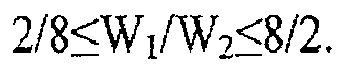
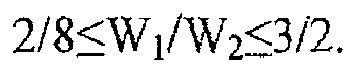
- the weight of the plant-derived flocculant is W 1 and the weight of the synthetic polymer flocculant is W 2 , it is desirable that they satisfy the following conditions: 2 / 8 ⁇ W 1 / W 2 ⁇ 8 / 2 preferably, 2 / 8 ⁇ W 1 / W 2 ⁇ 3 / 2.
- the plant-derived flocculant is in a dissolved/dispersed form in the water (partially dissolved, and the rest dispersed, the same hereinafter).
- the flocculation method of the invention including the aforementioned preferred forms, it can be combined with a synthetic polymer flocculant having a colloid equivalent of -4.5 mEq/g to -1.2 mEq/g, and whose 0.2 weight% aqueous solution has a viscosity of 1.3 ⁇ 10 -1 Pa ⁇ s to 4 ⁇ 10 -1 Pa ⁇ s(130 cP to 400 cP).
- the weight of the plant-derived flocculant added in each unit weight of the suspension is W' 1 and the weight of the synthetic polymer flocculant added is W' 2 , it is desirable that they satisfy the following conditions: 2 / 8 ⁇ W ⁇ 1 / W ⁇ 2 ⁇ 8 / 2 preferably, 2 / 8 ⁇ W ⁇ 1 / W ⁇ 2 ⁇ 3 / 2.
- the synthetic polymer flocculant can be composed of at least one synthetic polymer flocculant selected from partial hydrolysates of polyacrylamide, copolymers of acrylamide and acrylic acid, and copolymers of acrylamide and metal acrylate.
- the synthetic polymer flocculant having such a composition has good compatibility with the plant-derived flocculant, and can cause synergism between their properties, can increase the flocculation speed during the drained water treatment with addition of small amount, and can greatly increase the clarity of the supernatant after the flocculation treatment and the clarity of the filtrate after the dehydration filtration. This is because for sludge particles having different particle sizes and surface electric potential (colloid particles), two flocculants with different colloid equivalent value and aqueous solution viscosity (molecule weight) can achieve different flocculation effects, respectively. It should be noted that for the dehydration treatment, commonly used dehydrators, such as press filter, vacuum dehydrator, belt press dehydrator, centrifugation dehydrator, screw press, etc., can be used.
- the plant (plant raw material) is crushed before or during dying the plant (plant raw material) at a temperature lower than 100 °C.
- Colloid equivalent is a quantitative indicator of the charge of a soluble polymer electrolyte.
- the flocculant or synthetic polymer flocculant of the invention In order to show the excellent flocculation property, it is necessary for the flocculant or synthetic polymer flocculant of the invention to have a certain range of charges. Therefore, based on this, the sludge particles existing in the suspension and having electric potential on the surface are electrostatically neutralized, thereby being flocculated.
- the colloid equivalent can be calculated by colloid titration. Specifically, after methyl glycol chitosan solution is added to the aqueous solution with the flocculant of the invention and the synthetic polymer flocculant solved/dispersed therein, the excessive portion is titrated with potassium poly(vinyl sulfate) solution.
- the colloid equivalent of the flocculant of the invention when the colloid equivalent of the flocculant of the invention is lower than -1.5 mEq, the flocculation slows down; and when the value is larger than -0.20 mEq, it may reduce the turbidity of the supernatant after the flocculation.
- the viscosity of the aqueous flocculant solution of the invention is an indicator of the molecular weight of the water soluble polymer in the flocculant of the invention that facilitates the flocculation of sludge particles. If the viscosity increases, the flocculation may become too rapid; and if the viscosity decreases, the flocculation may become too slow. When the viscosity of the 2 weight% aqueous solution of the flocculant of the invention is lower than 6.0 ⁇ 10 -3 Pa ⁇ s, the flocculation becomes too slow to be practically useful.
- the viscosity of the aqueous solution can be obtained by the following measurement: the sample, dissolved/dispersed at a certain concentration, is assayed with viscosity meter Model B using No.1 or No.2 rotor at 60 rpm at 25°C. Moreover, the viscosity of the synthetic polymer flocculant aqueous solution is defined according to various experiments which determine the viscosity range to allow good compatibility when it is combined with the flocculant of the invention.
- pulverization crushing
- the method for pulverization (crushing) can be any method suitable for the plant raw material, for example, commonly used pulverizer can be used.
- the flocculant can be used in a premixed form with the flocculation adjuvants, inorganic flocculants, organic flocculants, nonionic polymer flocculants, anionic polymer flocculants, cationic polymer flocculants, amphoteric polymer flocculants, etc. , as shown below, or used in combination ( i.e. , individually added into the suspension). By mixing or combining with these reagents, the object of further increasing the flocculation can be achieved.
- aluminum sulfate, polyaluminum chloride (PAC); sodium aluminate; ferrous sulfate, ferric chloride, ferric sulfate, chlorinated copperas, modified basic aluminum sulfate (LACS), and active silicon dioxide can be exemplified as the inorganic flocculant.
- dimethyldiallyl ammonium chloride; alkyl/epichlorohydrin polycondensate; polyethylene imine; the polycondensate between alkylene dichloride and polyalkylene polyamine; dicyandiamide-formaldehyde polycondensate; anilinine-formaldehyde copolymer hydrochloride; polyhexamethylenethiourea acetate; and poly vinyl benzyl trimethyl ammonium chloride) can be exemplified as the organic flocculant.
- polyacrylamide; polymethacrylamide; starch; guar gum; gelatin; polyoxyethylene, and polyoxypropylene can be exemplified as the nonionic polymer flocculant.
- (meth)acrylic polymers sodium alginate; guar gum sodium; carboxymethyl cellulose sodium; and starch sodium as the anionic polymer flocculant.
- (meth)acrylic polymers in addition to the aforementioned synthetic polymer flocculant, partial hydrolysates of polymethacrylamide; copolymers of (meth)acrylic acid and (meth)acrylamide or salts thereof; terpolymers of (meth)acrylic acid, (meth)acrylamide, and 2-acrylamido-methylpropanesulfonic acid, vinylsulfonic acid or vinylmethanesulfonic acid, or salts thereof; and sulfomethylated derivatives of poly(meth)acrylamide and salts thereof can also be exemplified.
- quaternary ammonium salt of dialkylaminoalkyl(meth)acrylate (the quaternization agent can be methyl chloride, benzyl chloride, etc .) and an acidic salt thereof (the acidic salt can be a salt of an inorganic acid such as a hydrochloride, a sulfate, etc.
- a polymer or copolymer thereof with (meth)acrylamide for example, the methylchloride quaternary ammonium of dimethylaminoethylacrylate, or a polymer or copolymer thereof with acrylamide
- a quaternary ammonium of dialkylaminoalkyl(meth)acrylamide or an acidic salt thereof for example, the copolymer between methylchloride quaternary ammonium of dimethylaminopropylacrylamide and acrylamide
- a cationization modified polyacrylamide for example, the Mannich modified or Hoffmann degraded polyacrylamide
- epihalohydrin-amine polycondensate for example, the polycondensate between epihalohydrin and C 2-8 alkylenediamine
- polydimethyldiallylammonium chloride for example, the methylchloride quaternary ammonium of dimethylaminoethylacrylate, or a polymer or copolymer thereof with acrylamide
- acrylamide-acrylic acid (or salts thereof)-dialkylaminoalkyl(meth)acrylate (or salts or quaternary ammonium thereof), and polyglutamic acid and salts thereof can be exemplified as the amphoteric polymer flocculant.
- sulfonated polystyrene and salts thereof sulfonated polyphenylene ether and salts thereof, sulfonated polycarbonate and salts thereof, sulfonated polyphenylene sulfide and salts thereof, and sulfonated polyethylene terephthalate and salts thereof can be exemplified as other polymers.
- sulfonated polyphenylene ether and salts thereof, and sulfonated polycarbonate and salts thereof are preferred.
- the flocculant or flocculant mixture of the invention is preferably added to the suspension after the inorganic flocculant.
- the flocculant or flocculant mixture of the invention is preferably added simultaneously with or after the addition of the organic flocculant to the suspension.
- the anionic polymer flocculant when being used in combination with an anionic polymer flocculant, is preferably added after or simultaneously with the addition of the flocculant or flocculant mixture of the invention to the suspension.
- the flocculant or flocculant mixture of the invention when added to the suspension simultaneously with the addition of various flocculants, they can be individually added, or the flocculant or flocculant mixture of the invention can be premixed with the various flocculants before being added.
- the flocculant or flocculant mixture of the invention in a powder form can be directly added to the suspension (drained water), but as mentioned above, it is preferably added into the suspension (drained water) in a state of dissolved/dispersed in water.
- chelate resin chelating agent, activated carbon, ozone water, ion exchange resin and ion exchange membrane, absorption resin, hydrogen peroxide water, chlorine and liquid chlorine, sodium hypochlorite, chlorine dioxide, bleach powder, isocyanuric chloride, kieselguhr, photocatalysts such as titan oxide, and subtreating agents such as a biotreating agent can be mixed with or used in combination with the flocculant or flocculant mixture of the invention.
- the plant raw material which serves as the raw material of the flocculant of the invention, can be subject to acid and/or alkali treatment.
- the amount of the flocculant or flocculant mixture of the invention added relative to the suspension will vary greatly, but it is about 0.01 mg/l to 2000 mg/l (0.01 ppm to 2000 ppm), preferably 0.1 mg/l to 500 mg/l (0.1 ppm to 500 ppm), and more preferably 5 mg/l to 500 mg/l (5 ppm to 500 ppm).
- the desirable flocculation effect may not be obtained, and when too much is added, the flocculation effect may instead be reduced.
- Example 1 relates to the plant-derived flocculant, flocculant mixture, flocculation method and the method for preparing the plant-derived flocculant of the invention.
- the plant-derived flocculant of Example 1 had a colloid equivalent of -1.5 mEq/g to -0.20 mEq/g, and its 2 weight% aqueous solution had a viscosity of at least 6.0 ⁇ 10 -3 Pa ⁇ s (6.0 cP). It should be noted that the upper limit of the viscosity of the aqueous solution was not limited, but could be, e.g ., 5 ⁇ 10 -2 Pa ⁇ s (50 cP).
- the flocculant mixture of Example 1 comprised the plant-derived flocculant of Example 1 and a synthetic polymer flocculant having a colloid equivalent of -4.5 mEq/g to -1.2 mEq/g whose 0.2 weight% aqueous solution has a viscosity of 1.3 ⁇ 10 -1 Pa ⁇ s to 4 ⁇ 10 -1 Pa ⁇ s (130 cP to 400 cP).
- the flocculation method of Example 1 was adding the plant-derived flocculant of Example 1 to the suspension and flocculating and isolating the microparticles in the suspension.
- the method for preparing the plant-derived flocculant of Example 1 was the method for preparing the plant-derived flocculant of Example 1 by drying the plant (sometimes also called "plant raw material") at a temperature of lower than 100°C.
- Corchorus olitorius (leaves, stalks, stems, flowers and roots), Begonia fimbristipula (leaves), banana (skin), and Corchorus capsularis (leaves and stalks) served as the plant raw material of the plant-derived flocculant.
- Mizuna (leaves and stalks), Komatsuna (leaves and stalks), spinach (leaves and stalks), Garland chrysantheum (leaves and stalks), Perilla frutescens viridis (leaves), Chinese cabbage (leaves and stalks), butterbur, napa cabbage (leaves), cabbage (leaves), mimosa, and Japanese Angelica tree were used as the plant raw material of the flocculant of Comparative Example 1.
- polymer flocculant A ⁇ polymer flocculant F the commercially available partial hydrolysates of polyacrylamide having different colloid equivalent and aqueous solution viscosity. It should be noted that the extents of the partial hydrolysis of the polymer flocculant A ⁇ polymer flocculant F were different.
- the measurement of the viscosity of the aqueous solution was based on the follow method, i.e., the flocculants of the example and the comparative example were added into pure water and dissolved/dispersed, thereby forming a 2 weight% aqueous solution. Then, the viscosity of the aqueous solution was measured using B Type viscometer (manufactured by Toky Sangyo). More particularly, the temperature of the aqueous solution was adjusted to 25°C, and the measurement was conducted using No. 1 rotor at the spinning speed of 60 rpm. It should be noted that for viscosity measurement of the aqueous solution of the synthetic polymer flocculant, it was formulated into 0.2 weight% aqueous solution.
- the measurement of the colloid equivalent value was based on the following method, i.e., 50 ppm aqueous solutions of the flocculants of Example 1 and Comparative Example 1 were formulated. Specifically, 0.2 of various flocculants of Example 1 and Comparative Example 1 (converted to the weight of the dry product) were precisely weighed and placed in a conical flask and dissolved/dispersed with 100 ml ion exchange water. Furthermore, 390 ml ion exchange water was added to 10 ml of such aqueous solution as the measurement sample.
- the colloid equivalent value 100 ml measurement sample was placed in the conical flask and 0.5 ml of 1/10 equivalent concentration sodium hydroxide aqueous solution was added with agitation. Then, 5 ml of 1/200 equivalent concentration methyl glycol chitosan solution was added with agitation for 5 minutes. Furthermore, 2 to 3 drops of toluidine blue was added and a titration was conducted with 1/400 equivalent concentration of polyvinyl potassium sulfate reagent. The titration speed was 2 ml/min. The endpoint was when the test sample turned purple from blue and maintained this state for at least 30 seconds.
- the absolute value of the colloid equivalent value (unit: mEq/g) could be calculated according to the following equation.
- the absolute value of the colloid equivalent value 1 / 2 ⁇ titration amount of the test sample - titration amount of the blank experiment ⁇ titration value of 1 / 400 equivalent concentration polyvinyl potassium sulfate reagent
- the following suspension was used as the suspension (drained water) for the flocculation assessment. That is, the pH of the waste solution discharged from a semiconductor plant (containing hydrogen fluoride and phosphoric acid) was adjusted to 8 by adding slaked lime. 500 ppm aluminum sulfate was added to the precipitated calcium fluoride and calcium phosphate for condensation, and the resultant solution was used as the suspension for assessment. It should be noted that the suspension for assessment had a pH of 6.8, suspended solids (SS) of 2.5 weight%, and an electric conductivity (EC) of 0.246 S/m.
- SS suspended solids
- EC electric conductivity
- the following method was used. That is, 100 ml suspension for assessment was added to a 200 ml cylinder with a cork of the same material. Then, the flocculants of the example and comparative example were added by pipetting, so that certain concentration of the polymer components and the solid components relative to the suspension were reached (2.5 ppm or 10 ppm). Then, the cylinder was immediately inverted for agitation for 10 times. Subsequently, it was left to stand to measure the settling speed of the suspended particles. It should be noted that the settling speed was calculated according to the time consumed for the flocculation interface dropping from 80 ml to 60 ml. Moreover, the clarity of the supernatant after 3 minute stand was assessed by visual observation. Then, the flocculation solution was filtered by gravity using filter cloth (twill) made by polypropylene and the clarity of the filtrate was assessed by visual observation. The aforementioned measurement results are shown in Tables 1 ⁇ Table 3.
- Example 1-A Compared to other plant-derived flocculants (Comparative Example 1-A ⁇ Comparative Example 1-K), the plant-derived flocculants of Example 1-A ⁇ Example 1-D obtained from Corchorus olitorius, Begonia fimbristipula, banana, and Corchorus capsularis having a certain colloid equivalent value and aqueous solution viscosity exhibit excellent flocculation properties as settling speed, as well as the clarity of the supernatant after the flocculation treatment and the filtrate after the dehydration filtration.
- Example 1-E and Example 1-F in which the drying temperature was lower than 100°C and Comparative Example 1-L-Comparative Example 1-O in which the drying temperature was at least 100°C that the flocculation performance of Comparative Example 1-L-Comparative Example 1-0 is poorer. It is presumed that when the plant raw materials were dried at a temperature of more than 100°C, heat deterioration occurred to one water soluble polymer component of the plant raw materials so as to make the flocculation performance poorer.
- Example 1-G ⁇ Example 1-L which were the mixtures of synthetic polymer flocculants, which were anionic polymer flocculants having certain colloid equivalent values and aqueous solution viscosities, and plant-derived flocculants, it was determined that they had excellent flocculation properties with lower amount of addition (2.5 ppm).
- the synthetic polymer flocculants without the certain colloid equivalent values and aqueous solution viscosities (Comparative Example 1-Q ⁇ Comparative Example 1-S) were used, and when the synthetic polymer flocculants were used themselves (Comparative Example 1-P), the desirable flocculation effect could not be obtained.
- the flocculants of Example 1 compared to the flocculants of Comparative Example 1 or traditional flocculants, have excellent flocculation properties (for example, settling speed and filtrate turbidity).
- the flocculants of Example 1 are natural occurring substances, they are renewable and safe to human beings and environment, therefore, the cake (the dehydrated) and coagulum, which have long since been subject to the disposal by burning or dumping, can be re-used as compost or feed.
- the cake is very easy to be made fuel or compost. From the perspectives of saving resources, reducing harmful substances and effectively using the disposed materials, great contribution can be made to the environmental protection of the earth.
- the flocculants of Example 1 have large quantities of plant fiber components, the cake and the flocculate are very easy to be stripped off from the press cloth when the cake and the flocculate are subject to dehydration. Moreover, the cake and the flocculate have deodorization effect on the processing water.
- Corchorus olitorius, Begonia fimbristipula, banana and Corchorus capsularis were used individually, but the same flocculation properties can also been obtained by using the combination of (Corchorus olitorius, Begonia fimbristipula), the combination of ( Corchorus olitorius, banana), the combination of (Corchorus olitorius, Corchorus capsularis), the combination of (Begonia fimbristipula, banana), the combination of (Begonia fimbristipula, Corchorus capsularis), the combination of (banana, Corchorus capsularis), the combination of (Corchorus olitorius, Begonia fimbristipula, banana), the combination of ( Corchorus olitorius, Begonia fimbristipula, Corchorus capsularis), the combination of (Corchorus olitorius, banana, Corchorus capsularis), the combination of (Corchorus olitorius, banana, Corchorus capsularis), the combination of (Corchorus olitorius
Landscapes
- Chemical & Material Sciences (AREA)
- Organic Chemistry (AREA)
- Chemical Kinetics & Catalysis (AREA)
- Life Sciences & Earth Sciences (AREA)
- Hydrology & Water Resources (AREA)
- Engineering & Computer Science (AREA)
- Environmental & Geological Engineering (AREA)
- Water Supply & Treatment (AREA)
- Analytical Chemistry (AREA)
- General Chemical & Material Sciences (AREA)
- Separation Of Suspended Particles By Flocculating Agents (AREA)
Abstract
Description
- The invention relates to a plant-derived flocculant, a flocculant mixture, a method of flocculation, and a method for preparing the plant-derived flocculant.
- With mass production and mass consumption in recent years, suspended particles discharged in water such as plant drained water keep increasing. Therefore, synthetic polymer flocculants such as polyacrylamide and copolymers thereof are generally used as flocculants for flocculate/separate microparticles dispersed in water, so as to clarify the water. However, there exist the following issues for the synthetic polymer flocculants:
- [1] Even they are discharged into soil, they are accumulated rather than degraded.
- [2] Their monomers themselves (acrylamide, etc.) are toxic.
- [3] They are synthesized using fossil resources such as petroleum which are not renewable materials for human.
- Therefore, from the perspective of environmental pollution, safety concerns and exhaustion of fossil resources, development of flocculants having good biodegradability and high safety are desired.
- For natural polymer flocculants, although guar gum (seed extract of guar from Family Fabaceae), sodium alginate (extract of brown algae such as kelp, Ecklonia cava, Eisenia bicyclis, etc.), starch, gelatin, chitosan, etc. have been studied, these materials have not been widely used yet because they either are difficult to raise and cultivate, or have limited use and poor flocculability.
- Moreover, according to Japanese Patent Laid-open
H11-114313 -
- Patent document 1: Japanese Patent Laid-open
H11-114313 - Although the flocculant disclosed in the aforementioned Japanese Patent Laid-open H11-114313 can effectively flocculate suspended particles, a flocculant with a higher flocculability is still desirable.
- Therefore, an object of the invention is to provide a plant-derived flocculant with a higher flocculability, a flocculation mixture based on said plant-derived flocculant, and a method for preparing said plant-derived flocculant.
- The plant-derived flocculant of the invention for achieving the aforementioned object has a colloid equivalent of -1.5 mEq/g to -0.20 mEq/g, and its 2 weight% aqueous solution has a viscosity of more than 6.0×10⁻³ Pa·s (6.0 cP).
- The flocculant mixture of the invention for achieving the aforementioned object comprises the plant-derived flocculant of the invention and a synthetic polymer flocculant having a colloid equivalent of -4.5 mEq/g to -1.2 mEq/g, whose 0.2 weight% aqueous solution has a viscosity of 1.3 × 10⁻¹ Pa·s to 4×10⁻¹ Pa·s (130 cP to 400 cP).
- The flocculation method of the invention for achieving the aforementioned object is adding the aforementioned plant-derived flocculant of the invention into a suspension to flocculate and isolate the microparticles in the suspension.
- The method for preparing the plant-derived flocculant of the invention for achieving the aforementioned object is a method for preparing the aforementioned plant-derived flocculant of the invention by drying the plant (sometimes also called the "plant raw material") at a temperature lower than 100 °C.
- The use of the plant-derived dried material for achieving the aforementioned object is to prepare a flocculant, wherein the colloid equivalent of the plant-derived dried material is -1.5 mEq/g to -0.20 mEq/g, and its 2 weight% aqueous solution has a viscosity of at least 6.0×10⁻³ Pa·s.
- For the plant-derived flocculant of the invention, the plant-derived flocculant in the flocculant mixture of the invention, the plant-derived flocculant in the flocculation method of the invention, or the plant-derived flocculant prepared by the method for preparing the plant-derived flocculant of the invention, it has an excellent flocculation performance since its colloid equivalent and the viscosity of its 2 weight% aqueous solution have been defined. Hence, the supernatant after the flocculation treatment and the filtered water after the dehydration filtration are highly clear. Furthermore, it has high safety to the environment and human beings. Moreover, it is renewable and has excellent flocculation activity, which can be used widely: it is applicable to various fields such as drained water treatment field, water supply/sewage field, fermentation industry, paper industry, construction industry, etc.
- The invention is illustrated below based on examples. However, the invention is not limited by the examples. The various values and materials in the examples are merely exemplary. Moreover, the illustration is conducted in the following order.
- 1. General description of the plant-derived flocculant, the flocculant mixture, the flocculating method, and the method for preparing the plant-derived flocculant of the invention
- 2. Example 1 (the plant-derived flocculant, the flocculant mixture, the flocculant method, and the method for preparing the plant-derived flocculant of the invention), etc.
- [General description of the plant-derived flocculant, the flocculant mixture, the flocculant method, and the method for preparing the plant-derived flocculant of the invention]
- The plant-derived flocculant of the invention, the plant-derived flocculant in the flocculant mixture of the invention, the plant-derived flocculant in the flocculation method of the invention, or the plant-derived flocculant prepared by the method for preparing the plant-derived flocculant of the invention (the aforementioned is sometimes called "the flocculant in the invention" in general, hereinafter) can be in a form of a dry material comprising Corchorus olitorius, or in a form of a dry material comprising Begonia fimbristipula, or in a form of a dry material comprising bananas, or in a form of a dry material comprising Corchorus capsularis, or in a form of at least one dry material selected from the dry material of Corchorus olitorius, the dry material of Begonia fimbristipula, the dry material of bananas, and the dry material of Corchorus capsularis. For the plant material, any parts such as leaves, stalks, stems, roots, fruits and petals can be used, especially preferred parts such as leaves, stalks, stems and flowers, more preferred parts such as leaves and stalks are desirable because they are convenient for powder processing. As to plant raw material, the location and season of cultivation are not particularly limited. Corchorus olitorius is mostly cultivated and harvested in China; Begonia fimbristipula is mostly cultivated and harvested in Japan; and bananas are mostly cultivated and harvested in Southeast Asia.
- The flocculant of the invention, including the aforementioned preferred forms, is preferably in a form of a dry material obtained by drying the plant (plant material) at a temperature of lower than 100°C. When the plant material is dried at a temperature of at least 100°C, it is possible that heat deterioration occurs to one soluble polymer component of the plant raw material (specifically, for example, polysaccharides which undergo breakage of main chains and pending chains to reduce the molecular weight, and render infusible and carbonized due to intramolecular crosslinking) thereby reducing the flocculation performance. For the drying method, sun drying, drying in the shade, hot wind drying, vacuum drying, freeze drying, and cold drying, etc. can be exemplified.
- For the flocculant mixture of the invention, including the aforementioned preferred forms, when in each unit weight of the flocculant mixture, the weight of the plant-derived flocculant is W1 and the weight of the synthetic polymer flocculant is W2, it is desirable that they satisfy the following conditions:

preferably,
- Furthermore, for the flocculation method of the invention, including the aforementioned preferred forms, before the plant-derived flocculant is added into the suspension, it is preferred that the plant-derived flocculant is in a dissolved/dispersed form in the water (partially dissolved, and the rest dispersed, the same hereinafter).
- Furthermore, for the flocculation method of the invention, including the aforementioned preferred forms, it can be combined with a synthetic polymer flocculant having a colloid equivalent of -4.5 mEq/g to -1.2 mEq/g, and whose 0.2 weight% aqueous solution has a viscosity of 1.3×10⁻¹ Pa·s to 4×10⁻¹ Pa·s(130 cP to 400 cP). In this case, when the weight of the plant-derived flocculant added in each unit weight of the suspension is W'1 and the weight of the synthetic polymer flocculant added is W'2, it is desirable that they satisfy the following conditions:

preferably,
- In the flocculant mixture or flocculation method of the invention including the preferred forms, the synthetic polymer flocculant can be composed of at least one synthetic polymer flocculant selected from partial hydrolysates of polyacrylamide, copolymers of acrylamide and acrylic acid, and copolymers of acrylamide and metal acrylate.
- The synthetic polymer flocculant having such a composition has good compatibility with the plant-derived flocculant, and can cause synergism between their properties, can increase the flocculation speed during the drained water treatment with addition of small amount, and can greatly increase the clarity of the supernatant after the flocculation treatment and the clarity of the filtrate after the dehydration filtration. This is because for sludge particles having different particle sizes and surface electric potential (colloid particles), two flocculants with different colloid equivalent value and aqueous solution viscosity (molecule weight) can achieve different flocculation effects, respectively. It should be noted that for the dehydration treatment, commonly used dehydrators, such as press filter, vacuum dehydrator, belt press dehydrator, centrifugation dehydrator, screw press, etc., can be used.
- In addition, for the method for preparing the plant-derived flocculant of the invention including the aforementioned preferred forms, the plant (plant raw material) is crushed before or during dying the plant (plant raw material) at a temperature lower than 100 °C.
- Colloid equivalent is a quantitative indicator of the charge of a soluble polymer electrolyte. In order to show the excellent flocculation property, it is necessary for the flocculant or synthetic polymer flocculant of the invention to have a certain range of charges. Therefore, based on this, the sludge particles existing in the suspension and having electric potential on the surface are electrostatically neutralized, thereby being flocculated. The colloid equivalent can be calculated by colloid titration. Specifically, after methyl glycol chitosan solution is added to the aqueous solution with the flocculant of the invention and the synthetic polymer flocculant solved/dispersed therein, the excessive portion is titrated with potassium poly(vinyl sulfate) solution. It should be noted that when the colloid equivalent of the flocculant of the invention is lower than -1.5 mEq, the flocculation slows down; and when the value is larger than -0.20 mEq, it may reduce the turbidity of the supernatant after the flocculation.
- The viscosity of the aqueous flocculant solution of the invention is an indicator of the molecular weight of the water soluble polymer in the flocculant of the invention that facilitates the flocculation of sludge particles. If the viscosity increases, the flocculation may become too rapid; and if the viscosity decreases, the flocculation may become too slow. When the viscosity of the 2 weight% aqueous solution of the flocculant of the invention is lower than 6.0×10⁻³ Pa·s, the flocculation becomes too slow to be practically useful. The viscosity of the aqueous solution can be obtained by the following measurement: the sample, dissolved/dispersed at a certain concentration, is assayed with viscosity meter Model B using No.1 or No.2 rotor at 60 rpm at 25°C. Moreover, the viscosity of the synthetic polymer flocculant aqueous solution is defined according to various experiments which determine the viscosity range to allow good compatibility when it is combined with the flocculant of the invention.
- For the plant-derived flocculant of the invention, although the effect of the flocculant can be achieved by maintaining the original state of the plant raw material, pulverization (crushing) is desired from the perspective of practical use (perspective of operation). The method for pulverization (crushing) can be any method suitable for the plant raw material, for example, commonly used pulverizer can be used.
- The flocculant can be used in a premixed form with the flocculation adjuvants, inorganic flocculants, organic flocculants, nonionic polymer flocculants, anionic polymer flocculants, cationic polymer flocculants, amphoteric polymer flocculants, etc., as shown below, or used in combination (i.e., individually added into the suspension). By mixing or combining with these reagents, the object of further increasing the flocculation can be achieved.
- Herein, slaked lime, sodium silicate, bentonite, and fly ash can be exemplified as the flocculant adjuvant.
- In addition, aluminum sulfate, polyaluminum chloride (PAC); sodium aluminate; ferrous sulfate, ferric chloride, ferric sulfate, chlorinated copperas, modified basic aluminum sulfate (LACS), and active silicon dioxide can be exemplified as the inorganic flocculant.
- Furthermore, dimethyldiallyl ammonium chloride; alkyl/epichlorohydrin polycondensate; polyethylene imine; the polycondensate between alkylene dichloride and polyalkylene polyamine; dicyandiamide-formaldehyde polycondensate; anilinine-formaldehyde copolymer hydrochloride; polyhexamethylenethiourea acetate; and poly vinyl benzyl trimethyl ammonium chloride) can be exemplified as the organic flocculant.
- In addition, polyacrylamide; polymethacrylamide; starch; guar gum; gelatin; polyoxyethylene, and polyoxypropylene can be exemplified as the nonionic polymer flocculant.
- Furthermore, (meth)acrylic polymers; sodium alginate; guar gum sodium; carboxymethyl cellulose sodium; and starch sodium as the anionic polymer flocculant. Here, for (meth)acrylic polymers, in addition to the aforementioned synthetic polymer flocculant, partial hydrolysates of polymethacrylamide; copolymers of (meth)acrylic acid and (meth)acrylamide or salts thereof; terpolymers of (meth)acrylic acid, (meth)acrylamide, and 2-acrylamido-methylpropanesulfonic acid, vinylsulfonic acid or vinylmethanesulfonic acid, or salts thereof; and sulfomethylated derivatives of poly(meth)acrylamide and salts thereof can also be exemplified.
- In addition, a quaternary ammonium salt of dialkylaminoalkyl(meth)acrylate (the quaternization agent can be methyl chloride, benzyl chloride, etc.) and an acidic salt thereof (the acidic salt can be a salt of an inorganic acid such as a hydrochloride, a sulfate, etc. and a salt of an organic acid such as an acetate, etc.) or a polymer or copolymer thereof with (meth)acrylamide (for example, the methylchloride quaternary ammonium of dimethylaminoethylacrylate, or a polymer or copolymer thereof with acrylamide); a quaternary ammonium of dialkylaminoalkyl(meth)acrylamide or an acidic salt thereof, or a polymer or copolymer thereof with (meth)acrylamide (for example, the copolymer between methylchloride quaternary ammonium of dimethylaminopropylacrylamide and acrylamide); a cationization modified polyacrylamide (for example, the Mannich modified or Hoffmann degraded polyacrylamide); epihalohydrin-amine polycondensate (for example, the polycondensate between epihalohydrin and C2-8 alkylenediamine); polydimethyldiallylammonium chloride; polyvinylimidazoline and salts thereof; polyvinylamidine and salts thereof; chitosan and salts thereof; polyvinylpyridine and salts thereof; polythiourea; water soluble aniline resin; chloromethyl polystyrene ammonium salt or quaternary amine salt; and polyvinylimidazole and salts thereof can be exemplified as the cationic polymer flocculant.
- Furthermore, acrylamide-acrylic acid (or salts thereof)-dialkylaminoalkyl(meth)acrylate (or salts or quaternary ammonium thereof), and polyglutamic acid and salts thereof can be exemplified as the amphoteric polymer flocculant.
- In addition, sulfonated polystyrene and salts thereof, sulfonated polyphenylene ether and salts thereof, sulfonated polycarbonate and salts thereof, sulfonated polyphenylene sulfide and salts thereof, and sulfonated polyethylene terephthalate and salts thereof can be exemplified as other polymers. However, sulfonated polyphenylene ether and salts thereof, and sulfonated polycarbonate and salts thereof are preferred.
- It should be noted that it is more preferred to be used in combination with an inorganic flocculant, an organic flocculant or an anionic polymer flocculant. When being used in combination with an inorganic flocculant, the flocculant or flocculant mixture of the invention is preferably added to the suspension after the inorganic flocculant. Moreover, when being used in combination with an organic flocculant, the flocculant or flocculant mixture of the invention is preferably added simultaneously with or after the addition of the organic flocculant to the suspension. In addition, when being used in combination with an anionic polymer flocculant, the anionic polymer flocculant is preferably added after or simultaneously with the addition of the flocculant or flocculant mixture of the invention to the suspension. Moreover, when the flocculant or flocculant mixture of the invention is added to the suspension simultaneously with the addition of various flocculants, they can be individually added, or the flocculant or flocculant mixture of the invention can be premixed with the various flocculants before being added. As to the method for adding, the flocculant or flocculant mixture of the invention in a powder form can be directly added to the suspension (drained water), but as mentioned above, it is preferably added into the suspension (drained water) in a state of dissolved/dispersed in water.
- Furthermore, chelate resin, chelating agent, activated carbon, ozone water, ion exchange resin and ion exchange membrane, absorption resin, hydrogen peroxide water, chlorine and liquid chlorine, sodium hypochlorite, chlorine dioxide, bleach powder, isocyanuric chloride, kieselguhr, photocatalysts such as titan oxide, and subtreating agents such as a biotreating agent can be mixed with or used in combination with the flocculant or flocculant mixture of the invention.
- If desired, the plant raw material, which serves as the raw material of the flocculant of the invention, can be subject to acid and/or alkali treatment.
- When the supernatant obtained after the flocculation treatment of the suspension is re-used, or when the cake (dehydrated) and floculate after the flocculation treatment of the suspension is re-used as compost or feed, if they are mixed or used in combination with a synthetic polymer flocculant, it may affect the environment or human beings. Therefore, in this case, it is preferred to use just the plant-derived flocculant of the invention or use it in combination with other inorganic or naturally occurring agents, such as gum guar, sodium alginate, starch, gelatin, chitosan, etc.
- Based on the type of the target suspension and the combination with other agents, the amount of the flocculant or flocculant mixture of the invention added relative to the suspension will vary greatly, but it is about 0.01 mg/l to 2000 mg/l (0.01 ppm to 2000 ppm), preferably 0.1 mg/l to 500 mg/l (0.1 ppm to 500 ppm), and more preferably 5 mg/l to 500 mg/l (5 ppm to 500 ppm). When too little flocculant or flocculant mixture of the invention is added, the desirable flocculation effect may not be obtained, and when too much is added, the flocculation effect may instead be reduced.
- Example 1 relates to the plant-derived flocculant, flocculant mixture, flocculation method and the method for preparing the plant-derived flocculant of the invention.
- The plant-derived flocculant of Example 1 had a colloid equivalent of -1.5 mEq/g to -0.20 mEq/g, and its 2 weight% aqueous solution had a viscosity of at least 6.0×10⁻³ Pa·s (6.0 cP). It should be noted that the upper limit of the viscosity of the aqueous solution was not limited, but could be, e.g., 5×10⁻²Pa·s (50 cP). In addition, the flocculant mixture of Example 1 comprised the plant-derived flocculant of Example 1 and a synthetic polymer flocculant having a colloid equivalent of -4.5 mEq/g to -1.2 mEq/g whose 0.2 weight% aqueous solution has a viscosity of 1.3×10⁻¹ Pa·s to 4×10⁻¹ Pa·s (130 cP to 400 cP). The flocculation method of Example 1 was adding the plant-derived flocculant of Example 1 to the suspension and flocculating and isolating the microparticles in the suspension. The method for preparing the plant-derived flocculant of Example 1 was the method for preparing the plant-derived flocculant of Example 1 by drying the plant (sometimes also called "plant raw material") at a temperature of lower than 100°C.
- For Example 1, Corchorus olitorius (leaves, stalks, stems, flowers and roots), Begonia fimbristipula (leaves), banana (skin), and Corchorus capsularis (leaves and stalks) served as the plant raw material of the plant-derived flocculant. Furthermore, Mizuna (leaves and stalks), Komatsuna (leaves and stalks), spinach (leaves and stalks), Garland chrysantheum (leaves and stalks), Perilla frutescens viridis (leaves), Chinese cabbage (leaves and stalks), butterbur, napa cabbage (leaves), cabbage (leaves), mimosa, and Japanese Angelica tree were used as the plant raw material of the flocculant of Comparative Example 1. Then, these plant raw materials were dried at a certain temperature for a certain time with a heat drier so as to obtain the flocculants of Example 1 and Comparative Example 1. The water content of the flocculants of Example 1 and Comparative Example 1, although depending on the drying conditions, could be 4.5 weight%∼25 weight%. The flocculants of Example 1 and Comparative Example 1 were obtained by crushing with a food processor for cooking.
- Furthermore, for the synthetic polymer flocculant, the commercially available partial hydrolysates of polyacrylamide having different colloid equivalent and aqueous solution viscosity (polymer flocculant A∼polymer flocculant F) was used. It should be noted that the extents of the partial hydrolysis of the polymer flocculant A∼polymer flocculant F were different.
- The measurement of the viscosity of the aqueous solution was based on the follow method, i.e., the flocculants of the example and the comparative example were added into pure water and dissolved/dispersed, thereby forming a 2 weight% aqueous solution. Then, the viscosity of the aqueous solution was measured using B Type viscometer (manufactured by Toky Sangyo). More particularly, the temperature of the aqueous solution was adjusted to 25°C, and the measurement was conducted using No. 1 rotor at the spinning speed of 60 rpm. It should be noted that for viscosity measurement of the aqueous solution of the synthetic polymer flocculant, it was formulated into 0.2 weight% aqueous solution.
- The measurement of the colloid equivalent value was based on the following method, i.e., 50 ppm aqueous solutions of the flocculants of Example 1 and Comparative Example 1 were formulated. Specifically, 0.2 of various flocculants of Example 1 and Comparative Example 1 (converted to the weight of the dry product) were precisely weighed and placed in a conical flask and dissolved/dispersed with 100 ml ion exchange water. Furthermore, 390 ml ion exchange water was added to 10 ml of such aqueous solution as the measurement sample.
- For the measurement of the colloid equivalent value, 100 ml measurement sample was placed in the conical flask and 0.5 ml of 1/10 equivalent concentration sodium hydroxide aqueous solution was added with agitation. Then, 5 ml of 1/200 equivalent concentration methyl glycol chitosan solution was added with agitation for 5 minutes. Furthermore, 2 to 3 drops of toluidine blue was added and a titration was conducted with 1/400 equivalent concentration of polyvinyl potassium sulfate reagent. The titration speed was 2 ml/min. The endpoint was when the test sample turned purple from blue and maintained this state for at least 30 seconds.
- It should be noted that as the blank experiment for the colloid equivalent value measurement, 100 ml ion exchange water was used as the test sample for the same operations as above.
- Here, the absolute value of the colloid equivalent value (unit: mEq/g) could be calculated according to the following equation.

- The following suspension was used as the suspension (drained water) for the flocculation assessment. That is, the pH of the waste solution discharged from a semiconductor plant (containing hydrogen fluoride and phosphoric acid) was adjusted to 8 by adding slaked lime. 500 ppm aluminum sulfate was added to the precipitated calcium fluoride and calcium phosphate for condensation, and the resultant solution was used as the suspension for assessment. It should be noted that the suspension for assessment had a pH of 6.8, suspended solids (SS) of 2.5 weight%, and an electric conductivity (EC) of 0.246 S/m.
- For assessment of flocculation, the following method was used. That is, 100 ml suspension for assessment was added to a 200 ml cylinder with a cork of the same material. Then, the flocculants of the example and comparative example were added by pipetting, so that certain concentration of the polymer components and the solid components relative to the suspension were reached (2.5 ppm or 10 ppm). Then, the cylinder was immediately inverted for agitation for 10 times. Subsequently, it was left to stand to measure the settling speed of the suspended particles. It should be noted that the settling speed was calculated according to the time consumed for the flocculation interface dropping from 80 ml to 60 ml. Moreover, the clarity of the supernatant after 3 minute stand was assessed by visual observation. Then, the flocculation solution was filtered by gravity using filter cloth (twill) made by polypropylene and the clarity of the filtrate was assessed by visual observation. The aforementioned measurement results are shown in Tables 1 ∼ Table 3.


-
[Table 2] Item Unit Example Comparative Example 1-E 1-F 1-L 1-M 1-N 1-O Type of plant raw material Corchorus olitorius Corchorus olitorius Corchorus olitorius Corchorus olitorius Begonia fimbristipula banana skin Drying temperature (2 hr) °C 60 80 100 120 100 100 Viscosity of 2% aqueous solution 10-3 Pa·s 27 25 10 5.7 5.1 2.9 Colloid equivalent mEq/g -1.23 -0.49 -0.19 -0.15 -1.23 -0.25 Synthetic polymer flocculant - - - - - - Colloid equiavlant value mEq/g - - - - - - Viscosity of 0.2% aqueous solution 10-3Pa·s - - - - - - Amount added Plant/polymer flocculant ppm/ppm 10/0 10/0 10/0 10/0 10/0 10/0 Flocculant effect Flocculant speed mm/min 38 35 10 × <5 <5 Clarity of supernatant Visual observation ⊚ ⊚ × × × × Clarity of dehydrated filtrate Visual observation ⊚ ⊚ × × × × 

- Based on the results of Table 1, it can be known that compared to other plant-derived flocculants (Comparative Example 1-A∼Comparative Example 1-K), the plant-derived flocculants of Example 1-A∼Example 1-D obtained from Corchorus olitorius, Begonia fimbristipula, banana, and Corchorus capsularis having a certain colloid equivalent value and aqueous solution viscosity exhibit excellent flocculation properties as settling speed, as well as the clarity of the supernatant after the flocculation treatment and the filtrate after the dehydration filtration.
- In addition, it is known by comparing Example 1-E and Example 1-F in which the drying temperature was lower than 100°C and Comparative Example 1-L-Comparative Example 1-O in which the drying temperature was at least 100°C that the flocculation performance of Comparative Example 1-L-Comparative Example 1-0 is poorer. It is presumed that when the plant raw materials were dried at a temperature of more than 100°C, heat deterioration occurred to one water soluble polymer component of the plant raw materials so as to make the flocculation performance poorer.
- Furthermore, for the flocculant mixtures of Example 1-G∼Example 1-L which were the mixtures of synthetic polymer flocculants, which were anionic polymer flocculants having certain colloid equivalent values and aqueous solution viscosities, and plant-derived flocculants, it was determined that they had excellent flocculation properties with lower amount of addition (2.5 ppm). it should be noted, when the synthetic polymer flocculants without the certain colloid equivalent values and aqueous solution viscosities (Comparative Example 1-Q∼Comparative Example 1-S) were used, and when the synthetic polymer flocculants were used themselves (Comparative Example 1-P), the desirable flocculation effect could not be obtained.
- As mentioned above, the flocculants of Example 1, compared to the flocculants of Comparative Example 1 or traditional flocculants, have excellent flocculation properties (for example, settling speed and filtrate turbidity). Moreover, because the flocculants of Example 1 are natural occurring substances, they are renewable and safe to human beings and environment, therefore, the cake (the dehydrated) and coagulum, which have long since been subject to the disposal by burning or dumping, can be re-used as compost or feed. The cake is very easy to be made fuel or compost. From the perspectives of saving resources, reducing harmful substances and effectively using the disposed materials, great contribution can be made to the environmental protection of the earth. Furthermore, since the flocculants of Example 1 have large quantities of plant fiber components, the cake and the flocculate are very easy to be stripped off from the press cloth when the cake and the flocculate are subject to dehydration. Moreover, the cake and the flocculate have deodorization effect on the processing water.
- The invention has been illustrated on the basis of the preferred examples, but the invention is not limited by these examples and can have various modifications. In the example, Corchorus olitorius, Begonia fimbristipula, banana and Corchorus capsularis were used individually, but the same flocculation properties can also been obtained by using the combination of (Corchorus olitorius, Begonia fimbristipula), the combination of (Corchorus olitorius, banana), the combination of (Corchorus olitorius, Corchorus capsularis), the combination of (Begonia fimbristipula, banana), the combination of (Begonia fimbristipula, Corchorus capsularis), the combination of (banana, Corchorus capsularis), the combination of (Corchorus olitorius, Begonia fimbristipula, banana), the combination of (Corchorus olitorius, Begonia fimbristipula, Corchorus capsularis), the combination of (Corchorus olitorius, banana, Corchorus capsularis), the combination of (Begonia fimbrisifpula, banana, Corchorus capsularis), and the combination of (Corchorus olitorius, Begonia fimbristipula, banana, Corchorus capsularis).
Claims (28)
- A plant-derived flocculant having a colloid equivalent of -1.5 mEq/g to -0.20 mEq/g, whose 2 weight% aqueous solution has a viscosity of at least 6.0×10⁻³ Pa-s.
- The plant-derived flocculant according to claim 1, which comprises a dried matter of Corchorus olitorius.
- The plant-derived flocculant according to claim 1, which comprises a dried matter of Begonia fimbristipula.
- The plant-derived flocculant according to claim 1, which comprises a dried matter of bananas.
- The plant-derived flocculant according to claim 1, which comprises a dried matter of Corchorus capsularis.
- The plant-derived flocculant according to claim 1, which comprises at least one dried material selected from a dried matter of Corchorus olitorius, a dried matter of Begonia fimbristipula, a dried matter of bananas, and a dried matter of Corchorus capsularis.
- The plant-derived flocculant according to any one of claims 1∼6, which comprises a dried matter obtained by drying a plant at a temperature of lower than 100°C.
- A flocculant mixture, comprising:a plant-derived flocculant having a colloid equivalent of -1.5 mEq/g to -0.20 mEq/g, whose 2 weight% aqueous solution has a viscosity of at least 6.0× 10⁻³ Pa·s; anda synthetic polymer flocculant having a colloid equivalent of -4.5 mEq/g to -1.2 mEq/g, whose 0.2 weight% aqueous solution has a viscosity of 1.3×10⁻¹ Pa·s to 4×10⁻¹ Pa·s.
- The flocculant mixture according to claim 8, wherein the plant-derived flocculant comprises at least one dried material selected from a dried matter of Corchorus olitorius, a dried matter of Begonia fimbristipula, a dried matter of bananas, and a dried matter of Corchorus capsularis.
- The flocculant mixture according to claim 8 or 9, wherein when in each unit weight of the flocculant mixture, the weight of the plant-derived flocculant is W1 and the weight of the synthetic polymer flocculant is W2, they satisfy the following conditions:
- The flocculant mixture according to claim 10 which satisfies the following conditions:

- The flocculant mixture according to any one of claims 8∼11, wherein the synthetic polymer flocculant comprises at least one synthetic polymer flocculant selected from partial hydrolysates of polyacrylamide, copolymers of acrylamide and acrylic acid, and copolymers of acrylamide and metal acrylate.
- A flocculation method comprising the steps of:adding to a suspension a plant-derived flocculant having a colloid equivalent of -1.5 mEq/g to -0.20 mEq/g, whose 2 weight% aqueous solution has a viscosity of at least 6.0×10⁻³ Pa·s; andflocculating the microparticles in the suspension and isolating the flocculated materials.
- The flocculation method according to Claim 13, wherein the suspension is a discharged water from a plant.
- The flocculation method according to Claim 13, wherein the plant-derived flocculant comprises at least one dried material selected from a dried matter of Corchorus olitorius, a dried matter of Begonia fimbristipula, a dried matter of bananas, and a dried matter of Corchorus capsularis.
- The flocculation method according to any one of claims 13-15, wherein the plant-derived flocculant is dissolved/dispersed in water before adding the plant-derived flocculant to the suspension.
- The flocculation method according to any one of claims 13-16, wherein a synthetic polymer flocculant having a colloid equivalent of -4.5 mEq/g to -1.2 mEq/g, whose 0.2 weight% aqueous solution has a viscosity of 1.3×10⁻¹ Pa·s to 4×10⁻¹ Pa·s, is added in combination to the suspension.
- The flocculation, method according to claim 17, wherein when in each unit weight of the suspension flocculant, the weight of the plant-derived flocculant added is W1' and the weight of the synthetic polymer flocculant added is W2', they satisfy the following conditions:

- The flocculant method according to claim 18 which satisfies the following conditions:

- The flocculation method according to any one of claims 17-19, wherein the synthetic polymer flocculant comprises at least one synthetic polymer flocculant selected from partial hydrolysates of polyacrylamide, copolymers of acrylamide and acrylic acid, and copolymers of acrylamide and metal acrylate.
- A method for preparing a plant-derived flocculant, wherein the plant is dried at a temperature of lower than 100°C, and the plant-derived flocculant has a colloid equivalent of -1.5 mEq/g to -0.20 mEq/g, whose 2 weight% aqueous solution has a viscosity of at least 6.0×10⁻³ Pa·s.
- Use of a plant-derived dried material for preparing a flocculant, wherein the plant-derived dried material has a colloid equivalent of -1.5 mEq/g to -0.20 mEq/g, whose 2 weight% aqueous solution has a viscosity of at least 6.0×10⁻³ Pa·s.
- The use according to claim 22, wherein the plant-derived dried material is selected from a dried matter of Corchorus olitorius, a dried matter of Begonia fimbristipula, a dried matter of bananas, and a dried matter of Corchorus capsularis.
- The use according to claim 22 or 23, wherein the plant-derived dried material is obtained by drying the plant at a temperature of lower than 100°C.
- The use according to any one of claims 22∼24, wherein the flocculant is a flocculant mixture which further comprises a synthetic polymer flocculant having a colloid equivalent of -4.5 mEq/g to -1.2 mEq/g, whose 0.2 weight% aqueous solution has a viscosity of 1.3×10⁻¹ Pa·s to 4×10⁻¹ Pa·s.
- The use according to claim 25, wherein when in each unit weight of the flocculant mixture, the weight of the plant-derived flocculant is W1 and the weight of the synthetic polymer flocculant is W2, they satisfy the following conditions:

- The use according to claim 26 which satisfies the following conditions:
- The use according to any one of claims 25∼27, wherein the synthetic polymer flocculant comprises at least one synthetic polymer flocculant selected from partial hydrolysates of polyacrylamide, copolymers of acrylamide and acrylic acid, and copolymers of acrylamide and metal acrylate.
Applications Claiming Priority (2)
| Application Number | Priority Date | Filing Date | Title |
|---|---|---|---|
| CN201110007995.0A CN102583681B (en) | 2011-01-14 | 2011-01-14 | Coagulant of plant origin, coagulant mixture, method of coagulation and method of preparing coagulant of plant origin |
| PCT/CN2012/070105 WO2012094967A1 (en) | 2011-01-14 | 2012-01-06 | Plant-derived flocculant, flocculant mixture, method of flocculation, and method for preparing plant-derived flocculant |
Publications (3)
| Publication Number | Publication Date |
|---|---|
| EP2664585A1 true EP2664585A1 (en) | 2013-11-20 |
| EP2664585A4 EP2664585A4 (en) | 2016-10-26 |
| EP2664585B1 EP2664585B1 (en) | 2018-09-12 |
Family
ID=46473041
Family Applications (1)
| Application Number | Title | Priority Date | Filing Date |
|---|---|---|---|
| EP12734036.2A Active EP2664585B1 (en) | 2011-01-14 | 2012-01-06 | Plant-derived flocculant, flocculant mixture, method of flocculation, and method for preparing plant-derived flocculant |
Country Status (6)
| Country | Link |
|---|---|
| US (1) | US9611157B2 (en) |
| EP (1) | EP2664585B1 (en) |
| JP (2) | JP5833140B2 (en) |
| CN (1) | CN102583681B (en) |
| TW (1) | TWI516455B (en) |
| WO (1) | WO2012094967A1 (en) |
Cited By (2)
| Publication number | Priority date | Publication date | Assignee | Title |
|---|---|---|---|---|
| EP3202476A4 (en) * | 2014-10-03 | 2018-05-23 | Dexerials Corporation | Water purification agent and water purification method |
| EP3513856A4 (en) * | 2016-09-15 | 2020-03-18 | Dexerials Corporation | DISPERSION FOR WATER PURIFICATION AND METHOD FOR MANUFACTURING SAME, AND METHOD FOR TREATING WASTEWATER |
Families Citing this family (21)
| Publication number | Priority date | Publication date | Assignee | Title |
|---|---|---|---|---|
| CN103449579A (en) * | 2013-08-21 | 2013-12-18 | 苏州康华净化系统工程有限公司 | Coagulant for sewage treatment and preparation method thereof |
| US20150144574A1 (en) * | 2013-11-27 | 2015-05-28 | The Texas A&M University System | Polysaccharide agents and methods of their use for removing solids from water |
| JP6063416B2 (en) * | 2014-06-10 | 2017-01-18 | デクセリアルズ株式会社 | Water purification agent and water purification method |
| WO2016063745A1 (en) * | 2014-10-24 | 2016-04-28 | サンノプコ株式会社 | Viscoelasticity-adjusting agent |
| CN104591362B (en) * | 2015-02-09 | 2016-08-03 | 柏跃龙 | A kind of industrial sewage treating agent |
| JP6062986B2 (en) * | 2015-03-20 | 2017-01-18 | デクセリアルズ株式会社 | Filtration aid and filtration treatment method |
| JP6109225B2 (en) * | 2015-03-30 | 2017-04-05 | デクセリアルズ株式会社 | Water purification agent and water purification method |
| JP6133348B2 (en) * | 2015-03-30 | 2017-05-24 | デクセリアルズ株式会社 | Water purification agent, water purification agent production method, and water purification method |
| JP6592704B2 (en) * | 2015-04-21 | 2019-10-23 | サンノプコ株式会社 | Powder viscoelasticity modifier |
| CN105948199A (en) * | 2016-05-20 | 2016-09-21 | 张能力 | Composite water treatment flocculant and preparation method and application thereof |
| CN106179770A (en) * | 2016-07-18 | 2016-12-07 | 刘合琼 | A kind of copper sulfide ore beneficiation technique |
| WO2018051849A1 (en) * | 2016-09-15 | 2018-03-22 | デクセリアルズ株式会社 | Water purification dispersion, production method for water purification dispersion, and waste water treatment method |
| CN113233564B (en) * | 2016-09-16 | 2023-08-08 | 迪睿合株式会社 | Plant powder extracts and water purifiers |
| JP7131894B2 (en) * | 2016-09-16 | 2022-09-06 | デクセリアルズ株式会社 | Method for producing extract, extract, water purification agent, and wastewater treatment method |
| JP7071721B2 (en) * | 2017-07-31 | 2022-05-19 | 甲陽ケミカル株式会社 | Composition for organic matter aggregation containing regenerated chitosan |
| JP6320662B2 (en) * | 2018-01-05 | 2018-05-09 | デクセリアルズ株式会社 | Water purification agent, water purification agent production method, and water purification method |
| JP6338801B1 (en) * | 2018-04-02 | 2018-06-06 | デクセリアルズ株式会社 | Water purification agent, water purification agent production method, and water purification method |
| CN110586044A (en) * | 2019-09-18 | 2019-12-20 | 广东二十四克垃环保科技有限公司 | Salt reduction adsorbent for papermaking production and preparation method and application thereof |
| CN110937673A (en) * | 2019-12-04 | 2020-03-31 | 青岛大首席科技有限公司 | Preparation method of environment-friendly bio-based flocculant |
| CN115893621B (en) * | 2022-12-06 | 2023-08-08 | 山东珺宜环保科技有限公司 | Composite plant water purifying agent and preparation method and application thereof |
| CN117401787B (en) * | 2023-11-13 | 2024-07-09 | 中煤(北京)环保股份有限公司 | Industrial wastewater quality treating agent and application thereof in industrial wastewater treatment |
Family Cites Families (32)
| Publication number | Priority date | Publication date | Assignee | Title |
|---|---|---|---|---|
| GB411602A (en) * | 1932-02-18 | 1934-06-14 | Mathieu Van Roggen | Improvements in process of and means for dehydrating colloid material |
| US2117378A (en) * | 1935-11-07 | 1938-05-17 | Tiffany Products Corp | Settling and coagulating agent and the method for making and using the same |
| CS148930B1 (en) * | 1970-09-16 | 1973-05-24 | ||
| JPS5420160A (en) * | 1977-07-11 | 1979-02-15 | Meiji Seika Co | Production of dried bannana product |
| US4502961A (en) * | 1983-12-16 | 1985-03-05 | Suncor, Inc. | Destabilization of sludge with hydrolyzed cassava starch flocculants |
| US4558080A (en) * | 1984-01-24 | 1985-12-10 | Dearborn Chemical Company | Stable tannin based polymer compound |
| JPS62289300A (en) * | 1986-06-09 | 1987-12-16 | Toagosei Chem Ind Co Ltd | Sludge dehydrating agent |
| US5112500A (en) * | 1990-06-29 | 1992-05-12 | Allied Colloids Limited | Purification of aqueous liquor |
| DE4026617A1 (en) * | 1990-08-23 | 1992-02-27 | Wolff Walsrode Ag | METHOD FOR PRODUCING POLYSACCHARIDES |
| DE4133920C1 (en) * | 1991-10-12 | 1993-11-04 | Herbert Dr Kunzek | Low protein, pectin rich cellular material prepn. - by alkaline extn. of de-juiced plant tissue, blanching, alkaline de-esterification, acid washing, washing to remove acid and drying |
| US5342525A (en) * | 1991-10-28 | 1994-08-30 | Rowsell Farrell D | Method for aiding microbial degradation of spilled oil |
| US5433865A (en) * | 1994-03-31 | 1995-07-18 | Laurent; Edward L. | Method for treating process waste streams by use of natural flocculants |
| JP3302227B2 (en) * | 1995-09-06 | 2002-07-15 | シャープ株式会社 | Wastewater treatment device and wastewater treatment method |
| US5816305A (en) * | 1995-12-21 | 1998-10-06 | D.C. Macy Corporation | Protective cover having a non-woven absorbent layer |
| JPH10128010A (en) * | 1996-11-05 | 1998-05-19 | Hymo Corp | Dredging mud treatment method |
| US5958182A (en) * | 1997-04-04 | 1999-09-28 | Fybx Corporation | Process for converting tropical plant material into fibers |
| JP3876497B2 (en) * | 1997-10-09 | 2007-01-31 | ソニー株式会社 | Flocculant and flocculation method using the same |
| JPH11114314A (en) * | 1997-10-09 | 1999-04-27 | Sony Corp | Flocculant and flocculation method using the same |
| JP3918298B2 (en) | 1998-04-30 | 2007-05-23 | ソニー株式会社 | Polymer flocculant and method for producing the same |
| US6436288B1 (en) * | 1999-02-08 | 2002-08-20 | Mississippi State University | Bast medium biological reactor treatment system for remediation and odor suppression of organic waste streams |
| CN1266821A (en) * | 1999-03-12 | 2000-09-20 | 中国科学院生态环境研究中心 | Polyaluminium chloride and chitin compounded efficient flocculant and its preparing process |
| JP3721852B2 (en) | 1999-05-24 | 2005-11-30 | 東亞合成株式会社 | Muddy water dehydration method |
| US6749748B1 (en) * | 2001-12-28 | 2004-06-15 | Vanson Halosource, Inc. | Methods for reducing the amount of contaminants in water |
| JP4167973B2 (en) | 2003-12-22 | 2008-10-22 | ハイモ株式会社 | Organic sludge dewatering method |
| FR2885125B1 (en) * | 2005-04-28 | 2007-11-09 | Rhodia Chimie Sa | USE OF POLYSACCHARIDES FOR REMOVING HEAVY METALS IN THE FORM OF ANIONS IN WATER |
| US7943049B1 (en) * | 2006-11-03 | 2011-05-17 | University Of South Florida | Water purification method using plant molecules |
| JP5194938B2 (en) * | 2008-03-27 | 2013-05-08 | トヨタ紡織株式会社 | Method for producing vegetable fiber composite material |
| JP4422202B1 (en) | 2009-05-29 | 2010-02-24 | 佳和 福井 | Coagulant composition and coagulation treatment method |
| US8518268B1 (en) * | 2009-10-23 | 2013-08-27 | Flocate Industries, Inc. | Method and apparatus for mobile water filtration |
| WO2011150417A2 (en) * | 2010-05-28 | 2011-12-01 | University Of South Florida | Use of cactus mucilage as a dispersant and absorbant for oil in oil-water mixtures |
| CN101863543A (en) * | 2010-06-13 | 2010-10-20 | 武汉理工大学 | A papermaking wastewater adsorption treatment agent |
| PL401690A1 (en) * | 2012-11-20 | 2014-05-26 | Zachodniopomorski Uniwersytet Technologiczny W Szczecinie | Method for preparing an agent for treating water soluble phosphorus compounds, and means for purifying water soluble phosphorus compounds |
-
2011
- 2011-01-14 CN CN201110007995.0A patent/CN102583681B/en active Active
- 2011-12-06 TW TW100144922A patent/TWI516455B/en active
-
2012
- 2012-01-06 EP EP12734036.2A patent/EP2664585B1/en active Active
- 2012-01-06 JP JP2013548726A patent/JP5833140B2/en active Active
- 2012-01-06 WO PCT/CN2012/070105 patent/WO2012094967A1/en not_active Ceased
- 2012-01-06 US US13/979,819 patent/US9611157B2/en active Active
-
2015
- 2015-10-01 JP JP2015195584A patent/JP6055059B2/en active Active
Cited By (3)
| Publication number | Priority date | Publication date | Assignee | Title |
|---|---|---|---|---|
| EP3202476A4 (en) * | 2014-10-03 | 2018-05-23 | Dexerials Corporation | Water purification agent and water purification method |
| EP3513856A4 (en) * | 2016-09-15 | 2020-03-18 | Dexerials Corporation | DISPERSION FOR WATER PURIFICATION AND METHOD FOR MANUFACTURING SAME, AND METHOD FOR TREATING WASTEWATER |
| US11161757B2 (en) | 2016-09-15 | 2021-11-02 | Dexerials Corporation | Water purification dispersion, production method for water purification dispersion, and waste water treatment method |
Also Published As
| Publication number | Publication date |
|---|---|
| TWI516455B (en) | 2016-01-11 |
| EP2664585B1 (en) | 2018-09-12 |
| EP2664585A4 (en) | 2016-10-26 |
| JP2016026871A (en) | 2016-02-18 |
| US9611157B2 (en) | 2017-04-04 |
| CN102583681B (en) | 2014-07-02 |
| WO2012094967A1 (en) | 2012-07-19 |
| JP6055059B2 (en) | 2016-12-27 |
| TW201228946A (en) | 2012-07-16 |
| JP2014505588A (en) | 2014-03-06 |
| CN102583681A (en) | 2012-07-18 |
| JP5833140B2 (en) | 2015-12-16 |
| US20130299433A1 (en) | 2013-11-14 |
Similar Documents
| Publication | Publication Date | Title |
|---|---|---|
| EP2664585B1 (en) | Plant-derived flocculant, flocculant mixture, method of flocculation, and method for preparing plant-derived flocculant | |
| JP3876497B2 (en) | Flocculant and flocculation method using the same | |
| TWI602607B (en) | Flocculant mixture and flocculation method | |
| Chatsungnoen et al. | Harvesting microalgae by flocculation–sedimentation | |
| Nourani et al. | Production of a biodegradable flocculant from cotton and evaluation of its performance in coagulation-flocculation of kaolin clay suspension: Optimization through response surface methodology (RSM) | |
| El-Naggar et al. | Cationic starch: Safe and economic harvesting flocculant for microalgal biomass and inhibiting E. coli growth | |
| Roselet et al. | Flocculation of Nannochloropsis oculata using a tannin-based polymer: bench scale optimization and pilot scale reproducibility | |
| CN102910721B (en) | A kind of composite biological flocculant and its preparation method and application | |
| CN103508536B (en) | Sewage treatment flocculating agent in livestock farm | |
| Gao et al. | Effect of SO42-/Al3+ ratio and OH−/Al3+ value on the characterization of coagulant poly-aluminum-chloride-sulfate (PACS) and its coagulation performance in water treatment | |
| Lian et al. | Preparation of hemicellulose-based hydrogel and its application as an adsorbent towards heavy metal ions | |
| Sun et al. | Worse than cell lysis: The resilience of Oscillatoria sp. during sludge storage in drinking water treatment | |
| Liu et al. | Removal of algal blooms in freshwater using magnetic polymer | |
| CN105084501B (en) | Biological flocculation aid and preparation method thereof is prepared using plant Chinese ilex | |
| Piazza et al. | A renewable flocculant from a poultry slaughterhouse waste and preliminary estimate of production costs | |
| Yusoff et al. | Synthesis and characterization of carboxymethyl cellulose derived from office paper waste for methylene blue dye removal | |
| CN102452783B (en) | Compound agent for raising slurry concentration and method thereof | |
| CN105217765A (en) | A kind of composite macromolecular flocculant and preparation method thereof | |
| CN107828021A (en) | A kind of preparation method of natural organic high-molecular water treatment agent | |
| CN110903016A (en) | Drilling water-based mud drying agent | |
| JPH11114314A (en) | Flocculant and flocculation method using the same | |
| CN114797421A (en) | Tea extract gel composition with formaldehyde discoloration property | |
| Piazza et al. | Recovery of wheat straw soda lignin using flocculation by proteins, synthetic flocculants, and a metal coagulant | |
| JP7833867B2 (en) | Organic coagulant and method for producing the same, and water purification agent and method for producing the same | |
| CN106365282A (en) | Method for flocculating and removing blue algae through dual-polymer composition and application of dual-polymer composition |
Legal Events
| Date | Code | Title | Description |
|---|---|---|---|
| PUAI | Public reference made under article 153(3) epc to a published international application that has entered the european phase |
Free format text: ORIGINAL CODE: 0009012 |
|
| 17P | Request for examination filed |
Effective date: 20130812 |
|
| AK | Designated contracting states |
Kind code of ref document: A1 Designated state(s): AL AT BE BG CH CY CZ DE DK EE ES FI FR GB GR HR HU IE IS IT LI LT LU LV MC MK MT NL NO PL PT RO RS SE SI SK SM TR |
|
| DAX | Request for extension of the european patent (deleted) | ||
| RA4 | Supplementary search report drawn up and despatched (corrected) |
Effective date: 20160928 |
|
| RIC1 | Information provided on ipc code assigned before grant |
Ipc: C02F 1/54 20060101AFI20160922BHEP Ipc: C02F 1/56 20060101ALI20160922BHEP Ipc: C02F 1/52 20060101ALI20160922BHEP |
|
| STAA | Information on the status of an ep patent application or granted ep patent |
Free format text: STATUS: EXAMINATION IS IN PROGRESS |
|
| 17Q | First examination report despatched |
Effective date: 20170713 |
|
| GRAP | Despatch of communication of intention to grant a patent |
Free format text: ORIGINAL CODE: EPIDOSNIGR1 |
|
| STAA | Information on the status of an ep patent application or granted ep patent |
Free format text: STATUS: GRANT OF PATENT IS INTENDED |
|
| INTG | Intention to grant announced |
Effective date: 20180404 |
|
| GRAS | Grant fee paid |
Free format text: ORIGINAL CODE: EPIDOSNIGR3 |
|
| GRAA | (expected) grant |
Free format text: ORIGINAL CODE: 0009210 |
|
| STAA | Information on the status of an ep patent application or granted ep patent |
Free format text: STATUS: THE PATENT HAS BEEN GRANTED |
|
| AK | Designated contracting states |
Kind code of ref document: B1 Designated state(s): AL AT BE BG CH CY CZ DE DK EE ES FI FR GB GR HR HU IE IS IT LI LT LU LV MC MK MT NL NO PL PT RO RS SE SI SK SM TR |
|
| REG | Reference to a national code |
Ref country code: GB Ref legal event code: FG4D |
|
| REG | Reference to a national code |
Ref country code: CH Ref legal event code: EP |
|
| REG | Reference to a national code |
Ref country code: IE Ref legal event code: FG4D |
|
| REG | Reference to a national code |
Ref country code: DE Ref legal event code: R096 Ref document number: 602012050964 Country of ref document: DE |
|
| REG | Reference to a national code |
Ref country code: AT Ref legal event code: REF Ref document number: 1040349 Country of ref document: AT Kind code of ref document: T Effective date: 20181015 |
|
| REG | Reference to a national code |
Ref country code: NL Ref legal event code: FP |
|
| REG | Reference to a national code |
Ref country code: LT Ref legal event code: MG4D |
|
| PG25 | Lapsed in a contracting state [announced via postgrant information from national office to epo] |
Ref country code: LT Free format text: LAPSE BECAUSE OF FAILURE TO SUBMIT A TRANSLATION OF THE DESCRIPTION OR TO PAY THE FEE WITHIN THE PRESCRIBED TIME-LIMIT Effective date: 20180912 Ref country code: BG Free format text: LAPSE BECAUSE OF FAILURE TO SUBMIT A TRANSLATION OF THE DESCRIPTION OR TO PAY THE FEE WITHIN THE PRESCRIBED TIME-LIMIT Effective date: 20181212 Ref country code: GR Free format text: LAPSE BECAUSE OF FAILURE TO SUBMIT A TRANSLATION OF THE DESCRIPTION OR TO PAY THE FEE WITHIN THE PRESCRIBED TIME-LIMIT Effective date: 20181213 Ref country code: RS Free format text: LAPSE BECAUSE OF FAILURE TO SUBMIT A TRANSLATION OF THE DESCRIPTION OR TO PAY THE FEE WITHIN THE PRESCRIBED TIME-LIMIT Effective date: 20180912 Ref country code: NO Free format text: LAPSE BECAUSE OF FAILURE TO SUBMIT A TRANSLATION OF THE DESCRIPTION OR TO PAY THE FEE WITHIN THE PRESCRIBED TIME-LIMIT Effective date: 20181212 Ref country code: SE Free format text: LAPSE BECAUSE OF FAILURE TO SUBMIT A TRANSLATION OF THE DESCRIPTION OR TO PAY THE FEE WITHIN THE PRESCRIBED TIME-LIMIT Effective date: 20180912 |
|
| PG25 | Lapsed in a contracting state [announced via postgrant information from national office to epo] |
Ref country code: LV Free format text: LAPSE BECAUSE OF FAILURE TO SUBMIT A TRANSLATION OF THE DESCRIPTION OR TO PAY THE FEE WITHIN THE PRESCRIBED TIME-LIMIT Effective date: 20180912 Ref country code: AL Free format text: LAPSE BECAUSE OF FAILURE TO SUBMIT A TRANSLATION OF THE DESCRIPTION OR TO PAY THE FEE WITHIN THE PRESCRIBED TIME-LIMIT Effective date: 20180912 Ref country code: HR Free format text: LAPSE BECAUSE OF FAILURE TO SUBMIT A TRANSLATION OF THE DESCRIPTION OR TO PAY THE FEE WITHIN THE PRESCRIBED TIME-LIMIT Effective date: 20180912 |
|
| PG25 | Lapsed in a contracting state [announced via postgrant information from national office to epo] |
Ref country code: ES Free format text: LAPSE BECAUSE OF FAILURE TO SUBMIT A TRANSLATION OF THE DESCRIPTION OR TO PAY THE FEE WITHIN THE PRESCRIBED TIME-LIMIT Effective date: 20180912 Ref country code: IS Free format text: LAPSE BECAUSE OF FAILURE TO SUBMIT A TRANSLATION OF THE DESCRIPTION OR TO PAY THE FEE WITHIN THE PRESCRIBED TIME-LIMIT Effective date: 20190112 Ref country code: EE Free format text: LAPSE BECAUSE OF FAILURE TO SUBMIT A TRANSLATION OF THE DESCRIPTION OR TO PAY THE FEE WITHIN THE PRESCRIBED TIME-LIMIT Effective date: 20180912 Ref country code: IT Free format text: LAPSE BECAUSE OF FAILURE TO SUBMIT A TRANSLATION OF THE DESCRIPTION OR TO PAY THE FEE WITHIN THE PRESCRIBED TIME-LIMIT Effective date: 20180912 Ref country code: PL Free format text: LAPSE BECAUSE OF FAILURE TO SUBMIT A TRANSLATION OF THE DESCRIPTION OR TO PAY THE FEE WITHIN THE PRESCRIBED TIME-LIMIT Effective date: 20180912 Ref country code: CZ Free format text: LAPSE BECAUSE OF FAILURE TO SUBMIT A TRANSLATION OF THE DESCRIPTION OR TO PAY THE FEE WITHIN THE PRESCRIBED TIME-LIMIT Effective date: 20180912 Ref country code: RO Free format text: LAPSE BECAUSE OF FAILURE TO SUBMIT A TRANSLATION OF THE DESCRIPTION OR TO PAY THE FEE WITHIN THE PRESCRIBED TIME-LIMIT Effective date: 20180912 |
|
| RAP2 | Party data changed (patent owner data changed or rights of a patent transferred) |
Owner name: DEXERIALS CORPORATION Owner name: SONY CORPORATION |
|
| PG25 | Lapsed in a contracting state [announced via postgrant information from national office to epo] |
Ref country code: SM Free format text: LAPSE BECAUSE OF FAILURE TO SUBMIT A TRANSLATION OF THE DESCRIPTION OR TO PAY THE FEE WITHIN THE PRESCRIBED TIME-LIMIT Effective date: 20180912 Ref country code: PT Free format text: LAPSE BECAUSE OF FAILURE TO SUBMIT A TRANSLATION OF THE DESCRIPTION OR TO PAY THE FEE WITHIN THE PRESCRIBED TIME-LIMIT Effective date: 20190112 Ref country code: SK Free format text: LAPSE BECAUSE OF FAILURE TO SUBMIT A TRANSLATION OF THE DESCRIPTION OR TO PAY THE FEE WITHIN THE PRESCRIBED TIME-LIMIT Effective date: 20180912 |
|
| REG | Reference to a national code |
Ref country code: DE Ref legal event code: R097 Ref document number: 602012050964 Country of ref document: DE |
|
| PLBE | No opposition filed within time limit |
Free format text: ORIGINAL CODE: 0009261 |
|
| STAA | Information on the status of an ep patent application or granted ep patent |
Free format text: STATUS: NO OPPOSITION FILED WITHIN TIME LIMIT |
|
| PG25 | Lapsed in a contracting state [announced via postgrant information from national office to epo] |
Ref country code: DK Free format text: LAPSE BECAUSE OF FAILURE TO SUBMIT A TRANSLATION OF THE DESCRIPTION OR TO PAY THE FEE WITHIN THE PRESCRIBED TIME-LIMIT Effective date: 20180912 |
|
| 26N | No opposition filed |
Effective date: 20190613 |
|
| PG25 | Lapsed in a contracting state [announced via postgrant information from national office to epo] |
Ref country code: MC Free format text: LAPSE BECAUSE OF FAILURE TO SUBMIT A TRANSLATION OF THE DESCRIPTION OR TO PAY THE FEE WITHIN THE PRESCRIBED TIME-LIMIT Effective date: 20180912 Ref country code: SI Free format text: LAPSE BECAUSE OF FAILURE TO SUBMIT A TRANSLATION OF THE DESCRIPTION OR TO PAY THE FEE WITHIN THE PRESCRIBED TIME-LIMIT Effective date: 20180912 |
|
| PG25 | Lapsed in a contracting state [announced via postgrant information from national office to epo] |
Ref country code: LU Free format text: LAPSE BECAUSE OF NON-PAYMENT OF DUE FEES Effective date: 20190106 |
|
| REG | Reference to a national code |
Ref country code: BE Ref legal event code: MM Effective date: 20190131 |
|
| REG | Reference to a national code |
Ref country code: IE Ref legal event code: MM4A |
|
| PG25 | Lapsed in a contracting state [announced via postgrant information from national office to epo] |
Ref country code: BE Free format text: LAPSE BECAUSE OF NON-PAYMENT OF DUE FEES Effective date: 20190131 |
|
| PG25 | Lapsed in a contracting state [announced via postgrant information from national office to epo] |
Ref country code: IE Free format text: LAPSE BECAUSE OF NON-PAYMENT OF DUE FEES Effective date: 20190106 |
|
| REG | Reference to a national code |
Ref country code: AT Ref legal event code: PC Ref document number: 1040349 Country of ref document: AT Kind code of ref document: T Owner name: DEXERIALS CORPORATION, JP Effective date: 20200123 |
|
| REG | Reference to a national code |
Ref country code: NL Ref legal event code: PD Owner name: DEXERIALS CORPORATION; JP Free format text: DETAILS ASSIGNMENT: CHANGE OF OWNER(S), ASSIGNMENT; FORMER OWNER NAME: SONY CORPORATION Effective date: 20200317 |
|
| PG25 | Lapsed in a contracting state [announced via postgrant information from national office to epo] |
Ref country code: TR Free format text: LAPSE BECAUSE OF FAILURE TO SUBMIT A TRANSLATION OF THE DESCRIPTION OR TO PAY THE FEE WITHIN THE PRESCRIBED TIME-LIMIT Effective date: 20180912 |
|
| PG25 | Lapsed in a contracting state [announced via postgrant information from national office to epo] |
Ref country code: MT Free format text: LAPSE BECAUSE OF NON-PAYMENT OF DUE FEES Effective date: 20190106 |
|
| PG25 | Lapsed in a contracting state [announced via postgrant information from national office to epo] |
Ref country code: CY Free format text: LAPSE BECAUSE OF FAILURE TO SUBMIT A TRANSLATION OF THE DESCRIPTION OR TO PAY THE FEE WITHIN THE PRESCRIBED TIME-LIMIT Effective date: 20180912 |
|
| PG25 | Lapsed in a contracting state [announced via postgrant information from national office to epo] |
Ref country code: HU Free format text: LAPSE BECAUSE OF FAILURE TO SUBMIT A TRANSLATION OF THE DESCRIPTION OR TO PAY THE FEE WITHIN THE PRESCRIBED TIME-LIMIT; INVALID AB INITIO Effective date: 20120106 |
|
| PG25 | Lapsed in a contracting state [announced via postgrant information from national office to epo] |
Ref country code: MK Free format text: LAPSE BECAUSE OF FAILURE TO SUBMIT A TRANSLATION OF THE DESCRIPTION OR TO PAY THE FEE WITHIN THE PRESCRIBED TIME-LIMIT Effective date: 20180912 |
|
| REG | Reference to a national code |
Ref country code: AT Ref legal event code: UEP Ref document number: 1040349 Country of ref document: AT Kind code of ref document: T Effective date: 20180912 |
|
| PGFP | Annual fee paid to national office [announced via postgrant information from national office to epo] |
Ref country code: GB Payment date: 20251217 Year of fee payment: 15 |
|
| PGFP | Annual fee paid to national office [announced via postgrant information from national office to epo] |
Ref country code: FI Payment date: 20251217 Year of fee payment: 15 |
|
| PGFP | Annual fee paid to national office [announced via postgrant information from national office to epo] |
Ref country code: FR Payment date: 20251217 Year of fee payment: 15 |
|
| REG | Reference to a national code |
Ref country code: CH Ref legal event code: U11 Free format text: ST27 STATUS EVENT CODE: U-0-0-U10-U11 (AS PROVIDED BY THE NATIONAL OFFICE) Effective date: 20260201 |
|
| PGFP | Annual fee paid to national office [announced via postgrant information from national office to epo] |
Ref country code: NL Payment date: 20260121 Year of fee payment: 15 |
|
| PGFP | Annual fee paid to national office [announced via postgrant information from national office to epo] |
Ref country code: DE Payment date: 20251217 Year of fee payment: 15 |
|
| PGFP | Annual fee paid to national office [announced via postgrant information from national office to epo] |
Ref country code: AT Payment date: 20260122 Year of fee payment: 15 |
|
| PGFP | Annual fee paid to national office [announced via postgrant information from national office to epo] |
Ref country code: CH Payment date: 20260201 Year of fee payment: 15 |