EP2660234A1 - Process for the production of artemisinin intermediates - Google Patents
Process for the production of artemisinin intermediates Download PDFInfo
- Publication number
- EP2660234A1 EP2660234A1 EP12305491.8A EP12305491A EP2660234A1 EP 2660234 A1 EP2660234 A1 EP 2660234A1 EP 12305491 A EP12305491 A EP 12305491A EP 2660234 A1 EP2660234 A1 EP 2660234A1
- Authority
- EP
- European Patent Office
- Prior art keywords
- formula
- air
- process according
- compound
- oxygen
- Prior art date
- Legal status (The legal status is an assumption and is not a legal conclusion. Google has not performed a legal analysis and makes no representation as to the accuracy of the status listed.)
- Withdrawn
Links
- 238000000034 method Methods 0.000 title claims abstract description 48
- 230000008569 process Effects 0.000 title claims abstract description 30
- BLUAFEHZUWYNDE-NNWCWBAJSA-N artemisinin Chemical compound C([C@](OO1)(C)O2)C[C@H]3[C@H](C)CC[C@@H]4[C@@]31[C@@H]2OC(=O)[C@@H]4C BLUAFEHZUWYNDE-NNWCWBAJSA-N 0.000 title claims abstract description 15
- 229930101531 artemisinin Natural products 0.000 title claims abstract description 15
- 229960004191 artemisinin Drugs 0.000 title claims abstract description 14
- 238000004519 manufacturing process Methods 0.000 title abstract description 9
- 239000000543 intermediate Substances 0.000 title 1
- QVGXLLKOCUKJST-UHFFFAOYSA-N atomic oxygen Chemical compound [O] QVGXLLKOCUKJST-UHFFFAOYSA-N 0.000 claims abstract description 38
- 239000001301 oxygen Substances 0.000 claims abstract description 38
- 229910052760 oxygen Inorganic materials 0.000 claims abstract description 38
- RAABOESOVLLHRU-UHFFFAOYSA-N diazene Chemical compound N=N RAABOESOVLLHRU-UHFFFAOYSA-N 0.000 claims abstract description 13
- 229910000071 diazene Inorganic materials 0.000 claims abstract description 12
- LFQSCWFLJHTTHZ-UHFFFAOYSA-N Ethanol Chemical compound CCO LFQSCWFLJHTTHZ-UHFFFAOYSA-N 0.000 claims description 49
- KFZMGEQAYNKOFK-UHFFFAOYSA-N Isopropanol Chemical compound CC(C)O KFZMGEQAYNKOFK-UHFFFAOYSA-N 0.000 claims description 36
- 150000001875 compounds Chemical class 0.000 claims description 36
- 238000006243 chemical reaction Methods 0.000 claims description 35
- OAKJQQAXSVQMHS-UHFFFAOYSA-N Hydrazine Chemical compound NN OAKJQQAXSVQMHS-UHFFFAOYSA-N 0.000 claims description 25
- 239000002904 solvent Substances 0.000 claims description 25
- IKDUDTNKRLTJSI-UHFFFAOYSA-N hydrazine monohydrate Substances O.NN IKDUDTNKRLTJSI-UHFFFAOYSA-N 0.000 claims description 18
- NWZSZGALRFJKBT-KNIFDHDWSA-N (2s)-2,6-diaminohexanoic acid;(2s)-2-hydroxybutanedioic acid Chemical compound OC(=O)[C@@H](O)CC(O)=O.NCCCC[C@H](N)C(O)=O NWZSZGALRFJKBT-KNIFDHDWSA-N 0.000 claims description 16
- XLYOFNOQVPJJNP-UHFFFAOYSA-N water Substances O XLYOFNOQVPJJNP-UHFFFAOYSA-N 0.000 claims description 15
- OKKJLVBELUTLKV-UHFFFAOYSA-N Methanol Chemical compound OC OKKJLVBELUTLKV-UHFFFAOYSA-N 0.000 claims description 9
- 125000004432 carbon atom Chemical group C* 0.000 claims description 8
- IJGRMHOSHXDMSA-UHFFFAOYSA-N Atomic nitrogen Chemical compound N#N IJGRMHOSHXDMSA-UHFFFAOYSA-N 0.000 claims description 6
- 125000000217 alkyl group Chemical group 0.000 claims description 4
- 125000000753 cycloalkyl group Chemical group 0.000 claims description 4
- 239000001257 hydrogen Substances 0.000 claims description 4
- 229910052739 hydrogen Inorganic materials 0.000 claims description 4
- 125000004435 hydrogen atom Chemical group [H]* 0.000 claims description 4
- 229910052757 nitrogen Inorganic materials 0.000 claims description 3
- 230000001590 oxidative effect Effects 0.000 claims description 3
- 238000011065 in-situ storage Methods 0.000 claims description 2
- 238000002360 preparation method Methods 0.000 claims description 2
- PLQMEXSCSAIXGB-SAXRGWBVSA-N (+)-artemisinic acid Chemical compound C1=C(C)CC[C@H]2[C@H](C)CC[C@@H](C(=C)C(O)=O)[C@H]21 PLQMEXSCSAIXGB-SAXRGWBVSA-N 0.000 abstract description 73
- LZMOBPWDHUQTKL-RWMBFGLXSA-N artemisinic acid Natural products CC1=C[C@@H]2[C@@H](CCC[C@H]2C(=C)C(=O)O)CC1 LZMOBPWDHUQTKL-RWMBFGLXSA-N 0.000 abstract description 36
- PLQMEXSCSAIXGB-UHFFFAOYSA-N artemisininic acid Natural products C1=C(C)CCC2C(C)CCC(C(=C)C(O)=O)C21 PLQMEXSCSAIXGB-UHFFFAOYSA-N 0.000 abstract description 36
- JYGAZEJXUVDYHI-UHFFFAOYSA-N dihydroartemisininic acid Natural products C1CC(C)=CC2C(C(C)C(O)=O)CCC(C)C21 JYGAZEJXUVDYHI-UHFFFAOYSA-N 0.000 abstract description 31
- 238000005984 hydrogenation reaction Methods 0.000 abstract description 3
- 239000003430 antimalarial agent Substances 0.000 abstract 1
- JYGAZEJXUVDYHI-DGTMBMJNSA-N dihydroartemisinic acid Chemical compound C1CC(C)=C[C@@H]2[C@H]([C@@H](C)C(O)=O)CC[C@@H](C)[C@@H]21 JYGAZEJXUVDYHI-DGTMBMJNSA-N 0.000 description 58
- YMWUJEATGCHHMB-UHFFFAOYSA-N Dichloromethane Chemical compound ClCCl YMWUJEATGCHHMB-UHFFFAOYSA-N 0.000 description 15
- RHQDFWAXVIIEBN-UHFFFAOYSA-N Trifluoroethanol Chemical compound OCC(F)(F)F RHQDFWAXVIIEBN-UHFFFAOYSA-N 0.000 description 10
- 239000003054 catalyst Substances 0.000 description 10
- 230000009467 reduction Effects 0.000 description 9
- 238000006722 reduction reaction Methods 0.000 description 9
- VEXZGXHMUGYJMC-UHFFFAOYSA-N Hydrochloric acid Chemical compound Cl VEXZGXHMUGYJMC-UHFFFAOYSA-N 0.000 description 8
- 238000004587 chromatography analysis Methods 0.000 description 7
- 239000011521 glass Substances 0.000 description 7
- BZLVMXJERCGZMT-UHFFFAOYSA-N Methyl tert-butyl ether Chemical compound COC(C)(C)C BZLVMXJERCGZMT-UHFFFAOYSA-N 0.000 description 6
- 229940079593 drug Drugs 0.000 description 6
- 239000003814 drug Substances 0.000 description 6
- 235000001405 Artemisia annua Nutrition 0.000 description 5
- 240000000011 Artemisia annua Species 0.000 description 5
- 239000000047 product Substances 0.000 description 5
- YXFVVABEGXRONW-UHFFFAOYSA-N Toluene Chemical compound CC1=CC=CC=C1 YXFVVABEGXRONW-UHFFFAOYSA-N 0.000 description 4
- 230000000078 anti-malarial effect Effects 0.000 description 4
- 201000004792 malaria Diseases 0.000 description 4
- 239000000203 mixture Substances 0.000 description 4
- 238000007254 oxidation reaction Methods 0.000 description 4
- 239000000126 substance Substances 0.000 description 4
- 238000003786 synthesis reaction Methods 0.000 description 4
- 238000010626 work up procedure Methods 0.000 description 4
- XEKOWRVHYACXOJ-UHFFFAOYSA-N Ethyl acetate Chemical compound CCOC(C)=O XEKOWRVHYACXOJ-UHFFFAOYSA-N 0.000 description 3
- MHAJPDPJQMAIIY-UHFFFAOYSA-N Hydrogen peroxide Chemical compound OO MHAJPDPJQMAIIY-UHFFFAOYSA-N 0.000 description 3
- 238000001069 Raman spectroscopy Methods 0.000 description 3
- 240000004808 Saccharomyces cerevisiae Species 0.000 description 3
- 230000015572 biosynthetic process Effects 0.000 description 3
- 238000002425 crystallisation Methods 0.000 description 3
- 230000008025 crystallization Effects 0.000 description 3
- 238000000605 extraction Methods 0.000 description 3
- 238000000855 fermentation Methods 0.000 description 3
- 230000004151 fermentation Effects 0.000 description 3
- 238000004128 high performance liquid chromatography Methods 0.000 description 3
- 239000000463 material Substances 0.000 description 3
- 230000003647 oxidation Effects 0.000 description 3
- 239000011541 reaction mixture Substances 0.000 description 3
- 230000035484 reaction time Effects 0.000 description 3
- 238000006257 total synthesis reaction Methods 0.000 description 3
- NGNBDVOYPDDBFK-UHFFFAOYSA-N 2-[2,4-di(pentan-2-yl)phenoxy]acetyl chloride Chemical compound CCCC(C)C1=CC=C(OCC(Cl)=O)C(C(C)CCC)=C1 NGNBDVOYPDDBFK-UHFFFAOYSA-N 0.000 description 2
- UHOVQNZJYSORNB-UHFFFAOYSA-N Benzene Chemical compound C1=CC=CC=C1 UHOVQNZJYSORNB-UHFFFAOYSA-N 0.000 description 2
- RTZKZFJDLAIYFH-UHFFFAOYSA-N Diethyl ether Chemical compound CCOCC RTZKZFJDLAIYFH-UHFFFAOYSA-N 0.000 description 2
- MYMOFIZGZYHOMD-UHFFFAOYSA-N Dioxygen Chemical compound O=O MYMOFIZGZYHOMD-UHFFFAOYSA-N 0.000 description 2
- 241000196324 Embryophyta Species 0.000 description 2
- IMNFDUFMRHMDMM-UHFFFAOYSA-N N-Heptane Chemical compound CCCCCCC IMNFDUFMRHMDMM-UHFFFAOYSA-N 0.000 description 2
- 150000001298 alcohols Chemical class 0.000 description 2
- HMTAHNDPLDKYJT-CBBWQLFWSA-N amorpha-4,11-diene Chemical compound C1=C(C)CC[C@H]2[C@H](C)CC[C@@H](C(C)=C)[C@H]21 HMTAHNDPLDKYJT-CBBWQLFWSA-N 0.000 description 2
- HMTAHNDPLDKYJT-UHFFFAOYSA-N amorphadiene Natural products C1=C(C)CCC2C(C)CCC(C(C)=C)C21 HMTAHNDPLDKYJT-UHFFFAOYSA-N 0.000 description 2
- 230000001851 biosynthetic effect Effects 0.000 description 2
- -1 copper salts Chemical class 0.000 description 2
- 239000013078 crystal Substances 0.000 description 2
- 230000034994 death Effects 0.000 description 2
- 231100000517 death Toxicity 0.000 description 2
- 238000011917 diastereoselective reduction Methods 0.000 description 2
- 238000005886 esterification reaction Methods 0.000 description 2
- 239000012065 filter cake Substances 0.000 description 2
- 239000007789 gas Substances 0.000 description 2
- 238000002156 mixing Methods 0.000 description 2
- 229910000510 noble metal Inorganic materials 0.000 description 2
- 239000012074 organic phase Substances 0.000 description 2
- 239000007800 oxidant agent Substances 0.000 description 2
- 239000002243 precursor Substances 0.000 description 2
- 125000006239 protecting group Chemical group 0.000 description 2
- 238000004007 reversed phase HPLC Methods 0.000 description 2
- 239000007787 solid Substances 0.000 description 2
- 238000003756 stirring Methods 0.000 description 2
- 239000000758 substrate Substances 0.000 description 2
- 239000000725 suspension Substances 0.000 description 2
- 230000007306 turnover Effects 0.000 description 2
- KJTLQQUUPVSXIM-ZCFIWIBFSA-M (R)-mevalonate Chemical compound OCC[C@](O)(C)CC([O-])=O KJTLQQUUPVSXIM-ZCFIWIBFSA-M 0.000 description 1
- JVSFQJZRHXAUGT-UHFFFAOYSA-N 2,2-dimethylpropanoyl chloride Chemical compound CC(C)(C)C(Cl)=O JVSFQJZRHXAUGT-UHFFFAOYSA-N 0.000 description 1
- JWUJQDFVADABEY-UHFFFAOYSA-N 2-methyltetrahydrofuran Chemical compound CC1CCCO1 JWUJQDFVADABEY-UHFFFAOYSA-N 0.000 description 1
- KKAJSJJFBSOMGS-UHFFFAOYSA-N 3,6-diamino-10-methylacridinium chloride Chemical class [Cl-].C1=C(N)C=C2[N+](C)=C(C=C(N)C=C3)C3=CC2=C1 KKAJSJJFBSOMGS-UHFFFAOYSA-N 0.000 description 1
- 241000944022 Amyris Species 0.000 description 1
- AOBAHYLCIGMCHX-UNQGMJICSA-N Artemisinic acid methyl ester Natural products C1CC(C)=C[C@@H]2[C@H](C(=C)C(=O)OC)CC[C@@H](C)[C@@H]21 AOBAHYLCIGMCHX-UNQGMJICSA-N 0.000 description 1
- 0 C[C@]([C@]1[C@]2C=C(C)CC[C@@]2[C@](C)CC1)C(O*)=O Chemical compound C[C@]([C@]1[C@]2C=C(C)CC[C@@]2[C@](C)CC1)C(O*)=O 0.000 description 1
- 208000035473 Communicable disease Diseases 0.000 description 1
- XDTMQSROBMDMFD-UHFFFAOYSA-N Cyclohexane Chemical compound C1CCCCC1 XDTMQSROBMDMFD-UHFFFAOYSA-N 0.000 description 1
- 102000002004 Cytochrome P-450 Enzyme System Human genes 0.000 description 1
- KJTLQQUUPVSXIM-UHFFFAOYSA-N DL-mevalonic acid Natural products OCCC(O)(C)CC(O)=O KJTLQQUUPVSXIM-UHFFFAOYSA-N 0.000 description 1
- YXHKONLOYHBTNS-UHFFFAOYSA-N Diazomethane Chemical compound C=[N+]=[N-] YXHKONLOYHBTNS-UHFFFAOYSA-N 0.000 description 1
- NTIZESTWPVYFNL-UHFFFAOYSA-N Methyl isobutyl ketone Chemical compound CC(C)CC(C)=O NTIZESTWPVYFNL-UHFFFAOYSA-N 0.000 description 1
- UIHCLUNTQKBZGK-UHFFFAOYSA-N Methyl isobutyl ketone Natural products CCC(C)C(C)=O UIHCLUNTQKBZGK-UHFFFAOYSA-N 0.000 description 1
- 101710198130 NADPH-cytochrome P450 reductase Proteins 0.000 description 1
- 241000224016 Plasmodium Species 0.000 description 1
- 241000223960 Plasmodium falciparum Species 0.000 description 1
- 206010037660 Pyrexia Diseases 0.000 description 1
- HATRDXDCPOXQJX-UHFFFAOYSA-N Thapsigargin Natural products CCCCCCCC(=O)OC1C(OC(O)C(=C/C)C)C(=C2C3OC(=O)C(C)(O)C3(O)C(CC(C)(OC(=O)C)C12)OC(=O)CCC)C HATRDXDCPOXQJX-UHFFFAOYSA-N 0.000 description 1
- 150000008064 anhydrides Chemical class 0.000 description 1
- 239000008346 aqueous phase Substances 0.000 description 1
- 239000012298 atmosphere Substances 0.000 description 1
- 150000001718 carbodiimides Chemical class 0.000 description 1
- PFKFTWBEEFSNDU-UHFFFAOYSA-N carbonyldiimidazole Chemical compound C1=CN=CN1C(=O)N1C=CN=C1 PFKFTWBEEFSNDU-UHFFFAOYSA-N 0.000 description 1
- 239000003153 chemical reaction reagent Substances 0.000 description 1
- 239000003638 chemical reducing agent Substances 0.000 description 1
- FZFAMSAMCHXGEF-UHFFFAOYSA-N chloro formate Chemical compound ClOC=O FZFAMSAMCHXGEF-UHFFFAOYSA-N 0.000 description 1
- 238000011097 chromatography purification Methods 0.000 description 1
- 238000009833 condensation Methods 0.000 description 1
- 230000005494 condensation Effects 0.000 description 1
- 229910052802 copper Inorganic materials 0.000 description 1
- 239000010949 copper Substances 0.000 description 1
- SBTSVTLGWRLWOD-UHFFFAOYSA-L copper(ii) triflate Chemical compound [Cu+2].[O-]S(=O)(=O)C(F)(F)F.[O-]S(=O)(=O)C(F)(F)F SBTSVTLGWRLWOD-UHFFFAOYSA-L 0.000 description 1
- 239000012043 crude product Substances 0.000 description 1
- 230000001419 dependent effect Effects 0.000 description 1
- 238000011161 development Methods 0.000 description 1
- 230000018109 developmental process Effects 0.000 description 1
- 150000004985 diamines Chemical class 0.000 description 1
- 201000010099 disease Diseases 0.000 description 1
- 208000037265 diseases, disorders, signs and symptoms Diseases 0.000 description 1
- 238000009826 distribution Methods 0.000 description 1
- 230000000694 effects Effects 0.000 description 1
- 230000032050 esterification Effects 0.000 description 1
- 239000000446 fuel Substances 0.000 description 1
- 230000036541 health Effects 0.000 description 1
- 238000010952 in-situ formation Methods 0.000 description 1
- 239000011261 inert gas Substances 0.000 description 1
- GJRQTCIYDGXPES-UHFFFAOYSA-N iso-butyl acetate Natural products CC(C)COC(C)=O GJRQTCIYDGXPES-UHFFFAOYSA-N 0.000 description 1
- FGKJLKRYENPLQH-UHFFFAOYSA-M isocaproate Chemical compound CC(C)CCC([O-])=O FGKJLKRYENPLQH-UHFFFAOYSA-M 0.000 description 1
- 238000002955 isolation Methods 0.000 description 1
- OQAGVSWESNCJJT-UHFFFAOYSA-N isovaleric acid methyl ester Natural products COC(=O)CC(C)C OQAGVSWESNCJJT-UHFFFAOYSA-N 0.000 description 1
- 239000007791 liquid phase Substances 0.000 description 1
- 229910052751 metal Inorganic materials 0.000 description 1
- 239000002184 metal Substances 0.000 description 1
- 150000004702 methyl esters Chemical class 0.000 description 1
- 125000002496 methyl group Chemical group [H]C([H])([H])* 0.000 description 1
- 229940043265 methyl isobutyl ketone Drugs 0.000 description 1
- 244000005700 microbiome Species 0.000 description 1
- 238000012544 monitoring process Methods 0.000 description 1
- 238000006213 oxygenation reaction Methods 0.000 description 1
- 244000045947 parasite Species 0.000 description 1
- 230000037361 pathway Effects 0.000 description 1
- VLTRZXGMWDSKGL-UHFFFAOYSA-M perchlorate Inorganic materials [O-]Cl(=O)(=O)=O VLTRZXGMWDSKGL-UHFFFAOYSA-M 0.000 description 1
- VLTRZXGMWDSKGL-UHFFFAOYSA-N perchloric acid Chemical compound OCl(=O)(=O)=O VLTRZXGMWDSKGL-UHFFFAOYSA-N 0.000 description 1
- 239000012071 phase Substances 0.000 description 1
- 238000005086 pumping Methods 0.000 description 1
- 229930183339 qinghaosu Natural products 0.000 description 1
- 239000012429 reaction media Substances 0.000 description 1
- 239000012070 reactive reagent Substances 0.000 description 1
- 230000009257 reactivity Effects 0.000 description 1
- 238000000926 separation method Methods 0.000 description 1
- 229930009674 sesquiterpene lactone Natural products 0.000 description 1
- 150000002107 sesquiterpene lactone derivatives Chemical class 0.000 description 1
- MFRIHAYPQRLWNB-UHFFFAOYSA-N sodium tert-butoxide Chemical compound [Na+].CC(C)(C)[O-] MFRIHAYPQRLWNB-UHFFFAOYSA-N 0.000 description 1
- RWVGQQGBQSJDQV-UHFFFAOYSA-M sodium;3-[[4-[(e)-[4-(4-ethoxyanilino)phenyl]-[4-[ethyl-[(3-sulfonatophenyl)methyl]azaniumylidene]-2-methylcyclohexa-2,5-dien-1-ylidene]methyl]-n-ethyl-3-methylanilino]methyl]benzenesulfonate Chemical compound [Na+].C1=CC(OCC)=CC=C1NC1=CC=C(C(=C2C(=CC(C=C2)=[N+](CC)CC=2C=C(C=CC=2)S([O-])(=O)=O)C)C=2C(=CC(=CC=2)N(CC)CC=2C=C(C=CC=2)S([O-])(=O)=O)C)C=C1 RWVGQQGBQSJDQV-UHFFFAOYSA-M 0.000 description 1
- 238000011916 stereoselective reduction Methods 0.000 description 1
- 208000024891 symptom Diseases 0.000 description 1
- 238000001308 synthesis method Methods 0.000 description 1
- 229910052723 transition metal Inorganic materials 0.000 description 1
- 150000003624 transition metals Chemical class 0.000 description 1
- 208000037972 tropical disease Diseases 0.000 description 1
Classifications
-
- C—CHEMISTRY; METALLURGY
- C07—ORGANIC CHEMISTRY
- C07C—ACYCLIC OR CARBOCYCLIC COMPOUNDS
- C07C51/00—Preparation of carboxylic acids or their salts, halides or anhydrides
- C07C51/347—Preparation of carboxylic acids or their salts, halides or anhydrides by reactions not involving formation of carboxyl groups
- C07C51/36—Preparation of carboxylic acids or their salts, halides or anhydrides by reactions not involving formation of carboxyl groups by hydrogenation of carbon-to-carbon unsaturated bonds
Definitions
- Malaria is a tropical disease and is common in Africa, South East Asia, and South America. Approximately 300-500 million people are infected with malaria, making it one of the world's major infectious diseases. In 2006, an estimated 1.5 to 2.7 million deaths resulted from malaria and most of the deaths occurred in children under five years old. Disease control is hampered by the occurrence of multi-drug resistant strains of the parasite Plasmodium falciparum. Therefore it is an important world health objective to develop new anti-malaria drugs, and alternative methods of producing anti-malaria drugs.
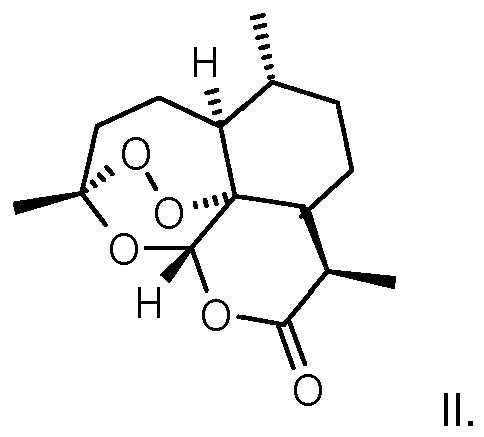
- One of these anti-malaria drugs is artemisinin of the formula II, a sesquiterpene lactone endoperoxide which is a component of the traditional Chinese medical herb Artemisia annua.
- artemisinin is also sometimes referred to by its Chinese name Qinghaosu. Recent strides have been made in understanding the properties and structure of this molecule. The compound was first isolated in 1972, and its anti-malaria activity was discovered in 1979. The first total synthesis of the molecule was accomplished by chemists at Hoffmann-La Roche in 1983 ( G. Schmidt, W. Hofheinz, J. Am. Chem. Soc., 105, 624 (1983 )). Artemisinin is highly effective against multi-drug resistant Plasmodium spp., but is in short supply and unaffordable to most malaria sufferers. The production of artemisinin can be accomplished through several routes.
- Such reduction step can be carried out by hydrogenation under pressure in the presence of chiral transition metal catalysts, which are relatively expensive and need to be removed after the reaction.
- WO 2011/030223 discloses a process in which artemisinic acid is reduced into dihydroartemisinic acid in the presence of diimide (diimine, diazene).
- diimide diimine, diazene
- WO 2011/030223 as well as Org. Reactions 40, 91-155, 1991 by D.J. Pasto and R.T. Taylor describe various methods for generating diimide reducing agent.
- WO2011/030223 describes the in situ formation of diimide by an oxidation of hydrazine or hydrazine hydrate with oxidants (such as hydrogen peroxide (H 2 O 2 )) and oxygen with and without metal catalysts (for example copper salts) or organic catalysts (for example flavine derivatives).
- oxidants such as hydrogen peroxide (H 2 O 2 )
- metal catalysts for example copper salts
- organic catalysts for example flavine derivatives
- the inventors of the present disclosure surprisingly discovered that the reduction of artemisinic acid to dihydroartemisinic acid in the presence of hydrazine and/or hydrazine hydrate can be completed under a low oxygen condition.
- R1 is hydrogen or linear or branched alkyl having 1, 2, 3, 4, 5, or 6 carbon atoms or cycloalkyl having 3, 4,5, 6, or 7 carbon atoms, starting either from commercially available materials or compounds already described in the literature, themselves being prepared easily from commercially available materials.
- Simple and environmentally compatible reagents and solvents may be used to afford high overall yields and good purity of the products and that can be performed on an industrial scale.
- the compound of the formula I may be obtained by reacting a compound of formula III with hydrazine and/or hydrazine hydrate under an air comprising a low concentration of oxygen.
- diimine is generated in situ during the reaction.
- the air having a low concentration of oxygen may comprise oxygen in an amount less than or equal to 20%, such as less than or equal to 15%, also such as less than or equal to 10%, further such as less than or equal to 8%, and even further such as less than or equal to 5% by volume relative to the total volume of air.
- the process may result in high yield and good regio- and diastereoselectivity.
- R1 is hydrogen
- Hydrazine also called diamine or diazane, has the chemical formula N 2 H 4 .
- Hydrazine hydrate also called hydrazinium hydroxide, has the chemical formula N 2 H 4 ⁇ H 2 O.
- the process of reacting a compound of the formula III with hydrazine and/or hydrazine hydrate is conducted under or with an air comprising a low concentration of oxygen, such as an air comprising oxygen at a concentration of less than or equal to 20%, less than or equal to 15%, less than or equal to 10%, less than or equal to 8 %, or less than or equal to 5% by volume relative to the total volume of the air.
- an air comprising a low concentration of oxygen such as an air comprising oxygen at a concentration of less than or equal to 20%, less than or equal to 15%, less than or equal to 10%, less than or equal to 8 %, or less than or equal to 5% by volume relative to the total volume of the air.
- the process of reacting a compound of the formula III with hydrazine and/or hydrazine hydrate is conducted under or with an air comprising 5% by volume relative to the total volume of the air of oxygen and 95% by volume relative to the total volume of the air of nitrogen (i.e, 5% O 2 + 95% N 2 ).
- the process of reacting a compound of the formula III with hydrazine and/or hydrazine hydrate is conducted under or with an air comprising oxygen less than or equal to oxygen limit concentration.
- Oxygen limit concentration also known as “limiting oxygen concentration” or “minimum oxygen concentration,” is the maximum oxygen concentration in a mixture of an inflammable material with air which does not explode in combination with arbitrary fuel concentrations. Oxygen limit concentration is dependant on pressure, temperature, the type of air (e.g., the type of inert gas present in the air) and may be determined by methods known to those skilled in the art.
- the process of reacting a compound of the formula III is conducted with at least one solvent.
- the at least one solvent comprises at least one alcohol.
- the at least one solvent comprises at least one alcohol and water.
- the at least one alcohol is chosen from methanol, ethanol, isopropanol, and trifluoroethanol.
- the at least one solvent is chosen such that it has a solubility suitable for oxygen, artemisinic acid, and/or dihydroartemisinic acid.
- the at least one solvent is chosen from ethanol and isopropanol.
- the choice of solvent may have an effect on the reaction rate of the compound of formula III.
- ethanol and isopropanol may provide a higher conversion rate of the formula III to formula I than trifluoroethanol.
- the reduction of artemisinic acid to dihydroartemisinic acid at 40-50°C in the presence of 2-3 equivalents of hydrazine hydrate may be completed in ethanol in 17-23 h and in isopropanol in 8-10 h, the reaction solution being gassed with 5% strength synthetic air (5% by volume of oxygen + 95% by volume of nitrogen).
- the reduction of artemisinic acid to dihydroartemisinic acid may be carried out in a solvent comprising at least one alcohol and water.
- the solvent may comprise water and at least one alcohol chosen from methanol, ethanol, and isopropanol, wherein the water is present in an amount less than or equal to 50% by volume relative to the total volume of the solvent.
- the amount of water is selected to obtain an appropriate conversion rate.
- the diastereoselective reduction of artemisinic acid (formula la) to dihydroartemisinic acid (formula IIIa) with hydrazine hydrate in water only did not proceed well, even in an atmosphere of pure O 2 .
- the at least one alcohol may play an important role in the diastereoselective reduction of artemisinic acid (formula la) to dihydroartemisinic acid (formula IIIa).
- the reduction of artemisinic acid (formula la) to dihydroartemisinic acid (formula IIIa) is conducted at a temperature ranging from 20 °C to 80 °C, such as at a temperature ranging from 30 °C to 70 °C, further such as at a temperature ranging from 35 °C to 60 °C, even further such as at a temperature ranging from 40 °C to 50 °C.
- the reduction of artemisinic acid (formula la) to dihydroartemisinic acid (formula IIIa) may be conducted at a temperature below 40 °C such as at a room temperature of 25 °C; however, this may require a longer reaction time for the completion of the reaction.
- reaction rates are dependent on the reaction temperature, the solvents, and the mixing conditions applied to the reactive components in the reaction medium.
- micro-mixing techniques may be useful to achieve advantageous turnover rates of substrates.
- reaction times are variable and depend on the reaction scale, the base, the solvent, and the temperature selected for this process. In some embodiments, reaction times may range from 0.5 hours to 24 hours.
- the processes disclosed herein for converting formula III to formula I may be carried out without the use of any additional catalysts such as noble metal catalysts or 5-ethyl-3-methyllumiflavinium perchlorate.
- the processes disclosed herein do not use any additional catalyst system for converting formula III to formula I.
- additional catalysts may lead to a higher manufacturing cost (e.g., some noble metal catalysts are relative expansive and need to be removed with additional separation step after the reaction).
- processes that can be implemented without any additional catalysts may be more cost-effective than the ones that require the use of additional catalysts.
- the processes disclosed herein lead to a mixture comprising the formula I and formula IV, wherein the ratio of the formula I and formula IV is better than 90% to 10%, for instance, the ratio of the formula I and formula IV is at least 95% to 5%, at least 97% to 3%, or at leat 99% to 1%.
- the reaction turnover may be controlled by monitoring the reaction, for example using reversed phase high pressure liquid chromatography techniques (RP-HPLC), before submitting the mixture to the work-up procedure.
- RP-HPLC reversed phase high pressure liquid chromatography techniques
- the compound of the formula I obtained by the process can be isolated by methods known to those skilled in the art. These procedures can include an aqueous work-up of the reaction mixture or a chromatography of the reaction mixture.
- An example of a convenient work-up procedure involves acidifying the reaction mixture, for instance with hydrochloric acid, and then extraction of the desired product of the formula I, for example by a standard extraction with a water immiscible solvent like 2-methyl-tetrahydrofuran, dichloromethane, methyl-tert-butylether (MTBE), toluene, ethyl acetate, heptane, cyclohexane, methyl-isobutylketone, benzene or isobutyl acetate.
- the water immiscible solvent is dichloromethane or MTBE.
- Standard aqueous work-up procedures allow for the isolation of the compound of formula I.
- the desired product can be obtained by a chromatographic purification or by crystallization.
- the diastereomeric ratio of the crude products of formulae I:IV that can be achieved by this procedure without crystallization is typically better than 90%:10% and can approach a ratio of 99%:1%.
- the diastereomeric purity of the product can be enhanced to 100% by crystallization.
- the process for preparing the compound of the formula I comprising esterifying a compound of the formula IIIa to produce a compound of the formula III and the compound of the formula III is subsequently reacted with hydrazine and/or hydrazine hydrate under an air comprising a low concentration of oxygen as described above.
- artemisinic acid IIIa may be available from several sources, e.g., from plant extraction of Artemisia annua ( R.J. Roth et al., Planta Med; 53, 501 (1987 )), or from the yeast fermentation process as described by J. D. Keasling et al. (Nature, 440, 940 (2006 )).
- Esterification of the compound of the formula IIIa can be performed by a method known in the art, e.g. as described by W. Greene et al.; Protective Groups in Organic Synthesis; Wiley-Interscience 3rd ed., chapter 5 (1999 ).
- esterification reactions can be performed by the following methods:
- X. Xu et al., Tetrahedron 42, 819 (1986 ) describes the synthesis of artemisinic acid methyl ester (a compound of the formula III wherein R1 is methyl) by reacting artemisinic acid with CH 2 N 2 , for example, in ether at 0 °C.
- Zhou et al. Huaxue Xuebao 43(9), 845-851, 1985 ) describes the synthesis of artemisinic acid tert-butyl ester by generating a mixed anhydride of artemisinic acid with pivaloylchloride and treating the product with sodium tert-butanolate.
- the compound of the formula I can be oxidized to arteminisin of the formula II by methods known in the art, e.g. as described by X. Xu et al. (Tetrahedron; 42, 819 (1986 )), R.J. Roth et al. (U.S. 4,992,561 ) and K. Reiling et al. (WO 2006/128126 ), i.e. by oxygenation of a compound of the formula I with hydrogen peroxide and sodium molybdate dihydrate, followed by a second oxidation with oxygen in the presence of copper (II) trifluoromethanesulfonate to yield arteminisin of the formula II.
- methods known in the art e.g. as described by X. Xu et al. (Tetrahedron; 42, 819 (1986 )), R.J. Roth et al. (U.S. 4,992,561 ) and K. Reiling et al. (WO 2006
- the ester compound may be previously cleaved to a compound of the formula I wherein R1 is H by methods known in the art as described by W. Greene et al., Protective Groups in Organic Synthesis, Wiley-Interscience 3rd ed ., e.g. by reacting the said compound with a base.
- Example 1 Reduction of artemisinic acid to dihydroartemisinic acid in ethanol
- the reaction solution (pH 8) was adjusted to pH 5 using about 40 ml of 2N hydrochloric acid and diluted with 110 ml of water. After 20 minutes of stirring, the crystal suspension was filtered off and the filter cake was washed with 15 ml of water. The moist crystalline dihydroartemisinic acid was dried under reduced pressure at 40 °C overnight. This gave 13.9 g of dihydroartemisinic acid in a yield of 91.8% and a diastereomer ratio of 97:3 (HPLC) as a white crystalline solid.
- the reaction solution (pH 8) was adjusted to pH 5 using about 40 ml of 2N hydrochloric acid and diluted with 110 ml of water. After 20 minutes of stirring, the crystal suspension was filtered off and the filter cake was washed with 15 ml of water. The moist crystalline dihydroartemisinic acid was dried under reduced pressure at 40 °C overnight. This gave 13.7 g of dihydroartemisinic acid in a yield of 90.5% and a diastereomer ratio of 97:3 (HPLC) as a white crystalline solid.
- the reaction solution (pH 8) was adjusted to pH 3-4 using at least 40 ml of 2N hydrochloric acid. After addition of 75 ml of methylene chloride, the two-phase mixture was stirred vigorously for 10 minutes. Organic and aqueous phase were then separated. The organic phase was extracted once more with 50 ml of water. The resulting methylene chloride solution comprises 14.2 g of dihydroartemisinic acid in a yield of 94% and a diastereomer ratio of 97:3 (HPLC).
Landscapes
- Chemical & Material Sciences (AREA)
- Organic Chemistry (AREA)
- Chemical Kinetics & Catalysis (AREA)
- Engineering & Computer Science (AREA)
- Oil, Petroleum & Natural Gas (AREA)
- Heterocyclic Carbon Compounds Containing A Hetero Ring Having Oxygen Or Sulfur (AREA)
Abstract
This application relates to a process for the production of (2R)-dihydroartemisinic acid or (2R)-dihydroartemisinic acid esters from artemisinic acid or artemisinic acid esters, respectively, by diimine hydrogenation of the exocyclic CC-double bond under an air comprising low oxygen concentration, and use of said process in the production of the antimalarial drug artemisinin.
Description
- Malaria is a tropical disease and is common in Africa, South East Asia, and South America. Approximately 300-500 million people are infected with malaria, making it one of the world's major infectious diseases. In 2006, an estimated 1.5 to 2.7 million deaths resulted from malaria and most of the deaths occurred in children under five years old. Disease control is hampered by the occurrence of multi-drug resistant strains of the parasite Plasmodium falciparum. Therefore it is an important world health objective to develop new anti-malaria drugs, and alternative methods of producing anti-malaria drugs. One of these anti-malaria drugs is artemisinin of the formula II,


WO 2006/128126 ). - Another alternate production procedure is the total synthesis of artemisinin. However, such total synthesis involves a large number of synthetic steps and is not efficient and cost-effective for providing large amounts of the desired drug.
- In 2006, scientists from Amyris Inc. and the University of California, Berkeley developed a fermentation process with engineered yeast to produce high titres of artemisinic acid of the formula IIIa. Specifically, the engineered yeast was used to produce artemisinic acid by using an engineered mevalonate pathway, amorphadiene synthase, and a novel cytochrome P450 monooxygenase from Artemisia annua that performs a three step oxidation of amorpha-4,11-diene to the intermediate of formula IIIa (J.D. Keasling et al., Nature, 440, 940 (2006)). Two years later, the titres were increased to even higher and even more economical levels (R. Regentin et al., Biotechnol. Prog.; 24, 1026 (2008)). Since these new developments, semi-synthesis methods involving the use of biosynthetic precursor like artemisinic acid of the formula IIIa (produced by fermentation of a genetically engineered microorganism) are considered to be cost-effective, environmentally friendly, high quality, and reliable source of artemisinin.
- One of the critical steps during the production of artemisinin is the regio- and stereoselective reduction of artemisinic acid (formula IIIa) to diastereomeric dihydroartemisinic acid (formula la).

- Such reduction step can be carried out by hydrogenation under pressure in the presence of chiral transition metal catalysts, which are relatively expensive and need to be removed after the reaction.
- As an alternative to the chiral hydrogenation of artemisinic acid,
WO 2011/030223 discloses a process in which artemisinic acid is reduced into dihydroartemisinic acid in the presence of diimide (diimine, diazene).WO 2011/030223 as well as Org. Reactions 40, 91-155, 1991 by D.J. Pasto and R.T. Taylor describe various methods for generating diimide reducing agent. - Specifically,
WO2011/030223 describes the in situ formation of diimide by an oxidation of hydrazine or hydrazine hydrate with oxidants (such as hydrogen peroxide (H2O2)) and oxygen with and without metal catalysts (for example copper salts) or organic catalysts (for example flavine derivatives). When oxygen is used as an oxidant for the diimide formation from hydrazine, only the use of air (contains 21% by volume of O2) or pure oxygen has been described. - However, the use of flammable solvents such as alcohols in chemical reactions in the presence of air having 21% by volume of O2 is potentially very dangerous, let alone the use of pure oxygen. For alcohols such as ethanol and isopropanol, the oxygen limit concentration at room temperature and atmospheric pressure is less than 9% by volume. Above the oxygen limit concentration, safe handling in combination with flammable solvents is no longer ensured. Accordingly, on an industrial scale, synthetic air above the oxygen limit concentration is often prohibited.
- In addition, in industrial setting, air with a low oxygen concentration is often used to ensure that oxidative processes would not take place. That is, low content of oxygen is selected to avoid or minimize chemical oxidation reaction(s).
- The inventors of the present disclosure surprisingly discovered that the reduction of artemisinic acid to dihydroartemisinic acid in the presence of hydrazine and/or hydrazine hydrate can be completed under a low oxygen condition.
- Thus, provided herein is a process for the preparation of a compound of formula I,

- The compound of the formula I may be obtained by reacting a compound of formula III
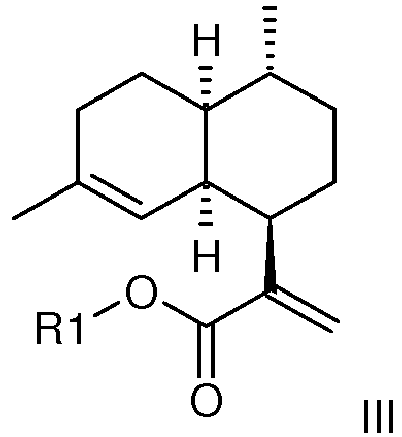
- Also provided is a process for preparing a compound of the formula I:

- R1 is hydrogen or linear or branched alkyl having 1, 2, 3, 4, 5 or 6 carbon atoms or cycloalkyl having 3, 4, 5, 6 or 7 carbon atoms,
- comprising reacting a compound of the formula III

- In some embodiments, R1 is hydrogen.
- Diimine is a reactive reagent which is also called diimide or diazene and has the chemical formula HN=NH.
- Hydrazine, also called diamine or diazane, has the chemical formula N2H4.
- Hydrazine hydrate, also called hydrazinium hydroxide, has the chemical formula N2H4·H2O.
- In some embodiments, the process of reacting a compound of the formula III with hydrazine and/or hydrazine hydrate is conducted under or with an air comprising a low concentration of oxygen, such as an air comprising oxygen at a concentration of less than or equal to 20%, less than or equal to 15%, less than or equal to 10%, less than or equal to 8 %, or less than or equal to 5% by volume relative to the total volume of the air. As a non-limiting example, the process of reacting a compound of the formula III with hydrazine and/or hydrazine hydrate is conducted under or with an air comprising 5% by volume relative to the total volume of the air of oxygen and 95% by volume relative to the total volume of the air of nitrogen (i.e, 5% O2 + 95% N2). As another non-limiting example, the process of reacting a compound of the formula III with hydrazine and/or hydrazine hydrate is conducted under or with an air comprising oxygen less than or equal to oxygen limit concentration. "Oxygen limit concentration," also known as "limiting oxygen concentration" or "minimum oxygen concentration," is the maximum oxygen concentration in a mixture of an inflammable material with air which does not explode in combination with arbitrary fuel concentrations. Oxygen limit concentration is dependant on pressure, temperature, the type of air (e.g., the type of inert gas present in the air) and may be determined by methods known to those skilled in the art.
- In some embodiments, the process of reacting a compound of the formula III is conducted with at least one solvent. As a non-limiting example, the at least one solvent comprises at least one alcohol. Further as a non-limiting example, the at least one solvent comprises at least one alcohol and water. In some embodiments, the at least one alcohol is chosen from methanol, ethanol, isopropanol, and trifluoroethanol. Even further as a non-limiting example, the at least one solvent is chosen such that it has a solubility suitable for oxygen, artemisinic acid, and/or dihydroartemisinic acid.
- In certain embodiments, the at least one solvent is chosen from ethanol and isopropanol.
- The choice of solvent may have an effect on the reaction rate of the compound of formula III. For instance, the inventors have surprisingly found out that ethanol and isopropanol may provide a higher conversion rate of the formula III to formula I than trifluoroethanol. As non-limiting examples, the reduction of artemisinic acid to dihydroartemisinic acid at 40-50°C in the presence of 2-3 equivalents of hydrazine hydrate may be completed in ethanol in 17-23 h and in isopropanol in 8-10 h, the reaction solution being gassed with 5% strength synthetic air (5% by volume of oxygen + 95% by volume of nitrogen). The addition of gas was carried out by continuously pumping 5% strength synthetic air through the reaction solution through a glass frit or a gas-permeable bottom plate which allows distribution of small gas bubbles. By comparison, when trifluoroethanol was used as a solvent, the conversion of artemisinic acid into dihydroartemisinic acid after 7.5 h of gassing with 5% strength synthetic air in the presence of 3 equivalents of hydrazine hydrate was 12.5%. The conversion was completed only after about 60 h. These results were rather surprising as trifluoroethanol is known to be a better solvent for oxygen than ethanol and isopropanol (the solubility of oxygen in molar fractions of 104X1 oxygen dissolved in the solvent in question at 283.15 K and 1013 mbar is stated as 5.96 for ethanol, 8.00 for isopropanol and 9.29 for trifluoroethanol (R. Battino et al., J. Phys.Chem. Ref. Data, Vol. 12, 2, 1983, 163-178 and M.A. Sanchez et al., Can. J. Chem. 79, 2001, 1460-1465)), and it would have been assumed that the conversion of artemisinic acid into dihydroartemisinic acid would proceed better in trifluoroethanol than in ethanol or isopropanol.
- In some embodiments, the reduction of artemisinic acid to dihydroartemisinic acid may be carried out in a solvent comprising at least one alcohol and water. As a non-limiting example, the solvent may comprise water and at least one alcohol chosen from methanol, ethanol, and isopropanol, wherein the water is present in an amount less than or equal to 50% by volume relative to the total volume of the solvent. In some embodiments, the amount of water is selected to obtain an appropriate conversion rate. The diastereoselective reduction of artemisinic acid (formula la) to dihydroartemisinic acid (formula IIIa) with hydrazine hydrate in water only did not proceed well, even in an atmosphere of pure O2. Thus, the at least one alcohol may play an important role in the diastereoselective reduction of artemisinic acid (formula la) to dihydroartemisinic acid (formula IIIa).
- In some embodiments, the reduction of artemisinic acid (formula la) to dihydroartemisinic acid (formula IIIa) is conducted at a temperature ranging from 20 °C to 80 °C, such as at a temperature ranging from 30 °C to 70 °C, further such as at a temperature ranging from 35 °C to 60 °C, even further such as at a temperature ranging from 40 °C to 50 °C.
- In some other embodiments, the reduction of artemisinic acid (formula la) to dihydroartemisinic acid (formula IIIa) may be conducted at a temperature below 40 °C such as at a room temperature of 25 °C; however, this may require a longer reaction time for the completion of the reaction.
- The reaction rates are dependent on the reaction temperature, the solvents, and the mixing conditions applied to the reactive components in the reaction medium. In some embodiments, micro-mixing techniques may be useful to achieve advantageous turnover rates of substrates.
- The reaction times are variable and depend on the reaction scale, the base, the solvent, and the temperature selected for this process. In some embodiments, reaction times may range from 0.5 hours to 24 hours.
- In some embodiments, the processes disclosed herein for converting formula III to formula I may be carried out without the use of any additional catalysts such as noble metal catalysts or 5-ethyl-3-methyllumiflavinium perchlorate. In other words, the processes disclosed herein do not use any additional catalyst system for converting formula III to formula I. The use of additional catalysts may lead to a higher manufacturing cost (e.g., some noble metal catalysts are relative expansive and need to be removed with additional separation step after the reaction). Thus, processes that can be implemented without any additional catalysts may be more cost-effective than the ones that require the use of additional catalysts.
- In some embodiments, the processes disclosed herein lead to a mixture comprising the formula I and formula IV, wherein the ratio of the formula I and formula IV is better than 90% to 10%, for instance, the ratio of the formula I and formula IV is at least 95% to 5%, at least 97% to 3%, or at leat 99% to 1%.

- The reaction turnover may be controlled by monitoring the reaction, for example using reversed phase high pressure liquid chromatography techniques (RP-HPLC), before submitting the mixture to the work-up procedure. After complete consumption of the substrate, the compound of the formula I obtained by the process can be isolated by methods known to those skilled in the art. These procedures can include an aqueous work-up of the reaction mixture or a chromatography of the reaction mixture. An example of a convenient work-up procedure involves acidifying the reaction mixture, for instance with hydrochloric acid, and then extraction of the desired product of the formula I, for example by a standard extraction with a water immiscible solvent like 2-methyl-tetrahydrofuran, dichloromethane, methyl-tert-butylether (MTBE), toluene, ethyl acetate, heptane, cyclohexane, methyl-isobutylketone, benzene or isobutyl acetate. In some embodiments, the water immiscible solvent is dichloromethane or MTBE. Standard aqueous work-up procedures allow for the isolation of the compound of formula I. Alternatively, the desired product can be obtained by a chromatographic purification or by crystallization. The diastereomeric ratio of the crude products of formulae I:IV that can be achieved by this procedure without crystallization is typically better than 90%:10% and can approach a ratio of 99%:1%. In addition, the diastereomeric purity of the product can be enhanced to 100% by crystallization.
- In some embodiments, the process for preparing the compound of the formula I:
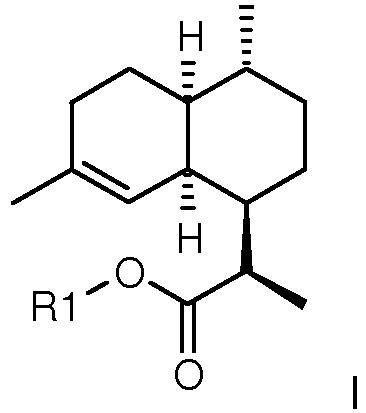


- Sufficient quantities of artemisinic acid IIIa may be available from several sources, e.g., from plant extraction of Artemisia annua (R.J. Roth et al., Planta Med; 53, 501 (1987)), or from the yeast fermentation process as described by J. D. Keasling et al. (Nature, 440, 940 (2006)).
- Esterification of the compound of the formula IIIa can be performed by a method known in the art, e.g. as described by W. Greene et al.; Protective Groups in Organic Synthesis; Wiley-Interscience 3rd ed., chapter 5 (1999). For example, esterification reactions can be performed by the following methods:
- (i) by reacting compound IIIa with a compound R1-X, wherein X is F, Cl, Br, or I, and in some embodiments, X is Cl or Br; or
- (ii) by reacting compound IIIa with a diazoalkane (e.g., with diazomethane to provide the methylester); or
- (iii) by preparing an acid chloride of the formula IIIb from compound IIIa

- (iv) by condensation of a compound of the formula IIIa with the respective alcohol of formula R1-OH in the presence of carbonyldiimidazole, a carbodiimide or a chloroformate.
- As non-limiting examples, X. Xu et al., Tetrahedron 42, 819 (1986), describes the synthesis of artemisinic acid methyl ester (a compound of the formula III wherein R1 is methyl) by reacting artemisinic acid with CH2N2, for example, in ether at 0 °C. Zhou et al. (Huaxue Xuebao 43(9), 845-851, 1985) describes the synthesis of artemisinic acid tert-butyl ester by generating a mixed anhydride of artemisinic acid with pivaloylchloride and treating the product with sodium tert-butanolate.
- The compound of the formula I can be oxidized to arteminisin of the formula II by methods known in the art, e.g. as described by X. Xu et al. (Tetrahedron; 42, 819 (1986)),
R.J. Roth et al. (U.S. 4,992,561 ) andK. Reiling et al. (WO 2006/128126 ), i.e. by oxygenation of a compound of the formula I with hydrogen peroxide and sodium molybdate dihydrate, followed by a second oxidation with oxygen in the presence of copper (II) trifluoromethanesulfonate to yield arteminisin of the formula II. - In the compound of the formula I wherein R1 is linear or branched alkyl having 1, 2, 3, 4, 5 or 6 carbon atoms or cycloalkyl having 3, 4, 5, 6 or 7 carbon atoms, the ester compound may be previously cleaved to a compound of the formula I wherein R1 is H by methods known in the art as described by W. Greene et al., Protective Groups in Organic Synthesis, Wiley-Interscience 3rd ed., e.g. by reacting the said compound with a base.
- The following examples are provided by way of illustration only and not by way of limitation. Those of skill in the art will readily recognize a variety of parameters that could be changed or modified to yield similar results.
- 15 g (64 mmol) of artemisinic acid were initially charged in 45 ml of ethanol. At 15-25 °C, 9.81 g (192 mmol) of hydrazine hydrate were added dropwise to the artemisinic acid solution. The reaction solution was then transferred into a heatable chromatography column with bottom glass frit and, at 40 °C, gassed with 5% strength synthetic air (5% O2 + 95% N2) via the bottom glass frit for 22 hours. After complete conversion into dihydroartemisinic acid (checked by Raman spectroscopy) the reaction solution was discharged into a vessel and the chromatography column was washed twice with 15 ml of ethanol. The reaction solution (pH 8) was adjusted to pH 5 using about 40 ml of 2N hydrochloric acid and diluted with 110 ml of water. After 20 minutes of stirring, the crystal suspension was filtered off and the filter cake was washed with 15 ml of water. The moist crystalline dihydroartemisinic acid was dried under reduced pressure at 40 °C overnight. This gave 13.9 g of dihydroartemisinic acid in a yield of 91.8% and a diastereomer ratio of 97:3 (HPLC) as a white crystalline solid.
- 15 g (64 mmol) of artemisinic acid were initially charged in 45 ml of isopropanol. At 15-25 °C, 9.81 g (192 mmol) of hydrazine hydrate were added dropwise to the artemisinic acid solution. The reaction solution was then transferred into a heatable chromatography column with bottom glass frit and, at 40 °C, gassed with 5% strength synthetic air (5% O2 + 95% N2) via the bottom glass frit for 10 hours. After complete conversion into dihydroartemisinic acid (checked by Raman spectroscopy) the reaction solution was discharged into a vessel and the chromatography column was washed twice with 15 ml of isopropanol. The reaction solution (pH 8) was adjusted to pH 5 using about 40 ml of 2N hydrochloric acid and diluted with 110 ml of water. After 20 minutes of stirring, the crystal suspension was filtered off and the filter cake was washed with 15 ml of water. The moist crystalline dihydroartemisinic acid was dried under reduced pressure at 40 °C overnight. This gave 13.7 g of dihydroartemisinic acid in a yield of 90.5% and a diastereomer ratio of 97:3 (HPLC) as a white crystalline solid.
- 15 g (64 mmol) of artemisinic acid were initially charged in 45 ml of isopropanol. At 15-25 °C, 9.81 g (192 mmol) of hydrazine hydrate were added dropwise to the artemisinic acid solution. The reaction solution were then transferred into a heatable chromatography column with bottom glass frit and, at 40 °C, gassed with 5% strength synthetic air (5% O2 + 95% N2) via the bottom glass frit for 10 hours. After complete conversion into dihydroartemisinic acid (checked by Raman spectroscopy) the reaction solution was discharged into a vessel and the chromatography column was washed twice with 15 ml of isopropanol. The reaction solution (pH 8) was adjusted to pH 3-4 using at least 40 ml of 2N hydrochloric acid. After addition of 75 ml of methylene chloride, the two-phase mixture was stirred vigorously for 10 minutes. Organic and aqueous phase were then separated. The organic phase was extracted once more with 50 ml of water. The resulting methylene chloride solution comprises 14.2 g of dihydroartemisinic acid in a yield of 94% and a diastereomer ratio of 97:3 (HPLC).
- The following data were obtained according to the procedure as given in Example 1, except that 20% oxygen (synthetic air) was used. The data show that the use of trifluoroethanol, even though this solvent allows higher concentrations of oxygen in the liquid phase, results in lower reactivity in the reaction of artemisinic acid (AA) in the presence of 2 equivalents hydrazinhydrate dihydroartemisinic acid (DHAA) compared to ethanol or isopropanol.
At room temperature RT Solvent AA DHAA Time Ethanol 50 50 after 18 h Isopropanol 40 60 after 21 h CF3CH2OH 60 40 after 60 h Ethanol/H2O (1:1 volume ratio) 70 30 after 19 h At 40 °C Solvent AA DHAA Time CF3CH2OH 65 35 after 7 h Ethanol/H2O (2: 1 volume ratio) 65 35 after 2 h Ethanol 10 90 after 21 h Isopropanol 0 100 after 10 h
Claims (13)
- A process for the preparation of a compound of formula I

comprising reacting a compound of formula III
- The process according to claim 1, wherein diimine is generated in situ during the reaction.
- The process according to claim 1 or 2, wherein the air comprises oxygen in an amount less than or equal to 20% by volume relative to the total volume of the air.
- The process according to any of the preceding claims, wherein the air comprises oxygen in an amount less than or equal to 10% by volume relative to the total volume of the air.
- The process according to any of the preceding claims, wherein the air comprises oxygen in an amount less than or equal to 5% by volume relative to the total volume of the air and nitrogen in an amount more than or equal to 95% by volume relative to the total volume of the air.
- The process according to any of the preceding claims, wherein the air comprises oxygen in an amount less than or equal to oxygen limit concentration.
- The process according to any of the preceding claims, wherein the compound of the formula III is in a solvent comprising at least one alcohol.
- The process according to claim 7, wherein the at least one alcohol is chosen from methanol, ethanol, and isopropanol.
- The process according to claim 7 or 8, wherein the solvent further comprises water.
- The process according to claim 9, wherein the water is present in an amount less than or equal to 50% by volume relative to the total volume of the solvent.
- The process according to any of the preceding claims, wherein the reaction of the compound of the formula III is conducted at a temperature ranging from 20 °C to 80 °C.
- The process according to any of the preceding claims, wherein the reaction of the compound of the formula III is conducted at a temperature ranging from 40 °C to 50 °C.
- The process according to any of the preceding claims, further comprising oxidizing the compound of the formula I to artemisinin II
Priority Applications (2)
| Application Number | Priority Date | Filing Date | Title |
|---|---|---|---|
| EP12305491.8A EP2660234A1 (en) | 2012-05-02 | 2012-05-02 | Process for the production of artemisinin intermediates |
| PCT/EP2013/059054 WO2013164367A1 (en) | 2012-05-02 | 2013-04-30 | Process for the production of artemisinin intermediates |
Applications Claiming Priority (1)
| Application Number | Priority Date | Filing Date | Title |
|---|---|---|---|
| EP12305491.8A EP2660234A1 (en) | 2012-05-02 | 2012-05-02 | Process for the production of artemisinin intermediates |
Publications (1)
| Publication Number | Publication Date |
|---|---|
| EP2660234A1 true EP2660234A1 (en) | 2013-11-06 |
Family
ID=48407471
Family Applications (1)
| Application Number | Title | Priority Date | Filing Date |
|---|---|---|---|
| EP12305491.8A Withdrawn EP2660234A1 (en) | 2012-05-02 | 2012-05-02 | Process for the production of artemisinin intermediates |
Country Status (2)
| Country | Link |
|---|---|
| EP (1) | EP2660234A1 (en) |
| WO (1) | WO2013164367A1 (en) |
Families Citing this family (2)
| Publication number | Priority date | Publication date | Assignee | Title |
|---|---|---|---|---|
| CN103755550B (en) * | 2013-11-28 | 2016-03-02 | 湖南科源生物制品有限公司 | A kind of synthetic method of dihydroartemisinic acid |
| CN104230699B (en) * | 2014-10-13 | 2015-09-16 | 湖南农业大学 | The method of a kind of ion-exchange-resin process separation and purification dihydroartemisinic acid from Artemisinin processing waste |
Citations (4)
| Publication number | Priority date | Publication date | Assignee | Title |
|---|---|---|---|---|
| US4992561A (en) | 1990-05-11 | 1991-02-12 | The United States Of America As Represented By The Secretary Of The Army | Simple conversion of artemisinic acid into artemisinin |
| WO2006128126A1 (en) | 2005-05-27 | 2006-11-30 | Amyris Biotechnologies, Inc. | Conversion of amorpha-4,11- diene to artemisinin and artemisinin precursors |
| WO2009088404A1 (en) * | 2007-12-30 | 2009-07-16 | Amyris Biotechnologies, Inc. | Processes for the preparation of artemisinin an its precursors |
| WO2011030223A2 (en) | 2009-09-11 | 2011-03-17 | Sanofi-Aventis | Process for the production of artemisinin intermediates |
-
2012
- 2012-05-02 EP EP12305491.8A patent/EP2660234A1/en not_active Withdrawn
-
2013
- 2013-04-30 WO PCT/EP2013/059054 patent/WO2013164367A1/en not_active Ceased
Patent Citations (4)
| Publication number | Priority date | Publication date | Assignee | Title |
|---|---|---|---|---|
| US4992561A (en) | 1990-05-11 | 1991-02-12 | The United States Of America As Represented By The Secretary Of The Army | Simple conversion of artemisinic acid into artemisinin |
| WO2006128126A1 (en) | 2005-05-27 | 2006-11-30 | Amyris Biotechnologies, Inc. | Conversion of amorpha-4,11- diene to artemisinin and artemisinin precursors |
| WO2009088404A1 (en) * | 2007-12-30 | 2009-07-16 | Amyris Biotechnologies, Inc. | Processes for the preparation of artemisinin an its precursors |
| WO2011030223A2 (en) | 2009-09-11 | 2011-03-17 | Sanofi-Aventis | Process for the production of artemisinin intermediates |
Non-Patent Citations (17)
| Title |
|---|
| ABDIN ET AL., PLANTA MED, vol. 69, 2003, pages 289 |
| D.J. PASTO; R.T. TAYLOR, ORG. REACTIONS, vol. 40, 1991, pages 91 - 155 |
| G. SCHMIDT; W. HOFHEINZ, J. AM. CHEM. SOC., vol. 105, 1983, pages 624 |
| J. D. KEASLING ET AL., NATURE, vol. 440, 2006, pages 940 |
| J.D. KEASLING ET AL., NATURE, vol. 440, 2006, pages 940 |
| M.A. SANCHEZ ET AL., CAN. J. CHEM., vol. 79, 2001, pages 1460 - 1465 |
| MANKIL JUNG ET AL: "Synthesis, Stability, and Antimalarial Activity of New Hydrolytically Stable and Water-Soluble (+)-Deoxoartelinic Acid", JOURNAL OF MEDICINAL CHEMISTRY, vol. 45, no. 22, 1 October 2002 (2002-10-01), pages 4940 - 4944, XP055038330, ISSN: 0022-2623, DOI: 10.1021/jm020244p * |
| PASTO D J ET AL: "REDUCTION WITH DIIMIDE", ORGANIC REACTIONS; [ORGANIC REACTIONS], NEW YORK, WILEY & SONS, US, vol. 40, 1 January 1991 (1991-01-01), pages 91 - 155, XP009067101 * |
| R. BATTINO ET AL., J. PHYS.CHEM. REF. DATA, vol. 12, no. 2, 1983, pages 163 - 178 |
| R. REGENTIN ET AL., BIOTECHNOL. PROG., vol. 24, 2008, pages 1026 |
| R.J. ROTH ET AL., PLANTA MED, vol. 53, 1987, pages 501 |
| W. GREENE ET AL.: "Protective Groups in Organic Synthesis 3rd ed.,", 1999, WILEY-INTERSCIENCE |
| W. GREENE ET AL.: "Protective Groups in Organic Synthesis 3rd ed.,", WILEY-INTERSCIENCE |
| WALLAART ET AL., PLANTA MED, vol. 66, 2000, pages 57 |
| X. XU ET AL., TETRAHEDRON, vol. 42, 1986, pages 819 |
| YASUSHI IMADA ET AL: "Aerobic Reduction of Olefins by In Situ Generation of Diimide with Synthetic Flavin Catalysts", CHEMISTRY - A EUROPEAN JOURNAL, vol. 17, no. 21, 16 May 2011 (2011-05-16), pages 5908 - 5920, XP055038338, ISSN: 0947-6539, DOI: 10.1002/chem.201003278 * |
| ZHOU ET AL., HUAXUE XUEBAO, vol. 43, no. 9, 1985, pages 845 - 851 |
Also Published As
| Publication number | Publication date |
|---|---|
| WO2013164367A1 (en) | 2013-11-07 |
Similar Documents
| Publication | Publication Date | Title |
|---|---|---|
| US8981159B2 (en) | Continuously operable method for producing carbonyl compounds by means of a catalyst containing a nitroxyl radical | |
| EP3186383A1 (en) | Apparatus and methods for the simultaneous production of cannabinoid compounds | |
| DK2475635T3 (en) | Process for the preparation of artemisinin intermediates | |
| US10633315B2 (en) | Synthesis of bicyclo[2.2.2]octanes | |
| CN114524701A (en) | N-axis chiral pyrrole derivative and synthesis method thereof | |
| WO2013164367A1 (en) | Process for the production of artemisinin intermediates | |
| US20230279377A1 (en) | Modified terpene synthases and their use for production of pseudopterosin intermediates and/or pseudopterosins | |
| CN110734443B (en) | Preparation method of tadalafil-related substance I | |
| JP6786052B2 (en) | Manufacturing method of ε-caprolactam | |
| CN110590802B (en) | Chemical semi-synthesis method of artemisinin | |
| CN113735873B (en) | Method for preparing Artemisinin G | |
| CN114075201B (en) | Preparation method of sitagliptin impurity | |
| CN116253677B (en) | A method for synthesizing pyridine compounds using a microchannel reaction device | |
| CN113801079B (en) | A kind of synthesis method of dinotefuran metabolite UF | |
| CN107382929A (en) | Application of the enzyme technology in the synthesis of Ao Gelieting intermediates | |
| CA2787722C (en) | A series of artemisinin derivatives and process for preparation thereof | |
| JP4196470B2 (en) | Process for producing optically active α-hydroxylactones | |
| KR20240163292A (en) | Method of preparing mono-tert-butyl esterified saturated hydrocarbons and cyclic method of preparing thereof | |
| CN121226454A (en) | Methods and applications for producing PUMILOSIDE and similar products | |
| CN119241537A (en) | Preparation method of pyridoisoquinoline-2-one derivatives | |
| CN107674018A (en) | The synthetic method of one koji Ge Lieting intermediates | |
| JP2006063006A (en) | Method for synthesizing racemic cytoxazone | |
| WO2004099216A2 (en) | Syntheses of podophyllotoxin from desoxypodophyllotoxin |
Legal Events
| Date | Code | Title | Description |
|---|---|---|---|
| PUAI | Public reference made under article 153(3) epc to a published international application that has entered the european phase |
Free format text: ORIGINAL CODE: 0009012 |
|
| AK | Designated contracting states |
Kind code of ref document: A1 Designated state(s): AL AT BE BG CH CY CZ DE DK EE ES FI FR GB GR HR HU IE IS IT LI LT LU LV MC MK MT NL NO PL PT RO RS SE SI SK SM TR |
|
| AX | Request for extension of the european patent |
Extension state: BA ME |
|
| STAA | Information on the status of an ep patent application or granted ep patent |
Free format text: STATUS: THE APPLICATION IS DEEMED TO BE WITHDRAWN |
|
| 18D | Application deemed to be withdrawn |
Effective date: 20140507 |