EP2659969A1 - Optical semiconductor and production method therefor, as well as optical semiconductor device, photocatalyst, hydrogen-generating device and energy system - Google Patents
Optical semiconductor and production method therefor, as well as optical semiconductor device, photocatalyst, hydrogen-generating device and energy system Download PDFInfo
- Publication number
- EP2659969A1 EP2659969A1 EP11840704.8A EP11840704A EP2659969A1 EP 2659969 A1 EP2659969 A1 EP 2659969A1 EP 11840704 A EP11840704 A EP 11840704A EP 2659969 A1 EP2659969 A1 EP 2659969A1
- Authority
- EP
- European Patent Office
- Prior art keywords
- optical semiconductor
- niobium
- nbon
- producing
- photocatalyst
- Prior art date
- Legal status (The legal status is an assumption and is not a legal conclusion. Google has not performed a legal analysis and makes no representation as to the accuracy of the status listed.)
- Granted
Links
Images




Classifications
-
- C—CHEMISTRY; METALLURGY
- C01—INORGANIC CHEMISTRY
- C01G—COMPOUNDS CONTAINING METALS NOT COVERED BY SUBCLASSES C01D OR C01F
- C01G33/00—Compounds of niobium
-
- C—CHEMISTRY; METALLURGY
- C01—INORGANIC CHEMISTRY
- C01B—NON-METALLIC ELEMENTS; COMPOUNDS THEREOF; METALLOIDS OR COMPOUNDS THEREOF NOT COVERED BY SUBCLASS C01C
- C01B21/00—Nitrogen; Compounds thereof
- C01B21/082—Compounds containing nitrogen and non-metals and optionally metals
- C01B21/0821—Oxynitrides of metals, boron or silicon
-
- C—CHEMISTRY; METALLURGY
- C01—INORGANIC CHEMISTRY
- C01B—NON-METALLIC ELEMENTS; COMPOUNDS THEREOF; METALLOIDS OR COMPOUNDS THEREOF NOT COVERED BY SUBCLASS C01C
- C01B3/00—Hydrogen; Gaseous mixtures containing hydrogen; Separation of hydrogen from mixtures containing it; Purification of hydrogen; Reversible storage of hydrogen
- C01B3/02—Production of hydrogen; Production of gaseous mixtures containing hydrogen
- C01B3/04—Production of hydrogen; Production of gaseous mixtures containing hydrogen by decomposition of inorganic compounds
- C01B3/042—Decomposition of water
-
- H—ELECTRICITY
- H01—ELECTRIC ELEMENTS
- H01M—PROCESSES OR MEANS, e.g. BATTERIES, FOR THE DIRECT CONVERSION OF CHEMICAL ENERGY INTO ELECTRICAL ENERGY
- H01M8/00—Fuel cells; Manufacture thereof
- H01M8/06—Combination of fuel cells with means for production of reactants or for treatment of residues
- H01M8/0606—Combination of fuel cells with means for production of reactants or for treatment of residues with means for production of gaseous reactants
- H01M8/0656—Combination of fuel cells with means for production of reactants or for treatment of residues with means for production of gaseous reactants by electrochemical means
-
- C—CHEMISTRY; METALLURGY
- C01—INORGANIC CHEMISTRY
- C01B—NON-METALLIC ELEMENTS; COMPOUNDS THEREOF; METALLOIDS OR COMPOUNDS THEREOF NOT COVERED BY SUBCLASS C01C
- C01B2203/00—Integrated processes for the production of hydrogen or synthesis gas
- C01B2203/06—Integration with other chemical processes
- C01B2203/066—Integration with other chemical processes with fuel cells
-
- C—CHEMISTRY; METALLURGY
- C01—INORGANIC CHEMISTRY
- C01P—INDEXING SCHEME RELATING TO STRUCTURAL AND PHYSICAL ASPECTS OF SOLID INORGANIC COMPOUNDS
- C01P2002/00—Crystal-structural characteristics
- C01P2002/70—Crystal-structural characteristics defined by measured X-ray, neutron or electron diffraction data
- C01P2002/72—Crystal-structural characteristics defined by measured X-ray, neutron or electron diffraction data by d-values or two theta-values, e.g. as X-ray diagram
-
- C—CHEMISTRY; METALLURGY
- C01—INORGANIC CHEMISTRY
- C01P—INDEXING SCHEME RELATING TO STRUCTURAL AND PHYSICAL ASPECTS OF SOLID INORGANIC COMPOUNDS
- C01P2002/00—Crystal-structural characteristics
- C01P2002/80—Crystal-structural characteristics defined by measured data other than those specified in group C01P2002/70
- C01P2002/84—Crystal-structural characteristics defined by measured data other than those specified in group C01P2002/70 by UV- or VIS- data
-
- Y—GENERAL TAGGING OF NEW TECHNOLOGICAL DEVELOPMENTS; GENERAL TAGGING OF CROSS-SECTIONAL TECHNOLOGIES SPANNING OVER SEVERAL SECTIONS OF THE IPC; TECHNICAL SUBJECTS COVERED BY FORMER USPC CROSS-REFERENCE ART COLLECTIONS [XRACs] AND DIGESTS
- Y02—TECHNOLOGIES OR APPLICATIONS FOR MITIGATION OR ADAPTATION AGAINST CLIMATE CHANGE
- Y02E—REDUCTION OF GREENHOUSE GAS [GHG] EMISSIONS, RELATED TO ENERGY GENERATION, TRANSMISSION OR DISTRIBUTION
- Y02E60/00—Enabling technologies; Technologies with a potential or indirect contribution to GHG emissions mitigation
- Y02E60/30—Hydrogen technology
- Y02E60/36—Hydrogen production from non-carbon containing sources, e.g. by water electrolysis
-
- Y—GENERAL TAGGING OF NEW TECHNOLOGICAL DEVELOPMENTS; GENERAL TAGGING OF CROSS-SECTIONAL TECHNOLOGIES SPANNING OVER SEVERAL SECTIONS OF THE IPC; TECHNICAL SUBJECTS COVERED BY FORMER USPC CROSS-REFERENCE ART COLLECTIONS [XRACs] AND DIGESTS
- Y02—TECHNOLOGIES OR APPLICATIONS FOR MITIGATION OR ADAPTATION AGAINST CLIMATE CHANGE
- Y02E—REDUCTION OF GREENHOUSE GAS [GHG] EMISSIONS, RELATED TO ENERGY GENERATION, TRANSMISSION OR DISTRIBUTION
- Y02E60/00—Enabling technologies; Technologies with a potential or indirect contribution to GHG emissions mitigation
- Y02E60/30—Hydrogen technology
- Y02E60/50—Fuel cells
-
- Y—GENERAL TAGGING OF NEW TECHNOLOGICAL DEVELOPMENTS; GENERAL TAGGING OF CROSS-SECTIONAL TECHNOLOGIES SPANNING OVER SEVERAL SECTIONS OF THE IPC; TECHNICAL SUBJECTS COVERED BY FORMER USPC CROSS-REFERENCE ART COLLECTIONS [XRACs] AND DIGESTS
- Y02—TECHNOLOGIES OR APPLICATIONS FOR MITIGATION OR ADAPTATION AGAINST CLIMATE CHANGE
- Y02P—CLIMATE CHANGE MITIGATION TECHNOLOGIES IN THE PRODUCTION OR PROCESSING OF GOODS
- Y02P20/00—Technologies relating to chemical industry
- Y02P20/10—Process efficiency
-
- Y—GENERAL TAGGING OF NEW TECHNOLOGICAL DEVELOPMENTS; GENERAL TAGGING OF CROSS-SECTIONAL TECHNOLOGIES SPANNING OVER SEVERAL SECTIONS OF THE IPC; TECHNICAL SUBJECTS COVERED BY FORMER USPC CROSS-REFERENCE ART COLLECTIONS [XRACs] AND DIGESTS
- Y02—TECHNOLOGIES OR APPLICATIONS FOR MITIGATION OR ADAPTATION AGAINST CLIMATE CHANGE
- Y02P—CLIMATE CHANGE MITIGATION TECHNOLOGIES IN THE PRODUCTION OR PROCESSING OF GOODS
- Y02P70/00—Climate change mitigation technologies in the production process for final industrial or consumer products
- Y02P70/50—Manufacturing or production processes characterised by the final manufactured product
Definitions
- the present invention relates to an optical semiconductor and a method for producing the optical semiconductor, and to an optical semiconductor device, a photocatalyst, a hydrogen producing device that includes the photocatalyst, and an energy system that includes the hydrogen producing device.
- nitrides and oxynitrides can be mentioned. Examples thereof include nitrides and oxynitrides of tantalum, titanium, aluminium, gallium, indium, etc.
- niobium oxynitride Reported methods for synthesizing niobium oxynitride and the physical characteristics thereof are shown below.
- niobium oxynitride As a method for producing niobium oxynitride, a method of using niobium oxychloride, etc., as a raw material and a method of calcinating niobium pentoxide in an ammonia atmosphere, for example, are known (see, for example, Non-Patent Literatures 1 and 2, and Patent Literature 1).
- Non-Patent Literature 1 discloses niobium oxynitride synthesized using niobium oxychloride or niobium pentachloride as a niobium source, and the synthesis method thereof.
- niobium oxychloride As a starting material, niobium oxychloride (NbOCl 3 ) and liquid ammonia are reacted with each other.
- ammonium chloride NH 4 Cl
- the obtained material is heated at 653 K under vacuum.
- the sample after the heating is further calcinated at 773 K for a long period of time. This allows niobium oxynitride (NbON) that is black in color to be obtained.
- niobium pentachloride NbCl 5
- nitrogen chloride ClN 3
- niobium tetrachloride azide NbCl 4 N 3
- the resultant niobium tetrachloride azide is hydrolyzed to form niobium oxychloride azide (NbOCl 2 N 3 ). This is subjected to pyrolysis at 773 K, thereby allowing niobium oxynitride (NbON) to be obtained.
- Non-Patent Literature 1 discloses that niobium oxynitride obtained by the above-mentioned method has a crystal structure of baddeleyite and is represented by the composition formula of NbON, in accordance with the X-ray crystal structure analysis.
- Non-Patent Literature 2 and Patent Literature 1 each disclose niobium oxynitride synthesized using niobium pentachloride as a niobium source by heat treatment in a flowing ammonia gas atmosphere, and the synthesis method thereof.
- Niobium chloride (NbCl 5 ) is employed as a metal salt raw material. This is dissolved by stirring in a solution consisting of ethylene glycol (HOCH 2 CH 2 OH), citric acid (HOOCCH 2 C(OH)(COOH)CH 2 COOH), and methanol (CH 3 OH). Thereafter, this solution is stirred in an air atmosphere while being heated to 423 K.
- Non-Patent Literature 2 shows that this Nb-O-N is a mixture of niobium pentoxide (Nb 2 O 5 ) and niobium nitride (NbN).
- Non-Patent Literature 1 NbON phase having a crystal structure of baddeleyite was detected in the resultant niobium oxynitride.
- by-products and/or impurities are considered to remain in the material synthesized by the method disclosed in Non-Patent Literature 1 other than NbON phase having a crystal structure of baddeleyite.
- Table 1 below shows the actual measured value of the band gap of tantalum oxynitride (TaON) having the same crystal structure as NbON, the estimated values of the band gaps of TaON and NbON calculated according to the first-principle band calculation, and the true value of the band gap of NbON to be estimated from these values.
- the first-principle band calculation was performed using the PAW (Projector Augmented Wave) method on the basis of density functional theory.
- PAW Projector Augmented Wave
- GGA-PBE Generalized Gradient Approximation of Perdew-Burke-Ernzerhof (generalized density gradient correction) functionals are used for the representation of the electron density by which the exchange-correlation term is given as interactions between electrons.
- Non-Patent Literature 1 describes that the resultant niobium oxynitride is black in color. This means that the value of the band gap of the resultant sample is 1.5 eV or less. That is, it is strongly suggested that the niobium oxynitride disclosed in Non-Patent Literature 1 contains by-products and/or impurities such as chemical species that are produced by reducing niobium as compared to the NbON (where Nb has a valence of +5), other than the NbON phase having a crystal structure of baddeleyite.
- Non-Patent Literature 1 niobium tetrachloride azide that is azide salt of niobium is produced in the course of the synthesis process.
- azide salts of heavy metals are explosive, and thus treated as hazardous materials that are difficult to handle. Therefore, the synthesis process of Non-Patent Literature 1 is exceptionally difficult to perform, and is disadvantageous in that only a very slight amount of niobium oxynitride can be synthesized by the process because of the need to avoid explosion.
- Non-Patent Literature 1 fails to disclose that a material having a crystal structure of baddeleyite and represented by the composition formula, NbON, can be used as an optical semiconductor.
- Niobium oxynitride synthesized by the method disclosed in each of Non-Patent Literature 2 and Patent Literature 1 is niobium oxynitride in which nitrided NbN phase and unnitrided Nb 2 O 5 phase are present in a mixed state, and is not niobium oxynitride that has a crystal structure of baddeleyite.
- ammonia acts not only as a nitriding agent but also as a reductant in the nitriding reaction under an ammonia gas atmosphere. This action of ammonia as a reductant is to reduce the valence of the niobium source that once was +5 in a starting material to +3.
- Non-Patent Literature 2 and Patent Literature 1 As a result, only NbN that is a conductor is selectively synthesized. Accordingly, it is impossible to synthesize niobium oxynitride having a crystal structure of baddeleyite by the synthesis method of niobium oxynitride disclosed in each of Non-Patent Literature 2 and Patent Literature 1, resulting in a failure to obtain a material suitable for optical semiconductors.
- the present invention provides an optical semiconductor substantially consisting of niobium oxynitride having a crystal structure of baddeleyite and having a composition represented by the composition formula, NbON.
- the present invention also provides a method for producing an optical semiconductor, including: a mixing step of producing a mixture containing a reduction inhibitor and a niobium compound that contains at least oxygen in its composition; a nitriding step of nitriding the mixture by the reaction between the mixture and a nitrogen compound gas; and a washing step of isolating niobium oxynitride from the material obtained through the nitriding step by dissolving chemical species other than niobium oxynitride with a washing liquid.
- the present invention also provides an optical semiconductor device including the above-mentioned optical semiconductor of the present invention.
- the present invention also provides a photocatalyst consisting of the optical semiconductor that is the above-mentioned optical semiconductor of the present invention and that consists of single-phase NbON.
- the present invention also provides a hydrogen producing device including: the above-mentioned photocatalyst of the present invention; an electrolyte that contains water and that is in contact with the photocatalyst; and a housing that accommodates the photocatalyst and the electrolyte.
- hydrogen is generated through decomposition of the water caused by irradiation of the photocatalyst with light.
- the present invention also provides an energy system including: the above-mentioned hydrogen producing device of the present invention; a fuel cell; and a line for supplying hydrogen produced in the hydrogen producing device to the fuel cell.
- the optical semiconductor of the present invention substantially consists of niobium oxynitride (NbON).
- the optical semiconductor of the present invention can cause photoexcitation by absorbing light having a longer wavelength compared to optical semiconductors consisting of niobium oxide that are conventionally known as optical semiconductors.
- niobium oxynitride is synthesized by the reaction of a mixture of a niobium compound and a reduction inhibitor with a nitrogen compound gas. It is possible to prevent the reduction of niobium due to the nitrogen compound gas by allowing the reduction inhibitor and the niobium compound to coexist in the nitriding step. As a result, niobium can maintain the pentavalent state, which is its highest valence, in the material during the reaction and after the reaction.
- niobium oxynitride having a crystal structure of baddeleyite and represented by the composition formula, NbON (where Nb has a valence of +5) can be obtained. Further, all the starting materials to be used and by-products are chemically stable in the production method of the present invention. Furthermore, only three steps are required for the production, i.e., the step of mixing a reduction inhibitor and a niobium compound that contains at least oxygen in its composition; the step of nitriding the mixture in a nitrogen compound gas atmosphere; and the step of washing for removing substances other than niobium oxynitride. Hence, the production method of the present invention does not require any special steps.
- the optical semiconductor device, the photocatalyst, the hydrogen producing device, and the energy system of the present invention can utilize the light in a longer-wavelength region compared to optical semiconductor devices, etc., using optical semiconductors consisting of niobium oxide that are conventionally known as optical semiconductors, and thus can utilize sunlight efficiently.
- optical semiconductor of the present invention substantially consists of niobium oxynitride.
- This niobium oxynitride has a crystal structure of baddeleyite and a composition represented by the composition formula, NbON.
- optical semiconductor substantially consisting of niobium oxynitride herein means that the optical semiconductor of the present invention includes an optical semiconductor that contains, for example, a slight amount of components such as impurities other than niobium oxynitride, in addition to an optical semiconductor that consists only of niobium oxynitride.
- optical semiconductor that contains at least 90 mol%, preferably at least 99 mol%, of niobium oxynitride.
- the content of the impurity is preferably not more than the detection limit of the X-ray crystal structure analysis.
- the optical semiconductor of this embodiment preferably consists of the above-mentioned niobium oxynitride. That is, the optical semiconductor of this embodiment preferably consists of single-phase NbON.
- the niobium oxynitride that forms the optical semiconductor of this embodiment can be synthesized by the reaction of a niobium compound that serves as a starting material with a nitrogen compound gas in coexistence with a reduction inhibitor. More specifically, the production method of this embodiment includes a mixing step of producing a mixture containing a reduction inhibitor and a niobium compound that contains at least oxygen in its composition; a nitriding step of nitriding the mixture by the reaction between the mixture and a nitrogen compound gas; and a washing step of isolating niobium oxynitride from the material obtained through the nitriding step by dissolving chemical species other than niobium oxynitride with a washing liquid.
- the niobium compound that serves as a starting material needs only to contain at least oxygen in its composition.
- niobium oxide, niobium hydroxide, niobium acetate, niobium carbonate, and niobium oxalate can be used.
- Such a niobium compound is mixed with a reduction inhibitor to produce a mixture.
- the reduction inhibitor one having a function of suppressing the reduction of niobium in the subsequent nitriding step can be used.
- a compound containing at least one element selected from the group consisting of tin, titanium, indium, and germanium can be used suitably.
- the mixing ratio of the reduction inhibitor to the niobium compound can be appropriately selected depending on specific materials to be used as the niobium compound and the reduction inhibitor. However, it is preferable that, when the mixing ratio of the reduction inhibitor to the niobium compound is defined as:
- the specific method for mixing the niobium compound and the reduction inhibitor is not specifically limited.
- a mixture can be obtained by grinding and mixing a niobium compound in powder form and a reduction inhibitor in powder form.
- the thus prepared mixture of the niobium compound and the reduction inhibitor is reacted with a nitrogen compound gas (nitriding step).
- a nitrogen compound gas ammonia, nitrogen, and hydrazine, for example, can be suitably used.
- a nitrogen compound gas containing at least ammonia is preferably used.
- the nitrogen compound gas has a function as a reductant in addition to a function as a nitriding reagent.
- niobium contained in the niobium compound is reduced due to the function of the nitrogen compound gas as a reductant.
- niobium nitride (NbN, where Nb has a valence of +3) as disclosed in Non-Patent Literature 2 and Patent Literature 1 is synthesized.
- the reduction inhibitor is reduced prior to the niobium compound, thereby preventing the reduction of the niobium compound.
- the nitrogen compound gas can nitride the niobium compound without reducing it.
- the reaction temperature is preferably 773 K to 1023 K.
- reaction temperature within such a range, it is possible to allow the nitriding reaction to proceed more reliably while suppressing the reduction of the niobium compound. Further, it is also made possible to ease the conditions such as the time required for nitriding and/or the flow rate of the nitrogen compound gas.
- the linear flow rate of the nitrogen compound gas is preferably 0.05 cm second -1 to 5.00 cm second -1 .
- a mixture of NbON and the reduction inhibitor that has been partially or completely reduced can be obtained as a material after the reaction.
- washing is carried out using a washing liquid (washing step).
- niobium oxynitride having a crystal structure of baddeleyite and having a composition represented by the composition formula, NbON is obtained. It also is possible to obtain single-phase NbON using the production method of the present embodiment by appropriately selecting, for example, the reaction temperature and the flow rate of the nitrogen compound gas in the nitriding step, and the washing liquid in the washing step.
- the washing liquid preferably contains an acidic solution or alkaline solution.
- an appropriate acidic solution or alkaline solution needs to be selected depending on the type of reduction inhibitor to be used.
- the mixture is immersed in this washing liquid, thereby allowing the reduction inhibitor, etc., to be dissolved completely therein. Thereafter, the residual solid content in the washing liquid is taken out, and washed with pure water, followed by drying. Further, the above-mentioned subsequent process of: "mixing of the reduction inhibitor, reaction with the nitrogen compound gas, and removal of the reduction inhibitor", that is, the mixing step, the nitriding step, and the washing step can be repeated, as needed. By the above procedures, a target optical semiconductor consisting of single-phase NbON can be obtained.
- optical semiconductor of this embodiment can be applied to optical semiconductor devices such as LEDs, lasers, and solar cells. Accordingly, LEDs, lasers, and solar cells, for example, can be embodied as an optical semiconductor device provided with the optical semiconductor of this embodiment.
- the photocatalyst of this embodiment consists of the optical semiconductor described in Embodiment 1.
- Niobium oxynitride (NbON) described in Embodiment 1 can be used as a photocatalyst.
- NbON Niobium oxynitride
- Fig. 1 shows the density of states distribution of NbON obtained according to the first-principle band calculation. It can be seen from this figure that the valence band mainly consisting of N2p orbitals, the conduction band mainly consisting of Nb4d orbitals, and the band gap interposed between these two are present in the band structure of NbON.
- the actual measured value of the band gap width is 2.2 eV as described later in Example 1. This is equivalent to the energy of light having a wavelength of 560 nm. That is, when NbON is irradiated with light having a wavelength of 560 nm or less, electrons present in the valence band absorb light to be excited into the conduction band.
- the excited electrons move from NbON to the reactive substrate and the reduction of the reactive substrate can proceed.
- the reactive substrate having such a redox potential include water, proton, oxygen, metal ions such as silver (I) ion and iron (III) ion, and iodide ion.
- holes are produced in the valence band with the photoexcitation of electrons.
- a reactive substrate when a reactive substrate is present in the vicinity of the surface of NbON and the redox potential thereof is located at a potential on the negative side with respect to the top of the valence band of NbON, holes move from NbON to the reactive substrate and the oxidation of the reactive substrate can proceed.
- the reactive substrate having such a redox potential include water, hydroxide ion, metal ions such as iron (II) ion, iodine ion, and an organic compound.
- II iron
- the hydrogen producing device of this embodiment uses the photocatalyst (photocatalyst of Embodiment 2) consisting of the optical semiconductor described in Embodiment 1, and produces hydrogen through decomposition of water by irradiation of the photocatalyst with light.
- Fig. 2 shows a schematic view of the hydrogen producing device of this embodiment. It should be noted that the hydrogen producing device of the present invention is not limited to the configuration shown in Fig. 2 .
- the hydrogen producing device includes, a photoelectrode 10 in which the photocatalyst described in Embodiment 2 is provided on a conductive substrate, a counter electrode (counter electrode made of a conductive substance such as metal and carbon or a counter electrode having a configuration in which a metal or the like is supported by a conductive base material) 11 made of an electrically conductive material, an electrolyte 14 containing water, and a housing 13 accommodating these components.
- the photoelectrode 10 and the counter electrode 11 are connected to each other by an external circuit 12.
- the photocatalyst provided in the photoelectrode 10 is not necessarily a single-phase semiconductor.
- the photocatalyst may be a complex consisting of a plurality of types of semiconductors or may support a metal or the like that functions as a co-catalyst. It is also possible to provide a mechanism capable of applying a bias between the photoelectrode 10 and the counter electrode 11.
- Both the photoelectrode 10 and the counter electrode 11 are accommodated in the housing 13 together with the electrolyte 14.
- the electrolyte 14 needs only to contain water, and may further contain a supporting electrolyte, a redox material and/or a sacrificial reagent, etc.
- a part of the surface of the housing 13 on the photoelectrode 10 side is composed of a material that transmits light to illuminate the photoelectrode 10, and is composed of a material that transmits at least part of light having a wavelength, for example, of 850 nm or less.
- the housing 13 is provided with a photoelectrode-side gas outlet 16 for discharging the gas generated on the photoelectrode 10 side, and a counter electrode-side gas outlet 17 for discharging the gas generated on the counter electrode 11 side.
- the photoelectrode 10 and the counter electrode 11 are desirably separated from each other by a separator 15 in order to separate the gas to be generated on the photoelectrode 10 side and the gas to be generated on the counter electrode 11 side from each other.
- the separator 15 be made of a material that is permeable to liquids and ions contained in the liquids, but blocks gases.
- the gas produced at the photoelectrode 10 and the gas produced at the counter electrode 11 are discharged out of the housing 13 respectively through the photoelectrode-side gas outlet 16 and the counter electrode-side gas outlet 17.
- a mechanism for introducing water that has been reduced due to decomposition may be further provided in the housing 13.
- the housing 13 may be provided with an inlet and an outlet of the electrolyte 14 on the photoelectrode side and the counter electrode side, so as to have a configuration that allows the circulation of the electrolyte 14.
- the photoelectrode-side gas outlet 16 and the counter electrode-side gas outlet 17 are not necessarily provided, and it is possible to employ a configuration in which the produced gas is delivered in a mixed state with the circulating water to the gas-liquid separation apparatus provided outside the housing 13 and then hydrogen or oxygen is obtained therefrom.
- the energy system of this embodiment is a system that uses the photocatalyst (photocatalyst of Embodiment 2) consisting of the optical semiconductor described in Embodiment 1.
- the energy system of this embodiment is a system in which hydrogen produced through decomposition of water by irradiation of the photocatalyst with light is supplied to a fuel cell, and then the hydrogen is converted into electrical energy.
- the energy system of this embodiment includes such a hydrogen producing device as described in Embodiment 3.
- Fig. 3 shows a schematic view of the energy system of this embodiment that uses sunlight.
- the energy system of the present invention is not limited to the configuration shown in Fig. 3 .
- the energy system of this embodiment includes such a hydrogen producing device 20 as described in Embodiment 3, a fuel cell 22, and a line 21 for supplying the hydrogen produced in the hydrogen producing device 20 to the fuel cell 22.
- the hydrogen producing device 20 for example, is installed at a location 23 that is well-irradiated with sunlight, such as on the roof.
- the surface of the hydrogen producing device 20 on which the photocatalyst is provided is desirably oriented to face the sun so that the hydrogen producing device 20 can efficiently receive sunlight.
- the hydrogen obtained in the hydrogen producing device 20 through decomposition of water caused by the photocatalytic reaction is discharged out of the hydrogen producing device 20 through the line 21 so as to be supplied to the fuel cell 22.
- the line 21 may be provided, for example, with a hydrogen storage unit for storing hydrogen, a dehumidifier for removing moisture in the hydrogen, or a compressor when hydrogen is required to be compressed in storage.
- Example 1 of the present invention is specifically described below.
- niobium pentoxide Nb 2 O 5 powder (1.28 g)
- stannic oxide SnO 2 powder (0.72 g)
- This mixture was heated to a temperature of 973 K at a temperature rise rate of 100 K hour -1 under a nitrogen gas flow at a linear flow rate of 0.19 cm second -1 . Thereafter, the flowing gas was changed to an ammonia gas at a linear flow rate of 0.19 cm second -1 , and then the mixture was maintained at 973 K for 8 hours.
- a first intermediate product was obtained.
- the first intermediate product was suspended in 200 mL of an aqueous solution of hydrochloric acid (HCl) at a concentration of 1.0 M (mol L -1 ), which was stirred for 24 hours. Thereafter, it was filtrated to extract only the powder. This powder was washed with pure water, and dried at 353 K for 4 hours. Thus, a second intermediate product was obtained. SnO 2 powder (0.72 g) was added to the second intermediate product as a reduction inhibitor, which was sufficiently ground and mixed.
- a third intermediate product was obtained.
- the third intermediate product was subjected to suspension in the HCl solution, filtration, washing with pure water, and drying, with the same procedure as mentioned above.
- NbON was obtained.
- Fig. 4 shows X-ray diffraction patterns of the first to the third intermediate products and the finally synthesized NbON.
- the diffraction peaks of the first intermediate product were assigned to NbON, tin-niobium composite oxide (SnNb 2 O 6 ), and metal tin (Sn). That is, the presence of NbON, SnNb 2 O 6 , and Sn was confirmed in the first intermediate product.
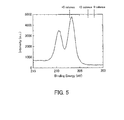
- Fig. 5 shows the X-ray photoelectron spectrum of NbON synthesized in this example.
- Nb3d5/2 peak in the spectrum shown in Fig. 5 was located at a binding energy of 206.7 eV. This means that the valence of Nb species contained in the sample was +5.
- the slight deviation of the peak position from the reference (Nb 2 O 5 ) position (207.5 eV) of Nb 5+ toward the low-binding energy side reflects that Nb atoms are bonded not only to O atoms but also to N atoms in the case of NbON. That is, it was demonstrated that the reduction of Nb in NbON was prevented due to the effect of the reduction inhibitor (SnO 2 ), and the state of Nb 5+ was maintained before and after calcination under the ammonia gas flow.
- SnO 2 reduction inhibitor
- Fig. 6 shows the ultraviolet ⁇ visible diffuse reflection spectrum of NbON synthesized in this example. It was found from Fig. 6 that the resultant sample can absorb visible light having a wavelength up to 560 nm. This demonstrated that the sample of this example was a semiconductor with a band gap of 2.2 eV (Formula 1). This actual measured value almost matched the band gap value (2.0 eV) of NbON estimated according to the first-principle band calculation (see Table 1). It can be said from this result that the value calculated according to the first-principle band calculation was valid and NbON synthesized in this example was single-phase NbON free from impurities. The ratio of photons with a wavelength of 560 nm or less in sunlight is about 15%.
- the ratio of photons with a wavelength of 380 nm or less, which can be absorbed by Nb 2 O 5 that is a simple oxide semiconductor of niobium, is about 1%. It can be seen from this that NbON is a semiconductor having dramatically high efficiency in sunlight use as compared to Nb 2 O 5 .
- Example 2 of the present invention is specifically described below. NbON synthesized in this example and the synthesis method thereof were the same as NbON synthesized in Example 1 and the synthesis method thereof except that a different reduction inhibitor was used.
- a rutile-type titanium oxide (TiO 2 ), indium oxide (In 2 O 3 ), or germanium oxide (GeO 2 ) was used.
- Concerning the respective reduction inhibitors Nb 2 O 5 powder (1.25 g) / TiO 2 powder (0.75 g), Nb 2 O 5 powder (0.98 g) / In 2 O 3 powder (1.02 g), or Nb 2 O 5 powder (1.12 g) / GeO 2 powder (0.88 g), expressed as starting material / reduction inhibitor, was sufficiently ground and mixed. Thus, each mixture was obtained.
- the mixture was heated to a temperature of 973 K at a temperature rise rate of 100 K hour -1 under a nitrogen gas flow at a linear flow rate of 0.19 cm second -1 . Thereafter, the flowing gas was changed to an ammonia gas at a linear flow rate of 0.19 cm second -1 , and then the mixture was maintained at 973 K for 8 hours. Subsequently, the flowing gas was changed again to the nitrogen gas at a linear flow rate of 0.19 cm second -1 , and the temperature was decreased to room temperature at a temperature decrease rate of 100 K hour -1 . Thus, a sample was obtained.
- Table 2 shows the results of the X-ray diffraction pattern analysis for the samples synthesized using the above-mentioned respective reduction inhibitors.
- NbON phase can be seen in all the reduction inhibitors used in this example from Table 2. That is, it was demonstrated that TiO 2 , In 2 O 3 , and GeO 2 each have a function as a reduction inhibitor in the same manner as SnO 2 , so that the state of Nb 5+ was maintained without reduction of at least part of Nb contained in the sample before and after sintering under an ammonia gas flow.
- Example 3 a reaction with an ammonia gas was performed in the nitriding step at a different temperature from in Example 1.
- the synthesis method of niobium oxynitride synthesized in this example was the same as the synthesis method of Example 1 except that the above-mentioned temperature was different.
- Nb 2 O 5 powder (1.28 g) was used.
- SnO 2 powder (0.72 g) was used. These were sufficiently ground and mixed. Thus, a mixture was obtained. This mixture was heated to a temperature of 923 K at a temperature rise rate of 100 K hour -1 under a nitrogen gas flow at a linear flow rate of 0.19 cm second -1 . Thereafter, the flowing gas was changed to an ammonia gas at a linear flow rate of 0.19 cm second -1 , and then the mixture was maintained at 923 K for 8 hours.
- Example 1 Single-phase NbON can be obtained also with the reaction temperature of this example by repeating the mixing step, the nitriding step, and the washing step, in the same manner as in Example 1.
- Example 4 a reaction with an ammonia gas was performed in the nitriding step at a different temperature and a different gas flow rate from in Example 1.
- the synthesis method of niobium oxynitride synthesized in this example was the same as the synthesis method of Example 1 except that the above-mentioned temperature and gas flow rate were different.
- Nb 2 O 5 powder (1.28 g) was used.
- SnO 2 powder (0.72 g) was used. These were sufficiently ground and mixed. Thus, a mixture was obtained. The mixture was heated to a temperature of 873 K at a temperature rise rate of 100 K hour -1 under a nitrogen gas flow at a linear flow rate of 2.89 cm second -1 . Thereafter, the flowing gas was changed to an ammonia gas at a linear flow rate of 2.89 cm second -1 , and then the sample was maintained at 873 K for 8 hours.
- Example 1 Single-phase NbON can be obtained also with the reaction temperature and gas flow rate of this example in the same manner as in Example 1.
- niobium oxynitride was synthesized without mixing a reduction inhibitor.
- the synthesis method of niobium oxynitride synthesized in this comparative example was the same as the synthesis method of Example 1 except that no reduction inhibitor was used.
- Nb 2 O 5 powder (2.00 g) was heated to a temperature of 973 K at a temperature rise rate of 100 K hour -1 under a nitrogen gas flow at a linear flow rate of 0.19 cm second -1 . Thereafter, the flowing gas was changed to an ammonia gas at a linear flow rate of 0.19 cm second -1 , and then the mixture was maintained at 973 K for 8 hours. Subsequently, the flowing gas was changed again to the nitrogen gas at a linear flow rate of 0.19 cm second -1 , and the temperature was decreased to room temperature at a temperature decrease rate of 100 K hour -1 . Thus, a sample was obtained.
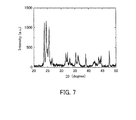
- Fig. 7 shows the results of the X-ray diffraction pattern analysis for the resultant sample.
- NbN niobium nitride
- Nb 2 O 5 niobium nitride
- NbON synthesized in Example 1 was allowed to be loaded with platinum (Pt) as a co-catalyst using the following method.
- NbON was impregnated with hexachloroplatinate (IV) (H 2 PtCl 6 ) that is equivalent to 1 wt% of NbON in an aqueous solution, followed by drying in a hot-water bath. Thereafter, it was subjected to hydrogen reduction at 473 K for 2 hours. Thus, Pt-loaded NbON was obtained.
- Fig. 8 shows time course of hydrogen production under visible light irradiation having a wavelength of 420 nm to 800 nm.
- photoirradiation was performed through a cold mirror capable of shielding light other than the light having a wavelength of 420 nm to 800 nm.
- the production of hydrogen occurred at an initial rate of 0.8 ⁇ mol hour -1 as shown in Fig. 8 . It was confirmed from this that Pt-loaded NbON had a photocatalytic function for reducing protons in the methanol aqueous solution to hydrogen by irradiation with visible light.
- NbON (0.10 g) synthesized in Example 1 was suspended in 200 mL of a 0.01-M (mol L -1 ) silver nitrate solution.
- Fig. 9 shows time course of oxygen production under visible light irradiation having a wavelength of 420 nm to 800 nm.
- photoirradiation was performed through a cold mirror capable of shielding light other than the light having a wavelength of 420 nm to 800 nm.
- the production of oxygen occurred at an initial rate of 0.06 ⁇ mol hour -1 as shown in Fig. 9 . It was confirmed from this that NbON had a photocatalytic function for oxidizing water in the silver nitrate solution to oxygen by irradiation with visible light.
- NbON (0.10 g) was suspended in 200 mL of a 0.01-M (mol L -1 ) silver nitrate solution in the same manner as in Example 6. The amount of oxygen production when this suspension was placed in a dark place was measured. However, even after 45 hours from the start, no oxygen was detected. This proved that the oxygen producing reaction from the suspension in Example 6 proceeded due to the function of NbON as a photocatalyst.
- the optical semiconductor of the present invention can be used suitably as a visible light-responsive photocatalyst, and is useful, for example, in techniques relevant to photocatalysts such as a device that produces hydrogen using sunlight. Further, the method for producing the optical semiconductor of the present invention can be used also as a method for producing visible light-responsive photocatalysts. In addition, it also can be used in the nitriding process of a metal compound, etc.
Landscapes
- Chemical & Material Sciences (AREA)
- Organic Chemistry (AREA)
- Inorganic Chemistry (AREA)
- Engineering & Computer Science (AREA)
- Sustainable Energy (AREA)
- Life Sciences & Earth Sciences (AREA)
- Chemical Kinetics & Catalysis (AREA)
- Electrochemistry (AREA)
- General Chemical & Material Sciences (AREA)
- Health & Medical Sciences (AREA)
- General Health & Medical Sciences (AREA)
- Combustion & Propulsion (AREA)
- Sustainable Development (AREA)
- Manufacturing & Machinery (AREA)
- Catalysts (AREA)
- Inorganic Compounds Of Heavy Metals (AREA)
Abstract
Description
- The present invention relates to an optical semiconductor and a method for producing the optical semiconductor, and to an optical semiconductor device, a photocatalyst, a hydrogen producing device that includes the photocatalyst, and an energy system that includes the hydrogen producing device.
- In an optical semiconductor, electron-hole pairs are generated by irradiation of the optical semiconductor with light. Optical semiconductors are promising since they can be used for applications such as LEDs and lasers for extracting light generated in recombination of the electron-hole pairs, solar cells for extracting the photovoltaic power as electrical energy by separating the pairs spatially, and photocatalysts for producing hydrogen directly from water and sunlight. As one group of optical semiconductors that absorb or emit light in the ultraviolet to visible light region, nitrides and oxynitrides can be mentioned. Examples thereof include nitrides and oxynitrides of tantalum, titanium, aluminium, gallium, indium, etc. However, no reports have been made so far on the use of niobium oxynitride as an optical semiconductor. Reported methods for synthesizing niobium oxynitride and the physical characteristics thereof are shown below.
- As a method for producing niobium oxynitride, a method of using niobium oxychloride, etc., as a raw material and a method of calcinating niobium pentoxide in an ammonia atmosphere, for example, are known (see, for example, Non-Patent
Literatures - Non-Patent
Literature 1 discloses niobium oxynitride synthesized using niobium oxychloride or niobium pentachloride as a niobium source, and the synthesis method thereof. - In the case of using niobium oxychloride as a starting material, niobium oxychloride (NbOCl3) and liquid ammonia are reacted with each other. In the sample obtained by the reaction, ammonium chloride (NH4Cl) is present in a mixed state as a by-product. Therefore, in order to remove the ammonium chloride from the material through sublimation, the obtained material is heated at 653 K under vacuum. The sample after the heating is further calcinated at 773 K for a long period of time. This allows niobium oxynitride (NbON) that is black in color to be obtained.
- In the case of using niobium pentachloride as a starting material, niobium pentachloride (NbCl5) and nitrogen chloride (ClN3) are first reacted with each other to obtain niobium tetrachloride azide (NbCl4N3). The resultant niobium tetrachloride azide is hydrolyzed to form niobium oxychloride azide (NbOCl2N3). This is subjected to pyrolysis at 773 K, thereby allowing niobium oxynitride (NbON) to be obtained.
-
Non-Patent Literature 1 discloses that niobium oxynitride obtained by the above-mentioned method has a crystal structure of baddeleyite and is represented by the composition formula of NbON, in accordance with the X-ray crystal structure analysis. -
Non-Patent Literature 2 andPatent Literature 1 each disclose niobium oxynitride synthesized using niobium pentachloride as a niobium source by heat treatment in a flowing ammonia gas atmosphere, and the synthesis method thereof. Niobium chloride (NbCl5) is employed as a metal salt raw material. This is dissolved by stirring in a solution consisting of ethylene glycol (HOCH2CH2OH), citric acid (HOOCCH2C(OH)(COOH)CH2COOH), and methanol (CH3OH). Thereafter, this solution is stirred in an air atmosphere while being heated to 423 K. This causes dehydration esterification reaction between the carboxyl group of oxycarboxylic acid and the hydroxyl group of glycol, thus allowing a polyester polymer gel that has undergone polyesterification to be obtained. Then, the resultant gel is subjected to heat treatment at 773 K for 3 hours in a flowing nitrogen atmosphere at 0.1 Uminute. Subsequently, it is further subjected to heat treatment at 1023 K for 10 hours in a flowing ammonia gas atmosphere at 0.5 Uminute. Thus, niobium oxynitride (Nb-O-N) is obtained. The X-ray diffraction pattern disclosed inNon-Patent Literature 2 shows that this Nb-O-N is a mixture of niobium pentoxide (Nb2O5) and niobium nitride (NbN). -
- Patent Literature 1:
JP 2009-208070 A -
- Non-Patent Literature 1:
Zeitschrift für anorganische und allgemeine Chemie, 429, 261-269 (1977) - Non-Patent Literature 2:
Journal of The Electrochemical Society, 156 (7) B811-B815 (2009) - It is explicitly stated in
Non-Patent Literature 1 that NbON phase having a crystal structure of baddeleyite was detected in the resultant niobium oxynitride. However, by-products and/or impurities are considered to remain in the material synthesized by the method disclosed inNon-Patent Literature 1 other than NbON phase having a crystal structure of baddeleyite. As one evidence for that, there can be mentioned a description on the band gap of NbON. Table 1 below shows the actual measured value of the band gap of tantalum oxynitride (TaON) having the same crystal structure as NbON, the estimated values of the band gaps of TaON and NbON calculated according to the first-principle band calculation, and the true value of the band gap of NbON to be estimated from these values. The first-principle band calculation was performed using the PAW (Projector Augmented Wave) method on the basis of density functional theory. In this calculation, GGA-PBE (Generalized Gradient Approximation of Perdew-Burke-Ernzerhof (generalized density gradient correction)) functionals are used for the representation of the electron density by which the exchange-correlation term is given as interactions between electrons. As a result, the true value of the band gap of NbON is estimated to be about 2.0 eV. However, Non-Patent Literature 1 describes that the resultant niobium oxynitride is black in color. This means that the value of the band gap of the resultant sample is 1.5 eV or less. That is, it is strongly suggested that the niobium oxynitride disclosed in Non-PatentLiterature 1 contains by-products and/or impurities such as chemical species that are produced by reducing niobium as compared to the NbON (where Nb has a valence of +5), other than the NbON phase having a crystal structure of baddeleyite. -
Table 1 Estimated value of band gap according to the first-principle band calculation [eV] Actual measured value of band gap [eV] True value of band gap to be estimated [eV] TaON 1.9 2.5 - NbON 1.5 - 2.0 - Further, in the method for producing niobium oxynitride disclosed in Non-Patent
Literature 1, niobium tetrachloride azide that is azide salt of niobium is produced in the course of the synthesis process. Generally, azide salts of heavy metals are explosive, and thus treated as hazardous materials that are difficult to handle. Therefore, the synthesis process of Non-PatentLiterature 1 is exceptionally difficult to perform, and is disadvantageous in that only a very slight amount of niobium oxynitride can be synthesized by the process because of the need to avoid explosion. -
Non-Patent Literature 1 fails to disclose that a material having a crystal structure of baddeleyite and represented by the composition formula, NbON, can be used as an optical semiconductor. - Niobium oxynitride synthesized by the method disclosed in each of
Non-Patent Literature 2 andPatent Literature 1 is niobium oxynitride in which nitrided NbN phase and unnitrided Nb2O5 phase are present in a mixed state, and is not niobium oxynitride that has a crystal structure of baddeleyite. This is because, as disclosed inPatent Literature 1, ammonia acts not only as a nitriding agent but also as a reductant in the nitriding reaction under an ammonia gas atmosphere. This action of ammonia as a reductant is to reduce the valence of the niobium source that once was +5 in a starting material to +3. As a result, only NbN that is a conductor is selectively synthesized. Accordingly, it is impossible to synthesize niobium oxynitride having a crystal structure of baddeleyite by the synthesis method of niobium oxynitride disclosed in each ofNon-Patent Literature 2 andPatent Literature 1, resulting in a failure to obtain a material suitable for optical semiconductors. - It is therefore a challenge of the present invention, in view of the above-mentioned conventional problems, to provide a production method that enables niobium oxynitride to be supplied safely, conveniently, inexpensively, and in a large amount, so as to provide an optical semiconductor capable of effectively utilizing the light in the long-wavelength region. Further, it is also a challenge of the present invention to provide an optical semiconductor device, a photocatalyst, a hydrogen producing device, and an energy system, using the above-mentioned optical semiconductor.
- The present invention provides an optical semiconductor substantially consisting of niobium oxynitride having a crystal structure of baddeleyite and having a composition represented by the composition formula, NbON.
- The present invention also provides a method for producing an optical semiconductor, including: a mixing step of producing a mixture containing a reduction inhibitor and a niobium compound that contains at least oxygen in its composition; a nitriding step of nitriding the mixture by the reaction between the mixture and a nitrogen compound gas; and a washing step of isolating niobium oxynitride from the material obtained through the nitriding step by dissolving chemical species other than niobium oxynitride with a washing liquid.
- The present invention also provides an optical semiconductor device including the above-mentioned optical semiconductor of the present invention.
- The present invention also provides a photocatalyst consisting of the optical semiconductor that is the above-mentioned optical semiconductor of the present invention and that consists of single-phase NbON.
- The present invention also provides a hydrogen producing device including: the above-mentioned photocatalyst of the present invention; an electrolyte that contains water and that is in contact with the photocatalyst; and a housing that accommodates the photocatalyst and the electrolyte. In the hydrogen producing device, hydrogen is generated through decomposition of the water caused by irradiation of the photocatalyst with light.
- The present invention also provides an energy system including: the above-mentioned hydrogen producing device of the present invention; a fuel cell; and a line for supplying hydrogen produced in the hydrogen producing device to the fuel cell.
- The optical semiconductor of the present invention substantially consists of niobium oxynitride (NbON). The optical semiconductor of the present invention can cause photoexcitation by absorbing light having a longer wavelength compared to optical semiconductors consisting of niobium oxide that are conventionally known as optical semiconductors.
- In the method for producing the optical semiconductor of the present invention, niobium oxynitride is synthesized by the reaction of a mixture of a niobium compound and a reduction inhibitor with a nitrogen compound gas. It is possible to prevent the reduction of niobium due to the nitrogen compound gas by allowing the reduction inhibitor and the niobium compound to coexist in the nitriding step. As a result, niobium can maintain the pentavalent state, which is its highest valence, in the material during the reaction and after the reaction. Therefore, according to the production method of the present invention, niobium oxynitride having a crystal structure of baddeleyite and represented by the composition formula, NbON (where Nb has a valence of +5) can be obtained. Further, all the starting materials to be used and by-products are chemically stable in the production method of the present invention. Furthermore, only three steps are required for the production, i.e., the step of mixing a reduction inhibitor and a niobium compound that contains at least oxygen in its composition; the step of nitriding the mixture in a nitrogen compound gas atmosphere; and the step of washing for removing substances other than niobium oxynitride. Hence, the production method of the present invention does not require any special steps. This allows niobium oxynitride to be synthesized safely, conveniently, and inexpensively. Moreover, all the aforementioned three steps can be easily scaled up. Therefore, it is also possible to produce the optical semiconductor of the present invention in a large amount by using the production method of the present invention.
- The optical semiconductor device, the photocatalyst, the hydrogen producing device, and the energy system of the present invention can utilize the light in a longer-wavelength region compared to optical semiconductor devices, etc., using optical semiconductors consisting of niobium oxide that are conventionally known as optical semiconductors, and thus can utilize sunlight efficiently.
-
-
Fig. 1 is a graph showing the density of states distribution of NbON obtained according to the first-principle band calculation. -
Fig. 2 is a schematic view showing one embodiment of the hydrogen producing device of the present invention. -
Fig. 3 is a schematic view showing one embodiment of the energy system of the present invention. -
Fig. 4 shows X-ray diffraction patterns of the first to the third intermediate products and the finally synthesized NbON according to Example 1 of the present invention. -
Fig. 5 shows the X-ray photoelectron spectrum of NbON according to Example 1 of the present invention. -
Fig. 6 shows the ultraviolet-visible diffuse reflection spectrum of NbON according to Example 1 of the present invention. -
Fig. 7 shows the X-ray diffraction pattern of niobium oxynitride according to Comparative Example 1 of the present invention. -
Fig. 8 is a graph showing time course of hydrogen production using the optical semiconductor according to Example 5 of the present invention under light irradiation at a wavelength of 420 nm to 800 nm. -
Fig. 9 is a graph showing time course of oxygen production using the optical semiconductor according to Example 6 of the present invention under light irradiation at a wavelength of 420 nm to 800 nm. - Hereinafter, embodiments of the present invention are described with reference to drawings.
- An embodiment of the optical semiconductor of the present invention is described. The optical semiconductor of this embodiment substantially consists of niobium oxynitride. This niobium oxynitride has a crystal structure of baddeleyite and a composition represented by the composition formula, NbON. The phrase "optical semiconductor substantially consisting of niobium oxynitride" herein means that the optical semiconductor of the present invention includes an optical semiconductor that contains, for example, a slight amount of components such as impurities other than niobium oxynitride, in addition to an optical semiconductor that consists only of niobium oxynitride. Specifically, it means an optical semiconductor that contains at least 90 mol%, preferably at least 99 mol%, of niobium oxynitride. For example, in the case where the "optical semiconductor substantially consisting of niobium oxynitride" contains an impurity, the content of the impurity is preferably not more than the detection limit of the X-ray crystal structure analysis.
- In order to stably obtain the function of niobium oxynitride as an optical semiconductor, the optical semiconductor of this embodiment preferably consists of the above-mentioned niobium oxynitride. That is, the optical semiconductor of this embodiment preferably consists of single-phase NbON.
- Next, an example of the method for producing an optical semiconductor by which the optical semiconductor of this embodiment can be produced is described.
- The niobium oxynitride that forms the optical semiconductor of this embodiment can be synthesized by the reaction of a niobium compound that serves as a starting material with a nitrogen compound gas in coexistence with a reduction inhibitor. More specifically, the production method of this embodiment includes a mixing step of producing a mixture containing a reduction inhibitor and a niobium compound that contains at least oxygen in its composition; a nitriding step of nitriding the mixture by the reaction between the mixture and a nitrogen compound gas; and a washing step of isolating niobium oxynitride from the material obtained through the nitriding step by dissolving chemical species other than niobium oxynitride with a washing liquid.
- First, the mixing step is described. The niobium compound that serves as a starting material needs only to contain at least oxygen in its composition. For example, niobium oxide, niobium hydroxide, niobium acetate, niobium carbonate, and niobium oxalate can be used. Such a niobium compound is mixed with a reduction inhibitor to produce a mixture. As the reduction inhibitor, one having a function of suppressing the reduction of niobium in the subsequent nitriding step can be used. As the reduction inhibitor, a compound containing at least one element selected from the group consisting of tin, titanium, indium, and germanium can be used suitably.
- The mixing ratio of the reduction inhibitor to the niobium compound can be appropriately selected depending on specific materials to be used as the niobium compound and the reduction inhibitor. However, it is preferable that, when the mixing ratio of the reduction inhibitor to the niobium compound is defined as:
- X = (amount of substance of metal or metal ion in the reduction inhibitor)/(amount of substance of niobium in the niobium compound),
- X satisfies 1 ≤ X ≤ 5. The reduction of the niobium compound can be suppressed more reliably in the subsequent nitriding step by satisfying such a mixing ratio. Accordingly, niobium oxynitride having a crystal structure of baddeleyite and having a composition represented by the composition formula, NbON, can be obtained more easily.
- The specific method for mixing the niobium compound and the reduction inhibitor is not specifically limited. For example, a mixture can be obtained by grinding and mixing a niobium compound in powder form and a reduction inhibitor in powder form.
- Next, the thus prepared mixture of the niobium compound and the reduction inhibitor is reacted with a nitrogen compound gas (nitriding step). As the nitrogen compound gas, ammonia, nitrogen, and hydrazine, for example, can be suitably used. Among these, a nitrogen compound gas containing at least ammonia is preferably used. In this reaction, the nitrogen compound gas has a function as a reductant in addition to a function as a nitriding reagent. Supposed that only the niobium compound is reacted with the nitrogen compound gas, niobium contained in the niobium compound is reduced due to the function of the nitrogen compound gas as a reductant. As a result, niobium nitride (NbN, where Nb has a valence of +3) as disclosed in
Non-Patent Literature 2 andPatent Literature 1 is synthesized. However, since the niobium compound is mixed with the reduction inhibitor in this embodiment, the reduction inhibitor is reduced prior to the niobium compound, thereby preventing the reduction of the niobium compound. In this way, only the function as a nitriding reagent among the properties of the nitrogen compound gas acts on the niobium compound. Ultimately, the nitrogen compound gas can nitride the niobium compound without reducing it. At that time, the reaction temperature is preferably 773 K to 1023 K. By setting the reaction temperature within such a range, it is possible to allow the nitriding reaction to proceed more reliably while suppressing the reduction of the niobium compound. Further, it is also made possible to ease the conditions such as the time required for nitriding and/or the flow rate of the nitrogen compound gas. - In the nitriding step, the linear flow rate of the nitrogen compound gas is preferably 0.05 cm second-1 to 5.00 cm second-1. By setting the flow rate within such a range, it is possible to allow the nitriding reaction to proceed more reliably while suppressing the reduction of the niobium compound. Further, it is also made possible to ease the conditions such as the time required for nitriding and/or the temperature of the nitriding reaction.
- By the above procedures, a mixture of NbON and the reduction inhibitor that has been partially or completely reduced can be obtained as a material after the reaction. Next, in order to remove only chemical species other than niobium oxynitride (the reduction inhibitor, the reduced product of the reduction inhibitor, etc.) from this mixture, washing is carried out using a washing liquid (washing step). Thereby, niobium oxynitride having a crystal structure of baddeleyite and having a composition represented by the composition formula, NbON, is obtained. It also is possible to obtain single-phase NbON using the production method of the present embodiment by appropriately selecting, for example, the reaction temperature and the flow rate of the nitrogen compound gas in the nitriding step, and the washing liquid in the washing step. The washing liquid preferably contains an acidic solution or alkaline solution. In this regard, an appropriate acidic solution or alkaline solution needs to be selected depending on the type of reduction inhibitor to be used. The mixture is immersed in this washing liquid, thereby allowing the reduction inhibitor, etc., to be dissolved completely therein. Thereafter, the residual solid content in the washing liquid is taken out, and washed with pure water, followed by drying. Further, the above-mentioned subsequent process of: "mixing of the reduction inhibitor, reaction with the nitrogen compound gas, and removal of the reduction inhibitor", that is, the mixing step, the nitriding step, and the washing step can be repeated, as needed. By the above procedures, a target optical semiconductor consisting of single-phase NbON can be obtained.
- The optical semiconductor of this embodiment can be applied to optical semiconductor devices such as LEDs, lasers, and solar cells. Accordingly, LEDs, lasers, and solar cells, for example, can be embodied as an optical semiconductor device provided with the optical semiconductor of this embodiment.
- An embodiment of the photocatalyst of the present invention is described. The photocatalyst of this embodiment consists of the optical semiconductor described in
Embodiment 1. Niobium oxynitride (NbON) described inEmbodiment 1 can be used as a photocatalyst. Hereinafter, the reason for that is described. -
Fig. 1 shows the density of states distribution of NbON obtained according to the first-principle band calculation. It can be seen from this figure that the valence band mainly consisting of N2p orbitals, the conduction band mainly consisting of Nb4d orbitals, and the band gap interposed between these two are present in the band structure of NbON. The actual measured value of the band gap width is 2.2 eV as described later in Example 1. This is equivalent to the energy of light having a wavelength of 560 nm. That is, when NbON is irradiated with light having a wavelength of 560 nm or less, electrons present in the valence band absorb light to be excited into the conduction band. Here, when a reactive substrate is present in the vicinity of the surface of NbON and the redox potential thereof is located at a potential on the positive side with respect to the bottom of the conduction band of NbON, the excited electrons move from NbON to the reactive substrate and the reduction of the reactive substrate can proceed. Examples of the reactive substrate having such a redox potential include water, proton, oxygen, metal ions such as silver (I) ion and iron (III) ion, and iodide ion. On the other hand, holes are produced in the valence band with the photoexcitation of electrons. Here, when a reactive substrate is present in the vicinity of the surface of NbON and the redox potential thereof is located at a potential on the negative side with respect to the top of the valence band of NbON, holes move from NbON to the reactive substrate and the oxidation of the reactive substrate can proceed. Examples of the reactive substrate having such a redox potential include water, hydroxide ion, metal ions such as iron (II) ion, iodine ion, and an organic compound. Such a phenomenon shows that NbON can act as a photocatalyst. - An embodiment of the hydrogen producing device of the present invention is described. The hydrogen producing device of this embodiment uses the photocatalyst (photocatalyst of Embodiment 2) consisting of the optical semiconductor described in
Embodiment 1, and produces hydrogen through decomposition of water by irradiation of the photocatalyst with light. -
Fig. 2 shows a schematic view of the hydrogen producing device of this embodiment. It should be noted that the hydrogen producing device of the present invention is not limited to the configuration shown inFig. 2 . - The hydrogen producing device includes, a
photoelectrode 10 in which the photocatalyst described inEmbodiment 2 is provided on a conductive substrate, a counter electrode (counter electrode made of a conductive substance such as metal and carbon or a counter electrode having a configuration in which a metal or the like is supported by a conductive base material) 11 made of an electrically conductive material, anelectrolyte 14 containing water, and ahousing 13 accommodating these components. Thephotoelectrode 10 and thecounter electrode 11 are connected to each other by anexternal circuit 12. The photocatalyst provided in thephotoelectrode 10 is not necessarily a single-phase semiconductor. The photocatalyst may be a complex consisting of a plurality of types of semiconductors or may support a metal or the like that functions as a co-catalyst. It is also possible to provide a mechanism capable of applying a bias between the photoelectrode 10 and thecounter electrode 11. - Both the
photoelectrode 10 and thecounter electrode 11 are accommodated in thehousing 13 together with theelectrolyte 14. Theelectrolyte 14 needs only to contain water, and may further contain a supporting electrolyte, a redox material and/or a sacrificial reagent, etc. - A part of the surface of the
housing 13 on thephotoelectrode 10 side is composed of a material that transmits light to illuminate thephotoelectrode 10, and is composed of a material that transmits at least part of light having a wavelength, for example, of 850 nm or less. Thehousing 13 is provided with a photoelectrode-side gas outlet 16 for discharging the gas generated on thephotoelectrode 10 side, and a counter electrode-side gas outlet 17 for discharging the gas generated on thecounter electrode 11 side. - The
photoelectrode 10 and thecounter electrode 11 are desirably separated from each other by aseparator 15 in order to separate the gas to be generated on thephotoelectrode 10 side and the gas to be generated on thecounter electrode 11 side from each other. It is preferable that theseparator 15 be made of a material that is permeable to liquids and ions contained in the liquids, but blocks gases. - The gas produced at the
photoelectrode 10 and the gas produced at thecounter electrode 11 are discharged out of thehousing 13 respectively through the photoelectrode-side gas outlet 16 and the counter electrode-side gas outlet 17. - A mechanism for introducing water that has been reduced due to decomposition may be further provided in the
housing 13. - Further, the
housing 13 may be provided with an inlet and an outlet of theelectrolyte 14 on the photoelectrode side and the counter electrode side, so as to have a configuration that allows the circulation of theelectrolyte 14. In this case, the photoelectrode-side gas outlet 16 and the counter electrode-side gas outlet 17 are not necessarily provided, and it is possible to employ a configuration in which the produced gas is delivered in a mixed state with the circulating water to the gas-liquid separation apparatus provided outside thehousing 13 and then hydrogen or oxygen is obtained therefrom. - An embodiment of the energy system of the present invention is described. The energy system of this embodiment is a system that uses the photocatalyst (photocatalyst of Embodiment 2) consisting of the optical semiconductor described in
Embodiment 1. The energy system of this embodiment is a system in which hydrogen produced through decomposition of water by irradiation of the photocatalyst with light is supplied to a fuel cell, and then the hydrogen is converted into electrical energy. - The energy system of this embodiment includes such a hydrogen producing device as described in
Embodiment 3.Fig. 3 shows a schematic view of the energy system of this embodiment that uses sunlight. The energy system of the present invention is not limited to the configuration shown inFig. 3 . - The energy system of this embodiment includes such a
hydrogen producing device 20 as described inEmbodiment 3, afuel cell 22, and aline 21 for supplying the hydrogen produced in thehydrogen producing device 20 to thefuel cell 22. - The
hydrogen producing device 20, for example, is installed at alocation 23 that is well-irradiated with sunlight, such as on the roof. In the installation, the surface of thehydrogen producing device 20 on which the photocatalyst is provided is desirably oriented to face the sun so that thehydrogen producing device 20 can efficiently receive sunlight. The hydrogen obtained in thehydrogen producing device 20 through decomposition of water caused by the photocatalytic reaction is discharged out of thehydrogen producing device 20 through theline 21 so as to be supplied to thefuel cell 22. - The
line 21 may be provided, for example, with a hydrogen storage unit for storing hydrogen, a dehumidifier for removing moisture in the hydrogen, or a compressor when hydrogen is required to be compressed in storage. - Hereinafter, the present invention is described further in detail with reference to Examples. The following Examples are described as an example and the present invention is not limited to these Examples.
- Example 1 of the present invention is specifically described below.
- As a starting material, niobium pentoxide (Nb2O5 powder (1.28 g)) was used. As a reduction inhibitor, stannic oxide (SnO2 powder (0.72 g)) was used. These were sufficiently ground and mixed, and thus a mixture was obtained. This mixture was heated to a temperature of 973 K at a temperature rise rate of 100 K hour-1 under a nitrogen gas flow at a linear flow rate of 0.19 cm second-1. Thereafter, the flowing gas was changed to an ammonia gas at a linear flow rate of 0.19 cm second-1, and then the mixture was maintained at 973 K for 8 hours. Subsequently, the flowing gas was changed again to the nitrogen gas at a linear flow rate of 0.19 cm second-1, and the temperature was decreased to room temperature at a temperature decrease rate of 100 K hour-1. Thus, a first intermediate product was obtained. The first intermediate product was suspended in 200 mL of an aqueous solution of hydrochloric acid (HCl) at a concentration of 1.0 M (mol L-1), which was stirred for 24 hours. Thereafter, it was filtrated to extract only the powder. This powder was washed with pure water, and dried at 353 K for 4 hours. Thus, a second intermediate product was obtained. SnO2 powder (0.72 g) was added to the second intermediate product as a reduction inhibitor, which was sufficiently ground and mixed. Thereafter, calcination was performed under nitrogen and ammonia gas flows with the same procedure as mentioned above. Thus, a third intermediate product was obtained. The third intermediate product was subjected to suspension in the HCl solution, filtration, washing with pure water, and drying, with the same procedure as mentioned above. Thus, NbON was obtained.
Fig. 4 shows X-ray diffraction patterns of the first to the third intermediate products and the finally synthesized NbON. The diffraction peaks of the first intermediate product were assigned to NbON, tin-niobium composite oxide (SnNb2O6), and metal tin (Sn). That is, the presence of NbON, SnNb2O6, and Sn was confirmed in the first intermediate product. It can be seen from this that SnO2 added as a reduction inhibitor was reduced to Sn, thereby preventing the reduction of niobium. The diffraction peaks of the second intermediate product were assigned to NbON and SnNb2O6. That is, the presence of NbON and SnNb2O6 was confirmed in the second intermediate product. It can be seen from this that Sn was removed completely from the first intermediate product by being dissolved in the aqueous hydrochloric acid solution through the suspension of the first intermediate product in the aqueous hydrochloric acid solution (Reaction formula 1). The diffraction peaks of the third intermediate product were assigned to NbON and Sn. That is, the production of NbON and Sn as the third intermediate product was confirmed. All the diffraction peaks of the finally synthesized NbON obtained by dissolving and removing the Sn using the aqueous hydrochloric acid solution were assigned to NbON. That is, the production of single-phase NbON as the finally synthesized compound was confirmed. -
Sn + 2HCl → Sn2++ 2Cl-+ H2 (Reaction formula 1)
-
Fig. 5 shows the X-ray photoelectron spectrum of NbON synthesized in this example. Nb3d5/2 peak in the spectrum shown inFig. 5 was located at a binding energy of 206.7 eV. This means that the valence of Nb species contained in the sample was +5. The slight deviation of the peak position from the reference (Nb2O5) position (207.5 eV) of Nb5+ toward the low-binding energy side reflects that Nb atoms are bonded not only to O atoms but also to N atoms in the case of NbON. That is, it was demonstrated that the reduction of Nb in NbON was prevented due to the effect of the reduction inhibitor (SnO2), and the state of Nb5+ was maintained before and after calcination under the ammonia gas flow. -
Fig. 6 shows the ultraviolet·visible diffuse reflection spectrum of NbON synthesized in this example. It was found fromFig. 6 that the resultant sample can absorb visible light having a wavelength up to 560 nm. This demonstrated that the sample of this example was a semiconductor with a band gap of 2.2 eV (Formula 1). This actual measured value almost matched the band gap value (2.0 eV) of NbON estimated according to the first-principle band calculation (see Table 1). It can be said from this result that the value calculated according to the first-principle band calculation was valid and NbON synthesized in this example was single-phase NbON free from impurities. The ratio of photons with a wavelength of 560 nm or less in sunlight is about 15%. In contrast, the ratio of photons with a wavelength of 380 nm or less, which can be absorbed by Nb2O5 that is a simple oxide semiconductor of niobium, is about 1%. It can be seen from this that NbON is a semiconductor having dramatically high efficiency in sunlight use as compared to Nb2O5. -

- Example 2 of the present invention is specifically described below. NbON synthesized in this example and the synthesis method thereof were the same as NbON synthesized in Example 1 and the synthesis method thereof except that a different reduction inhibitor was used.
- As a reduction inhibitor, a rutile-type titanium oxide (TiO2), indium oxide (In2O3), or germanium oxide (GeO2) was used. Concerning the respective reduction inhibitors, Nb2O5 powder (1.25 g) / TiO2 powder (0.75 g), Nb2O5 powder (0.98 g) / In2O3 powder (1.02 g), or Nb2O5 powder (1.12 g) / GeO2 powder (0.88 g), expressed as starting material / reduction inhibitor, was sufficiently ground and mixed. Thus, each mixture was obtained. The mixture was heated to a temperature of 973 K at a temperature rise rate of 100 K hour-1 under a nitrogen gas flow at a linear flow rate of 0.19 cm second-1. Thereafter, the flowing gas was changed to an ammonia gas at a linear flow rate of 0.19 cm second-1, and then the mixture was maintained at 973 K for 8 hours. Subsequently, the flowing gas was changed again to the nitrogen gas at a linear flow rate of 0.19 cm second-1, and the temperature was decreased to room temperature at a temperature decrease rate of 100 K hour-1. Thus, a sample was obtained. Table 2 shows the results of the X-ray diffraction pattern analysis for the samples synthesized using the above-mentioned respective reduction inhibitors. The formation of NbON phase can be seen in all the reduction inhibitors used in this example from Table 2. That is, it was demonstrated that TiO2, In2O3, and GeO2 each have a function as a reduction inhibitor in the same manner as SnO2, so that the state of Nb5+ was maintained without reduction of at least part of Nb contained in the sample before and after sintering under an ammonia gas flow.
-
Table 2 Reduction inhibitor Crystal phase detected in X-ray diffraction pattern of synthesized sample TiO2 TiO2, NbON, Nb2O5, NbN In2O3 InNbO4, NbON GeO2 GeO2, Ge3N4, NbON, Nb2O5, NbN - In Example 3, a reaction with an ammonia gas was performed in the nitriding step at a different temperature from in Example 1. The synthesis method of niobium oxynitride synthesized in this example was the same as the synthesis method of Example 1 except that the above-mentioned temperature was different.
- As a starting material, Nb2O5 powder (1.28 g) was used. As a reduction inhibitor, SnO2 powder (0.72 g) was used. These were sufficiently ground and mixed. Thus, a mixture was obtained. This mixture was heated to a temperature of 923 K at a temperature rise rate of 100 K hour-1 under a nitrogen gas flow at a linear flow rate of 0.19 cm second-1. Thereafter, the flowing gas was changed to an ammonia gas at a linear flow rate of 0.19 cm second-1, and then the mixture was maintained at 923 K for 8 hours. Subsequently, the flowing gas was changed again to the nitrogen gas at a linear flow rate of 0.19 cm second-1, and the temperature was decreased to room temperature at a temperature decrease rate of 100 K hour-1. Thus, a sample was obtained. The resultant sample was subjected to the X-ray diffraction crystal structure analysis, and NbON, SnNb2O6, and Sn were detected. This sample completely matched the first intermediate product in Example 1. Accordingly, single-phase NbON can be obtained also with the reaction temperature of this example by repeating the mixing step, the nitriding step, and the washing step, in the same manner as in Example 1.
- In Example 4, a reaction with an ammonia gas was performed in the nitriding step at a different temperature and a different gas flow rate from in Example 1. The synthesis method of niobium oxynitride synthesized in this example was the same as the synthesis method of Example 1 except that the above-mentioned temperature and gas flow rate were different.
- As a starting material, Nb2O5 powder (1.28 g) was used. As a reduction inhibitor, SnO2 powder (0.72 g) was used. These were sufficiently ground and mixed. Thus, a mixture was obtained. The mixture was heated to a temperature of 873 K at a temperature rise rate of 100 K hour-1 under a nitrogen gas flow at a linear flow rate of 2.89 cm second-1. Thereafter, the flowing gas was changed to an ammonia gas at a linear flow rate of 2.89 cm second-1, and then the sample was maintained at 873 K for 8 hours. Subsequently, the flowing gas was changed again to the nitrogen gas at a linear flow rate of 2.89 cm second-1, and the temperature was decreased to room temperature at a temperature decrease rate of 100 K hour-1. Thus, a sample was obtained. The resultant sample was subjected to the X-ray diffraction crystal structure analysis, and NbON and Sn were detected. This sample completely matched the third intermediate product in Example 1. Accordingly, single-phase NbON can be obtained also with the reaction temperature and gas flow rate of this example in the same manner as in Example 1.
- In Comparative Example 1, niobium oxynitride was synthesized without mixing a reduction inhibitor. The synthesis method of niobium oxynitride synthesized in this comparative example was the same as the synthesis method of Example 1 except that no reduction inhibitor was used.
- Nb2O5 powder (2.00 g) was heated to a temperature of 973 K at a temperature rise rate of 100 K hour-1 under a nitrogen gas flow at a linear flow rate of 0.19 cm second-1. Thereafter, the flowing gas was changed to an ammonia gas at a linear flow rate of 0.19 cm second-1, and then the mixture was maintained at 973 K for 8 hours. Subsequently, the flowing gas was changed again to the nitrogen gas at a linear flow rate of 0.19 cm second-1, and the temperature was decreased to room temperature at a temperature decrease rate of 100 K hour-1. Thus, a sample was obtained.
Fig. 7 shows the results of the X-ray diffraction pattern analysis for the resultant sample. The diffraction peaks of the synthesized sample were assigned to niobium nitride (NbN) and Nb2O5. That is, the presence of NbN and Nb2O5 in the synthesized sample was confirmed. It can be seen from this that, in the case where no reduction inhibitor was added, niobium in Nb2O5 was reduced by the ammonia gas to be converted into NbN (Nb had a valence of +3) phase. - NbON synthesized in Example 1 was allowed to be loaded with platinum (Pt) as a co-catalyst using the following method. NbON was impregnated with hexachloroplatinate (IV) (H2PtCl6) that is equivalent to 1 wt% of NbON in an aqueous solution, followed by drying in a hot-water bath. Thereafter, it was subjected to hydrogen reduction at 473 K for 2 hours. Thus, Pt-loaded NbON was obtained.
- Pt-loaded NbON (0.10 g) was suspended in 200 mL of a 10-vol% methanol aqueous solution.
Fig. 8 shows time course of hydrogen production under visible light irradiation having a wavelength of 420 nm to 800 nm. Using a 300-W xenon lamp as the light source, photoirradiation was performed through a cold mirror capable of shielding light other than the light having a wavelength of 420 nm to 800 nm. As a result, the production of hydrogen occurred at an initial rate of 0.8 µmol hour-1 as shown inFig. 8 . It was confirmed from this that Pt-loaded NbON had a photocatalytic function for reducing protons in the methanol aqueous solution to hydrogen by irradiation with visible light. - Pt-loaded NbON (0.10 g) was suspended in 200 mL of a 10-vol% methanol aqueous solution in the same manner as in Example 5. The amount of hydrogen production when this suspension was placed in a dark place was measured. However, even after 45 hours from the start, no hydrogen was detected. This proved that the hydrogen producing reaction from the suspension in Example 5 proceeded due to the function of NbON as a photocatalyst.
- NbON (0.10 g) synthesized in Example 1 was suspended in 200 mL of a 0.01-M (mol L-1) silver nitrate solution.
Fig. 9 shows time course of oxygen production under visible light irradiation having a wavelength of 420 nm to 800 nm. Using a 300-W xenon lamp as the light source, photoirradiation was performed through a cold mirror capable of shielding light other than the light having a wavelength of 420 nm to 800 nm. As a result, the production of oxygen occurred at an initial rate of 0.06 µmol hour-1 as shown inFig. 9 . It was confirmed from this that NbON had a photocatalytic function for oxidizing water in the silver nitrate solution to oxygen by irradiation with visible light. - NbON (0.10 g) was suspended in 200 mL of a 0.01-M (mol L-1) silver nitrate solution in the same manner as in Example 6. The amount of oxygen production when this suspension was placed in a dark place was measured. However, even after 45 hours from the start, no oxygen was detected. This proved that the oxygen producing reaction from the suspension in Example 6 proceeded due to the function of NbON as a photocatalyst.
- The optical semiconductor of the present invention can be used suitably as a visible light-responsive photocatalyst, and is useful, for example, in techniques relevant to photocatalysts such as a device that produces hydrogen using sunlight. Further, the method for producing the optical semiconductor of the present invention can be used also as a method for producing visible light-responsive photocatalysts. In addition, it also can be used in the nitriding process of a metal compound, etc.
Claims (13)
- An optical semiconductor substantially consisting of:niobium oxynitride having a crystal structure of baddeleyite and having a composition represented by the composition formula, NbON.
- The optical semiconductor according to claim 1, consisting of single-phase NbON.
- A method for producing an optical semiconductor, comprising:a mixing step of producing a mixture containing a reduction inhibitor and a niobium compound that contains at least oxygen in its composition;a nitriding step of nitriding the mixture by a reaction between the mixture and a nitrogen compound gas; anda washing step of isolating niobium oxynitride from the material obtained through the nitriding step by dissolving chemical species other than niobium oxynitride with a washing liquid.
- The method for producing an optical semiconductor according to claim 3, wherein
the reduction inhibitor is a compound containing at least one element selected from the group consisting of tin, titanium, indium, and germanium. - The method for producing an optical semiconductor according to claim 3, wherein
when a mixing ratio of the reduction inhibitor to the niobium compound is defined as:X = (amount of substance metal or metal ion in the reduction inhibitor) / (amount of substance of niobium in the niobium compound),X satisfies 1 ≤ X ≤ 5. - The method for producing an optical semiconductor according to claim 3, wherein
a reaction temperature in the nitriding step is 773 K to 1023 K. - The method for producing an optical semiconductor according to claim 3, wherein
the nitrogen compound gas used in the nitriding step contains at least ammonia. - The method for producing an optical semiconductor according to claim 3, wherein
a flow rate of the nitrogen compound gas used in the nitriding step is 0.05 cm second-1 to 5.00 cm second-1 as a linear flow rate. - The method for producing an optical semiconductor according to claim 3, wherein
the washing liquid used in the washing step contains at least an acidic solution or an alkaline solution. - An optical semiconductor device comprising:the optical semiconductor according to claim 1.
- A photocatalyst consisting of:the optical semiconductor according to claim 2.
- A hydrogen producing device comprising:the photocatalyst according to claim 11;an electrolyte containing water, the electrolyte being in contact with the photocatalyst; anda housing accommodating the photocatalyst and the electrolyte, whereinhydrogen is generated through decomposition of water by irradiation of the photocatalyst with light.
- An energy system comprising:the hydrogen producing device according to claim 12;a fuel cell; anda line for supplying hydrogen produced in the hydrogen producing device to the fuel cell.
Applications Claiming Priority (2)
| Application Number | Priority Date | Filing Date | Title |
|---|---|---|---|
| JP2010292999 | 2010-12-28 | ||
| PCT/JP2011/006617 WO2012090390A1 (en) | 2010-12-28 | 2011-11-28 | Optical semiconductor and production method therefor, as well as optical semiconductor device, photocatalyst, hydrogen-generating device and energy system |
Publications (3)
| Publication Number | Publication Date |
|---|---|
| EP2659969A1 true EP2659969A1 (en) | 2013-11-06 |
| EP2659969A4 EP2659969A4 (en) | 2015-08-19 |
| EP2659969B1 EP2659969B1 (en) | 2018-03-14 |
Family
ID=46382534
Family Applications (1)
| Application Number | Title | Priority Date | Filing Date |
|---|---|---|---|
| EP11840704.8A Not-in-force EP2659969B1 (en) | 2010-12-28 | 2011-11-28 | Optical semiconductor and production method therefor, as well as optical semiconductor device, photocatalyst, hydrogen-generating device and energy system |
Country Status (5)
| Country | Link |
|---|---|
| US (1) | US8663435B2 (en) |
| EP (1) | EP2659969B1 (en) |
| JP (1) | JP5165155B2 (en) |
| CN (1) | CN102686314B (en) |
| WO (1) | WO2012090390A1 (en) |
Families Citing this family (13)
| Publication number | Priority date | Publication date | Assignee | Title |
|---|---|---|---|---|
| KR20120117074A (en) * | 2011-04-14 | 2012-10-24 | 서강대학교산학협력단 | Membrane for transporting hydrogen ion, membrane for producing hydrogen, and preparing method of the same |
| US9353449B2 (en) | 2011-08-02 | 2016-05-31 | Panasonic Intellectual Property Management Co., Ltd. | Method for producing NbON film |
| US9630169B2 (en) * | 2011-09-06 | 2017-04-25 | Panasonic Corporation | Semiconductor material, optical hydrogen generating device using same, and method of producing hydrogen |
| US9114379B2 (en) * | 2011-12-07 | 2015-08-25 | Panasonic Intellectual Property Management Co., Ltd. | Niobium nitride and method for producing same, niobium nitride-containing film and method for producing same, semiconductor, semiconductor device, photocatalyst, hydrogen generation device, and energy system |
| US9774052B2 (en) | 2013-02-21 | 2017-09-26 | Panasonic Intellectual Property Management Co., Ltd. | Hydrogen producing device and hydrogen producing unit and energy system including the hydrogen producing device and the hydrogen producing unit |
| JP2016175453A (en) * | 2015-03-18 | 2016-10-06 | 株式会社 ワコム研究所 | Hydrogen generation system and hydrogen recovery system |
| JP6578989B2 (en) * | 2016-02-25 | 2019-09-25 | パナソニック株式会社 | Photo semiconductor electrode |
| JP6920656B2 (en) | 2017-06-07 | 2021-08-18 | パナソニックIpマネジメント株式会社 | Semiconductor electrodes, devices equipped with them, and methods for manufacturing semiconductor electrodes. |
| CN114207187B (en) * | 2019-08-08 | 2024-08-02 | 奈诺普特科公司 | Radiation assisted electrolyzer unit and stack |
| CN110935483B (en) * | 2019-11-20 | 2021-10-29 | 华南农业大学 | Semiconductor NbNO nanorod and its preparation method and application |
| CN112337457B (en) * | 2020-11-11 | 2023-02-03 | 郑州轻工业大学 | A kind of preparation method and application of Mo-doped HNb3O8 nanosheet |
| CN112675889A (en) * | 2020-12-11 | 2021-04-20 | 福建江夏学院 | Synthesis method of potassium-sodium niobate-carbon nitride photocatalytic composite material and product thereof |
| US11217805B1 (en) * | 2021-06-28 | 2022-01-04 | II Richard W. Fahs | Point of use hydrogen production unit |
Family Cites Families (11)
| Publication number | Priority date | Publication date | Assignee | Title |
|---|---|---|---|---|
| US4701008A (en) * | 1984-08-10 | 1987-10-20 | Motorola, Inc. | Optical waveguide including superstrate of niobium or silicon oxynitride and method of making same |
| JPH0699125B2 (en) * | 1986-08-13 | 1994-12-07 | 三菱マテリアル株式会社 | Black powder and method for producing the same |
| US5494743A (en) * | 1992-08-20 | 1996-02-27 | Southwall Technologies Inc. | Antireflection coatings |
| JP4817596B2 (en) * | 2003-05-20 | 2011-11-16 | 旭化成ケミカルズ株式会社 | Photocatalyst composition and photocatalyst formed therefrom |
| JP2005133174A (en) * | 2003-10-31 | 2005-05-26 | Toyota Motor Corp | Water decomposition type hydrogen generation cell |
| JP4198582B2 (en) | 2003-12-02 | 2008-12-17 | 独立行政法人科学技術振興機構 | Tantalum oxynitride oxygen reduction electrocatalyst |
| TWI419934B (en) * | 2005-12-13 | 2013-12-21 | Asahi Kasei Chemicals Corp | Aqueous organic and inorganic compounded composition |
| US7481914B2 (en) * | 2006-03-31 | 2009-01-27 | General Electric Company | Photoelectrolysis cells, and related devices and processes |
| JP2009208070A (en) | 2008-02-05 | 2009-09-17 | Univ Of Tokyo | Electrode catalyst for fuel cells, method for producing the same, and electrode for fuel cells |
| JP2009231196A (en) * | 2008-03-25 | 2009-10-08 | Nippon Oil Corp | Electrocatalyst for fuel cell, membrane-electrode assembly using the same, and fuel cell |
| AU2011201595A1 (en) * | 2010-04-12 | 2011-10-27 | Belenos Clean Power Holding Ag | Transition metal oxidenitrides |
-
2011
- 2011-11-28 EP EP11840704.8A patent/EP2659969B1/en not_active Not-in-force
- 2011-11-28 WO PCT/JP2011/006617 patent/WO2012090390A1/en not_active Ceased
- 2011-11-28 CN CN201180004738.XA patent/CN102686314B/en not_active Expired - Fee Related
- 2011-11-28 JP JP2012518341A patent/JP5165155B2/en not_active Expired - Fee Related
-
2012
- 2012-05-29 US US13/482,301 patent/US8663435B2/en not_active Expired - Fee Related
Also Published As
| Publication number | Publication date |
|---|---|
| EP2659969B1 (en) | 2018-03-14 |
| US20120237842A1 (en) | 2012-09-20 |
| WO2012090390A1 (en) | 2012-07-05 |
| CN102686314B (en) | 2016-08-31 |
| JP5165155B2 (en) | 2013-03-21 |
| EP2659969A4 (en) | 2015-08-19 |
| CN102686314A (en) | 2012-09-19 |
| JPWO2012090390A1 (en) | 2014-06-05 |
| US8663435B2 (en) | 2014-03-04 |
Similar Documents
| Publication | Publication Date | Title |
|---|---|---|
| EP2659969B1 (en) | Optical semiconductor and production method therefor, as well as optical semiconductor device, photocatalyst, hydrogen-generating device and energy system | |
| Miyoshi et al. | Water splitting on rutile TiO2‐based photocatalysts | |
| Ma et al. | Use of surface photovoltage spectroscopy to probe energy levels and charge carrier dynamics in transition metal (Ni, Cu, Fe, Mn, Rh) doped SrTiO 3 photocatalysts for H 2 evolution from water | |
| Zhu et al. | Stable blue TiO 2− x nanoparticles for efficient visible light photocatalysts | |
| Kato et al. | Production of hydrogen peroxide as a sustainable solar fuel from water and dioxygen | |
| Zhang et al. | A simple cation exchange approach to Bi-doped ZnS hollow spheres with enhanced UV and visible-light photocatalytic H 2-production activity | |
| Bakiro et al. | Efficient visible-light photocatalytic cycloaddition of CO2 and propylene oxide using reduced graphene oxide supported BiNbO4 | |
| Abe et al. | Visible-light-induced water splitting based on two-step photoexcitation between dye-sensitized layered niobate and tungsten oxide photocatalysts in the presence of a triiodide/iodide shuttle redox mediator | |
| Zou et al. | Steering accessible oxygen vacancies for alcohol oxidation over defective Nb2O5 under visible light illumination | |
| EP2789580B1 (en) | Photocatalyst, hydrogen generation device, and energy system containing niobium nitride | |
| EP3427826B1 (en) | Catalyst and use of same | |
| Nishioka et al. | Homogeneous electron doping into nonstoichiometric strontium titanate improves its photocatalytic activity for hydrogen and oxygen evolution | |
| EP2459485B1 (en) | Photocatalytic materials and process for producing the same | |
| Hu et al. | Visible light driven (Fe, Cr)-codoped La2Ti2O7 photocatalyst for efficient photocatalytic hydrogen production | |
| Lv et al. | Alkaline-earth-metal-doped TiO 2 for enhanced photodegradation and H 2 evolution: Insights into the mechanisms | |
| EP2915907B1 (en) | Photosemiconductor electrode, photoelectrochemical cell, and energy system | |
| Sun et al. | Bismuth pyrochlores with varying Fe/Co ratio for efficient Multi-Functional Catalysis: Structure evolution versus Photo-and Electro-catalytic activities | |
| KR20200048442A (en) | The method of generating oxygen vacancies in nickel-iron oxide catalyst for oxygen evolution reaction and the nickel-iron oxide catalyst manufactured thereby | |
| Sun et al. | Dual-active-center in Co doping LiNbO3 for enhanced CO2 photoreduction in pure water | |
| Russo et al. | Photoactivated Fe (III)/Fe (II)/WO3–Pd fuel cell for electricity generation using synthetic and real effluents under visible light | |
| Wei et al. | Band gap engineering of In2TiO5 for H2 production under near-infrared light | |
| Pai et al. | Role of Nd3+ Ions in Modifying the Band Structure and Photocatalytic Properties of Substituted Indium Titanates, In2 (1–x) Nd2 x TiO5 Oxides | |
| Urbanek et al. | Cu-doped CdS-TiO2 combined with upconverting particles for NIR-induced photocatalytic CO2 reduction | |
| Mitoraj et al. | Mechanism of aerobic visible light formic acid oxidation catalyzed by poly (tri-s-triazine) modified titania | |
| Su et al. | A wireless and redox mediator-free Z-scheme twin reactor for the separate evolution of hydrogen and oxygen |
Legal Events
| Date | Code | Title | Description |
|---|---|---|---|
| PUAI | Public reference made under article 153(3) epc to a published international application that has entered the european phase |
Free format text: ORIGINAL CODE: 0009012 |
|
| 17P | Request for examination filed |
Effective date: 20130621 |
|
| AK | Designated contracting states |
Kind code of ref document: A1 Designated state(s): AL AT BE BG CH CY CZ DE DK EE ES FI FR GB GR HR HU IE IS IT LI LT LU LV MC MK MT NL NO PL PT RO RS SE SI SK SM TR |
|
| DAX | Request for extension of the european patent (deleted) | ||
| RAP1 | Party data changed (applicant data changed or rights of an application transferred) |
Owner name: PANASONIC INTELLECTUAL PROPERTY MANAGEMENT CO., LT |
|
| RA4 | Supplementary search report drawn up and despatched (corrected) |
Effective date: 20150716 |
|
| RIC1 | Information provided on ipc code assigned before grant |
Ipc: C01G 33/00 20060101AFI20150710BHEP Ipc: C01B 3/04 20060101ALI20150710BHEP Ipc: C01B 21/082 20060101ALI20150710BHEP Ipc: H01M 8/06 20060101ALI20150710BHEP |
|
| 17Q | First examination report despatched |
Effective date: 20170503 |
|
| REG | Reference to a national code |
Ref country code: DE Ref legal event code: R079 Ref document number: 602011046567 Country of ref document: DE Free format text: PREVIOUS MAIN CLASS: B01J0027240000 Ipc: C01G0033000000 |
|
| RIC1 | Information provided on ipc code assigned before grant |
Ipc: C01B 21/082 20060101ALI20170808BHEP Ipc: C01B 3/04 20060101ALI20170808BHEP Ipc: H01M 8/06 20160101ALI20170808BHEP Ipc: H01M 8/0656 20160101ALI20170808BHEP Ipc: C01G 33/00 20060101AFI20170808BHEP |
|
| GRAP | Despatch of communication of intention to grant a patent |
Free format text: ORIGINAL CODE: EPIDOSNIGR1 |
|
| INTG | Intention to grant announced |
Effective date: 20170928 |
|
| GRAS | Grant fee paid |
Free format text: ORIGINAL CODE: EPIDOSNIGR3 |
|
| GRAA | (expected) grant |
Free format text: ORIGINAL CODE: 0009210 |
|
| AK | Designated contracting states |
Kind code of ref document: B1 Designated state(s): AL AT BE BG CH CY CZ DE DK EE ES FI FR GB GR HR HU IE IS IT LI LT LU LV MC MK MT NL NO PL PT RO RS SE SI SK SM TR |
|
| REG | Reference to a national code |
Ref country code: GB Ref legal event code: FG4D |
|
| REG | Reference to a national code |
Ref country code: CH Ref legal event code: EP Ref country code: AT Ref legal event code: REF Ref document number: 978697 Country of ref document: AT Kind code of ref document: T Effective date: 20180315 |
|
| REG | Reference to a national code |
Ref country code: IE Ref legal event code: FG4D |
|
| REG | Reference to a national code |
Ref country code: DE Ref legal event code: R096 Ref document number: 602011046567 Country of ref document: DE |
|
| REG | Reference to a national code |
Ref country code: NL Ref legal event code: MP Effective date: 20180314 |
|
| REG | Reference to a national code |
Ref country code: LT Ref legal event code: MG4D |
|
| PG25 | Lapsed in a contracting state [announced via postgrant information from national office to epo] |
Ref country code: FI Free format text: LAPSE BECAUSE OF FAILURE TO SUBMIT A TRANSLATION OF THE DESCRIPTION OR TO PAY THE FEE WITHIN THE PRESCRIBED TIME-LIMIT Effective date: 20180314 Ref country code: CY Free format text: LAPSE BECAUSE OF FAILURE TO SUBMIT A TRANSLATION OF THE DESCRIPTION OR TO PAY THE FEE WITHIN THE PRESCRIBED TIME-LIMIT Effective date: 20180314 Ref country code: NO Free format text: LAPSE BECAUSE OF FAILURE TO SUBMIT A TRANSLATION OF THE DESCRIPTION OR TO PAY THE FEE WITHIN THE PRESCRIBED TIME-LIMIT Effective date: 20180614 Ref country code: ES Free format text: LAPSE BECAUSE OF FAILURE TO SUBMIT A TRANSLATION OF THE DESCRIPTION OR TO PAY THE FEE WITHIN THE PRESCRIBED TIME-LIMIT Effective date: 20180314 Ref country code: HR Free format text: LAPSE BECAUSE OF FAILURE TO SUBMIT A TRANSLATION OF THE DESCRIPTION OR TO PAY THE FEE WITHIN THE PRESCRIBED TIME-LIMIT Effective date: 20180314 Ref country code: LT Free format text: LAPSE BECAUSE OF FAILURE TO SUBMIT A TRANSLATION OF THE DESCRIPTION OR TO PAY THE FEE WITHIN THE PRESCRIBED TIME-LIMIT Effective date: 20180314 |
|
| REG | Reference to a national code |
Ref country code: AT Ref legal event code: MK05 Ref document number: 978697 Country of ref document: AT Kind code of ref document: T Effective date: 20180314 |
|
| PG25 | Lapsed in a contracting state [announced via postgrant information from national office to epo] |
Ref country code: GR Free format text: LAPSE BECAUSE OF FAILURE TO SUBMIT A TRANSLATION OF THE DESCRIPTION OR TO PAY THE FEE WITHIN THE PRESCRIBED TIME-LIMIT Effective date: 20180615 Ref country code: SE Free format text: LAPSE BECAUSE OF FAILURE TO SUBMIT A TRANSLATION OF THE DESCRIPTION OR TO PAY THE FEE WITHIN THE PRESCRIBED TIME-LIMIT Effective date: 20180314 Ref country code: LV Free format text: LAPSE BECAUSE OF FAILURE TO SUBMIT A TRANSLATION OF THE DESCRIPTION OR TO PAY THE FEE WITHIN THE PRESCRIBED TIME-LIMIT Effective date: 20180314 Ref country code: RS Free format text: LAPSE BECAUSE OF FAILURE TO SUBMIT A TRANSLATION OF THE DESCRIPTION OR TO PAY THE FEE WITHIN THE PRESCRIBED TIME-LIMIT Effective date: 20180314 Ref country code: BG Free format text: LAPSE BECAUSE OF FAILURE TO SUBMIT A TRANSLATION OF THE DESCRIPTION OR TO PAY THE FEE WITHIN THE PRESCRIBED TIME-LIMIT Effective date: 20180614 |
|
| PG25 | Lapsed in a contracting state [announced via postgrant information from national office to epo] |
Ref country code: NL Free format text: LAPSE BECAUSE OF FAILURE TO SUBMIT A TRANSLATION OF THE DESCRIPTION OR TO PAY THE FEE WITHIN THE PRESCRIBED TIME-LIMIT Effective date: 20180314 Ref country code: PL Free format text: LAPSE BECAUSE OF FAILURE TO SUBMIT A TRANSLATION OF THE DESCRIPTION OR TO PAY THE FEE WITHIN THE PRESCRIBED TIME-LIMIT Effective date: 20180314 Ref country code: EE Free format text: LAPSE BECAUSE OF FAILURE TO SUBMIT A TRANSLATION OF THE DESCRIPTION OR TO PAY THE FEE WITHIN THE PRESCRIBED TIME-LIMIT Effective date: 20180314 Ref country code: RO Free format text: LAPSE BECAUSE OF FAILURE TO SUBMIT A TRANSLATION OF THE DESCRIPTION OR TO PAY THE FEE WITHIN THE PRESCRIBED TIME-LIMIT Effective date: 20180314 Ref country code: IT Free format text: LAPSE BECAUSE OF FAILURE TO SUBMIT A TRANSLATION OF THE DESCRIPTION OR TO PAY THE FEE WITHIN THE PRESCRIBED TIME-LIMIT Effective date: 20180314 Ref country code: AL Free format text: LAPSE BECAUSE OF FAILURE TO SUBMIT A TRANSLATION OF THE DESCRIPTION OR TO PAY THE FEE WITHIN THE PRESCRIBED TIME-LIMIT Effective date: 20180314 |
|
| PG25 | Lapsed in a contracting state [announced via postgrant information from national office to epo] |
Ref country code: CZ Free format text: LAPSE BECAUSE OF FAILURE TO SUBMIT A TRANSLATION OF THE DESCRIPTION OR TO PAY THE FEE WITHIN THE PRESCRIBED TIME-LIMIT Effective date: 20180314 Ref country code: SK Free format text: LAPSE BECAUSE OF FAILURE TO SUBMIT A TRANSLATION OF THE DESCRIPTION OR TO PAY THE FEE WITHIN THE PRESCRIBED TIME-LIMIT Effective date: 20180314 Ref country code: AT Free format text: LAPSE BECAUSE OF FAILURE TO SUBMIT A TRANSLATION OF THE DESCRIPTION OR TO PAY THE FEE WITHIN THE PRESCRIBED TIME-LIMIT Effective date: 20180314 Ref country code: SM Free format text: LAPSE BECAUSE OF FAILURE TO SUBMIT A TRANSLATION OF THE DESCRIPTION OR TO PAY THE FEE WITHIN THE PRESCRIBED TIME-LIMIT Effective date: 20180314 |
|
| REG | Reference to a national code |
Ref country code: DE Ref legal event code: R097 Ref document number: 602011046567 Country of ref document: DE |
|
| PG25 | Lapsed in a contracting state [announced via postgrant information from national office to epo] |
Ref country code: PT Free format text: LAPSE BECAUSE OF FAILURE TO SUBMIT A TRANSLATION OF THE DESCRIPTION OR TO PAY THE FEE WITHIN THE PRESCRIBED TIME-LIMIT Effective date: 20180716 |
|
| PLBE | No opposition filed within time limit |
Free format text: ORIGINAL CODE: 0009261 |
|
| STAA | Information on the status of an ep patent application or granted ep patent |
Free format text: STATUS: NO OPPOSITION FILED WITHIN TIME LIMIT |
|
| PG25 | Lapsed in a contracting state [announced via postgrant information from national office to epo] |
Ref country code: DK Free format text: LAPSE BECAUSE OF FAILURE TO SUBMIT A TRANSLATION OF THE DESCRIPTION OR TO PAY THE FEE WITHIN THE PRESCRIBED TIME-LIMIT Effective date: 20180314 |
|
| PGFP | Annual fee paid to national office [announced via postgrant information from national office to epo] |
Ref country code: DE Payment date: 20181120 Year of fee payment: 8 |
|
| 26N | No opposition filed |
Effective date: 20181217 |
|
| PG25 | Lapsed in a contracting state [announced via postgrant information from national office to epo] |
Ref country code: SI Free format text: LAPSE BECAUSE OF FAILURE TO SUBMIT A TRANSLATION OF THE DESCRIPTION OR TO PAY THE FEE WITHIN THE PRESCRIBED TIME-LIMIT Effective date: 20180314 |
|
| REG | Reference to a national code |
Ref country code: CH Ref legal event code: PL |
|
| GBPC | Gb: european patent ceased through non-payment of renewal fee |
Effective date: 20181128 |
|
| PG25 | Lapsed in a contracting state [announced via postgrant information from national office to epo] |
Ref country code: LU Free format text: LAPSE BECAUSE OF NON-PAYMENT OF DUE FEES Effective date: 20181128 Ref country code: MC Free format text: LAPSE BECAUSE OF FAILURE TO SUBMIT A TRANSLATION OF THE DESCRIPTION OR TO PAY THE FEE WITHIN THE PRESCRIBED TIME-LIMIT Effective date: 20180314 |
|
| REG | Reference to a national code |
Ref country code: BE Ref legal event code: MM Effective date: 20181130 |
|
| REG | Reference to a national code |
Ref country code: IE Ref legal event code: MM4A |
|
| PG25 | Lapsed in a contracting state [announced via postgrant information from national office to epo] |
Ref country code: CH Free format text: LAPSE BECAUSE OF NON-PAYMENT OF DUE FEES Effective date: 20181130 Ref country code: LI Free format text: LAPSE BECAUSE OF NON-PAYMENT OF DUE FEES Effective date: 20181130 |
|
| PG25 | Lapsed in a contracting state [announced via postgrant information from national office to epo] |
Ref country code: FR Free format text: LAPSE BECAUSE OF NON-PAYMENT OF DUE FEES Effective date: 20181130 Ref country code: IE Free format text: LAPSE BECAUSE OF NON-PAYMENT OF DUE FEES Effective date: 20181128 |
|
| PG25 | Lapsed in a contracting state [announced via postgrant information from national office to epo] |
Ref country code: BE Free format text: LAPSE BECAUSE OF NON-PAYMENT OF DUE FEES Effective date: 20181130 |
|
| PG25 | Lapsed in a contracting state [announced via postgrant information from national office to epo] |
Ref country code: GB Free format text: LAPSE BECAUSE OF NON-PAYMENT OF DUE FEES Effective date: 20181128 |
|
| PG25 | Lapsed in a contracting state [announced via postgrant information from national office to epo] |
Ref country code: MT Free format text: LAPSE BECAUSE OF NON-PAYMENT OF DUE FEES Effective date: 20181128 |
|
| PG25 | Lapsed in a contracting state [announced via postgrant information from national office to epo] |
Ref country code: TR Free format text: LAPSE BECAUSE OF FAILURE TO SUBMIT A TRANSLATION OF THE DESCRIPTION OR TO PAY THE FEE WITHIN THE PRESCRIBED TIME-LIMIT Effective date: 20180314 |
|
| REG | Reference to a national code |
Ref country code: DE Ref legal event code: R119 Ref document number: 602011046567 Country of ref document: DE |
|
| PG25 | Lapsed in a contracting state [announced via postgrant information from national office to epo] |
Ref country code: HU Free format text: LAPSE BECAUSE OF FAILURE TO SUBMIT A TRANSLATION OF THE DESCRIPTION OR TO PAY THE FEE WITHIN THE PRESCRIBED TIME-LIMIT; INVALID AB INITIO Effective date: 20111128 Ref country code: MK Free format text: LAPSE BECAUSE OF NON-PAYMENT OF DUE FEES Effective date: 20180314 |
|
| PG25 | Lapsed in a contracting state [announced via postgrant information from national office to epo] |
Ref country code: IS Free format text: LAPSE BECAUSE OF FAILURE TO SUBMIT A TRANSLATION OF THE DESCRIPTION OR TO PAY THE FEE WITHIN THE PRESCRIBED TIME-LIMIT Effective date: 20180714 |
|
| PG25 | Lapsed in a contracting state [announced via postgrant information from national office to epo] |
Ref country code: DE Free format text: LAPSE BECAUSE OF NON-PAYMENT OF DUE FEES Effective date: 20200603 |