EP2657854A1 - Method and system for incremental collection of forum replies - Google Patents
Method and system for incremental collection of forum replies Download PDFInfo
- Publication number
- EP2657854A1 EP2657854A1 EP11851417.3A EP11851417A EP2657854A1 EP 2657854 A1 EP2657854 A1 EP 2657854A1 EP 11851417 A EP11851417 A EP 11851417A EP 2657854 A1 EP2657854 A1 EP 2657854A1
- Authority
- EP
- European Patent Office
- Prior art keywords
- post
- page
- url
- replies
- pages
- Prior art date
- Legal status (The legal status is an assumption and is not a legal conclusion. Google has not performed a legal analysis and makes no representation as to the accuracy of the status listed.)
- Ceased
Links
Images


Classifications
-
- G—PHYSICS
- G06—COMPUTING OR CALCULATING; COUNTING
- G06F—ELECTRIC DIGITAL DATA PROCESSING
- G06F16/00—Information retrieval; Database structures therefor; File system structures therefor
- G06F16/90—Details of database functions independent of the retrieved data types
- G06F16/95—Retrieval from the web
- G06F16/955—Retrieval from the web using information identifiers, e.g. uniform resource locators [URL]
- G06F16/9566—URL specific, e.g. using aliases, detecting broken or misspelled links
-
- G—PHYSICS
- G06—COMPUTING OR CALCULATING; COUNTING
- G06F—ELECTRIC DIGITAL DATA PROCESSING
- G06F16/00—Information retrieval; Database structures therefor; File system structures therefor
- G06F16/90—Details of database functions independent of the retrieved data types
- G06F16/95—Retrieval from the web
- G06F16/955—Retrieval from the web using information identifiers, e.g. uniform resource locators [URL]
-
- G—PHYSICS
- G06—COMPUTING OR CALCULATING; COUNTING
- G06F—ELECTRIC DIGITAL DATA PROCESSING
- G06F16/00—Information retrieval; Database structures therefor; File system structures therefor
- G06F16/90—Details of database functions independent of the retrieved data types
- G06F16/95—Retrieval from the web
- G06F16/958—Organisation or management of web site content, e.g. publishing, maintaining pages or automatic linking
-
- G—PHYSICS
- G06—COMPUTING OR CALCULATING; COUNTING
- G06Q—INFORMATION AND COMMUNICATION TECHNOLOGY [ICT] SPECIALLY ADAPTED FOR ADMINISTRATIVE, COMMERCIAL, FINANCIAL, MANAGERIAL OR SUPERVISORY PURPOSES; SYSTEMS OR METHODS SPECIALLY ADAPTED FOR ADMINISTRATIVE, COMMERCIAL, FINANCIAL, MANAGERIAL OR SUPERVISORY PURPOSES, NOT OTHERWISE PROVIDED FOR
- G06Q10/00—Administration; Management
- G06Q10/10—Office automation; Time management
Definitions
- the present application relates to the technical field of collecting network information, in particular, to a method and a system for incrementally collecting replies in a forum.
- the present application provides a method and a system for incrementally collecting replies in a forum.
- the method and the system may quickly, accurately and completely collect all main post/replies of a post.
- the drawback that the information in turned pages of a post would be missed or cannot be searched through a general search engine may be overcome.
- the drawback that the current forum collection systems merely collect information in the first page of a post, without the information of the replies of the post, may be overcome.
- a method for incrementally collecting replies in a forum comprising:
- a system for incrementally collecting replies in a forum comprising:
- the information of a newly-established post and a post having new replies in the list pages can be acquired in time. Repeated collection is avoided by a quick process of duplicate eliminating according to URL identification and information of the number of replies.
- the object of quickly collecting replies of a turned page may be achieved by distinguishing different extracting modes of page turning. Therefore, all main post/replies of a post may be quickly, accurately and completely collected. Less than 5% of replies may be missed to be collected and the real time performance may be in the order of minutes.
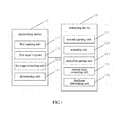
- Fig. 1 is a block diagram of a system for incrementally collecting replies in a forum according to an embodiment of the present application.
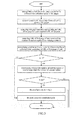
- Fig. 2 is a flowchart illustrating a method for incrementally collecting replies in a forum according to an embodiment of the present application.
- Fig. 3 is a flowchart illustrating a method for determining whether there is a newly-established post and/or a post having new replies in a list page according to an embodiment of the present application.
- Fig. 4 is a flowchart illustrating a method for extracting the information of a main post and replies from a newly-established post and extracting the information of new reply from a post having new replies according to an embodiment of the present application.
- a system for incrementally collecting replies in a forum comprises a determining device 11 and an extracting device 12 connected to the determining device 11.
- the determining device 11 includes a first queuing unit 111, a first acquiring unit 112, a list page extracting unit 113 and a determining unit 114.
- the extracting device 12 includes a second queuing unit 121, a scanning unit 122, a second acquiring unit 123, a content page extracting unit 124 and a duplicate eliminating unit 125.
- the determining device 11 is used for periodically determining whether there is a newly-established post or a post having new replies in all forum list pages needed to be collected, according to URL of the first page of the post and the number of replies to the post.
- the first queuing unit 111 is used for adding the URLs of all forum list pages needed to be collected into a collection queue of list pages.
- the first acquiring unit 112 is used for acquiring each URL of list page from the collection queue of list pages.
- the list page extracting unit 113 is used for extracting, for the acquired each URL of list page, webpage contents corresponding to the URL of the list page, and extracting the URL of the first page of each post and the number of current replies from the webpage contents.
- the determining unit 114 is used for determining whether each post exists in an information list of collected posts according to the URL of the first page of the post. If a post exists in the information list, then it continues to determine whether the number of current replies to the post is larger than the number of present replies recorded in the information list of collected posts. If yes, then it determines that the post has a new reply and updates the number of previous replies and the number of present replies of the post in the information list of collected posts. If the post does not exist in the information list of collected posts, the post is a newly-established post and the URL of the first page and the number of current replies are added into the information list of collected posts.
- the extracting device 12 is used for extracting a main post and reply information from the newly-established post. For the post having new replies, he the extracting device 12 is configured to calculate the origination and the number of the new replies, and extract the information of the new replies from the post having new replies according to the calculated origination and the calculated number.
- the second queuing unit 121 is used for adding the URL of the first page of the newly-established post and the URL of the post having new replies into a collection queue of content pages.
- the scanning unit 122 is used for regularly scanning the collection queue of content pages.
- the second acquiring unit 123 is used for acquiring each URL from the collection queue of content pages.
- the content page extracting unit 124 is used for extracting webpage contents corresponding to the URL and extracting the main post and/or reply and/or URLs of turned pages from the webpage contents.
- the duplicate eliminating unit 125 is used for eliminating duplicate of the URLs of turned pages extracted from the webpage contents when the page turning mode in the forum is next page turning.
- the second queuing unit 121 is further used for adding the URLs of the turned pages, of which the duplicate is eliminated into the collection queue of content pages.
- a method for incrementally collecting replies in a forum based on the system shown in Fig. 1 comprises the following steps.
- Step (1) the determining device 11 periodically determines whether there is a newly-established post and a post having new replies in all forum list pages needed to be collected.
- the method for determining according to this embodiment comprises the following steps (a)-(d).
- the list page refers to the one which contains the information such as titles, URL (uniform resource locator), the number of clicks, the number of replies of all posts, but does not contain the specific contents of the posts.
- URL uniform resource locator
- the list page of the financial hodgepodge channel of Sohu forum, its URL is:
- the list page of the international forum channel of powerful nation community of People Net, its URL is:
- a collection interval is set for each forum list page needed to be collected. For example, the information for each forum list page is collected every other five minutes. The collection interval for each forum list page is monitored. When a collection interval time for each forum list page expires, the URL of this list page is added into the collection queue of list pages.
- the refresh interval is dynamically adjusted according to the update frequency of the forum. If the update frequency of the forum is higher, the refresh interval is shorter; and if the update frequency of the forum is lower, the refresh interval is longer. For example, it is preset to collect every other five minutes, if it is found that the update frequency of the forum increases, then the refresh interval is shortened to be three minutes, one minute or less.
- the method for acquiring the URL of the list page from the collection queue of list pages includes a step of regularly scanning the collection queue of list pages (the scanning interval can be set by the user according to the specific application). If the collection queue of list pages is not empty, then the URLs of list pages are acquired in turn from the collection queue of list pages according to FIFO (after the URL is acquired from the queue, the URL will be automatically deleted from the queue), and the friendly access condition of the website of the URLs of the list pages is met.
- the friendly access conditions of the website include quantity restriction of current accesses and interval restriction of accesses.
- the method for determining whether the friendly access conditions of a website has been disclosed in Chinese patent application "method and system for capturing webpages from servers of different IPs in website” (application number: 201010546334.0 ), and thus the description thereof is omitted.
- each URL of list page a HTTP request for acquiring the contents corresponding to the URL is sent to the website and the returned webpage contents are received.
- the method of acquiring the URL of the first page of each post and the current of number replies from the webpage contents is well known in the art, and thus the description thereof is omitted.
- the number of current replies of the post is not larger than the number of current replies recorded in the information list of collected posts, then it indicates that the post has no new reply and this URL is ignored without any subsequent process. If the post does not exist in the information list of collected posts, then it indicates that the post is a newly-established post, and the URL of the first page of this post and the number of current replies are added in the information list of collected posts. The number of previous replies of the post is 0 and the number of present replies of the post is the number of current replies.
- the information list of collected posts stores the URLs of first pages of collected posts and the numbers of last replies and present replies of collected posts.
- the structure of the list is shown as below.
- URLs of first pages of collected posts the number of previous replies the number of present replies URL 1 ( value MD5 of URL 1 ) a 1 a 2
- URL 2 value MD5 of URL 2
- b 1 b 2 ... ...
- URL n value MD5 of URL n ) n 1 n 2
- the identification information of the URL of the first page of the post is stored in the information list of collected posts, such as MD5 codes.
- the identification information determines whether the URL of the first page of the post is stored in the information list of collected posts. In this way, the comparing efficiency of URL can be improved.
- Step (2) if there is a newly-established post and/or a post having new replies in all forum list pages needed to be collected, the extracting device 12 operates to extract a main post and reply information from the new posts and extract the information of the new replies from the posts having new replies.
- the method for extracting comprises the following steps.
- the URL of the first page of the post exists in the collection queue of content pages
- the URL of the first page of the post is extracted and the number of present replies to the post recorded in the information list of collected posts is amended to be the number of current replies.
- the URL of the first page of the post is inserted into the collection queue of content pages. If the URL of the first page of the post does not exist in the collection queue of content pages, the URL of the first page of the post is directly added into the collection queue of content pages.
- the page turning mode in the forum of the post is calculation page turning
- the URL of the first page of the post having new replies is directly added into the collection queue of content pages.
- the page turning mode in the forum of the post is next page turning, the information table of URLs of turned pages of the post is searched out and the last URL of turned page of the post is added into the collection queue of content pages.
- the mode of calculation page turning refers to a mode, in which the number of replies of each page is certain.
- the mode of next page turning refers to a mode, in which the number of replies of each page is uncertain.
- the post in Tianya by-talk http://www.Tianya.cn/publicforum/content/free/1/1880805.shtml, is configured in the mode of next page turning.
- the scanning interval can be set by the user according to the specific application.
- the method of acquiring URLs from the collection queue of content pages by the second acquiring unit 123 is identical to the method of acquiring URLs from the collection queue of content pages by the first acquiring unit 112 and the description thereof is omitted.
- the post is a newly-established post and the information of the main post and replies are extracted from the webpage contents corresponding to the URL. Specifically, it is firstly determined whether the styles of the main post and replies are consistent. If so, the information is extracted one by one in the same way, and the first extracted information is used as the main post and the other information are used as replies. If not, the information of the main post is firstly extracted in accordance with the preset rules and the information of each reply is then extracted. It is manually set to determine whether the styles of the main post and replies are consistent, and the preset rule is a keyword or regular expression set manually.
- the post is a post having new replies
- the origination of replies S From and the number of the new replies C' ParseCount are calculated according to the following formulae, and C' ParseCount new replies are extracted from the origination of new replies S' From .
- S From ⁇ ⁇ R Pr eNum
- N PerPage includes main post R Pr eNum + 1
- N PerPage does not include main post
- C ParseCount ⁇ R CurNum - R Pr eNum
- R Pre Num represents the number of the replies to the post of the previous collection
- R CurNum represents the number of current replies to the post
- N PerPage represents the number of replies to the post in per page.
- the overlapping page refers to the page in which the information are all information of replies and part of replies are new replies. It is determined that it is an overlapping page if the page index corresponding to the URL is identical to that of the page that should be currently extracted.
- P Begin represents the page index of the page which should be currently extracted; ceil represents the operation of rounding up.
- the method of extracting the URL of turned page from webpage content is as follows.
- the beginning and ending page indexes of the turned page are calculated according to the following formulae. If the URL does not refer to the first page of the post, the URLs of turned pages will not be extracted.
- P Begin and P End represent the beginning and ending page indexes of the turned pages, respectively;
- S From represents the origination of the new replies, and all the replies from the origination to the ending page index are new replies.
- the beginning and ending page indexes of the turned pages are calculated according to the above formulae, in combination of preset rules of URLs of turned pages, all the URLs of turned pages are joined.
- the specific method for joining URL includes a step of joining the URLs of turned pages according to the configured rules of page turning, the beginning page index of turned pages, and the base number of turned pages.
- the URLs of turned pages are divided to three parts, wherein the first and third parts, strBeforePage and strAfterPage are invariant parts, and the second part nPageUp is a variant part.
- uPageNo represents the page index of a new reply
- nFirstPostPageIndex represents the page index of the first page of post.
- the value of uFirstPostPageIndex may be 0 or 1, namely, if the post pages are numbered starting from 0, the page index of the first page is 0; or if the post pages are numbered starting from 1, the page index of the first page is 1.
- uPageUp represents the page index indicating the turned page filled in the URL to be joined, namely, the value of the second part.
- uPageUsBaseNum represents the base number of turned pages.
- strPostPageUrl represents the joined URL.
- the page index of the first page is 0, the base number of turned pages nPageUsBaseNum is 30. According to the rule of page turning, the first part of turned pages is extracted as:
- the URLs of turned pages are extracted from the webpage contents. If there is no URL of turned page in the webpage contents, it indicates that this page is the last page and there is no turned page.
- the duplicate eliminating unit 125 eliminates duplicate of URLs of turned pages. The specific processes will be discussed as below.
- the information table of URLs of turned pages is searched to determine whether the post corresponding to the URL of turned page exists in the information table. If not, the information of turned pages of the post corresponding to the URL of turned page L is inserted into the information table and the URL of turned page is inserted into a collection queue of content pages; Otherwise, it continues to determine whether the page index of the current turned page of the post is larger than the page index of the turned pages of the post recorded in the information table of URLs of turned pages. If yes, the page index of the turned pages of the post is updated to be the page index of the current page in the information table of URLs of turned pages and the URL of the turned page is added into a collection queue of content pages. If not, the page index of the turned pages of the post does not need to be updated in the information table of URLs of turned pages and the URL of turned pages may be directly deleted.
- the information table of URLs of turned pages stores the URL of the first page of post (or identification information), the page indexes of currently collected turned pages, and the last reply position on the page currently collected, URL of currently collected turned pages.
- the header structure of the table is shown in the following. URL of the first page of post (or identification information) page indexes of turned pages the last reply position URLs of turned pages
Landscapes
- Engineering & Computer Science (AREA)
- Theoretical Computer Science (AREA)
- Databases & Information Systems (AREA)
- Physics & Mathematics (AREA)
- Data Mining & Analysis (AREA)
- General Physics & Mathematics (AREA)
- Business, Economics & Management (AREA)
- General Engineering & Computer Science (AREA)
- Entrepreneurship & Innovation (AREA)
- Human Resources & Organizations (AREA)
- Strategic Management (AREA)
- Operations Research (AREA)
- General Business, Economics & Management (AREA)
- Tourism & Hospitality (AREA)
- Quality & Reliability (AREA)
- Marketing (AREA)
- Economics (AREA)
- Information Transfer Between Computers (AREA)
Abstract
Description
- The present application relates to the technical field of collecting network information, in particular, to a method and a system for incrementally collecting replies in a forum.
- With the advent of Internet, especially the wide use of network forums, network communities, worldwide people can freely express and exchange various ideas together. There are more than one million Internet forums in China, and 80% of websites have independent forums. More than 100 million people often browse network forums. Different from other forms, network forums have the characteristics of high speed, wide range. A noteworthy topic may cause tens of thousands of users to reply and discuss in a very short period of time, and the reply information may form hundreds or thousands of pages. At this time, the user likes to see not only the speech of the initiator, viz., the contents of the main post, but also the opinions on this topic expressed by other users. However, it is difficult to query the replied information in multiple turned pages through a general search engine. Even if sometimes the replied information in the multiple pages can be queried, the time effectiveness is not ideal due to the large data delay. Current forum collection systems merely collects information in the first page of a post, without the information of the replies in remain pages of the post.
- In view of the drawbacks in the prior art, the present application provides a method and a system for incrementally collecting replies in a forum. The method and the system may quickly, accurately and completely collect all main post/replies of a post. The drawback that the information in turned pages of a post would be missed or cannot be searched through a general search engine may be overcome. In addition, the drawback that the current forum collection systems merely collect information in the first page of a post, without the information of the replies of the post, may be overcome.
- In order to solve the above technical issue, the following technical solutions are provided.
- According to an embodiment of the present application, a method for incrementally collecting replies in a forum is provided, comprising:
- (1) determining periodically whether there is a newly-established post or a post with new replies in all forum list pages needed to be collected, according to URL of a first page of the post and the number of replies to the post; and
- (2) extracting a main post and reply information from the newly-established post if it is determined that there is a newly-established post; or
calculating an origination and the number of the new replies to, based on the calculated origination and the calculated number, extract the new replies from the post with new replies if it is determined that there is a post with new replies. - According to another embodiment of the present application, a system for incrementally collecting replies in a forum is provided, comprising:
- a determining device for periodically determining whether there is a newly-established post and a post having new replies in all forum list pages needed to be collected, according to the URL of the first page of the post and the information of the number of replies to the post; and
- an extracting device for, extracting a main post and reply information from the newly-established post; or for the post having new replies, calculating the origination and the number of the new replies, and extracting the information of the new replies from the post having new replies according to the origination and the number of the new replies.
- According to the method and the system of the present application, by periodically monitoring a list page, the information of a newly-established post and a post having new replies in the list pages can be acquired in time. Repeated collection is avoided by a quick process of duplicate eliminating according to URL identification and information of the number of replies. The object of quickly collecting replies of a turned page may be achieved by distinguishing different extracting modes of page turning. Therefore, all main post/replies of a post may be quickly, accurately and completely collected. Less than 5% of replies may be missed to be collected and the real time performance may be in the order of minutes.
-
Fig. 1 is a block diagram of a system for incrementally collecting replies in a forum according to an embodiment of the present application. -
Fig. 2 is a flowchart illustrating a method for incrementally collecting replies in a forum according to an embodiment of the present application. -
Fig. 3 is a flowchart illustrating a method for determining whether there is a newly-established post and/or a post having new replies in a list page according to an embodiment of the present application. -
Fig. 4 is a flowchart illustrating a method for extracting the information of a main post and replies from a newly-established post and extracting the information of new reply from a post having new replies according to an embodiment of the present application. - Hereinafter, the present application will be explained in detail with reference to the accompanying drawings in connection with the specific embodiments.
- As shown in
Fig. 1 , a system for incrementally collecting replies in a forum according to an embodiment comprises a determiningdevice 11 and an extractingdevice 12 connected to the determiningdevice 11. The determiningdevice 11 includes a first queuingunit 111, a first acquiringunit 112, a listpage extracting unit 113 and a determiningunit 114. The extractingdevice 12 includes a second queuingunit 121, ascanning unit 122, a second acquiringunit 123, a contentpage extracting unit 124 and a duplicate eliminatingunit 125. - The determining
device 11 is used for periodically determining whether there is a newly-established post or a post having new replies in all forum list pages needed to be collected, according to URL of the first page of the post and the number of replies to the post. The first queuingunit 111 is used for adding the URLs of all forum list pages needed to be collected into a collection queue of list pages. The first acquiringunit 112 is used for acquiring each URL of list page from the collection queue of list pages. The listpage extracting unit 113 is used for extracting, for the acquired each URL of list page, webpage contents corresponding to the URL of the list page, and extracting the URL of the first page of each post and the number of current replies from the webpage contents. The determiningunit 114 is used for determining whether each post exists in an information list of collected posts according to the URL of the first page of the post. If a post exists in the information list, then it continues to determine whether the number of current replies to the post is larger than the number of present replies recorded in the information list of collected posts. If yes, then it determines that the post has a new reply and updates the number of previous replies and the number of present replies of the post in the information list of collected posts. If the post does not exist in the information list of collected posts, the post is a newly-established post and the URL of the first page and the number of current replies are added into the information list of collected posts. - The extracting
device 12 is used for extracting a main post and reply information from the newly-established post. For the post having new replies, he the extractingdevice 12 is configured to calculate the origination and the number of the new replies, and extract the information of the new replies from the post having new replies according to the calculated origination and the calculated number. The second queuingunit 121 is used for adding the URL of the first page of the newly-established post and the URL of the post having new replies into a collection queue of content pages. Thescanning unit 122 is used for regularly scanning the collection queue of content pages. The second acquiringunit 123 is used for acquiring each URL from the collection queue of content pages. The contentpage extracting unit 124 is used for extracting webpage contents corresponding to the URL and extracting the main post and/or reply and/or URLs of turned pages from the webpage contents. Theduplicate eliminating unit 125 is used for eliminating duplicate of the URLs of turned pages extracted from the webpage contents when the page turning mode in the forum is next page turning. The second queuingunit 121 is further used for adding the URLs of the turned pages, of which the duplicate is eliminated into the collection queue of content pages. - As shown in
Fig. 2 , a method for incrementally collecting replies in a forum based on the system shown inFig. 1 according to an embodiment comprises the following steps. - Step (1): the determining
device 11 periodically determines whether there is a newly-established post and a post having new replies in all forum list pages needed to be collected. - As shown in
Fig. 3 , the method for determining according to this embodiment comprises the following steps (a)-(d). - Step (a): the first queuing
unit 111 adds the URLs of all forum list pages needed to be collected into the collection queue of list pages. The list page refers to the one which contains the information such as titles, URL (uniform resource locator), the number of clicks, the number of replies of all posts, but does not contain the specific contents of the posts. For example, the list page of the financial hodgepodge channel of Sohu forum, its URL is: - http://club.business.sohu.com/1-enjoy-0-0-0-0.html.
- For another example, the list page of the international forum channel of powerful nation community of People Net, its URL is:
- http://bbs1.people.com.cn/boardList.do?action=postList&boardId=6.
- In this embodiment, a collection interval is set for each forum list page needed to be collected. For example, the information for each forum list page is collected every other five minutes. The collection interval for each forum list page is monitored. When a collection interval time for each forum list page expires, the URL of this list page is added into the collection queue of list pages.
- Preferably, the refresh interval is dynamically adjusted according to the update frequency of the forum. If the update frequency of the forum is higher, the refresh interval is shorter; and if the update frequency of the forum is lower, the refresh interval is longer. For example, it is preset to collect every other five minutes, if it is found that the update frequency of the forum increases, then the refresh interval is shortened to be three minutes, one minute or less.
- The method for calculating the update frequency in a forum has been disclosed in Chinese patent application "method and device for directionally collecting webpage data information" (application number:
201010236363.7 - Step (b): the first acquiring
unit 112 acquires each URL of list page from the collection queue of list pages. - In this embodiment , the method for acquiring the URL of the list page from the collection queue of list pages includes a step of regularly scanning the collection queue of list pages (the scanning interval can be set by the user according to the specific application). If the collection queue of list pages is not empty, then the URLs of list pages are acquired in turn from the collection queue of list pages according to FIFO (after the URL is acquired from the queue, the URL will be automatically deleted from the queue), and the friendly access condition of the website of the URLs of the list pages is met.
- If URL of a list page does not meet the friendly access condition of the website of the URL of the list page, then the URL of this list page is ignored in this scanning and the URL of the next list page is determined. The URL of this list page is remained to proceed in a subsequent scanning.
- The friendly access conditions of the website include quantity restriction of current accesses and interval restriction of accesses. The method for determining whether the friendly access conditions of a website has been disclosed in Chinese patent application "method and system for capturing webpages from servers of different IPs in website" (application number:
201010546334.0 - Step (c): the list
page extracting unit 113 acquiries webpage contents corresponding to the URL of the list page for the acquired each URL of list page, and acquires the URL of the first page of each post and the number of current replies from the webpage contents. - According to the each URL of list page, a HTTP request for acquiring the contents corresponding to the URL is sent to the website and the returned webpage contents are received. The method of acquiring the URL of the first page of each post and the current of number replies from the webpage contents is well known in the art, and thus the description thereof is omitted.
- Step (d): the determining
unit 114 determines whether each post exists in the information list of collected posts according to the URL of the first page of the post. If the post exists in the information list, then it indicates that the post has been collected and continues to determine whether the number of current replies of the post is larger than the number of current replies recorded in the information list of collected posts. If so, then it determines that the post has a new reply and updates the number of previous replies and the number of present replies of the post in the information list of collected posts. That is, the number of previous replies of the post in the information list of collected posts is replaced with the number of present replies, and the number of present replies of the post in the information list of collected posts is replaced with the number of present replies. If the number of current replies of the post is not larger than the number of current replies recorded in the information list of collected posts, then it indicates that the post has no new reply and this URL is ignored without any subsequent process. If the post does not exist in the information list of collected posts, then it indicates that the post is a newly-established post, and the URL of the first page of this post and the number of current replies are added in the information list of collected posts. The number of previous replies of the post is 0 and the number of present replies of the post is the number of current replies. - The information list of collected posts stores the URLs of first pages of collected posts and the numbers of last replies and present replies of collected posts. The structure of the list is shown as below.
URLs of first pages of collected posts the number of previous replies the number of present replies URL1 ( value MD5 of URL1 ) a1 a2 URL2 ( value MD5 of URL2 ) b1 b2 ... ... URLn ( value MD5 of URLn ) n1 n2 - Preferably, the identification information of the URL of the first page of the post is stored in the information list of collected posts, such as MD5 codes. By comparing the identification information, it determines whether the URL of the first page of the post is stored in the information list of collected posts. In this way, the comparing efficiency of URL can be improved.
- Step (2): if there is a newly-established post and/or a post having new replies in all forum list pages needed to be collected, the extracting
device 12 operates to extract a main post and reply information from the new posts and extract the information of the new replies from the posts having new replies. - As shown in
Fig. 4 , the method for extracting according to an embodiment comprises the following steps. - Step (i): in this step, the
second queuing unit 121 operates to add the URL of the first page of the newly-established post and the URL of the post having new replies into a collection queue of content pages. - For a new-established post, if the URL of the first page of the post exists in the collection queue of content pages, the URL of the first page of the post is extracted and the number of present replies to the post recorded in the information list of collected posts is amended to be the number of current replies. The URL of the first page of the post is inserted into the collection queue of content pages. If the URL of the first page of the post does not exist in the collection queue of content pages, the URL of the first page of the post is directly added into the collection queue of content pages.
- For a post having new replies, if the page turning mode in the forum of the post is calculation page turning, the URL of the first page of the post having new replies is directly added into the collection queue of content pages. If the page turning mode in the forum of the post is next page turning, the information table of URLs of turned pages of the post is searched out and the last URL of turned page of the post is added into the collection queue of content pages.
- The mode of calculation page turning refers to a mode, in which the number of replies of each page is certain. For example, the post of the international channel of powerful nation community of People Net, http://bbs1.people.com.cn/postDetail.do?boardId=6&view=1&id=91384467, is configured in the mode of calculation page turning.
- The mode of next page turning refers to a mode, in which the number of replies of each page is uncertain. For example, the post in Tianya by-talk, http://www.Tianya.cn/publicforum/content/free/1/1880805.shtml, is configured in the mode of next page turning.
- Step (ii): the collection queue of content pages is regularly scanned by the
scanning unit 122. The scanning interval can be set by the user according to the specific application. - Step (iii): if the collection queue of content pages is not empty, each URL from the collection queue of content pages will be acquired by the second acquiring
unit 123. After the URL is acquired from the collection queue, the URL is automatically deleted from the collection queue. - In this embodiment, the method of acquiring URLs from the collection queue of content pages by the second acquiring
unit 123 is identical to the method of acquiring URLs from the collection queue of content pages by the first acquiringunit 112 and the description thereof is omitted. - Step (iv): the content
page extracting unit 124 operates to acquire webpage contents corresponding to the acquired URL, extract the main post and/or reply and/or URLs of turned pages from the webpage contents and add the URLs of turned pages into the collection queue of content pages in this step. - In this embodiment, the specific method of extracting the main post and/or reply is described as below.
- If the URL is the URL of the first page of the post and is collected for the first time, the post is a newly-established post and the information of the main post and replies are extracted from the webpage contents corresponding to the URL. Specifically, it is firstly determined whether the styles of the main post and replies are consistent. If so, the information is extracted one by one in the same way, and the first extracted information is used as the main post and the other information are used as replies. If not, the information of the main post is firstly extracted in accordance with the preset rules and the information of each reply is then extracted. It is manually set to determine whether the styles of the main post and replies are consistent, and the preset rule is a keyword or regular expression set manually.
- If the URL is the URL of the first page of the post but is not collected for the first time, the post is a post having new replies, the origination of replies SFrom and the number of the new replies C'ParseCount are calculated according to the following formulae, and C'ParseCount new replies are extracted from the origination of new replies S'From.


- Where, R PreNum represents the number of the replies to the post of the previous collection, RCurNum represents the number of current replies to the post, and NPerPage represents the number of replies to the post in per page.
- If the URL is not the URL of the first page of the post, it is further determined whether it is URL of an overlapping page. The overlapping page refers to the page in which the information are all information of replies and part of replies are new replies. It is determined that it is an overlapping page if the page index corresponding to the URL is identical to that of the page that should be currently extracted. The page index of the page that should be currently extracted is calculated by rule of

- Where, PBegin represents the page index of the page which should be currently extracted; ceil represents the operation of rounding up.
- If it is a overlapping page, the origination
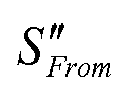


- Where, "%"represents the operation of taking the remainder.
- If the URL is neither the URL of the first page of the post, nor the URL of the overlapping page, i.e., all the contents of this page are new replies, the origination


- The method of extracting the URL of turned page from webpage content is as follows.
- ① If the page turning mode in the forum is calculation page turning and the URL refers to the first page of the post, the beginning and ending page indexes of the turned page (i.e., the beginning and ending page indexes of the pages containing the new replies) are calculated according to the following formulae. If the URL does not refer to the first page of the post, the URLs of turned pages will not be extracted.


If SFrom =0 and R PreNum > 0, then SFrom = NPerPage , PBegin = PBegin +1. - Where, PBegin and PEnd represent the beginning and ending page indexes of the turned pages, respectively; SFrom represents the origination of the new replies, and all the replies from the origination to the ending page index are new replies. After the beginning and ending page indexes of the turned pages are calculated according to the above formulae, in combination of preset rules of URLs of turned pages, all the URLs of turned pages are joined.
- The specific method for joining URL includes a step of joining the URLs of turned pages according to the configured rules of page turning, the beginning page index of turned pages, and the base number of turned pages. In this embodiment, according to the configured rules of page turning, the URLs of turned pages are divided to three parts, wherein the first and third parts, strBeforePage and strAfterPage are invariant parts, and the second part nPageUp is a variant part. Pseudo codes of joining process ofURLs of turned pages:

- Where, uPageNo represents the page index of a new reply, nFirstPostPageIndex represents the page index of the first page of post. In an actual forum, the value of uFirstPostPageIndex may be 0 or 1, namely, if the post pages are numbered starting from 0, the page index of the first page is 0; or if the post pages are numbered starting from 1, the page index of the first page is 1. uPageUp represents the page index indicating the turned page filled in the URL to be joined, namely, the value of the second part. uPageUsBaseNum represents the base number of turned pages. strPostPageUrl represents the joined URL.
- Example 1:
- the URL of a post in the international forum channel of powerful nation community of People Net is :
- http://bbs1.people.com.cn/postDetail.do?boardId=6&view=1&id=9138 4467
- Its rule of page turning is

The page index of the first page nFirstPostPageIndex is 1, the base number of turned pages uPageUsBaseNum is 1, NPerpage is 20. - According to the rule of page turning, the first and the third parts of turned pages are extracted, "/postDetail.do?id=91384467&view=1&pageNo=" and "&boardId=6".
- According to the above information, if a post has 210 replies when the post is firstly collected, then there are 10 joined URLs of turned pages:


- Example 2:
- the URL of a post in Baidu Post Bar is:
- http://tieba.baidu.com/f?kz=919731090.
- Its rule of page turning is

- The page index of the first page is 0, the base number of turned pages nPageUsBaseNum is 30. According to the rule of page turning, the first part of turned pages is extracted as:
- /f?z=919731090&ct=335544320&lm=0&sc=0&rn=30&tn=baiduPostB rowser&word=%B6%B7%C6%C6%B2%D4%F1 %B7&pn=. The third part is blank.
- NPerPage is 30. According to the above information, if a post has 210 replies when the post is firstly collected, then there are 6 joined URLs of turned pages:


- Finally, all the joined URLs of turned pages are treated to be complete URLs with domain information and the treated URLs of turned pages are added into a collection queue of content pages.
- ② If the page turning mode in the forum is next page turning, the URLs of turned pages are extracted from the webpage contents. If there is no URL of turned page in the webpage contents, it indicates that this page is the last page and there is no turned page.
- For the mode of next page turning, after the URLs of turned pages are extracted from the webpage contents and before they are added are added into a collection queue of content pages, the
duplicate eliminating unit 125 eliminates duplicate of URLs of turned pages. The specific processes will be discussed as below. - The information table of URLs of turned pages is searched to determine whether the post corresponding to the URL of turned page exists in the information table. If not, the information of turned pages of the post corresponding to the URL of turned page L is inserted into the information table and the URL of turned page is inserted into a collection queue of content pages; Otherwise, it continues to determine whether the page index of the current turned page of the post is larger than the page index of the turned pages of the post recorded in the information table of URLs of turned pages. If yes, the page index of the turned pages of the post is updated to be the page index of the current page in the information table of URLs of turned pages and the URL of the turned page is added into a collection queue of content pages. If not, the page index of the turned pages of the post does not need to be updated in the information table of URLs of turned pages and the URL of turned pages may be directly deleted.
- The information table of URLs of turned pages stores the URL of the first page of post (or identification information), the page indexes of currently collected turned pages, and the last reply position on the page currently collected, URL of currently collected turned pages. The header structure of the table is shown in the following.
URL of the first page of post (or identification information) page indexes of turned pages the last reply position URLs of turned pages - Obviously, various modifications and variations can be made to the present application by the skilled in the art without departing from the spirit and range of the present application. Thus, the application intends to contain these modifications and variations, if these modifications and variations are defined within the scope of the following claims and their equivalents.
Claims (17)
- A method for incrementally collecting replies in a forum, comprising:(1) determining periodically whether there is a newly-established post or a post with new replies in all forum list pages needed to be collected, according to URL of a first page of the post and the number of replies to the post; and(2) extracting a main post and reply information from the newly-established post if it is determined that there is a newly-established post; or
calculating an origination and the number of the new replies to, based on the calculated origination and the calculated number, extract the new replies from the post with new replies if it is determined that there is a post with new replies. - The method according to claim 1, wherein the determining further comprises:(a) acquiring URLs of all forum list pages needed to be collected;(b) acquiring webpage contents corresponding to each of the acquired URLs, and retrieving URL of the first page of each post and the current number of replies from the acquired webpage contents; and(c) determining whether the post exists in an information list of collected posts according to the retrieved URL of the first page, if yes, the method further comprises:determining whether the retrieved current number of replies is larger than the number of present replies recorded in said information list,if yes, it is determined that the post has a new reply and the method further comprises: updating records of the number of previous replies and the number of present replies to the post in said information list;if not, it is determined that the post is a newly-established post, and the method further comprises: adding the retrieved URL of the first page and the retrieved number of current replies into the information list of collected posts.
- The method according to claim 2, wherein acquiring the URLs of all forum list pages needed to be collected in step (a) comprises:setting a collection interval for each forum list page needed to be collected;monitoring the collection interval for each forum list page;adding the URL of the list page into a collection queue of list pages if the collection interval for the forum list page expires;scanning regularly the collection queue of list pages,wherein if the collection queue of list pages is not empty, the method further comprises:retrieving the URLs of list pages from the collection queue of list pages in order of FIFO.
- The method according to claim 3, wherein the collection interval is dynamically adjustable according to an update frequency of the forum of the URLs of list pages,
wherein if the update frequency is higher, the collection interval is shorter; and if the update frequency is lower, the collection interval is longer. - The method according to claim 3, wherein the URLs retrieved from the collection queue of list pages meet a friendly access condition of the website of the retrieved URLs of list pages.
- The method according to any one of claims 2-5, wherein the step (2) further comprises :(i) adding the URL of the first page of the newly-established post or the URL of the post with new replies into a collection queue of content pages;(ii) regularly scanning the collection queue of content pages;(iii) retrieving each URL from the collection queue of content pages if the collection queue of list pages is not empty; and(iv) acquiring webpage contents corresponding to the retrieved URL,
extracting the main post and/or reply and/or URLs of turned pages from the webpage contents, and
adding the URLs of turned pages into the collection queue of content pages. - The method according to claim 6, wherein,
for the new-established post, if the URL of the first page of the post exists in the collection queue of content pages, the step (i) further comprises:extracting the URL of the first page of the post;replacing a record of a number of present replies of the post in the information list of collected posts with the number of current replies; andinserting the URL of the first page of the post into the collection queue of content pages;for the new-established post, if the URL of the first page of the post does not exist in the collection queue of content pages, the step (i) further comprises:directly adding the URL of the first page of the post into the collection queue of content pages; andfor a post having new replies, if the page turning mode in the forum of the post is calculation page turning, the step (i) further comprises:directly adding the URL of the first page of the post having new replies into the collection queue of content pages;for a post having new replies, if the page turning mode in the forum of the post is next page of page turning, the step (i) further comprises:searching the information table of URLs of turned pages; andadding the last URL of turned page of the post into the collection queue of content pages. - The method according to claim 6, wherein the step (iii) comprises:acquiring the URLs of list pages from the collection queue of list pages in order of FIFO, the acquired URLs meeting a friendly access condition of the website of the URLs of list pages.
- The method according to claim 6, wherein extracting the main post and/or reply information from the webpage contents in step (iv) comprises:if the URL is the URL of the first page of the post and is collected for the first time, extracting the main post and reply information from the webpage contents corresponding to the URL;if the URL is the URL of the first page of the post but is not collected for the first time, calculating an origination of new replies


 where, R PreNum represents the number of replies of the post of the previous collection, RCurNum represents the current number of replies of the post, and NPerPage represents the number of replies of the post in per page;if the URL is not the URL of the first page of the post, the step (iv) further comprises :determining whether the page index corresponding to the URL is identical to that of the page to be currently extracted, so as to determine if it is URL of an overlapping page,wherein the page index of the page be currently extracted is determined in rule of:
 where, PBegin represents the page index of the page to be currently extracted; ceil represents the operation of rounding up;if it is overlapping page, recalculating an origination of new replies . and the number


 where, "%"represents the operation of taking the remainder;if the URL is neither the URL of the first page of the post, nor the URL of an overlapping page, the step (iv) further comprises:recalculating an origination of new replies


- The method according to claim 6, wherein extracting URLs of turned pages from the webpage contents in step (iv) comprises:1) if the page turning mode in the forum is calculation page turning and the URL is that of the first page of the post, calculating beginning page index PBegin and ending page index PEnd of turned pages according to the following formulae,


if SFrom = 0 and R PreNum > 0 , then SFrom = NPerPage , PBegin PBegin +1 ;
where SFrom represents the origination of new replies, and after calculating the beginning and ending page indexes of turned pages according to the above formulae, in combination of preset rules of URLs of turned pages, joining all the URLs of turned pages; and2) if the page turning mode in the forum is next page of page turning, extracting URLs of turned pages from the webpage contents. - The method according to claim 10, wherein in rules of URLs of turned pages in step 1), URLs of turned pages are divided into three parts, wherein a first part strBeforePage and a third part strAfterPage are invariant parts, and a second part nPageUp is a variant part; and joining URLs of turned pages includes:

where, i represents the page index of turned page, PBegin ≤ i ≤ PEnd ,
nPageNo represents the page index of a new reply,
nFirstPostPageIndex =0 or 1 and represents the page index of the first page of post,
nPageUp represents the page index indicating the turned page filled in the URL to be joined,
nPageUsBaseNum represents the base number of turned pages, and strPostPageUrl represents the joined URL. - The method according to claim 10, wherein in step 2), after extracting the URLs of turned pages from the webpage contents and before adding the URLs into a collection queue of content pages, the method further comprises eliminating duplicate of URLs of turned pages.
- The method according to claim 12, wherein the eliminating comprises:determining whether or not there is a post corresponding to a URL of turned page in the information table of URLs of turned pages,if not, establishing an information table of URLs of turned pages of the post corresponding to the URL of turned page, and inserting the URL of turned page into the information table of URLs of turned pages and a collection queue of content pages;if yes, determining whether or not the page index of the URL of turned page is larger than the page index of turned pages of the post to which the URL of turned page belongs: if yes, updating the information table of URLs of turned pages of the post to which the URL of turned page belongs, and adding the URL of the turned page into the collection queue of content pages; and if not, directly deleting the URL of turned page.
- A system for incrementally collecting replies in a forum, comprising:a determining device (11) for periodically determining whether there is a newly-established post and a post having new replies in all forum list pages needed to be collected, according to the URL of the first page of the post and the information of the number of replies to the post; andan extracting device (12) for, extracting a main post and reply information from the newly-established post; or for the post having new replies, calculating the origination and the number of the new replies, and extracting the information of the new replies from the post having new replies according to the origination and the number of the new replies.
- The system according to claim 14, wherein the determining device (11) comprises :a first queuing unit (111) for adding the URLs of all forum list pages needed to be collected into a collection queue of list pages;a first acquiring unit (112) for acquiring each URL of list page from the collection queue of list pages;a list page extracting unit (113) for extracting webpage contents corresponding to the acquired URL of list page, and extracting the URL of the first page of each post and the number of current replies from the webpage contents; anda determining unit (114) for determining whether each post exists in an information list of collected posts according to the URL of the first page of the post,if a post exists in the information list, the determining unit (114) further determines whether the current number of replies of the post is larger than a present number of replies recorded in the information list of collected posts, if yes, then the determining unit (114) determines that the post has a new reply and updates records of the number of previous replies and the number of present replies of the post in the information list of collected posts; andif the post does not exist in the information list of collected posts, then the determining unit (114) further determines that the post is a newly-established post and then adds the URL of the first page and the number of current replies of the post into the information list of collected posts.
- The system according to claim 14, wherein the extracting device (12) comprises :a second queuing unit (121) for adding the URL of the first page of the newly-established post and the URL of the post having new replies into a collection queue of content pages;a scanning unit (122) for regularly scanning the collection queue of content pages;a second acquiring unit (123) for acquiring each URL from the collection queue of content pages; anda content page extracting unit (124) for extracting webpage contents corresponding to the URL and extracting the main post and/or reply and/or URLs of turned pages from the webpage contents.
- The system according to claim 16,
wherein the extracting device (12) further comprises a duplicate eliminating unit (125) for eliminating duplicate of URLs of turned pages extracted from the webpage contents when the page turning mode in the forum is next page turning, and
wherein the second queuing unit (121) is further configured to add the URLs of turned pages of which the duplicate is eliminated.
Applications Claiming Priority (2)
| Application Number | Priority Date | Filing Date | Title |
|---|---|---|---|
| CN201010618393.4A CN102567407B (en) | 2010-12-22 | 2010-12-22 | Method and system for collecting forum reply increment |
| PCT/CN2011/084457 WO2012083870A1 (en) | 2010-12-22 | 2011-12-22 | Method and system for incremental collection of forum replies |
Publications (2)
| Publication Number | Publication Date |
|---|---|
| EP2657854A1 true EP2657854A1 (en) | 2013-10-30 |
| EP2657854A4 EP2657854A4 (en) | 2014-06-18 |
Family
ID=46313183
Family Applications (1)
| Application Number | Title | Priority Date | Filing Date |
|---|---|---|---|
| EP11851417.3A Ceased EP2657854A4 (en) | 2010-12-22 | 2011-12-22 | METHOD AND SYSTEM FOR INCREMENTAL COLLECTION OF FORUM RESPONSES |
Country Status (5)
| Country | Link |
|---|---|
| US (1) | US9552435B2 (en) |
| EP (1) | EP2657854A4 (en) |
| JP (1) | JP5702474B2 (en) |
| CN (1) | CN102567407B (en) |
| WO (1) | WO2012083870A1 (en) |
Families Citing this family (14)
| Publication number | Priority date | Publication date | Assignee | Title |
|---|---|---|---|---|
| CN102567407B (en) | 2010-12-22 | 2014-07-16 | 北大方正集团有限公司 | Method and system for collecting forum reply increment |
| CN103593344B (en) * | 2012-08-13 | 2016-09-21 | 北大方正集团有限公司 | A kind of information collecting method and device |
| CN103631906A (en) * | 2013-11-25 | 2014-03-12 | 北京奇虎科技有限公司 | Method and device for recognizing page number identification in webpage URL |
| CN104731824B (en) * | 2013-12-24 | 2018-12-18 | 腾讯科技(深圳)有限公司 | A kind of method and device showing picture |
| US10061725B2 (en) | 2014-04-03 | 2018-08-28 | Strato Scale Ltd. | Scanning memory for de-duplication using RDMA |
| CN104391917A (en) * | 2014-11-19 | 2015-03-04 | 四川长虹电器股份有限公司 | Method for incrementally capturing webpage contents |
| US9912748B2 (en) | 2015-01-12 | 2018-03-06 | Strato Scale Ltd. | Synchronization of snapshots in a distributed storage system |
| EP3126987A4 (en) * | 2015-02-26 | 2017-11-22 | Strato Scale Ltd. | Using access-frequency hierarchy for selection of eviction destination |
| US10051154B2 (en) * | 2016-01-13 | 2018-08-14 | Canon Kabushiki Kaisha | Information processing apparatus, control method in information processing apparatus, and image processing apparatus |
| CN106372134B (en) * | 2016-08-26 | 2019-08-23 | 四川九洲电器集团有限责任公司 | A kind of car networking real-time data processing method and system |
| CN108664303B (en) * | 2018-04-28 | 2023-06-30 | 北京小米移动软件有限公司 | Method and device for displaying web page content |
| CN109741200A (en) * | 2018-12-29 | 2019-05-10 | 深圳英飞拓智能技术有限公司 | Hot topic of forum filing management method, apparatus, computer equipment and storage medium |
| CN112650910B (en) * | 2020-12-30 | 2024-03-12 | 北京百度网讯科技有限公司 | Determine the methods, devices, equipment and storage media for website update information |
| CN114417200B (en) * | 2022-01-04 | 2023-04-14 | 马上消费金融股份有限公司 | Network data acquisition method and device and electronic equipment |
Family Cites Families (19)
| Publication number | Priority date | Publication date | Assignee | Title |
|---|---|---|---|---|
| JPH08330991A (en) * | 1995-05-30 | 1996-12-13 | Matsushita Electric Ind Co Ltd | Data broadcasting receiver |
| US20030084035A1 (en) * | 2001-07-23 | 2003-05-01 | Emerick Charles L. | Integrated search and information discovery system |
| JP2004246785A (en) * | 2003-02-17 | 2004-09-02 | Nippon Telegr & Teleph Corp <Ntt> | Information collecting apparatus, information collecting method, program and recording medium |
| US20040225644A1 (en) * | 2003-05-09 | 2004-11-11 | International Business Machines Corporation | Method and apparatus for search engine World Wide Web crawling |
| US7725452B1 (en) * | 2003-07-03 | 2010-05-25 | Google Inc. | Scheduler for search engine crawler |
| US7310632B2 (en) * | 2004-02-12 | 2007-12-18 | Microsoft Corporation | Decision-theoretic web-crawling and predicting web-page change |
| US20070106663A1 (en) * | 2005-02-01 | 2007-05-10 | Outland Research, Llc | Methods and apparatus for using user personality type to improve the organization of documents retrieved in response to a search query |
| US7617193B2 (en) * | 2005-03-28 | 2009-11-10 | Elan Bitan | Interactive user-controlled relevance ranking retrieved information in an information search system |
| CN101231640B (en) * | 2007-01-22 | 2010-09-22 | 北大方正集团有限公司 | A method and system for automatically calculating the evolution trend of topics on the Internet |
| CN101193038B (en) | 2007-06-08 | 2010-12-22 | 腾讯科技(深圳)有限公司 | Method and system for reply subject message, view reply message and interactive subject message |
| CN101335639A (en) | 2007-06-25 | 2008-12-31 | 文贵华 | Novel network surveying method on basis of network forum |
| JP2009230663A (en) * | 2008-03-25 | 2009-10-08 | Kddi Corp | Apparatus for detecting abnormal condition in web page, program, and recording medium |
| US8010544B2 (en) * | 2008-06-06 | 2011-08-30 | Yahoo! Inc. | Inverted indices in information extraction to improve records extracted per annotation |
| US20100205168A1 (en) * | 2009-02-10 | 2010-08-12 | Microsoft Corporation | Thread-Based Incremental Web Forum Crawling |
| CN101727486A (en) | 2009-12-04 | 2010-06-09 | 中国人民解放军信息工程大学 | Web forum information extraction system |
| US8620849B2 (en) * | 2010-03-10 | 2013-12-31 | Lockheed Martin Corporation | Systems and methods for facilitating open source intelligence gathering |
| CN101819585A (en) * | 2010-03-29 | 2010-09-01 | 哈尔滨工程大学 | Device and method for constructing forum event dissemination pattern |
| CN102567407B (en) | 2010-12-22 | 2014-07-16 | 北大方正集团有限公司 | Method and system for collecting forum reply increment |
| CN102270239A (en) * | 2011-08-15 | 2011-12-07 | 哈尔滨工业大学 | Evolution analysis method for associated networks in forum |
-
2010
- 2010-12-22 CN CN201010618393.4A patent/CN102567407B/en not_active Expired - Fee Related
-
2011
- 2011-12-22 EP EP11851417.3A patent/EP2657854A4/en not_active Ceased
- 2011-12-22 WO PCT/CN2011/084457 patent/WO2012083870A1/en not_active Ceased
- 2011-12-22 JP JP2013545030A patent/JP5702474B2/en not_active Expired - Fee Related
- 2011-12-22 US US13/997,257 patent/US9552435B2/en not_active Expired - Fee Related
Also Published As
| Publication number | Publication date |
|---|---|
| WO2012083870A9 (en) | 2013-08-29 |
| JP5702474B2 (en) | 2015-04-15 |
| JP2014506355A (en) | 2014-03-13 |
| US20150127644A1 (en) | 2015-05-07 |
| EP2657854A4 (en) | 2014-06-18 |
| CN102567407B (en) | 2014-07-16 |
| US9552435B2 (en) | 2017-01-24 |
| WO2012083870A1 (en) | 2012-06-28 |
| CN102567407A (en) | 2012-07-11 |
Similar Documents
| Publication | Publication Date | Title |
|---|---|---|
| EP2657854A1 (en) | Method and system for incremental collection of forum replies | |
| CN103870461B (en) | Subject recommending method, device and server | |
| US8095530B1 (en) | Detecting common prefixes and suffixes in a list of strings | |
| US8255414B2 (en) | Search assist powered by session analysis | |
| US20120284270A1 (en) | Method and device to detect similar documents | |
| JP4797069B2 (en) | Keyword management program, keyword management system, and keyword management method | |
| US20150205580A1 (en) | Method and System for Sorting Online Videos of a Search | |
| CN102999625A (en) | Method for realizing semantic extension on retrieval request | |
| CN104537065A (en) | Search result pushing method and system | |
| WO2010014954A2 (en) | Providing posts to discussion threads in response to a search query | |
| CN104615627B (en) | A kind of event public feelings information extracting method and system based on microblog | |
| CN106055621A (en) | Log retrieval method and device | |
| CN106372113A (en) | News content pushing method and system | |
| CN103207882A (en) | Shop visiting data processing method and system | |
| CN103593371A (en) | Method and device for recommending search keywords | |
| US20150206101A1 (en) | System for determining infringement of copyright based on the text reference point and method thereof | |
| CN103186666B (en) | Method, device and equipment for searching based on favorites | |
| CN103530339A (en) | Mobile application information push method and device | |
| CN112232075A (en) | An article publishing time identification method based on time format and webpage element characteristics | |
| CN105117482A (en) | Method and device for achieving website navigation | |
| KR101556714B1 (en) | Method, system and computer readable recording medium for providing search results | |
| CN102254025B (en) | Information memory retrieving method | |
| KR20090124301A (en) | Query Association Network Service Methods | |
| CN102915357B (en) | A kind of method and apparatus realizing guidance to website | |
| CN103853771A (en) | Search result pushing method and search result pushing system |
Legal Events
| Date | Code | Title | Description |
|---|---|---|---|
| PUAI | Public reference made under article 153(3) epc to a published international application that has entered the european phase |
Free format text: ORIGINAL CODE: 0009012 |
|
| 17P | Request for examination filed |
Effective date: 20130722 |
|
| AK | Designated contracting states |
Kind code of ref document: A1 Designated state(s): AL AT BE BG CH CY CZ DE DK EE ES FI FR GB GR HR HU IE IS IT LI LT LU LV MC MK MT NL NO PL PT RO RS SE SI SK SM TR |
|
| DAX | Request for extension of the european patent (deleted) | ||
| A4 | Supplementary search report drawn up and despatched |
Effective date: 20140516 |
|
| RIC1 | Information provided on ipc code assigned before grant |
Ipc: G06Q 10/10 20120101AFI20140512BHEP Ipc: G06F 17/30 20060101ALI20140512BHEP |
|
| 17Q | First examination report despatched |
Effective date: 20150320 |
|
| REG | Reference to a national code |
Ref country code: DE Ref legal event code: R003 |
|
| STAA | Information on the status of an ep patent application or granted ep patent |
Free format text: STATUS: THE APPLICATION HAS BEEN REFUSED |
|
| 18R | Application refused |
Effective date: 20170324 |