EP2657214A1 - Process for production of aromatic alcohol or heterocyclic aromatic alcohol - Google Patents
Process for production of aromatic alcohol or heterocyclic aromatic alcohol Download PDFInfo
- Publication number
- EP2657214A1 EP2657214A1 EP11850807.6A EP11850807A EP2657214A1 EP 2657214 A1 EP2657214 A1 EP 2657214A1 EP 11850807 A EP11850807 A EP 11850807A EP 2657214 A1 EP2657214 A1 EP 2657214A1
- Authority
- EP
- European Patent Office
- Prior art keywords
- naphthalenemethylamine
- group
- alcohol
- integer
- carbon atoms
- Prior art date
- Legal status (The legal status is an assumption and is not a legal conclusion. Google has not performed a legal analysis and makes no representation as to the accuracy of the status listed.)
- Granted
Links
- UHOVQNZJYSORNB-UHFFFAOYSA-N c1ccccc1 Chemical compound c1ccccc1 UHOVQNZJYSORNB-UHFFFAOYSA-N 0.000 description 1
Classifications
-
- C—CHEMISTRY; METALLURGY
- C07—ORGANIC CHEMISTRY
- C07C—ACYCLIC OR CARBOCYCLIC COMPOUNDS
- C07C29/00—Preparation of compounds having hydroxy or O-metal groups bound to a carbon atom not belonging to a six-membered aromatic ring
- C07C29/74—Separation; Purification; Use of additives, e.g. for stabilisation
- C07C29/94—Use of additives, e.g. for stabilisation
-
- C—CHEMISTRY; METALLURGY
- C07—ORGANIC CHEMISTRY
- C07B—GENERAL METHODS OF ORGANIC CHEMISTRY; APPARATUS THEREFOR
- C07B41/00—Formation or introduction of functional groups containing oxygen
- C07B41/02—Formation or introduction of functional groups containing oxygen of hydroxy or O-metal groups
-
- C—CHEMISTRY; METALLURGY
- C07—ORGANIC CHEMISTRY
- C07B—GENERAL METHODS OF ORGANIC CHEMISTRY; APPARATUS THEREFOR
- C07B61/00—Other general methods
-
- C—CHEMISTRY; METALLURGY
- C07—ORGANIC CHEMISTRY
- C07C—ACYCLIC OR CARBOCYCLIC COMPOUNDS
- C07C213/00—Preparation of compounds containing amino and hydroxy, amino and etherified hydroxy or amino and esterified hydroxy groups bound to the same carbon skeleton
-
- C—CHEMISTRY; METALLURGY
- C07—ORGANIC CHEMISTRY
- C07C—ACYCLIC OR CARBOCYCLIC COMPOUNDS
- C07C29/00—Preparation of compounds having hydroxy or O-metal groups bound to a carbon atom not belonging to a six-membered aromatic ring
-
- C—CHEMISTRY; METALLURGY
- C07—ORGANIC CHEMISTRY
- C07C—ACYCLIC OR CARBOCYCLIC COMPOUNDS
- C07C29/00—Preparation of compounds having hydroxy or O-metal groups bound to a carbon atom not belonging to a six-membered aromatic ring
- C07C29/09—Preparation of compounds having hydroxy or O-metal groups bound to a carbon atom not belonging to a six-membered aromatic ring by hydrolysis
-
- C—CHEMISTRY; METALLURGY
- C07—ORGANIC CHEMISTRY
- C07C—ACYCLIC OR CARBOCYCLIC COMPOUNDS
- C07C29/00—Preparation of compounds having hydroxy or O-metal groups bound to a carbon atom not belonging to a six-membered aromatic ring
- C07C29/128—Preparation of compounds having hydroxy or O-metal groups bound to a carbon atom not belonging to a six-membered aromatic ring by alcoholysis
-
- C—CHEMISTRY; METALLURGY
- C07—ORGANIC CHEMISTRY
- C07C—ACYCLIC OR CARBOCYCLIC COMPOUNDS
- C07C33/00—Unsaturated compounds having hydroxy or O-metal groups bound to acyclic carbon atoms
- C07C33/26—Polyhydroxylic alcohols containing only six-membered aromatic rings as cyclic part
-
- C—CHEMISTRY; METALLURGY
- C07—ORGANIC CHEMISTRY
- C07C—ACYCLIC OR CARBOCYCLIC COMPOUNDS
- C07C41/00—Preparation of ethers; Preparation of compounds having groups, groups or groups
- C07C41/01—Preparation of ethers
- C07C41/18—Preparation of ethers by reactions not forming ether-oxygen bonds
- C07C41/26—Preparation of ethers by reactions not forming ether-oxygen bonds by introduction of hydroxy or O-metal groups
-
- C—CHEMISTRY; METALLURGY
- C07—ORGANIC CHEMISTRY
- C07D—HETEROCYCLIC COMPOUNDS
- C07D213/00—Heterocyclic compounds containing six-membered rings, not condensed with other rings, with one nitrogen atom as the only ring hetero atom and three or more double bonds between ring members or between ring members and non-ring members
- C07D213/02—Heterocyclic compounds containing six-membered rings, not condensed with other rings, with one nitrogen atom as the only ring hetero atom and three or more double bonds between ring members or between ring members and non-ring members having three double bonds between ring members or between ring members and non-ring members
- C07D213/04—Heterocyclic compounds containing six-membered rings, not condensed with other rings, with one nitrogen atom as the only ring hetero atom and three or more double bonds between ring members or between ring members and non-ring members having three double bonds between ring members or between ring members and non-ring members having no bond between the ring nitrogen atom and a non-ring member or having only hydrogen or carbon atoms directly attached to the ring nitrogen atom
- C07D213/24—Heterocyclic compounds containing six-membered rings, not condensed with other rings, with one nitrogen atom as the only ring hetero atom and three or more double bonds between ring members or between ring members and non-ring members having three double bonds between ring members or between ring members and non-ring members having no bond between the ring nitrogen atom and a non-ring member or having only hydrogen or carbon atoms directly attached to the ring nitrogen atom with substituted hydrocarbon radicals attached to ring carbon atoms
- C07D213/28—Radicals substituted by singly-bound oxygen or sulphur atoms
- C07D213/30—Oxygen atoms
-
- B—PERFORMING OPERATIONS; TRANSPORTING
- B01—PHYSICAL OR CHEMICAL PROCESSES OR APPARATUS IN GENERAL
- B01J—CHEMICAL OR PHYSICAL PROCESSES, e.g. CATALYSIS OR COLLOID CHEMISTRY; THEIR RELEVANT APPARATUS
- B01J23/00—Catalysts comprising metals or metal oxides or hydroxides, not provided for in group B01J21/00
- B01J23/02—Catalysts comprising metals or metal oxides or hydroxides, not provided for in group B01J21/00 of the alkali- or alkaline earth metals or beryllium
- B01J23/04—Alkali metals
Definitions
- the present invention relates to a process for production of an aromatic alcohol or a heterocyclic aromatic alcohol.
- An aromatic alcohol and a heterocyclic aromatic alcohol may be used as a raw material of a medical drug, agrichemicals and the like, or a plasticizer and a paint solvent, and thus are useful in organic synthetic chemistry.
- An aromatic polyhydric alcohol and a heterocyclic aromatic polyhydric alcohol are important compounds as a raw material of a polymer substance, such as a synthetic fiber and a synthetic resin, for example, polyester and polyurethane.
- Patent Document 1 discloses a process of catalytic hydrogenation of an aromatic carboxylate ester
- Patent Document 2 discloses a process of hydrolysis of benzyl chloride
- Patent Document 3 discloses a process of diazotizing benzylamine through reaction with a nitrite salt and then decomposing.
- Patent Document 1 requires a high temperature and a high pressure, and thus the target alcohol tends to be further reduced to form an aromatic hydrocarbon as a by-product.
- Patent Document 2 uses chlorine, which brings about problems of corrosion of equipments and treatment of salts.
- Patent Document 3 requires a nitrite salt, which is expensive, as a raw material, and furthermore has a problem in treatment of salts.
- An industrially useful process of production of a heterocyclic aromatic alcohol has not yet been known.
- An object of the present invention is to provide a process of production of an aromatic alcohol and a heterocyclic aromatic alcohol industrially with high efficiency.
- the present inventors have found that an aromatic alcohol or a heterocyclic aromatic alcohol may be easily produced by reacting an aromatic amine or a heterocyclic aromatic amine with an alcohol in the presence of a basic catalyst, and thus the present invention has been completed.
- the present invention provides a process of production of an aromatic alcohol or a heterocyclic aromatic alcohol, containing a step of reacting an aromatic amine or a heterocyclic aromatic amine having an aromatic ring or a heterocyclic aromatic ring having thereon at least one substituent -CHR 1 NR 2 R 3 (wherein R 1 , R 2 and R 3 each independently represent hydrogen, an alkyl group having from 1 to 4 carbon atoms, or a benzyl group), with an alcohol, in the presence of a basic catalyst.
- an aromatic alcohol and a heterocyclic aromatic alcohol may be produced with high efficiency from inexpensive raw materials, and thus the process is significantly useful in industry.
- the present invention relates to a process of production of an aromatic alcohol or a heterocyclic aromatic alcohol, containing a step of reacting an aromatic amine or a heterocyclic aromatic amine having an aromatic ring or a heterocyclic aromatic ring having thereon at least one substituent -CHR 1 NR 2 R 3 (wherein R 1 , R 2 and R 3 each independently represent hydrogen, an alkyl group having from 1 to 4 carbon atoms, or a benzyl group), with an alcohol, in the presence of a basic catalyst.
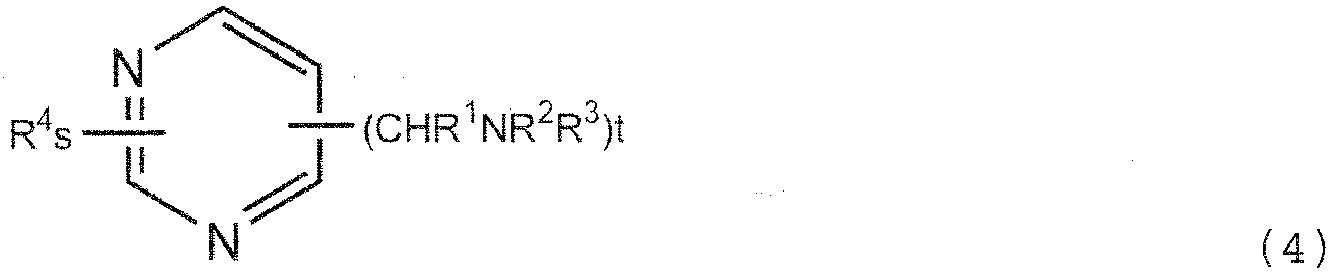
- Aromatic amines and heterocyclic aromatic amines represented by the following formulae (1) to (4) are preferred: wherein R 1 , R 2 and R 3 each independently represent hydrogen, an alkyl group having from 1 to 4 carbon atoms, or a benzyl group; R 4 is selected from an alkyl group having from 1 to 10 carbon atoms, a cycloalkyl group having from 3 to 8 carbon atoms, an alkoxy group having from 1 to 10 carbon atoms, a phenyl group, a benzyl group, a hydroxyl group, a cyano group, an amide group and a halogen atom; m represents an integer of from 0 to 5; n represents an integer of from 1 to 4; o represents an integer of from 0 to 7; p represents an integer of from 1 to 4; q represents an integer of from 0 to 4; r represents an integer of from 1 to 3; s represents an integer of from 0 to 3; and t represents an integer of from 1 to
- R 6 represents hydrogen or an alkyl group having from 1 to 4 carbon atoms
- R 7 is selected from an alkyl group having from 1 to 10 carbon atoms, a cycloalkyl group having from 3 to 8 carbon atoms, an alkoxy group having from 1 to 10 carbon atoms, a phenyl group, a benzyl group, a hydroxyl group, a cyano group, an amide group and a halogen atom
- m represents an integer of from 0 to 5
- n represents an integer of from 1 to 4
- o represents an integer of from 0 to 7
- p represents an integer of from 1 to 4
- q represents an integer of from 0 to 4
- r represents an integer of from 1 to 3, provided that m + n is from 1 to 6, o + p is from 1 to 8, and
- reaction of the aromatic amine or the heterocyclic aromatic amine with an alcohol is expressed, for example, by the following reaction schemes (8) and (9): wherein R 1 to R 4 , m, n, q and r have the same meanings as above; and R 5 represents a linear or branched alkyl group or a cycloalkyl group each having from 1 to 11 carbon atoms, or an alkyl group having from 1 to 3 carbon atoms having a phenyl group substituted thereon.
- an aromatic alcohol or a heterocyclic aromatic alcohol having an aromatic ring or a heterocyclic aromatic ring having thereon at least one substituent -CHR 1 OH (wherein R 1 has the same meaning as above) is formed.
- an alkyl amine formed by substituting the hydroxyl group of the raw material alcohol with an amino group is simultaneously formed.
- the aromatic amine used in the production process of the present invention is not particularly limited as far as the aromatic amine has an aromatic ring having thereon at least one substituent -CHR 1 NR 2 R 3 (wherein R 1 , R 2 and R 3 have the same meanings as above).
- Examples of the aromatic amine that has a benzene ring as the aromatic ring thereof include benzylamine and secondary and tertiary amines obtained by substituting hydrogen of the aminomethyl group thereof with an alkyl group, a poly(aminomethyl)benzene having a benzene ring and plural amino methyl groups connected thereto and secondary and tertiary amines obtained by substituting hydrogen of the aminomethyl group thereof with an alkyl group, and a substituted benzylamine formed by substituting hydrogen of the benzene ring.
- Examples of the substituent on the benzene ring include an alkyl group having from 1 to 10 carbon atoms, such as a methyl group, an ethyl group, a propyl group, a butyl group, a pentyl group, a hexyl group, a heptyl group, an octyl group, a nonyl group and a decyl group, which may be linear or branched, a cyclohexyl group, a phenyl group and a benzyl group; an alkoxy group having from 1 to 10 carbon atoms, such as a methoxy group, an ethoxy group, a propoxy group and a butoxy group, which may be linear or branched, and a phenoxy group; a hydroxyl group; a cyano group; an amide group; an amino group; and a halogen atom, such as a chlorine atom, a fluorine atom and
- benzylamine dibenzylamine, o-xylylenediamine, m-xylylenediamine, p-xylylenediamine, 1,5,5-tri(aminomethyl)benzene, 1,2,4-tri(aminomethyl)benzene, 1,2,4,5-tetra(aminomethylbenzene), N-methylbenzylamine, N-ethylbenzylamine, N-propylbenzylamine, N-butylbenzylamine, 2-methylbenzylamine, 3-methylbenzylamine, 4-methylbenzylamine, 2-ethylbenzylamine, 3-ethylbenzylamine, 4-ethylbenzylamine, 2-propylbenzylamine, 3-propylbenzylamine, 4-propylbenzylamine, 2-butylbenzylamine, 3-butylbenzylamine, 4-butylbenzylamine, 2-pentylbenzylamine, 3-pentylbenzylamine,
- the aromatic amines may be used solely or as a combination of two or more kinds thereof.
- m-xylylenediamine and p-xylylenediamine are useful from the standpoint of the use of the resulting aromatic alcohol as a polymer raw material.
- Xylylenediamine may be produced industrially through ammoxidation and hydrogenation of xylene.
- Examples of the aromatic amine that has a naphthalene ring as the aromatic ring thereof include naphthalenemethylamine and secondary and tertiary amines obtained by substituting hydrogen of the aminomethyl group thereof with an alkyl group, a poly(aminomethyl)naphthalene having a naphthalene ring and plural amino methyl groups connected thereto and secondary and tertiary amines obtained by substituting hydrogen of the aminomethyl group thereof with an alkyl group, and a substituted naphthalenemethylamine formed by substituting hydrogen of the naphthalene ring.
- Examples of the substituent on the naphthalene ring include an alkyl group having from 1 to 10 carbon atoms, such as a methyl group, an ethyl group, a propyl group, a butyl group, a pentyl group, a hexyl group, a heptyl group, an octyl group, a nonyl group and a decyl group, which may be linear or branched; a cyclohexyl group; a phenyl group; a benzyl group; an alkoxy group having from 1 to 10 carbon atoms, such as a methoxy group, an ethoxy group, a propoxy group and a butoxy group, which may be linear or branched; an aryloxy group, such as a phenoxy group; a hydroxyl group; a cyano group; an amide group; an amino group; and a halogen atom, such as a chlorine atom
- Specific examples thereof include 1-naphthalenemethylamine, 2-n.aphthalenemethylamine, N-methyl-1-naphthalenemethylamine, N-methyl-2-naphthalenemethylamine, 2-methyl-1-naphthalenemethylamine, 3-methyl-1-naphthalenemethylamine, 4-methyl-1-naphthalenemethylamine, 5-methyl-1-naphthalenemethylamine, 6-methyl-1-naphthalenemethylamine, 7-methyl-1-naphthalenemethylamine, 8-methyl-1-naphthalenemethylamine, 1-methyl-2-naphthalenemethylamine, 3-methyl-2-naphthalenemethylamine, 4-methyl-2-naphthalenemethylamine, 5-methyl-2-naphthalenemethylamine, 6-methyl-2-naphthalenemethylamine, 7-methyl-2-naphthalenemethylamine, 8-methyl-2-naphthalenemethylamine, 2-ethyl-2-naphthalenemethylamine, 3-ethyl-1-naphthalenemethylamine, 4-eth
- the heterocyclic aromatic amine used in the production process of the present invention is not particularly limited as far as the heterocyclic aromatic amine has a heterocyclic aromatic ring having thereon at least one substituent -CHR 1 NR 2 R 3 (wherein R 1 , R 2 and R 3 have the same meanings as above).
- Examples thereof include (aminomethyl)pyridine, (aminomethyl)pyrimidine, (aminomethyl)pyridine, and secondary and tertiary amines obtained by substituting hydrogen of the aminomethyl group thereof with an alkyl group; a poly(aminomethyl)pyridine and a poly(aminomethyl)pyrimidine having a pyridine ring or a pyrimidine ring and plural aminomethyl groups bonded thereto, and secondary and tertiary amines obtained by substituting hydrogen of the aminomethyl group thereof with an alkyl group; and a substituted (aminomethyl)pyridine and a substituted (aminomethyl)pyrimidine formed by substituting hydrogen of the heterocyclic aromatic ring.
- Examples of the substituent on the heterocyclic aromatic group include an alkyl group having from 1 to 10 carbon atoms, such as a methyl group, an ethyl group, a propyl group, a butyl group, a pentyl group, a hexyl group, a heptyl group, an octyl group, a nonyl group and a decyl group, which may be linear or branched; a cyclohexyl group; a phenyl group; a benzyl group; an alkoxy group having from 1 to 10 carbon atoms, such as a methoxy group, an ethoxy group, a propoxy group and a butoxy group, which may be linear or branched; an aryloxy group, such as a phenoxy group; a hydroxyl group; a cyano group; an amide group; an amino group; and a halogen atom, such as a chlorine atom, a
- heterocyclic aromatic amine examples include 2-(aminomethyl)pyridine, 3-(aminomethyl)pyridine, 4-(aminomethyl)pyridine, 2,3-bis(aminomethyl)pyridine, 2,4-bis(aminomethyl)pyridine, 3,4-bis(aminomethyl)pyridine, 2,5-bis(aminomethyl)pyridine, 2,6-bis(aminomethyl)pyridine, 2-(aminomethyl)pyrimidine, 4-(aminomethyl)pyrimidine, 5-(aminomethyl)pyrimidine, 2,4-bis(aminomethyl)pyrimidine, 2,5-bis(aminomethyl)pyrimidine, 4,5-bis(aminomethyl)pyrimidine and 4,6-bis(aminomethyl)pyrimidine.
- the alcohol is not particularly limited as far as it is a compound having a hydroxyl group, and may be an aliphatic alcohol or an aromatic alcohol, and an alcohol having a linear or branched alkyl group having from 1 to 11 carbon atoms, a cycloalkyl group having from 3 to 8 carbon atoms, or an alkyl group having from 1 to 3 carbon atoms having a phenyl group substituted thereon, having a hydroxyl group bonded thereto, and the like may be used.
- Examples thereof include an alcohol having from 1 to 11 carbon atoms, for example, a primary alcohol, such as methanol, ethanol, 1-propanol, 1-butanol, 1-pentyl alcohol, 1-hexyl alcohol, 1-heptyl alcohol, 1-octyl alcohol, 1-nonyl alcohol, 1-decyl alcohol and 1-undecyl alcohol; a secondary alcohol, such as 2-propanol and 2-butanol; a tertiary alcohol, such as tert-butanol; a cyclic alcohol, such as cyclohexanol; and a polyhydric alcohol, such as ethylene glycol, propylene glycol, diethylene glycol and glycerin.
- a primary alcohol such as methanol, ethanol, 1-propanol, 1-butanol, 1-pentyl alcohol, 1-hexyl alcohol, 1-heptyl alcohol, 1-octyl alcohol, 1-nonyl alcohol, 1-decyl alcohol and
- aromatic alcohol examples include benzyl alcohol, 2-phenylethyl alcohol and o-, m- and p-xylene glycol.
- an aliphatic alcohol having from 1 to 6 carbon atoms is preferred, and methanol, ethanol, 1-propanol and 1-hexanol are particularly preferred.
- the alcohols may be used solely or as a combination of two or more kinds thereof.
- An alkylamine formed along with the aromatic alcohol or the heterocyclic aromatic alcohol is a useful compound, and therefore it is economically advantageous if the alcohol to be reacted is appropriately selected to produce a corresponding alkylamine.
- the molar ratio of the alcohol with respect to the raw material amine in the production process of the present invention is preferably from 1 to 1,000, more preferably from 3 to 100, and further preferably from 5 to 30.
- the molar ratio of the alcohol is less than 1, the reaction may be prevented from being completed.
- a molar ratio exceeding 1,000 may be economically disadvantageous.
- the basic catalyst used in the production process of the present invention is not particularly limited, and is preferably an alkali metal, such as sodium, potassium and lithium, and a compound thereof, and more preferably metallic sodium, metallic potassium, a sodium compound and a potassium compound.
- the compound of an alkali metal is preferably a hydroxide and an alkoxide, and particularly preferably sodium hydroxide (NaOH), sodium methoxide (NaOCH 3 ) and potassium hydroxide (KOH).
- the catalyst may be used solely or as a combination of two or more kinds thereof.
- the molar ratio of the basic catalyst with respect to the raw material amine in the production process of the present invention is preferably from 0. 001 to 100, more preferably from 0. 005 to 10, and further preferably from 0.01 to 5. When the molar ratio is less than 0.001, the reaction may be prevented from being completed. A molar ratio exceeding 100 may be economically disadvantageous since by-products tend to be formed.
- water is preferably added to the reaction system. It is considered that the addition of water suppresses the side reaction that proceeds with dehydration reaction, thereby enhancing the selectivity, and enhances the reaction rate itself.
- Water may be added in an amount of preferably from 0. 001 to 2, 000, more preferably from 0. 05 to 1, 000, and further preferably from 0.1 to 500, in terms of molar ratio with respect to the raw material amine. When the molar ratio of water added is less than 0.001, the aforementioned advantages tend to be diminished, and when it exceeds 2,000, the reaction may be prevented from proceeding.
- ammonia is preferably added to the reaction system. It is considered that the addition of ammonia accelerates the reaction.
- the molar ratio of ammonia used in this case with respect to the raw material amine is preferably from 0.01 to 1,000, more preferably from 0.05 to 100, and further preferably from 0.1 to 50. When the molar ratio is less than 0.01, the aforementioned advantages of amine tend to be diminished. A molar ratio exceeding 1,000 may be economically disadvantageous.
- a solvent may not be necessarily used, and an organic solvent may be used, such as benzene, toluene, xylene, nitromethane, nitrobenzene, carbon disulfide, acetonitrile, benzonitrile, hexane, cyclohexane, petroleum ether, diethyl ether, 1,4-dioxane, methyl acetate, tetrahydrofuran, acetone, methyl ethyl ketone, dichloroethane, dimethylformamide, dimethylsulfoxide, dimethyl carbonate and propylene carbonate.
- organic solvent such as benzene, toluene, xylene, nitromethane, nitrobenzene, carbon disulfide, acetonitrile, benzonitrile, hexane, cyclohexane, petroleum ether, diethyl ether, 1,4-dioxane, methyl acetate,
- the production process of the present invention may be performed by any method, for example, by a batch method or a continuous method. Reactive distillation may also be performed, and thereby an alkylamine, which is formed along with the aromatic alcohol or the heterocyclic aromatic alcohol, may be extracted. On performing the batch method, the order of addition of the raw materials may be arbitrarily selected.
- the aromatic alcohol or the heterocyclic aromatic alcohol may be isolated from the reaction solution by an ordinary method, such as distillation, recrystallization and extraction.
- an alkylamine is formed along with the aromatic alcohol or the heterocyclic aromatic alcohol.
- the use of an aliphatic alcohol may provide a secondary or tertiary amine formed by substituting the hydroxyl group of the alcohol by an amino group. Such conditions may be selected that can produce a useful alkylamine efficiently.
- the production process of the present invention may be performed under normal pressure, increased pressure or reduced pressure.
- the reaction may be performed under the vapor pressure of the alcohol.
- a gas e.g., nitrogen or argon
- reactive distillation may be performed under normal pressure or reduced pressure.
- the temperature that is suitable for performing the production process of the present invention depends on the ratio of the raw materials, the reaction conditions and the like, and is, for example, from 50 to 500°C, preferably from 100 to 450°C, and more preferably from 150 to 400°C.
- the reaction time depends on the ratio of the raw materials, the reaction conditions and the like, and is preferably from 1 to 1,000 minutes, more preferably from 10 to 500 minutes, and further preferably from 30 to 300 minutes, for the batch method.
- the reaction time may be optimized in combination with the other conditions.
- the present invention will be described specifically with reference to examples below, but the present invention is not limited thereto.
- the raw materials used were commercially available reagents (produced by Wako Pure Chemical Industries, Ltd. or Tokyo Kasei Kogyo Co., Ltd.), and the resulting reaction solution was analyzed by gas chromatography with the internal reference method. The components therein were identified by comparison in retention time with the commercially available reagents, GC-MASS spectrum and NMR. The conversion ratio and the yield are shown in terms of percent by mol.
- Example 1 The reaction was performed in the same manner as in Example 1 except that m-xylenediamine used in Example 1 was changed to the amines shown in Table 1 below. The results are shown in Table 1 along with Example 1.
- Example 2 The reaction was performed in the same manner as in Example 1 except that methanol was changed to the alcohols shown in Table 4 below. The results are shown in Table 4 along with Example 1.
- Example 1 The reaction was performed in the same manner as in Example 1 except that sodium hydroxide was changed to the alkali metal compounds shown in Table 5 below. The results are shown in Table 5 along with Example 1.
- An aromatic alcohol and a heterocyclic aromatic alcohol that are obtained by the present invention may be used as a raw material of a medical drug, agrichemicals and the like, or a plasticizer and a paint solvent, and thus are useful in organic synthetic chemistry.
- an aromatic polyhydric alcohol and a heterocyclic aromatic polyhydric alcohol are important compounds as a raw material of a polymer substance, such as a synthetic fiber and a synthetic resin, for example, polyester and polyurethane.
Landscapes
- Chemical & Material Sciences (AREA)
- Organic Chemistry (AREA)
- Chemical Kinetics & Catalysis (AREA)
- Organic Low-Molecular-Weight Compounds And Preparation Thereof (AREA)
- Low-Molecular Organic Synthesis Reactions Using Catalysts (AREA)
- Pyridine Compounds (AREA)
Abstract
Description
- The present invention relates to a process for production of an aromatic alcohol or a heterocyclic aromatic alcohol.
- An aromatic alcohol and a heterocyclic aromatic alcohol may be used as a raw material of a medical drug, agrichemicals and the like, or a plasticizer and a paint solvent, and thus are useful in organic synthetic chemistry. An aromatic polyhydric alcohol and a heterocyclic aromatic polyhydric alcohol are important compounds as a raw material of a polymer substance, such as a synthetic fiber and a synthetic resin, for example, polyester and polyurethane.
- The following processes have been known as an industrial production process of an aromatic alcohol. Patent Document 1 discloses a process of catalytic hydrogenation of an aromatic carboxylate ester, Patent Document 2 discloses a process of hydrolysis of benzyl chloride, and Patent Document 3 discloses a process of diazotizing benzylamine through reaction with a nitrite salt and then decomposing.
- However, these processes have the following problems and thus are not always suitable for industrial production. Specifically, the process disclosed in Patent Document 1 requires a high temperature and a high pressure, and thus the target alcohol tends to be further reduced to form an aromatic hydrocarbon as a by-product. The process disclosed in Patent Document 2 uses chlorine, which brings about problems of corrosion of equipments and treatment of salts. The process disclosed in Patent Document 3 requires a nitrite salt, which is expensive, as a raw material, and furthermore has a problem in treatment of salts.
An industrially useful process of production of a heterocyclic aromatic alcohol has not yet been known. -
- Patent Document 1:
JP-A-5-279282 - Patent Document 2:
JP-A-6-9458 - Patent Document 3:
JP-A-59-157039 - An object of the present invention is to provide a process of production of an aromatic alcohol and a heterocyclic aromatic alcohol industrially with high efficiency.
- The present inventors have found that an aromatic alcohol or a heterocyclic aromatic alcohol may be easily produced by reacting an aromatic amine or a heterocyclic aromatic amine with an alcohol in the presence of a basic catalyst, and thus the present invention has been completed.
The present invention provides a process of production of an aromatic alcohol or a heterocyclic aromatic alcohol, containing a step of reacting an aromatic amine or a heterocyclic aromatic amine having an aromatic ring or a heterocyclic aromatic ring having thereon at least one substituent -CHR1NR2R3 (wherein R1, R2 and R3 each independently represent hydrogen, an alkyl group having from 1 to 4 carbon atoms, or a benzyl group), with an alcohol, in the presence of a basic catalyst. - According to the production process of the present invention, an aromatic alcohol and a heterocyclic aromatic alcohol may be produced with high efficiency from inexpensive raw materials, and thus the process is significantly useful in industry.
- The present invention relates to a process of production of an aromatic alcohol or a heterocyclic aromatic alcohol, containing a step of reacting an aromatic amine or a heterocyclic aromatic amine having an aromatic ring or a heterocyclic aromatic ring having thereon at least one substituent -CHR1NR2R3 (wherein R1, R2 and R3 each independently represent hydrogen, an alkyl group having from 1 to 4 carbon atoms, or a benzyl group), with an alcohol, in the presence of a basic catalyst. Aromatic amines and heterocyclic aromatic amines represented by the following formulae (1) to (4) are preferred:



- Among the aromatic amines and the heterocyclic aromatic amines represented by the aforementioned general formulae, representative examples thereof include compounds represented by the following formulae (5) to (7):


- The reaction of the aromatic amine or the heterocyclic aromatic amine with an alcohol is expressed, for example, by the following reaction schemes (8) and (9):


In the production process of the present invention, an aromatic alcohol or a heterocyclic aromatic alcohol having an aromatic ring or a heterocyclic aromatic ring having thereon at least one substituent -CHR1OH (wherein R1 has the same meaning as above) is formed. As apparent from the reaction schemes, an alkyl amine formed by substituting the hydroxyl group of the raw material alcohol with an amino group is simultaneously formed. - The aromatic amine used in the production process of the present invention is not particularly limited as far as the aromatic amine has an aromatic ring having thereon at least one substituent -CHR1NR2R3 (wherein R1, R2 and R3 have the same meanings as above).
Examples of the aromatic amine that has a benzene ring as the aromatic ring thereof include benzylamine and secondary and tertiary amines obtained by substituting hydrogen of the aminomethyl group thereof with an alkyl group, a poly(aminomethyl)benzene having a benzene ring and plural amino methyl groups connected thereto and secondary and tertiary amines obtained by substituting hydrogen of the aminomethyl group thereof with an alkyl group, and a substituted benzylamine formed by substituting hydrogen of the benzene ring. Examples of the substituent on the benzene ring include an alkyl group having from 1 to 10 carbon atoms, such as a methyl group, an ethyl group, a propyl group, a butyl group, a pentyl group, a hexyl group, a heptyl group, an octyl group, a nonyl group and a decyl group, which may be linear or branched, a cyclohexyl group, a phenyl group and a benzyl group; an alkoxy group having from 1 to 10 carbon atoms, such as a methoxy group, an ethoxy group, a propoxy group and a butoxy group, which may be linear or branched, and a phenoxy group; a hydroxyl group; a cyano group; an amide group; an amino group; and a halogen atom, such as a chlorine atom, a fluorine atom and a bromine atom. - Specific examples thereof include benzylamine, dibenzylamine, o-xylylenediamine, m-xylylenediamine, p-xylylenediamine, 1,5,5-tri(aminomethyl)benzene, 1,2,4-tri(aminomethyl)benzene, 1,2,4,5-tetra(aminomethylbenzene), N-methylbenzylamine, N-ethylbenzylamine, N-propylbenzylamine, N-butylbenzylamine, 2-methylbenzylamine, 3-methylbenzylamine, 4-methylbenzylamine, 2-ethylbenzylamine, 3-ethylbenzylamine, 4-ethylbenzylamine, 2-propylbenzylamine, 3-propylbenzylamine, 4-propylbenzylamine, 2-butylbenzylamine, 3-butylbenzylamine, 4-butylbenzylamine, 2-pentylbenzylamine, 3-pentylbenzylamine, 4-pentylbenzylamine, 2-hexylbenzylamine, 3-hexylbenzylamine, 4-hexylbenzylamine, 2-heptylbenzylamine, 3-heptylbenzylami.ne, 4-heptylbenzylamine, 2-octylbenzylamine, 3-octylbenzylamine, 4-octylbenzylamine, 2-nonylbenzylamine, 3-nonylbenzylamine, 4-nonylbenzylamine, 2-decylbenzylamine, 3-decylbenzylamine, 4-decylbenzylamine, 2-cyclohexylbenzylamine, 3-cyclohexylbenzylamine, 4-cyclohexylbenzylamine, 2-phenylbenzylamine, 3-phenylbenzylamine, 4-phenylbenzylamine, 2-benzylbenzylamine, 3-benzylbenzylamine, 4-benzylbenzylamine, 1-phenylethylamine, 2-chlorobenzylamine, 3-chlorobenzylamine, 4-chlorobenzylamine, 2-fluorobenzylamine, 3-fluorobenzylamine, 4-fluorobenzylamine, 2-iodobenzylamine, 3-iodobenzylamine, 4-iodobenzylamine, 2-methoxybenzylamine, 3-methoxybenzylamine, 4-methoxybenzylamine, 2-ethoxybenzylamine, 3-ethoxybenzylamine, 4-ethoxybenzylamine, 2-propoxybenzylamine, 3-propoxybenzylamine, 4-propoxybenzylamine, 2-butoxybenzylamine, 3-butoxybenzylamine, 4-butoxybenzylamine, 2-phenoxybenzylamine, 3-phenoxybenzylamine, 4-phenoxybenzylamine, 2-hydroxybenzylamine, 3-hydroxybenzylamine, 4-hydroxybenzylamine, 2-cyanobenzylamine, 3-cyanobenzylamine, 4-cyanobenzylamine, 2-(aminomethyl)benzamide, 3-(aminomethyl)benzamide, 4-(aminomethyl)benzamide, aminobenzylamine and (dimethylamino)benzylamine. The aromatic amines may be used solely or as a combination of two or more kinds thereof. Among these, m-xylylenediamine and p-xylylenediamine are useful from the standpoint of the use of the resulting aromatic alcohol as a polymer raw material. Xylylenediamine may be produced industrially through ammoxidation and hydrogenation of xylene.
- Examples of the aromatic amine that has a naphthalene ring as the aromatic ring thereof include naphthalenemethylamine and secondary and tertiary amines obtained by substituting hydrogen of the aminomethyl group thereof with an alkyl group, a poly(aminomethyl)naphthalene having a naphthalene ring and plural amino methyl groups connected thereto and secondary and tertiary amines obtained by substituting hydrogen of the aminomethyl group thereof with an alkyl group, and a substituted naphthalenemethylamine formed by substituting hydrogen of the naphthalene ring. Examples of the substituent on the naphthalene ring include an alkyl group having from 1 to 10 carbon atoms, such as a methyl group, an ethyl group, a propyl group, a butyl group, a pentyl group, a hexyl group, a heptyl group, an octyl group, a nonyl group and a decyl group, which may be linear or branched; a cyclohexyl group; a phenyl group; a benzyl group; an alkoxy group having from 1 to 10 carbon atoms, such as a methoxy group, an ethoxy group, a propoxy group and a butoxy group, which may be linear or branched; an aryloxy group, such as a phenoxy group; a hydroxyl group; a cyano group; an amide group; an amino group; and a halogen atom, such as a chlorine atom, a fluorine atom and a bromine atom.
- Specific examples thereof include 1-naphthalenemethylamine, 2-n.aphthalenemethylamine,
N-methyl-1-naphthalenemethylamine,
N-methyl-2-naphthalenemethylamine,
2-methyl-1-naphthalenemethylamine,
3-methyl-1-naphthalenemethylamine,
4-methyl-1-naphthalenemethylamine,
5-methyl-1-naphthalenemethylamine,
6-methyl-1-naphthalenemethylamine,
7-methyl-1-naphthalenemethylamine,
8-methyl-1-naphthalenemethylamine,
1-methyl-2-naphthalenemethylamine,
3-methyl-2-naphthalenemethylamine,
4-methyl-2-naphthalenemethylamine,
5-methyl-2-naphthalenemethylamine,
6-methyl-2-naphthalenemethylamine,
7-methyl-2-naphthalenemethylamine,
8-methyl-2-naphthalenemethylamine,
2-ethyl-2-naphthalenemethylamine,
3-ethyl-1-naphthalenemethylamine,
4-ethyl-1-naphthalenemethylamine,
5-ethyl-1-naphthalenemethylamine,
6-ethyl-1-naphthalenemethylamine,
7-ethyl-1-naphthalenemethylamine,
8-ethyl-1-naphthalenemethylamine,
1-ethyl-2-naphthalenemethylamine,
3-ethyl-2-naphthalenemethylamine,
4-ethyl-2-naphthalenemethylamine,
5-ethyl-2-naphthalenemethylamine,
6-ethyl-2-naphthalenemethylamine,
7-ethyl-2-naphthalenemethylamine,
8-ethyl-2-naphthalenemethylamine,
2-butyl-1-naphthalenemethylamine,
3-butyl-1-naphthalenemethylamine,
4-butyl-1-naphthalenemethylamine,
5-butyl-1-naphthalenemethylamine,
6-butyl-1-naphthalenemethylamine,
7-butyl-1-naphthalenemethylamine,
8-butyl-1-naphthalenemethylamine,
1-butyl-2-naphthalenemethylamine,
3-butyl-2-naphthalenemethylamine,
4-butyl-2-naphthalenemethylamine,
5-butyl-2-naphthalenemethylamine,
6-butyl-2-naphthalenemethylamine,
7-butyl-2-naphthalenemethylamine,
8-butyl-2-naphthalenemethylamine,
2-hexyl-1-naphthalenemethylamine,
3-hexyl-1-naphthalenemethylamine,
4-hexyl-1-naphthalenemethylamine,
5-hexyl-1-naphthalenemethylamine,
6-hexyl-1-naphthalenemethylamine,
7-hexyl-1-naphthalenemethylamine,
8-hexyl-1-naphthalenemethylamine,
1-hexyl-2-naphthalenemethylamine,
3-hexyl-2-naphthalenemethylamine,
4-hexyl-2-naphthalenemethylamine,
5-hexyl-2-naphthalenemethylamine,
6-hexyl-2-naphthalenemethylamine,
7-hexyl-2-naphthalenemethylamine,
8-hexyl-2-naphthalenemethylamine,
2-decyl-1-naphthalenemethylamine,
3-decyl-1-naphthalenemethylamine,
4-decyl-1-naphthalenemethylamine,
5-decyl-1-naphthalenemethylamine,
6-decyl-1-naphthalenemethylamine,
7-decyl-1-naphthalenemethylamine,
8-decyl-1-naphthalenemethylamine,
1-decyl-2-naphthalenemethylamine,
3-decyl-2-naphthalenemethylamine,
4-decyl-2-naphthalenemethylamine,
5-decyl-2-naphthalenemethylamine,
6-decyl-2-naphthalenemethylamine,
7-decyl-2-naphthalenemethylamine,
8-decyl-2-naphthalenemethylamine,
2-cyclohexyl-1-naphthalenemethylamine,
3-cyclohexyl-1-naphthalenemethylamine,
4-cyclohexyl-1-naphthalenemethylamine,
5-cyclohexyl-1-naphthalenemethylamine,
6-cyclohexyl-1-naphthalenemethylamine,
7-cyclohexyl-1-naphthalenemethylamine,
8-cyclohexyl-1-naphthalenemethylamine,
1-cyclohexyl-2-naphthalenemethylamine,
3-cyclohexyl-2-naphthalenemethylamine,
4-cyclohexyl-2-naphthalenemethylamine,
5-cyclohexyl-2-naphthalenemethylamine,
6-cyclohexyl-2-naphthalenemethylamine,
7-cyclohexyl-2-naphthalenemethylamine,
8-cyclohexyl-2-naphthalenemethylamine,
2-phenyl-1-naphthalenemethylamine,
3-phenyl-1-naphthalenemethylamine,
4-phenyl-1-naphthalenemethylamine,
5-phenyl-1-naphthalenemethylamine,
6-phenyl-1-naphthalenemethylamine,
7-phenyl-1-naphthalenemethylamine,
8-phenyl-1-naphthalenemethylamine,
2-phenyl-2-naphthalenemethylamine,
3-phenyl-2-naphthalenemethylamine,
4-phenyl-2-naphthalenemethylamine,
5-phenyl-2-naphthalenemethylamine,
6-phenyl-2-naphthalenemethylamine,
7-phenyl-2-naphthalenemethylamine,
8-phenyl-2-naphthalenemethylamine,
2-benzyl-1-naphthalenemethylamine,
3-benzyl-1-naphthalenemethylamine,
4-benzyl-1-naphthalenemethylamine,
5-benzyl-1-naphthalenemethylamine,
6-benzyl-1-naphthalenemethylamine,
7-benzyl-1-naphthalenemethylamine,
8-benzyl-1-naphthalenemethylamine,
1-benzyl-2-naphthalenemethylamine,
3-benzyl-2-naphthalenemethylamine,
4-benzyl-2-naphthalenemethylamine,
5-benzyl-2-naphthalenemethylamine,
6-benzyl-2-naphthalenemethylamine,
7-benzyl-2-naphthalenemethylamine,
8-benzyl-2-naphthalenemethylamine,
2-methoxy-1-naphthalenemethylamine,
3-methoxy-1-naphthalenemethylamine,
4-methoxy-1-naphthalenemethylamine,
5-methoxy-1-naphthalenemethylamine,
6-methoxy-1-naphthalenemethylamine,
7-methoxy-1-naphthalenemethylamine,
8-methoxy-1-naphthalenemethylamine,
1-methoxy-2-naphthalenemethylamine,
3-methoxy-2-naphthalenemethylamine,
4-methoxy-2-naphthalenemethylamine,
5-methoxy-2-naphthalenemethylamine,
6-methoxy-2-naphthalenemethylamine,
7-methoxy-2-naphthalenemethylamine,
8-methoxy-2-naphthalenemethylamine,
2-ethoxy-1-naphthalenemethylamine,
3-ethoxy-1-naphthalenemethylamine,
4-ethoxy-1-naphthalenemethylamine,
5-ethoxy-1-naphthalenemethylamine,
6-ethoxy-1-naphthalenemethylamine,
7-ethoxy-1-naphthalenemethylamine,
8-ethoxy-1-naphthalenemethylamine,
1-ethoxy-2-naphthalenemethylamine,
3-ethoxy-2-naphthalenemethylamine,
4-ethoxy-2-naphthalenemethylamine,
5-ethoxy-2-naphthalenemethylamine,
6-ethoxy-2-naphthalenemethylamine,
7-ethoxy-2-naphthalenemethylamine,
8-ethoxy-2-naphthalenemethylamine,
2-propoxy-1-naphthalenemethylamine,
3-propoxy-1-naphthalenemethylamine,
4-propoxy-1-naphthalenemethylamine,
5-propoxy-1-naphthalenemethylamine,
6-propoxy-1-naphthalenemethylamine,
7-propoxy-1-naphthalenemethylamine,
8-propoxy-1-naphthalenemethylamine,
1-propoxy-2-naphthalenemethylamine,
3-propoxy-2-naphthalenemethylamine,
4-propoxy-2-naphthalenemethylamine,
5-propoxy-2-naphthalenemethylamine,
6-propoxy-2-naphthalenemethylamine,
7-propoxy-2-naphthalenemethylamine,
8-propoxy-2-naphthalenemethylamine,
2-phenoxy-1-naphthalenemethylamine,
3-phenoxy-1-naphthalenemethylamine,
4-phenoxy-1-naphthalenemethylamine,
5-phenoxy-1-naphthalenemethylamine,
6-phenoxy-1-naphthalenemethylamine,
7-phenoxy-1-naphthalenemethylamine,
8-phenoxy-1-naphthalenemethylamine,
1-phenoxy-2-naphthalenemethylamine,
3-phenoxy-2-naphthalenemethylamine,
4-phenoxy-2-naphthalenemethylamine,
5-phenoxy-2-naphthalenemethylamine,
6-phenoxy-2-naphthalenemethylamine,
7-phenoxy-2-naphthalenemethylamine,
8-phenoxy-2-naphthalenemethylamine,
2-hydroxy-1-naphthalenemethylamine,
3-hydroxy-1-naphthalenemethylamine,
4-hydroxy-1-naphthalenemethylamine,
5-hydroxy-1-naphthalenemethylamine,
6-hydroxy-1-naphthalenemethylamine,
7-hydroxy-1-naphthalenemethylamine,
8-hydroxy-1-naphthalenemethylamine,
1-hydroxy-2-naphthalenemethylamine,
3-hydroxy-2-naphthalenemethylamine,
4-hydroxy-2-naphthalenemethylamine,
5-hydroxy-2-naphthalenemethylamine,
6-hydroxy-2-naphthalenemethylamine,
7-hydroxy-2-naphthalenemethylamine,
8-hydroxy-2-naphthalenemethylamine,
2-cyano-1-naphthalenemethylamine,
3-cyano-1-naphthalenemethylamine,
4-cyano-1-naphthalenemethylamine,
5-cyano-1-naphthalenemethylamine,
6-cyano-1-naphthalenemethylamine,
7-cyano-1-naphthalenemethylamine,
8-cyano-1-naphthalenemethylamine,
1-cyano-2-naphthalenemethylamine,
3-cyano-2-naphthalenemethylamine,
4-cyano-2-naphthalenemethylamine,
5-cyano-2-naphthalenemethylamine,
6-cyano-2-naphthalenemethylamine,
7-cyano-2-naphthalenemethylamine,
8-cyano-2-naphthalenemethylamine,
1-aminomethyl-2-naphthaleneamide,
1-aminomethyl-3-naphthaleneamide,
1-aminomethyl-4-naphthaleneamide,
1-aminomethyl-5-naphthaleneamide,
1-aminomethyl-6-naphthaleneamide,
1-aminomethyl-7-naphthaleneamide,
1-aminomethyl-8-naphthaleneamide,
2-aminomethyl-1-naphthaleneamide,
2-aminomethyl-3-naphthaleneamide,
2-aminomethyl-4-naphthaleneamide,
2-aminomethyl-5-naphthaleneamide,
2-aminomethyl-6-naphthaleneamide,
2-aminomethyl-7-naphthaleneamide,
2-aminomethyl-8-naphthaleneamide,
2-chloro-1-naphthalenemethylamine,
3-chloro-1-naphthalenemethylamine,
4-chloro-1-naphthalenemethylamine,
5-chloro-1-naphthalenemethylamine,
6-chloro-1-naphthalenemethylamine,
7-chloro-1-naphthalenemethylamine,
8-chloro-1-naphthalenemethylamine,
1-chloro-2-naphthalenemethylamine,
3-chloro-2-naphthalenemethylamine,
4-chloro-2-naphthalenemethylamine,
5-chloro-2-naphthalenemethylamine,
6-chloro-2-naphthalenemethylamine,
7-chloro-2-naphthalenemethylamine,
8-chloro-2-naphthalenemethylamine,
2-fluoro-1-naphthalenemethylamine,
3-fluoro-2-naphthalenemethylamine,
4-fluoro-1-naphthalenemethylamine,
5-fluoro-1-naphthalenemethylamine,
6-fluoro-1-naphthalenemethylamine,
7-fluoro-1-naphthalenemethylamine,
8-fluoro-1-naphthalenemethylamine,
1-fluoro-2-naphthalenemethylamine,
3-fluoro-2-naphthalenemethylamine,
4-fluoro-2-naphthalenemethylamine,
5-fluoro-2-naphthalenemethylamine,
6-fluoro-2-naphthalenemethylamine,
7-fluoro-2-naphthalenemethylamine,
8-fluoro-2-naphthalenemethylamine,
2-iodo-1-naphthalenemethylamine,
3-iodo-1-naphthalenemethylamine,
4-iodo-1-naphthalenemethylamine,
5-iodo-1-naphthalenemethylamine,
6-iodo-1-naphthalenemethylamine,
7-iodo-1-naphthalenemethylamine,
8-iodo-1-naphthalenemethylamine,
1-iodo-2-naphthalenemethylamine,
3-iodo-2-naphthalenemethylamine,
4-iodo-2-naphthalenemethylamine,
5-iodo-2-naphthalenemethylamine,
6-iodo-2-naphthalenemethylamine,
7-iodo-2-naphthalenemethylamine and 8-iodo-2-naphthalenemethylamine. The aromatic amines may be used solely or as a combination of two or more kinds thereof.
Examples of the aromatic amine also include a tricyclic amine, such as anthracenemethylamine. - The heterocyclic aromatic amine used in the production process of the present invention is not particularly limited as far as the heterocyclic aromatic amine has a heterocyclic aromatic ring having thereon at least one substituent -CHR1NR2R3 (wherein R1, R2 and R3 have the same meanings as above). Examples thereof include (aminomethyl)pyridine, (aminomethyl)pyrimidine, (aminomethyl)pyridine, and secondary and tertiary amines obtained by substituting hydrogen of the aminomethyl group thereof with an alkyl group; a poly(aminomethyl)pyridine and a poly(aminomethyl)pyrimidine having a pyridine ring or a pyrimidine ring and plural aminomethyl groups bonded thereto, and secondary and tertiary amines obtained by substituting hydrogen of the aminomethyl group thereof with an alkyl group; and a substituted (aminomethyl)pyridine and a substituted (aminomethyl)pyrimidine formed by substituting hydrogen of the heterocyclic aromatic ring.
- Examples of the substituent on the heterocyclic aromatic group include an alkyl group having from 1 to 10 carbon atoms, such as a methyl group, an ethyl group, a propyl group, a butyl group, a pentyl group, a hexyl group, a heptyl group, an octyl group, a nonyl group and a decyl group, which may be linear or branched; a cyclohexyl group; a phenyl group; a benzyl group; an alkoxy group having from 1 to 10 carbon atoms, such as a methoxy group, an ethoxy group, a propoxy group and a butoxy group, which may be linear or branched; an aryloxy group, such as a phenoxy group; a hydroxyl group; a cyano group; an amide group; an amino group; and a halogen atom, such as a chlorine atom, a fluorine atom and a bromine atom.
Specific examples of the heterocyclic aromatic amine include 2-(aminomethyl)pyridine, 3-(aminomethyl)pyridine, 4-(aminomethyl)pyridine, 2,3-bis(aminomethyl)pyridine, 2,4-bis(aminomethyl)pyridine, 3,4-bis(aminomethyl)pyridine, 2,5-bis(aminomethyl)pyridine, 2,6-bis(aminomethyl)pyridine, 2-(aminomethyl)pyrimidine, 4-(aminomethyl)pyrimidine, 5-(aminomethyl)pyrimidine, 2,4-bis(aminomethyl)pyrimidine, 2,5-bis(aminomethyl)pyrimidine, 4,5-bis(aminomethyl)pyrimidine and 4,6-bis(aminomethyl)pyrimidine. - The alcohol is not particularly limited as far as it is a compound having a hydroxyl group, and may be an aliphatic alcohol or an aromatic alcohol, and an alcohol having a linear or branched alkyl group having from 1 to 11 carbon atoms, a cycloalkyl group having from 3 to 8 carbon atoms, or an alkyl group having from 1 to 3 carbon atoms having a phenyl group substituted thereon, having a hydroxyl group bonded thereto, and the like may be used. Examples thereof include an alcohol having from 1 to 11 carbon atoms, for example, a primary alcohol, such as methanol, ethanol, 1-propanol, 1-butanol, 1-pentyl alcohol, 1-hexyl alcohol, 1-heptyl alcohol, 1-octyl alcohol, 1-nonyl alcohol, 1-decyl alcohol and 1-undecyl alcohol; a secondary alcohol, such as 2-propanol and 2-butanol; a tertiary alcohol, such as tert-butanol; a cyclic alcohol, such as cyclohexanol; and a polyhydric alcohol, such as ethylene glycol, propylene glycol, diethylene glycol and glycerin. Examples of the aromatic alcohol include benzyl alcohol, 2-phenylethyl alcohol and o-, m- and p-xylene glycol. Among these, an aliphatic alcohol having from 1 to 6 carbon atoms is preferred, and methanol, ethanol, 1-propanol and 1-hexanol are particularly preferred. The alcohols may be used solely or as a combination of two or more kinds thereof. An alkylamine formed along with the aromatic alcohol or the heterocyclic aromatic alcohol is a useful compound, and therefore it is economically advantageous if the alcohol to be reacted is appropriately selected to produce a corresponding alkylamine.
- The molar ratio of the alcohol with respect to the raw material amine in the production process of the present invention is preferably from 1 to 1,000, more preferably from 3 to 100, and further preferably from 5 to 30. When the molar ratio of the alcohol is less than 1, the reaction may be prevented from being completed. A molar ratio exceeding 1,000 may be economically disadvantageous.
- The basic catalyst used in the production process of the present invention is not particularly limited, and is preferably an alkali metal, such as sodium, potassium and lithium, and a compound thereof, and more preferably metallic sodium, metallic potassium, a sodium compound and a potassium compound. The compound of an alkali metal is preferably a hydroxide and an alkoxide, and particularly preferably sodium hydroxide (NaOH), sodium methoxide (NaOCH3) and potassium hydroxide (KOH). The catalyst may be used solely or as a combination of two or more kinds thereof. The molar ratio of the basic catalyst with respect to the raw material amine in the production process of the present invention is preferably from 0. 001 to 100, more preferably from 0. 005 to 10, and further preferably from 0.01 to 5. When the molar ratio is less than 0.001, the reaction may be prevented from being completed. A molar ratio exceeding 100 may be economically disadvantageous since by-products tend to be formed.
- In the production process of the present invention, water is preferably added to the reaction system. It is considered that the addition of water suppresses the side reaction that proceeds with dehydration reaction, thereby enhancing the selectivity, and enhances the reaction rate itself. Water may be added in an amount of preferably from 0. 001 to 2, 000, more preferably from 0. 05 to 1, 000, and further preferably from 0.1 to 500, in terms of molar ratio with respect to the raw material amine. When the molar ratio of water added is less than 0.001, the aforementioned advantages tend to be diminished, and when it exceeds 2,000, the reaction may be prevented from proceeding.
- In the production process of the present invention, ammonia is preferably added to the reaction system. It is considered that the addition of ammonia accelerates the reaction. The molar ratio of ammonia used in this case with respect to the raw material amine is preferably from 0.01 to 1,000, more preferably from 0.05 to 100, and further preferably from 0.1 to 50. When the molar ratio is less than 0.01, the aforementioned advantages of amine tend to be diminished. A molar ratio exceeding 1,000 may be economically disadvantageous.
- A solvent may not be necessarily used, and an organic solvent may be used, such as benzene, toluene, xylene, nitromethane, nitrobenzene, carbon disulfide, acetonitrile, benzonitrile, hexane, cyclohexane, petroleum ether, diethyl ether, 1,4-dioxane, methyl acetate, tetrahydrofuran, acetone, methyl ethyl ketone, dichloroethane, dimethylformamide, dimethylsulfoxide, dimethyl carbonate and propylene carbonate. These solvents may be used solely or as a combination of two or more kinds thereof.
- The production process of the present invention may be performed by any method, for example, by a batch method or a continuous method. Reactive distillation may also be performed, and thereby an alkylamine, which is formed along with the aromatic alcohol or the heterocyclic aromatic alcohol, may be extracted. On performing the batch method, the order of addition of the raw materials may be arbitrarily selected.
- The aromatic alcohol or the heterocyclic aromatic alcohol may be isolated from the reaction solution by an ordinary method, such as distillation, recrystallization and extraction. In the production process of the present invention, as described above, an alkylamine is formed along with the aromatic alcohol or the heterocyclic aromatic alcohol. The use of an aliphatic alcohol may provide a secondary or tertiary amine formed by substituting the hydroxyl group of the alcohol by an amino group. Such conditions may be selected that can produce a useful alkylamine efficiently.
- The production process of the present invention may be performed under normal pressure, increased pressure or reduced pressure. In the case where the production process of the present invention is performed above the boiling point of the alcohol, the reaction may be performed under the vapor pressure of the alcohol. On performing the reaction under increased pressure, a gas (e.g., nitrogen or argon) that is inert to the production process of the present invention or hydrogen may be used. For example, in the case where an alcohol having a high boiling point is used, reactive distillation may be performed under normal pressure or reduced pressure.
- The temperature that is suitable for performing the production process of the present invention depends on the ratio of the raw materials, the reaction conditions and the like, and is, for example, from 50 to 500°C, preferably from 100 to 450°C, and more preferably from 150 to 400°C.
- The reaction time depends on the ratio of the raw materials, the reaction conditions and the like, and is preferably from 1 to 1,000 minutes, more preferably from 10 to 500 minutes, and further preferably from 30 to 300 minutes, for the batch method. The reaction time may be optimized in combination with the other conditions.
- The present invention will be described specifically with reference to examples below, but the present invention is not limited thereto.
The raw materials used were commercially available reagents (produced by Wako Pure Chemical Industries, Ltd. or Tokyo Kasei Kogyo Co., Ltd.), and the resulting reaction solution was analyzed by gas chromatography with the internal reference method. The components therein were identified by comparison in retention time with the commercially available reagents, GC-MASS spectrum and NMR. The conversion ratio and the yield are shown in terms of percent by mol. - In a stainless steel pressure resistant vessel having an inner capacity of 40 mL equipped with a thermometer and a manometer, 0.30 g of m-xylylenediamine, 7.50 g of methanol and 0.10 g of sodium hydroxide were charged, and the vessel was sealed under a nitrogen atmosphere. The mixture was heated and held at 240°C for 2 hours. After cooling, the reaction solution was taken out, and after neutralizing sodium hydroxide, was analyzed. The conversion ratio of m-xylylenediamine was 100%, and the yield of m-xylylene glycol was 73%.
- The reaction was performed in the same manner as in Example 1 except that m-xylenediamine used in Example 1 was changed to the amines shown in Table 1 below. The results are shown in Table 1 along with Example 1.
-
Table 1 Amine Conversion ratio of raw material (%) Alcohol formed Yield (%) Example 1 m-xylylenediamine 100 m-xylylene glycol 73 Example 2 p-xylylenediamine 100 p-xylylene glycol 4 Example 3 benzylamine 97 benzyl alcohol 87 Example 4 1,3,5-tri(aminomethyl)benzene 98 1,3,5-benzenetrimethanol 43 Example 5 1-naphthalenemethylamine 98 1-naphthalenemethanol 78 Comparative Example 1 1,3-bis(aminomethyl)cyclohexane 23 - 0 Comparative Example 2 aniline 8.9 - 0 - In a stainless steel pressure resistant vessel having an inner capacity of 40 mL equipped with a thermometer and a manometer, the amine shown in Table 2 below was charged along with methanol, water and sodium hydroxide at a molar ratio of amine/methanol/water/sodium hydroxide of 1/110/70/1.4, and the vessel was sealed under a nitrogen atmosphere. The mixture was heated and held at 240°C for 2 hours. After cooling, the reaction solution was taken out, and after neutralizing sodium hydroxide, was analyzed. The results are shown in Table 2.
-
Table 2 Amine Conversion ratio of raw material (%) Alcohol formed Yield (%) Example 6 benzylamine 100 benzyl alcohol 91 Example 7 N-methylbenzylamine 16 benzyl alcohol 6 Example 8 dibenzylamine 6 benzyl alcohol 4 Example 9 N,N-dimethylbenzylamine 16 benzyl alcohol 2 Example 10 1-phenylethylamine 41 1-phenylethanol 23 Example 11 o-methylbenzylamine 100 o-methylbenzyl alcohol 92 Example 12 m-methylbenzylamine 100 m-methylbenzyl alcohol 93 Example 13 p-methylbenzylamine 100 p-methylbenzyl alcohol 96 Example 14 p-tert-butylbenzylamine 100 p-tert-butylbenzyl alcohol 93 Example 15 p-methoxybenzylamine 96 p-methoxybenzyl alcohol 32 Example 16 4-aminobenzylamine 89 4-aminobenzyl alcohol 7 Example 17 o-chlorobenzylamine 100 o-chlorobenzyl alcohol 74 Example 18 p-chlorobenzylamine 100 p-chlorobenzyl alcohol 35 Example 19 m-fluorobenzylamine 100 m-fluorobenzyl alcohol 40 Example 20 p-fluorobenzylamine 86 p-fluorobenzyl alcohol 1 Example 21 p-xylylenediamine 100 p-xylylene glycol 19 Example 22 1-naphthylmethylamine 98 1-naphthalenemethanol 93 Example 23 2-(aminomethyl)pyridine 100 2-pyridinemethanol 82 Example 24 3-(aminomethyl)pyridine 100 3-pyridinemethanol 99 Example 25 4-(aminomethyl)pyridine 100 4-pyridinemethanol 70 - In a stainless steel pressure resistant vessel having an inner capacity of 40 mL equipped with a thermometer and a manometer, the amine shown in Table 3 below was charged along with methanol, water and sodium hydroxide at a molar ratio of amine/methanol/water/sodium hydroxide of 1/55/35/0.7, and the vessel was sealed under a nitrogen atmosphere. The mixture was heated and held at 240°C for 2 hours. After cooling, the reaction solution was taken out, and after neutralizing sodium hydroxide, was analyzed. The results are shown in Table 3.
-
Table 3 Aromatic amine Conversion ratio of raw material (%) Alcohol formed Yield (%) Example 26 benzylamine 100 benzyl alcohol 96 Example 27 o-methoxybenzylamine 97 o-methoxybenzyl alcohol 48 Example 28 m-methoxybenzylamine 100 m-methoxybenzyl alcohol 65 Example 29 m-chlorobenzylamine 100 m-chlorobenzyl alcohol 91 Example 30 4-(dimethylamino)benzylamine dihydrochloride 92 4-dimethylaminobenzyl alcohol 12 Example 31 p-xylylenediamine 100 p-xylylene glycol 22 - In a stainless steel pressure resistant vessel having an inner capacity of 40 mL equipped with a thermometer and a manometer, 4-(dimethylamino)benzylamine dihydrochloride was charged along with methanol, water and sodium hydroxide at a molar ratio of amine/methanol/water/sodium hydroxide of 1/110/70/2.4, and the vessel was sealed under a nitrogen atmosphere. The mixture was heated and held at 240°C for 2 hours. After cooling, the reaction solution was taken out, and after neutralizing sodium hydroxide, was analyzed. The results are shown in Table 3.
- In a stainless steel pressure resistant vessel having an inner capacity of 40 mL equipped with a thermometer and a manometer, p-xylenediamine was charged along with methanol, water and sodium hydroxide at a molar ratio of amine/methanol/water/sodium hydroxide of 1/110/70/2.8, and the vessel was sealed under a nitrogen atmosphere. The mixture was heated and held at 240°C for 2 hours. After cooling, the reaction solution was taken out, and after neutralizing sodium hydroxide, was analyzed. The results are shown in Table 3.
- The reaction was performed in the same manner as in Example 1 except that methanol was changed to the alcohols shown in Table 4 below. The results are shown in Table 4 along with Example 1.
-
Table 4 Aliphatic alcohol Conversion ratio of m-xylylenediamine (%) Yield of m-xylylene glycol (%) Example 1 methanol 100 73 Example 32 ethanol 100 77 Example 33 1-propanol 100 74 Example 34 2-propanol 48 0.7 Example 35 1-pentyl alcohol 91 37 Example 36 1-hexanol 100 68 Example 37 1-undecanol 92 38 Example 38 ethylene glycol 100 17 - The reaction was performed in the same manner as in Example 1 except that sodium hydroxide was changed to the alkali metal compounds shown in Table 5 below. The results are shown in Table 5 along with Example 1.
-
Table 5 Basic catalyst Conversion ratio of m-xylylenediamine (%) Yield of m-xylylene glycol (%) Example 1 sodium hydroxide 100 73 Example 39 sodium methoxide 100 74 Example 40 potassium hydroxide 71 20 Comparative Example 3 - 19 0 - The reaction was performed in the same manner as in Example 1 except that water was added at the ratios shown in Table 6. The results are shown in Table 6 along with Example 1.
-
Table 6 Water/m-xylenediamine (mol) Conversion ratio of m-xylylenediamine (%) Yield of m-xylylene glycol (%) Example 1 0 100 73 Example 41 17 100 83 Example 42 84 100 93 Example 43 209 100 92 - In a stainless steel pressure resistant vessel having an inner capacity of 40 mL equipped with a thermometer and a manometer, raw materials were charged at a molar ratio of m-xylylenediamine/methanol/water/sodium hydroxide of 1/110/70/1.4, and the vessel was sealed under a nitrogen atmosphere. For controlling the pressure on reaction, the pressure inside the reaction vessel was increased with nitrogen to the prescribed pressure, and the vessel was sealed. The mixture was heated and the pressure inside the vessel was measured when the temperature reached 240°C. After being held at 240°C for 1 hour, the mixture was cooled, and then the reaction solution was taken out, and after neutralizing sodium hydroxide, was analyzed. The results are shown in Table 7.
-
Table 7 Pressure on reaching 240°C (MPa) Conversion ratio of m-xylylenediamine (%) Yield of m-xylylene glycol (%) Example 44 7.0 83 24 Example 45 8.0 77 15 Example 46 10.2 68 9 Example 47 atmospheric pressure 97 36 - In a glass three-neck flask having an inner capacity of 100 mL equipped with a stirrer, a reflux condenser and a thermometer, 0.93 g of m-xylylenediamine, 0.29 g of sodium hydroxide and 20.6 g of 1-undecanol were charged and refluxed by heating to 235°C. After 1 hour, a part of the reaction solution was taken out, and after neutralizing sodium hydroxide, was analyzed. The conversion ratio of m-xylylenediamine was 97%, and the yield of m-xylylene glycol was 36%. The results are shown in Table 7.
It is understood from Table 7 that the reaction is facilitated under lower pressure, and the reaction proceeds under normal pressure as shown by Example 47. It is understood from the results that pressurization is not necessary in the production process of the present invention. - In a stainless steel pressure resistant vessel having an inner capacity of 100 mL equipped with a thermometer and a manometer, raw materials were charged at a molar ratio of m-xylylenediamine/methanol/water/sodium hydroxide of 1/110/70/1.0, to which ammonia was further added at the molar ratios shown in Table 8, and the vessel was sealed under a nitrogen atmosphere. The mixture was heated and held at 240°C for 1 hour. After cooling, the reaction solution was taken out, and after neutralizing sodium hydroxide, was analyzed. The results are shown in Table 8.
-
Table 8 Ammonia/m-xylenediamine (molar ratio) Conversion ratio of m-xylylenediamine (%) Yield of m-xylylene glycol (%) Example 48 0 83 24 Example 49 5.8 92 29 Example 50 10 100 60 - An aromatic alcohol and a heterocyclic aromatic alcohol that are obtained by the present invention may be used as a raw material of a medical drug, agrichemicals and the like, or a plasticizer and a paint solvent, and thus are useful in organic synthetic chemistry. In particular, an aromatic polyhydric alcohol and a heterocyclic aromatic polyhydric alcohol are important compounds as a raw material of a polymer substance, such as a synthetic fiber and a synthetic resin, for example, polyester and polyurethane.
Claims (7)
- A process of production of an aromatic alcohol or a heterocyclic aromatic alcohol, comprising a step of reacting an aromatic amine or a heterocyclic aromatic amine having an aromatic ring or a heterocyclic aromatic ring having thereon at least one substituent CHR1NR2R3 (wherein R1, R2 and R3 each independently represent hydrogen, an alkyl group having from 1 to 4 carbon atoms, or a benzyl group), with an alcohol, in the presence of a basic catalyst.
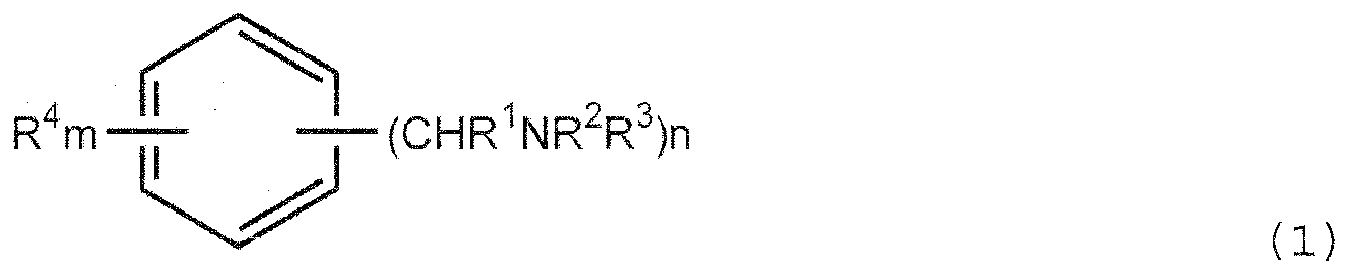
- The process of production of an aromatic alcohol or a heterocyclic aromatic alcohol according to claim 1, wherein the aromatic amine or the heterocyclic aromatic amine is selected from compounds represented by the following formulae (1) to (4) :


- The process of production of an aromatic alcohol or a heterocyclic aromatic alcohol according to claim 1, wherein the aromatic amine or the heterocyclic aromatic amine is selected from compounds represented by the following formulae (5) to (7) :


- The process of production of an aromatic alcohol or a heterocyclic aromatic alcohol according to any one of claims 1 to 3, wherein the basic catalyst is at least one selected from metallic sodium, metallic potassium, a sodium compound and a potassium compound.
- The process of production of an aromatic alcohol or a heterocyclic aromatic alcohol according to any one of claims 1 to 3, wherein the alcohol is an alcohol having a linear or branched alkyl group having from 1 to 11 carbon atoms, a cycloalkyl group having from 3 to 8 carbon atoms, or an alkyl group having from 1 to 3 carbon atoms having a phenyl group substituted thereon, having a hydroxyl group bonded thereto.
- The process of production of an aromatic alcohol or a heterocyclic aromatic alcohol according to any one of claims 1 to 3, wherein water is added to the reaction system.
- The process of production of an aromatic alcohol or a heterocyclic aromatic alcohol according to any one of claims 1 to 3, wherein ammonia is added to the reaction system.
Applications Claiming Priority (3)
| Application Number | Priority Date | Filing Date | Title |
|---|---|---|---|
| JP2010288352 | 2010-12-24 | ||
| JP2011237443 | 2011-10-28 | ||
| PCT/JP2011/079924 WO2012086808A1 (en) | 2010-12-24 | 2011-12-22 | Process for production of aromatic alcohol or heterocyclic aromatic alcohol |
Publications (3)
| Publication Number | Publication Date |
|---|---|
| EP2657214A1 true EP2657214A1 (en) | 2013-10-30 |
| EP2657214A4 EP2657214A4 (en) | 2014-05-07 |
| EP2657214B1 EP2657214B1 (en) | 2017-02-15 |
Family
ID=46314074
Family Applications (1)
| Application Number | Title | Priority Date | Filing Date |
|---|---|---|---|
| EP11850807.6A Active EP2657214B1 (en) | 2010-12-24 | 2011-12-22 | Process for production of aromatic alcohol or heterocyclic aromatic alcohol |
Country Status (6)
| Country | Link |
|---|---|
| US (1) | US8993774B2 (en) |
| EP (1) | EP2657214B1 (en) |
| JP (1) | JP5846126B2 (en) |
| KR (1) | KR101661531B1 (en) |
| CN (1) | CN103298772B (en) |
| WO (1) | WO2012086808A1 (en) |
Families Citing this family (12)
| Publication number | Priority date | Publication date | Assignee | Title |
|---|---|---|---|---|
| US7801911B1 (en) | 2004-06-11 | 2010-09-21 | Seisint, Inc. | System and method for using activity identifications in a database system |
| US8327849B2 (en) | 2008-10-28 | 2012-12-11 | Trudell Medical International | Oscillating positive expiratory pressure device |
| US9149589B2 (en) | 2009-02-23 | 2015-10-06 | Trudell Medical International | Method and device for performing orientation dependent oscillating positive expiratory pressure therapy |
| US8485179B1 (en) | 2009-02-23 | 2013-07-16 | Trudell Medical International | Oscillating positive expiratory pressure device |
| CA3207704A1 (en) | 2011-06-06 | 2012-12-13 | Trudell Medical International | Oscillating positive expiratory pressure device |
| JP5890679B2 (en) * | 2011-12-26 | 2016-03-22 | 株式会社ブリヂストン | Method for producing rubber composition |
| US9517315B2 (en) | 2012-11-30 | 2016-12-13 | Trudell Medical International | Oscillating positive expiratory pressure device |
| US9849257B2 (en) | 2013-08-22 | 2017-12-26 | Trudell Medical International | Oscillating positive respiratory pressure device |
| US10363383B2 (en) | 2014-02-07 | 2019-07-30 | Trudell Medical International | Pressure indicator for an oscillating positive expiratory pressure device |
| WO2017093966A1 (en) | 2015-12-04 | 2017-06-08 | Trudell Medical International | Huff cough simulation device |
| WO2018203188A1 (en) | 2017-05-03 | 2018-11-08 | Trudell Medical International | Combined oscillating positive expiratory pressure therapy and huff cough simulation device |
| US10953278B2 (en) | 2018-02-02 | 2021-03-23 | Trudell Medical International | Oscillating positive expiratory pressure device |
Family Cites Families (11)
| Publication number | Priority date | Publication date | Assignee | Title |
|---|---|---|---|---|
| JPS6035331B2 (en) | 1983-02-25 | 1985-08-14 | 三菱瓦斯化学株式会社 | Production method of xylylene glycol |
| JPS59163332A (en) | 1983-03-07 | 1984-09-14 | Mitsubishi Gas Chem Co Inc | Method for producing xylylene glycol |
| JPS632935A (en) * | 1986-06-20 | 1988-01-07 | Sumitomo Chem Co Ltd | Production of optically active alcohol |
| JPH05279282A (en) | 1992-03-31 | 1993-10-26 | New Japan Chem Co Ltd | Production of aromatic polyhydric alcohol |
| JP3247903B2 (en) | 1992-06-19 | 2002-01-21 | 三井化学株式会社 | Method for producing xylylene glycols |
| JPH06174737A (en) * | 1992-12-01 | 1994-06-24 | Nisshin Steel Co Ltd | Blast furnace gas flow velocity measurement method |
| JP3268423B2 (en) | 1995-12-06 | 2002-03-25 | 株式会社日立製作所 | Multi-layer ceramic sintered body manufacturing equipment |
| JP4507328B2 (en) | 1999-02-15 | 2010-07-21 | 東ソー株式会社 | Method for producing benzyl alcohol with excellent operability |
| JP4409057B2 (en) * | 2000-07-04 | 2010-02-03 | 昭和電工株式会社 | Method for producing benzenedimethanol compound |
| JP4904948B2 (en) * | 2006-07-04 | 2012-03-28 | 住友化学株式会社 | Method for producing intermediate alcohol compound |
| WO2011016049A2 (en) * | 2009-07-31 | 2011-02-10 | Astron Research Limited | A stable composition of ready-to-use gemcitabine injection |
-
2011
- 2011-12-22 KR KR1020137016056A patent/KR101661531B1/en active Active
- 2011-12-22 US US13/996,759 patent/US8993774B2/en active Active
- 2011-12-22 EP EP11850807.6A patent/EP2657214B1/en active Active
- 2011-12-22 WO PCT/JP2011/079924 patent/WO2012086808A1/en not_active Ceased
- 2011-12-22 CN CN201180061419.2A patent/CN103298772B/en active Active
- 2011-12-22 JP JP2012549890A patent/JP5846126B2/en active Active
Also Published As
| Publication number | Publication date |
|---|---|
| KR101661531B1 (en) | 2016-09-30 |
| CN103298772A (en) | 2013-09-11 |
| EP2657214B1 (en) | 2017-02-15 |
| WO2012086808A1 (en) | 2012-06-28 |
| CN103298772B (en) | 2015-06-24 |
| US20130303775A1 (en) | 2013-11-14 |
| JPWO2012086808A1 (en) | 2014-06-05 |
| KR20140019301A (en) | 2014-02-14 |
| EP2657214A4 (en) | 2014-05-07 |
| US8993774B2 (en) | 2015-03-31 |
| JP5846126B2 (en) | 2016-01-20 |
Similar Documents
| Publication | Publication Date | Title |
|---|---|---|
| EP2657214B1 (en) | Process for production of aromatic alcohol or heterocyclic aromatic alcohol | |
| EP1206441B1 (en) | The method for preparing 4-nitrodiphenylamine and 4-nitrosodiphenylamine from carbanilide | |
| EP2626344B1 (en) | Method for producing trans-1,4-bis(aminomethyl)cyclohexane | |
| US8450530B2 (en) | Process for preparing unsymmetric secondary tert-butylamines in the gas phase | |
| US11492302B2 (en) | Integrated capture and conversion of CO2 to methane, methanol, or methanol and glycol | |
| US20100249465A1 (en) | Process for production of high-purity vinyl ether | |
| KR20180113970A (en) | Process for producing aryl-substituted para-phenylenediamine-based material | |
| WO2014115801A1 (en) | α,α-DIFLUOROACETALDEHYDE PRODUCTION METHOD | |
| JP5882216B2 (en) | Urethane production method | |
| US9187403B2 (en) | Process for separating one or more aliphatic diamines from reductive amination reaction solvents and impurities | |
| US6790976B2 (en) | Process for producing aliphatic tricarbonitriles | |
| JPWO2013161594A1 (en) | Method for producing hydroxyphenylcyclohexanol compound | |
| WO2007083839A1 (en) | Method for producing tertiary amine | |
| EP2243769A1 (en) | Process for production of optically active fluoroamine | |
| CN105481702B (en) | The method of one pot process m-phenetidine | |
| CN103172541A (en) | Clean synthesis method of phenyl carbamate | |
| JP7141219B2 (en) | Method for producing alicyclic carbonate | |
| WO2016177761A1 (en) | Process for preparing isocyanate compound | |
| JP2021116234A (en) | METHOD FOR PRODUCING m-XYLYLENE DIAMINE | |
| JP5854345B2 (en) | Method for producing dimer | |
| KR100722981B1 (en) | Method for producing trans-4-methylcyclohexylamine by catalytic hydrogenation | |
| JP2813465B2 (en) | Method for producing 1-phenoxy-2-aminopropane | |
| CN121652096A (en) | A synthetic process for cyclohexyl isocyanate | |
| JP4896539B2 (en) | Method for producing 3-alkyl-4,4'-biphenol and method for producing a mixture of 3-alkyl-4,4'-biphenol and 3,3'-dialkyl-4,4'-biphenol | |
| EP2933245A1 (en) | Oxidative carbonylation of amino aryl compounds by aryl formates |
Legal Events
| Date | Code | Title | Description |
|---|---|---|---|
| PUAI | Public reference made under article 153(3) epc to a published international application that has entered the european phase |
Free format text: ORIGINAL CODE: 0009012 |
|
| 17P | Request for examination filed |
Effective date: 20130621 |
|
| AK | Designated contracting states |
Kind code of ref document: A1 Designated state(s): AL AT BE BG CH CY CZ DE DK EE ES FI FR GB GR HR HU IE IS IT LI LT LU LV MC MK MT NL NO PL PT RO RS SE SI SK SM TR |
|
| DAX | Request for extension of the european patent (deleted) | ||
| A4 | Supplementary search report drawn up and despatched |
Effective date: 20140408 |
|
| RIC1 | Information provided on ipc code assigned before grant |
Ipc: C07C 29/09 20060101ALI20140331BHEP Ipc: C07C 33/18 20060101ALI20140331BHEP Ipc: C07C 41/26 20060101ALI20140331BHEP Ipc: C07D 213/30 20060101ALI20140331BHEP Ipc: C07B 61/00 20060101ALI20140331BHEP Ipc: C07C 213/00 20060101ALI20140331BHEP Ipc: C07C 33/26 20060101ALI20140331BHEP Ipc: C07B 41/02 20060101ALI20140331BHEP Ipc: B01J 23/04 20060101ALI20140331BHEP Ipc: C07C 29/00 20060101AFI20140331BHEP Ipc: C07C 33/22 20060101ALI20140331BHEP |
|
| 17Q | First examination report despatched |
Effective date: 20160324 |
|
| REG | Reference to a national code |
Ref country code: DE Ref legal event code: R079 Ref document number: 602011035119 Country of ref document: DE Free format text: PREVIOUS MAIN CLASS: C07C0029000000 Ipc: C07C0029128000 |
|
| GRAP | Despatch of communication of intention to grant a patent |
Free format text: ORIGINAL CODE: EPIDOSNIGR1 |
|
| RIC1 | Information provided on ipc code assigned before grant |
Ipc: C07D 213/30 20060101ALI20160906BHEP Ipc: C07C 33/18 20060101ALI20160906BHEP Ipc: C07C 33/26 20060101ALI20160906BHEP Ipc: C07B 61/00 20060101ALI20160906BHEP Ipc: C07C 213/00 20060101ALI20160906BHEP Ipc: C07C 41/26 20060101ALI20160906BHEP Ipc: C07C 29/09 20060101ALI20160906BHEP Ipc: C07C 29/128 20060101AFI20160906BHEP Ipc: C07C 29/00 20060101ALI20160906BHEP Ipc: C07B 41/02 20060101ALI20160906BHEP Ipc: B01J 23/04 20060101ALI20160906BHEP Ipc: C07C 33/22 20060101ALI20160906BHEP |
|
| INTG | Intention to grant announced |
Effective date: 20160921 |
|
| GRAS | Grant fee paid |
Free format text: ORIGINAL CODE: EPIDOSNIGR3 |
|
| GRAA | (expected) grant |
Free format text: ORIGINAL CODE: 0009210 |
|
| AK | Designated contracting states |
Kind code of ref document: B1 Designated state(s): AL AT BE BG CH CY CZ DE DK EE ES FI FR GB GR HR HU IE IS IT LI LT LU LV MC MK MT NL NO PL PT RO RS SE SI SK SM TR |
|
| REG | Reference to a national code |
Ref country code: CH Ref legal event code: EP Ref country code: GB Ref legal event code: FG4D |
|
| REG | Reference to a national code |
Ref country code: IE Ref legal event code: FG4D |
|
| REG | Reference to a national code |
Ref country code: AT Ref legal event code: REF Ref document number: 867797 Country of ref document: AT Kind code of ref document: T Effective date: 20170315 |
|
| REG | Reference to a national code |
Ref country code: DE Ref legal event code: R096 Ref document number: 602011035119 Country of ref document: DE |
|
| REG | Reference to a national code |
Ref country code: NL Ref legal event code: MP Effective date: 20170215 |
|
| REG | Reference to a national code |
Ref country code: LT Ref legal event code: MG4D |
|
| REG | Reference to a national code |
Ref country code: AT Ref legal event code: MK05 Ref document number: 867797 Country of ref document: AT Kind code of ref document: T Effective date: 20170215 |
|
| PG25 | Lapsed in a contracting state [announced via postgrant information from national office to epo] |
Ref country code: GR Free format text: LAPSE BECAUSE OF FAILURE TO SUBMIT A TRANSLATION OF THE DESCRIPTION OR TO PAY THE FEE WITHIN THE PRESCRIBED TIME-LIMIT Effective date: 20170516 Ref country code: FI Free format text: LAPSE BECAUSE OF FAILURE TO SUBMIT A TRANSLATION OF THE DESCRIPTION OR TO PAY THE FEE WITHIN THE PRESCRIBED TIME-LIMIT Effective date: 20170215 Ref country code: HR Free format text: LAPSE BECAUSE OF FAILURE TO SUBMIT A TRANSLATION OF THE DESCRIPTION OR TO PAY THE FEE WITHIN THE PRESCRIBED TIME-LIMIT Effective date: 20170215 Ref country code: NO Free format text: LAPSE BECAUSE OF FAILURE TO SUBMIT A TRANSLATION OF THE DESCRIPTION OR TO PAY THE FEE WITHIN THE PRESCRIBED TIME-LIMIT Effective date: 20170515 Ref country code: LT Free format text: LAPSE BECAUSE OF FAILURE TO SUBMIT A TRANSLATION OF THE DESCRIPTION OR TO PAY THE FEE WITHIN THE PRESCRIBED TIME-LIMIT Effective date: 20170215 |
|
| PG25 | Lapsed in a contracting state [announced via postgrant information from national office to epo] |
Ref country code: ES Free format text: LAPSE BECAUSE OF FAILURE TO SUBMIT A TRANSLATION OF THE DESCRIPTION OR TO PAY THE FEE WITHIN THE PRESCRIBED TIME-LIMIT Effective date: 20170215 Ref country code: LV Free format text: LAPSE BECAUSE OF FAILURE TO SUBMIT A TRANSLATION OF THE DESCRIPTION OR TO PAY THE FEE WITHIN THE PRESCRIBED TIME-LIMIT Effective date: 20170215 Ref country code: AT Free format text: LAPSE BECAUSE OF FAILURE TO SUBMIT A TRANSLATION OF THE DESCRIPTION OR TO PAY THE FEE WITHIN THE PRESCRIBED TIME-LIMIT Effective date: 20170215 Ref country code: NL Free format text: LAPSE BECAUSE OF FAILURE TO SUBMIT A TRANSLATION OF THE DESCRIPTION OR TO PAY THE FEE WITHIN THE PRESCRIBED TIME-LIMIT Effective date: 20170215 Ref country code: RS Free format text: LAPSE BECAUSE OF FAILURE TO SUBMIT A TRANSLATION OF THE DESCRIPTION OR TO PAY THE FEE WITHIN THE PRESCRIBED TIME-LIMIT Effective date: 20170215 Ref country code: BG Free format text: LAPSE BECAUSE OF FAILURE TO SUBMIT A TRANSLATION OF THE DESCRIPTION OR TO PAY THE FEE WITHIN THE PRESCRIBED TIME-LIMIT Effective date: 20170515 Ref country code: PT Free format text: LAPSE BECAUSE OF FAILURE TO SUBMIT A TRANSLATION OF THE DESCRIPTION OR TO PAY THE FEE WITHIN THE PRESCRIBED TIME-LIMIT Effective date: 20170615 Ref country code: SE Free format text: LAPSE BECAUSE OF FAILURE TO SUBMIT A TRANSLATION OF THE DESCRIPTION OR TO PAY THE FEE WITHIN THE PRESCRIBED TIME-LIMIT Effective date: 20170215 |
|
| PG25 | Lapsed in a contracting state [announced via postgrant information from national office to epo] |
Ref country code: EE Free format text: LAPSE BECAUSE OF FAILURE TO SUBMIT A TRANSLATION OF THE DESCRIPTION OR TO PAY THE FEE WITHIN THE PRESCRIBED TIME-LIMIT Effective date: 20170215 Ref country code: SK Free format text: LAPSE BECAUSE OF FAILURE TO SUBMIT A TRANSLATION OF THE DESCRIPTION OR TO PAY THE FEE WITHIN THE PRESCRIBED TIME-LIMIT Effective date: 20170215 Ref country code: CZ Free format text: LAPSE BECAUSE OF FAILURE TO SUBMIT A TRANSLATION OF THE DESCRIPTION OR TO PAY THE FEE WITHIN THE PRESCRIBED TIME-LIMIT Effective date: 20170215 Ref country code: RO Free format text: LAPSE BECAUSE OF FAILURE TO SUBMIT A TRANSLATION OF THE DESCRIPTION OR TO PAY THE FEE WITHIN THE PRESCRIBED TIME-LIMIT Effective date: 20170215 |
|
| REG | Reference to a national code |
Ref country code: FR Ref legal event code: PLFP Year of fee payment: 7 |
|
| REG | Reference to a national code |
Ref country code: DE Ref legal event code: R097 Ref document number: 602011035119 Country of ref document: DE |
|
| PG25 | Lapsed in a contracting state [announced via postgrant information from national office to epo] |
Ref country code: DK Free format text: LAPSE BECAUSE OF FAILURE TO SUBMIT A TRANSLATION OF THE DESCRIPTION OR TO PAY THE FEE WITHIN THE PRESCRIBED TIME-LIMIT Effective date: 20170215 Ref country code: SM Free format text: LAPSE BECAUSE OF FAILURE TO SUBMIT A TRANSLATION OF THE DESCRIPTION OR TO PAY THE FEE WITHIN THE PRESCRIBED TIME-LIMIT Effective date: 20170215 Ref country code: PL Free format text: LAPSE BECAUSE OF FAILURE TO SUBMIT A TRANSLATION OF THE DESCRIPTION OR TO PAY THE FEE WITHIN THE PRESCRIBED TIME-LIMIT Effective date: 20170215 |
|
| PLBE | No opposition filed within time limit |
Free format text: ORIGINAL CODE: 0009261 |
|
| STAA | Information on the status of an ep patent application or granted ep patent |
Free format text: STATUS: NO OPPOSITION FILED WITHIN TIME LIMIT |
|
| 26N | No opposition filed |
Effective date: 20171116 |
|
| PG25 | Lapsed in a contracting state [announced via postgrant information from national office to epo] |
Ref country code: SI Free format text: LAPSE BECAUSE OF FAILURE TO SUBMIT A TRANSLATION OF THE DESCRIPTION OR TO PAY THE FEE WITHIN THE PRESCRIBED TIME-LIMIT Effective date: 20170215 |
|
| REG | Reference to a national code |
Ref country code: CH Ref legal event code: PL |
|
| REG | Reference to a national code |
Ref country code: IE Ref legal event code: MM4A |
|
| PG25 | Lapsed in a contracting state [announced via postgrant information from national office to epo] |
Ref country code: MT Free format text: LAPSE BECAUSE OF NON-PAYMENT OF DUE FEES Effective date: 20171222 Ref country code: LU Free format text: LAPSE BECAUSE OF NON-PAYMENT OF DUE FEES Effective date: 20171222 |
|
| REG | Reference to a national code |
Ref country code: BE Ref legal event code: MM Effective date: 20171231 |
|
| PG25 | Lapsed in a contracting state [announced via postgrant information from national office to epo] |
Ref country code: IE Free format text: LAPSE BECAUSE OF NON-PAYMENT OF DUE FEES Effective date: 20171222 |
|
| PG25 | Lapsed in a contracting state [announced via postgrant information from national office to epo] |
Ref country code: LI Free format text: LAPSE BECAUSE OF NON-PAYMENT OF DUE FEES Effective date: 20171231 Ref country code: BE Free format text: LAPSE BECAUSE OF NON-PAYMENT OF DUE FEES Effective date: 20171231 Ref country code: CH Free format text: LAPSE BECAUSE OF NON-PAYMENT OF DUE FEES Effective date: 20171231 |
|
| PG25 | Lapsed in a contracting state [announced via postgrant information from national office to epo] |
Ref country code: MC Free format text: LAPSE BECAUSE OF FAILURE TO SUBMIT A TRANSLATION OF THE DESCRIPTION OR TO PAY THE FEE WITHIN THE PRESCRIBED TIME-LIMIT Effective date: 20170215 Ref country code: HU Free format text: LAPSE BECAUSE OF FAILURE TO SUBMIT A TRANSLATION OF THE DESCRIPTION OR TO PAY THE FEE WITHIN THE PRESCRIBED TIME-LIMIT; INVALID AB INITIO Effective date: 20111222 |
|
| PG25 | Lapsed in a contracting state [announced via postgrant information from national office to epo] |
Ref country code: CY Free format text: LAPSE BECAUSE OF NON-PAYMENT OF DUE FEES Effective date: 20170215 |
|
| PG25 | Lapsed in a contracting state [announced via postgrant information from national office to epo] |
Ref country code: MK Free format text: LAPSE BECAUSE OF FAILURE TO SUBMIT A TRANSLATION OF THE DESCRIPTION OR TO PAY THE FEE WITHIN THE PRESCRIBED TIME-LIMIT Effective date: 20170215 |
|
| PG25 | Lapsed in a contracting state [announced via postgrant information from national office to epo] |
Ref country code: TR Free format text: LAPSE BECAUSE OF FAILURE TO SUBMIT A TRANSLATION OF THE DESCRIPTION OR TO PAY THE FEE WITHIN THE PRESCRIBED TIME-LIMIT Effective date: 20170215 |
|
| PG25 | Lapsed in a contracting state [announced via postgrant information from national office to epo] |
Ref country code: AL Free format text: LAPSE BECAUSE OF FAILURE TO SUBMIT A TRANSLATION OF THE DESCRIPTION OR TO PAY THE FEE WITHIN THE PRESCRIBED TIME-LIMIT Effective date: 20170215 Ref country code: IS Free format text: LAPSE BECAUSE OF FAILURE TO SUBMIT A TRANSLATION OF THE DESCRIPTION OR TO PAY THE FEE WITHIN THE PRESCRIBED TIME-LIMIT Effective date: 20170615 |
|
| P01 | Opt-out of the competence of the unified patent court (upc) registered |
Effective date: 20230515 |
|
| PGFP | Annual fee paid to national office [announced via postgrant information from national office to epo] |
Ref country code: DE Payment date: 20251028 Year of fee payment: 15 |
|
| PGFP | Annual fee paid to national office [announced via postgrant information from national office to epo] |
Ref country code: GB Payment date: 20251030 Year of fee payment: 15 |
|
| PGFP | Annual fee paid to national office [announced via postgrant information from national office to epo] |
Ref country code: IT Payment date: 20251121 Year of fee payment: 15 |
|
| PGFP | Annual fee paid to national office [announced via postgrant information from national office to epo] |
Ref country code: FR Payment date: 20251110 Year of fee payment: 15 |