EP2654351A2 - Method of handling transferring from energy-consuming mode to energy-saving mode and related communication device - Google Patents
Method of handling transferring from energy-consuming mode to energy-saving mode and related communication device Download PDFInfo
- Publication number
- EP2654351A2 EP2654351A2 EP13156529.3A EP13156529A EP2654351A2 EP 2654351 A2 EP2654351 A2 EP 2654351A2 EP 13156529 A EP13156529 A EP 13156529A EP 2654351 A2 EP2654351 A2 EP 2654351A2
- Authority
- EP
- European Patent Office
- Prior art keywords
- communication device
- message
- session
- energy
- transferring
- Prior art date
- Legal status (The legal status is an assumption and is not a legal conclusion. Google has not performed a legal analysis and makes no representation as to the accuracy of the status listed.)
- Granted
Links
Images





Classifications
-
- H—ELECTRICITY
- H04—ELECTRIC COMMUNICATION TECHNIQUE
- H04W—WIRELESS COMMUNICATION NETWORKS
- H04W52/00—Power management, e.g. Transmission Power Control [TPC] or power classes
- H04W52/02—Power saving arrangements
- H04W52/0209—Power saving arrangements in terminal devices
- H04W52/0225—Power saving arrangements in terminal devices using monitoring of external events, e.g. the presence of a signal
- H04W52/0229—Power saving arrangements in terminal devices using monitoring of external events, e.g. the presence of a signal where the received signal is a wanted signal
-
- H—ELECTRICITY
- H04—ELECTRIC COMMUNICATION TECHNIQUE
- H04W—WIRELESS COMMUNICATION NETWORKS
- H04W52/00—Power management, e.g. Transmission Power Control [TPC] or power classes
- H04W52/02—Power saving arrangements
- H04W52/0209—Power saving arrangements in terminal devices
- H04W52/0251—Power saving arrangements in terminal devices using monitoring of local events, e.g. events related to user activity
- H04W52/0258—Power saving arrangements in terminal devices using monitoring of local events, e.g. events related to user activity controlling an operation mode according to history or models of usage information, e.g. activity schedule or time of day
-
- H—ELECTRICITY
- H04—ELECTRIC COMMUNICATION TECHNIQUE
- H04W—WIRELESS COMMUNICATION NETWORKS
- H04W52/00—Power management, e.g. Transmission Power Control [TPC] or power classes
- H04W52/02—Power saving arrangements
- H04W52/0209—Power saving arrangements in terminal devices
-
- Y—GENERAL TAGGING OF NEW TECHNOLOGICAL DEVELOPMENTS; GENERAL TAGGING OF CROSS-SECTIONAL TECHNOLOGIES SPANNING OVER SEVERAL SECTIONS OF THE IPC; TECHNICAL SUBJECTS COVERED BY FORMER USPC CROSS-REFERENCE ART COLLECTIONS [XRACs] AND DIGESTS
- Y02—TECHNOLOGIES OR APPLICATIONS FOR MITIGATION OR ADAPTATION AGAINST CLIMATE CHANGE
- Y02D—CLIMATE CHANGE MITIGATION TECHNOLOGIES IN INFORMATION AND COMMUNICATION TECHNOLOGIES [ICT], I.E. INFORMATION AND COMMUNICATION TECHNOLOGIES AIMING AT THE REDUCTION OF THEIR OWN ENERGY USE
- Y02D30/00—Reducing energy consumption in communication networks
- Y02D30/70—Reducing energy consumption in communication networks in wireless communication networks
Definitions
- the present invention relates to a method of handling a transferring from an energy-consuming mode to an energy-saving mode and related communication device.
- VoIP voice over IP
- instant messaging web browsing, etc.
- a large amount of energy is consumed when performing the network applications.
- the lifetime of a battery in the communication device is greatly reduced, and inconvenience is caused to a user of the communication device.
- energy efficiency becomes a key issue for the communication device.
- a timer e.g., inactive timer
- operation modes of the communication device are divided into an energy-consuming mode (e.g., active mode, connected mode) and an energy-saving mode (e.g., idle mode, sleep mode).
- the communication device transfers to the energy-consuming mode to receive necessary control signalings and perform necessary initialization procedures (e.g., registration, random access, etc.). Then, the communication device stays in the energy-consuming mode to keep communicating with the network, so as to perform the network applications.
- the timer is activated (i.e., starts running). If the timer expires, the communication device determines that no network application is performed and transfers to the energy-saving mode. Thus, the communication device can save the energy to improve the lifetime of the battery. Otherwise, if the communication device communicates with the network again, the timer is stopped and reset.
- the communication device needs to transfer back to the energy-consuming mode to communicate with the network. Then, it is possible that the communication device transfers between the energy-consuming mode and the energy-saving mode frequently, and the energy of the battery is wasted due to frequent transferring.
- the communication device will stay in the energy-consuming mode for a long time before the timer expires. Thus, the energy is wasted because the communication device continues to receive the control signalings and perform related procedures.
- the network applications performed by the communication device are diverse, properties such as frequencies of performing the network applications, durations within which the network applications are performed, amounts of messages (e.g., signalings) generated by the network applications, etc., are also diverse. Thus, it is difficult to configure the value of the timer properly. Saving the energy efficiently is thus a topic to be discussed.
- the application aims at providing a method and a communication device for handling a transferring from an energy-consuming mode to an energy-saving mode to solve the abovementioned problems.
- the claimed method of handling a transferring from an energy-consuming mode to an energy-saving mode for a communication device in a wireless communication system comprises transmitting or receiving a first message of an upper protocol layer; deferring the transferring, if the communication device determines that a second message of the upper protocol layer corresponding to the first message is going to be transmitted or received; and advancing the transferring, if the communication device determines that no message corresponding to the first message is going to be transmitted or received.
- Fig. 1 is a schematic diagram of a wireless communication system 10 according to an example of the present invention.
- the wireless communication system 10 is briefly composed of a network and a plurality of communication devices.
- the network and the communication devices are simply utilized for illustrating the structure of the wireless communication system 10.
- the network can be a universal terrestrial radio access network (UTRAN) comprising a plurality of Node-Bs (NBs) in a universal mobile telecommunications system (UMTS).
- UTRAN universal terrestrial radio access network
- NBs Node-Bs
- UMTS universal mobile telecommunications system
- the network can be an evolved UTRAN (E-UTRAN) comprising a plurality of evolved NBs (eNBs) and/or relays in a long term evolution (LTE) system or a LTE-Advanced (LTE-A) system.
- E-UTRAN evolved UTRAN
- eNBs evolved NBs
- LTE-A LTE-Advanced
- the network can also include both the UTRAN/E-UTRAN and a core network, wherein the core network includes network entities such as Mobility Management Entity (MME), Serving Gateway (S-GW), Packet Data Network (PDN) Gateway (P-GW), Self-Organizing Networks (SON) server and/or Radio Network Controller (RNC), etc.
- MME Mobility Management Entity
- S-GW Serving Gateway
- PDN Packet Data Network
- P-GW Packet Data Network Gateway
- SON Self-Organizing Networks
- RNC Radio Network Controller
- the network may be processed only by the UTRAN/E-UTRAN and decisions corresponding to the information are made at the UTRAN/E-UTRAN.
- the UTRAN/E-UTRAN may forward the information to the core network, and the decisions corresponding to the information are made at the core network after the core network processes the information.
- the information can be processed by both the UTRAN/E-UTRAN and the core network, and the decisions are made after coordination and/or cooperation are performed by the
- the communication devices can be mobile phones, laptops, tablet computers, electronic books, portable computer systems, and machine-type communication (MTC) devices.
- the communication devices can also be referred to mobile stations (MSs) or user equipments (UEs) in the UMTS, the LTE system or the LTE-A system.
- MSs mobile stations
- UEs user equipments
- the network and a communication device can be seen as a transmitter or a receiver according to transmission direction, e.g., for an uplink (UL), the communication device is the transmitter and the network is the receiver, and for a downlink (DL), the network is the transmitter and the communication device is the receiver.
- UL uplink
- DL downlink
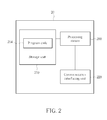
- Fig. 2 is a schematic diagram of a communication device 20 according to an example of the present invention.
- the communication device 20 can be a communication device or the network shown in Fig. 1 , but is not limited herein.
- the communication device 20 may include a processing means 200 such as a microprocessor or Application Specific Integrated Circuit (ASIC), a storage unit 210 and a communication interfacing unit 220.
- the storage unit 210 may be any data storage device that can store a program code 214, accessed and executed by the processing means 200.
- Examples of the storage unit 210 include but are not limited to a subscriber identity module (SIM), read-only memory (ROM), flash memory, random-access memory (RAM), CD-ROM/DVD-ROM, magnetic tape, hard disk and optical data storage device.
- SIM subscriber identity module
- ROM read-only memory
- RAM random-access memory
- CD-ROM/DVD-ROM magnetic tape
- hard disk hard disk
- optical data storage device examples include but are not limited to a subscriber identity module (SIM), read-only memory (ROM), flash memory, random-access memory (RAM), CD-ROM/DVD-ROM, magnetic tape, hard disk and optical data storage device.
- the communication interfacing unit 220 is preferably a transceiver and is used to transmit and receive signals (e.g., messages or packets) according to processing results of the processing means 200.
- Fig. 3 is a flowchart of a process 30 according to an example of the present invention.
- the process 30 is utilized in a communication device shown in Fig. 1 , for handling a transferring from an energy-consuming mode to an energy-saving mode.
- the process 30 may be compiled into the program code 214 and includes the following steps:
- the communication device defers the transferring, if the communication device determines that a second message of the upper protocol layer corresponding to the first message is going to be transmitted or received, and advances the transferring, if the communication device determines that no message corresponding to the first message is going to be transmitted or received. That is, the communication device can transfer to the energy-saving mode earlier to save energy of a battery of the communication device, if there is no successive message following the first message to be transmitted or received. Oppositely, the communication device can transfer to the energy-saving mode later to wait for the second message, if the second message is going to be transmitted or received soon (e.g., within a certain time interval).
- the energy of the battery can be saved efficiently according to whether the communication device is going to transmit or receive a successive message of an upper protocol layer corresponding to a message of the upper protocol layer currently processed (i.e., transmitted/received).
- an aim of the process 30 is that a communication device defers or advances a transferring from an energy-consuming mode to an energy-saving mode according to whether the communication device is going to transmit or receive a message of an upper protocol layer soon, to save energy for waiting for the transferring and the energy for frequent transferring between the energy-consuming mode and the energy-saving mode. Realization of the process 30 is not limited.
- the transferring can be performed by the communication device at a lower protocol layer comprising at least one of a physical layer and a medium access control (MAC) layer.
- the energy-consuming mode and the energy-saving mode are operation modes of the physical layer and/or the MAC layer, since the communication device usually consumes more energy when performing operations related to the physical layer and/or the MAC layer.
- the transferring between the energy-consuming mode and the energy-saving mode used for saving the energy can be performed at the physical layer and/or the MAC layer.
- a method based on which the communication device defers and advances the transferring is not limited.
- the communication device can defer the transferring by increasing a value of an inactivity timer, and can advance the transferring by decreasing the value of the inactivity timer. That is, the communication device defers the transferring by making the inactivity timer expires later, and advances the transferring by making the inactivity timer expires earlier.
- the upper protocol layer can be a transport layer or an application layer, i.e., protocol layers above a network layer. More specifically, the message mentioned above can be a transmission control protocol (TCP) message of the transport layer, or can be a session initiation protocol (SIP) message or a hypertext transfer protocol (HTTP) message of the application layer, and is not limited herein.
- TCP transmission control protocol
- SIP session initiation protocol
- HTTP hypertext transfer protocol
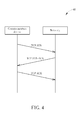
- Fig. 4 is a schematic diagram of a flowchart 40 according to an example of the present invention.
- the flowchart 40 is used for explaining a TCP initialization (i.e., handshake) procedure performed by the communication device and the network at the transport layer.
- the communication device transmits a TCP SYN message to the network at the beginning, e.g., for initializing a TCP session.
- the communication device can defer the transferring from the energy-consuming mode to the energy-saving mode (e.g., configure an inactivity timer with a larger value), since the communication device is going to receive a TCP SYN-ACK message for replying the TCP SYN message from the network.
- the energy-consuming mode e.g., configure an inactivity timer with a larger value
- the communication device will not transfer to the energy-saving mode erroneously.
- the communication device After the communication device receives the TCP SYN-ACK message, the communication device transmits a TCP ACK message to the network for confirming the TCP SYN-ACK message. Then, the communication device can advance the transferring from the energy-consuming mode to the energy-saving mode (e.g., configure an inactivity timer with a smaller value), since the TCP initialization procedure is completed and the communication device is unlikely to transmit or receive a message again within a certain time interval. That is, the TCPACK message can be seen as an ending message implying that no message is to be transmitted or received within the certain time interval. Thus, the communication device can save energy of a battery for waiting to transfer to the energy-saving mode.
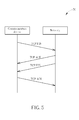
- Fig. 5 is a schematic diagram of a flowchart 50 according to an example of the present invention.
- the flowchart 50 is used for explaining a TCP termination (i.e., handshake) procedure performed by the communication device and the network at the transport layer.
- the communication device transmits a first TCP FIN message to the network at the beginning, e.g., for terminating a TCP session.
- the communication device can defer the transferring from the energy-consuming mode to the energy-saving mode (e.g., configure an inactivity timer with a larger value), since the communication device is going to receive a second TCP FIN message and a first TCP ACK message for replying the first TCP FIN message from the network.
- the communication device will not transfer to the energy-saving mode erroneously.
- the communication device After the communication device receives the second TCP FIN message and the first TCP ACK message, the communication device transmits a second TCP ACK message to the network for confirming the second TCP FIN message.
- the communication device can advance the transferring from the energy-consuming mode to the energy-saving mode (e.g., configure an inactivity timer with a smaller value), since the TCP termination procedure is completed and the communication device is unlikely to transmit or receive a message again within a certain time interval. That is, the second TCP ACK message can be seen as an ending message implying that no message is to be transmitted or received within the certain time interval.
- the communication device can save the energy of the battery for waiting for transferring to the energy-saving mode.
- Fig. 6 is a schematic diagram of a flowchart 60 according to an example of the present invention.
- the flowchart 60 is used for explaining a SIP initialization (e.g., voice over IP (VoIP)) procedure performed by the communication device and the network at the application layer.
- the communication device transmits a SIP invite message to the network at the beginning, e.g., for initiating a SIP session.
- the communication device can defer the transferring from the energy-consuming mode to the energy-saving mode (e.g., configure an inactivity timer with a larger value), since the communication device is going to receive a SIP ACK message for replying the SIP invite message from the network.
- the energy-consuming mode e.g., configure an inactivity timer with a larger value
- the communication device will not transfer to the energy-saving mode erroneously.
- the communication device can advance the transferring from the energy-consuming mode to the energy-saving mode (e.g., configure an inactivity timer with a smaller value), since the SIP initialization procedure is completed and the communication device is unlikely to transmit or receive a message again within a certain time interval. That is, the SIP ACK message can be seen as an ending message implying that no message is to be transmitted or received within the certain time interval.
- the communication device can save the energy of the battery for waiting for transferring to the energy-saving mode.
- Fig. 7 is a schematic diagram of a flowchart 70 according to an example of the present invention.
- the flowchart 70 is used for explaining a SIP termination procedure performed by the communication device and the network at the application layer.
- the communication device transmits a SIP BYE message to the network at the beginning, e.g., for terminating a SIP session.
- the communication device can defer the transferring from the energy-consuming mode to the energy-saving mode (e.g., configure an inactivity timer with a larger value), since the communication device is going to receive a SIP OK message for replying the SIP BYE message from the network.
- the communication device will not transfer to the energy-saving mode erroneously.
- the communication device can advance the transferring from the energy-consuming mode to the energy-saving mode (e.g., configure an inactivity timer with a smaller value), since the SIP termination procedure is completed and the communication device is unlikely to transmit or receive a message again within a certain time interval. That is, the SIP OK message can be seen as an ending message implying that no message is to be transmitted or received within the certain time interval.
- the communication device can save the energy of the battery for waiting for transferring to the energy-saving mode.
- Fig. 8 is a schematic diagram of a flowchart 80 according to an example of the present invention.
- the flowchart 80 is used for explaining a hypertext transfer protocol (HTTP) procedure performed by the communication device and the network at the application layer.
- HTTP hypertext transfer protocol
- the communication device transmits a HTTP GET message to the network at the beginning, e.g., for retrieving data, a web page and/or a file.
- the communication device can defer the transferring from the energy-consuming mode to the energy-saving mode (e.g., configure an inactivity timer with a larger value), since the communication device is going to receive the data, the web page and/or the file from the network.
- the communication device will not transfer to the energy-saving mode erroneously.
- the communication device After the communication device receives the data, the web page and/or the file, the communication device continues to wait for a HTTP OK message. In this situation, the communication device can defer the transferring again (since the inactivity timer may be reset), to avoid transferring to the energy-saving mode erroneously.
- the communication device can advance the transferring from the energy-consuming mode to the energy-saving mode (e.g., configure an inactivity timer with a smaller value), since the HTTP procedure is completed and the communication device is unlikely to transmit or receive a message again within a certain time interval. That is, the HTTP OK message can be seen as an ending message implying that no message is to be transmitted or received within the certain time interval. Thus, the communication device can save the energy of the battery for waiting for transferring to the energy-saving mode.
- the energy-consuming mode e.g., configure an inactivity timer with a smaller value
- Fig. 9 is a schematic diagram of a flowchart 90 according to an example of the present invention.
- the flowchart 90 is used for explaining a domain name system (DNS) procedure performed by the communication device and the network at the application layer.
- DNS domain name system
- the communication device transmits a DNS query message to the network at the beginning, e.g., for querying a domain name or an Internet protocol (IP) address.
- IP Internet protocol
- the communication device can defer the transferring from the energy-consuming mode to the energy-saving mode (e.g., configure an inactivity timer with a larger value), since the communication device is going to receive a DNS response message (e.g., including the domain name or the IP address) for replying the DNS query message from the network.
- a DNS response message e.g., including the domain name or the IP address
- the communication device can advance the transferring from the energy-consuming mode to the energy-saving mode (e.g., configure an inactivity timer with a smaller value), since the DNS procedure is completed and the communication device is unlikely to transmit or receive a message again within a certain time interval. That is, the DNS response message can be seen as an ending message implying that no message is to be transmitted or received within the certain time interval. Thus, the communication device can save the energy of the battery for waiting to transfer to the energy-saving mode.
- the energy-consuming mode e.g., configure an inactivity timer with a smaller value
- the energy of the battery can be saved efficiently according to whether the communication device is going to transmit or receive a successive message of an upper protocol layer corresponding to a message of the upper protocol layer currently processed (i.e., transmitted/received).
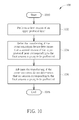
- Fig. 10 is a flowchart of a process 100 according to an example of the present invention.
- the process 100 is utilized in a communication device shown in Fig. 1 , for handling a transferring from an energy-consuming mode to an energy-saving mode.
- the process 100 may be compiled into the program code 214 and includes the following steps:
- the communication device defers the transferring, if the communication device determines that a second session of the upper protocol layer corresponding to the first session is going to be performed, and advances the transferring, if the communication device determines that no session corresponding to the first session is going to be performed. That is, the communication device can transfer to the energy-saving mode earlier to save the energy of a battery of the communication device, if there is no successive session following the first session to be performed. Oppositely, the communication device can transfer to the energy-saving mode later to wait for performing the second session, if the second session is going to be performed soon (i.e., within a certain time interval).
- the communication device performs a session, it means that the communication device transmits or receives one or more messages during the session.
- the energy of the battery can be saved efficiently according to whether the communication device is going to perform a successive session of an upper protocol layer corresponding to a session of the upper protocol layer currently performed.
- an aim of the process 100 is that a communication device defers or advances a transferring from an energy-consuming mode to an energy-saving mode according to whether the communication device is going to perform a session of an upper protocol layer soon, to save energy for waiting for the transferring and the energy for frequent transferring between the energy-consuming mode and the energy-saving mode. Realization of the process 100 is not limited.
- the transferring can be performed by the communication device at a lower protocol layer comprising at least one of a physical layer and a medium access control (MAC) layer.
- the energy-consuming mode and the energy-saving mode are operation modes of the physical layer and/or the MAC layer, since the communication device usually consumes more energy when performing operations related to the physical layer and/or the MAC layer.
- the transferring between the energy-consuming mode and the energy-saving mode used for saving the energy can be performed at the physical layer and/or the MAC layer.
- a method based on which the communication device defers and advances the transferring is not limited.
- the communication device can defer the transferring by increasing a value of an inactivity timer, and can advance the transferring by decreasing the value of the inactivity timer. That is, the communication device defers the transferring by making the inactivity timer expire later, and advances the transferring by making the inactivity timer expire earlier.
- the upper protocol layer can be a transport layer or an application layer, i.e., protocol layers above a network layer.
- the session mentioned above can be a transmission control protocol (TCP) session of the transport layer, wherein one or more TCP messages are transmitted and/or received during the TCP session.
- TCP transmission control protocol
- the session can be a session initiation protocol (SIP) session or a hypertext transfer protocol (HTTP) session of the application layer, wherein one or more SIP/HTTP messages are transmitted and/or received during the SIP session or the HTTP session.
- the session can be a DNS session of the application layer, wherein one or more DNS query messages and one or more DNS response messages are exchanged.
- the session is not limited to those mentioned above.
- Fig. 11 is a schematic diagram of sessions performed by the communication device according to an example of the present invention, wherein the sessions can be TCP sessions, SIP sessions, DNS sessions or HTTP sessions.
- the sessions can be TCP sessions, SIP sessions, DNS sessions or HTTP sessions.
- the communication device transmits or receives one or more messages in each of these sessions.
- the data session 112 is simply used for illustration, and more data sessions are possible within the initial session 110 and the termination session 114.
- the communication device performs an initial session (e.g., with the network) at the beginning.
- the communication device can defer the transferring from the energy-consuming mode to the energy-saving mode (e.g., configure an inactivity timer with a larger value), since the communication device is going to perform the data session 112. Thus, even if the data session 112 cannot be performed immediately (e.g., due to network congestion), the communication device will not transfer to the energy-saving mode erroneously.
- the communication device can advance the transferring from the energy-consuming mode to the energy-saving mode (e.g., configure an inactivity timer with a smaller value), since the termination session implies that no session is to be performed within a certain time interval. Thus, the communication device can save energy of a battery for waiting to transfer to the energy-saving mode.
- the energy of the battery can be saved efficiently according to whether the communication device is about to perform a successive session of an upper protocol layer corresponding to a session of the upper protocol layer currently performed.
- the abovementioned steps of the processes including suggested steps can be realized by means that could be a hardware, a firmware known as a combination of a hardware device and computer instructions and data that reside as read-only software on the hardware device, or an electronic system.
- hardware can include analog, digital and mixed circuits known as microcircuit, microchip, or silicon chip.
- the electronic system can include a system on chip (SOC), system in package (SiP), a computer on module (COM), and the communication device 20.
- SOC system on chip
- SiP system in package
- COM computer on module
- the present invention provides a method of handling a transferring from an energy-consuming mode to an energy-saving mode and related communication device.
- the communication device defers or advances the transferring according to whether the communication device is going to process a message (or a session) of an upper protocol layer soon, to save energy for waiting for the transferring and the energy for frequent transferring between the energy-consuming mode and the energy-saving mode.
- the energy of the battery can be saved efficiently.
Landscapes
- Engineering & Computer Science (AREA)
- Computer Networks & Wireless Communication (AREA)
- Signal Processing (AREA)
- Mobile Radio Communication Systems (AREA)
- Telephone Function (AREA)
- Communication Control (AREA)
Abstract
Description
- The present invention relates to a method of handling a transferring from an energy-consuming mode to an energy-saving mode and related communication device.
- As more and more network applications (e.g., voice over IP (VoIP), instant messaging, web browsing, etc.) are built or installed in a communication device nowadays, a large amount of energy is consumed when performing the network applications. As a result, the lifetime of a battery in the communication device is greatly reduced, and inconvenience is caused to a user of the communication device. Thus, energy efficiency becomes a key issue for the communication device.
- For example, a timer (e.g., inactive timer) is considered in the prior art, to improve the energy efficiency. In detail, operation modes of the communication device are divided into an energy-consuming mode (e.g., active mode, connected mode) and an energy-saving mode (e.g., idle mode, sleep mode). Before the communication device starts to communicate with a network (i.e., transmits or receives messages/packets), the communication device transfers to the energy-consuming mode to receive necessary control signalings and perform necessary initialization procedures (e.g., registration, random access, etc.). Then, the communication device stays in the energy-consuming mode to keep communicating with the network, so as to perform the network applications. If the communication device stops communicating with the network (e.g., stops transmitting and receiving the messages) in the energy-consuming mode, the timer is activated (i.e., starts running). If the timer expires, the communication device determines that no network application is performed and transfers to the energy-saving mode. Thus, the communication device can save the energy to improve the lifetime of the battery. Otherwise, if the communication device communicates with the network again, the timer is stopped and reset.
- In this situation, it is important to configure a value of the timer properly. For example, if the value is too small and the communication device does not really finish the network applications, the communication device needs to transfer back to the energy-consuming mode to communicate with the network. Then, it is possible that the communication device transfers between the energy-consuming mode and the energy-saving mode frequently, and the energy of the battery is wasted due to frequent transferring. Oppositely, if the value is too large and the communication device has finished the network applications, the communication device will stay in the energy-consuming mode for a long time before the timer expires. Thus, the energy is wasted because the communication device continues to receive the control signalings and perform related procedures. Besides, since the network applications performed by the communication device are diverse, properties such as frequencies of performing the network applications, durations within which the network applications are performed, amounts of messages (e.g., signalings) generated by the network applications, etc., are also diverse. Thus, it is difficult to configure the value of the timer properly. Saving the energy efficiently is thus a topic to be discussed.
- This in mind, the application aims at providing a method and a communication device for handling a transferring from an energy-consuming mode to an energy-saving mode to solve the abovementioned problems.
- This is achieved by a method and a communication device handling a transferring from an energy-consuming mode to an energy-saving mode according to claims 1, 2, 12 and 13. The dependent claims pertain to corresponding further developments and improvements.
- As will be seen more clearly from the detailed description following below, the claimed method of handling a transferring from an energy-consuming mode to an energy-saving mode for a communication device in a wireless communication system is disclosed. The method comprises transmitting or receiving a first message of an upper protocol layer; deferring the transferring, if the communication device determines that a second message of the upper protocol layer corresponding to the first message is going to be transmitted or received; and advancing the transferring, if the communication device determines that no message corresponding to the first message is going to be transmitted or received.
-
-
Fig. 1 is a schematic diagram of a wireless communication system according to an example of the present invention. -
Fig. 2 is a schematic diagram of a communication device according to an example of the present invention. -
Fig. 3 is a flowchart of a process according to an example of the present invention. -
Fig. 4 is a schematic diagram of a flowchart according to an example of the present invention. -
Fig. 5 is a schematic diagram of a flowchart according to an example of the present invention. -
Fig. 6 is a schematic diagram of a flowchart according to an example of the present invention. -
Fig. 7 is a schematic diagram of a flowchart according to an example of the present invention. -
Fig. 8 is a schematic diagram of a flowchart according to an example of the present invention. -
Fig. 9 is a schematic diagram of a flowchart according to an example of the present invention. -
Fig. 10 is a schematic diagram of a flowchart according to an example of the present invention. -
Fig. 11 is a schematic diagram of sessions performed by the communication device according to an example of the present invention. - Please refer to
Fig. 1 , which is a schematic diagram of awireless communication system 10 according to an example of the present invention. Thewireless communication system 10 is briefly composed of a network and a plurality of communication devices. InFig. 1 , the network and the communication devices are simply utilized for illustrating the structure of thewireless communication system 10. Practically, the network can be a universal terrestrial radio access network (UTRAN) comprising a plurality of Node-Bs (NBs) in a universal mobile telecommunications system (UMTS). Alternatively, the network can be an evolved UTRAN (E-UTRAN) comprising a plurality of evolved NBs (eNBs) and/or relays in a long term evolution (LTE) system or a LTE-Advanced (LTE-A) system. - Furthermore, the network can also include both the UTRAN/E-UTRAN and a core network, wherein the core network includes network entities such as Mobility Management Entity (MME), Serving Gateway (S-GW), Packet Data Network (PDN) Gateway (P-GW), Self-Organizing Networks (SON) server and/or Radio Network Controller (RNC), etc. In other words, after the network receives information transmitted by a communication device, the information may be processed only by the UTRAN/E-UTRAN and decisions corresponding to the information are made at the UTRAN/E-UTRAN. Alternatively, the UTRAN/E-UTRAN may forward the information to the core network, and the decisions corresponding to the information are made at the core network after the core network processes the information. Besides, the information can be processed by both the UTRAN/E-UTRAN and the core network, and the decisions are made after coordination and/or cooperation are performed by the UTRAN/E-UTRAN and the core network.
- The communication devices can be mobile phones, laptops, tablet computers, electronic books, portable computer systems, and machine-type communication (MTC) devices. The communication devices can also be referred to mobile stations (MSs) or user equipments (UEs) in the UMTS, the LTE system or the LTE-A system. Besides, the network and a communication device can be seen as a transmitter or a receiver according to transmission direction, e.g., for an uplink (UL), the communication device is the transmitter and the network is the receiver, and for a downlink (DL), the network is the transmitter and the communication device is the receiver.
- Please refer to
Fig. 2 , which is a schematic diagram of acommunication device 20 according to an example of the present invention. Thecommunication device 20 can be a communication device or the network shown inFig. 1 , but is not limited herein. Thecommunication device 20 may include a processing means 200 such as a microprocessor or Application Specific Integrated Circuit (ASIC), astorage unit 210 and acommunication interfacing unit 220. Thestorage unit 210 may be any data storage device that can store aprogram code 214, accessed and executed by the processing means 200. Examples of thestorage unit 210 include but are not limited to a subscriber identity module (SIM), read-only memory (ROM), flash memory, random-access memory (RAM), CD-ROM/DVD-ROM, magnetic tape, hard disk and optical data storage device. Thecommunication interfacing unit 220 is preferably a transceiver and is used to transmit and receive signals (e.g., messages or packets) according to processing results of the processing means 200. - Please refer to
Fig. 3 , which is a flowchart of aprocess 30 according to an example of the present invention. Theprocess 30 is utilized in a communication device shown inFig. 1 , for handling a transferring from an energy-consuming mode to an energy-saving mode. Theprocess 30 may be compiled into theprogram code 214 and includes the following steps: - Step 300: Start.
- Step 302: Transmit or receive a first message of an upper protocol layer.
- Step 304: Defer the transferring, if the communication device determines that a second message of the upper protocol layer corresponding to the first message is going to be transmitted or received.
- Step 306: Advance the transferring, if the communication device determines that no message corresponding to the first message is going to be transmitted or received.
- Step 308: End.
- According to the
process 30, after the communication device transmits or receives a first message of an upper protocol layer, the communication device defers the transferring, if the communication device determines that a second message of the upper protocol layer corresponding to the first message is going to be transmitted or received, and advances the transferring, if the communication device determines that no message corresponding to the first message is going to be transmitted or received. That is, the communication device can transfer to the energy-saving mode earlier to save energy of a battery of the communication device, if there is no successive message following the first message to be transmitted or received. Oppositely, the communication device can transfer to the energy-saving mode later to wait for the second message, if the second message is going to be transmitted or received soon (e.g., within a certain time interval). Thus, frequent transferring between the energy-consuming mode and the energy-saving mode can be avoided, and the energy for the transferring between the energy-consuming mode and the energy-saving mode can be saved. Thus, the energy of the battery can be saved efficiently according to whether the communication device is going to transmit or receive a successive message of an upper protocol layer corresponding to a message of the upper protocol layer currently processed (i.e., transmitted/received). - Please note that, an aim of the
process 30 is that a communication device defers or advances a transferring from an energy-consuming mode to an energy-saving mode according to whether the communication device is going to transmit or receive a message of an upper protocol layer soon, to save energy for waiting for the transferring and the energy for frequent transferring between the energy-consuming mode and the energy-saving mode. Realization of theprocess 30 is not limited. - For example, the transferring can be performed by the communication device at a lower protocol layer comprising at least one of a physical layer and a medium access control (MAC) layer. That is, the energy-consuming mode and the energy-saving mode are operation modes of the physical layer and/or the MAC layer, since the communication device usually consumes more energy when performing operations related to the physical layer and/or the MAC layer. Thus, the transferring between the energy-consuming mode and the energy-saving mode used for saving the energy can be performed at the physical layer and/or the MAC layer.
- Besides, a method based on which the communication device defers and advances the transferring (from the energy-consuming mode to the energy-saving mode) is not limited. For example, the communication device can defer the transferring by increasing a value of an inactivity timer, and can advance the transferring by decreasing the value of the inactivity timer. That is, the communication device defers the transferring by making the inactivity timer expires later, and advances the transferring by making the inactivity timer expires earlier.
- Furthermore, the upper protocol layer can be a transport layer or an application layer, i.e., protocol layers above a network layer. More specifically, the message mentioned above can be a transmission control protocol (TCP) message of the transport layer, or can be a session initiation protocol (SIP) message or a hypertext transfer protocol (HTTP) message of the application layer, and is not limited herein.
- Please refer to
Fig. 4 , which is a schematic diagram of aflowchart 40 according to an example of the present invention. Theflowchart 40 is used for explaining a TCP initialization (i.e., handshake) procedure performed by the communication device and the network at the transport layer. As shown inFig. 4 , the communication device transmits a TCP SYN message to the network at the beginning, e.g., for initializing a TCP session. Then, the communication device can defer the transferring from the energy-consuming mode to the energy-saving mode (e.g., configure an inactivity timer with a larger value), since the communication device is going to receive a TCP SYN-ACK message for replying the TCP SYN message from the network. Thus, even if the TCP SYN-ACK message is delayed (e.g., due to network congestion), the communication device will not transfer to the energy-saving mode erroneously. After the communication device receives the TCP SYN-ACK message, the communication device transmits a TCP ACK message to the network for confirming the TCP SYN-ACK message. Then, the communication device can advance the transferring from the energy-consuming mode to the energy-saving mode (e.g., configure an inactivity timer with a smaller value), since the TCP initialization procedure is completed and the communication device is unlikely to transmit or receive a message again within a certain time interval. That is, the TCPACK message can be seen as an ending message implying that no message is to be transmitted or received within the certain time interval. Thus, the communication device can save energy of a battery for waiting to transfer to the energy-saving mode. - Similarly, please refer to
Fig. 5 , which is a schematic diagram of aflowchart 50 according to an example of the present invention. Theflowchart 50 is used for explaining a TCP termination (i.e., handshake) procedure performed by the communication device and the network at the transport layer. As shown inFig. 5 , the communication device transmits a first TCP FIN message to the network at the beginning, e.g., for terminating a TCP session. Then, the communication device can defer the transferring from the energy-consuming mode to the energy-saving mode (e.g., configure an inactivity timer with a larger value), since the communication device is going to receive a second TCP FIN message and a first TCP ACK message for replying the first TCP FIN message from the network. Thus, even if the second TCP FIN message and/or the first TCP ACK message is delayed (e.g., due to the network congestion), the communication device will not transfer to the energy-saving mode erroneously. After the communication device receives the second TCP FIN message and the first TCP ACK message, the communication device transmits a second TCP ACK message to the network for confirming the second TCP FIN message. Then, the communication device can advance the transferring from the energy-consuming mode to the energy-saving mode (e.g., configure an inactivity timer with a smaller value), since the TCP termination procedure is completed and the communication device is unlikely to transmit or receive a message again within a certain time interval. That is, the second TCP ACK message can be seen as an ending message implying that no message is to be transmitted or received within the certain time interval. Thus, the communication device can save the energy of the battery for waiting for transferring to the energy-saving mode. - Please refer to
Fig. 6 , which is a schematic diagram of aflowchart 60 according to an example of the present invention. Theflowchart 60 is used for explaining a SIP initialization (e.g., voice over IP (VoIP)) procedure performed by the communication device and the network at the application layer. As shown inFig. 6 , the communication device transmits a SIP invite message to the network at the beginning, e.g., for initiating a SIP session. Then, the communication device can defer the transferring from the energy-consuming mode to the energy-saving mode (e.g., configure an inactivity timer with a larger value), since the communication device is going to receive a SIP ACK message for replying the SIP invite message from the network. Thus, even if the SIP ACK message is delayed (e.g., due to the network congestion), the communication device will not transfer to the energy-saving mode erroneously. After the communication device receives the SIP ACK message, the communication device can advance the transferring from the energy-consuming mode to the energy-saving mode (e.g., configure an inactivity timer with a smaller value), since the SIP initialization procedure is completed and the communication device is unlikely to transmit or receive a message again within a certain time interval. That is, the SIP ACK message can be seen as an ending message implying that no message is to be transmitted or received within the certain time interval. Thus, the communication device can save the energy of the battery for waiting for transferring to the energy-saving mode. - Similarly, please refer to
Fig. 7 , which is a schematic diagram of aflowchart 70 according to an example of the present invention. Theflowchart 70 is used for explaining a SIP termination procedure performed by the communication device and the network at the application layer. As shown inFig. 7 , the communication device transmits a SIP BYE message to the network at the beginning, e.g., for terminating a SIP session. Then, the communication device can defer the transferring from the energy-consuming mode to the energy-saving mode (e.g., configure an inactivity timer with a larger value), since the communication device is going to receive a SIP OK message for replying the SIP BYE message from the network. Thus, even if the SIP OK message is delayed (e.g., due to the network congestion), the communication device will not transfer to the energy-saving mode erroneously. After the communication device receives the SIP OK message, the communication device can advance the transferring from the energy-consuming mode to the energy-saving mode (e.g., configure an inactivity timer with a smaller value), since the SIP termination procedure is completed and the communication device is unlikely to transmit or receive a message again within a certain time interval. That is, the SIP OK message can be seen as an ending message implying that no message is to be transmitted or received within the certain time interval. Thus, the communication device can save the energy of the battery for waiting for transferring to the energy-saving mode. - Similarly, please refer to
Fig. 8 , which is a schematic diagram of aflowchart 80 according to an example of the present invention. Theflowchart 80 is used for explaining a hypertext transfer protocol (HTTP) procedure performed by the communication device and the network at the application layer. As shown inFig. 8 , the communication device transmits a HTTP GET message to the network at the beginning, e.g., for retrieving data, a web page and/or a file. The communication device can defer the transferring from the energy-consuming mode to the energy-saving mode (e.g., configure an inactivity timer with a larger value), since the communication device is going to receive the data, the web page and/or the file from the network. Thus, even if the data, the web page and/or the file is retrieved intermittently (e.g., due to traffic characteristics), the communication device will not transfer to the energy-saving mode erroneously. After the communication device receives the data, the web page and/or the file, the communication device continues to wait for a HTTP OK message. In this situation, the communication device can defer the transferring again (since the inactivity timer may be reset), to avoid transferring to the energy-saving mode erroneously. After receiving the HTTP OK message, the communication device can advance the transferring from the energy-consuming mode to the energy-saving mode (e.g., configure an inactivity timer with a smaller value), since the HTTP procedure is completed and the communication device is unlikely to transmit or receive a message again within a certain time interval. That is, the HTTP OK message can be seen as an ending message implying that no message is to be transmitted or received within the certain time interval. Thus, the communication device can save the energy of the battery for waiting for transferring to the energy-saving mode. - Similarly, please refer to
Fig. 9 , which is a schematic diagram of aflowchart 90 according to an example of the present invention. Theflowchart 90 is used for explaining a domain name system (DNS) procedure performed by the communication device and the network at the application layer. As shown inFig. 9 , the communication device transmits a DNS query message to the network at the beginning, e.g., for querying a domain name or an Internet protocol (IP) address. Then, the communication device can defer the transferring from the energy-consuming mode to the energy-saving mode (e.g., configure an inactivity timer with a larger value), since the communication device is going to receive a DNS response message (e.g., including the domain name or the IP address) for replying the DNS query message from the network. Thus, even if the DNS response message is delayed (e.g., due to the network congestion), the communication device will not transfer to the energy-saving mode erroneously. After the communication device receives the DNS response message, the communication device can advance the transferring from the energy-consuming mode to the energy-saving mode (e.g., configure an inactivity timer with a smaller value), since the DNS procedure is completed and the communication device is unlikely to transmit or receive a message again within a certain time interval. That is, the DNS response message can be seen as an ending message implying that no message is to be transmitted or received within the certain time interval. Thus, the communication device can save the energy of the battery for waiting to transfer to the energy-saving mode. - Thus, according to the
process 30 and the above description, the energy of the battery can be saved efficiently according to whether the communication device is going to transmit or receive a successive message of an upper protocol layer corresponding to a message of the upper protocol layer currently processed (i.e., transmitted/received). - Please refer to
Fig. 10 , which is a flowchart of aprocess 100 according to an example of the present invention. Theprocess 100 is utilized in a communication device shown inFig. 1 , for handling a transferring from an energy-consuming mode to an energy-saving mode. Theprocess 100 may be compiled into theprogram code 214 and includes the following steps: - Step 1000: Start.
- Step 1002: Perform a first session of an upper protocol layer.
- Step 1004: Defer the transferring, if the communication device determines that a second session of the upper protocol layer corresponding to the first session is going to be performed.
- Step 1006: Advance the transferring, if the communication device determines that no session corresponding to the first session is going to be performed.
- Step 1008: End.
- According to the
process 100, after the communication device performs a first session of an upper protocol layer, the communication device defers the transferring, if the communication device determines that a second session of the upper protocol layer corresponding to the first session is going to be performed, and advances the transferring, if the communication device determines that no session corresponding to the first session is going to be performed. That is, the communication device can transfer to the energy-saving mode earlier to save the energy of a battery of the communication device, if there is no successive session following the first session to be performed. Oppositely, the communication device can transfer to the energy-saving mode later to wait for performing the second session, if the second session is going to be performed soon (i.e., within a certain time interval). Thus, frequent transferring between the energy-consuming mode and the energy-saving mode can be avoided, and the energy for the transferring between the energy-consuming mode and the energy-saving mode can be saved. Note that when the communication device performs a session, it means that the communication device transmits or receives one or more messages during the session. Thus, the energy of the battery can be saved efficiently according to whether the communication device is going to perform a successive session of an upper protocol layer corresponding to a session of the upper protocol layer currently performed. - Please note that, an aim of the
process 100 is that a communication device defers or advances a transferring from an energy-consuming mode to an energy-saving mode according to whether the communication device is going to perform a session of an upper protocol layer soon, to save energy for waiting for the transferring and the energy for frequent transferring between the energy-consuming mode and the energy-saving mode. Realization of theprocess 100 is not limited. - For example, the transferring can be performed by the communication device at a lower protocol layer comprising at least one of a physical layer and a medium access control (MAC) layer. That is, the energy-consuming mode and the energy-saving mode are operation modes of the physical layer and/or the MAC layer, since the communication device usually consumes more energy when performing operations related to the physical layer and/or the MAC layer. Thus, the transferring between the energy-consuming mode and the energy-saving mode used for saving the energy can be performed at the physical layer and/or the MAC layer.
- Besides, a method based on which the communication device defers and advances the transferring (from the energy-consuming mode to the energy-saving mode) is not limited. For example, the communication device can defer the transferring by increasing a value of an inactivity timer, and can advance the transferring by decreasing the value of the inactivity timer. That is, the communication device defers the transferring by making the inactivity timer expire later, and advances the transferring by making the inactivity timer expire earlier.
- Furthermore, the upper protocol layer can be a transport layer or an application layer, i.e., protocol layers above a network layer. More specifically, the session mentioned above can be a transmission control protocol (TCP) session of the transport layer, wherein one or more TCP messages are transmitted and/or received during the TCP session. Alternatively, the session can be a session initiation protocol (SIP) session or a hypertext transfer protocol (HTTP) session of the application layer, wherein one or more SIP/HTTP messages are transmitted and/or received during the SIP session or the HTTP session. In another example, the session can be a DNS session of the application layer, wherein one or more DNS query messages and one or more DNS response messages are exchanged. Besides, the session is not limited to those mentioned above.
- Please refer to
Fig. 11 , which is a schematic diagram of sessions performed by the communication device according to an example of the present invention, wherein the sessions can be TCP sessions, SIP sessions, DNS sessions or HTTP sessions. In detail, there are aninitial session 110, a data session 112 (e.g., for retrieving data, a web page and/or a file) and atermination session 114 inFig. 11 . The communication device transmits or receives one or more messages in each of these sessions. Note that thedata session 112 is simply used for illustration, and more data sessions are possible within theinitial session 110 and thetermination session 114. As shown inFig. 11 , the communication device performs an initial session (e.g., with the network) at the beginning. After performing the initial session, the communication device can defer the transferring from the energy-consuming mode to the energy-saving mode (e.g., configure an inactivity timer with a larger value), since the communication device is going to perform thedata session 112. Thus, even if thedata session 112 cannot be performed immediately (e.g., due to network congestion), the communication device will not transfer to the energy-saving mode erroneously. After the communication device performs thetermination session 114, the communication device can advance the transferring from the energy-consuming mode to the energy-saving mode (e.g., configure an inactivity timer with a smaller value), since the termination session implies that no session is to be performed within a certain time interval. Thus, the communication device can save energy of a battery for waiting to transfer to the energy-saving mode. - Thus, according to the
process 100 and the above description, the energy of the battery can be saved efficiently according to whether the communication device is about to perform a successive session of an upper protocol layer corresponding to a session of the upper protocol layer currently performed. - Those skilled in the art should readily make combinations, modifications and/or alterations on the abovementioned description and examples. The abovementioned steps of the processes including suggested steps can be realized by means that could be a hardware, a firmware known as a combination of a hardware device and computer instructions and data that reside as read-only software on the hardware device, or an electronic system. Examples of hardware can include analog, digital and mixed circuits known as microcircuit, microchip, or silicon chip. Examples of the electronic system can include a system on chip (SOC), system in package (SiP), a computer on module (COM), and the
communication device 20. - To sum up, the present invention provides a method of handling a transferring from an energy-consuming mode to an energy-saving mode and related communication device. The communication device defers or advances the transferring according to whether the communication device is going to process a message (or a session) of an upper protocol layer soon, to save energy for waiting for the transferring and the energy for frequent transferring between the energy-consuming mode and the energy-saving mode. Thus, the energy of the battery can be saved efficiently.
Claims (22)
- A method of handling a transferring from an energy-consuming mode to an energy-saving mode for a communication device in a wireless communication system, characterized by the method comprising:transmitting or receiving a first message of an upper protocol layer;deferring the transferring, if the communication device determines that a second message of the upper protocol layer corresponding to the first message is going to be transmitted or received; andadvancing the transferring, if the communication device determines that no message corresponding to the first message is going to be transmitted or received.
- A method of handling a transferring from an energy-consuming mode to an energy-saving mode for a communication device in a wireless communication system, characterized by the method comprising:performing a first session of an upper protocol layer;deferring the transferring, if the communication device determines that a second session of the upper protocol layer corresponding to the first session is going to be performed; andadvancing the transferring, if the communication device determines that no session corresponding to the first session is going to be performed.
- The method of claim 1 or 2, characterized in that the transferring is performed by the communication device at a lower protocol layer comprising at least one of a physical layer and a medium access control, called MAC hereinafter, layer.
- The method of claim 1 or 2, characterized in that the communication device defers the transferring by increasing a value of an inactivity timer, and advances the transferring by decreasing the value of the inactivity timer.
- The method of claim 1 or 2, characterized in that the upper protocol layer is a transport layer or an application layer.
- The method of claim 5, characterized in that the first message is a transmission control protocol, called TCP hereinafter, message, a session initiation protocol, called SIP hereinafter, message, a domain name system, called DNS hereinafter, query message or a hypertext transfer protocol, called HTTP hereinafter, message.
- The method of claim 5, characterized in that the first session is a transmission control protocol, called TCP hereinafter, session, a session initiation protocol, called SIP hereinafter, session, a domain name system, called DNS hereinafter, session or a hypertext transfer protocol, called HTTP hereinafter, session.
- The method of claim 1, characterized in that the communication device determines that no message corresponding to the first message is going to be transmitted or received, when the first message is an ending message in a procedure.
- The method of claim 1, characterized in that the communication device determines that the second message corresponding to the first message is going to be transmitted or received, when the first message is an initial message triggering at least one successive message.
- The method of claim 2, characterized in that the communication device determines that no session corresponding to the first session is going to be performed, when the first session is an ending session.
- The method of claim 2, characterized in that the communication device determines that the second session corresponding to the first session is going to be performed, when the first session is an initial session triggering at least one successive session.
- A communication device in a wireless communication system for handling a transferring from an energy-consuming mode to an energy-saving mode, characterized by the communication device comprising:means for transmitting or receiving a first message of an upper protocol layer;means for deferring the transferring, if the communication device determines that a second message of the upper protocol layer corresponding to the first message is going to be transmitted or received; andmeans for advancing the transferring, if the communication device
determines that no message corresponding to the first message is going to be transmitted or received. - A communication device in a wireless communication system for handling a transferring from an energy-consuming mode to an energy-saving mode, characterized by the communication device comprising:means for performing a first session of an upper protocol layer;means for deferring the transferring, if the communication device determines that a second session of the upper protocol layer corresponding to the first session is going to be performed; andmeans for advancing the transferring, if the communication device determines that no session corresponding to the first session is going to be performed.
- The communication device of claim 12 or 13, characterized in that the transferring is performed by the communication device at a lower protocol layer comprising at least one of a physical layer and a medium access control, called MAC hereinafter, layer.
- The communication device of claim 12 or 13, characterized in that the communication device defers the transferring by increasing a value of an inactivity timer, and advances the transferring by decreasing the value of the inactivity timer.
- The communication device of claim 12 or 13, characterized in that the upper protocol layer is a transport layer or an application layer.
- The communication device of claim 16, characterized in that the first message is a transmission control protocol, called TCP hereinafter, message, a session initiation protocol, called SIP hereinafter, message, a domain name system, called DNS hereinafter, query message or a hypertext transfer protocol, called HTTP hereinafter, message.
- The communication device of claim 16, characterized in that the first session is a transmission control protocol, called TCP hereinafter, session, a session initiation protocol, called SIP hereinafter, session, a domain name system, called DNS hereinafter, session or a hypertext transfer protocol, called HTTP hereinafter, session.
- The communication device of claim 12, characterized in that the communication device determines that no message corresponding to the first message is going to be transmitted or received, when the first message is an ending message in a procedure.
- The communication device of claim 12, characterized in that the communication device determines that the second message corresponding to the first message is going to be transmitted or received, when the first message is an initial message triggering at least one successive message.
- The communication device of claim 13, characterized in that the communication device determines that no session corresponding to the first session is going to be performed, when the first session is an ending session.
- The communication device of claim 13, characterized in that the communication device determines that the second session corresponding to the first session is going to be performed, when the first session is an initial session triggering at least one successive session.
Applications Claiming Priority (2)
| Application Number | Priority Date | Filing Date | Title |
|---|---|---|---|
| US201261635877P | 2012-04-20 | 2012-04-20 | |
| US13/772,351 US9386525B2 (en) | 2012-04-20 | 2013-02-21 | Method of handling transferring from energy-consuming mode to energy-saving mode and related communication device |
Publications (3)
| Publication Number | Publication Date |
|---|---|
| EP2654351A2 true EP2654351A2 (en) | 2013-10-23 |
| EP2654351A3 EP2654351A3 (en) | 2016-03-02 |
| EP2654351B1 EP2654351B1 (en) | 2020-04-22 |
Family
ID=47790010
Family Applications (1)
| Application Number | Title | Priority Date | Filing Date |
|---|---|---|---|
| EP13156529.3A Active EP2654351B1 (en) | 2012-04-20 | 2013-02-25 | Method of handling transferring from energy-consuming mode to energy-saving mode and related communication device |
Country Status (4)
| Country | Link |
|---|---|
| US (1) | US9386525B2 (en) |
| EP (1) | EP2654351B1 (en) |
| CN (1) | CN103379597B (en) |
| TW (1) | TWI493998B (en) |
Families Citing this family (5)
| Publication number | Priority date | Publication date | Assignee | Title |
|---|---|---|---|---|
| WO2013015835A1 (en) | 2011-07-22 | 2013-01-31 | Seven Networks, Inc. | Mobile application traffic optimization |
| US9516127B2 (en) | 2013-03-25 | 2016-12-06 | Seven Networks, Llc | Intelligent alarm manipulator and resource tracker |
| US10216549B2 (en) | 2013-06-17 | 2019-02-26 | Seven Networks, Llc | Methods and systems for providing application programming interfaces and application programming interface extensions to third party applications for optimizing and minimizing application traffic |
| US9973965B2 (en) * | 2013-07-12 | 2018-05-15 | Seven Networks, Llc | Transport protocol layer optimization for managing signaling and power consumption |
| TWI554873B (en) * | 2013-12-31 | 2016-10-21 | 國立臺灣大學 | Personal mobile communication device and method thereof executing power saving setting by user behavior |
Family Cites Families (10)
| Publication number | Priority date | Publication date | Assignee | Title |
|---|---|---|---|---|
| US7075903B1 (en) * | 1999-04-14 | 2006-07-11 | Adc Telecommunications, Inc. | Reduced power consumption in a communication device |
| US6993667B1 (en) | 2000-12-15 | 2006-01-31 | Marvell International Ltd. | Apparatus for automatic energy savings mode for ethernet transceivers and method thereof |
| AU2002305201A1 (en) | 2001-04-19 | 2002-11-05 | Case Western Reserve University | Fabrication of a polymeric prosthetic implant |
| JP4015428B2 (en) * | 2001-05-16 | 2007-11-28 | 株式会社日立コミュニケーションテクノロジー | RADIO BASE STATION / WIRELESS BASE STATION CONTROL DEVICE, RADIO TERMINAL, AND STATE CONTROL METHOD HAVING IN-ACTIVITY TIMER |
| US7680478B2 (en) * | 2006-05-04 | 2010-03-16 | Telefonaktiebolaget Lm Ericsson (Publ) | Inactivity monitoring for different traffic or service classifications |
| US8385350B2 (en) | 2006-11-28 | 2013-02-26 | Qualcomm Incorporated | Detection for end of service using dynamic inactivity timer thresholds |
| IN2012DN01791A (en) * | 2009-10-05 | 2015-06-05 | Ericsson Telefon Ab L M | |
| CN101827435A (en) | 2010-03-17 | 2010-09-08 | 中兴通讯股份有限公司 | Energy saving method, access entity and user device for communication system device |
| US8886132B2 (en) * | 2011-03-08 | 2014-11-11 | Skype | Controlling power saving mode in radio |
| US8594747B2 (en) * | 2011-05-06 | 2013-11-26 | Apple Inc. | Adaptive fast dormancy in a mobile device |
-
2013
- 2013-02-21 US US13/772,351 patent/US9386525B2/en active Active
- 2013-02-25 EP EP13156529.3A patent/EP2654351B1/en active Active
- 2013-04-09 TW TW102112543A patent/TWI493998B/en active
- 2013-04-15 CN CN201310130667.9A patent/CN103379597B/en active Active
Non-Patent Citations (1)
| Title |
|---|
| None |
Also Published As
| Publication number | Publication date |
|---|---|
| CN103379597A (en) | 2013-10-30 |
| EP2654351A3 (en) | 2016-03-02 |
| US20130279384A1 (en) | 2013-10-24 |
| EP2654351B1 (en) | 2020-04-22 |
| TW201345294A (en) | 2013-11-01 |
| US9386525B2 (en) | 2016-07-05 |
| TWI493998B (en) | 2015-07-21 |
| CN103379597B (en) | 2017-05-03 |
Similar Documents
| Publication | Publication Date | Title |
|---|---|---|
| EP2941026B1 (en) | Method for communication for a machine type communication device and corresponding wireless transmit/receive unit | |
| CN109923913B (en) | Method and apparatus for managing paging in a wireless communication network | |
| CN102378331B (en) | Application method of discontinuous reception function and related communication device | |
| CN104718793B (en) | power preference indicator timer | |
| CN108029093B (en) | Core network node and method | |
| CN115699908A (en) | Method and apparatus for sidelink DRX operation | |
| CN112514528A (en) | User plane optimization for 5G cellular internet of things | |
| CN108024320A (en) | Transmit method, the network equipment and the terminal device of information | |
| US8983423B2 (en) | Method of handling a mobility management back-off timer and related communication device | |
| US9386525B2 (en) | Method of handling transferring from energy-consuming mode to energy-saving mode and related communication device | |
| CN108702657A (en) | The Internet protocol of high latency equipment(IP)IP multimedia subsystem, IMS(IMS)Rank awareness | |
| WO2015042911A1 (en) | Paging method, network device and communication system | |
| KR100889670B1 (en) | How to block TCP-based denial of service attacks on mobile devices | |
| CN110383733B (en) | HARQ feedback method, device and storage medium | |
| CN110679191B (en) | Method and terminal equipment for transmitting information | |
| WO2018129728A1 (en) | Management method and device for discontinuous reception | |
| CN104871628B (en) | Confirmation device, equipment and method for uplink data transmission | |
| JP7431991B2 (en) | Data reception without control channel monitoring | |
| CN107852284A (en) | For spreading over global system for mobile communications(EC‑GSM)Ready timer period split | |
| CN106304284A (en) | A kind of method and device reducing power consumption of terminal | |
| WO2014201771A1 (en) | Method for releasing wireless link resource and user equipment | |
| CN110326325B (en) | Data transmission method, terminal equipment and network equipment | |
| CN118339786A (en) | Early acknowledgment of data transmitted from a wireless device |
Legal Events
| Date | Code | Title | Description |
|---|---|---|---|
| PUAI | Public reference made under article 153(3) epc to a published international application that has entered the european phase |
Free format text: ORIGINAL CODE: 0009012 |
|
| AK | Designated contracting states |
Kind code of ref document: A2 Designated state(s): AL AT BE BG CH CY CZ DE DK EE ES FI FR GB GR HR HU IE IS IT LI LT LU LV MC MK MT NL NO PL PT RO RS SE SI SK SM TR |
|
| AX | Request for extension of the european patent |
Extension state: BA ME |
|
| PUAL | Search report despatched |
Free format text: ORIGINAL CODE: 0009013 |
|
| AK | Designated contracting states |
Kind code of ref document: A3 Designated state(s): AL AT BE BG CH CY CZ DE DK EE ES FI FR GB GR HR HU IE IS IT LI LT LU LV MC MK MT NL NO PL PT RO RS SE SI SK SM TR |
|
| AX | Request for extension of the european patent |
Extension state: BA ME |
|
| RIC1 | Information provided on ipc code assigned before grant |
Ipc: H04W 52/02 20090101AFI20160128BHEP |
|
| 17P | Request for examination filed |
Effective date: 20160825 |
|
| RBV | Designated contracting states (corrected) |
Designated state(s): AL AT BE BG CH CY CZ DE DK EE ES FI FR GB GR HR HU IE IS IT LI LT LU LV MC MK MT NL NO PL PT RO RS SE SI SK SM TR |
|
| STAA | Information on the status of an ep patent application or granted ep patent |
Free format text: STATUS: EXAMINATION IS IN PROGRESS |
|
| 17Q | First examination report despatched |
Effective date: 20170215 |
|
| GRAP | Despatch of communication of intention to grant a patent |
Free format text: ORIGINAL CODE: EPIDOSNIGR1 |
|
| STAA | Information on the status of an ep patent application or granted ep patent |
Free format text: STATUS: GRANT OF PATENT IS INTENDED |
|
| INTG | Intention to grant announced |
Effective date: 20191017 |
|
| GRAS | Grant fee paid |
Free format text: ORIGINAL CODE: EPIDOSNIGR3 |
|
| GRAJ | Information related to disapproval of communication of intention to grant by the applicant or resumption of examination proceedings by the epo deleted |
Free format text: ORIGINAL CODE: EPIDOSDIGR1 |
|
| GRAL | Information related to payment of fee for publishing/printing deleted |
Free format text: ORIGINAL CODE: EPIDOSDIGR3 |
|
| STAA | Information on the status of an ep patent application or granted ep patent |
Free format text: STATUS: EXAMINATION IS IN PROGRESS |
|
| GRAP | Despatch of communication of intention to grant a patent |
Free format text: ORIGINAL CODE: EPIDOSNIGR1 |
|
| STAA | Information on the status of an ep patent application or granted ep patent |
Free format text: STATUS: GRANT OF PATENT IS INTENDED |
|
| GRAA | (expected) grant |
Free format text: ORIGINAL CODE: 0009210 |
|
| STAA | Information on the status of an ep patent application or granted ep patent |
Free format text: STATUS: THE PATENT HAS BEEN GRANTED |
|
| INTC | Intention to grant announced (deleted) | ||
| INTG | Intention to grant announced |
Effective date: 20200313 |
|
| AK | Designated contracting states |
Kind code of ref document: B1 Designated state(s): AL AT BE BG CH CY CZ DE DK EE ES FI FR GB GR HR HU IE IS IT LI LT LU LV MC MK MT NL NO PL PT RO RS SE SI SK SM TR |
|
| REG | Reference to a national code |
Ref country code: GB Ref legal event code: FG4D |
|
| REG | Reference to a national code |
Ref country code: CH Ref legal event code: EP |
|
| REG | Reference to a national code |
Ref country code: IE Ref legal event code: FG4D |
|
| REG | Reference to a national code |
Ref country code: DE Ref legal event code: R096 Ref document number: 602013068096 Country of ref document: DE |
|
| REG | Reference to a national code |
Ref country code: AT Ref legal event code: REF Ref document number: 1261825 Country of ref document: AT Kind code of ref document: T Effective date: 20200515 |
|
| REG | Reference to a national code |
Ref country code: LT Ref legal event code: MG4D |
|
| REG | Reference to a national code |
Ref country code: NL Ref legal event code: MP Effective date: 20200422 |
|
| PG25 | Lapsed in a contracting state [announced via postgrant information from national office to epo] |
Ref country code: PT Free format text: LAPSE BECAUSE OF FAILURE TO SUBMIT A TRANSLATION OF THE DESCRIPTION OR TO PAY THE FEE WITHIN THE PRESCRIBED TIME-LIMIT Effective date: 20200824 Ref country code: NL Free format text: LAPSE BECAUSE OF FAILURE TO SUBMIT A TRANSLATION OF THE DESCRIPTION OR TO PAY THE FEE WITHIN THE PRESCRIBED TIME-LIMIT Effective date: 20200422 Ref country code: LT Free format text: LAPSE BECAUSE OF FAILURE TO SUBMIT A TRANSLATION OF THE DESCRIPTION OR TO PAY THE FEE WITHIN THE PRESCRIBED TIME-LIMIT Effective date: 20200422 Ref country code: SE Free format text: LAPSE BECAUSE OF FAILURE TO SUBMIT A TRANSLATION OF THE DESCRIPTION OR TO PAY THE FEE WITHIN THE PRESCRIBED TIME-LIMIT Effective date: 20200422 Ref country code: IS Free format text: LAPSE BECAUSE OF FAILURE TO SUBMIT A TRANSLATION OF THE DESCRIPTION OR TO PAY THE FEE WITHIN THE PRESCRIBED TIME-LIMIT Effective date: 20200822 Ref country code: FI Free format text: LAPSE BECAUSE OF FAILURE TO SUBMIT A TRANSLATION OF THE DESCRIPTION OR TO PAY THE FEE WITHIN THE PRESCRIBED TIME-LIMIT Effective date: 20200422 Ref country code: NO Free format text: LAPSE BECAUSE OF FAILURE TO SUBMIT A TRANSLATION OF THE DESCRIPTION OR TO PAY THE FEE WITHIN THE PRESCRIBED TIME-LIMIT Effective date: 20200722 Ref country code: GR Free format text: LAPSE BECAUSE OF FAILURE TO SUBMIT A TRANSLATION OF THE DESCRIPTION OR TO PAY THE FEE WITHIN THE PRESCRIBED TIME-LIMIT Effective date: 20200723 |
|
| REG | Reference to a national code |
Ref country code: AT Ref legal event code: MK05 Ref document number: 1261825 Country of ref document: AT Kind code of ref document: T Effective date: 20200422 |
|
| PG25 | Lapsed in a contracting state [announced via postgrant information from national office to epo] |
Ref country code: LV Free format text: LAPSE BECAUSE OF FAILURE TO SUBMIT A TRANSLATION OF THE DESCRIPTION OR TO PAY THE FEE WITHIN THE PRESCRIBED TIME-LIMIT Effective date: 20200422 Ref country code: BG Free format text: LAPSE BECAUSE OF FAILURE TO SUBMIT A TRANSLATION OF THE DESCRIPTION OR TO PAY THE FEE WITHIN THE PRESCRIBED TIME-LIMIT Effective date: 20200722 Ref country code: RS Free format text: LAPSE BECAUSE OF FAILURE TO SUBMIT A TRANSLATION OF THE DESCRIPTION OR TO PAY THE FEE WITHIN THE PRESCRIBED TIME-LIMIT Effective date: 20200422 Ref country code: HR Free format text: LAPSE BECAUSE OF FAILURE TO SUBMIT A TRANSLATION OF THE DESCRIPTION OR TO PAY THE FEE WITHIN THE PRESCRIBED TIME-LIMIT Effective date: 20200422 |
|
| PG25 | Lapsed in a contracting state [announced via postgrant information from national office to epo] |
Ref country code: AL Free format text: LAPSE BECAUSE OF FAILURE TO SUBMIT A TRANSLATION OF THE DESCRIPTION OR TO PAY THE FEE WITHIN THE PRESCRIBED TIME-LIMIT Effective date: 20200422 |
|
| REG | Reference to a national code |
Ref country code: DE Ref legal event code: R097 Ref document number: 602013068096 Country of ref document: DE |
|
| PG25 | Lapsed in a contracting state [announced via postgrant information from national office to epo] |
Ref country code: RO Free format text: LAPSE BECAUSE OF FAILURE TO SUBMIT A TRANSLATION OF THE DESCRIPTION OR TO PAY THE FEE WITHIN THE PRESCRIBED TIME-LIMIT Effective date: 20200422 Ref country code: CZ Free format text: LAPSE BECAUSE OF FAILURE TO SUBMIT A TRANSLATION OF THE DESCRIPTION OR TO PAY THE FEE WITHIN THE PRESCRIBED TIME-LIMIT Effective date: 20200422 Ref country code: IT Free format text: LAPSE BECAUSE OF FAILURE TO SUBMIT A TRANSLATION OF THE DESCRIPTION OR TO PAY THE FEE WITHIN THE PRESCRIBED TIME-LIMIT Effective date: 20200422 Ref country code: EE Free format text: LAPSE BECAUSE OF FAILURE TO SUBMIT A TRANSLATION OF THE DESCRIPTION OR TO PAY THE FEE WITHIN THE PRESCRIBED TIME-LIMIT Effective date: 20200422 Ref country code: SM Free format text: LAPSE BECAUSE OF FAILURE TO SUBMIT A TRANSLATION OF THE DESCRIPTION OR TO PAY THE FEE WITHIN THE PRESCRIBED TIME-LIMIT Effective date: 20200422 Ref country code: DK Free format text: LAPSE BECAUSE OF FAILURE TO SUBMIT A TRANSLATION OF THE DESCRIPTION OR TO PAY THE FEE WITHIN THE PRESCRIBED TIME-LIMIT Effective date: 20200422 Ref country code: AT Free format text: LAPSE BECAUSE OF FAILURE TO SUBMIT A TRANSLATION OF THE DESCRIPTION OR TO PAY THE FEE WITHIN THE PRESCRIBED TIME-LIMIT Effective date: 20200422 Ref country code: ES Free format text: LAPSE BECAUSE OF FAILURE TO SUBMIT A TRANSLATION OF THE DESCRIPTION OR TO PAY THE FEE WITHIN THE PRESCRIBED TIME-LIMIT Effective date: 20200422 |
|
| PG25 | Lapsed in a contracting state [announced via postgrant information from national office to epo] |
Ref country code: SK Free format text: LAPSE BECAUSE OF FAILURE TO SUBMIT A TRANSLATION OF THE DESCRIPTION OR TO PAY THE FEE WITHIN THE PRESCRIBED TIME-LIMIT Effective date: 20200422 Ref country code: PL Free format text: LAPSE BECAUSE OF FAILURE TO SUBMIT A TRANSLATION OF THE DESCRIPTION OR TO PAY THE FEE WITHIN THE PRESCRIBED TIME-LIMIT Effective date: 20200422 |
|
| PLBE | No opposition filed within time limit |
Free format text: ORIGINAL CODE: 0009261 |
|
| STAA | Information on the status of an ep patent application or granted ep patent |
Free format text: STATUS: NO OPPOSITION FILED WITHIN TIME LIMIT |
|
| 26N | No opposition filed |
Effective date: 20210125 |
|
| PG25 | Lapsed in a contracting state [announced via postgrant information from national office to epo] |
Ref country code: SI Free format text: LAPSE BECAUSE OF FAILURE TO SUBMIT A TRANSLATION OF THE DESCRIPTION OR TO PAY THE FEE WITHIN THE PRESCRIBED TIME-LIMIT Effective date: 20200422 |
|
| PG25 | Lapsed in a contracting state [announced via postgrant information from national office to epo] |
Ref country code: MC Free format text: LAPSE BECAUSE OF FAILURE TO SUBMIT A TRANSLATION OF THE DESCRIPTION OR TO PAY THE FEE WITHIN THE PRESCRIBED TIME-LIMIT Effective date: 20200422 |
|
| REG | Reference to a national code |
Ref country code: BE Ref legal event code: MM Effective date: 20210228 |
|
| PG25 | Lapsed in a contracting state [announced via postgrant information from national office to epo] |
Ref country code: CH Free format text: LAPSE BECAUSE OF NON-PAYMENT OF DUE FEES Effective date: 20210228 Ref country code: LU Free format text: LAPSE BECAUSE OF NON-PAYMENT OF DUE FEES Effective date: 20210225 Ref country code: LI Free format text: LAPSE BECAUSE OF NON-PAYMENT OF DUE FEES Effective date: 20210228 |
|
| PG25 | Lapsed in a contracting state [announced via postgrant information from national office to epo] |
Ref country code: IE Free format text: LAPSE BECAUSE OF NON-PAYMENT OF DUE FEES Effective date: 20210225 |
|
| PG25 | Lapsed in a contracting state [announced via postgrant information from national office to epo] |
Ref country code: BE Free format text: LAPSE BECAUSE OF NON-PAYMENT OF DUE FEES Effective date: 20210228 |
|
| PG25 | Lapsed in a contracting state [announced via postgrant information from national office to epo] |
Ref country code: HU Free format text: LAPSE BECAUSE OF FAILURE TO SUBMIT A TRANSLATION OF THE DESCRIPTION OR TO PAY THE FEE WITHIN THE PRESCRIBED TIME-LIMIT; INVALID AB INITIO Effective date: 20130225 |
|
| PG25 | Lapsed in a contracting state [announced via postgrant information from national office to epo] |
Ref country code: CY Free format text: LAPSE BECAUSE OF FAILURE TO SUBMIT A TRANSLATION OF THE DESCRIPTION OR TO PAY THE FEE WITHIN THE PRESCRIBED TIME-LIMIT Effective date: 20200422 |
|
| PG25 | Lapsed in a contracting state [announced via postgrant information from national office to epo] |
Ref country code: MK Free format text: LAPSE BECAUSE OF FAILURE TO SUBMIT A TRANSLATION OF THE DESCRIPTION OR TO PAY THE FEE WITHIN THE PRESCRIBED TIME-LIMIT Effective date: 20200422 |
|
| REG | Reference to a national code |
Ref country code: DE Ref legal event code: R082 Ref document number: 602013068096 Country of ref document: DE Representative=s name: STRAUS, ALEXANDER, DIPL.-CHEM.UNIV. DR.PHIL., DE |
|
| PG25 | Lapsed in a contracting state [announced via postgrant information from national office to epo] |
Ref country code: MT Free format text: LAPSE BECAUSE OF FAILURE TO SUBMIT A TRANSLATION OF THE DESCRIPTION OR TO PAY THE FEE WITHIN THE PRESCRIBED TIME-LIMIT Effective date: 20200422 |
|
| PG25 | Lapsed in a contracting state [announced via postgrant information from national office to epo] |
Ref country code: TR Free format text: LAPSE BECAUSE OF FAILURE TO SUBMIT A TRANSLATION OF THE DESCRIPTION OR TO PAY THE FEE WITHIN THE PRESCRIBED TIME-LIMIT Effective date: 20200422 |
|
| PGFP | Annual fee paid to national office [announced via postgrant information from national office to epo] |
Ref country code: GB Payment date: 20260112 Year of fee payment: 14 |
|
| PGFP | Annual fee paid to national office [announced via postgrant information from national office to epo] |
Ref country code: DE Payment date: 20260107 Year of fee payment: 14 |
|
| PGFP | Annual fee paid to national office [announced via postgrant information from national office to epo] |
Ref country code: FR Payment date: 20260108 Year of fee payment: 14 |