EP2654297A2 - Network abstraction layer extension for HEVC - Google Patents
Network abstraction layer extension for HEVC Download PDFInfo
- Publication number
- EP2654297A2 EP2654297A2 EP13162921.4A EP13162921A EP2654297A2 EP 2654297 A2 EP2654297 A2 EP 2654297A2 EP 13162921 A EP13162921 A EP 13162921A EP 2654297 A2 EP2654297 A2 EP 2654297A2
- Authority
- EP
- European Patent Office
- Prior art keywords
- bit
- computer
- player
- abstraction layer
- video
- Prior art date
- Legal status (The legal status is an assumption and is not a legal conclusion. Google has not performed a legal analysis and makes no representation as to the accuracy of the status listed.)
- Withdrawn
Links
Images

Classifications
-
- H—ELECTRICITY
- H04—ELECTRIC COMMUNICATION TECHNIQUE
- H04N—PICTORIAL COMMUNICATION, e.g. TELEVISION
- H04N19/00—Methods or arrangements for coding, decoding, compressing or decompressing digital video signals
-
- H—ELECTRICITY
- H04—ELECTRIC COMMUNICATION TECHNIQUE
- H04N—PICTORIAL COMMUNICATION, e.g. TELEVISION
- H04N19/00—Methods or arrangements for coding, decoding, compressing or decompressing digital video signals
- H04N19/90—Methods or arrangements for coding, decoding, compressing or decompressing digital video signals using coding techniques not provided for in groups H04N19/10-H04N19/85, e.g. fractals
-
- H—ELECTRICITY
- H04—ELECTRIC COMMUNICATION TECHNIQUE
- H04N—PICTORIAL COMMUNICATION, e.g. TELEVISION
- H04N19/00—Methods or arrangements for coding, decoding, compressing or decompressing digital video signals
- H04N19/70—Methods or arrangements for coding, decoding, compressing or decompressing digital video signals characterised by syntax aspects related to video coding, e.g. related to compression standards
Definitions
- the present invention relates to the field of video coding.
- the Network Abstraction Layer is a part of the H.264/AVC video coding standard and the High Efficiency Video Coding (HEVC) standard.
- the NAL provides a network-friendly video representation addressing video telephony and broadcast/streaming applications.
- the coded video data is organized into NAL units, each of which is effectively a packet that contains an integer number of bytes.
- the first few bytes of each NAL unit are header bytes that contain an indication of the type of data in the NAL unit, and the remaining bytes contain payload data of the type indicated by the header.
- the NAL unit structure definition specifies a generic format for use in both packet-oriented and bitstream-oriented transport systems, and a series of NAL units generated by an encoder is referred to as a NAL unit stream.
- HEVC NAL Unit extension structure enables use of extensions beyond the base NAL Unit structure. Besides using one of the reserved bits, there is no other impact in the "base" NAL Unit structure.
- syntax parameters are introduced with register type fixed byte-sizes. This extension process also provides a generic framework for various future combinations of scalability and multi-view coding extensions.
- a method of generating a bitstream programmed in a memory of a device comprises acquiring video data, programming a bit related to Network Abstraction Layer and encoding the video data which generates a bitstream including a series of Network Abstraction Layer units.
- the bit comprises a flag for determining if High Efficiency Video Coding extensions are utilized. If the bit is set, then the High Efficiency Video Coding extensions are utilized, and if the bit is not set, then the base Network Abstraction Layer unit structure is used.
- the High Efficiency Video Coding extensions include at least one of scalable, multi-view, and 3-dimensional video.
- the device is selected from the group consisting of a personal computer, a laptop computer, a computer workstation, a server, a mainframe computer, a handheld computer, a personal digital assistant, a cellular/mobile telephone, a smart phone, a smart appliance, a gaming console, a digital camera, a digital camcorder, a camera phone, an portable music player, a tablet computer, a video player, a DVD writer/player, a high definition video writer/player, a television and a home entertainment system.
- an encoder comprises an acquisition module configured for acquiring video data, a programming module configured for programming a bit related to Network Abstraction Layer and an encoding module configured for encoding the video data which generates a bitstream including a series of Network Abstraction Layer units.
- the bit comprises a flag for determining if High Efficiency Video Coding extensions are utilized. If the bit is set, then the High Efficiency Video Coding extensions are utilized, and if the bit is not set, then the base Network Abstraction Layer unit structure is used.
- the High Efficiency Video Coding extensions include at least one of scalable, multi-view, and 3-dimensional video.
- the encoder is included in a device selected from the group consisting of a personal computer, a laptop computer, a computer workstation, a server, a mainframe computer, a handheld computer, a personal digital assistant, a cellular/mobile telephone, a smart phone, a smart appliance, a gaming console, a digital camera, a digital camcorder, a camera phone, an portable music player, a tablet computer, a video player, a DVD writer/player, a high definition video writer/player, a television and a home entertainment system.
- a personal computer a laptop computer, a computer workstation, a server, a mainframe computer, a handheld computer, a personal digital assistant, a cellular/mobile telephone, a smart phone, a smart appliance, a gaming console, a digital camera, a digital camcorder, a camera phone, an portable music player, a tablet computer, a video player, a DVD writer/player, a high definition video writer/player, a television and a home entertainment system.
- an apparatus comprises a non-transitory memory for storing an application, the application for: acquiring video data, programming a bit related to Network Abstraction Layer and encoding the video data which generates a bitstream including a series of Network Abstraction Layer units and a processing component coupled to the memory, the processing component configured for processing the application.
- the bit comprises a flag for determining if High Efficiency Video Coding extensions are utilized. If the bit is set, then the High Efficiency Video Coding extensions are utilized, and if the bit is not set, then the base Network Abstraction Layer unit structure is used.
- the High Efficiency Video Coding extensions include at least one of scalable, multi-view, and 3-dimensional video.
- the apparatus is selected from the group consisting of a personal computer, a laptop computer, a computer workstation, a server, a mainframe computer, a handheld computer, a personal digital assistant, a cellular/mobile telephone, a smart phone, a smart appliance, a gaming console, a digital camera, a digital camcorder, a camera phone, an portable music player, a tablet computer, a video player, a DVD writer/player, a high definition video writer/player, a television and a home entertainment system.
- a network of devices comprises an encoder device comprising an acquisition module configured for acquiring video data, a programming module configured for programming a bit related to Network Abstraction Layer and an encoding module configured for encoding the video data which generates a bitstream including a series of Network Abstraction Layer units and a decoder device configured for: decoding the video data and presenting the decoded video data.
- the bit comprises a flag for determining if High Efficiency Video Coding extensions are utilized. If the bit is set, then the High Efficiency Video Coding extensions are utilized, and if the bit is not set, then the base Network Abstraction Layer unit structure is used.
- the High Efficiency Video Coding extensions include at least one of scalable, multi-view, and 3-dimensional video.
- the encoder device and decoder device are contained on a single device.
- Embodiments of the present invention relate to the HEVC NAL Unit syntax structure.
- the previous NAL Unit syntax structure does not address next HEVC extensions data structures. Described herein, the previous NAL Unit syntax structure is extended to include future HEVC extensions by using one of the 5 reserved bits as a flag to indicate such extensions. Besides this, there is no other impact in the "base" NAL Unit structure. In the extension part of this NAL Unit structure, syntax parameters are introduced with register type fixed byte-sizes. This extension process also provides a generic framework for various future combinations of scalability and multi-view coding extensions.
- nal_byte_1 Syntax Element: 2 possible configurations - base or extension.
- the first configuration is for "base” HEVC. It uses 1 bit out of the original “reserved_one_5bits” as an extension flag (ext_flag1) and keeps the remaining 4 bits as reserved for possibly “debugging” related hardware/software issues. Here “ext_flag1” is set to 0. reserved (4-bits) ext_flag1 (1-bit) temporal_id (3-bits) 2)
- the second configuration is for HEVC Extensions. For the syntax element "nal_byte1”, “ext_flag1” is set to 1.
- this syntax element contains 3 more fields of "ext_flag2", “nal_id_mask1” and “nal_id mask2” as shown below: nal_id_mask2(3-bits) ext_flag2(1-bit) ext_flag2(1-bit) nal_id_mask1(3-bits)
- This 1-byte long syntax element consolidates all possible 1-bit flags that may be needed for HEVC extensions.
- the table below shows an example for the HEVC extensions about how this syntax element structure can be created by using the flag bits as present in AVC extensions of SVC and MVC.
- This 2-bytes long syntax element contains a group of nal_IDs as indicated by the (nal_id_mask2, nal_id_mask1) fields-pair, as explained in "nal_byte_1" syntax element definition earlier.
- the (nal_id_mask2, nal_id_mask1) fields-pair is able to be pre-defined or fixed as (001, 111) for this HEVC extension.
- This 3-bytes long syntax element contains a group of nal_IDs as indicated by the (nal_id_mask2, nal_id_mask1) fields-pair, as explained in "nal_byte_1" syntax element definition before.
- bit allocations in “nal_bytes_3” for three HEVC Extension cases of “Multi-view video”, “Multi-view & Scalable Video” and “3DV extension”.
- the (nal_id_mask2, nal_id_mask1) fields-pair is able to be pre-defined or fixed as shown below.
- Example-1 Multi-view Video
- (nal_id_mask2, nal_id_mask1) (010, 011)
- Example-2 Multi-view & Scalable Video
- (nal_id_mask2, nal_id_mask1) (010, 111)
- nal_id_mask1 the same as before, but change nal_id_mask2 as follows:
- nal_id_mask2 nal_IDs Example Sizes HEVC Base & Extensions 001 view_id u(7) Multi-view 010 texture_id u(4) 3DV Extension 100 depth_id u(4) 3DV Extension
- the HEVC NAL Unit Structure is extended to handle future coded video contents using HEVC Extension algorithms of scalability and multi-view coding schemes.
- Figure 1 illustrates a flowchart of a method of generating a bitstream according to some embodiments.
- step 100 video data is acquired.
- step 102 bits related to NAL are programmed.
- the bits related to NAL include a bit for determining whether extensions are to be indicated.
- step 104 the video data is encoded generating a bitstream including a series of NAL units. In some embodiments, more or fewer steps are implemented. In some embodiments, the order of the steps is modified.
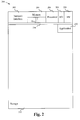
- FIG. 2 illustrates a block diagram of an exemplary computing device configured to implement the HEVC NAL Unit extension method according to some embodiments.
- the computing device 200 is able to be used to acquire, store, compute, process, communicate and/or display information such as images and videos.
- a hardware structure suitable for implementing the computing device 200 includes a network interface 202, a memory 204, a processor 206, I/O device(s) 208, a bus 210 and a storage device 212.
- the choice of processor is not critical as long as a suitable processor with sufficient speed is chosen.
- the memory 204 is able to be any conventional computer memory known in the art.
- the storage device 212 is able to include a hard drive, CDROM, CDRW, DVD, DVDRW, Blu-ray®, flash memory card or any other storage device.
- the computing device 200 is able to include one or more network interfaces 202.
- An example of a network interface includes a network card connected to an Ethernet or other type of LAN.
- the I/O device(s) 208 are able to include one or more of the following: keyboard, mouse, monitor, screen, printer, modem, touchscreen, button interface and other devices.
- HEVC NAL Unit extension application(s) 230 used to perform the HEVC NAL Unit extension method are likely to be stored in the storage device 212 and memory 204 and processed as applications are typically processed.
- HEVC NAL Unit extension hardware 220 is included.
- the computing device 200 in Figure 2 includes applications 230 and hardware 220 for the HEVC NAL Unit extension method
- the HEVC NAL Unit extension method is able to be implemented on a computing device in hardware, firmware, software or any combination thereof.
- the HEVC NAL Unit extension applications 230 are programmed in a memory and executed using a processor.
- the HEVC NAL Unit extension hardware 220 is programmed hardware logic including gates specifically designed to implement the HEVC NAL Unit extension method.
- the HEVC NAL Unit extension application(s) 230 include several applications and/or modules.
- modules include one or more sub-modules as well. In some embodiments, fewer or additional modules are able to be included.
- suitable computing devices include a personal computer, a laptop computer, a computer workstation, a server, a mainframe computer, a handheld computer, a personal digital assistant, a cellular/mobile telephone, a smart appliance, a gaming console, a digital camera, a digital camcorder, a camera phone, a smart phone, a portable music player, a tablet computer, a mobile device, a video player, a video disc writer/player (e.g., DVD writer/player, Blu-ray® writer/player), a television, a home entertainment system or any other suitable computing device.
- a personal computer a laptop computer, a computer workstation, a server, a mainframe computer, a handheld computer, a personal digital assistant, a cellular/mobile telephone, a smart appliance, a gaming console, a digital camera, a digital camcorder, a camera phone, a smart phone, a portable music player, a tablet computer, a mobile device, a video player, a video disc writer/player (e.g
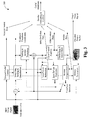
- FIG. 3 illustrates a general diagram of an HEVC encoder according to some embodiments.
- the encoder 300 includes a general coder control component, a transform scaling and quantization component, a scaling and inverse transform component, an intra-picture estimation component, a filter control analysis component, an intra-picture prediction component, a deblocking and SAO filters component, a motion compensation component, a motion estimation component, and a header formatting and CABAC component.
- An input video signal is received by the encoder 300 and is split into Coding Tree Units (CTUs).
- the HEVC encoder components process the video data and generate a coded bitstream.
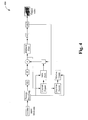
- FIG. 4 illustrates a general diagram of an HEVC decoder according to some embodiments.
- the decoder 400 includes an entropy decoding component, an inverse quantization component, an inverse transform component, a current frame component, an intra prediction component, a previous frames component, a motion compensation component, a deblocking filter, an SAO component and an adaptive loop filter.
- An input bitstream (e.g., a coded video) is received by the decoder 400, and a decoded bitstream is generated for display.
- a device such as a digital camera is able to be used to acquire a video.
- the HEVC NAL Unit extension method is automatically used when performing video processing.
- the HEVC NAL Unit extension method is able to be implemented automatically without user involvement.
- the HEVC NAL Unit extension method enables use of an extended NAL Unit syntax structure. Besides using one of the reserved bits, there is no other impact in the "base" NAL Unit structure.
- syntax parameters are introduced with register type fixed byte-sizes. This extension process also provides a generic framework for various future combinations of scalability and multi-view coding extensions.
Landscapes
- Engineering & Computer Science (AREA)
- Multimedia (AREA)
- Signal Processing (AREA)
- Compression Or Coding Systems Of Tv Signals (AREA)
Abstract
HEVC NAL Unit extension structure enables use of extensions beyond the base NAL Unit structure. Besides using one of the reserved bits, there is no other impact in the "base" NAL Unit structure. In the extension part of this NAL Unit structure, syntax parameters are introduced with register type fixed byte-sizes. This extension process also provides a generic framework for various future combinations of scalability and multi-view coding extensions.
Description
- The present invention relates to the field of video coding.
- The Network Abstraction Layer (NAL) is a part of the H.264/AVC video coding standard and the High Efficiency Video Coding (HEVC) standard. The NAL provides a network-friendly video representation addressing video telephony and broadcast/streaming applications.
- The coded video data is organized into NAL units, each of which is effectively a packet that contains an integer number of bytes. The first few bytes of each NAL unit are header bytes that contain an indication of the type of data in the NAL unit, and the remaining bytes contain payload data of the type indicated by the header. The NAL unit structure definition specifies a generic format for use in both packet-oriented and bitstream-oriented transport systems, and a series of NAL units generated by an encoder is referred to as a NAL unit stream.
- Various respective aspects and features of the invention are defined in the appended claims. Combinations of features from the dependent claims may be combined with features of the independent claims as appropriate and not merely as explicitly set out in the claims.
- HEVC NAL Unit extension structure enables use of extensions beyond the base NAL Unit structure. Besides using one of the reserved bits, there is no other impact in the "base" NAL Unit structure. In the extension part of this NAL Unit structure, syntax parameters are introduced with register type fixed byte-sizes. This extension process also provides a generic framework for various future combinations of scalability and multi-view coding extensions.
- In one aspect, a method of generating a bitstream programmed in a memory of a device comprises acquiring video data, programming a bit related to Network Abstraction Layer and encoding the video data which generates a bitstream including a series of Network Abstraction Layer units. The bit comprises a flag for determining if High Efficiency Video Coding extensions are utilized. If the bit is set, then the High Efficiency Video Coding extensions are utilized, and if the bit is not set, then the base Network Abstraction Layer unit structure is used. The High Efficiency Video Coding extensions include at least one of scalable, multi-view, and 3-dimensional video. The device is selected from the group consisting of a personal computer, a laptop computer, a computer workstation, a server, a mainframe computer, a handheld computer, a personal digital assistant, a cellular/mobile telephone, a smart phone, a smart appliance, a gaming console, a digital camera, a digital camcorder, a camera phone, an portable music player, a tablet computer, a video player, a DVD writer/player, a high definition video writer/player, a television and a home entertainment system.
- In one aspect, an encoder comprises an acquisition module configured for acquiring video data, a programming module configured for programming a bit related to Network Abstraction Layer and an encoding module configured for encoding the video data which generates a bitstream including a series of Network Abstraction Layer units. The bit comprises a flag for determining if High Efficiency Video Coding extensions are utilized. If the bit is set, then the High Efficiency Video Coding extensions are utilized, and if the bit is not set, then the base Network Abstraction Layer unit structure is used. The High Efficiency Video Coding extensions include at least one of scalable, multi-view, and 3-dimensional video. The encoder is included in a device selected from the group consisting of a personal computer, a laptop computer, a computer workstation, a server, a mainframe computer, a handheld computer, a personal digital assistant, a cellular/mobile telephone, a smart phone, a smart appliance, a gaming console, a digital camera, a digital camcorder, a camera phone, an portable music player, a tablet computer, a video player, a DVD writer/player, a high definition video writer/player, a television and a home entertainment system.
- In another aspect, an apparatus comprises a non-transitory memory for storing an application, the application for: acquiring video data, programming a bit related to Network Abstraction Layer and encoding the video data which generates a bitstream including a series of Network Abstraction Layer units and a processing component coupled to the memory, the processing component configured for processing the application. The bit comprises a flag for determining if High Efficiency Video Coding extensions are utilized. If the bit is set, then the High Efficiency Video Coding extensions are utilized, and if the bit is not set, then the base Network Abstraction Layer unit structure is used. The High Efficiency Video Coding extensions include at least one of scalable, multi-view, and 3-dimensional video. The apparatus is selected from the group consisting of a personal computer, a laptop computer, a computer workstation, a server, a mainframe computer, a handheld computer, a personal digital assistant, a cellular/mobile telephone, a smart phone, a smart appliance, a gaming console, a digital camera, a digital camcorder, a camera phone, an portable music player, a tablet computer, a video player, a DVD writer/player, a high definition video writer/player, a television and a home entertainment system.
- In yet another aspect, a network of devices comprises an encoder device comprising an acquisition module configured for acquiring video data, a programming module configured for programming a bit related to Network Abstraction Layer and an encoding module configured for encoding the video data which generates a bitstream including a series of Network Abstraction Layer units and a decoder device configured for: decoding the video data and presenting the decoded video data. The bit comprises a flag for determining if High Efficiency Video Coding extensions are utilized. If the bit is set, then the High Efficiency Video Coding extensions are utilized, and if the bit is not set, then the base Network Abstraction Layer unit structure is used. The High Efficiency Video Coding extensions include at least one of scalable, multi-view, and 3-dimensional video. The encoder device and decoder device are contained on a single device.
- Embodiments of the present invention relate to the HEVC NAL Unit syntax structure.
- Embodiments of the invention will now be described with reference to the accompanying drawings, throughout which like parts are referred to by like references, and in which:
-
FIG. 1 illustrates a flowchart of a method of generating a bitstream according to some embodiments; -
FIG. 2 illustrates a block diagram of an exemplary computing device configured to implement the HEVC NAL Unit extension method according to some embodiments; -
FIG. 3 illustrates a general diagram of an HEVC encoder according to some embodiments; and -
FIG. 4 illustrates a general diagram of an HEVC decoder according to some embodiments. - The previous NAL Unit syntax structure does not address next HEVC extensions data structures. Described herein, the previous NAL Unit syntax structure is extended to include future HEVC extensions by using one of the 5 reserved bits as a flag to indicate such extensions. Besides this, there is no other impact in the "base" NAL Unit structure. In the extension part of this NAL Unit structure, syntax parameters are introduced with register type fixed byte-sizes. This extension process also provides a generic framework for various future combinations of scalability and multi-view coding extensions.


- In the above syntax structure, four new syntax elements are introduced which are described herein:
- 1) The first configuration is for "base" HEVC. It uses 1 bit out of the original "reserved_one_5bits" as an extension flag (ext_flag1) and keeps the remaining 4 bits as reserved for possibly "debugging" related hardware/software issues. Here "ext_flag1" is set to 0.
reserved (4-bits) ext_flag1 (1-bit) temporal_id (3-bits) nal_id_mask2(3-bits) ext_flag2(1-bit) ext_flag2(1-bit) nal_id_mask1(3-bits) - i) ext_flag2: For the HEVC Extensions, this 1-bit flag of "ext_flag2" when set to 0, it indicates the allocation of a 2-byte long syntax element "nal_bytes_2", and if set to 1, indicates the allocation of a 3-byte long syntax element "nal_bytes_3" in the next syntax-flow.
- This 1-byte long syntax element consolidates all possible 1-bit flags that may be needed for HEVC extensions. The table below shows an example for the HEVC extensions about how this syntax element structure can be created by using the flag bits as present in AVC extensions of SVC and MVC.
nal_flags_set (example) value idr_flag 0000 0001 no_inter_layer_pred_flag 0000 0010 use_ref_base_pic_flag 0000 0100 discardable_flag 0000 1000 output_flag 0001 0000 anchor_pic_flag 0010 0000 inter_view_flag 0100 0000 reserved 1000 0000 - This 2-bytes long syntax element contains a group of nal_IDs as indicated by the (nal_id_mask2, nal_id_mask1) fields-pair, as explained in "nal_byte_1" syntax element definition earlier.
- Below is shown one example of bit allocations in "nal_bytes_2" for an HEVC Extension of "Scalable Video". Here the (nal_id_mask2, nal_id_mask1) fields-pair is able to be pre-defined or fixed as (001, 111) for this HEVC extension.
quality_id (4-bits) dependency_id (3-bits) priority_id (6-bits) temporat_id (3-bits) - This 3-bytes long syntax element contains a group of nal_IDs as indicated by the (nal_id_mask2, nal_id_mask1) fields-pair, as explained in "nal_byte_1" syntax element definition before.
- Below are shown three examples of bit allocations in "nal_bytes_3" for three HEVC Extension cases of "Multi-view video", "Multi-view & Scalable Video" and "3DV extension". Here the (nal_id_mask2, nal_id_mask1) fields-pair is able to be pre-defined or fixed as shown below.
-
reserved (5-bits) view_id (10-bits) priority_id (6-bits) temporat_id (3-bits) -
reserved (2-bits) view_id (10-bits) dependency_id (3-bits) priority_id (6-bits) temporal_id (3-bits) -
nal_id_mask2 nal_IDs Example Sizes HEVC Base & Extensions 001 view_id u(7) Multi-view 010 texture_id u(4) 3DV Extension 100 depth_id u(4) 3DV Extension -
depth_id(4-bits) texture_id (4-bits) view_id (7-bits) priority_id (6-bits) temporal_id (3-bits) - The HEVC NAL Unit Structure is extended to handle future coded video contents using HEVC Extension algorithms of scalability and multi-view coding schemes.
- In the syntax modification, only one bit from the unused reserved_one_5bits is utilized without affecting the "base" HEVC NAL unit structure. The extension parts of this new NAL Unit structure are also capable of handling Scalable or Multi-view coding and also various combinations of them, as it has a sufficiently general-purpose structure.
-
Figure 1 illustrates a flowchart of a method of generating a bitstream according to some embodiments. In thestep 100, video data is acquired. In thestep 102, bits related to NAL are programmed. The bits related to NAL include a bit for determining whether extensions are to be indicated. In the step 104, the video data is encoded generating a bitstream including a series of NAL units. In some embodiments, more or fewer steps are implemented. In some embodiments, the order of the steps is modified. -
Figure 2 illustrates a block diagram of an exemplary computing device configured to implement the HEVC NAL Unit extension method according to some embodiments. Thecomputing device 200 is able to be used to acquire, store, compute, process, communicate and/or display information such as images and videos. In general, a hardware structure suitable for implementing thecomputing device 200 includes anetwork interface 202, amemory 204, aprocessor 206, I/O device(s) 208, abus 210 and astorage device 212. The choice of processor is not critical as long as a suitable processor with sufficient speed is chosen. Thememory 204 is able to be any conventional computer memory known in the art. Thestorage device 212 is able to include a hard drive, CDROM, CDRW, DVD, DVDRW, Blu-ray®, flash memory card or any other storage device. Thecomputing device 200 is able to include one or more network interfaces 202. An example of a network interface includes a network card connected to an Ethernet or other type of LAN. The I/O device(s) 208 are able to include one or more of the following: keyboard, mouse, monitor, screen, printer, modem, touchscreen, button interface and other devices. HEVC NAL Unit extension application(s) 230 used to perform the HEVC NAL Unit extension method are likely to be stored in thestorage device 212 andmemory 204 and processed as applications are typically processed. More or less components shown inFigure 2 are able to be included in thecomputing device 200. In some embodiments, HEVC NALUnit extension hardware 220 is included. Although thecomputing device 200 inFigure 2 includesapplications 230 andhardware 220 for the HEVC NAL Unit extension method, the HEVC NAL Unit extension method is able to be implemented on a computing device in hardware, firmware, software or any combination thereof. For example, in some embodiments, the HEVC NALUnit extension applications 230 are programmed in a memory and executed using a processor. In another example, in some embodiments, the HEVC NALUnit extension hardware 220 is programmed hardware logic including gates specifically designed to implement the HEVC NAL Unit extension method. - In some embodiments, the HEVC NAL Unit extension application(s) 230 include several applications and/or modules. In some embodiments, modules include one or more sub-modules as well. In some embodiments, fewer or additional modules are able to be included.
- Examples of suitable computing devices include a personal computer, a laptop computer, a computer workstation, a server, a mainframe computer, a handheld computer, a personal digital assistant, a cellular/mobile telephone, a smart appliance, a gaming console, a digital camera, a digital camcorder, a camera phone, a smart phone, a portable music player, a tablet computer, a mobile device, a video player, a video disc writer/player (e.g., DVD writer/player, Blu-ray® writer/player), a television, a home entertainment system or any other suitable computing device.
-
Figure 3 illustrates a general diagram of an HEVC encoder according to some embodiments. Theencoder 300 includes a general coder control component, a transform scaling and quantization component, a scaling and inverse transform component, an intra-picture estimation component, a filter control analysis component, an intra-picture prediction component, a deblocking and SAO filters component, a motion compensation component, a motion estimation component, and a header formatting and CABAC component. An input video signal is received by theencoder 300 and is split into Coding Tree Units (CTUs). The HEVC encoder components process the video data and generate a coded bitstream. -
Figure 4 illustrates a general diagram of an HEVC decoder according to some embodiments. Thedecoder 400 includes an entropy decoding component, an inverse quantization component, an inverse transform component, a current frame component, an intra prediction component, a previous frames component, a motion compensation component, a deblocking filter, an SAO component and an adaptive loop filter. An input bitstream (e.g., a coded video) is received by thedecoder 400, and a decoded bitstream is generated for display. - To utilize the HEVC NAL Unit extension method, a device such as a digital camera is able to be used to acquire a video. The HEVC NAL Unit extension method is automatically used when performing video processing. The HEVC NAL Unit extension method is able to be implemented automatically without user involvement.
- In operation, the HEVC NAL Unit extension method enables use of an extended NAL Unit syntax structure. Besides using one of the reserved bits, there is no other impact in the "base" NAL Unit structure. In the extension part of this NAL Unit structure, syntax parameters are introduced with register type fixed byte-sizes. This extension process also provides a generic framework for various future combinations of scalability and multi-view coding extensions.
-
- 1. A method of generating a bitstream programmed in a memory of a device comprising:
- a. acquiring video data;
- b. programming a bit related to Network Abstraction Layer; and
- c. encoding the video data which generates a bitstream including a series of Network Abstraction Layer units.
- 2. The method of
clause 1 wherein the bit comprises a flag for determining if High Efficiency Video Coding extensions are utilized. - 3. The method of clause 2 wherein if the bit is set, then the High Efficiency Video Coding extensions are utilized, and if the bit is not set, then the base Network Abstraction Layer unit structure is used.
- 4. The method of
clause 1 wherein the High Efficiency Video Coding extensions include at least one of scalable, multi-view, and 3-dimensional video. - 5. The method of
clause 1 wherein the device is selected from the group consisting of a personal computer, a laptop computer, a computer workstation, a server, a mainframe computer, a handheld computer, a personal digital assistant, a cellular/mobile telephone, a smart phone, a smart appliance, a gaming console, a digital camera, a digital camcorder, a camera phone, an portable music player, a tablet computer, a video player, a DVD writer/player, a high definition video writer/player, a television and a home entertainment system. - 6. An encoder comprising:
- a. an acquisition module configured for acquiring video data;
- b. a programming module configured for programming a bit related to Network Abstraction Layer; and
- c. an encoding module configured for encoding the video data which generates a bitstream including a series of Network Abstraction Layer units.
- 7. The encoder of clause 6 wherein the bit comprises a flag for determining if High Efficiency Video Coding extensions are utilized.
- 8. The encoder of clause 7 wherein if the bit is set, then the High Efficiency Video Coding extensions are utilized, and if the bit is not set, then the base Network Abstraction Layer unit structure is used.
- 9. The encoder of clause 6 wherein the High Efficiency Video Coding extensions include at least one of scalable, multi-view, and 3-dimensional video.
- 10. The encoder of clause 6 wherein the encoder is included in a device selected from the group consisting of a personal computer, a laptop computer, a computer workstation, a server, a mainframe computer, a handheld computer, a personal digital assistant, a cellular/mobile telephone, a smart phone, a smart appliance, a gaming console, a digital camera, a digital camcorder, a camera phone, an portable music player, a tablet computer, a video player, a DVD writer/player, a high definition video writer/player, a television and a home entertainment system.
- 11. An apparatus comprising:
- a. a non-transitory memory for storing an application, the application for:
- i. acquiring video data;
- ii. programming a bit related to Network Abstraction Layer; and
- iii. encoding the video data which generates a bitstream including a series of Network Abstraction Layer units; and
- b. a processing component coupled to the memory, the processing component configured for processing the application.
- a. a non-transitory memory for storing an application, the application for:
- 12. The apparatus of clause 11 wherein the bit comprises a flag for determining if High Efficiency Video Coding extensions are utilized.
- 13. The apparatus of clause 12 wherein if the bit is set, then the High Efficiency Video Coding extensions are utilized, and if the bit is not set, then the base Network Abstraction Layer unit structure is used.
- 14. The apparatus of clause 11 wherein the High Efficiency Video Coding extensions include at least one of scalable, multi-view, and 3-dimensional video.
- 15. The apparatus of clause 11 wherein the apparatus is selected from the group consisting of a personal computer, a laptop computer, a computer workstation, a server, a mainframe computer, a handheld computer, a personal digital assistant, a cellular/mobile telephone, a smart phone, a smart appliance, a gaming console, a digital camera, a digital camcorder, a camera phone, an portable music player, a tablet computer, a video player, a DVD writer/player, a high definition video writer/player, a television and a home entertainment system.
- 16. A network of devices comprising:
- a. an encoder device comprising:
- i. an acquisition module configured for acquiring video data;
- ii. a programming module configured for programming a bit related to Network Abstraction Layer; and
- iii. an encoding module configured for encoding the video data which generates a bitstream including a series of Network Abstraction Layer units; and
- b. a decoder device configured for:
- i. decoding the video data; and
- ii. presenting the decoded video data.
- a. an encoder device comprising:
- 17. The network of devices of clause 16 wherein the bit comprises a flag for determining if High Efficiency Video Coding extensions are utilized.
- 18. The network of devices of clause 17 wherein if the bit is set, then the High Efficiency Video Coding extensions are utilized, and if the bit is not set, then the base Network Abstraction Layer unit structure is used.
- 19. The network of devices of clause 16 wherein the High Efficiency Video Coding extensions include at least one of scalable, multi-view, and 3-dimensional video.
- 20. The network of devices of clause 16 wherein the encoder device and decoder device are contained on a single device.
- The present invention has been described in terms of specific embodiments incorporating details to facilitate the understanding of principles of construction and operation of the invention. Such reference herein to specific embodiments and details thereof is not intended to limit the scope of the claims appended hereto. It will be readily apparent to one skilled in the art that other various modifications may be made in the embodiment chosen for illustration without departing from the scope of the invention as defined by the claims.
| nal_id_mask1 | nal_IDs | Example Sizes | HEVC Base & Extensions |
| 001 | temporal_id | u(3) | All cases |
| 010 | priority_id | u(6) | Scalable & Multi-view |
| 100 | dependency_id | u(3) | Scalable & Multi-view |
| nal_id_mask2 | nal_IDs | Example Sizes | HEVC Base & Extensions |
| 001 | quality_id | u(4) | Scalable |
| 010 | view_id | u(6) to u(10) | Multi-view |
| 100 | reserved |
Some default examples for the two fields (nal_id_mask2, nal_id_mask1) are provided below for HEVC extensions according to the previous AVC extensions of SVC and MVC:
Scalable => (001, 111), Multi-view => (010, 011), Multi-view Scalable => (010, 111) and so on. These two fields are used to differentiate various HEVC extensions according to the nal_ID choices.
For some HEVC extensions, such as the example "Multi-view" or "Multi-view Scalable" cases, the next syntax elements (nal_bytes_2, or nal_bytes_3) containing the corresponding nal_IDs may remain "incomplete" structure-wise, e.g., some "msb" bit-locations in such syntax elements may remain empty to be filled up with "reserved" bits. Such filling up will be automatic if no more nal_IDs are present in "nat_iD_mask2".
3) The third configuration uses 2 bits (ext_flag1 and ext_flag2) out of the syntax element "nat_byte1", and can be combined to be called "adaptation_field". Here is the bit-allocation for this "adaptation_field" syntax:
| adaptation_field | Extra header bytes | NAL Unit Header extensions |
| 00 | 0 | Default |
| 01 | 1 | nal_flags_set only |
| 10 | 1+2=3 | nal_flags_set and nal_bytes_2 |
| 11 | 1+3=4 | nal_flags_set and nal_bytes_2 |
01 = no adaptation fields, payload only
Adaptation field exist 10 = adaptation field only
11 = adaptation field and payload
Claims (15)
- A method of generating a bitstream programmed in a memory of a device comprising:a. acquiring video data;b. programming a bit related to Network Abstraction Layer; andc. encoding the video data which generates a bitstream including a series of Network Abstraction Layer units.
- The method of claim 1 wherein the bit comprises a flag for determining if High Efficiency Video Coding extensions are utilized.
- The method of claim 2 wherein if the bit is set, then the High Efficiency Video Coding extensions are utilized, and if the bit is not set, then the base Network Abstraction Layer unit structure is used.
- The method of claim 1 wherein the High Efficiency Video Coding extensions include at least one of scalable, multi-view, and 3-dimensional video.
- The method of claim 1 wherein the device is selected from the group consisting of a personal computer, a laptop computer, a computer workstation, a server, a mainframe computer, a handheld computer, a personal digital assistant, a cellular/mobile telephone, a smart phone, a smart appliance, a gaming console, a digital camera, a digital camcorder, a camera phone, an portable music player, a tablet computer, a video player, a DVD writer/player, a high definition video writer/player, a television and a home entertainment system.
- An encoder comprising:a. an acquisition module configured for acquiring video data;b. a programming module configured for programming a bit related to Network Abstraction Layer; andc. an encoding module configured for encoding the video data which generates a bitstream including a series of Network Abstraction Layer units.
- The encoder of claim 6 wherein the bit comprises a flag for determining if High Efficiency Video Coding extensions are utilized.
- The encoder of claim 7 wherein if the bit is set, then the High Efficiency Video Coding extensions are utilized, and if the bit is not set, then the base Network Abstraction Layer unit structure is used.
- The encoder of claim 6 wherein the High Efficiency Video Coding extensions include at least one of scalable, multi-view, and 3-dimensional video.
- The encoder of claim 6 wherein the encoder is included in a device selected from the group consisting of a personal computer, a laptop computer, a computer workstation, a server, a mainframe computer, a handheld computer, a personal digital assistant, a cellular/mobile telephone, a smart phone, a smart appliance, a gaming console, a digital camera, a digital camcorder, a camera phone, an portable music player, a tablet computer, a video player, a DVD writer/player, a high definition video writer/player, a television and a home entertainment system.
- An apparatus comprising:a. a non-transitory memory for storing an application, the application for:i. acquiring video data;ii. programming a bit related to Network Abstraction Layer; andiii. encoding the video data which generates a bitstream including a series of Network Abstraction Layer units; andb. a processing component coupled to the memory, the processing component configured for processing the application.
- The apparatus of claim 11 wherein the bit comprises a flag for determining if High Efficiency Video Coding extensions are utilized.
- The apparatus of claim 11 wherein the apparatus is selected from the group consisting of a personal computer, a laptop computer, a computer workstation, a server, a mainframe computer, a handheld computer, a personal digital assistant, a cellular/mobile telephone, a smart phone, a smart appliance, a gaming console, a digital camera, a digital camcorder, a camera phone, an portable music player, a tablet computer, a video player, a DVD writer/player, a high definition video writer/player, a television and a home entertainment system.
- A network of devices comprising:a. an encoder device comprising:i. an acquisition module configured for acquiring video data;ii. a programming module configured for programming a bit related to Network Abstraction Layer; andiii. an encoding module configured for encoding the video data which generates a bitstream including a series of Network Abstraction Layer units; andb. a decoder device configured for:i. decoding the video data; andii. presenting the decoded video data.
- The network of devices of claim 14 wherein the encoder device and decoder device are contained on a single device.
Applications Claiming Priority (2)
| Application Number | Priority Date | Filing Date | Title |
|---|---|---|---|
| US201261624600P | 2012-04-16 | 2012-04-16 | |
| US13/790,310 US20130272371A1 (en) | 2012-04-16 | 2013-03-08 | Extension of hevc nal unit syntax structure |
Publications (1)
| Publication Number | Publication Date |
|---|---|
| EP2654297A2 true EP2654297A2 (en) | 2013-10-23 |
Family
ID=48047903
Family Applications (1)
| Application Number | Title | Priority Date | Filing Date |
|---|---|---|---|
| EP13162921.4A Withdrawn EP2654297A2 (en) | 2012-04-16 | 2013-04-09 | Network abstraction layer extension for HEVC |
Country Status (5)
| Country | Link |
|---|---|
| US (1) | US20130272371A1 (en) |
| EP (1) | EP2654297A2 (en) |
| JP (1) | JP2013223250A (en) |
| KR (1) | KR101476532B1 (en) |
| CN (1) | CN103379341A (en) |
Families Citing this family (6)
| Publication number | Priority date | Publication date | Assignee | Title |
|---|---|---|---|---|
| US10205954B2 (en) * | 2013-10-23 | 2019-02-12 | Qualcomm Incorporated | Carriage of video coding standard extension bitstream data using MPEG-2 systems |
| KR101797504B1 (en) | 2013-10-29 | 2017-11-15 | 엘지전자 주식회사 | Method and apparatus for transmitting and receiving broadcast signal for providing hevc based ip broadcast service |
| CN106256128B (en) * | 2014-01-03 | 2021-06-29 | 艾锐势有限责任公司 | A method of decoding multiple pictures |
| WO2016017397A1 (en) * | 2014-07-31 | 2016-02-04 | ソニー株式会社 | Transmission apparatus, transmission method, reception apparatus and reception method |
| CN106658225B (en) * | 2016-10-31 | 2019-11-26 | 日立楼宇技术(广州)有限公司 | The setting of Video Expansion code and video broadcasting method and system |
| CN110351492B (en) * | 2018-04-06 | 2021-11-19 | 中兴通讯股份有限公司 | Video data processing method, device and medium |
Family Cites Families (7)
| Publication number | Priority date | Publication date | Assignee | Title |
|---|---|---|---|---|
| US20070230564A1 (en) * | 2006-03-29 | 2007-10-04 | Qualcomm Incorporated | Video processing with scalability |
| KR20100014553A (en) * | 2007-04-25 | 2010-02-10 | 엘지전자 주식회사 | A method and an apparatus for decoding/encoding a video signal |
| CA2718447C (en) * | 2009-04-28 | 2014-10-21 | Panasonic Corporation | Image decoding method, image coding method, image decoding apparatus, and image coding apparatus |
| US20120044322A1 (en) * | 2009-05-01 | 2012-02-23 | Dong Tian | 3d video coding formats |
| CA2824741C (en) * | 2011-01-14 | 2016-08-30 | Vidyo, Inc. | Improved nal unit header |
| AU2012225513B2 (en) * | 2011-03-10 | 2016-06-23 | Vidyo, Inc. | Dependency parameter set for scalable video coding |
| US9635355B2 (en) * | 2011-07-28 | 2017-04-25 | Qualcomm Incorporated | Multiview video coding |
-
2013
- 2013-03-08 US US13/790,310 patent/US20130272371A1/en not_active Abandoned
- 2013-04-01 JP JP2013086926A patent/JP2013223250A/en active Pending
- 2013-04-09 EP EP13162921.4A patent/EP2654297A2/en not_active Withdrawn
- 2013-04-12 CN CN2013101259593A patent/CN103379341A/en active Pending
- 2013-04-15 KR KR1020130040843A patent/KR101476532B1/en not_active Expired - Fee Related
Non-Patent Citations (1)
| Title |
|---|
| None |
Also Published As
| Publication number | Publication date |
|---|---|
| JP2013223250A (en) | 2013-10-28 |
| CN103379341A (en) | 2013-10-30 |
| KR101476532B1 (en) | 2014-12-26 |
| KR20130116815A (en) | 2013-10-24 |
| US20130272371A1 (en) | 2013-10-17 |
Similar Documents
| Publication | Publication Date | Title |
|---|---|---|
| US10951899B2 (en) | Extension data handling | |
| US10602190B2 (en) | Temporal sub-layer descriptor | |
| EP3854106B1 (en) | Method and apparatus for non-binary profile constraint signaling for video coding | |
| JP5944013B2 (en) | Handling of reference image list | |
| EP2936809B1 (en) | Multi-layer video stream decoding | |
| US9432665B2 (en) | Coding least significant bits of picture order count values identifying long-term reference pictures | |
| US10313668B2 (en) | Method and device for encoding or decoding an image comprising encoding of decoding information representing prediction modes | |
| US20200413042A1 (en) | Multi-Layer Video Stream Encoding and Decoding | |
| US10219006B2 (en) | JCTVC-L0226: VPS and VPS_extension updates | |
| US10419778B2 (en) | JCTVC-L0227: VPS_extension with updates of profile-tier-level syntax structure | |
| JP7623496B2 (en) | Cross random access point signal notification extension | |
| US10873751B2 (en) | Video parameter set (VPS) syntax re-ordering for easy access of extension parameters | |
| EP2654297A2 (en) | Network abstraction layer extension for HEVC | |
| KR20230127982A (en) | Cross Random Access Point Sample Group | |
| WO2015194179A1 (en) | Bitstream partitions operation | |
| JP2013223250A6 (en) | Expansion of HEVC NAL unit syntax structure | |
| US20250008171A1 (en) | Grouping Of Video Streaming Messages | |
| US12143604B2 (en) | Level indicator for sub-picture entity group |
Legal Events
| Date | Code | Title | Description |
|---|---|---|---|
| PUAI | Public reference made under article 153(3) epc to a published international application that has entered the european phase |
Free format text: ORIGINAL CODE: 0009012 |
|
| 17P | Request for examination filed |
Effective date: 20130423 |
|
| AK | Designated contracting states |
Kind code of ref document: A2 Designated state(s): AL AT BE BG CH CY CZ DE DK EE ES FI FR GB GR HR HU IE IS IT LI LT LU LV MC MK MT NL NO PL PT RO RS SE SI SK SM TR |
|
| AX | Request for extension of the european patent |
Extension state: BA ME |
|
| STAA | Information on the status of an ep patent application or granted ep patent |
Free format text: STATUS: THE APPLICATION HAS BEEN WITHDRAWN |
|
| 18W | Application withdrawn |
Effective date: 20150318 |