EP2653162B1 - Methods of administering fluvoxamine therapy - Google Patents
Methods of administering fluvoxamine therapy Download PDFInfo
- Publication number
- EP2653162B1 EP2653162B1 EP13176914.3A EP13176914A EP2653162B1 EP 2653162 B1 EP2653162 B1 EP 2653162B1 EP 13176914 A EP13176914 A EP 13176914A EP 2653162 B1 EP2653162 B1 EP 2653162B1
- Authority
- EP
- European Patent Office
- Prior art keywords
- pirfenidone
- day
- patient
- fluvoxamine
- disclosures
- Prior art date
- Legal status (The legal status is an assumption and is not a legal conclusion. Google has not performed a legal analysis and makes no representation as to the accuracy of the status listed.)
- Revoked
Links
Images
Classifications
-
- A—HUMAN NECESSITIES
- A61—MEDICAL OR VETERINARY SCIENCE; HYGIENE
- A61K—PREPARATIONS FOR MEDICAL, DENTAL OR TOILETRY PURPOSES
- A61K31/00—Medicinal preparations containing organic active ingredients
- A61K31/33—Heterocyclic compounds
- A61K31/395—Heterocyclic compounds having nitrogen as a ring hetero atom, e.g. guanethidine or rifamycins
- A61K31/435—Heterocyclic compounds having nitrogen as a ring hetero atom, e.g. guanethidine or rifamycins having six-membered rings with one nitrogen as the only ring hetero atom
- A61K31/44—Non condensed pyridines; Hydrogenated derivatives thereof
- A61K31/4418—Non condensed pyridines; Hydrogenated derivatives thereof having a carbocyclic group directly attached to the heterocyclic ring, e.g. cyproheptadine
-
- A—HUMAN NECESSITIES
- A61—MEDICAL OR VETERINARY SCIENCE; HYGIENE
- A61K—PREPARATIONS FOR MEDICAL, DENTAL OR TOILETRY PURPOSES
- A61K31/00—Medicinal preparations containing organic active ingredients
- A61K31/13—Amines
- A61K31/135—Amines having aromatic rings, e.g. ketamine, nortriptyline
-
- A—HUMAN NECESSITIES
- A61—MEDICAL OR VETERINARY SCIENCE; HYGIENE
- A61K—PREPARATIONS FOR MEDICAL, DENTAL OR TOILETRY PURPOSES
- A61K31/00—Medicinal preparations containing organic active ingredients
- A61K31/13—Amines
- A61K31/15—Oximes (>C=N—O—); Hydrazines (>N—N<); Hydrazones (>N—N=) ; Imines (C—N=C)
-
- A—HUMAN NECESSITIES
- A61—MEDICAL OR VETERINARY SCIENCE; HYGIENE
- A61K—PREPARATIONS FOR MEDICAL, DENTAL OR TOILETRY PURPOSES
- A61K31/00—Medicinal preparations containing organic active ingredients
- A61K31/33—Heterocyclic compounds
- A61K31/395—Heterocyclic compounds having nitrogen as a ring hetero atom, e.g. guanethidine or rifamycins
- A61K31/435—Heterocyclic compounds having nitrogen as a ring hetero atom, e.g. guanethidine or rifamycins having six-membered rings with one nitrogen as the only ring hetero atom
- A61K31/44—Non condensed pyridines; Hydrogenated derivatives thereof
-
- A—HUMAN NECESSITIES
- A61—MEDICAL OR VETERINARY SCIENCE; HYGIENE
- A61K—PREPARATIONS FOR MEDICAL, DENTAL OR TOILETRY PURPOSES
- A61K36/00—Medicinal preparations of undetermined constitution containing material from algae, lichens, fungi or plants, or derivatives thereof, e.g. traditional herbal medicines
- A61K36/18—Magnoliophyta (angiosperms)
- A61K36/185—Magnoliopsida (dicotyledons)
- A61K36/75—Rutaceae (Rue family)
- A61K36/752—Citrus, e.g. lime, orange or lemon
-
- A—HUMAN NECESSITIES
- A61—MEDICAL OR VETERINARY SCIENCE; HYGIENE
- A61K—PREPARATIONS FOR MEDICAL, DENTAL OR TOILETRY PURPOSES
- A61K45/00—Medicinal preparations containing active ingredients not provided for in groups A61K31/00 - A61K41/00
- A61K45/06—Mixtures of active ingredients without chemical characterisation, e.g. antiphlogistics and cardiaca
-
- A—HUMAN NECESSITIES
- A61—MEDICAL OR VETERINARY SCIENCE; HYGIENE
- A61K—PREPARATIONS FOR MEDICAL, DENTAL OR TOILETRY PURPOSES
- A61K9/00—Medicinal preparations characterised by special physical form
- A61K9/0012—Galenical forms characterised by the site of application
- A61K9/0053—Mouth and digestive tract, i.e. intraoral and peroral administration
-
- A—HUMAN NECESSITIES
- A61—MEDICAL OR VETERINARY SCIENCE; HYGIENE
- A61P—SPECIFIC THERAPEUTIC ACTIVITY OF CHEMICAL COMPOUNDS OR MEDICINAL PREPARATIONS
- A61P1/00—Drugs for disorders of the alimentary tract or the digestive system
- A61P1/02—Stomatological preparations, e.g. drugs for caries, aphtae, periodontitis
-
- A—HUMAN NECESSITIES
- A61—MEDICAL OR VETERINARY SCIENCE; HYGIENE
- A61P—SPECIFIC THERAPEUTIC ACTIVITY OF CHEMICAL COMPOUNDS OR MEDICINAL PREPARATIONS
- A61P1/00—Drugs for disorders of the alimentary tract or the digestive system
- A61P1/04—Drugs for disorders of the alimentary tract or the digestive system for ulcers, gastritis or reflux esophagitis, e.g. antacids, inhibitors of acid secretion, mucosal protectants
-
- A—HUMAN NECESSITIES
- A61—MEDICAL OR VETERINARY SCIENCE; HYGIENE
- A61P—SPECIFIC THERAPEUTIC ACTIVITY OF CHEMICAL COMPOUNDS OR MEDICINAL PREPARATIONS
- A61P1/00—Drugs for disorders of the alimentary tract or the digestive system
- A61P1/12—Antidiarrhoeals
-
- A—HUMAN NECESSITIES
- A61—MEDICAL OR VETERINARY SCIENCE; HYGIENE
- A61P—SPECIFIC THERAPEUTIC ACTIVITY OF CHEMICAL COMPOUNDS OR MEDICINAL PREPARATIONS
- A61P1/00—Drugs for disorders of the alimentary tract or the digestive system
- A61P1/16—Drugs for disorders of the alimentary tract or the digestive system for liver or gallbladder disorders, e.g. hepatoprotective agents, cholagogues, litholytics
-
- A—HUMAN NECESSITIES
- A61—MEDICAL OR VETERINARY SCIENCE; HYGIENE
- A61P—SPECIFIC THERAPEUTIC ACTIVITY OF CHEMICAL COMPOUNDS OR MEDICINAL PREPARATIONS
- A61P1/00—Drugs for disorders of the alimentary tract or the digestive system
- A61P1/18—Drugs for disorders of the alimentary tract or the digestive system for pancreatic disorders, e.g. pancreatic enzymes
-
- A—HUMAN NECESSITIES
- A61—MEDICAL OR VETERINARY SCIENCE; HYGIENE
- A61P—SPECIFIC THERAPEUTIC ACTIVITY OF CHEMICAL COMPOUNDS OR MEDICINAL PREPARATIONS
- A61P11/00—Drugs for disorders of the respiratory system
-
- A—HUMAN NECESSITIES
- A61—MEDICAL OR VETERINARY SCIENCE; HYGIENE
- A61P—SPECIFIC THERAPEUTIC ACTIVITY OF CHEMICAL COMPOUNDS OR MEDICINAL PREPARATIONS
- A61P11/00—Drugs for disorders of the respiratory system
- A61P11/02—Nasal agents, e.g. decongestants
-
- A—HUMAN NECESSITIES
- A61—MEDICAL OR VETERINARY SCIENCE; HYGIENE
- A61P—SPECIFIC THERAPEUTIC ACTIVITY OF CHEMICAL COMPOUNDS OR MEDICINAL PREPARATIONS
- A61P11/00—Drugs for disorders of the respiratory system
- A61P11/06—Antiasthmatics
-
- A—HUMAN NECESSITIES
- A61—MEDICAL OR VETERINARY SCIENCE; HYGIENE
- A61P—SPECIFIC THERAPEUTIC ACTIVITY OF CHEMICAL COMPOUNDS OR MEDICINAL PREPARATIONS
- A61P13/00—Drugs for disorders of the urinary system
- A61P13/08—Drugs for disorders of the urinary system of the prostate
-
- A—HUMAN NECESSITIES
- A61—MEDICAL OR VETERINARY SCIENCE; HYGIENE
- A61P—SPECIFIC THERAPEUTIC ACTIVITY OF CHEMICAL COMPOUNDS OR MEDICINAL PREPARATIONS
- A61P13/00—Drugs for disorders of the urinary system
- A61P13/12—Drugs for disorders of the urinary system of the kidneys
-
- A—HUMAN NECESSITIES
- A61—MEDICAL OR VETERINARY SCIENCE; HYGIENE
- A61P—SPECIFIC THERAPEUTIC ACTIVITY OF CHEMICAL COMPOUNDS OR MEDICINAL PREPARATIONS
- A61P17/00—Drugs for dermatological disorders
-
- A—HUMAN NECESSITIES
- A61—MEDICAL OR VETERINARY SCIENCE; HYGIENE
- A61P—SPECIFIC THERAPEUTIC ACTIVITY OF CHEMICAL COMPOUNDS OR MEDICINAL PREPARATIONS
- A61P17/00—Drugs for dermatological disorders
- A61P17/06—Antipsoriatics
-
- A—HUMAN NECESSITIES
- A61—MEDICAL OR VETERINARY SCIENCE; HYGIENE
- A61P—SPECIFIC THERAPEUTIC ACTIVITY OF CHEMICAL COMPOUNDS OR MEDICINAL PREPARATIONS
- A61P19/00—Drugs for skeletal disorders
-
- A—HUMAN NECESSITIES
- A61—MEDICAL OR VETERINARY SCIENCE; HYGIENE
- A61P—SPECIFIC THERAPEUTIC ACTIVITY OF CHEMICAL COMPOUNDS OR MEDICINAL PREPARATIONS
- A61P19/00—Drugs for skeletal disorders
- A61P19/02—Drugs for skeletal disorders for joint disorders, e.g. arthritis, arthrosis
-
- A—HUMAN NECESSITIES
- A61—MEDICAL OR VETERINARY SCIENCE; HYGIENE
- A61P—SPECIFIC THERAPEUTIC ACTIVITY OF CHEMICAL COMPOUNDS OR MEDICINAL PREPARATIONS
- A61P19/00—Drugs for skeletal disorders
- A61P19/06—Antigout agents, e.g. antihyperuricemic or uricosuric agents
-
- A—HUMAN NECESSITIES
- A61—MEDICAL OR VETERINARY SCIENCE; HYGIENE
- A61P—SPECIFIC THERAPEUTIC ACTIVITY OF CHEMICAL COMPOUNDS OR MEDICINAL PREPARATIONS
- A61P19/00—Drugs for skeletal disorders
- A61P19/08—Drugs for skeletal disorders for bone diseases, e.g. rachitism, Paget's disease
- A61P19/10—Drugs for skeletal disorders for bone diseases, e.g. rachitism, Paget's disease for osteoporosis
-
- A—HUMAN NECESSITIES
- A61—MEDICAL OR VETERINARY SCIENCE; HYGIENE
- A61P—SPECIFIC THERAPEUTIC ACTIVITY OF CHEMICAL COMPOUNDS OR MEDICINAL PREPARATIONS
- A61P21/00—Drugs for disorders of the muscular or neuromuscular system
-
- A—HUMAN NECESSITIES
- A61—MEDICAL OR VETERINARY SCIENCE; HYGIENE
- A61P—SPECIFIC THERAPEUTIC ACTIVITY OF CHEMICAL COMPOUNDS OR MEDICINAL PREPARATIONS
- A61P21/00—Drugs for disorders of the muscular or neuromuscular system
- A61P21/04—Drugs for disorders of the muscular or neuromuscular system for myasthenia gravis
-
- A—HUMAN NECESSITIES
- A61—MEDICAL OR VETERINARY SCIENCE; HYGIENE
- A61P—SPECIFIC THERAPEUTIC ACTIVITY OF CHEMICAL COMPOUNDS OR MEDICINAL PREPARATIONS
- A61P25/00—Drugs for disorders of the nervous system
-
- A—HUMAN NECESSITIES
- A61—MEDICAL OR VETERINARY SCIENCE; HYGIENE
- A61P—SPECIFIC THERAPEUTIC ACTIVITY OF CHEMICAL COMPOUNDS OR MEDICINAL PREPARATIONS
- A61P25/00—Drugs for disorders of the nervous system
- A61P25/04—Centrally acting analgesics, e.g. opioids
-
- A—HUMAN NECESSITIES
- A61—MEDICAL OR VETERINARY SCIENCE; HYGIENE
- A61P—SPECIFIC THERAPEUTIC ACTIVITY OF CHEMICAL COMPOUNDS OR MEDICINAL PREPARATIONS
- A61P25/00—Drugs for disorders of the nervous system
- A61P25/06—Antimigraine agents
-
- A—HUMAN NECESSITIES
- A61—MEDICAL OR VETERINARY SCIENCE; HYGIENE
- A61P—SPECIFIC THERAPEUTIC ACTIVITY OF CHEMICAL COMPOUNDS OR MEDICINAL PREPARATIONS
- A61P25/00—Drugs for disorders of the nervous system
- A61P25/14—Drugs for disorders of the nervous system for treating abnormal movements, e.g. chorea, dyskinesia
-
- A—HUMAN NECESSITIES
- A61—MEDICAL OR VETERINARY SCIENCE; HYGIENE
- A61P—SPECIFIC THERAPEUTIC ACTIVITY OF CHEMICAL COMPOUNDS OR MEDICINAL PREPARATIONS
- A61P25/00—Drugs for disorders of the nervous system
- A61P25/14—Drugs for disorders of the nervous system for treating abnormal movements, e.g. chorea, dyskinesia
- A61P25/16—Anti-Parkinson drugs
-
- A—HUMAN NECESSITIES
- A61—MEDICAL OR VETERINARY SCIENCE; HYGIENE
- A61P—SPECIFIC THERAPEUTIC ACTIVITY OF CHEMICAL COMPOUNDS OR MEDICINAL PREPARATIONS
- A61P25/00—Drugs for disorders of the nervous system
- A61P25/28—Drugs for disorders of the nervous system for treating neurodegenerative disorders of the central nervous system, e.g. nootropic agents, cognition enhancers, drugs for treating Alzheimer's disease or other forms of dementia
-
- A—HUMAN NECESSITIES
- A61—MEDICAL OR VETERINARY SCIENCE; HYGIENE
- A61P—SPECIFIC THERAPEUTIC ACTIVITY OF CHEMICAL COMPOUNDS OR MEDICINAL PREPARATIONS
- A61P27/00—Drugs for disorders of the senses
- A61P27/02—Ophthalmic agents
-
- A—HUMAN NECESSITIES
- A61—MEDICAL OR VETERINARY SCIENCE; HYGIENE
- A61P—SPECIFIC THERAPEUTIC ACTIVITY OF CHEMICAL COMPOUNDS OR MEDICINAL PREPARATIONS
- A61P27/00—Drugs for disorders of the senses
- A61P27/02—Ophthalmic agents
- A61P27/14—Decongestants or antiallergics
-
- A—HUMAN NECESSITIES
- A61—MEDICAL OR VETERINARY SCIENCE; HYGIENE
- A61P—SPECIFIC THERAPEUTIC ACTIVITY OF CHEMICAL COMPOUNDS OR MEDICINAL PREPARATIONS
- A61P29/00—Non-central analgesic, antipyretic or antiinflammatory agents, e.g. antirheumatic agents; Non-steroidal antiinflammatory drugs [NSAID]
-
- A—HUMAN NECESSITIES
- A61—MEDICAL OR VETERINARY SCIENCE; HYGIENE
- A61P—SPECIFIC THERAPEUTIC ACTIVITY OF CHEMICAL COMPOUNDS OR MEDICINAL PREPARATIONS
- A61P29/00—Non-central analgesic, antipyretic or antiinflammatory agents, e.g. antirheumatic agents; Non-steroidal antiinflammatory drugs [NSAID]
- A61P29/02—Non-central analgesic, antipyretic or antiinflammatory agents, e.g. antirheumatic agents; Non-steroidal antiinflammatory drugs [NSAID] without antiinflammatory effect
-
- A—HUMAN NECESSITIES
- A61—MEDICAL OR VETERINARY SCIENCE; HYGIENE
- A61P—SPECIFIC THERAPEUTIC ACTIVITY OF CHEMICAL COMPOUNDS OR MEDICINAL PREPARATIONS
- A61P3/00—Drugs for disorders of the metabolism
-
- A—HUMAN NECESSITIES
- A61—MEDICAL OR VETERINARY SCIENCE; HYGIENE
- A61P—SPECIFIC THERAPEUTIC ACTIVITY OF CHEMICAL COMPOUNDS OR MEDICINAL PREPARATIONS
- A61P3/00—Drugs for disorders of the metabolism
- A61P3/08—Drugs for disorders of the metabolism for glucose homeostasis
- A61P3/10—Drugs for disorders of the metabolism for glucose homeostasis for hyperglycaemia, e.g. antidiabetics
-
- A—HUMAN NECESSITIES
- A61—MEDICAL OR VETERINARY SCIENCE; HYGIENE
- A61P—SPECIFIC THERAPEUTIC ACTIVITY OF CHEMICAL COMPOUNDS OR MEDICINAL PREPARATIONS
- A61P31/00—Antiinfectives, i.e. antibiotics, antiseptics, chemotherapeutics
- A61P31/04—Antibacterial agents
-
- A—HUMAN NECESSITIES
- A61—MEDICAL OR VETERINARY SCIENCE; HYGIENE
- A61P—SPECIFIC THERAPEUTIC ACTIVITY OF CHEMICAL COMPOUNDS OR MEDICINAL PREPARATIONS
- A61P31/00—Antiinfectives, i.e. antibiotics, antiseptics, chemotherapeutics
- A61P31/12—Antivirals
-
- A—HUMAN NECESSITIES
- A61—MEDICAL OR VETERINARY SCIENCE; HYGIENE
- A61P—SPECIFIC THERAPEUTIC ACTIVITY OF CHEMICAL COMPOUNDS OR MEDICINAL PREPARATIONS
- A61P31/00—Antiinfectives, i.e. antibiotics, antiseptics, chemotherapeutics
- A61P31/12—Antivirals
- A61P31/14—Antivirals for RNA viruses
-
- A—HUMAN NECESSITIES
- A61—MEDICAL OR VETERINARY SCIENCE; HYGIENE
- A61P—SPECIFIC THERAPEUTIC ACTIVITY OF CHEMICAL COMPOUNDS OR MEDICINAL PREPARATIONS
- A61P31/00—Antiinfectives, i.e. antibiotics, antiseptics, chemotherapeutics
- A61P31/12—Antivirals
- A61P31/14—Antivirals for RNA viruses
- A61P31/16—Antivirals for RNA viruses for influenza or rhinoviruses
-
- A—HUMAN NECESSITIES
- A61—MEDICAL OR VETERINARY SCIENCE; HYGIENE
- A61P—SPECIFIC THERAPEUTIC ACTIVITY OF CHEMICAL COMPOUNDS OR MEDICINAL PREPARATIONS
- A61P31/00—Antiinfectives, i.e. antibiotics, antiseptics, chemotherapeutics
- A61P31/12—Antivirals
- A61P31/14—Antivirals for RNA viruses
- A61P31/18—Antivirals for RNA viruses for HIV
-
- A—HUMAN NECESSITIES
- A61—MEDICAL OR VETERINARY SCIENCE; HYGIENE
- A61P—SPECIFIC THERAPEUTIC ACTIVITY OF CHEMICAL COMPOUNDS OR MEDICINAL PREPARATIONS
- A61P31/00—Antiinfectives, i.e. antibiotics, antiseptics, chemotherapeutics
- A61P31/12—Antivirals
- A61P31/20—Antivirals for DNA viruses
-
- A—HUMAN NECESSITIES
- A61—MEDICAL OR VETERINARY SCIENCE; HYGIENE
- A61P—SPECIFIC THERAPEUTIC ACTIVITY OF CHEMICAL COMPOUNDS OR MEDICINAL PREPARATIONS
- A61P31/00—Antiinfectives, i.e. antibiotics, antiseptics, chemotherapeutics
- A61P31/12—Antivirals
- A61P31/20—Antivirals for DNA viruses
- A61P31/22—Antivirals for DNA viruses for herpes viruses
-
- A—HUMAN NECESSITIES
- A61—MEDICAL OR VETERINARY SCIENCE; HYGIENE
- A61P—SPECIFIC THERAPEUTIC ACTIVITY OF CHEMICAL COMPOUNDS OR MEDICINAL PREPARATIONS
- A61P33/00—Antiparasitic agents
- A61P33/02—Antiprotozoals, e.g. for leishmaniasis, trichomoniasis, toxoplasmosis
-
- A—HUMAN NECESSITIES
- A61—MEDICAL OR VETERINARY SCIENCE; HYGIENE
- A61P—SPECIFIC THERAPEUTIC ACTIVITY OF CHEMICAL COMPOUNDS OR MEDICINAL PREPARATIONS
- A61P33/00—Antiparasitic agents
- A61P33/02—Antiprotozoals, e.g. for leishmaniasis, trichomoniasis, toxoplasmosis
- A61P33/06—Antimalarials
-
- A—HUMAN NECESSITIES
- A61—MEDICAL OR VETERINARY SCIENCE; HYGIENE
- A61P—SPECIFIC THERAPEUTIC ACTIVITY OF CHEMICAL COMPOUNDS OR MEDICINAL PREPARATIONS
- A61P35/00—Antineoplastic agents
-
- A—HUMAN NECESSITIES
- A61—MEDICAL OR VETERINARY SCIENCE; HYGIENE
- A61P—SPECIFIC THERAPEUTIC ACTIVITY OF CHEMICAL COMPOUNDS OR MEDICINAL PREPARATIONS
- A61P35/00—Antineoplastic agents
- A61P35/02—Antineoplastic agents specific for leukemia
-
- A—HUMAN NECESSITIES
- A61—MEDICAL OR VETERINARY SCIENCE; HYGIENE
- A61P—SPECIFIC THERAPEUTIC ACTIVITY OF CHEMICAL COMPOUNDS OR MEDICINAL PREPARATIONS
- A61P35/00—Antineoplastic agents
- A61P35/04—Antineoplastic agents specific for metastasis
-
- A—HUMAN NECESSITIES
- A61—MEDICAL OR VETERINARY SCIENCE; HYGIENE
- A61P—SPECIFIC THERAPEUTIC ACTIVITY OF CHEMICAL COMPOUNDS OR MEDICINAL PREPARATIONS
- A61P37/00—Drugs for immunological or allergic disorders
-
- A—HUMAN NECESSITIES
- A61—MEDICAL OR VETERINARY SCIENCE; HYGIENE
- A61P—SPECIFIC THERAPEUTIC ACTIVITY OF CHEMICAL COMPOUNDS OR MEDICINAL PREPARATIONS
- A61P37/00—Drugs for immunological or allergic disorders
- A61P37/02—Immunomodulators
- A61P37/06—Immunosuppressants, e.g. drugs for graft rejection
-
- A—HUMAN NECESSITIES
- A61—MEDICAL OR VETERINARY SCIENCE; HYGIENE
- A61P—SPECIFIC THERAPEUTIC ACTIVITY OF CHEMICAL COMPOUNDS OR MEDICINAL PREPARATIONS
- A61P37/00—Drugs for immunological or allergic disorders
- A61P37/08—Antiallergic agents
-
- A—HUMAN NECESSITIES
- A61—MEDICAL OR VETERINARY SCIENCE; HYGIENE
- A61P—SPECIFIC THERAPEUTIC ACTIVITY OF CHEMICAL COMPOUNDS OR MEDICINAL PREPARATIONS
- A61P41/00—Drugs used in surgical methods, e.g. surgery adjuvants for preventing adhesion or for vitreum substitution
-
- A—HUMAN NECESSITIES
- A61—MEDICAL OR VETERINARY SCIENCE; HYGIENE
- A61P—SPECIFIC THERAPEUTIC ACTIVITY OF CHEMICAL COMPOUNDS OR MEDICINAL PREPARATIONS
- A61P43/00—Drugs for specific purposes, not provided for in groups A61P1/00-A61P41/00
-
- A—HUMAN NECESSITIES
- A61—MEDICAL OR VETERINARY SCIENCE; HYGIENE
- A61P—SPECIFIC THERAPEUTIC ACTIVITY OF CHEMICAL COMPOUNDS OR MEDICINAL PREPARATIONS
- A61P7/00—Drugs for disorders of the blood or the extracellular fluid
-
- A—HUMAN NECESSITIES
- A61—MEDICAL OR VETERINARY SCIENCE; HYGIENE
- A61P—SPECIFIC THERAPEUTIC ACTIVITY OF CHEMICAL COMPOUNDS OR MEDICINAL PREPARATIONS
- A61P7/00—Drugs for disorders of the blood or the extracellular fluid
- A61P7/02—Antithrombotic agents; Anticoagulants; Platelet aggregation inhibitors
-
- A—HUMAN NECESSITIES
- A61—MEDICAL OR VETERINARY SCIENCE; HYGIENE
- A61P—SPECIFIC THERAPEUTIC ACTIVITY OF CHEMICAL COMPOUNDS OR MEDICINAL PREPARATIONS
- A61P7/00—Drugs for disorders of the blood or the extracellular fluid
- A61P7/06—Antianaemics
-
- A—HUMAN NECESSITIES
- A61—MEDICAL OR VETERINARY SCIENCE; HYGIENE
- A61P—SPECIFIC THERAPEUTIC ACTIVITY OF CHEMICAL COMPOUNDS OR MEDICINAL PREPARATIONS
- A61P9/00—Drugs for disorders of the cardiovascular system
-
- A—HUMAN NECESSITIES
- A61—MEDICAL OR VETERINARY SCIENCE; HYGIENE
- A61P—SPECIFIC THERAPEUTIC ACTIVITY OF CHEMICAL COMPOUNDS OR MEDICINAL PREPARATIONS
- A61P9/00—Drugs for disorders of the cardiovascular system
- A61P9/04—Inotropic agents, i.e. stimulants of cardiac contraction; Drugs for heart failure
-
- A—HUMAN NECESSITIES
- A61—MEDICAL OR VETERINARY SCIENCE; HYGIENE
- A61P—SPECIFIC THERAPEUTIC ACTIVITY OF CHEMICAL COMPOUNDS OR MEDICINAL PREPARATIONS
- A61P9/00—Drugs for disorders of the cardiovascular system
- A61P9/06—Antiarrhythmics
-
- A—HUMAN NECESSITIES
- A61—MEDICAL OR VETERINARY SCIENCE; HYGIENE
- A61P—SPECIFIC THERAPEUTIC ACTIVITY OF CHEMICAL COMPOUNDS OR MEDICINAL PREPARATIONS
- A61P9/00—Drugs for disorders of the cardiovascular system
- A61P9/10—Drugs for disorders of the cardiovascular system for treating ischaemic or atherosclerotic diseases, e.g. antianginal drugs, coronary vasodilators, drugs for myocardial infarction, retinopathy, cerebrovascula insufficiency, renal arteriosclerosis
-
- Y—GENERAL TAGGING OF NEW TECHNOLOGICAL DEVELOPMENTS; GENERAL TAGGING OF CROSS-SECTIONAL TECHNOLOGIES SPANNING OVER SEVERAL SECTIONS OF THE IPC; TECHNICAL SUBJECTS COVERED BY FORMER USPC CROSS-REFERENCE ART COLLECTIONS [XRACs] AND DIGESTS
- Y02—TECHNOLOGIES OR APPLICATIONS FOR MITIGATION OR ADAPTATION AGAINST CLIMATE CHANGE
- Y02A—TECHNOLOGIES FOR ADAPTATION TO CLIMATE CHANGE
- Y02A50/00—TECHNOLOGIES FOR ADAPTATION TO CLIMATE CHANGE in human health protection, e.g. against extreme weather
- Y02A50/30—Against vector-borne diseases, e.g. mosquito-borne, fly-borne, tick-borne or waterborne diseases whose impact is exacerbated by climate change
Definitions
- the invention relates to improved methods of administering pirfenidone therapy involving avoiding adverse drug interactions with fluvoxamine, a strong inhibitor of CYP1A2.
- Pirfenidone is small molecule with a molecular weight of 185.23 daltons whose chemical name is 5-methyl-1-phenyl-2-(1H)-pyridone. Pirfenidone has anti-fibrotic properties and has been investigated for therapeutic benefits to patients suffering from various fibrotic conditions. It is approved in Japan for treatment of idiopathic pulmonary fibrosis (IPF) under the trade name Pirespa®.
- IPF idiopathic pulmonary fibrosis
- Pirfenidone has been shown to be metabolized by various isoforms of the cytochrome P450 (CYP) protein [See the Report on the Deliberation Results, Evaluation and Licensing Division, Pharmaceutical and Food Safety Bureau, Ministry of Health Labour and Welfare, September 16, 2008 ]. Specifically, several cytochrome P450 (CYP) isoforms (CYP1A2, 2C9, 2C19, 2D6 and 2E1) were involved in the earliest stages of oxidative metabolism of pirfenidone.
- CYP cytochrome P450
- Fluvoxamine belongs to a class of therapeutics known as selective serotonin reuptake inhibitors (SSRIs).
- SSRIs selective serotonin reuptake inhibitors
- the SSRIs are a group of antidepressants with similar pharmacologic effects, but with different chemical structures.
- Fluvoxamine has been approved for treatment of social anxiety disorder (social phobia), obsessive compulsive disorder (OCD), and has been prescribed to treat major depression, and other anxiety disorders such as panic disorder and post-traumatic stress disorder [ McClellan et al., (Drugs October 2000). "Fluvoxamine An Updated Review of its Use in the Management of Adults with Anxiety Disorders".
- Adis Drug Evaluation 60 (4): 925-954 Adis Drug Evaluation 60 (4): 925-954 ].
- SSRIs In addition to fluvoxamine, other clinically available SSRIs are citalopram, fluoxetine, paroxetine and sertraline. The elimination of these lipophilic compounds proceeds predominantly via oxidation catalysed by CYP in the liver. SSRIs have the potential for inhibition of CYP enzymes [ Brosen, The pharmacogenetics of the selective serotonin reuptake inhibitors. Clin Invest 71(12):1002-1009, 1993 ]. Jeppesen et al.
- fluvoxamine is a potent inhibitor of CYP1A2 in humans in vivo [ Jeppesen et al., Dose-dependent inhibition of CYP1A2, CYP2C19 and CYP2D6 by citalopram, fluoxetine, fluvoxamine and paroxetine. Eur J Clin Pharmacol 51: 73-78, 1996 ]. Fluvoxamine has also been shown to be a very potent inhibitor of CYP1A2 in vitro [ Brosen et al., Fluvoxamine is a potent inhibitor of cytochrome P4501A2.
- the invention disclosed herein is based on the discovery of an adverse drug interaction between pirfenidone and fluvoxamine.
- the present invention is as defined in the claims and relates to fluvoxamine for use in a therapeutic method for treating a patient in need thereof wherein the patient is administered a dosage of pirfenidone that is decreased relative to a patient not taking fluvoxamine.
- the patient may have idiopathic pulmonary fibrosis (IPF) and the medicament is for treatment of IPF.
- the therapeutically effective amount of pirfenidone being administered may be a daily dosage of 2400 mg or 2403 mg per day.
- the daily dosage may be administered in divided doses three times a day, or two times a day, or alternatively is administered in a single dose once a day.
- the pirfenidone may be administered with food.
- the daily dosage of 2400 mg or 2403 mg pirfenidone per day may be administered as follows: 801 mg taken three times a day, with food.
- Also disclosed is a method of administering pirfenidone therapy to a patient in need of pirfenidone therapy e.g ., a patient with IPF
- a method of administering pirfenidone therapy to a patient in need of pirfenidone therapy e.g ., a patient with IPF
- administering e.g ., a patient with IPF
- administering e.g., a patient with IPF
- a method of administering pirfenidone therapy to a patient in need of pirfenidone therapy comprising discontinuing administration of fluvoxamine to avoid an adverse drug interaction and administering a therapeutically effective amount of pirfenidone.
- the patient is in need of and thus is receiving fluvoxamine, and fluvoxamine is discontinued concurrent with starting administration of pirfenidone.
- fluvoxamine is discontinued within at least 3 days to 1 month prior to or after starting pirfenidone therapy. This time period, for example, permits adequate time for tapering and withdrawal without adverse effects.
- the disclosure provides an improvement that comprises avoiding or discontinuing administration of fluvoxamine and administering a therapeutically effective amount of pirfenidone.
- an adverse drug interaction can include reduced clearance of pirfenidone, the potential for reduced clearance of pirfenidone, increased exposure to pirfenidone, or the potential for increased exposure to pirfenidone.
- pirfenidone for use in treating a patient in need of pirfenidone therapy, characterized in that the treating comprises avoiding, contraindicating or discontinuing concomitant use (or co-administration) of fluvoxamine.
- the concomitant use of fluvoxamine is avoided, contraindicated or discontinued, in order to avoid reduced clearance of pirfenidone, or the potential for reduced clearance of pirfenidone.
- the concomitant use of fluvoxamine is avoided, contraindicated or discontinued, in order to avoid increased exposure to pirfenidone, or the potential for increased exposure to pirfenidone.
- pirfenidone in patients that concomitantly use or are being administered fluvoxamine results in about a 6-fold increase in pirfenidone exposure. It is understood that any of the aspects or embodiments or examples disclosed herein with respect to methods of treatment apply to this disclosure that provides pirfenidone for use in treating a patient.
- the patient may be a patient with IPF, and the therapeutically effective amount administered may be 2400 or 2403 mg per day.
- a further disclosure provides the use of pirfenidone in the manufacture of a medicament for treating a patient in need of pirfenidone therapy, characterized in that the treating comprises avoiding, contraindicating or discontinuing concomitant use (or co-administration) of fluvoxamine.
- the treating comprises avoiding, contraindicating or discontinuing concomitant use (or co-administration) of fluvoxamine.
- any of the aspects or embodiments or examples disclosed herein with respect to methods of treatment or "pirfenidone for use" in treating a patient apply to this aspect of the disclosure that provides for the use of pirfenidone in manufacture of a medicament.
- the patient may be a patient with IPF, and the therapeutically effective amount administered may be 2400 or 2403 mg per day.
- concomitant use is understood to be interchangeable with concurrent administration or co-administration.
- the terms are understood to encompass administration simultaneously, or at different times, and by the same route or by different routes, as long as the two agents are given in a manner that allows both agents to be affecting the body at the same time.
- concomitant use can refer to a medication concomitantly administered, whether prescribed by the same or a different practitioner, or for the same or a different indication.
- a patient in need of therapy with a CYP1A2 inhibitor is a patient in need of therapy with a strong CYP1A2 inhibitor, or a moderate to strong CYP1A2 inhibitor.
- the patient is a patient in need of fluvoxamine therapy.
- the patient is a patient who is avoiding concomitant use of fluvoxamine, e.g. because concomitant use of pirfenidone with fluvoxamine is contraindicated.
- the patient is a patient who was or is being administered a strong CYP1A2 inhibitor, or a moderate to strong CYP1A2 inhibitor, e.g. fluvoxamine.
- the patient is a patient who has discontinued use of a strong CYP1A2 inhibitor, or a moderate to strong CYP1A2 inhibitor prior to the initiation of pirfenidone therapy in order to avoid reduced clearance (or increased exposure to) pirfenidone, or the potential for reduced clearance of (or increased exposure to) pirfenidone.
- the patient is a patient who has discontinued use of fluvoxamine prior to the initiation of pirfenidone therapy in order to avoid reduced clearance of pirfenidone, or the potential for reduced clearance of pirfenidone.
- the patient is a patient who has discontinued use of fluvoxamine prior to the initiation of pirfenidone therapy in order to avoid increased exposure to pirfenidone, or the potential for increased exposure to pirfenidone.
- the patient is a patient who has discontinued administration of the strong CYP1A2 inhibitor, or moderate to strong CYP1A2 inhibitor, e.g., fluvoxamine, within 1 month, or within 2 weeks, prior to starting pirfenidone therapy, or concurrent with starting pirfenidone therapy. It is understood that any of the aspects or embodiments or examples disclosed herein with respect to methods of treatment apply to this aspect of the disclosure that provides for characterization of the patients to be treated with pirfenidone.
- a method of administering pirfenidone therapy to a patient in need of pirfenidone therapy and in need of fluvoxamine therapy comprising administering a therapeutically effective amount of pirfenidone to the patient, and administering an alternative therapy that is not fluvoxamine.
- the alternative therapy that is not fluvoxamine is a drug that is not a strong or moderate to strong inhibitor of cytochrome P450 1A2 (CYP1A2).
- CYP1A2 cytochrome P450 1A2
- CYP1A2 cytochrome P450 1A2
- the alternative drug is selected from the group consisting of Citalopram (Celexa), Escitalopram (Lexapro), Fluoxetine (Prozac, Prozac Weekly), Paroxetine (Paxil, Paxil CR, Pexeva), and/or Sertraline (Zoloft) .
- the invention provides a method of administering pirfenidone therapy to a patient in need of pirfenidone therapy (e.g ., a patient with IPF), involving administering to the patient a therapeutically effective amount of pirfenidone, and advising the patient in any one, two, three or more of the following ways:
- the method further includes advising the patient that co-administration of pirfenidone and fluvoxamine resulted in a 2-fold increase in average peak serum concentration of pirfenidone (Cmax).
- the method also includes avoiding administering a strong CYP1A2 inhibitor, or discontinuing administration of a strong CYP1A2 inhibitor.
- a method of reducing toxicity of pirfenidone treatment in a patient comprising administering a therapeutically effective amount of pirfenidone to the patient and advising the patient of any of the foregoing advice.
- a method of improving safety of pirfenidone treatment in a patient comprising administering a therapeutically effective amount of pirfenidone to the patient and advising the patient of any of the foregoing advice.
- a method of reducing adverse drug interaction with pirfenidone treatment in a patient comprising administering a therapeutically effective amount of pirfenidone to the patient and advising the patient of any of the foregoing advice.
- the concomitant use of fluvoxamine is avoided, contraindicated or discontinued in order to:
- CYP1A2 a member of the cytochrome P450 superfamily, which is involved in the metabolic activation of several carcinogens, among them aromatic and heterocyclic amines, nitroaromatic compounds, mycotoxins and estrogens.
- Jeppesen et al. (European Journal of Clinical Pharmacology 51(1):73-78, 1996 ) relates to investigating the dose-dependent inhibition of model substrates for CYP2D6, CYP2C19 and CYP1A2 by four marketed selective serotonin reuptake inhibitors (SSRIs): citalopram, fluoxetine, fluvoxamine and paroxetine.
- SSRIs selective serotonin reuptake inhibitors
- Banu (Clinical Review, NDA 55-535, 2010 ) relates to the meeting of the Pulmonary-Allergy Drugs Advisory Committee.
- Pirfenidone Briefing Document (2010) relates to the briefing documents posted for the U.S. Food and Drug Administration Advisory Committee Meeting on pirfenidone.
- Hemeryck et al. (Current Drug Metabolism 3(1):13-37, 2002 ) relates to in vitro and in vivo evidence of the potential of SSRIs to cause CYP-mediated drug-drug interactions.
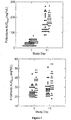
- Figure 1 depicts a symmetrical dot plot of AUC 0- ⁇ estimates by study day-circles indicate smokers, triangles indicate nonsmokers.
- the present invention is as defined in the claims and relates to fluvoxamine for use in a therapeutic method for treating a patient in need thereof wherein the patient is administered a dosage of pirfenidone that is decreased relative to a patient not taking fluvoxamine.
- pirfenidone and other strong inhibitors of CYP1A2 are disclosed herein, they are included merely for reference purposes.
- Pirfenidone is an orally active, anti-fibrotic agent.
- Oral administration of pirfenidone results in the formation of four metabolites, 5 hydroxymethyl-pirfenidone, 5 carboxy-pirfenidone, 4'-hydroxy-pirfenidone, and the 5 O-acyl glucuronide metabolite of 5 carboxy-pirfenidone.
- 5 hydroxymethyl-pirfenidone 5 carboxy-pirfenidone
- 4'-hydroxy-pirfenidone 4'-hydroxy-pirfenidone
- the 5 O-acyl glucuronide metabolite of 5 carboxy-pirfenidone In humans, only pirfenidone and 5-carboxy-pirfenidone are present in plasma in significant quantities; none of the other metabolites occur in sufficient quantities to allow for PK analysis. There are no unique human metabolites.
- Fluvoxamine is a potent CYP1A2 and CYP2C19 inhibitor, and a moderate CYP2C9, CYP2D6, and CYP3A4 inhibitor [ Hemeryck et al., Selective Serotonin Reuptake Inhibitors and Cytochrome P-450 Mediated Drug-Drug Interactions: An Update. Current Drug Metabolism 3(1): 13-37, 2002 ].
- the invention disclosed herein is based on the discovery of an adverse drug interaction between pirfenidone and fluvoxamine. Adverse drug interactions represent 3-5% of preventable in-hospital adverse drug reactions, and are an important contributor to the number of emergency room visits and hospital admissions [ Leape LL et al., JAMA 1995;274(1):35-43 ; Raschetti R et al. Eur J Clin Pharmacol 1999;54(12):959-963 ].
- terapéuticaally effective amount refers to an amount of a compound sufficient to treat, ameliorate, or prevent the identified disease or condition, or to exhibit a detectable therapeutic, prophylactic, or inhibitory effect. The effect can be detected by, for example, an improvement in clinical condition, or reduction in symptoms.
- the precise effective amount for a subject will depend upon the subject's body weight, size, and health; the nature and extent of the condition; and the therapeutic or combination of therapeutics selected for administration.
- a "therapeutically effective amount” refers to the dosage approved by the FDA or its counterpart foreign agency for treatment of the identified disease or condition.
- a patient "in need of pirfenidone therapy” is a patient who would benefit from administration of pirfenidone.
- the patient may be suffering from any disease or condition for which pirfenidone therapy may be useful in ameliorating symptoms.
- Such diseases or conditions include pulmonary fibrosis, idiopathic pulmonary fibrosis, idiopathic interstitial pneumonia, autoimmune lung diseases, benign prostate hypertrophy, coronary or myocardial infarction, atrial fibrillation, cerebral infarction, myocardiac fibrosis, musculoskeletal fibrosis, post-surgical adhesions, liver cirrhosis, renal fibrotic disease, fibrotic vascular disease, scleroderma, Hermansky-Pudlak syndrome, neurofibromatosis, Alzheimer's disease, diabetic retinopathy, and/or skin lesions, lymph node fibrosis associated with HIV, chronic obstructive pulmonary disease (COPD), inflammatory pulmonary fibrosis, rheumatoid arthritis; rheumatoid spondylitis; osteoarthritis; gout, other arthritic conditions; sepsis; septic shock; endotoxic shock; gram-negative seps
- the methods of the embodiments can be used to treat proliferative disorders (including both benign and malignant hyperplasias), including acute myelogenous leukemia, chronic myelogenous leukemia, Kaposi's sarcoma, metastatic melanoma, multiple myeloma, breast cancer, including metastatic breast carcinoma; colorectal.
- proliferative disorders including both benign and malignant hyperplasias
- acute myelogenous leukemia chronic myelogenous leukemia, Kaposi's sarcoma, metastatic melanoma, multiple myeloma
- breast cancer including metastatic breast carcinoma; colorectal.
- NSCLC non-small cell lung cancer
- pain disorders including neuromuscular pain, headache, cancer pain, dental pain, and arthritis pain
- angiogenic disorders including solid tumor angiogenesis, ocular neovascularization, and infantile hemangioma
- conditions associated with the cyclooxygenase and lipoxygenase signaling pathways including conditions associated with prostaglandin endoperoxide synthase-2 (including edema, fever, analgesia, and pain)
- organ hypoxia including thrombin-induced platelet aggregation; protozoal diseases.
- a patient in need of “fluvoxamine therapy” is understood to be a patient in need of “selective serotonin reuptake inhibitor (SSRI) therapy.”
- SSRI serotonin reuptake inhibitor
- Such patients include patients suffering from social anxiety disorder (social phobia), obsessive compulsive disorder (OCD), depression, anxiety disorders, panic disorder and post-traumatic stress disorder.
- the FDA generally defines a "strong inhibitor” as one that caused a > 5-fold increase in the plasma AUC values or more than 80% decrease in clearance of CYP substrates (not limited to sensitive CYP substrate) in clinical evaluations.
- the FDA generally defines a "moderate inhibitor” as one that caused a > 2- but ⁇ 5-fold increase in the AUC values or 50-80% decrease in clearance of sensitive CYP substrates when the inhibitor was given at the highest approved dose and the shortest dosing interval in clinical evaluations.
- any of the disclosures herein including but not limited to providing pirfenidone for use in treating a patient, the use of pirfenidone in the manufacture of a medicament for treating a patient in need of pirfenidone therapy, and treatment methods involving the advice, warnings, discontinuation or dose titration downwards, the packages and kits, and/or the methods of preparing or packaging pirfenidone, the pirfenidone, uses, methods, packages, kits, advice, warnings, discontinuation or dose titration may apply not only to fluvoxamine but also to any other drug that is a moderate to strong inhibitor of CYP1A2.
- the pirfenidone for use in treating a patient, the use of pirfenidone in the manufacture of a medicament for treating a patient in need of pirfenidone therapy, and treatment methods involving the advice, warnings, discontinuation or dose titration downwards, the packages and kits, and/or the methods of preparing or packaging pirfenidone
- the pirfenidone uses, methods, packages, kits, advice, warnings, discontinuation or dose titration may apply not only to fluvoxamine but also to any other drug that is a strong inhibitor of CYP1A2 or a substrate for CYP1A2.
- CYP1A2 metabolizes many commonly used drugs including theophylline, imipramine, propranolol, and clozapine. These drugs are commonly referred to as “substrates” for CYP1A2. Additional CYP1A2 substrates include but are not limited to acetominophen, amitriptyline, caffeine, chlordiazepoxide, cinacalcet, clomipramine, clopidogrel, cyclobenzaprine, desipramine, diazepam, duloxetine, erlotinib, estradiol, flutamide, haloperidol, levobupivacaine, methadone, mirtazapine, naproxen, nortriptyline, olanzapine, ondansetron, ramelteon, riluzole, ropinirole, ropivacaine, tacrine, tizanidine, verapamil, and warfarin.
- Inhibitors of CYP1A2 include fluvoxamine, cimetidine, amiodarone, echinacea, enoxacin, norfloxacin, oral contraceptives, tacrine, ticlopidine, and many fluoroquinolone antibiotics.
- Moderate inhibitors of CYP1A2 include ciprofloxacin, mexiletine, propafenone and zileuton.
- Additional inhibitors of CYP1A2 include atazanavir, citalopram, clarithromycin, dilitiazem, erythromycin, ethinyl estradiol, isoniazid, ketoconazole, methoxsalen, nalidixic acid, norethindrone, omeprazole, paroxetine, tipranavir, and troleandomycin.
- inhibitors of CYP1A2 include acyclovir, caffeine, famotidine, flutamide, grapefruit juice, lidocaine, lomefloxacin, moclobemide, ofloxacin, perphenazine, phenacetin, propafenone, ropinirole, tocainide, and verapamil.
- the term "avoid” and forms thereof are contemplated to have as alternatives the terms abstain, desist, forbear, and refrain, and forms thereof. In some cases, the alternative terms will be equivalent.
- "avoiding” means “refraining from.” Merriam-Webster Online Dictionary, 11th ed., 24 November 2009 .
- the term “discontinue” and forms thereof are contemplated to have as alternatives the terms cease, stop, suspend, and quit.
- the avoiding and/or discontinuing steps can be performed in anticipation of pirfenidone therapy.
- impending or imminent pirfenidone administration can be the proximate cause of the avoiding and/or discontinuing steps.
- concurrent pirfenidone administration can be the proximate cause of discontinuing and/or further avoiding steps.
- the disclosure provides a method of administering pirfenidone therapy to a patient in need of pirfenidone therapy (e.g ., a patient with IPF), involving administering to the patient a therapeutically effective amount of pirfenidone, and avoiding or contraindicating administration of a CYP1A2 inhibitor.
- the CYP1A2 inhibitor is a strong CYP1A2 inhibitor.
- the CYP1A2 inhibitor is a moderate to strong CYP1A2 inhibitor.
- the disclosure provides a method of administering pirfenidone therapy to a patient in need of pirfenidone therapy (e.g ., a patient with IPF), involving administering to the patient a therapeutically effective amount of pirfenidone, and avoiding or contraindicating administration of a strong CYP1A2 inhibitor.
- pirfenidone therapy e.g ., a patient with IPF
- the disclosure provides a method of administering pirfenidone therapy to a patient in need of pirfenidone therapy (e.g ., a patient with IPF), involving administering to the patient a therapeutically effective amount of pirfenidone, and avoiding or contraindicating administration of a CYP1A2 substrate.
- pirfenidone therapy e.g ., a patient with IPF
- the disclosure provides a method of administering pirfenidone therapy to a patient in need of pirfenidone therapy, comprising discontinuing administration of a drug that is a moderate-strong inhibitor of CYP1A2.
- the disclosure provides a method of administering pirfenidone therapy to a patient in need of pirfenidone therapy, comprising discontinuing administration of a drug that is a moderate-strong inhibitor of CYP1A2 to avoid an adverse drug interaction, and administering a therapeutically effective amount ofpirfenidone.
- the disclosure provides a method of administering pirfenidone therapy to a patient in need of pirfenidone therapy, comprising discontinuing administration of a drug that is a strong CYP1A2 inhibitor to avoid an adverse drug interaction, and administering a therapeutically effective amount of pirfenidone.
- the invention provides a method of administering pirfenidone therapy to a patient in need of pirfenidone therapy, comprising discontinuing administration of a drug that is a CYP1A2 inhibitor, e.g. a moderate to strong CYP1A2 inhibitor.
- Disclosed is a method of administering a therapeutically effective amount of pirfenidone to a patient with IPF provides an improvement that comprises avoiding, contraindicating or discontinuing administration of the drug that is a CYP inhibitor and administering a therapeutically effective amount of pirfenidone.
- the drug that is a CYP inhibitor is discontinued concurrent with starting administration of pirfenidone. In other disclosures, the drug that is a CYP inhibitor is discontinued within at least 3 days to 1 month prior to or after starting pirfenidone therapy. This time period, for example, permits adequate time for tapering and withdrawal without adverse effects.
- pirfenidone for use in treating a patient in need of pirfenidone therapy, characterized in that the treating comprises avoiding, contraindicating or discontinuing concomitant use (or co-administration) of a strong CYP1A2 inhibitor; or a moderate to strong CYP1A2 inhibitor.
- the concomitant use of the CYP1A2 inhibitor is avoided, contraindicated or discontinued, in order to avoid reduced clearance of pirfenidone, or the potential for reduced clearance of pirfenidone.
- the concomitant use of the CYP1A2 inhibitor is avoided, contraindicated or discontinued, in order to avoid increased exposure to pirfenidone, or the potential for increased exposure to pirfenidone.
- Administration of pirfenidone in patients that concomitantly use or are being administered fluvoxamine results in about a 6-fold increase in pirfenidone exposure. It is understood that any disclosures herein with respect to methods of treatment apply to this disclosure that provides pirfenidone for use in treating a patient.
- the patient may be a patient with IPF, and the therapeutically effective amount administered may be 2400 or 2403 mg per day.
- a further disclosure provides the use of pirfenidone in the manufacture of a medicament for treating a patient in need of pirfenidone therapy, characterized in that the treating comprises avoiding, contraindicating or discontinuing concomitant use (or co-administration) of a CYP1A2 inhibitor.
- the disclosure with respect to methods of treatment or "pirfenidone for use" in treating a patient apply to the disclosure that provides for the use of pirfenidone in manufacture of a medicament.
- the patient may be a patient with IPF, and the therapeutically effective amount administered may be 2400 or 2403 mg per day.
- the patient is a patient in need of therapy with a CYP1A2 inhibitor. In some disclosures, the patient is a patient in need of therapy with a strong CYP1A2 inhibitor. In some disclosures, the patient is a patient in need of therapy with a moderate to strong CYP1A2 inhibitor. In some disclosures, the patient is a patient in need of therapy with a drug that is a moderate-strong inhibitor of CYP1A2. In some embodiments, the patient is a patient in need of fluvoxamine therapy. In some disclosures, the patient is a patient who is avoiding concomitant use of the CYP1A2 inhibitor, e.g.
- the patient is a patient who was or is being administered the CYP1A2 inhibitor. In some disclosures, the patient is a patient who is discontinuing use of the CYP1A2 inhibitor prior to the initiation of pirfenidone therapy in order to avoid reduced clearance (or increased exposure to) pirfenidone, or the potential for reduced clearance of (or increased exposure to) pirfenidone.
- the patient is a patient who is discontinuing administration of the the CYP1A2 inhibitor, within 1 month, or within 2 weeks, prior to starting pirfenidone therapy, or concurrent with starting pirfenidone therapy. It is understood that the disclosuresdescribed herein with respect to methods of treatment apply to this disclosuresthat provides for characterization of the patients to be treated with pirfenidone.
- the concomitant use of the CYP1A2 inhibitor is avoided, contraindicated or discontinued in order to:
- fluvoxamine is discontinued within at least 3 days prior to or after starting pirfenidone therapy.
- fluvoxamine is discontinued within at least 4 days, or at least 5 days, or at least 6 days, or at least 7 days (or one week), or at least 8 days, or at least 9 days, or at least 10 days, or at least 11 days, or at least 12 days, or at least 13 days, or at least 14 days (or two weeks), or at least 15 days, or at least 16 days, or at least 17 days, or at least 18 days, or at least 19 days, or at least 20 days, or at least 21 days (or three weeks), or at least 22 days, or at least 23 days, or at least 24 days, or at least 25 days, or at least 26 days, or at least 27 days, or at least 28 days (or four weeks), or at least 29 days, or at least 30 days, or at least one month, prior to or after starting pirfenidone therapy.
- fluvoxamine is discontinued within at least 4 days, or at least 5 days, or at least
- the drug being discontinued is a CYP inhibitor
- the drug is discontinued within at least 3 days prior to or after starting pirfenidone therapy.
- the drug that is a CYP inhibitor is discontinued within at least 4 days, or at least 5 days, or at least 6 days, or at least 7 days (or one week), or at least 8 days, or at least 9 days, or at least 10 days, or at least 11 days, or at least 12 days, or at least 13 days, or at least 14 days (or two weeks), or at least 15 days, or at least 16 days, or at least 17 days, or at least 18 days, or at least 19 days, or at least 20 days, or at least 21 days (or three weeks), or at least 22 days, or at least 23 days, or at least 24 days, or at least 25 days, or at least 26 days, or at least 27 days, or at least 28 days (or four weeks), or at least 29 days, or at least 30 days, or at least one month, prior to or after starting pirfenidone therapy
- the drug that is a CYP inhibitor is discontinued no earlier than one month, 3 weeks, 2 weeks or 1 week before starting pirfenidone therapy. Preferably, sufficient time is allowed for tapering and/or withdrawal of the drug upon discontinuation.
- Some disclosures provide a method of administering pirfenidone therapy to a patient in need of pirfenidone therapy, comprising discontinuing administration of the CYP1A2 substrate to avoid an adverse drug interaction and administering a therapeutically effective amount of pirfenidone.
- the drug that is a CYP1A2 substrate is discontinued concurrent with starting administration of pirfenidone.
- the drug that is a CYP1A2 substrate is discontinued within at least 3 days to 1 month prior to or after starting pirfenidone therapy. This time period, for example, permits adequate time for tapering and withdrawal without adverse effects.
- the CYP1A2 substrate is discontinued within at least 3 days prior to or after starting pirfenidone therapy.
- the CYP1A2 substrate is discontinued within at least 4 days, or at least 5 days, or at least 6 days, or at least 7 days (or one week), or at least 8 days, or at least 9 days, or at least 10 days, or at least 11 days, or at least 12 days, or at least 13 days, or at least 14 days (or two weeks), or at least 15 days, or at least 16 days, or at least 17 days, or at least 18 days, or at least 19 days, or at least 20 days, or at least 21 days (or three weeks), or at least 22 days, or at least 23 days, or at least 24 days, or at least 25 days, or at least 26 days, or at least 27 days, or at least 28 days (or four weeks), or at least 29 days, or at least 30 days, or at least one month, prior to or
- the CYP1A2 substrate is discontinued no earlier than one month, 3 weeks, 2 weeks or 1 week before starting pirfenidone therapy. Preferably, sufficient time is allowed for tapering and/or withdrawal of the CYP1A2 substrate therapy.
- Some disclosures provide a method of administering pirfenidone therapy to a patient in need of pirfenidone therapy and in need of therapy with a drug that is a moderate-strong inhibitor of CYP1A2 comprising administering a therapeutically effective amount of pirfenidone to the patient, and administering an alternative therapy that is not a moderate-strong inhibitor of CYP1A2.
- Another disclosure provides a method of administering pirfenidone therapy to a patient in need of pirfenidone therapy and in need of therapy with a drug that is a moderate-strong inhibitor of CYP1A2.
- Some disclosures provide a method of administering pirfenidone therapy to a patient in need of pirfenidone therapy and in need of therapy with a drug that is a moderate-strong inhibitor of CYP1A2 comprising administering a therapeutically effective amount of pirfenidone to the patient, and administering an alternative therapy that is not a moderate-strong inhibitor of CYP1A2.
- Other disclosures provide a method of administering pirfenidone therapy to a patient in need of pirfenidone therapy and in need of therapy with a drug that is a strong CYP1A2 inhibitor, comprising administering a therapeutically effective amount ofpirfenidone to the patient, and administering an alternative therapy that is not a strong CYP1A2 inhibitor.
- Yet other disclosures provide a method of administering pirfenidone therapy to a patient in need of pirfenidone therapy and in need of therapy with a drug that is a CYP1A2 substrate, comprising administering a therapeutically effective amount of pirfenidone to the patient, and administering an alternative therapy that is not a CYP1A2 substrate.
- the administration of a therapeutically effective amount of pirfenidone to a patient in need of pirfenidone therapy can be improved.
- the patient is advised that co-administration of pirfenidone with drugs that are a moderate-strong inhibitor of CYP1A2 can alter the therapeutic effect or adverse reaction profile of pirfenidone.
- the patient is advised that co-administration of pirfenidone with fluvoxamine can alter the therapeutic effect or adverse reaction profile of pirfenidone.
- the patient is advised that co-administration of pirfenidone with drugs that are a moderate-strong inhibitor of CYP1A2 can alter the therapeutic effect or adverse reaction profile of pirfenidone.
- the patient is advised that co-administration of pirfenidone with a drug that is a strong CYP1A2 inhibitor can alter the therapeutic effect or adverse reaction profile of pirfenidone. In some disclosures, the patient is advised that co-administration of pirfenidone with a drug that is a CYP1A2 substrate can alter the therapeutic effect or adverse reaction profile of pirfenidone.
- the patient is advised that use of pirfenidone in patients being treated with fluvoxamine is contraindicated. In some disclosures, the patient is advised that co-administration of pirfenidone and fluvoxamine resulted in a 6-fold increase in exposure to pirfenidone.
- the patient is advised that use of pirfenidone in patients being treated with a drug that is a moderate-strong inhibitor of CYP1A2 is contraindicated. In some disclosures, the patient is advised that pirfenidone should be used with caution in patients taking a drug that is a moderate-strong inhibitor of CYP1A2.
- the patient is advised that use of pirfenidone in patients being treated with a drug that is a moderate-strong inhibitor of CYP1A2 is contraindicated. In some disclosures, the patient is advised that pirfenidone should be used with caution in patients taking a drug that is a moderate-strong inhibitor of CYP1A2.
- a method of administering pirfenidone and fluvoxamine concurrently wherein the patient is administered a therapeutically effective amount of fluvoxamine and a dosage of pirfenidone that is decreased relative to a patient not taking fluvoxamine.
- a decreased dosage of pirfenidone is less than 2400 mg/day.
- the decreased dosage is about 2136 mg per day, 1869 mg per day, 1602 mg per day, 1335 mg per day, or 1068 mg per day ( e.g ., 8, 7, 6, 5, 4, or 3 capsules per day where each capsule is approximately 267 mg).
- the patient is already being administered fluvoxamine.
- the patient is already being administered pirfenidone.
- the dosage of pirfenidone is decreased prior to administration of fluvoxamine.
- a method of administering pirfenidone and a drug that is a moderate-strong inhibitor of CYP1A2 concurrently wherein the patient is administered a therapeutically effective amount of the drug that is a CYP inhibitor and a dosage of pirfenidone that is decreased relative to a patient not taking such drug that is a CYP inhibitor.
- a decreased dosage of pirfenidone is less than 2400 mg/day.
- the decreased dosage is about 2136 mg per day, 1869 mg per day, 1602 mg per day, 1335 mg per day, or 1068 mg per day ( e.g ., 8, 7, 6, 5, 4, or 3 capsules per day where each capsule is approximately 267 mg).
- the patient is already being administered the drug that is a CYP inhibitor.
- the patient is already being administered pirfenidone.
- the dosage of pirfenidone is decreased prior to administration of the drug that is a CYP inhibitor.
- a method of administering pirfenidone and a drug that is a moderate-strong inhibitor of CYP1A2 concurrently wherein the patient is administered a therapeutically effective amount of the drug that is a CYP inhibitor and a dosage of pirfenidone that is decreased relative to a patient not taking such drug that is a CYP inhibitor.
- a method of administering pirfenidone and a drug that is a moderate-strong inhibitor of CYP1A2 concurrently wherein the patient is administered a therapeutically effective amount of the drug that is a CYP inhibitor and a dosage of pirfenidone that is decreased relative to a patient not taking such drug that is a CYP inhibitor.
- a decreased dosage of pirfenidone is less than 2400 mg/day.
- the decreased dosage is about 2136 mg per day, 1869 mg per day, 1602 mg per day, 1335 mg per day, or 1068 mg per day ( e.g ., 8, 7, 6, 5, 4, or 3 capsules per day where each capsule is approximately 267 mg).
- the patient is already being administered the drug that is a CYP inhibitor.
- the patient is already being administered pirfenidone.
- the dosage of pirfenidone is decreased prior to administration of the drug that is a CYP inhibitor.
- a method of administering pirfenidone and a strong CYP1A2 inhibitor concurrently wherein the patient is administered a therapeutically effective amount of the strong CYP1A2 inhibitor and a dosage of pirfenidone that is decreased relative to a patient not taking the strong CYP1A2 inhibitor.
- a decreased dosage of pirfenidone is less than 2400 mg/day.
- the decreased dosage is about 2136 mg per day, 1869 mg per day, 1602 mg per day, 1335 mg per day, or 1068 mg per day ( e.g ., 8, 7, 6, 5, 4, or 3 capsules per day where each capsule is approximately 267 mg).
- the patient is already being administered the strong CYP1A2 inhibitor.
- the patient is already being administered pirfenidone.
- the dosage of pirfenidone is decreased prior to administration of the strong CYP1A2 inhibitor.
- a method of administering pirfenidone and a CYP1A2 substrate concurrently wherein the patient is administered a therapeutically effective amount of the CYP1A2 substrate and a dosage of pirfenidone that is decreased relative to a patient not taking the CYP1A2 substrate.
- a decreased dosage of pirfenidone is less than 2400 mg/day.
- the decreased dosage is about 2136 mg per day, 1869 mg per day, 1602 mg per day, 1335 mg per day, or 1068 mg per day ( e.g ., 8, 7, 6, 5, 4, or 3 capsules per day where each capsule is approximately 267 mg).
- the patient is already being administered the CYP1A2 substrate. In other disclosures, the patient is already being administered pirfenidone. In related disclosures, the dosage of pirfenidone is decreased prior to administration of the CYP1A2 substrate.
- the amount of pirfenidone being administered is 2400 or 2403 mg/day.
- Pirfenidone can be dosed at a total amount of about 50 to about 2400 mg per day.
- the dosage can be divided into two or three doses over the day or given in a single daily dose.
- Specific amounts of the total daily amount of the therapeutic contemplated for the disclosed methods include about 50 mg, about 100 mg, about 150 mg, about 200 mg, about 250 mg, about 267 mg, about 300 mg, about 350 mg, about 400 mg, about 450 mg, about 500 mg, about 534 mg, about 550 mg, about 600 mg, about 650 mg, about 700 mg, about 750 mg, about 800 mg, about 850 mg, about 900 mg, about 950 mg, about 1000 mg, about 1050 mg, about 1068 mg, about 1100 mg, about 1150 mg, about 1200 mg, about 1250 mg, about 1300 mg, about 1335 mg, about 1350 mg, about 1400 mg, about 1450 mg, about 1500 mg, about 1550 mg, about 1600 mg, about 1650 mg, about 1700 mg, about 1750 mg, about 1800 mg, about 1850 mg, about 1869 mg, about 1900 mg, about 1950 mg, about 2000 mg, about 2050 mg, about 2100 mg, about 2136 mg, about 2150 mg, about 2200 mg, about 2250 mg,
- Dosages of pirfenidone can alternately be administered as a dose measured in mg/kg.
- Contemplated mg/kg doses of the disclosed therapeutics include about 1 mg/kg to about 40 mg/kg. Specific ranges of doses in mg/kg include about 1 mg/kg to about 20 mg/kg, about 5 mg/kg to about 20 mg/kg, about 10 mg/kg to about 20 mg/kg, about 10 mg/kg to about 30 mg/kg, and about 15 mg/kg to about 25 mg/kg.
- a dosage amount of pirfenidone is taken with food.
- the patient is instructed to administer the dosage of pirfenidone with food.
- a method of administering a SSRI to a patient in need thereof comprising discontinuing administration of fluvoxamine, for example, concurrent with starting administration of pirfenidone, and optionally administering an SSRI that is not a moderate to strong inhibitor of CYP1A2.
- a method of optimizing pirfenidone therapy comprising titrating the dosage of pirfenidone administered to a patient downward relative to a previously administered dosage in the patient, wherein co-administration of fluvoxamine to the patient does not result in an increased exposure to pirfenidone.
- the dose is reduced by about 100 mg/day.
- the dose is reduced by about 150 mg/day, or about 200 mg/day, or about 250 mg/day, or about 267 mg/day, or about 300 mg/day, or about 350 mg/day, or about 400 mg/day, or about 450 mg/day, or about 500 mg/day, or about 550 mg/day, or about 600 mg/day, or about 650 mg/day, or about 700 mg/day, or about 750 mg/day, or about 800 mg/day (to a total daily dose of about 1600 mg/day or 1602 mg/day), or about 850 mg/day, or about 900 mg/day, or about 950 mg/day, or about 1000 mg/day, or about 1050 mg/day, or about 1100 mg/day, or about 1150 mg/day, or about 1200 mg/day, or about 1250 mg/day, or about 1300 mg/day, or about 1350 mg/day, or about 1400 mg/day, or about 1450 mg/day, or about 1500 mg/day, or about 1600 mg/day (
- a method of optimizing pirfenidone therapy comprising titrating the dosage of pirfenidone administered to a patient downward relative to a previously administered dosage in the patient, wherein co-administration of a drug that is a moderate-strong inhibitor of CYP1A2 to the patient does not result in an increased exposure to pirfenidone.
- the dose is reduced by about 100 mg/day.
- the dose is reduced by about 150 mg/day, or about 200 mg/day, or about 250 mg/day, or about 267 mg/day, or about 300 mg/day, or about 350 mg/day, or about 400 mg/day, or about 450 mg/day, or about 500 mg/day, or about 550 mg/day, or about 600 mg/day, or about 650 mg/day, or about 700 mg/day, or about 750 mg/day, or about 800 mg/day (to a total daily dose of about 1600 mg/day or 1602 mg/day, or about 850 mg/day, or about 900 mg/day, or about 950 mg/day, or about 1000 mg/day, or about 1050 mg/day, or about 1100 mg/day, or about 1150 mg/day, or about 1200 mg/day, or about 1250 mg/day, or about 1300 mg/day, or about 1350 mg/day, or about 1400 mg/day, or about 1450 mg/day, or about 1500 mg/day, or about 1600 mg/day (
- a method of optimizing pirfenidone therapy comprising titrating the dosage of pirfenidone administered to a patient downward relative to a previously administered dosage in the patient, wherein co-administration of a drug that is a moderate-strong inhibitor of CYP1A2 to the patient does not result in an increased exposure to pirfenidone.
- a method of optimizing pirfenidone therapy comprising titrating the dosage of pirfenidone administered to a patient downward relative to a previously administered dosage in the patient, wherein co-administration of a drug that is a moderate-strong inhibitor of CYP1A2 to the patient does not result in an increased exposure to pirfenidone.
- the dose is reduced by about 100 mg/day.
- the dose is reduced by about 150 mg/day, or about 200 mg/day, or about 250 mg/day, or about 267 mg/day, or about 300 mg/day, or about 350 mg/day, or about 400 mg/day, or about 450 mg/day, or about 500 mg/day, or about 550 mg/day, or about 600 mg/day, or about 650 mg/day, or about 700 mg/day, or about 750 mg/day, or about 800 mg/day (to a total daily dose of about 1600 mg/day or 1602 mg/day), or about 850 mg/day, or about 900 mg/day, or about 950 mg/day, or about 1000 mg/day, or about 1050 mg/day, or about 1100 mg/day, or about 1150 mg/day, or about 1200 mg/day, or about 1250 mg/day, or about 1300 mg/day, or about 1350 mg/day, or about 1400 mg/day, or about 1450 mg/day, or about 1500 mg/day, or about 1600 mg/day (
- a method of optimizing pirfenidone therapy comprising titrating the dosage of pirfenidone administered to a patient downward relative to a previously administered dosage in the patient, wherein co-administration of a strong CYP1A2 inhibitor to the patient does not result in an increased exposure to pirfenidone.
- the dose is reduced by about 100 mg/day.
- the dose is reduced by about 150 mg/day, or about 200 mg/day, or about 250 mg/day, or about 267 mg/day, or about 300 mg/day, or about 350 mg/day, or about 400 mg/day, or about 450 mg/day, or about 500 mg/day, or about 550 mg/day, or about 600 mg/day, or about 650 mg/day, or about 700 mg/day, or about 750 mg/day, or about 800 mg/day (to a total daily dose of about 1600 mg/day or 1602 mg/day), or about 850 mg/day, or about 900 mg/day, or about 950 mg/day, or about 1000 mg/day, or about 1050 mg/day, or about 1100 mg/day, or about 1150 mg/day, or about 1200 mg/day, or about 1250 mg/day, or about 1300 mg/day, or about 1350 mg/day, or about 1400 mg/day, or about 1450 mg/day, or about 1500 mg/day, or about 1600 mg/day (
- a method of optimizing pirfenidone therapy comprising titrating the dosage of pirfenidone administered to a patient downward relative to a previously administered dosage in the patient, wherein co-administration of a CYP1A2 substrate to the patient does not result in an increased exposure to pirfenidone.
- the dose is reduced by about 100 mg/day.
- the dose is reduced by about 150 mg/day, or about 200 mg/day, or about 250 mg/day, or about 267 mg/day, or about 300 mg/day, or about 350 mg/day, or about 400 mg/day, or about 450 mg/day, or about 500 mg/day, or about 550 mg/day, or about 600 mg/day, or about 650 mg/day, or about 700 mg/day, or about 750 mg/day, or about 800 mg/day (to a total daily dose of about 1600 mg/day or 1602 mg/day), or about 850 mg/day, or about 900 mg/day, or about 950 mg/day, or about 1000 mg/day, or about 1050 mg/day, or about 1100 mg/day, or about 1150 mg/day, or about 1200 mg/day, or about 1250 mg/day, or about 1300 mg/day, or about 1350 mg/day, or about 1400 mg/day, or about 1450 mg/day, or about 1500 mg/day, or about 1600 mg/day (
- a method of administering pirfenidone therapy to a patient receiving fluvoxamine therapy comprising administering to the patient a therapeutically effective amount of fluvoxamine and administering to the patient a daily dosage of pirfenidone that is less than 2400 mg or 2403 mg per day, e.g. 1600 mg or 1602 mg per day.
- the dosage of pirfenidone is decreased prior to administration of fluvoxamine.
- the daily dosage of pirfenidone that is less than 2400 mg or 2403 mg per day may be, e.g. 1600 mg or 1602 mg per day.
- a method of optimizing pirfenidone therapy comprising titrating the dosage of pirfenidone administered to a patient downward relative to a previously administered dosage in the patient, wherein co-administration of fluvoxamine to the patient does not result in an increased exposure to pirfenidone. It is understood that, in such disclosures comprising dose titration downwards, upon discontinuation of fluvoxamine, the dosage is titrated back up to a dose that is not less than 2400 or 2403 mg/day.
- the packages and kits, and/or the methods of preparing or packaging pirfenidone uses, methods, packages, kits, advice, warnings, discontinuation or dose titration may apply not only to fluvoxamine but also to any other drug that is a moderate to strong inhibitor of CYP1A2 or any other drug that is a substrate for CYP1A2.
- a package or kit comprising pirfenidone, optionally in a container, and a package insert, package label, instructions or other labeling including any one, two, three or more of the following information or recommendations:
- the information or recommendation may include that co-administration of pirfenidone and fluvoxamine resulted in a 2-fold increase in average peak serum concentration of pirfenidone (Cmax).
- the information or recommendation may include that co-administration of pirfenidone with drugs that are moderate to strong inhibitors of CYP1A2 can alter the therapeutic effect or adverse reaction profile of pirfenidone. In other disclosures, the information or recommendation may include that co-administration of pirfenidone with drugs that are moderate to strong inhibitors of CYP1A2 can alter the therapeutic effect or adverse reaction profile of pirfenidone. In other disclosures, the information or recommendation may include that co-administration of pirfenidone with drugs that are strong CYP1A2 inhibitors can alter the therapeutic effect or adverse reaction profile of pirfenidone. In other disclosures, the information or recommendation may include that co-administration of pirfenidone with drugs that are CYP1A2 substrates can alter the therapeutic effect or adverse reaction profile of pirfenidone.
- the information or recommendation may include that drugs that are moderate to strong inhibitors of CYP1A2 should be avoided or discontinued, or are contraindicated, or should be used with caution. In yet further disclosures, the information or recommendation may include that administering a strong CYP1A2 inhibitor should be avoided or discontinued, or are contraindicated, or should be used with caution. In other disclosures, the information or recommendation may include that drugs that are CYP1A2 substrates should be avoided or discontinued, or are contraindicated, or should be used with caution.
- the package insert, package label, instructions or other labeling may further comprise directions for treating IPF by administering pirfenidone, e.g ., at a dosage of 2400 mg or 2403 mg per day.
- a related disclosure provides a method of preparing or packaging a pirfenidone medicament comprising packaging pirfenidone, optionally in a container, together with a package insert or package label or instructions including any one, two, three or more of the foregoing information or recommendations.
- a method of treating IPF comprising providing, selling or delivering any of the kits of disclosed herein to a hospital, physician or patient.
- kit comprising fluvoxamine and a package insert, package label, instructions, or other labeling comprising any one, two, three or more of the following warnings:
- a method of treating a patient in need of fluvoxamine comprising providing or delivering any of the kits disclosed herein comprising fluvoxamine to a hospital, physician or patient.
- a related disclosure provides a method of administering a SSRI to a patient in need thereof, the improvement comprising discontinuing administration of fluvoxamine, for example, concurrent with starting administration of pirfenidone, and optionally administering an SSRI that is not a moderate to strong inhibitor of CYP1A2.
- the study was a Phase 1, open-label, parallel-group study in healthy subjects. Fifty-four subjects were to be enrolled in two groups, consisting of 27 subjects who were smokers (Group 1) and 27 subjects who were nonsmokers (Group 2). Smoking induces CYP1A2 activity. Each group (smokers and nonsmokers) was to include a minimum of nine females and nine males, and attempts were to be made to enroll equal numbers of each sex in each group. Each subject was to receive a single 801-mg dose of pirfenidone on Days 1 and 11. Fluvoxamine dosing was started on Day 2 and titrated to the final dose according to the following schedule:
- PK analyses were conducted using population PK methods using Monte-Carlo parametric expectation maximization as implemented in the open-source software program S ADAPT 1.5.6 ( Bauer et al., AAPS Journal 9(1):E60-83, 2007 ).
- the structural model for the analysis was obtained from a preliminary population PK analysis. This population PK model was fit to the pirfenidone and 5 carboxy-pirfenidone plasma concentration-time data from Days 1 and 11 separately. Once a final population PK model was defined, AUC 0- ⁇ estimates were generated by simulating plasma PK profiles and compared for statistically significant differences between days (to test the effect of fluvoxamine co-administration) and between groups (to test the effect of smoking status).
- Pharmacokinetic Results Fifty-one of the 54 subjects enrolled in the study were included in the PK analyses. Three subjects were removed from the PK analyses as they did not meet the protocol-specified requirement for adequate compliance with the fluvoxamine dosing regimen. Two subjects discontinued the study early due to adverse events, and one subject only took 73% of the protocol-required fluvoxamine dose. All 51 subjects had the full complement of PK samples available for analysis. Each subject had two profiles on each day: one for pirfenidone and one for 5-carboxy pirfenidone. There were a total of 1224 samples (12 per subject per day); each sample was assayed for pirfenidone and 5-carboxy-pirfenidone for a total of 2448 concentrations.
- smoking status was the only significant predictor of the ratio of the pirfenidone AUC 0- ⁇ on Day 11 to the AUC 0- ⁇ on Day 1; body size, sex, and age were not significant.
Landscapes
- Health & Medical Sciences (AREA)
- Life Sciences & Earth Sciences (AREA)
- Veterinary Medicine (AREA)
- Chemical & Material Sciences (AREA)
- General Health & Medical Sciences (AREA)
- Public Health (AREA)
- Animal Behavior & Ethology (AREA)
- Pharmacology & Pharmacy (AREA)
- Medicinal Chemistry (AREA)
- Chemical Kinetics & Catalysis (AREA)
- Nuclear Medicine, Radiotherapy & Molecular Imaging (AREA)
- Organic Chemistry (AREA)
- General Chemical & Material Sciences (AREA)
- Engineering & Computer Science (AREA)
- Bioinformatics & Cheminformatics (AREA)
- Virology (AREA)
- Epidemiology (AREA)
- Neurology (AREA)
- Oncology (AREA)
- Biomedical Technology (AREA)
- Physical Education & Sports Medicine (AREA)
- Neurosurgery (AREA)
- Diabetes (AREA)
- Communicable Diseases (AREA)
- Hematology (AREA)
- Immunology (AREA)
- Rheumatology (AREA)
- Pulmonology (AREA)
- Orthopedic Medicine & Surgery (AREA)
- Cardiology (AREA)
- Molecular Biology (AREA)
- Pain & Pain Management (AREA)
- Natural Medicines & Medicinal Plants (AREA)
- Tropical Medicine & Parasitology (AREA)
- Heart & Thoracic Surgery (AREA)
- Biotechnology (AREA)
- Urology & Nephrology (AREA)
- Ophthalmology & Optometry (AREA)
- Hospice & Palliative Care (AREA)
- Obesity (AREA)
Description
- The invention relates to improved methods of administering pirfenidone therapy involving avoiding adverse drug interactions with fluvoxamine, a strong inhibitor of CYP1A2.
- Pirfenidone is small molecule with a molecular weight of 185.23 daltons whose chemical name is 5-methyl-1-phenyl-2-(1H)-pyridone. Pirfenidone has anti-fibrotic properties and has been investigated for therapeutic benefits to patients suffering from various fibrotic conditions. It is approved in Japan for treatment of idiopathic pulmonary fibrosis (IPF) under the trade name Pirespa®.
- Pirfenidone has been shown to be metabolized by various isoforms of the cytochrome P450 (CYP) protein [See the Report on the Deliberation Results, Evaluation and Licensing Division, Pharmaceutical and Food Safety Bureau, Ministry of Health Labour and Welfare, September 16, 2008]. Specifically, several cytochrome P450 (CYP) isoforms (CYP1A2, 2C9, 2C19, 2D6 and 2E1) were involved in the earliest stages of oxidative metabolism of pirfenidone.
- Fluvoxamine belongs to a class of therapeutics known as selective serotonin reuptake inhibitors (SSRIs). The SSRIs are a group of antidepressants with similar pharmacologic effects, but with different chemical structures. Fluvoxamine has been approved for treatment of social anxiety disorder (social phobia), obsessive compulsive disorder (OCD), and has been prescribed to treat major depression, and other anxiety disorders such as panic disorder and post-traumatic stress disorder [McClellan et al., (Drugs October 2000). "Fluvoxamine An Updated Review of its Use in the Management of Adults with Anxiety Disorders". Adis Drug Evaluation 60 (4): 925-954]. In addition to fluvoxamine, other clinically available SSRIs are citalopram, fluoxetine, paroxetine and sertraline. The elimination of these lipophilic compounds proceeds predominantly via oxidation catalysed by CYP in the liver. SSRIs have the potential for inhibition of CYP enzymes [Brosen, The pharmacogenetics of the selective serotonin reuptake inhibitors. Clin Invest 71(12):1002-1009, 1993]. Jeppesen et al. reported that fluvoxamine is a potent inhibitor of CYP1A2 in humans in vivo [Jeppesen et al., Dose-dependent inhibition of CYP1A2, CYP2C19 and CYP2D6 by citalopram, fluoxetine, fluvoxamine and paroxetine. Eur J Clin Pharmacol 51: 73-78, 1996]. Fluvoxamine has also been shown to be a very potent inhibitor of CYP1A2 in vitro [Brosen et al., Fluvoxamine is a potent inhibitor of cytochrome P4501A2. Biochem Pharmacol 45:1211-1214, 1993; Rasmussen et al., Selective serotonin reuptake inhibitors and theophylline metabolism in human liver microsomes: potent inhibition by fluvoxamine. Br J Clin Pharmacol 39:151-159, 1995].
- The invention disclosed herein is based on the discovery of an adverse drug interaction between pirfenidone and fluvoxamine.
- The present invention is as defined in the claims and relates to fluvoxamine for use in a therapeutic method for treating a patient in need thereof wherein the patient is administered a dosage of pirfenidone that is decreased relative to a patient not taking fluvoxamine.
- To the extent that other uses of pirfenidone and other strong inhibitors of CYP1A2 are disclosed herein, they are included merely for reference purposes.
- Also disclosed are improved uses and methods of administering pirfenidone to a patient in need of pirfenidone therapy, and methods of preparing or packaging pirfenidone medicaments, containers, packages and kits. In any of the aspects or embodiments, the patient may have idiopathic pulmonary fibrosis (IPF) and the medicament is for treatment of IPF. In any of the aspects or embodiments, the therapeutically effective amount of pirfenidone being administered may be a daily dosage of 2400 mg or 2403 mg per day. In any of the aspects of the invention, the daily dosage may be administered in divided doses three times a day, or two times a day, or alternatively is administered in a single dose once a day. In any of the aspects of the invention, the pirfenidone may be administered with food. For example, the daily dosage of 2400 mg or 2403 mg pirfenidone per day may be administered as follows: 801 mg taken three times a day, with food.
- Also disclosed is a method of administering pirfenidone therapy to a patient in need of pirfenidone therapy (e.g., a patient with IPF), involving administering to the patient a therapeutically effective amount of pirfenidone, and avoiding administration of fluvoxamine despite the patient being in need of fluvoxamine therapy.
- Also disclosed is a method of administering pirfenidone therapy to a patient in need of pirfenidone therapy, comprising discontinuing administration of fluvoxamine to avoid an adverse drug interaction and administering a therapeutically effective amount of pirfenidone. In one disclosure, the patient is in need of and thus is receiving fluvoxamine, and fluvoxamine is discontinued concurrent with starting administration of pirfenidone. In another disclosure, fluvoxamine is discontinued within at least 3 days to 1 month prior to or after starting pirfenidone therapy. This time period, for example, permits adequate time for tapering and withdrawal without adverse effects. In one example, in a method of administering a therapeutically effective amount of pirfenidone to a patient with IPF, the disclosure provides an improvement that comprises avoiding or discontinuing administration of fluvoxamine and administering a therapeutically effective amount of pirfenidone.
- As used herein, an adverse drug interaction can include reduced clearance of pirfenidone, the potential for reduced clearance of pirfenidone, increased exposure to pirfenidone, or the potential for increased exposure to pirfenidone.
- Thus, also disclosed is the provision of pirfenidone for use in treating a patient in need of pirfenidone therapy, characterized in that the treating comprises avoiding, contraindicating or discontinuing concomitant use (or co-administration) of fluvoxamine. In some disclosures, the concomitant use of fluvoxamine is avoided, contraindicated or discontinued, in order to avoid reduced clearance of pirfenidone, or the potential for reduced clearance of pirfenidone. In some disclosures, the concomitant use of fluvoxamine is avoided, contraindicated or discontinued, in order to avoid increased exposure to pirfenidone, or the potential for increased exposure to pirfenidone. Administration of pirfenidone in patients that concomitantly use or are being administered fluvoxamine results in about a 6-fold increase in pirfenidone exposure. It is understood that any of the aspects or embodiments or examples disclosed herein with respect to methods of treatment apply to this disclosure that provides pirfenidone for use in treating a patient. For example, the patient may be a patient with IPF, and the therapeutically effective amount administered may be 2400 or 2403 mg per day.
- Similarly, a further disclosure provides the use of pirfenidone in the manufacture of a medicament for treating a patient in need of pirfenidone therapy, characterized in that the treating comprises avoiding, contraindicating or discontinuing concomitant use (or co-administration) of fluvoxamine. It is understood that any of the aspects or embodiments or examples disclosed herein with respect to methods of treatment or "pirfenidone for use" in treating a patient apply to this aspect of the disclosure that provides for the use of pirfenidone in manufacture of a medicament. For example, the patient may be a patient with IPF, and the therapeutically effective amount administered may be 2400 or 2403 mg per day.
- As used herein, "concomitant use" is understood to be interchangeable with concurrent administration or co-administration. Thus, the terms are understood to encompass administration simultaneously, or at different times, and by the same route or by different routes, as long as the two agents are given in a manner that allows both agents to be affecting the body at the same time. For example, concomitant use can refer to a medication concomitantly administered, whether prescribed by the same or a different practitioner, or for the same or a different indication.
- Also disclosed, is a patient in need of therapy with a CYP1A2 inhibitor. In some disclosures, the patient is a patient in need of therapy with a strong CYP1A2 inhibitor, or a moderate to strong CYP1A2 inhibitor. In some disclosures, the patient is a patient in need of fluvoxamine therapy. In some disclosures, the patient is a patient who is avoiding concomitant use of fluvoxamine, e.g. because concomitant use of pirfenidone with fluvoxamine is contraindicated. In some disclosures, the patient is a patient who was or is being administered a strong CYP1A2 inhibitor, or a moderate to strong CYP1A2 inhibitor, e.g. fluvoxamine. In some disclosures, the patient is a patient who has discontinued use of a strong CYP1A2 inhibitor, or a moderate to strong CYP1A2 inhibitor prior to the initiation of pirfenidone therapy in order to avoid reduced clearance (or increased exposure to) pirfenidone, or the potential for reduced clearance of (or increased exposure to) pirfenidone. In some disclosures, the patient is a patient who has discontinued use of fluvoxamine prior to the initiation of pirfenidone therapy in order to avoid reduced clearance of pirfenidone, or the potential for reduced clearance of pirfenidone. In some disclosures, the patient is a patient who has discontinued use of fluvoxamine prior to the initiation of pirfenidone therapy in order to avoid increased exposure to pirfenidone, or the potential for increased exposure to pirfenidone. In some disclosures, the patient is a patient who has discontinued administration of the strong CYP1A2 inhibitor, or moderate to strong CYP1A2 inhibitor, e.g., fluvoxamine, within 1 month, or within 2 weeks, prior to starting pirfenidone therapy, or concurrent with starting pirfenidone therapy. It is understood that any of the aspects or embodiments or examples disclosed herein with respect to methods of treatment apply to this aspect of the disclosure that provides for characterization of the patients to be treated with pirfenidone.
- In yet other disclosures, a method of administering pirfenidone therapy to a patient in need of pirfenidone therapy and in need of fluvoxamine therapy is provided, comprising administering a therapeutically effective amount of pirfenidone to the patient, and administering an alternative therapy that is not fluvoxamine. In one disclosure, the alternative therapy that is not fluvoxamine is a drug that is not a strong or moderate to strong inhibitor of cytochrome P450 1A2 (CYP1A2). Preferably, such drug is not a moderate to strong inhibitor of both CYP1A2, and another CYP enzyme selected from the group consisting of CYP3A4, CYP2C9, and/or CYP2C19. In some disclosures, the alternative drug is selected from the group consisting of Citalopram (Celexa), Escitalopram (Lexapro), Fluoxetine (Prozac, Prozac Weekly), Paroxetine (Paxil, Paxil CR, Pexeva), and/or Sertraline (Zoloft) .
- In some disclosures, the invention provides a method of administering pirfenidone therapy to a patient in need of pirfenidone therapy (e.g., a patient with IPF), involving administering to the patient a therapeutically effective amount of pirfenidone, and advising the patient in any one, two, three or more of the following ways:
- (a) advising the patient that fluvoxamine should be avoided or discontinued,
- (b) advising the patient that co-administration of pirfenidone with drugs that are moderate to strong inhibitors of CYP1A2 can alter the therapeutic effect or adverse reaction profile of pirfenidone,
- (c) advising the patient that co-administration of pirfenidone with fluvoxamine can alter the therapeutic effect or adverse reaction profile of pirfenidone,
- (d) advising the patient that use of pirfenidone in patients being treated with fluvoxamine is contraindicated,
- (e) advising the patient that co-administration of pirfenidone and fluvoxamine resulted in an average 6-fold increase in exposure to pirfenidone, and/or.
- (f) advising the patient that strong CYP1A2 inhibitors should be used with caution in patients receiving pirfenidone due to the potential for reduced pirfenidone clearance.
- In some disclosures, the method further includes advising the patient that co-administration of pirfenidone and fluvoxamine resulted in a 2-fold increase in average peak serum concentration of pirfenidone (Cmax). In yet further disclosures, the method also includes avoiding administering a strong CYP1A2 inhibitor, or discontinuing administration of a strong CYP1A2 inhibitor.
- In some disclosures, a method of reducing toxicity of pirfenidone treatment in a patient is provided comprising administering a therapeutically effective amount of pirfenidone to the patient and advising the patient of any of the foregoing advice.
- In some disclosures, a method of improving safety of pirfenidone treatment in a patient is provided comprising administering a therapeutically effective amount of pirfenidone to the patient and advising the patient of any of the foregoing advice.
- In some disclosures, a method of reducing adverse drug interaction with pirfenidone treatment in a patient is provided comprising administering a therapeutically effective amount of pirfenidone to the patient and advising the patient of any of the foregoing advice.
- Thus, in some disclosures, the concomitant use of fluvoxamine is avoided, contraindicated or discontinued in order to:
- (a) avoid altering the therapeutic effect profile of pirfenidone, and/or
- (b) avoid altering the adverse reaction profile of pirfenidone, and/or
- (c) avoid the increased exposure or potential for increased exposure, and/or
- (d) avoid the reduced clearance or potential for reduced clearance, and/or
- (e) avoid the average 6-fold increase in exposure to pirfenidone upon concomitant administration with fluvoxamine, and/or
- (f) avoid the average 2-fold increase in average peak serum concentration of pirfenidone (Cmax) upon concomitant administration with fluvoxamine, and/or
- (g) reduce toxicity of pirfenidone treatment, and/or
- (h) improve safety of pirfenidone treatment, and/or
- (i) reduce adverse drug interaction associated with pirfenidone treatment.
- Landi et al. (IARC Scientific Publications 148:173-195, 1999) relates to CYP1A2, a member of the cytochrome P450 superfamily, which is involved in the metabolic activation of several carcinogens, among them aromatic and heterocyclic amines, nitroaromatic compounds, mycotoxins and estrogens.
- Jeppesen et al. (European Journal of Clinical Pharmacology 51(1):73-78, 1996) relates to investigating the dose-dependent inhibition of model substrates for CYP2D6, CYP2C19 and CYP1A2 by four marketed selective serotonin reuptake inhibitors (SSRIs): citalopram, fluoxetine, fluvoxamine and paroxetine.
- Evaluation and Licensing Division, Pharmaceutical and Food Safety Bureau, Ministry of Health, Labour and Welfare (2008) relates to the results of a regulatory review conducted by the Pharmaceutical and Medical Devices Agency regarding pirfenidone.
- Banu (Clinical Review, NDA 55-535, 2010) relates to the meeting of the Pulmonary-Allergy Drugs Advisory Committee.
- Intermune, Inc: Pirfenidone Briefing Document (2010) relates to the briefing documents posted for the U.S. Food and Drug Administration Advisory Committee Meeting on pirfenidone.
- Kroon (American Journal of Health-System Pharmacy 64(18):1917-1921, 2007) relates to a review of the mechanisms for drug interactions with smoking and clinically significant pharmacokinetic and pharmacodynamic drug interactions with smoking.
- Hemeryck et al. (Current Drug Metabolism 3(1):13-37, 2002) relates to in vitro and in vivo evidence of the potential of SSRIs to cause CYP-mediated drug-drug interactions.
-
Figure 1 depicts a symmetrical dot plot of AUC0-∝ estimates by study day-circles indicate smokers, triangles indicate nonsmokers. - The present invention is as defined in the claims and relates to fluvoxamine for use in a therapeutic method for treating a patient in need thereof wherein the patient is administered a dosage of pirfenidone that is decreased relative to a patient not taking fluvoxamine. To the extent that other uses of pirfenidone and other strong inhibitors of CYP1A2 are disclosed herein, they are included merely for reference purposes.
- Pirfenidone is an orally active, anti-fibrotic agent. Results of in vitro experiments indicated that pirfenidone is primarily metabolized by CYP1A2 (approx. 48%) with multiple other CYPs contributing as well (each <13%) (i.e., 1A1, 2A6, 2B6, 2C8, 2C9, 2C18, 2C19, 2D6, 2E1, 2J2, 3A4, 3A5, 4A11, and 4F2). Oral administration of pirfenidone results in the formation of four metabolites, 5 hydroxymethyl-pirfenidone, 5 carboxy-pirfenidone, 4'-hydroxy-pirfenidone, and the 5 O-acyl glucuronide metabolite of 5 carboxy-pirfenidone. In humans, only pirfenidone and 5-carboxy-pirfenidone are present in plasma in significant quantities; none of the other metabolites occur in sufficient quantities to allow for PK analysis. There are no unique human metabolites.
- Fluvoxamine is a potent CYP1A2 and CYP2C19 inhibitor, and a moderate CYP2C9, CYP2D6, and CYP3A4 inhibitor [Hemeryck et al., Selective Serotonin Reuptake Inhibitors and Cytochrome P-450 Mediated Drug-Drug Interactions: An Update. Current Drug Metabolism 3(1): 13-37, 2002].
- The invention disclosed herein is based on the discovery of an adverse drug interaction between pirfenidone and fluvoxamine. Adverse drug interactions represent 3-5% of preventable in-hospital adverse drug reactions, and are an important contributor to the number of emergency room visits and hospital admissions [Leape LL et al., JAMA 1995;274(1):35-43; Raschetti R et al. Eur J Clin Pharmacol 1999;54(12):959-963].
- Data reported herein show that co-administration of pirfenidone with fluvoxamine resulted in an average 6-fold increase in exposure (AUC, or area under the curve) to pirfenidone. It also resulted in an average 2-fold increase in Cmax, the mean maximum plasma concentration. Depending on the circumstances, FDA draft guidance suggests that a drug-drug interaction is present when comparisons indicate twofold or greater systemic exposure for a drug when given in combination with the second drug, compared to when given alone. FDA Preliminary Concept Paper, "Drug Interaction Studies - Study Design, Data Analysis, and Implications for Dosing and Labeling," October 1, 2004.
- The terms "therapeutically effective amount," as used herein, refer to an amount of a compound sufficient to treat, ameliorate, or prevent the identified disease or condition, or to exhibit a detectable therapeutic, prophylactic, or inhibitory effect. The effect can be detected by, for example, an improvement in clinical condition, or reduction in symptoms. The precise effective amount for a subject will depend upon the subject's body weight, size, and health; the nature and extent of the condition; and the therapeutic or combination of therapeutics selected for administration. Where a drug has been approved by the U.S. Food and Drug Administration (FDA), a "therapeutically effective amount" refers to the dosage approved by the FDA or its counterpart foreign agency for treatment of the identified disease or condition.
- As used herein, a patient "in need of pirfenidone therapy" is a patient who would benefit from administration of pirfenidone. The patient may be suffering from any disease or condition for which pirfenidone therapy may be useful in ameliorating symptoms. Such diseases or conditions include pulmonary fibrosis, idiopathic pulmonary fibrosis, idiopathic interstitial pneumonia, autoimmune lung diseases, benign prostate hypertrophy, coronary or myocardial infarction, atrial fibrillation, cerebral infarction, myocardiac fibrosis, musculoskeletal fibrosis, post-surgical adhesions, liver cirrhosis, renal fibrotic disease, fibrotic vascular disease, scleroderma, Hermansky-Pudlak syndrome, neurofibromatosis, Alzheimer's disease, diabetic retinopathy, and/or skin lesions, lymph node fibrosis associated with HIV, chronic obstructive pulmonary disease (COPD), inflammatory pulmonary fibrosis, rheumatoid arthritis; rheumatoid spondylitis; osteoarthritis; gout, other arthritic conditions; sepsis; septic shock; endotoxic shock; gram-negative sepsis; toxic shock syndrome; myofacial pain syndrome (MPS); Shigellosis; asthma; adult respiratory distress syndrome; inflammatory bowel disease; Crohn's disease; psoriasis; eczema; ulcerative colitis; glomerular nephritis; scleroderma; chronic thyroiditis; Grave's disease; Ormond's disease; autoimmune gastritis; myasthenia gravis; autoimmune hemolytic anemia; autoimmune neutropenia; thrombocytopenia; pancreatic fibrosis; chronic active hepatitis including hepatic fibrosis; acute and chronic renal disease; renal fibrosis; diabetic nephropathy; irritable bowel syndrome; pyresis; restenosis; cerebral malaria; stroke and ischemic injury; neural trauma; Alzheimer's disease; Huntington's disease; Parkinson's disease; acute and chronic pain; allergies, including allergic rhinitis and allergic conjunctivitis; cardiac hypertrophy, chronic heart failure; acute coronary syndrome; cachexia; malaria; leprosy; leishmaniasis; Lyme disease; Reiter's syndrome; acute synoviitis; muscle degeneration, bursitis; tendonitis; tenosynoviitis; herniated, ruptured, or prolapsed intervertebral disk syndrome; osteopetrosis; thrombosis; silicosis; pulmonary sarcosis; bone resorption diseases, such as osteoporosis or multiple myeloma-related bone disorders; cancer, including but not limited to metastatic breast carcinoma, colorectal carcinoma, malignant melanoma, gastric cancer, and non-small cell lung cancer; graft-versus-host reaction; and auto-immune diseases, such as multiple sclerosis, lupus and fibromyalgia; AIDS and other viral diseases such as Herpes Zoster, Herpes Simplex I or II, influenza virus, Severe Acute Respiratory Syndrome (SARS) and cytomegalovirus; and diabetes mellitus. In addition, the methods of the embodiments can be used to treat proliferative disorders (including both benign and malignant hyperplasias), including acute myelogenous leukemia, chronic myelogenous leukemia, Kaposi's sarcoma, metastatic melanoma, multiple myeloma, breast cancer, including metastatic breast carcinoma; colorectal. carcinoma; malignant melanoma; gastric cancer; non-small cell lung cancer (NSCLC); bone metastases, and the like; pain disorders including neuromuscular pain, headache, cancer pain, dental pain, and arthritis pain; angiogenic disorders including solid tumor angiogenesis, ocular neovascularization, and infantile hemangioma; conditions associated with the cyclooxygenase and lipoxygenase signaling pathways, including conditions associated with prostaglandin endoperoxide synthase-2 (including edema, fever, analgesia, and pain); organ hypoxia; thrombin-induced platelet aggregation; protozoal diseases.
- As used herein, a patient in need of "fluvoxamine therapy" is understood to be a patient in need of "selective serotonin reuptake inhibitor (SSRI) therapy." Such patients include patients suffering from social anxiety disorder (social phobia), obsessive compulsive disorder (OCD), depression, anxiety disorders, panic disorder and post-traumatic stress disorder.
- For CYP enzymes, the FDA generally defines a "strong inhibitor" as one that caused a > 5-fold increase in the plasma AUC values or more than 80% decrease in clearance of CYP substrates (not limited to sensitive CYP substrate) in clinical evaluations. The FDA generally defines a "moderate inhibitor" as one that caused a > 2- but < 5-fold increase in the AUC values or 50-80% decrease in clearance of sensitive CYP substrates when the inhibitor was given at the highest approved dose and the shortest dosing interval in clinical evaluations.
- In any of the disclosures herein, including but not limited to providing pirfenidone for use in treating a patient, the use of pirfenidone in the manufacture of a medicament for treating a patient in need of pirfenidone therapy, and treatment methods involving the advice, warnings, discontinuation or dose titration downwards, the packages and kits, and/or the methods of preparing or packaging pirfenidone, the pirfenidone, uses, methods, packages, kits, advice, warnings, discontinuation or dose titration may apply not only to fluvoxamine but also to any other drug that is a moderate to strong inhibitor of CYP1A2.
- As yet other alternatives, in any of the embodiments disclosures herein, including but not limited to the pirfenidone for use in treating a patient, the use of pirfenidone in the manufacture of a medicament for treating a patient in need of pirfenidone therapy, and treatment methods involving the advice, warnings, discontinuation or dose titration downwards, the packages and kits, and/or the methods of preparing or packaging pirfenidone, the pirfenidone, uses, methods, packages, kits, advice, warnings, discontinuation or dose titration may apply not only to fluvoxamine but also to any other drug that is a strong inhibitor of CYP1A2 or a substrate for CYP1A2.
- CYP1A2 metabolizes many commonly used drugs including theophylline, imipramine, propranolol, and clozapine. These drugs are commonly referred to as "substrates" for CYP1A2. Additional CYP1A2 substrates include but are not limited to acetominophen, amitriptyline, caffeine, chlordiazepoxide, cinacalcet, clomipramine, clopidogrel, cyclobenzaprine, desipramine, diazepam, duloxetine, erlotinib, estradiol, flutamide, haloperidol, levobupivacaine, methadone, mirtazapine, naproxen, nortriptyline, olanzapine, ondansetron, ramelteon, riluzole, ropinirole, ropivacaine, tacrine, tizanidine, verapamil, and warfarin.
- Inhibitors of CYP1A2 include fluvoxamine, cimetidine, amiodarone, echinacea, enoxacin, norfloxacin, oral contraceptives, tacrine, ticlopidine, and many fluoroquinolone antibiotics. Moderate inhibitors of CYP1A2 include ciprofloxacin, mexiletine, propafenone and zileuton. Additional inhibitors of CYP1A2 include atazanavir, citalopram, clarithromycin, dilitiazem, erythromycin, ethinyl estradiol, isoniazid, ketoconazole, methoxsalen, nalidixic acid, norethindrone, omeprazole, paroxetine, tipranavir, and troleandomycin. Other inhibitors of CYP1A2 include acyclovir, caffeine, famotidine, flutamide, grapefruit juice, lidocaine, lomefloxacin, moclobemide, ofloxacin, perphenazine, phenacetin, propafenone, ropinirole, tocainide, and verapamil.
- As used herein, the term "avoid" and forms thereof are contemplated to have as alternatives the terms abstain, desist, forbear, and refrain, and forms thereof. In some cases, the alternative terms will be equivalent. For example, "avoiding" means "refraining from." Merriam-Webster Online Dictionary, 11th ed., 24 November 2009. As used herein, the term "discontinue" and forms thereof are contemplated to have as alternatives the terms cease, stop, suspend, and quit. In the methods disclosed herein, the avoiding and/or discontinuing steps can be performed in anticipation of pirfenidone therapy. For example, impending or imminent pirfenidone administration can be the proximate cause of the avoiding and/or discontinuing steps. As another example, concurrent pirfenidone administration can be the proximate cause of discontinuing and/or further avoiding steps.
- The disclosure provides a method of administering pirfenidone therapy to a patient in need of pirfenidone therapy (e.g., a patient with IPF), involving administering to the patient a therapeutically effective amount of pirfenidone, and avoiding or contraindicating administration of a CYP1A2 inhibitor. In some disclosures, the CYP1A2 inhibitor is a strong CYP1A2 inhibitor. In some disclosures, the CYP1A2 inhibitor is a moderate to strong CYP1A2 inhibitor.
- The disclosure provides a method of administering pirfenidone therapy to a patient in need of pirfenidone therapy (e.g., a patient with IPF), involving administering to the patient a therapeutically effective amount of pirfenidone, and avoiding or contraindicating administration of a strong CYP1A2 inhibitor.
- The disclosure provides a method of administering pirfenidone therapy to a patient in need of pirfenidone therapy (e.g., a patient with IPF), involving administering to the patient a therapeutically effective amount of pirfenidone, and avoiding or contraindicating administration of a CYP1A2 substrate.
- The disclosure provides a method of administering pirfenidone therapy to a patient in need of pirfenidone therapy, comprising discontinuing administration of a drug that is a moderate-strong inhibitor of CYP1A2.
- The disclosure provides a method of administering pirfenidone therapy to a patient in need of pirfenidone therapy, comprising discontinuing administration of a drug that is a moderate-strong inhibitor of CYP1A2 to avoid an adverse drug interaction, and administering a therapeutically effective amount ofpirfenidone.
- The disclosure provides a method of administering pirfenidone therapy to a patient in need of pirfenidone therapy, comprising discontinuing administration of a drug that is a strong CYP1A2 inhibitor to avoid an adverse drug interaction, and administering a therapeutically effective amount of pirfenidone. In other disclosures, the invention provides a method of administering pirfenidone therapy to a patient in need of pirfenidone therapy, comprising discontinuing administration of a drug that is a CYP1A2 inhibitor, e.g. a moderate to strong CYP1A2 inhibitor.
- Disclosed is a method of administering a therapeutically effective amount of pirfenidone to a patient with IPF, the disclosure provides an improvement that comprises avoiding, contraindicating or discontinuing administration of the drug that is a CYP inhibitor and administering a therapeutically effective amount of pirfenidone.
- In some disclosures, the drug that is a CYP inhibitor is discontinued concurrent with starting administration of pirfenidone. In other disclosures, the drug that is a CYP inhibitor is discontinued within at least 3 days to 1 month prior to or after starting pirfenidone therapy. This time period, for example, permits adequate time for tapering and withdrawal without adverse effects.
- Thus, disclosed is the provision of pirfenidone for use in treating a patient in need of pirfenidone therapy, characterized in that the treating comprises avoiding, contraindicating or discontinuing concomitant use (or co-administration) of a strong CYP1A2 inhibitor; or a moderate to strong CYP1A2 inhibitor. In some disclosures, the concomitant use of the CYP1A2 inhibitor is avoided, contraindicated or discontinued, in order to avoid reduced clearance of pirfenidone, or the potential for reduced clearance of pirfenidone. In some disclosures, the concomitant use of the CYP1A2 inhibitor is avoided, contraindicated or discontinued, in order to avoid increased exposure to pirfenidone, or the potential for increased exposure to pirfenidone. Administration of pirfenidone in patients that concomitantly use or are being administered fluvoxamine results in about a 6-fold increase in pirfenidone exposure. It is understood that any disclosures herein with respect to methods of treatment apply to this disclosure that provides pirfenidone for use in treating a patient. For example, the patient may be a patient with IPF, and the therapeutically effective amount administered may be 2400 or 2403 mg per day.
- Similarly, a further disclosure provides the use of pirfenidone in the manufacture of a medicament for treating a patient in need of pirfenidone therapy, characterized in that the treating comprises avoiding, contraindicating or discontinuing concomitant use (or co-administration) of a CYP1A2 inhibitor. It is understood that the disclosure with respect to methods of treatment or "pirfenidone for use" in treating a patient apply to the disclosure that provides for the use of pirfenidone in manufacture of a medicament. For example, the patient may be a patient with IPF, and the therapeutically effective amount administered may be 2400 or 2403 mg per day.
- In some disclosures, the patient is a patient in need of therapy with a CYP1A2 inhibitor. In some disclosures, the patient is a patient in need of therapy with a strong CYP1A2 inhibitor. In some disclosures, the patient is a patient in need of therapy with a moderate to strong CYP1A2 inhibitor. In some disclosures, the patient is a patient in need of therapy with a drug that is a moderate-strong inhibitor of CYP1A2. In some embodiments, the patient is a patient in need of fluvoxamine therapy. In some disclosures, the patient is a patient who is avoiding concomitant use of the CYP1A2 inhibitor, e.g. because concomitant use of pirfenidone with the CYP1A2 inhibitor is contraindicated or to be used with caution. In some disclosures, the patient is a patient who was or is being administered the CYP1A2 inhibitor. In some disclosures, the patient is a patient who is discontinuing use of the CYP1A2 inhibitor prior to the initiation of pirfenidone therapy in order to avoid reduced clearance (or increased exposure to) pirfenidone, or the potential for reduced clearance of (or increased exposure to) pirfenidone. In some disclosures, the patient is a patient who is discontinuing administration of the the CYP1A2 inhibitor, within 1 month, or within 2 weeks, prior to starting pirfenidone therapy, or concurrent with starting pirfenidone therapy. It is understood that the disclosuresdescribed herein with respect to methods of treatment apply to this disclosuresthat provides for characterization of the patients to be treated with pirfenidone.
- In some disclosures, the concomitant use of the CYP1A2 inhibitor is avoided, contraindicated or discontinued in order to:
- (a) avoid altering the therapeutic effect profile of pirfenidone, and/or
- (b) avoid altering the adverse reaction profile of pirfenidone, and/or
- (c) avoid the increased exposure or potential for increased exposure, and/or
- (d) avoid the reduced clearance or potential for reduced clearance, and/or
- (e) avoid the average 6-fold increase in exposure to pirfenidone upon concomitant administration with fluvoxamine, and/or
- (f) avoid the average 2-fold increase in average peak serum concentration of pirfenidone (Cmax) upon concomitant administration with fluvoxamine, and/or
- (g) reduce toxicity of pirfenidone treatment, and/or
- (h) improve safety of pirfenidone treatment, and/or
- (i) reduce adverse drug interaction associated with pirfenidone treatment.
- In some disclosures in which fluvoxamine is discontinued to avoid an adverse drug interaction, fluvoxamine is discontinued within at least 3 days prior to or after starting pirfenidone therapy. In various disclosures, fluvoxamine is discontinued within at least 4 days, or at least 5 days, or at least 6 days, or at least 7 days (or one week), or at least 8 days, or at least 9 days, or at least 10 days, or at least 11 days, or at least 12 days, or at least 13 days, or at least 14 days (or two weeks), or at least 15 days, or at least 16 days, or at least 17 days, or at least 18 days, or at least 19 days, or at least 20 days, or at least 21 days (or three weeks), or at least 22 days, or at least 23 days, or at least 24 days, or at least 25 days, or at least 26 days, or at least 27 days, or at least 28 days (or four weeks), or at least 29 days, or at least 30 days, or at least one month, prior to or after starting pirfenidone therapy. In some embodiments, the fluvoxamine is discontinued no earlier than one month, 3 weeks, 2 weeks or 1 week before starting pirfenidone therapy. Preferably, sufficient time is allowed for tapering and/or withdrawal of fluvoxamine therapy.
- In some disclosures in which the drug being discontinued is a CYP inhibitor, the drug is discontinued within at least 3 days prior to or after starting pirfenidone therapy. In various disclosures, the drug that is a CYP inhibitor is discontinued within at least 4 days, or at least 5 days, or at least 6 days, or at least 7 days (or one week), or at least 8 days, or at least 9 days, or at least 10 days, or at least 11 days, or at least 12 days, or at least 13 days, or at least 14 days (or two weeks), or at least 15 days, or at least 16 days, or at least 17 days, or at least 18 days, or at least 19 days, or at least 20 days, or at least 21 days (or three weeks), or at least 22 days, or at least 23 days, or at least 24 days, or at least 25 days, or at least 26 days, or at least 27 days, or at least 28 days (or four weeks), or at least 29 days, or at least 30 days, or at least one month, prior to or after starting pirfenidone therapy. In some disclosures, the drug that is a CYP inhibitor is discontinued no earlier than one month, 3 weeks, 2 weeks or 1 week before starting pirfenidone therapy. Preferably, sufficient time is allowed for tapering and/or withdrawal of the drug upon discontinuation.
- Some disclosures provide a method of administering pirfenidone therapy to a patient in need of pirfenidone therapy, comprising discontinuing administration of the CYP1A2 substrate to avoid an adverse drug interaction and administering a therapeutically effective amount of pirfenidone. In some disclosures, the drug that is a CYP1A2 substrate is discontinued concurrent with starting administration of pirfenidone. In other disclosures, the drug that is a CYP1A2 substrate is discontinued within at least 3 days to 1 month prior to or after starting pirfenidone therapy. This time period, for example, permits adequate time for tapering and withdrawal without adverse effects.
- In some disclosures in which a CYP1A2 substrate is discontinued to avoid an adverse drug interaction, the CYP1A2 substrate is discontinued within at least 3 days prior to or after starting pirfenidone therapy. In various disclosures, the CYP1A2 substrate is discontinued within at least 4 days, or at least 5 days, or at least 6 days, or at least 7 days (or one week), or at least 8 days, or at least 9 days, or at least 10 days, or at least 11 days, or at least 12 days, or at least 13 days, or at least 14 days (or two weeks), or at least 15 days, or at least 16 days, or at least 17 days, or at least 18 days, or at least 19 days, or at least 20 days, or at least 21 days (or three weeks), or at least 22 days, or at least 23 days, or at least 24 days, or at least 25 days, or at least 26 days, or at least 27 days, or at least 28 days (or four weeks), or at least 29 days, or at least 30 days, or at least one month, prior to or after starting pirfenidone therapy. In some disclosures, the CYP1A2 substrate is discontinued no earlier than one month, 3 weeks, 2 weeks or 1 week before starting pirfenidone therapy. Preferably, sufficient time is allowed for tapering and/or withdrawal of the CYP1A2 substrate therapy.
- Some disclosures provide a method of administering pirfenidone therapy to a patient in need of pirfenidone therapy and in need of therapy with a drug that is a moderate-strong inhibitor of CYP1A2 comprising administering a therapeutically effective amount of pirfenidone to the patient, and administering an alternative therapy that is not a moderate-strong inhibitor of CYP1A2.
- Another disclosure provides a method of administering pirfenidone therapy to a patient in need of pirfenidone therapy and in need of therapy with a drug that is a moderate-strong inhibitor of CYP1A2.
- Some disclosures provide a method of administering pirfenidone therapy to a patient in need of pirfenidone therapy and in need of therapy with a drug that is a moderate-strong inhibitor of CYP1A2 comprising administering a therapeutically effective amount of pirfenidone to the patient, and administering an alternative therapy that is not a moderate-strong inhibitor of CYP1A2.
- Other disclosures provide a method of administering pirfenidone therapy to a patient in need of pirfenidone therapy and in need of therapy with a drug that is a strong CYP1A2 inhibitor, comprising administering a therapeutically effective amount ofpirfenidone to the patient, and administering an alternative therapy that is not a strong CYP1A2 inhibitor.
- Yet other disclosures provide a method of administering pirfenidone therapy to a patient in need of pirfenidone therapy and in need of therapy with a drug that is a CYP1A2 substrate, comprising administering a therapeutically effective amount of pirfenidone to the patient, and administering an alternative therapy that is not a CYP1A2 substrate.
- The administration of a therapeutically effective amount of pirfenidone to a patient in need of pirfenidone therapy can be improved. In some disclosures, the patient is advised that co-administration of pirfenidone with drugs that are a moderate-strong inhibitor of CYP1A2 can alter the therapeutic effect or adverse reaction profile of pirfenidone. In some disclosures, the patient is advised that co-administration of pirfenidone with fluvoxamine can alter the therapeutic effect or adverse reaction profile of pirfenidone. In some disclosures, the patient is advised that co-administration of pirfenidone with drugs that are a moderate-strong inhibitor of CYP1A2 can alter the therapeutic effect or adverse reaction profile of pirfenidone. In some disclosures, the patient is advised that co-administration of pirfenidone with a drug that is a strong CYP1A2 inhibitor can alter the therapeutic effect or adverse reaction profile of pirfenidone. In some disclosures, the patient is advised that co-administration of pirfenidone with a drug that is a CYP1A2 substrate can alter the therapeutic effect or adverse reaction profile of pirfenidone.
- In some disclosures, the patient is advised that use of pirfenidone in patients being treated with fluvoxamine is contraindicated. In some disclosures, the patient is advised that co-administration of pirfenidone and fluvoxamine resulted in a 6-fold increase in exposure to pirfenidone.
- In some disclosures, the patient is advised that use of pirfenidone in patients being treated with a drug that is a moderate-strong inhibitor of CYP1A2 is contraindicated. In some disclosures, the patient is advised that pirfenidone should be used with caution in patients taking a drug that is a moderate-strong inhibitor of CYP1A2.
- In some disclosures, the patient is advised that use of pirfenidone in patients being treated with a drug that is a moderate-strong inhibitor of CYP1A2 is contraindicated. In some disclosures, the patient is advised that pirfenidone should be used with caution in patients taking a drug that is a moderate-strong inhibitor of CYP1A2.
- In various embodiments, a method of administering pirfenidone and fluvoxamine concurrently is provided wherein the patient is administered a therapeutically effective amount of fluvoxamine and a dosage of pirfenidone that is decreased relative to a patient not taking fluvoxamine. In some aspects, such a decreased dosage of pirfenidone is less than 2400 mg/day. For example, the decreased dosage is about 2136 mg per day, 1869 mg per day, 1602 mg per day, 1335 mg per day, or 1068 mg per day (e.g., 8, 7, 6, 5, 4, or 3 capsules per day where each capsule is approximately 267 mg). In some embodiments, the patient is already being administered fluvoxamine. In other embodiments, the patient is already being administered pirfenidone. In related embodiments, the dosage of pirfenidone is decreased prior to administration of fluvoxamine.
- In other disclosures, a method of administering pirfenidone and a drug that is a moderate-strong inhibitor of CYP1A2 concurrently is provided wherein the patient is administered a therapeutically effective amount of the drug that is a CYP inhibitor and a dosage of pirfenidone that is decreased relative to a patient not taking such drug that is a CYP inhibitor. In some disclosures, such a decreased dosage of pirfenidone is less than 2400 mg/day. For example, the decreased dosage is about 2136 mg per day, 1869 mg per day, 1602 mg per day, 1335 mg per day, or 1068 mg per day (e.g., 8, 7, 6, 5, 4, or 3 capsules per day where each capsule is approximately 267 mg). In some disclosures, the patient is already being administered the drug that is a CYP inhibitor. In other disclosures, the patient is already being administered pirfenidone. In related disclosures, the dosage of pirfenidone is decreased prior to administration of the drug that is a CYP inhibitor.
- In other disclosures, a method of administering pirfenidone and a drug that is a moderate-strong inhibitor of CYP1A2 concurrently is provided, wherein the patient is administered a therapeutically effective amount of the drug that is a CYP inhibitor and a dosage of pirfenidone that is decreased relative to a patient not taking such drug that is a CYP inhibitor. In related disclosures, a method of administering pirfenidone and a drug that is a moderate-strong inhibitor of CYP1A2 concurrently is provided, wherein the patient is administered a therapeutically effective amount of the drug that is a CYP inhibitor and a dosage of pirfenidone that is decreased relative to a patient not taking such drug that is a CYP inhibitor. In some disclosures, such a decreased dosage of pirfenidone is less than 2400 mg/day. For example, the decreased dosage is about 2136 mg per day, 1869 mg per day, 1602 mg per day, 1335 mg per day, or 1068 mg per day (e.g., 8, 7, 6, 5, 4, or 3 capsules per day where each capsule is approximately 267 mg). In some disclosures, the patient is already being administered the drug that is a CYP inhibitor. In other disclosures, the patient is already being administered pirfenidone. In related disclosures, the dosage of pirfenidone is decreased prior to administration of the drug that is a CYP inhibitor.
- In yet other disclosures, a method of administering pirfenidone and a strong CYP1A2 inhibitor concurrently is provided wherein the patient is administered a therapeutically effective amount of the strong CYP1A2 inhibitor and a dosage of pirfenidone that is decreased relative to a patient not taking the strong CYP1A2 inhibitor. In some disclosures, such a decreased dosage of pirfenidone is less than 2400 mg/day. For example, the decreased dosage is about 2136 mg per day, 1869 mg per day, 1602 mg per day, 1335 mg per day, or 1068 mg per day (e.g., 8, 7, 6, 5, 4, or 3 capsules per day where each capsule is approximately 267 mg). In some disclosures, the patient is already being administered the strong CYP1A2 inhibitor. In other disclosures, the patient is already being administered pirfenidone. In related disclosures, the dosage of pirfenidone is decreased prior to administration of the strong CYP1A2 inhibitor.
- In various disclosures, a method of administering pirfenidone and a CYP1A2 substrate concurrently is provided wherein the patient is administered a therapeutically effective amount of the CYP1A2 substrate and a dosage of pirfenidone that is decreased relative to a patient not taking the CYP1A2 substrate. In some disclosures, such a decreased dosage of pirfenidone is less than 2400 mg/day. For example, the decreased dosage is about 2136 mg per day, 1869 mg per day, 1602 mg per day, 1335 mg per day, or 1068 mg per day (e.g., 8, 7, 6, 5, 4, or 3 capsules per day where each capsule is approximately 267 mg). In some disclosures, the patient is already being administered the CYP1A2 substrate. In other disclosures, the patient is already being administered pirfenidone. In related disclosures, the dosage of pirfenidone is decreased prior to administration of the CYP1A2 substrate.
- In some disclosures, the amount of pirfenidone being administered is 2400 or 2403 mg/day. Pirfenidone can be dosed at a total amount of about 50 to about 2400 mg per day. The dosage can be divided into two or three doses over the day or given in a single daily dose. Specific amounts of the total daily amount of the therapeutic contemplated for the disclosed methods include about 50 mg, about 100 mg, about 150 mg, about 200 mg, about 250 mg, about 267 mg, about 300 mg, about 350 mg, about 400 mg, about 450 mg, about 500 mg, about 534 mg, about 550 mg, about 600 mg, about 650 mg, about 700 mg, about 750 mg, about 800 mg, about 850 mg, about 900 mg, about 950 mg, about 1000 mg, about 1050 mg, about 1068 mg, about 1100 mg, about 1150 mg, about 1200 mg, about 1250 mg, about 1300 mg, about 1335 mg, about 1350 mg, about 1400 mg, about 1450 mg, about 1500 mg, about 1550 mg, about 1600 mg, about 1650 mg, about 1700 mg, about 1750 mg, about 1800 mg, about 1850 mg, about 1869 mg, about 1900 mg, about 1950 mg, about 2000 mg, about 2050 mg, about 2100 mg, about 2136 mg, about 2150 mg, about 2200 mg, about 2250 mg, about 2300 mg, about 2350 mg, and about 2400 mg.
- Dosages of pirfenidone can alternately be administered as a dose measured in mg/kg. Contemplated mg/kg doses of the disclosed therapeutics include about 1 mg/kg to about 40 mg/kg. Specific ranges of doses in mg/kg include about 1 mg/kg to about 20 mg/kg, about 5 mg/kg to about 20 mg/kg, about 10 mg/kg to about 20 mg/kg, about 10 mg/kg to about 30 mg/kg, and about 15 mg/kg to about 25 mg/kg.
- In one disclosure, a dosage amount of pirfenidone is taken with food. In another embodiment, the patient is instructed to administer the dosage of pirfenidone with food.
- In some disclosures, a method of administering a SSRI to a patient in need thereof is provided, the improvement comprising discontinuing administration of fluvoxamine, for example, concurrent with starting administration of pirfenidone, and optionally administering an SSRI that is not a moderate to strong inhibitor of CYP1A2.
- In some disclosures, a method of optimizing pirfenidone therapy is provided comprising titrating the dosage of pirfenidone administered to a patient downward relative to a previously administered dosage in the patient, wherein co-administration of fluvoxamine to the patient does not result in an increased exposure to pirfenidone. In some disclosures, the dose is reduced by about 100 mg/day. In other disclosures, the dose is reduced by about 150 mg/day, or about 200 mg/day, or about 250 mg/day, or about 267 mg/day, or about 300 mg/day, or about 350 mg/day, or about 400 mg/day, or about 450 mg/day, or about 500 mg/day, or about 550 mg/day, or about 600 mg/day, or about 650 mg/day, or about 700 mg/day, or about 750 mg/day, or about 800 mg/day (to a total daily dose of about 1600 mg/day or 1602 mg/day), or about 850 mg/day, or about 900 mg/day, or about 950 mg/day, or about 1000 mg/day, or about 1050 mg/day, or about 1100 mg/day, or about 1150 mg/day, or about 1200 mg/day, or about 1250 mg/day, or about 1300 mg/day, or about 1350 mg/day, or about 1400 mg/day, or about 1450 mg/day, or about 1500 mg/day, or about 1600 mg/day (to a total daily dose of about 800 mg/day or 801 mg/day) or more.
- In some disclosures, a method of optimizing pirfenidone therapy is provided comprising titrating the dosage of pirfenidone administered to a patient downward relative to a previously administered dosage in the patient, wherein co-administration of a drug that is a moderate-strong inhibitor of CYP1A2 to the patient does not result in an increased exposure to pirfenidone. In some disclosures, the dose is reduced by about 100 mg/day. In other disclosures, the dose is reduced by about 150 mg/day, or about 200 mg/day, or about 250 mg/day, or about 267 mg/day, or about 300 mg/day, or about 350 mg/day, or about 400 mg/day, or about 450 mg/day, or about 500 mg/day, or about 550 mg/day, or about 600 mg/day, or about 650 mg/day, or about 700 mg/day, or about 750 mg/day, or about 800 mg/day (to a total daily dose of about 1600 mg/day or 1602 mg/day, or about 850 mg/day, or about 900 mg/day, or about 950 mg/day, or about 1000 mg/day, or about 1050 mg/day, or about 1100 mg/day, or about 1150 mg/day, or about 1200 mg/day, or about 1250 mg/day, or about 1300 mg/day, or about 1350 mg/day, or about 1400 mg/day, or about 1450 mg/day, or about 1500 mg/day, or about 1600 mg/day (to a total daily dose of about 800 mg/day or 801 mg/day) or more.
- In some disclosures, a method of optimizing pirfenidone therapy is provided comprising titrating the dosage of pirfenidone administered to a patient downward relative to a previously administered dosage in the patient, wherein co-administration of a drug that is a moderate-strong inhibitor of CYP1A2 to the patient does not result in an increased exposure to pirfenidone. In some disclosures, a method of optimizing pirfenidone therapy is provided comprising titrating the dosage of pirfenidone administered to a patient downward relative to a previously administered dosage in the patient, wherein co-administration of a drug that is a moderate-strong inhibitor of CYP1A2 to the patient does not result in an increased exposure to pirfenidone. In some disclosures, the dose is reduced by about 100 mg/day. In other disclosures, the dose is reduced by about 150 mg/day, or about 200 mg/day, or about 250 mg/day, or about 267 mg/day, or about 300 mg/day, or about 350 mg/day, or about 400 mg/day, or about 450 mg/day, or about 500 mg/day, or about 550 mg/day, or about 600 mg/day, or about 650 mg/day, or about 700 mg/day, or about 750 mg/day, or about 800 mg/day (to a total daily dose of about 1600 mg/day or 1602 mg/day), or about 850 mg/day, or about 900 mg/day, or about 950 mg/day, or about 1000 mg/day, or about 1050 mg/day, or about 1100 mg/day, or about 1150 mg/day, or about 1200 mg/day, or about 1250 mg/day, or about 1300 mg/day, or about 1350 mg/day, or about 1400 mg/day, or about 1450 mg/day, or about 1500 mg/day, or about 1600 mg/day (to a total daily dose of about 800 mg/day or 801 mg/day) or more.
- In some disclosures, a method of optimizing pirfenidone therapy is provided comprising titrating the dosage of pirfenidone administered to a patient downward relative to a previously administered dosage in the patient, wherein co-administration of a strong CYP1A2 inhibitor to the patient does not result in an increased exposure to pirfenidone. In some disclosures, the dose is reduced by about 100 mg/day. In other disclosures, the dose is reduced by about 150 mg/day, or about 200 mg/day, or about 250 mg/day, or about 267 mg/day, or about 300 mg/day, or about 350 mg/day, or about 400 mg/day, or about 450 mg/day, or about 500 mg/day, or about 550 mg/day, or about 600 mg/day, or about 650 mg/day, or about 700 mg/day, or about 750 mg/day, or about 800 mg/day (to a total daily dose of about 1600 mg/day or 1602 mg/day), or about 850 mg/day, or about 900 mg/day, or about 950 mg/day, or about 1000 mg/day, or about 1050 mg/day, or about 1100 mg/day, or about 1150 mg/day, or about 1200 mg/day, or about 1250 mg/day, or about 1300 mg/day, or about 1350 mg/day, or about 1400 mg/day, or about 1450 mg/day, or about 1500 mg/day, or about 1600 mg/day (to a total daily dose of about 800 mg/day or 801 mg/day) or more.
- In some disclosures, a method of optimizing pirfenidone therapy is provided comprising titrating the dosage of pirfenidone administered to a patient downward relative to a previously administered dosage in the patient, wherein co-administration of a CYP1A2 substrate to the patient does not result in an increased exposure to pirfenidone. In some disclosures, the dose is reduced by about 100 mg/day. In other disclosures, the dose is reduced by about 150 mg/day, or about 200 mg/day, or about 250 mg/day, or about 267 mg/day, or about 300 mg/day, or about 350 mg/day, or about 400 mg/day, or about 450 mg/day, or about 500 mg/day, or about 550 mg/day, or about 600 mg/day, or about 650 mg/day, or about 700 mg/day, or about 750 mg/day, or about 800 mg/day (to a total daily dose of about 1600 mg/day or 1602 mg/day), or about 850 mg/day, or about 900 mg/day, or about 950 mg/day, or about 1000 mg/day, or about 1050 mg/day, or about 1100 mg/day, or about 1150 mg/day, or about 1200 mg/day, or about 1250 mg/day, or about 1300 mg/day, or about 1350 mg/day, or about 1400 mg/day, or about 1450 mg/day, or about 1500 mg/day, or about 1600 mg/day (to a total daily dose of about 800 mg/day or 801 mg/day) or more.
- In some disclosures, a method of administering pirfenidone therapy to a patient receiving fluvoxamine therapy is provided, comprising administering to the patient a therapeutically effective amount of fluvoxamine and administering to the patient a daily dosage of pirfenidone that is less than 2400 mg or 2403 mg per day, e.g. 1600 mg or 1602 mg per day. In some disclosures, the dosage of pirfenidone is decreased prior to administration of fluvoxamine. Similarly, in any of the foregoing disclosures relating to other CYP inhibitors or CYP substrates, the daily dosage of pirfenidone that is less than 2400 mg or 2403 mg per day may be, e.g. 1600 mg or 1602 mg per day.
- In some disclosures, a method of optimizing pirfenidone therapy is provided comprising titrating the dosage of pirfenidone administered to a patient downward relative to a previously administered dosage in the patient, wherein co-administration of fluvoxamine to the patient does not result in an increased exposure to pirfenidone. It is understood that, in such disclosures comprising dose titration downwards, upon discontinuation of fluvoxamine, the dosage is titrated back up to a dose that is not less than 2400 or 2403 mg/day. As noted above, in any of the disclosures described herein, including but not limited to discontinuation or dose titration downwards, the packages and kits, and/or the methods of preparing or packaging pirfenidone, the pirfenidone, uses, methods, packages, kits, advice, warnings, discontinuation or dose titration may apply not only to fluvoxamine but also to any other drug that is a moderate to strong inhibitor of CYP1A2 or any other drug that is a substrate for CYP1A2.
- In another disclosure, a package or kit is provided comprising pirfenidone, optionally in a container, and a package insert, package label, instructions or other labeling including any one, two, three or more of the following information or recommendations:
- (a) use of fluvoxamine should be avoided or discontinued,
- (b) co-administration of pirfenidone with drugs that are moderate to strong inhibitors of CYP1A2 can alter the therapeutic effect or adverse reaction profile of pirfenidone,
- (c) co-administration of pirfenidone with fluvoxamine can alter the therapeutic effect or adverse reaction profile of pirfenidone,
- (d) use of pirfenidone in patients being treated with fluvoxamine is contraindicated,
- (e) co-administration of pirfenidone and fluvoxamine resulted in an average 6-fold increase in exposure to pirfenidone, and/or
- (f) strong CYP1A2 inhibitors should be used with caution in patients receiving pirfenidone due to the potential for reduced pirfenidone clearance.
- In some disclosures, the information or recommendation may include that co-administration of pirfenidone and fluvoxamine resulted in a 2-fold increase in average peak serum concentration of pirfenidone (Cmax).
- In other disclosures, the information or recommendation may include that co-administration of pirfenidone with drugs that are moderate to strong inhibitors of CYP1A2 can alter the therapeutic effect or adverse reaction profile of pirfenidone. In other disclosures, the information or recommendation may include that co-administration of pirfenidone with drugs that are moderate to strong inhibitors of CYP1A2 can alter the therapeutic effect or adverse reaction profile of pirfenidone. In other disclosures, the information or recommendation may include that co-administration of pirfenidone with drugs that are strong CYP1A2 inhibitors can alter the therapeutic effect or adverse reaction profile of pirfenidone. In other disclosures, the information or recommendation may include that co-administration of pirfenidone with drugs that are CYP1A2 substrates can alter the therapeutic effect or adverse reaction profile of pirfenidone.
- In other disclosure, the information or recommendation may include that drugs that are moderate to strong inhibitors of CYP1A2 should be avoided or discontinued, or are contraindicated, or should be used with caution. In yet further disclosures, the information or recommendation may include that administering a strong CYP1A2 inhibitor should be avoided or discontinued, or are contraindicated, or should be used with caution. In other disclosures, the information or recommendation may include that drugs that are CYP1A2 substrates should be avoided or discontinued, or are contraindicated, or should be used with caution.
- The package insert, package label, instructions or other labeling may further comprise directions for treating IPF by administering pirfenidone, e.g., at a dosage of 2400 mg or 2403 mg per day.
- A related disclosure provides a method of preparing or packaging a pirfenidone medicament comprising packaging pirfenidone, optionally in a container, together with a package insert or package label or instructions including any one, two, three or more of the foregoing information or recommendations.
- In some disclosures, a method of treating IPF is disclosed comprising providing, selling or delivering any of the kits of disclosed herein to a hospital, physician or patient.
- In some disclosures, a kit is provided comprising fluvoxamine and a package insert, package label, instructions, or other labeling comprising any one, two, three or more of the following warnings:
- (a) use of fluvoxamine and pirfenidone is contraindicated
- (b) use of pirfenidone in patients being treated with fluvoxamine is contraindicated, and/or
- (c) co-administration of pirfenidone and fluvoxamine resulted in an average 6-fold increase in exposure to pirfenidone.
- (d) co-administration of pirfenidone and fluvoxamine resulted in an average 2-fold increase in peak serum concentration of pirfenidone.
- In some disclosures, a method of treating a patient in need of fluvoxamine is provided comprising providing or delivering any of the kits disclosed herein comprising fluvoxamine to a hospital, physician or patient.
- A related disclosure provides a method of administering a SSRI to a patient in need thereof, the improvement comprising discontinuing administration of fluvoxamine, for example, concurrent with starting administration of pirfenidone, and optionally administering an SSRI that is not a moderate to strong inhibitor of CYP1A2.
- The invention will be more fully understood by reference to the following examples. To the extent that the examples include any subject-matter falling outside the scope of the claims, it is included merely for reference purposes.
- An open-
label Phase 1 study was performed to determine the impacts of fluvoxamine on the pharmacokinetics and safety of pirfenidone in healthy subjects. - Study Design. The study was a
Phase 1, open-label, parallel-group study in healthy subjects. Fifty-four subjects were to be enrolled in two groups, consisting of 27 subjects who were smokers (Group 1) and 27 subjects who were nonsmokers (Group 2). Smoking induces CYP1A2 activity. Each group (smokers and nonsmokers) was to include a minimum of nine females and nine males, and attempts were to be made to enroll equal numbers of each sex in each group. Each subject was to receive a single 801-mg dose of pirfenidone onDays - Days 2 - 4:
fluvoxamine 50 mg at bedtime - Days 5 - 7:
fluvoxamine 50 mg twice a day (in the morning and at bedtime) - Days 8 - 11:
fluvoxamine 50 mg in the morning and 100 mg at bedtime - All pharmacokinetic (PK) analyses were conducted using population PK methods using Monte-Carlo parametric expectation maximization as implemented in the open-source software program S ADAPT 1.5.6 (Bauer et al., AAPS Journal 9(1):E60-83, 2007). The structural model for the analysis was obtained from a preliminary population PK analysis. This population PK model was fit to the pirfenidone and 5 carboxy-pirfenidone plasma concentration-time data from
Days - As the primary endpoint of the study, differences in the pirfenidone and 5 carboxy pirfenidone AUC0-∞ estimates between
Days Day 1 versus Day 11) was analyzed using the FDA criteria for bioequivalence for paired data (FDA 2003). The ratio of AUC0-∞ onDay 11 to that onDay 1 was used to test for the interaction between smoking status and fluvoxamine coadministration. If other subject characteristics (such as body size or age) were also associated with the ratio of AUC0-∞ onDay 11 to that onDay 1, the significance of these covariates was also tested. The significance of differences in pirfenidone and 5-carboxy-pirfenidone AUC0-∞ estimates onDay 1 in smokers and nonsmokers was tested using multivariable linear regression in order to take into account the effects of other significant covariates. - Pharmacokinetic Results. Fifty-one of the 54 subjects enrolled in the study were included in the PK analyses. Three subjects were removed from the PK analyses as they did not meet the protocol-specified requirement for adequate compliance with the fluvoxamine dosing regimen. Two subjects discontinued the study early due to adverse events, and one subject only took 73% of the protocol-required fluvoxamine dose. All 51 subjects had the full complement of PK samples available for analysis. Each subject had two profiles on each day: one for pirfenidone and one for 5-carboxy pirfenidone. There were a total of 1224 samples (12 per subject per day); each sample was assayed for pirfenidone and 5-carboxy-pirfenidone for a total of 2448 concentrations.
- A robust fit to the data was obtained using the population PK structural model. In general, the fits of the data were excellent: 98% of the individual profiles had r2 values above 0.9 and there was no systematic bias in the fits.
- The summary statistics of AUC0-∞ stratified by study day are provided in Table 1. Symmetrical dot density plots of pirfenidone and 5-carboxy pirfenidone AUC0-∞ values versus study day, identified by smoking status, are provided in
Figure 1 . The co-administration of fluvoxamine resulted in a significant increase in the AUC0-∞ ofpirfenidone (p < 0.00001). There was not a statistically significant effect of fluvoxamine co-administration on 5-carboxy pirfenidone AUC0-∞.Table 1 Comparison of AUC0-∞ Between Study Days (n=51) Study Day Statistic AUC0-∞ (mg•hr/L) Pirfenidonea 5-Carboxy-Pirfenidoneb 1: Pre-Fluvoxamine Mean (SD) 34.9 (16.9) 29.3 (8.22) Median (25th - 75th) 34.7 (21.4 - 45.9) 26.9 (22.0 - 33.7) 11: Post-Fluvoxamine Mean (SD) 171 (47.7) 31.7 (8.96) Median (25th - 75th) 167 (126 - 206) 29.4 (25.4 - 36.5) ap-value < 0.00001 (paired t-test)
bp-value = 0.168 (paired t-test)
AUC0-∞ = area under the concentration-time curve from time zero to infinity; SD = standard deviation. - There was also a large apparent difference in the Cmax estimates pre- and post-fluvoxamine; the pirfenidone Cmax was higher after administration of fluvoxamine while the 5-carboxy pirfenidone Cmax was lower after administration of fluvoxamine. The mean (95%CI) for the ratio of Cmax on
Day 11 to the Cmax onDay 1 was 2.09 (1.94 - 2.25) for pirfenidone and 0.369 (0.349 - 0.390) for 5-carboxy-pirfenidone. - The summary statistics of the ratio of the AUC0-∞ on
Day 11 to the AUC0-∞ onDay 1, stratified by smoking status, are provided in Table 2. While both smokers and nonsmokers were affected by the coadministration of fluvoxamine, smokers appeared to have a more pronounced increase in exposure to pirfenidone, as evidenced by the higher ratio ofDay 11 toDay 1 AUC. Given that there was an imbalance in the demographics between smokers and nonsmokers (smokers were younger, heavier and predominantly male), the impact of these variables on the ratio of the pirfenidone AUC0-∞ onDay 11 to the AUC0-∞ onDay 1 was tested using multiple linear regression. Using backward elimination (p-value for removal=0.10), smoking status was the only significant predictor of the ratio of the pirfenidone AUC0-∞ onDay 11 to the AUC0-∞ onDay 1; body size, sex, and age were not significant.Table 2 Comparison of Ratio of Day 11 AUC0-∞ toDay 1 AUC0-∞ by Smoking StatusSmoking Status Statistic Pirfenidone 5-Carboxy-Pirfenidone Smokers N 26 26 Mean (SD) 7.32 (2.12) 1.12 (0.0951) Median (25th-75th) 7.07 (6.12-8.25) 1.13(1.04-1.19) Nonsmokers N 25 25 Mean (SD) 4.13 (1.15) 1.05 (0.114) Median (25th-75th) 3.99 (3.26-4.68) 1.03 (0.978 - 1.11) AUC0-∞ = area under the concentration-time curve from time zero to infinity; SD = standard deviation. - In summary, the design and execution of this study allowed for a robust and informative analysis of the effects of CYP1A2 inhibition on the pharmacokinetics of pirfenidone. Administration of the potent CYP inhibitor fluvoxamine resulted in a significant drug interaction and markedly increased pirfenidone exposure. Smokers were likely to experience significantly lower pirfenidone exposure (in the absence of the drug interaction) presumably due to the inductive effects of smoking.
- The coadministration of fluvoxamine resulted in a significant drug interaction such that exposure (AUC0-∞) to pirfenidone was, on average, nearly 6 times higher after ten days of dosing with fluvoxamine. Subjects also experienced, on average, a two-fold increase in Cmax after administration of fluvoxamine.
- While the present invention has been described in terms of various embodiments and examples, it is understood that variations and improvements will occur to those skilled in the art.
- The invention is as defined in the Claims. The following numbered disclosures are included merely for reference purposes:
- 1. Pirfenidone for use in treating a patient in need of pirfenidone therapy, characterized in that the treating comprises avoiding, contraindicating or discontinuing concomitant use of fluvoxamine.
- 2. The use of pirfenidone in the manufacture of a medicament for treating a patient in need of pirfenidone therapy, characterized in that the treating comprises avoiding, contraindicating or discontinuing concomitant use of fluvoxamine.
- 3. The pirfenidone of
paragraph 1 or use of paragraph 2 wherein the patient is a patient who is avoiding concomitant use of fluvoxamine because concomitant use of pirfenidone with fluvoxamine is contraindicated. - 4. The pirfenidone of
paragraph 1 or use of paragraph 2 wherein the patient is a patient who has discontinued use of fluvoxamine prior to the initiation of pirfenidone therapy in order to avoid reduced clearance of [or increased exposure to] pirfenidone. - 5. Pirfenidone or use of any one of
paragraphs 1 to 3, wherein administration of fluvoxamine to the patient is contraindicated or avoided in order to avoid reduced clearance of [or increased exposure to] pirfenidone. - 6. The pirfenidone or use of paragraph 4, wherein the patient has discontinued administration of fluvoxamine within 1 month prior to starting pirfenidone therapy.
- 7. The pirfenidone or use of paragraph 4, wherein the patient has discontinued administration of fluvoxamine within 2 weeks prior to starting pirfenidone therapy.
- 8. The pirfenidone or use of any one of paragraphs 1 to 7 wherein the patient suffers from a disease selected from pulmonary fibrosis, idiopathic pulmonary fibrosis, idiopathic interstitial pneumonia, autoimmune lung diseases, benign prostate hypertrophy, coronary or myocardial infarction, atrial fibrillation, cerebral infarction, myocardiac fibrosis, musculoskeletal fibrosis, post-surgical adhesions, liver cirrhosis, renal fibrotic disease, fibrotic vascular disease, scleroderma, Hermansky-Pudlak syndrome, neurofibromatosis, Alzheimer's disease, diabetic retinopathy, or skin lesions, lymph node fibrosis associated with HIV, chronic obstructive pulmonary disease (COPD), inflammatory pulmonary fibrosis, rheumatoid arthritis; rheumatoid spondylitis; osteoarthritis; gout, other arthritic conditions; sepsis; septic shock; endotoxic shock; gram-negative sepsis; toxic shock syndrome; myofacial pain syndrome (MPS); Shigellosis; asthma; adult respiratory distress syndrome; inflammatory bowel disease; Crohn's disease; psoriasis; eczema; ulcerative colitis; glomerular nephritis; scleroderma; chronic thyroiditis; Grave's disease; Ormond's disease; autoimmune gastritis; myasthenia gravis; autoimmune hemolytic anemia; autoimmune neutropenia; thrombocytopenia; pancreatic fibrosis; chronic active hepatitis including hepatic fibrosis; acute or chronic renal disease; renal fibrosis; diabetic nephropathy; irritable bowel syndrome; pyresis; restenosis; cerebral malaria; stroke or ischemic injury; neural trauma; Alzheimer's disease; Huntington's disease; Parkinson's disease; acute or chronic pain; allergies, including allergic rhinitis or allergic conjunctivitis; cardiac hypertrophy, chronic heart failure; acute coronary syndrome; cachexia; malaria; leprosy; leishmaniasis; Lyme disease; Reiter's syndrome; acute synoviitis; muscle degeneration, bursitis; tendonitis; tenosynoviitis; herniated, ruptured, or prolapsed intervertebral disk syndrome; osteopetrosis; thrombosis; silicosis; pulmonary sarcosis; bone resorption diseases, such as osteoporosis or multiple myeloma-related bone disorders; cancer, including but not limited to metastatic breast carcinoma, colorectal carcinoma, malignant melanoma, gastric cancer, or non-small cell lung cancer; graft-versus-host reaction; or auto-immune diseases, such as multiple sclerosis, lupus or fibromyalgia; AIDS or other viral diseases such as Herpes Zoster, Herpes Simplex I or II, influenza virus, Severe Acute Respiratory Syndrome (SARS) or cytomegalovirus; or diabetes mellitus, proliferative disorders (including both benign or malignant hyperplasias), acute myelogenous leukemia, chronic myelogenous leukemia, Kaposi's sarcoma, metastatic melanoma, multiple myeloma, breast cancer, including metastatic breast carcinoma; colorectal. carcinoma; malignant melanoma; gastric cancer; non-small cell lung cancer (NSCLC); bone metastases; pain disorders including neuromuscular pain, headache, cancer pain, dental pain, or arthritis pain; angiogenic disorders including solid tumor angiogenesis, ocular neovascularization, or infantile hemangioma; conditions associated with the cyclooxygenase or lipoxygenase signaling pathways, including conditions associated with prostaglandin endoperoxide synthase-2 (including edema, fever, analgesia, or pain); organ hypoxia; thrombin-induced platelet aggregation; or protozoal diseases.
- 9. The pirfenidone or use of any one of
paragraphs 1 to 7 wherein the patient has Idiopathic Pulmonary Fibrosis (IPF). - 10. The pirfenidone or use of any one of
paragraphs 1 to 9, wherein the pirfenidone is administered at a total daily dosage of 2400 mg or 2403 mg per day. - 11. The pirfenidone or use of any one of
paragraphs 1 to 10, wherein each dose of pirfenidone administered is 801 mg. - 12. The pirfenidone or use of
paragraph 11, wherein the pirfenidone is for administration to the patient three times per day, with food. - The invention is as defined in the Claims. The following numbered disclosures are included merely for reference purposes:
- 1A. A method of administering pirfenidone therapy to a patient in need thereof, comprising administering to the patient a therapeutically effective amount of pirfenidone, and avoiding administration of fluvoxamine.
- 2A. The method of paragraph 1A wherein the patient has idiopathic pulmonary fibrosis (IPF).
- 3A. The method of paragraph 1A wherein the therapeutically effective amount of pirfenidone is a daily dosage of 2400 mg or 2403 mg per day.
- 4A. The method of paragraph 1A wherein 800 or 801 mg of pirfenidone is administered to the patient three times per day, with food.
- 5A. A method of administering pirfenidone therapy to a patient in need thereof, comprising discontinuing administration of fluvoxamine to avoid an adverse drug interaction, and administering to the patient a therapeutically effective amount of pirfenidone.
- 6A. The method of paragraph 5A wherein the patient has idiopathic pulmonary fibrosis (IPF).
- 7A. The method of paragraph 5A wherein the therapeutically effective amount of pirfenidone is a daily dosage of 2400 mg or 2403 mg per day.
- 8A. The method of paragraph 5A wherein 800 or 801 mg of pirfenidone is administered to the patient three times per day, with food.
- 9A. The method of paragraph 5A wherein the fluvoxamine is discontinued within 1 month prior to starting pirfenidone therapy.
- 10A. The method of paragraph 5A wherein the fluvoxamine is discontinued within 2 weeks prior to starting pirfenidone therapy.
- 11A. A method of administering pirfenidone therapy to a patient in need thereof, comprising administering to the patient a therapeutically effective amount of pirfenidone, and any one or more of the following:
- (a) advising the patient that fluvoxamine should be avoided or discontinued,
- (b) advising the patient that co-administration of pirfenidone with drugs that are moderate to strong inhibitors of CYP1A2 can alter the therapeutic effect or adverse reaction profile of pirfenidone,
- (c) advising the patient that co-administration of pirfenidone with fluvoxamine can alter the therapeutic effect or adverse reaction profile of pirfenidone,
- (d) advising the patient that use of pirfenidone in patients being treated with fluvoxamine is contraindicated,
- (e) advising the patient that co-administration of pirfenidone and fluvoxamine resulted in a 6-fold increase in exposure to pirfenidone, or
- f) advising the patient that strong CYP1A2 inhibitors should be used with caution in patients receiving pirfenidone due to the potential for reduced pirfenidone clearance.
- 12A. The method of paragraph 11A wherein the patient is advised that fluvoxamine should be avoided or discontinued.
- 13A. The method of paragraph 11A wherein the patient is advised that co-administration of pirfenidone with drugs that are moderate to strong inhibitors of CYP1A2 can alter the therapeutic effect or adverse reaction profile of pirfenidone.
- 14A. The method of paragraph 11A wherein the patient is advised that co-administration of pirfenidone with fluvoxamine can alter the therapeutic effect or adverse reaction profile of pirfenidone.
- 15A. The method of paragraph 11A wherein the patient is advised that use of pirfenidone in patients being treated with fluvoxamine is contraindicated.
- 16A. The method of paragraph 11A wherein the patient is advised that co-administration of pirfenidone and fluvoxamine resulted in a 6-fold increase in exposure to pirfenidone.
- 17A. The method of paragraph 16A further comprising advising the patient that co-administration of pirfenidone and fluvoxamine resulted in a 2-fold increase in average peak serum concentration of pirfenidone (Cmax).
- 18A. The method of paragraph 11A wherein the patient is advised that strong CYP1A2 inhibitors should be used with caution in patients receiving pirfenidone due to the potential for reduced pirfenidone clearance.
- 19A. The method of paragraph 18A further comprising avoiding administering a strong CYP1A2 inhibitor.
- 20A. The method of paragraph 18A further comprising discontinuing administration of a strong CYP1A2 inhibitor.
Claims (3)
- Fluvoxamine for use in a therapeutic method for treating a patient in need thereof wherein the patient is administered a dosage of pirfenidone that is decreased relative to a patient not taking fluvoxamine.
- The fluvoxamine for use of claim 1 wherein the decreased dosage of pirfenidone is less than 2400 mg/day, optionally less than 2136 mg/day, 1869 mg per day, 1602 mg per day, 1335 mg per day or 1068 mg per day.
- The fluvoxamine for use of any one of claims 1 or 2 wherein the patient in need of fluvoxamine is a patient in need of treatment of social anxiety disorder (social phobia), obsessive compulsive disorder (OCD), depression, an anxiety disorder, panic disorder or post-traumatic stress disorder.
Applications Claiming Priority (7)
| Application Number | Priority Date | Filing Date | Title |
|---|---|---|---|
| US26681509P | 2009-12-04 | 2009-12-04 | |
| US12/684,879 US7816383B1 (en) | 2009-12-04 | 2010-01-08 | Methods of administering pirfenidone therapy |
| EP10250379A EP2324831B1 (en) | 2009-12-04 | 2010-03-03 | Pirfenidone therapy avoiding fluvoxamine |
| US31067910P | 2010-03-04 | 2010-03-04 | |
| CA2710358A CA2710358C (en) | 2009-12-04 | 2010-08-17 | Methods of administering pirfenidone therapy |
| EP10835207.1A EP2506850B1 (en) | 2009-12-04 | 2010-12-03 | Methods of administering pirfenidone therapy |
| PCT/US2010/058943 WO2011069094A1 (en) | 2009-12-04 | 2010-12-03 | Methods of administering pirfenidone therapy |
Related Parent Applications (3)
| Application Number | Title | Priority Date | Filing Date |
|---|---|---|---|
| EP10835207.1A Division-Into EP2506850B1 (en) | 2009-12-04 | 2010-12-03 | Methods of administering pirfenidone therapy |
| EP10835207.1A Division EP2506850B1 (en) | 2009-12-04 | 2010-12-03 | Methods of administering pirfenidone therapy |
| EP10835207.1 Division | 2010-12-03 |
Publications (2)
| Publication Number | Publication Date |
|---|---|
| EP2653162A1 EP2653162A1 (en) | 2013-10-23 |
| EP2653162B1 true EP2653162B1 (en) | 2020-05-20 |
Family
ID=42941192
Family Applications (4)
| Application Number | Title | Priority Date | Filing Date |
|---|---|---|---|
| EP10250379A Revoked EP2324831B1 (en) | 2009-12-04 | 2010-03-03 | Pirfenidone therapy avoiding fluvoxamine |
| EP11006411A Withdrawn EP2441455A1 (en) | 2009-12-04 | 2010-03-03 | Methods of administering pirfenidone therapy |
| EP13176914.3A Revoked EP2653162B1 (en) | 2009-12-04 | 2010-12-03 | Methods of administering fluvoxamine therapy |
| EP10835207.1A Revoked EP2506850B1 (en) | 2009-12-04 | 2010-12-03 | Methods of administering pirfenidone therapy |
Family Applications Before (2)
| Application Number | Title | Priority Date | Filing Date |
|---|---|---|---|
| EP10250379A Revoked EP2324831B1 (en) | 2009-12-04 | 2010-03-03 | Pirfenidone therapy avoiding fluvoxamine |
| EP11006411A Withdrawn EP2441455A1 (en) | 2009-12-04 | 2010-03-03 | Methods of administering pirfenidone therapy |
Family Applications After (1)
| Application Number | Title | Priority Date | Filing Date |
|---|---|---|---|
| EP10835207.1A Revoked EP2506850B1 (en) | 2009-12-04 | 2010-12-03 | Methods of administering pirfenidone therapy |
Country Status (35)
| Country | Link |
|---|---|
| US (13) | US7816383B1 (en) |
| EP (4) | EP2324831B1 (en) |
| JP (3) | JP2012532934A (en) |
| KR (3) | KR20170109079A (en) |
| CN (2) | CN105168210A (en) |
| AP (1) | AP3155A (en) |
| AT (1) | ATE526024T1 (en) |
| AU (2) | AU2010212490B8 (en) |
| BR (1) | BR112012014108A8 (en) |
| CA (1) | CA2710358C (en) |
| CR (1) | CR20120207A (en) |
| CY (1) | CY1112077T1 (en) |
| DK (1) | DK2324831T3 (en) |
| EA (1) | EA035566B1 (en) |
| ES (1) | ES2395155T3 (en) |
| GE (1) | GEP20166455B (en) |
| HK (1) | HK1217903A1 (en) |
| HR (1) | HRP20110959T1 (en) |
| IL (2) | IL219053B (en) |
| MA (1) | MA33894B1 (en) |
| MX (1) | MX2012004662A (en) |
| MY (1) | MY184914A (en) |
| NZ (1) | NZ599247A (en) |
| PE (1) | PE20121502A1 (en) |
| PH (1) | PH12012500733A1 (en) |
| PL (2) | PL2324831T3 (en) |
| PT (1) | PT2324831E (en) |
| RS (1) | RS52102B (en) |
| SG (2) | SG10201502116PA (en) |
| SI (1) | SI2324831T1 (en) |
| SM (1) | SMT201200009B (en) |
| TN (1) | TN2012000280A1 (en) |
| TW (1) | TWI373465B (en) |
| WO (1) | WO2011069094A1 (en) |
| ZA (1) | ZA201202555B (en) |
Families Citing this family (29)
| Publication number | Priority date | Publication date | Assignee | Title |
|---|---|---|---|---|
| US7816383B1 (en) * | 2009-12-04 | 2010-10-19 | Intermune, Inc. | Methods of administering pirfenidone therapy |
| US10105356B2 (en) | 2011-01-31 | 2018-10-23 | Avalyn Pharma Inc. | Aerosol pirfenidone and pyridone analog compounds and uses thereof |
| ES2913095T3 (en) | 2011-01-31 | 2022-05-31 | Avalyn Pharma Inc | Aerosolized pirfenidone and pyridone analog compounds and uses thereof |
| BR112014012288A2 (en) * | 2011-11-22 | 2017-05-23 | Intermune Inc | methods for diagnosing and treating idiopathic pulmonary fibrosis |
| CA2819967C (en) * | 2012-08-31 | 2016-03-22 | Intermune, Inc. | Use of pirfenidone concomitantly with ciprofloxacin |
| CN103800325A (en) * | 2012-11-12 | 2014-05-21 | 张康 | Novel application of pirfenidone |
| EP2968292A4 (en) | 2013-03-15 | 2016-11-23 | Intermune Inc | METHODS FOR IMPROVING MICROVASCULAR INTEGRITY |
| EP4491180A1 (en) | 2014-01-10 | 2025-01-15 | Avalyn Pharma Inc. | Aerosol pirfenidone and pyridone analog compounds and uses thereof |
| US20170266168A1 (en) * | 2014-09-18 | 2017-09-21 | Rush University Medical Center | Methods for preventing or treating osteoarthritis |
| EP3325444B1 (en) | 2015-07-20 | 2021-07-07 | Acadia Pharmaceuticals Inc. | Methods for preparing n-(4-fluorobenzyl)-n-(1-methylpiperidin-4-yl)-n'-(4-(2-methylpropyloxy)phenylmethyl)carbamide and its tartrate salt and polymorphic form c |
| US10582726B2 (en) * | 2015-10-21 | 2020-03-10 | Rai Strategic Holdings, Inc. | Induction charging for an aerosol delivery device |
| WO2017165635A1 (en) | 2016-03-25 | 2017-09-28 | Acadia Pharmaceuticals Inc. | Combination of pimavanserin and cytochrome p450 modulators |
| US10953000B2 (en) | 2016-03-25 | 2021-03-23 | Acadia Pharmaceuticals Inc. | Combination of pimavanserin and cytochrome P450 modulators |
| CA2937365C (en) | 2016-03-29 | 2018-09-18 | F. Hoffmann-La Roche Ag | Granulate formulation of 5-methyl-1-phenyl-2-(1h)-pyridone and method of making the same |
| EP3558311A1 (en) | 2016-12-20 | 2019-10-30 | Acadia Pharmaceuticals Inc. | Pimavanserin alone or in combination for use in the treatment of alzheimer's disease psychosis |
| US11135211B2 (en) | 2017-04-28 | 2021-10-05 | Acadia Pharmaceuticals Inc. | Pimavanserin for treating impulse control disorder |
| US10857144B2 (en) | 2017-05-16 | 2020-12-08 | Bow River LLC | Methods of treatment |
| PL3426250T3 (en) * | 2017-05-16 | 2022-08-08 | Bow River LLC | Treatment of the patient with a drug that is a substrate of CYP3A4 contraindicated for co-administration with a strong inhibitor of CYP3A4 |
| US20220143011A1 (en) | 2017-05-16 | 2022-05-12 | Bow River LLC | Methods of treatment with cyp3a4 substrate drugs |
| WO2019046167A1 (en) | 2017-08-30 | 2019-03-07 | Acadia Pharmaceuticals Inc. | Formulations of pimavanserin |
| US20250114341A1 (en) | 2018-09-14 | 2025-04-10 | Puretech Lyt 100, Inc. | Methods of treating idiopathic pulmonary fibrosis with deupirfenidone |
| EP3908668A4 (en) | 2019-01-11 | 2022-11-09 | University of Virginia Patent Foundation | COMPOSITIONS AND METHODS FOR PREDICTING LUNG FUNCTION DECLINE RELATED TO IDIOPATHIC PULMONARY FIBROSIS |
| WO2021057599A1 (en) * | 2019-09-26 | 2021-04-01 | 深圳先进技术研究院 | Application of pirfenidone in preparing medicament for preventing and treating rheumatoid arthritis |
| CN114761001A (en) | 2019-12-04 | 2022-07-15 | 爱杜西亚药品有限公司 | Combination of azetidine LPA1 receptor antagonists with anti-fibrotic agents |
| WO2021252951A1 (en) | 2020-06-12 | 2021-12-16 | Vanderbilt University | Methods of treatment for gastrointestinal motility disorders |
| AU2021376885A1 (en) * | 2020-11-12 | 2023-06-08 | Pharvaris Gmbh | Prophylaxis and treatment of angioedema |
| JP2025506869A (en) | 2022-02-28 | 2025-03-13 | ナフォーミックス テクノロジーズ リミテッド | Compositions and methods for the treatment of idiopathic pulmonary fibrosis |
| CN115282151B (en) * | 2022-08-23 | 2023-06-09 | 黑龙江护理高等专科学校 | Application of lamitinuron |
| GB2628348A (en) * | 2023-03-20 | 2024-09-25 | Ontrack Therapeutics Ltd | Amelioration of drug-drug interactions |
Citations (1)
| Publication number | Priority date | Publication date | Assignee | Title |
|---|---|---|---|---|
| EP2324831B1 (en) | 2009-12-04 | 2011-09-28 | Intermune, Inc. | Pirfenidone therapy avoiding fluvoxamine |
Family Cites Families (29)
| Publication number | Priority date | Publication date | Assignee | Title |
|---|---|---|---|---|
| JPH02215719A (en) * | 1989-02-15 | 1990-08-28 | Yamauchi Akitomo | Agent for repairing fibrosing lesion tissue and preventing fibrosing lesion |
| US5310562A (en) | 1989-11-22 | 1994-05-10 | Margolin Solomon B | Composition and method for reparation and prevention of fibrotic lesions |
| US5716632A (en) | 1989-11-22 | 1998-02-10 | Margolin; Solomon B. | Compositions and methods for reparation and prevention of fibrotic lesions |
| US5518729A (en) | 1989-11-22 | 1996-05-21 | Margolin; Solomon B. | Compositions and methods for reparation and prevention of fibrotic lesions |
| AU4808997A (en) | 1996-09-30 | 1998-04-24 | Brigham And Women's Hospital | Methods and compounds for treatment of abnormal uterine bleeding |
| AU2003258305A1 (en) | 2002-08-28 | 2004-03-19 | Intermune, Inc. | Combination therapy for treatment of fibrotic disorders |
| JP4542743B2 (en) * | 2002-12-26 | 2010-09-15 | Kdl株式会社 | Solution pharmaceutical composition of pyridone derivatives |
| US20070072181A1 (en) | 2003-02-28 | 2007-03-29 | Blatt Lawrence M | Combination therapy for treating alphavirus infection and liver fibrosis |
| JP2007525188A (en) | 2003-05-16 | 2007-09-06 | インターミューン インコーポレイテッド | Synthetic chemokine receptor ligands and methods of use thereof |
| WO2004103296A2 (en) | 2003-05-16 | 2004-12-02 | Intermune, Inc. | Methods of treating idiopathic pulmonary fibrosis |
| US20070053877A1 (en) | 2003-08-21 | 2007-03-08 | Intermune, Inc. | Methods of treating idiopathic pulmonary fibrosis |
| US7407973B2 (en) | 2003-10-24 | 2008-08-05 | Intermune, Inc. | Use of pirfenidone in therapeutic regimens |
| CN1846699A (en) | 2005-04-13 | 2006-10-18 | 中南大学湘雅医院 | Application of 1- (substituted phenyl) -5-methyl-2- (1H) pyridone (I) compound in preparing medicines for resisting fibrosis of other organs or fibrosis of tissues except renal interstitial fibrosis |
| MX2007014114A (en) | 2005-05-10 | 2008-03-14 | Intermune Inc | DERIVATIVES OF PIRIDONA TO MODULATE THE SYSTEM OF PROTEIN KINASE ACTIVATED BY STRESS. |
| JP5249028B2 (en) | 2005-07-25 | 2013-07-31 | インターミューン・インコーポレーテッド | Novel macrocyclic inhibitor of hepatitis C virus replication |
| NZ591443A (en) | 2005-09-22 | 2013-04-26 | Intermune Inc | Granule formation of pirfenidone and pharmaceutically acceptable excipients |
| EP1951233B1 (en) | 2005-10-31 | 2012-03-28 | Intermune, Inc. | Pirfenidone/toll-like receptor (tlr) agonist compositions and methods for using them to stimulate production of granulocyte colonizing stimulating factor (g-csf) |
| US20070203202A1 (en) | 2005-12-02 | 2007-08-30 | Robinson Cynthia Y | Methods of reducing adverse events associated with pirfenidone therapy |
| US20080003635A1 (en) | 2006-06-12 | 2008-01-03 | Intermune, Inc. | High Throughput Collagen Synthesis Assay |
| KR20090024834A (en) | 2006-07-05 | 2009-03-09 | 인터뮨, 인크. | New Inhibitors of Hepatitis C Virus Replication |
| JP2010513320A (en) | 2006-12-18 | 2010-04-30 | インターミューン インコーポレイテッド | How to provide pirfenidone therapy to patients |
| US20080287508A1 (en) | 2007-05-18 | 2008-11-20 | Intermune, Inc. | Altering pharmacokinetics of pirfenidone therapy |
| WO2009035598A1 (en) | 2007-09-10 | 2009-03-19 | Concert Pharmaceuticals, Inc. | Deuterated pirfenidone |
| JP5627574B2 (en) | 2008-06-03 | 2014-11-19 | インターミューン, インコーポレイテッド | Compounds and methods for treating inflammatory and fibrotic diseases |
| US7566729B1 (en) | 2008-11-10 | 2009-07-28 | Intermune, Inc. | Modifying pirfenidone treatment for patients with atypical liver function |
| US7635707B1 (en) | 2008-11-10 | 2009-12-22 | Intermune, Inc. | Pirfenidone treatment for patients with atypical liver function |
| US8084475B2 (en) | 2009-12-04 | 2011-12-27 | Intermune, Inc. | Pirfenidone therapy and inducers of cytochrome P450 |
| CA2819967C (en) | 2012-08-31 | 2016-03-22 | Intermune, Inc. | Use of pirfenidone concomitantly with ciprofloxacin |
| US9621933B2 (en) | 2015-03-27 | 2017-04-11 | Ericsson Ab | System and method for providing VOD content in a switched digital video network using unicast ABR streaming |
-
2010
- 2010-01-08 US US12/684,879 patent/US7816383B1/en active Active
- 2010-03-03 PT PT10250379T patent/PT2324831E/en unknown
- 2010-03-03 AT AT10250379T patent/ATE526024T1/en active
- 2010-03-03 PL PL10250379T patent/PL2324831T3/en unknown
- 2010-03-03 SI SI201030012T patent/SI2324831T1/en unknown
- 2010-03-03 ES ES10250379T patent/ES2395155T3/en active Active
- 2010-03-03 EP EP10250379A patent/EP2324831B1/en not_active Revoked
- 2010-03-03 RS RS20110572A patent/RS52102B/en unknown
- 2010-03-03 EP EP11006411A patent/EP2441455A1/en not_active Withdrawn
- 2010-03-03 DK DK10250379.4T patent/DK2324831T3/en active
- 2010-08-17 CA CA2710358A patent/CA2710358C/en active Active
- 2010-08-23 AU AU2010212490A patent/AU2010212490B8/en not_active Revoked
- 2010-10-08 US US12/901,245 patent/US7910610B1/en active Active
- 2010-12-03 MA MA35025A patent/MA33894B1/en unknown
- 2010-12-03 KR KR1020177026252A patent/KR20170109079A/en not_active Ceased
- 2010-12-03 US US13/513,485 patent/US20130030024A1/en not_active Abandoned
- 2010-12-03 EA EA201200559A patent/EA035566B1/en not_active IP Right Cessation
- 2010-12-03 BR BR112012014108A patent/BR112012014108A8/en not_active IP Right Cessation
- 2010-12-03 AP AP2012006339A patent/AP3155A/en active
- 2010-12-03 PE PE2012000475A patent/PE20121502A1/en not_active Application Discontinuation
- 2010-12-03 KR KR1020117018447A patent/KR20110095976A/en not_active Ceased
- 2010-12-03 CN CN201510395444.4A patent/CN105168210A/en active Pending
- 2010-12-03 MX MX2012004662A patent/MX2012004662A/en active IP Right Grant
- 2010-12-03 NZ NZ599247A patent/NZ599247A/en not_active IP Right Cessation
- 2010-12-03 EP EP13176914.3A patent/EP2653162B1/en not_active Revoked
- 2010-12-03 EP EP10835207.1A patent/EP2506850B1/en not_active Revoked
- 2010-12-03 SG SG10201502116PA patent/SG10201502116PA/en unknown
- 2010-12-03 PH PH1/2012/500733A patent/PH12012500733A1/en unknown
- 2010-12-03 GE GEAP201012775A patent/GEP20166455B/en unknown
- 2010-12-03 MY MYPI2012002462A patent/MY184914A/en unknown
- 2010-12-03 CN CN2010800519935A patent/CN102811719A/en active Pending
- 2010-12-03 TW TW099142292A patent/TWI373465B/en not_active IP Right Cessation
- 2010-12-03 KR KR1020127020908A patent/KR20120097418A/en not_active Ceased
- 2010-12-03 JP JP2012539128A patent/JP2012532934A/en active Pending
- 2010-12-03 PL PL10835207T patent/PL2506850T3/en unknown
- 2010-12-03 SG SG2012039632A patent/SG181129A1/en unknown
- 2010-12-03 WO PCT/US2010/058943 patent/WO2011069094A1/en not_active Ceased
-
2011
- 2011-03-16 US US13/049,894 patent/US8013002B2/en active Active
- 2011-03-31 AU AU2011201462A patent/AU2011201462B2/en not_active Revoked
- 2011-09-02 US US13/224,589 patent/US8318780B2/en active Active
- 2011-09-26 US US13/244,711 patent/US20120015985A1/en not_active Abandoned
- 2011-11-22 CY CY20111101133T patent/CY1112077T1/en unknown
- 2011-12-21 HR HR20110959T patent/HRP20110959T1/en unknown
-
2012
- 2012-03-08 SM SM201200009T patent/SMT201200009B/en unknown
- 2012-04-04 IL IL219053A patent/IL219053B/en active IP Right Review Request
- 2012-04-10 ZA ZA2012/02555A patent/ZA201202555B/en unknown
- 2012-04-26 CR CR20120207A patent/CR20120207A/en unknown
- 2012-06-01 TN TNP2012000280A patent/TN2012000280A1/en unknown
-
2013
- 2013-03-18 JP JP2013055718A patent/JP6193592B2/en active Active
-
2014
- 2014-08-08 US US14/454,980 patent/US20140350060A1/en not_active Abandoned
-
2016
- 2016-05-23 HK HK16105853.7A patent/HK1217903A1/en unknown
- 2016-06-10 US US15/179,279 patent/US20160303098A1/en not_active Abandoned
-
2017
- 2017-01-23 US US15/412,923 patent/US20170128429A1/en not_active Abandoned
- 2017-06-05 JP JP2017110731A patent/JP2017145262A/en active Pending
- 2017-11-10 US US15/809,511 patent/US20180064695A1/en not_active Abandoned
-
2018
- 2018-06-21 IL IL260196A patent/IL260196A/en unknown
- 2018-06-27 US US16/020,508 patent/US20180311221A1/en not_active Abandoned
-
2019
- 2019-02-22 US US16/283,270 patent/US20190183872A1/en not_active Abandoned
- 2019-10-10 US US16/598,785 patent/US20200038387A1/en not_active Abandoned
Patent Citations (1)
| Publication number | Priority date | Publication date | Assignee | Title |
|---|---|---|---|---|
| EP2324831B1 (en) | 2009-12-04 | 2011-09-28 | Intermune, Inc. | Pirfenidone therapy avoiding fluvoxamine |
Non-Patent Citations (6)
| Title |
|---|
| BROSEN ET AL.: "Fluvoxamine is a Potent Inhibitor of Cytochrome P 4501A2", BIOCHEMICAL PHARMACOLOGY, vol. 45, no. 6, 1993, pages 1211 - 1214, XP025541928, DOI: 10.1016/0006-2952(93)90272-X |
| FDA: "Guidance for Industry, Drug Interaction Studies - Study Design, Data Analysis, and Implications for dosing and Labeling", DRAFT GUIDANCE, September 2006 (2006-09-01), XP055783976 |
| FDA: "Guidance for Industry, Drug Interaction Studies - Study Design, Data Analysis, and Implications for dosing and Labeling", September 2006 (2006-09-01), XP055783976 |
| FDA: "Luvox® (fluvoxamine maleate) Tablets for oral administration", HIGHLIGHTS OF PRESCRIBING INFORMATION, 2008, pages 1 - 31, XP055786467 |
| HEMERYCK ET AL.: "Selective Serotonin Reuptake Inhibitors and Cytochrome P-450 Mediated Drug-Drug Interactions: An Update", CURRENT DRUG METABOLISM, vol. 3, 2002, pages 13 - 37, XP009157243, DOI: 10.2174/1389200023338017 |
| MICHALETS: "Update: Clinically Significant Cytochrome P-450 Drug Interactions", PHARMACOTHERAPY, vol. 18, no. 1, 1998, pages 84 - 112, XP055106914 |
Also Published As
Similar Documents
| Publication | Publication Date | Title |
|---|---|---|
| EP2506850B1 (en) | Methods of administering pirfenidone therapy | |
| US8754109B2 (en) | Pirfenidone therapy and inducers of cytochrome P450 | |
| US20150342941A1 (en) | Pirfenidone therapy and inducers of cytochrome p450 | |
| HK1153401B (en) | Pirfenidone therapy avoiding fluvoxamine | |
| HK1167314A (en) | Methods of administering pirfenidone therapy | |
| AU2013204423A1 (en) | Method of Administering Pirfenidone Therapy | |
| OA16234A (en) | Methods of administering pirfenidone therapy. | |
| HK1161086A (en) | Pirfenidone therapy and inducers of cytochrome p450 |
Legal Events
| Date | Code | Title | Description |
|---|---|---|---|
| PUAI | Public reference made under article 153(3) epc to a published international application that has entered the european phase |
Free format text: ORIGINAL CODE: 0009012 |
|
| 17P | Request for examination filed |
Effective date: 20130717 |
|
| AC | Divisional application: reference to earlier application |
Ref document number: 2506850 Country of ref document: EP Kind code of ref document: P |
|
| AK | Designated contracting states |
Kind code of ref document: A1 Designated state(s): AL AT BE BG CH CY CZ DE DK EE ES FI FR GB GR HR HU IE IS IT LI LT LU LV MC MK MT NL NO PL PT RO RS SE SI SK SM TR |
|
| AX | Request for extension of the european patent |
Extension state: BA ME |
|
| RIN1 | Information on inventor provided before grant (corrected) |
Inventor name: SZWARCBERG, JAVIER Inventor name: BRADFORD, WILLIAMSON ZIEGLER |
|
| STAA | Information on the status of an ep patent application or granted ep patent |
Free format text: STATUS: EXAMINATION IS IN PROGRESS |
|
| 17Q | First examination report despatched |
Effective date: 20171207 |
|
| RAP1 | Party data changed (applicant data changed or rights of an application transferred) |
Owner name: INTERMUNE, INC. |
|
| TPAC | Observations filed by third parties |
Free format text: ORIGINAL CODE: EPIDOSNTIPA |
|
| RBV | Designated contracting states (corrected) |
Designated state(s): AL AT BE BG CH CY CZ DE DK EE ES FI FR GR HR HU IE IS IT LI LT LU LV MC MK MT NL NO PL PT RO RS SE SI SK SM TR |
|
| GRAP | Despatch of communication of intention to grant a patent |
Free format text: ORIGINAL CODE: EPIDOSNIGR1 |
|
| STAA | Information on the status of an ep patent application or granted ep patent |
Free format text: STATUS: GRANT OF PATENT IS INTENDED |
|
| RIC1 | Information provided on ipc code assigned before grant |
Ipc: A61K 31/15 20060101ALI20191105BHEP Ipc: A61P 11/00 20060101ALI20191105BHEP Ipc: A61K 31/44 20060101ALI20191105BHEP Ipc: A61K 31/4412 20060101AFI20191105BHEP Ipc: A61K 31/4418 20060101ALI20191105BHEP Ipc: A61K 31/135 20060101ALI20191105BHEP |
|
| INTG | Intention to grant announced |
Effective date: 20191204 |
|
| GRAS | Grant fee paid |
Free format text: ORIGINAL CODE: EPIDOSNIGR3 |
|
| GRAA | (expected) grant |
Free format text: ORIGINAL CODE: 0009210 |
|
| STAA | Information on the status of an ep patent application or granted ep patent |
Free format text: STATUS: THE PATENT HAS BEEN GRANTED |
|
| AC | Divisional application: reference to earlier application |
Ref document number: 2506850 Country of ref document: EP Kind code of ref document: P |
|
| AK | Designated contracting states |
Kind code of ref document: B1 Designated state(s): AL AT BE BG CH CY CZ DE DK EE ES FI FR GR HR HU IE IS IT LI LT LU LV MC MK MT NL NO PL PT RO RS SE SI SK SM TR |
|
| REG | Reference to a national code |
Ref country code: CH Ref legal event code: EP |
|
| REG | Reference to a national code |
Ref country code: DE Ref legal event code: R096 Ref document number: 602010064427 Country of ref document: DE |
|
| REG | Reference to a national code |
Ref country code: AT Ref legal event code: REF Ref document number: 1272162 Country of ref document: AT Kind code of ref document: T Effective date: 20200615 |
|
| REG | Reference to a national code |
Ref country code: LT Ref legal event code: MG4D |
|
| REG | Reference to a national code |
Ref country code: NL Ref legal event code: MP Effective date: 20200520 |
|
| PG25 | Lapsed in a contracting state [announced via postgrant information from national office to epo] |
Ref country code: PT Free format text: LAPSE BECAUSE OF FAILURE TO SUBMIT A TRANSLATION OF THE DESCRIPTION OR TO PAY THE FEE WITHIN THE PRESCRIBED TIME-LIMIT Effective date: 20200921 Ref country code: FI Free format text: LAPSE BECAUSE OF FAILURE TO SUBMIT A TRANSLATION OF THE DESCRIPTION OR TO PAY THE FEE WITHIN THE PRESCRIBED TIME-LIMIT Effective date: 20200520 Ref country code: LT Free format text: LAPSE BECAUSE OF FAILURE TO SUBMIT A TRANSLATION OF THE DESCRIPTION OR TO PAY THE FEE WITHIN THE PRESCRIBED TIME-LIMIT Effective date: 20200520 Ref country code: GR Free format text: LAPSE BECAUSE OF FAILURE TO SUBMIT A TRANSLATION OF THE DESCRIPTION OR TO PAY THE FEE WITHIN THE PRESCRIBED TIME-LIMIT Effective date: 20200821 Ref country code: NO Free format text: LAPSE BECAUSE OF FAILURE TO SUBMIT A TRANSLATION OF THE DESCRIPTION OR TO PAY THE FEE WITHIN THE PRESCRIBED TIME-LIMIT Effective date: 20200820 Ref country code: SE Free format text: LAPSE BECAUSE OF FAILURE TO SUBMIT A TRANSLATION OF THE DESCRIPTION OR TO PAY THE FEE WITHIN THE PRESCRIBED TIME-LIMIT Effective date: 20200520 Ref country code: IS Free format text: LAPSE BECAUSE OF FAILURE TO SUBMIT A TRANSLATION OF THE DESCRIPTION OR TO PAY THE FEE WITHIN THE PRESCRIBED TIME-LIMIT Effective date: 20200920 |
|
| PG25 | Lapsed in a contracting state [announced via postgrant information from national office to epo] |
Ref country code: BG Free format text: LAPSE BECAUSE OF FAILURE TO SUBMIT A TRANSLATION OF THE DESCRIPTION OR TO PAY THE FEE WITHIN THE PRESCRIBED TIME-LIMIT Effective date: 20200820 Ref country code: HR Free format text: LAPSE BECAUSE OF FAILURE TO SUBMIT A TRANSLATION OF THE DESCRIPTION OR TO PAY THE FEE WITHIN THE PRESCRIBED TIME-LIMIT Effective date: 20200520 Ref country code: RS Free format text: LAPSE BECAUSE OF FAILURE TO SUBMIT A TRANSLATION OF THE DESCRIPTION OR TO PAY THE FEE WITHIN THE PRESCRIBED TIME-LIMIT Effective date: 20200520 Ref country code: LV Free format text: LAPSE BECAUSE OF FAILURE TO SUBMIT A TRANSLATION OF THE DESCRIPTION OR TO PAY THE FEE WITHIN THE PRESCRIBED TIME-LIMIT Effective date: 20200520 |
|
| REG | Reference to a national code |
Ref country code: AT Ref legal event code: MK05 Ref document number: 1272162 Country of ref document: AT Kind code of ref document: T Effective date: 20200520 |
|
| PG25 | Lapsed in a contracting state [announced via postgrant information from national office to epo] |
Ref country code: NL Free format text: LAPSE BECAUSE OF FAILURE TO SUBMIT A TRANSLATION OF THE DESCRIPTION OR TO PAY THE FEE WITHIN THE PRESCRIBED TIME-LIMIT Effective date: 20200520 Ref country code: AL Free format text: LAPSE BECAUSE OF FAILURE TO SUBMIT A TRANSLATION OF THE DESCRIPTION OR TO PAY THE FEE WITHIN THE PRESCRIBED TIME-LIMIT Effective date: 20200520 |
|
| PG25 | Lapsed in a contracting state [announced via postgrant information from national office to epo] |
Ref country code: IT Free format text: LAPSE BECAUSE OF FAILURE TO SUBMIT A TRANSLATION OF THE DESCRIPTION OR TO PAY THE FEE WITHIN THE PRESCRIBED TIME-LIMIT Effective date: 20200520 Ref country code: RO Free format text: LAPSE BECAUSE OF FAILURE TO SUBMIT A TRANSLATION OF THE DESCRIPTION OR TO PAY THE FEE WITHIN THE PRESCRIBED TIME-LIMIT Effective date: 20200520 Ref country code: AT Free format text: LAPSE BECAUSE OF FAILURE TO SUBMIT A TRANSLATION OF THE DESCRIPTION OR TO PAY THE FEE WITHIN THE PRESCRIBED TIME-LIMIT Effective date: 20200520 Ref country code: ES Free format text: LAPSE BECAUSE OF FAILURE TO SUBMIT A TRANSLATION OF THE DESCRIPTION OR TO PAY THE FEE WITHIN THE PRESCRIBED TIME-LIMIT Effective date: 20200520 Ref country code: CZ Free format text: LAPSE BECAUSE OF FAILURE TO SUBMIT A TRANSLATION OF THE DESCRIPTION OR TO PAY THE FEE WITHIN THE PRESCRIBED TIME-LIMIT Effective date: 20200520 Ref country code: DK Free format text: LAPSE BECAUSE OF FAILURE TO SUBMIT A TRANSLATION OF THE DESCRIPTION OR TO PAY THE FEE WITHIN THE PRESCRIBED TIME-LIMIT Effective date: 20200520 Ref country code: EE Free format text: LAPSE BECAUSE OF FAILURE TO SUBMIT A TRANSLATION OF THE DESCRIPTION OR TO PAY THE FEE WITHIN THE PRESCRIBED TIME-LIMIT Effective date: 20200520 Ref country code: SM Free format text: LAPSE BECAUSE OF FAILURE TO SUBMIT A TRANSLATION OF THE DESCRIPTION OR TO PAY THE FEE WITHIN THE PRESCRIBED TIME-LIMIT Effective date: 20200520 |
|
| REG | Reference to a national code |
Ref country code: DE Ref legal event code: R026 Ref document number: 602010064427 Country of ref document: DE |
|
| PLBI | Opposition filed |
Free format text: ORIGINAL CODE: 0009260 |
|
| PG25 | Lapsed in a contracting state [announced via postgrant information from national office to epo] |
Ref country code: SK Free format text: LAPSE BECAUSE OF FAILURE TO SUBMIT A TRANSLATION OF THE DESCRIPTION OR TO PAY THE FEE WITHIN THE PRESCRIBED TIME-LIMIT Effective date: 20200520 Ref country code: PL Free format text: LAPSE BECAUSE OF FAILURE TO SUBMIT A TRANSLATION OF THE DESCRIPTION OR TO PAY THE FEE WITHIN THE PRESCRIBED TIME-LIMIT Effective date: 20200520 |
|
| PLBI | Opposition filed |
Free format text: ORIGINAL CODE: 0009260 |
|
| PLAX | Notice of opposition and request to file observation + time limit sent |
Free format text: ORIGINAL CODE: EPIDOSNOBS2 |
|
| PLBP | Opposition withdrawn |
Free format text: ORIGINAL CODE: 0009264 |
|
| 26 | Opposition filed |
Opponent name: SANDOZ AG Effective date: 20210210 |
|
| 26 | Opposition filed |
Opponent name: INTAS PHARMACEUTICALS LTD. Effective date: 20210219 Opponent name: ALFRED E. TIEFENBACHER (GMBH & CO. KG) Effective date: 20210219 Opponent name: AERA A/S Effective date: 20210216 |
|
| PLAB | Opposition data, opponent's data or that of the opponent's representative modified |
Free format text: ORIGINAL CODE: 0009299OPPO |
|
| REG | Reference to a national code |
Ref country code: DE Ref legal event code: R082 Ref document number: 602010064427 Country of ref document: DE Representative=s name: HOFFMANN - EITLE PATENT- UND RECHTSANWAELTE PA, DE |
|
| PG25 | Lapsed in a contracting state [announced via postgrant information from national office to epo] |
Ref country code: SI Free format text: LAPSE BECAUSE OF FAILURE TO SUBMIT A TRANSLATION OF THE DESCRIPTION OR TO PAY THE FEE WITHIN THE PRESCRIBED TIME-LIMIT Effective date: 20200520 |
|
| PLBB | Reply of patent proprietor to notice(s) of opposition received |
Free format text: ORIGINAL CODE: EPIDOSNOBS3 |
|
| REG | Reference to a national code |
Ref country code: CH Ref legal event code: PL |
|
| PG25 | Lapsed in a contracting state [announced via postgrant information from national office to epo] |
Ref country code: MC Free format text: LAPSE BECAUSE OF FAILURE TO SUBMIT A TRANSLATION OF THE DESCRIPTION OR TO PAY THE FEE WITHIN THE PRESCRIBED TIME-LIMIT Effective date: 20200520 |
|
| REG | Reference to a national code |
Ref country code: BE Ref legal event code: MM Effective date: 20201231 |
|
| PLBP | Opposition withdrawn |
Free format text: ORIGINAL CODE: 0009264 |
|
| PG25 | Lapsed in a contracting state [announced via postgrant information from national office to epo] |
Ref country code: IE Free format text: LAPSE BECAUSE OF NON-PAYMENT OF DUE FEES Effective date: 20201203 Ref country code: LU Free format text: LAPSE BECAUSE OF NON-PAYMENT OF DUE FEES Effective date: 20201203 |
|
| PG25 | Lapsed in a contracting state [announced via postgrant information from national office to epo] |
Ref country code: LI Free format text: LAPSE BECAUSE OF NON-PAYMENT OF DUE FEES Effective date: 20201231 Ref country code: CH Free format text: LAPSE BECAUSE OF NON-PAYMENT OF DUE FEES Effective date: 20201231 |
|
| PLBP | Opposition withdrawn |
Free format text: ORIGINAL CODE: 0009264 |
|
| PLAB | Opposition data, opponent's data or that of the opponent's representative modified |
Free format text: ORIGINAL CODE: 0009299OPPO |
|
| R26 | Opposition filed (corrected) |
Opponent name: AERA A/S Effective date: 20210216 |
|
| PG25 | Lapsed in a contracting state [announced via postgrant information from national office to epo] |
Ref country code: TR Free format text: LAPSE BECAUSE OF FAILURE TO SUBMIT A TRANSLATION OF THE DESCRIPTION OR TO PAY THE FEE WITHIN THE PRESCRIBED TIME-LIMIT Effective date: 20200520 Ref country code: MT Free format text: LAPSE BECAUSE OF FAILURE TO SUBMIT A TRANSLATION OF THE DESCRIPTION OR TO PAY THE FEE WITHIN THE PRESCRIBED TIME-LIMIT Effective date: 20200520 Ref country code: CY Free format text: LAPSE BECAUSE OF FAILURE TO SUBMIT A TRANSLATION OF THE DESCRIPTION OR TO PAY THE FEE WITHIN THE PRESCRIBED TIME-LIMIT Effective date: 20200520 |
|
| PG25 | Lapsed in a contracting state [announced via postgrant information from national office to epo] |
Ref country code: MK Free format text: LAPSE BECAUSE OF FAILURE TO SUBMIT A TRANSLATION OF THE DESCRIPTION OR TO PAY THE FEE WITHIN THE PRESCRIBED TIME-LIMIT Effective date: 20200520 |
|
| PG25 | Lapsed in a contracting state [announced via postgrant information from national office to epo] |
Ref country code: BE Free format text: LAPSE BECAUSE OF NON-PAYMENT OF DUE FEES Effective date: 20201231 |
|
| PGFP | Annual fee paid to national office [announced via postgrant information from national office to epo] |
Ref country code: FR Payment date: 20221110 Year of fee payment: 13 Ref country code: DE Payment date: 20221108 Year of fee payment: 13 |
|
| RDAF | Communication despatched that patent is revoked |
Free format text: ORIGINAL CODE: EPIDOSNREV1 |
|
| PLBP | Opposition withdrawn |
Free format text: ORIGINAL CODE: 0009264 |
|
| APBM | Appeal reference recorded |
Free format text: ORIGINAL CODE: EPIDOSNREFNO |
|
| APBP | Date of receipt of notice of appeal recorded |
Free format text: ORIGINAL CODE: EPIDOSNNOA2O |
|
| REG | Reference to a national code |
Ref country code: DE Ref legal event code: R103 Ref document number: 602010064427 Country of ref document: DE Ref country code: DE Ref legal event code: R064 Ref document number: 602010064427 Country of ref document: DE |
|
| APAH | Appeal reference modified |
Free format text: ORIGINAL CODE: EPIDOSCREFNO |
|
| APBU | Appeal procedure closed |
Free format text: ORIGINAL CODE: EPIDOSNNOA9O |
|
| P01 | Opt-out of the competence of the unified patent court (upc) registered |
Effective date: 20230505 |
|
| RDAG | Patent revoked |
Free format text: ORIGINAL CODE: 0009271 |
|
| STAA | Information on the status of an ep patent application or granted ep patent |
Free format text: STATUS: PATENT REVOKED |
|
| REG | Reference to a national code |
Ref country code: CH Ref legal event code: PL |
|
| 27W | Patent revoked |
Effective date: 20230605 |