EP2652594B1 - Multi-tenant, high-density container service for hosting stateful and stateless middleware components - Google Patents
Multi-tenant, high-density container service for hosting stateful and stateless middleware components Download PDFInfo
- Publication number
- EP2652594B1 EP2652594B1 EP11849760.1A EP11849760A EP2652594B1 EP 2652594 B1 EP2652594 B1 EP 2652594B1 EP 11849760 A EP11849760 A EP 11849760A EP 2652594 B1 EP2652594 B1 EP 2652594B1
- Authority
- EP
- European Patent Office
- Prior art keywords
- middleware
- compute nodes
- container
- middleware components
- components
- Prior art date
- Legal status (The legal status is an assumption and is not a legal conclusion. Google has not performed a legal analysis and makes no representation as to the accuracy of the status listed.)
- Active
Links
Images


Classifications
-
- G—PHYSICS
- G06—COMPUTING OR CALCULATING; COUNTING
- G06F—ELECTRIC DIGITAL DATA PROCESSING
- G06F9/00—Arrangements for program control, e.g. control units
- G06F9/06—Arrangements for program control, e.g. control units using stored programs, i.e. using an internal store of processing equipment to receive or retain programs
- G06F9/46—Multiprogramming arrangements
- G06F9/50—Allocation of resources, e.g. of the central processing unit [CPU]
- G06F9/5061—Partitioning or combining of resources
Definitions
- Distributed systems allow users to run applications hosted on distributed resources, such as a remote central processing unit (CPU), central server, or physical or virtual machine.
- Middleware services provide computation, coordination, information management, hosting and other support to the applications on the distributed resources.
- Middleware components are software applications or computer instructions that run on the distributed resources and that provide a service or implement protocols or algorithms for users.
- the middleware components may provide complex or specialized applications.
- the user interacts with the middleware components when a function provided by a middleware component is needed.
- the demand for the middleware components varies depending upon the users' needs. Accordingly, the middleware components running on the distributed resources may be idle if there is no user demand or, in cases of high user demand, the distributed resources may be unable to service all user needs.
- US 2009/0031293 A1 describes an object-oriented middleware framework for use in a network having a plurality of hosts including a first host having an associated first memory and first processor; and a second host having an associated second memory and second processor.
- the object-oriented middleware framework includes an Originator Command Container instantiating a Command by executing computer programming code stored in the first memory using the first processor.
- the framework also includes an Invocator Command Container, remote from the Originator Command Container and its associated first host where the instantiated Command is invoked, locally by executing computer programming code stored in the second memory using the second processor.
- US 2010/0077449 A1 describes a method for assigning tenants of users to offering instances of an application or middleware includes representing a set of offerings as respective offering instances of the application or middleware available from a server, determining server resource capacity of the server, representing constraints associated with the tenants and the offering instances, generating a mapping of the tenants to the offering instances based on the server resource capacity and constraints, and assigning a tenant to an offering instance according to the mapping, wherein the offering instance is made accessible to the users of the assigned tenant.
- the container service capable of hosting large numbers of middleware components for multiple users or tenants is described and disclosed herein.
- the container service comprises a plurality of compute nodes and a central container manager.
- the compute nodes are managed as a cluster by the central container manager.
- Each compute node has a container management agent that manages one or more containers on the compute node.
- the central container manager receives middleware components from external devices or services and assigns the components to containers on one or more designated compute nodes.
- the container management agent on the designated compute node activates and manages an appropriate number of containers to run the middleware components assigned to the designated node.
- the container service provides an efficient, high-density operation by hosting a large number of middleware components on a select set of compute nodes.
- the central container manager and each node's container management agent react to changes in the container load level by dynamically adjusting the placement of the middleware components on specific nodes with the cluster.
- the container service can simultaneously provide compute node resources to a plurality of tenants.
- Each container hosts middleware components belonging to different tenants and provides each set of components access to a shared set of compute resources at the same time. Multi-tenancy is achieved by isolating different sets of middleware components from each other and ensuring balanced resource distribution across all component sets.
- the container service allows for efficient scale-out of both stateless and stateful components.
- the containers provide a programming model and infrastructure that allows for partitioning to enable stateful middleware components to scale effectively.
- the containers also provide scale-out of stateless components via cloning. Accordingly, when additional resources are required for middleware components, additional containers are assigned for such components. Partitions of stateful components are redistributed to use this additional capacity. For stateless components, additional clones are created to use this additional capacity.
- the container service ensures that the middleware components have a high-availability.
- the central container manager distributes primary and secondary instances of the middleware components across fault domains.
- the secondary instance of a middleware component is activated in case the primary instance is unavailable due to node failures or shutdowns for infrastructure updates.
- distributed resources have been dedicated to specific users.
- the resources that are assigned to a particular user may be idle or underutilized when they are not required by the user. Thus even when an assigned resource is idle, it may not be available to other users who have been assigned to a different set of resources. If a user is using the assigned resources to full capacity, then the user's workload is restricted if additional resources are not available to the user.
- a container service that allows users to access additional resources on an as-needed basis provides flexibility to users.
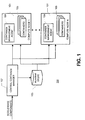
- FIGURE 1 is a block diagram illustrating an exemplary embodiment of the container service 100 disclosed herein.
- the container service is provided using a plurality of compute nodes 101 managed together as a cluster by a central container manager 102.
- the compute nodes 101 may be physical or virtual machines.
- a virtual machine is a software application that simulates the operation of hardware resources, such as a processor, memory and storage devices, and peripheral resources.
- Central container manager 102 is supported by a runtime store 103 that stores middleware components.
- Each compute node 101 includes a container management agent 104 and one or more containers 105.
- One container management agent 104 runs on each compute node 101 within the cluster.
- the container management agent 104 communicates with the other container management agents on all the other nodes in the cluster.
- compute nodes 101 are physical or virtual machines each having similar capacities and capabilities. However, in other embodiments, the compute nodes may be diverse devices having varying capacities and capabilities.
- Central container manager 102 receives middleware components from an external device or service, such as a composite application service.
- a composite application service is a multi-tenant, managed service that automates the deployment and management of an application, and that directly executes application components.
- the middleware components may belong to different tenants.
- the term "tenants" as used herein refers to the users of the container service, including, without limitation, applications, clients, subscribers, customers, or companies that access the container service.
- the central container manager 102 uploads new middleware components from the tenants to runtime store 103 and notifies individual container management agents 104 of the newly received components.
- the central container manager 102 designates one or more containers 105 to run the middleware components.
- the containers are distributed across one or more compute nodes 101 in the cluster.
- the container management agent 104 associated with that node Upon receiving notice from the central container manager 102 that components will be placed on a particular compute node 101, the container management agent 104 associated with that node activates a container 105. The container management agent 104 and compute node 101 host the new middleware component in this newly activated container 105.
- the container management agents 104 and compute nodes 101 isolate the middleware components from each other by running each middleware component in its own container. Containers on the same node share the resources available for that node. Central container manager 102 and the container management agents 104 measure the resource usage for each container. Central container manager 102 and the container agents 104 balance the allocation of the shared resources by dynamically adjusting the load across the compute nodes 101.
- the use of containers 105 distributed among compute nodes 101 provides high availability for the middleware components and enables scale-out for components that require either partitioning or cloning as described below.
- Central container manager 102 may be a software application or program code running on a physical machine, such as CPU or server, or on a virtual machine.
- Compute nodes 101 may be embodied as physical or virtual machines. Compute nodes 101 may be hosted on the same physical machine or on a plurality of separate physical machines that reside in the same or different locations.
- Containers 105 operate in isolation from each other on compute nodes 101 to avoid interference among the middleware components or module instances running in separate containers and to ensure that each container has a fair share of access to the resources on compute node 101.
- Runtime store 103 may comprise any computer storage media using any now-known or later-developed technology, system, or method for storage of information, such as middleware components, computer readable instructions, data structures, program modules or other data.
- Runtime store 103 may be embodied in any medium that can be used to store information and that can be accessed by central container manager 102 or compute nodes 101.
- Computer storage media may include, for example, any volatile or non-volatile media, such as RAM, ROM, electrically erasable program read-only memory (EEPROM), flash memory, CD-ROM, DVD, magnetic cassettes, magnetic tape, magnetic disk storage, or other optical or magnetic storage devices.
- a compute node 101 may include CPU, memory, disc input/output (I/O) and network I/O resources.
- the container management agent 103 limits each container's 105 access to these resources so that multiple containers 105 can run on a given compute node 101 without adversely affecting other the containers 105 that are active on that node.
- the container management agents 104 enforce limits on CPU and memory usage, for example, to ensure that each container has a fair share of the compute node's resources.
- the container management agent 104 may also restrict each container 105 so that the containers access only specific disc and network resources on the compute node 101.
- the central container manager 102 Periodically, the central container manager 102 measures the load generated by each middleware component across the cluster. Central container manager 102 balances the total load on each compute node 101 by moving components from compute nodes 101 having a higher load to nodes having a lower load. The use of periodic load balancing provides optimal capacity utilization and enables hosting middleware components on a smaller set of nodes within the cluster.
- the containers 105 are "sandboxed" by the container management agent 104 so that each container receives its fair share of the compute node resources and no more. This ensures that containers 105 do not adversely affect each other even though they are running on the same compute node 101 and sharing the same resources. As a result, one container 105 is not slowed down or denied service by the other containers 105 on the compute node 101.
- Sandboxing isolates the middleware components from each other so that no component affects the operation of the other components. Additionally, sandboxing prevents any container 105 from modifying another container's files or data on the shared resources. Sandboxing is provided on the compute nodes by the container management agent 104, which assigns a restricted set of privileges to each container 105.
- container management agent 104 controls access to local disc resources using access control lists.
- Network access is controlled by container management agent 104 using a kernel mode filter that monitors incoming and outgoing traffic on a specific port for a specific process and allows traffic only to/from a specific list of network resources. This tight sandboxing enables middleware components from multiple tenants to be hosted on a shared set of nodes.
- the compute nodes 101 are designated as being either stateless or stateful.
- the compute nodes are grouped together with other nodes having the same state type.
- the state type affects the selection of middleware components that are assigned to a particular compute node.
- Stateful nodes are used for middleware components that have a state stored in memory and/or coordinated with an external resource, such as a database.
- the state is used to track connections, interactions or current values relevant to a middleware component assigned to the node.
- Stateless nodes are used for middleware components that do not retain information or rely on stored values.
- Containers provide two methods for the middleware components to be scaled-out: cloning and partitioning.
- Stateless middleware components scale using cloning. When a middleware component selects cloning, it also specifies a count of the clones that it requires. The container then activates the middleware component on n nodes, where n is the number of clone instances required for the component.
- Stateful middleware components scale using partitioning. Stateful middleware components cannot simply be copied or cloned because the stateful components must reference one or more "states" that are stored in memory.
- partitions refers to additional instances of the middleware component, where each instance relies on state stored in memory.
- the container places the partitions across a set of nodes based on a scale-out count, which specifies the number of nodes over which partitions of a component should be distributed.
- a scale-out count specifies the number of nodes over which partitions of a component should be distributed.
- Partition-based scale-out is available to middleware components via selectable/extensible partition policies and a partition-aware routing infrastructure on the container.
- Each middleware component can have one or more ports or endpoints on which it listens for incoming messages.
- Each such port or endpoint is assigned a physical address when the middleware component is activated.
- Each port or endpoint also has a logical address that is used by tenants to send messages to the middleware component.
- a mapping of logical addresses to physical addresses for each partition is stored in an address resolution service.
- the physical address for the specific partition is obtained by consulting the address resolution service.
- the container integrates with the underlying compute node clustering technology to ensure that each partition is exclusively allocated to only one node at any given instance. For example, the container management agents communicate to verify that each stateful middleware component partition is allocated to a single specific node.
- FIGURE 2 is a block diagram illustrating an alternative embodiment of the container service.
- Container service 200 comprises two compute node clusters 201 and 202.
- Cluster 201 comprises stateless compute nodes 203a-n
- cluster 202 comprises stateful compute nodes 204a-n.
- Each stateless and stateful compute node 203, 204 comprises a container management agent 205 and one or more containers 206.
- the container management agent 205 is a worker process manager and containers 206 are worker processes.
- Container manager 207 receives middleware components from external services, such as a composite application service. Based upon the middleware components received, the container manager 207 determines how many instances of the modules are required and maps module instances to specific machines or compute nodes 203, 204.
- Container manager 207 comprises lifecycle manager 208, placement manager 209 and monitoring aggregator 210.
- Lifecycle manager 208 stores middleware components to runtime store 211 and starts/stops module instances on compute nodes 203, 204.
- the middleware components designate scale characteristics for each module, such as a required number of module instances. Placement manager determines how many module instances are required and assigns those module instances to particular compute nodes 203, 204.
- Container management agents 205 on the assigned compute nodes activate the designated number of containers 206 and access the middleware components on runtime store 211 to load the module instances on the containers.
- Monitoring aggregator 210 monitors resource usage by module across compute nodes 203, 204 and aggregates or redistributes the module instances as needed to increase efficiency of container service 200.
- Container management agent 205 assigns a limited set of rights to each module to ensure that the middleware components are properly sandboxed and do not interfere with other modules running on the compute nodes 203, 204.
- Containers 206 comprise runtime host 212 and application engine 213.
- Runtime host 212 tracks memory allocations for the container and manages memory usage by the module instance running on the container.
- the module instance runs on application engine 213.
- Multiple application engines 213 are established on each container to support a plurality of module instances.
- Container service 200 also comprises address resolution service 214.
- Tenants address messages to logical addresses for the module instances.
- Address resolution service 214 translates the logical addresses to physical addresses for containers 206 and application engines 213 that run the targeted module instance.
- address resolution service 214 updates the physical location of the modules which allows the tenant to keep using the same logical address without being concerned with the actual physical location of the module.
- Address resolution service 214 also tracks the location of the middleware components stored in runtime store 211.
- the container service provides high levels of availability and reliability for the middleware components in the event of compute node failures or scheduled shutdowns.
- the central container manager creates additional instances of the middleware components on different nodes when the originally assigned node shuts down.
- the container integrates with the underlying clustering technology to provide replication of state.
- Primary partitions of the stateful middleware components handle processing workload during normal operations.
- Secondary replicas which act as backup copies of the middleware component, are created and placed across fault domains. Any changes in state on the primary partition for a middleware component are replicated to the secondary partition.
- the fault domains correspond to the basic unit within the container service that would be affected by a power outage or other failure.
- the basic fault-domain unit may be a switch, a rack, or a data center. Any faults that cause the primary replica of a middleware component to fail result in a secondary replica being upgraded to primary, thus enabling failover of the partitioned components without any data loss.
- FIGURE 3 illustrates the placement of middleware component modules across multiple nodes in an exemplary embodiment.
- Central container manager 301 receives middleware components associated with different tenant applications.
- Each middleware component comprises scale and/or partition information that the central container manager 301 uses to determine how many modules need to be placed on containers and how many nodes should be used.
- a middleware component may define an application (A1) module (M1) having four partitions (P1-P4) with a scale unit of three, which requires the central container manager 301 to establish four partitions distributed across three compute nodes.
- Container manager 301 directs container management agents 302-304 on nodes 305-307 to establish specific module instances on containers 308-310.
- Container management agent 302 opens container 308 on the first node 305 and loads partitions P1 and P2 of module M1 on container 308.
- Container management agent 303 opens container 309 on the second node 306 and loads partitions P3 and P4 of module M1 on container 309.
- Partitions P1-P4 on containers 308 and 309 are the primary partitions on which the module runs.
- Container management agent 304 opens container 310 on third node 307 and loads partitions S1-S4 on container 310.
- Partitions S1-S4 are secondary or replica partitions that receive updated data from partitions P1-P4, but that provide no external service. Partitions S1-S4 are usually passive, but become active if one or more of the primary partitions P1-P4 fail.
- FIGURE 3 further illustrates a second module (M2) for the application (A1) that has been loaded and is running on nodes 305-307.
- central container manager 301 has received a middleware component defining a second module (M2) for the application (A1) having eight partitions (P1-P8) with a scale unit of two. This allows the central container manager 301 to establish eight partitions distributed across two nodes.
- container management agent 302 under instruction from central container manager 301, opens container 311 on the first node 305 and loads primary partitions P1-P5 and secondary partitions S6-S8 to run on container 311.
- Central container manager 301 also directs container management agent 304 to open container 312 on third node 307 and to load primary partitions P6-P8 and secondary partitions S1-S5 to run on container 312.
- nodes 305 and 306 are located on a first fault domain and node 307 is located on a second fault domain.
- Nodes 305 and 306 may be embodied on a physical or virtual machine hosted on a first rack, for example, and node 307 may be embodied on a physical or virtual machine hosted on a second rack.
- the racks may be located in the same or different datacenters. Each rack or datacenter may be considered to be a different fault domain. If one rack fails or is taken off-line, then any compute nodes hosted on that rack will be unavailable. In this situation, the compute node or nodes on the other rack can take over as the primary module instances, if needed.
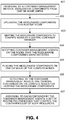
- FIGURE 4 is a flowchart illustrating an exemplary process for managing middleware components from a plurality of tenants.
- a container management service receives middleware components from one or more tenants and uploads the middleware components to a runtime store in step 402.
- a central container manager maps the middleware components to compute nodes in step 403.
- the central container manager notifies container management agents residing on the compute nodes that the middleware components were received by the container service.
- central container manager places the middleware components on one or more of the compute nodes.
- the container management agents activate one or more containers on their respective compute nodes for hosting the middleware components in step 406.
- the container management agents assigning a set of restricted privileges to each container.
- the restricted privileges control the container's use of shared compute node resources to ensure that each container operates in a sandbox manner wherein the containers only use their fair share of common resources and do not interfere with the operation of other the containers on the compute node.
Landscapes
- Engineering & Computer Science (AREA)
- Software Systems (AREA)
- Theoretical Computer Science (AREA)
- Physics & Mathematics (AREA)
- General Engineering & Computer Science (AREA)
- General Physics & Mathematics (AREA)
- Data Exchanges In Wide-Area Networks (AREA)
- Storage Device Security (AREA)
- Stored Programmes (AREA)
- Debugging And Monitoring (AREA)
Description
- Distributed systems allow users to run applications hosted on distributed resources, such as a remote central processing unit (CPU), central server, or physical or virtual machine. Middleware services provide computation, coordination, information management, hosting and other support to the applications on the distributed resources. Middleware components are software applications or computer instructions that run on the distributed resources and that provide a service or implement protocols or algorithms for users. The middleware components may provide complex or specialized applications. The user interacts with the middleware components when a function provided by a middleware component is needed. The demand for the middleware components varies depending upon the users' needs. Accordingly, the middleware components running on the distributed resources may be idle if there is no user demand or, in cases of high user demand, the distributed resources may be unable to service all user needs.
-
US 2009/0031293 A1 describes an object-oriented middleware framework for use in a network having a plurality of hosts including a first host having an associated first memory and first processor; and a second host having an associated second memory and second processor. The object-oriented middleware framework includes an Originator Command Container instantiating a Command by executing computer programming code stored in the first memory using the first processor. The framework also includes an Invocator Command Container, remote from the Originator Command Container and its associated first host where the instantiated Command is invoked, locally by executing computer programming code stored in the second memory using the second processor. -
US 2010/0077449 A1 describes a method for assigning tenants of users to offering instances of an application or middleware includes representing a set of offerings as respective offering instances of the application or middleware available from a server, determining server resource capacity of the server, representing constraints associated with the tenants and the offering instances, generating a mapping of the tenants to the offering instances based on the server resource capacity and constraints, and assigning a tenant to an offering instance according to the mapping, wherein the offering instance is made accessible to the users of the assigned tenant. - It is the object of the present invention to provide a more efficient and cost-effective use of compute nodes' resources in a system for hosting middleware components.
- This object is solved by the subject matter of the independent claims.
- Embodiments are defined by the dependent claims.
- This Summary is provided to introduce a selection of concepts in a simplified form that are further described below in the Detailed Description. This Summary is not intended to identify key features or essential features of the claimed subject matter, nor is it intended to be used to limit the scope of the claimed subject matter.
- A container service capable of hosting large numbers of middleware components for multiple users or tenants is described and disclosed herein. The container service comprises a plurality of compute nodes and a central container manager. The compute nodes are managed as a cluster by the central container manager. Each compute node has a container management agent that manages one or more containers on the compute node. The central container manager receives middleware components from external devices or services and assigns the components to containers on one or more designated compute nodes. For each designated compute node, the container management agent on the designated compute node activates and manages an appropriate number of containers to run the middleware components assigned to the designated node. The container service provides an efficient, high-density operation by hosting a large number of middleware components on a select set of compute nodes. This allows the compute nodes' active resources to operate at a high usage level or high load factor under control of the container management agent, which reduces the costs associated with hosting the middleware components by increasing efficiency. Instead of distributing the middleware components across all of the compute nodes randomly, only the required resources are activated and the remaining compute nodes and resources are idle until needed to support additional middleware components. The central container manager and each node's container management agent react to changes in the container load level by dynamically adjusting the placement of the middleware components on specific nodes with the cluster.
- The container service can simultaneously provide compute node resources to a plurality of tenants. Each container hosts middleware components belonging to different tenants and provides each set of components access to a shared set of compute resources at the same time. Multi-tenancy is achieved by isolating different sets of middleware components from each other and ensuring balanced resource distribution across all component sets.
- The container service allows for efficient scale-out of both stateless and stateful components. The containers provide a programming model and infrastructure that allows for partitioning to enable stateful middleware components to scale effectively. The containers also provide scale-out of stateless components via cloning. Accordingly, when additional resources are required for middleware components, additional containers are assigned for such components. Partitions of stateful components are redistributed to use this additional capacity. For stateless components, additional clones are created to use this additional capacity.
- The container service ensures that the middleware components have a high-availability. The central container manager distributes primary and secondary instances of the middleware components across fault domains. The secondary instance of a middleware component is activated in case the primary instance is unavailable due to node failures or shutdowns for infrastructure updates.
-
-
FIGURE 1 is a block diagram illustrating an exemplary embodiment of a container service; -
FIGURE 2 is a block diagram illustrating an alternative embodiment of the container service; -
FIGURE 3 illustrates the placement of middleware component modules across multiple nodes in an exemplary embodiment; and -
FIGURE 4 is a flowchart illustrating an exemplary process for managing middleware components from a plurality of tenants. - Traditionally, distributed resources have been dedicated to specific users. The resources that are assigned to a particular user may be idle or underutilized when they are not required by the user. Thus even when an assigned resource is idle, it may not be available to other users who have been assigned to a different set of resources. If a user is using the assigned resources to full capacity, then the user's workload is restricted if additional resources are not available to the user. A container service that allows users to access additional resources on an as-needed basis provides flexibility to users.
-
FIGURE 1 is a block diagram illustrating an exemplary embodiment of thecontainer service 100 disclosed herein. The container service is provided using a plurality ofcompute nodes 101 managed together as a cluster by acentral container manager 102. Thecompute nodes 101 may be physical or virtual machines. A virtual machine is a software application that simulates the operation of hardware resources, such as a processor, memory and storage devices, and peripheral resources.Central container manager 102 is supported by aruntime store 103 that stores middleware components. - Each
compute node 101 includes acontainer management agent 104 and one ormore containers 105. Onecontainer management agent 104 runs on eachcompute node 101 within the cluster. Thecontainer management agent 104 communicates with the other container management agents on all the other nodes in the cluster. In one embodiment,compute nodes 101 are physical or virtual machines each having similar capacities and capabilities. However, in other embodiments, the compute nodes may be diverse devices having varying capacities and capabilities. -
Central container manager 102 receives middleware components from an external device or service, such as a composite application service. A composite application service is a multi-tenant, managed service that automates the deployment and management of an application, and that directly executes application components. The middleware components may belong to different tenants. The term "tenants" as used herein refers to the users of the container service, including, without limitation, applications, clients, subscribers, customers, or companies that access the container service. Thecentral container manager 102 uploads new middleware components from the tenants toruntime store 103 and notifies individualcontainer management agents 104 of the newly received components. Thecentral container manager 102 designates one ormore containers 105 to run the middleware components. The containers are distributed across one ormore compute nodes 101 in the cluster. Upon receiving notice from thecentral container manager 102 that components will be placed on aparticular compute node 101, thecontainer management agent 104 associated with that node activates acontainer 105. Thecontainer management agent 104 and computenode 101 host the new middleware component in this newly activatedcontainer 105. - To provide a secure environment, the
container management agents 104 and computenodes 101 isolate the middleware components from each other by running each middleware component in its own container. Containers on the same node share the resources available for that node.Central container manager 102 and thecontainer management agents 104 measure the resource usage for each container.Central container manager 102 and thecontainer agents 104 balance the allocation of the shared resources by dynamically adjusting the load across thecompute nodes 101. The use ofcontainers 105 distributed amongcompute nodes 101 provides high availability for the middleware components and enables scale-out for components that require either partitioning or cloning as described below. -
Central container manager 102 may be a software application or program code running on a physical machine, such as CPU or server, or on a virtual machine.Compute nodes 101 may be embodied as physical or virtual machines.Compute nodes 101 may be hosted on the same physical machine or on a plurality of separate physical machines that reside in the same or different locations.Containers 105 operate in isolation from each other oncompute nodes 101 to avoid interference among the middleware components or module instances running in separate containers and to ensure that each container has a fair share of access to the resources oncompute node 101. -
Runtime store 103 may comprise any computer storage media using any now-known or later-developed technology, system, or method for storage of information, such as middleware components, computer readable instructions, data structures, program modules or other data.Runtime store 103 may be embodied in any medium that can be used to store information and that can be accessed bycentral container manager 102 or computenodes 101. Computer storage media may include, for example, any volatile or non-volatile media, such as RAM, ROM, electrically erasable program read-only memory (EEPROM), flash memory, CD-ROM, DVD, magnetic cassettes, magnetic tape, magnetic disk storage, or other optical or magnetic storage devices. - In one embodiment, a
compute node 101 may include CPU, memory, disc input/output (I/O) and network I/O resources. Thecontainer management agent 103 limits each container's 105 access to these resources so thatmultiple containers 105 can run on a givencompute node 101 without adversely affecting other thecontainers 105 that are active on that node. Thecontainer management agents 104 enforce limits on CPU and memory usage, for example, to ensure that each container has a fair share of the compute node's resources. Thecontainer management agent 104 may also restrict eachcontainer 105 so that the containers access only specific disc and network resources on thecompute node 101. - Periodically, the
central container manager 102 measures the load generated by each middleware component across the cluster.Central container manager 102 balances the total load on eachcompute node 101 by moving components fromcompute nodes 101 having a higher load to nodes having a lower load. The use of periodic load balancing provides optimal capacity utilization and enables hosting middleware components on a smaller set of nodes within the cluster. - The
containers 105 are "sandboxed" by thecontainer management agent 104 so that each container receives its fair share of the compute node resources and no more. This ensures thatcontainers 105 do not adversely affect each other even though they are running on thesame compute node 101 and sharing the same resources. As a result, onecontainer 105 is not slowed down or denied service by theother containers 105 on thecompute node 101. Sandboxing isolates the middleware components from each other so that no component affects the operation of the other components. Additionally, sandboxing prevents anycontainer 105 from modifying another container's files or data on the shared resources. Sandboxing is provided on the compute nodes by thecontainer management agent 104, which assigns a restricted set of privileges to eachcontainer 105. Any unnecessary privileges are removed from the set of privileges assigned to each container. In one embodiment,container management agent 104 controls access to local disc resources using access control lists. Network access is controlled bycontainer management agent 104 using a kernel mode filter that monitors incoming and outgoing traffic on a specific port for a specific process and allows traffic only to/from a specific list of network resources. This tight sandboxing enables middleware components from multiple tenants to be hosted on a shared set of nodes. - The
compute nodes 101 are designated as being either stateless or stateful. The compute nodes are grouped together with other nodes having the same state type. The state type affects the selection of middleware components that are assigned to a particular compute node. Stateful nodes are used for middleware components that have a state stored in memory and/or coordinated with an external resource, such as a database. The state is used to track connections, interactions or current values relevant to a middleware component assigned to the node. Stateless nodes are used for middleware components that do not retain information or rely on stored values. - Containers provide two methods for the middleware components to be scaled-out: cloning and partitioning. Stateless middleware components scale using cloning. When a middleware component selects cloning, it also specifies a count of the clones that it requires. The container then activates the middleware component on n nodes, where n is the number of clone instances required for the component. Stateful middleware components scale using partitioning. Stateful middleware components cannot simply be copied or cloned because the stateful components must reference one or more "states" that are stored in memory. For stateful middleware components, the term "partitions" refers to additional instances of the middleware component, where each instance relies on state stored in memory. The container places the partitions across a set of nodes based on a scale-out count, which specifies the number of nodes over which partitions of a component should be distributed. Once partition placement is finalized, the middleware components are loaded in containers on the specific nodes. Middleware components may select a predetermined partitioning policy available on the container service, or the components may specify a custom partitioning plan.
- Partition-based scale-out is available to middleware components via selectable/extensible partition policies and a partition-aware routing infrastructure on the container. Each middleware component can have one or more ports or endpoints on which it listens for incoming messages. Each such port or endpoint is assigned a physical address when the middleware component is activated. Each port or endpoint also has a logical address that is used by tenants to send messages to the middleware component. A mapping of logical addresses to physical addresses for each partition is stored in an address resolution service. When tenants need to send a message to a middleware component port or endpoint, a partition key generation function is applied to the message to obtain the value of the partition key. This partition key value is then used with the partition policy to find the specific partition to which the message should be sent. The physical address for the specific partition is obtained by consulting the address resolution service. The container integrates with the underlying compute node clustering technology to ensure that each partition is exclusively allocated to only one node at any given instance. For example, the container management agents communicate to verify that each stateful middleware component partition is allocated to a single specific node.
-
FIGURE 2 is a block diagram illustrating an alternative embodiment of the container service.Container service 200 comprises twocompute node clusters Cluster 201 comprisesstateless compute nodes 203a-n, andcluster 202 comprisesstateful compute nodes 204a-n. Each stateless and stateful compute node 203, 204 comprises acontainer management agent 205 and one ormore containers 206. In one embodiment, thecontainer management agent 205 is a worker process manager andcontainers 206 are worker processes. -
Container manager 207 receives middleware components from external services, such as a composite application service. Based upon the middleware components received, thecontainer manager 207 determines how many instances of the modules are required and maps module instances to specific machines or compute nodes 203, 204.Container manager 207 compriseslifecycle manager 208,placement manager 209 andmonitoring aggregator 210.Lifecycle manager 208 stores middleware components toruntime store 211 and starts/stops module instances on compute nodes 203, 204. The middleware components designate scale characteristics for each module, such as a required number of module instances. Placement manager determines how many module instances are required and assigns those module instances to particular compute nodes 203, 204.Container management agents 205 on the assigned compute nodes activate the designated number ofcontainers 206 and access the middleware components onruntime store 211 to load the module instances on the containers.Monitoring aggregator 210 monitors resource usage by module across compute nodes 203, 204 and aggregates or redistributes the module instances as needed to increase efficiency ofcontainer service 200. -
Container management agent 205 assigns a limited set of rights to each module to ensure that the middleware components are properly sandboxed and do not interfere with other modules running on the compute nodes 203, 204.Containers 206 compriseruntime host 212 andapplication engine 213.Runtime host 212 tracks memory allocations for the container and manages memory usage by the module instance running on the container. The module instance runs onapplication engine 213.Multiple application engines 213 are established on each container to support a plurality of module instances. -
Container service 200 also comprisesaddress resolution service 214. Tenants address messages to logical addresses for the module instances.Address resolution service 214 translates the logical addresses to physical addresses forcontainers 206 andapplication engines 213 that run the targeted module instance. When module instances are aggregated or when additional module instances are added,address resolution service 214 updates the physical location of the modules which allows the tenant to keep using the same logical address without being concerned with the actual physical location of the module.Address resolution service 214 also tracks the location of the middleware components stored inruntime store 211. - The container service provides high levels of availability and reliability for the middleware components in the event of compute node failures or scheduled shutdowns. For cloned middleware components, the central container manager creates additional instances of the middleware components on different nodes when the originally assigned node shuts down. For stateful middleware components that have an in-memory state that needs to be protected against failures, the container integrates with the underlying clustering technology to provide replication of state. Primary partitions of the stateful middleware components handle processing workload during normal operations. Secondary replicas, which act as backup copies of the middleware component, are created and placed across fault domains. Any changes in state on the primary partition for a middleware component are replicated to the secondary partition. The fault domains correspond to the basic unit within the container service that would be affected by a power outage or other failure. For example, the basic fault-domain unit may be a switch, a rack, or a data center. Any faults that cause the primary replica of a middleware component to fail result in a secondary replica being upgraded to primary, thus enabling failover of the partitioned components without any data loss.
-
FIGURE 3 illustrates the placement of middleware component modules across multiple nodes in an exemplary embodiment.Central container manager 301 receives middleware components associated with different tenant applications. Each middleware component comprises scale and/or partition information that thecentral container manager 301 uses to determine how many modules need to be placed on containers and how many nodes should be used. For example, a middleware component may define an application (A1) module (M1) having four partitions (P1-P4) with a scale unit of three, which requires thecentral container manager 301 to establish four partitions distributed across three compute nodes.Container manager 301 directs container management agents 302-304 on nodes 305-307 to establish specific module instances on containers 308-310. -
Container management agent 302 openscontainer 308 on thefirst node 305 and loads partitions P1 and P2 of module M1 oncontainer 308.Container management agent 303 openscontainer 309 on thesecond node 306 and loads partitions P3 and P4 of module M1 oncontainer 309. Partitions P1-P4 oncontainers Container management agent 304 openscontainer 310 onthird node 307 and loads partitions S1-S4 oncontainer 310. Partitions S1-S4 are secondary or replica partitions that receive updated data from partitions P1-P4, but that provide no external service. Partitions S1-S4 are usually passive, but become active if one or more of the primary partitions P1-P4 fail. -
FIGURE 3 further illustrates a second module (M2) for the application (A1) that has been loaded and is running on nodes 305-307. In the illustrated example,central container manager 301 has received a middleware component defining a second module (M2) for the application (A1) having eight partitions (P1-P8) with a scale unit of two. This allows thecentral container manager 301 to establish eight partitions distributed across two nodes. In one embodiment,container management agent 302, under instruction fromcentral container manager 301, openscontainer 311 on thefirst node 305 and loads primary partitions P1-P5 and secondary partitions S6-S8 to run oncontainer 311.Central container manager 301 also directscontainer management agent 304 to opencontainer 312 onthird node 307 and to load primary partitions P6-P8 and secondary partitions S1-S5 to run oncontainer 312. - In the exemplary embodiment illustrated in
FIGURE 3 ,nodes node 307 is located on a second fault domain.Nodes node 307 may be embodied on a physical or virtual machine hosted on a second rack. The racks may be located in the same or different datacenters. Each rack or datacenter may be considered to be a different fault domain. If one rack fails or is taken off-line, then any compute nodes hosted on that rack will be unavailable. In this situation, the compute node or nodes on the other rack can take over as the primary module instances, if needed. - For example, if the first rack fails, then
nodes nodes node 307, which is on a different fault domain, then take over for the failed primary partitions onnodes FIGURE 3 , secondary partitions S1-S4 for module instance M1 are hosted oncontainer 310 and secondary partitions S1-S5 for module instance M2 are hosted oncontainer 312. These secondary partitions are activated when the primary partitions fail and then take over as the primary module instances. This allows the container service to continue running the middleware components without any apparent interruption to external tenants. -
FIGURE 4 is a flowchart illustrating an exemplary process for managing middleware components from a plurality of tenants. Instep 401, a container management service receives middleware components from one or more tenants and uploads the middleware components to a runtime store instep 402. A central container manager maps the middleware components to compute nodes instep 403. Instep 404, the central container manager notifies container management agents residing on the compute nodes that the middleware components were received by the container service. Instep 405, central container manager places the middleware components on one or more of the compute nodes. The container management agents activate one or more containers on their respective compute nodes for hosting the middleware components instep 406. Instep 407, the container management agents assigning a set of restricted privileges to each container. The restricted privileges control the container's use of shared compute node resources to ensure that each container operates in a sandbox manner wherein the containers only use their fair share of common resources and do not interfere with the operation of other the containers on the compute node. - Although the subject matter has been described in language specific to structural features and/or methodological acts, it is to be understood that the subject matter defined in the appended claims is not necessarily limited to the specific features or acts described above. Rather, the specific features and acts described above are disclosed as example forms of implementing the claims.
Claims (8)
- A method for hosting middleware components for a plurality of tenants, the method comprising:mapping (403) middleware components to a plurality of compute nodes, each of the compute nodes comprising a container management agent and one or more containers;organizing the plurality of compute nodes into one or more clusters based upon whether the compute nodes are running stateful or stateless middleware components;placing (405) individual ones of the middleware components onto a mapped compute node;placing the individual ones of the middleware components into one or more containers on each of the mapped compute nodes by the container management agent, the containers hosting the operation of the one or more of the middleware components;determining a scale factor for a stateless middleware component; andcloning the middleware component on a number of compute nodes corresponding to the scale factor;determining a scale factor for a stateful middleware component; andplacing partitions across a number of compute nodes corresponding to the scale factor, wherein the partitions correspond to containers hosting instances of the middleware component.
- The method of claim 1, further comprising:
assigning (407) a set of privileges to each middleware component, wherein the privileges control the middleware component's access to shared resources on the compute node. - The method of claim 1, further comprising:receiving (401) the plurality of middleware components at a central container manager; anduploading (402) the plurality of middleware components to a runtime store by the central container manager.
- A system for hosting middleware components, comprising:a central container manager (102; 207) adapted to receive middleware components from a plurality of tenants;a plurality of compute nodes (101; 203a-n; 204a-n) coupled to the central container manager, wherein the plurality of compute nodes are organized into one or more clusters based upon whether the compute nodes are running stateful or stateless middleware components;one or more containers (105; 206) on each of the plurality of compute nodes, the containers adapted to host the middleware components; anda container management agent (104; 205) on each of the plurality of compute nodes, the container management agent adapted to control the one or more containers,wherein a stateless middleware component is cloned on a number of compute nodes corresponding to a scale factor for the stateless middleware component, andwherein partitions are placed across a number of compute nodes corresponding to a scale factor for a stateful middleware component, wherein the partitions correspond to containers hosting instances of the middleware component.
- The system of claim 4, wherein the central container manager further comprises:
a monitoring aggregator (210) adapted to monitor resource usage across the plurality of compute nodes and to aggregate instances of the middleware components. - The system of claim 4, wherein the central container manager further comprises:
a placement manager (209) adapted to identify a number of module instances required for the received middleware components and to assign the module instances to particular ones of the compute nodes. - The system of claim 4, further comprising:
an address resolution service (214) capable of mapping logical addresses for the middleware components to physical addresses for compute nodes on which the middleware components are hosted. - A computer-readable storage medium having computer-executable instructions stored thereon that, when executed, cause a processor to perform the method of one of claims 1 to 3.
Applications Claiming Priority (2)
| Application Number | Priority Date | Filing Date | Title |
|---|---|---|---|
| US12/972,411 US8468548B2 (en) | 2010-12-17 | 2010-12-17 | Multi-tenant, high-density container service for hosting stateful and stateless middleware components |
| PCT/US2011/065666 WO2012083270A1 (en) | 2010-12-17 | 2011-12-16 | Multi-tenant, high-density container service for hosting stateful and stateless middleware components |
Publications (3)
| Publication Number | Publication Date |
|---|---|
| EP2652594A1 EP2652594A1 (en) | 2013-10-23 |
| EP2652594A4 EP2652594A4 (en) | 2014-12-03 |
| EP2652594B1 true EP2652594B1 (en) | 2020-01-22 |
Family
ID=46236275
Family Applications (1)
| Application Number | Title | Priority Date | Filing Date |
|---|---|---|---|
| EP11849760.1A Active EP2652594B1 (en) | 2010-12-17 | 2011-12-16 | Multi-tenant, high-density container service for hosting stateful and stateless middleware components |
Country Status (4)
| Country | Link |
|---|---|
| US (1) | US8468548B2 (en) |
| EP (1) | EP2652594B1 (en) |
| CN (1) | CN103092697B (en) |
| WO (1) | WO2012083270A1 (en) |
Families Citing this family (62)
| Publication number | Priority date | Publication date | Assignee | Title |
|---|---|---|---|---|
| US9195491B2 (en) | 2011-11-15 | 2015-11-24 | Nicira, Inc. | Migrating middlebox state for distributed middleboxes |
| US9648138B1 (en) | 2012-03-27 | 2017-05-09 | Open Text Corporation | Method and system for virtual server dormancy |
| US9973566B2 (en) | 2013-11-17 | 2018-05-15 | Nimbix, Inc. | Dynamic creation and execution of containerized applications in cloud computing |
| US9466036B1 (en) * | 2012-05-10 | 2016-10-11 | Amazon Technologies, Inc. | Automated reconfiguration of shared network resources |
| US8990778B1 (en) | 2012-09-14 | 2015-03-24 | Amazon Technologies, Inc. | Shadow test replay service |
| CN103853535B (en) * | 2012-11-30 | 2017-08-25 | 国际商业机器公司 | The method and apparatus for changing middleware |
| US10182128B1 (en) | 2013-02-07 | 2019-01-15 | Amazon Technologies, Inc. | Optimization of production systems |
| US9628399B2 (en) * | 2013-03-14 | 2017-04-18 | International Business Machines Corporation | Software product instance placement |
| US9836388B1 (en) | 2013-09-26 | 2017-12-05 | Amazon Technologies, Inc. | Software testing environment that includes a duplicating proxy service |
| US9800517B1 (en) * | 2013-10-31 | 2017-10-24 | Neil Anderson | Secure distributed computing using containers |
| CN104618414B (en) * | 2013-11-05 | 2018-05-04 | 阿里巴巴集团控股有限公司 | A kind of implementation method of Distributed Services, service broker's device and distributed system |
| US9754122B1 (en) | 2014-03-21 | 2017-09-05 | Amazon Technologies, Inc. | Isolating tenants executing in multi-tenant software containers |
| US9471353B1 (en) * | 2014-03-21 | 2016-10-18 | Amazon Technologies, Inc. | Isolating tenants executing in multi-tenant software containers |
| US9703611B1 (en) | 2014-03-21 | 2017-07-11 | Amazon Technologies, Inc. | Isolating resources for utilization by tenants executing in multi-tenant software containers |
| US9614724B2 (en) | 2014-04-21 | 2017-04-04 | Microsoft Technology Licensing, Llc | Session-based device configuration |
| US10111099B2 (en) | 2014-05-12 | 2018-10-23 | Microsoft Technology Licensing, Llc | Distributing content in managed wireless distribution networks |
| US9384335B2 (en) | 2014-05-12 | 2016-07-05 | Microsoft Technology Licensing, Llc | Content delivery prioritization in managed wireless distribution networks |
| US9384334B2 (en) | 2014-05-12 | 2016-07-05 | Microsoft Technology Licensing, Llc | Content discovery in managed wireless distribution networks |
| US9430667B2 (en) | 2014-05-12 | 2016-08-30 | Microsoft Technology Licensing, Llc | Managed wireless distribution network |
| US9874914B2 (en) | 2014-05-19 | 2018-01-23 | Microsoft Technology Licensing, Llc | Power management contracts for accessory devices |
| US10037202B2 (en) | 2014-06-03 | 2018-07-31 | Microsoft Technology Licensing, Llc | Techniques to isolating a portion of an online computing service |
| US9367490B2 (en) | 2014-06-13 | 2016-06-14 | Microsoft Technology Licensing, Llc | Reversible connector for accessory devices |
| US10389697B1 (en) | 2014-08-27 | 2019-08-20 | Amazon Technologies, Inc. | Software container activation and throttling |
| US10516733B2 (en) * | 2014-11-25 | 2019-12-24 | Auth0, Inc. | Multi-tenancy via code encapsulated in server requests |
| US10218585B2 (en) * | 2015-02-19 | 2019-02-26 | Red Hat, Inc. | Container host discovery |
| US9800518B2 (en) | 2015-03-11 | 2017-10-24 | International Business Machines Corporation | Managing application, middleware, and virtual mechanism density in a cloud |
| US10491667B1 (en) | 2015-03-16 | 2019-11-26 | Amazon Technologies, Inc. | Customized memory modules in multi-tenant service provider systems |
| US9747119B2 (en) * | 2015-06-23 | 2017-08-29 | Vmware, Inc. | Methods and apparatus to monitor virtual computing environments |
| CN105260136B (en) * | 2015-09-24 | 2019-04-05 | 北京百度网讯科技有限公司 | Data reading and writing method and distributed storage system |
| US10140159B1 (en) | 2016-03-04 | 2018-11-27 | Quest Software Inc. | Systems and methods for dynamic creation of container manifests |
| US10127030B1 (en) | 2016-03-04 | 2018-11-13 | Quest Software Inc. | Systems and methods for controlled container execution |
| US10270841B1 (en) | 2016-03-04 | 2019-04-23 | Quest Software Inc. | Systems and methods of real-time container deployment |
| US10289457B1 (en) | 2016-03-30 | 2019-05-14 | Quest Software Inc. | Systems and methods for dynamic discovery of container-based microservices |
| US10305747B2 (en) * | 2016-06-23 | 2019-05-28 | Sap Se | Container-based multi-tenant computing infrastructure |
| US10498741B2 (en) | 2016-09-19 | 2019-12-03 | Box, Inc. | Sharing dynamically changing units of cloud-based content |
| CN106445637B (en) * | 2016-09-29 | 2019-10-01 | 中国银联股份有限公司 | Container Management dispatches system |
| US10360410B2 (en) | 2016-11-14 | 2019-07-23 | International Business Machines Corporation | Providing containers access to container daemon in multi-tenant environment |
| US20180260262A1 (en) * | 2017-03-07 | 2018-09-13 | Microsoft Technology Licensing, Llc | Availability management interfaces in a distributed computing system |
| KR102310117B1 (en) | 2017-07-07 | 2021-10-08 | 에스케이하이닉스 주식회사 | Storage device and operating method thereof |
| US10459769B2 (en) * | 2017-08-04 | 2019-10-29 | Unisys Corporation | Elastic container management system |
| US10896070B2 (en) * | 2017-09-22 | 2021-01-19 | Open Text Corporation | Stateless content management system |
| CN108572869B (en) * | 2017-09-25 | 2021-05-25 | 北京金山云网络技术有限公司 | A physical host selection method, apparatus, device and readable storage medium |
| US10678618B2 (en) | 2018-03-08 | 2020-06-09 | Red Hat, Inc. | Managing node failures in a computing environment |
| US10901864B2 (en) | 2018-07-03 | 2021-01-26 | Pivotal Software, Inc. | Light-weight mirror container |
| WO2020112029A1 (en) * | 2018-11-30 | 2020-06-04 | Purple Ds Private Ltd. | System and method for facilitating participation in a blockchain environment |
| US11010149B2 (en) * | 2019-04-03 | 2021-05-18 | International Business Machines Corporation | Shared middleware layer containers |
| CN110298645A (en) * | 2019-07-11 | 2019-10-01 | 四川新网银行股份有限公司 | The building method of full link payment system extending transversely |
| US11586470B2 (en) * | 2019-08-07 | 2023-02-21 | International Business Machines Corporation | Scalable workflow engine with a stateless orchestrator |
| CN110780918B (en) * | 2019-10-28 | 2022-08-23 | 江苏满运软件科技有限公司 | Middleware container processing method and device, electronic equipment and storage medium |
| FR3105471B1 (en) * | 2019-12-19 | 2022-02-04 | Amadeus | A DISTRIBUTED COMPUTER RESERVATION PLATFORM TO STORE AND MANAGE SHARED DATA RECORDS |
| CN111339529B (en) * | 2020-03-13 | 2022-09-30 | 杭州指令集智能科技有限公司 | Management system, method and computing device for running low-code business arrangement component |
| US12131044B2 (en) * | 2020-09-04 | 2024-10-29 | Pure Storage, Inc. | Intelligent application placement in a hybrid infrastructure |
| US12353907B1 (en) | 2020-09-04 | 2025-07-08 | Pure Storage, Inc. | Application migration using data movement capabilities of a storage system |
| US11704165B2 (en) | 2021-03-16 | 2023-07-18 | International Business Machines Corporation | Persistently available container services through resurrection of user jobs in new compute container instances designated as lead instances |
| CN113326100B (en) * | 2021-06-29 | 2024-04-09 | 深信服科技股份有限公司 | Cluster management method, device, equipment and computer storage medium |
| DE102021123358B3 (en) | 2021-09-09 | 2022-10-20 | Volkswagen Aktiengesellschaft | Control device, control method and computer program for distributing computing function blocks to computing units in a vehicle |
| US20230102843A1 (en) * | 2021-09-27 | 2023-03-30 | Nvidia Corporation | User-configurable memory allocation |
| US12585760B2 (en) | 2022-07-28 | 2026-03-24 | Pure Storage, Inc. | Monitoring for security threats in a container system |
| CN115328651B (en) * | 2022-08-12 | 2024-08-30 | 扬州万方科技股份有限公司 | Light-weight micro cloud system based on domestic VPX server |
| CN115935337A (en) * | 2022-12-30 | 2023-04-07 | 浩云科技股份有限公司 | A method and device for processing an access request |
| CN116225703B (en) * | 2023-02-16 | 2025-10-31 | 中移动信息技术有限公司 | Cluster processing method, device, equipment and computer readable storage medium |
| US20250147816A1 (en) * | 2023-11-06 | 2025-05-08 | Red Hat, Inc. | Automated distribution of processing nodes of a rules-based application across multiple compute instances |
Citations (3)
| Publication number | Priority date | Publication date | Assignee | Title |
|---|---|---|---|---|
| US20050114478A1 (en) * | 2003-11-26 | 2005-05-26 | George Popescu | Method and apparatus for providing dynamic group management for distributed interactive applications |
| US20050198335A1 (en) * | 2001-02-06 | 2005-09-08 | Microsoft Corporation | Distributed load balancing for single entry-point systems |
| WO2008095237A1 (en) * | 2007-02-05 | 2008-08-14 | Moonwalk Universal Pty Ltd | Data management system |
Family Cites Families (12)
| Publication number | Priority date | Publication date | Assignee | Title |
|---|---|---|---|---|
| US6789114B1 (en) | 1998-08-05 | 2004-09-07 | Lucent Technologies Inc. | Methods and apparatus for managing middleware service in a distributed system |
| US20060242647A1 (en) | 2005-04-21 | 2006-10-26 | Kimbrel Tracy J | Dynamic application placement under service and memory constraints |
| US7870265B2 (en) * | 2005-06-30 | 2011-01-11 | Oracle International Corporation | System and method for managing communications sessions in a network |
| US7730478B2 (en) | 2006-10-04 | 2010-06-01 | Salesforce.Com, Inc. | Method and system for allowing access to developed applications via a multi-tenant on-demand database service |
| US8271641B2 (en) * | 2006-10-04 | 2012-09-18 | Salesforce.Com, Inc. | Method and system for governing resource consumption in a multi-tenant system |
| US8020177B2 (en) * | 2007-07-27 | 2011-09-13 | Composite Ideas, Llc | Contained command invocation middleware framework |
| US8230070B2 (en) * | 2007-11-09 | 2012-07-24 | Manjrasoft Pty. Ltd. | System and method for grid and cloud computing |
| US8356274B2 (en) | 2008-07-07 | 2013-01-15 | International Business Machines Corporation | System and methods to create a multi-tenancy software as a service application |
| US8424059B2 (en) | 2008-09-22 | 2013-04-16 | International Business Machines Corporation | Calculating multi-tenancy resource requirements and automated tenant dynamic placement in a multi-tenant shared environment |
| US8271536B2 (en) | 2008-11-14 | 2012-09-18 | Microsoft Corporation | Multi-tenancy using suite of authorization manager components |
| US8850041B2 (en) | 2009-05-26 | 2014-09-30 | Microsoft Corporation | Role based delegated administration model |
| US8375130B2 (en) * | 2010-12-16 | 2013-02-12 | Sap Ag | Shared resource discovery, configuration, and consumption for networked solutions |
-
2010
- 2010-12-17 US US12/972,411 patent/US8468548B2/en active Active
-
2011
- 2011-12-16 WO PCT/US2011/065666 patent/WO2012083270A1/en not_active Ceased
- 2011-12-16 EP EP11849760.1A patent/EP2652594B1/en active Active
- 2011-12-16 CN CN201110444321.7A patent/CN103092697B/en active Active
Patent Citations (3)
| Publication number | Priority date | Publication date | Assignee | Title |
|---|---|---|---|---|
| US20050198335A1 (en) * | 2001-02-06 | 2005-09-08 | Microsoft Corporation | Distributed load balancing for single entry-point systems |
| US20050114478A1 (en) * | 2003-11-26 | 2005-05-26 | George Popescu | Method and apparatus for providing dynamic group management for distributed interactive applications |
| WO2008095237A1 (en) * | 2007-02-05 | 2008-08-14 | Moonwalk Universal Pty Ltd | Data management system |
Non-Patent Citations (1)
| Title |
|---|
| VINCENZO GULISANO ET AL: "StreamCloud: A Large Scale Data Streaming System", DISTRIBUTED COMPUTING SYSTEMS (ICDCS), 2010 IEEE 30TH INTERNATIONAL CONFERENCE ON, IEEE, PISCATAWAY, NJ, USA, 21 June 2010 (2010-06-21), pages 126 - 137, XP031727199, ISBN: 978-1-4244-7261-1 * |
Also Published As
| Publication number | Publication date |
|---|---|
| EP2652594A4 (en) | 2014-12-03 |
| US20120159523A1 (en) | 2012-06-21 |
| CN103092697B (en) | 2016-01-13 |
| EP2652594A1 (en) | 2013-10-23 |
| WO2012083270A1 (en) | 2012-06-21 |
| US8468548B2 (en) | 2013-06-18 |
| CN103092697A (en) | 2013-05-08 |
Similar Documents
| Publication | Publication Date | Title |
|---|---|---|
| US8468548B2 (en) | Multi-tenant, high-density container service for hosting stateful and stateless middleware components | |
| US11106508B2 (en) | Elastic multi-tenant container architecture | |
| EP3270289B1 (en) | Container-based multi-tenant computing infrastructure | |
| EP2186012B1 (en) | Executing programs based on user-specified constraints | |
| US10778750B2 (en) | Server computer management system for supporting highly available virtual desktops of multiple different tenants | |
| US11263037B2 (en) | Virtual machine deployment | |
| US9047136B2 (en) | Method and system for migrating the state of a virtual cluster | |
| US10176020B2 (en) | Dynamic management of computing platform resources | |
| US20180219792A1 (en) | Systems and methods for provisioning and managing an elastic computing infrastructure | |
| US9690608B2 (en) | Method and system for managing hosts that run virtual machines within a cluster | |
| US11762681B2 (en) | Dynamic configuration of virtual objects | |
| US20190317824A1 (en) | Deployment of services across clusters of nodes | |
| US20220237049A1 (en) | Affinity and anti-affinity with constraints for sets of resources and sets of domains in a virtualized and clustered computer system | |
| US10666573B2 (en) | Dynamic management of computing platform resources | |
| CN110086726A (en) | A method of automatically switching Kubernetes host node | |
| CN109873714B (en) | Cloud computing node configuration updating method and terminal equipment | |
| US11093288B2 (en) | Systems and methods for cluster resource balancing in a hyper-converged infrastructure | |
| US11385972B2 (en) | Virtual-machine-specific failover protection | |
| Sahasrabudhe et al. | Comparing openstack and VMware | |
| Rangarajan et al. | Managing the availability of VNFs with the availability management framework | |
| CN107562510B (en) | Management method and management equipment for application instances | |
| CN117687740A (en) | Server resource management system and method | |
| JP2015045899A (en) | System and method for allocating virtual machine resource | |
| CN106027591A (en) | Service optimization computer system and method thereof | |
| US12399637B1 (en) | Managed discovery of inventory information for user accounts |
Legal Events
| Date | Code | Title | Description |
|---|---|---|---|
| PUAI | Public reference made under article 153(3) epc to a published international application that has entered the european phase |
Free format text: ORIGINAL CODE: 0009012 |
|
| 17P | Request for examination filed |
Effective date: 20130617 |
|
| AK | Designated contracting states |
Kind code of ref document: A1 Designated state(s): AL AT BE BG CH CY CZ DE DK EE ES FI FR GB GR HR HU IE IS IT LI LT LU LV MC MK MT NL NO PL PT RO RS SE SI SK SM TR |
|
| DAX | Request for extension of the european patent (deleted) | ||
| A4 | Supplementary search report drawn up and despatched |
Effective date: 20141030 |
|
| RIC1 | Information provided on ipc code assigned before grant |
Ipc: G06F 15/16 20060101ALI20141024BHEP Ipc: G06F 9/50 20060101ALI20141024BHEP Ipc: G06F 9/44 20060101ALI20141024BHEP Ipc: G06F 9/06 20060101AFI20141024BHEP |
|
| RAP1 | Party data changed (applicant data changed or rights of an application transferred) |
Owner name: MICROSOFT TECHNOLOGY LICENSING, LLC |
|
| STAA | Information on the status of an ep patent application or granted ep patent |
Free format text: STATUS: EXAMINATION IS IN PROGRESS |
|
| 17Q | First examination report despatched |
Effective date: 20181204 |
|
| GRAP | Despatch of communication of intention to grant a patent |
Free format text: ORIGINAL CODE: EPIDOSNIGR1 |
|
| STAA | Information on the status of an ep patent application or granted ep patent |
Free format text: STATUS: GRANT OF PATENT IS INTENDED |
|
| INTG | Intention to grant announced |
Effective date: 20190821 |
|
| GRAS | Grant fee paid |
Free format text: ORIGINAL CODE: EPIDOSNIGR3 |
|
| GRAA | (expected) grant |
Free format text: ORIGINAL CODE: 0009210 |
|
| STAA | Information on the status of an ep patent application or granted ep patent |
Free format text: STATUS: THE PATENT HAS BEEN GRANTED |
|
| AK | Designated contracting states |
Kind code of ref document: B1 Designated state(s): AL AT BE BG CH CY CZ DE DK EE ES FI FR GB GR HR HU IE IS IT LI LT LU LV MC MK MT NL NO PL PT RO RS SE SI SK SM TR |
|
| REG | Reference to a national code |
Ref country code: GB Ref legal event code: FG4D |
|
| REG | Reference to a national code |
Ref country code: CH Ref legal event code: EP |
|
| REG | Reference to a national code |
Ref country code: AT Ref legal event code: REF Ref document number: 1227352 Country of ref document: AT Kind code of ref document: T Effective date: 20200215 |
|
| REG | Reference to a national code |
Ref country code: IE Ref legal event code: FG4D |
|
| REG | Reference to a national code |
Ref country code: DE Ref legal event code: R096 Ref document number: 602011064779 Country of ref document: DE |
|
| REG | Reference to a national code |
Ref country code: NL Ref legal event code: MP Effective date: 20200122 |
|
| REG | Reference to a national code |
Ref country code: LT Ref legal event code: MG4D |
|
| PG25 | Lapsed in a contracting state [announced via postgrant information from national office to epo] |
Ref country code: FI Free format text: LAPSE BECAUSE OF FAILURE TO SUBMIT A TRANSLATION OF THE DESCRIPTION OR TO PAY THE FEE WITHIN THE PRESCRIBED TIME-LIMIT Effective date: 20200122 Ref country code: NO Free format text: LAPSE BECAUSE OF FAILURE TO SUBMIT A TRANSLATION OF THE DESCRIPTION OR TO PAY THE FEE WITHIN THE PRESCRIBED TIME-LIMIT Effective date: 20200422 Ref country code: PT Free format text: LAPSE BECAUSE OF FAILURE TO SUBMIT A TRANSLATION OF THE DESCRIPTION OR TO PAY THE FEE WITHIN THE PRESCRIBED TIME-LIMIT Effective date: 20200614 Ref country code: RS Free format text: LAPSE BECAUSE OF FAILURE TO SUBMIT A TRANSLATION OF THE DESCRIPTION OR TO PAY THE FEE WITHIN THE PRESCRIBED TIME-LIMIT Effective date: 20200122 Ref country code: NL Free format text: LAPSE BECAUSE OF FAILURE TO SUBMIT A TRANSLATION OF THE DESCRIPTION OR TO PAY THE FEE WITHIN THE PRESCRIBED TIME-LIMIT Effective date: 20200122 |
|
| PG25 | Lapsed in a contracting state [announced via postgrant information from national office to epo] |
Ref country code: BG Free format text: LAPSE BECAUSE OF FAILURE TO SUBMIT A TRANSLATION OF THE DESCRIPTION OR TO PAY THE FEE WITHIN THE PRESCRIBED TIME-LIMIT Effective date: 20200422 Ref country code: HR Free format text: LAPSE BECAUSE OF FAILURE TO SUBMIT A TRANSLATION OF THE DESCRIPTION OR TO PAY THE FEE WITHIN THE PRESCRIBED TIME-LIMIT Effective date: 20200122 Ref country code: LV Free format text: LAPSE BECAUSE OF FAILURE TO SUBMIT A TRANSLATION OF THE DESCRIPTION OR TO PAY THE FEE WITHIN THE PRESCRIBED TIME-LIMIT Effective date: 20200122 Ref country code: SE Free format text: LAPSE BECAUSE OF FAILURE TO SUBMIT A TRANSLATION OF THE DESCRIPTION OR TO PAY THE FEE WITHIN THE PRESCRIBED TIME-LIMIT Effective date: 20200122 Ref country code: GR Free format text: LAPSE BECAUSE OF FAILURE TO SUBMIT A TRANSLATION OF THE DESCRIPTION OR TO PAY THE FEE WITHIN THE PRESCRIBED TIME-LIMIT Effective date: 20200423 Ref country code: IS Free format text: LAPSE BECAUSE OF FAILURE TO SUBMIT A TRANSLATION OF THE DESCRIPTION OR TO PAY THE FEE WITHIN THE PRESCRIBED TIME-LIMIT Effective date: 20200522 |
|
| REG | Reference to a national code |
Ref country code: DE Ref legal event code: R097 Ref document number: 602011064779 Country of ref document: DE |
|
| PG25 | Lapsed in a contracting state [announced via postgrant information from national office to epo] |
Ref country code: RO Free format text: LAPSE BECAUSE OF FAILURE TO SUBMIT A TRANSLATION OF THE DESCRIPTION OR TO PAY THE FEE WITHIN THE PRESCRIBED TIME-LIMIT Effective date: 20200122 Ref country code: CZ Free format text: LAPSE BECAUSE OF FAILURE TO SUBMIT A TRANSLATION OF THE DESCRIPTION OR TO PAY THE FEE WITHIN THE PRESCRIBED TIME-LIMIT Effective date: 20200122 Ref country code: SK Free format text: LAPSE BECAUSE OF FAILURE TO SUBMIT A TRANSLATION OF THE DESCRIPTION OR TO PAY THE FEE WITHIN THE PRESCRIBED TIME-LIMIT Effective date: 20200122 Ref country code: EE Free format text: LAPSE BECAUSE OF FAILURE TO SUBMIT A TRANSLATION OF THE DESCRIPTION OR TO PAY THE FEE WITHIN THE PRESCRIBED TIME-LIMIT Effective date: 20200122 Ref country code: SM Free format text: LAPSE BECAUSE OF FAILURE TO SUBMIT A TRANSLATION OF THE DESCRIPTION OR TO PAY THE FEE WITHIN THE PRESCRIBED TIME-LIMIT Effective date: 20200122 Ref country code: ES Free format text: LAPSE BECAUSE OF FAILURE TO SUBMIT A TRANSLATION OF THE DESCRIPTION OR TO PAY THE FEE WITHIN THE PRESCRIBED TIME-LIMIT Effective date: 20200122 Ref country code: LT Free format text: LAPSE BECAUSE OF FAILURE TO SUBMIT A TRANSLATION OF THE DESCRIPTION OR TO PAY THE FEE WITHIN THE PRESCRIBED TIME-LIMIT Effective date: 20200122 Ref country code: DK Free format text: LAPSE BECAUSE OF FAILURE TO SUBMIT A TRANSLATION OF THE DESCRIPTION OR TO PAY THE FEE WITHIN THE PRESCRIBED TIME-LIMIT Effective date: 20200122 |
|
| REG | Reference to a national code |
Ref country code: AT Ref legal event code: MK05 Ref document number: 1227352 Country of ref document: AT Kind code of ref document: T Effective date: 20200122 |
|
| PLBE | No opposition filed within time limit |
Free format text: ORIGINAL CODE: 0009261 |
|
| STAA | Information on the status of an ep patent application or granted ep patent |
Free format text: STATUS: NO OPPOSITION FILED WITHIN TIME LIMIT |
|
| 26N | No opposition filed |
Effective date: 20201023 |
|
| PG25 | Lapsed in a contracting state [announced via postgrant information from national office to epo] |
Ref country code: AT Free format text: LAPSE BECAUSE OF FAILURE TO SUBMIT A TRANSLATION OF THE DESCRIPTION OR TO PAY THE FEE WITHIN THE PRESCRIBED TIME-LIMIT Effective date: 20200122 Ref country code: IT Free format text: LAPSE BECAUSE OF FAILURE TO SUBMIT A TRANSLATION OF THE DESCRIPTION OR TO PAY THE FEE WITHIN THE PRESCRIBED TIME-LIMIT Effective date: 20200122 |
|
| PG25 | Lapsed in a contracting state [announced via postgrant information from national office to epo] |
Ref country code: SI Free format text: LAPSE BECAUSE OF FAILURE TO SUBMIT A TRANSLATION OF THE DESCRIPTION OR TO PAY THE FEE WITHIN THE PRESCRIBED TIME-LIMIT Effective date: 20200122 Ref country code: PL Free format text: LAPSE BECAUSE OF FAILURE TO SUBMIT A TRANSLATION OF THE DESCRIPTION OR TO PAY THE FEE WITHIN THE PRESCRIBED TIME-LIMIT Effective date: 20200122 |
|
| REG | Reference to a national code |
Ref country code: CH Ref legal event code: PL |
|
| PG25 | Lapsed in a contracting state [announced via postgrant information from national office to epo] |
Ref country code: MC Free format text: LAPSE BECAUSE OF FAILURE TO SUBMIT A TRANSLATION OF THE DESCRIPTION OR TO PAY THE FEE WITHIN THE PRESCRIBED TIME-LIMIT Effective date: 20200122 |
|
| REG | Reference to a national code |
Ref country code: BE Ref legal event code: MM Effective date: 20201231 |
|
| PG25 | Lapsed in a contracting state [announced via postgrant information from national office to epo] |
Ref country code: IE Free format text: LAPSE BECAUSE OF NON-PAYMENT OF DUE FEES Effective date: 20201216 Ref country code: LU Free format text: LAPSE BECAUSE OF NON-PAYMENT OF DUE FEES Effective date: 20201216 |
|
| PG25 | Lapsed in a contracting state [announced via postgrant information from national office to epo] |
Ref country code: LI Free format text: LAPSE BECAUSE OF NON-PAYMENT OF DUE FEES Effective date: 20201231 Ref country code: CH Free format text: LAPSE BECAUSE OF NON-PAYMENT OF DUE FEES Effective date: 20201231 |
|
| PG25 | Lapsed in a contracting state [announced via postgrant information from national office to epo] |
Ref country code: TR Free format text: LAPSE BECAUSE OF FAILURE TO SUBMIT A TRANSLATION OF THE DESCRIPTION OR TO PAY THE FEE WITHIN THE PRESCRIBED TIME-LIMIT Effective date: 20200122 Ref country code: MT Free format text: LAPSE BECAUSE OF FAILURE TO SUBMIT A TRANSLATION OF THE DESCRIPTION OR TO PAY THE FEE WITHIN THE PRESCRIBED TIME-LIMIT Effective date: 20200122 Ref country code: CY Free format text: LAPSE BECAUSE OF FAILURE TO SUBMIT A TRANSLATION OF THE DESCRIPTION OR TO PAY THE FEE WITHIN THE PRESCRIBED TIME-LIMIT Effective date: 20200122 |
|
| PG25 | Lapsed in a contracting state [announced via postgrant information from national office to epo] |
Ref country code: MK Free format text: LAPSE BECAUSE OF FAILURE TO SUBMIT A TRANSLATION OF THE DESCRIPTION OR TO PAY THE FEE WITHIN THE PRESCRIBED TIME-LIMIT Effective date: 20200122 Ref country code: AL Free format text: LAPSE BECAUSE OF FAILURE TO SUBMIT A TRANSLATION OF THE DESCRIPTION OR TO PAY THE FEE WITHIN THE PRESCRIBED TIME-LIMIT Effective date: 20200122 |
|
| PG25 | Lapsed in a contracting state [announced via postgrant information from national office to epo] |
Ref country code: BE Free format text: LAPSE BECAUSE OF NON-PAYMENT OF DUE FEES Effective date: 20201231 |
|
| P01 | Opt-out of the competence of the unified patent court (upc) registered |
Effective date: 20230505 |
|
| PGFP | Annual fee paid to national office [announced via postgrant information from national office to epo] |
Ref country code: FR Payment date: 20231122 Year of fee payment: 13 |
|
| PG25 | Lapsed in a contracting state [announced via postgrant information from national office to epo] |
Ref country code: FR Free format text: LAPSE BECAUSE OF NON-PAYMENT OF DUE FEES Effective date: 20241231 |
|
| PGFP | Annual fee paid to national office [announced via postgrant information from national office to epo] |
Ref country code: DE Payment date: 20251126 Year of fee payment: 15 |
|
| PGFP | Annual fee paid to national office [announced via postgrant information from national office to epo] |
Ref country code: GB Payment date: 20251119 Year of fee payment: 15 |