EP2650842A1 - Attribute value estimation device, attribute value estimation method, program, and recording medium - Google Patents
Attribute value estimation device, attribute value estimation method, program, and recording medium Download PDFInfo
- Publication number
- EP2650842A1 EP2650842A1 EP11846856.0A EP11846856A EP2650842A1 EP 2650842 A1 EP2650842 A1 EP 2650842A1 EP 11846856 A EP11846856 A EP 11846856A EP 2650842 A1 EP2650842 A1 EP 2650842A1
- Authority
- EP
- European Patent Office
- Prior art keywords
- estimation
- attribute value
- value
- discrete quantity
- unit
- Prior art date
- Legal status (The legal status is an assumption and is not a legal conclusion. Google has not performed a legal analysis and makes no representation as to the accuracy of the status listed.)
- Withdrawn
Links
Images


Classifications
-
- G—PHYSICS
- G06—COMPUTING OR CALCULATING; COUNTING
- G06Q—INFORMATION AND COMMUNICATION TECHNOLOGY [ICT] SPECIALLY ADAPTED FOR ADMINISTRATIVE, COMMERCIAL, FINANCIAL, MANAGERIAL OR SUPERVISORY PURPOSES; SYSTEMS OR METHODS SPECIALLY ADAPTED FOR ADMINISTRATIVE, COMMERCIAL, FINANCIAL, MANAGERIAL OR SUPERVISORY PURPOSES, NOT OTHERWISE PROVIDED FOR
- G06Q30/00—Commerce
- G06Q30/02—Marketing; Price estimation or determination; Fundraising
-
- G—PHYSICS
- G06—COMPUTING OR CALCULATING; COUNTING
- G06F—ELECTRIC DIGITAL DATA PROCESSING
- G06F18/00—Pattern recognition
- G06F18/20—Analysing
- G06F18/24—Classification techniques
- G06F18/241—Classification techniques relating to the classification model, e.g. parametric or non-parametric approaches
- G06F18/2415—Classification techniques relating to the classification model, e.g. parametric or non-parametric approaches based on parametric or probabilistic models, e.g. based on likelihood ratio or false acceptance rate versus a false rejection rate
- G06F18/24155—Bayesian classification
-
- G—PHYSICS
- G06—COMPUTING OR CALCULATING; COUNTING
- G06F—ELECTRIC DIGITAL DATA PROCESSING
- G06F18/00—Pattern recognition
- G06F18/20—Analysing
- G06F18/25—Fusion techniques
- G06F18/254—Fusion techniques of classification results, e.g. of results related to same input data
-
- G—PHYSICS
- G06—COMPUTING OR CALCULATING; COUNTING
- G06N—COMPUTING ARRANGEMENTS BASED ON SPECIFIC COMPUTATIONAL MODELS
- G06N3/00—Computing arrangements based on biological models
- G06N3/02—Neural networks
- G06N3/04—Architecture, e.g. interconnection topology
- G06N3/042—Knowledge-based neural networks; Logical representations of neural networks
-
- G—PHYSICS
- G06—COMPUTING OR CALCULATING; COUNTING
- G06N—COMPUTING ARRANGEMENTS BASED ON SPECIFIC COMPUTATIONAL MODELS
- G06N5/00—Computing arrangements using knowledge-based models
- G06N5/02—Knowledge representation; Symbolic representation
-
- G—PHYSICS
- G06—COMPUTING OR CALCULATING; COUNTING
- G06N—COMPUTING ARRANGEMENTS BASED ON SPECIFIC COMPUTATIONAL MODELS
- G06N7/00—Computing arrangements based on specific mathematical models
- G06N7/01—Probabilistic graphical models, e.g. probabilistic networks
-
- G—PHYSICS
- G06—COMPUTING OR CALCULATING; COUNTING
- G06V—IMAGE OR VIDEO RECOGNITION OR UNDERSTANDING
- G06V10/00—Arrangements for image or video recognition or understanding
- G06V10/70—Arrangements for image or video recognition or understanding using pattern recognition or machine learning
- G06V10/764—Arrangements for image or video recognition or understanding using pattern recognition or machine learning using classification, e.g. of video objects
-
- G—PHYSICS
- G06—COMPUTING OR CALCULATING; COUNTING
- G06V—IMAGE OR VIDEO RECOGNITION OR UNDERSTANDING
- G06V10/00—Arrangements for image or video recognition or understanding
- G06V10/70—Arrangements for image or video recognition or understanding using pattern recognition or machine learning
- G06V10/77—Processing image or video features in feature spaces; using data integration or data reduction, e.g. principal component analysis [PCA] or independent component analysis [ICA] or self-organising maps [SOM]; Blind source separation
- G06V10/80—Fusion, i.e. combining data from various sources at the sensor level, preprocessing level, feature extraction level or classification level
- G06V10/809—Fusion, i.e. combining data from various sources at the sensor level, preprocessing level, feature extraction level or classification level of classification results, e.g. where the classifiers operate on the same input data
-
- G—PHYSICS
- G06—COMPUTING OR CALCULATING; COUNTING
- G06V—IMAGE OR VIDEO RECOGNITION OR UNDERSTANDING
- G06V40/00—Recognition of biometric, human-related or animal-related patterns in image or video data
- G06V40/10—Human or animal bodies, e.g. vehicle occupants or pedestrians; Body parts, e.g. hands
- G06V40/16—Human faces, e.g. facial parts, sketches or expressions
- G06V40/172—Classification, e.g. identification
-
- G—PHYSICS
- G06—COMPUTING OR CALCULATING; COUNTING
- G06V—IMAGE OR VIDEO RECOGNITION OR UNDERSTANDING
- G06V40/00—Recognition of biometric, human-related or animal-related patterns in image or video data
- G06V40/10—Human or animal bodies, e.g. vehicle occupants or pedestrians; Body parts, e.g. hands
- G06V40/16—Human faces, e.g. facial parts, sketches or expressions
- G06V40/178—Human faces, e.g. facial parts, sketches or expressions estimating age from face image; using age information for improving recognition
Definitions
- the present invention relates to an attribute value estimation device, an attribute value estimation method, a program, and a recording medium.
- Conventional attribute value estimation devices for estimating, from data input thereto, an attribute value of the data include those that estimate an attribute value of input data by extracting features of the data and then comparing the thus-extracted features with features of training samples that the devices have learned previously.
- estimation results may be treated as discrete quantities (Patent Document 1) or as continuous quantities (Patent Document 2).
- the devices can yield highly accurate estimation results when people from a specific race, such as Japanese, are estimation targets.
- estimation targets are face images of people from multiple races including various facial features, training samples might be biased, so that it is difficult to achieve the same level of accuracy as that achieved when the estimation targets are people from a specific race.
- an object of the present invention to provide an attribute value estimation device, an attribute value estimation method, a program, and a recording medium, with which highly accurate estimation results can be obtained even when people from multiple races are estimation targets.
- an attribute value estimation device for estimating, from data input thereto, an attribute value of the data, including:
- the present invention also provides an attribute value estimation method for estimating, from input data, an attribute value of the data, including:
- the present invention also provides a program that causes a computer to execute the attribute value estimation method according to the present invention.
- the present invention also provides a recording medium having recorded thereon the program according to the present invention.
- the attribute value estimation device of the present invention preferably is configured so that it further includes: a scoring unit that scores the estimation value estimated by the estimation unit; and a discrete quantity scoring unit that scores the discrete quantity estimation value estimated by the LSPC, wherein the integration unit integrates a first score value obtained by the scoring unit and a second score value obtained by the discrete quantity scoring unit.
- the attribute value estimation method of the present invention preferably is configured so that it further includes: a scoring step of scoring the estimation value estimated in the estimation step; and a discrete quantity scoring step of scoring the discrete quantity estimation value estimated by the LSPC in the discrete quantity estimation step, wherein, in the integration step, a first score value obtained in the scoring step and a second score value obtained in the discrete quantity scoring step are integrated.
- the attribute value estimation device of the present invention preferably is configured so that the integration unit integrates the estimation value, the discrete quantity estimation value, and the score values with a weight being assigned to at least one of the estimation value, the discrete quantity estimation value, and the score values.
- the attribute value estimation method of the present invention preferably is configured so that, in the integration step, the estimation value, the discrete quantity estimation value, and the score values are integrated with a weight being assigned to at least one of the estimation value, the discrete quantity estimation value, and the score values.
- the attribute value estimation device and attribute value estimation method according to the present invention preferably are configured so that the LSPC previously learns the determination criterion, and in the learning of the determination criterion, the LSPC calculates a kernel function only when a class of an input feature quantity is the same as a correct class to which a training sample belongs. With this configuration, it is possible to further speed up calculations at the time of learning, for example.
- the attribute value estimation device and attribute value estimation method according to the present invention preferably are configured so that the LSPC previously learns the determination criterion, and in the learning of the determination criterion, the center of kernel is placed in a class for which the number of training samples is the smallest. With this configuration, it is possible to further speed up calculations at the time of learning, for example.
- the attribute value estimation device of the present invention preferably is configured so that at least one estimation unit selected from the discrete quantity estimation unit and the continuous quantity estimation unit includes a neural network, dimensionality reduction of the data acquired by the data acquisition unit is performed by the neural network, and the attribute value is estimated based on the dimensionality-reduced data, and the least-squares probabilistic classifier estimates the attribute value as a discrete quantity based on the dimensionality-reduced data.
- the attribute value estimation method of the present invention preferably is configured so that, in the estimation step, at least one of the discrete quantity and the continuous quantity is estimated using a neural network, dimensionality reduction of the data acquired in the data acquisition step is performed by the neural network, and the attribute value is estimated based on the dimensionality-reduced data, and in the discrete quantity estimation step, the LSPC estimates the attribute value as a discrete quantity based on the dimensionality-reduced data.
- the attribute value estimation device and attribute value estimation method according to the present invention preferably are configured so that the data acquired by the data acquisition unit and the data acquired in the data acquisition step are face image data, and the attribute value is a face attribute value.
- the attribute value estimation device and attribute value estimation method according to the present invention preferably configured so that the face attribute value is at least one attribute value selected from the group consisting of age group, age, gender, and race.
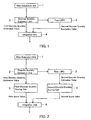
- FIG. 1 shows a block diagram of an attribute value estimation device of the present embodiment.
- the attribute value estimation device of the present embodiment has a discrete quantity estimation unit as the estimation unit, and can be used for estimating an attribute value such as race or gender, for example.
- the attribute value estimation device of the present embodiment includes, as main components, a data acquisition unit 1, a discrete quantity estimation unit 2, a first LSPC 3, and an integration unit 4.
- Examples of the data acquisition unit 1 include image acquisition units such as CCD (Charge Coupled Device) cameras, CMOS (Complementary Metal Oxide Semiconductor) cameras, and image scanners.
- the discrete quantity estimation unit 2 stores previously learned determination criteria.
- Each of the discrete quantity estimation unit 2, the first LSPC 3, and the integration unit 4 can be any dedicated hardware (e.g., a central processing unit (CPU) or the like), or can be realized on a computer by software processing, for example.
- CPU central processing unit
- the discrete quantity estimation unit 2 extracts a feature quantity used for attribute value estimation from input data. Using the feature quantity extracted from the input data and the determination criteria, the discrete quantity estimation unit 2 estimates an attribute value of the input data as a discrete quantity.
- the discrete quantity may be white, black, yellow, Mongoloid, or mixed (biracial or multiracial), for example.
- the discrete quantity may be male or female, for example.
- the discrete quantity estimation unit 2 can extract the feature quantity from the input data using a conventionally known method, examples of which include edge extraction and binarization.
- the discrete quantity estimation unit 2 can estimate the attribute value as a discrete quantity from the feature quantity in accordance with the determination criteria using a conventionally known method, examples of which include: the use of a neural network, a Gaussian mixture model, or a support vector machine; linear discrimination analysis; logistic regression analysis; and a k-nearest neighbor classification method.
- the first LSPC 3 estimates the attribute value as a discrete quantity based on, as a new feature quantity, data input from the discrete quantity estimation unit 2.
- the first LSPC 3 solves a posterior probability model in each class using a squared loss.
- the most distinctive feature of the first LSPC 3 is that it can achieve ultra-high speed learning.
- the first LSPC 3 models the posterior probability in the form of density ratio, so that it also has a feature that it is resistant to imbalance in the number of pieces of data among respective classes of training samples. For example, when people from multiple races are estimation targets, it is difficult to collect training samples evenly for various classifications such as age group, race, and gender. Thus, this feature of the first LSPC 3 is advantageous when the estimation targets are people from multiple races.
- the first LSPC 3 estimates the posterior probability distribution p (y
- the attribute class include age group classes, gender classes, and race classes.
- x p x ⁇ y p x
- the first LSPC 3 learns the posterior probability p (y
- the estimation result is less susceptible to the influence of imbalance in the number of pieces of training sample data among respective classes (e.g., the number of pieces of training sample data in a particular class is small).
- the posterior probability of the attribute class y is modeled using the following linear model. q y
- the first LSPC 3 learns a parameter ⁇ (the following expression) in such a manner that the following square error J 0 is minimized.
- x ; ⁇ 2 ⁇ p x ⁇ dx - ⁇ ⁇ y 1 c q y
- x ; ⁇ ⁇ p x ⁇ y ⁇ dx + 1 2 ⁇ ⁇ y 1 c p ( y
- the last term in the above expression is a constant and thus can be ignored.
- the discrete quantity estimation unit 2 and the first LSPC 3 may each output the discrete quantity estimation value accompanying stochastic representation of the estimation result.
- the discrete quantity estimation value accompanying stochastic representation of the estimation result may be as follows, for example: in the case where the attribute value is a race, the discrete quantity estimation value may be, for example, "the estimation target is white with a probability of 80% and black with a probability of 20%"; and in the case where the attribute value is a gender, the discrete quantity estimation value may be, for example, "the estimation target is male with a probability of 80% and female with a probability of 20%".
- the estimation target in the case where it is estimated that the estimation target is female from part of its appearance but there is a possibility that the estimation target may be male according to any other determination criteria (e.g., the estimation target is a person with long hair), it is possible to output an estimation result with higher accuracy.
- the integration unit 4 integrates a first discrete quantity estimation value estimated by the discrete quantity estimation unit 2 and a second discrete quantity estimation value estimated by the first LSPC 3.
- the integration unit 4 outputs, as an estimation result, an attribute class obtained after the integration.
- At least one of (1) introduction of a delta kernel and (2) placement of the center of a kernel may be performed, for example.
- a "delta kernel" for calculating the kernel function is introduced only when a class of the input feature quantity x is the same as a correct class to which a training sample (in the present embodiment, the objective variable (facial feature quantity)) x i belongs.
- K ⁇ x ⁇ x i ⁇ y ⁇ y i ⁇ y ⁇ K x ⁇ x i ⁇ ⁇ y , y ⁇ ⁇ y,y ' is a Kronecker delta represented by the following Expression (11).
- FIG. 2 shows another configuration of the attribute value estimation device of the present invention. As shown in FIG. 2 , this attribute value estimation device has the same configuration as the attribute value estimation device shown in FIG. 1 , except that it further includes a first discrete quantity scoring unit 5 and a second discrete quantity scoring unit 6.
- the attribute value estimation device and an attribute value estimation method according to the present embodiment will be described more specifically with reference to an example where the attribute value is a race, and the race estimation is performed for three classes, namely, white, Asian, and black.
- the first discrete quantity scoring unit 5 scores a first discrete quantity estimation value estimated by the discrete quantity estimation unit 2, and outputs, as a first score value, certainty factors in the stochastic form (white: p 1 , Asian: p 2 , black: p 3 ).
- the second discrete quantity scoring unit 6 scores a second discrete quantity estimation value estimated by the first LSPC 3, and outputs, as a second score value, certainty factors in the same form as described above (white: q 1 , Asian: q 2 , black: q 3 ).
- the integration unit 4 assigns weights ⁇ 1 and ⁇ 2 determined in Embodiment 6 to be described below to the first score value and the second score value, respectively, and adds the thus-weighted first and second score values. Then, the integration unit 4 outputs, as an estimation result, the race having a highest score value among the following score values R 1 , R 2 , and R 3 .
- Score value for white: R 1 ⁇ 1 ⁇ p 1 + ⁇ 2 ⁇ q 1
- Score value for Asian: R 2 ⁇ 1 ⁇ p 2 + ⁇ 2 .q 2
- Score value for black: R 3 ⁇ 1 ⁇ p 3 + ⁇ 2 ⁇ q 3
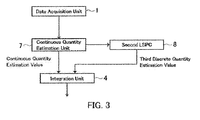
- FIG. 3 shows still another example of the attribute value estimation device of the present invention.
- the attribute value estimation device of the present embodiment has a continuous quantity estimation unit as the estimation unit, and can be used for estimating an attribute value such as age group or age, for example.
- this attribute value estimation device has the same configuration as the attribute value estimation device shown in FIG. 1 , except that it includes a continuous quantity estimation unit 7 and a second LSPC 8 instead of the discrete quantity estimation unit 2 and the first LSPC 3.
- the continuous quantity estimation unit 7 stores previously learned determination criteria.
- the continuous quantity estimation unit 7 extracts a feature quantity used for attribute value estimation from input data. Using the feature quantity extracted from the input data and the determination criteria, the continuous quantity estimation unit 7 estimates an attribute value of the input data as a continuous quantity.
- the continuous quantity estimation unit 7 can extract the feature quantity from the input data using a conventionally known method, examples of which include edge extraction and binarization.
- the continuous quantity estimation unit 7 can estimate the attribute value from the feature quantity in accordance with the determination criteria using a conventionally known method, examples of which include: the use of a neural network; multiple regression analysis; support vector regression; kernel regularized weighted least squares; and a k-nearest neighbor classification method.
- the second LSPC 8 estimates the attribute value as a discrete quantity based on, as a new feature quantity, data input from the continuous quantity estimation unit 7, in the same manner as the above-described first LSPC 3.
- the integration unit 4 integrates a continuous quantity estimation value estimated by the continuous quantity estimation unit 7 and a third discrete quantity estimation value estimated by the second LSPC 8.
- the integration unit 4 outputs, as an estimation result, an attribute value (e.g., an age group, an age, or the like) obtained after the integration.
- the attribute value estimation device of the present embodiment may be configured so that, for example: the continuous quantity estimation unit 7 includes a neural network; the second LSPC 8 outputs certainty factors for respective age group classes based on, as a new facial feature quantity, data whose dimensionality has been reduced by the neural network (e.g., intermediate 100-dimensional data); and an age group with the highest certainty factor is set to an estimated age group.
- the discrete quantity estimation unit 2 in Embodiments 1 and 2 includes a neural network as in the present example, the neural network may reduce the dimensionality of data as in the present example.
- FIG. 4 shows still another example of the attribute value estimation device of the present invention.
- the attribute value estimation device of present embodiment has both a discrete quantity estimation unit and a continuous quantity estimation unit as the estimation units, and can be used for estimating an attribute value such as age group or age, for example.
- this attribute value estimation device has the same configuration as the attribute value estimation device shown in FIG. 1 , except that it further includes a continuous quantity estimation unit 7 and a second LSPC 8.
- the discrete quantity estimation unit 2 and the first LSPC 3 are as described in Embodiment 1.
- the continuous quantity estimation unit 7 and the second LSPC 8 are as described in Embodiment 3.
- the integration unit 4 integrates a first discrete quantity estimation value estimated by the discrete quantity estimation unit 2, a second discrete quantity estimation value estimated by the first LSPC 3, a continuous quantity estimation value estimated by the continuous quantity estimation unit 7, and a third discrete quantity estimation value estimated by the second LSPC 8.
- the integration unit 4 outputs, as an estimation result, an attribute value (e.g., an age group, an age, or the like) obtained after the integration.
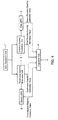
- FIG. 5 shows still another example of the attribute value estimation device of the present invention.
- this attribute value estimation device has the same configuration as the attribute value estimation device shown in FIG. 4 , except that it further includes a first discrete quantity scoring unit 5, a second discrete quantity scoring unit 6, a continuous quantity scoring unit 9, and a third discrete quantity scoring unit 10.
- the first discrete quantity scoring unit 5 and the second discrete quantity scoring unit 6 are as described in Embodiment 2.
- the continuous quantity estimation unit 7 includes a neural network.
- the continuous quantity estimation unit 7 and the second LSPC 8 assign scores to the respective ages from 1 to 70 (at 1-year intervals), and scores are thus output in the vector form.
- the neural network used in the present example has been trained through regression model learning so that it can perform age estimation at 1-year intervals.
- an output therefrom is in the form of a single scalar y (age).
- An output from the neural network is scored in the following manner, with consideration given to the fact that human age perception characteristics are nonuniform ( Kazuya UEKI, Masashi SUGIYAMA, and Yasuyuki IHARA, "Omomitsuki-kaiki ni yoru ningen no chikaku-tokusei wo kouryo sita nenrei-suitei (Age Estimation Considering Human Perception Characteristic by Weighted Regression)", Proceedings of the 15th Symposium on Sensing via Image Information (SSII09), no. IS4-23 (CD-ROM), Yokohama, 2009, 6. 10-12 ).
- the mean value of perceived ages (apparent ages) of the same subject estimated by a plurality of estimators is set to a "real age".
- the standard deviation of estimation error in age perception with respect to the real age y is represented as ⁇ age (y).
- the ⁇ age (y) is nonuniform, as shown in FIGs. 7A and 7B . More specifically, while error in age perception for younger subjects is small, error in age perception for older subjects is great.
- FIG. 7A shows the standard deviation of error when the ages of female subjects at the respective ages were estimated from their face images
- FIG. 7B shows the standard deviation of error when the ages of male subjects at the respective ages were estimated from their face images.
- an output age from the neural network (the underlined part in the following expression) is scored in the following manner.
- the distribution of the components of the score f 1 is in the form of normal distribution exhibiting small dispersion for younger subjects and large dispersion for older subjects, with the peak being formed when the output age is equal to the underlined part in the above expression. That is, scoring is performed so as to reflect the fact that there is a low probability that an estimated age for a younger subject might be an age around the real age of the subject while there is a high probability that an estimated age for an older subject might be an age around the real age of the subject.
- the second LSPC 8 outputs certainty factors for the respective age groups in the stochastic form.
- the scoring is performed so that an output from the second LSPC 8 is in the same form as the score f 1 assigned to the above-described output from the neural network.
- the certainty factors output from the second LSPC 8 are as follows: the early age group: p 1 , the middle age group: p 2 , and the old age group: p 3 .
- the upper right graph of FIG. 8 shows an image of the distribution of components of the output score vector from the second LSPC 8.
- the integration unit 4 integrates a first score value obtained by the first discrete quantity scoring unit 5, a second score value obtained by the second discrete quantity scoring unit 6, a third score value obtained by the continuous quantity scoring unit 9, and a fourth score value obtained by the third discrete quantity scoring unit 10.
- the integration unit 4 outputs, as an estimation result, an age obtained after the integration.
- the present embodiment is carried out using the attribute value estimation device shown in FIG. 5 .
- the present embodiment is the same as Embodiment 5, except that the integration unit 4 performs the above-described integration with weighs being assigned to the third score value and the fourth score value.
- weighting of output scores is carried out in the following manner, for example.
- Weights ⁇ 1 and ⁇ 2 are assigned respectively to scores obtained by the continuous quantity scoring unit 9 and the third discrete quantity scoring unit 10 regarding each age z (1 ⁇ z ⁇ 70, at 1-year intervals), and the thus-weighted scores are added to each other.
- the method for determining optimal weights will be described below.
- F ⁇ 1 • f 1 + ⁇ 2 • f 2 ⁇
- F ⁇ 1 • f 1 z + ⁇ 2 • f 2 z
- the lower graph in FIG. 8 shows an image of the distribution of score vector components after the integration.
- optimal weights ⁇ 1 and ⁇ 2 are searched for one by one thoroughly. More specifically, the evaluation of the integration unit 4 is performed using the validation data under the following conditions: numerical widths of ⁇ 1 and ⁇ 2 : 0 to 1, search intervals: 0.01. A score having the highest score (the mean value of recognition rates in each category) when evaluated using the validation data is employed as an optimal weight.
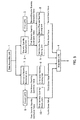
- FIG. 6 shows still another example of the attribute value estimation device of the present invention.
- this attribute value estimation device includes a data acquisition unit 1, a race estimation unit 11, an age group estimation unit 21 for whites, an age group estimation unit 22 for Asians, an age group estimation unit 23 for blacks, and an integration unit 4.
- the race estimation unit 11 includes the discrete quantity estimation unit 2, first LSPC 3, first discrete quantity scoring unit 5, and second discrete quantity scoring unit 6 of the attribute value estimation device shown in FIG. 2 .
- the age group estimation unit 21 for whites, the age group estimation unit 22 for Asians, and the age group estimation unit for blacks 23 each include the discrete quantity estimation unit 2, first LSPC 3, first discrete quantity scoring unit 5, second discrete quantity scoring unit 6, continuous quantity estimation unit 7, second LSPC 8, continuous quantity scoring unit 9, and third discrete quantity scoring unit 10 of the attribute value estimation device shown in FIG. 5 .
- the attribute value estimation device and an attribute value estimation method according to the present embodiment will be described more specifically with reference to an example where the race estimation unit 11 performs race estimation for three classes, namely, white, Asian, and black.
- the race estimation unit 11 outputs certainty factors in the stochastic form (white: p 1 , Asian: p 2 , black: p 3 ) as a score value.
- the age group estimation unit 21 for whites, the age group estimation unit 22 for Asians, and the age group estimation unit 23 for blacks output, as score values at each age z (1 ⁇ z ⁇ 70, at 1-year intervals), the following Expressions (16) to (18), respectively.
- the integration unit 4 uses the certainty factors (in the stochastic form) output from the race estimation unit 11, the integration unit 4 integrates the score values for each age z (1 ⁇ z ⁇ 70, at 1-year intervals) as shown below.
- G p 1 • W + p 2 • A + p 3 • B ⁇
- G z p 1 • W z + p 2 • A z + p 3 • B z
Landscapes
- Engineering & Computer Science (AREA)
- Theoretical Computer Science (AREA)
- Physics & Mathematics (AREA)
- General Physics & Mathematics (AREA)
- Evolutionary Computation (AREA)
- Data Mining & Analysis (AREA)
- Artificial Intelligence (AREA)
- Computer Vision & Pattern Recognition (AREA)
- General Engineering & Computer Science (AREA)
- Computing Systems (AREA)
- Software Systems (AREA)
- General Health & Medical Sciences (AREA)
- Health & Medical Sciences (AREA)
- Business, Economics & Management (AREA)
- Multimedia (AREA)
- Life Sciences & Earth Sciences (AREA)
- Mathematical Physics (AREA)
- Strategic Management (AREA)
- Finance (AREA)
- Development Economics (AREA)
- Accounting & Taxation (AREA)
- Bioinformatics & Computational Biology (AREA)
- Probability & Statistics with Applications (AREA)
- Bioinformatics & Cheminformatics (AREA)
- Evolutionary Biology (AREA)
- Medical Informatics (AREA)
- Databases & Information Systems (AREA)
- Computational Linguistics (AREA)
- Marketing (AREA)
- General Business, Economics & Management (AREA)
- Entrepreneurship & Innovation (AREA)
- Game Theory and Decision Science (AREA)
- Economics (AREA)
- Mathematical Optimization (AREA)
- Pure & Applied Mathematics (AREA)
- Biomedical Technology (AREA)
- Biophysics (AREA)
- Molecular Biology (AREA)
- Algebra (AREA)
- Mathematical Analysis (AREA)
Abstract
The present invention provides an attribute value estimation device capable of yielding highly accurate estimation results even when people from multiple races are estimation targets. The attribute value estimation device for estimating, from data input thereto, an attribute value of the data includes: a data acquisition unit (1) that acquires data for which an attribute value is to be estimated; a discrete quantity estimation unit (2) that estimates the attribute value as a discrete quantity based on the data acquired by the data acquisition unit (1) and in accordance with a previously learned determination criterion; a first LSPC (3) that estimates the attribute value as a discrete quantity based on data input from the discrete quantity estimation unit (2); and an integration unit (4) that integrates a first discrete quantity estimation value estimated by the discrete quantity estimation unit (2) and a second discrete quantity estimation value estimated by the first LSPC (3).
Description
- The present invention relates to an attribute value estimation device, an attribute value estimation method, a program, and a recording medium.
- Conventional attribute value estimation devices for estimating, from data input thereto, an attribute value of the data include those that estimate an attribute value of input data by extracting features of the data and then comparing the thus-extracted features with features of training samples that the devices have learned previously. In such devices, estimation results may be treated as discrete quantities (Patent Document 1) or as continuous quantities (Patent Document 2).
-
- Patent Document 1:
JP 2007-58828 A - Patent Document 2:
JP 2005-148880 A - In estimation of a face attribute value such as an age by the above-described devices, the devices can yield highly accurate estimation results when people from a specific race, such as Japanese, are estimation targets. However, when estimation targets are face images of people from multiple races including various facial features, training samples might be biased, so that it is difficult to achieve the same level of accuracy as that achieved when the estimation targets are people from a specific race.
- With the foregoing in mind, it is an object of the present invention to provide an attribute value estimation device, an attribute value estimation method, a program, and a recording medium, with which highly accurate estimation results can be obtained even when people from multiple races are estimation targets.
- In order to achieve the above object, the present invention provides an attribute value estimation device for estimating, from data input thereto, an attribute value of the data, including:
- a data acquisition unit that acquires data for which an attribute value is to be estimated;
- at least one estimation unit selected from: a discrete quantity estimation unit that estimates the attribute value as a discrete quantity; and a continuous quantity estimation unit that estimates the attribute value as a continuous quantity, the estimation unit estimating the attribute value based on the data acquired by the data acquisition unit and in accordance with a previously learned determination criterion; and
- a LSPC (Least-Squares Probabilistic Classifier) that estimates the attribute value as a discrete quantity based on data input from the estimation unit; and
- an integration unit that integrates an estimation value estimated by the estimation unit and a discrete quantity estimation value estimated by the least-squares probabilistic classifier.
- The present invention also provides an attribute value estimation method for estimating, from input data, an attribute value of the data, including:
- a data acquisition step of acquiring data for which an attribute value is to be estimated;
- an estimation step of estimating the attribute value as at least one of a discrete quantity and a continuous quantity based on the data acquired in the data acquisition step and in accordance with a previously learned determination criterion;
- a discrete quantity estimation step of estimating the attribute value as a discrete quantity based on data processed in the estimation step; and
- an integration step of integrating an estimation value estimated in the estimation step and a discrete quantity estimation value estimated in the discrete quantity estimation step,
- wherein a LSPC is used in the discrete quantity estimation step.
- The present invention also provides a program that causes a computer to execute the attribute value estimation method according to the present invention.
- The present invention also provides a recording medium having recorded thereon the program according to the present invention.
- According to the present invention, it is possible to obtain highly accurate estimation results even when people from multiple races are estimation targets.
-
- [
FIG. 1] FIG. 1 is a block diagram showing an example (Embodiment 1) of the attribute value estimation device of the present invention. - [
FIG. 2] FIG. 2 is a block diagram showing another example (Embodiment 2) of the attribute value estimation device of the present invention. - [
FIG. 3] FIG. 3 is a block diagram showing still another example (Embodiment 3) of the attribute value estimation device of the present invention. - [
FIG. 4] FIG. 4 is a block diagram showing still another example (Embodiment 4) of the attribute value estimation device of the present invention. - [
FIG. 5] FIG. 5 is a block diagram showing still another example (Embodiment 5) of the attribute value estimation device of the present invention. - [
FIG. 6] FIG. 6 is a block diagram showing still another example (Embodiment 7) of the attribute value estimation device of the present invention. - [
FIG. 7] FIGs. 7A and 7B are each a graph showing the relationship between age and the standard deviation of estimation error. - [
FIG. 8] FIG. 8 shows graphs showing the distributions of score vector components before and after integration. - The attribute value estimation device of the present invention preferably is configured so that it further includes: a scoring unit that scores the estimation value estimated by the estimation unit; and a discrete quantity scoring unit that scores the discrete quantity estimation value estimated by the LSPC, wherein the integration unit integrates a first score value obtained by the scoring unit and a second score value obtained by the discrete quantity scoring unit. Similarly, the attribute value estimation method of the present invention preferably is configured so that it further includes: a scoring step of scoring the estimation value estimated in the estimation step; and a discrete quantity scoring step of scoring the discrete quantity estimation value estimated by the LSPC in the discrete quantity estimation step, wherein, in the integration step, a first score value obtained in the scoring step and a second score value obtained in the discrete quantity scoring step are integrated.
- The attribute value estimation device of the present invention preferably is configured so that the integration unit integrates the estimation value, the discrete quantity estimation value, and the score values with a weight being assigned to at least one of the estimation value, the discrete quantity estimation value, and the score values. Similarly, the attribute value estimation method of the present invention preferably is configured so that, in the integration step, the estimation value, the discrete quantity estimation value, and the score values are integrated with a weight being assigned to at least one of the estimation value, the discrete quantity estimation value, and the score values.
- The attribute value estimation device and attribute value estimation method according to the present invention preferably are configured so that the LSPC previously learns the determination criterion, and in the learning of the determination criterion, the LSPC calculates a kernel function only when a class of an input feature quantity is the same as a correct class to which a training sample belongs. With this configuration, it is possible to further speed up calculations at the time of learning, for example.
- The attribute value estimation device and attribute value estimation method according to the present invention preferably are configured so that the LSPC previously learns the determination criterion, and in the learning of the determination criterion, the center of kernel is placed in a class for which the number of training samples is the smallest. With this configuration, it is possible to further speed up calculations at the time of learning, for example.
- The attribute value estimation device of the present invention preferably is configured so that at least one estimation unit selected from the discrete quantity estimation unit and the continuous quantity estimation unit includes a neural network, dimensionality reduction of the data acquired by the data acquisition unit is performed by the neural network, and the attribute value is estimated based on the dimensionality-reduced data, and the least-squares probabilistic classifier estimates the attribute value as a discrete quantity based on the dimensionality-reduced data. Similarly, the attribute value estimation method of the present invention preferably is configured so that, in the estimation step, at least one of the discrete quantity and the continuous quantity is estimated using a neural network, dimensionality reduction of the data acquired in the data acquisition step is performed by the neural network, and the attribute value is estimated based on the dimensionality-reduced data, and in the discrete quantity estimation step, the LSPC estimates the attribute value as a discrete quantity based on the dimensionality-reduced data.
- The attribute value estimation device and attribute value estimation method according to the present invention preferably are configured so that the data acquired by the data acquisition unit and the data acquired in the data acquisition step are face image data, and the attribute value is a face attribute value.
- The attribute value estimation device and attribute value estimation method according to the present invention preferably configured so that the face attribute value is at least one attribute value selected from the group consisting of age group, age, gender, and race.
- Next, the attribute value estimation device, attribute value estimation method, program, and recording medium according to the present invention will be described with reference to illustrative examples. It is to be noted, however, that the present invention is by no means limited to the following examples. In
FIGs. 1 to 6 to be described below, the same components are given the same reference numerals. -
FIG. 1 shows a block diagram of an attribute value estimation device of the present embodiment. The attribute value estimation device of the present embodiment has a discrete quantity estimation unit as the estimation unit, and can be used for estimating an attribute value such as race or gender, for example. As shown inFIG. 1 , the attribute value estimation device of the present embodiment includes, as main components, adata acquisition unit 1, a discretequantity estimation unit 2, afirst LSPC 3, and anintegration unit 4. Examples of thedata acquisition unit 1 include image acquisition units such as CCD (Charge Coupled Device) cameras, CMOS (Complementary Metal Oxide Semiconductor) cameras, and image scanners. The discretequantity estimation unit 2 stores previously learned determination criteria. Each of the discretequantity estimation unit 2, thefirst LSPC 3, and theintegration unit 4 can be any dedicated hardware (e.g., a central processing unit (CPU) or the like), or can be realized on a computer by software processing, for example. - The discrete
quantity estimation unit 2 extracts a feature quantity used for attribute value estimation from input data. Using the feature quantity extracted from the input data and the determination criteria, the discretequantity estimation unit 2 estimates an attribute value of the input data as a discrete quantity. In the case where the attribute value is a race, for example, the discrete quantity may be white, black, yellow, Mongoloid, or mixed (biracial or multiracial), for example. In the case where the attribute value is a gender, the discrete quantity may be male or female, for example. - The discrete
quantity estimation unit 2 can extract the feature quantity from the input data using a conventionally known method, examples of which include edge extraction and binarization. - The discrete
quantity estimation unit 2 can estimate the attribute value as a discrete quantity from the feature quantity in accordance with the determination criteria using a conventionally known method, examples of which include: the use of a neural network, a Gaussian mixture model, or a support vector machine; linear discrimination analysis; logistic regression analysis; and a k-nearest neighbor classification method. - The
first LSPC 3 estimates the attribute value as a discrete quantity based on, as a new feature quantity, data input from the discretequantity estimation unit 2. Thefirst LSPC 3 solves a posterior probability model in each class using a squared loss. Thus, the most distinctive feature of thefirst LSPC 3 is that it can achieve ultra-high speed learning. Besides, thefirst LSPC 3 models the posterior probability in the form of density ratio, so that it also has a feature that it is resistant to imbalance in the number of pieces of data among respective classes of training samples. For example, when people from multiple races are estimation targets, it is difficult to collect training samples evenly for various classifications such as age group, race, and gender. Thus, this feature of thefirst LSPC 3 is advantageous when the estimation targets are people from multiple races. - The
first LSPC 3 estimates the posterior probability distribution p (y |x) of an attribute class y regarding an input feature quantity (facial feature quantity) x in the form of density ratio represented by the following Expression (1). Examples of the attribute class include age group classes, gender classes, and race classes.
- p(x) : probability distribution of training samples
- p(x,y): joint probability distribution of training samples
- The
first LSPC 3 learns the posterior probability p (y |x) using a squared loss. This allows, for example, the learning time to be reduced to one several hundredth while maintaining the pattern recognition accuracy equivalent to those achieved by conventional methods. - Moreover, since the posterior probability is estimated in the form of density ratio represented by Expression (1), the estimation result is less susceptible to the influence of imbalance in the number of pieces of training sample data among respective classes (e.g., the number of pieces of training sample data in a particular class is small).
- Next, the least square fitting of the posterior probability will be described. First, the posterior probability of the attribute class y is modeled using the following linear model.


- The
first LSPC 3 learns a parameter α (the following expression) in such a manner that the following square error J 0 is minimized.




I b : b-dimensional unit matrix
Parameter correction is performed in accordance with the following Expression (8) so as to make all the parameters non-negative, thus ensuring the non-negativity of the posterior probability.


- When estimating the discrete quantity of the attribute value, the discrete
quantity estimation unit 2 and thefirst LSPC 3 may each output the discrete quantity estimation value accompanying stochastic representation of the estimation result. The discrete quantity estimation value accompanying stochastic representation of the estimation result may be as follows, for example: in the case where the attribute value is a race, the discrete quantity estimation value may be, for example, "the estimation target is white with a probability of 80% and black with a probability of 20%"; and in the case where the attribute value is a gender, the discrete quantity estimation value may be, for example, "the estimation target is male with a probability of 80% and female with a probability of 20%". With this configuration, in the case where it is estimated that the estimation target is female from part of its appearance but there is a possibility that the estimation target may be male according to any other determination criteria (e.g., the estimation target is a person with long hair), it is possible to output an estimation result with higher accuracy. - The
integration unit 4 integrates a first discrete quantity estimation value estimated by the discretequantity estimation unit 2 and a second discrete quantity estimation value estimated by thefirst LSPC 3. Theintegration unit 4 outputs, as an estimation result, an attribute class obtained after the integration. In the present embodiment, since the first discrete quantity estimation value and the second discrete quantity estimation value are integrated, there is no risk that the estimation accuracy of any particular attribute class might be low. - Furthermore, in the present embodiment, in order to further improve the learning speed of the
first LSPC 3, at least one of (1) introduction of a delta kernel and (2) placement of the center of a kernel may be performed, for example. - First, (1) introduction of a delta kernel will be described. When the following training samples are given, the posterior probability model (Expression (3)) of each attribute class y is designed as represented by the following expression.

- Xi: objective variable (facial feature quantity)
- Y i: explanatory variable (attribute class)
- c : the number of attribute classes
- n : the number of learning samples
- K: kernel function determined by input feature quantity x, class y, similarity of training samples


calculation amount required to obtain analytic solution (Expression (7) above): O(c3n3) - At the time of learning, a "delta kernel" for calculating the kernel function is introduced only when a class of the input feature quantity x is the same as a correct class to which a training sample (in the present embodiment, the objective variable (facial feature quantity)) xi belongs.

δy,y' is a Kronecker delta represented by the following Expression (11).
- Next, (2) placement of the center of a kernel will be described. In the class y, the value of the posterior probability p (z |x) is high in a region where the number of training samples is large whereas it is almost 0 (zero) in a region where the number of training samples is small. Therefore, the center of the kernel may be placed where there are training samples in the class.
- This makes the block of the matrix of Expression (5a) still smaller, thus allowing the calculation amount for the inverse matrix to be reduced further.
-
FIG. 2 shows another configuration of the attribute value estimation device of the present invention. As shown inFIG. 2 , this attribute value estimation device has the same configuration as the attribute value estimation device shown inFIG. 1 , except that it further includes a first discretequantity scoring unit 5 and a second discretequantity scoring unit 6. - The attribute value estimation device and an attribute value estimation method according to the present embodiment will be described more specifically with reference to an example where the attribute value is a race, and the race estimation is performed for three classes, namely, white, Asian, and black.
- The first discrete
quantity scoring unit 5 scores a first discrete quantity estimation value estimated by the discretequantity estimation unit 2, and outputs, as a first score value, certainty factors in the stochastic form (white: p1, Asian: p2, black: p3). - The second discrete
quantity scoring unit 6 scores a second discrete quantity estimation value estimated by thefirst LSPC 3, and outputs, as a second score value, certainty factors in the same form as described above (white: q1, Asian: q2, black: q3). - The
integration unit 4 assigns weights ω1 and ω2 determined inEmbodiment 6 to be described below to the first score value and the second score value, respectively, and adds the thus-weighted first and second score values. Then, theintegration unit 4 outputs, as an estimation result, the race having a highest score value among the following score values R1, R2, and R3.Score value for white: R1 = ω1·p1 + ω2·q1 Score value for Asian: R2 = ω1·p2 + ω2.q2 Score value for black: R3 = ω1·p3 + ω2·q3 -
FIG. 3 shows still another example of the attribute value estimation device of the present invention. The attribute value estimation device of the present embodiment has a continuous quantity estimation unit as the estimation unit, and can be used for estimating an attribute value such as age group or age, for example. As shown inFIG. 3 , this attribute value estimation device has the same configuration as the attribute value estimation device shown inFIG. 1 , except that it includes a continuousquantity estimation unit 7 and asecond LSPC 8 instead of the discretequantity estimation unit 2 and thefirst LSPC 3. The continuousquantity estimation unit 7 stores previously learned determination criteria. - The continuous
quantity estimation unit 7 extracts a feature quantity used for attribute value estimation from input data. Using the feature quantity extracted from the input data and the determination criteria, the continuousquantity estimation unit 7 estimates an attribute value of the input data as a continuous quantity. The continuousquantity estimation unit 7 can extract the feature quantity from the input data using a conventionally known method, examples of which include edge extraction and binarization. - The continuous
quantity estimation unit 7 can estimate the attribute value from the feature quantity in accordance with the determination criteria using a conventionally known method, examples of which include: the use of a neural network; multiple regression analysis; support vector regression; kernel regularized weighted least squares; and a k-nearest neighbor classification method. - The
second LSPC 8 estimates the attribute value as a discrete quantity based on, as a new feature quantity, data input from the continuousquantity estimation unit 7, in the same manner as the above-describedfirst LSPC 3. - The
integration unit 4 integrates a continuous quantity estimation value estimated by the continuousquantity estimation unit 7 and a third discrete quantity estimation value estimated by thesecond LSPC 8. Theintegration unit 4 outputs, as an estimation result, an attribute value (e.g., an age group, an age, or the like) obtained after the integration. - The attribute value estimation device of the present embodiment may be configured so that, for example: the continuous
quantity estimation unit 7 includes a neural network; thesecond LSPC 8 outputs certainty factors for respective age group classes based on, as a new facial feature quantity, data whose dimensionality has been reduced by the neural network (e.g., intermediate 100-dimensional data); and an age group with the highest certainty factor is set to an estimated age group. In the case where the discretequantity estimation unit 2 inEmbodiments -
FIG. 4 shows still another example of the attribute value estimation device of the present invention. The attribute value estimation device of present embodiment has both a discrete quantity estimation unit and a continuous quantity estimation unit as the estimation units, and can be used for estimating an attribute value such as age group or age, for example. As shown inFIG. 4 , this attribute value estimation device has the same configuration as the attribute value estimation device shown inFIG. 1 , except that it further includes a continuousquantity estimation unit 7 and asecond LSPC 8. The discretequantity estimation unit 2 and thefirst LSPC 3 are as described inEmbodiment 1. The continuousquantity estimation unit 7 and thesecond LSPC 8 are as described inEmbodiment 3. - The
integration unit 4 integrates a first discrete quantity estimation value estimated by the discretequantity estimation unit 2, a second discrete quantity estimation value estimated by thefirst LSPC 3, a continuous quantity estimation value estimated by the continuousquantity estimation unit 7, and a third discrete quantity estimation value estimated by thesecond LSPC 8. Theintegration unit 4 outputs, as an estimation result, an attribute value (e.g., an age group, an age, or the like) obtained after the integration. -
FIG. 5 shows still another example of the attribute value estimation device of the present invention. As shown inFIG. 5 , this attribute value estimation device has the same configuration as the attribute value estimation device shown inFIG. 4 , except that it further includes a first discretequantity scoring unit 5, a second discretequantity scoring unit 6, a continuousquantity scoring unit 9, and a third discretequantity scoring unit 10. The first discretequantity scoring unit 5 and the second discretequantity scoring unit 6 are as described inEmbodiment 2. - Scoring in the present embodiment will be described with reference to an example where the continuous
quantity estimation unit 7 includes a neural network. In this example, the continuousquantity estimation unit 7 and thesecond LSPC 8 assign scores to the respective ages from 1 to 70 (at 1-year intervals), and scores are thus output in the vector form. - First, (1) scoring of an output from the neural network will be described. The neural network used in the present example has been trained through regression model learning so that it can perform age estimation at 1-year intervals. Thus, an output therefrom is in the form of a single scalar y (age). An output from the neural network is scored in the following manner, with consideration given to the fact that human age perception characteristics are nonuniform (Kazuya UEKI, Masashi SUGIYAMA, and Yasuyuki IHARA, "Omomitsuki-kaiki ni yoru ningen no chikaku-tokusei wo kouryo sita nenrei-suitei (Age Estimation Considering Human Perception Characteristic by Weighted Regression)", Proceedings of the 15th Symposium on Sensing via Image Information (SSII09), no. IS4-23 (CD-ROM), Yokohama, 2009, 6. 10-12).
- In this example, the mean value of perceived ages (apparent ages) of the same subject estimated by a plurality of estimators is set to a "real age". The standard deviation of estimation error in age perception with respect to the real age y is represented as ωage(y). The ωage(y) is nonuniform, as shown in
FIGs. 7A and 7B . More specifically, while error in age perception for younger subjects is small, error in age perception for older subjects is great.FIG. 7A shows the standard deviation of error when the ages of female subjects at the respective ages were estimated from their face images, andFIG. 7B shows the standard deviation of error when the ages of male subjects at the respective ages were estimated from their face images. - Using this ωage(·) ("·" is the underlined part in the following expression), an output age from the neural network (the underlined part in the following expression) is scored in the following manner.


- At this time, as shown in the upper left graph of
FIG. 8 , the distribution of the components of the score f1 is in the form of normal distribution exhibiting small dispersion for younger subjects and large dispersion for older subjects, with the peak being formed when the output age is equal to the underlined part in the above expression. That is, scoring is performed so as to reflect the fact that there is a low probability that an estimated age for a younger subject might be an age around the real age of the subject while there is a high probability that an estimated age for an older subject might be an age around the real age of the subject. - Next, (2) scoring of an output from the
second LSPC 8 will be described. Thesecond LSPC 8 outputs certainty factors for the respective age groups in the stochastic form. In the present example, the scoring is performed so that an output from thesecond LSPC 8 is in the same form as the score f1 assigned to the above-described output from the neural network. - For example, when age group estimation is performed for three classes, namely, an early age group (0 to 19 years old), a middle age group (20 to 49 years old), and an old age group (over 50 years old), it is assumed that the certainty factors output from the
second LSPC 8 are as follows: the early age group: p1, the middle age group: p2, and the old age group: p3. - At this time, a score is temporarily assigned to each age z (z = 1, ... 70) in accordance with the following Expression (13).
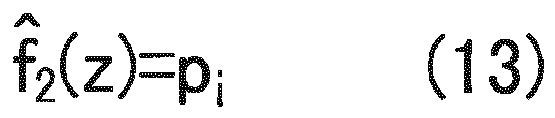

second LSPC 8.
- The upper right graph of
FIG. 8 shows an image of the distribution of components of the output score vector from thesecond LSPC 8. - In the present embodiment, the
integration unit 4 integrates a first score value obtained by the first discretequantity scoring unit 5, a second score value obtained by the second discretequantity scoring unit 6, a third score value obtained by the continuousquantity scoring unit 9, and a fourth score value obtained by the third discretequantity scoring unit 10. Theintegration unit 4 outputs, as an estimation result, an age obtained after the integration. - The present embodiment is carried out using the attribute value estimation device shown in
FIG. 5 . The present embodiment is the same asEmbodiment 5, except that theintegration unit 4 performs the above-described integration with weighs being assigned to the third score value and the fourth score value. - In the present embodiment, weighting of output scores is carried out in the following manner, for example. Weights ω1 and ω2 are assigned respectively to scores obtained by the continuous
quantity scoring unit 9 and the third discretequantity scoring unit 10 regarding each age z (1 ≤z≤ 70, at 1-year intervals), and the thus-weighted scores are added to each other. The method for determining optimal weights will be described below.

- Then, an age group to which an age z* that satisfies z* = argmaxz{F(z)} belongs is set to an output age group from the
integration unit 4. The lower graph inFIG. 8 shows an image of the distribution of score vector components after the integration. - Next, the method for searching for the weights will be described. Using validation data (data that is not used in model learning), optimal weights ω1 and ω2 are searched for one by one thoroughly. More specifically, the evaluation of the
integration unit 4 is performed using the validation data under the following conditions: numerical widths of ω1 and ω2: 0 to 1, search intervals: 0.01. A score having the highest score (the mean value of recognition rates in each category) when evaluated using the validation data is employed as an optimal weight. -
FIG. 6 shows still another example of the attribute value estimation device of the present invention. As shown inFIG. 6 , this attribute value estimation device includes adata acquisition unit 1, a race estimation unit 11, an agegroup estimation unit 21 for whites, an agegroup estimation unit 22 for Asians, an agegroup estimation unit 23 for blacks, and anintegration unit 4. The race estimation unit 11 includes the discretequantity estimation unit 2,first LSPC 3, first discretequantity scoring unit 5, and second discretequantity scoring unit 6 of the attribute value estimation device shown inFIG. 2 . The agegroup estimation unit 21 for whites, the agegroup estimation unit 22 for Asians, and the age group estimation unit forblacks 23 each include the discretequantity estimation unit 2,first LSPC 3, first discretequantity scoring unit 5, second discretequantity scoring unit 6, continuousquantity estimation unit 7,second LSPC 8, continuousquantity scoring unit 9, and third discretequantity scoring unit 10 of the attribute value estimation device shown inFIG. 5 . - The attribute value estimation device and an attribute value estimation method according to the present embodiment will be described more specifically with reference to an example where the race estimation unit 11 performs race estimation for three classes, namely, white, Asian, and black.
- The race estimation unit 11 outputs certainty factors in the stochastic form (white: p1, Asian: p2, black: p3) as a score value.
- The age
group estimation unit 21 for whites, the agegroup estimation unit 22 for Asians, and the agegroup estimation unit 23 for blacks output, as score values at each age z (1≤z≤70, at 1-year intervals), the following Expressions (16) to (18), respectively.


- Using the certainty factors (in the stochastic form) output from the race estimation unit 11, the
integration unit 4 integrates the score values for each age z (1 ≤z ≤70, at 1-year intervals) as shown below. Theintegration unit 4 outputs, as an age group estimation result including the race estimation, an age group to which an age z* that satisfies z* = argmaxz{G(z)} belongs.

- While the present invention has been described above with reference to illustrative embodiments, the present invention is by no means limited thereto. Various changes and modifications that may become apparent to those skilled in the art may be made in the configuration and specifics of the present invention without departing from the scope of the present invention.
- This application claims priority from Japanese Patent Application No.
2010-273 829 filed on December 8, 2010 -
- 1
- data acquisition unit
- 2
- discrete quantity estimation unit
- 3
- first LSPC (Least-Squares Probabilistic Classifier)
- 4
- integration unit
- 5
- first discrete quantity scoring unit
- 6
- second discrete quantity scoring unit
- 7
- continuous quantity estimation unit
- 8
- second LSPC (Least-Squares Probabilistic Classifier)
- 9
- continuous quantity scoring unit
- 10
- third discrete quantity scoring unit
- 11
- race estimation unit
- 21
- age group estimation unit for whites
- 22
- age group estimation unit for Asians
- 23
- age group estimation unit for blacks


Claims (18)
- An attribute value estimation device for estimating, from data input thereto, an attribute value of the data, the attribute value estimation device comprising:a data acquisition unit that acquires data for which an attribute value is to be estimated;at least one estimation unit selected from: a discrete quantity estimation unit that estimates the attribute value as a discrete quantity; and a continuous quantity estimation unit that estimates the attribute value as a continuous quantity, the estimation unit estimating the attribute value based on the data acquired by the data acquisition unit and in accordance with a previously learned determination criterion; anda least-squares probabilistic classifier that estimates the attribute value as a discrete quantity based on data input from the estimation unit; andan integration unit that integrates an estimation value estimated by the estimation unit and a discrete quantity estimation value estimated by the least-squares probabilistic classifier.
- The attribute value estimation device according to claim 1, further comprising:a scoring unit that scores the estimation value estimated by the estimation unit; anda discrete quantity scoring unit that scores the discrete quantity estimation value estimated by the least-squares probabilistic classifier,wherein the integration unit integrates a first score value obtained by the scoring unit and a second score value obtained by the discrete quantity scoring unit.
- The attribute value estimation device according to claim 1 or 2, wherein the integration unit integrates the estimation value, the discrete quantity estimation value, and the score values with a weight being assigned to at least one of the estimation value, the discrete quantity estimation value, and the score values.
- The attribute value estimation device according to any one of claims 1 to 3, wherein the least-squares probabilistic classifier previously learns the determination criterion, and in the learning of the determination criterion, the least-squares probabilistic classifier calculates a kernel function only when a class of an input feature quantity is the same as a correct class to which a training sample belongs.
- The attribute value estimation device according to any one of claims 1 to 4, wherein the least-squares probabilistic classifier previously learns the determination criterion, and in the learning of the determination criterion, the center of kernel is placed in a class for which the number of training samples is the smallest.
- The attribute value estimation device according to any one of claims 1 to 5, wherein
at least one estimation unit selected from the discrete quantity estimation unit and the continuous quantity estimation unit comprises a neural network, dimensionality reduction of the data acquired by the data acquisition unit is performed by the neural network, and the attribute value is estimated based on the dimensionality-reduced data, and
the least-squares probabilistic classifier estimates the attribute value as a discrete quantity based on the dimensionality-reduced data. - The attribute value estimation device according to any one of claims 1 to 6, wherein the data acquired by the data acquisition unit is face image data, and the attribute value is a face attribute value.
- The attribute value estimation device according to claim 7, wherein the face attribute value is at least one attribute value selected from the group consisting of age group, age, gender, and race.
- An attribute value estimation method for estimating, from input data, an attribute value of the data, the attribute value estimation method comprising:a data acquisition step of acquiring data for which an attribute value is to be estimated;an estimation step of estimating the attribute value as at least one of a discrete quantity and a continuous quantity based on the data acquired in the data acquisition step and in accordance with a previously learned determination criterion;a discrete quantity estimation step of estimating the attribute value as a discrete quantity based on data processed in the estimation step; andan integration step of integrating an estimation value estimated in the estimation step and a discrete quantity estimation value estimated in the discrete quantity estimation step,wherein a least-squares probabilistic classifier is used in the discrete quantity estimation step.
- The attribute value estimation method according to claim 9, further comprising:a scoring step of scoring the estimation value estimated in the estimation step; anda discrete quantity scoring step of scoring the discrete quantity estimation value estimated by the least-squares probabilistic classifier in the discrete quantity estimation step,wherein, in the integration step, a first score value obtained in the scoring step and a second score value obtained in the discrete quantity scoring step are integrated.
- The attribute value estimation method according to claim 9 or 10, wherein, in the integration step, the estimation value, the discrete quantity estimation value, and the score values are integrated with a weight being assigned to at least one of the estimation value, the discrete quantity estimation value, and the score values.
- The attribute value estimation method according to any one of claims 9 to 11, wherein the least-squares probabilistic classifier previously learns the determination criterion, and in the learning of the determination criterion, the least-squares probabilistic classifier calculates a kernel function only when a class of an input feature quantity is the same as a correct class to which a training sample belongs.
- The attribute value estimation method according to any one of claims 9 to 12, wherein the least-squares probabilistic classifier previously learns the determination criterion, and in the learning of the determination criterion, the center of kernel is placed in a class for which the number of training samples is the smallest.
- The attribute value estimation method according to any one of claims 9 to 13, wherein
in the estimation step, at least one of the discrete quantity and the continuous quantity is estimated using a neural network, dimensionality reduction of the data acquired in the data acquisition step is performed by the neural network, and the attribute value is estimated based on the dimensionality-reduced data, and
in the discrete quantity estimation step, the least-squares probabilistic classifier estimates the attribute value as a discrete quantity based on the dimensionality-reduced data. - The attribute value estimation method according to any one of claims 9 to 14, wherein the data acquired in the data acquisition step is face image data, and the attribute value is a face attribute value.
- The attribute value estimation method according to claim 15, wherein the face attribute value is at least one attribute value selected from the group consisting of age group, age, gender, and race.
- A program that causes a computer to execute the attribute value estimation method according to any one of claims 9 to 16.
- A recording medium having recorded thereon the program according to claim 17.
Applications Claiming Priority (2)
| Application Number | Priority Date | Filing Date | Title |
|---|---|---|---|
| JP2010273829 | 2010-12-08 | ||
| PCT/JP2011/076516 WO2012077476A1 (en) | 2010-12-08 | 2011-11-17 | Attribute value estimation device, attribute value estimation method, program, and recording medium |
Publications (1)
| Publication Number | Publication Date |
|---|---|
| EP2650842A1 true EP2650842A1 (en) | 2013-10-16 |
Family
ID=46206974
Family Applications (1)
| Application Number | Title | Priority Date | Filing Date |
|---|---|---|---|
| EP11846856.0A Withdrawn EP2650842A1 (en) | 2010-12-08 | 2011-11-17 | Attribute value estimation device, attribute value estimation method, program, and recording medium |
Country Status (5)
| Country | Link |
|---|---|
| US (1) | US9336486B2 (en) |
| EP (1) | EP2650842A1 (en) |
| JP (1) | JP5633080B2 (en) |
| CN (1) | CN103262118B (en) |
| WO (1) | WO2012077476A1 (en) |
Families Citing this family (20)
| Publication number | Priority date | Publication date | Assignee | Title |
|---|---|---|---|---|
| US8677385B2 (en) | 2010-09-21 | 2014-03-18 | The Nielsen Company (Us), Llc | Methods, apparatus, and systems to collect audience measurement data |
| US9626597B2 (en) | 2013-05-09 | 2017-04-18 | Tencent Technology (Shenzhen) Company Limited | Systems and methods for facial age identification |
| CN104143079B (en) * | 2013-05-10 | 2016-08-17 | 腾讯科技(深圳)有限公司 | The method and system of face character identification |
| JP6029041B2 (en) * | 2013-07-18 | 2016-11-24 | Necソリューションイノベータ株式会社 | Face impression degree estimation method, apparatus, and program |
| KR102317823B1 (en) | 2014-03-13 | 2021-10-27 | 더 닐슨 컴퍼니 (유에스) 엘엘씨 | Methods and apparatus to compensate impression data for misattribution and/or non-coverage by a database proprietor |
| US20160189182A1 (en) | 2014-12-31 | 2016-06-30 | The Nielsen Company (Us), Llc | Methods and apparatus to correct age misattribution in media impressions |
| JP6521440B2 (en) * | 2015-05-14 | 2019-05-29 | 国立研究開発法人情報通信研究機構 | Neural network and computer program therefor |
| US10380633B2 (en) | 2015-07-02 | 2019-08-13 | The Nielsen Company (Us), Llc | Methods and apparatus to generate corrected online audience measurement data |
| US10045082B2 (en) | 2015-07-02 | 2018-08-07 | The Nielsen Company (Us), Llc | Methods and apparatus to correct errors in audience measurements for media accessed using over-the-top devices |
| CN105404877A (en) * | 2015-12-08 | 2016-03-16 | 商汤集团有限公司 | Face attribute prediction method and device based on deep learning and multi-task learning |
| JP6439729B2 (en) * | 2016-03-24 | 2018-12-19 | トヨタ自動車株式会社 | Sleep state estimation device |
| WO2018173194A1 (en) * | 2017-03-23 | 2018-09-27 | 日本電気株式会社 | Authentication device and authentication method |
| CN107145977B (en) * | 2017-04-28 | 2020-07-31 | 电子科技大学 | A method for structured attribute inference for online social network users |
| CN109598176A (en) * | 2017-09-30 | 2019-04-09 | 佳能株式会社 | Identification device and recognition methods |
| CN110019790B (en) * | 2017-10-09 | 2023-08-22 | 阿里巴巴集团控股有限公司 | Text recognition, text monitoring, data object recognition and data processing method |
| US11568207B2 (en) * | 2018-09-27 | 2023-01-31 | Deepmind Technologies Limited | Learning observation representations by predicting the future in latent space |
| US11558769B2 (en) * | 2018-10-15 | 2023-01-17 | Nec Corporation | Estimating apparatus, system, method, and computer-readable medium, and learning apparatus, method, and computer-readable medium |
| CN110008568A (en) * | 2019-03-29 | 2019-07-12 | 中国人民解放军战略支援部队航天工程大学 | A Non-Statistical Estimation Model of Equipment Mean Repair Time in Small Samples |
| CN110287942B (en) * | 2019-07-03 | 2021-09-17 | 成都旷视金智科技有限公司 | Training method of age estimation model, age estimation method and corresponding device |
| CN112446257A (en) | 2019-09-02 | 2021-03-05 | 株式会社Ntt都科摩 | Attribute recognition apparatus, method and storage medium based on neural network |
Family Cites Families (5)
| Publication number | Priority date | Publication date | Assignee | Title |
|---|---|---|---|---|
| JP4303092B2 (en) * | 2003-11-12 | 2009-07-29 | 株式会社国際電気通信基礎技術研究所 | Age estimation apparatus, age estimation method, and age estimation program |
| JP2007058828A (en) * | 2005-08-26 | 2007-03-08 | Toshiba Personal Computer System Kk | Tabulation processing system for unspecified large number of people in image data, program, and information recording medium |
| US7856125B2 (en) | 2006-01-31 | 2010-12-21 | University Of Southern California | 3D face reconstruction from 2D images |
| CN100520824C (en) * | 2007-01-15 | 2009-07-29 | 浙江大学 | Color control method based on main component analysing |
| JP5109564B2 (en) * | 2007-10-02 | 2012-12-26 | ソニー株式会社 | Image processing apparatus, imaging apparatus, processing method and program therefor |
-
2011
- 2011-11-17 US US13/992,614 patent/US9336486B2/en not_active Expired - Fee Related
- 2011-11-17 JP JP2012547761A patent/JP5633080B2/en active Active
- 2011-11-17 EP EP11846856.0A patent/EP2650842A1/en not_active Withdrawn
- 2011-11-17 CN CN201180059057.3A patent/CN103262118B/en not_active Expired - Fee Related
- 2011-11-17 WO PCT/JP2011/076516 patent/WO2012077476A1/en not_active Ceased
Non-Patent Citations (1)
| Title |
|---|
| See references of WO2012077476A1 * |
Also Published As
| Publication number | Publication date |
|---|---|
| JPWO2012077476A1 (en) | 2014-05-19 |
| JP5633080B2 (en) | 2014-12-03 |
| WO2012077476A1 (en) | 2012-06-14 |
| CN103262118A (en) | 2013-08-21 |
| US9336486B2 (en) | 2016-05-10 |
| CN103262118B (en) | 2015-11-25 |
| US20130254143A1 (en) | 2013-09-26 |
Similar Documents
| Publication | Publication Date | Title |
|---|---|---|
| US9336486B2 (en) | Attribute value estimation device, attribute value estimation method, program, and recording medium | |
| Salido et al. | Using deep learning to detect melanoma in dermoscopy images | |
| Dashtbozorg et al. | Retinal microaneurysms detection using local convergence index features | |
| US8498454B2 (en) | Optimal subspaces for face recognition | |
| Ali et al. | Boosted NNE collections for multicultural facial expression recognition | |
| Bekhouche et al. | Pyramid multi-level features for facial demographic estimation | |
| Beveridge et al. | Factors that influence algorithm performance in the face recognition grand challenge | |
| EP3657392A1 (en) | Image feature acquisition | |
| US8442279B2 (en) | Assessing biometric sample quality using wavelets and a boosted classifier | |
| Erbilek et al. | Age prediction from iris biometrics | |
| Deb et al. | Face recognition performance under aging | |
| Du et al. | Cross-age face verification by coordinating with cross-face age verification | |
| US20220358791A1 (en) | Identity information processing method and device based on fundus image | |
| MX2012010637A (en) | Biometric information processing device. | |
| CN104598888B (en) | A kind of recognition methods of face gender | |
| Font-Aragones et al. | Thermal hand image segmentation for biometric recognition | |
| Usman et al. | Intelligent automated detection of microaneurysms in fundus images using feature-set tuning | |
| CN106529377A (en) | Age estimating method, age estimating device and age estimating system based on image | |
| Gupta et al. | Identification of age, gender, & race SMT (scare, marks, tattoos) from unconstrained facial images using statistical techniques | |
| CN118411766B (en) | Multi-mode biological recognition system and method based on big data | |
| US20070160296A1 (en) | Face recognition method and apparatus | |
| Ferizal et al. | Gender recognition using PCA and LDA with improve preprocessing and classification technique | |
| KR101779642B1 (en) | Method of comparing images of irises by intelligent selection of textured zones | |
| Zheng et al. | A hybrid approach to detect adult web images | |
| Tin | Age Dependent Face Recognition using Eigenface |
Legal Events
| Date | Code | Title | Description |
|---|---|---|---|
| PUAI | Public reference made under article 153(3) epc to a published international application that has entered the european phase |
Free format text: ORIGINAL CODE: 0009012 |
|
| 17P | Request for examination filed |
Effective date: 20130705 |
|
| AK | Designated contracting states |
Kind code of ref document: A1 Designated state(s): AL AT BE BG CH CY CZ DE DK EE ES FI FR GB GR HR HU IE IS IT LI LT LU LV MC MK MT NL NO PL PT RO RS SE SI SK SM TR |
|
| DAX | Request for extension of the european patent (deleted) | ||
| RAP1 | Party data changed (applicant data changed or rights of an application transferred) |
Owner name: TOKYO INSTITUTE OF TECHNOLOGY Owner name: NEC SOLUTION INNOVATORS, LTD. |
|
| STAA | Information on the status of an ep patent application or granted ep patent |
Free format text: STATUS: THE APPLICATION HAS BEEN WITHDRAWN |
|
| 18W | Application withdrawn |
Effective date: 20160615 |