EP2648388A1 - Method, system, and device for displaying page - Google Patents
Method, system, and device for displaying page Download PDFInfo
- Publication number
- EP2648388A1 EP2648388A1 EP11844697.0A EP11844697A EP2648388A1 EP 2648388 A1 EP2648388 A1 EP 2648388A1 EP 11844697 A EP11844697 A EP 11844697A EP 2648388 A1 EP2648388 A1 EP 2648388A1
- Authority
- EP
- European Patent Office
- Prior art keywords
- webpage
- event
- attribute
- mobile terminal
- jsnode
- Prior art date
- Legal status (The legal status is an assumption and is not a legal conclusion. Google has not performed a legal analysis and makes no representation as to the accuracy of the status listed.)
- Granted
Links
Images

Classifications
-
- G—PHYSICS
- G06—COMPUTING OR CALCULATING; COUNTING
- G06F—ELECTRIC DIGITAL DATA PROCESSING
- G06F40/00—Handling natural language data
- G06F40/10—Text processing
- G06F40/12—Use of codes for handling textual entities
- G06F40/14—Tree-structured documents
-
- G—PHYSICS
- G06—COMPUTING OR CALCULATING; COUNTING
- G06F—ELECTRIC DIGITAL DATA PROCESSING
- G06F16/00—Information retrieval; Database structures therefor; File system structures therefor
- G06F16/20—Information retrieval; Database structures therefor; File system structures therefor of structured data, e.g. relational data
- G06F16/22—Indexing; Data structures therefor; Storage structures
- G06F16/2228—Indexing structures
-
- G—PHYSICS
- G06—COMPUTING OR CALCULATING; COUNTING
- G06F—ELECTRIC DIGITAL DATA PROCESSING
- G06F16/00—Information retrieval; Database structures therefor; File system structures therefor
- G06F16/20—Information retrieval; Database structures therefor; File system structures therefor of structured data, e.g. relational data
- G06F16/24—Querying
- G06F16/245—Query processing
- G06F16/2455—Query execution
-
- G—PHYSICS
- G06—COMPUTING OR CALCULATING; COUNTING
- G06F—ELECTRIC DIGITAL DATA PROCESSING
- G06F16/00—Information retrieval; Database structures therefor; File system structures therefor
- G06F16/20—Information retrieval; Database structures therefor; File system structures therefor of structured data, e.g. relational data
- G06F16/24—Querying
- G06F16/248—Presentation of query results
-
- G—PHYSICS
- G06—COMPUTING OR CALCULATING; COUNTING
- G06F—ELECTRIC DIGITAL DATA PROCESSING
- G06F16/00—Information retrieval; Database structures therefor; File system structures therefor
- G06F16/90—Details of database functions independent of the retrieved data types
- G06F16/95—Retrieval from the web
- G06F16/955—Retrieval from the web using information identifiers, e.g. uniform resource locators [URL]
-
- G—PHYSICS
- G06—COMPUTING OR CALCULATING; COUNTING
- G06F—ELECTRIC DIGITAL DATA PROCESSING
- G06F16/00—Information retrieval; Database structures therefor; File system structures therefor
- G06F16/90—Details of database functions independent of the retrieved data types
- G06F16/95—Retrieval from the web
- G06F16/957—Browsing optimisation, e.g. caching or content distillation
-
- G—PHYSICS
- G06—COMPUTING OR CALCULATING; COUNTING
- G06F—ELECTRIC DIGITAL DATA PROCESSING
- G06F16/00—Information retrieval; Database structures therefor; File system structures therefor
- G06F16/90—Details of database functions independent of the retrieved data types
- G06F16/95—Retrieval from the web
- G06F16/957—Browsing optimisation, e.g. caching or content distillation
- G06F16/9577—Optimising the visualization of content, e.g. distillation of HTML documents
-
- G—PHYSICS
- G06—COMPUTING OR CALCULATING; COUNTING
- G06F—ELECTRIC DIGITAL DATA PROCESSING
- G06F16/00—Information retrieval; Database structures therefor; File system structures therefor
- G06F16/90—Details of database functions independent of the retrieved data types
- G06F16/95—Retrieval from the web
- G06F16/958—Organisation or management of web site content, e.g. publishing, maintaining pages or automatic linking
-
- G—PHYSICS
- G06—COMPUTING OR CALCULATING; COUNTING
- G06F—ELECTRIC DIGITAL DATA PROCESSING
- G06F40/00—Handling natural language data
- G06F40/10—Text processing
- G06F40/166—Editing, e.g. inserting or deleting
- G06F40/174—Form filling; Merging
-
- G—PHYSICS
- G06—COMPUTING OR CALCULATING; COUNTING
- G06F—ELECTRIC DIGITAL DATA PROCESSING
- G06F9/00—Arrangements for program control, e.g. control units
- G06F9/06—Arrangements for program control, e.g. control units using stored programs, i.e. using an internal store of processing equipment to receive or retain programs
- G06F9/44—Arrangements for executing specific programs
- G06F9/455—Emulation; Interpretation; Software simulation, e.g. virtualisation or emulation of application or operating system execution engines
- G06F9/45504—Abstract machines for programme code execution, e.g. Java virtual machine [JVM], interpreters, emulators
- G06F9/45529—Embedded in an application, e.g. JavaScript in a Web browser
-
- H—ELECTRICITY
- H04—ELECTRIC COMMUNICATION TECHNIQUE
- H04L—TRANSMISSION OF DIGITAL INFORMATION, e.g. TELEGRAPHIC COMMUNICATION
- H04L67/00—Network arrangements or protocols for supporting network services or applications
- H04L67/01—Protocols
- H04L67/02—Protocols based on web technology, e.g. hypertext transfer protocol [HTTP]
-
- H—ELECTRICITY
- H04—ELECTRIC COMMUNICATION TECHNIQUE
- H04L—TRANSMISSION OF DIGITAL INFORMATION, e.g. TELEGRAPHIC COMMUNICATION
- H04L67/00—Network arrangements or protocols for supporting network services or applications
- H04L67/01—Protocols
- H04L67/04—Protocols specially adapted for terminals or networks with limited capabilities; specially adapted for terminal portability
-
- H—ELECTRICITY
- H04—ELECTRIC COMMUNICATION TECHNIQUE
- H04L—TRANSMISSION OF DIGITAL INFORMATION, e.g. TELEGRAPHIC COMMUNICATION
- H04L67/00—Network arrangements or protocols for supporting network services or applications
- H04L67/50—Network services
- H04L67/56—Provisioning of proxy services
- H04L67/567—Integrating service provisioning from a plurality of service providers
-
- H—ELECTRICITY
- H04—ELECTRIC COMMUNICATION TECHNIQUE
- H04W—WIRELESS COMMUNICATION NETWORKS
- H04W4/00—Services specially adapted for wireless communication networks; Facilities therefor
- H04W4/18—Information format or content conversion, e.g. adaptation by the network of the transmitted or received information for the purpose of wireless delivery to users or terminals
Definitions
- the present invention relates to computer technology field, and more particularly, to a method, system and apparatus for displaying a webpage.
- webpages browsed by browsers of mobile terminals usually contain JavaScript (JS).
- JS JavaScript
- the mobile terminal has to compile and execute the JS in the webpages.
- the execution of the JS in the webpage consumes much CPU resources and memory resources, and most mobile terminals may be unable to provide such CPU resources and the memory resources required for executing the JS in the webpage. As a consequence, the webpage cannot be displayed normally on the browsers of these mobile terminals.
- Examples of the present invention provide a method, system and apparatus for displaying a webpage, such that JavaScript (JS) in the webpage is executed at a server side and problems caused by the execution of the JS in the webpage by the mobile terminal are avoided.
- JS JavaScript
- a technical solution provided by the examples of the present invention includes the following.
- a webpage parsing server is deployed at a server side.
- the method includes:
- an apparatus for displaying a webpage wherein the apparatus is a webpage parsing server deployed at a server side.
- the apparatus includes:
- a system for displaying a webpage includes a mobile terminal and an apparatus as described as above.
- the JS in the webpage is executed in background, i.e., the server executes the JS.
- the browser of the mobile terminal browses the webpage in which the JS has been executed by the server.
- the mobile terminal does not need to provide much CPU resources and memory resources.
- the browser of the mobile terminal can browse the webpage normally.
- the browser of the mobile terminal browses the webpage in which the JS has been executed by the server and the mobile terminal does not need to provide much CPU resources and memory resources, browsers of most mobile terminals, even those of low-end mobile terminals, can browse the webpage containing the JS normally.
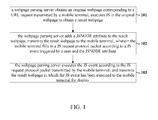
- FIG. 1 is a basic flowchart illustrating a method for displaying a webpage according to an example of the present invention.
- FIG. 2 is a detailed flowchart illustrating a method for displaying a webpage according to an example of the present invention.
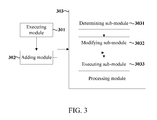
- FIG. 3 is a schematic diagram illustrating a structure of an apparatus according to an example of the present invention.
- JS in a webpage is executed by a background server in a background service agency manner.
- the server transmits the webpage to a browser of a mobile terminal.
- the browser browses the webpage received.
- low-end mobile terminals can browse the webpage normally.
- CPU resources and memory resources of the mobile terminals are saved.
- a webpage parsing server which is responsible for executing the JS in the webpage is deployed at a server side.
- the method provided by the example of the present invention is described simply hereinafter.
- FIG. 1 is a basic flowchart illustrating a method for displaying a webpage according to an example of the present invention. As shown in FIG. 1 , the method may include the following.
- a webpage parsing server obtains an original webpage corresponding to a Universal Resource Locator (URL) request transmitted by a mobile terminal, and executes JS in the original webpage to obtain a result webpage.
- URL Universal Resource Locator
- the original webpage is a source file of the webpage corresponding to the URL request.
- the webpage parsing server adds a JSNODE attribute to the result webpage, and transmits the result webpage containing the JSNODE attribute to the mobile terminal, wherein the mobile terminal fills in a JS request protocol packet according to a JS event triggered by the user of the mobile terminal and the JSNODE attribute.
- block 102 may be referred to FIG. 2 .
- the webpage parsing server executes the JS event according to the JS request protocol packet transmitted by the mobile terminal, and transmits the result webpage in which the JS event has been executed to the mobile terminal for display.
- block 103 may be referred to blocks 210-214 in FIG. 2 .
- the JS in the webpage is executed by the webpage parsing server deployed at the server side in the example of the present invention.
- the mobile terminal does not need to provide much CPU resources and memory resources, and the browsers of common mobile terminals can also browse the webpage normally.
- a traditional mobile phone is taken as an example mobile terminal to describe the technical solution provided by the example of the present invention in detail.
- FIG. 2 is a detailed flowchart illustrating a method for displaying a webpage provided by an example of the present invention. As shown in FIG. 2 , the process may include the following.
- a mobile phone transmits a URL request destined to a webpage server.
- the webpage parsing server obtains the URL request and forwards the URL request to the webpage server.
- the webpage server may be a target webpage server of the URL request, e.g., a www webpage server.
- the webpage server returns an original webpage corresponding to the URL request to the webpage parsing server.
- Block 202 and block 203 describe the process that the webpage parsing server obtains the original webpage corresponding to the URL request.
- the original webpage is a source file of a target webpage of the URL request.
- the webpage parsing server parses the original webpage, executes JS in the original webpage to obtain a result webpage.
- the webpage parsing server analyzes the result webpage, and adds a JSNODE attribute to a tag containing a JS event to be triggered.
- the JSnode attribute mainly includes the JS event and an identifier of the JSnode(the identifier may be an index of the JSNODE and may be configured according to a practical requirement).
- the JS event may include: a common click event (onclick), a form submission event (onsubmit), a loading event (onload), a focusing event (onfocus) and a double-click event (ondblclick).
- the onclick event with an identifier of 1 is taken as an example. If the current tag, e.g., tag a, is the first parsed tag containing the onclick event, the tag after the JSNODE attribute (jsnode) has been added is as follows:
- a Page Data (PD) attribute is added to a form controller which allows a user to submit form data.
- PD Page Data
- the PD attribute mainly includes: an identifier of the form controller (the identifier may be an index of the form controller and may be configured according to a practical requirement).
- the form controller may include: an input controller (INPUT), a text area controller (TEXTAREA) and a select controller (SELECT).
- the INPUT controller may be further classified into the following types: a text controller (text), a password controller (password), a checkbox controller (checkbox), and a radio controller (radio).
- all of the above controllers may be contained in a Form containing the onsubmit event.
- the text controller of the INPUT controller is taken as an example. If the current form controller is the first analyzed form controller which allows the user to submit form data, the form controller after the PD attribute (pd) is added is shown as follows:
- values of the JSNODE attribute in block 205 and the PD attribute in block 206 are unsigned integers of unsigned int type. The values are fixed in a particular webpage.
- the webpage parsing server transmits the result webpage to the mobile phone, and saves a copy of the result webpage at the same time.
- a browser of the mobile phone fills in a JS request protocol packet according to a JS event triggered by the user, the JSNODE attribute and the PD attribute.
- block 208 may include: B1, determining the JS event triggered by the user and the tag containing the JS event; B2, searching the JSNODE attribute for the identifier of the tag, and filling in the JS request protocol packet with the identifier of the tag and the JS event triggered by the user; if the user has submitted form data, searching the PD attribute that has been added for the identifier of the form controller used by the form data, filling in the JS request protocol packet with the identifier of the form controller and text information of the form data. If the user does not submit form data, operation to the form data is not performed, i.e., a PD request field of the JS request protocol packet is empty.
- the JS event triggered by the user may be at least one of the above five kinds of JS events.
- the browser of the mobile phone may consult with the paging parsing server about the identifiers of the JS events. For example, the onclick event may be identified by "1”, the onsubmit event may be identified by “2”, the onload event may be identified by "3”, the onfocus event may be identified by "4", and the ondblclick event may be identified by "5".
- the JS request protocol packet may be implemented by the following structure (suppose that other fields related to the structure have been defined in a jce file i.e., MTT.jce):
- BrokerJSRequest::cJSEvent used for assigning a value for cJSEvent according to the JS event triggered by the user:
- BrokerJSRequest::vPDInfo used for save and submit the form data inputted by the user in the form controller in an array.
- the user respectively inputs form data 1 (whose text information is denoted by test1) and form data 2 (whose text information is denoted by test2) in the form controllers of the text type and password type of the INPUT controller.
- the text type form controller of the INPUT controller has been identified with 1 in block 206
- the password type form controller of the INPUT controller has been identified with 2 in block 206, i.e.:
- the browser of the mobile phone transmits the JS request protocol packet to the webpage parsing server.
- the webpage parsing server receives the JS request protocol packet, determines whether the JS request protocol packet contains the text information of the form data submitted by the user. If the JS request protocol packet contains the text information of the form data submitted by the user, block 211 is performed; otherwise, block 212 is performed.
- the copy of the result webpage is searched for the form controller corresponding to the text information, the text information of the form controller in the copy of the result webpage is replaced with the text information contained in the JS request protocol packet. Then block 212 is performed.
- the structure shown in block 208 is taken as an example.
- the text information contained in the corresponding tag in the copy of the result webpage is replaced with the text information of the form data inputted by the user in BrokerJSRequest::vPDInfo.
- the copy of the result webpage is searched for a tag corresponding to the identifier, and the JS event corresponding to the tag is executed on the tag searched out.
- block 213 it is determined whether the executed JS event needs to request a webpage from the webpage server. If the executed JS event needs to request a webpage from the webpage server, block 214 is performed, otherwise, the copy of the result webpage on which the JS event has been executed is transmitted to the mobile phone, such that the browser of the mobile phone can browse the result webpage normally.
- the webpage parsing server requests a webpage from the webpage server, and receives a new original webpage from the webpage server. Then, return and perform block 204.
- An example of the present invention provides a system for displaying a webpage.
- the system includes: a mobile terminal and an apparatus for displaying the webpage.
- the apparatus for displaying the webpage may be a paging parsing server executing JS at a server side.
- FIG. 3 is a schematic diagram illustrating a structure of the apparatus according to an example of the present invention. As shown in FIG. 3 , the apparatus may include the following modules.
- the apparatus may include an executing module 301, which adapted to obtain an original webpage corresponding to a URL request transmitted by a mobile terminal, and execute JS in the original webpage to obtain a result webpage;
- the apparatus may also include an adding module 302, which is adapted to add a JSNODE attribute to the result webpage, and transmit the result webpage containing the JSNODE attribute to the mobile terminal, such that the mobile terminal fills in a JS request protocol packet according to a JS event triggered by a user of the mobile terminal and the JSNODE attribute;
- the apparatus may include a processing module 303, which is adapted to execute the JS event according to the JS request protocol packet transmitted by the mobile terminal and transmit the result webpage in which the JS event has been executed to the mobile terminal for display.
- a processing module 303 which is adapted to execute the JS event according to the JS request protocol packet transmitted by the mobile terminal and transmit the result webpage in which the JS event has been executed to the mobile terminal for display.
- the adding module 302 is further adapted to determine the tag containing the JS event to be triggered, add the JSNODE attribute to the tag determined, where the JSNODE attribute includes an identifier of the tag containing the JS event to be triggered.
- the mobile terminal is adapted to determine the JS event triggered by the user and the tag containing the JS event; search the JSNODE attribute that has been added for the identifier of the tag determined, and fill in the JS request protocol packet with the identifier of the tag and the JS event.
- the adding module 302 is further adapted to analyze the result webpage to obtain a form controller which allows the user to submit form data, add a PD attribute to the form controller.
- the PD attribute includes an identifier of the form controller.
- the mobile terminal is further adapted to search, if the user submits form data, the PD attribute that has been added for the identifier of the form controller through which the form data is submitted, fill in the JS request protocol packet with the identifier of the form controller searched out and text information of the form data.
- the adding module 302 is further adapted to save a copy of the result webpage containing the JSNODE attribute and the PD attribute that has been added.
- the processing module 303 may include the following modules.
- the processing module 303 may include a determining sub-module 3031, which is adapted to determine whether the received JS request protocol packet contains the text information of the form data submitted by the user.
- the processing module 303 may also include a modifying sub-module 3032, which is adapted to search, if the determining sub-module 3031 determines that the JS request protocol packet contains the text information of the form data submitted by the user, the copy of the result webpage for the form controller corresponding to the text information.
- the modifying sub-module 3032 is also adapted to replace the text information of the form controller in the copy of the result webpage with the text information of the form controller contained in the JS request protocol packet, and then transmit an execution notification to an executing sub-module 3033.
- the execution sub-module 3033 is adapted to search with respect to each identifier in the JS request protocol packet, if the determining sub-module 3031 determines that the JS request protocol packet does not contain the text information of the form data submitted by the user or the execution notification is received, the copy of the result webpage for the tag corresponding to the identifier of the tag.
- the execution sub-module 3033 is further adapted to execute, on the tag, the JS event corresponding to the identifier of the tag.
- the JS event in the webpage is executed in background, i.e., the JS event is executed at a server side.
- the browser of a mobile terminal browsers the webpage on which the JS has been executed by the server side.
- the mobile terminal does not need to provide much CPU resources and memory resources.
- the browser of the mobile terminal can browse the webpage normally.
- the browser of the mobile terminal browses only the webpage on which the JS has been executed by the server side and the mobile terminal does not need to provide much CPU resources and memory resources, the browser of most mobile terminals, even those of low-end mobile terminals can normally browse the webpage containing JS.
Landscapes
- Engineering & Computer Science (AREA)
- Theoretical Computer Science (AREA)
- Databases & Information Systems (AREA)
- Physics & Mathematics (AREA)
- General Physics & Mathematics (AREA)
- General Engineering & Computer Science (AREA)
- Data Mining & Analysis (AREA)
- Software Systems (AREA)
- Computational Linguistics (AREA)
- Signal Processing (AREA)
- Computer Networks & Wireless Communication (AREA)
- General Health & Medical Sciences (AREA)
- Audiology, Speech & Language Pathology (AREA)
- Artificial Intelligence (AREA)
- Health & Medical Sciences (AREA)
- Information Transfer Between Computers (AREA)
- Telephonic Communication Services (AREA)
Abstract
Description
- The present invention relates to computer technology field, and more particularly, to a method, system and apparatus for displaying a webpage.
- At present, webpages browsed by browsers of mobile terminals usually contain JavaScript (JS). In order to browse the webpages containing the JS, the mobile terminal has to compile and execute the JS in the webpages.
- The execution of the JS in the webpage consumes much CPU resources and memory resources, and most mobile terminals may be unable to provide such CPU resources and the memory resources required for executing the JS in the webpage. As a consequence, the webpage cannot be displayed normally on the browsers of these mobile terminals.
- Examples of the present invention provide a method, system and apparatus for displaying a webpage, such that JavaScript (JS) in the webpage is executed at a server side and problems caused by the execution of the JS in the webpage by the mobile terminal are avoided.
- A technical solution provided by the examples of the present invention includes the following.
- According to one example of the present invention, a method for displaying a webpage is provided. In the method, a webpage parsing server is deployed at a server side. The method includes:
- A, obtaining, by the webpage parsing server, an original webpage corresponding to a Universal Resource Locator (URL) request transmitted by a mobile terminal, and executing JavaScript (JS) in the original webpage to obtain a result webpage;
- B, adding, by the webpage parsing server, a JSNODE attribute to the result webpage, transmitting the result webpage containing the JSNODE attribute to the mobile terminal, and the mobile terminal fills in a JS request protocol packet according to a JS event triggered by a user and the JSNODE attribute; and
- C, executing, by the webpage parsing server, the JS event according to the JS request protocol packet transmitted by the mobile terminal, and transmitting the result webpage in which the JS event has been executed to the mobile terminal for display.
- According to another example of the present invention, an apparatus for displaying a webpage is provided, wherein the apparatus is a webpage parsing server deployed at a server side. The apparatus includes:
- an executing module, adapted to obtain an original webpage corresponding to an Universal Resource Locator (URL) request transmitted by a mobile terminal, and execute JavaScript (JS) in the original webpage to obtain a result webpage;
- an adding module, adapted to add a JSNODE attribute to the result webpage, and transmit the result webpage to the mobile terminal, wherein the mobile terminal fills in a JS request protocol packet according to a JS event triggered by a user and the JSNODE attribute; and
- a processing module, adapted to execute the JS event according to the JS request protocol packet transmitted by the mobile terminal, and transmit the result webpage in which the JS event has been executed to the mobile terminal for display.
- According to still another example of the present invention, a system for displaying a webpage is provided. The system includes a mobile terminal and an apparatus as described as above.
- It can be seen from the above technical solution that, in the present invention, the JS in the webpage is executed in background, i.e., the server executes the JS. The browser of the mobile terminal browses the webpage in which the JS has been executed by the server. Thus, the mobile terminal does not need to provide much CPU resources and memory resources. The browser of the mobile terminal can browse the webpage normally.
- Furthermore, since the browser of the mobile terminal browses the webpage in which the JS has been executed by the server and the mobile terminal does not need to provide much CPU resources and memory resources, browsers of most mobile terminals, even those of low-end mobile terminals, can browse the webpage containing the JS normally.
-
FIG. 1 is a basic flowchart illustrating a method for displaying a webpage according to an example of the present invention. -
FIG. 2 is a detailed flowchart illustrating a method for displaying a webpage according to an example of the present invention. -
FIG. 3 is a schematic diagram illustrating a structure of an apparatus according to an example of the present invention. - In order to make the technical scheme and advantages of the present invention clearer, the present invention is described in further detail hereinafter with reference to accompanying drawings and examples.
- In an example of the present invention, JS in a webpage is executed by a background server in a background service agency manner. After the JS is executed, the server transmits the webpage to a browser of a mobile terminal. The browser browses the webpage received. Thus, low-end mobile terminals can browse the webpage normally. On the other hand, CPU resources and memory resources of the mobile terminals are saved.
- In the example of the present invention, a webpage parsing server which is responsible for executing the JS in the webpage is deployed at a server side. The method provided by the example of the present invention is described simply hereinafter.
-
FIG. 1 is a basic flowchart illustrating a method for displaying a webpage according to an example of the present invention. As shown inFIG. 1 , the method may include the following. - At
block 101, a webpage parsing server obtains an original webpage corresponding to a Universal Resource Locator (URL) request transmitted by a mobile terminal, and executes JS in the original webpage to obtain a result webpage. - In
block 101, the original webpage is a source file of the webpage corresponding to the URL request. - At
block 102, the webpage parsing server adds a JSNODE attribute to the result webpage, and transmits the result webpage containing the JSNODE attribute to the mobile terminal, wherein the mobile terminal fills in a JS request protocol packet according to a JS event triggered by the user of the mobile terminal and the JSNODE attribute. - Detailed descriptions of
block 102 may be may be referred toFIG. 2 . - At
block 103, the webpage parsing server executes the JS event according to the JS request protocol packet transmitted by the mobile terminal, and transmits the result webpage in which the JS event has been executed to the mobile terminal for display. - Detailed descriptions of
block 103 may be referred to blocks 210-214 inFIG. 2 . - In view of the above, instead of being executed by the browser of the mobile terminal as in the prior art, the JS in the webpage is executed by the webpage parsing server deployed at the server side in the example of the present invention. Thus, the mobile terminal does not need to provide much CPU resources and memory resources, and the browsers of common mobile terminals can also browse the webpage normally.
- Now, the flow as shown in
FIG. 1 ends. - Hereinafter, a traditional mobile phone is taken as an example mobile terminal to describe the technical solution provided by the example of the present invention in detail.
-
FIG. 2 is a detailed flowchart illustrating a method for displaying a webpage provided by an example of the present invention. As shown inFIG. 2 , the process may include the following. - At
block 201, a mobile phone transmits a URL request destined to a webpage server. - At
block 202, the webpage parsing server obtains the URL request and forwards the URL request to the webpage server. - The webpage server may be a target webpage server of the URL request, e.g., a www webpage server.
- At
block 203, the webpage server returns an original webpage corresponding to the URL request to the webpage parsing server. -
Block 202 andblock 203 describe the process that the webpage parsing server obtains the original webpage corresponding to the URL request. - In this example, the original webpage is a source file of a target webpage of the URL request.
- At
block 204, the webpage parsing server parses the original webpage, executes JS in the original webpage to obtain a result webpage. - At
block 205, the webpage parsing server analyzes the result webpage, and adds a JSNODE attribute to a tag containing a JS event to be triggered. - Herein, the JSnode attribute mainly includes the JS event and an identifier of the JSnode(the identifier may be an index of the JSNODE and may be configured according to a practical requirement). In this example, the JS event may include: a common click event (onclick), a form submission event (onsubmit), a loading event (onload), a focusing event (onfocus) and a double-click event (ondblclick).
- The onclick event with an identifier of 1 is taken as an example. If the current tag, e.g., tag a, is the first parsed tag containing the onclick event, the tag after the JSNODE attribute (jsnode) has been added is as follows:
- <a onclick="click()" jsnode="1"> this is tag a.</a>
- At
block 206, a Page Data (PD) attribute is added to a form controller which allows a user to submit form data. - Herein, the PD attribute mainly includes: an identifier of the form controller (the identifier may be an index of the form controller and may be configured according to a practical requirement). In this example, the form controller may include: an input controller (INPUT), a text area controller (TEXTAREA) and a select controller (SELECT). The INPUT controller may be further classified into the following types: a text controller (text), a password controller (password), a checkbox controller (checkbox), and a radio controller (radio). Preferably, all of the above controllers may be contained in a Form containing the onsubmit event.
- The text controller of the INPUT controller is taken as an example. If the current form controller is the first analyzed form controller which allows the user to submit form data, the form controller after the PD attribute (pd) is added is shown as follows:
- <input type = "text" pd="1"></input>.
- It should be noted that, values of the JSNODE attribute in
block 205 and the PD attribute inblock 206 are unsigned integers of unsigned int type. The values are fixed in a particular webpage. - At
block 207, the webpage parsing server transmits the result webpage to the mobile phone, and saves a copy of the result webpage at the same time. - At
block 208, a browser of the mobile phone fills in a JS request protocol packet according to a JS event triggered by the user, the JSNODE attribute and the PD attribute. - In particular, block 208 may include: B1, determining the JS event triggered by the user and the tag containing the JS event; B2, searching the JSNODE attribute for the identifier of the tag, and filling in the JS request protocol packet with the identifier of the tag and the JS event triggered by the user; if the user has submitted form data, searching the PD attribute that has been added for the identifier of the form controller used by the form data, filling in the JS request protocol packet with the identifier of the form controller and text information of the form data. If the user does not submit form data, operation to the form data is not performed, i.e., a PD request field of the JS request protocol packet is empty.
- Herein, the JS event triggered by the user may be at least one of the above five kinds of JS events. In a practical application, the browser of the mobile phone may consult with the paging parsing server about the identifiers of the JS events. For example, the onclick event may be identified by "1", the onsubmit event may be identified by "2", the onload event may be identified by "3", the onfocus event may be identified by "4", and the ondblclick event may be identified by "5".
- In order to make block 208 clearer, a following structure is provided.
- In this example, the JS request protocol packet may be implemented by the following structure (suppose that other fields related to the structure have been defined in a jce file i.e., MTT.jce):
     //BrokerJS request
     struct BrokerJSRequest
     {
       0 require BrokerUserInfo stUserInfo; // identifier of the mobile phone
       1 require BrokerRequestParam stRequestParam; // request parameter
       2 require byte cJSEvent; // js event
       3 require int iJSNode; // JSNODE
       4 require vector<BrokerJSPDInfo> vPDInfo; // PD field
     };

     struct BrokerJSPDInfo
     {
       0 require int iKey; //PD attribute of a PD node
       1 require vector<byte> vValue; //value
     };
- Herein, if the JS event triggered by the user is the onclick event, cJSEvent is assigned with a value of 1; if the JS event triggered by the user is the onsubmit event, cJSEvent is assigned with a value of 2; if the JS event triggered by the user is the onload event, cJSEvent is set as 3; if the JS event triggered by the user is onfocus, cJSEvent is assigned with a value of 4; if the JS event triggered by the user is the ondblclick event, cJSEvent is assigned with a value of 5.
If the tag containing the JS event triggered by the user is tag a which has been identified with 1 in
- <input type = "text" pd="1" value="test1"></input>
- <input type = "password" pd="2" value="test2"></input>
     A. INPUT
         type="text" --- inputted text value (value: the value of the attribute)
         type="password" --- inputted text value (value: the value of the attribute)
         type="checkbox" ---1 for checked, 0 for non-checked (checked
                              attribute)
         type="radio" ---1 for radio, 0 for non-radio (checked attribute)
     B. TEXTAREA --- input text value (text in tag)
     C. SELECT single selection ---index of the option being selected, indexes of
                                      the options start from 0 (selected attribute)
         multiple selection ---index of the option being selected, divided by &, e.g.,
                           0&2&4.
Claims (11)
- A method for displaying a webpage, wherein a webpage parsing server is deployed at a server side, the method comprises:A, obtaining, by the webpage parsing server, an original webpage corresponding to a Universal Resource Locator (URL) request transmitted by a mobile terminal, and executing JavaScript (JS) in the original webpage to obtain a result webpage;B, adding, by the webpage parsing server, a JSNODE attribute to the result webpage, transmitting the result webpage containing the JSNODE attribute to the mobile terminal, and the mobile terminal fills in a JS request protocol packet according to a JS event triggered by a user and the JSNODE attribute; andC, executing, by the webpage parsing server, the JS event according to the JS request protocol packet transmitted by the mobile terminal, and transmitting the result webpage in which the JS event has been executed to the mobile terminal for display.
- The method of claim 1, wherein
the adding the JSNODE attribute to the result webpage in step B comprises: determining a tag containing the JS event to be triggered in the result webpage, and adding the JSNODE attribute to the tag determined, wherein the JSNODE attribute comprises an identifier of the tag containing the JS event to be triggered and the JS event to be triggered; and
the filling in the JS request protocol packet according to JS event triggered by the user and the JSNODE attribute comprises: B1, determining the JS event triggered by the user and the tag containing the JS event; and B2, searching the JSNODE attribute for the identifier of the tag determined, and filling in the JS request protocol packet with the identifier of the tag searched out and the JS event triggered by the user. - The method of claim 1 or 2, wherein the JS event triggered by the user comprises at least one of a common click event, a form submission event, a loading event, a focusing event and a double-click event.
- The method of claim 2, wherein the adding the JSNODE attribute to the result webpage comprises: determining a form controller which allows the user to submit form data on the result webpage, and adding a Page Data (PD) attribute to the tag containing the JS event to be triggered, wherein the PD attribute comprises an identifier of the form controller; and
step B2 further comprises: if the user submits the form data, searching the PD attribute for the identifier of the form controller used by the form data, and filling in the JS request protocol packet with the identifier of the form controller searched out and text information of the form data. - The method of claim 4, wherein the form controller comprises at least one of an input controller (INPUT), a selecting controller (SELECT) and a text area controller (TEXTAREA);
wherein the input controller comprises at least one of a text controller (text), a password controller (password), a checkbox controller (checkbox) and a radio controller (radio). - The method of claim 4, wherein the transmitting the result webpage containing the JSNODE attribute to the mobile terminal in step B further comprises: saving a copy of the result webpage containing the JSNODE attribute;
in step C, the executing the JS event according to the JS request protocol packet transmitted by the mobile terminal comprises:C1, if the JS request protocol packet contains the text information of the form data submitted by the user, executing step C2; otherwise, executing step C3;C2, searching the copy of the result webpage for the form controller corresponding to the text information, replacing the text information of the form controller in the copy of the result webpage with the text information of the form controller contained in the JS request protocol packet, then executing step C3; andC3, as to each identifier in the JS request protocol packet, searching the copy of the result webpage for the tag corresponding to the identifier, and executing the JS event corresponding to the identifier on the tag searched out. - An apparatus for displaying a webpage, wherein the apparatus is a webpage parsing server deployed at a server side, the apparatus comprises:an executing module, adapted to obtain an original webpage corresponding to an Universal Resource Locator (URL) request transmitted by a mobile terminal, and execute JavaScript (JS) in the original webpage to obtain a result webpage;an adding module, adapted to add a JSNODE attribute to the result webpage, and transmit the result webpage to the mobile terminal, wherein the mobile terminal fills in a JS request protocol packet according to a JS event triggered by a user and the JSNODE attribute; anda processing module, adapted to execute the JS event according to the JS request protocol packet transmitted by the mobile terminal, and transmit the result webpage in which the JS event has been executed to the mobile terminal for display.
- The apparatus of claim 7, wherein the adding module is further adapted to determine the tag containing the JS event to be triggered in the result webpage, and add the JSNODE attribute to the tag determined, wherein the JSNODE attribute comprises an identifier of the tag containing the JS event to be triggered and the JS event to be triggered; and
the mobile terminal is adapted to determine the JS event triggered by the user and the tag containing the JS event, search the JSNODE attribute for the identifier of the tag determined, and fill in the JS request protocol packet with the identifier of the tag and the JS event. - The apparatus of claim 8, wherein the adding module is further adapted to determine a form controller which allows the user to submit form data in the result webpage, and add a Page Data (PD) attribute to the JS event; wherein the PD attribute comprises an identifier of the form controller; and
the mobile terminal is further adapted to search, if a user of the mobile terminal submits form data, the PD attribute for the identifier of the form controller used by the form data, and fill in the JS request protocol packet with the identifier of the form controller and text information of the form data. - The apparatus of claim 9, wherein the adding module is further adapted to save a copy of the result webpage containing the JSNODE attribute and the PD attribute; and
the processing module further comprises:a determining sub-module, adapted to determine whether the received JS request protocol packet contains the text information of the form data submitted by the user;a modifying sub-module, adapted to search, if the determining sub-module determines that the JS request protocol packet contains the text information of the form data submitted by the user, the copy of the result webpage for the form controller corresponding to the text information, replace the text information of the form controller in the copy of the result webpage with the text information of the form controller contained in the JS request protocol packet, and transmit an execution notification to an executing sub-module; andthe execution sub-module, adapted to search, if the determining sub-module determines that the JS request protocol packet does not contain the text information of the form data submitted by the user or the execution notification is received, the copy of the result webpage for the tag corresponding to the identifier of the tag, and execute the JS event corresponding to the identifier of the tag on the tag. - A system for displaying a webpage, comprising:a mobile terminal; andan apparatus claimed in any one of claims 7 to 10.
Applications Claiming Priority (2)
| Application Number | Priority Date | Filing Date | Title |
|---|---|---|---|
| CN201010586285.3A CN102487403B (en) | 2010-12-03 | 2010-12-03 | Method and device for executing JS (JavaScript) by server side |
| PCT/CN2011/083376 WO2012072041A1 (en) | 2010-12-03 | 2011-12-02 | Method, system, and device for displaying page |
Publications (3)
| Publication Number | Publication Date |
|---|---|
| EP2648388A1 true EP2648388A1 (en) | 2013-10-09 |
| EP2648388A4 EP2648388A4 (en) | 2017-08-02 |
| EP2648388B1 EP2648388B1 (en) | 2019-07-24 |
Family
ID=46152857
Family Applications (1)
| Application Number | Title | Priority Date | Filing Date |
|---|---|---|---|
| EP11844697.0A Active EP2648388B1 (en) | 2010-12-03 | 2011-12-02 | Method, system, and device for displaying page |
Country Status (4)
| Country | Link |
|---|---|
| US (1) | US8826122B2 (en) |
| EP (1) | EP2648388B1 (en) |
| CN (1) | CN102487403B (en) |
| WO (1) | WO2012072041A1 (en) |
Families Citing this family (10)
| Publication number | Priority date | Publication date | Assignee | Title |
|---|---|---|---|---|
| CN103677951A (en) * | 2013-12-11 | 2014-03-26 | 北京掌中经纬技术有限公司 | Method and system for controlling executing process of JavaScript |
| CN104317570B (en) * | 2014-09-29 | 2017-12-12 | 北京掌中经纬技术有限公司 | The apparatus and method of dynamic analysis Web applications |
| CN105045645B (en) * | 2015-09-22 | 2016-08-17 | 广州神马移动信息科技有限公司 | Web page loading method, device and system |
| CN106572048A (en) * | 2015-10-09 | 2017-04-19 | 腾讯科技(深圳)有限公司 | Identification method and system of user information in social network |
| CN105468412B (en) * | 2015-11-26 | 2020-09-08 | 金蝶软件(中国)有限公司 | Dynamic packaging method and device |
| US11501258B1 (en) * | 2017-03-03 | 2022-11-15 | Indeed, Inc. | Systems and methods for mediating job applications between user devices and application tracking systems |
| CN106970989A (en) * | 2017-03-30 | 2017-07-21 | 福建中金在线信息科技有限公司 | The access method and system of a kind of network data |
| CN110928547A (en) * | 2019-10-16 | 2020-03-27 | 平安普惠企业管理有限公司 | Public file extraction method, device, terminal and storage medium |
| CN111143650B (en) * | 2019-12-16 | 2024-04-26 | 东软集团股份有限公司 | Method, device, medium and electronic device for obtaining page data |
| US12026534B2 (en) | 2021-07-27 | 2024-07-02 | Synchrony Bank | Methods and system for providing customized acquisition protocols |
Family Cites Families (19)
| Publication number | Priority date | Publication date | Assignee | Title |
|---|---|---|---|---|
| US6941562B2 (en) * | 2000-12-01 | 2005-09-06 | Appeon Corporation | Method of <script> based remote JavaScript function call of web page |
| CN1835507A (en) * | 2005-03-17 | 2006-09-20 | 国际商业机器公司 | Method for the server side processing of user interactions with a web-browser |
| US20060230153A1 (en) * | 2005-04-11 | 2006-10-12 | Cim, Ltd. | Network communication using push technology |
| US7788341B1 (en) * | 2005-12-01 | 2010-08-31 | Oracle America, Inc. | Displaying results of server-side form validations without page refresh |
| CN101276362B (en) | 2007-03-26 | 2011-05-11 | 国际商业机器公司 | Apparatus and method for customizing web page |
| CN101192234A (en) | 2007-06-07 | 2008-06-04 | 腾讯科技(深圳)有限公司 | Searching system and method based on web page extraction |
| US8549099B2 (en) * | 2007-07-12 | 2013-10-01 | Viasat, Inc. | Methods and systems for javascript parsing |
| CN101150803B (en) * | 2007-10-24 | 2011-08-24 | 优视科技有限公司 | Method for micro-browser to process network data, micro-browser and server thereof |
| US8219902B2 (en) * | 2007-10-26 | 2012-07-10 | T-Mobile Usa, Inc. | System and method for remote update of display pages |
| CN101178716B (en) * | 2007-11-19 | 2010-06-02 | 优视动景(北京)技术服务有限公司 | Method and device for microbrowser processing JavaScript information |
| US8260845B1 (en) * | 2007-11-21 | 2012-09-04 | Appcelerator, Inc. | System and method for auto-generating JavaScript proxies and meta-proxies |
| US8566807B1 (en) * | 2007-11-23 | 2013-10-22 | Appcelerator, Inc. | System and method for accessibility of document object model and JavaScript by other platforms |
| US8639743B1 (en) * | 2007-12-05 | 2014-01-28 | Appcelerator, Inc. | System and method for on-the-fly rewriting of JavaScript |
| CN100559374C (en) * | 2007-12-17 | 2009-11-11 | 杭州阔地网络科技有限公司 | Method for Intercepting and Combining Web Page Information Units |
| CN101296255B (en) * | 2008-06-30 | 2012-09-05 | 腾讯科技(深圳)有限公司 | Web page browsing method, system, proxy server and mobile phone browser |
| US8443345B2 (en) * | 2008-11-26 | 2013-05-14 | International Business Machines Corporation | Dynamic processing of embedded compiled programming language code |
| CN101571876B (en) * | 2009-05-26 | 2011-12-07 | 华为技术有限公司 | Script program operation logic expansion method, server and client |
| CN101625700A (en) | 2009-08-12 | 2010-01-13 | 中兴通讯股份有限公司 | Method and device for optimizing display network page on terminal |
| US20120188584A1 (en) * | 2011-01-21 | 2012-07-26 | Swee Huat Sng | Document imaging node with internal web server execution environment |
-
2010
- 2010-12-03 CN CN201010586285.3A patent/CN102487403B/en active Active
-
2011
- 2011-12-02 EP EP11844697.0A patent/EP2648388B1/en active Active
- 2011-12-02 WO PCT/CN2011/083376 patent/WO2012072041A1/en not_active Ceased
-
2013
- 2013-03-14 US US13/827,158 patent/US8826122B2/en active Active
Non-Patent Citations (1)
| Title |
|---|
| See references of WO2012072041A1 * |
Also Published As
| Publication number | Publication date |
|---|---|
| CN102487403B (en) | 2014-06-11 |
| EP2648388A4 (en) | 2017-08-02 |
| EP2648388B1 (en) | 2019-07-24 |
| US8826122B2 (en) | 2014-09-02 |
| CN102487403A (en) | 2012-06-06 |
| US20130212467A1 (en) | 2013-08-15 |
| WO2012072041A1 (en) | 2012-06-07 |
Similar Documents
| Publication | Publication Date | Title |
|---|---|---|
| EP2648388B1 (en) | Method, system, and device for displaying page | |
| CN109766082B (en) | Method and Device for Jumping Application Pages | |
| US10839038B2 (en) | Generating configuration information for obtaining web resources | |
| US7870482B2 (en) | Web browser extension for simplified utilization of web services | |
| US9729499B2 (en) | Browser and method for domain name resolution by the same | |
| CN111639275B (en) | Routing information processing method, device, electronic equipment and computer storage medium | |
| CN111651703B (en) | Page jump method and device, electronic equipment and readable storage medium | |
| CN108717435B (en) | Webpage loading method, information processing method, computer equipment and storage medium | |
| CN111125605B (en) | Page element acquisition method and device | |
| CN108536489B (en) | Method, apparatus, and computer-readable storage medium for matching resource environments | |
| CN105528369B (en) | Webpage code-transferring method, device and server | |
| CN114254222B (en) | Method and device for counting interactable time of single-page application and electronic equipment | |
| US20130138767A1 (en) | Systems and methods for managing loading of web pages | |
| US10095791B2 (en) | Information search method and apparatus | |
| US11829434B2 (en) | Method, apparatus and computer program for collecting URL in web page | |
| CN112597423A (en) | Webpage content display method, terminal and server | |
| CN116781586B (en) | A gRPC flow parsing method, apparatus, equipment and medium | |
| US20140237133A1 (en) | Page download control method, system and program for ie core browser | |
| CN116127945A (en) | Network link processing method and device, electronic equipment and storage medium | |
| CN110955856B (en) | Webpage loading method and device, server and storage medium | |
| CN109145244A (en) | Display methods, electronic equipment and computer readable storage medium | |
| CN112925998B (en) | Interface data processing method, device and system, electronic equipment and storage medium | |
| CN118227899B (en) | Linkage navigation method and device for joint data, electronic equipment and storage medium | |
| CN108563677B (en) | Data display method and device, electronic equipment and storage medium | |
| US9762644B2 (en) | Sending and requesting feed |
Legal Events
| Date | Code | Title | Description |
|---|---|---|---|
| PUAI | Public reference made under article 153(3) epc to a published international application that has entered the european phase |
Free format text: ORIGINAL CODE: 0009012 |
|
| 17P | Request for examination filed |
Effective date: 20130314 |
|
| AK | Designated contracting states |
Kind code of ref document: A1 Designated state(s): AL AT BE BG CH CY CZ DE DK EE ES FI FR GB GR HR HU IE IS IT LI LT LU LV MC MK MT NL NO PL PT RO RS SE SI SK SM TR |
|
| DAX | Request for extension of the european patent (deleted) | ||
| RA4 | Supplementary search report drawn up and despatched (corrected) |
Effective date: 20170629 |
|
| RIC1 | Information provided on ipc code assigned before grant |
Ipc: H04L 29/08 20060101AFI20170623BHEP Ipc: G06F 17/22 20060101ALI20170623BHEP Ipc: G06F 17/30 20060101ALI20170623BHEP Ipc: G06F 17/24 20060101ALI20170623BHEP Ipc: G06F 9/455 20060101ALI20170623BHEP Ipc: H04W 4/18 20090101ALI20170623BHEP Ipc: H04L 29/06 20060101ALI20170623BHEP Ipc: G06F 9/50 20060101ALI20170623BHEP |
|
| REG | Reference to a national code |
Ref country code: DE Ref legal event code: R079 Ref document number: 602011060790 Country of ref document: DE Free format text: PREVIOUS MAIN CLASS: H04L0029080000 Ipc: G06F0016220000 |
|
| GRAP | Despatch of communication of intention to grant a patent |
Free format text: ORIGINAL CODE: EPIDOSNIGR1 |
|
| STAA | Information on the status of an ep patent application or granted ep patent |
Free format text: STATUS: GRANT OF PATENT IS INTENDED |
|
| RIC1 | Information provided on ipc code assigned before grant |
Ipc: G06F 16/957 20190101ALI20190313BHEP Ipc: G06F 16/955 20190101ALI20190313BHEP Ipc: G06F 16/22 20190101AFI20190313BHEP Ipc: G06F 16/248 20190101ALI20190313BHEP Ipc: H04L 29/06 20060101ALI20190313BHEP Ipc: H04W 4/18 20090101ALI20190313BHEP Ipc: H04L 29/08 20060101ALI20190313BHEP Ipc: G06F 16/958 20190101ALI20190313BHEP Ipc: G06F 16/2455 20190101ALI20190313BHEP Ipc: G06F 9/455 20180101ALI20190313BHEP Ipc: G06F 17/24 20060101ALI20190313BHEP |
|
| INTG | Intention to grant announced |
Effective date: 20190329 |
|
| GRAS | Grant fee paid |
Free format text: ORIGINAL CODE: EPIDOSNIGR3 |
|
| GRAA | (expected) grant |
Free format text: ORIGINAL CODE: 0009210 |
|
| STAA | Information on the status of an ep patent application or granted ep patent |
Free format text: STATUS: THE PATENT HAS BEEN GRANTED |
|
| AK | Designated contracting states |
Kind code of ref document: B1 Designated state(s): AL AT BE BG CH CY CZ DE DK EE ES FI FR GB GR HR HU IE IS IT LI LT LU LV MC MK MT NL NO PL PT RO RS SE SI SK SM TR |
|
| REG | Reference to a national code |
Ref country code: GB Ref legal event code: FG4D |
|
| REG | Reference to a national code |
Ref country code: CH Ref legal event code: EP |
|
| REG | Reference to a national code |
Ref country code: DE Ref legal event code: R096 Ref document number: 602011060790 Country of ref document: DE |
|
| REG | Reference to a national code |
Ref country code: AT Ref legal event code: REF Ref document number: 1159039 Country of ref document: AT Kind code of ref document: T Effective date: 20190815 |
|
| REG | Reference to a national code |
Ref country code: IE Ref legal event code: FG4D |
|
| REG | Reference to a national code |
Ref country code: NL Ref legal event code: MP Effective date: 20190724 |
|
| REG | Reference to a national code |
Ref country code: LT Ref legal event code: MG4D |
|
| REG | Reference to a national code |
Ref country code: AT Ref legal event code: MK05 Ref document number: 1159039 Country of ref document: AT Kind code of ref document: T Effective date: 20190724 |
|
| PG25 | Lapsed in a contracting state [announced via postgrant information from national office to epo] |
Ref country code: LT Free format text: LAPSE BECAUSE OF FAILURE TO SUBMIT A TRANSLATION OF THE DESCRIPTION OR TO PAY THE FEE WITHIN THE PRESCRIBED TIME-LIMIT Effective date: 20190724 Ref country code: FI Free format text: LAPSE BECAUSE OF FAILURE TO SUBMIT A TRANSLATION OF THE DESCRIPTION OR TO PAY THE FEE WITHIN THE PRESCRIBED TIME-LIMIT Effective date: 20190724 Ref country code: HR Free format text: LAPSE BECAUSE OF FAILURE TO SUBMIT A TRANSLATION OF THE DESCRIPTION OR TO PAY THE FEE WITHIN THE PRESCRIBED TIME-LIMIT Effective date: 20190724 Ref country code: SE Free format text: LAPSE BECAUSE OF FAILURE TO SUBMIT A TRANSLATION OF THE DESCRIPTION OR TO PAY THE FEE WITHIN THE PRESCRIBED TIME-LIMIT Effective date: 20190724 Ref country code: BG Free format text: LAPSE BECAUSE OF FAILURE TO SUBMIT A TRANSLATION OF THE DESCRIPTION OR TO PAY THE FEE WITHIN THE PRESCRIBED TIME-LIMIT Effective date: 20191024 Ref country code: NO Free format text: LAPSE BECAUSE OF FAILURE TO SUBMIT A TRANSLATION OF THE DESCRIPTION OR TO PAY THE FEE WITHIN THE PRESCRIBED TIME-LIMIT Effective date: 20191024 Ref country code: NL Free format text: LAPSE BECAUSE OF FAILURE TO SUBMIT A TRANSLATION OF THE DESCRIPTION OR TO PAY THE FEE WITHIN THE PRESCRIBED TIME-LIMIT Effective date: 20190724 Ref country code: PT Free format text: LAPSE BECAUSE OF FAILURE TO SUBMIT A TRANSLATION OF THE DESCRIPTION OR TO PAY THE FEE WITHIN THE PRESCRIBED TIME-LIMIT Effective date: 20191125 Ref country code: AT Free format text: LAPSE BECAUSE OF FAILURE TO SUBMIT A TRANSLATION OF THE DESCRIPTION OR TO PAY THE FEE WITHIN THE PRESCRIBED TIME-LIMIT Effective date: 20190724 |
|
| PG25 | Lapsed in a contracting state [announced via postgrant information from national office to epo] |
Ref country code: ES Free format text: LAPSE BECAUSE OF FAILURE TO SUBMIT A TRANSLATION OF THE DESCRIPTION OR TO PAY THE FEE WITHIN THE PRESCRIBED TIME-LIMIT Effective date: 20190724 Ref country code: AL Free format text: LAPSE BECAUSE OF FAILURE TO SUBMIT A TRANSLATION OF THE DESCRIPTION OR TO PAY THE FEE WITHIN THE PRESCRIBED TIME-LIMIT Effective date: 20190724 Ref country code: LV Free format text: LAPSE BECAUSE OF FAILURE TO SUBMIT A TRANSLATION OF THE DESCRIPTION OR TO PAY THE FEE WITHIN THE PRESCRIBED TIME-LIMIT Effective date: 20190724 Ref country code: RS Free format text: LAPSE BECAUSE OF FAILURE TO SUBMIT A TRANSLATION OF THE DESCRIPTION OR TO PAY THE FEE WITHIN THE PRESCRIBED TIME-LIMIT Effective date: 20190724 Ref country code: IS Free format text: LAPSE BECAUSE OF FAILURE TO SUBMIT A TRANSLATION OF THE DESCRIPTION OR TO PAY THE FEE WITHIN THE PRESCRIBED TIME-LIMIT Effective date: 20191124 Ref country code: GR Free format text: LAPSE BECAUSE OF FAILURE TO SUBMIT A TRANSLATION OF THE DESCRIPTION OR TO PAY THE FEE WITHIN THE PRESCRIBED TIME-LIMIT Effective date: 20191025 |
|
| PG25 | Lapsed in a contracting state [announced via postgrant information from national office to epo] |
Ref country code: TR Free format text: LAPSE BECAUSE OF FAILURE TO SUBMIT A TRANSLATION OF THE DESCRIPTION OR TO PAY THE FEE WITHIN THE PRESCRIBED TIME-LIMIT Effective date: 20190724 |
|
| PG25 | Lapsed in a contracting state [announced via postgrant information from national office to epo] |
Ref country code: EE Free format text: LAPSE BECAUSE OF FAILURE TO SUBMIT A TRANSLATION OF THE DESCRIPTION OR TO PAY THE FEE WITHIN THE PRESCRIBED TIME-LIMIT Effective date: 20190724 Ref country code: PL Free format text: LAPSE BECAUSE OF FAILURE TO SUBMIT A TRANSLATION OF THE DESCRIPTION OR TO PAY THE FEE WITHIN THE PRESCRIBED TIME-LIMIT Effective date: 20190724 Ref country code: RO Free format text: LAPSE BECAUSE OF FAILURE TO SUBMIT A TRANSLATION OF THE DESCRIPTION OR TO PAY THE FEE WITHIN THE PRESCRIBED TIME-LIMIT Effective date: 20190724 Ref country code: IT Free format text: LAPSE BECAUSE OF FAILURE TO SUBMIT A TRANSLATION OF THE DESCRIPTION OR TO PAY THE FEE WITHIN THE PRESCRIBED TIME-LIMIT Effective date: 20190724 Ref country code: DK Free format text: LAPSE BECAUSE OF FAILURE TO SUBMIT A TRANSLATION OF THE DESCRIPTION OR TO PAY THE FEE WITHIN THE PRESCRIBED TIME-LIMIT Effective date: 20190724 |
|
| PG25 | Lapsed in a contracting state [announced via postgrant information from national office to epo] |
Ref country code: SK Free format text: LAPSE BECAUSE OF FAILURE TO SUBMIT A TRANSLATION OF THE DESCRIPTION OR TO PAY THE FEE WITHIN THE PRESCRIBED TIME-LIMIT Effective date: 20190724 Ref country code: IS Free format text: LAPSE BECAUSE OF FAILURE TO SUBMIT A TRANSLATION OF THE DESCRIPTION OR TO PAY THE FEE WITHIN THE PRESCRIBED TIME-LIMIT Effective date: 20200224 Ref country code: SM Free format text: LAPSE BECAUSE OF FAILURE TO SUBMIT A TRANSLATION OF THE DESCRIPTION OR TO PAY THE FEE WITHIN THE PRESCRIBED TIME-LIMIT Effective date: 20190724 Ref country code: CZ Free format text: LAPSE BECAUSE OF FAILURE TO SUBMIT A TRANSLATION OF THE DESCRIPTION OR TO PAY THE FEE WITHIN THE PRESCRIBED TIME-LIMIT Effective date: 20190724 |
|
| REG | Reference to a national code |
Ref country code: DE Ref legal event code: R097 Ref document number: 602011060790 Country of ref document: DE |
|
| PLBE | No opposition filed within time limit |
Free format text: ORIGINAL CODE: 0009261 |
|
| STAA | Information on the status of an ep patent application or granted ep patent |
Free format text: STATUS: NO OPPOSITION FILED WITHIN TIME LIMIT |
|
| PG2D | Information on lapse in contracting state deleted |
Ref country code: IS |
|
| REG | Reference to a national code |
Ref country code: CH Ref legal event code: PL |
|
| 26N | No opposition filed |
Effective date: 20200603 |
|
| REG | Reference to a national code |
Ref country code: BE Ref legal event code: MM Effective date: 20191231 |
|
| PG25 | Lapsed in a contracting state [announced via postgrant information from national office to epo] |
Ref country code: SI Free format text: LAPSE BECAUSE OF FAILURE TO SUBMIT A TRANSLATION OF THE DESCRIPTION OR TO PAY THE FEE WITHIN THE PRESCRIBED TIME-LIMIT Effective date: 20190724 Ref country code: MC Free format text: LAPSE BECAUSE OF FAILURE TO SUBMIT A TRANSLATION OF THE DESCRIPTION OR TO PAY THE FEE WITHIN THE PRESCRIBED TIME-LIMIT Effective date: 20190724 |
|
| PG25 | Lapsed in a contracting state [announced via postgrant information from national office to epo] |
Ref country code: IE Free format text: LAPSE BECAUSE OF NON-PAYMENT OF DUE FEES Effective date: 20191202 Ref country code: LU Free format text: LAPSE BECAUSE OF NON-PAYMENT OF DUE FEES Effective date: 20191202 |
|
| PG25 | Lapsed in a contracting state [announced via postgrant information from national office to epo] |
Ref country code: CH Free format text: LAPSE BECAUSE OF NON-PAYMENT OF DUE FEES Effective date: 20191231 Ref country code: LI Free format text: LAPSE BECAUSE OF NON-PAYMENT OF DUE FEES Effective date: 20191231 Ref country code: BE Free format text: LAPSE BECAUSE OF NON-PAYMENT OF DUE FEES Effective date: 20191231 |
|
| PG25 | Lapsed in a contracting state [announced via postgrant information from national office to epo] |
Ref country code: CY Free format text: LAPSE BECAUSE OF FAILURE TO SUBMIT A TRANSLATION OF THE DESCRIPTION OR TO PAY THE FEE WITHIN THE PRESCRIBED TIME-LIMIT Effective date: 20190724 |
|
| PG25 | Lapsed in a contracting state [announced via postgrant information from national office to epo] |
Ref country code: MT Free format text: LAPSE BECAUSE OF FAILURE TO SUBMIT A TRANSLATION OF THE DESCRIPTION OR TO PAY THE FEE WITHIN THE PRESCRIBED TIME-LIMIT Effective date: 20190724 Ref country code: HU Free format text: LAPSE BECAUSE OF FAILURE TO SUBMIT A TRANSLATION OF THE DESCRIPTION OR TO PAY THE FEE WITHIN THE PRESCRIBED TIME-LIMIT; INVALID AB INITIO Effective date: 20111202 |
|
| PG25 | Lapsed in a contracting state [announced via postgrant information from national office to epo] |
Ref country code: MK Free format text: LAPSE BECAUSE OF FAILURE TO SUBMIT A TRANSLATION OF THE DESCRIPTION OR TO PAY THE FEE WITHIN THE PRESCRIBED TIME-LIMIT Effective date: 20190724 |
|
| PGFP | Annual fee paid to national office [announced via postgrant information from national office to epo] |
Ref country code: FR Payment date: 20250930 Year of fee payment: 15 |
|
| PGFP | Annual fee paid to national office [announced via postgrant information from national office to epo] |
Ref country code: DE Payment date: 20250930 Year of fee payment: 15 |
|
| PGFP | Annual fee paid to national office [announced via postgrant information from national office to epo] |
Ref country code: GB Payment date: 20251001 Year of fee payment: 15 |