EP2645663B1 - Media data processing method and device thereof - Google Patents
Media data processing method and device thereof Download PDFInfo
- Publication number
- EP2645663B1 EP2645663B1 EP11861870.1A EP11861870A EP2645663B1 EP 2645663 B1 EP2645663 B1 EP 2645663B1 EP 11861870 A EP11861870 A EP 11861870A EP 2645663 B1 EP2645663 B1 EP 2645663B1
- Authority
- EP
- European Patent Office
- Prior art keywords
- media
- content protection
- protection
- content
- media segment
- Prior art date
- Legal status (The legal status is an assumption and is not a legal conclusion. Google has not performed a legal analysis and makes no representation as to the accuracy of the status listed.)
- Active
Links
Images




Classifications
-
- G—PHYSICS
- G06—COMPUTING OR CALCULATING; COUNTING
- G06F—ELECTRIC DIGITAL DATA PROCESSING
- G06F21/00—Security arrangements for protecting computers, components thereof, programs or data against unauthorised activity
- G06F21/60—Protecting data
-
- H—ELECTRICITY
- H04—ELECTRIC COMMUNICATION TECHNIQUE
- H04N—PICTORIAL COMMUNICATION, e.g. TELEVISION
- H04N21/00—Selective content distribution, e.g. interactive television or video on demand [VOD]
- H04N21/80—Generation or processing of content or additional data by content creator independently of the distribution process; Content per se
- H04N21/83—Generation or processing of protective or descriptive data associated with content; Content structuring
- H04N21/835—Generation of protective data, e.g. certificates
-
- H—ELECTRICITY
- H04—ELECTRIC COMMUNICATION TECHNIQUE
- H04L—TRANSMISSION OF DIGITAL INFORMATION, e.g. TELEGRAPHIC COMMUNICATION
- H04L63/00—Network architectures or network communication protocols for network security
- H04L63/04—Network architectures or network communication protocols for network security for providing a confidential data exchange among entities communicating through data packet networks
- H04L63/0428—Network architectures or network communication protocols for network security for providing a confidential data exchange among entities communicating through data packet networks wherein the data content is protected, e.g. by encrypting or encapsulating the payload
-
- H—ELECTRICITY
- H04—ELECTRIC COMMUNICATION TECHNIQUE
- H04L—TRANSMISSION OF DIGITAL INFORMATION, e.g. TELEGRAPHIC COMMUNICATION
- H04L65/00—Network arrangements, protocols or services for supporting real-time applications in data packet communication
- H04L65/1066—Session management
- H04L65/1069—Session establishment or de-establishment
-
- H—ELECTRICITY
- H04—ELECTRIC COMMUNICATION TECHNIQUE
- H04N—PICTORIAL COMMUNICATION, e.g. TELEVISION
- H04N21/00—Selective content distribution, e.g. interactive television or video on demand [VOD]
- H04N21/20—Servers specifically adapted for the distribution of content, e.g. VOD servers; Operations thereof
- H04N21/25—Management operations performed by the server for facilitating the content distribution or administrating data related to end-users or client devices, e.g. end-user or client device authentication, learning user preferences for recommending movies
- H04N21/266—Channel or content management, e.g. generation and management of keys and entitlement messages in a conditional access system, merging a VOD unicast channel into a multicast channel
- H04N21/26613—Channel or content management, e.g. generation and management of keys and entitlement messages in a conditional access system, merging a VOD unicast channel into a multicast channel for generating or managing keys in general
-
- H—ELECTRICITY
- H04—ELECTRIC COMMUNICATION TECHNIQUE
- H04L—TRANSMISSION OF DIGITAL INFORMATION, e.g. TELEGRAPHIC COMMUNICATION
- H04L67/00—Network arrangements or protocols for supporting network services or applications
- H04L67/14—Session management
- H04L67/141—Setup of application sessions
Definitions
- Embodiments of the present invention relate to audio/video technologies, and in particular, to a media data processing method and apparatus.
- HTTP Hyper Text Transfer Protocol
- the content protection is performed on the HTTP streaming media service, so that rights and interests of an owner of streaming media content are protected.
- the content protection is based on a period.
- a period corresponds to a duration of a certain content segment, and there is at least one coding representation in the period, and each coding representation includes several media segments.
- a media segment in each coding representation adopts a same protection manner.
- the so-called protection manner refers to a protection method adopted for content that needs to be protected and related information applied to the method, for example, the protection method may be an encryption algorithm, and related information of the method is a key corresponding to the encryption algorithm or a means of obtaining a key of the encryption algorithm.
- a content protection manner adopted for the HTTP streaming media service is of low flexibility, and fails to meet a diverse requirement when a content provider limits accessing of a streaming media service by a user.
- Embodiments of the present invention provide a media data processing method and apparatus, so as to improve flexibility of a content protection manner.
- An embodiment of the present invention provides a media data processing method, including:
- a media segment in a coding representation is used as a unit of content protection, and the content protection may be performed on at least a part of media segments in the coding representation, so that protection manners of media segments in the coding representation are differentiated, so as to improve flexibility of performing the content protection on an HTTP streaming media service, thereby meeting a requirement when a content provider only limits accessing of some certain media segments by a user and opens a remaining media segment.
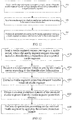
- FIG. 1 is a flowchart of a first embodiment of a media data processing method according to the present invention, and as shown in FIG. 1 , the method in this embodiment may include:
- a content protection apparatus may obtain a coding representation of content (encoded versions of the content).
- the coding representation is a digitalized form of content, and may be, for example, coding of an independent media component, such as image coding; or may be multiplexing of coding of multiple media components, including, for example, image coding and audio coding.
- the coding representation may include multiple media segments (Segment) in terms of time.
- a content obtaining apparatus may input collected content, such as sound or an image, into an encoder, so as to generate a digitalized form of coding representation, and the coding representation is segmented according to a length of (approximately) equal media time, and is encapsulated in an appropriate media transmission format, so as to form a media segment.
- a common media transmission format may be, for example, a moving pictures experts group 2 transport stream (Moving Pictures Experts Group 2 Transport Stream, MPEG2-TS for short) or an International Organization for Standards Basic Media File Format (International Organization for Standards Basic Media File Format, ISO BMFF for short).
- an initialization segment is a special media segment and only includes metadata of the coding representation, may be used to initialize a decoding device, does not include coded content data, and does not correspond to media presentation time. If the coding representation only has one media segment, an initialization segment and the media segment may be together.
- Step 102 Perform content protection processing on at least a part of media segments in the coding representation.
- the content protection apparatus may perform content protection processing on at least a part of media segments in the coding representation generated by the content obtaining apparatus.
- a period (Period) is used as a unit in content protection.
- an attribute of the coding representation may have some changes in, for example, a source or a location of content, an increase or a decrease of coding representations, and a source coding manner and a protection manner of the coding representation.
- a content protection manner adopted by one coding representation cannot be changed, that is, all media segments in the coding representation must adopt a same protection manner.
- that the media segments in the coding representation all adopt the same protection manner cannot meet a requirement.
- the content protection apparatus performs the content protection processing on the at least a part of media segments in the coding representation.
- the so-called at least a part of media segments may be a part of media segments in the coding representation, or may be all media segments in the coding representation, and regardless of a part of media segments or all media segments, a processing granularity of the content protection apparatus is a media segment rather than the coding representation.
- the content protection apparatus may perform content protection on a media segment including a wonderful goal in all media segments in coding of the football match video, and does not perform the content protection on a remaining media segment.
- media segments having multiple wonderful goals may be included in a video of one football match; therefore, the content protection apparatus may separately perform content protection on a media segment including each wonderful goal, and video data of each wonderful goal may include multiple media segments in a duration; therefore, the content protection apparatus needs to perform content protection on multiple media segments, that is, media segments in a certain time range or an index range when performing the content protection on each wonderful goal.
- a manner of performing the content protection processing may include a content protection method, and may also include relevant information required when the content protection processing is performed by using the content protection method.
- the content protection method may be an adopted encryption algorithm, and the required relevant information may be a key of the encryption algorithm or a key obtaining method.
- this embodiment does not limit a specific content protection method specifically adopted by the content protection apparatus to perform video protection on the media segment, for example, the content protection method may be an encryption method or a license method.
- this embodiment also does not need to limit a specific form specifically adopted to implement the content protection apparatus, and persons skilled in the art may understand that, the content protection apparatus may be a software form, and may also be a hardware form deployed on a computer system.
- a media segment in a coding representation is used as a unit of content protection, and the content protection may be performed on at least a part of media segments in the coding representation, so that protection manners of media segments in the coding representation are differentiated, so as to improve flexibility of performing the content protection on an HTTP streaming media service, thereby meeting a requirement when a content provider only limits accessing of some certain media segments by a user and opens a remaining media segment.
- the embodiment of the present invention may be implemented by adopting two specific solutions.
- a media presentation description (Media Presentation Description, MPD for short) file may be generated, and the client may obtain the MPD file, so as to know the content protection manner adopted by the coding representation; and in another solution, after the content protection processing is performed on a media segment that needs to be protected, a media segment protection element is added in the media segment on which the protection processing is performed, where the media segment protection element is used to describe a content protection manner of the media segment.
- Media Presentation Description Media Presentation Description
- FIG. 2 is a flowchart of a second embodiment of a media data processing method according to the present invention, and as shown in FIG. 2 , the method in this embodiment may implement the foregoing first solution, and the method in this embodiment may include:
- step 201 An implementation principle of step 201 is similar to that of step 101 in the foregoing method embodiment shown in FIG. 1 , so details are not repeatedly described herein.
- Step 202 Perform content protection processing on at least a part of media segments in the multiple media segments, and generate an MPD file.
- a content protection apparatus may perform content protection processing on a part of media segments in the multiple media segments after the segmentation, and may also perform the content protection processing on all media segments; persons skilled in the art may perform a selection as required.
- the MPD file may include a coding representation module used to describe a content protection manner adopted by at least a part of media segments in a coding representation.
- the coding representation module may include at least one content protection unit, and the content protection unit corresponds to a certain content protection manner.
- the content protection unit may include content protection method information and at least one protection range element, where the content protection method information is used to indicate a content protection method, and the protection range element includes information of a range of media segments to which the content protection method information applies.
- the MPD file may include information required by a client to access a media segment, so as to connect a server and the client.
- the MPD file may include the coding representation module to describe an attribute of the coding representation.
- the coding representation module may selectively include a content protection unit, or in a case that the content protection processing is performed, selectively include, according to different adopted content protection method information, a content protection unit corresponding to each piece of the content protection method information. For each content protection unit, content protection method information and a protection range element may be included. If the content protection processing is not performed on the coding representation, the coding representation module may not include the content protection unit.
- the range information included in the protection range element may use a start index and an end index of a media segment to describe an application range of the content protection unit, or use a start index of a media segment and a length of a protection range, that is, the number of consecutive protected media segments, to describe an application range of the content protection unit, or use start time and end time to describe an application range of the content protection unit, or use start time and a media duration to describe an application range of the content protection unit, that is, media segments to which the content protection method information in the content protection unit is effective.
- the protection range element may be omitted in the content protection unit; otherwise, the content protection unit includes at least one protection range element.
- the content protection method information in the content protection unit does not apply to a media segment beyond a range indicated by the protection range element.
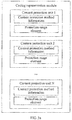
- FIG. 3a is a schematic structural diagram of a general coding representation module adopted in an embodiment of the present invention, and as shown in FIG. 3a , the coding representation module may include N content protection units, and each content protection unit may include content protection method information and a protection range element.
- the content protection method information may include a content protection method and information related to the content protection method, where the former is, for example, an encryption method, and the latter is, for example, key information and license information; therefore, even though different media segments of a coding representation adopt a same content protection method, information related to the used content protection method is different, and different content protection method information is still adopted. For example, media segments all adopt a certain encryption algorithm; however, a key is constantly changed; in this way, an objective of time-varying content protection is achieved.
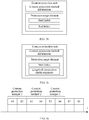
- FIG. 3b is a schematic structural diagram of a content protection unit for describing a protection range by adopting a start index and an end index
- FIG. 3c is a schematic structural diagram of a content protection unit for describing a protection range by adopting a start index and a length of consecutive media segments.
- FIG. 4a is a schematic diagram illustrating content protection processing of the method embodiment shown in FIG. 2
- FIG. 4b is a schematic structural diagram of a coding representation module corresponding to a processing manner shown in FIG. 4a . As shown in FIG. 4a and FIG.
- one coding representation is segmented into eight media segments, where media segments S1 to S2 and S5 to S6 correspond to a content protection manner 1, and the content protection manner 1 may be described through content protection method information A1 to perform content protection on the media segments S1 to S2 and S5 to S6; media segments S3 to S4 correspond to a content protection manner 2, and the content protection manner 2 may be described through content protection method information A2 to perform content protection on the media segments S3 to S4; and content protection may not be performed on media segments S7 to S8.
- the MPD file may include a coding representation module for the coding representation, where the coding representation module may include two content protection units shown in FIG. 4b . These two content protection units correspond to the content protection manner 1 and the content protection manner 2 respectively.
- the content protection method information A1 and an identifier of a range of a media segment to which the content protection method information A1 applies are included.
- range information in the protection range element is represented by adopting a start index and an end index of a media segment.
- the content protection method information A2 and an identifier of a range of a media segment to which the content protection method information A2 applies, that is, a protection range element 3 corresponding to the media segments S3 to S4, are included.
- the content protection method information may include a content protection method and information related to the content protection method, as long as there is one piece of information in the content protection method and the information related to the content protection method is different, the content protection method information is different.
- the content protection method information A1 and the content protection method information A2 may adopt a same content protection method; however, information related to the content protection method is different, for example, the content protection method information A1 and the content protection method information A2 may both adopt a same encryption method, but adopted key information is different.
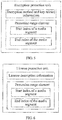
- FIG. 5 is a specific schematic structural diagram of the content protection unit shown in FIG. 3a , and as shown in FIG. 5 , the content protection unit is an encryption protection unit, and corresponding content protection method information is an encryption method and key related information.
- the key related information may be, for example, a means of obtaining a key.
- FIG. 6 is another specific schematic structural diagram of the content protection unit shown in FIG. 3a , and as shown in FIG. 6 , the content protection unit is a license unit, and corresponding content protection method information is license description information.
- the license description information may be a use right of the license, for example, information related to reading and duplication; and definitely, may also include information about obtaining a key.
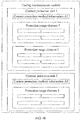
- FIG. 7 is a schematic structural diagram of another content protection unit of the method embodiment shown in FIG. 2 , and as shown in FIG. 7 , media segments that need to be protected in a coding representation adopt a same encryption manner, while a use license is varied.
- the content protection unit in media presentation description shown in FIG. 7 includes an encryption unit and multiple license units.
- the encryption unit describes a public encryption manner, such as an encryption algorithm, key obtaining, and a correspondence between a key and a key identifier, which are applied to all protected media segments; because a use license is varied, the protection unit includes multiple license units.
- Each license unit includes license description information, such as a key identifier used for encryption and use right illustration, and at least one protection range unit, used to describe a range of one or more media segments to which the license unit applies.
- license description information such as a key identifier used for encryption and use right illustration
- protection range unit used to describe a range of one or more media segments to which the license unit applies.
- Step 203 Store the coding representation and the MPD file.
- the content protection apparatus may store the coding representation including multiple media segments and the corresponding MPD file.
- the coding representation may be stored on a media server, and the MPD file may be stored on the media server, and may also be stored on any other devices as long as it can be ensured that the client can obtain the MPD file, which is not limited in this embodiment.
- the server may be a server maintained by a content provider, and may also be a cache server (cache) or a gateway server (gateway) in a content delivery network; therefore, in this embodiment, the used media server only needs to be a common server that supports an HTTP protocol.
- the client may obtain a media segment on which the content protection processing is performed from the server, and know a content protection manner adopted by each media segment in the coding representation according to the MPD file, so as to adopt corresponding processing, such as decryption and using media data within a right.
- a media segment in a coding representation is used as a unit of content protection, and the content protection may be performed on at least a part of media segments in the coding representation, so that protection manners of media segments in the coding representation are differentiated, so as to improve flexibility of content protection on an HTTP streaming media service, thereby meeting requirements on supporting a flexible business model by a content provider and a service provider.
- an MPD file may be generated, and the MPD file may include a content protection unit that describes a content protection manner adopted by a media segment in the coding representation, so that the client may perform a legal operation on the obtained media segment according to the MPD file.
- FIG. 8 is a flowchart of a third embodiment of a media data processing method according to the present invention, and as shown in FIG. 8 , the method in this embodiment may implement the foregoing second solution, and the method in this embodiment may include:
- step 801 An implementation method of step 801 is similar to that of the foregoing step 101, so details are not repeatedly described herein.
- Step 802 Perform content protection processing on a media segment that needs to be protected.
- the content protection processing may be, for example, encryption and limitation on a use right.
- Step 803 Add a media segment protection element in each media segment in a part of protected media segments.
- the media segment protection element may be placed at a starting end or an ending end of a media segment.
- the media segment protection element includes a content protection manner adopted by the media segment, that is, a media segment on which content protection processing needs to be performed includes an illustration of a content protection manner.
- content of a MPD file may be simplified without the need of illustrating an application range of a content protection manner adopted by a media segment in the MPD file; each media segment is self-contained, and a client may process the protected media segment without the need of obtaining other information than the media segment.
- FIG. 9 is a schematic structural diagram of a media segment on which content protection processing is performed by adopting the method embodiment shown in FIG. 8 , and as shown in FIG. 9 , a media segment protection element may be added before the protected media segment, where the media segment protection element may include: a content protection method scheme (schm for short) and information related to the content protection method scheme information (schi for short). It should be noted that, the media segment protection element itself is unprotected.
- a content protection method scheme (schm for short)
- schi for short information related to the content protection method scheme information
- Step 804 Store the processed coding representation on a media server.
- a media segment in a coding representation is used as a unit of content protection, and the content protection may be performed on at least a part of media segments in the coding representation, so that protection manners of media segments in the coding representation are differentiated, so as to improve flexibility of performing the content protection on an HTTP streaming media service, thereby meeting a requirement when a content provider only limits accessing of some certain media segments by a user and opens a remaining media segment.
- content of an MPD file may be simplified, and a client may perform de-protection processing without the need of obtaining other information than the media segment.
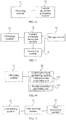
- FIG. 10 is a flowchart of a fourth embodiment of a media data processing method according to the present invention, and as shown in FIG. 10 , the method in this embodiment is a method for a client to obtain media data on which the content protection processing shown in FIG. 1 is performed, and the method in this embodiment may include:
- the client may send a media segment request message to a media server, where the media segment request message may include identification information of a requested media segment.
- Step 110 Receive a media segment which is sent by the media server according to the identification information.
- the media server may send a media segment in a corresponding coding representation to the client according to the included identification information.
- Step 120 Process the received media segment according to a media presentation description file.
- the media presentation description file is used to describe a content protection manner adopted by at least a part of media segments in the coding representation.
- the MPD file is obtained before the client requests the media segment, and may come from the media server, and may also be transmitted by another client, which is not limited in this embodiment.
- the MPD file may include a structure of the foregoing content protection unit shown in any one of FIG. 3a to FIG. 7 .
- the client may know, according to the MPD, whether content protection processing is performed on the requested media segment and adopted content protection method information. If the content protection processing is performed on the media segment, de-protection processing is performed according to the content protection method information indicated in the MPD.
- the client may know, according to the MPD file, that which kind of content protection processing is performed on which media segments, for example, know, according to protection range information in the content protection unit, that which kind of content protection processing is performed on which media segments. Therefore, if a media segment to be received does not adopt any content protection processing, the client may directly decode and play the media segment; and if the media segment to be received adopts the content protection processing, the client may make a de-protection preparation according to a content protection manner in advance, such as obtaining a key or a license right.
- the client adopts a similar processing procedure, and a difference from the continuous playing lies in that, the client cannot know a media segment to be requested in advance, and definitely, does not know an adopted content protection manner, and performs related processing only after determining the requested media segment; therefore, processing time spent in uncontinuous playing is longer than that spent in the continuous playing.
- a media segment in a coding representation is used as a unit of content protection, and the content protection may be performed on at least a part of media segments in the coding representation, so that protection manners of media segments in the coding representation are differentiated, so as to improve flexibility of performing content protection on an HTTP streaming media service, and when receiving a media segment on which the content protection processing is performed, a client may perform de-protection processing on the media segment according to an MPD file; therefore, a content provider may perform more flexible protection on content.
- FIG. 11 is a flowchart of a fifth embodiment of a media data processing method according to the present invention, and as shown in FIG. 11 , the method in this embodiment may be used for uncontinuous playing of streaming media data, and the method in this embodiment may include:
- a client may generate a media segment list of a coding representation by parsing the MPD file, where the list includes a content protection manner adopted by a media segment in each coding representation.
- Step 220 Select a media segment in the coding representation.
- the client selects a media segment in the coding representation, in addition to factors that need to be considered, such as a currently available bandwidth, a bandwidth of the coding representation, a resolution, and a frame rate, when the coding representation needs to be selected according to the prior art, it is required to further consider whether the client is able to support a content protection manner of the selected media segment of the coding representation.
- Step 230 The client sends a media segment request message to a media server.
- Step 240 The client receives a media segment sent by the media server.
- Step 250 According to the media segment list, perform de-protection processing on the media segment by adopting a corresponding content protection method.
- the de-protection processing may be, for example, a decryption operation, so as to restore streaming media data before being protected, and use the streaming media data according to a right.
- Step 260 The client presents streaming media content for a user.
- the client when using a media segment on which content protection processing is performed, the client may determine, according to the MPD file, whether the content protection processing is performed on the media segment, and perform corresponding de-protection processing on the media segment on which the content protection processing is performed.
- a media segment in a coding representation is used as a unit of content protection, and the content protection may be performed on at least a part of media segments in the coding representation, so that protection manners of media segments in the coding representation are differentiated, so as to improve flexibility of performing the content protection on an HTTP streaming media service.
- FIG. 12 is a flowchart of a sixth embodiment of a media data processing method according to the present invention, and as shown in FIG. 12 , the method in this embodiment is a method for a client to obtain streaming media data on which the content protection processing shown in FIG. 8 is performed, and the method in this embodiment may include:
- steps 310 to 320 An implementation principle of steps 310 to 320 is similar to that of the foregoing steps 210 to 220, so details are not repeatedly described herein.
- Step 330 Perform de-protection processing on the media segment according to a media segment protection element included in the media segment.
- the media segment protection element includes a content protection manner adopted by the media segment.
- a structure of the media segment in this embodiment may be shown in FIG. 9 .
- a difference between this embodiment and the foregoing method embodiment shown in FIG. 10 lies in that, in this embodiment, a media segment on which content protection processing is performed includes an illustration of a content protection manner; and compared with the method embodiment shown in FIG. 10 , in this embodiment, content of an MPD file may be simplified, and an application range of a content protection manner adopted by a media segment does not need to be illustrated in the MPD file; each media segment is self-contained, and the client may perform de-protection processing without the need of obtaining other information than the media segment.
- FIG. 13 is a flowchart of a seventh embodiment of a media data processing method according to the present invention, and as shown in FIG. 13 , the method in this embodiment provides details of the method embodiment shown in FIG. 12 , and the method in this embodiment may include:
- Step 430 Extract a media segment protection element from the received media segment.
- a client may further determine whether the media segment includes the media segment protection element, so as to know whether content protection processing is performed on the media segment.
- This embodiment does not limit a determination manner adopted by the client, and persons skilled in the art may perform the determination according to the prior art, for example, through a length of the media segment.
- the client may extract the media segment protection element from a starting end or an ending end of the media segment.
- Step 440 Obtain a content protection manner of the received media segment from the media segment protection element.
- the client may further obtain a content protection manner of the media segment from the media segment protection element, including, for example, schm and schi.
- Step 450 Perform de-protection processing on the received media segment by applying the content protection manner.
- the client may perform de-protection processing on the media segment according to schm and schi, and a specific processing manner is similar to the foregoing procedure of performing the de-protection processing by adopting the MPD file solution, so details are not repeatedly described herein.
- a media segment in a coding representation is used as a unit of content protection, and the content protection may be performed on at least a part of media segments in the coding representation, so that protection manners of media segments in the coding representation are differentiated, so as to improve flexibility of performing the content protection on an HTTP streaming media service, thereby meeting a requirement when a content provider only limits accessing of some certain media segments by a user and opens a remaining media segment.
- content of an MPD file may be simplified, and a client may perform de-protection processing without the need of obtaining other information than the media segment.
- FIG. 14 is a schematic structural diagram of a first embodiment of a media data processing apparatus according to the present invention, and as shown in FIG. 14 , the apparatus in this embodiment is a content protection apparatus, and the apparatus in this embodiment may include: an obtaining module 11 and a content protection processing module 12, where the obtaining module 11 is configured to obtain each media segment in a coding representation, and the content protection processing module 12 is configured to perform content protection processing on at least a part of media segments in the coding representation.
- the apparatus in this embodiment may be configured to execute the technical solution of the method embodiment shown in FIG. 1 , and an implementation principle and a technical effect are similar to those in the method embodiment and are not repeatedly described herein.
- FIG. 15 is a schematic structural diagram of a second embodiment of a media data processing apparatus according to the present invention, and as shown in FIG. 15 , on the basis of the structure of the apparatus shown in FIG. 14 , furthermore, the apparatus in this embodiment may further include: a generating module 13 and a storage module 14, where the generating module 13 is configured to generate a media presentation description file, where the media presentation description file is used to describe a content protection manner adopted by at least a part of media segments in a coding representation, and the storage module 14 is configured to store the coding representation on which content protection processing is performed and the media presentation description file generated by the generating module.
- the generating module 13 is configured to generate a media presentation description file
- the media presentation description file is used to describe a content protection manner adopted by at least a part of media segments in a coding representation
- the storage module 14 is configured to store the coding representation on which content protection processing is performed and the media presentation description file generated by the generating module.
- the apparatus in this embodiment may be configured to execute the technical solution of the method embodiment shown in FIG. 2 , and an implementation principle and a technical effect are similar to those in the method embodiment and are not repeatedly described herein.
- FIG. 16 is a schematic structural diagram of a third embodiment of a media data processing apparatus according to the present invention, and as shown in FIG. 16 , on the basis of the structure of the apparatus shown in FIG. 14 , in the apparatus in this embodiment, furthermore, the content protection processing module 12 may include: a first protection processing unit 121 and a second protection processing unit 122, where the first protection processing unit 121 is configured to perform protection processing on each media segment in the at least a part of media segments, and the second protection processing unit 122 is configured to add a media segment protection element in each media segment processed by the first protection processing unit 121, where the media segment protection element includes description information of a content protection manner adopted by the media segment.
- the first protection processing unit 121 is configured to perform protection processing on each media segment in the at least a part of media segments
- the second protection processing unit 122 is configured to add a media segment protection element in each media segment processed by the first protection processing unit 121, where the media segment protection element includes description information of a content protection manner adopted by the media segment.
- the apparatus in this embodiment may be configured to execute the technical solution of the method embodiment shown in FIG. 8 , and an implementation principle and a technical effect are similar to those in the method embodiment and are not repeatedly described herein
- FIG. 17 is a schematic structural diagram of a fourth embodiment of a media data processing apparatus according to the present invention.
- the apparatus in this embodiment is a processing apparatus deployed on a client, and may include: a first sending module 21, a first receiving module 22, and a first processing module 23, where the first sending module 21 is configured to send a media segment request message to a media server, where the media segment request message includes identification information of a requested media segment; the first receiving module 22 is configured to receive a media segment which is sent by the media server according to the identification information; and the first processing module 23 is configured to process the received media segment according to a media presentation description file, where the media presentation description file is used to describe a content protection manner adopted by at least a part of media segments in a coding representation.
- the apparatus in this embodiment may be configured to execute the technical solution of the method embodiment shown in FIG. 10 , and an implementation principle and a technical effect are similar to those in the method embodiment and are not repeatedly described herein.
- FIG. 18 is a schematic structural diagram of a fifth embodiment of a media data processing apparatus according to the present invention, and as shown in FIG. 18 , on the basis of the apparatus shown in FIG. 17 , the apparatus in this embodiment may further include: a preprocessing module 24; the first processing module 23 may specifically include: a determining unit 231 and a first processing unit 232, where the preprocessing module 24 is configured to obtain a media presentation description file, perform parsing processing on the media presentation description file, so as to obtain a content protection manner adopted by each media segment in a coding representation, and select a media segment in the coding representation according to the content protection manner; the determining unit 231 is configured to determining whether location information of the received media segment is in a range described by range information; and the first processing unit 232 is configured to: if the determining unit 231 determines that the location information is in the range, perform de-protection processing on the received media segment by adopting content protection method information.
- the preprocessing module 24 is configured to obtain a media
- the apparatus in this embodiment may be configured to execute the technical solution of the method embodiment shown in FIG. 11 , and an implementation principle and a technical effect are similar to those in the method embodiment and are not repeatedly described herein.
- FIG. 19 is a schematic structural diagram of a sixth embodiment of a media data processing apparatus according to the present invention, and as shown in FIG. 19 , the apparatus in this embodiment may include: a second sending module 31, a second receiving module 32, and a second processing module 33, where the second sending module 31 is configured to send a media segment request message to a media server, where the media segment request message includes identification information of a requested media segment; the second receiving module 32 is configured to receive a media segment which is sent by the media server according to the identification information; and the second processing module 33 is configured to process the media segment according to a media segment protection element included in the media segment, where the media segment protection element includes content protection method information adopted by the media segment.
- the second sending module 31 is configured to send a media segment request message to a media server, where the media segment request message includes identification information of a requested media segment
- the second receiving module 32 is configured to receive a media segment which is sent by the media server according to the identification information
- the second processing module 33 is configured to process the media segment according to
- the apparatus in this embodiment may be configured to execute the technical solution of the method embodiment shown in FIG. 12 , and an implementation principle and a technical effect are similar to those in the method embodiment and are not repeatedly described herein.
- FIG. 20 is a schematic structural diagram of a seventh embodiment of a media data processing apparatus according to the present invention, and as shown in FIG. 20 , on the basis of the apparatus shown in FIG. 19 , in the apparatus in this embodiment, furthermore, the second processing module 33 may include: an extracting unit 331, an obtaining unit 332, and a second processing unit 333, where the extracting unit 331 is configured to extract a media segment protection element from a received media segment; the obtaining unit 332 is configured to obtain a content protection manner of the received media segment from the media segment protection element; and the second processing unit 333 is configured to perform de-protection processing on the received media segment by applying the content protection manner.
- the extracting unit 331 is configured to extract a media segment protection element from a received media segment
- the obtaining unit 332 is configured to obtain a content protection manner of the received media segment from the media segment protection element
- the second processing unit 333 is configured to perform de-protection processing on the received media segment by applying the content protection manner.
- the apparatus in this embodiment may be configured to execute the technical solution of the method embodiment shown in FIG. 13 , and an implementation principle and a technical effect are similar to those in the method embodiment and are not repeatedly described herein.
- the foregoing program may be stored in a computer readable storage medium.
- the foregoing storage medium may be any medium capable of storing program codes, such as a ROM, a RAM, a magnetic disk, or an optical disk.
Landscapes
- Engineering & Computer Science (AREA)
- Computer Security & Cryptography (AREA)
- Signal Processing (AREA)
- Computer Networks & Wireless Communication (AREA)
- Multimedia (AREA)
- General Engineering & Computer Science (AREA)
- Computer Hardware Design (AREA)
- Theoretical Computer Science (AREA)
- Business, Economics & Management (AREA)
- General Business, Economics & Management (AREA)
- Computing Systems (AREA)
- Bioethics (AREA)
- Health & Medical Sciences (AREA)
- General Health & Medical Sciences (AREA)
- Software Systems (AREA)
- Physics & Mathematics (AREA)
- General Physics & Mathematics (AREA)
- Databases & Information Systems (AREA)
- Two-Way Televisions, Distribution Of Moving Picture Or The Like (AREA)
- Storage Device Security (AREA)
- Compression Or Coding Systems Of Tv Signals (AREA)
Description
- Embodiments of the present invention relate to audio/video technologies, and in particular, to a media data processing method and apparatus.
- With the popularization of the Internet, streaming media services have developed rapidly, and a streaming media service based on a hyper text transfer protocol (Hyper Text Transfer Protocol, HTTP for short) is one of them.
- In the prior art, content protection is performed on the HTTP streaming media service, so that rights and interests of an owner of streaming media content are protected. Specifically, in an HTTP streaming standard of the 3GPP, the content protection is based on a period. A period corresponds to a duration of a certain content segment, and there is at least one coding representation in the period, and each coding representation includes several media segments. A media segment in each coding representation adopts a same protection manner. The so-called protection manner refers to a protection method adopted for content that needs to be protected and related information applied to the method, for example, the protection method may be an encryption algorithm, and related information of the method is a key corresponding to the encryption algorithm or a means of obtaining a key of the encryption algorithm.
- The prior art may be summed up as follows: a content protection manner adopted for the HTTP streaming media service is of low flexibility, and fails to meet a diverse requirement when a content provider limits accessing of a streaming media service by a user.
- Frank Hartung ET AL discloses in "DRM protected Dynamic Adaptive HTTP Streaming", 23 February 2011 (2011-02-03), MMSys'11, February 23-25, 2011 San Jose, California, USA, a proposal related to DRM protected dynamic adaptive HTTP streaming. The document discloses in section 3.3 on page 279 a proposed extension to DASH for content protection which provides a proposal of placing a child element content protection with additional attributes into each MPD, on representation or alternatively on segment level. The document further discloses a Malin BB protected dash as the proof-of-concept, in
section 4 on page 281. The proof-of-concept system is disclosed including six components: Key Database, content rendering, HTTP Server, Marlin BB Server, HTTP Client and Marlin Client. The content rendering component is responsible for off-line media segmentation and encryption using the keys in the key database. It produces the MPD, the unencrypted initialization segment per representation and encrypted media segments, which are all stored at the HTTP Server. - Embodiments of the present invention provide a media data processing method and apparatus, so as to improve flexibility of a content protection manner.
- An embodiment of the present invention provides a media data processing method, including:
- obtaining each media segment in a coding representation; performing content protection processing on a part of the media segments in the coding representation; and
- generating a media presentation description file (202), wherein the media presentation description file is used to describe a content protection manner adopted by the part of the media segments in the coding representation;
- wherein the media presentation description file comprises a coding representation module corresponding to the coding representation, the coding representation module comprises at least one content protection unit, the content protection unit comprises the content protection manner; and
- wherein the content protection manner comprises an encryption protection element and at least one license protection element, the encryption protection element comprises an encryption method and key related information that are adopted by the part of the media segments, the license protection element comprises license description information and a protection range element, and the protection range element comprises information of the range of media segments to which the license description information applies.
- In the embodiments of the present invention, a media segment in a coding representation is used as a unit of content protection, and the content protection may be performed on at least a part of media segments in the coding representation, so that protection manners of media segments in the coding representation are differentiated, so as to improve flexibility of performing the content protection on an HTTP streaming media service, thereby meeting a requirement when a content provider only limits accessing of some certain media segments by a user and opens a remaining media segment.
- To describe the technical solutions in the embodiments of the present invention or in the prior art more clearly, the following briefly introduces accompanying drawings required for describing the embodiments or the prior art. Apparently, the accompanying drawings in the following description show merely some embodiments of the present invention, and persons of ordinary skill in the art may further obtain other drawings according to these accompanying drawings without creative efforts.
-
FIG. 1 is a flowchart of a first embodiment of a media data processing method according to the present invention; -
FIG. 2 is a flowchart of a second embodiment of a media data processing method according to the present invention; -
FIG. 3a is a schematic structural diagram of a general coding representation module adopted in an embodiment of the present invention; -
FIG. 3b is a schematic structural diagram of a content protection unit for describing a
protection range by adopting a start index and an end index; -
FIG. 3c is a schematic structural diagram of a content protection unit for describing a protection range by adopting a start index and a length of consecutive media segments; -
FIG. 4a is a schematic diagram illustrating content protection processing of the method embodiment shown inFIG. 2 ; -
FIG. 4b is a schematic structural diagram of a coding representation module corresponding to a processing manner shown inFIG. 4a ; -
FIG. 5 is a specific schematic structural diagram of the content protection unit shown inFIG. 3a ; -
FIG. 6 is another specific schematic structural diagram of the content protection unit shown inFIG. 3a ; -
FIG. 7 is a schematic structural diagram of another content protection unit of the method embodiment shown inFIG. 2 ; -
FIG. 8 is a flowchart of a third embodiment of a media data processing method according to the present invention; -
FIG. 9 is a schematic structural diagram of a media segment on which content protection processing is performed by adopting the method embodiment shown inFIG. 8 ; -
FIG. 10 is a flowchart of a fourth embodiment of a media data processing method according to the present invention; -
FIG. 11 is a flowchart of a fifth embodiment of a media data processing method according to the present invention; -
FIG. 12 is a flowchart of a sixth embodiment of a media data processing method according to the present invention; -
FIG. 13 is a flowchart of a seventh embodiment of a media data processing method according to the present invention; -
FIG. 14 is a schematic structural diagram of a first embodiment of a media data processing apparatus according to the present invention; -
FIG. 15 is a schematic structural diagram of a second embodiment of a media data processing apparatus according to the present invention; -
FIG. 16 is a schematic structural diagram of a third embodiment of a media data processing apparatus according to the present invention; -
FIG. 17 is a schematic structural diagram of a fourth embodiment of a media data processing apparatus according to the present invention; -
FIG. 18 is a schematic structural diagram of a fifth embodiment of a media data processing apparatus according to the present invention; -
FIG. 19 is a schematic structural diagram of a sixth embodiment of a media data processing apparatus according to the present invention; and -
FIG. 20 is a schematic structural diagram of a seventh embodiment of a media data processing apparatus according to the present invention. - To make the objectives, technical solutions, and advantages of the embodiments of the present invention more comprehensible, the following clearly and completely describes the technical solutions in the embodiments of the present invention with reference to the accompanying drawings in the embodiments of the present invention. Apparently, the embodiments to be described are merely a part rather than all of the embodiments of the present invention.
-
FIG. 1 is a flowchart of a first embodiment of a media data processing method according to the present invention, and as shown inFIG. 1 , the method in this embodiment may include: - Step 101: Obtain each media segment in a coding representation.
- For example, a content protection apparatus may obtain a coding representation of content (encoded versions of the content). The coding representation is a digitalized form of content, and may be, for example, coding of an independent media component, such as image coding; or may be multiplexing of coding of multiple media components, including, for example, image coding and audio coding. The coding representation may include multiple media segments (Segment) in terms of time.
- Specifically, a content obtaining apparatus may input collected content, such as sound or an image, into an encoder, so as to generate a digitalized form of coding representation, and the coding representation is segmented according to a length of (approximately) equal media time, and is encapsulated in an appropriate media transmission format, so as to form a media segment. A common media transmission format may be, for example, a moving
pictures experts group 2 transport stream (MovingPictures Experts Group 2 Transport Stream, MPEG2-TS for short) or an International Organization for Standards Basic Media File Format (International Organization for Standards Basic Media File Format, ISO BMFF for short). Generally, in one coding representation, lengths of media time that correspond to media segments are roughly equal; an initialization segment is a special media segment and only includes metadata of the coding representation, may be used to initialize a decoding device, does not include coded content data, and does not correspond to media presentation time. If the coding representation only has one media segment, an initialization segment and the media segment may be together. - Step 102: Perform content protection processing on at least a part of media segments in the coding representation.
- For example, the content protection apparatus may perform content protection processing on at least a part of media segments in the coding representation generated by the content obtaining apparatus.
- Specifically, in the prior art, a period (Period) is used as a unit in content protection. At a border of the period, an attribute of the coding representation may have some changes in, for example, a source or a location of content, an increase or a decrease of coding representations, and a source coding manner and a protection manner of the coding representation. However, in one period, a content protection manner adopted by one coding representation cannot be changed, that is, all media segments in the coding representation must adopt a same protection manner. However, in some certain situations, that the media segments in the coding representation all adopt the same protection manner cannot meet a requirement. Taking a football match video as an example for description, most content of the video are unprotected while some wonderful goal scenes are protected, and only an authorized user can watch complete video content of the football match; therefore, the unprotected content and the protected content of the football match video need to adopt differentiated protection manners. However, in the prior art, content protection is performed on a whole coding representation; therefore, all media segments of the football match video adopt a same content protection manner, that is, either all media segments are unprotected, or all media segments are protected; more generally, in the prior art, that different content protection manners are adopted for different parts of a same coding representation cannot be implemented, so that in the prior art, flexibility of a content protection manner adopted for an HTTP streaming media service is low, and a diverse requirement when a content provider limits accessing of a streaming media service by a user cannot be met.
- By comparison, in this embodiment, the content protection apparatus performs the content protection processing on the at least a part of media segments in the coding representation. The so-called at least a part of media segments may be a part of media segments in the coding representation, or may be all media segments in the coding representation, and regardless of a part of media segments or all media segments, a processing granularity of the content protection apparatus is a media segment rather than the coding representation. For example, the content protection apparatus may perform content protection on a media segment including a wonderful goal in all media segments in coding of the football match video, and does not perform the content protection on a remaining media segment. It should be noted that, media segments having multiple wonderful goals may be included in a video of one football match; therefore, the content protection apparatus may separately perform content protection on a media segment including each wonderful goal, and video data of each wonderful goal may include multiple media segments in a duration; therefore, the content protection apparatus needs to perform content protection on multiple media segments, that is, media segments in a certain time range or an index range when performing the content protection on each wonderful goal.
- It should be noted that, in this embodiment, a manner of performing the content protection processing may include a content protection method, and may also include relevant information required when the content protection processing is performed by using the content protection method. For example, the content protection method may be an adopted encryption algorithm, and the required relevant information may be a key of the encryption algorithm or a key obtaining method.
- It should be noted that, this embodiment does not limit a specific content protection method specifically adopted by the content protection apparatus to perform video protection on the media segment, for example, the content protection method may be an encryption method or a license method. In addition, this embodiment also does not need to limit a specific form specifically adopted to implement the content protection apparatus, and persons skilled in the art may understand that, the content protection apparatus may be a software form, and may also be a hardware form deployed on a computer system.
- In this embodiment, a media segment in a coding representation is used as a unit of content protection, and the content protection may be performed on at least a part of media segments in the coding representation, so that protection manners of media segments in the coding representation are differentiated, so as to improve flexibility of performing the content protection on an HTTP streaming media service, thereby meeting a requirement when a content provider only limits accessing of some certain media segments by a user and opens a remaining media segment.
- After the content protection processing is performed on each media segment in the coding representation by adopting the foregoing method shown in
FIG. 1 , in order to enable a client to know a specific content protection manner adopted by the coding representation, so as to adopt a matched processing manner to process the coding representation, the embodiment of the present invention may be implemented by adopting two specific solutions. In one solution, when the content protection processing is performed on a media segment that needs to be protected, a media presentation description (Media Presentation Description, MPD for short) file may be generated, and the client may obtain the MPD file, so as to know the content protection manner adopted by the coding representation; and in another solution, after the content protection processing is performed on a media segment that needs to be protected, a media segment protection element is added in the media segment on which the protection processing is performed, where the media segment protection element is used to describe a content protection manner of the media segment. - The foregoing two technical solutions are described in detail by adopting several specific embodiments in the following.
-
FIG. 2 is a flowchart of a second embodiment of a media data processing method according to the present invention, and as shown inFIG. 2 , the method in this embodiment may implement the foregoing first solution, and the method in this embodiment may include: - Step 201: Segment media data into multiple media segments.
- An implementation principle of
step 201 is similar to that ofstep 101 in the foregoing method embodiment shown inFIG. 1 , so details are not repeatedly described herein. - Step 202: Perform content protection processing on at least a part of media segments in the multiple media segments, and generate an MPD file.
- A content protection apparatus may perform content protection processing on a part of media segments in the multiple media segments after the segmentation, and may also perform the content protection processing on all media segments; persons skilled in the art may perform a selection as required.
- In this embodiment, the MPD file may include a coding representation module used to describe a content protection manner adopted by at least a part of media segments in a coding representation. In this embodiment, the coding representation module may include at least one content protection unit, and the content protection unit corresponds to a certain content protection manner. In this embodiment, the content protection unit may include content protection method information and at least one protection range element, where the content protection method information is used to indicate a content protection method, and the protection range element includes information of a range of media segments to which the content protection method information applies.
- Specifically, the MPD file may include information required by a client to access a media segment, so as to connect a server and the client. The MPD file may include the coding representation module to describe an attribute of the coding representation. According to whether the content protection processing is performed on the media segment in the coding representation, the coding representation module may selectively include a content protection unit, or in a case that the content protection processing is performed, selectively include, according to different adopted content protection method information, a content protection unit corresponding to each piece of the content protection method information. For each content protection unit, content protection method information and a protection range element may be included. If the content protection processing is not performed on the coding representation, the coding representation module may not include the content protection unit.
- In this embodiment, the range information included in the protection range element may use a start index and an end index of a media segment to describe an application range of the content protection unit, or use a start index of a media segment and a length of a protection range, that is, the number of consecutive protected media segments, to describe an application range of the content protection unit, or use start time and end time to describe an application range of the content protection unit, or use start time and a media duration to describe an application range of the content protection unit, that is, media segments to which the content protection method information in the content protection unit is effective. Only when the content protection method information indicated by the content protection unit applies to all media segments of the coding representation, the protection range element may be omitted in the content protection unit; otherwise, the content protection unit includes at least one protection range element. The content protection method information in the content protection unit does not apply to a media segment beyond a range indicated by the protection range element.
-
FIG. 3a is a schematic structural diagram of a general coding representation module adopted in an embodiment of the present invention, and as shown inFIG. 3a , the coding representation module may include N content protection units, and each content protection unit may include content protection method information and a protection range element. It should be noted that, the content protection method information may include a content protection method and information related to the content protection method, where the former is, for example, an encryption method, and the latter is, for example, key information and license information; therefore, even though different media segments of a coding representation adopt a same content protection method, information related to the used content protection method is different, and different content protection method information is still adopted. For example, media segments all adopt a certain encryption algorithm; however, a key is constantly changed; in this way, an objective of time-varying content protection is achieved. - Based on the general structure in
FIG. 3a , persons skilled in the art may transform the content protection unit inFIG. 3a into different structures for different description manners of a protection range.FIG. 3b is a schematic structural diagram of a content protection unit for describing a protection range by adopting a start index and an end index, andFIG. 3c is a schematic structural diagram of a content protection unit for describing a protection range by adopting a start index and a length of consecutive media segments. - Based on structures of the foregoing content protection units in
FIG. 3a to FIG. 3c , the content protection unit in the method embodiment shown inFIG. 2 is described in detail by using a specific example in the following. -
FIG. 4a is a schematic diagram illustrating content protection processing of the method embodiment shown inFIG. 2 , andFIG. 4b is a schematic structural diagram of a coding representation module corresponding to a processing manner shown inFIG. 4a . As shown inFIG. 4a andFIG. 4b , one coding representation is segmented into eight media segments, where media segments S1 to S2 and S5 to S6 correspond to acontent protection manner 1, and thecontent protection manner 1 may be described through content protection method information A1 to perform content protection on the media segments S1 to S2 and S5 to S6; media segments S3 to S4 correspond to acontent protection manner 2, and thecontent protection manner 2 may be described through content protection method information A2 to perform content protection on the media segments S3 to S4; and content protection may not be performed on media segments S7 to S8. - Correspondingly, the MPD file may include a coding representation module for the coding representation, where the coding representation module may include two content protection units shown in
FIG. 4b . These two content protection units correspond to thecontent protection manner 1 and thecontent protection manner 2 respectively. For acontent protection unit 1 corresponding to thecontent protection manner 1, the content protection method information A1 and an identifier of a range of a media segment to which the content protection method information A1 applies, that is, aprotection range element 1 corresponding to the media segments S1 to S2 and aprotection range element 2 corresponding to the media segments S5 to S6, are included. In this embodiment, range information in the protection range element is represented by adopting a start index and an end index of a media segment. For acontent protection unit 2 corresponding to thecontent protection manner 2, the content protection method information A2 and an identifier of a range of a media segment to which the content protection method information A2 applies, that is, aprotection range element 3 corresponding to the media segments S3 to S4, are included. It should be noted that, because the content protection method information may include a content protection method and information related to the content protection method, as long as there is one piece of information in the content protection method and the information related to the content protection method is different, the content protection method information is different. Therefore, the content protection method information A1 and the content protection method information A2 may adopt a same content protection method; however, information related to the content protection method is different, for example, the content protection method information A1 and the content protection method information A2 may both adopt a same encryption method, but adopted key information is different. -
FIG. 5 is a specific schematic structural diagram of the content protection unit shown inFIG. 3a , and as shown inFIG. 5 , the content protection unit is an encryption protection unit, and corresponding content protection method information is an encryption method and key related information. The key related information may be, for example, a means of obtaining a key. -
FIG. 6 is another specific schematic structural diagram of the content protection unit shown inFIG. 3a , and as shown inFIG. 6 , the content protection unit is a license unit, and corresponding content protection method information is license description information. The license description information may be a use right of the license, for example, information related to reading and duplication; and definitely, may also include information about obtaining a key. -
FIG. 7 is a schematic structural diagram of another content protection unit of the method embodiment shown inFIG. 2 , and as shown inFIG. 7 , media segments that need to be protected in a coding representation adopt a same encryption manner, while a use license is varied. The content protection unit in media presentation description shown inFIG. 7 includes an encryption unit and multiple license units. The encryption unit describes a public encryption manner, such as an encryption algorithm, key obtaining, and a correspondence between a key and a key identifier, which are applied to all protected media segments; because a use license is varied, the protection unit includes multiple license units. Each license unit includes license description information, such as a key identifier used for encryption and use right illustration, and at least one protection range unit, used to describe a range of one or more media segments to which the license unit applies. In this embodiment, even though a single encryption algorithm is adopted, the client needs to constantly update a key and/or a use right, which also achieves an effect of adopting different protection manners for media segments in the media representation. In addition, because only one encryption method needs to be supported, content generation and implementation of the client are simple. - Step 203: Store the coding representation and the MPD file.
- After completing the foregoing operation, the content protection apparatus may store the coding representation including multiple media segments and the corresponding MPD file. For example, the coding representation may be stored on a media server, and the MPD file may be stored on the media server, and may also be stored on any other devices as long as it can be ensured that the client can obtain the MPD file, which is not limited in this embodiment. The server may be a server maintained by a content provider, and may also be a cache server (cache) or a gateway server (gateway) in a content delivery network; therefore, in this embodiment, the used media server only needs to be a common server that supports an HTTP protocol. Therefore, the client may obtain a media segment on which the content protection processing is performed from the server, and know a content protection manner adopted by each media segment in the coding representation according to the MPD file, so as to adopt corresponding processing, such as decryption and using media data within a right.
- In this embodiment, a media segment in a coding representation is used as a unit of content protection, and the content protection may be performed on at least a part of media segments in the coding representation, so that protection manners of media segments in the coding representation are differentiated, so as to improve flexibility of content protection on an HTTP streaming media service, thereby meeting requirements on supporting a flexible business model by a content provider and a service provider. Moreover, during a content protection processing procedure, an MPD file may be generated, and the MPD file may include a content protection unit that describes a content protection manner adopted by a media segment in the coding representation, so that the client may perform a legal operation on the obtained media segment according to the MPD file.
-
FIG. 8 is a flowchart of a third embodiment of a media data processing method according to the present invention, and as shown inFIG. 8 , the method in this embodiment may implement the foregoing second solution, and the method in this embodiment may include: - Step 801: Segment media data into multiple media segments.
- An implementation method of
step 801 is similar to that of the foregoingstep 101, so details are not repeatedly described herein. - Step 802: Perform content protection processing on a media segment that needs to be protected.
- The content protection processing may be, for example, encryption and limitation on a use right.
- Step 803: Add a media segment protection element in each media segment in a part of protected media segments.
- Preferably, the media segment protection element may be placed at a starting end or an ending end of a media segment.
- The media segment protection element includes a content protection manner adopted by the media segment, that is, a media segment on which content protection processing needs to be performed includes an illustration of a content protection manner. Compared with the method embodiment shown in
FIG. 2 , in this embodiment, content of a MPD file may be simplified without the need of illustrating an application range of a content protection manner adopted by a media segment in the MPD file; each media segment is self-contained, and a client may process the protected media segment without the need of obtaining other information than the media segment. -
FIG. 9 is a schematic structural diagram of a media segment on which content protection processing is performed by adopting the method embodiment shown inFIG. 8 , and as shown inFIG. 9 , a media segment protection element may be added before the protected media segment, where the media segment protection element may include: a content protection method scheme (schm for short) and information related to the content protection method scheme information (schi for short). It should be noted that, the media segment protection element itself is unprotected. - Step 804: Store the processed coding representation on a media server.
- In this embodiment, a media segment in a coding representation is used as a unit of content protection, and the content protection may be performed on at least a part of media segments in the coding representation, so that protection manners of media segments in the coding representation are differentiated, so as to improve flexibility of performing the content protection on an HTTP streaming media service, thereby meeting a requirement when a content provider only limits accessing of some certain media segments by a user and opens a remaining media segment. Moreover, compared with the method embodiment shown in
FIG. 2 , in this embodiment, content of an MPD file may be simplified, and a client may perform de-protection processing without the need of obtaining other information than the media segment. -
FIG. 10 is a flowchart of a fourth embodiment of a media data processing method according to the present invention, and as shown inFIG. 10 , the method in this embodiment is a method for a client to obtain media data on which the content protection processing shown inFIG. 1 is performed, and the method in this embodiment may include: - Step 100: Send a media segment request message to a media server, where the media segment request message includes identification information of a requested media segment. For example, the identification information of the media segment may be a uniform/universal resource locator (Uniform/Universal Resource Locator, URL for short) of the media segment, or a URL carrying a byte range, and is used to uniquely identify and obtain the media segment.
- When a client needs to obtain media data, for example, request to watch a video, the client may send a media segment request message to a media server, where the media segment request message may include identification information of a requested media segment.
- Step 110: Receive a media segment which is sent by the media server according to the identification information.
- After receiving the media segment request message, the media server may send a media segment in a corresponding coding representation to the client according to the included identification information.
- Step 120: Process the received media segment according to a media presentation description file.
- The media presentation description file is used to describe a content protection manner adopted by at least a part of media segments in the coding representation.
- Specifically, the MPD file is obtained before the client requests the media segment, and may come from the media server, and may also be transmitted by another client, which is not limited in this embodiment. In this embodiment, the MPD file may include a structure of the foregoing content protection unit shown in any one of
FIG. 3a to FIG. 7 . The client may know, according to the MPD, whether content protection processing is performed on the requested media segment and adopted content protection method information. If the content protection processing is performed on the media segment, de-protection processing is performed according to the content protection method information indicated in the MPD. - For example, in a case of continuous playing, before requesting and receiving each media segment, the client may know, according to the MPD file, that which kind of content protection processing is performed on which media segments, for example, know, according to protection range information in the content protection unit, that which kind of content protection processing is performed on which media segments. Therefore, if a media segment to be received does not adopt any content protection processing, the client may directly decode and play the media segment; and if the media segment to be received adopts the content protection processing, the client may make a de-protection preparation according to a content protection manner in advance, such as obtaining a key or a license right. In a case of uncontinuous playing, the client adopts a similar processing procedure, and a difference from the continuous playing lies in that, the client cannot know a media segment to be requested in advance, and definitely, does not know an adopted content protection manner, and performs related processing only after determining the requested media segment; therefore, processing time spent in uncontinuous playing is longer than that spent in the continuous playing.
- In this embodiment, a media segment in a coding representation is used as a unit of content protection, and the content protection may be performed on at least a part of media segments in the coding representation, so that protection manners of media segments in the coding representation are differentiated, so as to improve flexibility of performing content protection on an HTTP streaming media service, and when receiving a media segment on which the content protection processing is performed, a client may perform de-protection processing on the media segment according to an MPD file; therefore, a content provider may perform more flexible protection on content.
- The technical solution of the method embodiment shown in
FIG. 10 is described in detail by adopting a specific embodiment in the following. -
FIG. 11 is a flowchart of a fifth embodiment of a media data processing method according to the present invention, and as shown inFIG. 11 , the method in this embodiment may be used for uncontinuous playing of streaming media data, and the method in this embodiment may include: - Step 210: Obtain an MPD file and parse the MPD file.
- Specifically, a client may generate a media segment list of a coding representation by parsing the MPD file, where the list includes a content protection manner adopted by a media segment in each coding representation.
- Step 220: Select a media segment in the coding representation.
- Specifically, when the client selects a media segment in the coding representation, in addition to factors that need to be considered, such as a currently available bandwidth, a bandwidth of the coding representation, a resolution, and a frame rate, when the coding representation needs to be selected according to the prior art, it is required to further consider whether the client is able to support a content protection manner of the selected media segment of the coding representation.
- Step 230: The client sends a media segment request message to a media server.
- Step 240: The client receives a media segment sent by the media server.
- Step 250: According to the media segment list, perform de-protection processing on the media segment by adopting a corresponding content protection method.
- The de-protection processing may be, for example, a decryption operation, so as to restore streaming media data before being protected, and use the streaming media data according to a right.
- Step 260: The client presents streaming media content for a user.
- In this embodiment, when using a media segment on which content protection processing is performed, the client may determine, according to the MPD file, whether the content protection processing is performed on the media segment, and perform corresponding de-protection processing on the media segment on which the content protection processing is performed. In this embodiment, a media segment in a coding representation is used as a unit of content protection, and the content protection may be performed on at least a part of media segments in the coding representation, so that protection manners of media segments in the coding representation are differentiated, so as to improve flexibility of performing the content protection on an HTTP streaming media service.
-
FIG. 12 is a flowchart of a sixth embodiment of a media data processing method according to the present invention, and as shown inFIG. 12 , the method in this embodiment is a method for a client to obtain streaming media data on which the content protection processing shown inFIG. 8 is performed, and the method in this embodiment may include: - Step 310: Send a media segment request message to a media server, where the media segment request message includes identification information of a requested media segment.
- Step 320: Receive a media segment which is sent by the media server according to the identification information.
- An implementation principle of
steps 310 to 320 is similar to that of the foregoingsteps 210 to 220, so details are not repeatedly described herein. - Step 330: Perform de-protection processing on the media segment according to a media segment protection element included in the media segment.
- The media segment protection element includes a content protection manner adopted by the media segment. A structure of the media segment in this embodiment may be shown in
FIG. 9 . - Specifically, a difference between this embodiment and the foregoing method embodiment shown in
FIG. 10 lies in that, in this embodiment, a media segment on which content protection processing is performed includes an illustration of a content protection manner; and compared with the method embodiment shown inFIG. 10 , in this embodiment, content of an MPD file may be simplified, and an application range of a content protection manner adopted by a media segment does not need to be illustrated in the MPD file; each media segment is self-contained, and the client may perform de-protection processing without the need of obtaining other information than the media segment. -
FIG. 13 is a flowchart of a seventh embodiment of a media data processing method according to the present invention, and as shown inFIG. 13 , the method in this embodiment provides details of the method embodiment shown inFIG. 12 , and the method in this embodiment may include: - Step 410: Send a media segment request message to a media server, where the media segment request message includes identification information of a requested media segment.
- Step 420: Receive a media segment which is sent by the media server according to the identification information.
- An implementation principle of
steps 410 to 420 is similar to that of the foregoingsteps 310 to 320, so details are not repeatedly described herein. - Step 430: Extract a media segment protection element from the received media segment.
- It should be noted that, before extracting the media segment protection element from the received media segment, a client may further determine whether the media segment includes the media segment protection element, so as to know whether content protection processing is performed on the media segment. This embodiment does not limit a determination manner adopted by the client, and persons skilled in the art may perform the determination according to the prior art, for example, through a length of the media segment.
- In specific implementation, the client may extract the media segment protection element from a starting end or an ending end of the media segment.
- Step 440: Obtain a content protection manner of the received media segment from the media segment protection element.
- The client may further obtain a content protection manner of the media segment from the media segment protection element, including, for example, schm and schi.
- Step 450: Perform de-protection processing on the received media segment by applying the content protection manner.
- Specifically, the client may perform de-protection processing on the media segment according to schm and schi, and a specific processing manner is similar to the foregoing procedure of performing the de-protection processing by adopting the MPD file solution, so details are not repeatedly described herein.
- In the foregoing two embodiments, a media segment in a coding representation is used as a unit of content protection, and the content protection may be performed on at least a part of media segments in the coding representation, so that protection manners of media segments in the coding representation are differentiated, so as to improve flexibility of performing the content protection on an HTTP streaming media service, thereby meeting a requirement when a content provider only limits accessing of some certain media segments by a user and opens a remaining media segment. Moreover, compared with the method embodiment shown in
FIG. 2 , in this embodiment, content of an MPD file may be simplified, and a client may perform de-protection processing without the need of obtaining other information than the media segment. -
FIG. 14 is a schematic structural diagram of a first embodiment of a media data processing apparatus according to the present invention, and as shown inFIG. 14 , the apparatus in this embodiment is a content protection apparatus, and the apparatus in this embodiment may include: an obtainingmodule 11 and a contentprotection processing module 12, where the obtainingmodule 11 is configured to obtain each media segment in a coding representation, and the contentprotection processing module 12 is configured to perform content protection processing on at least a part of media segments in the coding representation. - The apparatus in this embodiment may be configured to execute the technical solution of the method embodiment shown in
FIG. 1 , and an implementation principle and a technical effect are similar to those in the method embodiment and are not repeatedly described herein. -
FIG. 15 is a schematic structural diagram of a second embodiment of a media data processing apparatus according to the present invention, and as shown inFIG. 15 , on the basis of the structure of the apparatus shown inFIG. 14 , furthermore, the apparatus in this embodiment may further include: a generatingmodule 13 and astorage module 14, where the generatingmodule 13 is configured to generate a media presentation description file, where the media presentation description file is used to describe a content protection manner adopted by at least a part of media segments in a coding representation, and thestorage module 14 is configured to store the coding representation on which content protection processing is performed and the media presentation description file generated by the generating module. - The apparatus in this embodiment may be configured to execute the technical solution of the method embodiment shown in
FIG. 2 , and an implementation principle and a technical effect are similar to those in the method embodiment and are not repeatedly described herein. -
FIG. 16 is a schematic structural diagram of a third embodiment of a media data processing apparatus according to the present invention, and as shown inFIG. 16 , on the basis of the structure of the apparatus shown inFIG. 14 , in the apparatus in this embodiment, furthermore, the contentprotection processing module 12 may include: a firstprotection processing unit 121 and a secondprotection processing unit 122, where the firstprotection processing unit 121 is configured to perform protection processing on each media segment in the at least a part of media segments, and the secondprotection processing unit 122 is configured to add a media segment protection element in each media segment processed by the firstprotection processing unit 121, where the media segment protection element includes description information of a content protection manner adopted by the media segment. - The apparatus in this embodiment may be configured to execute the technical solution of the method embodiment shown in
FIG. 8 , and an implementation principle and a technical effect are similar to those in the method embodiment and are not repeatedly described herein -
FIG. 17 is a schematic structural diagram of a fourth embodiment of a media data processing apparatus according to the present invention. As shown inFIG. 17 , the apparatus in this embodiment is a processing apparatus deployed on a client, and may include: afirst sending module 21, afirst receiving module 22, and afirst processing module 23, where thefirst sending module 21 is configured to send a media segment request message to a media server, where the media segment request message includes identification information of a requested media segment; thefirst receiving module 22 is configured to receive a media segment which is sent by the media server according to the identification information; and thefirst processing module 23 is configured to process the received media segment according to a media presentation description file, where the media presentation description file is used to describe a content protection manner adopted by at least a part of media segments in a coding representation. - The apparatus in this embodiment may be configured to execute the technical solution of the method embodiment shown in
FIG. 10 , and an implementation principle and a technical effect are similar to those in the method embodiment and are not repeatedly described herein. -
FIG. 18 is a schematic structural diagram of a fifth embodiment of a media data processing apparatus according to the present invention, and as shown inFIG. 18 , on the basis of the apparatus shown inFIG. 17 , the apparatus in this embodiment may further include: a preprocessingmodule 24; thefirst processing module 23 may specifically include: a determiningunit 231 and afirst processing unit 232, where thepreprocessing module 24 is configured to obtain a media presentation description file, perform parsing processing on the media presentation description file, so as to obtain a content protection manner adopted by each media segment in a coding representation, and select a media segment in the coding representation according to the content protection manner; the determiningunit 231 is configured to determining whether location information of the received media segment is in a range described by range information; and thefirst processing unit 232 is configured to: if the determiningunit 231 determines that the location information is in the range, perform de-protection processing on the received media segment by adopting content protection method information. - The apparatus in this embodiment may be configured to execute the technical solution of the method embodiment shown in
FIG. 11 , and an implementation principle and a technical effect are similar to those in the method embodiment and are not repeatedly described herein. -
FIG. 19 is a schematic structural diagram of a sixth embodiment of a media data processing apparatus according to the present invention, and as shown inFIG. 19 , the apparatus in this embodiment may include: asecond sending module 31, asecond receiving module 32, and asecond processing module 33, where thesecond sending module 31 is configured to send a media segment request message to a media server, where the media segment request message includes identification information of a requested media segment; thesecond receiving module 32 is configured to receive a media segment which is sent by the media server according to the identification information; and thesecond processing module 33 is configured to process the media segment according to a media segment protection element included in the media segment, where the media segment protection element includes content protection method information adopted by the media segment. - The apparatus in this embodiment may be configured to execute the technical solution of the method embodiment shown in
FIG. 12 , and an implementation principle and a technical effect are similar to those in the method embodiment and are not repeatedly described herein. -
FIG. 20 is a schematic structural diagram of a seventh embodiment of a media data processing apparatus according to the present invention, and as shown inFIG. 20 , on the basis of the apparatus shown inFIG. 19 , in the apparatus in this embodiment, furthermore, thesecond processing module 33 may include: an extractingunit 331, an obtainingunit 332, and asecond processing unit 333, where the extractingunit 331 is configured to extract a media segment protection element from a received media segment; the obtainingunit 332 is configured to obtain a content protection manner of the received media segment from the media segment protection element; and thesecond processing unit 333 is configured to perform de-protection processing on the received media segment by applying the content protection manner. - The apparatus in this embodiment may be configured to execute the technical solution of the method embodiment shown in
FIG. 13 , and an implementation principle and a technical effect are similar to those in the method embodiment and are not repeatedly described herein. - Persons of ordinary skill in the art should understand that, all or part of the steps of the foregoing method embodiments may be implemented by a program instructing relevant hardware. The foregoing program may be stored in a computer readable storage medium. When the program is executed, the foregoing steps included in the method embodiments are performed. The foregoing storage medium may be any medium capable of storing program codes, such as a ROM, a RAM, a magnetic disk, or an optical disk.
- Finally, it should be noted that the foregoing embodiments are merely intended for describing the technical solutions of the present invention rather than limiting the present invention. Although the present invention is described in detail with reference to the foregoing embodiments, persons of ordinary skill in the art should understand that they may still make modifications to the technical solution described in the foregoing embodiments or make equivalent replacements to part of the technical features of the technical solution described in the foregoing embodiments; however, these modifications or replacements do not make the essence of the corresponding technical solutions depart from the scope of the technical solutions of the embodiments of the present invention.
Claims (3)
- A media data processing method, comprising:obtaining each media segment in a coding representation (101) of content;performing content protection processing on a part of the media segments in the coding representation (102);generating a media presentation description file (202), wherein the media presentation description file is used to describe a content protection manner adopted by the part of the media segments in the coding representation;wherein the media presentation description file comprises a coding representation module corresponding to the coding representation, the coding representation module comprises at least one content protection unit, and the content protection unit comprises the content protection manner; andwherein the content protection manner comprises an encryption protection element and at least one license protection element, the encryption protection element comprises an encryption method and key related information that are adopted by the part of the media segments, the at least one license protection element comprises license description information and a protection range element, and the protection range element comprises information of the range of media segments to which the license description information applies.
- The method according to claim 1, further comprising: storing the coding representation on which the content protection processing is performed and the media presentation description file.
- The method according to claim 1 or 2, wherein the range information is a start index and an end index of the part of the media segments, or start time and end time.
Priority Applications (1)
| Application Number | Priority Date | Filing Date | Title |
|---|---|---|---|
| EP17159498.9A EP3258664B1 (en) | 2011-03-22 | 2011-12-01 | Media data processing method and apparatus |
Applications Claiming Priority (2)
| Application Number | Priority Date | Filing Date | Title |
|---|---|---|---|
| CN201110069265.3A CN102694769B (en) | 2011-03-22 | 2011-03-22 | Media data processing method and device thereof |
| PCT/CN2011/083304 WO2012126257A1 (en) | 2011-03-22 | 2011-12-01 | Media data processing method and device thereof |
Related Child Applications (2)
| Application Number | Title | Priority Date | Filing Date |
|---|---|---|---|
| EP17159498.9A Division EP3258664B1 (en) | 2011-03-22 | 2011-12-01 | Media data processing method and apparatus |
| EP17159498.9A Division-Into EP3258664B1 (en) | 2011-03-22 | 2011-12-01 | Media data processing method and apparatus |
Publications (3)
| Publication Number | Publication Date |
|---|---|
| EP2645663A1 EP2645663A1 (en) | 2013-10-02 |
| EP2645663A4 EP2645663A4 (en) | 2014-06-04 |
| EP2645663B1 true EP2645663B1 (en) | 2017-05-31 |
Family
ID=46860056
Family Applications (2)
| Application Number | Title | Priority Date | Filing Date |
|---|---|---|---|
| EP11861870.1A Active EP2645663B1 (en) | 2011-03-22 | 2011-12-01 | Media data processing method and device thereof |
| EP17159498.9A Active EP3258664B1 (en) | 2011-03-22 | 2011-12-01 | Media data processing method and apparatus |
Family Applications After (1)
| Application Number | Title | Priority Date | Filing Date |
|---|---|---|---|
| EP17159498.9A Active EP3258664B1 (en) | 2011-03-22 | 2011-12-01 | Media data processing method and apparatus |
Country Status (6)
| Country | Link |
|---|---|
| US (1) | US9390274B2 (en) |
| EP (2) | EP2645663B1 (en) |
| CN (2) | CN102694769B (en) |
| ES (2) | ES2632412T3 (en) |
| PT (2) | PT2645663T (en) |
| WO (1) | WO2012126257A1 (en) |
Families Citing this family (7)
| Publication number | Priority date | Publication date | Assignee | Title |
|---|---|---|---|---|
| CN103336928A (en) * | 2013-06-28 | 2013-10-02 | 贝壳网际(北京)安全技术有限公司 | Method and device for encrypting and decrypting database |
| US9628528B2 (en) | 2013-07-19 | 2017-04-18 | Electronics And Telecommunications Research Institute | Apparatus and method for providing content |
| EP3055805B1 (en) | 2013-10-28 | 2018-12-12 | Huawei Technologies Co., Ltd. | System and method for signaling and verifying url signatures for both url authentication and url-based content access authorization in adaptive streaming |
| CN105743857A (en) * | 2014-12-10 | 2016-07-06 | 深圳云之家网络有限公司 | Data processing method, client side, and server |
| CN104540016A (en) * | 2014-12-29 | 2015-04-22 | 乐视网信息技术(北京)股份有限公司 | Video playing method and device |
| WO2016205733A1 (en) | 2015-06-19 | 2016-12-22 | Huawei Technologies Co., Ltd. | Template uniform resource locator signing |
| US11405662B2 (en) * | 2019-03-22 | 2022-08-02 | Comcast Cable Communications, Llc | Content delivery |
Citations (2)
| Publication number | Priority date | Publication date | Assignee | Title |
|---|---|---|---|---|
| US20060090082A1 (en) | 2004-10-22 | 2006-04-27 | Apostolopoulos John G | Systems and methods for multiple level control of access of privileges to protected media content |
| CN101196971A (en) | 2007-12-18 | 2008-06-11 | 北京大学 | A method and system for implementing authorization management on digital content |
Family Cites Families (18)
| Publication number | Priority date | Publication date | Assignee | Title |
|---|---|---|---|---|
| US8327406B2 (en) | 2003-07-04 | 2012-12-04 | Nxp B.V. | Method and server for downloading a broadcasted multimedia content over a distribution network |
| US20080098017A1 (en) * | 2004-10-20 | 2008-04-24 | Joo Sang H | Method and Device for Executing a Watermark-Embedded Content |
| US8370649B2 (en) | 2006-03-31 | 2013-02-05 | Cisco Technology, Inc. | Stream control failover utilizing an attribute-dependent protection mechanism |
| US8438646B2 (en) * | 2006-04-28 | 2013-05-07 | Disney Enterprises, Inc. | System and/or method for distributing media content |
| US9380096B2 (en) * | 2006-06-09 | 2016-06-28 | Qualcomm Incorporated | Enhanced block-request streaming system for handling low-latency streaming |
| CN1937495B (en) * | 2006-09-29 | 2010-05-12 | 清华大学深圳研究生院 | Digital copyright protection method and system for media network application |
| US8296569B2 (en) * | 2006-10-09 | 2012-10-23 | Microsoft Corporation | Content protection interoperability infrastructure |
| CN101611630A (en) * | 2006-10-17 | 2009-12-23 | 韩国电子通信研究院 | The composition file form of digital multimedia broadcasting contents, handle the method and apparatus of the digital multimedia broadcasting contents of this form |
| CN101282348B (en) | 2007-04-06 | 2011-03-30 | 上海晨兴电子科技有限公司 | Method for implementing flow medium function using HTTP protocol |
| US20090169001A1 (en) * | 2007-12-28 | 2009-07-02 | Cisco Technology, Inc. | System and Method for Encryption and Secure Transmission of Compressed Media |
| CN101521570B (en) * | 2008-02-27 | 2012-09-19 | 华为技术有限公司 | Method, system and device for realizing IPTV multicast service media safety |
| US8935796B2 (en) * | 2008-03-14 | 2015-01-13 | Microsoft Corporation | Segment based digital content protection |
| CN101442657B (en) * | 2008-12-23 | 2010-11-10 | 西安交通大学 | Design Method of Streaming Media Distributed Digital Watermark Architecture |
| US8204217B2 (en) | 2009-01-28 | 2012-06-19 | Telefonaktiebolaget Lm Ericsson (Publ) | Lightweight streaming protection by sequence number scrambling |
| CN101516057B (en) | 2009-02-19 | 2011-12-14 | 深圳市彩秀科技有限公司 | Method for realizing streaming media through mobile terminal |
| CN101534433B (en) * | 2009-04-22 | 2011-06-22 | 北京航空航天大学 | Streaming Media Encryption Method |
| EP2437465A4 (en) | 2009-11-09 | 2012-05-16 | Huawei Tech Co Ltd | Method, system and network equipment for implementing http-based streaming media service |
| WO2012032502A1 (en) * | 2010-09-10 | 2012-03-15 | Nokia Corporation | A method and apparatus for adaptive streaming |
-
2011
- 2011-03-22 CN CN201110069265.3A patent/CN102694769B/en active Active
- 2011-03-22 CN CN201510685468.3A patent/CN105245975B/en active Active
- 2011-12-01 ES ES11861870.1T patent/ES2632412T3/en active Active
- 2011-12-01 EP EP11861870.1A patent/EP2645663B1/en active Active
- 2011-12-01 PT PT118618701T patent/PT2645663T/en unknown
- 2011-12-01 WO PCT/CN2011/083304 patent/WO2012126257A1/en not_active Ceased
- 2011-12-01 ES ES17159498T patent/ES2811306T3/en active Active
- 2011-12-01 PT PT171594989T patent/PT3258664T/en unknown
- 2011-12-01 EP EP17159498.9A patent/EP3258664B1/en active Active
-
2013
- 2013-08-26 US US14/010,276 patent/US9390274B2/en active Active
Patent Citations (2)
| Publication number | Priority date | Publication date | Assignee | Title |
|---|---|---|---|---|
| US20060090082A1 (en) | 2004-10-22 | 2006-04-27 | Apostolopoulos John G | Systems and methods for multiple level control of access of privileges to protected media content |
| CN101196971A (en) | 2007-12-18 | 2008-06-11 | 北京大学 | A method and system for implementing authorization management on digital content |
Non-Patent Citations (5)
Also Published As
| Publication number | Publication date |
|---|---|
| EP3258664A1 (en) | 2017-12-20 |
| EP2645663A4 (en) | 2014-06-04 |
| US20130347123A1 (en) | 2013-12-26 |
| ES2632412T3 (en) | 2017-09-13 |
| ES2811306T3 (en) | 2021-03-11 |
| WO2012126257A1 (en) | 2012-09-27 |
| PT3258664T (en) | 2020-07-14 |
| EP2645663A1 (en) | 2013-10-02 |
| CN105245975A (en) | 2016-01-13 |
| EP3258664B1 (en) | 2020-05-20 |
| CN102694769A (en) | 2012-09-26 |
| CN105245975B (en) | 2018-12-14 |
| US9390274B2 (en) | 2016-07-12 |
| CN102694769B (en) | 2015-09-30 |
| PT2645663T (en) | 2017-07-13 |
Similar Documents
| Publication | Publication Date | Title |
|---|---|---|
| US8818021B2 (en) | Watermarking of digital video | |
| EP3258664B1 (en) | Media data processing method and apparatus | |
| KR101603136B1 (en) | Support for short cryptoperiods in template mode | |
| CN105409226B (en) | The system and method for client behavior effectively in control adaptive stream media | |
| US8165343B1 (en) | Forensic watermarking | |
| WO2013101841A1 (en) | Dynamically-executed syndication services | |
| WO2013021098A1 (en) | Method and apparatus for forced playback in http streaming | |
| WO2013101814A1 (en) | Multi-platform media syndication customization | |
| US20150205755A1 (en) | Extensible Media Format System and Methods of Use | |
| CN109120998A (en) | media data transmission method, device and storage medium | |
| CN104320679A (en) | Method for obtaining user information based on HLS protocol and server | |
| CA2866472A1 (en) | Dynamic audio track selection for media streaming | |
| US11647237B1 (en) | Method and apparatus for secure video manifest/playlist generation and playback | |
| CN115499626A (en) | Monitoring data processing method and device, electronic equipment and storage medium | |
| KR101550661B1 (en) | Mobile streaming system and mobile terminal | |
| WO2017207861A1 (en) | An arrangement for media stream organization | |
| CN121462832A (en) | Video playback methods and related devices | |
| CN117280700A (en) | Scalable request signaling for adaptive flow parameterization |
Legal Events
| Date | Code | Title | Description |
|---|---|---|---|
| PUAI | Public reference made under article 153(3) epc to a published international application that has entered the european phase |
Free format text: ORIGINAL CODE: 0009012 |
|
| 17P | Request for examination filed |
Effective date: 20130627 |
|
| AK | Designated contracting states |
Kind code of ref document: A1 Designated state(s): AL AT BE BG CH CY CZ DE DK EE ES FI FR GB GR HR HU IE IS IT LI LT LU LV MC MK MT NL NO PL PT RO RS SE SI SK SM TR |
|
| A4 | Supplementary search report drawn up and despatched |
Effective date: 20140508 |
|
| RIC1 | Information provided on ipc code assigned before grant |
Ipc: H04L 29/06 20060101AFI20140429BHEP |
|
| DAX | Request for extension of the european patent (deleted) | ||
| 17Q | First examination report despatched |
Effective date: 20150729 |
|
| GRAP | Despatch of communication of intention to grant a patent |
Free format text: ORIGINAL CODE: EPIDOSNIGR1 |
|
| STAA | Information on the status of an ep patent application or granted ep patent |
Free format text: STATUS: GRANT OF PATENT IS INTENDED |
|
| RIC1 | Information provided on ipc code assigned before grant |
Ipc: G06F 21/60 20130101ALI20161117BHEP Ipc: H04L 29/06 20060101AFI20161117BHEP Ipc: H04L 29/08 20060101ALI20161117BHEP |
|
| INTG | Intention to grant announced |
Effective date: 20161202 |
|
| GRAS | Grant fee paid |
Free format text: ORIGINAL CODE: EPIDOSNIGR3 |
|
| GRAA | (expected) grant |
Free format text: ORIGINAL CODE: 0009210 |
|
| STAA | Information on the status of an ep patent application or granted ep patent |
Free format text: STATUS: THE PATENT HAS BEEN GRANTED |
|
| AK | Designated contracting states |
Kind code of ref document: B1 Designated state(s): AL AT BE BG CH CY CZ DE DK EE ES FI FR GB GR HR HU IE IS IT LI LT LU LV MC MK MT NL NO PL PT RO RS SE SI SK SM TR |
|
| REG | Reference to a national code |
Ref country code: CH Ref legal event code: EP Ref country code: GB Ref legal event code: FG4D |
|
| REG | Reference to a national code |
Ref country code: AT Ref legal event code: REF Ref document number: 898363 Country of ref document: AT Kind code of ref document: T Effective date: 20170615 |
|
| REG | Reference to a national code |
Ref country code: IE Ref legal event code: FG4D |
|
| REG | Reference to a national code |
Ref country code: PT Ref legal event code: SC4A Ref document number: 2645663 Country of ref document: PT Date of ref document: 20170713 Kind code of ref document: T Free format text: AVAILABILITY OF NATIONAL TRANSLATION Effective date: 20170705 |
|
| REG | Reference to a national code |
Ref country code: DE Ref legal event code: R096 Ref document number: 602011038443 Country of ref document: DE |
|
| REG | Reference to a national code |
Ref country code: NL Ref legal event code: FP |
|
| REG | Reference to a national code |
Ref country code: ES Ref legal event code: FG2A Ref document number: 2632412 Country of ref document: ES Kind code of ref document: T3 Effective date: 20170913 |
|
| REG | Reference to a national code |
Ref country code: LT Ref legal event code: MG4D |
|
| REG | Reference to a national code |
Ref country code: AT Ref legal event code: MK05 Ref document number: 898363 Country of ref document: AT Kind code of ref document: T Effective date: 20170531 |
|
| PG25 | Lapsed in a contracting state [announced via postgrant information from national office to epo] |
Ref country code: HR Free format text: LAPSE BECAUSE OF FAILURE TO SUBMIT A TRANSLATION OF THE DESCRIPTION OR TO PAY THE FEE WITHIN THE PRESCRIBED TIME-LIMIT Effective date: 20170531 Ref country code: GR Free format text: LAPSE BECAUSE OF FAILURE TO SUBMIT A TRANSLATION OF THE DESCRIPTION OR TO PAY THE FEE WITHIN THE PRESCRIBED TIME-LIMIT Effective date: 20170901 Ref country code: LT Free format text: LAPSE BECAUSE OF FAILURE TO SUBMIT A TRANSLATION OF THE DESCRIPTION OR TO PAY THE FEE WITHIN THE PRESCRIBED TIME-LIMIT Effective date: 20170531 Ref country code: NO Free format text: LAPSE BECAUSE OF FAILURE TO SUBMIT A TRANSLATION OF THE DESCRIPTION OR TO PAY THE FEE WITHIN THE PRESCRIBED TIME-LIMIT Effective date: 20170831 Ref country code: FI Free format text: LAPSE BECAUSE OF FAILURE TO SUBMIT A TRANSLATION OF THE DESCRIPTION OR TO PAY THE FEE WITHIN THE PRESCRIBED TIME-LIMIT Effective date: 20170531 Ref country code: AT Free format text: LAPSE BECAUSE OF FAILURE TO SUBMIT A TRANSLATION OF THE DESCRIPTION OR TO PAY THE FEE WITHIN THE PRESCRIBED TIME-LIMIT Effective date: 20170531 |
|
| REG | Reference to a national code |
Ref country code: FR Ref legal event code: PLFP Year of fee payment: 7 |
|
| PG25 | Lapsed in a contracting state [announced via postgrant information from national office to epo] |
Ref country code: SE Free format text: LAPSE BECAUSE OF FAILURE TO SUBMIT A TRANSLATION OF THE DESCRIPTION OR TO PAY THE FEE WITHIN THE PRESCRIBED TIME-LIMIT Effective date: 20170531 Ref country code: BG Free format text: LAPSE BECAUSE OF FAILURE TO SUBMIT A TRANSLATION OF THE DESCRIPTION OR TO PAY THE FEE WITHIN THE PRESCRIBED TIME-LIMIT Effective date: 20170831 Ref country code: IS Free format text: LAPSE BECAUSE OF FAILURE TO SUBMIT A TRANSLATION OF THE DESCRIPTION OR TO PAY THE FEE WITHIN THE PRESCRIBED TIME-LIMIT Effective date: 20170930 Ref country code: RS Free format text: LAPSE BECAUSE OF FAILURE TO SUBMIT A TRANSLATION OF THE DESCRIPTION OR TO PAY THE FEE WITHIN THE PRESCRIBED TIME-LIMIT Effective date: 20170531 Ref country code: LV Free format text: LAPSE BECAUSE OF FAILURE TO SUBMIT A TRANSLATION OF THE DESCRIPTION OR TO PAY THE FEE WITHIN THE PRESCRIBED TIME-LIMIT Effective date: 20170531 |
|
| PG25 | Lapsed in a contracting state [announced via postgrant information from national office to epo] |
Ref country code: DK Free format text: LAPSE BECAUSE OF FAILURE TO SUBMIT A TRANSLATION OF THE DESCRIPTION OR TO PAY THE FEE WITHIN THE PRESCRIBED TIME-LIMIT Effective date: 20170531 Ref country code: SK Free format text: LAPSE BECAUSE OF FAILURE TO SUBMIT A TRANSLATION OF THE DESCRIPTION OR TO PAY THE FEE WITHIN THE PRESCRIBED TIME-LIMIT Effective date: 20170531 Ref country code: CZ Free format text: LAPSE BECAUSE OF FAILURE TO SUBMIT A TRANSLATION OF THE DESCRIPTION OR TO PAY THE FEE WITHIN THE PRESCRIBED TIME-LIMIT Effective date: 20170531 Ref country code: EE Free format text: LAPSE BECAUSE OF FAILURE TO SUBMIT A TRANSLATION OF THE DESCRIPTION OR TO PAY THE FEE WITHIN THE PRESCRIBED TIME-LIMIT Effective date: 20170531 Ref country code: RO Free format text: LAPSE BECAUSE OF FAILURE TO SUBMIT A TRANSLATION OF THE DESCRIPTION OR TO PAY THE FEE WITHIN THE PRESCRIBED TIME-LIMIT Effective date: 20170531 |
|
| PG25 | Lapsed in a contracting state [announced via postgrant information from national office to epo] |
Ref country code: SM Free format text: LAPSE BECAUSE OF FAILURE TO SUBMIT A TRANSLATION OF THE DESCRIPTION OR TO PAY THE FEE WITHIN THE PRESCRIBED TIME-LIMIT Effective date: 20170531 Ref country code: PL Free format text: LAPSE BECAUSE OF FAILURE TO SUBMIT A TRANSLATION OF THE DESCRIPTION OR TO PAY THE FEE WITHIN THE PRESCRIBED TIME-LIMIT Effective date: 20170531 |
|
| REG | Reference to a national code |
Ref country code: DE Ref legal event code: R026 Ref document number: 602011038443 Country of ref document: DE |
|
| PLBI | Opposition filed |
Free format text: ORIGINAL CODE: 0009260 |
|
| PLAX | Notice of opposition and request to file observation + time limit sent |
Free format text: ORIGINAL CODE: EPIDOSNOBS2 |
|
| 26 | Opposition filed |
Opponent name: INSIDE SECURE Effective date: 20180228 |
|
| PG25 | Lapsed in a contracting state [announced via postgrant information from national office to epo] |
Ref country code: SI Free format text: LAPSE BECAUSE OF FAILURE TO SUBMIT A TRANSLATION OF THE DESCRIPTION OR TO PAY THE FEE WITHIN THE PRESCRIBED TIME-LIMIT Effective date: 20170531 |
|
| REG | Reference to a national code |
Ref country code: CH Ref legal event code: PL |
|
| PLBB | Reply of patent proprietor to notice(s) of opposition received |
Free format text: ORIGINAL CODE: EPIDOSNOBS3 |
|
| REG | Reference to a national code |
Ref country code: IE Ref legal event code: MM4A |
|
| PG25 | Lapsed in a contracting state [announced via postgrant information from national office to epo] |
Ref country code: MT Free format text: LAPSE BECAUSE OF NON-PAYMENT OF DUE FEES Effective date: 20171201 Ref country code: LU Free format text: LAPSE BECAUSE OF NON-PAYMENT OF DUE FEES Effective date: 20171201 |
|
| REG | Reference to a national code |
Ref country code: BE Ref legal event code: MM Effective date: 20171231 |
|
| PG25 | Lapsed in a contracting state [announced via postgrant information from national office to epo] |
Ref country code: IE Free format text: LAPSE BECAUSE OF NON-PAYMENT OF DUE FEES Effective date: 20171201 |
|
| PG25 | Lapsed in a contracting state [announced via postgrant information from national office to epo] |
Ref country code: LI Free format text: LAPSE BECAUSE OF NON-PAYMENT OF DUE FEES Effective date: 20171231 Ref country code: BE Free format text: LAPSE BECAUSE OF NON-PAYMENT OF DUE FEES Effective date: 20171231 Ref country code: CH Free format text: LAPSE BECAUSE OF NON-PAYMENT OF DUE FEES Effective date: 20171231 |
|
| PG25 | Lapsed in a contracting state [announced via postgrant information from national office to epo] |
Ref country code: HU Free format text: LAPSE BECAUSE OF FAILURE TO SUBMIT A TRANSLATION OF THE DESCRIPTION OR TO PAY THE FEE WITHIN THE PRESCRIBED TIME-LIMIT; INVALID AB INITIO Effective date: 20111201 Ref country code: MC Free format text: LAPSE BECAUSE OF FAILURE TO SUBMIT A TRANSLATION OF THE DESCRIPTION OR TO PAY THE FEE WITHIN THE PRESCRIBED TIME-LIMIT Effective date: 20170531 |
|
| PLCK | Communication despatched that opposition was rejected |
Free format text: ORIGINAL CODE: EPIDOSNREJ1 |
|
| APBM | Appeal reference recorded |
Free format text: ORIGINAL CODE: EPIDOSNREFNO |
|
| APBP | Date of receipt of notice of appeal recorded |
Free format text: ORIGINAL CODE: EPIDOSNNOA2O |
|
| APAH | Appeal reference modified |
Free format text: ORIGINAL CODE: EPIDOSCREFNO |
|
| PG25 | Lapsed in a contracting state [announced via postgrant information from national office to epo] |
Ref country code: CY Free format text: LAPSE BECAUSE OF NON-PAYMENT OF DUE FEES Effective date: 20170531 |
|
| REG | Reference to a national code |
Ref country code: DE Ref legal event code: R100 Ref document number: 602011038443 Country of ref document: DE |
|
| PG25 | Lapsed in a contracting state [announced via postgrant information from national office to epo] |
Ref country code: MK Free format text: LAPSE BECAUSE OF FAILURE TO SUBMIT A TRANSLATION OF THE DESCRIPTION OR TO PAY THE FEE WITHIN THE PRESCRIBED TIME-LIMIT Effective date: 20170531 |
|
| APBU | Appeal procedure closed |
Free format text: ORIGINAL CODE: EPIDOSNNOA9O |
|
| PLAB | Opposition data, opponent's data or that of the opponent's representative modified |
Free format text: ORIGINAL CODE: 0009299OPPO |
|
| PLBN | Opposition rejected |
Free format text: ORIGINAL CODE: 0009273 |
|
| STAA | Information on the status of an ep patent application or granted ep patent |
Free format text: STATUS: OPPOSITION REJECTED |
|
| R26 | Opposition filed (corrected) |
Opponent name: VERIMATRIX Effective date: 20180228 |
|
| 27O | Opposition rejected |
Effective date: 20191121 |
|
| PG25 | Lapsed in a contracting state [announced via postgrant information from national office to epo] |
Ref country code: TR Free format text: LAPSE BECAUSE OF FAILURE TO SUBMIT A TRANSLATION OF THE DESCRIPTION OR TO PAY THE FEE WITHIN THE PRESCRIBED TIME-LIMIT Effective date: 20170531 |
|
| PG25 | Lapsed in a contracting state [announced via postgrant information from national office to epo] |
Ref country code: AL Free format text: LAPSE BECAUSE OF FAILURE TO SUBMIT A TRANSLATION OF THE DESCRIPTION OR TO PAY THE FEE WITHIN THE PRESCRIBED TIME-LIMIT Effective date: 20170531 |
|
| REG | Reference to a national code |
Ref country code: DE Ref legal event code: R079 Ref document number: 602011038443 Country of ref document: DE Free format text: PREVIOUS MAIN CLASS: H04L0029060000 Ipc: H04L0065000000 |
|
| P01 | Opt-out of the competence of the unified patent court (upc) registered |
Effective date: 20230524 |
|
| PGFP | Annual fee paid to national office [announced via postgrant information from national office to epo] |
Ref country code: NL Payment date: 20251112 Year of fee payment: 15 |
|
| PGFP | Annual fee paid to national office [announced via postgrant information from national office to epo] |
Ref country code: PT Payment date: 20251202 Year of fee payment: 15 |
|
| PGFP | Annual fee paid to national office [announced via postgrant information from national office to epo] |
Ref country code: DE Payment date: 20251104 Year of fee payment: 15 |
|
| PGFP | Annual fee paid to national office [announced via postgrant information from national office to epo] |
Ref country code: GB Payment date: 20251030 Year of fee payment: 15 |
|
| PGFP | Annual fee paid to national office [announced via postgrant information from national office to epo] |
Ref country code: IT Payment date: 20251121 Year of fee payment: 15 |
|
| PGFP | Annual fee paid to national office [announced via postgrant information from national office to epo] |
Ref country code: FR Payment date: 20251110 Year of fee payment: 15 |
|
| PGFP | Annual fee paid to national office [announced via postgrant information from national office to epo] |
Ref country code: ES Payment date: 20260113 Year of fee payment: 15 |