EP2645584A1 - Improving Convergence during Interference Suppression - Google Patents
Improving Convergence during Interference Suppression Download PDFInfo
- Publication number
- EP2645584A1 EP2645584A1 EP20130001289 EP13001289A EP2645584A1 EP 2645584 A1 EP2645584 A1 EP 2645584A1 EP 20130001289 EP20130001289 EP 20130001289 EP 13001289 A EP13001289 A EP 13001289A EP 2645584 A1 EP2645584 A1 EP 2645584A1
- Authority
- EP
- European Patent Office
- Prior art keywords
- interference
- module
- estimate
- iteration
- cell
- Prior art date
- Legal status (The legal status is an assumption and is not a legal conclusion. Google has not performed a legal analysis and makes no representation as to the accuracy of the status listed.)
- Granted
Links
Images



Classifications
-
- H—ELECTRICITY
- H04—ELECTRIC COMMUNICATION TECHNIQUE
- H04B—TRANSMISSION
- H04B1/00—Details of transmission systems, not covered by a single one of groups H04B3/00 - H04B13/00; Details of transmission systems not characterised by the medium used for transmission
- H04B1/69—Spread spectrum techniques
- H04B1/707—Spread spectrum techniques using direct sequence modulation
- H04B1/7097—Interference-related aspects
- H04B1/7103—Interference-related aspects the interference being multiple access interference
- H04B1/7107—Subtractive interference cancellation
- H04B1/71075—Parallel interference cancellation
-
- H—ELECTRICITY
- H04—ELECTRIC COMMUNICATION TECHNIQUE
- H04B—TRANSMISSION
- H04B7/00—Radio transmission systems, i.e. using radiation field
- H04B7/005—Control of transmission; Equalising
-
- H—ELECTRICITY
- H04—ELECTRIC COMMUNICATION TECHNIQUE
- H04B—TRANSMISSION
- H04B1/00—Details of transmission systems, not covered by a single one of groups H04B3/00 - H04B13/00; Details of transmission systems not characterised by the medium used for transmission
- H04B1/69—Spread spectrum techniques
- H04B1/707—Spread spectrum techniques using direct sequence modulation
- H04B1/7097—Interference-related aspects
- H04B1/7103—Interference-related aspects the interference being multiple access interference
- H04B1/7105—Joint detection techniques, e.g. linear detectors
- H04B1/71055—Joint detection techniques, e.g. linear detectors using minimum mean squared error [MMSE] detector
-
- H—ELECTRICITY
- H04—ELECTRIC COMMUNICATION TECHNIQUE
- H04B—TRANSMISSION
- H04B1/00—Details of transmission systems, not covered by a single one of groups H04B3/00 - H04B13/00; Details of transmission systems not characterised by the medium used for transmission
- H04B1/69—Spread spectrum techniques
- H04B1/707—Spread spectrum techniques using direct sequence modulation
- H04B1/7097—Interference-related aspects
- H04B1/7103—Interference-related aspects the interference being multiple access interference
- H04B1/7107—Subtractive interference cancellation
- H04B1/71072—Successive interference cancellation
-
- H—ELECTRICITY
- H04—ELECTRIC COMMUNICATION TECHNIQUE
- H04B—TRANSMISSION
- H04B15/00—Suppression or limitation of noise or interference
- H04B15/02—Reducing interference from electric apparatus by means located at or near the interfering apparatus
Definitions
- the present disclosure relates generally to signal processing and, more particularly, to interference suppression.
- Wireless devices have become ubiquitous. As the number of wireless users and as the number of wireless applications increase, the demands on wireless networks increase correspondingly. Due to the demands on these networks, there are ongoing efforts to enhance performance.
- a system for suppressing interference comprising:
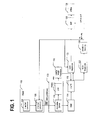
- FIG. 1 is a block diagram showing relevant processing modules in a cell comprising a PRogrammable Interference Suppression Module (PRISM) with an intra-cell cancellation module.
- PRISM PRogrammable Interference Suppression Module
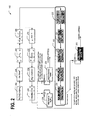
- FIG. 2 is a block diagram showing relevant processing modules for both inter-cell cancellation and intra-cell cancellation in the PRISM of FIG. 1 .
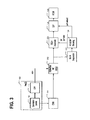
- FIG. 3 is a block diagram showing relevant processing modules in a cell that employs a variable-weight-based alpha-beta parallel interference cancellation (PIC) module.
- PIC parallel interference cancellation
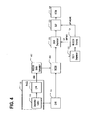
- FIG. 4 is a block diagram showing relevant processing modules in a cell that employs a successive interference cancellation (SIC) module.
- SIC successive interference cancellation
- FIG. 5 is a block diagram showing relevant processing modules in a cell that comprises a PIC module and a SIC module.
- FIG. 6 is a block diagram showing an example circuit for implementing the variable-weight-based alpha-beta iteration, as described with reference to FIG. 3 .
- FIG. 7 is a block diagram showing an example of a one-path clean high-speed downlink packet access (HSDPA) output, as described with reference to FIG. 3 .
- HSDPA high-speed downlink packet access
- FIG. 8 is a flowchart showing one embodiment of a method for suppressing interference signals.
- Wireless devices such as cellular devices (e.g., telephones, personal digital assistants (PDA), tablets, laptop computers, etc.), have become commonplace.
- cellular devices e.g., telephones, personal digital assistants (PDA), tablets, laptop computers, etc.
- PDA personal digital assistants
- Wireless networks increase correspondingly.
- processing demands in cells continue to increase. These processing demands include the ability of a particular cell to suppress noise or interference.
- PRISM PRogrammable Interference Suppression Modules
- the PRISM reference teaches various interference-suppression approaches. However, the focus of certain embodiments in the PRISM reference is on inter-cell interference suppression. For example, the PRISM reference teaches that, at a given rake finger, the interference signal energy from other base stations (or cells) degrades the desired signal and, hence, matrix-based algorithms are used to cancel or suppress those interference signals.
- intra-cell interference In addition to interference from other cells, the desired signal within a cell is also degraded by interference from within the same cell. This is referred to as intra-cell interference. Cancellation of intra-cell interference further improves the integrity of the desired signal.
- conventional interference-suppression approaches do not take into account intra-cell interferences upstream from the chip-level equalizer. Instead, the intra-cell interference continues to be a part of the signal and may only be later addressed (downstream) by the chip-level equalizer. Stated differently, conventional approaches focus on inter-cell interference suppression, and any intra-cell interference is suppressed downstream at the chip-level equalizer.
- this unaddressed interference adds a processing cost to the downstream chip-level equalizer. In view of this processing cost to the downstream chip-level equalizer, there is room for improvement.
- FIGS. 1 , 2 , and 8 show example approaches to intra-cell interference suppression that can be employed within PRISM by modifying a conventional PRISM to include an intra-cell interference suppression module. Indeed, the embodiments of FIGS. 1 and 2 are amenable to implementation in any wireless environment, including those that have inter-cell interference-suppression capabilities but leave intra-cell interference suppression for downstream processing.
- intra-cell interference suppression is accomplished by supplementing a pre-existing inter-cell cancellation (or suppression) module with an intra-cell cancellation (or suppression) module within the same PRISM, such that any inter-cell interference is cancelled by the pre-existing inter-cell suppression module, while the intra-cell interference is cancelled by the newly-added intra-cell suppression module.
- a dual-path structure one for inter-cell interference; another for intra-cell interference
- a higher-integrity signal emerges from the PRISM, thereby reducing the processing cost at the downstream equalizer.
- FIG. 1 is a block diagram showing relevant processing modules in a cell comprising a modified PRogrammable Interference Suppression Module (PRISM) 102 with an intra-cell cancellation module 106. While the cell comprises additional components, which are not shown in FIG. 1 , for purposes of more-clearly illustrating how the cell suppresses intra-cell interference, only relevant components within the cell are shown in FIG. 1 . In other words, only those components that aid in the understanding of the intra-cell interference suppression mechanism are shown in FIG. 1 . Thus, those having skill in the art will appreciate that the cell of FIG. 1 is not strictly limited to the components that are illustrated in FIG. 1 .
- PRISM PRogrammable Interference Suppression Module
- the cell comprises a feedback loop where the PRISM 102, which now comprises both an inter-cell cancellation module 104 (also referred to herein as inter-cell interference suppression module, or inter-cell suppression module) and an intra-cell cancellation module 106 (also referred to herein as intra-cell interference suppression module, or intra-cell suppression module), receives part of its input from a High-Speed (HS) Shared Control CHannel (SCCH) decoding module 124.
- the intra-cell suppression module 106 uses the feedback from the HS-SCCH decoding module 124 to suppress the intra-cell interference.
- Various components within the intra-cell interference suppression module 106 are shown in greater detail with reference to FIG. 2 , below.
- the PRISM 102 which comprises both the inter-cell cancellation module 104 and the intra-cell cancellation module 106, outputs a signal that comprises Common PIlot CHannel (CPICH) information, Shared Control CHannel (SCCH) information, and Downlink Shared CHannel (DSCH) information. That output signal is conveyed to a pre-equalization (pre-EQ) module 108, which comprises a decimation control unit 110 and a Cluster-Path-Processor (CPP) 112.
- pre-EQ pre-equalization
- the decimation control unit 110 controls the sampling timing and the CPP 112 performs channel estimation of consecutive half-chip-spaced or chip-spaced paths.
- the CPP 112 provides a CHannel ESTimate (ChEst) to a chip-level equalization (chipEQ) weight calculation module 116, which calculates appropriate weights for subsequent use. Additionally, the pre-EQ module 108 outputs to a Delay Match Module (DMM) 114, which is a memory responsible for matching the signal delay from the decimation control unit 110 so that the ChEst delay experienced as a result of the channel estimation filtering at the CPP 112 can be compensated.
- DDM Delay Match Module
- the delay matched signal from the DMM 114 and the weights from the chipEQ weight calculation module 116 are received at the chip-level equalization (chipEQ) module 118, which equalizes the signal and then passes that equalized signal to a DSCH despreader 120 and a SCCH despreader 122.
- chipEQ chip-level equalization
- the SCCH despreader 122 in conjunction with an HS-SCCH decoding module 124 decodes control channel information and generates the code allocation of HS-DSCH that is eventually fed back into the PRISM 102, where the intra-cell interference suppression module 106 uses the code allocation information to suppress the intra-cell interference.
- the output of the HS-SCCH decoding module 124 is also conveyed to the DSCH despreader 120, which performs HS-DSCH despreading using that information in conjunction with the equalized signal from the chipEQ 118.
- the DSCH despreader 120 and the HS-SCCH decoding module 124 both feed into a bit-level processor (BLP) 126, which processes the signal and passes it to a HSDPA Turbo Decoder Module (HTDM) 128.
- BLP bit-level processor
- HTDM HSDPA Turbo Decoder Module
- FIG. 2 is a block diagram showing relevant processing modules for both inter-cell cancellation and intra-cell cancellation in the PRISM 102 of FIG. 1 . Specifically, relevant components within the inter-cell cancellation module and relevant components within the intra-cell cancellation module 106 are shown in FIG. 2 .
- the PRISM 102 has a Wideband Code Division Multiple Access (WCDMA) per-path output and an High-Speed Downlink Packet Access (HSDPA) output where, in the HSDPA path, inter-cell interference is suppressed by the PRISM 102 and intra-cell interference is left for the equalizer to handle downstream.
- WCDMA Wideband Code Division Multiple Access
- HSDPA High-Speed Downlink Packet Access
- the estimated signal is: (a) reconstructed from the PRISM per-cell module; (b) fed into the subtraction module; and (c) subtracted from the R99 residue buffer 218.
- HSDPA residue buffer 220 comprises the signal that mirrors the R99 residue buffer 218, but with a specified rake finger output not cancelled from the HSDPA residue buffer 220.
- the HSDPA PRISM output is generated by interpolating the residue buffer output.
- the output of the weighting-and-addback module 208 is split and conveyed to both the conventional inter-cell reconstruction modules 210, 212, 214 and, also, to the intra-cell interference cancellation module 106.
- the user equipment knows the channel allocation of the HS-SCCH channel, which is signaled by the network. From the HS-SCCH channel, the UE receives channel allocation information of the HS-DSCH channels. Knowing that information, FIG. 2 shows one embodiment that permits removal of unwanted channels (or inter-cell interference) from the specified rake fingers.
- this split-path enables the PRISM 102 to perform both inter-cell interference suppression and intra-cell interference suppression, thereby alleviating some of the downstream processing of the equalizer.
- the components within the inter-cell cancellation module 104 include a per-cell combiner 202, a descrambler 204, a Fast Hadamard Transform (FHT) module 206 (also known as a Fast Walsh Transform module), a weighting-and-addback module 208, an Inverse Fast Hadamard Transform (IFHT) module 210, a scrambler 212, a channel rotation module 214, an interpolation filter 216, an R99 residue buffer 218, and a HSDPA residue buffer 220.
- FHT Fast Hadamard Transform
- IFHT Inverse Fast Hadamard Transform
- the per cell combiner 202 provides the channel information (designated as a function, H), the descrambler 204 provides the scrambling information (designated as a function, S), and the FHT module 206 provides the orthogonal variable spreading factor (OVSF) information (designated as a function, C).
- H channel
- S scrambling
- C orthogonal variable spreading factor
- R H rough estimate of a symbol
- the weighting-and-addback module 208 provides an estimate of a current symbol by providing the appropriate weighting and adding back the corresponding signal components.
- R is provided to the interpolation filter 216 for eventual use by the R99 residue buffer 218 and the HSDPA residue buffer 220 for inter-cell interference suppression.
- the components within the intra-cell cancellation module 106 include a code gate 222, which gates out the CPICH, DSCH, and SCCH information.
- the code gate 222 gates out the information from the particular rake finger of interest so that the interference reconstruction process does not consider the signal-of-interest to be an interference signal.
- the intra-cell interference suppression pathway removes all unrelated HSDPA channels from the HSDPA residue buffer 232. Thereafter, the per-finger signal is constructed and removed from the HSDPA residue buffer 232.
- the conventional inter-cell cancellation pathway is selected to remove all estimated interfering channels.
- the intra-cell pathway is selected to remove all estimated interfering channels that are identified as being intra-cell interference.
- This dual-pathway within the PRISM 102 allows for removal of both inter-cell interference and intra-cell interference prior to equalization.
- suppression of intra-cell interference results in a higher-integrity signal emerging from the PRISM 102 (or other similar processing module), thereby reducing the downstream processing cost at the equalizer.
- FIG. 8 shows a flowchart of one embodiment of a method for suppressing interference upstream of a chip-level equalizer.
- this embodiment of the process comprises the steps of receiving 802 intra-cell interference signals for a specified rake finger, and receiving 804 inter-cell interference signals.
- the inter-cell interference signals are substantially uncorrelated to the specified rake finger.
- the process Upon receiving 802, 804 the interference signals, the process then suppresses 806 the intra-cell interference signals before it reaches a chip-level equalizer. In other words, the intra-cell interference signals are suppressed upstream of the chip-level equalizer. Additionally, the process suppresses 808 the inter-cell interference signals at a point that is upstream of the chip-level equalizer.
- FIGS. 3 through 5 show various approaches that seek to address these shortcomings.
- the embodiment of FIG. 3 comprises a predetermined alpha-beta sequence that improves convergence.
- the alpha-beta sequence implemented in the embodiment of FIG. 3 provides a simpler approach in which different weighting factors are applied at different iterations of the channel-signal-estimation process.
- the embodiment of FIG. 3 is less susceptible to the non-convergence issues associated with traditional Jacobi-based approaches.
- Eq. 4 the symbol estimation for each iteration as being represented by Eq. 4.
- ⁇ n represents a weighting factor that is applied on an estimated signal
- ⁇ n represents a weighting factor that is applied on a feedback signal.
- the weighting-and-addback blocks output either unweighted soft symbols or interference soft symbols weighted by the alpha-beta function. It should be appreciated that, at the start of the iteration for a 256-chip system, the first 256-chip Hadamard transform output is inherited from the second 256-chip Hadamard transform output that was performed in the previous 256 chips. And, the interference power and nose estimates are calculated once per 256 chip period at the end of the iteration.
- the weight-factor, w can be defined as a relatively small number at the beginning of the determinations (e.g., calculations), and gradually increased with each subsequent iteration.
- w may be defined for each iteration as ⁇ 0.125, 0.25, 0.5, 0.75, 0.75, 0.75, 0.75, 0.75, 0.75 ⁇ .
- FIG. 7 A preferred embodiment of a circuit that produces a one-path clean output is shown with reference to FIG. 7 . Insofar as one having ordinary skill in the art will understand the operation of the circuit in FIG. 7 , a detailed explanation of FIG. 7 is omitted herein.
- FIG. 3 shows a block diagram with relevant processing modules in a cell that employs a variable-weight-based alpha-beta approach using a parallel interference cancellation (PIC) module 302.
- PIC parallel interference cancellation
- the ChEst output from the pre-EQ 108 is obtained from consecutive chip-spaced (or half-chip-spaced) fingers (or taps), which are provided by the CPP 112.
- FIG. 3 includes various components (Pre-EQ 108, decimation control module 110, CPP 112, DMM 114, DSCH despreader 120, SCCH despreader 122, HS-SCCH decoding module 124, BLP module 126, and HTDM module 128) that have already been described with reference to FIG. 1 . As such, a detailed description of those particular components is omitted with reference to FIG. 3 .
- the embodiment of FIG. 3 includes an alpha-beta PIC module 302.
- the alpha-beta PIC module 302 receives the ChEst from the CPP 112 and performs the iterative-variable-weight calculations of ⁇ n and ⁇ n , as set forth in Eqs. 7, 8, 9, 10, and 11.
- a non-limiting example circuit for implementing the alpha-beta weighting is shown with reference to FIG. 6 .
- the variable alpha is applied on the recursive calculations of the estimated signal
- the variable beta is applied on the recursive calculations of the feedback signal.
- the eight recursive calculations allow for a cleaner one-path output for the HSDPA pathway.
- FIGS. 3 , 6 , and 7 provide for better convergence than conventional Jacobi-based iterations. Additionally, to the extent that ⁇ n and ⁇ n are not based on eigenvalue decomposition and complicated optimization processes, the embodiments of FIGS. 3 , 6 , and 7 enable a more streamlined approach to symbol estimation and interference cancellation.
- the PIC module 302 in FIG. 3 shows it as a unit that handles 256 chips, it should be appreciated that the PIC module 302 can be configured for any number of chips, preferably (for computational purposes) a number that is 2 n .
- This Gauss-Seidel approach can be implemented in a successive interference cancellation (SIC) module, such as that shown in FIG. 4 .
- SIC successive interference cancellation
- FIG. 4 also includes various components (Pre-EQ 108, decimation control module 110, CPP 112, DMM 114, DSCH despreader 120, SCCH despreader 122, HS-SCCH decoding module 124, BLP module 126, and HTDM module 128) that have already been described with reference to FIG. 1 . As such, a detailed description of those particular components is omitted with reference to FIG. 4 .
- the embodiment of FIG. 4 comprises a multi-user detection (MUD) matrix formulation module 402 that is operatively coupled to a serial interference cancellation (SIC) module 404.
- the MUD matrix formulation module 402 receives the ChEst from the CPP 112 and provides a matrix of channels to the SIC module 404.
- the SIC module 404 recursively performs the Gauss-Seidel iterations of Eqs. 12, 13, and 14 on the received matrix until it converges to a solution.
- the input matrix is positive-definite-Hermitian-symmetric, the SIC module 404 will always converge, unlike the conventional Jacobi-based iterations.
- MUD matrix formulation module 402 and the SIC module 404 in FIG. 4 show them as being configured for 256 chips, it should be appreciated that, similar to the PIC module 302 of FIG. 3 , these modules 402, 404 can be configured for any number of chips, preferably (for computational purposes) a number that is 2 n .
- FIG. 5 shows relevant processing modules in a cell that employs a hybrid (PIC+SIC) approach.
- FIG. 5 includes components that have already been discussed, above (e.g., Pre-EQ 108, decimation control module 110, CPP 112, DMM 114, SCCH despreader 122, HS-SCCH decoding module 124, BLP module 126, and HTDM module 128). As such, a detailed description of those particular components is omitted with reference to FIG. 5 .
- the embodiment of FIG. 5 includes an alpha-beta-weighted PIC module 502, a MUD matrix formulation module 504, and an SIC module 506. Unlike the PIC module 302 of FIG. 3 , the PIC module 502 of FIG. 5 provides a dual output, namely, one for CPICH and DSCH and another for SCCH.
- the CPP 112 provides the ChEst to the MUD matrix formulation module 504.
- the MUD matrix formulation module 504 of FIG. 5 is unlike the MUD matrix formulation module 402 of FIG. 4 .
- the MUD matrix formulation module 504 of FIG. 5 is configured as a 16-chip module, as compared to the 256-chip module 402 of FIG. 4 .
- the hybrid approach of FIG. 5 allows alpha-beta PIC module 502 to provide an initial calculation of the symbol estimate, and then uses the SIC module 506 to guarantee convergence.
- the hybrid approach finds a balance between the weighted alpha-beta approach of FIG. 3 and the guaranteed-convergence approach of FIG. 4 .
- the alpha-beta PIC module 502 has two outputs, namely: (a) one output for the control channel (e.g., SCCH); and (b) another output for the data channel (e.g., CPICH and DSCH).
- the SCCH output follows the SCCH pathway, including the SCCH despreader 122 and the HS-HS-SCCH decoding module 124.
- the CPICH and DSCH output provides the data, which has been processed by the PIC module 502, to the SIC module 506 so that the SIC module 506 can complete the interference cancellation using the Gauss-Seidel iterations.
- the various processing modules may be implemented in hardware, software, firmware, or a combination thereof.
- the processing modules are implemented in hardware using any or a combination of the following technologies, which are all well known in the art: a discrete logic circuit(s) having logic gates for implementing logic functions upon data signals, an application specific integrated circuit (ASIC) having appropriate combinational logic gates, a programmable gate array(s) (PGA), a field programmable gate array (FPGA), a digital signal processor (DSP), a vector computing unit, etc.
- the processing modules are implemented in software or firmware that is stored in a memory and that is executed by a suitable instruction execution system.
- each of the processing modules can be embodied in any non-transient computer-readable medium for use by or in connection with an instruction execution system, apparatus, or device, such as a computer-based system, processor-containing system, or other system that can fetch the instructions from the instruction execution system, apparatus, or device and execute the instructions.
- an instruction execution system apparatus, or device
- a "computer-readable medium” can be any means that can contain, store, communicate, propagate, or transport the program for use by or in connection with the instruction execution system, apparatus, or device.
- the computer-readable medium can be, for example but not limited to, an electronic, magnetic, optical, electromagnetic, infrared, or semiconductor system, apparatus, device, or propagation medium. More specific examples (a nonexhaustive list) of the computer-readable medium would include the following: an electrical connection (electronic) having one or more wires, a portable computer diskette (magnetic), a random access memory (RAM) (electronic), a read-only memory (ROM) (electronic), an erasable programmable read-only memory (EPROM or Flash memory) (electronic), an optical fiber (optical), and a portable compact disc read-only memory (CDROM) (optical).
- an electrical connection having one or more wires
- a portable computer diskette magnetic
- RAM random access memory
- ROM read-only memory
- EPROM or Flash memory erasable programmable read-only memory
- CDROM portable compact disc read-only memory
Landscapes
- Engineering & Computer Science (AREA)
- Computer Networks & Wireless Communication (AREA)
- Signal Processing (AREA)
- Noise Elimination (AREA)
Abstract
Description
- This application incorporates by reference in its entirety:
-
U.S. Patent Application Number 12/582,771 - U.S. Patent Application [Docket Number BU24719; TKHR 050229-4090], having the title "Suppressing Intra-Cell Interference," by Kuo, et al., and filed [concurrently with this application].
- The present disclosure relates generally to signal processing and, more particularly, to interference suppression.
- Wireless devices have become ubiquitous. As the number of wireless users and as the number of wireless applications increase, the demands on wireless networks increase correspondingly. Due to the demands on these networks, there are ongoing efforts to enhance performance.
- According to an aspect, a system is provided for suppressing interference, comprising:
- an interference suppression module configured to iteratively determine an estimated interference;
- a first circuit configured to apply a first weight to an estimated signal at each iteration, wherein the first weight is non-constant over all iterations; and
- a second circuit configured to apply a second weight to a feedback signal at each iteration, wherein the second weight is non-constant over all iterations.
- α n is the first weight;
- β n is the second weight;
- bn represents the estimated signal at a prior iteration;
- b n+1 represents the estimated signal at a current iteration;
- y represents a vector of received chip-level signals; and
- R and RH represent matrices that provide an estimate of a symbol.
- w is a variable scaling factor that is non-constant for each iteration, w being bounded to the range of [0, 1];
- σ represents an estimate of noise; and
- S represents an estimate of signal power.
- a multi-user detection (MUD) matrix formulation module configured to receive a channel estimate and produce a matrix of channels; and
- a successive interference cancellation (SIC) module configured to receive the matrix of channels, wherein the SIC module is further configured to iteratively determine an estimated interference, wherein the estimated interference is determined based on a Gauss-Seidel iteration.
- bn represents the estimated signal at a prior iteration;
- b n+1 represents the estimated signal at a current iteration;
- y represents a vector of received chip-level signals; and
- RH represents a matrix that provides an estimate of a symbol;
- L represents a lower triangular matrix of C;
- C represents a matrix that is to be inverted in a symbol-level equalization process; and
- U represents a strictly upper triangular matrix of C.
- an alpha-beta parallel interference cancellation (PIC) module configured to provide an initial estimate of interference; and
- a Gauss-Seidel successive interference cancellation (SIC) module configured to receive the initial estimate of the interference from the alpha-beta PIC module and determine a final estimate of the interference.
- α n is the first weight;
- β n is the second weight;
- bn represents the estimated signal at a prior iteration;
- b n+1 represents the estimated signal at a current iteration;
- y represents a vector of received chip-level signals; and
- R and RH represent matrices that provide an estimate of a symbol.
- w is a variable scaling factor that is non-constant for each iteration, w being bounded to the range of [0, 1];
- σ represents an estimate of noise; and
- S represents an estimate of signal power.
- a first circuit configured to apply a first weight to an estimated signal at each iteration, wherein the first weight is non-constant over all iterations; and
- a second circuit configured to apply a second weight to a feedback signal at each iteration, wherein the second weight is non-constant over all iterations.
- bn represents the estimated signal at a prior iteration;
- b n+1 represents the estimated signal at a current iteration;
- y represents a vector of received chip-level signals; and
- RH represents a matrix that provides an estimate of a symbol;
- L represents a lower triangular matrix of C;
- C represents a matrix that is to be inverted in a symbol-level equalization process; and
- U represents a strictly upper triangular matrix of C.
- Many aspects of the disclosure can be better understood with reference to the following drawings. The components in the drawings are not necessarily to scale, emphasis instead being placed upon clearly illustrating the principles of the present disclosure. Moreover, in the drawings, like reference numerals designate corresponding parts throughout the several views.
-
FIG. 1 is a block diagram showing relevant processing modules in a cell comprising a PRogrammable Interference Suppression Module (PRISM) with an intra-cell cancellation module. -
FIG. 2 is a block diagram showing relevant processing modules for both inter-cell cancellation and intra-cell cancellation in the PRISM ofFIG. 1 . -
FIG. 3 is a block diagram showing relevant processing modules in a cell that employs a variable-weight-based alpha-beta parallel interference cancellation (PIC) module. -
FIG. 4 is a block diagram showing relevant processing modules in a cell that employs a successive interference cancellation (SIC) module. -
FIG. 5 is a block diagram showing relevant processing modules in a cell that comprises a PIC module and a SIC module. -
FIG. 6 is a block diagram showing an example circuit for implementing the variable-weight-based alpha-beta iteration, as described with reference toFIG. 3 . -
FIG. 7 is a block diagram showing an example of a one-path clean high-speed downlink packet access (HSDPA) output, as described with reference toFIG. 3 . -
FIG. 8 is a flowchart showing one embodiment of a method for suppressing interference signals. - Wireless devices, such as cellular devices (e.g., telephones, personal digital assistants (PDA), tablets, laptop computers, etc.), have become commonplace. As the number of wireless users and the number of wireless applications increase, the demands on wireless networks increase correspondingly. Specifically, for cellular devices, the processing demands in cells continue to increase. These processing demands include the ability of a particular cell to suppress noise or interference.
- Currently, there exist devices that suppress or cancel interference in a cell. These devices include, for example, PRogrammable Interference Suppression Modules (PRISM) by Broadcom Corp., which are disclosed in
U.S. Patent Application Number 12/582,771 - Since interference suppression is important, and since signal processing associated with interference suppression is not trivial, there are ongoing efforts to improve both the hardware architecture for interference suppression, as well as ongoing efforts to improve the interference-suppression processes. This disclosure is directed to various embodiments of modules and processes that improve interference suppression.
- With that said, reference is now made in detail to the description of the embodiments as illustrated in the drawings. While several embodiments are described in connection with these drawings, there is no intent to limit the disclosure to the embodiment or embodiments disclosed herein. On the contrary, the intent is to cover all alternatives, modifications, and equivalents.
- The PRISM reference teaches various interference-suppression approaches. However, the focus of certain embodiments in the PRISM reference is on inter-cell interference suppression. For example, the PRISM reference teaches that, at a given rake finger, the interference signal energy from other base stations (or cells) degrades the desired signal and, hence, matrix-based algorithms are used to cancel or suppress those interference signals.
- Unfortunately, in addition to interference from other cells, the desired signal within a cell is also degraded by interference from within the same cell. This is referred to as intra-cell interference. Cancellation of intra-cell interference further improves the integrity of the desired signal. However, conventional interference-suppression approaches do not take into account intra-cell interferences upstream from the chip-level equalizer. Instead, the intra-cell interference continues to be a part of the signal and may only be later addressed (downstream) by the chip-level equalizer. Stated differently, conventional approaches focus on inter-cell interference suppression, and any intra-cell interference is suppressed downstream at the chip-level equalizer.
- To the extent that the intra-cell interference remains unaddressed until the downstream chip-level equalizer, this unaddressed interference adds a processing cost to the downstream chip-level equalizer. In view of this processing cost to the downstream chip-level equalizer, there is room for improvement.
- The embodiments of
FIGS. 1 ,2 , and8 show example approaches to intra-cell interference suppression that can be employed within PRISM by modifying a conventional PRISM to include an intra-cell interference suppression module. Indeed, the embodiments ofFIGS. 1 and2 are amenable to implementation in any wireless environment, including those that have inter-cell interference-suppression capabilities but leave intra-cell interference suppression for downstream processing. - Briefly, in certain embodiments, intra-cell interference suppression is accomplished by supplementing a pre-existing inter-cell cancellation (or suppression) module with an intra-cell cancellation (or suppression) module within the same PRISM, such that any inter-cell interference is cancelled by the pre-existing inter-cell suppression module, while the intra-cell interference is cancelled by the newly-added intra-cell suppression module. By implementing a dual-path structure (one for inter-cell interference; another for intra-cell interference), a higher-integrity signal emerges from the PRISM, thereby reducing the processing cost at the downstream equalizer.
-
FIG. 1 is a block diagram showing relevant processing modules in a cell comprising a modified PRogrammable Interference Suppression Module (PRISM) 102 with anintra-cell cancellation module 106. While the cell comprises additional components, which are not shown inFIG. 1 , for purposes of more-clearly illustrating how the cell suppresses intra-cell interference, only relevant components within the cell are shown inFIG. 1 . In other words, only those components that aid in the understanding of the intra-cell interference suppression mechanism are shown inFIG. 1 . Thus, those having skill in the art will appreciate that the cell ofFIG. 1 is not strictly limited to the components that are illustrated inFIG. 1 . - As shown in
FIG. 1 , the cell comprises a feedback loop where thePRISM 102, which now comprises both an inter-cell cancellation module 104 (also referred to herein as inter-cell interference suppression module, or inter-cell suppression module) and an intra-cell cancellation module 106 (also referred to herein as intra-cell interference suppression module, or intra-cell suppression module), receives part of its input from a High-Speed (HS) Shared Control CHannel (SCCH)decoding module 124. Theintra-cell suppression module 106 uses the feedback from the HS-SCCH decoding module 124 to suppress the intra-cell interference. Various components within the intra-cellinterference suppression module 106 are shown in greater detail with reference toFIG. 2 , below. - Continuing with
FIG. 1 , thePRISM 102, which comprises both theinter-cell cancellation module 104 and theintra-cell cancellation module 106, outputs a signal that comprises Common PIlot CHannel (CPICH) information, Shared Control CHannel (SCCH) information, and Downlink Shared CHannel (DSCH) information. That output signal is conveyed to a pre-equalization (pre-EQ)module 108, which comprises adecimation control unit 110 and a Cluster-Path-Processor (CPP) 112. Thedecimation control unit 110 controls the sampling timing and theCPP 112 performs channel estimation of consecutive half-chip-spaced or chip-spaced paths. TheCPP 112 provides a CHannel ESTimate (ChEst) to a chip-level equalization (chipEQ)weight calculation module 116, which calculates appropriate weights for subsequent use. Additionally, thepre-EQ module 108 outputs to a Delay Match Module (DMM) 114, which is a memory responsible for matching the signal delay from thedecimation control unit 110 so that the ChEst delay experienced as a result of the channel estimation filtering at theCPP 112 can be compensated. The delay matched signal from theDMM 114 and the weights from the chipEQweight calculation module 116 are received at the chip-level equalization (chipEQ)module 118, which equalizes the signal and then passes that equalized signal to aDSCH despreader 120 and aSCCH despreader 122. - The SCCH despreader 122 in conjunction with an HS-
SCCH decoding module 124 decodes control channel information and generates the code allocation of HS-DSCH that is eventually fed back into thePRISM 102, where the intra-cellinterference suppression module 106 uses the code allocation information to suppress the intra-cell interference. - The output of the HS-
SCCH decoding module 124 is also conveyed to theDSCH despreader 120, which performs HS-DSCH despreading using that information in conjunction with the equalized signal from thechipEQ 118. The DSCH despreader 120 and the HS-SCCH decoding module 124 both feed into a bit-level processor (BLP) 126, which processes the signal and passes it to a HSDPA Turbo Decoder Module (HTDM) 128. As one can see fromFIG. 1 , by installing anintra-cell cancellation module 106 within thePRISM 102, the cell can perform intra-cell interference suppression before the equalization stage, thereby reducing downstream processing costs. -
FIG. 2 is a block diagram showing relevant processing modules for both inter-cell cancellation and intra-cell cancellation in thePRISM 102 ofFIG. 1 . Specifically, relevant components within the inter-cell cancellation module and relevant components within theintra-cell cancellation module 106 are shown inFIG. 2 . - As noted above, in conventional cells, the
PRISM 102 has a Wideband Code Division Multiple Access (WCDMA) per-path output and an High-Speed Downlink Packet Access (HSDPA) output where, in the HSDPA path, inter-cell interference is suppressed by thePRISM 102 and intra-cell interference is left for the equalizer to handle downstream. Thus, during conventional PRISM iterations, the estimated signal is: (a) reconstructed from the PRISM per-cell module; (b) fed into the subtraction module; and (c) subtracted from theR99 residue buffer 218. Conventionally,HSDPA residue buffer 220 comprises the signal that mirrors theR99 residue buffer 218, but with a specified rake finger output not cancelled from theHSDPA residue buffer 220. At the end of the conventional PRISM operation, the HSDPA PRISM output is generated by interpolating the residue buffer output. - Unlike these conventional approaches, in the embodiment of
FIG. 2 , the output of the weighting-and-addback module 208 is split and conveyed to both the conventionalinter-cell reconstruction modules interference cancellation module 106. By way of explanation, in HSDPA, the user equipment (UE) knows the channel allocation of the HS-SCCH channel, which is signaled by the network. From the HS-SCCH channel, the UE receives channel allocation information of the HS-DSCH channels. Knowing that information,FIG. 2 shows one embodiment that permits removal of unwanted channels (or inter-cell interference) from the specified rake fingers. - As shown in the embodiment of
FIG. 2 , this split-path enables thePRISM 102 to perform both inter-cell interference suppression and intra-cell interference suppression, thereby alleviating some of the downstream processing of the equalizer. - The components within the
inter-cell cancellation module 104 include a per-cell combiner 202, adescrambler 204, a Fast Hadamard Transform (FHT) module 206 (also known as a Fast Walsh Transform module), a weighting-and-addback module 208, an Inverse Fast Hadamard Transform (IFHT)module 210, ascrambler 212, achannel rotation module 214, aninterpolation filter 216, anR99 residue buffer 218, and aHSDPA residue buffer 220. It should be noted that while a FHT is used for illustrative purposes, other types of transforms can be readily substituted for the FHT and the IFHT, depending on the communications protocols. - Explaining example operations in terms of the components within
FIG. 2 , the percell combiner 202 provides the channel information (designated as a function, H), thedescrambler 204 provides the scrambling information (designated as a function, S), and theFHT module 206 provides the orthogonal variable spreading factor (OVSF) information (designated as a function, C). Together the H (channel) S (scrambling) C (OVSF) provides a rough estimate of a symbol, designated as RH. The weighting-and-addback module 208 provides an estimate of a current symbol by providing the appropriate weighting and adding back the corresponding signal components. - Continuing, the inter-cell interference suppression pathway comprises the
IFHT module 210, thescrambler 212, and the channel rotation module 214 (which performs the inverse functions of theFHT module 206, thedescrambler 204, and the per-cell combiner 202, respectively) to reconstruct the signal, R = HSC. R is provided to theinterpolation filter 216 for eventual use by theR99 residue buffer 218 and theHSDPA residue buffer 220 for inter-cell interference suppression. - The components within the
intra-cell cancellation module 106 include acode gate 222, which gates out the CPICH, DSCH, and SCCH information. In other words, thecode gate 222 gates out the information from the particular rake finger of interest so that the interference reconstruction process does not consider the signal-of-interest to be an interference signal. Upon code-gating, theIFHT 224 module, thescrambler 226, and thechannel rotation module 228, in combination, reconstruct the symbol, R = HSC, for the intra-cell interference, and thereafter theinterpolation filter 230 provides an estimate of the intra-cell interference signal. - Speaking generally, the intra-cell interference suppression pathway removes all unrelated HSDPA channels from the
HSDPA residue buffer 232. Thereafter, the per-finger signal is constructed and removed from theHSDPA residue buffer 232. For the fingers from interfering cells, or from serving cells that are outside of the equalization window, the conventional inter-cell cancellation pathway is selected to remove all estimated interfering channels. Conversely, the intra-cell pathway is selected to remove all estimated interfering channels that are identified as being intra-cell interference. - This dual-pathway within the
PRISM 102 allows for removal of both inter-cell interference and intra-cell interference prior to equalization. Thus, as one can see from the embodiments ofFIGS. 1 and2 , suppression of intra-cell interference results in a higher-integrity signal emerging from the PRISM 102 (or other similar processing module), thereby reducing the downstream processing cost at the equalizer. - For clarity, reference is made to
FIG. 8 , which shows a flowchart of one embodiment of a method for suppressing interference upstream of a chip-level equalizer. As shown inFIG. 8 , this embodiment of the process comprises the steps of receiving 802 intra-cell interference signals for a specified rake finger, and receiving 804 inter-cell interference signals. For some embodiments, the inter-cell interference signals are substantially uncorrelated to the specified rake finger. Upon receiving 802, 804 the interference signals, the process then suppresses 806 the intra-cell interference signals before it reaches a chip-level equalizer. In other words, the intra-cell interference signals are suppressed upstream of the chip-level equalizer. Additionally, the process suppresses 808 the inter-cell interference signals at a point that is upstream of the chip-level equalizer. - Another way that conventional devices can be refined is by improving the processes by which the interference is suppressed. Current approaches to interference suppression utilize complicated matrix-based approaches. For example, the approaches described in the PRISM reference utilize Jacobi-based iterations to invert matrices. Specifically, those conventional approaches solve for a minimum mean-square-error (MMSE) for the equation:

where RH and R are functions of HSC (as noted above with reference toFIG. 2 ), A represents a diagonal matrix with diagonal entries as amplitude of the transmitted symbol, y represents a vector of received chip-level signals, b̂ represents the detected symbol, and σ2 represents the noise variance. - The Jacobi-based iterations are represented by:

where:
which can be re-written as:
If the residue buffer is initialized by y, then:
where r represents the vector of the residue buffer. From Eq. 5, the recursive values for b are shown to be:
- Unfortunately, with the Jacobi-based approaches, the matrix is not strictly diagonal-dominated. Hence, the matrix-inversion operation may not properly converge.
- Some have proposed that the shortcomings surrounding convergence can be mitigated by employing an alpha-beta sequence that is based on an eigenvalue decomposition followed by a complicated optimization process to determine the alpha-variable and the beta-variable. Unfortunately, the processing resources that are needed to perform these eigenvalue decompositions and complex optimizations are quite extensive.
- As such, there exists a need to simplify the processing and, also, to employ a process that is less susceptible to the shortcomings related to convergence.
FIGS. 3 through 5 show various approaches that seek to address these shortcomings. - As discussed above, traditional Jacobi-based iterations to solve for inverse matrices cannot guarantee convergence of the interference-suppression algorithm. The reason is because those approaches apply a constant weighting factor during all of the iterations in the signal-estimation process. The constant-weighting-factor approach does not guarantee convergence of the cancellation algorithm under various channel conditions. In other words, for particular channel conditions, the interference-suppression algorithm does not converge.
- To combat non-convergence, the embodiment of
FIG. 3 comprises a predetermined alpha-beta sequence that improves convergence. Unlike the complicated eigenvalue-based approaches proposed by others, the alpha-beta sequence implemented in the embodiment ofFIG. 3 provides a simpler approach in which different weighting factors are applied at different iterations of the channel-signal-estimation process. By applying variable weighting factors at the different iteration stages, the embodiment ofFIG. 3 is less susceptible to the non-convergence issues associated with traditional Jacobi-based approaches. - By way of comparison, the traditional Jacobi-based approach shows the symbol estimation for each iteration as being represented by Eq. 4. To avoid the possibility of an ill-defined matrix inversion, Eq. 4 can be re-written as an alpha-beta-weighted equation, such as:

where α n and β n are weighted variables that are non-constant during the iterations. - By way of example, designating σ to be an estimate of noise, S to be an estimate of signal power, and w to be a variable scaling factor, the weighting variables α n and β n can be defined as:


for


for
FIG. 6 . Insofar as one having ordinary skill in the art will understand the operation of the circuit inFIG. 6 , only a brief explanation ofFIG. 6 is provided herein. Specifically, outputs from the Hadamard transform (or Walsh transform), which comprise a noise estimate and an interference power estimate, are input to the weighting-and-addback blocks. The weighting-and-addback blocks output either unweighted soft symbols or interference soft symbols weighted by the alpha-beta function. It should be appreciated that, at the start of the iteration for a 256-chip system, the first 256-chip Hadamard transform output is inherited from the second 256-chip Hadamard transform output that was performed in the previous 256 chips. And, the interference power and nose estimates are calculated once per 256 chip period at the end of the iteration. - Continuing, in order to apply a non-constant weight during the iterations, the weight-factor, w, can be defined as a relatively small number at the beginning of the determinations (e.g., calculations), and gradually increased with each subsequent iteration. By way of example, in an eight-iteration calculation, w, may be defined for each iteration as {0.125, 0.25, 0.5, 0.75, 0.75, 0.75, 0.75, 0.75}. Such a variable-weight-based alpha-beta approach can provide convergence similar to a symbol-level equalizer, thereby largely removing the need for equalization after the
PRISM 102. This permits output of a clean signal to the HSDPA path. A preferred embodiment of a circuit that produces a one-path clean output is shown with reference toFIG. 7 . Insofar as one having ordinary skill in the art will understand the operation of the circuit inFIG. 7 , a detailed explanation ofFIG. 7 is omitted herein. - With that said, attention is turned to
FIG. 3 , which shows a block diagram with relevant processing modules in a cell that employs a variable-weight-based alpha-beta approach using a parallel interference cancellation (PIC)module 302. For the embodiment ofFIG. 3 , the ChEst output from thepre-EQ 108 is obtained from consecutive chip-spaced (or half-chip-spaced) fingers (or taps), which are provided by theCPP 112. -
FIG. 3 includes various components (Pre-EQ 108,decimation control module 110,CPP 112,DMM 114,DSCH despreader 120,SCCH despreader 122, HS-SCCH decoding module 124,BLP module 126, and HTDM module 128) that have already been described with reference toFIG. 1 . As such, a detailed description of those particular components is omitted with reference toFIG. 3 . - Unlike the embodiment of
FIG. 1 , the embodiment ofFIG. 3 includes an alpha-beta PIC module 302. In one embodiment, the alpha-beta PIC module 302 receives the ChEst from theCPP 112 and performs the iterative-variable-weight calculations of α n and β n , as set forth in Eqs. 7, 8, 9, 10, and 11. A non-limiting example circuit for implementing the alpha-beta weighting is shown with reference toFIG. 6 . As one can see fromFIG. 6 , the variable alpha is applied on the recursive calculations of the estimated signal, while the variable beta is applied on the recursive calculations of the feedback signal. Also, as can be seen from the particular embodiment ofFIG. 7 , the eight recursive calculations allow for a cleaner one-path output for the HSDPA pathway. - To the extent that α n and β n are non-constant for the iterations, the embodiments of
FIGS. 3 ,6 , and7 provide for better convergence than conventional Jacobi-based iterations. Additionally, to the extent that α n and β n are not based on eigenvalue decomposition and complicated optimization processes, the embodiments ofFIGS. 3 ,6 , and7 enable a more streamlined approach to symbol estimation and interference cancellation. - Although the particular embodiment of the
PIC module 302 inFIG. 3 shows it as a unit that handles 256 chips, it should be appreciated that thePIC module 302 can be configured for any number of chips, preferably (for computational purposes) a number that is 2n. - Another approach to solving the non-convergence issue is to employ Gauss-Seidel iterations in a successive interference suppression (SIC) module. To the extent that the signal matrix that is being inverted is positive-definite-Hermitian-symmetric, the Gauss-Seidel iteration always guarantees convergence. Specifically, as noted above, an MMSE algorithm is applied to Eq. 1. The quantity within the parenthesis of Eq. 1 can be defined as:

- Substituting Eq. 12 into Eq. 1, the channel estimation equation can be re-written as:

which is positive-definite-Hermitian-symmetric. Thus, employing a Gauss-Seidel iteration, Eq. 13 can be represented as:
where c represents the entries of matrix C. This Gauss-Seidel approach can be implemented in a successive interference cancellation (SIC) module, such as that shown inFIG. 4 . -
FIG. 4 also includes various components (Pre-EQ 108,decimation control module 110,CPP 112,DMM 114,DSCH despreader 120,SCCH despreader 122, HS-SCCH decoding module 124,BLP module 126, and HTDM module 128) that have already been described with reference toFIG. 1 . As such, a detailed description of those particular components is omitted with reference toFIG. 4 . - Unlike the embodiment of
FIG. 1 , however, the embodiment ofFIG. 4 comprises a multi-user detection (MUD)matrix formulation module 402 that is operatively coupled to a serial interference cancellation (SIC)module 404. The MUDmatrix formulation module 402 receives the ChEst from theCPP 112 and provides a matrix of channels to theSIC module 404. TheSIC module 404 recursively performs the Gauss-Seidel iterations of Eqs. 12, 13, and 14 on the received matrix until it converges to a solution. As discussed above, since the input matrix is positive-definite-Hermitian-symmetric, theSIC module 404 will always converge, unlike the conventional Jacobi-based iterations. - Although the particular embodiments of the MUD
matrix formulation module 402 and theSIC module 404 inFIG. 4 show them as being configured for 256 chips, it should be appreciated that, similar to thePIC module 302 ofFIG. 3 , thesemodules - Having described both an alpha-beta-based PIC approach (
FIGS. 3 ,6 , and7 ) and a Gauss-Seidel-based SIC approach (FIG. 4 ), attention is turned now toFIG. 5 , which shows relevant processing modules in a cell that employs a hybrid (PIC+SIC) approach. - Again, the embodiment of
FIG. 5 includes components that have already been discussed, above (e.g.,Pre-EQ 108,decimation control module 110,CPP 112,DMM 114,SCCH despreader 122, HS-SCCH decoding module 124,BLP module 126, and HTDM module 128). As such, a detailed description of those particular components is omitted with reference toFIG. 5 . - The embodiment of
FIG. 5 includes an alpha-beta-weighted PIC module 502, a MUDmatrix formulation module 504, and anSIC module 506. Unlike thePIC module 302 ofFIG. 3 , thePIC module 502 ofFIG. 5 provides a dual output, namely, one for CPICH and DSCH and another for SCCH. - In operation, the
CPP 112 provides the ChEst to the MUDmatrix formulation module 504. It should be noted that the MUDmatrix formulation module 504 ofFIG. 5 is unlike the MUDmatrix formulation module 402 ofFIG. 4 . Specifically, the MUDmatrix formulation module 504 ofFIG. 5 is configured as a 16-chip module, as compared to the 256-chip module 402 ofFIG. 4 . The reason being that the hybrid approach ofFIG. 5 allows alpha-beta PIC module 502 to provide an initial calculation of the symbol estimate, and then uses theSIC module 506 to guarantee convergence. As such, the hybrid approach finds a balance between the weighted alpha-beta approach ofFIG. 3 and the guaranteed-convergence approach ofFIG. 4 . - As noted above, the alpha-
beta PIC module 502 has two outputs, namely: (a) one output for the control channel (e.g., SCCH); and (b) another output for the data channel (e.g., CPICH and DSCH). The SCCH output follows the SCCH pathway, including the SCCH despreader 122 and the HS-HS-SCCH decoding module 124. The CPICH and DSCH output provides the data, which has been processed by thePIC module 502, to theSIC module 506 so that theSIC module 506 can complete the interference cancellation using the Gauss-Seidel iterations. To the extent that the alpha-beta estimation and the Gauss-Seidel estimation are described with reference toFIGS. 3 and4 , respectively, further discussion of those two approaches is omitted with reference toFIG. 5 . - As shown in
FIGS. 1 through 5 , conventional interference suppression approaches are improved through the addition of intra-cell interference suppression modules, and refinements in the signal-processing algorithms. These refinements allow for superior performance when compared to conventional interference-suppression devices. - The various processing modules (e.g., PRISM, intra-cell cancellation unit, code gate, etc.) disclosed herein may be implemented in hardware, software, firmware, or a combination thereof. In the preferred embodiment(s), the processing modules are implemented in hardware using any or a combination of the following technologies, which are all well known in the art: a discrete logic circuit(s) having logic gates for implementing logic functions upon data signals, an application specific integrated circuit (ASIC) having appropriate combinational logic gates, a programmable gate array(s) (PGA), a field programmable gate array (FPGA), a digital signal processor (DSP), a vector computing unit, etc. In an alternative embodiment, the processing modules are implemented in software or firmware that is stored in a memory and that is executed by a suitable instruction execution system.
- To the extent that the operation of various modules are represented by mathematical equations, it should be appreciated that those equations may be practically implemented in both software and hardware. In the event that the processing modules are implemented in software, which comprises an ordered listing of executable instructions for implementing logical functions, each of the processing modules can be embodied in any non-transient computer-readable medium for use by or in connection with an instruction execution system, apparatus, or device, such as a computer-based system, processor-containing system, or other system that can fetch the instructions from the instruction execution system, apparatus, or device and execute the instructions. In the context of this document, a "computer-readable medium" can be any means that can contain, store, communicate, propagate, or transport the program for use by or in connection with the instruction execution system, apparatus, or device. The computer-readable medium can be, for example but not limited to, an electronic, magnetic, optical, electromagnetic, infrared, or semiconductor system, apparatus, device, or propagation medium. More specific examples (a nonexhaustive list) of the computer-readable medium would include the following: an electrical connection (electronic) having one or more wires, a portable computer diskette (magnetic), a random access memory (RAM) (electronic), a read-only memory (ROM) (electronic), an erasable programmable read-only memory (EPROM or Flash memory) (electronic), an optical fiber (optical), and a portable compact disc read-only memory (CDROM) (optical).
- Although exemplary embodiments have been shown and described, it will be clear to those of ordinary skill in the art that a number of changes, modifications, or alterations to the disclosure as described may be made. For example, while specific algorithms are disclosed to better illustrate the inventive concepts, it should be appreciated that the invention is not limited to the particular equations. Instead, it should be appreciated that those specific equations are intended to illustrate the best mode for their corresponding embodiments. As such, one having skill in the art will appreciate that other similar equations can be used without deviating from the scope of the claims set forth herein. Also, while representative processing modules are illustrated in the drawings, it should be appreciated that the invention is not limited to the precise processing modules disclosed. Furthermore, for purposes of this disclosure, the phrase interference-suppression and interference-cancellation are used interchangeably, unless the context dictates otherwise. All such changes, modifications, and alterations should therefore be seen as within the scope of the disclosure.
Advantageously, the PIC module is configured to iteratively determine the estimated interference based on consecutive chip-spaced rake fingers.
Advantageously, the interference suppression module is further configured to iteratively determine the estimated interference based on:

wherein:


α n = 0 and β n = 0 for

wherein:
According to an aspect, a system is provided for suppressing interference, comprising:

wherein:

wherein c represents entries of C.
According to an aspect, a system for suppressing interference comprises:
Advantageously, the interference is inter-cell interference.
Advantageously, the PIC module is further configured to iteratively determine the initial estimate of the interference.
Advantageously, the SIC module is further configured to iteratively determine the final estimate of the interference.
Advantageously, the PIC module is further configured to iteratively determine estimated interference based on consecutive chip-spaced rake fingers.
Advantageously, the alpha-beta PIC module is configured to iteratively determine the estimated interference based on:

wherein:


α n = 0 and β n = 0 for

wherein:

wherein:

wherein c represents entries of C.
Claims (15)
- A system for suppressing interference, comprising:an interference suppression module configured to iteratively determine an estimated interference;a first circuit configured to apply a first weight to an estimated signal at each iteration, wherein the first weight is non-constant over all iterations; anda second circuit configured to apply a second weight to a feedback signal at each iteration, wherein the second weight is non-constant over all iterations.
- The system of claim 1, wherein the interference suppression module comprises a parallel interference cancellation (PIC) module.
- The system of claim 2, wherein the PIC module is configured to iteratively determine the estimated interference based on consecutive chip-spaced rake fingers.
- The system of any preceding claim, wherein the interference suppression module is further configured to iteratively determine the estimated interference based on:

wherein:α n is the first weight;β n is the second weight;bn represents the estimated signal at a prior iteration;b n+1 represents the estimated signal at a current iteration;y represents a vector of received chip-level signals; andR and RH represent matrices that provide an estimate of a symbol. - The system of claim 4, wherein:

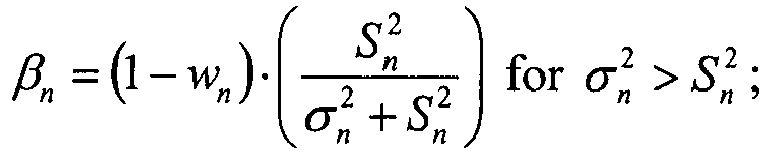
α n = 0 and β n = 0 for
wherein:w is a variable scaling factor that is non-constant for each iteration, w being bounded to the range of [0, 1];σ represents an estimate of noise; andS represents an estimate of signal power. - The system of claim 5, wherein w increases after the first iteration.
- A system for suppressing interference, comprising:a multi-user detection (MUD) matrix formulation module configured to receive a channel estimate and produce a matrix of channels; anda successive interference cancellation (SIC) module configured to receive the matrix of channels, wherein the SIC module is further configured to iteratively determine an estimated interference, wherein the estimated interference is determined based on a Gauss-Seidel iteration.
- The system of claim 7, wherein the SIC module is configured to estimate the interference based on:

wherein:bn represents the estimated signal at a prior iteration;b n+1 represents the estimated signal at a current iteration;y represents a vector of received chip-level signals; andRH represents a matrix that provides an estimate of a symbol;L represents a lower triangular matrix of C;C represents a matrix that is to be inverted in a symbol-level equalization process; andU represents a strictly upper triangular matrix of C. - The system of claim 8, wherein b n+1 is further determined based on:

wherein c represents entries of C. - A system for suppressing interference, comprising:an alpha-beta parallel interference cancellation (PIC) module configured to provide an initial estimate of interference; anda Gauss-Seidel successive interference cancellation (SIC) module configured to receive the initial estimate of the interference from the alpha-beta PIC module and determine a final estimate of the interference.
- The system of claim 10, wherein the interference is intra-cell interference.
- The system of claim 10 or 11, wherein the interference is inter-cell interference.
- The system of any of claims 10 to 12, wherein the PIC module is further configured to iteratively determine the initial estimate of the interference.
- The system of any of claims 10 to 13, wherein the SIC module is further configured to iteratively determine the final estimate of the interference.
- The system of any of claims 10 to 14, wherein the PIC module is further configured to iteratively determine estimated interference based on consecutive chip-spaced rake fingers.
Applications Claiming Priority (2)
| Application Number | Priority Date | Filing Date | Title |
|---|---|---|---|
| US201261618049P | 2012-03-30 | 2012-03-30 | |
| US13/560,095 US9042495B2 (en) | 2012-03-30 | 2012-07-27 | Convergence during interference suppression |
Publications (2)
| Publication Number | Publication Date |
|---|---|
| EP2645584A1 true EP2645584A1 (en) | 2013-10-02 |
| EP2645584B1 EP2645584B1 (en) | 2015-10-28 |
Family
ID=47891368
Family Applications (1)
| Application Number | Title | Priority Date | Filing Date |
|---|---|---|---|
| EP13001289.1A Active EP2645584B1 (en) | 2012-03-30 | 2013-03-14 | Improving Convergence during Interference Suppression |
Country Status (5)
| Country | Link |
|---|---|
| US (1) | US9042495B2 (en) |
| EP (1) | EP2645584B1 (en) |
| KR (1) | KR101454369B1 (en) |
| CN (1) | CN103368883A (en) |
| TW (1) | TWI485999B (en) |
Cited By (1)
| Publication number | Priority date | Publication date | Assignee | Title |
|---|---|---|---|---|
| CN118842679A (en) * | 2024-08-14 | 2024-10-25 | 哈尔滨工程大学 | Single-carrier underwater acoustic communication method and device under deep sea long-delay clustering channel |
Families Citing this family (1)
| Publication number | Priority date | Publication date | Assignee | Title |
|---|---|---|---|---|
| CN105099643B (en) * | 2015-08-18 | 2019-03-01 | 北京科技大学 | A method, antenna device and system for full-duplex wireless communication |
Family Cites Families (14)
| Publication number | Priority date | Publication date | Assignee | Title |
|---|---|---|---|---|
| SG84514A1 (en) * | 1998-08-31 | 2001-11-20 | Oki Techno Ct Singapore Pte | Receiving device and channel estimator for use in a cdma communication system |
| GB2384664B (en) * | 2002-01-25 | 2004-12-22 | Toshiba Res Europ Ltd | Receiver processing systems |
| GB2384660B (en) * | 2002-01-25 | 2004-11-17 | Toshiba Res Europ Ltd | Reciever processing systems |
| US7715508B2 (en) * | 2005-11-15 | 2010-05-11 | Tensorcomm, Incorporated | Iterative interference cancellation using mixed feedback weights and stabilizing step sizes |
| US7440490B2 (en) * | 2002-12-18 | 2008-10-21 | Anna Kidiyarova-Shevchenko | Method and apparatus for multi-user detection using RSFQ successive interference cancellation in CDMA wireless systems |
| US7260161B2 (en) * | 2002-12-24 | 2007-08-21 | Electronics And Telecommunications Research Institute | Hybrid multi-user interference cancellation method and device using clustering algorithm based on dynamic programming |
| US20070110135A1 (en) * | 2005-11-15 | 2007-05-17 | Tommy Guess | Iterative interference cancellation for MIMO-OFDM receivers |
| US8503591B2 (en) * | 2008-08-19 | 2013-08-06 | Qualcomm Incorporated | Enhanced geran receiver using channel input beamforming |
| TWI382672B (en) | 2009-07-16 | 2013-01-11 | Ind Tech Res Inst | Progressive parallel interference canceller and method thereof and receiver thereof |
| US8483265B2 (en) * | 2009-09-04 | 2013-07-09 | Hitachi, Ltd. | Generalized decision feedback equalizer precoder with input covariance matrix calculation for multi-user multiple-input multiple-output wireless transmission systems |
| KR101619164B1 (en) * | 2009-12-16 | 2016-05-10 | 삼성전자주식회사 | Method and apparatus for receiving minimum mean-squared-error in single-carrier frequency division multiple access system |
| CN102158312B (en) * | 2011-03-18 | 2013-06-26 | 西安电子科技大学 | Signal-space-alignment-based common-channel multi-user interference suppression method |
| US8665693B1 (en) * | 2011-08-18 | 2014-03-04 | Applied Micro Circuits Corporation | Uplink single carrier frequency division multiple access multiple-input multiple-output soft interference cancellation receiver |
| US8761323B2 (en) * | 2011-09-28 | 2014-06-24 | Telefonaktiebolaget Lm Ericsson (Publ) | Impairment covariance and combining weight updates during iterative turbo interference cancellation reception |
-
2012
- 2012-07-27 US US13/560,095 patent/US9042495B2/en active Active
-
2013
- 2013-03-13 TW TW102108878A patent/TWI485999B/en not_active IP Right Cessation
- 2013-03-14 EP EP13001289.1A patent/EP2645584B1/en active Active
- 2013-04-01 CN CN2013101116392A patent/CN103368883A/en active Pending
- 2013-04-01 KR KR1020130035297A patent/KR101454369B1/en active Active
Non-Patent Citations (2)
| Title |
|---|
| KAI YANG ET AL: "A novel approach for interference cancellation of DS-CDMA systems using projected successive overrelaxation algorithm", INFORMATION, COMMUNICATIONS AND SIGNAL PROCESSING, 2003 AND FOURTH PAC IFIC RIM CONFERENCE ON MULTIMEDIA. PROCEEDINGS OF THE 2003 JOINT CONFE RENCE OF THE FOURTH INTERNATIONAL CONFERENCE ON SINGAPORE 15-18 DEC. 2003, PISCATAWAY, NJ, USA,IEEE, vol. 1, 15 December 2003 (2003-12-15), pages 641 - 644, XP010701074, ISBN: 978-0-7803-8185-8 * |
| YONG FANG ET AL: "Improved linear multiuser detector for synchronous code-division multiple-access communication systems", EMERGING TECHNOLOGIES: FRONTIERS OF MOBILE AND WIRELESS COMMUNICATION, 2004. PROCEEDINGS OF THE IEEE 6TH CIRCUITS AND SYSTEMS SYMPOSIUM, PISCATAWAY, NJ, USA, IEEE, vol. 2, 31 May 2004 (2004-05-31), pages 787 - 790, XP010716166, ISBN: 978-0-7803-7938-1, DOI: 10.1109/CASSET.2004.1322007 * |
Cited By (1)
| Publication number | Priority date | Publication date | Assignee | Title |
|---|---|---|---|---|
| CN118842679A (en) * | 2024-08-14 | 2024-10-25 | 哈尔滨工程大学 | Single-carrier underwater acoustic communication method and device under deep sea long-delay clustering channel |
Also Published As
| Publication number | Publication date |
|---|---|
| EP2645584B1 (en) | 2015-10-28 |
| US20140029706A1 (en) | 2014-01-30 |
| KR101454369B1 (en) | 2014-10-23 |
| TWI485999B (en) | 2015-05-21 |
| CN103368883A (en) | 2013-10-23 |
| TW201340632A (en) | 2013-10-01 |
| KR20130111475A (en) | 2013-10-10 |
| US9042495B2 (en) | 2015-05-26 |
Similar Documents
| Publication | Publication Date | Title |
|---|---|---|
| US9008154B2 (en) | Method and system for blind interference cancellation in a wireless communication systems | |
| EP2742601B1 (en) | Multi-stage turbo equalization and interference cancellation receiver for wireless systems | |
| Buehrer et al. | Linear versus non-linear interference cancellation | |
| US8918054B2 (en) | Interference elimination method, interference elimination device, and communication system | |
| US20140098840A1 (en) | Method, Apparatus and Computer Program for Controlling a Receiver | |
| US8743930B2 (en) | Suppressing intra-cell interference | |
| CN102460987A (en) | Method and system for interference cancellation | |
| US8798119B2 (en) | Symbol-level code-specific joint detection for CDMA receivers | |
| US9042495B2 (en) | Convergence during interference suppression | |
| US8295329B2 (en) | Efficient computation of soft scaling factors for linear multi-user detector | |
| Xu et al. | Blind multiuser detection by kurtosis maximization/minimization | |
| HK1186856A (en) | Suppressing intra-cell interference | |
| HK1186866A (en) | Improving convergence during interference suppression | |
| Albataineh et al. | A Blind Adaptive CDMA Receiver Based on State Space Structures | |
| Al-Kamali et al. | Parallel interference cancellation and linear equalization for multirate downlink CDMA systems | |
| Sud | Performance Analysis ofROCSTAR'Algorithm for CDMA Forward Link Code Detection and Cancellation under Stressing Conditions | |
| CN103731383A (en) | Interference elimination method and device and receiver | |
| Mozaffaripour et al. | Low complex interference cancellation via modified suboptimum search algorithm and reduced rank linear detection for mobile uplink | |
| de Lamare et al. | Adaptive interference suppression for CDMA systems using interpolated FIR filters with adaptive interpolators in multipath channels | |
| Al-kamali et al. | Efficient implementation of downlink CDMA equalization using frequency domain approximation | |
| Belfanti et al. | Successive interference cancellation for 3G downlink: Algorithm and VLSI architecture | |
| Baştuğ et al. | Downlink WCDMA receivers based on combined chip and symbol level equalisation | |
| Al-Kamali et al. | An efficient receiver scheme for downlink ZP-CDMA | |
| Paleologu et al. | Fast Convergence Least-Mean-Square Algorithms for MMSE Receivers in DS-CDMA Systems |
Legal Events
| Date | Code | Title | Description |
|---|---|---|---|
| PUAI | Public reference made under article 153(3) epc to a published international application that has entered the european phase |
Free format text: ORIGINAL CODE: 0009012 |
|
| 17P | Request for examination filed |
Effective date: 20130314 |
|
| AK | Designated contracting states |
Kind code of ref document: A1 Designated state(s): AL AT BE BG CH CY CZ DE DK EE ES FI FR GB GR HR HU IE IS IT LI LT LU LV MC MK MT NL NO PL PT RO RS SE SI SK SM TR |
|
| AX | Request for extension of the european patent |
Extension state: BA ME |
|
| RBV | Designated contracting states (corrected) |
Designated state(s): AL AT BE BG CH CY CZ DE DK EE ES FI FR GB GR HR HU IE IS IT LI LT LU LV MC MK MT NL NO PL PT RO RS SE SI SK SM TR |
|
| GRAP | Despatch of communication of intention to grant a patent |
Free format text: ORIGINAL CODE: EPIDOSNIGR1 |
|
| RIC1 | Information provided on ipc code assigned before grant |
Ipc: H04B 1/7107 20110101ALI20150429BHEP Ipc: H04B 1/7105 20110101AFI20150429BHEP |
|
| INTG | Intention to grant announced |
Effective date: 20150521 |
|
| GRAS | Grant fee paid |
Free format text: ORIGINAL CODE: EPIDOSNIGR3 |
|
| GRAA | (expected) grant |
Free format text: ORIGINAL CODE: 0009210 |
|
| AK | Designated contracting states |
Kind code of ref document: B1 Designated state(s): AL AT BE BG CH CY CZ DE DK EE ES FI FR GB GR HR HU IE IS IT LI LT LU LV MC MK MT NL NO PL PT RO RS SE SI SK SM TR |
|
| REG | Reference to a national code |
Ref country code: GB Ref legal event code: FG4D |
|
| REG | Reference to a national code |
Ref country code: CH Ref legal event code: EP |
|
| REG | Reference to a national code |
Ref country code: AT Ref legal event code: REF Ref document number: 758413 Country of ref document: AT Kind code of ref document: T Effective date: 20151115 |
|
| REG | Reference to a national code |
Ref country code: IE Ref legal event code: FG4D |
|
| REG | Reference to a national code |
Ref country code: DE Ref legal event code: R096 Ref document number: 602013003606 Country of ref document: DE |
|
| REG | Reference to a national code |
Ref country code: LT Ref legal event code: MG4D |
|
| REG | Reference to a national code |
Ref country code: NL Ref legal event code: MP Effective date: 20151028 |
|
| REG | Reference to a national code |
Ref country code: AT Ref legal event code: MK05 Ref document number: 758413 Country of ref document: AT Kind code of ref document: T Effective date: 20151028 |
|
| REG | Reference to a national code |
Ref country code: FR Ref legal event code: PLFP Year of fee payment: 4 |
|
| PG25 | Lapsed in a contracting state [announced via postgrant information from national office to epo] |
Ref country code: IT Free format text: LAPSE BECAUSE OF FAILURE TO SUBMIT A TRANSLATION OF THE DESCRIPTION OR TO PAY THE FEE WITHIN THE PRESCRIBED TIME-LIMIT Effective date: 20151028 Ref country code: LT Free format text: LAPSE BECAUSE OF FAILURE TO SUBMIT A TRANSLATION OF THE DESCRIPTION OR TO PAY THE FEE WITHIN THE PRESCRIBED TIME-LIMIT Effective date: 20151028 Ref country code: NO Free format text: LAPSE BECAUSE OF FAILURE TO SUBMIT A TRANSLATION OF THE DESCRIPTION OR TO PAY THE FEE WITHIN THE PRESCRIBED TIME-LIMIT Effective date: 20160128 Ref country code: IS Free format text: LAPSE BECAUSE OF FAILURE TO SUBMIT A TRANSLATION OF THE DESCRIPTION OR TO PAY THE FEE WITHIN THE PRESCRIBED TIME-LIMIT Effective date: 20160228 Ref country code: ES Free format text: LAPSE BECAUSE OF FAILURE TO SUBMIT A TRANSLATION OF THE DESCRIPTION OR TO PAY THE FEE WITHIN THE PRESCRIBED TIME-LIMIT Effective date: 20151028 Ref country code: HR Free format text: LAPSE BECAUSE OF FAILURE TO SUBMIT A TRANSLATION OF THE DESCRIPTION OR TO PAY THE FEE WITHIN THE PRESCRIBED TIME-LIMIT Effective date: 20151028 Ref country code: NL Free format text: LAPSE BECAUSE OF FAILURE TO SUBMIT A TRANSLATION OF THE DESCRIPTION OR TO PAY THE FEE WITHIN THE PRESCRIBED TIME-LIMIT Effective date: 20151028 |
|
| PG25 | Lapsed in a contracting state [announced via postgrant information from national office to epo] |
Ref country code: LV Free format text: LAPSE BECAUSE OF FAILURE TO SUBMIT A TRANSLATION OF THE DESCRIPTION OR TO PAY THE FEE WITHIN THE PRESCRIBED TIME-LIMIT Effective date: 20151028 Ref country code: AT Free format text: LAPSE BECAUSE OF FAILURE TO SUBMIT A TRANSLATION OF THE DESCRIPTION OR TO PAY THE FEE WITHIN THE PRESCRIBED TIME-LIMIT Effective date: 20151028 Ref country code: GR Free format text: LAPSE BECAUSE OF FAILURE TO SUBMIT A TRANSLATION OF THE DESCRIPTION OR TO PAY THE FEE WITHIN THE PRESCRIBED TIME-LIMIT Effective date: 20160129 Ref country code: PT Free format text: LAPSE BECAUSE OF FAILURE TO SUBMIT A TRANSLATION OF THE DESCRIPTION OR TO PAY THE FEE WITHIN THE PRESCRIBED TIME-LIMIT Effective date: 20160229 Ref country code: RS Free format text: LAPSE BECAUSE OF FAILURE TO SUBMIT A TRANSLATION OF THE DESCRIPTION OR TO PAY THE FEE WITHIN THE PRESCRIBED TIME-LIMIT Effective date: 20151028 Ref country code: SE Free format text: LAPSE BECAUSE OF FAILURE TO SUBMIT A TRANSLATION OF THE DESCRIPTION OR TO PAY THE FEE WITHIN THE PRESCRIBED TIME-LIMIT Effective date: 20151028 Ref country code: PL Free format text: LAPSE BECAUSE OF FAILURE TO SUBMIT A TRANSLATION OF THE DESCRIPTION OR TO PAY THE FEE WITHIN THE PRESCRIBED TIME-LIMIT Effective date: 20151028 Ref country code: FI Free format text: LAPSE BECAUSE OF FAILURE TO SUBMIT A TRANSLATION OF THE DESCRIPTION OR TO PAY THE FEE WITHIN THE PRESCRIBED TIME-LIMIT Effective date: 20151028 |
|
| PG25 | Lapsed in a contracting state [announced via postgrant information from national office to epo] |
Ref country code: CZ Free format text: LAPSE BECAUSE OF FAILURE TO SUBMIT A TRANSLATION OF THE DESCRIPTION OR TO PAY THE FEE WITHIN THE PRESCRIBED TIME-LIMIT Effective date: 20151028 |
|
| PGFP | Annual fee paid to national office [announced via postgrant information from national office to epo] |
Ref country code: DE Payment date: 20160331 Year of fee payment: 4 |
|
| REG | Reference to a national code |
Ref country code: DE Ref legal event code: R097 Ref document number: 602013003606 Country of ref document: DE |
|
| PG25 | Lapsed in a contracting state [announced via postgrant information from national office to epo] |
Ref country code: DK Free format text: LAPSE BECAUSE OF FAILURE TO SUBMIT A TRANSLATION OF THE DESCRIPTION OR TO PAY THE FEE WITHIN THE PRESCRIBED TIME-LIMIT Effective date: 20151028 Ref country code: RO Free format text: LAPSE BECAUSE OF FAILURE TO SUBMIT A TRANSLATION OF THE DESCRIPTION OR TO PAY THE FEE WITHIN THE PRESCRIBED TIME-LIMIT Effective date: 20151028 Ref country code: SK Free format text: LAPSE BECAUSE OF FAILURE TO SUBMIT A TRANSLATION OF THE DESCRIPTION OR TO PAY THE FEE WITHIN THE PRESCRIBED TIME-LIMIT Effective date: 20151028 Ref country code: SM Free format text: LAPSE BECAUSE OF FAILURE TO SUBMIT A TRANSLATION OF THE DESCRIPTION OR TO PAY THE FEE WITHIN THE PRESCRIBED TIME-LIMIT Effective date: 20151028 Ref country code: BE Free format text: LAPSE BECAUSE OF NON-PAYMENT OF DUE FEES Effective date: 20160331 Ref country code: EE Free format text: LAPSE BECAUSE OF FAILURE TO SUBMIT A TRANSLATION OF THE DESCRIPTION OR TO PAY THE FEE WITHIN THE PRESCRIBED TIME-LIMIT Effective date: 20151028 |
|
| PLBE | No opposition filed within time limit |
Free format text: ORIGINAL CODE: 0009261 |
|
| STAA | Information on the status of an ep patent application or granted ep patent |
Free format text: STATUS: NO OPPOSITION FILED WITHIN TIME LIMIT |
|
| 26N | No opposition filed |
Effective date: 20160729 |
|
| PG25 | Lapsed in a contracting state [announced via postgrant information from national office to epo] |
Ref country code: LU Free format text: LAPSE BECAUSE OF FAILURE TO SUBMIT A TRANSLATION OF THE DESCRIPTION OR TO PAY THE FEE WITHIN THE PRESCRIBED TIME-LIMIT Effective date: 20160314 Ref country code: MC Free format text: LAPSE BECAUSE OF FAILURE TO SUBMIT A TRANSLATION OF THE DESCRIPTION OR TO PAY THE FEE WITHIN THE PRESCRIBED TIME-LIMIT Effective date: 20151028 |
|
| REG | Reference to a national code |
Ref country code: CH Ref legal event code: PL |
|
| PG25 | Lapsed in a contracting state [announced via postgrant information from national office to epo] |
Ref country code: SI Free format text: LAPSE BECAUSE OF FAILURE TO SUBMIT A TRANSLATION OF THE DESCRIPTION OR TO PAY THE FEE WITHIN THE PRESCRIBED TIME-LIMIT Effective date: 20151028 |
|
| REG | Reference to a national code |
Ref country code: IE Ref legal event code: MM4A |
|
| PG25 | Lapsed in a contracting state [announced via postgrant information from national office to epo] |
Ref country code: BE Free format text: LAPSE BECAUSE OF FAILURE TO SUBMIT A TRANSLATION OF THE DESCRIPTION OR TO PAY THE FEE WITHIN THE PRESCRIBED TIME-LIMIT Effective date: 20151028 |
|
| PG25 | Lapsed in a contracting state [announced via postgrant information from national office to epo] |
Ref country code: LI Free format text: LAPSE BECAUSE OF NON-PAYMENT OF DUE FEES Effective date: 20160331 Ref country code: IE Free format text: LAPSE BECAUSE OF NON-PAYMENT OF DUE FEES Effective date: 20160314 Ref country code: CH Free format text: LAPSE BECAUSE OF NON-PAYMENT OF DUE FEES Effective date: 20160331 |
|
| REG | Reference to a national code |
Ref country code: DE Ref legal event code: R082 Ref document number: 602013003606 Country of ref document: DE Representative=s name: BOSCH JEHLE PATENTANWALTSGESELLSCHAFT MBH, DE Ref country code: DE Ref legal event code: R081 Ref document number: 602013003606 Country of ref document: DE Owner name: AVAGO TECHNOLOGIES GENERAL IP (SINGAPORE) PTE., SG Free format text: FORMER OWNER: BROADCOM CORP., IRVINE, CALIF., US |
|
| REG | Reference to a national code |
Ref country code: FR Ref legal event code: PLFP Year of fee payment: 5 |
|
| PGFP | Annual fee paid to national office [announced via postgrant information from national office to epo] |
Ref country code: GB Payment date: 20170327 Year of fee payment: 5 |
|
| PG25 | Lapsed in a contracting state [announced via postgrant information from national office to epo] |
Ref country code: MT Free format text: LAPSE BECAUSE OF FAILURE TO SUBMIT A TRANSLATION OF THE DESCRIPTION OR TO PAY THE FEE WITHIN THE PRESCRIBED TIME-LIMIT Effective date: 20151028 |
|
| REG | Reference to a national code |
Ref country code: DE Ref legal event code: R119 Ref document number: 602013003606 Country of ref document: DE |
|
| REG | Reference to a national code |
Ref country code: GB Ref legal event code: 732E Free format text: REGISTERED BETWEEN 20171005 AND 20171011 |
|
| PG25 | Lapsed in a contracting state [announced via postgrant information from national office to epo] |
Ref country code: DE Free format text: LAPSE BECAUSE OF NON-PAYMENT OF DUE FEES Effective date: 20171003 |
|
| REG | Reference to a national code |
Ref country code: FR Ref legal event code: PLFP Year of fee payment: 6 |
|
| REG | Reference to a national code |
Ref country code: FR Ref legal event code: TP Owner name: AVAGO TECHNOLOGIES GENERAL IP PTE. LTD., SG Effective date: 20180228 |
|
| PG25 | Lapsed in a contracting state [announced via postgrant information from national office to epo] |
Ref country code: HU Free format text: LAPSE BECAUSE OF FAILURE TO SUBMIT A TRANSLATION OF THE DESCRIPTION OR TO PAY THE FEE WITHIN THE PRESCRIBED TIME-LIMIT; INVALID AB INITIO Effective date: 20130314 Ref country code: CY Free format text: LAPSE BECAUSE OF FAILURE TO SUBMIT A TRANSLATION OF THE DESCRIPTION OR TO PAY THE FEE WITHIN THE PRESCRIBED TIME-LIMIT Effective date: 20151028 |
|
| PG25 | Lapsed in a contracting state [announced via postgrant information from national office to epo] |
Ref country code: MK Free format text: LAPSE BECAUSE OF FAILURE TO SUBMIT A TRANSLATION OF THE DESCRIPTION OR TO PAY THE FEE WITHIN THE PRESCRIBED TIME-LIMIT Effective date: 20151028 Ref country code: MT Free format text: LAPSE BECAUSE OF FAILURE TO SUBMIT A TRANSLATION OF THE DESCRIPTION OR TO PAY THE FEE WITHIN THE PRESCRIBED TIME-LIMIT Effective date: 20160331 Ref country code: TR Free format text: LAPSE BECAUSE OF FAILURE TO SUBMIT A TRANSLATION OF THE DESCRIPTION OR TO PAY THE FEE WITHIN THE PRESCRIBED TIME-LIMIT Effective date: 20151028 |
|
| PG25 | Lapsed in a contracting state [announced via postgrant information from national office to epo] |
Ref country code: BG Free format text: LAPSE BECAUSE OF FAILURE TO SUBMIT A TRANSLATION OF THE DESCRIPTION OR TO PAY THE FEE WITHIN THE PRESCRIBED TIME-LIMIT Effective date: 20151028 |
|
| PG25 | Lapsed in a contracting state [announced via postgrant information from national office to epo] |
Ref country code: AL Free format text: LAPSE BECAUSE OF FAILURE TO SUBMIT A TRANSLATION OF THE DESCRIPTION OR TO PAY THE FEE WITHIN THE PRESCRIBED TIME-LIMIT Effective date: 20151028 |
|
| GBPC | Gb: european patent ceased through non-payment of renewal fee |
Effective date: 20180314 |
|
| PG25 | Lapsed in a contracting state [announced via postgrant information from national office to epo] |
Ref country code: GB Free format text: LAPSE BECAUSE OF NON-PAYMENT OF DUE FEES Effective date: 20180314 |
|
| REG | Reference to a national code |
Ref country code: GB Ref legal event code: 732E Free format text: REGISTERED BETWEEN 20190222 AND 20190227 |
|
| PGFP | Annual fee paid to national office [announced via postgrant information from national office to epo] |
Ref country code: FR Payment date: 20260220 Year of fee payment: 14 |