EP2638175B1 - Method for the selection of modulators of bdnf - Google Patents
Method for the selection of modulators of bdnf Download PDFInfo
- Publication number
- EP2638175B1 EP2638175B1 EP10790739.6A EP10790739A EP2638175B1 EP 2638175 B1 EP2638175 B1 EP 2638175B1 EP 10790739 A EP10790739 A EP 10790739A EP 2638175 B1 EP2638175 B1 EP 2638175B1
- Authority
- EP
- European Patent Office
- Prior art keywords
- bdnf
- seq
- utr
- exon
- gene
- Prior art date
- Legal status (The legal status is an assumption and is not a legal conclusion. Google has not performed a legal analysis and makes no representation as to the accuracy of the status listed.)
- Not-in-force
Links
- 238000000034 method Methods 0.000 title claims description 47
- 101150035467 BDNF gene Proteins 0.000 title claims description 8
- 102000004219 Brain-derived neurotrophic factor Human genes 0.000 claims description 120
- 108090000715 Brain-derived neurotrophic factor Proteins 0.000 claims description 120
- 229940077737 brain-derived neurotrophic factor Drugs 0.000 claims description 112
- 210000004027 cell Anatomy 0.000 claims description 61
- 238000013519 translation Methods 0.000 claims description 51
- 108020003589 5' Untranslated Regions Proteins 0.000 claims description 39
- 108020005345 3' Untranslated Regions Proteins 0.000 claims description 37
- 238000012216 screening Methods 0.000 claims description 37
- 101100437381 Rattus norvegicus Bdnf gene Proteins 0.000 claims description 28
- 150000001875 compounds Chemical class 0.000 claims description 25
- 108060001084 Luciferase Proteins 0.000 claims description 22
- 239000000556 agonist Substances 0.000 claims description 20
- 108020004707 nucleic acids Proteins 0.000 claims description 17
- 102000039446 nucleic acids Human genes 0.000 claims description 17
- 150000007523 nucleic acids Chemical class 0.000 claims description 17
- 108700008625 Reporter Genes Proteins 0.000 claims description 15
- 239000005557 antagonist Substances 0.000 claims description 15
- 210000004962 mammalian cell Anatomy 0.000 claims description 14
- 239000013612 plasmid Substances 0.000 claims description 14
- 238000004020 luminiscence type Methods 0.000 claims description 13
- 108090000331 Firefly luciferases Proteins 0.000 claims description 11
- 108010052090 Renilla Luciferases Proteins 0.000 claims description 9
- 238000005259 measurement Methods 0.000 claims description 9
- 238000013537 high throughput screening Methods 0.000 claims description 8
- 230000015572 biosynthetic process Effects 0.000 claims description 7
- 239000002299 complementary DNA Substances 0.000 claims description 7
- 239000002858 neurotransmitter agent Substances 0.000 claims description 6
- 108090000862 Ion Channels Proteins 0.000 claims description 5
- 102000004310 Ion Channels Human genes 0.000 claims description 5
- 238000003786 synthesis reaction Methods 0.000 claims description 5
- 108010009202 Growth Factor Receptors Proteins 0.000 claims description 4
- 102000009465 Growth Factor Receptors Human genes 0.000 claims description 4
- 102000004108 Neurotransmitter Receptors Human genes 0.000 claims description 4
- 108090000590 Neurotransmitter Receptors Proteins 0.000 claims description 4
- 230000008859 change Effects 0.000 claims description 4
- 230000004068 intracellular signaling Effects 0.000 claims description 4
- 210000004978 chinese hamster ovary cell Anatomy 0.000 claims description 3
- 230000014616 translation Effects 0.000 description 48
- 108090000623 proteins and genes Proteins 0.000 description 23
- 108020004414 DNA Proteins 0.000 description 22
- 108091026890 Coding region Proteins 0.000 description 18
- 229940079593 drug Drugs 0.000 description 18
- 239000003814 drug Substances 0.000 description 18
- 239000013598 vector Substances 0.000 description 17
- 230000014509 gene expression Effects 0.000 description 16
- 102000004169 proteins and genes Human genes 0.000 description 16
- 238000000137 annealing Methods 0.000 description 15
- 238000004925 denaturation Methods 0.000 description 15
- 230000036425 denaturation Effects 0.000 description 15
- 241000700157 Rattus norvegicus Species 0.000 description 14
- 108020004999 messenger RNA Proteins 0.000 description 13
- MTVWFVDWRVYDOR-UHFFFAOYSA-N 3,4-Dihydroxyphenylglycol Chemical compound OCC(O)C1=CC=C(O)C(O)=C1 MTVWFVDWRVYDOR-UHFFFAOYSA-N 0.000 description 12
- QZAYGJVTTNCVMB-UHFFFAOYSA-N serotonin Chemical compound C1=C(O)C=C2C(CCN)=CNC2=C1 QZAYGJVTTNCVMB-UHFFFAOYSA-N 0.000 description 12
- 239000003112 inhibitor Substances 0.000 description 11
- 239000005089 Luciferase Substances 0.000 description 10
- VYFYYTLLBUKUHU-UHFFFAOYSA-N dopamine Chemical compound NCCC1=CC=C(O)C(O)=C1 VYFYYTLLBUKUHU-UHFFFAOYSA-N 0.000 description 10
- 230000000694 effects Effects 0.000 description 9
- 238000003670 luciferase enzyme activity assay Methods 0.000 description 9
- 230000004044 response Effects 0.000 description 9
- WHUUTDBJXJRKMK-VKHMYHEASA-N L-glutamic acid Chemical compound OC(=O)[C@@H](N)CCC(O)=O WHUUTDBJXJRKMK-VKHMYHEASA-N 0.000 description 8
- OIPILFWXSMYKGL-UHFFFAOYSA-N acetylcholine Chemical compound CC(=O)OCC[N+](C)(C)C OIPILFWXSMYKGL-UHFFFAOYSA-N 0.000 description 8
- 238000001890 transfection Methods 0.000 description 8
- 206010029260 Neuroblastoma Diseases 0.000 description 7
- 239000000243 solution Substances 0.000 description 7
- 230000000638 stimulation Effects 0.000 description 7
- SFLSHLFXELFNJZ-QMMMGPOBSA-N (-)-norepinephrine Chemical compound NC[C@H](O)C1=CC=C(O)C(O)=C1 SFLSHLFXELFNJZ-QMMMGPOBSA-N 0.000 description 6
- MGRVRXRGTBOSHW-UHFFFAOYSA-N (aminomethyl)phosphonic acid Chemical compound NCP(O)(O)=O MGRVRXRGTBOSHW-UHFFFAOYSA-N 0.000 description 6
- HOOWCUZPEFNHDT-UHFFFAOYSA-N DHPG Natural products OC(=O)C(N)C1=CC(O)=CC(O)=C1 HOOWCUZPEFNHDT-UHFFFAOYSA-N 0.000 description 6
- HOKKHZGPKSLGJE-GSVOUGTGSA-N N-Methyl-D-aspartic acid Chemical compound CN[C@@H](C(O)=O)CC(O)=O HOKKHZGPKSLGJE-GSVOUGTGSA-N 0.000 description 6
- 238000002474 experimental method Methods 0.000 description 6
- 229960002748 norepinephrine Drugs 0.000 description 6
- SFLSHLFXELFNJZ-UHFFFAOYSA-N norepinephrine Natural products NCC(O)C1=CC=C(O)C(O)=C1 SFLSHLFXELFNJZ-UHFFFAOYSA-N 0.000 description 6
- 108700024394 Exon Proteins 0.000 description 5
- 101000933309 Rattus norvegicus Brain-derived neurotrophic factor Proteins 0.000 description 5
- DVEXZJFMOKTQEZ-JYFOCSDGSA-N U0126 Chemical compound C=1C=CC=C(N)C=1SC(\N)=C(/C#N)\C(\C#N)=C(/N)SC1=CC=CC=C1N DVEXZJFMOKTQEZ-JYFOCSDGSA-N 0.000 description 5
- 229960004373 acetylcholine Drugs 0.000 description 5
- 238000010367 cloning Methods 0.000 description 5
- 230000000875 corresponding effect Effects 0.000 description 5
- 201000010099 disease Diseases 0.000 description 5
- 208000037265 diseases, disorders, signs and symptoms Diseases 0.000 description 5
- 229960003638 dopamine Drugs 0.000 description 5
- 108010048367 enhanced green fluorescent protein Proteins 0.000 description 5
- 229930195712 glutamate Natural products 0.000 description 5
- 210000000653 nervous system Anatomy 0.000 description 5
- 230000001105 regulatory effect Effects 0.000 description 5
- KFZMGEQAYNKOFK-UHFFFAOYSA-N Isopropanol Chemical compound CC(C)O KFZMGEQAYNKOFK-UHFFFAOYSA-N 0.000 description 4
- WTDRDQBEARUVNC-UHFFFAOYSA-N L-Dopa Natural products OC(=O)C(N)CC1=CC=C(O)C(O)=C1 WTDRDQBEARUVNC-UHFFFAOYSA-N 0.000 description 4
- 108090000742 Neurotrophin 3 Proteins 0.000 description 4
- 230000008901 benefit Effects 0.000 description 4
- 230000033228 biological regulation Effects 0.000 description 4
- 210000004556 brain Anatomy 0.000 description 4
- ZPUCINDJVBIVPJ-LJISPDSOSA-N cocaine Chemical compound O([C@H]1C[C@@H]2CC[C@@H](N2C)[C@H]1C(=O)OC)C(=O)C1=CC=CC=C1 ZPUCINDJVBIVPJ-LJISPDSOSA-N 0.000 description 4
- MHUWZNTUIIFHAS-CLFAGFIQSA-N dioleoyl phosphatidic acid Chemical compound CCCCCCCC\C=C/CCCCCCCC(=O)OCC(COP(O)(O)=O)OC(=O)CCCCCCC\C=C/CCCCCCCC MHUWZNTUIIFHAS-CLFAGFIQSA-N 0.000 description 4
- 229960004502 levodopa Drugs 0.000 description 4
- ZAHRKKWIAAJSAO-UHFFFAOYSA-N rapamycin Natural products COCC(O)C(=C/C(C)C(=O)CC(OC(=O)C1CCCCN1C(=O)C(=O)C2(O)OC(CC(OC)C(=CC=CC=CC(C)CC(C)C(=O)C)C)CCC2C)C(C)CC3CCC(O)C(C3)OC)C ZAHRKKWIAAJSAO-UHFFFAOYSA-N 0.000 description 4
- 102000005962 receptors Human genes 0.000 description 4
- 108020003175 receptors Proteins 0.000 description 4
- 229960002930 sirolimus Drugs 0.000 description 4
- ATHGHQPFGPMSJY-UHFFFAOYSA-N spermidine Chemical compound NCCCCNCCCN ATHGHQPFGPMSJY-UHFFFAOYSA-N 0.000 description 4
- 238000001262 western blot Methods 0.000 description 4
- PEDCQBHIVMGVHV-UHFFFAOYSA-N Glycerine Chemical compound OCC(O)CO PEDCQBHIVMGVHV-UHFFFAOYSA-N 0.000 description 3
- 108700026244 Open Reading Frames Proteins 0.000 description 3
- 241000283984 Rodentia Species 0.000 description 3
- 108091036066 Three prime untranslated region Proteins 0.000 description 3
- 239000013078 crystal Substances 0.000 description 3
- 230000002939 deleterious effect Effects 0.000 description 3
- 230000001419 dependent effect Effects 0.000 description 3
- 238000009509 drug development Methods 0.000 description 3
- 239000012634 fragment Substances 0.000 description 3
- 239000002609 medium Substances 0.000 description 3
- 230000028161 membrane depolarization Effects 0.000 description 3
- 230000000926 neurological effect Effects 0.000 description 3
- 239000002953 phosphate buffered saline Substances 0.000 description 3
- 239000000018 receptor agonist Substances 0.000 description 3
- 229940044601 receptor agonist Drugs 0.000 description 3
- 230000002441 reversible effect Effects 0.000 description 3
- 229940076279 serotonin Drugs 0.000 description 3
- QFJCIRLUMZQUOT-HPLJOQBZSA-N sirolimus Chemical compound C1C[C@@H](O)[C@H](OC)C[C@@H]1C[C@@H](C)[C@H]1OC(=O)[C@@H]2CCCCN2C(=O)C(=O)[C@](O)(O2)[C@H](C)CC[C@H]2C[C@H](OC)/C(C)=C/C=C/C=C/[C@@H](C)C[C@@H](C)C(=O)[C@H](OC)[C@H](O)/C(C)=C/[C@@H](C)C(=O)C1 QFJCIRLUMZQUOT-HPLJOQBZSA-N 0.000 description 3
- 238000013518 transcription Methods 0.000 description 3
- 230000035897 transcription Effects 0.000 description 3
- 230000001228 trophic effect Effects 0.000 description 3
- 238000011144 upstream manufacturing Methods 0.000 description 3
- 231100000747 viability assay Toxicity 0.000 description 3
- 238000003026 viability measurement method Methods 0.000 description 3
- 102000004190 Enzymes Human genes 0.000 description 2
- 108090000790 Enzymes Proteins 0.000 description 2
- 108700039887 Essential Genes Proteins 0.000 description 2
- 102100031181 Glyceraldehyde-3-phosphate dehydrogenase Human genes 0.000 description 2
- 241000282412 Homo Species 0.000 description 2
- MWUXSHHQAYIFBG-UHFFFAOYSA-N Nitric oxide Chemical compound O=[N] MWUXSHHQAYIFBG-UHFFFAOYSA-N 0.000 description 2
- 238000012408 PCR amplification Methods 0.000 description 2
- 102000044126 RNA-Binding Proteins Human genes 0.000 description 2
- 108700020471 RNA-Binding Proteins Proteins 0.000 description 2
- 241000700159 Rattus Species 0.000 description 2
- FAPWRFPIFSIZLT-UHFFFAOYSA-M Sodium chloride Chemical compound [Na+].[Cl-] FAPWRFPIFSIZLT-UHFFFAOYSA-M 0.000 description 2
- 108010019530 Vascular Endothelial Growth Factors Proteins 0.000 description 2
- 230000004913 activation Effects 0.000 description 2
- 238000003556 assay Methods 0.000 description 2
- 210000005056 cell body Anatomy 0.000 description 2
- 230000030833 cell death Effects 0.000 description 2
- 230000001413 cellular effect Effects 0.000 description 2
- 238000006243 chemical reaction Methods 0.000 description 2
- 239000003153 chemical reaction reagent Substances 0.000 description 2
- 229960003920 cocaine Drugs 0.000 description 2
- 230000001054 cortical effect Effects 0.000 description 2
- 230000009089 cytolysis Effects 0.000 description 2
- 230000034994 death Effects 0.000 description 2
- 230000007423 decrease Effects 0.000 description 2
- 210000001787 dendrite Anatomy 0.000 description 2
- 238000010217 densitometric analysis Methods 0.000 description 2
- 238000011161 development Methods 0.000 description 2
- 230000018109 developmental process Effects 0.000 description 2
- 230000009977 dual effect Effects 0.000 description 2
- 239000013604 expression vector Substances 0.000 description 2
- 238000000605 extraction Methods 0.000 description 2
- 230000006870 function Effects 0.000 description 2
- 230000003371 gabaergic effect Effects 0.000 description 2
- 239000000499 gel Substances 0.000 description 2
- 208000005017 glioblastoma Diseases 0.000 description 2
- 108020004445 glyceraldehyde-3-phosphate dehydrogenase Proteins 0.000 description 2
- 239000001963 growth medium Substances 0.000 description 2
- 210000004295 hippocampal neuron Anatomy 0.000 description 2
- 210000005260 human cell Anatomy 0.000 description 2
- 210000001153 interneuron Anatomy 0.000 description 2
- PGLTVOMIXTUURA-UHFFFAOYSA-N iodoacetamide Chemical compound NC(=O)CI PGLTVOMIXTUURA-UHFFFAOYSA-N 0.000 description 2
- NLYAJNPCOHFWQQ-UHFFFAOYSA-N kaolin Chemical compound O.O.O=[Al]O[Si](=O)O[Si](=O)O[Al]=O NLYAJNPCOHFWQQ-UHFFFAOYSA-N 0.000 description 2
- 239000010410 layer Substances 0.000 description 2
- 239000012139 lysis buffer Substances 0.000 description 2
- 238000004519 manufacturing process Methods 0.000 description 2
- 239000012528 membrane Substances 0.000 description 2
- VMGAPWLDMVPYIA-HIDZBRGKSA-N n'-amino-n-iminomethanimidamide Chemical compound N\N=C\N=N VMGAPWLDMVPYIA-HIDZBRGKSA-N 0.000 description 2
- 230000001537 neural effect Effects 0.000 description 2
- 210000005155 neural progenitor cell Anatomy 0.000 description 2
- 210000002569 neuron Anatomy 0.000 description 2
- 238000010606 normalization Methods 0.000 description 2
- YBYRMVIVWMBXKQ-UHFFFAOYSA-N phenylmethanesulfonyl fluoride Chemical compound FS(=O)(=O)CC1=CC=CC=C1 YBYRMVIVWMBXKQ-UHFFFAOYSA-N 0.000 description 2
- BASFCYQUMIYNBI-UHFFFAOYSA-N platinum Chemical compound [Pt] BASFCYQUMIYNBI-UHFFFAOYSA-N 0.000 description 2
- 210000002442 prefrontal cortex Anatomy 0.000 description 2
- 102000004196 processed proteins & peptides Human genes 0.000 description 2
- 108090000765 processed proteins & peptides Proteins 0.000 description 2
- 210000001176 projection neuron Anatomy 0.000 description 2
- BOLDJAUMGUJJKM-LSDHHAIUSA-N renifolin D Natural products CC(=C)[C@@H]1Cc2c(O)c(O)ccc2[C@H]1CC(=O)c3ccc(O)cc3O BOLDJAUMGUJJKM-LSDHHAIUSA-N 0.000 description 2
- 238000007423 screening assay Methods 0.000 description 2
- 230000019491 signal transduction Effects 0.000 description 2
- 241000894007 species Species 0.000 description 2
- 230000004083 survival effect Effects 0.000 description 2
- 230000000946 synaptic effect Effects 0.000 description 2
- QCHFTSOMWOSFHM-WPRPVWTQSA-N (+)-Pilocarpine Chemical compound C1OC(=O)[C@@H](CC)[C@H]1CC1=CN=CN1C QCHFTSOMWOSFHM-WPRPVWTQSA-N 0.000 description 1
- LBQNBMSPTURKGS-KQQUZDAGSA-N (2z,3z)-2,3-bis[amino(methylsulfanyl)methylidene]butanedinitrile Chemical compound CS\C(N)=C(/C#N)\C(\C#N)=C(/N)SC LBQNBMSPTURKGS-KQQUZDAGSA-N 0.000 description 1
- HOOWCUZPEFNHDT-ZETCQYMHSA-N (S)-3,5-dihydroxyphenylglycine Chemical compound OC(=O)[C@@H](N)C1=CC(O)=CC(O)=C1 HOOWCUZPEFNHDT-ZETCQYMHSA-N 0.000 description 1
- 108091032973 (ribonucleotides)n+m Proteins 0.000 description 1
- VVKMHTWFAUCCOD-UHFFFAOYSA-N 1-(3-aminopropyl)-8-[3-[2-(dimethylamino)-2-oxoethyl]anilino]-n-[(2-methylpyridin-4-yl)methyl]-4,5-dihydropyrazolo[4,3-h]quinazoline-3-carboxamide Chemical group CN(C)C(=O)CC1=CC=CC(NC=2N=C3C=4N(CCCN)N=C(C=4CCC3=CN=2)C(=O)NCC=2C=C(C)N=CC=2)=C1 VVKMHTWFAUCCOD-UHFFFAOYSA-N 0.000 description 1
- QKNYBSVHEMOAJP-UHFFFAOYSA-N 2-amino-2-(hydroxymethyl)propane-1,3-diol;hydron;chloride Chemical compound Cl.OCC(N)(CO)CO QKNYBSVHEMOAJP-UHFFFAOYSA-N 0.000 description 1
- WHOOZDLAJIKMBZ-UHFFFAOYSA-N 3-[1-[3-(dimethylamino)propyl]indol-3-yl]-4-(1-methylindol-3-yl)pyrrole-2,5-dione Chemical compound C12=CC=CC=C2N(CCCN(C)C)C=C1C1=C(C=2C3=CC=CC=C3N(C)C=2)C(=O)NC1=O WHOOZDLAJIKMBZ-UHFFFAOYSA-N 0.000 description 1
- QMGUOJYZJKLOLH-UHFFFAOYSA-N 3-[1-[3-(dimethylamino)propyl]indol-3-yl]-4-(1h-indol-3-yl)pyrrole-2,5-dione Chemical compound C12=CC=CC=C2N(CCCN(C)C)C=C1C1=C(C=2C3=CC=CC=C3NC=2)C(=O)NC1=O QMGUOJYZJKLOLH-UHFFFAOYSA-N 0.000 description 1
- QCVGEOXPDFCNHA-UHFFFAOYSA-N 5,5-dimethyl-2,4-dioxo-1,3-oxazolidine-3-carboxamide Chemical compound CC1(C)OC(=O)N(C(N)=O)C1=O QCVGEOXPDFCNHA-UHFFFAOYSA-N 0.000 description 1
- 208000024827 Alzheimer disease Diseases 0.000 description 1
- 108091093088 Amplicon Proteins 0.000 description 1
- 101710137189 Amyloid-beta A4 protein Proteins 0.000 description 1
- 101710151993 Amyloid-beta precursor protein Proteins 0.000 description 1
- 102100022704 Amyloid-beta precursor protein Human genes 0.000 description 1
- 108090000461 Aurora Kinase A Proteins 0.000 description 1
- 102100032311 Aurora kinase A Human genes 0.000 description 1
- DQYBRTASHMYDJG-UHFFFAOYSA-N Bisindolylmaleimide Chemical compound C1=CC=C2C(C=3C(=O)NC(C=3C=3C4=CC=CC=C4NC=3)=O)=CNC2=C1 DQYBRTASHMYDJG-UHFFFAOYSA-N 0.000 description 1
- 101000839068 Boana punctata Hylaseptin-P1 Proteins 0.000 description 1
- 208000014644 Brain disease Diseases 0.000 description 1
- 0 CCC(C(C=C1)=CC*1=C)=CCC=CC=CCC=C=CC Chemical compound CCC(C(C=C1)=CC*1=C)=CCC=CC=CCC=C=CC 0.000 description 1
- 229940043709 CaM kinase II inhibitor Drugs 0.000 description 1
- 239000012657 CaMKII inhibitor Substances 0.000 description 1
- 101100297347 Caenorhabditis elegans pgl-3 gene Proteins 0.000 description 1
- 241000283707 Capra Species 0.000 description 1
- 108010077544 Chromatin Proteins 0.000 description 1
- 230000007067 DNA methylation Effects 0.000 description 1
- 102000016928 DNA-directed DNA polymerase Human genes 0.000 description 1
- 108010014303 DNA-directed DNA polymerase Proteins 0.000 description 1
- 102000004163 DNA-directed RNA polymerases Human genes 0.000 description 1
- 108090000626 DNA-directed RNA polymerases Proteins 0.000 description 1
- 101710088194 Dehydrogenase Proteins 0.000 description 1
- 102000002322 Egg Proteins Human genes 0.000 description 1
- 108010000912 Egg Proteins Proteins 0.000 description 1
- 102000018899 Glutamate Receptors Human genes 0.000 description 1
- 108010027915 Glutamate Receptors Proteins 0.000 description 1
- -1 Gö 6850) Chemical compound 0.000 description 1
- 208000023105 Huntington disease Diseases 0.000 description 1
- 241000254158 Lampyridae Species 0.000 description 1
- 239000012097 Lipofectamine 2000 Substances 0.000 description 1
- 229940124647 MEK inhibitor Drugs 0.000 description 1
- 241000288147 Meleagris gallopavo Species 0.000 description 1
- 208000036626 Mental retardation Diseases 0.000 description 1
- NPPQSCRMBWNHMW-UHFFFAOYSA-N Meprobamate Chemical compound NC(=O)OCC(C)(CCC)COC(N)=O NPPQSCRMBWNHMW-UHFFFAOYSA-N 0.000 description 1
- 241000699666 Mus <mouse, genus> Species 0.000 description 1
- 241000699670 Mus sp. Species 0.000 description 1
- 102000004868 N-Methyl-D-Aspartate Receptors Human genes 0.000 description 1
- 108090001041 N-Methyl-D-Aspartate Receptors Proteins 0.000 description 1
- 108010025020 Nerve Growth Factor Proteins 0.000 description 1
- 102000007072 Nerve Growth Factors Human genes 0.000 description 1
- 208000012902 Nervous system disease Diseases 0.000 description 1
- 208000025966 Neurological disease Diseases 0.000 description 1
- 102000004230 Neurotrophin 3 Human genes 0.000 description 1
- 239000000020 Nitrocellulose Substances 0.000 description 1
- 108060005874 Parvalbumin Proteins 0.000 description 1
- 102000001675 Parvalbumin Human genes 0.000 description 1
- 241000254064 Photinus pyralis Species 0.000 description 1
- 229920001213 Polysorbate 20 Polymers 0.000 description 1
- 108010029485 Protein Isoforms Proteins 0.000 description 1
- 102000001708 Protein Isoforms Human genes 0.000 description 1
- 108090000315 Protein Kinase C Proteins 0.000 description 1
- 102000003923 Protein Kinase C Human genes 0.000 description 1
- 230000006819 RNA synthesis Effects 0.000 description 1
- 241000242743 Renilla reniformis Species 0.000 description 1
- 208000006289 Rett Syndrome Diseases 0.000 description 1
- QCHFTSOMWOSFHM-UHFFFAOYSA-N SJ000285536 Natural products C1OC(=O)C(CC)C1CC1=CN=CN1C QCHFTSOMWOSFHM-UHFFFAOYSA-N 0.000 description 1
- 108091058545 Secretory proteins Proteins 0.000 description 1
- 102000040739 Secretory proteins Human genes 0.000 description 1
- 229940122618 Trypsin inhibitor Drugs 0.000 description 1
- 101710162629 Trypsin inhibitor Proteins 0.000 description 1
- 238000002679 ablation Methods 0.000 description 1
- 238000002835 absorbance Methods 0.000 description 1
- 238000009825 accumulation Methods 0.000 description 1
- 230000021736 acetylation Effects 0.000 description 1
- 238000006640 acetylation reaction Methods 0.000 description 1
- 230000001464 adherent effect Effects 0.000 description 1
- 239000011543 agarose gel Substances 0.000 description 1
- VLSMHEGGTFMBBZ-UHFFFAOYSA-N alpha-Kainic acid Natural products CC(=C)C1CNC(C(O)=O)C1CC(O)=O VLSMHEGGTFMBBZ-UHFFFAOYSA-N 0.000 description 1
- DZHSAHHDTRWUTF-SIQRNXPUSA-N amyloid-beta polypeptide 42 Chemical compound C([C@@H](C(=O)N[C@@H](C)C(=O)N[C@@H](CCC(O)=O)C(=O)N[C@@H](CC(O)=O)C(=O)N[C@H](C(=O)NCC(=O)N[C@@H](CO)C(=O)N[C@@H](CC(N)=O)C(=O)N[C@@H](CCCCN)C(=O)NCC(=O)N[C@@H](C)C(=O)N[C@H](C(=O)N[C@@H]([C@@H](C)CC)C(=O)NCC(=O)N[C@@H](CC(C)C)C(=O)N[C@@H](CCSC)C(=O)N[C@@H](C(C)C)C(=O)NCC(=O)NCC(=O)N[C@@H](C(C)C)C(=O)N[C@@H](C(C)C)C(=O)N[C@@H]([C@@H](C)CC)C(=O)N[C@@H](C)C(O)=O)[C@@H](C)CC)C(C)C)NC(=O)[C@H](CC=1C=CC=CC=1)NC(=O)[C@@H](NC(=O)[C@H](CC(C)C)NC(=O)[C@H](CCCCN)NC(=O)[C@H](CCC(N)=O)NC(=O)[C@H](CC=1N=CNC=1)NC(=O)[C@H](CC=1N=CNC=1)NC(=O)[C@@H](NC(=O)[C@H](CCC(O)=O)NC(=O)[C@H](CC=1C=CC(O)=CC=1)NC(=O)CNC(=O)[C@H](CO)NC(=O)[C@H](CC(O)=O)NC(=O)[C@H](CC=1N=CNC=1)NC(=O)[C@H](CCCNC(N)=N)NC(=O)[C@H](CC=1C=CC=CC=1)NC(=O)[C@H](CCC(O)=O)NC(=O)[C@H](C)NC(=O)[C@@H](N)CC(O)=O)C(C)C)C(C)C)C1=CC=CC=C1 DZHSAHHDTRWUTF-SIQRNXPUSA-N 0.000 description 1
- 238000000540 analysis of variance Methods 0.000 description 1
- 230000000903 blocking effect Effects 0.000 description 1
- 230000015556 catabolic process Effects 0.000 description 1
- 239000013553 cell monolayer Substances 0.000 description 1
- 230000003833 cell viability Effects 0.000 description 1
- 210000001638 cerebellum Anatomy 0.000 description 1
- 210000003483 chromatin Anatomy 0.000 description 1
- 238000007596 consolidation process Methods 0.000 description 1
- 239000003179 convulsant agent Substances 0.000 description 1
- 230000002596 correlated effect Effects 0.000 description 1
- 210000003618 cortical neuron Anatomy 0.000 description 1
- 210000004748 cultured cell Anatomy 0.000 description 1
- 125000004122 cyclic group Chemical group 0.000 description 1
- 231100000433 cytotoxic Toxicity 0.000 description 1
- 230000001472 cytotoxic effect Effects 0.000 description 1
- 230000006735 deficit Effects 0.000 description 1
- 238000006731 degradation reaction Methods 0.000 description 1
- 210000003520 dendritic spine Anatomy 0.000 description 1
- LOKCTEFSRHRXRJ-UHFFFAOYSA-I dipotassium trisodium dihydrogen phosphate hydrogen phosphate dichloride Chemical compound P(=O)(O)(O)[O-].[K+].P(=O)(O)([O-])[O-].[Na+].[Na+].[Cl-].[K+].[Cl-].[Na+] LOKCTEFSRHRXRJ-UHFFFAOYSA-I 0.000 description 1
- 229940042399 direct acting antivirals protease inhibitors Drugs 0.000 description 1
- 238000007876 drug discovery Methods 0.000 description 1
- 235000014103 egg white Nutrition 0.000 description 1
- 210000000969 egg white Anatomy 0.000 description 1
- 230000006718 epigenetic regulation Effects 0.000 description 1
- 206010015037 epilepsy Diseases 0.000 description 1
- 230000002964 excitative effect Effects 0.000 description 1
- 239000000284 extract Substances 0.000 description 1
- 235000013861 fat-free Nutrition 0.000 description 1
- 230000006390 fear memory Effects 0.000 description 1
- 239000012737 fresh medium Substances 0.000 description 1
- 230000002068 genetic effect Effects 0.000 description 1
- 229940049906 glutamate Drugs 0.000 description 1
- 230000000848 glutamatergic effect Effects 0.000 description 1
- 230000012010 growth Effects 0.000 description 1
- 230000000971 hippocampal effect Effects 0.000 description 1
- 210000001320 hippocampus Anatomy 0.000 description 1
- 210000003016 hypothalamus Anatomy 0.000 description 1
- 230000001771 impaired effect Effects 0.000 description 1
- 238000011534 incubation Methods 0.000 description 1
- 230000002401 inhibitory effect Effects 0.000 description 1
- 230000005764 inhibitory process Effects 0.000 description 1
- 238000003780 insertion Methods 0.000 description 1
- 230000037431 insertion Effects 0.000 description 1
- 239000007928 intraperitoneal injection Substances 0.000 description 1
- 230000001057 ionotropic effect Effects 0.000 description 1
- VLSMHEGGTFMBBZ-OOZYFLPDSA-N kainic acid Chemical compound CC(=C)[C@H]1CN[C@H](C(O)=O)[C@H]1CC(O)=O VLSMHEGGTFMBBZ-OOZYFLPDSA-N 0.000 description 1
- 229950006874 kainic acid Drugs 0.000 description 1
- 239000007788 liquid Substances 0.000 description 1
- 230000020796 long term synaptic depression Effects 0.000 description 1
- 230000027928 long-term synaptic potentiation Effects 0.000 description 1
- 229940124302 mTOR inhibitor Drugs 0.000 description 1
- 238000012423 maintenance Methods 0.000 description 1
- 210000005171 mammalian brain Anatomy 0.000 description 1
- 239000003628 mammalian target of rapamycin inhibitor Substances 0.000 description 1
- 239000003550 marker Substances 0.000 description 1
- 230000007246 mechanism Effects 0.000 description 1
- 230000001404 mediated effect Effects 0.000 description 1
- 239000000693 micelle Substances 0.000 description 1
- 239000008267 milk Substances 0.000 description 1
- 235000013336 milk Nutrition 0.000 description 1
- 210000004080 milk Anatomy 0.000 description 1
- 230000002438 mitochondrial effect Effects 0.000 description 1
- 239000002829 mitogen activated protein kinase inhibitor Substances 0.000 description 1
- OBWNXGOQPLDDPS-UHFFFAOYSA-N n-(2,6-diethylphenyl)-3-[[4-(4-methylpiperazin-1-yl)benzoyl]amino]-4,6-dihydro-1h-pyrrolo[3,4-c]pyrazole-5-carboxamide Chemical compound CCC1=CC=CC(CC)=C1NC(=O)N1CC(C(NC(=O)C=2C=CC(=CC=2)N2CCN(C)CC2)=NN2)=C2C1 OBWNXGOQPLDDPS-UHFFFAOYSA-N 0.000 description 1
- 210000002241 neurite Anatomy 0.000 description 1
- 230000004770 neurodegeneration Effects 0.000 description 1
- 208000015122 neurodegenerative disease Diseases 0.000 description 1
- 230000009207 neuronal maturation Effects 0.000 description 1
- 230000000508 neurotrophic effect Effects 0.000 description 1
- 229940032018 neurotrophin 3 Drugs 0.000 description 1
- 229960003753 nitric oxide Drugs 0.000 description 1
- 229920001220 nitrocellulos Polymers 0.000 description 1
- 238000001543 one-way ANOVA Methods 0.000 description 1
- 239000000137 peptide hydrolase inhibitor Substances 0.000 description 1
- 230000000144 pharmacologic effect Effects 0.000 description 1
- 150000003904 phospholipids Chemical class 0.000 description 1
- 230000026731 phosphorylation Effects 0.000 description 1
- 238000006366 phosphorylation reaction Methods 0.000 description 1
- 230000035790 physiological processes and functions Effects 0.000 description 1
- 230000007180 physiological regulation Effects 0.000 description 1
- 229960001416 pilocarpine Drugs 0.000 description 1
- 229910052697 platinum Inorganic materials 0.000 description 1
- 229920002401 polyacrylamide Polymers 0.000 description 1
- 230000008488 polyadenylation Effects 0.000 description 1
- 239000000256 polyoxyethylene sorbitan monolaurate Substances 0.000 description 1
- 235000010486 polyoxyethylene sorbitan monolaurate Nutrition 0.000 description 1
- 230000004481 post-translational protein modification Effects 0.000 description 1
- 239000000843 powder Substances 0.000 description 1
- 238000002203 pretreatment Methods 0.000 description 1
- 238000012545 processing Methods 0.000 description 1
- 230000000216 proconvulsive effect Effects 0.000 description 1
- 238000001243 protein synthesis Methods 0.000 description 1
- OYRRZWATULMEPF-UHFFFAOYSA-N pyrimidin-4-amine Chemical compound NC1=CC=NC=N1 OYRRZWATULMEPF-UHFFFAOYSA-N 0.000 description 1
- 230000009467 reduction Effects 0.000 description 1
- 108091008146 restriction endonucleases Proteins 0.000 description 1
- 201000000980 schizophrenia Diseases 0.000 description 1
- 238000005204 segregation Methods 0.000 description 1
- 230000011664 signaling Effects 0.000 description 1
- 239000011780 sodium chloride Substances 0.000 description 1
- 239000002904 solvent Substances 0.000 description 1
- 230000000392 somatic effect Effects 0.000 description 1
- 210000000278 spinal cord Anatomy 0.000 description 1
- 210000003594 spinal ganglia Anatomy 0.000 description 1
- 102000009076 src-Family Kinases Human genes 0.000 description 1
- 108010087686 src-Family Kinases Proteins 0.000 description 1
- 230000010741 sumoylation Effects 0.000 description 1
- 210000000225 synapse Anatomy 0.000 description 1
- 230000003956 synaptic plasticity Effects 0.000 description 1
- 230000005062 synaptic transmission Effects 0.000 description 1
- 238000012360 testing method Methods 0.000 description 1
- 231100000331 toxic Toxicity 0.000 description 1
- 230000002588 toxic effect Effects 0.000 description 1
- 238000003146 transient transfection Methods 0.000 description 1
- 230000032258 transport Effects 0.000 description 1
- 239000002753 trypsin inhibitor Substances 0.000 description 1
- 229940121358 tyrosine kinase inhibitor Drugs 0.000 description 1
- 239000005483 tyrosine kinase inhibitor Substances 0.000 description 1
- 150000004917 tyrosine kinase inhibitor derivatives Chemical class 0.000 description 1
- 210000000857 visual cortex Anatomy 0.000 description 1
Images



Classifications
-
- C—CHEMISTRY; METALLURGY
- C07—ORGANIC CHEMISTRY
- C07K—PEPTIDES
- C07K14/00—Peptides having more than 20 amino acids; Gastrins; Somatostatins; Melanotropins; Derivatives thereof
- C07K14/435—Peptides having more than 20 amino acids; Gastrins; Somatostatins; Melanotropins; Derivatives thereof from animals; from humans
- C07K14/475—Growth factors; Growth regulators
-
- G—PHYSICS
- G01—MEASURING; TESTING
- G01N—INVESTIGATING OR ANALYSING MATERIALS BY DETERMINING THEIR CHEMICAL OR PHYSICAL PROPERTIES
- G01N33/00—Investigating or analysing materials by specific methods not covered by groups G01N1/00 - G01N31/00
- G01N33/48—Biological material, e.g. blood, urine; Haemocytometers
- G01N33/50—Chemical analysis of biological material, e.g. blood, urine; Testing involving biospecific ligand binding methods; Immunological testing
- G01N33/5005—Chemical analysis of biological material, e.g. blood, urine; Testing involving biospecific ligand binding methods; Immunological testing involving human or animal cells
- G01N33/5008—Chemical analysis of biological material, e.g. blood, urine; Testing involving biospecific ligand binding methods; Immunological testing involving human or animal cells for testing or evaluating the effect of chemical or biological compounds, e.g. drugs, cosmetics
Definitions
- the present invention concerns a method for the identification of specific compounds able to modulate Brain-derived neurotrophic factor (BDNF), which can be used as drugs for the treatment of neurological and neuropsychiatric diseases and which are suitable for the treatment of deleterious effects caused to the nervous system by abuse of illegal or legal drugs.
- BDNF Brain-derived neurotrophic factor
- BDNF Brain-derived neurotrophic factor
- BDNF Brain-derived neurotrophic factor
- BDNF plays multifaceted and in part opposed functions in both development and maintenance of the nervous system. Indeed, BDNF promotes both cell survival and cell death, neuronal maturation including neurites and dendritic spine outgrowth, and has a prominent role in various forms of synaptic plasticity such as long-term potentiation and long-term depression (Lu, Hidaka et al. 1996; Huang and Reichardt 2001).
- BDNF Transcription of the BDNF gene produces 11 primary transcripts in rodents (Aid, Kazantseva et al. 2007; Gene ID: 12064 and 24225) and 17 primary transcripts in humans (Pruunsild, Kazantseva et al. 2007; Gene ID: 627) each characterized by a different 5' untranslated (UTR) exon linked by alternative splicing to a common 3' exon coding for the protein and 3'UTR. Since the 3'UTR contains two polyadenylation sites, each primary transcript can exist in two forms, one with a short and the other with a long 3' UTR, producing a total of 22 (in rodents) or 34 (in humans) possible transcripts.
- UTR 5' untranslated
- Intraperitoneal injection of pro-convulsant agents such as kainic acid or pilocarpine in adult rats induces a segregation of exonl and 4 BDNF transcripts in the cell soma of hippocampal and cortical neurons, whereas exons 2B, 2C, and 6 transcripts display a somatodendritic distribution extended into distal dendrites (Pattabiraman, Tropea et al. 2005; Chiaruttini, Sonego et al. 2008).
- This differential local expression of BDNF transcripts appears to be a general mechanism used throughout the nervous system as it is found in cortex, hippocampus and hypothalamus (Pattabiraman, Tropea et al.
- BDNF protein generated from each individual transcript segregates to the same subcellular domain where the transcript that has generated it localizes, regulating BDNF availability in specific subcellular regions of the neurons (Tongiorgi and Baj 2008).
- BDNF transcripts may represent a spatial code in which the different variants are used for the delivery of BDNF mRNA and accumulation of locally produced protein at specific subsets of synapses ((Chiaruttini, Sonego et al. 2008; Tongiorgi and Baj 2008).
- mice with a selective ablation of the "somatic" exon 4 transcript were shown to exhibit significant deficits in GABAergic interneurons in the prefrontal cortex, particularly those expressing parvalbumin, a subtype implicated in executive function and schizophrenia.
- disruption of promoter 4-driven BDNF transcription impaired inhibitory but not excitatory synaptic transmission recorded from layer 5 pyramidal neurons in the prefrontal cortex (Sakata, Woo et al. 2009).
- BDNF variants levels are different from normal brains in various human brain regions from cocaine addicts.
- the cocaine group showed threefold higher levels of exon 4-specific mRNAs in cerebellum versus controls and a 40% reduction of exon 4 and exon 1-specific BDNF mRNA in the cortex (Jiang, Zhou et al. 2009).
- WO2004065561 describes methods for screening and identifying compounds that modulate the VEGF gene by means of a nucleic acid comprising a reporter gene operably linked to a UTR of the same VEGF gene.
- Vectors are constructed with the one, both or none of the 5' and 3' UTRs, and results show that a 3-fold increase in firefly luciferase expression can be detected only in the expression vectors that contain the 5'UTRs.
- each BDNF transcript is likely to display a different translatability.
- a change in mRNA levels of transcript that is poorly translatable will have less impact on total BDNF levels than a highly translatable splice variant.
- Object of this invention is the creation of a cell-based screening assay to screen for natural or synthetic compounds able to increase or decrease the neurotrophin brain-derived neurotrophic factor (BDNF) protein levels produced by translation of the different BDNF mRNA variants.
- BDNF neurotrophin brain-derived neurotrophic factor
- the present invention concerns a method of screening for modulators of the translation of brain-derived neurotrophic factor (BDNF) comprising the steps of:
- the present invention further concerns a nucleic acid construct comprising:
- a still further object of the present invention is a plasmid comprising the nucleic acid construct according to the present invention.
- the present invention concerns a method of screening for modulators of the translation of brain-derived neurotrophic factor (BDNF) comprising the steps of:
- the present invention regards a method of screening for modulators of the translation of brain-derived neurotrophic factor (BDNF), wherein said 5' untranslated (5'UTR) exon of a mammalian BDNF gene is the 5' untranslated (5'UTR) exon of the rat BDNF gene.
- BDNF brain-derived neurotrophic factor
- the present invention regards a method of screening for modulators of the translation of brain-derived neurotrophic factor (BDNF), wherein said 5' untranslated (5'UTR) exon of the rat BDNF gene is selected from the group consisting of SEQ ID NO. 1, SEQ ID NO. 2, SEQ ID NO. 3, SEQ ID NO. 4, SEQ ID NO. 5, SEQ ID NO. 6, SEQ ID NO. 7, SEQ ID NO. 8, SEQ ID NO. 9 or SEQ ID NO. 10.
- BDNF brain-derived neurotrophic factor
- each 5' untranslated (5'UTR) exon of the rat BDNF gene has a corresponding SEQ ID NO. as follows:
- BDNF any gene of a mammalian brain-derived neurotrophic factor which can generate any isoform of the BDNF protein such as proBDNF, truncated or mature BDNF, in particular a rat BDNF.
- proBDNF truncated or mature BDNF
- rat BDNF BDNF sequences for human and other mammalian species are known in the art and sequences of BDNF from these other species can be found on the NCBI website and in other resources known to persons of skill in the art.
- the present invention regards a method of screening for modulators of the translation of brain-derived neurotrophic factor (BDNF), wherein said 3' untranslated (3'UTR) exon of a mammalian BDNF is the 3' untranslated (3'UTR) exon of rat BDNF gene.
- BDNF brain-derived neurotrophic factor
- the present invention regards a method of screening for modulators of the translation of brain-derived neurotrophic factor (BDNF), wherein said 3' untranslated (3'UTR) exon of the rat BDNF gene is selected from the group consisting of SEQ ID NO. 13 and SEQ ID NO. 14.
- BDNF brain-derived neurotrophic factor
- each 3' untranslated (3'UTR) exon of the rat BDNF gene has a corresponding SEQ ID NO. as follows:
- the target protein of the present invention is a protein involved in the signalling cascades which regulate the translation of a transcript encoding BDNF and of which non-limiting examples are represented by: 1) ion channels; 2) protein involved in neurotransmitters, peptides, hormons, and trophic factors release, synthesis or re-uptake; 3) receptors for neurotransmitters, peptides, hormons and trophic factors; 4) enzymes involved in post-translational modifications of proteins of which non-limiting examples are represented by phosphorylation, acetylation, or sumoylation; 5) enzymes involved in production of small signalling molecules of which non-limiting examples are represented by nitric-oxide, cyclic nucleotides, phospholipids; 6) translation factors or proteins regulating the activity of translation factors, and 7) RNA-
- the method of the present invention has the advantage of being useful for the identification of specific compounds able to modulate BDNF, which can be used as drugs for the treatment of neurological and neuropsychiatric diseases or for the treatment of deleterious effects caused to the nervous system by abuse of illegal or legal drugs.
- a further advantage of the method of the present invention is that of allowing the screening for BDNF translation modulators which allow the measurement of BDNF protein production, and in particular allows to determine the expression of all possible BDNF variants, and allow, at the same time, to obtain information on the final amounts of the BDNF protein produced in response to a specific drug.
- a further object of the present invention is a method of screening for modulators of brain-derived neurotrophic factor (BDNF), wherein said mammalian cell grows in adhesion.
- BDNF brain-derived neurotrophic factor
- said mammalian cell is chosen from the group consisting of human neuroblastoma-derived cell lines of which non-limiting examples are represented by SH-SY5Y, SK-N-SH, and SK-N-BE cells, or glioblastoma-derived cell lines of which non- limiting examples are represented by the GBM cell lines U87, U343, U563 and the MB cell lines D283, DAOY, and SNB40 or immortalized human cell lines of neuronal origin of which non-limiting examples are represented by human neural progenitor cells (hNPCs), human embryonic spinal cord-derived cell line (HSP1), human dorsal root ganglion cell line, human cortical neural progenitor cells, or of human cell lines of non-neuronal origin of which non-limiting examples are represented by NIH-3T3 cells, HeLa cells, or rodent immortalized cell lines of which non-limiting examples are represented by HEK 293 cells, and CHO cells.
- hNPCs human neural progenitor cells
- the present invention concerns a method of screening for modulators of BDNF, wherein said mammalian cell is chosen from the group consisting of SH-SY5Y cells, SK-N-SH cells, SK-N-BE cells, NIH-3T3 cells, HeLa cells, HEK 293 cells, and CHO cells.
- the present invention further relates to a method of screening for modulators of BDNF, wherein said screening compound is a BDNF-translation agonist.
- the present invention further relates to a method of screening for modulators of BDNF, wherein said screening compound is selected from the group consisting of ion-channels agonists, neurotransmitters synthesis, release and re-uptake agonists, neurotransmitter receptors agonists, growth-factors receptors agonists, translation factors agonists and intracellular signalling agonists.
- said screening compound is selected from the group consisting of ion-channels agonists, neurotransmitters synthesis, release and re-uptake agonists, neurotransmitter receptors agonists, growth-factors receptors agonists, translation factors agonists and intracellular signalling agonists.
- the present invention further relates to a method of screening for modulators of BDNF, wherein said screening compound is a BDNF-translation antagonist.
- the present invention further relates to a method of screening for modulators of BDNF, wherein said screening compound is selected from the group consisting of ion-channels antagonists, neurotransmitters synthesis, release and re-uptake antagonists, neurotransmitter receptors antagonists, growth-factors receptors antagonists, translation factors antagonists and intracellular signalling antagonists.
- said screening compound is selected from the group consisting of ion-channels antagonists, neurotransmitters synthesis, release and re-uptake antagonists, neurotransmitter receptors antagonists, growth-factors receptors antagonists, translation factors antagonists and intracellular signalling antagonists.
- Object of this invention is therefore the creation of a cell-based screening assay to screen for natural or synthetic compounds able to treat neurological diseases through an increase or decrease of BDNF protein levels produced by translation of the different BDNF splice variants.
- the present invention regards a method of screening for modulators of BDNF, wherein said reporter gene is a luciferase gene.
- the present invention regards a method of screening for modulators of BDNF, wherein said luciferase gene is chosen from the group consisting of Firefly luciferase and Renilla luciferase.
- each luciferase gene has a corresponding SEQ ID NO. as follows:
- the present invention regards a method of screening for modulators of the translation of a brain-derived neurotrophic factor (BDNF), wherein said method of screening is carried out by the high throughput screening (HTS) technique.
- BDNF brain-derived neurotrophic factor
- HTS High-throughput screening
- the present invention regards a nucleic acid construct, wherein said reporter gene is a luciferase gene.
- the present invention regards a nucleic acid construct, wherein said luciferase gene is chosen from the group consisting of Firefly luciferase and Renilla luciferase.
- the present invention regards a plasmid comprising the nucleic acid construct according to the present invention.
- pN1-Rluc was obtained by the replacement of the EGFP coding sequence of pEGFP-N1, with the Renilla-luciferase (GI:2582516; GB:AAB82577.1 ).
- pN1-FLuc was obtained by the replacement of the EGFP coding sequence of pEGFP-N1, with the Firefly-luciferase open reading frame (ORF) (GI:13195704; GB:AAA89084.1).
- the pEGFP-N1 vector was modified so that the sequence between the restriction sites Age I and Not I, encoding the EGFP (enhanced green fluorescent protein) was removed.
- the digested backbone vector was purified through DNA agarose gel extraction (Sigma Aldrich, Gel Extraction kit).
- the Firefly luciferase DNA fragment (Rluc) was obtained by PCR amplification of the luc+ gene from the commercial vector pGL3 Basic and the Renilla luciferase DNA fragment (Rluc) was obtained by PCR amplification of the Rluc gene from the pRL-SV40 Vector (both purchased from Promega Corporation).
- the Fluc and Rluc ORFs were amplified using Phusion high-fidelity DNA Polymerase (Finnzymes) 0,02 U/ ⁇ l. Primers were purchased from Eurofins MWG GmbH. The PCR conditions and primers sequence are summarized in the Table 1. Table 1. PCR primers and conditions for amplifying Rluc and Fluc Primer Forward Primer Reverse PCR CONDITIONS Fluc Denaturation 98°C 10 sec 30 cycles Annealing 58°C 20sec Extension 72°C 40 sec Rluc Denaturation 98°C 10 sec 30 cycles Annealing 57,5°C 20sec Extension 72°C 30 sec
- PCR-amplified Fluc and Rluc fragments were cut with the restriction enzymes Agel and Notl (New England Biolabs) and then ligated into the pEGFP-N1 vector backbone without EGFP (as described above).
- each BDNF variant from now on, named pN1-insert name-Fluc
- the sequence of single rat BDNF exons 1-8 encoding the alternatively spliced 5'UTR regions was amplified by PCR starting from the cDNA obtained from total RNA extracted from adult rat brain and retro-transcribed using Superscript-II transcriptase (Promega).
- the forward primers, specific for each 5'exon contained the Xhol restriction site and the common reverse primer in the coding region contained the Agel restriction site (Table 2).
- PCR amplicons were cloned between the Xhol and Agel restriction sites of the pFluc-N1 vector upstream of the Firefly Luciferase coding sequence.
- CDS complete rat BDNF coding sequence
- 3'untranslated regions (3'UTR) variants called respectively 3'UTR-long and 3'UTR-short were cloned into the HpaI and NotI restriction sites of pN-Fluc vector downstream the F-luc gene using specific primers generating specific vectors (from now on named, pN1-Fluc-3'UTR-long or short; or pN1-insert name-Fluc-3'UTR-long or short. See Table I).
- the two Kozak sequences one specific for exon 1 and the other in common to all other transcripts (exon 9), were inserted (Agel-Notl) through a modified Fluc sequence containing the two above modified kozak sequences.
- BDNF CDS The BDNF CDS, 3'UTR-long and 3'UTR-short and all exons were amplified using Phusion high-fidelity DNA Poliymerase (Finnzymes) 0,02 U/ ⁇ l (or Platinum Polymerase for exon 3). Primers were purchased from Eurofins MWG GmbH (see Table 2 for PCR conditions).
- Plasmids were transfected into SH-SY5Y cells using lipofectamine 2000 (Invitrogen) to obtain a transient transfection.
- the relative quantity of DNA to lipofectamine has been determined and the optimal ratio was found at 0,2 ⁇ g of DNA and 0,5 ⁇ l of lipofectamine for each well of a 96 multiwell plate.
- SH-SY5Y cells were around 70-75% of confluency.
- each construct-containing Fluc was transfected together with the normalizing Rluc construct with a 10:1 ratio (0,2 ⁇ g Fluc containing vector together with 0,02 ⁇ g of pN1-Rluc vector).
- the DNA (0,2 ⁇ g) was mixed with 25 ⁇ l of native MEM medium and incubated for 5 minutes at room temperature. The two solutions were then mixed and incubated for 20 minutes at room temperature to allow the formation of DNA-containing micelles. Then, 50 ⁇ l of such solution were added in each well to cells and incubated for 24h at 37°C. After 24h transfection, the medium was removed and replaced with fresh culture medium.
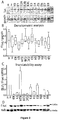
- Figure 2A shows the mRNA levels for each transcript transfected in SH-SY5Y and PCR-amplified with primers specific for the luciferase reporter gene. In this way each transcript is amplified with the same efficiency.
- Luciferase assay was performed according to the manufacturer's instructions (Promega). At the time of luciferase assay, the growth medium was removed from the cultured cells and a sufficient volume of PBS 1X was applied to wash the surface of the culture vessel. Then, the PBS 1X solution was completely removed and the cells lysis was started by adding 20 ⁇ l of PLB (passive lysis buffer) into each well. After adding the PLB solution, the culture plate was placed on an orbital shaker with gentle shaking at room temperature for 15 minutes to cover uniformly the cell monolayer with PLB.
- PLB passive lysis buffer
- Luciferase Assay Reagent II (LARII) were dispensed in each well and Firefly luciferase activity was measured using the Glo Max Multi luminometer with two injectors (Promega Corporation).
- Renilla luciferase reaction was initiated by adding 100 ⁇ l Stop & Glo Reagent (Promega) to the same well. Then, Renilla luciferase activity was measured using the Glo Max Multi luminometer with two injectors (Promega Corporation).
- Adherent SH-SY5Y cells were mechanically removed with a cell scraper (Sarstedt) with 150 ⁇ l of cold (4°C) lysis buffer containing 137mM NaCl (Fluka), 20mM Tris-HCl pH 8.0, 1% Nonidet P-40, 10% glycerol, and a cocktail of protease inhibitors - 1 mM PMSF (Phenilmethyl-sulfonilfluoride), 10 ⁇ g/ml TEWI (Turkey Egg White inhibitor), 4 ⁇ g/ml SBTI (Soy Bean Trypsin inhibitor), 1mM IAA (Iodoacetamide), 1mM SPERM (Spermidin).
- PMSF Phenilmethyl-sulfonilfluoride
- TEWI Teurkey Egg White inhibitor
- SBTI Soy Bean Trypsin inhibitor
- 1mM IAA Iodoacetamide
- 1mM SPERM Spermidin
- SH- SY5Y extracts were further homogenized with a syringe, rocked for 30-45min at 4oC, and centrifuged at 10,000xg for 8-10min at 10oC, to remove cellular debris. Protein homogenates (30 ⁇ g) were separated on 12% SDS-polyacrylamide gels and transferred onto nitrocellulose Protran membranes (Whatman).
- membranes were divided into two halves at the level of the 60KDa marker and incubated overnight at 4°C with either a goat anti-firefly luciferase antibodies (AbCam; diluted 1:1000) or mouse monoclonal anti-tubulin antibody (YOL1/34, AbCam; diluted 1:2000).
- AbCam goat anti-firefly luciferase antibodies
- YOL1/34 mouse monoclonal anti-tubulin antibody
- HRP both DakoCytomation, diluted 1:10,000
- HRP both DakoCytomation, diluted 1:10,000
- the different 5'UTR BDNF sequences have a different translatability. Normalization of the luciferase translation data for the levels of the corresponding mRNA lead to the results shown in Figure 2C . Insertion of the different rat BDNF 5'UTR upstream to the luciferase gene resulted in a marked repression of translation of the reporter for most transcripts with the exception of exon 2A which enhanced translation.
- Figure 2D a representative Western-blot is displayed, showing the protein expression (antibody anti-luc) for each pN1-insert name-Fluc construct. Results of the luciferase assay and the western-blot are consistent with each other.
- the different BDNF splice variants were analyzed for their response to different receptor agonists ( Figure 3 ) in undifferentiated neuro-blastoma SH-SY5Y cells.
- One day prior transfection undifferentiated neuro-blastoma SH-SY5Y cells were seeded into a 96-well white plate with clear bottom (PBI International) at a confluency of 50-60% and cultured overnight. Plasmids containing the different BDNF 5'UTR exons were then transiently transfected into SH-SY5Y cells using LipofectamineTM 2000 (Invitrogen) at high cell density (70-75%), according to the manufacturer's protocol.
- the cells were treated with the listed receptor agonists at the following concentrations: KCL (50mM), BDNF (50ng/ml), Glutammate (GLU: 20 ⁇ M), S)-3,5-Dihydroxyphenylglycine (DHPG: 50 ⁇ M), AMPA (30 ⁇ M), NMDA (30 ⁇ M), Acetylcholine (AcH: 30 ⁇ M), Norepinephrine (NE: 50 ⁇ M), Dopamine (DOPA: 40 ⁇ M) and Serotonin (5-HT 50 ⁇ M). All agonists were purchased from Sigma Aldrich with the exception of DHPG, AMPA and NMDA that were from Ascent Scientific. Then dual luciferase assay was performed as described according to the manufacturer's instructions (Promega).
- KCI 50mM
- BDNF 50ng/ml
- Glutammate GLU: 20 ⁇ M
- S -3,5-Dihydroxyphenylglycine
- AMPA 30 ⁇ M
- NMDA 30 ⁇ M
- Acetylcholine AcH: 10 ⁇ M
- Norepinephrine NE: 50 ⁇ M
- Dopamine DOPA: 40 ⁇ M
- Neurotrophin-3 NT3: 50ng/ml
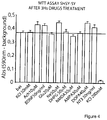
- the cells were again incubated at 37oC this time for 2h, allowing the formation of formazan crystals by the mitochondrial dehydrogenase of viable cells. Afterwards, the media was carefully removed, and the formazan crystals were solubilised by adding 200 ⁇ l of MTT solvent per well, a solution that contains acidified isopropanol (4mM HCl and 0.1% Nondet P-40 in isopropanol). The crystals were further dissolved by gently pipeting the solution up and down being the resulting purple solution spectrophotometrically measured at 570nm. An increased absorbance can therefore be directly correlated to the cell number, allowing one to determine the cellular viability after a specific treatment.
- the assay was always performed after checking the cellular morphology prior treatment. Moreover, two controls were performed: (1) untreated cells, an internal control to verify the drug-dependent effect; and (2) KCI 200mM treated cells, in which a cytotoxic concentration was used, thus allowing us to verify the assay fidelity.
- KCI, BDNF, Glutamate and Norepinephrine stimulation are able to significantly increase the translation of exon1, 2B and 4 -containing transcripts; the expression of exon 3- containing plasmid is only induced by the general KCI stimulation, instead exon 8 seem to be responsive to both BDNF and Glutamate; but only the latter is able to induce the expression of exon 2C containing plasmid.
- Serotonin was the agonist which enhanced the largest number of BDNF splice variants as it resulted able to increase the translation of every BDNF exons-containing plasmid, with the exception of those containing exon 2A, 4 and 8.
- the cells were treated with the listed inhibitors at the specified concentrations: KCI (50mM), Glutammate (GLU: 20 ⁇ M), S)-3,5-Dihydroxyphenylglycine (DHPG: 50 ⁇ M), AMPA (30 ⁇ M), NMDA (30 ⁇ M), Acetylcholine (AcH: 30 ⁇ M), Norepinephrine (NE: 50 ⁇ M), Dopamine (DOPA: 40 ⁇ M) and Serotonin (5-HT 50 ⁇ M).
- KCI 50mM
- GLU 20 ⁇ M
- S -3,5-Dihydroxyphenylglycine
- AMPA (30 ⁇ M
- NMDA 30 ⁇ M
- Acetylcholine AcH: 30 ⁇ M
- Norepinephrine NE: 50 ⁇ M
- Dopamine Dopamine
- Serotonin 5-HT 50 ⁇ M.
- BDNF (50 ng/ ⁇ l) was specifically employed for the stimulation of the 3'UTR long containing plasmid and NT3 (50 ng/ ⁇ l) for 3'UTR short containing plasmid. Then luciferase assay was performed as previously described according to the manufacturer's instructions (Promega).
- the CDS and the short and long 3'UTR displayed a different profile of responses to drug stimulations as shown in Figure 5 .
- BDNF CDS resulted to have no regulatory effect on translation, while the short 3'UTR promoted translation more efficiently than the long 3'UTR ( Figure 5A ).
- Figure 5B we show that the translation of the CDS and 3'UTR-long transcripts is not enhanced after treatment with the different receptor agonists, even if there is a slightly but not significant increase in 3'UTR-long-containing transcripts translation after the general KCI stimulation. In contrast, there is a striking increase in 3'UTR-short-containing transcripts translation after glutamate treatment.
- the present invention can be used not only to identify compounds able to increase BDNF translation, but also to screen for potential inhibitors of BDNF protein production.
- a series of vectors were constructed which recapitulate the physiological regulation of BDNF translation in that the firefly luciferase gene was flanked both by 5'UTR regions as well as 3'UTR.
- Aurora kinase A inhibitor was a gift from Nerviano Medical Sciences S.r.l. (Milan, Italy); PP2 (1-tert-butyl-3-(4-chlorophenyl)-1 H-pyrazolo[3-4] pyrimidin-4-amine), rapamycin was purchased from Ascent Scientific (Bristol, UK), Bisindolylmaleimide I (2-[1-(3-dimethylaminopropyl)-1 H-indol-3-yl]-3-(1 H-indol-3yl)-maleimide, GF 109203X, Gö 6850), KN62 (1-[N,O-bis-5-isoquinolinesulfonyl)-N-methyl-L-tyrosyl]-4-phenylpiperazine), U0126 (1,4-diamino-2,3-dicyano-1,4-bis(2-aminophenylthio)butadiene), and U01
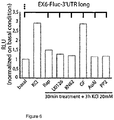
- FIG. 6 shows the effects of several inhibitors of the signalling pathways which control KCI-induced protein synthesis of the construct pN1-exon6-Fluc-3'UTR long construct.
- Relative luciferase units describe in absolute values for the Fluc/Rluc (F/R) ratio obtained from each condition - basal, 3h of 20mM KCI, 30min of treatment - rapamycin 20nM, U0126 50 ⁇ M, KN62 20 ⁇ M, GF 50nM, Aurora A inhibitor 10 ⁇ M or PP2 20 ⁇ M, prior 3h of depolarization. A value of 1.0 was assumed for the basal condition.
- the represented data corresponds to three independent experiments in quadruplicate ***, P ⁇ 0.001; **, P ⁇ 0.01; *, P ⁇ 0.05, One Way Anova followed by a multiple comparison versus Fluc construct procedure with Holm-Sidak's method.
Landscapes
- Health & Medical Sciences (AREA)
- Life Sciences & Earth Sciences (AREA)
- Chemical & Material Sciences (AREA)
- Engineering & Computer Science (AREA)
- Molecular Biology (AREA)
- Organic Chemistry (AREA)
- Immunology (AREA)
- Biomedical Technology (AREA)
- Toxicology (AREA)
- General Health & Medical Sciences (AREA)
- Biochemistry (AREA)
- Medicinal Chemistry (AREA)
- Hematology (AREA)
- Urology & Nephrology (AREA)
- Gastroenterology & Hepatology (AREA)
- Proteomics, Peptides & Aminoacids (AREA)
- Genetics & Genomics (AREA)
- Biophysics (AREA)
- Zoology (AREA)
- Biotechnology (AREA)
- Bioinformatics & Cheminformatics (AREA)
- Physics & Mathematics (AREA)
- Pathology (AREA)
- Cell Biology (AREA)
- Analytical Chemistry (AREA)
- General Physics & Mathematics (AREA)
- Microbiology (AREA)
- Food Science & Technology (AREA)
- Tropical Medicine & Parasitology (AREA)
- Measuring Or Testing Involving Enzymes Or Micro-Organisms (AREA)
- Investigating Or Analysing Biological Materials (AREA)
Description
- The present invention concerns a method for the identification of specific compounds able to modulate Brain-derived neurotrophic factor (BDNF), which can be used as drugs for the treatment of neurological and neuropsychiatric diseases and which are suitable for the treatment of deleterious effects caused to the nervous system by abuse of illegal or legal drugs.
- Brain-derived neurotrophic factor (BDNF) is a growth and trophic factor that belongs to the family of related secretory proteins called neurotrophins. BDNF plays multifaceted and in part opposed functions in both development and maintenance of the nervous system. Indeed, BDNF promotes both cell survival and cell death, neuronal maturation including neurites and dendritic spine outgrowth, and has a prominent role in various forms of synaptic plasticity such as long-term potentiation and long-term depression (Lu, Hidaka et al. 1996; Huang and Reichardt 2001).
- Transcription of the BDNF gene produces 11 primary transcripts in rodents (Aid, Kazantseva et al. 2007; Gene ID: 12064 and 24225) and 17 primary transcripts in humans (Pruunsild, Kazantseva et al. 2007; Gene ID: 627) each characterized by a different 5' untranslated (UTR) exon linked by alternative splicing to a common 3' exon coding for the protein and 3'UTR. Since the 3'UTR contains two polyadenylation sites, each primary transcript can exist in two forms, one with a short and the other with a long 3' UTR, producing a total of 22 (in rodents) or 34 (in humans) possible transcripts.
- Lau A.G. et al. (Proc Natl Acad Sci USA. 2010 Sep 7;107(36):15945-50) reports the differential regulation of BDNF translation in brain neurons, and in particular the finding that the long BDNF 3'UTR is a bona fide cis-acting translation suppressor at rest whereas the short 3'UTR mediates active translation to maintain basal levels of BDNF protein production.
- Intraperitoneal injection of pro-convulsant agents such as kainic acid or pilocarpine in adult rats, induces a segregation of exonl and 4 BDNF transcripts in the cell soma of hippocampal and cortical neurons, whereas exons 2B, 2C, and 6 transcripts display a somatodendritic distribution extended into distal dendrites (Pattabiraman, Tropea et al. 2005; Chiaruttini, Sonego et al. 2008). This differential local expression of BDNF transcripts appears to be a general mechanism used throughout the nervous system as it is found in cortex, hippocampus and hypothalamus (Pattabiraman, Tropea et al. 2005; Chiaruttini, Sonego et al. 2008; Aliaga, Mendoza et al. 2009). Of note, BDNF protein generated from each individual transcript segregates to the same subcellular domain where the transcript that has generated it localizes, regulating BDNF availability in specific subcellular regions of the neurons (Tongiorgi and Baj 2008). On this basis, it has been proposed that BDNF transcripts may represent a spatial code in which the different variants are used for the delivery of BDNF mRNA and accumulation of locally produced protein at specific subsets of synapses ((Chiaruttini, Sonego et al. 2008; Tongiorgi and Baj 2008).
- Since pyramidal neurons of
cortical layer 5 in the visual cortex as well as hippocampal neurons, receive segregated synaptic inputs from GABAergic interneurons on the cell soma and glutamatergic inputs on dendrites, the different BDNF transcripts may be recruited to modulate specifically different types of synaptic contacts (Tongiorgi, 2008). Accordingly, mice with a selective ablation of the "somatic"exon 4 transcript were shown to exhibit significant deficits in GABAergic interneurons in the prefrontal cortex, particularly those expressing parvalbumin, a subtype implicated in executive function and schizophrenia. Moreover, disruption of promoter 4-driven BDNF transcription impaired inhibitory but not excitatory synaptic transmission recorded fromlayer 5 pyramidal neurons in the prefrontal cortex (Sakata, Woo et al. 2009). - Numerous studies have reported changes in the expression of the different BDNF mRNA variants in various brain diseases such as epilepsy (Aid, Kazantseva et al. 2007) and mental retardation Rett Syndrome (Chen, Chang et al. 2003), or neurodegenerative diseases like Huntington disease (Zuccato, Liber et al. 2005) and Alzheimer's disease (Garzon, Yu et al. 2002). Moreover, BDNF variants levels are different from normal brains in various human brain regions from cocaine addicts. The cocaine group showed threefold higher levels of exon 4-specific mRNAs in cerebellum versus controls and a 40% reduction of
exon 4 and exon 1-specific BDNF mRNA in the cortex (Jiang, Zhou et al. 2009). Fear and stress can also specifically affect BDNF transcripts expression levels. A recent study reported evidence of an epigenetic regulation of BDNF gene transcription in the consolidation of fear memory. Contextual fear learning induced differential regulation of exon-specific BDNF mRNAs (1, 4, 6, 9a) that was associated with changes in BDNF DNA methylation and altered local chromatin structure (Roth, Lubin et al. 2009). - Bandyopadhyay S. et al. (J Biomol Screen. 2006 Aug;11 (5):469-80) describes a stable cell line expressing luciferase under the control of the 5'UTR of the amyloid precursor protein, but does not mention the 3'UTR.
-
WO2004065561 describes methods for screening and identifying compounds that modulate the VEGF gene by means of a nucleic acid comprising a reporter gene operably linked to a UTR of the same VEGF gene. Vectors are constructed with the one, both or none of the 5' and 3' UTRs, and results show that a 3-fold increase in firefly luciferase expression can be detected only in the expression vectors that contain the 5'UTRs. - Pruunsild et al. (2007), and Aid et al. (2007) studies have highlighted that the 5'UTR region of each BDNF transcript is encoded by a different exon with unique length, GC content and putative secondary structures. Thus, each BDNF transcript is likely to display a different translatability. However, since the final protein product is the same, it is presently impossible to determine the relative contribution of each single BDNF splice variants to the production of the BDNF protein. Thus, to determine the role of each BDNF transcript in producing the protein, it is necessary to develop new tools able to determine the amount of protein generated by each BDNF splice variant at basal condition and in response to a disease state or a specific drug. Clearly, a change in mRNA levels of transcript that is poorly translatable will have less impact on total BDNF levels than a highly translatable splice variant.
- The need and importance is increasingly felt for the identification of specific compounds able to modulate BDNF, which can be used as drugs for the treatment of neurological and neuropsychiatric diseases or for the treatment of deleterious effects caused to the nervous system by abuse of illegal or legal drugs. It is therefore object of the present invention the development of a method of screening for BDNF translation modulators which allow the measurement of BDNF protein production. In particular it would be highly desirable to identify a screening method which would allow to determine the expression of all possible BDNF variants, and allow, at the same time, to obtain information on the final amounts of the BDNF protein produced in response to a specific drug.
- Object of this invention is the creation of a cell-based screening assay to screen for natural or synthetic compounds able to increase or decrease the neurotrophin brain-derived neurotrophic factor (BDNF) protein levels produced by translation of the different BDNF mRNA variants.
- In particular, the present invention concerns a method of screening for modulators of the translation of brain-derived neurotrophic factor (BDNF) comprising the steps of:
- a) transfecting a mammalian cell with a nucleic acid construct, said nucleic acid construct comprising:
- a 5' untranslated (5'UTR) exon of a mammalian BDNF gene and a 3' untranslated (3'UTR) exon of a mammalian BDNF directly linked to the cDNA of a functional reporter gene, in the absence of any other BDNF promoter sequence;
- b) contacting said mammalian cell with a screening compound;
- c) detecting the luminescence produced by said mammalian cell of step b);
- d) comparing the luminescence measurements of the cell contacted with the screening compound with the luminescence measurements of a control;
- The present invention further concerns a nucleic acid construct comprising:
- a 5' untranslated (5'UTR) exon of the rat BDNF gene selected from the group consisting of SEQ ID NO. 1, SEQ ID NO. 2, SEQ ID NO. 3, SEQ ID NO. 4, SEQ ID NO. 5, SEQ ID NO. 6, SEQ ID NO. 7, SEQ ID NO. 8, SEQ ID NO. 9 or SEQ ID NO. 10 directly linked to the cDNA of a functional reporter gene, in the absence of any other BDNF promoter sequence; and
- a 3' untranslated (3'UTR) exon of the rat BDNF gene selected from the group consisting of SEQ ID NO. 13 and SEQ ID NO. 14.
- A still further object of the present invention is a plasmid comprising the nucleic acid construct according to the present invention.
- The characteristics and advantages of the present invention will be apparent from the detailed description reported below, from the Examples given for illustrative and non-limiting purposes, and from the annexed
Figures 1-6 , wherein: -
Figure 1 : shows the strategy of cloning for creation of the new pFluc-N1 and pRIuc vectors described in Example 1. -
Figure 2A : shows the mRNA levels for each transcript transfected in SH-SY5Y and PCR-amplified with primers specific for the luciferase reporter gene as described in Example 2; -
Figure 2B : shows the densitometric analysis normalized for the levels of the housekeeping gene GAPDH revealed some variability in mRNA expression for the different variants as described in Example 2; -
Figure 2C : shows the results of normalization of the luciferase translation data for the levels of the corresponding mRNA lead to the results as described in Example 3; -
Figure 2D shows the results of a western-blot, showing the protein expression (antibody anti-luc) for each pN1-insert name as described in Example 3. -
Figure 3 : shows the effects of drug treatment on the translation of BDNF 5'UTRs as described in Example 4. -
Figure 4 : shows MTT viability assays demonstrating that none of the drugs used at the indicated concentrations causes death in SY-SY5Y human neuroblastoma cells as described in Example 4. -
Figure 5 : shows the effects of drug treatment on the translation of BDNF 3'UTRs as described in Example 5. -
Figure 6 : shows the inhibition of KCI-induced translation of the ex6-Fluc-3'UTRIong construct as described in Example 6. - The present invention concerns a method of screening for modulators of the translation of brain-derived neurotrophic factor (BDNF) comprising the steps of:
- a) transfecting a mammalian cell with a nucleic acid construct, said nucleic acid construct comprising:
- a 5' untranslated (5'UTR) exon of a mammalian BDNF gene and a 3' untranslated (3'UTR) exon of a mammalian BDNF directly linked to the cDNA of a functional reporter gene, in the absence of any other BDNF promoter sequence;
- b) contacting said mammalian cell with a screening compound;
- c) detecting the luminescence produced by said mammalian cell of step b);
- d) comparing the luminescence measurements of the cell contacted with the screening compound with the luminescence measurements of a control;
- In a preferred aspect, the present invention regards a method of screening for modulators of the translation of brain-derived neurotrophic factor (BDNF), wherein said 5' untranslated (5'UTR) exon of a mammalian BDNF gene is the 5' untranslated (5'UTR) exon of the rat BDNF gene.
- In a more preferred embodiment, the present invention regards a method of screening for modulators of the translation of brain-derived neurotrophic factor (BDNF), wherein said 5' untranslated (5'UTR) exon of the rat BDNF gene is selected from the group consisting of SEQ ID NO. 1, SEQ ID NO. 2, SEQ ID NO. 3, SEQ ID NO. 4, SEQ ID NO. 5, SEQ ID NO. 6, SEQ ID NO. 7, SEQ ID NO. 8, SEQ ID NO. 9 or SEQ ID NO. 10.
- For the purposes of the present invention, each 5' untranslated (5'UTR) exon of the rat BDNF gene has a corresponding SEQ ID NO. as follows:
- SEQ ID NO. 1 corresponds to the nucleotidic sequence of exon 1 of the 5' untranslated (5'UTR) exon of the rat BDNF gene;
- SEQ ID NO. 2 corresponds to the nucleotidic sequence of exon 2a of the 5' untranslated (5'UTR) exon of the rat BDNF gene;
- SEQ ID NO. 3 corresponds to the nucleotidic sequence of exon 2b of the 5' untranslated (5'UTR) exon of the rat BDNF gene;
- SEQ ID NO. 4 corresponds to the nucleotidic sequence of exon 2c of the 5' untranslated (5'UTR) exon of the rat BDNF gene;
- SEQ ID NO. 5 corresponds to the nucleotidic sequence of
exon 3 of the 5' untranslated (5'UTR) exon of the rat BDNF gene; - SEQ ID NO. 6 corresponds to the nucleotidic sequence of
exon 4 of the 5' untranslated (5'UTR) exon of the rat BDNF gene; - SEQ ID NO. 7 corresponds to the nucleotidic sequence of
exon 5 of the 5' untranslated (5'UTR) exon of the rat BDNF gene; - SEQ ID NO. 8 corresponds to the nucleotidic sequence of exon 6 of the 5' untranslated (5'UTR) exon of the rat BDNF gene;
- SEQ ID NO. 9 corresponds to the nucleotidic sequence of
exon 7 of the 5' untranslated (5'UTR) exon of the rat BDNF gene; - SEQ ID NO. 10 corresponds to the nucleotidic sequence of
exon 8 of the 5' untranslated (5'UTR) exon of the rat BDNF gene. - For the purposes of the present invention, by the term "BDNF", it is intended any gene of a mammalian brain-derived neurotrophic factor which can generate any isoform of the BDNF protein such as proBDNF, truncated or mature BDNF, in particular a rat BDNF. In addition to rat BDNF, BDNF sequences for human and other mammalian species are known in the art and sequences of BDNF from these other species can be found on the NCBI website and in other resources known to persons of skill in the art.
- According to a preferred aspect, the present invention regards a method of screening for modulators of the translation of brain-derived neurotrophic factor (BDNF), wherein said 3' untranslated (3'UTR) exon of a mammalian BDNF is the 3' untranslated (3'UTR) exon of rat BDNF gene.
- In a more preferred embodiment, the present invention regards a method of screening for modulators of the translation of brain-derived neurotrophic factor (BDNF), wherein said 3' untranslated (3'UTR) exon of the rat BDNF gene is selected from the group consisting of SEQ ID NO. 13 and SEQ ID NO. 14.
- For the purposes of the present invention, each 3' untranslated (3'UTR) exon of the rat BDNF gene has a corresponding SEQ ID NO. as follows:
- SEQ ID NO. 13 corresponds to the nucleotidic sequence of the short 3' untranslated region of the rat BDNF gene.
- SEQ ID NO. 14 corresponds to the nucleotidic sequence of the long 3' untranslated region of the rat BDNF gene.
- In the present invention by "screening compound", a compound that could be a promising candidate for drug development is intended. Such chemical compounds interact with a target protein and are therefore potential candidates for drug development. The target protein of the present invention is a protein involved in the signalling cascades which regulate the translation of a transcript encoding BDNF and of which non-limiting examples are represented by: 1) ion channels; 2) protein involved in neurotransmitters, peptides, hormons, and trophic factors release, synthesis or re-uptake; 3) receptors for neurotransmitters, peptides, hormons and trophic factors; 4) enzymes involved in post-translational modifications of proteins of which non-limiting examples are represented by phosphorylation, acetylation, or sumoylation; 5) enzymes involved in production of small signalling molecules of which non-limiting examples are represented by nitric-oxide, cyclic nucleotides, phospholipids; 6) translation factors or proteins regulating the activity of translation factors, and 7) RNA-binding proteins or proteins regulating the activity of RNA-binding proteins involved in RNA synthesis, trafficking, folding, translation or degradation.
- The method of the present invention has the advantage of being useful for the identification of specific compounds able to modulate BDNF, which can be used as drugs for the treatment of neurological and neuropsychiatric diseases or for the treatment of deleterious effects caused to the nervous system by abuse of illegal or legal drugs.
- A further advantage of the method of the present invention is that of allowing the screening for BDNF translation modulators which allow the measurement of BDNF protein production, and in particular allows to determine the expression of all possible BDNF variants, and allow, at the same time, to obtain information on the final amounts of the BDNF protein produced in response to a specific drug.
- A further object of the present invention is a method of screening for modulators of brain-derived neurotrophic factor (BDNF), wherein said mammalian cell grows in adhesion.
- In the present invention, said mammalian cell is chosen from the group consisting of human neuroblastoma-derived cell lines of which non-limiting examples are represented by SH-SY5Y, SK-N-SH, and SK-N-BE cells, or glioblastoma-derived cell lines of which non- limiting examples are represented by the GBM cell lines U87, U343, U563 and the MB cell lines D283, DAOY, and SNB40 or immortalized human cell lines of neuronal origin of which non-limiting examples are represented by human neural progenitor cells (hNPCs), human embryonic spinal cord-derived cell line (HSP1), human dorsal root ganglion cell line, human cortical neural progenitor cells, or of human cell lines of non-neuronal origin of which non-limiting examples are represented by NIH-3T3 cells, HeLa cells, or rodent immortalized cell lines of which non-limiting examples are represented by HEK 293 cells, and CHO cells.
- In a preferred embodiment, the present invention concerns a method of screening for modulators of BDNF, wherein said mammalian cell is chosen from the group consisting of SH-SY5Y cells, SK-N-SH cells, SK-N-BE cells, NIH-3T3 cells, HeLa cells, HEK 293 cells, and CHO cells.
- The present invention further relates to a method of screening for modulators of BDNF, wherein said screening compound is a BDNF-translation agonist.
- The present invention further relates to a method of screening for modulators of BDNF, wherein said screening compound is selected from the group consisting of ion-channels agonists, neurotransmitters synthesis, release and re-uptake agonists, neurotransmitter receptors agonists, growth-factors receptors agonists, translation factors agonists and intracellular signalling agonists.
- The present invention further relates to a method of screening for modulators of BDNF, wherein said screening compound is a BDNF-translation antagonist.
- The present invention further relates to a method of screening for modulators of BDNF, wherein said screening compound is selected from the group consisting of ion-channels antagonists, neurotransmitters synthesis, release and re-uptake antagonists, neurotransmitter receptors antagonists, growth-factors receptors antagonists, translation factors antagonists and intracellular signalling antagonists.
- Object of this invention is therefore the creation of a cell-based screening assay to screen for natural or synthetic compounds able to treat neurological diseases through an increase or decrease of BDNF protein levels produced by translation of the different BDNF splice variants.
- In a further embodiment, the present invention regards a method of screening for modulators of BDNF, wherein said reporter gene is a luciferase gene.
- In a further embodiment, the present invention regards a method of screening for modulators of BDNF, wherein said luciferase gene is chosen from the group consisting of Firefly luciferase and Renilla luciferase.
- For the purposes of the present invention, each luciferase gene has a corresponding SEQ ID NO. as follows:
- SEQ ID NO. 11 corresponds to the nucleotidic sequence of the luciferase gene of the firefly Photinus pyralis (full coding sequence)
- SEQ ID NO. 12 corresponds to the nucleotidic sequence of the luciferase gene of the sea pansy Renilla reniformis (full coding sequence).
- In a still further embodiment the present invention regards a method of screening for modulators of the translation of a brain-derived neurotrophic factor (BDNF), wherein said method of screening is carried out by the high throughput screening (HTS) technique.
- In the present invention by the High-throughput screening (HTS) technique, the technique which seeks to identify potential candidates for drug development is intended. HTS is a technique for scientific experimentation especially used in drug discovery. Using robotics, data processing and control software, liquid handling devices, and sensitive detectors, HTS allows to quickly conduct millions of biochemical, genetic or pharmacological tests.
- In a still further embodiment the present invention regards a nucleic acid construct comprising:
- a 5' untranslated (5'UTR) exon of the rat BDNF gene selected from the group consisting of SEQ ID NO. 1, SEQ ID NO. 2, SEQ ID NO. 3, SEQ ID NO. 4, SEQ ID NO. 5, SEQ ID NO. 6, SEQ ID NO. 7, SEQ ID NO. 8, SEQ ID NO. 9 or SEQ ID NO. 10 directly linked to the cDNA of a functional reporter gene, in the absence of any other BDNF promoter sequence;
- and a 3' untranslated (3'UTR) exon of the rat BDNF gene selected from the group consisting of SEQ ID NO. 13 and SEQ ID NO. 14.
- In a still further embodiment the present invention regards a nucleic acid construct, wherein said reporter gene is a luciferase gene.
- In a still further embodiment the present invention regards a nucleic acid construct, wherein said luciferase gene is chosen from the group consisting of Firefly luciferase and Renilla luciferase.
- In a still further embodiment the present invention regards a plasmid comprising the nucleic acid construct according to the present invention.
- Two different constructs were generated by modifying the commercial pEGFP-N1 plasmid (Clontech). pN1-Rluc was obtained by the replacement of the EGFP coding sequence of pEGFP-N1, with the Renilla-luciferase (GI:2582516; GB:AAB82577.1). pN1-FLuc was obtained by the replacement of the EGFP coding sequence of pEGFP-N1, with the Firefly-luciferase open reading frame (ORF) (GI:13195704; GB:AAA89084.1).
- The cloning strategy and the resulting maps of the newly obtained pN1-FLuc (pFluc) and pN1-RLuc (or pRluc) are shown in
Figure 1 . pN1-FLuc (pFluc) and pN1-RLuc (or pRIuc) were then used as a backbone to construct the vectors containing the different BDNF splicing variants. - In detail, the pEGFP-N1 vector was modified so that the sequence between the restriction sites Age I and Not I, encoding the EGFP (enhanced green fluorescent protein) was removed. The digested backbone vector was purified through DNA agarose gel extraction (Sigma Aldrich, Gel Extraction kit). The Firefly luciferase DNA fragment (Rluc) was obtained by PCR amplification of the luc+ gene from the commercial vector pGL3 Basic and the Renilla luciferase DNA fragment (Rluc) was obtained by PCR amplification of the Rluc gene from the pRL-SV40 Vector (both purchased from Promega Corporation).
- The Fluc and Rluc ORFs were amplified using Phusion high-fidelity DNA Polymerase (Finnzymes) 0,02 U/µl. Primers were purchased from Eurofins MWG GmbH. The PCR conditions and primers sequence are summarized in the Table 1.
Table 1. PCR primers and conditions for amplifying Rluc and Fluc Primer Forward Primer Reverse PCR CONDITIONS Fluc 

Denaturation 98° C 10 sec 30 cycles Annealing 58°C 20sec Extension 72°C 40 sec Rluc 

Denaturation 98° C 10 sec 30 cycles Annealing 57,5°C 20sec Extension 72°C 30 sec - PCR-amplified Fluc and Rluc fragments were cut with the restriction enzymes Agel and Notl (New England Biolabs) and then ligated into the pEGFP-N1 vector backbone without EGFP (as described above).
- In order to obtain one specific expression vector for each BDNF variant (from now on, named pN1-insert name-Fluc), the sequence of single rat BDNF exons 1-8 encoding the alternatively spliced 5'UTR regions, was amplified by PCR starting from the cDNA obtained from total RNA extracted from adult rat brain and retro-transcribed using Superscript-II transcriptase (Promega). The forward primers, specific for each 5'exon contained the Xhol restriction site and the common reverse primer in the coding region contained the Agel restriction site (Table 2). PCR amplicons were cloned between the Xhol and Agel restriction sites of the pFluc-N1 vector upstream of the Firefly Luciferase coding sequence. In addition, the complete rat BDNF coding sequence (CDS) was cloned between the Xhol and Sacll restriction site of the pFluc-N1 vector upstream the Fluc gene.
- Furthermore, the two 3'untranslated regions (3'UTR) variants, called respectively 3'UTR-long and 3'UTR-short were cloned into the HpaI and NotI restriction sites of pN-Fluc vector downstream the F-luc gene using specific primers generating specific vectors (from now on named, pN1-Fluc-3'UTR-long or short; or pN1-insert name-Fluc-3'UTR-long or short. See Table I). Finally, the two Kozak sequences, one specific for exon 1 and the other in common to all other transcripts (exon 9), were inserted (Agel-Notl) through a modified Fluc sequence containing the two above modified kozak sequences. The BDNF CDS, 3'UTR-long and 3'UTR-short and all exons were amplified using Phusion high-fidelity DNA Poliymerase (Finnzymes) 0,02 U/µl (or Platinum Polymerase for exon 3). Primers were purchased from Eurofins MWG GmbH (see Table 2 for PCR conditions).
- The plasmids generated with the cloning strategy described above are listed in Table 3.
Table 2. PCR primers and conditions for pN1-BDNF insert -Fluc vectors Primer Forward Primer Reverse PCR CONDITIONS 3'UTR long 

Denaturation 98°C 10 sec 31 cydes Annealing 57,5°C 15sec Extension 72°C 2 min 3' UTR short 

Denaturation 98°C 10 sec 31 cydes Annealing 57,5°C 15 sec Extension 72°C 15 sec CDS 

Denaturation 98°C 10 sec 31 cydes Annealing 57,5°C 15 sec Extension 72°C 40 sec Exon 1 

Denaturation 98°C 10 sec 31 cydes Annealing 57°C 20 sec Extension 72°C 40 sec Exon 2A 

Denaturation 98°C 10 sec 31 cydes Annealing 58°C 20 sec Extension 72°C 35 sec Exon 2B 

Denaturation 98°C 10 sec 31 cydes Annealing 58°C 20 sec Extension 72°C 35 sec Exon 2C 

Denaturation 98°C 10 sec 31 cydes Annealing 58°C 20 sec Extension 72°C 35 sec Exon 3* 

Denaturation 94°C 15 sec 31 cydes Annealing 55°C 15 sec Extension 68°C 20 sec Exon 4 

Denaturation 98°C 10 sec 31 cydes Annealing 58°C 20 sec Extension 72°C 20 sec Exon 5 

Denaturation 98°C 10 sec 31 cydes Annealing 58°C 20 sec Extension 72°C 15 sec Exon 6** 

Denaturation 98°C 10 sec 31 cydes Annealing 57,5°C 20 sec Extension 72°C 15 sec Exon 7 

Denaturation 98°C 10 sec 31 cydes Annealing 58°C 20 sec Extension 72°C 20 sec Exon 8 

Denaturation 98°C 10 sec 31 cydes Annealing 58°C 20 sec Extension 72°C 35 sec Complete list of the plasmid|s 1) pN1-Rluc 12) pN1-exon4-Fluc 2) pN1-Fluc 13) pN1-exon7-Fluc 3) pN1-Fluc-3'short 14) pN1-exon5-Fluc 4) pN1-Fluc-3'long 15) pN1-exon3-Fluc 5) pN1-CDS-Fluc 16) pN1-exon6-Fluc 6) pN1-kozakex9-Fluc 17) pN1-exon1-Fluc-3'UTR short 7) pN1-exon2B-Fluc 18) pN1-exon1-Fluc-3'UTR long 8) pN1-exon2A-Fluc 19) pN1-exon4-Fluc-3'UTR short 9) pN1-exon8-Fluc 20) pN1-exon4-Fluc-3'UTR long 10) pN1-exon2C-Fluc 21) pN1-exon6-Fluc-3'UTR short 11) pN1-exon1-Fluc 22) pN1-exon6-Fluc-3'UTR long - Plasmids were transfected into SH-SY5Y cells using lipofectamine 2000 (Invitrogen) to obtain a transient transfection. The relative quantity of DNA to lipofectamine has been determined and the optimal ratio was found at 0,2 µg of DNA and 0,5 µl of lipofectamine for each well of a 96 multiwell plate. At the time of transfection SH-SY5Y cells were around 70-75% of confluency. According to the Promega protocol for luciferase activity measurements, each construct-containing Fluc was transfected together with the normalizing Rluc construct with a 10:1 ratio (0,2 µg Fluc containing vector together with 0,02 µg of pN1-Rluc vector). The DNA (0,2 µg) was mixed with 25 µl of native MEM medium and incubated for 5 minutes at room temperature. The two solutions were then mixed and incubated for 20 minutes at room temperature to allow the formation of DNA-containing micelles. Then, 50 µl of such solution were added in each well to cells and incubated for 24h at 37°C. After 24h transfection, the medium was removed and replaced with fresh culture medium.
-
Figure 2A shows the mRNA levels for each transcript transfected in SH-SY5Y and PCR-amplified with primers specific for the luciferase reporter gene. In this way each transcript is amplified with the same efficiency. Densitometric analysis (Figure 2B ) of three independent experiments (each in duplicate), normalized for the levels of the housekeeping gene GAPDH revealed some variability in mRNA expression for the different variants which was non-statistically significant. - Each vector was tested in the human neuroblastoma cell line SH-SY5Y and the basal levels of translation measured as F/R-luc ratio, were determined in three independent experiments (each in duplicate) in 96 well white plates with clear bottom (PBI International). To determine the effects of receptors activation on translation controlled by the different BDNF 5'UTR sequences, cells were treated for 3 hours with 50mM KCI to induce generalized cell depolarization.
- Luciferase assay was performed according to the manufacturer's instructions (Promega). At the time of luciferase assay, the growth medium was removed from the cultured cells and a sufficient volume of PBS 1X was applied to wash the surface of the culture vessel. Then, the PBS 1X solution was completely removed and the cells lysis was started by adding 20 µl of PLB (passive lysis buffer) into each well. After adding the PLB solution, the culture plate was placed on an orbital shaker with gentle shaking at room temperature for 15 minutes to cover uniformly the cell monolayer with PLB. After lysis, 100 µl of Luciferase Assay Reagent II (LARII) were dispensed in each well and Firefly luciferase activity was measured using the Glo Max Multi luminometer with two injectors (Promega Corporation).
- After quantifying the Firefly luminescence, this reaction was quenched and simultaneously, the Renilla luciferase reaction was initiated by adding 100 µl Stop & Glo Reagent (Promega) to the same well. Then, Renilla luciferase activity was measured using the Glo Max Multi luminometer with two injectors (Promega Corporation).
- Adherent SH-SY5Y cells were mechanically removed with a cell scraper (Sarstedt) with 150µl of cold (4°C) lysis buffer containing 137mM NaCl (Fluka), 20mM Tris-HCl pH 8.0, 1% Nonidet P-40, 10% glycerol, and a cocktail of protease inhibitors - 1 mM PMSF (Phenilmethyl-sulfonilfluoride), 10µg/ml TEWI (Turkey Egg White inhibitor), 4µg/ml SBTI (Soy Bean Trypsin inhibitor), 1mM IAA (Iodoacetamide), 1mM SPERM (Spermidin). SH- SY5Y extracts were further homogenized with a syringe, rocked for 30-45min at 4ºC, and centrifuged at 10,000xg for 8-10min at 10ºC, to remove cellular debris. Protein homogenates (30µg) were separated on 12% SDS-polyacrylamide gels and transferred onto nitrocellulose Protran membranes (Whatman). After blocking (4% non-fat milk powder, 0,05% tween-20 in phosphate-buffered saline) at RT, membranes were divided into two halves at the level of the 60KDa marker and incubated overnight at 4°C with either a goat anti-firefly luciferase antibodies (AbCam; diluted 1:1000) or mouse monoclonal anti-tubulin antibody (YOL1/34, AbCam; diluted 1:2000). Following incubation with anti-goat or anti-mouse secondary antibodies conjugated with HRP (both DakoCytomation, diluted 1:10,000), immunoreactivity was detected by chemiluminescence (Amersham Biosciences). Films were scanned using an Epson Scanner (Epson perfection V500-photo).
- The different 5'UTR BDNF sequences have a different translatability. Normalization of the luciferase translation data for the levels of the corresponding mRNA lead to the results shown in
Figure 2C . Insertion of the different rat BDNF 5'UTR upstream to the luciferase gene resulted in a marked repression of translation of the reporter for most transcripts with the exception of exon 2A which enhanced translation. InFigure 2D a representative Western-blot is displayed, showing the protein expression (antibody anti-luc) for each pN1-insert name-Fluc construct. Results of the luciferase assay and the western-blot are consistent with each other. - The different BDNF splice variants were analyzed for their response to different receptor agonists (
Figure 3 ) in undifferentiated neuro-blastoma SH-SY5Y cells. One day prior transfection, undifferentiated neuro-blastoma SH-SY5Y cells were seeded into a 96-well white plate with clear bottom (PBI International) at a confluency of 50-60% and cultured overnight. Plasmids containing the different BDNF 5'UTR exons were then transiently transfected into SH-SY5Y cells using Lipofectamine™ 2000 (Invitrogen) at high cell density (70-75%), according to the manufacturer's protocol. 24 hours after transfection, the cells were treated with the listed receptor agonists at the following concentrations: KCL (50mM), BDNF (50ng/ml), Glutammate (GLU: 20µM), S)-3,5-Dihydroxyphenylglycine (DHPG: 50µM), AMPA (30µM), NMDA (30µM), Acetylcholine (AcH: 30µM), Norepinephrine (NE: 50µM), Dopamine (DOPA: 40 µM) and Serotonin (5-HT 50µM). All agonists were purchased from Sigma Aldrich with the exception of DHPG, AMPA and NMDA that were from Ascent Scientific. Then dual luciferase assay was performed as described according to the manufacturer's instructions (Promega). - Each drug was also tested in a viability assay to demonstrate that the concentration used was not toxic for the cells as no appreciable cell death could be detected. Using a 96-well plate 100µl of SHSY-5Y cells were distributed per well, maintaining them overnight at 37ªC in a 5% CO2-humified incubator. On the following day the cells were incubated for 3h at 37ºC with the following drugs:
- KCI (50mM), BDNF (50ng/ml), Glutammate (GLU: 20µM), S)-3,5-Dihydroxyphenylglycine (DHPG: 50µM), AMPA (30µM), NMDA (30µM), Acetylcholine (AcH: 10µM), Norepinephrine (NE: 50µM), Dopamine (DOPA: 40µM) and Neurotrophin-3 (NT3: 50ng/ml). After that, 20µl of aseptically prepared 5mg/mL MTT was added, adding it also to an additional quadruplicate of wells without cells, as an internal control. The cells were again incubated at 37ºC this time for 2h, allowing the formation of formazan crystals by the mitochondrial dehydrogenase of viable cells. Afterwards, the media was carefully removed, and the formazan crystals were solubilised by adding 200µl of MTT solvent per well, a solution that contains acidified isopropanol (4mM HCl and 0.1% Nondet P-40 in isopropanol). The crystals were further dissolved by gently pipeting the solution up and down being the resulting purple solution spectrophotometrically measured at 570nm. An increased absorbance can therefore be directly correlated to the cell number, allowing one to determine the cellular viability after a specific treatment. Since the method is dependent on the physiological state of the cells, the assay was always performed after checking the cellular morphology prior treatment. Moreover, two controls were performed: (1) untreated cells, an internal control to verify the drug-dependent effect; and (2) KCI 200mM treated cells, in which a cytotoxic concentration was used, thus allowing us to verify the assay fidelity.
-
Figure 3 shows histograms in which the response to KCI, BDNF, Glutammate, (S)-3,5-Dihydroxyphenylglycine (DHPG), AMPA, NMDA, Acetylcholine, Norepinephrine, Dopamine and 5-HT, measured in RLU for each splice variant (5'UTR) is shown. Data are expressed as ratio F-luc/R-Luc (triplicate experiments). Error bars = SE. (ANOVA on ranks *=p<0.05). These results show that the different agonists are able to modulate the reporter gene expression in a specific and transcript-dependent way (Figure 3 ). In particular KCI, BDNF, Glutamate and Norepinephrine stimulation are able to significantly increase the translation of exon1, 2B and 4 -containing transcripts; the expression of exon 3- containing plasmid is only induced by the general KCI stimulation, instead exon 8 seem to be responsive to both BDNF and Glutamate; but only the latter is able to induce the expression of exon 2C containing plasmid. In order to further analyze Glutamate stimulation, the activation of the specific glutamate ionotropic receptors (AMPA and NMDA) and the metabotrophic receptor (DHPG) was investigated: results show that the enhancement of exon2C-containing expression is mediated by NMDA receptor but translation of the other BDNF transcripts is not stimulated by these specific agonists, suggesting the need of multiple glutamate receptor stimulation in order to increase the reporter expression. Norepinephrine specific increased exon2C and exon7 reporter expression. Among the agonists that were assayed in this experiment, Serotonin was the agonist which enhanced the largest number of BDNF splice variants as it resulted able to increase the translation of every BDNF exons-containing plasmid, with the exception of those containingexon - None of the drugs used at the indicated concentrations caused death in SY-SY5Y human neuroblastoma cells (
Figure 4 ). It was observed that Acethylcholine (ACh 10µM), Norepineprhine (NE, 50uM), Dopamine (DOPA, 40µM) have a neurotrophic effect as they promote a small increase in cell survival similar to that seen with the two neurotrophins BDNF and NT3 (both 50 ng/ml). - Basal and drug-induced translation of a luciferase reporter gene driven by BDNF short and long 3'UTR or coding region (CDS) sequences were measured. One day prior transfection, undifferentiated neuro-blastoma SH-SY5Y cells were seeded into a 96-well white plate with clear bottom (PBI International) at a confluency of 50-60% and cultured overnight. Plasmids containing the BDNF 3'UTR short or long or CDS were then transiently transfected into SH-SY5Y cells using Lipofectamine™ 2000 (Invitrogen) at high cell density (70-75%), according to the manufacturer's protocol. 24 hours after transfection, the cells were treated with the listed inhibitors at the specified concentrations: KCI (50mM), Glutammate (GLU: 20µM), S)-3,5-Dihydroxyphenylglycine (DHPG: 50µM), AMPA (30µM), NMDA (30µM), Acetylcholine (AcH: 30µM), Norepinephrine (NE: 50µM), Dopamine (DOPA: 40µM) and Serotonin (5-HT 50µM).
- BDNF (50 ng/µl) was specifically employed for the stimulation of the 3'UTR long containing plasmid and NT3 (50 ng/µl) for 3'UTR short containing plasmid. Then luciferase assay was performed as previously described according to the manufacturer's instructions (Promega).
- The CDS and the short and long 3'UTR displayed a different profile of responses to drug stimulations as shown in
Figure 5 . In particular, BDNF CDS resulted to have no regulatory effect on translation, while the short 3'UTR promoted translation more efficiently than the long 3'UTR (Figure 5A ). In another set of experiments in transfected SHSY-5Y (Figure 5B ), we show that the translation of the CDS and 3'UTR-long transcripts is not enhanced after treatment with the different receptor agonists, even if there is a slightly but not significant increase in 3'UTR-long-containing transcripts translation after the general KCI stimulation. In contrast, there is a striking increase in 3'UTR-short-containing transcripts translation after glutamate treatment. These results confirm the hypothesis that the BDNF CDS is translated at low levels in basal conditions and that it needs the 5'UTR and 3'UTR regions in order to become sensitive to the different stimuli. It is also important to note that the 3'UTR regions are regulated by specific signals and that the short variant is the most responsive one. - The present invention can be used not only to identify compounds able to increase BDNF translation, but also to screen for potential inhibitors of BDNF protein production. To this aim a series of vectors were constructed which recapitulate the physiological regulation of BDNF translation in that the firefly luciferase gene was flanked both by 5'UTR regions as well as 3'UTR. These constructs included:
- 17) pN1-exonl-Fluc-3'UTR short
- 18) pN1-exon1-Fluc-3'UTR long
- 19) pN1-exon4-Fluc-3'UTR short
- 20) pN1-exon4-Fluc-3'UTR long
- 21) pN1-exon6-Fluc-3'UTR short
- 22) pN1-exon6-Fluc-3'UTR long.
- Inhibitors of 5'UTR regulation are: rapamycin (rap) = mTOR inhibitor (Takei, Inamura et al. 2004); U0126 = MEK inhibitor (Kanhema, Dagestad et al. 2006); GF = PKC inhibitor (Heikkila, Jalava et al. 1993).
- Inhibitors of 3'UTR regulation: KN62 = CaMKII inhibitor (Lu, Hidaka et al. 1996); AuA= Aurora A inhibitor (Soncini, Carpinelli et al. 2006) and PP2 = Src tyrosine kinase inhibitor (Perkinton, Sihra et al. 1999).
- Aurora kinase A inhibitor (PHA-680632) was a gift from Nerviano Medical Sciences S.r.l. (Milan, Italy); PP2 (1-tert-butyl-3-(4-chlorophenyl)-1 H-pyrazolo[3-4] pyrimidin-4-amine), rapamycin was purchased from Ascent Scientific (Bristol, UK), Bisindolylmaleimide I (2-[1-(3-dimethylaminopropyl)-1 H-indol-3-yl]-3-(1 H-indol-3yl)-maleimide, GF 109203X, Gö 6850), KN62 (1-[N,O-bis-5-isoquinolinesulfonyl)-N-methyl-L-tyrosyl]-4-phenylpiperazine), U0126 (1,4-diamino-2,3-dicyano-1,4-bis(2-aminophenylthio)butadiene), and U0124 (1,4-Diamino-2,3-dicyano-1,4-bis(methylthio) butadiene) from Calbiochem (Damstadt, Germany).
-
Figure 6 shows the effects of several inhibitors of the signalling pathways which control KCI-induced protein synthesis of the construct pN1-exon6-Fluc-3'UTR long construct. Relative luciferase units (RLU) describe in absolute values for the Fluc/Rluc (F/R) ratio obtained from each condition - basal, 3h of 20mM KCI, 30min of treatment - rapamycin 20nM, U0126 50µM, KN62 20µM, GF 50nM, Aurora A inhibitor 10µM or PP2 20µM, prior 3h of depolarization. A value of 1.0 was assumed for the basal condition. The represented data (mean + standard error) corresponds to three independent experiments in quadruplicate ***, P<0.001; **, P<0.01; *, P<0.05, One Way Anova followed by a multiple comparison versus Fluc construct procedure with Holm-Sidak's method. - We show that 30min of pre-treatment with rapamycin 20nM, U0126 50µM, KN62 20µM, Aurora A inhibitor 10µM or PP2 20µM, but not GF 50nM, completely prevents the three-fold increase in translation observed at the end of 3h depolarization with 20mM KCI.
- From the above description and the above-noted examples, the advantage attained by the product described and obtained according to the present invention are apparent.
-
- Aid, T., A. Kazantseva, et al. (2007). "Mouse and rat BDNF gene structure and expression revisited." J Neurosci Res 85(3): 525-35.
- Aliaga, E. E., I. Mendoza, et al. (2009). "Distinct subcellular localization of BDNF transcripts in cultured hypothalamic neurons and modification by neuronal activation." J Neural Transm 116(1): 23-32.
- Chen, W. G., Q. Chang, et al. (2003). "Derepression of BDNF transcription involves calcium-dependent phosphorylation of MeCP2." Science 302(5646): 885-9.
- Chiaruttini, C., M. Sonego, et al. (2008). "BDNF mRNA splice variants display activity-dependent targeting to distinct hippocampal laminae." Mol Cell Neurosci 37(1): 11-9.
- Garzon, D., G. Yu, et al. (2002). "A new brain-derived neurotrophic factor transcript and decrease in brain-derived neurotrophic .
- Heikkila, J., A. Jalava, et al. (1993). "The selective protein kinase C inhibitor GF 109203X inhibits phorbol ester-induced morphological and functional differentiation of SH-SY5Y human neuroblastoma cells." Biochem Biophys Res Commun 197(3): 1185-93.
- Huang, E. J. and L. F. Reichardt (2001). "Neurotrophins: roles in neuronal development and function." Annu Rev Neurosci 24: 677-736.
- Jiang, X., J. Zhou, et al. (2009). "Human BDNF isoforms are differentially expressed in cocaine addicts and are sorted to the regulated secretory pathway independent of the Met66 substitution." Neuromolecular Med 11(1): 1-12.
- Kanhema, T., G. Dagestad, et al. (2006). "Dual regulation of translation initiation and peptide chain elongation during BDNF-induced LTP in vivo: evidence for compartment-specific translation control." J Neurochem 99(5): 1328-37.
- Lu, Y. T., H. Hidaka, et al. (1996). "Characterization of a calcium/calmodulin-dependent protein kinase homolog from maize roots showing light-regulated gravitropism." Planta 199(1): 18-24.
- Pattabiraman, P. P., D. Tropea, et al. (2005). "Neuronal activity regulates the developmental expression and subcellular localization of cortical BDNF mRNA isoforms in vivo." Mol Cell Neurosci 28(3): 556-70.
- Perkinton, M. S., T. S. Sihra, et al. (1999). "Ca(2+)-permeable AMPA receptors induce phosphorylation of cAMP response element-binding protein through a phosphatidylinositol 3-kinase-dependent stimulation of the mitogen-activated protein kinase signaling cascade in neurons." J Neurosci 19(14): 5861-74.
- Pruunsild, P., A. Kazantseva, et al. (2007). "Dissecting the human BDNF locus: bidirectional transcription, complex splicing, and multiple promoters." Genomics 90(3): 397-406.
- Roth, T. L., F. D. Lubin, et al. (2009). "Lasting epigenetic influence of early-life adversity on the BDNF gene." Biol Psychiatry 65(9): 760-9.
- Sakata, K., N. H. Woo, et al. (2009). "Critical role of promoter IV-driven BDNF transcription in GABAergic transmission and synaptic plasticity in the prefrontal cortex." Proc Natl Acad Sci U S A 106(14): 5942-7.
- Soncini, C., P. Carpinelli, et al. (2006). "PHA-680632, a novel Aurora kinase inhibitor with potent antitumoral activity." Clin Cancer Res 12(13): 4080-9.
- Takei, N., N. Inamura, et al. (2004). "Brain-derived neurotrophic factor induces mammalian target of rapamycin-dependent local activation of translation machinery and protein synthesis in neuronal dendrites." J Neurosci 24(44): 9760-9.
- Tongiorgi, E. and G. Baj (2008). "Functions and mechanisms of BDNF mRNA trafficking." Novartis Found Sump 289: 136-47; discussion 147-51, 193-5.
- Tongiorgi, E. (2008). "Activity-dependent expression of brain-derived neurotrophic factor in dendrites: facts and open questions." Neurosci Res. 61(4):335-46
- Zuccato, C., D. Liber, et al. (2005). "Progressive loss of BDNF in a mouse model of Huntington's disease and rescue by BDNF delivery." Pharmacol Res 52(2): 133-9.
-
- <110> UNIVERSITA' DEGLI STUDI DI TRIESTE
- <120> METHOD FOR THE SELECTION OF COMPOUNDS USEFUL FOR THE TREATMENT OF NEUROPSYCHIATRIC AND NEURODEGENARATIVE DISEASES
- <130> 10573PTWO
- <160> 14
- <170> PatentIn version 3.5
- <210> 1
<211> 613
<212> DNA
<213> Rattus norvegicus - <400> 1

- <210> 2
<211> 205
<212> DNA
<213> Rattus norvegicus - <400> 2

- <210> 3
<211> 415
<212> DNA
<213> Rattus norvegicus - <400> 3

- <210> 4
<211> 500
<212> DNA
<213> Rattus norvegicus - <400> 4

- <210> 5
<211> 215
<212> DNA
<213> Rattus norvegicus - <400> 5

- <210> 6
<211> 335
<212> DNA
<213> Rattus norvegicus - <400> 6


- <210> 7
<211> 81
<212> DNA
<213> Rattus norvegicus - <400> 7

- <210> 8
<211> 348
<212> DNA
<213> Rattus norvegicus - <400> 8

- <210> 9
<211> 213
<212> DNA
<213> Rattus norvegicus - <400> 9

- <210> 10
<211> 256
<212> DNA
<213> Rattus norvegicus - <400> 10


- <210> 11
<211> 1653
<212> DNA
<213> Rattus norvegicus - <400> 11


- <210> 12
<211> 940
<212> DNA
<213> Rattus norvegicus - <400> 12

- <210> 13
<211> 320
<212> DNA
<213> Rattus norvegicus - <400> 13


- <210> 14
<211> 2791
<212> DNA
<213> Rattus norvegicus - <400> 14


Claims (18)
- A method of screening for modulators of the translation of brain-derived neurotrophic factor (BDNF) comprising the steps of:a) transfecting a mammalian cell with a nucleic acid construct, said nucleic acid construct comprising:- a 5' untranslated (5'UTR) exon of a mammalian BDNF gene and a 3' untranslated (3'UTR) exon of a mammalian BDNF directly linked to the cDNA of a functional reporter gene, in the absence of any other BDNF promoter sequence;b) contacting said mammalian cell with a screening compound;c) detecting the luminescence produced by said mammalian cell of step b);d) comparing the luminescence measurements of the cell contacted with the screening compound with the luminescence measurements of a control;wherein a change in luminescence compared to the control allows to identify a modulator of BDNF translation.
- The method according to claim 1, wherein said 5' untranslated (5'UTR) exon of a mammalian BDNF gene of step a), is the 5' untranslated (5'UTR) exon of the rat BDNF gene.
- The method according to claim 2, wherein said 5' untranslated (5'UTR) exon of the rat BDNF gene is selected from the group consisting of SEQ ID NO. 1, SEQ ID NO. 2, SEQ ID NO. 3, SEQ ID NO. 4, SEQ ID NO. 5, SEQ ID NO. 6, SEQ ID NO. 7, SEQ ID NO. 8, SEQ ID NO. 9 or SEQ ID NO. 10.
- The method according to anyone of claim 1, wherein said 3' untranslated (3'UTR) exon of a mammalian BDNF is the 3' untranslated (3'UTR) exon of rat BDNF gene.
- The method according to claim 4, wherein said 3' untranslated (3'UTR) exon of the rat BDNF gene is selected from the group consisting of SEQ ID NO. 13 and SEQ ID NO. 14.
- The method according to anyone of claims 1 to 5, wherein said mammalian cell grows in adhesion.
- The method according to claim 6, wherein said mammalian cell is chosen from the group consisting of SH-SY5Y cells, SK-N-SH cells, SK-N-BE cells, NIH-3T3 cells, HeLa cells, HEK 293 cells, and CHO cells.
- The method according to anyone of claims 1 to 5, wherein said screening compound is a BDNF-translation agonist.
- The method according to claim 8, wherein said screening compound is selected from the group consisting of ion-channels agonists, neurotransmitters synthesis, release and re-uptake agonsits, neurotransmitter receptors agonists, growth-factors receptors agonists, translation factors agonists and intracellular signalling agonists.
- The method according to anyone of claims 1 to 5, wherein said screening compound is a BDNF-translation antagonist.
- The method according to claim 10, wherein said screening compound is selected from the group consisting of ion-channels antagonists, neurotransmitters synthesis, release and re-uptake antagonists, neurotransmitter receptors antagonists, growth-factors receptors antagonists, translation factors antagonists and intracellular signalling antagonists.
- The method according to anyone of claims 1 to 11, wherein said reporter gene is a luciferase gene.
- The method according to claim 12, wherein said luciferase gene is chosen from the group consisting of Firefly luciferase and Renilla luciferase.
- The method according to anyone of claims 1 to 13, wherein said method of screening is carried out by the high throughput screening (HTS) technique.
- A nucleic acid construct comprising:a 5' untranslated (5'UTR) exon of the rat BDNF gene selected from the group consisting of SEQ ID NO. 1, SEQ ID NO. 2, SEQ ID NO. 3, SEQ ID NO. 4, SEQ ID NO. 5, SEQ ID NO. 6, SEQ ID NO. 7, SEQ ID NO. 8, SEQ ID NO. 9 or SEQ ID NO. 10 directly linked to the cDNA of a functional reporter gene, in the absence of any other BDNF promoter sequence; anda 3' untranslated (3'UTR) exon of the rat BDNF gene selected from the group consisting of SEQ ID NO. 13 and SEQ ID NO. 14.
- The nucleic acid construct according to claim 15, wherein said reporter gene is a luciferase gene.
- The nucleic acid construct according to claim 16, wherein said luciferase gene is chosen from the group consisting of Firefly luciferase and Renilla luciferase.
- A plasmid comprising the nucleic acid construct according to claims 15, 16 or 17.
Applications Claiming Priority (1)
| Application Number | Priority Date | Filing Date | Title |
|---|---|---|---|
| PCT/EP2010/067081 WO2012062354A1 (en) | 2010-11-09 | 2010-11-09 | Method for the selection of compounds useful for the treatment of psychiatric and neurodegenerative diseases |
Publications (2)
| Publication Number | Publication Date |
|---|---|
| EP2638175A1 EP2638175A1 (en) | 2013-09-18 |
| EP2638175B1 true EP2638175B1 (en) | 2017-05-17 |
Family
ID=43558321
Family Applications (1)
| Application Number | Title | Priority Date | Filing Date |
|---|---|---|---|
| EP10790739.6A Not-in-force EP2638175B1 (en) | 2010-11-09 | 2010-11-09 | Method for the selection of modulators of bdnf |
Country Status (4)
| Country | Link |
|---|---|
| US (1) | US20130224754A1 (en) |
| EP (1) | EP2638175B1 (en) |
| DK (1) | DK2638175T3 (en) |
| WO (1) | WO2012062354A1 (en) |
Family Cites Families (2)
| Publication number | Priority date | Publication date | Assignee | Title |
|---|---|---|---|---|
| US7491810B2 (en) * | 2001-11-30 | 2009-02-17 | U.S. Department Of Veterans Affairs | Transgenic screen and method for screening modulators of brain-derived neurotrophic factor (BDNF) production |
| US20110104165A1 (en) * | 2008-09-11 | 2011-05-05 | H. Lundbeck A/S | Method of upregulating sorla for the treatment of alzheimer's disease |
-
2010
- 2010-11-09 EP EP10790739.6A patent/EP2638175B1/en not_active Not-in-force
- 2010-11-09 US US13/884,130 patent/US20130224754A1/en not_active Abandoned
- 2010-11-09 DK DK10790739.6T patent/DK2638175T3/en active
- 2010-11-09 WO PCT/EP2010/067081 patent/WO2012062354A1/en not_active Ceased
Also Published As
| Publication number | Publication date |
|---|---|
| US20130224754A1 (en) | 2013-08-29 |
| WO2012062354A1 (en) | 2012-05-18 |
| DK2638175T3 (en) | 2017-08-28 |
| EP2638175A1 (en) | 2013-09-18 |
Similar Documents
| Publication | Publication Date | Title |
|---|---|---|
| Thomsen et al. | Genetics and pathogenesis of dystonia | |
| Tu et al. | C. elegans punctin clusters GABAA receptors via neuroligin binding and UNC-40/DCC recruitment | |
| Shelly et al. | LKB1/STRAD promotes axon initiation during neuronal polarization | |
| Kempf et al. | The sphingolipid receptor S1PR2 is a receptor for Nogo-a repressing synaptic plasticity | |
| Vivas et al. | Niemann-Pick type C disease reveals a link between lysosomal cholesterol and PtdIns (4, 5) P2 that regulates neuronal excitability | |
| Volkenhoff et al. | Glial glycolysis is essential for neuronal survival in Drosophila | |
| Gomez-Ospina et al. | The C terminus of the L-type voltage-gated calcium channel CaV1. 2 encodes a transcription factor | |
| Liu et al. | Expression and function of 5-HT4 receptors in the mouse enteric nervous system | |
| Tretter et al. | GABA A receptor dynamics and constructing GABAergic synapses | |
| Iijima et al. | SAM68 regulates neuronal activity-dependent alternative splicing of neurexin-1 | |
| Oakes et al. | Cannabinoids activate monoaminergic signaling to modulate key C. elegans behaviors | |
| Thomas et al. | Synaptic clustering of the cell adhesion molecule fasciclin II by discs-large and its role in the regulation of presynaptic structure | |
| Charoy et al. | gdnf activates midline repulsion by Semaphorin3B via NCAM during commissural axon guidance | |
| Yao et al. | The ihog cell-surface proteins bind Hedgehog and mediate pathway activation | |
| Linhoff et al. | An unbiased expression screen for synaptogenic proteins identifies the LRRTM protein family as synaptic organizers | |
| Wickramasinghe et al. | Serum response factor mediates NGF-dependent target innervation by embryonic DRG sensory neurons | |
| Guan et al. | Genome-wide transcriptional changes associated with enhanced activity in the Drosophila nervous system | |
| Schevzov et al. | Regulation of cell proliferation by ERK and signal-dependent nuclear translocation of ERK is dependent on Tm5NM1-containing actin filaments | |
| Pavlowsky et al. | A postsynaptic signaling pathway that may account for the cognitive defect due to IL1RAPL1 mutation | |
| Kupferman et al. | Reelin signaling specifies the molecular identity of the pyramidal neuron distal dendritic compartment | |
| Guo et al. | Elevated CaMKIIα and hyperphosphorylation of Homer mediate circuit dysfunction in a fragile X syndrome mouse model | |
| Dunn et al. | ELFN2 is a postsynaptic cell adhesion molecule with essential roles in controlling group III mGluRs in the brain and neuropsychiatric behavior | |
| Hussain et al. | MINK and TNIK differentially act on Rap2-mediated signal transduction to regulate neuronal structure and AMPA receptor function | |
| Zhang et al. | Activation of the RAS/B‐RAF‐MEK‐ERK pathway in satellite glial cells contributes to substance p‐mediated orofacial pain | |
| Erlenhardt et al. | Porcupine controls hippocampal AMPAR levels, composition, and synaptic transmission |
Legal Events
| Date | Code | Title | Description |
|---|---|---|---|
| PUAI | Public reference made under article 153(3) epc to a published international application that has entered the european phase |
Free format text: ORIGINAL CODE: 0009012 |
|
| 17P | Request for examination filed |
Effective date: 20130607 |
|
| AK | Designated contracting states |
Kind code of ref document: A1 Designated state(s): AL AT BE BG CH CY CZ DE DK EE ES FI FR GB GR HR HU IE IS IT LI LT LU LV MC MK MT NL NO PL PT RO RS SE SI SK SM TR |
|
| DAX | Request for extension of the european patent (deleted) | ||
| 17Q | First examination report despatched |
Effective date: 20150417 |
|
| GRAP | Despatch of communication of intention to grant a patent |
Free format text: ORIGINAL CODE: EPIDOSNIGR1 |
|
| INTG | Intention to grant announced |
Effective date: 20161206 |
|
| GRAS | Grant fee paid |
Free format text: ORIGINAL CODE: EPIDOSNIGR3 |
|
| GRAA | (expected) grant |
Free format text: ORIGINAL CODE: 0009210 |
|
| AK | Designated contracting states |
Kind code of ref document: B1 Designated state(s): AL AT BE BG CH CY CZ DE DK EE ES FI FR GB GR HR HU IE IS IT LI LT LU LV MC MK MT NL NO PL PT RO RS SE SI SK SM TR |
|
| REG | Reference to a national code |
Ref country code: GB Ref legal event code: FG4D |
|
| REG | Reference to a national code |
Ref country code: CH Ref legal event code: EP |
|
| REG | Reference to a national code |
Ref country code: IE Ref legal event code: FG4D |
|
| REG | Reference to a national code |
Ref country code: AT Ref legal event code: REF Ref document number: 894529 Country of ref document: AT Kind code of ref document: T Effective date: 20170615 |
|
| REG | Reference to a national code |
Ref country code: DE Ref legal event code: R096 Ref document number: 602010042456 Country of ref document: DE |
|
| REG | Reference to a national code |
Ref country code: CH Ref legal event code: NV Representative=s name: IPWAY DI FRANCESCO FABIO AND CO., CH |
|
| REG | Reference to a national code |
Ref country code: DK Ref legal event code: T3 Effective date: 20170825 |
|
| REG | Reference to a national code |
Ref country code: SE Ref legal event code: TRGR |
|
| REG | Reference to a national code |
Ref country code: NL Ref legal event code: MP Effective date: 20170517 |
|
| REG | Reference to a national code |
Ref country code: LT Ref legal event code: MG4D |
|
| REG | Reference to a national code |
Ref country code: AT Ref legal event code: MK05 Ref document number: 894529 Country of ref document: AT Kind code of ref document: T Effective date: 20170517 |
|
| PG25 | Lapsed in a contracting state [announced via postgrant information from national office to epo] |
Ref country code: LT Free format text: LAPSE BECAUSE OF FAILURE TO SUBMIT A TRANSLATION OF THE DESCRIPTION OR TO PAY THE FEE WITHIN THE PRESCRIBED TIME-LIMIT Effective date: 20170517 Ref country code: AT Free format text: LAPSE BECAUSE OF FAILURE TO SUBMIT A TRANSLATION OF THE DESCRIPTION OR TO PAY THE FEE WITHIN THE PRESCRIBED TIME-LIMIT Effective date: 20170517 Ref country code: NO Free format text: LAPSE BECAUSE OF FAILURE TO SUBMIT A TRANSLATION OF THE DESCRIPTION OR TO PAY THE FEE WITHIN THE PRESCRIBED TIME-LIMIT Effective date: 20170817 Ref country code: GR Free format text: LAPSE BECAUSE OF FAILURE TO SUBMIT A TRANSLATION OF THE DESCRIPTION OR TO PAY THE FEE WITHIN THE PRESCRIBED TIME-LIMIT Effective date: 20170818 Ref country code: HR Free format text: LAPSE BECAUSE OF FAILURE TO SUBMIT A TRANSLATION OF THE DESCRIPTION OR TO PAY THE FEE WITHIN THE PRESCRIBED TIME-LIMIT Effective date: 20170517 Ref country code: FI Free format text: LAPSE BECAUSE OF FAILURE TO SUBMIT A TRANSLATION OF THE DESCRIPTION OR TO PAY THE FEE WITHIN THE PRESCRIBED TIME-LIMIT Effective date: 20170517 Ref country code: ES Free format text: LAPSE BECAUSE OF FAILURE TO SUBMIT A TRANSLATION OF THE DESCRIPTION OR TO PAY THE FEE WITHIN THE PRESCRIBED TIME-LIMIT Effective date: 20170517 |
|
| REG | Reference to a national code |
Ref country code: FR Ref legal event code: PLFP Year of fee payment: 8 |
|
| PG25 | Lapsed in a contracting state [announced via postgrant information from national office to epo] |
Ref country code: IS Free format text: LAPSE BECAUSE OF FAILURE TO SUBMIT A TRANSLATION OF THE DESCRIPTION OR TO PAY THE FEE WITHIN THE PRESCRIBED TIME-LIMIT Effective date: 20170917 Ref country code: PL Free format text: LAPSE BECAUSE OF FAILURE TO SUBMIT A TRANSLATION OF THE DESCRIPTION OR TO PAY THE FEE WITHIN THE PRESCRIBED TIME-LIMIT Effective date: 20170517 Ref country code: NL Free format text: LAPSE BECAUSE OF FAILURE TO SUBMIT A TRANSLATION OF THE DESCRIPTION OR TO PAY THE FEE WITHIN THE PRESCRIBED TIME-LIMIT Effective date: 20170517 Ref country code: RS Free format text: LAPSE BECAUSE OF FAILURE TO SUBMIT A TRANSLATION OF THE DESCRIPTION OR TO PAY THE FEE WITHIN THE PRESCRIBED TIME-LIMIT Effective date: 20170517 Ref country code: LV Free format text: LAPSE BECAUSE OF FAILURE TO SUBMIT A TRANSLATION OF THE DESCRIPTION OR TO PAY THE FEE WITHIN THE PRESCRIBED TIME-LIMIT Effective date: 20170517 Ref country code: BG Free format text: LAPSE BECAUSE OF FAILURE TO SUBMIT A TRANSLATION OF THE DESCRIPTION OR TO PAY THE FEE WITHIN THE PRESCRIBED TIME-LIMIT Effective date: 20170817 |
|
| PG25 | Lapsed in a contracting state [announced via postgrant information from national office to epo] |
Ref country code: RO Free format text: LAPSE BECAUSE OF FAILURE TO SUBMIT A TRANSLATION OF THE DESCRIPTION OR TO PAY THE FEE WITHIN THE PRESCRIBED TIME-LIMIT Effective date: 20170517 Ref country code: EE Free format text: LAPSE BECAUSE OF FAILURE TO SUBMIT A TRANSLATION OF THE DESCRIPTION OR TO PAY THE FEE WITHIN THE PRESCRIBED TIME-LIMIT Effective date: 20170517 Ref country code: CZ Free format text: LAPSE BECAUSE OF FAILURE TO SUBMIT A TRANSLATION OF THE DESCRIPTION OR TO PAY THE FEE WITHIN THE PRESCRIBED TIME-LIMIT Effective date: 20170517 Ref country code: SK Free format text: LAPSE BECAUSE OF FAILURE TO SUBMIT A TRANSLATION OF THE DESCRIPTION OR TO PAY THE FEE WITHIN THE PRESCRIBED TIME-LIMIT Effective date: 20170517 |
|
| REG | Reference to a national code |
Ref country code: DE Ref legal event code: R097 Ref document number: 602010042456 Country of ref document: DE |
|
| PG25 | Lapsed in a contracting state [announced via postgrant information from national office to epo] |
Ref country code: SM Free format text: LAPSE BECAUSE OF FAILURE TO SUBMIT A TRANSLATION OF THE DESCRIPTION OR TO PAY THE FEE WITHIN THE PRESCRIBED TIME-LIMIT Effective date: 20170517 |
|
| PLBE | No opposition filed within time limit |
Free format text: ORIGINAL CODE: 0009261 |
|
| STAA | Information on the status of an ep patent application or granted ep patent |
Free format text: STATUS: NO OPPOSITION FILED WITHIN TIME LIMIT |
|
| 26N | No opposition filed |
Effective date: 20180220 |
|
| PG25 | Lapsed in a contracting state [announced via postgrant information from national office to epo] |
Ref country code: SI Free format text: LAPSE BECAUSE OF FAILURE TO SUBMIT A TRANSLATION OF THE DESCRIPTION OR TO PAY THE FEE WITHIN THE PRESCRIBED TIME-LIMIT Effective date: 20170517 |
|
| REG | Reference to a national code |
Ref country code: FR Ref legal event code: PLFP Year of fee payment: 9 |
|
| PG25 | Lapsed in a contracting state [announced via postgrant information from national office to epo] |
Ref country code: MC Free format text: LAPSE BECAUSE OF FAILURE TO SUBMIT A TRANSLATION OF THE DESCRIPTION OR TO PAY THE FEE WITHIN THE PRESCRIBED TIME-LIMIT Effective date: 20170517 |
|
| PG25 | Lapsed in a contracting state [announced via postgrant information from national office to epo] |
Ref country code: LU Free format text: LAPSE BECAUSE OF NON-PAYMENT OF DUE FEES Effective date: 20171109 |
|
| REG | Reference to a national code |
Ref country code: IE Ref legal event code: MM4A |
|
| PG25 | Lapsed in a contracting state [announced via postgrant information from national office to epo] |
Ref country code: MT Free format text: LAPSE BECAUSE OF NON-PAYMENT OF DUE FEES Effective date: 20171109 |
|
| PG25 | Lapsed in a contracting state [announced via postgrant information from national office to epo] |
Ref country code: IE Free format text: LAPSE BECAUSE OF NON-PAYMENT OF DUE FEES Effective date: 20171109 |
|
| PG25 | Lapsed in a contracting state [announced via postgrant information from national office to epo] |
Ref country code: HU Free format text: LAPSE BECAUSE OF FAILURE TO SUBMIT A TRANSLATION OF THE DESCRIPTION OR TO PAY THE FEE WITHIN THE PRESCRIBED TIME-LIMIT; INVALID AB INITIO Effective date: 20101109 |
|
| PG25 | Lapsed in a contracting state [announced via postgrant information from national office to epo] |
Ref country code: CY Free format text: LAPSE BECAUSE OF NON-PAYMENT OF DUE FEES Effective date: 20170517 |
|
| PG25 | Lapsed in a contracting state [announced via postgrant information from national office to epo] |
Ref country code: MK Free format text: LAPSE BECAUSE OF FAILURE TO SUBMIT A TRANSLATION OF THE DESCRIPTION OR TO PAY THE FEE WITHIN THE PRESCRIBED TIME-LIMIT Effective date: 20170517 |
|
| PGFP | Annual fee paid to national office [announced via postgrant information from national office to epo] |
Ref country code: SE Payment date: 20191126 Year of fee payment: 10 |
|
| PGFP | Annual fee paid to national office [announced via postgrant information from national office to epo] |
Ref country code: BE Payment date: 20191126 Year of fee payment: 10 |
|
| PG25 | Lapsed in a contracting state [announced via postgrant information from national office to epo] |
Ref country code: TR Free format text: LAPSE BECAUSE OF FAILURE TO SUBMIT A TRANSLATION OF THE DESCRIPTION OR TO PAY THE FEE WITHIN THE PRESCRIBED TIME-LIMIT Effective date: 20170517 |
|
| PGFP | Annual fee paid to national office [announced via postgrant information from national office to epo] |
Ref country code: GB Payment date: 20191125 Year of fee payment: 10 |
|
| PG25 | Lapsed in a contracting state [announced via postgrant information from national office to epo] |
Ref country code: PT Free format text: LAPSE BECAUSE OF FAILURE TO SUBMIT A TRANSLATION OF THE DESCRIPTION OR TO PAY THE FEE WITHIN THE PRESCRIBED TIME-LIMIT Effective date: 20170517 |
|
| PG25 | Lapsed in a contracting state [announced via postgrant information from national office to epo] |
Ref country code: AL Free format text: LAPSE BECAUSE OF FAILURE TO SUBMIT A TRANSLATION OF THE DESCRIPTION OR TO PAY THE FEE WITHIN THE PRESCRIBED TIME-LIMIT Effective date: 20170517 |
|
| REG | Reference to a national code |
Ref country code: SE Ref legal event code: EUG |
|
| GBPC | Gb: european patent ceased through non-payment of renewal fee |
Effective date: 20201109 |
|
| REG | Reference to a national code |
Ref country code: BE Ref legal event code: MM Effective date: 20201130 |
|
| PG25 | Lapsed in a contracting state [announced via postgrant information from national office to epo] |
Ref country code: SE Free format text: LAPSE BECAUSE OF NON-PAYMENT OF DUE FEES Effective date: 20201110 |
|
| PG25 | Lapsed in a contracting state [announced via postgrant information from national office to epo] |
Ref country code: GB Free format text: LAPSE BECAUSE OF NON-PAYMENT OF DUE FEES Effective date: 20201109 |
|
| PGFP | Annual fee paid to national office [announced via postgrant information from national office to epo] |
Ref country code: FR Payment date: 20211104 Year of fee payment: 12 Ref country code: DK Payment date: 20211109 Year of fee payment: 12 Ref country code: DE Payment date: 20211108 Year of fee payment: 12 |
|
| PGFP | Annual fee paid to national office [announced via postgrant information from national office to epo] |
Ref country code: IT Payment date: 20211104 Year of fee payment: 12 Ref country code: CH Payment date: 20211109 Year of fee payment: 12 |
|
| PG25 | Lapsed in a contracting state [announced via postgrant information from national office to epo] |
Ref country code: BE Free format text: LAPSE BECAUSE OF NON-PAYMENT OF DUE FEES Effective date: 20201130 |
|
| REG | Reference to a national code |
Ref country code: DE Ref legal event code: R119 Ref document number: 602010042456 Country of ref document: DE |
|
| REG | Reference to a national code |
Ref country code: DK Ref legal event code: EBP Effective date: 20221130 |
|
| REG | Reference to a national code |
Ref country code: CH Ref legal event code: PL |
|
| PG25 | Lapsed in a contracting state [announced via postgrant information from national office to epo] |
Ref country code: LI Free format text: LAPSE BECAUSE OF NON-PAYMENT OF DUE FEES Effective date: 20221130 Ref country code: CH Free format text: LAPSE BECAUSE OF NON-PAYMENT OF DUE FEES Effective date: 20221130 |
|
| PG25 | Lapsed in a contracting state [announced via postgrant information from national office to epo] |
Ref country code: IT Free format text: LAPSE BECAUSE OF NON-PAYMENT OF DUE FEES Effective date: 20221109 Ref country code: DK Free format text: LAPSE BECAUSE OF NON-PAYMENT OF DUE FEES Effective date: 20221130 Ref country code: DE Free format text: LAPSE BECAUSE OF NON-PAYMENT OF DUE FEES Effective date: 20230601 |
|
| PG25 | Lapsed in a contracting state [announced via postgrant information from national office to epo] |
Ref country code: FR Free format text: LAPSE BECAUSE OF NON-PAYMENT OF DUE FEES Effective date: 20221130 |