EP2637469A1 - Method for HARQ buffer operation - Google Patents
Method for HARQ buffer operation Download PDFInfo
- Publication number
- EP2637469A1 EP2637469A1 EP20130170821 EP13170821A EP2637469A1 EP 2637469 A1 EP2637469 A1 EP 2637469A1 EP 20130170821 EP20130170821 EP 20130170821 EP 13170821 A EP13170821 A EP 13170821A EP 2637469 A1 EP2637469 A1 EP 2637469A1
- Authority
- EP
- European Patent Office
- Prior art keywords
- harq
- harq buffer
- ack
- pdcch message
- enode
- Prior art date
- Legal status (The legal status is an assumption and is not a legal conclusion. Google has not performed a legal analysis and makes no representation as to the accuracy of the status listed.)
- Ceased
Links
- 238000000034 method Methods 0.000 title claims abstract description 25
- 230000005540 biological transmission Effects 0.000 claims abstract description 19
- 238000011010 flushing procedure Methods 0.000 claims abstract description 4
- 101000741965 Homo sapiens Inactive tyrosine-protein kinase PRAG1 Proteins 0.000 claims description 3
- 102100038659 Inactive tyrosine-protein kinase PRAG1 Human genes 0.000 claims description 3
- 230000011664 signaling Effects 0.000 abstract 1
- 241000760358 Enodes Species 0.000 description 26
- 230000003044 adaptive effect Effects 0.000 description 4
- 238000007792 addition Methods 0.000 description 1
- 230000007774 longterm Effects 0.000 description 1
- 239000002699 waste material Substances 0.000 description 1
Images
Classifications
-
- H—ELECTRICITY
- H04—ELECTRIC COMMUNICATION TECHNIQUE
- H04L—TRANSMISSION OF DIGITAL INFORMATION, e.g. TELEGRAPHIC COMMUNICATION
- H04L45/00—Routing or path finding of packets in data switching networks
- H04L45/50—Routing or path finding of packets in data switching networks using label swapping, e.g. multi-protocol label switch [MPLS]
-
- H—ELECTRICITY
- H04—ELECTRIC COMMUNICATION TECHNIQUE
- H04L—TRANSMISSION OF DIGITAL INFORMATION, e.g. TELEGRAPHIC COMMUNICATION
- H04L1/00—Arrangements for detecting or preventing errors in the information received
- H04L1/12—Arrangements for detecting or preventing errors in the information received by using return channel
- H04L1/16—Arrangements for detecting or preventing errors in the information received by using return channel in which the return channel carries supervisory signals, e.g. repetition request signals
- H04L1/18—Automatic repetition systems, e.g. Van Duuren systems
- H04L1/1867—Arrangements specially adapted for the transmitter end
- H04L1/1874—Buffer management
- H04L1/1877—Buffer management for semi-reliable protocols, e.g. for less sensitive applications like streaming video
-
- H—ELECTRICITY
- H04—ELECTRIC COMMUNICATION TECHNIQUE
- H04L—TRANSMISSION OF DIGITAL INFORMATION, e.g. TELEGRAPHIC COMMUNICATION
- H04L1/00—Arrangements for detecting or preventing errors in the information received
- H04L1/12—Arrangements for detecting or preventing errors in the information received by using return channel
- H04L1/16—Arrangements for detecting or preventing errors in the information received by using return channel in which the return channel carries supervisory signals, e.g. repetition request signals
- H04L1/18—Automatic repetition systems, e.g. Van Duuren systems
- H04L1/1867—Arrangements specially adapted for the transmitter end
- H04L1/188—Time-out mechanisms
-
- H—ELECTRICITY
- H04—ELECTRIC COMMUNICATION TECHNIQUE
- H04L—TRANSMISSION OF DIGITAL INFORMATION, e.g. TELEGRAPHIC COMMUNICATION
- H04L1/00—Arrangements for detecting or preventing errors in the information received
- H04L1/12—Arrangements for detecting or preventing errors in the information received by using return channel
- H04L1/16—Arrangements for detecting or preventing errors in the information received by using return channel in which the return channel carries supervisory signals, e.g. repetition request signals
- H04L1/18—Automatic repetition systems, e.g. Van Duuren systems
- H04L1/1867—Arrangements specially adapted for the transmitter end
- H04L1/1896—ARQ related signaling
-
- H—ELECTRICITY
- H04—ELECTRIC COMMUNICATION TECHNIQUE
- H04L—TRANSMISSION OF DIGITAL INFORMATION, e.g. TELEGRAPHIC COMMUNICATION
- H04L45/00—Routing or path finding of packets in data switching networks
- H04L45/02—Topology update or discovery
- H04L45/04—Interdomain routing, e.g. hierarchical routing
-
- H—ELECTRICITY
- H04—ELECTRIC COMMUNICATION TECHNIQUE
- H04L—TRANSMISSION OF DIGITAL INFORMATION, e.g. TELEGRAPHIC COMMUNICATION
- H04L1/00—Arrangements for detecting or preventing errors in the information received
- H04L1/12—Arrangements for detecting or preventing errors in the information received by using return channel
- H04L1/16—Arrangements for detecting or preventing errors in the information received by using return channel in which the return channel carries supervisory signals, e.g. repetition request signals
- H04L1/18—Automatic repetition systems, e.g. Van Duuren systems
- H04L1/1812—Hybrid protocols; Hybrid automatic repeat request [HARQ]
-
- H—ELECTRICITY
- H04—ELECTRIC COMMUNICATION TECHNIQUE
- H04L—TRANSMISSION OF DIGITAL INFORMATION, e.g. TELEGRAPHIC COMMUNICATION
- H04L1/00—Arrangements for detecting or preventing errors in the information received
- H04L1/12—Arrangements for detecting or preventing errors in the information received by using return channel
- H04L2001/125—Arrangements for preventing errors in the return channel
Definitions
- the present invention relates to wireless communications, and in particular to a method for operating HARQ (Hybrid Automatic Retransmission Request) buffer in LTE (Long-Term Evolution) system, which is capable of optimizing control on HARQ buffer after UE (User Equipment) receives HARQ ACK (HARQ Acknowledgement).
- HARQ Hybrid Automatic Retransmission Request
- LTE Long-Term Evolution
- a UE needs to keep its HARQ buffer when it only receives HARQ ACK on PHICH (i.e., HARQ feedback indication channal) but no PDCCH message.
- PHICH i.e., HARQ feedback indication channal
- PDCCH Physical Downlink Control Channel
- An object of the present invention is to provide a method for operating HARQ buffer, which is capable of optimizing control on HARQ buffer after UE receives HARQ ACK.
- a method for operating HARQ buffer comprising: receiving HARQ ACK; keeping HARQ buffer in response to the reception of the HARQ ACK; and flushing the HARQ buffer in the case of receiving no PDCCH (Physical Downlink Control Channel) message for a predetermined duration.
- PDCCH Physical Downlink Control Channel
- a method for operating HARQ buffer comprising: receiving HARQ ACK from an eNodeB (envolved Node B); keeping HARQ buffer in response to the reception of the HARQ ACK; transmitting from the eNode B to a UE a PDCCH message for new transmission, if no expected new transmission is detected for a predetermined duration; and flushing the HARQ buffer in response to the reception of the PDCCH message.
- eNodeB evolved Node B
- the method further comprises performing a new transmission by the UE based on the received PDCCH message.
- a method for operating HARQ buffer comprising: receiving HARQ ACK from an eNodeB (envolved Node B); keeping HARQ buffer in response to the reception of the HARQ ACK; transmitting from the eNode B to a UE a PDCCH message for retransmission, if no expected retransmission is detected for a predetermined duration; and performing retransmission in response to the reception of the PDCCH message.
- eNodeB evolved Node B
- the method further comprises keeping the HARQ buffer until maximum retransmission limit is reached.
- the HARQ ACK is caused by error occuring in the HARQ NACK from the eNode B at the UE side.
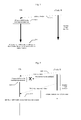
- Fig. 1 shows the operation process of eNode B and UE in a first scenario according to an embodiment of the present invention.
- the eNode B transmits only ACK message over PHICH, but transmits no PDCCH message, i.e., control command, to the current UE.
- the eNode B transmits HARQ ACK to the UE over PHICH.
- the UE keeps its HARQ buffer and stops its own transmission. Then, the UE monitors PDCCH message, i.e., it determines whether any PDCCH message is received within a predetermined duration. Since no PDCCH message is sent to the UE, the UE receives no PDCCH message within the predetermined duration.
- the UE flush its HARQ buffer. Alternatively, the UE may keep its HARQ buffer till maximum retransmission limit is reached or till a PDCCH message is received.
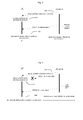
- Fig. 2 shows the operation process of eNode B and UE in a second scenario according to an embodiment of the present invention.
- the eNode B transmits to the UE not only HARQ ACK message over PHICH but also a PDCCH message for new transmission; however, the PDCCH message is lost at the UE side.
- the eNode B transmits to the UE HARQ ACK over PHICH as well as a PDCCH message for new data transmission.
- the UE keeps its HARQ buffer and stops its own transmission, because the PDCCH message is lost.
- the eNode B Due to the PDCCH message being lost, the eNode B cannot detect any new transmission on the scheduled resource for a predetermined time period. Then, the eNode B is aware of the fact that the PDCCH message has been lost. At this point, the eNode B transmits to the UE again a PDCCH message for new data transmission.
- step S22 when the UE has detected the PDCCH message for new transmission, it flushes its HARQ buffer and performs the new transmission.
- Fig. 3 shows the operation process of eNode B and UE in a third scenario according to an embodiment of the present invention.
- the eNodeB transmits to the UE a HARQ ACK message for non-adaptive retransmission; however, a NACK->ACK error happens at the UE side.
- the eNode B transmits to the UE a HARQ ACK message for non-adaptive retransmission; however, during the transmission, a NACK->ACK error happens at the UE side, and thus the UE will receive a HARQ ACK message.
- the UE in response to the reception of the HARQ ACK, the UE keeps its HARQ buffer and stops its own transmission.
- No retransmission will be performed since the UE receives no HARQ NACK for a predetermined time period.
- the eNode B does not receive any expected retransmission data over a predetermined time period.
- the eNode B is aware of the fact that a NACK->ACK error happens at the UE side, and retransmits a PDCCH message indicating retransmission.
- step S32 if the UE receives the PDCCH message for retransmission, it performs retransmission based on the just received PDCCH message.
- Fig. 4 shows the operation process of eNode B and UE in a fourth scenario according to an embodiment of the present invention.
- the eNode B transmits to the UE a HARQ ACK message as well as a PDCCH message for adaptive retransmission; however, at the UE side, a NACK->ACK error happens and the PDCCH message is lost.
- the eNode B transmits to the UE a HARQ ACK message as well as a PDCCH message for adaptive retransmission; however, at the UE side, a NACK->ACK error happens and the PDCCH message is lost. That is, the UE will receive only an erroneous HARQ ACK message.
- the UE in response to the reception of the erroneous ACK message, the UE keeps its HARQ buffer and stops its transmission.
- the eNode B Since the eNode B detects no expected retransmission on the scheduled resource for a predetermined duration, the eNode B becomes aware of the fact that the PDCCH has been lost and the NACK->ACK error has happened.
- the eNode B transmits to the UE again a PDCCH message for retransmission.
- the UE upon receiving the PDCCH message, the UE performs relevant retransmission based on the received PDCCH message.
Landscapes
- Engineering & Computer Science (AREA)
- Computer Networks & Wireless Communication (AREA)
- Signal Processing (AREA)
- Multimedia (AREA)
- Mobile Radio Communication Systems (AREA)
- Detection And Prevention Of Errors In Transmission (AREA)
Abstract
Description
- The present invention relates to wireless communications, and in particular to a method for operating HARQ (Hybrid Automatic Retransmission Request) buffer in LTE (Long-Term Evolution) system, which is capable of optimizing control on HARQ buffer after UE (User Equipment) receives HARQ ACK (HARQ Acknowledgement).
- It has been agreed that in a LTE system, a UE needs to keep its HARQ buffer when it only receives HARQ ACK on PHICH (i.e., HARQ feedback indication channal) but no PDCCH message. However, there will be a waste of resource if the UE, whatever happens, continously keeps its HARQ buffer until the maximum retransmission limit is reached. There is thus a need for a method for optimized control of HARQ buffer.
- An object of the present invention is to provide a method for operating HARQ buffer, which is capable of optimizing control on HARQ buffer after UE receives HARQ ACK.
- In an aspect of the present invention, a method for operating HARQ buffer is provided comprising: receiving HARQ ACK; keeping HARQ buffer in response to the reception of the HARQ ACK; and flushing the HARQ buffer in the case of receiving no PDCCH (Physical Downlink Control Channel) message for a predetermined duration.
- In a further aspect of the present invention, a method for operating HARQ buffer is provided comprising: receiving HARQ ACK from an eNodeB (envolved Node B); keeping HARQ buffer in response to the reception of the HARQ ACK; transmitting from the eNode B to a UE a PDCCH message for new transmission, if no expected new transmission is detected for a predetermined duration; and flushing the HARQ buffer in response to the reception of the PDCCH message.
- Preferably, the method further comprises performing a new transmission by the UE based on the received PDCCH message.
- In a still further aspect of the present invention, a method for operating HARQ buffer is provided comprising: receiving HARQ ACK from an eNodeB (envolved Node B); keeping HARQ buffer in response to the reception of the HARQ ACK; transmitting from the eNode B to a UE a PDCCH message for retransmission, if no expected retransmission is detected for a predetermined duration; and performing retransmission in response to the reception of the PDCCH message.
- Preferably, the method further comprises keeping the HARQ buffer until maximum retransmission limit is reached.
- Preferably, the HARQ ACK is caused by error occuring in the HARQ NACK from the eNode B at the UE side.
- With the method of the present invention, it is possible to prevent any resource waster due to continuously keep HARQ buffer and to prevent any potential collision in uplink data transmission.
- The above and other objects, features and advantages of the present invention will be more apparent from the following description of preferred embodiments with reference to the drawings, in which:
-
Fig. 1 shows the operation process of eNode B and UE in a first scenario according to an embodiment of the present invention; -
Fig. 2 shows the operation process of eNode B and UE in a second scenario according to an embodiment of the present invention; -
Fig. 3 shows the operation process of eNode B and UE in a third scenario according to an embodiment of the present invention; and -
Fig. 4 shows the operation process of eNode B and UE in a fourth scenario according to an embodiment of the present invention. - A detailed description of preferred embodiments of the present invention will be given below in conjunction with the drawings. In the description, any detail and function unnecessary to the present invention are omitted so that the above objects, features and advantages of the present invention will not be obscured.
-
Fig. 1 shows the operation process of eNode B and UE in a first scenario according to an embodiment of the present invention. As shown in the figure, in the first scenario, the eNode B transmits only ACK message over PHICH, but transmits no PDCCH message, i.e., control command, to the current UE. - At step S10, the eNode B transmits HARQ ACK to the UE over PHICH. At step S11, in response to the reception of the HARQ ACK, the UE keeps its HARQ buffer and stops its own transmission. Then, the UE monitors PDCCH message, i.e., it determines whether any PDCCH message is received within a predetermined duration. Since no PDCCH message is sent to the UE, the UE receives no PDCCH message within the predetermined duration. At step S12, the UE flush its HARQ buffer. Alternatively, the UE may keep its HARQ buffer till maximum retransmission limit is reached or till a PDCCH message is received.
-
Fig. 2 shows the operation process of eNode B and UE in a second scenario according to an embodiment of the present invention. In the second scenario, the eNode B transmits to the UE not only HARQ ACK message over PHICH but also a PDCCH message for new transmission; however, the PDCCH message is lost at the UE side. - At step S20, the eNode B transmits to the UE HARQ ACK over PHICH as well as a PDCCH message for new data transmission. At step S21, the UE keeps its HARQ buffer and stops its own transmission, because the PDCCH message is lost.
- Due to the PDCCH message being lost, the eNode B cannot detect any new transmission on the scheduled resource for a predetermined time period. Then, the eNode B is aware of the fact that the PDCCH message has been lost. At this point, the eNode B transmits to the UE again a PDCCH message for new data transmission.
- At step S22, when the UE has detected the PDCCH message for new transmission, it flushes its HARQ buffer and performs the new transmission.
-
Fig. 3 shows the operation process of eNode B and UE in a third scenario according to an embodiment of the present invention. In the third scenario, the eNodeB transmits to the UE a HARQ ACK message for non-adaptive retransmission; however, a NACK->ACK error happens at the UE side. - At step S30, the eNode B transmits to the UE a HARQ ACK message for non-adaptive retransmission; however, during the transmission, a NACK->ACK error happens at the UE side, and thus the UE will receive a HARQ ACK message.
- At step S31, in response to the reception of the HARQ ACK, the UE keeps its HARQ buffer and stops its own transmission.
- No retransmission will be performed since the UE receives no HARQ NACK for a predetermined time period. In other words, the eNode B does not receive any expected retransmission data over a predetermined time period. At this point, the eNode B is aware of the fact that a NACK->ACK error happens at the UE side, and retransmits a PDCCH message indicating retransmission.
- At step S32, if the UE receives the PDCCH message for retransmission, it performs retransmission based on the just received PDCCH message.
-
Fig. 4 shows the operation process of eNode B and UE in a fourth scenario according to an embodiment of the present invention. In the fourth scenario, the eNode B transmits to the UE a HARQ ACK message as well as a PDCCH message for adaptive retransmission; however, at the UE side, a NACK->ACK error happens and the PDCCH message is lost. - At step S40, the eNode B transmits to the UE a HARQ ACK message as well as a PDCCH message for adaptive retransmission; however, at the UE side, a NACK->ACK error happens and the PDCCH message is lost. That is, the UE will receive only an erroneous HARQ ACK message.
- At step S41, in response to the reception of the erroneous ACK message, the UE keeps its HARQ buffer and stops its transmission.
- Since the eNode B detects no expected retransmission on the scheduled resource for a predetermined duration, the eNode B becomes aware of the fact that the PDCCH has been lost and the NACK->ACK error has happened.
- At step S42, the eNode B transmits to the UE again a PDCCH message for retransmission.
- At step S43, upon receiving the PDCCH message, the UE performs relevant retransmission based on the received PDCCH message.
- The present invention has been disclosed above with the preferred embodiments. Those skilled in the art can make various variations, replacements and additions to the present invention within the scope of the present invention. Therefore, the scope of the present invention is not limited to the above specific embodiments, but should be defined by the appended claims.
Claims (4)
- A method for operating HARQ buffer comprising:receiving HARQ ACK from an eNodeB; keeping HARQ buffer in response to the reception of the HARQ ACK;transmitting from the eNodeB to a UE a PDCCH message for new transmission, if no expected new transmission is detected for a predetermined duration; and flushing the HARQ buffer in response to the reception of the PDCCH message.
- The method of claim 1, further comprising: performing a new transmission by the UE based on the received PDCCH message.
- A method for operating HARQ buffer comprising:receiving HARQ ACK from an eNodeB; keeping HARQ buffer in response to the reception of the HARQ ACK;transmitting from the eNodeB to a UE a PDCCH message for retransmission, if no expected retransmission is detected for a predetermined duration; and performing retransmission in response to the reception of the PDCCH message.
- The method of claim 3, wherein said HARQ ACK is caused by, at the UE side, an error occurring in the HARQ NACK from the eNodeB.
Applications Claiming Priority (2)
| Application Number | Priority Date | Filing Date | Title |
|---|---|---|---|
| CN200810033557XA CN101505212B (en) | 2008-02-04 | 2008-02-04 | Method for operating HARQ buffer |
| EP09711300.5A EP2242322B1 (en) | 2008-02-04 | 2009-02-04 | Method for the harq buffer operation |
Related Parent Applications (2)
| Application Number | Title | Priority Date | Filing Date |
|---|---|---|---|
| EP09711300.5A Division-Into EP2242322B1 (en) | 2008-02-04 | 2009-02-04 | Method for the harq buffer operation |
| EP09711300.5 Division | 2009-02-04 |
Publications (1)
| Publication Number | Publication Date |
|---|---|
| EP2637469A1 true EP2637469A1 (en) | 2013-09-11 |
Family
ID=40956648
Family Applications (2)
| Application Number | Title | Priority Date | Filing Date |
|---|---|---|---|
| EP09711300.5A Not-in-force EP2242322B1 (en) | 2008-02-04 | 2009-02-04 | Method for the harq buffer operation |
| EP20130170821 Ceased EP2637469A1 (en) | 2008-02-04 | 2009-02-04 | Method for HARQ buffer operation |
Family Applications Before (1)
| Application Number | Title | Priority Date | Filing Date |
|---|---|---|---|
| EP09711300.5A Not-in-force EP2242322B1 (en) | 2008-02-04 | 2009-02-04 | Method for the harq buffer operation |
Country Status (6)
| Country | Link |
|---|---|
| US (1) | US20110029834A1 (en) |
| EP (2) | EP2242322B1 (en) |
| JP (1) | JP5384526B2 (en) |
| KR (1) | KR101583492B1 (en) |
| CN (1) | CN101505212B (en) |
| WO (1) | WO2009100651A1 (en) |
Cited By (1)
| Publication number | Priority date | Publication date | Assignee | Title |
|---|---|---|---|---|
| US20160323883A1 (en) * | 2015-04-29 | 2016-11-03 | Htc Corporation | Device and Method of Handling HARQ Operation for Unlicensed Band |
Families Citing this family (20)
| Publication number | Priority date | Publication date | Assignee | Title |
|---|---|---|---|---|
| EP2266240A1 (en) * | 2008-03-18 | 2010-12-29 | Telefonaktiebolaget L M Ericsson (PUBL) | A method and a transceiver for harq failure detection |
| CN102474848B (en) * | 2009-08-18 | 2014-07-23 | 上海贝尔股份有限公司 | Method, relay node and user equipment for avoiding self-interference outside multicast broadcast single frequency network sub-frame(MBSFN) |
| JP5591829B2 (en) * | 2009-12-28 | 2014-09-17 | 富士通株式会社 | Communication method and communication apparatus |
| CN101754274B (en) * | 2009-12-29 | 2012-07-04 | 华为技术有限公司 | Data retransmission method and equipment |
| US8693447B2 (en) | 2010-03-07 | 2014-04-08 | Telefonaktiebolaget L M Ericsson (Publ) | Processing resource optimization in communication systems |
| US9351201B2 (en) * | 2012-03-08 | 2016-05-24 | Qualcomm Incorporated | System and method for reducing data loss during a serving cell change in a multi-flow HSDPA communication network |
| EP2880943B1 (en) * | 2012-08-03 | 2021-04-21 | Apple Inc. | Signaling and channel designs for d2d communications |
| US9036603B2 (en) | 2012-08-03 | 2015-05-19 | Intel Corporation | Network assistance for device-to-device discovery |
| WO2014022776A1 (en) | 2012-08-03 | 2014-02-06 | Intel Corporation | Method and system for enabling device-to-device communication |
| US9554296B2 (en) | 2012-08-03 | 2017-01-24 | Intel Corporation | Device trigger recall/replace feature for 3GPP/M2M systems |
| US8913518B2 (en) | 2012-08-03 | 2014-12-16 | Intel Corporation | Enhanced node B, user equipment and methods for discontinuous reception in inter-ENB carrier aggregation |
| CN103906113B (en) * | 2012-12-28 | 2017-11-10 | 联芯科技有限公司 | Judge the method for the empty inspection uplink scheduling control information of user terminal |
| US9564997B2 (en) * | 2013-08-07 | 2017-02-07 | Apple Inc. | Method and apparatus for flushing uplink HARQ buffer in C-DRX mode |
| US20150280880A1 (en) * | 2014-04-01 | 2015-10-01 | Qualcomm Incorporated | Managing hybrid automatic repeat request (harq) buffer |
| US10862630B2 (en) | 2015-02-13 | 2020-12-08 | Samsung Electronics Co., Ltd | Method and system for contiguous HARQ memory management with memory splitting |
| CN106470467B (en) * | 2015-08-14 | 2021-04-20 | 中兴通讯股份有限公司 | A monitoring control method, terminal, base station and system |
| EP3378178B1 (en) * | 2015-11-18 | 2020-07-22 | Telefonaktiebolaget LM Ericsson (PUBL) | Toggling based indicator of reception success |
| CN109963339B (en) * | 2017-12-25 | 2021-01-08 | 维沃移动通信有限公司 | Control channel configuration and detection method and apparatus, program and medium |
| CN110351020B (en) * | 2018-04-03 | 2021-06-15 | 华为技术有限公司 | A method, device and system for transmitting data |
| CN110890944B (en) * | 2018-09-11 | 2022-10-28 | 中兴通讯股份有限公司 | Method for realizing automatic retransmission function and related site |
Citations (1)
| Publication number | Priority date | Publication date | Assignee | Title |
|---|---|---|---|---|
| WO2008096259A2 (en) | 2007-02-09 | 2008-08-14 | Nokia Corporation | Method and apparatus for acknowledgement signaling |
Family Cites Families (9)
| Publication number | Priority date | Publication date | Assignee | Title |
|---|---|---|---|---|
| US6519223B1 (en) * | 1999-04-06 | 2003-02-11 | Telefonaktiebolaget L M Ericsson (Publ) | System and method for implementing a semi reliable retransmission protocol |
| US7414989B2 (en) * | 2003-05-07 | 2008-08-19 | Motorola, Inc. | ACK/NACK determination reliability for a communication device |
| DE60311574T2 (en) * | 2003-08-14 | 2007-11-15 | Matsushita Electric Industrial Co., Ltd., Kadoma | Time monitoring of packet re-transmissions during a soft handoff |
| CN100484301C (en) * | 2006-01-18 | 2009-04-29 | 华为技术有限公司 | High-speed uplink grouping access service reconfiguration method |
| KR100943590B1 (en) * | 2006-04-14 | 2010-02-23 | 삼성전자주식회사 | Method and apparatus for transmitting and receiving status report in mobile communication system |
| KR100946894B1 (en) * | 2006-09-13 | 2010-03-09 | 삼성전자주식회사 | Method and apparatus for dynamically allocating complex automatic retransmission buffer in wireless communication system |
| JP4829754B2 (en) * | 2006-11-29 | 2011-12-07 | 富士通株式会社 | Wireless communication method and wireless communication device |
| EP2127205B1 (en) * | 2007-01-08 | 2012-02-29 | Interdigital Technology Corporation | Method and apparatus for multicasting with feedback information |
| CN101051952A (en) * | 2007-04-18 | 2007-10-10 | 东南大学 | Self adaption sampling stream measuring method under high speed multilink logic channel environment |
-
2008
- 2008-02-04 CN CN200810033557XA patent/CN101505212B/en not_active Ceased
-
2009
- 2009-02-04 WO PCT/CN2009/000129 patent/WO2009100651A1/en not_active Ceased
- 2009-02-04 JP JP2010545350A patent/JP5384526B2/en not_active Expired - Fee Related
- 2009-02-04 KR KR1020107019579A patent/KR101583492B1/en active Active
- 2009-02-04 EP EP09711300.5A patent/EP2242322B1/en not_active Not-in-force
- 2009-02-04 US US12/866,069 patent/US20110029834A1/en not_active Abandoned
- 2009-02-04 EP EP20130170821 patent/EP2637469A1/en not_active Ceased
Patent Citations (1)
| Publication number | Priority date | Publication date | Assignee | Title |
|---|---|---|---|---|
| WO2008096259A2 (en) | 2007-02-09 | 2008-08-14 | Nokia Corporation | Method and apparatus for acknowledgement signaling |
Non-Patent Citations (7)
| Title |
|---|
| "3 rd Generation Partnership Project; Technical Specification Group Radio Access Network; Evolved Universal Terrestrial Radio Access (E-UTRA) Medium Access Control (MAC) protocol specification (Release 8)", 3GPP TS 36.321 V8.0.0,, 1 December 2007 (2007-12-01), pages 2 - 23, XP008139238 * |
| "3GPP DRAFT; R2-080416, 3RD GENERATION PARTNERSHIP PROJECT (3GPP", vol. RAN WG2, 1 August 2008, MOBILE COMPETENCE CENTRE, article "PHICH/PDCCH Interaction" |
| "3GPP DRAFT; Rl-080529- NDI VS RV FOR E-UTRA UPLINK, 3RD GENERATION PARTNERSHIP PROJECT (3GPP", vol. RAN WG1, 19 January 2008, MOBILE COMPETENCE CENTRE, article "NDI vs RV for E-UTRA Uplink" |
| MOTOROLA: "NDI vs RV for E-UTRA Uplink", 3GPP DRAFT; R1-080529 - NDI VS RV FOR E-UTRA UPLINK, 3RD GENERATION PARTNERSHIP PROJECT (3GPP), MOBILE COMPETENCE CENTRE ; 650, ROUTE DES LUCIOLES ; F-06921 SOPHIA-ANTIPOLIS CEDEX ; FRANCE, vol. RAN WG1, no. Sevilla, Spain; 20080119, 19 January 2008 (2008-01-19), XP050109041 * |
| MOTOROLA: "PHICH/PDCCH Interaction", 3GPP DRAFT; R2-080416, 3RD GENERATION PARTNERSHIP PROJECT (3GPP), MOBILE COMPETENCE CENTRE ; 650, ROUTE DES LUCIOLES ; F-06921 SOPHIA-ANTIPOLIS CEDEX ; FRANCE, vol. RAN WG2, no. Sevilla, Spain; 20080108, 8 January 2008 (2008-01-08), XP050138266 * |
| NOKIA CORPORATION ET AL.: "3GPP DRAFT; R2-080022 PHICH AND PDCCH INTERACTION, 3RD GENERATION PARTNERSHIP PROJECT (3GPP", vol. RAN WG2, 8 January 2008, MOBILE COMPETENCE CENTRE, article "PHICH and PDCCH interaction" |
| NOKIA CORPORATION ET AL: "PHICH and PDCCH interaction", 3GPP DRAFT; R2-080022 PHICH AND PDCCH INTERACTION, 3RD GENERATION PARTNERSHIP PROJECT (3GPP), MOBILE COMPETENCE CENTRE ; 650, ROUTE DES LUCIOLES ; F-06921 SOPHIA-ANTIPOLIS CEDEX ; FRANCE, vol. RAN WG2, no. Sevilla, Spain; 20080114 - 20080118, 8 January 2008 (2008-01-08), XP050603460 * |
Cited By (2)
| Publication number | Priority date | Publication date | Assignee | Title |
|---|---|---|---|---|
| US20160323883A1 (en) * | 2015-04-29 | 2016-11-03 | Htc Corporation | Device and Method of Handling HARQ Operation for Unlicensed Band |
| US10225837B2 (en) * | 2015-04-29 | 2019-03-05 | Htc Corporation | Device and method of handling HARQ operation for unlicensed band |
Also Published As
| Publication number | Publication date |
|---|---|
| EP2242322A4 (en) | 2013-02-27 |
| US20110029834A1 (en) | 2011-02-03 |
| CN101505212B (en) | 2012-11-07 |
| EP2242322B1 (en) | 2015-12-02 |
| WO2009100651A1 (en) | 2009-08-20 |
| KR101583492B1 (en) | 2016-01-08 |
| KR20100108615A (en) | 2010-10-07 |
| JP2011512088A (en) | 2011-04-14 |
| EP2242322A1 (en) | 2010-10-20 |
| JP5384526B2 (en) | 2014-01-08 |
| CN101505212A (en) | 2009-08-12 |
Similar Documents
| Publication | Publication Date | Title |
|---|---|---|
| EP2637469A1 (en) | Method for HARQ buffer operation | |
| US10153869B2 (en) | System and method adopting a reliable stop-and-wait hybrid automatic repeat request protocol | |
| JP6739543B2 (en) | Wireless network node, wireless device, and method performed thereon | |
| US8279806B2 (en) | Technique for uplink data transmissions in communication networks | |
| US11483097B2 (en) | Wireless communication method, network device, terminal device, and readable storage medium | |
| CN101790195B (en) | Multi-subframe integrated scheduling data transmission method | |
| US8265023B2 (en) | Method and apparatus for sending control signaling | |
| CN101800633A (en) | Control method for repeatedly transmitting ACK/NACK and user equipment (UE) | |
| JP7381565B2 (en) | Method and user equipment for controlling data retransmission | |
| CN111436056B (en) | Uplink scheduling-free configuration reconfiguration method, device, terminal and base station | |
| JP2017085416A (en) | Base station device, terminal device, communication method, and program | |
| KR101508666B1 (en) | Apparatus and method for providing multicast service in device to device communication radio communication system supporting hybrid automatic repeat request scheme | |
| KR100546608B1 (en) | Power Control Method in Mobile Communication System | |
| CN101938778A (en) | Method and base station for retransmitting data based on uplink hybrid automatic repeat request | |
| JP5614185B2 (en) | Mobile terminal apparatus and transmission power control method thereof | |
| WO2015186334A1 (en) | Base station, reception confirmation method, and storage medium wherein program is stored | |
| CN103095390B (en) | A kind of method and apparatus for configurating downlink link in the enb | |
| KR20190025213A (en) | Uplink harq operating method and base station using thereof |
Legal Events
| Date | Code | Title | Description |
|---|---|---|---|
| PUAI | Public reference made under article 153(3) epc to a published international application that has entered the european phase |
Free format text: ORIGINAL CODE: 0009012 |
|
| AC | Divisional application: reference to earlier application |
Ref document number: 2242322 Country of ref document: EP Kind code of ref document: P |
|
| AK | Designated contracting states |
Kind code of ref document: A1 Designated state(s): AT BE BG CH CY CZ DE DK EE ES FI FR GB GR HR HU IE IS IT LI LT LU LV MC MK MT NL NO PL PT RO SE SI SK TR |
|
| 111Z | Information provided on other rights and legal means of execution |
Free format text: AT BE BG CH CY CZ DE DK EE ES FI FR GB GR HR HU IE IS IT LT LU LV MC MK MT NL NO PL PT RO SE SI SK TR Effective date: 20130801 |
|
| 17P | Request for examination filed |
Effective date: 20140311 |
|
| RBV | Designated contracting states (corrected) |
Designated state(s): AT BE BG CH CY CZ DE DK EE ES FI FR GB GR HR HU IE IS IT LI LT LU LV MC MK MT NL NO PL PT RO SE SI SK TR |
|
| RAP1 | Party data changed (applicant data changed or rights of an application transferred) |
Owner name: ALCATEL LUCENT |
|
| D11X | Information provided on other rights and legal means of execution (deleted) | ||
| 17Q | First examination report despatched |
Effective date: 20150430 |
|
| APBK | Appeal reference recorded |
Free format text: ORIGINAL CODE: EPIDOSNREFNE |
|
| APBN | Date of receipt of notice of appeal recorded |
Free format text: ORIGINAL CODE: EPIDOSNNOA2E |
|
| APAF | Appeal reference modified |
Free format text: ORIGINAL CODE: EPIDOSCREFNE |
|
| APBT | Appeal procedure closed |
Free format text: ORIGINAL CODE: EPIDOSNNOA9E |
|
| STAA | Information on the status of an ep patent application or granted ep patent |
Free format text: STATUS: THE APPLICATION HAS BEEN REFUSED |
|
| 18R | Application refused |
Effective date: 20160831 |