EP2637117A2 - Analyser for calculating the magnetic field generated by a system of particles - Google Patents
Analyser for calculating the magnetic field generated by a system of particles Download PDFInfo
- Publication number
- EP2637117A2 EP2637117A2 EP13000044.1A EP13000044A EP2637117A2 EP 2637117 A2 EP2637117 A2 EP 2637117A2 EP 13000044 A EP13000044 A EP 13000044A EP 2637117 A2 EP2637117 A2 EP 2637117A2
- Authority
- EP
- European Patent Office
- Prior art keywords
- particle
- magnetic
- operative
- particle system
- unit
- Prior art date
- Legal status (The legal status is an assumption and is not a legal conclusion. Google has not performed a legal analysis and makes no representation as to the accuracy of the status listed.)
- Withdrawn
Links
Images






Classifications
-
- G—PHYSICS
- G01—MEASURING; TESTING
- G01R—MEASURING ELECTRIC VARIABLES; MEASURING MAGNETIC VARIABLES
- G01R33/00—Arrangements or instruments for measuring magnetic variables
-
- G—PHYSICS
- G06—COMPUTING OR CALCULATING; COUNTING
- G06F—ELECTRIC DIGITAL DATA PROCESSING
- G06F30/00—Computer-aided design [CAD]
- G06F30/20—Design optimisation, verification or simulation
-
- G—PHYSICS
- G06—COMPUTING OR CALCULATING; COUNTING
- G06F—ELECTRIC DIGITAL DATA PROCESSING
- G06F30/00—Computer-aided design [CAD]
- G06F30/20—Design optimisation, verification or simulation
- G06F30/25—Design optimisation, verification or simulation using particle-based methods
-
- G—PHYSICS
- G06—COMPUTING OR CALCULATING; COUNTING
- G06F—ELECTRIC DIGITAL DATA PROCESSING
- G06F2111/00—Details relating to CAD techniques
- G06F2111/10—Numerical modelling
-
- G—PHYSICS
- G06—COMPUTING OR CALCULATING; COUNTING
- G06F—ELECTRIC DIGITAL DATA PROCESSING
- G06F2119/00—Details relating to the type or aim of the analysis or the optimisation
- G06F2119/14—Force analysis or force optimisation, e.g. static or dynamic forces
Definitions
- the present invention relates to an analyzer that analyzes a particle system.
- an analyzer for a motor comprises an arithmetic processing unit that performs analysis of magnetic fields.
- the arithmetic processing unit in response to external instructions based on user operations, performs torque calculations according to analysis of static magnetic fields by a Finite Element Method (FEM) or according to a Maxwell stress method. So-called meshing is performed in the analysis of static magnetic fields by the FEM. The meshing is applied to a core region and a housing region, as well as a external air layer region.
- FEM Finite Element Method
- Other methods for analyzing magnetic fields include a difference method and a magnetic moment method.
- An embodiment of the present invention relates to an analyzer.
- This analyzer comprises: a magnetic moment association unit operative to associate a particle in a particle system defined in a virtual space with a magnetic moment; a numerical operation unit operative to perform numerical operation according to a governing equation that governs a motion of each particle in the particle system, the particle system including the particle which is associated with the magnetic moment by the magnetic moment association unit; and a magnetic physical quantity calculation unit operative to calculate a magnetic physical quantity with regard to the particle system using the results of the numerical operation performed by the numerical operation unit.
- the meshing is applied to the object to be analyzed.
- the object to be analyzed is fluid and if a fixed mesh is used with moving boundaries, the analysis may become difficult. If the object to be analyzed performs large displacement of a magnetic body or a plastic body, the meshing may be difficult.
- polymerization of meshes if the polymerization is single, this is the large displacement
- One of the purposes of the present invention is to provide an analysis technique that enables a preferred analysis of magnetic phenomena in simulations.
- the RMD method is a developed version of the MD method so that it can be applied to macroscale systems.
- the MD method /the RMD method which are kinetics methods (calculations of physical quantity uses statistical mechanics) and the particle method in which a differential equation describing a continuum is discretized are different.
- the MD method / the RMD method are referred to as the particle method.
- the particle method can analyze not only static phenomena but also dynamic phenomena such as flow, the particle method attracts attention as a simulation method replacing the above-mentioned FEM in which the object to be analyzed mainly is a static phenomenon.
- the particle method obtains a particle system to be analyzed by discretizing a continuum by particles. For example, when fluid is analyzed by the particle method, it is often the case that the Navier-Stokes equation is discretized by particles.
- the particle method forms a continuum by collecting many particles. This is, for example, a view in which a large iron ball is formed by collecting and solidifying small iron particles.
- FIG. 1 is a block diagram showing functions or configurations of an analyzer 100 according to an embodiment. It should be understood that each block depicted in the Figure can be realized with hardware. Such hardware includes an electronic device (s) or an element (s) such as a CPU (Central Processing Unit) of a computer. It should also be understood that each block depicted in the Figure can be realized by software. Such software includes a computer program. In the Figure in particular, the depicted functional block is realized by cooperation of these elements. Therefore, it should be understood by a person skilled in the art who has read this specification that it is possible to realize these functional blocks in various forms by hardware, software or a combination of those.
- hardware includes an electronic device (s) or an element (s) such as a CPU (Central Processing Unit) of a computer.
- a CPU Central Processing Unit
- a particle system is analyzed based on the RMD method.
- the particle system is analyzed based on other particle method such as the MD method, the Distinct Element Method, the Smoothed Particle Hydrodynamics, or the Moving Particle Semi-implicit.
- the analyzer 100 is connected to an input device 102 and a display 104.
- the input device 102 may be a keyboard or a mouse for receiving user inputs that are related to processes performed in the analyzer 100.
- the input device 102 may be configured to receive inputs from a storage medium such as networks (Internet), CD or DVD.
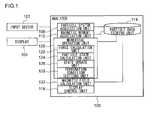
- the analyzer 100 comprises a particle system acquisition unit 108, a magnetic moment association unit 110, a numerical operation unit 120, a magnetic field calculation unit 132, a display control unit 118 and a particle data storing unit 114.
- the particle system acquisition unit 108 is operative to acquire data of a particle system.
- the particle system comprises N (N is a natural number) particles. Those N particles are defined in a one, two or three dimensional virtual space, based on input information acquired from a user through the input device 102.
- the particle system is a particle system which is renormalized using the RMD method.
- the particle system acquisition unit 108 is operative to arrange N particles in the virtual space based on the input information and to associate a velocity with each arranged particle.
- the particle system acquisition unit 108 is operative to associate a particle ID identifying an arranged particle and a position of the associated particle and a velocity of the arranged particle and to register the associated information to the particle data storing unit 114.
- the magnetic moment association unit 110 is operative to associate, based on input information obtained from a user through the input devise 102, a magnetic moment with a particle of the particle system acquired by the particle system acquisition unit 108. For example, the magnetic moment association unit 110 is operative to require, of the user, inputs for magnetic moments of particles of the particle system through the display 104. The magnetic moment association unit 110 is operative to associate the input magnetic moment and the particle ID and to register the associated information to the particle data storing unit 114.
- the numerical operation unit 120 is operative to perform numerical operation according to a governing equation that governs a motion of each particle in the particle system, the particle system being represented by data stored by the particle data storing unit 114.
- the numerical operation unit 120 is operative to perform repeated operation according to an equation of motion of a discretized particle.
- the equation of motion of the particle has a term dependent on the magnetic moment.
- the numerical operation unit 120 includes a force calculation unit 122, a particle state calculation unit 124, a state update unit 126 and a termination condition deciding unit 128.
- the force calculation unit 122 is operative to refer data of the particle system stored by the particle data storing unit 114 and to calculate a force applied to each particle in the particle system based on particle-particle distances.
- the force applied to a particle includes a force based on interaction(s) between magnetic moments.
- the force calculation unit 122 is operative to, with regard to i-th (i is greater than or equal to 1 and i is less than or equal to N) particle in the particle system, identify particle (s) whose distance from the i-th particle is less than a predetermined cut-off distance.
- such identified particles are called neighboring particles.
- the force calculation unit 122 is operative to calculate a force applied to the i-th particle by each neighboring particle based on the potential energy function between the neighboring particle and the i-th particle and the distance between the neighboring particle and the i-th particle.
- the force calculation unit 122 is operative to calculate the force by obtaining a value of a gradient of the potential energy function at the value of the distance between the neighboring particle and the i-th particle.
- the force calculation unit 122 is operative to sum up the force applied to the i-th particle by a neighboring particle over all neighboring particle in order to calculate the total force applied to the i-th particle.
- the particle state calculation unit 124 is operative (i) to refer data of the particle system stored by the particle data storing unit 114 and (ii) to apply the total force calculated by the force calculation unit 122 to the discretized equation of motion of each particle in the particle system and (iii) to calculate, based on the results of the application, at least one of the position and the velocity of the each particle.
- the particle state calculation unit 124 is operative to calculate both the position and the velocity of a particle.
- the particle state calculation unit 124 is operative to calculate the velocity of a particle according to the discretized equation of motion of the particle, the equation including the force calculated by the force calculation unit 122.
- the particle state calculation unit 124 is operative to calculate the velocity of the i-th particle of the particle system by substituting the force calculated for the i-th particle by the force calculation unit 122 for the discretized equation of motion of the i-th particle, the equation being discretized based on a certain numerical analysis method such as leapfrog method or Euler method and the equation being discretized using a certain minute ticks of time ⁇ t. This calculation uses velocities of the particle obtained in the previous cycle of the repeated operation.
- the particle state calculation unit 124 is operative to calculate the position of a particle based on the calculated velocity of the particle.
- the particle state calculation unit 124 is operative to calculate the position of the i-th particle of the particle system by applying the calculated velocity of the i-th particle to an equation of relationship between the position and the velocity of the i-th particle, the equation being discretized based on a certain numerical analysis method and the equation being discretized using the ticks of time ⁇ t. This calculation uses positions of the particle obtained in the previous cycle of the repeated operation.
- the state update unit 126 is operative to update each of the position and the velocity of each particle in the particle system stored by the particle data storing unit 114 with the position and the velocity calculated by the particle state calculation unit 124.
- the termination condition deciding unit 128 is operative to decide whether the repeated operation in the numerical operation unit 120 should be terminated or not.
- the termination conditions with which the repeated operation should be terminated may include the condition that the number of operations in the repeated operation reaches a predetermined number, the condition that an instruction for termination is received from outside and the condition that the particle system reaches a steady state.
- the termination condition deciding unit 128 is operative to terminate the repeated operation in the numerical operation unit 120 if the termination condition is met.
- the termination condition deciding unit 128 is operative to return the process to the force calculation unit 122 if the termination condition is not met. Then, the force calculation unit 122 is operative to again calculate the force with positions of particles updated by the state update unit 126.
- the magnetic field calculation unit 132 is operative to, after the termination of the operation in the numerical operation unit 120, calculate the magnetic field created by the particle system, the particle system being represented by data stored by the particle data storing unit 114.
- the magnetic field calculation unit 132 is operative to calculate the magnetic field based on a magnetic moment of each particle stored by the particle data storing unit 114.
- the magnetic field is a magnetic physical quantity related to the particle system.
- the magnetic field calculation unit 132 may be operative to calculate a magnetic flux density or a magnetization in addition to or in substitution for the magnetic field.
- the magnetic field calculation unit 132 may be operative to calculate the magnetic field created at a position of a particle for each step of the repeated operation in the numerical operation unit 120.
- the display control unit 118 is operative to cause the display 104 to display the time evolution of the particle system or the state of the particle system at a certain time based on the position, velocity and magnetic moment of each particle of the particle system, the particle system being represented by data stored by the particle data storing unit 114.
- This display may be performed in a form of still image or moving image.
- Figure 2 is a data structure diagram showing an example of a particle data storing unit 114.
- the particle data storing unit 114 stores the particle ID, the position of the particle, the velocity of the particle and the magnetic moment of the particle.
- an example of the storing unit is a hard disk or a memory. It should be understood by a person skilled in the art who has read this specification that it is possible to realize each unit, based on descriptions in this specification, by a CPU (not shown), a module of installed application program, a module of system program or a memory temporarily storing contents of data that has been read out from a hard disk.
- Figure 3 is a flowchart showing an example of a series of processes in the analyzer 100.
- the particle system acquisition unit 108 is operative to acquire the particle system renormalized based on the RMD method (S202).
- the magnetic moment association unit 110 is operative to associate a magnetic moment with a particle of the acquired particle system (S204).
- the force calculation unit 122 is operative to calculate the force applied to a particle based on particle-particle distances (S206).
- the particle state calculation unit 124 is operative to calculate the velocity and the position of a particle according to the equation of motion of the particle, the equation including the calculated force (S208).
- the state update unit 126 is operative to update the position and the velocity stored by the particle data storing unit 114 with the calculated position and velocity (S210).
- the termination condition deciding unit 128 is operative to decide whether the termination condition is met (S212). If the termination condition is not met (N of S212), the process returns to S206. If the termination condition is met (Y of S212), the magnetic field calculation unit 132 is operative to calculate the magnetic field created by the particle system (S214).
- the particle method preferably can analyze a dynamic object to be analyzed such as fluid, separation phenomena or cutting work. Then, in the analyzer 100 according to the present embodiment, both the analysis based on the particle method and the analysis based on the magnetic moment are realized. Therefore, it is possible to analyze a dynamic object to be analyzed with higher accuracy and with shorter calculation time, including a magnetic property such as the magnetic field.
- the object to be analyzed is iron sand
- a prior art mesh-based analysis method like FEM
- the prior art mesh-based analysis method is not effective to such object since a rotor rotates with respect to a stator.
- the prior art method may allow static analysis only.
- it is possible to dynamically deal with magnetic interaction between the rotor and the stator while enabling high-accuracy simulations of rotations of the rotor using the particle method.
- the z axis is defined to be the direction of spin and "a" is defined to be a radius of atom.
- a magnetic field created by a single spin located at a lattice point j is expressed as follows.
- B ⁇ represents an average in a sphere.
- the magnetic moment m p can be obtained.
- the magnetic field created outside the magnetic body is represented by P-13.
- the magnetic field created inside the magnetic body is represented by (eqn14)
- P-14 satisfies the following.
- ⁇ M p 0
- the number of particles (atoms) forming the sphere is 4009 and that those particles are arranged in fcc structure.
- Figures 4 , 5 , 6 and 7 show the results of the first - fourth order of multipole expansion. Those Figures show cross-sections which pass the center. As the order of the multipole expansion increases, it can be seen that the results get closer to the exact solution. The convergence is deteriorated if the order is low. Most of the calculation time is occupied with calls for spherical harmonics.
- the residual is less than or equal to 1e-8 and the calculation time is about 3 hours. The residual does not decrease below 1e-9.
- Figure 8 is a diagram showing a relationship between orders of spherical harmonics and calculation values. It can be seen that a higher order gives results closer to the exact solution.
- the principle of the analysis method used in the analyzer 100 can be described as follows.
- M p is a mass of nucleus
- m e is a mass of electron.
- e is (an absolute value of) a charge of an nucleus or an electron. The charge and the mass of electron may not explicitly appear since the charge is converted to a current and the mass of electron is added to the mass of nucleus to give a mass M of atom in the end.
- ⁇ V is a volume of the magnetic sphere
- m v is the virtual mass
- ⁇ i is a Lagrangian undetermined coefficient.
- the direction of spin is defined as z axis. "a" is an radius of atom.
- the external magnetic field (contributions from N spins) H m felt by a moment at x p is (eqn33)
- the induced magnetic field H ind is driven from (eqn35)
- the magnetic field created outside the magnetic body is given by Q-26.
- the magnetic field created inside the magnetic body is (eqn39)
- FIG. 9 is a diagram showing a hysteresis curve.
- the permanent magnetization is given as follows.
- M c The B-H curve with the above permanent magnetization is given as follows.
- B f(H)
- Newton-Laphson method can be used.
- the Green function G(r pj ) can be replaced with y ⁇ pj / ⁇ 0 .
- a sufficiently small m v can induce a minute attenuation vibration around the true solution; thereby the errors can be reduced.
- an electrical conductance is zero and that the number of particles (atoms) forming the sphere is 4009 and that those particles are arranged in fcc structure.
- M 3 ⁇ o ⁇ ⁇ - ⁇ o ⁇ + 2 ⁇ ⁇ o B o
- the calculation results are similar to those for Figures 4 , 5 , 6 , 7 and 8 .
- Figures 10 , 11 and 12 show the results of confirmation of looping patterns.
- "windings" of the magnetic field are not seen. Such “windings” can be seen according to the prior art magnetic moment method.
- arrangements of particles if the arrangements are ordered (fcc, bcc, sc), it can be seen that the results are substantially the same.
- Figure 10 is a diagram showing results of calculations of magnetization due to a permanent magnet (1.0T).
- the permanent magnet is arranged on bcc lattice and the magnetic body is placed on fcc lattice.
- Figure 11 is a diagram showing results of calculations of magnetization due to a permanent magnet (1.0 T).
- the permanent magnet is arranged on fcc lattice and the magnetic body is arranged on bcc lattice.
- Figure 12 is a diagram showing results of calculations of magnetization due to a permanent magnet (1.0 T).
- the permanent magnet is arranged on fcc lattice and the magnetic body is arranged on sc lattice. Since the atomic radius used is the one for fcc lattice, the magnetic field inside the magnetic body is rather small. The true solution can be found if the atomic radius is the one which is given by filling sc lattice.
- the force applied on the particle can be derived directly from the Maxwell's stress tensor. (eqn74)
- the moment created by localized current at the sphere can be expressed as the following.
- the induced magnetic field is given by the following. (eqn100)
- H ind x p - ⁇ j ⁇ j ⁇ B • j ⁇ G r pj
- G r pj ⁇ ⁇ j ⁇ a 3 3 ⁇ r pj r pj > a ⁇ j ⁇ a 2 2 - r pj 2 6 r pj ⁇ a
- G (r) is a Green function (a propagation function).
- the eddy current is given by the following.
- the embodiment describes the case where both the position and the velocity of a particle are calculated in the numerical operation unit 120.
- the present invention is not limited to this.
- a method of numerical analysis such as the Verlet method
- the position of a particle is directly calculated from the force applied on the particle in the calculation of the position of the particle and the velocity of the particle does not have to be explicitly calculated.
- the concept according to the present embodiment can be applied to such a method.
Landscapes
- Engineering & Computer Science (AREA)
- Physics & Mathematics (AREA)
- Theoretical Computer Science (AREA)
- General Physics & Mathematics (AREA)
- Evolutionary Computation (AREA)
- General Engineering & Computer Science (AREA)
- Geometry (AREA)
- Computer Hardware Design (AREA)
- Condensed Matter Physics & Semiconductors (AREA)
- Management, Administration, Business Operations System, And Electronic Commerce (AREA)
- Control Of Electric Motors In General (AREA)
- Measuring Magnetic Variables (AREA)
- Magnetic Resonance Imaging Apparatus (AREA)
Abstract
Description
- The present invention relates to an analyzer that analyzes a particle system.
- Recent years, along with the increase of computational capability of a computer, simulations that incorporate analysis of magnetic fields are frequently used in design/development of electric appliances such as a motor. The use of the simulations can increase the speed of the design/development since the simulations enables certain level of evaluations to be performed without actually making prototypes.
- For example, an analyzer for a motor is known. The analyzer comprises an arithmetic processing unit that performs analysis of magnetic fields. The arithmetic processing unit, in response to external instructions based on user operations, performs torque calculations according to analysis of static magnetic fields by a Finite Element Method (FEM) or according to a Maxwell stress method. So-called meshing is performed in the analysis of static magnetic fields by the FEM. The meshing is applied to a core region and a housing region, as well as a external air layer region. Other methods for analyzing magnetic fields include a difference method and a magnetic moment method.
- An embodiment of the present invention relates to an analyzer. This analyzer comprises: a magnetic moment association unit operative to associate a particle in a particle system defined in a virtual space with a magnetic moment; a numerical operation unit operative to perform numerical operation according to a governing equation that governs a motion of each particle in the particle system, the particle system including the particle which is associated with the magnetic moment by the magnetic moment association unit; and a magnetic physical quantity calculation unit operative to calculate a magnetic physical quantity with regard to the particle system using the results of the numerical operation performed by the numerical operation unit.
- Embodiments will now be described, by way of example only, with reference to the accompanying drawings, which are meant to be exemplary, not limiting, and wherein like elements are numbered alike in several figures, in which:
-
Figure 1 is a block diagram showing functions or configurations of an analyzer according to an embodiment; -
Figure 2 is a data structure diagram showing an example of a particle data storing unit ofFigure 1 ; -
Figure 3 is a flowchart showing an example of a series of processes in the analyzer ofFigure 1 ; -
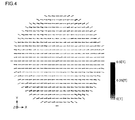
Figure 4 is a diagram showing results of calculations corresponding to an expansion to n = 1 order; -
Figure 5 is a diagram showing results of calculations corresponding to an expansion to n = 2 order; -
Figure 6 is a diagram showing results of calculations corresponding to an expansion to n = 3 order; -
Figure 7 is a diagram showing results of calculations corresponding to an expansion to n = 4 order; -
Figure 8 is a diagram showing a relationship between orders of spherical harmonics and calculation values; -
Figure 9 is a diagram showing a hysteresis curve; -
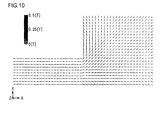
Figure 10 is a diagram showing results of calculations of magnetization due to a permanent magnet (1.0 T); -
Figure 11 is a diagram showing results of calculations of magnetization due to a permanent magnet (1.0 T); -
Figure 12 is a diagram showing results of calculations of magnetization due to a permanent magnet (1.0 T). - The invention will now be described by reference to the preferred embodiments. This does not intend to limit the scope of the present invention but to exemplify the invention. The size of the component in each figure may be changed in order to aid understanding. Some of the components in each figure may be omitted if they are not important for explanation.
- In the prior art methods, the meshing is applied to the object to be analyzed. However, if the object to be analyzed is fluid and if a fixed mesh is used with moving boundaries, the analysis may become difficult. If the object to be analyzed performs large displacement of a magnetic body or a plastic body, the meshing may be difficult. In particular in the case where the meshing is performed in the magnetic field analysis including a rotor such as a motor, polymerization of meshes (if the polymerization is single, this is the large displacement) makes the analysis difficult.
- One of the purposes of the present invention is to provide an analysis technique that enables a preferred analysis of magnetic phenomena in simulations.
- As to methods for analyzing phenomena of general material science using computers based on classical mechanics or quantum mechanics, simulations based on a Molecular Dynamics Method (hereinafter referred to as "MD method"), a Quantum Molecular Dynamics Method or a Renormalized Molecular Dynamics (hereinafter referred to as "RMD method") are known. The RMD method is a developed version of the MD method so that it can be applied to macroscale systems. To be precise, the MD method /the RMD method which are kinetics methods (calculations of physical quantity uses statistical mechanics) and the particle method in which a differential equation describing a continuum is discretized are different. However, in this specification, the MD method / the RMD method are referred to as the particle method.
- Since the particle method can analyze not only static phenomena but also dynamic phenomena such as flow, the particle method attracts attention as a simulation method replacing the above-mentioned FEM in which the object to be analyzed mainly is a static phenomenon.
- From a differential point of view, the particle method obtains a particle system to be analyzed by discretizing a continuum by particles. For example, when fluid is analyzed by the particle method, it is often the case that the Navier-Stokes equation is discretized by particles.
- From another or integral point of view, the particle method forms a continuum by collecting many particles. This is, for example, a view in which a large iron ball is formed by collecting and solidifying small iron particles.
- In general, when one calculates a magnetic field at a certain point in a space where many magnetic moments exist, due to superposition principle, one will sum up the magnetic field at the certain point created by each magnetic moment over the many magnetic moments. The present inventors recognize affinity between the method for calculating the magnetic field from such a collection of magnetic moments and the particle method in the integral view, and devise the idea of associating a magnetic moment with a particle in the particle method. By doing so, it is possible to broaden the cover range of the particle method to magnetic field analyses while maintaining the advantage of the particle method, the advantage being that the particle method is effective for analyses of convection or large displacement.
-
Figure 1 is a block diagram showing functions or configurations of ananalyzer 100 according to an embodiment. It should be understood that each block depicted in the Figure can be realized with hardware. Such hardware includes an electronic device (s) or an element (s) such as a CPU (Central Processing Unit) of a computer. It should also be understood that each block depicted in the Figure can be realized by software. Such software includes a computer program. In the Figure in particular, the depicted functional block is realized by cooperation of these elements. Therefore, it should be understood by a person skilled in the art who has read this specification that it is possible to realize these functional blocks in various forms by hardware, software or a combination of those. - In the present embodiment, a particle system is analyzed based on the RMD method. However, it will be obvious to a person skilled in the art who has read this specification that a technical concept according to the present embodiment can be applied to the case where the particle system is analyzed based on other particle method such as the MD method, the Distinct Element Method, the Smoothed Particle Hydrodynamics, or the Moving Particle Semi-implicit.
- The
analyzer 100 is connected to aninput device 102 and adisplay 104. Theinput device 102 may be a keyboard or a mouse for receiving user inputs that are related to processes performed in theanalyzer 100. Theinput device 102 may be configured to receive inputs from a storage medium such as networks (Internet), CD or DVD. - The
analyzer 100 comprises a particlesystem acquisition unit 108, a magneticmoment association unit 110, anumerical operation unit 120, a magneticfield calculation unit 132, adisplay control unit 118 and a particledata storing unit 114. - The particle
system acquisition unit 108 is operative to acquire data of a particle system. The particle system comprises N (N is a natural number) particles. Those N particles are defined in a one, two or three dimensional virtual space, based on input information acquired from a user through theinput device 102. The particle system is a particle system which is renormalized using the RMD method. - The particle
system acquisition unit 108 is operative to arrange N particles in the virtual space based on the input information and to associate a velocity with each arranged particle. The particlesystem acquisition unit 108 is operative to associate a particle ID identifying an arranged particle and a position of the associated particle and a velocity of the arranged particle and to register the associated information to the particledata storing unit 114. - The magnetic
moment association unit 110 is operative to associate, based on input information obtained from a user through theinput devise 102, a magnetic moment with a particle of the particle system acquired by the particlesystem acquisition unit 108. For example, the magneticmoment association unit 110 is operative to require, of the user, inputs for magnetic moments of particles of the particle system through thedisplay 104. The magneticmoment association unit 110 is operative to associate the input magnetic moment and the particle ID and to register the associated information to the particledata storing unit 114. - The following descriptions assume that all particles of the particle system are homogeneous or equivalent. The following descriptions also assume that a potential energy function is based on pair potential and has the same form regardless of particles. However, it will be obvious to a person skilled in the art who has read this specification that a technical concept according to the present embodiment can be applied to other cases.
- The
numerical operation unit 120 is operative to perform numerical operation according to a governing equation that governs a motion of each particle in the particle system, the particle system being represented by data stored by the particledata storing unit 114. In particular, thenumerical operation unit 120 is operative to perform repeated operation according to an equation of motion of a discretized particle. The equation of motion of the particle has a term dependent on the magnetic moment. Thenumerical operation unit 120 includes aforce calculation unit 122, a particlestate calculation unit 124, astate update unit 126 and a terminationcondition deciding unit 128. - The
force calculation unit 122 is operative to refer data of the particle system stored by the particledata storing unit 114 and to calculate a force applied to each particle in the particle system based on particle-particle distances. The force applied to a particle includes a force based on interaction(s) between magnetic moments. Theforce calculation unit 122 is operative to, with regard to i-th (i is greater than or equal to 1 and i is less than or equal to N) particle in the particle system, identify particle (s) whose distance from the i-th particle is less than a predetermined cut-off distance. Hereinafter, such identified particles are called neighboring particles. - The
force calculation unit 122 is operative to calculate a force applied to the i-th particle by each neighboring particle based on the potential energy function between the neighboring particle and the i-th particle and the distance between the neighboring particle and the i-th particle. In particular, theforce calculation unit 122 is operative to calculate the force by obtaining a value of a gradient of the potential energy function at the value of the distance between the neighboring particle and the i-th particle. Theforce calculation unit 122 is operative to sum up the force applied to the i-th particle by a neighboring particle over all neighboring particle in order to calculate the total force applied to the i-th particle. - The particle
state calculation unit 124 is operative (i) to refer data of the particle system stored by the particledata storing unit 114 and (ii) to apply the total force calculated by theforce calculation unit 122 to the discretized equation of motion of each particle in the particle system and (iii) to calculate, based on the results of the application, at least one of the position and the velocity of the each particle. In this embodiment, the particlestate calculation unit 124 is operative to calculate both the position and the velocity of a particle. - The particle
state calculation unit 124 is operative to calculate the velocity of a particle according to the discretized equation of motion of the particle, the equation including the force calculated by theforce calculation unit 122. The particlestate calculation unit 124 is operative to calculate the velocity of the i-th particle of the particle system by substituting the force calculated for the i-th particle by theforce calculation unit 122 for the discretized equation of motion of the i-th particle, the equation being discretized based on a certain numerical analysis method such as leapfrog method or Euler method and the equation being discretized using a certain minute ticks of time Δt. This calculation uses velocities of the particle obtained in the previous cycle of the repeated operation. - The particle
state calculation unit 124 is operative to calculate the position of a particle based on the calculated velocity of the particle. The particlestate calculation unit 124 is operative to calculate the position of the i-th particle of the particle system by applying the calculated velocity of the i-th particle to an equation of relationship between the position and the velocity of the i-th particle, the equation being discretized based on a certain numerical analysis method and the equation being discretized using the ticks of time Δt. This calculation uses positions of the particle obtained in the previous cycle of the repeated operation. - The
state update unit 126 is operative to update each of the position and the velocity of each particle in the particle system stored by the particledata storing unit 114 with the position and the velocity calculated by the particlestate calculation unit 124. - The termination
condition deciding unit 128 is operative to decide whether the repeated operation in thenumerical operation unit 120 should be terminated or not. The termination conditions with which the repeated operation should be terminated may include the condition that the number of operations in the repeated operation reaches a predetermined number, the condition that an instruction for termination is received from outside and the condition that the particle system reaches a steady state. The terminationcondition deciding unit 128 is operative to terminate the repeated operation in thenumerical operation unit 120 if the termination condition is met. The terminationcondition deciding unit 128 is operative to return the process to theforce calculation unit 122 if the termination condition is not met. Then, theforce calculation unit 122 is operative to again calculate the force with positions of particles updated by thestate update unit 126. - The magnetic
field calculation unit 132 is operative to, after the termination of the operation in thenumerical operation unit 120, calculate the magnetic field created by the particle system, the particle system being represented by data stored by the particledata storing unit 114. The magneticfield calculation unit 132 is operative to calculate the magnetic field based on a magnetic moment of each particle stored by the particledata storing unit 114. The magnetic field is a magnetic physical quantity related to the particle system. The magneticfield calculation unit 132 may be operative to calculate a magnetic flux density or a magnetization in addition to or in substitution for the magnetic field. The magneticfield calculation unit 132 may be operative to calculate the magnetic field created at a position of a particle for each step of the repeated operation in thenumerical operation unit 120. - The
display control unit 118 is operative to cause thedisplay 104 to display the time evolution of the particle system or the state of the particle system at a certain time based on the position, velocity and magnetic moment of each particle of the particle system, the particle system being represented by data stored by the particledata storing unit 114. This display may be performed in a form of still image or moving image. -
Figure 2 is a data structure diagram showing an example of a particledata storing unit 114. The particledata storing unit 114 stores the particle ID, the position of the particle, the velocity of the particle and the magnetic moment of the particle. - In the above-described embodiment, an example of the storing unit is a hard disk or a memory. It should be understood by a person skilled in the art who has read this specification that it is possible to realize each unit, based on descriptions in this specification, by a CPU (not shown), a module of installed application program, a module of system program or a memory temporarily storing contents of data that has been read out from a hard disk.
- The operation of the
analyzer 100 as described above shall be described below.
Figure 3 is a flowchart showing an example of a series of processes in theanalyzer 100. The particlesystem acquisition unit 108 is operative to acquire the particle system renormalized based on the RMD method (S202). The magneticmoment association unit 110 is operative to associate a magnetic moment with a particle of the acquired particle system (S204). Theforce calculation unit 122 is operative to calculate the force applied to a particle based on particle-particle distances (S206). The particlestate calculation unit 124 is operative to calculate the velocity and the position of a particle according to the equation of motion of the particle, the equation including the calculated force (S208). Thestate update unit 126 is operative to update the position and the velocity stored by the particledata storing unit 114 with the calculated position and velocity (S210). The terminationcondition deciding unit 128 is operative to decide whether the termination condition is met (S212). If the termination condition is not met (N of S212), the process returns to S206. If the termination condition is met (Y of S212), the magneticfield calculation unit 132 is operative to calculate the magnetic field created by the particle system (S214). - In general, the particle method preferably can analyze a dynamic object to be analyzed such as fluid, separation phenomena or cutting work. Then, in the
analyzer 100 according to the present embodiment, both the analysis based on the particle method and the analysis based on the magnetic moment are realized. Therefore, it is possible to analyze a dynamic object to be analyzed with higher accuracy and with shorter calculation time, including a magnetic property such as the magnetic field. - For example, if the object to be analyzed is iron sand, it is difficult to simulate such object with a prior art mesh-based analysis method, like FEM, since proper arrangement of mesh is not possible. However, in the
analyzer 100 according to the present embodiment, it is possible to preferably analyze the iron sand with the particle method in consideration of magnetic property of the iron sand. - For example, if the object to be analyzed is a motor, the prior art mesh-based analysis method is not effective to such object since a rotor rotates with respect to a stator. The prior art method may allow static analysis only. However, in the
analyzer 100 according to the present embodiment, it is possible to dynamically deal with magnetic interaction between the rotor and the stator while enabling high-accuracy simulations of rotations of the rotor using the particle method. - The followings are descriptions of the principle of the analysis method used for the
analyzer 100. - The magnetic field can be obtained from a macroscopic vector potential (defined as

) in the following manner. The z axis is defined to be the direction of spin and "a" is defined to be a radius of atom. A circle current that generates spin Sjz (magnetic moment mjz) is expressed as follows.
A magnetic field created by a single spin located at a lattice point j is expressed as follows.
(eqn3)|


Here, the following holds.
If only n = 0 is left, the magnetic field becomes equivalent to the magnetic field created by a sphere which is uniformly magnetized.
In the case where this method is applied to a bulk spherical body, if one adopts only n = 0, uniform magnetization may not be obtained and the results will be similar to that of the magnetic moment method. This may be improved by adding higher order terms. Uniform magnetization is obtained in case of FEM. - The transformation into Cartesian coordinate system (using the following equation

) will give the following.
(eqn7)|


Here, it should be noted that Bx = By = 0 from Bθ = 0 when sinθj = 0.
The magnetic fields when the magnetic moments mx, my are parallel to the x axis and the y axis, respectively,
can be found in a similar way.
(eqn9)|


- The magnetic field

at
and contributions from N spins can be found as (eqn12)|


Here,
represents an average in a sphere. By combining P-13 and P-16, the magnetic moment mp can be obtained. The magnetic field created outside the magnetic body is represented by P-13. The magnetic field created inside the magnetic body is represented by
(eqn14)|

By considering a demagnetizing field due to magnetization created on a surface of the sphere, P-14 satisfies the following.
- P-13 is slow to converge since the matrix is not a superdiagonal angle (i.e. j = p is excluded). Thus, a solution should be obtained from the following equation of motion.
(eqn16)|


Here, mv = 5 x 10⁻²dt2 is a virtual mass and y = mv/(10dt) is a damping coefficient. - It is possible to realize further acceleration with an addition of FIRE. The code of the FIRE is shown below. The calculation result is 10.05 [s] under the condition that the number of particles is 802 and the residual is less than 10-8. The residual is not below 10-5 without FIRE.

- Special cases of the Legendre functions and the associated Legendre functions are listed below (x := cosθj).
(eqn18)|








- The magnetization

of a magnetic sphere (the magnetic susceptibility is 999) placed in an uniform external field of B0x = 0.1 [T] in the x direction is calculated and the results of the calculations are shown below. In the calculations, it is assumed that the number of particles (atoms) forming the sphere is 4009 and that those particles are arranged in fcc structure. The exact solution is
Figures 4 ,5 ,6 and7 show the results of the first - fourth order of multipole expansion. Those Figures show cross-sections which pass the center. As the order of the multipole expansion increases, it can be seen that the results get closer to the exact solution. The convergence is deteriorated if the order is low. Most of the calculation time is occupied with calls for spherical harmonics. -
Figure 4 is a diagram showing results of calculations corresponding to an expansion to n = 1 order. The exact solution is µ0Mx = 0.2991 [T], which can compared to the calculation result of 0.346231 [T] in average. It can be seen that the magnetization is uniform and parallel to the external field (Bx = 0.1 [T]). The residual is less than or equal to 1e-13 and the calculation time is about 80 minutes. -
Figure 5 is a diagram showing results of calculations corresponding to an expansion to n = 2 order. The exact solution is µ0Mx = 0.2991 [T], which can compared to the calculation result of 0.321891 [T] in average. It can be seen that the magnetization is uniform and parallel to the external field (Bx = 0.1 [T]). The residual is less than or equal to 1e-8 and the calculation time is about 3 hours. The residual does not decrease below 1e-9. -
Figure 6 is a diagram showing results of calculations corresponding to an expansion to n = 3 order. The exact solution is µ0Mx = 0.2991 [T], which can compared to the calculation result of 0. 312444 [T] in average. It can be seen that the magnetization is uniform and parallel to the external field (Bx = 0.1 [T]). -
Figure 7 is a diagram showing results of calculations corresponding to an expansion to n = 4 order. The exact solution is µ0Mx = 0.2991 [T], which can compared to the calculation result of 0.312222 [T] in average. It can be seen that the magnetization is uniform and parallel to the external field (Bx = 0.1 [T]). The residual does not decrease below 1e-9 after about 5 hours. -
Figure 8 is a diagram showing a relationship between orders of spherical harmonics and calculation values. It can be seen that a higher order gives results closer to the exact solution. - The principle of the analysis method used in the
analyzer 100 can be described as follows. - (eqn21)|


- The direction of spin is defined as z axis. "a" is an radius of atom. The circle current that creates spin Sjz (magnetic moment mjz) at a lattice point j is

Therefore, the magnetic field can be driven from the macroscopic vector potential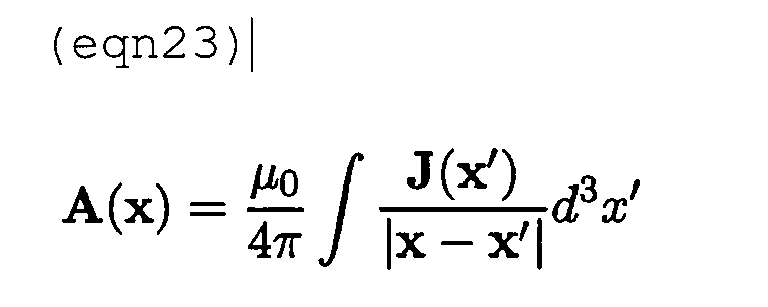
as follows.
(eqn24)|


Here, the following holds.
Leaving only n = 0 will give the magnetic field which is equivalent to the magnetic field created by a sphere which is uniformly magnetized.
- The transformation into Cartesian coordinate system (using the following equation

) will give the following.
(eqn28)|


Here, it should be noted that Hx = Hy = 0 from Hθ = 0 when sinθj = 0. The magnetic fields when the magnetic moments mx, my are parallel to the x axis and the y axis, respectively,
can be found in a similar way.
(eqn30)|


- The external magnetic field (contributions from N spins)

felt by a moment at
is
(eqn33)|

The induced magnetic field
is driven from
(eqn35)|

When the renormalization is performed, the electrical conductance σ is given by the following.
Here, δ = 2. - The Lagrange differential of the right side of Q-21

can be replaced with
since it is the particle method. It should be noted that translational motions of magnetizations can be considered by motions of particles; however, rotations of the magnetization vectors should be considered separately (Landau and Lifshitz, Electromagnetism, Chapter 51). - The magnetic field created outside the magnetic body is given by Q-26. The magnetic field created inside the magnetic body is
(eqn39)|


- It should be noted that

is also nonlinear. The relationship between the total external field
and the magnetization
is
(eqn43)|

By combining Q-26 and Q-27, the magnetic moment is driven as follows.
- (Nonlinear magnetization and Hysteresis) The magnetic field

is removed from Q-27 and Q-24:
(eqn46)|
By solving Q-28, the following is obtained (Figure 9 shows the case where B = f(H)).
-
Figure 9 is a diagram showing a hysteresis curve. M is calculated using a point of intersection of the hysteresis curve and B + 2µ0H = 3B0. Now, the permanent magnetization is given as follows.
The B-H curve with the above permanent magnetization is given as follows.
This can be combined with
to give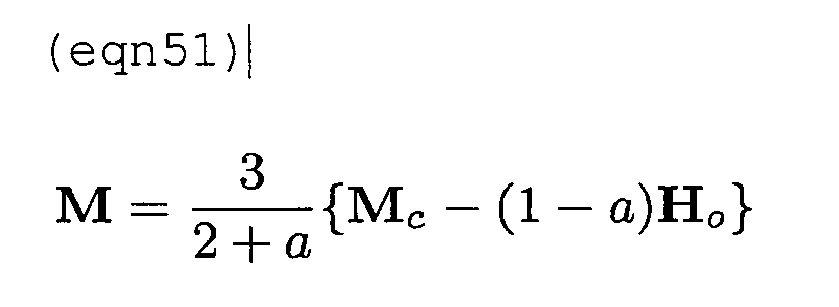
With regard to a general B = f(H), Newton-Laphson method can be used. - Q-19 is slow to converge since the matrix is not a superdiagonal angle (i.e. j = p is excluded). Thus, a solution should be obtained from the following equation of motion.
(eqn52)|


Here, mv is a virtual mass. The recommended value is 100 x 2.5 x 10-17dt. - In the case where only static magnetic field is analyzed, the Green function G(rpj) can be replaced with yδpj/ µ0. Also, mv = 5 x 101dt2 and γ = mv/(100dt). A sufficiently small mv can induce a minute attenuation vibration around the true solution; thereby the errors can be reduced.
- A model is considered.

A solution of forced vibrations which has an attenuation term is (Landau and Lifshitz, Mechanics, Sec. 26)
(eqn54)|


If the following condition is considered,
the following holds.
(eqn56)|

In that, if mv is sufficiently small, the solution coincides with the solution of the following essential equation to be solved.
- In the case where the discretization is performed according to the leapfrog method (the velocity is evaluated at an intermediate point between n and n+1), the following holds wherein s is the number of convergence.
(eqn58)|

If only diagonal elements use future values, the way of solving becomes explicit and the efficiency will be improved by about 30 percent. Most of the calculations are calls for special functions. - (Acceleration based on FIRE (it is effective only to the static magnetic field analysis))
It is possible to realize further acceleration with an addition of FIRE. The code of the FIRE is shown below. The calculation result is 10.05 [s] under the condition that the number of particles is 802 and the residual is less than 10-8. The residual is not below 10-5 without FIRE.
(eqn59)|


- The magnetization

of a magnetic sphere (the magnetic susceptibility is 999) placed in an uniform external field of B0x = 0.1 [T] in the x direction is calculated and the results of the calculations are shown below. In the calculations, it is assumed that an electrical conductance is zero and that the number of particles (atoms) forming the sphere is 4009 and that those particles are arranged in fcc structure. The exact solution is
In this case, the calculation results are similar to those forFigures 4 ,5 ,6 ,7 and8 . -
Figures 10 ,11 and12 show the results of confirmation of looping patterns. In those Figures, "windings" of the magnetic field are not seen. Such "windings" can be seen according to the prior art magnetic moment method. With regard to arrangements of particles, if the arrangements are ordered (fcc, bcc, sc), it can be seen that the results are substantially the same. -
Figure 10 is a diagram showing results of calculations of magnetization due to a permanent magnet (1.0T). The permanent magnet is arranged on bcc lattice and the magnetic body is placed on fcc lattice.
Figure 11 is a diagram showing results of calculations of magnetization due to a permanent magnet (1.0 T). the permanent magnet is arranged on fcc lattice and the magnetic body is arranged on bcc lattice.
Figure 12 is a diagram showing results of calculations of magnetization due to a permanent magnet (1.0 T). The permanent magnet is arranged on fcc lattice and the magnetic body is arranged on sc lattice. Since the atomic radius used is the one for fcc lattice, the magnetic field inside the magnetic body is rather small. The true solution can be found if the atomic radius is the one which is given by filling sc lattice. - (Series representation of Legendre functions) Special cases of the Legendre functions and the associated Legendre functions are listed below (x := cosθj).
(eqn62)|





- (Derivation of the force applied to a particle) The Lagrangian describing the interaction between a particle (electron and nucleus) and a particle magnetic field is


and an electromagnetic field is given by the following.
If the following relationship is used,
the following equation of motion can be derived.
(eqn67)|

The equation of motion for an atom M = Mp + me is (eqn68)|
With regard to the right side of the equation, by replacing the Lorentz force with an average current density
and replacing the electric moment with
, the following can be given.
By combining the Maxwell's equations and Q-24, the following can be given.
In the end, the force applied on the atom is, if electric polarization is neglected,
(eqn73)|
- The force applied on the particle can be derived directly from the Maxwell's stress tensor.
(eqn74)|

The moment created by localized current at the sphere can be expressed as the following.
The force applied on the moment is, to the smallest order,
Therefore, the potential energy is expressed as the following together with the potential energy due to electric polarization.
This does not include eddy current or true current. - (eqn78)|


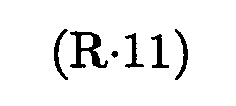

, the magnetic force applied on the magnetic sphere can be derived. - Although it would be difficult to completely separate

and the eddy current
, the following holds respectively.
(eqn82)|

- The followings are the required differential coefficients. Based on the following expressions
(eqn83)|


, listing of only rpj > a (here, since
is proportional to sinθ, there is no divergence at θ = 0) gives the followings.
(eqn85)|


(eqn86)|


- The following is the magnetic field when the magnetization is parallel to the z axis.
(eqn87)|


The magnetization current can be expressed as follows.
The magnetic force created by the magnetization
is
At first,
is obtained.
(eqn92)|


- The following is the magnetic field when the magnetization is parallel to the x axis.
(eqn93)|
(eqn94)|


The magnetization current
is obtained.
(eqn96)|


- The following is the magnetic field when the magnetization is parallel to the y axis.
(eqn97)|


The magnetization current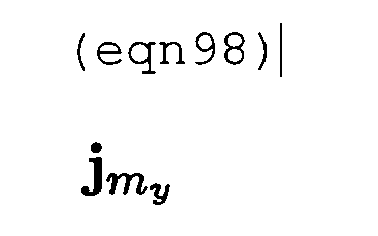
is obtained.
(eqn99)|


- According to S-3, the induced magnetic field is given by the following.
(eqn100)|

Here, G (r) is a Green function (a propagation function). The eddy current is given by the following.
(eqn101)|


- By adding mx, my, mz and the contribution from the eddy current, the total current can be obtained as follows.
(eqn102)|
The force applied on a particle at a coordinate
is given by the following.
(eqn104)|
In the end, it is necessary to add a term derived from the derivative of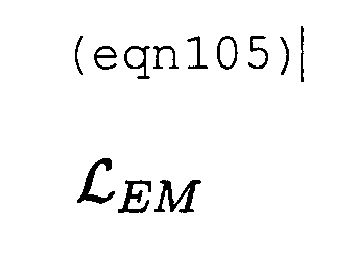

, and the total energy of the motion and the magnetic field is conserved.
(eqn107)|
- The embodiment describes the case where both the position and the velocity of a particle are calculated in the
numerical operation unit 120. However, the present invention is not limited to this. For example, in a method of numerical analysis, such as the Verlet method, the position of a particle is directly calculated from the force applied on the particle in the calculation of the position of the particle and the velocity of the particle does not have to be explicitly calculated. The concept according to the present embodiment can be applied to such a method. - It should be understood that the invention is not limited to the above-described embodiment, but may be modified into various forms on the basis of the spirit of the invention. Additionally, the modifications are included in the scope of the invention.
- Priority is claimed to Japanese Patent Application No.
2012-046390, filed March 2, 2012
Claims (5)
- An analyzer, comprising:a magnetic moment association unit (110) operative to associate a particle in a particle system defined in a virtual space with a magnetic moment;a numerical operation unit (120) operative to perform numerical operation according to a governing equation that governs a motion of each particle in the particle system, the particle system including the particle which is associated with the magnetic moment by the magnetic moment association unit (110); anda magnetic physical quantity calculation unit (132) operative to calculate a magnetic physical quantity with regard to the particle system using the results of the numerical operation performed by the numerical operation unit (120).
- The analyzer according to claim 1, wherein the particle system is a particle system which is renormalized using a Renormalized Molecular Dynamics Method.
- The analyzer according to claim 1 or 2, wherein the governing equation in the numerical operation unit (120) has a term dependent on the magnetic moment.
- The analyzer according to any one of the preceding claims, wherein the magnetic physical quantity calculation unit (132) is operative to calculate a magnetic field or a magnetic flux density created by the particle system.
- A computer program embedded on a non-transitory computer-readable recording medium, comprising:a module configured to associate a particle in a particle system defined in a virtual space with a magnetic moment;a module configured to perform numerical operation according to a governing equation that governs a motion of each particle in the particle system, the particle system including the particle which is associated with the magnetic moment; anda module configured to calculate a magnetic physical quantity with regard to the particle system using the results of the numerical operation.
Applications Claiming Priority (1)
| Application Number | Priority Date | Filing Date | Title |
|---|---|---|---|
| JP2012046390A JP5839473B2 (en) | 2012-03-02 | 2012-03-02 | Analysis device |
Publications (2)
| Publication Number | Publication Date |
|---|---|
| EP2637117A2 true EP2637117A2 (en) | 2013-09-11 |
| EP2637117A3 EP2637117A3 (en) | 2017-07-05 |
Family
ID=47900400
Family Applications (1)
| Application Number | Title | Priority Date | Filing Date |
|---|---|---|---|
| EP13000044.1A Withdrawn EP2637117A3 (en) | 2012-03-02 | 2013-01-07 | Analyser for calculating the magnetic field generated by a system of particles |
Country Status (3)
| Country | Link |
|---|---|
| US (1) | US9322886B2 (en) |
| EP (1) | EP2637117A3 (en) |
| JP (1) | JP5839473B2 (en) |
Families Citing this family (6)
| Publication number | Priority date | Publication date | Assignee | Title |
|---|---|---|---|---|
| JP6249912B2 (en) * | 2013-11-01 | 2017-12-20 | 住友重機械工業株式会社 | Analysis device |
| JP6618417B2 (en) * | 2016-04-22 | 2019-12-11 | 住友重機械工業株式会社 | Analysis apparatus and analysis method |
| US11790144B2 (en) * | 2018-10-13 | 2023-10-17 | Elloveo, Inc. | Fast, efficient real-time electro-magnetic systems simulator that dynamically accepts user input |
| JP7264841B2 (en) * | 2020-02-20 | 2023-04-25 | 住友重機械工業株式会社 | Magnetic field analysis method, magnetic field analysis device, and program |
| JP7525416B2 (en) * | 2021-01-21 | 2024-07-30 | 住友重機械工業株式会社 | Analysis method, analysis device, and program |
| JP7462581B2 (en) * | 2021-01-22 | 2024-04-05 | 住友重機械工業株式会社 | Simulation method, simulation device, and program |
Family Cites Families (5)
| Publication number | Priority date | Publication date | Assignee | Title |
|---|---|---|---|---|
| JP3281854B2 (en) | 1997-11-11 | 2002-05-13 | 三洋電機株式会社 | Motor analyzer |
| JP5052985B2 (en) | 2007-07-31 | 2012-10-17 | 住友重機械工業株式会社 | Molecular simulation method, molecular simulation apparatus, molecular simulation program, and recording medium recording the program |
| JP2011244623A (en) * | 2010-05-19 | 2011-12-01 | Sumitomo Heavy Ind Ltd | Coupled analysis system, analysis system and coupled analysis method |
| JP5570307B2 (en) * | 2010-06-04 | 2014-08-13 | 住友重機械工業株式会社 | Analysis apparatus and analysis method |
| JP6249912B2 (en) * | 2013-11-01 | 2017-12-20 | 住友重機械工業株式会社 | Analysis device |
-
2012
- 2012-03-02 JP JP2012046390A patent/JP5839473B2/en active Active
-
2013
- 2013-01-07 EP EP13000044.1A patent/EP2637117A3/en not_active Withdrawn
- 2013-03-01 US US13/782,662 patent/US9322886B2/en active Active
Non-Patent Citations (1)
| Title |
|---|
| None |
Also Published As
| Publication number | Publication date |
|---|---|
| JP5839473B2 (en) | 2016-01-06 |
| US9322886B2 (en) | 2016-04-26 |
| US20130231879A1 (en) | 2013-09-05 |
| JP2013183551A (en) | 2013-09-12 |
| EP2637117A3 (en) | 2017-07-05 |
Similar Documents
| Publication | Publication Date | Title |
|---|---|---|
| US10379081B2 (en) | Analyzer | |
| US9322886B2 (en) | Analyzer | |
| Cimrák | A survey on the numerics and computations for the Landau-Lifshitz equation of micromagnetism | |
| JP5556882B2 (en) | Magnetic body simulation method and program | |
| JP6618417B2 (en) | Analysis apparatus and analysis method | |
| Lim et al. | Distributed multilevel current models for design analysis of electromagnetic actuators | |
| US11703553B2 (en) | Magnetic field analysis device, analysis method, and computer readable medium storing program | |
| Henrotte et al. | The eggshell approach for the computation of electromagnetic forces in 2D and 3D | |
| EP2270694A2 (en) | Magnetic-field analyzing apparatus and magnetic-field analyzing program | |
| Römer | Numerical approximation of the magnetoquasistatic model with uncertainties and its application to magnet design | |
| Xiao et al. | Ensuring the accuracy of indirect nonlinear dynamic reduced-order models | |
| JP5446812B2 (en) | Response measurement point determination method in experimental modal analysis | |
| Xiao et al. | Modeling anisotropic magnetic hysteresis properties with vector stop model by using finite element method | |
| Offermann et al. | A polynomial chaos meta‐model for non‐linear stochastic magnet variations | |
| Reimers et al. | Implementation of the Preisach DOK magnetic hysteresis model in a commercial finite element package | |
| Kielhorn et al. | Simulation of electrical machines: a FEM-BEM coupling scheme | |
| Dupac et al. | Three-dimensional lumped mass/lumped spring modeling and nonlinear behavior of a levitated droplet | |
| Wang et al. | Continuum shape design sensitivity analysis of magnetostatic field using finite element method | |
| JP7047617B2 (en) | Magnetic field simulation program, information processing device and magnetic field simulation method | |
| Yamashita | Flexible multibody dynamics approach for tire dynamics simulation | |
| Qian et al. | An inverse model for magnetorheological dampers based on a restructured phenomenological model | |
| Fard et al. | Embodying computation in nonlinear perturbative metamaterials | |
| Stander et al. | High fidelity multidisciplinary design optimisation of an electromagnetic device | |
| Patel et al. | Investigating the Role of Microstructure Evolution on the Properties of Magneto-Active Elastomers | |
| Goldbeck et al. | Computational Homogenization in 3D Magnetostatics using E3C Hyper-Reduction |
Legal Events
| Date | Code | Title | Description |
|---|---|---|---|
| PUAI | Public reference made under article 153(3) epc to a published international application that has entered the european phase |
Free format text: ORIGINAL CODE: 0009012 |
|
| AK | Designated contracting states |
Kind code of ref document: A2 Designated state(s): AL AT BE BG CH CY CZ DE DK EE ES FI FR GB GR HR HU IE IS IT LI LT LU LV MC MK MT NL NO PL PT RO RS SE SI SK SM TR |
|
| AX | Request for extension of the european patent |
Extension state: BA ME |
|
| PUAL | Search report despatched |
Free format text: ORIGINAL CODE: 0009013 |
|
| AK | Designated contracting states |
Kind code of ref document: A3 Designated state(s): AL AT BE BG CH CY CZ DE DK EE ES FI FR GB GR HR HU IE IS IT LI LT LU LV MC MK MT NL NO PL PT RO RS SE SI SK SM TR |
|
| AX | Request for extension of the european patent |
Extension state: BA ME |
|
| RIC1 | Information provided on ipc code assigned before grant |
Ipc: G06F 17/50 20060101AFI20170529BHEP |
|
| 17P | Request for examination filed |
Effective date: 20180105 |
|
| RBV | Designated contracting states (corrected) |
Designated state(s): AL AT BE BG CH CY CZ DE DK EE ES FI FR GB GR HR HU IE IS IT LI LT LU LV MC MK MT NL NO PL PT RO RS SE SI SK SM TR |
|
| STAA | Information on the status of an ep patent application or granted ep patent |
Free format text: STATUS: THE APPLICATION HAS BEEN WITHDRAWN |
|
| 18W | Application withdrawn |
Effective date: 20190725 |