EP2636759A1 - Method for manufacturing automobile part having different local strengths using heat-treatment hardening steel plate - Google Patents
Method for manufacturing automobile part having different local strengths using heat-treatment hardening steel plate Download PDFInfo
- Publication number
- EP2636759A1 EP2636759A1 EP10855727.3A EP10855727A EP2636759A1 EP 2636759 A1 EP2636759 A1 EP 2636759A1 EP 10855727 A EP10855727 A EP 10855727A EP 2636759 A1 EP2636759 A1 EP 2636759A1
- Authority
- EP
- European Patent Office
- Prior art keywords
- blank
- automobile part
- sheets
- less
- cold
- Prior art date
- Legal status (The legal status is an assumption and is not a legal conclusion. Google has not performed a legal analysis and makes no representation as to the accuracy of the status listed.)
- Granted
Links
Images


Classifications
-
- C—CHEMISTRY; METALLURGY
- C21—METALLURGY OF IRON
- C21D—MODIFYING THE PHYSICAL STRUCTURE OF FERROUS METALS; GENERAL DEVICES FOR HEAT TREATMENT OF FERROUS OR NON-FERROUS METALS OR ALLOYS; MAKING METAL MALLEABLE, e.g. BY DECARBURISATION OR TEMPERING
- C21D9/00—Heat treatment, e.g. annealing, hardening, quenching or tempering, adapted for particular articles; Furnaces therefor
- C21D9/0068—Heat treatment, e.g. annealing, hardening, quenching or tempering, adapted for particular articles; Furnaces therefor for particular articles not mentioned below
-
- B—PERFORMING OPERATIONS; TRANSPORTING
- B21—MECHANICAL METAL-WORKING WITHOUT ESSENTIALLY REMOVING MATERIAL; PUNCHING METAL
- B21D—WORKING OR PROCESSING OF SHEET METAL OR METAL TUBES, RODS OR PROFILES WITHOUT ESSENTIALLY REMOVING MATERIAL; PUNCHING METAL
- B21D22/00—Shaping without cutting, by stamping, spinning, or deep-drawing
- B21D22/02—Stamping using rigid devices or tools
- B21D22/022—Stamping using rigid devices or tools by heating the blank or stamping associated with heat treatment
-
- B—PERFORMING OPERATIONS; TRANSPORTING
- B21—MECHANICAL METAL-WORKING WITHOUT ESSENTIALLY REMOVING MATERIAL; PUNCHING METAL
- B21D—WORKING OR PROCESSING OF SHEET METAL OR METAL TUBES, RODS OR PROFILES WITHOUT ESSENTIALLY REMOVING MATERIAL; PUNCHING METAL
- B21D53/00—Making other particular articles
- B21D53/88—Making other particular articles other parts for vehicles, e.g. cowlings, mudguards
-
- B—PERFORMING OPERATIONS; TRANSPORTING
- B23—MACHINE TOOLS; METAL-WORKING NOT OTHERWISE PROVIDED FOR
- B23K—SOLDERING OR UNSOLDERING; WELDING; CLADDING OR PLATING BY SOLDERING OR WELDING; CUTTING BY APPLYING HEAT LOCALLY, e.g. FLAME CUTTING; WORKING BY LASER BEAM
- B23K26/00—Working by laser beam, e.g. welding, cutting or boring
- B23K26/20—Bonding
- B23K26/21—Bonding by welding
- B23K26/24—Seam welding
- B23K26/26—Seam welding of rectilinear seams
-
- C—CHEMISTRY; METALLURGY
- C21—METALLURGY OF IRON
- C21D—MODIFYING THE PHYSICAL STRUCTURE OF FERROUS METALS; GENERAL DEVICES FOR HEAT TREATMENT OF FERROUS OR NON-FERROUS METALS OR ALLOYS; MAKING METAL MALLEABLE, e.g. BY DECARBURISATION OR TEMPERING
- C21D1/00—General methods or devices for heat treatment, e.g. annealing, hardening, quenching or tempering
- C21D1/62—Quenching devices
- C21D1/673—Quenching devices for die quenching
-
- C—CHEMISTRY; METALLURGY
- C21—METALLURGY OF IRON
- C21D—MODIFYING THE PHYSICAL STRUCTURE OF FERROUS METALS; GENERAL DEVICES FOR HEAT TREATMENT OF FERROUS OR NON-FERROUS METALS OR ALLOYS; MAKING METAL MALLEABLE, e.g. BY DECARBURISATION OR TEMPERING
- C21D6/00—Heat treatment of ferrous alloys
- C21D6/002—Heat treatment of ferrous alloys containing Cr
-
- C—CHEMISTRY; METALLURGY
- C21—METALLURGY OF IRON
- C21D—MODIFYING THE PHYSICAL STRUCTURE OF FERROUS METALS; GENERAL DEVICES FOR HEAT TREATMENT OF FERROUS OR NON-FERROUS METALS OR ALLOYS; MAKING METAL MALLEABLE, e.g. BY DECARBURISATION OR TEMPERING
- C21D6/00—Heat treatment of ferrous alloys
- C21D6/005—Heat treatment of ferrous alloys containing Mn
-
- C—CHEMISTRY; METALLURGY
- C21—METALLURGY OF IRON
- C21D—MODIFYING THE PHYSICAL STRUCTURE OF FERROUS METALS; GENERAL DEVICES FOR HEAT TREATMENT OF FERROUS OR NON-FERROUS METALS OR ALLOYS; MAKING METAL MALLEABLE, e.g. BY DECARBURISATION OR TEMPERING
- C21D6/00—Heat treatment of ferrous alloys
- C21D6/008—Heat treatment of ferrous alloys containing Si
-
- C—CHEMISTRY; METALLURGY
- C21—METALLURGY OF IRON
- C21D—MODIFYING THE PHYSICAL STRUCTURE OF FERROUS METALS; GENERAL DEVICES FOR HEAT TREATMENT OF FERROUS OR NON-FERROUS METALS OR ALLOYS; MAKING METAL MALLEABLE, e.g. BY DECARBURISATION OR TEMPERING
- C21D8/00—Modifying the physical properties of ferrous metals or ferrous alloys by deformation combined with, or followed by, heat treatment
- C21D8/02—Modifying the physical properties of ferrous metals or ferrous alloys by deformation combined with, or followed by, heat treatment during manufacturing of plates or strips
- C21D8/0221—Modifying the physical properties of ferrous metals or ferrous alloys by deformation combined with, or followed by, heat treatment during manufacturing of plates or strips characterised by the working steps
-
- C—CHEMISTRY; METALLURGY
- C21—METALLURGY OF IRON
- C21D—MODIFYING THE PHYSICAL STRUCTURE OF FERROUS METALS; GENERAL DEVICES FOR HEAT TREATMENT OF FERROUS OR NON-FERROUS METALS OR ALLOYS; MAKING METAL MALLEABLE, e.g. BY DECARBURISATION OR TEMPERING
- C21D8/00—Modifying the physical properties of ferrous metals or ferrous alloys by deformation combined with, or followed by, heat treatment
- C21D8/02—Modifying the physical properties of ferrous metals or ferrous alloys by deformation combined with, or followed by, heat treatment during manufacturing of plates or strips
- C21D8/0247—Modifying the physical properties of ferrous metals or ferrous alloys by deformation combined with, or followed by, heat treatment during manufacturing of plates or strips characterised by the heat treatment
-
- C—CHEMISTRY; METALLURGY
- C21—METALLURGY OF IRON
- C21D—MODIFYING THE PHYSICAL STRUCTURE OF FERROUS METALS; GENERAL DEVICES FOR HEAT TREATMENT OF FERROUS OR NON-FERROUS METALS OR ALLOYS; MAKING METAL MALLEABLE, e.g. BY DECARBURISATION OR TEMPERING
- C21D9/00—Heat treatment, e.g. annealing, hardening, quenching or tempering, adapted for particular articles; Furnaces therefor
- C21D9/46—Heat treatment, e.g. annealing, hardening, quenching or tempering, adapted for particular articles; Furnaces therefor for sheet metals
-
- C—CHEMISTRY; METALLURGY
- C22—METALLURGY; FERROUS OR NON-FERROUS ALLOYS; TREATMENT OF ALLOYS OR NON-FERROUS METALS
- C22C—ALLOYS
- C22C38/00—Ferrous alloys, e.g. steel alloys
- C22C38/002—Ferrous alloys, e.g. steel alloys containing In, Mg, or other elements not provided for in one single group C22C38/001 - C22C38/60
-
- C—CHEMISTRY; METALLURGY
- C22—METALLURGY; FERROUS OR NON-FERROUS ALLOYS; TREATMENT OF ALLOYS OR NON-FERROUS METALS
- C22C—ALLOYS
- C22C38/00—Ferrous alloys, e.g. steel alloys
- C22C38/02—Ferrous alloys, e.g. steel alloys containing silicon
-
- C—CHEMISTRY; METALLURGY
- C22—METALLURGY; FERROUS OR NON-FERROUS ALLOYS; TREATMENT OF ALLOYS OR NON-FERROUS METALS
- C22C—ALLOYS
- C22C38/00—Ferrous alloys, e.g. steel alloys
- C22C38/04—Ferrous alloys, e.g. steel alloys containing manganese
-
- C—CHEMISTRY; METALLURGY
- C22—METALLURGY; FERROUS OR NON-FERROUS ALLOYS; TREATMENT OF ALLOYS OR NON-FERROUS METALS
- C22C—ALLOYS
- C22C38/00—Ferrous alloys, e.g. steel alloys
- C22C38/06—Ferrous alloys, e.g. steel alloys containing aluminium
-
- C—CHEMISTRY; METALLURGY
- C22—METALLURGY; FERROUS OR NON-FERROUS ALLOYS; TREATMENT OF ALLOYS OR NON-FERROUS METALS
- C22C—ALLOYS
- C22C38/00—Ferrous alloys, e.g. steel alloys
- C22C38/10—Ferrous alloys, e.g. steel alloys containing cobalt
-
- C—CHEMISTRY; METALLURGY
- C22—METALLURGY; FERROUS OR NON-FERROUS ALLOYS; TREATMENT OF ALLOYS OR NON-FERROUS METALS
- C22C—ALLOYS
- C22C38/00—Ferrous alloys, e.g. steel alloys
- C22C38/12—Ferrous alloys, e.g. steel alloys containing tungsten, tantalum, molybdenum, vanadium, or niobium
-
- C—CHEMISTRY; METALLURGY
- C22—METALLURGY; FERROUS OR NON-FERROUS ALLOYS; TREATMENT OF ALLOYS OR NON-FERROUS METALS
- C22C—ALLOYS
- C22C38/00—Ferrous alloys, e.g. steel alloys
- C22C38/14—Ferrous alloys, e.g. steel alloys containing titanium or zirconium
-
- C—CHEMISTRY; METALLURGY
- C22—METALLURGY; FERROUS OR NON-FERROUS ALLOYS; TREATMENT OF ALLOYS OR NON-FERROUS METALS
- C22C—ALLOYS
- C22C38/00—Ferrous alloys, e.g. steel alloys
- C22C38/18—Ferrous alloys, e.g. steel alloys containing chromium
- C22C38/20—Ferrous alloys, e.g. steel alloys containing chromium with copper
-
- C—CHEMISTRY; METALLURGY
- C22—METALLURGY; FERROUS OR NON-FERROUS ALLOYS; TREATMENT OF ALLOYS OR NON-FERROUS METALS
- C22C—ALLOYS
- C22C38/00—Ferrous alloys, e.g. steel alloys
- C22C38/18—Ferrous alloys, e.g. steel alloys containing chromium
- C22C38/22—Ferrous alloys, e.g. steel alloys containing chromium with molybdenum or tungsten
-
- C—CHEMISTRY; METALLURGY
- C22—METALLURGY; FERROUS OR NON-FERROUS ALLOYS; TREATMENT OF ALLOYS OR NON-FERROUS METALS
- C22C—ALLOYS
- C22C38/00—Ferrous alloys, e.g. steel alloys
- C22C38/18—Ferrous alloys, e.g. steel alloys containing chromium
- C22C38/28—Ferrous alloys, e.g. steel alloys containing chromium with titanium or zirconium
-
- C—CHEMISTRY; METALLURGY
- C22—METALLURGY; FERROUS OR NON-FERROUS ALLOYS; TREATMENT OF ALLOYS OR NON-FERROUS METALS
- C22C—ALLOYS
- C22C38/00—Ferrous alloys, e.g. steel alloys
- C22C38/18—Ferrous alloys, e.g. steel alloys containing chromium
- C22C38/32—Ferrous alloys, e.g. steel alloys containing chromium with boron
-
- C—CHEMISTRY; METALLURGY
- C22—METALLURGY; FERROUS OR NON-FERROUS ALLOYS; TREATMENT OF ALLOYS OR NON-FERROUS METALS
- C22C—ALLOYS
- C22C38/00—Ferrous alloys, e.g. steel alloys
- C22C38/18—Ferrous alloys, e.g. steel alloys containing chromium
- C22C38/38—Ferrous alloys, e.g. steel alloys containing chromium with more than 1.5% by weight of manganese
-
- C—CHEMISTRY; METALLURGY
- C22—METALLURGY; FERROUS OR NON-FERROUS ALLOYS; TREATMENT OF ALLOYS OR NON-FERROUS METALS
- C22C—ALLOYS
- C22C38/00—Ferrous alloys, e.g. steel alloys
- C22C38/18—Ferrous alloys, e.g. steel alloys containing chromium
- C22C38/40—Ferrous alloys, e.g. steel alloys containing chromium with nickel
- C22C38/42—Ferrous alloys, e.g. steel alloys containing chromium with nickel with copper
-
- C—CHEMISTRY; METALLURGY
- C22—METALLURGY; FERROUS OR NON-FERROUS ALLOYS; TREATMENT OF ALLOYS OR NON-FERROUS METALS
- C22C—ALLOYS
- C22C38/00—Ferrous alloys, e.g. steel alloys
- C22C38/18—Ferrous alloys, e.g. steel alloys containing chromium
- C22C38/40—Ferrous alloys, e.g. steel alloys containing chromium with nickel
- C22C38/44—Ferrous alloys, e.g. steel alloys containing chromium with nickel with molybdenum or tungsten
-
- C—CHEMISTRY; METALLURGY
- C22—METALLURGY; FERROUS OR NON-FERROUS ALLOYS; TREATMENT OF ALLOYS OR NON-FERROUS METALS
- C22C—ALLOYS
- C22C38/00—Ferrous alloys, e.g. steel alloys
- C22C38/18—Ferrous alloys, e.g. steel alloys containing chromium
- C22C38/40—Ferrous alloys, e.g. steel alloys containing chromium with nickel
- C22C38/48—Ferrous alloys, e.g. steel alloys containing chromium with nickel with niobium or tantalum
-
- C—CHEMISTRY; METALLURGY
- C22—METALLURGY; FERROUS OR NON-FERROUS ALLOYS; TREATMENT OF ALLOYS OR NON-FERROUS METALS
- C22C—ALLOYS
- C22C38/00—Ferrous alloys, e.g. steel alloys
- C22C38/18—Ferrous alloys, e.g. steel alloys containing chromium
- C22C38/40—Ferrous alloys, e.g. steel alloys containing chromium with nickel
- C22C38/54—Ferrous alloys, e.g. steel alloys containing chromium with nickel with boron
-
- C—CHEMISTRY; METALLURGY
- C22—METALLURGY; FERROUS OR NON-FERROUS ALLOYS; TREATMENT OF ALLOYS OR NON-FERROUS METALS
- C22C—ALLOYS
- C22C38/00—Ferrous alloys, e.g. steel alloys
- C22C38/18—Ferrous alloys, e.g. steel alloys containing chromium
- C22C38/40—Ferrous alloys, e.g. steel alloys containing chromium with nickel
- C22C38/58—Ferrous alloys, e.g. steel alloys containing chromium with nickel with more than 1.5% by weight of manganese
-
- C—CHEMISTRY; METALLURGY
- C22—METALLURGY; FERROUS OR NON-FERROUS ALLOYS; TREATMENT OF ALLOYS OR NON-FERROUS METALS
- C22C—ALLOYS
- C22C38/00—Ferrous alloys, e.g. steel alloys
- C22C38/60—Ferrous alloys, e.g. steel alloys containing lead, selenium, tellurium, or antimony, or more than 0.04% by weight of sulfur
-
- C—CHEMISTRY; METALLURGY
- C23—COATING METALLIC MATERIAL; COATING MATERIAL WITH METALLIC MATERIAL; CHEMICAL SURFACE TREATMENT; DIFFUSION TREATMENT OF METALLIC MATERIAL; COATING BY VACUUM EVAPORATION, BY SPUTTERING, BY ION IMPLANTATION OR BY CHEMICAL VAPOUR DEPOSITION, IN GENERAL; INHIBITING CORROSION OF METALLIC MATERIAL OR INCRUSTATION IN GENERAL
- C23C—COATING METALLIC MATERIAL; COATING MATERIAL WITH METALLIC MATERIAL; SURFACE TREATMENT OF METALLIC MATERIAL BY DIFFUSION INTO THE SURFACE, BY CHEMICAL CONVERSION OR SUBSTITUTION; COATING BY VACUUM EVAPORATION, BY SPUTTERING, BY ION IMPLANTATION OR BY CHEMICAL VAPOUR DEPOSITION, IN GENERAL
- C23C2/00—Hot-dipping or immersion processes for applying the coating material in the molten state without affecting the shape; Apparatus therefor
- C23C2/04—Hot-dipping or immersion processes for applying the coating material in the molten state without affecting the shape; Apparatus therefor characterised by the coating material
- C23C2/06—Zinc or cadmium or alloys based thereon
-
- C—CHEMISTRY; METALLURGY
- C23—COATING METALLIC MATERIAL; COATING MATERIAL WITH METALLIC MATERIAL; CHEMICAL SURFACE TREATMENT; DIFFUSION TREATMENT OF METALLIC MATERIAL; COATING BY VACUUM EVAPORATION, BY SPUTTERING, BY ION IMPLANTATION OR BY CHEMICAL VAPOUR DEPOSITION, IN GENERAL; INHIBITING CORROSION OF METALLIC MATERIAL OR INCRUSTATION IN GENERAL
- C23C—COATING METALLIC MATERIAL; COATING MATERIAL WITH METALLIC MATERIAL; SURFACE TREATMENT OF METALLIC MATERIAL BY DIFFUSION INTO THE SURFACE, BY CHEMICAL CONVERSION OR SUBSTITUTION; COATING BY VACUUM EVAPORATION, BY SPUTTERING, BY ION IMPLANTATION OR BY CHEMICAL VAPOUR DEPOSITION, IN GENERAL
- C23C2/00—Hot-dipping or immersion processes for applying the coating material in the molten state without affecting the shape; Apparatus therefor
- C23C2/04—Hot-dipping or immersion processes for applying the coating material in the molten state without affecting the shape; Apparatus therefor characterised by the coating material
- C23C2/12—Aluminium or alloys based thereon
-
- B—PERFORMING OPERATIONS; TRANSPORTING
- B23—MACHINE TOOLS; METAL-WORKING NOT OTHERWISE PROVIDED FOR
- B23K—SOLDERING OR UNSOLDERING; WELDING; CLADDING OR PLATING BY SOLDERING OR WELDING; CUTTING BY APPLYING HEAT LOCALLY, e.g. FLAME CUTTING; WORKING BY LASER BEAM
- B23K2101/00—Articles made by soldering, welding or cutting
- B23K2101/006—Vehicles
-
- B—PERFORMING OPERATIONS; TRANSPORTING
- B23—MACHINE TOOLS; METAL-WORKING NOT OTHERWISE PROVIDED FOR
- B23K—SOLDERING OR UNSOLDERING; WELDING; CLADDING OR PLATING BY SOLDERING OR WELDING; CUTTING BY APPLYING HEAT LOCALLY, e.g. FLAME CUTTING; WORKING BY LASER BEAM
- B23K2101/00—Articles made by soldering, welding or cutting
- B23K2101/18—Sheet panels
- B23K2101/185—Tailored blanks
-
- B—PERFORMING OPERATIONS; TRANSPORTING
- B23—MACHINE TOOLS; METAL-WORKING NOT OTHERWISE PROVIDED FOR
- B23K—SOLDERING OR UNSOLDERING; WELDING; CLADDING OR PLATING BY SOLDERING OR WELDING; CUTTING BY APPLYING HEAT LOCALLY, e.g. FLAME CUTTING; WORKING BY LASER BEAM
- B23K2101/00—Articles made by soldering, welding or cutting
- B23K2101/34—Coated articles ; Surface treated articles
-
- B—PERFORMING OPERATIONS; TRANSPORTING
- B23—MACHINE TOOLS; METAL-WORKING NOT OTHERWISE PROVIDED FOR
- B23K—SOLDERING OR UNSOLDERING; WELDING; CLADDING OR PLATING BY SOLDERING OR WELDING; CUTTING BY APPLYING HEAT LOCALLY, e.g. FLAME CUTTING; WORKING BY LASER BEAM
- B23K2103/00—Materials to be soldered, welded or cut
- B23K2103/02—Iron or ferrous alloys
- B23K2103/04—Steel or steel alloys
-
- B—PERFORMING OPERATIONS; TRANSPORTING
- B23—MACHINE TOOLS; METAL-WORKING NOT OTHERWISE PROVIDED FOR
- B23K—SOLDERING OR UNSOLDERING; WELDING; CLADDING OR PLATING BY SOLDERING OR WELDING; CUTTING BY APPLYING HEAT LOCALLY, e.g. FLAME CUTTING; WORKING BY LASER BEAM
- B23K2103/00—Materials to be soldered, welded or cut
- B23K2103/18—Dissimilar materials
-
- C—CHEMISTRY; METALLURGY
- C21—METALLURGY OF IRON
- C21D—MODIFYING THE PHYSICAL STRUCTURE OF FERROUS METALS; GENERAL DEVICES FOR HEAT TREATMENT OF FERROUS OR NON-FERROUS METALS OR ALLOYS; MAKING METAL MALLEABLE, e.g. BY DECARBURISATION OR TEMPERING
- C21D2251/00—Treating composite or clad material
-
- C—CHEMISTRY; METALLURGY
- C21—METALLURGY OF IRON
- C21D—MODIFYING THE PHYSICAL STRUCTURE OF FERROUS METALS; GENERAL DEVICES FOR HEAT TREATMENT OF FERROUS OR NON-FERROUS METALS OR ALLOYS; MAKING METAL MALLEABLE, e.g. BY DECARBURISATION OR TEMPERING
- C21D2251/00—Treating composite or clad material
- C21D2251/02—Clad material
-
- C—CHEMISTRY; METALLURGY
- C21—METALLURGY OF IRON
- C21D—MODIFYING THE PHYSICAL STRUCTURE OF FERROUS METALS; GENERAL DEVICES FOR HEAT TREATMENT OF FERROUS OR NON-FERROUS METALS OR ALLOYS; MAKING METAL MALLEABLE, e.g. BY DECARBURISATION OR TEMPERING
- C21D7/00—Modifying the physical properties of iron or steel by deformation
- C21D7/02—Modifying the physical properties of iron or steel by deformation by cold working
-
- C—CHEMISTRY; METALLURGY
- C21—METALLURGY OF IRON
- C21D—MODIFYING THE PHYSICAL STRUCTURE OF FERROUS METALS; GENERAL DEVICES FOR HEAT TREATMENT OF FERROUS OR NON-FERROUS METALS OR ALLOYS; MAKING METAL MALLEABLE, e.g. BY DECARBURISATION OR TEMPERING
- C21D8/00—Modifying the physical properties of ferrous metals or ferrous alloys by deformation combined with, or followed by, heat treatment
Definitions
- the present invention relates to a method of manufacturing an automobile part having different local strengths and, more particularly, to a method of manufacturing an automobile part using a steel sheet subjected to heat-treatment hardening and having different local thicknesses.
- an automobile part may require high strength to satisfy structural characteristics thereof and other components thereof may require high impact resistance.
- the automobile includes parts having different local strengths (or mechanical properties).
- a welded zone undergoes reheating and cooling, so that heat treatment effects can disappear.
- the welded zone suffers from strength deterioration and can break upon collision of the automobile.
- the present invention is directed to providing an automobile part that is manufactured through a heat-treatment hardening/forming process to prevent residual stress.
- the present invention is directed to providing an automobile part that does not suffer from deterioration in strength at a welded zone.
- the present invention is directed to providing an automobile part that does not suffer from a spring back phenomenon and ensures excellent dimensional accuracy.
- a method of manufacturing an automobile part which includes: preparing blank sheets using steel sheets subjected to heat-treatment hardening and having different thicknesses or different material properties according to desired strength; forming a blank assembly by joining the blank sheets to each other via laser welding; cold-pressing the blank assembly; and heating the cold-pressed part to a temperature of AC 3 or more, followed by quenching the cold-pressed part received within dies to remove residual stress while increasing strength of the automobile part.
- a method of manufacturing an automobile part which includes: preparing blank sheets using steel sheets subjected to heat-treatment hardening and having different thicknesses or different material properties according to desired strength; forming a blank assembly by joining the blank sheets to each other via laser welding; cold-pressing the blank assembly to an extent of 80 to 99% of a final shape of an automobile part; and heating the cold-pressed part to a temperature of AC 3 or more to form the remaining 1 to 20% of the final shape, followed by quenching the automobile part received within dies to remove residual stress while increasing strength of the automobile part.
- a method of manufacturing an automobile part which includes: preparing blank sheets using steel sheets subjected to heat-treatment hardening and having different thicknesses or different material properties according to desired strength; forming a blank assembly by joining the blank sheets to each other via laser welding; and heating the blank assembly to a temperature of AC 3 or more, followed by hot-pressing the blank assembly and quenching the hot-pressed part received within dies to remove residual stress while increasing strength of the automobile part.
- the steel sheet may include a non-plated cold-rolled steel sheet or a steel sheet subjected to surface treatment by at least one process selected from among Zn plating, Al plating, Al-Si plating and high temperature oxidizing agent coating.
- blanks are prepared using a steel sheet subjected to heat-treatment hardening, joined to each other via laser welding, followed by cold-forming and/or hot-forming to have a desired shape and quenching.
- the produced part does not suffer from residual stress and has high dimensional accuracy.
- a laser welded zone of the produced part is also subjected to heat treatment together with the steel sheet matrix, thereby exhibiting the same mechanical properties as those of the steel sheet matrix.
- a method of manufacturing an automobile part according to this embodiment includes:
- Fig. 2 shows a process of manufacturing a side reinforcing structure for an automobile by the method according to the first embodiment.
- the side reinforcing structure needs to have different local strengths. Furthermore, for reduction in weight of an automobile, it is preferable that a high strength steel sheet used for the automobile be as strong and thin as possible.
- blank sheets are prepared from steel sheets subjected to heat-treatment hardening to have different mechanical properties and different thicknesses, and are joined to each other by laser welding.
- the blank sheets corresponding to respective components of an automobile part are prepared from the steel sheets subjected to heat-treatment hardening and having different thicknesses according to desired strength.
- the prepared blank sheets are joined to each other by laser welding to form a blank assembly.
- the blank assembly is subjected to cold-pressing to form a desired shape of the automobile part.
- cold-pressing is performed, dimensional accuracy of the part can be lowered due to the spring back phenomenon.
- the cold-pressed part is heated to a temperature of AC 3 or more, followed by quenching the cold-pressed part received within dies, which correspond to a final shape of the automobile part.
- the heat-treatment hardening process S-14 residual stress caused by cold-pressing is removed and the strength of the automobile part is increased while ensuring dimensional accuracy.
- Fig. 3 is a flowchart of a method of manufacturing an automobile part having different local strengths using steel sheets subjected to heat-treatment hardening in accordance with a second embodiment of the present invention.
- Fig. 4 shows an automobile part in each process of the method of manufacturing an automobile part in accordance with the second embodiment.
- the method according to the second embodiment may be applied to the case where it is difficult to form a final shape through cold-forming.
- the method of manufacturing an automobile part having different local strengths using steel sheets subjected to heat-treatment hardening includes:
- the blank assembly is subjected to cold-pressing to an extent of 80 to 99% of the final shape in the cold-forming process S-23, and the final part is formed in the heat-treatment hardening/forming process S-24.
- the ratio of forming is calculated with reference to the thickness of a final product.
- the ratio of cold-forming is 90%.
- the blank assembly is not formed to the level of the final part through cold-forming in consideration of the formed limits upon cold-forming of an automobile part which has a substantial forming depth or a complicated shape, as described above.
- the final process is the heat-treatment hardening process S-14 in which hot-forming is not performed.
- the final process is the heat-treatment hardening/forming process S-24, in which the remaining 1 to 20% of the final shape is formed by hot-forming the cold-formed part, with the cold-formed part heated to a temperature of AC 3 or more, while quenching the produced part received within dies.
- the cold-pressed part is heated to form the remaining 1 to 20% of the final shape through hot forming, followed by closing the dies and quenching the formed part to harden the part received within the dies, thereby ensuring dimensional accuracy while improving strength.
- the welded zone since a laser welded zone of the produced part is also subjected to heat treatment together with the steel sheet, the welded zone has the same microstructure as that of a non-welded zone. As a result, the welded zone is prevented from deterioration in strength.
- Fig. 5 is a flowchart of a method of manufacturing an automobile part having different local strengths using steel sheets subjected to heat-treatment hardening in accordance with a third embodiment of the present invention.
- Fig. 6 shows an automobile part in each process of the method of manufacturing an automobile part in accordance with the third embodiment.
- the method according to the third embodiment includes forming a desired shape of a part through hot-forming.
- the blank assembly in the heat-treatment hardening/forming process S-33, is heated to a temperature of AC 3 or more, followed by hot-pressing the blank assembly to form a final shape of an automobile part, and quenching the formed part with the dies receiving the part and closed.
- the blank assembly can be subjected to hot-forming and heat-treatment hardening at the same time.
- the steel sheets subjected to heat-treatment hardening may include cold-rolled steel sheets which are not subjected to surface treatment.
- the steel sheets may include steel sheets, which are subjected to at least one surface treatment method selected from among Zn plating, Al plating, Al-Si plating and high temperature oxidizing agent coating.
- the steel sheet When using the steel sheet subjected to surface treatment, the steel sheet may be heated to 1000°C or less. When the steel sheet is heated to above 1000°C, a surface plating layer or coating layer can be evaporated from the steel sheet.
- compositions of steel sheets which are applied to the method according to the present invention, will be described.
- the steel sheets used in the blank sheet preparing process may include 0.15 to 0.5 percent by weight (wt%) of carbon (C), 0.15 to 0.5 wt% of silicon (Si), 0.5 to 3.0 wt% of manganese (Mn), 0.1 wt% or less of phosphorous (P), 0.1 wt% or less of sulfur (S), 0.01 to 1.0 wt% of chromium (Cr), 0.2 wt% or less of titanium (Ti), 0.1 wt% or less of aluminum (Al), 0.0005 to 0.08 wt% of boron (B), and the balance of Fe and unavoidable impurities.
- C carbon
- Si silicon
- Mn manganese
- P phosphorous
- S sulfur
- S sulfur
- Cr chromium
- Ti titanium
- Al aluminum
- B 0.0005 to 0.08 wt% of boron
- the steel sheet subjected to heat-treatment hardening and having this composition may be used to manufacture a high strength automobile part having a strength of 100 kgf/mm 2 or more.
- the steel sheets used in the blank sheet preparing process may include 0.15 to 0.4 wt% of carbon (C), 0.03 to 0.4 wt% of silicon (Si), 1.0 to 2.0 wt% of manganese (Mn), 0.12 wt% or less of phosphorous (P), 0.003 wt% or less of sulfur (S), 0.0005 to 0.08 wt% of boron (B), 0.005 to 0.1 wt% of zirconium (Zr), 0.001 to 0.005 wt% of calcium (Ca), and the balance of Fe and unavoidable impurities.
- C carbon
- Si silicon
- Mn manganese
- P phosphorous
- S sulfur
- B 0.0005 to 0.08 wt% of boron
- Zr zirconium
- Ca calcium
- the steel sheet having this composition has high impact resistance due to addition of zirconium and calcium and thus may be applied to manufacture of blank sheets, which will be used for a part requiring high impact resistance.
- the steel sheets used in the blank sheet preparing process may include 0.15 to 0.30 wt% of carbon (C), 0.05 to 0.5 wt% of silicon (Si), 1.0 to 2.0 wt% of manganese (Mn), 0.0005 to 0.0040 wt% of boron (B), 0.003 wt% or less of sulfur (S), 0.012 wt% or less of phosphorous (P), at least two components selected from among cobalt (Co), zirconium (Zr) and antimony (Sb), and the balance of Fe and unavoidable impurities.
- C carbon
- Si silicon
- Mn manganese
- B boron
- S sulfur
- P 0.012 wt% or less of phosphorous
- at least two components selected from among cobalt (Co), zirconium (Zr) and antimony (Sb) at least two components selected from among cobalt (Co), zirconium (Zr) and antimony (Sb), and the balance of Fe and un
- the steel sheet according to this embodiment selectively includes at least two of cobalt (Co), zirconium (Zr) and antimony (Sb), instead of titanium (Ti), niobium (Nb), molybdenum (Mo) and chromium (Cr) which can cause cracking of the steel sheet during hot pressing, in order to secure high temperature ductility. Accordingly, the steel sheet according to this embodiment allows pressing at low temperature, thereby enabling reduction of energy while protecting a plating layer of a plated steel sheet or preventing occurrence of oxidation scales on a non-plated steel sheet.
- the steel sheets used in the blank sheet preparing process may include 0.15 to 0.40 wt% of carbon (C), 0.03 to 0.30 wt% of silicon (Si), 1.0 to 2.0 wt% of manganese (Mn), 0.0005 to 0.004 wt% of boron (B), optionally, at least one of 0.003 wt% or less of sulfur (S), 0.012 wt% or less of phosphorous (P), 0.001 to 0.005 wt% of calcium (Ca), 0.005 to 0.05 wt% of niobium (Nb), 0.005 to 0.1 wt% of zirconium (Zr) and 0.0005 to 0.5 wt% of cobalt (Co), and the balance of Fe and unavoidable impurities.
- the steel sheets used in the blank sheet preparing process may include 0.19 to 0.40 wt% of carbon (C), 0.5 to 2.5 wt% of manganese (Mn), 0.1 to 0.5 wt% of chromium (Cr), 0.0015 to 0.0040 wt% of boron (B), 0.01 to 0.5 wt% of silicon (Si), 0.05 wt% or less of phosphorous (P), 0.05 wt% or less of sulfur (S), 0.03 wt% or less of aluminum (Al), one or two components selected from among 0.01 to 2 wt% of nickel (Ni), 0.01 to 0.10 wt% of niobium (Nb), 0.01 to 1 wt% of copper (Cu) and 0.01 to 0.20 wt% of molybdenum (Mo), and the balance of Fe and unavoidable impurities
Landscapes
- Chemical & Material Sciences (AREA)
- Engineering & Computer Science (AREA)
- Mechanical Engineering (AREA)
- Materials Engineering (AREA)
- Metallurgy (AREA)
- Organic Chemistry (AREA)
- Physics & Mathematics (AREA)
- Thermal Sciences (AREA)
- Crystallography & Structural Chemistry (AREA)
- Optics & Photonics (AREA)
- Chemical Kinetics & Catalysis (AREA)
- Plasma & Fusion (AREA)
- Heat Treatment Of Articles (AREA)
- Heat Treatment Of Sheet Steel (AREA)
Abstract
Description
- The present invention relates to a method of manufacturing an automobile part having different local strengths and, more particularly, to a method of manufacturing an automobile part using a steel sheet subjected to heat-treatment hardening and having different local thicknesses.
- Recently, various attempts have been made to achieve improved fuel efficiency and weight reduction of automobiles through increase in strength of automobile parts.
- Further, some components of an automobile part may require high strength to satisfy structural characteristics thereof and other components thereof may require high impact resistance. As such, the automobile includes parts having different local strengths (or mechanical properties).
- Conventionally, when manufacturing an automobile part having different local strengths, a component requiring higher strength is manufactured using a steel sheet subjected to heat-treatment hardening and a component require lower strength is manufactured using a general steel sheet. Then, these components are welded to each other, thereby providing the automobile part.
- When the component subjected to heat-treatment hardening is welded to the component manufactured using a general steel sheet, a welded zone undergoes reheating and cooling, so that heat treatment effects can disappear. In other words, the welded zone suffers from strength deterioration and can break upon collision of the automobile.
- In another method, different materials having different thicknesses or strengths are welded to each other to fabricate a blank, which in turn is subjected to cold-forming to fabricate an automobile part.
- In this method, however, difference in the degree of elastic deformation between the materials having different thicknesses causes dimensional distortion, thereby making it difficult to achieve desired dimensional accuracy.
- In addition, use of materials having different strengths results in a spring back phenomenon in each of the materials, causing dimensional distortion.
- The present invention is directed to providing an automobile part that is manufactured through a heat-treatment hardening/forming process to prevent residual stress.
- In addition, the present invention is directed to providing an automobile part that does not suffer from deterioration in strength at a welded zone.
- Further, the present invention is directed to providing an automobile part that does not suffer from a spring back phenomenon and ensures excellent dimensional accuracy.
- In accordance with one aspect of the present invention, there is provided a method of manufacturing an automobile part, which includes: preparing blank sheets using steel sheets subjected to heat-treatment hardening and having different thicknesses or different material properties according to desired strength; forming a blank assembly by joining the blank sheets to each other via laser welding; cold-pressing the blank assembly; and heating the cold-pressed part to a temperature of AC3 or more, followed by quenching the cold-pressed part received within dies to remove residual stress while increasing strength of the automobile part.
- In accordance with another aspect of the present invention, there is provided a method of manufacturing an automobile part, which includes: preparing blank sheets using steel sheets subjected to heat-treatment hardening and having different thicknesses or different material properties according to desired strength; forming a blank assembly by joining the blank sheets to each other via laser welding; cold-pressing the blank assembly to an extent of 80 to 99% of a final shape of an automobile part; and heating the cold-pressed part to a temperature of AC3 or more to form the remaining 1 to 20% of the final shape, followed by quenching the automobile part received within dies to remove residual stress while increasing strength of the automobile part.
- In accordance with a further aspect of the present invention, there is provided a method of manufacturing an automobile part, which includes: preparing blank sheets using steel sheets subjected to heat-treatment hardening and having different thicknesses or different material properties according to desired strength; forming a blank assembly by joining the blank sheets to each other via laser welding; and heating the blank assembly to a temperature of AC3 or more, followed by hot-pressing the blank assembly and quenching the hot-pressed part received within dies to remove residual stress while increasing strength of the automobile part.
- The steel sheet may include a non-plated cold-rolled steel sheet or a steel sheet subjected to surface treatment by at least one process selected from among Zn plating, Al plating, Al-Si plating and high temperature oxidizing agent coating.
- In the method of manufacturing an automobile part having different local strengths according to exemplary embodiments, blanks are prepared using a steel sheet subjected to heat-treatment hardening, joined to each other via laser welding, followed by cold-forming and/or hot-forming to have a desired shape and quenching.
- As a result, the produced part does not suffer from residual stress and has high dimensional accuracy.
- Further, a laser welded zone of the produced part is also subjected to heat treatment together with the steel sheet matrix, thereby exhibiting the same mechanical properties as those of the steel sheet matrix.
-
-
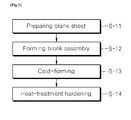
Fig. 1 is a flowchart of a method of manufacturing an automobile part having different local strengths using steel sheets subjected to heat-treatment hardening in accordance with a first embodiment of the present invention; -
Fig. 2 shows an automobile part in each process of the method of manufacturing an automobile part in accordance with the first embodiment of the present invention; -
Fig. 3 is a flowchart of a method of manufacturing an automobile part having different local strengths using steel sheets subjected to heat-treatment hardening in accordance with a second embodiment of the present invention; -
Fig. 4 shows an automobile part in each process of the method of manufacturing an automobile part in accordance with the second embodiment of the present invention; -
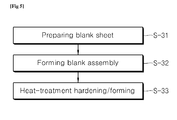
Fig. 5 is a flowchart of a method of manufacturing an automobile part having different local strengths using steel sheets subjected to heat-treatment hardening in accordance with a third embodiment of the present invention; and -
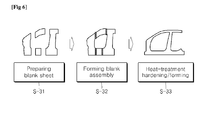
Fig. 6 shows an automobile part in each process of the method of manufacturing an automobile part in accordance with the third embodiment of the present invention. - Exemplary embodiments of the present invention will now be described in detail with reference to the accompanying drawings.
- It should be noted that the drawings are not to precise scale and may be exaggerated in thickness of lines or size of components for descriptive convenience and clarity.
- Furthermore, the terms used herein are defined by taking functions of the present disclosure into account and can be changed according to user or operator's custom or intention.
- Therefore, definition of the terms should be made according to the overall disclosure set forth herein.
-
Fig. 1 is a flowchart of a method of manufacturing an automobile part having different local strengths using steel sheets subjected to heat-treatment hardening in accordance with a first embodiment of the present invention. -
Fig. 2 shows an automobile part in each process of the method of manufacturing an automobile part in accordance with the first embodiment. - Referring to
Fig. 1 , a method of manufacturing an automobile part according to this embodiment includes: - a blank sheet preparing process S-11 in which blank sheets are prepared from steel sheets subjected to heat-treatment hardening and having different thicknesses according to desired strength;
- a blank assembly forming process S-12 in which a blank assembly is formed by joining the blank sheets to each other via laser welding;
- a cold-forming process S-13 in which the blank assembly is subjected to cold-pressing; and
- a heat-treatment hardening process S-14 in which the cold-pressed part is heated to a temperature of AC3 or more, followed by quenching the cold-pressed part received within dies to remove residual stress while increasing strength of the produced automobile part.
-
Fig. 2 shows a process of manufacturing a side reinforcing structure for an automobile by the method according to the first embodiment. - The side reinforcing structure needs to have different local strengths. Furthermore, for reduction in weight of an automobile, it is preferable that a high strength steel sheet used for the automobile be as strong and thin as possible.
- However, since a general high strength steel sheet has low formability and causes a spring back phenomenon, it is difficult to form a desired shape while ensuring dimensional accuracy by preventing the spring back phenomenon.
- In the method according to this embodiment, blank sheets are prepared from steel sheets subjected to heat-treatment hardening to have different mechanical properties and different thicknesses, and are joined to each other by laser welding.
- In the blank sheet preparing process S-11 of the method, the blank sheets corresponding to respective components of an automobile part are prepared from the steel sheets subjected to heat-treatment hardening and having different thicknesses according to desired strength.
- In the blank assembly forming process S-12, the prepared blank sheets are joined to each other by laser welding to form a blank assembly.
- In the cold-forming process S-13, the blank assembly is subjected to cold-pressing to form a desired shape of the automobile part. Generally, when cold-pressing is performed, dimensional accuracy of the part can be lowered due to the spring back phenomenon.
- However, according to this embodiment, in the heat-treatment hardening process S-14 after the cold-forming process S-13, the cold-pressed part is heated to a temperature of AC3 or more, followed by quenching the cold-pressed part received within dies, which correspond to a final shape of the automobile part. As a result, in the heat-treatment hardening process S-14, residual stress caused by cold-pressing is removed and the strength of the automobile part is increased while ensuring dimensional accuracy.
-
Fig. 3 is a flowchart of a method of manufacturing an automobile part having different local strengths using steel sheets subjected to heat-treatment hardening in accordance with a second embodiment of the present invention. -
Fig. 4 shows an automobile part in each process of the method of manufacturing an automobile part in accordance with the second embodiment. - When a part has a complex shape or a substantial forming depth, there is a high likelihood of damage of a steel sheet such as tearing during cold-forming.
- The method according to the second embodiment may be applied to the case where it is difficult to form a final shape through cold-forming.
- As shown in the drawings, the method of manufacturing an automobile part having different local strengths using steel sheets subjected to heat-treatment hardening includes:
- a blank sheet preparing process S-21 in which blank sheets are prepared from steel sheets subjected to heat-treatment hardening and having different thicknesses or different mechanical properties according to desired strength;
- a blank assembly forming process S-22 in which a blank assembly is formed by joining the blank sheets to each other via laser welding;
- a cold-forming process S-23 in which the blank assembly is subjected to cold-pressing to an extent of 80 to 99% of a final shape of the automobile part; and
- a heat-treatment hardening/forming process S-24 in which the cold-pressed part is heated to a temperature of AC3 or more to form the remaining 1 to 20% of the final shape, followed by quenching the formed automobile part received within dies to remove residual stress while increasing strength of the automobile part.
- Since the blank sheet preparing process S-21 and the blank assembly forming process S-22 of the method according to this embodiment are the same as those of the first embodiment, repeated descriptions thereof will be omitted.
- According to the second embodiment, the blank assembly is subjected to cold-pressing to an extent of 80 to 99% of the final shape in the cold-forming process S-23, and the final part is formed in the heat-treatment hardening/forming process S-24.
- Since the part has a three-dimensional shape, it is difficult to define the ratio of forming with a certain numerical value. In this embodiment, the ratio of forming is calculated with reference to the thickness of a final product.
- For example, when a final part has a thickness of 50 mm and a cold-formed part has a thickness of 45 mm, the ratio of cold-forming is 90%.
- According to this embodiment, the blank assembly is not formed to the level of the final part through cold-forming in consideration of the formed limits upon cold-forming of an automobile part which has a substantial forming depth or a complicated shape, as described above.
- In the method of the first embodiment described above, the final process is the heat-treatment hardening process S-14 in which hot-forming is not performed.
- On the other hand, in the method of the second embodiment, the final process is the heat-treatment hardening/forming process S-24, in which the remaining 1 to 20% of the final shape is formed by hot-forming the cold-formed part, with the cold-formed part heated to a temperature of AC3 or more, while quenching the produced part received within dies.
- That is, in the heat-treatment hardening/forming process S-24, the cold-pressed part is heated to form the remaining 1 to 20% of the final shape through hot forming, followed by closing the dies and quenching the formed part to harden the part received within the dies, thereby ensuring dimensional accuracy while improving strength.
- In both the first and second embodiments, since a laser welded zone of the produced part is also subjected to heat treatment together with the steel sheet, the welded zone has the same microstructure as that of a non-welded zone. As a result, the welded zone is prevented from deterioration in strength.
-
Fig. 5 is a flowchart of a method of manufacturing an automobile part having different local strengths using steel sheets subjected to heat-treatment hardening in accordance with a third embodiment of the present invention. -
Fig. 6 shows an automobile part in each process of the method of manufacturing an automobile part in accordance with the third embodiment. - Unlike the embodiments described above, the method according to the third embodiment includes forming a desired shape of a part through hot-forming.
- The method of manufacturing an automobile part having different local strengths according to the third embodiment includes:
- a blank sheet preparing process S-31 in which blank sheets are prepared from steel sheets subjected to heat-treatment hardening and having different thicknesses or different mechanical properties according to desired strength;
- a blank assembly forming process S-32 in which a blank assembly is formed by joining the blank sheets to each other via laser welding;
- a heat-treatment hardening/forming process S-33 in which the blank assembly is heated to a temperature of AC3 or more, followed by hot-pressing the blank assembly and quenching the hot-pressed part received within dies to remove residual stress while increasing strength of the automobile part.
- Since the blank sheet preparing process S-31 and the blank assembly forming process S-32 of the method according to this embodiment are the same as those of the above embodiments, repeated descriptions thereof will be omitted.
- According to this embodiment, in the heat-treatment hardening/forming process S-33, the blank assembly is heated to a temperature of AC3 or more, followed by hot-pressing the blank assembly to form a final shape of an automobile part, and quenching the formed part with the dies receiving the part and closed.
- Accordingly, the blank assembly can be subjected to hot-forming and heat-treatment hardening at the same time.
- With this method, it is possible to manufacture a high strength automobile part having a strength of 100 kgf/mm2 or more without using a high strength steel sheet having low formability.
- Next, the steel sheets subjected to heat-treatment hardening according to embodiments of the invention will be described.
- The steel sheets subjected to heat-treatment hardening may include cold-rolled steel sheets which are not subjected to surface treatment. Alternatively, the steel sheets may include steel sheets, which are subjected to at least one surface treatment method selected from among Zn plating, Al plating, Al-Si plating and high temperature oxidizing agent coating.
- In the method according to the embodiments described above, when the blank assembly is heated to a temperature of AC3 or more in the heat-treatment hardening process S-14 or in the heat-treatment hardening/forming process S-24 or S-34, carburization or oxidation can occur. To prevent this phenomenon, it is preferable to use the steel sheets subjected to surface treatment as described above.
- When using the steel sheet subjected to surface treatment, the steel sheet may be heated to 1000°C or less. When the steel sheet is heated to above 1000°C, a surface plating layer or coating layer can be evaporated from the steel sheet.
- Next, the compositions of steel sheets, which are applied to the method according to the present invention, will be described.
- According to one exemplary embodiment, the steel sheets used in the blank sheet preparing process may include 0.15 to 0.5 percent by weight (wt%) of carbon (C), 0.15 to 0.5 wt% of silicon (Si), 0.5 to 3.0 wt% of manganese (Mn), 0.1 wt% or less of phosphorous (P), 0.1 wt% or less of sulfur (S), 0.01 to 1.0 wt% of chromium (Cr), 0.2 wt% or less of titanium (Ti), 0.1 wt% or less of aluminum (Al), 0.0005 to 0.08 wt% of boron (B), and the balance of Fe and unavoidable impurities.
- The steel sheet subjected to heat-treatment hardening and having this composition may be used to manufacture a high strength automobile part having a strength of 100 kgf/mm2 or more.
- According to another exemplary embodiment, the steel sheets used in the blank sheet preparing process may include 0.15 to 0.4 wt% of carbon (C), 0.03 to 0.4 wt% of silicon (Si), 1.0 to 2.0 wt% of manganese (Mn), 0.12 wt% or less of phosphorous (P), 0.003 wt% or less of sulfur (S), 0.0005 to 0.08 wt% of boron (B), 0.005 to 0.1 wt% of zirconium (Zr), 0.001 to 0.005 wt% of calcium (Ca), and the balance of Fe and unavoidable impurities.
- The steel sheet having this composition has high impact resistance due to addition of zirconium and calcium and thus may be applied to manufacture of blank sheets, which will be used for a part requiring high impact resistance.
- According to still another exemplary embodiment, the steel sheets used in the blank sheet preparing process may include 0.15 to 0.30 wt% of carbon (C), 0.05 to 0.5 wt% of silicon (Si), 1.0 to 2.0 wt% of manganese (Mn), 0.0005 to 0.0040 wt% of boron (B), 0.003 wt% or less of sulfur (S), 0.012 wt% or less of phosphorous (P), at least two components selected from among cobalt (Co), zirconium (Zr) and antimony (Sb), and the balance of Fe and unavoidable impurities.
- The steel sheet according to this embodiment selectively includes at least two of cobalt (Co), zirconium (Zr) and antimony (Sb), instead of titanium (Ti), niobium (Nb), molybdenum (Mo) and chromium (Cr) which can cause cracking of the steel sheet during hot pressing, in order to secure high temperature ductility. Accordingly, the steel sheet according to this embodiment allows pressing at low temperature, thereby enabling reduction of energy while protecting a plating layer of a plated steel sheet or preventing occurrence of oxidation scales on a non-plated steel sheet.
- According to still another exemplary embodiment, in order to improve welding and impact properties, the steel sheets used in the blank sheet preparing process may include 0.15 to 0.40 wt% of carbon (C), 0.03 to 0.30 wt% of silicon (Si), 1.0 to 2.0 wt% of manganese (Mn), 0.0005 to 0.004 wt% of boron (B), optionally, at least one of 0.003 wt% or less of sulfur (S), 0.012 wt% or less of phosphorous (P), 0.001 to 0.005 wt% of calcium (Ca), 0.005 to 0.05 wt% of niobium (Nb), 0.005 to 0.1 wt% of zirconium (Zr) and 0.0005 to 0.5 wt% of cobalt (Co), and the balance of Fe and unavoidable impurities.
- According to still another exemplary embodiment, in order to ensure a tensile strength of 1200∼1500 MPa and good ductility, the steel sheets used in the blank sheet preparing process may include 0.19 to 0.40 wt% of carbon (C), 0.5 to 2.5 wt% of manganese (Mn), 0.1 to 0.5 wt% of chromium (Cr), 0.0015 to 0.0040 wt% of boron (B), 0.01 to 0.5 wt% of silicon (Si), 0.05 wt% or less of phosphorous (P), 0.05 wt% or less of sulfur (S), 0.03 wt% or less of aluminum (Al), one or two components selected from among 0.01 to 2 wt% of nickel (Ni), 0.01 to 0.10 wt% of niobium (Nb), 0.01 to 1 wt% of copper (Cu) and 0.01 to 0.20 wt% of molybdenum (Mo), and the balance of Fe and unavoidable impurities.
- Although some embodiments have been described herein, it should be understood by those skilled in the art that these embodiments are given by way of illustration only, and that various modifications, variations, and alterations can be made without departing from the spirit and scope of the invention. Therefore, the scope of the invention should be limited only by the following claims and equivalents thereof.
Claims (9)
- A method of manufacturing an automobile part, comprising:preparing blank sheets using steel sheets subjected to heat-treatment hardening and having different thicknesses or different material properties according to desired strength;forming a blank assembly by joining the blank sheets to each other via laser welding;cold-pressing the blank assembly; andheating the cold-pressed part to a temperature of AC3 or more, followed by quenching the cold-pressed part received within dies to remove residual stress while increasing strength of the automobile part.
- A method of manufacturing an automobile part, comprising:preparing blank sheets using steel sheets subjected to heat-treatment hardening and having different thicknesses or different material properties according to desired strength;forming a blank assembly by joining the blank sheets to each other via laser welding;cold-pressing the blank assembly to an extent of 80 to 99% of a final shape of the automobile part; andheating the cold-pressed part to a temperature of AC3 or more to form the remaining 1 to 20% of the final shape, followed by quenching the formed automobile part received within dies to remove residual stress while increasing strength of the automobile part.
- A method of manufacturing an automobile part, comprising:preparing blank sheets using steel sheets subjected to heat-treatment hardening and having different thicknesses or different material properties according to desired strength;forming a blank assembly by joining the blank sheets to each other via laser welding; andheating the blank assembly to a temperature of AC3 or more, followed by hot-pressing the blank assembly and quenching the hot-pressed part received within dies to remove residual stress while increasing strength of the automobile part.
- The method of any one of claims 1 to 3, wherein the steel sheets in preparation of the preparing blank sheets are subjected to surface treatment by at least one process selected from among Zn plating, Al plating, Al-Si plating and high temperature oxidizing agent coating.
- The method of any one of claims 1 to 3, wherein the steel sheets in preparation of the blank sheets comprise 0.15 to 0.5 wt% of carbon (C), 0.15 to 0.5 wt% of silicon (Si), 0.5 to 3.0 wt% of manganese (Mn), 0.1 wt% or less of phosphorous (P), 0.1 wt% or less of sulfur (S), 0.01 to 1.0 wt% of chromium (Cr), 0.2 wt% or less of titanium (Ti), 0.1 wt% or less of aluminum (Al), 0.0005 to 0.08 wt% of boron (B), and the balance of Fe and unavoidable impurities.
- The method of any one of claims 1 to 3, wherein the steel sheets in preparation of the blank sheets comprise 0.15 to 0.4 wt% of carbon (C), 0.03 to 0.4 wt% of silicon (Si), 1.0 to 2.0 wt% of manganese (Mn), 0.12 wt% or less of phosphorous (P), 0.003 wt% or less of sulfur (S), 0.0005 to 0.08 wt% of boron (B), 0.005 to 0.1 wt% of zirconium (Zr), 0.001 to 0.005 wt% of calcium (Ca), and the balance of Fe and unavoidable impurities.
- The method of any one of claims 1 to 3, wherein the steel sheets in preparation of the blank sheets comprise 0.15 to 0.30 wt% of carbon (C), 0.05 to 0.5 wt% of silicon (Si), 1.0 to 2.0 wt% of manganese (Mn), 0.0005 to 0.0040 wt% of boron (B), 0.003 wt% or less of sulfur (S), 0.012 wt% or less of phosphorous (P), at least two components selected from among cobalt (Co), zirconium (Zr) and antimony (Sb), and the balance of Fe and unavoidable impurities.
- The method of any one of claims 1 to 3, wherein the steel sheets in preparation of the blank sheets comprise 0.15 to 0.40 wt% of carbon (C), 0.03 to 0.30 wt% of silicon (Si), 1.0 to 2.0 wt% of manganese (Mn), 0.0005 to 0.004 wt% of boron (B), optionally, at least one of 0.003 wt% or less of sulfur (S), 0.012 wt% or less of phosphorous (P), 0.001 to 0.005 wt% of calcium (Ca), 0.005 to 0.05 wt% of niobium (Nb), 0.005 to 0.1 wt% of zirconium (Zr) and 0.0005 to 0.5 wt% of cobalt (Co), and the balance of Fe and unavoidable impurities.
- The method of any one of claims 1 to 3, wherein the steel sheets in preparation of the blank sheets comprise 0.19 to 0.40 wt% of carbon (C), 0.5 to 2.5 wt% of manganese (Mn), 0.1 to 0.5 wt% of chromium (Cr), 0.0015 to 0.0040 wt% of boron (B), 0.01 to 0.5 wt% of silicon (Si), 0.05 wt% or less of phosphorous (P), 0.05 wt% or less of sulfur (S), 0.03 wt% or less of aluminum (Al), one or two components selected from among 0.01 to 2 wt% of nickel (Ni), 0.01 to 0.10 wt% of niobium (Nb), 0.01 to 1 wt% of copper (Cu) and 0.01 to 0.20 wt% of molybdenum (Mo), and the balance of Fe and unavoidable impurities.
Applications Claiming Priority (2)
| Application Number | Priority Date | Filing Date | Title |
|---|---|---|---|
| KR1020100108528A KR101033767B1 (en) | 2010-11-03 | 2010-11-03 | Method for manufacturing automotive parts with locally dissimilar strength using heat-treated hardened steel sheet |
| PCT/KR2010/007829 WO2012060496A1 (en) | 2010-11-03 | 2010-11-08 | Method for manufacturing automobile part having different local strengths using heat-treatment hardening steel plate |
Publications (3)
| Publication Number | Publication Date |
|---|---|
| EP2636759A1 true EP2636759A1 (en) | 2013-09-11 |
| EP2636759A4 EP2636759A4 (en) | 2015-06-10 |
| EP2636759B1 EP2636759B1 (en) | 2019-06-05 |
Family
ID=44365822
Family Applications (1)
| Application Number | Title | Priority Date | Filing Date |
|---|---|---|---|
| EP10855727.3A Active EP2636759B1 (en) | 2010-11-03 | 2010-11-08 | Method for manufacturing automobile part having different local strengths using heat-treatment hardening steel plate |
Country Status (6)
| Country | Link |
|---|---|
| US (2) | US20120216920A1 (en) |
| EP (1) | EP2636759B1 (en) |
| JP (1) | JP5509337B2 (en) |
| KR (1) | KR101033767B1 (en) |
| CN (1) | CN102712962B (en) |
| WO (1) | WO2012060496A1 (en) |
Families Citing this family (25)
| Publication number | Priority date | Publication date | Assignee | Title |
|---|---|---|---|---|
| KR101330952B1 (en) * | 2011-06-28 | 2013-11-18 | 현대제철 주식회사 | Hot stamping molding product and method of manufacturing the same |
| EP2728027B1 (en) * | 2011-06-30 | 2019-01-16 | Hyundai Steel Company | Heat-hardened steel with excellent crashworthiness and method for manufacturing heat-hardenable parts using same |
| KR101119173B1 (en) * | 2011-09-30 | 2012-02-22 | 현대하이스코 주식회사 | Method for manufacturing steel products having different strength using laser heat treatment and heat treated hardened steel used therein |
| KR101205334B1 (en) * | 2012-04-16 | 2012-11-26 | (주)오토젠 | Method for manufacturing shassis of vehicle |
| EP2799178B1 (en) * | 2013-05-02 | 2018-07-11 | Volvo Car Corporation | Method for creating a hardened steel assembly |
| KR101542969B1 (en) * | 2013-09-04 | 2015-08-07 | 현대자동차 주식회사 | Blank forming device using electric direct heating method and the manufacturing method using this |
| EP3169876B1 (en) | 2014-07-16 | 2019-03-06 | Borgwarner Inc. | Adjustment ring assembly for variable turbine geometry turbochargers |
| CN104708274A (en) * | 2015-02-02 | 2015-06-17 | 柳州市二和汽车零部件有限公司 | Surface hardening method of automobile parts |
| JP2016194101A (en) * | 2015-03-31 | 2016-11-17 | フタバ産業株式会社 | Steel material for laser weldment and laser weldment conjugate |
| CN104985412A (en) * | 2015-08-02 | 2015-10-21 | 衢州市优德工业设计有限公司 | Machining method of multi-layer gear |
| WO2017029773A1 (en) * | 2015-08-19 | 2017-02-23 | Jfeスチール株式会社 | Method for manufacturing hot press part and hot press part |
| WO2017098303A1 (en) * | 2015-12-09 | 2017-06-15 | Arcelormittal | Method for producing an inner automotive structural part comprising localized reinforced areas |
| KR101707340B1 (en) * | 2015-12-28 | 2017-02-15 | 현대제철 주식회사 | Chain steel and manufacturing method thereof |
| CN106566998B (en) * | 2016-10-13 | 2018-07-24 | 宝钢特钢韶关有限公司 | CrMo series gear round steel |
| KR101881893B1 (en) * | 2016-12-09 | 2018-07-26 | 주식회사 엠에스 오토텍 | Mefhod for manufacturing hot formed parts |
| CN107723619A (en) * | 2017-10-31 | 2018-02-23 | 任丽 | A heat treatment method for a heat-resistant component for a boiler |
| CN108581372B (en) * | 2018-04-02 | 2020-05-22 | 无锡奇科穆德机电科技有限公司 | Thin steel plate slotting machining process |
| US12311427B2 (en) | 2020-02-26 | 2025-05-27 | Nippon Steel Corporation | Method of manufacturing overlapped hot stamp molded body, and overlapped hot stamp molded body |
| KR20220151457A (en) * | 2021-05-06 | 2022-11-15 | 현대자동차주식회사 | Ultra high strength cold rolled galvanized steel and forming method for the same |
| JP7656248B2 (en) * | 2023-04-28 | 2025-04-03 | 日本製鉄株式会社 | Blank, manufacturing method of structural member, and structural member |
| EP4703059A1 (en) * | 2023-04-28 | 2026-03-04 | Nippon Steel Corporation | Blank, method for manufacturing structural member, and structural member |
| EP4703060A1 (en) * | 2023-04-28 | 2026-03-04 | Nippon Steel Corporation | Blank, method for manufacturing structural member, and structural member |
| JP7741456B2 (en) * | 2023-04-28 | 2025-09-18 | 日本製鉄株式会社 | Blank, manufacturing method of structural member, and structural member |
| WO2024253077A1 (en) * | 2023-06-06 | 2024-12-12 | 日本製鉄株式会社 | Blank, method for manufacturing structural member, and structural member |
| WO2026084035A1 (en) * | 2024-10-16 | 2026-04-23 | 日本製鉄株式会社 | Vehicle side frame component and integrated blank thereof |
Family Cites Families (13)
| Publication number | Priority date | Publication date | Assignee | Title |
|---|---|---|---|---|
| FR2827874B1 (en) * | 2001-07-27 | 2004-05-21 | Usinor | PROCESS FOR MANUFACTURING VERY HIGH MECHANICAL STRENGTH AND EXCELLENT PLANEITY STEEL PARTS |
| JP4316842B2 (en) * | 2002-07-26 | 2009-08-19 | アイシン高丘株式会社 | Method for manufacturing tailored blank press molded products |
| WO2004033126A1 (en) * | 2002-09-13 | 2004-04-22 | Daimlerchrysler Ag | Press-hardened part and method for the production thereof |
| JP4280078B2 (en) * | 2003-01-24 | 2009-06-17 | 新日本製鐵株式会社 | High-strength cold-rolled steel sheet and plated steel sheet excellent in deep drawability, steel pipes excellent in workability, and production methods thereof |
| DE10333166A1 (en) * | 2003-07-22 | 2005-02-10 | Daimlerchrysler Ag | Press-hardened component and method for producing a press-hardened component |
| JP2005138112A (en) * | 2003-11-04 | 2005-06-02 | Nippon Steel Corp | Press working method |
| DE102004038626B3 (en) * | 2004-08-09 | 2006-02-02 | Voestalpine Motion Gmbh | Method for producing hardened components from sheet steel |
| JP4975245B2 (en) * | 2004-10-06 | 2012-07-11 | 新日本製鐵株式会社 | Manufacturing method of high strength parts |
| JP4867319B2 (en) * | 2005-12-05 | 2012-02-01 | 住友金属工業株式会社 | Tailored blank material for hot pressing, hot pressing member and manufacturing method thereof |
| JP4840089B2 (en) * | 2006-11-08 | 2011-12-21 | 住友金属工業株式会社 | Manufacturing method of molded products |
| JP5070947B2 (en) * | 2007-06-14 | 2012-11-14 | 住友金属工業株式会社 | Hardened steel plate member, hardened steel plate and manufacturing method thereof |
| DE102008022399A1 (en) * | 2008-05-06 | 2009-11-19 | Thyssenkrupp Steel Ag | Process for producing a steel molding having a predominantly ferritic-bainitic structure |
| KR100902857B1 (en) * | 2008-10-16 | 2009-06-16 | 현대하이스코 주식회사 | Manufacturing method of ultra high strength steel molded body for the manufacture of moldings with complex shapes |
-
2010
- 2010-11-03 KR KR1020100108528A patent/KR101033767B1/en active Active
- 2010-11-08 CN CN201080038066.XA patent/CN102712962B/en active Active
- 2010-11-08 JP JP2012541934A patent/JP5509337B2/en active Active
- 2010-11-08 US US13/390,537 patent/US20120216920A1/en not_active Abandoned
- 2010-11-08 WO PCT/KR2010/007829 patent/WO2012060496A1/en not_active Ceased
- 2010-11-08 EP EP10855727.3A patent/EP2636759B1/en active Active
-
2015
- 2015-02-24 US US14/630,390 patent/US20150167111A1/en not_active Abandoned
Also Published As
| Publication number | Publication date |
|---|---|
| EP2636759A4 (en) | 2015-06-10 |
| KR101033767B1 (en) | 2011-05-09 |
| JP2013501631A (en) | 2013-01-17 |
| WO2012060496A1 (en) | 2012-05-10 |
| EP2636759B1 (en) | 2019-06-05 |
| US20120216920A1 (en) | 2012-08-30 |
| JP5509337B2 (en) | 2014-06-04 |
| CN102712962A (en) | 2012-10-03 |
| CN102712962B (en) | 2017-05-24 |
| US20150167111A1 (en) | 2015-06-18 |
Similar Documents
| Publication | Publication Date | Title |
|---|---|---|
| EP2636759B1 (en) | Method for manufacturing automobile part having different local strengths using heat-treatment hardening steel plate | |
| US10435763B2 (en) | Method for producing a cold-rolled flat steel product with high yield strength and flat cold-rolled steel product | |
| CN107614733B (en) | HPF molded part having excellent peeling resistance and method for producing same | |
| US10272644B2 (en) | Sheet steel product, a steel component produced from such a sheet steel product, and body for a motor vehicle | |
| KR101108838B1 (en) | Heat-treated hardened steel with excellent impact performance and method of manufacturing heat-hardened component using the same | |
| US20110182765A1 (en) | Use of a steel alloy | |
| KR101330952B1 (en) | Hot stamping molding product and method of manufacturing the same | |
| KR20130014520A (en) | Steel, flat steel product, steel component and method for producing a steel component | |
| KR20140119811A (en) | Process for producing press-formed product and press-formed product | |
| CN111527222B (en) | Cladding Steel Plate | |
| JP4990500B2 (en) | High-strength automotive member excellent in uniformity of internal hardness and manufacturing method thereof | |
| WO2013133165A1 (en) | Steel sheet for hot pressing use, press-molded article, and method for producing press-molded article | |
| CN108025349A (en) | Mould manufacturing method | |
| JP4427462B2 (en) | Steel member for vehicle and method for manufacturing the same | |
| JP2020519766A (en) | Hot work materials, parts, and uses | |
| KR20120132836A (en) | Hot stamping molding product and method of manufacturing the same | |
| JP2020519765A (en) | Hot forming materials, components, and uses | |
| JP7461464B2 (en) | Steel plate for hot forming, hot forming member and manufacturing method thereof | |
| KR101747040B1 (en) | Method for manufacturing side plate for sandwich steel and sandwich steel using thereof | |
| JP2007308745A (en) | High strength member and manufacturing method thereof | |
| JP2015196890A (en) | Hot stamp molded body | |
| JP2023507803A (en) | Structural cold-rolled steel sheet with excellent hardness and workability and method for producing the same |
Legal Events
| Date | Code | Title | Description |
|---|---|---|---|
| PUAI | Public reference made under article 153(3) epc to a published international application that has entered the european phase |
Free format text: ORIGINAL CODE: 0009012 |
|
| 17P | Request for examination filed |
Effective date: 20120216 |
|
| AK | Designated contracting states |
Kind code of ref document: A1 Designated state(s): AL AT BE BG CH CY CZ DE DK EE ES FI FR GB GR HR HU IE IS IT LI LT LU LV MC MK MT NL NO PL PT RO RS SE SI SK SM TR |
|
| DAX | Request for extension of the european patent (deleted) | ||
| RA4 | Supplementary search report drawn up and despatched (corrected) |
Effective date: 20150511 |
|
| RIC1 | Information provided on ipc code assigned before grant |
Ipc: B21D 22/02 20060101ALI20150505BHEP Ipc: B21D 53/88 20060101ALI20150505BHEP Ipc: C21D 8/00 20060101AFI20150505BHEP Ipc: C22C 38/00 20060101ALI20150505BHEP Ipc: C21D 1/673 20060101ALI20150505BHEP Ipc: B23K 26/20 20140101ALI20150505BHEP |
|
| RAP1 | Party data changed (applicant data changed or rights of an application transferred) |
Owner name: HYUNDAI STEEL COMPANY |
|
| STAA | Information on the status of an ep patent application or granted ep patent |
Free format text: STATUS: EXAMINATION IS IN PROGRESS |
|
| 17Q | First examination report despatched |
Effective date: 20170706 |
|
| REG | Reference to a national code |
Ref country code: DE Ref legal event code: R079 Ref document number: 602010059322 Country of ref document: DE Free format text: PREVIOUS MAIN CLASS: C21D0008020000 Ipc: C21D0008000000 |
|
| GRAP | Despatch of communication of intention to grant a patent |
Free format text: ORIGINAL CODE: EPIDOSNIGR1 |
|
| STAA | Information on the status of an ep patent application or granted ep patent |
Free format text: STATUS: GRANT OF PATENT IS INTENDED |
|
| RIC1 | Information provided on ipc code assigned before grant |
Ipc: B23K 26/20 20140101ALI20181128BHEP Ipc: B23K 101/18 20060101ALI20181128BHEP Ipc: C21D 8/00 20060101AFI20181128BHEP Ipc: C21D 1/673 20060101ALI20181128BHEP Ipc: B21D 22/02 20060101ALI20181128BHEP Ipc: B21D 53/88 20060101ALI20181128BHEP Ipc: C22C 38/00 20060101ALI20181128BHEP |
|
| INTG | Intention to grant announced |
Effective date: 20181221 |
|
| GRAS | Grant fee paid |
Free format text: ORIGINAL CODE: EPIDOSNIGR3 |
|
| GRAA | (expected) grant |
Free format text: ORIGINAL CODE: 0009210 |
|
| STAA | Information on the status of an ep patent application or granted ep patent |
Free format text: STATUS: THE PATENT HAS BEEN GRANTED |
|
| AK | Designated contracting states |
Kind code of ref document: B1 Designated state(s): AL AT BE BG CH CY CZ DE DK EE ES FI FR GB GR HR HU IE IS IT LI LT LU LV MC MK MT NL NO PL PT RO RS SE SI SK SM TR |
|
| REG | Reference to a national code |
Ref country code: GB Ref legal event code: FG4D |
|
| REG | Reference to a national code |
Ref country code: CH Ref legal event code: EP |
|
| REG | Reference to a national code |
Ref country code: AT Ref legal event code: REF Ref document number: 1140024 Country of ref document: AT Kind code of ref document: T Effective date: 20190615 |
|
| REG | Reference to a national code |
Ref country code: IE Ref legal event code: FG4D |
|
| REG | Reference to a national code |
Ref country code: DE Ref legal event code: R096 Ref document number: 602010059322 Country of ref document: DE |
|
| REG | Reference to a national code |
Ref country code: NL Ref legal event code: MP Effective date: 20190605 |
|
| REG | Reference to a national code |
Ref country code: LT Ref legal event code: MG4D |
|
| PG25 | Lapsed in a contracting state [announced via postgrant information from national office to epo] |
Ref country code: NO Free format text: LAPSE BECAUSE OF FAILURE TO SUBMIT A TRANSLATION OF THE DESCRIPTION OR TO PAY THE FEE WITHIN THE PRESCRIBED TIME-LIMIT Effective date: 20190905 Ref country code: AL Free format text: LAPSE BECAUSE OF FAILURE TO SUBMIT A TRANSLATION OF THE DESCRIPTION OR TO PAY THE FEE WITHIN THE PRESCRIBED TIME-LIMIT Effective date: 20190605 Ref country code: FI Free format text: LAPSE BECAUSE OF FAILURE TO SUBMIT A TRANSLATION OF THE DESCRIPTION OR TO PAY THE FEE WITHIN THE PRESCRIBED TIME-LIMIT Effective date: 20190605 Ref country code: SE Free format text: LAPSE BECAUSE OF FAILURE TO SUBMIT A TRANSLATION OF THE DESCRIPTION OR TO PAY THE FEE WITHIN THE PRESCRIBED TIME-LIMIT Effective date: 20190605 Ref country code: HR Free format text: LAPSE BECAUSE OF FAILURE TO SUBMIT A TRANSLATION OF THE DESCRIPTION OR TO PAY THE FEE WITHIN THE PRESCRIBED TIME-LIMIT Effective date: 20190605 Ref country code: ES Free format text: LAPSE BECAUSE OF FAILURE TO SUBMIT A TRANSLATION OF THE DESCRIPTION OR TO PAY THE FEE WITHIN THE PRESCRIBED TIME-LIMIT Effective date: 20190605 Ref country code: LT Free format text: LAPSE BECAUSE OF FAILURE TO SUBMIT A TRANSLATION OF THE DESCRIPTION OR TO PAY THE FEE WITHIN THE PRESCRIBED TIME-LIMIT Effective date: 20190605 |
|
| PG25 | Lapsed in a contracting state [announced via postgrant information from national office to epo] |
Ref country code: GR Free format text: LAPSE BECAUSE OF FAILURE TO SUBMIT A TRANSLATION OF THE DESCRIPTION OR TO PAY THE FEE WITHIN THE PRESCRIBED TIME-LIMIT Effective date: 20190906 Ref country code: BG Free format text: LAPSE BECAUSE OF FAILURE TO SUBMIT A TRANSLATION OF THE DESCRIPTION OR TO PAY THE FEE WITHIN THE PRESCRIBED TIME-LIMIT Effective date: 20190905 Ref country code: RS Free format text: LAPSE BECAUSE OF FAILURE TO SUBMIT A TRANSLATION OF THE DESCRIPTION OR TO PAY THE FEE WITHIN THE PRESCRIBED TIME-LIMIT Effective date: 20190605 Ref country code: LV Free format text: LAPSE BECAUSE OF FAILURE TO SUBMIT A TRANSLATION OF THE DESCRIPTION OR TO PAY THE FEE WITHIN THE PRESCRIBED TIME-LIMIT Effective date: 20190605 |
|
| REG | Reference to a national code |
Ref country code: SK Ref legal event code: T3 Ref document number: E 32018 Country of ref document: SK |
|
| REG | Reference to a national code |
Ref country code: AT Ref legal event code: MK05 Ref document number: 1140024 Country of ref document: AT Kind code of ref document: T Effective date: 20190605 |
|
| PG25 | Lapsed in a contracting state [announced via postgrant information from national office to epo] |
Ref country code: RO Free format text: LAPSE BECAUSE OF FAILURE TO SUBMIT A TRANSLATION OF THE DESCRIPTION OR TO PAY THE FEE WITHIN THE PRESCRIBED TIME-LIMIT Effective date: 20190605 Ref country code: EE Free format text: LAPSE BECAUSE OF FAILURE TO SUBMIT A TRANSLATION OF THE DESCRIPTION OR TO PAY THE FEE WITHIN THE PRESCRIBED TIME-LIMIT Effective date: 20190605 Ref country code: AT Free format text: LAPSE BECAUSE OF FAILURE TO SUBMIT A TRANSLATION OF THE DESCRIPTION OR TO PAY THE FEE WITHIN THE PRESCRIBED TIME-LIMIT Effective date: 20190605 Ref country code: NL Free format text: LAPSE BECAUSE OF FAILURE TO SUBMIT A TRANSLATION OF THE DESCRIPTION OR TO PAY THE FEE WITHIN THE PRESCRIBED TIME-LIMIT Effective date: 20190605 Ref country code: PT Free format text: LAPSE BECAUSE OF FAILURE TO SUBMIT A TRANSLATION OF THE DESCRIPTION OR TO PAY THE FEE WITHIN THE PRESCRIBED TIME-LIMIT Effective date: 20191007 |
|
| PG25 | Lapsed in a contracting state [announced via postgrant information from national office to epo] |
Ref country code: IT Free format text: LAPSE BECAUSE OF FAILURE TO SUBMIT A TRANSLATION OF THE DESCRIPTION OR TO PAY THE FEE WITHIN THE PRESCRIBED TIME-LIMIT Effective date: 20190605 Ref country code: SM Free format text: LAPSE BECAUSE OF FAILURE TO SUBMIT A TRANSLATION OF THE DESCRIPTION OR TO PAY THE FEE WITHIN THE PRESCRIBED TIME-LIMIT Effective date: 20190605 Ref country code: IS Free format text: LAPSE BECAUSE OF FAILURE TO SUBMIT A TRANSLATION OF THE DESCRIPTION OR TO PAY THE FEE WITHIN THE PRESCRIBED TIME-LIMIT Effective date: 20191005 |
|
| REG | Reference to a national code |
Ref country code: DE Ref legal event code: R097 Ref document number: 602010059322 Country of ref document: DE |
|
| PG25 | Lapsed in a contracting state [announced via postgrant information from national office to epo] |
Ref country code: TR Free format text: LAPSE BECAUSE OF FAILURE TO SUBMIT A TRANSLATION OF THE DESCRIPTION OR TO PAY THE FEE WITHIN THE PRESCRIBED TIME-LIMIT Effective date: 20190605 |
|
| PLBE | No opposition filed within time limit |
Free format text: ORIGINAL CODE: 0009261 |
|
| STAA | Information on the status of an ep patent application or granted ep patent |
Free format text: STATUS: NO OPPOSITION FILED WITHIN TIME LIMIT |
|
| PG25 | Lapsed in a contracting state [announced via postgrant information from national office to epo] |
Ref country code: DK Free format text: LAPSE BECAUSE OF FAILURE TO SUBMIT A TRANSLATION OF THE DESCRIPTION OR TO PAY THE FEE WITHIN THE PRESCRIBED TIME-LIMIT Effective date: 20190605 Ref country code: PL Free format text: LAPSE BECAUSE OF FAILURE TO SUBMIT A TRANSLATION OF THE DESCRIPTION OR TO PAY THE FEE WITHIN THE PRESCRIBED TIME-LIMIT Effective date: 20190605 |
|
| 26N | No opposition filed |
Effective date: 20200306 |
|
| PG25 | Lapsed in a contracting state [announced via postgrant information from national office to epo] |
Ref country code: SI Free format text: LAPSE BECAUSE OF FAILURE TO SUBMIT A TRANSLATION OF THE DESCRIPTION OR TO PAY THE FEE WITHIN THE PRESCRIBED TIME-LIMIT Effective date: 20190605 |
|
| REG | Reference to a national code |
Ref country code: DE Ref legal event code: R119 Ref document number: 602010059322 Country of ref document: DE |
|
| REG | Reference to a national code |
Ref country code: CH Ref legal event code: PL |
|
| PG25 | Lapsed in a contracting state [announced via postgrant information from national office to epo] |
Ref country code: CH Free format text: LAPSE BECAUSE OF NON-PAYMENT OF DUE FEES Effective date: 20191130 Ref country code: LI Free format text: LAPSE BECAUSE OF NON-PAYMENT OF DUE FEES Effective date: 20191130 Ref country code: LU Free format text: LAPSE BECAUSE OF NON-PAYMENT OF DUE FEES Effective date: 20191108 Ref country code: MC Free format text: LAPSE BECAUSE OF FAILURE TO SUBMIT A TRANSLATION OF THE DESCRIPTION OR TO PAY THE FEE WITHIN THE PRESCRIBED TIME-LIMIT Effective date: 20190605 |
|
| REG | Reference to a national code |
Ref country code: BE Ref legal event code: MM Effective date: 20191130 |
|
| GBPC | Gb: european patent ceased through non-payment of renewal fee |
Effective date: 20191108 |
|
| PG25 | Lapsed in a contracting state [announced via postgrant information from national office to epo] |
Ref country code: FR Free format text: LAPSE BECAUSE OF NON-PAYMENT OF DUE FEES Effective date: 20191130 Ref country code: IE Free format text: LAPSE BECAUSE OF NON-PAYMENT OF DUE FEES Effective date: 20191108 Ref country code: GB Free format text: LAPSE BECAUSE OF NON-PAYMENT OF DUE FEES Effective date: 20191108 Ref country code: DE Free format text: LAPSE BECAUSE OF NON-PAYMENT OF DUE FEES Effective date: 20200603 |
|
| PG25 | Lapsed in a contracting state [announced via postgrant information from national office to epo] |
Ref country code: BE Free format text: LAPSE BECAUSE OF NON-PAYMENT OF DUE FEES Effective date: 20191130 |
|
| PG25 | Lapsed in a contracting state [announced via postgrant information from national office to epo] |
Ref country code: CY Free format text: LAPSE BECAUSE OF FAILURE TO SUBMIT A TRANSLATION OF THE DESCRIPTION OR TO PAY THE FEE WITHIN THE PRESCRIBED TIME-LIMIT Effective date: 20190605 |
|
| PG25 | Lapsed in a contracting state [announced via postgrant information from national office to epo] |
Ref country code: MT Free format text: LAPSE BECAUSE OF FAILURE TO SUBMIT A TRANSLATION OF THE DESCRIPTION OR TO PAY THE FEE WITHIN THE PRESCRIBED TIME-LIMIT Effective date: 20190605 Ref country code: HU Free format text: LAPSE BECAUSE OF FAILURE TO SUBMIT A TRANSLATION OF THE DESCRIPTION OR TO PAY THE FEE WITHIN THE PRESCRIBED TIME-LIMIT; INVALID AB INITIO Effective date: 20101108 |
|
| PG25 | Lapsed in a contracting state [announced via postgrant information from national office to epo] |
Ref country code: MK Free format text: LAPSE BECAUSE OF FAILURE TO SUBMIT A TRANSLATION OF THE DESCRIPTION OR TO PAY THE FEE WITHIN THE PRESCRIBED TIME-LIMIT Effective date: 20190605 |
|
| PGFP | Annual fee paid to national office [announced via postgrant information from national office to epo] |
Ref country code: CZ Payment date: 20251024 Year of fee payment: 16 |
|
| PGFP | Annual fee paid to national office [announced via postgrant information from national office to epo] |
Ref country code: SK Payment date: 20251028 Year of fee payment: 16 |