EP2635976B1 - Bidirectional text checker - Google Patents
Bidirectional text checker Download PDFInfo
- Publication number
- EP2635976B1 EP2635976B1 EP11784866.3A EP11784866A EP2635976B1 EP 2635976 B1 EP2635976 B1 EP 2635976B1 EP 11784866 A EP11784866 A EP 11784866A EP 2635976 B1 EP2635976 B1 EP 2635976B1
- Authority
- EP
- European Patent Office
- Prior art keywords
- text
- bidirectional
- declared
- characters
- content
- Prior art date
- Legal status (The legal status is an assumption and is not a legal conclusion. Google has not performed a legal analysis and makes no representation as to the accuracy of the status listed.)
- Active
Links
Images


Classifications
-
- G—PHYSICS
- G06—COMPUTING OR CALCULATING; COUNTING
- G06F—ELECTRIC DIGITAL DATA PROCESSING
- G06F40/00—Handling natural language data
- G06F40/10—Text processing
- G06F40/12—Use of codes for handling textual entities
- G06F40/126—Character encoding
- G06F40/129—Handling non-Latin characters, e.g. kana-to-kanji conversion
Definitions
- the field relates to text analysis of application documents, including web pages.
- a system for checking bidirectional text in text content includes a walker configured to determine an intrinsic text direction and declared text direction of a text part.
- the system also includes a bidirectional text checker configured to generate a bidirectional text error based on a mismatch between the intrinsic text direction and the declared text direction.
- the system further includes a bidirectional error reporter configured to report the bidirectional text error.
- walker 312 may be configured to traverse a single DOM and dispatch a series of events of the following four types: StartTag when encountering the opening of a markup tag, EndTag when encountering the closing of a markup tag, TextNode when encountering a block of text, and EndOfDom when reaching the end of the DOM. Walker 312 may keep track of the current declared text directionality (left-to-right or right-to-left) of each node in the DOM. Walker 312 may also collect a list of any frames directly contained by the DOM.
- Walker 312 may be configured to determine declared text directions, according to an embodiment.
- the declared text directions may be one of left-to-right ("ltr"), right-to-left (“rtl”), left-to-right override (“lro”), right-to-left override (“rlo”), and "unknown”.
- the override values mean any intrinsic text direction is overridden and declared to be either left-to-right or right-to-left regardless. As such, lro and rlo declarations will not result in mismatch errors, and the walker may in fact not differentiate between Iro, rlo, and unknown values.
- Walker 312 may also be configured to determine declared page direction contexts.
- An intrinsic text direction may be determined by identifying a left-to-right direction when a text part character has a Unicode value indicating left-to-right and identifying a right-to-left direction when a text part character has a Unicode value indicating right-to-left.
- a character is numeric when a Unicode bidi class of the character is EN or AN.
- a character is neutral when a Unicode bidi class of the character is ES, ET, CS, or ON.
- a character is whitespace when a Unicode bidi class of the character is WS.
- the text content is divided into a plurality of text parts such that the number of text parts is as small as possible without reducing the portion of the text content covered by the text parts.
- bidirectional text checker 314 identifies a left-to-right direction when a text part contains at least one character belonging to a left-to-right script but no characters belonging to a right-to-left script.
- Bidirectional text checker 314 also identifies a right-to-left direction when a text part contains at least one character belonging to a right-to-left script but no characters belonging to a left-to-right script.
- walker 312 may be configured to determine the declared text direction for any character in the text content of a document for several document types:
- the declared text direction of a text part is determined to be left-to-right when applying to the text content version 6.0.0 of the Unicode Bidirectional Algorithm together with any higher level protocols customarily applied to this type of content, and in this application completing the rules of the Algorithm up to and including X8, but not the subsequent rules, would assign to the characters of the text part embedding levels the lowest of which is even.
- the declared text direction of a text part is determined to be right-to-left when applying to the text content version 6.0.0 of the Unicode Bidirectional Algorithm together with any higher level protocols customarily applied to this type of content, and in this application completing the rules of the Algorithm up to and including X8, but not the subsequent rules, would assign to the characters of the text part embedding levels the lowest of which is odd.
- bidirectional text checker 314 or undeclared direction detector 402 may be configured to determine bidirectional text errors based on the following scenarios:
- Page direction detector 404 may be configured to generate an error if the overall directionality of the root element of the DOM is not as expected, according to an embodiment. For instance, a page text direction declaration may be determined by walker 312. If an expected page direction, as specified by the calling code, is found to be different than a declared page directional context, an error may be generated.
- Bidirectional text checker 314 may be configured to determine strongly directional text characters of a text part, according to an embodiment. Bidirectional text checker 314 may be further configured to generate a bidirectional text error when strongly directional text characters of a text element do not match a direction context of the text part.
- a closing text direction context of the text part associated with the declared text direction may be determined.
- a numeric text part immediately succeeding the closing text direction context may then be determined.
- a bidirectional text error may be generated when the closing text direction context precedes the numeric text part.
- a bidirectional text error may be withheld when an opening text direction context or a block-level element is detected between the closing text direction context and the numeric text part.
- a bidirectional text error may also be withheld when the closing text direction context does not change the direction of the text direction.
- spillover detector 406 may be configured to determine a numeric text part that succeeds inline a text part.
- a declared text direction may declare a direction opposite to the numeric text part's context, with no intervening strongly directional text content.
- Spillover detector 406 may be configured to detect a text with declared directionality opposite to the surrounding context, followed in-line by a numeric text part without a separate directionality declaration, with nothing but neutrals in between.
- Spillover detector 406 may be configured to consider a text part as a spillover candidate. For example, when an element with a "dir" attribute closes, and this causes a change in the current directionality, the text part becomes a spillover candidate.
- spillover detector 406 encounters a text part containing, for example, a strongly directional character, or the opening of an element with a declared text direction context such as an "dir" attribute, or the closing of an element with a "dir” attribute which does not change the current directionality, or the opening or closing of a block-level element, the spillover candidate is withheld or canceled.
- a bidirectional text error identified by a detector such as for example: its structural location on the page, the text on the page where it appears, adjacent text on the page, the error type and an estimate of its level of severity. Severity values may be assigned based on one or more factors, including likelihood of error. For example, if a text part is adjacent to a neutral character such as a punctuation mark, the error could be severe such as a period or exclamation mark on the wrong side of a text part. Errors may be generated by detectors and returned to the caller for handling, and (optionally) displayed on the page using an interactive graphical interface.
- Scanner 310 may be configured to invoke walker 312 and bidirectional text checker 314.
- scanner 310 may be implemented in a scripting language script, such as JavaScript, which walks through one or more Document Object Models (DOM) of a web page.
- Bidirectional text checker 314 may be configured to identify constructs which are likely to be manifestations of errors in bidirectional text handling by the web application.
- Walker 312 may track the current declared directionality of each segment or part of text of a text node in text content, such as on a page.
- Bidirectional text checker 314 may be configured to check for one or more types of error, including: 1) incorrectly declared overall page directional context, 2) a mismatch between the declared directional context of a piece of text and the actual text direction of the text characters, and 3) opposite-directionality text followed by a number, which typically gives rise to garbled rendering.
- Text messages, including errors may be generated and reported by bidirectional error reporter 316 to a user or the component that instructed scanner 310 to search for bidirectional errors.
- Scanner 310 may be invoked in various ways. For example, scanner 310 may be invoked directly from a JavaScript-based test suite. Alternatively, scanner 310 may be invoked from a Java-based test suite via a Java integration layer. This allows a caller to navigate to a web page using a library, such as the WebDriver library, in Java and invoke scanner 310 via a Java function call. Internally, the Java code may implant scanner 310 into a web page using the library's JavaScript invocation mechanism. Scanner 310 may be invoked and report the results to the Java API.
- a library such as the WebDriver library
- scanner 310 may be called from an automated test suite to check for bidirectional errors before a web page goes live.
- a sample test for the text elements in Figure 1 may be implemented as follows:
- a command-line tool may be provided which packages the Java API into a command-line executable which accepts a URL, opens a browser, runs scanner 310, and outputs the messages or errors to the console.
- the detectors may provide an indication of the severity, such as a mismatch value, to which each occurrence is suspicious based on various criteria such as the text content characters in the vicinity of the occurrence, and how "far away" the occurrence's directional context is most immediately declared.
- criteria may include whether a block element intervenes on the path between the occurrence's location and the ancestor on which its direction is declared.
- Reporter 316 may provide a mechanism to disregard those suspicious occurrences that meet a specification based on their various properties, such as the degree to which they are suspicious, their text content, and the properties of the element in which they occur, including its location in the page. This is useful for filtering out false positives that do not represent real problems, as well as known bugs.
- Scanner 310 may offer a feature to modify the page being tested in order to display the suspicious occurrences directly in the page, according to an embodiment.
- Scanner 310 may be implemented by scanning a page's DOM as exposed by the browser.
- Scanner 310 may also be implemented in a script running in the browser. The script can be external to the web page but then can be inserted into the web page. This can make use of the browser's infrastructure for determining declared text directions.
- Scanner 310 can have component(s) for use with specific automated webapp testing frameworks, providing the capability to easily inject the script implementing the DOM scan into the browser page, execute it, and retrieve the results.
- Figure 5 is a flowchart of exemplary method 500 for checking bidirectional text in text content, according to an embodiment.
- Text content can include all or a portion of the content of a document or web page. While method 500 is described with respect to an embodiment of the present invention, method 500 is not meant to be limiting and may be used in other applications. In an example, method 500 may be used to check bidirectional text in text content using scanner 310 of Figure 3 . However, method 500 is not meant to be limited to scanner 310.
- exemplary method 500 begins at step 502 where an intrinsic text direction of a text part of text content is determined. This step may be performed, for example, by bidirectional text checker 314. At step 504, a declared text direction associated with the text part is determined. This may be performed, for example, by walker 312. In some cases, step 504 may be performed before step 502.
- a bidirectional text error is reported. This may be performed by reporter 316. Errors may be emphasized or highlighted in their respective positions. Errors may also be selected or not selected for reporting based on error types. In some cases, only bidirectional text errors having a certain set of error properties may be reported. Such properties may include error location or error severity. Steps 502-508 may be implemented as software, hardware, firmware, or any combination thereof.
- the text content is divided into a plurality of text parts before step 502.
- text content is divided into a plurality of text parts such that for each text part, an application of the Unicode Bidirectional Algorithm up to and including rule X8 either assigns an even embedding level to all the characters in the text part or an odd embedding level to all the characters in the text part.
- Steps 502-508 are performed for each of the text parts.
- scanner 310 in JavaScript allows it to be invoked easily from any web browser without need of integration with any additional modules. Providing optional APIs for Java/WebDriver or other systems facilitates the integration of scanner 310 into software test suites already using those platforms.
- Scanner 310, or walker 312, bidirectional text checker 314 or bidirectional error reporter 316, may be called from an external scripting language script, such as JavaScript, inserted into a web page containing the text content to be checked.
- scanner 310 may be provided as an online service, with a user submitting a URL to be scanned. In other cases, scanner 310 may be packaged as a browser extension to be invoked interactively from the browser. In some examples, there may be other algorithms for identifying bidirectional text errors on the page. For example, instead of breaking the text into segments by their declared directionality, scanner 310 may generate a separate index of the character positions where the directionality changes and use that to look up the directionality at any given position. There may be various ways to design a useful in-browser GUI or filtering mechanism for the error reports.
- aspects of the embodiments for exemplary systems 300 and 400 and/or method 500 or any part(s) or function(s) thereof may be implemented using hardware, software modules, firmware, tangible computer readable or computer usable storage media having instructions stored thereon, or a combination thereof and may be implemented in one or more computer systems or other processing systems.
- Examples of computer-useable media include, but are not limited to, primary storage devices (e.g., any type of random access memory), secondary storage devices (e.g., hard drives, floppy disks, CD ROMS, ZIP disks, tapes, magnetic storage devices, and optical storage devices, MEMS, nanotechnological storage device, etc.).
Landscapes
- Engineering & Computer Science (AREA)
- Theoretical Computer Science (AREA)
- Health & Medical Sciences (AREA)
- Artificial Intelligence (AREA)
- Audiology, Speech & Language Pathology (AREA)
- Computational Linguistics (AREA)
- General Health & Medical Sciences (AREA)
- Physics & Mathematics (AREA)
- General Engineering & Computer Science (AREA)
- General Physics & Mathematics (AREA)
- Document Processing Apparatus (AREA)
- Information Transfer Between Computers (AREA)
Description
- The field relates to text analysis of application documents, including web pages.
- Text document pages and web pages display content in different languages. Hebrew, Arabic and various other languages are written in right-to-left scripts. It is a common requirement for an application to be localized to one or more of the languages written in these scripts. Applications are also required to be able to display and obtain input text in these languages even when the overall page is localized to a left-to-right language, or vice versa. Furthermore, when displaying or taking as input right-to-left text in an overall page localized to a left-to-right language, or vice versa, the application must explicitly declare the direction of such text, since without such explicit direction declaration, the text may not be displayed correctly These directional requirements are often called bidi support ("bidi" is short for bidirectional). To implement bidi support, an application's pages must use mark-up and/or special formatting characters to declare and control page and text direction.
- It can be quite difficult for applications to implement bidi support. In particular, this requires special handling at every point where it displays a data item or allows the user to enter a data item whose direction could potentially be opposite that of the overall page. As a result, an application's bidi support is always in danger of regression, as developers working on a new feature often simply forget to deal with text direction, and thus do not add the required handling in the new feature. Often, applications and pages with bidirectional text present such content with errors.
- A method according to the invention is set forth in claim 1 and its subsidiary claims hereinafter. Embodiments relate to checking for bidirectional text errors in text content, such as content of a web page. Text content may also include any other document or portion of a document. The method for checking bidirectional text includes determining an intrinsic text direction of a text part. A text part may be a character, word, sentence or section of text. Text parts may also be identified as user inputs, tool tips (e.g., hover text), or by a change in the declared direction or intrinsic direction of a text. Other text parts may include numbers, dates and text headings. The method further includes determining a declared text direction associated with the text part. The method also includes generating a bidirectional text error based on a mismatch between the intrinsic text direction and the declared text direction. Bidirectional text errors are reported. Text content may be divided into text parts where each text part is checked.
- According to an example, a system for checking bidirectional text in text content includes a walker configured to determine an intrinsic text direction and declared text direction of a text part. The system also includes a bidirectional text checker configured to generate a bidirectional text error based on a mismatch between the intrinsic text direction and the declared text direction. The system further includes a bidirectional error reporter configured to report the bidirectional text error.
- Further embodiments, features, and advantages of the invention, as well as the structure and operation of the various embodiments of the invention are described in detail below with reference to accompanying drawings.
- Embodiments of the invention are described with reference to the accompanying drawings. In the drawings, like reference numbers may indicate identical or functionally similar elements. The drawing in which an element first appears is generally indicated by the left-most digit in the corresponding reference number.
-
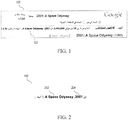
FIG. 1 shows an example web page having bidirectional text. -
FIG. 2 illustrates an example of an incorrect display of bidirectional text. -
FIG. 3 illustrates an architecture diagram of a system for checking bidirectional text in text content according to an example. -
FIG. 4 illustrates an architecture diagram of a bidirectional text checker according to an example. -
FIG. 5 is a flowchart illustrating a method for checking bidirectional text in text content according to an embodiment. - While the present invention is described herein with reference to illustrative embodiments for particular applications, it should be understood that the invention is not limited thereto. Those skilled in the art with access to the teachings provided herein will recognize additional modifications, applications, and embodiments within the scope thereof and additional fields in which the invention would be of significant utility.
- It can be quite tricky for applications to present bidirectional text correctly. Declarations of proper text direction may either be incorrect or missing for text parts. As a result, text content involving bidirectional text may be displayed with directional errors. For example,
Figure 1 shows adisplay view 100 of a search web page that includes text parts in Arabic that are written right-to-left. However, anincorrect display 102 of bidirectional text has occurred. InFigure 2 ,text part 102 shows that the "A Space Odyssey"portion 202 precedes the "2001"portion 204, which is incorrect. - The embodiments described below provide for the ability to check bidirectional text for errors in a web page, markup file, XML file, plain text string or other text-containing document format for errors. For example, a web page may be scanned to look for places where directional mark-up or formatting characters are missing or used incorrectly. Bidirectional text errors may be reported so that corrections can be made to properly display web page content.
-
Figure 3 is an architecture diagram of exemplary bidirectionaltext checking system 300, according to an example. Bidirectionaltext checking system 300, or any combination of its components, may be part of or may be implemented with a computing device. Examples of computing devices include, but are not limited to, a computer, workstation, distributed computing system, computer cluster, embedded system, stand-alone electronic device, networked device, mobile device (e.g. mobile phone, smart phone, navigation device, tablet or mobile computing device), rack server, set-top box, or other type of computer system having at least one processor and memory. Such a computing device may include software, firmware, hardware, or a combination thereof. Software may include one or more applications and an operating system. Hardware can include, but is not limited to, a processor, memory and user interface display. - Bidirectional
text checking system 300 may include abidirectional text scanner 310. In some cases,scanner 310 may be coupled to webpage display device 320, which displays or prepares a web page for display. Web pages may be displayed in a web browser. According to an example,scanner 310 includeswalker 312,bidirectional text checker 314 andbidirectional error reporter 316. - According to an example,
scanner 310 may be configured to scan one or more Document Object Models (DOM) of a web page, including recursively for all its contained frames. A web page can be composed of multiple frames, each of which has its own DOM. A frame can in turn contain other frames, and so on. For purposes of explanation, each use of "DOM" may refer to a DOM of a single page or frame. For each DOM encountered,scanner 310 may activatewalker 312 andbidirectional text checker 314. DOM content scanning may be structured internally in an event-driven architecture. -
Walker 312 may be configured to traverse the DOM, translating or summarizing it into a series of events, according to an embodiment.Walker 312 may be configured to summarize the DOM in different ways and execute different types of events.Bidirectional text checker 314 may be configured to include multiple detectors, as shown inFigure 4 . Detectors listen for events of types that are of interest and record aspects they are configured to detect, such as bidirectional errors.Walker 312 may be configured to work withbidirectional text checker 314.Walker 312 may also be configured to operate on each DOM. - According to an example,
walker 312 may be configured to traverse a single DOM and dispatch a series of events of the following four types: StartTag when encountering the opening of a markup tag, EndTag when encountering the closing of a markup tag, TextNode when encountering a block of text, and EndOfDom when reaching the end of the DOM.Walker 312 may keep track of the current declared text directionality (left-to-right or right-to-left) of each node in the DOM.Walker 312 may also collect a list of any frames directly contained by the DOM. -
Walker 312 may be configured to determine declared text directions, according to an embodiment. The declared text directions may be one of left-to-right ("ltr"), right-to-left ("rtl"), left-to-right override ("lro"), right-to-left override ("rlo"), and "unknown". The override values mean any intrinsic text direction is overridden and declared to be either left-to-right or right-to-left regardless. As such, lro and rlo declarations will not result in mismatch errors, and the walker may in fact not differentiate between Iro, rlo, and unknown values.Walker 312 may also be configured to determine declared page direction contexts. - According to a further example,
walker 312 may traverse a single DOM, dispatching a series of events representing same-directionality sequences of text (known as DirChunks) in the same block-level element of the DOM. Whenever the declared directionality changes or a new block-level element starts, a new DirChunk is dispatched. - According to an example,
system 300 may be configured to divide text content of a document into meaningful text parts and report those parts whose intrinsic text direction conflicts with their declared text direction. The declared directional context indicates the expected direction of the text part. A part of the text can be meaningful either due to the document identifying it as a meaningful unit, or simply due to its intrinsic directional properties. For example, the value of an input element in an HTML document is all one text part identified by the HTML element. - An intrinsic text direction may be determined by identifying a left-to-right direction when a text part character has a Unicode value indicating left-to-right and identifying a right-to-left direction when a text part character has a Unicode value indicating right-to-left. A character is numeric when a Unicode bidi class of the character is EN or AN. A character is neutral when a Unicode bidi class of the character is ES, ET, CS, or ON. A character is whitespace when a Unicode bidi class of the character is WS.
- In another example, the text content of a document can be divided into a set of text parts such that said application of the Unicode Bidirectional Algorithm either assigns an even embedding level to all the characters in the text part or an odd embedding level to all the characters in the text part, so that no text part has characters belonging to different paragraphs as defined by the said application of the Algorithm. The text content may be divided into the smallest possible number of text parts such that no text part with a mismatch between the intrinsic text direction and the declared text direction starts or ends with numeric, neutral or whitespace character. Text parts may include:
- 1. A single LRE, RLE, LRO, RLO, or PDF character.
- 2. A string none of whose characters is of bidirectional (bidi) class LRE, RLE, LRO, RLO, PDF, R, AL, or L.
- 3. A string none of whose characters is of bidi class LRE, RLE, LRO, RLO, PDF, R, or AL, and which begins and ends with a character of bidi class L.
- 4. A string none of whose characters is of bidi class LRE, RLE, LRO, RLO, PDF, or L, and which begins and ends with a character of bidi class R or AL.
- In some examples,
system 300 orwalker 312 is configured to divide text content into plurality of text parts. For example, text content may be divided into a plurality of text parts such that in each text part, all the characters of the text part have the same explicit embedding level and override status. In another example, text content is divided into the plurality of text parts such that no text part has characters belonging to different paragraphs as defined by applying the Unicode Bidirectional Algorithm to the content being checked together with any higher level protocols customarily applied to this type of content. The Unicode Bidirectional Algorithm (UBA) is a standard algorithm that includes separating text into paragraphs, initializing directional character types, applying a series of rules to lists of embedding levels and directional character types, and reordering the text for display. - In another example, text content is divided into a plurality of text parts such that no text part has mixed intrinsic text direction unless the text part is a part of the text content that is not expected to contain or cannot reasonably contain embedded direction declarations such as LRE and RLE characters or mark-up indicating direction, such as a text input element in an HTML document.
- In a further example, the text content is divided into a plurality of text parts such that the number of text parts is as small as possible without reducing the portion of the text content covered by the text parts.
- According to an example,
bidirectional text checker 314 may be configured to determine the intrinsic direction of a text string as follows. Any part that starts with an LRE, RLE, LRO, or RLO, ends either with PDF or the end of the string, and contains no LRE, RLE, LRO, RLO, or PDF in between is removed from the string. This removal is repeated on the resulting string as many times as possible. A character belonging to the left-to-right script is determined to be Unicode bidi class L and a character belonging to the right-to-left script is determined to be Unicode bidi class R or AL. For example, a character is determined to belong to a left-to-right script when applying to the text content version 6.0.0 of the Unicode Bidirectional Algorithm together with any higher level protocols customarily applied to this type of content, and in this application completing the rules of the Algorithm up to and including X8, but not the subsequent rules, would assign to the character directional character type L. A character is determined to belong to a right-to-left script when applying to the text content version 6.0.0 of the Unicode Bidirectional Algorithm together with any higher level protocols customarily applied to this type of content, and in this application completing the rules of the Algorithm up to and including X8, but not the subsequent rules, would assign to the character directional character type R or AL. If the result contains no L, R, or AL characters, its direction is "neutral". Punctuation and white spaces are considered neutral. Otherwise, if it contains no L characters, it is "rtl". Otherwise, if it contains no R or AL characters, it is "ltr" Otherwise, it is "mixed" when a right-to-left direction, left-to-right direction or neutral direction are not identified. - According to another example,
bidirectional text checker 314 identifies a left-to-right direction when a text part contains at least one character belonging to a left-to-right script but no characters belonging to a right-to-left script.Bidirectional text checker 314 also identifies a right-to-left direction when a text part contains at least one character belonging to a right-to-left script but no characters belonging to a left-to-right script. - According to an example,
walker 312 may be configured to determine the declared text direction for any character in the text content of a document for several document types: - For plain text Unicode strings, the declared text direction of a character in the string is determined by the closest LRE, RLE, LRO, and RLO character, if any, before it whose matching PDF character, if any, is after it. If there is no such character, the declared text direction or directional context is "unknown". Otherwise, it is "ltr" for LRE, "rtl" for RLE, "lro" for LRO, and "rlo" for RLO.
- For HTML and XML documents, the declared text direction of any character in its text nodes or attributes may determined as follows:
- For a character in an attribute, compute the plain text directional context for the attribute value. If it is unknown, its text direction is unknown or neutral.
- Find the text node's or attribute's declared text direction, as defined below.
- In XML, the declared text direction element is the closest ancestor element that has a dir attribute, or the root element otherwise. The context element's directional context is equal to its dir attribute value, or to "ltr" if it has no dir attribute.
- In HTML, the directional context is the closest ancestor element whose computed "unicode-bidi" style property value is other than "normal". This is usually either a <bdo> element, a block element, or an element with a dir attribute, since the unicode-bidi style property of all these is set by default CSS rules ("override" for <bdo>, and "embed" for the others, although the unicode-bidi style can also be set directly by CSS rules or inline CSS). The context element's directional context is then the element's computed "direction" style property value, which is bumped from "ltr" to "lro" and from "rtl" to "rlo" if the context element's computed "unicode-bidi" style property value is "override". An element's computed "direction" style property is usually either set via the dir attribute or inherited, although it too can be set directly by CSS rules or inline CSS. If the root element does not have the dir attribute and no CSS rule or inline CSS sets its "direction" style property, its computed base direction is "ltr".
- For a character in a text node, the plain text directional context may be determined for a text string built by an in-order traversal of the text node descendants of the context element. If it is not "neutral", that is its directional context. Otherwise, the directional context is that of the context element.
- According to an example, the declared text direction of a text part is determined to be left-to-right when applying to the text content version 6.0.0 of the Unicode Bidirectional Algorithm together with any higher level protocols customarily applied to this type of content, and in this application completing the rules of the Algorithm up to and including X8, but not the subsequent rules, would assign to the characters of the text part embedding levels the lowest of which is even. The declared text direction of a text part is determined to be right-to-left when applying to the text content version 6.0.0 of the Unicode Bidirectional Algorithm together with any higher level protocols customarily applied to this type of content, and in this application completing the rules of the Algorithm up to and including X8, but not the subsequent rules, would assign to the characters of the text part embedding levels the lowest of which is odd.
-
Bidirectional text checker 314 may be configured to generate a bidirectional text error based on a mismatch between a text part's intrinsic text direction and its declared text direction. For example, the intrinsic direction and its declared text direction mismatch if one is "ltr" and the other is "rtl". (Thus, "lro", "rlo", "unknown", "neutral", and "mixed" do not conflict with any value.) - According to the invention, a mismatch is not identified when either the intrinsic text direction or the declared direction is not left-to-tight or right-to-left. Also, a mismatch is not identified when the text part is determined to be neutral, mixed, undefined or other.
-
Bidirectional text checker 314 may be configured to determine a text direction, according to an embodiment.Bidirectional text checker 314 may also be configured to listen to events fromwalker 312 to identify meaningful parts of text for a particular purpose, such as finding bidirectional errors of a given type, according to an embodiment. In some cases, a detector instance may be used in the context of a particular document (DOM) to be scanned, and is not reused. Therefore, when a page containing frames is scanned, there is a separate detector for each frame, as well as the one for the top-level page. - As illustrated in
Figure 4 ,bidirectional text checker 314 may includeundeclared direction detector 402,page direction detector 404 andspillover detector 406, according to an embodiment. According to an example,undeclared direction detector 402 may be configured to determine undeclared opposite-directionality text errors.Undeclared direction detector 402 may be configured to generate a bidirectional test message, such as a bidirectional text error, based on a comparison between the text direction and the declared text direction.Undeclared direction detector 402 may generate a bidirectional text error when the intrinsic text direction does not match the declared text direction. For example, the intrinsic text direction may be right-to-left while the declared directional context is left-to-right and vice versa. - According to some examples,
bidirectional text checker 314 orundeclared direction detector 402 may be configured to determine bidirectional text errors based on the following scenarios: - 1. A run of intrinsic right-to-left text content characters (other than RLM/RLE/RLO) in a context with a left-to-right, non-override base direction.
- 2. A run of intrinsic left-to-right text content characters (other than LRM/LRE/LRO) in a context with a right-to-left, non-override base direction.
- 3. A text <input> with a left-to-right, non-override base direction whose value contains strongly directional right-to-left characters and no strongly directional left-to-right characters. Strongly directional text characters may include letters of the alphabet, which have a fixed direction. Weakly directional text characters may include characters such as numbers, which themselves are left-to-right but do not impart that directionality to their context.
- 4. A text <input> with a right-to-left, non-override base direction whose value contains strongly or weakly directional left-to-right characters and no strongly directional right-to-left characters.
-
Page direction detector 404 may be configured to generate an error if the overall directionality of the root element of the DOM is not as expected, according to an embodiment. For instance, a page text direction declaration may be determined bywalker 312. If an expected page direction, as specified by the calling code, is found to be different than a declared page directional context, an error may be generated. -
Bidirectional text checker 314 may be configured to determine strongly directional text characters of a text part, according to an embodiment.Bidirectional text checker 314 may be further configured to generate a bidirectional text error when strongly directional text characters of a text element do not match a direction context of the text part. - According to an example, a closing text direction context of the text part associated with the declared text direction may be determined. A numeric text part immediately succeeding the closing text direction context may then be determined. A bidirectional text error may be generated when the closing text direction context precedes the numeric text part. A bidirectional text error may be withheld when an opening text direction context or a block-level element is detected between the closing text direction context and the numeric text part. A bidirectional text error may also be withheld when the closing text direction context does not change the direction of the text direction.
- According to another example,
spillover detector 406 may be configured to determine a numeric text part that succeeds inline a text part. A declared text direction may declare a direction opposite to the numeric text part's context, with no intervening strongly directional text content.Spillover detector 406 may be configured to detect a text with declared directionality opposite to the surrounding context, followed in-line by a numeric text part without a separate directionality declaration, with nothing but neutrals in between.Spillover detector 406 may be configured to consider a text part as a spillover candidate. For example, when an element with a "dir" attribute closes, and this causes a change in the current directionality, the text part becomes a spillover candidate. If a text part containing a number (with only neutral characters preceding it) is encountered, this may also be a candidate. Ifspillover detector 406 encounters a text part containing, for example, a strongly directional character, or the opening of an element with a declared text direction context such as an "dir" attribute, or the closing of an element with a "dir" attribute which does not change the current directionality, or the opening or closing of a block-level element, the spillover candidate is withheld or canceled. - Specific details may be associated with a bidirectional text error identified by a detector, such as for example: its structural location on the page, the text on the page where it appears, adjacent text on the page, the error type and an estimate of its level of severity. Severity values may be assigned based on one or more factors, including likelihood of error. For example, if a text part is adjacent to a neutral character such as a punctuation mark, the error could be severe such as a period or exclamation mark on the wrong side of a text part. Errors may be generated by detectors and returned to the caller for handling, and (optionally) displayed on the page using an interactive graphical interface.
- In another example, a severity value may be assigned to a bidirectional text error based on whether the text part starts with, ends with, is preceded inline by, or is succeeded inline by a string consisting of one or more numeric or neutral characters. The string may also include whitespace characters.
-
Scanner 310 may be configured to invokewalker 312 andbidirectional text checker 314. In some cases,scanner 310 may be implemented in a scripting language script, such as JavaScript, which walks through one or more Document Object Models (DOM) of a web page.Bidirectional text checker 314 may be configured to identify constructs which are likely to be manifestations of errors in bidirectional text handling by the web application.Walker 312 may track the current declared directionality of each segment or part of text of a text node in text content, such as on a page.Bidirectional text checker 314 may be configured to check for one or more types of error, including: 1) incorrectly declared overall page directional context, 2) a mismatch between the declared directional context of a piece of text and the actual text direction of the text characters, and 3) opposite-directionality text followed by a number, which typically gives rise to garbled rendering. Text messages, including errors, may be generated and reported bybidirectional error reporter 316 to a user or the component that instructedscanner 310 to search for bidirectional errors. -
Scanner 310 may be invoked in various ways. For example,scanner 310 may be invoked directly from a JavaScript-based test suite. Alternatively,scanner 310 may be invoked from a Java-based test suite via a Java integration layer. This allows a caller to navigate to a web page using a library, such as the WebDriver library, in Java and invokescanner 310 via a Java function call. Internally, the Java code may implantscanner 310 into a web page using the library's JavaScript invocation mechanism.Scanner 310 may be invoked and report the results to the Java API. - For example,
scanner 310 may be called from an automated test suite to check for bidirectional errors before a web page goes live. A sample test for the text elements inFigure 1 may be implemented as follows:
      public void testRightToLeftWebSearchHome() {
      BidiChecker bidiChecker = new BidiChecker();
      WebDriver driver = new Builder().build();
      String query = "&q=2001:+A+Space+Odyssey"; // English search string.
      driver.get("http://www.google.com/search?hl=ar" + query); // Arabic UI.
      BidiChecker.Errors bidiErrors = bidiChecker.checkPage(driver,
      BidiChecker.Dir.RTL); // Arabic page should have <body dir="rtl">.
      MoreAsserts.assertEmpty(bidiErrors); // No BiDi errors!
      }
Claims (12)
- A computer-implemented method for checking bidirectional text in text content, comprising:dividing the text content into the plurality of text parts;for each text part of the plurality of text parts in the text content:determining an intrinsic text direction of the text part, wherein the intrinsic text direction identifies a text direction of the text part based on directional attributes of characters of the text part;determining a declared text direction associated with the text part, wherein the declared text direction indicates an expected direction of the text part based on surrounding markup or control characters surrounding the text part;comparing the intrinsic text direction to the declared text direction;determining that there is a mismatch between the intrinsic text direction and the declared text direction based on the comparison when (1) the intrinsic text direction is left-to-right and the declared text direction is right-to-left, or (2) when the intrinsic text direction is right-to-left and the declared text direction is left-to-right;determining that there is not a mismatch between the intrinsic text direction and the declared text direction based on the comparison when either the intrinsic text direction or the declared text direction is at least one of neutral, mixed, undefined or than left-to-right or right-to-left;generating, with a computing device, a bidirectional text error based identifying the mismatch; andreporting the bidirectional text error.
- The method of claim 1, wherein determining an intrinsic text direction comprises:identifying a left-to-right direction when a text part contains at least one character belonging to a left-to-right script but no characters belonging to a right-to-left script; andidentifying a right-to-left direction when a text part contains at least one character belonging to a right-to-left script but no characters belonging to a left-to-right script.
- The method of claim 2, wherein a character is determined to belong to a left-to-right script when the character is determined to be Unicode bidi class L and a character is determined to belong to a right-to-left script when the character is determined to be Unicode bidi class R or AL.
- The method of claim 1, wherein determining the declared text direction includes:applying a Unicode Bidirectional Algorithm to the text part with any higher level protocols customarily applied to this type of content; andnoting a lowest explicit embedding level assigned by the Unicode Bidirectional Algorithm to any character of the text part and whether the Unicode Bidirectional Algorithm assigned a neutral override status to any of the characters with that lowest explicit embedding level,wherein the declared direction is left-to-right when that lowest explicit embedding level was even and had a neutral override status, the declared direction is right-to-left when that lowest explicit embedding level was odd and had a neutral override status, and otherwise declaring the declared as undefined.
- The method of claim 4, further comprising dividing the text content into the plurality of the text parts such that in each text part, all the characters of the text part have the same explicit embedding level and override status.
- The method of claim 5, further comprising dividing the text content into the plurality of text parts such that no text part has characters belonging to different paragraphs as defined by applying the Unicode Bidirectional Algorithm to the text content with higher level protocols corresponding to this type of content.
- The method of claim 6, further comprising dividing the text content into the plurality of text parts such that no text part has mixed intrinsic text direction unless the text part is a part of the text content that is not expected to contain embedded direction declarations such as LRE and RLE characters or mark-up indicating direction.
- The method of claim 4, further comprising dividing the text content into the plurality of text parts such that the number of text parts is as small as possible without reducing the portion of the text content covered by the text parts.
- The method of claim 1, wherein reporting includes reporting bidirectional text errors having a set of error properties.
- The method of claim 9, wherein reporting includes assigning a severity value to the bidirectional text error when one of the following applies:(a) the text part starts with or ends with a string consisting of one or more numeric or neutral characters and zero or more whitespace characters;(b) the text part is preceded by a text part belonging to the same paragraph and having the same explicit embedding level and override status as defined by the Unicode Bidirectional Algorithm, where the preceding text part ends with a string consisting of one or more numeric or neutral characters and zero or more whitespace characters; or(c) the text part is followed by a text part belonging to the same paragraph and having the same explicit embedding level and override status as defined by the Unicode Bidirectional Algorithm, where the following text part begins with a string consisting of one or more numeric or neutral characters and zero or more whitespace characters.
- The method of claim 1, further comprising:calling the determining steps from an external scripting language script inserted into a web page containing the text content to be checked.
- A system for checking bidirectional text in text content, configured to perform a method as claimed in any one of claims 1 to 11.
Applications Claiming Priority (3)
| Application Number | Priority Date | Filing Date | Title |
|---|---|---|---|
| US40933210P | 2010-11-02 | 2010-11-02 | |
| US13/286,539 US9189462B2 (en) | 2010-11-02 | 2011-11-01 | Bidirectional text checker |
| PCT/US2011/058804 WO2012061401A1 (en) | 2010-11-02 | 2011-11-01 | Bidirectional text checker |
Publications (3)
| Publication Number | Publication Date |
|---|---|
| EP2635976A1 EP2635976A1 (en) | 2013-09-11 |
| EP2635976B1 true EP2635976B1 (en) | 2017-11-01 |
| EP2635976B8 EP2635976B8 (en) | 2017-12-06 |
Family
ID=45997639
Family Applications (1)
| Application Number | Title | Priority Date | Filing Date |
|---|---|---|---|
| EP11784866.3A Active EP2635976B8 (en) | 2010-11-02 | 2011-11-01 | Bidirectional text checker |
Country Status (7)
| Country | Link |
|---|---|
| US (1) | US9189462B2 (en) |
| EP (1) | EP2635976B8 (en) |
| JP (1) | JP5911878B2 (en) |
| KR (1) | KR101892206B1 (en) |
| CA (1) | CA2815527A1 (en) |
| IL (1) | IL226027A (en) |
| WO (1) | WO2012061401A1 (en) |
Families Citing this family (13)
| Publication number | Priority date | Publication date | Assignee | Title |
|---|---|---|---|---|
| JP2690108B2 (en) | 1988-06-28 | 1997-12-10 | シチズン時計株式会社 | Clock device |
| US8111922B2 (en) * | 2007-06-08 | 2012-02-07 | Microsoft Corporation | Bi-directional handwriting insertion and correction |
| US9996501B1 (en) * | 2012-06-28 | 2018-06-12 | Amazon Technologies, Inc. | Validating document content prior to format conversion based on a calculated threshold as a function of document size |
| US9594736B2 (en) * | 2013-10-11 | 2017-03-14 | Apple Inc. | Display and selection of bidirectional text |
| US9696818B2 (en) | 2014-08-07 | 2017-07-04 | Adobe Systems Incorporated | Bidirectional text selection |
| US10063864B2 (en) * | 2016-03-02 | 2018-08-28 | Centre For Development Of Advanced Computing (C-Dac) | System and method for compression and decompression of text data |
| US10067932B2 (en) | 2016-03-21 | 2018-09-04 | International Business Machines Corporation | Isolating segments of bidirectional text |
| US9817793B1 (en) * | 2016-04-21 | 2017-11-14 | International Business Machines Corporation | Formatting electronic mail subject line with bidirectional text |
| US10043107B2 (en) * | 2016-06-27 | 2018-08-07 | International Business Machines Corporation | On demand testing as a service for base text direction verification testing |
| US20180074998A1 (en) * | 2016-09-13 | 2018-03-15 | Microsoft Technology Licensing, Llc | Visual feedback for broken text selection |
| US10204083B2 (en) | 2016-10-20 | 2019-02-12 | Microsoft Technology Licensing, Llc | Computer systems and methods using multiple neutral type characters as delimiters between segments in structured, multi-segment data values |
| US12373634B2 (en) * | 2018-02-06 | 2025-07-29 | International Business Machines Corporation | Layout detection for bidirectional text documents having Hebrew text |
| US11687626B2 (en) | 2020-06-17 | 2023-06-27 | Capital One Services, Llc | System and method for securing a browser against font usage fingerprinting |
Family Cites Families (13)
| Publication number | Priority date | Publication date | Assignee | Title |
|---|---|---|---|---|
| JPH05346947A (en) * | 1992-06-15 | 1993-12-27 | Mutoh Ind Ltd | Character string processing method and apparatus |
| US5781785A (en) * | 1995-09-26 | 1998-07-14 | Adobe Systems Inc | Method and apparatus for providing an optimized document file of multiple pages |
| US5812122A (en) * | 1995-12-13 | 1998-09-22 | Sun Microsystems, Inc. | Testing layout services for supporting complex text languages |
| JPH11338974A (en) * | 1998-05-28 | 1999-12-10 | Canon Inc | Document processing method and apparatus, storage medium |
| US6944820B2 (en) * | 2001-03-27 | 2005-09-13 | Microsoft Corporation | Ensuring proper rendering order of bidirectionally rendered text |
| US7086004B2 (en) * | 2001-04-19 | 2006-08-01 | International Business Machines Corporation | Generalized mechanism for unicode metadata |
| US6993716B2 (en) * | 2002-09-20 | 2006-01-31 | International Business Machines Corporation | Frame rearrangement to support bidirectional languages in a Web application |
| US20040177322A1 (en) * | 2003-03-03 | 2004-09-09 | International Business Machines Corporation | Apparatus, system and method of automatically placing embedded icons in their visual order in a displayed or printed bi-directionally formatted document |
| US20050200913A1 (en) * | 2004-03-11 | 2005-09-15 | International Business Machines Corporation | Systems and methods for identifying complex text in a presentation data stream |
| US9122655B2 (en) * | 2004-11-15 | 2015-09-01 | International Business Machines Corporation | Pre-translation testing of bi-directional language display |
| US7831908B2 (en) * | 2005-05-20 | 2010-11-09 | Alexander Vincent Danilo | Method and apparatus for layout of text and image documents |
| US8660835B2 (en) * | 2009-10-30 | 2014-02-25 | International Business Machines Corporation | System and a method for automatically detecting text type and text orientation of a bidirectional (BIDI) text |
| US8271873B2 (en) * | 2009-10-30 | 2012-09-18 | International Business Machines Corporation | Automatically detecting layout of bidirectional (BIDI) text |
-
2011
- 2011-11-01 EP EP11784866.3A patent/EP2635976B8/en active Active
- 2011-11-01 WO PCT/US2011/058804 patent/WO2012061401A1/en not_active Ceased
- 2011-11-01 CA CA2815527A patent/CA2815527A1/en not_active Abandoned
- 2011-11-01 US US13/286,539 patent/US9189462B2/en active Active
- 2011-11-01 JP JP2013536928A patent/JP5911878B2/en active Active
- 2011-11-01 KR KR1020137014131A patent/KR101892206B1/en active Active
-
2013
- 2013-04-28 IL IL226027A patent/IL226027A/en active IP Right Grant
Non-Patent Citations (1)
| Title |
|---|
| None * |
Also Published As
| Publication number | Publication date |
|---|---|
| JP2013544395A (en) | 2013-12-12 |
| KR20130133203A (en) | 2013-12-06 |
| IL226027A0 (en) | 2013-06-27 |
| EP2635976A1 (en) | 2013-09-11 |
| CA2815527A1 (en) | 2012-05-10 |
| JP5911878B2 (en) | 2016-04-27 |
| EP2635976B8 (en) | 2017-12-06 |
| US9189462B2 (en) | 2015-11-17 |
| KR101892206B1 (en) | 2018-08-27 |
| IL226027A (en) | 2016-08-31 |
| US20120109634A1 (en) | 2012-05-03 |
| WO2012061401A1 (en) | 2012-05-10 |
Similar Documents
| Publication | Publication Date | Title |
|---|---|---|
| US9189462B2 (en) | Bidirectional text checker | |
| US11635946B2 (en) | Analyzing objects from a graphical interface for standards verification | |
| US9606897B2 (en) | Parsing an image of a visually structured document | |
| US8010946B2 (en) | Apparatus for analysing and organizing artifacts in a software application | |
| US9836440B2 (en) | Semantic stack trace | |
| US8875110B2 (en) | Code inspection executing system for performing a code inspection of ABAP source codes | |
| WO2020118485A1 (en) | Method of Detecting User Interface Layout Issues for Web Applications | |
| Alameer et al. | Detecting and localizing internationalization presentation failures in web applications | |
| US20070260584A1 (en) | System for processing formatted data | |
| US20140372083A1 (en) | Derived restrictions in a combinatorial model | |
| JP6440895B2 (en) | Software analysis apparatus and software analysis method | |
| JP2009217821A (en) | Detecting, capturing and processing of valid login credential | |
| US10474887B2 (en) | Identifying a layout error | |
| US20070250509A1 (en) | User interface for machine aided authoring and translation | |
| US20180074939A1 (en) | Method for correcting violation of source code and computer readable recording medium having program performing the same | |
| CN114579203A (en) | Script file checking method and device, electronic equipment and storage medium | |
| US9767083B2 (en) | Automatic detection of CSS conflicts | |
| US20070250811A1 (en) | User declarative language for formatted data processing | |
| US11176022B2 (en) | Health diagnostics and analytics for object repositories | |
| CN110045961B (en) | Management method and management platform of business rules | |
| CN118467334A (en) | Conversion accuracy verification method, system and terminal for multilingual vocabulary strips | |
| US8538995B2 (en) | Device and method for automatically detecting an unclear description | |
| KR102052338B1 (en) | Visualization method for tracking analysis of testcase design information, testcase generating apparatus, and computer-readable recording medium | |
| US9524307B2 (en) | Asynchronous error checking in structured documents | |
| JP6287267B2 (en) | Comment management system, comment management method, and program thereof |
Legal Events
| Date | Code | Title | Description |
|---|---|---|---|
| PUAI | Public reference made under article 153(3) epc to a published international application that has entered the european phase |
Free format text: ORIGINAL CODE: 0009012 |
|
| 17P | Request for examination filed |
Effective date: 20130430 |
|
| AK | Designated contracting states |
Kind code of ref document: A1 Designated state(s): AL AT BE BG CH CY CZ DE DK EE ES FI FR GB GR HR HU IE IS IT LI LT LU LV MC MK MT NL NO PL PT RO RS SE SI SK SM TR |
|
| DAX | Request for extension of the european patent (deleted) | ||
| 17Q | First examination report despatched |
Effective date: 20140225 |
|
| GRAP | Despatch of communication of intention to grant a patent |
Free format text: ORIGINAL CODE: EPIDOSNIGR1 |
|
| INTG | Intention to grant announced |
Effective date: 20161006 |
|
| GRAJ | Information related to disapproval of communication of intention to grant by the applicant or resumption of examination proceedings by the epo deleted |
Free format text: ORIGINAL CODE: EPIDOSDIGR1 |
|
| GRAP | Despatch of communication of intention to grant a patent |
Free format text: ORIGINAL CODE: EPIDOSNIGR1 |
|
| INTC | Intention to grant announced (deleted) | ||
| INTG | Intention to grant announced |
Effective date: 20170309 |
|
| GRAS | Grant fee paid |
Free format text: ORIGINAL CODE: EPIDOSNIGR3 |
|
| GRAA | (expected) grant |
Free format text: ORIGINAL CODE: 0009210 |
|
| AK | Designated contracting states |
Kind code of ref document: B1 Designated state(s): AL AT BE BG CH CY CZ DE DK EE ES FI FR GB GR HR HU IE IS IT LI LT LU LV MC MK MT NL NO PL PT RO RS SE SI SK SM TR |
|
| REG | Reference to a national code |
Ref country code: GB Ref legal event code: FG4D |
|
| RAP2 | Party data changed (patent owner data changed or rights of a patent transferred) |
Owner name: GOOGLE LLC |
|
| REG | Reference to a national code |
Ref country code: CH Ref legal event code: EP Ref country code: AT Ref legal event code: REF Ref document number: 942685 Country of ref document: AT Kind code of ref document: T Effective date: 20171115 |
|
| REG | Reference to a national code |
Ref country code: IE Ref legal event code: FG4D |
|
| REG | Reference to a national code |
Ref country code: DE Ref legal event code: R096 Ref document number: 602011042960 Country of ref document: DE |
|
| REG | Reference to a national code |
Ref country code: FR Ref legal event code: PLFP Year of fee payment: 7 |
|
| REG | Reference to a national code |
Ref country code: DE Ref legal event code: R081 Ref document number: 602011042960 Country of ref document: DE Owner name: GOOGLE LLC, MOUNTAIN VIEW, US Free format text: FORMER OWNER: GOOGLE, INC., MOUNTAIN VIEW, CALIF., US |
|
| REG | Reference to a national code |
Ref country code: NL Ref legal event code: MP Effective date: 20171101 |
|
| REG | Reference to a national code |
Ref country code: LT Ref legal event code: MG4D |
|
| REG | Reference to a national code |
Ref country code: AT Ref legal event code: MK05 Ref document number: 942685 Country of ref document: AT Kind code of ref document: T Effective date: 20171101 |
|
| PG25 | Lapsed in a contracting state [announced via postgrant information from national office to epo] |
Ref country code: NL Free format text: LAPSE BECAUSE OF FAILURE TO SUBMIT A TRANSLATION OF THE DESCRIPTION OR TO PAY THE FEE WITHIN THE PRESCRIBED TIME-LIMIT Effective date: 20171101 Ref country code: LT Free format text: LAPSE BECAUSE OF FAILURE TO SUBMIT A TRANSLATION OF THE DESCRIPTION OR TO PAY THE FEE WITHIN THE PRESCRIBED TIME-LIMIT Effective date: 20171101 Ref country code: ES Free format text: LAPSE BECAUSE OF FAILURE TO SUBMIT A TRANSLATION OF THE DESCRIPTION OR TO PAY THE FEE WITHIN THE PRESCRIBED TIME-LIMIT Effective date: 20171101 Ref country code: FI Free format text: LAPSE BECAUSE OF FAILURE TO SUBMIT A TRANSLATION OF THE DESCRIPTION OR TO PAY THE FEE WITHIN THE PRESCRIBED TIME-LIMIT Effective date: 20171101 Ref country code: NO Free format text: LAPSE BECAUSE OF FAILURE TO SUBMIT A TRANSLATION OF THE DESCRIPTION OR TO PAY THE FEE WITHIN THE PRESCRIBED TIME-LIMIT Effective date: 20180201 Ref country code: SE Free format text: LAPSE BECAUSE OF FAILURE TO SUBMIT A TRANSLATION OF THE DESCRIPTION OR TO PAY THE FEE WITHIN THE PRESCRIBED TIME-LIMIT Effective date: 20171101 |
|
| PG25 | Lapsed in a contracting state [announced via postgrant information from national office to epo] |
Ref country code: AT Free format text: LAPSE BECAUSE OF FAILURE TO SUBMIT A TRANSLATION OF THE DESCRIPTION OR TO PAY THE FEE WITHIN THE PRESCRIBED TIME-LIMIT Effective date: 20171101 Ref country code: GR Free format text: LAPSE BECAUSE OF FAILURE TO SUBMIT A TRANSLATION OF THE DESCRIPTION OR TO PAY THE FEE WITHIN THE PRESCRIBED TIME-LIMIT Effective date: 20180202 Ref country code: RS Free format text: LAPSE BECAUSE OF FAILURE TO SUBMIT A TRANSLATION OF THE DESCRIPTION OR TO PAY THE FEE WITHIN THE PRESCRIBED TIME-LIMIT Effective date: 20171101 Ref country code: LV Free format text: LAPSE BECAUSE OF FAILURE TO SUBMIT A TRANSLATION OF THE DESCRIPTION OR TO PAY THE FEE WITHIN THE PRESCRIBED TIME-LIMIT Effective date: 20171101 Ref country code: HR Free format text: LAPSE BECAUSE OF FAILURE TO SUBMIT A TRANSLATION OF THE DESCRIPTION OR TO PAY THE FEE WITHIN THE PRESCRIBED TIME-LIMIT Effective date: 20171101 Ref country code: BG Free format text: LAPSE BECAUSE OF FAILURE TO SUBMIT A TRANSLATION OF THE DESCRIPTION OR TO PAY THE FEE WITHIN THE PRESCRIBED TIME-LIMIT Effective date: 20180201 Ref country code: IS Free format text: LAPSE BECAUSE OF FAILURE TO SUBMIT A TRANSLATION OF THE DESCRIPTION OR TO PAY THE FEE WITHIN THE PRESCRIBED TIME-LIMIT Effective date: 20180301 |
|
| PG25 | Lapsed in a contracting state [announced via postgrant information from national office to epo] |
Ref country code: DK Free format text: LAPSE BECAUSE OF FAILURE TO SUBMIT A TRANSLATION OF THE DESCRIPTION OR TO PAY THE FEE WITHIN THE PRESCRIBED TIME-LIMIT Effective date: 20171101 Ref country code: LI Free format text: LAPSE BECAUSE OF NON-PAYMENT OF DUE FEES Effective date: 20171130 Ref country code: EE Free format text: LAPSE BECAUSE OF FAILURE TO SUBMIT A TRANSLATION OF THE DESCRIPTION OR TO PAY THE FEE WITHIN THE PRESCRIBED TIME-LIMIT Effective date: 20171101 Ref country code: CY Free format text: LAPSE BECAUSE OF FAILURE TO SUBMIT A TRANSLATION OF THE DESCRIPTION OR TO PAY THE FEE WITHIN THE PRESCRIBED TIME-LIMIT Effective date: 20171101 Ref country code: CH Free format text: LAPSE BECAUSE OF NON-PAYMENT OF DUE FEES Effective date: 20171130 Ref country code: CZ Free format text: LAPSE BECAUSE OF FAILURE TO SUBMIT A TRANSLATION OF THE DESCRIPTION OR TO PAY THE FEE WITHIN THE PRESCRIBED TIME-LIMIT Effective date: 20171101 Ref country code: SK Free format text: LAPSE BECAUSE OF FAILURE TO SUBMIT A TRANSLATION OF THE DESCRIPTION OR TO PAY THE FEE WITHIN THE PRESCRIBED TIME-LIMIT Effective date: 20171101 |
|
| REG | Reference to a national code |
Ref country code: DE Ref legal event code: R097 Ref document number: 602011042960 Country of ref document: DE |
|
| PG25 | Lapsed in a contracting state [announced via postgrant information from national office to epo] |
Ref country code: LU Free format text: LAPSE BECAUSE OF NON-PAYMENT OF DUE FEES Effective date: 20171101 Ref country code: SM Free format text: LAPSE BECAUSE OF FAILURE TO SUBMIT A TRANSLATION OF THE DESCRIPTION OR TO PAY THE FEE WITHIN THE PRESCRIBED TIME-LIMIT Effective date: 20171101 Ref country code: RO Free format text: LAPSE BECAUSE OF FAILURE TO SUBMIT A TRANSLATION OF THE DESCRIPTION OR TO PAY THE FEE WITHIN THE PRESCRIBED TIME-LIMIT Effective date: 20171101 Ref country code: PL Free format text: LAPSE BECAUSE OF FAILURE TO SUBMIT A TRANSLATION OF THE DESCRIPTION OR TO PAY THE FEE WITHIN THE PRESCRIBED TIME-LIMIT Effective date: 20171101 |
|
| REG | Reference to a national code |
Ref country code: BE Ref legal event code: MM Effective date: 20171130 |
|
| REG | Reference to a national code |
Ref country code: IE Ref legal event code: MM4A |
|
| PLBE | No opposition filed within time limit |
Free format text: ORIGINAL CODE: 0009261 |
|
| STAA | Information on the status of an ep patent application or granted ep patent |
Free format text: STATUS: NO OPPOSITION FILED WITHIN TIME LIMIT |
|
| PG25 | Lapsed in a contracting state [announced via postgrant information from national office to epo] |
Ref country code: MT Free format text: LAPSE BECAUSE OF NON-PAYMENT OF DUE FEES Effective date: 20171101 |
|
| 26N | No opposition filed |
Effective date: 20180802 |
|
| PG25 | Lapsed in a contracting state [announced via postgrant information from national office to epo] |
Ref country code: IE Free format text: LAPSE BECAUSE OF NON-PAYMENT OF DUE FEES Effective date: 20171101 |
|
| PG25 | Lapsed in a contracting state [announced via postgrant information from national office to epo] |
Ref country code: BE Free format text: LAPSE BECAUSE OF NON-PAYMENT OF DUE FEES Effective date: 20171130 Ref country code: SI Free format text: LAPSE BECAUSE OF FAILURE TO SUBMIT A TRANSLATION OF THE DESCRIPTION OR TO PAY THE FEE WITHIN THE PRESCRIBED TIME-LIMIT Effective date: 20171101 |
|
| PG25 | Lapsed in a contracting state [announced via postgrant information from national office to epo] |
Ref country code: MC Free format text: LAPSE BECAUSE OF FAILURE TO SUBMIT A TRANSLATION OF THE DESCRIPTION OR TO PAY THE FEE WITHIN THE PRESCRIBED TIME-LIMIT Effective date: 20171101 Ref country code: HU Free format text: LAPSE BECAUSE OF FAILURE TO SUBMIT A TRANSLATION OF THE DESCRIPTION OR TO PAY THE FEE WITHIN THE PRESCRIBED TIME-LIMIT; INVALID AB INITIO Effective date: 20111101 |
|
| REG | Reference to a national code |
Ref country code: DE Ref legal event code: R079 Ref document number: 602011042960 Country of ref document: DE Free format text: PREVIOUS MAIN CLASS: G06F0017220000 Ipc: G06F0040120000 |
|
| PG25 | Lapsed in a contracting state [announced via postgrant information from national office to epo] |
Ref country code: MK Free format text: LAPSE BECAUSE OF FAILURE TO SUBMIT A TRANSLATION OF THE DESCRIPTION OR TO PAY THE FEE WITHIN THE PRESCRIBED TIME-LIMIT Effective date: 20171101 |
|
| PG25 | Lapsed in a contracting state [announced via postgrant information from national office to epo] |
Ref country code: TR Free format text: LAPSE BECAUSE OF FAILURE TO SUBMIT A TRANSLATION OF THE DESCRIPTION OR TO PAY THE FEE WITHIN THE PRESCRIBED TIME-LIMIT Effective date: 20171101 |
|
| PG25 | Lapsed in a contracting state [announced via postgrant information from national office to epo] |
Ref country code: PT Free format text: LAPSE BECAUSE OF FAILURE TO SUBMIT A TRANSLATION OF THE DESCRIPTION OR TO PAY THE FEE WITHIN THE PRESCRIBED TIME-LIMIT Effective date: 20171101 |
|
| PG25 | Lapsed in a contracting state [announced via postgrant information from national office to epo] |
Ref country code: AL Free format text: LAPSE BECAUSE OF FAILURE TO SUBMIT A TRANSLATION OF THE DESCRIPTION OR TO PAY THE FEE WITHIN THE PRESCRIBED TIME-LIMIT Effective date: 20171101 |
|
| P01 | Opt-out of the competence of the unified patent court (upc) registered |
Effective date: 20230505 |
|
| PGFP | Annual fee paid to national office [announced via postgrant information from national office to epo] |
Ref country code: DE Payment date: 20241127 Year of fee payment: 14 |
|
| PGFP | Annual fee paid to national office [announced via postgrant information from national office to epo] |
Ref country code: GB Payment date: 20241127 Year of fee payment: 14 |
|
| PGFP | Annual fee paid to national office [announced via postgrant information from national office to epo] |
Ref country code: FR Payment date: 20241126 Year of fee payment: 14 |
|
| PGFP | Annual fee paid to national office [announced via postgrant information from national office to epo] |
Ref country code: IT Payment date: 20241122 Year of fee payment: 14 |