EP2634633A1 - Cyan toner containing compound having azo skeleton - Google Patents
Cyan toner containing compound having azo skeleton Download PDFInfo
- Publication number
- EP2634633A1 EP2634633A1 EP13154753.1A EP13154753A EP2634633A1 EP 2634633 A1 EP2634633 A1 EP 2634633A1 EP 13154753 A EP13154753 A EP 13154753A EP 2634633 A1 EP2634633 A1 EP 2634633A1
- Authority
- EP
- European Patent Office
- Prior art keywords
- group
- formula
- hydrogen atom
- compound
- parts
- Prior art date
- Legal status (The legal status is an assumption and is not a legal conclusion. Google has not performed a legal analysis and makes no representation as to the accuracy of the status listed.)
- Granted
Links
- 150000001875 compounds Chemical class 0.000 title claims abstract description 205
- 239000000049 pigment Substances 0.000 claims abstract description 232
- 229920000642 polymer Polymers 0.000 claims abstract description 114
- 239000002245 particle Substances 0.000 claims abstract description 58
- IEQIEDJGQAUEQZ-UHFFFAOYSA-N phthalocyanine Chemical compound N1C(N=C2C3=CC=CC=C3C(N=C3C4=CC=CC=C4C(=N4)N3)=N2)=C(C=CC=C2)C2=C1N=C1C2=CC=CC=C2C4=N1 IEQIEDJGQAUEQZ-UHFFFAOYSA-N 0.000 claims abstract description 58
- 229920005989 resin Polymers 0.000 claims abstract description 43
- 239000011347 resin Substances 0.000 claims abstract description 43
- 239000011230 binding agent Substances 0.000 claims abstract description 25
- 238000000034 method Methods 0.000 claims description 132
- 239000000178 monomer Substances 0.000 claims description 63
- 125000004435 hydrogen atom Chemical group [H]* 0.000 claims description 59
- 125000000217 alkyl group Chemical group 0.000 claims description 46
- 125000005647 linker group Chemical group 0.000 claims description 38
- 239000000725 suspension Substances 0.000 claims description 29
- 125000001997 phenyl group Chemical group [H]C1=C([H])C([H])=C(*)C([H])=C1[H] 0.000 claims description 27
- 125000005843 halogen group Chemical group 0.000 claims description 26
- 238000005469 granulation Methods 0.000 claims description 25
- 230000003179 granulation Effects 0.000 claims description 25
- 238000010558 suspension polymerization method Methods 0.000 claims description 24
- 125000002887 hydroxy group Chemical group [H]O* 0.000 claims description 18
- 229910052751 metal Inorganic materials 0.000 claims description 18
- 239000002184 metal Substances 0.000 claims description 18
- 125000003118 aryl group Chemical group 0.000 claims description 17
- 125000003710 aryl alkyl group Chemical group 0.000 claims description 15
- 125000002023 trifluoromethyl group Chemical group FC(F)(F)* 0.000 claims description 13
- 125000003178 carboxy group Chemical group [H]OC(*)=O 0.000 claims description 12
- 125000004093 cyano group Chemical group *C#N 0.000 claims description 12
- 125000003545 alkoxy group Chemical group 0.000 claims description 11
- 125000003262 carboxylic acid ester group Chemical group [H]C([H])([*:2])OC(=O)C([H])([H])[*:1] 0.000 claims description 8
- 150000003839 salts Chemical class 0.000 claims description 6
- 125000000542 sulfonic acid group Chemical group 0.000 claims description 6
- 150000001732 carboxylic acid derivatives Chemical class 0.000 claims description 5
- 239000001257 hydrogen Substances 0.000 claims description 5
- 229910052739 hydrogen Inorganic materials 0.000 claims description 5
- UFHFLCQGNIYNRP-UHFFFAOYSA-N Hydrogen Chemical compound [H][H] UFHFLCQGNIYNRP-UHFFFAOYSA-N 0.000 claims description 2
- JPVYNHNXODAKFH-UHFFFAOYSA-N Cu2+ Chemical group [Cu+2] JPVYNHNXODAKFH-UHFFFAOYSA-N 0.000 claims 1
- 150000002431 hydrogen Chemical class 0.000 claims 1
- 239000003086 colorant Substances 0.000 abstract description 32
- 125000002496 methyl group Chemical group [H]C([H])([H])* 0.000 description 153
- 239000006185 dispersion Substances 0.000 description 105
- 239000007788 liquid Substances 0.000 description 98
- -1 N,N-dimethylamino group Chemical group 0.000 description 79
- 239000000203 mixture Substances 0.000 description 74
- 239000000243 solution Substances 0.000 description 72
- 239000002904 solvent Substances 0.000 description 72
- 238000004519 manufacturing process Methods 0.000 description 58
- OKKJLVBELUTLKV-UHFFFAOYSA-N Methanol Chemical compound OC OKKJLVBELUTLKV-UHFFFAOYSA-N 0.000 description 51
- ZMXDDKWLCZADIW-UHFFFAOYSA-N N,N-Dimethylformamide Chemical compound CN(C)C=O ZMXDDKWLCZADIW-UHFFFAOYSA-N 0.000 description 49
- HEDRZPFGACZZDS-UHFFFAOYSA-N Chloroform Chemical compound ClC(Cl)Cl HEDRZPFGACZZDS-UHFFFAOYSA-N 0.000 description 45
- XLYOFNOQVPJJNP-UHFFFAOYSA-N water Substances O XLYOFNOQVPJJNP-UHFFFAOYSA-N 0.000 description 43
- 239000007787 solid Substances 0.000 description 42
- XCJYREBRNVKWGJ-UHFFFAOYSA-N copper(II) phthalocyanine Chemical compound [Cu+2].C12=CC=CC=C2C(N=C2[N-]C(C3=CC=CC=C32)=N2)=NC1=NC([C]1C=CC=CC1=1)=NC=1N=C1[C]3C=CC=CC3=C2[N-]1 XCJYREBRNVKWGJ-UHFFFAOYSA-N 0.000 description 41
- 238000006243 chemical reaction Methods 0.000 description 36
- 230000000052 comparative effect Effects 0.000 description 35
- 230000006872 improvement Effects 0.000 description 35
- 125000001424 substituent group Chemical group 0.000 description 33
- 238000012546 transfer Methods 0.000 description 33
- 238000011156 evaluation Methods 0.000 description 29
- WYURNTSHIVDZCO-UHFFFAOYSA-N Tetrahydrofuran Chemical compound C1CCOC1 WYURNTSHIVDZCO-UHFFFAOYSA-N 0.000 description 28
- PPBRXRYQALVLMV-UHFFFAOYSA-N Styrene Natural products C=CC1=CC=CC=C1 PPBRXRYQALVLMV-UHFFFAOYSA-N 0.000 description 26
- XEKOWRVHYACXOJ-UHFFFAOYSA-N Ethyl acetate Chemical compound CCOC(C)=O XEKOWRVHYACXOJ-UHFFFAOYSA-N 0.000 description 24
- 239000003381 stabilizer Substances 0.000 description 23
- YXFVVABEGXRONW-UHFFFAOYSA-N Toluene Chemical compound CC1=CC=CC=C1 YXFVVABEGXRONW-UHFFFAOYSA-N 0.000 description 21
- VLKZOEOYAKHREP-UHFFFAOYSA-N n-Hexane Chemical compound CCCCCC VLKZOEOYAKHREP-UHFFFAOYSA-N 0.000 description 20
- 239000003505 polymerization initiator Substances 0.000 description 20
- 238000002360 preparation method Methods 0.000 description 20
- 239000001993 wax Substances 0.000 description 20
- RTZKZFJDLAIYFH-UHFFFAOYSA-N Diethyl ether Chemical compound CCOCC RTZKZFJDLAIYFH-UHFFFAOYSA-N 0.000 description 19
- LFQSCWFLJHTTHZ-UHFFFAOYSA-N Ethanol Chemical compound CCO LFQSCWFLJHTTHZ-UHFFFAOYSA-N 0.000 description 18
- HEDRZPFGACZZDS-MICDWDOJSA-N Trichloro(2H)methane Chemical compound [2H]C(Cl)(Cl)Cl HEDRZPFGACZZDS-MICDWDOJSA-N 0.000 description 18
- 125000004185 ester group Chemical group 0.000 description 18
- 238000005259 measurement Methods 0.000 description 18
- VEXZGXHMUGYJMC-UHFFFAOYSA-N Hydrochloric acid Chemical compound Cl VEXZGXHMUGYJMC-UHFFFAOYSA-N 0.000 description 17
- 239000000126 substance Substances 0.000 description 17
- 239000002253 acid Substances 0.000 description 16
- 239000012736 aqueous medium Substances 0.000 description 16
- 239000003795 chemical substances by application Substances 0.000 description 16
- UHOVQNZJYSORNB-UHFFFAOYSA-N Benzene Chemical compound C1=CC=CC=C1 UHOVQNZJYSORNB-UHFFFAOYSA-N 0.000 description 15
- 125000000732 arylene group Chemical group 0.000 description 15
- 238000006116 polymerization reaction Methods 0.000 description 15
- 239000002612 dispersion medium Substances 0.000 description 14
- YLQBMQCUIZJEEH-UHFFFAOYSA-N tetrahydrofuran Natural products C=1C=COC=1 YLQBMQCUIZJEEH-UHFFFAOYSA-N 0.000 description 14
- 125000000449 nitro group Chemical group [O-][N+](*)=O 0.000 description 13
- YMWUJEATGCHHMB-UHFFFAOYSA-N Dichloromethane Chemical compound ClCCl YMWUJEATGCHHMB-UHFFFAOYSA-N 0.000 description 12
- 239000012954 diazonium Substances 0.000 description 12
- 150000001989 diazonium salts Chemical class 0.000 description 12
- 239000013067 intermediate product Substances 0.000 description 12
- LPXPTNMVRIOKMN-UHFFFAOYSA-M sodium nitrite Chemical compound [Na+].[O-]N=O LPXPTNMVRIOKMN-UHFFFAOYSA-M 0.000 description 12
- 238000003756 stirring Methods 0.000 description 12
- 238000006467 substitution reaction Methods 0.000 description 11
- 125000003277 amino group Chemical group 0.000 description 10
- 239000000523 sample Substances 0.000 description 10
- CSCPPACGZOOCGX-UHFFFAOYSA-N Acetone Chemical compound CC(C)=O CSCPPACGZOOCGX-UHFFFAOYSA-N 0.000 description 9
- WEVYAHXRMPXWCK-UHFFFAOYSA-N Acetonitrile Chemical compound CC#N WEVYAHXRMPXWCK-UHFFFAOYSA-N 0.000 description 9
- 238000004458 analytical method Methods 0.000 description 9
- 239000007795 chemical reaction product Substances 0.000 description 9
- WASQWSOJHCZDFK-UHFFFAOYSA-N diketene Chemical compound C=C1CC(=O)O1 WASQWSOJHCZDFK-UHFFFAOYSA-N 0.000 description 9
- 239000002270 dispersing agent Substances 0.000 description 9
- 239000000843 powder Substances 0.000 description 9
- 238000001226 reprecipitation Methods 0.000 description 9
- IMNFDUFMRHMDMM-UHFFFAOYSA-N N-Heptane Chemical compound CCCCCCC IMNFDUFMRHMDMM-UHFFFAOYSA-N 0.000 description 8
- VYPSYNLAJGMNEJ-UHFFFAOYSA-N Silicium dioxide Chemical compound O=[Si]=O VYPSYNLAJGMNEJ-UHFFFAOYSA-N 0.000 description 8
- 150000001448 anilines Chemical class 0.000 description 8
- 239000012298 atmosphere Substances 0.000 description 8
- 229920001577 copolymer Polymers 0.000 description 8
- 238000001914 filtration Methods 0.000 description 8
- 239000010419 fine particle Substances 0.000 description 8
- 229930195733 hydrocarbon Natural products 0.000 description 8
- 150000002430 hydrocarbons Chemical class 0.000 description 8
- 239000003999 initiator Substances 0.000 description 8
- 125000000959 isobutyl group Chemical group [H]C([H])([H])C([H])(C([H])([H])[H])C([H])([H])* 0.000 description 8
- 239000003799 water insoluble solvent Substances 0.000 description 8
- CTQNGGLPUBDAKN-UHFFFAOYSA-N O-Xylene Chemical compound CC1=CC=CC=C1C CTQNGGLPUBDAKN-UHFFFAOYSA-N 0.000 description 7
- 238000010560 atom transfer radical polymerization reaction Methods 0.000 description 7
- 238000004040 coloring Methods 0.000 description 7
- 150000002148 esters Chemical class 0.000 description 7
- 125000001449 isopropyl group Chemical group [H]C([H])([H])C([H])(*)C([H])([H])[H] 0.000 description 7
- 239000000696 magnetic material Substances 0.000 description 7
- 238000002156 mixing Methods 0.000 description 7
- 125000004108 n-butyl group Chemical group [H]C([H])([H])C([H])([H])C([H])([H])C([H])([H])* 0.000 description 7
- 125000004123 n-propyl group Chemical group [H]C([H])([H])C([H])([H])C([H])([H])* 0.000 description 7
- IJGRMHOSHXDMSA-UHFFFAOYSA-N nitrogen Substances N#N IJGRMHOSHXDMSA-UHFFFAOYSA-N 0.000 description 7
- 125000002914 sec-butyl group Chemical group [H]C([H])([H])C([H])([H])C([H])(*)C([H])([H])[H] 0.000 description 7
- 125000000999 tert-butyl group Chemical group [H]C([H])([H])C(*)(C([H])([H])[H])C([H])([H])[H] 0.000 description 7
- QORWJWZARLRLPR-UHFFFAOYSA-H tricalcium bis(phosphate) Chemical compound [Ca+2].[Ca+2].[Ca+2].[O-]P([O-])([O-])=O.[O-]P([O-])([O-])=O QORWJWZARLRLPR-UHFFFAOYSA-H 0.000 description 7
- 239000008096 xylene Substances 0.000 description 7
- RYHBNJHYFVUHQT-UHFFFAOYSA-N 1,4-Dioxane Chemical compound C1COCCO1 RYHBNJHYFVUHQT-UHFFFAOYSA-N 0.000 description 6
- ZWEHNKRNPOVVGH-UHFFFAOYSA-N 2-Butanone Chemical compound CCC(C)=O ZWEHNKRNPOVVGH-UHFFFAOYSA-N 0.000 description 6
- QTBSBXVTEAMEQO-UHFFFAOYSA-N Acetic acid Chemical compound CC(O)=O QTBSBXVTEAMEQO-UHFFFAOYSA-N 0.000 description 6
- WVDDGKGOMKODPV-UHFFFAOYSA-N Benzyl alcohol Chemical compound OCC1=CC=CC=C1 WVDDGKGOMKODPV-UHFFFAOYSA-N 0.000 description 6
- VTYYLEPIZMXCLO-UHFFFAOYSA-L Calcium carbonate Chemical compound [Ca+2].[O-]C([O-])=O VTYYLEPIZMXCLO-UHFFFAOYSA-L 0.000 description 6
- KFZMGEQAYNKOFK-UHFFFAOYSA-N Isopropanol Chemical compound CC(C)O KFZMGEQAYNKOFK-UHFFFAOYSA-N 0.000 description 6
- 150000001298 alcohols Chemical class 0.000 description 6
- 239000007864 aqueous solution Substances 0.000 description 6
- 125000006165 cyclic alkyl group Chemical group 0.000 description 6
- 125000000113 cyclohexyl group Chemical group [H]C1([H])C([H])([H])C([H])([H])C([H])(*)C([H])([H])C1([H])[H] 0.000 description 6
- 229910001873 dinitrogen Inorganic materials 0.000 description 6
- 238000009826 distribution Methods 0.000 description 6
- 150000002170 ethers Chemical class 0.000 description 6
- 125000001495 ethyl group Chemical group [H]C([H])([H])C([H])([H])* 0.000 description 6
- 238000005227 gel permeation chromatography Methods 0.000 description 6
- 230000001771 impaired effect Effects 0.000 description 6
- 125000001280 n-hexyl group Chemical group C(CCCCC)* 0.000 description 6
- 125000000740 n-pentyl group Chemical group [H]C([H])([H])C([H])([H])C([H])([H])C([H])([H])C([H])([H])* 0.000 description 6
- KDLHZDBZIXYQEI-UHFFFAOYSA-N palladium Substances [Pd] KDLHZDBZIXYQEI-UHFFFAOYSA-N 0.000 description 6
- 229920001225 polyester resin Polymers 0.000 description 6
- 239000004645 polyester resin Substances 0.000 description 6
- 235000010288 sodium nitrite Nutrition 0.000 description 6
- 238000012360 testing method Methods 0.000 description 6
- 238000005160 1H NMR spectroscopy Methods 0.000 description 5
- VHUUQVKOLVNVRT-UHFFFAOYSA-N Ammonium hydroxide Chemical compound [NH4+].[OH-] VHUUQVKOLVNVRT-UHFFFAOYSA-N 0.000 description 5
- XBDQKXXYIPTUBI-UHFFFAOYSA-M Propionate Chemical compound CCC([O-])=O XBDQKXXYIPTUBI-UHFFFAOYSA-M 0.000 description 5
- GWEVSGVZZGPLCZ-UHFFFAOYSA-N Titan oxide Chemical compound O=[Ti]=O GWEVSGVZZGPLCZ-UHFFFAOYSA-N 0.000 description 5
- KXKVLQRXCPHEJC-UHFFFAOYSA-N acetic acid trimethyl ester Natural products COC(C)=O KXKVLQRXCPHEJC-UHFFFAOYSA-N 0.000 description 5
- WDJHALXBUFZDSR-UHFFFAOYSA-N acetoacetic acid Chemical class CC(=O)CC(O)=O WDJHALXBUFZDSR-UHFFFAOYSA-N 0.000 description 5
- 150000007513 acids Chemical class 0.000 description 5
- QGZKDVFQNNGYKY-UHFFFAOYSA-N ammonia Natural products N QGZKDVFQNNGYKY-UHFFFAOYSA-N 0.000 description 5
- MTHSVFCYNBDYFN-UHFFFAOYSA-N anhydrous diethylene glycol Natural products OCCOCCO MTHSVFCYNBDYFN-UHFFFAOYSA-N 0.000 description 5
- 230000015572 biosynthetic process Effects 0.000 description 5
- 239000003431 cross linking reagent Substances 0.000 description 5
- 230000007423 decrease Effects 0.000 description 5
- 235000014113 dietary fatty acids Nutrition 0.000 description 5
- LYCAIKOWRPUZTN-UHFFFAOYSA-N ethylene glycol Natural products OCCO LYCAIKOWRPUZTN-UHFFFAOYSA-N 0.000 description 5
- 239000000194 fatty acid Substances 0.000 description 5
- 229930195729 fatty acid Natural products 0.000 description 5
- 150000008282 halocarbons Chemical class 0.000 description 5
- 125000000896 monocarboxylic acid group Chemical group 0.000 description 5
- DNIAPMSPPWPWGF-UHFFFAOYSA-N monopropylene glycol Natural products CC(O)CO DNIAPMSPPWPWGF-UHFFFAOYSA-N 0.000 description 5
- LNOPIUAQISRISI-UHFFFAOYSA-N n'-hydroxy-2-propan-2-ylsulfonylethanimidamide Chemical compound CC(C)S(=O)(=O)CC(N)=NO LNOPIUAQISRISI-UHFFFAOYSA-N 0.000 description 5
- 150000001451 organic peroxides Chemical class 0.000 description 5
- 238000000926 separation method Methods 0.000 description 5
- 238000001542 size-exclusion chromatography Methods 0.000 description 5
- SCYULBFZEHDVBN-UHFFFAOYSA-N 1,1-Dichloroethane Chemical compound CC(Cl)Cl SCYULBFZEHDVBN-UHFFFAOYSA-N 0.000 description 4
- MYRTYDVEIRVNKP-UHFFFAOYSA-N 1,2-Divinylbenzene Chemical compound C=CC1=CC=CC=C1C=C MYRTYDVEIRVNKP-UHFFFAOYSA-N 0.000 description 4
- CBCKQZAAMUWICA-UHFFFAOYSA-N 1,4-phenylenediamine Chemical compound NC1=CC=C(N)C=C1 CBCKQZAAMUWICA-UHFFFAOYSA-N 0.000 description 4
- 239000004342 Benzoyl peroxide Substances 0.000 description 4
- OMPJBNCRMGITSC-UHFFFAOYSA-N Benzoylperoxide Chemical compound C=1C=CC=CC=1C(=O)OOC(=O)C1=CC=CC=C1 OMPJBNCRMGITSC-UHFFFAOYSA-N 0.000 description 4
- SOGAXMICEFXMKE-UHFFFAOYSA-N Butylmethacrylate Chemical compound CCCCOC(=O)C(C)=C SOGAXMICEFXMKE-UHFFFAOYSA-N 0.000 description 4
- BAPJBEWLBFYGME-UHFFFAOYSA-N Methyl acrylate Chemical compound COC(=O)C=C BAPJBEWLBFYGME-UHFFFAOYSA-N 0.000 description 4
- SECXISVLQFMRJM-UHFFFAOYSA-N N-Methylpyrrolidone Chemical compound CN1CCCC1=O SECXISVLQFMRJM-UHFFFAOYSA-N 0.000 description 4
- 238000005481 NMR spectroscopy Methods 0.000 description 4
- NBIIXXVUZAFLBC-UHFFFAOYSA-N Phosphoric acid Chemical compound OP(O)(O)=O NBIIXXVUZAFLBC-UHFFFAOYSA-N 0.000 description 4
- FAPWRFPIFSIZLT-UHFFFAOYSA-M Sodium chloride Chemical compound [Na+].[Cl-] FAPWRFPIFSIZLT-UHFFFAOYSA-M 0.000 description 4
- 150000001408 amides Chemical class 0.000 description 4
- 238000006149 azo coupling reaction Methods 0.000 description 4
- 235000019400 benzoyl peroxide Nutrition 0.000 description 4
- 239000001506 calcium phosphate Substances 0.000 description 4
- 229910000389 calcium phosphate Inorganic materials 0.000 description 4
- 235000011010 calcium phosphates Nutrition 0.000 description 4
- OSGAYBCDTDRGGQ-UHFFFAOYSA-L calcium sulfate Chemical compound [Ca+2].[O-]S([O-])(=O)=O OSGAYBCDTDRGGQ-UHFFFAOYSA-L 0.000 description 4
- 239000003054 catalyst Substances 0.000 description 4
- 125000001309 chloro group Chemical group Cl* 0.000 description 4
- 229940125782 compound 2 Drugs 0.000 description 4
- XBDQKXXYIPTUBI-UHFFFAOYSA-N dimethylselenoniopropionate Natural products CCC(O)=O XBDQKXXYIPTUBI-UHFFFAOYSA-N 0.000 description 4
- 230000000694 effects Effects 0.000 description 4
- 150000004665 fatty acids Chemical class 0.000 description 4
- 125000000524 functional group Chemical group 0.000 description 4
- 230000009477 glass transition Effects 0.000 description 4
- 239000000463 material Substances 0.000 description 4
- BDAGIHXWWSANSR-UHFFFAOYSA-N methanoic acid Natural products OC=O BDAGIHXWWSANSR-UHFFFAOYSA-N 0.000 description 4
- 125000000956 methoxy group Chemical group [H]C([H])([H])O* 0.000 description 4
- YKYONYBAUNKHLG-UHFFFAOYSA-N n-Propyl acetate Natural products CCCOC(C)=O YKYONYBAUNKHLG-UHFFFAOYSA-N 0.000 description 4
- CTSLXHKWHWQRSH-UHFFFAOYSA-N oxalyl chloride Chemical compound ClC(=O)C(Cl)=O CTSLXHKWHWQRSH-UHFFFAOYSA-N 0.000 description 4
- UKODFQOELJFMII-UHFFFAOYSA-N pentamethyldiethylenetriamine Chemical compound CN(C)CCN(C)CCN(C)C UKODFQOELJFMII-UHFFFAOYSA-N 0.000 description 4
- 150000002978 peroxides Chemical class 0.000 description 4
- SCVFZCLFOSHCOH-UHFFFAOYSA-M potassium acetate Chemical compound [K+].CC([O-])=O SCVFZCLFOSHCOH-UHFFFAOYSA-M 0.000 description 4
- BWHMMNNQKKPAPP-UHFFFAOYSA-L potassium carbonate Chemical compound [K+].[K+].[O-]C([O-])=O BWHMMNNQKKPAPP-UHFFFAOYSA-L 0.000 description 4
- 229940090181 propyl acetate Drugs 0.000 description 4
- 238000000425 proton nuclear magnetic resonance spectrum Methods 0.000 description 4
- 239000007870 radical polymerization initiator Substances 0.000 description 4
- 238000001953 recrystallisation Methods 0.000 description 4
- 238000012552 review Methods 0.000 description 4
- 239000004094 surface-active agent Substances 0.000 description 4
- 238000003786 synthesis reaction Methods 0.000 description 4
- 230000002194 synthesizing effect Effects 0.000 description 4
- GJBRNHKUVLOCEB-UHFFFAOYSA-N tert-butyl benzenecarboperoxoate Chemical compound CC(C)(C)OOC(=O)C1=CC=CC=C1 GJBRNHKUVLOCEB-UHFFFAOYSA-N 0.000 description 4
- VZGDMQKNWNREIO-UHFFFAOYSA-N tetrachloromethane Chemical compound ClC(Cl)(Cl)Cl VZGDMQKNWNREIO-UHFFFAOYSA-N 0.000 description 4
- NQPDZGIKBAWPEJ-UHFFFAOYSA-N valeric acid Chemical compound CCCCC(O)=O NQPDZGIKBAWPEJ-UHFFFAOYSA-N 0.000 description 4
- 125000000391 vinyl group Chemical group [H]C([*])=C([H])[H] 0.000 description 4
- WYGWHHGCAGTUCH-UHFFFAOYSA-N 2-[(2-cyano-4-methylpentan-2-yl)diazenyl]-2,4-dimethylpentanenitrile Chemical compound CC(C)CC(C)(C#N)N=NC(C)(C#N)CC(C)C WYGWHHGCAGTUCH-UHFFFAOYSA-N 0.000 description 3
- BTBUEUYNUDRHOZ-UHFFFAOYSA-N Borate Chemical compound [O-]B([O-])[O-] BTBUEUYNUDRHOZ-UHFFFAOYSA-N 0.000 description 3
- 229910021589 Copper(I) bromide Inorganic materials 0.000 description 3
- VVQNEPGJFQJSBK-UHFFFAOYSA-N Methyl methacrylate Chemical compound COC(=O)C(C)=C VVQNEPGJFQJSBK-UHFFFAOYSA-N 0.000 description 3
- 229920003171 Poly (ethylene oxide) Polymers 0.000 description 3
- 239000004793 Polystyrene Substances 0.000 description 3
- HEMHJVSKTPXQMS-UHFFFAOYSA-M Sodium hydroxide Chemical compound [OH-].[Na+] HEMHJVSKTPXQMS-UHFFFAOYSA-M 0.000 description 3
- ZMANZCXQSJIPKH-UHFFFAOYSA-N Triethylamine Chemical compound CCN(CC)CC ZMANZCXQSJIPKH-UHFFFAOYSA-N 0.000 description 3
- 125000001931 aliphatic group Chemical group 0.000 description 3
- 125000001797 benzyl group Chemical group [H]C1=C([H])C([H])=C(C([H])=C1[H])C([H])([H])* 0.000 description 3
- CQEYYJKEWSMYFG-UHFFFAOYSA-N butyl acrylate Chemical compound CCCCOC(=O)C=C CQEYYJKEWSMYFG-UHFFFAOYSA-N 0.000 description 3
- 229910052791 calcium Inorganic materials 0.000 description 3
- 239000011575 calcium Substances 0.000 description 3
- 229910000019 calcium carbonate Inorganic materials 0.000 description 3
- 125000003917 carbamoyl group Chemical group [H]N([H])C(*)=O 0.000 description 3
- 229910052801 chlorine Inorganic materials 0.000 description 3
- 239000000571 coke Substances 0.000 description 3
- NKNDPYCGAZPOFS-UHFFFAOYSA-M copper(i) bromide Chemical compound Br[Cu] NKNDPYCGAZPOFS-UHFFFAOYSA-M 0.000 description 3
- 125000004386 diacrylate group Chemical group 0.000 description 3
- 229940021013 electrolyte solution Drugs 0.000 description 3
- 239000008151 electrolyte solution Substances 0.000 description 3
- 238000005342 ion exchange Methods 0.000 description 3
- 239000003446 ligand Substances 0.000 description 3
- 150000002739 metals Chemical class 0.000 description 3
- VBEGHXKAFSLLGE-UHFFFAOYSA-N n-phenylnitramide Chemical class [O-][N+](=O)NC1=CC=CC=C1 VBEGHXKAFSLLGE-UHFFFAOYSA-N 0.000 description 3
- 150000002825 nitriles Chemical class 0.000 description 3
- 229940110337 pigment blue 1 Drugs 0.000 description 3
- 229920002223 polystyrene Polymers 0.000 description 3
- 239000011164 primary particle Substances 0.000 description 3
- 230000008569 process Effects 0.000 description 3
- BDERNNFJNOPAEC-UHFFFAOYSA-N propan-1-ol Chemical compound CCCO BDERNNFJNOPAEC-UHFFFAOYSA-N 0.000 description 3
- FVSKHRXBFJPNKK-UHFFFAOYSA-N propionitrile Chemical compound CCC#N FVSKHRXBFJPNKK-UHFFFAOYSA-N 0.000 description 3
- 238000010526 radical polymerization reaction Methods 0.000 description 3
- 150000003254 radicals Chemical class 0.000 description 3
- 239000000377 silicon dioxide Substances 0.000 description 3
- 238000001308 synthesis method Methods 0.000 description 3
- 229910000391 tricalcium phosphate Inorganic materials 0.000 description 3
- 238000005406 washing Methods 0.000 description 3
- 229910052725 zinc Inorganic materials 0.000 description 3
- 239000011701 zinc Substances 0.000 description 3
- NVZWEEGUWXZOKI-UHFFFAOYSA-N 1-ethenyl-2-methylbenzene Chemical compound CC1=CC=CC=C1C=C NVZWEEGUWXZOKI-UHFFFAOYSA-N 0.000 description 2
- JZHGRUMIRATHIU-UHFFFAOYSA-N 1-ethenyl-3-methylbenzene Chemical compound CC1=CC=CC(C=C)=C1 JZHGRUMIRATHIU-UHFFFAOYSA-N 0.000 description 2
- WHFHDVDXYKOSKI-UHFFFAOYSA-N 1-ethenyl-4-ethylbenzene Chemical compound CCC1=CC=C(C=C)C=C1 WHFHDVDXYKOSKI-UHFFFAOYSA-N 0.000 description 2
- UAJRSHJHFRVGMG-UHFFFAOYSA-N 1-ethenyl-4-methoxybenzene Chemical compound COC1=CC=C(C=C)C=C1 UAJRSHJHFRVGMG-UHFFFAOYSA-N 0.000 description 2
- AVTLBBWTUPQRAY-UHFFFAOYSA-N 2-(2-cyanobutan-2-yldiazenyl)-2-methylbutanenitrile Chemical compound CCC(C)(C#N)N=NC(C)(CC)C#N AVTLBBWTUPQRAY-UHFFFAOYSA-N 0.000 description 2
- OZAIFHULBGXAKX-UHFFFAOYSA-N 2-(2-cyanopropan-2-yldiazenyl)-2-methylpropanenitrile Chemical compound N#CC(C)(C)N=NC(C)(C)C#N OZAIFHULBGXAKX-UHFFFAOYSA-N 0.000 description 2
- SMZOUWXMTYCWNB-UHFFFAOYSA-N 2-(2-methoxy-5-methylphenyl)ethanamine Chemical compound COC1=CC=C(C)C=C1CCN SMZOUWXMTYCWNB-UHFFFAOYSA-N 0.000 description 2
- LEJBBGNFPAFPKQ-UHFFFAOYSA-N 2-(2-prop-2-enoyloxyethoxy)ethyl prop-2-enoate Chemical compound C=CC(=O)OCCOCCOC(=O)C=C LEJBBGNFPAFPKQ-UHFFFAOYSA-N 0.000 description 2
- SJIXRGNQPBQWMK-UHFFFAOYSA-N 2-(diethylamino)ethyl 2-methylprop-2-enoate Chemical compound CCN(CC)CCOC(=O)C(C)=C SJIXRGNQPBQWMK-UHFFFAOYSA-N 0.000 description 2
- JKNCOURZONDCGV-UHFFFAOYSA-N 2-(dimethylamino)ethyl 2-methylprop-2-enoate Chemical compound CN(C)CCOC(=O)C(C)=C JKNCOURZONDCGV-UHFFFAOYSA-N 0.000 description 2
- GOXQRTZXKQZDDN-UHFFFAOYSA-N 2-Ethylhexyl acrylate Chemical compound CCCCC(CC)COC(=O)C=C GOXQRTZXKQZDDN-UHFFFAOYSA-N 0.000 description 2
- NIXOWILDQLNWCW-UHFFFAOYSA-N 2-Propenoic acid Natural products OC(=O)C=C NIXOWILDQLNWCW-UHFFFAOYSA-N 0.000 description 2
- PFHOSZAOXCYAGJ-UHFFFAOYSA-N 2-[(2-cyano-4-methoxy-4-methylpentan-2-yl)diazenyl]-4-methoxy-2,4-dimethylpentanenitrile Chemical compound COC(C)(C)CC(C)(C#N)N=NC(C)(C#N)CC(C)(C)OC PFHOSZAOXCYAGJ-UHFFFAOYSA-N 0.000 description 2
- INQDDHNZXOAFFD-UHFFFAOYSA-N 2-[2-(2-prop-2-enoyloxyethoxy)ethoxy]ethyl prop-2-enoate Chemical compound C=CC(=O)OCCOCCOCCOC(=O)C=C INQDDHNZXOAFFD-UHFFFAOYSA-N 0.000 description 2
- HCLJOFJIQIJXHS-UHFFFAOYSA-N 2-[2-[2-(2-prop-2-enoyloxyethoxy)ethoxy]ethoxy]ethyl prop-2-enoate Chemical compound C=CC(=O)OCCOCCOCCOCCOC(=O)C=C HCLJOFJIQIJXHS-UHFFFAOYSA-N 0.000 description 2
- XXSPGBOGLXKMDU-UHFFFAOYSA-N 2-bromo-2-methylpropanoic acid Chemical compound CC(C)(Br)C(O)=O XXSPGBOGLXKMDU-UHFFFAOYSA-N 0.000 description 2
- YOCIJWAHRAJQFT-UHFFFAOYSA-N 2-bromo-2-methylpropanoyl bromide Chemical compound CC(C)(Br)C(Br)=O YOCIJWAHRAJQFT-UHFFFAOYSA-N 0.000 description 2
- WDQMWEYDKDCEHT-UHFFFAOYSA-N 2-ethylhexyl 2-methylprop-2-enoate Chemical compound CCCCC(CC)COC(=O)C(C)=C WDQMWEYDKDCEHT-UHFFFAOYSA-N 0.000 description 2
- JQXYBDVZAUEPDL-UHFFFAOYSA-N 2-methylidene-5-phenylpent-4-enoic acid Chemical compound OC(=O)C(=C)CC=CC1=CC=CC=C1 JQXYBDVZAUEPDL-UHFFFAOYSA-N 0.000 description 2
- WXDJDZIIPSOZAH-UHFFFAOYSA-N 2-methylpentan-2-yl benzenecarboperoxoate Chemical compound CCCC(C)(C)OOC(=O)C1=CC=CC=C1 WXDJDZIIPSOZAH-UHFFFAOYSA-N 0.000 description 2
- 125000000094 2-phenylethyl group Chemical group [H]C1=C([H])C([H])=C(C([H])=C1[H])C([H])([H])C([H])([H])* 0.000 description 2
- KUDUQBURMYMBIJ-UHFFFAOYSA-N 2-prop-2-enoyloxyethyl prop-2-enoate Chemical compound C=CC(=O)OCCOC(=O)C=C KUDUQBURMYMBIJ-UHFFFAOYSA-N 0.000 description 2
- ZGHFDIIVVIFNPS-UHFFFAOYSA-N 3-Methyl-3-buten-2-one Chemical compound CC(=C)C(C)=O ZGHFDIIVVIFNPS-UHFFFAOYSA-N 0.000 description 2
- OSWFIVFLDKOXQC-UHFFFAOYSA-N 4-(3-methoxyphenyl)aniline Chemical compound COC1=CC=CC(C=2C=CC(N)=CC=2)=C1 OSWFIVFLDKOXQC-UHFFFAOYSA-N 0.000 description 2
- JLBJTVDPSNHSKJ-UHFFFAOYSA-N 4-Methylstyrene Chemical compound CC1=CC=C(C=C)C=C1 JLBJTVDPSNHSKJ-UHFFFAOYSA-N 0.000 description 2
- KFDVPJUYSDEJTH-UHFFFAOYSA-N 4-ethenylpyridine Chemical compound C=CC1=CC=NC=C1 KFDVPJUYSDEJTH-UHFFFAOYSA-N 0.000 description 2
- TYMLOMAKGOJONV-UHFFFAOYSA-N 4-nitroaniline Chemical compound NC1=CC=C([N+]([O-])=O)C=C1 TYMLOMAKGOJONV-UHFFFAOYSA-N 0.000 description 2
- JTHZUSWLNCPZLX-UHFFFAOYSA-N 6-fluoro-3-methyl-2h-indazole Chemical compound FC1=CC=C2C(C)=NNC2=C1 JTHZUSWLNCPZLX-UHFFFAOYSA-N 0.000 description 2
- CMVNWVONJDMTSH-UHFFFAOYSA-N 7-bromo-2-methyl-1h-quinazolin-4-one Chemical compound C1=CC(Br)=CC2=NC(C)=NC(O)=C21 CMVNWVONJDMTSH-UHFFFAOYSA-N 0.000 description 2
- ZCYVEMRRCGMTRW-UHFFFAOYSA-N 7553-56-2 Chemical group [I] ZCYVEMRRCGMTRW-UHFFFAOYSA-N 0.000 description 2
- HRPVXLWXLXDGHG-UHFFFAOYSA-N Acrylamide Chemical compound NC(=O)C=C HRPVXLWXLXDGHG-UHFFFAOYSA-N 0.000 description 2
- NLHHRLWOUZZQLW-UHFFFAOYSA-N Acrylonitrile Chemical compound C=CC#N NLHHRLWOUZZQLW-UHFFFAOYSA-N 0.000 description 2
- WKBOTKDWSSQWDR-UHFFFAOYSA-N Bromine atom Chemical group [Br] WKBOTKDWSSQWDR-UHFFFAOYSA-N 0.000 description 2
- KAKZBPTYRLMSJV-UHFFFAOYSA-N Butadiene Chemical compound C=CC=C KAKZBPTYRLMSJV-UHFFFAOYSA-N 0.000 description 2
- 101100039010 Caenorhabditis elegans dis-3 gene Proteins 0.000 description 2
- OYPRJOBELJOOCE-UHFFFAOYSA-N Calcium Chemical compound [Ca] OYPRJOBELJOOCE-UHFFFAOYSA-N 0.000 description 2
- UXVMQQNJUSDDNG-UHFFFAOYSA-L Calcium chloride Chemical compound [Cl-].[Cl-].[Ca+2] UXVMQQNJUSDDNG-UHFFFAOYSA-L 0.000 description 2
- OKTJSMMVPCPJKN-UHFFFAOYSA-N Carbon Chemical compound [C] OKTJSMMVPCPJKN-UHFFFAOYSA-N 0.000 description 2
- 239000004215 Carbon black (E152) Substances 0.000 description 2
- 229920002134 Carboxymethyl cellulose Polymers 0.000 description 2
- JIGUQPWFLRLWPJ-UHFFFAOYSA-N Ethyl acrylate Chemical compound CCOC(=O)C=C JIGUQPWFLRLWPJ-UHFFFAOYSA-N 0.000 description 2
- 239000001856 Ethyl cellulose Substances 0.000 description 2
- ZZSNKZQZMQGXPY-UHFFFAOYSA-N Ethyl cellulose Chemical compound CCOCC1OC(OC)C(OCC)C(OCC)C1OC1C(O)C(O)C(OC)C(CO)O1 ZZSNKZQZMQGXPY-UHFFFAOYSA-N 0.000 description 2
- CWYNVVGOOAEACU-UHFFFAOYSA-N Fe2+ Chemical compound [Fe+2] CWYNVVGOOAEACU-UHFFFAOYSA-N 0.000 description 2
- RRHGJUQNOFWUDK-UHFFFAOYSA-N Isoprene Chemical compound CC(=C)C=C RRHGJUQNOFWUDK-UHFFFAOYSA-N 0.000 description 2
- GYCMBHHDWRMZGG-UHFFFAOYSA-N Methylacrylonitrile Chemical compound CC(=C)C#N GYCMBHHDWRMZGG-UHFFFAOYSA-N 0.000 description 2
- LRHPLDYGYMQRHN-UHFFFAOYSA-N N-Butanol Chemical compound CCCCO LRHPLDYGYMQRHN-UHFFFAOYSA-N 0.000 description 2
- 239000004372 Polyvinyl alcohol Substances 0.000 description 2
- ATUOYWHBWRKTHZ-UHFFFAOYSA-N Propane Chemical compound CCC ATUOYWHBWRKTHZ-UHFFFAOYSA-N 0.000 description 2
- BCKXLBQYZLBQEK-KVVVOXFISA-M Sodium oleate Chemical compound [Na+].CCCCCCCC\C=C/CCCCCCCC([O-])=O BCKXLBQYZLBQEK-KVVVOXFISA-M 0.000 description 2
- 244000028419 Styrax benzoin Species 0.000 description 2
- 235000000126 Styrax benzoin Nutrition 0.000 description 2
- QAOWNCQODCNURD-UHFFFAOYSA-N Sulfuric acid Chemical compound OS(O)(=O)=O QAOWNCQODCNURD-UHFFFAOYSA-N 0.000 description 2
- 235000008411 Sumatra benzointree Nutrition 0.000 description 2
- HCHKCACWOHOZIP-UHFFFAOYSA-N Zinc Chemical compound [Zn] HCHKCACWOHOZIP-UHFFFAOYSA-N 0.000 description 2
- 235000011054 acetic acid Nutrition 0.000 description 2
- 150000001242 acetic acid derivatives Chemical class 0.000 description 2
- DPXJVFZANSGRMM-UHFFFAOYSA-N acetic acid;2,3,4,5,6-pentahydroxyhexanal;sodium Chemical compound [Na].CC(O)=O.OCC(O)C(O)C(O)C(O)C=O DPXJVFZANSGRMM-UHFFFAOYSA-N 0.000 description 2
- 150000008062 acetophenones Chemical class 0.000 description 2
- 239000000654 additive Substances 0.000 description 2
- XYLMUPLGERFSHI-UHFFFAOYSA-N alpha-Methylstyrene Chemical compound CC(=C)C1=CC=CC=C1 XYLMUPLGERFSHI-UHFFFAOYSA-N 0.000 description 2
- WNROFYMDJYEPJX-UHFFFAOYSA-K aluminium hydroxide Chemical compound [OH-].[OH-].[OH-].[Al+3] WNROFYMDJYEPJX-UHFFFAOYSA-K 0.000 description 2
- PNEYBMLMFCGWSK-UHFFFAOYSA-N aluminium oxide Inorganic materials [O-2].[O-2].[O-2].[Al+3].[Al+3] PNEYBMLMFCGWSK-UHFFFAOYSA-N 0.000 description 2
- 229910000147 aluminium phosphate Inorganic materials 0.000 description 2
- 230000002862 amidating effect Effects 0.000 description 2
- 125000003368 amide group Chemical group 0.000 description 2
- ROOXNKNUYICQNP-UHFFFAOYSA-N ammonium peroxydisulfate Substances [NH4+].[NH4+].[O-]S(=O)(=O)OOS([O-])(=O)=O ROOXNKNUYICQNP-UHFFFAOYSA-N 0.000 description 2
- VAZSKTXWXKYQJF-UHFFFAOYSA-N ammonium persulfate Chemical compound [NH4+].[NH4+].[O-]S(=O)OOS([O-])=O VAZSKTXWXKYQJF-UHFFFAOYSA-N 0.000 description 2
- 229910001870 ammonium persulfate Inorganic materials 0.000 description 2
- 150000008064 anhydrides Chemical class 0.000 description 2
- 239000003945 anionic surfactant Substances 0.000 description 2
- 239000012752 auxiliary agent Substances 0.000 description 2
- 239000007869 azo polymerization initiator Substances 0.000 description 2
- AYJRCSIUFZENHW-UHFFFAOYSA-L barium carbonate Chemical compound [Ba+2].[O-]C([O-])=O AYJRCSIUFZENHW-UHFFFAOYSA-L 0.000 description 2
- TZCXTZWJZNENPQ-UHFFFAOYSA-L barium sulfate Chemical compound [Ba+2].[O-]S([O-])(=O)=O TZCXTZWJZNENPQ-UHFFFAOYSA-L 0.000 description 2
- 239000011324 bead Substances 0.000 description 2
- RPHKINMPYFJSCF-UHFFFAOYSA-N benzene-1,3,5-triamine Chemical compound NC1=CC(N)=CC(N)=C1 RPHKINMPYFJSCF-UHFFFAOYSA-N 0.000 description 2
- 229960002130 benzoin Drugs 0.000 description 2
- 235000019445 benzyl alcohol Nutrition 0.000 description 2
- 238000009835 boiling Methods 0.000 description 2
- SQHOHKQMTHROSF-UHFFFAOYSA-N but-1-en-2-ylbenzene Chemical compound CCC(=C)C1=CC=CC=C1 SQHOHKQMTHROSF-UHFFFAOYSA-N 0.000 description 2
- 239000001110 calcium chloride Substances 0.000 description 2
- 229910001628 calcium chloride Inorganic materials 0.000 description 2
- 239000001768 carboxy methyl cellulose Substances 0.000 description 2
- 235000010948 carboxy methyl cellulose Nutrition 0.000 description 2
- 239000008112 carboxymethyl-cellulose Substances 0.000 description 2
- 239000003093 cationic surfactant Substances 0.000 description 2
- ITZXULOAYIAYNU-UHFFFAOYSA-N cerium(4+) Chemical class [Ce+4] ITZXULOAYIAYNU-UHFFFAOYSA-N 0.000 description 2
- 230000008859 change Effects 0.000 description 2
- 239000012295 chemical reaction liquid Substances 0.000 description 2
- 239000011248 coating agent Substances 0.000 description 2
- 238000000576 coating method Methods 0.000 description 2
- 229940125904 compound 1 Drugs 0.000 description 2
- 229940126214 compound 3 Drugs 0.000 description 2
- 229940125898 compound 5 Drugs 0.000 description 2
- 238000006482 condensation reaction Methods 0.000 description 2
- HGCIXCUEYOPUTN-UHFFFAOYSA-N cyclohexene Chemical compound C1CCC=CC1 HGCIXCUEYOPUTN-UHFFFAOYSA-N 0.000 description 2
- 230000003247 decreasing effect Effects 0.000 description 2
- ISAOCJYIOMOJEB-UHFFFAOYSA-N desyl alcohol Natural products C=1C=CC=CC=1C(O)C(=O)C1=CC=CC=C1 ISAOCJYIOMOJEB-UHFFFAOYSA-N 0.000 description 2
- LSXWFXONGKSEMY-UHFFFAOYSA-N di-tert-butyl peroxide Chemical compound CC(C)(C)OOC(C)(C)C LSXWFXONGKSEMY-UHFFFAOYSA-N 0.000 description 2
- KHAYCTOSKLIHEP-UHFFFAOYSA-N docosyl prop-2-enoate Chemical compound CCCCCCCCCCCCCCCCCCCCCCOC(=O)C=C KHAYCTOSKLIHEP-UHFFFAOYSA-N 0.000 description 2
- POULHZVOKOAJMA-UHFFFAOYSA-N dodecanoic acid Chemical compound CCCCCCCCCCCC(O)=O POULHZVOKOAJMA-UHFFFAOYSA-N 0.000 description 2
- GMSCBRSQMRDRCD-UHFFFAOYSA-N dodecyl 2-methylprop-2-enoate Chemical compound CCCCCCCCCCCCOC(=O)C(C)=C GMSCBRSQMRDRCD-UHFFFAOYSA-N 0.000 description 2
- 238000001035 drying Methods 0.000 description 2
- 239000003822 epoxy resin Substances 0.000 description 2
- FJKIXWOMBXYWOQ-UHFFFAOYSA-N ethenoxyethane Chemical compound CCOC=C FJKIXWOMBXYWOQ-UHFFFAOYSA-N 0.000 description 2
- 125000001301 ethoxy group Chemical group [H]C([H])([H])C([H])([H])O* 0.000 description 2
- SUPCQIBBMFXVTL-UHFFFAOYSA-N ethyl 2-methylprop-2-enoate Chemical compound CCOC(=O)C(C)=C SUPCQIBBMFXVTL-UHFFFAOYSA-N 0.000 description 2
- 229920001249 ethyl cellulose Polymers 0.000 description 2
- 235000019325 ethyl cellulose Nutrition 0.000 description 2
- 229910052731 fluorine Inorganic materials 0.000 description 2
- 125000001153 fluoro group Chemical group F* 0.000 description 2
- 235000019253 formic acid Nutrition 0.000 description 2
- 238000010528 free radical solution polymerization reaction Methods 0.000 description 2
- LNTHITQWFMADLM-UHFFFAOYSA-N gallic acid Chemical compound OC(=O)C1=CC(O)=C(O)C(O)=C1 LNTHITQWFMADLM-UHFFFAOYSA-N 0.000 description 2
- 239000011521 glass Substances 0.000 description 2
- 239000008187 granular material Substances 0.000 description 2
- 235000019382 gum benzoic Nutrition 0.000 description 2
- LNEPOXFFQSENCJ-UHFFFAOYSA-N haloperidol Chemical compound C1CC(O)(C=2C=CC(Cl)=CC=2)CCN1CCCC(=O)C1=CC=C(F)C=C1 LNEPOXFFQSENCJ-UHFFFAOYSA-N 0.000 description 2
- 238000010438 heat treatment Methods 0.000 description 2
- IPCSVZSSVZVIGE-UHFFFAOYSA-N hexadecanoic acid Chemical compound CCCCCCCCCCCCCCCC(O)=O IPCSVZSSVZVIGE-UHFFFAOYSA-N 0.000 description 2
- FFUAGWLWBBFQJT-UHFFFAOYSA-N hexamethyldisilazane Chemical compound C[Si](C)(C)N[Si](C)(C)C FFUAGWLWBBFQJT-UHFFFAOYSA-N 0.000 description 2
- 229910052740 iodine Inorganic materials 0.000 description 2
- UQSXHKLRYXJYBZ-UHFFFAOYSA-N iron oxide Inorganic materials [Fe]=O UQSXHKLRYXJYBZ-UHFFFAOYSA-N 0.000 description 2
- 235000013980 iron oxide Nutrition 0.000 description 2
- VBMVTYDPPZVILR-UHFFFAOYSA-N iron(2+);oxygen(2-) Chemical class [O-2].[Fe+2] VBMVTYDPPZVILR-UHFFFAOYSA-N 0.000 description 2
- JEIPFZHSYJVQDO-UHFFFAOYSA-N iron(III) oxide Inorganic materials O=[Fe]O[Fe]=O JEIPFZHSYJVQDO-UHFFFAOYSA-N 0.000 description 2
- 238000002955 isolation Methods 0.000 description 2
- 150000002576 ketones Chemical class 0.000 description 2
- PBOSTUDLECTMNL-UHFFFAOYSA-N lauryl acrylate Chemical compound CCCCCCCCCCCCOC(=O)C=C PBOSTUDLECTMNL-UHFFFAOYSA-N 0.000 description 2
- 230000005415 magnetization Effects 0.000 description 2
- 229910052748 manganese Inorganic materials 0.000 description 2
- 229920003145 methacrylic acid copolymer Polymers 0.000 description 2
- 229920000609 methyl cellulose Polymers 0.000 description 2
- 239000001923 methylcellulose Substances 0.000 description 2
- 235000010981 methylcellulose Nutrition 0.000 description 2
- 238000012986 modification Methods 0.000 description 2
- 230000004048 modification Effects 0.000 description 2
- 125000001624 naphthyl group Chemical group 0.000 description 2
- 229910052759 nickel Inorganic materials 0.000 description 2
- PXHVJJICTQNCMI-UHFFFAOYSA-N nickel Substances [Ni] PXHVJJICTQNCMI-UHFFFAOYSA-N 0.000 description 2
- 238000012705 nitroxide-mediated radical polymerization Methods 0.000 description 2
- 239000012454 non-polar solvent Substances 0.000 description 2
- 239000002736 nonionic surfactant Substances 0.000 description 2
- HMZGPNHSPWNGEP-UHFFFAOYSA-N octadecyl 2-methylprop-2-enoate Chemical compound CCCCCCCCCCCCCCCCCCOC(=O)C(C)=C HMZGPNHSPWNGEP-UHFFFAOYSA-N 0.000 description 2
- NZIDBRBFGPQCRY-UHFFFAOYSA-N octyl 2-methylprop-2-enoate Chemical compound CCCCCCCCOC(=O)C(C)=C NZIDBRBFGPQCRY-UHFFFAOYSA-N 0.000 description 2
- ANISOHQJBAQUQP-UHFFFAOYSA-N octyl prop-2-enoate Chemical compound CCCCCCCCOC(=O)C=C ANISOHQJBAQUQP-UHFFFAOYSA-N 0.000 description 2
- 150000002902 organometallic compounds Chemical class 0.000 description 2
- 229910052763 palladium Inorganic materials 0.000 description 2
- PNJWIWWMYCMZRO-UHFFFAOYSA-N pent‐4‐en‐2‐one Natural products CC(=O)CC=C PNJWIWWMYCMZRO-UHFFFAOYSA-N 0.000 description 2
- 230000002093 peripheral effect Effects 0.000 description 2
- 235000019271 petrolatum Nutrition 0.000 description 2
- XNGIFLGASWRNHJ-UHFFFAOYSA-N phthalic acid Chemical compound OC(=O)C1=CC=CC=C1C(O)=O XNGIFLGASWRNHJ-UHFFFAOYSA-N 0.000 description 2
- 229920000647 polyepoxide Polymers 0.000 description 2
- 229920002451 polyvinyl alcohol Polymers 0.000 description 2
- 235000019422 polyvinyl alcohol Nutrition 0.000 description 2
- 235000011056 potassium acetate Nutrition 0.000 description 2
- 229910000027 potassium carbonate Inorganic materials 0.000 description 2
- USHAGKDGDHPEEY-UHFFFAOYSA-L potassium persulfate Chemical compound [K+].[K+].[O-]S(=O)(=O)OOS([O-])(=O)=O USHAGKDGDHPEEY-UHFFFAOYSA-L 0.000 description 2
- 229940114930 potassium stearate Drugs 0.000 description 2
- ANBFRLKBEIFNQU-UHFFFAOYSA-M potassium;octadecanoate Chemical compound [K+].CCCCCCCCCCCCCCCCCC([O-])=O ANBFRLKBEIFNQU-UHFFFAOYSA-M 0.000 description 2
- 235000019260 propionic acid Nutrition 0.000 description 2
- NHARPDSAXCBDDR-UHFFFAOYSA-N propyl 2-methylprop-2-enoate Chemical compound CCCOC(=O)C(C)=C NHARPDSAXCBDDR-UHFFFAOYSA-N 0.000 description 2
- PNXMTCDJUBJHQJ-UHFFFAOYSA-N propyl prop-2-enoate Chemical compound CCCOC(=O)C=C PNXMTCDJUBJHQJ-UHFFFAOYSA-N 0.000 description 2
- 238000000746 purification Methods 0.000 description 2
- 150000003242 quaternary ammonium salts Chemical class 0.000 description 2
- IUVKMZGDUIUOCP-BTNSXGMBSA-N quinbolone Chemical compound O([C@H]1CC[C@H]2[C@H]3[C@@H]([C@]4(C=CC(=O)C=C4CC3)C)CC[C@@]21C)C1=CCCC1 IUVKMZGDUIUOCP-BTNSXGMBSA-N 0.000 description 2
- 230000005855 radiation Effects 0.000 description 2
- 239000012966 redox initiator Substances 0.000 description 2
- 230000002829 reductive effect Effects 0.000 description 2
- 239000012488 sample solution Substances 0.000 description 2
- 229920006395 saturated elastomer Polymers 0.000 description 2
- 235000019812 sodium carboxymethyl cellulose Nutrition 0.000 description 2
- 239000011780 sodium chloride Substances 0.000 description 2
- BTURAGWYSMTVOW-UHFFFAOYSA-M sodium dodecanoate Chemical compound [Na+].CCCCCCCCCCCC([O-])=O BTURAGWYSMTVOW-UHFFFAOYSA-M 0.000 description 2
- 229940082004 sodium laurate Drugs 0.000 description 2
- MNCGMVDMOKPCSQ-UHFFFAOYSA-M sodium;2-phenylethenesulfonate Chemical compound [Na+].[O-]S(=O)(=O)C=CC1=CC=CC=C1 MNCGMVDMOKPCSQ-UHFFFAOYSA-M 0.000 description 2
- 229920003048 styrene butadiene rubber Polymers 0.000 description 2
- 239000004408 titanium dioxide Substances 0.000 description 2
- 238000013519 translation Methods 0.000 description 2
- RIOQSEWOXXDEQQ-UHFFFAOYSA-N triphenylphosphine Chemical compound C1=CC=CC=C1P(C=1C=CC=CC=1)C1=CC=CC=C1 RIOQSEWOXXDEQQ-UHFFFAOYSA-N 0.000 description 2
- RYFMWSXOAZQYPI-UHFFFAOYSA-K trisodium phosphate Chemical compound [Na+].[Na+].[Na+].[O-]P([O-])([O-])=O RYFMWSXOAZQYPI-UHFFFAOYSA-K 0.000 description 2
- 239000012991 xanthate Substances 0.000 description 2
- KDGNCLDCOVTOCS-UHFFFAOYSA-N (2-methylpropan-2-yl)oxy propan-2-yl carbonate Chemical compound CC(C)OC(=O)OOC(C)(C)C KDGNCLDCOVTOCS-UHFFFAOYSA-N 0.000 description 1
- RVHSTXJKKZWWDQ-UHFFFAOYSA-N 1,1,1,2-tetrabromoethane Chemical compound BrCC(Br)(Br)Br RVHSTXJKKZWWDQ-UHFFFAOYSA-N 0.000 description 1
- UOCLXMDMGBRAIB-UHFFFAOYSA-N 1,1,1-trichloroethane Chemical compound CC(Cl)(Cl)Cl UOCLXMDMGBRAIB-UHFFFAOYSA-N 0.000 description 1
- BJQFWAQRPATHTR-UHFFFAOYSA-N 1,2-dichloro-4-ethenylbenzene Chemical compound ClC1=CC=C(C=C)C=C1Cl BJQFWAQRPATHTR-UHFFFAOYSA-N 0.000 description 1
- KOMNUTZXSVSERR-UHFFFAOYSA-N 1,3,5-tris(prop-2-enyl)-1,3,5-triazinane-2,4,6-trione Chemical compound C=CCN1C(=O)N(CC=C)C(=O)N(CC=C)C1=O KOMNUTZXSVSERR-UHFFFAOYSA-N 0.000 description 1
- QOSTVEDABRQTSU-UHFFFAOYSA-N 1,4-bis(methylamino)anthracene-9,10-dione Chemical compound O=C1C2=CC=CC=C2C(=O)C2=C1C(NC)=CC=C2NC QOSTVEDABRQTSU-UHFFFAOYSA-N 0.000 description 1
- LMDZBCPBFSXMTL-UHFFFAOYSA-N 1-Ethyl-3-(3-dimethylaminopropyl)carbodiimide Substances CCN=C=NCCCN(C)C LMDZBCPBFSXMTL-UHFFFAOYSA-N 0.000 description 1
- FJLUATLTXUNBOT-UHFFFAOYSA-N 1-Hexadecylamine Chemical group CCCCCCCCCCCCCCCCN FJLUATLTXUNBOT-UHFFFAOYSA-N 0.000 description 1
- TUSDEZXZIZRFGC-UHFFFAOYSA-N 1-O-galloyl-3,6-(R)-HHDP-beta-D-glucose Natural products OC1C(O2)COC(=O)C3=CC(O)=C(O)C(O)=C3C3=C(O)C(O)=C(O)C=C3C(=O)OC1C(O)C2OC(=O)C1=CC(O)=C(O)C(O)=C1 TUSDEZXZIZRFGC-UHFFFAOYSA-N 0.000 description 1
- HTMYMRSLEMVHNX-UHFFFAOYSA-N 1-bromo-2-phenylethanol Chemical compound OC(Br)CC1=CC=CC=C1 HTMYMRSLEMVHNX-UHFFFAOYSA-N 0.000 description 1
- ZLGXEEAGBLFFTB-UHFFFAOYSA-N 1-bromoethanol Chemical compound CC(O)Br ZLGXEEAGBLFFTB-UHFFFAOYSA-N 0.000 description 1
- QOVCUELHTLHMEN-UHFFFAOYSA-N 1-butyl-4-ethenylbenzene Chemical compound CCCCC1=CC=C(C=C)C=C1 QOVCUELHTLHMEN-UHFFFAOYSA-N 0.000 description 1
- KTZVZZJJVJQZHV-UHFFFAOYSA-N 1-chloro-4-ethenylbenzene Chemical compound ClC1=CC=C(C=C)C=C1 KTZVZZJJVJQZHV-UHFFFAOYSA-N 0.000 description 1
- KJESGYZFVCIMDE-UHFFFAOYSA-N 1-chloroethanol Chemical compound CC(O)Cl KJESGYZFVCIMDE-UHFFFAOYSA-N 0.000 description 1
- RZWHKKIXMPLQEM-UHFFFAOYSA-N 1-chloropropan-1-ol Chemical compound CCC(O)Cl RZWHKKIXMPLQEM-UHFFFAOYSA-N 0.000 description 1
- DMADTXMQLFQQII-UHFFFAOYSA-N 1-decyl-4-ethenylbenzene Chemical compound CCCCCCCCCCC1=CC=C(C=C)C=C1 DMADTXMQLFQQII-UHFFFAOYSA-N 0.000 description 1
- WJNKJKGZKFOLOJ-UHFFFAOYSA-N 1-dodecyl-4-ethenylbenzene Chemical compound CCCCCCCCCCCCC1=CC=C(C=C)C=C1 WJNKJKGZKFOLOJ-UHFFFAOYSA-N 0.000 description 1
- OZCMOJQQLBXBKI-UHFFFAOYSA-N 1-ethenoxy-2-methylpropane Chemical compound CC(C)COC=C OZCMOJQQLBXBKI-UHFFFAOYSA-N 0.000 description 1
- OEVVKKAVYQFQNV-UHFFFAOYSA-N 1-ethenyl-2,4-dimethylbenzene Chemical compound CC1=CC=C(C=C)C(C)=C1 OEVVKKAVYQFQNV-UHFFFAOYSA-N 0.000 description 1
- VTPNYMSKBPZSTF-UHFFFAOYSA-N 1-ethenyl-2-ethylbenzene Chemical compound CCC1=CC=CC=C1C=C VTPNYMSKBPZSTF-UHFFFAOYSA-N 0.000 description 1
- XHUZSRRCICJJCN-UHFFFAOYSA-N 1-ethenyl-3-ethylbenzene Chemical compound CCC1=CC=CC(C=C)=C1 XHUZSRRCICJJCN-UHFFFAOYSA-N 0.000 description 1
- LCNAQVGAHQVWIN-UHFFFAOYSA-N 1-ethenyl-4-hexylbenzene Chemical compound CCCCCCC1=CC=C(C=C)C=C1 LCNAQVGAHQVWIN-UHFFFAOYSA-N 0.000 description 1
- LUWBJDCKJAZYKZ-UHFFFAOYSA-N 1-ethenyl-4-nonylbenzene Chemical compound CCCCCCCCCC1=CC=C(C=C)C=C1 LUWBJDCKJAZYKZ-UHFFFAOYSA-N 0.000 description 1
- HLRQDIVVLOCZPH-UHFFFAOYSA-N 1-ethenyl-4-octylbenzene Chemical compound CCCCCCCCC1=CC=C(C=C)C=C1 HLRQDIVVLOCZPH-UHFFFAOYSA-N 0.000 description 1
- HZHWUOHAMYTSLL-UHFFFAOYSA-N 1-iodoethanol Chemical compound CC(O)I HZHWUOHAMYTSLL-UHFFFAOYSA-N 0.000 description 1
- ARXJGSRGQADJSQ-UHFFFAOYSA-N 1-methoxypropan-2-ol Chemical compound COCC(C)O ARXJGSRGQADJSQ-UHFFFAOYSA-N 0.000 description 1
- QEDJMOONZLUIMC-UHFFFAOYSA-N 1-tert-butyl-4-ethenylbenzene Chemical compound CC(C)(C)C1=CC=C(C=C)C=C1 QEDJMOONZLUIMC-UHFFFAOYSA-N 0.000 description 1
- IGGDKDTUCAWDAN-UHFFFAOYSA-N 1-vinylnaphthalene Chemical compound C1=CC=C2C(C=C)=CC=CC2=C1 IGGDKDTUCAWDAN-UHFFFAOYSA-N 0.000 description 1
- 238000001644 13C nuclear magnetic resonance spectroscopy Methods 0.000 description 1
- GZBSIABKXVPBFY-UHFFFAOYSA-N 2,2-bis(hydroxymethyl)propane-1,3-diol;prop-2-enoic acid Chemical compound OC(=O)C=C.OC(=O)C=C.OC(=O)C=C.OC(=O)C=C.OCC(CO)(CO)CO GZBSIABKXVPBFY-UHFFFAOYSA-N 0.000 description 1
- BJELTSYBAHKXRW-UHFFFAOYSA-N 2,4,6-triallyloxy-1,3,5-triazine Chemical compound C=CCOC1=NC(OCC=C)=NC(OCC=C)=N1 BJELTSYBAHKXRW-UHFFFAOYSA-N 0.000 description 1
- QSHJDQHMILJUFX-UHFFFAOYSA-N 2-(1-chloroethyl)benzoic acid Chemical compound CC(Cl)C1=CC=CC=C1C(O)=O QSHJDQHMILJUFX-UHFFFAOYSA-N 0.000 description 1
- OEPOKWHJYJXUGD-UHFFFAOYSA-N 2-(3-phenylmethoxyphenyl)-1,3-thiazole-4-carbaldehyde Chemical compound O=CC1=CSC(C=2C=C(OCC=3C=CC=CC=3)C=CC=2)=N1 OEPOKWHJYJXUGD-UHFFFAOYSA-N 0.000 description 1
- QXHDYMUPPXAMPQ-UHFFFAOYSA-N 2-(4-aminophenyl)ethanol Chemical compound NC1=CC=C(CCO)C=C1 QXHDYMUPPXAMPQ-UHFFFAOYSA-N 0.000 description 1
- QHVBLSNVXDSMEB-UHFFFAOYSA-N 2-(diethylamino)ethyl prop-2-enoate Chemical compound CCN(CC)CCOC(=O)C=C QHVBLSNVXDSMEB-UHFFFAOYSA-N 0.000 description 1
- DPBJAVGHACCNRL-UHFFFAOYSA-N 2-(dimethylamino)ethyl prop-2-enoate Chemical compound CN(C)CCOC(=O)C=C DPBJAVGHACCNRL-UHFFFAOYSA-N 0.000 description 1
- 229920000536 2-Acrylamido-2-methylpropane sulfonic acid Polymers 0.000 description 1
- XNWFRZJHXBZDAG-UHFFFAOYSA-N 2-METHOXYETHANOL Chemical compound COCCO XNWFRZJHXBZDAG-UHFFFAOYSA-N 0.000 description 1
- XHZPRMZZQOIPDS-UHFFFAOYSA-N 2-Methyl-2-[(1-oxo-2-propenyl)amino]-1-propanesulfonic acid Chemical compound OS(=O)(=O)CC(C)(C)NC(=O)C=C XHZPRMZZQOIPDS-UHFFFAOYSA-N 0.000 description 1
- YSRJRZPENUVSNC-UHFFFAOYSA-N 2-bromo-2,2-diphenylacetic acid Chemical compound C=1C=CC=CC=1C(Br)(C(=O)O)C1=CC=CC=C1 YSRJRZPENUVSNC-UHFFFAOYSA-N 0.000 description 1
- PUPDAQGFJMQNBK-UHFFFAOYSA-N 2-bromo-2-methylpropan-1-ol Chemical compound CC(C)(Br)CO PUPDAQGFJMQNBK-UHFFFAOYSA-N 0.000 description 1
- WAKFRZBXTKUFIW-UHFFFAOYSA-N 2-bromo-2-phenylacetic acid Chemical compound OC(=O)C(Br)C1=CC=CC=C1 WAKFRZBXTKUFIW-UHFFFAOYSA-N 0.000 description 1
- FNIBRUOFKCBDGB-UHFFFAOYSA-N 2-bromo-2-phenylpropanoic acid Chemical compound OC(=O)C(Br)(C)C1=CC=CC=C1 FNIBRUOFKCBDGB-UHFFFAOYSA-N 0.000 description 1
- UEBARDWJXBGYEJ-UHFFFAOYSA-N 2-bromo-3-methylbutanoic acid Chemical compound CC(C)C(Br)C(O)=O UEBARDWJXBGYEJ-UHFFFAOYSA-N 0.000 description 1
- WDRSCFNERFONKU-UHFFFAOYSA-N 2-bromo-3-phenylpropanoic acid Chemical compound OC(=O)C(Br)CC1=CC=CC=C1 WDRSCFNERFONKU-UHFFFAOYSA-N 0.000 description 1
- YAQLSKVCTLCIIE-UHFFFAOYSA-N 2-bromobutyric acid Chemical compound CCC(Br)C(O)=O YAQLSKVCTLCIIE-UHFFFAOYSA-N 0.000 description 1
- HZTPKMIMXLTOSK-UHFFFAOYSA-N 2-bromohexanoic acid Chemical compound CCCCC(Br)C(O)=O HZTPKMIMXLTOSK-UHFFFAOYSA-N 0.000 description 1
- WMFATTFQNRPXBQ-UHFFFAOYSA-N 2-bromopentanoic acid Chemical compound CCCC(Br)C(O)=O WMFATTFQNRPXBQ-UHFFFAOYSA-N 0.000 description 1
- DBTWOTKWIVISQR-UHFFFAOYSA-N 2-bromopropan-1-ol Chemical compound CC(Br)CO DBTWOTKWIVISQR-UHFFFAOYSA-N 0.000 description 1
- MONMFXREYOKQTI-UHFFFAOYSA-N 2-bromopropanoic acid Chemical compound CC(Br)C(O)=O MONMFXREYOKQTI-UHFFFAOYSA-N 0.000 description 1
- UJRMHFPTLFNSTA-UHFFFAOYSA-N 2-chloro-2,2-diphenylacetic acid Chemical compound C=1C=CC=CC=1C(Cl)(C(=O)O)C1=CC=CC=C1 UJRMHFPTLFNSTA-UHFFFAOYSA-N 0.000 description 1
- MYCXCBCDXVFXNE-UHFFFAOYSA-N 2-chloro-2-methylpropanoic acid Chemical compound CC(C)(Cl)C(O)=O MYCXCBCDXVFXNE-UHFFFAOYSA-N 0.000 description 1
- QKSGIGXOKHZCQZ-UHFFFAOYSA-N 2-chloro-2-phenylacetic acid Chemical compound OC(=O)C(Cl)C1=CC=CC=C1 QKSGIGXOKHZCQZ-UHFFFAOYSA-N 0.000 description 1
- QYDWVWHHWQRBEA-UHFFFAOYSA-N 2-chloro-2-phenylpropanoic acid Chemical compound OC(=O)C(Cl)(C)C1=CC=CC=C1 QYDWVWHHWQRBEA-UHFFFAOYSA-N 0.000 description 1
- DDTJFSPKEIAZAM-UHFFFAOYSA-N 2-chloro-3-methylbutanoic acid Chemical compound CC(C)C(Cl)C(O)=O DDTJFSPKEIAZAM-UHFFFAOYSA-N 0.000 description 1
- LIDRHDRWTSPELB-UHFFFAOYSA-N 2-chloro-3-phenylpropanoic acid Chemical compound OC(=O)C(Cl)CC1=CC=CC=C1 LIDRHDRWTSPELB-UHFFFAOYSA-N 0.000 description 1
- RVBUZBPJAGZHSQ-UHFFFAOYSA-N 2-chlorobutanoic acid Chemical compound CCC(Cl)C(O)=O RVBUZBPJAGZHSQ-UHFFFAOYSA-N 0.000 description 1
- WHBAYNMEIXUTJV-UHFFFAOYSA-N 2-chloroethyl prop-2-enoate Chemical compound ClCCOC(=O)C=C WHBAYNMEIXUTJV-UHFFFAOYSA-N 0.000 description 1
- OMPRMWFZHLNRQJ-UHFFFAOYSA-N 2-chlorohexanoic acid Chemical compound CCCCC(Cl)C(O)=O OMPRMWFZHLNRQJ-UHFFFAOYSA-N 0.000 description 1
- WZZRDRYYUVHLRD-UHFFFAOYSA-N 2-chloropentanoic acid Chemical compound CCCC(Cl)C(O)=O WZZRDRYYUVHLRD-UHFFFAOYSA-N 0.000 description 1
- IRCMREIFELHNEP-UHFFFAOYSA-N 2-chloropropan-2-ol Chemical compound CC(C)(O)Cl IRCMREIFELHNEP-UHFFFAOYSA-N 0.000 description 1
- GAWAYYRQGQZKCR-UHFFFAOYSA-N 2-chloropropionic acid Chemical compound CC(Cl)C(O)=O GAWAYYRQGQZKCR-UHFFFAOYSA-N 0.000 description 1
- ZNQVEEAIQZEUHB-UHFFFAOYSA-N 2-ethoxyethanol Chemical compound CCOCCO ZNQVEEAIQZEUHB-UHFFFAOYSA-N 0.000 description 1
- LTHNHFOGQMKPOV-UHFFFAOYSA-N 2-ethylhexan-1-amine Chemical group CCCCC(CC)CN LTHNHFOGQMKPOV-UHFFFAOYSA-N 0.000 description 1
- NPSJHQMIVNJLNN-UHFFFAOYSA-N 2-ethylhexyl 4-nitrobenzoate Chemical group CCCCC(CC)COC(=O)C1=CC=C([N+]([O-])=O)C=C1 NPSJHQMIVNJLNN-UHFFFAOYSA-N 0.000 description 1
- 125000000954 2-hydroxyethyl group Chemical group [H]C([*])([H])C([H])([H])O[H] 0.000 description 1
- ZISDLZKBHXSEBG-UHFFFAOYSA-N 2-iodo-2,2-diphenylacetic acid Chemical compound C=1C=CC=CC=1C(I)(C(=O)O)C1=CC=CC=C1 ZISDLZKBHXSEBG-UHFFFAOYSA-N 0.000 description 1
- XIWYAAPVEZZWFT-UHFFFAOYSA-N 2-iodo-2-methylpropanoic acid Chemical compound CC(C)(I)C(O)=O XIWYAAPVEZZWFT-UHFFFAOYSA-N 0.000 description 1
- ZGPRANYVOMBLFL-UHFFFAOYSA-N 2-iodo-2-phenylacetic acid Chemical compound OC(=O)C(I)C1=CC=CC=C1 ZGPRANYVOMBLFL-UHFFFAOYSA-N 0.000 description 1
- KBOTURXUTKMUPO-UHFFFAOYSA-N 2-iodo-2-phenylethanol Chemical compound OCC(I)C1=CC=CC=C1 KBOTURXUTKMUPO-UHFFFAOYSA-N 0.000 description 1
- MQJUXTPLUPKAAU-UHFFFAOYSA-N 2-iodo-2-phenylpropanoic acid Chemical compound OC(=O)C(I)(C)C1=CC=CC=C1 MQJUXTPLUPKAAU-UHFFFAOYSA-N 0.000 description 1
- SYLGVNDAEZBRGP-UHFFFAOYSA-N 2-iodo-3-methylbutanoic acid Chemical compound CC(C)C(I)C(O)=O SYLGVNDAEZBRGP-UHFFFAOYSA-N 0.000 description 1
- BLCYVCDKFJEFGV-UHFFFAOYSA-N 2-iodo-3-phenylpropanoic acid Chemical compound OC(=O)C(I)CC1=CC=CC=C1 BLCYVCDKFJEFGV-UHFFFAOYSA-N 0.000 description 1
- HKAGPQUVIAEHSO-UHFFFAOYSA-N 2-iodobutanoic acid Chemical compound CCC(I)C(O)=O HKAGPQUVIAEHSO-UHFFFAOYSA-N 0.000 description 1
- BWVAFGCIEDGPRY-UHFFFAOYSA-N 2-iodohexanoic acid Chemical compound CCCCC(I)C(O)=O BWVAFGCIEDGPRY-UHFFFAOYSA-N 0.000 description 1
- MEZFCJJZKJRFJF-UHFFFAOYSA-N 2-iodopentanoic acid Chemical compound CCCC(I)C(O)=O MEZFCJJZKJRFJF-UHFFFAOYSA-N 0.000 description 1
- KZLYQYPURWXOEW-UHFFFAOYSA-N 2-iodopropanoic acid Chemical compound CC(I)C(O)=O KZLYQYPURWXOEW-UHFFFAOYSA-N 0.000 description 1
- CFVWNXQPGQOHRJ-UHFFFAOYSA-N 2-methylpropyl prop-2-enoate Chemical compound CC(C)COC(=O)C=C CFVWNXQPGQOHRJ-UHFFFAOYSA-N 0.000 description 1
- BQARUDWASOOSRH-UHFFFAOYSA-N 2-tert-butylperoxypropan-2-yl hydrogen carbonate Chemical compound CC(C)(C)OOC(C)(C)OC(O)=O BQARUDWASOOSRH-UHFFFAOYSA-N 0.000 description 1
- FPQQSJJWHUJYPU-UHFFFAOYSA-N 3-(dimethylamino)propyliminomethylidene-ethylazanium;chloride Chemical compound Cl.CCN=C=NCCCN(C)C FPQQSJJWHUJYPU-UHFFFAOYSA-N 0.000 description 1
- CULFWWZRTWYOHV-UHFFFAOYSA-N 3-(iodomethyl)-2-methylbenzoic acid Chemical compound CC1=C(CI)C=CC=C1C(O)=O CULFWWZRTWYOHV-UHFFFAOYSA-N 0.000 description 1
- XEEMVPPCXNTVNP-UHFFFAOYSA-N 3-chlorobutanoic acid Chemical compound CC(Cl)CC(O)=O XEEMVPPCXNTVNP-UHFFFAOYSA-N 0.000 description 1
- FQMIAEWUVYWVNB-UHFFFAOYSA-N 3-prop-2-enoyloxybutyl prop-2-enoate Chemical compound C=CC(=O)OC(C)CCOC(=O)C=C FQMIAEWUVYWVNB-UHFFFAOYSA-N 0.000 description 1
- JHWGFJBTMHEZME-UHFFFAOYSA-N 4-prop-2-enoyloxybutyl prop-2-enoate Chemical compound C=CC(=O)OCCCCOC(=O)C=C JHWGFJBTMHEZME-UHFFFAOYSA-N 0.000 description 1
- RXQNKKRGJJRMKD-UHFFFAOYSA-N 5-bromo-2-methylaniline Chemical compound CC1=CC=C(Br)C=C1N RXQNKKRGJJRMKD-UHFFFAOYSA-N 0.000 description 1
- XAMCLRBWHRRBCN-UHFFFAOYSA-N 5-prop-2-enoyloxypentyl prop-2-enoate Chemical compound C=CC(=O)OCCCCCOC(=O)C=C XAMCLRBWHRRBCN-UHFFFAOYSA-N 0.000 description 1
- FIHBHSQYSYVZQE-UHFFFAOYSA-N 6-prop-2-enoyloxyhexyl prop-2-enoate Chemical compound C=CC(=O)OCCCCCCOC(=O)C=C FIHBHSQYSYVZQE-UHFFFAOYSA-N 0.000 description 1
- NIXOWILDQLNWCW-UHFFFAOYSA-M Acrylate Chemical compound [O-]C(=O)C=C NIXOWILDQLNWCW-UHFFFAOYSA-M 0.000 description 1
- 229920002126 Acrylic acid copolymer Polymers 0.000 description 1
- PAYRUJLWNCNPSJ-UHFFFAOYSA-N Aniline Chemical group NC1=CC=CC=C1 PAYRUJLWNCNPSJ-UHFFFAOYSA-N 0.000 description 1
- 229910014269 BS-H Inorganic materials 0.000 description 1
- ROFVEXUMMXZLPA-UHFFFAOYSA-N Bipyridyl Chemical group N1=CC=CC=C1C1=CC=CC=N1 ROFVEXUMMXZLPA-UHFFFAOYSA-N 0.000 description 1
- SAIKULLUBZKPDA-UHFFFAOYSA-N Bis(2-ethylhexyl) amine Chemical group CCCCC(CC)CNCC(CC)CCCC SAIKULLUBZKPDA-UHFFFAOYSA-N 0.000 description 1
- 229930185605 Bisphenol Natural products 0.000 description 1
- DKPFZGUDAPQIHT-UHFFFAOYSA-N Butyl acetate Natural products CCCCOC(C)=O DKPFZGUDAPQIHT-UHFFFAOYSA-N 0.000 description 1
- KVGQFDSHCXICPE-UHFFFAOYSA-N COc1nc(ccc1Nc1ncc(Cl)c(Nc2ccccc2NS(C)(=O)=O)n1)N1CCN(C)CC1 Chemical compound COc1nc(ccc1Nc1ncc(Cl)c(Nc2ccccc2NS(C)(=O)=O)n1)N1CCN(C)CC1 KVGQFDSHCXICPE-UHFFFAOYSA-N 0.000 description 1
- 239000005749 Copper compound Substances 0.000 description 1
- 229910021591 Copper(I) chloride Inorganic materials 0.000 description 1
- 229910021595 Copper(I) iodide Inorganic materials 0.000 description 1
- XDTMQSROBMDMFD-UHFFFAOYSA-N Cyclohexane Chemical compound C1CCCCC1 XDTMQSROBMDMFD-UHFFFAOYSA-N 0.000 description 1
- MHZGKXUYDGKKIU-UHFFFAOYSA-N Decylamine Chemical group CCCCCCCCCCN MHZGKXUYDGKKIU-UHFFFAOYSA-N 0.000 description 1
- 239000004641 Diallyl-phthalate Substances 0.000 description 1
- ZAFNJMIOTHYJRJ-UHFFFAOYSA-N Diisopropyl ether Chemical compound CC(C)OC(C)C ZAFNJMIOTHYJRJ-UHFFFAOYSA-N 0.000 description 1
- ROSDSFDQCJNGOL-UHFFFAOYSA-N Dimethylamine Chemical group CNC ROSDSFDQCJNGOL-UHFFFAOYSA-N 0.000 description 1
- SNRUBQQJIBEYMU-UHFFFAOYSA-N Dodecane Natural products CCCCCCCCCCCC SNRUBQQJIBEYMU-UHFFFAOYSA-N 0.000 description 1
- QUSNBJAOOMFDIB-UHFFFAOYSA-N Ethylamine Chemical group CCN QUSNBJAOOMFDIB-UHFFFAOYSA-N 0.000 description 1
- 239000001263 FEMA 3042 Substances 0.000 description 1
- 239000004606 Fillers/Extenders Substances 0.000 description 1
- 108010010803 Gelatin Proteins 0.000 description 1
- 239000004354 Hydroxyethyl cellulose Substances 0.000 description 1
- 229920000663 Hydroxyethyl cellulose Polymers 0.000 description 1
- DGAQECJNVWCQMB-PUAWFVPOSA-M Ilexoside XXIX Chemical compound C[C@@H]1CC[C@@]2(CC[C@@]3(C(=CC[C@H]4[C@]3(CC[C@@H]5[C@@]4(CC[C@@H](C5(C)C)OS(=O)(=O)[O-])C)C)[C@@H]2[C@]1(C)O)C)C(=O)O[C@H]6[C@@H]([C@H]([C@@H]([C@H](O6)CO)O)O)O.[Na+] DGAQECJNVWCQMB-PUAWFVPOSA-M 0.000 description 1
- COHYTHOBJLSHDF-UHFFFAOYSA-N Indigo Chemical compound N1C2=CC=CC=C2C(=O)C1=C1C(=O)C2=CC=CC=C2N1 COHYTHOBJLSHDF-UHFFFAOYSA-N 0.000 description 1
- 239000005639 Lauric acid Substances 0.000 description 1
- CERQOIWHTDAKMF-UHFFFAOYSA-M Methacrylate Chemical compound CC(=C)C([O-])=O CERQOIWHTDAKMF-UHFFFAOYSA-M 0.000 description 1
- CERQOIWHTDAKMF-UHFFFAOYSA-N Methacrylic acid Chemical compound CC(=C)C(O)=O CERQOIWHTDAKMF-UHFFFAOYSA-N 0.000 description 1
- NTIZESTWPVYFNL-UHFFFAOYSA-N Methyl isobutyl ketone Chemical compound CC(C)CC(C)=O NTIZESTWPVYFNL-UHFFFAOYSA-N 0.000 description 1
- UIHCLUNTQKBZGK-UHFFFAOYSA-N Methyl isobutyl ketone Natural products CCC(C)C(C)=O UIHCLUNTQKBZGK-UHFFFAOYSA-N 0.000 description 1
- BAVYZALUXZFZLV-UHFFFAOYSA-N Methylamine Chemical group NC BAVYZALUXZFZLV-UHFFFAOYSA-N 0.000 description 1
- KWYHDKDOAIKMQN-UHFFFAOYSA-N N,N,N',N'-tetramethylethylenediamine Chemical compound CN(C)CCN(C)C KWYHDKDOAIKMQN-UHFFFAOYSA-N 0.000 description 1
- GADGMZDHLQLZRI-VIFPVBQESA-N N-(4-aminobenzoyl)-L-glutamic acid Chemical compound NC1=CC=C(C(=O)N[C@@H](CCC(O)=O)C(O)=O)C=C1 GADGMZDHLQLZRI-VIFPVBQESA-N 0.000 description 1
- REYJJPSVUYRZGE-UHFFFAOYSA-N Octadecylamine Chemical group CCCCCCCCCCCCCCCCCCN REYJJPSVUYRZGE-UHFFFAOYSA-N 0.000 description 1
- 235000021314 Palmitic acid Nutrition 0.000 description 1
- LRBQNJMCXXYXIU-PPKXGCFTSA-N Penta-digallate-beta-D-glucose Natural products OC1=C(O)C(O)=CC(C(=O)OC=2C(=C(O)C=C(C=2)C(=O)OC[C@@H]2[C@H]([C@H](OC(=O)C=3C=C(OC(=O)C=4C=C(O)C(O)=C(O)C=4)C(O)=C(O)C=3)[C@@H](OC(=O)C=3C=C(OC(=O)C=4C=C(O)C(O)=C(O)C=4)C(O)=C(O)C=3)[C@H](OC(=O)C=3C=C(OC(=O)C=4C=C(O)C(O)=C(O)C=4)C(O)=C(O)C=3)O2)OC(=O)C=2C=C(OC(=O)C=3C=C(O)C(O)=C(O)C=3)C(O)=C(O)C=2)O)=C1 LRBQNJMCXXYXIU-PPKXGCFTSA-N 0.000 description 1
- 239000004264 Petrolatum Substances 0.000 description 1
- 239000004698 Polyethylene Substances 0.000 description 1
- 239000002202 Polyethylene glycol Substances 0.000 description 1
- 238000003436 Schotten-Baumann reaction Methods 0.000 description 1
- VMHLLURERBWHNL-UHFFFAOYSA-M Sodium acetate Chemical compound [Na+].CC([O-])=O VMHLLURERBWHNL-UHFFFAOYSA-M 0.000 description 1
- DBMJMQXJHONAFJ-UHFFFAOYSA-M Sodium laurylsulphate Chemical compound [Na+].CCCCCCCCCCCCOS([O-])(=O)=O DBMJMQXJHONAFJ-UHFFFAOYSA-M 0.000 description 1
- 229920002472 Starch Polymers 0.000 description 1
- 235000021355 Stearic acid Nutrition 0.000 description 1
- XSTXAVWGXDQKEL-UHFFFAOYSA-N Trichloroethylene Chemical group ClC=C(Cl)Cl XSTXAVWGXDQKEL-UHFFFAOYSA-N 0.000 description 1
- DAKWPKUUDNSNPN-UHFFFAOYSA-N Trimethylolpropane triacrylate Chemical compound C=CC(=O)OCC(CC)(COC(=O)C=C)COC(=O)C=C DAKWPKUUDNSNPN-UHFFFAOYSA-N 0.000 description 1
- XTXRWKRVRITETP-UHFFFAOYSA-N Vinyl acetate Chemical compound CC(=O)OC=C XTXRWKRVRITETP-UHFFFAOYSA-N 0.000 description 1
- BZHJMEDXRYGGRV-UHFFFAOYSA-N Vinyl chloride Chemical compound ClC=C BZHJMEDXRYGGRV-UHFFFAOYSA-N 0.000 description 1
- DGEZNRSVGBDHLK-UHFFFAOYSA-N [1,10]phenanthroline Chemical compound C1=CN=C2C3=NC=CC=C3C=CC2=C1 DGEZNRSVGBDHLK-UHFFFAOYSA-N 0.000 description 1
- HVVWZTWDBSEWIH-UHFFFAOYSA-N [2-(hydroxymethyl)-3-prop-2-enoyloxy-2-(prop-2-enoyloxymethyl)propyl] prop-2-enoate Chemical compound C=CC(=O)OCC(CO)(COC(=O)C=C)COC(=O)C=C HVVWZTWDBSEWIH-UHFFFAOYSA-N 0.000 description 1
- HSZUHSXXAOWGQY-UHFFFAOYSA-N [2-methyl-3-prop-2-enoyloxy-2-(prop-2-enoyloxymethyl)propyl] prop-2-enoate Chemical compound C=CC(=O)OCC(C)(COC(=O)C=C)COC(=O)C=C HSZUHSXXAOWGQY-UHFFFAOYSA-N 0.000 description 1
- 239000006096 absorbing agent Substances 0.000 description 1
- 125000002777 acetyl group Chemical group [H]C([H])([H])C(*)=O 0.000 description 1
- YRKCREAYFQTBPV-UHFFFAOYSA-N acetylacetone Natural products CC(=O)CC(C)=O YRKCREAYFQTBPV-UHFFFAOYSA-N 0.000 description 1
- XFSBVAOIAHNAPC-WSORPINJSA-N acetylbenzoylaconine Chemical compound O([C@H]1[C@]2(O)C[C@H]3C45[C@@H]6[C@@H]([C@@]([C@H]31)(OC(C)=O)[C@@H](O)[C@@H]2OC)[C@H](OC)C4[C@]([C@@H](C[C@H]5OC)O)(COC)CN6CC)C(=O)C1=CC=CC=C1 XFSBVAOIAHNAPC-WSORPINJSA-N 0.000 description 1
- 150000001252 acrylic acid derivatives Chemical class 0.000 description 1
- 125000005396 acrylic acid ester group Chemical group 0.000 description 1
- 230000009471 action Effects 0.000 description 1
- 125000002252 acyl group Chemical group 0.000 description 1
- VOMZUJSUTZAURW-TXEARYQUSA-N alkali Blue G Chemical compound CC1=CC(/C(\C(C=C2)=CC=C2NC2=CC=CC=C2S(O)(=O)=O)=C(\C=C2)/C=C/C\2=N\C2=CC=CC=C2)=CC=C1N VOMZUJSUTZAURW-TXEARYQUSA-N 0.000 description 1
- 150000001336 alkenes Chemical class 0.000 description 1
- 150000003973 alkyl amines Chemical class 0.000 description 1
- 150000005215 alkyl ethers Chemical class 0.000 description 1
- 125000005037 alkyl phenyl group Chemical group 0.000 description 1
- 229910045601 alloy Inorganic materials 0.000 description 1
- 239000000956 alloy Substances 0.000 description 1
- 229910052782 aluminium Inorganic materials 0.000 description 1
- ILRRQNADMUWWFW-UHFFFAOYSA-K aluminium phosphate Chemical compound O1[Al]2OP1(=O)O2 ILRRQNADMUWWFW-UHFFFAOYSA-K 0.000 description 1
- 239000002280 amphoteric surfactant Substances 0.000 description 1
- 239000012164 animal wax Substances 0.000 description 1
- 238000010539 anionic addition polymerization reaction Methods 0.000 description 1
- 239000002518 antifoaming agent Substances 0.000 description 1
- 229910052787 antimony Inorganic materials 0.000 description 1
- 239000003963 antioxidant agent Substances 0.000 description 1
- 239000002216 antistatic agent Substances 0.000 description 1
- 125000001204 arachidyl group Chemical group [H]C([*])([H])C([H])([H])C([H])([H])C([H])([H])C([H])([H])C([H])([H])C([H])([H])C([H])([H])C([H])([H])C([H])([H])C([H])([H])C([H])([H])C([H])([H])C([H])([H])C([H])([H])C([H])([H])C([H])([H])C([H])([H])C([H])([H])C([H])([H])[H] 0.000 description 1
- 125000002511 behenyl group Chemical group [H]C([*])([H])C([H])([H])C([H])([H])C([H])([H])C([H])([H])C([H])([H])C([H])([H])C([H])([H])C([H])([H])C([H])([H])C([H])([H])C([H])([H])C([H])([H])C([H])([H])C([H])([H])C([H])([H])C([H])([H])C([H])([H])C([H])([H])C([H])([H])C([H])([H])C([H])([H])[H] 0.000 description 1
- 239000000440 bentonite Substances 0.000 description 1
- 229910000278 bentonite Inorganic materials 0.000 description 1
- SVPXDRXYRYOSEX-UHFFFAOYSA-N bentoquatam Chemical compound O.O=[Si]=O.O=[Al]O[Al]=O SVPXDRXYRYOSEX-UHFFFAOYSA-N 0.000 description 1
- 239000012965 benzophenone Substances 0.000 description 1
- 150000008366 benzophenones Chemical class 0.000 description 1
- 229910052790 beryllium Inorganic materials 0.000 description 1
- 230000001588 bifunctional effect Effects 0.000 description 1
- QUDWYFHPNIMBFC-UHFFFAOYSA-N bis(prop-2-enyl) benzene-1,2-dicarboxylate Chemical compound C=CCOC(=O)C1=CC=CC=C1C(=O)OCC=C QUDWYFHPNIMBFC-UHFFFAOYSA-N 0.000 description 1
- IISBACLAFKSPIT-UHFFFAOYSA-N bisphenol A Chemical compound C=1C=C(O)C=CC=1C(C)(C)C1=CC=C(O)C=C1 IISBACLAFKSPIT-UHFFFAOYSA-N 0.000 description 1
- QUZSUMLPWDHKCJ-UHFFFAOYSA-N bisphenol A dimethacrylate Chemical compound C1=CC(OC(=O)C(=C)C)=CC=C1C(C)(C)C1=CC=C(OC(=O)C(C)=C)C=C1 QUZSUMLPWDHKCJ-UHFFFAOYSA-N 0.000 description 1
- 229920001400 block copolymer Polymers 0.000 description 1
- 150000001639 boron compounds Chemical class 0.000 description 1
- 150000001642 boronic acid derivatives Chemical class 0.000 description 1
- INLLPKCGLOXCIV-UHFFFAOYSA-N bromoethene Chemical compound BrC=C INLLPKCGLOXCIV-UHFFFAOYSA-N 0.000 description 1
- 238000012662 bulk polymerization Methods 0.000 description 1
- 125000000484 butyl group Chemical group [H]C([*])([H])C([H])([H])C([H])([H])C([H])([H])[H] 0.000 description 1
- AXCZMVOFGPJBDE-UHFFFAOYSA-L calcium dihydroxide Chemical compound [OH-].[OH-].[Ca+2] AXCZMVOFGPJBDE-UHFFFAOYSA-L 0.000 description 1
- 239000000920 calcium hydroxide Substances 0.000 description 1
- 229910001861 calcium hydroxide Inorganic materials 0.000 description 1
- 235000012241 calcium silicate Nutrition 0.000 description 1
- 229910052918 calcium silicate Inorganic materials 0.000 description 1
- OYACROKNLOSFPA-UHFFFAOYSA-N calcium;dioxido(oxo)silane Chemical compound [Ca+2].[O-][Si]([O-])=O OYACROKNLOSFPA-UHFFFAOYSA-N 0.000 description 1
- ZCZLQYAECBEUBH-UHFFFAOYSA-L calcium;octadec-9-enoate Chemical compound [Ca+2].CCCCCCCCC=CCCCCCCCC([O-])=O.CCCCCCCCC=CCCCCCCCC([O-])=O ZCZLQYAECBEUBH-UHFFFAOYSA-L 0.000 description 1
- 238000004364 calculation method Methods 0.000 description 1
- 238000011088 calibration curve Methods 0.000 description 1
- VTJUKNSKBAOEHE-UHFFFAOYSA-N calixarene Chemical class COC(=O)COC1=C(CC=2C(=C(CC=3C(=C(C4)C=C(C=3)C(C)(C)C)OCC(=O)OC)C=C(C=2)C(C)(C)C)OCC(=O)OC)C=C(C(C)(C)C)C=C1CC1=C(OCC(=O)OC)C4=CC(C(C)(C)C)=C1 VTJUKNSKBAOEHE-UHFFFAOYSA-N 0.000 description 1
- 239000004204 candelilla wax Substances 0.000 description 1
- 235000013868 candelilla wax Nutrition 0.000 description 1
- 229940073532 candelilla wax Drugs 0.000 description 1
- 229910052799 carbon Inorganic materials 0.000 description 1
- 125000002915 carbonyl group Chemical group [*:2]C([*:1])=O 0.000 description 1
- 150000001735 carboxylic acids Chemical class 0.000 description 1
- 239000004203 carnauba wax Substances 0.000 description 1
- 235000013869 carnauba wax Nutrition 0.000 description 1
- 239000004359 castor oil Substances 0.000 description 1
- 235000019438 castor oil Nutrition 0.000 description 1
- 230000015556 catabolic process Effects 0.000 description 1
- 238000009903 catalytic hydrogenation reaction Methods 0.000 description 1
- 238000010538 cationic polymerization reaction Methods 0.000 description 1
- 239000012986 chain transfer agent Substances 0.000 description 1
- 239000000460 chlorine Substances 0.000 description 1
- FOCAUTSVDIKZOP-UHFFFAOYSA-N chloroacetic acid Chemical compound OC(=O)CCl FOCAUTSVDIKZOP-UHFFFAOYSA-N 0.000 description 1
- 229940106681 chloroacetic acid Drugs 0.000 description 1
- 238000004440 column chromatography Methods 0.000 description 1
- 238000009833 condensation Methods 0.000 description 1
- 238000007334 copolymerization reaction Methods 0.000 description 1
- 229910052802 copper Inorganic materials 0.000 description 1
- 239000010949 copper Substances 0.000 description 1
- 150000001880 copper compounds Chemical class 0.000 description 1
- IPHJYJHJDIGARM-UHFFFAOYSA-M copper phthalocyaninesulfonic acid, dioctadecyldimethylammonium salt Chemical compound [Cu+2].CCCCCCCCCCCCCCCCCC[N+](C)(C)CCCCCCCCCCCCCCCCCC.C=1C(S(=O)(=O)[O-])=CC=C(C(=NC2=NC(C3=CC=CC=C32)=N2)[N-]3)C=1C3=NC([C]1C=CC=CC1=1)=NC=1N=C1[C]3C=CC=CC3=C2[N-]1 IPHJYJHJDIGARM-UHFFFAOYSA-M 0.000 description 1
- OXBLHERUFWYNTN-UHFFFAOYSA-M copper(I) chloride Chemical compound [Cu]Cl OXBLHERUFWYNTN-UHFFFAOYSA-M 0.000 description 1
- DOBRDRYODQBAMW-UHFFFAOYSA-N copper(i) cyanide Chemical compound [Cu+].N#[C-] DOBRDRYODQBAMW-UHFFFAOYSA-N 0.000 description 1
- LSXDOTMGLUJQCM-UHFFFAOYSA-M copper(i) iodide Chemical compound I[Cu] LSXDOTMGLUJQCM-UHFFFAOYSA-M 0.000 description 1
- 229940045803 cuprous chloride Drugs 0.000 description 1
- 238000010908 decantation Methods 0.000 description 1
- 125000002704 decyl group Chemical group [H]C([H])([H])C([H])([H])C([H])([H])C([H])([H])C([H])([H])C([H])([H])C([H])([H])C([H])([H])C([H])([H])C([H])([H])* 0.000 description 1
- 230000007547 defect Effects 0.000 description 1
- 230000003412 degenerative effect Effects 0.000 description 1
- 238000006731 degradation reaction Methods 0.000 description 1
- 238000013461 design Methods 0.000 description 1
- JGFBRKRYDCGYKD-UHFFFAOYSA-N dibutyl(oxo)tin Chemical compound CCCC[Sn](=O)CCCC JGFBRKRYDCGYKD-UHFFFAOYSA-N 0.000 description 1
- WCRDXYSYPCEIAK-UHFFFAOYSA-N dibutylstannane Chemical compound CCCC[SnH2]CCCC WCRDXYSYPCEIAK-UHFFFAOYSA-N 0.000 description 1
- QULMZVWEGVTWJY-UHFFFAOYSA-N dicyclohexyl(oxo)tin Chemical compound C1CCCCC1[Sn](=O)C1CCCCC1 QULMZVWEGVTWJY-UHFFFAOYSA-N 0.000 description 1
- BRCGUTSVMPKEKH-UHFFFAOYSA-N dicyclohexyltin Chemical compound C1CCCCC1[Sn]C1CCCCC1 BRCGUTSVMPKEKH-UHFFFAOYSA-N 0.000 description 1
- HPNMFZURTQLUMO-UHFFFAOYSA-N diethylamine Chemical group CCNCC HPNMFZURTQLUMO-UHFFFAOYSA-N 0.000 description 1
- UAOMVDZJSHZZME-UHFFFAOYSA-N diisopropylamine Chemical group CC(C)NC(C)C UAOMVDZJSHZZME-UHFFFAOYSA-N 0.000 description 1
- DSSKDXUDARIMTR-UHFFFAOYSA-N dimethyl 2-aminobenzene-1,4-dicarboxylate Chemical compound COC(=O)C1=CC=C(C(=O)OC)C(N)=C1 DSSKDXUDARIMTR-UHFFFAOYSA-N 0.000 description 1
- LQRUPWUPINJLMU-UHFFFAOYSA-N dioctyl(oxo)tin Chemical compound CCCCCCCC[Sn](=O)CCCCCCCC LQRUPWUPINJLMU-UHFFFAOYSA-N 0.000 description 1
- LAWOZCWGWDVVSG-UHFFFAOYSA-N dioctylamine Chemical group CCCCCCCCNCCCCCCCC LAWOZCWGWDVVSG-UHFFFAOYSA-N 0.000 description 1
- HGQSXVKHVMGQRG-UHFFFAOYSA-N dioctyltin Chemical compound CCCCCCCC[Sn]CCCCCCCC HGQSXVKHVMGQRG-UHFFFAOYSA-N 0.000 description 1
- 238000012674 dispersion polymerization Methods 0.000 description 1
- 238000010494 dissociation reaction Methods 0.000 description 1
- 230000005593 dissociations Effects 0.000 description 1
- GVGUFUZHNYFZLC-UHFFFAOYSA-N dodecyl benzenesulfonate;sodium Chemical compound [Na].CCCCCCCCCCCCOS(=O)(=O)C1=CC=CC=C1 GVGUFUZHNYFZLC-UHFFFAOYSA-N 0.000 description 1
- 125000003438 dodecyl group Chemical group [H]C([H])([H])C([H])([H])C([H])([H])C([H])([H])C([H])([H])C([H])([H])C([H])([H])C([H])([H])C([H])([H])C([H])([H])C([H])([H])C([H])([H])* 0.000 description 1
- DDXLVDQZPFLQMZ-UHFFFAOYSA-M dodecyl(trimethyl)azanium;chloride Chemical compound [Cl-].CCCCCCCCCCCC[N+](C)(C)C DDXLVDQZPFLQMZ-UHFFFAOYSA-M 0.000 description 1
- JRBPAEWTRLWTQC-UHFFFAOYSA-N dodecylamine Chemical group CCCCCCCCCCCCN JRBPAEWTRLWTQC-UHFFFAOYSA-N 0.000 description 1
- HBRNMIYLJIXXEE-UHFFFAOYSA-N dodecylazanium;acetate Chemical compound CC(O)=O.CCCCCCCCCCCCN HBRNMIYLJIXXEE-UHFFFAOYSA-N 0.000 description 1
- SYELZBGXAIXKHU-UHFFFAOYSA-N dodecyldimethylamine N-oxide Chemical compound CCCCCCCCCCCC[N+](C)(C)[O-] SYELZBGXAIXKHU-UHFFFAOYSA-N 0.000 description 1
- 239000000975 dye Substances 0.000 description 1
- 238000000132 electrospray ionisation Methods 0.000 description 1
- 238000001425 electrospray ionisation time-of-flight mass spectrometry Methods 0.000 description 1
- 238000010556 emulsion polymerization method Methods 0.000 description 1
- 238000007720 emulsion polymerization reaction Methods 0.000 description 1
- 238000005516 engineering process Methods 0.000 description 1
- 230000007613 environmental effect Effects 0.000 description 1
- UIWXSTHGICQLQT-UHFFFAOYSA-N ethenyl propanoate Chemical compound CCC(=O)OC=C UIWXSTHGICQLQT-UHFFFAOYSA-N 0.000 description 1
- ZOOODBUHSVUZEM-UHFFFAOYSA-N ethoxymethanedithioic acid Chemical compound CCOC(S)=S ZOOODBUHSVUZEM-UHFFFAOYSA-N 0.000 description 1
- 125000004494 ethyl ester group Chemical group 0.000 description 1
- WBJINCZRORDGAQ-UHFFFAOYSA-N ethyl formate Chemical compound CCOC=O WBJINCZRORDGAQ-UHFFFAOYSA-N 0.000 description 1
- 239000000945 filler Substances 0.000 description 1
- 238000013467 fragmentation Methods 0.000 description 1
- 238000006062 fragmentation reaction Methods 0.000 description 1
- 229940074391 gallic acid Drugs 0.000 description 1
- 235000004515 gallic acid Nutrition 0.000 description 1
- LRBQNJMCXXYXIU-QWKBTXIPSA-N gallotannic acid Chemical compound OC1=C(O)C(O)=CC(C(=O)OC=2C(=C(O)C=C(C=2)C(=O)OC[C@H]2[C@@H]([C@@H](OC(=O)C=3C=C(OC(=O)C=4C=C(O)C(O)=C(O)C=4)C(O)=C(O)C=3)[C@H](OC(=O)C=3C=C(OC(=O)C=4C=C(O)C(O)=C(O)C=4)C(O)=C(O)C=3)[C@@H](OC(=O)C=3C=C(OC(=O)C=4C=C(O)C(O)=C(O)C=4)C(O)=C(O)C=3)O2)OC(=O)C=2C=C(OC(=O)C=3C=C(O)C(O)=C(O)C=3)C(O)=C(O)C=2)O)=C1 LRBQNJMCXXYXIU-QWKBTXIPSA-N 0.000 description 1
- 239000007789 gas Substances 0.000 description 1
- 239000008273 gelatin Substances 0.000 description 1
- 229920000159 gelatin Polymers 0.000 description 1
- 235000019322 gelatine Nutrition 0.000 description 1
- 235000011852 gelatine desserts Nutrition 0.000 description 1
- ZEMPKEQAKRGZGQ-XOQCFJPHSA-N glycerol triricinoleate Natural products CCCCCC[C@@H](O)CC=CCCCCCCCC(=O)OC[C@@H](COC(=O)CCCCCCCC=CC[C@@H](O)CCCCCC)OC(=O)CCCCCCCC=CC[C@H](O)CCCCCC ZEMPKEQAKRGZGQ-XOQCFJPHSA-N 0.000 description 1
- 150000002357 guanidines Chemical class 0.000 description 1
- 150000004820 halides Chemical class 0.000 description 1
- 150000002366 halogen compounds Chemical class 0.000 description 1
- IUJAMGNYPWYUPM-UHFFFAOYSA-N hentriacontane Chemical compound CCCCCCCCCCCCCCCCCCCCCCCCCCCCCCC IUJAMGNYPWYUPM-UHFFFAOYSA-N 0.000 description 1
- PBZROIMXDZTJDF-UHFFFAOYSA-N hepta-1,6-dien-4-one Chemical compound C=CCC(=O)CC=C PBZROIMXDZTJDF-UHFFFAOYSA-N 0.000 description 1
- FUZZWVXGSFPDMH-UHFFFAOYSA-N hexanoic acid Chemical compound CCCCCC(O)=O FUZZWVXGSFPDMH-UHFFFAOYSA-N 0.000 description 1
- 125000004051 hexyl group Chemical group [H]C([H])([H])C([H])([H])C([H])([H])C([H])([H])C([H])([H])C([H])([H])* 0.000 description 1
- 238000004128 high performance liquid chromatography Methods 0.000 description 1
- 239000003906 humectant Substances 0.000 description 1
- 230000002209 hydrophobic effect Effects 0.000 description 1
- 235000019447 hydroxyethyl cellulose Nutrition 0.000 description 1
- 150000002460 imidazoles Chemical class 0.000 description 1
- 235000019239 indanthrene blue RS Nutrition 0.000 description 1
- 230000002401 inhibitory effect Effects 0.000 description 1
- JDNTWHVOXJZDSN-UHFFFAOYSA-N iodoacetic acid Chemical compound OC(=O)CI JDNTWHVOXJZDSN-UHFFFAOYSA-N 0.000 description 1
- GHXZPUGJZVBLGC-UHFFFAOYSA-N iodoethene Chemical compound IC=C GHXZPUGJZVBLGC-UHFFFAOYSA-N 0.000 description 1
- XEEYBQQBJWHFJM-UHFFFAOYSA-N iron Substances [Fe] XEEYBQQBJWHFJM-UHFFFAOYSA-N 0.000 description 1
- 229910052742 iron Inorganic materials 0.000 description 1
- SZVJSHCCFOBDDC-UHFFFAOYSA-N iron(II,III) oxide Inorganic materials O=[Fe]O[Fe]O[Fe]=O SZVJSHCCFOBDDC-UHFFFAOYSA-N 0.000 description 1
- 125000003253 isopropoxy group Chemical group [H]C([H])([H])C([H])(O*)C([H])([H])[H] 0.000 description 1
- JJWLVOIRVHMVIS-UHFFFAOYSA-N isopropylamine Chemical group CC(C)N JJWLVOIRVHMVIS-UHFFFAOYSA-N 0.000 description 1
- 229940033355 lauric acid Drugs 0.000 description 1
- 229910052745 lead Inorganic materials 0.000 description 1
- 239000011133 lead Substances 0.000 description 1
- 229910052749 magnesium Inorganic materials 0.000 description 1
- 239000011777 magnesium Substances 0.000 description 1
- ZLNQQNXFFQJAID-UHFFFAOYSA-L magnesium carbonate Chemical compound [Mg+2].[O-]C([O-])=O ZLNQQNXFFQJAID-UHFFFAOYSA-L 0.000 description 1
- 239000001095 magnesium carbonate Substances 0.000 description 1
- 229910000021 magnesium carbonate Inorganic materials 0.000 description 1
- VTHJTEIRLNZDEV-UHFFFAOYSA-L magnesium dihydroxide Chemical compound [OH-].[OH-].[Mg+2] VTHJTEIRLNZDEV-UHFFFAOYSA-L 0.000 description 1
- 239000000347 magnesium hydroxide Substances 0.000 description 1
- 229910001862 magnesium hydroxide Inorganic materials 0.000 description 1
- GVALZJMUIHGIMD-UHFFFAOYSA-H magnesium phosphate Chemical compound [Mg+2].[Mg+2].[Mg+2].[O-]P([O-])([O-])=O.[O-]P([O-])([O-])=O GVALZJMUIHGIMD-UHFFFAOYSA-H 0.000 description 1
- 239000004137 magnesium phosphate Substances 0.000 description 1
- 229910000157 magnesium phosphate Inorganic materials 0.000 description 1
- 229960002261 magnesium phosphate Drugs 0.000 description 1
- 235000010994 magnesium phosphates Nutrition 0.000 description 1
- 239000011572 manganese Substances 0.000 description 1
- 238000000691 measurement method Methods 0.000 description 1
- 238000002844 melting Methods 0.000 description 1
- 239000012528 membrane Substances 0.000 description 1
- 150000002734 metacrylic acid derivatives Chemical class 0.000 description 1
- 150000002736 metal compounds Chemical class 0.000 description 1
- 229910044991 metal oxide Inorganic materials 0.000 description 1
- 150000004706 metal oxides Chemical class 0.000 description 1
- FQPSGWSUVKBHSU-UHFFFAOYSA-N methacrylamide Chemical compound CC(=C)C(N)=O FQPSGWSUVKBHSU-UHFFFAOYSA-N 0.000 description 1
- YDKNBNOOCSNPNS-UHFFFAOYSA-N methyl 1,3-benzoxazole-2-carboxylate Chemical compound C1=CC=C2OC(C(=O)OC)=NC2=C1 YDKNBNOOCSNPNS-UHFFFAOYSA-N 0.000 description 1
- ZQMHJBXHRFJKOT-UHFFFAOYSA-N methyl 2-[(1-methoxy-2-methyl-1-oxopropan-2-yl)diazenyl]-2-methylpropanoate Chemical compound COC(=O)C(C)(C)N=NC(C)(C)C(=O)OC ZQMHJBXHRFJKOT-UHFFFAOYSA-N 0.000 description 1
- ACEONLNNWKIPTM-UHFFFAOYSA-N methyl 2-bromopropanoate Chemical compound COC(=O)C(C)Br ACEONLNNWKIPTM-UHFFFAOYSA-N 0.000 description 1
- 125000004492 methyl ester group Chemical group 0.000 description 1
- XJRBAMWJDBPFIM-UHFFFAOYSA-N methyl vinyl ether Chemical compound COC=C XJRBAMWJDBPFIM-UHFFFAOYSA-N 0.000 description 1
- 125000000250 methylamino group Chemical group [H]N(*)C([H])([H])[H] 0.000 description 1
- 239000004200 microcrystalline wax Substances 0.000 description 1
- 235000019808 microcrystalline wax Nutrition 0.000 description 1
- 150000007522 mineralic acids Chemical class 0.000 description 1
- 239000012170 montan wax Substances 0.000 description 1
- VMGSQCIDWAUGLQ-UHFFFAOYSA-N n',n'-bis[2-(dimethylamino)ethyl]-n,n-dimethylethane-1,2-diamine Chemical compound CN(C)CCN(CCN(C)C)CCN(C)C VMGSQCIDWAUGLQ-UHFFFAOYSA-N 0.000 description 1
- AJFDBNQQDYLMJN-UHFFFAOYSA-N n,n-diethylacetamide Chemical compound CCN(CC)C(C)=O AJFDBNQQDYLMJN-UHFFFAOYSA-N 0.000 description 1
- WQEPLUUGTLDZJY-UHFFFAOYSA-N n-Pentadecanoic acid Natural products CCCCCCCCCCCCCCC(O)=O WQEPLUUGTLDZJY-UHFFFAOYSA-N 0.000 description 1
- 125000006606 n-butoxy group Chemical group 0.000 description 1
- GMTCPFCMAHMEMT-UHFFFAOYSA-N n-decyldecan-1-amine Chemical group CCCCCCCCCCNCCCCCCCCCC GMTCPFCMAHMEMT-UHFFFAOYSA-N 0.000 description 1
- MJCJUDJQDGGKOX-UHFFFAOYSA-N n-dodecyldodecan-1-amine Chemical group CCCCCCCCCCCCNCCCCCCCCCCCC MJCJUDJQDGGKOX-UHFFFAOYSA-N 0.000 description 1
- MFHKEJIIHDNPQE-UHFFFAOYSA-N n-nonylnonan-1-amine Chemical group CCCCCCCCCNCCCCCCCCC MFHKEJIIHDNPQE-UHFFFAOYSA-N 0.000 description 1
- 125000003506 n-propoxy group Chemical group [H]C([H])([H])C([H])([H])C([H])([H])O* 0.000 description 1
- 150000005209 naphthoic acids Chemical class 0.000 description 1
- 229910052757 nitrogen Inorganic materials 0.000 description 1
- 239000012299 nitrogen atmosphere Substances 0.000 description 1
- QJGQUHMNIGDVPM-UHFFFAOYSA-N nitrogen group Chemical group [N] QJGQUHMNIGDVPM-UHFFFAOYSA-N 0.000 description 1
- HILCQVNWWOARMT-UHFFFAOYSA-N non-1-en-3-one Chemical compound CCCCCCC(=O)C=C HILCQVNWWOARMT-UHFFFAOYSA-N 0.000 description 1
- FJDUDHYHRVPMJZ-UHFFFAOYSA-N nonan-1-amine Chemical group CCCCCCCCCN FJDUDHYHRVPMJZ-UHFFFAOYSA-N 0.000 description 1
- 125000001400 nonyl group Chemical group [H]C([*])([H])C([H])([H])C([H])([H])C([H])([H])C([H])([H])C([H])([H])C([H])([H])C([H])([H])C([H])([H])[H] 0.000 description 1
- QIQXTHQIDYTFRH-UHFFFAOYSA-N octadecanoic acid Chemical compound CCCCCCCCCCCCCCCCCC(O)=O QIQXTHQIDYTFRH-UHFFFAOYSA-N 0.000 description 1
- OQCDKBAXFALNLD-UHFFFAOYSA-N octadecanoic acid Natural products CCCCCCCC(C)CCCCCCCCC(O)=O OQCDKBAXFALNLD-UHFFFAOYSA-N 0.000 description 1
- UPHWVVKYDQHTCF-UHFFFAOYSA-N octadecylazanium;acetate Chemical compound CC(O)=O.CCCCCCCCCCCCCCCCCCN UPHWVVKYDQHTCF-UHFFFAOYSA-N 0.000 description 1
- IOQPZZOEVPZRBK-UHFFFAOYSA-N octan-1-amine Chemical group CCCCCCCCN IOQPZZOEVPZRBK-UHFFFAOYSA-N 0.000 description 1
- TVMXDCGIABBOFY-UHFFFAOYSA-N octane Chemical compound CCCCCCCC TVMXDCGIABBOFY-UHFFFAOYSA-N 0.000 description 1
- 229940065472 octyl acrylate Drugs 0.000 description 1
- 125000002347 octyl group Chemical group [H]C([*])([H])C([H])([H])C([H])([H])C([H])([H])C([H])([H])C([H])([H])C([H])([H])C([H])([H])[H] 0.000 description 1
- JRZJOMJEPLMPRA-UHFFFAOYSA-N olefin Natural products CCCCCCCC=C JRZJOMJEPLMPRA-UHFFFAOYSA-N 0.000 description 1
- 229920002601 oligoester Polymers 0.000 description 1
- 150000002894 organic compounds Chemical class 0.000 description 1
- 239000013110 organic ligand Substances 0.000 description 1
- 239000003960 organic solvent Substances 0.000 description 1
- HDBWAWNLGGMZRQ-UHFFFAOYSA-N p-Vinylbiphenyl Chemical compound C1=CC(C=C)=CC=C1C1=CC=CC=C1 HDBWAWNLGGMZRQ-UHFFFAOYSA-N 0.000 description 1
- 239000003973 paint Substances 0.000 description 1
- 125000000913 palmityl group Chemical group [H]C([*])([H])C([H])([H])C([H])([H])C([H])([H])C([H])([H])C([H])([H])C([H])([H])C([H])([H])C([H])([H])C([H])([H])C([H])([H])C([H])([H])C([H])([H])C([H])([H])C([H])([H])C([H])([H])[H] 0.000 description 1
- 239000012188 paraffin wax Substances 0.000 description 1
- 235000019809 paraffin wax Nutrition 0.000 description 1
- 230000000737 periodic effect Effects 0.000 description 1
- 229940066842 petrolatum Drugs 0.000 description 1
- 239000003208 petroleum Substances 0.000 description 1
- 239000012169 petroleum derived wax Substances 0.000 description 1
- 235000019381 petroleum wax Nutrition 0.000 description 1
- 150000002989 phenols Chemical class 0.000 description 1
- QIWKUEJZZCOPFV-UHFFFAOYSA-N phenyl 2-methylprop-2-enoate Chemical compound CC(=C)C(=O)OC1=CC=CC=C1 QIWKUEJZZCOPFV-UHFFFAOYSA-N 0.000 description 1
- WRAQQYDMVSCOTE-UHFFFAOYSA-N phenyl prop-2-enoate Chemical compound C=CC(=O)OC1=CC=CC=C1 WRAQQYDMVSCOTE-UHFFFAOYSA-N 0.000 description 1
- 150000004714 phosphonium salts Chemical class 0.000 description 1
- DHRLEVQXOMLTIM-UHFFFAOYSA-N phosphoric acid;trioxomolybdenum Chemical compound O=[Mo](=O)=O.O=[Mo](=O)=O.O=[Mo](=O)=O.O=[Mo](=O)=O.O=[Mo](=O)=O.O=[Mo](=O)=O.O=[Mo](=O)=O.O=[Mo](=O)=O.O=[Mo](=O)=O.O=[Mo](=O)=O.O=[Mo](=O)=O.O=[Mo](=O)=O.OP(O)(O)=O DHRLEVQXOMLTIM-UHFFFAOYSA-N 0.000 description 1
- IYDGMDWEHDFVQI-UHFFFAOYSA-N phosphoric acid;trioxotungsten Chemical compound O=[W](=O)=O.O=[W](=O)=O.O=[W](=O)=O.O=[W](=O)=O.O=[W](=O)=O.O=[W](=O)=O.O=[W](=O)=O.O=[W](=O)=O.O=[W](=O)=O.O=[W](=O)=O.O=[W](=O)=O.O=[W](=O)=O.OP(O)(O)=O IYDGMDWEHDFVQI-UHFFFAOYSA-N 0.000 description 1
- FSDNTQSJGHSJBG-UHFFFAOYSA-N piperidine-4-carbonitrile Chemical compound N#CC1CCNCC1 FSDNTQSJGHSJBG-UHFFFAOYSA-N 0.000 description 1
- 239000003495 polar organic solvent Substances 0.000 description 1
- 229920001495 poly(sodium acrylate) polymer Polymers 0.000 description 1
- 229920000768 polyamine Polymers 0.000 description 1
- 229920005668 polycarbonate resin Polymers 0.000 description 1
- 239000004431 polycarbonate resin Substances 0.000 description 1
- 229920000573 polyethylene Polymers 0.000 description 1
- 229920001223 polyethylene glycol Polymers 0.000 description 1
- 230000000379 polymerizing effect Effects 0.000 description 1
- 229920000193 polymethacrylate Polymers 0.000 description 1
- 229920000098 polyolefin Polymers 0.000 description 1
- 229920005650 polypropylene glycol diacrylate Polymers 0.000 description 1
- 229920005990 polystyrene resin Polymers 0.000 description 1
- 239000011148 porous material Substances 0.000 description 1
- YLLIGHVCTUPGEH-UHFFFAOYSA-M potassium;ethanol;hydroxide Chemical compound [OH-].[K+].CCO YLLIGHVCTUPGEH-UHFFFAOYSA-M 0.000 description 1
- 238000012673 precipitation polymerization Methods 0.000 description 1
- 239000003755 preservative agent Substances 0.000 description 1
- 238000007639 printing Methods 0.000 description 1
- 239000000047 product Substances 0.000 description 1
- 239000001294 propane Substances 0.000 description 1
- 125000001436 propyl group Chemical group [H]C([*])([H])C([H])([H])C([H])([H])[H] 0.000 description 1
- QQONPFPTGQHPMA-UHFFFAOYSA-N propylene Natural products CC=C QQONPFPTGQHPMA-UHFFFAOYSA-N 0.000 description 1
- 238000010298 pulverizing process Methods 0.000 description 1
- 239000002994 raw material Substances 0.000 description 1
- 238000006479 redox reaction Methods 0.000 description 1
- 239000011342 resin composition Substances 0.000 description 1
- 230000002441 reversible effect Effects 0.000 description 1
- 238000000518 rheometry Methods 0.000 description 1
- 229940058287 salicylic acid derivative anticestodals Drugs 0.000 description 1
- 150000003872 salicylic acid derivatives Chemical class 0.000 description 1
- 239000004576 sand Substances 0.000 description 1
- 238000010008 shearing Methods 0.000 description 1
- 239000000741 silica gel Substances 0.000 description 1
- 229910002027 silica gel Inorganic materials 0.000 description 1
- 239000011734 sodium Substances 0.000 description 1
- 229910052708 sodium Inorganic materials 0.000 description 1
- 239000001632 sodium acetate Substances 0.000 description 1
- 235000017281 sodium acetate Nutrition 0.000 description 1
- 229940080264 sodium dodecylbenzenesulfonate Drugs 0.000 description 1
- 229940067741 sodium octyl sulfate Drugs 0.000 description 1
- 239000001488 sodium phosphate Substances 0.000 description 1
- 229910000162 sodium phosphate Inorganic materials 0.000 description 1
- NNMHYFLPFNGQFZ-UHFFFAOYSA-M sodium polyacrylate Chemical compound [Na+].[O-]C(=O)C=C NNMHYFLPFNGQFZ-UHFFFAOYSA-M 0.000 description 1
- 229960000776 sodium tetradecyl sulfate Drugs 0.000 description 1
- NWZBFJYXRGSRGD-UHFFFAOYSA-M sodium;octadecyl sulfate Chemical compound [Na+].CCCCCCCCCCCCCCCCCCOS([O-])(=O)=O NWZBFJYXRGSRGD-UHFFFAOYSA-M 0.000 description 1
- WFRKJMRGXGWHBM-UHFFFAOYSA-M sodium;octyl sulfate Chemical compound [Na+].CCCCCCCCOS([O-])(=O)=O WFRKJMRGXGWHBM-UHFFFAOYSA-M 0.000 description 1
- SMECTXYFLVLAJE-UHFFFAOYSA-M sodium;pentadecyl sulfate Chemical compound [Na+].CCCCCCCCCCCCCCCOS([O-])(=O)=O SMECTXYFLVLAJE-UHFFFAOYSA-M 0.000 description 1
- UPUIQOIQVMNQAP-UHFFFAOYSA-M sodium;tetradecyl sulfate Chemical compound [Na+].CCCCCCCCCCCCCCOS([O-])(=O)=O UPUIQOIQVMNQAP-UHFFFAOYSA-M 0.000 description 1
- 238000004611 spectroscopical analysis Methods 0.000 description 1
- 239000008107 starch Substances 0.000 description 1
- 235000019698 starch Nutrition 0.000 description 1
- 239000008117 stearic acid Substances 0.000 description 1
- 125000004079 stearyl group Chemical group [H]C([*])([H])C([H])([H])C([H])([H])C([H])([H])C([H])([H])C([H])([H])C([H])([H])C([H])([H])C([H])([H])C([H])([H])C([H])([H])C([H])([H])C([H])([H])C([H])([H])C([H])([H])C([H])([H])C([H])([H])C([H])([H])[H] 0.000 description 1
- 238000003860 storage Methods 0.000 description 1
- 238000000967 suction filtration Methods 0.000 description 1
- 150000005846 sugar alcohols Polymers 0.000 description 1
- 125000001273 sulfonato group Chemical class [O-]S(*)(=O)=O 0.000 description 1
- 125000002130 sulfonic acid ester group Chemical class 0.000 description 1
- 238000010557 suspension polymerization reaction Methods 0.000 description 1
- 235000015523 tannic acid Nutrition 0.000 description 1
- 229940033123 tannic acid Drugs 0.000 description 1
- 229920002258 tannic acid Polymers 0.000 description 1
- 229920006250 telechelic polymer Polymers 0.000 description 1
- 238000001269 time-of-flight mass spectrometry Methods 0.000 description 1
- 229910052718 tin Inorganic materials 0.000 description 1
- 239000011135 tin Substances 0.000 description 1
- OGIDPMRJRNCKJF-UHFFFAOYSA-N titanium oxide Inorganic materials [Ti]=O OGIDPMRJRNCKJF-UHFFFAOYSA-N 0.000 description 1
- 238000004448 titration Methods 0.000 description 1
- 229910052723 transition metal Inorganic materials 0.000 description 1
- 150000003624 transition metals Chemical class 0.000 description 1
- TUQOTMZNTHZOKS-UHFFFAOYSA-N tributylphosphine Chemical compound CCCCP(CCCC)CCCC TUQOTMZNTHZOKS-UHFFFAOYSA-N 0.000 description 1
- UBOXGVDOUJQMTN-UHFFFAOYSA-N trichloroethylene Natural products ClCC(Cl)Cl UBOXGVDOUJQMTN-UHFFFAOYSA-N 0.000 description 1
- ZIBGPFATKBEMQZ-UHFFFAOYSA-N triethylene glycol Chemical compound OCCOCCOCCO ZIBGPFATKBEMQZ-UHFFFAOYSA-N 0.000 description 1
- AAAQKTZKLRYKHR-UHFFFAOYSA-N triphenylmethane Chemical compound C1=CC=CC=C1C(C=1C=CC=CC=1)C1=CC=CC=C1 AAAQKTZKLRYKHR-UHFFFAOYSA-N 0.000 description 1
- GRPURDFRFHUDSP-UHFFFAOYSA-N tris(prop-2-enyl) benzene-1,2,4-tricarboxylate Chemical compound C=CCOC(=O)C1=CC=C(C(=O)OCC=C)C(C(=O)OCC=C)=C1 GRPURDFRFHUDSP-UHFFFAOYSA-N 0.000 description 1
- 229910000406 trisodium phosphate Inorganic materials 0.000 description 1
- 229910052721 tungsten Inorganic materials 0.000 description 1
- 125000002948 undecyl group Chemical group [H]C([*])([H])C([H])([H])C([H])([H])C([H])([H])C([H])([H])C([H])([H])C([H])([H])C([H])([H])C([H])([H])C([H])([H])C([H])([H])[H] 0.000 description 1
- 150000003672 ureas Chemical class 0.000 description 1
- 229910052720 vanadium Inorganic materials 0.000 description 1
- 239000012178 vegetable wax Substances 0.000 description 1
- KOZCZZVUFDCZGG-UHFFFAOYSA-N vinyl benzoate Chemical compound C=COC(=O)C1=CC=CC=C1 KOZCZZVUFDCZGG-UHFFFAOYSA-N 0.000 description 1
- FUSUHKVFWTUUBE-UHFFFAOYSA-N vinyl methyl ketone Natural products CC(=O)C=C FUSUHKVFWTUUBE-UHFFFAOYSA-N 0.000 description 1
- 229920002554 vinyl polymer Polymers 0.000 description 1
- 229920003169 water-soluble polymer Polymers 0.000 description 1
- LRXTYHSAJDENHV-UHFFFAOYSA-H zinc phosphate Chemical compound [Zn+2].[Zn+2].[Zn+2].[O-]P([O-])([O-])=O.[O-]P([O-])([O-])=O LRXTYHSAJDENHV-UHFFFAOYSA-H 0.000 description 1
- 229910000165 zinc phosphate Inorganic materials 0.000 description 1
- 229910000859 α-Fe Inorganic materials 0.000 description 1
Images
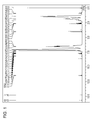
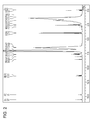

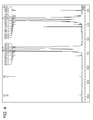
Classifications
-
- G—PHYSICS
- G03—PHOTOGRAPHY; CINEMATOGRAPHY; ANALOGOUS TECHNIQUES USING WAVES OTHER THAN OPTICAL WAVES; ELECTROGRAPHY; HOLOGRAPHY
- G03G—ELECTROGRAPHY; ELECTROPHOTOGRAPHY; MAGNETOGRAPHY
- G03G9/00—Developers
- G03G9/08—Developers with toner particles
- G03G9/09—Colouring agents for toner particles
- G03G9/0906—Organic dyes
- G03G9/0918—Phthalocyanine dyes
-
- G—PHYSICS
- G03—PHOTOGRAPHY; CINEMATOGRAPHY; ANALOGOUS TECHNIQUES USING WAVES OTHER THAN OPTICAL WAVES; ELECTROGRAPHY; HOLOGRAPHY
- G03G—ELECTROGRAPHY; ELECTROPHOTOGRAPHY; MAGNETOGRAPHY
- G03G9/00—Developers
- G03G9/08—Developers with toner particles
-
- G—PHYSICS
- G03—PHOTOGRAPHY; CINEMATOGRAPHY; ANALOGOUS TECHNIQUES USING WAVES OTHER THAN OPTICAL WAVES; ELECTROGRAPHY; HOLOGRAPHY
- G03G—ELECTROGRAPHY; ELECTROPHOTOGRAPHY; MAGNETOGRAPHY
- G03G9/00—Developers
- G03G9/08—Developers with toner particles
- G03G9/0802—Preparation methods
- G03G9/0804—Preparation methods whereby the components are brought together in a liquid dispersing medium
- G03G9/0806—Preparation methods whereby the components are brought together in a liquid dispersing medium whereby chemical synthesis of at least one of the toner components takes place
-
- G—PHYSICS
- G03—PHOTOGRAPHY; CINEMATOGRAPHY; ANALOGOUS TECHNIQUES USING WAVES OTHER THAN OPTICAL WAVES; ELECTROGRAPHY; HOLOGRAPHY
- G03G—ELECTROGRAPHY; ELECTROPHOTOGRAPHY; MAGNETOGRAPHY
- G03G9/00—Developers
- G03G9/08—Developers with toner particles
- G03G9/087—Binders for toner particles
- G03G9/08742—Binders for toner particles comprising macromolecular compounds obtained otherwise than by reactions only involving carbon-to-carbon unsaturated bonds
- G03G9/08768—Other polymers having nitrogen in the main chain, with or without oxygen or carbon only
-
- G—PHYSICS
- G03—PHOTOGRAPHY; CINEMATOGRAPHY; ANALOGOUS TECHNIQUES USING WAVES OTHER THAN OPTICAL WAVES; ELECTROGRAPHY; HOLOGRAPHY
- G03G—ELECTROGRAPHY; ELECTROPHOTOGRAPHY; MAGNETOGRAPHY
- G03G9/00—Developers
- G03G9/08—Developers with toner particles
- G03G9/097—Plasticisers; Charge controlling agents
- G03G9/09733—Organic compounds
- G03G9/09758—Organic compounds comprising a heterocyclic ring
-
- G—PHYSICS
- G03—PHOTOGRAPHY; CINEMATOGRAPHY; ANALOGOUS TECHNIQUES USING WAVES OTHER THAN OPTICAL WAVES; ELECTROGRAPHY; HOLOGRAPHY
- G03G—ELECTROGRAPHY; ELECTROPHOTOGRAPHY; MAGNETOGRAPHY
- G03G9/00—Developers
- G03G9/08—Developers with toner particles
- G03G9/097—Plasticisers; Charge controlling agents
- G03G9/09783—Organo-metallic compounds
Definitions
- the present invention relates to a toner containing, as a dispersant of a phthalocyanine pigment, a compound having an azo skeleton, the toner being used in electrophotography, electrostatic recording, electrostatic printing, or toner-jet recording.
- Japanese Patent Laid-Open No. 03-113462 discloses that a polymer containing sodium styrenesulfonate as a monomer unit is used as a dispersant.
- a method has also been proposed in which dispersibility of a phthalocyanine pigment is improved by allowing metal-containing phthalocyanine and a polymer having a substituent that can be coordinated with the metal-containing phthalocyanine (hereinafter abbreviated as "coordinating polymer”) to coexist.
- Japanese Patent Laid-Open No. 2003-277643 discloses that a 4-vinyl pyridine/styrene copolymer is used as the coordinating polymer.
- Japanese Patent No. 4510687 discloses that a copolymer of styrene and a monomer having an amide group is used as the coordinating polymer.
- the dispersant of a phthalocyanine pigment described in Japanese Patent Laid-Open No. 03-113462 contains sodium styrenesulfonate, which has high affinity for water. Therefore, in a method for producing a toner in water, such as a suspension polymerization method, the dispersant tends to be unevenly located on the surface of the toner. As a result, chargeability of the toner is affected by degradation of dispersibility and a change in the surface state of the toner, which may result in a problem of an image defect called "fogging" in which the toner is developed in a margin of an image.
- the present invention provides a cyan toner which has a high coloring power and in which dispersibility of a cyan pigment in a binder resin is improved.
- the present invention also provides a cyan toner in which "fogging" is suppressed and which has a high transfer efficiency.
- the present invention in its aspect provides a cyan toner as specified in claims 1 to 12.
- Fig. 1 is a 1 H NMR spectrum chart of compound (44) having an azo skeleton structure in CDCl 3 at room temperature at 400 MHz.
- Fig. 2 is a 1 H NMR spectrum chart of compound (57) having an azo skeleton structure in CDCl 3 at room temperature at 400 MHz.
- Fig. 3 is a 1 H NMR spectrum chart of compound (94) having an azo skeleton structure in CDCl 3 at room temperature at 400 MHz.
- Fig. 4 is a 1 H NMR spectrum chart of compound (96) having an azo skeleton structure in CDCl 3 at room temperature at 400 MHz.
- a toner of the present invention comprises toner particles, each of which contains a phthalocyanine, a binder resin and a compound having a structure, a polymer portion of which has a monomer unit represented by formula (2) and is bound to a structure represented by formula (1) directly or through a linking group.
- R 2 , R 3 , Ar 1 , and Ar 2 is bound to the polymer portion directly or through a linking group, wherein each R 1 independently represents a hydrogen atom, a halogen atom, an alkyl group, an alkoxy group, a trifluoromethyl group, a cyano group, or a hydroxyl group, R 2 and R 3 not bound to the polymer portion independently represent a monovalent group selected from the group consisting of an alkyl group, a phenyl group, an OR 4 group, and an NR 5 R 6 group, R 4 to R 6 independently represent a hydrogen atom, an alkyl group, a phenyl group, or an aralkyl group, Ar 1 and Ar 2 not bound to the polymer portion independently represent an aryl group, wherein any one of R 2 and R 3 bound to the polymer portion independently represents a divalent group, a hydrogen atom of which is removed from the corresponding monovalent group of any one of R 2 and R 3
- R 7 represents a hydrogen atom or an alkyl group
- R 8 represents a phenyl group, a carboxyl group, a carboxylic acid ester group, or a carboxylic acid amide group.
- the present invention provides a cyan toner containing, as a pigment dispersant, a compound in which a structure represented by formula (1) above is bound to a polymer portion.
- the compound has high affinity for water-insoluble solvents, polymerizable monomers, and binder resins for a toner and high affinity for phthalocyanine pigments. Therefore, a phthalocyanine pigment is satisfactorily dispersed in a binder resin by using the compound as a pigment dispersant, and thus a cyan toner having a high coloring power is provided. Furthermore, “fogging" is suppressed by adding the compound to a cyan toner, a cyan toner having a high transfer efficiency is provided.
- the structure represented by formula (1) is also referred to as "azo skeleton structure".
- a compound in which the azo skeleton structure is bonded to a polymer portion having a monomer unit represented by formula (2) is also referred to as "compound having an azo skeleton structure”.
- only the polymer portion which has the monomer unit represented by formula (2) and to which the azo skeleton structure is not bonded is also simply referred to as "polymer portion”.
- the compound having an azo skeleton structure is constituted by an azo skeleton structure represented by formula (1) above, which has high affinity for phthalocyanine pigments, and a polymer portion having a monomer unit represented by formula (2) above, which has high affinity for water-insoluble solvents.
- Examples of the halogen atom represented by R 1 in formula (1) include a fluorine atom, a chlorine atom, a bromine atom, and an iodine atom.
- Examples of the alkyl group represented by R 1 in formula (1) include linear, branched, or cyclic alkyl groups such as a methyl group, an ethyl group, a n-propyl group, a n-butyl group, a n-pentyl group, a n-hexyl group, an isopropyl group, an isobutyl group, a sec-butyl group, a tert-butyl group, and a cyclohexyl group.
- linear, branched, or cyclic alkyl groups such as a methyl group, an ethyl group, a n-propyl group, a n-butyl group, a n-pentyl group, a n-hexyl group, an isopropyl group, an isobutyl group, a sec-butyl group, a tert-butyl group, and a cyclohexy
- Examples of the alkoxy group represented by R 1 in formula (1) include linear or branched alkoxy groups such as a methoxy group, an ethoxy group, a n-propoxy group, a n-butoxy group, and an isopropoxy group.
- R 1 in formula (1) can be appropriately selected from the substituents listed above, a trifluoromethyl group, a cyano group, a hydroxyl group, and a hydrogen atom.
- R 1 may be a hydrogen atom.
- the acylacetamide groups are located at the o-position, the m-position, or the p-position.
- the affinity for phthalocyanine pigments does not depend on the difference in these substitution positions but is the same among the o-position, the m-position, and the p-position.
- the acylacetamide groups are located at the 1,2,3-positions, the 1,2,4-positions, or the 1,3,5-positions.
- the affinity for phthalocyanine pigments does not depend on the difference in these substitution positions but is the same among the 1,2,3-positions, the 1,2,4-positions, and the 1,3,5-positions.
- Examples of the alkyl groups represented by R 2 and R 3 in formula (1) include linear, branched, or cyclic alkyl groups such as a methyl group, an ethyl group, a n-propyl group, a n-butyl group, a n-pentyl group, a n-hexyl group, an isopropyl group, an isobutyl group, a sec-butyl group, a tert-butyl group, and a cyclohexyl group.
- the substituents represented by R 2 and R 3 in formula (1) may be further substituted with a substituent as long as the affinity for phthalocyanine pigments is not significantly impaired.
- the substituents represented by R 2 and R 3 may each be independently substituted with, for example, a halogen atom, a nitro group, an amino group, a hydroxyl group, a cyano group, or a trifluoromethyl group.
- Examples of the alkyl groups represented by R 4 to R 6 in formula (1) include linear, branched, or cyclic alkyl groups such as a methyl group, an ethyl group, a n-propyl group, a n-butyl group, a n-pentyl group, a n-hexyl group, an isopropyl group, an isobutyl group, a sec-butyl group, a tert-butyl group, and a cyclohexyl group.
- Examples of the aralkyl group represented by R 4 to R 6 in formula (1) include a benzyl group and a phenethyl group.
- R 4 to R 6 in formula (1) can be appropriately selected from the substituents listed above, a hydrogen atom, and a phenyl group.
- Ar 1 and Ar 2 in formula (1) each independently represent an aryl group, and examples of the aryl group include a phenyl group and a naphthyl group. These substituents may be further substituted with a substituent as long as the affinity for phthalocyanine pigments is not significantly impaired.
- the substituents represented by Ar 1 and Ar 2 may each be independently substituted with, for example, an alkyl group, an alkoxy group, a halogen atom, a hydroxyl group, a cyano group, a trifluoromethyl group, a carboxyl group, a carboxylic acid ester group, and a carboxylic acid amide group.
- At least one of R 2 , R 3 , Ar 1 , and Ar 2 in formula (1) is bound to the polymer portion directly or through a linking group. It is preferably bound to the polymer portion through a linking group. Any one of R 2 and R 3 bound to the polymer portion independently represents a divalent group, a hydrogen atom of which is removed from the corresponding monovalent group of any one of R 2 and R 3 . Any one of Ar 1 and Ar 2 bound to the polymer portion independently represents a divalent group, a hydrogen atom of which is removed from the corresponding aryl group of any one of Ar 1 and Ar 2 .
- the structure represented by formula (1) may be represented by a structure represented by formula (3) below.
- Ar 1 and Ar 2 in formula (1) may each be a phenyl group, and at least one hydrogen atom of the phenyl groups may be substituted with a linking group so as to bind to the polymer portion.
- each R 1 independently represents the same as R 1 s in formula (1).
- R 9 and R 10 independently represent an alkyl group, a phenyl group, an OR 4 group, or an NR 5 R 6 group;
- R 4 to R 6 independently represents the same as R 4 to R 6 in formula (1)).
- R 11 to R 20 independently represent a linking group or a monovalent group selected from the consisting of a hydrogen atom, a COOR 21 group, a CONR 22 R 23 group, an NHCOR 24 group, and an OR 25 group.
- R 21 to R 25 each independently represent a hydrogen atom, an alkyl group, an aryl group, or an aralkyl group.
- at least one of R 11 to R 20 is the linking group that binds to the polymer portion, m represents an integer of 3 or 4, n represents an integer of 1 or 2, and n + m is 5.
- each of R 11 to R 20 can be selected from a hydrogen atom, a COOR 21 group, a CONR 22 R 23 group, an NHCOR 24 group, and an OR 25 group.
- at least one of R 11 to R 20 may be a COOR 21 group or a CONR 22 R 23 group.
- Examples of the alkyl group represented by R 21 to R 25 in formula (3) include linear, branched, or cyclic alkyl groups such as a methyl group, an ethyl group, a n-propyl group, a n-butyl group, a n-pentyl group, a n-hexyl group, an isopropyl group, an isobutyl group, a sec-butyl group, a tert-butyl group, and a cyclohexyl group.
- Examples of the aryl group represented by R 21 to R 25 in formula (3) include a phenyl group and a naphthyl group.
- Examples of the aralkyl group represented by R 21 to R 25 in formula (3) include a benzyl group and a phenethyl group.
- R 21 to R 25 in formula (3) can be appropriately selected from the substituents listed above and a hydrogen atom.
- R 21 may be a methyl group
- R 22 may be a hydrogen atom
- R 23 may be a methyl group or a hydrogen atom.
- Examples of the alkyl group represented by R 9 and R 10 in formula (3) include linear, branched, or cyclic alkyl groups such as a methyl group, an ethyl group, a n-propyl group, a n-butyl group, a n-pentyl group, a n-hexyl group, an isopropyl group, an isobutyl group, a sec-butyl group, a tert-butyl group, and a cyclohexyl group.
- the substituents represented by R 9 and R 10 in formula (3) may be further substituted with a substituent as long as the affinity for phthalocyanine pigments is not significantly impaired.
- the substituents represented by R 9 and R 10 may each be independently substituted with, for example, a halogen atom, a nitro group, an amino group, a hydroxyl group, a cyano group, or a trifluoromethyl group.
- R 9 and R 10 in formula (3) can be appropriately selected from the substituents listed above.
- R 9 and R 10 may each be a methyl group.
- the structure represented by formula (3) may be any of structures represented by formulae (4) to (7) below in view of the affinity for phthalocyanine pigments.
- the structure represented by formula (3) may have a structure in which an azo skeleton structure and a polymer portion are bonded through a linking group L, the structure being represented by any of formulae (4) to (7) below.
- each R 1 independently represents the same as R 1 in formula (1)
- R 9 and R 10 represent the same as R 9 and R 10 in formula (3)
- R 26 to R 30 independently represent a hydrogen atom, a COOR 21 group, a CONR 22 R 23 group, an NHCOR 24 group, or an OR 25 group
- R 21 to R 25 represent the same as R 21 to R 25 in formula (3)
- 1 is 4
- L represents a divalent linking group that binds to the polymer portion.
- each R 1 independently represents the same as R 1 in formula (1)
- R 9 and R 10 represent the same as R 9 and R 10 in formula (3)
- R 26 to R 30 independently represent a hydrogen atom, a COOR 21 group, a CONR 22 R 23 group, an NHCOR 24 group, or an OR 25 group
- R 21 to R 25 represent the same as R 21 to R 25 in formula (3)
- 1 is 4, and each L represents a divalent linking group that binds to the polymer portion.
- each R 1 independently represents the same as R 1 in formula (1)
- R 9 represents the same as R 9 in formula (3)
- p represents an integer of 2 or 3
- q represents an integer of 3 or 4
- p + q is 6
- L represents a divalent linking group that binds to the polymer portion.
- each R 1 independently represents the same as R 1 in formula (1)
- R 9 represents the same as R 9 in formula (3)
- p represents an integer of 2 or 3
- q represents an integer of 3 or 4
- p + q is 6
- each L represents a divalent linking group that binds to the polymer portion.
- L in formulae (4) to (7) is a divalent linking group and binds the azo skeleton structure to the polymer portion.
- the azo skeleton structure is bound to the polymer portion through L at one position.
- the azo skeleton structure is bound to the polymer portion through Ls at two positions.
- L in formulae (4) to (7) may be any divalent linking group.
- L may have a carboxylic acid ester bond, a carboxylic acid amide bond, or a sulfonic acid ester bond because a reaction that forms any of these linking groups is easily conducted as a reaction for binding the azo skeleton structure to the polymer portion.
- At least one L may be located at the m-position or the p-position with respect to a hydrazo group in view of the affinity for phthalocyanine pigments.
- Each of R 26 to R 30 in formula (4) or (5) can be selected from a hydrogen atom, a COOR 21 group, a CONR 22 R 23 group, an NHCOR 24 group, and an OR 25 group.
- at least one of R 26 to R 30 may be a COOR 21 group or a CONR 22 R 23 group.
- Examples of the alkyl group represented by R 7 in formula (2) above include linear, branched, or cyclic alkyl groups such as a methyl group, an ethyl group, a n-propyl group, a n-butyl group, a n-pentyl group, a n-hexyl group, an isopropyl group, an isobutyl group, a sec-butyl group, a tert-butyl group, and a cyclohexyl group.
- linear, branched, or cyclic alkyl groups such as a methyl group, an ethyl group, a n-propyl group, a n-butyl group, a n-pentyl group, a n-hexyl group, an isopropyl group, an isobutyl group, a sec-butyl group, a tert-butyl group, and a cyclohex
- R 7 in formula (2) can be appropriately selected from the substituents listed above and a hydrogen atom.
- R 7 may be a hydrogen atom or a methyl group.
- Examples of the carboxylic acid ester group represented by R 8 in formula (2) include, but are not particularly limited to, linear or branched ester groups such as a methyl ester group, an ethyl ester group, a n-propyl ester group, an isopropyl ester group, a n-butyl ester group, an isobutyl ester group, a sec-butyl ester group, a tert-butyl ester group, an octyl ester group, a nonyl ester group, a decyl ester group, an undecyl ester group, a dodecyl ester group, a hexadecyl ester group, an octadecyl ester group, an eicosyl ester group, a docosyl ester group, a 2-ethylhexyl ester group, a phenyl ester group, and a 2-hydroxyethyl este
- Examples of the carboxylic acid amide group represented by R 8 in formula (2) include linear or branched amide groups such as an N-methylamide group, an N,N-dimethylamide group, an N-ethylamide group, an N,N-diethylamide group, an N-isopropylamide group, an N,N-diisopropylamide group, an N-n-butyramide group, an N,N-din-butyramide group, N-isobutyramide group, N,N-diisobutyramide group, N-sec-butyramide group, an N,N-di-sec-butyramide group, an N-tert-butyramide group, an N-octylamide group, an N,N-dioctylamide group, an N-nonylamide group, an N,N-dinonylamide group, an N-decylamide group, an N,N-didecylamide group, an N-
- the substituent represented by R 8 in formula (2) may be further substituted with a substituent, and the substituent is not particularly limited as long as polymerizability of the monomer unit is not impaired and solubility of the compound having an azo skeleton structure is not significantly decreased.
- the substituent represented by R 8 may be substituted with, for example, an alkoxy group such as a methoxy group or an ethoxy group; an amino group such as an N-methylamino group or an N,N-dimethylamino group; an acyl group such as an acetyl group; or a halogen atom such as a fluorine atom or a chlorine atom.
- R 8 in formula (2) can be appropriately selected from the substituents listed above, a phenyl group, and a carboxyl group.
- R 8 in formula (2) may be a phenyl group, a carboxylic acid ester group, or a carboxylic acid amide group.
- the affinity for a dispersion medium can be controlled by changing the ratio of the monomer unit of the polymer portion, the monomer unit being represented by formula (2).
- the dispersion medium is a nonpolar solvent such as styrene
- the ratio of the monomer unit in which R 8 in formula (2) is a phenyl group may be increased in view of the affinity for the dispersion medium.
- the dispersion medium is a solvent having a certain degree of polarity, such as an acrylic acid ester
- the ratio of the monomer unit in which R 8 in formula (2) is a carboxyl group, a carboxylic acid ester group, or a carboxylic acid amide group may be increased in view of the affinity for the dispersion medium.
- the polymer portion preferably has a number-average molecular weight of 500 or more from the standpoint of improving dispersibility of a phthalocyanine pigment.
- the number-average molecular weight of the polymer portion is preferably 200,000 or less.
- the number-average molecular weight of the polymer portion is more preferably in the range of 2,000 to 50,000.
- dispersibility is improved by introducing a branched aliphatic chain into an end of the molecule of the dispersant.
- the polymer portion of the present invention by synthesizing a telechelic polymer portion by, for example, atom transfer radical polymerization (ATRP) described below, a branched aliphatic chain can be introduced into an end of the portion.
- ATRP atom transfer radical polymerization
- substitution positions of an azo skeleton structure in the compound having the azo skeleton structure may be randomly located or unevenly located at an end so that one or a plurality of blocks are formed.
- the number of substitutions of the azo skeleton structure in the compound having the azo skeleton structure is large, a high affinity for phthalocyanine pigments is obtained.
- the number of substitutions of the azo skeleton structure is excessively large, the affinity for water-insoluble solvents is decreased. Accordingly, the number of substitutions of the azo skeleton structure is preferably in the range of 0.2 to 10, and more preferably 0.2 to 5 relative to 100 monomers that form the polymer portion.
- tautomers represented by, for example, formulae (9) and (10) below are present, as described below. These tautomers are also within the scope of right of the present invention.
- R 1 to R 3 , Ar 1 , Ar 2 , m, and n in formulae (9) and (10) are respectively the same as R 1 to R 3 , Ar 1 , Ar 2 , m, and n in formula (1).
- Examples of the method for synthesizing a compound having an azo skeleton structure include methods described in (i) to (iv) below.
- method (i) will now be described in detail with reference to an example of the scheme shown below.
- an azo skeleton structure and a polymer portion are respectively synthesized in advance, and these are bound by a condensation reaction or the like to synthesize a compound having an azo skeleton structure.
- R 1 to R 3 , Ar 1 , m, and n in formulae (11) to (20) are respectively the same as R 1 to R 3 , Ar 1 , m, and n in formula (1).
- Ar 3 in formulae (19) and (20) represents an arylene group.
- X 1 in formula (12) and X 2 in formula (17) each represents a leaving group.
- P 1 represents a polymer portion having the monomer unit represented by formula (2) above.
- X 3 in formulae (19) and (20) represents a substituent that reacts with P 1 to form the divalent linking group L, and r represents an integer of 1 or 2.
- the compound having an azo skeleton structure can be synthesized by step 1 of amidating a nitroaniline derivative represented by formula (11) and an acetoacetic acid analogue represented by formula (12) to synthesize an intermediate product (13), which is an acylacetanilide analogue; step 2 of conducting diazo coupling of the intermediate product (13) with an aniline derivative (14) to synthesize an azo compound (15); step 3 of reducing a nitro group in the azo compound (15) to synthesize an intermediate product (16), which is an aniline analogue; step 4 of amidating the intermediate product (16) and an acetoacetic acid analogue represented by formula (17) to synthesize an intermediate product (18), which is an acylacetanilide analogue; step 5 of conducting diazo coupling of the intermediate product (18) with an aniline derivative (19) to synthesize an azo compound (20); and step 6 of binding the azo skeleton to the polymer portion P 1 by a condensation reaction or the like
- step 1 will be described.
- a known method can be employed (for example, Datta E. Ponde, and four other authors, "The Journal of Organic Chemistry", (US), American Chemical Society, 1998, Vol. 63, No. 4, pp. 1058-1063 ).
- R 2 in formula (13) is a methyl group
- the synthesis can be conducted by a method using diketene instead of using the raw material (12) (for example, Kiran Kumar Solingapuram Sai, and two other authors, "The Journal of Organic Chemistry", (US), American Chemical Society, 2007, Vol. 72, No. 25, pp. 9761-9764 ).
- nitroaniline derivative (11) and the acetoacetic acid analogue (12) are each commercially available as various types of compounds, and easily available. Alternatively, these can be easily synthesized by known methods.
- this step may be performed without using a solvent, the step may be performed in the presence of a solvent in order to prevent a rapid progress of the reaction.
- the solvent is not particularly limited as long as the solvent does not inhibit the reaction. Examples thereof include alcohols such as methanol, ethanol, and propanol; esters such as methyl acetate, ethyl acetate, and propyl acetate; ethers such as diethyl ether, tetrahydrofuran, and dioxane; hydrocarbons such as benzene, toluene, xylene, hexane, and heptane; halogenated hydrocarbons such as dichloromethane, dichloroethane, and chloroform; amides such as N,N-dimethylformamide, N-methylpyrrolidone, and N,N-dimethylimidazolidinone; nitriles such as acetonitrile and propionitrile; acids such as formic acid
- solvents may be used as a mixture of two or more solvents, and the mixing ratio when the solvents are mixed can be appropriately determined in accordance with the solubility of the compounds used.
- the amount of solvent used can be appropriately determined. However, the amount of solvent is preferably in the range of 1.0 to 20 times the mass of the compound represented by formula (11) in view of the reaction rate.
- This step is usually performed in the temperature range of 0°C to 250°C, and usually completed within 24 hours.
- step 2 a known method can be employed. Specifically, for example, the following method may be employed.
- the aniline derivative (14) is allowed to react with a diazotizing agent such as sodium nitrite or nitrosylsulfuric acid in a methanol solvent in the presence of an inorganic acid such as hydrochloric acid or sulfuric acid to synthesize a corresponding diazonium salt.
- the diazonium salt is further coupled with the intermediate product (13) to synthesize the azo compound (15).
- the aniline derivative (14) is commercially available as various types of compounds, and easily available. Alternatively, the aniline derivative (14) can be easily synthesized by a known method.
- this step may be performed without using a solvent, the step may be performed in the presence of a solvent in order to prevent a rapid progress of the reaction.
- the solvent is not particularly limited as long as the solvent does not inhibit the reaction. Examples thereof include alcohols such as methanol, ethanol, and propanol; esters such as methyl acetate, ethyl acetate, and propyl acetate; ethers such as diethyl ether, tetrahydrofuran, and dioxane; hydrocarbons such as benzene, toluene, xylene, hexane, and heptane; halogenated hydrocarbons such as dichloromethane, dichloroethane, and chloroform; amides such as N,N-dimethylformamide, N-methylpyrrolidone, and N,N-dimethylimidazolidinone; nitriles such as acetonitrile and propionitrile; acids such as formic acid
- solvents may be used as a mixture of two or more solvents, and the mixing ratio when the solvents are mixed can be appropriately determined in accordance with the solubility of the compounds used.
- the amount of solvent used can be appropriately determined. However, the amount of solvent is preferably in the range of 1.0 to 20 times the mass of the compound represented by formula (14) in view of the reaction rate.
- This step is usually performed in the temperature range of -50°C to 100°C, and usually completed within 24 hours.
- step 3 a known method can be employed (as a method of using a metal compound or the like, for example, a method described in " Jikken Kagaku Kouza (Experimental Chemistry Course)", published by Maruzen Co., Ltd., First edition, Vol. 17-2, pp. 162-179 can be employed, and as a method of catalytic hydrogenation, for example, a method described in " Jikken Kagaku Kouza (Experimental Chemistry Course)", published by Maruzen Co., Ltd., First edition, Vol. 15, pp. 390-448 , or International Publication No. 2009/060886 pamphlet can be employed).
- this step may be performed without using a solvent
- the step may be performed in the presence of a solvent in order to prevent a rapid progress of the reaction.
- the solvent is not particularly limited as long as the solvent does not inhibit the reaction. Examples thereof include alcohols such as methanol, ethanol, and propanol; esters such as methyl acetate, ethyl acetate, and propyl acetate; ethers such as diethyl ether, tetrahydrofuran, and dioxane; hydrocarbons such as benzene, toluene, xylene, hexane, and heptane; and amides such as N,N-dimethylformamide, N-methylpyrrolidone, and N,N-dimethylimidazolidinone.
- solvents may be used as a mixture of two or more solvents, and the mixing ratio when the solvents are mixed can be appropriately determined.
- the amount of solvent used can be appropriately determined in accordance with the solubility of the compound used. However, the amount of solvent is preferably in the range of 1.0 to 20 times the mass of the compound represented by formula (15) in view of the reaction rate.
- This step is usually performed in the temperature range of 0°C to 250°C, and usually completed within 24 hours.
- step 4 the intermediate product (18), which is an acylacetanilide analogue, can be synthesized by a method similar to the method used in step 1 described above.
- step 5 the azo compound (20) can be synthesized by a method similar to the method used in step 2 described above.
- the aniline derivative (19) is commercially available as various types of compounds, and easily available. Alternatively, the aniline derivative (19) can be easily synthesized by a known method.
- a method for synthesizing the polymer portion P 1 used in step 6 will be described.
- a known polymerization method can be employed (for example, Krzysztof Matyjaszewski, and one other author, "Chemical Reviews", (US), American Chemical Society, 2001, Vol. 101, pp. 2921-2990 ) .
- radical polymerization examples include radical polymerization, cationic polymerization, and anionic polymerization.
- radical polymerization may be used.
- Radical polymerization can be conducted by the use of a radical polymerization initiator; irradiation with radiation, a laser beam, or the like; the use of a photopolymerization initiator in combination with irradiation with light; heating; or the like.
- the radical polymerization initiator is not particularly limited as long as it generates a radical and can initiate a polymerization reaction, and is selected from compounds that generate a radical by an action of heat, light, radiation, a redox reaction, or the like.
- Examples of the radical polymerization initiator include azo compounds, organic peroxides, inorganic peroxides, organometallic compounds, and photopolymerization initiators.
- examples thereof include azo polymerization initiators such as 2,2'-azobis(isobutyronitrile), 2,2'-azobis(2-methylbutyronitrile), 2,2'-azobis(4-methoxy-2,4-dimethylvaleronitrile), and 2,2'-azobis(2,4-dimethylvaleronitrile); organic peroxide polymerization initiators such as benzoyl peroxide, di-tert-butyl peroxide, tert-butylperoxyisopropyl carbonate, tert-hexyl peroxybenzoate, and tert-butyl peroxybenzoate; inorganic peroxide polymerization initiators such as potassium persulfate and ammonium persulfate; and redox initiators such as hydrogen peroxide-ferrous compound, benzoyl peroxide (BPO)-dimethylaniline, and cerium (IV) salt-alcohol.
- the photopolymerization initiators include benzo
- the amount of polymerization initiator used is preferably controlled in the range of 0.1 to 20 parts by mass relative to 100 parts by mass of a monomer so as to provide a copolymer having a target molecular weight distribution.
- the polymer portion represented by P 1 can be produced by any one of methods of solution polymerization, suspension polymerization, emulsion polymerization, dispersion polymerization, precipitation polymerization, bulk polymerization, and the like, and the method is not particularly limited. However, solution polymerization in a solvent that can dissolve components used in the production is suitably used.
- the solvent that can be used include polar organic solvents such as alcohols, e.g., methanol, ethanol, and 2-propanol, ketones, e.g., acetone and methyl ethyl ketone, ethers, e.g., tetrahydrofuran and diethyl ether, ethylene glycol monoalkyl ethers and acetates thereof, propylene glycol monoalkyl ethers and acetates thereof, and diethylene glycol monoalkyl ethers; and in some cases, nonpolar solvents such as toluene and xylene.
- solvents may be used alone or as a mixture thereof.
- solvents having a boiling point in the range of 100°C to 180°C are preferably used alone or as a mixture thereof.
- a suitable polymerization temperature range varies depending on the type of initiator used, and is not particularly limited. Specifically, the polymerization is usually performed in the range of -30°C to 200°C, and preferably in the range of 40°C to 180°C.
- the molecular-weight distribution and the molecular structure of the polymer portion represented by P 1 can be controlled by known methods.
- the polymer portion represented by P 1 having a controlled molecular-weight distribution and a controlled molecular structure can be produced by, for example, a method in which an addition-cleavage-type chain transfer agent is used (refer to, Japanese Patent Nos. 4254292 and 3721617 ); a nitroxide-mediated polymerization (NMP) method in which dissociation and bonding of an amine-oxide radical is used (for example, Craig J. Hawker, and two other authors, "Chemical Reviews", (US), American Chemical Society, 2001, Vol. 101, pp.
- NMP nitroxide-mediated polymerization
- an atom transfer radical polymerization (ATRP) method in which polymerization is conducted in the presence of a metal catalyst and a ligand using a halogen compound as a polymerization initiator
- ATRP atom transfer radical polymerization
- a metal catalyst for example, Masami Kamigaito, and two other authors, "Chemical Reviews", (US), American Chemical Society, 2001, Vol. 101, pp. 3689-3746
- RAFT reversible addition-fragmentation chain transfer
- MADIX xanthate
- DT degenerative transfer
- step 6 a known method can be employed. Specifically, for example, by using a polymer portion P 1 having a carboxyl group and an azo compound (20) in which X 3 is a substituent having a hydroxyl group, it is possible to synthesize a compound having an azo skeleton structure in which the linking group L has a carboxylic acid ester bond. By using a polymer portion P 1 having a hydroxyl group and an azo compound (20) in which X 3 is a substituent having a sulfonic acid group, it is possible to synthesize a compound having an azo skeleton structure in which the linking group L has a sulfonic acid ester bond.
- a polymer portion P 1 having a carboxyl group and an azo compound (20) in which X 3 is a substituent having an amino group it is possible to synthesize a compound having an azo skeleton structure in which the linking group L has a carboxylic acid amide bond.
- the method include a method in which a dehydration-condensation agent such as 1-ethyl-3-(3-dimethylaminopropyl)carbodiimide hydrochloride is used (for example, Melvin S. Newman, and one other author, "The Journal of Organic Chemistry", (US), American Chemical Society, 1961, Vol. 26, No. 7, pp. 2525-2528 ) and a Schotten-Baumann method (for example, Norman O. V. supra, "Chemical Reviews", (US), American Chemical Society, 1953, Vol. 52, No. 2, pp. 237-416 ).
- a dehydration-condensation agent such as 1-ethyl-3-(3-dimethylamin
- this step may be performed without using a solvent
- the step may be performed in the presence of a solvent in order to prevent a rapid progress of the reaction.
- the solvent is not particularly limited as long as the solvent does not inhibit the reaction. Examples thereof include ethers such as diethyl ether, tetrahydrofuran, and dioxane; hydrocarbons such as benzene, toluene, xylene, hexane, and heptane; halogenated hydrocarbons such as dichloromethane, dichloroethane, and chloroform; amides such as N,N-dimethylformamide, N-methylpyrrolidone, and N,N-dimethylimidazolidinone; and nitriles such as acetonitrile and propionitrile.
- solvents may be used as a mixture of two or more solvents, and the mixing ratio when the solvents are mixed can be appropriately determined in accordance with the solubility of the compounds used.
- the amount of solvent used can be appropriately determined. However, the amount of solvent is preferably in the range of 1.0 to 20 times the mass of the compound represented by formula (20) in view of the reaction rate.
- This step is usually performed in the temperature range of 0°C to 250°C, and usually completed within 24 hours.
- method (ii) will now be described in detail with reference to an example of the scheme shown below.
- an azo compound having a polymerizable functional group is synthesized in advance and the azo compound is copolymerized with a polymerizable monomer that forms a monomer unit represented by formula (2) above to synthesize the compound having the azo skeleton structure.
- R 1 to R 3 , Ar 1 , Ar 3 , X 3 , m, n, and r in formula (20) are respectively the same as R 1 to R 3 , Ar 1 , Ar 3 , X 3 , m, n, and r in formula (20) in the scheme of method (i) described above.
- R 31 represents a hydrogen atom or an alkyl group and X 4 represents a substituent that reacts with X 3 in formula (20) to form X 5 in formula (22).
- R 1 to R 3 , R 31 , Ar 1 , Ar 3 , m, n, and r in formula (22) are the same as those in formulae (20) and (21), and X 5 represents the divalent linking group L formed by a reaction between X 3 in formula (20) and X 4 in formula (21).
- the compound having an azo skeleton structure is synthesized by step 7 of allowing an azo compound (20) to react with a vinyl group-containing compound represented by formula (21) to synthesize an azo compound (22) having a polymerizable functional group; and step 8 of copolymerizing the azo compound (22) having a polymerizable functional group with a polymerizable monomer that forms a monomer unit represented by formula (2) above.
- step 7 the azo compound (22) having a polymerizable functional group can be synthesized by a method similar to the method used in step 6 of method (i).
- the vinyl group-containing compound (21) is commercially available as various types of compounds, and easily available. Alternatively, the vinyl group-containing compound (21) can be easily synthesized by a known method.
- step 8 the azo compound represented by formula (22) is copolymerized with the polymerizable monomer that forms a monomer unit represented by formula (2) above using the method for synthesizing the polymer portion P 1 of method (i).
- the compound having an azo skeleton structure can be synthesized.
- method (iii) will now be described in detail with reference to an example of the scheme shown below.
- an azo compound having a halogen atom is synthesized in advance, and a polymerizable monomer that forms the monomer unit represented by formula (2) above is polymerized using the azo compound as a polymerization initiator to synthesize the compound having an azo skeleton structure.
- R 1 to R 3 , Ar 1 , Ar 3 , X 3 , m, n, and r in formula (20) are respectively the same as R 1 to R 3 , Ar 1 , Ar 3 , X 3 , m, n, and r in formula (20) in the scheme of method (i) described above.
- X 6 represents a substituent that reacts with X 3 in formula (20) to form X 7 in formula (24)
- A represents a chlorine atom, a bromine atom, or an iodine atom.
- R 1 to R 3 , Ar 1 , Ar 3 , m, n, and r in formula (24) are the same as those in formula (20), and X 7 represents the divalent linking group L formed by a reaction between X 3 in formula (20) and X 6 in formula (23).
- the compound having an azo skeleton structure is synthesized by step 9 of allowing an azo compound (20) to react with a halogen atom-containing compound represented by formula (23) to synthesize an azo compound (24) having a halogen atom; and step 10 of polymerizing a polymerizable monomer that forms the monomer unit represented by formula (2) using, as a polymerization initiator, the azo compound (24) having a halogen atom.
- step 9 the azo compound (24) having a halogen atom can be synthesized by a method similar to the method used in step 6 of method (i). Specifically, for example, by using a halogen atom-containing compound (23) having a carboxyl group and an azo compound (20) in which X 3 is a substituent having a hydroxyl group, it is possible to synthesize a halogen atom-containing azo skeleton structure (i.e., azo compound) (24) in which the linking group L has a structure having a carboxylic acid ester bond.
- a halogen atom-containing compound (23) having a hydroxyl group and an azo compound (20) in which X 3 is a substituent having a sulfonic acid group it is possible to synthesize a halogen atom-containing azo skeleton structure (24) in which the linking group L has a structure having a sulfonic acid ester bond.
- a halogen atom-containing compound (23) having a carboxyl group and an azo compound (20) in which X 3 is a substituent having an amino group it is possible to synthesize a halogen atom-containing azo skeleton structure (24) in which the linking group L has a structure having a carboxylic acid amide bond.
- Examples of the halogen atom-containing compound (23) having a carboxyl group include chloroacetic acid, ⁇ -chloropropionic acid, ⁇ -chlorobutyric acid, ⁇ -chloroisobutyric acid, ⁇ -chlorovaleric acid, ⁇ -chloroisovaleric acid, ⁇ -chlorocaproic acid, ⁇ -chlorophenylacetic acid, ⁇ -chlorodiphenylacetic acid, ⁇ -chloro- ⁇ -phenylpropionic acid, ⁇ -chloro- ⁇ -phenylpropionic acid, bromoacetic acid, ⁇ -bromopropionic acid, ⁇ -bromobutyric acid, ⁇ -bromoisobutyric acid, ⁇ -bromovaleric acid, ⁇ -bromoisovaleric acid, ⁇ -bromocaproic acid, ⁇ -bromophenylacetic acid, ⁇ -bromodiphenylacetic acid, ⁇ -
- Examples of the halogen atom-containing compound (23) having a hydroxyl group include 1-chloroethanol, 1-bromoethanol, 1-iodoethanol, 1-chloropropanol, 2-bromopropanol, 2-chloro-2-propanol, 2-bromo-2-methylpropanol, 2-phenyl-l-bromoethanol, and 2-phenyl-2-iodoethanol.
- step 10 a polymerizable monomer that forms the monomer unit represented by formula (2) is polymerized by the ATRP method in method (i) in the presence of a metal catalyst and a ligand using the halogen atom-containing azo skeleton structure (24) as a polymerization initiator.
- the compound having an azo skeleton structure can be synthesized.
- the metal catalyst used in the ATRP method is not particularly limited, but may be at least one transition metal selected from groups 7 to 11 in the periodic table.
- redox catalysts redox conjugate complexes
- specific examples of a low-valent metal include metals selected from the group consisting of Cu + , Ni 0 , Ni + , Ni 2+ Pd 0 , Pd + , Pt 0 , Pt + , Pt 2+ , Rh + , Rh 2+ , Rh 3+ , Co + , Co 2+ , Ir 0 , Ir + , Ir 2+ , Ir 3+ , Fe 2+ , Ru 2+ , Ru 3+ , Ru 4+ , Ru 5+ , Os 2+ , Os 3+ , Re 2+ , Re 3+ , Re 4+ , Re 6+ , Mn 2+ , and Mn 3+ .
- Cu + , Ru 2+ , Fe 2+ , and Ni 2+ are preferable, and Cu + is particularly preferable from the standpoint that the material can be easily available.
- a monovalent copper compound for example, cuprous chloride, cuprous bromide, cuprous iodide, and cuprous cyanide can be suitably used.
- Organic ligands are usually used as the ligand in the ATRP method. Specific examples thereof include 2,2'-bipyridyl and derivatives thereof, 1,10-phenanthroline and derivatives thereof, N,N,N',N'-tetramethylethylenediamine, N,N,N',N",N"-pentamethyldiethylenetriamine, tris[2-(dimethylamino)ethyl]amine, triphenylphosphine, and tributylphosphine. In view of the ease of production, aliphatic polyamines such as N,N,N',N",N"-pentamethyldiethylenetriamine are particularly suitable.
- method (iv) will now be described in detail with reference to an example of the scheme shown below.
- a polymer portion having at least one monomer unit among monomer units represented by formula (2) above, the monomer units being bonded to an aryl group having an amino group, and an intermediate product, which is an acylacetanilide analogue, are respectively synthesized in advance, and these compounds are subjected to diazo coupling to synthesize a compound having an azo skeleton structure.
- P 1 is the same as P 1 in the scheme of method (i).
- R 1 to R 3 , Ar 1 , m, and n in formula (18) are respectively the same as R 1 to R 3 , Ar 1 , m, and n in formula (18) in the scheme of method (i) described above.
- Ar 4 in formulae (25) to (27) represents an arylene group.
- X 8 in formula (25) represents a substituent that reacts with P 1 to form X 9 in formula (26), and r represents 1 or 2.
- X 9 in formulae (26) and (27) represents the divalent linking group L formed by a reaction between X 8 in formula (25) and P 1 .
- the compound having an azo skeleton structure is synthesized by step 11 of introducing a nitro group-containing arylene group (25) into a polymer portion P 1 to synthesize a polymer portion (26) having a nitro group-containing arylene group; step 12 of reducing the polymer portion (26) having a nitro group-containing arylene group to synthesize a polymer portion (27) having an amino group-containing arylene group; and step 13 of conducting diazo coupling of the polymer portion (27) having an amino group-containing arylene group with an intermediate product (18), which is an acylacetanilide analogue.
- step 11 the polymer portion (26) having a nitro group-containing arylene group can be synthesized by a method similar to the method used in step 6 of method (i). Specifically, for example, by allowing a polymer portion P 1 having a carboxyl group to react with a nitro group-containing arylene group (25) in which X 8 is a substituent having a hydroxyl group, it is possible to synthesize a polymer portion (26) which has a nitro group-containing arylene group and in which the linking group has a carboxylic acid ester bond.
- the compound represented by formula (25) is commercially available as various types of compounds, and easily available. Alternatively, the compound represented by formula (25) can be easily synthesized by a known method.
- step 12 the polymer portion (27) having an amino group-containing arylene group can be synthesized by a method similar to the method used in step 3 of method (i).
- step 13 the compound having an azo skeleton structure can be synthesized by a method similar to the method used in step 2 of method (i).
- the compounds each having an azo skeleton structure can be purified by common methods for isolation and purification of organic compounds.
- the isolation and purification methods include a recrystallization method and a reprecipitation method that use an organic solvent, and column chromatography using silica gel or the like. These compounds can be obtained in high purities by purifying the compounds using these methods alone or in combination of two or more methods.
- binder resin in a toner of the present invention examples include styrene-methacrylic acid copolymers, styrene-acrylic acid copolymers, polyester resins, epoxy resins, and styrene-butadiene copolymers, all of which are commonly used therefor.
- a monomer for forming the toner particles is used.
- monomers that are suitably used are styrene monomers such as styrene, ⁇ -methylstyrene, ⁇ -ethylstyrene, o-methylstyrene, m-methylstyrene, p-methylstyrene, o-ethylstyrene, m-ethylstyrene, and p-ethylstyrene; methacrylate monomers such as methyl methacrylate, ethyl methacrylate, propyl methacrylate, butyl methacrylate, octyl methacrylate, dodecyl methacrylate, stearyl methacrylate, behenyl methacrylate, 2-ethylhexyl methacrylate, dimethylaminoethyl methacrylate, diethylaminoethyl methacrylate, methacrylonitrile, and methacryl
- the distribution of additives such as a colorant, a charge control agent, and a wax in the toner can be controlled by using a polar resin such as a polyester resin or a polycarbonate resin in combination with a nonpolar resin such as polystyrene.
- a polar resin such as a polyester resin or a polycarbonate resin in combination with a nonpolar resin such as polystyrene.
- the polar resin is added during the polymerization reaction ranging from a dispersion step to a polymerization step.
- the polar resin is added in accordance with the balance between the polarity of the monomer unit composition to be formed into toner particles and the polarity of an aqueous medium.
- the polar resin concentration can be controlled so as to continuously vary from a surface of a toner particle to the center thereof, for example, to form a thin layer of the polar resin on the surface of the toner particle.
- a polar resin that interacts with the compound having an azo skeleton structure, a colorant, and a charge control agent the presence state of the colorant in the toner particles can be made to be a desirable form.
- a phthalocyanine pigment represented by formula (8) below can be suitably used as the colorant in the toner of the present invention.
- R 32 to R 35 each independently represent hydrogen, an alkyl group, or a sulfonic acid group or a salt thereof, and M represents a metal or a hydrogen atom.
- Examples of the phthalocyanine pigment represented by formula (8) include C. I. Pigment Blue 15, C. I. Pigment Blue 15:1, C. I. Pigment Blue 15:2, C. I. Pigment Blue 15:3, C. I. Pigment Blue 15:4, C. I. Pigment Blue 15:5, C. I. Pigment Blue 15:6, C. I. Pigment Blue 16, C. I. Pigment Blue 17, C. I. Pigment Blue 17:1, C. I. Pigment Blue 68, C. I. Pigment Blue 70, C. I. Pigment Blue 75, C. I. Pigment Blue 76, and C. I. Pigment Blue 79.
- I. Pigment Blue 15:3, C. I. Pigment Blue 15:4, C. I. Pigment Blue 15:5, and C. I. Pigment Blue 15:6, all of which are represented by formula (28) below, are suitable because the dispersion effect achieved by the compound having an azo skeleton structure is high.
- phthalocyanine pigments may be used alone or as a mixture of two or more pigments. In the case where two or more phthalocyanine pigments are mixed, it is sufficient that at least one type of phthalocyanine pigment is contained.
- These may be crude pigments or prepared pigment compositions as long as the effect achieved by the compound having an azo skeleton structure is not significantly impaired.
- a mass composition ratio of the phthalocyanine pigment to the compound having an azo skeleton structure in the toner of the present invention is preferably in the range of 100:0.1 to 100:100.
- the above phthalocyanine pigment is used as a colorant in the toner of the present invention.
- other colorants may be used in combination as long as the dispersibility of the phthalocyanine pigment is not impaired.
- cyan colorants can be used in combination.
- Examples of the cyan colorants that can be used in combination include C. I. Pigment Blue 1, C. I. Pigment Blue 1:2, C. I. Pigment Blue 1:3, C. I. Pigment Blue 2, C. I. Pigment Blue 2:1, C. I. Pigment Blue 2:2, C. I. Pigment Blue 3, C. I. Pigment Blue 4, C. I. Pigment Blue 5, C. I. Pigment Blue 6, C. I. Pigment Blue 7, C. I. Pigment Blue 8, C. I. Pigment Blue 9, C. I. Pigment Blue 9:1, C. I. Pigment Blue 10, C. I. Pigment Blue 10:1, C. I. Pigment Blue 11, C. I. Pigment Blue 12, C. I. Pigment Blue 13, C. I.
- Pigment Blue 14 C. I. Pigment Blue 18, C. I. Pigment Blue 19, C. I. Pigment Blue 20, C. I. Pigment Blue 21, C. I. Pigment Blue 22, C. I. Pigment Blue 23, C. I. Pigment Blue 24, C. I. Pigment Blue 24:1, C. I. Pigment Blue 25, C. I. Pigment Blue 26, C. I. Pigment Blue 27, C. I. Pigment Blue 28, C. I. Pigment Blue 29, C. I. Pigment Blue 30, C. I. Pigment Blue 31, C. I. Pigment Blue 32, C. I. Pigment Blue 33, C. I. Pigment Blue 34, C. I. Pigment Blue 35, C. I. Pigment Blue 36, C. I. Pigment Blue 36:1, C. I. Pigment Blue 52, C.
- Pigment Blue 74 C. I. Pigment Blue 77, C. I. Pigment Blue 78, C. I. Pigment Blue 80, C. I. Pigment Blue 81, C. I. Pigment Blue 82, C. I. Pigment Blue 83, and C. I. Pigment Blue 84.
- colorants other than cyan colorants may be used.
- the color purity of cyan can be improved by mixing C. I. Pigment Green 7 with C. I. Pigment Blue 15:3.
- the amounts of colorants used vary depending on the types of the colorants. However, the total amount of colorants is 0.1 to 60 parts by mass, and preferably 0.5 to 50 parts by mass relative to 100 parts by mass of the binder resin.
- a cross-linking agent may be used in the synthesis of the binder resin in order to increase the mechanical strength of toner particles and to control the molecular weight of molecules that constitute the toner particles.
- examples of a bifunctional cross-linking agent include divinylbenzene, bis(4-acryloxypolyethoxyphenyl)propane, ethylene glycol diacrylate, 1,3-butylene glycol diacrylate, 1,4-butanediol diacrylate, 1,5-pentanediol diacrylate, 1,6-hexanediol diacrylate, neopentyl glycol diacrylate, diethylene glycol diacrylate, triethylene glycol diacrylate, tetraethylene glycol diacrylate, diacrylates of polyethylene glycol #200, #400, or #600, dipropylene glycol diacrylate, polypropylene glycol diacrylate, polyester-type diacrylates, and compounds having a structure in which any of these diacrylates is replaced with a corresponding dimethacrylate.
- Examples of a polyfunctional cross-linking agent include pentaerythritol triacrylate, trimethylolethane triacrylate, trimethylolpropane triacrylate, tetramethylolmethane tetraacrylate, oligoester acrylates and methacrylates thereof, 2,2-bis(4-methacryloxyphenyl)propane, diallyl phthalate, triallyl cyanurate, triallyl isocyanurate, and triallyl trimellitate.
- the cross-linking agent is preferably used in an amount in the range of 0.05 to 10 parts by mass, and more preferably in the range of 0.1 to 5 parts by mass relative to 100 parts by mass of the monomer from the standpoint of a fixing property and an offset resistance property of the toner.
- a wax component may be used in the synthesis of the binder resin in order to prevent toner particles from adhering to a fixing member.
- petroleum wax such as paraffin wax, microcrystalline wax, and petrolatum, and derivatives thereof
- montan wax and derivatives thereof hydrocarbon waxes produced by a Fischer-Tropsch process and derivatives thereof
- polyolefin waxes typified by polyethylene, and derivatives thereof
- natural waxes such as carnauba wax and candelilla wax, and derivatives thereof.
- These derivatives include oxides, block copolymers with vinyl monomers, and graft-modified products.
- wax component further include alcohols such as higher aliphatic alcohols, fatty acids such as stearic acid and palmitic acid, fatty acid amides, fatty acid esters, hardened castor oil and derivatives thereof, vegetable waxes, and animal waxes. These may be used alone or in combination.
- alcohols such as higher aliphatic alcohols, fatty acids such as stearic acid and palmitic acid, fatty acid amides, fatty acid esters, hardened castor oil and derivatives thereof, vegetable waxes, and animal waxes. These may be used alone or in combination.
- the total content of the wax component is preferably 2.5 to 15.0 parts by mass, and more preferably 3.0 to 10.0 parts by mass relative to 100 parts by mass of the binder resin.
- the content of the wax component is less than 2.5 parts by mass, it becomes difficult to perform oil-less fixing.
- the content of the wax component exceeds 15.0 parts by mass, the amount of wax component in the toner particles is excessively large. Consequently, a large amount of excess wax component is present on the surfaces of toner particles, which may degrade desired charging properties.
- a charge control agent may be mixed as required. Accordingly, the amount of triboelectrification can be optimally controlled in accordance with a developing system.
- charge control agent known charge control agents can be used.
- a charge control agent that enables high-speed charging and stably maintains a constant amount of charge is suitably used.
- toner particles are produced by a direct polymerization method
- a charge control agent that exhibits a low polymerization-inhibiting property and contains substantially no soluble substance in an aqueous dispersion medium is suitably used.
- Examples of the charge control agent that controls a toner to a negatively chargeable one include polymers and copolymers having a sulfonic acid group, a sulfonate group, or a sulfonic acid ester group; salicylic acid derivatives and metal complexes thereof; monoazo metal compounds; acetylacetone metal compounds; aromatic oxycarboxylic acids; aromatic mono- and poly-carboxylic acids and metal salts thereof, anhydrides thereof, and esters thereof; phenol derivatives such as bisphenol; urea derivatives; metal-containing naphthoic acid compounds; boron compounds; quaternary ammonium salts; calixarenes; and resin-based charge control agents.
- Examples of the charge control agent that controls a toner to a positively chargeable one include nigrosine and nigrosines modified with fatty acid metal salts or the like; guanidine compounds; imidazole compounds; tributylbenzylammonium-1-hydroxy-4-naphthosulfonate; quaternary ammonium salts such as tetrabutylammonium tetrafluoroborate, onium salts, such as phosphonium salts, being analogues thereof, and lake pigments thereof; triphenylmethane dyes and lake pigments thereof (the laking agent includes phosphotungstic acid, phosphomolybdic acid, phosphotungstomolybdic acid, tannic acid, lauric acid, gallic acid, ferricyanides, ferrocyanides, etc.); metal salts of higher fatty acids; diorganotin oxides such as dibutyltin oxide, dioctyltin oxide, and dicyclohexylt
- an inorganic fine powder may be added as a fluidizing agent to the toner particles.
- the inorganic fine powder include fine powders of silica, titanium oxide, alumina, and double oxides thereof, and surface-treated powders thereof.
- Examples of a method for producing toner particles constituting the toner of the present invention includes a pulverization method, a suspension polymerization method, a suspension granulation method, and an emulsion polymerization method, all of which are commonly used. From the standpoint of the environmental load on production and the controllability of the particle diameter, the toner particles may be obtained by a method including granulation in an aqueous medium, such as the suspension polymerization method and the suspension granulation method among the above production methods.
- the compound having an azo skeleton structure and the phthalocyanine pigment are mixed in advance to prepare a pigment composition, thereby improving dispersibility of the phthalocyanine pigment.
- the pigment composition can be produced by a wet method or a dry method.
- the pigment composition may be produced by a wet method, by which a homogeneous pigment composition can be easily produced.
- a pigment composition can be obtained, for example, as follows. A compound having an azo skeleton structure and a resin, as required, are dissolved in a dispersion medium, and a pigment powder is gradually added thereto while stirring to be sufficiently mixed with the dispersion medium.
- a mechanical shearing force is applied to the mixture by a dispersing device, such as a kneader, a roll mill, a ball mill, a paint shaker, a dissolver, an attritor, a sand mill, or a high-speed mill.
- a dispersing device such as a kneader, a roll mill, a ball mill, a paint shaker, a dissolver, an attritor, a sand mill, or a high-speed mill.
- the dispersion medium that can be used in the pigment composition is not particularly limited.
- the dispersion medium may be a water-insoluble solvent.
- the water-insoluble solvent include esters such as methyl acetate, ethyl acetate, and propyl acetate; hydrocarbons such as hexane, octane, petroleum ether, cyclohexane, benzene, toluene, and xylene; and halogenated hydrocarbons such as carbon tetrachloride, trichloroethylene, and tetrabromoethane.
- the dispersion medium that can be used in the pigment composition may be a polymerizable monomer.
- Specific examples thereof include styrene, ⁇ -methylstyrene, ⁇ -ethylstyrene, o-methylstyrene, m-methylstyrene, p-methylstyrene, p-methoxystyrene, p-phenylstyrene, p-chlorostyrene, 3,4-dichlorostyrene, p-ethylstyrene, 2,4-dimethylstyrene, p-n-butylstyrene, p-tert-butylstyrene, p-n-hexylstyrene, p-n-octylstyrene, p-n-nonylstyrene, p-n-decylstyrene, p-n
- the resin that can be used in the pigment composition may be a resin that can be used as the binder resin of the toner of the present invention. Specific examples thereof include styrene-methacrylic acid copolymers, styrene-acrylic acid copolymers, polyester resins, epoxy resins, and styrene-butadiene copolymers.
- the pigment composition can be isolated by a known method such as filtration, decantation, or centrifugal separation. The solvent may be removed by washing.
- auxiliary agents may be further added to the pigment composition.
- auxiliary agent include surfactants, dispersants, fillers, standardizers, resins, waxes, defoaming agents, antistatic agents, dustproof agents, extenders, shading colorants, preservatives, drying retarders, rheology control additives, humectants, antioxidants, UV absorbers, photostabilizers, and combinations thereof.
- the compound having an azo skeleton structure may be added in advance in the production of a crude pigment.
- Toner particles produced by a suspension polymerization method of the present invention are obtained, for example, as described below.
- the pigment composition, a polymerizable monomer, a wax component, a polymerization initiator, etc. are mixed to prepare a polymerizable monomer composition.
- the polymerizable monomer composition is dispersed in an aqueous medium to granulate particles of the polymerizable monomer composition.
- the polymerizable monomer in the particles of the polymerizable monomer composition is polymerized in an aqueous medium to obtain toner particles.
- the polymerizable monomer composition in the above step may be prepared by dispersing the pigment composition in a first polymerizable monomer to prepare a dispersion liquid, and mixing the dispersion liquid with a second polymerizable monomer. Specifically, the pigment composition is sufficiently dispersed in the first polymerizable monomer, and the resulting dispersion liquid is then mixed with the second polymerizable monomer together with other toner materials, whereby the phthalocyanine pigment can be present in the toner particles in a more satisfactorily dispersed state.
- the polymerization initiator used in the suspension polymerization method may be a known polymerization initiator.
- examples thereof include azo compounds, organic peroxides, inorganic peroxides, organometallic compounds, and photopolymerization initiators. More specifically, examples thereof include azo polymerization initiators such as 2,2'-azobis(isobutyronitrile), 2,2'-azobis(2-methylbutyronitrile), 2,2'-azobis(4-methoxy-2,4-dimethylvaleronitrile), 2,2'-azobis(2,4-dimethylvaleronitrile), and dimethyl 2,2'-azobis(isobutyrate); organic peroxide polymerization initiators such as benzoyl peroxide, di-tert-butyl peroxide, tert-butylperoxyisopropyl monocarbonate, tert-hexylperoxybenzoate, and tert-butylperoxybenzoate; inorganic peroxide polymerization
- the concentration of the polymerization initiator is preferably in the range of 0.1 to 20 parts by mass, and more preferably in the range of 0.1 to 10 parts by mass relative to 100 parts by mass of the polymerizable monomer.
- the type of polymerization initiator used somewhat varies depending on the polymerization method. However, the polymerization initiator is selected in consideration of the 10-hour half-life temperature. These polymerization initiators may be used alone or as a mixture.
- the aqueous medium used in the suspension polymerization method may contain a dispersion stabilizer.
- a dispersion stabilizer Known inorganic and organic dispersion stabilizers can be used as the dispersion stabilizer.
- the inorganic dispersion stabilizer include calcium phosphate, magnesium phosphate, aluminum phosphate, zinc phosphate, magnesium carbonate, calcium carbonate, calcium hydroxide, magnesium hydroxide, aluminum hydroxide, calcium metasilicate, calcium sulfate, barium sulfate, bentonite, silica, and alumina.
- the organic dispersion stabilizer include polyvinyl alcohol, gelatin, methylcellulose, methylhydroxypropylcellulose, ethylcellulose, sodium salt of carboxymethylcellulose, and starch.
- Surfactants such as nonionic surfactants, anionic surfactants, and cationic surfactants may also be used.
- the surfactants include sodium dodecyl sulfate, sodium tetradecyl sulfate, sodium pentadecyl sulfate, sodium octyl sulfate, sodium oleate, sodium laurate, potassium stearate, and calcium oleate.
- the dispersion stabilizers hardly water-soluble inorganic dispersion stabilizers that are soluble in acids may be used in the present invention.
- the dispersion stabilizer when an aqueous dispersion medium is prepared using a hardly water-soluble inorganic dispersion stabilizer, the dispersion stabilizer is preferably used in an amount in the range of 0.2 to 2.0 parts by mass relative to 100 parts by mass of the polymerizable monomer in view of droplet stability of the polymerizable monomer composition in the aqueous medium.
- the aqueous medium is preferably prepared using 300 to 3,000 parts by mass of water relative to 100 parts by mass of the polymerizable monomer composition.
- a commercially available dispersion stabilizer may be dispersed without further treatment.
- the hardly water-soluble inorganic dispersion stabilizer may be produced in water while stirring at a high speed.
- an aqueous solution of sodium phosphate and an aqueous solution of calcium chloride may be mixed while stirring at a high speed to form fine particles of calcium phosphate.
- a suitable dispersion stabilizer can be obtained.
- the toner particles of the present invention can also be suitably produced by a suspension granulation method.
- the production process of a suspension granulation method does not include a heating step. Therefore, it is possible to suppress compatibilization of a resin and a wax component that occurs when a low-melting point wax is used and to prevent a decrease in the glass transition temperature of the toner, the decrease being due to the compatibilization.
- a toner material serving as a binder resin can be selected from a wide range of resins.
- a polyester resin which is generally believed to be advantageous in terms of fixing property, can be easily used as a main component. Therefore, this suspension granulation method is advantageous in producing a toner having a resin composition which cannot be produced by the suspension polymerization method.
- Toner particles produced by the suspension granulation method can be obtained, for example, as described below.
- the pigment composition, a binder resin, a wax component, etc. are mixed in a solvent to prepare a solvent composition.
- the solvent composition is dispersed in an aqueous medium to granulate particles of the solvent composition.
- a toner particle suspension liquid is prepared.
- the suspension liquid is heated or depressurized to remove the solvent.
- toner particles can be obtained.
- the solvent composition in the above step may be prepared by dispersing the pigment composition in a first solvent to prepare a dispersion liquid, and mixing the dispersion liquid with a second solvent. Specifically, the pigment composition is sufficiently dispersed in the first solvent, and the resulting dispersion liquid is then mixed with the second solvent together with other toner materials, whereby the phthalocyanine pigment can be present in the toner particles in a more satisfactorily dispersed state.
- Examples of a solvent that can be used in the suspension granulation method include hydrocarbons such as toluene, xylene, and hexane; halogenated hydrocarbons such as methylene chloride, chloroform, dichloroethane, trichloroethane, and carbon tetrachloride; alcohols such as methanol, ethanol, butanol, and isopropyl alcohol; polyhydric alcohols such as ethylene glycol, propylene glycol, diethylene glycol, and triethylene glycol; cellosolves such as methyl cellosolve and ethyl cellosolve; ketones such as acetone, methyl ethyl ketone, and methyl isobutyl ketone; ethers such as benzyl alcohol ethyl ether, benzyl alcohol isopropyl ether, and tetrahydrofuran; and esters such as methyl acetate, ethyl acetate,
- the amount of solvent used is preferably in the range of 50 to 5,000 parts by mass, and more preferably in the range of 120 to 1,000 parts by mass relative to 100 parts by mass of the binder resin.
- the aqueous medium used in the suspension granulation method may contain a dispersion stabilizer.
- a dispersion stabilizer Known inorganic and organic dispersion stabilizers can be used as the dispersion stabilizer.
- examples of the inorganic dispersion stabilizer include calcium phosphate, calcium carbonate, aluminum hydroxide, calcium sulfate, and barium carbonate.
- organic dispersion stabilizer examples include water-soluble polymers such as polyvinyl alcohol, methylcellulose, hydroxyethylcellulose, ethylcellulose, sodium salt of carboxymethylcellulose, sodium polyacrylate, and sodium polymethacrylate; and surfactants such as anionic surfactants, e.g., sodium dodecylbenzenesulfonate, sodium octadecyl sulfate, sodium oleate, sodium laurate, and potassium stearate, cationic surfactants, e.g., laurylamine acetate, stearylamine acetate, and lauryltrimethylammonium chloride, and amphoteric surfactants, e.g., lauryldimethylamine oxide, and nonionic surfactants, e.g., polyoxyethylene alkyl ethers, polyoxyethylene alkyl phenyl ethers, and polyoxyethylene alkylamines.
- surfactants such as anionic surfactants
- the amount of dispersion stabilizer used is preferably in the range of 0.01 to 20 parts by mass relative to 100 parts by mass of the binder resin in view of droplet stability of the solvent composition in the aqueous medium.
- the toner preferably has a weight-average particle diameter (hereinafter referred to as "D4") of 3.00 to 15.0 ⁇ m, and more preferably 4.00 to 12.0 ⁇ m.
- D4 weight-average particle diameter
- the weight-average particle diameter is within the above range, an image with a high definition can be easily obtained while maintaining charging stability.
- a ratio (hereinafter referred to as "D4/D1") of D4 to the number-average particle diameter (hereinafter referred to as "D1") of the toner is 1.35 or less, and preferably 1.30 or less from the standpoint that fogging can be suppressed and the transfer efficiency can be improved while maintaining a high resolution.
- a method for adjusting D4 and D1 of the toner of the present invention varies depending on the method for producing toner particles.
- D4 and D1 can be adjusted by controlling the concentration of the dispersion stabilizer used in the preparation of an aqueous dispersion medium, the stirring speed in the reaction, the stirring time in the reaction, or the like.
- the toner of the present invention may be either a magnetic toner or a nonmagnetic toner.
- toner particles constituting the toner of the present invention may be mixed with a magnetic material.
- the magnetic material include iron oxides such as magnetite, maghemite, and ferrite; iron oxides containing other metal oxides; metals such as Fe, Co, and Ni; alloys of any of these metals with a metal such as Al, Co, Cu, Pb, Mg, Ni, Sn, Zn, Sb, Be, Bi, Cd, Ca, Mn, Se, Ti, W, and V; and mixtures thereof.
- the magnetic material particularly suitable for the present invention is a fine powder of triiron tetroxide or ⁇ -iron sesquioxide.
- the magnetic material has an average particle diameter of 0.1 to 2 ⁇ m (preferably 0.1 to 0.3 ⁇ m).
- the magnetic material preferably has a coercive force of 1.6 to 12 kA/m, a saturation magnetization of 5 to 200 Am 2 /kg (preferably 50 to 100 Am 2 /kg), and a residual magnetization of 2 to 20 Am 2 /kg from the standpoint of the developability of the toner.
- the amount of magnetic material added is 10 to 200 parts by mass, and preferably 20 to 150 parts by mass relative to 100 parts by mass of the binder resin.
- the molecular weight of a compound having a polymer portion and an azo skeleton structure (also referred to as "azo skeleton unit”) in the present invention was calculated by size exclusion chromatography (SEC) in terms of polystyrene.
- SEC size exclusion chromatography
- a molecular-weight calibration curve prepared by using standard polystyrene resins (TSK standard polystyrenes manufactured by Tosoh Corporation: F-850, F-450, F-288, F-128, F-80, F-40, F-20, F-10, F-4, F-2, F-1, A-5000, A-2500, A-1000, and A-500) was used.
- TSK standard polystyrene resins manufactured by Tosoh Corporation: F-850, F-450, F-288, F-128, F-80, F-40, F-20, F-10, F-4, F-2, F-1, A-5000, A-2500, A-1000, and A-500
- the acid value of a compound having a polymer portion and an azo skeleton structure in the present invention was determined by the following method.
- the basic operation is based on JIS K-0070.
- the structure of a compound having a polymer portion and an azo skeleton structure of the present invention was determined using the following apparatuses. 1 H NMR and 13 C NMR ECA-400, manufactured by JEOL Ltd. (solvent: Deuterochloroform) FT-NMR AVANCE-600, manufactured by Bruker Corporation (solvent: Deuterochloroform)
- a compound (44) having an azo skeleton was produced in accordance with the scheme below.
- a compound (57) having an azo skeleton was produced in accordance with the scheme below.
- tetrahydrofuran (THF) and 0.127 parts of concentrated hydrochloric acid were added to 4.00 parts of the compound (121), and the resulting solution was cooled to 10°C or lower with ice.
- a solution prepared by dissolving 0.005 parts of sodium nitrite in 1.70 parts of water was added to the solution.
- the resulting solution was allowed to react at the same temperature for one hour.
- 0.0320 parts of sulfamic acid was added thereto, and the mixture was further stirred for 20 minutes (diazonium salt solution).
- the compound (121) was prepared by the same procedure as that in the production example of the compound (94).
- N,N-dimethylformamide (DMF), 20.0 parts of THF, and 0.130 parts of concentrated hydrochloric acid were added to 4.00 parts of the compound (121), and the resulting solution was cooled to 10°C or lower with ice.
- a solution prepared by dissolving 0.0450 parts of sodium nitrite in 0.136 parts of water was added to the solution.
- the resulting solution was allowed to react at the same temperature for one hour.
- 0.0320 parts of sulfamic acid was added thereto, and the mixture was further stirred for 20 minutes (diazonium salt solution).
- Table 1 below shows the polymer portion, and Tables 2-1 to 2-3 show the compounds each having an azo skeleton.
- Table 1 Polymer portion Polymer portion Sequential arrangement of monomer The number of Xs The number of Y 1 s The number of Y 2 s The number of Zs R 36 R 37 R 38 R 39 R 40 R 41 (A) ⁇ -W-polyX 95 0 0 0 H - - - - - (B) ⁇ -W-polyX 149 0 0 0 H - - - - - (C) ⁇ -W-polyY 1 0 101 0 0 - H COOBu ( n ) - - - (D) ⁇ -W-poly(X- co -Y 1 ) 71 18 0 0 H H COOBu ( n ) - - - (E) ⁇ -W-poly(X- co -Y 1 ) 18 88 0 0 H H COOBu (
- ⁇ represents a terminal group disposed on the left of the structure
- W represents a COOH group
- X, Y 1 , Y 2 , and Z represent the structures below
- Bu represents an unsubstituted butyl group
- Bn represents an unsubstituted benzyl group
- (n) represents that the alkyl group is linear.
- R 36 represents a hydrogen atom or an alkyl group.
- R 37 represents a hydrogen atom or an alkyl group
- R 38 represents a carboxylic acid ester group or a carboxylic acid amide group.
- R 39 represents a hydrogen atom or an alkyl group
- R 40 represents a carboxylic acid ester group or a carboxylic acid amide group.
- R 41 represents a hydrogen atom or an alkyl group.
- Table 2-1 Compounds having azo skeleton unit Compound No. Polymer portion Linking site that binds to polymer portion m n The number of units introduced Substitution positions of acylacetamide groups R 1 R 9 R 10 R 11 R 12 R 13 R 14 R 15 R 16 R 17 R 18 R 19 R 20 (29) (A) W 4 1 1 1,4- 2,3,5,6-H CH 3 CH 3 COOCH 3 H H COOCH 3 H H H H H L 1 H H H (30) (C) W 4 1 1 1,4- 2,3,5,6-H CH 3 CH 3 COOCH 3 H H COOCH 3 H H H H L 1 H H (31) (D) W 4 1 1 1,4- 2,3,5,6-H CH 3 CH 3 COOCH 3 H H COOCH 3 H H H H L 1 H H H (32) (E) W 4 1 1 1,4- 2,3,5,6-H CH 3 CH 3 COOCH 3 H H COOCH 3 H H H L 1 H
- m, n, R 1 , and R 9 to R 20 represent m, n, R 1 , and R 9 to R 20 in formula (3) below
- “Pr” represents an unsubstituted propyl group
- “Ph” represents an unsubstituted phenyl group
- (n) and (i) represent that the alkyl group is linear and branched, respectively.
- Each of compounds in which "the linking site that binds to the polymer portion" is "W" bonds to the COOH group represented by "W” in the polymer portion described in Table 1 to form a linking group L.
- L 1 to L 8 in Tables 2-1 to 2-3 are each a linking group L that binds to the polymer portion, and represent the structures below.
- pigment dispersion liquids each containing a phthalocyanine pigment and a compound having an azo skeleton were prepared by the methods described below.
- Pigment dispersion liquids (Dis2) to (Dis71) were prepared as in Preparation Example 1 of the pigment dispersion liquid except that the compound (29) having an azo skeleton structure was changed to each of the compounds (30) to (99) having an azo skeleton structure.
- Pigment dispersion liquids (Dis72) to (Dis75) were prepared as in Preparation Example 1 of the pigment dispersion liquid except that C. I. Pigment Blue 15:3 represented by formula (28) was changed to each of C. I. Pigment Blue 15:4 represented by formula (28), C. I. Pigment Blue 15:6 represented by formula (28), C. I. Pigment Blue 16 represented by formula (100) below, and C. I. Pigment Blue 17:1 represented by formula (101) below.
- Pigment dispersion liquids (Dis76) to (Dis87) were prepared as in Preparation Example 3 of the pigment dispersion liquid except that the compound (29) having an azo skeleton structure was changed to each of the compounds (44), (87), and (94).
- Pigment dispersion liquids serving as reference values for evaluation and pigment dispersion liquids for comparison were prepared by the methods described below.
- a pigment dispersion liquid (Dis88) for reference was prepared as in Preparation Example 1 of the pigment dispersion liquid in Example 2 except that the compound (29) having an azo skeleton structure was not added.
- Pigment dispersion liquids (Dis89) to (Dis92) for reference were prepared as in Preparation Example 3 of the pigment dispersion liquid in Example 2 except that the compound (29) having an azo skeleton structure was not added.
- a pigment dispersion liquid (Dis95) for comparison was prepared as in Preparation Example 1 of the pigment dispersion liquid in Example 2 except that 1.8 parts of a methyl methacrylate/sodium styrenesulfonate copolymer described in Japanese Patent Laid-Open No. 03-113462 (Comparative compound 4) was added instead of the compound (29) having an azo skeleton structure.
- a pigment dispersion liquid (Dis96) for comparison was prepared as in Preparation Example 1 of the pigment dispersion liquid in Example 2 except that 1.8 parts of Solsperse 5000 (trade name) manufactured by The Lubrizol Corporation (Comparative compound 5) was added instead of the compound (29) having an azo skeleton structure.
- the pigment dispersion liquids prepared above were evaluated by the method described below.
- the pigment dispersibility of the compounds each having an azo skeleton structure of the present invention was evaluated by a gloss test of coating films of the pigment dispersion liquids described above. Specifically, a pigment dispersion liquid was taken by a pipette, put on super art paper (SA Kinfuji, 180 kg, 80 x 160, manufactured by Oji Holdings Corporation) so as to form a straight line, and then uniformly applied onto the art paper using a wire bar (#10). The glossiness (reflection angle: 75°) after drying was measured with a glossmeter Gloss Meter VG2000 (manufactured by Nippon Denshoku Industries Co., Ltd.), and evaluated on the basis of the criteria below. As a phthalocyanine pigment is finely dispersed, the smoothness of the resulting coating film is improved and the glossiness is also improved.
- SA Kinfuji 180 kg, 80 x 160, manufactured by Oji Holdings Corporation
- the evaluation criteria of the pigment dispersion liquids are as follows.
- the rate of improvement in the glossiness was 5% or more, the pigment dispersibility was determined to be good.
- Tables 3-1 and 3-2 show the evaluation results of the pigment dispersibility according to the present invention.
- Table 3-1 Evaluation results of pigment dispersion liquids Pigment dispersion liquid Azo compound Pigment Evaluation of dispersibility (Glossiness) Pigment dispersion liquid Azo compound Pigment Evaluation of dispersibility (Glossiness) Dis1 (29) 15:3 A (56) Dis44 (72) 15:3 A (55) Dis2 (30) 15:3 A (57) Dis45 (73) 15:3 A (58) Dis3 (31) 15:3 A (55) Dis46 (74) 15:3 A (57) Dis4 (32) 15:3 A (56) Dis47 (75) 15:3 A (59) Dis5 (33) 15:3 A (57) Dis48 (76) 15:3 A (59) Dis6 (34) 15:3 A (54) Dis49 (77) 15:3 A (60) Dis7 (35) 15:3 A (57) Dis50 (78) 15:3 A (64) Dis8 (36) 15:3 A (55) Dis51 (79) 15:3 A (58
- Toners of the present invention were produced by a suspension polymerization method described below.
- the polymer fine particle dispersion liquid was transferred to a washing container, and a dilute hydrochloric acid was added to the dispersion liquid while stirring.
- the dispersion liquid was stirred at a pH of 1.5 for two hours to dissolve a compound of phosphoric acid and calcium, the compound containing Ca 3 (PO 4 ) 2 .
- the dispersion liquid was subjected to a solid-liquid separation by a filter.
- polymer fine particles were obtained.
- the polymer fine particles were charged in water, and the mixture was stirred to prepare a dispersion liquid again.
- the dispersion liquid was then subjected to a solid-liquid separation by a filter.
- Toners (Tnr2) to (Tnr87) of the present invention were prepared as in Production Example 1 of the toner except that the pigment dispersion liquid (Dis1) in Production Example 1 of the toner was changed to each of the pigment dispersion liquids (Dis2) to (Dis87).
- Toners serving as reference values of evaluation and toners for comparison with respect to the toners of the present invention were prepared by the methods described below.
- Toners (Tnr88) to (Tnr92) for reference were prepared as in Production Example 1 of the toner except that the pigment dispersion liquid (Dis1) in Production Example 1 of the toner was changed to each of the pigment dispersion liquids (Dis88) to (Dis92).
- Toners (Tnr93) to (Tnr96) for comparison were prepared as in Production Example 1 of the toner except that the pigment dispersion liquid (Dis1) in Production Example 1 of the toner was changed to each of the pigment dispersion liquids (Dis93) to (Dis96).
- Toners of the present invention were produced by a suspension granulation method described below.
- composition described below was dispersed in a ball mill for 24 hours. Thus, 200 parts of a toner composition mixed liquid was prepared.
- composition described below was dispersed in a ball mill for 24 hours to dissolve carboxymethylcellulose.
- an aqueous medium was prepared.
- Toners (Tnr98) to (Tnr167) of the present invention were prepared as in Production Example 3 of the toner except that the compound (29) having an azo skeleton structure in Production Example 3 of the toner was changed to each of the compounds (30) to (99).
- Toners (Tnr168) to (Tnr171) of the present invention were prepared as in Production Example 3 of the toner except that C. I. Pigment Blue 15:3 represented by formula (28) in Production Example 3 of the toner was changed to each of C. I. Pigment Blue 15:4 represented by formula (28), C. I. Pigment Blue 15:6 represented by formula (28), C. I. Pigment Blue 16 represented by formula (100), and C. I. Pigment Blue 17:1 represented by formula (101).
- Toners (Tnr172) to (Tnr183) of the present invention were prepared as in Production Example 5 of the toner except that the compound (29) having an azo skeleton structure in Production Example 5 was changed to each of the compounds (44), (87), and (94).
- Toners serving as reference values for evaluation and toners for comparison with respect to the toners of the present invention were prepared by the methods described below.
- a toner (Tnr184) for reference was prepared as in Production Example 3 of the toner except that the compound (29) having an azo skeleton structure in Production Example 3 of the toner was not added.
- Toners (Tnr185) to (Tnr188) for reference were prepared as in Production Example 5 of the toner except that the compound (29) having an azo skeleton structure in Production Example 5 of the toner was not added.
- a toner (Tnr189) for comparison was prepared as in Production Example 3 of the toner except that the compound (29) having an azo skeleton structure in Production Example 3 of the toner was changed to 1.8 parts of the Comparative compound 1 and 0.09 parts of the Comparative compound 2.
- a toner (Tnr190) for comparison was prepared as in Production Example 3 of the toner except that the compound (29) having an azo skeleton structure in Production Example 3 of the toner was changed to 1.8 parts of the Comparative compound 3 and 0.09 parts of the Comparative compound 2.
- a toner (Tnr191) for comparison was prepared as in Production Example 3 of the toner except that the compound (29) having an azo skeleton structure in Production Example 3 of the toner was changed to the Comparative compound 4.
- a toner (Tnr192) for comparison was prepared as in Production Example 3 of the toner except that the compound (29) having an azo skeleton structure in Production Example 3 of the toner was changed to the Comparative compound 5.
- Toners obtained in the present invention were evaluated by the following methods.
- Image samples were output using the toners (Tnr1) to (Tnr87) and (Tnr97) to (Tnr183), and image properties described below were compared and evaluated.
- a sheet-passing durability test was conducted using a modified image forming apparatus LBP-5300 (manufactured by CANON KABUSHIKI KAISHA).
- a developing blade in a process cartridge (CRG) was changed to a SUS blade having a thickness of 8 ⁇ m.
- the image forming apparatus was modified so that a blade bias of -200 V could be applied with respect to a developing bias applied to a developing roller functioning as a toner-carrying member.
- a Coulter Multisizer manufactured by Beckman Coulter, Inc. to which an interface that output the number distribution and the volume distribution (manufactured by Nikkaki Bios Co., Ltd.) and a personal computer were connected was prepared.
- a 1% NaCl aqueous solution prepared using sodium chloride was used as an electrolyte solution.
- ISOTON R-II manufactured by Beckman Coulter, Inc.
- the specific measurement procedure is described in a catalogue (2002 February version) of the Coulter Multisizer published by Beckman Coulter, Inc., and in an operation manual of the measuring apparatus, but is as follows.
- a solid image was formed on transfer paper (75 g/m 2 paper) in an environment of normal temperature and normal humidity [N/N (23.5°C, 60%RH)] so that the amount of toner applied was 0.5 mg/cm 2 .
- the density of the solid image was measured with a reflection densitometer Spectrolino (manufactured by GretagMacbeth).
- the coloring power of the toner was evaluated by a rate of improvement in the density of the solid image.
- the toner was determined to have a satisfactory coloring power.
- Tables 4-1 to 4-3 show the evaluation results of the color tone of the toners of the present invention produced by a suspension polymerization method.
- Tables 5-1 to 5-3 show the evaluation results of the color tone of the toners of the present invention produced by a suspension granulation method.
- a reflectometer MODEL TC-6DS manufactured by Tokyo Denshoku Co., Ltd.
- a fog density of less than 3% was determined to be a level at which no practical problem occurs.
- Tables 4-1 to 4-3 show the evaluation results of fogging of the toners of the present invention produced by a suspension polymerization method.
- Tables 5-1 to 5-3 show the evaluation results of fogging of the toners of the present invention produced by a suspension granulation method.
- a transfer efficiency of 70% or more was determined to be a satisfactory transfer efficiency.
- Tables 4-1 to 4-3 show the evaluation results of the transfer efficiency of the toners of the present invention produced by a suspension polymerization method.
- Tables 5-1 to 5-3 show the evaluation results of the transfer efficiency of the toners of the present invention produced by a suspension granulation method.
- the rate of improvement in the density of the solid image of each of the toners (Tnr93) to (Tnr96) for comparison was determined using, as a reference value, the density of the solid image of the toner (Tnr88) for reference.
- the rate of improvement in the density of the solid image of each of the toners (Tnr189) to (Tnr192) for comparison was determined using, as a reference value, the density of the solid image of the toner (Tnr184) for reference.
- Table 4-3 shows the evaluation results of the toners for comparison produced by a suspension polymerization method.
- Table 5-3 shows the evaluation results of the toners for comparison produced by a suspension granulation method.
- Table 4-1 Evaluation results of toners of the present invention produce by a suspension polymerization method Toner No. Pigment dispersion liquid No. Azo compound No.
- a cyan toner comprising toner particles, each of which contains a binder resin, a compound in which a polymer portion is bound to an azo skeleton structure, and a phthalocyanine pigment serving as a colorant.
Landscapes
- Physics & Mathematics (AREA)
- General Physics & Mathematics (AREA)
- Chemical & Material Sciences (AREA)
- Chemical Kinetics & Catalysis (AREA)
- Spectroscopy & Molecular Physics (AREA)
- Addition Polymer Or Copolymer, Post-Treatments, Or Chemical Modifications (AREA)
- Developing Agents For Electrophotography (AREA)
Abstract
Description
- The present invention relates to a toner containing, as a dispersant of a phthalocyanine pigment, a compound having an azo skeleton, the toner being used in electrophotography, electrostatic recording, electrostatic printing, or toner-jet recording.
- Insufficient dispersibility of a pigment in toner particles causes a decrease in the coloring power of the toner particles. To solve this problem, various techniques for dispersing a pigment have been developed.
- Regarding a technique for dispersing a phthalocyanine pigment in a toner, for example, Japanese Patent Laid-Open No.
03-113462 - For example, Japanese Patent Laid-Open No.
2003-277643 4510687 - The dispersant of a phthalocyanine pigment described in Japanese Patent Laid-Open No. 03-113462 contains sodium styrenesulfonate, which has high affinity for water. Therefore, in a method for producing a toner in water, such as a suspension polymerization method, the dispersant tends to be unevenly located on the surface of the toner. As a result, chargeability of the toner is affected by degradation of dispersibility and a change in the surface state of the toner, which may result in a problem of an image defect called "fogging" in which the toner is developed in a margin of an image.
- In the methods for improving dispersibility of a phthalocyanine pigment described in Japanese Patent Laid-Open No.
2003-277643 4510687 - The present invention provides a cyan toner which has a high coloring power and in which dispersibility of a cyan pigment in a binder resin is improved. The present invention also provides a cyan toner in which "fogging" is suppressed and which has a high transfer efficiency.
- The present invention in its aspect provides a cyan toner as specified in claims 1 to 12.
- Further features of the present invention will become apparent from the following description of exemplary embodiments with reference to the attached drawings.
-
Fig. 1 is a 1H NMR spectrum chart of compound (44) having an azo skeleton structure in CDCl3 at room temperature at 400 MHz. -
Fig. 2 is a 1H NMR spectrum chart of compound (57) having an azo skeleton structure in CDCl3 at room temperature at 400 MHz. -
Fig. 3 is a 1H NMR spectrum chart of compound (94) having an azo skeleton structure in CDCl3 at room temperature at 400 MHz. -
Fig. 4 is a 1H NMR spectrum chart of compound (96) having an azo skeleton structure in CDCl3 at room temperature at 400 MHz. - Embodiments of the present invention will now be described in detail.
- A toner of the present invention comprises toner particles, each of which contains a phthalocyanine, a binder resin and a compound having a structure, a polymer portion of which has a monomer unit represented by formula (2) and is bound to a structure represented by formula (1) directly or through a linking group.

- In formula (1), at least one of R2, R3, Ar1, and Ar2 is bound to the polymer portion directly or through a linking group, wherein each R1 independently represents a hydrogen atom, a halogen atom, an alkyl group, an alkoxy group, a trifluoromethyl group, a cyano group, or a hydroxyl group, R2 and R3 not bound to the polymer portion independently represent a monovalent group selected from the group consisting of an alkyl group, a phenyl group, an OR4 group, and an NR5R6 group, R4 to R6 independently represent a hydrogen atom, an alkyl group, a phenyl group, or an aralkyl group, Ar1 and Ar2 not bound to the polymer portion independently represent an aryl group, wherein any one of R2 and R3 bound to the polymer portion independently represents a divalent group, a hydrogen atom of which is removed from the corresponding monovalent group of any one of R2 and R3; any one of Ar1 and Ar2 bound to the polymer portion independently represents a divalent group, a hydrogen atom of which is removed from the corresponding aryl group of any one of Ar1 and Ar2, m represents an integer of 3 or 4, n represents an integer of 1 or 2, and n + m is 5.

- In formula (2), R7 represents a hydrogen atom or an alkyl group, and R8 represents a phenyl group, a carboxyl group, a carboxylic acid ester group, or a carboxylic acid amide group.
- The present invention provides a cyan toner containing, as a pigment dispersant, a compound in which a structure represented by formula (1) above is bound to a polymer portion. The compound has high affinity for water-insoluble solvents, polymerizable monomers, and binder resins for a toner and high affinity for phthalocyanine pigments. Therefore, a phthalocyanine pigment is satisfactorily dispersed in a binder resin by using the compound as a pigment dispersant, and thus a cyan toner having a high coloring power is provided. Furthermore, "fogging" is suppressed by adding the compound to a cyan toner, a cyan toner having a high transfer efficiency is provided.
- The structure represented by formula (1) is also referred to as "azo skeleton structure". Furthermore, a compound in which the azo skeleton structure is bonded to a polymer portion having a monomer unit represented by formula (2) is also referred to as "compound having an azo skeleton structure". In addition, only the polymer portion which has the monomer unit represented by formula (2) and to which the azo skeleton structure is not bonded is also simply referred to as "polymer portion".
- The present invention will now be described in detail.
- First, a compound having an azo skeleton structure will be described. The compound having an azo skeleton structure is constituted by an azo skeleton structure represented by formula (1) above, which has high affinity for phthalocyanine pigments, and a polymer portion having a monomer unit represented by formula (2) above, which has high affinity for water-insoluble solvents.
- First, the azo skeleton structure will be described in detail.
- Examples of the halogen atom represented by R1 in formula (1) include a fluorine atom, a chlorine atom, a bromine atom, and an iodine atom.
- Examples of the alkyl group represented by R1 in formula (1) include linear, branched, or cyclic alkyl groups such as a methyl group, an ethyl group, a n-propyl group, a n-butyl group, a n-pentyl group, a n-hexyl group, an isopropyl group, an isobutyl group, a sec-butyl group, a tert-butyl group, and a cyclohexyl group.
- Examples of the alkoxy group represented by R1 in formula (1) include linear or branched alkoxy groups such as a methoxy group, an ethoxy group, a n-propoxy group, a n-butoxy group, and an isopropoxy group.
- R1 in formula (1) can be appropriately selected from the substituents listed above, a trifluoromethyl group, a cyano group, a hydroxyl group, and a hydrogen atom. In view of the affinity for phthalocyanine pigments, R1 may be a hydrogen atom.
- Regarding the substitution positions of the acylacetamide groups in formula (1), in the case where m is 4 and n is 1, the acylacetamide groups are located at the o-position, the m-position, or the p-position. The affinity for phthalocyanine pigments does not depend on the difference in these substitution positions but is the same among the o-position, the m-position, and the p-position. In the case where m is 3 and n is 2, the acylacetamide groups are located at the 1,2,3-positions, the 1,2,4-positions, or the 1,3,5-positions. The affinity for phthalocyanine pigments does not depend on the difference in these substitution positions but is the same among the 1,2,3-positions, the 1,2,4-positions, and the 1,3,5-positions.
- Examples of the alkyl groups represented by R2 and R3 in formula (1) include linear, branched, or cyclic alkyl groups such as a methyl group, an ethyl group, a n-propyl group, a n-butyl group, a n-pentyl group, a n-hexyl group, an isopropyl group, an isobutyl group, a sec-butyl group, a tert-butyl group, and a cyclohexyl group.
- The substituents represented by R2 and R3 in formula (1) may be further substituted with a substituent as long as the affinity for phthalocyanine pigments is not significantly impaired. In this case, the substituents represented by R2 and R3 may each be independently substituted with, for example, a halogen atom, a nitro group, an amino group, a hydroxyl group, a cyano group, or a trifluoromethyl group.
- Examples of the alkyl groups represented by R4 to R6 in formula (1) include linear, branched, or cyclic alkyl groups such as a methyl group, an ethyl group, a n-propyl group, a n-butyl group, a n-pentyl group, a n-hexyl group, an isopropyl group, an isobutyl group, a sec-butyl group, a tert-butyl group, and a cyclohexyl group.
- Examples of the aralkyl group represented by R4 to R6 in formula (1) include a benzyl group and a phenethyl group.
- R4 to R6 in formula (1) can be appropriately selected from the substituents listed above, a hydrogen atom, and a phenyl group.
- Ar1 and Ar2 in formula (1) each independently represent an aryl group, and examples of the aryl group include a phenyl group and a naphthyl group. These substituents may be further substituted with a substituent as long as the affinity for phthalocyanine pigments is not significantly impaired. In this case, the substituents represented by Ar1 and Ar2 may each be independently substituted with, for example, an alkyl group, an alkoxy group, a halogen atom, a hydroxyl group, a cyano group, a trifluoromethyl group, a carboxyl group, a carboxylic acid ester group, and a carboxylic acid amide group.
- At least one of R2, R3, Ar1, and Ar2 in formula (1) is bound to the polymer portion directly or through a linking group. It is preferably bound to the polymer portion through a linking group. Any one of R2 and R3 bound to the polymer portion independently represents a divalent group, a hydrogen atom of which is removed from the corresponding monovalent group of any one of R2 and R3. Any one of Ar1 and Ar2 bound to the polymer portion independently represents a divalent group, a hydrogen atom of which is removed from the corresponding aryl group of any one of Ar1 and Ar2. In view of the affinity for phthalocyanine pigments, the structure represented by formula (1) may be represented by a structure represented by formula (3) below. Specifically, Ar1 and Ar2 in formula (1) may each be a phenyl group, and at least one hydrogen atom of the phenyl groups may be substituted with a linking group so as to bind to the polymer portion.

- In formula (3), each R1 independently represents the same as R1s in formula (1). R9 and R10 independently represent an alkyl group, a phenyl group, an OR4 group, or an NR5R6 group; R4 to R6 independently represents the same as R4 to R6 in formula (1)). R11 to R20 independently represent a linking group or a monovalent group selected from the consisting of a hydrogen atom, a COOR21 group, a CONR22R23 group, an NHCOR24 group, and an OR25 group. R21 to R25 each independently represent a hydrogen atom, an alkyl group, an aryl group, or an aralkyl group. However, at least one of R11 to R20 is the linking group that binds to the polymer portion, m represents an integer of 3 or 4, n represents an integer of 1 or 2, and n + m is 5.
- In formula (3), each of R11 to R20 can be selected from a hydrogen atom, a COOR21 group, a CONR22R23 group, an NHCOR24 group, and an OR25 group. In view of the affinity for phthalocyanine pigments, at least one of R11 to R20 may be a COOR21 group or a CONR22R23 group.
- Examples of the alkyl group represented by R21 to R25 in formula (3) include linear, branched, or cyclic alkyl groups such as a methyl group, an ethyl group, a n-propyl group, a n-butyl group, a n-pentyl group, a n-hexyl group, an isopropyl group, an isobutyl group, a sec-butyl group, a tert-butyl group, and a cyclohexyl group.
- Examples of the aryl group represented by R21 to R25 in formula (3) include a phenyl group and a naphthyl group.
- Examples of the aralkyl group represented by R21 to R25 in formula (3) include a benzyl group and a phenethyl group.
- R21 to R25 in formula (3) can be appropriately selected from the substituents listed above and a hydrogen atom. In view of the affinity for phthalocyanine pigments, R21 may be a methyl group, R22 may be a hydrogen atom, and R23 may be a methyl group or a hydrogen atom.
- Examples of the alkyl group represented by R9 and R10 in formula (3) include linear, branched, or cyclic alkyl groups such as a methyl group, an ethyl group, a n-propyl group, a n-butyl group, a n-pentyl group, a n-hexyl group, an isopropyl group, an isobutyl group, a sec-butyl group, a tert-butyl group, and a cyclohexyl group.
- The substituents represented by R9 and R10 in formula (3) may be further substituted with a substituent as long as the affinity for phthalocyanine pigments is not significantly impaired. In this case, the substituents represented by R9 and R10 may each be independently substituted with, for example, a halogen atom, a nitro group, an amino group, a hydroxyl group, a cyano group, or a trifluoromethyl group.
- R9 and R10 in formula (3) can be appropriately selected from the substituents listed above. In view of the affinity for phthalocyanine pigments, R9 and R10 may each be a methyl group.
- The structure represented by formula (3) may be any of structures represented by formulae (4) to (7) below in view of the affinity for phthalocyanine pigments. Specifically, the structure represented by formula (3) may have a structure in which an azo skeleton structure and a polymer portion are bonded through a linking group L, the structure being represented by any of formulae (4) to (7) below.

- In formula (4), each R1 independently represents the same as R1 in formula (1), R9 and R10 represent the same as R9 and R10 in formula (3), R26 to R30 independently represent a hydrogen atom, a COOR21 group, a CONR22R23 group, an NHCOR24 group, or an OR25 group; R21 to R25 represent the same as R21 to R25 in formula (3), 1 is 4, and L represents a divalent linking group that binds to the polymer portion.

- In formula (5), each R1 independently represents the same as R1 in formula (1), R9 and R10 represent the same as R9 and R10 in formula (3), R26 to R30 independently represent a hydrogen atom, a COOR21 group, a CONR22R23 group, an NHCOR24 group, or an OR25 group; R21 to R25 represent the same as R21 to R25 in formula (3), 1 is 4, and each L represents a divalent linking group that binds to the polymer portion.

- In formula (6), each R1 independently represents the same as R1 in formula (1), R9 represents the same as R9 in formula (3), p represents an integer of 2 or 3, q represents an integer of 3 or 4, p + q is 6, and L represents a divalent linking group that binds to the polymer portion.

- In formula (7), each R1 independently represents the same as R1 in formula (1), R9 represents the same as R9 in formula (3), p represents an integer of 2 or 3, q represents an integer of 3 or 4, p + q is 6, and each L represents a divalent linking group that binds to the polymer portion.
- L in formulae (4) to (7) is a divalent linking group and binds the azo skeleton structure to the polymer portion.
- In the structures represented by formulae (4) and (6), the azo skeleton structure is bound to the polymer portion through L at one position. In the structures represented by formulas (5) and (7), the azo skeleton structure is bound to the polymer portion through Ls at two positions.
- L in formulae (4) to (7) may be any divalent linking group. However, L may have a carboxylic acid ester bond, a carboxylic acid amide bond, or a sulfonic acid ester bond because a reaction that forms any of these linking groups is easily conducted as a reaction for binding the azo skeleton structure to the polymer portion.
- Regarding the substitution position of L in formulae (4) to (7), at least one L may be located at the m-position or the p-position with respect to a hydrazo group in view of the affinity for phthalocyanine pigments.
- Each of R26 to R30 in formula (4) or (5) can be selected from a hydrogen atom, a COOR21 group, a CONR22R23 group, an NHCOR24 group, and an OR25 group. In view of the affinity for phthalocyanine pigments, at least one of R26 to R30 may be a COOR21 group or a CONR22R23 group.
- Next, the polymer portion will be described in detail.
- Examples of the alkyl group represented by R7 in formula (2) above include linear, branched, or cyclic alkyl groups such as a methyl group, an ethyl group, a n-propyl group, a n-butyl group, a n-pentyl group, a n-hexyl group, an isopropyl group, an isobutyl group, a sec-butyl group, a tert-butyl group, and a cyclohexyl group.
- R7 in formula (2) can be appropriately selected from the substituents listed above and a hydrogen atom. In view of polymerizability of the monomer unit, R7 may be a hydrogen atom or a methyl group.
- Examples of the carboxylic acid ester group represented by R8 in formula (2) include, but are not particularly limited to, linear or branched ester groups such as a methyl ester group, an ethyl ester group, a n-propyl ester group, an isopropyl ester group, a n-butyl ester group, an isobutyl ester group, a sec-butyl ester group, a tert-butyl ester group, an octyl ester group, a nonyl ester group, a decyl ester group, an undecyl ester group, a dodecyl ester group, a hexadecyl ester group, an octadecyl ester group, an eicosyl ester group, a docosyl ester group, a 2-ethylhexyl ester group, a phenyl ester group, and a 2-hydroxyethyl ester group.
- Examples of the carboxylic acid amide group represented by R8 in formula (2) include linear or branched amide groups such as an N-methylamide group, an N,N-dimethylamide group, an N-ethylamide group, an N,N-diethylamide group, an N-isopropylamide group, an N,N-diisopropylamide group, an N-n-butyramide group, an N,N-din-butyramide group, N-isobutyramide group, N,N-diisobutyramide group, N-sec-butyramide group, an N,N-di-sec-butyramide group, an N-tert-butyramide group, an N-octylamide group, an N,N-dioctylamide group, an N-nonylamide group, an N,N-dinonylamide group, an N-decylamide group, an N,N-didecylamide group, an N-undecylamide group, an N,N-diundecylamide group, an N-dodecylamide group, an N,N-didodecylamide group, an N-hexadecylamide group, an N-octadecylamide group, an N-phenylamide group, an N-(2-ethylhexyl)amide group, and an N,N-di(2-ethylhexyl)amide group.
- The substituent represented by R8 in formula (2) may be further substituted with a substituent, and the substituent is not particularly limited as long as polymerizability of the monomer unit is not impaired and solubility of the compound having an azo skeleton structure is not significantly decreased. In this case, the substituent represented by R8 may be substituted with, for example, an alkoxy group such as a methoxy group or an ethoxy group; an amino group such as an N-methylamino group or an N,N-dimethylamino group; an acyl group such as an acetyl group; or a halogen atom such as a fluorine atom or a chlorine atom.
- R8 in formula (2) can be appropriately selected from the substituents listed above, a phenyl group, and a carboxyl group. In view of dispersibility and compatibility of the compound having an azo skeleton structure to the binder resin of the toner, R8 in formula (2) may be a phenyl group, a carboxylic acid ester group, or a carboxylic acid amide group.
- The affinity for a dispersion medium can be controlled by changing the ratio of the monomer unit of the polymer portion, the monomer unit being represented by formula (2). In the case where the dispersion medium is a nonpolar solvent such as styrene, the ratio of the monomer unit in which R8 in formula (2) is a phenyl group may be increased in view of the affinity for the dispersion medium. In the case where the dispersion medium is a solvent having a certain degree of polarity, such as an acrylic acid ester, the ratio of the monomer unit in which R8 in formula (2) is a carboxyl group, a carboxylic acid ester group, or a carboxylic acid amide group may be increased in view of the affinity for the dispersion medium.
- Regarding a molecular weight of the polymer portion, the polymer portion preferably has a number-average molecular weight of 500 or more from the standpoint of improving dispersibility of a phthalocyanine pigment. With an increase in the molecular weight, the effect of improving dispersibility of a phthalocyanine pigment increases. However, when the molecular weight is excessively high, the affinity for water-insoluble solvents tends to decrease. Accordingly, the number-average molecular weight of the polymer portion is preferably 200,000 or less. In addition, in view of the ease of production, the number-average molecular weight of the polymer portion is more preferably in the range of 2,000 to 50,000.
- As disclosed in PCT Japanese Translation Patent Publication No.
2003-531001 - The substitution positions of an azo skeleton structure in the compound having the azo skeleton structure may be randomly located or unevenly located at an end so that one or a plurality of blocks are formed.
- When the number of substitutions of the azo skeleton structure in the compound having the azo skeleton structure is large, a high affinity for phthalocyanine pigments is obtained. However, when the number of substitutions of the azo skeleton structure is excessively large, the affinity for water-insoluble solvents is decreased. Accordingly, the number of substitutions of the azo skeleton structure is preferably in the range of 0.2 to 10, and more preferably 0.2 to 5 relative to 100 monomers that form the polymer portion.
- Regarding the azo skeleton structure represented by formula (1) above, tautomers represented by, for example, formulae (9) and (10) below are present, as described below. These tautomers are also within the scope of right of the present invention.

- R1 to R3, Ar1, Ar2, m, and n in formulae (9) and (10) are respectively the same as R1 to R3, Ar1, Ar2, m, and n in formula (1).
- Examples of the method for synthesizing a compound having an azo skeleton structure include methods described in (i) to (iv) below.
- First, method (i) will now be described in detail with reference to an example of the scheme shown below. In method (i), an azo skeleton structure and a polymer portion are respectively synthesized in advance, and these are bound by a condensation reaction or the like to synthesize a compound having an azo skeleton structure.
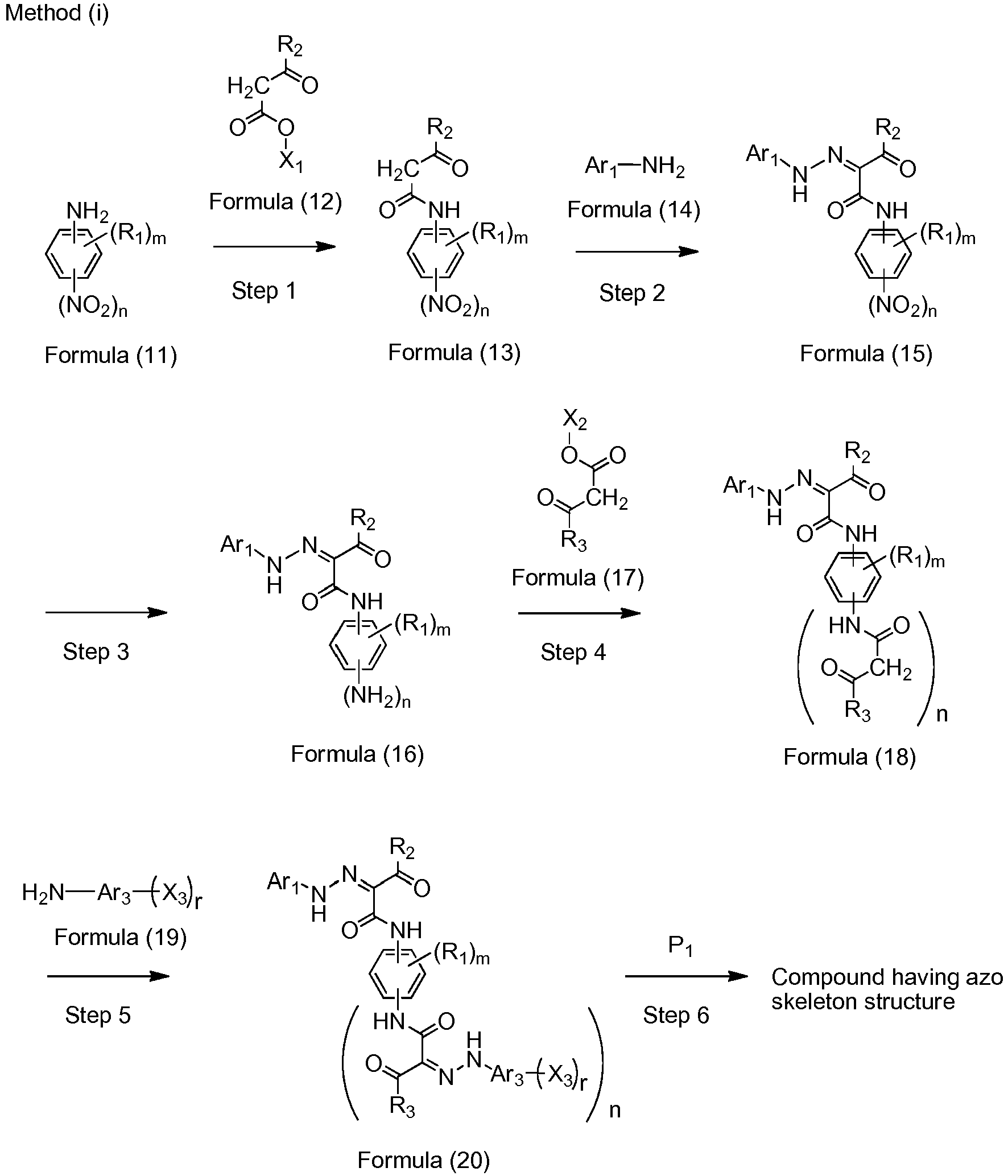
- R1 to R3, Ar1, m, and n in formulae (11) to (20) are respectively the same as R1 to R3, Ar1, m, and n in formula (1). Ar3 in formulae (19) and (20) represents an arylene group. X1 in formula (12) and X2 in formula (17) each represents a leaving group. P1 represents a polymer portion having the monomer unit represented by formula (2) above. X3 in formulae (19) and (20) represents a substituent that reacts with P1 to form the divalent linking group L, and r represents an integer of 1 or 2.
- In the scheme exemplified above, the compound having an azo skeleton structure can be synthesized by step 1 of amidating a nitroaniline derivative represented by formula (11) and an acetoacetic acid analogue represented by formula (12) to synthesize an intermediate product (13), which is an acylacetanilide analogue; step 2 of conducting diazo coupling of the intermediate product (13) with an aniline derivative (14) to synthesize an azo compound (15); step 3 of reducing a nitro group in the azo compound (15) to synthesize an intermediate product (16), which is an aniline analogue; step 4 of amidating the intermediate product (16) and an acetoacetic acid analogue represented by formula (17) to synthesize an intermediate product (18), which is an acylacetanilide analogue; step 5 of conducting diazo coupling of the intermediate product (18) with an aniline derivative (19) to synthesize an azo compound (20); and
step 6 of binding the azo skeleton to the polymer portion P1 by a condensation reaction or the like. - First, step 1 will be described. In step 1, a known method can be employed (for example, Datta E. Ponde, and four other authors, "The Journal of Organic Chemistry", (US), American Chemical Society, 1998, Vol. 63, No. 4, pp. 1058-1063). In the case where R2 in formula (13) is a methyl group, the synthesis can be conducted by a method using diketene instead of using the raw material (12) (for example, Kiran Kumar Solingapuram Sai, and two other authors, "The Journal of Organic Chemistry", (US), American Chemical Society, 2007, Vol. 72, No. 25, pp. 9761-9764).
- The nitroaniline derivative (11) and the acetoacetic acid analogue (12) are each commercially available as various types of compounds, and easily available. Alternatively, these can be easily synthesized by known methods.
- Although this step may be performed without using a solvent, the step may be performed in the presence of a solvent in order to prevent a rapid progress of the reaction. The solvent is not particularly limited as long as the solvent does not inhibit the reaction. Examples thereof include alcohols such as methanol, ethanol, and propanol; esters such as methyl acetate, ethyl acetate, and propyl acetate; ethers such as diethyl ether, tetrahydrofuran, and dioxane; hydrocarbons such as benzene, toluene, xylene, hexane, and heptane; halogenated hydrocarbons such as dichloromethane, dichloroethane, and chloroform; amides such as N,N-dimethylformamide, N-methylpyrrolidone, and N,N-dimethylimidazolidinone; nitriles such as acetonitrile and propionitrile; acids such as formic acid, acetic acid, and propionic acid; and water. These solvents may be used as a mixture of two or more solvents, and the mixing ratio when the solvents are mixed can be appropriately determined in accordance with the solubility of the compounds used. The amount of solvent used can be appropriately determined. However, the amount of solvent is preferably in the range of 1.0 to 20 times the mass of the compound represented by formula (11) in view of the reaction rate.
- This step is usually performed in the temperature range of 0°C to 250°C, and usually completed within 24 hours.
- Next, step 2 will be described. In step 2, a known method can be employed. Specifically, for example, the following method may be employed. First, the aniline derivative (14) is allowed to react with a diazotizing agent such as sodium nitrite or nitrosylsulfuric acid in a methanol solvent in the presence of an inorganic acid such as hydrochloric acid or sulfuric acid to synthesize a corresponding diazonium salt. The diazonium salt is further coupled with the intermediate product (13) to synthesize the azo compound (15).
- The aniline derivative (14) is commercially available as various types of compounds, and easily available. Alternatively, the aniline derivative (14) can be easily synthesized by a known method.
- Although this step may be performed without using a solvent, the step may be performed in the presence of a solvent in order to prevent a rapid progress of the reaction. The solvent is not particularly limited as long as the solvent does not inhibit the reaction. Examples thereof include alcohols such as methanol, ethanol, and propanol; esters such as methyl acetate, ethyl acetate, and propyl acetate; ethers such as diethyl ether, tetrahydrofuran, and dioxane; hydrocarbons such as benzene, toluene, xylene, hexane, and heptane; halogenated hydrocarbons such as dichloromethane, dichloroethane, and chloroform; amides such as N,N-dimethylformamide, N-methylpyrrolidone, and N,N-dimethylimidazolidinone; nitriles such as acetonitrile and propionitrile; acids such as formic acid, acetic acid, and propionic acid; and water. These solvents may be used as a mixture of two or more solvents, and the mixing ratio when the solvents are mixed can be appropriately determined in accordance with the solubility of the compounds used. The amount of solvent used can be appropriately determined. However, the amount of solvent is preferably in the range of 1.0 to 20 times the mass of the compound represented by formula (14) in view of the reaction rate.
- This step is usually performed in the temperature range of -50°C to 100°C, and usually completed within 24 hours.
- Next, step 3 will be described. In step 3, a known method can be employed (as a method of using a metal compound or the like, for example, a method described in "Jikken Kagaku Kouza (Experimental Chemistry Course)", published by Maruzen Co., Ltd., First edition, Vol. 17-2, pp. 162-179 can be employed, and as a method of catalytic hydrogenation, for example, a method described in "Jikken Kagaku Kouza (Experimental Chemistry Course)", published by Maruzen Co., Ltd., First edition, Vol. 15, pp. 390-448, or International Publication No.
2009/060886 pamphlet can be employed). - Although this step may be performed without using a solvent, the step may be performed in the presence of a solvent in order to prevent a rapid progress of the reaction. The solvent is not particularly limited as long as the solvent does not inhibit the reaction. Examples thereof include alcohols such as methanol, ethanol, and propanol; esters such as methyl acetate, ethyl acetate, and propyl acetate; ethers such as diethyl ether, tetrahydrofuran, and dioxane; hydrocarbons such as benzene, toluene, xylene, hexane, and heptane; and amides such as N,N-dimethylformamide, N-methylpyrrolidone, and N,N-dimethylimidazolidinone. These solvents may be used as a mixture of two or more solvents, and the mixing ratio when the solvents are mixed can be appropriately determined. The amount of solvent used can be appropriately determined in accordance with the solubility of the compound used. However, the amount of solvent is preferably in the range of 1.0 to 20 times the mass of the compound represented by formula (15) in view of the reaction rate.
- This step is usually performed in the temperature range of 0°C to 250°C, and usually completed within 24 hours.
- Next, step 4 will be described. In step 4, the intermediate product (18), which is an acylacetanilide analogue, can be synthesized by a method similar to the method used in step 1 described above.
- Next, step 5 will be described. In step 5, the azo compound (20) can be synthesized by a method similar to the method used in step 2 described above.
- The aniline derivative (19) is commercially available as various types of compounds, and easily available. Alternatively, the aniline derivative (19) can be easily synthesized by a known method.
- Next, a method for synthesizing the polymer portion P1 used in
step 6 will be described. In the synthesis of the polymer portion P1, a known polymerization method can be employed (for example, Krzysztof Matyjaszewski, and one other author, "Chemical Reviews", (US), American Chemical Society, 2001, Vol. 101, pp. 2921-2990) . - Specific examples of the polymerization method include radical polymerization, cationic polymerization, and anionic polymerization. In view of the ease of production, radical polymerization may be used.
- Radical polymerization can be conducted by the use of a radical polymerization initiator; irradiation with radiation, a laser beam, or the like; the use of a photopolymerization initiator in combination with irradiation with light; heating; or the like.
- The radical polymerization initiator is not particularly limited as long as it generates a radical and can initiate a polymerization reaction, and is selected from compounds that generate a radical by an action of heat, light, radiation, a redox reaction, or the like. Examples of the radical polymerization initiator include azo compounds, organic peroxides, inorganic peroxides, organometallic compounds, and photopolymerization initiators. More specifically, examples thereof include azo polymerization initiators such as 2,2'-azobis(isobutyronitrile), 2,2'-azobis(2-methylbutyronitrile), 2,2'-azobis(4-methoxy-2,4-dimethylvaleronitrile), and 2,2'-azobis(2,4-dimethylvaleronitrile); organic peroxide polymerization initiators such as benzoyl peroxide, di-tert-butyl peroxide, tert-butylperoxyisopropyl carbonate, tert-hexyl peroxybenzoate, and tert-butyl peroxybenzoate; inorganic peroxide polymerization initiators such as potassium persulfate and ammonium persulfate; and redox initiators such as hydrogen peroxide-ferrous compound, benzoyl peroxide (BPO)-dimethylaniline, and cerium (IV) salt-alcohol. Examples of the photopolymerization initiators include benzophenones, benzoin ethers, acetophenones, and thioxanthones. These radical polymerization initiators may be used in combination of two or more initiators.
- The amount of polymerization initiator used is preferably controlled in the range of 0.1 to 20 parts by mass relative to 100 parts by mass of a monomer so as to provide a copolymer having a target molecular weight distribution.
- The polymer portion represented by P1 can be produced by any one of methods of solution polymerization, suspension polymerization, emulsion polymerization, dispersion polymerization, precipitation polymerization, bulk polymerization, and the like, and the method is not particularly limited. However, solution polymerization in a solvent that can dissolve components used in the production is suitably used. Specific examples of the solvent that can be used include polar organic solvents such as alcohols, e.g., methanol, ethanol, and 2-propanol, ketones, e.g., acetone and methyl ethyl ketone, ethers, e.g., tetrahydrofuran and diethyl ether, ethylene glycol monoalkyl ethers and acetates thereof, propylene glycol monoalkyl ethers and acetates thereof, and diethylene glycol monoalkyl ethers; and in some cases, nonpolar solvents such as toluene and xylene. These solvents may be used alone or as a mixture thereof. Among these, solvents having a boiling point in the range of 100°C to 180°C are preferably used alone or as a mixture thereof.
- A suitable polymerization temperature range varies depending on the type of initiator used, and is not particularly limited. Specifically, the polymerization is usually performed in the range of -30°C to 200°C, and preferably in the range of 40°C to 180°C.
- The molecular-weight distribution and the molecular structure of the polymer portion represented by P1 can be controlled by known methods. Specifically, the polymer portion represented by P1 having a controlled molecular-weight distribution and a controlled molecular structure can be produced by, for example, a method in which an addition-cleavage-type chain transfer agent is used (refer to, Japanese Patent Nos.
4254292 3721617 2000-515181 99/05099 - Next,
step 6 will be described. Instep 6, a known method can be employed. Specifically, for example, by using a polymer portion P1 having a carboxyl group and an azo compound (20) in which X3 is a substituent having a hydroxyl group, it is possible to synthesize a compound having an azo skeleton structure in which the linking group L has a carboxylic acid ester bond. By using a polymer portion P1 having a hydroxyl group and an azo compound (20) in which X3 is a substituent having a sulfonic acid group, it is possible to synthesize a compound having an azo skeleton structure in which the linking group L has a sulfonic acid ester bond. Furthermore, by using a polymer portion P1 having a carboxyl group and an azo compound (20) in which X3 is a substituent having an amino group, it is possible to synthesize a compound having an azo skeleton structure in which the linking group L has a carboxylic acid amide bond. Specific examples of the method include a method in which a dehydration-condensation agent such as 1-ethyl-3-(3-dimethylaminopropyl)carbodiimide hydrochloride is used (for example, Melvin S. Newman, and one other author, "The Journal of Organic Chemistry", (US), American Chemical Society, 1961, Vol. 26, No. 7, pp. 2525-2528) and a Schotten-Baumann method (for example, Norman O. V. Sonntag, "Chemical Reviews", (US), American Chemical Society, 1953, Vol. 52, No. 2, pp. 237-416). - Although this step may be performed without using a solvent, the step may be performed in the presence of a solvent in order to prevent a rapid progress of the reaction. The solvent is not particularly limited as long as the solvent does not inhibit the reaction. Examples thereof include ethers such as diethyl ether, tetrahydrofuran, and dioxane; hydrocarbons such as benzene, toluene, xylene, hexane, and heptane; halogenated hydrocarbons such as dichloromethane, dichloroethane, and chloroform; amides such as N,N-dimethylformamide, N-methylpyrrolidone, and N,N-dimethylimidazolidinone; and nitriles such as acetonitrile and propionitrile. These solvents may be used as a mixture of two or more solvents, and the mixing ratio when the solvents are mixed can be appropriately determined in accordance with the solubility of the compounds used. The amount of solvent used can be appropriately determined. However, the amount of solvent is preferably in the range of 1.0 to 20 times the mass of the compound represented by formula (20) in view of the reaction rate.
- This step is usually performed in the temperature range of 0°C to 250°C, and usually completed within 24 hours.
- Next, method (ii) will now be described in detail with reference to an example of the scheme shown below. In method (ii), an azo compound having a polymerizable functional group is synthesized in advance and the azo compound is copolymerized with a polymerizable monomer that forms a monomer unit represented by formula (2) above to synthesize the compound having the azo skeleton structure.

- R1 to R3, Ar1, Ar3, X3, m, n, and r in formula (20) are respectively the same as R1 to R3, Ar1, Ar3, X3, m, n, and r in formula (20) in the scheme of method (i) described above. In formula (21), R31 represents a hydrogen atom or an alkyl group and X4 represents a substituent that reacts with X3 in formula (20) to form X5 in formula (22). R1 to R3, R31, Ar1, Ar3, m, n, and r in formula (22) are the same as those in formulae (20) and (21), and X5 represents the divalent linking group L formed by a reaction between X3 in formula (20) and X4 in formula (21).
- In the scheme exemplified above, the compound having an azo skeleton structure is synthesized by step 7 of allowing an azo compound (20) to react with a vinyl group-containing compound represented by formula (21) to synthesize an azo compound (22) having a polymerizable functional group; and step 8 of copolymerizing the azo compound (22) having a polymerizable functional group with a polymerizable monomer that forms a monomer unit represented by formula (2) above.
- First, step 7 will be described. In step 7, the azo compound (22) having a polymerizable functional group can be synthesized by a method similar to the method used in
step 6 of method (i). - The vinyl group-containing compound (21) is commercially available as various types of compounds, and easily available. Alternatively, the vinyl group-containing compound (21) can be easily synthesized by a known method.
- Next, step 8 will be described. In step 8, the azo compound represented by formula (22) is copolymerized with the polymerizable monomer that forms a monomer unit represented by formula (2) above using the method for synthesizing the polymer portion P1 of method (i). Thus, the compound having an azo skeleton structure can be synthesized.
- Next, method (iii) will now be described in detail with reference to an example of the scheme shown below. In method (iii), an azo compound having a halogen atom is synthesized in advance, and a polymerizable monomer that forms the monomer unit represented by formula (2) above is polymerized using the azo compound as a polymerization initiator to synthesize the compound having an azo skeleton structure.

- R1 to R3, Ar1, Ar3, X3, m, n, and r in formula (20) are respectively the same as R1 to R3, Ar1, Ar3, X3, m, n, and r in formula (20) in the scheme of method (i) described above. In formula (23), X6 represents a substituent that reacts with X3 in formula (20) to form X7 in formula (24) , and A represents a chlorine atom, a bromine atom, or an iodine atom. R1 to R3, Ar1, Ar3, m, n, and r in formula (24) are the same as those in formula (20), and X7 represents the divalent linking group L formed by a reaction between X3 in formula (20) and X6 in formula (23).
- In the scheme exemplified above, the compound having an azo skeleton structure is synthesized by step 9 of allowing an azo compound (20) to react with a halogen atom-containing compound represented by formula (23) to synthesize an azo compound (24) having a halogen atom; and step 10 of polymerizing a polymerizable monomer that forms the monomer unit represented by formula (2) using, as a polymerization initiator, the azo compound (24) having a halogen atom.
- First, step 9 will be described. In step 9, the azo compound (24) having a halogen atom can be synthesized by a method similar to the method used in
step 6 of method (i). Specifically, for example, by using a halogen atom-containing compound (23) having a carboxyl group and an azo compound (20) in which X3 is a substituent having a hydroxyl group, it is possible to synthesize a halogen atom-containing azo skeleton structure (i.e., azo compound) (24) in which the linking group L has a structure having a carboxylic acid ester bond. By using a halogen atom-containing compound (23) having a hydroxyl group and an azo compound (20) in which X3 is a substituent having a sulfonic acid group, it is possible to synthesize a halogen atom-containing azo skeleton structure (24) in which the linking group L has a structure having a sulfonic acid ester bond. Furthermore, by using a halogen atom-containing compound (23) having a carboxyl group and an azo compound (20) in which X3 is a substituent having an amino group, it is possible to synthesize a halogen atom-containing azo skeleton structure (24) in which the linking group L has a structure having a carboxylic acid amide bond. - Examples of the halogen atom-containing compound (23) having a carboxyl group include chloroacetic acid, α-chloropropionic acid, α-chlorobutyric acid, α-chloroisobutyric acid, α-chlorovaleric acid, α-chloroisovaleric acid, α-chlorocaproic acid, α-chlorophenylacetic acid, α-chlorodiphenylacetic acid, α-chloro-α-phenylpropionic acid, α-chloro-β-phenylpropionic acid, bromoacetic acid, α-bromopropionic acid, α-bromobutyric acid, α-bromoisobutyric acid, α-bromovaleric acid, α-bromoisovaleric acid, α-bromocaproic acid, α-bromophenylacetic acid, α-bromodiphenylacetic acid, α-bromo-α-phenylpropionic acid, α-bromo-β-phenylpropionic acid, iodoacetic acid, α-iodopropionic acid, α-iodobutyric acid, α-iodoisobutyric acid, α-iodovaleric acid, α-iodoisovaleric acid, α-iodocaproic acid, α-iodophenylacetic acid, α-iododiphenylacetic acid, α-iodo-α-phenylpropionic acid, α-iodo-β-phenylpropionic acid, β-chlorobutyric acid, α-bromoisobutyric acid, iodomethyl methyl benzoic acid, and 1-chloroethyl benzoic acid. Halides and anhydrides of these acids may also be used in the present invention.
- Examples of the halogen atom-containing compound (23) having a hydroxyl group include 1-chloroethanol, 1-bromoethanol, 1-iodoethanol, 1-chloropropanol, 2-bromopropanol, 2-chloro-2-propanol, 2-bromo-2-methylpropanol, 2-phenyl-l-bromoethanol, and 2-phenyl-2-iodoethanol.
- Next, step 10 will be described. In step 10, a polymerizable monomer that forms the monomer unit represented by formula (2) is polymerized by the ATRP method in method (i) in the presence of a metal catalyst and a ligand using the halogen atom-containing azo skeleton structure (24) as a polymerization initiator. Thus, the compound having an azo skeleton structure can be synthesized.
- The metal catalyst used in the ATRP method is not particularly limited, but may be at least one transition metal selected from groups 7 to 11 in the periodic table. In redox catalysts (redox conjugate complexes) in which a low-valent complex and a high-valent complex are reversibly changed, specific examples of a low-valent metal include metals selected from the group consisting of Cu+, Ni0, Ni+, Ni2+ Pd0, Pd+, Pt0, Pt+, Pt2+, Rh+, Rh2+, Rh3+, Co+, Co2+, Ir0, Ir+, Ir2+, Ir3+, Fe2+, Ru2+, Ru3+, Ru4+, Ru5+, Os2+, Os3+, Re2+, Re3+, Re4+, Re6+, Mn2+, and Mn3+. Among these, Cu+, Ru2+, Fe2+, and Ni2+ are preferable, and Cu+ is particularly preferable from the standpoint that the material can be easily available. As a monovalent copper compound, for example, cuprous chloride, cuprous bromide, cuprous iodide, and cuprous cyanide can be suitably used.
- Organic ligands are usually used as the ligand in the ATRP method. Specific examples thereof include 2,2'-bipyridyl and derivatives thereof, 1,10-phenanthroline and derivatives thereof, N,N,N',N'-tetramethylethylenediamine, N,N,N',N",N"-pentamethyldiethylenetriamine, tris[2-(dimethylamino)ethyl]amine, triphenylphosphine, and tributylphosphine. In view of the ease of production, aliphatic polyamines such as N,N,N',N",N"-pentamethyldiethylenetriamine are particularly suitable.
- Next, method (iv) will now be described in detail with reference to an example of the scheme shown below. In method (iv), a polymer portion having at least one monomer unit among monomer units represented by formula (2) above, the monomer units being bonded to an aryl group having an amino group, and an intermediate product, which is an acylacetanilide analogue, are respectively synthesized in advance, and these compounds are subjected to diazo coupling to synthesize a compound having an azo skeleton structure.

- P1 is the same as P1 in the scheme of method (i). R1 to R3, Ar1, m, and n in formula (18) are respectively the same as R1 to R3, Ar1, m, and n in formula (18) in the scheme of method (i) described above. Ar4 in formulae (25) to (27) represents an arylene group. X8 in formula (25) represents a substituent that reacts with P1 to form X9 in formula (26), and r represents 1 or 2. X9 in formulae (26) and (27) represents the divalent linking group L formed by a reaction between X8 in formula (25) and P1.
- In the scheme exemplified above, the compound having an azo skeleton structure is synthesized by step 11 of introducing a nitro group-containing arylene group (25) into a polymer portion P1 to synthesize a polymer portion (26) having a nitro group-containing arylene group; step 12 of reducing the polymer portion (26) having a nitro group-containing arylene group to synthesize a polymer portion (27) having an amino group-containing arylene group; and step 13 of conducting diazo coupling of the polymer portion (27) having an amino group-containing arylene group with an intermediate product (18), which is an acylacetanilide analogue.
- First, step 11 will be described. In step 11, the polymer portion (26) having a nitro group-containing arylene group can be synthesized by a method similar to the method used in
step 6 of method (i). Specifically, for example, by allowing a polymer portion P1 having a carboxyl group to react with a nitro group-containing arylene group (25) in which X8 is a substituent having a hydroxyl group, it is possible to synthesize a polymer portion (26) which has a nitro group-containing arylene group and in which the linking group has a carboxylic acid ester bond. By allowing a polymer portion P1 having a hydroxyl group to react with a nitro group-containing arylene group (25) in which X8 is a substituent having a sulfonic acid group, it is possible to synthesize a polymer portion (26) which has a nitro group-containing arylene group and in which the linking group has a sulfonic acid ester bond. Furthermore, by allowing a polymer portion P1 having a carboxyl group to react with a nitro group-containing arylene group (25) in which X8 is a substituent having an amino group, it is possible to synthesize a polymer portion (26) which has a nitro group-containing arylene group and in which the linking group has a carboxylic acid amide bond. - The compound represented by formula (25) is commercially available as various types of compounds, and easily available. Alternatively, the compound represented by formula (25) can be easily synthesized by a known method.
- Next, step 12 will be described. In step 12, the polymer portion (27) having an amino group-containing arylene group can be synthesized by a method similar to the method used in step 3 of method (i).
- Next, step 13 will be described. In step 13, the compound having an azo skeleton structure can be synthesized by a method similar to the method used in step 2 of method (i).
- The compounds each having an azo skeleton structure, the compounds being obtained in the steps of the synthesis methods exemplified above, and the compounds represented by formulae (13), (15), (16), (18), (20), (22), (24), (26), and (27) can be purified by common methods for isolation and purification of organic compounds. Examples of the isolation and purification methods include a recrystallization method and a reprecipitation method that use an organic solvent, and column chromatography using silica gel or the like. These compounds can be obtained in high purities by purifying the compounds using these methods alone or in combination of two or more methods.
- Identification and measurement of the purity of the compounds represented by formulae (13), (15), (16), (18), (20), (22), and (24), the compounds being obtained in the steps of the synthesis methods exemplified above, are conducted by nuclear magnetic resonance (NMR) spectrometry (ECA-400, manufactured by JEOL Ltd.), electrospray ionization time-of flight mass spectroscopy (ESI-TOF MS) (LC/MSD TOF, manufactured by Agilent Technologies, Inc.), and high-performance liquid chromatography (HPLC) (LC-20A, manufactured by Shimadzu Corporation).
- Identification and measurement of the molecular weight of the compounds each having an azo skeleton structure, the compounds being obtained by the synthesis methods exemplified above, and the compounds represented by formulae (26) and (27) are conducted by size exclusion chromatography (SEC) (HLC8220GPC, manufactured by Tosoh Corporation), nuclear magnetic resonance spectrometry (ECA-400, manufactured by JEOL Ltd.), and a measurement of the acid value according to JIS K-0070 (automatic titrator COM-2500, manufactured by Hiranuma Sangyo Corporation).
- Next, a binder resin in a toner of the present invention will be described.
- Examples of the binder resin in a toner of the present invention include styrene-methacrylic acid copolymers, styrene-acrylic acid copolymers, polyester resins, epoxy resins, and styrene-butadiene copolymers, all of which are commonly used therefor. In a method of obtaining toner particles directly by a polymerization method, a monomer for forming the toner particles is used. Specifically, monomers that are suitably used are styrene monomers such as styrene, α-methylstyrene, α-ethylstyrene, o-methylstyrene, m-methylstyrene, p-methylstyrene, o-ethylstyrene, m-ethylstyrene, and p-ethylstyrene; methacrylate monomers such as methyl methacrylate, ethyl methacrylate, propyl methacrylate, butyl methacrylate, octyl methacrylate, dodecyl methacrylate, stearyl methacrylate, behenyl methacrylate, 2-ethylhexyl methacrylate, dimethylaminoethyl methacrylate, diethylaminoethyl methacrylate, methacrylonitrile, and methacrylamide; acrylate monomers such as methyl acrylate, ethyl acrylate, propyl acrylate, butyl acrylate, octyl acrylate, dodecyl acrylate, stearyl acrylate, behenyl acrylate, 2-ethylhexyl acrylate, dimethylaminoethyl acrylate, diethylaminoethyl acrylate, acrylonitrile, and acrylamide; and olefin monomers such as butadiene, isoprene, and cyclohexene. These monomers are used alone, or suitably mixed and used so that the theoretical glass transition temperature (Tg) is in the range of 40°C to 75°C (refer to "Polymer Handbook" edited by J. Brandrup and E. H. Immergut, (US), Third edition, John Wiley & Sons, 1989, pp. 209-277). When the theoretical glass transition temperature is lower than 40°C, problems tend to occur in terms of storage stability and durability of the toner. In contrast, when the theoretical glass transition temperature exceeds 75°C, transparency decreases in the formation of full-color images using the toner.
- Regarding the binder resin in the toner of the present invention, the distribution of additives such as a colorant, a charge control agent, and a wax in the toner can be controlled by using a polar resin such as a polyester resin or a polycarbonate resin in combination with a nonpolar resin such as polystyrene. For example, in the case where toner particles are produced directly by a suspension polymerization method or the like, the polar resin is added during the polymerization reaction ranging from a dispersion step to a polymerization step. The polar resin is added in accordance with the balance between the polarity of the monomer unit composition to be formed into toner particles and the polarity of an aqueous medium. As a result, the polar resin concentration can be controlled so as to continuously vary from a surface of a toner particle to the center thereof, for example, to form a thin layer of the polar resin on the surface of the toner particle. In this case, by using a polar resin that interacts with the compound having an azo skeleton structure, a colorant, and a charge control agent, the presence state of the colorant in the toner particles can be made to be a desirable form.
- A phthalocyanine pigment represented by formula (8) below can be suitably used as the colorant in the toner of the present invention.

- In formula (8), R32 to R35 each independently represent hydrogen, an alkyl group, or a sulfonic acid group or a salt thereof, and M represents a metal or a hydrogen atom.
- Examples of the phthalocyanine pigment represented by formula (8) include C. I. Pigment Blue 15, C. I. Pigment Blue 15:1, C. I. Pigment Blue 15:2, C. I. Pigment Blue 15:3, C. I. Pigment Blue 15:4, C. I. Pigment Blue 15:5, C. I. Pigment Blue 15:6, C. I. Pigment Blue 16, C. I. Pigment Blue 17, C. I. Pigment Blue 17:1, C. I. Pigment Blue 68, C. I. Pigment Blue 70, C. I. Pigment Blue 75, C. I. Pigment Blue 76, and C. I. Pigment Blue 79. In particular, C. I. Pigment Blue 15, C. I. Pigment Blue 15:1, C. I. Pigment Blue 15:2, C. I. Pigment Blue 15:3, C. I. Pigment Blue 15:4, C. I. Pigment Blue 15:5, and C. I. Pigment Blue 15:6, all of which are represented by formula (28) below, are suitable because the dispersion effect achieved by the compound having an azo skeleton structure is high.

- The above phthalocyanine pigments may be used alone or as a mixture of two or more pigments. In the case where two or more phthalocyanine pigments are mixed, it is sufficient that at least one type of phthalocyanine pigment is contained.
- These may be crude pigments or prepared pigment compositions as long as the effect achieved by the compound having an azo skeleton structure is not significantly impaired.
- A mass composition ratio of the phthalocyanine pigment to the compound having an azo skeleton structure in the toner of the present invention is preferably in the range of 100:0.1 to 100:100.
- The above phthalocyanine pigment is used as a colorant in the toner of the present invention. However, for the purpose of adjusting the color tone, other colorants may be used in combination as long as the dispersibility of the phthalocyanine pigment is not impaired.
- Existing cyan colorants can be used in combination. Examples of the cyan colorants that can be used in combination include C. I. Pigment Blue 1, C. I. Pigment Blue 1:2, C. I. Pigment Blue 1:3, C. I. Pigment Blue 2, C. I. Pigment Blue 2:1, C. I. Pigment Blue 2:2, C. I. Pigment Blue 3, C. I. Pigment Blue 4, C. I. Pigment Blue 5, C. I.
Pigment Blue 6, C. I. Pigment Blue 7, C. I. Pigment Blue 8, C. I. Pigment Blue 9, C. I. Pigment Blue 9:1, C. I. Pigment Blue 10, C. I. Pigment Blue 10:1, C. I. Pigment Blue 11, C. I. Pigment Blue 12, C. I. Pigment Blue 13, C. I. Pigment Blue 14, C. I. Pigment Blue 18, C. I. Pigment Blue 19, C. I.Pigment Blue 20, C. I. Pigment Blue 21, C. I. Pigment Blue 22, C. I. Pigment Blue 23, C. I. Pigment Blue 24, C. I. Pigment Blue 24:1, C. I. Pigment Blue 25, C. I. Pigment Blue 26, C. I. Pigment Blue 27, C. I. Pigment Blue 28, C. I. Pigment Blue 29, C. I. Pigment Blue 30, C. I. Pigment Blue 31, C. I. Pigment Blue 32, C. I. Pigment Blue 33, C. I. Pigment Blue 34, C. I. Pigment Blue 35, C. I. Pigment Blue 36, C. I. Pigment Blue 36:1, C. I. Pigment Blue 52, C. I. Pigment Blue 53, C. I. Pigment Blue 56, C. I. Pigment Blue 56:1, C. I. Pigment Blue 57, C. I. Pigment Blue 58, C. I. Pigment Blue 59, C. I. Pigment Blue 60, C. I. Pigment Blue 61, C. I. Pigment Blue 61:1, C. I. Pigment Blue 62, C. I. Pigment Blue 63, C. I. Pigment Blue 64, C. I. Pigment Blue 65, C. I. Pigment Blue 66, C. I. Pigment Blue 67, C. I. Pigment Blue 69, C. I. Pigment Blue 71, C. I. Pigment Blue 72, C. I. Pigment Blue 73, C. I. Pigment Blue 74, C. I. Pigment Blue 77, C. I. Pigment Blue 78, C. I. Pigment Blue 80, C. I. Pigment Blue 81, C. I. Pigment Blue 82, C. I. Pigment Blue 83, and C. I. Pigment Blue 84. - In order to adjust the color tone, colorants other than cyan colorants may be used. For example, the color purity of cyan can be improved by mixing C. I. Pigment Green 7 with C. I. Pigment Blue 15:3.
- The amounts of colorants used vary depending on the types of the colorants. However, the total amount of colorants is 0.1 to 60 parts by mass, and preferably 0.5 to 50 parts by mass relative to 100 parts by mass of the binder resin.
- Furthermore, in the present invention, a cross-linking agent may be used in the synthesis of the binder resin in order to increase the mechanical strength of toner particles and to control the molecular weight of molecules that constitute the toner particles.
- Regarding the cross-linking agent used in the toner particles of the present invention, examples of a bifunctional cross-linking agent include divinylbenzene, bis(4-acryloxypolyethoxyphenyl)propane, ethylene glycol diacrylate, 1,3-butylene glycol diacrylate, 1,4-butanediol diacrylate, 1,5-pentanediol diacrylate, 1,6-hexanediol diacrylate, neopentyl glycol diacrylate, diethylene glycol diacrylate, triethylene glycol diacrylate, tetraethylene glycol diacrylate, diacrylates of polyethylene glycol #200, #400, or #600, dipropylene glycol diacrylate, polypropylene glycol diacrylate, polyester-type diacrylates, and compounds having a structure in which any of these diacrylates is replaced with a corresponding dimethacrylate.
- Examples of a polyfunctional cross-linking agent include pentaerythritol triacrylate, trimethylolethane triacrylate, trimethylolpropane triacrylate, tetramethylolmethane tetraacrylate, oligoester acrylates and methacrylates thereof, 2,2-bis(4-methacryloxyphenyl)propane, diallyl phthalate, triallyl cyanurate, triallyl isocyanurate, and triallyl trimellitate.
- The cross-linking agent is preferably used in an amount in the range of 0.05 to 10 parts by mass, and more preferably in the range of 0.1 to 5 parts by mass relative to 100 parts by mass of the monomer from the standpoint of a fixing property and an offset resistance property of the toner.
- Furthermore, in the present invention, a wax component may be used in the synthesis of the binder resin in order to prevent toner particles from adhering to a fixing member.
- Specific examples of the wax component that can be used in the present invention include petroleum wax such as paraffin wax, microcrystalline wax, and petrolatum, and derivatives thereof; montan wax and derivatives thereof; hydrocarbon waxes produced by a Fischer-Tropsch process and derivatives thereof; polyolefin waxes typified by polyethylene, and derivatives thereof; and natural waxes such as carnauba wax and candelilla wax, and derivatives thereof. These derivatives include oxides, block copolymers with vinyl monomers, and graft-modified products. Examples of the wax component further include alcohols such as higher aliphatic alcohols, fatty acids such as stearic acid and palmitic acid, fatty acid amides, fatty acid esters, hardened castor oil and derivatives thereof, vegetable waxes, and animal waxes. These may be used alone or in combination.
- The total content of the wax component is preferably 2.5 to 15.0 parts by mass, and more preferably 3.0 to 10.0 parts by mass relative to 100 parts by mass of the binder resin. When the content of the wax component is less than 2.5 parts by mass, it becomes difficult to perform oil-less fixing. When the content of the wax component exceeds 15.0 parts by mass, the amount of wax component in the toner particles is excessively large. Consequently, a large amount of excess wax component is present on the surfaces of toner particles, which may degrade desired charging properties.
- In the toner according to the present invention, a charge control agent may be mixed as required. Accordingly, the amount of triboelectrification can be optimally controlled in accordance with a developing system.
- As the charge control agent, known charge control agents can be used. In particular, a charge control agent that enables high-speed charging and stably maintains a constant amount of charge is suitably used. Furthermore, in the case where toner particles are produced by a direct polymerization method, a charge control agent that exhibits a low polymerization-inhibiting property and contains substantially no soluble substance in an aqueous dispersion medium is suitably used.
- Examples of the charge control agent that controls a toner to a negatively chargeable one include polymers and copolymers having a sulfonic acid group, a sulfonate group, or a sulfonic acid ester group; salicylic acid derivatives and metal complexes thereof; monoazo metal compounds; acetylacetone metal compounds; aromatic oxycarboxylic acids; aromatic mono- and poly-carboxylic acids and metal salts thereof, anhydrides thereof, and esters thereof; phenol derivatives such as bisphenol; urea derivatives; metal-containing naphthoic acid compounds; boron compounds; quaternary ammonium salts; calixarenes; and resin-based charge control agents. Examples of the charge control agent that controls a toner to a positively chargeable one include nigrosine and nigrosines modified with fatty acid metal salts or the like; guanidine compounds; imidazole compounds; tributylbenzylammonium-1-hydroxy-4-naphthosulfonate; quaternary ammonium salts such as tetrabutylammonium tetrafluoroborate, onium salts, such as phosphonium salts, being analogues thereof, and lake pigments thereof; triphenylmethane dyes and lake pigments thereof (the laking agent includes phosphotungstic acid, phosphomolybdic acid, phosphotungstomolybdic acid, tannic acid, lauric acid, gallic acid, ferricyanides, ferrocyanides, etc.); metal salts of higher fatty acids; diorganotin oxides such as dibutyltin oxide, dioctyltin oxide, and dicyclohexyltin oxide; diorganotin borates such as dibutyltin borate, dioctyltin borate, and dicyclohexyltin borate; and resin-based charge control agents. These may be used alone or in combination of two or more compounds.
- In the toner of the present invention, an inorganic fine powder may be added as a fluidizing agent to the toner particles. Examples of the inorganic fine powder include fine powders of silica, titanium oxide, alumina, and double oxides thereof, and surface-treated powders thereof.
- Examples of a method for producing toner particles constituting the toner of the present invention includes a pulverization method, a suspension polymerization method, a suspension granulation method, and an emulsion polymerization method, all of which are commonly used. From the standpoint of the environmental load on production and the controllability of the particle diameter, the toner particles may be obtained by a method including granulation in an aqueous medium, such as the suspension polymerization method and the suspension granulation method among the above production methods.
- In the method for producing a toner of the present invention, the compound having an azo skeleton structure and the phthalocyanine pigment are mixed in advance to prepare a pigment composition, thereby improving dispersibility of the phthalocyanine pigment.
- The pigment composition can be produced by a wet method or a dry method. Considering that the azo compound having an azo skeleton structure has high affinity for water-insoluble solvents, the pigment composition may be produced by a wet method, by which a homogeneous pigment composition can be easily produced. Specifically, a pigment composition can be obtained, for example, as follows. A compound having an azo skeleton structure and a resin, as required, are dissolved in a dispersion medium, and a pigment powder is gradually added thereto while stirring to be sufficiently mixed with the dispersion medium. Furthermore, a mechanical shearing force is applied to the mixture by a dispersing device, such as a kneader, a roll mill, a ball mill, a paint shaker, a dissolver, an attritor, a sand mill, or a high-speed mill. Thus, the phthalocyanine pigment can be stably finely dispersed in the form of homogeneous fine particles.
- The dispersion medium that can be used in the pigment composition is not particularly limited. However, in order to obtain a high effect of dispersing a pigment by the compound having an azo skeleton structure, the dispersion medium may be a water-insoluble solvent. Specific examples of the water-insoluble solvent include esters such as methyl acetate, ethyl acetate, and propyl acetate; hydrocarbons such as hexane, octane, petroleum ether, cyclohexane, benzene, toluene, and xylene; and halogenated hydrocarbons such as carbon tetrachloride, trichloroethylene, and tetrabromoethane.
- The dispersion medium that can be used in the pigment composition may be a polymerizable monomer. Specific examples thereof include styrene, α-methylstyrene, α-ethylstyrene, o-methylstyrene, m-methylstyrene, p-methylstyrene, p-methoxystyrene, p-phenylstyrene, p-chlorostyrene, 3,4-dichlorostyrene, p-ethylstyrene, 2,4-dimethylstyrene, p-n-butylstyrene, p-tert-butylstyrene, p-n-hexylstyrene, p-n-octylstyrene, p-n-nonylstyrene, p-n-decylstyrene, p-n-dodecylstyrene, ethylene, propylene, butylene, isobutylene, vinyl chloride, vinylidene chloride, vinyl bromide, vinyl iodide, vinyl acetate, vinyl propionate, vinyl benzoate, methacrylic acid, methyl methacrylate, ethyl methacrylate, propyl methacrylate, butyl methacrylate, n-octyl methacrylate, dodecyl methacrylate, 2-ethylhexyl methacrylate, stearyl methacrylate, behenyl methacrylate, phenyl methacrylate, dimethylaminoethyl methacrylate, diethylaminoethyl methacrylate, acrylic acid, methyl acrylate, ethyl acrylate, n-butyl acrylate, isobutyl acrylate, propyl acrylate, n-octyl acrylate, dodecyl acrylate, 2-ethylhexyl acrylate, stearyl acrylate, behenyl acrylate, 2-chloroethyl acrylate, phenyl acrylate, vinyl methyl ether, vinyl ethyl ether, vinyl isobutyl ether, vinyl methyl ketone, vinyl hexyl ketone, methyl isopropenyl ketone, vinylnaphthalene, acrylonitrile, methacrylonitrile, and acrylamide. These dispersion media may be used as a mixture of two or more compounds.
- The resin that can be used in the pigment composition may be a resin that can be used as the binder resin of the toner of the present invention. Specific examples thereof include styrene-methacrylic acid copolymers, styrene-acrylic acid copolymers, polyester resins, epoxy resins, and styrene-butadiene copolymers. Furthermore, the pigment composition can be isolated by a known method such as filtration, decantation, or centrifugal separation. The solvent may be removed by washing.
- In producing the pigment composition, auxiliary agents may be further added to the pigment composition. Specific examples of the auxiliary agent include surfactants, dispersants, fillers, standardizers, resins, waxes, defoaming agents, antistatic agents, dustproof agents, extenders, shading colorants, preservatives, drying retarders, rheology control additives, humectants, antioxidants, UV absorbers, photostabilizers, and combinations thereof. The compound having an azo skeleton structure may be added in advance in the production of a crude pigment.
- Toner particles produced by a suspension polymerization method of the present invention are obtained, for example, as described below. The pigment composition, a polymerizable monomer, a wax component, a polymerization initiator, etc. are mixed to prepare a polymerizable monomer composition. Next, the polymerizable monomer composition is dispersed in an aqueous medium to granulate particles of the polymerizable monomer composition. Subsequently, the polymerizable monomer in the particles of the polymerizable monomer composition is polymerized in an aqueous medium to obtain toner particles.
- The polymerizable monomer composition in the above step may be prepared by dispersing the pigment composition in a first polymerizable monomer to prepare a dispersion liquid, and mixing the dispersion liquid with a second polymerizable monomer. Specifically, the pigment composition is sufficiently dispersed in the first polymerizable monomer, and the resulting dispersion liquid is then mixed with the second polymerizable monomer together with other toner materials, whereby the phthalocyanine pigment can be present in the toner particles in a more satisfactorily dispersed state.
- The polymerization initiator used in the suspension polymerization method may be a known polymerization initiator. Examples thereof include azo compounds, organic peroxides, inorganic peroxides, organometallic compounds, and photopolymerization initiators. More specifically, examples thereof include azo polymerization initiators such as 2,2'-azobis(isobutyronitrile), 2,2'-azobis(2-methylbutyronitrile), 2,2'-azobis(4-methoxy-2,4-dimethylvaleronitrile), 2,2'-azobis(2,4-dimethylvaleronitrile), and dimethyl 2,2'-azobis(isobutyrate); organic peroxide polymerization initiators such as benzoyl peroxide, di-tert-butyl peroxide, tert-butylperoxyisopropyl monocarbonate, tert-hexylperoxybenzoate, and tert-butylperoxybenzoate; inorganic peroxide polymerization initiators such as potassium persulfate and ammonium persulfate; and redox initiators such as hydrogen peroxide-ferrous compound, BPO-dimethylaniline, and cerium (IV) salt-alcohol. Examples of the photopolymerization initiators include acetophenones, benzoin ethers, and ketals. These polymerization initiators may be used alone or in combination of two or more initiators.
- The concentration of the polymerization initiator is preferably in the range of 0.1 to 20 parts by mass, and more preferably in the range of 0.1 to 10 parts by mass relative to 100 parts by mass of the polymerizable monomer. The type of polymerization initiator used somewhat varies depending on the polymerization method. However, the polymerization initiator is selected in consideration of the 10-hour half-life temperature. These polymerization initiators may be used alone or as a mixture.
- The aqueous medium used in the suspension polymerization method may contain a dispersion stabilizer. Known inorganic and organic dispersion stabilizers can be used as the dispersion stabilizer. Examples of the inorganic dispersion stabilizer include calcium phosphate, magnesium phosphate, aluminum phosphate, zinc phosphate, magnesium carbonate, calcium carbonate, calcium hydroxide, magnesium hydroxide, aluminum hydroxide, calcium metasilicate, calcium sulfate, barium sulfate, bentonite, silica, and alumina. Examples of the organic dispersion stabilizer include polyvinyl alcohol, gelatin, methylcellulose, methylhydroxypropylcellulose, ethylcellulose, sodium salt of carboxymethylcellulose, and starch. Surfactants such as nonionic surfactants, anionic surfactants, and cationic surfactants may also be used. Examples of the surfactants include sodium dodecyl sulfate, sodium tetradecyl sulfate, sodium pentadecyl sulfate, sodium octyl sulfate, sodium oleate, sodium laurate, potassium stearate, and calcium oleate.
- Among the dispersion stabilizers, hardly water-soluble inorganic dispersion stabilizers that are soluble in acids may be used in the present invention. In the present invention, when an aqueous dispersion medium is prepared using a hardly water-soluble inorganic dispersion stabilizer, the dispersion stabilizer is preferably used in an amount in the range of 0.2 to 2.0 parts by mass relative to 100 parts by mass of the polymerizable monomer in view of droplet stability of the polymerizable monomer composition in the aqueous medium. In the present invention, the aqueous medium is preferably prepared using 300 to 3,000 parts by mass of water relative to 100 parts by mass of the polymerizable monomer composition.
- In the present invention, when an aqueous medium containing the hardly water-soluble inorganic dispersion stabilizer dispersed therein is prepared, a commercially available dispersion stabilizer may be dispersed without further treatment. However, in order to obtain dispersion stabilizer particles having a small, uniform particle diameter, the hardly water-soluble inorganic dispersion stabilizer may be produced in water while stirring at a high speed. For example, in the case where calcium phosphate is used as a dispersion stabilizer, an aqueous solution of sodium phosphate and an aqueous solution of calcium chloride may be mixed while stirring at a high speed to form fine particles of calcium phosphate. Thus, a suitable dispersion stabilizer can be obtained.
- The toner particles of the present invention can also be suitably produced by a suspension granulation method. The production process of a suspension granulation method does not include a heating step. Therefore, it is possible to suppress compatibilization of a resin and a wax component that occurs when a low-melting point wax is used and to prevent a decrease in the glass transition temperature of the toner, the decrease being due to the compatibilization. Furthermore, in the suspension granulation method, a toner material serving as a binder resin can be selected from a wide range of resins. Thus, a polyester resin, which is generally believed to be advantageous in terms of fixing property, can be easily used as a main component. Therefore, this suspension granulation method is advantageous in producing a toner having a resin composition which cannot be produced by the suspension polymerization method.
- Toner particles produced by the suspension granulation method can be obtained, for example, as described below. First, the pigment composition, a binder resin, a wax component, etc. are mixed in a solvent to prepare a solvent composition. Next, the solvent composition is dispersed in an aqueous medium to granulate particles of the solvent composition. Thus, a toner particle suspension liquid is prepared. The suspension liquid is heated or depressurized to remove the solvent. Thus, toner particles can be obtained.
- The solvent composition in the above step may be prepared by dispersing the pigment composition in a first solvent to prepare a dispersion liquid, and mixing the dispersion liquid with a second solvent. Specifically, the pigment composition is sufficiently dispersed in the first solvent, and the resulting dispersion liquid is then mixed with the second solvent together with other toner materials, whereby the phthalocyanine pigment can be present in the toner particles in a more satisfactorily dispersed state.
- Examples of a solvent that can be used in the suspension granulation method include hydrocarbons such as toluene, xylene, and hexane; halogenated hydrocarbons such as methylene chloride, chloroform, dichloroethane, trichloroethane, and carbon tetrachloride; alcohols such as methanol, ethanol, butanol, and isopropyl alcohol; polyhydric alcohols such as ethylene glycol, propylene glycol, diethylene glycol, and triethylene glycol; cellosolves such as methyl cellosolve and ethyl cellosolve; ketones such as acetone, methyl ethyl ketone, and methyl isobutyl ketone; ethers such as benzyl alcohol ethyl ether, benzyl alcohol isopropyl ether, and tetrahydrofuran; and esters such as methyl acetate, ethyl acetate, and butyl acetate. These may be used alone or as a mixture of two or more solvents. Among these, in order to easily remove a solvent in the toner particle suspension liquid, a solvent which has a low boiling point and which can sufficiently dissolve the binder resin is suitably used.
- The amount of solvent used is preferably in the range of 50 to 5,000 parts by mass, and more preferably in the range of 120 to 1,000 parts by mass relative to 100 parts by mass of the binder resin.
- The aqueous medium used in the suspension granulation method may contain a dispersion stabilizer. Known inorganic and organic dispersion stabilizers can be used as the dispersion stabilizer. Examples of the inorganic dispersion stabilizer include calcium phosphate, calcium carbonate, aluminum hydroxide, calcium sulfate, and barium carbonate. Examples of the organic dispersion stabilizer include water-soluble polymers such as polyvinyl alcohol, methylcellulose, hydroxyethylcellulose, ethylcellulose, sodium salt of carboxymethylcellulose, sodium polyacrylate, and sodium polymethacrylate; and surfactants such as anionic surfactants, e.g., sodium dodecylbenzenesulfonate, sodium octadecyl sulfate, sodium oleate, sodium laurate, and potassium stearate, cationic surfactants, e.g., laurylamine acetate, stearylamine acetate, and lauryltrimethylammonium chloride, and amphoteric surfactants, e.g., lauryldimethylamine oxide, and nonionic surfactants, e.g., polyoxyethylene alkyl ethers, polyoxyethylene alkyl phenyl ethers, and polyoxyethylene alkylamines.
- The amount of dispersion stabilizer used is preferably in the range of 0.01 to 20 parts by mass relative to 100 parts by mass of the binder resin in view of droplet stability of the solvent composition in the aqueous medium.
- In the present invention, the toner preferably has a weight-average particle diameter (hereinafter referred to as "D4") of 3.00 to 15.0 µm, and more preferably 4.00 to 12.0 µm. When the weight-average particle diameter is within the above range, an image with a high definition can be easily obtained while maintaining charging stability.
- A ratio (hereinafter referred to as "D4/D1") of D4 to the number-average particle diameter (hereinafter referred to as "D1") of the toner is 1.35 or less, and preferably 1.30 or less from the standpoint that fogging can be suppressed and the transfer efficiency can be improved while maintaining a high resolution.
- A method for adjusting D4 and D1 of the toner of the present invention varies depending on the method for producing toner particles. For example, in the case of the suspension polymerization method, D4 and D1 can be adjusted by controlling the concentration of the dispersion stabilizer used in the preparation of an aqueous dispersion medium, the stirring speed in the reaction, the stirring time in the reaction, or the like.
- The toner of the present invention may be either a magnetic toner or a nonmagnetic toner. When the toner is used as a magnetic toner, toner particles constituting the toner of the present invention may be mixed with a magnetic material. Examples of the magnetic material include iron oxides such as magnetite, maghemite, and ferrite; iron oxides containing other metal oxides; metals such as Fe, Co, and Ni; alloys of any of these metals with a metal such as Al, Co, Cu, Pb, Mg, Ni, Sn, Zn, Sb, Be, Bi, Cd, Ca, Mn, Se, Ti, W, and V; and mixtures thereof. The magnetic material particularly suitable for the present invention is a fine powder of triiron tetroxide or γ-iron sesquioxide.
- The magnetic material has an average particle diameter of 0.1 to 2 µm (preferably 0.1 to 0.3 µm). As for magnetic properties of the magnetic material at the application of 795.8 kA/m, the magnetic material preferably has a coercive force of 1.6 to 12 kA/m, a saturation magnetization of 5 to 200 Am2/kg (preferably 50 to 100 Am2/kg), and a residual magnetization of 2 to 20 Am2/kg from the standpoint of the developability of the toner.
- The amount of magnetic material added is 10 to 200 parts by mass, and preferably 20 to 150 parts by mass relative to 100 parts by mass of the binder resin.
- The present invention will now be described in more detail by way of Examples and Comparative Examples. However, the present invention is not limited to the Examples as long as the present invention does not exceed the gist thereof. In the description below, "parts" and "%" are on a mass basis unless otherwise specified.
- Measurement methods used in production examples will be described below.
- The molecular weight of a compound having a polymer portion and an azo skeleton structure (also referred to as "azo skeleton unit") in the present invention was calculated by size exclusion chromatography (SEC) in terms of polystyrene. The measurement of the molecular weight by SEC was conducted as described below.
- A sample was added to an eluate described below so that the sample concentration was 1.0% by mass to prepare a solution. The solution was allowed to stand at room temperature for 24 hours and then filtered with a solvent-resistant membrane filter having a pore diameter of 0.2 µm to prepare a sample solution. The sample solution was measured under the following conditions.
Apparatus: High-speed gel permeation chromatography (GPC) apparatus (HLC-8220GPC) (manufactured by Tosoh Corporation) Column: Two series of TSKgel α-M (manufactured by Tosoh Corporation) - Eluate: Tetrahydrofuran (THF)
- Flow rate: 1.0 mL/min
- Oven temperature: 40°C
- Amount of injected sample: 0.025 mL
- For the calculation of the molecular weight of a sample, a molecular-weight calibration curve prepared by using standard polystyrene resins (TSK standard polystyrenes manufactured by Tosoh Corporation: F-850, F-450, F-288, F-128, F-80, F-40, F-20, F-10, F-4, F-2, F-1, A-5000, A-2500, A-1000, and A-500) was used.
- The acid value of a compound having a polymer portion and an azo skeleton structure in the present invention was determined by the following method.
- The basic operation is based on JIS K-0070.
- [1] First, 0.5 to 2.0 g of a sample was precisely weighed. The mass of the sample was defined as W (g).
- [2] The sample was put in a 50-mL beaker, and 25 mL of a mixed liquid of tetrahydrofuran/ethanol (2/1) was added to dissolve the sample.
- [3] A titration was conducted using a 0.1 mol/L KOH ethanol solution with a potentiometric titrator. (For example, an automatic titrator COM-2500 manufactured by Hiranuma Sangyo Corporation can be used.)
- [4] The amount of KOH solution used at this time was defined as S (mL). A blank value was also measured, and the amount of KOH solution used at this time was defined as B (mL).
- [5] The acid value was calculated by the following formula:

where f is a factor of the KOH solution. - The structure of a compound having a polymer portion and an azo skeleton structure of the present invention was determined using the following apparatuses.
1H NMR and 13C NMR
ECA-400, manufactured by JEOL Ltd. (solvent: Deuterochloroform)
FT-NMR AVANCE-600, manufactured by Bruker Corporation
(solvent: Deuterochloroform) - Compounds having the azo skeleton were prepared by the methods described below.
<Production example of compound (44)> - A compound (44) having an azo skeleton was produced in accordance with the scheme below.

- First, 3.11 parts of p-nitroaniline (102) was added to 30 parts of chloroform. The resulting solution was cooled to 10°C or lower with ice, and 1.89 parts of diketene (103) was added thereto. The resulting solution was then stirred at 65°C for two hours. After the completion of the reaction, the reaction product was extracted with chloroform and concentrated. Thus, 4.70 parts of a compound (104) was obtained (yield: 94.0%).
- Next, 40.0 parts of methanol and 5.29 parts of concentrated hydrochloric acid were added to 4.25 parts of 2-aminodimethyl terephthalate (105), and the resulting solution was cooled to 10°C or lower with ice. A solution prepared by dissolving 2.10 parts of sodium nitrite in 6.00 parts of water was added to the solution. The resulting solution was allowed to react at the same temperature for one hour. Next, 0.990 parts of sulfamic acid was added thereto, and the mixture was further stirred for 20 minutes (diazonium salt solution). Next, 4.51 parts of the compound (104) was added to 70.0 parts of methanol, and the resulting solution was cooled to 10°C or lower with ice. The diazonium salt solution was added thereto. Next, a solution prepared by dissolving 5.83 parts of sodium acetate in 7.00 parts of water was added to the resulting solution, and the solution was allowed to react at 10°C or lower for two hours. After the completion of the reaction, 300 parts of water was added thereto, and stirring was conducted for 30 minutes. Subsequently, the resulting solid was separated by filtration and purified by a recrystallization method from N,N-dimethylformamide. Thus, 8.71 parts of a compound (106) was obtained (yield: 96.8%).
- Next, 8.58 parts of the compound (106) and 0.40 parts of palladium-activated carbon (palladium: 5%) were added to 150 parts of N,N-dimethylformamide, and the resulting mixture was stirred at 40°C for three hours in a hydrogen gas atmosphere (reaction pressure: 0.1 to 0.4 MPa). After the completion of the reaction, the solution was separated by filtration and concentrated. Thus, 6.99 parts of a compound (107) was obtained (yield: 87.5%).
- Next, 6.50 parts of the compound (107) was added to 30.0 parts of chloroform, and the resulting solution was cooled to 10°C or lower with ice, and 0.95 parts of diketene (103) was added thereto. The resulting solution was then stirred at 65°C for two hours. After the completion of the reaction, the reaction product was extracted with chloroform and concentrated. Thus, 7.01 parts of an azo compound intermediate product (108) was obtained (yield: 94.2%).
- Next, 15.0 parts of methanol and 1.48 parts of concentrated hydrochloric acid were added to 1.78 parts of 2-(4-aminophenyl)ethanol (109), and the resulting solution was cooled to 10°C or lower with ice. A solution prepared by dissolving 1.08 parts of sodium nitrite in 3.00 parts of water was added to the solution. The resulting solution was allowed to react at the same temperature for one hour. Next, 0.380 parts of sulfamic acid was added thereto, and the mixture was further stirred for 20 minutes (diazonium salt solution). Next, 6.50 parts of the compound (108) and a solution prepared by dissolving 7.18 parts of potassium carbonate in 7.00 parts of water were added to 70.0 parts of N,N-dimethylformamide and the resulting solution was cooled to 10°C or lower with ice. The diazonium salt solution was added thereto, and the resulting solution was allowed to react at 10°C or lower for two hours. After the completion of the reaction, 300 parts of water was added thereto, and stirring was conducted for 30 minutes. Subsequently, the resulting solid was separated by filtration and purified by a recrystallization method from N,N-dimethylformamide. Thus, 7.62 parts of a compound (110) was obtained (yield: 91.0%).
- Next, 2.00 parts of the compound (110) was added to 20.0 parts of chloroform, and the resulting solution was cooled to 10°C or lower with ice. Next, 0.855 parts of 2-bromoisobutyryl bromide (111) was added thereto. Subsequently, the resulting mixture was stirred at 65°C for two hours. After the completion of the reaction, the reaction product was extracted with chloroform and concentrated. Thus, 2.26 parts of an intermediate product (112) was obtained (yield: 92.0%).
- Next, 0.684 parts of the compound (112), 27.3 parts of styrene (113), 0.305 parts of N,N,N',N",N"-pentamethyldiethylenetriamine, and 0.124 parts of copper (I) bromide were added to 10.0 parts of N,N-dimethylformamide. The resulting mixture was then stirred at 100°C for 7.5 hours in a nitrogen atmosphere. After the completion of the reaction, the reaction product was extracted with chloroform and purified by reprecipitation with methanol. Thus, 8.50 parts of a compound (44) was obtained (yield: 85.0%).
- The structure of the resulting compound was confirmed using the apparatuses described above. According to the results, the compound had the structure represented by the above formula. The analysis results are described below.
[Analysis results of compound (44) having azo skeleton] - [1] Results of molecular-weight measurement (GPC): Weight-average molecular weight (Mw) = 15,117, Number-average molecular weight (Mn) = 12,910
- [2] Result of measurement of acid value: 0 mgKOH/g
- [3] Result of 1H NMR (400 MHz, CDCl3 room temperature) (refer to
Fig. 1 ) :- δ [ppm] = 15.65 (s, 1H), 14.77 (s, 1H), 11.40 (s, 1H), 11.41 (s, 1H), 8.62 (s, 1H), 8.15 (d, 1H), 7.79 (d, 1H), 7.74 (d, 2H), 7.64 (d, 2H), 7.37-6.27 (m, 738H), 4.07 (s, 3H), 3.98 (s, 3H), 3.73 (br, 2H), 2.72-2.52 (m, 9H), 2.47-1.05 (m, 458H), 1.01-0.78 (m, 6H)
- A compound (57) having an azo skeleton was produced in accordance with the scheme below.

- First, 100 parts of propylene glycol monomethyl ether was heated while the atmosphere was replaced with nitrogen, and refluxed at a liquid temperature of 120°C or higher. A mixture of 190 parts of styrene (113), 10.0 parts of acrylic acid (114), and 1.00 part of tert-butylperoxybenzoate (organic peroxide polymerization initiator, trade name: Perbutyl Z, manufactured by NOF Corporation) was added dropwise thereto over a period of three hours. After the completion of the dropwise addition, the resulting solution was stirred for three hours. Subsequently, the solution was distilled at normal pressure while the liquid temperature was increased to 170°C. After the liquid temperature reached 170°C, the solution was distilled for one hour at a reduced pressure of 1 hPa to remove the solvent. Thus, a resin solid matter was obtained. The solid matter was dissolved in tetrahydrofuran, and purified by reprecipitation with n-hexane. Thus, 185 parts of a compound (115) was obtained (yield: 92.5%).
- Next, 3.00 parts of the compound (115) and 184 parts of oxalyl chloride were added to 15.0 parts of chloroform, and the resulting solution was stirred at room temperature for five hours in a nitrogen gas atmosphere. A solution prepared by dissolving 0.644 parts of p-phenylenediamine (116) in 10.0 parts of chloroform and 5.00 parts of N,N-dimethylformamide was added to the resulting solution dropwise, and the solution was stirred at room temperature for two hours in a nitrogen gas atmosphere. After the completion of the reaction, the reaction liquid was separated with chloroform/water and concentrated. The reaction product was purified by reprecipitation with methanol. Thus, 2.98 parts of a compound (117) was obtained (yield: 90.3%).
- Next, 10.0 parts of tetrahydrofuran and 0.252 parts of concentrated hydrochloric acid were added to 1.00 part of the compound (117), and the resulting solution was cooled to 0°C or lower with ice. A solution prepared by dissolving 0.0900 parts of sodium nitrite in 0.270 parts of water was added to this solution. The resulting solution was allowed to react at the same temperature for one hour. Next, 0.063 parts of sulfamic acid was added thereto, and the mixture was further stirred for 20 minutes (diazonium salt solution). Next, a solution prepared by dissolving 0.446 parts of potassium carbonate in 1.50 parts of water and 0.354 parts of the compound (108) were added to 15.0 parts of N,N-dimethylformamide, and the resulting solution was cooled to 10°C or lower with ice. The diazonium salt solution was added thereto, and the resulting solution was allowed to react at 10°C or lower for four hours. After the completion of the reaction, 300 parts of water was added thereto, and stirring was conducted for 30 minutes. Subsequently, the resulting solid was separated by filtration, dissolved in chloroform, and then purified by reprecipitation with methanol. Thus, 0.970 parts of a compound (57) was obtained (yield: 97.0%).
- The structure of the resulting compound was confirmed using the apparatuses described above. According to the results, the compound had the structure represented by the above formula. The analysis results are described below.
[Analysis results of compound (57) having azo skeleton] - [1] Results of molecular-weight measurement (GPC): Weight-average molecular weight (Mw) = 32,442, Number-average molecular weight (Mn) = 18,329
- [2] Result of measurement of acid value: 0 mgKOH/g
- [3] Result of 1H NMR (400 MHz, CDCl3 room temperature) (refer to
Fig. 2 ) :- δ [ppm] = 15.57 (s, 1H), 14.70 (s, 1H), 11.44 (s, 1H), 11.33 (s, 1H), 8.54 (s, 1H), 8.07 (d, 1H), 7.71 (d, 1H), 7.65 (d, 2H), 7.56 (d, 2H), 7.19-6.43 (m, 136H), 4.00 (s, 3H), 3.91 (s, 3H), 2.61 (s, 3H), 2.50 (s, 3H), 1.76-0.81 (m, 97H)
- A compound (94) having an azo skeleton, the compound (94) being represented by the structure below, was produced in accordance with the scheme below.

- First, 60.0 parts of styrene (113), 1.47 parts of N,N,N',N'',N''-pentamethyldiethylenetriamine, and 0.493 parts of copper (I) bromide were added to 0.395 parts of methyl-2-bromo propionate (118). The resulting mixture was stirred at 100°C for five hours in a nitrogen gas atmosphere. After the completion of the reaction, the reaction product was extracted with chloroform and purified by reprecipitation with methanol. Thus, 52.4 parts of a compound (119) was obtained (yield: 81.9%).
- Next, 1.00 parts of the compound (119) was added to 150 parts of dioxane, and the solution was stirred at 110°C. A mixture of 5.00 parts of concentrated hydrochloric acid and 30 parts of dioxane was then added thereto, and the resulting solution was stirred at 110°C for five hours in a nitrogen gas atmosphere. After the completion of the reaction, the reaction product was extracted with chloroform and purified by reprecipitation with methanol. Thus, 0.98 parts of a compound (120) was obtained (yield: 98.0%).
- Next, 1.00 part of the compound (120) and 0.0160 parts of oxalyl chloride were added to 5.00 parts of chloroform, and the resulting solution was stirred at room temperature for five hours in a nitrogen gas atmosphere. A solution prepared by dissolving 0.0670 parts of p-phenylenediamine (116) in 10.0 parts of chloroform and 5.00 parts of N,N-dimethylformamide was added to the resulting solution dropwise, and the solution was stirred at 60°C for two hours in a nitrogen gas atmosphere. After the completion of the reaction, the reaction liquid was separated with chloroform/water and concentrated. The reaction product was purified by reprecipitation with methanol. Thus, 0.970 parts of a compound (121) was obtained (yield: 97.0%).
- Next, 50.0 parts of p-phenylenediamine (116) and 35.0 parts of acetone were added to 300 parts of chloroform. The mixture was cooled to 10°C or lower with ice, and 72.0 parts of diketene (103) was added thereto. The resulting solution was then stirred at 65°C for two hours. After the completion of the reaction, the reaction product was extracted with chloroform and concentrated. Thus, 121 parts of a compound (122) was obtained (yield: 97.4%).
- Next, 40.0 parts of tetrahydrofuran (THF) and 0.127 parts of concentrated hydrochloric acid were added to 4.00 parts of the compound (121), and the resulting solution was cooled to 10°C or lower with ice. A solution prepared by dissolving 0.005 parts of sodium nitrite in 1.70 parts of water was added to the solution. The resulting solution was allowed to react at the same temperature for one hour. Next, 0.0320 parts of sulfamic acid was added thereto, and the mixture was further stirred for 20 minutes (diazonium salt solution). Next, a solution prepared by dissolving 0.230 parts of potassium acetate in 1.00 part of water and 0.0460 parts of the compound (122) were added to 70.0 parts of methanol, and the resulting solution was cooled to 10°C or lower with ice. The diazonium salt solution was added thereto, and the resulting solution was allowed to react at 10°C or lower for two hours. After the completion of the reaction, 300 parts of water was added thereto, and stirring was conducted for 30 minutes. Subsequently, the resulting solid was separated by filtration and purified by reprecipitation with methanol. Thus, 3.80 parts of a compound (94) was obtained (yield: 95.0%).
- The structure of the resulting compound was confirmed using the apparatuses described above. According to the results, the compound had the structure represented by the above formula. The analysis results are described below.
[Analysis results of compound (94) having azo skeleton] - [1] Results of molecular-weight measurement (GPC): Weight-average molecular weight (Mw) = 31,686, Number-average molecular weight (Mn) = 22,633
- [2] Result of measurement of acid value: 0 mgKOH/g
- [3] Result of 1H NMR (400 MHz, CDCl3, room temperature) (refer to
Fig. 3 ) :- δ [ppm] = 14.78 (s, 2H), 11.50 (s, 2H), 7.63 (d, 4H), 7.29-6.37 (m, 1192H), 2.56 (s, 6H), 2.18-0.99 (m, 839H)
- A compound (96) having an azo skeleton, the compound (96) being represented by the structure below, was produced in accordance with the scheme below.

- First, the compound (121) was prepared by the same procedure as that in the production example of the compound (94).
- Next, 0.500 parts of 1,3,5-triaminobenzene (123) and 0.345 parts of triethylamine were added to 10.0 parts of N,N-dimethylformamide, and the mixture was stirred at room temperature. Next, 0.949 parts of diketene (103) was added thereto, and the resulting mixture was stirred at 50°C for two hours. After the completion of the reaction, 300 parts of water was added thereto, and the mixture was stirred for 30 minutes. The resulting solid was then separated by filtration. Thus, 1.41 parts of a compound (124) was obtained (yield: 92.8%).
- Next, 20 parts of N,N-dimethylformamide (DMF), 20.0 parts of THF, and 0.130 parts of concentrated hydrochloric acid were added to 4.00 parts of the compound (121), and the resulting solution was cooled to 10°C or lower with ice. A solution prepared by dissolving 0.0450 parts of sodium nitrite in 0.136 parts of water was added to the solution. The resulting solution was allowed to react at the same temperature for one hour. Next, 0.0320 parts of sulfamic acid was added thereto, and the mixture was further stirred for 20 minutes (diazonium salt solution). Next, a solution prepared by dissolving 0.225 parts of potassium acetate in 1.00 part of water and 0.0440 parts of the compound (124) were added to 15.0 parts of DMF, and the resulting solution was cooled to 10°C or lower with ice. The diazonium salt solution was added thereto, and the resulting solution was allowed to react at 10°C or lower for two hours. After the completion of the reaction, 300 parts of water was added thereto, and stirring was conducted for 30 minutes. Subsequently, the resulting solid was separated by filtration and purified by a recrystallization method from N,N-dimethylformamide. Thus, 3.78 parts of a compound (96) was obtained (yield: 94.5%).
- The structure of the resulting compound was confirmed using the apparatuses described above. According to the results, the compound had the structure represented by the above formula. The analysis results are described below.
-
- [1] Results of molecular-weight measurement (GPC): Weight-average molecular weight (Mw) = 48,989, Number-average molecular weight (Mn) = 28,481
- [2] Result of measurement of acid value: 0 mgKOH/g
- [3] Result of 1H NMR (400 MHz, CDCl3 room temperature) (refer to
Fig. 4 ) :- δ [ppm] = 14.73 (s, 3H), 11.53 (s, 3H), 7.79 (s, 3H), 7.27-6.31 (m, 2175H), 2.52 (s, 9H), 2.12-0.81 (m, 1461H)
- Compounds (29) to (43), (45) to (56), (58) to (93), (95), and (97) to (99) were produced by conducting procedures similar to those in the production examples of the compounds (44), (57), (94), and (96) each having an azo skeleton.
- Table 1 below shows the polymer portion, and Tables 2-1 to 2-3 show the compounds each having an azo skeleton.
Table 1 Polymer portion Polymer portion Sequential arrangement of monomer The number of Xs The number of Y1s The number of Y2s The number of Zs R36 R37 R38 R39 R40 R41 (A) α-W-polyX 95 0 0 0 H - - - - - (B) α-W-polyX 149 0 0 0 H - - - - - (C) α-W-polyY1 0 101 0 0 - H COOBu (n) - - - (D) α-W-poly(X-co-Y1) 71 18 0 0 H H COOBu (n) - - - (E) α-W-poly(X-co-Y1) 18 88 0 0 H H COOBu (n) - - - (F) α-W-poly(X-co-Y1) 71 18 0 0 H H CONH2 - - - (G) α-W-poly(X-co-Y1) 71 18 0 0 H H COOCH3 - - - (H) α-W-poly(X-co-Y1) 71 18 0 0 H H COOBn - - - (I) poly(X-co-Y1-co-Z) 141 30 0 11 H H COOBu (n) - - H (J) poly(X-co-Y1-co-Z) 15 11 0 7 CH3 CH3 COOBu (n) - - H (K) poly(X-co-Y1-co-Z) 220 4 0 4 H H COOCH3 - - H (L) poly(X-co-Y1-co-Z) 57 5 0 3 H H COOCH2CH(C2H5)C4H9 - - H (M) poly(X-co-Y1-co-Z) 49 4 0 2 H H COOC18H37 (n) - - H (N) poly(X-co-Y1-co-Z) 58 3 0 3 H H COOC22H45 (n) - - H (O) poly(X-co-Y1-co-Y2-co-Z) 75 13 3 3 H H COOCH3 H COOC22H45 (n) H (P) poly(X-co-Y1-co-Y2-co-Z) 59 28 4 3 H H COOBu (n) H COOC22H45 (n) H (Q) poly(X-co-Z) 220 0 0 8 H - - - - H (R) poly(X-co-Z) 1,174 0 0 384 H - - - - H (S) poly(Y1-co-Z) 0 90 0 10 - H COOBu (n) - - H (T) polyX-b-polyZ 84 0 0 5 H - - - - H (U) poly(X-co-Y1)-b-polyZ 74 14 0 2 H H COOBu (n) - - H - In Table 1, prefix α represents a terminal group disposed on the left of the structure, W represents a COOH group, X, Y1, Y2, and Z represent the structures below, "Bu" represents an unsubstituted butyl group, "Bn" represents an unsubstituted benzyl group, and (n) represents that the alkyl group is linear.

- In formula (X), R36 represents a hydrogen atom or an alkyl group.

- In formula (Y1) , R37 represents a hydrogen atom or an alkyl group, and R38 represents a carboxylic acid ester group or a carboxylic acid amide group.

- In formula (Y2), R39 represents a hydrogen atom or an alkyl group, and R40 represents a carboxylic acid ester group or a carboxylic acid amide group.

- In formula (Z), R41 represents a hydrogen atom or an alkyl group.
Table 2-1 Compounds having azo skeleton unit Compound No. Polymer portion Linking site that binds to polymer portion m n The number of units introduced Substitution positions of acylacetamide groups R1 R9 R10 R11 R12 R13 R14 R15 R16 R17 R18 R19 R20 (29) (A) W 4 1 1 1,4- 2,3,5,6-H CH3 CH3 COOCH3 H H COOCH3 H H H L1 H H (30) (C) W 4 1 1 1,4- 2,3,5,6-H CH3 CH3 COOCH3 H H COOCH3 H H H L1 H H (31) (D) W 4 1 1 1,4- 2,3,5,6-H CH3 CH3 COOCH3 H H COOCH3 H H H L1 H H (32) (E) W 4 1 1 1,4- 2,3,5,6-H CH3 CH3 COOCH3 H H COOCH3 H H H L1 H H (33) (F) W 4 1 1 1,4- 2,3,5,6-H CH3 CH3 COOCH3 H H COOCH3 H H H L1 H H (34) (G) W 4 1 1 1,4- 2,3,5,6-H CH3 CH3 COOCH3 H H COOCH3 H H H L1 H H (35) (H) W 4 1 1 1,4- 2,3,5,6-H CH3 CH3 COOCH3 H H COOCH3 H H H L1 H H (36) (A) W 4 1 1 1,4- 2,3,5,6-H CH3 CH3 COOCH3 H H COOCH3 H H H L2 H H (37) (D) W 4 1 1 1,4- 2,3,5,6-H CH3 CH3 COOCH3 H H COOCH3 H H H L2 H H (38) (A) W 4 1 1 1,4- 2,3,5,6-H CH3 CH3 COOCH3 H H COOCH3 H H H L3 H H (39) (D) W 4 1 1 1,4- 2,3,5,6-H CH3 CH3 COOCH3 H H COOCH3 H H H L3 H H (40) (A) W 4 1 1 1,4- 2,3,5,6-H CH3 CH3 COOCH3 H H COOCH3 H H H L4 H H (41) (D) W 4 1 1 1,4- 2,3,5,6-H CH3 CH3 COOCH3 H H COOCH3 H H H L4 H H (42) (A) W 4 1 1 1,4- 2,3,5,6-H CH3 CH3 COOCH3 H H COOCH3 H H H L5 H H (43) (D) W 4 1 1 1,4- 2,3,5,6-H CH3 CH3 COOCH3 H H COOCH3 H H H L5 H H (44) (B) W 4 1 1 1,4- 2,3,5,6-H CH3 CH3 COOCH3 H H COOCH3 H H H L6 H H (45) (D) W 4 1 1 1,4- 2,3,5,6-H CH3 CH3 COOCH3 H H COOCH3 H H H L6 H H (46) (I) Z 4 1 1 1,4- 2,3,5,6-H CH3 CH3 COOCH3 H H COOCH3 H H H L7 H H (47) (I) Z 4 1 11 1,4- 2,3,5,6-H CH3 CH3 COOCH3 H H COOCH3 H H H L7 H H (48) (J) Z 4 1 2 1,4- 2,3,5,6-H CH3 CH3 COOCH3 H H COOCH3 H H H L7 H H (49) (J) Z 4 1 7 1,4- 2,3,5,6-H CH3 CH3 COOCH3 H H COOCH3 H H H L7 H H (50) (K) Z 4 1 4 1,4- 2,3,5,6-H CH3 CH3 COOCH3 H H COOCH3 H H H L7 H H (51) (L) Z 4 1 3 1,4- 2,3,5,6-H CH3 CH3 COOCH3 H H COOCH3 H H H L7 H H (52) (M) Z 4 1 2 1,4- 2,3,5,6-H CH3 CH3 COOCH3 H H COOCH3 H H H L7 H H Table 2-2 Compounds having azo skeleton unit Compound No. Polymer portion Linking site that binds to polymer portion m n The number of units introduced Substitution positions of acylacetamide groups R1 R9 R10 R11 R12 R13 R14 R15 R16 R17 R18 R19 R20 (53) (N) Z 4 1 3 1,4- 2,3,5,6-H CH3 CH3 COOCH3 H H COOCH3 H H H L7 H H (54) (O) Z 4 1 3 1,4- 2,3,5,6-H CH3 CH3 COOCH3 H H COOCH3 H H H L7 H H (55) (P) Z 4 1 3 1,4- 2,3,5,6-H CH3 CH3 COOCH3 H H COOCH3 H H H L7 H H (56) (Q) Z 4 1 6 1,4- 2,3,5,6-H CH3 CH3 COOCH3 H H COOCH3 H H H L7 H H (57) (Q) Z 4 1 8 1,4- 2,3,5,6-H CH3 CH3 COOCH3 H H COOCH3 H H H L7 H H (58) (R) Z 4 1 197 1,4- 2,3,5,6-H CH3 CH3 COOCH3 H H COOCH3 H H H L7 H H (59) (S) Z 4 1 8 1,4- 2,3,5,6-H CH3 CH3 COOCH3 H H COOCH3 H H H L7 H H (60) (T) Z 4 1 5 1,4- 2,3,5,6-H CH3 CH3 COOCH3 H H COOCH3 H H H L7 H H (61) (U) Z 4 1 1 1,4- 2,3,5,6-H CH3 CH3 COOCH3 H H COOCH3 H H H L7 H H (62) (A) W 4 1 1 1,4- 2,3,5,6-H CH3 CH3 COOCH3 H H COOCH3 H H H L8 H H (63) (A) W 4 1 1 1,4- 2,3,5,6-H C6H13 (n) Ph COOCH3 H H COOCH3 H H H L8 H H (64) (A) W 4 1 1 1,4- 2-OH 3,6H CH3 CH3 COOCH3 H H COOCH3 H H H L8 H H 5-Cl (65) (A) W 4 1 1 1,4- 2-OCH3 CH3 CH3 COOCH3 H H COOCH3 H H H L8 H H 3,5,6-H (66) (A) W 4 1 1 1,4- 2,3,5,6-H CH3 CH3 COOCH3 H H COOCH3 H H H L8 H H (67) (A) W 4 1 1 1,4- 2-CF3 3,5,6-H CH3 CH3 COOCH3 H H COOCH3 H H H L8 H H (68) (A) W 4 1 1 1,4- 2-CN 3,5,6-H CH3 CH3 COOCH3 H H COOCH3 H H H L8 H H (69) (A) W 4 1 1 1,4- 2,3,5,6-H CH3 CH3 CH3 H Cl H H H H L8 H H (70) (A) W 4 1 1 1,4- 2,3,5,6-H CH3 CH3 H CF3 H H H H H L8 H H (71) (A) W 4 1 1 1,4- 2,3,5,6-H CH3 CH3 H H OCH2CH3 H H H H L8 H H (72) (A) W 4 1 1 1,4- 2,3,5,6-H CH3 CH3 H CN H H H H H L8 H H (73) (A) W 4 1 1 1,4- 2,3,5,6-H CH3 CH3 COOH H H COOH H H H L8 H H (74) (A) W 4 1 1 1,4- 2,3,5,6-H CH3 CH3 COOC2H5 H H COOC2H5 H H H L8 H H (75) (A) W 4 1 1 1,4- 2,3,5,6-H CH3 CH3 COOPr (n) H H COOPr (n) H H H L8 H H (76) (A) W 4 1 1 1,4- 2,3,5,6-H CH3 CH3 COOPr (i) H H COOPr (i) H H H L8 H H Table 2-3 Compounds having azo skeleton unit Compound No. Polymer portion Linking site that binds to polymer portion m n The number of units introduced Substitution positions of acylacetamide groups R1 R9 R10 R11 R12 R13 R14 R15 R16 R17 R18 R19 R20 (77) (A) W 4 1 1 1,4- 2,3,5,6-H CH3 CH3 H H H CONH2 H H H L8 H H (78) (A) W 4 1 1 1,4- 2,3,5,6-H CH3 CH3 OCH3 H H CONH2 H H H L8 H H (79) (A) W 4 1 1 1,4- 2,3,5,6-H CH3 CH3 H H H NHCOCH3 H H H L8 H H (80) (A) W 4 1 1 1,4- 2,3,5,6-H CH3 CH3 CONHPr (i) H H CONHPr (i) H H H L8 H H (81) (A) W 4 1 1 1,4- 2,3,5,6-H CH3 CH3 CONHPr (n) H H CONHPr (n) H H H L8 H H (82) (A) W 4 1 1 1,4- 2,3,5,6-H CH3 CH3 CON(C2H5)2 H H CON(C2H5)2 H H H L8 H H (83) (A) W 4 1 1 1,4- 2,3,5,6-H CH3 CH3 COOCH3 H H H H H H L8 H H (84) (A) W 4 1 1 1,4- 2,3,5,6-H CH3 CH3 H COOCH3 H H H H H L8 H H (85) (A) W 4 1 1 1,4- 2,3,5,6-H CH3 CH3 H H COOCH3 H H H H L8 H H (86) (A) W 4 1 1 1,4- 2,3,5,6-H CH3 CH3 H COOCH3 H COOCH3 H H H L8 H H (87) (A) W 4 1 1 1,4- 2,3,5,6-H CH3 CH3 H COONH2 H H H H H L8 H H (88) (A) W 4 1 1 1,4- 2,3,5,6-H CH3 CH3 H H COONH2 H H H H L8 H H (89) (A) W 4 1 1 1,3- 2,4,5,6-H CH3 CH3 COOCH3 H H COOCH3 H H H L8 H H (90) (A) W 4 1 1 1,2- 3,4,5,6-H CH3 CH3 COOCH3 H H COOCH3 H H H L8 H H (91) (A) W 4 1 1 1,4- 2,3,5,6-H CH3 CH3 COOCH3 H H COOCH3 H H L8 H H H (92) (A) W 4 1 1 1,4- 2,3,5,6-H CH3 CH3 COOCH3 H H COOCH3 H L8 H H H H (93) (A) W 4 1 1 1,4- 2,3,5,6-H CH3 CH3 COOCH3 H H COOCH3 H H L8 H L8 H (94) (A) W 4 1 1 1,4- 2,3,5,6-H CH3 CH3 H H L8 H H H H L8 H H (95) (A) W 4 1 1 1,4- 2,3,5,6-H CH3 CH3 H L8 H L8 H H L8 H L8 H (96) (A) W 3 2 1 1,3,5- 2,4,6-H CH3 CH3 H H L8 H H H H L8 H H (97) (A) W 3 2 1 1,2,3- 4,5,6-H CH3 CH3 H H L8 H H H H L8 H H (98) (A) W 3 2 1 1,2,5- 3,4,6-H CH3 CH3 H H L8 H H H H L8 H H (99) (A) W 3 2 1 1,3,5- 2,4,6-H CH3 CH3 H L8 H L8 H H L8 H L8 H - In Tables 2-1 to 2-3, m, n, R1, and R9 to R20 represent m, n, R1, and R9 to R20 in formula (3) below, "Pr" represents an unsubstituted propyl group, "Ph" represents an unsubstituted phenyl group, and (n) and (i) represent that the alkyl group is linear and branched, respectively. Each of compounds in which "the linking site that binds to the polymer portion" is "W" bonds to the COOH group represented by "W" in the polymer portion described in Table 1 to form a linking group L. Each of compounds in which "the linking site that binds to the polymer portion" is "Z" bonds to the COOH group in the monomer "Z" in the polymer portion described in Table 1 to form a linking group L. L1 to L8 in Tables 2-1 to 2-3 are each a linking group L that binds to the polymer portion, and represent the structures below.

- In formula (L1), "*" represents a linking site that binds to the polymer portion shown in Table 1, and "**" represents a linking site in the azo skeleton structure represented by formula (1) above.

- In formula (L2), "*" represents a linking site that binds to the polymer portion shown in Table 1, and "**" represents a linking site in the azo skeleton structure represented by formula (1) above.

- In formula (L3), "*" represents a linking site that binds to the polymer portion shown in Table 1, and "**" represents a linking site in the azo skeleton structure represented by formula (1) above.

- In formula (L4), "*" represents a linking site that binds to the polymer portion shown in Table 1, and "**" represents a linking site in the azo skeleton structure represented by formula (1) above.

- In formula (L5), "*" represents a linking site that binds to the polymer portion shown in Table 1, and "**" represents a linking site in the azo skeleton structure represented by formula (1) above.

- In formula (L6), "*" represents a linking site that binds to the polymer portion shown in Table 1, and "**" represents a linking site in the azo skeleton structure represented by formula (1) above.

- In formula (L7), "*" represents a linking site that binds to the polymer portion shown in Table 1, and "**" represents a linking site in the azo skeleton structure represented by formula (1) above.

- In formula (L8), "*" represents a linking site that binds to the polymer portion shown in Table 1, and "**" represents a linking site in the azo skeleton structure represented by formula (1) above.
- In a process of producing a toner by a suspension polymerization method, pigment dispersion liquids each containing a phthalocyanine pigment and a compound having an azo skeleton were prepared by the methods described below.
- First, 18.0 parts of C. I. Pigment Blue 15:3 represented by formula (28) and serving as a colorant, 1.8 parts of the compound (29) having an azo skeleton structure, 180 parts of styrene serving as a water-insoluble solvent, and 130 parts of glass bead (diameter: 1 mm) were mixed. The mixture was dispersed in an attritor (manufactured by Nippon Coke & Engineering Co., Ltd.) for three hours, and filtered with a mesh. Thus, a pigment dispersion liquid (Dis1) was prepared.

- Pigment dispersion liquids (Dis2) to (Dis71) were prepared as in Preparation Example 1 of the pigment dispersion liquid except that the compound (29) having an azo skeleton structure was changed to each of the compounds (30) to (99) having an azo skeleton structure.
- Pigment dispersion liquids (Dis72) to (Dis75) were prepared as in Preparation Example 1 of the pigment dispersion liquid except that C. I. Pigment Blue 15:3 represented by formula (28) was changed to each of C. I. Pigment Blue 15:4 represented by formula (28), C. I. Pigment Blue 15:6 represented by formula (28), C. I. Pigment Blue 16 represented by formula (100) below, and C. I. Pigment Blue 17:1 represented by formula (101) below.


- Pigment dispersion liquids (Dis76) to (Dis87) were prepared as in Preparation Example 3 of the pigment dispersion liquid except that the compound (29) having an azo skeleton structure was changed to each of the compounds (44), (87), and (94).
- Pigment dispersion liquids serving as reference values for evaluation and pigment dispersion liquids for comparison were prepared by the methods described below.
- A pigment dispersion liquid (Dis88) for reference was prepared as in Preparation Example 1 of the pigment dispersion liquid in Example 2 except that the compound (29) having an azo skeleton structure was not added.
- Pigment dispersion liquids (Dis89) to (Dis92) for reference were prepared as in Preparation Example 3 of the pigment dispersion liquid in Example 2 except that the compound (29) having an azo skeleton structure was not added.
- A pigment dispersion liquid (Dis93) for comparison was prepared as in Preparation Example 1 of the pigment dispersion liquid in Example 2 except that 1.8 parts of a styrene/4-vinylpyridine copolymer (styrene/4-vinylpyridine copolymerization ratio: 96/4, Mn = 2,040, Mw = 4,470) described in
Japanese Patent Laid-Open No. 2003- 277643 - A pigment dispersion liquid (Dis94) for comparison was prepared as in Preparation Example 1 of the pigment dispersion liquid in Example 2 except that 1.8 parts of a styrene/2-acrylamido-2-methylpropane sulfonic acid copolymer (Mw = 12,000) described in Japanese Patent No.
4510687 - A pigment dispersion liquid (Dis95) for comparison was prepared as in Preparation Example 1 of the pigment dispersion liquid in Example 2 except that 1.8 parts of a methyl methacrylate/sodium styrenesulfonate copolymer described in Japanese Patent Laid-Open No.
03-113462 - A pigment dispersion liquid (Dis96) for comparison was prepared as in Preparation Example 1 of the pigment dispersion liquid in Example 2 except that 1.8 parts of Solsperse 5000 (trade name) manufactured by The Lubrizol Corporation (Comparative compound 5) was added instead of the compound (29) having an azo skeleton structure.
- The pigment dispersion liquids prepared above were evaluated by the method described below.
- The pigment dispersibility of the compounds each having an azo skeleton structure of the present invention was evaluated by a gloss test of coating films of the pigment dispersion liquids described above. Specifically, a pigment dispersion liquid was taken by a pipette, put on super art paper (SA Kinfuji, 180 kg, 80 x 160, manufactured by Oji Holdings Corporation) so as to form a straight line, and then uniformly applied onto the art paper using a wire bar (#10). The glossiness (reflection angle: 75°) after drying was measured with a glossmeter Gloss Meter VG2000 (manufactured by Nippon Denshoku Industries Co., Ltd.), and evaluated on the basis of the criteria below. As a phthalocyanine pigment is finely dispersed, the smoothness of the resulting coating film is improved and the glossiness is also improved.
- The rate of improvement in the glossiness of each of the pigment dispersion liquids (Dis1) to (Dis71) and (Dis93) to (Dis96), all of which contained C. I. Pigment Blue 15:3 represented by formula (28) as a colorant, was determined using, as a reference value, the glossiness of the pigment dispersion liquid (Dis88) for reference.
- The rate of improvement in the glossiness of each of the pigment dispersion liquids (Dis72), (Dis76), (Dis80), and (Dis84), all of which contained C. I. Pigment Blue 15:4 represented by formula (28) as a colorant, was determined using, as a reference value, the glossiness of the pigment dispersion liquid (Dis89) for reference.
- The rate of improvement in the glossiness of each of the pigment dispersion liquids (Dis73), (Dis77), (Dis81), and (Dis85), all of which contained C. I. Pigment Blue 15:6 represented by formula (28) as a colorant, was determined using, as a reference value, the glossiness of the pigment dispersion liquid (Dis90) for reference.
- The rate of improvement in the glossiness of each of the pigment dispersion liquids (Dis74), (Dis78), (Dis82), and (Dis86), all of which contained C. I. Pigment Blue 16 represented by formula (100) as a colorant, was determined using, as a reference value, the glossiness of the pigment dispersion liquid (Dis91) for reference.
- The rate of improvement in the glossiness of each of the pigment dispersion liquids (Dis75), (Dis79), (Dis83), and (Dis87), all of which contained C. I. Pigment Blue 17:1 represented by formula (101) as a colorant, was determined using, as a reference value, the glossiness of the pigment dispersion liquid (Dis92) for reference.
- The evaluation criteria of the pigment dispersion liquids are as follows.
- A: The rate of improvement in the glossiness is 10% or more.
- B: The rate of improvement in the glossiness is 5% or more and less than 10%.
- C: The rate of improvement in the glossiness is 0% or more and less than 5%.
- D: The rate of improvement in the glossiness is less than 0%.
- When the rate of improvement in the glossiness was 5% or more, the pigment dispersibility was determined to be good.
- Tables 3-1 and 3-2 show the evaluation results of the pigment dispersibility according to the present invention.
Table 3-1 Evaluation results of pigment dispersion liquids Pigment dispersion liquid Azo compound Pigment Evaluation of dispersibility (Glossiness) Pigment dispersion liquid Azo compound Pigment Evaluation of dispersibility (Glossiness) Dis1 (29) 15:3 A (56) Dis44 (72) 15:3 A (55) Dis2 (30) 15:3 A (57) Dis45 (73) 15:3 A (58) Dis3 (31) 15:3 A (55) Dis46 (74) 15:3 A (57) Dis4 (32) 15:3 A (56) Dis47 (75) 15:3 A (59) Dis5 (33) 15:3 A (57) Dis48 (76) 15:3 A (59) Dis6 (34) 15:3 A (54) Dis49 (77) 15:3 A (60) Dis7 (35) 15:3 A (57) Dis50 (78) 15:3 A (64) Dis8 (36) 15:3 A (55) Dis51 (79) 15:3 A (58) Dis9 (37) 15:3 A (54) Dis52 (80) 15:3 A (57) Dis10 (38) 15:3 A (53) Dis53 (81) 15:3 A (57) Dis11 (39) 15:3 A (56) Dis54 (82) 15:3 A (53) Dis12 (40) 15:3 A (57) Dis55 (83) 15:3 A (55) Dis13 (41) 15:3 A (56) Dis56 (84) 15:3 A (54) Dis14 (42) 15:3 A (54) Dis57 (85) 15:3 A (55) Dis15 (43) 15:3 A (58) Dis58 (86) 15:3 A (60) Dis16 (44) 15:3 A (56) Dis59 (87) 15:3 A (59) Dis17 (45) 15:3 A (55) Dis60 (88) 15:3 A (61) Dis18 (46) 15:3 A (53) Dis61 (89) 15:3 A (59) Dis19 (47) 15:3 A (59) Dis62 (90) 15:3 A (59) Dis20 (48) 15:3 A (54) Dis63 (91) 15:3 A (58) Dis21 (49) 15:3 A (60) Dis64 (92) 15:3 A (60) Dis22 (50) 15:3 A (58) Dis65 (93) 15:3 A (60) Dis23 (51) 15:3 A (57) Dis66 (94) 15:3 A (57) Dis24 (52) 15:3 A (56) Dis67 (95) 15:3 A (56) Dis25 (53) 15:3 A (56) Dis68 (96) 15:3 A (59) Dis26 (54) 15:3 A (59) Dis69 (97) 15:3 A (56) Dis27 (55) 15:3 A (58) Dis70 (98) 15:3 A (54) Dis28 (56) 15:3 A (58) Dis71 (99) 15:3 A (54) Dis29 (57) 15:3 A (58) Dis72 (29) 15:4 A (71) Dis30 (58) 15:3 A (53) Dis73 (29) 15:6 A (77) Dis31 (59) 15:3 A (57) Dis74 (29) (100) A (72) Dis32 (60) 15:3 A (55) Dis75 (29) (101) A (74) Dis33 (61) 15:3 A (58) Dis76 (44) 15:4 A (73) Dis34 (62) 15:3 A (56) Dis77 (44) 15:6 A (78) Dis35 (63) 15:3 A (57) Dis78 (44) (100) A (70) Dis36 (64) 15:3 A (53) Dis79 (44) (101) A (71) Dis37 (65) 15:3 A (54) Dis80 (87) 15:4 A (73) Dis38 (66) 15:3 A (59) Dis81 (87) 15:6 A (77) Dis39 (67) 15:3 A (55) Dis82 (87) (100) A (71) Dis40 (68) 15:3 A (54) Dis83 (87) (101) A (71) Dis41 (69) 15:3 A (53) Dis84 (94) 15:4 A (71) Dis42 (70) 15:3 A (56) Dis85 (94) 15:6 A (78) Dis43 (71) 15:3 A (53) Dis86 (94) (100) A (71) Table 3-2 Evaluation results of pigment dispersion liquids Pigment dispersion liquid Azo compound Pigment Evaluation of dispersibility (Glossiness) Pigment dispersion liquid Azo compound Pigment Evaluation of dispersibility (Glossiness) Dis87 (94) (101) A (73) Dis93 Comparative compound (1) 15:3 B (51) Dis88 Not contained 15:3 Reference (48) Comparative compound (2) Dis89 Not contained 15:4 Reference (64) Dis94 Comparative compound (2) 15:3 B (51) Dis90 Not contained 15:6 Reference (69) Comparative compound (3) Dis91 Not contained (100) Reference (63) Dis95 Comparative compound (4) 15:3 C (49) Dis92 Not contained (101) Reference (63) Dis96 Comparative compound (5) 15:3 A (72) - In the columns of the pigment in Tables 3-1 and 3-2, 15:3 denotes C. I. Pigment Blue 15:3 represented by formula (28), 15:4 denotes C. I. Pigment Blue 15:4 represented by formula (28), and 15:6 denotes C. I. Pigment Blue 15:6 represented by formula (28).
- Toners of the present invention were produced by a suspension polymerization method described below.
- In a 2-L four-necked flask equipped with a high-speed stirrer T. K. Homomixer (manufactured by Primix Corporation), 710 parts of ion-exchange water and 450 parts of a 0.1 mol/L Na3PO4 aqueous solution were charged. The number of revolutions of the high-speed stirrer was adjusted to 12,000 rpm, and the mixture was heated to 60°C. Next, 68 parts of a 1.0 mol/L CaCl2 aqueous solution was gradually added thereto to prepare an aqueous medium containing Ca3(PO4)2 serving as a fine, hardly water-soluble dispersion stabilizer. Next, the composition described below was heated to 60°C and uniformly dissolved and dispersed with a high-speed stirrer T. K. Homomixer (manufactured by Primix Corporation) at 5,000 rpm.
- The pigment dispersion liquid (Dis1) 132 parts
- Styrene monomer 46 parts
- n-Butyl acrylate monomer 34 parts
- Polar resin (saturated polyester resin (terephthalic acid-propylene oxide-modified bisphenol A, acid value: 15 mgKOH/g, peak molecular weight: 6,000)) 10 parts
- Ester wax (the maximum endothermic peak in DSC measurement = 70°C, Mn = 704) 25 parts
- Aluminum salicylate compound (trade name: Bontron E-108, manufactured by Orient Chemical Industries, Co., Ltd.) 2 parts
- Divinylbenzene monomer 0.1 parts
- Next, 10 parts of 2,2'-azobis(2,4-dimethylvaleronitrile) serving as a polymerization initiator was added to the composition. The resulting mixture was charged in the aqueous medium prepared above, and granulated for 15 minutes while the number of revolutions was maintained at 12,000 rpm. Subsequently, the stirrer was exchanged from the high-speed stirrer to propeller stirring blades, and polymerization was continued at a liquid temperature of 60°C for five hours. The liquid temperature was increased to 80°C, and polymerization was continued for eight hours. After the completion of the polymerization reaction, the remaining monomers were distilled off at 80°C under reduced pressure, and the resulting liquid was then cooled to 30°C. Thus, a polymer fine particle dispersion liquid was prepared.
- The polymer fine particle dispersion liquid was transferred to a washing container, and a dilute hydrochloric acid was added to the dispersion liquid while stirring. The dispersion liquid was stirred at a pH of 1.5 for two hours to dissolve a compound of phosphoric acid and calcium, the compound containing Ca3(PO4)2. The dispersion liquid was subjected to a solid-liquid separation by a filter. Thus, polymer fine particles were obtained. The polymer fine particles were charged in water, and the mixture was stirred to prepare a dispersion liquid again. The dispersion liquid was then subjected to a solid-liquid separation by a filter. The redispersion of the polymer fine particles in water and the solid-liquid separation were repeated until the compound of phosphoric acid and calcium, the compound containing Ca3(PO4)2, was sufficiently removed. Subsequently, the polymer fine particles that were finally obtained by the solid-liquid separation were thoroughly dried in a dryer. Thus, toner particles were prepared.
- Next, 1.0 part of a hydrophobic silica fine powder (having a number-average primary particle diameter of 7 nm) that was surface-treated with hexamethyldisilazane, 0.15 parts of a rutile-type titanium dioxide fine powder (having a number-average primary particle diameter of 45 nm), and 0.5 parts of a rutile-type titanium dioxide fine powder (having a number-average primary particle diameter of 200 nm) relative to 100 parts of the prepared toner particles were dry mixed for five minutes with a Henschel mixer (manufactured by Nippon Coke & Engineering Co., Ltd.). Thus, a toner (Tnr1) was prepared.
- Toners (Tnr2) to (Tnr87) of the present invention were prepared as in Production Example 1 of the toner except that the pigment dispersion liquid (Dis1) in Production Example 1 of the toner was changed to each of the pigment dispersion liquids (Dis2) to (Dis87).
- Toners serving as reference values of evaluation and toners for comparison with respect to the toners of the present invention, the toners being produced in Example 4, were prepared by the methods described below.
- Toners (Tnr88) to (Tnr92) for reference were prepared as in Production Example 1 of the toner except that the pigment dispersion liquid (Dis1) in Production Example 1 of the toner was changed to each of the pigment dispersion liquids (Dis88) to (Dis92).
- Toners (Tnr93) to (Tnr96) for comparison were prepared as in Production Example 1 of the toner except that the pigment dispersion liquid (Dis1) in Production Example 1 of the toner was changed to each of the pigment dispersion liquids (Dis93) to (Dis96).
- Toners of the present invention were produced by a suspension granulation method described below.
- First, 180 parts of ethyl acetate, 18 parts of C. I. Pigment Blue 15:3, 1.8 parts of the compound (29) having an azo skeleton structure, and 130 parts of glass bead (diameter: 1 mm) were mixed. The mixture was dispersed in an attritor (manufactured by Nippon Coke & Engineering Co., Ltd.) for three hours, and filtered with a mesh. Thus, a pigment dispersion liquid was prepared.
- The composition described below was dispersed in a ball mill for 24 hours. Thus, 200 parts of a toner composition mixed liquid was prepared.
- The pigment dispersion liquid prepared above 96.0 parts
- A polar resin (saturated polyester resin (polycondensate of a propylene oxide-modified bisphenol A and phthalic acid, Tg = 75.9°C, Mw = 11,000, Mn = 4,200, acid value = 11 mgKOH/g)) 85.0 parts
- Hydrocarbon wax (Fischer-Tropsch wax, the maximum endothermic peak in DSC measurement = 80°C, Mw = 750) 9.0 parts
- Aluminum salicylate compound (Bontron E-108, manufactured by Orient Chemical Industries, Co., Ltd.) 2 parts
- Ethyl acetate (solvent) 10.0 parts
- The composition described below was dispersed in a ball mill for 24 hours to dissolve carboxymethylcellulose. Thus, an aqueous medium was prepared.
- Calcium carbonate (coated with an acrylic acid copolymer) 20.0 parts
- Carboxymethylcellulose (Cellogen BS-H, manufactured by Dai-ichi Kogyo Seiyaku Co., Ltd.) 0.5 parts
- Ion-exchange water 99.5 parts
- Next, 1,200 parts of the aqueous medium was charged in a high-speed stirrer T. K. Homo Mixer (manufactured by Primix Corporation). Subsequently, 1,000 parts of the toner composition mixed liquid described above was charged therein while the aqueous medium was stirred by rotating blades at a peripheral speed of 20 m/sec, and the resulting mixture was stirred for one minute while the temperature was kept constant at 25°C. Thus, a suspension was prepared.
- While 2,200 parts of the suspension was stirred by a Fullzone impeller (manufactured by Kobelco Eco-Solutions Co., Ltd.) at a peripheral speed of 45 m/min, the liquid temperature was kept constant at 40°C, and the gas phase above the surface of the suspension was forcibly suctioned by using a blower to start the removal of the solvent. In this step, after 15 minutes from the start of the removal of the solvent, 75 parts of an aqueous ammonia diluted to 1% as an ionic substance was added thereto. After one hour from the start of the removal of the solvent, 25 parts of the aqueous ammonia was added thereto. Subsequently, after two hours from the start of the removal of the solvent, 25 parts of the aqueous ammonia was added thereto. Lastly, after three hours from the start of the removal of the solvent, 25 parts of the aqueous ammonia was added thereto. Thus, 150 parts of aqueous ammonia was added in total. Furthermore, the resulting liquid was maintained for 17 hours from the start of the removal of the solvent while the liquid temperature was maintained at 40°C. Thus, a toner dispersion liquid in which the solvent (ethyl acetate) had been removed from suspended particles was prepared.
- Next, 80 parts of 10 mol/L hydrochloric acid was added to 300 parts of the toner dispersion liquid prepared in the solvent removal step. Furthermore, the resulting mixture was neutralized with a 0.1 mol/L sodium hydroxide aqueous solution. The neutralized mixture was then washed with ion-exchange water by suction filtration, and this washing was repeated four times to prepare a toner cake. The toner cake was dried in a vacuum dryer and then screened by a sieve having an opening of 45 µm to prepare toner particles. The subsequent steps were conducted as in Production Example 1 of the toner. Thus, a toner (Tnr97) was prepared.
- Toners (Tnr98) to (Tnr167) of the present invention were prepared as in Production Example 3 of the toner except that the compound (29) having an azo skeleton structure in Production Example 3 of the toner was changed to each of the compounds (30) to (99).
- Toners (Tnr168) to (Tnr171) of the present invention were prepared as in Production Example 3 of the toner except that C. I. Pigment Blue 15:3 represented by formula (28) in Production Example 3 of the toner was changed to each of C. I. Pigment Blue 15:4 represented by formula (28), C. I. Pigment Blue 15:6 represented by formula (28), C. I. Pigment Blue 16 represented by formula (100), and C. I. Pigment Blue 17:1 represented by formula (101).
- Toners (Tnr172) to (Tnr183) of the present invention were prepared as in Production Example 5 of the toner except that the compound (29) having an azo skeleton structure in Production Example 5 was changed to each of the compounds (44), (87), and (94).
- Toners serving as reference values for evaluation and toners for comparison with respect to the toners of the present invention, the toners being produced in Example 5, were prepared by the methods described below.
- A toner (Tnr184) for reference was prepared as in Production Example 3 of the toner except that the compound (29) having an azo skeleton structure in Production Example 3 of the toner was not added.
- Toners (Tnr185) to (Tnr188) for reference were prepared as in Production Example 5 of the toner except that the compound (29) having an azo skeleton structure in Production Example 5 of the toner was not added.
- A toner (Tnr189) for comparison was prepared as in Production Example 3 of the toner except that the compound (29) having an azo skeleton structure in Production Example 3 of the toner was changed to 1.8 parts of the Comparative compound 1 and 0.09 parts of the Comparative compound 2.
- A toner (Tnr190) for comparison was prepared as in Production Example 3 of the toner except that the compound (29) having an azo skeleton structure in Production Example 3 of the toner was changed to 1.8 parts of the Comparative compound 3 and 0.09 parts of the Comparative compound 2.
- A toner (Tnr191) for comparison was prepared as in Production Example 3 of the toner except that the compound (29) having an azo skeleton structure in Production Example 3 of the toner was changed to the Comparative compound 4.
- A toner (Tnr192) for comparison was prepared as in Production Example 3 of the toner except that the compound (29) having an azo skeleton structure in Production Example 3 of the toner was changed to the Comparative compound 5.
- Toners obtained in the present invention were evaluated by the following methods.
- Image samples were output using the toners (Tnr1) to (Tnr87) and (Tnr97) to (Tnr183), and image properties described below were compared and evaluated. In the comparison of the image properties, a sheet-passing durability test was conducted using a modified image forming apparatus LBP-5300 (manufactured by CANON KABUSHIKI KAISHA). Regarding the modification of the apparatus, a developing blade in a process cartridge (CRG) was changed to a SUS blade having a thickness of 8 µm. Furthermore, the image forming apparatus was modified so that a blade bias of -200 V could be applied with respect to a developing bias applied to a developing roller functioning as a toner-carrying member.
- A Coulter Multisizer (manufactured by Beckman Coulter, Inc.) to which an interface that output the number distribution and the volume distribution (manufactured by Nikkaki Bios Co., Ltd.) and a personal computer were connected was prepared. A 1% NaCl aqueous solution prepared using sodium chloride was used as an electrolyte solution. Alternatively, for example, ISOTON R-II (manufactured by Beckman Coulter, Inc.) may also be used. The specific measurement procedure is described in a catalogue (2002 February version) of the Coulter Multisizer published by Beckman Coulter, Inc., and in an operation manual of the measuring apparatus, but is as follows.
- First, 2 to 20 mg of a measurement sample was added to 100 to 150 mL of the aqueous electrolyte solution. The electrolyte solution containing the sample suspended therein was subjected to a dispersion treatment for about one to three minutes with an ultrasonic dispersing device. The volume and the number of toner particles of having a diameter of 2.0 µm or more and 64.0 µm or less were measured using a 100-µm aperture of the Coulter Multisizer. The obtained data were distributed into 16 channels to determine the weight-average particle diameter D4, the number-average particle diameter D1, and D4/D1.
- A solid image was formed on transfer paper (75 g/m2 paper) in an environment of normal temperature and normal humidity [N/N (23.5°C, 60%RH)] so that the amount of toner applied was 0.5 mg/cm2. The density of the solid image was measured with a reflection densitometer Spectrolino (manufactured by GretagMacbeth). The coloring power of the toner was evaluated by a rate of improvement in the density of the solid image.
- The rate of improvement in the density of the solid image of each of the toners (Tnr1) to (Tnr71), all of which were produced by a suspension polymerization method using C. I. Pigment Blue 15:3 represented by formula (28) as a colorant, was determined using, as a reference value, the density of the solid image of the toner (Tnr88) for reference.
- The rate of improvement in the density of the solid image of each of the toners (Tnr72), (Tnr76), (Tnr80), and (Tnr84), all of which were produced by a suspension polymerization method using C. I. Pigment Blue 15:4 represented by formula (28) as a colorant, was determined using, as a reference value, the density of the solid image of the toner (Tnr89) for reference.
- The rate of improvement in the density of the solid image of each of the toners (Tnr73), (Tnr77), (Tnr81), and (Tnr85), all of which were produced by a suspension polymerization method using C. I. Pigment Blue 15:6 represented by formula (28) as a colorant, was determined using, as a reference value, the density of the solid image of the toner (Tnr90) for reference.
- The rate of improvement in the density of the solid image of each of the toners (Tnr74), (Tnr78), (Tnr82), and (Tnr86), all of which were produced by a suspension polymerization method using C. I. Pigment Blue 16 represented by formula (100) as a colorant, was determined using, as a reference value, the density of the solid image of the toner (Tnr91) for reference.
- The rate of improvement in the density of the solid image of each of the toners (Tnr75), (Tnr79), (Tnr83), and (Tnr87), all of which were produced by a suspension polymerization method using C. I. Pigment Blue 17:1 represented by formula (101) as a colorant, was determined using, as a reference value, the density of the solid image of the toner (Tnr92) for reference.
- The rate of improvement in the density of the solid image of each of the toners (Tnr97) to (Tnr167), all of which were produced by a suspension granulation method using C. I. Pigment Blue 15:3 represented by formula (28) as a colorant, was determined using, as a reference value, the density of the solid image of the toner (Tnr184) for reference.
- The rate of improvement in the density of the solid image of each of the toners (Tnr168), (Tnr172), (Tnr176), and (Tnr180), all of which were produced by a suspension granulation method using C. I. Pigment Blue 15:4 represented by formula (28) as a colorant, was determined using, as a reference value, the density of the solid image of the toner (Tnr185) for reference.
- The rate of improvement in the density of the solid image of each of the toners (Tnr169), (Tnr173), (Tnr177), and (Tnr181), all of which were produced by a suspension granulation method using C. I. Pigment Blue 15:6 represented by formula (28) as a colorant, was determined using, as a reference value, the density of the solid image of the toner (Tnr186) for reference.
- The rate of improvement in the density of the solid image of each of the toners (Tnr170), (Tnr174), (Tnr178), and (Tnr182), all of which were produced by a suspension granulation method using C. I. Pigment Blue 16 represented by formula (100) as a colorant, was determined using, as a reference value, the density of the solid image of the toner (Tnr187) for reference.
- The rate of improvement in the density of the solid image of each of the toners (Tnr171), (Tnr175), (Tnr179), and (Tnr183), all of which were produced by a suspension granulation method using C. I. Pigment Blue 17:1 represented by formula (101) as a colorant, was determined using, as a reference value, the density of the solid image of the toner (Tnr188) for reference.
- Evaluation criteria of the rate of improvement in the density of the solid image are described below.
- A: The rate of improvement in the density of the solid image is 30% or more.
- B: The rate of improvement in the density of the solid image is 20% or more and less than 30%.
- C: The rate of improvement in the density of the solid image is 10% or more and less than 20%.
- D: The rate of improvement in the density of the solid image is less than 10%.
- When the rate of improvement in the density of the solid image was 10% or more, the toner was determined to have a satisfactory coloring power.
- Tables 4-1 to 4-3 show the evaluation results of the color tone of the toners of the present invention produced by a suspension polymerization method. Tables 5-1 to 5-3 show the evaluation results of the color tone of the toners of the present invention produced by a suspension granulation method.
- An image output test in which an image having a coverage rate of 2% was printed out on transfer paper (75 g/m2 paper) up to 10,000 sheet was conducted in an environment of normal temperature and normal humidity [N/N (23.5°C, 60%RH)] and in an environment of a high temperature and a high humidity [H/H (30°C, 80%RH)]. In this test, at the end of the evaluation of durability, an image having a white background region was output. A fog density (%) (= Dr (%) - Ds (%)) was calculated from a difference between the whiteness (reflectance Ds (%)) of the white background region of the printed-out image and the whiteness (average reflectance Dr (%)) of the transfer paper, the whiteness of the white background region and the whiteness of the transfer paper being measured with a reflectometer (MODEL TC-6DS manufactured by Tokyo Denshoku Co., Ltd.). Thus, fogging at the end of the evaluation of durability was evaluated on the basis of the criteria below.
- A: The fog density is less than 1.0%.
- B: The fog density is 1.0% or more and less than 2.0%.
- C: The fog density is 2.0% or more and less than 3.0%.
- D: The fog density is 3.0% or more.
- A fog density of less than 3% was determined to be a level at which no practical problem occurs.
- Tables 4-1 to 4-3 show the evaluation results of fogging of the toners of the present invention produced by a suspension polymerization method. Tables 5-1 to 5-3 show the evaluation results of fogging of the toners of the present invention produced by a suspension granulation method.
- An image output test in which an image having a coverage rate of 2% was printed out on transfer paper (75 g/m2 paper) up to 10,000 sheets was conducted in an environment of a high temperature and a high humidity [H/H (30°C, 80%RH)]. In this test, at the end of the evaluation of durability, transfer efficiency was measured. A solid image onto which a toner was applied in an amount of 0.65 mg/cm2 was developed on a drum, and then transferred to transfer paper (75 g/m2 paper) to prepare an unfixed image. The transfer efficiency was determined from a change between the weight of the toner on the drum and the weight of the toner on the transfer paper. (In the case where the total amount of toner on the drum is transferred to the transfer paper, the transfer efficiency is determined to be 100%.)
- A: The transfer efficiency is 90% or more.
- B: The transfer efficiency is 80% or more and less than 90%.
- C: The transfer efficiency is 70% or more and less than 80%.
- D: The transfer efficiency is less than 70%.
- A transfer efficiency of 70% or more was determined to be a satisfactory transfer efficiency.
- Tables 4-1 to 4-3 show the evaluation results of the transfer efficiency of the toners of the present invention produced by a suspension polymerization method. Tables 5-1 to 5-3 show the evaluation results of the transfer efficiency of the toners of the present invention produced by a suspension granulation method.
- The color tone, fogging, and transfer efficiency of each of the toners (Tnr93) to (Tnr96) and (Tnr189) to (Tnr192) for comparison were evaluated as in Example 6.
- The rate of improvement in the density of the solid image of each of the toners (Tnr93) to (Tnr96) for comparison was determined using, as a reference value, the density of the solid image of the toner (Tnr88) for reference.
- The rate of improvement in the density of the solid image of each of the toners (Tnr189) to (Tnr192) for comparison was determined using, as a reference value, the density of the solid image of the toner (Tnr184) for reference.
- Table 4-3 shows the evaluation results of the toners for comparison produced by a suspension polymerization method. Table 5-3 shows the evaluation results of the toners for comparison produced by a suspension granulation method.
Table 4-1 Evaluation results of toners of the present invention produce by a suspension polymerization method Toner No. Pigment dispersion liquid No. Azo compound No. Pigment Toner particles D4 [µm] D4/D1 Rate of improvement in density Fogging [N/N] Fogging [H/H] Transfer property Tnr1 Dis1 (29) 15:3 6.15 1.12 A A A A Tnr2 Dis2 (30) 15:3 6.30 1.28 A A A A Tnr3 Dis3 (31) 15:3 6.38 1.23 A A A A Tnr4 Dis4 (32) 15:3 6.12 1.10 A A A A Tnr5 Dis5 (33) 15:3 6.11 1.12 A A A A Tnr6 Dis6 (34) 15:3 6.29 1.20 A A A A Tnr7 Dis7 (35) 15:3 6.40 1.26 A A A A Tnr8 Dis8 (36) 15:3 6.14 1.19 A A A A Tnr9 Dis9 (37) 15:3 6.09 1.15 A A A A Tnr10 Dis10 (38) 15:3 6.22 1.20 A A A A Tnr11 Dis11 (39) 15:3 6.28 1.25 A A A A Tnr12 Dis12 (40) 15:3 6.31 1.24 A A A A Tnr13 Dis13 (41) 15:3 6.34 1.30 A A A A Tnr14 Dis14 (42) 15:3 6.18 1.16 A A A A Tnr15 Dis15 (43) 15:3 6.33 1.31 A A A A Tnr16 Dis16 (44) 15:3 6.28 1.28 A A A A Tnr17 Dis17 (45) 15:3 6.40 1.33 A A A A Tnr18 Dis18 (46) 15:3 6.15 1.16 A A A A Tnr19 Dis19 (47) 15:3 6.23 1.22 A A A A Tnr20 Dis20 (48) 15:3 6.32 1.28 A A A A Tnr21 Dis21 (49) 15:3 6.22 1.24 A A A A Tnr22 Dis22 (50) 15:3 6.19 1.22 A A A A Tnr23 Dis23 (51) 15:3 6.24 1.24 A A A A Tnr24 Dis24 (52) 15:3 6.33 1.34 A A A A Tnr25 Dis25 (53) 15:3 6.39 1.35 A A A A Tnr26 Dis26 (54) 15:3 6.30 1.33 A A A A Tnr27 Dis27 (55) 15:3 6.40 1.32 A A A A Tnr28 Dis28 (56) 15:3 6.39 1.34 A A A A Tnr29 Dis29 (57) 15:3 6.18 1.22 A A A A Tnr30 Dis30 (58) 15:3 6.12 1.19 A A A A Tnr31 Dis31 (59) 15:3 6.22 1.26 A A A A Tnr32 Dis32 (60) 15:3 6.14 1.14 A A A A Tnr33 Dis33 (61) 15:3 6.33 1.28 A A A A Tnr34 Dis34 (62) 15:3 6.22 1.22 A A A A Tnr35 Dis35 (63) 15:3 6.15 1.20 A A A A Tnr36 Dis36 (64) 15:3 6.18 1.20 A A A A Tnr37 Dis37 (65) 15:3 6.07 1.11 A A A A Tnr38 Dis38 (66) 15:3 6.22 1.27 A A A A Tnr39 Dis39 (67) 15:3 6.26 1.27 A A A A Tnr40 Dis40 (68) 15:3 6.21 1.26 A A A A Tnr41 Dis41 (69) 15:3 6.14 1.15 A A A A Tnr42 Dis42 (70) 15:3 6.28 1.26 A A A A Table 4-2 Evaluation results of toners of the present invention produce by a suspension polymerization method Toner No. Pigment dispersion liquid No. Azo compound No. Pigment Toner particles D4 [µm] D4/D1 Rate of improvement in density Fogging [N/N] Fogging [H/H] Transfer property Tnr43 Dis43 (71) 15:3 6.24 1.29 A A A A Tnr44 Dis44 (72) 15:3 6.22 1.14 A A A A Tnr45 Dis45 (73) 15:3 5.98 1.36 A A A A Tnr46 Dis46 (74) 15:3 6.31 1.26 A A A A Tnr47 Dis47 (75) 15:3 6.30 1.25 A A A A Tnr48 Dis48 (76) 15:3 6.20 1.22 A A A A Tnr49 Dis49 (77) 15:3 6.19 1.24 A A A A Tnr50 Dis50 (78) 15:3 6.33 1.28 A A A A Tnr51 Dis51 (79) 15:3 6.28 1.15 A A A A Tnr52 Dis52 (80) 15:3 6.15 1.13 A A A A Tnr53 Dis53 (81) 15:3 6.20 1.20 A A A A Tnr54 Dis54 (82) 15:3 6.19 1.19 A A A A Tnr55 Dis55 (83) 15:3 6.24 1.22 A A A A Tnr56 Dis56 (84) 15:3 6.24 1.21 A A A A Tnr57 Dis57 (85) 15:3 6.28 1.26 A A A A Tnr58 Dis58 (86) 15:3 6.33 1.28 A A A A Tnr59 Dis59 (87) 15:3 6.11 1.20 A A A A Tnr60 Dis60 (88) 15:3 6.18 1.22 A A A A Tnr61 Dis61 (89) 15:3 6.11 1.15 A A A A Tnr62 Dis62 (90) 15:3 6.27 1.27 A A A A Tnr63 Dis63 (91) 15:3 6.31 1.33 A A A A Tnr64 Dis64 (92) 15:3 6.11 1.24 A A A A Tnr65 Dis65 (93) 15:3 6.22 1.28 A A A A Tnr66 Dis66 (94) 15:3 6.16 1.14 A A A A Tnr67 Dis67 (95) 15:3 6.30 1.36 A A A A Tnr68 Dis68 (96) 15:3 6.28 1.30 A A A A Tnr69 Dis69 (97) 15:3 6.36 1.39 A A A A Tnr70 Dis70 (98) 15:3 6.42 1.39 A A A A Tnr71 Dis71 (99) 15:3 6.33 1.28 A A A A Tnr72 Dis72 (29) 15:4 6.12 1.20 A A A A Tnr73 Dis73 (29) 15:6 6.31 1.28 A A A A Tnr74 Dis74 (29) (100) 6.34 1.27 A A A A Tnr75 Dis75 (29) (101) 6.25 1.19 A A A A Tnr76 Dis76 (44) 15:4 6.47 1.29 A A A A Tnr77 Dis77 (44) 15:6 6.32 1.31 A A A A Tnr78 Dis78 (44) (100) 6.15 1.22 A A A A Tnr79 Dis79 (44) (101) 6.23 1.26 A A A A Tnr80 Dis80 (87) 15:4 6.22 1.28 A A A A Tnr81 Dis81 (87) 15:6 6.20 1.24 A A A A Tnr82 Dis82 (87) (100) 6.34 1.30 A A A A Tnr83 Dis83 (87) (101) 6.30 1.29 A A A A Table 4-3 Evaluation results of toners of the present invention produce by a suspension polymerization method Toner No. Pigment dispersion liquid No. Azo compound No. Pigment Toner particles D4 [µm] D4/D1 Rate of improvement in density Fogging [N/N] Fogging [H/H] Transfer property Tnr84 Dis84 (94) 15:4 6.30 1.26 A A A A Tnr85 Dis85 (94) 15:6 6.25 1.25 A A A A Tnr86 Dis86 (94) (100) 6.24 1.22 A A A A Tnr87 Dis87 (94) (101) 6.18 1.20 A A A A Tnr88 Dis88 Not contained 15:3 6.17 1.21 Reference C C C Tnr89 Dis89 Not contained 15:4 6.19 1.24 Reference C C C Tnr90 Dis90 Not contained 15:6 6.13 1.25 Reference C C C Tnr91 Dis91 Not contained (100) 6.10 1.25 Reference C C C Tnr92 Dis92 Not contained (101) 6.12 1.28 Reference C C C Tnr93 Dis93 Comparative compound (1) 15:3 6.18 1.26 B B B B Comparative compound (2) Tnr94 Dis94 Comparative compound (2) 15:3 6.24 1.21 B B B B Comparative compound (3) Tnr95 Dis95 Comparative compound (4) 15:3 6.24 1.24 C D D D Tnr96 Dis96 Comparative compound (5) 15:3 7.57 1.45 C D D D - In the columns of the pigment in Tables 4-1 to 4-3, 15:3 denotes C. I. Pigment Blue 15:3 represented by formula (28), 15:4 denotes C. I. Pigment Blue 15:4 represented by formula (28), and 15:6 denotes C. I. Pigment Blue 15:6 represented by formula (28).
Table 5-1 Evaluation results of toners of the present invention produce by a suspension granulation method Toner No. Azo compound No. Pigment Toner particles D4 [µm] D4/D1 Rate of improvement in density Fogging [N/N] Fogging [H/H] Transfer property Tnr97 (29) 15:3 6.12 1.19 A A A A Tnr98 (30) 15:3 6.22 1.22 A A A A Tnr99 (31) 15:3 6.32 1.26 A A A A Tnr100 (32) 15:3 6.24 1.27 A A A A Tnr101 (33) 15:3 6.10 1.19 A A A A Tnr102 (34) 15:3 6.29 1.26 A A A A Tnr103 (35) 15:3 6.35 1.30 A A A A Tnr104 (36) 15:3 6.42 1.29 A A A A Tnr105 (37) 15:3 6.22 1.17 A A A A Tnr106 (38) 15:3 6.28 1.21 A A A A Tnr107 (39) 15:3 6.31 1.25 A A A A Tnr108 (40) 15:3 6.20 1.17 A A A A Tnr109 (41) 15:3 6.14 1.14 A A A A Tnr110 (42) 15:3 6.08 1.20 A A A A Tnr111 (43) 15:3 6.22 1.22 A A A A Tnr112 (44) 15:3 6.18 1.16 A A A A Tnr113 (45) 15:3 6.14 1.14 A A A A Tnr114 (46) 15:3 6.23 1.22 A A A A Tnr115 (47) 15:3 6.13 1.24 A A A A Tnr116 (48) 15:3 6.35 1.30 A A A A Tnr117 (49) 15:3 6.24 1.28 A A A A Tnr118 (50) 15:3 6.18 1.19 A A A A Tnr119 (51) 15:3 6.22 1.22 A A A A Tnr120 (52) 15:3 6.30 1.26 A A A A Tnr121 (53) 15:3 6.32 1.28 A A A A Tnr122 (54) 15:3 6.29 1.26 A A A A Tnr123 (55) 15:3 6.34 1.30 A A A A Tnr124 (56) 15:3 6.29 1.28 A A A A Tnr125 (57) 15:3 6.13 1.23 A A A A Tnr126 (58) 15:3 6.22 1.31 A A A A Tnr127 (59) 15:3 6.33 1.33 A A A A Tnr128 (60) 15:3 6.07 1.24 A A A A Tnr129 (61) 15:3 6.33 1.36 A A A A Tnr130 (62) 15:3 6.26 1.27 A A A A Tnr131 (63) 15:3 6.19 1.20 A A A A Tnr132 (64) 15:3 6.29 1.26 A A A A Tnr133 (65) 15:3 6.22 1.24 A A A A Tnr134 (66) 15:3 6.18 1.15 A A A A Tnr135 (67) 15:3 6.22 1.16 A A A A Tnr136 (68) 15:3 6.33 1.31 A A A A Tnr137 (69) 15:3 6.48 1.35 A A A A Tnr138 (70) 15:3 6.26 1.24 A A A A Table 5-2 Evaluation results of toners of the present invention produce by a suspension granulation method Toner No. Azo compound No. Pigment Toner particles D4 [µm] D4/D1 Rate of improvement in density Fogging [N/N] Fogging [H/H] Transfer property Tnr139 (71) 15:3 6.18 1.22 A A A A Tnr140 (72) 15:3 6.14 1.15 A A A A Tnr141 (73) 15:3 6.32 1.27 A A A A Tnr142 (74) 15:3 6.37 1.29 A A A A Tnr143 (75) 15:3 6.30 1.33 A A A A Tnr144 (76) 15:3 6.40 1.34 A A A A Tnr145 (77) 15:3 6.19 1.17 A A A A Tnr146 (78) 15:3 6.33 1.26 A A A A Tnr147 (79) 15:3 6.25 1.20 A A A A Tnr148 (80) 15:3 6.24 1.24 A A A A Tnr149 (81) 15:3 6.13 1.17 A A A A Tnr150 (82) 15:3 6.22 1.26 A A A A Tnr151 (83) 15:3 6.09 1.22 A A A A Tnr152 (84) 15:3 6.33 1.33 A A A A Tnr153 (85) 15:3 6.27 1.23 A A A A Tnr154 (86) 15:3 6.30 1.26 A A A A Tnr155 (87) 15:3 6.18 1.15 A A A A Tnr156 (88) 15:3 6.17 1.12 A A A A Tnr157 (89) 15:3 6.44 1.36 A A A A Tnr158 (90) 15:3 6.26 1.24 A A A A Tnr159 (91) 15:3 6.33 1.30 A A A A Tnr160 (92) 15:3 6.22 1.25 A A A A Tnr161 (93) 15:3 6.26 1.26 A A A A Tnr162 (94) 15:3 6.30 1.34 A A A A Tnr163 (95) 15:3 6.25 1.22 A A A A Tnr164 (96) 15:3 6.14 1.15 A A A A Tnr165 (97) 15:3 6.33 1.34 A A A A Tnr166 (98) 15:3 6.24 1.30 A A A A Tnr167 (99) 15:3 6.20 1.25 A A A A Tnr168 (29) 15:4 6.34 1.24 A A A A Tnr169 (29) 15:6 6.42 1.38 A A A A Tnr170 (29) (100) 6.30 1.27 A A A A Tnr171 (29) (101) 6.20 1.22 A A A A Tnr172 (44) 15:4 6.23 1.26 A A A A Tnr173 (44) 15:6 6.36 1.27 A A A A Tnr174 (44) (100) 6.40 1.36 A A A A Tnr175 (44) (101) 6.38 1.36 A A A A Tnr176 (87) 15:4 6.29 1.22 A A A A Tnr177 (87) 15:6 6.30 1.26 A A A A Tnr178 (87) (100) 6.29 1.24 A A A A Tnr179 (87) (101) 6.21 1.19 A A A A Table 5-3 Evaluation results of toners of the present invention produce by a suspension granulation method Toner No. Azo compound No. Pigment Toner particles D4 [µm] D4/D1 Rate of improvement in density Fogging [N/N] Fogging [H/H] Transfer property Tnr180 (94) 15:4 6.22 1.24 A A A A Tnr181 (94) 15:6 6.34 1.29 A A A A Tnr182 (94) (100) 6.36 1.33 A A A A Tnr183 (94) (101) 6.19 1.19 A A A A Tnr184 Not contained 15:3 6.21 1.24 Reference C C C Tnr185 Not contained 15:4 6.22 1.24 Reference C C C Tnr186 Not contained 15:6 6.22 1.23 Reference C C C Tnr187 Not contained (100) 6.27 1.25 Reference C C C Tnr188 Not contained (101) 6.29 1.28 Reference C C C Tnr189 Comparative compound (1) 15:3 6.17 1.27 B B B B Comparative compound (2) Tnr190 Comparative compound (2) 15:3 6.13 1.21 B B B B Comparative compound (3) Tnr191 Comparative compound (4) 15:3 6.18 1.38 C D D D Tnr192 Comparative compound (5) 15:3 7.41 1.67 C D D D - In the columns of the pigment in Tables 5-1 to 5-3, 15:3 denotes C. I. Pigment Blue 15:3 represented by formula (28), 15:4 denotes C. I. Pigment Blue 15:4 represented by formula (28), and 15:6 denotes C. I. Pigment Blue 15:6 represented by formula (28).
- As is apparent from Tables 3-1 and 3-2, it was confirmed that dispersibility of a phthalocyanine pigment to a binder resin is improved by using a compound having an azo skeleton structure.
- As is apparent from Tables 4-1 to 4-3, it was confirmed that, by using a compound having an azo skeleton structure, dispersibility of a phthalocyanine pigment to a binder resin is improved and a cyan toner having a good coloring power can be provided. It was also confirmed that, by using a compound having an azo skeleton structure, fogging is suppressed and a cyan toner having a high transfer efficiency can be provided.
- As is apparent from Tables 5-1 to 5-3, it was confirmed that, also in the case of the granulation method, dispersibility of a phthalocyanine pigment to a binder resin is improved and a cyan toner having a good coloring power can be provided. It was also confirmed that fogging is suppressed and a cyan toner having a high transfer efficiency can be provided.
- While the present invention has been described with reference to exemplary embodiments, it is to be understood that the invention is not limited to the disclosed exemplary embodiments. The scope of the following claims is to be accorded the broadest interpretation so as to encompass all such modifications and equivalent structures and functions.
A cyan toner comprising toner particles, each of which contains a binder resin, a compound in which a polymer portion is bound to an azo skeleton structure, and a phthalocyanine pigment serving as a colorant.
Claims (12)
- A cyan toner comprising toner particles, each of which contains
a binder resin,
a compound and
a phthalocyanine pigment
the compound having a structure, a polymer portion of which has a monomer unit represented by formula (2) and is bound to a structure represented by formula (1);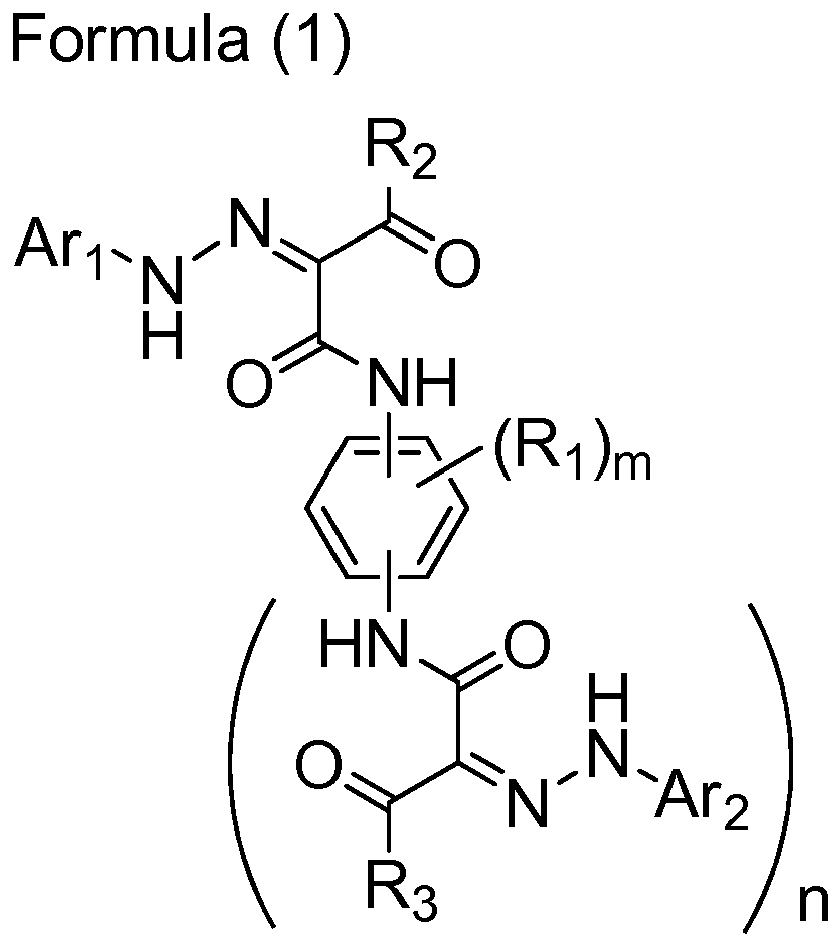
at least one of R2, R3, Ar1, and Ar2 is bound to the polymer portion directly or through a linking group, wherein
each R1 independently represents a hydrogen atom, a halogen atom, an alkyl group, an alkoxy group, a trifluoromethyl group, a cyano group, or a hydroxyl group,
R2 and R3 not bound to the polymer portion independently represent a monovalent group selected from the group consisting of an alkyl group, a phenyl group, an OR4 group, and an NR5R6 group, R4 to R6 independently represent a hydrogen atom, an alkyl group, a phenyl group, or an aralkyl group,
Ar1 and Ar2 not bound to the polymer portion independently represent an aryl group,
wherein
any one of R2 and R3 bound to the polymer portion independently represents a divalent group, a hydrogen atom of which is removed from the corresponding monovalent group of any one of R2 and R3;
any one of Ar1 and Ar2 bound to the polymer portion independently represents a divalent group, a hydrogen atom of which is removed from the corresponding aryl group of any one of Ar1 and Ar2,
m represents an integer of 3 or 4, n represents an integer of 1 or 2, and n + m is 5,
- The cyan toner according to Claim 1, wherein the structure represented by formula (1) is represented by formula (3) below:

R11 to R20 independently represent a linking group or a monovalent group selected from the group consisting of a hydrogen atom, a COOR21 group, a CONR22R23 group, an NHCOR24 group, and an OR25 group, R21 to R25 each independently represent a hydrogen atom, an alkyl group, an aryl group, or an aralkyl group,
wherein at least one of R11 to R20 is the linking group that binds to the polymer portion,
m represents an integer of 3 or 4,
n represents an integer of 1 or 2, and
n + m is 5. - The cyan toner according to Claim 1, wherein the structure represented by formula (1) is a structure represented by formula (4) or (5) below:

R26 to R30 independently represent a hydrogen atom, a COOR21 group, a CONR22R23 group, an NHCOR24 group, or an OR25 group, R21 to R25 independently represent a hydrogen atom, an alkyl group, an aryl group, or an aralkyl group,
1 is 4, and
L represents a divalent linking group that binds to the polymer portion,
R26 to R30 independently represent a hydrogen atom, a COOR21 group, a CONR22R23 group, an NHCOR24 group, or an OR25 group, R21 to R25 each independently represent a hydrogen atom, an alkyl group, an aryl group, or an aralkyl group,
1 is 4, and,
each L represents a divalent linking group that binds to the polymer portion. - The cyan toner according to Claim 3, wherein the structure represented by formula (1) is represented by formula (4), at least one of R26 to R30 in formula (4) represents a COOR21 group or a CONR22R23 group, R21 to R23 independently represent a hydrogen atom, an alkyl group, an aryl group, or an aralkyl group, and each R1 is a hydrogen atom.
- The cyan toner according to Claim 3, wherein the structure represented by formula (1) is represented by formula (5), at least one of R26 to R30 in formula (5) represents a COOR21 group or a CONR22R23 group, R21 to R23 independently represent a hydrogen atom, an alkyl group, an aryl group, or an aralkyl group, and each R1 is a hydrogen atom.
- The cyan toner according to Claim 1, wherein the structure represented by formula (1) is a structure represented by formula (6) or (7):

p represents an integer of 2 or 3, q represents an integer of 3 or 4, p + q is 6, and,
L represents a divalent linking group that binds to the polymer portion,
p represents an integer of 2 or 3, q represents an integer of 3 or 4, p + q is 6, and,
each L represents a divalent linking group that binds to the polymer portion. - The cyan toner according to Claim 6, wherein the structure represented by formula (1) is represented by formula (6), each R1 in formula (6) is a hydrogen atom, and q is 3 or 4.
- The cyan toner according to Claim 6, wherein the structure represented by formula (1) is represented by formula (7), each R1 in formula (7) is a hydrogen atom, and q is 3 or 4.
- The cyan toner according to any one of Claims 1 to 8, wherein at least one of R2, R3, Ar1, and Ar2 in formula (1) is bound to the polymer portion through a carboxylic acid ester bond or a carboxylic acid amide bond.
- The cyan toner according to any one of Claims 1 to 9, wherein the phthalocyanine pigment is represented by formula (8):

- The cyan toner according to Claim 10, wherein R32 to R35 in formula (8) are each hydrogen and M is copper(II).
- The cyan toner according to any one of Claims 1 to 11, wherein the toner particles are produced by a suspension polymerization method or a suspension granulation method.
Applications Claiming Priority (1)
| Application Number | Priority Date | Filing Date | Title |
|---|---|---|---|
| JP2012043077 | 2012-02-29 |
Publications (2)
| Publication Number | Publication Date |
|---|---|
| EP2634633A1 true EP2634633A1 (en) | 2013-09-04 |
| EP2634633B1 EP2634633B1 (en) | 2015-07-01 |
Family
ID=47720373
Family Applications (1)
| Application Number | Title | Priority Date | Filing Date |
|---|---|---|---|
| EP13154753.1A Not-in-force EP2634633B1 (en) | 2012-02-29 | 2013-02-11 | Cyan toner containing compound having azo skeleton |
Country Status (5)
| Country | Link |
|---|---|
| US (2) | US8927187B2 (en) |
| EP (1) | EP2634633B1 (en) |
| JP (1) | JP2013210628A (en) |
| KR (1) | KR20130099859A (en) |
| CN (1) | CN103293891B (en) |
Families Citing this family (3)
| Publication number | Priority date | Publication date | Assignee | Title |
|---|---|---|---|---|
| EP2634632A1 (en) * | 2012-02-29 | 2013-09-04 | Canon Kabushiki Kaisha | Black toner containing compound having azo skeleton |
| EP2634633B1 (en) * | 2012-02-29 | 2015-07-01 | Canon Kabushiki Kaisha | Cyan toner containing compound having azo skeleton |
| EP2634635A1 (en) * | 2012-02-29 | 2013-09-04 | Canon Kabushiki Kaisha | Magenta toner containing compound having azo skeleton |
Citations (10)
| Publication number | Priority date | Publication date | Assignee | Title |
|---|---|---|---|---|
| JPH03113462A (en) | 1989-09-27 | 1991-05-14 | Mita Ind Co Ltd | Manufacture of electrostatic charge developing toner |
| WO1999005099A1 (en) | 1997-07-21 | 1999-02-04 | Commonwealth Scientific And Industrial Research Organisation | Synthesis of dithioester chain transfer agents and use of bis(thioacyl) disulfides or dithioesters as chain transfer agents |
| JP2000515181A (en) | 1996-07-10 | 2000-11-14 | イー・アイ・デュポン・ドウ・ヌムール・アンド・カンパニー | Polymerization with living properties |
| EP1341050A2 (en) * | 2002-01-17 | 2003-09-03 | Canon Kabushiki Kaisha | Dispersing agent for pigment, pigment-dispersion composition, toner, and toner production process |
| JP2003531001A (en) | 2000-04-20 | 2003-10-21 | アベシア・リミテッド | Dispersant |
| JP3721617B2 (en) | 1995-10-09 | 2005-11-30 | 東亞合成株式会社 | Radical polymerizable macromonomer |
| US20080318144A1 (en) * | 2007-06-22 | 2008-12-25 | Naohiro Watanabe | Toner, developer, and image forming method |
| JP4254292B2 (en) | 2003-03-24 | 2009-04-15 | 星光Pmc株式会社 | Aqueous pigment dispersant and method for producing the same |
| WO2009060886A1 (en) | 2007-11-09 | 2009-05-14 | Wako Pure Chemical Industries, Ltd. | Method for selectively reducing nitro group by metal catalyst-supported carbon |
| JP4510687B2 (en) | 2005-04-20 | 2010-07-28 | キヤノン株式会社 | Method for producing toner particles |
Family Cites Families (6)
| Publication number | Priority date | Publication date | Assignee | Title |
|---|---|---|---|---|
| CN101689032A (en) | 2007-06-28 | 2010-03-31 | 富士胶片映像着色有限公司 | Toner comprising polyester, method for producing toner and use thereof |
| JP5268504B2 (en) | 2007-11-08 | 2013-08-21 | キヤノン株式会社 | Toner and image forming method |
| JP4995334B2 (en) * | 2010-08-27 | 2012-08-08 | キヤノン株式会社 | Azo compound, pigment dispersant, pigment composition, pigment dispersion and toner containing the azo compound |
| EP2634632A1 (en) * | 2012-02-29 | 2013-09-04 | Canon Kabushiki Kaisha | Black toner containing compound having azo skeleton |
| EP2634633B1 (en) * | 2012-02-29 | 2015-07-01 | Canon Kabushiki Kaisha | Cyan toner containing compound having azo skeleton |
| EP2634635A1 (en) * | 2012-02-29 | 2013-09-04 | Canon Kabushiki Kaisha | Magenta toner containing compound having azo skeleton |
-
2013
- 2013-02-11 EP EP13154753.1A patent/EP2634633B1/en not_active Not-in-force
- 2013-02-26 US US13/777,888 patent/US8927187B2/en not_active Expired - Fee Related
- 2013-02-27 KR KR20130020924A patent/KR20130099859A/en not_active Abandoned
- 2013-02-28 CN CN201310065053.7A patent/CN103293891B/en not_active Expired - Fee Related
- 2013-02-28 JP JP2013038165A patent/JP2013210628A/en active Pending
-
2014
- 2014-12-05 US US14/562,496 patent/US20150093699A1/en not_active Abandoned
Patent Citations (11)
| Publication number | Priority date | Publication date | Assignee | Title |
|---|---|---|---|---|
| JPH03113462A (en) | 1989-09-27 | 1991-05-14 | Mita Ind Co Ltd | Manufacture of electrostatic charge developing toner |
| JP3721617B2 (en) | 1995-10-09 | 2005-11-30 | 東亞合成株式会社 | Radical polymerizable macromonomer |
| JP2000515181A (en) | 1996-07-10 | 2000-11-14 | イー・アイ・デュポン・ドウ・ヌムール・アンド・カンパニー | Polymerization with living properties |
| WO1999005099A1 (en) | 1997-07-21 | 1999-02-04 | Commonwealth Scientific And Industrial Research Organisation | Synthesis of dithioester chain transfer agents and use of bis(thioacyl) disulfides or dithioesters as chain transfer agents |
| JP2003531001A (en) | 2000-04-20 | 2003-10-21 | アベシア・リミテッド | Dispersant |
| EP1341050A2 (en) * | 2002-01-17 | 2003-09-03 | Canon Kabushiki Kaisha | Dispersing agent for pigment, pigment-dispersion composition, toner, and toner production process |
| JP2003277643A (en) | 2002-01-17 | 2003-10-02 | Canon Inc | Pigment dispersant, pigment dispersion composition, toner, and method for producing toner |
| JP4254292B2 (en) | 2003-03-24 | 2009-04-15 | 星光Pmc株式会社 | Aqueous pigment dispersant and method for producing the same |
| JP4510687B2 (en) | 2005-04-20 | 2010-07-28 | キヤノン株式会社 | Method for producing toner particles |
| US20080318144A1 (en) * | 2007-06-22 | 2008-12-25 | Naohiro Watanabe | Toner, developer, and image forming method |
| WO2009060886A1 (en) | 2007-11-09 | 2009-05-14 | Wako Pure Chemical Industries, Ltd. | Method for selectively reducing nitro group by metal catalyst-supported carbon |
Non-Patent Citations (12)
| Title |
|---|
| "Coulter Multisizer", BECKMAN COULTER, INC. |
| "Jikken Kagaku Kouza (Experimental Chemistry Course", vol. 15, MARUZEN CO., LTD., pages: 390 - 448 |
| "Jikken Kagaku Kouza (Experimental Chemistry Course", vol. 17, MARUZEN CO., LTD., pages: 162 - 179 |
| ATSUSHI GOTO: "Journal of The American Chemical Society", vol. 125, 2003, AMERICAN CHEMICAL SOCIETY, pages: 8720 - 8721 |
| CRAIG J. HAWKER: "Chemical Reviews", vol. 101, 2001, AMERICAN CHEMICAL SOCIETY, pages: 3661 - 3688 |
| DATTA E. PONDE: "The Journal of Organic Chemistry", vol. 63, 1998, AMERICAN CHEMICAL SOCIETY, pages: 1058 - 1063 |
| J. BRANDRUP; E. H. IMMERGUT: "Polymer Handbook", 1989, JOHN WILEY & SONS, pages: 209 - 277 |
| KIRAN KUMAR SOLINGAPURAM SAI: "The Journal of Organic Chemistry", vol. 72, 2007, AMERICAN CHEMICAL SOCIETY, pages: 9761 - 9764 |
| KRZYSZTOF MATYJASZEWSKI: "Chemical Reviews", vol. 101, 2001, AMERICAN CHEMICAL SOCIETY, pages: 2921 - 2990 |
| MASAMI KAMIGAITO: "Chemical Reviews", vol. 101, 2001, AMERICAN CHEMICAL SOCIETY, pages: 3689 - 3746 |
| MELVIN S. NEWMAN: "The Journal of Organic Chemistry", vol. 26, 1961, AMERICAN CHEMICAL SOCIETY, pages: 2525 - 2528 |
| NORMAN 0. V. SONNTAG: "Chemical Reviews", vol. 52, 1953, AMERICAN CHEMICAL SOCIETY, pages: 237 - 416 |
Also Published As
| Publication number | Publication date |
|---|---|
| US20150093699A1 (en) | 2015-04-02 |
| CN103293891B (en) | 2015-06-03 |
| KR20130099859A (en) | 2013-09-06 |
| US20130224646A1 (en) | 2013-08-29 |
| CN103293891A (en) | 2013-09-11 |
| JP2013210628A (en) | 2013-10-10 |
| US8927187B2 (en) | 2015-01-06 |
| EP2634633B1 (en) | 2015-07-01 |
Similar Documents
| Publication | Publication Date | Title |
|---|---|---|
| JP6041704B2 (en) | Black toner containing a compound having an azo skeleton | |
| JP6053445B2 (en) | Toner containing compound having bisazo skeleton | |
| JP6108875B2 (en) | Azo compound, pigment dispersant, pigment composition, pigment dispersion and toner containing the azo compound | |
| US20150004539A1 (en) | Magenta toner containing compound having azo skeleton | |
| US20140377697A1 (en) | Cyan toner containing compound having azo skeleton | |
| US8936894B2 (en) | Magenta toner containing compound having AZO skeleton | |
| US9834683B2 (en) | Compound having azo skeleton structure, pigment dispersant, pigment composition, pigment dispersion, and toner | |
| JP6041703B2 (en) | Black toner containing a compound having an azo skeleton | |
| US9470995B2 (en) | Compound having azo skeleton and pigment dispersant, pigment composition, pigment dispersion, and toner containing the compound | |
| EP2634633B1 (en) | Cyan toner containing compound having azo skeleton | |
| US9625845B2 (en) | Compound having azo skeleton structure, pigment-dispersing agent, pigment composition, pigment dispersion, and toner | |
| JP6463040B2 (en) | Novel compound, pigment dispersant containing the compound, pigment composition, pigment dispersion, and toner | |
| US20160280925A1 (en) | Compound having azo skeleton structure, pigment-dispersing agent, pigment composition, pigment dispersion, and toner | |
| JP2013072915A (en) | Toner containing compound with azo dye skeleton |
Legal Events
| Date | Code | Title | Description |
|---|---|---|---|
| PUAI | Public reference made under article 153(3) epc to a published international application that has entered the european phase |
Free format text: ORIGINAL CODE: 0009012 |
|
| AK | Designated contracting states |
Kind code of ref document: A1 Designated state(s): AL AT BE BG CH CY CZ DE DK EE ES FI FR GB GR HR HU IE IS IT LI LT LU LV MC MK MT NL NO PL PT RO RS SE SI SK SM TR |
|
| AX | Request for extension of the european patent |
Extension state: BA ME |
|
| 17P | Request for examination filed |
Effective date: 20140304 |
|
| RBV | Designated contracting states (corrected) |
Designated state(s): AL AT BE BG CH CY CZ DE DK EE ES FI FR GB GR HR HU IE IS IT LI LT LU LV MC MK MT NL NO PL PT RO RS SE SI SK SM TR |
|
| GRAP | Despatch of communication of intention to grant a patent |
Free format text: ORIGINAL CODE: EPIDOSNIGR1 |
|
| INTG | Intention to grant announced |
Effective date: 20140731 |
|
| GRAP | Despatch of communication of intention to grant a patent |
Free format text: ORIGINAL CODE: EPIDOSNIGR1 |
|
| INTG | Intention to grant announced |
Effective date: 20150129 |
|
| GRAS | Grant fee paid |
Free format text: ORIGINAL CODE: EPIDOSNIGR3 |
|
| GRAA | (expected) grant |
Free format text: ORIGINAL CODE: 0009210 |
|
| AK | Designated contracting states |
Kind code of ref document: B1 Designated state(s): AL AT BE BG CH CY CZ DE DK EE ES FI FR GB GR HR HU IE IS IT LI LT LU LV MC MK MT NL NO PL PT RO RS SE SI SK SM TR |
|
| REG | Reference to a national code |
Ref country code: GB Ref legal event code: FG4D |
|
| REG | Reference to a national code |
Ref country code: AT Ref legal event code: REF Ref document number: 734311 Country of ref document: AT Kind code of ref document: T Effective date: 20150715 Ref country code: CH Ref legal event code: EP |
|
| REG | Reference to a national code |
Ref country code: IE Ref legal event code: FG4D |
|
| REG | Reference to a national code |
Ref country code: DE Ref legal event code: R096 Ref document number: 602013002105 Country of ref document: DE |
|
| REG | Reference to a national code |
Ref country code: AT Ref legal event code: MK05 Ref document number: 734311 Country of ref document: AT Kind code of ref document: T Effective date: 20150701 |
|
| REG | Reference to a national code |
Ref country code: NL Ref legal event code: MP Effective date: 20150701 |
|
| REG | Reference to a national code |
Ref country code: LT Ref legal event code: MG4D |
|
| PG25 | Lapsed in a contracting state [announced via postgrant information from national office to epo] |
Ref country code: LT Free format text: LAPSE BECAUSE OF FAILURE TO SUBMIT A TRANSLATION OF THE DESCRIPTION OR TO PAY THE FEE WITHIN THE PRESCRIBED TIME-LIMIT Effective date: 20150701 Ref country code: FI Free format text: LAPSE BECAUSE OF FAILURE TO SUBMIT A TRANSLATION OF THE DESCRIPTION OR TO PAY THE FEE WITHIN THE PRESCRIBED TIME-LIMIT Effective date: 20150701 Ref country code: NO Free format text: LAPSE BECAUSE OF FAILURE TO SUBMIT A TRANSLATION OF THE DESCRIPTION OR TO PAY THE FEE WITHIN THE PRESCRIBED TIME-LIMIT Effective date: 20151001 Ref country code: GR Free format text: LAPSE BECAUSE OF FAILURE TO SUBMIT A TRANSLATION OF THE DESCRIPTION OR TO PAY THE FEE WITHIN THE PRESCRIBED TIME-LIMIT Effective date: 20151002 Ref country code: LV Free format text: LAPSE BECAUSE OF FAILURE TO SUBMIT A TRANSLATION OF THE DESCRIPTION OR TO PAY THE FEE WITHIN THE PRESCRIBED TIME-LIMIT Effective date: 20150701 |
|
| PG25 | Lapsed in a contracting state [announced via postgrant information from national office to epo] |
Ref country code: PL Free format text: LAPSE BECAUSE OF FAILURE TO SUBMIT A TRANSLATION OF THE DESCRIPTION OR TO PAY THE FEE WITHIN THE PRESCRIBED TIME-LIMIT Effective date: 20150701 Ref country code: RS Free format text: LAPSE BECAUSE OF FAILURE TO SUBMIT A TRANSLATION OF THE DESCRIPTION OR TO PAY THE FEE WITHIN THE PRESCRIBED TIME-LIMIT Effective date: 20150701 Ref country code: ES Free format text: LAPSE BECAUSE OF FAILURE TO SUBMIT A TRANSLATION OF THE DESCRIPTION OR TO PAY THE FEE WITHIN THE PRESCRIBED TIME-LIMIT Effective date: 20150701 Ref country code: AT Free format text: LAPSE BECAUSE OF FAILURE TO SUBMIT A TRANSLATION OF THE DESCRIPTION OR TO PAY THE FEE WITHIN THE PRESCRIBED TIME-LIMIT Effective date: 20150701 Ref country code: PT Free format text: LAPSE BECAUSE OF FAILURE TO SUBMIT A TRANSLATION OF THE DESCRIPTION OR TO PAY THE FEE WITHIN THE PRESCRIBED TIME-LIMIT Effective date: 20151102 Ref country code: SE Free format text: LAPSE BECAUSE OF FAILURE TO SUBMIT A TRANSLATION OF THE DESCRIPTION OR TO PAY THE FEE WITHIN THE PRESCRIBED TIME-LIMIT Effective date: 20150701 Ref country code: HR Free format text: LAPSE BECAUSE OF FAILURE TO SUBMIT A TRANSLATION OF THE DESCRIPTION OR TO PAY THE FEE WITHIN THE PRESCRIBED TIME-LIMIT Effective date: 20150701 Ref country code: IS Free format text: LAPSE BECAUSE OF FAILURE TO SUBMIT A TRANSLATION OF THE DESCRIPTION OR TO PAY THE FEE WITHIN THE PRESCRIBED TIME-LIMIT Effective date: 20151101 |
|
| REG | Reference to a national code |
Ref country code: DE Ref legal event code: R097 Ref document number: 602013002105 Country of ref document: DE |
|
| PG25 | Lapsed in a contracting state [announced via postgrant information from national office to epo] |
Ref country code: EE Free format text: LAPSE BECAUSE OF FAILURE TO SUBMIT A TRANSLATION OF THE DESCRIPTION OR TO PAY THE FEE WITHIN THE PRESCRIBED TIME-LIMIT Effective date: 20150701 Ref country code: SK Free format text: LAPSE BECAUSE OF FAILURE TO SUBMIT A TRANSLATION OF THE DESCRIPTION OR TO PAY THE FEE WITHIN THE PRESCRIBED TIME-LIMIT Effective date: 20150701 Ref country code: CZ Free format text: LAPSE BECAUSE OF FAILURE TO SUBMIT A TRANSLATION OF THE DESCRIPTION OR TO PAY THE FEE WITHIN THE PRESCRIBED TIME-LIMIT Effective date: 20150701 Ref country code: IT Free format text: LAPSE BECAUSE OF FAILURE TO SUBMIT A TRANSLATION OF THE DESCRIPTION OR TO PAY THE FEE WITHIN THE PRESCRIBED TIME-LIMIT Effective date: 20150701 Ref country code: DK Free format text: LAPSE BECAUSE OF FAILURE TO SUBMIT A TRANSLATION OF THE DESCRIPTION OR TO PAY THE FEE WITHIN THE PRESCRIBED TIME-LIMIT Effective date: 20150701 |
|
| PLBE | No opposition filed within time limit |
Free format text: ORIGINAL CODE: 0009261 |
|
| STAA | Information on the status of an ep patent application or granted ep patent |
Free format text: STATUS: NO OPPOSITION FILED WITHIN TIME LIMIT |
|
| PG25 | Lapsed in a contracting state [announced via postgrant information from national office to epo] |
Ref country code: BE Free format text: LAPSE BECAUSE OF NON-PAYMENT OF DUE FEES Effective date: 20160229 Ref country code: RO Free format text: LAPSE BECAUSE OF FAILURE TO SUBMIT A TRANSLATION OF THE DESCRIPTION OR TO PAY THE FEE WITHIN THE PRESCRIBED TIME-LIMIT Effective date: 20150701 |
|
| 26N | No opposition filed |
Effective date: 20160404 |
|
| PG25 | Lapsed in a contracting state [announced via postgrant information from national office to epo] |
Ref country code: SI Free format text: LAPSE BECAUSE OF FAILURE TO SUBMIT A TRANSLATION OF THE DESCRIPTION OR TO PAY THE FEE WITHIN THE PRESCRIBED TIME-LIMIT Effective date: 20150701 |
|
| PG25 | Lapsed in a contracting state [announced via postgrant information from national office to epo] |
Ref country code: LU Free format text: LAPSE BECAUSE OF FAILURE TO SUBMIT A TRANSLATION OF THE DESCRIPTION OR TO PAY THE FEE WITHIN THE PRESCRIBED TIME-LIMIT Effective date: 20160211 Ref country code: MC Free format text: LAPSE BECAUSE OF FAILURE TO SUBMIT A TRANSLATION OF THE DESCRIPTION OR TO PAY THE FEE WITHIN THE PRESCRIBED TIME-LIMIT Effective date: 20150701 |
|
| REG | Reference to a national code |
Ref country code: CH Ref legal event code: PL |
|
| PG25 | Lapsed in a contracting state [announced via postgrant information from national office to epo] |
Ref country code: CH Free format text: LAPSE BECAUSE OF NON-PAYMENT OF DUE FEES Effective date: 20160229 Ref country code: LI Free format text: LAPSE BECAUSE OF NON-PAYMENT OF DUE FEES Effective date: 20160229 |
|
| REG | Reference to a national code |
Ref country code: FR Ref legal event code: ST Effective date: 20161028 |
|
| REG | Reference to a national code |
Ref country code: IE Ref legal event code: MM4A |
|
| PG25 | Lapsed in a contracting state [announced via postgrant information from national office to epo] |
Ref country code: BE Free format text: LAPSE BECAUSE OF FAILURE TO SUBMIT A TRANSLATION OF THE DESCRIPTION OR TO PAY THE FEE WITHIN THE PRESCRIBED TIME-LIMIT Effective date: 20150701 |
|
| PG25 | Lapsed in a contracting state [announced via postgrant information from national office to epo] |
Ref country code: FR Free format text: LAPSE BECAUSE OF NON-PAYMENT OF DUE FEES Effective date: 20160229 Ref country code: IE Free format text: LAPSE BECAUSE OF NON-PAYMENT OF DUE FEES Effective date: 20160211 |
|
| PG25 | Lapsed in a contracting state [announced via postgrant information from national office to epo] |
Ref country code: NL Free format text: LAPSE BECAUSE OF FAILURE TO SUBMIT A TRANSLATION OF THE DESCRIPTION OR TO PAY THE FEE WITHIN THE PRESCRIBED TIME-LIMIT Effective date: 20150701 |
|
| PG25 | Lapsed in a contracting state [announced via postgrant information from national office to epo] |
Ref country code: MT Free format text: LAPSE BECAUSE OF FAILURE TO SUBMIT A TRANSLATION OF THE DESCRIPTION OR TO PAY THE FEE WITHIN THE PRESCRIBED TIME-LIMIT Effective date: 20150701 |
|
| GBPC | Gb: european patent ceased through non-payment of renewal fee |
Effective date: 20170211 |
|
| PG25 | Lapsed in a contracting state [announced via postgrant information from national office to epo] |
Ref country code: GB Free format text: LAPSE BECAUSE OF NON-PAYMENT OF DUE FEES Effective date: 20170211 |
|
| PG25 | Lapsed in a contracting state [announced via postgrant information from national office to epo] |
Ref country code: HU Free format text: LAPSE BECAUSE OF FAILURE TO SUBMIT A TRANSLATION OF THE DESCRIPTION OR TO PAY THE FEE WITHIN THE PRESCRIBED TIME-LIMIT; INVALID AB INITIO Effective date: 20130211 Ref country code: CY Free format text: LAPSE BECAUSE OF FAILURE TO SUBMIT A TRANSLATION OF THE DESCRIPTION OR TO PAY THE FEE WITHIN THE PRESCRIBED TIME-LIMIT Effective date: 20150701 Ref country code: SM Free format text: LAPSE BECAUSE OF FAILURE TO SUBMIT A TRANSLATION OF THE DESCRIPTION OR TO PAY THE FEE WITHIN THE PRESCRIBED TIME-LIMIT Effective date: 20150701 |
|
| PG25 | Lapsed in a contracting state [announced via postgrant information from national office to epo] |
Ref country code: MT Free format text: LAPSE BECAUSE OF FAILURE TO SUBMIT A TRANSLATION OF THE DESCRIPTION OR TO PAY THE FEE WITHIN THE PRESCRIBED TIME-LIMIT Effective date: 20160229 Ref country code: MK Free format text: LAPSE BECAUSE OF FAILURE TO SUBMIT A TRANSLATION OF THE DESCRIPTION OR TO PAY THE FEE WITHIN THE PRESCRIBED TIME-LIMIT Effective date: 20150701 Ref country code: TR Free format text: LAPSE BECAUSE OF FAILURE TO SUBMIT A TRANSLATION OF THE DESCRIPTION OR TO PAY THE FEE WITHIN THE PRESCRIBED TIME-LIMIT Effective date: 20150701 |
|
| PG25 | Lapsed in a contracting state [announced via postgrant information from national office to epo] |
Ref country code: BG Free format text: LAPSE BECAUSE OF FAILURE TO SUBMIT A TRANSLATION OF THE DESCRIPTION OR TO PAY THE FEE WITHIN THE PRESCRIBED TIME-LIMIT Effective date: 20150701 |
|
| PG25 | Lapsed in a contracting state [announced via postgrant information from national office to epo] |
Ref country code: AL Free format text: LAPSE BECAUSE OF FAILURE TO SUBMIT A TRANSLATION OF THE DESCRIPTION OR TO PAY THE FEE WITHIN THE PRESCRIBED TIME-LIMIT Effective date: 20150701 |
|
| PGFP | Annual fee paid to national office [announced via postgrant information from national office to epo] |
Ref country code: DE Payment date: 20220119 Year of fee payment: 10 |
|
| REG | Reference to a national code |
Ref country code: DE Ref legal event code: R119 Ref document number: 602013002105 Country of ref document: DE |
|
| PG25 | Lapsed in a contracting state [announced via postgrant information from national office to epo] |
Ref country code: DE Free format text: LAPSE BECAUSE OF NON-PAYMENT OF DUE FEES Effective date: 20230901 |