EP2634135A2 - Synthesis of molecular sieves for modifying the surfaces of nanoparticles having amphoteric ions, and application thereof - Google Patents
Synthesis of molecular sieves for modifying the surfaces of nanoparticles having amphoteric ions, and application thereof Download PDFInfo
- Publication number
- EP2634135A2 EP2634135A2 EP11836648.3A EP11836648A EP2634135A2 EP 2634135 A2 EP2634135 A2 EP 2634135A2 EP 11836648 A EP11836648 A EP 11836648A EP 2634135 A2 EP2634135 A2 EP 2634135A2
- Authority
- EP
- European Patent Office
- Prior art keywords
- nanoparticle
- amphoteric ion
- group
- ion molecule
- nanoparticles
- Prior art date
- Legal status (The legal status is an assumption and is not a legal conclusion. Google has not performed a legal analysis and makes no representation as to the accuracy of the status listed.)
- Granted
Links
- NBHPPSCPZOHSCX-UHFFFAOYSA-N O=[O]1(OCCC1)=O Chemical compound O=[O]1(OCCC1)=O NBHPPSCPZOHSCX-UHFFFAOYSA-N 0.000 description 1
Images



Classifications
-
- C—CHEMISTRY; METALLURGY
- C07—ORGANIC CHEMISTRY
- C07C—ACYCLIC OR CARBOCYCLIC COMPOUNDS
- C07C323/00—Thiols, sulfides, hydropolysulfides or polysulfides substituted by halogen, oxygen or nitrogen atoms, or by sulfur atoms not being part of thio groups
- C07C323/23—Thiols, sulfides, hydropolysulfides or polysulfides substituted by halogen, oxygen or nitrogen atoms, or by sulfur atoms not being part of thio groups containing thio groups and nitrogen atoms, not being part of nitro or nitroso groups, bound to the same carbon skeleton
- C07C323/39—Thiols, sulfides, hydropolysulfides or polysulfides substituted by halogen, oxygen or nitrogen atoms, or by sulfur atoms not being part of thio groups containing thio groups and nitrogen atoms, not being part of nitro or nitroso groups, bound to the same carbon skeleton at least one of the nitrogen atoms being part of any of the groups, X being a hetero atom, Y being any atom
- C07C323/40—Y being a hydrogen or a carbon atom
- C07C323/41—Y being a hydrogen or an acyclic carbon atom
-
- B—PERFORMING OPERATIONS; TRANSPORTING
- B82—NANOTECHNOLOGY
- B82B—NANOSTRUCTURES FORMED BY MANIPULATION OF INDIVIDUAL ATOMS, MOLECULES, OR LIMITED COLLECTIONS OF ATOMS OR MOLECULES AS DISCRETE UNITS; MANUFACTURE OR TREATMENT THEREOF
- B82B1/00—Nanostructures formed by manipulation of individual atoms or molecules, or limited collections of atoms or molecules as discrete units
- B82B1/005—Constitution or structural means for improving the physical properties of a device
-
- C—CHEMISTRY; METALLURGY
- C07—ORGANIC CHEMISTRY
- C07C—ACYCLIC OR CARBOCYCLIC COMPOUNDS
- C07C319/00—Preparation of thiols, sulfides, hydropolysulfides or polysulfides
- C07C319/02—Preparation of thiols, sulfides, hydropolysulfides or polysulfides of thiols
- C07C319/06—Preparation of thiols, sulfides, hydropolysulfides or polysulfides of thiols from sulfides, hydropolysulfides or polysulfides
Definitions
- the present invention relates to a surface modification method for improving the dispersion of nonoparticles and to nanoparticles having improved dispersion properties prepared by the method. More particularly, the present invention relates to a method of improving the surface dispersion of nanoparticles by bonding amphoteric compounds to the surface of nanoparticles and to nanoparticles prepared using the method.
- Korean Unexamined Patent Application Publication No. 2008-0004831 discloses a method of preparing metal oxide nanoparticles stabilized by covering the surface of a copper precursor with capping molecules, and metal oxide nanoparticles prepared by this method.
- Korean Patent No. 820231 discloses a method of preparing metal nanoparticles by spray-injecting a metal precursor solution.
- Korean Patent No. 790948 discloses a method of preparing metal nanoparticles using a metal precursor solution and a dispersion stabilizer.
- Korean Patent No. 790948 discloses a method of preparing nanoparticles using an electroless plating solution.
- Korean Unexamined Patent Application Publication No. 2008-81630 discloses a method of preparing nanoparticles by spraying an electroless plating solution on a substrate.
- Korean Patent No. 555584 discloses a method of preparing metal nanoparticles using electrolysis.
- Korean Patent No. 724807 discloses a method of preparing tin oxide nanoparticles using oleic acid and tin oxide nanoparticles prepared by this method.
- Korean Unexamined Patent Application Publication No. 10-2008-0021535 discloses a method of modifying the surface of nanoparticles using a multifunctional ligand and a method of preparing water-soluble nanoparticles.
- nanoparticles stably dispersed in an aqueous solution receive a great deal of attention in the field of biological engineering and medical engineering, the demand thereof is very high internally and externally. Therefore, various technologies for stably dispersing nanopoarticles in an aqueous solution have been continuously researched in various manners, and it has been continuously required to develop novel, uniform and stable nanoparticles, and preparation methods thereof.
- An object of the present invention is to provide a novel nanoparticle which is stable in a wide pH range and in a wide salt concentration range.
- Another object of the present invention is to provide a method of preparing a novel nanoparticle which is stable in a wide pH range and in a wide salt concentration range.
- Still another object of the present invention is to provide a modification method of improving the stability of a nanoparticle.
- Still another object of the present invention is to provide a new compound which can improve the stability of a nanoparticle.
- Still another object of the present invention is to provide a novel quantum dot which has stability in a wide pH range and in a wide salt concentration range and to provide an application thereof.
- the nanoparticle according to the present invention may be an amphoteric nanoparticle including both an anion and a cation on the surface thereof.
- the nanoparticle according to the present invention acts as a stable nanoparticle because amphoteric ion molecules are more slightly influenced by a charge shielding effect due to ions under the conditions of a wide pH range and a high salt concentration, compared to molecules having only a positive charge or a negative charge.
- the nanoparticle refers to a nanosized particle having a diameter of less than 1000 nm. In an embodiment of the present invention, according to the nanoparticle defined by the National Science Foundation, the nanoparticle has a diameter of 300 nm or less. In another embodiment of the present invention, according to the nanoparticle defined by the National Institute of Health, the nanoparticle has a diameter of 100 nm or less.
- the nanoparticle may be made of a metal, a nonmetal, ceramic, plastic, a polymer, a biological material, a semiconductor, a quantum dot, a composite material, or the like. Further, the nanoparticle may be a fluorescent nanoparticle.
- the composite material may be a particle including a core made of a nonmetal material such as a ceramic or a polymer and coated with a metal.
- the nanoparticle may be formed into one nanoparticle or one nanoparticle assembly due to agglomeration of several metal nanoparticles.
- the nanoparticle may be a high-density nanoparticle whose inside is filled, or a nanoparticle including a compartment or space therein.
- the nanoparticle may be a monolayered nanoparticle or a multilayered nanoparticle.
- a neutral nanoparticle refers to a substantially neutral nanoparticle in which anions and cations are balanced with each other. Further, in the present invention, the neutral nanoparticle refers to a nanoparticle having a surface charge of -5 mV to +5 mV, which is measured by dynamic light-scattering photometry, and the absolute value of the surface charge does not exceed 10 mV.
- the nanoparticle is an amphoteric nanoparticle whose surface is bonded with amphoteric ion molecules or amphoteric ion compounds.
- the amphoteric ion molecule or the amphoteric ion compound is a compound including one or more anions and one or more cations. Further, in the present invention, the amphoteric ion molecule or the amphoteric ion compound may be a monomer, an oligomer such as dimer, trimer or the like, or a polymer.
- the amphoteric ion molecule when the length of the amphoteric ion molecule is smaller than the outer diameter of the nanoparticle, the amphoteric ion molecule does not surround the nanoparticle, and thus the amphoteric ion molecules are bonded with the nanoparticle in a direction from the center of the nanoparticle toward the outside thereof, and, as a result, amphoteric ions are distributed on the outermost surface of the nanoparticle.
- the amphoteric ion compound may include a surface bonding region bonded with a nanoparticle, a connecting region, and a functional group region.
- the amphoteric ion compound may be configured such that one end thereof is bonded with a nanoparticle and the other end thereof is provided with amphoteric ions.
- the surface bonding region is strongly bonded with the surface of a nanoparticle, and can be used without limitation as long as it can be stably bonded with the nanoparticle.
- the connecting region serves to effectively connect the surface bonding region with the functional group region.
- the connecting region may include, but are not limited to, an amide bond (-CONH-), a carbon bond (-(CH 2 ) n -), polyethylene glycol (- (CH 2 CH 2 O) n -), triazole, and the like.
- the connecting region may be formed by bonding two or more molecules, and preferably may be configured such that the surface of the nanoparticle is entirely coated with molecules in high density.
- the functional group region has an ability to stably disperse nanoparticles in a solvent, and is chemically bonded with the connecting region.
- An amphoteric ion is used as the functional group region.
- the amphoteric ion may include, but are not limited to, a sulfobetaine group (-N + (CH 3 ) 2 CH 2 CH 2 CH 2 SO 3- ), a carbobetaine group (-N + (CH 3 ) 2 CH 2 CH 2 CH 2 COOO - ), a phosphorylcholine group (-PO 4 - CH 2 CH 2 N + ), and the like.
- the functional group region is revealed on the outermost surface of the nanoparticle surface-substituted with an amphotric ion molecule, and thus this nanoparticle may have characteristics of the amphoteric ion molecule itself.
- cysteine is one of many monomers that are constituents of proteins, that is, one of many amino acids that are constituents of proteins, and has a thiol group (-SH) at one side thereof and a carboxylic acid group (-COO - ) and an amine group (-NH 3 + ) at the other side thereof.
- the thiol group (-SH) of cysteine becomes a surface bonding region bonded with a nanoparticle, and the carboxylic acid group (-COO - ) and amine group (-NH 3 + ) of cysteine become a functional group region. Consequently, in the nanoparticle surface-treated with cysteine, cysteine serves as an amphoteric ion molecule at a pH of about 7, thus making a surface charge approximately neutral.
- an amphoteric ion nanoparticle by reacting a nanoparticle with amphoteric ion molecules.
- the amphoteric ion nanoparticle may be prepared by a process including the steps of: introducing surface molecules (for example, ligands) that can be substituted with amphoteric ion molecules onto the surface of the nanoparticle; and substituting the surface molecules with amphoteric ion molecules.
- surface molecules for example, ligands
- a method of controlling a nonspecific adsorption of a nanoparticle by forming amphoteric ion molecules on the surface of a nanoparticle in an aspect of the present invention, there is provided a method of controlling a nonspecific adsorption of a nanoparticle by forming amphoteric ion molecules on the surface of a nanoparticle.
- nonspecific adsorption refers to adsorption caused by ion bonding, intermolecular attraction or the like, and excludes specific bonding between a nanoparticle and an external material or between a material included in the nanoparticle and an external material.
- control means that the adsorptivity of a nanoparticle is reduced under a specific condition after amphoteric ion molecules are formed on the surface of the nanoparticle.
- the surface of the nanoparticle of the present invention is stabilized in a neutral state, the nonspecific adsorption of the nanoparticle due to ion bonding or intermolecular attraction is reduced under various environments.
- the adsorptivity of a fluorescent nanoparticle such as a quantum dot to an adherend such as a cell membrane or a plastic surface, particularly, an electrostatically-charged adherend is remarkably weakened because its nonspecific adsorption is reduced after its surface is provided with amphoteric ion molecules.
- a nanocomposite comprising: a nanoparticle including amphoteric ion molecules formed on a surface thereof; and a specific bonding material bonded to the nanoparticle.
- the specific bonding material refers to a material inducing specific bonding between a nonoparticle and an external material.
- the specific bonding material may be an antigen, an antibody, a probe, or the like.
- the nanoparticle can be usefully used as a fluorescent body or a carrier.
- the nanoparticle of the nanocomposite may be a fluorescent, light-absorbing or light-emitting nanoparticle, for example, a nanosized quantum dot.
- the nanocomposite is bonded to a specific material by the specific bonding material without nonspecific adsorption of a nanoparticle, and then produces fluorescence, absorbs light and emits light.
- the nanoparticle can be used for a contrast agent for magnetic resonance imaging or in vivo near-infrared fluorescence imaging.
- the nanoparticle of the nanocomposite may be a nanosized carrier including a physiological material, a pharmaceutical material or a pharmaceutical composition.
- the nanocomposite can be selectively carried or bonded to the site requiring a pharmaceutical or physiological material by a specific bonding material.
- an amphoteric ion nanoparticle by reacting a nanoparticle with amphoteric ion molecules in a dispersion medium.
- the dispersion medium may be an organic solvent, water or a mixture thereof, and the amphoteric ion molecules are reacted with the nanoparticle dispersed in the dispersion medium by a ligand substitution method or the like.
- the present invention is characterized in that amphoteric ion molecules are bonded to a surface to reduce the non-specific adsorption of the surface.
- the term "surface” refers to a surface to which amphoteric ion molecules are bonded by various mechanical and chemical methods.
- the surface may be a surface on which a glass thin film or a polymer thin film that can be bonded with amphoteric ion molecules are formed.
- the surface may be a surface of a sensor.
- the sensor may be a sensor for in vivo specific protein (for example, myoglobin, used to detect cardiac seizure) or a sensor for specific cell (for example, immune cells).
- the senor provided on the surface thereof with amphoteric ion molecules has low non-specific bonding force, the non-specific adsorption of the sensor to other in vivo proteins is minimized, thus greatly increasing a signal/noise ratio that is one of the most important factors of a sensor.
- the properties of the functional group of the molecule are not changed under the condition of a wide pH range or a high salt concentration.
- the amount of electric charge of the amphoteric ion molecule can be maintained at approximately 0, and the non-specific adsorption of the nanoparticle to proteins and phospholipids can be minimized.
- Lipoic acid ((1) of FIG. 2 ) was dissolved in anhydrous chloroform, 1.3 equivalents of carbonyldiimidazole was added thereto, the solution was stirred for 5 minutes at room temperature under a vacuum atmosphere, and then a reaction solution layer, excluding the remaining carbonyldiimidazole, was separated. Subsequently, N,N-dimethylethylenediamine corresponding to 5 equivalents of lipoic acid was dissolved in anhydrous chloroform under a nitrogen atmosphere, cooled by an ice bath, and then added to the above solution to obtain a mixed solution. The mixed solution was stirred for 1 hour to obtain a reaction solution (resultant product ((3) of FIG. 2 )).
- the reaction solution was purified with a 10% NaCl aqueous solution three times and purified with distilled water one time. Then, 1,3-propanesultone was added to the purified reaction solution, and this mixed solution was stirred at room temperature for 24 hours to obtain a solid (resultant product ((4) of FIG. 2 )), and then the obtained solid was filtered.
- the filtered solid was dissolved in an aqueous solution, its pH having been adjusted to 9 by using 2N NaOH, and then 2 equivalents of NaBH 4 were added to the aqueous solution, and then this mixed solution was stirred at room temperature for 4 hours to synthesize an amphoteric ion ligand ((5) of FIG. 2 ).
- the synthesized amphoteric ion ligand was directly used without being purified.
- the nanoparticle synthesis method disclosed in the present specification is one of various synthesis methods, and is not limited thereto.
- Synthesis of a quantum dot which is one of various types of nanoparticles, was performed as follows. Octadecene and oleylamine was introduced into a round-bottom flask, and then the flask was heated to 100°C while alternately changing between a vacuum state and a nitrogen-injected state, thereby making a nitrogen atmosphere filled with only nitrogen gas.
- the ratio of Cd:Se may be adjusted according to the size of a desired nanoparticle.
- the flask which is a reaction vessel, was slowly cooled to obtain nanoparticles dispersed in an organic solvent.
- Nanoparticles synthesized in an organic solvent were dispersed in chloroform.
- An aqueous solution containing an excessive amount of the above-synthesized amphoteric ion molecules ((5) of FIG. 2 ) was mixed with the synthesized nanoparticles and then stirred at room temperature.
- dithiol which is one of the functional groups of the amphoteric ion molecule, has strong surface bonding force to a nanoparticle (quantum dot) compared to an organic molecule ligand containing phosphonic acid or primary amine as a functional group.
- FIG. 3 shows amphoteric ion molecules schematized as in FIG. 1 .
- the surface bonding region of each of the amphoteric ion molecules is indicated by a square, the connection region thereof is indicated by a wave-shaped line, and the functional group region thereof is indicated by an ellipse.
- Nanoparticles synthesized in an organic solvent were dispersed in chloroform.
- An aqueous solution containing an excessive amount of the above-synthesized molecules having a carboxy group ((2) of FIG. 2 ) was mixed with the purified quantum dots and then stirred at room temperature.
- the organic molecule ligands bonded to the surface of the quantum dot were substituted with the molecules having a carboxy group, and simultaneously the quantum dots were moved to an aqueous solution layer, and thus quantum dots were dispersed in the aqueous solution.
- a chloroform layer was separated and removed, and only the aqueous solution layer was dialyzed to remove residual ligands.
- FIG. 4 shows carboxy group-containing molecules schematized as in FIG. 1 .
- the surface bonding region of each of the carboxy group-containing molecules is indicated by a square
- the connection region thereof is indicated by a wave-shaped line
- the function group region thereof is indicated by an ellipse.
- Nanoparticles synthesized in an organic solvent were dispersed in chloroform.
- An aqueous solution containing an excessive amount of the above-synthesized amphoteric ion molecules ((5) of FIG. 2 ) and molecules having a carboxy group ((2) of FIG. 2 ) was mixed with the purified quantum dots and then stirred at room temperature.
- the organic molecule ligands bonded to the surface of the quantum dot were substituted with both the amphoteric ion molecules and the molecules having a carboxy group, and simultaneously the quantum dots were moved to an aqueous solution layer, and thus quantum dots were dispersed in the aqueous solution.
- FIG. 5 shows surface molecules schematized as in FIG. 1 .
- the surface bonding region of each of the surface molecules is indicated by a square, the connection region thereof is indicated by a wave-shaped line, and the function group region thereof is indicated by an ellipse.
- the surface-modified nanoparticle When a nanoparticle is surface-modified with amphoteric ion molecules having a functional group region, the surface-modified nanoparticle exhibits the properties of the functional group region of the amphoteric ion molecule.
- the size of the hydrated nanoparticle substituted with amphoteric ion molecules as in Example 2 and the size of the hydrated nanoparticle substituted with molecules having a carboxy group (-COOH) as in Example 3 were measured.
- a quantum dot was used as the nanoparticle.
- the quantum dot is characterized in that it receives light and then emits light having a specific wavelength.
- the size of each hydrated quantum dots is about 6 ⁇ 7 nm when they are uniformly dispersed in a solution.
- FIG. 7 shows the result that the non-specific bonding between the nanoparticle (Example 2) substituted with amphoteric ion molecules and polymer beads was weakened due to the surface substitution of amphoteric ion molecules.
- the surface of a substrate is coated with biomolecules such as bovine serum albumin in order to reduce the degree of non-specific adsorption.
- biomolecules such as bovine serum albumin
- the present inventors intended to ascertain whether or not the non-specific adsorption of nanoparticles on the polymer surface realized in a similar manner to above was reduced.
- polymer beads coated with bovine serum albumin were mixed with nanoparticles, residual quantum dots were sufficiently washed, and then the fluorescence of the nanoparticles (that is, quantum dots) non-specifically adsorbed on the surface of the polymer beads was observed by a fluorescence microscope.
- the nanoparticles surface-substituted with molecules having a carboxy group (-COOH) as a functional group region are easily adsorbed on the surface of polymer beads, it can be ascertained that the fluorescence of the nanoparticles (that is, quantum dots) adsorbed on the surface of the polymer beads was observed.
- the fluorescence of the nanoparticles that is, quantum dots
- amphoteric ion molecules the fluorescence thereof was barely observed. Consequently, it can be ascertained that, since the nanoparticles were neutrally charged, electrostatic attraction was minimized, and thus the degree of non-specific adsorption was remarkably lowered.
- FIG. 8 shows confocal microscope photographs of cervical cancer cells respectively treated with the quantum dots (Example 2) surface-substituted with amphoteric ion molecules and the quantum dots (Example 3) surface-substituted with molecules having a carboxy group.
- the green colored portion of each of the photographs is a portion at which the fluorescence of the quantum dots was observed.
- Each of the photographs selectively shows only the fluorescence emitted from the cells.
- Example 2 Similarly to the result mentioned in Example 6 above, it was ascertained that the non-specific adsorption of the nanoparticles (Example 2) substituted with amphoteric ion molecules to the polymer beads was reduced. Consequently, it can be ascertained that the fluorescence of quantum dots on the inner and outer walls of the cells was not observed when the quantum dots were substituted with amphoteric ion molecules compared to when the quantum dots (control group) were substituted with molecules having a carboxy group.
- the nanoparticle (Example 4) surface-substituted with both molecules having a carboxy group and amphoteric ion molecules may be formed into a composite by strong covalent bonding due to the biological conjunction with streptavidin that is one of biomolecules.
- a quantum dot was given as an example of nanoparticles
- streptoavidin was given as an example of a protein. Therefore, in the present invention, a quantum dot-streptoavidin composite was synthesized by the biological junction of a quantum dot and streptoavidin.
- FIG. 9 shows fluorescence and transmission imaging photographs of biotin-coated polymer beads mixed with a quantum dot-streptavidin composite.
- biotin-coated polymer beads can be marked with streptavidin, and thus can also be marked with a quantum dot-streptavidin composite.
- quantum dots (control group) synthesized in Example 4 were mixed with biotin-coated polymer beads without being formed into quantum dot-streptavidin composites, the degree of non-specific adsorption of the quantum dots became low due to amphoteric ion molecules of the surface of the quantum dots, and thus fluorescence of the quantum dots was not observed.
Landscapes
- Chemical & Material Sciences (AREA)
- Organic Chemistry (AREA)
- Crystallography & Structural Chemistry (AREA)
- Engineering & Computer Science (AREA)
- Nanotechnology (AREA)
- Luminescent Compositions (AREA)
- Medicines Containing Antibodies Or Antigens For Use As Internal Diagnostic Agents (AREA)
- Medicinal Preparation (AREA)
- Peptides Or Proteins (AREA)
- Colloid Chemistry (AREA)
- Emulsifying, Dispersing, Foam-Producing Or Wetting Agents (AREA)
Abstract
Description
- The present invention relates to a surface modification method for improving the dispersion of nonoparticles and to nanoparticles having improved dispersion properties prepared by the method. More particularly, the present invention relates to a method of improving the surface dispersion of nanoparticles by bonding amphoteric compounds to the surface of nanoparticles and to nanoparticles prepared using the method.
- There have been proposed various methods for preparing nanoparticles. Among these methods, flame pyrolysis, spray pyrolysis, a sol-gel process, a solvothermal method and the like, as well as transitional physical pulverizing methods, have been used. In the process of forming nanoparticles, nanoparticles are formed and simultaneously agglomerated because the surface of a nanoparticle is unstable. Therefore, methods for overcoming the agglomeration of nanoparticles have been developed.
- Korean Unexamined Patent Application Publication No.
2008-0004831 820231 790948 - Korean Patent No.
790948 2008-81630 - Korean Patent No.
555584 724807 - Further, there have also been proposed methods of stabilizing nanoparticles by introducing a ligand such as amine or sodium ascorbate into the nanoparticles to fix the nanoparticles on active carbon, an inorganic oxide, a polymer, zeolite or the like. Korean Unexamined Patent Application Publication No.
10-2008-0021535 - Since nanoparticles stably dispersed in an aqueous solution receive a great deal of attention in the field of biological engineering and medical engineering, the demand thereof is very high internally and externally. Therefore, various technologies for stably dispersing nanopoarticles in an aqueous solution have been continuously researched in various manners, and it has been continuously required to develop novel, uniform and stable nanoparticles, and preparation methods thereof.
- An object of the present invention is to provide a novel nanoparticle which is stable in a wide pH range and in a wide salt concentration range.
- Another object of the present invention is to provide a method of preparing a novel nanoparticle which is stable in a wide pH range and in a wide salt concentration range.
- Still another object of the present invention is to provide a modification method of improving the stability of a nanoparticle.
- Still another object of the present invention is to provide a new compound which can improve the stability of a nanoparticle.
- Still another object of the present invention is to provide a novel quantum dot which has stability in a wide pH range and in a wide salt concentration range and to provide an application thereof.
- In order to accomplish the above objects, the nanoparticle according to the present invention may be an amphoteric nanoparticle including both an anion and a cation on the surface thereof.
- Although not theoretically limited, the nanoparticle according to the present invention acts as a stable nanoparticle because amphoteric ion molecules are more slightly influenced by a charge shielding effect due to ions under the conditions of a wide pH range and a high salt concentration, compared to molecules having only a positive charge or a negative charge.
- In the present invention, the nanoparticle refers to a nanosized particle having a diameter of less than 1000 nm. In an embodiment of the present invention, according to the nanoparticle defined by the National Science Foundation, the nanoparticle has a diameter of 300 nm or less. In another embodiment of the present invention, according to the nanoparticle defined by the National Institute of Health, the nanoparticle has a diameter of 100 nm or less.
- In the present invention, the nanoparticle may be made of a metal, a nonmetal, ceramic, plastic, a polymer, a biological material, a semiconductor, a quantum dot, a composite material, or the like. Further, the nanoparticle may be a fluorescent nanoparticle. The composite material may be a particle including a core made of a nonmetal material such as a ceramic or a polymer and coated with a metal.
- In the present invention, the nanoparticle may be formed into one nanoparticle or one nanoparticle assembly due to agglomeration of several metal nanoparticles. The nanoparticle may be a high-density nanoparticle whose inside is filled, or a nanoparticle including a compartment or space therein. In an embodiment of the present invention, the nanoparticle may be a monolayered nanoparticle or a multilayered nanoparticle.
- In the present invention, a neutral nanoparticle refers to a substantially neutral nanoparticle in which anions and cations are balanced with each other. Further, in the present invention, the neutral nanoparticle refers to a nanoparticle having a surface charge of -5 mV to +5 mV, which is measured by dynamic light-scattering photometry, and the absolute value of the surface charge does not exceed 10 mV.
- In an aspect of the present invention, the nanoparticle is an amphoteric nanoparticle whose surface is bonded with amphoteric ion molecules or amphoteric ion compounds.
- In the present invention, the amphoteric ion molecule or the amphoteric ion compound is a compound including one or more anions and one or more cations. Further, in the present invention, the amphoteric ion molecule or the amphoteric ion compound may be a monomer, an oligomer such as dimer, trimer or the like, or a polymer. Preferably, when the length of the amphoteric ion molecule is smaller than the outer diameter of the nanoparticle, the amphoteric ion molecule does not surround the nanoparticle, and thus the amphoteric ion molecules are bonded with the nanoparticle in a direction from the center of the nanoparticle toward the outside thereof, and, as a result, amphoteric ions are distributed on the outermost surface of the nanoparticle.
- In the present invention, as shown in
FIG. 1 , the amphoteric ion compound may include a surface bonding region bonded with a nanoparticle, a connecting region, and a functional group region. Preferably, the amphoteric ion compound may be configured such that one end thereof is bonded with a nanoparticle and the other end thereof is provided with amphoteric ions. - In an embodiment of the present invention, the surface bonding region is strongly bonded with the surface of a nanoparticle, and can be used without limitation as long as it can be stably bonded with the nanoparticle. Examples of the surface bonding region may include, but are not limited to, a thiol group (-SH), dithiol groups (-CS2, -PS2, - CH (SH) (CH2CH2SH)), amine groups (-NH2, -NH), a phosphonate group (-PO3H), a phosphide group (-P), a phosphine oxide group (-P=O), a carboxy group (-COOH), a hydroxy group (-OH), an imidazole group, a diol group, and the like.
- In the present invention, the connecting region serves to effectively connect the surface bonding region with the functional group region. Examples of the connecting region may include, but are not limited to, an amide bond (-CONH-), a carbon bond (-(CH2)n-), polyethylene glycol (- (CH2CH2O)n-), triazole, and the like. In an embodiment of the present invention, the connecting region may be formed by bonding two or more molecules, and preferably may be configured such that the surface of the nanoparticle is entirely coated with molecules in high density.
- In the present invention, the functional group region has an ability to stably disperse nanoparticles in a solvent, and is chemically bonded with the connecting region. An amphoteric ion is used as the functional group region. Examples of the amphoteric ion may include, but are not limited to, a sulfobetaine group (-N+(CH3)2CH2CH2CH2SO3-), a carbobetaine group (-N+(CH3)2CH2CH2CH2COOO-), a phosphorylcholine group (-PO4 -CH2CH2N+), and the like. The functional group region is revealed on the outermost surface of the nanoparticle surface-substituted with an amphotric ion molecule, and thus this nanoparticle may have characteristics of the amphoteric ion molecule itself.
- In an embodiment of the present invention, cysteine is one of many monomers that are constituents of proteins, that is, one of many amino acids that are constituents of proteins, and has a thiol group (-SH) at one side thereof and a carboxylic acid group (-COO-) and an amine group (-NH3 +) at the other side thereof. The thiol group (-SH) of cysteine becomes a surface bonding region bonded with a nanoparticle, and the carboxylic acid group (-COO-) and amine group (-NH3 +) of cysteine become a functional group region. Consequently, in the nanoparticle surface-treated with cysteine, cysteine serves as an amphoteric ion molecule at a pH of about 7, thus making a surface charge approximately neutral.
- In an aspect of the present invention, there is provided a method of preparing an amphoteric ion nanoparticle by reacting a nanoparticle with amphoteric ion molecules.
- In an embodiment of the present invention, the amphoteric ion nanoparticle may be prepared by a process including the steps of: introducing surface molecules (for example, ligands) that can be substituted with amphoteric ion molecules onto the surface of the nanoparticle; and substituting the surface molecules with amphoteric ion molecules.
- In an aspect of the present invention, there is provided a method of controlling a nonspecific adsorption of a nanoparticle by forming amphoteric ion molecules on the surface of a nanoparticle.
- Here, the term "nonspecific adsorption" refers to adsorption caused by ion bonding, intermolecular attraction or the like, and excludes specific bonding between a nanoparticle and an external material or between a material included in the nanoparticle and an external material.
- Here, the term "control" means that the adsorptivity of a nanoparticle is reduced under a specific condition after amphoteric ion molecules are formed on the surface of the nanoparticle.
- Although not theoretically limited, since the surface of the nanoparticle of the present invention is stabilized in a neutral state, the nonspecific adsorption of the nanoparticle due to ion bonding or intermolecular attraction is reduced under various environments.
- In an embodiment of the present invention, the adsorptivity of a fluorescent nanoparticle such as a quantum dot to an adherend such as a cell membrane or a plastic surface, particularly, an electrostatically-charged adherend is remarkably weakened because its nonspecific adsorption is reduced after its surface is provided with amphoteric ion molecules.
- In an aspect of the present invention, there is provided a nanocomposite, comprising: a nanoparticle including amphoteric ion molecules formed on a surface thereof; and a specific bonding material bonded to the nanoparticle.
- In the present invention, the specific bonding material refers to a material inducing specific bonding between a nonoparticle and an external material. For example, the specific bonding material may be an antigen, an antibody, a probe, or the like.
- In the present invention, the nanoparticle can be usefully used as a fluorescent body or a carrier. In an embodiment of the present invention, the nanoparticle of the nanocomposite may be a fluorescent, light-absorbing or light-emitting nanoparticle, for example, a nanosized quantum dot. In this case, the nanocomposite is bonded to a specific material by the specific bonding material without nonspecific adsorption of a nanoparticle, and then produces fluorescence, absorbs light and emits light. In the case of using the unique optical properties of the nanoparticle, the nanoparticle can be used for a contrast agent for magnetic resonance imaging or in vivo near-infrared fluorescence imaging. When amphoteric ion molecules are applied to the surface of a nanoparticle, a nanoparticle having minimized non-specific adsorption can be realized. In this case, there is an advantage in that only an object to be imaged can be selectively observed by minimizing the non-specific adsorption of a nanoparticle to be used as a marker for imaging.
- In another embodiment of the present invention, the nanoparticle of the nanocomposite may be a nanosized carrier including a physiological material, a pharmaceutical material or a pharmaceutical composition. In this case, the nanocomposite can be selectively carried or bonded to the site requiring a pharmaceutical or physiological material by a specific bonding material.
- In an aspect of the present invention, there is provided a method of preparing an amphoteric ion nanoparticle by reacting a nanoparticle with amphoteric ion molecules in a dispersion medium.
- In the present invention, the dispersion medium may be an organic solvent, water or a mixture thereof, and the amphoteric ion molecules are reacted with the nanoparticle dispersed in the dispersion medium by a ligand substitution method or the like.
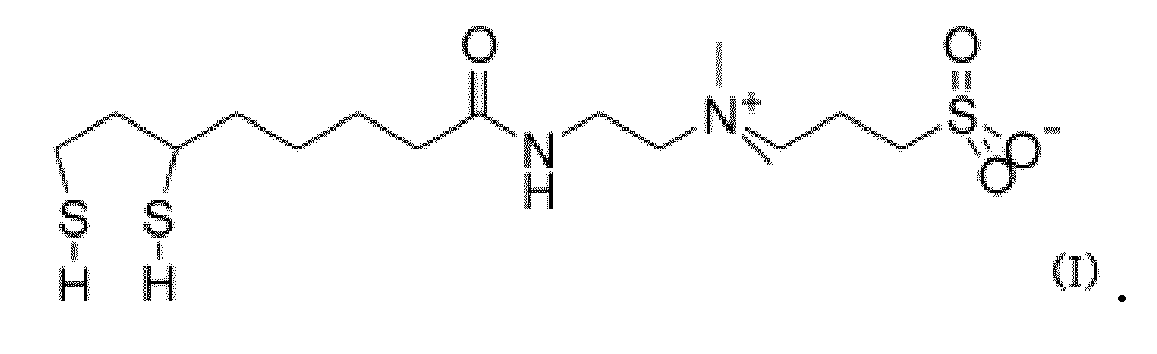
- In another aspect of the present invention, there is provided an amphoteric ion molecule of Formula (I) below:

- In still another aspect of the present invention, there is provided a method of preparing the amphoteric ion molecule of Formula (I) above, as shown in
FIG. 2 . - In still another aspect of the present invention, the present invention is characterized in that amphoteric ion molecules are bonded to a surface to reduce the non-specific adsorption of the surface.
- In the present invention, the term "surface" refers to a surface to which amphoteric ion molecules are bonded by various mechanical and chemical methods. For example, the surface may be a surface on which a glass thin film or a polymer thin film that can be bonded with amphoteric ion molecules are formed.
- In an embodiment of the present invention, the surface may be a surface of a sensor. Here, the sensor may be a sensor for in vivo specific protein (for example, myoglobin, used to detect cardiac seizure) or a sensor for specific cell (for example, immune cells).
- As described above, since the sensor provided on the surface thereof with amphoteric ion molecules has low non-specific bonding force, the non-specific adsorption of the sensor to other in vivo proteins is minimized, thus greatly increasing a signal/noise ratio that is one of the most important factors of a sensor.
- In the surface of a nanoparticle modified with an amphoteric ion molecule, the properties of the functional group of the molecule are not changed under the condition of a wide pH range or a high salt concentration. As a result, the amount of electric charge of the amphoteric ion molecule can be maintained at approximately 0, and the non-specific adsorption of the nanoparticle to proteins and phospholipids can be minimized.
-
-
FIG. 1 is a schematic view showing an amphoteric ion molecule that is used as a surface modification molecule. -
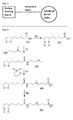
FIG. 2 shows a process of synthesizing an amphoteric ion molecule, wherein (i) carbonyl diimidazole, N,N-dimethylethylenediamine / anhydrous chloroform; (ii) 1,3-propanesultone / anhydrous chloroform; and (iii) sodium borohydride / deionized water. -
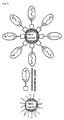
FIG. 3 is a schematic view showing a process of preparing a nanoparticle surface-modified with amphoteric ion molecules, wherein the surface-modified nanoparticle is prepared by surface-substituting the nanoparticle synthesized in an organic solvent with amphoteric ion molecules. -
FIG. 4 is a schematic view showing a process of preparing a surface-modified nanoparticle, wherein the surface-modified nanoparticle is prepared by surface-substituting the nanoparticle synthesized in an organic solvent with carboxy-containing molecules. -
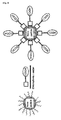
FIG. 5 is a schematic view showing a process of preparing a surface-modified nanoparticle, wherein the surface-modified nanoparticle is prepared by simultaneously surface-substituting the nanoparticle synthesized in an organic solvent with amphoteric ion molecules and carboxy-containing molecules. -
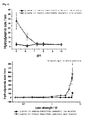
FIG. 6 shows the size of a hydrated quantum dot according to the pH change (pH: 5 ~ 10) at the left side ofFIG. 6 , and shows the size of a hydrated quantum dot according to the salt concentration change (ionic strength: 0.05 ~ 5 M) at the right side thereof, wherein, as the size of the hydrated quantum dot increases, the hydrated quantum dot becomes unstable, so the hydrated quantum dot is not uniformly dispersed in an aqueous solution to be agglomerated, thereby decreasing the possibility of application of the quantum dot. -
FIG. 7 is a fluorescence microscope photograph for observing nonspecific bonding between a quantum dot and a polymer bead, wherein the scale bar = 5 µ m. -
FIG. 8 is a confocal microscope photograph of a cervical cancer cell cultured with a quantum dot, wherein the green colored portion of the photograph shows a quantum dot, and the scale bar = 20 µ m. -
FIG. 9 shows fluorescence and transmission imaging photographs of biotin-coated polymer beads marked with a quantum dot-streptavidin composite, wherein the yellow colored portion of each of the photographs shows a quantum dot, and is a fluorescent signal which is one of specific optical properties of a quantum dot. - Lipoic acid ((1) of
FIG. 2 ) was dissolved in anhydrous chloroform, 1.3 equivalents of carbonyldiimidazole was added thereto, the solution was stirred for 5 minutes at room temperature under a vacuum atmosphere, and then a reaction solution layer, excluding the remaining carbonyldiimidazole, was separated. Subsequently, N,N-dimethylethylenediamine corresponding to 5 equivalents of lipoic acid was dissolved in anhydrous chloroform under a nitrogen atmosphere, cooled by an ice bath, and then added to the above solution to obtain a mixed solution. The mixed solution was stirred for 1 hour to obtain a reaction solution (resultant product ((3) ofFIG. 2 )). The reaction solution was purified with a 10% NaCl aqueous solution three times and purified with distilled water one time. Then, 1,3-propanesultone was added to the purified reaction solution, and this mixed solution was stirred at room temperature for 24 hours to obtain a solid (resultant product ((4) ofFIG. 2 )), and then the obtained solid was filtered. The filtered solid was dissolved in an aqueous solution, its pH having been adjusted to 9 by using 2N NaOH, and then 2 equivalents of NaBH4 were added to the aqueous solution, and then this mixed solution was stirred at room temperature for 4 hours to synthesize an amphoteric ion ligand ((5) ofFIG. 2 ). The synthesized amphoteric ion ligand was directly used without being purified. - The nanoparticle synthesis method disclosed in the present specification is one of various synthesis methods, and is not limited thereto. Synthesis of a quantum dot, which is one of various types of nanoparticles, was performed as follows. Octadecene and oleylamine was introduced into a round-bottom flask, and then the flask was heated to 100°C while alternately changing between a vacuum state and a nitrogen-injected state, thereby making a nitrogen atmosphere filled with only nitrogen gas. Thereafter, the round-bottom flask was heated to 300°C, and then an octadecene solution containing cadmium (Cd) and selenium (Se) at a ratio of Cd:Se = 1:5 was introduced into the high-temperature flask. Here, the ratio of Cd:Se may be adjusted according to the size of a desired nanoparticle. Thereafter, the flask, which is a reaction vessel, was slowly cooled to obtain nanoparticles dispersed in an organic solvent.
- Nanoparticles synthesized in an organic solvent were dispersed in chloroform. An aqueous solution containing an excessive amount of the above-synthesized amphoteric ion molecules ((5) of
FIG. 2 ) was mixed with the synthesized nanoparticles and then stirred at room temperature. Here, dithiol, which is one of the functional groups of the amphoteric ion molecule, has strong surface bonding force to a nanoparticle (quantum dot) compared to an organic molecule ligand containing phosphonic acid or primary amine as a functional group. Therefore, the organic molecule ligands bonded to the surface of the quantum dot were substituted with the amphoteric ion molecules, and simultaneously the quantum dots were moved to an aqueous solution layer, and thus quantum dots were dispersed in the aqueous solution. Thereafter, a chloroform layer was separated and removed, and only the aqueous solution layer was dialyzed to remove residual ligands.FIG. 3 shows amphoteric ion molecules schematized as inFIG. 1 . As shown inFIG. 3 , the surface bonding region of each of the amphoteric ion molecules is indicated by a square, the connection region thereof is indicated by a wave-shaped line, and the functional group region thereof is indicated by an ellipse. - Nanoparticles synthesized in an organic solvent were dispersed in chloroform. An aqueous solution containing an excessive amount of the above-synthesized molecules having a carboxy group ((2) of
FIG. 2 ) was mixed with the purified quantum dots and then stirred at room temperature. In this case, the organic molecule ligands bonded to the surface of the quantum dot were substituted with the molecules having a carboxy group, and simultaneously the quantum dots were moved to an aqueous solution layer, and thus quantum dots were dispersed in the aqueous solution. Thereafter, a chloroform layer was separated and removed, and only the aqueous solution layer was dialyzed to remove residual ligands.FIG. 4 shows carboxy group-containing molecules schematized as inFIG. 1 . As shown inFIG. 4 , the surface bonding region of each of the carboxy group-containing molecules is indicated by a square, the connection region thereof is indicated by a wave-shaped line, and the function group region thereof is indicated by an ellipse. - Nanoparticles synthesized in an organic solvent were dispersed in chloroform. An aqueous solution containing an excessive amount of the above-synthesized amphoteric ion molecules ((5) of
FIG. 2 ) and molecules having a carboxy group ((2) ofFIG. 2 ) was mixed with the purified quantum dots and then stirred at room temperature. In this case, the organic molecule ligands bonded to the surface of the quantum dot were substituted with both the amphoteric ion molecules and the molecules having a carboxy group, and simultaneously the quantum dots were moved to an aqueous solution layer, and thus quantum dots were dispersed in the aqueous solution. Thereafter, a chloroform layer was separated and removed, and only the aqueous solution layer was dialyzed to remove residual ligands.FIG. 5 shows surface molecules schematized as inFIG. 1 . As shown inFIG. 5 , the surface bonding region of each of the surface molecules is indicated by a square, the connection region thereof is indicated by a wave-shaped line, and the function group region thereof is indicated by an ellipse. - When a nanoparticle is surface-modified with amphoteric ion molecules having a functional group region, the surface-modified nanoparticle exhibits the properties of the functional group region of the amphoteric ion molecule. For this purpose, the size of the hydrated nanoparticle substituted with amphoteric ion molecules as in Example 2, and the size of the hydrated nanoparticle substituted with molecules having a carboxy group (-COOH) as in Example 3 were measured. Here, a quantum dot was used as the nanoparticle. The quantum dot is characterized in that it receives light and then emits light having a specific wavelength. The size of each hydrated quantum dots is about 6 ~ 7 nm when they are uniformly dispersed in a solution.
- In the case (Example 2) of the nanoparticle substituted with amphoteric ion molecules, the change in size of the hydrated nanoparticle according to the changes in pH and salt concentration was rarely observed. However, in the case (Example 3) of the nanoparticle substituted with molecules (control group) having a carboxy group (-COOH) as a functional group region, the change in size of the hydrated nanoparticle according to the changes in pH and salt concentration was clearly observed. As a result, it can be ascertained that amphoteric ion molecules can stabilize the surface of a nanoparticle in wide pH and salt concentration ranges compared to the control group. The fact that the size of the hydrated nanoparticle is maintained constant means that amphoteric ion molecules can effectively disperse and stabilize nanoparticles under various aqueous solution conditions.
-
FIG. 7 shows the result that the non-specific bonding between the nanoparticle (Example 2) substituted with amphoteric ion molecules and polymer beads was weakened due to the surface substitution of amphoteric ion molecules. Generally, in portable substrate-based sensors, such as DNA array assay, Lab on a chip, and the like, the surface of a substrate is coated with biomolecules such as bovine serum albumin in order to reduce the degree of non-specific adsorption. However, non-specific bonding does not completely disappear, and somewhat appears even on the substrate surface treated in this way. - Therefore, the present inventors intended to ascertain whether or not the non-specific adsorption of nanoparticles on the polymer surface realized in a similar manner to above was reduced. First, polymer beads coated with bovine serum albumin were mixed with nanoparticles, residual quantum dots were sufficiently washed, and then the fluorescence of the nanoparticles (that is, quantum dots) non-specifically adsorbed on the surface of the polymer beads was observed by a fluorescence microscope.
- Since the nanoparticles surface-substituted with molecules having a carboxy group (-COOH) as a functional group region are easily adsorbed on the surface of polymer beads, it can be ascertained that the fluorescence of the nanoparticles (that is, quantum dots) adsorbed on the surface of the polymer beads was observed. However, in the case of the quantum dots surface-substituted with amphoteric ion molecules, the fluorescence thereof was barely observed. Consequently, it can be ascertained that, since the nanoparticles were neutrally charged, electrostatic attraction was minimized, and thus the degree of non-specific adsorption was remarkably lowered.
-
FIG. 8 shows confocal microscope photographs of cervical cancer cells respectively treated with the quantum dots (Example 2) surface-substituted with amphoteric ion molecules and the quantum dots (Example 3) surface-substituted with molecules having a carboxy group. Here, the green colored portion of each of the photographs is a portion at which the fluorescence of the quantum dots was observed. Each of the photographs selectively shows only the fluorescence emitted from the cells. - Similarly to the result mentioned in Example 6 above, it was ascertained that the non-specific adsorption of the nanoparticles (Example 2) substituted with amphoteric ion molecules to the polymer beads was reduced. Consequently, it can be ascertained that the fluorescence of quantum dots on the inner and outer walls of the cells was not observed when the quantum dots were substituted with amphoteric ion molecules compared to when the quantum dots (control group) were substituted with molecules having a carboxy group.
- In the case of the nanoparticles substituted with amphoteric ion molecules, endocytosis due to the non-specific adsorption of the nanopaticles on the inner and outer walls of the cells was not observed because interaction between the nanoparticles and the cells can be controlled by the electrostatic attraction therebetween. However, in the case of the nanoparticles (control group) substituted with molecules having a carboxy group, the nonspecific bonding of the nanoparticles to the cells was observed, and thus the endocytosis was also observed. From these results, it can be ascertained that, when the degree of non-specific adsorption of quantum dots to cells is remarkably lowered by using amphoteric ion molecules, these amphoteric ion molecules can be used in nanoparticle surface modification technologies for developing bioimaging technologies.
- The nanoparticle (Example 4) surface-substituted with both molecules having a carboxy group and amphoteric ion molecules may be formed into a composite by strong covalent bonding due to the biological conjunction with streptavidin that is one of biomolecules. In the present specification, a quantum dot was given as an example of nanoparticles, and streptoavidin was given as an example of a protein. Therefore, in the present invention, a quantum dot-streptoavidin composite was synthesized by the biological junction of a quantum dot and streptoavidin.
FIG. 9 shows fluorescence and transmission imaging photographs of biotin-coated polymer beads mixed with a quantum dot-streptavidin composite. Strong intermolecular attraction (for example, bonding between an antibody and an antigen), that is, strong attraction force due to multiple hydrogen bonds, is applied between streptavidin and biotin. Therefore, biotin-coated polymer beads can be marked with streptavidin, and thus can also be marked with a quantum dot-streptavidin composite. When the quantum dots (control group) synthesized in Example 4 were mixed with biotin-coated polymer beads without being formed into quantum dot-streptavidin composites, the degree of non-specific adsorption of the quantum dots became low due to amphoteric ion molecules of the surface of the quantum dots, and thus fluorescence of the quantum dots was not observed.
Claims (34)
- A nanoparticle, comprising both an anion and a cation formed on a surface thereof.
- The nanoparticle of claim 1, wherein the nanoparticle is surface-substituted with the amphoteric ion molecule.
- The nanoparticle of claim 1 or 2, wherein the nanoparticle is electrically neutral.
- The nanoparticle of any one of claims 1 to 3, wherein the nanoparticle is a nanosized particle having a diameter of 1000 nm or less.
- The nanoparticle of claim 4, wherein the nanoparticle has a diameter of 0.5 ~ 10 µm.
- The nanoparticle of any one of claims 1 to 5, wherein the nanoparticle is made of a metal, a nonmetal, ceramic, plastic, a polymer, a biological material, a semiconductor, a quantum dot or at least one composite material thereof.
- The nanoparticle of any one of claims 1 to 6, wherein the nanoparticle is a nanoparticle having optical properties.
- The nanoparticle of any one of claims 1 to 7, wherein the nanoparticle is a fill-type nanoparticle whose inside is filled, or a cavity-type nanoparticle whose inside is at least partially provided with a space.
- The nanoparticle of claim 2, wherein the amphoteric ion molecule is a monomer compound, an oligomer compound or a polymer compound.
- The nanoparticle of claim 2, wherein a length of the amphoteric ion molecule is smaller than an outer diameter of the nanoparticle.
- The nanoparticle of claim 2, wherein the amphoteric ion molecule includes an anion and a cation formed on one side thereof and includes a nanoparticle bond site formed on the other side thereof.
- The nanoparticle of claim 2, wherein the amphoteric ion molecule includes a surface bonding region bonded with a nanoparticle, a connecting region, and a functional group region.
- The nanoparticle of claim 12, wherein the surface bonding region is selected from the group consisting of a thiol group (-SH), dithiol groups (-CS2, -PS2, - CH (SH) (CH2CH2SH)), amine groups (-NH2, -NH), a phosphonate group (-PO3H), a phosphide group (-P), a phosphine oxide group (-P=O), a carboxy group (-COOH), a hydroxy group (-OH), an imidazole group, and a diol group.
- The nanoparticle of claim 12 or 13, wherein the connecting region is at least one selected from the group consisting of an amide bond (-CONH-), a carbon bond (-(CH2)n-), polyethylene glycol (-(CH2CH2O)n-), and triazole.
- The nanoparticle of any one of claims 12 to 14, wherein the functional group region is an amphoteric ion selected from the group consisting of a sulfobetaine group (-N+(CH3)2CH2CH2CH2SO3-), a carbobetaine group (-N+(CH3)2CH2CH2CH2COO-), and a phosphorylcholine group (-PO4 CH2CH2N+).
- The nanoparticle of claim 2, wherein the amphoteric ion molecule is a compound of Formula (I) below:
- A method of preparing a nanoparticle surface-modified with an amphoteric ion molecule by reacting a nanoparticle with an amphoteric ion molecule.
- The method of claim 17, wherein, before the reaction with the amphoteric ion molecule, the nanoparticle is provided on a surface thereof with a ligand that can be substituted with the amphoteric ion molecule, and the ligand is substituted with the amphoteric ion molecule.
- The method of claim 17 or 18, wherein, before the reaction with the amphoteric ion molecule, the nanoparticle is a nanoparticle dispersed in a dispersion medium selected from among an organic solvent, water and a mixture thereof.
- The nanoparticle of any one of claims 17 to 19, wherein, a nanoparticle, surface-modified with an amphoteric ion molecule of Formula (I) below and a molecule having a carboxy group:

- A method of controlling a nonspecific bonding of a nanoparticle by forming an amphoteric ion molecule on a surface of the nanoparticle.
- The method of claim 21, wherein the nanoparticle is a quantum dot.
- A nanocomposite, comprising: a nanoparticle including an amphoteric ion molecule formed on a surface thereof; and a specific bonding material bonded with the nanoparticle.
- The nanocomposite of claim 23, wherein the specific bonding material is specifically bonded with an external material of the nanoparticle.
- The nanocomposite of claim 23, wherein the specific bonding material is a specific protein.
- The nanocomposite of claim 23, wherein the specific bonding material is an antigen, an antibody or a probe.
- The nanocomposite of any one of claims 23 to 26, wherein the nanoparticle is a fluorescent nanoparticle.
- The nanocomposite of any one of claims 23 to 27, wherein the nanoparticle is a nanosized carrier including a physiological material, a pharmaceutical material or a pharmaceutical composition.
- The nanocomposite of claim 27, wherein the nanocomposite is a contrast agent or a near-infrared fluorescent agent.
- The nanocomposite of any one of claims 23 to 29, wherein the amphoteric ion molecule is a compound represented by Formula (IV) below:

- An amphoteric ion molecule, having a structure of Formula (I) below:

- A method of preparing the compound of claim 31, represented by Formula (I) below, by reacting a compound of Formula (IV) below with sodium borohydride:


- The method of claim 32, wherein the compound of Formula (IV) above is prepared by reacting a compound of Formula (II) below with a compound of Formula (III) below:


- A method of surface-modifying a sensor by forming an amphoteric ion molecule on a surface of the sensor to reduce the non-specific adsorption of the surface of the sensor.
Applications Claiming Priority (2)
| Application Number | Priority Date | Filing Date | Title |
|---|---|---|---|
| KR1020100106731A KR101276693B1 (en) | 2010-10-29 | 2010-10-29 | Synthesis of zwitterion functionalized surface molecules for nanoparticles and the applications thereof |
| PCT/KR2011/008116 WO2012057556A2 (en) | 2010-10-29 | 2011-10-28 | Synthesis of molecular sieves for modifying the surfaces of nanoparticles having amphoteric ions, and application thereof |
Publications (3)
| Publication Number | Publication Date |
|---|---|
| EP2634135A2 true EP2634135A2 (en) | 2013-09-04 |
| EP2634135A4 EP2634135A4 (en) | 2014-11-26 |
| EP2634135B1 EP2634135B1 (en) | 2016-04-27 |
Family
ID=45994583
Family Applications (1)
| Application Number | Title | Priority Date | Filing Date |
|---|---|---|---|
| EP11836648.3A Active EP2634135B1 (en) | 2010-10-29 | 2011-10-28 | Synthesis of molecular sieves for modifying the surfaces of nanoparticles having amphoteric ions, and application thereof |
Country Status (6)
| Country | Link |
|---|---|
| US (1) | US9221752B2 (en) |
| EP (1) | EP2634135B1 (en) |
| JP (1) | JP5714115B2 (en) |
| KR (1) | KR101276693B1 (en) |
| CN (1) | CN103189306B (en) |
| WO (1) | WO2012057556A2 (en) |
Families Citing this family (26)
| Publication number | Priority date | Publication date | Assignee | Title |
|---|---|---|---|---|
| EP2672269A1 (en) * | 2012-06-07 | 2013-12-11 | Solarwell | Enhanced affinity ligands |
| KR101459192B1 (en) * | 2012-11-28 | 2014-11-10 | 연세대학교 산학협력단 | Extraterritorially controllable on-off pulsed drug carrier using NIR laser, method for producing the same, and drug delivery system |
| KR101522722B1 (en) * | 2013-09-27 | 2015-05-26 | 에이스틴 주식회사 | Aggregates Comprising Ionic Organic/Inorganic Hybrid Particle, Cosmetic Composition Comprising the Aggregates, and Method for Preparing the Same |
| CN105273711B (en) * | 2014-07-25 | 2017-08-08 | 中国科学院苏州纳米技术与纳米仿生研究所 | A kind of surface modifying method of nano-particle material |
| CN104231181B (en) * | 2014-08-22 | 2017-10-03 | 中科院广州化学有限公司南雄材料生产基地 | A kind of comb shape polyelectrolyte type dispersant of dispersing nanoparticles and preparation method thereof |
| US10520486B2 (en) * | 2015-02-19 | 2019-12-31 | National University Corporation Kyoto Institute Of Technology | Method for suppressing protein adsorption |
| US10920137B2 (en) * | 2015-07-31 | 2021-02-16 | Avantama Ag | Luminescent crystals and manufacturing thereof |
| CN106928997A (en) * | 2015-12-29 | 2017-07-07 | 有研稀土新材料股份有限公司 | Light-emitting particles and the luminescent device comprising it |
| JP6830965B2 (en) * | 2016-12-22 | 2021-02-17 | 住友化学株式会社 | Compositions, films, laminated structures, light emitting devices, and displays |
| CN110114441B (en) * | 2016-12-22 | 2022-09-13 | 住友化学株式会社 | Composition, film, laminated structure, light-emitting device, and display |
| EP3653685B1 (en) * | 2017-07-11 | 2023-09-13 | TCL Technology Group Corporation | Quantum dot preparation method |
| WO2019074803A1 (en) * | 2017-10-11 | 2019-04-18 | The Government Of The United States Of America, As Represented By The Secretary Of The Navy | Fabrication of luminescent quantum dot thiol-yne nanocomposites with tailorable optical, thermal, and mechanical properties |
| CN108298557A (en) * | 2018-01-03 | 2018-07-20 | 中国石油天然气股份有限公司 | Amphiphilic molecular sieve containing lipophilic groups on the outside and hydrophilic groups on the inside and preparation method thereof |
| CN108298558A (en) | 2018-01-03 | 2018-07-20 | 中国石油天然气股份有限公司 | Amphiphilic molecular sieve containing hydrophilic groups on the outside and lipophilic groups on the inside and preparation method thereof |
| CN108559513B (en) * | 2018-05-30 | 2021-06-11 | 上海双洳生物科技有限公司 | Near-infrared quantum dot with core-shell structure and preparation method thereof, and ligand functionalized quantum dot and preparation method thereof |
| CL2018001473A1 (en) * | 2018-06-01 | 2019-10-25 | Univ Tecnica Federico Santa Maria Utfsm | Kit and methods to evaluate the adsorbent properties of the surface of a material |
| KR102712138B1 (en) * | 2018-06-14 | 2024-09-27 | 삼성전자주식회사 | Quantum dots and production method thereof |
| KR102040083B1 (en) | 2018-09-06 | 2019-11-05 | 숭실대학교산학협력단 | Supramolecular structure and method of manufacturing the same and self healing elastomer |
| KR102046907B1 (en) * | 2019-01-16 | 2019-11-20 | 주식회사 신아티앤씨 | Quantum dots in which ionic liquids are ion-bonded and their preparation method |
| CN109607560B (en) * | 2019-01-17 | 2022-08-09 | 大连理工大学 | Lamellar heteroatom molecular sieve and green synthesis method thereof |
| WO2020148912A1 (en) * | 2019-01-18 | 2020-07-23 | シャープ株式会社 | Light emitting element, electroluminescent device, and manufacturing method of light emitting element |
| JP7256521B2 (en) * | 2019-02-28 | 2023-04-12 | 国立大学法人福島大学 | Metal nanoparticle-containing resin and method for producing metal nanoparticle-containing resin |
| EP3831909A1 (en) * | 2019-12-03 | 2021-06-09 | Université de Strasbourg | Luminescent zwitterionic polymeric nanoparticles |
| WO2021240655A1 (en) * | 2020-05-26 | 2021-12-02 | シャープ株式会社 | Light-emitting element, and method for manufacturing light-emitting element |
| WO2024136511A1 (en) * | 2022-12-22 | 2024-06-27 | 가톨릭대학교 산학협력단 | Synthesis of surface-modified molecular sieve for cytoplasmic nanoparticle and application thereof |
| KR20250120832A (en) | 2024-02-02 | 2025-08-11 | 한양대학교 산학협력단 | Accurate focusing method for fluorescence objects |
Family Cites Families (15)
| Publication number | Priority date | Publication date | Assignee | Title |
|---|---|---|---|---|
| KR100555584B1 (en) | 2003-06-10 | 2006-03-03 | 좌용호 | Method of manufacturing metal nanoparticles using electrolysis |
| US20070154709A1 (en) * | 2004-01-27 | 2007-07-05 | Matthias Koch | Nanoparticles |
| KR100555594B1 (en) | 2004-03-23 | 2006-03-03 | 김원일 | Water Purification System of River Using Hydropower |
| KR100652251B1 (en) | 2004-09-03 | 2006-12-01 | 학교법인연세대학교 | Surface Modification of Nanoparticles Using Multifunctional Ligands and Methods of Manufacturing Water-Soluble Nanoparticles |
| KR100790948B1 (en) | 2006-05-25 | 2008-01-03 | 삼성전기주식회사 | Method for producing metal nanoparticles and metal nanoparticles produced thereby |
| US10087082B2 (en) | 2006-06-06 | 2018-10-02 | Florida State University Research Foundation, Inc. | Stabilized silica colloid |
| KR100836659B1 (en) | 2006-07-06 | 2008-06-10 | 삼성전기주식회사 | Method for producing metal and metal oxide nanoparticles |
| KR100724807B1 (en) | 2006-08-21 | 2007-06-04 | 고려대학교 산학협력단 | Method for preparing tin oxide nanoparticles and tin oxide nanoparticles produced thereby, and method for preparing metal oxide doped tin oxide nanoparticles and metal doped tin oxide nanoparticles produced thereby |
| ES2534215T3 (en) | 2006-08-30 | 2015-04-20 | Oerlikon Metco Ag, Wohlen | Plasma spray device and a method for introducing a liquid precursor into a plasma gas system |
| ATE541902T1 (en) * | 2006-12-20 | 2012-02-15 | Ct Fuer Angewandte Nanotechnologie Can Gmbh | SURFACE TREATMENT PROCESS FOR NANOPARTICLES |
| KR101365141B1 (en) | 2007-03-06 | 2014-02-20 | 한국생산기술연구원 | Method for the preparation of size and density controlled metal nanoparticle catalysts for carbon nanotube and metal nanoparticle catalysts prepared by the same |
| KR100820231B1 (en) | 2007-04-30 | 2008-04-08 | 삼성전기주식회사 | Metal Nanoparticle Synthesis Reactor and Manufacturing Method of Metal Nanoparticles Using the Same |
| KR100861355B1 (en) | 2007-06-27 | 2008-10-01 | 성균관대학교산학협력단 | Apparatus for producing metal nanoparticles using an electroless plating solution and a method for producing metal nanoparticles using the same |
| KR101014246B1 (en) * | 2008-07-03 | 2011-02-16 | 포항공과대학교 산학협력단 | Peha susceptible metal nanoparticles and methods for their preparation. |
| BRPI0923859B8 (en) | 2008-12-29 | 2022-10-25 | Gen Electric | composition of diagnostic agent, and, method for the production of nanoparticles |
-
2010
- 2010-10-29 KR KR1020100106731A patent/KR101276693B1/en active Active
-
2011
- 2011-10-28 EP EP11836648.3A patent/EP2634135B1/en active Active
- 2011-10-28 WO PCT/KR2011/008116 patent/WO2012057556A2/en not_active Ceased
- 2011-10-28 JP JP2013536520A patent/JP5714115B2/en active Active
- 2011-10-28 US US13/881,844 patent/US9221752B2/en active Active
- 2011-10-28 CN CN201180052679.3A patent/CN103189306B/en active Active
Non-Patent Citations (2)
| Title |
|---|
| See also references of WO2012057556A2 * |
| THOMAS PONS ET AL: "Hydrodynamic sizes of functional hydrophilic QDs", PROCEEDINGS OF SPIE, vol. 6096, 27 March 2006 (2006-03-27), page 60961H, XP055146083, ISSN: 0277-786X, DOI: 10.1117/12.641767 * |
Also Published As
| Publication number | Publication date |
|---|---|
| JP5714115B2 (en) | 2015-05-07 |
| US9221752B2 (en) | 2015-12-29 |
| KR101276693B1 (en) | 2013-06-19 |
| US20140051883A1 (en) | 2014-02-20 |
| EP2634135B1 (en) | 2016-04-27 |
| JP2014505657A (en) | 2014-03-06 |
| KR20120046865A (en) | 2012-05-11 |
| WO2012057556A2 (en) | 2012-05-03 |
| WO2012057556A3 (en) | 2012-09-13 |
| EP2634135A4 (en) | 2014-11-26 |
| CN103189306A (en) | 2013-07-03 |
| CN103189306B (en) | 2016-10-05 |
Similar Documents
| Publication | Publication Date | Title |
|---|---|---|
| EP2634135B1 (en) | Synthesis of molecular sieves for modifying the surfaces of nanoparticles having amphoteric ions, and application thereof | |
| Aili et al. | Bioresponsive peptide–inorganic hybrid nanomaterials | |
| Neouze | Nanoparticle assemblies: main synthesis pathways and brief overview on some important applications | |
| Tan et al. | A fluorescent turn-on detection scheme for α-fetoprotein using quantum dots placed in a boronate-modified molecularly imprinted polymer with high affinity for glycoproteins | |
| Goryacheva et al. | Synthesis and bioanalytical applications of nanostructures multiloaded with quantum dots | |
| US8822955B2 (en) | Polymer-conjugated quantum dots and methods of making the same | |
| JP2007512522A (en) | New hybrid probe with strong light emission | |
| Baghdasaryan et al. | Facile synthesis, size-separation, characterization, and antimicrobial properties of thiolated copper clusters | |
| Maldiney et al. | Controlling aminosilane layer thickness to extend the plasma half-life of stealth persistent luminescence nanoparticles in vivo | |
| Amiri et al. | Application of ratiometric fluorescence sensor-based microwave-assisted synthesized CdTe quantum dots and mesoporous structured epitope-imprinted polymers for highly efficient determination of tyrosine phosphopeptide | |
| Kainz et al. | Synthesis of functionalized, dispersible carbon-coated cobalt nanoparticles for potential biomedical applications | |
| JP4107873B2 (en) | Luminescent fine particles | |
| Cheng et al. | Interface engineering of perovskite nanocrystals: challenges and opportunities for biological imaging and detection | |
| Dembele et al. | Zwitterionic silane copolymer for ultra-stable and bright biomolecular probes based on fluorescent quantum dot nanoclusters | |
| Csapó et al. | Gold nanohybrid systems with tunable fluorescent feature: Interaction of cysteine and cysteine-containing peptides with gold in two-and three-dimensional systems | |
| US20110177602A1 (en) | Composite Structure | |
| US7875352B2 (en) | Stabilized inorganic nanoparticle, stabilized inorganic nanoparticle material, method for producing stabilized inorganic nanoparticle, and method for using stabilized inorganic nanoparticle | |
| Schuster et al. | S-layer proteins as key components of a versatile molecular construction kit for biomedical nanotechnology | |
| KR101802325B1 (en) | Nanostructures for Inducing BRET and BRET System Using the Same | |
| Pourali et al. | Ultra-sensitive facile CdS nanocrystals-based electrochemical biosensor to detect myocardial infarction marker troponin | |
| KR101836226B1 (en) | Manufacturing process of biochip of high efficiency using gold nanoparticle and polymer coating and biochip of high efficiency the same | |
| Guo et al. | Construction of metal hydrate-based amorphous magnetic nanosheets for enhanced protein enrichment and immobilization | |
| Karaman et al. | Opportunities and Challenges of Silicon‐based Nanoparticles for Drug Delivery and Imaging | |
| JP2011184406A (en) | Quantum dot complex, vesicle containing the quantum dot complex and their production method | |
| KR20240100282A (en) | Synthesis of surface ligands for the cytosolic delivery of nanoparticles and the applications thereof |
Legal Events
| Date | Code | Title | Description |
|---|---|---|---|
| PUAI | Public reference made under article 153(3) epc to a published international application that has entered the european phase |
Free format text: ORIGINAL CODE: 0009012 |
|
| 17P | Request for examination filed |
Effective date: 20130430 |
|
| AK | Designated contracting states |
Kind code of ref document: A2 Designated state(s): AL AT BE BG CH CY CZ DE DK EE ES FI FR GB GR HR HU IE IS IT LI LT LU LV MC MK MT NL NO PL PT RO RS SE SI SK SM TR |
|
| DAX | Request for extension of the european patent (deleted) | ||
| RIN1 | Information on inventor provided before grant (corrected) |
Inventor name: PARK, JOONHYUCK Inventor name: KIM, SUNGJEE Inventor name: NAM, JUTAEK Inventor name: JIN, HO |
|
| A4 | Supplementary search report drawn up and despatched |
Effective date: 20141028 |
|
| RIC1 | Information provided on ipc code assigned before grant |
Ipc: C07C 323/41 20060101ALI20141022BHEP Ipc: C07C 319/06 20060101ALI20141022BHEP Ipc: A61K 49/00 20060101ALI20141022BHEP Ipc: B82B 3/00 20060101AFI20141022BHEP Ipc: A61K 49/18 20060101ALI20141022BHEP Ipc: B82B 1/00 20060101ALI20141022BHEP |
|
| 17Q | First examination report despatched |
Effective date: 20150608 |
|
| GRAP | Despatch of communication of intention to grant a patent |
Free format text: ORIGINAL CODE: EPIDOSNIGR1 |
|
| INTG | Intention to grant announced |
Effective date: 20151102 |
|
| GRAS | Grant fee paid |
Free format text: ORIGINAL CODE: EPIDOSNIGR3 |
|
| GRAA | (expected) grant |
Free format text: ORIGINAL CODE: 0009210 |
|
| AK | Designated contracting states |
Kind code of ref document: B1 Designated state(s): AL AT BE BG CH CY CZ DE DK EE ES FI FR GB GR HR HU IE IS IT LI LT LU LV MC MK MT NL NO PL PT RO RS SE SI SK SM TR |
|
| REG | Reference to a national code |
Ref country code: GB Ref legal event code: FG4D |
|
| REG | Reference to a national code |
Ref country code: CH Ref legal event code: EP |
|
| REG | Reference to a national code |
Ref country code: AT Ref legal event code: REF Ref document number: 794578 Country of ref document: AT Kind code of ref document: T Effective date: 20160515 |
|
| REG | Reference to a national code |
Ref country code: IE Ref legal event code: FG4D |
|
| REG | Reference to a national code |
Ref country code: DE Ref legal event code: R096 Ref document number: 602011026021 Country of ref document: DE |
|
| REG | Reference to a national code |
Ref country code: LT Ref legal event code: MG4D |
|
| REG | Reference to a national code |
Ref country code: NL Ref legal event code: MP Effective date: 20160427 |
|
| REG | Reference to a national code |
Ref country code: AT Ref legal event code: MK05 Ref document number: 794578 Country of ref document: AT Kind code of ref document: T Effective date: 20160427 |
|
| PG25 | Lapsed in a contracting state [announced via postgrant information from national office to epo] |
Ref country code: NL Free format text: LAPSE BECAUSE OF FAILURE TO SUBMIT A TRANSLATION OF THE DESCRIPTION OR TO PAY THE FEE WITHIN THE PRESCRIBED TIME-LIMIT Effective date: 20160427 |
|
| PG25 | Lapsed in a contracting state [announced via postgrant information from national office to epo] |
Ref country code: NO Free format text: LAPSE BECAUSE OF FAILURE TO SUBMIT A TRANSLATION OF THE DESCRIPTION OR TO PAY THE FEE WITHIN THE PRESCRIBED TIME-LIMIT Effective date: 20160727 Ref country code: FI Free format text: LAPSE BECAUSE OF FAILURE TO SUBMIT A TRANSLATION OF THE DESCRIPTION OR TO PAY THE FEE WITHIN THE PRESCRIBED TIME-LIMIT Effective date: 20160427 Ref country code: LT Free format text: LAPSE BECAUSE OF FAILURE TO SUBMIT A TRANSLATION OF THE DESCRIPTION OR TO PAY THE FEE WITHIN THE PRESCRIBED TIME-LIMIT Effective date: 20160427 Ref country code: PL Free format text: LAPSE BECAUSE OF FAILURE TO SUBMIT A TRANSLATION OF THE DESCRIPTION OR TO PAY THE FEE WITHIN THE PRESCRIBED TIME-LIMIT Effective date: 20160427 |
|
| PG25 | Lapsed in a contracting state [announced via postgrant information from national office to epo] |
Ref country code: HR Free format text: LAPSE BECAUSE OF FAILURE TO SUBMIT A TRANSLATION OF THE DESCRIPTION OR TO PAY THE FEE WITHIN THE PRESCRIBED TIME-LIMIT Effective date: 20160427 Ref country code: PT Free format text: LAPSE BECAUSE OF FAILURE TO SUBMIT A TRANSLATION OF THE DESCRIPTION OR TO PAY THE FEE WITHIN THE PRESCRIBED TIME-LIMIT Effective date: 20160829 Ref country code: SE Free format text: LAPSE BECAUSE OF FAILURE TO SUBMIT A TRANSLATION OF THE DESCRIPTION OR TO PAY THE FEE WITHIN THE PRESCRIBED TIME-LIMIT Effective date: 20160427 Ref country code: ES Free format text: LAPSE BECAUSE OF FAILURE TO SUBMIT A TRANSLATION OF THE DESCRIPTION OR TO PAY THE FEE WITHIN THE PRESCRIBED TIME-LIMIT Effective date: 20160427 Ref country code: GR Free format text: LAPSE BECAUSE OF FAILURE TO SUBMIT A TRANSLATION OF THE DESCRIPTION OR TO PAY THE FEE WITHIN THE PRESCRIBED TIME-LIMIT Effective date: 20160728 Ref country code: RS Free format text: LAPSE BECAUSE OF FAILURE TO SUBMIT A TRANSLATION OF THE DESCRIPTION OR TO PAY THE FEE WITHIN THE PRESCRIBED TIME-LIMIT Effective date: 20160427 Ref country code: AT Free format text: LAPSE BECAUSE OF FAILURE TO SUBMIT A TRANSLATION OF THE DESCRIPTION OR TO PAY THE FEE WITHIN THE PRESCRIBED TIME-LIMIT Effective date: 20160427 Ref country code: LV Free format text: LAPSE BECAUSE OF FAILURE TO SUBMIT A TRANSLATION OF THE DESCRIPTION OR TO PAY THE FEE WITHIN THE PRESCRIBED TIME-LIMIT Effective date: 20160427 |
|
| PG25 | Lapsed in a contracting state [announced via postgrant information from national office to epo] |
Ref country code: BE Free format text: LAPSE BECAUSE OF FAILURE TO SUBMIT A TRANSLATION OF THE DESCRIPTION OR TO PAY THE FEE WITHIN THE PRESCRIBED TIME-LIMIT Effective date: 20160427 Ref country code: IT Free format text: LAPSE BECAUSE OF FAILURE TO SUBMIT A TRANSLATION OF THE DESCRIPTION OR TO PAY THE FEE WITHIN THE PRESCRIBED TIME-LIMIT Effective date: 20160427 |
|
| REG | Reference to a national code |
Ref country code: DE Ref legal event code: R097 Ref document number: 602011026021 Country of ref document: DE |
|
| PG25 | Lapsed in a contracting state [announced via postgrant information from national office to epo] |
Ref country code: RO Free format text: LAPSE BECAUSE OF FAILURE TO SUBMIT A TRANSLATION OF THE DESCRIPTION OR TO PAY THE FEE WITHIN THE PRESCRIBED TIME-LIMIT Effective date: 20160427 Ref country code: DK Free format text: LAPSE BECAUSE OF FAILURE TO SUBMIT A TRANSLATION OF THE DESCRIPTION OR TO PAY THE FEE WITHIN THE PRESCRIBED TIME-LIMIT Effective date: 20160427 Ref country code: EE Free format text: LAPSE BECAUSE OF FAILURE TO SUBMIT A TRANSLATION OF THE DESCRIPTION OR TO PAY THE FEE WITHIN THE PRESCRIBED TIME-LIMIT Effective date: 20160427 Ref country code: SK Free format text: LAPSE BECAUSE OF FAILURE TO SUBMIT A TRANSLATION OF THE DESCRIPTION OR TO PAY THE FEE WITHIN THE PRESCRIBED TIME-LIMIT Effective date: 20160427 Ref country code: CZ Free format text: LAPSE BECAUSE OF FAILURE TO SUBMIT A TRANSLATION OF THE DESCRIPTION OR TO PAY THE FEE WITHIN THE PRESCRIBED TIME-LIMIT Effective date: 20160427 |
|
| PG25 | Lapsed in a contracting state [announced via postgrant information from national office to epo] |
Ref country code: SM Free format text: LAPSE BECAUSE OF FAILURE TO SUBMIT A TRANSLATION OF THE DESCRIPTION OR TO PAY THE FEE WITHIN THE PRESCRIBED TIME-LIMIT Effective date: 20160427 |
|
| PLBE | No opposition filed within time limit |
Free format text: ORIGINAL CODE: 0009261 |
|
| STAA | Information on the status of an ep patent application or granted ep patent |
Free format text: STATUS: NO OPPOSITION FILED WITHIN TIME LIMIT |
|
| 26N | No opposition filed |
Effective date: 20170130 |
|
| PG25 | Lapsed in a contracting state [announced via postgrant information from national office to epo] |
Ref country code: SI Free format text: LAPSE BECAUSE OF FAILURE TO SUBMIT A TRANSLATION OF THE DESCRIPTION OR TO PAY THE FEE WITHIN THE PRESCRIBED TIME-LIMIT Effective date: 20160427 |
|
| REG | Reference to a national code |
Ref country code: CH Ref legal event code: PL |
|
| GBPC | Gb: european patent ceased through non-payment of renewal fee |
Effective date: 20161028 |
|
| REG | Reference to a national code |
Ref country code: IE Ref legal event code: MM4A |
|
| REG | Reference to a national code |
Ref country code: FR Ref legal event code: ST Effective date: 20170630 |
|
| PG25 | Lapsed in a contracting state [announced via postgrant information from national office to epo] |
Ref country code: FR Free format text: LAPSE BECAUSE OF NON-PAYMENT OF DUE FEES Effective date: 20161102 Ref country code: LI Free format text: LAPSE BECAUSE OF NON-PAYMENT OF DUE FEES Effective date: 20161031 Ref country code: GB Free format text: LAPSE BECAUSE OF NON-PAYMENT OF DUE FEES Effective date: 20161028 Ref country code: CH Free format text: LAPSE BECAUSE OF NON-PAYMENT OF DUE FEES Effective date: 20161031 |
|
| PG25 | Lapsed in a contracting state [announced via postgrant information from national office to epo] |
Ref country code: LU Free format text: LAPSE BECAUSE OF NON-PAYMENT OF DUE FEES Effective date: 20161028 |
|
| PG25 | Lapsed in a contracting state [announced via postgrant information from national office to epo] |
Ref country code: IE Free format text: LAPSE BECAUSE OF NON-PAYMENT OF DUE FEES Effective date: 20161028 |
|
| PG25 | Lapsed in a contracting state [announced via postgrant information from national office to epo] |
Ref country code: CY Free format text: LAPSE BECAUSE OF FAILURE TO SUBMIT A TRANSLATION OF THE DESCRIPTION OR TO PAY THE FEE WITHIN THE PRESCRIBED TIME-LIMIT Effective date: 20160427 Ref country code: HU Free format text: LAPSE BECAUSE OF FAILURE TO SUBMIT A TRANSLATION OF THE DESCRIPTION OR TO PAY THE FEE WITHIN THE PRESCRIBED TIME-LIMIT; INVALID AB INITIO Effective date: 20111028 |
|
| PG25 | Lapsed in a contracting state [announced via postgrant information from national office to epo] |
Ref country code: MT Free format text: LAPSE BECAUSE OF NON-PAYMENT OF DUE FEES Effective date: 20161031 Ref country code: MC Free format text: LAPSE BECAUSE OF FAILURE TO SUBMIT A TRANSLATION OF THE DESCRIPTION OR TO PAY THE FEE WITHIN THE PRESCRIBED TIME-LIMIT Effective date: 20160427 Ref country code: IS Free format text: LAPSE BECAUSE OF FAILURE TO SUBMIT A TRANSLATION OF THE DESCRIPTION OR TO PAY THE FEE WITHIN THE PRESCRIBED TIME-LIMIT Effective date: 20160427 Ref country code: MK Free format text: LAPSE BECAUSE OF FAILURE TO SUBMIT A TRANSLATION OF THE DESCRIPTION OR TO PAY THE FEE WITHIN THE PRESCRIBED TIME-LIMIT Effective date: 20160427 |
|
| PG25 | Lapsed in a contracting state [announced via postgrant information from national office to epo] |
Ref country code: BG Free format text: LAPSE BECAUSE OF FAILURE TO SUBMIT A TRANSLATION OF THE DESCRIPTION OR TO PAY THE FEE WITHIN THE PRESCRIBED TIME-LIMIT Effective date: 20160427 |
|
| PG25 | Lapsed in a contracting state [announced via postgrant information from national office to epo] |
Ref country code: AL Free format text: LAPSE BECAUSE OF FAILURE TO SUBMIT A TRANSLATION OF THE DESCRIPTION OR TO PAY THE FEE WITHIN THE PRESCRIBED TIME-LIMIT Effective date: 20160427 Ref country code: TR Free format text: LAPSE BECAUSE OF FAILURE TO SUBMIT A TRANSLATION OF THE DESCRIPTION OR TO PAY THE FEE WITHIN THE PRESCRIBED TIME-LIMIT Effective date: 20160427 |
|
| PGFP | Annual fee paid to national office [announced via postgrant information from national office to epo] |
Ref country code: DE Payment date: 20250922 Year of fee payment: 15 |