EP2631249A2 - Fusion protein having factor ix activity - Google Patents
Fusion protein having factor ix activity Download PDFInfo
- Publication number
- EP2631249A2 EP2631249A2 EP11834623.8A EP11834623A EP2631249A2 EP 2631249 A2 EP2631249 A2 EP 2631249A2 EP 11834623 A EP11834623 A EP 11834623A EP 2631249 A2 EP2631249 A2 EP 2631249A2
- Authority
- EP
- European Patent Office
- Prior art keywords
- fix
- koi
- fusion protein
- seq
- linker
- Prior art date
- Legal status (The legal status is an assumption and is not a legal conclusion. Google has not performed a legal analysis and makes no representation as to the accuracy of the status listed.)
- Granted
Links
Images


Classifications
-
- C—CHEMISTRY; METALLURGY
- C07—ORGANIC CHEMISTRY
- C07K—PEPTIDES
- C07K19/00—Hybrid peptides, i.e. peptides covalently bound to nucleic acids, or non-covalently bound protein-protein complexes
-
- C—CHEMISTRY; METALLURGY
- C12—BIOCHEMISTRY; BEER; SPIRITS; WINE; VINEGAR; MICROBIOLOGY; ENZYMOLOGY; MUTATION OR GENETIC ENGINEERING
- C12N—MICROORGANISMS OR ENZYMES; COMPOSITIONS THEREOF; PROPAGATING, PRESERVING, OR MAINTAINING MICROORGANISMS; MUTATION OR GENETIC ENGINEERING; CULTURE MEDIA
- C12N9/00—Enzymes; Proenzymes; Compositions thereof; Processes for preparing, activating, inhibiting, separating or purifying enzymes
- C12N9/14—Hydrolases (3)
- C12N9/48—Hydrolases (3) acting on peptide bonds (3.4)
- C12N9/50—Proteinases, e.g. Endopeptidases (3.4.21-3.4.25)
- C12N9/64—Proteinases, e.g. Endopeptidases (3.4.21-3.4.25) derived from animal tissue
- C12N9/6421—Proteinases, e.g. Endopeptidases (3.4.21-3.4.25) derived from animal tissue from mammals
- C12N9/6424—Serine endopeptidases (3.4.21)
- C12N9/644—Coagulation factor IXa (3.4.21.22)
-
- C—CHEMISTRY; METALLURGY
- C07—ORGANIC CHEMISTRY
- C07K—PEPTIDES
- C07K14/00—Peptides having more than 20 amino acids; Gastrins; Somatostatins; Melanotropins; Derivatives thereof
- C07K14/435—Peptides having more than 20 amino acids; Gastrins; Somatostatins; Melanotropins; Derivatives thereof from animals; from humans
- C07K14/79—Transferrins, e.g. lactoferrins, ovotransferrins
-
- A—HUMAN NECESSITIES
- A61—MEDICAL OR VETERINARY SCIENCE; HYGIENE
- A61K—PREPARATIONS FOR MEDICAL, DENTAL OR TOILETRY PURPOSES
- A61K38/00—Medicinal preparations containing peptides
- A61K38/16—Peptides having more than 20 amino acids; Gastrins; Somatostatins; Melanotropins; Derivatives thereof
- A61K38/17—Peptides having more than 20 amino acids; Gastrins; Somatostatins; Melanotropins; Derivatives thereof from animals; from humans
- A61K38/36—Blood coagulation or fibrinolysis factors
-
- A—HUMAN NECESSITIES
- A61—MEDICAL OR VETERINARY SCIENCE; HYGIENE
- A61P—SPECIFIC THERAPEUTIC ACTIVITY OF CHEMICAL COMPOUNDS OR MEDICINAL PREPARATIONS
- A61P7/00—Drugs for disorders of the blood or the extracellular fluid
- A61P7/04—Antihaemorrhagics; Procoagulants; Haemostatic agents; Antifibrinolytic agents
-
- C—CHEMISTRY; METALLURGY
- C07—ORGANIC CHEMISTRY
- C07K—PEPTIDES
- C07K14/00—Peptides having more than 20 amino acids; Gastrins; Somatostatins; Melanotropins; Derivatives thereof
- C07K14/435—Peptides having more than 20 amino acids; Gastrins; Somatostatins; Melanotropins; Derivatives thereof from animals; from humans
- C07K14/745—Blood coagulation or fibrinolysis factors
-
- C—CHEMISTRY; METALLURGY
- C07—ORGANIC CHEMISTRY
- C07K—PEPTIDES
- C07K17/00—Carrier-bound or immobilised peptides; Preparation thereof
-
- C—CHEMISTRY; METALLURGY
- C12—BIOCHEMISTRY; BEER; SPIRITS; WINE; VINEGAR; MICROBIOLOGY; ENZYMOLOGY; MUTATION OR GENETIC ENGINEERING
- C12N—MICROORGANISMS OR ENZYMES; COMPOSITIONS THEREOF; PROPAGATING, PRESERVING, OR MAINTAINING MICROORGANISMS; MUTATION OR GENETIC ENGINEERING; CULTURE MEDIA
- C12N15/00—Mutation or genetic engineering; DNA or RNA concerning genetic engineering, vectors, e.g. plasmids, or their isolation, preparation or purification; Use of hosts therefor
- C12N15/09—Recombinant DNA-technology
- C12N15/11—DNA or RNA fragments; Modified forms thereof; Non-coding nucleic acids having a biological activity
- C12N15/62—DNA sequences coding for fusion proteins
-
- C—CHEMISTRY; METALLURGY
- C12—BIOCHEMISTRY; BEER; SPIRITS; WINE; VINEGAR; MICROBIOLOGY; ENZYMOLOGY; MUTATION OR GENETIC ENGINEERING
- C12N—MICROORGANISMS OR ENZYMES; COMPOSITIONS THEREOF; PROPAGATING, PRESERVING, OR MAINTAINING MICROORGANISMS; MUTATION OR GENETIC ENGINEERING; CULTURE MEDIA
- C12N15/00—Mutation or genetic engineering; DNA or RNA concerning genetic engineering, vectors, e.g. plasmids, or their isolation, preparation or purification; Use of hosts therefor
- C12N15/09—Recombinant DNA-technology
- C12N15/63—Introduction of foreign genetic material using vectors; Vectors; Use of hosts therefor; Regulation of expression
-
- C—CHEMISTRY; METALLURGY
- C12—BIOCHEMISTRY; BEER; SPIRITS; WINE; VINEGAR; MICROBIOLOGY; ENZYMOLOGY; MUTATION OR GENETIC ENGINEERING
- C12Y—ENZYMES
- C12Y304/00—Hydrolases acting on peptide bonds, i.e. peptidases (3.4)
- C12Y304/21—Serine endopeptidases (3.4.21)
- C12Y304/21022—Coagulation factor IXa (3.4.21.22)
-
- C—CHEMISTRY; METALLURGY
- C07—ORGANIC CHEMISTRY
- C07K—PEPTIDES
- C07K2319/00—Fusion polypeptide
-
- C—CHEMISTRY; METALLURGY
- C07—ORGANIC CHEMISTRY
- C07K—PEPTIDES
- C07K2319/00—Fusion polypeptide
- C07K2319/31—Fusion polypeptide fusions, other than Fc, for prolonged plasma life, e.g. albumin
-
- C—CHEMISTRY; METALLURGY
- C07—ORGANIC CHEMISTRY
- C07K—PEPTIDES
- C07K2319/00—Fusion polypeptide
- C07K2319/50—Fusion polypeptide containing protease site
Definitions
- the present invention relates to a fusion protein with blood coagulation factor IX (FIX) activity. More particularly, the present invention relates to fusion protein comprising FIX and transferrin which exhibits specific activity twice as high as that of non-fusion, and native FIX, a gene encoding the fusion protein, a recombinant vector comprising the gene, and a host cell comprising the recombinant vector.
- FIX blood coagulation factor IX
- Hemophilia is a bleeding disorder caused by a hereditary genetic mutation on the X chromosome that leads to a deficiency of a blood coagulation factor.
- Coagulation is a process of stopping blood loss from a damaged blood vessel wherein the damaged blood vessel wall is covered by a fibrin-containing clot formed through a complex coagulation cascade associated with various coagulation factors.
- factor VIII herein referred to as FVIII
- FIX factor IX
- Hemophilia B occurs when FIX is so deficient or inactive that the coagulation cascade for clot formation does not take place.
- FIX is administered in various amounts depending on the level of coagulation factors and the type of hemorrhage.
- FIX may be typically produced by two methods: purification from human blood; and genetic recombination.
- a recombinant protein although producible in a large amount, is poorer in activity and stability than a protein obtained by plasma fractionation.
- Transferrin is a blood plasma protein that transports iron through the blood. This plasma protein is the third most abundant in the blood, has a half-life of 8 days, which is relatively long although shorter than that of albumin or immunoglobulin G (IgG), and is featured by receptor-mediated circulation. There have been several fusion proteins that employ transferrin as a fusion partner, but neither the use of transferrin in fusion to FIX nor an effect thereof has been found in any report ever published.
- FIX activity and stability of FIX; and have found that when linked directly or via a linker to transferrin, FIX was notably increased in specific activity and blood stability, compared to non-fused, native FIX, and thus accomplished the present invention.
- the present invention provides a fusion protein comprising human-derived factor IX (FIX) and human-derived transferrin.
- FIX human-derived factor IX
- the present invention provides a gene encoding the fusion protein.
- the present invention provides a recombinant vector comprising the gene.
- the present invention provides a host cell comprising the recombinant vector therein.
- the present invention provides a fusion protein comprising factor IX (FIX) and transferrin.
- the FIX and the transferrin employed in the fusion protein of the present invention may be derived from any mammal, and preferably from humans. More preferably, the FIX and the transferrin share a homology of 95 % or higher with their respective native proteins. Most preferably, the FIX and the transferrin have amino sequences represented by SEQ ID NOS: 1 and 2, respectively.
- the fusion protein may comprise functional equivalents or derivatives of the FIX and transferrin.
- “Functional equivalents” may have one or more amino acid deletions, insertions, non-conserved or conserved substitutions, or combinations thereof on the amino acid sequences of SEQ ID NOS: 1 and 2, it being possible for said mutations to occur in any sequence position as long as they result in no substantial alterations of the active site or domain responsible for the biological activity of FIX.
- the fusion protein of the present invention may undergo such modifications so as to increase or decrease physical and chemical properties thereof, such as phosphorylation, sulfation, acrylation, glycosylation, methylation, farnesylation, acetylation, amidation, etc. So long as they retain the substantial biological activity of FIX, the modified fusion proteins fall within the scope of the present invention.
- the N-terminus of transferrin may be coupled to the C-terminus of FIX.
- the fusion protein of the present invention may further comprise a linker between FIX and transferrin. That is, the C-terminus of FIX may be coupled through the linker to the N-terminus of transferrin.
- the linker can increase the activity of FIX of the fusion protein.
- the linker is preferably a peptide ranging in length from 1 to 100 amino acids, but is not limited to the length. So long as it separates FIX from transferrin in the fusion protein, any peptide may be employed as a linker in the present invention.
- the amino acid sequence of the linker it may preferably comprise glycine (G) and serine (S) residues in a repetitive or random pattern.
- the linker may preferably comprise the amino acid sequence of (GGGGS) N (wherein N is an integer of 1 or higher, preferably, 1 to 20), and more preferably the amino acid sequence of SEQ ID NO: 3 or 4 ( see Table 2).
- the linker may have a cleavage site that can be recognized and digested by proteases, which are abundantly found in damaged tissue.
- the digestion site may be recognized by a protease selected from the group consisting of thrombin, factor Xa, and factor XIa.
- the fusion protein comprising the linker with such a protease digestion site is divided into the fusion partners, FIX and transferrin, which can perform their respective functions.
- the linker has any one of amino acid sequences of SEQ ID NOS: 5 to 11 ( see Table 2).
- the FIX-transferrin fusion protein according to the present invention has a specific FIX activity at least 1.5-times as high as that of non-fusion, native FIX.
- the fusion protein of the present invention was found to exhibit a specific FIX activity of about 0.5- to 2-fold larger, compared to non-fusion, native FIX (see Tables 3-1 and 3-2, and FIGS. 7B and 7D ).
- the present invention provides a gene encoding the fusion protein.
- the gene encoding the fusion protein of the present invention may have various modifications made in the encoding region within the extent that they do not change the amino acid sequence of the fusion protein, due to codon degeneracy or in consideration of the codons preferred by the organism in which they are to be expressed, and various modifications or alterations may be introduced even in regions other than the coding region so long as they have no influence on the expression of the gene.
- the mutant genes also fall within the scope of the present invention.
- the gene may comprise a part of the intron of FIX to increase the expression of FIX. More preferably, the gene may contain a 981 bp sequence of the 5'-end region of FIX intron 1 and a 443 bp sequence of the 3'-end region of FIX intron 1, both inserted at the site of 88 th base in FIX exon 1.
- the gene of the present invention may comprise a gene coding for the linker.
- the gene encoding the fusion protein preferably has the nucleotide sequence of one of SEQ ID NOS: 12 to 21.
- the gene encoding the fusion protein in accordance with the present invention may be carried by an expression vector.
- the present invention provides a recombinant expression vector comprising the gene encoding the fusion protein.
- vector refers to a vehicle for introducing a DNA encoding the fusion protein into a host cell and expressing the fusion protein in the host cell.
- vectors including plasmid vectors, cosmid vectors, bacteriophage vectors, and viral vectors may be employed, with preference for plasmid vectors.
- a suitable expression vector may be constructed in such a way to encompass a signal sequence for membrane targeting or secretion or a leader sequence as well as regulatory sequences such as a promoter, an operator, an initiation codon, a termination codon, a polyadenylation signal, an enhancer, etc., depending on the purpose. When the genetic construct is applied, the initiation codon and the termination codon must work and be present in-frame with the coding sequence.
- the expression vector may comprise a selection marker for selecting host cells transformed with the expression vector and a replication origin in case of a replicable expression vector. The vector can replicate by itself or can be incorporated into a chromosome of the host cell.
- the recombinant expression vector according to the present invention may be constructed by inserting a gene encoding the fusion protein into a pcDNA3.1-hygro vector.
- the present invention provides a host cell, transformed with the recombinant expression vector, for expressing the fusion protein.
- host cells differ in expression level and protein modification from one to another, it is important to select host cells most suitable for the purpose of the present invention.
- Examples of the host cells useful in the present invention include Chinese hamster ovary (CHO) cells, human embryonic kidney cells (HEK293), baby hamster kidney cells (BHK-21), and the human hepatic carcinoma cell line (HepG2), but are not limited thereto.
- the recombinant expression vector of the present invention can be introduced into host cells using conventional techniques known in the art, examples of which include electroporation, protoplast fusion, calcium phosphate (CaPO 4 ) co-precipitation, and calcium chloride (CaCl 2 ) precipitation, , but are not limited thereto.
- the fusion protein with FIX activity in accordance with the present invention exhibits higher biological activity of FIX than that of native FIX, and thus can be usefully applied to the therapy of FIX deficiency-associated diseases.
- a polynucleotide fragment E encoding a FIX protein was prepared.
- the fragment E was generated by inserting parts of a FIX intron into a FIX exon to increase the expression efficiency of FIX.
- respective 981 and 443 bp sequences of 5'- and 3'-end regions of FIX intron 1 were inserted at the site of 88 th base in FIX exon 1 ( JBC, vol. 270, pp. 5276-5281 ). A detailed description of the procedure will be given below.
- FIX (Kozak + ORF) was inserted into a pcDNA3.1/Hygro/lacZ vector (Invitrogen) to give a recombinant vector, named pcDNA3.1 FIX pDNA.
- a sense primer (F1, SEQ ID NO: 22) containing the Kozak sequence (gccaccatggag) and an antisense primer (R1, SEQ ID NO: 23) were synthesized and used for PCR in HepG2 to give FIX (kozak+ORF).
- the PCR was performed in the presence of pfu turbo DNA polymerase (Invitrogen, 2.5 unit/ ⁇ L #600252) with 30 cycles of annealing at 56 °C and extension at 68 °C for 3 min.
- the PCR product thus obtained was cloned into pGEM T-easy vector (Promega, Madison, WI, Cat. No. A1360) for base sequencing. While this vector served as a template, a FIX (kozak+ORF) insert was amplified by PCR using a sense primer (F2, SEQ ID NO: 24) and an antisense primer (R2, SEQ ID NO: 25).
- PCR was performed in the presence of pfu turbo DNA polymerase (Invitrogen, 2.5 unit/ ⁇ L #600252), with 30 cycles of annealing at 58 °C and extension at 68 °C for 3 min.
- pfu turbo DNA polymerase Invitrogen, 2.5 unit/ ⁇ L #600252
- the insert was ligated to pcDNA3.1/Hygro/lacZ which was previously treated with Bam HI/ Xba I, using T4 DNA ligase (Takara, #2011A) to yield a recombinant expression vector, named "pcDNA3.1-hygro-FIX(KOI)."
- the fragment A of FIG. 1a was amplified by PCR using a sense primer (F3, SEQ ID NO: 26) and an antisense primer (R2, SEQ ID NO: 25) in the presence of pfu turbo DNA polymerase (Invitrogen, 2.5 unit/ ⁇ L #600252).
- the PCR was performed in the presence of pfu turbo DNA polymerase (Invitrogen, 2.5 unit/ ⁇ L #600252) with 30 cycles of annealing at 58 °C and extension at 68 °C for 2 min.
- fragment B (composed of "a part of intron F1 + intron F2") of FIG. 1b was generated from intron 1 (composed of "intron F1 + X + intron F2") of FIX.
- PCR was performed on HEK 293 genomic DNA using a sense primer (F4, SEQ ID NO: 27) and an antisense primer (R3, SEQ ID NO: 28) in the presence of pfu turbo DNA polymerase (Invitrogen, 2.5 unit/ ⁇ L #600252), with 30 cycles of annealing at 58 °C and extension at 68 °C for 2 min to give an intron F2 PCR product.
- intron F2 PCR product served as a template, PCR was performed in the presence of pfu turbo DNA polymerase (Invitrogen, 2.5 unit/ ⁇ L #600252) using a sense primer (F5, SEQ ID NO: 29) and an antisense primer (R3, SEQ ID NO: 28), with 30 cycles of annealing at 58 °C and extension at 68 °C for 2 min to yield fragment B consisting of a part of intron F1, and intron F2.
- sense primer F5
- antisense primer R3, SEQ ID NO: 28
- Fragment C consisting of a part of intron F1, intron F2, and exon F2 was amplified from fragments A and B, obtained respectively in Examples ⁇ 1-1> and ⁇ 1-2>, by PCR using a sense primer (F5, SEQ ID NO: 29) and an antisense primer (R2, SEQ ID NO: 25) in the presence of pfu turbo DNA polymerase (Invitrogen, 2.5 unit/ ⁇ L #600252). The PCR was performed using pfu turbo DNA polymerase (Invitrogen, 2.5 unit/ ⁇ L #600252) with 30 cycles of annealing at 58 °C and extension at 68 °C for 3 min.
- pfu turbo DNA polymerase Invitrogen, 2.5 unit/ ⁇ L #600252
- Fragment D consisting of exon F2 and intron F2 was amplified from HEK 293 genome DNA by PCR using a sense primer (F6, SEQ ID NO: 30) and an antisense primer (R4, SEQ ID NO: 31).
- the PCR was performed in the presence of pfu turbo DNA polymerase (Invitrogen, 2.5 unit/ ⁇ L #600252) with 30 cycles of annealing at 58 °C and extension at 68 °C for 2 min.
- Fragment E was amplified from fragments C and D, obtained respectively in Examples ⁇ 1-3> and ⁇ 1-4>, by PCR using a sense primer (F6; SEQ ID NO: 30) and an antisense primer (R2; SEQ ID NO: 25) in the presence of pfu turbo DNA polymerase (Invitrogen, 2.5 unit/ ⁇ L #600252). The PCR was performed with 30 cycles of annealing at 58 °C and extension at 68 °C for 3 min. The PCR product was cloned into a pGEM T-easy vector (Promega, Madison, WI, Cat. No. A1360) and subjected to base sequencing. The fragment E was composed of the Kozak sequence, an ORF, and a part of intron1, and was named "FIX(KOI)."
- PCR was performed on FIX(KOI) obtained in Example ⁇ 1-5> using a sense primer (F2, SEQ ID NO: 24) and an antisense primer (R5, SEQ ID NO: 32) in the presence of Phusion ® High-Fidelity DNA polymerase (Finnzyme, 2 units/ ⁇ L, #F-530S), with 30 thermal cycles of 98 °C for 10 sec, 58 °C for 45 sec, and 72 °C for 2 min, followed by final extension at 72 °C for 7 min.
- the PCR product thus obtained was treated with Bam HI and Xho I, and then ligated to pcDNA3.1/hygro vector previously digested with the same enzymes, using T4 DNA ligase (Takara, #2011A) to construct the recombinant expression vector "pcDNA3.1-hygro-FIX(KOI)."
- a vector capable of expressing a fusion protein in which FIX(KOI) was linked to human transferrin (Tf) was constructed.
- FIG. 2 The construction of the expression vector is schematically illustrated in FIG. 2 .
- a FIX(KOI) fragment was amplified by PCR using the pcDNA3.1-hygro-FIX(KOI) expression vector obtained in Example 1 as a template.
- a sense primer F7; SEQ ID NO: 33
- a antisense primer R6; SEQ ID NO: 34
- Phusion ® High-Fidelity DNA polymerase Finnzyme, 2 units/ ⁇ L, #F-530S was employed as PCR polymerase.
- a PCR mix (a total of 50 ⁇ L, 1 ⁇ L vector template, 2 ⁇ L primers F7 and R6 (each 10 pmol/ ⁇ L), 10 ⁇ L 5x Phusion ® HF buffer, 1 ⁇ L dNTP, 0.5 ⁇ L Phusion ® DNA polymerase, and 35.5 ⁇ L water) was subjected to a reaction at 98 °C for 30 sec, then 30 cycles of 98 °C for 10 sec, 58 °C for 45 sec, and 72 °C for 2 min, followed by 72 °C for 7 min.
- the amplified PCR product (FIX(KOI)- Age I- Xho I) was digested with Bgl II and Xho I at 37 °C and then cloned into a pcDNA3.1/Hygro vector previously treated with Bam HI and Xho I.
- the recombinant vector pCMV6-NEO carrying human transferrin (Tf) was prepared.
- a cDNA for human C-type transferrin (GenBank accession No. NM_001063.2) was purchased from Origene (Cat #: SC322130), and found to have mutations GAT ⁇ AAT(Asp197Asn) and CCA ⁇ CAA(Pro332Gln) as analyzed by base sequencing. This mutant sequence was restored by PCR-based mutagenesis using mutagenic primers F8, R7, F9, and R8 (SEQ ID NOS: 35 to 38).
- a PCR mix (a total of 20 ⁇ L, 1 ⁇ L human cDNA clone-containing plasmid DNA (Origene, Cat #: SC322130), 1 ⁇ L F8 or R7 primer (10 ⁇ M), 1 ⁇ L F9 or R8 primer (10 ⁇ M), 0.4 ⁇ L dNTP (10 mM), 2 ⁇ L 10X Pfu turbo PCR buffer (Stratagene), 14.2 ⁇ L distilled water, and 0.4 ⁇ L Pfu turbo DNA polymerase (Stratagene, #600252, 2.5 units/ ⁇ L)) was reacted at 94 °C for 5 min, and subjected to 17 cycles of 94 °C for 30 sec, 58 °C for 1 min, and 72 °C for 10.5 min, followed by the final treatment at 72 °C for 7 min.
- the PCR product was digested with the restriction enzyme Dpn I (NEB, #R0176S) at 37 °C for 1 hr to remove unmutated plasmid templates.
- the recombinant vector thus constructed was amplified in E.coli (HIT competent cell, DH5 ⁇ , #RH617), followed by selection by mini-preparation and restriction digestion.
- the selected positive clones were sequenced using F10, R9, F11, R10, F12, R11, F13, R12, F14 and Primer XL39 (Origene) (SEQ ID NOS: 39 to 48).
- the amplified PCR product (Tf) was treated with Age I and Xho I at 37 °C, and ligated to pcDNA3.1/hygro vector treated previously with the same restriction enzymes, using DNA ligase (Takara, #2011A) to afford the recombinant expression vector FIX(KOI)-Tf.
- a recombinant vector for expressing a fusion protein in which FIX(KOI) was coupled to Tf through a linker was constructed.
- the linker was made of one or more repeating units composed of four glycine residues and one serine residue (GGGGS), and was named "GS linker.”
- GS1 or 1 GS
- GS2 or 2 GS
- GS3 or 3 GS
- GS4 or 4 GS
- a vector capable of expressing a fusion protein in which FIX(KOI) was coupled to Tf through GS1 linker was constructed as follows. The construction procedure is schematically illustrated in FIG. 3 .
- connection of Tf to GS-1 linker was achieved by PCR using F16 (SEQ ID NO: 51) and R13 (SEQ ID NO: 50) primers.
- PCR was allowed to start with reaction at 98 °C for 30 sec in the presence of Phusion ® High-Fidelity DNA polymerase (Finnzyme, 2 units/ ⁇ L, #F-530S) and proceed with 30 thermal cycles of 98 °C for 10 sec, 58 °C for 45 sec, and 72 °C for 2 min, followed by the final thermal treatment at 72 °C for 7 min.
- a GS1-Tf fragment was amplified by PCR using a sense primer (F17, SEQ ID NO: 52) and an antisense primer (R13, SEQ ID NO: 50) in the presence of Phusion ® High-Fidelity DNA polymerase (Finnzyme, 2 units/ ⁇ L, #F-530S).
- the PCR condition was the same as in the Tf PCR condition of Example 2.
- the resulting PCR product (GS1-Tf) was treated with Age I and Xho I at 37 °C while a FIX(KOI)-cloned pBluescript SKII+ vector was digested with Age I and Sal I, and the PCR product thus obtained was ligated to the resulting pBluescript SKII+ vector using T4 DNA ligase (Takara, #2011A).
- the FIX(KOI)-cloned pBluescript SKII+ was constructed as follows.
- a FIX PCR product free of a stop codon (FIX(KOI)- Age I- Xho I) was prepared in the same manner as in Example 2, treated with the restriction enzyme Bam HI, and ligated to the Bam HI/EcoRV-treated pBluescript SKII+ using T4 DNA ligase (Takara, #2011A).
- a FIX(KOI)-GS1-Tf fragment was inserted into pcDNA3.1/hygro vector as follows.
- PCR was performed by employing the above constructed vector as a template, a sense primer (F7; SEQ ID NO: 33), and an antisense primer (R13; SEQ ID NO: 50) in the presence of Phusion ® High-Fidelity DNA polymerase (Finnzyme, 2 units/ ⁇ L, #F-530S) under the same condition as in the Tf PCR condition of Example 2, with the exception of using the primers F7 and R13 (each 20 pmol), to amplify the FIX(KOI)-GS1-Tf fragment.
- Phusion ® High-Fidelity DNA polymerase Feinnzyme, 2 units/ ⁇ L, #F-530S
- This PCR product (FIX(KOI)-GS1-Tf) was digested with Bgl II and Xho I at 37 °C for 2 hrs while the pcDNA3.1/Hygro vector was treated with Bam HI and Xho I, and the FIX(KOI)-GS1-Tf fragment was ligated to the resulting vector using T4 DNA ligase (Takara, #2011A) to construct a FIX(KOI)-Tf expression vector.
- T4 DNA ligase Takara, #2011A
- a vector capable of expressing a fusion protein in which FIX(KOI) was coupled to Tf through GS 15 linker was constructed as illustrated in FIG. 4 .
- GS 15 linker-subcloned vector was treated with AgeI to obtain a GS15 linker fragment.
- the FIX(KOI)-Tf expression vector prepared in Example 2 was treated with the same restriction vector, followed by ligating the GS 15 linker fragment thereinto in the presence of T4 DNA ligase (Takara, #2011A) to construct a FIX(KOI)-GS 15-Tf expression vector.
- a FIX(KOI)-Tf expression vector containing GS1 and a thrombin digesting site (THR) was constructed as illustrated in FIG. 4 .
- GS1-THR-GS1-subcloned vector (SK Chemical) was digested with AgeI at 37 °C to obtain a GS1-THR-GS1 fragment while the FIX(KOI)-Tf expression vector prepared in Example 2 was treated with the same restriction enzyme, followed by ligation using T4 DNA ligase to prepare a FIX(KOI)-GS1-THR-GS1-Tf expression vector.
- a FIX(KOI)-Tf expression vector containing two GS7 linkers with a thrombin cleavage site (THR) located therebetween was constructed as illustrated in FIG. 4 .
- GS7-THR-GS7-subcloned vector (SK Chemical) was digested with AgeI at 37 °C to obtain a GS7-THR-GS7 fragment while the FIX(KOI)-Tf expression vector prepared in Example 2 was treated with the same restriction enzyme, followed by ligation using T4 DNA ligase to prepare a FIX(KOI)-GS7-THR-GS7-Tf expression vector.
- Example 2 PCR-based mutagenesis described in Example 2 was carried out to remove an AgeI restriction site from the FIX(KOI)-GS1-THR-GS1-Tf expression vector prepared in Example ⁇ 4-1>.
- the vector synthesized using mutagenic primers F18 and R14 (SEQ ID NOS: 53 and 54) was amplified in E.coli (HIT competent cell, DH5 ⁇ , #RH617), followed by selection by mini-preparation and restriction digestion.
- the selected clone was identified to be free of the AgeI restriction site as analyzed by base sequencing using primer F19 (SEQ ID NO: 55).
- a FIX(KOI)-Tf expression vector containing a GS1 linker and an FXa cleavage site (FXa) was constructed as illustrated in FIG. 5 .
- the fragment Tf-1 was re-ligated to the vector at the BamHI site using T4 DNA ligase (Takara, #2011A).
- a FIX(KOI)-Tf expression vector containing two GS7 linkers with an FXa cleavage site located therebetween was constructed as illustrated in FIG. 4 .
- a GS7-FXa-GS7-subcloned vector was treated with Age I at 37 °C to obtain a GS7-FXa-GS7 fragment while the FIX(KOI)-Tf expression vector prepared in Example 2 was digested with the same restriction enzyme, followed by ligation using T4 DNA ligase to afford a FIX(KOI)-GS7-FXa-GS7-Tf expression vector.
- the GS7-FXa-GS7-subcloned vector was prepared as follows. Primers Oa (SEQ ID NO: 56) and Ob (SEQ ID NO: 57) were synthesized to contain the amino acid sequence IEGR, a cleavage recognition site for FXa. These synthesized primers (each 5 ⁇ L, 100 pmole/ ⁇ L) were heated at 72 °C for 10 min and cooled, followed by annealing. This linker was ligated to a 7GS-cloned pcDNA3.1/Hygro vector (SK Chemical) which had been sequentially treated with the restriction enzymes BamHI and HpaI, using T4 DNA ligase.
- Primers Oa SEQ ID NO: 56
- Ob SEQ ID NO: 57
- the resulting vector was digested with BamHI and HpaI while an insert containing 7GS and Tf was treated with Bgl II and Hpa I, followed by ligation using T4 DNA ligase.
- the insert was prepared by PCR which was performed on the 7GS-cloned pcDNA3.1/Hygro vector using F16 (SEQ ID NO: 51) and R13 (SEQ ID NO: 50) in the presence of Phusion ® High-Fidelity DNA polymerase (Finnzyme, 2 units/ ⁇ L, #F-530S), with 30 cycles of annealing at 58 °C and extension at 68 °C for 2 min.
- the PCR product was treated with Bgl II and Hpa I, and purified by gel extraction.
- a FIX(KOI)-Tf expression vector containing a GS1 linker and an FXIa cleavage site (FXIa) was constructed as illustrated in FIG. 5 .
- the recombinant vector was digested with the restriction enzyme Bam HI, and ligated with the fragment Tf-1 at the Bam HI site in the presence of T4 DNA ligase (Takara, #2011A).
- a FIX(KOI)-Tf expression vector containing two GS7 linkers with an FXIa cleavage site located therebetween was constructed as illustrated in FIG. 4 .
- a GS7-FXIa-GS7-subcloned vector was treated with Age I at 37 °C to obtain a GS7-FXIa-GS7 fragment while the FIX(KOI)-Tf expression vector prepared in Example 2 was digested with the same restriction enzyme, followed by ligation using T4 DNA ligase to afford a FIX(KOI)-GS7-FXIa-GS7-Tf expression vector.
- the GS7-FXIa-GS7-cloned vector was prepared in the same manner as in Example 5-2 for the FIX(KOI)-GS7-FXa-GS7-Tf expression vector, with the exception of using primers Oc (SEQ ID NO: 58) and Od (SEQ ID NO: 59) designed to have the amino acid sequence of SKLTRAETVF, a cleavage recognition site for FXIa.
- Comparative Example 1 Construction of FIX(KOI)-G6V-Albumin Expression Vector (pcDNA3.1-hygro-FIX(KOI)-G6V-Albumin)
- the FIX(KOI)-G6V-albumin fusion protein disclosed in U. S. Patent Publication No. 20090042787 A1 was prepared according to the procedure illustrated in FIG. 6 .
- human albumin cDNA was obtained by RT-PCR using human hepatic mRNA (Clontech) as a template with gene-specific primers F20 and R15 (SEQ ID NOS: 60 and 61).
- This RT-PCR was carried out by reacting 10 ⁇ L of a reverse transcription reacting solution (1 ⁇ L 10X reverse transcriptase buffer, 0.6 ⁇ L oligo-dT primer, 1 ⁇ L dNTP, 0.4 ⁇ L water, and 5 ⁇ L human hepatic mRNA (10 ng/ ⁇ L)) at 65 °C for 5 min, at room temperature for 5 min, followed by adding 1 ⁇ L 100 mM DTT and 1 ⁇ L of a reverse transcriptase buffer and reacting the solution at 42 °C for 1 hr.
- the sequence of DNA encoding of the human albumin was obtained from the synthesized cDNA as a template using primers F20 and R15.
- the PCR was carried out by reacting 50 ⁇ L of reacting solution (1 ⁇ L cDNA, 10 ⁇ L 5x Phusion ® HF Buffer, primers F20 and R15, each 1 ⁇ L, 1 ⁇ L 10 mM dNTP, 0.5 ⁇ L Phusion ® DNA polymerase (FINNZYMES, #F-530S 2 units/ ⁇ L), and 35.5 ⁇ L water) 98 °C for 1 min, and subjected to 30 cycles of 98 °C for 10 sec, 62 °C at 30 sec, and 72 °C for 60 sec, followed by a final thermal treatment at 72 °C for 7 min to terminate the reaction.
- reacting solution (1 ⁇ L cDNA, 10 ⁇ L 5x Phusion ® HF Buffer, primers F20 and R15, each 1 ⁇ L, 1 ⁇ L 10 mM dNTP, 0.5 ⁇ L Phusion ® DNA polymerase (FINNZYMES, #F-530S 2 units/ ⁇
- the amino acid sequence of the GS linker G6V (GGGGGGV) disclosed in U. S. Patent Publication No. 20090042787 A1 , was prepared by PCR using primer F21 (SEQ ID NO: 62) and primer R16 (SEQ ID NO: 63) for covering the entire sequence of albumin with the obtained albumin serving as a template. PCR was conducted under the conditions of 30 cycles of annealing at 58 °C and extension at 68 °C for 2 min in the presence of Phusion ® High-Fidelity DNA polymerase (Finnzyme, 2 units/ ⁇ L, #F-530S).
- the PCR product was digested with Age I and Xho I while the FIX(KOI)- Age I-TF of Example 2 was treated with Age I and Xho I, followed by ligation using T4 DNA ligase (Takara, #2011A).
- FIX(KOI)-Tf expression vectors of Examples 2 to 6 and the FIX(KOI)-G6V-Albumin expression vector of Comparative Example 1 were transfected into CHO-DG44 (VK2) cells, a CHO cell line stably expressing VKORC1 (vitamin K epoxide reductase complex subunit 1) to express the FIX(KOI) fusion protein.
- CHO-DG44 (VK2) was prepared in-house, by introducing a VKORC1 expression vector into CHO-DG44 cells that were purchased from Invitrogen.
- the expression vectors synthesized in Examples 2 to 5 and Comparative Example 1 were amplified in E.coli (HIT competent cell, DH5 ⁇ , #RH617), and extracted with the aid of an endotoxin free maxi prep kit (QIAGEN, cat #12362).
- E.coli HIT competent cell, DH5 ⁇ , #RH617
- an endotoxin free maxi prep kit QIAGEN, cat #12362
- the pcDNA3.1/hygro vector and the pcDNA3.1-hygro-FIX(KOI) vector constructed in Example 1 were employed.
- animal cells were prepared as follows. CHO-DG44(VK2) cells were grown for 48 hrs in ⁇ -MEM (Lonza, #12-169F) supplemented with 10% FBS (Lonza, #14-501F), 1X HT (Invitrogen, #11067-030), 4 mM L-glutamine (Lonza, #17-605E) and 200 ⁇ g/ml hygromycin (Invitrogen, #10687-010), and the medium was centrifuged to remove suspension cells. The cells thus obtained were seeded at a density of 1.5 ⁇ 10 6 cells/well into 6-well plates.
- the cells were incubated for 24 hrs in the same medium and transfected using Lipofectamine 2000 (Invitrogen, Cat no.11668-019) according to the manufacturer's instruction.
- the transfection DNA was FIX(KOI)-derived DNA 3 ⁇ g : ⁇ -galactosidase DNA 1 ⁇ g per well.
- the culture medium was replaced by a serum-free medium (OptiMEM) and supplemented with 5 ⁇ g/ml vitamin K thereto.
- the transfected cells were cultured for 48 hrs after which the cell medium was sampled and stored at -70 °C.
- Proteins of the samples obtained in Experimental Example ⁇ 1-1> were quantified by the Bradford assay, and a 4x LDS sample buffer (Invitrogen #NP0008) and a 7x protease inhibitor cocktail (Roche, Complete Mini, EDTA-free, # 1 836 170) were used to adjust a total protein concentration of 1 ⁇ g/ ⁇ L for each sample. 10 ⁇ L of the samples were loaded into a 4-12% gel (Invitrogen, NuPAGE ® Novex 4-12% Bis-Tris Gel), and subjected to a gel electrophoresis.
- the gel obtained from the electrophoresis was transferred onto a nitrocellulose membrane (Whatman, PROTRAN #BA83) which was then placed in an omnitray and blocked with a blocking solution (3% BSA in TBS with 0.1% Tween 20) for 1 hr in a rocker. Thereafter, the membrane was incubated with a primary antibody (Cedarlane #CL20040AP) was treated to the membrane at 4 °C for 12 hrs and then with a secondary antibody (anti goat, Santa Cruz #SC-2350) at room temperature for 1 hr before exposure to a film using an ECL solution mix of Amersham (GE Healthcare, #RPN1232).
- FIG. 7 Western blots are given in FIG. 7 .
- the FIX(KOI) fusion protein of the present invention was not fragmented, but was found to have the predicted size.
- FIX(KOI) Fusion Protein Derivative Family (FIX(KOI)-Tf, FIX(KOI)-GS1-Tf, FIX(KOI)-GS1-THR-GS1-Tf, FIX(KOI)-GS15-Tf, FIX(KOI)-GS7-THR-GS7-Tf, FIX(KOI)-GS7-FXa-GS7-Tf, FIX(KOI)-GS7-FXIa-GS7-Tf, FIX(KOI)-GS1-FXa-Tf, FIX(KOI)-GS1-FXIa-Tf, FIX(KOI)-G6V-Alb), and native FIX(KOI)
- the FIX(KOI) fusion protein samples of Experimental Example 1 and the wild-type FIX(KOI) were assayed for specific activity. Specifically, the samples were measured for FIX protein (antigen) level using a FIX ELISA kit (Cedarlane, Paired Antibodies for Elisa-Factor IX, CL20041K, Lot EIA9-0025R1) and analyzed for the chromogenic activity of FIX using a BIOPHEN Factor IX assay kit (HYPEN BioMed, Ref. 221802) to determine the clotting activity. Standard human plasma (Dade Behring, REF ORKL13, Lot 503214E) was used as a control for both the analyses.
- FIX protein (antigen) level using a FIX ELISA kit (Cedarlane, Paired Antibodies for Elisa-Factor IX, CL20041K, Lot EIA9-0025R1)
- BIOPHEN Factor IX assay kit
- the standard human plasma was serially diluted from 1/100 (100%) to 1/3200 (3.13%) by 1/2. On the basis of the OD values of the standard, the antibody titers of the samples were calculated.
- the culture medium for the FIX(KOI) fusion protein was diluted 1/4.
- the specific activity of FIX(KOI)-transferrin fusion protein was 5.86 which was remarkably increased, compared to that of wild-type FIX(KOI)'s specific activity of 2.98.
- the FIX(KOI)-transferrin fusion proteins containing linkers were observed to range in specific activity from 1.53 to 5.58, which was also higher than that of the FIX(KOI)-G6V-Albumin fusion protein.
- FIX(KOI) fusion protein derivatives FIX(KOI)-GS1-THR-GS1-Tf, FIX(KOI)-GS1-THR-GS1-del-Tf), and wild-type FIX(KOI)
- fusion proteins FIX(KOI)-GS1-THR-GS1-Tf and FIX(KOI)-GS1-THR-GS1-del-Tf of Experimental Example 1 and the FIX(KOI) fusion protein of the wild-type FIX(KOI) were assayed for specific activity.
- Examples ⁇ 4-1> and ⁇ 4-3> were measured for FIX protein (antigen) level using a FIX ELISA kit (Cedarlane, Paired Antibodies for Elisa-Factor IX, CL20041K, Lot EIA9-0028R1) and analyzed for the chromogenic activity of FIX using a BIOPHEN Factor IX assay kit (HYPEN BioMed, Ref. 221802, Lot 01602) to determine clotting activity.
- Standard human plasma Dade Behring, REF ORKL13, Lot 503216F was used as a control for both the analyses, and was diluted in the same manner as in Example ⁇ 2-1>.
- the specific activity of the fusion proteins containing FIX(KOI)-transferrin linkers were found to be in the range of from 1.6 to 1.8, which was increased compared to the wild-type FIX(KOI)'s specific activity of 0.9.
- FIX(KOI)-GS1-THR-GS1-TF and FIX(KOI)-GS1-THR-GS1-del-Tf fusion proteins which contained and lacked an AgeI restriction site, respectively, were found to be similar in specific activity.
Landscapes
- Health & Medical Sciences (AREA)
- Chemical & Material Sciences (AREA)
- Life Sciences & Earth Sciences (AREA)
- Organic Chemistry (AREA)
- Genetics & Genomics (AREA)
- General Health & Medical Sciences (AREA)
- Zoology (AREA)
- Engineering & Computer Science (AREA)
- Biochemistry (AREA)
- Molecular Biology (AREA)
- Medicinal Chemistry (AREA)
- Biophysics (AREA)
- Bioinformatics & Cheminformatics (AREA)
- Proteomics, Peptides & Aminoacids (AREA)
- Wood Science & Technology (AREA)
- Biomedical Technology (AREA)
- Gastroenterology & Hepatology (AREA)
- General Engineering & Computer Science (AREA)
- Toxicology (AREA)
- Biotechnology (AREA)
- Hematology (AREA)
- Microbiology (AREA)
- Animal Behavior & Ethology (AREA)
- Physics & Mathematics (AREA)
- Plant Pathology (AREA)
- Veterinary Medicine (AREA)
- Public Health (AREA)
- Pharmacology & Pharmacy (AREA)
- Diabetes (AREA)
- Epidemiology (AREA)
- Immunology (AREA)
- Chemical Kinetics & Catalysis (AREA)
- General Chemical & Material Sciences (AREA)
- Nuclear Medicine, Radiotherapy & Molecular Imaging (AREA)
- Peptides Or Proteins (AREA)
- Micro-Organisms Or Cultivation Processes Thereof (AREA)
- Medicines That Contain Protein Lipid Enzymes And Other Medicines (AREA)
- Preparation Of Compounds By Using Micro-Organisms (AREA)
- Pharmaceuticals Containing Other Organic And Inorganic Compounds (AREA)
Abstract
Description
- The present invention relates to a fusion protein with blood coagulation factor IX (FIX) activity. More particularly, the present invention relates to fusion protein comprising FIX and transferrin which exhibits specific activity twice as high as that of non-fusion, and native FIX, a gene encoding the fusion protein, a recombinant vector comprising the gene, and a host cell comprising the recombinant vector.
- Hemophilia is a bleeding disorder caused by a hereditary genetic mutation on the X chromosome that leads to a deficiency of a blood coagulation factor. Coagulation is a process of stopping blood loss from a damaged blood vessel wherein the damaged blood vessel wall is covered by a fibrin-containing clot formed through a complex coagulation cascade associated with various coagulation factors. Of the coagulation factors, factor VIII (herein referred to as FVIII) and factor IX (FIX) are associated with the onset of hemophilia A and B, respectively, when they are deficient.
- Hemophilia B occurs when FIX is so deficient or inactive that the coagulation cascade for clot formation does not take place. To treat hemophilia B, FIX is administered in various amounts depending on the level of coagulation factors and the type of hemorrhage.
- For use in the treatment of hemophilia B, FIX may be typically produced by two methods: purification from human blood; and genetic recombination. A recombinant protein, although producible in a large amount, is poorer in activity and stability than a protein obtained by plasma fractionation.
- Various attempts including random mutagenesis, structure-activity relationship comparison, PEGylation, and n-glycosylation have been made on recombinant proteins to overcome the disadvantages, but most of them have failed to achieve special effects.
- Transferrin is a blood plasma protein that transports iron through the blood. This plasma protein is the third most abundant in the blood, has a half-life of 8 days, which is relatively long although shorter than that of albumin or immunoglobulin G (IgG), and is featured by receptor-mediated circulation. There have been several fusion proteins that employ transferrin as a fusion partner, but neither the use of transferrin in fusion to FIX nor an effect thereof has been found in any report ever published.
- Therefore, the present inventors have endeavored to improve the activity and stability of FIX; and have found that when linked directly or via a linker to transferrin, FIX was notably increased in specific activity and blood stability, compared to non-fused, native FIX, and thus accomplished the present invention.
- Accordingly, it is an object of the present invention to provide a fusion protein that retains the biological activity of native factor IX.
- It is another object of the present invention to provide a gene encoding the fusion protein.
- It is a further object of the present invention to provide a recombinant vector comprising the gene.
- It is a still further object of the present invention to provide a host cell comprising the recombinant vector.
- In accordance with an aspect thereof, the present invention provides a fusion protein comprising human-derived factor IX (FIX) and human-derived transferrin.
- In accordance with another aspect thereof, the present invention provides a gene encoding the fusion protein.
- In accordance with a further aspect thereof, the present invention provides a recombinant vector comprising the gene.
- In accordance with a still further aspect thereof, the present invention provides a host cell comprising the recombinant vector therein.
- The above and other objects and features of the present invention will become apparent from following description of the invention, when taken in conjunction with the accompanying drawings, which respectively show:
-
FIG. 1a : a schematic view illustrating the process of constructing a FIX fragment using overlapping PCR; -
FIG. 1b : a schematic view illustrating the structure ofintron 1 and the process of constructing fragment B; -
FIG. 2 : a schematic view illustrating the process of constructing a FIX-Tf expression vector from vectors which carry a FIX(KOI)-encoding cDNA and a transferrin (Tf)-encoding cDNA, respectively; -
FIG. 3 : a schematic view illustrating the process of constructing a FIX(KOI)-GS1-Tf expression vector; -
FIG. 4 : a schematic view illustrating the process of constructing FIX(KOI)-GS1-THR-GS1-Tf, FIX(KOI)-GS15-Tf, FIX(KOI)-GS7-THR-GS7-Tf, FIX(KOI)-GS7-FXa-GS7-Tf, and FIX(KOI)-GS7-FXIa-GS7-Tf expression vectors; -
FIG. 5 : a schematic view illustrating the process of constructing FIX(KOI)-GS1-FXa-Tf and FIX(KOI)-GS 1-FXIa-Tf expression vectors; -
FIG. 6 : a schematic view illustrating the process of constructing a FIX(KOI)-G6V-Albumin expression vector; -
FIG. 7 : Western blots of FIX(KOI)-Tf (free of linkers), FIX(KOI)-GS1-Tf, FIX(KOI)-GS1-THR-GS1-Tf, FIX(KOI)-GS 15-Tf, FIX(KOI)-GS7-THR-GS7-Tf, FIX(KOI)-GS7-FXa-GS7-Tf, FIX(KOI)-GS7-FXIa-GS7-Tf, FIX(KOI)-GS1-FXa-Tf, FIX(KOI)-GS1-FXIa-Tf, and FIX(KOI) expression vectors; -
FIG. 8a : a graph showing FIX activities of the fusion proteins expressed from FIX(KOI)-Tf (free of linkers), FIX(KOI)-GS1-Tf, FIX(KOI)-GS1-THR-GS1-Tf, FIX(KOI)-GS 15-Tf, FIX(KOI)-GS7-THR-GS7-Tf, FIX(KOI)-GS7-FXa-GS7-Tf, FIX(KOI)-GS7-FXIa-GS7-Tf, FIX(KOI)-GS 1-FXa-Tf, FIX(KOI)-GS 1-FXIa-Tf, FIX(KOI)-G6V-Albumin, FIX(KOI), and pcDNA3.1/hygro expression vectors, as analyzed by ELISA and chromogenic activity assay; -
FIG. 8b : a graph showing the specific FIX activity calculated on the basis of the results ofFIG. 8a ; -
FIG. 8c : a graph showing FIX activities of the fusion proteins expressed from FIX(KOI)-GS1-THR-GS1-Tf, FIX(KOI)-GS1-THR-GS1-del-Tf, FIX(KOI) and pcDNA3.1/hygro expression vectors, as measured by ELISA and chromogenic activity assay; and -
FIG. 8d : a graph showing specific FIX activities calculated on the basis of the results ofFIG. 8c . - Hereinafter, the present invention is described in detail.
- The present invention provides a fusion protein comprising factor IX (FIX) and transferrin.
- The FIX and the transferrin employed in the fusion protein of the present invention may be derived from any mammal, and preferably from humans. More preferably, the FIX and the transferrin share a homology of 95 % or higher with their respective native proteins. Most preferably, the FIX and the transferrin have amino sequences represented by SEQ ID NOS: 1 and 2, respectively.
- In one embodiment of the present invention, the fusion protein may comprise functional equivalents or derivatives of the FIX and transferrin. "Functional equivalents" may have one or more amino acid deletions, insertions, non-conserved or conserved substitutions, or combinations thereof on the amino acid sequences of SEQ ID NOS: 1 and 2, it being possible for said mutations to occur in any sequence position as long as they result in no substantial alterations of the active site or domain responsible for the biological activity of FIX.
- Depending on the situation, the fusion protein of the present invention may undergo such modifications so as to increase or decrease physical and chemical properties thereof, such as phosphorylation, sulfation, acrylation, glycosylation, methylation, farnesylation, acetylation, amidation, etc. So long as they retain the substantial biological activity of FIX, the modified fusion proteins fall within the scope of the present invention.
- In the fusion protein of the present invention, the N-terminus of transferrin may be coupled to the C-terminus of FIX.
- Alternatively, the fusion protein of the present invention may further comprise a linker between FIX and transferrin. That is, the C-terminus of FIX may be coupled through the linker to the N-terminus of transferrin.
- Acting to minimize potential interference between the two fusion partners, the linker can increase the activity of FIX of the fusion protein. The linker is preferably a peptide ranging in length from 1 to 100 amino acids, but is not limited to the length. So long as it separates FIX from transferrin in the fusion protein, any peptide may be employed as a linker in the present invention. Although no particular limitations are imparted to the amino acid sequence of the linker, it may preferably comprise glycine (G) and serine (S) residues in a repetitive or random pattern. For example, the linker may preferably comprise the amino acid sequence of (GGGGS)N (wherein N is an integer of 1 or higher, preferably, 1 to 20), and more preferably the amino acid sequence of SEQ ID NO: 3 or 4 (see Table 2).
- Moreover, the linker may have a cleavage site that can be recognized and digested by proteases, which are abundantly found in damaged tissue. The digestion site may be recognized by a protease selected from the group consisting of thrombin, factor Xa, and factor XIa. At a working site, the fusion protein comprising the linker with such a protease digestion site is divided into the fusion partners, FIX and transferrin, which can perform their respective functions. Preferably, the linker has any one of amino acid sequences of SEQ ID NOS: 5 to 11 (see Table 2).
- The FIX-transferrin fusion protein according to the present invention has a specific FIX activity at least 1.5-times as high as that of non-fusion, native FIX. In one embodiment, the fusion protein of the present invention was found to exhibit a specific FIX activity of about 0.5- to 2-fold larger, compared to non-fusion, native FIX (see Tables 3-1 and 3-2, and
FIGS. 7B and 7D ). - In accordance with another aspect thereof, the present invention provides a gene encoding the fusion protein.
- The gene encoding the fusion protein of the present invention may have various modifications made in the encoding region within the extent that they do not change the amino acid sequence of the fusion protein, due to codon degeneracy or in consideration of the codons preferred by the organism in which they are to be expressed, and various modifications or alterations may be introduced even in regions other than the coding region so long as they have no influence on the expression of the gene. The mutant genes also fall within the scope of the present invention.
- Preferably, the gene may comprise a part of the intron of FIX to increase the expression of FIX. More preferably, the gene may contain a 981 bp sequence of the 5'-end region of
FIX intron 1 and a 443 bp sequence of the 3'-end region ofFIX intron 1, both inserted at the site of 88th base inFIX exon 1. - In one embodiment, the gene of the present invention may comprise a gene coding for the linker.
- In the present invention, the gene encoding the fusion protein preferably has the nucleotide sequence of one of SEQ ID NOS: 12 to 21. The gene encoding the fusion protein in accordance with the present invention may be carried by an expression vector.
- Thus, the present invention provides a recombinant expression vector comprising the gene encoding the fusion protein.
- As used herein, the term "vector" refers to a vehicle for introducing a DNA encoding the fusion protein into a host cell and expressing the fusion protein in the host cell. Conventional vectors including plasmid vectors, cosmid vectors, bacteriophage vectors, and viral vectors may be employed, with preference for plasmid vectors.
- A suitable expression vector may be constructed in such a way to encompass a signal sequence for membrane targeting or secretion or a leader sequence as well as regulatory sequences such as a promoter, an operator, an initiation codon, a termination codon, a polyadenylation signal, an enhancer, etc., depending on the purpose. When the genetic construct is applied, the initiation codon and the termination codon must work and be present in-frame with the coding sequence. In addition, the expression vector may comprise a selection marker for selecting host cells transformed with the expression vector and a replication origin in case of a replicable expression vector. The vector can replicate by itself or can be incorporated into a chromosome of the host cell.
- In detail, the recombinant expression vector according to the present invention may be constructed by inserting a gene encoding the fusion protein into a pcDNA3.1-hygro vector.
- Also, the present invention provides a host cell, transformed with the recombinant expression vector, for expressing the fusion protein.
- Since host cells differ in expression level and protein modification from one to another, it is important to select host cells most suitable for the purpose of the present invention. Examples of the host cells useful in the present invention include Chinese hamster ovary (CHO) cells, human embryonic kidney cells (HEK293), baby hamster kidney cells (BHK-21), and the human hepatic carcinoma cell line (HepG2), but are not limited thereto.
- The recombinant expression vector of the present invention can be introduced into host cells using conventional techniques known in the art, examples of which include electroporation, protoplast fusion, calcium phosphate (CaPO4) co-precipitation, and calcium chloride (CaCl2) precipitation, , but are not limited thereto.
- The fusion protein with FIX activity in accordance with the present invention exhibits higher biological activity of FIX than that of native FIX, and thus can be usefully applied to the therapy of FIX deficiency-associated diseases.
- The following Examples are intended to further illustrate the present invention without limiting its scope.
- Hereinafter, the present invention is described more specifically by the following examples, but these are provided only for illustration purposes and the present invention is not limited thereto.
- For use in constructing a FIX expression vector, as shown in
FIG. 1A , a polynucleotide fragment E encoding a FIX protein was prepared. The fragment E was generated by inserting parts of a FIX intron into a FIX exon to increase the expression efficiency of FIX. In this regard, respective 981 and 443 bp sequences of 5'- and 3'-end regions ofFIX intron 1 were inserted at the site of 88th base in FIX exon 1 (JBC, vol. 270, pp. 5276-5281). A detailed description of the procedure will be given below. - The FIX (Kozak + ORF) was inserted into a pcDNA3.1/Hygro/lacZ vector (Invitrogen) to give a recombinant vector, named pcDNA3.1 FIX pDNA. Specifically, a sense primer (F1, SEQ ID NO: 22) containing the Kozak sequence (gccaccatggag) and an antisense primer (R1, SEQ ID NO: 23) were synthesized and used for PCR in HepG2 to give FIX (kozak+ORF). The PCR was performed in the presence of pfu turbo DNA polymerase (Invitrogen, 2.5 unit/µL #600252) with 30 cycles of annealing at 56 °C and extension at 68 °C for 3 min. The PCR product thus obtained was cloned into pGEM T-easy vector (Promega, Madison, WI, Cat. No. A1360) for base sequencing. While this vector served as a template, a FIX (kozak+ORF) insert was amplified by PCR using a sense primer (F2, SEQ ID NO: 24) and an antisense primer (R2, SEQ ID NO: 25). The PCR was performed in the presence of pfu turbo DNA polymerase (Invitrogen, 2.5 unit/µL #600252), with 30 cycles of annealing at 58 °C and extension at 68 °C for 3 min. After digestion with BamHIlSpeI, the insert was ligated to pcDNA3.1/Hygro/lacZ which was previously treated with BamHI/XbaI, using T4 DNA ligase (Takara, #2011A) to yield a recombinant expression vector, named "pcDNA3.1-hygro-FIX(KOI)."
- While pcDNA3.1 FIX pDNA served as a template, the fragment A of
FIG. 1a was amplified by PCR using a sense primer (F3, SEQ ID NO: 26) and an antisense primer (R2, SEQ ID NO: 25) in the presence of pfu turbo DNA polymerase (Invitrogen, 2.5 unit/µL #600252). The PCR was performed in the presence of pfu turbo DNA polymerase (Invitrogen, 2.5 unit/µL #600252) with 30 cycles of annealing at 58 °C and extension at 68 °C for 2 min. - According to the procedure illustrated in
FIG. 1b , fragment B (composed of "a part of intron F1 + intron F2") ofFIG. 1b was generated from intron 1 (composed of "intron F1 + X + intron F2") of FIX. Specifically, PCR was performed on HEK 293 genomic DNA using a sense primer (F4, SEQ ID NO: 27) and an antisense primer (R3, SEQ ID NO: 28) in the presence of pfu turbo DNA polymerase (Invitrogen, 2.5 unit/µL #600252), with 30 cycles of annealing at 58 °C and extension at 68 °C for 2 min to give an intron F2 PCR product. While this intron F2 PCR product served as a template, PCR was performed in the presence of pfu turbo DNA polymerase (Invitrogen, 2.5 unit/µL #600252) using a sense primer (F5, SEQ ID NO: 29) and an antisense primer (R3, SEQ ID NO: 28), with 30 cycles of annealing at 58 °C and extension at 68 °C for 2 min to yield fragment B consisting of a part of intron F1, and intron F2. - Fragment C consisting of a part of intron F1, intron F2, and exon F2 was amplified from fragments A and B, obtained respectively in Examples <1-1> and <1-2>, by PCR using a sense primer (F5, SEQ ID NO: 29) and an antisense primer (R2, SEQ ID NO: 25) in the presence of pfu turbo DNA polymerase (Invitrogen, 2.5 unit/µL #600252). The PCR was performed using pfu turbo DNA polymerase (Invitrogen, 2.5 unit/µL #600252) with 30 cycles of annealing at 58 °C and extension at 68 °C for 3 min.
- Fragment D consisting of exon F2 and intron F2 was amplified from HEK 293 genome DNA by PCR using a sense primer (F6, SEQ ID NO: 30) and an antisense primer (R4, SEQ ID NO: 31). The PCR was performed in the presence of pfu turbo DNA polymerase (Invitrogen, 2.5 unit/µL #600252) with 30 cycles of annealing at 58 °C and extension at 68 °C for 2 min.
- Fragment E was amplified from fragments C and D, obtained respectively in Examples <1-3> and <1-4>, by PCR using a sense primer (F6; SEQ ID NO: 30) and an antisense primer (R2; SEQ ID NO: 25) in the presence of pfu turbo DNA polymerase (Invitrogen, 2.5 unit/µL #600252). The PCR was performed with 30 cycles of annealing at 58 °C and extension at 68 °C for 3 min. The PCR product was cloned into a pGEM T-easy vector (Promega, Madison, WI, Cat. No. A1360) and subjected to base sequencing. The fragment E was composed of the Kozak sequence, an ORF, and a part of intron1, and was named "FIX(KOI)."
- After starting at 98 °C for 30 sec for denaturation, PCR was performed on FIX(KOI) obtained in Example <1-5> using a sense primer (F2, SEQ ID NO: 24) and an antisense primer (R5, SEQ ID NO: 32) in the presence of Phusion® High-Fidelity DNA polymerase (Finnzyme, 2 units/µL, #F-530S), with 30 thermal cycles of 98 °C for 10 sec, 58 °C for 45 sec, and 72 °C for 2 min, followed by final extension at 72 °C for 7 min. The PCR product thus obtained was treated with BamHI and XhoI, and then ligated to pcDNA3.1/hygro vector previously digested with the same enzymes, using T4 DNA ligase (Takara, #2011A) to construct the recombinant expression vector "pcDNA3.1-hygro-FIX(KOI)."
- Primers used in PCR for the construction of the FIX(KOI) expression vector are summarized in Table 1, below.
[TABLE 1] Primer Sequence SEQ ID NO: <1-1> Generation of Fragment A F1 
22 R1 GTGATTAGTTAGTGAGAGGCCCTG 23 F2 AATTGGATCCGAATTCGATTACCACTTTCACAATCTAGCC 24 R2 AATTACTAGTTTAAGTGAGCTTTGTTTTTTCCTTAATCCA 25 F3 AATTGCATGCTGATCATGAAAACGCCAACAAAATTC 26 R2 AATTACTAGTTTAAGTGAGCTTTGTTTTTTCCTTAATCCA 25 <1-2> Generation of Fragment B F4 AATTGGGCCCGACCATAATTAGGCTTCTGT 27 R3 AATTTGATCAAGAAAAACTGAAATGTAAAAGAATAATTC 28 F5 CACTCCAGACATGATGTCAGCTGACCATAATTAG 29 R3 AATTTGATCAAGAAAAACTGAAATGTAAAAGAATAATTC 28 <1-3> Generation of Fragment C F5 CACTCCAGACATGATGTCAGCTGACCATAATTAG 29 R2 AATTACTAGTTTAAGTGAGCTTTGTTTTTTCCTTAATCCA 25 <1-4> Generation of Fragment D F6 AATTGCATGCGAATTCGATTACCACTTTCACAATCTAGCC 30 R4 AATTCAGCTGACATCATGTCTGGAGTGGGAACCA 31 <1-5> Generation of Fragment E F6 AATTGCATGCGAATTCGATTACCACTTTCACAATCTAGCC 30 R2 AATTACTAGTTTAAGTGAGCTTTGTTTTTTCCTTAATCCA 25 <1-6> Construction of Expression Vector F2 AATTGGATCCGAATTCGATTACCACTTTCACAATCTAGCC 24 R5 AATTCTCGAGTTAAGTGAGCTTTGTTTTTTCCTTAATCCA 32 - A vector capable of expressing a fusion protein in which FIX(KOI) was linked to human transferrin (Tf) was constructed.
- The construction of the expression vector is schematically illustrated in
FIG. 2 . For this, a FIX(KOI) fragment was amplified by PCR using the pcDNA3.1-hygro-FIX(KOI) expression vector obtained in Example 1 as a template. For PCR, in order to eliminate the stop codon from FIX(KOI) and insert various sizes of a linker between FIX(KOI) and Tf, a sense primer (F7; SEQ ID NO: 33) containing a Bg/II site which is translatable into threonine (Thr) and glycine (Gly), and an antisense primer (R6; SEQ ID NO: 34) which eliminates a stop codon, both based on a sequence containing an AgeI (ACCGGT) and XhoI site (GAGTCT), were synthesized. Phusion® High-Fidelity DNA polymerase (Finnzyme, 2 units/µL, #F-530S) was employed as PCR polymerase. A PCR mix (a total of 50 µL, 1 µL vector template, 2 µL primers F7 and R6 (each 10 pmol/µL), 10 µL 5x Phusion® HF buffer, 1 µL dNTP, 0.5 µL Phusion® DNA polymerase, and 35.5 µL water) was subjected to a reaction at 98 °C for 30 sec, then 30 cycles of 98 °C for 10 sec, 58 °C for 45 sec, and 72 °C for 2 min, followed by 72 °C for 7 min. The amplified PCR product (FIX(KOI)-AgeI-XhoI) was digested with BglII and XhoI at 37 °C and then cloned into a pcDNA3.1/Hygro vector previously treated with BamHI and XhoI. - Separately, in order to obtain human transferring (Tf), the recombinant vector pCMV6-NEO carrying human transferrin (Tf) was prepared. Specifically, a cDNA for human C-type transferrin (GenBank accession No. NM_001063.2) was purchased from Origene (Cat #: SC322130), and found to have mutations GAT→AAT(Asp197Asn) and CCA→CAA(Pro332Gln) as analyzed by base sequencing. This mutant sequence was restored by PCR-based mutagenesis using mutagenic primers F8, R7, F9, and R8 (SEQ ID NOS: 35 to 38). In this PCR, a PCR mix (a total of 20 µL, 1 µL human cDNA clone-containing plasmid DNA (Origene, Cat #: SC322130), 1 µL F8 or R7 primer (10 µM), 1 µL F9 or R8 primer (10 µM), 0.4 µL dNTP (10 mM), 2 µL 10X Pfu turbo PCR buffer (Stratagene), 14.2 µL distilled water, and 0.4 µL Pfu turbo DNA polymerase (Stratagene, #600252, 2.5 units/µL)) was reacted at 94 °C for 5 min, and subjected to 17 cycles of 94 °C for 30 sec, 58 °C for 1 min, and 72 °C for 10.5 min, followed by the final treatment at 72 °C for 7 min. The PCR product was digested with the restriction enzyme DpnI (NEB, #R0176S) at 37 °C for 1 hr to remove unmutated plasmid templates. The recombinant vector thus constructed was amplified in E.coli (HIT competent cell, DH5α, #RH617), followed by selection by mini-preparation and restriction digestion. The selected positive clones were sequenced using F10, R9, F11, R10, F12, R11, F13, R12, F14 and Primer XL39 (Origene) (SEQ ID NOS: 39 to 48). As a result, the mutation in the coding region was restored, and the clone was found to have a nucleotide sequence completely identical to human transferrin cDNA (GenBank accession #: NM_001063.2). PCR was performed on the human transferrin cDNA using a sense primer (F15, SEQ ID NO: 49), and an antisense primer (R13, SEQ ID NO: 50) in the presence of Phusion® High-Fidelity DNA polymerase (Finnzyme, 2 units/µL, #F-530S) under the same condition as in the FIX(KOI) PCR with the exception that the primers F15 and R13 (each 20 pmol) were employed. The amplified PCR product (Tf) was treated with AgeI and XhoI at 37 °C, and ligated to pcDNA3.1/hygro vector treated previously with the same restriction enzymes, using DNA ligase (Takara, #2011A) to afford the recombinant expression vector FIX(KOI)-Tf.
- A recombinant vector for expressing a fusion protein in which FIX(KOI) was coupled to Tf through a linker was constructed. The linker was made of one or more repeating units composed of four glycine residues and one serine residue (GGGGS), and was named "GS linker." GS1 (or 1 GS), GS2 (or 2 GS), GS3 (or 3 GS), and GS4 (or 4 GS) represent GS linkers containing one, two, three, and four repeating units, respectively. In this Example,
GS 1, GS7, andGS 15 linkers were used. - A vector capable of expressing a fusion protein in which FIX(KOI) was coupled to Tf through GS1 linker was constructed as follows. The construction procedure is schematically illustrated in
FIG. 3 . - Specifically, the connection of Tf to GS-1 linker was achieved by PCR using F16 (SEQ ID NO: 51) and R13 (SEQ ID NO: 50) primers. PCR was allowed to start with reaction at 98 °C for 30 sec in the presence of Phusion® High-Fidelity DNA polymerase (Finnzyme, 2 units/µL, #F-530S) and proceed with 30 thermal cycles of 98 °C for 10 sec, 58 °C for 45 sec, and 72 °C for 2 min, followed by the final thermal treatment at 72 °C for 7 min. From the PCR product, a GS1-Tf fragment was amplified by PCR using a sense primer (F17, SEQ ID NO: 52) and an antisense primer (R13, SEQ ID NO: 50) in the presence of Phusion® High-Fidelity DNA polymerase (Finnzyme, 2 units/µL, #F-530S). The PCR condition was the same as in the Tf PCR condition of Example 2. The resulting PCR product (GS1-Tf) was treated with AgeI and XhoI at 37 °C while a FIX(KOI)-cloned pBluescript SKII+ vector was digested with AgeI and SalI, and the PCR product thus obtained was ligated to the resulting pBluescript SKII+ vector using T4 DNA ligase (Takara, #2011A). The FIX(KOI)-cloned pBluescript SKII+ was constructed as follows. A FIX PCR product free of a stop codon (FIX(KOI)-AgeI-XhoI) was prepared in the same manner as in Example 2, treated with the restriction enzyme BamHI, and ligated to the BamHI/EcoRV-treated pBluescript SKII+ using T4 DNA ligase (Takara, #2011A).
- A FIX(KOI)-GS1-Tf fragment was inserted into pcDNA3.1/hygro vector as follows. First, PCR was performed by employing the above constructed vector as a template, a sense primer (F7; SEQ ID NO: 33), and an antisense primer (R13; SEQ ID NO: 50) in the presence of Phusion® High-Fidelity DNA polymerase (Finnzyme, 2 units/µL, #F-530S) under the same condition as in the Tf PCR condition of Example 2, with the exception of using the primers F7 and R13 (each 20 pmol), to amplify the FIX(KOI)-GS1-Tf fragment. This PCR product (FIX(KOI)-GS1-Tf) was digested with BglII and XhoI at 37 °C for 2 hrs while the pcDNA3.1/Hygro vector was treated with BamHI and XhoI, and the FIX(KOI)-GS1-Tf fragment was ligated to the resulting vector using T4 DNA ligase (Takara, #2011A) to construct a FIX(KOI)-Tf expression vector.
- A vector capable of expressing a fusion protein in which FIX(KOI) was coupled to Tf through
GS 15 linker was constructed as illustrated inFIG. 4 . - Specifically, a
GS 15 linker-subcloned vector was treated with AgeI to obtain a GS15 linker fragment. Separately, the FIX(KOI)-Tf expression vector prepared in Example 2 was treated with the same restriction vector, followed by ligating theGS 15 linker fragment thereinto in the presence of T4 DNA ligase (Takara, #2011A) to construct a FIX(KOI)-GS 15-Tf expression vector. - A FIX(KOI)-Tf expression vector containing GS1 and a thrombin digesting site (THR) was constructed as illustrated in
FIG. 4 . - Specifically, a GS1-THR-GS1-subcloned vector (SK Chemical) was digested with AgeI at 37 °C to obtain a GS1-THR-GS1 fragment while the FIX(KOI)-Tf expression vector prepared in Example 2 was treated with the same restriction enzyme, followed by ligation using T4 DNA ligase to prepare a FIX(KOI)-GS1-THR-GS1-Tf expression vector.
- A FIX(KOI)-Tf expression vector containing two GS7 linkers with a thrombin cleavage site (THR) located therebetween was constructed as illustrated in
FIG. 4 . - Specifically, a GS7-THR-GS7-subcloned vector (SK Chemical) was digested with AgeI at 37 °C to obtain a GS7-THR-GS7 fragment while the FIX(KOI)-Tf expression vector prepared in Example 2 was treated with the same restriction enzyme, followed by ligation using T4 DNA ligase to prepare a FIX(KOI)-GS7-THR-GS7-Tf expression vector.
- From the expression vector containing GS1 and a thrombin digesting site (THR), prepared in Example 4-1, the AgeI restriction site through which the linker was coupled with Tf was removed.
- Specifically, PCR-based mutagenesis described in Example 2 was carried out to remove an AgeI restriction site from the FIX(KOI)-GS1-THR-GS1-Tf expression vector prepared in Example <4-1>. The vector synthesized using mutagenic primers F18 and R14 (SEQ ID NOS: 53 and 54) was amplified in E.coli (HIT competent cell, DH5α, #RH617), followed by selection by mini-preparation and restriction digestion. The selected clone was identified to be free of the AgeI restriction site as analyzed by base sequencing using primer F19 (SEQ ID NO: 55).
- A FIX(KOI)-Tf expression vector containing a GS1 linker and an FXa cleavage site (FXa) was constructed as illustrated in
FIG. 5 . - Specifically, two complementary sequences Oa (SEQ ID NO: 56) and Ob (SEQ ID NO: 57) (each 100 pmol in 5 µL), which constitute the FXa cleavage site, were annealed at 72 °C for 10 min, and treated with BglII and BamHI at 37 °C for 30 min. Meanwhile, the FIX(KOI)-GS1-Tf expression vector prepared in Example <3-1> was treated with BamHI to delete the Tf fragment linked to GS 1 (hereinafter, referred to as "Tf-1") therefrom, followed by ligation with the FXa cleavage site using T4 DNA ligase (Takara, #2011A). After confirming that the FXa cleavage site was cloned in the forward direction, the fragment Tf-1, previously removed by BamHI digestion, was re-ligated to the vector at the BamHI site using T4 DNA ligase (Takara, #2011A).
- A FIX(KOI)-Tf expression vector containing two GS7 linkers with an FXa cleavage site located therebetween was constructed as illustrated in
FIG. 4 . - Specifically, a GS7-FXa-GS7-subcloned vector was treated with AgeI at 37 °C to obtain a GS7-FXa-GS7 fragment while the FIX(KOI)-Tf expression vector prepared in Example 2 was digested with the same restriction enzyme, followed by ligation using T4 DNA ligase to afford a FIX(KOI)-GS7-FXa-GS7-Tf expression vector.
- The GS7-FXa-GS7-subcloned vector was prepared as follows. Primers Oa (SEQ ID NO: 56) and Ob (SEQ ID NO: 57) were synthesized to contain the amino acid sequence IEGR, a cleavage recognition site for FXa. These synthesized primers (each 5 µL, 100 pmole/µL) were heated at 72 °C for 10 min and cooled, followed by annealing. This linker was ligated to a 7GS-cloned pcDNA3.1/Hygro vector (SK Chemical) which had been sequentially treated with the restriction enzymes BamHI and HpaI, using T4 DNA ligase. The resulting vector was digested with BamHI and HpaI while an insert containing 7GS and Tf was treated with BglII and HpaI, followed by ligation using T4 DNA ligase. The insert was prepared by PCR which was performed on the 7GS-cloned pcDNA3.1/Hygro vector using F16 (SEQ ID NO: 51) and R13 (SEQ ID NO: 50) in the presence of Phusion® High-Fidelity DNA polymerase (Finnzyme, 2 units/µL, #F-530S), with 30 cycles of annealing at 58 °C and extension at 68 °C for 2 min. The PCR product was treated with BglII and HpaI, and purified by gel extraction.
- A FIX(KOI)-Tf expression vector containing a GS1 linker and an FXIa cleavage site (FXIa) was constructed as illustrated in
FIG. 5 . - Specifically, two complementary sequences Oc (SEQ ID NO: 58) and Od (SEQ ID NO: 59) (each 100 pmol in 5 µL), which constituted the FXIa cleavage site, were reacted at 72 °C for 10 min for annealing, and then treated with BamHI at 37 °C for 30 min. Meanwhile, the FIX(KOI)-GS 1-Tf expression vector prepared in Example <3-1> was treated with BamHI to delete the Tf fragment (Tf-1) linked to
GS 1. The cleavage recognition site for FXIa was ligated to the expression vector using T4 DNA ligase (Takara, #2011A). After the FXIa cleavage site was cloned in the forward direction, the recombinant vector was digested with the restriction enzyme BamHI, and ligated with the fragment Tf-1 at the BamHI site in the presence of T4 DNA ligase (Takara, #2011A). - A FIX(KOI)-Tf expression vector containing two GS7 linkers with an FXIa cleavage site located therebetween was constructed as illustrated in
FIG. 4 . - Specifically, a GS7-FXIa-GS7-subcloned vector was treated with AgeI at 37 °C to obtain a GS7-FXIa-GS7 fragment while the FIX(KOI)-Tf expression vector prepared in Example 2 was digested with the same restriction enzyme, followed by ligation using T4 DNA ligase to afford a FIX(KOI)-GS7-FXIa-GS7-Tf expression vector. The GS7-FXIa-GS7-cloned vector was prepared in the same manner as in Example 5-2 for the FIX(KOI)-GS7-FXa-GS7-Tf expression vector, with the exception of using primers Oc (SEQ ID NO: 58) and Od (SEQ ID NO: 59) designed to have the amino acid sequence of SKLTRAETVF, a cleavage recognition site for FXIa.
- The FIX(KOI)-G6V-albumin fusion protein disclosed in
U. S. Patent Publication No. 20090042787 A1 was prepared according to the procedure illustrated inFIG. 6 . First, human albumin cDNA was obtained by RT-PCR using human hepatic mRNA (Clontech) as a template with gene-specific primers F20 and R15 (SEQ ID NOS: 60 and 61). This RT-PCR was carried out by reacting 10 µL of a reverse transcription reacting solution (1 µL 10X reverse transcriptase buffer, 0.6 µL oligo-dT primer, 1 µL dNTP, 0.4 µL water, and 5 µL human hepatic mRNA (10 ng/µL)) at 65 °C for 5 min, at room temperature for 5 min, followed by adding 1 µL 100 mM DTT and 1 µL of a reverse transcriptase buffer and reacting the solution at 42 °C for 1 hr. The sequence of DNA encoding of the human albumin was obtained from the synthesized cDNA as a template using primers F20 and R15. The PCR was carried out by reacting 50 µL of reacting solution (1 µL cDNA, 10 µL 5x Phusion® HF Buffer, primers F20 and R15, each 1 µL, 1 µL 10 mM dNTP, 0.5 µL Phusion® DNA polymerase (FINNZYMES, #F-530S 2 units/µL), and 35.5 µL water) 98 °C for 1 min, and subjected to 30 cycles of 98 °C for 10 sec, 62 °C at 30 sec, and 72 °C for 60 sec, followed by a final thermal treatment at 72 °C for 7 min to terminate the reaction. Separately, the amino acid sequence of the GS linker G6V (GGGGGGV) disclosed inU. S. Patent Publication No. 20090042787 A1 , was prepared by PCR using primer F21 (SEQ ID NO: 62) and primer R16 (SEQ ID NO: 63) for covering the entire sequence of albumin with the obtained albumin serving as a template. PCR was conducted under the conditions of 30 cycles of annealing at 58 °C and extension at 68 °C for 2 min in the presence of Phusion® High-Fidelity DNA polymerase (Finnzyme, 2 units/µL, #F-530S). The PCR product was digested with AgeI and XhoI while the FIX(KOI)-AgeI-TF of Example 2 was treated with AgeI and XhoI, followed by ligation using T4 DNA ligase (Takara, #2011A). - Properties of the expression vectors constructed in the Examples and Comparative Example are summarized in Table 2, below.
[TABLE 2] Ex. No. FIX(KOI) Fusion Protein Linker Sequence SEQ ID NO: No. of A.A. in Linker 2 FIX(KOI)-Tf G - 1 <3-1> FIX(KOI)-GS1-Tf GGGGS 3 5 <3-2> FIX(KOI)-GS 15-Tf (GGGGS)15 TG 4 77 <4-1> FIX(KOI)-GS1-THR-GS1-Tf GGGGS-LVPRGS-GGGS TG 5 17 <4-2> FIX(KOI)-GS7-THR-GS7-Tf (GGGGS)7-LVPRGS-(GGGGS)7TG 6 78 <4-3> FIX(KOI)-GS1-THR-GS1-del-Tf GGGGS-LVPRGS-GGGS 7 15 <5-1> FIX(KOI)-GS1-FXa-Tf GGGGS-IEGR 8 9 <5-2> FIX(KOI)-GS7-FXa-GS7-Tf (GGGGS)7-IEGR-(GGGGS)7 TG 9 76 <6-1> FIX(KOI)-GS1-FXIa-Tf GGGGS-SKLTRAETVF 10 15 <6-2> FIX(KOI)-GS7-FXIa-GS7-Tf (GGGGS)7-SKLTRAETVF-(GGGGS)7 TG 11 82 C. Ex. 1 FIX(KOI)-G6V-Albumin GGGGGGV - 7 - The FIX(KOI)-Tf expression vectors of Examples 2 to 6 and the FIX(KOI)-G6V-Albumin expression vector of Comparative Example 1 were transfected into CHO-DG44 (VK2) cells, a CHO cell line stably expressing VKORC1 (vitamin K epoxide reductase complex subunit 1) to express the FIX(KOI) fusion protein. CHO-DG44 (VK2) was prepared in-house, by introducing a VKORC1 expression vector into CHO-DG44 cells that were purchased from Invitrogen.
- Specifically, the expression vectors synthesized in Examples 2 to 5 and Comparative Example 1 were amplified in E.coli (HIT competent cell, DH5α, #RH617), and extracted with the aid of an endotoxin free maxi prep kit (QIAGEN, cat #12362). For expression control, the pcDNA3.1/hygro vector and the pcDNA3.1-hygro-FIX(KOI) vector constructed in Example 1 were employed.
- For use in transfection with the vectors, animal cells were prepared as follows. CHO-DG44(VK2) cells were grown for 48 hrs in α-MEM (Lonza, #12-169F) supplemented with 10% FBS (Lonza, #14-501F), 1X HT (Invitrogen, #11067-030), 4 mM L-glutamine (Lonza, #17-605E) and 200 µg/ml hygromycin (Invitrogen, #10687-010), and the medium was centrifuged to remove suspension cells. The cells thus obtained were seeded at a density of 1.5×10⁶ cells/well into 6-well plates. The cells were incubated for 24 hrs in the same medium and transfected using Lipofectamine 2000 (Invitrogen, Cat no.11668-019) according to the manufacturer's instruction. The transfection DNA was FIX(KOI)-derived
DNA 3 µg : β-galactosidase DNA 1 µg per well. Four hours after transfection, the culture medium was replaced by a serum-free medium (OptiMEM) and supplemented with 5 µg/ml vitamin K thereto. The transfected cells were cultured for 48 hrs after which the cell medium was sampled and stored at -70 °C. - Proteins of the samples obtained in Experimental Example <1-1> were quantified by the Bradford assay, and a 4x LDS sample buffer (Invitrogen #NP0008) and a 7x protease inhibitor cocktail (Roche, Complete Mini, EDTA-free, # 1 836 170) were used to adjust a total protein concentration of 1 µg/µL for each sample. 10 µL of the samples were loaded into a 4-12% gel (Invitrogen, NuPAGE® Novex 4-12% Bis-Tris Gel), and subjected to a gel electrophoresis. The gel obtained from the electrophoresis was transferred onto a nitrocellulose membrane (Whatman, PROTRAN #BA83) which was then placed in an omnitray and blocked with a blocking solution (3% BSA in TBS with 0.1% Tween 20) for 1 hr in a rocker. Thereafter, the membrane was incubated with a primary antibody (Cedarlane #CL20040AP) was treated to the membrane at 4 °C for 12 hrs and then with a secondary antibody (anti goat, Santa Cruz #SC-2350) at room temperature for 1 hr before exposure to a film using an ECL solution mix of Amersham (GE Healthcare, #RPN1232).
- Western blots are given in
FIG. 7 . As can be seen inFIG. 7 , the FIX(KOI) fusion protein of the present invention was not fragmented, but was found to have the predicted size. - The FIX(KOI) fusion protein samples of Experimental Example 1 and the wild-type FIX(KOI) were assayed for specific activity. Specifically, the samples were measured for FIX protein (antigen) level using a FIX ELISA kit (Cedarlane, Paired Antibodies for Elisa-Factor IX, CL20041K, Lot EIA9-0025R1) and analyzed for the chromogenic activity of FIX using a BIOPHEN Factor IX assay kit (HYPEN BioMed, Ref. 221802) to determine the clotting activity. Standard human plasma (Dade Behring, REF ORKL13, Lot 503214E) was used as a control for both the analyses. The standard human plasma was serially diluted from 1/100 (100%) to 1/3200 (3.13%) by 1/2. On the basis of the OD values of the standard, the antibody titers of the samples were calculated. The culture medium for the FIX(KOI) fusion protein was diluted 1/4.
- Although the quantity of the proteins (antigen) was measured by ELISA, since some of them might lack FIX activity, specific activity (activity to antigen ratio) was obtained by dividing the value obtained from chromogenic activity assay the value obtained from with ELISA.
- ELISA and chromogenic assay results of the samples obtained in Examples are summarized and depicted in Table 3 and
FIG. 8a , respectively. The specific activity obtained on the basis of the results is given in Table 3 andFIG. 8b .[TABLE 3] FIX(KOI) Fusion Protein Activity (%) Antigen (%) Specific Activity (Activity/Ag) FIX(KOI)-Tf 4.49 0.77 5.86 FIX(KOI)-GS1-Tf 4.67 2.10 2.23 FIX(KOI)-GS 15-Tf 2.14 1.39 1.53 FIX(KOI)-GS1-THR-GS1-Tf 5.57 1.72 3.24 FIX(KOI)-GS7-THR-GS7-Tf 4.59 1.82 2.53 FIX(KOI)-GS1-FXa-Tf 1.04 0.19 5.58 FIX(KOI)-GS7-FXa-GS7-Tf 5.44 1.77 3.07 FIX(KOI)-GS1-FXIa-Tf 9.94 2.20 4.52 FIX(KOI)-GS7-FXIa-GS7-Tf 7.40 1.85 4.00 FIX(KOI)-G6V-Albumin 1.62 2.64 0.61 FIX(KOI) 28.13 9.45 2.98 pcDNA3.1 1.00 -0.03 0.00 - As can be seen in Table 3 and
FIG. 8b , the specific activity of FIX(KOI)-transferrin fusion protein was 5.86 which was remarkably increased, compared to that of wild-type FIX(KOI)'s specific activity of 2.98. In addition, the FIX(KOI)-transferrin fusion proteins containing linkers were observed to range in specific activity from 1.53 to 5.58, which was also higher than that of the FIX(KOI)-G6V-Albumin fusion protein. - The fusion proteins FIX(KOI)-GS1-THR-GS1-Tf and FIX(KOI)-GS1-THR-GS1-del-Tf of Experimental Example 1 and the FIX(KOI) fusion protein of the wild-type FIX(KOI) were assayed for specific activity. The samples of Examples <4-1> and <4-3>, the linkers of which were almost identical in amino acid sequence, were measured for FIX protein (antigen) level using a FIX ELISA kit (Cedarlane, Paired Antibodies for Elisa-Factor IX, CL20041K, Lot EIA9-0028R1) and analyzed for the chromogenic activity of FIX using a BIOPHEN Factor IX assay kit (HYPEN BioMed, Ref. 221802, Lot 01602) to determine clotting activity. Standard human plasma (Dade Behring, REF ORKL13, Lot 503216F) was used as a control for both the analyses, and was diluted in the same manner as in Example <2-1>.
- ELISA and chromogenic activity results of samples of Examples <4-1> and <4-3> are shown in Table 4 and
FIG. 8c , and the specific activity based on the results are summarized in Table 4 andFIG. 8d .[TABLE 4] FIX(KOI) Fusion Protein Activity (%) Antigen (%) Specific Activity (Activity/Ag) FIX(KOI)-GS1-THR-GS1-Tf 4.6 2.88 1.6 FIX(KOI)-GS1-THR-GS1-del-Tf 5.9 3.28 1.8 FIX(KOI) 19.6 21.12 0.9 pcDNA3.1 0.9 -0.06 -14.8 - As can be seen in Table 4 and
FIG. 8d , the specific activity of the fusion proteins containing FIX(KOI)-transferrin linkers were found to be in the range of from 1.6 to 1.8, which was increased compared to the wild-type FIX(KOI)'s specific activity of 0.9. In addition, FIX(KOI)-GS1-THR-GS1-TF and FIX(KOI)-GS1-THR-GS1-del-Tf fusion proteins, which contained and lacked an AgeI restriction site, respectively, were found to be similar in specific activity. - In this experimental example, a constant relationship was found neither between the length of the linkers and the specific activity of the FIX(KOI) fusion proteins nor between the cleavage site type of the linker and the specific activity.
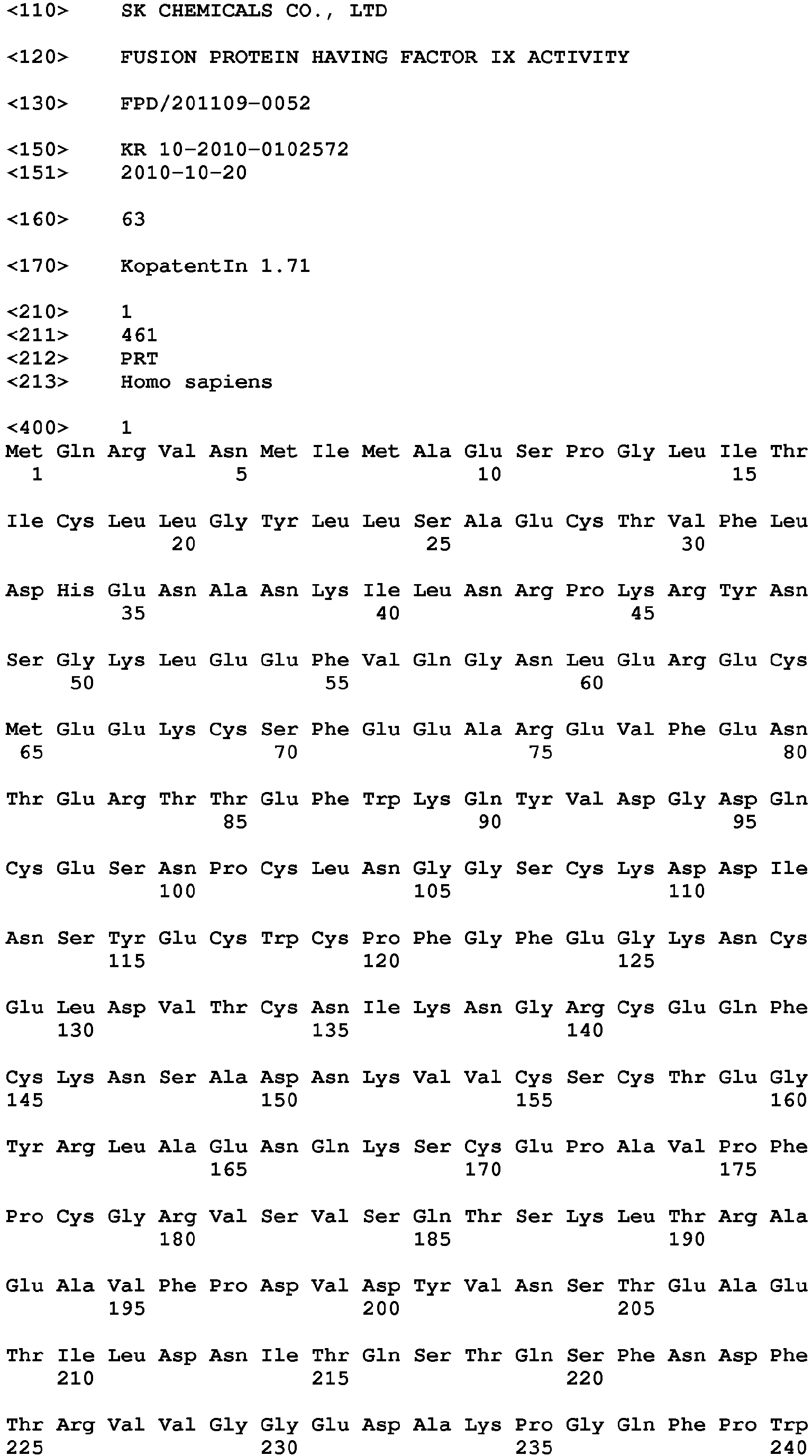


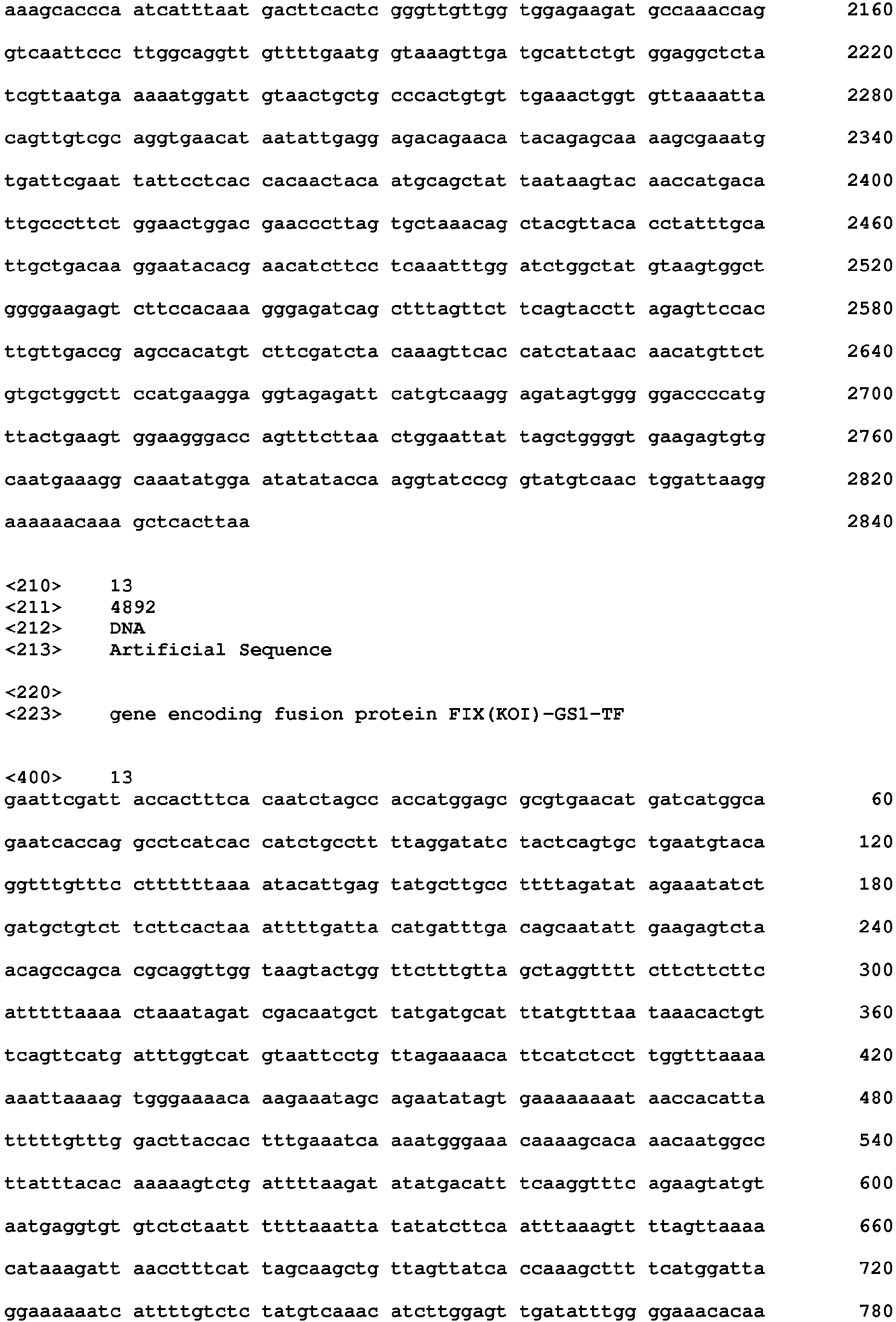


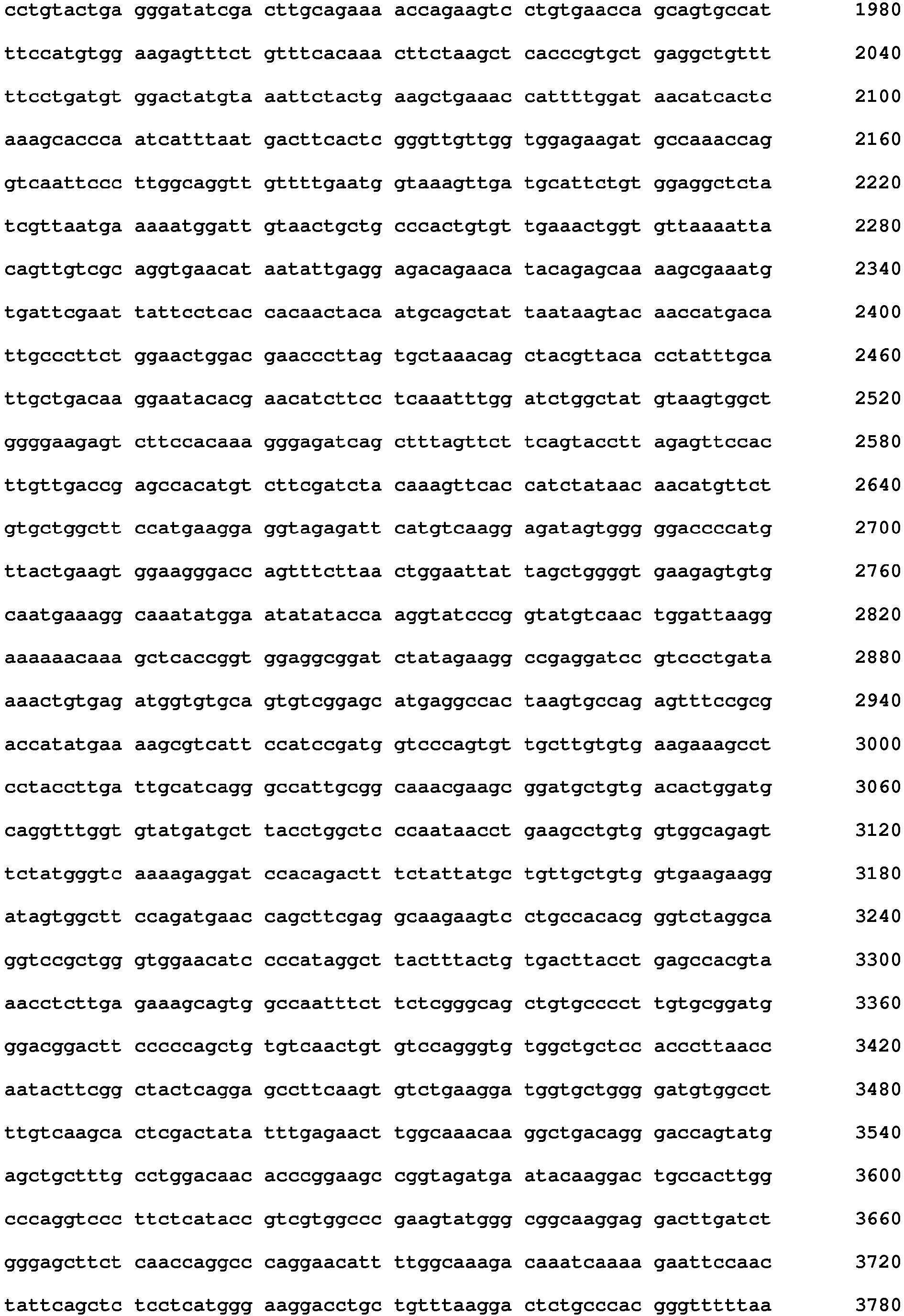


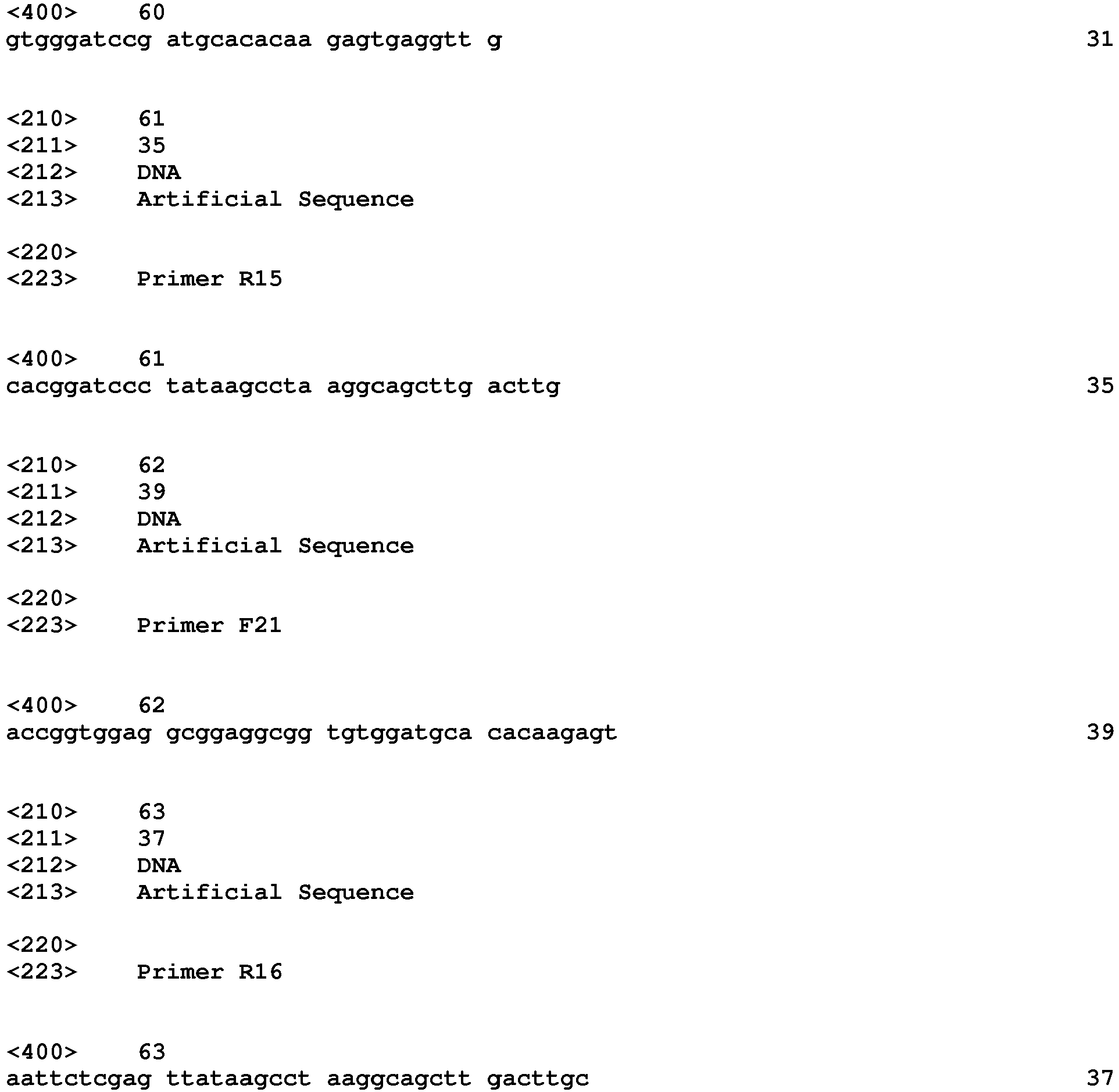
Claims (15)
- A fusion protein comprising human-derived factor IX (FIX) and human-derived transferrin.
- The fusion protein of claim 1, wherein the FIX is a polypeptide having an amino acid sequence of SEQ ID NO: 1, or a functional equivalent thereof.
- The fusion protein of claim 2, wherein the functional equivalent has functional activity substantially identical to that of FIX, and has one or more amino acid insertions, deletions, or substitutions on the amino acid sequence of SEQ ID NO: 1.
- The fusion protein of claim 1, wherein the trasferrin is a polypeptide having an amino acid sequence of SEQ ID NO: 2, or a functional equivalent thereof.
- The fusion protein of claim 4, wherein the functional equivalent has functional activity substantially identical to that of transferrin, and has one or more amino acid insertions, deletions, or substitutions on the amino acid sequence of SEQ ID NO: 2.
- The fusion protein of claim 1, wherein the fusion protein contains a linker between the FIX and the transferrin.
- The fusion protein of claim 6, wherein the linker is a peptide represented by an amino acid sequence of (GGGGS)N wherein N is an integer of 1 to 20.
- The fusion protein of claim 7, wherein the linker is a peptide represented by an amino acid sequence of SEQ ID NO: 3 or 4.
- The fusion protein of claim 7, wherein the linker further comprises a cleavage recognition site for a protease selected from the group consisting of thrombin, factor Xa, and factor XIa.
- The fusion protein of claim 9, wherein the linker is a peptide represented by any one of amino acid sequences of SEQ ID NOS: 5 to 11.
- A gene encoding the fusion protein of any one of claims 1 to 10.
- The gene of claim 11, wherein the gene has a nucleotide sequence of any one of SEQ ID NOS: 12 to 21.
- A recombinant vector comprising the gene of claim 12.
- A host cell comprising the recombinant vector of claim 13 therein.
- The host cell of claim 14, wherein the host cell is selected from the group consisting of a CHO cell, a BHK-21 cell, an HEK293 cell, and a HepG2 cell.
Applications Claiming Priority (2)
| Application Number | Priority Date | Filing Date | Title |
|---|---|---|---|
| KR20100102572 | 2010-10-20 | ||
| PCT/KR2011/007795 WO2012053823A2 (en) | 2010-10-20 | 2011-10-19 | Fusion protein having factor ix activity |
Publications (3)
| Publication Number | Publication Date |
|---|---|
| EP2631249A2 true EP2631249A2 (en) | 2013-08-28 |
| EP2631249A4 EP2631249A4 (en) | 2014-12-03 |
| EP2631249B1 EP2631249B1 (en) | 2018-05-16 |
Family
ID=45975731
Family Applications (1)
| Application Number | Title | Priority Date | Filing Date |
|---|---|---|---|
| EP11834623.8A Active EP2631249B1 (en) | 2010-10-20 | 2011-10-19 | Fusion protein having factor ix activity |
Country Status (9)
| Country | Link |
|---|---|
| US (1) | US9617328B2 (en) |
| EP (1) | EP2631249B1 (en) |
| JP (1) | JP6177130B2 (en) |
| KR (1) | KR101853405B1 (en) |
| CN (2) | CN103180344A (en) |
| BR (1) | BR112013009660B1 (en) |
| CA (3) | CA2981467C (en) |
| ES (1) | ES2676549T3 (en) |
| WO (1) | WO2012053823A2 (en) |
Families Citing this family (7)
| Publication number | Priority date | Publication date | Assignee | Title |
|---|---|---|---|---|
| CN105294857B (en) * | 2014-06-18 | 2019-02-19 | 上海交通大学 | FIX-based epitope and application thereof |
| AU2016274890B2 (en) * | 2015-06-12 | 2022-02-10 | Ubi Pharma Inc | Immunoglobulin fusion proteins and uses thereof |
| US11820807B2 (en) * | 2015-06-12 | 2023-11-21 | Ubi Pharma Inc | Immunoglobulin fusion proteins and uses thereof |
| EP4378487A3 (en) | 2015-06-23 | 2024-09-04 | The Children's Hospital of Philadelphia | Modified factor ix, and compositions, methods and uses for gene transfer to cells, organs and tissues |
| WO2017062536A2 (en) * | 2015-10-06 | 2017-04-13 | Kieu Hoang | A method of manfacturing prothrombin complex concentrate from fraction iii and non-prothrombin complex concentrate from fraction iv |
| WO2017070167A1 (en) * | 2015-10-20 | 2017-04-27 | The University Of North Carolina At Chapel Hill | Methods and compositions for modified factor ix fusion proteins |
| WO2019006348A1 (en) * | 2017-06-30 | 2019-01-03 | Western University Of Health Sciences | Factor ix-transferrin fusion proteins |
Family Cites Families (11)
| Publication number | Priority date | Publication date | Assignee | Title |
|---|---|---|---|---|
| US5223409A (en) * | 1988-09-02 | 1993-06-29 | Protein Engineering Corp. | Directed evolution of novel binding proteins |
| CN1628126A (en) * | 2001-08-30 | 2005-06-15 | 比奥雷克西斯药物公司 | Modified transferrin fusion proteins |
| CN101177456A (en) * | 2001-08-30 | 2008-05-14 | 比奥雷克西斯药物公司 | Modified transferrin fusion proteins |
| US8129504B2 (en) | 2001-08-30 | 2012-03-06 | Biorexis Technology, Inc. | Oral delivery of modified transferrin fusion proteins |
| GB0201679D0 (en) * | 2002-01-25 | 2002-03-13 | Asterion Ltd | Polypeptide variants |
| SI1624891T2 (en) * | 2003-05-06 | 2013-09-30 | Biogen Idec Hemophilia Inc. | Clotting factor-FC chimeric proteins for the treatment of hemophilia |
| GB0315182D0 (en) * | 2003-06-28 | 2003-08-06 | Asterion Ltd | Cytokine variant polypeptides |
| US7563443B2 (en) * | 2004-09-17 | 2009-07-21 | Domantis Limited | Monovalent anti-CD40L antibody polypeptides and compositions thereof |
| TWI428448B (en) * | 2006-03-24 | 2014-03-01 | Syntonix Pharmaceuticals Inc | Pc5 as a factor ix propeptide processing enzyme |
| EP1867660A1 (en) | 2006-06-14 | 2007-12-19 | CSL Behring GmbH | Proteolytically cleavable fusion protein comprising a blood coagulation factor |
| JP2008232916A (en) * | 2007-03-22 | 2008-10-02 | Canon Inc | Target substance detection kit |
-
2011
- 2011-10-18 KR KR1020110106392A patent/KR101853405B1/en not_active Expired - Fee Related
- 2011-10-19 CN CN2011800507311A patent/CN103180344A/en active Pending
- 2011-10-19 JP JP2013534819A patent/JP6177130B2/en not_active Expired - Fee Related
- 2011-10-19 EP EP11834623.8A patent/EP2631249B1/en active Active
- 2011-10-19 US US13/880,239 patent/US9617328B2/en active Active
- 2011-10-19 CA CA2981467A patent/CA2981467C/en active Active
- 2011-10-19 BR BR112013009660-8A patent/BR112013009660B1/en not_active IP Right Cessation
- 2011-10-19 CA CA2814947A patent/CA2814947C/en not_active Expired - Fee Related
- 2011-10-19 CN CN201611245033.8A patent/CN106905433A/en active Pending
- 2011-10-19 ES ES11834623.8T patent/ES2676549T3/en active Active
- 2011-10-19 CA CA2942087A patent/CA2942087C/en not_active Expired - Fee Related
- 2011-10-19 WO PCT/KR2011/007795 patent/WO2012053823A2/en not_active Ceased
Also Published As
| Publication number | Publication date |
|---|---|
| EP2631249A4 (en) | 2014-12-03 |
| EP2631249B1 (en) | 2018-05-16 |
| CN103180344A (en) | 2013-06-26 |
| CA2942087C (en) | 2018-07-24 |
| WO2012053823A3 (en) | 2012-07-26 |
| BR112013009660B1 (en) | 2023-01-10 |
| US9617328B2 (en) | 2017-04-11 |
| BR112013009660A2 (en) | 2016-07-12 |
| WO2012053823A2 (en) | 2012-04-26 |
| US20130296534A1 (en) | 2013-11-07 |
| CA2814947A1 (en) | 2012-04-26 |
| WO2012053823A9 (en) | 2012-10-04 |
| KR101853405B1 (en) | 2018-05-02 |
| CA2814947C (en) | 2018-07-10 |
| BR112013009660A8 (en) | 2017-10-10 |
| KR20120047771A (en) | 2012-05-14 |
| CN106905433A (en) | 2017-06-30 |
| CA2942087A1 (en) | 2012-04-26 |
| JP2013544506A (en) | 2013-12-19 |
| CA2981467C (en) | 2018-07-24 |
| JP6177130B2 (en) | 2017-08-09 |
| ES2676549T3 (en) | 2018-07-20 |
| CA2981467A1 (en) | 2012-04-26 |
Similar Documents
| Publication | Publication Date | Title |
|---|---|---|
| US9617328B2 (en) | Fusion protein having factor IX activity | |
| US9644197B2 (en) | Fusion protein having factor VII activity | |
| CA3131648A1 (en) | Factor ix variants and uses thereof in therapy | |
| JP6088974B2 (en) | Method for mass production of human blood coagulation factor VII | |
| US20160060612A1 (en) | Method of Isolating and Purifying Fusion Protein Comprising Factor VII | |
| US20160215278A1 (en) | Method for mass production of factor vii/viia derivatives |
Legal Events
| Date | Code | Title | Description |
|---|---|---|---|
| PUAI | Public reference made under article 153(3) epc to a published international application that has entered the european phase |
Free format text: ORIGINAL CODE: 0009012 |
|
| 17P | Request for examination filed |
Effective date: 20130516 |
|
| AK | Designated contracting states |
Kind code of ref document: A2 Designated state(s): AL AT BE BG CH CY CZ DE DK EE ES FI FR GB GR HR HU IE IS IT LI LT LU LV MC MK MT NL NO PL PT RO RS SE SI SK SM TR |
|
| DAX | Request for extension of the european patent (deleted) | ||
| A4 | Supplementary search report drawn up and despatched |
Effective date: 20141103 |
|
| RIC1 | Information provided on ipc code assigned before grant |
Ipc: C12N 15/63 20060101ALI20141028BHEP Ipc: C07K 19/00 20060101AFI20141028BHEP Ipc: C12N 15/62 20060101ALI20141028BHEP |
|
| 17Q | First examination report despatched |
Effective date: 20160324 |
|
| STAA | Information on the status of an ep patent application or granted ep patent |
Free format text: STATUS: EXAMINATION IS IN PROGRESS |
|
| RAP1 | Party data changed (applicant data changed or rights of an application transferred) |
Owner name: TIUMBIO CO., LTD. |
|
| GRAP | Despatch of communication of intention to grant a patent |
Free format text: ORIGINAL CODE: EPIDOSNIGR1 |
|
| STAA | Information on the status of an ep patent application or granted ep patent |
Free format text: STATUS: GRANT OF PATENT IS INTENDED |
|
| INTG | Intention to grant announced |
Effective date: 20171207 |
|
| GRAS | Grant fee paid |
Free format text: ORIGINAL CODE: EPIDOSNIGR3 |
|
| GRAA | (expected) grant |
Free format text: ORIGINAL CODE: 0009210 |
|
| STAA | Information on the status of an ep patent application or granted ep patent |
Free format text: STATUS: THE PATENT HAS BEEN GRANTED |
|
| AK | Designated contracting states |
Kind code of ref document: B1 Designated state(s): AL AT BE BG CH CY CZ DE DK EE ES FI FR GB GR HR HU IE IS IT LI LT LU LV MC MK MT NL NO PL PT RO RS SE SI SK SM TR |
|
| REG | Reference to a national code |
Ref country code: GB Ref legal event code: FG4D |
|
| REG | Reference to a national code |
Ref country code: CH Ref legal event code: EP |
|
| REG | Reference to a national code |
Ref country code: IE Ref legal event code: FG4D |
|
| REG | Reference to a national code |
Ref country code: DE Ref legal event code: R096 Ref document number: 602011048473 Country of ref document: DE |
|
| REG | Reference to a national code |
Ref country code: AT Ref legal event code: REF Ref document number: 999451 Country of ref document: AT Kind code of ref document: T Effective date: 20180615 |
|
| REG | Reference to a national code |
Ref country code: ES Ref legal event code: FG2A Ref document number: 2676549 Country of ref document: ES Kind code of ref document: T3 Effective date: 20180720 |
|
| REG | Reference to a national code |
Ref country code: NL Ref legal event code: FP |
|
| REG | Reference to a national code |
Ref country code: FR Ref legal event code: PLFP Year of fee payment: 8 |
|
| REG | Reference to a national code |
Ref country code: LT Ref legal event code: MG4D |
|
| PG25 | Lapsed in a contracting state [announced via postgrant information from national office to epo] |
Ref country code: SE Free format text: LAPSE BECAUSE OF FAILURE TO SUBMIT A TRANSLATION OF THE DESCRIPTION OR TO PAY THE FEE WITHIN THE PRESCRIBED TIME-LIMIT Effective date: 20180516 Ref country code: LT Free format text: LAPSE BECAUSE OF FAILURE TO SUBMIT A TRANSLATION OF THE DESCRIPTION OR TO PAY THE FEE WITHIN THE PRESCRIBED TIME-LIMIT Effective date: 20180516 Ref country code: NO Free format text: LAPSE BECAUSE OF FAILURE TO SUBMIT A TRANSLATION OF THE DESCRIPTION OR TO PAY THE FEE WITHIN THE PRESCRIBED TIME-LIMIT Effective date: 20180816 Ref country code: FI Free format text: LAPSE BECAUSE OF FAILURE TO SUBMIT A TRANSLATION OF THE DESCRIPTION OR TO PAY THE FEE WITHIN THE PRESCRIBED TIME-LIMIT Effective date: 20180516 Ref country code: BG Free format text: LAPSE BECAUSE OF FAILURE TO SUBMIT A TRANSLATION OF THE DESCRIPTION OR TO PAY THE FEE WITHIN THE PRESCRIBED TIME-LIMIT Effective date: 20180816 |
|
| PG25 | Lapsed in a contracting state [announced via postgrant information from national office to epo] |
Ref country code: RS Free format text: LAPSE BECAUSE OF FAILURE TO SUBMIT A TRANSLATION OF THE DESCRIPTION OR TO PAY THE FEE WITHIN THE PRESCRIBED TIME-LIMIT Effective date: 20180516 Ref country code: HR Free format text: LAPSE BECAUSE OF FAILURE TO SUBMIT A TRANSLATION OF THE DESCRIPTION OR TO PAY THE FEE WITHIN THE PRESCRIBED TIME-LIMIT Effective date: 20180516 Ref country code: LV Free format text: LAPSE BECAUSE OF FAILURE TO SUBMIT A TRANSLATION OF THE DESCRIPTION OR TO PAY THE FEE WITHIN THE PRESCRIBED TIME-LIMIT Effective date: 20180516 Ref country code: GR Free format text: LAPSE BECAUSE OF FAILURE TO SUBMIT A TRANSLATION OF THE DESCRIPTION OR TO PAY THE FEE WITHIN THE PRESCRIBED TIME-LIMIT Effective date: 20180817 |
|
| REG | Reference to a national code |
Ref country code: AT Ref legal event code: MK05 Ref document number: 999451 Country of ref document: AT Kind code of ref document: T Effective date: 20180516 |
|
| PG25 | Lapsed in a contracting state [announced via postgrant information from national office to epo] |
Ref country code: DK Free format text: LAPSE BECAUSE OF FAILURE TO SUBMIT A TRANSLATION OF THE DESCRIPTION OR TO PAY THE FEE WITHIN THE PRESCRIBED TIME-LIMIT Effective date: 20180516 Ref country code: PL Free format text: LAPSE BECAUSE OF FAILURE TO SUBMIT A TRANSLATION OF THE DESCRIPTION OR TO PAY THE FEE WITHIN THE PRESCRIBED TIME-LIMIT Effective date: 20180516 Ref country code: SK Free format text: LAPSE BECAUSE OF FAILURE TO SUBMIT A TRANSLATION OF THE DESCRIPTION OR TO PAY THE FEE WITHIN THE PRESCRIBED TIME-LIMIT Effective date: 20180516 Ref country code: CZ Free format text: LAPSE BECAUSE OF FAILURE TO SUBMIT A TRANSLATION OF THE DESCRIPTION OR TO PAY THE FEE WITHIN THE PRESCRIBED TIME-LIMIT Effective date: 20180516 Ref country code: AT Free format text: LAPSE BECAUSE OF FAILURE TO SUBMIT A TRANSLATION OF THE DESCRIPTION OR TO PAY THE FEE WITHIN THE PRESCRIBED TIME-LIMIT Effective date: 20180516 Ref country code: EE Free format text: LAPSE BECAUSE OF FAILURE TO SUBMIT A TRANSLATION OF THE DESCRIPTION OR TO PAY THE FEE WITHIN THE PRESCRIBED TIME-LIMIT Effective date: 20180516 Ref country code: RO Free format text: LAPSE BECAUSE OF FAILURE TO SUBMIT A TRANSLATION OF THE DESCRIPTION OR TO PAY THE FEE WITHIN THE PRESCRIBED TIME-LIMIT Effective date: 20180516 |
|
| REG | Reference to a national code |
Ref country code: DE Ref legal event code: R097 Ref document number: 602011048473 Country of ref document: DE |
|
| PG25 | Lapsed in a contracting state [announced via postgrant information from national office to epo] |
Ref country code: SM Free format text: LAPSE BECAUSE OF FAILURE TO SUBMIT A TRANSLATION OF THE DESCRIPTION OR TO PAY THE FEE WITHIN THE PRESCRIBED TIME-LIMIT Effective date: 20180516 |
|
| PLBE | No opposition filed within time limit |
Free format text: ORIGINAL CODE: 0009261 |
|
| STAA | Information on the status of an ep patent application or granted ep patent |
Free format text: STATUS: NO OPPOSITION FILED WITHIN TIME LIMIT |
|
| 26N | No opposition filed |
Effective date: 20190219 |
|
| PG25 | Lapsed in a contracting state [announced via postgrant information from national office to epo] |
Ref country code: SI Free format text: LAPSE BECAUSE OF FAILURE TO SUBMIT A TRANSLATION OF THE DESCRIPTION OR TO PAY THE FEE WITHIN THE PRESCRIBED TIME-LIMIT Effective date: 20180516 |
|
| REG | Reference to a national code |
Ref country code: BE Ref legal event code: MM Effective date: 20181031 |
|
| PG25 | Lapsed in a contracting state [announced via postgrant information from national office to epo] |
Ref country code: MC Free format text: LAPSE BECAUSE OF FAILURE TO SUBMIT A TRANSLATION OF THE DESCRIPTION OR TO PAY THE FEE WITHIN THE PRESCRIBED TIME-LIMIT Effective date: 20180516 Ref country code: LU Free format text: LAPSE BECAUSE OF NON-PAYMENT OF DUE FEES Effective date: 20181019 |
|
| REG | Reference to a national code |
Ref country code: IE Ref legal event code: MM4A |
|
| PG25 | Lapsed in a contracting state [announced via postgrant information from national office to epo] |
Ref country code: BE Free format text: LAPSE BECAUSE OF NON-PAYMENT OF DUE FEES Effective date: 20181031 |
|
| PG25 | Lapsed in a contracting state [announced via postgrant information from national office to epo] |
Ref country code: IE Free format text: LAPSE BECAUSE OF NON-PAYMENT OF DUE FEES Effective date: 20181019 |
|
| PG25 | Lapsed in a contracting state [announced via postgrant information from national office to epo] |
Ref country code: AL Free format text: LAPSE BECAUSE OF FAILURE TO SUBMIT A TRANSLATION OF THE DESCRIPTION OR TO PAY THE FEE WITHIN THE PRESCRIBED TIME-LIMIT Effective date: 20180516 |
|
| PG25 | Lapsed in a contracting state [announced via postgrant information from national office to epo] |
Ref country code: MT Free format text: LAPSE BECAUSE OF NON-PAYMENT OF DUE FEES Effective date: 20181019 |
|
| PG25 | Lapsed in a contracting state [announced via postgrant information from national office to epo] |
Ref country code: TR Free format text: LAPSE BECAUSE OF FAILURE TO SUBMIT A TRANSLATION OF THE DESCRIPTION OR TO PAY THE FEE WITHIN THE PRESCRIBED TIME-LIMIT Effective date: 20180516 |
|
| PG25 | Lapsed in a contracting state [announced via postgrant information from national office to epo] |
Ref country code: PT Free format text: LAPSE BECAUSE OF FAILURE TO SUBMIT A TRANSLATION OF THE DESCRIPTION OR TO PAY THE FEE WITHIN THE PRESCRIBED TIME-LIMIT Effective date: 20180516 |
|
| PG25 | Lapsed in a contracting state [announced via postgrant information from national office to epo] |
Ref country code: CY Free format text: LAPSE BECAUSE OF FAILURE TO SUBMIT A TRANSLATION OF THE DESCRIPTION OR TO PAY THE FEE WITHIN THE PRESCRIBED TIME-LIMIT Effective date: 20180516 Ref country code: MK Free format text: LAPSE BECAUSE OF NON-PAYMENT OF DUE FEES Effective date: 20180516 Ref country code: HU Free format text: LAPSE BECAUSE OF FAILURE TO SUBMIT A TRANSLATION OF THE DESCRIPTION OR TO PAY THE FEE WITHIN THE PRESCRIBED TIME-LIMIT; INVALID AB INITIO Effective date: 20111019 |
|
| PG25 | Lapsed in a contracting state [announced via postgrant information from national office to epo] |
Ref country code: IS Free format text: LAPSE BECAUSE OF FAILURE TO SUBMIT A TRANSLATION OF THE DESCRIPTION OR TO PAY THE FEE WITHIN THE PRESCRIBED TIME-LIMIT Effective date: 20180916 |
|
| REG | Reference to a national code |
Ref country code: FR Ref legal event code: PLFP Year of fee payment: 12 |
|
| P01 | Opt-out of the competence of the unified patent court (upc) registered |
Effective date: 20230524 |
|
| PGFP | Annual fee paid to national office [announced via postgrant information from national office to epo] |
Ref country code: NL Payment date: 20230921 Year of fee payment: 13 |
|
| PGFP | Annual fee paid to national office [announced via postgrant information from national office to epo] |
Ref country code: ES Payment date: 20231110 Year of fee payment: 13 |
|
| PGFP | Annual fee paid to national office [announced via postgrant information from national office to epo] |
Ref country code: GB Payment date: 20240920 Year of fee payment: 14 |
|
| PGFP | Annual fee paid to national office [announced via postgrant information from national office to epo] |
Ref country code: FR Payment date: 20240925 Year of fee payment: 14 |
|
| PGFP | Annual fee paid to national office [announced via postgrant information from national office to epo] |
Ref country code: IT Payment date: 20240923 Year of fee payment: 14 |
|
| PGFP | Annual fee paid to national office [announced via postgrant information from national office to epo] |
Ref country code: DE Payment date: 20240920 Year of fee payment: 14 |
|
| PGFP | Annual fee paid to national office [announced via postgrant information from national office to epo] |
Ref country code: CH Payment date: 20241101 Year of fee payment: 14 |
|
| REG | Reference to a national code |
Ref country code: NL Ref legal event code: MM Effective date: 20241101 |
|
| PG25 | Lapsed in a contracting state [announced via postgrant information from national office to epo] |
Ref country code: NL Free format text: LAPSE BECAUSE OF NON-PAYMENT OF DUE FEES Effective date: 20241101 |
|
| REG | Reference to a national code |
Ref country code: ES Ref legal event code: FD2A Effective date: 20251202 |
|
| PG25 | Lapsed in a contracting state [announced via postgrant information from national office to epo] |
Ref country code: ES Free format text: LAPSE BECAUSE OF NON-PAYMENT OF DUE FEES Effective date: 20241020 |
|
| REG | Reference to a national code |
Ref country code: DE Ref legal event code: R119 Ref document number: 602011048473 Country of ref document: DE |
|
| REG | Reference to a national code |
Ref country code: CH Ref legal event code: H13 Free format text: ST27 STATUS EVENT CODE: U-0-0-H10-H13 (AS PROVIDED BY THE NATIONAL OFFICE) Effective date: 20260527 |
|
| GBPC | Gb: european patent ceased through non-payment of renewal fee |
Effective date: 20251019 |
|
| PG25 | Lapsed in a contracting state [announced via postgrant information from national office to epo] |
Ref country code: GB Free format text: LAPSE BECAUSE OF NON-PAYMENT OF DUE FEES Effective date: 20251019 |
|
| PG25 | Lapsed in a contracting state [announced via postgrant information from national office to epo] |
Ref country code: DE Free format text: LAPSE BECAUSE OF NON-PAYMENT OF DUE FEES Effective date: 20260501 |
|
| PG25 | Lapsed in a contracting state [announced via postgrant information from national office to epo] |
Ref country code: CH Free format text: LAPSE BECAUSE OF NON-PAYMENT OF DUE FEES Effective date: 20251031 |
|
| PG25 | Lapsed in a contracting state [announced via postgrant information from national office to epo] |
Ref country code: FR Free format text: LAPSE BECAUSE OF NON-PAYMENT OF DUE FEES Effective date: 20251031 |