EP2630593B1 - Method for accessing information related to an entity - Google Patents
Method for accessing information related to an entity Download PDFInfo
- Publication number
- EP2630593B1 EP2630593B1 EP10795064.4A EP10795064A EP2630593B1 EP 2630593 B1 EP2630593 B1 EP 2630593B1 EP 10795064 A EP10795064 A EP 10795064A EP 2630593 B1 EP2630593 B1 EP 2630593B1
- Authority
- EP
- European Patent Office
- Prior art keywords
- entities
- network
- display area
- users
- relationships
- Prior art date
- Legal status (The legal status is an assumption and is not a legal conclusion. Google has not performed a legal analysis and makes no representation as to the accuracy of the status listed.)
- Active
Links
Images





Classifications
-
- G—PHYSICS
- G06—COMPUTING OR CALCULATING; COUNTING
- G06F—ELECTRIC DIGITAL DATA PROCESSING
- G06F16/00—Information retrieval; Database structures therefor; File system structures therefor
- G06F16/30—Information retrieval; Database structures therefor; File system structures therefor of unstructured textual data
- G06F16/36—Creation of semantic tools, e.g. ontology or thesauri
- G06F16/367—Ontology
-
- G—PHYSICS
- G06—COMPUTING OR CALCULATING; COUNTING
- G06F—ELECTRIC DIGITAL DATA PROCESSING
- G06F16/00—Information retrieval; Database structures therefor; File system structures therefor
- G06F16/20—Information retrieval; Database structures therefor; File system structures therefor of structured data, e.g. relational data
- G06F16/27—Replication, distribution or synchronisation of data between databases or within a distributed database system; Distributed database system architectures therefor
-
- G—PHYSICS
- G06—COMPUTING OR CALCULATING; COUNTING
- G06F—ELECTRIC DIGITAL DATA PROCESSING
- G06F16/00—Information retrieval; Database structures therefor; File system structures therefor
- G06F16/90—Details of database functions independent of the retrieved data types
- G06F16/904—Browsing; Visualisation therefor
-
- G—PHYSICS
- G06—COMPUTING OR CALCULATING; COUNTING
- G06F—ELECTRIC DIGITAL DATA PROCESSING
- G06F3/00—Input arrangements for transferring data to be processed into a form capable of being handled by the computer; Output arrangements for transferring data from processing unit to output unit, e.g. interface arrangements
- G06F3/01—Input arrangements or combined input and output arrangements for interaction between user and computer
- G06F3/048—Interaction techniques based on graphical user interfaces [GUI]
- G06F3/0481—Interaction techniques based on graphical user interfaces [GUI] based on specific properties of the displayed interaction object or a metaphor-based environment, e.g. interaction with desktop elements like windows or icons, or assisted by a cursor's changing behaviour or appearance
- G06F3/0482—Interaction with lists of selectable items, e.g. menus
-
- G—PHYSICS
- G06—COMPUTING OR CALCULATING; COUNTING
- G06F—ELECTRIC DIGITAL DATA PROCESSING
- G06F3/00—Input arrangements for transferring data to be processed into a form capable of being handled by the computer; Output arrangements for transferring data from processing unit to output unit, e.g. interface arrangements
- G06F3/01—Input arrangements or combined input and output arrangements for interaction between user and computer
- G06F3/048—Interaction techniques based on graphical user interfaces [GUI]
- G06F3/0487—Interaction techniques based on graphical user interfaces [GUI] using specific features provided by the input device, e.g. functions controlled by the rotation of a mouse with dual sensing arrangements, or of the nature of the input device, e.g. tap gestures based on pressure sensed by a digitiser
- G06F3/0488—Interaction techniques based on graphical user interfaces [GUI] using specific features provided by the input device, e.g. functions controlled by the rotation of a mouse with dual sensing arrangements, or of the nature of the input device, e.g. tap gestures based on pressure sensed by a digitiser using a touch-screen or digitiser, e.g. input of commands through traced gestures
- G06F3/04886—Interaction techniques based on graphical user interfaces [GUI] using specific features provided by the input device, e.g. functions controlled by the rotation of a mouse with dual sensing arrangements, or of the nature of the input device, e.g. tap gestures based on pressure sensed by a digitiser using a touch-screen or digitiser, e.g. input of commands through traced gestures by partitioning the display area of the touch-screen or the surface of the digitising tablet into independently controllable areas, e.g. virtual keyboards or menus
Definitions
- the present invention generally relates to the field of management of huge amount of information contents. More in particular, the present invention concerns a method for accessing information related to an entity by means of a display device, such as the screen of a mobile phone.
- a domain is a topic area which is represented by an ontology (also referred as taxonomy).
- An ontology is a hierarchical structure comprising nodes, each one representing a concept of the domain, and comprising links (referred to as arcs) between the nodes, each link representing an asymmetrical relationship between the nodes.
- the objects of an ontology are arranged into classes having respective properties.
- An ontology can be represented by an acyclic interconnected graph, that is a graph wherein all the nodes are connected through at least one arc and there are no cycles.
- an ontology is written in a formal language such as XML (extensible Markup Language) or one of its extensions like RDF (Resource Description Framework) or OWL (Web Ontology Language).
- XML extensible Markup Language
- RDF Resource Description Framework
- OWL Web Ontology Language
- TouchGraph (www.touchgraph.com) is a tool that explores connections between different websites.
- Liveplasma (www.liveplasma.com) is a search engine for music, which displays on the screen of a personal computer a map of artists or bands which are related (for example, similar genre) to a searched artist or band.
- WO 2007/099390 discloses an improved user interface for a portable electronic device that incorporates contextual navigation information with filter criteria to enable users to navigate through fewer views to achieve desired search results.
- the user interface enables a user to perform a search/filter by selecting a first level filter criterion and a contextual navigation filter criterion from the same view.
- a third data set is displayed when the filter is applied, thereby allowing the user to jump from a first level view to a third level view.
- US 5,874,954 discloses a system and a process for providing interaction between a human and a machine by providing an architecture of processing that comprises a wheel interface to the human.
- the Applicant has observed that the prior art solutions does not allow to access in a simple way the huge amount of related information contents by means of a display device with a limited area (such as the display of a mobile phone) and with limited possibilities of interaction between the user and the display device.
- the present invention relates to a method for accessing information related to a reference entity as defined in the enclosed claim 1 and its preferred embodiments as defined in the dependent claims 2 to 13.
- the Applicant has recognized that the method according to the present invention allows to access in a simple way a huge amount of information contents related to a reference entity and described by one or more ontologies by means of a display device having a limited area (such as the screen of a mobile phone), also in case of a limited interaction possibility between the user and the display device.
- the method according to the present invention allows to access information generated by some actions performed by a plurality of users on the entities of the ontology and also information generated by actions performed between the users themselves.
- the present invention provides a system as defined in the enclosed claim 14.
- the present invention provides a computer program product as defined in the enclosed claim 16.
- entity an instance in an ontology A or a class C i of the ontology A, wherein the instance (or the class) in the ontology can describe an existing object (i.e. a product) or can describe a person or people.
- entity o i can be the name of a specific wine (for example, "Roero Arneis") or can be the name of a person producing (or selling) this wine (for example, "Pino Costalunga").
- the classes can indicate for example the products (i.e. food, wine), restaurants, companies producing (or selling) the products, cooks, recipes.
- FIG 1a shows schematically the flowchart of the method 1 for accessing information related to a reference entity according to a first embodiment of the invention.
- the method 1 includes steps 5, 6, 10, 15, 20, 25, 30, 35, 40, 45.
- the method 1 is performed by means of a display device, such as the screen 55 of a mobile phone 50, as shown in figure 3a .
- the first plurality of entities O are a plurality of classes C of the ontology A or are instances of the ontology arranged into the plurality of classes C, wherein the plurality of classes have respective properties.
- the ontology A is stored for example into a memory of a server equipment.
- the ontology A is arranged into a database, tipically a relational database.
- the ontology A describes the enogastronomy field
- the first plurality of entities O are for example specific types of wines or cheese or the name of companies producing (or selling) a specific wine or cheese
- the plurality of classes are wine and cheese.
- the properties of the class wine can be the type of grapes used for the production of the wine or the time required for the maturation of the wine
- the properties of the class cheese can be the type of milk used for the production of the cheese or the time required for the maturation of the cheese.
- Step 6 includes the reception of information for identifying an entity o R out of the first plurality of entities O: this entity is referred as "reference entity".
- the reference entity o R can be any one of the first plurality of entities O included in the ontology A and is indicated as reference entity only for the purpose of explaining the invention.
- the reference entity o R is identified for example from a visual search by means of the mobile phone 50 equipped with a camera and performed on the label 53 of a bottle of wine 52, as shown in figure 3a : in this example, the reference entity o R is a specific wine named "Roero Arneis”.
- the invention is not limited to the visual search used for the identification of the reference entity, because other solutions can be used in order to identify the reference entity o R , such as:
- Step 10 includes the calculation of a first network of entities selected from the first plurality of entities O, wherein the entities of the first network have first relationships with the reference entity o R , according to the properties of the classes.
- step 10 includes the calculation of entities of the first network having first relationships with each other.
- the first network of entities is a plurality of entities connected by a set of links and having different types of semantic relationships, wherein the semantic relationships are calculated taking into account the properties of the classes.
- first relationships between the reference entity o R and a generic entity o i defined in the ontology A can be calculated, according to the properties of the classes of the ontology A:
- step 10 generates the first network of entities, which includes at least part of the plurality of entities O defined in the ontology A having a relationship with the reference entity o R , according to the properties of the classes.
- the first network of entities having a relationship with the reference entity o R is composed of the following entities: o 2 , o 4 , o 5 , o 8 , o 9 , o 10 .
- step 10 generates a list of said first relationships with the reference entity o R .
- Step 15 includes the identification of a plurality of portions available on the area of the display device, according to the plurality of classes of the ontology.
- the method 1 identifies four portions 61, 62, 63, 64 on the screen 55 of the mobile phone 50, according to the classes defined in the ontology A.
- different text data are displayed over the four portions 61, 62, 63, 64 for identifying them.
- the text data displayed over the four portions 61, 62, 63, 64 respectively can be the following: People, Products, Cooking, Places.
- the meaning of the text data or of the images displayed over the four portions 61, 62, 63, 64 is associated to the entities which are assigned (by next step 20) within a selected portion.
- Step 20 includes the assignment of the entities of the first network and corresponding first relationships to at least one of the plurality of display area portions.
- entity o 2 and corresponding relationship r 2 is assigned to portion 62 identified by Products
- entity o 4 and corresponding relationship r 4 is assigned to portion 64 identified by Places
- entity o 5 and corresponding relationship r 5 is assigned to portion 62 identified by Products
- entity o 8 and corresponding relationship r 8 is assigned to portion 63 identified by Cooking
- entity o 9 and corresponding relationship r 9 is assigned to portion 62 identified by Products
- entity o 10 and corresponding relationship r 10 is assigned to portion 61 identified by People.
- the assignment of the entities of the first network to at least one of the display area portions 61, 62, 63, 64 depends on the meaning of the text data or of the images displayed over the four portions 61, 62, 63, 64.
- entity o 2 is assigned to portion 62 identified by Products because o 2 relates to a product (for example, o 2 is a specific wine, such as "Grignolino", which is a product like wine Roero Arneis)
- entity o 4 is assigned to portion 64 identified by Places because o 4 relates to a place (for example, o 4 is the name of a country, such as Italy, wherein wine Roero Arneis is produced)
- entity o 8 is assigned to portion 63 identified by Cooking because the o 8 relates to cooking (for example, o 8 is the name of a first course which is well combined with wine Roero Arneis) and entity o 10 is assigned
- Step 25 includes the display of a plurality of text data and/or images over the plurality of display area portions. This is shown in figure 4a , wherein in the example in the enogastronomy field text data People is displayed over the portion 61, text data Products is displayed over the portion 62, text data Cooking is displayed over the portion 63 and text data Places is displayed over the portion 64.
- Step 30 includes the selection of a display area portion selected from the plurality of display area portions.
- the user of the mobile phone 50 selects portion 62 because he/she is interested to access information regarding Products having a semantic relationship with the wine Roero Arneis.
- Step 35 includes the display, over the display device, of a plurality of images and/or text data for indicating at least part of the entities of the first network assigned to the selected display area portion.
- the user of the mobile phone 50 has selected the portion 62 identified by text data Products and the screen 55 of the mobile phone 50 displays images 71, 72, 73 indicating the entities o 2 , o 5 , o 9 respectively, which were assigned (in step 20) to the portion 62.
- the image 71 is a small bottle of wine Grignolino
- the image 72 is a small bottle of wine Moscato
- the image 73 is the cheese "Grana Padano" (which is supposed to be well combined with the wine Roero Arneis).
- Step 40 includes the selection of an entity selected from the first network of entities.
- the selected entity is o 5 , which is a circle with a bold line.
- Step 45 includes the display of at least one text data and/or image describing at least one of the first relationships assigned to the selected display area portion. This is shown in figure 4e , which shows an area 70 displaying the first relationships r 5 , r i , r j .
- the screen 55 of the mobile phone 50 displays the following first relationships r 5 , r i , r j as text data: "is similar to", “is produced by”, "is served by”.
- FIG 1b shows schematically the flowchart of a method 101 for accessing information related to the reference entity according to a second embodiment of the invention, wherein steps with the same function as the first embodiment are indicated with the same reference numbers.
- the method 101 includes steps 5, 105, 6, 10, 110, 15, 120, 25, 30, 135, 40, 45, 145.
- the method 101 is performed by means of a display device, such as the screen 55 of a mobile phone 50, as shown in figure 3a .
- the method 101 differs from the method 1 in the steps 105, 110, 120, 135, 145.
- the plurality of users U is a group of people which are interested to access the information related to the reference entity o R and related to the plurality of entities O (and, preferably, also access information related to other users, as it will be explained more in detail afterwards), by means of a display device 55.
- the user can decide to put the reference entity o R in the centre of the display device, in order to access information related to the reference entity o R : this is achieved with steps 30, 35, 40, 45 of the method 1 according to the first embodiment of the invention and with the steps 30, 135, 40, 145 of the method 101 according to the second embodiment of the invention, as will be explained more in detail afterwards.
- the invention is not limited to the above indicated user actions: other possible user actions can be defined, depending on the possible behaviour of the users and, preferably, depending on the field of the considered ontology A.
- the following second relationships between the reference entity o R and a generic entity o i of the ontology A can be calculated, according to the actions performed by the users:
- the second network of entities is a plurality of entities connected by a set of links and having different types of semantic relationships, wherein the semantic relationship is calculated taking into account the actions performed by the users.
- the above indicated second relationships are calculated at pre-defined times (for example periodically, with a period that can be changed by configuration) or are calculated in a defined time period (that can be changed by configuration).
- the invention is not limited to the above indicated second relationships.
- Step 120 includes the assignment of the entities of the second network and corresponding second relationships to at least one of the plurality of display area portions.
- the assignment of the entities of the second network to at least one of the display area portions 61, 62, 63, 64 depends on the meaning of the text data or of the images displayed over the four portions 61, 62, 63, 64.
- entity o 2 is assigned to portion 62 identified by Products because o 2 relates to a product according to an action performed by a user (for example, o 2 is the name of a person having wine Roero Arneis in the list of his favorites).
- Step 135 includes the display, over the display device, of a plurality of images and/or text data for indicating at least part of the entities of the second network assigned to the selected display area portion.
- the user of the mobile phone 50 has selected the portion 62 identified by Products and the screen 55 of the mobile phone 50 displays an image representing a cheese which another user has tagged according to the action Tag (or which the other user has commented according to the action Comments).
- Step 145 includes the display of at least one text data and/or image describing at least one of the second relationships assigned to the selected display area portion.
- the screen 55 of the mobile phone 50 displays the following second relationships as text data: "has been tagged by", likes to".
- FIG 1c shows schematically the flowchart of a method 201 for accessing information related to the reference entity according to a third embodiment of the invention, wherein steps with the same function as the second embodiment are indicated with the same reference numbers.
- the method 201 includes steps 5, 105, 6, 10, 110, 210, 15, 220, 25, 30, 235, 40, 45, 145, 245.
- the method 201 differs from the method 101 in the steps 210, 220, 235, 245.
- the following third relationships between the reference entity o R and an o i of the ontology A can be calculated, according to the actions performed by the users and according to the properties of the classes of the ontology A:
- the third network of entities is a plurality of entities connected by a set of links and having different types of semantic relationships, wherein the semantic relationships are calculated taking into account the properties of the classes and also the actions performed by the users.
- the invention is not limited to the above indicated third relationships.
- Step 220 includes the assignment of the entities of the third network and corresponding third relationships to at least one of the plurality of display area portions.
- the assignment of the entities of the third network to at least one of the display area portions 61, 62, 63, 64 depends on the meaning of the text data or of the images displayed over the four portions 61, 62, 63, 64.
- an entity o 2 is assigned to portion 62 identified by Products because o 2 relates to a product according to the properties of the classes and according to the actions performed by a user (for example, o 2 is cheese "Grana Padano", which is included in the list of the tags of the wine Roero Arneis).
- Step 235 includes the display, over the display device, of a plurality of images and/or text data for indicating at least part of the entities of the third network assigned to the selected display area portion.
- Step 245 includes the display of at least one image and/or text data describing at least one of the third relationships assigned to the selected display area portion.
- the screen 55 of the mobile phone 50 displays the following third relationship as text data: "is tagged with”.
- FIG 1d it shows schematically the flowchart of a method 301 for accessing information related to a reference entity according to a fourth embodiment of the invention, wherein steps with the same function as the third embodiment are indicated with the same reference numbers.
- the method 301 includes steps 5, 105, 305, 6, 10, 110, 210, 310, 15, 320, 25, 30, 335, 340, 45, 145, 245, 345.
- the method 301 differs from the method 201 in the steps 305, 310, 320, 335, 340, 345.
- the method 301 is performed by means of a display device, such as the screen 55 of a mobile phone 50, as shown in figure 3a .
- Step 305 includes providing actions between the users of the plurality of users.
- the same actions (Vote, Tag, Comment, Add to favorites) described for the second embodiment can also be performed between the users, that is a user can be voted by another user, can be tagged by the other user, can be commented be the other user or can be added to the list of favorites of the other user.
- Another example of action between the users is the friendship.
- the following fourth relationships between the users can be calculated, according to the actions performed by the users and/or according to the properties of the classes:
- the fourth relationships are calculated at pre-defined times (for example periodically, with a period that can be changed by configuration) or are calculated in a defined time period (that can be changed by configuration).
- the invention is not limited to the above indicated fourth relationships.
- Step 320 includes the assignment of the users of the user network and corresponding fourth relationships to at least one of the plurality of display area portions.
- the assignment of the users of the user network to at least one of the display area portions 61, 62, 63, 64 depends on the meaning of the text data or of the images displayed over the four portions 61, 62, 63, 64.
- Step 335 includes the display of a plurality of images and/or text data for indicating at least part of the users assigned to the selected display area portion.
- Step 340 includes the selection of a user selected from the user network.
- Step 345 includes the display of a plurality of images and/or text data describing at least one of the fourth relationships assigned to the selected display area portion.
- fifth relationships can be calculated between the reference entity o R and a user u i selected from the plurality of users U, taking into account:
- the methods according to the first, second, third and fourth embodiments of the invention further includes the step of providing another ontology L describing a second plurality of entities, said second plurality of entities being another plurality of classes of the other ontology L or being instances arranged into another plurality of classes, said other plurality of classes having respective other properties.
- another ontology L can be in the field of geography and the other entities can describe geographical places and their properties. This other ontology allows calculating further relationships, such as between entities belonging to the different ontologies A and L.
- the method according to the other variant further includes the step of calculating a sixth network of entities selected from the second plurality of entities, wherein the entities of the sixth network have sixth relationships with the reference entity (and, preferably, each other), according to said other properties.
- the method according to the other variant further includes the step of assigning the entities of the second network and corresponding sixth relationships to at least one of the plurality of display area portions.
- the method according to the other variant further includes the step of displaying a plurality of images and/or text data for indicating at least part of the entities of the sixth network of entities assigned to the selected display area portion.
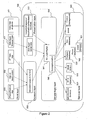
- FIG 2 it shows schematically a system 500 for accessing information related to a reference entity or to a reference user.
- the system 500 operates according to a client-server architecture including a plurality of layers, wherein each layer is connected with the adjacent layers.
- the system 500 includes a Client layer 501 and a Server layer 508; preferably, the Client layer 501 is connected to the Server layer 508 through a telecommunications network (which is not shown in figure 2 ).
- the Server layer 508 includes:
- the Server layer 508 is implemented for example by a server equipment.
- the client layer 501 is implemented for example by the mobile phone 50 (a smart phone or the like, such as an iPhoneTM) or by a Personal Computer, notebook, netbook or the like.
- the client layer 501 transmits messages to the server layer 508 for indicating requests of information related to the reference entity o R or requests of information related to a user u i of the plurality of users U, and receives back from the server layer 508 answer messages carrying the information related to the reference entity o R or to the user u i .
- the client layer 501 performs the steps 30, 35, 40, 45 of the method 1 according to the first embodiment of the invention and performs the steps 30, 135, 40, 45, 145 of the method 101 according to the second embodiment of the invention. Therefore the client layer 501 is configured for selecting a display area portion out of the plurality of display area portions, and is configured for displaying, over the display device, a plurality of images and/or text data for indicating at least part of the entities of the first network assigned to the selected display area portion.
- the client layer 501 is implemented by a mobile phone, it includes a processor running an application 530 implemented with a software program, which performs the steps 30, 35, 40, 45 of the method 1 according to the first embodiment of the invention and the steps 30, 135, 40, 45, 145 of the method 101 according to the second embodiment of the invention.
- the client layer 501 is implemented by a Personal Computer, it includes a web browser application 531 which performs the steps 30, 35, 40, 45 of the method 1 according to the first embodiment of the invention and the steps 30, 135, 40, 45, 145 of the method 101 according to the second embodiment of the invention.
- the client layer 501 is implemented by a Personal Computer including a touch screen or by an iPad, it includes an application 532 which performs the steps 30, 35, 40, 45 of the method 1 according to the first embodiment of the invention and the steps 30, 135, 40, 45, 145 of the method 101 according to the second embodiment of the invention.
- the Services layer 505 has the function to provide a plurality of services.
- the Services layer 505 includes a database 520 (such as a relational database) configured for storing the ontology A describing the first plurality of entities; preferably, the database 520 is stored into a non-volatile memory.
- a database 520 such as a relational database
- the Services layer 505 includes another database 521 configured for storing the information related to the actions performed by the plurality of users U; preferably, the database 521 is stored into another non-volatile memory.
- the Services layer 505 includes another database 522 configured for storing the ontology L describing the second plurality of entities; preferably, the database 522 is stored into another non-volatile memory.
- the Services layer 505 includes another database 523 configured for storing the list of the first plurality of entities and the corresponding RFID identifiers; preferably, the database 523 is stored into another non-volatile memory.
- the Services layer 505 includes a module 510 configured for identifying the reference entity o R by means of information (for example, a photo) generated from a visual search.
- the Service logic layer 504 includes a module 540 which has the function to elaborate the request messages generated by the client layer 501, to send request query messages (for example, using SQL or SPARQL) to the Services layer 505, to receive back from the Services layer 505 answers query messages and to send the answer messages towards the Client layer.
- request query messages for example, using SQL or SPARQL
- the module 540 is configured for calculating the first network of entities selected from the first plurality of entities, said entities of the first network having first relationships with the reference entity, according to the properties of the classes.
- the module 540 is further configured for identifying a plurality of portions available on the area of a display device, according to the plurality of classes of the ontology, and is configured for assigning the entities of the first network to at least one of the plurality of display area portions.
- the module 540 is implemented for example with Java, running on a processor included into the server equipment.
- the Service logic layer 504 further includes a module 541 performing interface functionalities, implemented with JSON (Java Script Object Notation) or XML over http.
- JSON Java Script Object Notation
- XML XML
- the Presentation layer 503 performs the functions required to generate the user interfaces for the browser and for voice applications.
- the Exposure layer 502 has the function to control the access to the API HTTP provided by the Service Logic layer 504, in order to provide a safe access and an access which can also be monitored.
- the shape of the identified area of the screen 55 of the mobile phone 50 is substantially a circle, as shown schematically in figure 4a , and the portions of the screen are sectors of the circle.
- a mobile phone 50 performing the methods 1 and 101 according to the first and second embodiments of the invention in order to access information related to a reference entity by means of a display device, wherein the reference entity is the name of a wine named "Roero Arneis" and the display device is the screen 55 of the mobile phone 50.
- the display device is the screen 55 of a mobile phone 50 (for example, a smart phone or the like, such as an iPhoneTM), but the invention is not limited to the screen of the mobile phone; for example, the display device can be the screen of a Personal Computer or the screen of an iPad.
- a mobile phone 50 for example, a smart phone or the like, such as an iPhoneTM
- the invention is not limited to the screen of the mobile phone; for example, the display device can be the screen of a Personal Computer or the screen of an iPad.
- the screen 55 of the mobile phone 50 is a touch screen, that is the screen 55 detects the presence and location of a touch (such as a finger) within the display area and the user can interact directly with what is displayed on the screen.
- a touch such as a finger
- the invention is not limited to a touch screen: for example, the user can interact with the cursor of a mouse or of a touchpad.
- the ontology A describes the field of enogastronomy.
- the invention can be applied to an ontology describing other fields, such as books, music, films.
- the user u 1 of the mobile phone 50 is interested to access information related to a bottle of wine 52 and focus the camera of the mobile phone 50 on the label 53 of the bottle 52, as shown in figure 3a .
- the user u 1 touches with the finger the area 54 of the screen 55 and the camera takes a photo of the label 53.
- the mobile phone 50 by means of suitable hardware devices and a software program running in the mobile phone 50, recognizes the bottle of wine 52 Roero Arneis and identifies that the reference entity o R of the ontology A is the bottle of wine 52 named Roero Arneis.
- the screen 55 displays a list with a plurality of products, for example each one with a photo and a corresponding short description (for example, "Roero Arneis by Pino Costalunga”, “Roero Arneis by Gianni Casetta”, “Roero Arneis by brothers Rabbino"), and the user can select one of them by touching the screen 55 in the area corresponding to the interested product.
- the screen 55 displays the possible actions which can be performed by the user u 1 on the bottle of wine 52 Roero Arneis, and the possible actions (see figure 3b ) are:
- the user u 1 can decide to put the bottle of wine 52 Roero Arneis in the centre, meaning that the user u 1 is interested to access further information related to the bottle of wine 52 Roero Arneis.
- the user u 1 touches with the finger the area 51 of the screen 55 and the screen 55 displays an image representing a wheel 60 divided into four sectors 61, 62, 63, 64, as shown in figure 4a .
- the four sectors 61, 62, 63, 64 displays the following text data respectively People, Products, Places, Cooking.
- the wheel 60 shows in the centre 65 a small image representing the bottle of wine 52 Roero Arneis, which is schematically represented in figure 4a with the reference entity o R , which is the bottle of wine 52 Roero Arneis.
- the shape of the wheel divided into four sectors has the advantage to allow to represent at the same time on a plane with a limited area (such as the screen 55 of a mobile phone) a huge amount of information having semantic relationships with the reference entity, wherein said information can be retrieved not only from the static information arranged into one or more ontologies, but also from information dynamically generated from the actions (such as Vote, Tag, Comments, Add to Favorites) performed by the plurality of users U.
- the limited number of sectors of the wheel allows to access the information with a limited number of commands, thus the access is performed in a simple way.
- the user u 1 touches with the finger the area 65 in the centre of the wheel 60 and the screen 55 displays on the left a small image representing the bottle of wine 52 Roero Arneis and displays on the right a description of the bottle of wine 52 Roero Arneis, as shown schematically in figure 4c .
- the screen 55 displays the products assigned (by the step 20 of the method 1) to the sector 62 (Products), as shown schematically in figure 4b .
- the screen 55 displays the products of the ontology A related to the bottle of wine 52 Roero Arneis: the products are indicated by the image 71 representing a small bottle of wine Grignolino, the image 72 representing a small bottle of wine Moscato and the image 73 representing the cheese "Grana Padano".
- the screen 55 displays areas 90, 91, 92 for filtering the entities assigned to the selected sector and the filters are activated by touching with the finger the corresponding areas 90, 91, 92.
- the areas 90, 91, 92 indicate the following text data respectively: Slow food, Km0, Interest.
- the Slow food filter when activated, displays within the portion 62 only the entities o i having the slow food property.
- the Km0 filter when activated, displays within the portion 62 only the entities which are located near the reference entity, that is the entities which have a geographical relationship with the reference entity.
- the user u 1 can touch with the finger the area 65 in the centre of the wheel 60 and the screen 55 displays on the left a small image representing the bottle of wine 52 Roero Arneis and displays on the right a description of the bottle of wine 52 Roero Arneis, as shown schematically in figure 4c .
- the user u 1 touches quickly two times with the finger the image 72 representing the small bottle of wine Moscato and the screen 55 displays an area 70 including a plurality of text data describing the relationships r 5, r i , r j (calculated by the steps 10 and 110 of the methods 1 and 101) between the small bottle of wine Moscato and other entities of the ontology A or between the small bottle of wine Moscato and other users U, as shown in figure 4e : this performs the step 45 and 145 of the method 1 and 101 according to the first and second embodiments of the invention. Specifically, the displayed relationship r 5 is "is similar to", the displayed relationship r i is "is produced by” and the displayed relationship r j is "is served by".
- the user u 1 touches one time with the finger the image 72 representing the small bottle of wine Moscato and the screen 55 displays an area 66 including a description of wine Moscato, as shown in figure 4d .
- the user u 1 can be interested to check if there are other products (different from the ones indicated by the images 71, 72, 73) of the ontology A related to the bottle of wine 52 Roero Arneis.
- the user u 1 can touch the screen 55 and rotates the finger, as shown with line 76 in figure 4g (in other words, the wheel 60 can be scrolled).
- the screen 55 displays other two products indicated by the images 74 and 75 representing the entities o 11 and o 13 respectively (see figure 4h ), which were assigned (in step 20) to the portion 62.
- the user u 1 touches with the finger the area of the screen 55 displaying the relationship r 5 "is similar to” and the screen 55 displays more in detail the relationship r 5 "is similar to", as shown in figure 4f .
- the user u 1 touches with the finger the image 72 (corresponding to entity o 5 ), drags and drops it into the area 69, as shown in figure 5a .
- the screen 55 displays a wheel 160 at least in part different from the wheel 60, as shown in figure 5b .
- the wheel 160 has in the centre 65 a small image representing the entity o 5 (in the example, a bottle of wine Moscato).
- the wheel 160 is divided into the four sectors 61, 62, 63, 64, displaying the following text data respectively: People, Products, Cooking, Places.
- the text data (and/or images) displayed on the four sectors 61, 62, 63, 64 of the wheel 160 can also be different (at least in part) from the text data (and/or images) displayed on the four sectors 61, 62, 63, 64 of the wheel 60, because it depends on the semantic of the reference entity o R which is placed in the centre 65 of the wheel 160.
- the operation of the mobile phone 50 according to the invention can also start (time t 0 ) from any entity o i selected from the plurality of entities O, or can start from any user u i selected from the plurality of users U: in this last case the user u i is interested to access information having a relationship with at least part of the plurality of entities O and having a relationship with another u j , wherein the information can be retrieved not only from the static information arranged into one or more ontologies, but also from information dynamically generated from the actions (such as Vote,Tag, Comments, Add to Favorites) performed by the plurality of users U.
- the methods according to the invention further include the step of generating a user model according to the actions performed by the user.
- the user model describes the interests of the user for different classes of the ontology or his favorite entities.
- the user model can be activated by touching with the finger the screen area 92, as shown in figure 4a .
- the methods 1 and 101 further include, between the steps 30 and 35 and between 30 and 135, the step of filtering the entities of the first and second network, according to the generated user model, and the steps 35 and 135 display only the entities which fulfill the requirements of the user model.
Landscapes
- Engineering & Computer Science (AREA)
- Theoretical Computer Science (AREA)
- General Engineering & Computer Science (AREA)
- Physics & Mathematics (AREA)
- General Physics & Mathematics (AREA)
- Databases & Information Systems (AREA)
- Human Computer Interaction (AREA)
- Data Mining & Analysis (AREA)
- Life Sciences & Earth Sciences (AREA)
- Animal Behavior & Ethology (AREA)
- Computational Linguistics (AREA)
- Computing Systems (AREA)
- Information Transfer Between Computers (AREA)
- Information Retrieval, Db Structures And Fs Structures Therefor (AREA)
- User Interface Of Digital Computer (AREA)
Description
- The present invention generally relates to the field of management of huge amount of information contents. More in particular, the present invention concerns a method for accessing information related to an entity by means of a display device, such as the screen of a mobile phone.
- In the field of management of huge amount of information contents, a domain is a topic area which is represented by an ontology (also referred as taxonomy). An ontology is a hierarchical structure comprising nodes, each one representing a concept of the domain, and comprising links (referred to as arcs) between the nodes, each link representing an asymmetrical relationship between the nodes. The objects of an ontology are arranged into classes having respective properties. An ontology can be represented by an acyclic interconnected graph, that is a graph wherein all the nodes are connected through at least one arc and there are no cycles.
- Tipically, an ontology is written in a formal language such as XML (extensible Markup Language) or one of its extensions like RDF (Resource Description Framework) or OWL (Web Ontology Language).
- TouchGraph (www.touchgraph.com) is a tool that explores connections between different websites.
- Liveplasma (www.liveplasma.com) is a search engine for music, which displays on the screen of a personal computer a map of artists or bands which are related (for example, similar genre) to a searched artist or band.
-
WO 2007/099390 discloses an improved user interface for a portable electronic device that incorporates contextual navigation information with filter criteria to enable users to navigate through fewer views to achieve desired search results. The user interface enables a user to perform a search/filter by selecting a first level filter criterion and a contextual navigation filter criterion from the same view. A third data set is displayed when the filter is applied, thereby allowing the user to jump from a first level view to a third level view. -
US 5,874,954 (Kilmer et al ) discloses a system and a process for providing interaction between a human and a machine by providing an architecture of processing that comprises a wheel interface to the human. - The Applicant has observed that the prior art solutions does not allow to access in a simple way the huge amount of related information contents by means of a display device with a limited area (such as the display of a mobile phone) and with limited possibilities of interaction between the user and the display device.
- The present invention relates to a method for accessing information related to a reference entity as defined in the enclosed claim 1 and its preferred embodiments as defined in the dependent claims 2 to 13.
- The Applicant has recognized that the method according to the present invention allows to access in a simple way a huge amount of information contents related to a reference entity and described by one or more ontologies by means of a display device having a limited area (such as the screen of a mobile phone), also in case of a limited interaction possibility between the user and the display device.
- Moreover, the method according to the present invention allows to access information generated by some actions performed by a plurality of users on the entities of the ontology and also information generated by actions performed between the users themselves.
- According to another aspect, the present invention provides a system as defined in the enclosed claim 14.
- According to still another aspect, the present invention provides a computer program product as defined in the enclosed claim 16.
-
-
Figures 1a-d schematically show flowcharts of the method for accessing information related to a reference entity according to first, second, third and fourth embodiments the invention. -
Figure 2 schematically shows a system for accessing information related to a reference entity according to the invention. -
Figure 3a schematically shows a mobile phone for performing the methods according to the invention. -
Figure 3b schematically shows some actions which can be performed by a user of the mobile phone according to the invention. -
Figures 4a-h schematically show the screen of a mobile phone when performing the steps of the method according to the invention. -
Figures 5a-b schematically show the drag and drop step of the method according to the invention. -
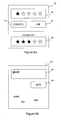
Figures 6a-d schematically show more in detail some actions which can be performed by a user of the mobile phone according to the invention. - For the purposes of the present invention, it is defined "entity" oi an instance in an ontology A or a class Ci of the ontology A, wherein the instance (or the class) in the ontology can describe an existing object (i.e. a product) or can describe a person or people. For example, the field of enogastronomy is described by a ontology A including the entity oi, which can be the name of a specific wine (for example, "Roero Arneis") or can be the name of a person producing (or selling) this wine (for example, "Pino Costalunga"). In the same example of enogastronomy, the classes can indicate for example the products (i.e. food, wine), restaurants, companies producing (or selling) the products, cooks, recipes.
- Referring to
figure 1a , it shows schematically the flowchart of the method 1 for accessing information related to a reference entity according to a first embodiment of the invention. - The method 1 includes
steps - The method 1 is performed by means of a display device, such as the
screen 55 of amobile phone 50, as shown infigure 3a . -
Step 5 includes providing an ontology A which describes a first plurality of entities O= { o1, o2, ... om }, wherein oi (i=1, 2, ...m) is a generic entity belonging to the ontology A. The first plurality of entities O are a plurality of classes C of the ontology A or are instances of the ontology arranged into the plurality of classes C, wherein the plurality of classes have respective properties. The ontology A is stored for example into a memory of a server equipment. Preferably, the ontology A is arranged into a database, tipically a relational database. - Referring to the example in the field of enogastronomy, the ontology A describes the enogastronomy field, the first plurality of entities O are for example specific types of wines or cheese or the name of companies producing (or selling) a specific wine or cheese, while the plurality of classes are wine and cheese. The properties of the class wine can be the type of grapes used for the production of the wine or the time required for the maturation of the wine; the properties of the class cheese can be the type of milk used for the production of the cheese or the time required for the maturation of the cheese.
-
Step 6 includes the reception of information for identifying an entity oR out of the first plurality of entities O: this entity is referred as "reference entity". The reference entity oR can be any one of the first plurality of entities O included in the ontology A and is indicated as reference entity only for the purpose of explaining the invention. - Referring to the example in the field of enogastronomy, the reference entity oR is identified for example from a visual search by means of the
mobile phone 50 equipped with a camera and performed on thelabel 53 of a bottle ofwine 52, as shown infigure 3a : in this example, the reference entity oR is a specific wine named "Roero Arneis". - The invention is not limited to the visual search used for the identification of the reference entity, because other solutions can be used in order to identify the reference entity oR, such as:
- a recognition of a RFID (Radio-Frequency Identification) on the bottle of wine by means of the mobile phone equipped with an RFID reader;
- a text search with a keyword;
- a random choice.
-
Step 10 includes the calculation of a first network of entities selected from the first plurality of entities O, wherein the entities of the first network have first relationships with the reference entity oR, according to the properties of the classes. Said calculation can be referred as Net(oR, oi, type=A), wherein Net is a function performing the calculation, oR is the reference entity, oi (i=1,2, ...m) is a generic entity (different from the reference entity oR) defined in the ontology A, type indicates the type of calculated first relationships and type=A indicates that the type of calculated first relationships between the reference entity oR and a generic entity oi is based on the ontology A (i.e., on the classes properties). - Preferably,
step 10 includes the calculation of entities of the first network having first relationships with each other. - Therefore for the purposes of the first embodiment of the present invention, the first network of entities is a plurality of entities connected by a set of links and having different types of semantic relationships, wherein the semantic relationships are calculated taking into account the properties of the classes.
- Specifically, the following first relationships between the reference entity oR and a generic entity oi defined in the ontology A can be calculated, according to the properties of the classes of the ontology A:
- oR and oi belong to different classes C1 and C2 respectively having a common property. In the example in the field of enogastronomy, oR and oi have a same company producing them, or oR and oi have the same features of production or for aging.
- oR is the value of a property of oi, or viceversa. In the example in the field of enogastronomy, oR is a company producing oi (or viceversa) or oR is an ingredient for oi (or viceversa).
- oR and oi belong to the same class or belong to adjacent classes, wherein adjacency is determined according to the hierarchical structure of the ontology. In the example in the field of enogastronomy, oR and oi are both fresh cheese.
- Therefore
step 10 generates the first network of entities, which includes at least part of the plurality of entities O defined in the ontology A having a relationship with the reference entity oR, according to the properties of the classes. For example, the first plurality of entities is O= { oR, o1, o2, o3, o4, o5, o6, o7, o8, o9, o10 } and the first network of entities having a relationship with the reference entity oR is composed of the following entities: o2, o4, o5, o8, o9, o10. Moreover,step 10 generates a list of said first relationships with the reference entity oR. In the above example, the following first relationships (indicated with ri, i=1..10) are generated: relationship r2 between oR and o2, relationship r4 between oR and o4, relationship r5 between oR and o5, relationship r8 between oR and o8, relationship r9 between oR and o9, relationship r10 between oR and o10. -
Step 15 includes the identification of a plurality of portions available on the area of the display device, according to the plurality of classes of the ontology. - Referring to
figure 4a , the method 1 identifies fourportions screen 55 of themobile phone 50, according to the classes defined in the ontology A. - Moreover, different text data (and, preferably, different images) are displayed over the four
portions portions portions -
Step 20 includes the assignment of the entities of the first network and corresponding first relationships to at least one of the plurality of display area portions. - Referring to the above example of O= { oR, o1, o2, o3, o4, o5, o6, o7, o8, o9, o10 }, entity o2 and corresponding relationship r2 is assigned to
portion 62 identified by Products, entity o4 and corresponding relationship r4 is assigned toportion 64 identified by Places, entity o5 and corresponding relationship r5 is assigned toportion 62 identified by Products, entity o8 and corresponding relationship r8 is assigned toportion 63 identified by Cooking, entity o9 and corresponding relationship r9 is assigned toportion 62 identified by Products, entity o10 and corresponding relationship r10 is assigned toportion 61 identified by People. - The assignment of the entities of the first network to at least one of the
display area portions portions portion 62 identified by Products because o2 relates to a product (for example, o2 is a specific wine, such as "Grignolino", which is a product like wine Roero Arneis), entity o4 is assigned toportion 64 identified by Places because o4 relates to a place (for example, o4 is the name of a country, such as Italy, wherein wine Roero Arneis is produced), entity o8 is assigned toportion 63 identified by Cooking because the o8 relates to cooking (for example, o8 is the name of a first course which is well combined with wine Roero Arneis) and entity o10 is assigned toportion 61 identified by People because o10 relates to People (for example, o10 is the name of a famous person producing or selling wine Roero Arneis). -
Step 25 includes the display of a plurality of text data and/or images over the plurality of display area portions. This is shown infigure 4a , wherein in the example in the enogastronomy field text data People is displayed over theportion 61, text data Products is displayed over theportion 62, text data Cooking is displayed over theportion 63 and text data Places is displayed over theportion 64. -
Step 30 includes the selection of a display area portion selected from the plurality of display area portions. - Referring to the example in the enogastronomy field, the user of the
mobile phone 50 selectsportion 62 because he/she is interested to access information regarding Products having a semantic relationship with the wine Roero Arneis. -
Step 35 includes the display, over the display device, of a plurality of images and/or text data for indicating at least part of the entities of the first network assigned to the selected display area portion. - Referring to
figure 4b and to the example in the enogastronomy field, the user of themobile phone 50 has selected theportion 62 identified by text data Products and thescreen 55 of themobile phone 50displays images portion 62. For example, theimage 71 is a small bottle of wine Grignolino, theimage 72 is a small bottle of wine Moscato and theimage 73 is the cheese "Grana Padano" (which is supposed to be well combined with the wine Roero Arneis). -
Step 40 includes the selection of an entity selected from the first network of entities. Referring tofigure 4e , the selected entity is o5, which is a circle with a bold line. -
Step 45 includes the display of at least one text data and/or image describing at least one of the first relationships assigned to the selected display area portion. This is shown infigure 4e , which shows anarea 70 displaying the first relationships r5, ri, rj. Referring to the example in the field of enogastronomy and in case the user has selected theimage 72 representing a bottle of wine Moscato, thescreen 55 of themobile phone 50 displays the following first relationships r5, ri, rj as text data: "is similar to", "is produced by", "is served by". - Referring to
figure 1b , it shows schematically the flowchart of amethod 101 for accessing information related to the reference entity according to a second embodiment of the invention, wherein steps with the same function as the first embodiment are indicated with the same reference numbers. - The
method 101 includessteps - The
method 101 is performed by means of a display device, such as thescreen 55 of amobile phone 50, as shown infigure 3a . - The
method 101 differs from the method 1 in thesteps - Step 105 includes providing a plurality of users U= {u1, u2, ... un} and at least one action between the plurality of users U and the reference entity oR and between the plurality of users U and the plurality of entities O of the ontology A.
- For the purposes of the present invention, the plurality of users U is a group of people which are interested to access the information related to the reference entity oR and related to the plurality of entities O (and, preferably, also access information related to other users, as it will be explained more in detail afterwards), by means of a
display device 55. - The following is a list of possible actions which can be performed by a generic user ui of the plurality of users U:
- Vote: the user ui assigns a vote to the reference entity oR, wherein the vote is a number comprised in a range between zero and a maximum value (for example, 5), as shown in
figure 6a ; - Tag: the user ui assigns a tag to the reference entity oR, as shown in
figure 6b ; - Comment: the user ui assigns some comments to the reference entity oR, as shown in
figure 6c ; - Add to Favorites: the user ui assigns the reference entity oR to the list of his favorites entities, as shown in
figure 6d . - Moreover, the user can decide to put the reference entity oR in the centre of the display device, in order to access information related to the reference entity oR: this is achieved with
steps steps method 101 according to the second embodiment of the invention, as will be explained more in detail afterwards. - The invention is not limited to the above indicated user actions: other possible user actions can be defined, depending on the possible behaviour of the users and, preferably, depending on the field of the considered ontology A.
- Step 110 includes the calculation of a second network of entities having second relationships with the reference entity oR (and, preferably, each other), according to said actions. Said calculation can be referred as Net(oR, oi, type=Actions), wherein type=Actions indicates that the type of calculated second relationships between the reference entity oR and a generic entity oi is based on the users actions.
- Specifically, the following second relationships between the reference entity oR and a generic entity oi of the ontology A can be calculated, according to the actions performed by the users:
- the tag of oR and the tag of oi have at least one common word, preferably a plurality N of common words, wherein the value of N is pre-defined and can be changed by configuration;
- oR is mentioned as tag of oi, or viceversa;
- oR is mentioned in the comments for oi, or viceversa;
- oR and oi belong to the Favorites of at least one user, preferably of a plurality M of users, wherein the value of M is pre-defined and can be changed by configuration;
- oR and oi belong to the list of tags of a plurality K1 of users, wherein the value of K1 is pre-defined and can be changed by configuration;
- oR and oi belong to the comments of a plurality K2 of users, wherein the value of K2 is pre-defined and can be changed by configuration;
- oR and oi were voted by a plurality K3 of users, wherein the value of K3 is pre-defined and can be changed by configuration;
- oR and oi were accessed recently by a plurality K4 of users, wherein the value of K4 is pre-defined and can be changed by configuration.
- Similar considerations can apply also to classes, that is the second relationships can be calculated also between classes, according to the actions performed by the users.
- Therefore for the purpose of the second embodiment of the present, the second network of entities is a plurality of entities connected by a set of links and having different types of semantic relationships, wherein the semantic relationship is calculated taking into account the actions performed by the users.
- Preferably, the above indicated second relationships are calculated at pre-defined times (for example periodically, with a period that can be changed by configuration) or are calculated in a defined time period (that can be changed by configuration).
- The invention is not limited to the above indicated second relationships.
- Step 120 includes the assignment of the entities of the second network and corresponding second relationships to at least one of the plurality of display area portions.
- The assignment of the entities of the second network to at least one of the
display area portions portions portion 62 identified by Products because o2 relates to a product according to an action performed by a user (for example, o2 is the name of a person having wine Roero Arneis in the list of his favorites). - Step 135 includes the display, over the display device, of a plurality of images and/or text data for indicating at least part of the entities of the second network assigned to the selected display area portion. Referring to the example in the enogastronomy field , the user of the
mobile phone 50 has selected theportion 62 identified by Products and thescreen 55 of themobile phone 50 displays an image representing a cheese which another user has tagged according to the action Tag (or which the other user has commented according to the action Comments). - Step 145 includes the display of at least one text data and/or image describing at least one of the second relationships assigned to the selected display area portion. Referring to the example in the field of enogastronomy and in case the user has selected the image representing the cheese, the
screen 55 of themobile phone 50 displays the following second relationships as text data: "has been tagged by", likes to". - Referring to
figure 1c , it shows schematically the flowchart of amethod 201 for accessing information related to the reference entity according to a third embodiment of the invention, wherein steps with the same function as the second embodiment are indicated with the same reference numbers. - The
method 201 includessteps - The
method 201 differs from themethod 101 in thesteps - Step 210 includes the calculation of a third network of entities having third relationships with the reference entity, according to the actions performed by the users and according to the properties of the classes. Said calculation can be referred as Net(oR, oi, type=A+Actions), wherein type=A+Actions indicates that the type of calculated third relationships between the reference entity oR and a generic entity oi is based both on the ontology A (i.e., on the classes properties) and on the users actions.
- Specifically, the following third relationships between the reference entity oR and an oi of the ontology A can be calculated, according to the actions performed by the users and according to the properties of the classes of the ontology A:
- oR is used as tag of oi;
- oR is used in the comments of oi;
- More in general, third relationships are calculated:
- between the reference entity oR and a class C including a plurality of entities O= { o1, o2, ... om }, when the reference entity oR is often used in relation with the entities O, by using the possible actions Vote, Tag, Comment, Add to Favorites;
- between two different classes C1, C2, wherein oR is included into the class C1 or C2, the classes C1, C2 including entities o1i (i=1, 2, .. N) and o2j (j=1, 2, .. M) respectively, when the entities o1i are often used in relation with the entities o1j (i=1, 2, .. N), by using the possible actions Vote, Tag, Comment, Add to Favorites;
- between the reference entity oR (belonging to class C1) and entities o2j (j=1, 2, .. M) belonging to a class C2, when classes C1 and C2 are often in relation each other by using the possible actions Vote, Tag, Comment, Add to Favorites.
- Therefore for the purpose of the third embodiment of the present, the third network of entities is a plurality of entities connected by a set of links and having different types of semantic relationships, wherein the semantic relationships are calculated taking into account the properties of the classes and also the actions performed by the users.
- The invention is not limited to the above indicated third relationships.
- Step 220 includes the assignment of the entities of the third network and corresponding third relationships to at least one of the plurality of display area portions.
- The assignment of the entities of the third network to at least one of the
display area portions portions portion 62 identified by Products because o2 relates to a product according to the properties of the classes and according to the actions performed by a user (for example, o2 is cheese "Grana Padano", which is included in the list of the tags of the wine Roero Arneis). - Step 235 includes the display, over the display device, of a plurality of images and/or text data for indicating at least part of the entities of the third network assigned to the selected display area portion.
- Step 245 includes the display of at least one image and/or text data describing at least one of the third relationships assigned to the selected display area portion. Referring to the example in the field of enogastronomy and in case the user has selected the image representing the cheese, the
screen 55 of themobile phone 50 displays the following third relationship as text data: "is tagged with". - Referring to
figure 1d , it shows schematically the flowchart of amethod 301 for accessing information related to a reference entity according to a fourth embodiment of the invention, wherein steps with the same function as the third embodiment are indicated with the same reference numbers. - The
method 301 includessteps - The
method 301 differs from themethod 201 in thesteps - The
method 301 is performed by means of a display device, such as thescreen 55 of amobile phone 50, as shown infigure 3a . - Step 305 includes providing actions between the users of the plurality of users. The same actions (Vote, Tag, Comment, Add to favorites) described for the second embodiment can also be performed between the users, that is a user can be voted by another user, can be tagged by the other user, can be commented be the other user or can be added to the list of favorites of the other user. Another example of action between the users is the friendship.
- Step 310 includes the calculation of fourth relationships between the users of the network of users, according to the actions between the users and/or according to the properties of the classes. Said calculation can be referred as Net(ui, uj, type=A+Actions), wherein type=A+Actions indicates that the type of calculated fourth relationships between user ui and user uj is based both on the ontology A (i.e., on the classes properties) and on the users actions.
- Specifically, the following fourth relationships between the users can be calculated, according to the actions performed by the users and/or according to the properties of the classes:
- user u1 is friend of user u2;
- users u1 and u2 have at least one equal tag;
- users u1 and u2 have at least one equal entity oi of ontology A in the list of Favorites;
- users u1 and u2 have performed actions (Tag, Vote, Comments, Add to Favorites) on a same entity oi of the ontology A or on a same class Ci of the ontology A.
- Preferably, the fourth relationships are calculated at pre-defined times (for example periodically, with a period that can be changed by configuration) or are calculated in a defined time period (that can be changed by configuration).
- The invention is not limited to the above indicated fourth relationships.
- Step 320 includes the assignment of the users of the user network and corresponding fourth relationships to at least one of the plurality of display area portions.
- The assignment of the users of the user network to at least one of the
display area portions portions - Step 335 includes the display of a plurality of images and/or text data for indicating at least part of the users assigned to the selected display area portion.
- Step 340 includes the selection of a user selected from the user network.
- Step 345 includes the display of a plurality of images and/or text data describing at least one of the fourth relationships assigned to the selected display area portion.
- According to a variant (not shown in the drawings) of the method according to the second, third and fourth embodiments of the invention, fifth relationships can be calculated between the reference entity oR and a user ui selected from the plurality of users U, taking into account:
- the ontology A (i.e., the classes properties); or
- the actions performed by the user ui; or
- both the ontology A (i.e., the classes properties) and the actions performed by the user ui.
- Specifically, the following fifth relationships between the reference entity oR and the user ui can be calculated:
- user ui is an expert of the reference entity oR;
- user ui has performed some actions (Tag, Comments, Vote, Add to Favorites) on the reference entity oR. An example of this relationship in the enogastronomy field is when the reference entity oR is the name of a restaurant and a user u1 can display the comments provided by another user u2 (for example, a friend) about this restaurant;
- user ui who has the reference entity oR included in the list of his favorite entities;
- user ui who has the reference entity oR included in the list of his entities who had access recently;
- user ui and the reference entity oR which the user ui has often mentioned in the comments about oR;
- user ui and the reference entity oR which the user ui has often mentioned in the description of the same user ui.
- According to another variant (not shown in the drawings), the methods according to the first, second, third and fourth embodiments of the invention further includes the step of providing another ontology L describing a second plurality of entities, said second plurality of entities being another plurality of classes of the other ontology L or being instances arranged into another plurality of classes, said other plurality of classes having respective other properties. For example, in the field of enogastronomy another ontology L can be in the field of geography and the other entities can describe geographical places and their properties. This other ontology allows calculating further relationships, such as between entities belonging to the different ontologies A and L.
- The method according to the other variant further includes the step of calculating a sixth network of entities selected from the second plurality of entities, wherein the entities of the sixth network have sixth relationships with the reference entity (and, preferably, each other), according to said other properties.
- The method according to the other variant further includes the step of assigning the entities of the second network and corresponding sixth relationships to at least one of the plurality of display area portions.
- The method according to the other variant further includes the step of displaying a plurality of images and/or text data for indicating at least part of the entities of the sixth network of entities assigned to the selected display area portion.
- Referring to
figure 2 , it shows schematically a system 500 for accessing information related to a reference entity or to a reference user. - The system 500 operates according to a client-server architecture including a plurality of layers, wherein each layer is connected with the adjacent layers.
- The system 500 includes a
Client layer 501 and aServer layer 508; preferably, theClient layer 501 is connected to theServer layer 508 through a telecommunications network (which is not shown infigure 2 ). - The
Server layer 508 includes: - an
Exposure layer 502; - a
Presentation layer 503; - a
Service logic layer 504; - a
Services layer 505. - The
Server layer 508 is implemented for example by a server equipment. Theclient layer 501 is implemented for example by the mobile phone 50 (a smart phone or the like, such as an iPhone™) or by a Personal Computer, notebook, netbook or the like. - The
client layer 501 transmits messages to theserver layer 508 for indicating requests of information related to the reference entity oR or requests of information related to a user ui of the plurality of users U, and receives back from theserver layer 508 answer messages carrying the information related to the reference entity oR or to the user ui. - The
client layer 501 performs thesteps steps method 101 according to the second embodiment of the invention. Therefore theclient layer 501 is configured for selecting a display area portion out of the plurality of display area portions, and is configured for displaying, over the display device, a plurality of images and/or text data for indicating at least part of the entities of the first network assigned to the selected display area portion. - In case the
client layer 501 is implemented by a mobile phone, it includes a processor running anapplication 530 implemented with a software program, which performs thesteps steps method 101 according to the second embodiment of the invention. - Preferably, in case the
client layer 501 is implemented by a Personal Computer, it includes aweb browser application 531 which performs thesteps steps method 101 according to the second embodiment of the invention. - Preferably, in case the
client layer 501 is implemented by a Personal Computer including a touch screen or by an iPad, it includes anapplication 532 which performs thesteps steps method 101 according to the second embodiment of the invention. - The
Services layer 505 has the function to provide a plurality of services. - The
Services layer 505 includes a database 520 (such as a relational database) configured for storing the ontology A describing the first plurality of entities; preferably, thedatabase 520 is stored into a non-volatile memory. - Preferably, the
Services layer 505 includes anotherdatabase 521 configured for storing the information related to the actions performed by the plurality of users U; preferably, thedatabase 521 is stored into another non-volatile memory. - Preferably, the
Services layer 505 includes anotherdatabase 522 configured for storing the ontology L describing the second plurality of entities; preferably, thedatabase 522 is stored into another non-volatile memory. - Preferably, the
Services layer 505 includes anotherdatabase 523 configured for storing the list of the first plurality of entities and the corresponding RFID identifiers; preferably, thedatabase 523 is stored into another non-volatile memory. - The
Services layer 505 includes amodule 510 configured for identifying the reference entity oR by means of information (for example, a photo) generated from a visual search. - The
Service logic layer 504 includes amodule 540 which has the function to elaborate the request messages generated by theclient layer 501, to send request query messages (for example, using SQL or SPARQL) to theServices layer 505, to receive back from theServices layer 505 answers query messages and to send the answer messages towards the Client layer. - The
module 540 is configured for calculating the first network of entities selected from the first plurality of entities, said entities of the first network having first relationships with the reference entity, according to the properties of the classes. Themodule 540 is further configured for identifying a plurality of portions available on the area of a display device, according to the plurality of classes of the ontology, and is configured for assigning the entities of the first network to at least one of the plurality of display area portions. Themodule 540 is implemented for example with Java, running on a processor included into the server equipment. - The
Service logic layer 504 further includes amodule 541 performing interface functionalities, implemented with JSON (Java Script Object Notation) or XML over http. - The
Presentation layer 503 performs the functions required to generate the user interfaces for the browser and for voice applications. - The
Exposure layer 502 has the function to control the access to the API HTTP provided by theService Logic layer 504, in order to provide a safe access and an access which can also be monitored. - Advantageously, the shape of the identified area of the
screen 55 of themobile phone 50 is substantially a circle, as shown schematically infigure 4a , and the portions of the screen are sectors of the circle. - Referring to
figures 3a-b ,4a-h ,5a-b ,6a-d , it will be explained hereinafter the operation of amobile phone 50 performing themethods 1 and 101 according to the first and second embodiments of the invention in order to access information related to a reference entity by means of a display device, wherein the reference entity is the name of a wine named "Roero Arneis" and the display device is thescreen 55 of themobile phone 50. - In order to explain the operation, it is supposed that the display device is the
screen 55 of a mobile phone 50 (for example, a smart phone or the like, such as an iPhone™), but the invention is not limited to the screen of the mobile phone; for example, the display device can be the screen of a Personal Computer or the screen of an iPad. - It is also supposed that the
screen 55 of themobile phone 50 is a touch screen, that is thescreen 55 detects the presence and location of a touch (such as a finger) within the display area and the user can interact directly with what is displayed on the screen. Anyway, the invention is not limited to a touch screen: for example, the user can interact with the cursor of a mouse or of a touchpad. - It is also supposed that the ontology A describes the field of enogastronomy. Anyway, the invention can be applied to an ontology describing other fields, such as books, music, films.
- At a starting time t0 the user u1 of the
mobile phone 50 is interested to access information related to a bottle ofwine 52 and focus the camera of themobile phone 50 on thelabel 53 of thebottle 52, as shown infigure 3a . The user u1 touches with the finger thearea 54 of thescreen 55 and the camera takes a photo of thelabel 53. Themobile phone 50, by means of suitable hardware devices and a software program running in themobile phone 50, recognizes the bottle ofwine 52 Roero Arneis and identifies that the reference entity oR of the ontology A is the bottle ofwine 52 named Roero Arneis. - In case the
mobile phone 50 recognizes more than one product, thescreen 55 displays a list with a plurality of products, for example each one with a photo and a corresponding short description (for example, "Roero Arneis by Pino Costalunga", "Roero Arneis by Gianni Casetta", "Roero Arneis by brothers Rabbino"), and the user can select one of them by touching thescreen 55 in the area corresponding to the interested product. - Therefore at time t0 it's performed the
step 6 of themethods 1 and 101 according to the first and second embodiments of the invention and the reference entity oR is the bottle ofwine 52 named Roero Arneis. - At time t1 (subsequent to time t0) the
screen 55 displays the possible actions which can be performed by the user u1 on the bottle ofwine 52 Roero Arneis, and the possible actions (seefigure 3b ) are: - Vote: by touching the
area 56, the user u1 can assign a vote to the bottle ofwine 52 Roero Arneis, as shown infigure 6a . The user u1 can assign a vote comprised between 1 and 5 by touching a corresponding number of stars comprised between 1 and 5 in the area 80 (in the example offigure 6a , the user assigns the vote equal to 1, which is represented by one star filled with black); afterwards, the user u1 can touch thearea 81 to confirm the vote or can touch thearea 82 to cancel the vote. Preferably, thescreen 55 displays anarea 83 indicating an average of the votes previously assigned by other users (three stars - which are filled with black - in the example offigure 6a ); - Tag: by touching the
area 57, the user u1 can assign a tag to the bottle ofwine 52 Roero Arneis, as shown infigure 6b . The user u1 can add a word (good) in thearea 84 and can assign it as the tag by touching thearea 85. Preferably, thescreen 55 displays the tags (white, fish, light) previously assigned by other users and the user u1 can also select one of these tags by touching the tags in the corresponding area of thescreen 55 and confirm the selected tag by touching thearea 85; - Comments: by touching the
area 58, the user u1 can assign some comments to the bottle ofwine 52 Roero Arneis, as shown infigure 6c . The user u1 can type the comments in thearea 86 by touching the letters on thescreen 55 and afterwards the user u1 can touch the area 87 to confirm the comments; - Add to Favorites: by touching the
area 59, the user can ui assign the bottle ofwine 52 Roero Arneis to the list of his/her favorites entities, as shown infigure 6d . Thescreen 55 displays in the area 88 a message asking the user if to add the bottle ofwine 52 Roero Arneis to the favorites and the user u1 can confirm it by touching thearea 89. Preferably, thescreen 55 displays the number of users (20) having the bottle ofwine 52 Roero Arneis in the list of their favorites. - Therefore at time t1 it's performed part of the
step 105 of the method 1 according to the second embodiment of the invention. - Moreover, by touching the
area 51 indicated with text data "Put in the centre", the user u1 can decide to put the bottle ofwine 52 Roero Arneis in the centre, meaning that the user u1 is interested to access further information related to the bottle ofwine 52 Roero Arneis. - At time t2 (subsequent to time t1) the user u1 touches with the finger the
area 51 of thescreen 55 and thescreen 55 displays an image representing awheel 60 divided into foursectors figure 4a . Moreover, the foursectors wheel 60 shows in the centre 65 a small image representing the bottle ofwine 52 Roero Arneis, which is schematically represented infigure 4a with the reference entity oR, which is the bottle ofwine 52 Roero Arneis. - Therefore at time t2 are performed the
steps method 1 and 101 according to the first and second embodiments of the invention. - The shape of the wheel divided into four sectors has the advantage to allow to represent at the same time on a plane with a limited area (such as the
screen 55 of a mobile phone) a huge amount of information having semantic relationships with the reference entity, wherein said information can be retrieved not only from the static information arranged into one or more ontologies, but also from information dynamically generated from the actions (such as Vote, Tag, Comments, Add to Favorites) performed by the plurality of users U. Moreover, the limited number of sectors of the wheel allows to access the information with a limited number of commands, thus the access is performed in a simple way. - At time t3 (subsequent to time t2) the user u1 touches with the finger the
area 65 in the centre of thewheel 60 and thescreen 55 displays on the left a small image representing the bottle ofwine 52 Roero Arneis and displays on the right a description of the bottle ofwine 52 Roero Arneis, as shown schematically infigure 4c . - At time t3 (subsequent to time t2) the user u1 is interested to access products related to the bottle of
wine 52 Roero Arneis and touches with the finger thesector 62 indicating Products: this performs thestep 30 of the method 1 according to the first embodiment of the invention. - The
screen 55 displays the products assigned (by thestep 20 of the method 1) to the sector 62 (Products), as shown schematically infigure 4b . Specifically, thescreen 55 displays the products of the ontology A related to the bottle ofwine 52 Roero Arneis: the products are indicated by theimage 71 representing a small bottle of wine Grignolino, theimage 72 representing a small bottle of wine Moscato and theimage 73 representing the cheese "Grana Padano". Therefore at time t4 are performed thesteps method 1 and 101 according to the first and second embodiments of the invention, wherein the entities o2, o5, o9 of the first network correspond to a small bottle of wine Grignolino, a small bottle of wine Moscato and the cheese "Grana Padano" respectively. - Preferably, the
screen 55displays areas areas areas portion 62 only the entities oi having the slow food property. The Km0 filter, when activated, displays within theportion 62 only the entities which are located near the reference entity, that is the entities which have a geographical relationship with the reference entity. - Preferably, at time t3 the user u1 can touch with the finger the
area 65 in the centre of thewheel 60 and thescreen 55 displays on the left a small image representing the bottle ofwine 52 Roero Arneis and displays on the right a description of the bottle ofwine 52 Roero Arneis, as shown schematically infigure 4c . - At time t4 (subsequent to time t3) the user u1 touches quickly two times with the finger the
image 72 representing the small bottle of wine Moscato and thescreen 55 displays anarea 70 including a plurality of text data describing the relationships r5, ri, rj (calculated by thesteps figure 4e : this performs thestep method 1 and 101 according to the first and second embodiments of the invention. Specifically, the displayed relationship r5 is "is similar to", the displayed relationship ri is "is produced by" and the displayed relationship rj is "is served by". - Preferably, at time t4 the user u1 touches one time with the finger the
image 72 representing the small bottle of wine Moscato and thescreen 55 displays anarea 66 including a description of wine Moscato, as shown infigure 4d . - Preferably, at time t4 (subsequent to time t3) the user u1 can be interested to check if there are other products (different from the ones indicated by the
images wine 52 Roero Arneis. The user u1 can touch thescreen 55 and rotates the finger, as shown withline 76 infigure 4g (in other words, thewheel 60 can be scrolled). Thescreen 55 displays other two products indicated by theimages figure 4h ), which were assigned (in step 20) to theportion 62. - At time t5 (subsequent to time t4) the user u1 touches with the finger the area of the
screen 55 displaying the relationship r5 "is similar to" and thescreen 55 displays more in detail the relationship r5 "is similar to", as shown infigure 4f . Specifically, thescreen 55 displays anarea 79 indicating a list p1, pi, ... pj of specific relationships "is similar to", which are for example the following: p1= Roero Arneis, pi= Grignolino, ... pj= Nebbiolo. Therefore the user u1 retrieves the list of products which are similar to the wine Moscato, that is wines Roero Arneis, Grignolino and Nebbiolo. - At time t6 (subsequent to time t5) the user u1 touches with the finger the image 72 (corresponding to entity o5), drags and drops it into the
area 69, as shown infigure 5a . Thescreen 55 displays awheel 160 at least in part different from thewheel 60, as shown infigure 5b . Thewheel 160 has in the centre 65 a small image representing the entity o5 (in the example, a bottle of wine Moscato). Moreover, thewheel 160 is divided into the foursectors - It is worth noting that the text data (and/or images) displayed on the four
sectors wheel 160 can also be different (at least in part) from the text data (and/or images) displayed on the foursectors wheel 60, because it depends on the semantic of the reference entity oR which is placed in thecentre 65 of thewheel 160. - It is also worth noting that the operation of the
mobile phone 50 according to the invention can also start (time t0) from any entity oi selected from the plurality of entities O, or can start from any user ui selected from the plurality of users U: in this last case the user ui is interested to access information having a relationship with at least part of the plurality of entities O and having a relationship with another uj, wherein the information can be retrieved not only from the static information arranged into one or more ontologies, but also from information dynamically generated from the actions (such as Vote,Tag, Comments, Add to Favorites) performed by the plurality of users U. - Preferably, the methods according to the invention further include the step of generating a user model according to the actions performed by the user. For example, the user model describes the interests of the user for different classes of the ontology or his favorite entities. In case of performing the invention by means of the
screen 55 of themobile phone 50, the user model can be activated by touching with the finger thescreen area 92, as shown infigure 4a . In this case themethods 1 and 101 further include, between thesteps steps
Claims (17)
- Method (1, 101, 201, 301) for accessing information related to a reference entity (oR) by means of a display device (55), including:a) providing (5) an ontology (A) describing a first plurality of entities (O), the first plurality of entities (O) being a plurality of classes (C) of the ontology (A) or being arranged into a plurality of classes (C), each of said plurality of classes (C) having respective properties;b) receiving (6) information for identifying the reference entity (oR) out of the first plurality of entities (O);characterised by comprising:c) calculating (10) a first network of entities (o2, o5, o9) out of the first plurality of entities (O), said entities of the first network having first relationships (r5, ri, rj) with the reference entity (oR) and having relationships with other entities of the ontology (A), according to said properties;d) identifying (15) a plurality of display area portions (61, 62, 63, 64) available on an area of the display device (55), according to the plurality of classes (C) of the ontology (A);e) assigning (20) the entities of the first network to at least one of the plurality of display area portions (61, 62, 63, 64);
e1) displaying (25) over each of the plurality of display area portions (61, 62, 63, 64) identifying text and/or image data which meaning is associated to the entities which are assigned within the respective portion;f) selecting (30), by a user, a display area portion (62) out of the plurality of display area portions (61, 62, 63, 64);g) displaying (35), over the selected display area portion (62), a plurality of images and/or text data (71, 72, 73) for indicating at least part of the entities of the first network assigned to the selected display area portion (62);h) selecting (40), by a user, a first entity (o5) out of the entities of the first network of entities displayed in the selected display area portion (62);i) displaying (45), over the selected display area portion (62) and contemporaneously with the displaying (35) of the plurality of images and/or text data (71, 72, 73) for indicating at least part of the entities of the first network, at least one image and/or text data (70) describing one or more of the first relationships (r5, ri rj) between the reference entity (OR) and the selected first entity (o5), and one or more of the relationships between the selected first entity (o5) and the other entities of the ontology (A). - Method (101) according to claim 1, characterized in that:- a) further includes providing (105) a plurality of users (U) and at least one action between one or more of the plurality of users (U) and the reference entity (oR) and between one or more of the plurality of users (U) and at least part of the first plurality of entities (O), wherein the at least one action comprises at least one of a vote, a tag, a comment, or an add to favorite for the reference entity (oR) or for one or more of the first plurality of entities (O);- c) further includes calculating (110) a second network of entities having second relationships with the reference entity (oR) according to the at least one action, the second network being calculated on the basis of the actions of the plurality of users (U);- e) further includes assigning (120) the entities of the second network to at least one of the plurality of display area portions (61, 62, 63, 64);- g) further includes displaying (135), over a selected display area portion (62) selected by a user, a plurality of images and/or text data for indicating at least part of the entities of the second network assigned to the selected display area portion.
- Method (201) according to claim 2, characterized in that:- c) further includes the calculation (210) of a third network of entities having third relationships with the reference entity (oR), according to the at least one action and to said properties;- e) further includes assigning (220) the entities of the third network to at least one of the plurality of display area portions;- g) further includes displaying (235), over the display device, a plurality of images and/or text data for indicating at least part of the entities of the third network assigned to the selected display area portion.
- Method (301) according to claims 2 or 3, characterized in that:- a) further includes providing (305) at least one action between the users of the plurality of users (U):- c) further includes the calculation (310) of a network of users and fourth relationships between the users of the network of users, according to the at least one action between the users and/or said properties;- e) further includes assigning (320) the users of the user network to at least one of the plurality of display area portions;- g) further includes the display (335) of a plurality of images and/or text data for indicating at least part of the users assigned to the selected display area portion.
- Method according to at least one of claims from 2 to 4, characterized in that:- c) further includes the calculation of fifth relationships between the reference entity and the users of the network of users, according to said properties and/or said at least one action;- e) further includes assigning the users of the network to at least one of the plurality of display area portions;- g) further includes the display of a plurality of images and/or text data for indicating at least part of the users assigned to the selected display area portion.
- Method according to at least one of the previous claims, characterized in that:- a) further includes providing another ontology (L) describing a second plurality of entities, said second plurality of entities being another plurality of classes of the other ontology or being arranged into another plurality of classes, said other plurality of classes having respective other properties;- c) further includes calculating a sixth network of entities out of the second plurality of entities, said entities of the sixth network having sixth relationships with the reference entity, according to said other properties;- e) further includes assigning the entities of the sixth network to at least one of the plurality of display area portions;- g) further includes the display of a plurality of images and/or text data for indicating at least part of the entities of the sixth network of entities assigned to the selected display area portion.
- Method according to claim 2, characterized in that e) includes the assignment of the entities of the second network and corresponding second relationships to one or more of the plurality of users to at least one of the plurality of display area portions (61, 62, 63, 64),
the method further includes:- h) selecting (40), by the user, an images and/or text data assigned to a second entity out of the entities of the second network of entities displayed in the selected display area portion (62);- i) displaying (145) at least one image and/or text data (55) describing at least one of the second relationships associated to the images and/or text data selected by the user. - Method according to claim 3, characterized in that:
e) includes the assignment (220) of the entities of the third network and corresponding third relationships to other entities of the ontology (A) according to at least one action and said properties to at least one of the plurality of display area portions,
the method further includes:- h) selecting (40), by the user, a third entity out of the entities of the third network of entities displayed in the selected display area portion;- i) displaying (245) at least one image and/or text data describing at least one of the third relationships between the selected third entity and other entities of the ontology (A). - Method according to claim 4, characterized in that:
e) includes the assignment of the users and corresponding fourth relationships to one or more of the users according to at least one action between the users and/or said properties to at least one of the plurality of display area portions (61, 62, 63, 64),
the method further including:- h) selecting (340) a user out of the user network displayed in the selected display area portion;- i) displaying (345) at least one image and/or text data describing at least one of the fourth relationships between the selected user and other users of the plurality of users, assigned to the selected display area portion. - Method according to claim 1, characterized in that the reference entity (oR) is a reference user and further includes:
a') providing (105) a plurality of users (U) and at least one action between one or more of the plurality of users (U) and at least a part of the plurality of entities (O); and wherein
the first network of entities (o2, o5, o9) calculated in step c) out of the first plurality of entities (O) comprises entities having relationships with the reference user, according to the at least one action. - Method according to at least one of the previous claims, characterized in that the step g) further includes displaying , responsive to user input, another plurality of images and/or text data replacing said plurality of images and/or text data and being at least in part different between them, said other plurality of images and/or text data indicating at least part of other entities of the first network assigned to the selected display area portion.
- Method according to at least one of the previous claims, characterized in that the shape of the identified display area is substantially a circle, preferably a wheel (60,160), the wheel (60,160) having a centre part (65,69) and display area portions (61, 62, 63, 64) around the centre part (65,69), said reference entity (oR) being disposed in the centre part (65,69) and said display area portions (61, 62, 63, 64) being reconfigurable according to the plurality of classes (C) of the ontology (A).
- Method according to at least one of the previous claims, characterized in that the entities of the ontology are instances or classes (C).
- System (500) for accessing information related to a reference entity (oR), the system comprising:- a Services layer (505) including a database (520) configured for storing an ontology (A) describing a first plurality of entities (O), the first plurality of entities (O) being a plurality of classes (C) of the ontology (A) or being arranged into a plurality of classes (C), each of said plurality of classes (C) having respective properties,characterized by comprising:
the Services layer (505) including a module (510) configured for receiving (6) information for identifying the reference entity (oR) out of the first plurality of entities (O);- a Service logic layer (504) including a module (540) configured for:• calculating (10) a first network of entities (o2, o5, o9) out of the first plurality of entities (O), the entities of said first network having first relationships (r5, ri, rj) with the reference entity (oR) and having relationships with other entities of the ontology (A), according to said properties;• identifying (15) a plurality of display area portions (61, 62, 63, 64) available on an area of a display device (55), according to the plurality of classes (C) of the ontology (A);• assigning (20) the entities of the first network to at least one of the plurality of display area portions (61, 62, 63, 64);- a client layer (501) including the area of the display device (55), the client layer (501) being configured for- displaying (25) over each of the plurality of display area portions (61, 62, 63, 64) identifying text and/or image data which meaning is associated to the entities which are assigned within the respective portion;- receiving a selection (30) from a user of a display area portion (62) out of the plurality of display area portions (61, 62, 63, 64), and configured for displaying (35), over the selected display area portion (62), a plurality of images and/or text data (71, 72, 73) for indicating at least part of the entities of the first network assigned to the selected display area portion (62),- for receiving a selection (40) from a user of a first entity (o5) out of the entities of the first network of entities displayed in the selected display area portion (62) and for displaying (45) contemporaneously with the displaying (35) of the plurality of images and/or text data (71, 72, 73) for indicating at least part of the entities of the first network, at least one image and/or text data (70) describing one or more of the first relationships (r5, ri rj) between the reference entity (OR) and the selected first entity (o5), and one or more of the relationships between the selected first entity (o5) and the other entities of the ontology (A). - System (500) according to claim 14, characterized in that the system including:
the Services layer (505) further including another database (521) configured for storing information of a plurality of users (U) and information of at least one action between one or more of the plurality of users (U) and at least part of the plurality of entities (O);- a Service logic layer (504) including a module (540) configured for further:• calculating (110) a second network of entities out of the plurality of entities (U), said entities of the second network of entities having second relationships with the reference entity (oR), according to the at least one action performed by an user of said plurality of users (U); assigning (20) the entities of the second network and said second relationships to at least one of the plurality of portions (61, 62, 63, 64);- the client layer (501) further configured for displaying (135,145), over the selected display area portion (62), a plurality of images and/or text data (71, 72, 73) for indicating at least part of the entities of the second network and, upon selection by the user of a second entity out of the second network displayed in the selected portion (62), contemporaneously displaying at least one image and/or text data (70) describing second relationships between the selected second entity and the one or more users assigned to the selected display area portion (62). - Computer program product, including software code portions which, when loaded in the memory of, and executed by at least one computer cause said computer to perform the method according to at least one of claims 1 to 13.
- A system according to claim 14, wherein said client layer is implemented by a mobile phone (50) including a processor and a display device (55) that is a touch-screen.
Applications Claiming Priority (1)
| Application Number | Priority Date | Filing Date | Title |
|---|---|---|---|
| PCT/IT2010/000425 WO2012053019A1 (en) | 2010-10-21 | 2010-10-21 | Method for accessing information related to an entity |
Publications (2)
| Publication Number | Publication Date |
|---|---|
| EP2630593A1 EP2630593A1 (en) | 2013-08-28 |
| EP2630593B1 true EP2630593B1 (en) | 2019-05-08 |
Family
ID=44121487
Family Applications (1)
| Application Number | Title | Priority Date | Filing Date |
|---|---|---|---|
| EP10795064.4A Active EP2630593B1 (en) | 2010-10-21 | 2010-10-21 | Method for accessing information related to an entity |
Country Status (3)
| Country | Link |
|---|---|
| US (1) | US10262011B2 (en) |
| EP (1) | EP2630593B1 (en) |
| WO (1) | WO2012053019A1 (en) |
Families Citing this family (8)
| Publication number | Priority date | Publication date | Assignee | Title |
|---|---|---|---|---|
| US10013152B2 (en) * | 2011-10-05 | 2018-07-03 | Google Llc | Content selection disambiguation |
| US8825671B1 (en) * | 2011-10-05 | 2014-09-02 | Google Inc. | Referent determination from selected content |
| US8878785B1 (en) | 2011-10-05 | 2014-11-04 | Google Inc. | Intent determination using geometric shape input |
| US8930393B1 (en) | 2011-10-05 | 2015-01-06 | Google Inc. | Referent based search suggestions |
| WO2013052866A2 (en) | 2011-10-05 | 2013-04-11 | Google Inc. | Semantic selection and purpose facilitation |
| US8890827B1 (en) | 2011-10-05 | 2014-11-18 | Google Inc. | Selected content refinement mechanisms |
| US9032316B1 (en) | 2011-10-05 | 2015-05-12 | Google Inc. | Value-based presentation of user-selectable computing actions |
| US9940584B2 (en) | 2015-02-13 | 2018-04-10 | International Business Machines Corporation | Leveraging an external ontology for graph expansion in inference systems |
Family Cites Families (10)
| Publication number | Priority date | Publication date | Assignee | Title |
|---|---|---|---|---|
| US5874954A (en) * | 1996-04-23 | 1999-02-23 | Roku Technologies, L.L.C. | Centricity-based interface and method |
| US7588185B2 (en) * | 2001-06-07 | 2009-09-15 | 3M Innovative Properties Company | RFID data collection and use |
| US7519589B2 (en) * | 2003-02-04 | 2009-04-14 | Cataphora, Inc. | Method and apparatus for sociological data analysis |
| US7356777B2 (en) * | 2005-01-26 | 2008-04-08 | Attenex Corporation | System and method for providing a dynamic user interface for a dense three-dimensional scene |
| US20070214434A1 (en) | 2006-03-03 | 2007-09-13 | Tobias Rydenhag | User interface and navigation for portable electronic devices |
| US7877404B2 (en) * | 2008-03-05 | 2011-01-25 | Microsoft Corporation | Query classification based on query click logs |
| US8626768B2 (en) * | 2010-01-06 | 2014-01-07 | Microsoft Corporation | Automated discovery aggregation and organization of subject area discussions |
| US20110202886A1 (en) * | 2010-02-13 | 2011-08-18 | Vinay Deolalikar | System and method for displaying documents |
| US9361387B2 (en) * | 2010-04-22 | 2016-06-07 | Microsoft Technology Licensing, Llc | Context-based services |
| US9390194B2 (en) * | 2010-08-31 | 2016-07-12 | International Business Machines Corporation | Multi-faceted visualization of rich text corpora |
-
2010
- 2010-10-21 EP EP10795064.4A patent/EP2630593B1/en active Active
- 2010-10-21 WO PCT/IT2010/000425 patent/WO2012053019A1/en not_active Ceased
- 2010-10-21 US US13/880,682 patent/US10262011B2/en active Active
Non-Patent Citations (1)
| Title |
|---|
| None * |
Also Published As
| Publication number | Publication date |
|---|---|
| US10262011B2 (en) | 2019-04-16 |
| US20130212102A1 (en) | 2013-08-15 |
| WO2012053019A1 (en) | 2012-04-26 |
| EP2630593A1 (en) | 2013-08-28 |
Similar Documents
| Publication | Publication Date | Title |
|---|---|---|
| US11709851B2 (en) | Method and apparatus for quickly evaluating entities | |
| US11704595B2 (en) | Cognitive search operation | |
| US10262011B2 (en) | Method for accessing information related to an entity | |
| US10068284B1 (en) | Graphical user interface having scrollable, visual representation of historical product searches and direct shopping cart links | |
| US9305108B2 (en) | Semantic selection and purpose facilitation | |
| US8878785B1 (en) | Intent determination using geometric shape input | |
| KR20160032714A (en) | Link association analysis systems and methods | |
| Allen | The conventions and politics of migration data visualizations | |
| US20170097748A1 (en) | Dynamic sorting and inference using gesture based machine learning | |
| Console et al. | Interacting with social networks of intelligent things and people in the world of gastronomy | |
| US8890827B1 (en) | Selected content refinement mechanisms | |
| US20150205490A1 (en) | Content selection mechanisms | |
| US12505461B2 (en) | Method and system for recognizing user shopping intent and updating a graphical user interface | |
| US20150212696A1 (en) | Selected content refinement mechanisms | |
| US20250045338A1 (en) | Presenting Search And Comparison Results | |
| Kukka et al. | UbiLibrary: Situated large public display as interactive interface to library services | |
| Wu et al. | Exploring the drivers of AI-seeking intention among AI community canteen customers | |
| Nkwam-Uwaoma et al. | Utilisation of digital media for marketing communications by businessmen in owerri metropolis | |
| US20250028768A1 (en) | Customizing recipes generated from online search history using machine-learned models | |
| EP4682708A1 (en) | Adaptive content management to generate insights on the fly with rich native ui experiences | |
| US20250265300A1 (en) | Parsing search results | |
| Chen | Does it help to provide such posting content for interaction? An empirical study of physical and virtual goods branding. | |
| US10614489B1 (en) | Direct to consumer engagement system | |
| Varghese et al. | Integrating AI chatbots for advisory support in black pepper cultivation: a case study on stakeholder acceptance | |
| CN120752624A (en) | Methods for generating queries |
Legal Events
| Date | Code | Title | Description |
|---|---|---|---|
| PUAI | Public reference made under article 153(3) epc to a published international application that has entered the european phase |
Free format text: ORIGINAL CODE: 0009012 |
|
| 17P | Request for examination filed |
Effective date: 20130426 |
|
| AK | Designated contracting states |
Kind code of ref document: A1 Designated state(s): AL AT BE BG CH CY CZ DE DK EE ES FI FR GB GR HR HU IE IS IT LI LT LU LV MC MK MT NL NO PL PT RO RS SE SI SK SM TR |
|
| RIN1 | Information on inventor provided before grant (corrected) |
Inventor name: MANA, DARIO Inventor name: ANTONELLI, FABRIZIO Inventor name: CUCITI, VINCENZO Inventor name: PERRERO, MONICA Inventor name: LOMBARDI, ILARIA Inventor name: CONSOLE, LUCA Inventor name: VERNERO, FABIANA Inventor name: SIMEONI, ROSSANA |
|
| DAX | Request for extension of the european patent (deleted) | ||
| RAP1 | Party data changed (applicant data changed or rights of an application transferred) |
Owner name: TELECOM ITALIA S.P.A. |
|
| STAA | Information on the status of an ep patent application or granted ep patent |
Free format text: STATUS: EXAMINATION IS IN PROGRESS |
|
| 17Q | First examination report despatched |
Effective date: 20170704 |
|
| GRAP | Despatch of communication of intention to grant a patent |
Free format text: ORIGINAL CODE: EPIDOSNIGR1 |
|
| STAA | Information on the status of an ep patent application or granted ep patent |
Free format text: STATUS: GRANT OF PATENT IS INTENDED |
|
| INTG | Intention to grant announced |
Effective date: 20181212 |
|
| GRAJ | Information related to disapproval of communication of intention to grant by the applicant or resumption of examination proceedings by the epo deleted |
Free format text: ORIGINAL CODE: EPIDOSDIGR1 |
|
| STAA | Information on the status of an ep patent application or granted ep patent |
Free format text: STATUS: EXAMINATION IS IN PROGRESS |
|
| REG | Reference to a national code |
Ref country code: DE Ref legal event code: R079 Ref document number: 602010058790 Country of ref document: DE Free format text: PREVIOUS MAIN CLASS: G06F0017300000 Ipc: G06F0003048200 |
|
| GRAR | Information related to intention to grant a patent recorded |
Free format text: ORIGINAL CODE: EPIDOSNIGR71 |
|
| GRAS | Grant fee paid |
Free format text: ORIGINAL CODE: EPIDOSNIGR3 |
|
| STAA | Information on the status of an ep patent application or granted ep patent |
Free format text: STATUS: GRANT OF PATENT IS INTENDED |
|
| GRAA | (expected) grant |
Free format text: ORIGINAL CODE: 0009210 |
|
| STAA | Information on the status of an ep patent application or granted ep patent |
Free format text: STATUS: THE PATENT HAS BEEN GRANTED |
|
| INTC | Intention to grant announced (deleted) | ||
| RIC1 | Information provided on ipc code assigned before grant |
Ipc: G06F 16/904 20190101ALI20190318BHEP Ipc: G06F 3/0482 20130101AFI20190318BHEP |
|
| AK | Designated contracting states |
Kind code of ref document: B1 Designated state(s): AL AT BE BG CH CY CZ DE DK EE ES FI FR GB GR HR HU IE IS IT LI LT LU LV MC MK MT NL NO PL PT RO RS SE SI SK SM TR |
|
| INTG | Intention to grant announced |
Effective date: 20190329 |
|
| REG | Reference to a national code |
Ref country code: GB Ref legal event code: FG4D |
|
| REG | Reference to a national code |
Ref country code: CH Ref legal event code: EP Ref country code: AT Ref legal event code: REF Ref document number: 1131228 Country of ref document: AT Kind code of ref document: T Effective date: 20190515 |
|
| REG | Reference to a national code |
Ref country code: DE Ref legal event code: R096 Ref document number: 602010058790 Country of ref document: DE Ref country code: IE Ref legal event code: FG4D |
|
| REG | Reference to a national code |
Ref country code: NL Ref legal event code: MP Effective date: 20190508 |
|
| REG | Reference to a national code |
Ref country code: LT Ref legal event code: MG4D |
|
| PG25 | Lapsed in a contracting state [announced via postgrant information from national office to epo] |
Ref country code: AL Free format text: LAPSE BECAUSE OF FAILURE TO SUBMIT A TRANSLATION OF THE DESCRIPTION OR TO PAY THE FEE WITHIN THE PRESCRIBED TIME-LIMIT Effective date: 20190508 Ref country code: ES Free format text: LAPSE BECAUSE OF FAILURE TO SUBMIT A TRANSLATION OF THE DESCRIPTION OR TO PAY THE FEE WITHIN THE PRESCRIBED TIME-LIMIT Effective date: 20190508 Ref country code: SE Free format text: LAPSE BECAUSE OF FAILURE TO SUBMIT A TRANSLATION OF THE DESCRIPTION OR TO PAY THE FEE WITHIN THE PRESCRIBED TIME-LIMIT Effective date: 20190508 Ref country code: HR Free format text: LAPSE BECAUSE OF FAILURE TO SUBMIT A TRANSLATION OF THE DESCRIPTION OR TO PAY THE FEE WITHIN THE PRESCRIBED TIME-LIMIT Effective date: 20190508 Ref country code: PT Free format text: LAPSE BECAUSE OF FAILURE TO SUBMIT A TRANSLATION OF THE DESCRIPTION OR TO PAY THE FEE WITHIN THE PRESCRIBED TIME-LIMIT Effective date: 20190908 Ref country code: NO Free format text: LAPSE BECAUSE OF FAILURE TO SUBMIT A TRANSLATION OF THE DESCRIPTION OR TO PAY THE FEE WITHIN THE PRESCRIBED TIME-LIMIT Effective date: 20190808 Ref country code: LT Free format text: LAPSE BECAUSE OF FAILURE TO SUBMIT A TRANSLATION OF THE DESCRIPTION OR TO PAY THE FEE WITHIN THE PRESCRIBED TIME-LIMIT Effective date: 20190508 Ref country code: FI Free format text: LAPSE BECAUSE OF FAILURE TO SUBMIT A TRANSLATION OF THE DESCRIPTION OR TO PAY THE FEE WITHIN THE PRESCRIBED TIME-LIMIT Effective date: 20190508 Ref country code: NL Free format text: LAPSE BECAUSE OF FAILURE TO SUBMIT A TRANSLATION OF THE DESCRIPTION OR TO PAY THE FEE WITHIN THE PRESCRIBED TIME-LIMIT Effective date: 20190508 |
|
| PG25 | Lapsed in a contracting state [announced via postgrant information from national office to epo] |
Ref country code: LV Free format text: LAPSE BECAUSE OF FAILURE TO SUBMIT A TRANSLATION OF THE DESCRIPTION OR TO PAY THE FEE WITHIN THE PRESCRIBED TIME-LIMIT Effective date: 20190508 Ref country code: RS Free format text: LAPSE BECAUSE OF FAILURE TO SUBMIT A TRANSLATION OF THE DESCRIPTION OR TO PAY THE FEE WITHIN THE PRESCRIBED TIME-LIMIT Effective date: 20190508 Ref country code: BG Free format text: LAPSE BECAUSE OF FAILURE TO SUBMIT A TRANSLATION OF THE DESCRIPTION OR TO PAY THE FEE WITHIN THE PRESCRIBED TIME-LIMIT Effective date: 20190808 Ref country code: GR Free format text: LAPSE BECAUSE OF FAILURE TO SUBMIT A TRANSLATION OF THE DESCRIPTION OR TO PAY THE FEE WITHIN THE PRESCRIBED TIME-LIMIT Effective date: 20190809 |
|
| REG | Reference to a national code |
Ref country code: AT Ref legal event code: MK05 Ref document number: 1131228 Country of ref document: AT Kind code of ref document: T Effective date: 20190508 |
|
| PG25 | Lapsed in a contracting state [announced via postgrant information from national office to epo] |
Ref country code: AT Free format text: LAPSE BECAUSE OF FAILURE TO SUBMIT A TRANSLATION OF THE DESCRIPTION OR TO PAY THE FEE WITHIN THE PRESCRIBED TIME-LIMIT Effective date: 20190508 Ref country code: DK Free format text: LAPSE BECAUSE OF FAILURE TO SUBMIT A TRANSLATION OF THE DESCRIPTION OR TO PAY THE FEE WITHIN THE PRESCRIBED TIME-LIMIT Effective date: 20190508 Ref country code: SK Free format text: LAPSE BECAUSE OF FAILURE TO SUBMIT A TRANSLATION OF THE DESCRIPTION OR TO PAY THE FEE WITHIN THE PRESCRIBED TIME-LIMIT Effective date: 20190508 Ref country code: EE Free format text: LAPSE BECAUSE OF FAILURE TO SUBMIT A TRANSLATION OF THE DESCRIPTION OR TO PAY THE FEE WITHIN THE PRESCRIBED TIME-LIMIT Effective date: 20190508 Ref country code: CZ Free format text: LAPSE BECAUSE OF FAILURE TO SUBMIT A TRANSLATION OF THE DESCRIPTION OR TO PAY THE FEE WITHIN THE PRESCRIBED TIME-LIMIT Effective date: 20190508 Ref country code: RO Free format text: LAPSE BECAUSE OF FAILURE TO SUBMIT A TRANSLATION OF THE DESCRIPTION OR TO PAY THE FEE WITHIN THE PRESCRIBED TIME-LIMIT Effective date: 20190508 |
|
| REG | Reference to a national code |
Ref country code: DE Ref legal event code: R097 Ref document number: 602010058790 Country of ref document: DE |
|
| PG25 | Lapsed in a contracting state [announced via postgrant information from national office to epo] |
Ref country code: SM Free format text: LAPSE BECAUSE OF FAILURE TO SUBMIT A TRANSLATION OF THE DESCRIPTION OR TO PAY THE FEE WITHIN THE PRESCRIBED TIME-LIMIT Effective date: 20190508 |
|
| PLBE | No opposition filed within time limit |
Free format text: ORIGINAL CODE: 0009261 |
|
| STAA | Information on the status of an ep patent application or granted ep patent |
Free format text: STATUS: NO OPPOSITION FILED WITHIN TIME LIMIT |
|
| PG25 | Lapsed in a contracting state [announced via postgrant information from national office to epo] |
Ref country code: TR Free format text: LAPSE BECAUSE OF FAILURE TO SUBMIT A TRANSLATION OF THE DESCRIPTION OR TO PAY THE FEE WITHIN THE PRESCRIBED TIME-LIMIT Effective date: 20190508 |
|
| 26N | No opposition filed |
Effective date: 20200211 |
|
| PG25 | Lapsed in a contracting state [announced via postgrant information from national office to epo] |
Ref country code: PL Free format text: LAPSE BECAUSE OF FAILURE TO SUBMIT A TRANSLATION OF THE DESCRIPTION OR TO PAY THE FEE WITHIN THE PRESCRIBED TIME-LIMIT Effective date: 20190508 |
|
| PG25 | Lapsed in a contracting state [announced via postgrant information from national office to epo] |
Ref country code: MC Free format text: LAPSE BECAUSE OF FAILURE TO SUBMIT A TRANSLATION OF THE DESCRIPTION OR TO PAY THE FEE WITHIN THE PRESCRIBED TIME-LIMIT Effective date: 20190508 Ref country code: SI Free format text: LAPSE BECAUSE OF FAILURE TO SUBMIT A TRANSLATION OF THE DESCRIPTION OR TO PAY THE FEE WITHIN THE PRESCRIBED TIME-LIMIT Effective date: 20190508 |
|
| REG | Reference to a national code |
Ref country code: CH Ref legal event code: PL |
|
| PG25 | Lapsed in a contracting state [announced via postgrant information from national office to epo] |
Ref country code: CH Free format text: LAPSE BECAUSE OF NON-PAYMENT OF DUE FEES Effective date: 20191031 Ref country code: LU Free format text: LAPSE BECAUSE OF NON-PAYMENT OF DUE FEES Effective date: 20191021 Ref country code: LI Free format text: LAPSE BECAUSE OF NON-PAYMENT OF DUE FEES Effective date: 20191031 |
|
| REG | Reference to a national code |
Ref country code: BE Ref legal event code: MM Effective date: 20191031 |
|
| PG25 | Lapsed in a contracting state [announced via postgrant information from national office to epo] |
Ref country code: BE Free format text: LAPSE BECAUSE OF NON-PAYMENT OF DUE FEES Effective date: 20191031 |
|
| PG25 | Lapsed in a contracting state [announced via postgrant information from national office to epo] |
Ref country code: IE Free format text: LAPSE BECAUSE OF NON-PAYMENT OF DUE FEES Effective date: 20191021 |
|
| PG25 | Lapsed in a contracting state [announced via postgrant information from national office to epo] |
Ref country code: CY Free format text: LAPSE BECAUSE OF FAILURE TO SUBMIT A TRANSLATION OF THE DESCRIPTION OR TO PAY THE FEE WITHIN THE PRESCRIBED TIME-LIMIT Effective date: 20190508 |
|
| PG25 | Lapsed in a contracting state [announced via postgrant information from national office to epo] |
Ref country code: IS Free format text: LAPSE BECAUSE OF FAILURE TO SUBMIT A TRANSLATION OF THE DESCRIPTION OR TO PAY THE FEE WITHIN THE PRESCRIBED TIME-LIMIT Effective date: 20190908 |
|
| PG25 | Lapsed in a contracting state [announced via postgrant information from national office to epo] |
Ref country code: HU Free format text: LAPSE BECAUSE OF FAILURE TO SUBMIT A TRANSLATION OF THE DESCRIPTION OR TO PAY THE FEE WITHIN THE PRESCRIBED TIME-LIMIT; INVALID AB INITIO Effective date: 20101021 Ref country code: MT Free format text: LAPSE BECAUSE OF FAILURE TO SUBMIT A TRANSLATION OF THE DESCRIPTION OR TO PAY THE FEE WITHIN THE PRESCRIBED TIME-LIMIT Effective date: 20190508 |
|
| PG25 | Lapsed in a contracting state [announced via postgrant information from national office to epo] |
Ref country code: MK Free format text: LAPSE BECAUSE OF FAILURE TO SUBMIT A TRANSLATION OF THE DESCRIPTION OR TO PAY THE FEE WITHIN THE PRESCRIBED TIME-LIMIT Effective date: 20190508 |
|
| P01 | Opt-out of the competence of the unified patent court (upc) registered |
Effective date: 20230528 |
|
| P02 | Opt-out of the competence of the unified patent court (upc) changed |
Effective date: 20230601 |
|
| PGFP | Annual fee paid to national office [announced via postgrant information from national office to epo] |
Ref country code: DE Payment date: 20251020 Year of fee payment: 16 |
|
| PGFP | Annual fee paid to national office [announced via postgrant information from national office to epo] |
Ref country code: GB Payment date: 20251029 Year of fee payment: 16 |
|
| PGFP | Annual fee paid to national office [announced via postgrant information from national office to epo] |
Ref country code: IT Payment date: 20251031 Year of fee payment: 16 |
|
| PGFP | Annual fee paid to national office [announced via postgrant information from national office to epo] |
Ref country code: FR Payment date: 20251023 Year of fee payment: 16 |