EP2629309A2 - LAN cable with PVC cross-filler - Google Patents
LAN cable with PVC cross-filler Download PDFInfo
- Publication number
- EP2629309A2 EP2629309A2 EP13305050.0A EP13305050A EP2629309A2 EP 2629309 A2 EP2629309 A2 EP 2629309A2 EP 13305050 A EP13305050 A EP 13305050A EP 2629309 A2 EP2629309 A2 EP 2629309A2
- Authority
- EP
- European Patent Office
- Prior art keywords
- communication cable
- cable
- pvc
- twisted pairs
- esters
- Prior art date
- Legal status (The legal status is an assumption and is not a legal conclusion. Google has not performed a legal analysis and makes no representation as to the accuracy of the status listed.)
- Withdrawn
Links
- 239000000945 filler Substances 0.000 title claims abstract description 47
- 239000004014 plasticizer Substances 0.000 claims abstract description 45
- 239000000203 mixture Substances 0.000 claims abstract description 34
- 238000004891 communication Methods 0.000 claims abstract description 24
- 238000009472 formulation Methods 0.000 claims abstract description 22
- 239000004020 conductor Substances 0.000 claims abstract description 12
- 239000004800 polyvinyl chloride Substances 0.000 claims description 47
- 229920000915 polyvinyl chloride Polymers 0.000 claims description 47
- 239000000779 smoke Substances 0.000 claims description 26
- -1 Poly Propylene Polymers 0.000 claims description 20
- 239000003063 flame retardant Substances 0.000 claims description 18
- 238000012360 testing method Methods 0.000 claims description 15
- JRZJOMJEPLMPRA-UHFFFAOYSA-N olefin Natural products CCCCCCCC=C JRZJOMJEPLMPRA-UHFFFAOYSA-N 0.000 claims description 14
- 229920000642 polymer Polymers 0.000 claims description 13
- RNFJDJUURJAICM-UHFFFAOYSA-N 2,2,4,4,6,6-hexaphenoxy-1,3,5-triaza-2$l^{5},4$l^{5},6$l^{5}-triphosphacyclohexa-1,3,5-triene Chemical compound N=1P(OC=2C=CC=CC=2)(OC=2C=CC=CC=2)=NP(OC=2C=CC=CC=2)(OC=2C=CC=CC=2)=NP=1(OC=1C=CC=CC=1)OC1=CC=CC=C1 RNFJDJUURJAICM-UHFFFAOYSA-N 0.000 claims description 10
- 150000002148 esters Chemical group 0.000 claims description 10
- 229910052751 metal Inorganic materials 0.000 claims description 9
- 239000002184 metal Substances 0.000 claims description 9
- XNGIFLGASWRNHJ-UHFFFAOYSA-N phthalic acid Chemical class OC(=O)C1=CC=CC=C1C(O)=O XNGIFLGASWRNHJ-UHFFFAOYSA-N 0.000 claims description 7
- 239000004709 Chlorinated polyethylene Substances 0.000 claims description 6
- 125000000816 ethylene group Chemical group [H]C([H])([*:1])C([H])([H])[*:2] 0.000 claims description 6
- 229920000573 polyethylene Polymers 0.000 claims description 6
- 125000005591 trimellitate group Chemical group 0.000 claims description 6
- 239000004743 Polypropylene Substances 0.000 claims description 5
- 230000009970 fire resistant effect Effects 0.000 claims description 5
- 229920001155 polypropylene Polymers 0.000 claims description 5
- 239000004801 Chlorinated PVC Substances 0.000 claims description 4
- WNLRTRBMVRJNCN-UHFFFAOYSA-N adipic acid Chemical compound OC(=O)CCCCC(O)=O WNLRTRBMVRJNCN-UHFFFAOYSA-N 0.000 claims description 4
- 150000004677 hydrates Chemical class 0.000 claims description 4
- CXMXRPHRNRROMY-UHFFFAOYSA-N sebacic acid Chemical compound OC(=O)CCCCCCCCC(O)=O CXMXRPHRNRROMY-UHFFFAOYSA-N 0.000 claims description 4
- 239000011701 zinc Substances 0.000 claims description 4
- RREGISFBPQOLTM-UHFFFAOYSA-N alumane;trihydrate Chemical compound O.O.O.[AlH3] RREGISFBPQOLTM-UHFFFAOYSA-N 0.000 claims description 3
- 229910052802 copper Inorganic materials 0.000 claims description 3
- 229910052750 molybdenum Inorganic materials 0.000 claims description 3
- 229910052725 zinc Inorganic materials 0.000 claims description 3
- QTBSBXVTEAMEQO-UHFFFAOYSA-M Acetate Chemical compound CC([O-])=O QTBSBXVTEAMEQO-UHFFFAOYSA-M 0.000 claims description 2
- NIXOWILDQLNWCW-UHFFFAOYSA-M Acrylate Chemical compound [O-]C(=O)C=C NIXOWILDQLNWCW-UHFFFAOYSA-M 0.000 claims description 2
- JOYRKODLDBILNP-UHFFFAOYSA-N Ethyl urethane Chemical compound CCOC(N)=O JOYRKODLDBILNP-UHFFFAOYSA-N 0.000 claims description 2
- 239000004721 Polyphenylene oxide Substances 0.000 claims description 2
- 239000002253 acid Substances 0.000 claims description 2
- 239000001361 adipic acid Substances 0.000 claims description 2
- 235000011037 adipic acid Nutrition 0.000 claims description 2
- 150000001558 benzoic acid derivatives Chemical class 0.000 claims description 2
- 229910001593 boehmite Inorganic materials 0.000 claims description 2
- 229910052796 boron Inorganic materials 0.000 claims description 2
- 229910052799 carbon Inorganic materials 0.000 claims description 2
- 229920000457 chlorinated polyvinyl chloride Polymers 0.000 claims description 2
- KRKNYBCHXYNGOX-UHFFFAOYSA-N citric acid Chemical class OC(=O)CC(O)(C(O)=O)CC(O)=O KRKNYBCHXYNGOX-UHFFFAOYSA-N 0.000 claims description 2
- 235000014113 dietary fatty acids Nutrition 0.000 claims description 2
- 239000000194 fatty acid Substances 0.000 claims description 2
- 229930195729 fatty acid Natural products 0.000 claims description 2
- FAHBNUUHRFUEAI-UHFFFAOYSA-M hydroxidooxidoaluminium Chemical compound O[Al]=O FAHBNUUHRFUEAI-UHFFFAOYSA-M 0.000 claims description 2
- 229910052742 iron Inorganic materials 0.000 claims description 2
- ZLNQQNXFFQJAID-UHFFFAOYSA-L magnesium carbonate Chemical compound [Mg+2].[O-]C([O-])=O ZLNQQNXFFQJAID-UHFFFAOYSA-L 0.000 claims description 2
- 239000001095 magnesium carbonate Substances 0.000 claims description 2
- 229910000021 magnesium carbonate Inorganic materials 0.000 claims description 2
- VTHJTEIRLNZDEV-UHFFFAOYSA-L magnesium dihydroxide Chemical compound [OH-].[OH-].[Mg+2] VTHJTEIRLNZDEV-UHFFFAOYSA-L 0.000 claims description 2
- 239000000178 monomer Substances 0.000 claims description 2
- 150000002825 nitriles Chemical class 0.000 claims description 2
- WXZMFSXDPGVJKK-UHFFFAOYSA-N pentaerythritol Chemical class OCC(CO)(CO)CO WXZMFSXDPGVJKK-UHFFFAOYSA-N 0.000 claims description 2
- 150000003014 phosphoric acid esters Chemical class 0.000 claims description 2
- 229910052698 phosphorus Inorganic materials 0.000 claims description 2
- 229920000570 polyether Polymers 0.000 claims description 2
- 229910052710 silicon Inorganic materials 0.000 claims description 2
- 150000003459 sulfonic acid esters Chemical class 0.000 claims description 2
- 229910052718 tin Inorganic materials 0.000 claims description 2
- BIKXLKXABVUSMH-UHFFFAOYSA-N trizinc;diborate Chemical compound [Zn+2].[Zn+2].[Zn+2].[O-]B([O-])[O-].[O-]B([O-])[O-] BIKXLKXABVUSMH-UHFFFAOYSA-N 0.000 claims description 2
- 239000004811 fluoropolymer Substances 0.000 claims 4
- 229920002313 fluoropolymer Polymers 0.000 claims 4
- 229920001169 thermoplastic Polymers 0.000 claims 2
- 229920001187 thermosetting polymer Polymers 0.000 claims 2
- 239000004416 thermosoftening plastic Substances 0.000 claims 2
- 229910052757 nitrogen Inorganic materials 0.000 claims 1
- 238000009413 insulation Methods 0.000 description 12
- 150000001336 alkenes Chemical class 0.000 description 11
- 239000010410 layer Substances 0.000 description 8
- 239000004708 Very-low-density polyethylene Substances 0.000 description 6
- 229920001684 low density polyethylene Polymers 0.000 description 6
- 239000004702 low-density polyethylene Substances 0.000 description 6
- 229920001866 very low density polyethylene Polymers 0.000 description 6
- VGGSQFUCUMXWEO-UHFFFAOYSA-N Ethene Chemical compound C=C VGGSQFUCUMXWEO-UHFFFAOYSA-N 0.000 description 5
- 150000001875 compounds Chemical class 0.000 description 5
- 238000010276 construction Methods 0.000 description 5
- 239000011347 resin Substances 0.000 description 5
- 229920005989 resin Polymers 0.000 description 5
- ADCOVFLJGNWWNZ-UHFFFAOYSA-N antimony trioxide Chemical compound O=[Sb]O[Sb]=O ADCOVFLJGNWWNZ-UHFFFAOYSA-N 0.000 description 4
- 238000005516 engineering process Methods 0.000 description 4
- 238000007706 flame test Methods 0.000 description 4
- 239000000463 material Substances 0.000 description 4
- 239000003381 stabilizer Substances 0.000 description 4
- 239000000654 additive Substances 0.000 description 3
- BJQHLKABXJIVAM-UHFFFAOYSA-N bis(2-ethylhexyl) phthalate Chemical compound CCCCC(CC)COC(=O)C1=CC=CC=C1C(=O)OCC(CC)CCCC BJQHLKABXJIVAM-UHFFFAOYSA-N 0.000 description 3
- 238000012986 modification Methods 0.000 description 3
- 230000004048 modification Effects 0.000 description 3
- RYGMFSIKBFXOCR-UHFFFAOYSA-N Copper Chemical compound [Cu] RYGMFSIKBFXOCR-UHFFFAOYSA-N 0.000 description 2
- GWEVSGVZZGPLCZ-UHFFFAOYSA-N Titan oxide Chemical compound O=[Ti]=O GWEVSGVZZGPLCZ-UHFFFAOYSA-N 0.000 description 2
- 239000003795 chemical substances by application Substances 0.000 description 2
- 239000010949 copper Substances 0.000 description 2
- 239000003989 dielectric material Substances 0.000 description 2
- 230000001747 exhibiting effect Effects 0.000 description 2
- 238000012545 processing Methods 0.000 description 2
- ZAMOUSCENKQFHK-UHFFFAOYSA-N Chlorine atom Chemical compound [Cl] ZAMOUSCENKQFHK-UHFFFAOYSA-N 0.000 description 1
- ZOKXTWBITQBERF-UHFFFAOYSA-N Molybdenum Chemical compound [Mo] ZOKXTWBITQBERF-UHFFFAOYSA-N 0.000 description 1
- 239000004698 Polyethylene Substances 0.000 description 1
- HCHKCACWOHOZIP-UHFFFAOYSA-N Zinc Chemical compound [Zn] HCHKCACWOHOZIP-UHFFFAOYSA-N 0.000 description 1
- UUEDINPOVKWVAZ-UHFFFAOYSA-N bis(2-ethylhexyl) 3,4,5,6-tetrabromobenzene-1,2-dicarboxylate Chemical compound CCCCC(CC)COC(=O)C1=C(Br)C(Br)=C(Br)C(Br)=C1C(=O)OCC(CC)CCCC UUEDINPOVKWVAZ-UHFFFAOYSA-N 0.000 description 1
- 239000000460 chlorine Substances 0.000 description 1
- 229910052801 chlorine Inorganic materials 0.000 description 1
- 239000003086 colorant Substances 0.000 description 1
- 238000002485 combustion reaction Methods 0.000 description 1
- 230000000694 effects Effects 0.000 description 1
- 230000007613 environmental effect Effects 0.000 description 1
- 239000000835 fiber Substances 0.000 description 1
- 230000005484 gravity Effects 0.000 description 1
- 238000003780 insertion Methods 0.000 description 1
- 230000037431 insertion Effects 0.000 description 1
- 239000012774 insulation material Substances 0.000 description 1
- XEEYBQQBJWHFJM-UHFFFAOYSA-N iron Substances [Fe] XEEYBQQBJWHFJM-UHFFFAOYSA-N 0.000 description 1
- 239000000314 lubricant Substances 0.000 description 1
- 239000011733 molybdenum Substances 0.000 description 1
- 230000003287 optical effect Effects 0.000 description 1
- 238000011056 performance test Methods 0.000 description 1
- 239000002861 polymer material Substances 0.000 description 1
- 229920000098 polyolefin Polymers 0.000 description 1
- 239000002356 single layer Substances 0.000 description 1
- 238000010561 standard procedure Methods 0.000 description 1
- 238000006467 substitution reaction Methods 0.000 description 1
- NVBFHJWHLNUMCV-UHFFFAOYSA-N sulfamide Chemical class NS(N)(=O)=O NVBFHJWHLNUMCV-UHFFFAOYSA-N 0.000 description 1
- 239000011135 tin Substances 0.000 description 1
- 239000004408 titanium dioxide Substances 0.000 description 1
- XAEWLETZEZXLHR-UHFFFAOYSA-N zinc;dioxido(dioxo)molybdenum Chemical compound [Zn+2].[O-][Mo]([O-])(=O)=O XAEWLETZEZXLHR-UHFFFAOYSA-N 0.000 description 1
Images

Classifications
-
- H—ELECTRICITY
- H01—ELECTRIC ELEMENTS
- H01B—CABLES; CONDUCTORS; INSULATORS; SELECTION OF MATERIALS FOR THEIR CONDUCTIVE, INSULATING OR DIELECTRIC PROPERTIES
- H01B7/00—Insulated conductors or cables characterised by their form
- H01B7/17—Protection against damage caused by external factors, e.g. sheaths or armouring
- H01B7/29—Protection against damage caused by extremes of temperature or by flame
- H01B7/295—Protection against damage caused by extremes of temperature or by flame using material resistant to flame
-
- H—ELECTRICITY
- H01—ELECTRIC ELEMENTS
- H01B—CABLES; CONDUCTORS; INSULATORS; SELECTION OF MATERIALS FOR THEIR CONDUCTIVE, INSULATING OR DIELECTRIC PROPERTIES
- H01B11/00—Communication cables or conductors
- H01B11/02—Cables with twisted pairs or quads
- H01B11/06—Cables with twisted pairs or quads with means for reducing effects of electromagnetic or electrostatic disturbances, e.g. screens
Definitions
- This application relates to communication cables. More particularly, this application relates to network cable construction.
- Communication cables are broadly grouped into two arrangements, fiber optic cables and metal conductor cables, each of which has its own unique set of construction parameters that affect the quality of the communication signals carried therethrough.
- LAN Local Area Network
- LAN Local Area Network
- Other larger cables may em ploy more pairs of conductors.
- each of the eight primary conductors are individually coated with an insulation layer.
- LAN cables often include a tape or various extruded shapes including cross-fillers to separate the twisted pairs for better NEXT (Near End Cross Talk) performance.
- NFPA National Fire Protection Association 262 flame test
- FEP Fluorinated Ethylene Polymer
- PVC Poly-Vinyl Chloride
- FRPVC fire retardant fillers
- PVC Poly-Vinyl Chloride
- FRPVC fire retardant fillers
- prior art constructions do not use PVC for CAT 6 LAN tapes or cross fillers to separate twisted pairs because PVC without plasticizing additives tend to be too rigid for cable applications.
- plasticizing additives When plasticizing additives are incorporated into the PVC, they tend to degrade the electrical properties of the PVC causing too much signal attenuation to be useful in most CAT 6 LAN cable applications.
- the commonly used plasticizers in PVC insulation for wire and cable arrangements are ester based plasticizers which can have a negative effect on the dissipation factor of the final PVC compound.
- the dissipation factor of a dielectric material is a measure of the power loss rate caused by said material.
- Certain polymers have better (lower) dissipation factors than others.
- the same polymer may exhibit a different dissipation factor depending on different formulations of that polymer (e.g. different additives, flame retardants, processing agents etc incorporated into the polymer).
- ester based plasticizers (used at 50phr in PVC) still result in the PVC exhibiting dissipation loss factors in excess of 0.01 at frequencies between 100 MHz to 500 MHz.
- the present arrangement overcomes the drawbacks of the prior art arrangements, and employs a PVC cross filler in a LAN cable, where the PVC formulation of fillers and plasticizers is such that the PVC is rendered sufficiently flexible for use as a cross filler, while also simultaneously exhibiting good fire and smoke resistance properties as well as acceptable electrical properties.
- the present arrangement employs halogenated phthalates, such as brominated phthalate ester plasticizers, which, at equal loading levels amounts relative to the more common prior art ester based plasticizers, yield PVC formulations with significantly lower dissipation factors.
- halogenated phthalates such as brominated phthalate ester plasticizers
- a communications cable includes a jacket and a plurality of twisted pairs, each twisted pair having two insulated conductors twisted around one another.
- a cross-filler is arranged between the twisted pairs, where the cross filler is constructed of a PVC formulation using a halogenated plasticizer as the primary plasticizer and having a dissipation factor below 0.01 at frequencies between 100 MHz to 500 MHz.
- a LAN (Local Area Network) cable 10 is shown, such as a CAT 6 CMP (Plenum) UTP LAN cable (Category 6 250MHz - Unshielded Twisted Pair).
- CAT 6 CMP Packet Control Protocol
- UTP LAN cable Category 6 250MHz - Unshielded Twisted Pair.
- the salient features of the present arrangement are described in the context of a CAT 6 type LAN cable, however, the invention is not limited in this respect. Other cables that are required to meet certain flame test specifications may also employ the present technology.
- LAN cable 10 has a jacket 12 constructed for example from FRPVC (Flame Retardant Poly-Vinyl Chloride). Within jacket 12 there are four twisted pairs 20. Each twisted pair is formed of two primary conductors 22 twisted around one another. As shown in Figure 1 primary conductors 22 are typically made from a copper wire conductor 23 covered with an insulation layer 24. As noted above, for exemplary purposes, cable 10 is a four pair LAN cable, but it is understood that the salient features of the present arrangement could be used on cables having more or fewer pairs 20.
- FRPVC Flume Retardant Poly-Vinyl Chloride
- the polymer material used for insulation layers 24 may be made from FEP (Fluorinated Ethylene Polymer), FRPP (Flame Resistant Poly Propylene) or other polymers.
- FEP Fluorinated Ethylene Polymer
- FRPP Frame Resistant Poly Propylene
- some of the insulation layers 24 on some of the pairs 20 may be made from a first polymer such as FEP, with other insulation layers 24 on some of the pairs 20 being made from FR olefins such as FRPP in order to balance flame/smoke properties, mechanical properties and costs. It is understood that any selection of insulation material for insulation layers 24 on pairs 20 is within the contemplation of the present invention.
- insulation layer 24 on two twisted pairs 20 are made from a flame resistant olefin composition, such as FRPP, and the other two insulation layers 24 on the remaining two twisted pairs 20 are made from FEP.
- all four pairs 20 may be made using FEP; 3 pairs 20 from FEP with one pair 20 using FRPP; 3 pairs 20 from FRPP with one pair 20 using FEP; and all four pairs 20 made using FRPP.
- FEP usage is limited due to its expense, but it is used on at least some of the pairs 20 owing to its superior flame and smoke properties as well as its good electrical properties.
- the construction of the present cable 10 and other components thereof allow for an advantageous reduction in the number of pairs 20 insulated with FEP, while still maintaining the required plenum and CAT 6 ratings as discussed in more detail below.
- cable 10 in addition to the twisted pairs 20, cable 10 also has a cross filler 30 made from FRPVC.
- FRPVC fibers or other extruded shapes such as cross fillers are often required to reduce cross-talk between the different pairs 20 within cable 10.
- FRPVC is not typically used because the commonly used non-halogenated plasticizing agents render the FRPVC with poor electrical properties (i.e. high dissipation factors).
- cross filler 30 is used to show the dividing element between pairs 20 in cable 10.
- shape of this divider/cross filler is only for the purposes of illustrating the salient features of the present arrangement.
- Cross filler 30 may be alternatively formed as a tape of filler/divider or other non-crossed shapes provided is made using the following described formulation.
- cross filler 30 is constructed of PVC using a halogenated ester plasticizer as the primary (in this case only) plasticizer, with the PVC formulation having a dissipation factor lower than 0.01 at frequencies between 100 MHz and 500 MHz as described in more detail below.
- PVC may come in thousands of different formulations, including the basic polymer structure (Molecular Weight), the plasticizers used, the fillers etc...
- FRP 45 is the primary plasticizer and can be described chemically as tetrabromo bis(2-ethylhexyl) phthalate.
- Brominated DOP is the only plasticizer used and, at 60phr to 100phr PVC resin it is a substantial component, with the remaining components being fire retardant fillers, stabilizers, colorants, processing lubricants, and stabilizers.
- the PVC may be blended with CPVC (Chlorinated PVC) or CPE (chlorinated polyethylene) to achieve additional fire retardant qualities.
- CPVC Chlorinated PVC
- CPE chlorinated polyethylene
- halogenated ester plasticizer remains the primary plasticizer, meaning that the halogenated ester plasticizer is the majority component of the plasticizer(s) in the polymer composition.
- the halogenated plasticizers may include, but are not limited to: brominated phthalate esters; chlorinated phthalate esters; brominated trimellitate esters; chlorinated trimellitate esters; brominated paraffins; chlorinated paraffins; and chlorinated polyethylene (CPE).
- the non-halogenated plasticizer may include, but is not limited to phthalate esters, trimellitate esters, pentaerythritol esters, phosphate esters, aliphatic dicarboxylic acid esters, sulfonic acid esters, sulfamides, citric acid esters, epoxidized fatty acid esters, benzoic acid esters; and polymeric plasticizers systems containing but not limited to monomers such as adipic acid, sebacic acid, azeleic acid, and commercially available compatible polymers containing acrylate, acetate, nitrile, urethane, or polyether ester functionality.
- the metal hydrate flame retardant may include, but is not limited to: aluminum trihydrate, boehmite, magnesium dihydroxide, magnesium carbonate, zinc borate, metal hydrates coated with a flame retardant or smoke suppressant; or combinations of two or more metal hydrates.
- the PVC compound may have smoke suppressants or combinations of smoke suppressants containing one or more of the following elements: Mo, Zn, Sn, Cu, Fe, Si, B, P, C, or N.
- the above described PVC formulation has excellent flame and smoke performance based on the fillers and halogenated plasticizer as well as good electrical properties to reduce NEXT (Near End Cross Talk) without affecting the cable's insertion loss performance.
- the preferred PVC crossfiller formulation in general tends to be stiffer than LDPE, or VLDPE, it is more flexible than crossfillers based on FEP.
- the final cable 10 manufactured with the above form ulation for PVC cross filler 30 exhibits flexibility characteristics similar to those of cables manufactured with the FR olefin cross fillers.
- the present arrangement has provided the unexpected result that the use of very high quantities of halogenated ester plasticizers and the near or complete removal of non-halogenated plasticizers actually lead not only to the required fire resistant properties, but also to sufficient flexibility while yielding a dissipation factor value for the PVC formulation below 0.01 at frequencies between 100 MHz and 500 MHz. See for example Figure 3 showing a comparison of the dissipation factors of PVC using prior art plasticizers versus brominated phthalate ester (all at 50phr).
- NFPA 262 flame test is applied to cables, such as cable 10, intended for use within buildings inside of ducts, plenums, or other spaces used for environmental air distribution. Any cable used in these areas must be “plenum rated” in order to be installed without conduit.
- One such plenum rating test is the NFPA 262 test.
- these cables In order to pass the NFPA 262 test, these cables must have outstanding resistance to flame spread and generate low levels of smoke during combustion.
- flame spread and smoke generation is directly related to the use of jacketing on cable 10, and in particular the insulation used on twisted pairs 20. Because of the need to use low smoke insulation and jacketing materials, these plenum rated cables are the highest in cost of the three major premise data communications cable types specified by the NEC (National Electric Code).
- the NFPA 262 flame test uses a test apparatus called a Steiner Tunnel. This chamber is 25' long by 18 inches wide by 12 inches high. An 11.25 inch wide tray is loaded with a single layer of cable, such as cable 10 placed side to side against each other so that the width of the tray is filled. The cable is then exposed to a 300,000 btu flame for 20 minutes. During the course of the test, the flame must not propagate more than 5 feet, the peak smoke must not exceed a value of 0.5 (loglo/l), and the average smoke value must not exceed 0.15 (loglo/l).
- (loglo/l) refers to the optical density where / is the intensity of light at a specified wavelength ⁇ that has passed through a sample (transmitted light intensity) and / 0 is the intensity of the light before it enters the sample or incident light intensity (or power). If the cable is tested twice and meets all three criteria after each test, it is deemed to have passed the test.
- cross filler 30 made from the present PVC formulation (using halogenated phthalate ester plasticizer) was tested against a prior art cross filler made from a FR olefin based on a blend of LDPE and VLDPE containing a proprietary flame retardant system with a specific gravity of 1.63.
- the following table 1 shows the results of the NFPA 262 test: TABLE 1 NFPA 262 Steiner Tunnel Data FR Olefin Cross filler Technology vs present PVC Cross filler composition Average of two burns - 0.015" wall jacket compound Flame Spread Peak Smoke Avg. Smoke FR Olefin Technology 4.8' 0.47 0.13 New PVC Technology NFPA 262 Requirements 2.0' 0.31 0.12 Flame Spread 5.0' or less Peak Smoke 0.50 or less Average Smoke 0.15 or less
- PVC cross filler 30 exhibited improved performance in all test criteria versus a similarly arranged FR olefin cross filler, while being significantly less costly than either an FR olefin cross filler or an FEP cross filler.
- Such a cross filler 30 may be used in a cable 10, in place of either FR olefin cross fillers to provide better flame, smoke, or cost performance or in place of FEP cross fillers to save significant costs while maintaining the comparable flame and smoke performance.
- the improved cross filler 30 passes the NFPA standard by such a margin, other exemplary designs of the present cable 10 using only 1 FEP pair 20 or even no FEP pairs 20 (all FRPP) would likely also pass the NFPA 262 fire and smoke standards.
Landscapes
- Insulated Conductors (AREA)
- Compositions Of Macromolecular Compounds (AREA)
- Communication Cables (AREA)
Abstract
Description
- This application relates to communication cables. More particularly, this application relates to network cable construction.
- Communication cables are broadly grouped into two arrangements, fiber optic cables and metal conductor cables, each of which has its own unique set of construction parameters that affect the quality of the communication signals carried therethrough.
- Regarding metal conductor cables, one typical arrangement is the LAN (Local Area Network) cable that is usually constructed of four pairs of twisted insulated copper conductors encased within a jacket. Other larger cables may em ploy more pairs of conductors.
- In this typical four pair LAN cable construction, in addition to the outer jacket, each of the eight primary conductors are individually coated with an insulation layer. Among the other components, LAN cables often include a tape or various extruded shapes including cross-fillers to separate the twisted pairs for better NEXT (Near End Cross Talk) performance.
- In each case, aside from electrical performance considerations, there are certain flammability performance tests that need to be met. One such crucial test is the NFPA(National Fire Protection Association) 262 flame test (or UL 910), which is a standard method of testing for flame travel and smoke generation for testing wires and cables that may be installed in air-handling spaces such as building ductwork.
- In this context, FEP (Fluorinated Ethylene Polymer) resin, thanks to its outstanding electrical and flame performance, is a typical material choice for the LAN cable application. Aside from its use as the insulation on the primary conductors of the twisted pairs, FEP is also currently the ideal material choice for tapes or various extruded shapes including cross fillers as it has excellent electrical properties and good flame and smoke performance.
- Alternative prior art arrangements have used mixtures of LDPE and VLDPE (Low Density and Very Low Density Polyethylene) with significant quantities of flame retardant fillers blended into the polymer composition. Such highly filled LDPE and/or VLDPE olefin blends are used for cross fillers to reduce cost of the LAN cable. However, even when highly filled with flame retardant fillers, such LDPE and VLDPE polymers still exhibit inferior smoke and flame resistance properties relative to the FEP.
- Other polymers exist such as PVC (Poly-Vinyl Chloride) with fire retardant fillers (e.g. FRPVC), however, prior art constructions do not use PVC for CAT 6 LAN tapes or cross fillers to separate twisted pairs because PVC without plasticizing additives tend to be too rigid for cable applications. When plasticizing additives are incorporated into the PVC, they tend to degrade the electrical properties of the PVC causing too much signal attenuation to be useful in most CAT 6 LAN cable applications. For example, the commonly used plasticizers in PVC insulation for wire and cable arrangements are ester based plasticizers which can have a negative effect on the dissipation factor of the final PVC compound.
- Generally, there is a dissipation of electrical energy, caused by the presence of dielectric material in close proximity to the wire. The dissipation factor of a dielectric material is a measure of the power loss rate caused by said material. Certain polymers have better (lower) dissipation factors than others. Likewise, the same polymer may exhibit a different dissipation factor depending on different formulations of that polymer (e.g. different additives, flame retardants, processing agents etc incorporated into the polymer).
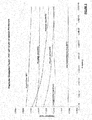
- As shown in prior art
Figure 1 , over various frequency ranges, ester based plasticizers (used at 50phr in PVC) still result in the PVC exhibiting dissipation loss factors in excess of 0.01 at frequencies between 100 MHz to 500 MHz. - The present arrangement, overcomes the drawbacks of the prior art arrangements, and employs a PVC cross filler in a LAN cable, where the PVC formulation of fillers and plasticizers is such that the PVC is rendered sufficiently flexible for use as a cross filler, while also simultaneously exhibiting good fire and smoke resistance properties as well as acceptable electrical properties.
- For example, among other features, the present arrangement employs halogenated phthalates, such as brominated phthalate ester plasticizers, which, at equal loading levels amounts relative to the more common prior art ester based plasticizers, yield PVC formulations with significantly lower dissipation factors.
- To this end a communications cable includes a jacket and a plurality of twisted pairs, each twisted pair having two insulated conductors twisted around one another. A cross-filler is arranged between the twisted pairs, where the cross filler is constructed of a PVC formulation using a halogenated plasticizer as the primary plasticizer and having a dissipation factor below 0.01 at frequencies between 100 MHz to 500 MHz.
- The present invention can be best understood through the following description and accompanying drawings, wherein:
-
Figure 1 is a prior art dissipation factor chart of prior art PVC formulations using non-halogenated plasticizers as the primary plasticizers; -
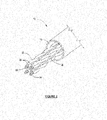
Figure 2 shows a LAN cable with a cross-filler according to the present arrangement; and -
Figure 3 is a dissipation factor chart comparing prior art PVC formulations using non-halogenated plasticizers as the primary plasticizers to the present PVC formulations using halogenated plasticizers as the primary plasticizers. - In one embodiment as illustrated in
Figure 2 , a LAN (Local Area Network)cable 10 is shown, such as a CAT 6 CMP (Plenum) UTP LAN cable (Category 6 250MHz - Unshielded Twisted Pair). For the purposes of illustration, the salient features of the present arrangement are described in the context of a CAT 6 type LAN cable, however, the invention is not limited in this respect. Other cables that are required to meet certain flame test specifications may also employ the present technology. - As shown in
Figure 2 ,LAN cable 10 has ajacket 12 constructed for example from FRPVC (Flame Retardant Poly-Vinyl Chloride). Withinjacket 12 there are fourtwisted pairs 20. Each twisted pair is formed of twoprimary conductors 22 twisted around one another. As shown inFigure 1 primary conductors 22 are typically made from acopper wire conductor 23 covered with aninsulation layer 24. As noted above, for exemplary purposes,cable 10 is a four pair LAN cable, but it is understood that the salient features of the present arrangement could be used on cables having more orfewer pairs 20. - In the present arrangement, the polymer material used for
insulation layers 24 may be made from FEP (Fluorinated Ethylene Polymer), FRPP (Flame Resistant Poly Propylene) or other polymers. Optionally, some of theinsulation layers 24 on some of thepairs 20 may be made from a first polymer such as FEP, withother insulation layers 24 on some of thepairs 20 being made from FR olefins such as FRPP in order to balance flame/smoke properties, mechanical properties and costs. It is understood that any selection of insulation material forinsulation layers 24 onpairs 20 is within the contemplation of the present invention. - For example, in one arrangement,
insulation layer 24 on twotwisted pairs 20 are made from a flame resistant olefin composition, such as FRPP, and the other twoinsulation layers 24 on the remaining twotwisted pairs 20 are made from FEP. In other examples, all fourpairs 20 may be made using FEP; 3pairs 20 from FEP with onepair 20 using FRPP; 3pairs 20 from FRPP with onepair 20 using FEP; and all fourpairs 20 made using FRPP. - Ideally, FEP usage is limited due to its expense, but it is used on at least some of the
pairs 20 owing to its superior flame and smoke properties as well as its good electrical properties. The construction of thepresent cable 10 and other components thereof allow for an advantageous reduction in the number ofpairs 20 insulated with FEP, while still maintaining the required plenum and CAT 6 ratings as discussed in more detail below. - As illustrated in
Figure 2 , in addition to thetwisted pairs 20,cable 10 also has across filler 30 made from FRPVC. As noted above, in high performance CAT 6 cables, tapes or other extruded shapes such as cross fillers are often required to reduce cross-talk between thedifferent pairs 20 withincable 10. As noted in the background FEP and highly flame retardant polyolefins have been used in prior art arrangements for making cross-fillers. FRPVC is not typically used because the commonly used non-halogenated plasticizing agents render the FRPVC with poor electrical properties (i.e. high dissipation factors). - For the purposes of illustration,
cross filler 30 is used to show the dividing element betweenpairs 20 incable 10. However, it is understood that the shape of this divider/cross filler is only for the purposes of illustrating the salient features of the present arrangement.Cross filler 30 may be alternatively formed as a tape of filler/divider or other non-crossed shapes provided is made using the following described formulation. - In the present arrangement, and in accordance with one embodiment,
cross filler 30 is constructed of PVC using a halogenated ester plasticizer as the primary (in this case only) plasticizer, with the PVC formulation having a dissipation factor lower than 0.01 at frequencies between 100 MHz and 500 MHz as described in more detail below. - It is noted that PVC may come in thousands of different formulations, including the basic polymer structure (Molecular Weight), the plasticizers used, the fillers etc... In accordance with one embodiment, one exemplary PVC form ulation is as follows:
PVC 100.0 phr (phr = parts per hundred pounds of resin) FRP 45 Brominated DOP 60.0 phr Aluminum Trihydrate 50.0 phr Huber HPSS (basic zinc molybdate) 10.0 phr Antimony Trioxide 2.0 phr Ferro RC 641 P Ca/Zn Stabilizer 6.0 phr Titanium dioxide 0.5 phr OPE wax 0.6 phr - From the above description, FRP 45 is the primary plasticizer and can be described chemically as tetrabromo bis(2-ethylhexyl) phthalate.
- I n the above example, Brominated DOP is the only plasticizer used and, at 60phr to 100phr PVC resin it is a substantial component, with the remaining components being fire retardant fillers, stabilizers, colorants, processing lubricants, and stabilizers.
- It is noted that the PVC may be blended with CPVC (Chlorinated PVC) or CPE (chlorinated polyethylene) to achieve additional fire retardant qualities.
- The above example is intended as one exemplary PVC formulation for
cross filler 30. However, it is understood that modifications can be made provided that the halogenated ester plasticizer remains the primary plasticizer, meaning that the halogenated ester plasticizer is the majority component of the plasticizer(s) in the polymer composition. For example, in other embodiments, the following PVC formulation (range of component parts) may be used:PVC 0 - 100 phr Resin Chlorinated PE 0 - 100 phr Resin or plasticizer depending on chlorine content Halogenated Ester Plasticizer 30 - 150 phr Plasticizer + FR Non-Halogenated Plasticizer < 20 phr Plasticizer Metal Hydrate Flame Retardant(s) 1 - 300 phr FR + SS Molybdenum FR / SS 0.1 - 50 phr FR + SS Zinc FR / SS 0.1 - 50 phr FR + SS Antimony Trioxide 0.1 - 50 phr FR Stabilizer 0.1 - 20 phr Stabilizes compound (FR = Flame Retardant - SS = Smoke Suppressant) - The halogenated plasticizers may include, but are not limited to: brominated phthalate esters; chlorinated phthalate esters; brominated trimellitate esters; chlorinated trimellitate esters; brominated paraffins; chlorinated paraffins; and chlorinated polyethylene (CPE).
- The non-halogenated plasticizer may include, but is not limited to phthalate esters, trimellitate esters, pentaerythritol esters, phosphate esters, aliphatic dicarboxylic acid esters, sulfonic acid esters, sulfamides, citric acid esters, epoxidized fatty acid esters, benzoic acid esters; and polymeric plasticizers systems containing but not limited to monomers such as adipic acid, sebacic acid, azeleic acid, and commercially available compatible polymers containing acrylate, acetate, nitrile, urethane, or polyether ester functionality.
- The metal hydrate flame retardant may include, but is not limited to: aluminum trihydrate, boehmite, magnesium dihydroxide, magnesium carbonate, zinc borate, metal hydrates coated with a flame retardant or smoke suppressant; or combinations of two or more metal hydrates.
- The PVC compound may have smoke suppressants or combinations of smoke suppressants containing one or more of the following elements: Mo, Zn, Sn, Cu, Fe, Si, B, P, C, or N.
- The above described PVC formulation has excellent flame and smoke performance based on the fillers and halogenated plasticizer as well as good electrical properties to reduce NEXT (Near End Cross Talk) without affecting the cable's insertion loss performance.
- Moreover, although the preferred PVC crossfiller formulation in general tends to be stiffer than LDPE, or VLDPE, it is more flexible than crossfillers based on FEP. The
final cable 10 manufactured with the above form ulation forPVC cross filler 30 exhibits flexibility characteristics similar to those of cables manufactured with the FR olefin cross fillers. - The present arrangement has provided the unexpected result that the use of very high quantities of halogenated ester plasticizers and the near or complete removal of non-halogenated plasticizers actually lead not only to the required fire resistant properties, but also to sufficient flexibility while yielding a dissipation factor value for the PVC formulation below 0.01 at frequencies between 100 MHz and 500 MHz. See for example
Figure 3 showing a comparison of the dissipation factors of PVC using prior art plasticizers versus brominated phthalate ester (all at 50phr). - To show that the above formulations of PVC are not only good for producing
cross filler 30 with good electrical properties they were tested against prior art cross fillers for fire and smoke properties to show that it provides comparable prior flame and smoke properties to FEP and better than other FR olefin formulations (e.g. FRPE, FRPP, etc...) - Turning to test results for the present arrangement, the above described NFPA 262 flame test is applied to cables, such as
cable 10, intended for use within buildings inside of ducts, plenums, or other spaces used for environmental air distribution. Any cable used in these areas must be "plenum rated" in order to be installed without conduit. One such plenum rating test is the NFPA 262 test. In order to pass the NFPA 262 test, these cables must have outstanding resistance to flame spread and generate low levels of smoke during combustion. As noted above, flame spread and smoke generation is directly related to the use of jacketing oncable 10, and in particular the insulation used ontwisted pairs 20. Because of the need to use low smoke insulation and jacketing materials, these plenum rated cables are the highest in cost of the three major premise data communications cable types specified by the NEC (National Electric Code). - The NFPA 262 flame test uses a test apparatus called a Steiner Tunnel. This chamber is 25' long by 18 inches wide by 12 inches high. An 11.25 inch wide tray is loaded with a single layer of cable, such as
cable 10 placed side to side against each other so that the width of the tray is filled. The cable is then exposed to a 300,000 btu flame for 20 minutes. During the course of the test, the flame must not propagate more than 5 feet, the peak smoke must not exceed a value of 0.5 (loglo/l), and the average smoke value must not exceed 0.15 (loglo/l). It is noted that (loglo/l) refers to the optical density where / is the intensity of light at a specified wavelength λ that has passed through a sample (transmitted light intensity) and /0 is the intensity of the light before it enters the sample or incident light intensity (or power). If the cable is tested twice and meets all three criteria after each test, it is deemed to have passed the test. - To show the effectiveness of
cable 10, crossfiller 30 made from the present PVC formulation (using halogenated phthalate ester plasticizer) was tested against a prior art cross filler made from a FR olefin based on a blend of LDPE and VLDPE containing a proprietary flame retardant system with a specific gravity of 1.63. - The following table 1 shows the results of the NFPA 262 test:
TABLE 1 NFPA 262 Steiner Tunnel Data FR Olefin Cross filler Technology vs present PVC Cross filler composition Average of two burns - 0.015" wall jacket compound Flame Spread Peak Smoke Avg. Smoke FR Olefin Technology 4.8' 0.47 0.13 New PVC Technology NFPA 262 Requirements 2.0' 0.31 0.12 Flame Spread 5.0' or less Peak Smoke 0.50 or less Average Smoke 0.15 or less - The above test was performed using the
present cable 10 arrangement with a cross filler, using FEP pairs 20 and 2 FRPP pairs 20 with a 15 mil overall jacket of a PVC based plenum rated jacket compound. - As seen from the above Table 1,
PVC cross filler 30 exhibited improved performance in all test criteria versus a similarly arranged FR olefin cross filler, while being significantly less costly than either an FR olefin cross filler or an FEP cross filler. Such across filler 30 may be used in acable 10, in place of either FR olefin cross fillers to provide better flame, smoke, or cost performance or in place of FEP cross fillers to save significant costs while maintaining the comparable flame and smoke performance. In fact, because theimproved cross filler 30 passes the NFPA standard by such a margin, other exemplary designs of thepresent cable 10 using only 1FEP pair 20 or even no FEP pairs 20 (all FRPP) would likely also pass the NFPA 262 fire and smoke standards. - While only certain features of the invention have been illustrated and described herein, many modifications, substitutions, changes or equivalents will now occur to those skilled in the art. It is therefore, to be understood that this application is intended to cover all such modifications and changes that fall within the true spirit of the invention.
Claims (18)
- A communications cable, said cable comprising:a jacket;a plurality of twisted pairs, each twisted pair having two insulated conductors twisted around one another; anda divider arranged between said twisted pairs, wherein said divider is constructed of a PVC formulation using a halogenated plasticizer as the primary plasticizer and having a dissipation factor below 0.01 at frequencies between 100 MHz and 500 MHZ.
- The communication cable as claimed in claim 1, wherein said jacket is made from FRPVC.
- The communication cable as claimed in claim 1, wherein said cable has four twisted pairs.
- The communication cable as claimed in claim 3, wherein all four twisted pairs are insulated using FRPP (Fire resistant Poly Propylene) or other flame retardant olefin.
- The communication cable as claimed in claim 3, wherein three of said twisted pairs are insulated using FRPP (Fire resistant Poly Propylene) or other flame retardant olefin and one of said twisted pairs is insulated using FEP (Fluorinated Ethylene Polymer) or other fluoropolymer.
- The communication cable as claimed in claim 3, wherein two of said twisted pairs are insulated using FRPP (Fire resistant Poly Propylene) or other flame retardant olefin and two of said twisted pairs are insulated using FEP (Fluorinated Ethylene Polymer) or other fluoropolymer.
- The communication cable as claimed in claim 3, wherein one of said twisted pairs is insulated using FRPP (Fire resistant Poly Propylene) or other flame retardant olefin and three of said twisted pairs are insulated using FEP (Fluorinated Ethylene Polymer) or other fluoropolymer.
- The communication cable as claimed in claim 3, wherein all four twisted pairs are insulated using FEP (Fluorinated Ethylene Polymer) or fluoropolymer.
- The communication cable as claimed in claim 1, wherein CPVC (chlorinated PVC) is blended with PVC.
- The communication cable as claimed in claim 1, wherein said halogenated plasticizer is a brominated phthalate ester.
- The communication cable as claimed in claim 10, wherein said brominated phthalate ester is included in said PVC composition at substantially 60phr.
- The communication cable as claimed in claim 1, wherein said halogenated plasticizer in said PVC composition of said divider is included in the amount of 0.1 - 150 phr and is selected from one or more of the group consisting of brominated phthalate esters, chlorinated phthalate esters, brominated trimellitate esters, chlorinated trimellitate esters, brominated paraffins, chlorinated paraffins, and chlorinated polyethylene (CPE).
- The communication cable as claimed in claim 12, wherein said PVC composition of said divider further comprises a non-halogenated plasticizer, of less than 20 phr and less than the amount of said halogenated plasticizer, and is selected from one or more of the group consisting of phthalate esters, trimellitate esters, pentaerythritol esters, phosphate esters, aliphatic dicarboxylic acid esters, sulfonic acid esters, sulfam ides, citric acid esters, epoxidized fatty acid esters, benzoic acid esters, and polymeric plasticizers systems containing but not limited to monomers such as adipic acid, sebacic acid, azeleic acid, and commercially available compatible polymers containing acrylate, acetate, nitrile, urethane, or poly ether ester functionality.
- The communication cable as claimed in claim 1, wherein said PVC composition of said divider further comprises 0.1 - 300 phr of a metal hydrate flam e retardant filler selected from one or more of the group consisting of but not limited to aluminum trihydrate, boehmite, magnesium dihydroxide, magnesium carbonate, zinc borate, metal hydrates coated with a flame retardant or smoke suppressant, or combinations of two or more metal hydrates.
- The communication cable as claimed in claim 1, wherein said PVC composition of said divider further comprises 0.1 - 100 phr of a smoke suppressant or combinations of smoke suppressants selected from one or more of the group consisting of Mo, Zn, Sn, Cu, Fe, Si, B, P, C, and N.
- The communication cable as claimed in claim 1, wherein said cable is constructed to meet the requirements of NFP 262 fire and smoke test.
- The communication cable as claimed in claim 1, wherein said cable is constructed to meet the requirements of CAT 6 CMP.
- The communication cable as claimed in claim 1, wherein said divider is selected from the group consisting of a tape, and extruded thermoplastic or thermoset twisted pair separator and an extruded thermoplastic or thermoset cross filler.
Applications Claiming Priority (1)
| Application Number | Priority Date | Filing Date | Title |
|---|---|---|---|
| US13/398,106 US9842672B2 (en) | 2012-02-16 | 2012-02-16 | LAN cable with PVC cross-filler |
Publications (2)
| Publication Number | Publication Date |
|---|---|
| EP2629309A2 true EP2629309A2 (en) | 2013-08-21 |
| EP2629309A3 EP2629309A3 (en) | 2013-12-04 |
Family
ID=47740879
Family Applications (1)
| Application Number | Title | Priority Date | Filing Date |
|---|---|---|---|
| EP13305050.0A Withdrawn EP2629309A3 (en) | 2012-02-16 | 2013-01-17 | LAN cable with PVC cross-filler |
Country Status (3)
| Country | Link |
|---|---|
| US (1) | US9842672B2 (en) |
| EP (1) | EP2629309A3 (en) |
| CN (1) | CN103258594B (en) |
Families Citing this family (10)
| Publication number | Priority date | Publication date | Assignee | Title |
|---|---|---|---|---|
| US8704094B1 (en) | 2011-03-08 | 2014-04-22 | Superior Essex International LP | Twisted pair data cable |
| CN103762032A (en) * | 2014-01-22 | 2014-04-30 | 深圳市沃尔核材股份有限公司 | Fire-resistant cable |
| CN103762031A (en) * | 2014-01-22 | 2014-04-30 | 深圳市沃尔核材股份有限公司 | Fire-resistant cable |
| MX2018014011A (en) | 2016-05-17 | 2019-02-26 | Gen Cable Technologies Corp | Fire retardant compositions and cable separators formed thereof. |
| CN111201579B (en) * | 2017-07-14 | 2022-07-19 | 杜邦聚合物公司 | Low smoke flame retardant cable |
| US10249410B1 (en) * | 2017-08-17 | 2019-04-02 | Superior Essex International LP | Power over ethernet twisted pair communication cables |
| US10867724B1 (en) | 2017-08-17 | 2020-12-15 | Superior Essex International LP | Method for forming power over ethernet twisted pair communication cables |
| US10276280B1 (en) | 2018-03-23 | 2019-04-30 | Superior Essex International LP | Power over ethernet twisted pair communications cables with a shield used as a return conductor |
| WO2019187193A1 (en) * | 2018-03-28 | 2019-10-03 | 株式会社オートネットワーク技術研究所 | Wire harness and wire harness production method |
| CN113308071A (en) * | 2021-07-14 | 2021-08-27 | 安徽安缆模具有限公司 | PVC injection molding material for air outlet panel and preparation method thereof |
Family Cites Families (35)
| Publication number | Priority date | Publication date | Assignee | Title |
|---|---|---|---|---|
| US3944717A (en) | 1973-08-15 | 1976-03-16 | Western Electric Company, Inc. | Flame-retardant, water-resistant composition and coating transmission member therewith |
| US4670494A (en) * | 1985-07-30 | 1987-06-02 | Gary Chemical Corp. | Flame retardant low smoke poly(vinyl chloride) thermoplastic composition |
| US4892683A (en) * | 1988-05-20 | 1990-01-09 | Gary Chemical Corporation | Flame retardant low smoke poly(vinyl chloride) thermoplastic compositions |
| US5036121A (en) * | 1988-09-06 | 1991-07-30 | The B. F. Goodrich Company | Flame and smoke retardant cable insulation and jacketing compositions |
| US6043312A (en) * | 1989-06-27 | 2000-03-28 | The Furon Company | Low flame and smoke compositions for plenum cables |
| US5460885A (en) | 1990-02-21 | 1995-10-24 | General Cable Industries, Inc. | Insulated electrical products and processes of forming such products |
| US5886072A (en) * | 1993-05-24 | 1999-03-23 | Teknor Apex Company | Flame retardant composition |
| US5600097A (en) * | 1994-11-04 | 1997-02-04 | Lucent Technologies Inc. | Fire resistant cable for use in local area network |
| US5936205A (en) * | 1994-11-10 | 1999-08-10 | Alcatel | Communication cable for use in a plenum |
| EP0742565A3 (en) | 1995-05-12 | 1998-06-17 | AT&T IPM Corp. | Electronic wire and cable, low pair cable |
| CA2157322C (en) | 1995-08-31 | 1998-02-03 | Gilles Gagnon | Dual insulated data communication cable |
| US6008283A (en) | 1997-03-20 | 1999-12-28 | Great Lakes Chemical Corporation | Oligomeric flame retardant additive |
| KR20010013947A (en) | 1997-06-18 | 2001-02-26 | 데이비드 디. 샌더스 | Novel flame retardant plasticizers |
| US6150612A (en) * | 1998-04-17 | 2000-11-21 | Prestolite Wire Corporation | High performance data cable |
| ID28533A (en) | 1998-08-06 | 2001-05-31 | Prestolite Wire Corp | CABLE WITH PILIN FILLER (WIRE WIRE) |
| US6211467B1 (en) | 1998-08-06 | 2001-04-03 | Prestolite Wire Corporation | Low loss data cable |
| US6248954B1 (en) | 1999-02-25 | 2001-06-19 | Cable Design Technologies, Inc. | Multi-pair data cable with configurable core filling and pair separation |
| US6492453B1 (en) * | 1999-09-24 | 2002-12-10 | Alphagary Corporation | Low smoke emission, low corrosivity, low toxicity, low heat release, flame retardant, zero halogen polymeric compositions |
| US6608142B1 (en) * | 2000-05-08 | 2003-08-19 | Teknor Apex Company | Polyvinyl chloride compositions |
| US6469251B1 (en) | 2000-05-15 | 2002-10-22 | Tyco Electronics Corporation | Vapor proof high speed communications cable and method of manufacturing the same |
| EP1306859B1 (en) | 2001-10-22 | 2007-01-10 | Nexans | Cable with an external extruded sheath and method of manufacturing of the cable |
| US7196271B2 (en) * | 2002-03-13 | 2007-03-27 | Belden Cdt (Canada) Inc. | Twisted pair cable with cable separator |
| US20060151758A1 (en) * | 2002-11-13 | 2006-07-13 | Jose Reyes | Fire resistant intumescent thermoplastic or thermoset compositions |
| US7015398B2 (en) * | 2003-03-10 | 2006-03-21 | Gavriel Vexler | Communications cable |
| US7214884B2 (en) * | 2003-10-31 | 2007-05-08 | Adc Incorporated | Cable with offset filler |
| CN101002289B (en) * | 2003-10-31 | 2011-07-06 | Adc公司 | Cable utilizing varying lay length mechanisms to minimize alien crosstalk |
| US7202418B2 (en) * | 2004-01-07 | 2007-04-10 | Cable Components Group, Llc | Flame retardant and smoke suppressant composite high performance support-separators and conduit tubes |
| US20070102188A1 (en) * | 2005-11-01 | 2007-05-10 | Cable Components Group, Llc | High performance support-separators for communications cable supporting low voltage and wireless fidelity applications and providing conductive shielding for alien crosstalk |
| US7157644B2 (en) * | 2004-12-16 | 2007-01-02 | General Cable Technology Corporation | Reduced alien crosstalk electrical cable with filler element |
| US7166802B2 (en) | 2004-12-27 | 2007-01-23 | Prysmian Cavi E Sistemi Energia S.R.L. | Electrical power cable having expanded polymeric layers |
| WO2007041297A1 (en) * | 2005-09-30 | 2007-04-12 | Alphagary Corporation | Highly filled unsaturated fluoropolymer compositions for cables |
| WO2007060201A1 (en) * | 2005-11-25 | 2007-05-31 | Solvay Solexis, Inc. | Perfluoropolymer composition |
| US7577329B2 (en) | 2007-03-14 | 2009-08-18 | Superior Essex Communications Lp | Data communication cable comprising filling matrix and method of fabrication |
| US20090022462A1 (en) * | 2007-07-20 | 2009-01-22 | Polymer Products Company, Inc. | Fire resistant jacket composition for electrical coaxial and fiber optic cable |
| US8907217B2 (en) | 2010-02-12 | 2014-12-09 | General Cable Technologies Corporation | Compositions for riser and plenum cables |
-
2012
- 2012-02-16 US US13/398,106 patent/US9842672B2/en active Active
-
2013
- 2013-01-17 EP EP13305050.0A patent/EP2629309A3/en not_active Withdrawn
- 2013-02-16 CN CN201310131542.8A patent/CN103258594B/en not_active Expired - Fee Related
Non-Patent Citations (1)
| Title |
|---|
| None |
Also Published As
| Publication number | Publication date |
|---|---|
| US20130213686A1 (en) | 2013-08-22 |
| US9842672B2 (en) | 2017-12-12 |
| CN103258594B (en) | 2018-01-23 |
| EP2629309A3 (en) | 2013-12-04 |
| CN103258594A (en) | 2013-08-21 |
Similar Documents
| Publication | Publication Date | Title |
|---|---|---|
| US9842672B2 (en) | LAN cable with PVC cross-filler | |
| US20100243291A1 (en) | High performance communications cables supporting low voltage and wireless fidelity applications providing reduced smoke and flame spread | |
| US20040050578A1 (en) | Communications cable | |
| US5936205A (en) | Communication cable for use in a plenum | |
| WO1996025748A1 (en) | Flame retardant and smoke suppressant composite electrical insulation, insulated electrical conductors and jacketed plenum cable formed therefrom | |
| EP3013896B1 (en) | Voltage-stabilized polymeric compositions | |
| KR20130088466A (en) | Insulation composition for high flame-retardant and low emitting smoke, separators using the same and cable having the seperators | |
| EP3291245B1 (en) | Flame retardant plenum cable | |
| JP2013145673A (en) | Lan cable | |
| US5932847A (en) | Flame retardant plenum cable | |
| JP6194842B2 (en) | Fluorine-containing elastomer composition, and insulated wire and cable using the same | |
| KR20160088497A (en) | UTP cable | |
| US10755834B2 (en) | Insulated wire | |
| EP0778589B1 (en) | Communication cable for use in a plenum | |
| US10329367B2 (en) | Polymeric yarns for use in communications cables and methods for producing the same | |
| KR20150074557A (en) | CMP grade UTP cable | |
| KR100737598B1 (en) | Low-flammability, high-combustibility materials, insulators and wires using the same | |
| JPS6140021Y2 (en) | ||
| RU2540123C1 (en) | Electrical cable | |
| CN105837917A (en) | Flame-retardant cable and production process thereof | |
| US20130292155A1 (en) | Zero halogen cable | |
| EP4447073A1 (en) | Low-smoke, flame-retardant data communication cables | |
| US20190139678A1 (en) | Insulated Wire | |
| JPS5851415A (en) | Flame resistant insulated wire | |
| JPH0462720A (en) | Flame retardant coaxial cable |
Legal Events
| Date | Code | Title | Description |
|---|---|---|---|
| PUAI | Public reference made under article 153(3) epc to a published international application that has entered the european phase |
Free format text: ORIGINAL CODE: 0009012 |
|
| AK | Designated contracting states |
Kind code of ref document: A2 Designated state(s): AL AT BE BG CH CY CZ DE DK EE ES FI FR GB GR HR HU IE IS IT LI LT LU LV MC MK MT NL NO PL PT RO RS SE SI SK SM TR |
|
| AX | Request for extension of the european patent |
Extension state: BA ME |
|
| PUAL | Search report despatched |
Free format text: ORIGINAL CODE: 0009013 |
|
| AK | Designated contracting states |
Kind code of ref document: A3 Designated state(s): AL AT BE BG CH CY CZ DE DK EE ES FI FR GB GR HR HU IE IS IT LI LT LU LV MC MK MT NL NO PL PT RO RS SE SI SK SM TR |
|
| AX | Request for extension of the european patent |
Extension state: BA ME |
|
| RIC1 | Information provided on ipc code assigned before grant |
Ipc: H01B 11/04 20060101ALI20131030BHEP Ipc: H01B 11/02 20060101ALI20131030BHEP Ipc: H01B 7/295 20060101AFI20131030BHEP Ipc: H01B 11/06 20060101ALI20131030BHEP |
|
| 17P | Request for examination filed |
Effective date: 20140514 |
|
| RBV | Designated contracting states (corrected) |
Designated state(s): AL AT BE BG CH CY CZ DE DK EE ES FI FR GB GR HR HU IE IS IT LI LT LU LV MC MK MT NL NO PL PT RO RS SE SI SK SM TR |
|
| 17Q | First examination report despatched |
Effective date: 20161019 |
|
| RAP1 | Party data changed (applicant data changed or rights of an application transferred) |
Owner name: NEXANS |
|
| RIC1 | Information provided on ipc code assigned before grant |
Ipc: H01B 11/04 20060101ALI20170719BHEP Ipc: H01B 7/295 20060101AFI20170719BHEP Ipc: H01B 11/02 20060101ALI20170719BHEP Ipc: H01B 11/06 20060101ALI20170719BHEP |
|
| GRAP | Despatch of communication of intention to grant a patent |
Free format text: ORIGINAL CODE: EPIDOSNIGR1 |
|
| INTG | Intention to grant announced |
Effective date: 20170901 |
|
| STAA | Information on the status of an ep patent application or granted ep patent |
Free format text: STATUS: THE APPLICATION IS DEEMED TO BE WITHDRAWN |
|
| 18D | Application deemed to be withdrawn |
Effective date: 20180112 |