EP2627628B1 - Novel esters of (acyloxymethyl)acrylamide, a pharmaceutical composition containing them, and their use as inhibitors of the thioredoxin - thioredoxin reductase system - Google Patents
Novel esters of (acyloxymethyl)acrylamide, a pharmaceutical composition containing them, and their use as inhibitors of the thioredoxin - thioredoxin reductase system Download PDFInfo
- Publication number
- EP2627628B1 EP2627628B1 EP11781886.4A EP11781886A EP2627628B1 EP 2627628 B1 EP2627628 B1 EP 2627628B1 EP 11781886 A EP11781886 A EP 11781886A EP 2627628 B1 EP2627628 B1 EP 2627628B1
- Authority
- EP
- European Patent Office
- Prior art keywords
- thioredoxin
- allyl
- compound
- trifluoromethyl
- activity
- Prior art date
- Legal status (The legal status is an assumption and is not a legal conclusion. Google has not performed a legal analysis and makes no representation as to the accuracy of the status listed.)
- Not-in-force
Links
- 239000008194 pharmaceutical composition Substances 0.000 title claims description 9
- 108060008226 thioredoxin Proteins 0.000 title description 45
- 102000002933 Thioredoxin Human genes 0.000 title description 40
- 229940094937 thioredoxin Drugs 0.000 title description 40
- 102000013090 Thioredoxin-Disulfide Reductase Human genes 0.000 title description 38
- 108010079911 Thioredoxin-disulfide reductase Proteins 0.000 title description 37
- 239000003112 inhibitor Substances 0.000 title description 21
- HRPVXLWXLXDGHG-UHFFFAOYSA-N Acrylamide Chemical compound NC(=O)C=C HRPVXLWXLXDGHG-UHFFFAOYSA-N 0.000 title description 6
- 125000005042 acyloxymethyl group Chemical group 0.000 title description 6
- 150000002148 esters Chemical class 0.000 title description 6
- 150000001875 compounds Chemical class 0.000 claims description 59
- -1 allyl 2,6-bis(trifluoromethyl)benzoate Chemical compound 0.000 claims description 26
- 201000010099 disease Diseases 0.000 claims description 15
- 208000037265 diseases, disorders, signs and symptoms Diseases 0.000 claims description 15
- 238000011282 treatment Methods 0.000 claims description 15
- 230000001965 increasing effect Effects 0.000 claims description 13
- 239000003814 drug Substances 0.000 claims description 11
- 231100000590 oncogenic Toxicity 0.000 claims description 10
- 230000002246 oncogenic effect Effects 0.000 claims description 10
- 208000011580 syndromic disease Diseases 0.000 claims description 10
- 230000001684 chronic effect Effects 0.000 claims description 7
- 239000004480 active ingredient Substances 0.000 claims description 6
- 230000004663 cell proliferation Effects 0.000 claims description 6
- 230000002062 proliferating effect Effects 0.000 claims description 6
- 208000023275 Autoimmune disease Diseases 0.000 claims description 5
- 206010052779 Transplant rejections Diseases 0.000 claims description 5
- 230000001154 acute effect Effects 0.000 claims description 5
- 125000000217 alkyl group Chemical group 0.000 claims description 5
- 208000026935 allergic disease Diseases 0.000 claims description 5
- 230000000172 allergic effect Effects 0.000 claims description 5
- 230000002071 myeloproliferative effect Effects 0.000 claims description 5
- 150000003839 salts Chemical class 0.000 claims description 5
- 238000011321 prophylaxis Methods 0.000 claims description 4
- XZNLSDPNMNWCRE-UHFFFAOYSA-N 2,6-bis(trifluoromethyl)benzoic acid Chemical group OC(=O)C1=C(C(F)(F)F)C=CC=C1C(F)(F)F XZNLSDPNMNWCRE-UHFFFAOYSA-N 0.000 claims description 3
- UGJBHEZMOKVTIM-UHFFFAOYSA-N N-formylglycine Chemical group OC(=O)CNC=O UGJBHEZMOKVTIM-UHFFFAOYSA-N 0.000 claims description 2
- 125000001797 benzyl group Chemical group [H]C1=C([H])C([H])=C(C([H])=C1[H])C([H])([H])* 0.000 claims description 2
- 229910052739 hydrogen Inorganic materials 0.000 claims description 2
- 239000001257 hydrogen Substances 0.000 claims description 2
- 125000004435 hydrogen atom Chemical class [H]* 0.000 claims description 2
- 125000001997 phenyl group Chemical group [H]C1=C([H])C([H])=C(*)C([H])=C1[H] 0.000 claims description 2
- 125000004209 (C1-C8) alkyl group Chemical group 0.000 claims 1
- 230000000694 effects Effects 0.000 description 39
- XEKOWRVHYACXOJ-UHFFFAOYSA-N Ethyl acetate Chemical compound CCOC(C)=O XEKOWRVHYACXOJ-UHFFFAOYSA-N 0.000 description 36
- YMWUJEATGCHHMB-UHFFFAOYSA-N Dichloromethane Chemical compound ClCCl YMWUJEATGCHHMB-UHFFFAOYSA-N 0.000 description 25
- HEDRZPFGACZZDS-MICDWDOJSA-N Trichloro(2H)methane Chemical compound [2H]C(Cl)(Cl)Cl HEDRZPFGACZZDS-MICDWDOJSA-N 0.000 description 24
- VLKZOEOYAKHREP-UHFFFAOYSA-N n-Hexane Chemical compound CCCCCC VLKZOEOYAKHREP-UHFFFAOYSA-N 0.000 description 24
- 210000004881 tumor cell Anatomy 0.000 description 19
- 210000004027 cell Anatomy 0.000 description 17
- 102000004190 Enzymes Human genes 0.000 description 16
- 108090000790 Enzymes Proteins 0.000 description 16
- CSCPPACGZOOCGX-UHFFFAOYSA-N Acetone Chemical compound CC(C)=O CSCPPACGZOOCGX-UHFFFAOYSA-N 0.000 description 15
- 230000001472 cytotoxic effect Effects 0.000 description 15
- 108010063907 Glutathione Reductase Proteins 0.000 description 14
- 102100036442 Glutathione reductase, mitochondrial Human genes 0.000 description 14
- 230000001085 cytostatic effect Effects 0.000 description 13
- 206010028980 Neoplasm Diseases 0.000 description 12
- 230000015572 biosynthetic process Effects 0.000 description 12
- VFLDPWHFBUODDF-FCXRPNKRSA-N curcumin Chemical compound C1=C(O)C(OC)=CC(\C=C\C(=O)CC(=O)\C=C\C=2C=C(OC)C(O)=CC=2)=C1 VFLDPWHFBUODDF-FCXRPNKRSA-N 0.000 description 12
- 239000000824 cytostatic agent Substances 0.000 description 12
- 238000006243 chemical reaction Methods 0.000 description 11
- 235000018417 cysteine Nutrition 0.000 description 11
- 230000005764 inhibitory process Effects 0.000 description 10
- 239000002904 solvent Substances 0.000 description 10
- FYSNRJHAOHDILO-UHFFFAOYSA-N thionyl chloride Chemical compound ClS(Cl)=O FYSNRJHAOHDILO-UHFFFAOYSA-N 0.000 description 10
- 239000000203 mixture Substances 0.000 description 9
- 102000004169 proteins and genes Human genes 0.000 description 9
- 108090000623 proteins and genes Proteins 0.000 description 9
- 239000000243 solution Substances 0.000 description 9
- 241001529936 Murinae Species 0.000 description 8
- 238000003786 synthesis reaction Methods 0.000 description 8
- XUJNEKJLAYXESH-UHFFFAOYSA-N cysteine Natural products SCC(N)C(O)=O XUJNEKJLAYXESH-UHFFFAOYSA-N 0.000 description 7
- 238000011534 incubation Methods 0.000 description 7
- 238000001644 13C nuclear magnetic resonance spectroscopy Methods 0.000 description 6
- 238000005160 1H NMR spectroscopy Methods 0.000 description 6
- VHYFNPMBLIVWCW-UHFFFAOYSA-N 4-Dimethylaminopyridine Chemical compound CN(C)C1=CC=NC=C1 VHYFNPMBLIVWCW-UHFFFAOYSA-N 0.000 description 6
- XUJNEKJLAYXESH-REOHCLBHSA-N L-Cysteine Chemical compound SC[C@H](N)C(O)=O XUJNEKJLAYXESH-REOHCLBHSA-N 0.000 description 6
- OKKJLVBELUTLKV-UHFFFAOYSA-N Methanol Chemical compound OC OKKJLVBELUTLKV-UHFFFAOYSA-N 0.000 description 6
- VYPSYNLAJGMNEJ-UHFFFAOYSA-N Silicium dioxide Chemical compound O=[Si]=O VYPSYNLAJGMNEJ-UHFFFAOYSA-N 0.000 description 6
- 238000009835 boiling Methods 0.000 description 6
- DQLATGHUWYMOKM-UHFFFAOYSA-L cisplatin Chemical compound N[Pt](N)(Cl)Cl DQLATGHUWYMOKM-UHFFFAOYSA-L 0.000 description 6
- 235000012754 curcumin Nutrition 0.000 description 6
- 229940109262 curcumin Drugs 0.000 description 6
- 239000004148 curcumin Substances 0.000 description 6
- VFLDPWHFBUODDF-UHFFFAOYSA-N diferuloylmethane Natural products C1=C(O)C(OC)=CC(C=CC(=O)CC(=O)C=CC=2C=C(OC)C(O)=CC=2)=C1 VFLDPWHFBUODDF-UHFFFAOYSA-N 0.000 description 6
- 235000018102 proteins Nutrition 0.000 description 6
- 239000000758 substrate Substances 0.000 description 6
- FANCTJAFZSYTIS-IQUVVAJASA-N (1r,3s,5z)-5-[(2e)-2-[(1r,3as,7ar)-7a-methyl-1-[(2r)-4-(phenylsulfonimidoyl)butan-2-yl]-2,3,3a,5,6,7-hexahydro-1h-inden-4-ylidene]ethylidene]-4-methylidenecyclohexane-1,3-diol Chemical compound C([C@@H](C)[C@@H]1[C@]2(CCCC(/[C@@H]2CC1)=C\C=C\1C([C@@H](O)C[C@H](O)C/1)=C)C)CS(=N)(=O)C1=CC=CC=C1 FANCTJAFZSYTIS-IQUVVAJASA-N 0.000 description 5
- FDKWRPBBCBCIGA-UWTATZPHSA-N D-Selenocysteine Natural products [Se]C[C@@H](N)C(O)=O FDKWRPBBCBCIGA-UWTATZPHSA-N 0.000 description 5
- 102100036407 Thioredoxin Human genes 0.000 description 5
- 238000004458 analytical method Methods 0.000 description 5
- 230000006907 apoptotic process Effects 0.000 description 5
- 238000004587 chromatography analysis Methods 0.000 description 5
- 229960004316 cisplatin Drugs 0.000 description 5
- 125000000151 cysteine group Chemical group N[C@@H](CS)C(=O)* 0.000 description 5
- 229940079593 drug Drugs 0.000 description 5
- 238000004896 high resolution mass spectrometry Methods 0.000 description 5
- 230000007246 mechanism Effects 0.000 description 5
- ZKZBPNGNEQAJSX-UHFFFAOYSA-N selenocysteine Natural products [SeH]CC(N)C(O)=O ZKZBPNGNEQAJSX-UHFFFAOYSA-N 0.000 description 5
- 235000016491 selenocysteine Nutrition 0.000 description 5
- 229940055619 selenocysteine Drugs 0.000 description 5
- 125000001554 selenocysteine group Chemical group [H][Se]C([H])([H])C(N([H])[H])C(=O)O* 0.000 description 5
- 239000000741 silica gel Substances 0.000 description 5
- 229910002027 silica gel Inorganic materials 0.000 description 5
- FDKWRPBBCBCIGA-REOHCLBHSA-N (2r)-2-azaniumyl-3-$l^{1}-selanylpropanoate Chemical compound [Se]C[C@H](N)C(O)=O FDKWRPBBCBCIGA-REOHCLBHSA-N 0.000 description 4
- CIWBSHSKHKDKBQ-JLAZNSOCSA-N Ascorbic acid Chemical compound OC[C@H](O)[C@H]1OC(=O)C(O)=C1O CIWBSHSKHKDKBQ-JLAZNSOCSA-N 0.000 description 4
- 206010006187 Breast cancer Diseases 0.000 description 4
- 208000026310 Breast neoplasm Diseases 0.000 description 4
- HEDRZPFGACZZDS-UHFFFAOYSA-N Chloroform Chemical compound ClC(Cl)Cl HEDRZPFGACZZDS-UHFFFAOYSA-N 0.000 description 4
- CSNNHWWHGAXBCP-UHFFFAOYSA-L Magnesium sulfate Chemical compound [Mg+2].[O-][S+2]([O-])([O-])[O-] CSNNHWWHGAXBCP-UHFFFAOYSA-L 0.000 description 4
- 102000004316 Oxidoreductases Human genes 0.000 description 4
- 108090000854 Oxidoreductases Proteins 0.000 description 4
- 206010061902 Pancreatic neoplasm Diseases 0.000 description 4
- CDBYLPFSWZWCQE-UHFFFAOYSA-L Sodium Carbonate Chemical compound [Na+].[Na+].[O-]C([O-])=O CDBYLPFSWZWCQE-UHFFFAOYSA-L 0.000 description 4
- 108010073929 Vascular Endothelial Growth Factor A Proteins 0.000 description 4
- 102000005789 Vascular Endothelial Growth Factors Human genes 0.000 description 4
- 108010019530 Vascular Endothelial Growth Factors Proteins 0.000 description 4
- AUJRCFUBUPVWSZ-XTZHGVARSA-M auranofin Chemical compound CCP(CC)(CC)=[Au]S[C@@H]1O[C@H](COC(C)=O)[C@@H](OC(C)=O)[C@H](OC(C)=O)[C@H]1OC(C)=O AUJRCFUBUPVWSZ-XTZHGVARSA-M 0.000 description 4
- 229960005207 auranofin Drugs 0.000 description 4
- 239000012267 brine Substances 0.000 description 4
- TVFDJXOCXUVLDH-UHFFFAOYSA-N caesium atom Chemical class [Cs] TVFDJXOCXUVLDH-UHFFFAOYSA-N 0.000 description 4
- 230000022131 cell cycle Effects 0.000 description 4
- 150000001945 cysteines Chemical class 0.000 description 4
- 238000011156 evaluation Methods 0.000 description 4
- RWSXRVCMGQZWBV-WDSKDSINSA-N glutathione Chemical compound OC(=O)[C@@H](N)CCC(=O)N[C@@H](CS)C(=O)NCC(O)=O RWSXRVCMGQZWBV-WDSKDSINSA-N 0.000 description 4
- NOESYZHRGYRDHS-UHFFFAOYSA-N insulin Chemical compound N1C(=O)C(NC(=O)C(CCC(N)=O)NC(=O)C(CCC(O)=O)NC(=O)C(C(C)C)NC(=O)C(NC(=O)CN)C(C)CC)CSSCC(C(NC(CO)C(=O)NC(CC(C)C)C(=O)NC(CC=2C=CC(O)=CC=2)C(=O)NC(CCC(N)=O)C(=O)NC(CC(C)C)C(=O)NC(CCC(O)=O)C(=O)NC(CC(N)=O)C(=O)NC(CC=2C=CC(O)=CC=2)C(=O)NC(CSSCC(NC(=O)C(C(C)C)NC(=O)C(CC(C)C)NC(=O)C(CC=2C=CC(O)=CC=2)NC(=O)C(CC(C)C)NC(=O)C(C)NC(=O)C(CCC(O)=O)NC(=O)C(C(C)C)NC(=O)C(CC(C)C)NC(=O)C(CC=2NC=NC=2)NC(=O)C(CO)NC(=O)CNC2=O)C(=O)NCC(=O)NC(CCC(O)=O)C(=O)NC(CCCNC(N)=N)C(=O)NCC(=O)NC(CC=3C=CC=CC=3)C(=O)NC(CC=3C=CC=CC=3)C(=O)NC(CC=3C=CC(O)=CC=3)C(=O)NC(C(C)O)C(=O)N3C(CCC3)C(=O)NC(CCCCN)C(=O)NC(C)C(O)=O)C(=O)NC(CC(N)=O)C(O)=O)=O)NC(=O)C(C(C)CC)NC(=O)C(CO)NC(=O)C(C(C)O)NC(=O)C1CSSCC2NC(=O)C(CC(C)C)NC(=O)C(NC(=O)C(CCC(N)=O)NC(=O)C(CC(N)=O)NC(=O)C(NC(=O)C(N)CC=1C=CC=CC=1)C(C)C)CC1=CN=CN1 NOESYZHRGYRDHS-UHFFFAOYSA-N 0.000 description 4
- 208000015486 malignant pancreatic neoplasm Diseases 0.000 description 4
- 238000000034 method Methods 0.000 description 4
- 201000002528 pancreatic cancer Diseases 0.000 description 4
- 208000008443 pancreatic carcinoma Diseases 0.000 description 4
- 239000012071 phase Substances 0.000 description 4
- 239000012047 saturated solution Substances 0.000 description 4
- 239000011734 sodium Substances 0.000 description 4
- HPALAKNZSZLMCH-UHFFFAOYSA-M sodium;chloride;hydrate Chemical compound O.[Na+].[Cl-] HPALAKNZSZLMCH-UHFFFAOYSA-M 0.000 description 4
- XLYOFNOQVPJJNP-UHFFFAOYSA-N water Substances O XLYOFNOQVPJJNP-UHFFFAOYSA-N 0.000 description 4
- KIUMMUBSPKGMOY-UHFFFAOYSA-N 3,3'-Dithiobis(6-nitrobenzoic acid) Chemical compound C1=C([N+]([O-])=O)C(C(=O)O)=CC(SSC=2C=C(C(=CC=2)[N+]([O-])=O)C(O)=O)=C1 KIUMMUBSPKGMOY-UHFFFAOYSA-N 0.000 description 3
- 229960000549 4-dimethylaminophenol Drugs 0.000 description 3
- 208000011691 Burkitt lymphomas Diseases 0.000 description 3
- XJLXINKUBYWONI-DQQFMEOOSA-N [[(2r,3r,4r,5r)-5-(6-aminopurin-9-yl)-3-hydroxy-4-phosphonooxyoxolan-2-yl]methoxy-hydroxyphosphoryl] [(2s,3r,4s,5s)-5-(3-carbamoylpyridin-1-ium-1-yl)-3,4-dihydroxyoxolan-2-yl]methyl phosphate Chemical compound NC(=O)C1=CC=C[N+]([C@@H]2[C@H]([C@@H](O)[C@H](COP([O-])(=O)OP(O)(=O)OC[C@@H]3[C@H]([C@@H](OP(O)(O)=O)[C@@H](O3)N3C4=NC=NC(N)=C4N=C3)O)O2)O)=C1 XJLXINKUBYWONI-DQQFMEOOSA-N 0.000 description 3
- 230000033115 angiogenesis Effects 0.000 description 3
- 230000000259 anti-tumor effect Effects 0.000 description 3
- WGQKYBSKWIADBV-UHFFFAOYSA-N benzylamine Chemical compound NCC1=CC=CC=C1 WGQKYBSKWIADBV-UHFFFAOYSA-N 0.000 description 3
- 210000004899 c-terminal region Anatomy 0.000 description 3
- 201000011510 cancer Diseases 0.000 description 3
- 230000032823 cell division Effects 0.000 description 3
- 239000003153 chemical reaction reagent Substances 0.000 description 3
- KRKNYBCHXYNGOX-UHFFFAOYSA-N citric acid Chemical compound OC(=O)CC(O)(C(O)=O)CC(O)=O KRKNYBCHXYNGOX-UHFFFAOYSA-N 0.000 description 3
- 231100000433 cytotoxic Toxicity 0.000 description 3
- 238000000921 elemental analysis Methods 0.000 description 3
- 230000006870 function Effects 0.000 description 3
- 238000007429 general method Methods 0.000 description 3
- 230000002401 inhibitory effect Effects 0.000 description 3
- 208000032839 leukemia Diseases 0.000 description 3
- 230000002438 mitochondrial effect Effects 0.000 description 3
- 230000001613 neoplastic effect Effects 0.000 description 3
- 239000012074 organic phase Substances 0.000 description 3
- 239000000843 powder Substances 0.000 description 3
- 230000009467 reduction Effects 0.000 description 3
- 238000012360 testing method Methods 0.000 description 3
- 238000002560 therapeutic procedure Methods 0.000 description 3
- DTQVDTLACAAQTR-UHFFFAOYSA-N trifluoroacetic acid Substances OC(=O)C(F)(F)F DTQVDTLACAAQTR-UHFFFAOYSA-N 0.000 description 3
- NGNBDVOYPDDBFK-UHFFFAOYSA-N 2-[2,4-di(pentan-2-yl)phenoxy]acetyl chloride Chemical compound CCCC(C)C1=CC=C(OCC(Cl)=O)C(C(C)CCC)=C1 NGNBDVOYPDDBFK-UHFFFAOYSA-N 0.000 description 2
- YOETUEMZNOLGDB-UHFFFAOYSA-N 2-methylpropyl carbonochloridate Chemical compound CC(C)COC(Cl)=O YOETUEMZNOLGDB-UHFFFAOYSA-N 0.000 description 2
- PWWIAWDCLANFSS-UHFFFAOYSA-N 3-bromo-2-methylprop-2-enoic acid Chemical compound BrC=C(C)C(O)=O PWWIAWDCLANFSS-UHFFFAOYSA-N 0.000 description 2
- YGHRJJRRZDOVPD-UHFFFAOYSA-N 3-methylbutanal Chemical compound CC(C)CC=O YGHRJJRRZDOVPD-UHFFFAOYSA-N 0.000 description 2
- 101100139845 Caenorhabditis elegans rac-2 gene Proteins 0.000 description 2
- 206010009944 Colon cancer Diseases 0.000 description 2
- 108010024636 Glutathione Proteins 0.000 description 2
- 102000016878 Hypoxia-Inducible Factor 1 Human genes 0.000 description 2
- 108010028501 Hypoxia-Inducible Factor 1 Proteins 0.000 description 2
- 102000004877 Insulin Human genes 0.000 description 2
- 108090001061 Insulin Proteins 0.000 description 2
- 108010075639 MAP Kinase Kinase Kinase 5 Proteins 0.000 description 2
- 102100033127 Mitogen-activated protein kinase kinase kinase 5 Human genes 0.000 description 2
- JGFZNNIVVJXRND-UHFFFAOYSA-N N,N-Diisopropylethylamine (DIPEA) Chemical compound CCN(C(C)C)C(C)C JGFZNNIVVJXRND-UHFFFAOYSA-N 0.000 description 2
- 102000001708 Protein Isoforms Human genes 0.000 description 2
- 108010029485 Protein Isoforms Proteins 0.000 description 2
- 229940124639 Selective inhibitor Drugs 0.000 description 2
- UIIMBOGNXHQVGW-UHFFFAOYSA-M Sodium bicarbonate Chemical compound [Na+].OC([O-])=O UIIMBOGNXHQVGW-UHFFFAOYSA-M 0.000 description 2
- NINIDFKCEFEMDL-UHFFFAOYSA-N Sulfur Chemical group [S] NINIDFKCEFEMDL-UHFFFAOYSA-N 0.000 description 2
- 239000000654 additive Substances 0.000 description 2
- 239000002168 alkylating agent Substances 0.000 description 2
- 229940100198 alkylating agent Drugs 0.000 description 2
- 230000001640 apoptogenic effect Effects 0.000 description 2
- 239000008346 aqueous phase Substances 0.000 description 2
- 238000003149 assay kit Methods 0.000 description 2
- 150000001732 carboxylic acid derivatives Chemical class 0.000 description 2
- 230000030833 cell death Effects 0.000 description 2
- 230000001413 cellular effect Effects 0.000 description 2
- 208000029742 colonic neoplasm Diseases 0.000 description 2
- 238000004440 column chromatography Methods 0.000 description 2
- 229940125904 compound 1 Drugs 0.000 description 2
- 229940125782 compound 2 Drugs 0.000 description 2
- 230000008878 coupling Effects 0.000 description 2
- 238000010168 coupling process Methods 0.000 description 2
- 238000005859 coupling reaction Methods 0.000 description 2
- 230000003013 cytotoxicity Effects 0.000 description 2
- 231100000135 cytotoxicity Toxicity 0.000 description 2
- 230000003247 decreasing effect Effects 0.000 description 2
- 239000003085 diluting agent Substances 0.000 description 2
- 230000002255 enzymatic effect Effects 0.000 description 2
- 238000002474 experimental method Methods 0.000 description 2
- 229960003180 glutathione Drugs 0.000 description 2
- 210000000777 hematopoietic system Anatomy 0.000 description 2
- 239000000710 homodimer Substances 0.000 description 2
- RAXXELZNTBOGNW-UHFFFAOYSA-N imidazole Substances C1=CNC=N1 RAXXELZNTBOGNW-UHFFFAOYSA-N 0.000 description 2
- 229940125396 insulin Drugs 0.000 description 2
- PGLTVOMIXTUURA-UHFFFAOYSA-N iodoacetamide Chemical compound NC(=O)CI PGLTVOMIXTUURA-UHFFFAOYSA-N 0.000 description 2
- 208000037841 lung tumor Diseases 0.000 description 2
- 229910052943 magnesium sulfate Inorganic materials 0.000 description 2
- 235000019341 magnesium sulphate Nutrition 0.000 description 2
- 238000004519 manufacturing process Methods 0.000 description 2
- 238000005259 measurement Methods 0.000 description 2
- 229930027945 nicotinamide-adenine dinucleotide Natural products 0.000 description 2
- 230000004987 nonapoptotic effect Effects 0.000 description 2
- 238000007911 parenteral administration Methods 0.000 description 2
- 230000037361 pathway Effects 0.000 description 2
- 238000009521 phase II clinical trial Methods 0.000 description 2
- 150000003058 platinum compounds Chemical class 0.000 description 2
- 238000002360 preparation method Methods 0.000 description 2
- 239000000047 product Substances 0.000 description 2
- 230000035755 proliferation Effects 0.000 description 2
- 239000003642 reactive oxygen metabolite Substances 0.000 description 2
- 230000008929 regeneration Effects 0.000 description 2
- 238000011069 regeneration method Methods 0.000 description 2
- 239000011669 selenium Substances 0.000 description 2
- 229910000029 sodium carbonate Inorganic materials 0.000 description 2
- 150000003573 thiols Chemical class 0.000 description 2
- 230000004614 tumor growth Effects 0.000 description 2
- QOWBXWFYRXSBAS-UHFFFAOYSA-N (2,4-dimethoxyphenyl)methanamine Chemical compound COC1=CC=C(CN)C(OC)=C1 QOWBXWFYRXSBAS-UHFFFAOYSA-N 0.000 description 1
- LJIOTBMDLVHTBO-CUYJMHBOSA-N (2s)-2-amino-n-[(1r,2r)-1-cyano-2-[4-[4-(4-methylpiperazin-1-yl)sulfonylphenyl]phenyl]cyclopropyl]butanamide Chemical compound CC[C@H](N)C(=O)N[C@]1(C#N)C[C@@H]1C1=CC=C(C=2C=CC(=CC=2)S(=O)(=O)N2CCN(C)CC2)C=C1 LJIOTBMDLVHTBO-CUYJMHBOSA-N 0.000 description 1
- FRJJJAKBRKABFA-TYFAACHXSA-N (4r,6s)-6-[(e)-2-[6-chloro-4-(4-fluorophenyl)-2-propan-2-ylquinolin-3-yl]ethenyl]-4-hydroxyoxan-2-one Chemical compound C(\[C@H]1OC(=O)C[C@H](O)C1)=C/C=1C(C(C)C)=NC2=CC=C(Cl)C=C2C=1C1=CC=C(F)C=C1 FRJJJAKBRKABFA-TYFAACHXSA-N 0.000 description 1
- UFJRJAOQYVMWEZ-UHFFFAOYSA-N 2,3-bis(trifluoromethyl)benzoic acid Chemical compound OC(=O)C1=CC=CC(C(F)(F)F)=C1C(F)(F)F UFJRJAOQYVMWEZ-UHFFFAOYSA-N 0.000 description 1
- LUOPFCDZQGKIDO-UHFFFAOYSA-N 2-(hydroxymethyl)prop-2-enamide Chemical compound NC(=O)C(=C)CO LUOPFCDZQGKIDO-UHFFFAOYSA-N 0.000 description 1
- QKNYBSVHEMOAJP-UHFFFAOYSA-N 2-amino-2-(hydroxymethyl)propane-1,3-diol;hydron;chloride Chemical compound Cl.OCC(N)(CO)CO QKNYBSVHEMOAJP-UHFFFAOYSA-N 0.000 description 1
- 125000003903 2-propenyl group Chemical group [H]C([*])([H])C([H])=C([H])[H] 0.000 description 1
- ATLBQYLERQCFBC-UHFFFAOYSA-N 4-bromo-2-methylbut-2-enoic acid Chemical compound OC(=O)C(C)=CCBr ATLBQYLERQCFBC-UHFFFAOYSA-N 0.000 description 1
- UZOVYGYOLBIAJR-UHFFFAOYSA-N 4-isocyanato-4'-methyldiphenylmethane Chemical compound C1=CC(C)=CC=C1CC1=CC=C(N=C=O)C=C1 UZOVYGYOLBIAJR-UHFFFAOYSA-N 0.000 description 1
- HBAQYPYDRFILMT-UHFFFAOYSA-N 8-[3-(1-cyclopropylpyrazol-4-yl)-1H-pyrazolo[4,3-d]pyrimidin-5-yl]-3-methyl-3,8-diazabicyclo[3.2.1]octan-2-one Chemical class C1(CC1)N1N=CC(=C1)C1=NNC2=C1N=C(N=C2)N1C2C(N(CC1CC2)C)=O HBAQYPYDRFILMT-UHFFFAOYSA-N 0.000 description 1
- 206010005003 Bladder cancer Diseases 0.000 description 1
- 0 CC(C(*)*(C(C(CO*)=C)=O)I)=N Chemical compound CC(C(*)*(C(C(CO*)=C)=O)I)=N 0.000 description 1
- 208000005623 Carcinogenesis Diseases 0.000 description 1
- 102000011727 Caspases Human genes 0.000 description 1
- 108010076667 Caspases Proteins 0.000 description 1
- 206010011224 Cough Diseases 0.000 description 1
- 244000163122 Curcuma domestica Species 0.000 description 1
- 102000016736 Cyclin Human genes 0.000 description 1
- 108050006400 Cyclin Proteins 0.000 description 1
- ZZZCUOFIHGPKAK-UHFFFAOYSA-N D-erythro-ascorbic acid Natural products OCC1OC(=O)C(O)=C1O ZZZCUOFIHGPKAK-UHFFFAOYSA-N 0.000 description 1
- 108020004414 DNA Proteins 0.000 description 1
- 230000005778 DNA damage Effects 0.000 description 1
- 231100000277 DNA damage Toxicity 0.000 description 1
- 230000006820 DNA synthesis Effects 0.000 description 1
- VYZAHLCBVHPDDF-UHFFFAOYSA-N Dinitrochlorobenzene Chemical compound [O-][N+](=O)C1=CC=C(Cl)C([N+]([O-])=O)=C1 VYZAHLCBVHPDDF-UHFFFAOYSA-N 0.000 description 1
- 206010059866 Drug resistance Diseases 0.000 description 1
- 239000006144 Dulbecco’s modified Eagle's medium Substances 0.000 description 1
- KCXVZYZYPLLWCC-UHFFFAOYSA-N EDTA Chemical compound OC(=O)CN(CC(O)=O)CCN(CC(O)=O)CC(O)=O KCXVZYZYPLLWCC-UHFFFAOYSA-N 0.000 description 1
- 102000017278 Glutaredoxin Human genes 0.000 description 1
- 108050005205 Glutaredoxin Proteins 0.000 description 1
- 208000008839 Kidney Neoplasms Diseases 0.000 description 1
- 206010058467 Lung neoplasm malignant Diseases 0.000 description 1
- 206010025323 Lymphomas Diseases 0.000 description 1
- ACFIXJIJDZMPPO-NNYOXOHSSA-N NADPH Chemical compound C1=CCC(C(=O)N)=CN1[C@H]1[C@H](O)[C@H](O)[C@@H](COP(O)(=O)OP(O)(=O)OC[C@@H]2[C@H]([C@@H](OP(O)(O)=O)[C@@H](O2)N2C3=NC=NC(N)=C3N=C2)O)O1 ACFIXJIJDZMPPO-NNYOXOHSSA-N 0.000 description 1
- 108010057466 NF-kappa B Proteins 0.000 description 1
- 102000003945 NF-kappa B Human genes 0.000 description 1
- 206010061309 Neoplasm progression Diseases 0.000 description 1
- 206010033128 Ovarian cancer Diseases 0.000 description 1
- 206010061535 Ovarian neoplasm Diseases 0.000 description 1
- 108091000080 Phosphotransferase Proteins 0.000 description 1
- 102000004005 Prostaglandin-endoperoxide synthases Human genes 0.000 description 1
- 108090000459 Prostaglandin-endoperoxide synthases Proteins 0.000 description 1
- 206010060862 Prostate cancer Diseases 0.000 description 1
- 208000000236 Prostatic Neoplasms Diseases 0.000 description 1
- 102000001253 Protein Kinase Human genes 0.000 description 1
- 101000800031 Rattus norvegicus Thioredoxin Proteins 0.000 description 1
- 206010038389 Renal cancer Diseases 0.000 description 1
- 102000000505 Ribonucleotide Reductases Human genes 0.000 description 1
- 108010041388 Ribonucleotide Reductases Proteins 0.000 description 1
- 239000006146 Roswell Park Memorial Institute medium Substances 0.000 description 1
- 230000018199 S phase Effects 0.000 description 1
- 229910006124 SOCl2 Inorganic materials 0.000 description 1
- BUGBHKTXTAQXES-UHFFFAOYSA-N Selenium Chemical compound [Se] BUGBHKTXTAQXES-UHFFFAOYSA-N 0.000 description 1
- UIIMBOGNXHQVGW-DEQYMQKBSA-M Sodium bicarbonate-14C Chemical compound [Na+].O[14C]([O-])=O UIIMBOGNXHQVGW-DEQYMQKBSA-M 0.000 description 1
- 239000005864 Sulphur Substances 0.000 description 1
- 208000024313 Testicular Neoplasms Diseases 0.000 description 1
- 206010057644 Testis cancer Diseases 0.000 description 1
- 101710168651 Thioredoxin 1 Proteins 0.000 description 1
- 101710168624 Thioredoxin 2 Proteins 0.000 description 1
- 229940121880 Thioredoxin reductase inhibitor Drugs 0.000 description 1
- 208000007097 Urinary Bladder Neoplasms Diseases 0.000 description 1
- 229930003268 Vitamin C Natural products 0.000 description 1
- 239000000370 acceptor Substances 0.000 description 1
- 239000002253 acid Substances 0.000 description 1
- 230000004913 activation Effects 0.000 description 1
- 230000002730 additional effect Effects 0.000 description 1
- 230000001464 adherent effect Effects 0.000 description 1
- 230000002152 alkylating effect Effects 0.000 description 1
- 238000010976 amide bond formation reaction Methods 0.000 description 1
- 150000001408 amides Chemical class 0.000 description 1
- 150000001412 amines Chemical class 0.000 description 1
- 235000001014 amino acid Nutrition 0.000 description 1
- 150000001413 amino acids Chemical class 0.000 description 1
- 208000022531 anorexia Diseases 0.000 description 1
- 239000003242 anti bacterial agent Substances 0.000 description 1
- 230000001093 anti-cancer Effects 0.000 description 1
- 230000003356 anti-rheumatic effect Effects 0.000 description 1
- 229940088710 antibiotic agent Drugs 0.000 description 1
- 229940041181 antineoplastic drug Drugs 0.000 description 1
- 229940045985 antineoplastic platinum compound Drugs 0.000 description 1
- 150000007860 aryl ester derivatives Chemical class 0.000 description 1
- 235000010323 ascorbic acid Nutrition 0.000 description 1
- 239000011668 ascorbic acid Substances 0.000 description 1
- 229960005070 ascorbic acid Drugs 0.000 description 1
- 238000003556 assay Methods 0.000 description 1
- WPYMKLBDIGXBTP-UHFFFAOYSA-N benzoic acid Chemical compound OC(=O)C1=CC=CC=C1 WPYMKLBDIGXBTP-UHFFFAOYSA-N 0.000 description 1
- 239000012888 bovine serum Substances 0.000 description 1
- 210000000481 breast Anatomy 0.000 description 1
- 239000000872 buffer Substances 0.000 description 1
- LYQFWZFBNBDLEO-UHFFFAOYSA-M caesium bromide Chemical compound [Br-].[Cs+] LYQFWZFBNBDLEO-UHFFFAOYSA-M 0.000 description 1
- 230000036952 cancer formation Effects 0.000 description 1
- 150000001735 carboxylic acids Chemical class 0.000 description 1
- 231100000504 carcinogenesis Toxicity 0.000 description 1
- 238000004113 cell culture Methods 0.000 description 1
- 230000025084 cell cycle arrest Effects 0.000 description 1
- 230000033077 cellular process Effects 0.000 description 1
- 230000008859 change Effects 0.000 description 1
- 239000003638 chemical reducing agent Substances 0.000 description 1
- 210000001072 colon Anatomy 0.000 description 1
- 238000004737 colorimetric analysis Methods 0.000 description 1
- 238000012505 colouration Methods 0.000 description 1
- 238000002648 combination therapy Methods 0.000 description 1
- 235000013409 condiments Nutrition 0.000 description 1
- 230000002596 correlated effect Effects 0.000 description 1
- 239000013078 crystal Substances 0.000 description 1
- 235000003373 curcuma longa Nutrition 0.000 description 1
- 235000021438 curry Nutrition 0.000 description 1
- 238000004163 cytometry Methods 0.000 description 1
- 230000001086 cytosolic effect Effects 0.000 description 1
- 230000034994 death Effects 0.000 description 1
- 206010061428 decreased appetite Diseases 0.000 description 1
- 238000012938 design process Methods 0.000 description 1
- 239000000539 dimer Substances 0.000 description 1
- 230000008034 disappearance Effects 0.000 description 1
- 239000002552 dosage form Substances 0.000 description 1
- 238000004043 dyeing Methods 0.000 description 1
- 230000002500 effect on skin Effects 0.000 description 1
- 239000012039 electrophile Substances 0.000 description 1
- 238000001952 enzyme assay Methods 0.000 description 1
- GXHXWYAXHCIGLV-NSHDSACASA-N ethyl 2-[[(2s)-2-[2-(bromomethyl)prop-2-enoylamino]-4-methylpentanoyl]amino]acetate Chemical compound CCOC(=O)CNC(=O)[C@H](CC(C)C)NC(=O)C(=C)CBr GXHXWYAXHCIGLV-NSHDSACASA-N 0.000 description 1
- XCXZLPSGEDZZND-UHFFFAOYSA-N ethyl 2-[[2-[2-(bromomethyl)prop-2-enoyl-[(2,4-dimethoxyphenyl)methyl]amino]-4-methylpentanoyl]amino]acetate Chemical compound CCOC(=O)CNC(=O)C(CC(C)C)N(C(=O)C(=C)CBr)CC1=CC=C(OC)C=C1OC XCXZLPSGEDZZND-UHFFFAOYSA-N 0.000 description 1
- GXHXWYAXHCIGLV-UHFFFAOYSA-N ethyl 2-[[2-[2-(bromomethyl)prop-2-enoylamino]-4-methylpentanoyl]amino]acetate Chemical compound CCOC(=O)CNC(=O)C(CC(C)C)NC(=O)C(=C)CBr GXHXWYAXHCIGLV-UHFFFAOYSA-N 0.000 description 1
- FPULFENIJDPZBX-UHFFFAOYSA-N ethyl 2-isocyanoacetate Chemical compound CCOC(=O)C[N+]#[C-] FPULFENIJDPZBX-UHFFFAOYSA-N 0.000 description 1
- 210000003527 eukaryotic cell Anatomy 0.000 description 1
- 239000000284 extract Substances 0.000 description 1
- 238000001914 filtration Methods 0.000 description 1
- 235000013305 food Nutrition 0.000 description 1
- PCHJSUWPFVWCPO-UHFFFAOYSA-N gold Chemical compound [Au] PCHJSUWPFVWCPO-UHFFFAOYSA-N 0.000 description 1
- 239000010931 gold Substances 0.000 description 1
- 229910052737 gold Inorganic materials 0.000 description 1
- 150000002344 gold compounds Chemical class 0.000 description 1
- ZBKIUFWVEIBQRT-UHFFFAOYSA-N gold(1+) Chemical compound [Au+] ZBKIUFWVEIBQRT-UHFFFAOYSA-N 0.000 description 1
- CBMIPXHVOVTTTL-UHFFFAOYSA-N gold(3+) Chemical class [Au+3] CBMIPXHVOVTTTL-UHFFFAOYSA-N 0.000 description 1
- 238000001727 in vivo Methods 0.000 description 1
- 239000000411 inducer Substances 0.000 description 1
- 230000003993 interaction Effects 0.000 description 1
- 238000007918 intramuscular administration Methods 0.000 description 1
- 239000007928 intraperitoneal injection Substances 0.000 description 1
- 238000001990 intravenous administration Methods 0.000 description 1
- JDNTWHVOXJZDSN-UHFFFAOYSA-N iodoacetic acid Chemical compound OC(=O)CI JDNTWHVOXJZDSN-UHFFFAOYSA-N 0.000 description 1
- 210000003734 kidney Anatomy 0.000 description 1
- 201000010982 kidney cancer Diseases 0.000 description 1
- 239000008297 liquid dosage form Substances 0.000 description 1
- 208000019423 liver disease Diseases 0.000 description 1
- 201000005202 lung cancer Diseases 0.000 description 1
- 208000020816 lung neoplasm Diseases 0.000 description 1
- 229920002521 macromolecule Polymers 0.000 description 1
- 210000004962 mammalian cell Anatomy 0.000 description 1
- 201000001441 melanoma Diseases 0.000 description 1
- 229910052751 metal Inorganic materials 0.000 description 1
- 239000002184 metal Substances 0.000 description 1
- 150000002739 metals Chemical class 0.000 description 1
- 125000002496 methyl group Chemical group [H]C([H])([H])* 0.000 description 1
- 230000011278 mitosis Effects 0.000 description 1
- 230000017074 necrotic cell death Effects 0.000 description 1
- 229960001907 nitrofurazone Drugs 0.000 description 1
- 108020004707 nucleic acids Proteins 0.000 description 1
- 102000039446 nucleic acids Human genes 0.000 description 1
- 150000007523 nucleic acids Chemical class 0.000 description 1
- 239000012038 nucleophile Substances 0.000 description 1
- 239000003960 organic solvent Substances 0.000 description 1
- 230000003647 oxidation Effects 0.000 description 1
- 238000007254 oxidation reaction Methods 0.000 description 1
- 230000036542 oxidative stress Effects 0.000 description 1
- 230000008506 pathogenesis Effects 0.000 description 1
- 239000000816 peptidomimetic Substances 0.000 description 1
- 230000000144 pharmacologic effect Effects 0.000 description 1
- 102000020233 phosphotransferase Human genes 0.000 description 1
- BASFCYQUMIYNBI-UHFFFAOYSA-N platinum Chemical compound [Pt] BASFCYQUMIYNBI-UHFFFAOYSA-N 0.000 description 1
- 239000002244 precipitate Substances 0.000 description 1
- 230000008569 process Effects 0.000 description 1
- XJMOSONTPMZWPB-UHFFFAOYSA-M propidium iodide Chemical compound [I-].[I-].C12=CC(N)=CC=C2C2=CC=C(N)C=C2[N+](CCC[N+](C)(CC)CC)=C1C1=CC=CC=C1 XJMOSONTPMZWPB-UHFFFAOYSA-M 0.000 description 1
- 108060006633 protein kinase Proteins 0.000 description 1
- 238000000425 proton nuclear magnetic resonance spectrum Methods 0.000 description 1
- 238000001959 radiotherapy Methods 0.000 description 1
- 238000010992 reflux Methods 0.000 description 1
- 230000001105 regulatory effect Effects 0.000 description 1
- 229910052711 selenium Inorganic materials 0.000 description 1
- 125000003748 selenium group Chemical group *[Se]* 0.000 description 1
- 230000035945 sensitivity Effects 0.000 description 1
- 238000009097 single-agent therapy Methods 0.000 description 1
- 201000009890 sinusitis Diseases 0.000 description 1
- 229910000030 sodium bicarbonate Inorganic materials 0.000 description 1
- 235000017557 sodium bicarbonate Nutrition 0.000 description 1
- 239000011780 sodium chloride Substances 0.000 description 1
- 238000001228 spectrum Methods 0.000 description 1
- 239000008174 sterile solution Substances 0.000 description 1
- 238000007920 subcutaneous administration Methods 0.000 description 1
- 239000007929 subcutaneous injection Substances 0.000 description 1
- 239000000126 substance Substances 0.000 description 1
- 230000004083 survival effect Effects 0.000 description 1
- 239000000725 suspension Substances 0.000 description 1
- 230000002381 testicular Effects 0.000 description 1
- 201000003120 testicular cancer Diseases 0.000 description 1
- 125000003396 thiol group Chemical group [H]S* 0.000 description 1
- 125000002023 trifluoromethyl group Chemical group FC(F)(F)* 0.000 description 1
- 201000005112 urinary bladder cancer Diseases 0.000 description 1
- 235000019154 vitamin C Nutrition 0.000 description 1
- 239000011718 vitamin C Substances 0.000 description 1
Images

Classifications
-
- C—CHEMISTRY; METALLURGY
- C07—ORGANIC CHEMISTRY
- C07C—ACYCLIC OR CARBOCYCLIC COMPOUNDS
- C07C235/00—Carboxylic acid amides, the carbon skeleton of the acid part being further substituted by oxygen atoms
- C07C235/02—Carboxylic acid amides, the carbon skeleton of the acid part being further substituted by oxygen atoms having carbon atoms of carboxamide groups bound to acyclic carbon atoms and singly-bound oxygen atoms bound to the same carbon skeleton
- C07C235/28—Carboxylic acid amides, the carbon skeleton of the acid part being further substituted by oxygen atoms having carbon atoms of carboxamide groups bound to acyclic carbon atoms and singly-bound oxygen atoms bound to the same carbon skeleton the carbon skeleton being acyclic and unsaturated
-
- A—HUMAN NECESSITIES
- A61—MEDICAL OR VETERINARY SCIENCE; HYGIENE
- A61P—SPECIFIC THERAPEUTIC ACTIVITY OF CHEMICAL COMPOUNDS OR MEDICINAL PREPARATIONS
- A61P35/00—Antineoplastic agents
-
- A—HUMAN NECESSITIES
- A61—MEDICAL OR VETERINARY SCIENCE; HYGIENE
- A61P—SPECIFIC THERAPEUTIC ACTIVITY OF CHEMICAL COMPOUNDS OR MEDICINAL PREPARATIONS
- A61P37/00—Drugs for immunological or allergic disorders
Definitions
- the subject of the present invention are novel esters (acyloxymethyl)acrylamide, a pharmaceutical composition containing them and their use in the production of drugs that target the thioredoxin - thioredoxin reductase system.
- the present invention is for use in medical chemistry, pharmaceuticals and medicine.
- Trx-TrxR oxidatively modify large macromolecules, particularly proteins, that makes this system exceptional in terms of regulating important cellular processes, such as cell survival and proliferation or cell death in apoptotic or non-apoptotic pathways.
- thioredoxin is oxidized through the formation of a disulphide bridge between two cysteines in the active centre of the enzyme. Oxidized Trx can no longer function as a reducer, and thus the subsequent step is the regeneration of Trx by thioredoxin reductase.
- the reductase along with NADPH 2 reduces the disulphide bridge, thanks to which thioredoxin regains its activity.
- Thioredoxin reductase is an enzyme with a molecular mass of 55 kDa, that occurs in active form as a homodimer ( Gromer S et al., Med. Res. Rev., 2004, 24, 1, pp. 40-89 ).
- the first of them has two cysteine residues at positions Cys59 and Cys64, whereas the C-terminal site contains a cysteine at position Cys497 and, what is interesting, selenocysteine at position Sec498.
- the presence of selenium instead of a sulphur atom is explained by the decreased tension of S-Se bonds between the neighbouring residues of selenocysteine and cysteine as compared to a bond between two cysteines.
- the substrate specificity of TrxR is quite low.
- human reductase may reduce a gamut of other compounds, including the regeneration of the oxidised form of ascorbic acid (vitamin C) ( May J.M. et al., J. Biol.Chem., 1997; 272, pp. 22607-22610 ).
- Thioredoxin is a small protein with a mass of about 12 kDa. Its active site is the so-called "thioredoxin motif" containing the sequence: (W) CGPC (K), wherein the amino-acids in brackets may differ between various types of thioredoxins.
- the cysteine residues (Cys33 and Cys35) in the active site form a disulphide bridge.
- One of the catalytically active cysteines becomes exposed to the outside of the enzyme, whereas the other is hidden inside.
- the additional cysteine (Cys73) is used to form the homodimer, characteristic only for mammalian enzymes.
- Thioredoxin occurs in two isoforms: cytoplasmatic (Trx1) and mitochondrial (Trx-2). Furthermore, there is a number of proteins with thioredoxin activity which perform as yet unexplained functions in various cellular compartments.
- Trx-TrxR system in the context of cancer treatment is based on, amongst others, the increased synthesis of these proteins in tumour cells as compared with normal cells ( Berggren, M. et al., Anticancer Res 1996, 16, pp. 3459-3466 ).
- the increased synthesis of proteins of the Trx-TrxR system is conducive to tumour cells.
- Thioredoxin participates along with glutaredoxin in the synthesis of deoxynucleotides, being a proton donor for ribonucleotide reductase. In this way, rapidly proliferating cells are supplied with substrates essential to the synthesis of nucleic acids ( Holmgren, A., J. Biol. Chem. 1989, 264, pp. 13963-13966 ).
- the Trx-TrxR system is also responsible for apoptosis inhibition. This mechanism is based on binding of reduced thioredoxin to ASK1 (apoptosis signal regulating kinase 1). This factor is responsible for the activation of the kinase pathway that initiates apoptosis, and its efficient binding by thioredoxin, which is overexpressed in tumour cells effectively prevents tumour cell death ( Ichijo, H. et al., Science 1997, 275, pp. 90-94 ). Furthermore, thioredoxin modulates the activity of the transcription factor NF- ⁇ B, which also inhibits apoptosis.
- Trx-TrxR hypoxia inducible factor - 1
- Trx-TrxR the Trx-TrxR system positively regulates tumour angiogenesis, increasing tumour growth potential. It was also observed that both the aggressiveness, as well as the drug resistance of tumour cells are correlated with thioredoxin levels.
- Trx-TrxR the inhibition of the Trx-TrxR system impairs proliferation of tumour cells, induces their death in apoptotic and non-apoptotic mechanisms, increases the sensitivity of tumour cells to chemotherapeutics, radiotherapy as well as apoptosis inducers, and negatively affects tumour angiogenesis.
- Trx-TrxR system inhibitors which are potentially very effective anti-tumour drugs, which may be used in monotherapy as well as in combined therapy with other, already registered, forms of cancer treatment.
- Cisplatin Testicular and prostate cancer, small lung tumors CDDP-Nitrofuran PX-12 Phase II clinical trials for pancreatic cancer treatment Alkylating factors Alkylate cysteine and selenocysteine residues Curcumin Clinical trials against barrios tumours Palmarumicin Breast cancer, lung tumours Auranofin Ovarian cancer
- thioredoxin One of the oldest inhibitors of thioredoxin, long used in tumour therapy, is cisplatin (1), as well as its newer analogues (2).
- the mechanism by which platinum compounds act in tumour cells is based on the direct disruption of DNA, which results in the formation of durable adducts. It turns out, however, that being a good electrophile, a platinum compound is an effective inhibitor of thioredoxin reductase. Strong enough in fact that it may even affect the enzyme in stoichiometric quantities ( Sasada, T. et al., Free Radic. Biol. Med. 1999, 27, pp. 504 - 514 ).
- PX-12 Another compound which selectively inhibits thioredox inactivity is 1-methylpropyl-2-imidazole disulphide, PX-12 (4). It was discovered during the design process of a thioredoxin reductase inhibitor, and has already been evaluated in phase II clinical trials for the treatment of advanced pancreatic cancer. An interesting fact in terms of medicinal chemistry is that the methyl group in the alkyl chain is necessary for inhibitory activity. Compounds of similar structure, but lacking this group were not thioredoxin inhibitors but substrates. PX-12 may reversibly form disulphides in the active sites of both TrxR and Trx, which leads to their oxidation. However, thus oxidized enzymes may be regenerated and the inhibition results from the binding of Cys73.
- Curcumin (7) a compound of natural origin extracted from Curcuma longa, is an interesting compound primarily because of its broad spectrum of activity. Aside from use as a condiment (component of curry), in Asian cultures curcumin was used to treat various illnesses, from anorexia, through coughing, liver diseases to sinus infections ( Calabrese, V. et al., Mol. Nutr. Food Res. 2008, 52, pp. 1062 - 1073 ). Looking at the chemical structure of curcumin one easily notices electrophyllic centres in the form of Michael acceptors. They may interact with nucleophylic residues of selenocysteine and cysteine in the active centres of the Trx-TrxR system.
- curcumin actually strongly inhibits thioredox reductase activity, both in isolated enzyme activity assays and in Hela cell extracts ( Fang, J., Lu, J., Holmgren, A., J. Biol. Chem. 2005, 280. pp. 25284-25290 ). Curcumin, however, is not a selective inhibitor of this system because it affects many kinases, cyclins or cyclooxygenase.
- alkylating agents will covalently and irreversibly inhibit the activity of the enzyme.
- Two known sulphur alkylating agents Sun, Q. et al., J. Biol. Chem. 1999, 274, pp. 24522 - 24530 ): iodoacetamide (5) or iodoacetic acid were examined in terms of their antitumour activity, but due to their low selectivity they are of limited use as chemotherapeutics. Both, however, demonstrate strong thioredoxin reductase activity inhibition.
- 1-chloro-2,4-dinitrobenzene is a small compound, which alkylates both selenocysteine residues and neighbouring cysteine residues ( Nordberg, J. et al., J. Biol.Chem. 1998, 273, pp. 10835 -10842 ).
- Such an alkylated TrxR activates mitochondrial caspases, which elicits a cytotoxic effect, against human lung cancer amongst others.
- Gold compounds were initially used in the treatment of rheumatoid disease, but due to their strong cytotoxic activity against tumour cells, an increasing number of chemotherapeutics based on gold (I) or gold (III) compounds are becoming available. The mechanism of activity of these compounds is still not entirely clear. It is postulated that this is similar to platin, or one based on direct DNA damage. However, because gold has a high affinity for thiol groups it is possible that thioredoxin may be a cellular target of these therapeutics. An example of such a compound is auranofin (9), known for its anti-rheumatoid activity.
- Glutathione reductase lacks a C-terminal active site with selenocysteine. It is thus possible that this site is the target of auranofin activity.
- the cytotoxicity of auranofin was evaluated against tumour cells which have become resistant to cisplatin ( Marzano, C. et al., Free Radic. Biol. Med. 2007, 42, pp.
- TrxR activity is much higher in cells resistant to cisplatin. This confirms the important role of increased thioredoxin reductase and thioredoxin synthesis in resistance to chemotherapeutics.
- the goal of the present invention is to indicate novel inhibitors of the thioredoxin-thioredoxin reductase system, both effective and more selective than currently available.
- the factor that differentiates the Trx-TrxR system in this respect is the selenocysteine residue, which is a stronger nucleophile than cysteine, which may be crucial to inhibitor selectivity.
- the next subject of the present invention is a compound with the general formula (1) or its pharmaceutically permissible salts as drugs for use as a medicament.
- the above use is preferably characterised in that the drug is for use in the prophylaxis or treatment of oncogenic diseases, diseases connected with increased cell proliferation, preferably acute and chronic transplant rejection, allergic and autoimmune diseases, lymphoid proliferative syndromes, myelodisplastic and myeloproliferative syndromes and pre-oncogenic states.
- oncogenic diseases diseases connected with increased cell proliferation, preferably acute and chronic transplant rejection, allergic and autoimmune diseases, lymphoid proliferative syndromes, myelodisplastic and myeloproliferative syndromes and pre-oncogenic states.
- the subject of the present invention is a pharmaceutical composition characterised in that it contains as its active ingredient a compound with the general formula (1) or its pharmaceutically permissible salt.
- a pharmaceutical composition according to the present invention is preferably for use in the prophylaxis or treatment of oncogenic diseases, diseases connected with increased cell proliferation, preferably acute and chronic transplant rejection, allergic and autoimmune diseases, lymphoid proliferative syndromes, myelodisplastic and myeloproliferative syndromes and pre-oncogenic states.
- the present invention is related to the method of producing a compound with the general formula (1), in which the amide bond formation is performed by coupling a carboxylic acid with the amine component in an organic solvent, in the presence of a coupling reagent.
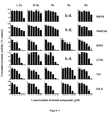
- Figure 1 shows compilation of experimental results determining the cytostatic/cytotoxic activity of the evaluated compounds (in columns) against a number of tumour cells (description of the POM line on the right side).
- the cytostatic/cytotoxic activity against adherent cells, from solid tumours cells (EMT6, PAN02, CT26 and T24) was evaluated using the crystalline violet test, whereas against suspension-grown cells of the MTT line.
- b.d. no data.
- Figure 2 shows an analysis of the cycle of T24 cells following incubation with thioredoxin inhibitors.
- esters of (acyloxymethyl)acrylamide have considerably more preferable pharmacological properties than 1-methylpropyl-2-imidazole disulphide, referred to in literature as PX-12. They inhibit thioredoxin activity more effectively than PX-12, they are more selective (in larger concentrations they inhibit thioredoxin reductase and, in contrast to PX-12, do not inhibit glutathione reductase), exhibit cytostatic/cytotoxic activity against human and murine tumour cells originating from both solid tumours (breast, kidney, colon and pancreatic cancer), as well as of the hematopoietic system (leukaemias and lymphomas).
- Compounds according to the present invention inhibit thioredox inactivity at concentrations smaller than compound PX-12, the reference inhibitor of the enzyme, whose antitumour activity is currently undergoing clinical testing.
- Compounds 3a, 8a and 8b are also more selective than PX-12.
- compound 3a inhibits the activity of activity recombinant thioredoxin three times stronger and inhibits the activity of recombinant thioredoxin reductase about three times less in comparison to the reference compound PX-12.
- the greater selectivity of compound 3a was also demonstrated in tests relating to glutathione reductase.
- the cytostatic/cytotoxic activity of 3a and PX-12 is comparable against the examined lines of human and murine of tumour cells.
- compound L-3a, D-3a, 3b, 8a and 8b exhibit strong cytostatic/cytotoxic activity against the panel of human and murine lines of tumour cells.
- the indicated inhibitory effect of the tested compounds on cell division makes it possible to use them both in the treatment of neoplastic diseases, as well as other diseases, where excessive cell proliferation occurs.
- the subject of the present invention is also a pharmaceutical composition meant for the treatment of neoplastic diseases, containing as its active ingredient esters of (acyloxymethyl)acrylamide in an amount sufficient to elicit a cytotoxic effect, along with at least one inert, pharmaceutically permissible carrier, diluent or ancillary substance as well as a pharmaceutical composition designed for the treatment of neoplastic diseases, containing as its active ingredient, racemic or enantiomer-enriched 2-((1-((2-ethoxy-2-oxoethyl)amino)-4-methyl-1-oxopentan-2-yl)carbamoyl)allyl 2,6-bis(trifluoromethyl)benzoate, 2-((1-((2-ethoxy-2-oxoethyl)amino)-4-methyl-1-oxopentan-2-yl)carbamoyl)allyl 2,6-dichlorobenzoate, 2-(benzylcarbamoyl
- esters of (acyloxymethyl)acrylamide may be used in therapy in the form of pharmaceutical compositions designed for oral and parenteral administration. Such compositions may be manufactured using methods of producing drug forms known from prior art.
- a compound according to the present invention may thus be manufactured and administered in diverse forms for parenteral and oral administration. Therefore, a compound according to the present invention, may be administered via intravenous, intramuscular, dermal, subcutaneous, and intraperitoneal injections.
- liquid dosage forms are manufactured using each of the compounds according to the present invention, that is 2-((1-((2-ethoxy-2-oxoethyl)amino)-4-methyl-1-oxopentan-2-yl)carbamoyl)allyl 2,6-bis(trifluoromethyl) benzoate, 2-((1-((2-ethoxy-2-oxoethyl)amino)-4-methyl-1-oxopentan-2-yl)carbamoyl)allyl 2,6-dichlorobenzoate, 2-(benzylcarbamoyl)allyl 2,6-bis(trifluoromethyl)benzoate, 2-(benzylcarbamoyl)allyl 2,6-dichlorobenzoate and an inert vehicle, wherein preferably water is used.
- the aforementioned compounds depending on the type of pharmaceutically compatible carrier may be suspended, or dissolved in the vehicle.
- the active compound When manufacturing a solution, the active compound may be dissolved in the injectible solution and sterilised by filtration. The resulting sterile solution is transferred into vials or ampoules and sealed.
- the preparation following aliquotting into vials, may be frozen or the solvent may be removed under vacuum.
- the lyophilised powder is sealed in the vial, and alotted with a vial of injectible water for the preparation of the injectible drug.
- the aforementioned dosage forms may contain as their active ingredient both the novel compound as well as a pharmaceutically permissible salt of each of the compounds according to the present invention.
- esters of (acyloxymethyl)acrylamide are useful in the treatment of oncogenic diseases. Due to strong cytostatic activity (cell cycle arrest in phase G1, decrease of the percentage of cells undergoing DNA synthesis). Their desirable properties also make them useful for the treatment of diseases, whose pathogenesis involves increased cell proliferation, such as acute and chronic transplant rejection, allergic and autoimmune diseases, lymphoid proliferative syndromes, myelodysplastic and myeloproliferative syndromes and other pre-oncogenic states.
- Bromomethacrylic acid 150 mg, 0.9 mmol was supplemented with freshly distilled thionyl chloride (162 ⁇ l, 2.2 mmol). The mixture was mixed at boiling temperature for 2 hours. Excess thionyl chloride was evaporated off under reduced pressure. This was supplemented with methylene chloride (2 ml). The acid chloride solution was cooled to a temperature of 0°C, and supplemented with DMAP (45 mg, 0.4 mmol) and a solution of NH 2 -D-Leu-Gly-OEt (80 mg, 0.4 mmol) in methylene chloride (2 ml), and mixed 1.5 hours at a temperature of 0°C, and then for 2 hours at room temperature.
- DMAP 45 mg, 0.4 mmol
- a solution of NH 2 -D-Leu-Gly-OEt 80 mg, 0.4 mmol
- Bromomethacrylic acid (84 mg, 0.5 mmol) was supplemented with freshly distilled thionyl chloride (111 ⁇ l, 1.5 mmol). The mixture was mixed at reflux temperature for 2 hours. Excess thionyl chloride was evaporated off under reduced pressure. This was supplemented with methylene chloride (2 ml). The acid chloride solution was cooled to a temperature of 0°C and supplemented with DMAP (62 mg, 0.5 mmol) and a solution of NH 2 -L-Leu-Gly-OEt (110 mg, 0.5 mmol) in methylene chloride (2 ml). The mixture was mixed for 1.5 hours at a temperature of 0°C, and then for 2 hours at room temperature.
- the method of determining thioredoxin activity is based on the reduction of insulin by thioredoxin.
- Thioredoxin is reconstituted is by thioredoxin reductase, with NADPH.
- the resulting free thiol -SH groups .react with 5,5'-dithiobis-2-nitrobenzoic acid (DTNB).
- DTNB 5,5'-dithiobis-2-nitrobenzoic acid
- the termination of the reaction results in the formation of a red colour.
- the intensity of colouration is determined spectrophotometrically at 412 nm and this corresponds to the number of reduced sulfahydryl groups.
- the reaction was performed at 37°C over 30 min. in a buffer containing 50 mM Tris-HCl and 20 mM EDTA at a pH of 7.6.
- the substrate concentrations used were: 0.25 ⁇ M human recombinant thioredoxin and 0.325 ⁇ M rat recombinant thioredoxin reductase (IMCO Corporation Ltd AB, Sweden) and 316 ⁇ M of insulin, 0.8 ⁇ M NADPH, 8 mM DTNB (Sigma Aldrich).
- Table 1 summarises the results of inhibiting thioredoxin in the above system. Unexpectedly, all of the examined compounds turned out to inhibit thioredoxin enzymatic activity at lower concentrations than the known inhibitor PX-12. The highest activity was demonstrated by compounds 3a, L-3a, D-3a and 3b, for which the IC 50 was about 5 times lower than for PX-12. Table 1 Examined compound IC 50 [ ⁇ M] PX-12 15.4 3a 3.2 L-3a 2.8 D-3a 3.5 3b 2.9 8a 8.6 8b 5.9
- Reactions in which the activity of recombinant rat thioredoxin reductase was determined made use of a chromogenic reaction with 5,5'-dithiobis-2-nitrobenzoic acid.
- the NADP formed as a result of thioredoxin reductase activity reacts with DTNB yielding a yellow hue in solution, whose intensity is determined spectrophotometrically at 412 nm after 5 and 15 min. of incubation at room temperature.
- the reaction made use of reagents according to the Thioredoxin Reductase Assay Kit (Sigma) and rat recombinant thioredoxin reductase at a concentration of 0.165 ⁇ M.
- Table 2 shows IC 50 values of the inhibition of thioredoxin reductase activity by PX-12, 3a, 8a and 8b.
- the most highly active of the examined compounds was PX-12, which inhibited thioredoxin reductase activity at low, micromolar concentrations (IC 50 after 5 min was 13 ⁇ M).
- IC 50 after 5 min was 13 ⁇ M.
- compound 3a slightly inhibited thioredoxin reductase activity, but at considerably higher concentrations than PX-12 (IC 50 nearly three times higher).
- Table 2 IC 50 of thioredoxin reductase activity inhibition [ ⁇ M] Measurement time, from reaction onset PX-12 3a 8a 8b 5 min 13 37,1 >40 >40 15 min 24 >40 >40 >40
- the spatial structures of the active centres of glutathione reductase and the enzymes of the Trx-TrxR system show a high similarity.
- their activity was evaluated against glutathione reductase in comparison to the known inhibitor PX-12.
- the reactions for determining the activity of recombinant human glutathione reductase made use of a chromogenic reaction with 5,5'-dithiobis-2-nitrobenzoic acid, like in the case of thioredoxin reductase. Activity was determined after 5 and 10 min incubation at room temperature.
- the cytostatic/cytotoxic activity was evaluated using the following lines of tumour cells: EMT6 (murine breast cancer), PANC02 (murine pancreatic cancer), B78 (murine melanoma), C-26 (murine colon cancer), K562 (human chronic myelogenic leukaemia), T24 (human bladder cancer), RAJI (human Burkitt's lymphoma), Ramos (human Burkitt's lymphoma).
- the cultures were maintained in the following media: DMEM (EMT6, PANC02, B78), RPMI (C-26, Raji, Ramos), IMDM (K562), McCoy's (T24) with an addition of 10% bovine serum (Invitrogen) and antibiotics (Sigma).
- cytostatic/cytotoxic activity of the evaluated compounds cell cultures were initiated in 96-well plates. After 24h, inhibitors were added at set concentrations. The results were determined using colorimetric methods following 72 hours of incubation. To determine cytostatic/cytotoxic activity, crystal violet dyeing was used (reading at 595 nm) or MTT (Sigma; reading at 570 nm).
- Table 4 compiles the results of the experiments (LD 50 ), in which the cytostatic/cytotoxic activity of the reference inhibitor thioredoxin PX-12 and compound 3a. In most of the evaluated lines of tumour cells, these compounds had a similar LD 50 value.
- EMT6 murine breast cancer
- compound 3a turned out to be over two times more active.
- Table 4 LD 50 of the evaluated compound [ ⁇ M] after 72h of incubation Tumour cell line PX-12 3a EMT6 12,7 5,3 PANC02 3,8 3,2 C-26 5,4 3,2 B78 5,3 4,3 RAJI 5,9 4,6 Ramos 3,7 3,3 K562 4,9 3,8 T24 4,5 5,1
- the cell cycle is composed of a series of events leading to cell division.
- G1 interval between divisions
- S duplication of genetic material
- G2/M division or mitosis
- An analysis of the cel cycle using a flow-through cytometer makes it possible to determine the percentage of cells in each of the phases.
- the percentage of cells in the so-called subG1 phase those, whose genetic material has degraded as a result of apoptosis or necrosis.
- the cell cycle was examined using the cancer line T24 following 72 hours of incubation with PX-12 and a racemic mixture of 3a.
- the cells were stained with propidium iodide at 10 ⁇ g/ ⁇ l and analysed with flow-through cytometry. The results of this analysis are shown in Figure 2 .
- the percentage of dividing cells duplicating their genetic material (S phase) is clearly lower after incubation with inhibitors of thioredoxin.
Landscapes
- Chemical & Material Sciences (AREA)
- Organic Chemistry (AREA)
- Health & Medical Sciences (AREA)
- Animal Behavior & Ethology (AREA)
- Pharmacology & Pharmacy (AREA)
- Veterinary Medicine (AREA)
- Chemical Kinetics & Catalysis (AREA)
- General Chemical & Material Sciences (AREA)
- Medicinal Chemistry (AREA)
- Nuclear Medicine, Radiotherapy & Molecular Imaging (AREA)
- Public Health (AREA)
- Life Sciences & Earth Sciences (AREA)
- General Health & Medical Sciences (AREA)
- Engineering & Computer Science (AREA)
- Bioinformatics & Cheminformatics (AREA)
- Immunology (AREA)
- Organic Low-Molecular-Weight Compounds And Preparation Thereof (AREA)
- Acyclic And Carbocyclic Compounds In Medicinal Compositions (AREA)
Description
- The subject of the present invention are novel esters (acyloxymethyl)acrylamide, a pharmaceutical composition containing them and their use in the production of drugs that target the thioredoxin - thioredoxin reductase system. The present invention is for use in medical chemistry, pharmaceuticals and medicine.
- The process of carcinogenesis, and also subsequent stages of tumour progression are heavily influenced by enzymes that control the redox state of cells, and among these an enzymatic system composed of two proteins: thioredoxin and thioredoxin reductase (TrxR) seems to play an important role. The basic function of this system is to protect cells against oxidative stress. Both thioredoxin and thioredoxin reductase can reduce a variety of molecules, including reactive oxygen species (ROS). However, it is the ability of the Trx-TrxR system to oxidatively modify large macromolecules, particularly proteins, that makes this system exceptional in terms of regulating important cellular processes, such as cell survival and proliferation or cell death in apoptotic or non-apoptotic pathways.
- During the reduction of particular molecules, thioredoxin is oxidized through the formation of a disulphide bridge between two cysteines in the active centre of the enzyme. Oxidized Trx can no longer function as a reducer, and thus the subsequent step is the regeneration of Trx by thioredoxin reductase. The reductase along with NADPH2 reduces the disulphide bridge, thanks to which thioredoxin regains its activity.
- Thioredoxin reductase is an enzyme with a molecular mass of 55 kDa, that occurs in active form as a homodimer (Gromer S et al., Med. Res. Rev., 2004, 24, 1, pp. 40-89). Three isoforms of TrxR exist in mammalian cells: cytoplasmic (TrxR1), mitochondrial (TrxR2) and glutathione TrxR (which exhibits the ability to reduce glutathione). This enzyme has two active sites: the so-called N-terminal active site and the C-terminal active site. The first of them has two cysteine residues at positions Cys59 and Cys64, whereas the C-terminal site contains a cysteine at position Cys497 and, what is interesting, selenocysteine at position Sec498. The presence of selenium instead of a sulphur atom is explained by the decreased tension of S-Se bonds between the neighbouring residues of selenocysteine and cysteine as compared to a bond between two cysteines. In eukaryotic cells, the substrate specificity of TrxR is quite low. In addition to thioredoxin, human reductase may reduce a gamut of other compounds, including the regeneration of the oxidised form of ascorbic acid (vitamin C) (May J.M. et al., J. Biol.Chem., 1997; 272, pp. 22607-22610).
- Thioredoxin is a small protein with a mass of about 12 kDa. Its active site is the so-called "thioredoxin motif" containing the sequence: (W)CGPC(K), wherein the amino-acids in brackets may differ between various types of thioredoxins. Like in the case of TrxR, during the reduction of target molecules, the cysteine residues (Cys33 and Cys35) in the active site form a disulphide bridge. One of the catalytically active cysteines becomes exposed to the outside of the enzyme, whereas the other is hidden inside. The additional cysteine (Cys73) is used to form the homodimer, characteristic only for mammalian enzymes. Thioredoxin occurs in two isoforms: cytoplasmatic (Trx1) and mitochondrial (Trx-2). Furthermore, there is a number of proteins with thioredoxin activity which perform as yet unexplained functions in various cellular compartments.
- The interest in Trx-TrxR system in the context of cancer treatment is based on, amongst others, the increased synthesis of these proteins in tumour cells as compared with normal cells (Berggren, M. et al., Anticancer Res 1996, 16, pp. 3459-3466). The increased synthesis of proteins of the Trx-TrxR system is conducive to tumour cells. Thioredoxin participates along with glutaredoxin in the synthesis of deoxynucleotides, being a proton donor for ribonucleotide reductase. In this way, rapidly proliferating cells are supplied with substrates essential to the synthesis of nucleic acids (Holmgren, A., J. Biol. Chem. 1989, 264, pp. 13963-13966).
- The Trx-TrxR system is also responsible for apoptosis inhibition. This mechanism is based on binding of reduced thioredoxin to ASK1 (apoptosis signal regulating kinase 1). This factor is responsible for the activation of the kinase pathway that initiates apoptosis, and its efficient binding by thioredoxin, which is overexpressed in tumour cells effectively prevents tumour cell death (Ichijo, H. et al., Science 1997, 275, pp. 90-94). Furthermore, thioredoxin modulates the activity of the transcription factor NF-κB, which also inhibits apoptosis. Additionally, by increasing the synthesis of HIF-1 (hypoxia inducible factor - 1), the Trx-TrxR system positively regulates tumour angiogenesis, increasing tumour growth potential. It was also observed that both the aggressiveness, as well as the drug resistance of tumour cells are correlated with thioredoxin levels.
- To summarise, the inhibition of the Trx-TrxR system impairs proliferation of tumour cells, induces their death in apoptotic and non-apoptotic mechanisms, increases the sensitivity of tumour cells to chemotherapeutics, radiotherapy as well as apoptosis inducers, and negatively affects tumour angiogenesis.
- In medicine, there is a need to develop selective Trx-TrxR system inhibitors, which are potentially very effective anti-tumour drugs, which may be used in monotherapy as well as in combined therapy with other, already registered, forms of cancer treatment.
- In recent years, a group of chemotherapeutics has been synthesized that inhibit the Trx-TrxR system. The target of the inhibitors is both thioredoxin itself as well as thioredoxin reductase. In designing inhibitors, the initial consideration has to be made to the active sites of both enzymes. Most of the known inhibitors bind (reversibly or not) the two cysteines of the active site (selenocysteine in human TrxR).
- The Table below summarizes the known inhibitors of the Trx-TrxR system.
Cisplatin (CDDP) 
Testicular and prostate cancer, small lung tumors CDDP-Nitrofuran PX-12 
Phase II clinical trials for pancreatic cancer treatment Alkylating factors 
Alkylate cysteine and selenocysteine residues Curcumin 
Clinical trials against barrios tumours Palmarumicin 
Breast cancer, lung tumours Auranofin 
Ovarian cancer - One of the oldest inhibitors of thioredoxin, long used in tumour therapy, is cisplatin (1), as well as its newer analogues (2). The mechanism by which platinum compounds act in tumour cells is based on the direct disruption of DNA, which results in the formation of durable adducts. It turns out, however, that being a good electrophile, a platinum compound is an effective inhibitor of thioredoxin reductase. Strong enough in fact that it may even affect the enzyme in stoichiometric quantities (Sasada, T. et al., Free Radic. Biol. Med. 1999, 27, pp. 504 - 514).
- Another compound which selectively inhibits thioredox inactivity is 1-methylpropyl-2-imidazole disulphide, PX-12 (4). It was discovered during the design process of a thioredoxin reductase inhibitor, and has already been evaluated in phase II clinical trials for the treatment of advanced pancreatic cancer. An interesting fact in terms of medicinal chemistry is that the methyl group in the alkyl chain is necessary for inhibitory activity. Compounds of similar structure, but lacking this group were not thioredoxin inhibitors but substrates. PX-12 may reversibly form disulphides in the active sites of both TrxR and Trx, which leads to their oxidation. However, thus oxidized enzymes may be regenerated and the inhibition results from the binding of Cys73. First, this blocks the formation of the Trx active dimer, and secondly, thioredoxin bound at this position will no longer be a substrate for thioredoxin reductase, and thus cannot be regenerated (Kirkpatrick, D.L. et al., Biochem.Pharmacol. 1998, 55, pp. 987 -994). An additional activity of PX-12 observed in vivo is the inhibition of VEGF (vascular endothelial growth factor) synthesis. The increased synthesis of thioredoxin in tumour cells often leads to increased VEGF expression, which in turn accelerates angiogenesis inside the tumour. If the VEGF concentration is decreased, vasogenesis of capillaries in the tumour also drops off, which additionally slows tumour growth.
- Curcumin (7), a compound of natural origin extracted from Curcuma longa, is an interesting compound primarily because of its broad spectrum of activity. Aside from use as a condiment (component of curry), in Asian cultures curcumin was used to treat various illnesses, from anorexia, through coughing, liver diseases to sinus infections (Calabrese, V. et al., Mol. Nutr. Food Res. 2008, 52, pp. 1062 - 1073). Looking at the chemical structure of curcumin one easily notices electrophyllic centres in the form of Michael acceptors. They may interact with nucleophylic residues of selenocysteine and cysteine in the active centres of the Trx-TrxR system. It turns out that curcumin actually strongly inhibits thioredox reductase activity, both in isolated enzyme activity assays and in Hela cell extracts (Fang, J., Lu, J., Holmgren, A., J. Biol. Chem. 2005, 280. pp. 25284-25290). Curcumin, however, is not a selective inhibitor of this system because it affects many kinases, cyclins or cyclooxygenase.
- Because the active centre of thioredoxin with cysteine or selenocysteine residues it may be viewed as a nucleophylic centre, it is possible to suggest that alkylating agents will covalently and irreversibly inhibit the activity of the enzyme. Two known sulphur alkylating agents (Sun, Q. et al., J. Biol. Chem. 1999, 274, pp. 24522 - 24530): iodoacetamide (5) or iodoacetic acid were examined in terms of their antitumour activity, but due to their low selectivity they are of limited use as chemotherapeutics. Both, however, demonstrate strong thioredoxin reductase activity inhibition. 1-chloro-2,4-dinitrobenzene is a small compound, which alkylates both selenocysteine residues and neighbouring cysteine residues (Nordberg, J. et al., J. Biol.Chem. 1998, 273, pp. 10835 -10842). Such an alkylated TrxR activates mitochondrial caspases, which elicits a cytotoxic effect, against human lung cancer amongst others.
- Gold compounds were initially used in the treatment of rheumatoid disease, but due to their strong cytotoxic activity against tumour cells, an increasing number of chemotherapeutics based on gold (I) or gold (III) compounds are becoming available. The mechanism of activity of these compounds is still not entirely clear. It is postulated that this is similar to platin, or one based on direct DNA damage. However, because gold has a high affinity for thiol groups it is possible that thioredoxin may be a cellular target of these therapeutics. An example of such a compound is auranofin (9), known for its anti-rheumatoid activity. It inhibits thioredoxin reductase in nanomolar concentrations, whereas it inhibits glutathione reductase at micromolar levels (Gromer, S. et al., K., J. Biol. Chem. 1998, 273, pp. 20096 -20101). Glutathione reductase lacks a C-terminal active site with selenocysteine. It is thus possible that this site is the target of auranofin activity. The cytotoxicity of auranofin was evaluated against tumour cells which have become resistant to cisplatin (Marzano, C. et al., Free Radic. Biol. Med. 2007, 42, pp. 872-881) and clear inhibition of TrxR was observed (with a parallel lack of glutathione reductase activity inhibition) and a high cytotoxicity, which has opened novel possibilities in the treatment of tumours resistant to cisplatin therapy. It is interesting that TrxR activity is much higher in cells resistant to cisplatin. This confirms the important role of increased thioredoxin reductase and thioredoxin synthesis in resistance to chemotherapeutics.
- As is evident from the above descriptions of known inhibitors of the Trx-TrxR system, most of them react directly with thiol or selenium residues in both enzymes. The interactions are strong covalent bonds or permanent complexes with metals. However, the mechanisms of activity of many of them are still unclear. Due o the fact that the inhibitors known to date are very active molecules, a number of them may exhibit undesirable effects based on low selectivity against cysteine residues in other enzymes.
- The goal of the present invention is to indicate novel inhibitors of the thioredoxin-thioredoxin reductase system, both effective and more selective than currently available. The factor that differentiates the Trx-TrxR system in this respect is the selenocysteine residue, which is a stronger nucleophile than cysteine, which may be crucial to inhibitor selectivity.
- Unexpectedly, this goal was attained by producing novel aryl esters. of (2-hydroxymethyl)acrylamide and carboxylic acids. Compounds according to the present invention have turned out to be effective inhibitors of thioredoxin (Trx). These compounds simultaneously exhibit strong antitumour properties.
- The subject of the present invention is thus compounds defined by the general formula (1):

- where:
- R1 denotes a linear or branched C1- C8 alkyl, phenyl, benzyl;
- R2 denotes a hydrogen, an alkyl 2-formamidoacetate group wherein the alkyl group is a linear or branched C1-C8 chain; and
- R3 denotes a carboxylic acid acyl group selected from among 2,6-dichlorobenzoic or 2,6-di(trifluoromethyl)benzoic acid groups;
- In particular the subject of the present invention are compounds selected from a group encompassing:
- (R)-2-((1-((2-ethoxy-2-oxoethyl)amino)-4-methyl-1-oxopentan-2-yl)carbamoyl)allyl 2,6-bis(trifluoromethyl)benzoate;
- (S)-2-((1-((2-ethoxy-2-oxoethyl)amino)-4-methyl-1-oxopentan-2-yl)carbamoyl)allyl 2,6-bis(trifluoromethyl)benzoate;
- 2-((1-((2-ethoxy-2-oxoethyl)amino)-4-methyl-1-oxopentan-2-yl)carbamoyl)allyl 2,6-bis(trifluoromethyl)benzoate;
- 2-((1-((2-ethoxy-2-oxoethyl)amino)-4-methyl-1-oxopentan-2-yl)carbamoyl)allyl 2,6-dichlorobenzoate;
- 2-(benzylcarbamoyl)allyl 2,6-bis(trifluoromethyl)benzoate;
- 2-(benzylcarbamoyl)allyl 2,6-dichlorobenzoate.
- The next subject of the present invention is a compound with the general formula (1) or its pharmaceutically permissible salts as drugs for use as a medicament.
- The above use is preferably characterised in that the drug is for use in the prophylaxis or treatment of oncogenic diseases, diseases connected with increased cell proliferation, preferably acute and chronic transplant rejection, allergic and autoimmune diseases, lymphoid proliferative syndromes, myelodisplastic and myeloproliferative syndromes and pre-oncogenic states.
- The subject of the present invention is a pharmaceutical composition characterised in that it contains as its active ingredient a compound with the general formula (1) or its pharmaceutically permissible salt.
- A pharmaceutical composition according to the present invention is preferably for use in the prophylaxis or treatment of oncogenic diseases, diseases connected with increased cell proliferation, preferably acute and chronic transplant rejection, allergic and autoimmune diseases, lymphoid proliferative syndromes, myelodisplastic and myeloproliferative syndromes and pre-oncogenic states.
- In general, the present invention is related to the method of producing a compound with the general formula (1), in which the amide bond formation is performed by coupling a carboxylic acid with the amine component in an organic solvent, in the presence of a coupling reagent.
- The subject the present invention is illustrated in example embodiments in the figure, where
-
Figure 1 shows compilation of experimental results determining the cytostatic/cytotoxic activity of the evaluated compounds (in columns) against a number of tumour cells (description of the POM line on the right side). The cytostatic/cytotoxic activity against adherent cells, from solid tumours cells (EMT6, PAN02, CT26 and T24) was evaluated using the crystalline violet test, whereas against suspension-grown cells of the MTT line. b.d. = no data.
whereasFigure 2 shows an analysis of the cycle of T24 cells following incubation with thioredoxin inhibitors. - According to the present invention, experiments showed that esters of (acyloxymethyl)acrylamide have considerably more preferable pharmacological properties than 1-methylpropyl-2-imidazole disulphide, referred to in literature as PX-12. They inhibit thioredoxin activity more effectively than PX-12, they are more selective (in larger concentrations they inhibit thioredoxin reductase and, in contrast to PX-12, do not inhibit glutathione reductase), exhibit cytostatic/cytotoxic activity against human and murine tumour cells originating from both solid tumours (breast, kidney, colon and pancreatic cancer), as well as of the hematopoietic system (leukaemias and lymphomas).
- Compounds according to the present invention, denoted herein as: 3a, L-3a, D-3a, 3b, 8a and 8b inhibit thioredox inactivity at concentrations smaller than compound PX-12, the reference inhibitor of the enzyme, whose antitumour activity is currently undergoing clinical testing.
-
Compounds compound 3a inhibits the activity of activity recombinant thioredoxin three times stronger and inhibits the activity of recombinant thioredoxin reductase about three times less in comparison to the reference compound PX-12. Furthermore, the greater selectivity ofcompound 3a was also demonstrated in tests relating to glutathione reductase. The cytostatic/cytotoxic activity of 3a and PX-12 is comparable against the examined lines of human and murine of tumour cells. - Likewise, compound L-3a, D-3a, 3b, 8a and 8b exhibit strong cytostatic/cytotoxic activity against the panel of human and murine lines of tumour cells. The indicated inhibitory effect of the tested compounds on cell division makes it possible to use them both in the treatment of neoplastic diseases, as well as other diseases, where excessive cell proliferation occurs.
- The subject of the present invention is also a pharmaceutical composition meant for the treatment of neoplastic diseases, containing as its active ingredient esters of (acyloxymethyl)acrylamide in an amount sufficient to elicit a cytotoxic effect, along with at least one inert, pharmaceutically permissible carrier, diluent or ancillary substance as well as a pharmaceutical composition designed for the treatment of neoplastic diseases, containing as its active ingredient, racemic or enantiomer-enriched 2-((1-((2-ethoxy-2-oxoethyl)amino)-4-methyl-1-oxopentan-2-yl)carbamoyl)allyl 2,6-bis(trifluoromethyl)benzoate, 2-((1-((2-ethoxy-2-oxoethyl)amino)-4-methyl-1-oxopentan-2-yl)carbamoyl)allyl 2,6-dichlorobenzoate, 2-(benzylcarbamoyl)allyl 2,6-bis(trifluoromethyl)benzoate, 2-(benzylcarbamoyl)allyl 2,6-dichlorobenzoate in an amount sufficient to elicit cytostatic/cytotoxic effects, along with at least one inert, pharmaceutically permissible carrier, diluent or ancillary substance.
- The subject of the present invention, esters of (acyloxymethyl)acrylamide, may be used in therapy in the form of pharmaceutical compositions designed for oral and parenteral administration. Such compositions may be manufactured using methods of producing drug forms known from prior art.
- Compounds according to the present invention may thus be manufactured and administered in diverse forms for parenteral and oral administration. Therefore, a compound according to the present invention, may be administered via intravenous, intramuscular, dermal, subcutaneous, and intraperitoneal injections.
- For parenteral administration liquid dosage forms are manufactured using each of the compounds according to the present invention, that is 2-((1-((2-ethoxy-2-oxoethyl)amino)-4-methyl-1-oxopentan-2-yl)carbamoyl)allyl 2,6-bis(trifluoromethyl) benzoate, 2-((1-((2-ethoxy-2-oxoethyl)amino)-4-methyl-1-oxopentan-2-yl)carbamoyl)allyl 2,6-dichlorobenzoate, 2-(benzylcarbamoyl)allyl 2,6-bis(trifluoromethyl)benzoate, 2-(benzylcarbamoyl)allyl 2,6-dichlorobenzoate and an inert vehicle, wherein preferably water is used. The aforementioned compounds, depending on the type of pharmaceutically compatible carrier may be suspended, or dissolved in the vehicle. When manufacturing a solution, the active compound may be dissolved in the injectible solution and sterilised by filtration. The resulting sterile solution is transferred into vials or ampoules and sealed.
- The preparation, following aliquotting into vials, may be frozen or the solvent may be removed under vacuum. Next, the lyophilised powder is sealed in the vial, and alotted with a vial of injectible water for the preparation of the injectible drug. It is obvious to a specialist that the aforementioned dosage forms may contain as their active ingredient both the novel compound as well as a pharmaceutically permissible salt of each of the compounds according to the present invention.
- Compounds according to the present invention, esters of (acyloxymethyl)acrylamide are useful in the treatment of oncogenic diseases. Due to strong cytostatic activity (cell cycle arrest in phase G1, decrease of the percentage of cells undergoing DNA synthesis). Their desirable properties also make them useful for the treatment of diseases, whose pathogenesis involves increased cell proliferation, such as acute and chronic transplant rejection, allergic and autoimmune diseases, lymphoid proliferative syndromes, myelodysplastic and myeloproliferative syndromes and other pre-oncogenic states.
- The present invention us illustrated by the following example embodiments:

- a) methanol, RT, 16 h, 46%
- b) TFA, CH2Cl2, 30 min, RT 70%
- c) 4, acetone, boiling temperature, 59 - 87%
- A solution of isovaleric aldehyde (96 µl, 0.88 mmol) in methanol (1 ml) was supplemented with 2,4-dimethoxybenzylamine (133 µl, 0.88 mmol) and mixed for 30 minutes. Next, this was supplemented with bromomethylmethacrylic acid (146 mg, 0.88 mmol) and mixed for another 30 minutes. The mixture was cooled to a temperature of 0°C and was supplemented with ethyl isocyanoacetate (100 µl, 0.88 mmol), and then mixed for 20 hours at room temperature. The solvent was evaporated off and the remainder purified using column chromatography in a hexane: ethyl acetate system (silica gel, R f = 0.33, 5:5, v:v).
This yielded 207 mg of transparent oil (46%).
1H NMR (200 MHz, CDCl3): δ 0.84 - 0.89 (m, 6H), 1.21 - 1.28 (m, 5H), 1.54 - 1.67 (m, 1H) 1.91 - 1.98 (m, 1H), 3.77 (s, 3H), 3.77 (s, 3H), 3.85 (d, J = 5.2 Hz), 4.04 - 4.23 (m, 4H), 4.55 - 4.70 (m, 2H), 5.43 (s, 1H), 5.54 (s, 1H), 6.39 - 6.43 (m, 2H), 7.43 (d, J = 9.2 Hz, 1H) 13C NMR (50 MHz, CDCl3): δ 14.5, 22.8, 22.9, 25.5, 33.4, 37.6, 41.7, 55.6, 55.6, 59.1, 61.6, 98.7, 104.3, 119.3, 130.3., 140.4, 169.8. HR-MS (ESI, [M+Na+]) calculated for C23H33BrN2O6 Na: 535,1414, found: 535.1402; - Compound 1 (117 mg, 0.23 mmol) was dissolved in methylene chloride (2 ml). Next, this was supplemented with trifluoroacetic acid (475 µl) at room temperature. The mixture was left for 1 hour while observing the colour change from clear to dark violet. The flask contents were transferred into a separator, and this was supplemented with methylene chloride (4 ml) and a saturated solution of sodium carbonate was added until the disappearance of the violet colour. The aqueous phase was extracted with methylene chloride (3 x 8 ml), and then the combined organic phases were dried with brine and the solvent was evaporated off. The remainder was purified using column chromatography in a hexane: ethyl acetate system (silica gel, R f = 0.25, 6:4, v:v).
This yielded 58 mg of product (70 %).
1H NMR (200 MHz, CDCl3): δ 0.87 - 0.94 (m, 6H), 1.22 - 1.29 (m, 5H), 1.38 - 1.70 (m, 4H), 3.96 (d, J = 5.2 Hz, 1H), 4.01 (d, J = 5.8 Hz, 1H), 4.10 - 4.23 (m, 5H), 4.60 - 4.78 (m, 1H), 5.69 (s, 1H), 5.85 (s, 1H), 6.90 (d, J = 8.0 Hz, 1H), 7.14 (m, 1H). 13C NMR (50 MHz, CDCl3): δ 14.5, 22.4, 23.3, 25.1, 30.7, 41.4, 41.7, 52.1, 61.8, 123.0. 141.3, 166.4, 170.0. 172.6; HR-MS (ESI, [M+Na+]) calculated for C14H23BrN2O4 Na: 385.0733, found: 385.0740. - Compound 2 0.1 mmol, was dissolved in acetone and was then supplemented with the cesium salt of a carboxylic acid 0.30 mmol). The reaction was performed for 30 min at boiling temperature. The solvent was evaporated off, the remainder was dissolved in ethyl acetate and water. The aqueous phase was extracted with ethyl acetate, and then the combined organic phases were rinsed with a saturated solution of sodium bicarbonate, and then with brine. This was dried with anhydrous magnesium sulphate. The solvent was evaporated off and the remainder purified on a chromatography column in a hexane: ethyl acetate system (silica gel).
- Produced using general method II. White powder, tt = 114 - 115 °C, yield 87 %. R f = 0.61 (5:5, v:v). 1H NMR (200 MHz, CDCl3): δ 0.85 - 0.91 (m, 6H), 1.21 - 1.28 (m, 4H), 1.51 - 1.70 (m, 4H), 3.46 (d, J = 5.2 Hz, 1H), 4.08 (d, J = 5.8 Hz, 1H), 4.10 - 4.19 (m, 3H), 4.60-4.78 (m, 1H), 5.10 (s, 2H), 5.79 (s, 1H), 6.02 (s, 1H) 6.74 (d, J = 8.2 Hz, 1H), 6.98 - 7.03 (m, 1H), 7.72 (d, J = 7.8 Hz, 1H), 7.91 (d, J = 7.8 Hz, 2H). 13C NMR (50MHz, CDCl3): d 14.4, 22.4, 23.0. 25.0. 30.7, 41.2, 41.6, 51.9, 61.8, 65.6, 120.0. 124.3, 125.8, 129.0. 129.7, 130.2, 130.7 137.9, 166.4, 169.9, 172.6; Elemental analysis calculated for C23H26F6N2O6: C, 51.11; H, 4.85; N, 5.18; found: C, 51.00; H, 5.07; N, 4.86;
- Produced using general method II. White powder, tt = 120 - 121°C, yield 59 %. R f = 0.34 (5:5, v:v). 1H NMR (200 Mhz, CDCl3) δ 0.83 (d, J = 6 HZ, 6H), 1.16 - 1.30 (m, 3H), 1.47 - 1.69 (m, 4H), 3.91 (d, J = 5.2 Hz, 1H), 3.95 (d, J = 5.6 Hz, 1H), 4,12 (q, J = 7.2 Hz, 2H), 4.51 - 4.60 (m, 1H), 5.07 (d, J = 4.2 Hz, 2H), 5.78 (s, 1H), 6.00 (s, 1H), 6.56 (d, J = 8.2 Hz, 1H), 6.77 (bs, 1H), 7.20 - 7.25 (m, 3H) 13C NMR (50 MHz, CDCl3) δ 14.5, 22.4, 23.2, 25.1, 41.2, 41.7, 51.9, 61.9, 65.1, 124.6, 128.2, 131.4, 132.2, 138.1, 166.4, 169.8, 172.28; HR-MS (ESI, [M+Na+]) calculated for C21H26N2O6NaCl2: 495.10601.0733,found: 495.10812.
-

e) 4, acetone, boiling temperature, 2 h, 33 - 67% - Bromomethacrylic acid (150 mg, 0.9 mmol) was supplemented with freshly distilled thionyl chloride (162 µl, 2.2 mmol). The mixture was mixed at boiling temperature for 2 hours. Excess thionyl chloride was evaporated off under reduced pressure. This was supplemented with methylene chloride (2 ml). The acid chloride solution was cooled to a temperature of 0°C, and supplemented with DMAP (45 mg, 0.4 mmol) and a solution of NH2-D-Leu-Gly-OEt (80 mg, 0.4 mmol) in methylene chloride (2 ml), and mixed 1.5 hours at a temperature of 0°C, and then for 2 hours at room temperature. The solvent was evaporated off and the remainder was purified on a chromatography column (R f = 0.45 hexane: ethyl acetate 6:4 v/v, as for rac-2). This yielded 12 mg of transparent oil (
efficiency 6%). - The thusly prepared compound D-2 (R)-ethyl-2-(2-(2-(bromomethyl)acrylamido)-4-methylpentaneamido)acetate, was dissolved in acetone (5 ml), and supplemented with the cesium salt of bis-(trifluoromethyl)benzoic acid (39 mg, 0.1 mmol). This was mixed at room temperature for 16 hours, and then at boiling temperature for 4 hours. The precipitate was filtered out, the solvent was evaporated off, and the remainder was purified on a chromatography column (R f = 0.61 hexane: ethyl acetate 5:5 v/v, as for rac-3a), yielding 12 mg of transparent oil with an efficiency of 67%. HR-MS (ESI, [M+Na+]) calculated for C23H26F6N2O6Na: 563.1587, found: 563.1592; [α]D = +20° (c = 1.2, CHCl3)
- Bromomethacrylic acid (84 mg, 0.5 mmol) was supplemented with freshly distilled thionyl chloride (111 µl, 1.5 mmol). The mixture was mixed at reflux temperature for 2 hours. Excess thionyl chloride was evaporated off under reduced pressure. This was supplemented with methylene chloride (2 ml). The acid chloride solution was cooled to a temperature of 0°C and supplemented with DMAP (62 mg, 0.5 mmol) and a solution of NH2-L-Leu-Gly-OEt (110 mg, 0.5 mmol) in methylene chloride (2 ml). The mixture was mixed for 1.5 hours at a temperature of 0°C, and then for 2 hours at room temperature. The solvent was evaporated off and the remainder was purified on a chromatography column. (R f =0.46 hexane:ethyl acetate 6:4, v/v, as for rac-2). This yielded 18 mg of transparent oil (yield 5%).
- The thusly prepared compound L-2 (S)-ethyl 2-(2-(2-(bromomethyl)acrylamido)-4-methylpentaneamido)acetate (16 mg, 0.04 mmol) was dissolved in acetone (1 ml) and supplemented with the cesium salt of 2,6-bis-(trifluoromethyl)-benzoic acid (36 mg, 0.09 mmol). The suspension was brought to boiling temperature and was mixed until the substrate disappeared (TLC, 2 hours). The mixture was sieved through a celite to remove excess cesium salt and cesium bromide. The solvent was evaporated off and the remainder was dissolved in
ethyl acetate 10 ml. This was rinsed in the following sequence: with water (5 ml), with a saturated solution of sodium carbonate (5 ml) and with brine. The organic phase was dried with anhydrous magnesium sulphate, filtered and evaporated off. The resulting oil was filtered through a silica gel, eluting in a hexane: ethyl acetate system. This yielded 8 mg of product (efficiency 33%). HR-MS (ESI, [M+Na+]) calculated for C23H26F6N2O6Na: 563.1587, found: 563.1582 [α]D = -23° (c = 0.8, CHCl3). the 1H NMR spectrum of both enantiomers is fully identical to the spectrum of compound rac-3a. -

- A solution of acid 7 (0.7 mmol) in THF (5 ml) was supplemented with isobutyl chloroformate (0.7 mmol) at a temperatutre of -10°C and mixed for 30 min., Next, this was supplemented with benzylamine (0.7 mmol). The mixture was mixed for 2 hours at a temperature of -10°C and for 1 hour at room temperature. The solvent was evaporated, and the remainder was dissolved in ethyl acetate (20 ml) and rinsed in a sequence of a saturated solution of sodium bicarbonate (10ml), citric acid (10%, 10 ml) and with brine (10 ml). The remainder was purified on a chromatography column (silica gel, hexane: ethyl acetate).
- 1H NMR (CDCl3, 200MHz) δ 4.50 (d, J= 5.8 Hz, 2H,), 5.13 (s, 2H), 6.03 (s, 1H), 6.37 (bs, 1H), 7.28 (s, 5H), 7.71 (t, J = 7,8 Hz, 1H), 7.91 (d, J = 7.8 Hz, 2H); 13C NMR (CDCl3, 50 MHz) δ 44.1, 66.0. 124.5, 125.8, 127.9, 128.1, 129.0. 130.1, 130.2, 130.7, 138.1, 138.4, 166.1 Elemental analysis: calculated for: C20H21NO3: C, 55.69; H, 3.51; N, 3.25; found: C, 55.61; H, 3.38; N, 3.21;
- 1H NMR (CDCl3, 200MHz) δ 4.45 (d, J = 6 Hz, 2H), 5,09 (s, 1H), 5,75 (s, 1H) 6.0 (s, 1H), 6,35 (bs, 1H), 7.18 - 7.24 (m, 8H). 13C NMR (CDCl3, 50 MHz): δ 44.2, 65.5, 124.7, 127.9, 128.2, 129.0. 131.5, 132.2, 138.1, 138.4, 164.5, 166.0; Elemental analysis calculated for C18H15Cl2NO3. 1H2O: C, 56.56; H, 4.48; N, 3.66; found: C, 56.89; H, 4.36; N, 3.28
- The method of determining thioredoxin activity is based on the reduction of insulin by thioredoxin. Thioredoxin is reconstituted is by thioredoxin reductase, with NADPH. The resulting free thiol -SH groups .react with 5,5'-dithiobis-2-nitrobenzoic acid (DTNB). The termination of the reaction results in the formation of a red colour. The intensity of colouration is determined spectrophotometrically at 412 nm and this corresponds to the number of reduced sulfahydryl groups. The reaction was performed at 37°C over 30 min. in a buffer containing 50 mM Tris-HCl and 20 mM EDTA at a pH of 7.6. The substrate concentrations used were: 0.25 µM human recombinant thioredoxin and 0.325 µM rat recombinant thioredoxin reductase (IMCO Corporation Ltd AB, Sweden) and 316 µM of insulin, 0.8 µM NADPH, 8 mM DTNB (Sigma Aldrich).
- Table 1 summarises the results of inhibiting thioredoxin in the above system. Unexpectedly, all of the examined compounds turned out to inhibit thioredoxin enzymatic activity at lower concentrations than the known inhibitor PX-12. The highest activity was demonstrated by
compounds 3a, L-3a, D-3a and 3b, for which the IC50 was about 5 times lower than for PX-12.Table 1 Examined compound IC50 [µM] PX-12 15.4 3a 3.2 L-3a 2.8 D-3a 3.5 3b 2.9 8a 8.6 8b 5.9 - Reactions in which the activity of recombinant rat thioredoxin reductase was determined made use of a chromogenic reaction with 5,5'-dithiobis-2-nitrobenzoic acid. The NADP formed as a result of thioredoxin reductase activity reacts with DTNB yielding a yellow hue in solution, whose intensity is determined spectrophotometrically at 412 nm after 5 and 15 min. of incubation at room temperature. The reaction made use of reagents according to the Thioredoxin Reductase Assay Kit (Sigma) and rat recombinant thioredoxin reductase at a concentration of 0.165 µM. Table 2 shows IC50 values of the inhibition of thioredoxin reductase activity by PX-12, 3a, 8a and 8b. The most highly active of the examined compounds was PX-12, which inhibited thioredoxin reductase activity at low, micromolar concentrations (IC50 after 5 min was 13 µM). Amongst the others, only compound 3a slightly inhibited thioredoxin reductase activity, but at considerably higher concentrations than PX-12 (IC50 nearly three times higher).
Table 2 IC50 of thioredoxin reductase activity inhibition [µM] Measurement time, from reaction onset PX-12 3a 8a 8b 5 min 13 37,1 >40 >40 15 min 24 >40 >40 >40 - The spatial structures of the active centres of glutathione reductase and the enzymes of the Trx-TrxR system show a high similarity. In order to further evaluate the selectivity of the evaluated compounds, their activity was evaluated against glutathione reductase in comparison to the known inhibitor PX-12. The reactions for determining the activity of recombinant human glutathione reductase made use of a chromogenic reaction with 5,5'-dithiobis-2-nitrobenzoic acid, like in the case of thioredoxin reductase. Activity was determined after 5 and 10 min incubation at room temperature. The reaction made use of reagents according to the Glutathione Reductase Assay Kit (Sigma) and human recombinant thioredoxin reductase (Sigma) at a concentration of 0.04 U. The only active compound among the evaluated group was PX-12, which inhibited glutathione reductase activity at micromolar concentrations (IC50 after 5 min was 19.8 µM). None of the other evaluated compounds (3a, 8a and 8b) inhibited glutathione reductase activity, even at a concentration of 100 µM. The results shown in Tables 1, 2 and 3 indicate that
compounds Table 3. IC50 of glutathione reductase activity inhibition [µM] Measurement time, from reaction onset PX-12 3a 8a 8b 5 min 19,8 >100 >100 >100 10 min 28,6 >100 >100 >100 - The cytostatic/cytotoxic activity was evaluated using the following lines of tumour cells: EMT6 (murine breast cancer), PANC02 (murine pancreatic cancer), B78 (murine melanoma), C-26 (murine colon cancer), K562 (human chronic myelogenic leukaemia), T24 (human bladder cancer), RAJI (human Burkitt's lymphoma), Ramos (human Burkitt's lymphoma). The cultures were maintained in the following media: DMEM (EMT6, PANC02, B78), RPMI (C-26, Raji, Ramos), IMDM (K562), McCoy's (T24) with an addition of 10% bovine serum (Invitrogen) and antibiotics (Sigma).
- To determine cytostatic/cytotoxic activity of the evaluated compounds, cell cultures were initiated in 96-well plates. After 24h, inhibitors were added at set concentrations. The results were determined using colorimetric methods following 72 hours of incubation. To determine cytostatic/cytotoxic activity, crystal violet dyeing was used (reading at 595 nm) or MTT (Sigma; reading at 570 nm).
- Table 4 compiles the results of the experiments (LD50), in which the cytostatic/cytotoxic activity of the reference inhibitor thioredoxin PX-12 and
compound 3a. In most of the evaluated lines of tumour cells, these compounds had a similar LD50 value. Against line EMT6 (murine breast cancer)compound 3a turned out to be over two times more active.Table 4 LD50 of the evaluated compound [µM] after 72h of incubation Tumour cell line PX-12 3a EMT6 12,7 5,3 PANC02 3,8 3,2 C-26 5,4 3,2 B78 5,3 4,3 RAJI 5,9 4,6 Ramos 3,7 3,3 K562 4,9 3,8 T24 4,5 5,1 - Similar analyses were performed for the other evaluated compounds. The results are shown in
Figure 1 . All of the compounds exhibit cytostatic/cytotoxic activity against tumour cells, strongest against cells derived from the hematopoietic system (chronic myelogenic leukaemia K562, Burkitt's lymphoma RAJI). - The cell cycle is composed of a series of events leading to cell division. In the cell cycle we differentiate the following phases: G1 (interval between divisions), S (duplication of genetic material) and G2/M (division or mitosis). An analysis of the cel cycle using a flow-through cytometer makes it possible to determine the percentage of cells in each of the phases. Furthermore, the percentage of cells in the so-called subG1 phase: those, whose genetic material has degraded as a result of apoptosis or necrosis.
- The cell cycle was examined using the cancer line T24 following 72 hours of incubation with PX-12 and a racemic mixture of 3a. The cells were stained with propidium iodide at 10 µg/µl and analysed with flow-through cytometry. The results of this analysis are shown in
Figure 2 . The percentage of dividing cells duplicating their genetic material (S phase) is clearly lower after incubation with inhibitors of thioredoxin. -
- Berggren, M., Gallegos, A., Gasdaska, J.R., Gasdaska, P.Y., Warneke,J., Powis, G., Anticancer Res 1996, 16, pp. 3459-3466
- Gromer S., Urig S., Becker K.Med. Res. Rev. 2004 24, 1, pp. 40-89
- May J.M., Mendiratta S, Hill K.E., Burk R.F., J. Biol.Chem., 1997; 272, pp. 22607-22610
- Holmgren, A., J. Biol. Chem. 1989, 264, pp. 13963-13966
- Ichijo, H., Nishida, E., Irie, K., ten Dijke, P., Science 1997, 275, pp. 90-94
- Sasada, T., Nakamura, H., Ueda, S., Sato, N., Free Radic. Biol. Med. 1999,27, pp. 504 - 514
- Kirkpatrick, D. L., Kuperus, M., Dowdeswell, M., Potier, N., Biochem.Pharmacol. 1998, 55, pp. 987 -994
- Calabrese, V., Bates, B.E., Mancuso, C., Cornelius, C., Ventimiglia, B., Cambria, M.T., Di Renzo, L.,De Lorenzo, A., Dinkova-Kostova D., Mol. Nutr. Food Res. 2008, 52, pp. 1062 - 1073
- Fang, J., Lu, J., Holmgren, A., J. Biol. Chem. 2005, 280. pp. 25284-25290
- Sun, Q., Wu, Y., Zappacosta, F., Jeang, K.T., Lee, B. J., Hetfield, L.D., Gladyshev, N.V., J. Biol. Chem. 1999, 274, pp. 24522 - 24530
- Nordberg, J., Zhong, L., Holmgren, A., Arner, E. S., J. Biol.Chem. 1998, 273, pp. 10835 - 10842
- Gromer, S., Arscott, L. D.,Williams, C. H., Jr., Schirmer, R.H., Becker, K., J. Biol. Chem. 1998, 273, pp. 20096-20101
- Marzano, C., Gandin, V., Folda, A., Scutari, G., Free Radic. Biol. Med. 2007, 42, pp. 872-881
Claims (6)
- A compound with the general formula (1):
 R1 denotes a linear or branched C1-C8 alkyl, phenyl, benzyl;R2 denotes a hydrogen, an alkyl 2-formamidoacetate group wherein the alkyl group is a linear or branched C1-C8 chain; andR3 denotes a carboxylic acid acyl group selected from among 2,6-dichlorobenzoic or 2,6-di(trifluoromethyl)benzoic acid groups;or its pharmaceutically permissible salt.
 - The compound according to Claim 1, characterised in that it is selected from a group encompassing the compounds:(R)-2-((1-((2-ethoxy-2-oxoethyl)amino)-4-methyl-1-oxopentan-2-yl)carbamoyl)allyl 2,6-bis(trifluoromethyl)benzoate;(S)-2-((1-((2-ethoxy-2-oxoethyl)amino)-4-methyl-1-oxopentan-2-yl)carbamoyl)allyl 2,6-bis(trifluoromethyl)benzoate;2-((1-((2-ethoxy-2-oxoethyl)amino)-4-methyl-1-oxopentan-2-yl)carbamoyl)allyl 2,6-bis(trifluoromethyl)benzoate;2-((1-((2-ethoxy-2-oxoethyl)amino)-4-methyl-1-oxopentan-2-yl)carbamoyl)allyl 2,6-dichlorobenzoate;2-(benzylcarbamoyl)allyl 2,6-bis(trifluoromethyl)benzoate;2-(benzylcarbamoyl)allyl 2,6-dichlorobenzoate.
- A compound with the general formula (1), as defined in Claims from 1 to 2 for use as a medicament.
- The compound according to Claim 3 for use in the prophylaxis or the treatment of oncogenic diseases, diseases connected with increased cell proliferation, preferably acute and chronic transplant rejection, allergic and autoimmune diseases, lymphoid proliferative syndromes, myelodysplastic and myeloproliferative syndromes and pre-oncogenic states.
- A pharmaceutical composition containing an active ingredient and a pharmaceutically permissible carrier, characterised in that as its active ingredient it contains a compound with the general formula (1), defined in Claims from 1 to 2.
- The pharmaceutical composition according to Claim 5 for use in the prophylaxis or the treatment of oncogenic diseases, diseases connected with increased cell proliferation, preferably acute and chronic transplant rejection, allergic and autoimmune diseases, lymphoid proliferative syndromes, myelodysplastic and myeloproliferative syndromes and pre-oncogenic states.
Applications Claiming Priority (2)
| Application Number | Priority Date | Filing Date | Title |
|---|---|---|---|
| PL392651A PL219045B1 (en) | 2010-10-16 | 2010-10-16 | New esters of (acyloxymethyl) acrylamide, pharmaceutical compositions containing thereof and the use thereof |
| PCT/PL2011/050041 WO2012050465A1 (en) | 2010-10-16 | 2011-10-16 | Novel esters of (acyloxymethyl)acrylamide, a pharmaceutical composition containing them, and their use as inhibitors of the thioredoxin - thioredoxin reductase system |
Publications (2)
| Publication Number | Publication Date |
|---|---|
| EP2627628A1 EP2627628A1 (en) | 2013-08-21 |
| EP2627628B1 true EP2627628B1 (en) | 2015-04-15 |
Family
ID=44936506
Family Applications (1)
| Application Number | Title | Priority Date | Filing Date |
|---|---|---|---|
| EP11781886.4A Not-in-force EP2627628B1 (en) | 2010-10-16 | 2011-10-16 | Novel esters of (acyloxymethyl)acrylamide, a pharmaceutical composition containing them, and their use as inhibitors of the thioredoxin - thioredoxin reductase system |
Country Status (6)
| Country | Link |
|---|---|
| US (1) | US9018255B2 (en) |
| EP (1) | EP2627628B1 (en) |
| CN (1) | CN103237786B (en) |
| PL (1) | PL219045B1 (en) |
| RU (1) | RU2570576C2 (en) |
| WO (1) | WO2012050465A1 (en) |
Families Citing this family (1)
| Publication number | Priority date | Publication date | Assignee | Title |
|---|---|---|---|---|
| GB201514018D0 (en) * | 2015-08-07 | 2015-09-23 | Arnér Elias S J And United States Of America Asrepresented By The Sec Dep Of Health And Human Servic | Novel tricyclic compounds and their use in the treatment of cancer |
Family Cites Families (3)
| Publication number | Priority date | Publication date | Assignee | Title |
|---|---|---|---|---|
| SE0201936D0 (en) * | 2002-06-20 | 2002-06-20 | Astrazeneca Ab | Therapeutic agents |
| DE102005009784B4 (en) * | 2005-03-03 | 2009-06-18 | Technische Universität Darmstadt | Peptide mimetics, process for their preparation, pharmaceutical compositions containing them and their use as inhibitors of proteasomes and for the induction of apoptosis |
| CN101781283B (en) * | 2009-01-16 | 2014-04-23 | 凯熙医药(武汉)股份有限公司 | Thioredoxin reductase inhibiter compounds and preparation method and application thereof |
-
2010
- 2010-10-16 PL PL392651A patent/PL219045B1/en unknown
-
2011
- 2011-10-16 US US13/879,609 patent/US9018255B2/en not_active Expired - Fee Related
- 2011-10-16 EP EP11781886.4A patent/EP2627628B1/en not_active Not-in-force
- 2011-10-16 WO PCT/PL2011/050041 patent/WO2012050465A1/en not_active Ceased
- 2011-10-16 RU RU2013122396/04A patent/RU2570576C2/en active
- 2011-10-16 CN CN201180056531.7A patent/CN103237786B/en not_active Expired - Fee Related
Also Published As
| Publication number | Publication date |
|---|---|
| EP2627628A1 (en) | 2013-08-21 |
| CN103237786B (en) | 2014-11-05 |
| US9018255B2 (en) | 2015-04-28 |
| WO2012050465A1 (en) | 2012-04-19 |
| PL392651A1 (en) | 2012-04-23 |
| PL219045B1 (en) | 2015-03-31 |
| CN103237786A (en) | 2013-08-07 |
| RU2013122396A (en) | 2014-11-27 |
| RU2570576C2 (en) | 2015-12-10 |
| US20130317102A1 (en) | 2013-11-28 |
Similar Documents
| Publication | Publication Date | Title |
|---|---|---|
| EP4126841B1 (en) | Compounds for inhibition of fibroblast activation protein | |
| CA2994258C (en) | Prodrugs of glutamine analogs | |
| EP4458812A1 (en) | Pyrazole-1(2h)-phthalazinone compound and application thereof | |
| US20250288573A1 (en) | Dimeric immuno-modulatory compounds against cereblon-based mechanisms | |
| EP3822276B1 (en) | Heterocyclic compound as trk inhibitor | |
| CN106977584A (en) | Target compound and its application of ubiquitination degraded PLK1 and BRD4 albumen | |
| EP3626709A1 (en) | Indazole compound for use in inhibiting kinase activity, composition and application thereof | |
| Antoszczak et al. | Synthesis and antiproliferative activity of new bioconjugates of Salinomycin with amino acid esters | |
| JP2017515903A (en) | Aminotetrahydropyran derivatives used as dipeptidyl peptidase-IV inhibitors | |
| EP4043467A1 (en) | Class of functional molecules targeting proteolysis pathways, preparation and application thereof | |
| KR20180083411A (en) | 1,3,4-thiadiazole compounds and uses thereof in the treatment of cancer | |
| US11712435B2 (en) | Mebendazole prodrugs with enhanced solubility and oral bioavailability | |
| CN106810559A (en) | Fibroblast growth factor acceptor selective depressant and its application | |
| EP4455131A1 (en) | Aromatic vinyl compound, metal complex thereof, and preparation method therefor and use thereof | |
| EP3730484B1 (en) | Indoleamine-2,3-dioxygenase inhibitor, preparation method therefor, and application thereof | |
| US9018255B2 (en) | Esters of (acyloxymethyl)acrylamide, a pharmaceutical composition containing them, and their use as inhibitors of the thioredoxin—thioredoxin reductase system | |
| AU657825B2 (en) | Substituted benzaldehyde derivatives | |
| SG172922A1 (en) | Combination therapies for neoplastic disorders | |
| CN117820236A (en) | Histone acetyltransferase small molecule inhibitor and preparation method and use thereof | |
| JPH0555508B2 (en) | ||
| EP3305762A1 (en) | Non-peptidic gapdh aggregation inhibitor | |
| EP4725507A1 (en) | Polypeptide conjugate, pharmaceutical composition containing polypeptide conjugate and use thereof | |
| CN118598850A (en) | Targeted degradation of HOIP protein compound, composition containing the same and application thereof | |
| CA3199926A1 (en) | 1-(2-(4-cyclopropyl-1h-1,2,3-triazol-1-yl)acetyl)-4-hydroxypyrrolidine-2-carboxa|mide derivatives as vhl inhibitors for the treatment of anemia | |
| Mohebali | Synthesis of a biotin-functionalized biguanide for the identification of the tumor growth inhibition mechanism of metformin |
Legal Events
| Date | Code | Title | Description |
|---|---|---|---|
| PUAI | Public reference made under article 153(3) epc to a published international application that has entered the european phase |
Free format text: ORIGINAL CODE: 0009012 |
|
| 17P | Request for examination filed |
Effective date: 20130516 |
|
| AK | Designated contracting states |
Kind code of ref document: A1 Designated state(s): AL AT BE BG CH CY CZ DE DK EE ES FI FR GB GR HR HU IE IS IT LI LT LU LV MC MK MT NL NO PL PT RO RS SE SI SK SM TR |
|
| DAX | Request for extension of the european patent (deleted) | ||
| REG | Reference to a national code |
Ref country code: DE Ref legal event code: R079 Ref document number: 602011015733 Country of ref document: DE Free format text: PREVIOUS MAIN CLASS: C07C0235340000 Ipc: C07C0235280000 |
|
| RIC1 | Information provided on ipc code assigned before grant |
Ipc: C07C 235/28 20060101AFI20140317BHEP |
|
| 17Q | First examination report despatched |
Effective date: 20140328 |
|
| GRAP | Despatch of communication of intention to grant a patent |
Free format text: ORIGINAL CODE: EPIDOSNIGR1 |
|
| INTG | Intention to grant announced |
Effective date: 20141120 |
|
| RAP1 | Party data changed (applicant data changed or rights of an application transferred) |
Owner name: WARSZAWSKI UNIWERSYTET MEDYCZNY Owner name: INSTYTUT CHEMII ORGANICZNEJ POLSKIEJ AKADEMII NAUK |
|
| GRAS | Grant fee paid |
Free format text: ORIGINAL CODE: EPIDOSNIGR3 |
|
| GRAA | (expected) grant |
Free format text: ORIGINAL CODE: 0009210 |
|
| AK | Designated contracting states |
Kind code of ref document: B1 Designated state(s): AL AT BE BG CH CY CZ DE DK EE ES FI FR GB GR HR HU IE IS IT LI LT LU LV MC MK MT NL NO PL PT RO RS SE SI SK SM TR |
|
| REG | Reference to a national code |
Ref country code: GB Ref legal event code: FG4D Ref country code: CH Ref legal event code: EP |
|
| REG | Reference to a national code |
Ref country code: IE Ref legal event code: FG4D |
|
| REG | Reference to a national code |
Ref country code: AT Ref legal event code: REF Ref document number: 721868 Country of ref document: AT Kind code of ref document: T Effective date: 20150515 |
|
| REG | Reference to a national code |
Ref country code: DE Ref legal event code: R096 Ref document number: 602011015733 Country of ref document: DE Effective date: 20150528 |
|
| REG | Reference to a national code |
Ref country code: NL Ref legal event code: VDEP Effective date: 20150415 |
|
| REG | Reference to a national code |
Ref country code: AT Ref legal event code: MK05 Ref document number: 721868 Country of ref document: AT Kind code of ref document: T Effective date: 20150415 |
|
| REG | Reference to a national code |
Ref country code: LT Ref legal event code: MG4D |
|
| PG25 | Lapsed in a contracting state [announced via postgrant information from national office to epo] |
Ref country code: NL Free format text: LAPSE BECAUSE OF FAILURE TO SUBMIT A TRANSLATION OF THE DESCRIPTION OR TO PAY THE FEE WITHIN THE PRESCRIBED TIME-LIMIT Effective date: 20150415 |
|
| PG25 | Lapsed in a contracting state [announced via postgrant information from national office to epo] |
Ref country code: NO Free format text: LAPSE BECAUSE OF FAILURE TO SUBMIT A TRANSLATION OF THE DESCRIPTION OR TO PAY THE FEE WITHIN THE PRESCRIBED TIME-LIMIT Effective date: 20150715 Ref country code: FI Free format text: LAPSE BECAUSE OF FAILURE TO SUBMIT A TRANSLATION OF THE DESCRIPTION OR TO PAY THE FEE WITHIN THE PRESCRIBED TIME-LIMIT Effective date: 20150415 Ref country code: ES Free format text: LAPSE BECAUSE OF FAILURE TO SUBMIT A TRANSLATION OF THE DESCRIPTION OR TO PAY THE FEE WITHIN THE PRESCRIBED TIME-LIMIT Effective date: 20150415 Ref country code: LT Free format text: LAPSE BECAUSE OF FAILURE TO SUBMIT A TRANSLATION OF THE DESCRIPTION OR TO PAY THE FEE WITHIN THE PRESCRIBED TIME-LIMIT Effective date: 20150415 Ref country code: PT Free format text: LAPSE BECAUSE OF FAILURE TO SUBMIT A TRANSLATION OF THE DESCRIPTION OR TO PAY THE FEE WITHIN THE PRESCRIBED TIME-LIMIT Effective date: 20150817 Ref country code: HR Free format text: LAPSE BECAUSE OF FAILURE TO SUBMIT A TRANSLATION OF THE DESCRIPTION OR TO PAY THE FEE WITHIN THE PRESCRIBED TIME-LIMIT Effective date: 20150415 |
|
| PG25 | Lapsed in a contracting state [announced via postgrant information from national office to epo] |
Ref country code: LV Free format text: LAPSE BECAUSE OF FAILURE TO SUBMIT A TRANSLATION OF THE DESCRIPTION OR TO PAY THE FEE WITHIN THE PRESCRIBED TIME-LIMIT Effective date: 20150415 Ref country code: IS Free format text: LAPSE BECAUSE OF FAILURE TO SUBMIT A TRANSLATION OF THE DESCRIPTION OR TO PAY THE FEE WITHIN THE PRESCRIBED TIME-LIMIT Effective date: 20150815 Ref country code: RS Free format text: LAPSE BECAUSE OF FAILURE TO SUBMIT A TRANSLATION OF THE DESCRIPTION OR TO PAY THE FEE WITHIN THE PRESCRIBED TIME-LIMIT Effective date: 20150415 Ref country code: AT Free format text: LAPSE BECAUSE OF FAILURE TO SUBMIT A TRANSLATION OF THE DESCRIPTION OR TO PAY THE FEE WITHIN THE PRESCRIBED TIME-LIMIT Effective date: 20150415 Ref country code: GR Free format text: LAPSE BECAUSE OF FAILURE TO SUBMIT A TRANSLATION OF THE DESCRIPTION OR TO PAY THE FEE WITHIN THE PRESCRIBED TIME-LIMIT Effective date: 20150716 |
|
| REG | Reference to a national code |
Ref country code: DE Ref legal event code: R097 Ref document number: 602011015733 Country of ref document: DE |
|
| PG25 | Lapsed in a contracting state [announced via postgrant information from national office to epo] |
Ref country code: EE Free format text: LAPSE BECAUSE OF FAILURE TO SUBMIT A TRANSLATION OF THE DESCRIPTION OR TO PAY THE FEE WITHIN THE PRESCRIBED TIME-LIMIT Effective date: 20150415 Ref country code: DK Free format text: LAPSE BECAUSE OF FAILURE TO SUBMIT A TRANSLATION OF THE DESCRIPTION OR TO PAY THE FEE WITHIN THE PRESCRIBED TIME-LIMIT Effective date: 20150415 |
|
| PLBE | No opposition filed within time limit |
Free format text: ORIGINAL CODE: 0009261 |
|
| STAA | Information on the status of an ep patent application or granted ep patent |
Free format text: STATUS: NO OPPOSITION FILED WITHIN TIME LIMIT |
|
| PG25 | Lapsed in a contracting state [announced via postgrant information from national office to epo] |
Ref country code: SK Free format text: LAPSE BECAUSE OF FAILURE TO SUBMIT A TRANSLATION OF THE DESCRIPTION OR TO PAY THE FEE WITHIN THE PRESCRIBED TIME-LIMIT Effective date: 20150415 Ref country code: PL Free format text: LAPSE BECAUSE OF FAILURE TO SUBMIT A TRANSLATION OF THE DESCRIPTION OR TO PAY THE FEE WITHIN THE PRESCRIBED TIME-LIMIT Effective date: 20150415 Ref country code: RO Free format text: LAPSE BECAUSE OF NON-PAYMENT OF DUE FEES Effective date: 20150415 Ref country code: CZ Free format text: LAPSE BECAUSE OF FAILURE TO SUBMIT A TRANSLATION OF THE DESCRIPTION OR TO PAY THE FEE WITHIN THE PRESCRIBED TIME-LIMIT Effective date: 20150415 |
|
| 26N | No opposition filed |
Effective date: 20160118 |
|
| PG25 | Lapsed in a contracting state [announced via postgrant information from national office to epo] |
Ref country code: IT Free format text: LAPSE BECAUSE OF FAILURE TO SUBMIT A TRANSLATION OF THE DESCRIPTION OR TO PAY THE FEE WITHIN THE PRESCRIBED TIME-LIMIT Effective date: 20150415 |
|
| REG | Reference to a national code |
Ref country code: DE Ref legal event code: R119 Ref document number: 602011015733 Country of ref document: DE |
|
| PG25 | Lapsed in a contracting state [announced via postgrant information from national office to epo] |
Ref country code: SI Free format text: LAPSE BECAUSE OF FAILURE TO SUBMIT A TRANSLATION OF THE DESCRIPTION OR TO PAY THE FEE WITHIN THE PRESCRIBED TIME-LIMIT Effective date: 20150415 Ref country code: LU Free format text: LAPSE BECAUSE OF FAILURE TO SUBMIT A TRANSLATION OF THE DESCRIPTION OR TO PAY THE FEE WITHIN THE PRESCRIBED TIME-LIMIT Effective date: 20151016 |
|
| REG | Reference to a national code |
Ref country code: CH Ref legal event code: PL |
|
| PG25 | Lapsed in a contracting state [announced via postgrant information from national office to epo] |
Ref country code: MC Free format text: LAPSE BECAUSE OF FAILURE TO SUBMIT A TRANSLATION OF THE DESCRIPTION OR TO PAY THE FEE WITHIN THE PRESCRIBED TIME-LIMIT Effective date: 20150415 |
|
| REG | Reference to a national code |
Ref country code: IE Ref legal event code: MM4A |
|
| PG25 | Lapsed in a contracting state [announced via postgrant information from national office to epo] |
Ref country code: LI Free format text: LAPSE BECAUSE OF NON-PAYMENT OF DUE FEES Effective date: 20151031 Ref country code: DE Free format text: LAPSE BECAUSE OF NON-PAYMENT OF DUE FEES Effective date: 20160503 Ref country code: CH Free format text: LAPSE BECAUSE OF NON-PAYMENT OF DUE FEES Effective date: 20151031 |
|
| REG | Reference to a national code |
Ref country code: FR Ref legal event code: ST Effective date: 20160630 |
|
| PG25 | Lapsed in a contracting state [announced via postgrant information from national office to epo] |
Ref country code: FR Free format text: LAPSE BECAUSE OF NON-PAYMENT OF DUE FEES Effective date: 20151102 Ref country code: BE Free format text: LAPSE BECAUSE OF FAILURE TO SUBMIT A TRANSLATION OF THE DESCRIPTION OR TO PAY THE FEE WITHIN THE PRESCRIBED TIME-LIMIT Effective date: 20150415 |
|
| PG25 | Lapsed in a contracting state [announced via postgrant information from national office to epo] |
Ref country code: IE Free format text: LAPSE BECAUSE OF NON-PAYMENT OF DUE FEES Effective date: 20151016 |
|
| PG25 | Lapsed in a contracting state [announced via postgrant information from national office to epo] |
Ref country code: HU Free format text: LAPSE BECAUSE OF FAILURE TO SUBMIT A TRANSLATION OF THE DESCRIPTION OR TO PAY THE FEE WITHIN THE PRESCRIBED TIME-LIMIT; INVALID AB INITIO Effective date: 20111016 Ref country code: SM Free format text: LAPSE BECAUSE OF FAILURE TO SUBMIT A TRANSLATION OF THE DESCRIPTION OR TO PAY THE FEE WITHIN THE PRESCRIBED TIME-LIMIT Effective date: 20150415 Ref country code: BG Free format text: LAPSE BECAUSE OF FAILURE TO SUBMIT A TRANSLATION OF THE DESCRIPTION OR TO PAY THE FEE WITHIN THE PRESCRIBED TIME-LIMIT Effective date: 20150415 |
|
| PG25 | Lapsed in a contracting state [announced via postgrant information from national office to epo] |
Ref country code: CY Free format text: LAPSE BECAUSE OF FAILURE TO SUBMIT A TRANSLATION OF THE DESCRIPTION OR TO PAY THE FEE WITHIN THE PRESCRIBED TIME-LIMIT Effective date: 20150415 Ref country code: SE Free format text: LAPSE BECAUSE OF FAILURE TO SUBMIT A TRANSLATION OF THE DESCRIPTION OR TO PAY THE FEE WITHIN THE PRESCRIBED TIME-LIMIT Effective date: 20150415 |
|
| PG25 | Lapsed in a contracting state [announced via postgrant information from national office to epo] |
Ref country code: MT Free format text: LAPSE BECAUSE OF FAILURE TO SUBMIT A TRANSLATION OF THE DESCRIPTION OR TO PAY THE FEE WITHIN THE PRESCRIBED TIME-LIMIT Effective date: 20150415 |
|
| PG25 | Lapsed in a contracting state [announced via postgrant information from national office to epo] |
Ref country code: TR Free format text: LAPSE BECAUSE OF FAILURE TO SUBMIT A TRANSLATION OF THE DESCRIPTION OR TO PAY THE FEE WITHIN THE PRESCRIBED TIME-LIMIT Effective date: 20150415 Ref country code: MK Free format text: LAPSE BECAUSE OF FAILURE TO SUBMIT A TRANSLATION OF THE DESCRIPTION OR TO PAY THE FEE WITHIN THE PRESCRIBED TIME-LIMIT Effective date: 20150415 |
|
| PG25 | Lapsed in a contracting state [announced via postgrant information from national office to epo] |
Ref country code: AL Free format text: LAPSE BECAUSE OF FAILURE TO SUBMIT A TRANSLATION OF THE DESCRIPTION OR TO PAY THE FEE WITHIN THE PRESCRIBED TIME-LIMIT Effective date: 20150415 |
|
| PGFP | Annual fee paid to national office [announced via postgrant information from national office to epo] |
Ref country code: GB Payment date: 20201021 Year of fee payment: 10 |
|
| GBPC | Gb: european patent ceased through non-payment of renewal fee |
Effective date: 20211016 |
|
| PG25 | Lapsed in a contracting state [announced via postgrant information from national office to epo] |
Ref country code: GB Free format text: LAPSE BECAUSE OF NON-PAYMENT OF DUE FEES Effective date: 20211016 |