EP2627129A1 - Communication control system and mobile station control method - Google Patents
Communication control system and mobile station control method Download PDFInfo
- Publication number
- EP2627129A1 EP2627129A1 EP11830761.0A EP11830761A EP2627129A1 EP 2627129 A1 EP2627129 A1 EP 2627129A1 EP 11830761 A EP11830761 A EP 11830761A EP 2627129 A1 EP2627129 A1 EP 2627129A1
- Authority
- EP
- European Patent Office
- Prior art keywords
- mobile station
- control
- radio communication
- information element
- communication system
- Prior art date
- Legal status (The legal status is an assumption and is not a legal conclusion. Google has not performed a legal analysis and makes no representation as to the accuracy of the status listed.)
- Withdrawn
Links
Images


Classifications
-
- H—ELECTRICITY
- H04—ELECTRIC COMMUNICATION TECHNIQUE
- H04W—WIRELESS COMMUNICATION NETWORKS
- H04W36/00—Hand-off or reselection arrangements
- H04W36/0005—Control or signalling for completing the hand-off
- H04W36/0011—Control or signalling for completing the hand-off for data sessions of end-to-end connection
- H04W36/0022—Control or signalling for completing the hand-off for data sessions of end-to-end connection for transferring data sessions between adjacent core network technologies
- H04W36/00224—Control or signalling for completing the hand-off for data sessions of end-to-end connection for transferring data sessions between adjacent core network technologies between packet switched [PS] and circuit switched [CS] network technologies, e.g. circuit switched fallback [CSFB]
Definitions
- the present invention relates to a communication control system and a mobile station control method, in which a mobile station having executed fallback to another radio communication system is returned to a base station connected before the fallback.
- 3G Wideband-CDMA
- LTE Long Term Evolution
- Non-patent Document 1 when a mobile station present in an LTE transmits a connection request for a CS call using a circuit switch network (CS domain), the mobile station executes fallback to the CS domain in the 3G (CSFB) and executes call originating processing in the 3G to which the mobile station executed the fallback (see Non-patent Document 1).
- CSFB circuit switch network
- a mobile station present in such a small-sized base station executes CSFB to the 3G
- a communication e.g., voice communication
- the mobile station In order for the mobile station to achieve such a returning operation, when the mobile station has an Autonomous Search function to autonomously search a CSG (Closed Subscriber Group) /Hybrid cell to which only a previously permitted mobile station can make an access, and when the HeNB configures a CSG/Hybrid cell, the mobile station can be returned to the connection with the HeNB connected before the CSFB was executed.
- CSG Cell Subscriber Group
- Non-patent Document 1 3GPP TS 24.301, Technical Specification Group Core Network and Terminals; Non-Access-Stratum (NAS) protocol for Evolved Packet System (EPS); Stage 3 Non-patent Document 2: 3GPP TS 22.220, Service requirements for Home NodeBs (UMTS) and Home eNodeBs (LTE)
- NAS Non-Access-Stratum
- EPS Evolved Packet System
- Stage 3 Non-patent Document 2 3GPP TS 22.220, Service requirements for Home NodeBs (UMTS) and Home eNodeBs (LTE)
- the mobile station searches a base station according to a logic of searching a cell including a normal macro cell and the like, and is connected.
- an objective of the present invention is to provide a communication control system and a mobile station control method, in which as soon as a communication in a radio communication system to which a mobile station performed fallback is terminated, the mobile station is quickly returned to a connection with a base station in a radio communication system before the fallback.
- a first feature of the present invention is a communication control system (e.g., RNC 210) configured to execute control to allow a mobile station (mobile station 300) having executed fallback from a first radio communication system (LTE system 10) to a second radio communication system (3G system 20) to return to a base station (HeNB 110) connected before the fallback, including: an information element acquisition unit (IE acquisition unit 211) configured to acquire an information element used to allow the return to the base station from the first radio communication system; and a mobile station control unit (mobile station control unit 216) configured to execute control to allow the mobile station to return to the base station using the information element acquired by the information element acquisition unit, in which the mobile station control unit executes the control based on a communication state of the mobile station in the second radio communication system.
- IE acquisition unit 211 configured to acquire an information element used to allow the return to the base station from the first radio communication system
- mobile station control unit mobile station control unit 216 configured to execute control to allow the mobile station to return to the base station using the information element acquired by the information
- the mobile station control unit may execute the control when a communication of the mobile station in the second radio communication system elapses a predetermined period of time.
- the mobile station control unit may execute the control when the mobile station releases a radio link with the second radio communication system.
- the mobile station control unit may execute the control when a predetermined type of communication of the mobile station via the second radio communication system is terminated.
- the mobile station control unit may execute the control when the mobile station is in communication with, or terminates communication with, a predetermined area or a predetermined base station via the second radio communication system.
- a second feature of the present invention is a mobile station control method of executing control to allow a mobile station having executed fallback from a first radio communication system to a second radio communication system to return to a base station connected before the fallback, including the steps of: acquiring an information element used to allow the return to the base station from the first radio communication system, and executing control to allow the mobile station to return to the base station using the information element acquired by the step of information element acquisition, in the step of executing the control, the control is executed based on a communication state of the mobile station in the second radio communication system.
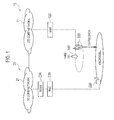
- Fig. 1 is an overall schematic configuration diagram of a radio communication system according to the present embodiment. As shown in Fig. 1 , the radio communication system according to the embodiment includes an LTE system 10 and a 3G system 20.
- the LTE system 10 (first radio communication system) is a radio communication system conforming to the LTE scheme.
- the 3G system 20 (second radio communication system) is a radio communication system conforming to the 3G scheme (W-CDMA). In other words, the LTE system 10 and the 3G system 20 use different radio access technologies (RAT).
- RAT radio access technologies
- the LTE system 10 includes an LTE core network 11, an HeNB 110, and an MME 120.
- the 3G system 20 includes a 3G core network 21, a RNC 210, a BTS 220, and an SGSN 230 (Serving GPRS Support Node).
- the mobile station 300 can be connected by radio with the LTE system 10 and the 3G system 20. Specifically, the mobile station 300 executes radio communications with the HeNB 110 and is connected with the LTE system 10. Moreover, the mobile station 300 executes radio communications with the BTS 220 and is connected with the 3G system 20.
- the RNC 210 executes control to allow the mobile station 300 having executed fallback from the LTE system 10 to the 3G system 20 to return to the base station (HeNB 110) connected before the fallback.
- the RNC 210 configures a communication control system.
- Fig. 2 is a functional block configuration diagram of the HeNB 110.
- Fig. 3 is a functional block configuration diagram of the RNC 210.
- the HeNB 110 includes an IE holding unit 111 and an IE transmission unit 113.
- the IE holding unit 111 identifies the HeNB 110 and holds an information element (Recovery IE) used to allow the mobile station 300 to return to the HeNB (base station) before the fallback.
- the IE holding unit 111 may contain IE such as Cell Identity specifying the HeNB itself, IE specifying a state where the HeNB is installed, such as a frequency, location information, or a carrier, IE designating a radio communication system (RAT) standing by with priority, such as Subscriber Profile ID, or Cause of S1AP/RANAP (Radio Access Network Application Part).
- RAT radio communication system
- the IE transmission unit 113 transmits the information element held by the IE holding unit 111 to the MME 120 at a predetermined timing.
- the IE transmission unit 113 can transmit the information element to the MME 120 when the mobile station 300 performs the fallback (handover) from the LTE system 10 to the 3G system 20.
- the RNC 210 includes an information element (IE) acquisition unit 211, an information element (IE) storage unit 212, an elapsed time measurement unit 213, a radio link monitoring unit 214, a communication state monitoring unit 215, and a mobile station control unit 216.
- IE information element
- IE information element
- the IE acquisition unit 211 acquires an information element (Recovery IE) used to allow identification of the HeNB 110 from the LTE system 10.
- the IE acquisition unit 211 configures an information element acquisition unit. Specifically, the IE acquisition unit 211 acquires the information element (Recovery IE) from the MME 120.
- the IE storage unit 212 stores the information element (Recovery IE) acquired by the IE acquisition unit 211.
- the elapsed time measurement unit 213 measures an elapsed time of communication of the mobile station 300 in the 3G system 20. Specifically, the elapsed time measurement unit 213 measures an elapsed time of communication (e.g., a call communication) which has been started after the mobile station 300 performed the fallback to the 3G system 20.
- elapsed time of communication e.g., a call communication
- the radio link monitoring unit 214 monitors a state of a radio link established by the mobile station 300 with the 3G system 20 (specifically, the BTS 220). Specifically, the radio link monitoring unit 214 monitors whether the radio link is released or not.
- the communication state monitoring unit 215 monitors the communication state of the mobile station 300. Specifically, the communication state monitoring unit 215 monitors as to whether a predetermined type of communication (e.g., a voice communication) of the mobile station 300 via the 3G system continues.
- a predetermined type of communication e.g., a voice communication
- the mobile station control unit 216 controls mobility of the mobile station 300. Specifically, the mobile station control unit 216 executes control to allow the mobile station 300 to return to the base station (HeNB 110) connected before the fallback by using the information element (Recovery IE) acquired by the IE acquisition unit 211.
- the base station HeNB 110
- Recovery IE information element
- the mobile station control unit 216 executes the control based on the communication state of the mobile station 300 in the 3G system 20.
- the mobile station control unit 216 can executes the control to allow the mobile station 300 to return to the base station (HeNB 110) having had been connected before the fallback based on the monitoring result acquired by the elapsed time measurement unit 213.
- the mobile station control unit 216 can execute the control to allow the mobile station 300 to return to the base station (HeNB 110) connected before the fallback.
- the mobile station control unit 216 can execute the control to allow the mobile station 300 to return to the base station (HeNB 110) connected before the fallback.
- the mobile station control unit 216 may execute the above control during the communication of the mobile station 300 with a predetermined area or a predetermined base station via the 3G system 20 or when the communication is terminated.
- the mobile station control unit 216 can lead only the mobile station 300 having executed the fallback (CSFC) from the HeNB 110 to the LTE system 10 and does not lead a non-CSFB mobile station to the LTE system 10.
- CSFC fallback
- FIGs. 4 and 5 are drawings, each showing a communication sequence of a radio communication system according to the embodiment.
- Fig. 4 shows a communication sequence in a case where the mobile station 300 performs CSFB from the LTE system 10 to the 3G system 20.
- the MME 120 notifies the HeNB 110 of the execution of the CSFB to the 3G system 20 when the mobile station 300 receives a PAGING signal based on the paging signal from the LTE core network 11 (see Fig. 1 ) side.
- the HeNB 110 When the CSFB is activated, the HeNB 110 notifies the MME 120 of information element (Recovery IE) used to allow identification of the HeNB 110 with which the mobile station 300 was in connection (Step S10). In addition, the MME 120 notifies the RNC 210 of the information element (Steps S20 and S30).
- Information element Recovery IE
- the information element (Recovery IE) is used for returning the mobile station 300 to the LTE system 10 as soon as the voice communication in the 3G system 20 is terminated.
- the information element may be an IE such as Cell Identity specifying the HeNB itself, an IE specifying a state where the HeNB is installed, such as a frequency, location information, or a carrier, an IE designating a radio communication system (RAT) standing by with priority, such as Subscriber Profile ID, or Cause of S1AP/RANAP (Radio Access Network Application Part) .
- RAT radio communication system
- these information elements may be notified in a state of being contained in Transparent Container in the handover procedure in the PS HANDOVER. Or, it may be notified to the 3G system 20 side with the RANAP via the LTE core network 11 and the 3G core network 21 with the S1AP.
- the RNC 210 stores the information element which is notified from the MME 120 (Step S30). After that the RNC 210 executes CSFB with the MME 120 and the mobile station 300 to the 3G system 20 (Steps S40 to S80). The mobile station 300 connects a CS call (voice communication) via the 3G system 20 (Step S90).
- the RNC 210 notifies that the LTE system 10 should be preferentially selected rather than the 3G system 20 with UTRAN MOBILITY INFORMATION so that the mobile station 300 can transit (recover) to the LTE system 10 after the CS call is released (Step S100).
- the RNC 210 activates releasing procedures for the CS call when the CS call of the mobile station 300 is terminated. Specifically, the RNC 210 activates any of the Cell Reselection of the LTE system 10 with Dedicated Priority, designation of a using frequency of the HeNB 110 with Redirection, MEASUREMENT measuring a state of the HeNB 110, and Inter-RAT Handover, so that the mobile station 300 is transitioned to the LTE system 10 (Step S120).
- the mobile station 300 transits to the LTE system 10 based on the control from the RNC 210 (Step S130).
- Fig. 5 shows a communication sequence when the mobile station 300 performs CSFB from the LTE system 10 to the 3G system 20 with Redirection.
- a portion different from that of the communication sequence shown in Fig. 4 is mainly described.
- the HeNB 110 notifies the MME 120 of Recovery IE used to allow identification of a base station to which the mobile station 300 should return in a state where the Recovery IE is contained in INITIAL CONTEXT SET UP COMPLETE message.
- the MME 120 notifies the RNC 210 of the Recovery IE received from the HeNB 110 in a state where the Recovery IE is contained in COMMON ID (Step S120). Specifically, the MME 120 notifies the RNC 210 of the Recovery IE via the SGSN 230.
- the RNC 210 stores the Recovery IE which is notified from the MME 120 in a state of being contained in the COMMON ID.
- the processing after the RNC 210 stores the Recovery IE is same as that of the communication sequence shown in Fig. 4 .
- the RNC 210 acquires the information element (Recovery IE) used to allow identification of the HeNB 110 with which the mobile station was in connection from the LTE system 10.
- the RNC 210 returns the mobile station 300 to the HeNB 110 using the acquired information element after the communication with the CSFB is terminated.
- the RNC 210 can return the mobile station 300 to the HeNB 110 (i) when the communication of the mobile station 300 in the 3G system 20 elapses a predetermined period of time, (ii) when the mobile station 300 releases a radio link with the 3G system 20, and (iii) when a predetermined type of communication of the mobile station 300 via the 3G system 20 is terminated.
- the mobile station 300 can return to the HeNB 110 (small sized base station) in the LTE system 10 before the fallback as soon as the mobile station 300 terminates the communication in the 3G system 20 to which the mobile station 300 performed the fallback.
- the control in which the RNC 210 stores the acquired Recovery IE and returns the mobile station 300 to the HeNB 110 is executed.
- these functions may be executed in individual devices.
- the control in which the RNC 210 stores Recovery IE and returns the mobile station 300 to the HeNB 110 may be executed on the LTE system 10 side.
- the MME 120 relays the Recovery IE to the RNC 210, but the HeNB 110 may relay the Recovery IE to the RNC 210 or the SGSN 230 may relay the Recovery IE to the RNC 210.
- the characteristics of the present invention can provide a communication control system and a mobile station control method, in which as soon as a communication in a radio communication system to which a mobile station performed fallback is terminated, the mobile station is quickly returned to a connection with a base station in a radio communication system before the fallback.
Landscapes
- Engineering & Computer Science (AREA)
- Computer Networks & Wireless Communication (AREA)
- Signal Processing (AREA)
- Mobile Radio Communication Systems (AREA)
Abstract
Description
- The present invention relates to a communication control system and a mobile station control method, in which a mobile station having executed fallback to another radio communication system is returned to a base station connected before the fallback.
- For a mobile station accessible to multiple radio communication systems such as a 3G (Wideband-CDMA) system (hereinafter, 3G) and a Long Term Evolution system (hereinafter, LTE), various methods (Inter-RAT mobility) of controlling the mobile station between the radio communication systems have been specified.
- For example, it is specified that when a mobile station present in an LTE transmits a connection request for a CS call using a circuit switch network (CS domain), the mobile station executes fallback to the CS domain in the 3G (CSFB) and executes call originating processing in the 3G to which the mobile station executed the fallback (see Non-patent Document 1).
- Also, the number of small-sized base stations, each of which is installed in a home or the like by a user of a mobile station, such as a femtocell, have been recently increased (see, for example, Non-patent document 2).
- When a mobile station present in such a small-sized base station (e.g., HeNB) executes CSFB to the 3G, it is favorable that the mobile station is returned to a connection with the HeNB connected before the CSFB was executed as soon as a communication (e.g., voice communication) in the 3G is terminated.
- In order for the mobile station to achieve such a returning operation, when the mobile station has an Autonomous Search function to autonomously search a CSG (Closed Subscriber Group) /Hybrid cell to which only a previously permitted mobile station can make an access, and when the HeNB configures a CSG/Hybrid cell, the mobile station can be returned to the connection with the HeNB connected before the CSFB was executed.
- Non-patent Document 1: 3GPP TS 24.301, Technical Specification Group Core Network and Terminals; Non-Access-Stratum (NAS) protocol for Evolved Packet System (EPS); Stage 3
Non-patent Document 2: 3GPP TS 22.220, Service requirements for Home NodeBs (UMTS) and Home eNodeBs (LTE) - However, when the mobile station does not have the CSG/Hybrid cell search function or when the HeNB does not configure the CSG/Hybrid cell or configures a so-called an open-type cell, the mobile station searches a base station according to a logic of searching a cell including a normal macro cell and the like, and is connected.
- In other words, in such a case, it is sometimes difficult for the mobile station to return to the connection with the base station (HeNB) connected before the CSFB was executed.
- For this reason, an objective of the present invention is to provide a communication control system and a mobile station control method, in which as soon as a communication in a radio communication system to which a mobile station performed fallback is terminated, the mobile station is quickly returned to a connection with a base station in a radio communication system before the fallback.
- A first feature of the present invention is a communication control system (e.g., RNC 210) configured to execute control to allow a mobile station (mobile station 300) having executed fallback from a first radio communication system (LTE system 10) to a second radio communication system (3G system 20) to return to a base station (HeNB 110) connected before the fallback, including: an information element acquisition unit (IE acquisition unit 211) configured to acquire an information element used to allow the return to the base station from the first radio communication system; and a mobile station control unit (mobile station control unit 216) configured to execute control to allow the mobile station to return to the base station using the information element acquired by the information element acquisition unit, in which the mobile station control unit executes the control based on a communication state of the mobile station in the second radio communication system.
- In the above-described feature of the present invention, the mobile station control unit may execute the control when a communication of the mobile station in the second radio communication system elapses a predetermined period of time.
- In the above-described feature of the present invention, the mobile station control unit may execute the control when the mobile station releases a radio link with the second radio communication system.
- In the above-described feature of the invention, the mobile station control unit may execute the control when a predetermined type of communication of the mobile station via the second radio communication system is terminated.
- In the above-described feature of the invention, the mobile station control unit may execute the control when the mobile station is in communication with, or terminates communication with, a predetermined area or a predetermined base station via the second radio communication system.
- A second feature of the present invention is a mobile station control method of executing control to allow a mobile station having executed fallback from a first radio communication system to a second radio communication system to return to a base station connected before the fallback, including the steps of: acquiring an information element used to allow the return to the base station from the first radio communication system, and executing control to allow the mobile station to return to the base station using the information element acquired by the step of information element acquisition, in the step of executing the control, the control is executed based on a communication state of the mobile station in the second radio communication system.
-
- [
Fig. 1] Fig. 1 is an overall schematic configuration diagram of a radio communication system according to an embodiment of the present invention. - [
Fig. 2] Fig. 2 is a functional block configuration diagram of an HeNB 110 according to the embodiment of the present invention. - [
Fig. 3] Fig. 3 is a functional block configuration diagram of aRNC 210 according to the embodiment of the present invention. - [
Fig. 4] Fig. 4 is a drawing showing a communication sequence (in the case of PS HANDOVER) of a radio communication system according to the embodiment of the present invention. - [
Fig. 5] Fig. 5 is a drawing showing a communication sequence (in the case of Redirection) of a radio communication system according to the embodiment of the present invention. - Hereinafter, an embodiment of the present invention is described. Note that in the following description of the drawings, same or similar reference signs denote same or similar portions. However, it should be noted that the drawings are schematic and ratios of dimensions and the like are different from actual ones.
- Therefore, specific dimensions and the like should be determined in consideration of the following description. Moreover, the drawings also include portions having different dimensional relationships and ratios from each other.
-
Fig. 1 is an overall schematic configuration diagram of a radio communication system according to the present embodiment. As shown inFig. 1 , the radio communication system according to the embodiment includes anLTE system 10 and a3G system 20. - The LTE system 10 (first radio communication system) is a radio communication system conforming to the LTE scheme. The 3G system 20 (second radio communication system) is a radio communication system conforming to the 3G scheme (W-CDMA). In other words, the
LTE system 10 and the3G system 20 use different radio access technologies (RAT). - The
LTE system 10 includes an LTE core network 11, an HeNB 110, and an MME 120. The3G system 20 includes a3G core network 21, aRNC 210, a BTS 220, and an SGSN 230 (Serving GPRS Support Node). - The
mobile station 300 can be connected by radio with theLTE system 10 and the3G system 20. Specifically, themobile station 300 executes radio communications with the HeNB 110 and is connected with theLTE system 10. Moreover, themobile station 300 executes radio communications with the BTS 220 and is connected with the3G system 20. - In the embodiment, the RNC 210 executes control to allow the
mobile station 300 having executed fallback from theLTE system 10 to the3G system 20 to return to the base station (HeNB 110) connected before the fallback. In the embodiment, the RNC 210 configures a communication control system. - Hereinafter, the functional block configurations of major devices among the devices configuring the radio communication system are described.
Fig. 2 is a functional block configuration diagram of the HeNB 110. Also,Fig. 3 is a functional block configuration diagram of theRNC 210. - As shown in
Fig. 2 , the HeNB 110 includes anIE holding unit 111 and anIE transmission unit 113. - The IE
holding unit 111 identifies the HeNB 110 and holds an information element (Recovery IE) used to allow themobile station 300 to return to the HeNB (base station) before the fallback. Specifically, the IEholding unit 111 may contain IE such as Cell Identity specifying the HeNB itself, IE specifying a state where the HeNB is installed, such as a frequency, location information, or a carrier, IE designating a radio communication system (RAT) standing by with priority, such as Subscriber Profile ID, or Cause of S1AP/RANAP (Radio Access Network Application Part). - The
IE transmission unit 113 transmits the information element held by the IEholding unit 111 to theMME 120 at a predetermined timing. For example, theIE transmission unit 113 can transmit the information element to theMME 120 when themobile station 300 performs the fallback (handover) from theLTE system 10 to the3G system 20. - As shown in
Fig. 3 , theRNC 210 includes an information element (IE)acquisition unit 211, an information element (IE)storage unit 212, an elapsedtime measurement unit 213, a radiolink monitoring unit 214, a communicationstate monitoring unit 215, and a mobilestation control unit 216. - The IE
acquisition unit 211 acquires an information element (Recovery IE) used to allow identification of the HeNB 110 from theLTE system 10. In the embodiment, the IEacquisition unit 211 configures an information element acquisition unit. Specifically, the IEacquisition unit 211 acquires the information element (Recovery IE) from theMME 120. - The IE
storage unit 212 stores the information element (Recovery IE) acquired by the IEacquisition unit 211. - The elapsed
time measurement unit 213 measures an elapsed time of communication of themobile station 300 in the3G system 20. Specifically, the elapsedtime measurement unit 213 measures an elapsed time of communication (e.g., a call communication) which has been started after themobile station 300 performed the fallback to the3G system 20. - The radio
link monitoring unit 214 monitors a state of a radio link established by themobile station 300 with the 3G system 20 (specifically, the BTS 220). Specifically, the radiolink monitoring unit 214 monitors whether the radio link is released or not. - The communication
state monitoring unit 215 monitors the communication state of themobile station 300. Specifically, the communicationstate monitoring unit 215 monitors as to whether a predetermined type of communication (e.g., a voice communication) of themobile station 300 via the 3G system continues. - The mobile
station control unit 216 controls mobility of themobile station 300. Specifically, the mobilestation control unit 216 executes control to allow themobile station 300 to return to the base station (HeNB 110) connected before the fallback by using the information element (Recovery IE) acquired by theIE acquisition unit 211. - The mobile
station control unit 216 executes the control based on the communication state of themobile station 300 in the3G system 20. - Specifically, when the communication of the
mobile station 300 in the3G system 20 has elapsed a predetermined period of time (e.g., 10 minutes), the mobilestation control unit 216 can executes the control to allow themobile station 300 to return to the base station (HeNB 110) having had been connected before the fallback based on the monitoring result acquired by the elapsedtime measurement unit 213. - Also, when the
mobile station 300 releases the radio link with the 3G system 20 (BTS 220), the mobilestation control unit 216 can execute the control to allow themobile station 300 to return to the base station (HeNB 110) connected before the fallback. - Furthermore, when the
mobile station 300 terminates the predetermined type of communication via the3G system 20, the mobilestation control unit 216 can execute the control to allow themobile station 300 to return to the base station (HeNB 110) connected before the fallback. Note that the mobilestation control unit 216 may execute the above control during the communication of themobile station 300 with a predetermined area or a predetermined base station via the3G system 20 or when the communication is terminated. - Also, even in a state where a coverage area of the communication area in the
LTE system 10 is insufficient and a mobile station is caused to be preferentially stand by in the3G system 20, the mobilestation control unit 216 can lead only themobile station 300 having executed the fallback (CSFC) from theHeNB 110 to theLTE system 10 and does not lead a non-CSFB mobile station to theLTE system 10. - Hereinafter, referring to
Figs. 4 and5 , an operation of the above-described radio communication system is described.Figs. 4 and5 are drawings, each showing a communication sequence of a radio communication system according to the embodiment. -
Fig. 4 shows a communication sequence in a case where themobile station 300 performs CSFB from theLTE system 10 to the3G system 20. - As shown in
Fig. 4 , if there is an incoming call of a voice communication to themobile station 300 when themobile station 300 is in connection with theHeNB 110, i.e., when themobile station 300 is present in theLTE system 10, theMME 120 notifies theHeNB 110 of the execution of the CSFB to the3G system 20 when themobile station 300 receives a PAGING signal based on the paging signal from the LTE core network 11 (seeFig. 1 ) side. - When the CSFB is activated, the
HeNB 110 notifies theMME 120 of information element (Recovery IE) used to allow identification of theHeNB 110 with which themobile station 300 was in connection (Step S10). In addition, theMME 120 notifies theRNC 210 of the information element (Steps S20 and S30). - The information element (Recovery IE) is used for returning the
mobile station 300 to theLTE system 10 as soon as the voice communication in the3G system 20 is terminated. The information element may be an IE such as Cell Identity specifying the HeNB itself, an IE specifying a state where the HeNB is installed, such as a frequency, location information, or a carrier, an IE designating a radio communication system (RAT) standing by with priority, such as Subscriber Profile ID, or Cause of S1AP/RANAP (Radio Access Network Application Part) . In addition, these information elements may be notified in a state of being contained in Transparent Container in the handover procedure in the PS HANDOVER. Or, it may be notified to the3G system 20 side with the RANAP via the LTE core network 11 and the3G core network 21 with the S1AP. - The
RNC 210 stores the information element which is notified from the MME 120 (Step S30). After that theRNC 210 executes CSFB with theMME 120 and themobile station 300 to the 3G system 20 (Steps S40 to S80). Themobile station 300 connects a CS call (voice communication) via the 3G system 20 (Step S90). - The
RNC 210 notifies that theLTE system 10 should be preferentially selected rather than the3G system 20 with UTRAN MOBILITY INFORMATION so that themobile station 300 can transit (recover) to theLTE system 10 after the CS call is released (Step S100). - The
RNC 210 activates releasing procedures for the CS call when the CS call of themobile station 300 is terminated. Specifically, theRNC 210 activates any of the Cell Reselection of theLTE system 10 with Dedicated Priority, designation of a using frequency of theHeNB 110 with Redirection, MEASUREMENT measuring a state of theHeNB 110, and Inter-RAT Handover, so that themobile station 300 is transitioned to the LTE system 10 (Step S120). - The
mobile station 300 transits to theLTE system 10 based on the control from the RNC 210 (Step S130). In other words, after the CS call is released, theRNC 210 can notify (Redirection info = LTE) the3G system 20 area (macro cell) corresponding to an effective period of time of the information element or can cause only a mobile station having been present in a cell formed by theHeNB 110 to transit (recover) to theLTE system 10 according to the predetermined logic of searching a cell. -
Fig. 5 shows a communication sequence when themobile station 300 performs CSFB from theLTE system 10 to the3G system 20 with Redirection. Hereinafter, a portion different from that of the communication sequence shown inFig. 4 is mainly described. - As shown in
Fig. 5 , theHeNB 110 notifies theMME 120 of Recovery IE used to allow identification of a base station to which themobile station 300 should return in a state where the Recovery IE is contained in INITIAL CONTEXT SET UP COMPLETE message. - The
MME 120 notifies theRNC 210 of the Recovery IE received from theHeNB 110 in a state where the Recovery IE is contained in COMMON ID (Step S120). Specifically, theMME 120 notifies theRNC 210 of the Recovery IE via theSGSN 230. - The
RNC 210 stores the Recovery IE which is notified from theMME 120 in a state of being contained in the COMMON ID. The processing after theRNC 210 stores the Recovery IE is same as that of the communication sequence shown inFig. 4 . - As described above, in a mobile communication system according to the present embodiment, the
RNC 210 acquires the information element (Recovery IE) used to allow identification of theHeNB 110 with which the mobile station was in connection from theLTE system 10. TheRNC 210 returns themobile station 300 to theHeNB 110 using the acquired information element after the communication with the CSFB is terminated. - Specifically, the
RNC 210 can return themobile station 300 to the HeNB 110 (i) when the communication of themobile station 300 in the3G system 20 elapses a predetermined period of time, (ii) when themobile station 300 releases a radio link with the3G system 20, and (iii) when a predetermined type of communication of themobile station 300 via the3G system 20 is terminated. - Accordingly, even in a case where the
mobile station 300 does not have a CSG/Hybrid cell function or if theHeNB 110 does not configure a CSG/Hybrid cell, themobile station 300 can return to the HeNB 110 (small sized base station) in theLTE system 10 before the fallback as soon as themobile station 300 terminates the communication in the3G system 20 to which themobile station 300 performed the fallback. - As described above, although the present invention has been disclosed through an embodiment of the invention, it should not be understood that the description and drawings which constitute one part of this disclosure limit the invention. Various alternative embodiments will be apparent for those who are in the art from this disclosure.
- For example, in the above-described embodiment, the control in which the
RNC 210 stores the acquired Recovery IE and returns themobile station 300 to theHeNB 110 is executed. However, these functions may be executed in individual devices. For example, the control in which theRNC 210 stores Recovery IE and returns themobile station 300 to theHeNB 110 may be executed on theLTE system 10 side. - Also, in the above-described embodiment, the
MME 120 relays the Recovery IE to theRNC 210, but theHeNB 110 may relay the Recovery IE to theRNC 210 or theSGSN 230 may relay the Recovery IE to theRNC 210. - In this manner, the present invention naturally includes various embodiments which are not described herein. Accordingly, the technical scope of the present invention is only defined by the invention specifying matters according to the scope of the invention which is apparent from the above description. Note that the entire content of Japanese Patent Application Publication No.
2010-227611 (filed on October 7, 2010 - The characteristics of the present invention can provide a communication control system and a mobile station control method, in which as soon as a communication in a radio communication system to which a mobile station performed fallback is terminated, the mobile station is quickly returned to a connection with a base station in a radio communication system before the fallback.
-
- 10 LTE system
- 11 LTE core network
- 20 3G system
- 21 3G core network
- 110 HeNB
- 111 IE holding unit
- 113 IE transmission unit
- 120 MME
- 210 RNC
- 211 IE acquisition unit
- 212 IE storage unit
- 213 elapsed time measurement unit
- 214 radio link monitoring unit
- 215 communication state monitoring unit
- 216 mobile station control unit
- 220 BTS
- 230 SGSN
- 300 mobile station
Claims (7)
- A communication control system configured to execute control to allow a mobile station having executed fallback from a first radio communication system to a second radio communication system to return to a base station connected before the fallback, comprising:an information element acquisition unit configured to acquire an information element used to allow the return to the base station, from the first radio communication system; anda mobile station control unit configured to execute control to allow the mobile station to return to the base station using the information element acquired by the information element acquisition unit, whereinthe mobile station control unit executes the control based on a communication state of the mobile station in the second radio communication system.
- The communication control system according to claim 1, wherein the mobile station control unit executes the control when a communication of the mobile station in the second radio communication system has elapsed a predetermined period of time.
- The communication control system according to claim 1, wherein the mobile station control unit executes the control when the mobile station releases a radio link with the second radio communication system.
- The communication control system according to claim 1, wherein the mobile station control unit executes the control when a predetermined type of communication of the mobile station via the second radio communication system is terminated.
- The communication control system according to claim 1, wherein the mobile station control unit leads only a mobile station which has executed fallback to the second radio communication system to return to the base station.
- The communication control system according to claim 1, wherein the information element is any of an information element specifying the base station itself, an information element specifying a state where the base station is installed, such as a frequency, location information, and carrier information, and an information element designating a radio communication system for which the mobile station preferentially stands by.
- A mobile station control method of executing control to allow a mobile station having executed fallback from a first radio communication system to a second radio communication system to return to a base station connected before the fallback, comprising the steps of:acquiring an information element used to allow identification of the base station, from the first radio communication system; andexecuting control to allow the mobile station to return to the base station using the information element acquired by the step of information element acquisition, whereinin the step of executing the control, the control is executed based on a communication state of the mobile station in the second radio communication system.
Applications Claiming Priority (2)
| Application Number | Priority Date | Filing Date | Title |
|---|---|---|---|
| JP2010227611A JP5584081B2 (en) | 2010-10-07 | 2010-10-07 | Communication control system and mobile station control method |
| PCT/JP2011/073177 WO2012046830A1 (en) | 2010-10-07 | 2011-10-07 | Communication control system and mobile station control method |
Publications (2)
| Publication Number | Publication Date |
|---|---|
| EP2627129A1 true EP2627129A1 (en) | 2013-08-14 |
| EP2627129A4 EP2627129A4 (en) | 2017-01-04 |
Family
ID=45927822
Family Applications (1)
| Application Number | Title | Priority Date | Filing Date |
|---|---|---|---|
| EP11830761.0A Withdrawn EP2627129A4 (en) | 2010-10-07 | 2011-10-07 | Communication control system and mobile station control method |
Country Status (5)
| Country | Link |
|---|---|
| US (1) | US20130260765A1 (en) |
| EP (1) | EP2627129A4 (en) |
| JP (1) | JP5584081B2 (en) |
| CN (2) | CN106792939B (en) |
| WO (1) | WO2012046830A1 (en) |
Cited By (1)
| Publication number | Priority date | Publication date | Assignee | Title |
|---|---|---|---|---|
| EP2916593A4 (en) * | 2012-11-05 | 2016-03-16 | Huawei Tech Co Ltd | Method, device and system for regressing to long term evolution (lte) network |
Families Citing this family (15)
| Publication number | Priority date | Publication date | Assignee | Title |
|---|---|---|---|---|
| JP2012175643A (en) * | 2011-02-24 | 2012-09-10 | Kyocera Corp | Wireless terminal device and control method |
| CN103369615B (en) * | 2012-04-06 | 2019-12-31 | 中兴通讯股份有限公司 | A multi-mode terminal information processing method and multi-mode terminal |
| JP5995211B2 (en) * | 2012-06-06 | 2016-09-21 | ▲ホア▼▲ウェイ▼技術有限公司Huawei Technologies Co.,Ltd. | Method and mobile switching center and system for returning to the long term evolution network |
| EP2717623A1 (en) * | 2012-10-03 | 2014-04-09 | Alcatel Lucent | Support of CS fallback in an evolved packet system |
| US9326199B2 (en) * | 2012-10-11 | 2016-04-26 | Mediatek Inc. | Methods for autonomous fast return to preferred RAT and communications apparatuses utilizing the same |
| CN103906158A (en) * | 2012-12-28 | 2014-07-02 | 展讯通信(上海)有限公司 | Method for returning to LTE network from 2G/3G network |
| CN103906183B (en) * | 2012-12-28 | 2019-01-04 | 展讯通信(上海)有限公司 | A kind of user equipment is resident to the method for LTE network |
| CN103906150A (en) * | 2012-12-28 | 2014-07-02 | 展讯通信(上海)有限公司 | Device resident to LTE network and user equipment |
| EP2945425A4 (en) * | 2013-01-09 | 2016-01-20 | Huawei Tech Co Ltd | Method and device for selecting long term evolution (lte) network |
| US9485664B2 (en) * | 2014-06-19 | 2016-11-01 | Intel Corporation | Idle mode cell selection for licensed shared access |
| CN104159262B (en) * | 2014-08-12 | 2017-09-01 | 广东欧珀移动通信有限公司 | Method and device for re-accessing LTE network |
| US9913186B2 (en) | 2015-07-28 | 2018-03-06 | Qualcomm Incorporated | SNR-based blind fast return to LTE after a CSFB or SRVCC call |
| CN109041135B (en) * | 2017-06-12 | 2020-10-23 | 大唐移动通信设备有限公司 | Terminal switching method and multimode base station |
| CN109819481B (en) * | 2017-11-20 | 2021-05-11 | 华为技术有限公司 | A kind of network switching method and session management network element |
| CN117063604A (en) * | 2021-03-31 | 2023-11-14 | 乐天移动株式会社 | Wireless communication system, wireless communication method, wireless communication program |
Family Cites Families (9)
| Publication number | Priority date | Publication date | Assignee | Title |
|---|---|---|---|---|
| DE60211167T2 (en) * | 2002-10-17 | 2006-09-07 | Motorola, Inc., Schaumburg | Method and device for handing over a subscriber terminal between cellular communication networks |
| KR20060014631A (en) * | 2004-08-11 | 2006-02-16 | 삼성전자주식회사 | Cell selection / reselection method and system considering congestion of target cell in mobile communication system |
| CN101600190B (en) * | 2008-06-03 | 2011-04-13 | 大唐移动通信设备有限公司 | Method and device for activating return circuit domain function of user terminal |
| CN101640933B (en) * | 2008-07-31 | 2012-07-04 | 华为技术有限公司 | Method for paging user equipment, network equipment, user equipment and network system |
| US20100113010A1 (en) * | 2008-11-03 | 2010-05-06 | Qualcomm Incorporated | Reprioritization of wireless networks for reselection to support voice call |
| JP5504623B2 (en) * | 2008-12-16 | 2014-05-28 | 富士通モバイルコミュニケーションズ株式会社 | Mobile radio terminal and communication processing method |
| US8559387B2 (en) * | 2009-05-04 | 2013-10-15 | Blackberry Limited | Indicating radio access technology information to mobile stations system and method |
| WO2010146466A1 (en) * | 2009-06-16 | 2010-12-23 | Research In Motion Limited | Method for accessing a service unavailable through a network cell |
| JP2010227611A (en) | 2010-06-18 | 2010-10-14 | Sammy Corp | Pinball game machine |
-
2010
- 2010-10-07 JP JP2010227611A patent/JP5584081B2/en active Active
-
2011
- 2011-10-07 EP EP11830761.0A patent/EP2627129A4/en not_active Withdrawn
- 2011-10-07 WO PCT/JP2011/073177 patent/WO2012046830A1/en not_active Ceased
- 2011-10-07 US US13/877,977 patent/US20130260765A1/en not_active Abandoned
- 2011-10-07 CN CN201611127771.2A patent/CN106792939B/en active Active
- 2011-10-07 CN CN201180048521.9A patent/CN103155653B/en active Active
Cited By (1)
| Publication number | Priority date | Publication date | Assignee | Title |
|---|---|---|---|---|
| EP2916593A4 (en) * | 2012-11-05 | 2016-03-16 | Huawei Tech Co Ltd | Method, device and system for regressing to long term evolution (lte) network |
Also Published As
| Publication number | Publication date |
|---|---|
| CN103155653B (en) | 2017-02-08 |
| JP5584081B2 (en) | 2014-09-03 |
| JP2012084988A (en) | 2012-04-26 |
| EP2627129A4 (en) | 2017-01-04 |
| US20130260765A1 (en) | 2013-10-03 |
| CN103155653A (en) | 2013-06-12 |
| CN106792939B (en) | 2020-09-22 |
| WO2012046830A1 (en) | 2012-04-12 |
| CN106792939A (en) | 2017-05-31 |
Similar Documents
| Publication | Publication Date | Title |
|---|---|---|
| EP2627129A1 (en) | Communication control system and mobile station control method | |
| KR101339044B1 (en) | Handling reachability of mobile device when serving core network node changes | |
| EP2341737B1 (en) | Method of setting radio access capability in a wireless communications system and related communication device | |
| US8938236B2 (en) | Mobile device redirecting technology | |
| CN101925147B (en) | Method and system for quickly returning heterogeneous system, wireless terminal and wireless network controller | |
| US9491660B2 (en) | Support data connectivity over WLAN and WWAN | |
| KR101439938B1 (en) | mobile communication system, network device, and mobile communication method | |
| US10142890B2 (en) | Method and system to minimize delay in circuit-switched fallback (CSFB) procedure | |
| EP2426996A1 (en) | Service recovery method, device and system for wireless communication networks | |
| US8976760B2 (en) | Communication control system and communication control method | |
| US20150109918A1 (en) | Method and system for optimizing user equipment performance in long term evolution co-existent networks | |
| JP2011511481A (en) | PLMN selection in a multi-network environment | |
| EP3621349B1 (en) | Information processing method and device | |
| TR201815908T4 (en) | Improved inter-system exchange between different radio access networks. | |
| US20150264605A1 (en) | Method and Device in a Telecommunications System | |
| KR102123091B1 (en) | A method and system for providing enhanced packet data services to a user equipment | |
| KR20160064229A (en) | Network switching method and terminal | |
| CN105873148B (en) | A kind of method and device of network switching | |
| US10098046B2 (en) | Communication system, mobile device, and network apparatus | |
| CN116636257A (en) | Enhanced Continuity of Service with MUSIM | |
| JP6230271B2 (en) | Exchange selection method, communication control device, and exchange | |
| WO2013046282A1 (en) | A method and apparatus for reestablishment control in a mobilecommunications system | |
| CN104080156A (en) | Method and device for enabling 3GPP function of terminal | |
| HK1185210A (en) | Method and device in a telecommunications system |
Legal Events
| Date | Code | Title | Description |
|---|---|---|---|
| PUAI | Public reference made under article 153(3) epc to a published international application that has entered the european phase |
Free format text: ORIGINAL CODE: 0009012 |
|
| 17P | Request for examination filed |
Effective date: 20130429 |
|
| AK | Designated contracting states |
Kind code of ref document: A1 Designated state(s): AL AT BE BG CH CY CZ DE DK EE ES FI FR GB GR HR HU IE IS IT LI LT LU LV MC MK MT NL NO PL PT RO RS SE SI SK SM TR |
|
| DAX | Request for extension of the european patent (deleted) | ||
| RA4 | Supplementary search report drawn up and despatched (corrected) |
Effective date: 20161206 |
|
| RIC1 | Information provided on ipc code assigned before grant |
Ipc: H04W 48/18 20090101AFI20161130BHEP Ipc: H04W 84/10 20090101ALI20161130BHEP Ipc: H04W 88/06 20090101ALI20161130BHEP Ipc: H04W 36/00 20090101ALI20161130BHEP Ipc: H04W 88/12 20090101ALI20161130BHEP |
|
| STAA | Information on the status of an ep patent application or granted ep patent |
Free format text: STATUS: THE APPLICATION HAS BEEN WITHDRAWN |
|
| 18W | Application withdrawn |
Effective date: 20190227 |