EP2627120A1 - Network apparatus, base station and mobile station control method - Google Patents
Network apparatus, base station and mobile station control method Download PDFInfo
- Publication number
- EP2627120A1 EP2627120A1 EP11830762.8A EP11830762A EP2627120A1 EP 2627120 A1 EP2627120 A1 EP 2627120A1 EP 11830762 A EP11830762 A EP 11830762A EP 2627120 A1 EP2627120 A1 EP 2627120A1
- Authority
- EP
- European Patent Office
- Prior art keywords
- mobile station
- radio communication
- communication system
- information
- neighboring cells
- Prior art date
- Legal status (The legal status is an assumption and is not a legal conclusion. Google has not performed a legal analysis and makes no representation as to the accuracy of the status listed.)
- Withdrawn
Links
Images


Classifications
-
- H—ELECTRICITY
- H04—ELECTRIC COMMUNICATION TECHNIQUE
- H04W—WIRELESS COMMUNICATION NETWORKS
- H04W36/00—Hand-off or reselection arrangements
- H04W36/16—Performing reselection for specific purposes
- H04W36/22—Performing reselection for specific purposes for handling the traffic
-
- H—ELECTRICITY
- H04—ELECTRIC COMMUNICATION TECHNIQUE
- H04W—WIRELESS COMMUNICATION NETWORKS
- H04W36/00—Hand-off or reselection arrangements
- H04W36/0005—Control or signalling for completing the hand-off
- H04W36/0083—Determination of parameters used for hand-off, e.g. generation or modification of neighbour cell lists
- H04W36/00835—Determination of neighbour cell lists
-
- H—ELECTRICITY
- H04—ELECTRIC COMMUNICATION TECHNIQUE
- H04W—WIRELESS COMMUNICATION NETWORKS
- H04W36/00—Hand-off or reselection arrangements
- H04W36/14—Reselecting a network or an air interface
- H04W36/144—Reselecting a network or an air interface over a different radio air interface technology
- H04W36/1443—Reselecting a network or an air interface over a different radio air interface technology between licensed networks
Definitions
- the present invention relates to a network device, a base station, and a mobile station control method for controlling a transition of a mobile station accessible with multiple radio communication systems.
- 3G Wideband-CDMA
- LTE Long Term Evolution
- Non-patent Document 1 it is specified that when a mobile station present in an LTE transmits a connection request for a CS call using a circuit-switched network (CS domain), the mobile station falls back to the CS domain in the 3G (CSFB) and executes call originating processing in the 3G to which the mobile station executed the fallback (see Non-patent Document 1).
- CSFB circuit-switched network
- the mobile station given access to the CSG/Hybrid cell can autonomously search for the CSG/Hybrid cell and execute handover to the CSG/Hybrid cell.
- Non-patent Document 1 3GPP TS 24.301, Technical Specification Group Core Network and Terminals; Non-Access-Stratum (NAS) protocol for Evolved Packet System (EPS); Stage 3 Non-patent Document 2: 3GPP TS 22.220, Service requirements for Home NodeBs (UMTS) and Home eNodeBs (LTE )
- NAS Non-Access-Stratum
- EPS Evolved Packet System
- Stage 3 Non-patent Document 2 3GPP TS 22.220, Service requirements for Home NodeBs (UMTS) and Home eNodeBs (LTE )
- a mobile station may be preferably transitioned to a macro cell formed by a general base station for public communications which is installed by a mobile communications carrier, in view of the traffic distribution.
- the macro cell is a so-called open-type cell which can be accessed by a large indefinite number of mobile stations.
- the mobile station is transitioned to a specific CSG/Hybrid cell and is provided with a specific communication service in the CSG/Hybrid cell to which the mobile station is transitioned.
- network devices such as a RNC (Radio Network Controller) and a SGSN (Serving GPRS Support Node) need to manage a neighboring cell information table (Neighbor Relation Table: NRT) of the mobile station.
- RNC Radio Network Controller
- SGSN Serving GPRS Support Node
- an objective of the present invention is to provide a network device, a base station, and a mobile station control method that are capable of achieving a transition of a mobile station to any one of neighboring cells while suppressing the increase of processing load related to a neighboring cell information table even when a number of base stations are present in the neighborhood of the mobile station.
- a first feature of the present invention is a network device (RNC 210) configured to control mobility of a mobile station (mobile station 301) accessible with at least one of a first radio communication system (LTE system 10) and a second radio communication system (3G system 20) different from the first radio communication system, the network device including: a storage unit (NRT storage unit 211) configured to store information on neighboring cells of the mobile station in a neighboring cell information table (NRT 500) based on a transition of the mobile station from the first radio communication system to the second radio communication system, and a mobile station control unit (mobile station control unit 213) configured to control movement of the mobile station from the second radio communication system to the first radio communication system based on the information on the neighboring cells which is stored in the neighboring cell information table, in which the storage unit stores a timing to erase the information on the neighboring cells of the mobile station from the neighboring cell information table.
- NRT storage unit 211 configured to store information on neighboring cells of the mobile station in a neighboring cell information table (NRT 500) based on
- the storage unit may include at least one of an effective time period of each of the neighboring cells and an effective area where an application of the information on each neighboring cell is effective.
- the storage unit may erase the information on the neighboring cells of the mobile station from the neighboring cell information table when a predetermined time period is elapsed after storing the information on the neighboring cells of the mobile station in the neighboring cell information table.
- a second feature of the present invention is a base station configured to control mobility of a mobile station accessible with at least one of a first radio communication system and a second radio communication system different from the first radio communication system, the base station including: a storage unit configured to store information on neighboring cells of the mobile station in a neighboring cell information table based on a transition of the mobile station from the first radio communication system to the second radio communication system, and a mobile station control unit configured to control movement of the mobile station from the second radio communication system to the first radio communication system based on the information on the neighboring cells which is stored in the neighboring cell information table, in which the storage unit stores a timing to erase the information on the neighboring cells of the mobile station from the neighboring cell information table.
- a third feature of the present invention is a mobile station control method for controlling mobility of a mobile station accessible with at least one of a first radio communication system and a second radio communication system different from the first radio communication system, the method including the steps of: storing information on neighboring cells of the mobile station in a neighboring cell information table based on a transition of the mobile station from the first radio communication system to the second radio communication system, controlling movement of the mobile station from the second radio communication system to the first radio communication system based on the information on the neighboring cells which is stored in the neighboring cell information table, and storing a timing to erase the information on the neighboring cells of the mobile station from the neighboring cell information table.
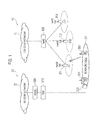
- Fig. 1 is an overall schematic configuration diagram of a radio communication system according to this embodiment. As shown in Fig. 1 , the radio communication system according to the embodiment includes a LTE system 10 and a 3G system 20.
- the LTE system 10 is a radio communication system conforming to the LTE scheme.
- the 3G system 20 is a radio communication system conforming to the 3G scheme (W-CDMA). In other words, the LTE system 10 and the 3G system 20 use different radio access technologies (RAT).
- RAT radio access technologies
- the LTE system 10 (first radio communication system) includes a LTE core network 11, HeNBs 111 to 113, and an MME 120 (Mobility Management Entity).
- the 3G system 20 (second radio communication system) includes a 3G core network 21, a RNC 210, a BTS 220, and a SGSN 230 (Serving GPRS Support Node).
- the mobile stations 301, 302 can be connected by radio with the LTE system 10 and the 3G system 20. Specifically, the mobile stations 301, 302 execute radio communications with the HeNBs 111 to 113 and are connected with the LTE system 10. Moreover, the mobile stations 301, 302 execute radio communications with the BTS 220 and are connected with the 3G system 20.
- the HeNBs 111 to 113 are small-sized base stations which can be installed by users and the like of the mobile stations 301, 302, and the HeNBs 111 to 113 form cells C11 to C13, respectively.
- the BTS 220 is a general base station for public communications which is installed by a mobile communications carrier, and forms a macro cell C1.
- the RNC 210 is included in network devices which control transition of the mobile stations 301, 302 between the LTE system 10 and the 3G system 20.
- Fig. 2 shows a functional block configuration of the RNC 210.
- the RNC 210 includes a NRT storage unit 211, a mobile station control unit 213, and a notification unit 215.
- the NRT storage unit 211 stores a neighboring cell information table 500 (see Fig. 4 , and hereinafter, NRT 500) including information on cells formed in the neighborhood of the mobile station 301 (302, the same hereinafter). Specifically, the NRT storage unit 211 acquires information on the neighboring cells of the mobile station through the MME 120 and the SGSN 230, for example, the information held by the HeNBs 111 to 113. The NRT storage unit 211 stores the acquired information.
- the NRT storage unit 211 stores the information on the neighboring cells of the mobile station 301 in the NRT 500 based on the transition of the mobile station 301 from the LTE system 10 to the 3G system 20. Moreover, the NRT storage unit 211 stores a timing to erase the information on the neighboring cells of the mobile station 301 from the NRT500.
- the transition from the LTE system 10 to the 3G system 20 is, for example, the PS HANDOVER and a Redirection procedure associated with a CSFB from the LTE system 10 to the 3G system 20.
- the timing at which the NRT storage unit 211 stores the information on the neighboring cells after the determination of the transition of the mobile station 301 from the LTE system 10 to the 3G system 20 may be any one of, before the transition of the mobile station 301 to the 3G system 20, during the transition, and after the transition. Alternatively, the timing may be after the transition to the LTE system 10.
- the NRT storage unit 211 stores the information on the neighboring cells which is necessary for the mobile station 301 fallen back to the 3G system 20 to return from the 3G system 20 to the LTE system 10. Specifically, the NRT storage unit 211 stores information elements (IEs) such as Cell Identity, PCI, and frequency information on cells C11 to C13. Note that the information elements may include Cause of S1AP and an IE such as Subscriber Profile ID specifying a radio communication system (RAT) which stands by temporarily and preferentially.
- IEs information elements
- IEs information elements
- the information elements may include Cause of S1AP and an IE such as Subscriber Profile ID specifying a radio communication system (RAT) which stands by temporarily and preferentially.
- RAT radio communication system
- the NRT storage unit 211 can include, as information on the neighboring cells, an effective time period of each of the neighboring cells and/or an effective area where an application of the information on each neighboring cell is effective.
- the "effective time period" is a time period in which the neighboring cell is effective as a transition destination candidate. For example, if an access of at least one mobile station to any one of the HeNBs is detected, a time period of 10 minutes after the detection of the access is expected as a time period in which the mobile station may move again to the HeNB.
- the "effective area" is a geographical region where the neighboring cells are selected as candidates of another cell to which the mobile station 301 is transitioned. For example, if an access of one mobile station to the HeNB is detected, information on the HeNB accessed by the mobile station is reflected in the NRT 500 of the cell which belongs to the area where the access to the HeNB is expected, based on positional information on the HeNB.
- the NRT storage unit 211 erases the information on the neighboring cells of the mobile station 301 from the NRT 500 when the mobile station 301 returns from the 3G system 20 to the LTE system 10.
- the NRT storage unit 211 may erase the information on the neighboring cells of the mobile station 301 from the NRT 500 when a predetermined time period (e.g., 10 minutes) is elapsed after the NRT storage unit 211 has stored the information on the neighboring cells of the mobile station 301 in the NRT 500.
- the NRT storage unit 211 may erase the information on the neighboring cells of the mobile station 301 from the NRT 500 when the mobile station 301 moves to any one of predetermined cells (cells C11 to C13 under the control of the LTE system 10). In other words, the NRT storage unit 211 stores the information on the neighboring cells of the mobile station 301 until the mobile station moves to the predetermined cell.
- the mobile station control unit 213 controls mobility of the mobile station 301. Specifically, the mobile station control unit 213 controls movement of the mobile station 301 from the 3G system 20 to the LTE system 10 based on the information on the neighboring cells stored in the NRT 500. More specifically, the mobile station control unit 213 controls transition of the mobile station 301 from the LTE system 10 to the 3G system 20 and transition from the 3G system 20 to the LTE system 10 (including return after fallback).
- the mobile station control unit 213 generates control information used to return the mobile station 301 from the 3G system 20 to the LTE system 10 based on the information on the neighboring cells stored in the NRT 500.
- the notification unit 215 notifies the mobile station 301 and the mobile station 302 of the control information generated by the mobile station control unit 213 based on the information on the neighboring cells, through the BTS 220.
- Fig. 3 shows a communication sequence of the radio communication system according to this embodiment.
- the mobile station 301 UE301
- the HeNB 111 HeNB 111.
- the MME 120 when there is an incoming voice call for the mobile station 301, the MME 120 notifies the HeNB 111 of the execution of the CSFB to the 3G system 20 at a timing of receiving a PAGING signal for the mobile station 301.
- the HeNB 111 In the procedure of transition of the mobile station 301 to the 3G system 20 (Inter-RAT HANDOVER), when the CSFB is initiated, the HeNB 111 notifies the MME 120 of information (NRT of HeNBs in Fig. 3 ) necessary to temporarily make effective the return of the mobile station 301 to any one of the HeNBs 111 to 113, namely, the information elements (IEs) such as Cell Identity, PCI, and the frequency information on the cells C11 to C13. In addition, the MME 120 relays the information elements to the RNC 210 (step S10 to S30).
- IEs information elements
- the MME 120 relays the information elements to the RNC 210 (step S10 to S30).
- the RNC 210 stores the information (NRT of the HeNBs) relayed by the MME 120 (step S40).
- the mobile station 301 at a timing of emergence of necessity of the transition of the mobile station 301 from the HeNB 111 to the 3G system 20, the mobile station 301 notifies the macro cell C1 of the information which is managed in the HeNB and is needed to control the movement of the mobile station 301 to the HeNB 111, and makes the RNC 210 temporarily manage the notified information.
- Making the RNC 210 temporarily manage the information in the above manner reduces processing load on the RNC 210 caused by managing the NRT of HeNBs.
- Fig. 4 shows an example of the NRT 500.
- the NRT 500 includes the information on the neighboring cells (cells C11 to C13) of the mobile station 301, which is relayed by the MME 120, in addition to the information on the C1.
- the RNC 210 can treat the information (NRT of HeNBs) in the same way as other NRTs as long as the RNC 210 stores the information (NRT of HeNBs) related to the mobile station 301, which is relayed by the MME 120.
- the RNC 210 can execute mobility control such as a handover of another mobile station (mobile station 302) based on the information (step S50, S60).
- the mobile station 302 can transition to the LTE system 10 based on the control (step S70).
- the RNC 210 erases the information when a predetermined time period (e.g., 10 minutes) is elapsed after storing the information on the neighboring cells of the mobile station 301 in the NRT 500 (step S80). Note that, as described above, the RNC 210 may erase the information on neighboring cells of the mobile station from the NRT 500 when the mobile station 301 returns to the 3G system 20.
- a predetermined time period e.g. 10 minutes
- the information on the neighboring cells of the mobile station 301 is stored in the NRT 500 based on the transition of the mobile station 301 from the LTE system 10 to the 3G system 20. Moreover, the information on the neighboring cells of the mobile station 301 is erased from the NRT 500 when the mobile station 301 returns to the 3G system 20 (or when a predetermined time period is elapsed after the information is stored in the NRT 500).
- the return of the mobile station 301 to any one of the neighboring cells can be achieved while suppressing the increase of the processing load related to the NRT 500 even when a number of base stations are present in the neighborhood of the mobile station 301.
- the 3G system 20 (RNC 210) can guide the mobile station 301 to any one of the cells formed by the HeNBs 111 to 113 while avoiding the load of constantly managing the NRT of the HeNBs 111 to 113.
- the information on the neighboring cells can include the effective time period of each of the neighboring cells and/or the effective area where the application of the information on each neighboring cell is effective. Accordingly, the cell to which the mobile station 301 is to return can be controlled more precisely.
- the procedure of the CSFB from the LTE system 10 to the 3G system 20 may be the Redirection to the 3G system 20 or the PS HANDOVER.
- the HeNB 111 notifies the MME 120 of the information on the neighboring cells and the MME 120 relays the information to the RNC 210.
- the HeNB 111 may directly notify the RNC 210 of the information or may relay the information to the RNC 210 via another device (For example, SGSN230).
- the RNC 210 stores the NRT 500 and controls the mobility of the mobile station 301.
- the functions of the NRT storage unit 211 and the mobile station control unit 213 may be included in the MME 120 or the BTS 220.
- the present invention may be applied to mobility control between HeNBs in the LTE system 10 and/or mobility control between a HomeNodeB (HNB) and the BTS in the 3G system 20.
- HNB HomeNodeB
- the characteristics of the present invention can provide a network device, a base station, and a mobile station control method that are capable of achieving a transition of a mobile station to any one of neighboring cells while suppressing the increase of processing load related to a neighboring cell information table even when a number of base stations are present in the neighborhood of the mobile station.
Landscapes
- Engineering & Computer Science (AREA)
- Computer Networks & Wireless Communication (AREA)
- Signal Processing (AREA)
- Mobile Radio Communication Systems (AREA)
Abstract
To achieve a transition of a mobile station to any one of neighboring cells while suppressing the increase of processing load related to a neighboring cell information table even when a number of base stations are present in the neighborhood of the mobile station. A RNC 210 includes a NRT storage unit 211 configured to store information on the neighboring cells of a mobile station 301 in a NRT based on the transition of the mobile station 301 from a LTE system 10 to a 3G system 20, and a mobile station control unit 213 configured to return the mobile station 301 from the 3G system 20 to the LTE system 10 based on the information on the neighboring cells stored in the NRT. The NRT storage unit 211 stores a timing to erase the information on the neighboring cells of the mobile station 301 from the NRT.
Description
- The present invention relates to a network device, a base station, and a mobile station control method for controlling a transition of a mobile station accessible with multiple radio communication systems.
- For a mobile station accessible with multiple radio communication systems such as a 3G (Wideband-CDMA) system (hereinafter, 3G) and a Long Term Evolution system (hereinafter, LTE), various methods (Inter-RAT mobility) of controlling the mobile station between the radio communication systems have been specified.
- For example, it is specified that when a mobile station present in an LTE transmits a connection request for a CS call using a circuit-switched network (CS domain), the mobile station falls back to the CS domain in the 3G (CSFB) and executes call originating processing in the 3G to which the mobile station executed the fallback (see Non-patent Document 1).
- Also, the number of small-sized base stations, each of which is installed in a home or the like by a user of a mobile station, such as a femtocell, have been recently increased (see, for example, Non-patent document 2).
- When the small-sized base stations form a CSG (Closed Subscriber Group)/Hybrid cell to which only a previously permitted mobile station can make an access, the mobile station given access to the CSG/Hybrid cell can autonomously search for the CSG/Hybrid cell and execute handover to the CSG/Hybrid cell.
- Non-patent Document 1: 3GPP TS 24.301, Technical Specification Group Core Network and Terminals; Non-Access-Stratum (NAS) protocol for Evolved Packet System (EPS); Stage 3
Non-patent Document 2: 3GPP TS 22.220, Service requirements for Home NodeBs (UMTS) and Home eNodeBs (LTE) - By the way, in some cases, a mobile station may be preferably transitioned to a macro cell formed by a general base station for public communications which is installed by a mobile communications carrier, in view of the traffic distribution. The macro cell is a so-called open-type cell which can be accessed by a large indefinite number of mobile stations.
- Moreover, it is conceivable that, even when the mobile station does not have a function to autonomously search for a CSG/Hybrid cell, the mobile station is transitioned to a specific CSG/Hybrid cell and is provided with a specific communication service in the CSG/Hybrid cell to which the mobile station is transitioned.
- In order to manage mobility of the mobile station, network devices such as a RNC (Radio Network Controller) and a SGSN (Serving GPRS Support Node) need to manage a neighboring cell information table (Neighbor Relation Table: NRT) of the mobile station.
- However, there is a problem that, in an area (an apartment building, etc.) concentrated with small cells formed by small-sized base stations which can be freely installed by users, the number of cells included in the neighboring cell information table is enormous, and processing load on the network devices increases considerably.
- In view of the above circumstances, an objective of the present invention is to provide a network device, a base station, and a mobile station control method that are capable of achieving a transition of a mobile station to any one of neighboring cells while suppressing the increase of processing load related to a neighboring cell information table even when a number of base stations are present in the neighborhood of the mobile station.
- A first feature of the present invention is a network device (RNC 210) configured to control mobility of a mobile station (mobile station 301) accessible with at least one of a first radio communication system (LTE system 10) and a second radio communication system (3G system 20) different from the first radio communication system, the network device including: a storage unit (NRT storage unit 211) configured to store information on neighboring cells of the mobile station in a neighboring cell information table (NRT 500) based on a transition of the mobile station from the first radio communication system to the second radio communication system, and a mobile station control unit (mobile station control unit 213) configured to control movement of the mobile station from the second radio communication system to the first radio communication system based on the information on the neighboring cells which is stored in the neighboring cell information table, in which the storage unit stores a timing to erase the information on the neighboring cells of the mobile station from the neighboring cell information table.
- In the above-described feature of the present invention, the storage unit may include at least one of an effective time period of each of the neighboring cells and an effective area where an application of the information on each neighboring cell is effective.
- In the above-described feature of the present invention, the storage unit may erase the information on the neighboring cells of the mobile station from the neighboring cell information table when a predetermined time period is elapsed after storing the information on the neighboring cells of the mobile station in the neighboring cell information table.
- A second feature of the present invention is a base station configured to control mobility of a mobile station accessible with at least one of a first radio communication system and a second radio communication system different from the first radio communication system, the base station including: a storage unit configured to store information on neighboring cells of the mobile station in a neighboring cell information table based on a transition of the mobile station from the first radio communication system to the second radio communication system, and a mobile station control unit configured to control movement of the mobile station from the second radio communication system to the first radio communication system based on the information on the neighboring cells which is stored in the neighboring cell information table, in which the storage unit stores a timing to erase the information on the neighboring cells of the mobile station from the neighboring cell information table.
- A third feature of the present invention is a mobile station control method for controlling mobility of a mobile station accessible with at least one of a first radio communication system and a second radio communication system different from the first radio communication system, the method including the steps of: storing information on neighboring cells of the mobile station in a neighboring cell information table based on a transition of the mobile station from the first radio communication system to the second radio communication system, controlling movement of the mobile station from the second radio communication system to the first radio communication system based on the information on the neighboring cells which is stored in the neighboring cell information table, and storing a timing to erase the information on the neighboring cells of the mobile station from the neighboring cell information table.
-
- [
Fig. 1] Fig. 1 is an overall schematic configuration diagram of a radio communication system according to an embodiment of the present invention. - [
Fig. 2] Fig. 2 shows a functional block configuration of aRNC 210 according to the embodiment of the present invention. - [
Fig. 3] Fig. 3 is a drawing showing a communication sequence of a radio communication system according to the embodiment of the present invention. - [
Fig. 4] Fig. 4 is a diagram showing an example of aNRT 500 according to the embodiment of the present invention. - Hereinafter, embodiments of the present invention are described. Note that, in the following description of the drawings, same or similar reference numerals denote same or similar elements and portions. In addition, it should be noted that the drawings are schematic and ratios of dimensions and the like are different from actual ones.
- Therefore, specific dimensions and the like should be determined in consideration of the following description. Moreover, the drawings also include portions having different dimensional relationships and ratios from each other.
-
Fig. 1 is an overall schematic configuration diagram of a radio communication system according to this embodiment. As shown inFig. 1 , the radio communication system according to the embodiment includes aLTE system 10 and a3G system 20. - The
LTE system 10 is a radio communication system conforming to the LTE scheme. The3G system 20 is a radio communication system conforming to the 3G scheme (W-CDMA). In other words, theLTE system 10 and the3G system 20 use different radio access technologies (RAT). - The LTE system 10 (first radio communication system) includes a LTE core network 11, HeNBs 111 to 113, and an MME 120 (Mobility Management Entity). The 3G system 20 (second radio communication system) includes a
3G core network 21, aRNC 210, a BTS 220, and a SGSN 230 (Serving GPRS Support Node). - The
mobile stations LTE system 10 and the3G system 20. Specifically, themobile stations LTE system 10. Moreover, themobile stations 3G system 20. - The HeNBs 111 to 113 are small-sized base stations which can be installed by users and the like of the
mobile stations - Hereinafter, the functional block configuration of the
RNC 210 among the devices configuring the radio communication system is described. The RNC 210 is included in network devices which control transition of themobile stations LTE system 10 and the3G system 20. -
Fig. 2 shows a functional block configuration of theRNC 210. As shown inFig. 2 , theRNC 210 includes aNRT storage unit 211, a mobilestation control unit 213, and anotification unit 215. - The NRT
storage unit 211 stores a neighboring cell information table 500 (seeFig. 4 , and hereinafter, NRT 500) including information on cells formed in the neighborhood of the mobile station 301 (302, the same hereinafter). Specifically, the NRTstorage unit 211 acquires information on the neighboring cells of the mobile station through theMME 120 and the SGSN 230, for example, the information held by the HeNBs 111 to 113. The NRTstorage unit 211 stores the acquired information. - The NRT
storage unit 211 stores the information on the neighboring cells of themobile station 301 in the NRT 500 based on the transition of themobile station 301 from theLTE system 10 to the3G system 20. Moreover, the NRTstorage unit 211 stores a timing to erase the information on the neighboring cells of themobile station 301 from the NRT500. - Note that the transition from the
LTE system 10 to the3G system 20 is, for example, the PS HANDOVER and a Redirection procedure associated with a CSFB from theLTE system 10 to the3G system 20. The timing at which the NRTstorage unit 211 stores the information on the neighboring cells after the determination of the transition of themobile station 301 from theLTE system 10 to the3G system 20 may be any one of, before the transition of themobile station 301 to the3G system 20, during the transition, and after the transition. Alternatively, the timing may be after the transition to theLTE system 10. - The NRT
storage unit 211 stores the information on the neighboring cells which is necessary for themobile station 301 fallen back to the3G system 20 to return from the3G system 20 to theLTE system 10. Specifically, the NRTstorage unit 211 stores information elements (IEs) such as Cell Identity, PCI, and frequency information on cells C11 to C13. Note that the information elements may include Cause of S1AP and an IE such as Subscriber Profile ID specifying a radio communication system (RAT) which stands by temporarily and preferentially. - In addition, the
NRT storage unit 211 can include, as information on the neighboring cells, an effective time period of each of the neighboring cells and/or an effective area where an application of the information on each neighboring cell is effective. - The "effective time period" is a time period in which the neighboring cell is effective as a transition destination candidate. For example, if an access of at least one mobile station to any one of the HeNBs is detected, a time period of 10 minutes after the detection of the access is expected as a time period in which the mobile station may move again to the HeNB.
- The "effective area" is a geographical region where the neighboring cells are selected as candidates of another cell to which the
mobile station 301 is transitioned. For example, if an access of one mobile station to the HeNB is detected, information on the HeNB accessed by the mobile station is reflected in theNRT 500 of the cell which belongs to the area where the access to the HeNB is expected, based on positional information on the HeNB. - The
NRT storage unit 211 erases the information on the neighboring cells of themobile station 301 from theNRT 500 when themobile station 301 returns from the3G system 20 to theLTE system 10. Alternatively, theNRT storage unit 211 may erase the information on the neighboring cells of themobile station 301 from theNRT 500 when a predetermined time period (e.g., 10 minutes) is elapsed after theNRT storage unit 211 has stored the information on the neighboring cells of themobile station 301 in theNRT 500. - Moreover, the
NRT storage unit 211 may erase the information on the neighboring cells of themobile station 301 from theNRT 500 when themobile station 301 moves to any one of predetermined cells (cells C11 to C13 under the control of the LTE system 10). In other words, theNRT storage unit 211 stores the information on the neighboring cells of themobile station 301 until the mobile station moves to the predetermined cell. - The mobile
station control unit 213 controls mobility of themobile station 301. Specifically, the mobilestation control unit 213 controls movement of themobile station 301 from the3G system 20 to theLTE system 10 based on the information on the neighboring cells stored in theNRT 500. More specifically, the mobilestation control unit 213 controls transition of themobile station 301 from theLTE system 10 to the3G system 20 and transition from the3G system 20 to the LTE system 10 (including return after fallback). - Particularly, the mobile
station control unit 213 generates control information used to return themobile station 301 from the3G system 20 to theLTE system 10 based on the information on the neighboring cells stored in theNRT 500. - The
notification unit 215 notifies themobile station 301 and themobile station 302 of the control information generated by the mobilestation control unit 213 based on the information on the neighboring cells, through theBTS 220. - Hereinafter, an operation of the above-mentioned radio communication system is described referring to
Figs. 3 and4 .Fig. 3 shows a communication sequence of the radio communication system according to this embodiment. Here, the mobile station 301 (UE301) is connected with theLTE system 10 via theHeNB 111. - In this state, when there is an incoming voice call for the
mobile station 301, theMME 120 notifies theHeNB 111 of the execution of the CSFB to the3G system 20 at a timing of receiving a PAGING signal for themobile station 301. - In the procedure of transition of the
mobile station 301 to the 3G system 20 (Inter-RAT HANDOVER), when the CSFB is initiated, theHeNB 111 notifies theMME 120 of information (NRT of HeNBs inFig. 3 ) necessary to temporarily make effective the return of themobile station 301 to any one of theHeNBs 111 to 113, namely, the information elements (IEs) such as Cell Identity, PCI, and the frequency information on the cells C11 to C13. In addition, theMME 120 relays the information elements to the RNC 210 (step S10 to S30). - The
RNC 210 stores the information (NRT of the HeNBs) relayed by the MME 120 (step S40). In this embodiment, at a timing of emergence of necessity of the transition of themobile station 301 from theHeNB 111 to the3G system 20, themobile station 301 notifies the macro cell C1 of the information which is managed in the HeNB and is needed to control the movement of themobile station 301 to theHeNB 111, and makes theRNC 210 temporarily manage the notified information. Making theRNC 210 temporarily manage the information in the above manner reduces processing load on theRNC 210 caused by managing the NRT of HeNBs. -
Fig. 4 shows an example of theNRT 500. AS shown inFig. 4 , theNRT 500 includes the information on the neighboring cells (cells C11 to C13) of themobile station 301, which is relayed by theMME 120, in addition to the information on the C1. - Moreover, the
RNC 210 can treat the information (NRT of HeNBs) in the same way as other NRTs as long as theRNC 210 stores the information (NRT of HeNBs) related to themobile station 301, which is relayed by theMME 120. Thus, theRNC 210 can execute mobility control such as a handover of another mobile station (mobile station 302) based on the information (step S50, S60). In other words, themobile station 302 can transition to theLTE system 10 based on the control (step S70). - The
RNC 210 erases the information when a predetermined time period (e.g., 10 minutes) is elapsed after storing the information on the neighboring cells of themobile station 301 in the NRT 500 (step S80). Note that, as described above, theRNC 210 may erase the information on neighboring cells of the mobile station from theNRT 500 when themobile station 301 returns to the3G system 20. - As described above, in a mobile communication system according to this embodiment, the information on the neighboring cells of the
mobile station 301 is stored in theNRT 500 based on the transition of themobile station 301 from theLTE system 10 to the3G system 20. Moreover, the information on the neighboring cells of themobile station 301 is erased from theNRT 500 when themobile station 301 returns to the 3G system 20 (or when a predetermined time period is elapsed after the information is stored in the NRT 500). - Accordingly, the return of the
mobile station 301 to any one of the neighboring cells (cells C11 to C13) can be achieved while suppressing the increase of the processing load related to theNRT 500 even when a number of base stations are present in the neighborhood of themobile station 301. - In other words, in this embodiment, the 3G system 20 (RNC 210) can guide the
mobile station 301 to any one of the cells formed by theHeNBs 111 to 113 while avoiding the load of constantly managing the NRT of theHeNBs 111 to 113. - In this embodiment, the information on the neighboring cells can include the effective time period of each of the neighboring cells and/or the effective area where the application of the information on each neighboring cell is effective. Accordingly, the cell to which the
mobile station 301 is to return can be controlled more precisely. - As described above, the details of the present invention have been disclosed by using the embodiment of the present invention. However, it should not be understood that the description and drawings which constitute part of this disclosure limit the present invention. From this disclosure, various alternative embodiments, examples, and operation techniques will be easily found by those skilled in the art.
- As described above, the procedure of the CSFB from the
LTE system 10 to the3G system 20 may be the Redirection to the3G system 20 or the PS HANDOVER. - In the above-described embodiment, the
HeNB 111 notifies theMME 120 of the information on the neighboring cells and theMME 120 relays the information to theRNC 210. However, theHeNB 111 may directly notify theRNC 210 of the information or may relay the information to theRNC 210 via another device (For example, SGSN230). - In addition, in the above-described embodiment, the
RNC 210 stores theNRT 500 and controls the mobility of themobile station 301. However, the functions of theNRT storage unit 211 and the mobilestation control unit 213 may be included in theMME 120 or theBTS 220. - Moreover, the present invention may be applied to mobility control between HeNBs in the
LTE system 10 and/or mobility control between a HomeNodeB (HNB) and the BTS in the3G system 20. - As described above, the present invention naturally includes various embodiments which are not described herein. Accordingly, the technical scope of the present invention should be determined only by the matters to define the invention in the scope of claims regarded as appropriate based on the description.
- Note that the entire content of Japanese Patent Application No.
2010-227616 (filed on October 7, 2010 - The characteristics of the present invention can provide a network device, a base station, and a mobile station control method that are capable of achieving a transition of a mobile station to any one of neighboring cells while suppressing the increase of processing load related to a neighboring cell information table even when a number of base stations are present in the neighborhood of the mobile station.
-
- 10... LTE system
- 11... LTE core network
- 20... 3G system
- 21... 3G core network
- 111 to 113... HeNB
- 120... MME
- 210... RNC
- 211... NRT storage unit
- 213... mobile station control unit
- 215... notification unit
- 220... BTS
- 230... SGSN
- 301, 302... mobile station
- 500... neighboring cell information table (NRT)
Claims (5)
- A network device configured to control mobility of a mobile station accessible with at least one of a first radio communication system and a second radio communication system different from the first radio communication system, the network device comprising:a storage unit configured to store information on neighboring cells of the mobile station in a neighboring cell information table based on a transition of the mobile station from the first radio communication system to the second radio communication system; anda mobile station control unit configured to control movement of the mobile station from the second radio communication system to the first radio communication system based on the information on the neighboring cells which is stored in the neighboring cell information table, whereinthe storage unit stores a timing to erase the information on the neighboring cells of the mobile station from the neighboring cell information table.
- The network device according to claim 1, wherein the storage unit includes at least one of an effective time period of each of the neighboring cells and an effective area where an application of the information on each neighboring cell is effective.
- The network device according to claim 1, wherein the storage unit erases the information on the neighboring cells of the mobile station from the neighboring cell information table when a predetermined time period is elapsed after storing the information on the neighboring cells of the mobile station in the neighboring cell information table.
- A base station configured to control mobility of a mobile station accessible with at least one of a first radio communication system and a second radio communication system different from the first radio communication system, the base station comprising:a storage unit configured to store information on neighboring cells of the mobile station in a neighboring cell information table based on a transition of the mobile station from the first radio communication system to the second radio communication system; anda mobile station control unit configured to control movement of the mobile station from the second radio communication system to the first radio communication system based on the information on the neighboring cells which is stored in the neighboring cell information table, whereinthe storage unit stores a timing to erase the information on the neighboring cells of the mobile station from the neighboring cell information table.
- A mobile station control method for controlling mobility of a mobile station accessible with at least one of a first radio communication system and a second radio communication system different from the first radio communication system, the method comprising the steps of:storing information on neighboring cells of the mobile station in a neighboring cell information table based on a transition of the mobile station from the first radio communication system to the second radio communication system;controlling movement of the mobile station from the second radio communication system to the first radio communication system based on the information on the neighboring cells which is stored in the neighboring cell information table; andstoring a timing to erase the information on the neighboring cells of the mobile station from the neighboring cell information table.
Applications Claiming Priority (2)
| Application Number | Priority Date | Filing Date | Title |
|---|---|---|---|
| JP2010227616A JP5478455B2 (en) | 2010-10-07 | 2010-10-07 | Network apparatus and mobile station control method |
| PCT/JP2011/073178 WO2012046831A1 (en) | 2010-10-07 | 2011-10-07 | Network apparatus, base station and mobile station control method |
Publications (1)
| Publication Number | Publication Date |
|---|---|
| EP2627120A1 true EP2627120A1 (en) | 2013-08-14 |
Family
ID=45927823
Family Applications (1)
| Application Number | Title | Priority Date | Filing Date |
|---|---|---|---|
| EP11830762.8A Withdrawn EP2627120A1 (en) | 2010-10-07 | 2011-10-07 | Network apparatus, base station and mobile station control method |
Country Status (4)
| Country | Link |
|---|---|
| US (1) | US20130267235A1 (en) |
| EP (1) | EP2627120A1 (en) |
| JP (1) | JP5478455B2 (en) |
| WO (1) | WO2012046831A1 (en) |
Cited By (1)
| Publication number | Priority date | Publication date | Assignee | Title |
|---|---|---|---|---|
| EP2739078A4 (en) * | 2011-07-26 | 2014-08-06 | Huawei Tech Co Ltd | Method, device, and system for establishing neighboring cell relationship |
Families Citing this family (2)
| Publication number | Priority date | Publication date | Assignee | Title |
|---|---|---|---|---|
| EP2945421B1 (en) * | 2013-02-07 | 2018-09-19 | Huawei Technologies Co., Ltd. | Method, apparatus and network device for acquiring adjacent relation between network nodes |
| CN103476077B (en) * | 2013-09-11 | 2016-08-17 | 中国联合网络通信集团有限公司 | Network attached method and equipment |
Family Cites Families (6)
| Publication number | Priority date | Publication date | Assignee | Title |
|---|---|---|---|---|
| JP2003259433A (en) * | 2002-02-28 | 2003-09-12 | Sony Corp | Wireless communication system, wireless communication device, wireless communication method, and computer program |
| US6837872B2 (en) | 2002-05-02 | 2005-01-04 | Becton, Dickinson And Company | Needle holder for use with safety needle assembly |
| DE60211167T2 (en) * | 2002-10-17 | 2006-09-07 | Motorola, Inc., Schaumburg | Method and device for handing over a subscriber terminal between cellular communication networks |
| US20080188223A1 (en) * | 2007-02-07 | 2008-08-07 | Nokia Corporation | Method, a system and a network element for performing a handover of a mobile equipment |
| EP2141951B1 (en) * | 2008-06-30 | 2014-12-31 | Alcatel Lucent | Method for transferring information between networks of different technology types |
| JP5504623B2 (en) * | 2008-12-16 | 2014-05-28 | 富士通モバイルコミュニケーションズ株式会社 | Mobile radio terminal and communication processing method |
-
2010
- 2010-10-07 JP JP2010227616A patent/JP5478455B2/en not_active Expired - Fee Related
-
2011
- 2011-10-07 US US13/878,038 patent/US20130267235A1/en not_active Abandoned
- 2011-10-07 EP EP11830762.8A patent/EP2627120A1/en not_active Withdrawn
- 2011-10-07 WO PCT/JP2011/073178 patent/WO2012046831A1/en not_active Ceased
Non-Patent Citations (1)
| Title |
|---|
| See references of WO2012046831A1 * |
Cited By (2)
| Publication number | Priority date | Publication date | Assignee | Title |
|---|---|---|---|---|
| EP2739078A4 (en) * | 2011-07-26 | 2014-08-06 | Huawei Tech Co Ltd | Method, device, and system for establishing neighboring cell relationship |
| US9538398B2 (en) | 2011-07-26 | 2017-01-03 | Huawei Technologies Co., Ltd. | Method, apparatus and system for establishing neighbor relation |
Also Published As
| Publication number | Publication date |
|---|---|
| JP2012084990A (en) | 2012-04-26 |
| WO2012046831A1 (en) | 2012-04-12 |
| JP5478455B2 (en) | 2014-04-23 |
| US20130267235A1 (en) | 2013-10-10 |
Similar Documents
| Publication | Publication Date | Title |
|---|---|---|
| EP2995131B1 (en) | Priority-based cell reselection with cell specific priorities | |
| JP5858240B2 (en) | Using UE Visit Cell History Information to Identify Home Base Station | |
| RU2668071C1 (en) | Communication optimization method and device | |
| KR101654139B1 (en) | Method and apparatus for managing ue history information at wireless communication network | |
| EP2241130B1 (en) | Method and user equipment in a communication network | |
| CN101505510B (en) | Method for handover between macro cell and private cell, macro network system | |
| KR101439938B1 (en) | mobile communication system, network device, and mobile communication method | |
| US9854480B2 (en) | Method for selecting long term evolution LTE network and device | |
| EP2627129A1 (en) | Communication control system and mobile station control method | |
| EP3108695B1 (en) | Network elements, wireless communication system and methods therefor | |
| US20250274348A1 (en) | Method and apparatus for supporting service continuity for ue moving between mobile communication networks | |
| KR101653078B1 (en) | Communication system | |
| KR20160063803A (en) | A method and an apparatus for handover of a macro base station in the wireless communication system | |
| EP2627120A1 (en) | Network apparatus, base station and mobile station control method | |
| WO2016082940A1 (en) | Method and network node for supporting handover operations | |
| KR20100046492A (en) | Method for processing hand-over used inter rat and mobile communication terminal for use therein | |
| CN101610555B (en) | A switching trigger method, system and device | |
| KR102715609B1 (en) | Method for SUPPORTING SERVICE CONTINUITY FOR UE MOVING BETWEEN SNPN AND PLMN | |
| US20130016699A1 (en) | Mobile communication system, network device, and mobile communication method | |
| JP5295158B2 (en) | Mobile communication system, network device, and mobile communication method | |
| US8532655B2 (en) | Mobile communication terminal, mobile communication system, and mobile communication method | |
| EP3209060A1 (en) | Bearer processing method and device | |
| CN101999245B (en) | Method, device and system for measurement control |
Legal Events
| Date | Code | Title | Description |
|---|---|---|---|
| PUAI | Public reference made under article 153(3) epc to a published international application that has entered the european phase |
Free format text: ORIGINAL CODE: 0009012 |
|
| 17P | Request for examination filed |
Effective date: 20130429 |
|
| AK | Designated contracting states |
Kind code of ref document: A1 Designated state(s): AL AT BE BG CH CY CZ DE DK EE ES FI FR GB GR HR HU IE IS IT LI LT LU LV MC MK MT NL NO PL PT RO RS SE SI SK SM TR |
|
| DAX | Request for extension of the european patent (deleted) | ||
| STAA | Information on the status of an ep patent application or granted ep patent |
Free format text: STATUS: THE APPLICATION HAS BEEN WITHDRAWN |
|
| 18W | Application withdrawn |
Effective date: 20170601 |