EP2626258A1 - Uphill vehicle orientation adjusted compressor control - Google Patents
Uphill vehicle orientation adjusted compressor control Download PDFInfo
- Publication number
- EP2626258A1 EP2626258A1 EP13000647.1A EP13000647A EP2626258A1 EP 2626258 A1 EP2626258 A1 EP 2626258A1 EP 13000647 A EP13000647 A EP 13000647A EP 2626258 A1 EP2626258 A1 EP 2626258A1
- Authority
- EP
- European Patent Office
- Prior art keywords
- vehicle
- pitch
- cut
- compressor
- pressure thresholds
- Prior art date
- Legal status (The legal status is an assumption and is not a legal conclusion. Google has not performed a legal analysis and makes no representation as to the accuracy of the status listed.)
- Withdrawn
Links
- 230000008929 regeneration Effects 0.000 claims abstract description 33
- 238000011069 regeneration method Methods 0.000 claims abstract description 33
- 230000006870 function Effects 0.000 claims abstract description 26
- 238000012544 monitoring process Methods 0.000 claims abstract description 20
- 238000000034 method Methods 0.000 claims description 18
- 230000007423 decrease Effects 0.000 claims description 9
- 230000003247 decreasing effect Effects 0.000 claims description 6
- 238000013459 approach Methods 0.000 description 8
- 230000001172 regenerating effect Effects 0.000 description 4
- 230000004075 alteration Effects 0.000 description 2
- 238000004134 energy conservation Methods 0.000 description 2
- 230000000977 initiatory effect Effects 0.000 description 2
- 238000012986 modification Methods 0.000 description 2
- 230000004048 modification Effects 0.000 description 2
- HBBGRARXTFLTSG-UHFFFAOYSA-N Lithium ion Chemical compound [Li+] HBBGRARXTFLTSG-UHFFFAOYSA-N 0.000 description 1
- 239000006096 absorbing agent Substances 0.000 description 1
- 230000001133 acceleration Effects 0.000 description 1
- 239000002253 acid Substances 0.000 description 1
- 230000033228 biological regulation Effects 0.000 description 1
- 230000005540 biological transmission Effects 0.000 description 1
- 230000001351 cycling effect Effects 0.000 description 1
- 230000001419 dependent effect Effects 0.000 description 1
- 238000005516 engineering process Methods 0.000 description 1
- 238000011156 evaluation Methods 0.000 description 1
- 238000005562 fading Methods 0.000 description 1
- 239000000446 fuel Substances 0.000 description 1
- 238000010438 heat treatment Methods 0.000 description 1
- 230000006698 induction Effects 0.000 description 1
- 229910001416 lithium ion Inorganic materials 0.000 description 1
- 229910052751 metal Inorganic materials 0.000 description 1
- 239000002184 metal Substances 0.000 description 1
- 229910052987 metal hydride Inorganic materials 0.000 description 1
- 238000012806 monitoring device Methods 0.000 description 1
- 229910052759 nickel Inorganic materials 0.000 description 1
- PXHVJJICTQNCMI-UHFFFAOYSA-N nickel Substances [Ni] PXHVJJICTQNCMI-UHFFFAOYSA-N 0.000 description 1
- -1 nickel metal hydride Chemical class 0.000 description 1
- 238000011084 recovery Methods 0.000 description 1
- 238000013022 venting Methods 0.000 description 1
Images



Classifications
-
- B—PERFORMING OPERATIONS; TRANSPORTING
- B60—VEHICLES IN GENERAL
- B60T—VEHICLE BRAKE CONTROL SYSTEMS OR PARTS THEREOF; BRAKE CONTROL SYSTEMS OR PARTS THEREOF, IN GENERAL; ARRANGEMENT OF BRAKING ELEMENTS ON VEHICLES IN GENERAL; PORTABLE DEVICES FOR PREVENTING UNWANTED MOVEMENT OF VEHICLES; VEHICLE MODIFICATIONS TO FACILITATE COOLING OF BRAKES
- B60T17/00—Component parts, details, or accessories of power brake systems not covered by groups B60T8/00, B60T13/00 or B60T15/00, or presenting other characteristic features
- B60T17/02—Arrangements of pumps or compressors, or control devices therefor
-
- B—PERFORMING OPERATIONS; TRANSPORTING
- B60—VEHICLES IN GENERAL
- B60L—PROPULSION OF ELECTRICALLY-PROPELLED VEHICLES; SUPPLYING ELECTRIC POWER FOR AUXILIARY EQUIPMENT OF ELECTRICALLY-PROPELLED VEHICLES; ELECTRODYNAMIC BRAKE SYSTEMS FOR VEHICLES IN GENERAL; MAGNETIC SUSPENSION OR LEVITATION FOR VEHICLES; MONITORING OPERATING VARIABLES OF ELECTRICALLY-PROPELLED VEHICLES; ELECTRIC SAFETY DEVICES FOR ELECTRICALLY-PROPELLED VEHICLES
- B60L1/00—Supplying electric power to auxiliary equipment of vehicles
- B60L1/003—Supplying electric power to auxiliary equipment of vehicles to auxiliary motors, e.g. for pumps, compressors
-
- B—PERFORMING OPERATIONS; TRANSPORTING
- B60—VEHICLES IN GENERAL
- B60L—PROPULSION OF ELECTRICALLY-PROPELLED VEHICLES; SUPPLYING ELECTRIC POWER FOR AUXILIARY EQUIPMENT OF ELECTRICALLY-PROPELLED VEHICLES; ELECTRODYNAMIC BRAKE SYSTEMS FOR VEHICLES IN GENERAL; MAGNETIC SUSPENSION OR LEVITATION FOR VEHICLES; MONITORING OPERATING VARIABLES OF ELECTRICALLY-PROPELLED VEHICLES; ELECTRIC SAFETY DEVICES FOR ELECTRICALLY-PROPELLED VEHICLES
- B60L3/00—Electric devices on electrically-propelled vehicles for safety purposes; Monitoring operating variables, e.g. speed, deceleration or energy consumption
- B60L3/10—Indicating wheel slip ; Correction of wheel slip
- B60L3/106—Indicating wheel slip ; Correction of wheel slip for maintaining or recovering the adhesion of the drive wheels
- B60L3/108—Indicating wheel slip ; Correction of wheel slip for maintaining or recovering the adhesion of the drive wheels whilst braking, i.e. ABS
-
- B—PERFORMING OPERATIONS; TRANSPORTING
- B60—VEHICLES IN GENERAL
- B60L—PROPULSION OF ELECTRICALLY-PROPELLED VEHICLES; SUPPLYING ELECTRIC POWER FOR AUXILIARY EQUIPMENT OF ELECTRICALLY-PROPELLED VEHICLES; ELECTRODYNAMIC BRAKE SYSTEMS FOR VEHICLES IN GENERAL; MAGNETIC SUSPENSION OR LEVITATION FOR VEHICLES; MONITORING OPERATING VARIABLES OF ELECTRICALLY-PROPELLED VEHICLES; ELECTRIC SAFETY DEVICES FOR ELECTRICALLY-PROPELLED VEHICLES
- B60L50/00—Electric propulsion with power supplied within the vehicle
- B60L50/10—Electric propulsion with power supplied within the vehicle using propulsion power supplied by engine-driven generators, e.g. generators driven by combustion engines
- B60L50/16—Electric propulsion with power supplied within the vehicle using propulsion power supplied by engine-driven generators, e.g. generators driven by combustion engines with provision for separate direct mechanical propulsion
-
- B—PERFORMING OPERATIONS; TRANSPORTING
- B60—VEHICLES IN GENERAL
- B60L—PROPULSION OF ELECTRICALLY-PROPELLED VEHICLES; SUPPLYING ELECTRIC POWER FOR AUXILIARY EQUIPMENT OF ELECTRICALLY-PROPELLED VEHICLES; ELECTRODYNAMIC BRAKE SYSTEMS FOR VEHICLES IN GENERAL; MAGNETIC SUSPENSION OR LEVITATION FOR VEHICLES; MONITORING OPERATING VARIABLES OF ELECTRICALLY-PROPELLED VEHICLES; ELECTRIC SAFETY DEVICES FOR ELECTRICALLY-PROPELLED VEHICLES
- B60L58/00—Methods or circuit arrangements for monitoring or controlling batteries or fuel cells, specially adapted for electric vehicles
- B60L58/10—Methods or circuit arrangements for monitoring or controlling batteries or fuel cells, specially adapted for electric vehicles for monitoring or controlling batteries
- B60L58/12—Methods or circuit arrangements for monitoring or controlling batteries or fuel cells, specially adapted for electric vehicles for monitoring or controlling batteries responding to state of charge [SoC]
-
- B—PERFORMING OPERATIONS; TRANSPORTING
- B60—VEHICLES IN GENERAL
- B60L—PROPULSION OF ELECTRICALLY-PROPELLED VEHICLES; SUPPLYING ELECTRIC POWER FOR AUXILIARY EQUIPMENT OF ELECTRICALLY-PROPELLED VEHICLES; ELECTRODYNAMIC BRAKE SYSTEMS FOR VEHICLES IN GENERAL; MAGNETIC SUSPENSION OR LEVITATION FOR VEHICLES; MONITORING OPERATING VARIABLES OF ELECTRICALLY-PROPELLED VEHICLES; ELECTRIC SAFETY DEVICES FOR ELECTRICALLY-PROPELLED VEHICLES
- B60L7/00—Electrodynamic brake systems for vehicles in general
- B60L7/10—Dynamic electric regenerative braking
- B60L7/14—Dynamic electric regenerative braking for vehicles propelled by AC motors
-
- B—PERFORMING OPERATIONS; TRANSPORTING
- B60—VEHICLES IN GENERAL
- B60L—PROPULSION OF ELECTRICALLY-PROPELLED VEHICLES; SUPPLYING ELECTRIC POWER FOR AUXILIARY EQUIPMENT OF ELECTRICALLY-PROPELLED VEHICLES; ELECTRODYNAMIC BRAKE SYSTEMS FOR VEHICLES IN GENERAL; MAGNETIC SUSPENSION OR LEVITATION FOR VEHICLES; MONITORING OPERATING VARIABLES OF ELECTRICALLY-PROPELLED VEHICLES; ELECTRIC SAFETY DEVICES FOR ELECTRICALLY-PROPELLED VEHICLES
- B60L7/00—Electrodynamic brake systems for vehicles in general
- B60L7/10—Dynamic electric regenerative braking
- B60L7/18—Controlling the braking effect
-
- B—PERFORMING OPERATIONS; TRANSPORTING
- B60—VEHICLES IN GENERAL
- B60L—PROPULSION OF ELECTRICALLY-PROPELLED VEHICLES; SUPPLYING ELECTRIC POWER FOR AUXILIARY EQUIPMENT OF ELECTRICALLY-PROPELLED VEHICLES; ELECTRODYNAMIC BRAKE SYSTEMS FOR VEHICLES IN GENERAL; MAGNETIC SUSPENSION OR LEVITATION FOR VEHICLES; MONITORING OPERATING VARIABLES OF ELECTRICALLY-PROPELLED VEHICLES; ELECTRIC SAFETY DEVICES FOR ELECTRICALLY-PROPELLED VEHICLES
- B60L7/00—Electrodynamic brake systems for vehicles in general
- B60L7/24—Electrodynamic brake systems for vehicles in general with additional mechanical or electromagnetic braking
- B60L7/26—Controlling the braking effect
-
- B—PERFORMING OPERATIONS; TRANSPORTING
- B60—VEHICLES IN GENERAL
- B60T—VEHICLE BRAKE CONTROL SYSTEMS OR PARTS THEREOF; BRAKE CONTROL SYSTEMS OR PARTS THEREOF, IN GENERAL; ARRANGEMENT OF BRAKING ELEMENTS ON VEHICLES IN GENERAL; PORTABLE DEVICES FOR PREVENTING UNWANTED MOVEMENT OF VEHICLES; VEHICLE MODIFICATIONS TO FACILITATE COOLING OF BRAKES
- B60T1/00—Arrangements of braking elements, i.e. of those parts where braking effect occurs specially for vehicles
- B60T1/02—Arrangements of braking elements, i.e. of those parts where braking effect occurs specially for vehicles acting by retarding wheels
- B60T1/10—Arrangements of braking elements, i.e. of those parts where braking effect occurs specially for vehicles acting by retarding wheels by utilising wheel movement for accumulating energy, e.g. driving air compressors
-
- B—PERFORMING OPERATIONS; TRANSPORTING
- B60—VEHICLES IN GENERAL
- B60T—VEHICLE BRAKE CONTROL SYSTEMS OR PARTS THEREOF; BRAKE CONTROL SYSTEMS OR PARTS THEREOF, IN GENERAL; ARRANGEMENT OF BRAKING ELEMENTS ON VEHICLES IN GENERAL; PORTABLE DEVICES FOR PREVENTING UNWANTED MOVEMENT OF VEHICLES; VEHICLE MODIFICATIONS TO FACILITATE COOLING OF BRAKES
- B60T17/00—Component parts, details, or accessories of power brake systems not covered by groups B60T8/00, B60T13/00 or B60T15/00, or presenting other characteristic features
- B60T17/18—Safety devices; Monitoring
- B60T17/22—Devices for monitoring or checking brake systems; Signal devices
- B60T17/221—Procedure or apparatus for checking or keeping in a correct functioning condition of brake systems
-
- B—PERFORMING OPERATIONS; TRANSPORTING
- B60—VEHICLES IN GENERAL
- B60L—PROPULSION OF ELECTRICALLY-PROPELLED VEHICLES; SUPPLYING ELECTRIC POWER FOR AUXILIARY EQUIPMENT OF ELECTRICALLY-PROPELLED VEHICLES; ELECTRODYNAMIC BRAKE SYSTEMS FOR VEHICLES IN GENERAL; MAGNETIC SUSPENSION OR LEVITATION FOR VEHICLES; MONITORING OPERATING VARIABLES OF ELECTRICALLY-PROPELLED VEHICLES; ELECTRIC SAFETY DEVICES FOR ELECTRICALLY-PROPELLED VEHICLES
- B60L2210/00—Converter types
- B60L2210/40—DC to AC converters
-
- B—PERFORMING OPERATIONS; TRANSPORTING
- B60—VEHICLES IN GENERAL
- B60L—PROPULSION OF ELECTRICALLY-PROPELLED VEHICLES; SUPPLYING ELECTRIC POWER FOR AUXILIARY EQUIPMENT OF ELECTRICALLY-PROPELLED VEHICLES; ELECTRODYNAMIC BRAKE SYSTEMS FOR VEHICLES IN GENERAL; MAGNETIC SUSPENSION OR LEVITATION FOR VEHICLES; MONITORING OPERATING VARIABLES OF ELECTRICALLY-PROPELLED VEHICLES; ELECTRIC SAFETY DEVICES FOR ELECTRICALLY-PROPELLED VEHICLES
- B60L2220/00—Electrical machine types; Structures or applications thereof
- B60L2220/10—Electrical machine types
- B60L2220/16—DC brushless machines
-
- B—PERFORMING OPERATIONS; TRANSPORTING
- B60—VEHICLES IN GENERAL
- B60L—PROPULSION OF ELECTRICALLY-PROPELLED VEHICLES; SUPPLYING ELECTRIC POWER FOR AUXILIARY EQUIPMENT OF ELECTRICALLY-PROPELLED VEHICLES; ELECTRODYNAMIC BRAKE SYSTEMS FOR VEHICLES IN GENERAL; MAGNETIC SUSPENSION OR LEVITATION FOR VEHICLES; MONITORING OPERATING VARIABLES OF ELECTRICALLY-PROPELLED VEHICLES; ELECTRIC SAFETY DEVICES FOR ELECTRICALLY-PROPELLED VEHICLES
- B60L2240/00—Control parameters of input or output; Target parameters
- B60L2240/10—Vehicle control parameters
- B60L2240/36—Temperature of vehicle components or parts
-
- B—PERFORMING OPERATIONS; TRANSPORTING
- B60—VEHICLES IN GENERAL
- B60L—PROPULSION OF ELECTRICALLY-PROPELLED VEHICLES; SUPPLYING ELECTRIC POWER FOR AUXILIARY EQUIPMENT OF ELECTRICALLY-PROPELLED VEHICLES; ELECTRODYNAMIC BRAKE SYSTEMS FOR VEHICLES IN GENERAL; MAGNETIC SUSPENSION OR LEVITATION FOR VEHICLES; MONITORING OPERATING VARIABLES OF ELECTRICALLY-PROPELLED VEHICLES; ELECTRIC SAFETY DEVICES FOR ELECTRICALLY-PROPELLED VEHICLES
- B60L2240/00—Control parameters of input or output; Target parameters
- B60L2240/40—Drive Train control parameters
- B60L2240/42—Drive Train control parameters related to electric machines
- B60L2240/421—Speed
-
- B—PERFORMING OPERATIONS; TRANSPORTING
- B60—VEHICLES IN GENERAL
- B60L—PROPULSION OF ELECTRICALLY-PROPELLED VEHICLES; SUPPLYING ELECTRIC POWER FOR AUXILIARY EQUIPMENT OF ELECTRICALLY-PROPELLED VEHICLES; ELECTRODYNAMIC BRAKE SYSTEMS FOR VEHICLES IN GENERAL; MAGNETIC SUSPENSION OR LEVITATION FOR VEHICLES; MONITORING OPERATING VARIABLES OF ELECTRICALLY-PROPELLED VEHICLES; ELECTRIC SAFETY DEVICES FOR ELECTRICALLY-PROPELLED VEHICLES
- B60L2240/00—Control parameters of input or output; Target parameters
- B60L2240/60—Navigation input
- B60L2240/62—Vehicle position
- B60L2240/622—Vehicle position by satellite navigation
-
- B—PERFORMING OPERATIONS; TRANSPORTING
- B60—VEHICLES IN GENERAL
- B60L—PROPULSION OF ELECTRICALLY-PROPELLED VEHICLES; SUPPLYING ELECTRIC POWER FOR AUXILIARY EQUIPMENT OF ELECTRICALLY-PROPELLED VEHICLES; ELECTRODYNAMIC BRAKE SYSTEMS FOR VEHICLES IN GENERAL; MAGNETIC SUSPENSION OR LEVITATION FOR VEHICLES; MONITORING OPERATING VARIABLES OF ELECTRICALLY-PROPELLED VEHICLES; ELECTRIC SAFETY DEVICES FOR ELECTRICALLY-PROPELLED VEHICLES
- B60L2240/00—Control parameters of input or output; Target parameters
- B60L2240/60—Navigation input
- B60L2240/64—Road conditions
- B60L2240/642—Slope of road
-
- B—PERFORMING OPERATIONS; TRANSPORTING
- B60—VEHICLES IN GENERAL
- B60L—PROPULSION OF ELECTRICALLY-PROPELLED VEHICLES; SUPPLYING ELECTRIC POWER FOR AUXILIARY EQUIPMENT OF ELECTRICALLY-PROPELLED VEHICLES; ELECTRODYNAMIC BRAKE SYSTEMS FOR VEHICLES IN GENERAL; MAGNETIC SUSPENSION OR LEVITATION FOR VEHICLES; MONITORING OPERATING VARIABLES OF ELECTRICALLY-PROPELLED VEHICLES; ELECTRIC SAFETY DEVICES FOR ELECTRICALLY-PROPELLED VEHICLES
- B60L2250/00—Driver interactions
- B60L2250/10—Driver interactions by alarm
-
- B—PERFORMING OPERATIONS; TRANSPORTING
- B60—VEHICLES IN GENERAL
- B60W—CONJOINT CONTROL OF VEHICLE SUB-UNITS OF DIFFERENT TYPE OR DIFFERENT FUNCTION; CONTROL SYSTEMS SPECIALLY ADAPTED FOR HYBRID VEHICLES; ROAD VEHICLE DRIVE CONTROL SYSTEMS FOR PURPOSES NOT RELATED TO THE CONTROL OF A PARTICULAR SUB-UNIT
- B60W10/00—Conjoint control of vehicle sub-units of different type or different function
- B60W10/04—Conjoint control of vehicle sub-units of different type or different function including control of propulsion units
- B60W10/08—Conjoint control of vehicle sub-units of different type or different function including control of propulsion units including control of electric propulsion units, e.g. motors or generators
-
- B—PERFORMING OPERATIONS; TRANSPORTING
- B60—VEHICLES IN GENERAL
- B60W—CONJOINT CONTROL OF VEHICLE SUB-UNITS OF DIFFERENT TYPE OR DIFFERENT FUNCTION; CONTROL SYSTEMS SPECIALLY ADAPTED FOR HYBRID VEHICLES; ROAD VEHICLE DRIVE CONTROL SYSTEMS FOR PURPOSES NOT RELATED TO THE CONTROL OF A PARTICULAR SUB-UNIT
- B60W10/00—Conjoint control of vehicle sub-units of different type or different function
- B60W10/18—Conjoint control of vehicle sub-units of different type or different function including control of braking systems
- B60W10/184—Conjoint control of vehicle sub-units of different type or different function including control of braking systems with wheel brakes
-
- B—PERFORMING OPERATIONS; TRANSPORTING
- B60—VEHICLES IN GENERAL
- B60W—CONJOINT CONTROL OF VEHICLE SUB-UNITS OF DIFFERENT TYPE OR DIFFERENT FUNCTION; CONTROL SYSTEMS SPECIALLY ADAPTED FOR HYBRID VEHICLES; ROAD VEHICLE DRIVE CONTROL SYSTEMS FOR PURPOSES NOT RELATED TO THE CONTROL OF A PARTICULAR SUB-UNIT
- B60W10/00—Conjoint control of vehicle sub-units of different type or different function
- B60W10/24—Conjoint control of vehicle sub-units of different type or different function including control of energy storage means
-
- B—PERFORMING OPERATIONS; TRANSPORTING
- B60—VEHICLES IN GENERAL
- B60W—CONJOINT CONTROL OF VEHICLE SUB-UNITS OF DIFFERENT TYPE OR DIFFERENT FUNCTION; CONTROL SYSTEMS SPECIALLY ADAPTED FOR HYBRID VEHICLES; ROAD VEHICLE DRIVE CONTROL SYSTEMS FOR PURPOSES NOT RELATED TO THE CONTROL OF A PARTICULAR SUB-UNIT
- B60W10/00—Conjoint control of vehicle sub-units of different type or different function
- B60W10/30—Conjoint control of vehicle sub-units of different type or different function including control of auxiliary equipment, e.g. air-conditioning compressors or oil pumps
-
- B—PERFORMING OPERATIONS; TRANSPORTING
- B60—VEHICLES IN GENERAL
- B60W—CONJOINT CONTROL OF VEHICLE SUB-UNITS OF DIFFERENT TYPE OR DIFFERENT FUNCTION; CONTROL SYSTEMS SPECIALLY ADAPTED FOR HYBRID VEHICLES; ROAD VEHICLE DRIVE CONTROL SYSTEMS FOR PURPOSES NOT RELATED TO THE CONTROL OF A PARTICULAR SUB-UNIT
- B60W2510/00—Input parameters relating to a particular sub-units
- B60W2510/18—Braking system
- B60W2510/182—Brake pressure, e.g. of fluid or between pad and disc
-
- B—PERFORMING OPERATIONS; TRANSPORTING
- B60—VEHICLES IN GENERAL
- B60W—CONJOINT CONTROL OF VEHICLE SUB-UNITS OF DIFFERENT TYPE OR DIFFERENT FUNCTION; CONTROL SYSTEMS SPECIALLY ADAPTED FOR HYBRID VEHICLES; ROAD VEHICLE DRIVE CONTROL SYSTEMS FOR PURPOSES NOT RELATED TO THE CONTROL OF A PARTICULAR SUB-UNIT
- B60W2552/00—Input parameters relating to infrastructure
- B60W2552/15—Road slope, i.e. the inclination of a road segment in the longitudinal direction
-
- B—PERFORMING OPERATIONS; TRANSPORTING
- B60—VEHICLES IN GENERAL
- B60W—CONJOINT CONTROL OF VEHICLE SUB-UNITS OF DIFFERENT TYPE OR DIFFERENT FUNCTION; CONTROL SYSTEMS SPECIALLY ADAPTED FOR HYBRID VEHICLES; ROAD VEHICLE DRIVE CONTROL SYSTEMS FOR PURPOSES NOT RELATED TO THE CONTROL OF A PARTICULAR SUB-UNIT
- B60W30/00—Purposes of road vehicle drive control systems not related to the control of a particular sub-unit, e.g. of systems using conjoint control of vehicle sub-units
- B60W30/18—Propelling the vehicle
- B60W30/18009—Propelling the vehicle related to particular drive situations
- B60W30/18109—Braking
- B60W30/18127—Regenerative braking
-
- Y—GENERAL TAGGING OF NEW TECHNOLOGICAL DEVELOPMENTS; GENERAL TAGGING OF CROSS-SECTIONAL TECHNOLOGIES SPANNING OVER SEVERAL SECTIONS OF THE IPC; TECHNICAL SUBJECTS COVERED BY FORMER USPC CROSS-REFERENCE ART COLLECTIONS [XRACs] AND DIGESTS
- Y02—TECHNOLOGIES OR APPLICATIONS FOR MITIGATION OR ADAPTATION AGAINST CLIMATE CHANGE
- Y02T—CLIMATE CHANGE MITIGATION TECHNOLOGIES RELATED TO TRANSPORTATION
- Y02T10/00—Road transport of goods or passengers
- Y02T10/60—Other road transportation technologies with climate change mitigation effect
- Y02T10/64—Electric machine technologies in electromobility
-
- Y—GENERAL TAGGING OF NEW TECHNOLOGICAL DEVELOPMENTS; GENERAL TAGGING OF CROSS-SECTIONAL TECHNOLOGIES SPANNING OVER SEVERAL SECTIONS OF THE IPC; TECHNICAL SUBJECTS COVERED BY FORMER USPC CROSS-REFERENCE ART COLLECTIONS [XRACs] AND DIGESTS
- Y02—TECHNOLOGIES OR APPLICATIONS FOR MITIGATION OR ADAPTATION AGAINST CLIMATE CHANGE
- Y02T—CLIMATE CHANGE MITIGATION TECHNOLOGIES RELATED TO TRANSPORTATION
- Y02T10/00—Road transport of goods or passengers
- Y02T10/60—Other road transportation technologies with climate change mitigation effect
- Y02T10/70—Energy storage systems for electromobility, e.g. batteries
-
- Y—GENERAL TAGGING OF NEW TECHNOLOGICAL DEVELOPMENTS; GENERAL TAGGING OF CROSS-SECTIONAL TECHNOLOGIES SPANNING OVER SEVERAL SECTIONS OF THE IPC; TECHNICAL SUBJECTS COVERED BY FORMER USPC CROSS-REFERENCE ART COLLECTIONS [XRACs] AND DIGESTS
- Y02—TECHNOLOGIES OR APPLICATIONS FOR MITIGATION OR ADAPTATION AGAINST CLIMATE CHANGE
- Y02T—CLIMATE CHANGE MITIGATION TECHNOLOGIES RELATED TO TRANSPORTATION
- Y02T10/00—Road transport of goods or passengers
- Y02T10/60—Other road transportation technologies with climate change mitigation effect
- Y02T10/7072—Electromobility specific charging systems or methods for batteries, ultracapacitors, supercapacitors or double-layer capacitors
-
- Y—GENERAL TAGGING OF NEW TECHNOLOGICAL DEVELOPMENTS; GENERAL TAGGING OF CROSS-SECTIONAL TECHNOLOGIES SPANNING OVER SEVERAL SECTIONS OF THE IPC; TECHNICAL SUBJECTS COVERED BY FORMER USPC CROSS-REFERENCE ART COLLECTIONS [XRACs] AND DIGESTS
- Y02—TECHNOLOGIES OR APPLICATIONS FOR MITIGATION OR ADAPTATION AGAINST CLIMATE CHANGE
- Y02T—CLIMATE CHANGE MITIGATION TECHNOLOGIES RELATED TO TRANSPORTATION
- Y02T10/00—Road transport of goods or passengers
- Y02T10/60—Other road transportation technologies with climate change mitigation effect
- Y02T10/72—Electric energy management in electromobility
-
- Y—GENERAL TAGGING OF NEW TECHNOLOGICAL DEVELOPMENTS; GENERAL TAGGING OF CROSS-SECTIONAL TECHNOLOGIES SPANNING OVER SEVERAL SECTIONS OF THE IPC; TECHNICAL SUBJECTS COVERED BY FORMER USPC CROSS-REFERENCE ART COLLECTIONS [XRACs] AND DIGESTS
- Y02—TECHNOLOGIES OR APPLICATIONS FOR MITIGATION OR ADAPTATION AGAINST CLIMATE CHANGE
- Y02T—CLIMATE CHANGE MITIGATION TECHNOLOGIES RELATED TO TRANSPORTATION
- Y02T90/00—Enabling technologies or technologies with a potential or indirect contribution to GHG emissions mitigation
- Y02T90/10—Technologies relating to charging of electric vehicles
- Y02T90/16—Information or communication technologies improving the operation of electric vehicles
Definitions
- the present application finds particular application in hybrid commercial vehicle brake systems, particularly involving regenerative braking. However, it will be appreciated that the described technique may also find application in other vehicle type systems, other braking systems, or other energy conservation systems.
- regenerative braking involves dissipating power in the air compressor when the vehicle is traveling downhill.
- the compressor is driven to a higher pressure to create an artificial loss when driven by the regenerative braking system. This additional load on the vehicle also assists in braking.
- a fuel cell powers the compressor during acceleration or constant velocity.
- Another approach involves an air compressor that supplies air at a higher rate when the vehicle is coasting. This system involves storing the kinetic energy of the vehicle as a higher air pressure when the compressor is kept running during coasting.
- Another conventional approach involves an air compressor control system that drives an air compressor when the vehicle is going downhill as long as the metal head temperature is less than a predetermined value. In this manner, the compressor is used as a torque absorber during downhill operation.
- Yet another classical approach relates to a power management system for a hybrid vehicle. A traction motor is used to charge the battery when the engine load is low. When the vehicle is going uphill, the additional loads, such as the compressor, are disconnected from the battery.
- the present innovation provides new and improved systems and methods for controlling state of charge in a hybrid commercial vehicle high voltage battery as a function of vehicle pitch systems and methods, which overcome the above-referenced problems and others.
- the instructions comprise monitoring a pitch of the vehicle, determining that the vehicle is on an uphill grade, and reducing compressor cut-in and cut-out pressure thresholds for an on-board air compressor motor to conserve state-of-charge (SOC) until the pitch of the vehicle falls below a predetermined percentage of a maximum pitch detected on the uphill grade.
- the instructions further comprise, once the pitch of the vehicle falls below a predetermined percentage of the maximum pitch detected on the uphill grade, increasing the compressor cut-in and cut-out pressure thresholds to increase available air pressure and brake regeneration for the vehicle.
- a method of modifying pressure thresholds for an air compressor motor in a hybrid commercial vehicle as a function of vehicle pitch comprises monitoring a pitch of the vehicle, determining that the vehicle is on an uphill grade, and reducing compressor cut-in and cut-out pressure thresholds for an on-board air-compressor motor to conserve state-of-charge (SOC) until the pitch of the vehicle falls below a predetermined percentage of a maximum pitch detected on the uphill grade.
- the method further comprises, once the pitch of the vehicle falls below a predetermined percentage of the maximum pitch detected on the uphill grade, increasing the compressor cut-in and cut-out pressure thresholds to increase available air pressure and brake regeneration for the vehicle.
- a system that facilitates modifying pressure thresholds for an air compressor motor in a hybrid commercial vehicle as a function of vehicle pitch comprises an air compressor having a compressor motor, and a motor controller unit (MCU) having a memory that stores computer-executable instructions for modifying compressor cut-in and cut-out pressure thresholds for the compressor motor as a function of vehicle pitch.
- the MCU further comprises a processor configured to monitor a pitch of the vehicle, determine that the vehicle is on an uphill grade, and reduce compressor cut-in and cut-out pressure thresholds for the compressor motor to conserve state-of-charge (SOC) until the pitch of the vehicle falls below a predetermined percentage of a maximum pitch detected on the uphill grade.
- SOC state-of-charge
- the processor is further configured to, once the pitch of the vehicle falls below a predetermined percentage of the maximum pitch detected on the uphill grade, increase the compressor cut-in and cut-out pressure thresholds to increase available air pressure and brake regeneration for the vehicle.
- an apparatus for modifying pressure thresholds for an air compressor motor in a hybrid commercial vehicle as a function of vehicle pitch comprises means for monitoring a pitch of the vehicle, means for determining that the vehicle is on an uphill grade, and means for reducing compressor cut-in and cut-out pressure thresholds for an on-board air-compressor motor to conserve state-of-charge (SOC) until the pitch of the vehicle falls below a predetermined percentage of a maximum pitch detected on the uphill grade.
- the apparatus further comprises means for increasing the compressor cut-in and cut-out pressure thresholds to increase available air pressure and brake regeneration for the vehicle, once the pitch of the vehicle falls below a predetermined percentage of the maximum pitch detected on the uphill grade.
- FIGURE 1 illustrates an energy management system 10 that executes an energy management algorithm employing an Electric Air Charging System (EACS) 12 to control a state of charge (SOC) of a hybrid commercial vehicle (or the like) high voltage storage device (e.g., 200V, 300V, or some other high voltage battery).
- the EACS 12 comprises an MCU 14 that, in addition to other engine control functions, controls a variable speed, brushless DC (BLDC) motor 16 that drives an electric compressor 18.
- BLDC brushless DC
- Other prime movers, such as an induction motor are also contemplated.
- Electric compressor technologies employed in conjunction with the herein-described features can include by way of example and not limitation reciprocating, screw, scroll, rotary, and/or any other suitable type of compressor.
- the electric compressor 18 compresses the air and provides, via an air supply line 19, an air pressure supply to a heavy duty vehicle air system 20 that comprises one or more air tanks 22 that are filled by the compressor 18 and which supply air pressure via an air supply line 23 to the vehicle air supply system 20 which includes a brake system 24.
- a heavy duty vehicle air system 20 that comprises one or more air tanks 22 that are filled by the compressor 18 and which supply air pressure via an air supply line 23 to the vehicle air supply system 20 which includes a brake system 24.
- the herein-described approach provides intelligent and variable control of the air compressor as a function of vehicle pitch in order to manage and improve energy efficiency within a hybrid commercial vehicle or other vehicle.
- the MCU 14 communicates with other vehicle controllers (not shown). Additionally, the MCU communicates with a pitch monitoring device, such as an inclinometer 26, an anti-lock brake system 28, an engine, a transmission or some other suitable source of real-time vehicle pitch information, and acquires vehicle pitch status information over a vehicle serial bus 29 (e.g. a J1939 controller area network (CAN) bus or the like).
- a pitch monitoring device such as an inclinometer 26, an anti-lock brake system 28, an engine, a transmission or some other suitable source of real-time vehicle pitch information, and acquires vehicle pitch status information over a vehicle serial bus 29 (e.g. a J1939 controller area network (CAN) bus or the like).
- CAN controller area network
- the battery 30 may be, for example, a lithium ion battery, a nickel metal hydride battery, a lead acid battery, a variant of the foregoing battery types, or any other suitable battery.
- the battery 30 is coupled via power lines 31 to the MCU.
- the battery described herein is a high voltage vehicle battery (e.g., 200V, 300V, etc.), it will be appreciated that the described systems and methods may be employed with any suitable power source, as well as with any suitable air compressor or load on the power source.
- the intelligent control approach regulates the vehicle's air tank pressure to be in concert with other vehicle controllers and vehicle operational status by varying the compressor motor speed and pressure thresholds.
- the MCU monitors the pitch of the vehicle to determine whether it is desirable to adjust the cut-in and cut-out thresholds of the air compressor motor in order to conserve SOC (i.e., by reducing the cut-in and cut-out thresholds in order to cause the compressor motor to maintain lower air tank pressures) or to store air pressure for a braking event and create a brake regeneration opportunity (i.e., by increasing the cut-in and cut-out thresholds in order to cause the compressor to store air at higher pressures, thereby consuming SOC).
- the MCU comprises pitch monitoring module 32 that monitors the pitch of the vehicle (e.g., periodically or continuously) and provides vehicle pitch status information to a processor 34.
- the pitch status information is received from one or more of the inclinometer 26 and the ABS system 28, and stored in memory 36 for evaluation by the processor 34.
- vehicle pitch is inferred by the pitch monitoring module 32 as a function of measured engine load (e.g., an engine pulling a constant load will have to expend more energy pulling the load uphill than it will on a flat or downhill grade).
- vehicle pitch is determined from coordinate information and topographical or elevation information received by the processor and/or pitch monitoring module from an on-board GPS unit 52. For instance, the processor and/or pitch monitoring module can cross reference the coordinates of the vehicle to topographical map information and determine from the vehicle's direction of travel whether the vehicle is traveling uphill, downhill, or on a relatively flat road.
- the memory additionally stores one or more compressor adjustment routines 38 for adjusting (e.g., increasing or decreasing) air tank pressure and/or compressor motor speed, when executed by the processor.
- the compressor adjustment routines 38 include a pressure threshold increase routine 40 that, when executed, increases the compressor motor cut-in (ON) pressure threshold and the compressor motor cut-out (OFF) pressure threshold, and a pressure threshold decrease routine 42 that, when executed, decreases the compressor motor cut-in (ON) pressure threshold and the compressor motor cut-out (OFF) pressure threshold.
- the compressor adjustment routines 38 also include a motor speed increase routine 44 that increases compressor motor speed when executed, and a motor speed decrease routine 46 that decreases compressor motor speed when executed.
- the processor executes the pressure threshold decrease routine 42 that lowers the compressor cut-in and cut-out pressure thresholds in order to maintain a lower level of pressurized air, in the air tanks while conserving SOC to make room for energy generated from a brake regeneration event (i.e., after the vehicle reaches the crest of the uphill grade and begins to travel downhill).
- a first predetermined pitch threshold e.g., 5° from horizontal, 10° from horizontal, or some other predetermined threshold
- the processor can execute the motor speed reducing routine 46, which runs the compressor motor at lower RPM thereby maintaining the sufficient pressure for a braking event while conserving SOC should the vehicle need to activate an onboard traction motor to maintain speed up the incline.
- the pitch of the vehicle is continuously or periodically monitored, such that when the processor determines that the pitch of the vehicle has decreased to below a second predetermined pitch threshold (i.e., the uphill grade is leveling out or cresting), the processor initiates the threshold increase routine 40 that raises the compressor cut-in and cut-out pressure thresholds and in order to quickly store air at a higher pressure, while reducing SOC to make room for energy generated from a brake regeneration event (i.e., after the vehicle reaches the crest of the uphill grade and begins to travel downhill).
- a second predetermined pitch threshold i.e., the uphill grade is leveling out or cresting
- the processor can execute the motor speed increase routine 44, which runs the compressor motor at higher RPM thereby maintaining the higher pressure and continuing the draw on the SOC.
- This approach both stores energy as higher air pressure and lowers the SOC, freeing up battery storage capacity for brake regeneration on a subsequent downhill grade. The higher air pressure is then available for subsequent braking events while the reduced SOC increases capacity for brake energy regeneration opportunities.
- the second predetermined pitch threshold is the same as the first predetermined pitch threshold, such that when the pitch of the vehicle is greater than or equal to the predetermined pitch threshold, the vehicle is deemed to be on an incline, and when the pitch of the vehicle is below the predetermined threshold, the vehicle is deemed not to be on an incline.
- the second predetermined pitch threshold is calculated as a function of a maximum detected pitch of the vehicle (e.g., 30% of maximum pitch, 50% of maximum pitch, or some other percentage). In this example pitch is continuously or periodically monitored, and the second predetermined pitch threshold is continuously or periodically updated. Once the vehicle pitch falls below the second predetermined pitch threshold, the processor clears the memory of the second predetermined pitch threshold. When the vehicle is again determined to be on an incline (for exceeding the first predetermined threshold), then the processor recalculates a new second pitch threshold using the same predetermined percentage or function.
- the vehicle may be determined to be on an uphill grade when SOC is lower than a desired level, such that there is relatively less energy available to drive the compressor.
- the MCU processor conserves SOC by initiating a threshold decrease routine 42 and the motor speed decrease routine 46 in order to reduce the pressure thresholds and compressor RPM.
- the MCU can send an alert to the driver via a user interface 48 to initiate a generator regeneration protocol, such as by engaging a traction motor 50 and/or initiating brake energy regeneration to recharge the battery 30.
- the traction motor also serves as an energy regeneration device.
- the MCU automatically sends a command directly to the traction motor 50 to recharge the battery to a nominal level (e.g., 70% of full charge or more).
- the MCU thus controls the compressor to more slowly build air pressure to a lower pressure threshold using less energy and conserving SOC until brake regeneration or traction motor restores the SOC.
- brake regeneration is facilitated.
- Increased brake regeneration opportunities result in improved energy recovery, less brake wear, and safer vehicle operation.
- the driver of the vehicle initiates one or both of the uphill pressure threshold and motor speed adjustments and the downhill pressure threshold and motor speed adjustments. For instance, when the system detects that the vehicle is on an incline, the driver is prompted via the user interface to select (via the user interface) the uphill adjustment routine(s). Similarly, when the system has determined that the vehicle has leveled off, the driver is prompted to terminate the uphill adjustment routines and/or initiate flat surface or downhill adjustment routines. In a related embodiment, the driver is prompted via the user interface to confirm the adjustment routines suggested by the MCU. In yet another embodiment, the driver determines whether the vehicle is on an incline, flat surface, or decline and initiates and terminates corresponding adjustment routines via the interface.
- the MCU 14 sends a command to the vehicle air system 20 to cycle an air dryer (not shown) and/or open a vent in the air line 23 leading to the brake system 24 so as to consume and/or release air.
- the cut-in and cut-out pressure thresholds are increased by executing the threshold increase routine 40 and compressor speed increases.
- the compressor is run continuously to maintain the air pressure between the cut-in and cut-out thresholds to reduce SOC, thereby creating storage capacity. In this manner, SOC is continually reduced so that there is consistent capacity within the high voltage batteries to store brake regeneration energy and permit brake regeneration drag to control the vehicle speed without using the foundation brakes.
- Brake regeneration time is increased to reduce brake wear and heat and to improve brake safety, which is useful in lengthy downhill runs where too much braking leads to severe drum brake fading and brake heating.
- any suitable electrical system on the vehicle e.g., a hydraulic system, etc.
- the described systems and methods are not limited to being employed in conjunction with an air compressor.
- Figure 1 depicts the system 10 as comprising an air compressor that is operably coupled to an MCU that performs the described functions, in another embodiment the processor 34 and memory 26 are integral to the air compressor 18 and/or the EACS component 12.
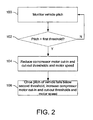
- FIGURE 2 illustrates a method for controlling an on-board air compressor on a hybrid commercial vehicle as a function of vehicle pitch, such as is performed by the MCU 14 and/or the processor 34 ( Figure 1 ).
- vehicle pitch is monitored.
- vehicle pitch can be monitored by a pitch monitoring module that receives pitch information from one or more of an inclinometer and/or other system with pitch monitoring functionality.
- vehicle pitch is inferred based on measured engine load and known vehicle weight and vehicle velocity.
- a determination is made regarding whether the vehicle is on an incline or uphill grade, e.g., by comparing a detected vehicle pitch to a predetermined pitch threshold.
- the method reverts to 100, where vehicle pitch monitoring continues. If the determination at 102 indicates that the vehicle is on an uphill grade or incline, then at 104, compressor cut-in and cut-out pressure thresholds for an on-board air-compressor are reduced to conserve state-of-charge (SOC) until the pitch of the vehicle falls below a second predetermined pitch threshold (e.g., a predetermined percentage of a maximum pitch detected on the uphill grade). In this manner, the SOC is preserved for a traction motor or the like in the event the traction motor is activated toward the top of the hill.
- SOC state-of-charge
- compressor motor speed can be decreased when reducing the compressor cut-in and cut-out pressure thresholds, in order to further reduce SOC consumption.
- the compressor cut-in and cut-out pressure thresholds are increased to increase available air pressure and brake regeneration opportunities for the vehicle. Additionally, compressor motor speed can be increased when increasing the compressor cut-in and cut-out pressure thresholds, in order to reduce SOC to a level that permits a brake regeneration event.
- the second predetermined pitch threshold may be the same as the first predetermined pitch threshold, or may be a predetermined percentage of a maximum pitch detected while the vehicle is on the inline. In one example, the predetermined percentage is in the range of 30% to 50% of the maximum pitch detected on the uphill grade.
- the driver of the vehicle can be prompted to confirm (e.g., via an onboard user interface or the like) that the vehicle is leveling out once it is determined that the pitch of the vehicle has fallen below the predetermined percentage of the maximum pitch detected on the uphill grade or the driver can cancel the feature.
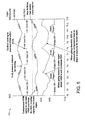
- FIGURE 3 illustrates a graph 130 depicting compressor pressures, state of charge levels, and cut-in and cut-out pressure thresholds for conserving SOC via vehicle orientation-adjusted compressor control in a vehicle traveling on a flat surface and an uphill grade, respectively.
- an onboard traction motor requires any available SOC.
- the compressor control systems and methods described herein conserve energy by reducing the cut-in and cut-out pressure thresholds and the speed of the compressor motor to maintain the minimum RPM and air pressure needed to provide sufficient SOC for the traction motor.
- the traction motor is not needed and the state of charge may be maintained at 70% (or some other predetermined SOC level).
- Cut-in and cut-out pressure thresholds that trigger the compressor motor to turn on and off may be at 110 psig and 130 psig, respectively.
- the compressor motor turns on at nominal operating speed (e.g., 3000 RPM or some other nominal motor speed depending on the type of compressor motor).
- nominal operating speed e.g. 3000 RPM or some other nominal motor speed depending on the type of compressor motor.
- the described systems and methods reduce the cut-in and cut-out pressure thresholds, e.g., to 100 psig and 120 psig respectively (or some other predetermined cut-in and cut-out pressure thresholds which may dependent on vehicle operation regulations and the like), as well as the compressor motor operating speed.
- the air tank pressure is permitted to fall to 100 psig before the compressor motor kicks in (e.g., at 1500 RPM or some other reduced operating speed, which may be a function of compressor type).
- the compressor motor then runs until tank pressure reaches 120 psig, at which time the motor cuts out.
- SOC in this example is maintained at approximately 50% of full charge (or some other predetermined SOC level) despite the increased SOC demand (e.g., by the traction motor) during the uphill travel..
- FIGURE 4 illustrates a graph 150 depicting compressor pressures, state of charge levels, and cut-in and cut-out pressure thresholds for reducing SOC via vehicle orientation-adjusted compressor control in a vehicle with high SOC is traveling on an uphill grade.
- the described control systems and methods dynamically raise the cut-in and cut-out pressure thresholds and compressor motor RPM to cause the compressor to start and run at a higher speed.
- the compressor control reduces the SOC for subsequent brake regeneration while storing energy in the form of higher air pressure.
- the vehicle is on an uphill grade and has an SOC of 90% of maximum charge.
- the cut-in and cut-out pressure thresholds are increased to 130 psig and 150 psig, respectively, and compressor motor speed is increased to 3600 RPM (or some other predetermined increased operating speed, which may be a function of compressor type).
- compressor motor speed is increased to 3600 RPM (or some other predetermined increased operating speed, which may be a function of compressor type).
- FIGURE 5 illustrates a graph 170 depicting compressor pressures, state of charge levels, and cut-in and cut-out pressure thresholds for reducing SOC via vehicle orientation-adjusted compressor control in a vehicle with high SOC is traveling on a downhill grade.
- the MCU in this case causes the air tanks to vent air to reduce pressure.
- Reduced tank pressure acts as a load, decreasing SOC and creating capacity for additional brake regeneration.
- the pressure thresholds are increased and the compressor runs continuously at a maximum speed to maintain air pressure while venting. Additionally, running the compressor at maximum speed consumes additional charge, which further creates brake regeneration opportunities.
- compressor motor cut-in and cut-out pressure thresholds are increased to 140 psig and 160 psig, respectively.
- Brake regeneration events occur as the vehicle travels downhill and employs the vehicles brake system, which cases SOC to rise.
- the MCU periodically causes the air tanks to vent air, which causes the tank pressure to drop to a level that in turn causes the compressor motor to turn on and draw SOC.
- the motor turns on at tank pressures that would normally not trigger the compressor motor to do so, thereby drawing more SOC than under normal conditions.
- the compressor motor can be run at an increased speed (e.g., 3600 or some other predetermined increased speed relative to nominal operating speed, which may be a function of motor type). In this manner, SOC is maintained at a level that permits brake regeneration on a downhill grade.
- an increased speed e.g., 3600 or some other predetermined increased speed relative to nominal operating speed, which may be a function of motor type.
Landscapes
- Engineering & Computer Science (AREA)
- Mechanical Engineering (AREA)
- Transportation (AREA)
- Power Engineering (AREA)
- Sustainable Development (AREA)
- Life Sciences & Earth Sciences (AREA)
- Sustainable Energy (AREA)
- Chemical & Material Sciences (AREA)
- Combustion & Propulsion (AREA)
- Physics & Mathematics (AREA)
- Electromagnetism (AREA)
- Electric Propulsion And Braking For Vehicles (AREA)
- Valves And Accessory Devices For Braking Systems (AREA)
- Hybrid Electric Vehicles (AREA)
Abstract
Description
- The present application finds particular application in hybrid commercial vehicle brake systems, particularly involving regenerative braking. However, it will be appreciated that the described technique may also find application in other vehicle type systems, other braking systems, or other energy conservation systems.
- Conventional approaches to regenerative braking involve dissipating power in the air compressor when the vehicle is traveling downhill. The compressor is driven to a higher pressure to create an artificial loss when driven by the regenerative braking system. This additional load on the vehicle also assists in braking. In one approach, a fuel cell powers the compressor during acceleration or constant velocity. Another approach involves an air compressor that supplies air at a higher rate when the vehicle is coasting. This system involves storing the kinetic energy of the vehicle as a higher air pressure when the compressor is kept running during coasting.
- Another conventional approach involves an air compressor control system that drives an air compressor when the vehicle is going downhill as long as the metal head temperature is less than a predetermined value. In this manner, the compressor is used as a torque absorber during downhill operation. Yet another classical approach relates to a power management system for a hybrid vehicle. A traction motor is used to charge the battery when the engine load is low. When the vehicle is going uphill, the additional loads, such as the compressor, are disconnected from the battery.
- The present innovation provides new and improved systems and methods for controlling state of charge in a hybrid commercial vehicle high voltage battery as a function of vehicle pitch systems and methods, which overcome the above-referenced problems and others.
- In accordance with one aspect, a motor controller unit (MCU) that facilitates modifying pressure thresholds for an air compressor motor in a hybrid commercial vehicle as a function of vehicle pitch comprises a memory that stores computer-executable instructions for modifying compressor cut-in and cut-out pressure thresholds as a function of vehicle pitch, and a processor configured to execute the computer-executable instructions. The instructions comprise monitoring a pitch of the vehicle, determining that the vehicle is on an uphill grade, and reducing compressor cut-in and cut-out pressure thresholds for an on-board air compressor motor to conserve state-of-charge (SOC) until the pitch of the vehicle falls below a predetermined percentage of a maximum pitch detected on the uphill grade. The instructions further comprise, once the pitch of the vehicle falls below a predetermined percentage of the maximum pitch detected on the uphill grade, increasing the compressor cut-in and cut-out pressure thresholds to increase available air pressure and brake regeneration for the vehicle.
- In accordance with another aspect, a method of modifying pressure thresholds for an air compressor motor in a hybrid commercial vehicle as a function of vehicle pitch comprises monitoring a pitch of the vehicle, determining that the vehicle is on an uphill grade, and reducing compressor cut-in and cut-out pressure thresholds for an on-board air-compressor motor to conserve state-of-charge (SOC) until the pitch of the vehicle falls below a predetermined percentage of a maximum pitch detected on the uphill grade. The method further comprises, once the pitch of the vehicle falls below a predetermined percentage of the maximum pitch detected on the uphill grade, increasing the compressor cut-in and cut-out pressure thresholds to increase available air pressure and brake regeneration for the vehicle.
- According to another aspect, a system that facilitates modifying pressure thresholds for an air compressor motor in a hybrid commercial vehicle as a function of vehicle pitch comprises an air compressor having a compressor motor, and a motor controller unit (MCU) having a memory that stores computer-executable instructions for modifying compressor cut-in and cut-out pressure thresholds for the compressor motor as a function of vehicle pitch. The MCU further comprises a processor configured to monitor a pitch of the vehicle, determine that the vehicle is on an uphill grade, and reduce compressor cut-in and cut-out pressure thresholds for the compressor motor to conserve state-of-charge (SOC) until the pitch of the vehicle falls below a predetermined percentage of a maximum pitch detected on the uphill grade. The processor is further configured to, once the pitch of the vehicle falls below a predetermined percentage of the maximum pitch detected on the uphill grade, increase the compressor cut-in and cut-out pressure thresholds to increase available air pressure and brake regeneration for the vehicle.
- In accordance with another aspect, an apparatus for modifying pressure thresholds for an air compressor motor in a hybrid commercial vehicle as a function of vehicle pitch comprises means for monitoring a pitch of the vehicle, means for determining that the vehicle is on an uphill grade, and means for reducing compressor cut-in and cut-out pressure thresholds for an on-board air-compressor motor to conserve state-of-charge (SOC) until the pitch of the vehicle falls below a predetermined percentage of a maximum pitch detected on the uphill grade. The apparatus further comprises means for increasing the compressor cut-in and cut-out pressure thresholds to increase available air pressure and brake regeneration for the vehicle, once the pitch of the vehicle falls below a predetermined percentage of the maximum pitch detected on the uphill grade.
- Still further advantages of the subject innovation will be appreciated by those of ordinary skill in the art upon reading and understanding the following detailed description.
- The innovation may take form in various components and arrangements of components, and in various steps and arrangements of steps. The drawings are only for purposes of illustrating various aspects and are not to be construed as limiting the invention.
-
FIGURE 1 illustrates an energy management system that executes an energy management algorithm employing an Electric Air Charging System (EACS) to manage a state of charge (SOC) of a hybrid commercial vehicle (or the like) high voltage battery. -
FIGURE 2 illustrates a method for controlling an on-board air compressor on a hybrid commercial vehicle as a function of vehicle pitch, such as is performed by the MCU and/or the processor. -
FIGURE 3 illustrates a graph depicting compressor pressures, state of charge levels, and cut-in and cut-out pressure thresholds for conserving SOC via vehicle orientation-adjusted compressor control in a vehicle traveling on a flat surface and an uphill grade, respectively. -
FIGURE 4 illustrates a graph depicting compressor pressures, state of charge levels, and cut-in and cut-out pressure thresholds for reducing SOC via vehicle orientation-adjusted compressor control in a vehicle with high SOC is traveling on an uphill grade. -
FIGURE 5 illustrates a graph depicting compressor pressures, state of charge levels, and cut-in and cut-out pressure thresholds for reducing SOC via vehicle orientation-adjusted compressor control in a vehicle with high SOC is traveling on a downhill grade. -
FIGURE 1 illustrates anenergy management system 10 that executes an energy management algorithm employing an Electric Air Charging System (EACS) 12 to control a state of charge (SOC) of a hybrid commercial vehicle (or the like) high voltage storage device (e.g., 200V, 300V, or some other high voltage battery). The EACS 12 comprises anMCU 14 that, in addition to other engine control functions, controls a variable speed, brushless DC (BLDC)motor 16 that drives anelectric compressor 18. Other prime movers, such as an induction motor, are also contemplated. Electric compressor technologies employed in conjunction with the herein-described features can include by way of example and not limitation reciprocating, screw, scroll, rotary, and/or any other suitable type of compressor. Theelectric compressor 18 compresses the air and provides, via anair supply line 19, an air pressure supply to a heavy dutyvehicle air system 20 that comprises one ormore air tanks 22 that are filled by thecompressor 18 and which supply air pressure via anair supply line 23 to the vehicleair supply system 20 which includes abrake system 24. The herein-described approach provides intelligent and variable control of the air compressor as a function of vehicle pitch in order to manage and improve energy efficiency within a hybrid commercial vehicle or other vehicle. - The
MCU 14 communicates with other vehicle controllers (not shown). Additionally, the MCU communicates with a pitch monitoring device, such as aninclinometer 26, ananti-lock brake system 28, an engine, a transmission or some other suitable source of real-time vehicle pitch information, and acquires vehicle pitch status information over a vehicle serial bus 29 (e.g. a J1939 controller area network (CAN) bus or the like). The MCU continuously or periodically monitors vehicle pitch status in order to intelligently control the energy required to maintain vehicle air pressure, to create brake regeneration opportunities, as well as to preserve a state of charge (SOC) of a highvoltage vehicle battery 30. Thebattery 30 may be, for example, a lithium ion battery, a nickel metal hydride battery, a lead acid battery, a variant of the foregoing battery types, or any other suitable battery. Thebattery 30 is coupled viapower lines 31 to the MCU. Although the battery described herein is a high voltage vehicle battery (e.g., 200V, 300V, etc.), it will be appreciated that the described systems and methods may be employed with any suitable power source, as well as with any suitable air compressor or load on the power source. - The intelligent control approach regulates the vehicle's air tank pressure to be in concert with other vehicle controllers and vehicle operational status by varying the compressor motor speed and pressure thresholds. The MCU monitors the pitch of the vehicle to determine whether it is desirable to adjust the cut-in and cut-out thresholds of the air compressor motor in order to conserve SOC (i.e., by reducing the cut-in and cut-out thresholds in order to cause the compressor motor to maintain lower air tank pressures) or to store air pressure for a braking event and create a brake regeneration opportunity (i.e., by increasing the cut-in and cut-out thresholds in order to cause the compressor to store air at higher pressures, thereby consuming SOC).
- The MCU comprises
pitch monitoring module 32 that monitors the pitch of the vehicle (e.g., periodically or continuously) and provides vehicle pitch status information to aprocessor 34. In one embodiment, the pitch status information is received from one or more of theinclinometer 26 and theABS system 28, and stored inmemory 36 for evaluation by theprocessor 34. In another embodiment, vehicle pitch is inferred by thepitch monitoring module 32 as a function of measured engine load (e.g., an engine pulling a constant load will have to expend more energy pulling the load uphill than it will on a flat or downhill grade). In still another embodiment, vehicle pitch is determined from coordinate information and topographical or elevation information received by the processor and/or pitch monitoring module from an on-board GPS unit 52. For instance, the processor and/or pitch monitoring module can cross reference the coordinates of the vehicle to topographical map information and determine from the vehicle's direction of travel whether the vehicle is traveling uphill, downhill, or on a relatively flat road. - The memory additionally stores one or more
compressor adjustment routines 38 for adjusting (e.g., increasing or decreasing) air tank pressure and/or compressor motor speed, when executed by the processor. Thecompressor adjustment routines 38 include a pressure threshold increaseroutine 40 that, when executed, increases the compressor motor cut-in (ON) pressure threshold and the compressor motor cut-out (OFF) pressure threshold, and a pressure threshold decreaseroutine 42 that, when executed, decreases the compressor motor cut-in (ON) pressure threshold and the compressor motor cut-out (OFF) pressure threshold. Thecompressor adjustment routines 38 also include a motorspeed increase routine 44 that increases compressor motor speed when executed, and a motor speed decreaseroutine 46 that decreases compressor motor speed when executed. - If the pitch of the vehicle is above a first predetermined pitch threshold (e.g., 5° from horizontal, 10° from horizontal, or some other predetermined threshold) as determined by the
pitch monitoring module 32, then the vehicle is determined to be on an uphill grade. To improve energy conservation, the processor executes the pressure threshold decreaseroutine 42 that lowers the compressor cut-in and cut-out pressure thresholds in order to maintain a lower level of pressurized air, in the air tanks while conserving SOC to make room for energy generated from a brake regeneration event (i.e., after the vehicle reaches the crest of the uphill grade and begins to travel downhill). Additionally or alternatively, the processor can execute the motorspeed reducing routine 46, which runs the compressor motor at lower RPM thereby maintaining the sufficient pressure for a braking event while conserving SOC should the vehicle need to activate an onboard traction motor to maintain speed up the incline. - As stated above, the pitch of the vehicle is continuously or periodically monitored, such that when the processor determines that the pitch of the vehicle has decreased to below a second predetermined pitch threshold (i.e., the uphill grade is leveling out or cresting), the processor initiates the threshold increase
routine 40 that raises the compressor cut-in and cut-out pressure thresholds and in order to quickly store air at a higher pressure, while reducing SOC to make room for energy generated from a brake regeneration event (i.e., after the vehicle reaches the crest of the uphill grade and begins to travel downhill). - Additionally or alternatively, the processor can execute the motor
speed increase routine 44, which runs the compressor motor at higher RPM thereby maintaining the higher pressure and continuing the draw on the SOC. This approach both stores energy as higher air pressure and lowers the SOC, freeing up battery storage capacity for brake regeneration on a subsequent downhill grade. The higher air pressure is then available for subsequent braking events while the reduced SOC increases capacity for brake energy regeneration opportunities. - In one embodiment, the second predetermined pitch threshold is the same as the first predetermined pitch threshold, such that when the pitch of the vehicle is greater than or equal to the predetermined pitch threshold, the vehicle is deemed to be on an incline, and when the pitch of the vehicle is below the predetermined threshold, the vehicle is deemed not to be on an incline. In another embodiment, the second predetermined pitch threshold is calculated as a function of a maximum detected pitch of the vehicle (e.g., 30% of maximum pitch, 50% of maximum pitch, or some other percentage). In this example pitch is continuously or periodically monitored, and the second predetermined pitch threshold is continuously or periodically updated. Once the vehicle pitch falls below the second predetermined pitch threshold, the processor clears the memory of the second predetermined pitch threshold. When the vehicle is again determined to be on an incline (for exceeding the first predetermined threshold), then the processor recalculates a new second pitch threshold using the same predetermined percentage or function.
- According to another aspect, the vehicle may be determined to be on an uphill grade when SOC is lower than a desired level, such that there is relatively less energy available to drive the compressor. In this case, the MCU processor conserves SOC by initiating a
threshold decrease routine 42 and the motorspeed decrease routine 46 in order to reduce the pressure thresholds and compressor RPM. Additionally, the MCU can send an alert to the driver via auser interface 48 to initiate a generator regeneration protocol, such as by engaging atraction motor 50 and/or initiating brake energy regeneration to recharge thebattery 30. The traction motor also serves as an energy regeneration device. In another embodiment, the MCU automatically sends a command directly to thetraction motor 50 to recharge the battery to a nominal level (e.g., 70% of full charge or more). The MCU thus controls the compressor to more slowly build air pressure to a lower pressure threshold using less energy and conserving SOC until brake regeneration or traction motor restores the SOC. By monitoring the SOC and modifying the compressor operation, brake regeneration is facilitated. Increased brake regeneration opportunities result in improved energy recovery, less brake wear, and safer vehicle operation. - In another embodiment, the driver of the vehicle initiates one or both of the uphill pressure threshold and motor speed adjustments and the downhill pressure threshold and motor speed adjustments. For instance, when the system detects that the vehicle is on an incline, the driver is prompted via the user interface to select (via the user interface) the uphill adjustment routine(s). Similarly, when the system has determined that the vehicle has leveled off, the driver is prompted to terminate the uphill adjustment routines and/or initiate flat surface or downhill adjustment routines. In a related embodiment, the driver is prompted via the user interface to confirm the adjustment routines suggested by the MCU. In yet another embodiment, the driver determines whether the vehicle is on an incline, flat surface, or decline and initiates and terminates corresponding adjustment routines via the interface.
- Additionally, if the vehicle is determined to be on a downhill grade, the
MCU 14 sends a command to thevehicle air system 20 to cycle an air dryer (not shown) and/or open a vent in theair line 23 leading to thebrake system 24 so as to consume and/or release air. Additionally, the cut-in and cut-out pressure thresholds are increased by executing thethreshold increase routine 40 and compressor speed increases. The compressor is run continuously to maintain the air pressure between the cut-in and cut-out thresholds to reduce SOC, thereby creating storage capacity. In this manner, SOC is continually reduced so that there is consistent capacity within the high voltage batteries to store brake regeneration energy and permit brake regeneration drag to control the vehicle speed without using the foundation brakes. Brake regeneration time is increased to reduce brake wear and heat and to improve brake safety, which is useful in lengthy downhill runs where too much braking leads to severe drum brake fading and brake heating. - It will be appreciated that although the herein-described systems and methods relate to an air compressor system that is manipulated to control vehicle battery SOC, any suitable electrical system on the vehicle (e.g., a hydraulic system, etc.) may be employed in a similar fashion, and that the described systems and methods are not limited to being employed in conjunction with an air compressor. It will further be appreciated that although
Figure 1 depicts thesystem 10 as comprising an air compressor that is operably coupled to an MCU that performs the described functions, in another embodiment theprocessor 34 andmemory 26 are integral to theair compressor 18 and/or theEACS component 12. -
FIGURE 2 illustrates a method for controlling an on-board air compressor on a hybrid commercial vehicle as a function of vehicle pitch, such as is performed by theMCU 14 and/or the processor 34 (Figure 1 ). At 100, vehicle pitch is monitored. For instance, vehicle pitch can be monitored by a pitch monitoring module that receives pitch information from one or more of an inclinometer and/or other system with pitch monitoring functionality. In another example, vehicle pitch is inferred based on measured engine load and known vehicle weight and vehicle velocity. At 102, a determination is made regarding whether the vehicle is on an incline or uphill grade, e.g., by comparing a detected vehicle pitch to a predetermined pitch threshold. If the determination at 102 indicates that the vehicle is not on an uphill grade or incline, then the method reverts to 100, where vehicle pitch monitoring continues. If the determination at 102 indicates that the vehicle is on an uphill grade or incline, then at 104, compressor cut-in and cut-out pressure thresholds for an on-board air-compressor are reduced to conserve state-of-charge (SOC) until the pitch of the vehicle falls below a second predetermined pitch threshold (e.g., a predetermined percentage of a maximum pitch detected on the uphill grade). In this manner, the SOC is preserved for a traction motor or the like in the event the traction motor is activated toward the top of the hill. Additionally, compressor motor speed can be decreased when reducing the compressor cut-in and cut-out pressure thresholds, in order to further reduce SOC consumption. At 106, once the pitch of the vehicle falls below second predetermined pitch threshold, the compressor cut-in and cut-out pressure thresholds are increased to increase available air pressure and brake regeneration opportunities for the vehicle. Additionally, compressor motor speed can be increased when increasing the compressor cut-in and cut-out pressure thresholds, in order to reduce SOC to a level that permits a brake regeneration event. The second predetermined pitch threshold may be the same as the first predetermined pitch threshold, or may be a predetermined percentage of a maximum pitch detected while the vehicle is on the inline. In one example, the predetermined percentage is in the range of 30% to 50% of the maximum pitch detected on the uphill grade. Additionally, the driver of the vehicle can be prompted to confirm (e.g., via an onboard user interface or the like) that the vehicle is leveling out once it is determined that the pitch of the vehicle has fallen below the predetermined percentage of the maximum pitch detected on the uphill grade or the driver can cancel the feature. -
FIGURE 3 illustrates agraph 130 depicting compressor pressures, state of charge levels, and cut-in and cut-out pressure thresholds for conserving SOC via vehicle orientation-adjusted compressor control in a vehicle traveling on a flat surface and an uphill grade, respectively. When traveling uphill, an onboard traction motor requires any available SOC. The compressor control systems and methods described herein conserve energy by reducing the cut-in and cut-out pressure thresholds and the speed of the compressor motor to maintain the minimum RPM and air pressure needed to provide sufficient SOC for the traction motor. As shown in thegraph 130, when the vehicle is traveling on a flat surface, the traction motor is not needed and the state of charge may be maintained at 70% (or some other predetermined SOC level). Cut-in and cut-out pressure thresholds that trigger the compressor motor to turn on and off may be at 110 psig and 130 psig, respectively. When tank pressure falls to 110 psig in this example, the compressor motor turns on at nominal operating speed (e.g., 3000 RPM or some other nominal motor speed depending on the type of compressor motor). However, when the vehicle is on an uphill grade, the described systems and methods reduce the cut-in and cut-out pressure thresholds, e.g., to 100 psig and 120 psig respectively (or some other predetermined cut-in and cut-out pressure thresholds which may dependent on vehicle operation regulations and the like), as well as the compressor motor operating speed. To further this example, when traveling on an uphill grade, the air tank pressure is permitted to fall to 100 psig before the compressor motor kicks in (e.g., at 1500 RPM or some other reduced operating speed, which may be a function of compressor type). The compressor motor then runs until tank pressure reaches 120 psig, at which time the motor cuts out. SOC in this example is maintained at approximately 50% of full charge (or some other predetermined SOC level) despite the increased SOC demand (e.g., by the traction motor) during the uphill travel.. -
FIGURE 4 illustrates agraph 150 depicting compressor pressures, state of charge levels, and cut-in and cut-out pressure thresholds for reducing SOC via vehicle orientation-adjusted compressor control in a vehicle with high SOC is traveling on an uphill grade. When traveling uphill and the SOC is high, the described control systems and methods dynamically raise the cut-in and cut-out pressure thresholds and compressor motor RPM to cause the compressor to start and run at a higher speed. The compressor control reduces the SOC for subsequent brake regeneration while storing energy in the form of higher air pressure. In the illustrated example, the vehicle is on an uphill grade and has an SOC of 90% of maximum charge. It may be desirable to reduce the SOC (e.g., if the vehicle is near the top of the hill as made known through the GPS) in order to make room for charge generated by a regenerative braking event (e.g., once the vehicle crests the hill and begins traveling downhill). To reduce the SOC, the cut-in and cut-out pressure thresholds are increased to 130 psig and 150 psig, respectively, and compressor motor speed is increased to 3600 RPM (or some other predetermined increased operating speed, which may be a function of compressor type). Thus, when air tank pressure falls to 130 psig, the motor compressor turns on and increases tank pressure until it reaches 150 psig, at which time the compressor motor turns off. Maintaining higher air pressure in the tanks and running the compressor motor at increased speed serves to reduce the SOC to make room for charge generated by a brake regeneration event. Additionally, increased air pressure is available to the vehicle for friction braking and/or for generating charge during the braking event. -
FIGURE 5 illustrates agraph 170 depicting compressor pressures, state of charge levels, and cut-in and cut-out pressure thresholds for reducing SOC via vehicle orientation-adjusted compressor control in a vehicle with high SOC is traveling on a downhill grade. When traveling downhill, especially on long runs, there is a need to increase brake regen and lessen the use of foundation brakes. The MCU in this case causes the air tanks to vent air to reduce pressure. Reduced tank pressure acts as a load, decreasing SOC and creating capacity for additional brake regeneration. The pressure thresholds are increased and the compressor runs continuously at a maximum speed to maintain air pressure while venting. Additionally, running the compressor at maximum speed consumes additional charge, which further creates brake regeneration opportunities. By cycling the vent between on and off states, PSIG is maintained within desired limits. In the illustrated example, compressor motor cut-in and cut-out pressure thresholds are increased to 140 psig and 160 psig, respectively. Brake regeneration events occur as the vehicle travels downhill and employs the vehicles brake system, which cases SOC to rise. To keep SOC at a desired level so that brake regeneration is available, the MCU periodically causes the air tanks to vent air, which causes the tank pressure to drop to a level that in turn causes the compressor motor to turn on and draw SOC. By increasing the cut-in and cut-out pressure thresholds, the motor turns on at tank pressures that would normally not trigger the compressor motor to do so, thereby drawing more SOC than under normal conditions. To draw additional SOC, the compressor motor can be run at an increased speed (e.g., 3600 or some other predetermined increased speed relative to nominal operating speed, which may be a function of motor type). In this manner, SOC is maintained at a level that permits brake regeneration on a downhill grade. - The innovation has been described with reference to several embodiments. Modifications and alterations may occur to others upon reading and understanding the preceding detailed description. It is intended that the innovation be construed as including all such modifications and alterations insofar as they come within the scope of the appended claims or the equivalents thereof.
- Having thus described the preferred embodiments, the invention is now claimed to be:
Claims (15)
- A motor controller unit (MCU) that facilitates modifying pressure thresholds for an air compressor motor in a hybrid commercial vehicle as a function of vehicle pitch, comprising:a memory that stores computer-executable instructions for modifying compressor cut-in and cut-out pressure thresholds as a function of vehicle pitch;a processor configured to execute the computer-executable instructions, the instructions comprising:monitoring a pitch of the vehicle;determining that the vehicle is on an uphill grade;reducing compressor cut-in and cut-out pressure thresholds for an on-board air compressor motor to conserve state-of-charge (SOC) until the pitch of the vehicle falls below a predetermined percentage of a maximum pitch detected on the uphill grade; andonce the pitch of the vehicle falls below a predetermined percentage of the maximum pitch detected on the uphill grade, increasing the compressor cut-in and cut-out pressure thresholds to increase available air pressure and brake regeneration for the vehicle.
- The motor controller unit according to claim 1, wherein the processor is configured to monitor pitch of the vehicle by inferring vehicle pitch from measured engine load information and vehicle velocity and/or wherein the processor is configured to monitor pitch of the vehicle by receiving vehicle pitch information from an inclinometer.
- The motor controller unit according to claim 1 or 2, wherein the processor is configured to monitor pitch of the vehicle by receiving vehicle pitch information from an onboard anti-lock brake (ABS) stability sensor with vehicle pitch monitoring functionality and/or wherein the processor is configured to determine vehicle pitch from coordinate information and topographical information received from a global positioning system on the vehicle.
- The motor controller unit according to any of claims 1 to 3, wherein the instructions further include decreasing compressor motor speed when reducing the compressor cut-in and cut-out pressure thresholds and/or wherein the instructions further include increasing compressor motor speed when increasing the compressor cut-in and cut-out pressure thresholds.
- The motor controller unit according to any of claims 1 to 4, wherein the predetermined percentage is in the range of 30% to 50% of the maximum pitch detected on the uphill grade.
- A method of modifying pressure thresholds for an air compressor motor in a hybrid commercial vehicle as a function of vehicle pitch, comprising:monitoring a pitch of the vehicle;determining that the vehicle is on an uphill grade;reducing compressor cut-in and cut-out pressure thresholds for an on-board air-compressor motor to conserve state-of-charge (SOC) until the pitch of the vehicle falls below a predetermined percentage of a maximum pitch detected on the uphill grade; andonce the pitch of the vehicle falls below a predetermined percentage of the maximum pitch detected on the uphill grade, increasing the compressor cut-in and cut-out pressure thresholds to increase available air pressure and brake regeneration for the vehicle.
- The method according to claim 6, further comprising monitoring the pitch of the vehicle by at least one of:inferring vehicle pitch from measured engine load information and vehicle velocity;receiving vehicle pitch information from an onboard inclinometer;receiving vehicle pitch information from an onboard anti-lock brake (ABS) stability sensor with vehicle pitch monitoring functionality; anddetermining vehicle pitch from coordinate information and topographical information received from a global positioning system on the vehicle.
- The method according to claim 6 or 7, further comprising decreasing compressor motor speed when reducing the compressor cut-in and cut-out pressure thresholds and/or further comprising increasing compressor motor speed when increasing the compressor cut-in and cut-out pressure thresholds.
- The method according to any of claims 6 to 8, wherein the predetermined percentage is in the range of 30% to 50% of the maximum pitch detected on the uphill grade.
- A system that facilitates modifying pressure thresholds for an air compressor motor in a hybrid commercial vehicle as a function of vehicle pitch, comprising:an air compressor having a compressor motor;a motor controller unit (MCU) having a memory that stores computer-executable instructions for modifying compressor cut-in and cut-out pressure thresholds for the compressor motor as a function of vehicle pitch, and a processor configured to:monitor a pitch of the vehicle;determine that the vehicle is on an uphill grade;reduce compressor cut-in and cut-out pressure thresholds for the compressor motor to conserve state-of-charge (SOC) until the pitch of the vehicle falls below a predetermined percentage of a maximum pitch detected on the uphill grade; andonce the pitch of the vehicle falls below a predetermined percentage of the maximum pitch detected on the uphill grade, increase the compressor cut-in and cut-out pressure thresholds to increase available air pressure and brake regeneration for the vehicle.
- The system according to claim 10, wherein the processor monitors the pitch of the vehicle by at least one of:inferring vehicle pitch from measured engine load information and vehicle velocity;receiving vehicle pitch information from an onboard inclinometer;receiving vehicle pitch information from an onboard anti-lock brake (ABS) stability sensor with vehicle pitch monitoring functionality; anddetermining vehicle pitch from coordinate information and topographical information received from a global positioning system on the vehicle.
- The system according to claim 10 or 11, wherein the processor decreases compressor motor speed when reducing the compressor cut-in and cut-out pressure thresholds.
- The system according to any of claims 10 to 12, wherein the processor increases compressor motor speed when increasing the compressor cut-in and cut-out pressure thresholds.
- The system according to any of claims 10 to 13, wherein the predetermined percentage is in the range of 30% to 50% of the maximum pitch detected on the uphill grade.
- An apparatus for modifying pressure thresholds for an air compressor motor in a hybrid commercial vehicle as a function of vehicle pitch, comprising:means for monitoring a pitch of the vehicle;means for determining that the vehicle is on an uphill grade;means for reducing compressor cut-in and cut-out pressure thresholds for an on-board air-compressor motor to conserve state-of-charge (SOC) until the pitch of the vehicle falls below a predetermined percentage of a maximum pitch detected on the uphill grade; andmeans for increasing the compressor cut-in and cut-out pressure thresholds to increase available air pressure and brake regeneration for the vehicle, once the pitch of the vehicle falls below a predetermined percentage of the maximum pitch detected on the uphill grade.
Applications Claiming Priority (1)
| Application Number | Priority Date | Filing Date | Title |
|---|---|---|---|
| US13/368,479 US20130204490A1 (en) | 2012-02-08 | 2012-02-08 | Uphill vehicle orientation adjusted compressor control |
Publications (1)
| Publication Number | Publication Date |
|---|---|
| EP2626258A1 true EP2626258A1 (en) | 2013-08-14 |
Family
ID=47750392
Family Applications (1)
| Application Number | Title | Priority Date | Filing Date |
|---|---|---|---|
| EP13000647.1A Withdrawn EP2626258A1 (en) | 2012-02-08 | 2013-02-07 | Uphill vehicle orientation adjusted compressor control |
Country Status (2)
| Country | Link |
|---|---|
| US (1) | US20130204490A1 (en) |
| EP (1) | EP2626258A1 (en) |
Cited By (5)
| Publication number | Priority date | Publication date | Assignee | Title |
|---|---|---|---|---|
| WO2016091986A1 (en) * | 2014-12-10 | 2016-06-16 | Knorr-Bremse Systeme für Nutzfahrzeuge GmbH | Method and device for supplying compressed air to a vehicle |
| WO2017100613A1 (en) | 2015-12-10 | 2017-06-15 | Cummins, Inc. | Systems and methods of energy management and control of vehicle accessories |
| SE2151537A1 (en) * | 2021-12-16 | 2023-06-17 | Scania Cv Ab | Control device and method for controlling a compressed air system |
| EP4197844A1 (en) * | 2021-12-15 | 2023-06-21 | J.C. Bamford Excavators Limited | Working vehicle |
| EP4491438A3 (en) * | 2020-08-25 | 2025-04-16 | Transportation IP Holdings, LLC | Vehicle braking system and method |
Families Citing this family (37)
| Publication number | Priority date | Publication date | Assignee | Title |
|---|---|---|---|---|
| KR101481283B1 (en) * | 2013-06-28 | 2015-01-09 | 현대자동차주식회사 | Driving control method for hybrid vehicle |
| US9926924B2 (en) * | 2014-04-08 | 2018-03-27 | Iveco S.P.A. | System for managing a vehicle compressor |
| CN104005836B (en) * | 2014-05-29 | 2016-06-22 | 吉林大学 | The plenum mechanism of recyclable braking energy |
| DE102014214140A1 (en) * | 2014-07-21 | 2016-01-21 | Zf Friedrichshafen Ag | Method for the predictive control of a cruise control system of a motor vehicle |
| US10379143B2 (en) | 2014-07-23 | 2019-08-13 | Cummins, Inc. | System and method for improving a battery management and accumulator system |
| CN106573530B (en) | 2014-08-26 | 2018-08-03 | 康明斯有限公司 | Electric engine accessory control |
| CN106143474B (en) * | 2015-03-25 | 2019-02-26 | 比亚迪股份有限公司 | Hybrid electric vehicle and its drive control method and device |
| CN106143476B (en) * | 2015-03-25 | 2019-11-08 | 比亚迪股份有限公司 | Hybrid electric vehicle and its drive control method and device |
| SE538820C2 (en) | 2015-04-29 | 2016-12-13 | Scania Cv Ab | Air compressor control module for controlling an air compressor system of a vehicle and a method in relation to the control module |
| KR101786332B1 (en) * | 2016-04-20 | 2017-11-16 | 현대자동차주식회사 | Power distribution method and system for fuel cell vehicle |
| US10632820B2 (en) * | 2016-10-20 | 2020-04-28 | Toyota Motor Engineering & Manufacturing North America, Inc. | AC cut cycles for vehicle air conditioning control based on high vehicle pitch conditions |
| US10214078B2 (en) | 2016-10-20 | 2019-02-26 | Toyota Motor Engineering & Manufacturing North America, Inc. | AC cut cycles for vehicle air conditioning control based on high ambient temperature |
| US10220830B2 (en) | 2016-12-14 | 2019-03-05 | Bendix Commercial Vehicle Systems | Front end motor-generator system and hybrid electric vehicle operating method |
| US10486690B2 (en) | 2016-12-14 | 2019-11-26 | Bendix Commerical Vehicle Systems, Llc | Front end motor-generator system and hybrid electric vehicle operating method |
| US10543735B2 (en) | 2016-12-14 | 2020-01-28 | Bendix Commercial Vehicle Systems Llc | Hybrid commercial vehicle thermal management using dynamic heat generator |
| US10308240B2 (en) | 2016-12-14 | 2019-06-04 | Bendix Commercial Vehicle Systems Llc | Front end motor-generator system and hybrid electric vehicle operating method |
| US10220831B2 (en) | 2016-12-14 | 2019-03-05 | Bendix Commercial Vehicle Systems Llc | Front end motor-generator system and hybrid electric vehicle operating method |
| US11807112B2 (en) | 2016-12-14 | 2023-11-07 | Bendix Commercial Vehicle Systems Llc | Front end motor-generator system and hybrid electric vehicle operating method |
| US10640103B2 (en) | 2016-12-14 | 2020-05-05 | Bendix Commercial Vehicle Systems Llc | Front end motor-generator system and hybrid electric vehicle operating method |
| US10532647B2 (en) | 2016-12-14 | 2020-01-14 | Bendix Commercial Vehicle Systems Llc | Front end motor-generator system and hybrid electric vehicle operating method |
| US10479180B2 (en) | 2016-12-14 | 2019-11-19 | Bendix Commercial Vehicle Systems Llc | Front end motor-generator system and hybrid electric vehicle operating method |
| US10112603B2 (en) * | 2016-12-14 | 2018-10-30 | Bendix Commercial Vehicle Systems Llc | Front end motor-generator system and hybrid electric vehicle operating method |
| US10343677B2 (en) | 2016-12-14 | 2019-07-09 | Bendix Commercial Vehicle Systems Llc | Front end motor-generator system and hybrid electric vehicle operating method |
| US10630137B2 (en) | 2016-12-14 | 2020-04-21 | Bendix Commerical Vehicle Systems Llc | Front end motor-generator system and modular generator drive apparatus |
| US10239516B2 (en) | 2016-12-14 | 2019-03-26 | Bendix Commercial Vehicle Systems Llc | Front end motor-generator system and hybrid electric vehicle operating method |
| US10363923B2 (en) | 2016-12-14 | 2019-07-30 | Bendix Commercial Vehicle Systems, Llc | Front end motor-generator system and hybrid electric vehicle operating method |
| US12553379B2 (en) | 2016-12-14 | 2026-02-17 | Bendix Commercial Vehicle Systems Llc | Front end motor-generator system and hybrid electric vehicle operating method |
| US10300907B2 (en) | 2017-08-04 | 2019-05-28 | Toyota Motor Engineering & Manufacturing North America, Inc. | Deceleration control in a hybrid vehicle |
| US10392003B2 (en) * | 2017-08-04 | 2019-08-27 | Toyota Motor Engineering & Manufacturing North America, Inc. | Navigation-enhanced battery state of charge maintenance |
| US10507820B2 (en) | 2017-08-04 | 2019-12-17 | Toyota Motor Engineering & Manufacturing North America, Inc. | Vehicle mass and road load estimation in an EV condition |
| US10618512B2 (en) | 2017-08-04 | 2020-04-14 | Toyota Motor Engineering & Manufacturing North America, Inc. | Expanding electric vehicle mode during downhill grade conditions |
| US10895286B2 (en) | 2018-06-14 | 2021-01-19 | Bendix Commercial Vehicle Systems, Llc | Polygonal spring coupling |
| US10663006B2 (en) | 2018-06-14 | 2020-05-26 | Bendix Commercial Vehicle Systems Llc | Polygon spring coupling |
| CN111959509B (en) * | 2020-08-19 | 2022-06-17 | 重庆交通大学 | Q-learning regenerative braking control strategy based on battery energy balance in state space domain |
| US11708007B2 (en) * | 2021-08-02 | 2023-07-25 | Ford Global Technologies, Llc | Control systems and methods for modifying a battery state of charge signal |
| US20250035103A1 (en) * | 2023-07-27 | 2025-01-30 | Ford Global Technologies, Llc | Power usage planning system and method for vehicle air compressor |
| CN116906196A (en) * | 2023-08-28 | 2023-10-20 | 一汽解放汽车有限公司 | Fuel-saving control method and device for air compressor |
Citations (9)
| Publication number | Priority date | Publication date | Assignee | Title |
|---|---|---|---|---|
| GB2335760A (en) * | 1998-03-24 | 1999-09-29 | Cummins Engine Co Inc | Energy efficient control of vehicle engine driven air compressor |
| EP1183172A1 (en) * | 1999-06-02 | 2002-03-06 | Wabco Automotive U.K. Limited | Vehicle air braking systems |
| WO2003068548A1 (en) * | 2002-02-14 | 2003-08-21 | Renault V.I. | Method of controlling a compressor driven by the engine of a vehicle |
| DE102006020904A1 (en) * | 2006-05-05 | 2007-11-15 | Daimlerchrysler Ag | Drive control device for compressor, has controllable coupling device switched between closed position, in which driving motor and compressor are connected, and opened position, in which driving motor and compressor are disconnected |
| US20070277900A1 (en) * | 2006-06-05 | 2007-12-06 | Paccar Inc | Electronic control for heavy duty truck compressed air charging system |
| DE102007032968A1 (en) * | 2007-07-16 | 2009-01-29 | Knorr-Bremse Systeme für Nutzfahrzeuge GmbH | Method and device for determining pushing operations of a vehicle |
| DE102008006860A1 (en) * | 2008-01-31 | 2009-08-06 | Haldex Brake Products Gmbh | Compressed air delivery flow controlling method for motor vehicle, involves controlling delivery flow of compressed air based on actual, estimated or expected air consumption, which is determined based operating signals |
| DE102008056322A1 (en) * | 2008-11-07 | 2010-05-12 | Wabco Gmbh | Control device for a compressed air treatment device of a vehicle, compressed air treatment device and method for its control |
| DE102010033539A1 (en) * | 2010-05-15 | 2011-11-17 | Wabco Gmbh | Pressure control device for a vehicle and method for pressure control |
Family Cites Families (16)
| Publication number | Priority date | Publication date | Assignee | Title |
|---|---|---|---|---|
| DE19637210B4 (en) * | 1996-09-12 | 2007-05-24 | Siemens Ag | Powertrain control for a motor vehicle |
| DE19637209B4 (en) * | 1996-09-12 | 2006-12-14 | Siemens Ag | A method of controlling the powertrain of a motor vehicle and integrated powertrain control |
| SE508156C2 (en) * | 1996-10-18 | 1998-09-07 | Volvo Lastvagnar Ab | System and method for controlling the connection of auxiliary equipment driven by a motor |
| DE10128758A1 (en) * | 2001-06-13 | 2002-12-19 | Bosch Gmbh Robert | Control system for hybrid vehicle regulates proportion of driving power performed by electric motor whereby state of charge of battery does not fall below minimum level ensuring basic functions |
| JP4525008B2 (en) * | 2003-07-02 | 2010-08-18 | トヨタ自動車株式会社 | Energy output device and method for controlling energy output device |
| US6955406B2 (en) * | 2004-02-18 | 2005-10-18 | Bludot, Inc. | Altitude compensating trailer brake system |
| US7089815B2 (en) * | 2004-03-31 | 2006-08-15 | International Truck Intellectual Property Company, Llc | Air brake system characterization by self learning algorithm |
| US7363127B2 (en) * | 2004-06-07 | 2008-04-22 | International Truck Intellectual Property Company, Llc | Air brake system monitoring for pre-trip inspection |
| JP2006038078A (en) * | 2004-07-26 | 2006-02-09 | Toyota Motor Corp | Vehicle deceleration control device |
| JP2007030631A (en) * | 2005-07-25 | 2007-02-08 | Advics:Kk | Brake control device for vehicle |
| US20070080664A1 (en) * | 2005-07-29 | 2007-04-12 | Ford Global Technologies, Llc | System and method for rebalancing a battery during vehicle operation |
| WO2008088554A1 (en) * | 2007-01-18 | 2008-07-24 | Mack Trucks, Inc. | Hybrid internal combustion engine and air motor system and method |
| US8260494B2 (en) * | 2008-04-02 | 2012-09-04 | International Truck Intellectual Property Company, Llc | Method and apparatus to optimize energy efficiency of air compressor in vehicle air brake application |
| US8224551B2 (en) * | 2009-03-24 | 2012-07-17 | Bendix Commercial Vehicle Systems Llc | ACC extended mode operation |
| WO2011016095A1 (en) * | 2009-08-07 | 2011-02-10 | トヨタ自動車株式会社 | Brake control system, and brake control method |
| US20120139329A1 (en) * | 2010-12-01 | 2012-06-07 | Aptera Motors, Inc. | Regenerative braking system |
-
2012
- 2012-02-08 US US13/368,479 patent/US20130204490A1/en not_active Abandoned
-
2013
- 2013-02-07 EP EP13000647.1A patent/EP2626258A1/en not_active Withdrawn
Patent Citations (9)
| Publication number | Priority date | Publication date | Assignee | Title |
|---|---|---|---|---|
| GB2335760A (en) * | 1998-03-24 | 1999-09-29 | Cummins Engine Co Inc | Energy efficient control of vehicle engine driven air compressor |
| EP1183172A1 (en) * | 1999-06-02 | 2002-03-06 | Wabco Automotive U.K. Limited | Vehicle air braking systems |
| WO2003068548A1 (en) * | 2002-02-14 | 2003-08-21 | Renault V.I. | Method of controlling a compressor driven by the engine of a vehicle |
| DE102006020904A1 (en) * | 2006-05-05 | 2007-11-15 | Daimlerchrysler Ag | Drive control device for compressor, has controllable coupling device switched between closed position, in which driving motor and compressor are connected, and opened position, in which driving motor and compressor are disconnected |
| US20070277900A1 (en) * | 2006-06-05 | 2007-12-06 | Paccar Inc | Electronic control for heavy duty truck compressed air charging system |
| DE102007032968A1 (en) * | 2007-07-16 | 2009-01-29 | Knorr-Bremse Systeme für Nutzfahrzeuge GmbH | Method and device for determining pushing operations of a vehicle |
| DE102008006860A1 (en) * | 2008-01-31 | 2009-08-06 | Haldex Brake Products Gmbh | Compressed air delivery flow controlling method for motor vehicle, involves controlling delivery flow of compressed air based on actual, estimated or expected air consumption, which is determined based operating signals |
| DE102008056322A1 (en) * | 2008-11-07 | 2010-05-12 | Wabco Gmbh | Control device for a compressed air treatment device of a vehicle, compressed air treatment device and method for its control |
| DE102010033539A1 (en) * | 2010-05-15 | 2011-11-17 | Wabco Gmbh | Pressure control device for a vehicle and method for pressure control |
Cited By (11)
| Publication number | Priority date | Publication date | Assignee | Title |
|---|---|---|---|---|
| WO2016091986A1 (en) * | 2014-12-10 | 2016-06-16 | Knorr-Bremse Systeme für Nutzfahrzeuge GmbH | Method and device for supplying compressed air to a vehicle |
| WO2017100613A1 (en) | 2015-12-10 | 2017-06-15 | Cummins, Inc. | Systems and methods of energy management and control of vehicle accessories |
| EP3386804A4 (en) * | 2015-12-10 | 2019-07-24 | Cummins, Inc. | SYSTEMS AND METHODS FOR POWER MANAGEMENT AND CONTROL OF VEHICLE ACCESSORIES |
| US10676077B2 (en) | 2015-12-10 | 2020-06-09 | Cummins, Inc. | Systems and methods of energy management and control of vehicle accessories |
| US11325578B2 (en) | 2015-12-10 | 2022-05-10 | Cummins Inc. | Systems and methods of energy management and control of vehicle accessories |
| US12043241B2 (en) | 2015-12-10 | 2024-07-23 | Cummins Inc. | Systems and methods of energy management and control of vehicle accessories |
| EP4491438A3 (en) * | 2020-08-25 | 2025-04-16 | Transportation IP Holdings, LLC | Vehicle braking system and method |
| EP4197844A1 (en) * | 2021-12-15 | 2023-06-21 | J.C. Bamford Excavators Limited | Working vehicle |
| US12583324B2 (en) | 2021-12-15 | 2026-03-24 | J.C. Bamford Excavators Limited | Working vehicle |
| SE2151537A1 (en) * | 2021-12-16 | 2023-06-17 | Scania Cv Ab | Control device and method for controlling a compressed air system |
| SE546330C2 (en) * | 2021-12-16 | 2024-10-08 | Scania Cv Ab | Control device and method for controlling a compressed air system |
Also Published As
| Publication number | Publication date |
|---|---|
| US20130204490A1 (en) | 2013-08-08 |
Similar Documents
| Publication | Publication Date | Title |
|---|---|---|
| EP2626258A1 (en) | Uphill vehicle orientation adjusted compressor control | |
| US8718848B2 (en) | State of charge adjusted compressor control | |
| CN105905100B (en) | Battery state of charge target based on predicted regenerative energy | |
| US20210079904A1 (en) | Compressed air system for a motor vehicle | |
| US8543273B2 (en) | Cruise control with braking activated brake regeneration | |
| EP2626263B1 (en) | Air demand adjusted compressor control | |
| CN105905102B (en) | Engine off threshold based on battery state of charge for predicted operation | |
| JP2022105552A (en) | Vehicle high power electrical systems and systems and methods for using voltage bus levels to signal system state | |
| CN105905107B (en) | Battery state of charge targeting based on vehicle inclination | |
| US11007893B2 (en) | Control device for electric vehicle and electric vehicle | |
| KR100419937B1 (en) | Regenerative control apparatus of hybrid electric vehicle | |
| EP3347228B1 (en) | Electric vehicle with and method, controller and computer programm for a braking system | |
| US8381851B2 (en) | Methods of operating a series hybrid vehicle | |
| KR101859802B1 (en) | Fuel cell system, fuel cell vehicle, and method for controlling fuel cell system | |
| CN104590037B (en) | Energy feedback control method of pure electric vehicle | |
| US20140107879A1 (en) | Parallel hybrid electric vehicle power management system and adaptive power management method and program therefor | |
| EP3212479A1 (en) | Compressed air system for a motor vehicle | |
| KR100878969B1 (en) | Control method of generation during idle charging of hybrid electric vehicle | |
| JP2012131273A (en) | Control device of hybrid electric vehicle | |
| US10654366B2 (en) | Method for managing the charge state of a traction battery of a hybrid vehicle | |
| CN108136928A (en) | More reservoir systems and the method for running more reservoir systems | |
| CN113815425B (en) | Vehicle brake control method, brake system and vehicle | |
| CN120096332B (en) | A control method, device and vehicle for energy recovery | |
| KR101237317B1 (en) | Propulsion device and method for four wheel drive hybrid vehicles | |
| CN119428227B (en) | A method and device for intelligent driving control of heavy electric engineering equipment |
Legal Events
| Date | Code | Title | Description |
|---|---|---|---|
| PUAI | Public reference made under article 153(3) epc to a published international application that has entered the european phase |
Free format text: ORIGINAL CODE: 0009012 |
|
| AK | Designated contracting states |
Kind code of ref document: A1 Designated state(s): AL AT BE BG CH CY CZ DE DK EE ES FI FR GB GR HR HU IE IS IT LI LT LU LV MC MK MT NL NO PL PT RO RS SE SI SK SM TR |
|
| AX | Request for extension of the european patent |
Extension state: BA ME |
|
| 17P | Request for examination filed |
Effective date: 20140213 |
|
| RBV | Designated contracting states (corrected) |
Designated state(s): AL AT BE BG CH CY CZ DE DK EE ES FI FR GB GR HR HU IE IS IT LI LT LU LV MC MK MT NL NO PL PT RO RS SE SI SK SM TR |
|
| 17Q | First examination report despatched |
Effective date: 20160422 |
|
| STAA | Information on the status of an ep patent application or granted ep patent |
Free format text: STATUS: THE APPLICATION IS DEEMED TO BE WITHDRAWN |
|
| 18D | Application deemed to be withdrawn |
Effective date: 20160705 |