EP2624526A1 - Data communication terminal, computer program, and data processing method - Google Patents
Data communication terminal, computer program, and data processing method Download PDFInfo
- Publication number
- EP2624526A1 EP2624526A1 EP11828323.3A EP11828323A EP2624526A1 EP 2624526 A1 EP2624526 A1 EP 2624526A1 EP 11828323 A EP11828323 A EP 11828323A EP 2624526 A1 EP2624526 A1 EP 2624526A1
- Authority
- EP
- European Patent Office
- Prior art keywords
- specific
- incoming
- communicator
- communication terminal
- icon
- Prior art date
- Legal status (The legal status is an assumption and is not a legal conclusion. Google has not performed a legal analysis and makes no representation as to the accuracy of the status listed.)
- Withdrawn
Links
- 238000004891 communication Methods 0.000 title claims description 41
- 238000004590 computer program Methods 0.000 title claims description 15
- 238000003672 processing method Methods 0.000 title claims description 12
- 238000000034 method Methods 0.000 claims description 28
- 230000008569 process Effects 0.000 claims description 25
- 230000010365 information processing Effects 0.000 description 5
- 230000004397 blinking Effects 0.000 description 3
- 230000008859 change Effects 0.000 description 2
- 238000013461 design Methods 0.000 description 2
- 238000010586 diagram Methods 0.000 description 2
- 230000007704 transition Effects 0.000 description 2
- 238000012986 modification Methods 0.000 description 1
- 230000004048 modification Effects 0.000 description 1
Images



Classifications
-
- H—ELECTRICITY
- H04—ELECTRIC COMMUNICATION TECHNIQUE
- H04W—WIRELESS COMMUNICATION NETWORKS
- H04W68/00—User notification, e.g. alerting and paging, for incoming communication, change of service or the like
- H04W68/005—Transmission of information for alerting of incoming communication
-
- H—ELECTRICITY
- H04—ELECTRIC COMMUNICATION TECHNIQUE
- H04M—TELEPHONIC COMMUNICATION
- H04M1/00—Substation equipment, e.g. for use by subscribers
- H04M1/72—Mobile telephones; Cordless telephones, i.e. devices for establishing wireless links to base stations without route selection
- H04M1/724—User interfaces specially adapted for cordless or mobile telephones
- H04M1/72403—User interfaces specially adapted for cordless or mobile telephones with means for local support of applications that increase the functionality
- H04M1/7243—User interfaces specially adapted for cordless or mobile telephones with means for local support of applications that increase the functionality with interactive means for internal management of messages
- H04M1/72436—User interfaces specially adapted for cordless or mobile telephones with means for local support of applications that increase the functionality with interactive means for internal management of messages for text messaging, e.g. short messaging services [SMS] or e-mails
-
- H—ELECTRICITY
- H04—ELECTRIC COMMUNICATION TECHNIQUE
- H04M—TELEPHONIC COMMUNICATION
- H04M1/00—Substation equipment, e.g. for use by subscribers
- H04M1/57—Arrangements for indicating or recording the number of the calling subscriber at the called subscriber's set
- H04M1/575—Means for retrieving and displaying personal data about calling party
-
- H—ELECTRICITY
- H04—ELECTRIC COMMUNICATION TECHNIQUE
- H04M—TELEPHONIC COMMUNICATION
- H04M1/00—Substation equipment, e.g. for use by subscribers
- H04M1/57—Arrangements for indicating or recording the number of the calling subscriber at the called subscriber's set
- H04M1/575—Means for retrieving and displaying personal data about calling party
- H04M1/576—Means for retrieving and displaying personal data about calling party associated with a pictorial or graphical representation
-
- H—ELECTRICITY
- H04—ELECTRIC COMMUNICATION TECHNIQUE
- H04M—TELEPHONIC COMMUNICATION
- H04M1/00—Substation equipment, e.g. for use by subscribers
- H04M1/72—Mobile telephones; Cordless telephones, i.e. devices for establishing wireless links to base stations without route selection
- H04M1/724—User interfaces specially adapted for cordless or mobile telephones
-
- H—ELECTRICITY
- H04—ELECTRIC COMMUNICATION TECHNIQUE
- H04M—TELEPHONIC COMMUNICATION
- H04M2250/00—Details of telephonic subscriber devices
- H04M2250/60—Details of telephonic subscriber devices logging of communication history, e.g. outgoing or incoming calls, missed calls, messages or URLs
Definitions
- the present invention relates to a data communication terminal that receives a contact request from another person and allows the contact request to get through. More particularly, the present invention relates to a data communication terminal that presents contact that has not got through, by a predetermined display image, and a computer program and a data processing method for the data communication terminal.
- the display is provided as a notification icon indicating a missed call or an incoming email on a standby screen.
- the notification icon When the notification icon is selected, the screen transitions to a missed call record screen or an email list screen.
- Patent Documents 1 to 4 there are various propositions of a data communication terminal such as that described above.
- the present invention is made in view of a problem such as that described above.
- An object of the present invention is therefore to provide a data communication terminal that allows a user to recognize at a glance a call request or an email received from a specific communicator, and a computer program and a data processing method for the data communication terminal.
- a data communication terminal of the present invention includes: a contact receiving unit which receives a contact request from another person; an incoming get-through un:t which allows the received contact request to get through; an incoming presenting unit which presents a contact request that has not got through, by a predetermined display image; a communicator registering unit which registers a specific communicator; and a specific presentation unit which presents, by a specific display image, a contact request that is from the registered communicator and that has not got through.
- a computer program of the present invention is a computer program for a data communication terminal of the present invention, and causes the data communication terminal to perform: a contact reception process of receiving a contact request from another person; an incoming get-through process of allowing the received contact request to get through; an incoming presentation process of presenting a contact request that has not got through, by a predetermined display image; a communicator registration process of registering a specific communicator; and a specific presentation process of presenting, by a specific display image, a contact request that is from the registered communicator and that has not got through.
- a data processing method of the present invention is a data processing method for a data communication terminal of the present invention, and causes the data communication terminal to perform: a contact reception operation of receiving a contact request from another person; an incoming get-through operation of allowing the received contact request to get through; an incoming presentation operation of presenting a contact request that has not got through, by a predetermined display image; a communicator registration operation of registering a specific communicator; and a specific presentation operation of presenting, by a specific display image, a contact request that is from the registered communicator and that has not got through.
- the "reception of a contact request” corresponds, for example, to reception of a telephone call request or reception of a sent email.
- the "get-through of a contact request” corresponds, for example, to that the phone goes into a talk state as a result of a receiver having received a call request performing an operation to accept an incoming call, or the body of an incoming email goes into a state of being displayed on a display as a result of a receiver of the email performing an operation to open the email.
- the "contact request that has not got through” corresponds, for example, to a call request that has not gone into a talk state because a receiver of the call request has not performed an operation to accept an incoming call, or an incoming email on which an operation to open the incoming email has not been performed yet by a receiver of the email, leaving the email in a so-called unopened state.
- the "presentation of a contact request that has not got through, by a predetermined display image” corresponds to a process performed to notify a user of the presence of a contact request that has not got through, for example, a process of displaying a predetermined icon on a so-called standby screen.
- a "predetermined display image (for example, an icon)" is used.
- the "registration of a specific communicator” corresponds, for example, to registration of the phone number and email address of the specific communicator.
- the "specific display image” is, for example, a display image (for example, an icon) used when notifying the user of the presence of a contact request that is from a registered communicator and that has not got through, and is distinguishable from at least the predetermined display image.
- a means for making the images distinguishable is not particularly limited; for example, the pictures of icons themselves may be different from each other, or the same picture may be used for icons but their display techniques (blinking display, enlarged display, etc.) may be different from each other.
- various components of the present invention may be formed in any way as long as their functions can be implemented; for example, they can be implemented by dedicated hardware that provides predetermined functions, a data communication terminal having predetermined functions provided by a computer program, predetermined functions implemented on a data communication terminal by a computer program, and any combination thereof.
- various components of the present invention are not necessarily need to be individually, independently present; for example, a plurality of components may be formed as a single member, a single component may be formed of a plurality of members, a given component may be a part of another component, or a part of a given component and a part of another component may overlap.
- the order of the plurality of processes and the plurality of operations may be changed as long as the change does not affect the content.
- the plurality of processes and the plurality of operations are not limited to be performed at individually different timings. Therefore, for example, while performing a given process and operation, another process and operation may occur, or the timing at which a given process and operation are performed and the timing at which another process and operation are performed may overlap in part or in full.
- the contact receiving unit receives a contact request from another person, and the incoming get-through unit allows the received contact request to get through.
- the incoming presenting unit presents the contact request that has not got through, by a predetermined display image.
- the sender of the contact request that has not got through is registered in the communicator registering unit, then the specific presentation unit presents, by a specific display image, the contact request that has not got through.
- a data communication terminal 100 of the present embodiment includes, as shown in Fig. 1 , a contact receiving unit 110 which receives a contact request from another person; an incoming get-through unit 120 which allows the received contact request to get through; an incoming presenting unit 130 which presents a contact request that has not got through, by a predetermined display image; a communicator registering unit 140 which registers a specific communicator; and a specific presentation unit 150 which presents, by a specific display image, a contact request that is from the registered communicator and that has not got through.
- the communicator registering unit 140 can set and register the phone number, email address, missed call notification icon, and incoming email notification icon of the communicator, notification of which is given priority.
- the incoming presenting unit 130 displays a uniform icon as a display image.
- the specific presentation unit 150 displays a specific icon as a display image.
- the "uniform icon" is an icon for notifying the user of the presence of a contact request that is from an unregistered communicator and that has not got through. This icon is uniformly used for contact requests from unregistered users.
- the "specific icon” is an icon for notifying the user of the presence of a contact request that is from a registered specific communicator and that has not got through, and is distinguishable from at least the uniform icon.
- the icon pictures of the uniform icon and the specific icon themselves may be different from each other.
- the pictures of the uniform icon and the specific icon themselves may be identical, but their display techniques (blinking display, enlarged display, etc.) may be different from each other.
- the uniform icon and the specific icon are displayed, for example, at a predetermined location of a so-called standby screen.
- the specific icon may be such that different registered communicators can be identified by different specific icons, or when registered communicators are grouped and registered, different groups can be identified by different specific icons.
- the contact receiving unit 110 receives a call request from another person.
- the incoming get-through unit 120 allows the received call request to get through according to a user operation. If the call request has not got through, then according to the source of the call request, the incoming presenting unit 130 displays a uniform icon indicating a missed call, or the specific presentation unit 150 displays a specific icon indicating a missed call.
- the contact receiving unit 110 receives an email from another person.
- the incoming get-through unit 120 allows the received email to get through according to a user operation. If the email has not got through (unopened) yet, then according to the source of the email, the incoming presenting unit 130 displays a uniform icon indicating an unopened email, or the specific presentation unit 150 displays a specific icon indicating an unopened email.
- the specific icon may be a single specific icon indicating registered specific communicators, or may be formed for each of a plurality of groups of specific communicators, or may be formed for each of a plurality of communicators.
- the units 110 to 150 such as those described above are logically implemented by, for example, a microcomputer performing integrity control of hardware such as a data communication device and an image display device, according to a computer program.
- Such a computer program is written to cause the data communication terminal 100 to perform, for example, a contact reception process of receiving a contact request from another person; an incoming get-through process of allowing the received contact request to get through; an incoming presentation process of presenting a contact request that has not got through, by a predetermined display image; a communicator registration process of registering a specific communicator; and a specific presentation process of presenting, by a specific display image, a contact request that is from the registered communicator and that has not got through.
- the contact receiving unit 110 receives a contact request such as an email or a call request from another person.
- the incoming get-through unit 120 allows the received contact request to get through.
- the contact request getting through for example, the email is opened and is visually recognized by the user, or the user can talk to the communicator.
- a uniform icon which is a predetermined display image is displayed.
- the uniform icon is to display a missed call or an incoming email. In the case of a plurality of uniform icons, they are displayed in order of reception.
- a specific icon which is a specific display image is displayed.
- the specific icon is to display that a missed call or an incoming email is from a specific communicator.
- the specific icon is highlighted such as blinking or red color, or is displayed on the top regardless of the order of reception.
- a data communication terminal 100 of the present example includes, as shown in Fig. 2 , a storage apparatus 1 which holds missed call records and incoming emails; a received information processing unit 2 which identifies whether there are missed call records or incoming emails that have not been checked by a user, from the storage apparatus 1; a notification icon control unit 4 which changes a notification icon depending on the case in which the unchecked missed call records or incoming emails outputted from the received information processing unit 2 include a missed call record and an incoming email from a specific communicator set in advance by a communicator registering unit 140, or the case in which the above-described condition does not meet; a screen control unit 5 which controls a screen transition to a missed call record screen or an email content display screen, depending on the state of the notification icon outputted from the notification icon control unit 4 and the number of pieces of received information; a display apparatus 6 which displays the screen outputted from the screen control unit 5; and an input apparatus 7 used to perform operations on the displayed screen.
- the received information processing unit 2 holds the content and number of incoming call records and incoming emails that have not been checked by the user, from the storage apparatus 1 and outputs received information to the notification icon control unit 4.
- the communicator registering unit 140 can set and register the phone number, email address, missed call notification icon, and incoming email notification icon of the communicator, notification of which is given priority.
- the screen control unit 5 changes the screen according to outputs from the notification icon control unit 4 and the input apparatus 7, and outputs the screen to the display apparatus 6.
- screens and icons used in the description of operation in the following example are defined as a "standby screen” which displays notification icons indicating received information, a "missed call record screen” which displays a list of unchecked missed call records, an "email details screen” which displays the details of any email content, an "email list screen” which displays a list of incoming email, and a "notification icon”.
- the screen control unit 5 checks the received information processing unit 2 whether there is notification of missed call records or incoming emails (step S1).
- the received information processing unit 2 outputs missed calls and incoming emails that have not been checked by the user and the numbers thereof to the notification icon control unit 4 from the storage apparatus 1.
- the notification icon control unit 4 checks whether the received information does not include information set by the communicator registering unit 140 (step S2). If not included, then the notification icon control unit 4 outputs a uniform icon (step S3). If included, then the notification icon control unit 4 outputs a specific icon to the screen control unit 5 (step S4).
- the screen control unit 5 outputs a standby screen including notification icons notifying of a missed call record and an incoming email, to the display apparatus 6 for display.
- the screen control unit 5 checks the notification icon control unit 4 whether the icon is different from a uniform icon, in order to determine whether there is a missed call record and an incoming email from a notification priority communicator (step T2).
- a screen where a focus position is set at the top item is displayed (step T3).
- incoming call records are arranged in order of arrival, and a predetermined number (design matters) of incoming call records, starting from the latest incoming call record are displayed on the screen in list form.
- the icon is a specific icon in the communicator registering unit 140, then on a "missed call record screen", a screen where a focus position is set at a missed call record from a notification priority communicator is displayed (step T4).
- incoming call records are arranged in order of arrival, and a predetermined number of incoming call records are displayed on the screen in list form such that a missed call record from a notification priority communicator is located in a predetermined position (on the top, in the middle, etc.) in the display of the list displayed on the screen.
- the screen control unit 5 checks the notification icon control unit 4 about the number of notifications of incoming emails (step E2). If the number of notifications is one, then an "email details screen" for the corresponding email is displayed (step E6).
- the notification icon control unit 4 checks whether the icon is different from a uniform icon (step E3). If the icon is a uniform icon, then on an "email list screen", a screen where a focus position is set at the latest incoming email is displayed (step E4). For example, incoming emails are arranged in order of reception, and a predetermined number (design matters) of incoming emails, starting from the latest incoming email are displayed on the screen in list form. On the other hand, if the icon is a specific icon, then on an "email list screen", a screen where a focus position is set at an incoming email from a notification priority communicator is displayed (step E5).
- incoming emails are arranged in order of reception, and a predetermined number of incoming emails are displayed on the screen in list form such that an incoming email from a notification priority communicator is located in a predetermined position (on the top, in the middle, etc.) in the display of the list displayed on the screen.
- the data communication terminal 100 of the present embodiment presents, as described above, contact requests that have not got through, by predetermined display images.
- a contact request that has not got through is a contact request from a specific communicator registered in the communicator registering unit 140
- a specific display image is presented. By viewing such a specific display image, the user can recognize at a glance a call request or an email received from the specific communicator and thus can promptly perform a reply, etc.
- the present invention is not limited to the embodiment and various modifications may be made without departing from the spirit and scope of the present invention.
- the above-described embodiment illustrates that the units of the data communication terminal 100 are logically implemented as various functions by a computer program.
- each of such units can also be formed as unique hardware and can also be implemented as a combination of software and hardware.
- a mobile phone that performs calls and email communication is assumed as the data communication terminal 100.
- a mobile phone that performs only calls a mobile phone that performs only calls
- a PDA Personal Digital Assistance
Landscapes
- Engineering & Computer Science (AREA)
- Signal Processing (AREA)
- Computer Networks & Wireless Communication (AREA)
- Human Computer Interaction (AREA)
- Business, Economics & Management (AREA)
- General Business, Economics & Management (AREA)
- Telephone Function (AREA)
- Telephonic Communication Services (AREA)
Abstract
Description
- The present invention relates to a data communication terminal that receives a contact request from another person and allows the contact request to get through. More particularly, the present invention relates to a data communication terminal that presents contact that has not got through, by a predetermined display image, and a computer program and a data processing method for the data communication terminal.
- In a conventional mobile phone, when the user cannot answer when making a sound to notify of an incoming call or an incoming email or when the user does not notice that there has been an incoming call or an incoming email, in general, display of a missed call or an incoming email indicating that there has been an incoming call or email is performed on a display unit of the mobile phone.
- It is common that the display is provided as a notification icon indicating a missed call or an incoming email on a standby screen. When the notification icon is selected, the screen transitions to a missed call record screen or an email list screen.
- Currently, there are various propositions of a data communication terminal such as that described above (
Patent Documents 1 to 4). -
- Patent Document 1:
JP 2000-124987 A - Patent Document 2:
JP 2002-152323 A - Patent Document 3:
JP 2003-333137 A - Patent Document 4:
JP 08-032690 A - However, in the conventional mobile phones, a screen to be transitioned to is the same regardless of whether there is one or a plurality of missed calls or incoming emails to be notified. Thus, even if there is a missed call or an incoming email that the user wants to check on a priority basis, the user needs to operate the mobile phone until finding corresponding received information and then check it. Hence, there is a problem that the user cannot promptly check a missed call or an incoming email that he/she wants to check.
- The present invention is made in view of a problem such as that described above. An object of the present invention is therefore to provide a data communication terminal that allows a user to recognize at a glance a call request or an email received from a specific communicator, and a computer program and a data processing method for the data communication terminal.
- A data communication terminal of the present invention includes: a contact receiving unit which receives a contact request from another person; an incoming get-through un:t which allows the received contact request to get through; an incoming presenting unit which presents a contact request that has not got through, by a predetermined display image; a communicator registering unit which registers a specific communicator; and a specific presentation unit which presents, by a specific display image, a contact request that is from the registered communicator and that has not got through.
- A computer program of the present invention is a computer program for a data communication terminal of the present invention, and causes the data communication terminal to perform: a contact reception process of receiving a contact request from another person; an incoming get-through process of allowing the received contact request to get through; an incoming presentation process of presenting a contact request that has not got through, by a predetermined display image; a communicator registration process of registering a specific communicator; and a specific presentation process of presenting, by a specific display image, a contact request that is from the registered communicator and that has not got through.
- A data processing method of the present invention is a data processing method for a data communication terminal of the present invention, and causes the data communication terminal to perform: a contact reception operation of receiving a contact request from another person; an incoming get-through operation of allowing the received contact request to get through; an incoming presentation operation of presenting a contact request that has not got through, by a predetermined display image; a communicator registration operation of registering a specific communicator; and a specific presentation operation of presenting, by a specific display image, a contact request that is from the registered communicator and that has not got through.
- The "reception of a contact request" corresponds, for example, to reception of a telephone call request or reception of a sent email. The "get-through of a contact request" corresponds, for example, to that the phone goes into a talk state as a result of a receiver having received a call request performing an operation to accept an incoming call, or the body of an incoming email goes into a state of being displayed on a display as a result of a receiver of the email performing an operation to open the email. The "contact request that has not got through" corresponds, for example, to a call request that has not gone into a talk state because a receiver of the call request has not performed an operation to accept an incoming call, or an incoming email on which an operation to open the incoming email has not been performed yet by a receiver of the email, leaving the email in a so-called unopened state. The "presentation of a contact request that has not got through, by a predetermined display image" corresponds to a process performed to notify a user of the presence of a contact request that has not got through, for example, a process of displaying a predetermined icon on a so-called standby screen. Note that when notifying the user of the presence of a contact request that is from a communicator different than a "registered specific communicator" and that has not got through, a "predetermined display image (for example, an icon)" is used. The "registration of a specific communicator" corresponds, for example, to registration of the phone number and email address of the specific communicator. The "specific display image" is, for example, a display image (for example, an icon) used when notifying the user of the presence of a contact request that is from a registered communicator and that has not got through, and is distinguishable from at least the predetermined display image. A means for making the images distinguishable is not particularly limited; for example, the pictures of icons themselves may be different from each other, or the same picture may be used for icons but their display techniques (blinking display, enlarged display, etc.) may be different from each other.
- Note that various components of the present invention may be formed in any way as long as their functions can be implemented; for example, they can be implemented by dedicated hardware that provides predetermined functions, a data communication terminal having predetermined functions provided by a computer program, predetermined functions implemented on a data communication terminal by a computer program, and any combination thereof.
- In addition, various components of the present invention are not necessarily need to be individually, independently present; for example, a plurality of components may be formed as a single member, a single component may be formed of a plurality of members, a given component may be a part of another component, or a part of a given component and a part of another component may overlap.
- In addition, although in the computer program and data processing method of the present invention, a plurality of processes and operations are described in order, the described order does not limit the order in which the plurality of processes and the plurality of operations are performed.
- Therefore, when the computer program and data processing method of the present invention are performed, the order of the plurality of processes and the plurality of operations may be changed as long as the change does not affect the content.
- Furthermore, in the computer program and data processing method of the present invention, the plurality of processes and the plurality of operations are not limited to be performed at individually different timings. Therefore, for example, while performing a given process and operation, another process and operation may occur, or the timing at which a given process and operation are performed and the timing at which another process and operation are performed may overlap in part or in full.
- In the data communication terminal of the present invention, the contact receiving unit receives a contact request from another person, and the incoming get-through unit allows the received contact request to get through. Note, however, that when the contact request has not got through, if a sender of the contact request is not registered in the communicator registering unit, then the incoming presenting unit presents the contact request that has not got through, by a predetermined display image. On the other hand, if the sender of the contact request that has not got through is registered in the communicator registering unit, then the specific presentation unit presents, by a specific display image, the contact request that has not got through. Hence, a call request or an email received from a specific communicator can be recognized at a glance.
- The above-described object and other objects, features, and advantages will become more apparent from a preferred embodiment described below and the following accompanying drawings.
-
Fig. 1 is a schematic block diagram showing a logical structure of a data communication terminal of an embodiment of the present invention. -
Fig. 2 is a block diagram showing a physical structure of a data communication terminal of an example of the present invention. -
Fig. 3 is a flowchart showing a data processing method performed by the data communication terminal. -
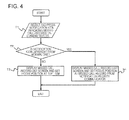
Fig. 4 is a flowchart showing a data processing method performed by the data communication terminal. -
Fig. 5 is a flowchart showing a data processing method performed by the data communication terminal. - An embodiment of the present invention will be described below with reference to the drawings. A
data communication terminal 100 of the present embodiment includes, as shown inFig. 1 , acontact receiving unit 110 which receives a contact request from another person; an incoming get-throughunit 120 which allows the received contact request to get through; an incoming presentingunit 130 which presents a contact request that has not got through, by a predetermined display image; acommunicator registering unit 140 which registers a specific communicator; and aspecific presentation unit 150 which presents, by a specific display image, a contact request that is from the registered communicator and that has not got through. - Note that in order that the presence of a missed call and an incoming email from a specific communicator whom a user wants to check on a priority basis can be identified by notification icons on a standby screen, the
communicator registering unit 140 can set and register the phone number, email address, missed call notification icon, and incoming email notification icon of the communicator, notification of which is given priority. The incoming presentingunit 130 displays a uniform icon as a display image. Thespecific presentation unit 150 displays a specific icon as a display image. The "uniform icon" is an icon for notifying the user of the presence of a contact request that is from an unregistered communicator and that has not got through. This icon is uniformly used for contact requests from unregistered users. The "specific icon" is an icon for notifying the user of the presence of a contact request that is from a registered specific communicator and that has not got through, and is distinguishable from at least the uniform icon. For example, the icon pictures of the uniform icon and the specific icon themselves may be different from each other. Alternatively, the pictures of the uniform icon and the specific icon themselves may be identical, but their display techniques (blinking display, enlarged display, etc.) may be different from each other. The uniform icon and the specific icon are displayed, for example, at a predetermined location of a so-called standby screen. Note that the specific icon may be such that different registered communicators can be identified by different specific icons, or when registered communicators are grouped and registered, different groups can be identified by different specific icons. - For example, the
contact receiving unit 110 receives a call request from another person. The incoming get-throughunit 120 allows the received call request to get through according to a user operation. If the call request has not got through, then according to the source of the call request, the incoming presentingunit 130 displays a uniform icon indicating a missed call, or thespecific presentation unit 150 displays a specific icon indicating a missed call. - In addition, the
contact receiving unit 110 receives an email from another person. The incoming get-throughunit 120 allows the received email to get through according to a user operation. If the email has not got through (unopened) yet, then according to the source of the email, theincoming presenting unit 130 displays a uniform icon indicating an unopened email, or thespecific presentation unit 150 displays a specific icon indicating an unopened email. - Note that the specific icon may be a single specific icon indicating registered specific communicators, or may be formed for each of a plurality of groups of specific communicators, or may be formed for each of a plurality of communicators.
- The
units 110 to 150 such as those described above are logically implemented by, for example, a microcomputer performing integrity control of hardware such as a data communication device and an image display device, according to a computer program. - Such a computer program is written to cause the
data communication terminal 100 to perform, for example, a contact reception process of receiving a contact request from another person; an incoming get-through process of allowing the received contact request to get through; an incoming presentation process of presenting a contact request that has not got through, by a predetermined display image; a communicator registration process of registering a specific communicator; and a specific presentation process of presenting, by a specific display image, a contact request that is from the registered communicator and that has not got through. - In a configuration such as that described above, in the
data communication terminal 100 of the present embodiment, thecontact receiving unit 110 receives a contact request such as an email or a call request from another person. The incoming get-throughunit 120 allows the received contact request to get through. By the contact request getting through, for example, the email is opened and is visually recognized by the user, or the user can talk to the communicator. - Note that when the contact request has not got through, a uniform icon which is a predetermined display image is displayed. The uniform icon is to display a missed call or an incoming email. In the case of a plurality of uniform icons, they are displayed in order of reception.
- On the other hand, when the contact request that has not got through is from a registered communicator, a specific icon which is a specific display image is displayed. The specific icon is to display that a missed call or an incoming email is from a specific communicator. When a specific icon is displayed together with a plurality of uniform icons, for example, the specific icon is highlighted such as blinking or red color, or is displayed on the top regardless of the order of reception.
- A
data communication terminal 100 of the present example includes, as shown inFig. 2 , astorage apparatus 1 which holds missed call records and incoming emails; a receivedinformation processing unit 2 which identifies whether there are missed call records or incoming emails that have not been checked by a user, from thestorage apparatus 1; a notificationicon control unit 4 which changes a notification icon depending on the case in which the unchecked missed call records or incoming emails outputted from the receivedinformation processing unit 2 include a missed call record and an incoming email from a specific communicator set in advance by acommunicator registering unit 140, or the case in which the above-described condition does not meet; ascreen control unit 5 which controls a screen transition to a missed call record screen or an email content display screen, depending on the state of the notification icon outputted from the notificationicon control unit 4 and the number of pieces of received information; adisplay apparatus 6 which displays the screen outputted from thescreen control unit 5; and an input apparatus 7 used to perform operations on the displayed screen. - The received
information processing unit 2 holds the content and number of incoming call records and incoming emails that have not been checked by the user, from thestorage apparatus 1 and outputs received information to the notificationicon control unit 4. In order that the presence of a missed call and an incoming email from a specific communicator whom the user wants to check on a priority basis can be identified by notification icons on a standby screen, thecommunicator registering unit 140 can set and register the phone number, email address, missed call notification icon, and incoming email notification icon of the communicator, notification of which is given priority. Thescreen control unit 5 changes the screen according to outputs from the notificationicon control unit 4 and the input apparatus 7, and outputs the screen to thedisplay apparatus 6. - In the
data communication terminal 100 of the present embodiment, screens and icons used in the description of operation in the following example are defined as a "standby screen" which displays notification icons indicating received information, a "missed call record screen" which displays a list of unchecked missed call records, an "email details screen" which displays the details of any email content, an "email list screen" which displays a list of incoming email, and a "notification icon". - As shown in
Fig. 3 , when a standby screen is displayed, to change the screen, thescreen control unit 5 checks the receivedinformation processing unit 2 whether there is notification of missed call records or incoming emails (step S1). - The received
information processing unit 2 outputs missed calls and incoming emails that have not been checked by the user and the numbers thereof to the notificationicon control unit 4 from thestorage apparatus 1. The notificationicon control unit 4 checks whether the received information does not include information set by the communicator registering unit 140 (step S2). If not included, then the notificationicon control unit 4 outputs a uniform icon (step S3). If included, then the notificationicon control unit 4 outputs a specific icon to the screen control unit 5 (step S4). Thescreen control unit 5 outputs a standby screen including notification icons notifying of a missed call record and an incoming email, to thedisplay apparatus 6 for display. - As shown in
Fig. 4 , when a notification icon informing about unchecked missed call records is selected and pressed by the input apparatus 7 such as a key during display of the standby screen (step T1), thescreen control unit 5 checks the notificationicon control unit 4 whether the icon is different from a uniform icon, in order to determine whether there is a missed call record and an incoming email from a notification priority communicator (step T2). - If the icon is a uniform icon, then on a "missed call record screen", a screen where a focus position is set at the top item is displayed (step T3). For example, incoming call records are arranged in order of arrival, and a predetermined number (design matters) of incoming call records, starting from the latest incoming call record are displayed on the screen in list form. On the other hand, if the icon is a specific icon in the
communicator registering unit 140, then on a "missed call record screen", a screen where a focus position is set at a missed call record from a notification priority communicator is displayed (step T4). For example, incoming call records are arranged in order of arrival, and a predetermined number of incoming call records are displayed on the screen in list form such that a missed call record from a notification priority communicator is located in a predetermined position (on the top, in the middle, etc.) in the display of the list displayed on the screen. - Alternatively, as shown in
Fig. 5 , when a notification icon informing about unchecked incoming emails is selected and pressed by the input apparatus 7 such as a key during display of the standby screen (step E1), thescreen control unit 5 checks the notificationicon control unit 4 about the number of notifications of incoming emails (step E2). If the number of notifications is one, then an "email details screen" for the corresponding email is displayed (step E6). - If the number of notifications is plural, then in order to determine whether there is an incoming email from a notification priority communicator, the notification
icon control unit 4 checks whether the icon is different from a uniform icon (step E3). If the icon is a uniform icon, then on an "email list screen", a screen where a focus position is set at the latest incoming email is displayed (step E4). For example, incoming emails are arranged in order of reception, and a predetermined number (design matters) of incoming emails, starting from the latest incoming email are displayed on the screen in list form. On the other hand, if the icon is a specific icon, then on an "email list screen", a screen where a focus position is set at an incoming email from a notification priority communicator is displayed (step E5). For example, incoming emails are arranged in order of reception, and a predetermined number of incoming emails are displayed on the screen in list form such that an incoming email from a notification priority communicator is located in a predetermined position (on the top, in the middle, etc.) in the display of the list displayed on the screen. - The
data communication terminal 100 of the present embodiment presents, as described above, contact requests that have not got through, by predetermined display images. When a contact request that has not got through is a contact request from a specific communicator registered in thecommunicator registering unit 140, a specific display image is presented. By viewing such a specific display image, the user can recognize at a glance a call request or an email received from the specific communicator and thus can promptly perform a reply, etc. - Note that the present invention is not limited to the embodiment and various modifications may be made without departing from the spirit and scope of the present invention. For example, the above-described embodiment illustrates that the units of the
data communication terminal 100 are logically implemented as various functions by a computer program. However, each of such units can also be formed as unique hardware and can also be implemented as a combination of software and hardware. - Note also that in the above-described embodiment a mobile phone that performs calls and email communication is assumed as the
data communication terminal 100. However, it is also possible to use a mobile phone that performs only calls, a PDA (Personal Digital Assistance) that performs only email communication, and the like. - This application claims priority to Japanese Patent Application No.
2010-216426 filed September 28, 2010
Claims (8)
- A data communication terminal comprising:a contact receiving unit which receives a contact request from another person;an incoming get-through unit which allows the received contact request to get through;an incoming presenting unit which presents the contact request that has not got through, by a predetermined display image;a communicator registering unit which registers a specific communicator; anda specific presentation unit which presents, by a specific display image, the contact request that is from the registered communicator and that has not got through.
- The data communication terminal according to claim 1, wherein
the incoming presenting unit displays a uniform icon as the display image, and
the specific presentation unit displays a specific icon as the display image. - The data communication terminal according to claim 2, wherein
the contact receiving unit receives a call request from the another person,
the incoming get-through unit allows the received call request to get through,
the incoming presenting unit displays the uniform icon for the call which indicates a missed call, and
the specific presentation unit displays the specific icon for the call which indicates a missed call. - The data communication terminal according to claim 2 or 3, wherein
the contact receiving unit receives an email from the another person,
the incoming get-through unit allows the received email to get through,
the incoming presenting unit displays the uniform icon for the email which indicates an unopened email, and
the specific presentation unit displays the specific icon for the email which indicates an unopened email. - The data communication terminal according to claim 3 or 4, wherein the specific presentation unit highlights the specific icon.
- The data communication terminal according to any one of claims 3 to 5, wherein
the incoming preseting unit displays the uniform icons in order of reception, and
the specific presentation unit displays the specific icon at a top of the order. - A computer program for a data communication terminal according to any one of claims 1 to 6, the computer program causing the data communication terminal to perform:a contact reception process of receiving a contact request from another person;an incoming get-through process of allowing the received contact request to get through;an incoming presentation process of presenting the contact request that has not got through, by a predetermined display image;a communicator registration process of registering a specific communicator; anda specific presentation process of presenting, by a specific display image, the contact request that is from the registered communicator and that has not got through.
- A data processing method for a data communication terminal according to any one of claims 1 to 6, the method causing the data communication terminal to perform:a contact reception operation of receiving a contact request from another person;an incoming get-through operation of allowing the received contact request to get through;an incoming presentation operation of presenting the contact request that has not got through, by a predetermined display image;a communicator registration operation of registering a specific communicator; anda specific presentation operation of presenting, by a specific display image, the contact request that is from the registered communicator and that has not got through.
Applications Claiming Priority (2)
| Application Number | Priority Date | Filing Date | Title |
|---|---|---|---|
| JP2010216426 | 2010-09-28 | ||
| PCT/JP2011/005018 WO2012042756A1 (en) | 2010-09-28 | 2011-09-07 | Data communication terminal, computer program, and data processing method |
Publications (2)
| Publication Number | Publication Date |
|---|---|
| EP2624526A1 true EP2624526A1 (en) | 2013-08-07 |
| EP2624526A4 EP2624526A4 (en) | 2015-04-08 |
Family
ID=45892251
Family Applications (1)
| Application Number | Title | Priority Date | Filing Date |
|---|---|---|---|
| EP11828323.3A Withdrawn EP2624526A4 (en) | 2010-09-28 | 2011-09-07 | Data communication terminal, computer program, and data processing method |
Country Status (5)
| Country | Link |
|---|---|
| US (1) | US8929956B2 (en) |
| EP (1) | EP2624526A4 (en) |
| JP (1) | JP5987689B2 (en) |
| CN (1) | CN103098447B (en) |
| WO (1) | WO2012042756A1 (en) |
Family Cites Families (15)
| Publication number | Priority date | Publication date | Assignee | Title |
|---|---|---|---|---|
| JPH0832690A (en) | 1994-07-15 | 1996-02-02 | Hasegawa Electric Co Ltd | ISDN Caller ID Converter |
| JPH11112618A (en) * | 1997-10-03 | 1999-04-23 | Toshiba Corp | Communication terminal |
| JP2000124987A (en) | 1998-10-13 | 2000-04-28 | Matsushita Electric Ind Co Ltd | Telephone, caller information notification system, and caller information notification method |
| JP2001075891A (en) * | 1999-09-09 | 2001-03-23 | Matsushita Electric Ind Co Ltd | E-mail receiving device, e-mail receiving method, and recording medium |
| JP3827521B2 (en) | 2000-11-09 | 2006-09-27 | Necアクセステクニカ株式会社 | Information portable terminal device |
| JP2003333137A (en) | 2002-05-16 | 2003-11-21 | Nec Corp | Information processing apparatus and standby screen control program |
| JP2005191833A (en) * | 2003-12-25 | 2005-07-14 | Fujitsu Ltd | How to display multiple types of incoming calls |
| US7571319B2 (en) * | 2004-10-14 | 2009-08-04 | Microsoft Corporation | Validating inbound messages |
| JP2007129506A (en) | 2005-11-04 | 2007-05-24 | Hitachi Advanced Digital Inc | Incoming call history display method for mobile communication equipment |
| JP2007143057A (en) * | 2005-11-22 | 2007-06-07 | Fujitsu Ltd | Mobile terminal device, missed call program, and image display method |
| KR100663477B1 (en) * | 2005-12-23 | 2007-01-02 | 삼성전자주식회사 | Calling device information providing apparatus and method in a mobile communication terminal |
| US8413059B2 (en) * | 2007-01-03 | 2013-04-02 | Social Concepts, Inc. | Image based electronic mail system |
| JP4887225B2 (en) * | 2007-06-19 | 2012-02-29 | 楽天株式会社 | Message transmission / reception system, terminal device, terminal processing program, server device, server processing program, display object display method, and display mode information transmission method |
| JP2009053758A (en) * | 2007-08-23 | 2009-03-12 | Toshiba Corp | Communication terminal device |
| KR101409895B1 (en) * | 2007-10-09 | 2014-06-20 | 엘지전자 주식회사 | Mobile terminal and operation control method thereof |
-
2011
- 2011-09-07 JP JP2012536169A patent/JP5987689B2/en active Active
- 2011-09-07 CN CN201180043694.1A patent/CN103098447B/en active Active
- 2011-09-07 EP EP11828323.3A patent/EP2624526A4/en not_active Withdrawn
- 2011-09-07 US US13/810,827 patent/US8929956B2/en active Active
- 2011-09-07 WO PCT/JP2011/005018 patent/WO2012042756A1/en not_active Ceased
Also Published As
| Publication number | Publication date |
|---|---|
| EP2624526A4 (en) | 2015-04-08 |
| CN103098447B (en) | 2015-07-01 |
| JPWO2012042756A1 (en) | 2014-02-03 |
| US8929956B2 (en) | 2015-01-06 |
| JP5987689B2 (en) | 2016-09-07 |
| US20130178249A1 (en) | 2013-07-11 |
| WO2012042756A1 (en) | 2012-04-05 |
| CN103098447A (en) | 2013-05-08 |
Similar Documents
| Publication | Publication Date | Title |
|---|---|---|
| RU2632160C2 (en) | Method, device and terminal for displaying application messages | |
| RU2589522C2 (en) | Mobile device with interlocking state of contact and method for operating mobile device | |
| US11086482B2 (en) | Method and device for displaying history pages in application program and computer-readable medium | |
| US11416112B2 (en) | Method and device for displaying an application interface | |
| US8976948B2 (en) | Method and communication device for displaying caller information and recording medium | |
| EP3337146B1 (en) | Method and apparatus for displaying notification message | |
| US7962180B2 (en) | Mobile communication terminal and method for processing event that user missed | |
| CN106126018A (en) | Desktop icons sort method and device | |
| US20100293508A1 (en) | Method for controlling icon position and portable terminal adapted thereto | |
| KR20170022967A (en) | Method and device for displaying badge of icon | |
| EP2751930A2 (en) | Method and apparatus for managing schedules in a portable terminal | |
| US20160196014A1 (en) | Method and apparatus for processing notifications on a mobile computing device | |
| CN104461236A (en) | Method and device for displaying application icons | |
| CN106445279A (en) | Icon display method and device | |
| US8145276B2 (en) | Portable terminal and method for displaying events according to environment set in the portable terminal | |
| JP2013074492A (en) | Portable electronic apparatus | |
| CN106572234A (en) | Method and device for establishing to-do list in terminal | |
| CN108958574A (en) | Briefing method, apparatus and storage medium | |
| CN108153601A (en) | Export the method and device of notification information | |
| CN113709307A (en) | Message display method and device and electronic equipment | |
| US8929956B2 (en) | Data communication terminal, information storage medium and data processing method therefor | |
| US8798259B2 (en) | Method for managing communication record and communication device performing the same | |
| WO2015046379A1 (en) | Electronic device, control program, and method for operating electronic device | |
| CN111538548B (en) | Storage space data display method and storage space data display device | |
| KR101224641B1 (en) | Mobile communication terminal with human data management function and method of human data displaying the same |
Legal Events
| Date | Code | Title | Description |
|---|---|---|---|
| PUAI | Public reference made under article 153(3) epc to a published international application that has entered the european phase |
Free format text: ORIGINAL CODE: 0009012 |
|
| 17P | Request for examination filed |
Effective date: 20130220 |
|
| AK | Designated contracting states |
Kind code of ref document: A1 Designated state(s): AL AT BE BG CH CY CZ DE DK EE ES FI FR GB GR HR HU IE IS IT LI LT LU LV MC MK MT NL NO PL PT RO RS SE SI SK SM TR |
|
| DAX | Request for extension of the european patent (deleted) | ||
| RA4 | Supplementary search report drawn up and despatched (corrected) |
Effective date: 20150306 |
|
| RIC1 | Information provided on ipc code assigned before grant |
Ipc: H04M 1/57 20060101AFI20150302BHEP Ipc: H04M 1/725 20060101ALI20150302BHEP |
|
| RAP1 | Party data changed (applicant data changed or rights of an application transferred) |
Owner name: NEC CORPORATION |
|
| 17Q | First examination report despatched |
Effective date: 20170822 |
|
| STAA | Information on the status of an ep patent application or granted ep patent |
Free format text: STATUS: THE APPLICATION HAS BEEN WITHDRAWN |
|
| 18W | Application withdrawn |
Effective date: 20171228 |