EP2624331A1 - Battery pack - Google Patents
Battery pack Download PDFInfo
- Publication number
- EP2624331A1 EP2624331A1 EP12185882.3A EP12185882A EP2624331A1 EP 2624331 A1 EP2624331 A1 EP 2624331A1 EP 12185882 A EP12185882 A EP 12185882A EP 2624331 A1 EP2624331 A1 EP 2624331A1
- Authority
- EP
- European Patent Office
- Prior art keywords
- spacer
- battery pack
- fastening
- pack according
- connection tab
- Prior art date
- Legal status (The legal status is an assumption and is not a legal conclusion. Google has not performed a legal analysis and makes no representation as to the accuracy of the status listed.)
- Granted
Links
Images




Classifications
-
- H—ELECTRICITY
- H01—ELECTRIC ELEMENTS
- H01M—PROCESSES OR MEANS, e.g. BATTERIES, FOR THE DIRECT CONVERSION OF CHEMICAL ENERGY INTO ELECTRICAL ENERGY
- H01M50/00—Constructional details or processes of manufacture of the non-active parts of electrochemical cells other than fuel cells, e.g. hybrid cells
- H01M50/50—Current conducting connections for cells or batteries
-
- H—ELECTRICITY
- H01—ELECTRIC ELEMENTS
- H01M—PROCESSES OR MEANS, e.g. BATTERIES, FOR THE DIRECT CONVERSION OF CHEMICAL ENERGY INTO ELECTRICAL ENERGY
- H01M10/00—Secondary cells; Manufacture thereof
- H01M10/42—Methods or arrangements for servicing or maintenance of secondary cells or secondary half-cells
- H01M10/425—Structural combination with electronic components, e.g. electronic circuits integrated to the outside of the casing
-
- H—ELECTRICITY
- H01—ELECTRIC ELEMENTS
- H01M—PROCESSES OR MEANS, e.g. BATTERIES, FOR THE DIRECT CONVERSION OF CHEMICAL ENERGY INTO ELECTRICAL ENERGY
- H01M50/00—Constructional details or processes of manufacture of the non-active parts of electrochemical cells other than fuel cells, e.g. hybrid cells
- H01M50/20—Mountings; Secondary casings or frames; Racks, modules or packs; Suspension devices; Shock absorbers; Transport or carrying devices; Holders
- H01M50/204—Racks, modules or packs for multiple batteries or multiple cells
- H01M50/207—Racks, modules or packs for multiple batteries or multiple cells characterised by their shape
- H01M50/213—Racks, modules or packs for multiple batteries or multiple cells characterised by their shape adapted for cells having curved cross-section, e.g. round or elliptic
-
- H—ELECTRICITY
- H01—ELECTRIC ELEMENTS
- H01M—PROCESSES OR MEANS, e.g. BATTERIES, FOR THE DIRECT CONVERSION OF CHEMICAL ENERGY INTO ELECTRICAL ENERGY
- H01M50/00—Constructional details or processes of manufacture of the non-active parts of electrochemical cells other than fuel cells, e.g. hybrid cells
- H01M50/50—Current conducting connections for cells or batteries
- H01M50/502—Interconnectors for connecting terminals of adjacent batteries; Interconnectors for connecting cells outside a battery casing
- H01M50/503—Interconnectors for connecting terminals of adjacent batteries; Interconnectors for connecting cells outside a battery casing characterised by the shape of the interconnectors
-
- H—ELECTRICITY
- H01—ELECTRIC ELEMENTS
- H01M—PROCESSES OR MEANS, e.g. BATTERIES, FOR THE DIRECT CONVERSION OF CHEMICAL ENERGY INTO ELECTRICAL ENERGY
- H01M50/00—Constructional details or processes of manufacture of the non-active parts of electrochemical cells other than fuel cells, e.g. hybrid cells
- H01M50/50—Current conducting connections for cells or batteries
- H01M50/502—Interconnectors for connecting terminals of adjacent batteries; Interconnectors for connecting cells outside a battery casing
- H01M50/509—Interconnectors for connecting terminals of adjacent batteries; Interconnectors for connecting cells outside a battery casing characterised by the type of connection, e.g. mixed connections
-
- H—ELECTRICITY
- H01—ELECTRIC ELEMENTS
- H01M—PROCESSES OR MEANS, e.g. BATTERIES, FOR THE DIRECT CONVERSION OF CHEMICAL ENERGY INTO ELECTRICAL ENERGY
- H01M50/00—Constructional details or processes of manufacture of the non-active parts of electrochemical cells other than fuel cells, e.g. hybrid cells
- H01M50/50—Current conducting connections for cells or batteries
- H01M50/502—Interconnectors for connecting terminals of adjacent batteries; Interconnectors for connecting cells outside a battery casing
- H01M50/521—Interconnectors for connecting terminals of adjacent batteries; Interconnectors for connecting cells outside a battery casing characterised by the material
- H01M50/522—Inorganic material
-
- H—ELECTRICITY
- H01—ELECTRIC ELEMENTS
- H01M—PROCESSES OR MEANS, e.g. BATTERIES, FOR THE DIRECT CONVERSION OF CHEMICAL ENERGY INTO ELECTRICAL ENERGY
- H01M50/00—Constructional details or processes of manufacture of the non-active parts of electrochemical cells other than fuel cells, e.g. hybrid cells
- H01M50/50—Current conducting connections for cells or batteries
- H01M50/528—Fixed electrical connections, i.e. not intended for disconnection
- H01M50/529—Intercell connections through partitions, e.g. in a battery casing
-
- H—ELECTRICITY
- H01—ELECTRIC ELEMENTS
- H01M—PROCESSES OR MEANS, e.g. BATTERIES, FOR THE DIRECT CONVERSION OF CHEMICAL ENERGY INTO ELECTRICAL ENERGY
- H01M50/00—Constructional details or processes of manufacture of the non-active parts of electrochemical cells other than fuel cells, e.g. hybrid cells
- H01M50/50—Current conducting connections for cells or batteries
- H01M50/543—Terminals
-
- H—ELECTRICITY
- H01—ELECTRIC ELEMENTS
- H01M—PROCESSES OR MEANS, e.g. BATTERIES, FOR THE DIRECT CONVERSION OF CHEMICAL ENERGY INTO ELECTRICAL ENERGY
- H01M50/00—Constructional details or processes of manufacture of the non-active parts of electrochemical cells other than fuel cells, e.g. hybrid cells
- H01M50/50—Current conducting connections for cells or batteries
- H01M50/572—Means for preventing undesired use or discharge
-
- Y—GENERAL TAGGING OF NEW TECHNOLOGICAL DEVELOPMENTS; GENERAL TAGGING OF CROSS-SECTIONAL TECHNOLOGIES SPANNING OVER SEVERAL SECTIONS OF THE IPC; TECHNICAL SUBJECTS COVERED BY FORMER USPC CROSS-REFERENCE ART COLLECTIONS [XRACs] AND DIGESTS
- Y02—TECHNOLOGIES OR APPLICATIONS FOR MITIGATION OR ADAPTATION AGAINST CLIMATE CHANGE
- Y02E—REDUCTION OF GREENHOUSE GAS [GHG] EMISSIONS, RELATED TO ENERGY GENERATION, TRANSMISSION OR DISTRIBUTION
- Y02E60/00—Enabling technologies; Technologies with a potential or indirect contribution to GHG emissions mitigation
- Y02E60/10—Energy storage using batteries
Definitions
- the present invention relates to a battery pack, and more particularly, to a battery pack capable of facilitating connection between a connection tab and a coverlay.
- a battery pack having a plurality of battery cells connected in series and/or parallel is often configured as a power source employed in a notebook computer, etc. so as to obtain a desired voltage and capacity.
- the connection of the plurality of battery cells in series and/or parallel is performed by soldering using a connection tab.
- a protective circuit module such as a charging/discharging control circuit and/or a protection circuit may be mounted to the plurality of battery cells.
- the protective circuit module may be electrically connected to the plurality of battery cells using a coverlay or some other kind of electrical conductor.
- one side of the coverlay is fixed to the protective circuit module, and the other side of the coverlay is fixed to the connection tab for connecting the plurality of battery cells.
- the present invention sets out to provide a battery pack in which soldering between the connection tab and an electrical conductor such as a coverlay is facilitated.
- the invention also seeks to provide a battery pack in which soldering operation to join a connection tab and an electrical conductor can be omitted.
- a battery pack as set out in Claim 1.
- connection tab and the spacer are physically fastened to each other, so that the fixing ability of the spacer can be improved, thereby facilitating a soldering operation between the connection tab and the conductor.
- connection tab and the conductor can be connected to each other using a fastening member, so that the soldering operation can be omitted.
- FIG. 1 is a perspective view showing a battery pack according to a first embodiment of the present invention.
- FIG. 2 is an exploded perspective view showing the battery pack according to the first embodiment of the present invention.
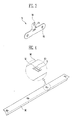
- FIG. 3 is a perspective view showing a connection tab according to the present invention.
- FIG. 4 is a perspective view showing a spacer according to the present invention.
- FIG. 5 is a sectional view taken along line A-A' of FIG. 1 .
- FIG. 6 is a perspective view showing a spacer used in a battery pack according to a second embodiment of the present invention.
- FIG. 7 is a perspective view showing a battery pack according to a third embodiment of the present invention.
- FIG. 8 is a sectional view taken along line B-B' of FIG. 7 .
- FIG. 1 is a perspective view showing a battery pack according to a first embodiment of the present invention.
- FIG. 2 is an exploded perspective view showing the battery pack according to the first embodiment of the present invention.
- the battery pack according to this embodiment includes a plurality of cylindrical battery cells 30a, 30b, 30c, 30d, 30e and 30f (hereinafter, commonly designated by '30' except when it is necessary to describe each of the battery cells), which are electrically connected to one another, and at least one connection tab 31 through which the plurality of battery cells 30 are electrically connected to one another.
- a protective circuit module (PCM) 20 is provided at one side of the plurality of battery cells 30, and the PCM 20 and the at least one connection tab 31 are electrically connected to each other through a coverlay 40.
- the coverlay is one example of a suitable conductor and other embodiments of the invention may employ different kinds of conductor.
- the battery pack according to this embodiment further includes a spacer 50 provided between the plurality of battery cells 30 and the coverlay 40.
- the spacer 50 is formed to fill a space between the plurality of battery cells 30 and a case (not shown) for accommodating the plurality of battery cells 30. That is, the spacer 50 is formed so that, on the vertical section of the spacer 50, the shape of a top surface corresponds to the shape of an inner surface of the case and the shape of a bottom surface corresponds to the shape of an outer surface of the plurality of battery cells 30.
- a through-hole 51 through which the at least one connection tab 31 passes is formed in the spacer 50, and the connection tab 31 passes through the through-hole 51 of the spacer 50 and is then bent toward an upper surface of the spacer 50.
- a first fastening formation 52 is formed at one side of the through-hole 51 in a region adjacent the edge of the through hole 51.
- the first fastening formation 52 is located in the direction in which the connection tab 31 is bent, and a second fastening formation 32 is formed at a position of the connection tab 31 corresponding to the first fastening formation 52.
- the first fastening formation 52 is formed in the shape of a hook with an overhang that projects towards the through hole 51
- the second fastening formation 32 is formed in the shape of a hook latching hole in which the hook is accommodated.
- the first fastening formation 52 of the spacer 50 is inserted into the second fastening formation 32 of the connection tab 31, so that it is possible to prevent vertical movement of the spacer 50. Accordingly, a soldering operation between the connection tab 31 and the coverlay 40 can be more easily performed on the spacer 50.
- a sloped surface 53 (See FIG. 5 ) is formed at the other side of the through-hole 51, on which the first fastening formation 52 is not formed.
- the sloped portion 53 is provided a space so that the first fastening formation 52 of the spacer 50 is more easily inserted into the second fastening member 32 of the connection tab 31.
- the PCM 20 has electronic components mounted therein, and a protection circuit, etc is configured in the PCM 20.
- the protection circuit includes a circuit for detecting overcharge or overdischarge of a battery and controlling current, a circuit for detecting overdischarge of a battery and blocking current, etc.
- An insertion hole 21 into which an end portion of the overlay 40 is inserted may be formed on the PCM 20 at which the electronic components, the protection circuit, etc. are not positioned.
- the plurality of battery cells 30 is formed into a structure of 2S3P, in which the six battery cells 30a, 30b, 30c, 30d, 30e and 30f are connected in series and parallel.
- the plurality of battery cells 30 are electrically connected to one another by the connection tab 31, and the connection tab 31 positioned at an outermost end of the plurality of the battery cells 30 may be used as a high current terminal in the battery pack.
- the coverlay 40 through which the PCM 20 and the plurality of battery cells 30 are electrically connected to each other is formed in the shape of a thin and long plate, and may be made of a conductive material such as copper (Cu) or nickel (Ni).
- An insulating member 10 surrounds the outer surface of the coverlay 40 except one end portion of the coverlay 40 connected to the PCM 20 and the other end portion of the coverlay 40 connected to the plurality of battery cells 30. That is, the outer surface of the coverlay 40 except a soldering portion 41 and a coverlay exposure portion 42 is surrounded by the insulating member 10.
- the plurality of coverlay 40 may be integrated by the insulating member 10, and the insulating member 10 may be formed in various shapes easily mounted on the outer surface of the plurality of battery cells 30.
- the insulating member 10 may be formed with a polyimide (PI) film.
- the coverlay 40 is mounted on the spacer 50, and the connection tab 31 passing through the through-hole 51 of the spacer 50 is bent and then mounted on an upper portion of the coverlay 40.
- the hook of the spacer 50 is latched into the hole-shaped second fastening formation 32 of the connection tab 31, so that it is possible to perform a soldering operation between the coverlay 40 and the connection tab 31 in the state in which the spacer 50 is fixed.
- FIG. 3 is a perspective view showing a connection tab according to the present invention.
- connection tab 31 is used to electrically connect the plurality of battery cells 30 (See FIG. 1 ) to one another.
- the connection tab 31 is formed so as to connect the plurality of battery cells 30 to one another.
- the connection tab 31 includes a plurality of first connection portions 35 connected to the battery cells 30 and a second connection portion 36 connected to the coverlay 40 (See FIG. 2 ).
- the battery cell 30 and the first connection portion 35 may be connected to each other by soldering, and the coverlay 40 and the second connection portion 36 may be connected to each other by soldering.
- the second fastening formation 32 is formed at a position of the connection tab 31, at which the connection tab 31 passes through the through-hole 51 (See FIG. 2 ) of the spacer 50 (See FIG. 2 ) and is then bent toward the upper surface of the spacer 50.
- the second fastening formation 32 is formed at a position corresponding to the hook-shaped first fastening formation 52 (See FIG. 2 ) formed in the through-hole 51.
- the second fastening formation 32 may be formed in the shape of a hook latching groove into which the first fastening formation 52 is inserted
- the first fastening formation 52 of the spacer 50 is inserted into the second fastening formation 32 of the connection tab 31, so that the spacer 50 can be fixed without the vertical movement thereof. Accordingly, the process of soldering and connecting the second connection portion 36 of the connection tab 31 and the coverlay 40 to each other on the spacer 50.
- FIG. 4 is a perspective view showing a spacer according to the present invention.
- the spacer 50 is positioned in a space between the plurality of battery cells 30 (See FIG. 1 ) and the case (not shown) for accommodating the plurality of battery cells 30.
- the spacer 50 is formed so that, on the vertical section of the spacer 50, the shape of a top surface corresponds to the shape of an inner surface of the case and the shape of a bottom surface corresponds to the shape of an outer surface of the plurality of battery cells 30. That is, the spacer 50 may be inserted into a concave portion between the plurality of battery cells 30 arranged in parallel.
- the top surface of the spacer 50 is formed in a flat shape corresponding to the inner surface of the case, and the bottom surface of the spacer 50 is formed in an arc shape corresponding to the outer surface of the plurality of the battery cells 30. That is, the spacer 50 has a structure in which the bottom surface is upwardly tapered in directions of both end portions of the top surface, and the upwardly tapered surface of the spacer 50 is formed in an arc shape corresponding to the outer surface of the plurality of battery cells 30.
- the spacer 50 can prevent vibration and movement of the plurality of battery cells 30 due to an external impact, etc., and enables the plurality of battery cells 30 to be stably fixed at a correct position.
- the battery cell 30 has a cylindrical shape
- the width of the spacer 50 preferably has a size corresponding to an approximately middle portion of two battery cells 30 of which both ends are adjacent to each other.
- connection tab 31 The through-hole 51 through which the at least one connection tab 31 (See FIG. 2 ) passes is formed in the spacer 50, and the connection tab 31 is inserted into the though-hole 51 of the spacer 50.
- the connection tab 31 is bent toward to the upper surface of the spacer 50.
- the hook-shaped first fastening formation 52 is formed at the one side of the through-hole 51 of the direction in which the connection tab 31 is bent.
- the first fastening formation 52 is inserted into the hook-latching-hole-shaped second fastening formation 32 (See FIG. 2 ) formed in the connection tab 31, thereby fixing the spacer 50.
- the slope portion 53 formed to be inclined to a predetermined angle is formed at the other side of the through-hole 51, in which the first fastening formation 52 is not formed.
- the slope portion 53 provides a space for more easily fastening the first fastening formation 52 of the spacer 50 to the second fastening formation 32 after the connection tab 31 is inserted into the through-hole 51.
- the spacer 50 is not particularly limited as long as it is an electrical insulating material, and may be preferably made of, for example, polymer resin such as polycarbonate (PC) or polyacrylonitrile-butadiene-styrene (ABS), etc.
- the spacer 50 can be easily manufactured by performing injection molding or press molding on polymer resin and then cutting the polymer resin to have a predetermined size.
- FIG. 5 is a sectional view taken along line A-A' of FIG. 1 .
- connection tab 31 through which the plurality of battery cells 30 are electrically connected to one another passes the through-hole 51 of the spacer 50 and is then bent toward the upper surface of the spacer 50.
- the hook-shaped first fastening formation 52 is formed at the one side of the through-hole 51 of the direction in which the connection tab 31 is bent.
- the hook-latching-hole-shaped second fastening formation 32 is formed at the position of the connection tab 31 corresponding to the first fastening formation 52. Accordingly, the first fastening formation 52 of the spacer 50 is latched to the second fastening formation 32 of the connection tab 31 while being accommodated in the second fastening formation 32.
- the other side of the through-hole 51 in which the first fastening formation 52 is not formed, may be formed in the shape of the slope portion 53 so that the first fastening formation 52 of the spacer 50 is more smoothly fastened to the second fastening formation 32 of the connection tab 31.
- the second connection portion 36 at the end portion of the connection tab 31 is connected to the coverlay 40 in the state in which the connection tab 31 is bent toward the upper surface of the spacer 50.
- the coverlay 40 is a component that electrically connects the PCM 20 and the connection tab 31 to each other.
- the coverlay 40 is positioned between the spacer 50 and the connection tab 31 so as to be connected to the connection tab 31 by soldering.
- FIG. 6 is a perspective view showing a spacer used in a battery pack according to a second embodiment of the present invention.
- a recess 55 for mounting the coverlay 40 (See FIG. 2 ) thereon is formed on the upper surface of the spacer 50 according to this embodiment.
- the recess 55 is formed on the upper surface of the spacer 50, so that the coverlay 40 for electrical connection between the plurality of battery cells 30 and electrical connection between the PCM 20 and the battery cells 30 can be more easily and stably mounted on the upper surface of the spacer 50.
- the recess 55 is formed in a shape corresponding to the coverlay 40. More preferably, the recess 55 may be formed so that the width of the recess 55 corresponds to that of the coverlay 40 and the depth of the recess 55 approximately corresponds to the thickness of the coverlay 40.
- a positive (+) symbol may be formed at one side of the spacer 50, and a negative (-) symbol may be formed at the other side of the spacer 50. Accordingly, it is possible to prevent the direction between positive and negative electrodes of the spacer 50 from being reversed.
- FIG. 7 is a perspective view showing a battery pack according to a third embodiment of the present invention.
- FIG. 8 is a sectional view taken along line B-B' of FIG. 7 .
- the plurality of battery cells 30, the PCM 20, the coverlay 40, etc. are identical or similar to those in the first embodiment, and therefore, their detailed descriptions will be omitted.
- the connection tab 31 and the coverlay 40 are fixed by a fastening member 34.
- connection tab 31 is bent toward the upper surface of the spacer 50 through the through-hole 51.
- the connection tab 31 and the coverlay 40 may be fixed by the fastening member 34 in the state in which the hook-shaped first fastening formation 52 of the spacer 50 is fixedly inserted into the second fastening formation 32 of the connection tab 31.
- first and second fastening holes 33 and 44 are respectively formed in the connection tab 31 and the coverlay 40 so that the fastening member 34 passes therethrough.
- a coupling groove 54 having the fastening member 34 coupled thereto is formed at a position of the spacer 50 corresponding to the first and second fastening holes 33 and 44. Accordingly, the fastening member 34 can be coupled to the coupling groove 54 by passing through the first and second fastening holes 33 and 44.
- the coupling groove 54 may have a shape corresponding to an outer surface of the fastening member 34 so that the fastening member 34 such as a screw is coupled to the coupling groove 54.
- connection tab 31 and the coverlay 40 are fixed by the fastening member 34, so that it is possible to omit a soldering operation and to uniformly maintain the quality of the battery pack.
Landscapes
- Chemical & Material Sciences (AREA)
- Chemical Kinetics & Catalysis (AREA)
- Electrochemistry (AREA)
- General Chemical & Material Sciences (AREA)
- Engineering & Computer Science (AREA)
- Microelectronics & Electronic Packaging (AREA)
- Manufacturing & Machinery (AREA)
- Inorganic Chemistry (AREA)
- Connection Of Batteries Or Terminals (AREA)
- Battery Mounting, Suspending (AREA)
Abstract
Description
- The present invention relates to a battery pack, and more particularly, to a battery pack capable of facilitating connection between a connection tab and a coverlay.
- In general, it is difficult to use only one battery cell as a power source of a notebook computer, etc. Therefore, a battery pack having a plurality of battery cells connected in series and/or parallel is often configured as a power source employed in a notebook computer, etc. so as to obtain a desired voltage and capacity. Here, the connection of the plurality of battery cells in series and/or parallel is performed by soldering using a connection tab.
- A protective circuit module such as a charging/discharging control circuit and/or a protection circuit may be mounted to the plurality of battery cells. Here, the protective circuit module may be electrically connected to the plurality of battery cells using a coverlay or some other kind of electrical conductor. In such a case one side of the coverlay is fixed to the protective circuit module, and the other side of the coverlay is fixed to the connection tab for connecting the plurality of battery cells.
- The present invention sets out to provide a battery pack in which soldering between the connection tab and an electrical conductor such as a coverlay is facilitated.
- The invention also seeks to provide a battery pack in which soldering operation to join a connection tab and an electrical conductor can be omitted.
- According to an aspect of the present invention, there is provided a battery pack as set out in Claim 1.
- fastening formationfastening formationfastening formationfastening formationfastening formationfastening formationPreferred features of the invention are set out in Claims 2 to 15.
- According to the present invention, the connection tab and the spacer are physically fastened to each other, so that the fixing ability of the spacer can be improved, thereby facilitating a soldering operation between the connection tab and the conductor.
- Further, the connection tab and the conductor can be connected to each other using a fastening member, so that the soldering operation can be omitted. Thus, it is possible to simplify the manufacturing process of the battery pack and to equalize the quality of the battery pack.
- The accompanying drawings, together with the description, illustrate embodiments of the present invention, and serve to explain the principles of the present invention.
-
FIG. 1 is a perspective view showing a battery pack according to a first embodiment of the present invention. -
FIG. 2 is an exploded perspective view showing the battery pack according to the first embodiment of the present invention. -
FIG. 3 is a perspective view showing a connection tab according to the present invention. -
FIG. 4 is a perspective view showing a spacer according to the present invention. -
FIG. 5 is a sectional view taken along line A-A' ofFIG. 1 . -
FIG. 6 is a perspective view showing a spacer used in a battery pack according to a second embodiment of the present invention. -
FIG. 7 is a perspective view showing a battery pack according to a third embodiment of the present invention. -
FIG. 8 is a sectional view taken along line B-B' ofFIG. 7 . - In the following detailed description, only certain embodiments of the present invention have been shown and described, simply by way of illustration. As those skilled in the art would realize, the described embodiments may be modified in various different ways, all without departing from the scope of the present invention. Accordingly, the drawings and description are to be regarded as illustrative in nature and not restrictive. In addition, when an element is referred to as being "on" another element, it can be directly on the another element or be indirectly on the another element with one or more intervening elements interposed therebetween. Also, when an element is referred to as being "connected to" another element, it can be directly connected to the another element or be indirectly connected to the another element with one or more intervening elements interposed therebetween. Hereinafter, like reference numerals refer to like elements. In the drawings, the thickness or size of layers are exaggerated for clarity and not necessarily drawn to scale.
-
FIG. 1 is a perspective view showing a battery pack according to a first embodiment of the present invention.FIG. 2 is an exploded perspective view showing the battery pack according to the first embodiment of the present invention. - Referring to
FIGS. 1 and2 , the battery pack according to this embodiment includes a plurality ofcylindrical battery cells connection tab 31 through which the plurality ofbattery cells 30 are electrically connected to one another. A protective circuit module (PCM) 20 is provided at one side of the plurality ofbattery cells 30, and thePCM 20 and the at least oneconnection tab 31 are electrically connected to each other through acoverlay 40. The coverlay is one example of a suitable conductor and other embodiments of the invention may employ different kinds of conductor. The battery pack according to this embodiment further includes aspacer 50 provided between the plurality ofbattery cells 30 and thecoverlay 40. - The
spacer 50 is formed to fill a space between the plurality ofbattery cells 30 and a case (not shown) for accommodating the plurality ofbattery cells 30. That is, thespacer 50 is formed so that, on the vertical section of thespacer 50, the shape of a top surface corresponds to the shape of an inner surface of the case and the shape of a bottom surface corresponds to the shape of an outer surface of the plurality ofbattery cells 30. - A through-
hole 51 through which the at least oneconnection tab 31 passes is formed in thespacer 50, and theconnection tab 31 passes through the through-hole 51 of thespacer 50 and is then bent toward an upper surface of thespacer 50. In this case, afirst fastening formation 52 is formed at one side of the through-hole 51 in a region adjacent the edge of the throughhole 51. Thefirst fastening formation 52 is located in the direction in which theconnection tab 31 is bent, and asecond fastening formation 32 is formed at a position of theconnection tab 31 corresponding to thefirst fastening formation 52. Here, thefirst fastening formation 52 is formed in the shape of a hook with an overhang that projects towards the throughhole 51, and thesecond fastening formation 32 is formed in the shape of a hook latching hole in which the hook is accommodated. - As described above, the
first fastening formation 52 of thespacer 50 is inserted into thesecond fastening formation 32 of theconnection tab 31, so that it is possible to prevent vertical movement of thespacer 50. Accordingly, a soldering operation between theconnection tab 31 and thecoverlay 40 can be more easily performed on thespacer 50. - A sloped surface 53 (See
FIG. 5 ) is formed at the other side of the through-hole 51, on which thefirst fastening formation 52 is not formed. The slopedportion 53 is provided a space so that thefirst fastening formation 52 of thespacer 50 is more easily inserted into thesecond fastening member 32 of theconnection tab 31. - The
PCM 20 according to according to the present invention has electronic components mounted therein, and a protection circuit, etc is configured in the PCM 20. The protection circuit includes a circuit for detecting overcharge or overdischarge of a battery and controlling current, a circuit for detecting overdischarge of a battery and blocking current, etc. Aninsertion hole 21 into which an end portion of theoverlay 40 is inserted may be formed on thePCM 20 at which the electronic components, the protection circuit, etc. are not positioned. - The plurality of
battery cells 30 is formed into a structure of 2S3P, in which the sixbattery cells battery cells 30 are electrically connected to one another by theconnection tab 31, and theconnection tab 31 positioned at an outermost end of the plurality of thebattery cells 30 may be used as a high current terminal in the battery pack. - The
coverlay 40 through which thePCM 20 and the plurality ofbattery cells 30 are electrically connected to each other is formed in the shape of a thin and long plate, and may be made of a conductive material such as copper (Cu) or nickel (Ni). Aninsulating member 10 surrounds the outer surface of thecoverlay 40 except one end portion of thecoverlay 40 connected to thePCM 20 and the other end portion of thecoverlay 40 connected to the plurality ofbattery cells 30. That is, the outer surface of thecoverlay 40 except asoldering portion 41 and acoverlay exposure portion 42 is surrounded by theinsulating member 10. - The plurality of
coverlay 40 may be integrated by theinsulating member 10, and theinsulating member 10 may be formed in various shapes easily mounted on the outer surface of the plurality ofbattery cells 30. Here, theinsulating member 10 may be formed with a polyimide (PI) film. - The
coverlay 40 is mounted on thespacer 50, and theconnection tab 31 passing through the through-hole 51 of thespacer 50 is bent and then mounted on an upper portion of thecoverlay 40. In this case, the hook of thespacer 50 is latched into the hole-shapedsecond fastening formation 32 of theconnection tab 31, so that it is possible to perform a soldering operation between thecoverlay 40 and theconnection tab 31 in the state in which thespacer 50 is fixed. -
FIG. 3 is a perspective view showing a connection tab according to the present invention. - Referring to
FIG. 3 , theconnection tab 31 is used to electrically connect the plurality of battery cells 30 (SeeFIG. 1 ) to one another. Theconnection tab 31 is formed so as to connect the plurality ofbattery cells 30 to one another. Theconnection tab 31 includes a plurality offirst connection portions 35 connected to thebattery cells 30 and asecond connection portion 36 connected to the coverlay 40 (SeeFIG. 2 ). Thebattery cell 30 and thefirst connection portion 35 may be connected to each other by soldering, and the coverlay 40 and thesecond connection portion 36 may be connected to each other by soldering. - The
second fastening formation 32 is formed at a position of theconnection tab 31, at which theconnection tab 31 passes through the through-hole 51 (SeeFIG. 2 ) of the spacer 50 (SeeFIG. 2 ) and is then bent toward the upper surface of thespacer 50. Here, thesecond fastening formation 32 is formed at a position corresponding to the hook-shaped first fastening formation 52 (SeeFIG. 2 ) formed in the through-hole 51. Thesecond fastening formation 32 may be formed in the shape of a hook latching groove into which thefirst fastening formation 52 is inserted - As described above, the
first fastening formation 52 of thespacer 50 is inserted into thesecond fastening formation 32 of theconnection tab 31, so that thespacer 50 can be fixed without the vertical movement thereof. Accordingly, the process of soldering and connecting thesecond connection portion 36 of theconnection tab 31 and thecoverlay 40 to each other on thespacer 50. -
FIG. 4 is a perspective view showing a spacer according to the present invention. - Referring to
FIG. 4 , thespacer 50 is positioned in a space between the plurality of battery cells 30 (SeeFIG. 1 ) and the case (not shown) for accommodating the plurality ofbattery cells 30. Thespacer 50 is formed so that, on the vertical section of thespacer 50, the shape of a top surface corresponds to the shape of an inner surface of the case and the shape of a bottom surface corresponds to the shape of an outer surface of the plurality ofbattery cells 30. That is, thespacer 50 may be inserted into a concave portion between the plurality ofbattery cells 30 arranged in parallel. - More preferably, the top surface of the
spacer 50 is formed in a flat shape corresponding to the inner surface of the case, and the bottom surface of thespacer 50 is formed in an arc shape corresponding to the outer surface of the plurality of thebattery cells 30. That is, thespacer 50 has a structure in which the bottom surface is upwardly tapered in directions of both end portions of the top surface, and the upwardly tapered surface of thespacer 50 is formed in an arc shape corresponding to the outer surface of the plurality ofbattery cells 30. - Accordingly, the
spacer 50 can prevent vibration and movement of the plurality ofbattery cells 30 due to an external impact, etc., and enables the plurality ofbattery cells 30 to be stably fixed at a correct position. Here, thebattery cell 30 has a cylindrical shape, and the width of thespacer 50 preferably has a size corresponding to an approximately middle portion of twobattery cells 30 of which both ends are adjacent to each other. - The through-
hole 51 through which the at least one connection tab 31 (SeeFIG. 2 ) passes is formed in thespacer 50, and theconnection tab 31 is inserted into the though-hole 51 of thespacer 50. Theconnection tab 31 is bent toward to the upper surface of thespacer 50. In this case, the hook-shapedfirst fastening formation 52 is formed at the one side of the through-hole 51 of the direction in which theconnection tab 31 is bent. Thefirst fastening formation 52 is inserted into the hook-latching-hole-shaped second fastening formation 32 (SeeFIG. 2 ) formed in theconnection tab 31, thereby fixing thespacer 50. - The
slope portion 53 formed to be inclined to a predetermined angle is formed at the other side of the through-hole 51, in which thefirst fastening formation 52 is not formed. Theslope portion 53 provides a space for more easily fastening thefirst fastening formation 52 of thespacer 50 to thesecond fastening formation 32 after theconnection tab 31 is inserted into the through-hole 51. - The
spacer 50 is not particularly limited as long as it is an electrical insulating material, and may be preferably made of, for example, polymer resin such as polycarbonate (PC) or polyacrylonitrile-butadiene-styrene (ABS), etc. Thespacer 50 can be easily manufactured by performing injection molding or press molding on polymer resin and then cutting the polymer resin to have a predetermined size. -
FIG. 5 is a sectional view taken along line A-A' ofFIG. 1 . - Referring to
FIG. 5 , theconnection tab 31 through which the plurality ofbattery cells 30 are electrically connected to one another passes the through-hole 51 of thespacer 50 and is then bent toward the upper surface of thespacer 50. In this case, the hook-shapedfirst fastening formation 52 is formed at the one side of the through-hole 51 of the direction in which theconnection tab 31 is bent. The hook-latching-hole-shapedsecond fastening formation 32 is formed at the position of theconnection tab 31 corresponding to thefirst fastening formation 52. Accordingly, thefirst fastening formation 52 of thespacer 50 is latched to thesecond fastening formation 32 of theconnection tab 31 while being accommodated in thesecond fastening formation 32. - Here, the other side of the through-
hole 51, in which thefirst fastening formation 52 is not formed, may be formed in the shape of theslope portion 53 so that thefirst fastening formation 52 of thespacer 50 is more smoothly fastened to thesecond fastening formation 32 of theconnection tab 31. Thesecond connection portion 36 at the end portion of theconnection tab 31 is connected to thecoverlay 40 in the state in which theconnection tab 31 is bent toward the upper surface of thespacer 50. Thecoverlay 40 is a component that electrically connects thePCM 20 and theconnection tab 31 to each other. Thecoverlay 40 is positioned between thespacer 50 and theconnection tab 31 so as to be connected to theconnection tab 31 by soldering. -
FIG. 6 is a perspective view showing a spacer used in a battery pack according to a second embodiment of the present invention. - Referring to
FIG. 6 , arecess 55 for mounting the coverlay 40 (SeeFIG. 2 ) thereon is formed on the upper surface of thespacer 50 according to this embodiment. Therecess 55 is formed on the upper surface of thespacer 50, so that thecoverlay 40 for electrical connection between the plurality ofbattery cells 30 and electrical connection between thePCM 20 and thebattery cells 30 can be more easily and stably mounted on the upper surface of thespacer 50. - The
recess 55 is formed in a shape corresponding to thecoverlay 40. More preferably, therecess 55 may be formed so that the width of therecess 55 corresponds to that of thecoverlay 40 and the depth of therecess 55 approximately corresponds to the thickness of thecoverlay 40. - A positive (+) symbol may be formed at one side of the
spacer 50, and a negative (-) symbol may be formed at the other side of thespacer 50. Accordingly, it is possible to prevent the direction between positive and negative electrodes of thespacer 50 from being reversed. -
FIG. 7 is a perspective view showing a battery pack according to a third embodiment of the present invention.FIG. 8 is a sectional view taken along line B-B' ofFIG. 7 . - In
FIGS. 7 and 8 , the plurality ofbattery cells 30, thePCM 20, thecoverlay 40, etc. are identical or similar to those in the first embodiment, and therefore, their detailed descriptions will be omitted. In the battery pack according to this embodiment, theconnection tab 31 and thecoverlay 40 are fixed by afastening member 34. - First, the
spacer 50 is positioned between the plurality ofbattery cells 30 adjacent in parallel. Then, theconnection tab 31 is bent toward the upper surface of thespacer 50 through the through-hole 51. In this case, theconnection tab 31 and thecoverlay 40 may be fixed by thefastening member 34 in the state in which the hook-shapedfirst fastening formation 52 of thespacer 50 is fixedly inserted into thesecond fastening formation 32 of theconnection tab 31. - Here, first and second fastening holes 33 and 44 are respectively formed in the
connection tab 31 and thecoverlay 40 so that thefastening member 34 passes therethrough. Acoupling groove 54 having the fasteningmember 34 coupled thereto is formed at a position of thespacer 50 corresponding to the first and second fastening holes 33 and 44. Accordingly, thefastening member 34 can be coupled to thecoupling groove 54 by passing through the first and second fastening holes 33 and 44. Here, thecoupling groove 54 may have a shape corresponding to an outer surface of thefastening member 34 so that thefastening member 34 such as a screw is coupled to thecoupling groove 54. - As described above, the
connection tab 31 and thecoverlay 40 are fixed by thefastening member 34, so that it is possible to omit a soldering operation and to uniformly maintain the quality of the battery pack. - While the present invention has been described in connection with certain exemplary embodiments, it is to be understood that the invention is not limited to the disclosed embodiments, but, on the contrary, is intended to cover various modifications and equivalent arrangements included within the scope of the appended claims, and equivalents thereof.
Claims (15)
- A battery pack comprising:a battery cell (30a-30f);a connection tab (31) connected to the said battery cell (30a-30f);a protective circuit module (20);a conductor (40) that electrically connects the connection tab (31) with the protective circuit module (20); anda spacer (30) that is situated between the conductor (40) and the battery cell (30a-30f);characterised in that at least one of the spacer (50) and the connection tab (31) comprises a fastening formation (32, 52) that secures the location of the spacer (50) and the connection tab (31) relative to each other.
- A battery pack according to claim 1, wherein the spacer (50) comprises a first fastening formation (52) and the connection tab (31) comprises a second fastening formation (32).
- A battery pack according to claim 2, wherein one of the first and second fastening formations (32, 52) comprises a fastening projection (52) and the other of the first and second fastening formations (32, 52) comprises a fastening aperture (32), the said fastening projection (52) being retained within the fastening aperture (32).
- A battery pack according to claim 3, wherein the fastening projection (52) comprises a hook-shaped member (52).
- A battery pack according to claim 3 or 4, wherein the fastening projection (52) is provided on the spacer (50) and the fastening aperture (32) is provided in the connection tab (31).
- A battery pack according to one of claims 2 to 5, wherein the spacer (50) comprises a through hole (51), the connection tab (31) comprises a first connection portion (36) that extends via the through hole (51) to form an electrical connection with the conductor (40), and the second fastening formation (32) is provided on the first connection portion.
- A battery pack according to claim 6 when dependent upon claims 4 and 5, wherein the hook-shaped member (52) is provided in a region adjacent an edge of the through hole (51) and comprises an overhang that projects towards the through hole (51).
- A battery pack according to claim 7, wherein the through hole (51) is provided with a sloped surface (53) on a side thereof that is opposite the said region adjacent the edge of the through hole (51) in which the hook-shaped member is provided.
- A battery pack according to claim 7 or 8, wherein the first connection portion (36) is bent over the said region adjacent the edge of the through hole (51) and extends beyond the hook-shaped member (52) to form an electrical connection with the said conductor (40).
- A battery pack according to any preceding claim, wherein the conductor (40) is covered by an insulation member (10) and comprises a first exposed portion (42) that is not covered by the insulation member (10); and
wherein the first connection portion (36) is electrically connected to the first exposed portion (42). - A battery pack according to claim 10, wherein the first connection portion (36) is welded to the first exposed portion (42).
- A battery pack according to claim 11, wherein the first connection portion (36) is connected to the exposed portion (42) via a fastening member (34).
- A battery pack according to any preceding claim, wherein the spacer (50) comprises a recess (55) that accommodates the conductor (40).
- A battery pack according to any preceding claim, comprising two said battery cells;
wherein the cells are laterally adjacent and the spacer projects at least partially between the said cells. - A battery pack according to claim 14, wherein the spacer has a cross-section that at least partially conforms to the peripheral shape of the cells.
Applications Claiming Priority (2)
| Application Number | Priority Date | Filing Date | Title |
|---|---|---|---|
| US201261593176P | 2012-01-31 | 2012-01-31 | |
| US13/605,573 US9356277B2 (en) | 2012-01-31 | 2012-09-06 | Battery pack including spacer receiving conductive member |
Publications (2)
| Publication Number | Publication Date |
|---|---|
| EP2624331A1 true EP2624331A1 (en) | 2013-08-07 |
| EP2624331B1 EP2624331B1 (en) | 2017-06-21 |
Family
ID=47018810
Family Applications (1)
| Application Number | Title | Priority Date | Filing Date |
|---|---|---|---|
| EP12185882.3A Active EP2624331B1 (en) | 2012-01-31 | 2012-09-25 | Battery pack |
Country Status (4)
| Country | Link |
|---|---|
| US (1) | US9356277B2 (en) |
| EP (1) | EP2624331B1 (en) |
| JP (1) | JP6062203B2 (en) |
| KR (1) | KR101945902B1 (en) |
Families Citing this family (7)
| Publication number | Priority date | Publication date | Assignee | Title |
|---|---|---|---|---|
| KR20150043797A (en) * | 2013-10-15 | 2015-04-23 | 삼성에스디아이 주식회사 | Battery pack |
| KR102006529B1 (en) * | 2014-04-01 | 2019-08-01 | 센젠 즈룬 드라이빙 테크놀러지 포 일렉트릭 비이클 컴퍼니 리미티드 | Power battery and cell state acquisition apparatus thereof |
| KR102285144B1 (en) * | 2015-01-30 | 2021-08-04 | 삼성에스디아이 주식회사 | Secondary battery |
| KR102497113B1 (en) * | 2015-11-19 | 2023-02-07 | 삼성에스디아이 주식회사 | Battery pack |
| KR102167430B1 (en) * | 2016-10-24 | 2020-10-20 | 주식회사 엘지화학 | Battery pack |
| KR20180001776U (en) | 2016-12-06 | 2018-06-15 | 주식회사 에너위즈 | Connectors for Battery Packs |
| KR20240100036A (en) * | 2022-12-22 | 2024-07-01 | 주식회사 엘지에너지솔루션 | Battery pack |
Citations (6)
| Publication number | Priority date | Publication date | Assignee | Title |
|---|---|---|---|---|
| US6724170B1 (en) * | 2002-11-16 | 2004-04-20 | Motorola, Inc. | Interconnect system for rechargeable computer batteries |
| US20050271934A1 (en) * | 2004-06-05 | 2005-12-08 | Kiger William B | Battery pack assembly |
| US20060032667A1 (en) * | 2003-01-23 | 2006-02-16 | Sony Corporation | Lead terminal and power supply device |
| US20090246615A1 (en) * | 2008-03-31 | 2009-10-01 | Samsung Sdi Co., Ltd. | Battery pack |
| US20110151285A1 (en) * | 2009-12-18 | 2011-06-23 | Jintae Hong | Battery pack and method for fabricating the same |
| US20110192020A1 (en) * | 2010-02-10 | 2011-08-11 | Jintae Hong | Core pack manufacturing apparatus |
Family Cites Families (12)
| Publication number | Priority date | Publication date | Assignee | Title |
|---|---|---|---|---|
| JPH0637571Y2 (en) * | 1988-12-19 | 1994-09-28 | 三洋電機株式会社 | Terminal member |
| JPH0745882Y2 (en) * | 1989-08-08 | 1995-10-18 | 三洋電機株式会社 | Battery pack |
| JP2003017028A (en) * | 2001-07-05 | 2003-01-17 | Yoshifusa Hishitani | Dry battery power supply |
| KR100497252B1 (en) | 2003-09-09 | 2005-06-23 | 삼성에스디아이 주식회사 | Battery pack |
| JP4916183B2 (en) | 2006-02-20 | 2012-04-11 | 三洋電機株式会社 | Pack battery |
| JP5200420B2 (en) * | 2007-05-16 | 2013-06-05 | ソニー株式会社 | Battery pack |
| KR101134400B1 (en) * | 2007-09-13 | 2012-04-09 | 주식회사 엘지화학 | Connecting Member of Improved Coupling Property |
| KR101117994B1 (en) * | 2009-01-06 | 2012-02-24 | 주식회사 엘지화학 | Spacer for Battery Pack and Battery Pack Comprising the Same |
| KR101057563B1 (en) | 2009-07-01 | 2011-08-17 | 삼성에스디아이 주식회사 | Battery pack |
| KR101218537B1 (en) * | 2009-12-11 | 2013-01-07 | 주식회사 엘지화학 | Spacer for Preparation of Battery Pack |
| CN102280602B (en) | 2011-06-27 | 2013-08-21 | 东风汽车公司 | Power battery module arrangement connection assembly structure |
| JP2013089382A (en) * | 2011-10-14 | 2013-05-13 | Sanyo Electric Co Ltd | Battery pack |
-
2012
- 2012-09-06 US US13/605,573 patent/US9356277B2/en active Active
- 2012-09-11 KR KR1020120100594A patent/KR101945902B1/en active Active
- 2012-09-25 EP EP12185882.3A patent/EP2624331B1/en active Active
- 2012-10-11 JP JP2012225757A patent/JP6062203B2/en active Active
Patent Citations (6)
| Publication number | Priority date | Publication date | Assignee | Title |
|---|---|---|---|---|
| US6724170B1 (en) * | 2002-11-16 | 2004-04-20 | Motorola, Inc. | Interconnect system for rechargeable computer batteries |
| US20060032667A1 (en) * | 2003-01-23 | 2006-02-16 | Sony Corporation | Lead terminal and power supply device |
| US20050271934A1 (en) * | 2004-06-05 | 2005-12-08 | Kiger William B | Battery pack assembly |
| US20090246615A1 (en) * | 2008-03-31 | 2009-10-01 | Samsung Sdi Co., Ltd. | Battery pack |
| US20110151285A1 (en) * | 2009-12-18 | 2011-06-23 | Jintae Hong | Battery pack and method for fabricating the same |
| US20110192020A1 (en) * | 2010-02-10 | 2011-08-11 | Jintae Hong | Core pack manufacturing apparatus |
Also Published As
| Publication number | Publication date |
|---|---|
| US20130196181A1 (en) | 2013-08-01 |
| JP2013157311A (en) | 2013-08-15 |
| KR101945902B1 (en) | 2019-02-08 |
| US9356277B2 (en) | 2016-05-31 |
| JP6062203B2 (en) | 2017-01-18 |
| EP2624331B1 (en) | 2017-06-21 |
| CN103227304A (en) | 2013-07-31 |
| KR20130088715A (en) | 2013-08-08 |
Similar Documents
| Publication | Publication Date | Title |
|---|---|---|
| CN102272976B (en) | Spacer for battery pack and battery pack including same | |
| EP2624331A1 (en) | Battery pack | |
| US8936865B2 (en) | Bus bar holder and battery pack including the same | |
| US9017836B2 (en) | Battery pack | |
| JP5284053B2 (en) | Secondary battery pack | |
| US9716258B2 (en) | Battery pack | |
| JP5606576B2 (en) | Secondary battery pack | |
| US8771851B2 (en) | Battery pack | |
| CN110506348B (en) | Battery connector and battery pack including the same | |
| US20140370355A1 (en) | Battery pack | |
| EP3490024B1 (en) | Battery pack | |
| JP4946742B2 (en) | Board, circuit board and battery pack | |
| CN101425606B (en) | Rechargeable battery | |
| US8632899B2 (en) | Battery pack | |
| US10170736B2 (en) | Battery case | |
| KR101750485B1 (en) | PCB Having Connector Edge | |
| CN103227304B (en) | Set of cells | |
| US9362543B2 (en) | Battery pack | |
| CN103985830A (en) | Battery pack | |
| US9564662B2 (en) | Protection circuit module integrated cap assembly, and method of manufacturing cap assembly and secondary battery | |
| US20120251870A1 (en) | Battery pack |
Legal Events
| Date | Code | Title | Description |
|---|---|---|---|
| PUAI | Public reference made under article 153(3) epc to a published international application that has entered the european phase |
Free format text: ORIGINAL CODE: 0009012 |
|
| AK | Designated contracting states |
Kind code of ref document: A1 Designated state(s): AL AT BE BG CH CY CZ DE DK EE ES FI FR GB GR HR HU IE IS IT LI LT LU LV MC MK MT NL NO PL PT RO RS SE SI SK SM TR |
|
| AX | Request for extension of the european patent |
Extension state: BA ME |
|
| 17P | Request for examination filed |
Effective date: 20140207 |
|
| RBV | Designated contracting states (corrected) |
Designated state(s): AL AT BE BG CH CY CZ DE DK EE ES FI FR GB GR HR HU IE IS IT LI LT LU LV MC MK MT NL NO PL PT RO RS SE SI SK SM TR |
|
| 17Q | First examination report despatched |
Effective date: 20160601 |
|
| GRAP | Despatch of communication of intention to grant a patent |
Free format text: ORIGINAL CODE: EPIDOSNIGR1 |
|
| INTG | Intention to grant announced |
Effective date: 20170109 |
|
| GRAS | Grant fee paid |
Free format text: ORIGINAL CODE: EPIDOSNIGR3 |
|
| GRAA | (expected) grant |
Free format text: ORIGINAL CODE: 0009210 |
|
| AK | Designated contracting states |
Kind code of ref document: B1 Designated state(s): AL AT BE BG CH CY CZ DE DK EE ES FI FR GB GR HR HU IE IS IT LI LT LU LV MC MK MT NL NO PL PT RO RS SE SI SK SM TR |
|
| REG | Reference to a national code |
Ref country code: GB Ref legal event code: FG4D |
|
| REG | Reference to a national code |
Ref country code: CH Ref legal event code: EP |
|
| REG | Reference to a national code |
Ref country code: IE Ref legal event code: FG4D |
|
| REG | Reference to a national code |
Ref country code: AT Ref legal event code: REF Ref document number: 903660 Country of ref document: AT Kind code of ref document: T Effective date: 20170715 |
|
| REG | Reference to a national code |
Ref country code: DE Ref legal event code: R096 Ref document number: 602012033647 Country of ref document: DE |
|
| REG | Reference to a national code |
Ref country code: FR Ref legal event code: PLFP Year of fee payment: 6 |
|
| REG | Reference to a national code |
Ref country code: NL Ref legal event code: MP Effective date: 20170621 |
|
| PG25 | Lapsed in a contracting state [announced via postgrant information from national office to epo] |
Ref country code: NO Free format text: LAPSE BECAUSE OF FAILURE TO SUBMIT A TRANSLATION OF THE DESCRIPTION OR TO PAY THE FEE WITHIN THE PRESCRIBED TIME-LIMIT Effective date: 20170921 Ref country code: LT Free format text: LAPSE BECAUSE OF FAILURE TO SUBMIT A TRANSLATION OF THE DESCRIPTION OR TO PAY THE FEE WITHIN THE PRESCRIBED TIME-LIMIT Effective date: 20170621 Ref country code: GR Free format text: LAPSE BECAUSE OF FAILURE TO SUBMIT A TRANSLATION OF THE DESCRIPTION OR TO PAY THE FEE WITHIN THE PRESCRIBED TIME-LIMIT Effective date: 20170922 Ref country code: HR Free format text: LAPSE BECAUSE OF FAILURE TO SUBMIT A TRANSLATION OF THE DESCRIPTION OR TO PAY THE FEE WITHIN THE PRESCRIBED TIME-LIMIT Effective date: 20170621 Ref country code: FI Free format text: LAPSE BECAUSE OF FAILURE TO SUBMIT A TRANSLATION OF THE DESCRIPTION OR TO PAY THE FEE WITHIN THE PRESCRIBED TIME-LIMIT Effective date: 20170621 |
|
| REG | Reference to a national code |
Ref country code: LT Ref legal event code: MG4D |
|
| REG | Reference to a national code |
Ref country code: AT Ref legal event code: MK05 Ref document number: 903660 Country of ref document: AT Kind code of ref document: T Effective date: 20170621 |
|
| PG25 | Lapsed in a contracting state [announced via postgrant information from national office to epo] |
Ref country code: LV Free format text: LAPSE BECAUSE OF FAILURE TO SUBMIT A TRANSLATION OF THE DESCRIPTION OR TO PAY THE FEE WITHIN THE PRESCRIBED TIME-LIMIT Effective date: 20170621 Ref country code: BG Free format text: LAPSE BECAUSE OF FAILURE TO SUBMIT A TRANSLATION OF THE DESCRIPTION OR TO PAY THE FEE WITHIN THE PRESCRIBED TIME-LIMIT Effective date: 20170921 Ref country code: SE Free format text: LAPSE BECAUSE OF FAILURE TO SUBMIT A TRANSLATION OF THE DESCRIPTION OR TO PAY THE FEE WITHIN THE PRESCRIBED TIME-LIMIT Effective date: 20170621 Ref country code: NL Free format text: LAPSE BECAUSE OF FAILURE TO SUBMIT A TRANSLATION OF THE DESCRIPTION OR TO PAY THE FEE WITHIN THE PRESCRIBED TIME-LIMIT Effective date: 20170621 Ref country code: RS Free format text: LAPSE BECAUSE OF FAILURE TO SUBMIT A TRANSLATION OF THE DESCRIPTION OR TO PAY THE FEE WITHIN THE PRESCRIBED TIME-LIMIT Effective date: 20170621 |
|
| PG25 | Lapsed in a contracting state [announced via postgrant information from national office to epo] |
Ref country code: EE Free format text: LAPSE BECAUSE OF FAILURE TO SUBMIT A TRANSLATION OF THE DESCRIPTION OR TO PAY THE FEE WITHIN THE PRESCRIBED TIME-LIMIT Effective date: 20170621 Ref country code: CZ Free format text: LAPSE BECAUSE OF FAILURE TO SUBMIT A TRANSLATION OF THE DESCRIPTION OR TO PAY THE FEE WITHIN THE PRESCRIBED TIME-LIMIT Effective date: 20170621 Ref country code: SK Free format text: LAPSE BECAUSE OF FAILURE TO SUBMIT A TRANSLATION OF THE DESCRIPTION OR TO PAY THE FEE WITHIN THE PRESCRIBED TIME-LIMIT Effective date: 20170621 Ref country code: AT Free format text: LAPSE BECAUSE OF FAILURE TO SUBMIT A TRANSLATION OF THE DESCRIPTION OR TO PAY THE FEE WITHIN THE PRESCRIBED TIME-LIMIT Effective date: 20170621 Ref country code: RO Free format text: LAPSE BECAUSE OF FAILURE TO SUBMIT A TRANSLATION OF THE DESCRIPTION OR TO PAY THE FEE WITHIN THE PRESCRIBED TIME-LIMIT Effective date: 20170621 |
|
| PG25 | Lapsed in a contracting state [announced via postgrant information from national office to epo] |
Ref country code: SM Free format text: LAPSE BECAUSE OF FAILURE TO SUBMIT A TRANSLATION OF THE DESCRIPTION OR TO PAY THE FEE WITHIN THE PRESCRIBED TIME-LIMIT Effective date: 20170621 Ref country code: ES Free format text: LAPSE BECAUSE OF FAILURE TO SUBMIT A TRANSLATION OF THE DESCRIPTION OR TO PAY THE FEE WITHIN THE PRESCRIBED TIME-LIMIT Effective date: 20170621 Ref country code: IS Free format text: LAPSE BECAUSE OF FAILURE TO SUBMIT A TRANSLATION OF THE DESCRIPTION OR TO PAY THE FEE WITHIN THE PRESCRIBED TIME-LIMIT Effective date: 20171021 Ref country code: PL Free format text: LAPSE BECAUSE OF FAILURE TO SUBMIT A TRANSLATION OF THE DESCRIPTION OR TO PAY THE FEE WITHIN THE PRESCRIBED TIME-LIMIT Effective date: 20170621 Ref country code: IT Free format text: LAPSE BECAUSE OF FAILURE TO SUBMIT A TRANSLATION OF THE DESCRIPTION OR TO PAY THE FEE WITHIN THE PRESCRIBED TIME-LIMIT Effective date: 20170621 |
|
| REG | Reference to a national code |
Ref country code: DE Ref legal event code: R097 Ref document number: 602012033647 Country of ref document: DE |
|
| PLBE | No opposition filed within time limit |
Free format text: ORIGINAL CODE: 0009261 |
|
| STAA | Information on the status of an ep patent application or granted ep patent |
Free format text: STATUS: NO OPPOSITION FILED WITHIN TIME LIMIT |
|
| PG25 | Lapsed in a contracting state [announced via postgrant information from national office to epo] |
Ref country code: DK Free format text: LAPSE BECAUSE OF FAILURE TO SUBMIT A TRANSLATION OF THE DESCRIPTION OR TO PAY THE FEE WITHIN THE PRESCRIBED TIME-LIMIT Effective date: 20170621 |
|
| REG | Reference to a national code |
Ref country code: CH Ref legal event code: PL |
|
| 26N | No opposition filed |
Effective date: 20180322 |
|
| PG25 | Lapsed in a contracting state [announced via postgrant information from national office to epo] |
Ref country code: MC Free format text: LAPSE BECAUSE OF FAILURE TO SUBMIT A TRANSLATION OF THE DESCRIPTION OR TO PAY THE FEE WITHIN THE PRESCRIBED TIME-LIMIT Effective date: 20170621 |
|
| REG | Reference to a national code |
Ref country code: IE Ref legal event code: MM4A |
|
| REG | Reference to a national code |
Ref country code: BE Ref legal event code: MM Effective date: 20170930 |
|
| PG25 | Lapsed in a contracting state [announced via postgrant information from national office to epo] |
Ref country code: LU Free format text: LAPSE BECAUSE OF NON-PAYMENT OF DUE FEES Effective date: 20170925 |
|
| PG25 | Lapsed in a contracting state [announced via postgrant information from national office to epo] |
Ref country code: IE Free format text: LAPSE BECAUSE OF NON-PAYMENT OF DUE FEES Effective date: 20170925 Ref country code: CH Free format text: LAPSE BECAUSE OF NON-PAYMENT OF DUE FEES Effective date: 20170930 Ref country code: LI Free format text: LAPSE BECAUSE OF NON-PAYMENT OF DUE FEES Effective date: 20170930 |
|
| REG | Reference to a national code |
Ref country code: FR Ref legal event code: PLFP Year of fee payment: 7 |
|
| PG25 | Lapsed in a contracting state [announced via postgrant information from national office to epo] |
Ref country code: SI Free format text: LAPSE BECAUSE OF FAILURE TO SUBMIT A TRANSLATION OF THE DESCRIPTION OR TO PAY THE FEE WITHIN THE PRESCRIBED TIME-LIMIT Effective date: 20170621 Ref country code: BE Free format text: LAPSE BECAUSE OF NON-PAYMENT OF DUE FEES Effective date: 20170930 |
|
| PG25 | Lapsed in a contracting state [announced via postgrant information from national office to epo] |
Ref country code: MT Free format text: LAPSE BECAUSE OF NON-PAYMENT OF DUE FEES Effective date: 20170925 |
|
| PG25 | Lapsed in a contracting state [announced via postgrant information from national office to epo] |
Ref country code: HU Free format text: LAPSE BECAUSE OF FAILURE TO SUBMIT A TRANSLATION OF THE DESCRIPTION OR TO PAY THE FEE WITHIN THE PRESCRIBED TIME-LIMIT; INVALID AB INITIO Effective date: 20120925 |
|
| PG25 | Lapsed in a contracting state [announced via postgrant information from national office to epo] |
Ref country code: CY Free format text: LAPSE BECAUSE OF NON-PAYMENT OF DUE FEES Effective date: 20170621 |
|
| PG25 | Lapsed in a contracting state [announced via postgrant information from national office to epo] |
Ref country code: MK Free format text: LAPSE BECAUSE OF FAILURE TO SUBMIT A TRANSLATION OF THE DESCRIPTION OR TO PAY THE FEE WITHIN THE PRESCRIBED TIME-LIMIT Effective date: 20170621 |
|
| PG25 | Lapsed in a contracting state [announced via postgrant information from national office to epo] |
Ref country code: TR Free format text: LAPSE BECAUSE OF FAILURE TO SUBMIT A TRANSLATION OF THE DESCRIPTION OR TO PAY THE FEE WITHIN THE PRESCRIBED TIME-LIMIT Effective date: 20170621 |
|
| PG25 | Lapsed in a contracting state [announced via postgrant information from national office to epo] |
Ref country code: PT Free format text: LAPSE BECAUSE OF FAILURE TO SUBMIT A TRANSLATION OF THE DESCRIPTION OR TO PAY THE FEE WITHIN THE PRESCRIBED TIME-LIMIT Effective date: 20170621 |
|
| PG25 | Lapsed in a contracting state [announced via postgrant information from national office to epo] |
Ref country code: AL Free format text: LAPSE BECAUSE OF FAILURE TO SUBMIT A TRANSLATION OF THE DESCRIPTION OR TO PAY THE FEE WITHIN THE PRESCRIBED TIME-LIMIT Effective date: 20170621 |
|
| REG | Reference to a national code |
Ref country code: DE Ref legal event code: R079 Ref document number: 602012033647 Country of ref document: DE Free format text: PREVIOUS MAIN CLASS: H01M0002100000 Ipc: H01M0050200000 |
|
| P01 | Opt-out of the competence of the unified patent court (upc) registered |
Effective date: 20230528 |
|
| PGFP | Annual fee paid to national office [announced via postgrant information from national office to epo] |
Ref country code: DE Payment date: 20250902 Year of fee payment: 14 |
|
| PGFP | Annual fee paid to national office [announced via postgrant information from national office to epo] |
Ref country code: GB Payment date: 20250904 Year of fee payment: 14 |
|
| PGFP | Annual fee paid to national office [announced via postgrant information from national office to epo] |
Ref country code: FR Payment date: 20250908 Year of fee payment: 14 |