EP2624168A1 - Procédé et dispositif d'aide au positionnement d'un module de communication en champ proche en relation avec un transpondeur électromagnétique - Google Patents
Procédé et dispositif d'aide au positionnement d'un module de communication en champ proche en relation avec un transpondeur électromagnétique Download PDFInfo
- Publication number
- EP2624168A1 EP2624168A1 EP13152224.5A EP13152224A EP2624168A1 EP 2624168 A1 EP2624168 A1 EP 2624168A1 EP 13152224 A EP13152224 A EP 13152224A EP 2624168 A1 EP2624168 A1 EP 2624168A1
- Authority
- EP
- European Patent Office
- Prior art keywords
- terminal
- transponder
- communication module
- location
- visual
- Prior art date
- Legal status (The legal status is an assumption and is not a legal conclusion. Google has not performed a legal analysis and makes no representation as to the accuracy of the status listed.)
- Withdrawn
Links
Images
Classifications
-
- H—ELECTRICITY
- H04—ELECTRIC COMMUNICATION TECHNIQUE
- H04B—TRANSMISSION
- H04B5/00—Near-field transmission systems, e.g. inductive or capacitive transmission systems
- H04B5/70—Near-field transmission systems, e.g. inductive or capacitive transmission systems specially adapted for specific purposes
-
- G—PHYSICS
- G06—COMPUTING OR CALCULATING; COUNTING
- G06K—GRAPHICAL DATA READING; PRESENTATION OF DATA; RECORD CARRIERS; HANDLING RECORD CARRIERS
- G06K7/00—Methods or arrangements for sensing record carriers, e.g. for reading patterns
- G06K7/10—Methods or arrangements for sensing record carriers, e.g. for reading patterns by electromagnetic radiation, e.g. optical sensing; by corpuscular radiation
- G06K7/10009—Methods or arrangements for sensing record carriers, e.g. for reading patterns by electromagnetic radiation, e.g. optical sensing; by corpuscular radiation sensing by radiation using wavelengths larger than 0.1 mm, e.g. radio-waves or microwaves
- G06K7/10019—Methods or arrangements for sensing record carriers, e.g. for reading patterns by electromagnetic radiation, e.g. optical sensing; by corpuscular radiation sensing by radiation using wavelengths larger than 0.1 mm, e.g. radio-waves or microwaves resolving collision on the communication channels between simultaneously or concurrently interrogated record carriers.
- G06K7/10079—Methods or arrangements for sensing record carriers, e.g. for reading patterns by electromagnetic radiation, e.g. optical sensing; by corpuscular radiation sensing by radiation using wavelengths larger than 0.1 mm, e.g. radio-waves or microwaves resolving collision on the communication channels between simultaneously or concurrently interrogated record carriers. the collision being resolved in the spatial domain, e.g. temporary shields for blindfolding the interrogator in specific directions
- G06K7/10089—Methods or arrangements for sensing record carriers, e.g. for reading patterns by electromagnetic radiation, e.g. optical sensing; by corpuscular radiation sensing by radiation using wavelengths larger than 0.1 mm, e.g. radio-waves or microwaves resolving collision on the communication channels between simultaneously or concurrently interrogated record carriers. the collision being resolved in the spatial domain, e.g. temporary shields for blindfolding the interrogator in specific directions the interrogation device using at least one directional antenna or directional interrogation field to resolve the collision
- G06K7/10099—Methods or arrangements for sensing record carriers, e.g. for reading patterns by electromagnetic radiation, e.g. optical sensing; by corpuscular radiation sensing by radiation using wavelengths larger than 0.1 mm, e.g. radio-waves or microwaves resolving collision on the communication channels between simultaneously or concurrently interrogated record carriers. the collision being resolved in the spatial domain, e.g. temporary shields for blindfolding the interrogator in specific directions the interrogation device using at least one directional antenna or directional interrogation field to resolve the collision the directional field being used for pinpointing the location of the record carrier, e.g. for finding or locating an RFID tag amongst a plurality of RFID tags, each RFID tag being associated with an object, e.g. for physically locating the RFID tagged object in a warehouse
-
- G—PHYSICS
- G06—COMPUTING OR CALCULATING; COUNTING
- G06K—GRAPHICAL DATA READING; PRESENTATION OF DATA; RECORD CARRIERS; HANDLING RECORD CARRIERS
- G06K7/00—Methods or arrangements for sensing record carriers, e.g. for reading patterns
- G06K7/10—Methods or arrangements for sensing record carriers, e.g. for reading patterns by electromagnetic radiation, e.g. optical sensing; by corpuscular radiation
- G06K7/10009—Methods or arrangements for sensing record carriers, e.g. for reading patterns by electromagnetic radiation, e.g. optical sensing; by corpuscular radiation sensing by radiation using wavelengths larger than 0.1 mm, e.g. radio-waves or microwaves
- G06K7/10366—Methods or arrangements for sensing record carriers, e.g. for reading patterns by electromagnetic radiation, e.g. optical sensing; by corpuscular radiation sensing by radiation using wavelengths larger than 0.1 mm, e.g. radio-waves or microwaves the interrogation device being adapted for miscellaneous applications
- G06K7/10376—Methods or arrangements for sensing record carriers, e.g. for reading patterns by electromagnetic radiation, e.g. optical sensing; by corpuscular radiation sensing by radiation using wavelengths larger than 0.1 mm, e.g. radio-waves or microwaves the interrogation device being adapted for miscellaneous applications the interrogation device being adapted for being moveable
- G06K7/10386—Methods or arrangements for sensing record carriers, e.g. for reading patterns by electromagnetic radiation, e.g. optical sensing; by corpuscular radiation sensing by radiation using wavelengths larger than 0.1 mm, e.g. radio-waves or microwaves the interrogation device being adapted for miscellaneous applications the interrogation device being adapted for being moveable the interrogation device being of the portable or hand-handheld type, e.g. incorporated in ubiquitous hand-held devices such as PDA or mobile phone, or in the form of a portable dedicated RFID reader
-
- G—PHYSICS
- G06—COMPUTING OR CALCULATING; COUNTING
- G06K—GRAPHICAL DATA READING; PRESENTATION OF DATA; RECORD CARRIERS; HANDLING RECORD CARRIERS
- G06K7/00—Methods or arrangements for sensing record carriers, e.g. for reading patterns
- G06K7/10—Methods or arrangements for sensing record carriers, e.g. for reading patterns by electromagnetic radiation, e.g. optical sensing; by corpuscular radiation
- G06K7/10544—Methods or arrangements for sensing record carriers, e.g. for reading patterns by electromagnetic radiation, e.g. optical sensing; by corpuscular radiation by scanning of the records by radiation in the optical part of the electromagnetic spectrum
- G06K7/10821—Methods or arrangements for sensing record carriers, e.g. for reading patterns by electromagnetic radiation, e.g. optical sensing; by corpuscular radiation by scanning of the records by radiation in the optical part of the electromagnetic spectrum further details of bar or optical code scanning devices
- G06K7/10881—Methods or arrangements for sensing record carriers, e.g. for reading patterns by electromagnetic radiation, e.g. optical sensing; by corpuscular radiation by scanning of the records by radiation in the optical part of the electromagnetic spectrum further details of bar or optical code scanning devices constructional details of hand-held scanners
Definitions
- the invention lies in the field of telecommunication networks. It relates to a device and a method for assisting the positioning of a near-field communication module in relation to an electromagnetic transponder.
- the invention relates generally to telecommunications, and more specifically to contactless communications using short-range radio technologies, in particular of the Radio Frequency IDentification (RFID) type. It applies more particularly to terminals equipped with physical and software resources including a microprocessor and a near field communication module ( Near Field - NF) generating an electromagnetic field, able to communicate with electromagnetic transponders, whether passive, active or semi-active.
- RFID Radio Frequency IDentification
- the terminals in question are terminals that can be moved.
- NFC Near Field Communication
- ISO International Standard Organization
- the transponder to which the invention applies equipped with a microprocessor, can be of the passive type (not requiring a clean power supply), semi-active (if part of its circuit is powered) or active (if powered by entirety).
- the near-field communication module when the near-field communication module is integrated in a mobile terminal, the user is not always aware of the location of the communication module on his terminal, so that it is not easy to precisely position the communication module in front of the transponder to establish a communication.
- One of the aims of the invention is to provide improvements over the state of the art. To this end, it proposes a method of assisting the positioning of a communication module in the near field of a terminal in relation to an electromagnetic transponder placed in an environment.
- the method comprises the steps of acquisition by the terminal of at least one image of a visual information representative of the transponder location, analysis of the acquired image to determine a position indicating the location of the transponder in the transponder. environment, for determining at least one displacement of the terminal to be made, enabling the communication module to be positioned so that a communication can be established between the communication module and the transponder, and restitution of information representative of the at least one displacement to be performed.
- the invention also relates to a terminal for assisting the positioning of a communication module in the near field of the terminal in relation to an electromagnetic transponder placed in an environment.
- the terminal comprises means for acquiring at least one image of a visual information representative of the location of the transponder, analysis means in the acquired image of a position indicating the location of the transponder in the environment, means for determining at least one displacement of the terminal to be performed for positioning the communication module so that communication can be established between the communication module and the transponder, and means for retrieving information representative of the at least one displacement to be performed.
- the terminal according to the invention informs the user of the good or bad positioning of the terminal relative to the transponder to establish a communication therewith. If the positioning is not correct, he can tell him in which direction to move his terminal to optimize his chances of establishing a communication with the terminal. Thanks to a conventional terminal with a simple camera, the user has a simple way of assisting the positioning of his terminal in relation to a transponder. This method has the advantage of not requiring additional equipment on the terminal.
- the method comprises a prior step of recording the geographical position of the transponder, and a step of activating the method when the communication module is located at a distance less than a predetermined threshold.
- the geographical position of the transponder the terminal according to this particular embodiment of the invention comprises means for recording the geographical position of the transponder and geographical location means of the communication module. The method can thus be activated automatically when the terminal arrives close to the transponder.
- the step of restoring information representative of the at least one displacement to be performed corresponds to a visual restitution, voice or tactile information or a combination of a visual and / or vocal and / or tactile reproduction of information.
- the means of the terminal for the return of information representative of the at least one displacement to be performed correspond to visual rendering means, or voice, or tactile. The user can previously configure the mode of rendering the travel information that he prefers or according to his physical capabilities, for example if he is visually impaired or hard of hearing.
- the determination of the at least one movement of the terminal to be performed comprises a substep of obtaining the position of the communication module in the terminal. This embodiment is interesting when the position of the near-field communication module has not been previously stored in the terminal memory.
- the acquired image analysis comprises a step of applying a shape recognition technique applied to the acquired image and a form matching step.
- the terminal does not have to download in advance the form of the visual information associated with the transponder. It extracts this form when it needs it and thus possesses the last version of the form for the case where the signage associated with the transponder would be modified.
- the database is accessible via a database on the Internet for example.
- the invention also relates to a computer program comprising instructions for executing the positioning aid method according to any one of the particular embodiments of the invention described above, when the program is executed by a processor.
- the invention also relates to a recording medium readable by a processor on which is recorded a program comprising instructions for executing the positioning aid method according to any one of the particular embodiments of the invention described herein. -above.
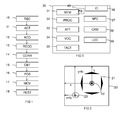
- the figure 1 presents the steps of the method of assisting the positioning of a near field communication module of a terminal in relation with an electromagnetic transponder according to a particular embodiment of the invention.
- the method comprises a step 10 for recording (REC) the geographical position of the transponder with which a user wishes to establish a communication via his terminal equipped with a module. near field communication.
- the geographical position of the transponder can be obtained by the terminal from a database containing the geographical positions of points of interest to which the terminal can access via a connection via a communication network for example.
- the user can also manually enter the geographical position of a point of interest associated with a transponder or the transponder itself.
- the activation (ACT) of the positioning aid method is performed when the terminal detects that it is located at a distance less than for example 2 meters, the geographical position of the transponder.
- This detection can be implemented using a system of geo-location of the terminal and the geographical position of the previously registered transponder.
- the terminal acquires (ACQ) through its camera, an image or a series of images of a visual information representative of the location of the transponder, during a step 12.
- the visual information may for example correspond to a visual signage as represented by the element 21 of the figure 2 .
- This visual signage is positioned on the transponder so that a near-field communication module placed facing the center of this signage (represented by 22 on the figure 2 ) allows the communication module to be in optimal conditions for establishing a communication with the transponder.
- the terminal analyzes the acquired image to identify the position in the acquired image of the visual information associated with the transponder.
- the terminal implements a form recognition step (RECO) applied to the acquired image in order to identify a specific form represented by the visual signage and associated with the transponder.
- This identification is implemented during the step of recognition of form by a step 14 of mapping (CORR) of the recognized form with forms of visual information contained in a database accessible by the terminal or previously recorded on the terminal.
- CORR mapping
- the shape of the visual information may also have been recorded on the terminal and associated with the geographical position of the transponder.
- the visual information may not be positioned on the transponder but near the transponder.
- Distance information between the visual information and the transponder can also be recorded on the terminal or available in the database containing the forms of visual information.
- the terminal was able to match the visual information represented on the acquired image with known visual information.
- the characteristics of the shape of the visual information may have been previously recorded on the terminal or are accessible by the terminal via a communication network, so that the step of setting in correspondence is not necessary.
- the terminal implements the shape recognition step applied to the acquired image by searching for the position in the acquired image of the characteristics of the shape of the visual information.
- the terminal determines the center of the visual information, corresponding to the element 22 on the figure 2 .
- the center 22 is identified in the acquired image by its x and y coordinates.
- the terminal obtains (OBT) in a step 15 the position of the near-field communication module in the terminal.
- OBT the position of the near-field communication module in the terminal.
- the position of the module in the terminal is a function of the terminal used. It can be extracted by the method or by the user of a remote database accessible by a communication network.
- the terminal determines (MOV) at least one movement to be made by the terminal to position the near-field communication module in front of the center of the visual information. This displacement can be determined in the vertical, horizontal or depth direction relative to the distance from the terminal to the transponder.
- the displacement in the vertical or horizontal direction is determined by the shift between the x, y coordinates of the center of the visual information and xnfc, ynfc of the NFC communication module.
- the depth displacement can be determined from the measurement in the image of the width If of the shape.
- the actual width Lf of the shape is known data of the terminal, it may for example have been obtained with the characteristics of the form to identify or be associated with the form matched.
- the terminal From the distance from the terminal to the transponder and from the offset determined above, the terminal translates the distance and / or the offset into a textual displacement information of the type "higher” or “lower” or “higher”. left “or” more to the right “or” closer "or a combination of this information.
- the textual information is returned (REST) to the user during a step 18. This restitution can be made in a visual form by the display on the screen of the terminal of the textual displacement information previously determined.
- the restitution can also be made in a voice form via speakers of the terminal and by the vocalization of the textual information in known manner through a vocalization process .
- the restitution can also be made in a tactile form via vibrators of the terminal positioned on the four edges of the terminal and activated according to the displacement to be performed. For example, for a left move, the vibrator on the left side is activated.
- the restitution can be made in the form of a combination of two or three of the restitution modes described above.
- the figure 3 presents the structure of a terminal 30 for implementing the positioning aid method according to a particular embodiment of the invention.
- the terminal comprises a storage space 31, for example a memory (MEM), a processing unit 32, equipped for example with a microprocessor (PROC), and driven by the computer program (PG) 40, implementing the positioning aid method as described in the invention.
- the code instructions of the computer program 40 are for example loaded into a RAM memory before being executed by the processor of the processing unit 32.
- the microprocessor of the processing unit 32 implements the steps of the method of assisting the positioning of a near-field communication (NFC) module 37 of the terminal 30 in relation with an electromagnetic transponder placed in an environment, and in particular the steps of acquisition by the terminal 30 of at least one image of a visual information representative of the location of the transponder, analysis of the acquired image to determine a position indicating the location of the transponder in the environment, determination of at least one displacement of the terminal 30 to perform to position the communication module 37 so that a communication can be established between the communication module 37 and the transponder, and restitution of a i representative information of the at least one displacement to be performed, according to the instructions of the computer program 40.
- NFC near-field communication
- the terminal includes acquisition means 38 of at least one image of a visual information representative of the location of the transponder, for example a camera (CAM). Modules for analyzing the acquired image and for determining a displacement of the terminal to be performed are controlled by a computer program PG implemented by a processor PROC using a memory MEM.
- the terminal also includes means for restoring (33, 34, 35) information representative of the at least one displacement to be performed. These means correspond, for example, to the screen of the terminal (AFF) for a visual reproduction, to the speakers (VOC) for a vocal reproduction or vibro-tactile effectors (TACT) for tactile reproduction.
- the terminal also comprises means of connection (IO) to a communication network enabling the terminal to obtain data necessary for the implementation of the method such as for example the geographical position transponder, the characteristics of the shape of the visual information associated with the transponder, or the technical characteristics of the terminal.
- the terminal comprises recording means (MEM) of the geographical position of the transponder and means 39 of geographical location of the communication module (LOC).
- MEM recording means
- LOC geographical location of the communication module
- the terminal may for example correspond to a mobile telephone terminal or to any communication terminal equipped with a near-field communication module.
Landscapes
- Engineering & Computer Science (AREA)
- Physics & Mathematics (AREA)
- Health & Medical Sciences (AREA)
- Toxicology (AREA)
- Electromagnetism (AREA)
- General Health & Medical Sciences (AREA)
- Artificial Intelligence (AREA)
- Computer Vision & Pattern Recognition (AREA)
- General Physics & Mathematics (AREA)
- Theoretical Computer Science (AREA)
- Computer Networks & Wireless Communication (AREA)
- Signal Processing (AREA)
- Telephone Function (AREA)
- Mobile Radio Communication Systems (AREA)
Abstract
Description
- L'invention se situe dans le domaine des réseaux de télécommunication. Elle concerne un dispositif et un procédé d'aide au positionnement d'un module de communication en champ proche en relation avec un transpondeur électromagnétique.
- L'invention se rapporte de manière générale aux télécommunications, et plus précisément aux communications sans contact utilisant des technologies radio à courte distance, notamment de type RFID (d'après l'anglais Radio Frequency IDentification). Elle s'applique plus particulièrement aux terminaux équipés de ressources physiques et logicielles incluant un microprocesseur et un module de communication en champ proche (Near Field - NF) générant un champ électromagnétique, aptes à communiquer avec des transpondeurs électromagnétiques, qu'ils soient passifs, actifs ou semi-actifs.
- Les terminaux en question, désignés par la suite par l'expression "terminaux mobiles", sont des terminaux aptes à être déplacés.
- Les communications en champ proche, usuellement appelées NFC (Near Field Communication), basées principalement sur la norme ISO (International Standard Organisation) 14443, utilisent des technologies sans-fil pour permettre un échange d'informations entre deux périphériques éloignés d'une courte distance, typiquement inférieure à dix centimètres. Les communications de ce type offrent de nombreuses applications dans les domaines du paiement ou du transport, par exemple.
- Les communications en champ proche couvrent deux types d'applications auxquels s'applique l'invention :
- Le premier type met en oeuvre une émulation d'un module de communication en champ proche, présent sur un terminal mobile, pour sécuriser des transactions électroniques entre une application stockée sur le terminal ou le module et une borne externe de lecture qui émet des ondes électromagnétiques pour lire les données sur ce module.
- Le second type d'applications se rapporte à la lecture de données sur des transpondeurs par le terminal mobile ; il s'agit du tag reading tel que défini par le Forum NFC (association industrielle chargée de promouvoir la mise en oeuvre et la normalisation de la technologie NFC). Une communication NFC est établie entre un maître, ici appelé terminal, et un esclave, ici appelé transpondeur. Par exemple, le terminal est un téléphone mobile et le transpondeur une étiquette associée à un service. De tels services permettent d'accéder à toutes sortes d'informations : applications de transport, de paiement, accès au réseau Internet, envoi d'un SMS ou d'un appel téléphonique, etc. L'établissement de la communication permettra à un utilisateur du terminal de lire les informations contenues dans l'étiquette en approchant son terminal mobile du support (affiche, catalogue, etc.) sur lequel elle est disposée.
- Le transpondeur auquel s'applique l'invention, équipé d'un microprocesseur, peut être du type passif (ne nécessitant pas d'alimentation propre), semi-actif (si une partie de son circuit est alimentée) ou actif (si alimenté en totalité).
- Pour établir une communication entre le module de communication en champ proche d'un terminal et un transpondeur électromagnétique, une distance courte entre les deux dispositifs et une bonne orientation de leurs antennes NFC sont nécessaires.
- Ces deux conditions peuvent être difficiles à remplir lorsque l'utilisateur ne distingue pas bien le transpondeur vers lequel il doit se diriger.
- Il est connu d'associer au transpondeur une signalétique visuelle spécifique, afin d'indiquer à l'utilisateur du terminal l'emplacement exact du transpondeur. Par exemple, une technique connue visant à offrir des services NFC dans la ville propose une signalétique simple et reconnaissable, qui permet à l'utilisateur d'un tel service de repérer facilement le transpondeur pour pouvoir en approcher son terminal mobile. Mais cette signalétique reste difficile à repérer si le transpondeur est entouré d'autres transpondeurs de signalétique proche ou si les signalétiques se brouillent mutuellement à cause de la proximité des transpondeurs.
- De plus, lorsque le module de communication en champ proche est intégré dans un terminal mobile, l'utilisateur n'a pas toujours connaissance de l'emplacement du module de communication sur son terminal, de sorte qu'il n'est pas facile de positionner précisément le module de communication en face du transpondeur pour établir une communication.
- Un des buts de l'invention est d'apporter des améliorations par rapport à l'état de la technique.
Elle propose à cet effet un procédé d'aide au positionnement d'un module de communication en champ proche d'un terminal en relation avec un transpondeur électromagnétique placé dans un environnement. Le procédé comprend les étapes d'acquisition par le terminal d'au moins une image d'une information visuelle représentative de l'emplacement du transpondeur, d'analyse de l'image acquise pour déterminer une position indiquant l'emplacement du transpondeur dans l'environnement, de détermination d'au moins un déplacement du terminal à effectuer permettant de positionner le module de communication de sorte qu'une communication puisse être établie entre le module de communication et le transpondeur, et de restitution d'une information représentative du au moins un déplacement à effectuer.
Corrélativement, l'invention concerne aussi un terminal d'aide au positionnement d'un module de communication en champ proche du terminal en relation avec un transpondeur électromagnétique placé dans un environnement. Le terminal comprend des moyens d'acquisition d'au moins une image d'une information visuelle représentative de l'emplacement du transpondeur, des moyens d'analyse dans l'image acquise d'une position indiquant l'emplacement du transpondeur dans l'environnement, des moyens de détermination d'au moins un déplacement du terminal à effectuer permettant de positionner le module de communication de sorte qu'une communication puisse être établie entre le module de communication et le transpondeur, et des moyens de restitution d'une information représentative du au moins un déplacement à effectuer. - Grâce au procédé, le terminal selon l'invention informe l'utilisateur du bon ou du mauvais positionnement du terminal par rapport au transpondeur pour établir une communication avec celui-ci. Si le positionnement n'est pas correct, il peut lui indiquer dans quelle direction déplacer son terminal afin d'optimiser ses chances d'établir une communication avec le terminal. Grâce à un terminal classique disposant d'une simple caméra, l'utilisateur dispose ainsi d'un moyen simple d'aide au positionnement de son terminal en relation avec un transpondeur.
Ce procédé a l'avantage de ne pas nécessiter d'équipements supplémentaires sur le terminal. - Les différents modes ou caractéristiques de réalisation mentionnés ci-après peuvent être ajoutés indépendamment ou en combinaison les uns avec les autres, aux étapes du procédé défini ci-dessus.
Les différents modes ou caractéristiques de réalisation mentionnés ci-après peuvent être ajoutés indépendamment ou en combinaison les uns avec les autres, aux caractéristiques du terminal défini ci-dessus. - Selon un mode particulier de réalisation de l'invention, le procédé comprend une étape préalable d'enregistrement de la position géographique du transpondeur, et une étape d'activation du procédé lorsque le module de communication est situé à une distance inférieure à un seuil prédéterminé de la position géographique du transpondeur.
Corrélativement, le terminal selon ce mode particulier de réalisation de l'invention comprend des moyens d'enregistrement de la position géographique du transpondeur et des moyens de localisation géographique du module de communication.
Le procédé peut ainsi être activé de manière automatique lorsque le terminal arrive à proximité du transpondeur. - Selon un autre mode particulier de réalisation de l'invention, l'étape de restitution d'une information représentative du au moins un déplacement à effectuer correspond à une restitution visuelle, vocale ou tactile de l'information ou à une combinaison d'une restitution visuelle et/ou vocale et/ou tactile de l'information.
Corrélativement, selon ce mode particulier de réalisation de l'invention, les moyens du terminal pour la restitution d'une information représentative du au moins un déplacement à effectuer correspondent à des moyens de restitution visuelle, ou vocale, ou tactile.
L'utilisateur peut configurer au préalable le mode de restitution de l'information de déplacement qu'il préfère ou selon ses capacités physiques, par exemple s'il est malvoyant ou malentendant. - Selon un autre mode particulier de réalisation de l'invention, la détermination du au moins un déplacement du terminal à effectuer comprend une sous-étape d'obtention de la position du module de communication dans le terminal. Ce mode de réalisation est intéressant lorsque la position du module de communication en champ proche n'a pas été préalablement enregistrée dans la mémoire du terminal.
- Selon un autre mode particulier de réalisation de l'invention, l'analyse de l'image acquise comprend une étape d'application d'une technique de reconnaissance de forme appliquée à l'image acquise et une étape de mise en correspondance de la forme reconnue avec des formes d'information visuelle contenues dans une base de données accessible par le terminal ou préalablement enregistrée sur le terminal.
Le terminal n'a pas à télécharger au préalable la forme de l'information visuelle associée au transpondeur. Il extrait cette forme au moment où il en a besoin et possède ainsi la dernière version de la forme pour le cas où la signalétique associée au transpondeur serait modifiée. Dans ce cas, la base de données est accessible via une base de données sur Internet par exemple. - L'invention concerne aussi un programme d'ordinateur comportant des instructions pour l'exécution du procédé d'aide au positionnement selon l'un quelconque des modes particuliers de réalisation de l'invention décrits ci-dessus, lorsque le programme est exécuté par un processeur.
- L'invention concerne aussi un support d'enregistrement lisible par un processeur sur lequel est enregistré un programme comportant des instructions pour l'exécution du procédé d'aide au positionnement selon l'un quelconque des modes particuliers de réalisation de l'invention décrits ci-dessus.
- D'autres avantages et caractéristiques de l'invention apparaîtront plus clairement à la lecture de la description suivante d'un mode de réalisation particulier de l'invention, donné à titre de simple exemple illustratif et non limitatif, et des dessins annexés, parmi lesquels:
- la
figure 1 présente les étapes du procédé d'aide au positionnement d'un module de communication en champ proche d'un terminal en relation avec un transpondeur électromagnétique selon un mode particulier de réalisation de l'invention, - la
figure 2 illustre la mise en oeuvre des étapes du procédé d'aide au positionnement selon un mode particulier de réalisation de l'invention, - la
figure 3 présente la structure d'un terminal permettant de mettre en oeuvre le procédé d'aide au positionnement selon un mode particulier de réalisation de l'invention. - La
figure 1 présente les étapes du procédé d'aide au positionnement d'un module de communication en champ proche d'un terminal en relation avec un transpondeur électromagnétique selon un mode particulier de réalisation de l'invention.
Selon un mode particulier de réalisation de l'invention, le procédé comprend une étape 10 d'enregistrement (REC) de la position géographique du transpondeur avec lequel un utilisateur souhaite établir une communication par l'intermédiaire de son terminal équipé d'un module de communication en champ proche.
La position géographique du transpondeur peut être obtenue par le terminal à partir d'une base de données contenant les positions géographiques de points d'intérêts à laquelle le terminal peut accéder par une connexion via un réseau de communication par exemple. L'utilisateur peut aussi entrer manuellement la position géographique d'un point d'intérêt associé à un transpondeur ou du transpondeur lui-même.
Selon ce mode de réalisation particulier de l'invention, lors d'une étape 11, l'activation (ACT) du procédé d'aide au positionnement est effectuée lorsque le terminal détecte qu'il est situé à une distance inférieure à par exemple 2 mètres, de la position géographique du transpondeur. Cette détection peut être mise en oeuvre à l'aide d'un système de géo-localisation du terminal et de la position géographique du transpondeur préalablement enregistrée.
Lorsque le procédé est activé, soit automatiquement par exemple selon le mode de réalisation décrit ci-dessus, soit manuellement par l'utilisateur du terminal, le terminal acquiert (ACQ) grâce à sa caméra, une image ou une série d'images d'une information visuelle représentative de l'emplacement du transpondeur, lors d'une étape 12. L'information visuelle peut par exemple correspondre à une signalétique visuelle telle que représentée par l'élément 21 de lafigure 2 . Cette signalétique visuelle est positionnée sur le transpondeur de sorte qu'un module de communication en champ proche placé face au centre de cette signalétique (représenté par 22 sur lafigure 2 ) permet au module de communication d'être dans les conditions optimales pour établir une communication avec le transpondeur.
Le terminal analyse ensuite l'image acquise afin d'identifier la position dans l'image acquise de l'information visuelle associée au transpondeur.
Selon un mode particulier de réalisation de l'invention, lors d'une étape 13, de manière connue, le terminal met en oeuvre une étape de reconnaissance de forme (RECO) appliquée à l'image acquise afin d'identifier une forme spécifique représentée par la signalétique visuelle et associée au transpondeur. Cette identification est mise en oeuvre lors de l'étape de reconnaissance de forme par une étape 14 de mise en correspondance (CORR) de la forme reconnue avec des formes d'information visuelle contenues dans une base de données accessible par le terminal ou préalablement enregistrée sur le terminal.
Par exemple, la forme de l'information visuelle peut également avoir été enregistrée sur le terminal et associée à la position géographique du transpondeur.
Selon un mode particulier de réalisation de l'invention, l'information visuelle peut ne pas être positionnée sur le transpondeur mais à proximité du transpondeur. Une information de distance entre l'information visuelle et le transpondeur peut également être enregistrée sur le terminal ou disponible dans la base de données contenant les formes d'information visuelles.
A l'issue des étapes 13 et 14, le terminal a pu mettre en correspondance l'information visuelle représentée sur l'image acquise et une information visuelle connue.
Selon un autre mode particulier de réalisation de l'invention, les caractéristiques de la forme de l'information visuelle peuvent avoir été préalablement enregistrées sur le terminal ou sont accessibles par le terminal via un réseau de communication, de sorte que l'étape de mise en correspondance n'est pas nécessaire. Le terminal met en oeuvre l'étape de reconnaissance de forme appliquée sur l'image acquise en cherchant la position dans l'image acquise des caractéristiques de la forme de l'information visuelle.
Lorsque le terminal a identifié l'emplacement dans l'image acquise de la forme de l'information visuelle, il détermine le centre de l'information visuelle, correspondant à l'élément 22 sur lafigure 2 . Sur lafigure 2 , le centre 22 est repéré dans l'image acquise 20 par ses coordonnées x et y.
En référence à lafigure 1 , le terminal obtient (OBT) lors d'une étape 15 la position du module de communication en champ proche dans le terminal. La position du module dans le terminal est fonction du terminal utilisé. Elle peut être extraite par le procédé ou par l'utilisateur d'une base de données distante accessible par un réseau de communication. Elle peut également être extraite des caractéristiques techniques du terminal, ces caractéristiques techniques pouvant être préalablement enregistrées dans le terminal ou mises à disposition par le fournisseur du terminal. Sur lafigure 2 , la position du module (NFC) de communication en champ proche dans le terminal est représentée virtuellement sur l'image acquise par l'élément 23. Sa position est repérée par les coordonnées xnfc et ynfc.
Lors d'une étape 17, le terminal détermine (MOV) au moins un déplacement à effectuer par le terminal afin de positionner le module de communication en champ proche en face du centre de l'information visuelle. Ce déplacement peut être déterminé selon la direction verticale, horizontale ou en profondeur par rapport à la distance du terminal au transpondeur.
Le déplacement selon la direction verticale ou horizontale est déterminé par le décalage entre les coordonnées x,y du centre de l'information visuelle et xnfc,ynfc du module de communication NFC. Le déplacement en profondeur peut être déterminé à partir de la mesure dans l'image de la largeur If de la forme. La largeur réelle Lf de la forme est une donnée connue du terminal, elle peut par exemple avoir été obtenue avec les caractéristiques de la forme à identifier ou être associée à la forme mise en correspondance. - La distance D du terminal au transpondeur peut alors être obtenue selon : D = Lf/((If*tpix)/f), tpix correspondant à la taille d'un pixel de la caméra et f correspondant à la distance focale de la caméra.
A partir de la distance du terminal au transpondeur et du décalage déterminé ci-dessus, le terminal traduit la distance et/ou le décalage en une information textuelle de déplacement de type « plus en haut » ou « plus en bas » ou « plus à gauche » ou « plus à droite » ou « plus près » ou en une combinaison de ces informations.
L'information textuelle est restituée (REST) à l'utilisateur lors d'une étape 18. Cette restitution peut être faite sous une forme visuelle par l'affichage sur l'écran du terminal de l'information textuelle de déplacement déterminée précédemment.
Selon un autre mode particulier de réalisation de l'invention, la restitution peut aussi être faite sous une forme vocale par l'intermédiaire de haut-parleurs du terminal et par la vocalisation de l'information textuelle de manière connue grâce à un procédé de vocalisation.
Selon un autre mode particulier de réalisation de l'invention, la restitution peut aussi être faite sous une forme tactile par l'intermédiaire de vibreurs du terminal positionnés sur les quatre bords du terminal et activés selon le déplacement à effectuer. Par exemple, pour un déplacement à gauche, le vibreur situé sur le côté gauche est activé.
Selon un autre mode particulier de réalisation de l'invention, la restitution peut être faite sous la forme d'une combinaison de deux ou trois des modes de restitution décrits ci-dessus. - La
figure 3 présente la structure d'un terminal 30 permettant de mettre en oeuvre le procédé d'aide au positionnement selon un mode particulier de réalisation de l'invention.
Le terminal comprend un espace de stockage 31, par exemple une mémoire (MEM), une unité de traitement 32, équipée par exemple d'un microprocesseur (PROC), et pilotée par le programme d'ordinateur (PG) 40, mettant en oeuvre le procédé d'aide au positionnement tel que décrit dans l'invention.
A l'initialisation, les instructions de code du programme d'ordinateur 40 sont par exemple chargées dans une mémoire RAM avant d'être exécutées par le processeur de l'unité de traitement 32. Le microprocesseur de l'unité de traitement 32 met en oeuvre les étapes du procédé d'aide au positionnement d'un module 37 de communication en champ proche (NFC) du terminal 30 en relation avec un transpondeur électromagnétique placé dans un environnement, et notamment les étapes d'acquisition par le terminal 30 d'au moins une image d'une information visuelle représentative de l'emplacement du transpondeur, d'analyse de l'image acquise pour déterminer une position indiquant l'emplacement du transpondeur dans l'environnement, de détermination d'au moins un déplacement du terminal 30 à effectuer permettant de positionner le module 37 de communication de sorte qu'une communication puisse être établie entre le module 37 de communication et le transpondeur, et de restitution d'une information représentative du au moins un déplacement à effectuer, selon les instructions du programme d'ordinateur 40. - Pour cela, le terminal comprend des moyens d'acquisition 38 d'au moins une image d'une information visuelle représentative de l'emplacement du transpondeur, par exemple une caméra (CAM).
Des modules d'analyse de l'image acquise et de détermination d'un déplacement du terminal à effectuer sont pilotés un programme d'ordinateur PG mis en oeuvre par un processeur PROC utilisant une mémoire MEM.
Le terminal comprend aussi des moyens de restitution (33, 34, 35) d'une information représentative du au moins un déplacement à effectuer. Ces moyens correspondent par exemple à l'écran du terminal (AFF) pour une restitution visuelle, aux haut-parleurs (VOC) pour une restitution vocale ou des effecteurs vibro-tactiles (TACT) pour une restitution tactile.
Selon un mode particulier de réalisation de l'invention, le terminal comprend également des moyens de connexion (IO) à un réseau de communication permettant au terminal d'obtenir des données nécessaires à la mise en oeuvre du procédé telles que par exemple la position géographique du transpondeur, les caractéristiques de la forme de l'information visuelle associée au transpondeur, ou encore les caractéristiques techniques du terminal.
Selon un autre mode particulier de réalisation de l'information, le terminal comprend des moyens d'enregistrement (MEM) de la position géographique du transpondeur et des moyens 39 de localisation géographique du module de communication (LOC).
Le terminal peut par exemple correspondre à un terminal téléphonique mobile ou à tout terminal de communication équipé d'un module de communication en champ proche.
Claims (10)
- Procédé d'aide au positionnement d'un module de communication en champ proche (NFC) d'un terminal en relation avec un transpondeur électromagnétique placé dans un environnement, caractérisé en ce qu'il comprend les étapes suivantes :- acquisition (AQC) par le terminal d'au moins une image d'une information visuelle représentative de l'emplacement du transpondeur,- analyse (RECO) de l'image acquise pour déterminer une position indiquant l'emplacement du transpondeur dans l'environnement,- détermination (POS) d'au moins un déplacement du terminal à effectuer permettant de positionner le module de communication de sorte qu'une communication puisse être établie entre le module de communication et le transpondeur,- restitution (REST) d'une information représentative du au moins un déplacement à effectuer.
- Procédé selon la revendication 1 caractérisé en ce qu'il comprend une étape préalable d'enregistrement (REC) de la position géographique du transpondeur, et une étape d'activation (ACT) du procédé lorsque le module de communication est situé à une distance inférieure à un seuil prédéterminé de la position géographique du transpondeur.
- Procédé selon la revendication 1 caractérisé en ce que l'étape de restitution d'une information représentative du au moins un déplacement à effectuer correspond à une restitution visuelle, vocale ou tactile de l'information ou à une combinaison d'une restitution visuelle et/ou vocale et/ou tactile de l'information.
- Procédé selon la revendication 1 caractérisé en ce que la détermination du au moins un déplacement du terminal à effectuer comprend une sous-étape d'obtention (OBT) de la position du module de communication dans le terminal.
- Procédé selon la revendication 1 caractérisé en ce que l'analyse de l'image acquise comprend une étape d'application d'une technique de reconnaissance de forme appliquée à l'image acquise et une étape de mise en correspondance (CORR) de la forme reconnue avec des formes d'information visuelle contenues dans une base de données accessible par le terminal ou préalablement enregistrée sur le terminal.
- Terminal d'aide au positionnement d'un module de communication en champ proche du terminal en relation avec un transpondeur électromagnétique placé dans un environnement, caractérisé en ce qu'il comprend:- des moyens d'acquisition (CAM) d'au moins une image d'une information visuelle représentative de l'emplacement du transpondeur,- des moyens d'analyse (PG, MEM,PROC) de l'image acquise pour déterminer une position indiquant l'emplacement du transpondeur dans l'environnement,- des moyens de détermination (PG, MEM,PROC) d'au moins un déplacement du terminal à effectuer permettant de positionner le module de communication de sorte qu'une communication puisse être établie entre le module de communication et le transpondeur,- des moyens de restitution (AFF, VOC, TACT) d'une information représentative du au moins un déplacement à effectuer.
- Terminal selon la revendication 6 caractérisé en ce qu'il comprend des moyens d'enregistrement de la position géographique du transpondeur et des moyens de localisation géographique du module de communication.
- Terminal selon la revendication 6 caractérisé en ce que les moyens de restitution d'une information représentative du au moins un déplacement à effectuer correspondent à des moyens de restitution visuelle, ou vocale, ou tactile.
- Programme d'ordinateur comportant des instructions pour l'exécution du procédé d'aide au positionnement selon l'une quelconque des revendications 1 à 5, lorsque le programme est exécuté par un processeur.
- Support d'enregistrement lisible par un processeur sur lequel est enregistré un programme comportant des instructions pour l'exécution du procédé d'aide au positionnement selon l'une quelconque des revendications 1 à 5.
Applications Claiming Priority (1)
| Application Number | Priority Date | Filing Date | Title |
|---|---|---|---|
| FR1250981A FR2986634A1 (fr) | 2012-02-02 | 2012-02-02 | Procede et dispositif d'aide au positionnement d'un module de communication en champ proche en relation avec un transpondeur electromagnetique |
Publications (1)
| Publication Number | Publication Date |
|---|---|
| EP2624168A1 true EP2624168A1 (fr) | 2013-08-07 |
Family
ID=47603411
Family Applications (1)
| Application Number | Title | Priority Date | Filing Date |
|---|---|---|---|
| EP13152224.5A Withdrawn EP2624168A1 (fr) | 2012-02-02 | 2013-01-22 | Procédé et dispositif d'aide au positionnement d'un module de communication en champ proche en relation avec un transpondeur électromagnétique |
Country Status (3)
| Country | Link |
|---|---|
| US (1) | US20130203352A1 (fr) |
| EP (1) | EP2624168A1 (fr) |
| FR (1) | FR2986634A1 (fr) |
Citations (5)
| Publication number | Priority date | Publication date | Assignee | Title |
|---|---|---|---|---|
| WO2005106767A1 (fr) * | 2004-05-04 | 2005-11-10 | Koninklijke Philips Electronics N.V. | Dispositif electronique |
| US20060208076A1 (en) * | 2005-03-04 | 2006-09-21 | Chiu Lihu M | Method and system for aiming an RFID reader |
| WO2006101998A2 (fr) * | 2005-03-16 | 2006-09-28 | Datalogic Mobile, Inc. | Systeme et procede de fonctionnement de lecteur rfid |
| US20070085682A1 (en) * | 2005-10-17 | 2007-04-19 | Nobuo Murofushi | Moving object management system and moving object apparatus |
| EP2091003A1 (fr) * | 2008-02-13 | 2009-08-19 | Toshiba Tec Kabushiki Kaisha | Appareil de détection d'étiquettes radiofréquence et son procédé de commande |
Family Cites Families (4)
| Publication number | Priority date | Publication date | Assignee | Title |
|---|---|---|---|---|
| US20070254676A1 (en) * | 2006-04-28 | 2007-11-01 | Texas Instruments, Inc. | Assisting A Location-Determining System Using Location Determined From A Communication System |
| US7769345B2 (en) * | 2006-09-29 | 2010-08-03 | Sony Ericsson Mobile Communications Ab | Device and method for guiding a user to a communication position |
| US8686734B2 (en) * | 2010-02-10 | 2014-04-01 | Disney Enterprises, Inc. | System and method for determining radio frequency identification (RFID) system performance |
| US8593535B2 (en) * | 2010-09-10 | 2013-11-26 | Apple Inc. | Relative positioning of devices based on captured images of tags |
-
2012
- 2012-02-02 FR FR1250981A patent/FR2986634A1/fr active Pending
-
2013
- 2013-01-22 EP EP13152224.5A patent/EP2624168A1/fr not_active Withdrawn
- 2013-01-30 US US13/754,134 patent/US20130203352A1/en not_active Abandoned
Patent Citations (5)
| Publication number | Priority date | Publication date | Assignee | Title |
|---|---|---|---|---|
| WO2005106767A1 (fr) * | 2004-05-04 | 2005-11-10 | Koninklijke Philips Electronics N.V. | Dispositif electronique |
| US20060208076A1 (en) * | 2005-03-04 | 2006-09-21 | Chiu Lihu M | Method and system for aiming an RFID reader |
| WO2006101998A2 (fr) * | 2005-03-16 | 2006-09-28 | Datalogic Mobile, Inc. | Systeme et procede de fonctionnement de lecteur rfid |
| US20070085682A1 (en) * | 2005-10-17 | 2007-04-19 | Nobuo Murofushi | Moving object management system and moving object apparatus |
| EP2091003A1 (fr) * | 2008-02-13 | 2009-08-19 | Toshiba Tec Kabushiki Kaisha | Appareil de détection d'étiquettes radiofréquence et son procédé de commande |
Also Published As
| Publication number | Publication date |
|---|---|
| FR2986634A1 (fr) | 2013-08-09 |
| US20130203352A1 (en) | 2013-08-08 |
Similar Documents
| Publication | Publication Date | Title |
|---|---|---|
| EP2823255B1 (fr) | Procede de communication et d'informations en realite augmentee | |
| CN112784174B (zh) | 确定位姿的方法、装置和系统 | |
| WO2008144671A3 (fr) | Système de courtage de données pour mercatique mobile | |
| EP2924626B1 (fr) | Procédé de génération d'un contenu en réalité augmentée | |
| KR101790655B1 (ko) | 버스 정보 조회, 피드백 방법, 모바일 단말 및 서버 | |
| FR3040226A1 (fr) | ||
| CN101742399A (zh) | 一种手机遗失寻找方法及手机 | |
| WO2009133029A1 (fr) | Procede de diagnostic d'un terminal de telephonie mobile incluant des applications sans contact | |
| CN105931064A (zh) | 信息推送方法、装置及智能眼镜 | |
| EP2694994A1 (fr) | Installation et procédé de localisation par couplage de moyens autonomes de mesure d'un déplacement à des moyens de mesure sans fil de supports de données de localisation | |
| WO2008107437A1 (fr) | Procede d'echange de donnees entre une borne de communication sans contact et un terminal de telephonie mobile | |
| FR2986634A1 (fr) | Procede et dispositif d'aide au positionnement d'un module de communication en champ proche en relation avec un transpondeur electromagnetique | |
| EP3776295A1 (fr) | Procédé et dispositif d'authentification d'un utilisateur | |
| FR2992132A1 (fr) | Procede de positionnement en interieur d'un terminal mobile et terminaux mobiles mettant en oeuvre ce procede | |
| FR3030178A1 (fr) | Procede de localisation, terminaux, vehicule, produit programme d'ordinateur et support de stockage correspondants | |
| EP2101153A1 (fr) | Guidage sur un terminal mobile à partir d'objets filmés ou photographiés | |
| EP1883257A1 (fr) | Procédé de synchronisation entre un equipement mobile et une carte a puce | |
| KR101136944B1 (ko) | 무선 단말을 이용한 컨텐츠 제공 시스템 및 방법 | |
| EP2792129B1 (fr) | Procede d'association d'un terminal machine avec un terminal utilisateur | |
| EP2817951B1 (fr) | Systeme de telecommunication | |
| FR3027142A1 (fr) | Procede de verification de la situation administrative d'un vehicule | |
| CN110838207B (zh) | 一种自助借书方法及应用该方法的系统 | |
| EP2782365A1 (fr) | Procédé de récupération d'informations sur un détenteur d'un support de données | |
| EP4124990A1 (fr) | Procede d'identification numerique avec communication entre un appareil mobile et un document d'identite | |
| FR2969309A3 (fr) | Localisation assistee sur une carte au moyen d'un moyen d'un dispositif de positionnement |
Legal Events
| Date | Code | Title | Description |
|---|---|---|---|
| PUAI | Public reference made under article 153(3) epc to a published international application that has entered the european phase |
Free format text: ORIGINAL CODE: 0009012 |
|
| AK | Designated contracting states |
Kind code of ref document: A1 Designated state(s): AL AT BE BG CH CY CZ DE DK EE ES FI FR GB GR HR HU IE IS IT LI LT LU LV MC MK MT NL NO PL PT RO RS SE SI SK SM TR |
|
| AX | Request for extension of the european patent |
Extension state: BA ME |
|
| RAP1 | Party data changed (applicant data changed or rights of an application transferred) |
Owner name: ORANGE |
|
| 17P | Request for examination filed |
Effective date: 20140127 |
|
| RBV | Designated contracting states (corrected) |
Designated state(s): AL AT BE BG CH CY CZ DE DK EE ES FI FR GB GR HR HU IE IS IT LI LT LU LV MC MK MT NL NO PL PT RO RS SE SI SK SM TR |
|
| 17Q | First examination report despatched |
Effective date: 20140221 |
|
| GRAP | Despatch of communication of intention to grant a patent |
Free format text: ORIGINAL CODE: EPIDOSNIGR1 |
|
| INTG | Intention to grant announced |
Effective date: 20141022 |
|
| STAA | Information on the status of an ep patent application or granted ep patent |
Free format text: STATUS: THE APPLICATION IS DEEMED TO BE WITHDRAWN |
|
| 18D | Application deemed to be withdrawn |
Effective date: 20150303 |