EP2621133B1 - Method and system for implementing pw control bit capability negotiation - Google Patents
Method and system for implementing pw control bit capability negotiation Download PDFInfo
- Publication number
- EP2621133B1 EP2621133B1 EP11833786.4A EP11833786A EP2621133B1 EP 2621133 B1 EP2621133 B1 EP 2621133B1 EP 11833786 A EP11833786 A EP 11833786A EP 2621133 B1 EP2621133 B1 EP 2621133B1
- Authority
- EP
- European Patent Office
- Prior art keywords
- control word
- provider edge
- word value
- pseudo wire
- label
- Prior art date
- Legal status (The legal status is an assumption and is not a legal conclusion. Google has not performed a legal analysis and makes no representation as to the accuracy of the status listed.)
- Active
Links
Images

Classifications
-
- H—ELECTRICITY
- H04—ELECTRIC COMMUNICATION TECHNIQUE
- H04L—TRANSMISSION OF DIGITAL INFORMATION, e.g. TELEGRAPHIC COMMUNICATION
- H04L45/00—Routing or path finding of packets in data switching networks
- H04L45/68—Pseudowire emulation, e.g. IETF WG PWE3
-
- H—ELECTRICITY
- H04—ELECTRIC COMMUNICATION TECHNIQUE
- H04L—TRANSMISSION OF DIGITAL INFORMATION, e.g. TELEGRAPHIC COMMUNICATION
- H04L45/00—Routing or path finding of packets in data switching networks
-
- H—ELECTRICITY
- H04—ELECTRIC COMMUNICATION TECHNIQUE
- H04L—TRANSMISSION OF DIGITAL INFORMATION, e.g. TELEGRAPHIC COMMUNICATION
- H04L12/00—Data switching networks
- H04L12/28—Data switching networks characterised by path configuration, e.g. LAN [Local Area Networks] or WAN [Wide Area Networks]
- H04L12/46—Interconnection of networks
- H04L12/4633—Interconnection of networks using encapsulation techniques, e.g. tunneling
Definitions
- the present document relates to a technique of the pseudo wire control word negotiation, and particularly, to a method and system for negotiating a pseudo wire control word capability.
- the Pseudo Wire (PW) technology is a solution proposed with respect to a converged communication network in the future, and it is a technology of providing imitated traditional 1 layer and 2 layer network services based on a packet switched network.
- the pseudo wire technology is almost applied to all networks, which enables the Multi-Protocol Label Switch (MPLS) technology to implement a real convergence of access network and metropolitan area network.
- MPLS Multi-Protocol Label Switch
- a pseudo wire is a point-to-point connection between Provider Edge (PE) nodes, an establishment mechanism of the pseudo wire is defined in the RFC4447 of Internet Engineering Task Force (IETF), the pseudo wire is established by using a Label Distribute Protocol (LDP) as a signaling mechanism, and label switching and parameter negotiations of the pseudo wire are performed.
- LDP Label Distribute Protocol
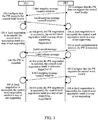
- FIG. 1 is schematic diagram of a network of the Single Segment Pseudo Wire (SS-PW) control word negotiation in the related art, a PE1 and a PE2 will have the problem of inconsistency between negotiation results and configurations in the following scenario. The following steps are specifically included.
- SS-PW Single Segment Pseudo Wire
- step 101 the PE2 configures that the PW does not support a control word in local, and sends label mapping message carrying a C-Bit of 0 to the PE1.
- step 102 the PE1 configures that the PW supports the control word in local and sends label mapping message carrying a C-Bit of 0 to the PE2.
- An operating way in this step is determined according to the RFC4447, and the RFC4447 formulates that, if the C-Bit in the label mapping message firstly sent by an opposite terminal to a current terminal is 0, it is indicated that the opposite terminal does not support the control word, and no matter whether a local configuration supports the control word or not subsequently, the label mapping message with the C-Bit of 0 is still announced to the opposite terminal.
- step 103 the PE1 makes a successful local negotiation with respect to the PW, and the control word negotiation result is a way of not supporting.
- step 104 the PE2 receives the label mapping message carrying the C-Bit of 0 announced by the opposite terminal, a local negotiation with respect to the PW is successful, and the negotiation result is a way of not supporting.
- step 105 a local configuration of the PE2 is deleted, a local pseudo wire is canceled, and label cancel message is sent to the PE1.
- step 106 the PE1 cancels the pseudo wire after receiving the label cancel message of the PE2, and replies label release message to the PE2.
- step 107 the PE2 reconfigures that the PW locally supports the control word, and sends the label mapping message carrying the C-Bit of 0 to the PE1.
- the PE2 receives the label mapping message carrying the C-Bit of 0 sent by the PE1 in the step 104, according to the provision in the RFC4447 that, if the C-Bit in the label mapping message firstly sent by the opposite terminal to the current terminal is 0, it is indicated that the opposite terminal does not support the control word, and no matter whether a local configuration supports the control word or not subsequently, the label mapping message with the C-Bit of 0 is still announced to the opposite terminal, even though the PE2 configures that the PW supports the control word in local, it still sends the label mapping message carrying the C-Bit of 0 to the PE1.
- step 108 the PE2 makes a successful local negotiation with respect to the PW, and the control word negotiation result is a way of not supporting.
- step 109 after receiving the label mapping message carrying the C-Bit of 0 announced from the PE2, the PE1 makes a successful local negotiation with respect to the PW, and the control word negotiation result is a way of not supporting.
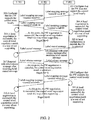
- FIG. 2 is schematic diagram of a network of the Multiple Segment Pseudo Wire (MS-PW) control word negotiation in the related art, a pseudo wire Terminating PE (T-PE) and a pseudo wire Switching PE (S-PE) are included, a T-PE1 and a T-PE3 will have the problem of inconsistency between negotiation results and configurations in the following scenario. The following steps are specifically included.
- MS-PW Multiple Segment Pseudo Wire
- step 201 the T-PE3 configures that the PW does not support a control word in local, and sends label mapping message carrying a C-Bit of 0 to the S-PE2, the S-PE2 configures that the PW supports the control word in local, but the S-PE2 sends the label mapping message carrying the C-Bit of 0 to the T-PE1.
- step 202 the T-PE1 configures that the PW supports the control word in local, but sends the label mapping message carrying the C-Bit of 0 to the S-PE2, and the S-PE2 sends the label mapping message carrying the C-Bit of 0 to the T-PE3.
- an operating way of this step is determined according to the RFC4447, and the RFC4447 formulates that, if the C-Bit in the label mapping message firstly sent by an opposite terminal to a current terminal is 0, it is indicated that the opposite terminal does not support the control word, and no matter whether a local configuration supports the control word or not subsequently, the label mapping message with the C-Bit of 0 is still announced to the opposite terminal. Therefore, in this step, the T-PE1 sends the label mapping message carrying the C-Bit of 0 to the S-PE2.
- step 203 the T-PE1 makes a successful local negotiation with respect to the PW, and the control word negotiation result is a way of not supporting.
- step 204 the T-PE3 receives the label mapping message carrying the C-Bit of 0 announced by the opposite terminal, a local negotiation with respect to the PW is successful, and the negotiation result is a way of not supporting.
- step 205 a local configuration of the T-PE3 is deleted, a local pseudo wire is canceled, label cancel message is sent to the S-PE2, and the S-PE2 sends the label cancel message to the T-PE1.
- step 206 the S-PE2 receives the label cancel message of the T-PE3 and replies a label release message to the T-PE3, and the S-PE2 continues to send the label cancel message to the T-PE1.
- step 207 the T-PE1 receives the label cancel message of the S-PE2 and replies the label release message to the S-PE2.
- step 208 the T-PE3 reconfigures that the PW locally supports the control word, and sends the label mapping message carrying the C-Bit of 0 to the T-PE1 via the S-PE2.
- step 209 the T-PE3 makes a successful local negotiation with respect to the PW, and the control word negotiation result is a way of not supporting.
- step 210 after receiving the label mapping message carrying the C-Bit of 0, the T-PE1 makes a successful local negotiation with respect to the PW, and the control word negotiation result is a way of not supporting.
- the above multiple segment pseudo wire negotiation process has the same problem as that in the single segment pseudo wire negotiation process, as shown in FIG. 2 , at first, the local control word configuration ways of the T-PE1, S-PE2 and T-PE3 are respectively: supporting control word, supporting control word, and not supporting control word.
- the T-PE3 when the T-PE3 modifies the local control word configuration properties (that is, not supporting is modified as supporting), according to the C-Bit of 0 in the mapping message announced by the S-PE2 to the T-PE3 previously, the T-PE3 judges that the S-PE2 is in the way of not supporting the control word (but actually the S-PE2 supports the control word), and consequently carries the C-Bit of 0 in the label mapping message announced to the opposite terminal, thus eventually resulting in that the local configurations of the T-PE1, S-PE2 and T-PE3 are all in the way of supporting the control words, but they still do not support the control words according to the existing negotiation results, which causes the inconsistency between the configurations and the expected negotiation results.
- the technical problem required to be solved by the present document is to provide a method and system for implementing pseudo wire control word capability negotiation, which solves the problem of inconsistency between the control word configurations and the expected negotiation results in a control word negotiation process, and enhances the negotiation performance.
- the embodiment of the present invention provides a method according to claim 1, a system according to claim 6 and Provider Edges according to claims 11 and 14. Further improvements and embodiments are provided in the dependent claims.
- a method for implementing pseudo wire control word capability negotiation comprises: when modifying a local control word value of a pseudo wire, a Provider Edge (PE) acquiring a control word value configured or negotiated locally by an opposite terminal provider edge by sending label request message and receiving label mapping message, and according to a locally configured control word value and the acquired control word value, the provider edge determining a control word value negotiated with respect to the pseudo wire.
- PE Provider Edge
- the step of, when modifying a local control word value of a pseudo wire, a provider edge acquiring a control word value configured by an opposite terminal provider edge by sending label request message and receiving label mapping message comprises any one of following ways:
- the method further comprises: in the way 1, after determining the control word value negotiated with respect to the pseudo wire, the provider edge sending label mapping message to the opposite terminal provider edge, and carrying a control word value locally negotiated by the provider edge in the label mapping message.
- the method further comprises: according to the control word value configured by the current terminal and the control word value carried in the received label mapping message sent by the provider edge, the opposite terminal provider edge determining the control word value negotiated with respect to the pseudo wire, and completing a pseudo wire control word negotiation process.
- an operation of the provider edge modifying the local control word value of the pseudo wire triggering an operation of sending the label request message to the opposite terminal provider edge subsequently is irrelevant to whether the provider edge has received the label mapping message sent by the opposite terminal provider edge or not.
- the method further comprises: in a multiple segment pseudo wire negotiation process, after receiving label request message sent by the provider edge at a terminal, a pseudo wire switching provider edge sending the label request message to the provider edge at another terminal.
- a system for implementing pseudo wire control word capability negotiation which comprises: a Provider Edge (PE) and an opposite terminal provider edge, wherein, the provider edge is configured to: when modifying a local control word value of a pseudo wire, acquire a control word value configured or negotiated locally by the opposite terminal provider edge by sending label request message and receiving label mapping message, and according to the local control word value and the acquired control word value, determine a control word value negotiated with respect to the pseudo wire.
- PE Provider Edge
- the provider edge is configured to: when modifying a local control word value of a pseudo wire, acquire a control word value configured or negotiated locally by the opposite terminal provider edge by sending label request message and receiving label mapping message, and according to the local control word value and the acquired control word value, determine a control word value negotiated with respect to the pseudo wire.
- the provider edge is further configured to: when modifying the local control word value of the pseudo wire, send label request message to the opposite terminal provider edge in a pseudo wire negotiation process; the opposite terminal provider edge is configured to: after receiving the label request message, send label mapping message carrying a locally configured control word value to the provider edge, wherein, the control word value in the label mapping message only depends on a control word value locally configured by the opposite terminal provider edge.
- the provider edge is further configured to: when modifying the local control word value of the pseudo wire, firstly send label mapping message carrying a locally configured control word value to the opposite terminal provider edge in the pseudo wire negotiation process, and then send label request message to the opposite terminal provider edge.
- the opposite terminal provider edge is configured to: after receiving the label request message, sending label mapping message carrying a locally negotiated control word value to the provider edge, wherein, the control word value in the label mapping message only depends on a control word value locally negotiated by the opposite terminal provider edge.
- the provider edge is further configured to: after determining a control word value locally negotiated with respect to the pseudo wire, send label mapping message to the opposite terminal provider edge, and carry a control word value locally negotiated by the provider edge in the label mapping message.
- the opposite terminal provider edge is further configured to: according to the control word value configured by the current terminal and the control word value carried in the received label mapping message sent by the provider edge, determine the control word value negotiated with respect to the pseudo wire, and complete a pseudo wire control word negotiation process.
- the system further comprises a pseudo wire switching provider edge, wherein, the pseudo wire switching provider edge is configured to: after receiving label request message sent by the provider edge at a terminal, send the label request message to the provider edge at another terminal.
- PE Provider Edge
- the label request message sending module is further configured to: when modifying the local control word value of the pseudo wire, send label request message to the opposite terminal provider edge in the pseudo wire negotiation process;
- the label mapping message receiving module is further configured to: receive label mapping message carrying a locally configured control word value sent by the opposite terminal provider edge in the pseudo wire negotiation process, wherein, the control word value in the label mapping message only depends on a control word value locally configured by the opposite terminal provider edge in the pseudo wire negotiation process.
- the provider edge further comprises a label mapping message sending module, the label mapping message sending module is configured to: after determining a control word value locally negotiated by the provider edge with respect to the pseudo wire, send label mapping message to the opposite terminal provider edge in the pseudo wire negotiation process, and carry the control word value negotiated by the provider edge with respect to the pseudo wire in the label mapping message.
- the provider edge further comprises a label mapping message sending module, wherein:
- Provider Edge comprises: a label mapping message receiving module and a control word value determination module, wherein:
- the provider edge further comprises: a label request message receiving module and a label mapping message sending module, wherein:
- the provider edge further comprises: a label request message receiving module and a label mapping message sending module, wherein:
- the problem of inconsistency between the control word configurations and the expected negotiation results existing in certain specific scenarios is solved, which enhances the negotiation performance.
- the technical scheme of the present document is easy to implement, it makes slight modifications on the existing protocol, and it is applicable to a single segment pseudo wire scenario and a multiple segment pseudo wire scenario, which has lower implementation costs.
- a system for implementing a pseudo wire control word capability negotiation includes a provider edge and an opposite terminal provider edge, wherein, the provider edge is configured to: when modifying a local control word value, acquire a control word value configured or negotiated locally by the opposite terminal provider edge by sending label request message and receiving label mapping message, and according to the local control word value and the acquired control word value configured or negotiated locally by the opposite terminal provider edge, determine a control word value of the pseudo wire.
- an implementation way of acquiring the control word value configured by the opposite terminal provider edge through the label request message and the label mapping message can be any one of the following ways.
- the provider edge is further configured to: when modifying the local control word value, send label request message to the opposite terminal provider edge in a pseudo wire negotiation process.
- the opposite terminal provider edge is further configured to: after receiving the label request message, send label mapping message carrying a locally configured control word value to the provider edge, and the control word value in the label mapping message only depends on a control word value configured locally by the opposite terminal provider edge at present with respect to the pseudo wire negotiation process.
- the provider edge is further configured to: when modifying the local control word value, firstly send label mapping message carrying a locally configured control word value to the opposite terminal provider edge in the pseudo wire negotiation process, and then send label request message to the opposite terminal provider edge.
- the opposite terminal provider edge is further configured to: after receiving the label request message, send label mapping message carrying a locally negotiated control word value to the provider edge.
- this control word value only depends on a control word value negotiated by the opposite terminal provider edge with respect to the pseudo wire.
- the provider edge is further configured to: after determining the control word value of the pseudo wire, send label mapping message to the opposite terminal provider edge, and carry a control word value locally negotiated by the provider edge in the label mapping message.
- the opposite terminal provider edge is further configured to: according to the control word value configured by this opposite terminal provider edge and the control word value carried in the received label mapping message sent by the provider edge, determine the control word value of the pseudo wire, and complete a pseudo wire control word negotiation process.
- a pseudo wire switching provider edge After receiving label request message sent by the provider edge at a terminal, a pseudo wire switching provider edge sends the label request message to the provider edge at another terminal.
- a method for implementing a pseudo wire control word capability negotiation includes: when modifying a local control word value, a provider edge acquiring a control word value configured or negotiated locally by an opposite terminal provider edge by sending label request message and receiving label mapping message, and according to the local control word value and the acquired control word value configured or negotiated locally by the opposite terminal provider edge, the provider edge determining a control word value of the pseudo wire.
- a way of acquiring the control word value configured by the opposite terminal provider edge by sending the label request message and receiving the label mapping message can be any one of a way 1 or a way 2 below.
- the provider edge when modifying the local control word value, the provider edge sends label request message to the opposite terminal provider edge, and after receiving the label request message, the opposite terminal provider edge sends label mapping message carrying a locally configured control word value to the provider edge; wherein, after the opposite terminal provider edge receives the label request message, the control word value carried in the label mapping message sent by the opposite terminal provider edge to the provider edge only depends on a current control word value locally configured by the opposite terminal provider edge with respect to the pseudo wire negotiation process.
- the provider edge when modifying the local control word value, firstly sends label mapping message carrying a locally configured control word value to the opposite terminal provider edge, and then sends label request message to the opposite terminal provider edge, and after receiving the label request message, the opposite terminal provider edge sends label mapping message carrying a locally negotiated control word value to the provider edge.
- the control word value carried in the label mapping message sent by the opposite terminal provider edge to the provider edge only depends on a control word value negotiated by the opposite terminal provider edge with respect to the pseudo wire.
- the provider edge after determining the control word value of the pseudo wire, the provider edge sends label mapping message to the opposite terminal provider edge, and carries a control word value locally negotiated by the provider edge in the label mapping message.
- the opposite terminal provider edge determines the control word value of the pseudo wire, and completes a pseudo wire control word negotiation process.
- An operation of the Provider Edge (PE) modifying the local control word value triggering an operation of sending the label request message to the opposite terminal provider edge subsequently is irrelevant to whether the provider edge has received the label mapping message sent by the opposite terminal provider edge or not. That is, no matter whether the PE has received the label mapping message sent by the opposite terminal or not, as long as a local PE modifies local control word configuration properties, it is required to send the label request message to the opposite terminal PE.
- PE Provider Edge
- the local PE is triggered to send the label mapping message carrying a control word value negotiated by the local PE with respect to the PW to the opposite terminal PE.
- the method is not only applicable to a single segment pseudo wire, but it is applicable to multiple segment pseudo wires at the same time.
- a pseudo wire switching provider edge After receiving label request message sent by the provider edge at a terminal, a pseudo wire switching provider edge sends the label request message to the provider edge at another terminal.
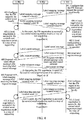
- FIG. 3 illustrates a schematic diagram of a network of the SS-PW control word negotiation.
- the method for negotiating the pseudo wire control word capability in the example includes the following steps.
- the steps 301 to 305 are correspondingly identical with the steps 101 to 105.
- step 306 the configuration of the PE2 is changed, and the label request message is sent to the PE1.
- step 307 the PE1 receives label cancel message of the PE2, a remote terminal PW is canceled, and label release message is replied to the PE2.
- step 308 after the PE1 receives the label request message of the PE2, the PE1 responds with label mapping message carrying a C-Bit of 1 to the PE2.
- the PE2 sends the label request message to the PE1, the PE1 responds with label mapping message carrying a C-Bit, and a value of the C-Bit carried here is a control word value configured locally by the PE1 at present.
- step 309 the PE2 reconfigures that the PW locally supports the control word, and sends the label mapping message carrying the C-Bit of 1 to the PE1.
- the PE2 sends the label mapping message carrying the C-Bit of 1 to the PE1 here.
- This step can only be executed after the step 308 is completed. That is, only after the PE2 reconfigures that the PW locally supports the control word and the PE2 receives the label mapping message (responding to the label request message sent by the PE1 to the PE2) responded by the PE1, the PE2 is triggered to send the label mapping message carrying the control word to the PE1.
- step 310 the PE2 makes a successful local negotiation with respect to the PW, and the control word negotiation result is a way of supporting.
- step 311 after receiving the label mapping message carrying the C-Bit of 1 announced from the PE2, the PE1 makes a successful local negotiation with respect to the PW, and the control word negotiation result is a way of supporting.
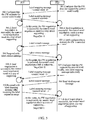
- FIG. 4 illustrates a schematic diagram of a network of the MS-PW control word negotiation.
- the S-PE2 can support a configuration of a control word, and it also can not support the configuration of the control word.
- the method for negotiating the pseudo wire control word capability in the example includes the following steps.
- the steps 401 to 405 are correspondingly identical with the steps 201 to 205.
- step 406 the configuration of the T-PE3 is changed, the label request message is sent to the S-PE2, and the S-PE2 continues to send the label request message to the T-PE1.
- the label request message is sent in order, only when the S-PE2 receives the label request message of the T-PE3, the S-PE2 continues to send the label request message to the T-PE1. Moreover, since the configuration of the T-PE3 is changed, no matter whether the T-PE3 has received the label mapping message carrying the C-Bit information sent from the S-PE2 before or not, the label request message is still sent to the S-PE2.
- step 407 the S-PE2 receives a label cancel message of the T-PE3 and responds with label release message to the T-PE3, and the S-PE2 continues to send the label release message to the T-PE1.
- the PE can resend the mapping message.
- step 408 the T-PE1 receives the label cancel message of the S-PE2, and responds with the label release message to the S-PE2.
- step 409 after the T-PE1 receives the label request message of the S-PE2, the T-PE1 responds with label mapping message carrying a C-Bit of 1 to the S-PE2, since the local configuration of the S-PE2 supports the control word at the point, the S-PE2 sends the label mapping message carrying the C-Bit of 1 to the T-PE3.
- the T-PE1 since the S-PE2 sends the label request message to the T-PE1 in step 406, the T-PE1 responds with label mapping message carrying a C-Bit, and a value of the C-Bit included here is a control word value configured locally by the T-PE1 at present; the S-PE2 will not send the label mapping message initiatively, and only after receiving label mapping message, the S-PE2 is triggered to send the label mapping message to the T-PE3.
- step 410 the T-PE3 reconfigures that the PW locally supports the control word, and sends the label mapping message carrying the C-Bit of 1 to the S-PE2.
- the T-PE3 sends the label mapping message carrying the C-Bit of 1 to the S-PE2 here.
- This step can only be executed after the step 409 is completed. That is, only after the T-PE3 reconfigures that the PW locally supports the control word and the T-PE3 receives the label mapping message (responding to the label request message sent by the T-PE3 to the S-PE2) responded by the S-PE2, the T-PE3 is triggered to send the label mapping message carrying the control word to the S-PE2.
- step 411 the T-PE3 makes a successful local negotiation with respect to the PW, and the control word negotiation result is a way of supporting.
- step 412 after receiving the label mapping message carrying the C-Bit of 1 announced from the S-PE2, the T-PE1 makes a successful local negotiation with respect to the PW, and the control word negotiation result is a way of supporting.
- FIG. 5 illustrates a schematic diagram of a network of the SS-PW control word negotiation.
- the method for negotiating the pseudo wire control word capability in the example includes the following steps.
- the steps 501 to 506 are correspondingly identical with the steps 101 to 106.
- step 507 the PE2 reconfigures that the PW locally supports the control word, and the PE2 initiatively sends the label mapping message carrying the C-Bit of 1 to the PE1.
- the PE2 since the PE2 reconfigures that the PW locally supports the control word, the PE2 will send label mapping message carrying a current local configuration to the PE1.
- step 508 after receiving the label mapping message carrying the C-Bit of 1 announced from the PE2, the PE1 makes a successful local negotiation with respect to the PW, and the control word negotiation result is a way of supporting.
- step 509 the PE2 sends label request message to the PE1.
- the PE2 since the PE2 reconfigures a control word value, no matter whether the PE2 has received the label mapping message carrying the C-Bit information sent from the PE1 before or not, the label request message is still sent to the PE1.
- step 510 after the PE1 receives the label request message of the PE2, the PE1 responds with label mapping message carrying a C-Bit of 1 to the PE2.
- the C-Bit in the label mapping message announced from the opposite terminal is 1, it is indicated that the opposite terminal supports the control word, and if the locally configured control word value is supported subsequently, the label mapping message with the C-Bit of 1 is announced to the opposite terminal, and this step can only be executed after the step 509 is completed. That is, only after the PE1 receives the label request message sent by the PE2, the PE2 is triggered to send the label mapping message to the PE1. Therefore, the PE1 responds with the label mapping message carrying the C-Bit of 1 to the PE2 here.
- a value of the C-Bit carried here is a control word value negotiated locally by the PE1 at present.
- step 511 the PE2 makes a successful local negotiation with respect to the PW, and the control word negotiation result is a way of supporting.
- FIG. 6 illustrates a schematic diagram of a network of the MS-PW control word negotiation.
- the S-PE2 can support a configuration of a control word, and it also can not support the configuration of the control word.
- the method for negotiating the pseudo wire control word capability in the example includes the following steps.
- the steps 601 to 607 are correspondingly identical with the steps 201 to 207.
- step 608 the T-PE3 reconfigures that the PW locally supports the control word, and the T-PE3 initiatively sends the label mapping message carrying the C-Bit of 1 to the S-PE2.
- the T-PE3 since the T-PE3 reconfigures that the PW locally supports the control word, the T-PE3 will send label mapping message carrying a current local configuration to the S-PE2.
- step 609 after receiving the label mapping message carrying the C-Bit of 1 announced from the S-PE2, the T-PE1 makes a successful local negotiation with respect to the PW, and the control word negotiation result is a way of supporting.
- step 610 the T-PE3 sends label request message to the S-PE2, and the S-PE2 continues to send the label request message to the T-PE1.
- the T-PE3 since the T-PE3 reconfigures a control word value, no matter whether the T-PE3 has received the label mapping message carrying the C-Bit information sent from the S-PE2 before or not, the label request message is still sent to the S-PE2.
- the label request message is sent in order, only when the S-PE2 receives the label request message of the T-PE3, the S-PE2 continues to send the label request message to the T-PE1. Moreover, since the configuration of the T-PE3 is changed, no matter whether the T-PE3 has received the label mapping message carrying the C-Bit information sent from the S-PE2 before or not, the label request message is still sent to the S-PE2.
- step 611 after the T-PE1 receives the label request message of the S-PE2, the T-PE1 responds with label mapping message carrying a C-Bit of 1 to the S-PE2, since the local configuration of the S-PE2 is supporting the control word at the point, the S-PE2 sends label mapping message carrying the C-Bit of 1 to the T-PE3.
- the T-PE1 responds with label mapping message, and a value of the C-Bit carried in the label mapping message here is a control word value negotiated locally by the T-PE1; the S-PE2 will not send the label mapping message initiatively, and only after receiving label mapping message, the S-PE2 is triggered to send the label mapping message to the T-PE3.
- the T-PE3 receives the label request message sent by the S-PE2, the T-PE3 is triggered to send the label mapping message carrying the control word to the S-PE2. Therefore, the T-PE1 responds with the label mapping message carrying the C-Bit of 1 to the S-PE2 here.
- step 612 the T-PE3 makes a successful local negotiation with respect to the PW, and the control word negotiation result is a way of supporting.
- the problem of inconsistency between the control word configurations and the expected negotiation results existing in certain specific scenarios is solved, which enhances the negotiation performance.
- the technical scheme of the present document is easy to implement, it makes slight modifications on the existing protocol, and it is applicable to a single segment pseudo wire scenario and a multiple segment pseudo wire scenario, which has lower implementation costs, thereby having an extremely strong industrial applicability.
Landscapes
- Engineering & Computer Science (AREA)
- Computer Networks & Wireless Communication (AREA)
- Signal Processing (AREA)
- Mobile Radio Communication Systems (AREA)
- Data Exchanges In Wide-Area Networks (AREA)
Description
- The present document relates to a technique of the pseudo wire control word negotiation, and particularly, to a method and system for negotiating a pseudo wire control word capability.
- The expansibility, upgrade and compatible intercommunication capability of a rapid developed IP network are very strong, and flexibilities of the upgrade, expansibility and intercommunication of a traditional communication network are comparatively poor and they are limited by the transmission modes and service types, and the universality of newly established networks is also relatively poor, which is inappropriate for intercommunication management. Therefore, in the process of the traditional communication network facing the upgrade and application expansion, it is considered whether to establish repetitive networks respectively or to fully utilize the existing or common resources to achieve the object of network upgrade and application expansion, and how to be able to achieve this object is a problem considered by all the skilled in the art.
- The Pseudo Wire (PW) technology is a solution proposed with respect to a converged communication network in the future, and it is a technology of providing imitated traditional 1 layer and 2 layer network services based on a packet switched network. The pseudo wire technology is almost applied to all networks, which enables the Multi-Protocol Label Switch (MPLS) technology to implement a real convergence of access network and metropolitan area network. A pseudo wire is a point-to-point connection between Provider Edge (PE) nodes, an establishment mechanism of the pseudo wire is defined in the RFC4447 of Internet Engineering Task Force (IETF), the pseudo wire is established by using a Label Distribute Protocol (LDP) as a signaling mechanism, and label switching and parameter negotiations of the pseudo wire are performed. Wherein, a control word negotiation is only one of the pseudo wire parameter negotiations, only when Control words (C=Bit) in LDP mapping message mutually announced by two Provider Edges (PE) establishing the pseudo wire are consistent, the control words of the pseudo wire can be negotiated successfully, and only when each control word in the LDP mapping message mutually announced is 1, it can be negotiated that the PW supports the control words. All the ultimate negotiation results in other situations are that the PW does not support the control words (refer to the RFC4447 protocol for the specific control word negotiation rules).
-
FIG. 1 is schematic diagram of a network of the Single Segment Pseudo Wire (SS-PW) control word negotiation in the related art, a PE1 and a PE2 will have the problem of inconsistency between negotiation results and configurations in the following scenario. The following steps are specifically included. - In step 101, the PE2 configures that the PW does not support a control word in local, and sends label mapping message carrying a C-Bit of 0 to the PE1.
- In step 102, the PE1 configures that the PW supports the control word in local and sends label mapping message carrying a C-Bit of 0 to the PE2.
- An operating way in this step is determined according to the RFC4447, and the RFC4447 formulates that, if the C-Bit in the label mapping message firstly sent by an opposite terminal to a current terminal is 0, it is indicated that the opposite terminal does not support the control word, and no matter whether a local configuration supports the control word or not subsequently, the label mapping message with the C-Bit of 0 is still announced to the opposite terminal.
- In step 103, the PE1 makes a successful local negotiation with respect to the PW, and the control word negotiation result is a way of not supporting.
- In step 104, the PE2 receives the label mapping message carrying the C-Bit of 0 announced by the opposite terminal, a local negotiation with respect to the PW is successful, and the negotiation result is a way of not supporting.
- At the point, two terminals of the PW make a successful negotiation, and the control word negotiation result is a way of not supporting, which is represented as NegoCbit=0.
- In step 105, a local configuration of the PE2 is deleted, a local pseudo wire is canceled, and label cancel message is sent to the PE1.
- In
step 106, the PE1 cancels the pseudo wire after receiving the label cancel message of the PE2, and replies label release message to the PE2. - At the point, the PW is canceled, and a control word negotiation result is unknown, which is represented as NegoCbit=X.
- In step 107, the PE2 reconfigures that the PW locally supports the control word, and sends the label mapping message carrying the C-Bit of 0 to the PE1.
- Since the PE2 receives the label mapping message carrying the C-Bit of 0 sent by the PE1 in the step 104, according to the provision in the RFC4447 that, if the C-Bit in the label mapping message firstly sent by the opposite terminal to the current terminal is 0, it is indicated that the opposite terminal does not support the control word, and no matter whether a local configuration supports the control word or not subsequently, the label mapping message with the C-Bit of 0 is still announced to the opposite terminal, even though the PE2 configures that the PW supports the control word in local, it still sends the label mapping message carrying the C-Bit of 0 to the PE1.
- In step 108, the PE2 makes a successful local negotiation with respect to the PW, and the control word negotiation result is a way of not supporting.
- In step 109, after receiving the label mapping message carrying the C-Bit of 0 announced from the PE2, the PE1 makes a successful local negotiation with respect to the PW, and the control word negotiation result is a way of not supporting.
- Ultimately, two terminals of the PW make a successful negotiation, and the control word negotiation result is a way of not supporting.
- It can be seen from the description of the above negotiation process that, in this timing sequence scenario, when the PE2 modifies the local control word configuration properties (that is, not supporting is modified as supporting) in step 107, according to the C-Bit of 0 in the mapping message announced by the PE1 to the PE2 previously, the PE2 judges that the PE1 is in the way of not supporting the control word (but actually the PE1 supports the control word), and consequently carries the C-Bit of 0 in the label mapping message announced to the opposite terminal, thus eventually resulting in that the local configurations of the PE1 and PE2 are all in the way of supporting the control words, but they still do not support the control words according to the existing negotiation results, which causes the inconsistency between the configurations and the expected negotiation results.
-
FIG. 2 is schematic diagram of a network of the Multiple Segment Pseudo Wire (MS-PW) control word negotiation in the related art, a pseudo wire Terminating PE (T-PE) and a pseudo wire Switching PE (S-PE) are included, a T-PE1 and a T-PE3 will have the problem of inconsistency between negotiation results and configurations in the following scenario. The following steps are specifically included. - In step 201, the T-PE3 configures that the PW does not support a control word in local, and sends label mapping message carrying a C-Bit of 0 to the S-PE2, the S-PE2 configures that the PW supports the control word in local, but the S-PE2 sends the label mapping message carrying the C-Bit of 0 to the T-PE1.
- In step 202, the T-PE1 configures that the PW supports the control word in local, but sends the label mapping message carrying the C-Bit of 0 to the S-PE2, and the S-PE2 sends the label mapping message carrying the C-Bit of 0 to the T-PE3.
- An operating way of this step is determined according to the RFC4447, and the RFC4447 formulates that, if the C-Bit in the label mapping message firstly sent by an opposite terminal to a current terminal is 0, it is indicated that the opposite terminal does not support the control word, and no matter whether a local configuration supports the control word or not subsequently, the label mapping message with the C-Bit of 0 is still announced to the opposite terminal. Therefore, in this step, the T-PE1 sends the label mapping message carrying the C-Bit of 0 to the S-PE2.
- In step 203, the T-PE1 makes a successful local negotiation with respect to the PW, and the control word negotiation result is a way of not supporting.
- In
step 204, the T-PE3 receives the label mapping message carrying the C-Bit of 0 announced by the opposite terminal, a local negotiation with respect to the PW is successful, and the negotiation result is a way of not supporting. - At the point, two terminals of the PW make a successful negotiation, and the control word negotiation result is a way of not supporting, which is represented as NegoCbit=0.
- In step 205, a local configuration of the T-PE3 is deleted, a local pseudo wire is canceled, label cancel message is sent to the S-PE2, and the S-PE2 sends the label cancel message to the T-PE1.
- In step 206, the S-PE2 receives the label cancel message of the T-PE3 and replies a label release message to the T-PE3, and the S-PE2 continues to send the label cancel message to the T-PE1.
- In step 207, the T-PE1 receives the label cancel message of the S-PE2 and replies the label release message to the S-PE2.
- At the point, the negotiation with respect to the PW is canceled, and a control word negotiation result is unknown, which is represented as NegoCbit=X.
- In step 208, the T-PE3 reconfigures that the PW locally supports the control word, and sends the label mapping message carrying the C-Bit of 0 to the T-PE1 via the S-PE2.
- In step 209, the T-PE3 makes a successful local negotiation with respect to the PW, and the control word negotiation result is a way of not supporting.
- In step 210, after receiving the label mapping message carrying the C-Bit of 0, the T-PE1 makes a successful local negotiation with respect to the PW, and the control word negotiation result is a way of not supporting.
- Ultimately, two terminals of the PW make a successful negotiation, and the control word negotiation result is a way of not supporting.
- The above multiple segment pseudo wire negotiation process has the same problem as that in the single segment pseudo wire negotiation process, as shown in
FIG. 2 , at first, the local control word configuration ways of the T-PE1, S-PE2 and T-PE3 are respectively: supporting control word, supporting control word, and not supporting control word. when the T-PE3 modifies the local control word configuration properties (that is, not supporting is modified as supporting), according to the C-Bit of 0 in the mapping message announced by the S-PE2 to the T-PE3 previously, the T-PE3 judges that the S-PE2 is in the way of not supporting the control word (but actually the S-PE2 supports the control word), and consequently carries the C-Bit of 0 in the label mapping message announced to the opposite terminal, thus eventually resulting in
that the local configurations of the T-PE1, S-PE2 and T-PE3 are all in the way of supporting the control words, but they still do not support the control words according to the existing negotiation results, which causes the inconsistency between the configurations and the expected negotiation results. - The document "Pseudowire Control Word Negotiation Mechanism Analysis and Update; draft-jin-pwe3-cbit-negotiation-00.txt" discloses a control word negotiation mechanism.
- The technical problem required to be solved by the present document is to provide a method and system for implementing pseudo wire control word capability negotiation, which solves the problem of inconsistency between the control word configurations and the expected negotiation results in a control word negotiation process, and enhances the negotiation performance.
- The embodiment of the present invention provides a method according to
claim 1, a system according to claim 6 and Provider Edges according to claims 11 and 14. Further improvements and embodiments are provided in the dependent claims. - Also provided is a method for implementing pseudo wire control word capability negotiation is provided, which comprises:
when modifying a local control word value of a pseudo wire, a Provider Edge (PE) acquiring a control word value configured or negotiated locally by an opposite terminal provider edge by sending label request message and receiving label mapping message, and according to a locally configured control word value and the acquired control word value, the provider edge determining a control word value negotiated with respect to the pseudo wire. - Wherein, the step of, when modifying a local control word value of a pseudo wire, a provider edge acquiring a control word value configured by an opposite terminal provider edge by sending label request message and receiving label mapping message comprises any one of following ways:
- a
way 1, when modifying the local control word value of the pseudo wire, the provider edge sending label request message to the opposite terminal provider edge, and after receiving the label request message, the opposite terminal provider edge sending label mapping message carrying a locally configured control word value to the provider edge; - a way 2, when modifying the local control word value of the pseudo wire, the provider edge firstly sending label mapping message carrying a locally configured control word value to the opposite terminal provider edge, and then sending label request message to the opposite terminal provider edge, and after receiving the label request message, the opposite terminal provider edge sending label mapping message carrying a locally negotiated control word value to the provider edge.
- The method further comprises: in the
way 1, after determining the control word value negotiated with respect to the pseudo wire, the provider edge sending label mapping message to the opposite terminal provider edge, and carrying a control word value locally negotiated by the provider edge in the label mapping message. - The method further comprises: according to the control word value configured by the current terminal and the control word value carried in the received label mapping message sent by the provider edge, the opposite terminal provider edge determining the control word value negotiated with respect to the pseudo wire, and completing a pseudo wire control word negotiation process.
- Wherein, an operation of the provider edge modifying the local control word value of the pseudo wire triggering an operation of sending the label request message to the opposite terminal provider edge subsequently is irrelevant to whether the provider edge has received the label mapping message sent by the opposite terminal provider edge or not.
- The method further comprises: in a multiple segment pseudo wire negotiation process, after receiving label request message sent by the provider edge at a terminal, a pseudo wire switching provider edge sending the label request message to the provider edge at another terminal.
- Also provided is a system for implementing pseudo wire control word capability negotiation, which comprises: a Provider Edge (PE) and an opposite terminal provider edge, wherein,
the provider edge is configured to: when modifying a local control word value of a pseudo wire, acquire a control word value configured or negotiated locally by the opposite terminal provider edge by sending label request message and receiving label mapping message, and according to the local control word value and the acquired control word value, determine a control word value negotiated with respect to the pseudo wire. - Wherein, the provider edge is further configured to: when modifying the local control word value of the pseudo wire, send label request message to the opposite terminal provider edge in a pseudo wire negotiation process;
the opposite terminal provider edge is configured to: after receiving the label request message, send label mapping message carrying a locally configured control word value to the provider edge, wherein, the control word value in the label mapping message only depends on a control word value locally configured by the opposite terminal provider edge. - Wherein, the provider edge is further configured to: when modifying the local control word value of the pseudo wire, firstly send label mapping message carrying a locally configured control word value to the opposite terminal provider edge in the pseudo wire negotiation process, and then send label request message to the opposite terminal provider edge.
the opposite terminal provider edge is configured to: after receiving the label request message, sending label mapping message carrying a locally negotiated control word value to the provider edge, wherein, the control word value in the label mapping message only depends on a control word value locally negotiated by the opposite terminal provider edge. - Wherein, the provider edge is further configured to: after determining a control word value locally negotiated with respect to the pseudo wire, send label mapping message to the opposite terminal provider edge, and carry a control word value locally negotiated by the provider edge in the label mapping message.
- Wherein, the opposite terminal provider edge is further configured to: according to the control word value configured by the current terminal and the control word value carried in the received label mapping message sent by the provider edge, determine the control word value negotiated with respect to the pseudo wire, and complete a pseudo wire control word negotiation process.
- The system further comprises a pseudo wire switching provider edge, wherein,
the pseudo wire switching provider edge is configured to: after receiving label request message sent by the provider edge at a terminal, send the label request message to the provider edge at another terminal. - Also provided is a Provider Edge (PE), which comprises: a label request message sending module, a label mapping message receiving module and a control word value determination module, wherein:
- when modifying a local control word value of a pseudo wire, by the label request message sending module sending label request message and the label mapping message receiving module receiving label mapping message, the provider edge acquires a control word value configured by an opposite terminal provider edge or negotiated by an opposite terminal provider edge with respect to the pseudo wire in a pseudo wire negotiation process;
- the control word value determination module is configured to: according to a local control word value of the provider edge and the acquired control word value, determine the control word value negotiated with respect to the pseudo wire.
- Wherein, the label request message sending module is further configured to: when modifying the local control word value of the pseudo wire, send label request message to the opposite terminal provider edge in the pseudo wire negotiation process;
the label mapping message receiving module is further configured to: receive label mapping message carrying a locally configured control word value sent by the opposite terminal provider edge in the pseudo wire negotiation process, wherein, the control word value in the label mapping message only depends on a control word value locally configured by the opposite terminal provider edge in the pseudo wire negotiation process. - The provider edge further comprises a label mapping message sending module,
the label mapping message sending module is configured to: after determining a control word value locally negotiated by the provider edge with respect to the pseudo wire, send label mapping message to the opposite terminal provider edge in the pseudo wire negotiation process, and carry the control word value negotiated by the provider edge with respect to the pseudo wire in the label mapping message. - The provider edge further comprises a label mapping message sending module, wherein:
- the label mapping message sending module is configured to: when modifying the local control word value of the pseudo wire, send label mapping message carrying a locally configured control word value to the opposite terminal provider edge in the pseudo wire negotiation process;
- the label request message sending module is further configured to: after the label mapping message sending module sends the label mapping message carrying the locally configured control word value to the opposite terminal provider edge in the pseudo wire negotiation process, send label request message to the opposite terminal provider edge in the pseudo wire negotiation process;
- the label mapping message receiving module is further configured to: receive the label mapping message carrying the locally negotiated control word value sent by the opposite terminal provider edge in the pseudo wire negotiation process, wherein, the control word value in the label mapping message only depends on a control word value negotiated by the opposite terminal provider edge with respect to the pseudo wire in the pseudo wire negotiation process.
- Also provided is a Provider Edge (PE), and the provider edge comprises: a label mapping message receiving module and a control word value determination module, wherein:
- the label mapping message receiving module is configured to: receive label mapping message sent by an opposite terminal provider edge in a pseudo wire negotiation process, and the label mapping message carries a control word value locally configured by an opposite terminal provider edge or negotiated by an opposite terminal provider edge with respect to the pseudo wire in the pseudo wire negotiation process;
- the control word value determination module is configured to: determine the control word value negotiated with respect to the pseudo wire according to a locally configured control word value and a received control word value.
- The provider edge further comprises: a label request message receiving module and a label mapping message sending module, wherein:
- the label request message receiving module is configured to: receive label request message sent by the opposite terminal provider edge in the pseudo wire negotiation process when modifying a local control word value of a pseudo wire;
- the label mapping message sending module is configured to: after the label request message receiving module receives the label request message, send label mapping message carrying the locally configured control word value to the opposite terminal provider edge in the pseudo wire negotiation process, wherein, the control word value in the label mapping message only depends on a control word value locally configured by the provider edge.
- The provider edge further comprises: a label request message receiving module and a label mapping message sending module, wherein:
- the label request message receiving module is configured to: receive label request message sent by the opposite terminal provider edge in the pseudo wire negotiation process;
- the label mapping message sending module is configured to: after the label request message receiving module receives the label request message, send label mapping message carrying a control word value negotiated with respect to the pseudo wire to the opposite terminal provider edge in the pseudo wire negotiation process, wherein, the control word value in the label mapping message only depends on a control word value negotiated by the provider edge with respect to the pseudo wire.
- In the present document, the problem of inconsistency between the control word configurations and the expected negotiation results existing in certain specific scenarios is solved, which enhances the negotiation performance. The technical scheme of the present document is easy to implement, it makes slight modifications on the existing protocol, and it is applicable to a single segment pseudo wire scenario and a multiple segment pseudo wire scenario, which has lower implementation costs.
-
-
FIG. 1 is a schematic diagram of a network of the single segment pseudo wire control word negotiation in the related art. -
FIG. 2 is a schematic diagram of a network of the multiple segment pseudo wire control word negotiation in the related art. -
FIG. 3 is a schematic diagram of a network of the single segment pseudo wire control word negotiation in the example 1 of the present document. -
FIG. 4 is a schematic diagram of a network of the multiple segment pseudo wire control word negotiation in the example 2 of the present document. -
FIG. 5 is a schematic diagram of a network of the single segment pseudo wire control word negotiation in the example 3 of the present document. -
FIG. 6 is a schematic diagram of a network of the multiple segment pseudo wire control word negotiation in the example 4 of the present document. - According to the example of the present document, a system for implementing a pseudo wire control word capability negotiation includes a provider edge and an opposite terminal provider edge, wherein,
the provider edge is configured to: when modifying a local control word value, acquire a control word value configured or negotiated locally by the opposite terminal provider edge by sending label request message and receiving label mapping message, and according to the local control word value and the acquired control word value configured or negotiated locally by the opposite terminal provider edge, determine a control word value of the pseudo wire. - When the provider edge modifies the local control word value, an implementation way of acquiring the control word value configured by the opposite terminal provider edge through the label request message and the label mapping message can be any one of the following ways.
- In a
way 1, the provider edge is further configured to: when modifying the local control word value, send label request message to the opposite terminal provider edge in a pseudo wire negotiation process. The opposite terminal provider edge is further configured to: after receiving the label request message, send label mapping message carrying a locally configured control word value to the provider edge, and the control word value in the label mapping message only depends on a control word value configured locally by the opposite terminal provider edge at present with respect to the pseudo wire negotiation process. - In a way 2, the provider edge is further configured to: when modifying the local control word value, firstly send label mapping message carrying a locally configured control word value to the opposite terminal provider edge in the pseudo wire negotiation process, and then send label request message to the opposite terminal provider edge. The opposite terminal provider edge is further configured to: after receiving the label request message, send label mapping message carrying a locally negotiated control word value to the provider edge. In addition, this control word value only depends on a control word value negotiated by the opposite terminal provider edge with respect to the pseudo wire.
- In the
way 1, the provider edge is further configured to: after determining the control word value of the pseudo wire, send label mapping message to the opposite terminal provider edge, and carry a control word value locally negotiated by the provider edge in the label mapping message. - In the
way 1 and the way 2, the opposite terminal provider edge is further configured to: according to the control word value configured by this opposite terminal provider edge and the control word value carried in the received label mapping message sent by the provider edge, determine the control word value of the pseudo wire, and complete a pseudo wire control word negotiation process. - In the system, in a multiple segment pseudo wire negotiation process, after receiving label request message sent by the provider edge at a terminal, a pseudo wire switching provider edge sends the label request message to the provider edge at another terminal.
- According to the example of the present document, a method for implementing a pseudo wire control word capability negotiation includes: when modifying a local control word value, a provider edge acquiring a control word value configured or negotiated locally by an opposite terminal provider edge by sending label request message and receiving label mapping message, and according to the local control word value and the acquired control word value configured or negotiated locally by the opposite terminal provider edge, the provider edge determining a control word value of the pseudo wire.
- When the provider edge modifies the local control word value, a way of acquiring the control word value configured by the opposite terminal provider edge by sending the label request message and receiving the label mapping message can be any one of a
way 1 or a way 2 below. - In the
way 1, when modifying the local control word value, the provider edge sends label request message to the opposite terminal provider edge, and after receiving the label request message, the opposite terminal provider edge sends label mapping message carrying a locally configured control word value to the provider edge; wherein, after the opposite terminal provider edge receives the label request message, the control word value carried in the label mapping message sent by the opposite terminal provider edge to the provider edge only depends on a current control word value locally configured by the opposite terminal provider edge with respect to the pseudo wire negotiation process. - In the way 2, when modifying the local control word value, the provider edge firstly sends label mapping message carrying a locally configured control word value to the opposite terminal provider edge, and then sends label request message to the opposite terminal provider edge, and after receiving the label request message, the opposite terminal provider edge sends label mapping message carrying a locally negotiated control word value to the provider edge. Wherein, after the opposite terminal provider edge receives the label request message, the control word value carried in the label mapping message sent by the opposite terminal provider edge to the provider edge only depends on a control word value negotiated by the opposite terminal provider edge with respect to the pseudo wire.
- In the
way 1, after determining the control word value of the pseudo wire, the provider edge sends label mapping message to the opposite terminal provider edge, and carries a control word value locally negotiated by the provider edge in the label mapping message. - In the
way 1 and the way 2, according to the control word value configured by this opposite terminal provider edge and the control word value carried in the received label mapping message sent by the provider edge, the opposite terminal provider edge determines the control word value of the pseudo wire, and completes a pseudo wire control word negotiation process. - An operation of the Provider Edge (PE) modifying the local control word value triggering an operation of sending the label request message to the opposite terminal provider edge subsequently is irrelevant to whether the provider edge has received the label mapping message sent by the opposite terminal provider edge or not. That is, no matter whether the PE has received the label mapping message sent by the opposite terminal or not, as long as a local PE modifies local control word configuration properties, it is required to send the label request message to the opposite terminal PE.
- Wherein, only after the local PE receives the label mapping message of the opposite terminal PE responding to the label request message, the local PE is triggered to send the label mapping message carrying a control word value negotiated by the local PE with respect to the PW to the opposite terminal PE.
- The method is not only applicable to a single segment pseudo wire, but it is applicable to multiple segment pseudo wires at the same time. In a multiple segment pseudo wire negotiation process, after receiving label request message sent by the provider edge at a terminal, a pseudo wire switching provider edge sends the label request message to the provider edge at another terminal.
- In the example of the present document, when the control word configuration properties of the PE are changed, the control word value of the opposite terminal is obtained timely and accurately, thereby solving the problem of inconsistency between the control word configurations and the expected negotiation results in the control word negotiation scenario.
-
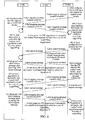
FIG. 3 illustrates a schematic diagram of a network of the SS-PW control word negotiation. As shown inFIG. 3 , the method for negotiating the pseudo wire control word capability in the example includes the following steps. - The steps 301 to 305 are correspondingly identical with the steps 101 to 105.
- In step 306, the configuration of the PE2 is changed, and the label request message is sent to the PE1.
- In this step, since the configuration of the PE2 is changed, no matter whether the PE2 has received the label mapping message carrying the C-Bit information sent from the PE1 before or not, the label request message is still sent to the PE1.
- In step 307, the PE1 receives label cancel message of the PE2, a remote terminal PW is canceled, and label release message is replied to the PE2.
- In step 308, after the PE1 receives the label request message of the PE2, the PE1 responds with label mapping message carrying a C-Bit of 1 to the PE2.
- In this step, the PE2 sends the label request message to the PE1, the PE1 responds with label mapping message carrying a C-Bit, and a value of the C-Bit carried here is a control word value configured locally by the PE1 at present.
- In step 309, the PE2 reconfigures that the PW locally supports the control word, and sends the label mapping message carrying the C-Bit of 1 to the PE1.
- According to the RFC4447, if the C-Bit in the label mapping message announced from the opposite terminal is 1, it is indicated that the opposite terminal supports the control word, and if the local configuration supports the control word subsequently, the label mapping message with the C-Bit of 1 is announced to the opposite terminal. Therefore, the PE2 sends the label mapping message carrying the C-Bit of 1 to the PE1 here.
- This step can only be executed after the step 308 is completed. That is, only after the PE2 reconfigures that the PW locally supports the control word and the PE2 receives the label mapping message (responding to the label request message sent by the PE1 to the PE2) responded by the PE1, the PE2 is triggered to send the label mapping message carrying the control word to the PE1.
- In step 310, the PE2 makes a successful local negotiation with respect to the PW, and the control word negotiation result is a way of supporting.
- In step 311, after receiving the label mapping message carrying the C-Bit of 1 announced from the PE2, the PE1 makes a successful local negotiation with respect to the PW, and the control word negotiation result is a way of supporting.
-
FIG. 4 illustrates a schematic diagram of a network of the MS-PW control word negotiation. The S-PE2 can support a configuration of a control word, and it also can not support the configuration of the control word. In the example, it is assumed that the S-PE2 supports the configuration of the control word and configures that the PW locally supports the control word. As shown inFIG. 4 , the method for negotiating the pseudo wire control word capability in the example includes the following steps. - The steps 401 to 405 are correspondingly identical with the steps 201 to 205.
- In step 406, the configuration of the T-PE3 is changed, the label request message is sent to the S-PE2, and the S-PE2 continues to send the label request message to the T-PE1.
- Here, the label request message is sent in order, only when the S-PE2 receives the label request message of the T-PE3, the S-PE2 continues to send the label request message to the T-PE1. Moreover, since the configuration of the T-PE3 is changed, no matter whether the T-PE3 has received the label mapping message carrying the C-Bit information sent from the S-PE2 before or not, the label request message is still sent to the S-PE2.
- In step 407, the S-PE2 receives a label cancel message of the T-PE3 and responds with label release message to the T-PE3, and the S-PE2 continues to send the label release message to the T-PE1.
- Since the label cancel message and the label release message appear in pairs, as long as the label cancel message is received, the label release message is replied; and only after receiving the label release message, the PE can resend the mapping message.
- In step 408, the T-PE1 receives the label cancel message of the S-PE2, and responds with the label release message to the S-PE2.
- In step 409, after the T-PE1 receives the label request message of the S-PE2, the T-PE1 responds with label mapping message carrying a C-Bit of 1 to the S-PE2, since the local configuration of the S-PE2 supports the control word at the point, the S-PE2 sends the label mapping message carrying the C-Bit of 1 to the T-PE3.
- Here, since the S-PE2 sends the label request message to the T-PE1 in step 406, the T-PE1 responds with label mapping message carrying a C-Bit, and a value of the C-Bit included here is a control word value configured locally by the T-PE1 at present; the S-PE2 will not send the label mapping message initiatively, and only after receiving label mapping message, the S-PE2 is triggered to send the label mapping message to the T-PE3.
- In step 410, the T-PE3 reconfigures that the PW locally supports the control word, and sends the label mapping message carrying the C-Bit of 1 to the S-PE2.
- According to the provision of RFC4447, if the C-Bit in the label mapping message announced from the opposite terminal is 1, it is indicated that the opposite terminal supports the control word, and if the local configuration supports the control word subsequently, the label mapping message with the C-Bit of 1 is announced to the opposite terminal. Therefore, the T-PE3 sends the label mapping message carrying the C-Bit of 1 to the S-PE2 here.
- This step can only be executed after the step 409 is completed. That is, only after the T-PE3 reconfigures that the PW locally supports the control word and the T-PE3 receives the label mapping message (responding to the label request message sent by the T-PE3 to the S-PE2) responded by the S-PE2, the T-PE3 is triggered to send the label mapping message carrying the control word to the S-PE2.
- In step 411, the T-PE3 makes a successful local negotiation with respect to the PW, and the control word negotiation result is a way of supporting.
- In step 412, after receiving the label mapping message carrying the C-Bit of 1 announced from the S-PE2, the T-PE1 makes a successful local negotiation with respect to the PW, and the control word negotiation result is a way of supporting.
-
FIG. 5 illustrates a schematic diagram of a network of the SS-PW control word negotiation. As shown inFIG. 5 , the method for negotiating the pseudo wire control word capability in the example includes the following steps. - The steps 501 to 506 are correspondingly identical with the steps 101 to 106.
- In step 507, the PE2 reconfigures that the PW locally supports the control word, and the PE2 initiatively sends the label mapping message carrying the C-Bit of 1 to the PE1.
- In this step, since the PE2 reconfigures that the PW locally supports the control word, the PE2 will send label mapping message carrying a current local configuration to the PE1.
- In
step 508, after receiving the label mapping message carrying the C-Bit of 1 announced from the PE2, the PE1 makes a successful local negotiation with respect to the PW, and the control word negotiation result is a way of supporting. - In step 509, the PE2 sends label request message to the PE1.
- In this step, since the PE2 reconfigures a control word value, no matter whether the PE2 has received the label mapping message carrying the C-Bit information sent from the PE1 before or not, the label request message is still sent to the PE1.
- In step 510, after the PE1 receives the label request message of the PE2, the PE1 responds with label mapping message carrying a C-Bit of 1 to the PE2.
- According to the RFC4447, if the C-Bit in the label mapping message announced from the opposite terminal is 1, it is indicated that the opposite terminal supports the control word, and if the locally configured control word value is supported subsequently, the label mapping message with the C-Bit of 1 is announced to the opposite terminal, and this step can only be executed after the step 509 is completed. That is, only after the PE1 receives the label request message sent by the PE2, the PE2 is triggered to send the label mapping message to the PE1. Therefore, the PE1 responds with the label mapping message carrying the C-Bit of 1 to the PE2 here. A value of the C-Bit carried here is a control word value negotiated locally by the PE1 at present.
- In step 511, the PE2 makes a successful local negotiation with respect to the PW, and the control word negotiation result is a way of supporting.
-
FIG. 6 illustrates a schematic diagram of a network of the MS-PW control word negotiation. The S-PE2 can support a configuration of a control word, and it also can not support the configuration of the control word. In the example, it is assumed that the S-PE2 supports the configuration of the control word and configures that the PW locally supports the control word. As shown inFIG. 6 , the method for negotiating the pseudo wire control word capability in the example includes the following steps. - The steps 601 to 607 are correspondingly identical with the steps 201 to 207.
- In step 608, the T-PE3 reconfigures that the PW locally supports the control word, and the T-PE3 initiatively sends the label mapping message carrying the C-Bit of 1 to the S-PE2.
- In this step, since the T-PE3 reconfigures that the PW locally supports the control word, the T-PE3 will send label mapping message carrying a current local configuration to the S-PE2.
- In step 609, after receiving the label mapping message carrying the C-Bit of 1 announced from the S-PE2, the T-PE1 makes a successful local negotiation with respect to the PW, and the control word negotiation result is a way of supporting.
- In step 610, the T-PE3 sends label request message to the S-PE2, and the S-PE2 continues to send the label request message to the T-PE1.
- In this step, since the T-PE3 reconfigures a control word value, no matter whether the T-PE3 has received the label mapping message carrying the C-Bit information sent from the S-PE2 before or not, the label request message is still sent to the S-PE2.
- Here, the label request message is sent in order, only when the S-PE2 receives the label request message of the T-PE3, the S-PE2 continues to send the label request message to the T-PE1. Moreover, since the configuration of the T-PE3 is changed, no matter whether the T-PE3 has received the label mapping message carrying the C-Bit information sent from the S-PE2 before or not, the label request message is still sent to the S-PE2.
- In step 611, after the T-PE1 receives the label request message of the S-PE2, the T-PE1 responds with label mapping message carrying a C-Bit of 1 to the S-PE2, since the local configuration of the S-PE2 is supporting the control word at the point, the S-PE2 sends label mapping message carrying the C-Bit of 1 to the T-PE3.
- Here, since the S-PE2 sends the label request message to the T-PE1 in step 610, the T-PE1 responds with label mapping message, and a value of the C-Bit carried in the label mapping message here is a control word value negotiated locally by the T-PE1; the S-PE2 will not send the label mapping message initiatively, and only after receiving label mapping message, the S-PE2 is triggered to send the label mapping message to the T-PE3.
- According to the provision of RFC4447, if the C-Bit in the label mapping message announced from the opposite terminal is 1, it is indicated that the opposite terminal supports the control word, and if the locally configured control word value is supported subsequently, the label mapping message with the C-Bit of 1 is announced to the opposite terminal, and this step can only be executed after the step 610 is completed. That is, only after the T-PE3 receives the label request message sent by the S-PE2, the T-PE3 is triggered to send the label mapping message carrying the control word to the S-PE2. Therefore, the T-PE1 responds with the label mapping message carrying the C-Bit of 1 to the S-PE2 here.
- In step 612, the T-PE3 makes a successful local negotiation with respect to the PW, and the control word negotiation result is a way of supporting.
- Certainly, the present document can still have other various examples, the skilled familiar to the art can make various corresponding changes and transformations according to the present document without departing from the scope of the appended claims of the present document.
- The ordinary person skilled in the art can understand that all or part of the steps in the above method can be completed by a program instructing related hardware, and the program can be stored in a computer readable memory medium, such as a read-only memory, disk or optical disk and so on. Alternatively, all or part of the steps of the above examples also can be implemented by using one or multiple integrated circuits. Correspondingly, each module/unit in the above examples can be implemented in a form of hardware, and also can be implemented in a form of software function module. The present document is not limited to any combination of hardware and software in a specific form.
- In the present document, the problem of inconsistency between the control word configurations and the expected negotiation results existing in certain specific scenarios is solved, which enhances the negotiation performance. The technical scheme of the present document is easy to implement, it makes slight modifications on the existing protocol, and it is applicable to a single segment pseudo wire scenario and a multiple segment pseudo wire scenario, which has lower implementation costs, thereby having an extremely strong industrial applicability.
Claims (14)
- A method for implementing a pseudo wire control word capability negotiation, comprising:
when modifying a local control word value of a pseudo wire (305, 405, 505, 605), a provider edge, PE, acquiring a control word value configured or negotiated locally by an opposite terminal provider edge by sending (306, 406, 509, 610) a label request message and receiving (308, 409, 510, 611) a label mapping message, and according to a locally configured control word value and the acquired control word value, the provider edge determining (310, 411, 511, 612) a control word value negotiated with respect to the pseudo wire. - The method according to claim 1, wherein, the step of, when modifying a local control word value of a pseudo wire, a provider edge acquiring a control word value configured by an opposite terminal provider edge by sending label request message and receiving label mapping message comprises any one of following ways:a way 1, when modifying the local control word value of the pseudo wire (305, 405), the provider edge sending (306, 406) a label request message to the opposite terminal provider edge, and after receiving the label request message, the opposite terminal provider edge sending (308, 409) a label mapping message carrying a locally configured control word value to the provider edge;a way 2, when modifying the local control word value of the pseudo wire (505, 605), the provider edge firstly sending (507, 608) a label mapping message carrying a locally configured control word value to the opposite terminal provider edge, and then sending (509, 610) a label request message to the opposite terminal provider edge, and after receiving the label request message, the opposite terminal provider edge sending (510, 611) a label mapping message carrying a locally negotiated control word value to the provider edge,preferably,the method further comprising:
in the way 1, after determining the control word value negotiated with respect to the pseudo wire, the provider edge sending a label mapping message to the opposite terminal provider edge, and carrying a control word value locally negotiated by the provider edge in the label mapping message. - The method according to claim 1 or 2, further comprising:
according to the control word value configured by the current terminal and the control word value carried in the received label mapping message sent by the provider edge, the opposite terminal provider edge determining (311, 412, 508, 609) the control word value negotiated with respect to the pseudo wire, and completing a pseudo wire control word negotiation process. - The method according to claim 2, wherein, an operation of the provider edge modifying the local control word value of the pseudo wire triggering an operation of sending the label request message to the opposite terminal provider edge subsequently is irrelevant to whether the provider edge has received the label mapping message sent by the opposite terminal provider edge or not.
- The method according to claim 1 or 2, further comprising:
in a multiple segment pseudo wire negotiation process, after receiving a label request message sent by the provider edge at a terminal, a pseudo wire switching provider edge sending the label request message to the provider edge at another terminal (406, 610). - A system for implementing a pseudo wire control word capability negotiation, comprising: a provider edge, PE, and an opposite terminal provider edge, wherein,
the provider edge is configured to: when modifying a local control word value of a pseudo wire (305, 405, 505, 605), acquire a control word value configured or negotiated locally by the opposite terminal provider edge by sending (306, 406, 509, 610) a label request message and receiving (308, 409, 510, 611) a label mapping message, and according to the local control word value and the acquired control word value, determine (310, 411, 511, 612) a control word value negotiated with respect to the pseudo wire. - The system according to claim 6, wherein,
the provider edge is further configured to: when modifying the local control word value of the pseudo wire (305, 405), send (306, 406) label request message to the opposite terminal provider edge in a pseudo wire negotiation process;
the opposite terminal provider edge is configured to: after receiving the label request message, send (308, 409) a label mapping message carrying a locally configured control word value to the provider edge, wherein, the control word value in the label mapping message only depends on a control word value locally configured by the opposite terminal provider edge,
or,
wherein,
the provider edge is further configured to: when modifying the local control word value of the pseudo wire (505, 605), firstly send (507, 608) a label mapping message carrying a locally configured control word value to the opposite terminal provider edge in the pseudo wire negotiation process, and then send (509, 610) a label request message to the opposite terminal provider edge;
the opposite terminal provider edge is configured to: after receiving the label request message, sending (510, 611) a label mapping message carrying a locally negotiated control word value to the provider edge, wherein, the control word value in the label mapping message only depends on a control word value locally negotiated by the opposite terminal provider edge. - The system according to claim 6, wherein,
the provider edge is further configured to: after determining a control word value locally negotiated with respect to the pseudo wire, send a label mapping message to the opposite terminal provider edge, and carry a control word value locally negotiated by the provider edge in the label mapping message. - The system according to claim 6 or 7, wherein,
the opposite terminal provider edge is further configured to: according to the control word value configured by the current terminal and the control word value carried in the received label mapping message sent by the provider edge, determine (311, 412, 508, 609) the control word value negotiated with respect to the pseudo wire, and complete a pseudo wire control word negotiation process. - The system according to claim 6, further comprising a pseudo wire switching provider edge, wherein,
the pseudo wire switching provider edge is configured to: after receiving label request message sent by the provider edge at a terminal, send the label request message to the provider edge at another terminal (406, 610). - A provider edge, PE, comprising: a label request message sending module, a label mapping message receiving module and a control word value determination module, wherein:when the control word value determination module is configured to modify a local control word value of a pseudo wire (305, 405, 505, 605), the label request message module is adapted to send (306, 406, 509, 610) a label request message and the label mapping message receiving module is configured to receive (308, 409, 510, 611) a label mapping message, the provider edge being adapted to acquire a control word value configured by an opposite terminal provider edge or negotiated by an opposite terminal provider edge with respect to the pseudo wire in a pseudo wire negotiation process;the control word value determination module is configured to: according to the local control word value of the provider edge and the acquired control word value, determine (310, 411, 511, 612) the control word value negotiated with respect to the pseudo wire.
- The provider edge according to claim 11, wherein,
the label request message sending module is further configured to: when modifying the local control word value of the pseudo wire (305, 405), send (306, 406) a label request message to the opposite terminal provider edge in the pseudo wire negotiation process;
the label mapping message receiving module is further configured to: receive label mapping message carrying a locally configured control word value sent (308, 409) by the opposite terminal provider edge in the pseudo wire negotiation process, wherein, the control word value in the label mapping message only depends on a control word value locally configured by the opposite terminal provider edge in the pseudo wire negotiation process,
preferably,
the provider edge further comprising a label mapping message sending module,
the label mapping message sending module is configured to: after determining a control word value locally negotiated by the provider edge with respect to the pseudo wire, send a label mapping message to the opposite terminal provider edge in the pseudo wire negotiation process, and carry the control word value negotiated by the provider edge with respect to the pseudo wire in the label mapping message. - The provider edge according to claim 11, further comprising a label mapping message sending module, wherein:the label mapping message sending module is configured to: when modifying the local control word value of the pseudo wire (505, 605), send (507, 608) a label mapping message carrying a locally configured control word value to the opposite terminal provider edge in the pseudo wire negotiation process;the label request message sending module is further configured to: after the label mapping message sending module sends the label mapping message carrying the locally configured control word value to the opposite terminal provider edge in the pseudo wire negotiation process, send (509, 610) a label request message to the opposite terminal provider edge in the pseudo wire negotiation process;the label mapping message receiving module is further configured to: receive the label mapping message carrying the locally negotiated control word value sent (510, 611) by the opposite terminal provider edge in the pseudo wire negotiation process, wherein, the control word value in the label mapping message only depends on a control word value negotiated by the opposite terminal provider edge with respect to the pseudo wire in the pseudo wire negotiation process.
- A provider edge, PE, comprising: a label mapping message receiving module and a control word value determination module, wherein:the label mapping message receiving module is configured to: receive a label mapping message sent (507, 608) by an opposite terminal provider edge in a pseudo wire negotiation process, and the label mapping message carrying a control word value locally configured by an opposite terminal provider edge or negotiated by an opposite terminal provider edge with respect to the pseudo wire in the pseudo wire negotiation process;the control word value determination module is configured to: determine (508, 609) the control word value negotiated with respect to the pseudo wire according to a locally configured control word value and a received control word value;the provider edge further comprising: a label request message receiving module and a label mapping message sending module, wherein:the label request message receiving module is configured to: receive a label request message sent (306, 406) by the opposite terminal provider edge in the pseudo wire negotiation process when modifying a local control word value of a pseudo wire (305, 405);the label mapping message sending module is configured to: after the label request message receiving module receives the label request message, send (308, 409) a label mapping message carrying the locally configured control word value to the opposite terminal provider edge in the pseudo wire negotiation process, wherein, the control word value in the label mapping message only depends on a control word value locally configured by the provider edge,
or,the provider edge further comprising: a label request message receiving module and a label mapping message sending module, wherein:the label request message receiving module is configured to: a label request message sent (509, 610) by the opposite terminal provider edge in the pseudo wire negotiation process;the label mapping message sending module is configured to: after the label request message receiving module receives the label request message, send (510, 611) a label mapping message carrying a control word value negotiated with respect to the pseudo wire to the opposite terminal provider edge in the pseudo wire negotiation process, wherein, the control word value in the label mapping message only depends on a control word value negotiated by the provider edge with respect to the pseudo wire.
Applications Claiming Priority (2)
| Application Number | Priority Date | Filing Date | Title |
|---|---|---|---|
| CN201010518146.7A CN102457348B (en) | 2010-10-22 | 2010-10-22 | A kind of method and system realizing pseudo-line traffic control word capability negotiation |
| PCT/CN2011/078480 WO2012051880A1 (en) | 2010-10-22 | 2011-08-16 | Method and system for implementing pw control bit capability negotiation |
Publications (3)
| Publication Number | Publication Date |
|---|---|
| EP2621133A1 EP2621133A1 (en) | 2013-07-31 |
| EP2621133A4 EP2621133A4 (en) | 2016-03-30 |
| EP2621133B1 true EP2621133B1 (en) | 2018-10-03 |
Family
ID=45974670
Family Applications (1)
| Application Number | Title | Priority Date | Filing Date |
|---|---|---|---|
| EP11833786.4A Active EP2621133B1 (en) | 2010-10-22 | 2011-08-16 | Method and system for implementing pw control bit capability negotiation |
Country Status (4)
| Country | Link |
|---|---|
| US (1) | US9191312B2 (en) |
| EP (1) | EP2621133B1 (en) |
| CN (1) | CN102457348B (en) |
| WO (1) | WO2012051880A1 (en) |
Families Citing this family (7)
| Publication number | Priority date | Publication date | Assignee | Title |
|---|---|---|---|---|
| CN103873190B (en) * | 2012-12-14 | 2017-11-24 | 中兴通讯股份有限公司 | Transmission method, system and the terminal of end-to-end service feature |
| US9025442B2 (en) * | 2013-05-31 | 2015-05-05 | Telefonaktiebolaget L M Ericsson (Publ) | Pseudo wire end-to-end redundancy setup over disjoint MPLS transport paths |
| US9686381B1 (en) * | 2013-09-30 | 2017-06-20 | Juniper Networks, Inc. | Control word decapsulation in a hybrid BGP-VPLS network |
| CN106411543B (en) * | 2015-07-27 | 2020-06-05 | 中兴通讯股份有限公司 | Method and device for removing multi-segment pseudo wires |
| JP6895958B2 (en) * | 2016-08-12 | 2021-06-30 | テレフオンアクチーボラゲット エルエム エリクソン(パブル) | 1-segment PUCCH format |
| CN106850247A (en) * | 2017-01-04 | 2017-06-13 | 安徽皖通邮电股份有限公司 | A kind of pseudo-wire control word upgrade method |
| CN111953505A (en) * | 2019-05-14 | 2020-11-17 | 中兴通讯股份有限公司 | A method and related equipment for determining a pseudowire control word negotiation mode |
Family Cites Families (13)
| Publication number | Priority date | Publication date | Assignee | Title |
|---|---|---|---|---|
| WO2004102903A1 (en) * | 2003-05-14 | 2004-11-25 | Fujitsu Limited | Transmission device |
| CN100403735C (en) * | 2006-02-24 | 2008-07-16 | 华为技术有限公司 | A method and system for realizing bundled interface edge-to-edge pseudowire simulation service |
| US7860022B2 (en) * | 2006-12-21 | 2010-12-28 | Verizon Patent And Licensing Inc. | Multifunctional control channel for pseudowire emulation |
| US7707277B2 (en) * | 2007-04-27 | 2010-04-27 | Alcatel Lucent | Method and system for configuring pseudowires using dynamic host configuration protocol (DHCP) messages |
| US7948900B2 (en) * | 2007-05-10 | 2011-05-24 | Alcatel Lucent | Method and system for verifying connectivity of multi-segment pseudo-wires |
| CN101552711B (en) | 2008-04-03 | 2011-09-14 | 华为技术有限公司 | Method and device for establishing pseudowire mapping |
| CN101262424B (en) * | 2008-04-18 | 2010-12-08 | 华为技术有限公司 | Method, device and MPLS communication system for forwarding MPLS message |
| US8233378B2 (en) * | 2008-05-15 | 2012-07-31 | Telefonaktiebolaget L M Ericsson (Publ) | Method and apparatus for validating control and data plane association |
| CN101631072B (en) * | 2008-07-17 | 2012-04-04 | 华为技术有限公司 | Method, device and system for establishing pseudowire |
| CN101631069B (en) * | 2008-07-18 | 2013-01-09 | 华为技术有限公司 | Method, system and equipment for pseudo wire parameter negotiation |
| EP2509273A4 (en) * | 2009-12-30 | 2014-05-14 | Zte Corp | METHOD AND SYSTEM FOR UPDATING NETWORK TOPOLOGY IN A MULTIPROTOCOL LABEL SWITCHING SYSTEM |
| US8416775B2 (en) * | 2010-05-19 | 2013-04-09 | Juniper Networks, Inc. | Systems and methods for equal-cost multi-path virtual private LAN service |
| US8537810B2 (en) * | 2011-06-29 | 2013-09-17 | Telefonaktiebolaget L M Ericsson (Publ) | E-tree using two pseudowires between edge routers with enhanced learning methods and systems |
-
2010
- 2010-10-22 CN CN201010518146.7A patent/CN102457348B/en active Active
-
2011
- 2011-08-16 WO PCT/CN2011/078480 patent/WO2012051880A1/en not_active Ceased
- 2011-08-16 EP EP11833786.4A patent/EP2621133B1/en active Active
- 2011-08-16 US US13/880,496 patent/US9191312B2/en active Active
Non-Patent Citations (1)
| Title |
|---|
| MARTINI L ET AL: "Pseudowire Setup and Maintenance Using the Label Distribution Protocol (LDP); rfc4447.txt", NETWORK WORKING GROUP RFC 1717, INTERNET SOCIETY (ISOC) 4, RUE DES FALAISES CH- 1205 GENEVA, SWITZERLAND, CH, 1 April 2006 (2006-04-01), XP015046298, ISSN: 0000-0003 * |
Also Published As
| Publication number | Publication date |
|---|---|
| CN102457348B (en) | 2015-12-16 |
| EP2621133A1 (en) | 2013-07-31 |
| US9191312B2 (en) | 2015-11-17 |
| US20130286890A1 (en) | 2013-10-31 |
| EP2621133A4 (en) | 2016-03-30 |
| WO2012051880A1 (en) | 2012-04-26 |
| CN102457348A (en) | 2012-05-16 |
Similar Documents
| Publication | Publication Date | Title |
|---|---|---|
| US8718062B2 (en) | Method, device and system for establishing pseudo wire | |
| US9191312B2 (en) | Method and system for implementing PW control bit capability negotiation | |
| US10218592B2 (en) | Method, device and system for performing bidirectional forwarding detection on aggregated link | |
| US20100098094A1 (en) | Mechanism for Protecting a Pseudo-Wire | |
| CN103688510B (en) | Outgoing telecommunication method and device | |
| WO2012106986A1 (en) | Method for negotiating flow label, and related device and system thereof | |
| JP6200576B2 (en) | Network device with tunnel establishment control based on site-type attributes received from other network devices | |
| CN101453414B (en) | Head node protection method, system and equipment for point to multiple points label switch path | |
| WO2014206354A1 (en) | Method, device and system for establishing traffic engineering label switch path | |
| WO2016008156A1 (en) | Method and apparatus for cross-layer path establishment | |
| Crabbe et al. | Path computation element communication protocol (pcep) extensions for stateful pce | |
| EP3020163B1 (en) | Interworking between first protocol entity of stream reservation protocol and second protocol entity of routing protocol | |
| WO2006102851A1 (en) | A method for informing and negotiating the monitor ability of the label switching capability | |
| WO2015042840A1 (en) | Fault recovery method, node and path computation unit | |
| JP6371399B2 (en) | Interface parameter synchronization method and apparatus | |
| CN101860523B (en) | Method and device for updating combined bidirectional label exchange path binding relationship | |
| JP4455521B2 (en) | Multicast MPLS network construction method, multicast MPLS network system, router and program | |
| EP2728814B1 (en) | Method and device for acquiring identifier of maintenance end point | |
| CN108521336B (en) | Method and device for controlling IP address conflict of routing networking | |
| CN103220220B (en) | The method and apparatus that a kind of pseudo-wire is established | |
| Crabbe et al. | Optimizations of Label Switched Path State Synchronization Procedures for a Stateful PCE | |
| WO2016082892A1 (en) | Bgp implemented remote trigger | |
| KR20040045964A (en) | Automatic connection setting method of mpls network based on (cr)ldp and all-optical network based on rsvp | |
| Crabbe et al. | RFC 8231: Path Computation Element Communication Protocol (PCEP) Extensions for Stateful PCE | |
| Crabbe et al. | RFC 8232: Optimizations of Label Switched Path State Synchronization Procedures for a Stateful PCE |
Legal Events
| Date | Code | Title | Description |
|---|---|---|---|
| PUAI | Public reference made under article 153(3) epc to a published international application that has entered the european phase |
Free format text: ORIGINAL CODE: 0009012 |
|
| 17P | Request for examination filed |
Effective date: 20130422 |
|
| AK | Designated contracting states |
Kind code of ref document: A1 Designated state(s): AL AT BE BG CH CY CZ DE DK EE ES FI FR GB GR HR HU IE IS IT LI LT LU LV MC MK MT NL NO PL PT RO RS SE SI SK SM TR |
|
| RIN1 | Information on inventor provided before grant (corrected) |
Inventor name: JIN, LIZHONG Inventor name: ZHU, CHUN Inventor name: CHEN, RAN Inventor name: WANG, YUBAO |
|
| DAX | Request for extension of the european patent (deleted) | ||
| RA4 | Supplementary search report drawn up and despatched (corrected) |
Effective date: 20160301 |
|
| RIC1 | Information provided on ipc code assigned before grant |
Ipc: H04L 12/721 20130101ALI20160224BHEP Ipc: H04L 12/701 20130101AFI20160224BHEP Ipc: H04L 12/46 20060101ALN20160224BHEP |
|
| STAA | Information on the status of an ep patent application or granted ep patent |
Free format text: STATUS: EXAMINATION IS IN PROGRESS |
|
| 17Q | First examination report despatched |
Effective date: 20170703 |
|
| REG | Reference to a national code |
Ref country code: DE Ref legal event code: R079 Ref document number: 602011052632 Country of ref document: DE Free format text: PREVIOUS MAIN CLASS: H04L0012560000 Ipc: H04L0012701000 |
|
| GRAP | Despatch of communication of intention to grant a patent |
Free format text: ORIGINAL CODE: EPIDOSNIGR1 |
|
| STAA | Information on the status of an ep patent application or granted ep patent |
Free format text: STATUS: GRANT OF PATENT IS INTENDED |
|
| RIC1 | Information provided on ipc code assigned before grant |
Ipc: H04L 12/46 20060101ALN20180222BHEP Ipc: H04L 12/701 20130101AFI20180222BHEP Ipc: H04L 12/721 20130101ALI20180222BHEP |
|
| INTG | Intention to grant announced |
Effective date: 20180322 |
|
| RIC1 | Information provided on ipc code assigned before grant |
Ipc: H04L 12/701 20130101AFI20180312BHEP Ipc: H04L 12/721 20130101ALI20180312BHEP Ipc: H04L 12/46 20060101ALN20180312BHEP |
|
| GRAS | Grant fee paid |
Free format text: ORIGINAL CODE: EPIDOSNIGR3 |
|
| GRAA | (expected) grant |
Free format text: ORIGINAL CODE: 0009210 |
|
| STAA | Information on the status of an ep patent application or granted ep patent |
Free format text: STATUS: THE PATENT HAS BEEN GRANTED |
|
| AK | Designated contracting states |
Kind code of ref document: B1 Designated state(s): AL AT BE BG CH CY CZ DE DK EE ES FI FR GB GR HR HU IE IS IT LI LT LU LV MC MK MT NL NO PL PT RO RS SE SI SK SM TR |
|
| REG | Reference to a national code |
Ref country code: GB Ref legal event code: FG4D |
|
| REG | Reference to a national code |
Ref country code: CH Ref legal event code: EP Ref country code: AT Ref legal event code: REF Ref document number: 1049841 Country of ref document: AT Kind code of ref document: T Effective date: 20181015 |
|
| REG | Reference to a national code |
Ref country code: DE Ref legal event code: R096 Ref document number: 602011052632 Country of ref document: DE |
|
| REG | Reference to a national code |
Ref country code: IE Ref legal event code: FG4D |
|
| REG | Reference to a national code |
Ref country code: NL Ref legal event code: MP Effective date: 20181003 |
|
| REG | Reference to a national code |
Ref country code: LT Ref legal event code: MG4D |
|
| REG | Reference to a national code |
Ref country code: AT Ref legal event code: MK05 Ref document number: 1049841 Country of ref document: AT Kind code of ref document: T Effective date: 20181003 |
|
| PG25 | Lapsed in a contracting state [announced via postgrant information from national office to epo] |
Ref country code: NL Free format text: LAPSE BECAUSE OF FAILURE TO SUBMIT A TRANSLATION OF THE DESCRIPTION OR TO PAY THE FEE WITHIN THE PRESCRIBED TIME-LIMIT Effective date: 20181003 |
|
| PG25 | Lapsed in a contracting state [announced via postgrant information from national office to epo] |
Ref country code: BG Free format text: LAPSE BECAUSE OF FAILURE TO SUBMIT A TRANSLATION OF THE DESCRIPTION OR TO PAY THE FEE WITHIN THE PRESCRIBED TIME-LIMIT Effective date: 20190103 Ref country code: LT Free format text: LAPSE BECAUSE OF FAILURE TO SUBMIT A TRANSLATION OF THE DESCRIPTION OR TO PAY THE FEE WITHIN THE PRESCRIBED TIME-LIMIT Effective date: 20181003 Ref country code: FI Free format text: LAPSE BECAUSE OF FAILURE TO SUBMIT A TRANSLATION OF THE DESCRIPTION OR TO PAY THE FEE WITHIN THE PRESCRIBED TIME-LIMIT Effective date: 20181003 Ref country code: NO Free format text: LAPSE BECAUSE OF FAILURE TO SUBMIT A TRANSLATION OF THE DESCRIPTION OR TO PAY THE FEE WITHIN THE PRESCRIBED TIME-LIMIT Effective date: 20190103 Ref country code: IS Free format text: LAPSE BECAUSE OF FAILURE TO SUBMIT A TRANSLATION OF THE DESCRIPTION OR TO PAY THE FEE WITHIN THE PRESCRIBED TIME-LIMIT Effective date: 20190203 Ref country code: LV Free format text: LAPSE BECAUSE OF FAILURE TO SUBMIT A TRANSLATION OF THE DESCRIPTION OR TO PAY THE FEE WITHIN THE PRESCRIBED TIME-LIMIT Effective date: 20181003 Ref country code: HR Free format text: LAPSE BECAUSE OF FAILURE TO SUBMIT A TRANSLATION OF THE DESCRIPTION OR TO PAY THE FEE WITHIN THE PRESCRIBED TIME-LIMIT Effective date: 20181003 Ref country code: PL Free format text: LAPSE BECAUSE OF FAILURE TO SUBMIT A TRANSLATION OF THE DESCRIPTION OR TO PAY THE FEE WITHIN THE PRESCRIBED TIME-LIMIT Effective date: 20181003 Ref country code: ES Free format text: LAPSE BECAUSE OF FAILURE TO SUBMIT A TRANSLATION OF THE DESCRIPTION OR TO PAY THE FEE WITHIN THE PRESCRIBED TIME-LIMIT Effective date: 20181003 Ref country code: CZ Free format text: LAPSE BECAUSE OF FAILURE TO SUBMIT A TRANSLATION OF THE DESCRIPTION OR TO PAY THE FEE WITHIN THE PRESCRIBED TIME-LIMIT Effective date: 20181003 Ref country code: AT Free format text: LAPSE BECAUSE OF FAILURE TO SUBMIT A TRANSLATION OF THE DESCRIPTION OR TO PAY THE FEE WITHIN THE PRESCRIBED TIME-LIMIT Effective date: 20181003 |
|
| PG25 | Lapsed in a contracting state [announced via postgrant information from national office to epo] |
Ref country code: PT Free format text: LAPSE BECAUSE OF FAILURE TO SUBMIT A TRANSLATION OF THE DESCRIPTION OR TO PAY THE FEE WITHIN THE PRESCRIBED TIME-LIMIT Effective date: 20190203 Ref country code: GR Free format text: LAPSE BECAUSE OF FAILURE TO SUBMIT A TRANSLATION OF THE DESCRIPTION OR TO PAY THE FEE WITHIN THE PRESCRIBED TIME-LIMIT Effective date: 20190104 Ref country code: RS Free format text: LAPSE BECAUSE OF FAILURE TO SUBMIT A TRANSLATION OF THE DESCRIPTION OR TO PAY THE FEE WITHIN THE PRESCRIBED TIME-LIMIT Effective date: 20181003 Ref country code: AL Free format text: LAPSE BECAUSE OF FAILURE TO SUBMIT A TRANSLATION OF THE DESCRIPTION OR TO PAY THE FEE WITHIN THE PRESCRIBED TIME-LIMIT Effective date: 20181003 Ref country code: SE Free format text: LAPSE BECAUSE OF FAILURE TO SUBMIT A TRANSLATION OF THE DESCRIPTION OR TO PAY THE FEE WITHIN THE PRESCRIBED TIME-LIMIT Effective date: 20181003 |
|
| REG | Reference to a national code |
Ref country code: DE Ref legal event code: R097 Ref document number: 602011052632 Country of ref document: DE |
|
| PG25 | Lapsed in a contracting state [announced via postgrant information from national office to epo] |
Ref country code: DK Free format text: LAPSE BECAUSE OF FAILURE TO SUBMIT A TRANSLATION OF THE DESCRIPTION OR TO PAY THE FEE WITHIN THE PRESCRIBED TIME-LIMIT Effective date: 20181003 Ref country code: IT Free format text: LAPSE BECAUSE OF FAILURE TO SUBMIT A TRANSLATION OF THE DESCRIPTION OR TO PAY THE FEE WITHIN THE PRESCRIBED TIME-LIMIT Effective date: 20181003 |
|
| PLBE | No opposition filed within time limit |
Free format text: ORIGINAL CODE: 0009261 |
|
| STAA | Information on the status of an ep patent application or granted ep patent |
Free format text: STATUS: NO OPPOSITION FILED WITHIN TIME LIMIT |
|
| PG25 | Lapsed in a contracting state [announced via postgrant information from national office to epo] |
Ref country code: SK Free format text: LAPSE BECAUSE OF FAILURE TO SUBMIT A TRANSLATION OF THE DESCRIPTION OR TO PAY THE FEE WITHIN THE PRESCRIBED TIME-LIMIT Effective date: 20181003 Ref country code: RO Free format text: LAPSE BECAUSE OF FAILURE TO SUBMIT A TRANSLATION OF THE DESCRIPTION OR TO PAY THE FEE WITHIN THE PRESCRIBED TIME-LIMIT Effective date: 20181003 Ref country code: SM Free format text: LAPSE BECAUSE OF FAILURE TO SUBMIT A TRANSLATION OF THE DESCRIPTION OR TO PAY THE FEE WITHIN THE PRESCRIBED TIME-LIMIT Effective date: 20181003 Ref country code: EE Free format text: LAPSE BECAUSE OF FAILURE TO SUBMIT A TRANSLATION OF THE DESCRIPTION OR TO PAY THE FEE WITHIN THE PRESCRIBED TIME-LIMIT Effective date: 20181003 |
|
| 26N | No opposition filed |
Effective date: 20190704 |
|
| PG25 | Lapsed in a contracting state [announced via postgrant information from national office to epo] |
Ref country code: SI Free format text: LAPSE BECAUSE OF FAILURE TO SUBMIT A TRANSLATION OF THE DESCRIPTION OR TO PAY THE FEE WITHIN THE PRESCRIBED TIME-LIMIT Effective date: 20181003 |
|
| PG25 | Lapsed in a contracting state [announced via postgrant information from national office to epo] |
Ref country code: TR Free format text: LAPSE BECAUSE OF FAILURE TO SUBMIT A TRANSLATION OF THE DESCRIPTION OR TO PAY THE FEE WITHIN THE PRESCRIBED TIME-LIMIT Effective date: 20181003 |
|
| PG25 | Lapsed in a contracting state [announced via postgrant information from national office to epo] |
Ref country code: LI Free format text: LAPSE BECAUSE OF NON-PAYMENT OF DUE FEES Effective date: 20190831 Ref country code: MC Free format text: LAPSE BECAUSE OF FAILURE TO SUBMIT A TRANSLATION OF THE DESCRIPTION OR TO PAY THE FEE WITHIN THE PRESCRIBED TIME-LIMIT Effective date: 20181003 Ref country code: LU Free format text: LAPSE BECAUSE OF NON-PAYMENT OF DUE FEES Effective date: 20190816 Ref country code: CH Free format text: LAPSE BECAUSE OF NON-PAYMENT OF DUE FEES Effective date: 20190831 |
|
| REG | Reference to a national code |
Ref country code: BE Ref legal event code: MM Effective date: 20190831 |
|
| PG25 | Lapsed in a contracting state [announced via postgrant information from national office to epo] |
Ref country code: IE Free format text: LAPSE BECAUSE OF NON-PAYMENT OF DUE FEES Effective date: 20190816 |
|
| PG25 | Lapsed in a contracting state [announced via postgrant information from national office to epo] |
Ref country code: BE Free format text: LAPSE BECAUSE OF NON-PAYMENT OF DUE FEES Effective date: 20190831 |
|
| PG25 | Lapsed in a contracting state [announced via postgrant information from national office to epo] |
Ref country code: CY Free format text: LAPSE BECAUSE OF FAILURE TO SUBMIT A TRANSLATION OF THE DESCRIPTION OR TO PAY THE FEE WITHIN THE PRESCRIBED TIME-LIMIT Effective date: 20181003 |
|
| PG25 | Lapsed in a contracting state [announced via postgrant information from national office to epo] |
Ref country code: HU Free format text: LAPSE BECAUSE OF FAILURE TO SUBMIT A TRANSLATION OF THE DESCRIPTION OR TO PAY THE FEE WITHIN THE PRESCRIBED TIME-LIMIT; INVALID AB INITIO Effective date: 20110816 Ref country code: MT Free format text: LAPSE BECAUSE OF FAILURE TO SUBMIT A TRANSLATION OF THE DESCRIPTION OR TO PAY THE FEE WITHIN THE PRESCRIBED TIME-LIMIT Effective date: 20181003 |
|
| REG | Reference to a national code |
Ref country code: DE Ref legal event code: R079 Ref document number: 602011052632 Country of ref document: DE Free format text: PREVIOUS MAIN CLASS: H04L0012701000 Ipc: H04L0045000000 |
|
| PG25 | Lapsed in a contracting state [announced via postgrant information from national office to epo] |
Ref country code: MK Free format text: LAPSE BECAUSE OF FAILURE TO SUBMIT A TRANSLATION OF THE DESCRIPTION OR TO PAY THE FEE WITHIN THE PRESCRIBED TIME-LIMIT Effective date: 20181003 |
|
| P01 | Opt-out of the competence of the unified patent court (upc) registered |
Effective date: 20230530 |
|
| PGFP | Annual fee paid to national office [announced via postgrant information from national office to epo] |
Ref country code: GB Payment date: 20250626 Year of fee payment: 15 |
|
| PGFP | Annual fee paid to national office [announced via postgrant information from national office to epo] |
Ref country code: FR Payment date: 20250610 Year of fee payment: 15 |
|
| PGFP | Annual fee paid to national office [announced via postgrant information from national office to epo] |
Ref country code: DE Payment date: 20250624 Year of fee payment: 15 |